Molina De Segura Pedestrian Bridge
MOLINA DE SEGURA PEDESTRIAN BRIDGE
FVAI
ARCHITECTS
FVAI
LEAD ARCHITECT
Francisco Valiente
GENERAL CONSTRUCTION
Sorigué
PHOTOGRAPHS
Milena Villalba, FVAI
AREA
4525 m²
YEAR
2025
LOCATION
Molina de Segura, Spain
CATEGORY
Urban Design, Public Space, Landscape Architecture
English description provided by the architects.
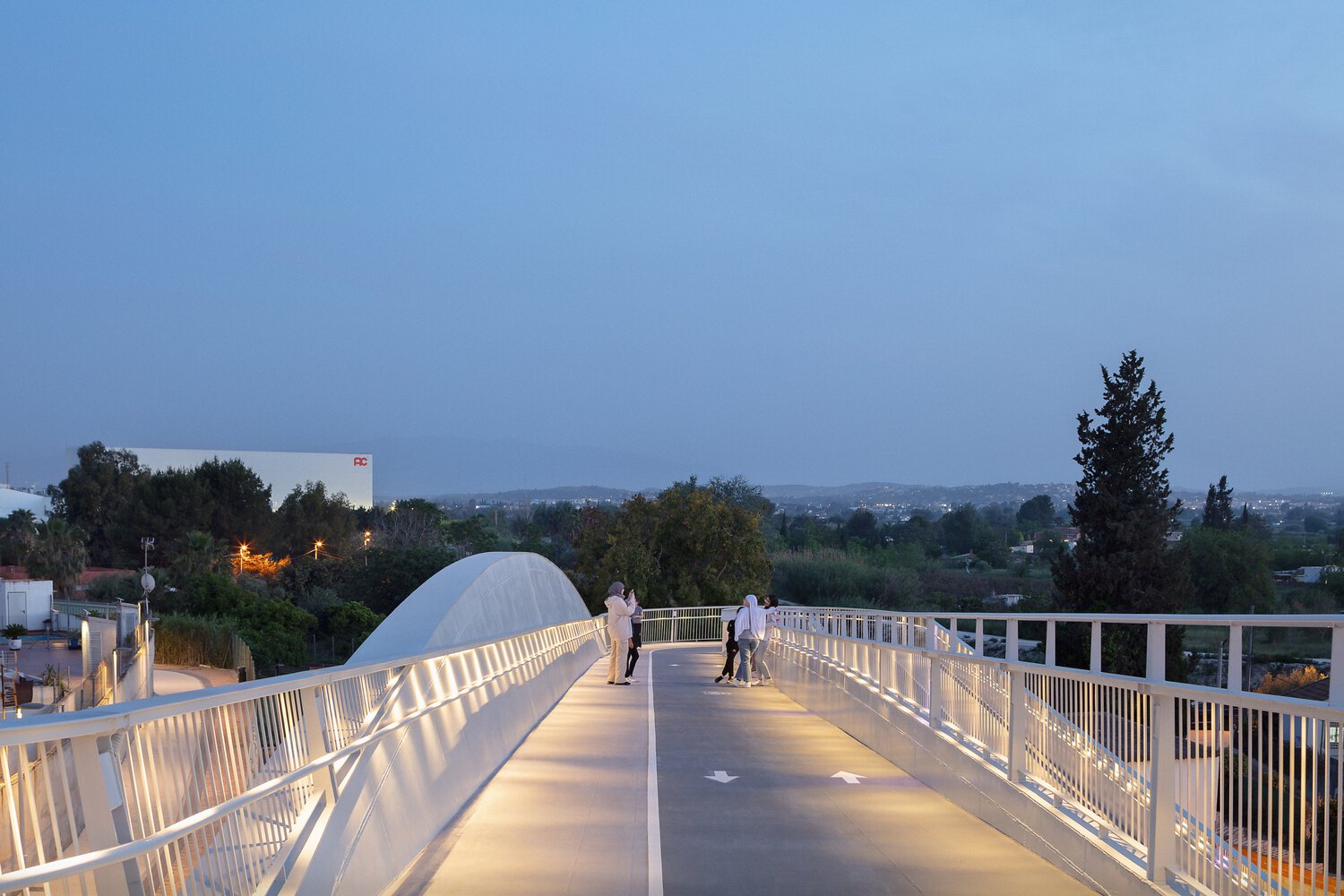
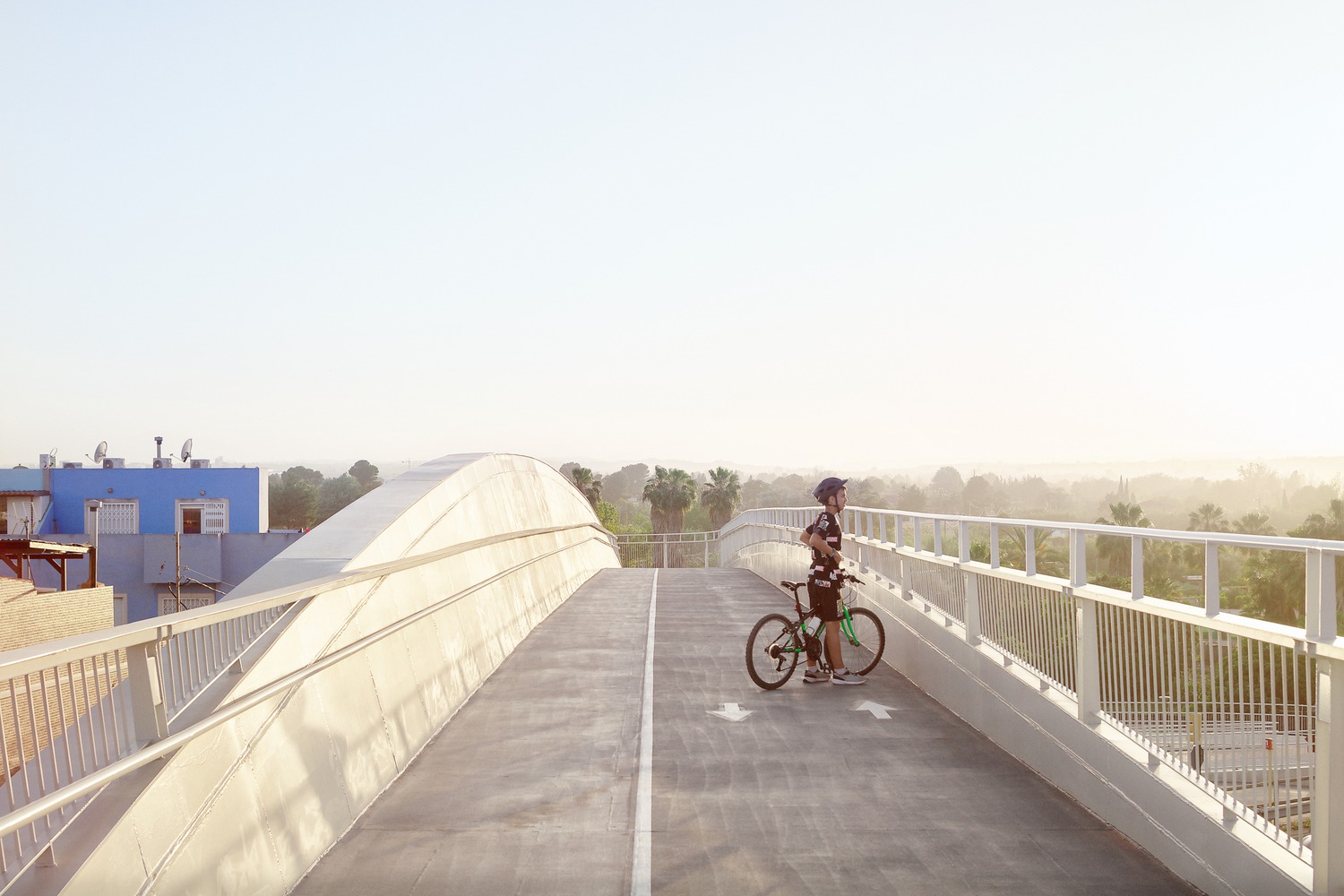
A new pedestrian and cycling connection transforms the boundary between the city, the agricultural landscape, and the Segura River into a public space for engaging with the surrounding landscape.
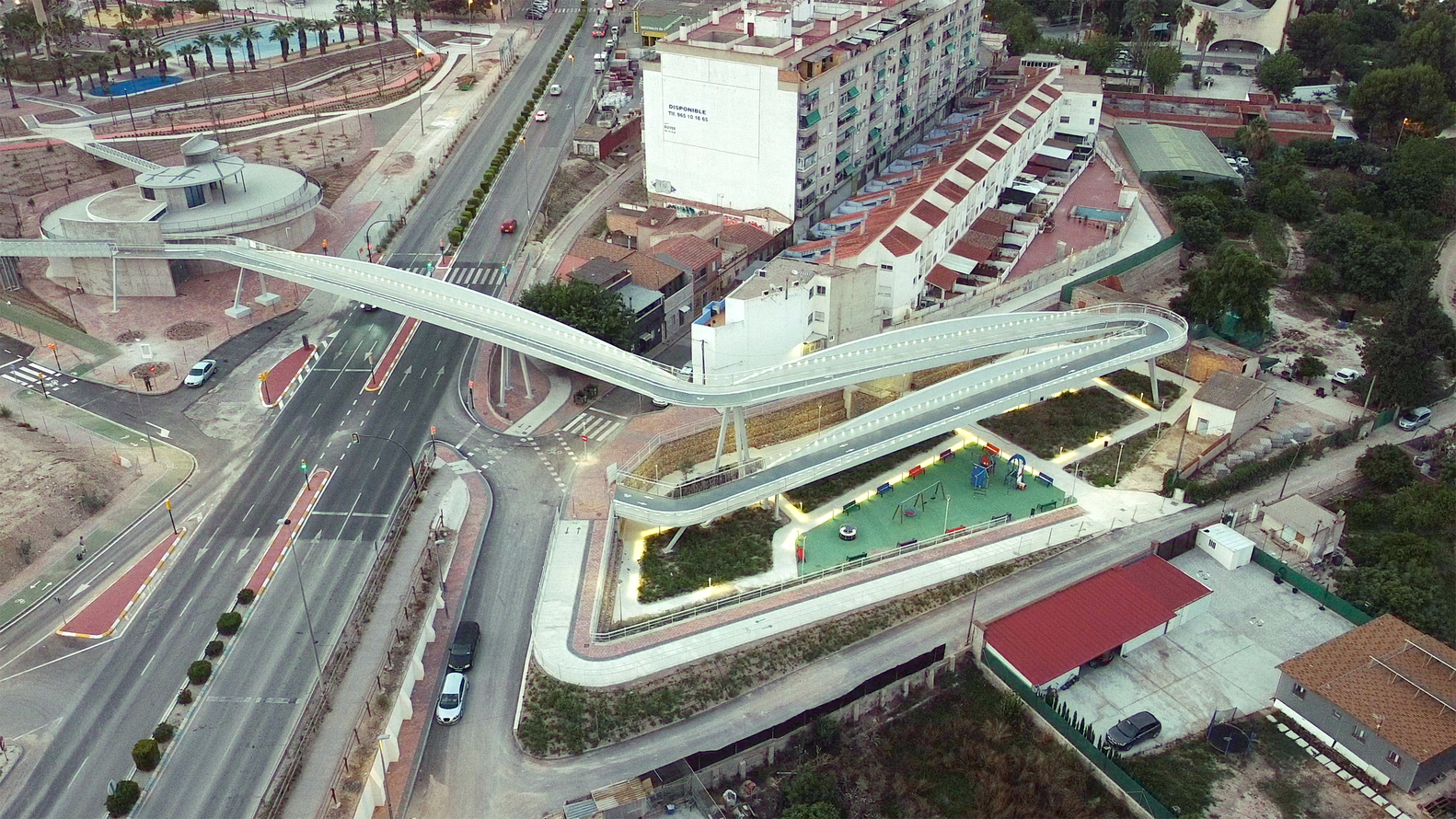
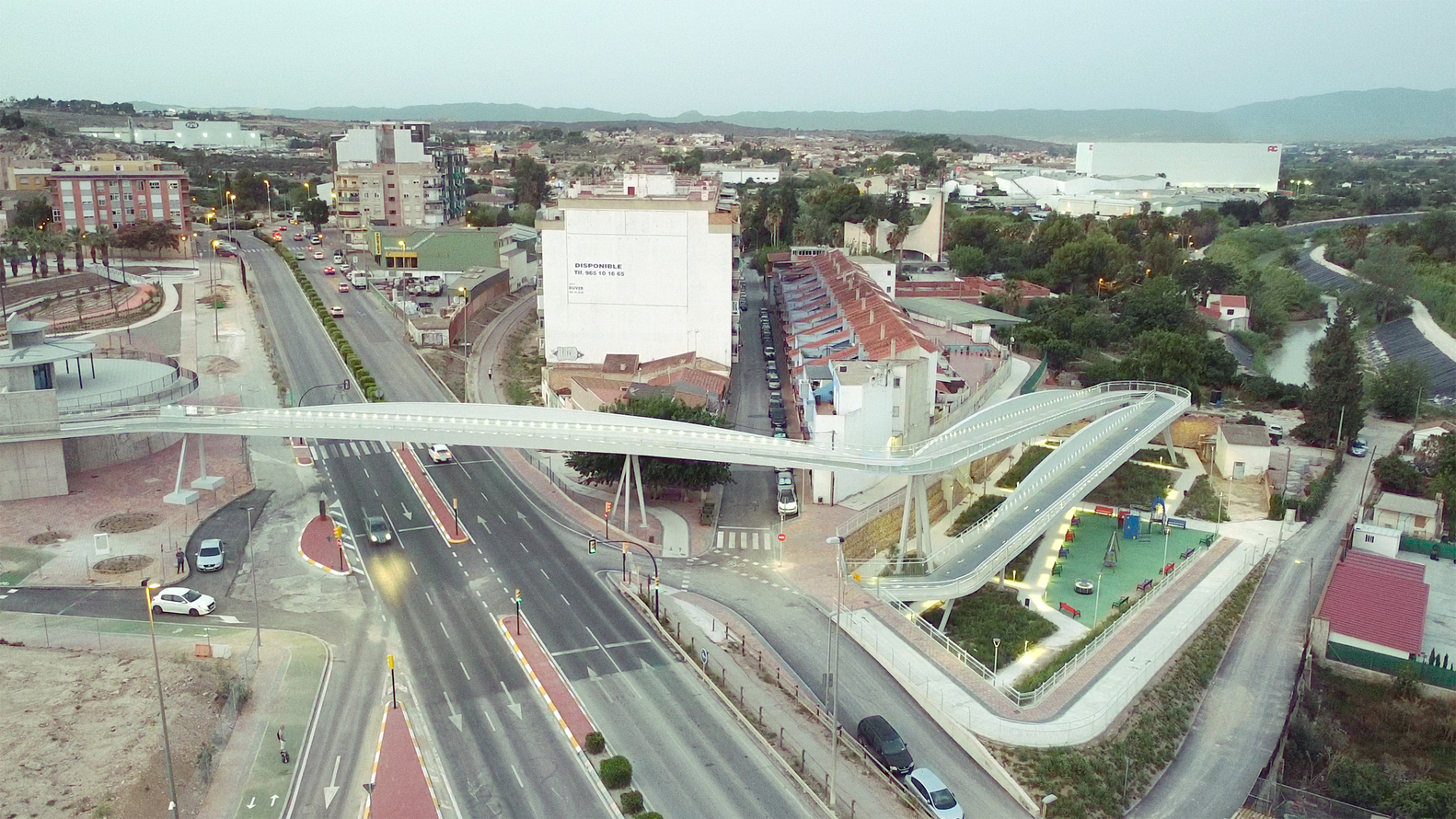
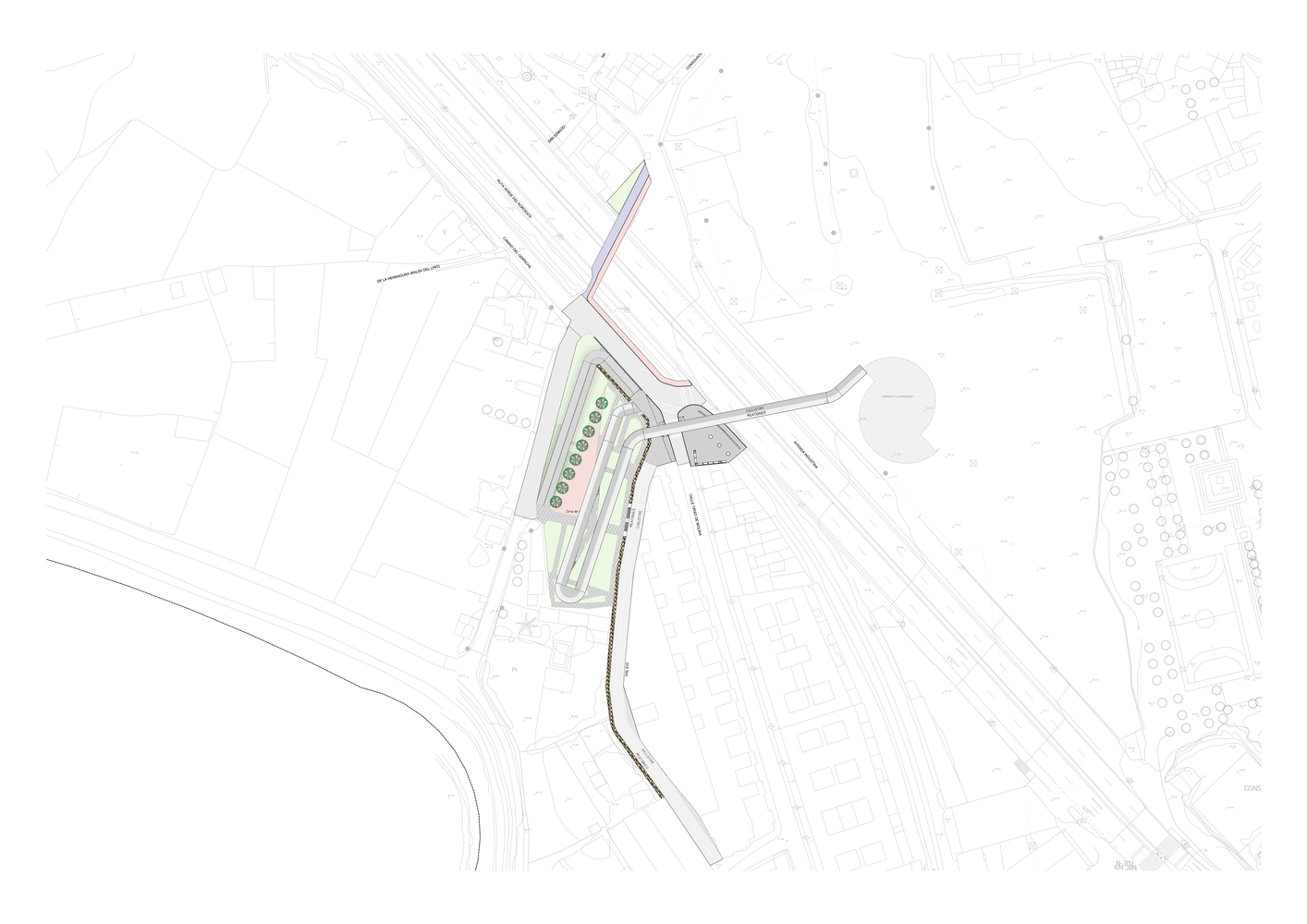
The project is located at a strategic point in Molina de Segura, at the transition between the urban fabric and the riverbank.
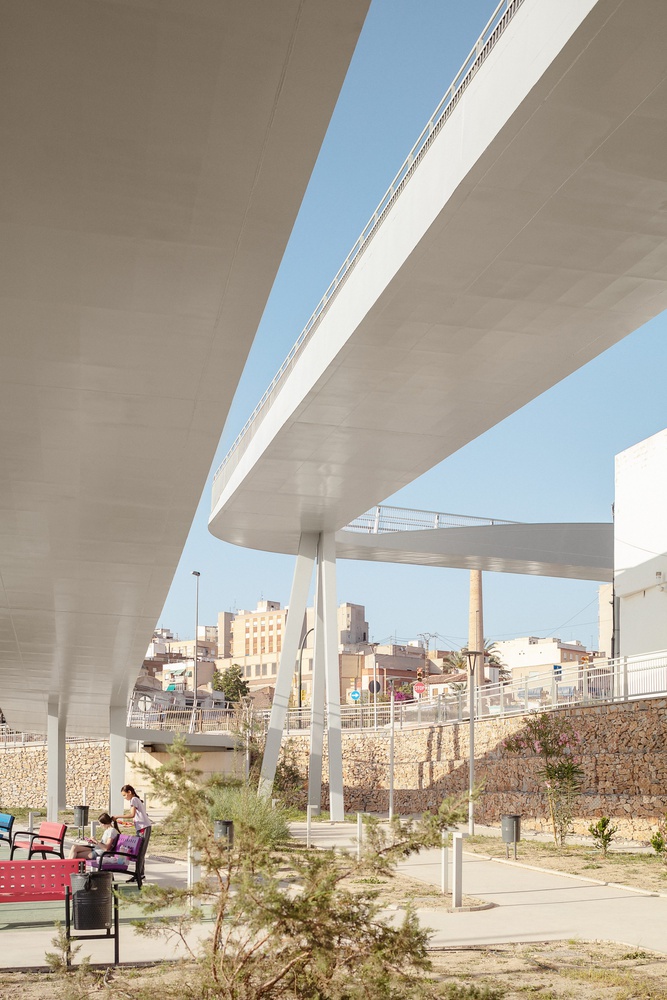
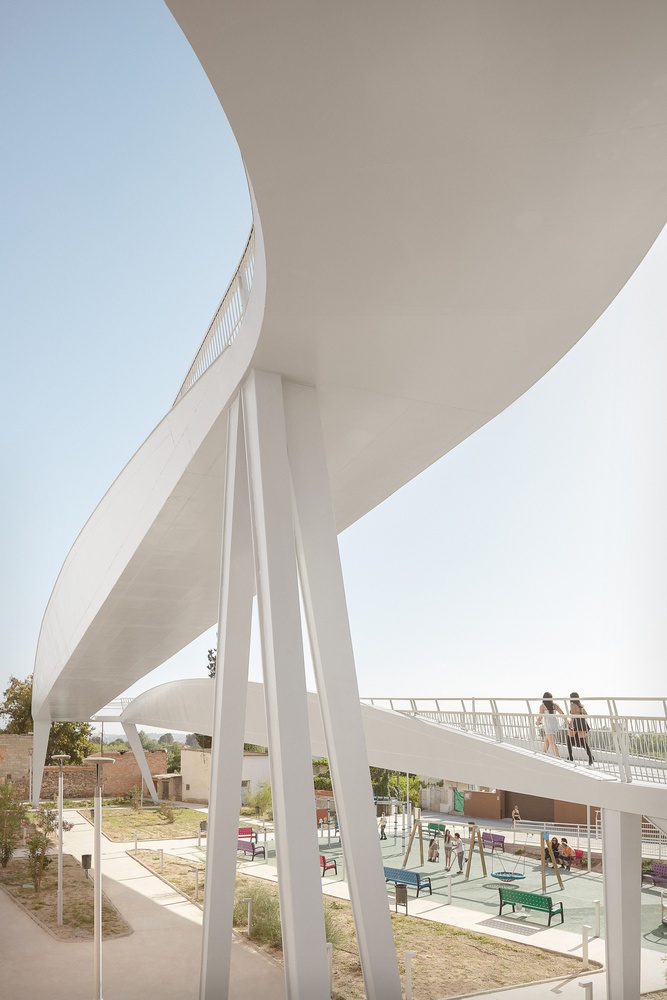
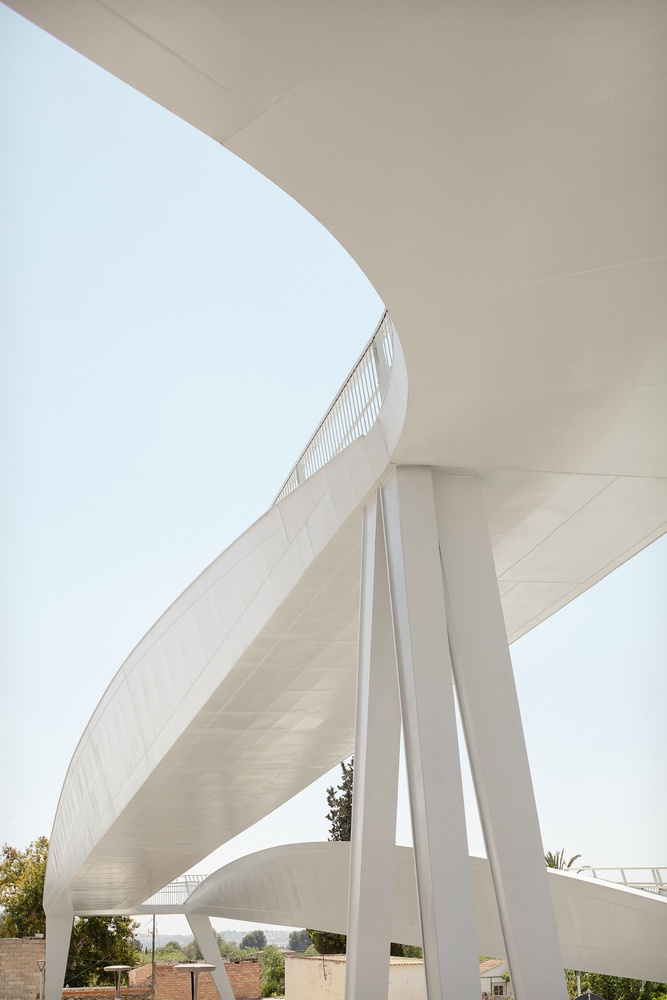
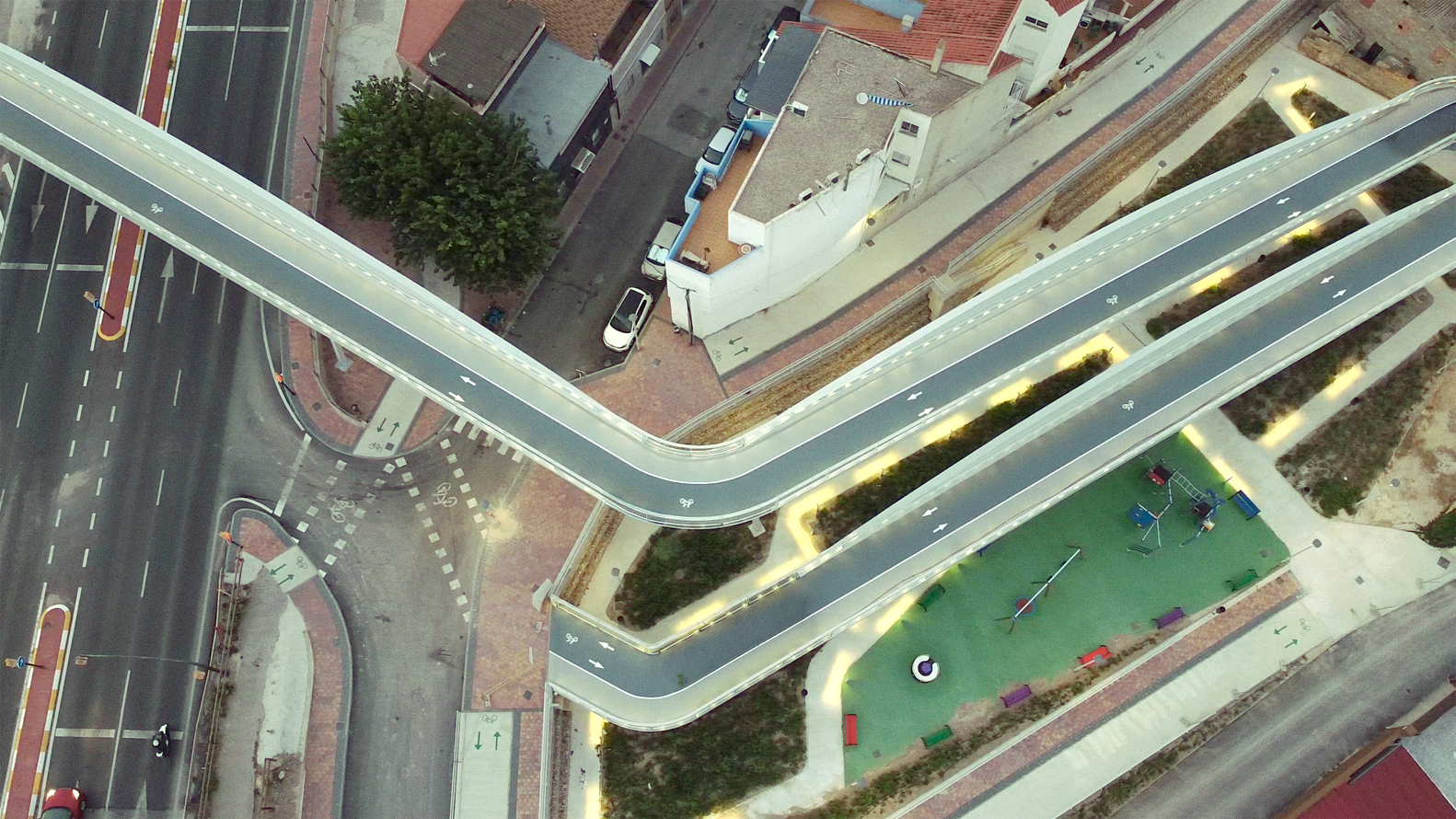
The intervention stems from the need to connect the city center and the San Roque neighborhood with the Vía Verde del Noroeste, but expands this initial objective to address the convergence of different routes and the integration of new public spaces and green areas.
Given its position at this urban edge, the footbridge is conceived not only as a connecting infrastructure but also as an opportunity to strengthen the relationship between the city and its surroundings.
The project aims to encourage pedestrian and cycling mobility while creating a new place from which to experience the agricultural landscape and the Segura River.
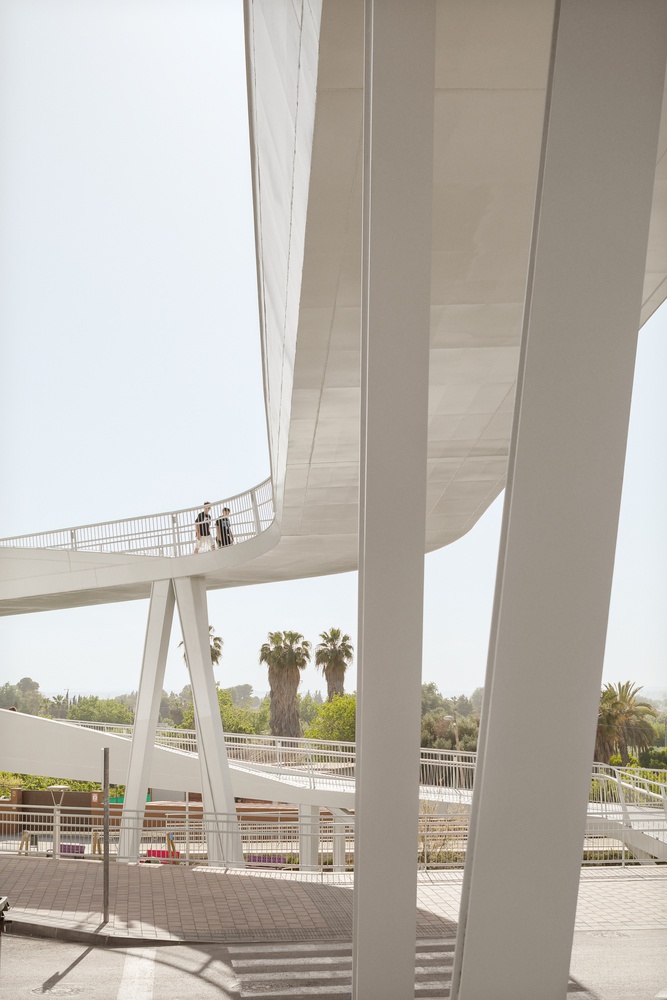
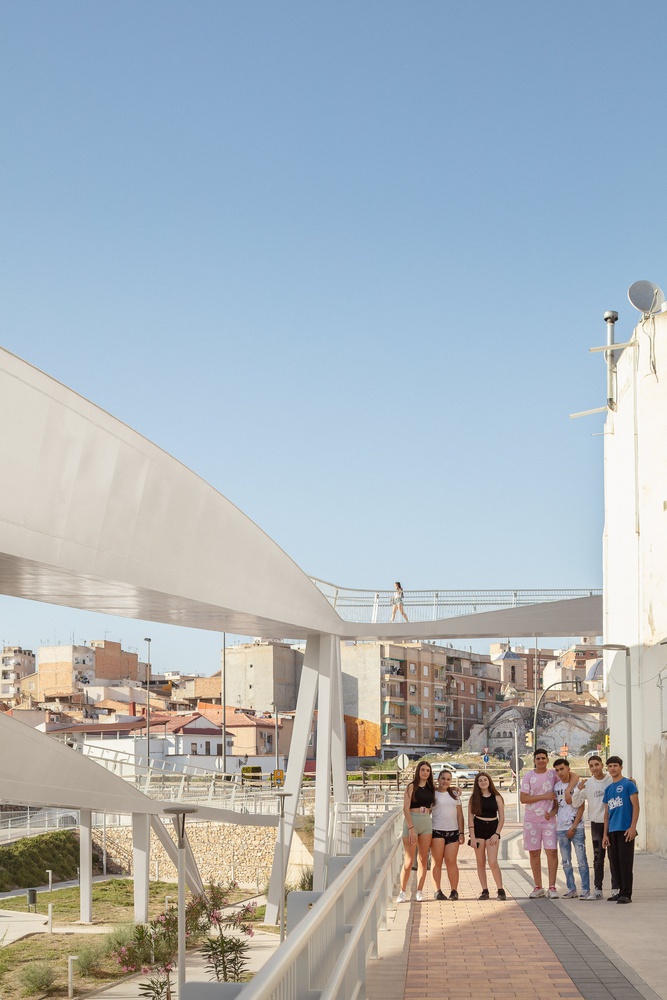
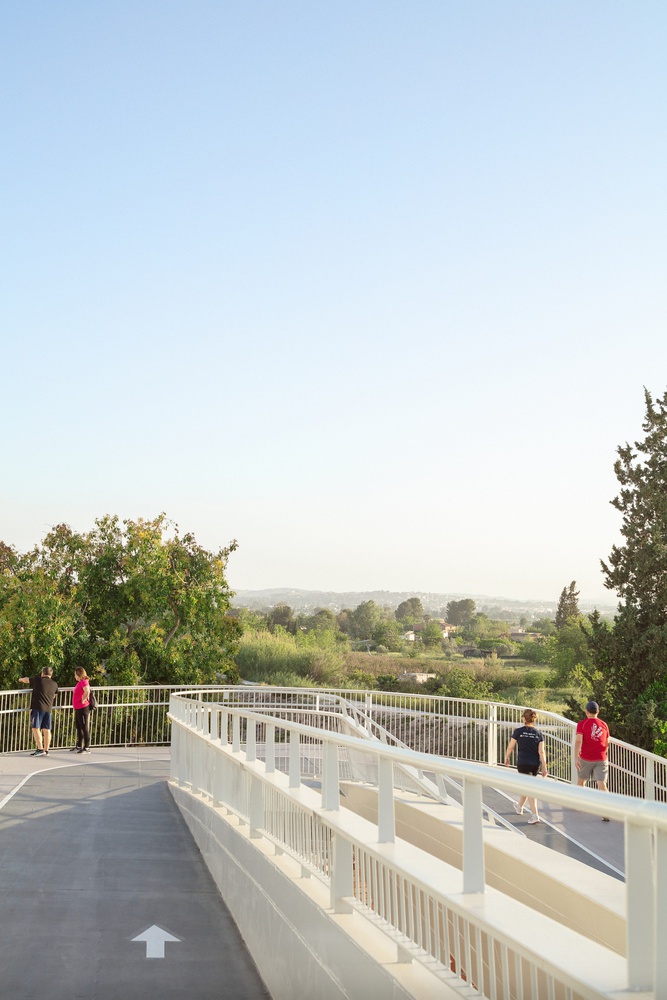
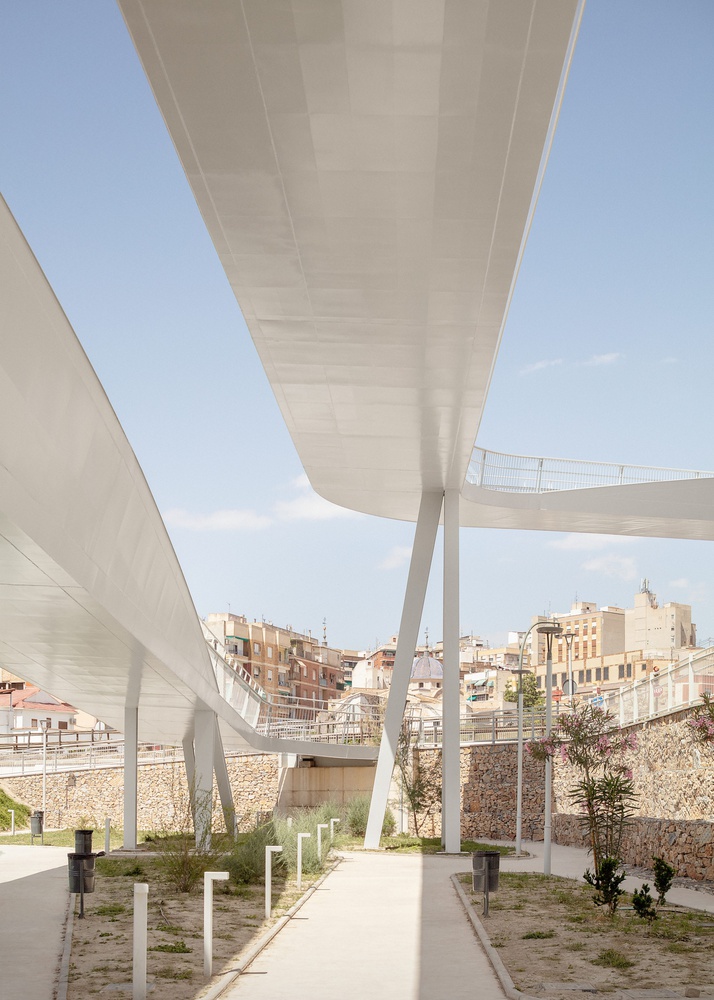
The structural solution is based on the intention to intervene with lightness and efficiency.
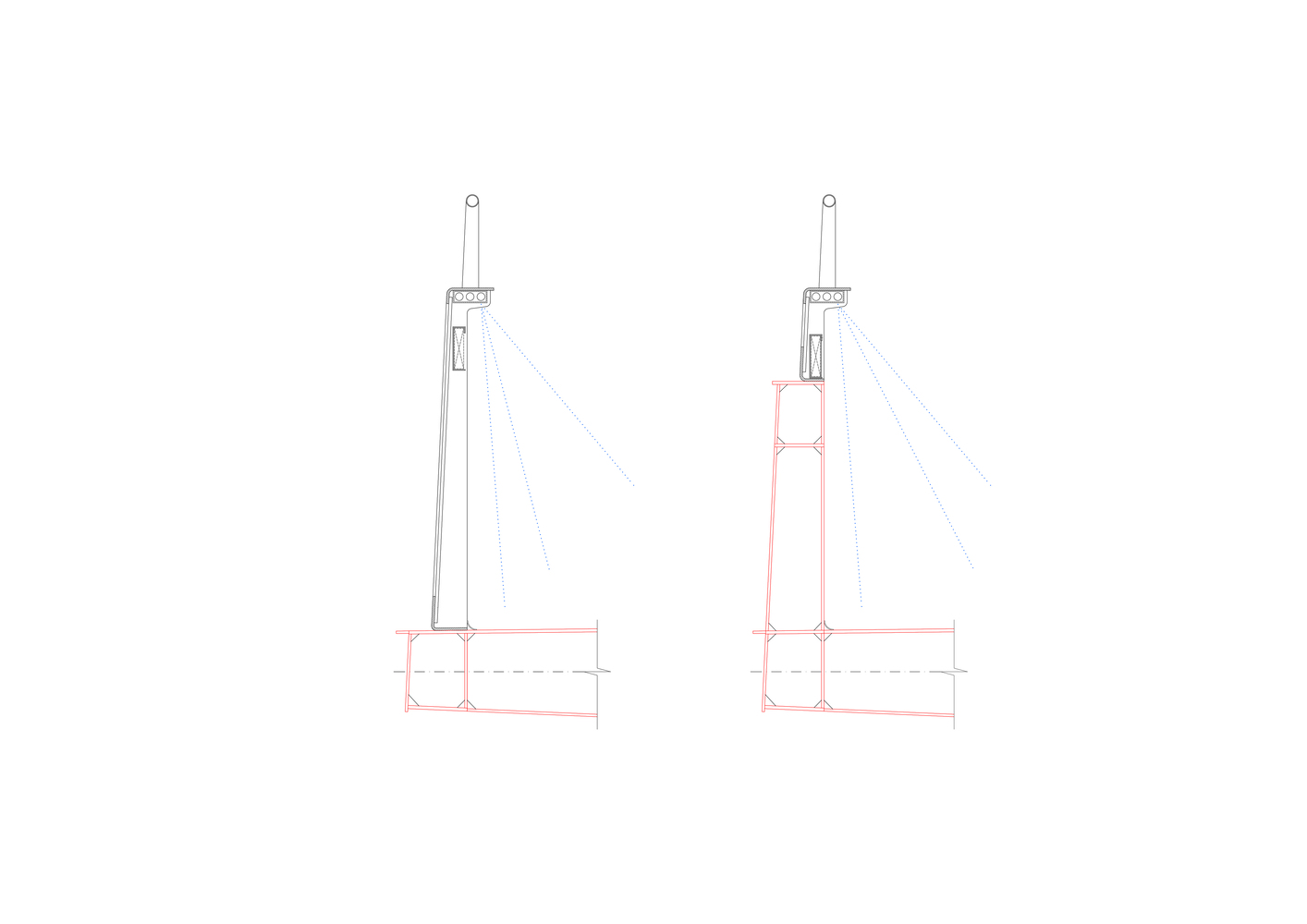
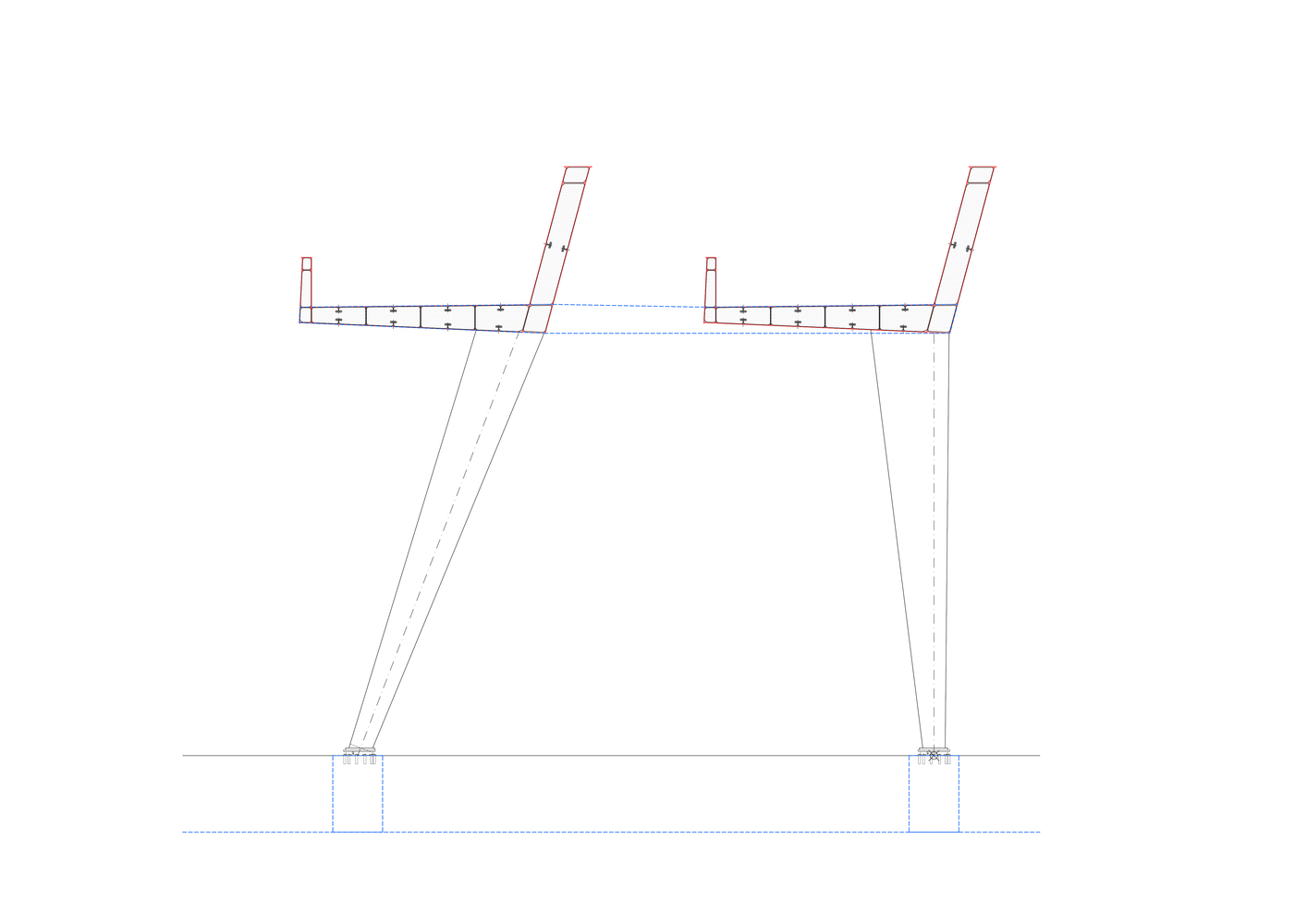
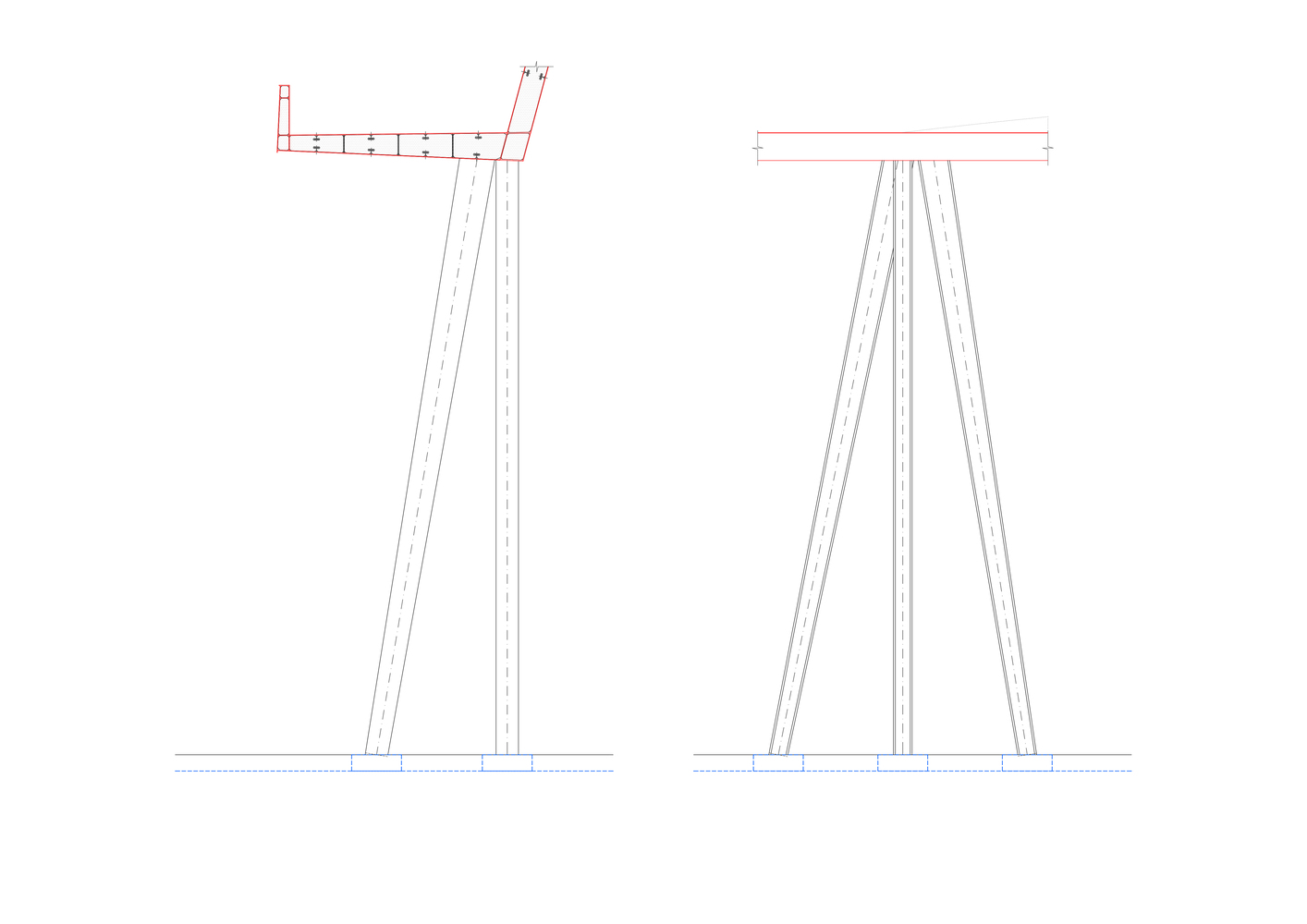
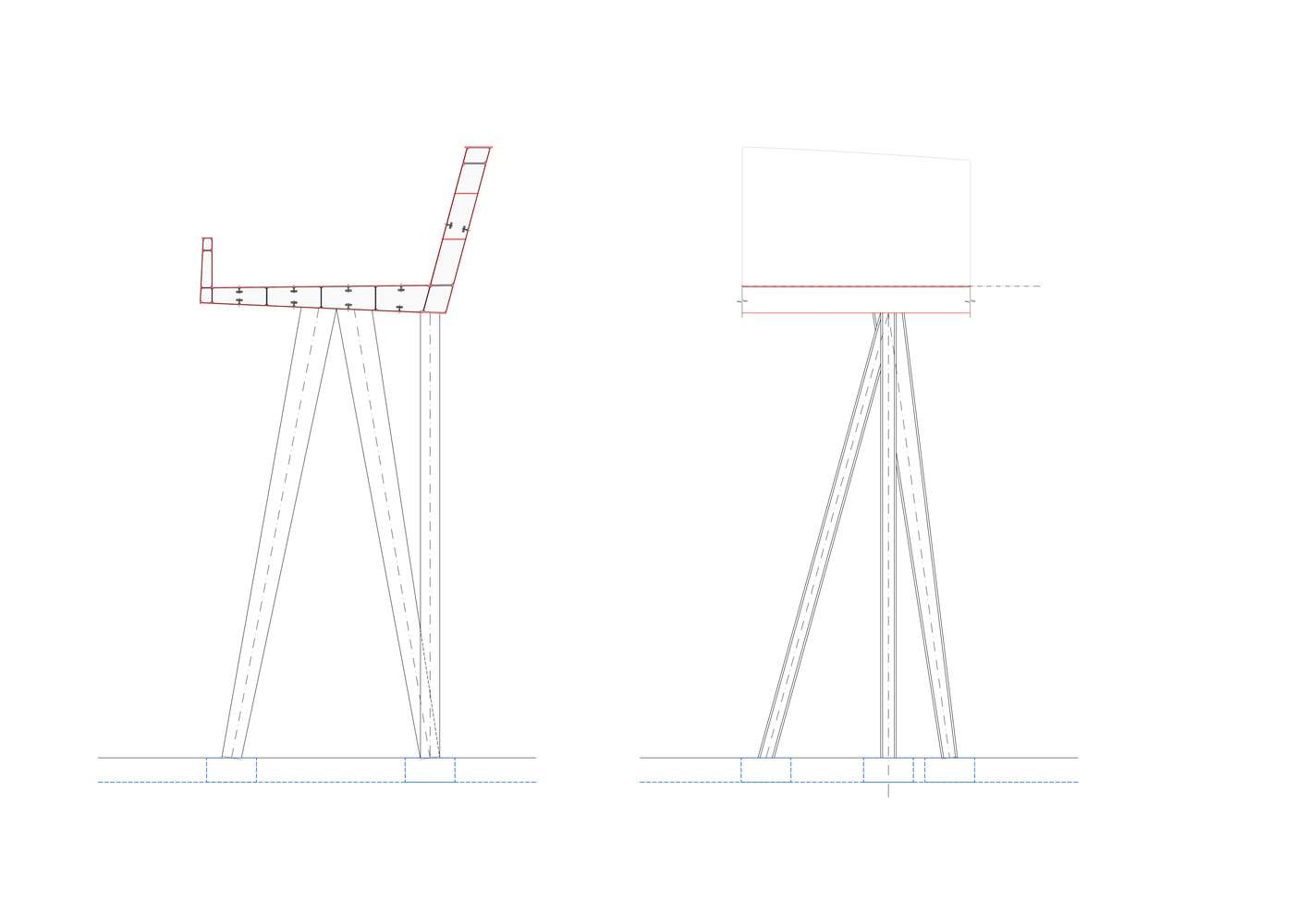
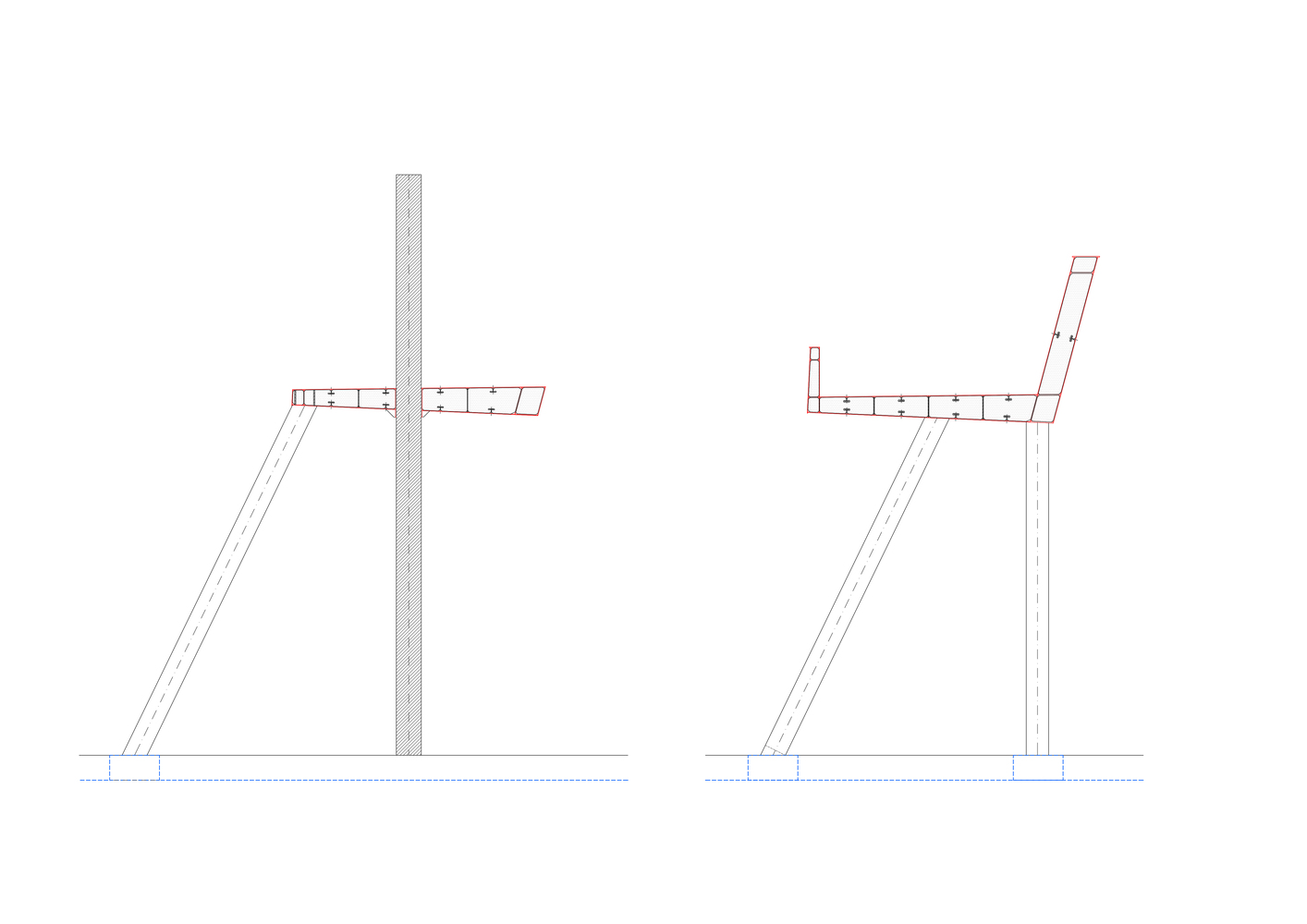
The footbridge takes advantage of the structural capabilities of rolled steel through a fully metallic orthotropic deck, composed of upper and lower plates connected by stiffeners and a lateral box girder that forms an L-shaped structural section.
The deck and girder thus function as a single structural system, optimizing material use and providing the necessary rigidity.
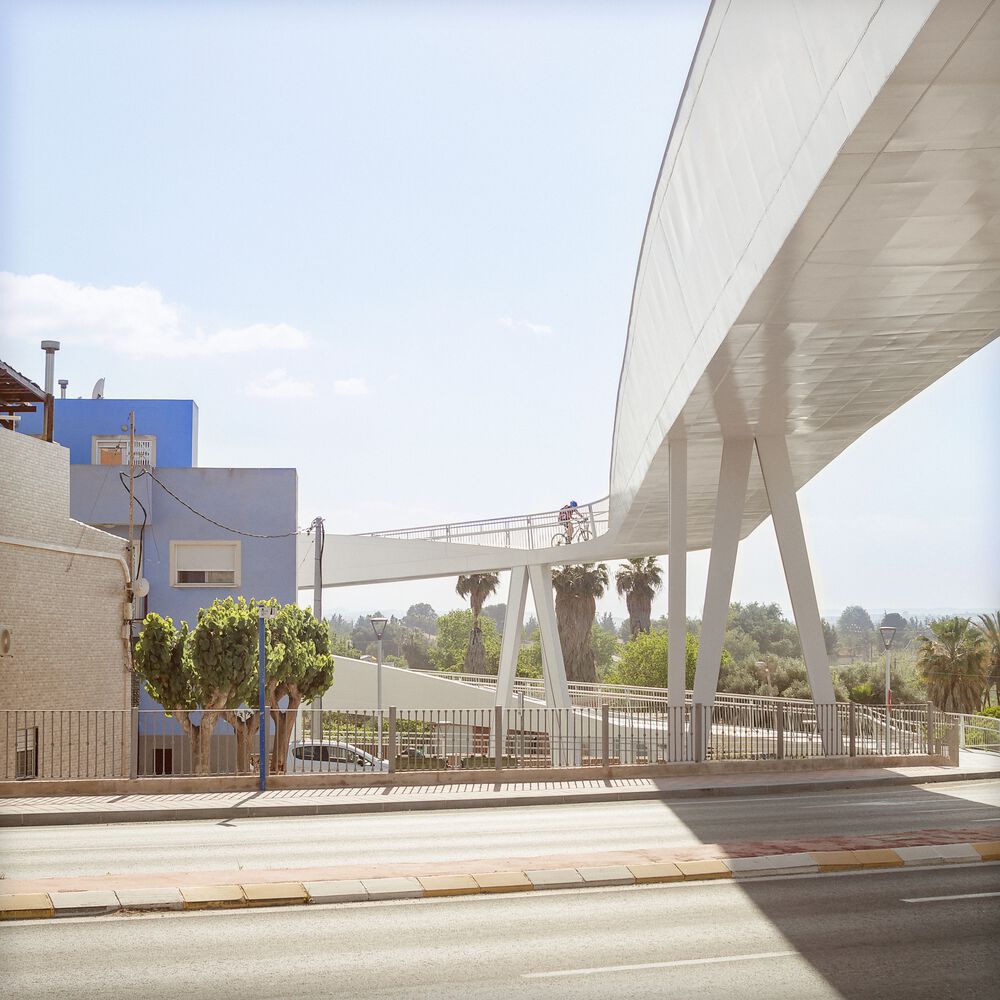
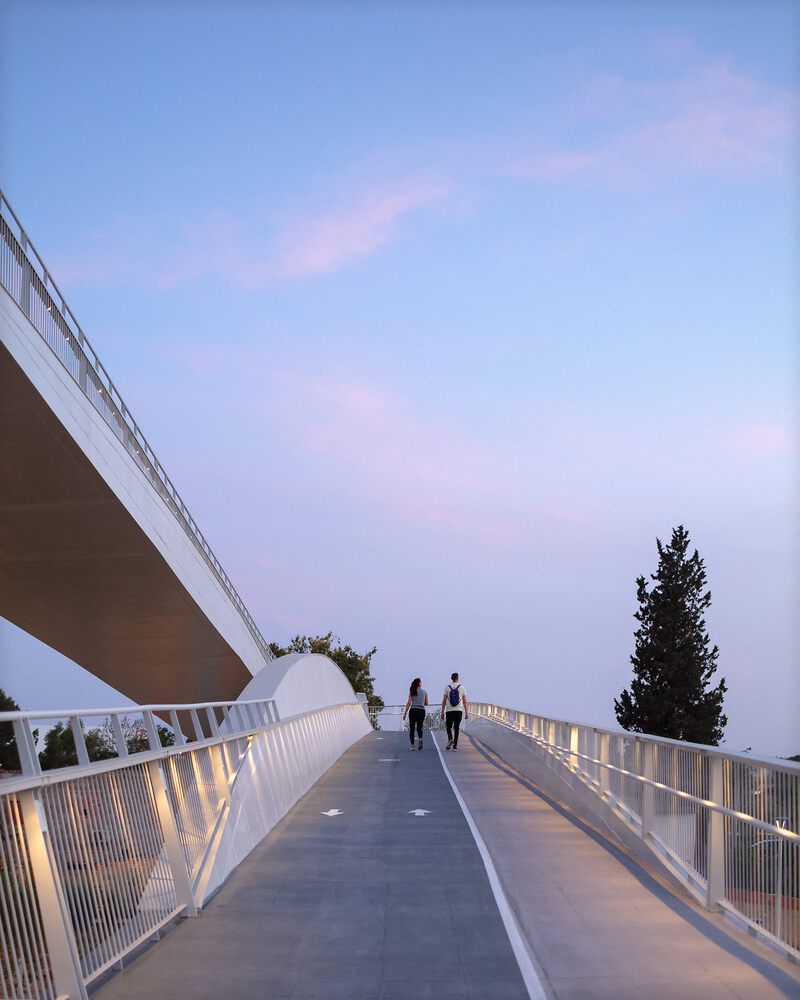
At the same time, the structure becomes part of the experience of the journey. Its variable section and the orientation of the deck direct views toward the river and agricultural landscape, avoiding direct views of the nearby homes.
The geometry thus responds to both structural criteria and the footbridge's relationship with its context, reducing its visual impact and enhancing the perception of the landscape along the route.
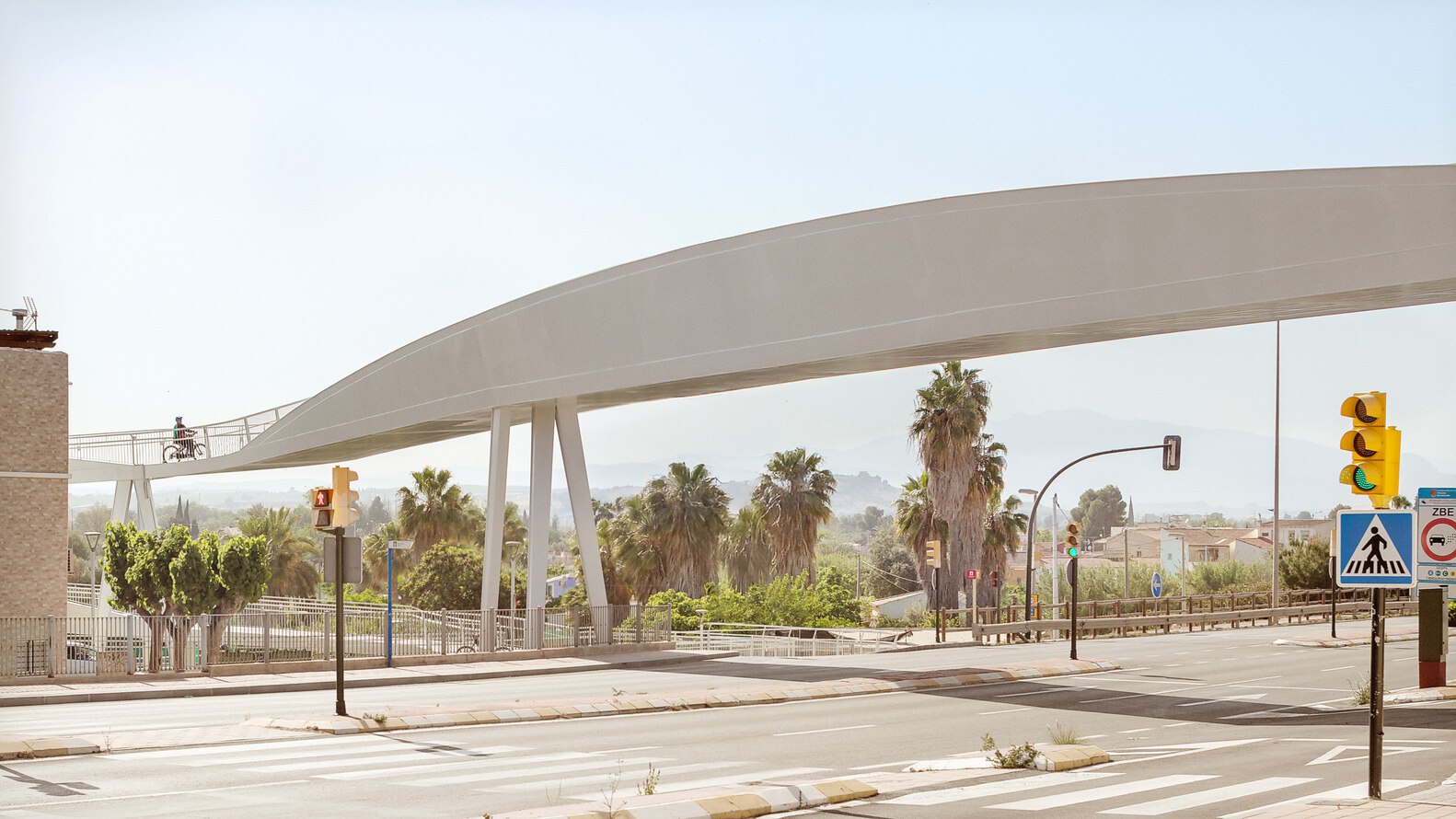
The choice of an entirely metallic solution also responds to construction and environmental criteria. Recyclable and reusable, steel makes it possible to develop a long-lasting structure while optimizing the amount of material used.
Eliminating concrete from the deck also reduces the use of materials and the processes associated with its construction, moving toward a more efficient infrastructure that is respectful of its surroundings.
The result is a lightweight structure that seeks to integrate into the riverside landscape without sacrificing its own identity.
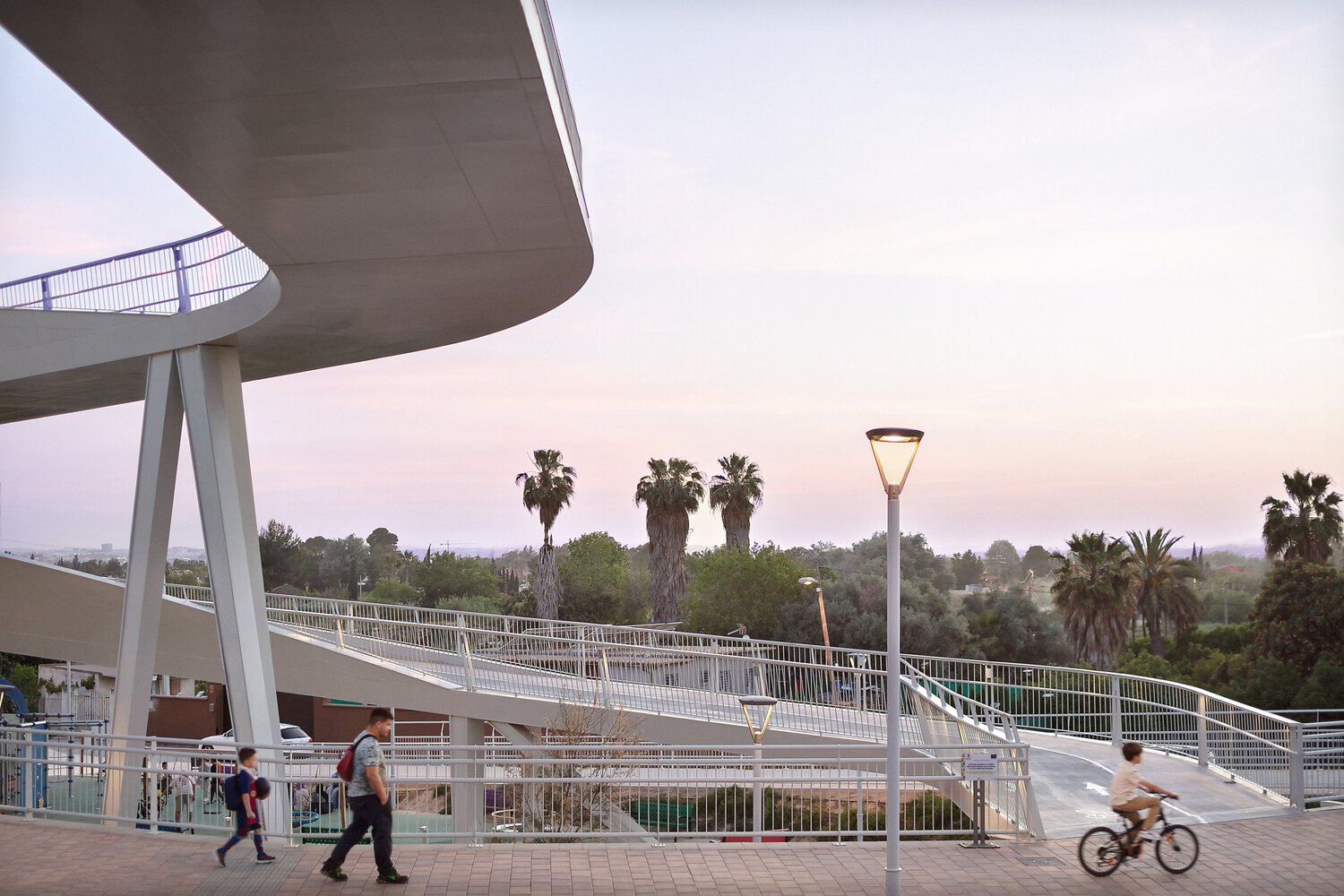
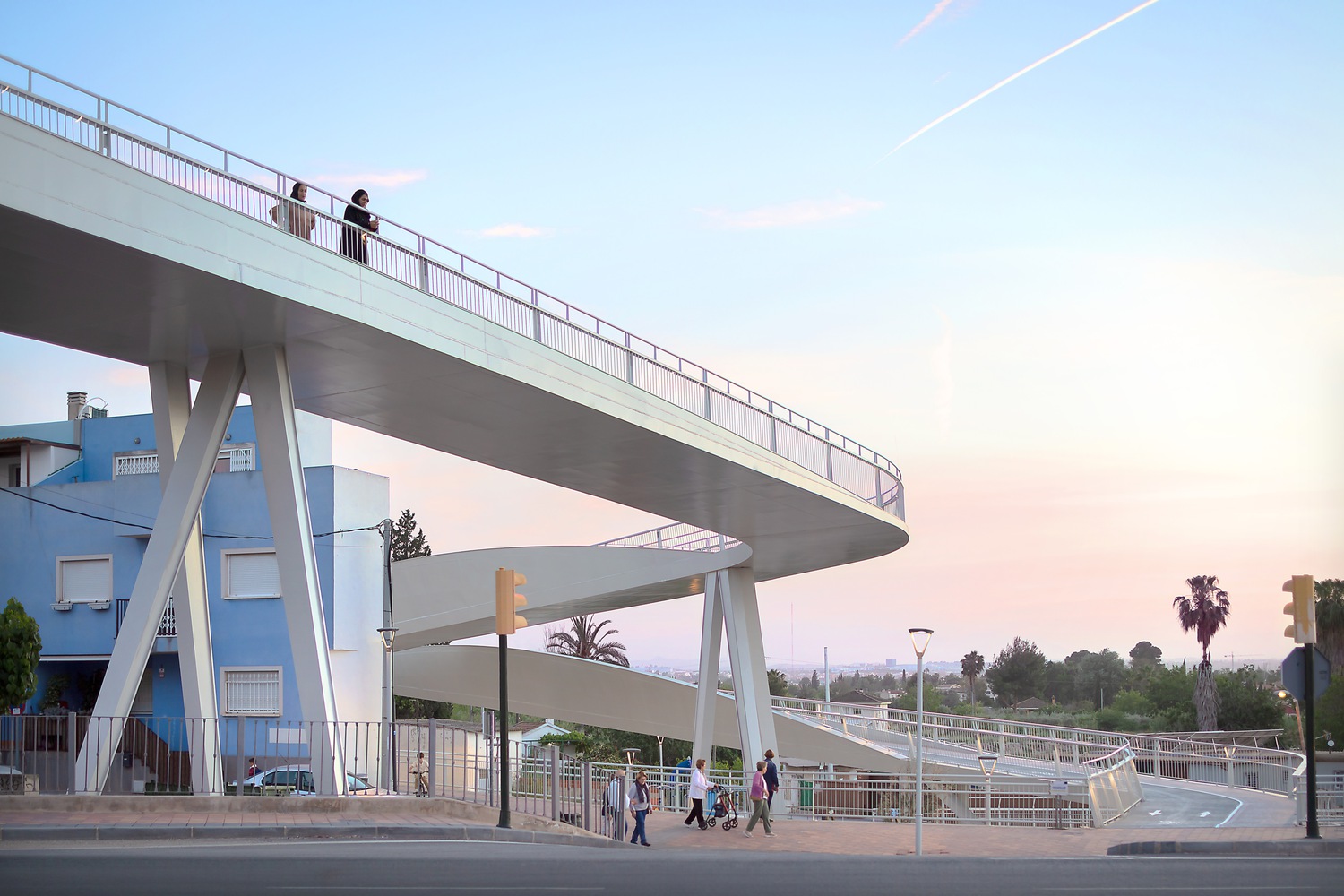
Beyond providing a connection, the footbridge establishes a new route between Molina de Segura, the agricultural landscape, and the river, bringing mobility, public space, and landscape together in a single intervention.
The project was developed by FVAI ESTRUCTURAS ARQUITECTURAS through a multidisciplinary approach, integrating engineering, architecture, drafting, and economics to address the structural, urban, landscape, and construction dimensions of the intervention as a whole.