
Under The Drying Nets
UNDER THE DRYING NETS
Multi-Architecture
ARCHITECTS
Multi-Architecture
LEAD ARCHITECTS
Jin Yuan
LEAD DESIGNERS
Jin Yuan, Chen Li, Ji Shaomin
CLIENTS
Art At Qiaoshan – Art Field Nanhai Guangdong 2026
FABRIC DESIGN
Qi Qi
DESIGN TEAM
Jin Yuan,Chen Li ,ji Shaomin, Zhang Zhiyi, Tan Zexi, Zhou Xinyang, Liu Binna, Zhang Zehong, Xue Tong
CURATOR YUGENGYUEYUN SECTION FISHING AND FARMING CABANAS 20 FOR ART FIELD NANHAI GUANGDONG SEASON 3
Wang Zigeng
EXECUTIVE CURATOR YUGENGYUEYUN SECTION FISHING AND FARMING CABANAS 20 FOR ART FIELD NANHAI GUANGDONG SEASON 3
Ren Yuqing
CURATOR ART AT QIAOSHAN – ART FIELD NANHAI GUANGDONG 2026
Hubrat
CHIEF PLANNER ART AT QIAOSHAN – ART FIELD NANHAI GUANGDONG 2026
Sun Qian
STRUCTURAL CONSULTING
Istructure
PHOTOGRAPHS
Yumeng Zhu, Fangfang Tian
AREA
180 m²
YEAR
2026
LOCATION
Foshan, China
CATEGORY
Pavilion
English description provided by the architects.
AT THE INVITATION OF THE ART AT QIAOSHAN
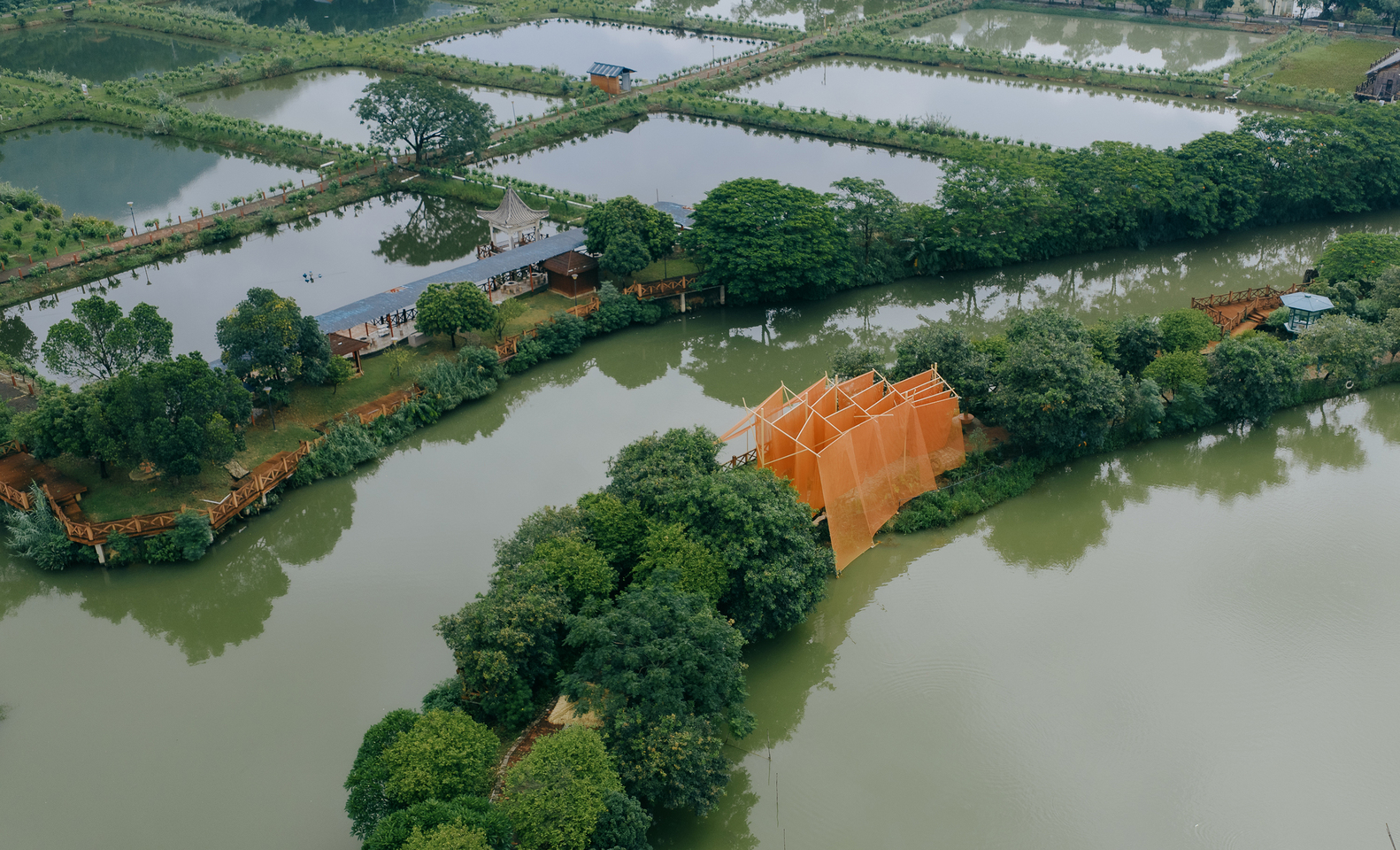
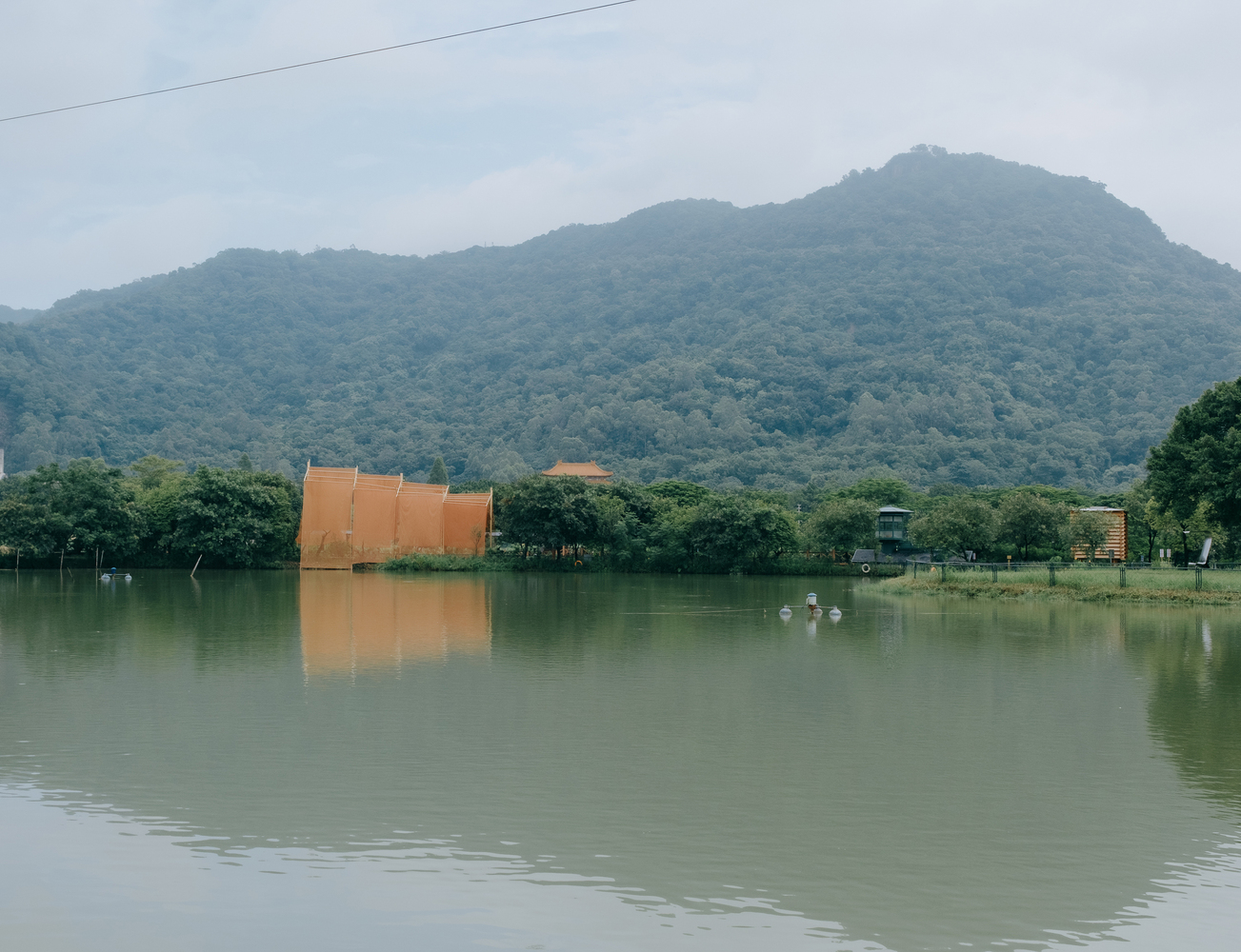
Art Field Nanhai, Multi-Architecture designed an installation for the "Yugengyueyun Section--Fishing and Farming Cabanas 2.0" zone.
Nanhai has long been renowned for its "mulberry-dike-fish-pond" system—a cyclical mode of production and living where mulberry trees are grown and silkworms raised on the dikes, while fish are cultivated in the ponds, with land and water mutually nourishing one another.
In this setting, fishing nets serve not only as tools for the catch but also as familiar, natural elements of daily labor when hung out to dry.
- 1 THE INTERIORITY OF "WATER-SHADOW WINTER MELONS"
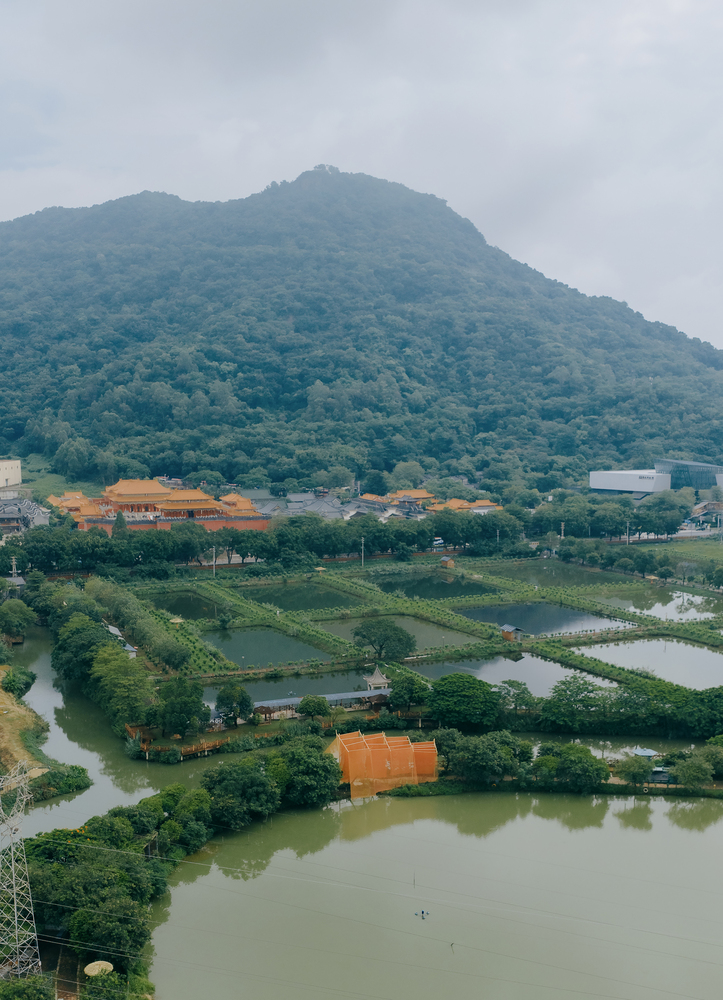
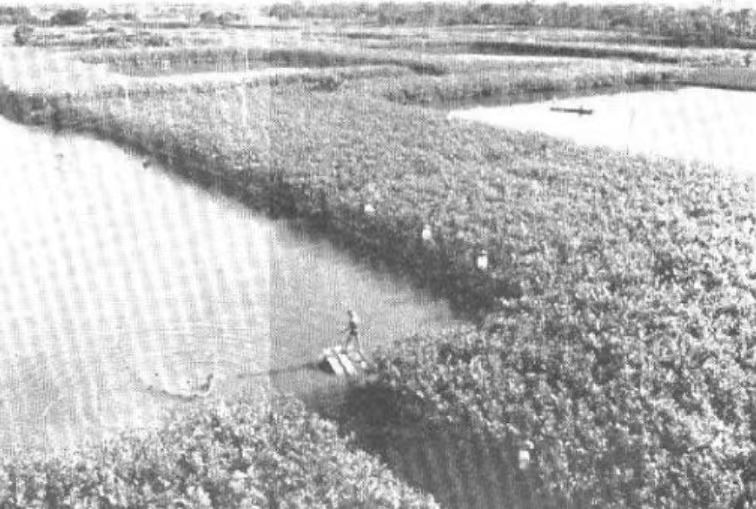
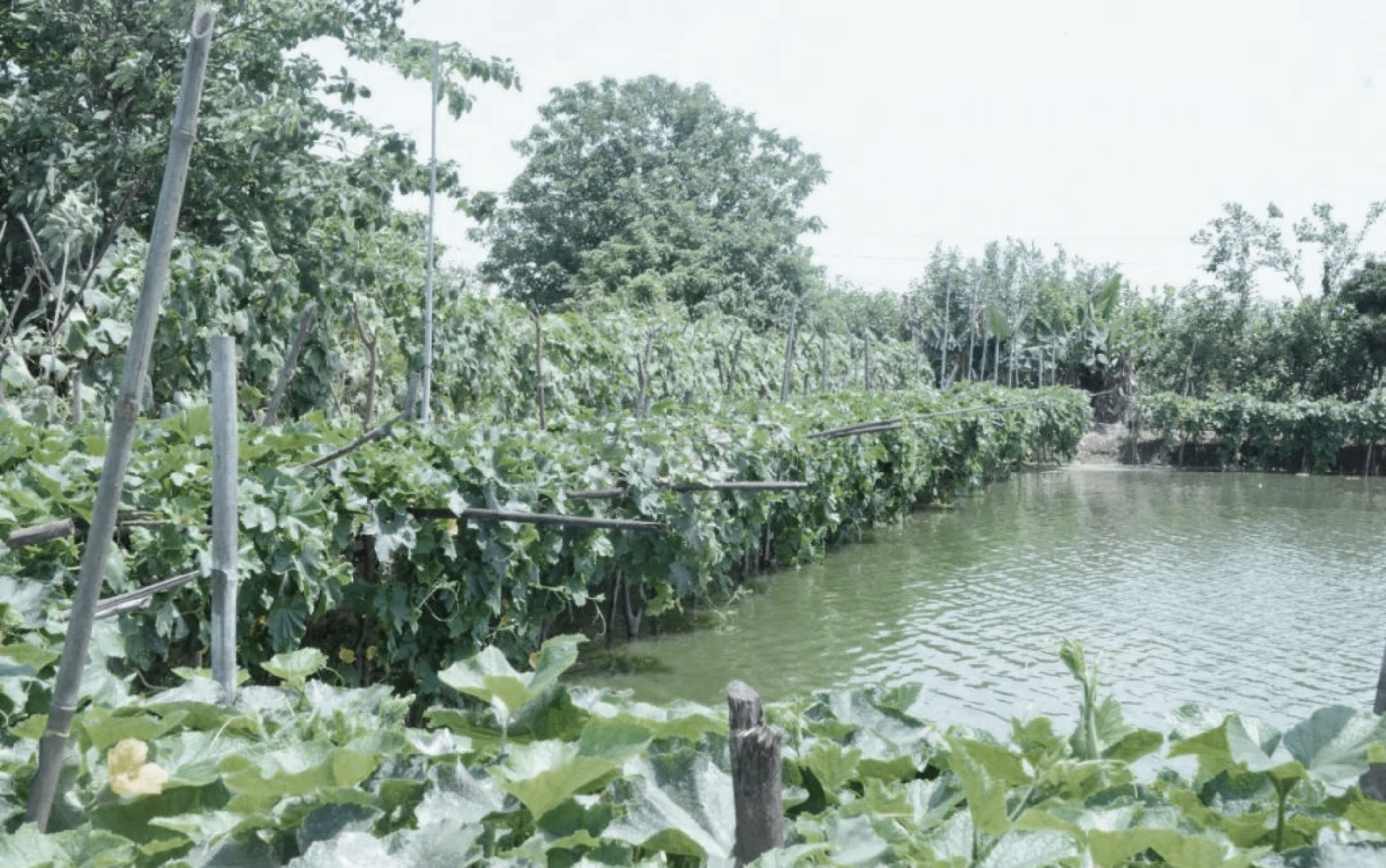
Throughout history and into the present, the site has consisted of contiguous mulberry-dike-fish-pond landscapes.
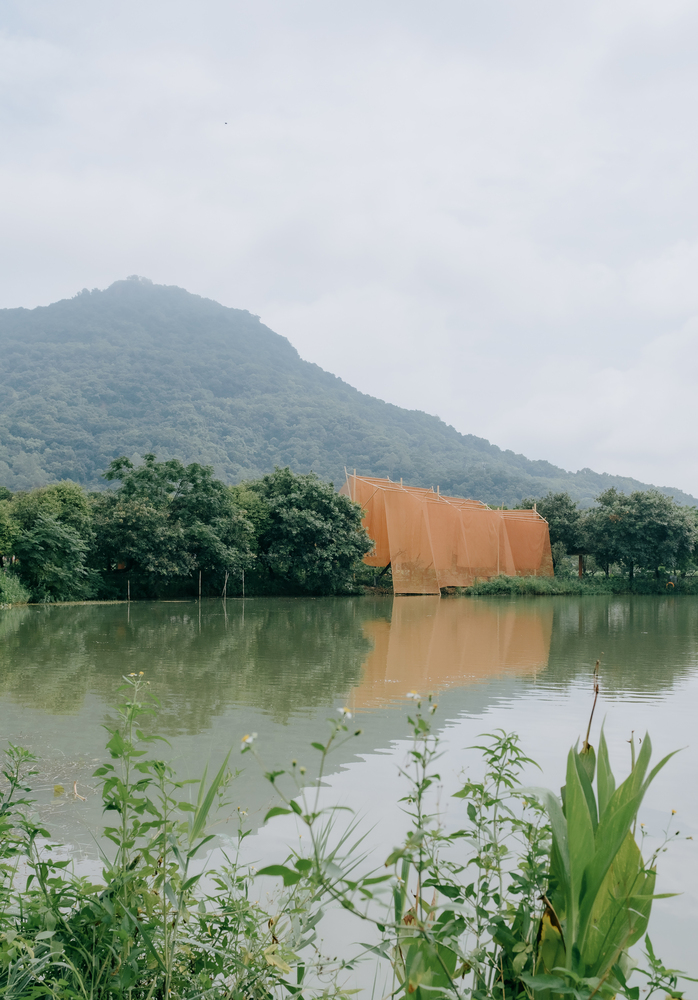
Decades ago, the appearance of these ponds differed significantly from what we see today; the landscape was lush and dense, with "water-shadow winter melons"—a local variety—growing on the dikes and forming a canopy that blocked out the sky.
This created a distinct sense of interiority and a powerful feeling of enclosure, offering a unique bodily experience of the space.
- 2 THE NEED FOR SHADE AND THE DRYING OF NETS
Fishing nets are the most familiar and cost-effective tools within the mulberry-dike-fish-pond system.
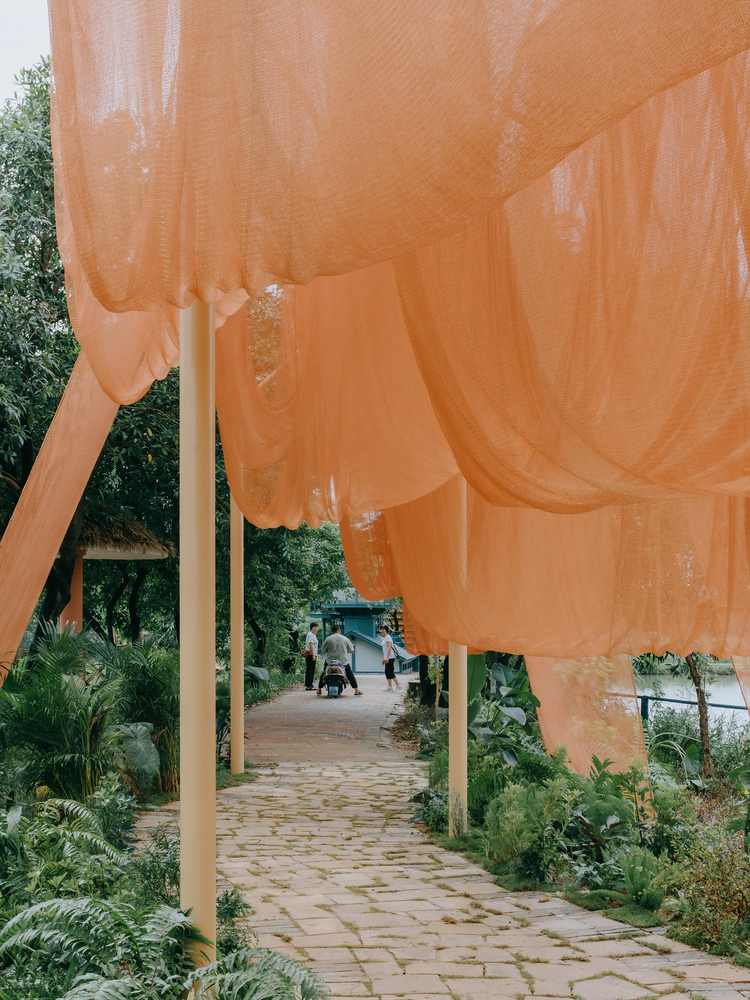
Furthermore, as the site was originally a section of a covered walkway within the park, the nets offered a potential solution for basic shading, naturally becoming the architectural language for this enclosed space.
- 3 VOLUMETRIC CALCULATION AND DIALOGUE WITH XIQIAO MOUNTAIN
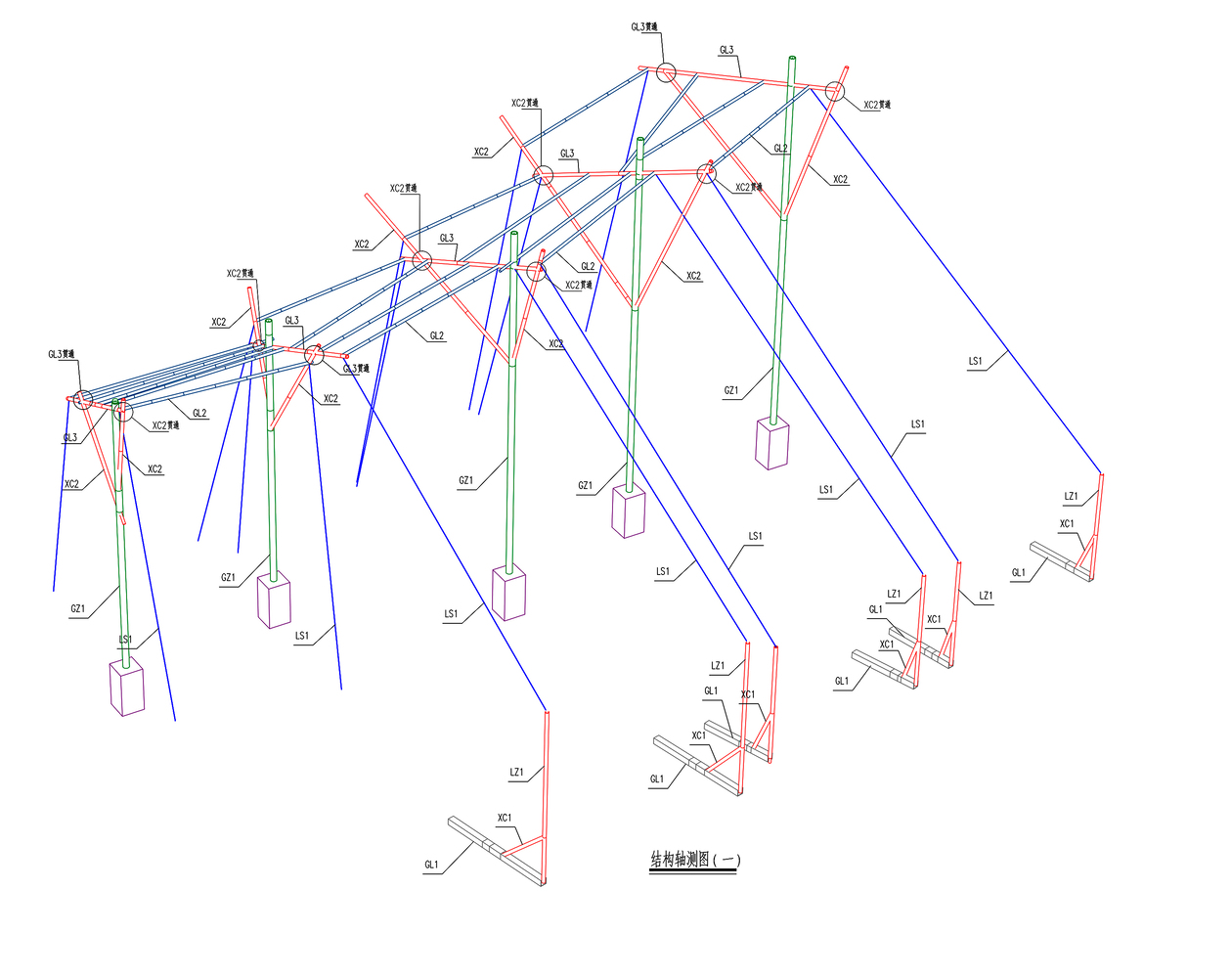
Constrained by a limited budget and the inability of the pond dikes to support heavy construction machinery, we collaborated with the structural team at iStructure to calculate the installation's volume.
We reached a consensus to maximize the volume despite the low budget. Scale is a crucial factor in land art; the affordability of fishing nets allowed us to expand from a small footprint to a larger one—extending to the water's edge and engaging in a dialogue with Xiqiao Mountain, effectively making the mountain and water integral parts of our site.

- 4 VERNACULAR STRUCTURE
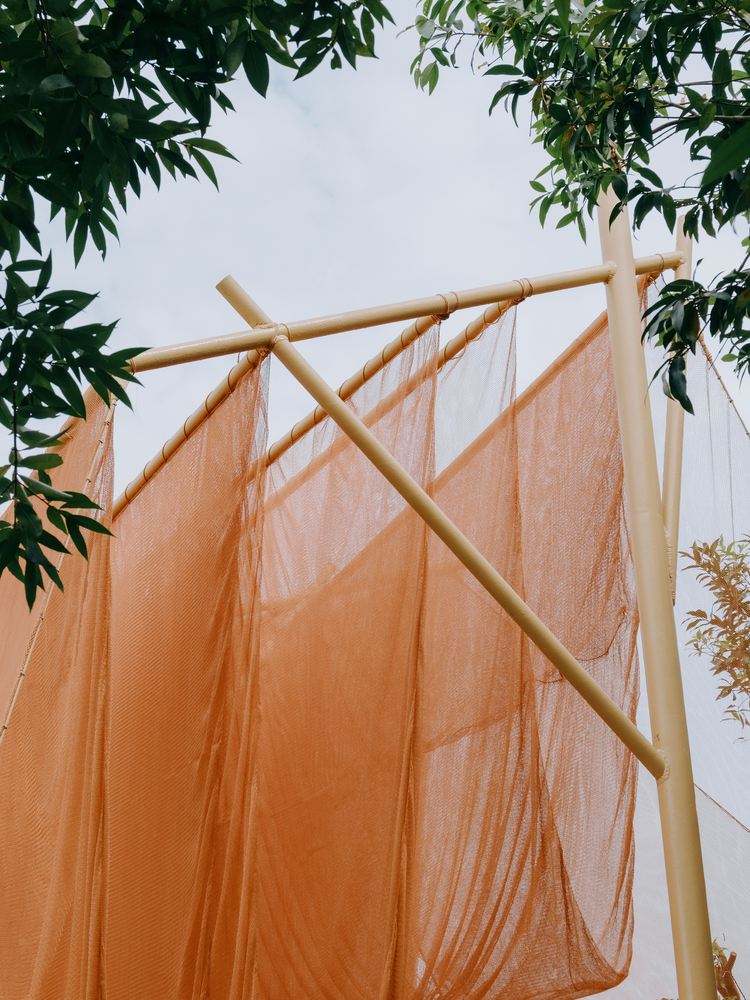
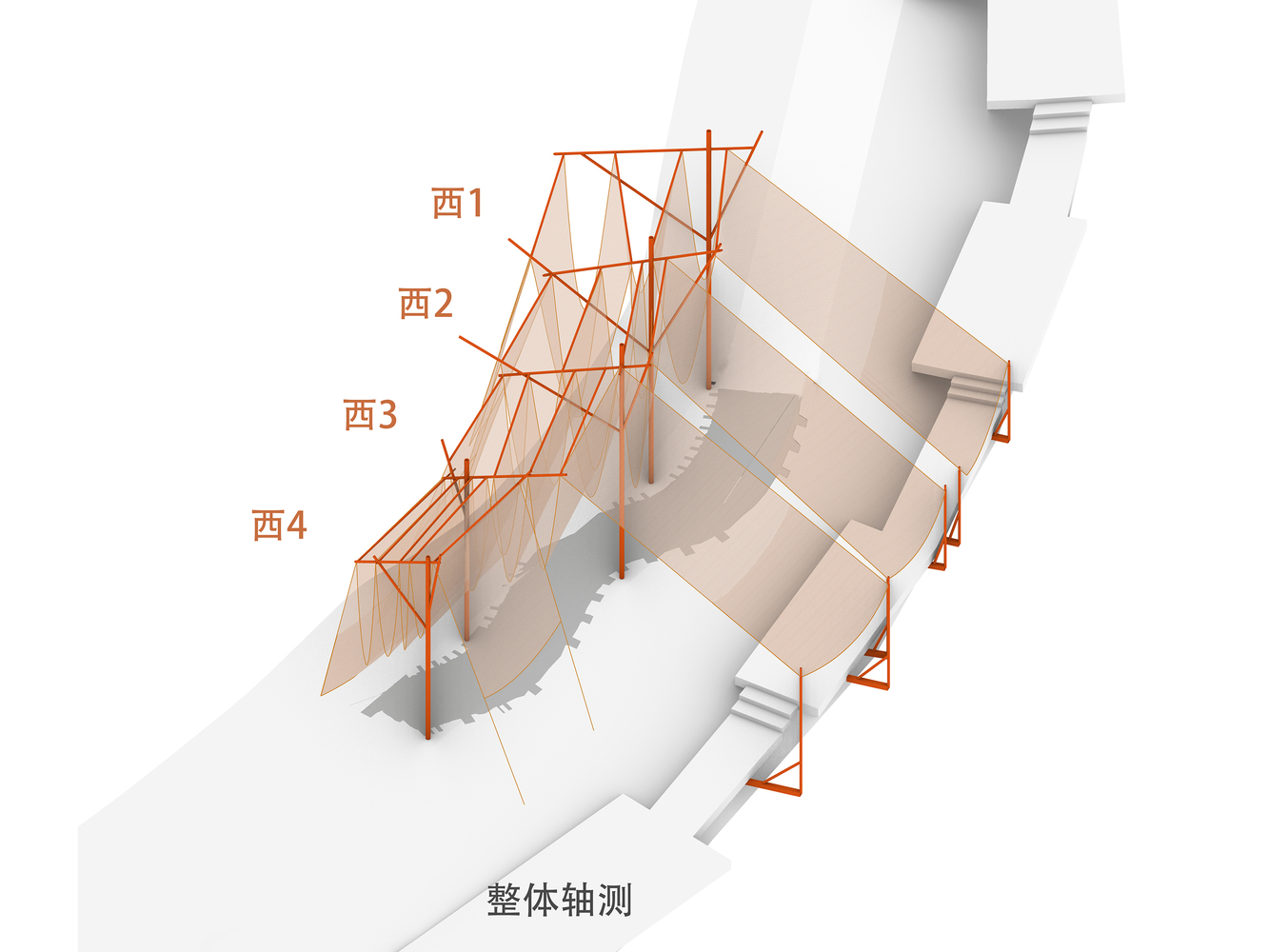
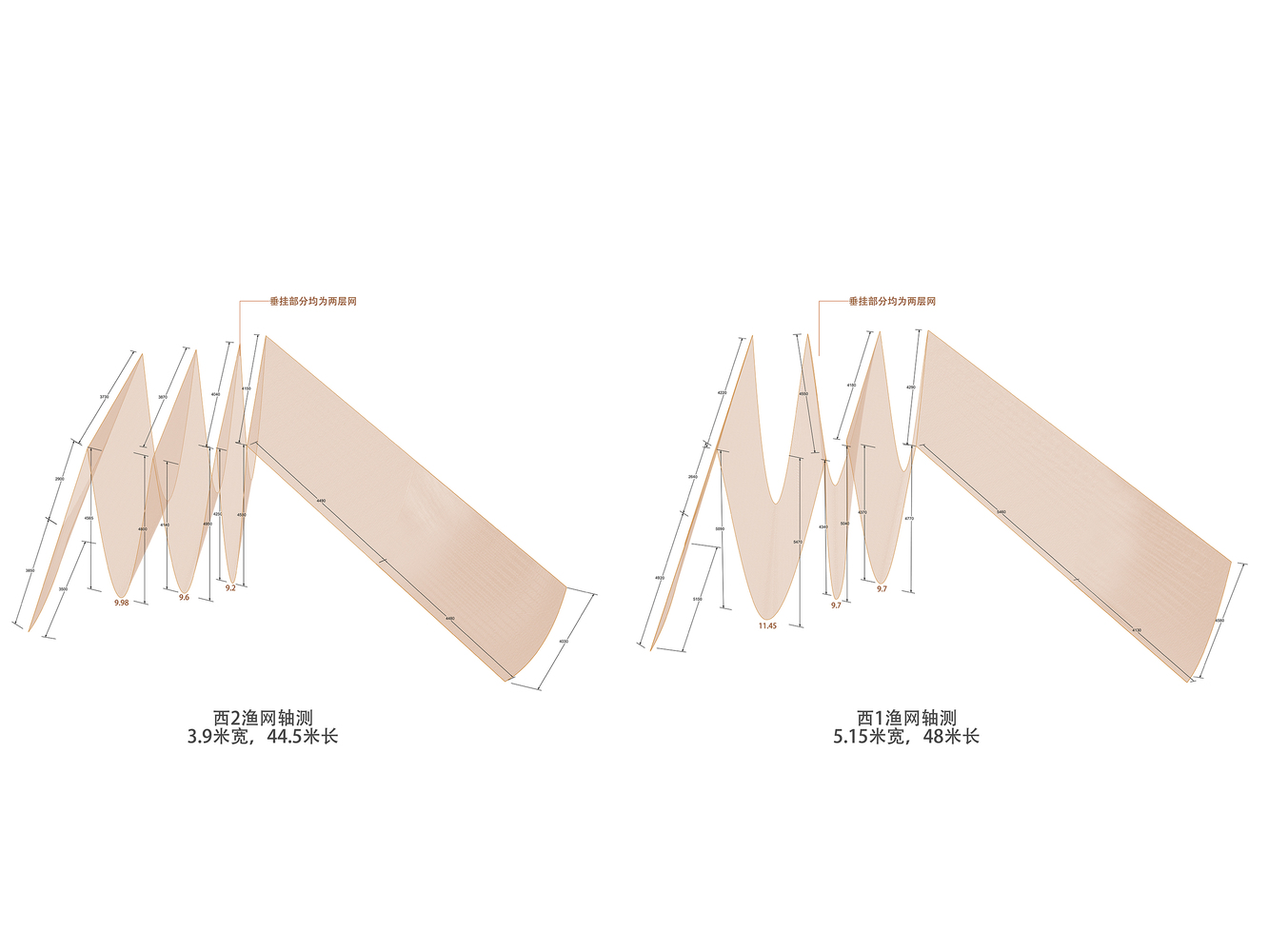
The steel structure supporting the nets draws inspiration from the *sanjiao zeng* (triangular lift net)—a traditional tool used for fishing at sea.
The fork-like forms evoke a sense of randomness and vernacular charm; balancing structural rationality with a rustic, expressive aesthetic, the structures are arranged to follow the terrain, descending from higher to lower elevations.
- 5 AN OBJECT OF IMMENSE SCALE
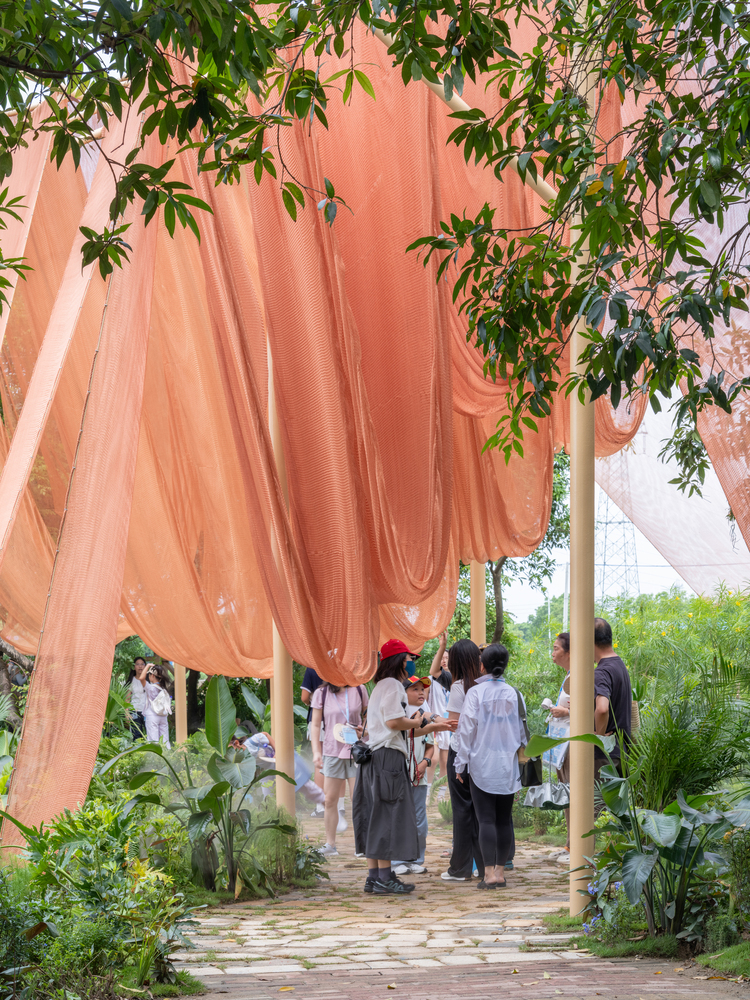
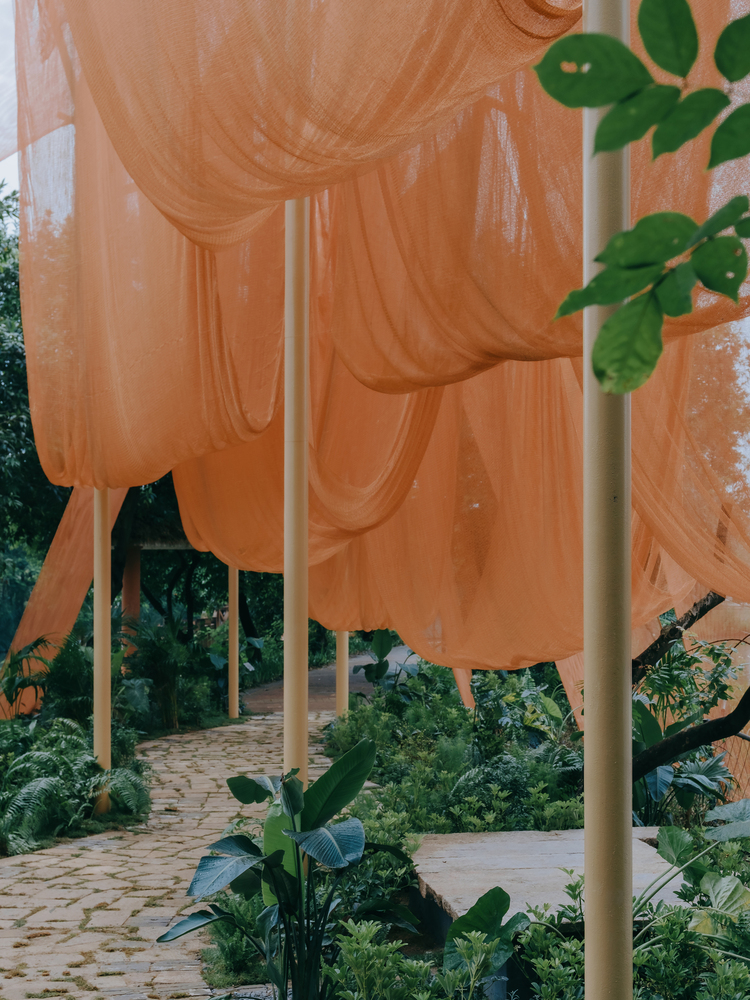
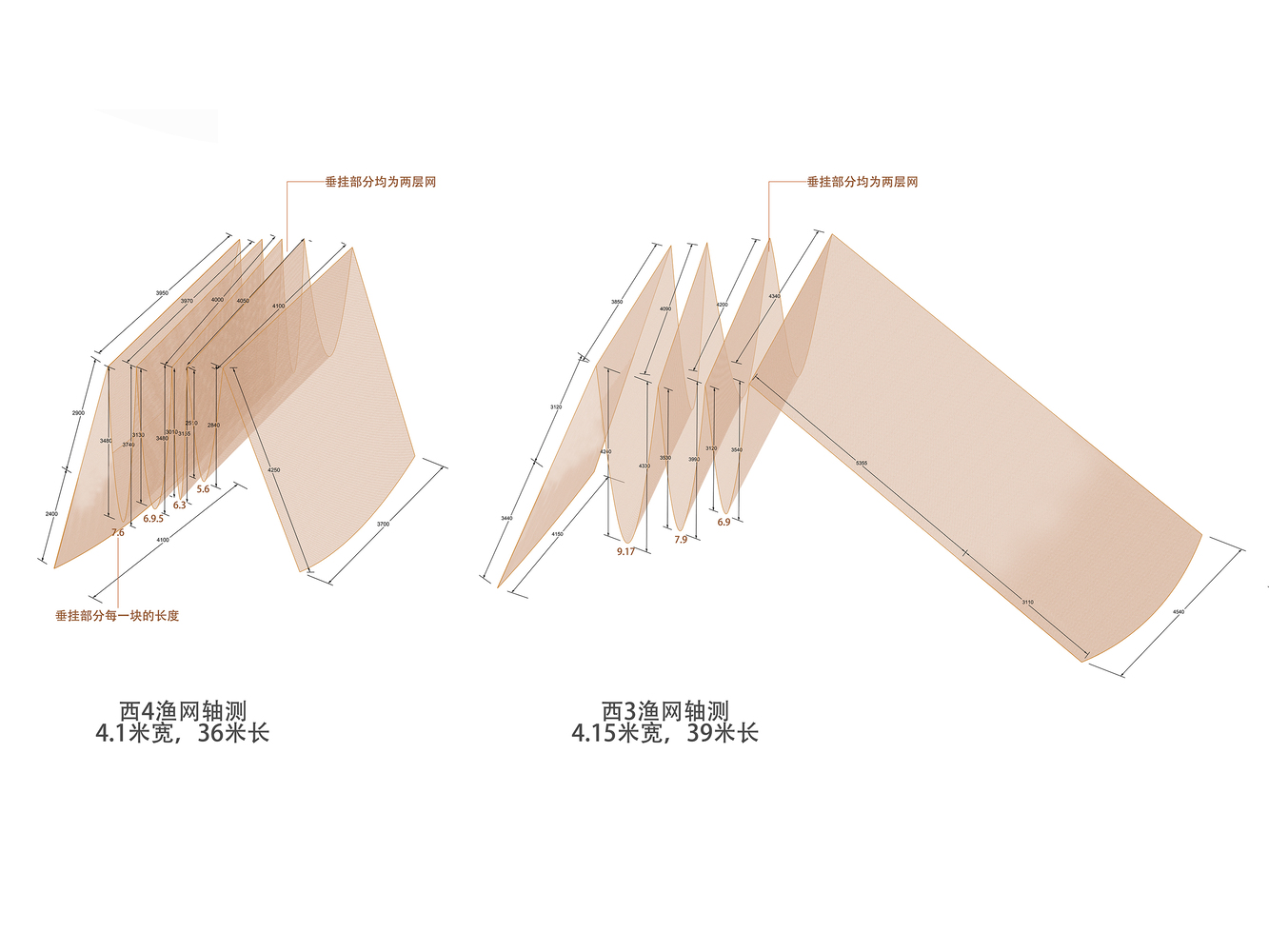
Above the structure, the fishing nets are manipulated through actions of "layering" and "draping," creating a dual mode of both "movement" and "stillness."
The layered nets are tensioned and anchored on both sides, while the top section hangs high like draped curtains; when the wind blows, the net canopies drift slowly overhead, resembling a massive, breathing entity.
- 6 AN EVER-EVOLVING INTERIORITY
The interior path winds in an S-shape, following the placement of the structural columns.
Paved with a mix of reclaimed grey bricks and broken stone slabs, the design balances a rustic, natural aesthetic with the practical need for maintenance workers to navigate the area on three-wheeled carts.
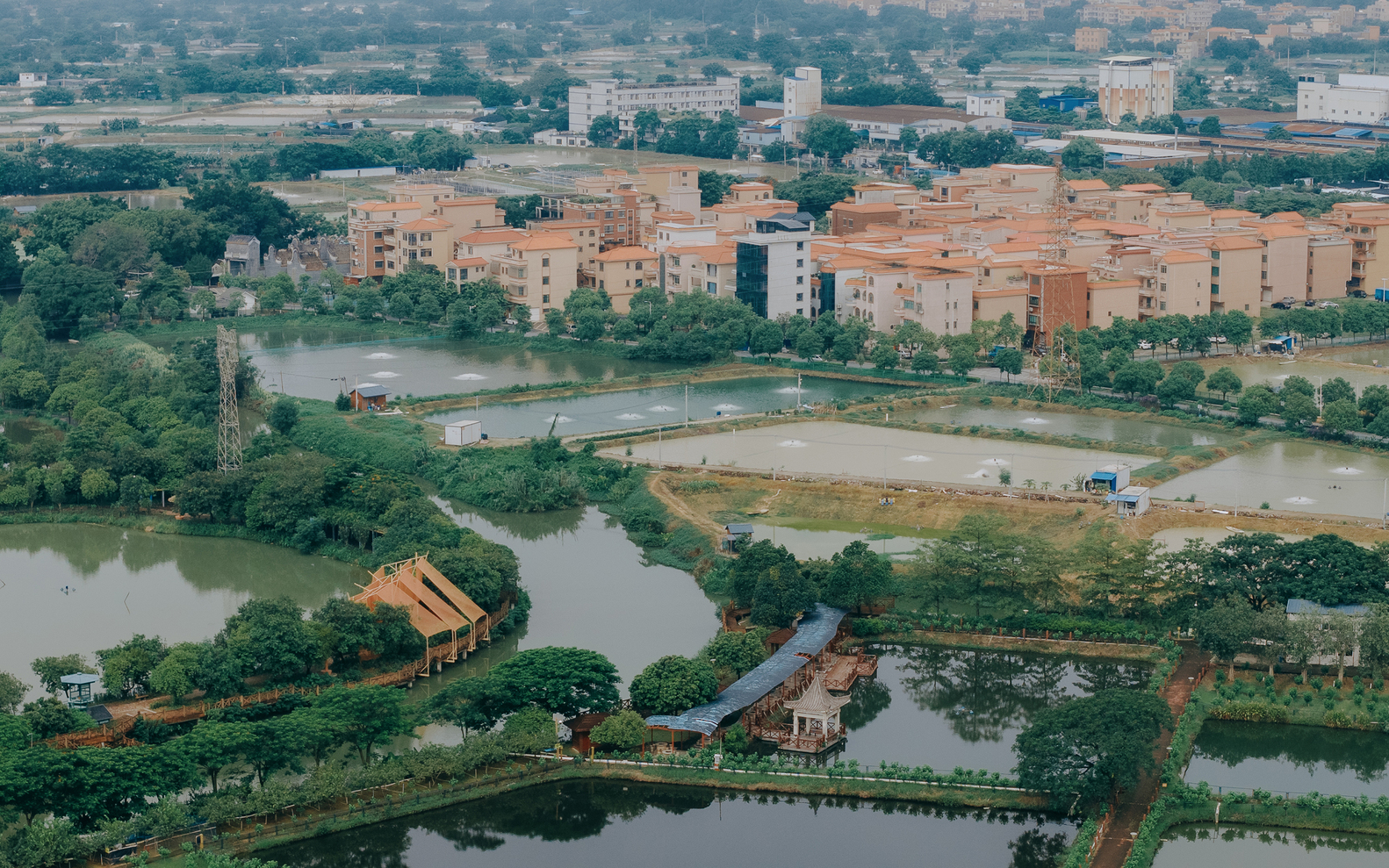
Tropical plants of varying heights are interspersed along the sides; together with the fishing nets, they create a heightened sense of enclosure, evoking memories of the traditional "mulberry-dike-and-fish-pond" agricultural era.
We also "relocated" the stone slab platforms—common sights by the waterside in Foshan villages—to this space.
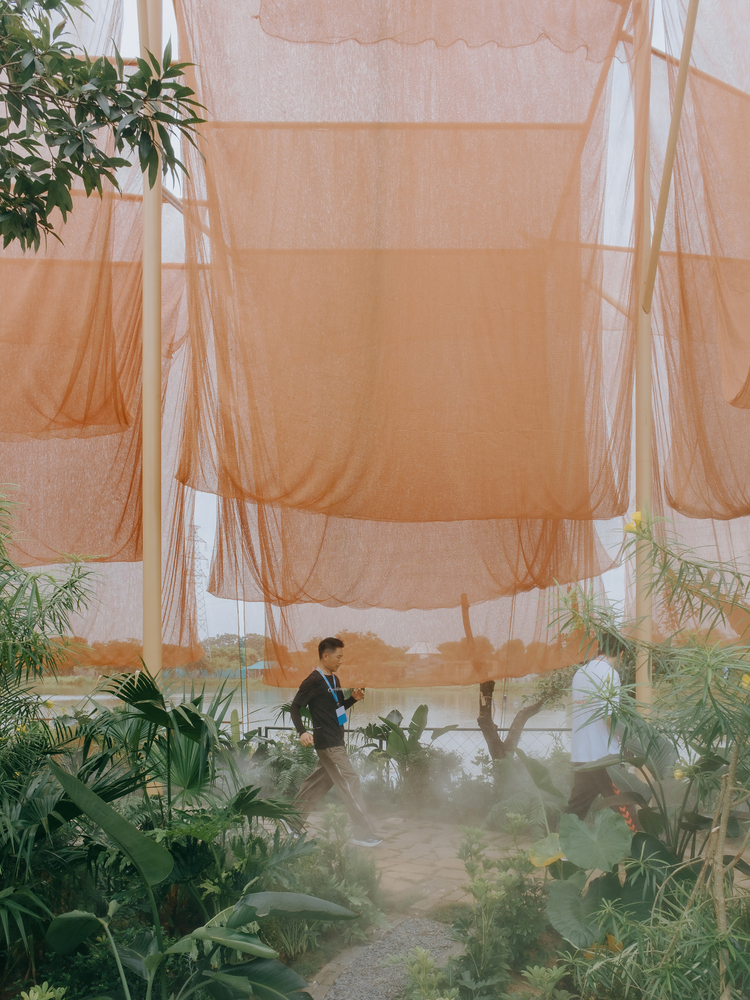
The inclusion of a misting system stems from an intuitive, embodied understanding of the South. Guangdong frequently oscillates between scorching, drying heat and damp, dewy humidity.
The mist serves a dual purpose—irrigation and landscape feature—echoing the southern climate and evoking a hazy, gentle atmosphere.
As the seasons shift, the interplay of humidity, light, and vegetation ensures the space remains in a state of constant, gradual evolution.
Here, as the fishing nets are hoisted, unfurled, and lifted from the water—expanding to an extraordinary scale—their original utilitarian function falls away, yet the experiences associated with them emerge:
the shapes sculpted by wind resistance, the lingering dampness after rain, the evocative imagery of labor, and the enduring relationship between people and water. Xuegu, a volunteer guide, remarked that the place reminds her of the Guangdong of her childhood. This subtle resonance—where a sense of familiarity intertwines with our immediate sensory experience—is precisely what we hoped to achieve.