
PANTANAL BIOPARK
Ohtake
ARCHITECTS
Ohtake
LEAD ARCHITECT
Ruy Ohtake
COORDINATION
Alfred Talaat, Lilian Wexler, Carla Willik, José Areias, Ricardo Alves, Jorge Cardoso
TECHNICAL TEAM
Eduardo Prieto, Rodrigo Peregrina, Rogério Gava De Oliveira, Paula Van Roey, Alexandra Lopes, Adriano Batista dos Santos, Rafael Otsuka
PHOTOGRAPHS
Nelson Kon
AREA
26000 m²
YEAR
2022
LOCATION
Campo Grande, Brazil
CATEGORY
Park, Science Center
English description provided by the architects.
The Pantanal Biopark was conceived as an icon of new technologies and based on the need to invest in research in the area, highlighting the world's most important system of lakes and ponds.
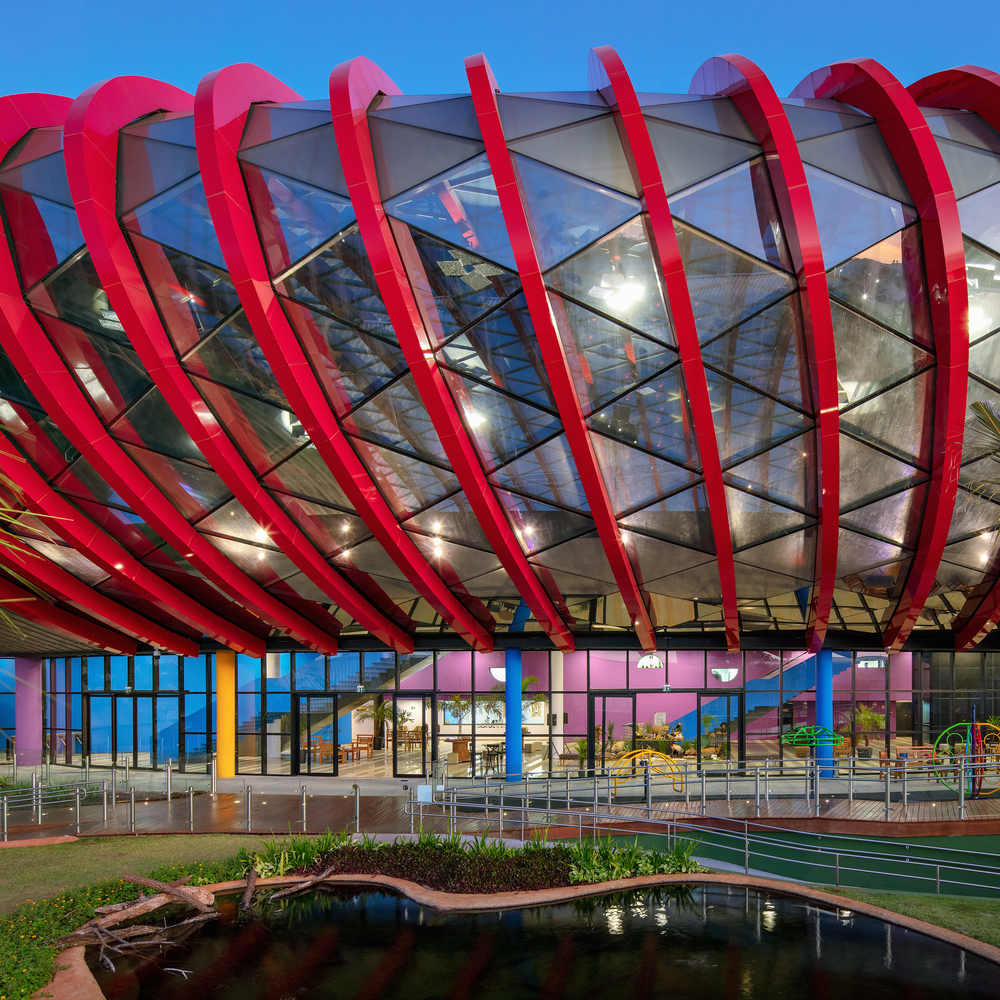
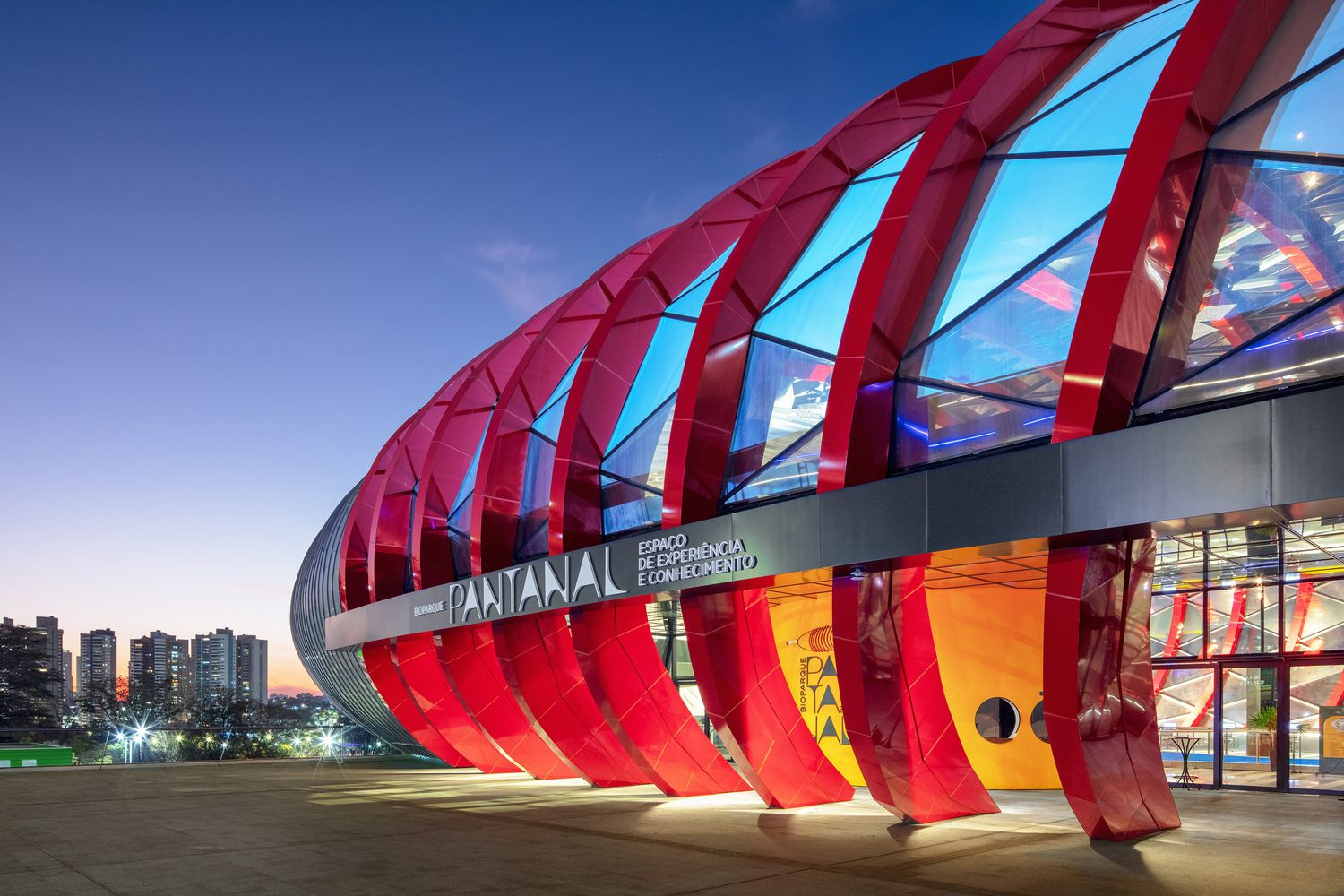
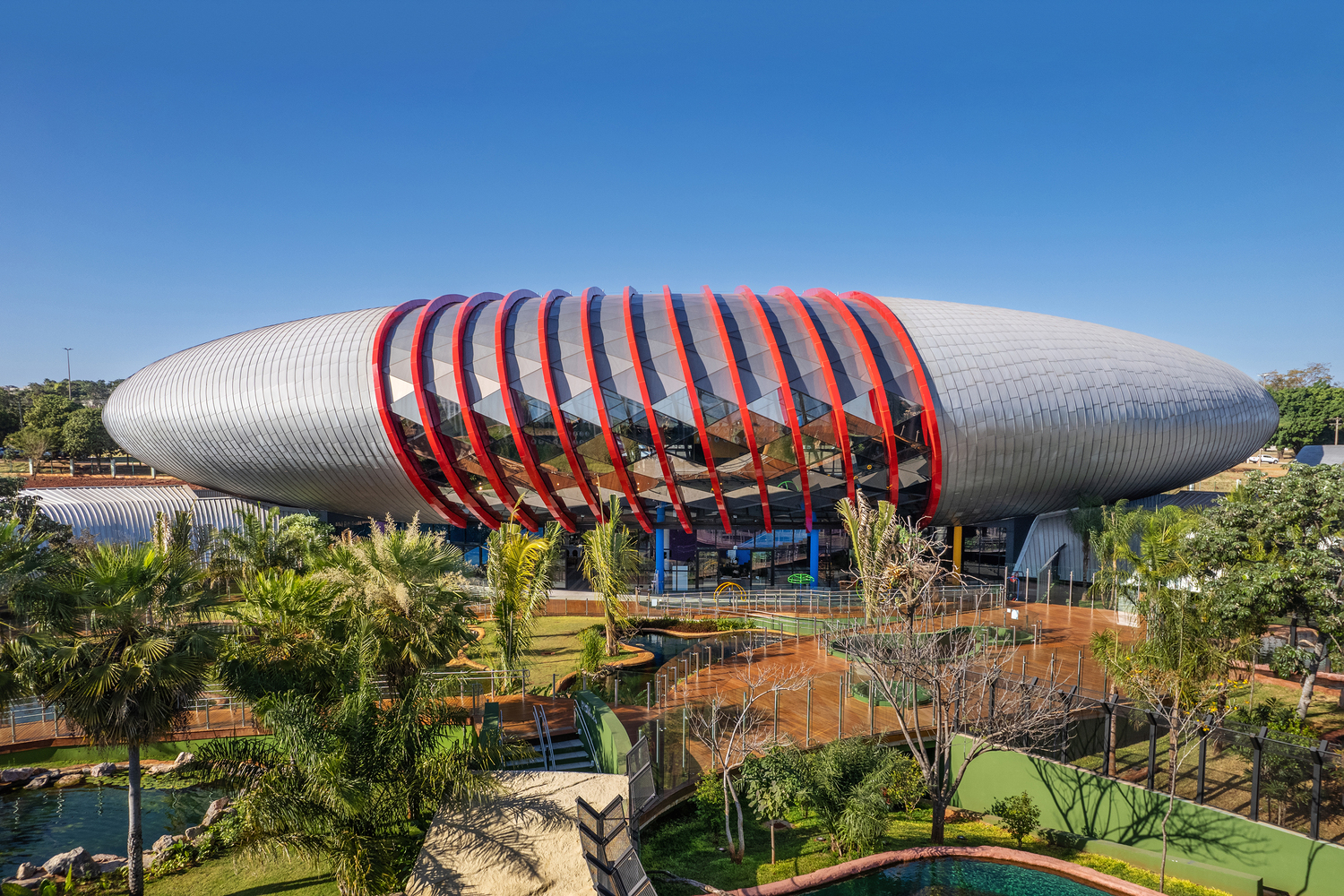
Located on the main avenue in Campo Grande, the Biopark building draws attention for its surprising shape, materials, and proposal.
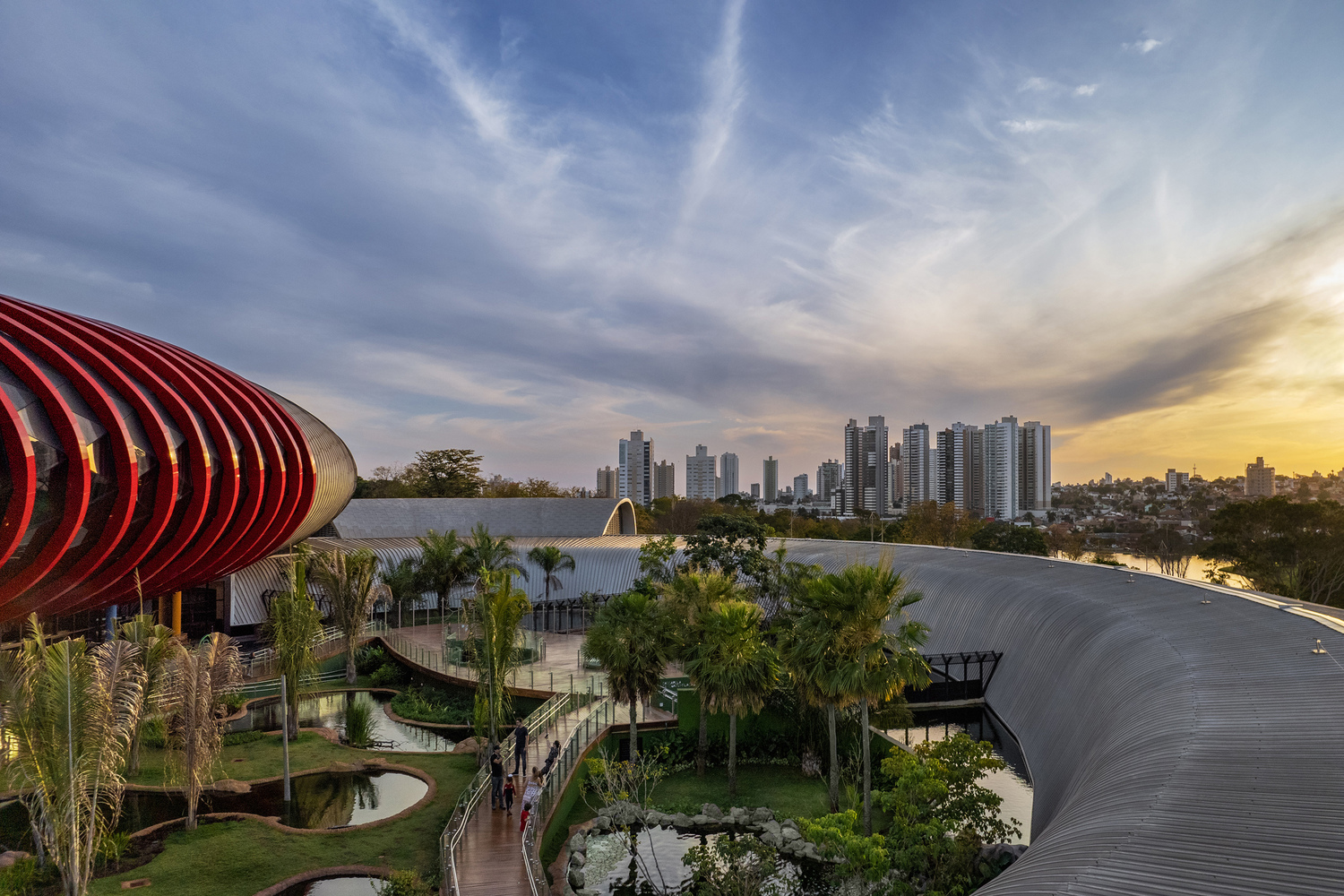
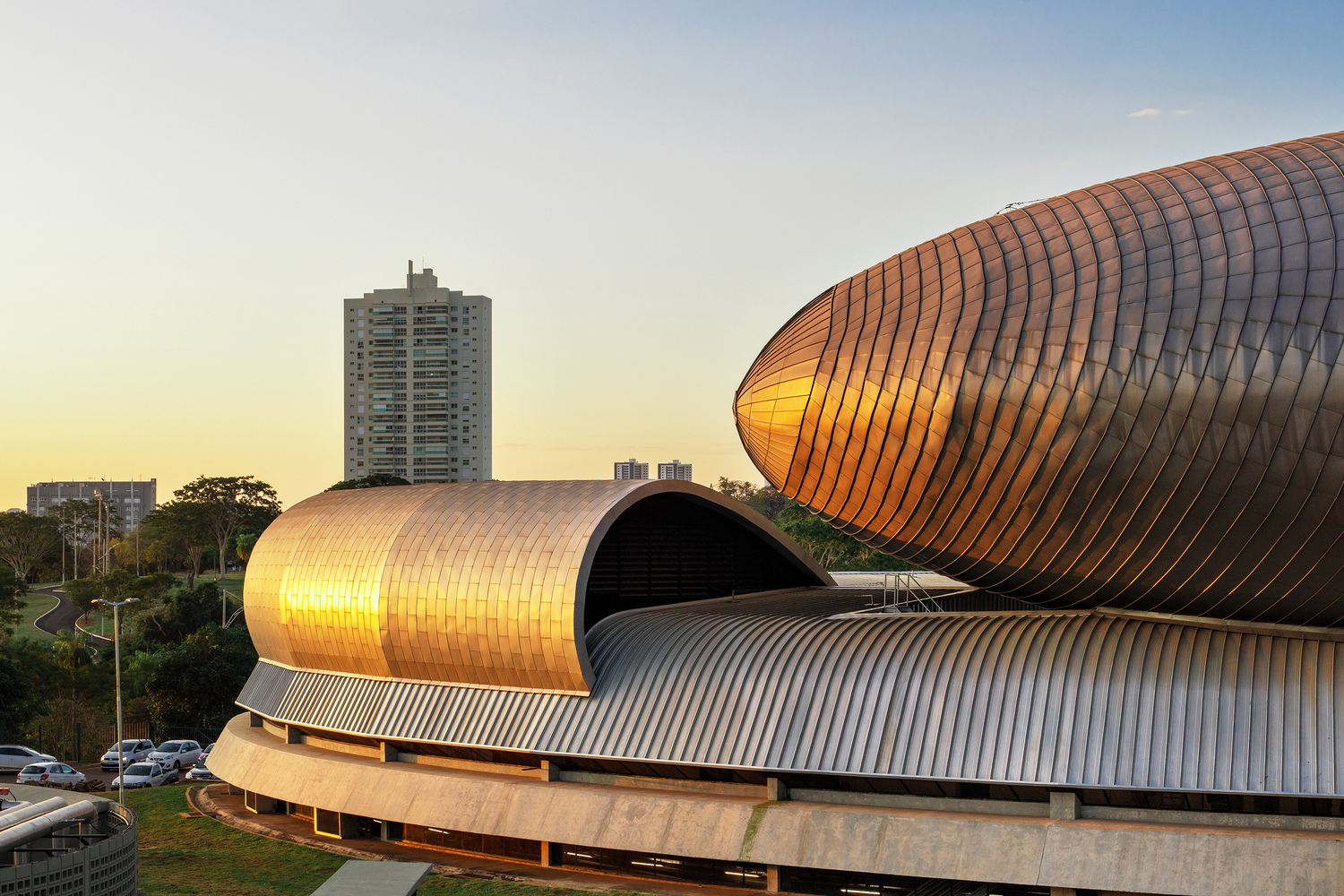
The part of the facade clad in zinc, for example, reveals at first glance the technology involved in the construction of the project, which also brought to this building, in the capital of the state of Mato Grosso do Sul, unusual elements for the region—such as treated double-glazed windows to limit solar heat and the metal structure that supports part of the building.
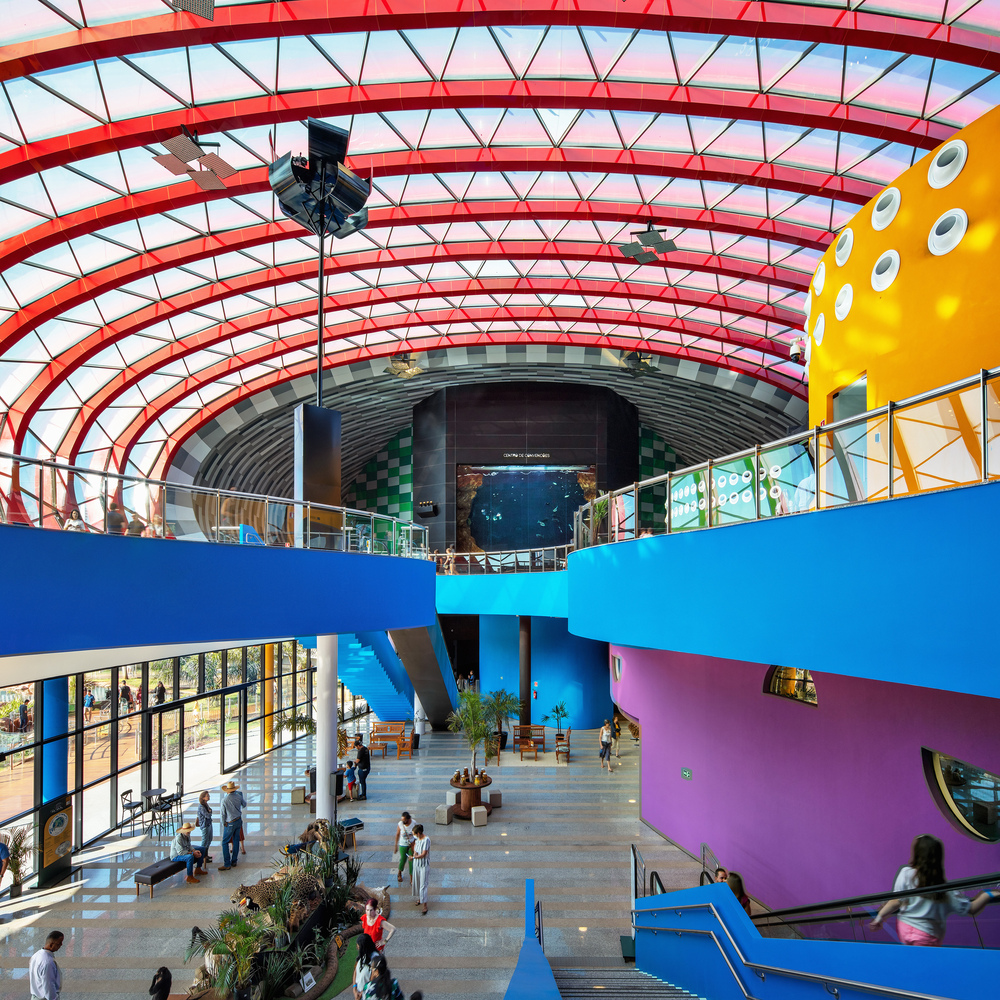
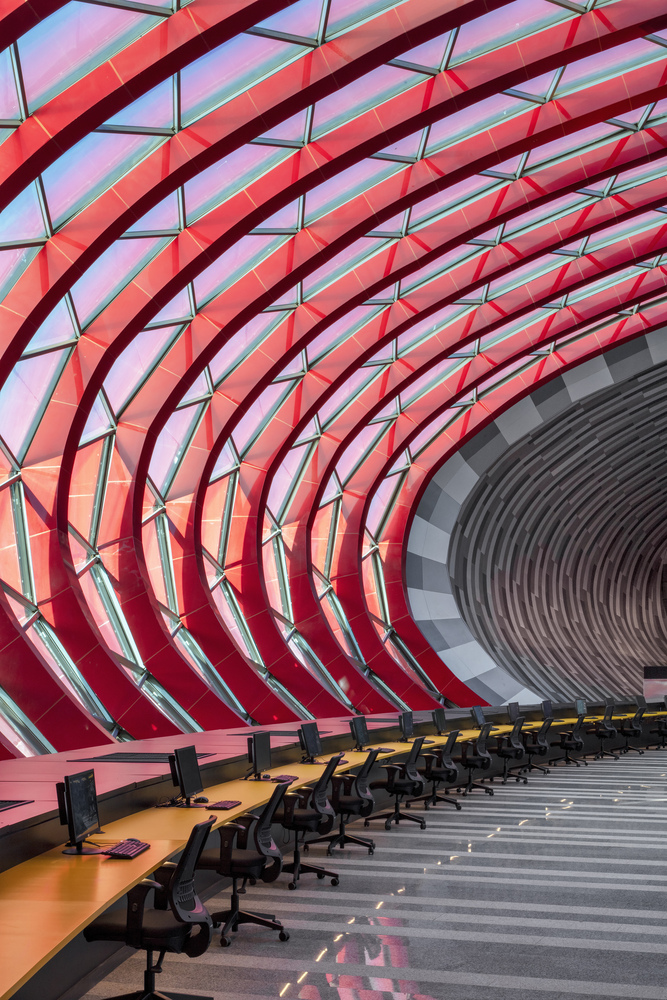
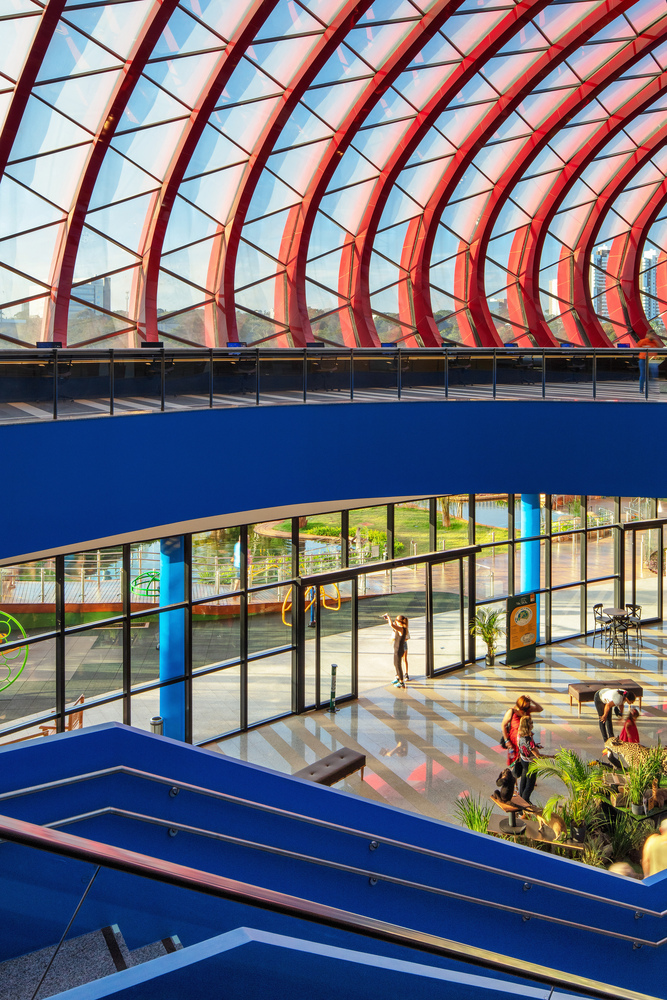
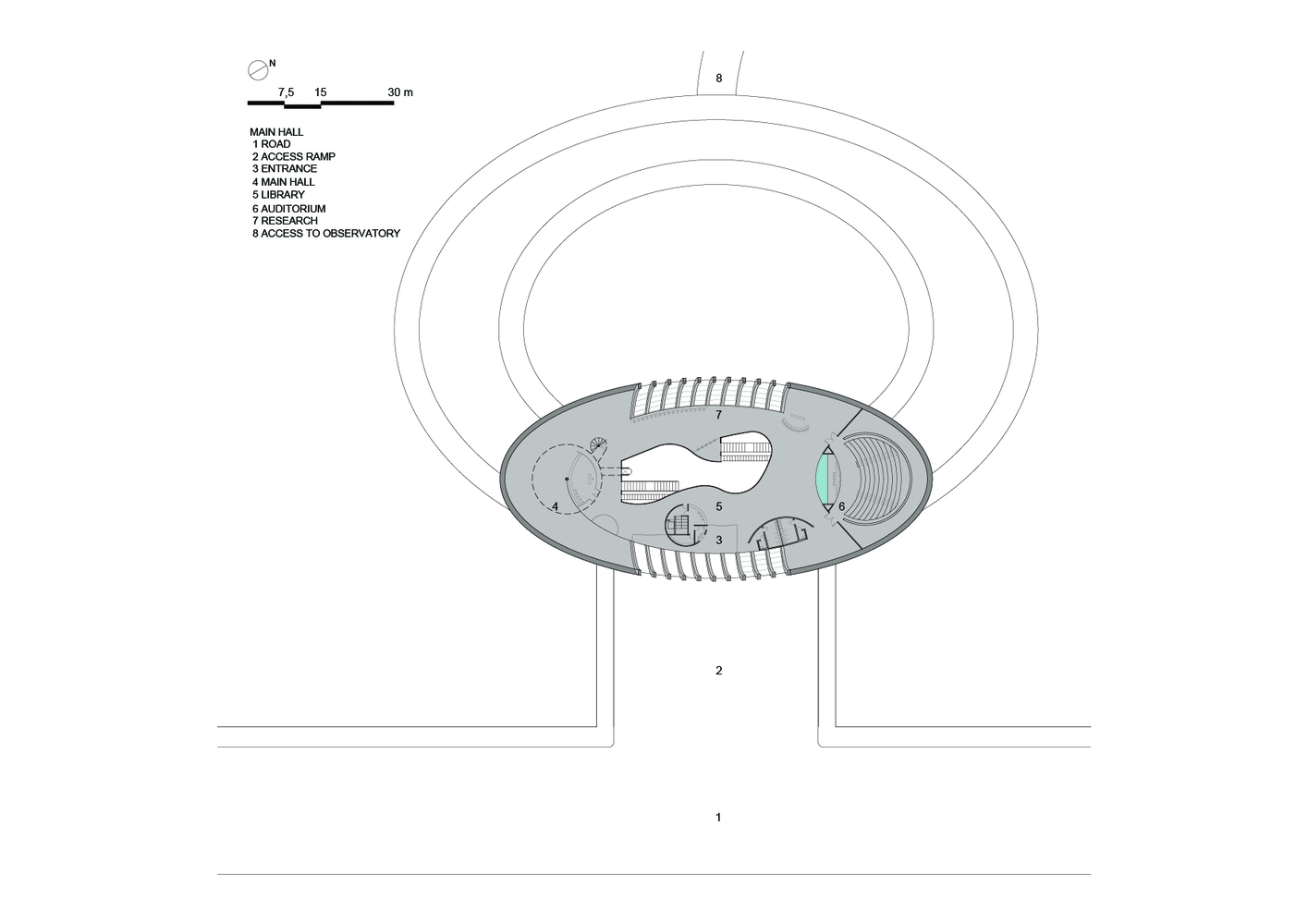
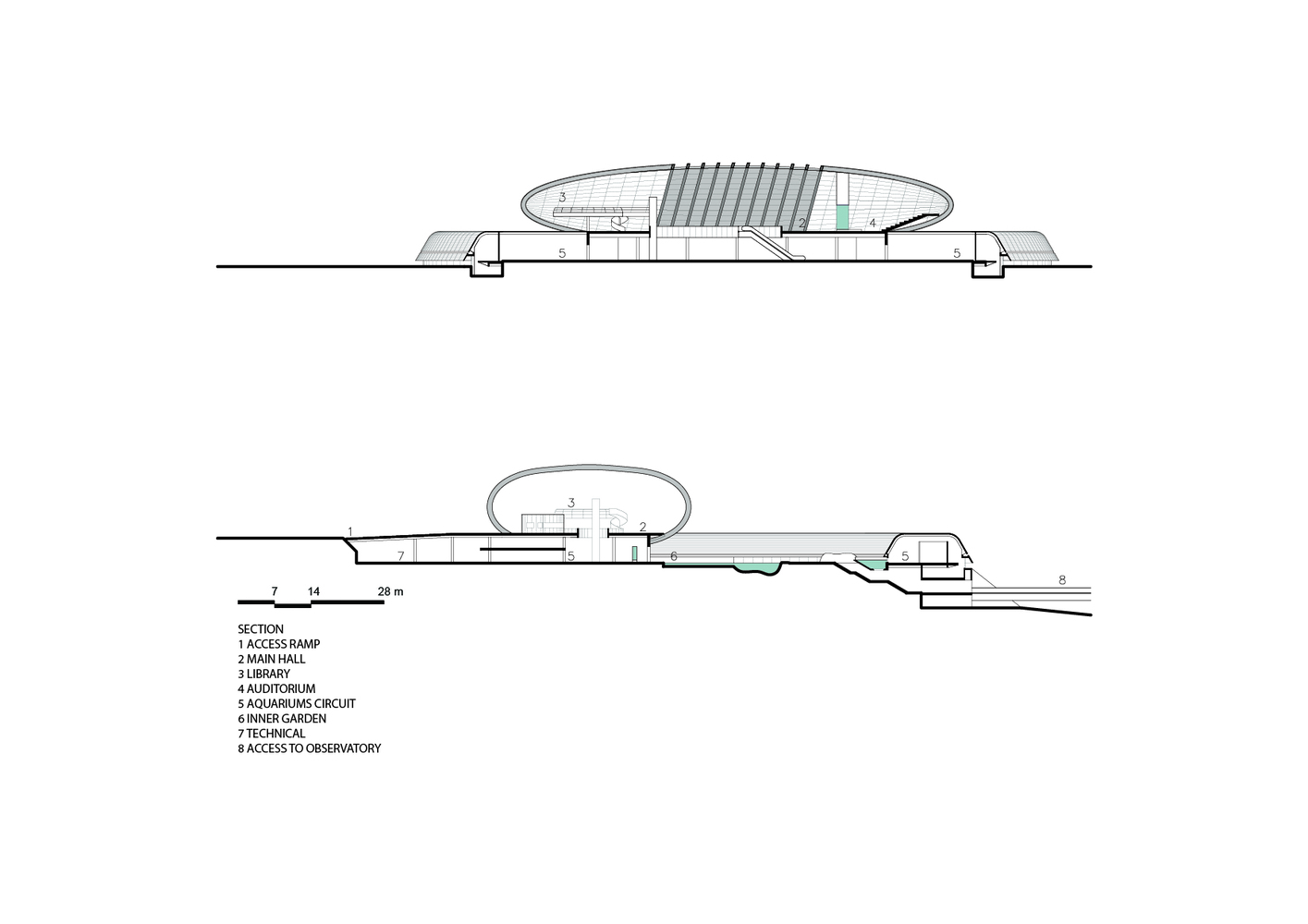
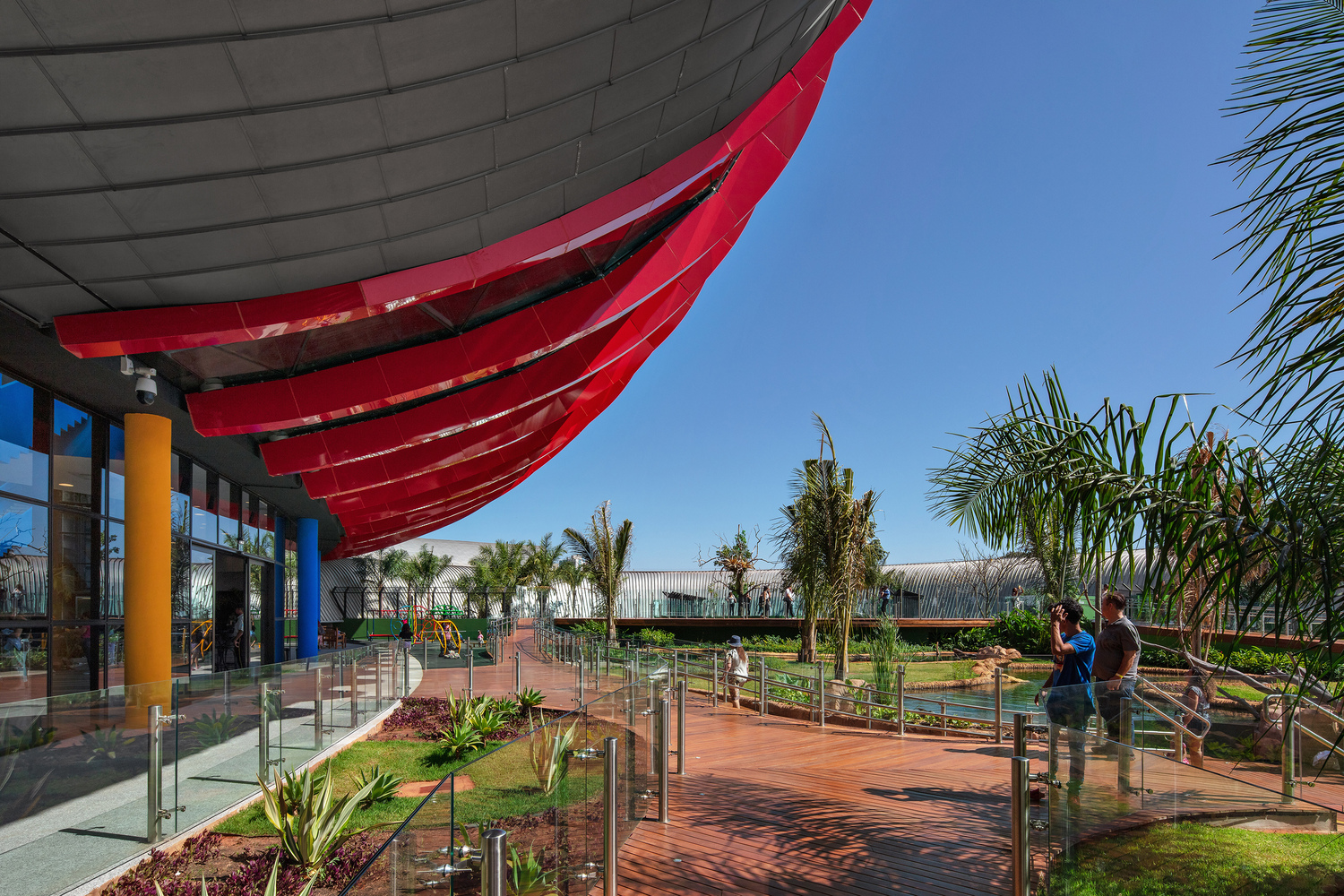
The first volume, facing the avenue, is also the symbol of the project, with its oval shape and a red-painted metal structure in the center of the facade. At its highest point, the ceiling reaches 14 meters.
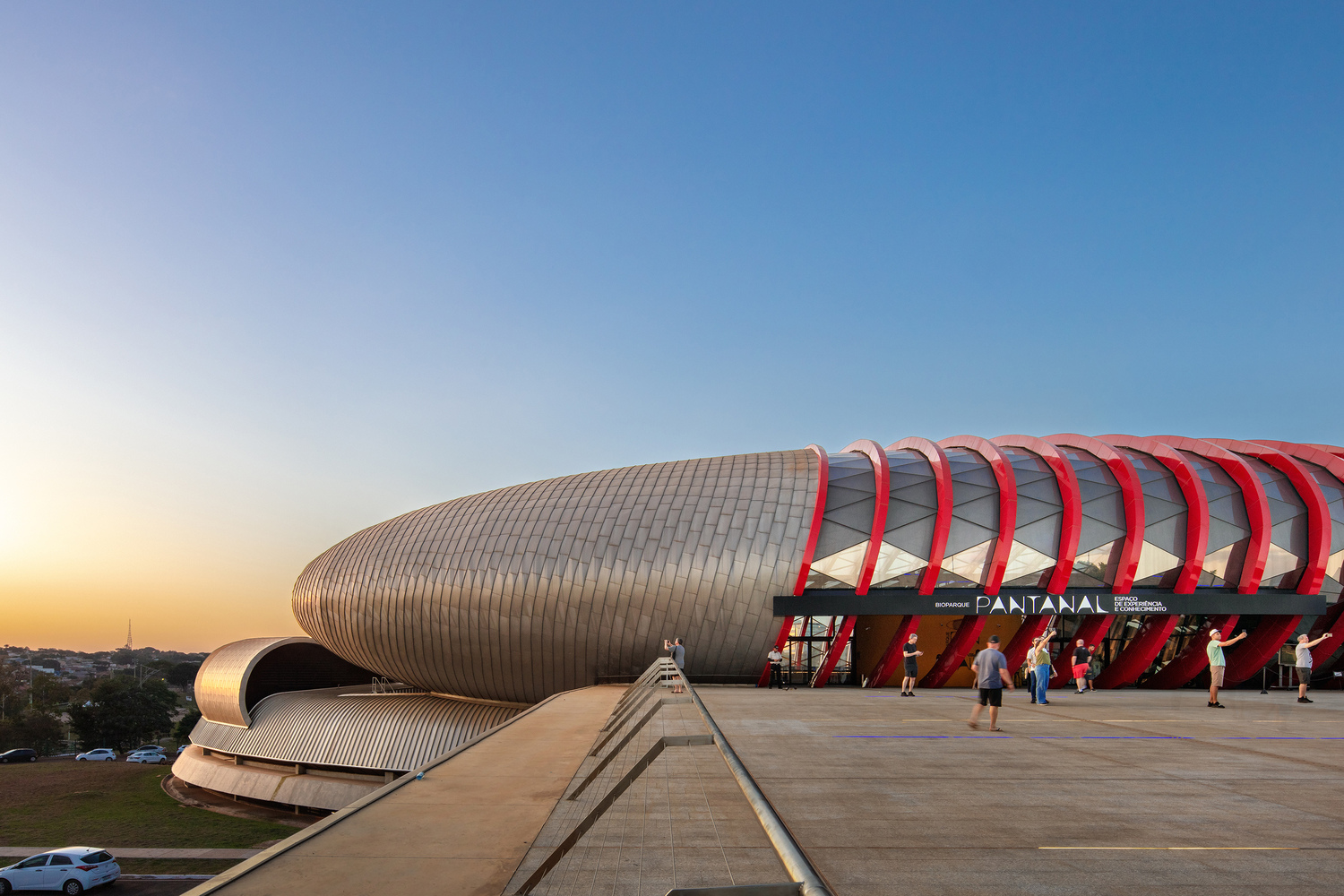
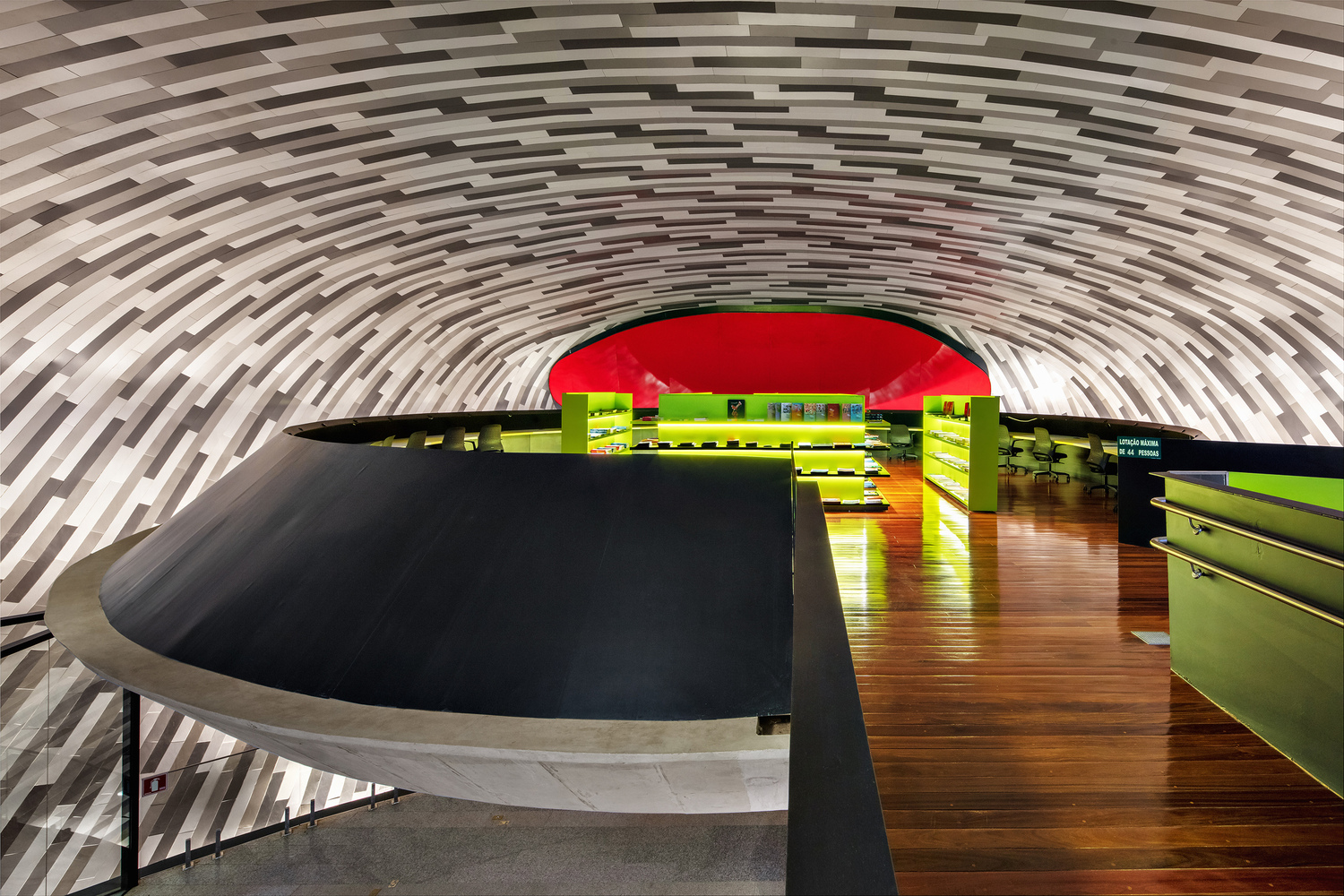
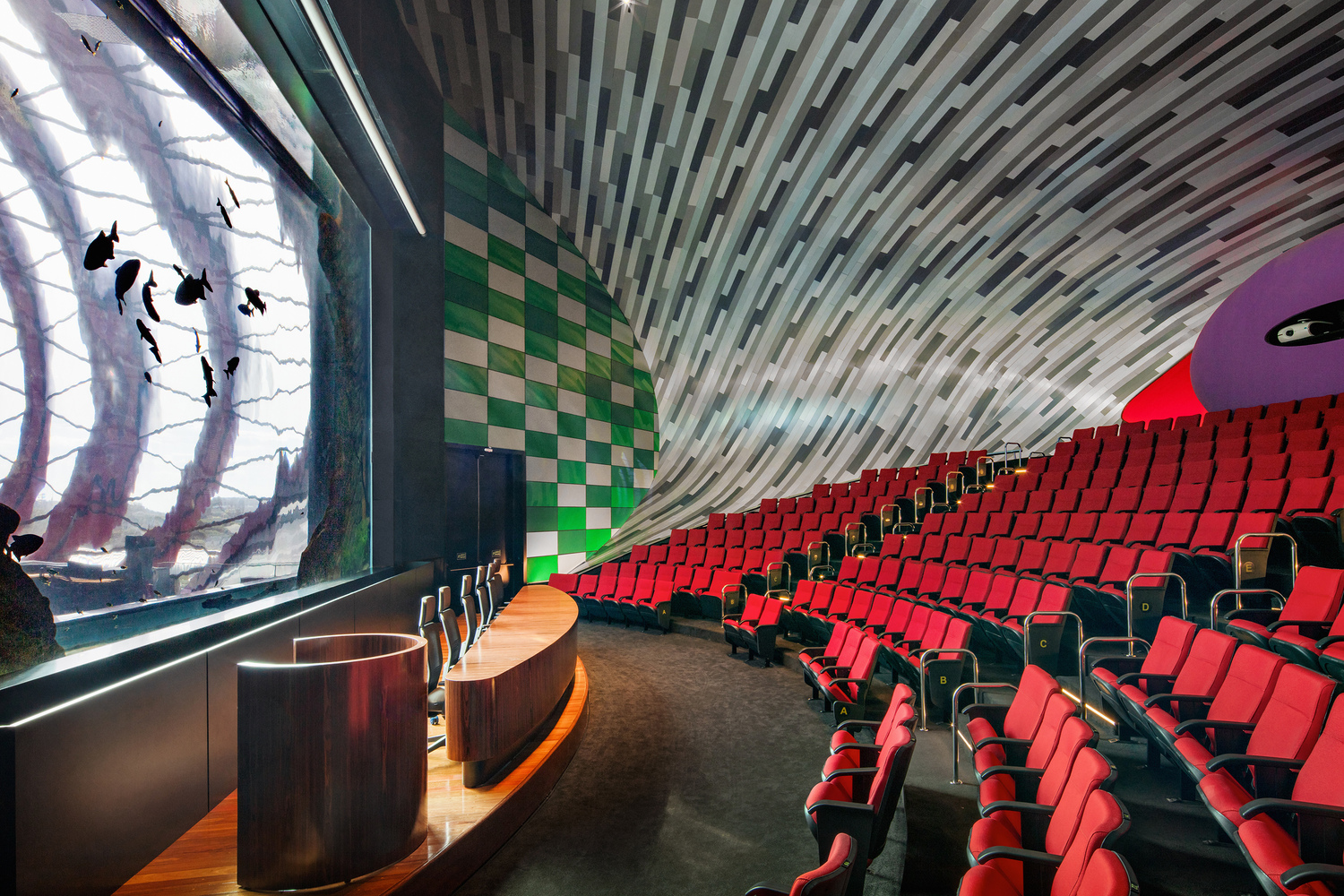
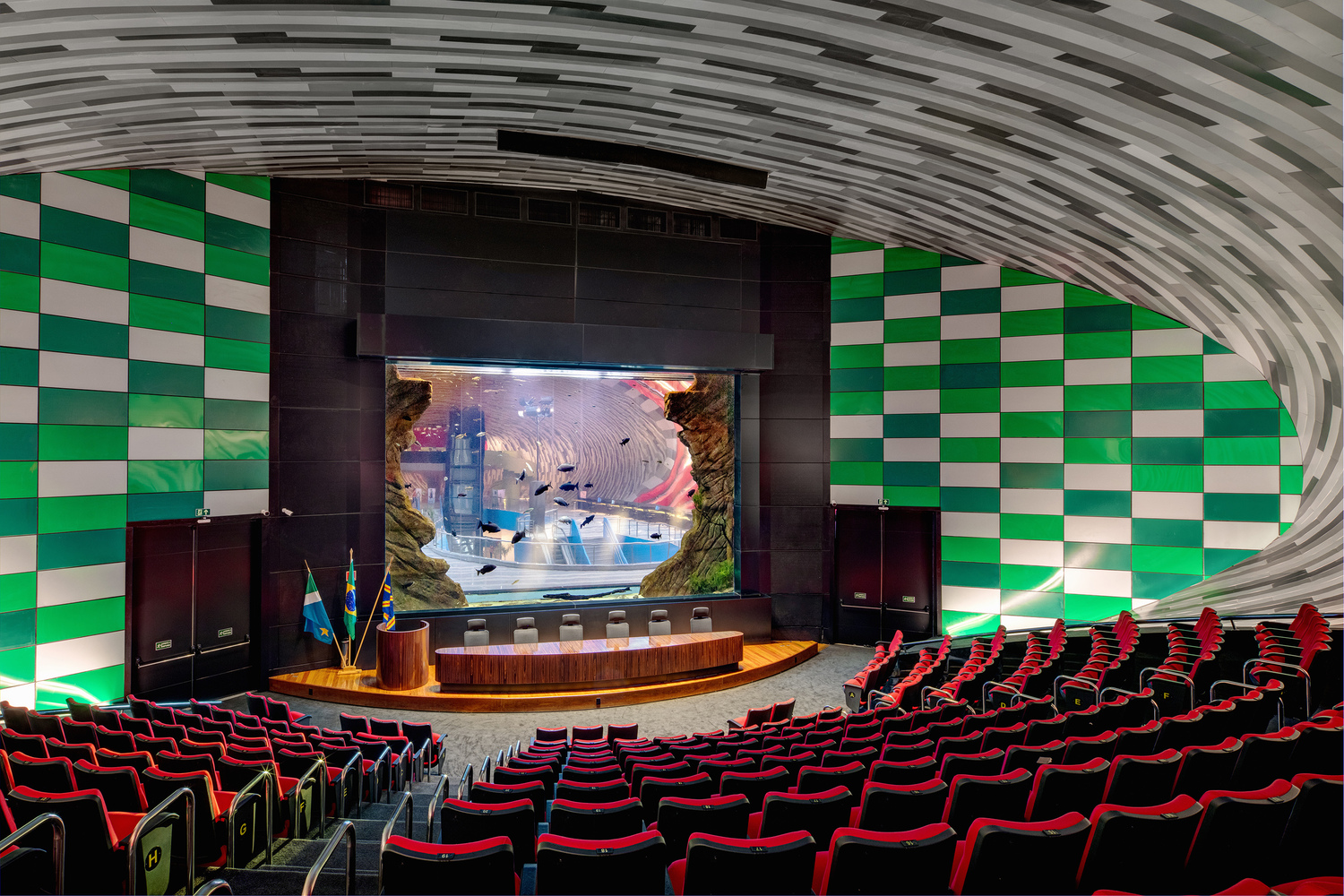
It is here that the entrance is located, via a ramp on a terrace, as well as a suspended library specializing in Pantanal themes, a space for exhibitions, and an auditorium with 250 seats.
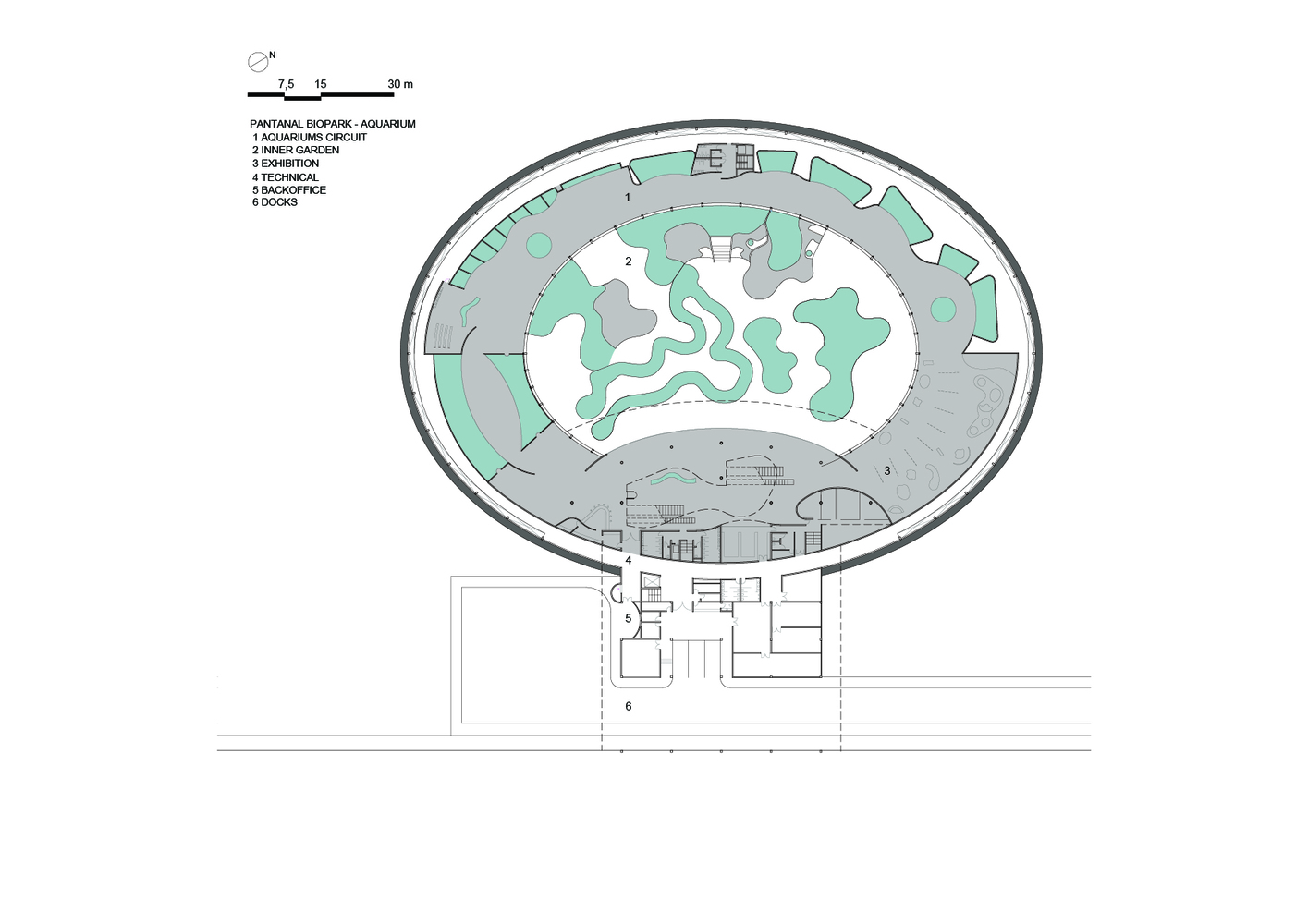
The aquarium itself, however, is located in the lower, elliptical-shaped rear volume, taking advantage of the land's slope. It is another surprise for visitors, who can only see the main volume from the outside.
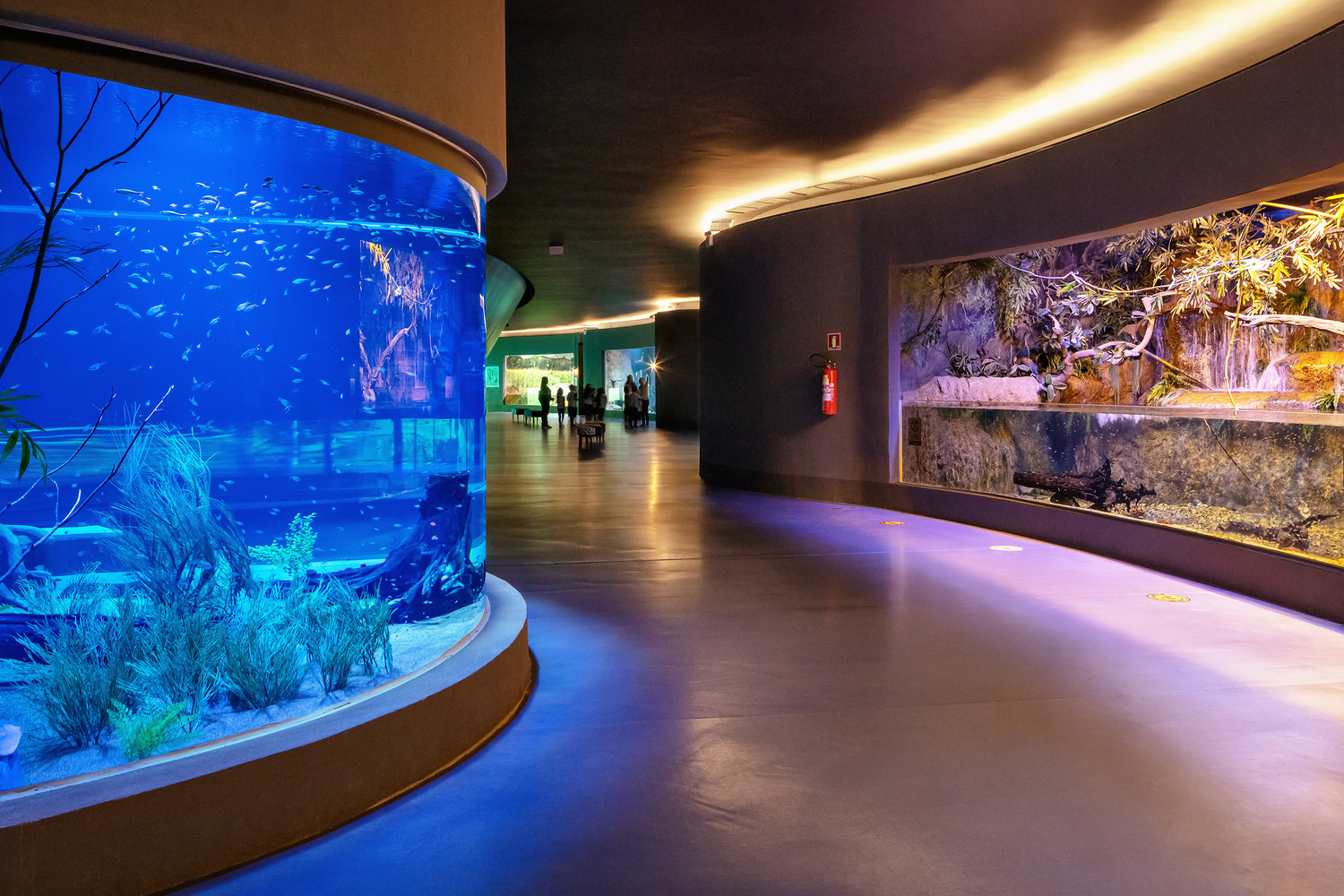
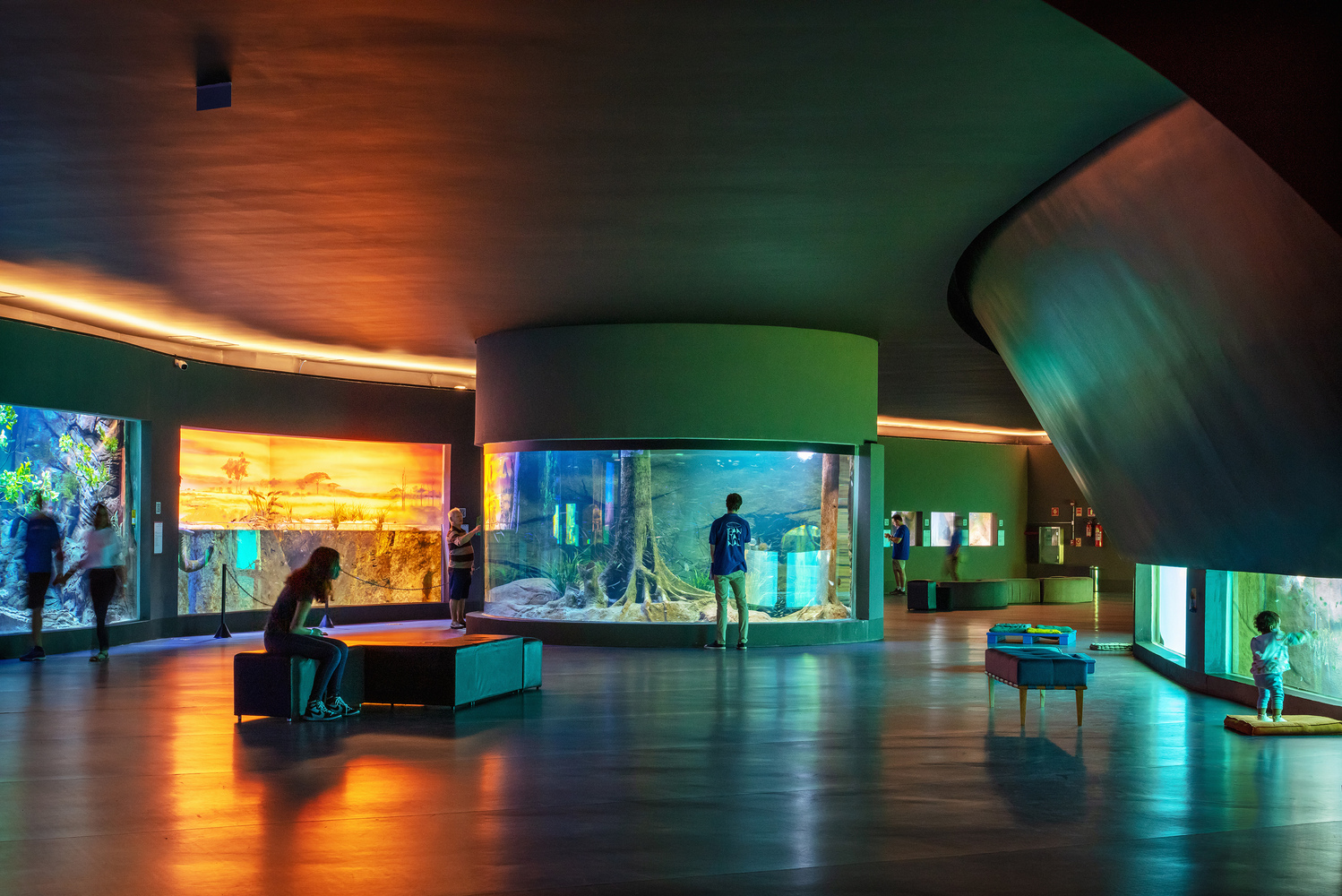
In the first part of the visitors' journey, there is a museum about the geological formation of the Pantanal, the characteristic animals of the region, and the local inhabitants known as Pantaneiros.
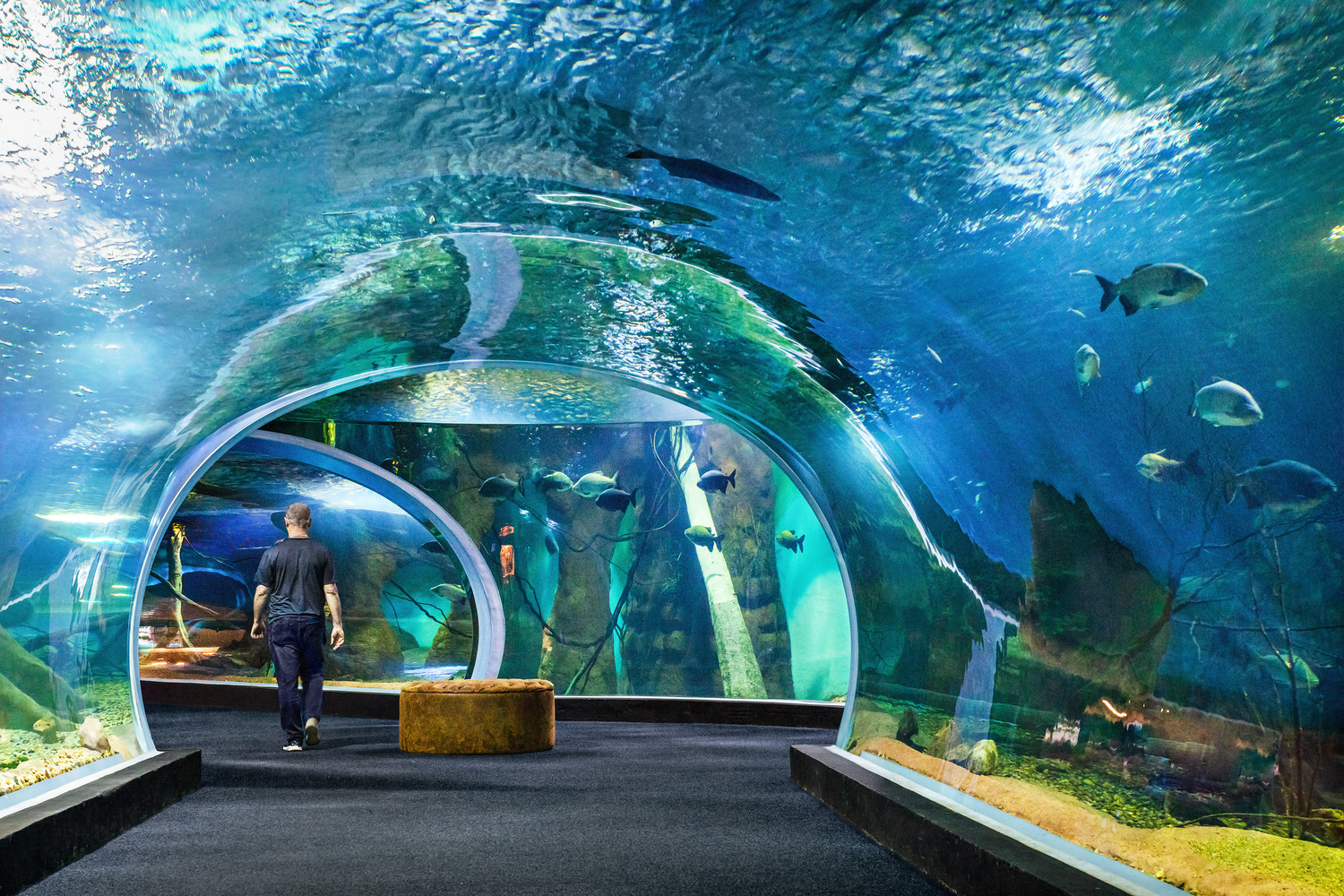
A visit to the biopark, which houses 13,000 fish from 135 different species, takes place in the elliptical block, with tanks of various sizes primarily located on the right side of the path.
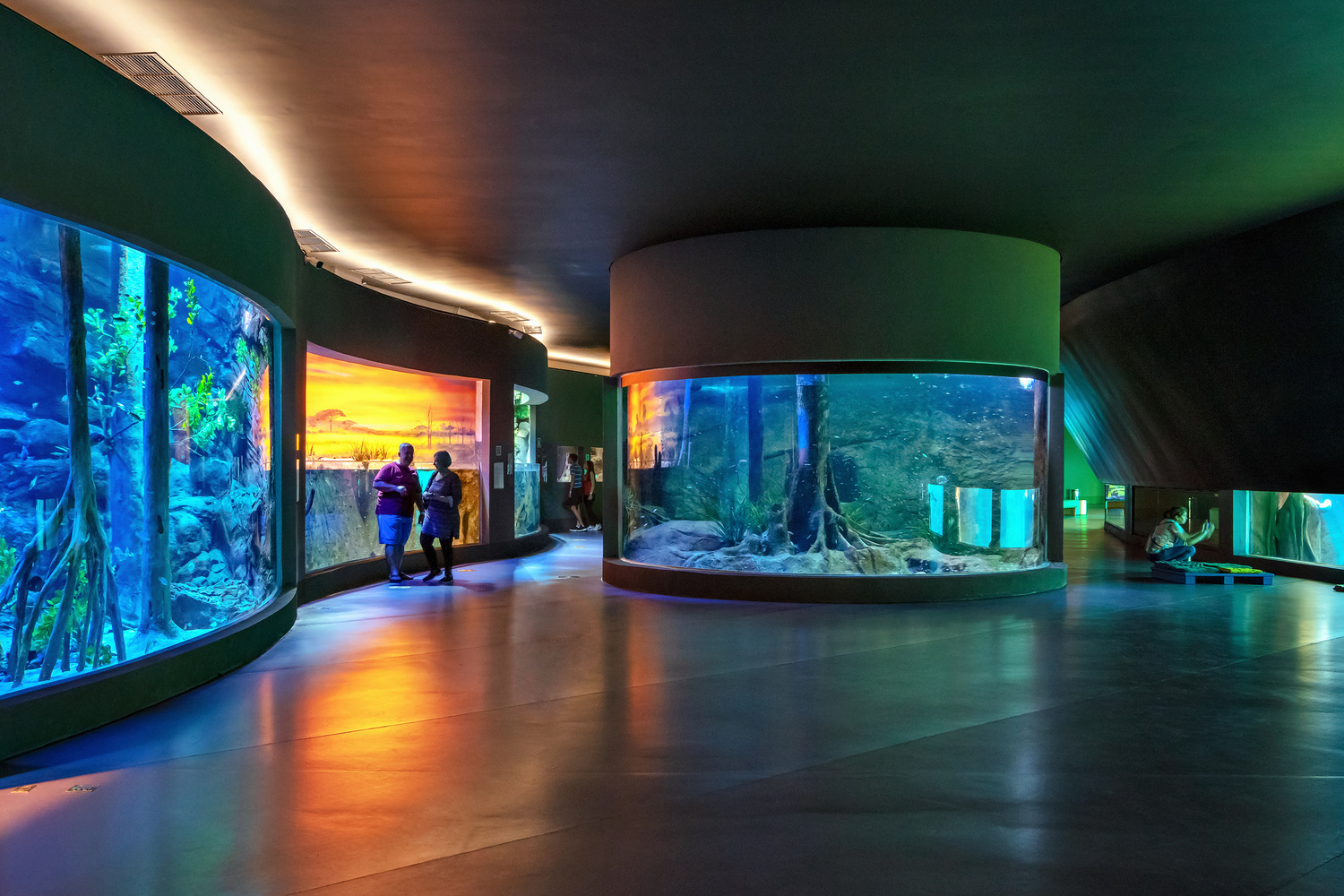
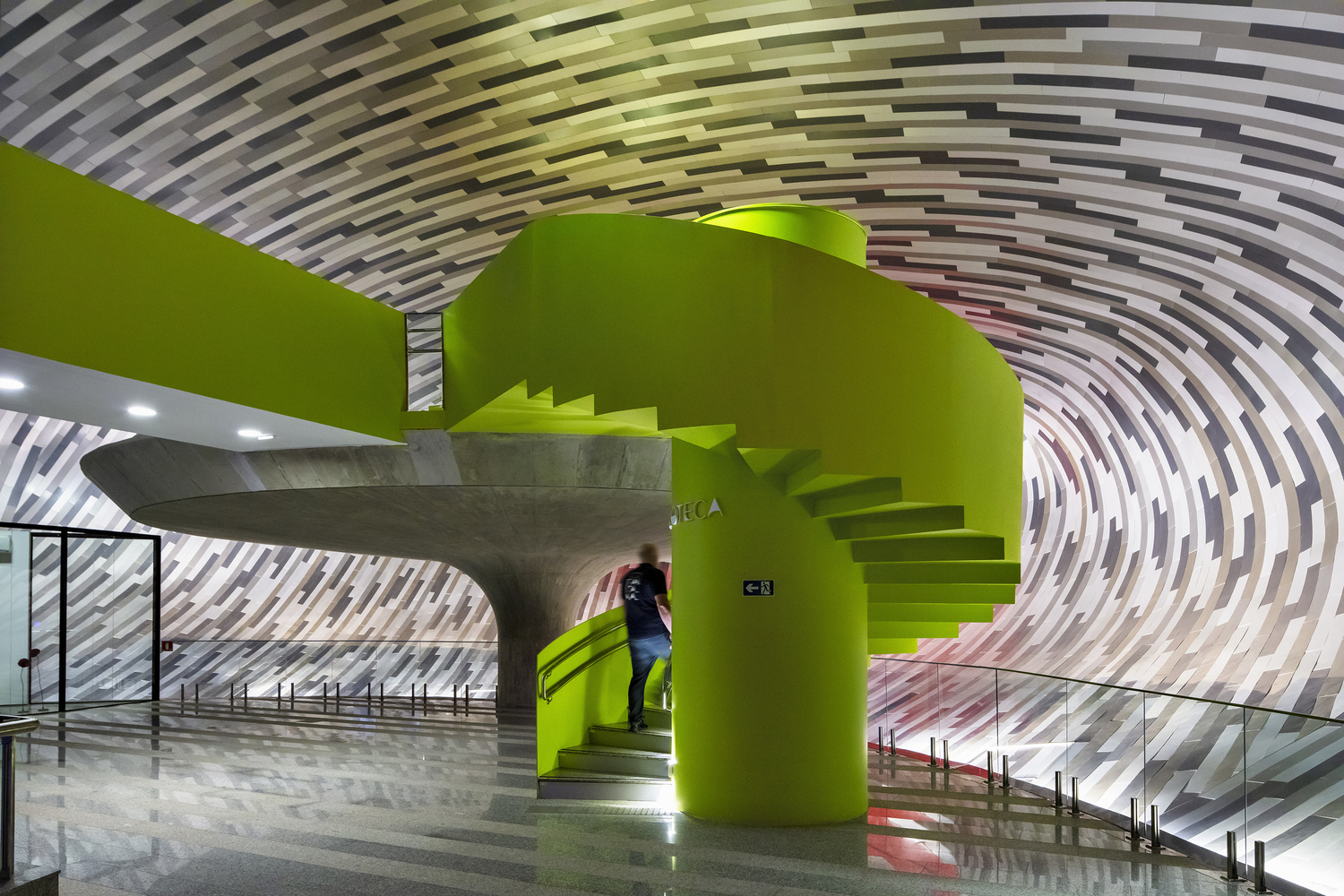
Sunlight that enters through a continuous side glass frame bathes the walkway and connects the internal and external spaces.
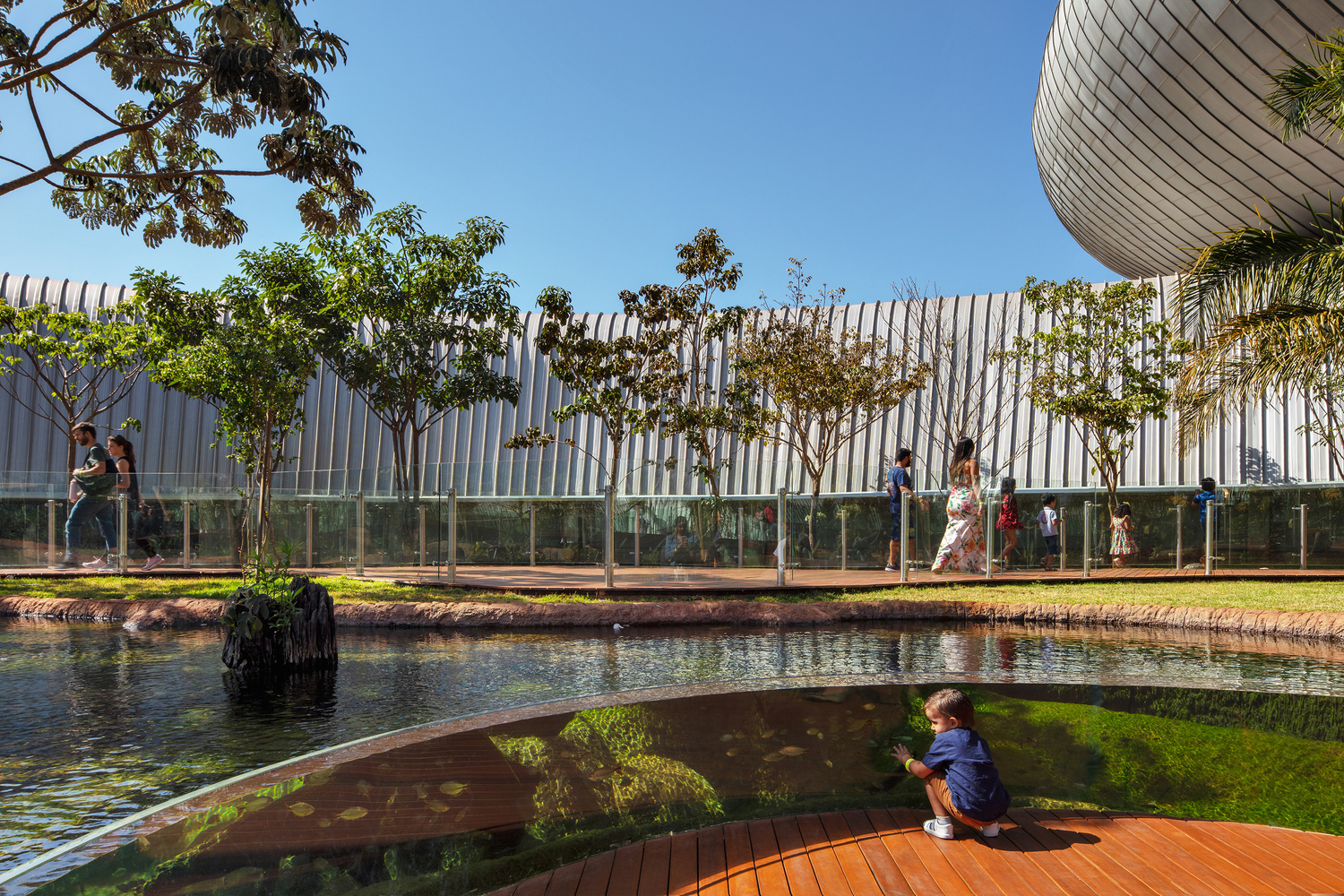
In the center of the ellipse, there is an open area: a large garden with ponds where alligators and otters will live, separated by camouflaged barriers formed by different protrusions.
The importance of the biopark goes beyond the immediate appeal of tourism: in addition to the area designated for visitors, there are five research laboratories focused on local biology, botany, and anthropology;
studies in biodiversity are another objective of the Biopark's research division.