Las Vegas Park
LAS VEGAS PARK
Gustavo González Galarza
ARCHITECTS
Gustavo González Galarza
LEAD LANDSCAPE ARCHITECT
Gustavo González, Mla
ENGINEERING & CONSULTING > GEOLOGY
Aleksandr Khachatryan
ENGINEERING & CONSULTING > STRUCTURAL
José Vázquez
ENGINEERING & CONSULTING > ELECTRICAL
Joel Alcívar
ENGINEERING & CONSULTING > HYDRAULICS
Víctor Vera
ENGINEERING & CONSULTING > ENVIRONMENTAL
Johanna Ochoa
DESIGN TEAM
Nelson Vidal, Tiago Ortega
PHOTOGRAPHS
Carlos Palacios
AREA
107000 m²
YEAR
2018
LOCATION
Portoviejo, Ecuador
CATEGORY
Park
English description provided by the architects.
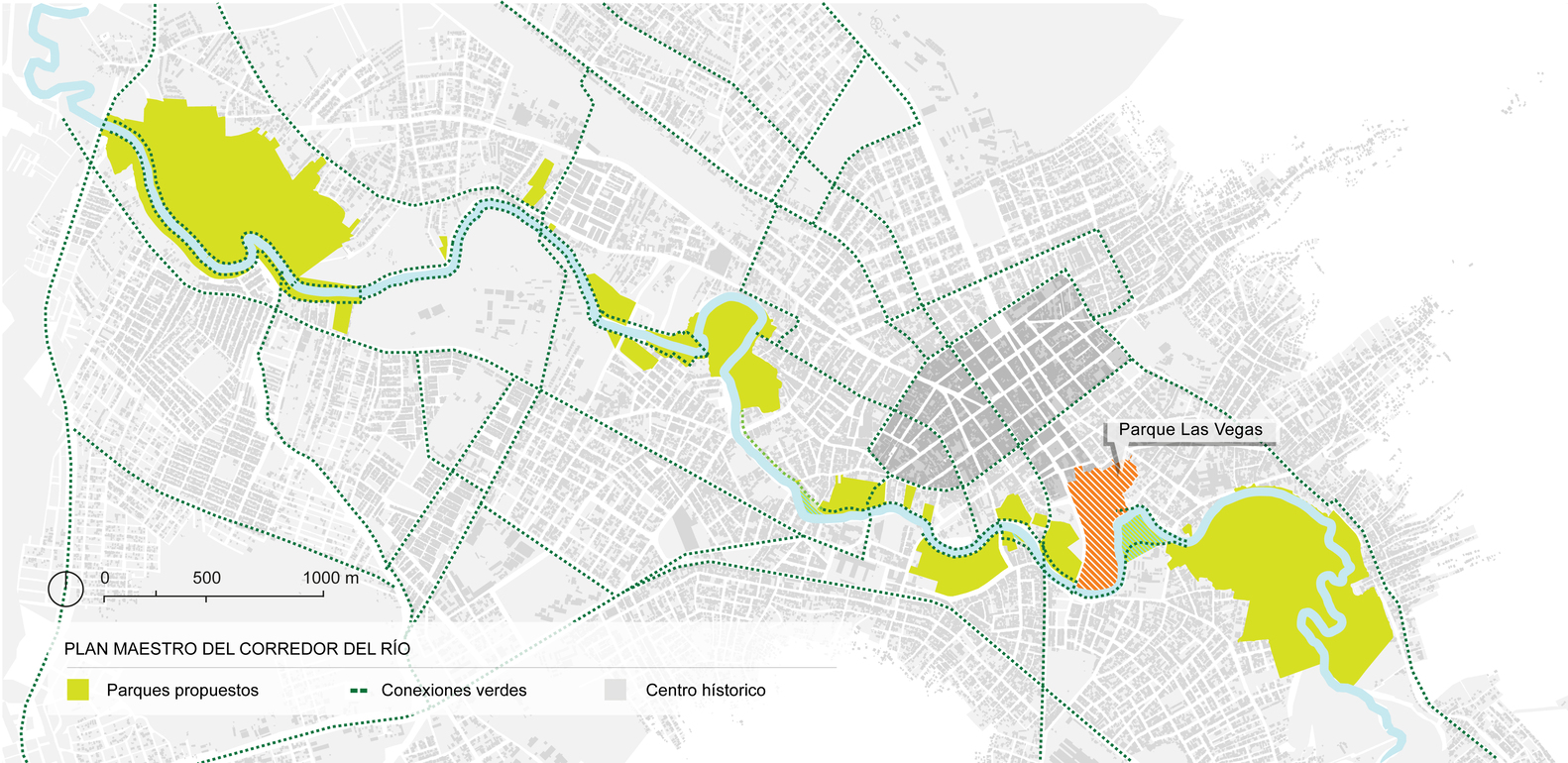
Las Vegas Park is located in the center of the city of Portoviejo, on the right bank of the river that bears the same name.
Its construction took place during an important period of transition, following the earthquake that devastated the city in April 2016. It is considered a symbol of the rebirth that Portoviejo is experiencing.
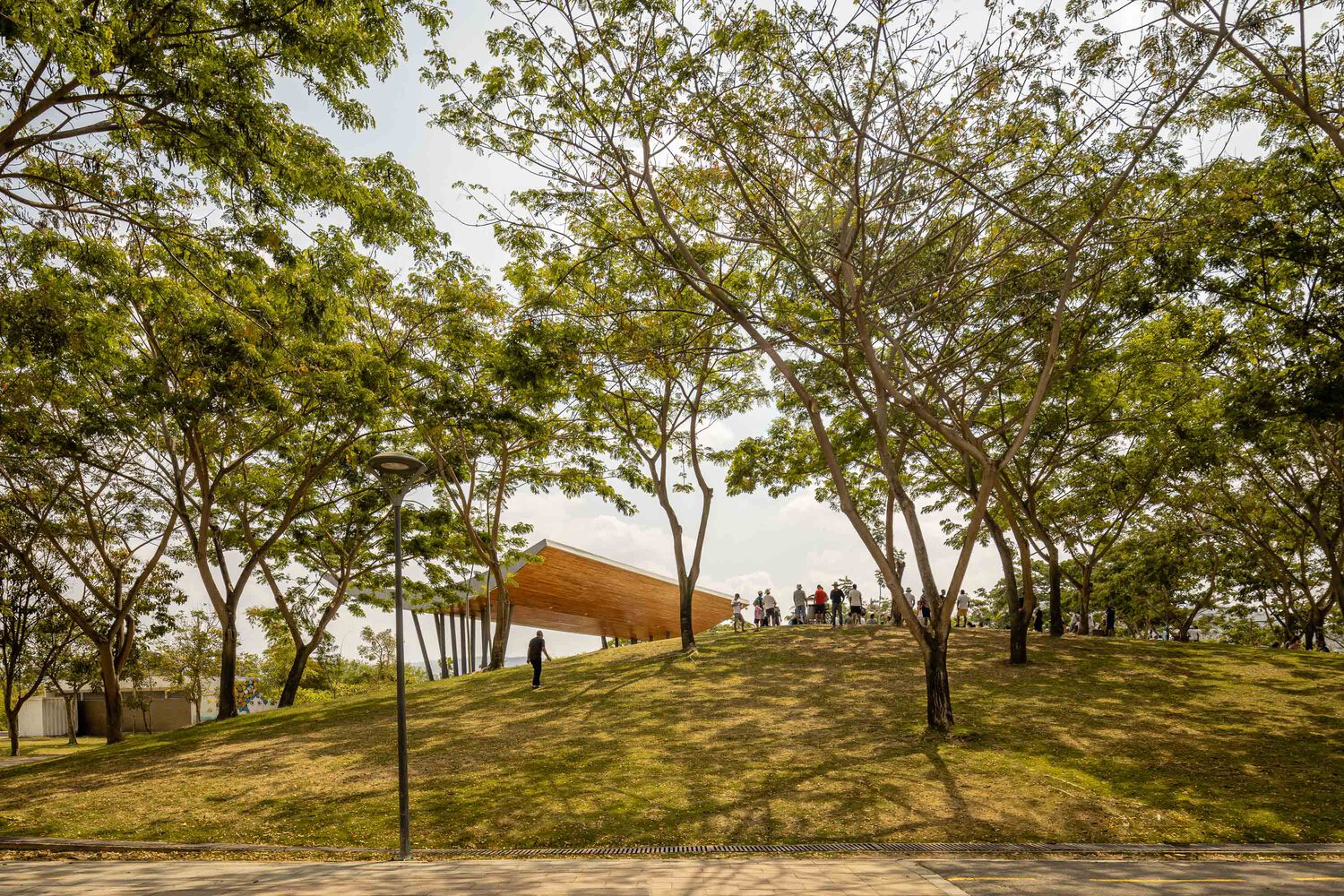
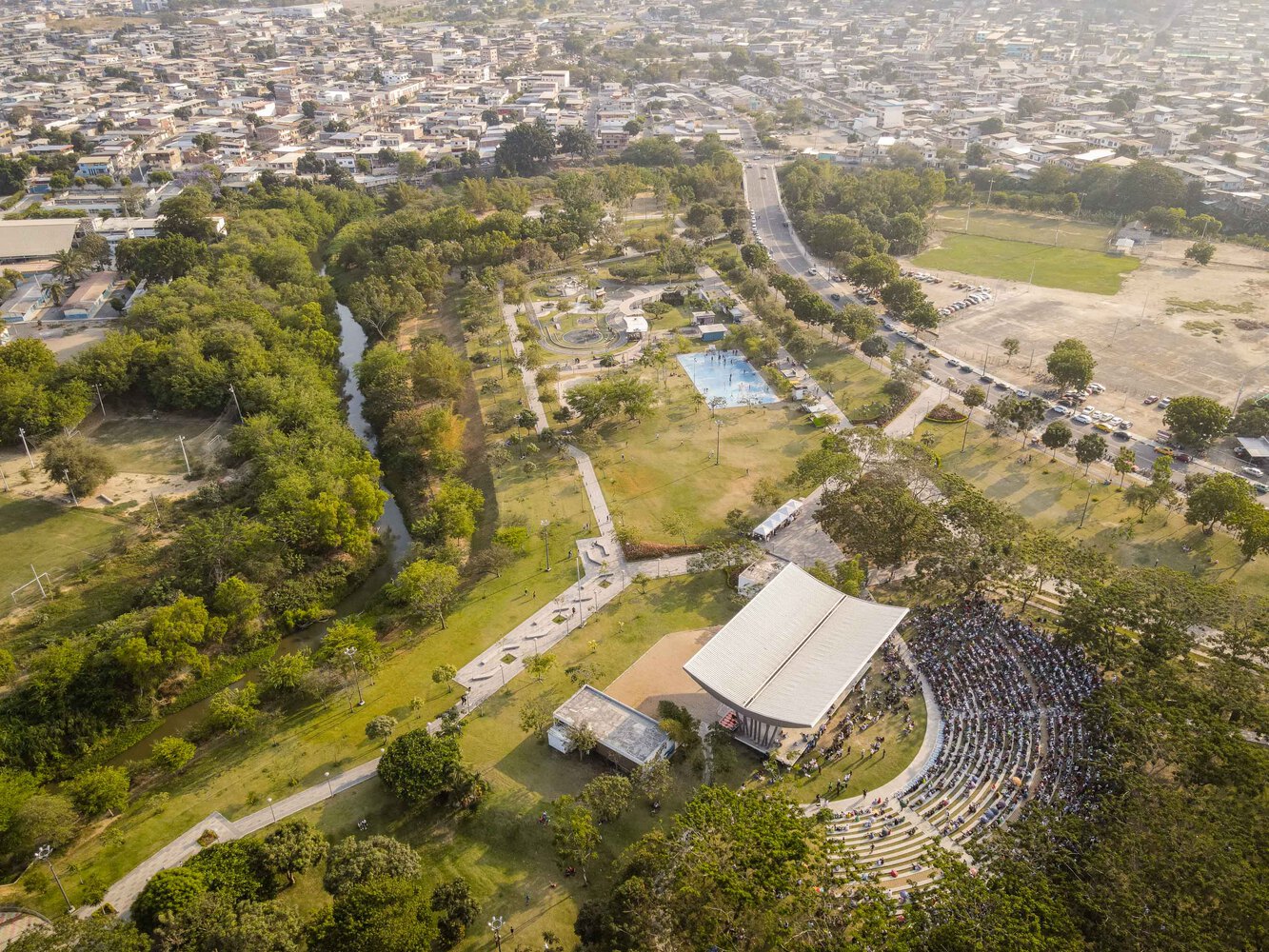
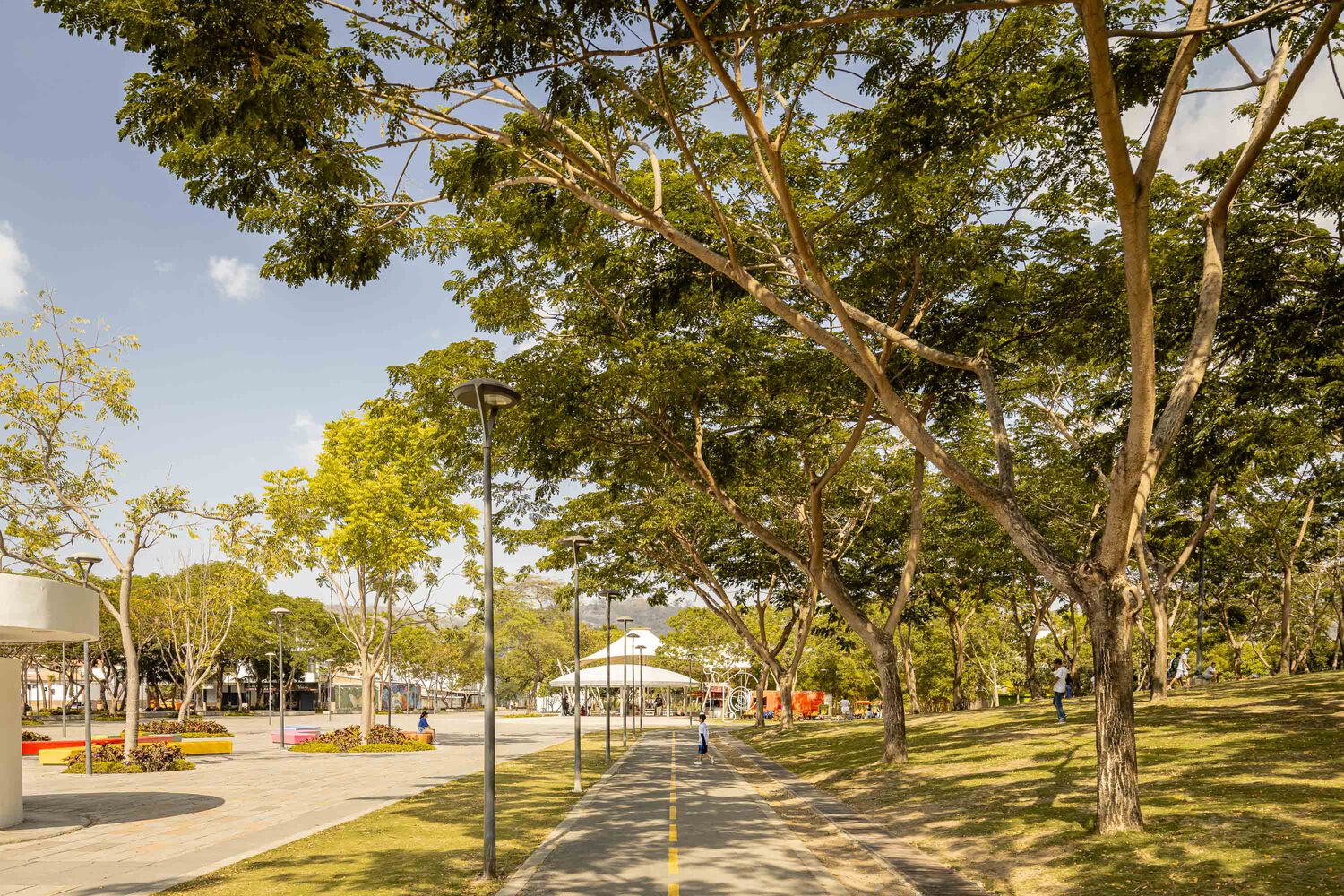
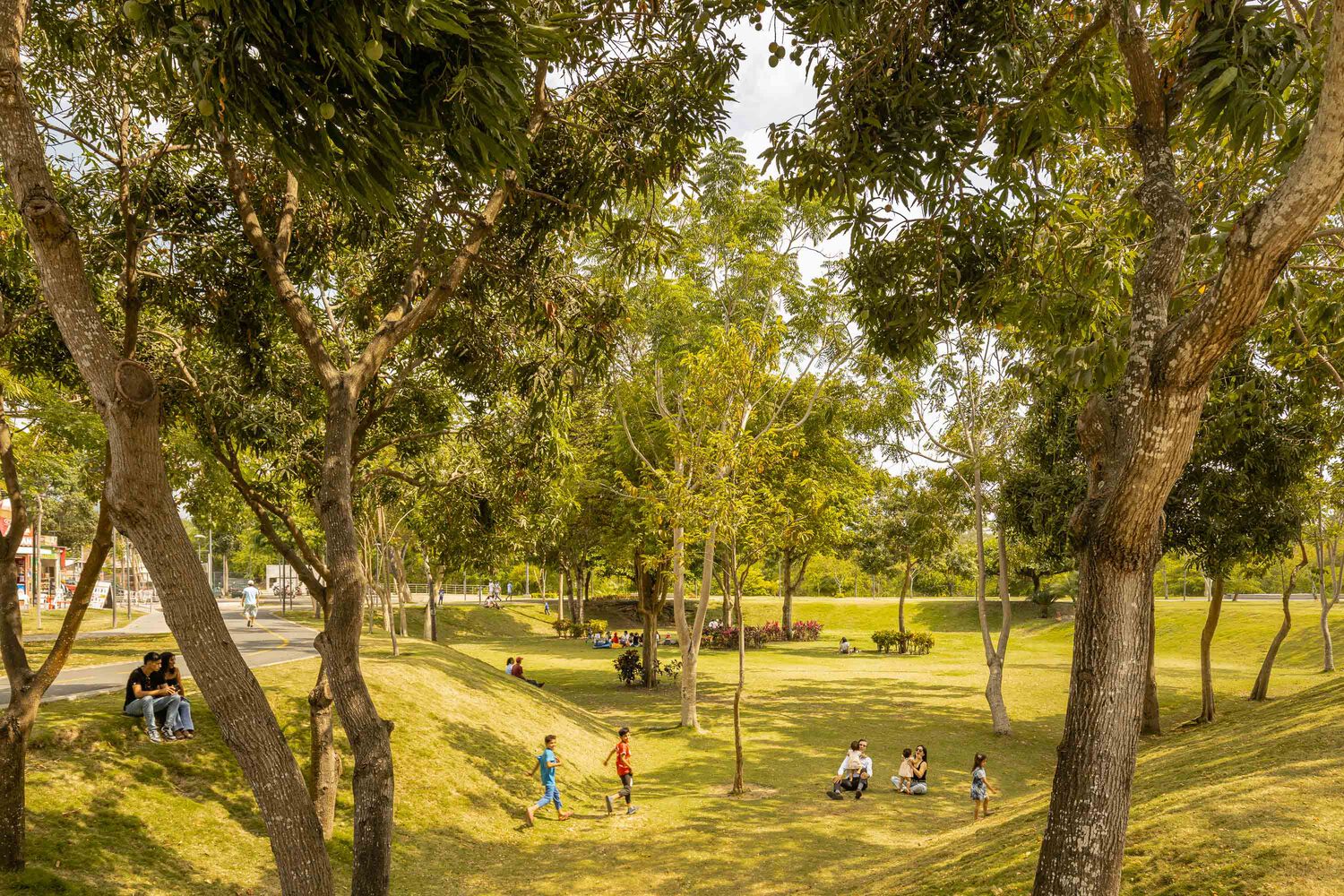
Every weekend, in its generous green spaces, family gatherings and celebrations occur, as well as various cultural events, both organized and spontaneous.
The three guiding ideas for the design were as follows: -I the recovery of landscape quality for the return of wildlife, creating a space where people can shelter from the strong tropical climate and connect with nature;
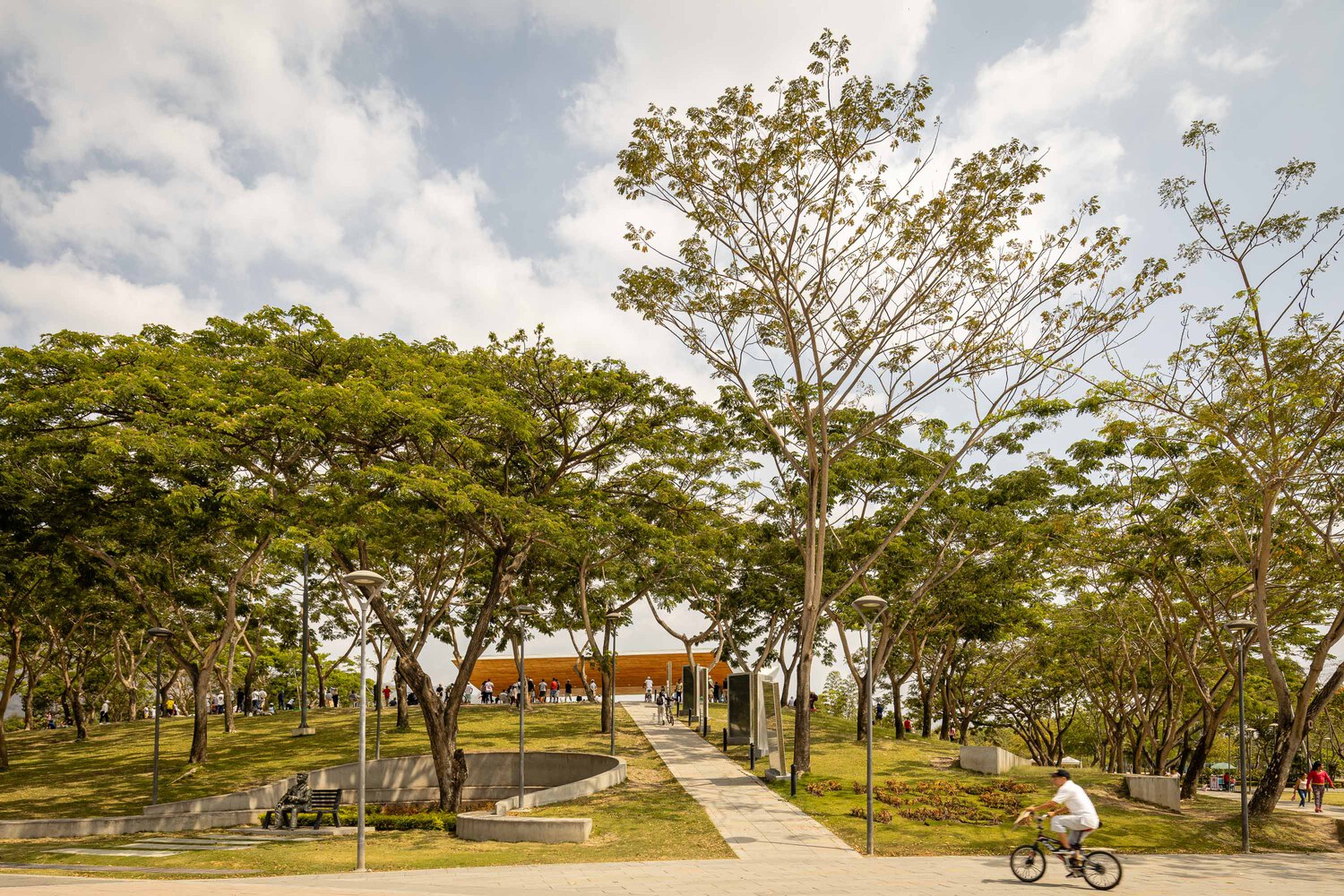
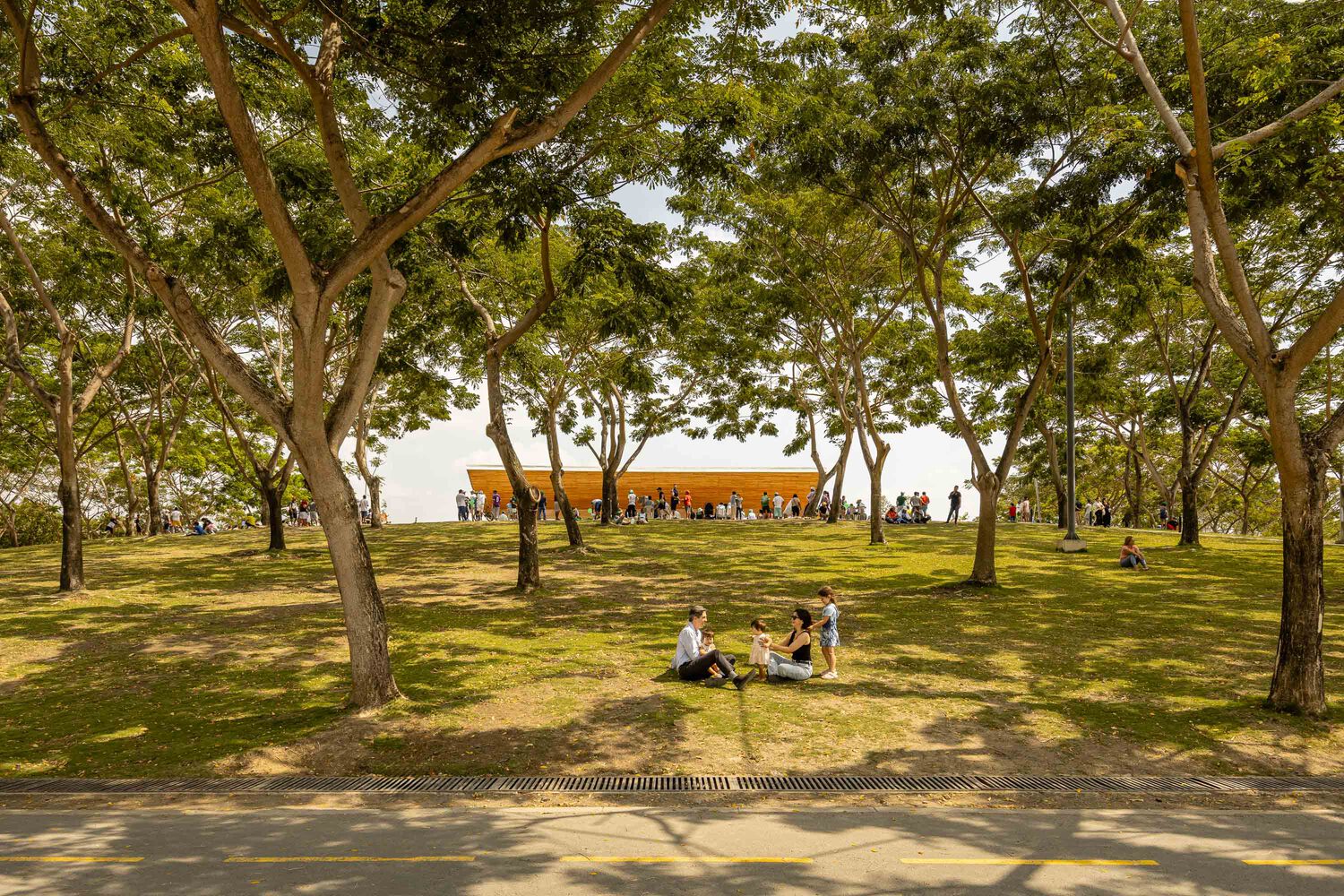
-II the creation of spaces to enjoy cultural, social, recreational, and sports activities; and, -III the adaptation of human interventions to nature and natural processes.
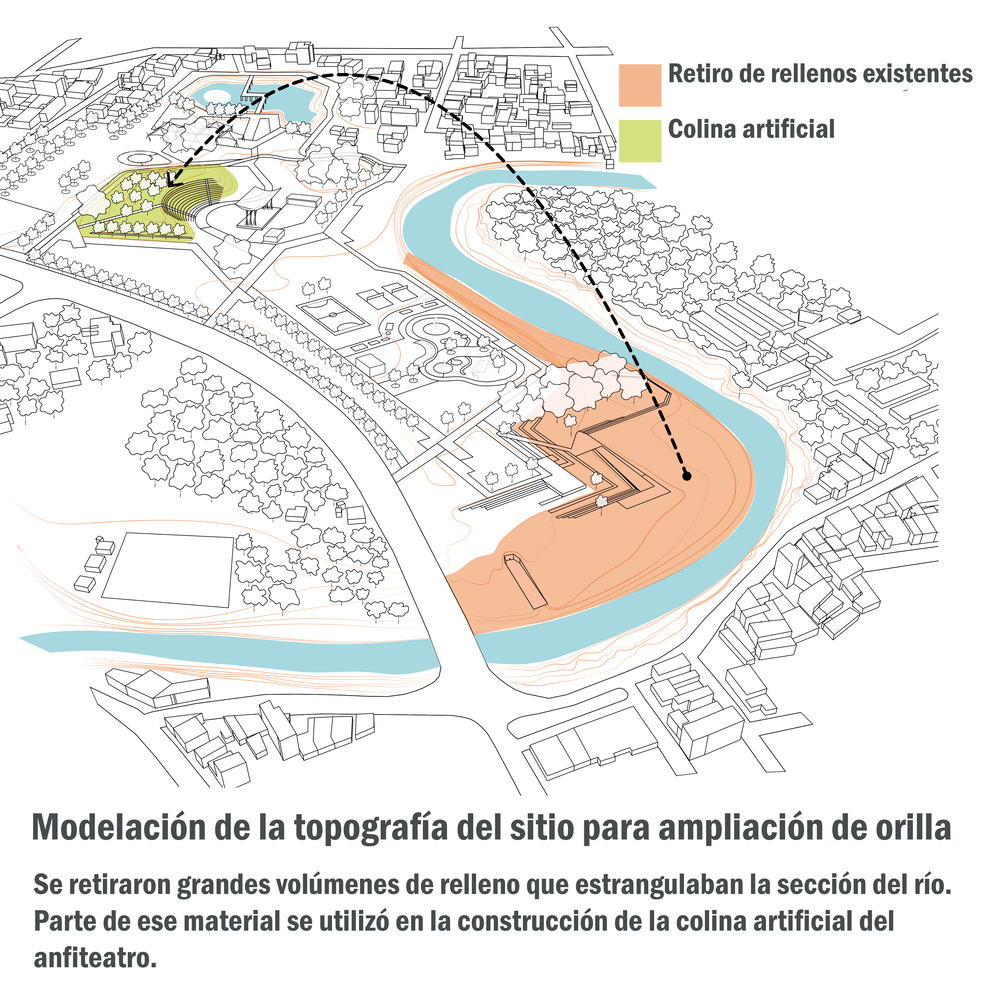
The construction of the park involved the recovery of the banks, which, in an effort to maximize construction space, had been encroached upon by fill.
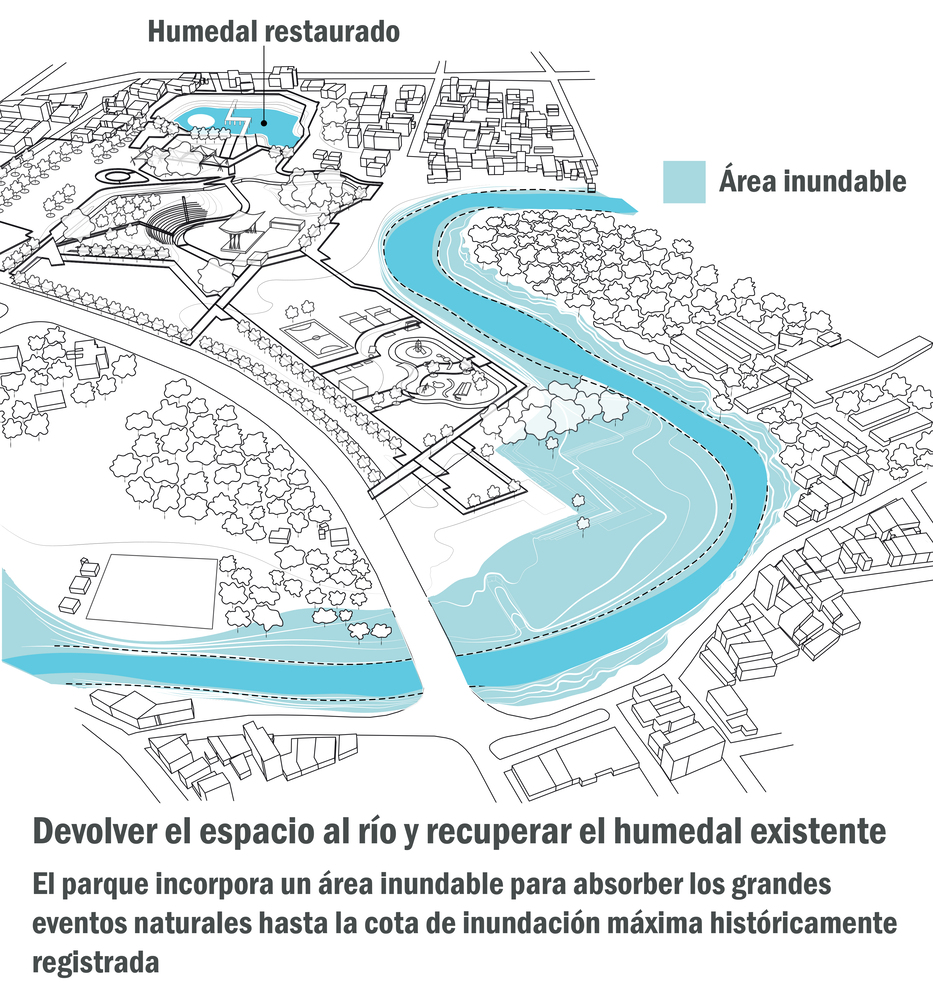
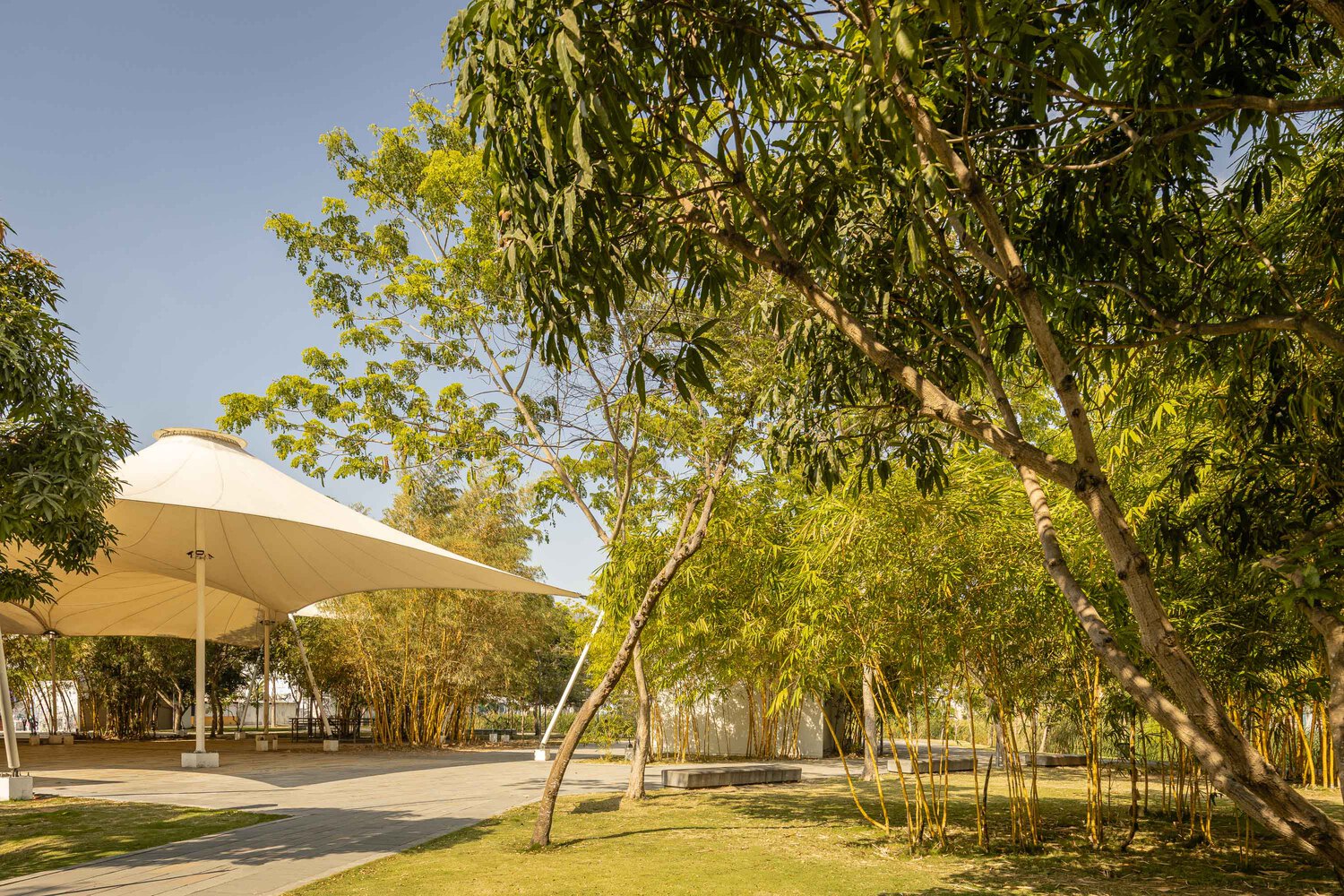
It was necessary to remove them, creating a wide beach environment that protects the park from flooding. Currently, bamboo and other riparian tree species such as frutillo and willow are growing along the bank.
The approach to the river is along a gentle ramp, crossing green terraces confined by large concrete steps, allowing people to safely reach the water.
This flood-tolerant landscape has performed very successfully during the major floods of 2018 and 2024, earning it recognition as a model for climate change adaptation by Ecuador's National Risk Management Secretariat.
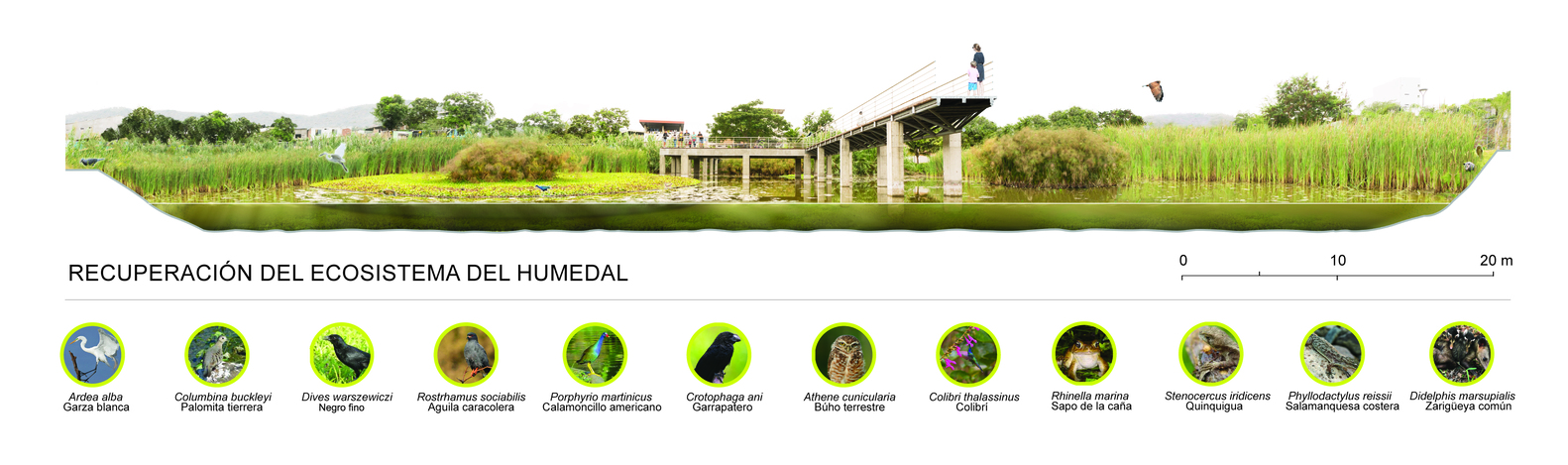
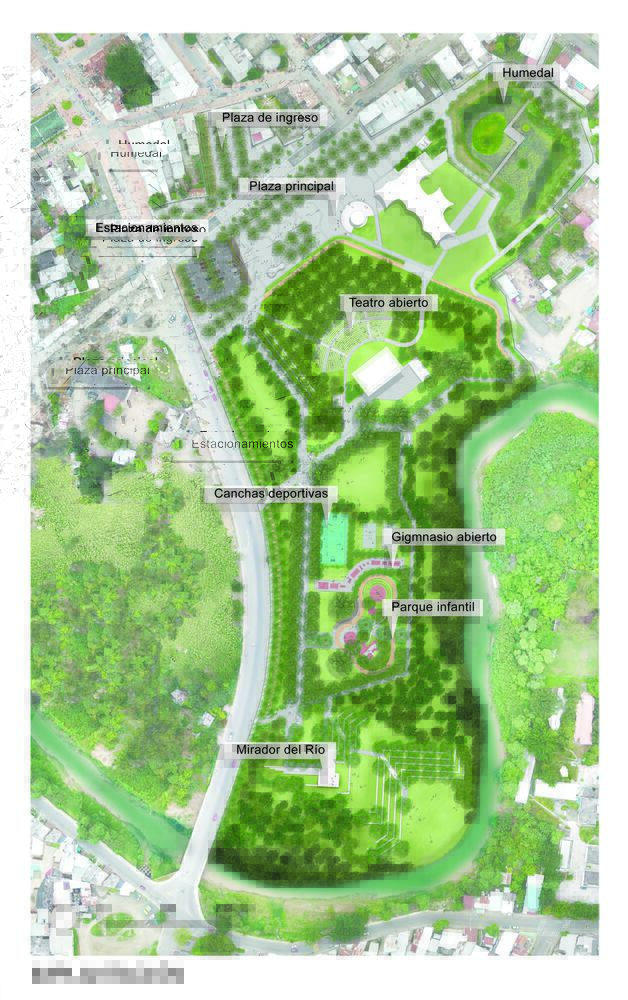
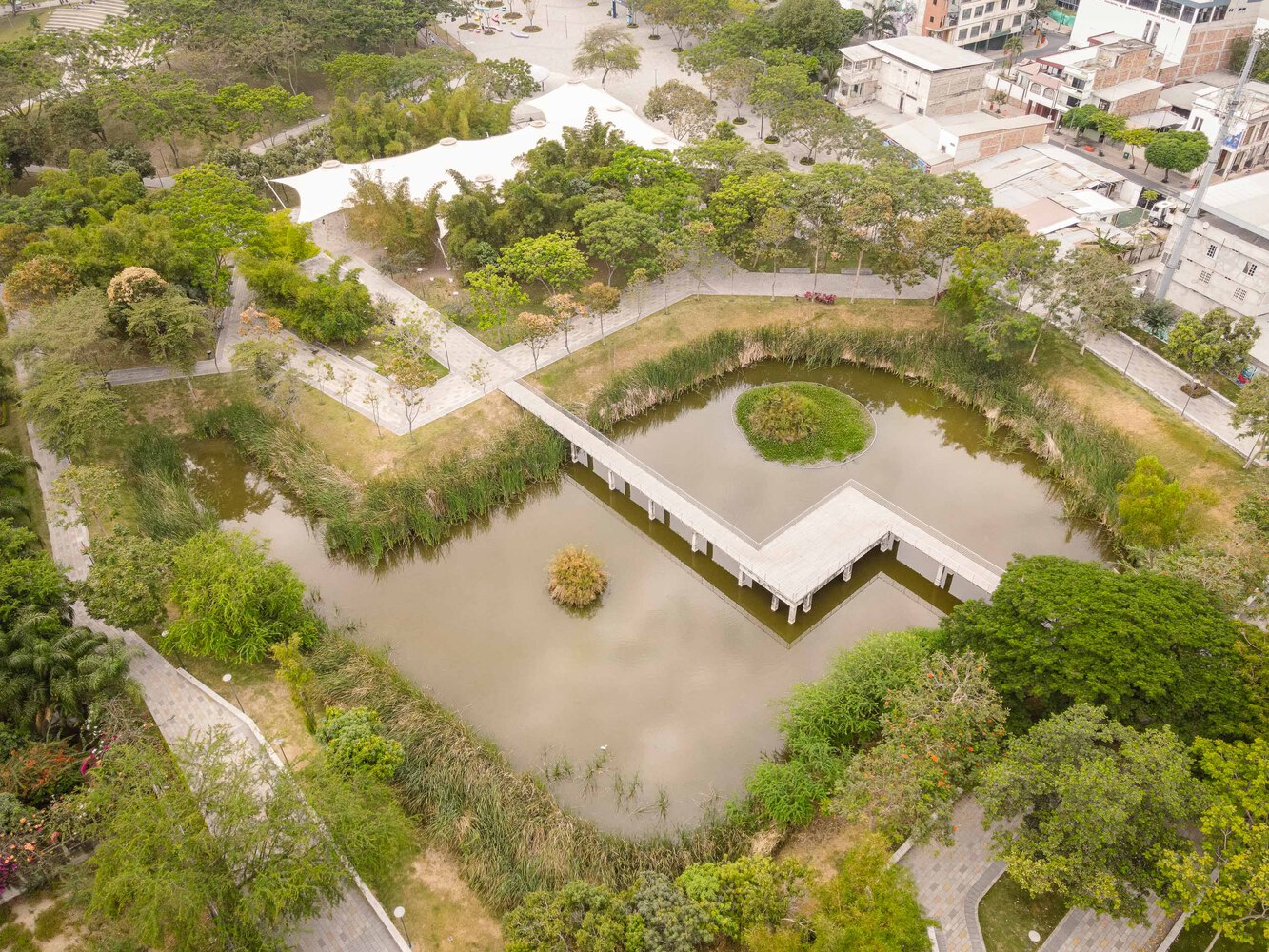
A segment of a meander abandoned by the river was recovered as a wetland, recreating riparian life. As soon as it was rehabilitated, a variety of species of insects, amphibians, reptiles, and birds began to settle.
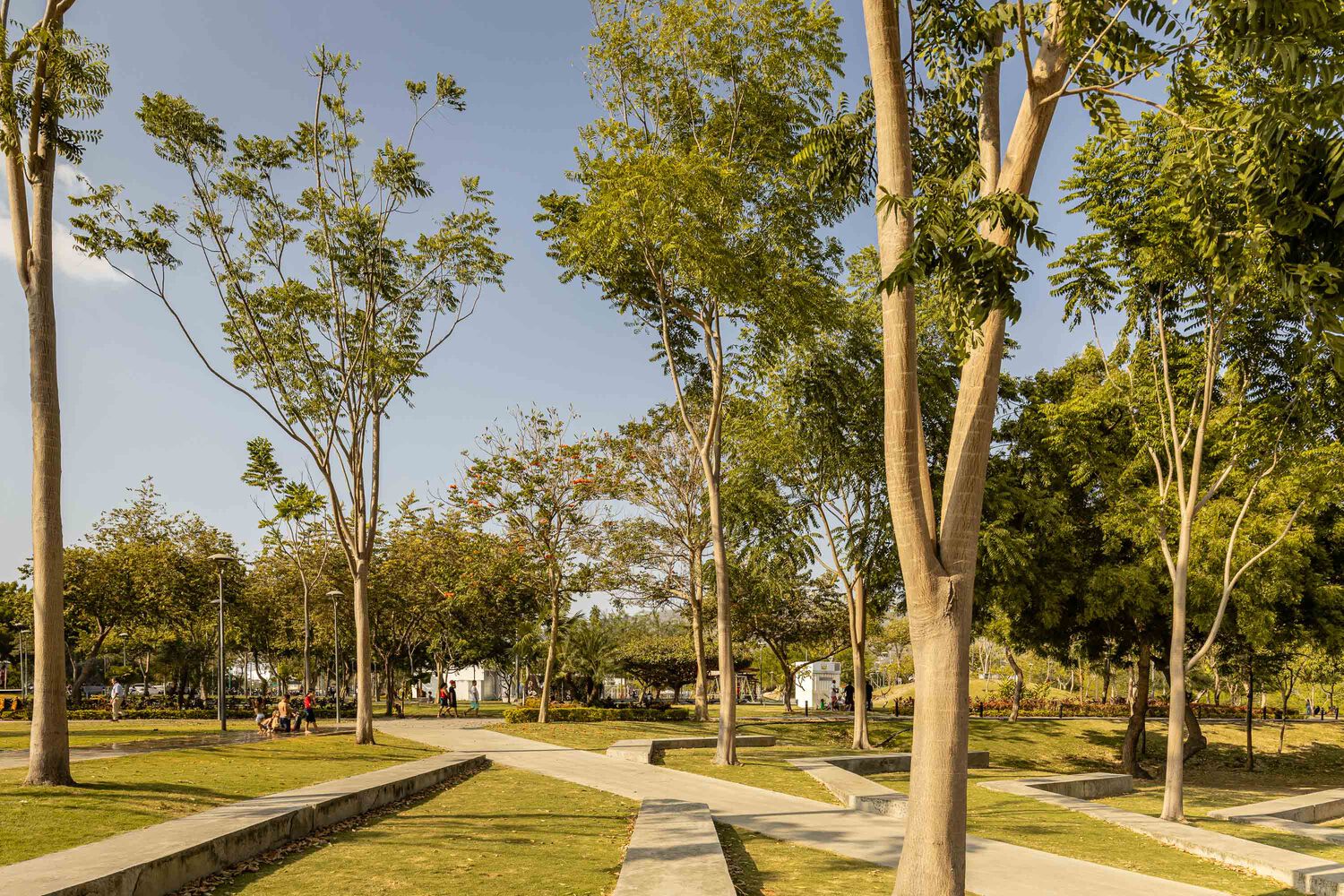
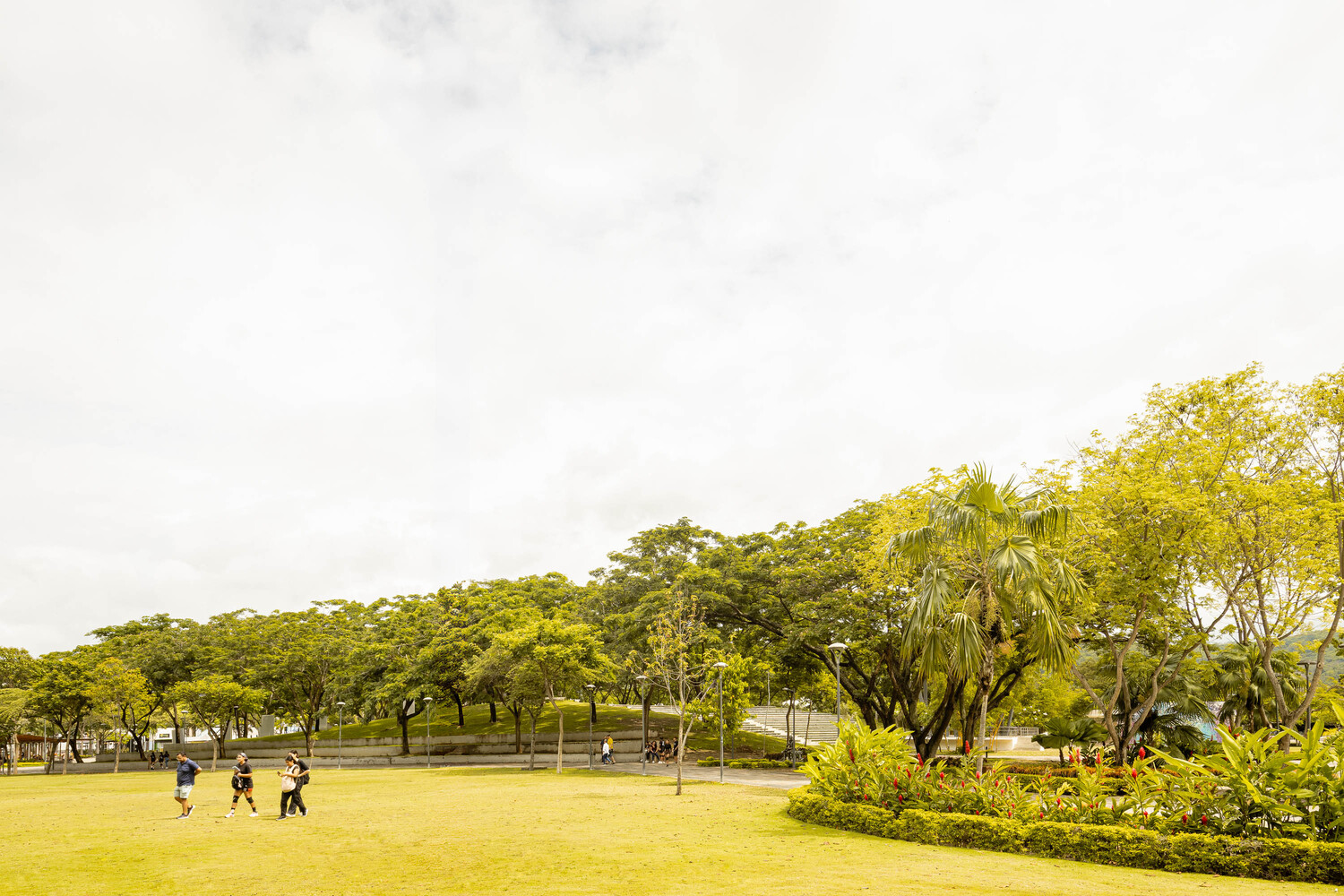
A count conducted over two consecutive years by bird specialist Liza Brunetti indicated in 2023 the presence of 105 species among migratory and native birds, an extraordinary number in urban environments.
The wetland also functions as a retention basin, absorbing runoff from the park's hard surfaces.
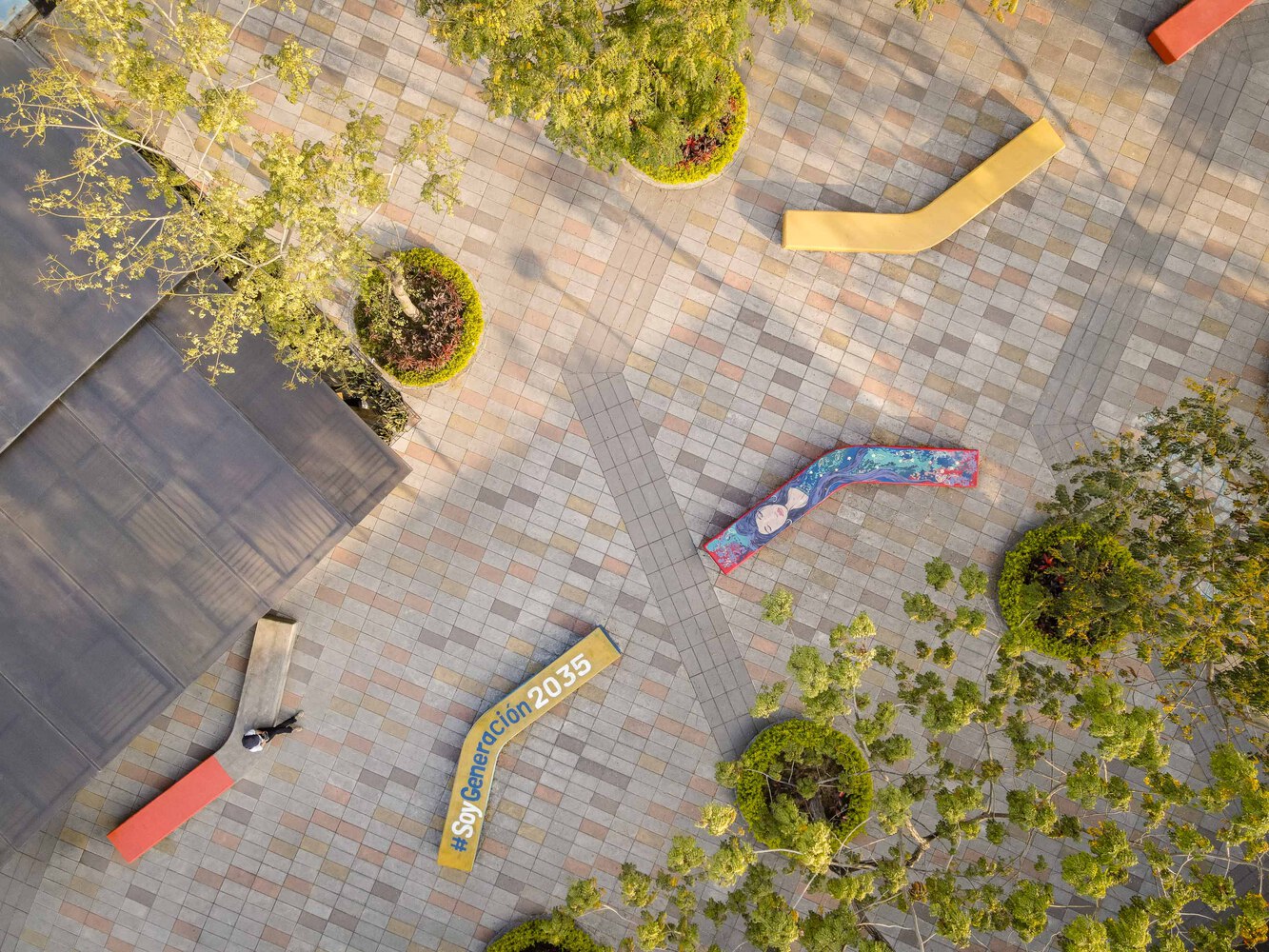
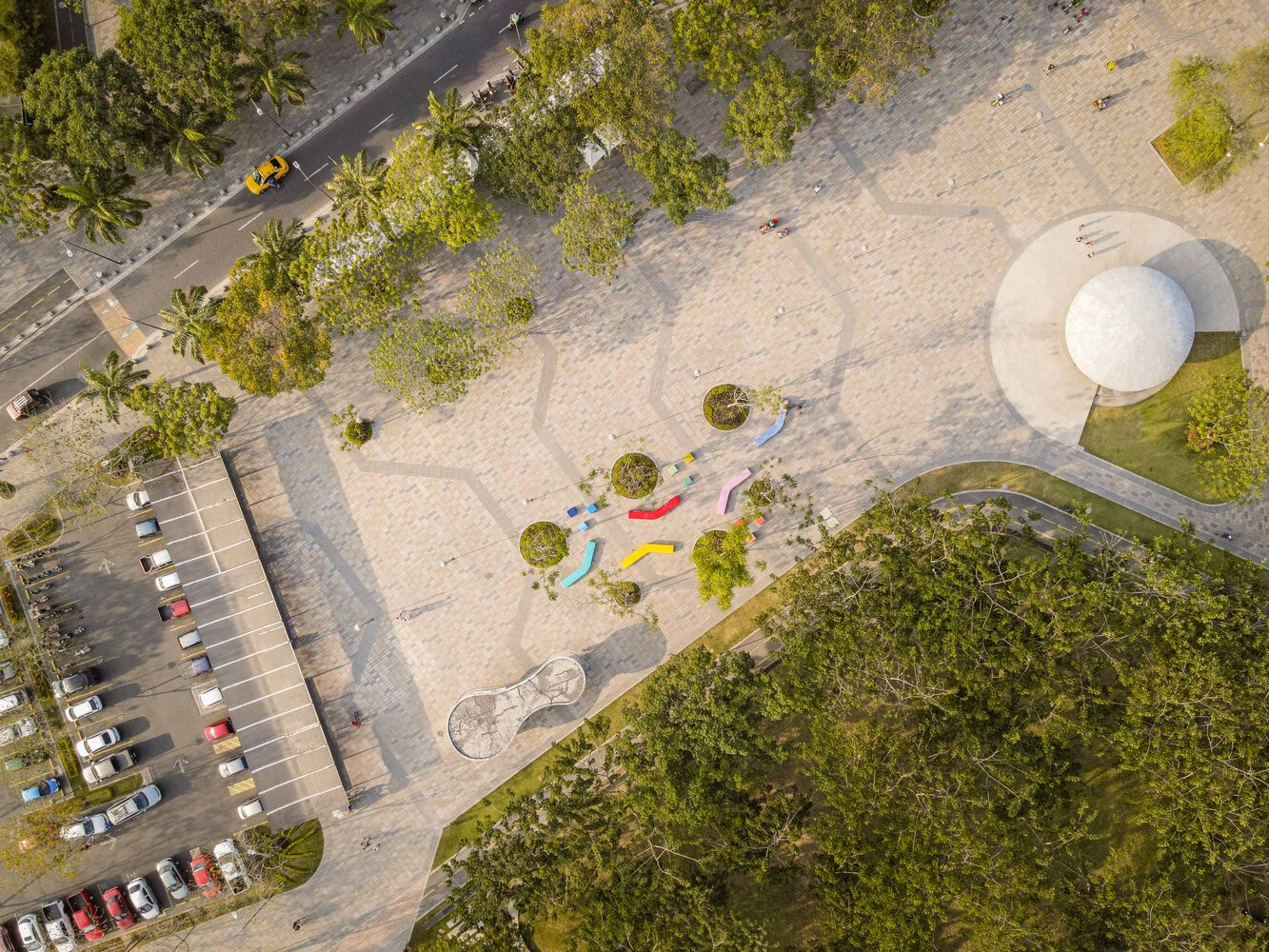
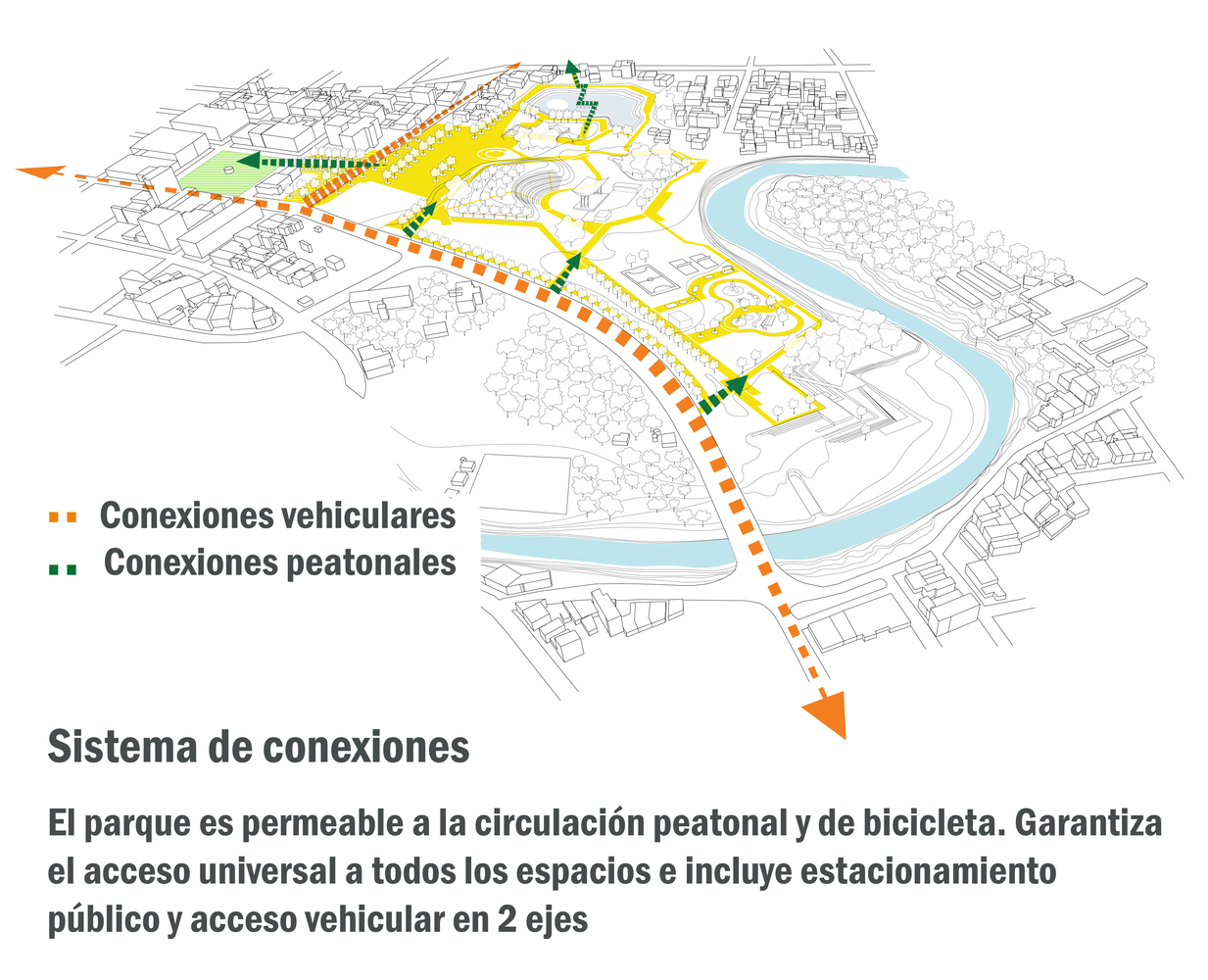
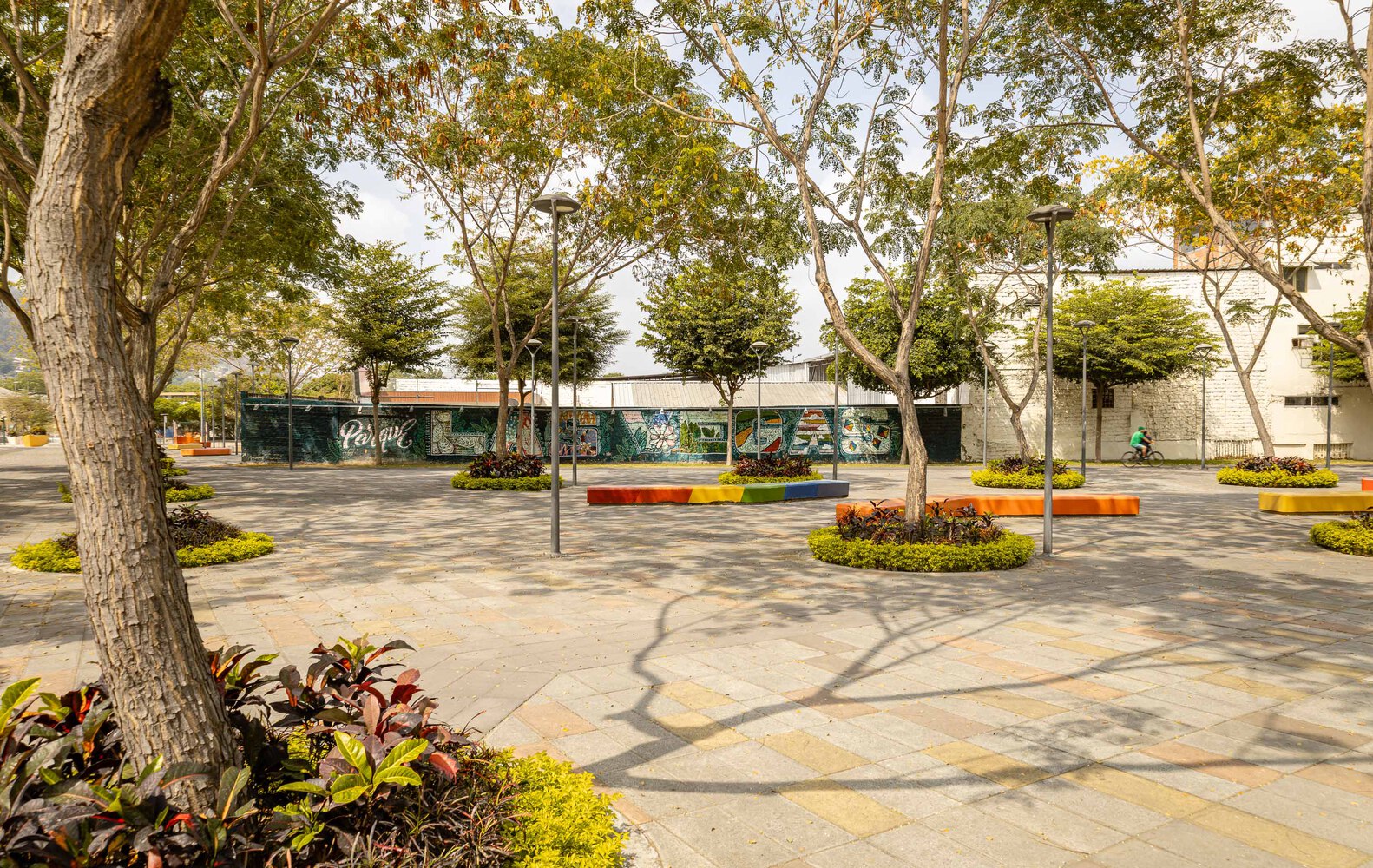
A large plaza acts as an entryway to the park from the city's administrative and financial center. Native trees with broad canopies were incorporated, modulating its scale and moderating the microclimate.
This is a space capable of hosting large social, cultural, and political events.
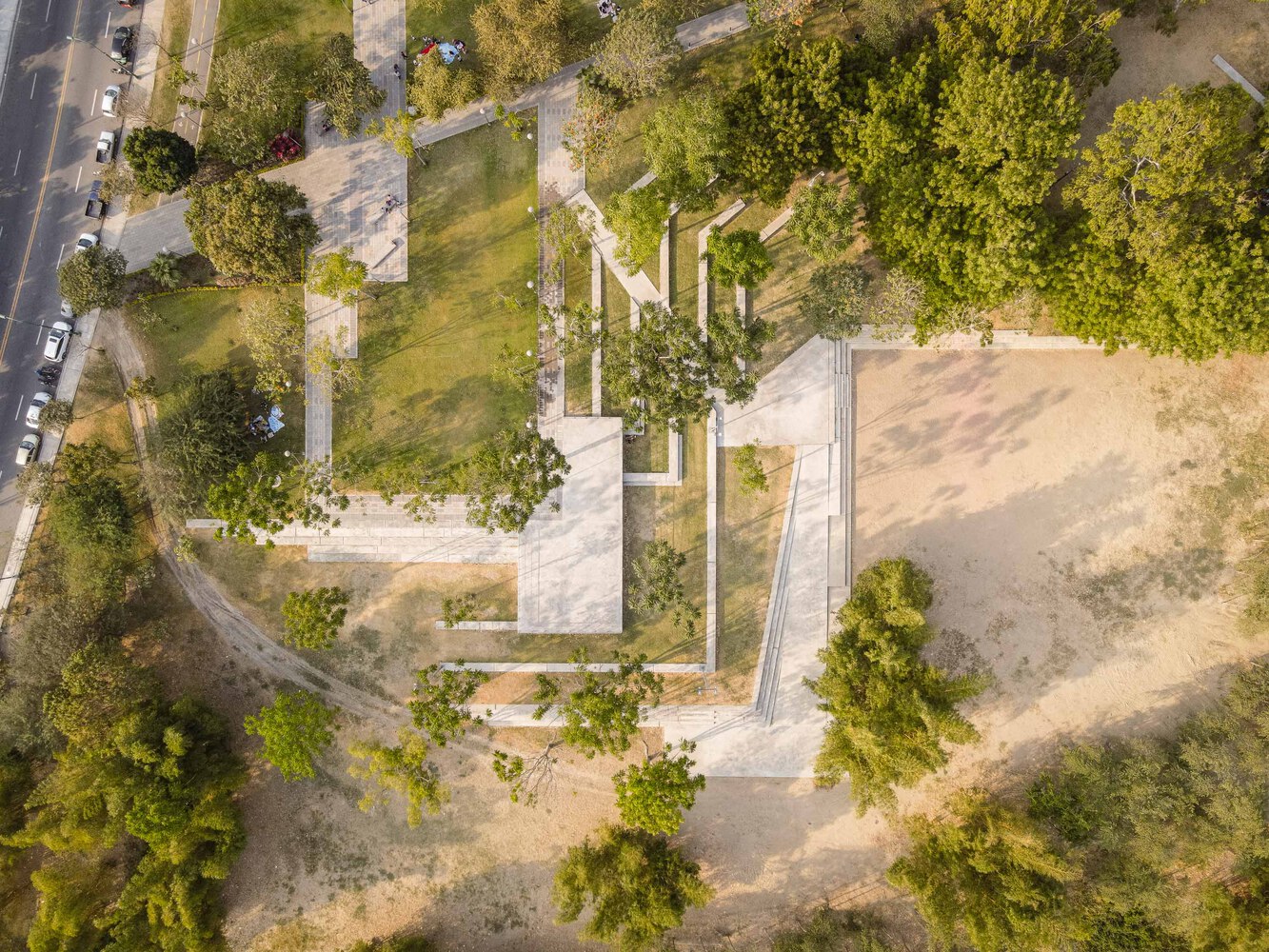
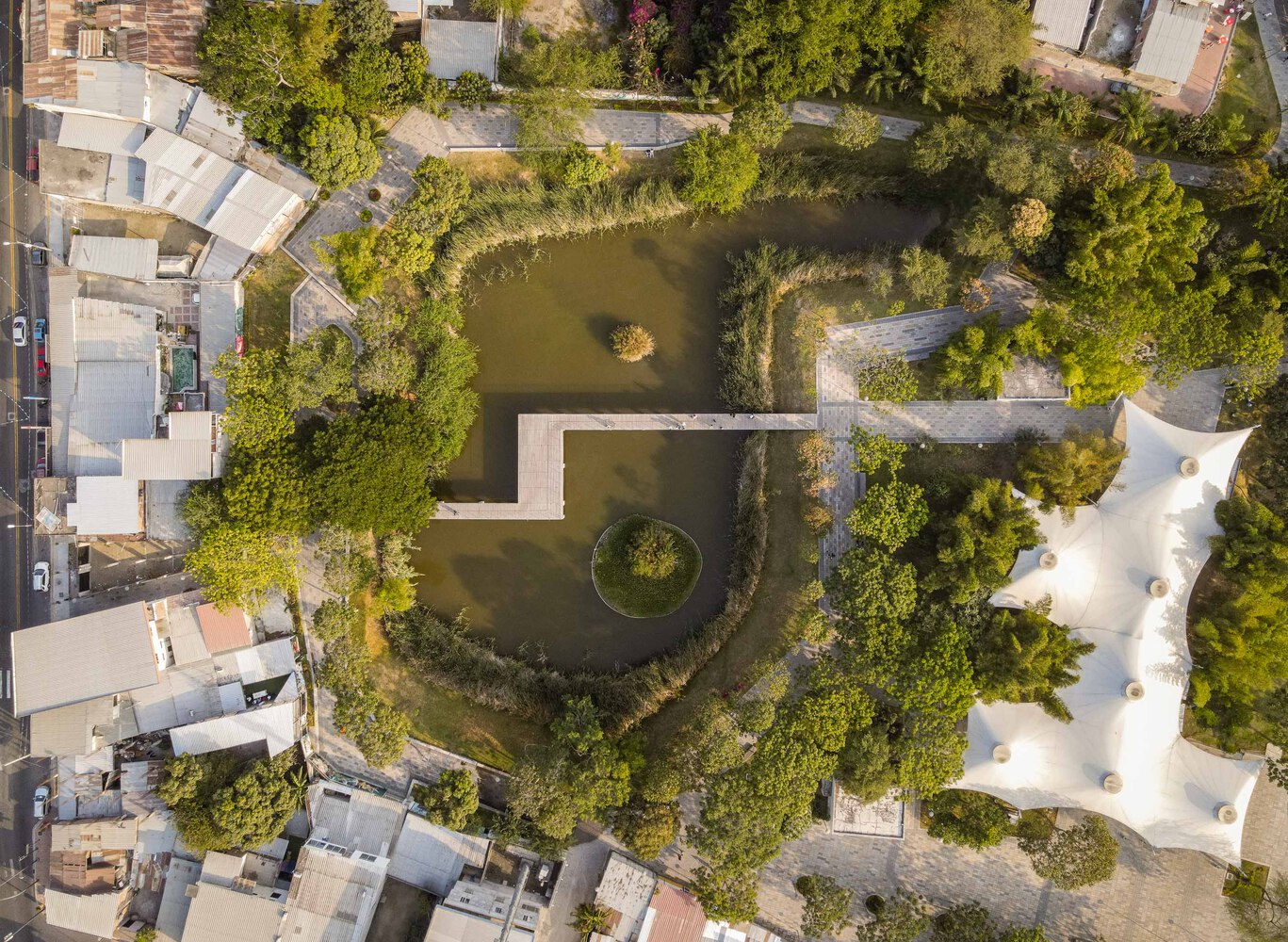
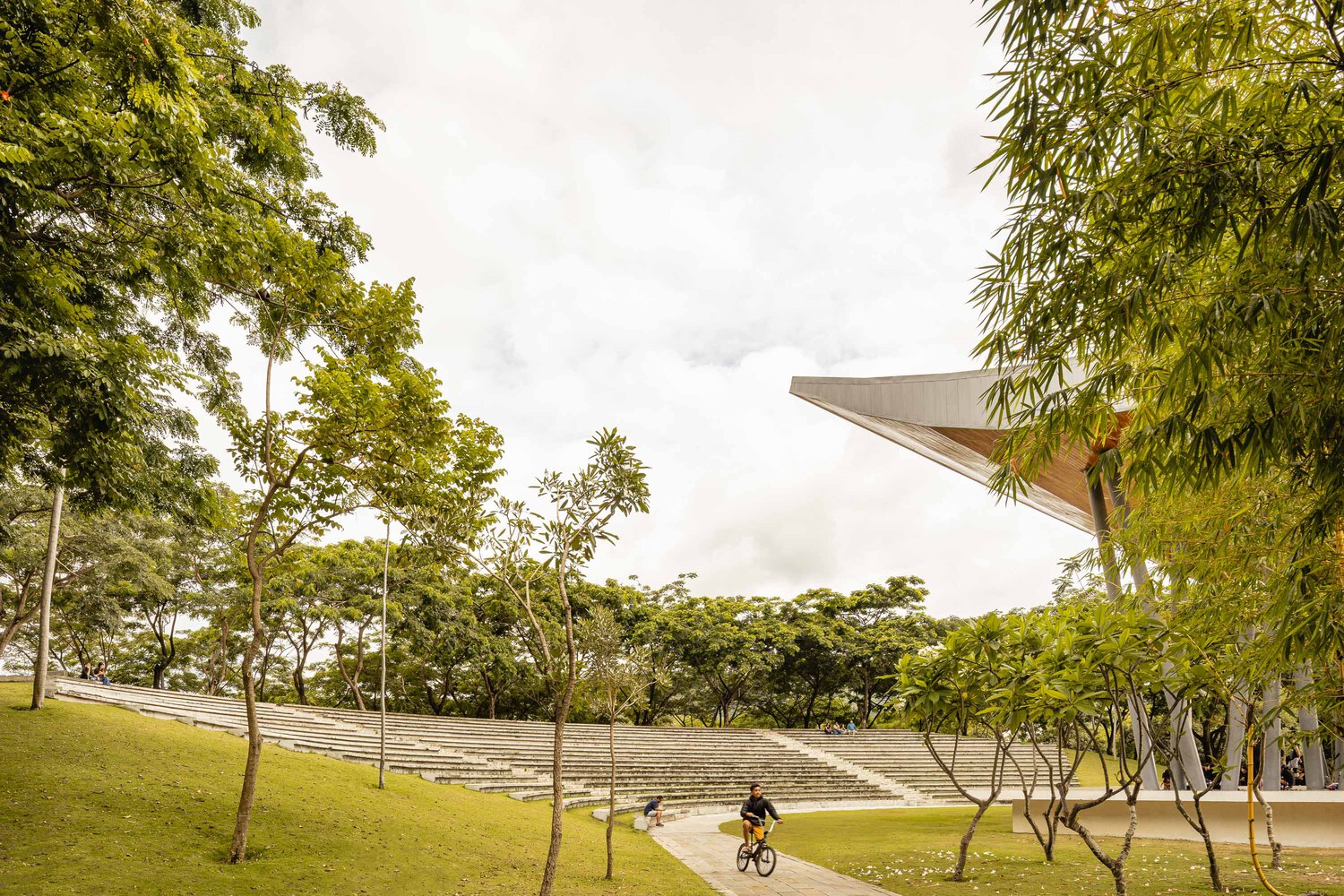
Next to the plaza stands an artificial hill of approximately 8,000 m² and 10 meters in height, creating a serene environment for the open-air theater, which has a capacity of 2,500 people.
From the top of the bleachers, one can overlook the vast surroundings: the river valley and the surrounding hills, covered by ceibo forests.
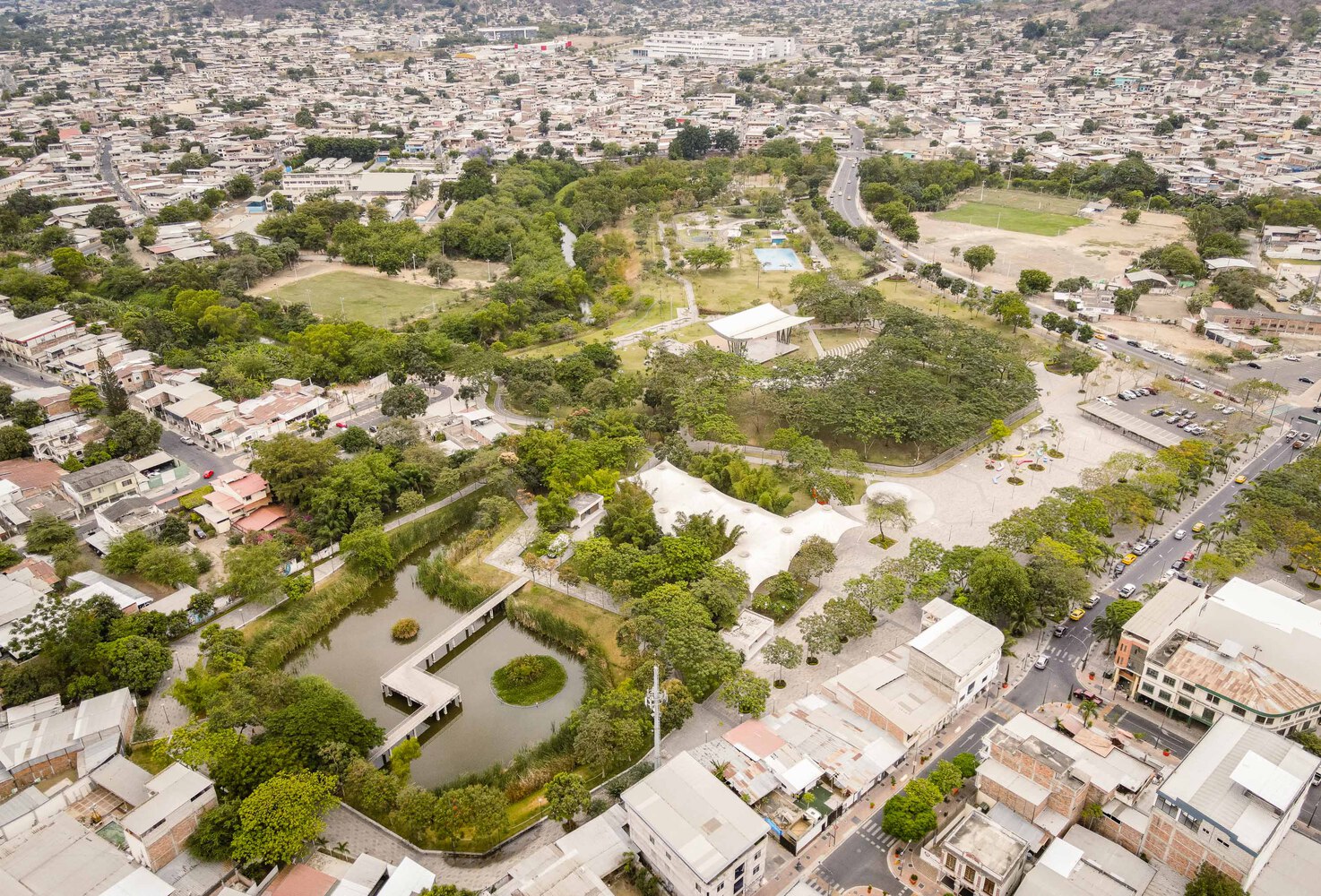
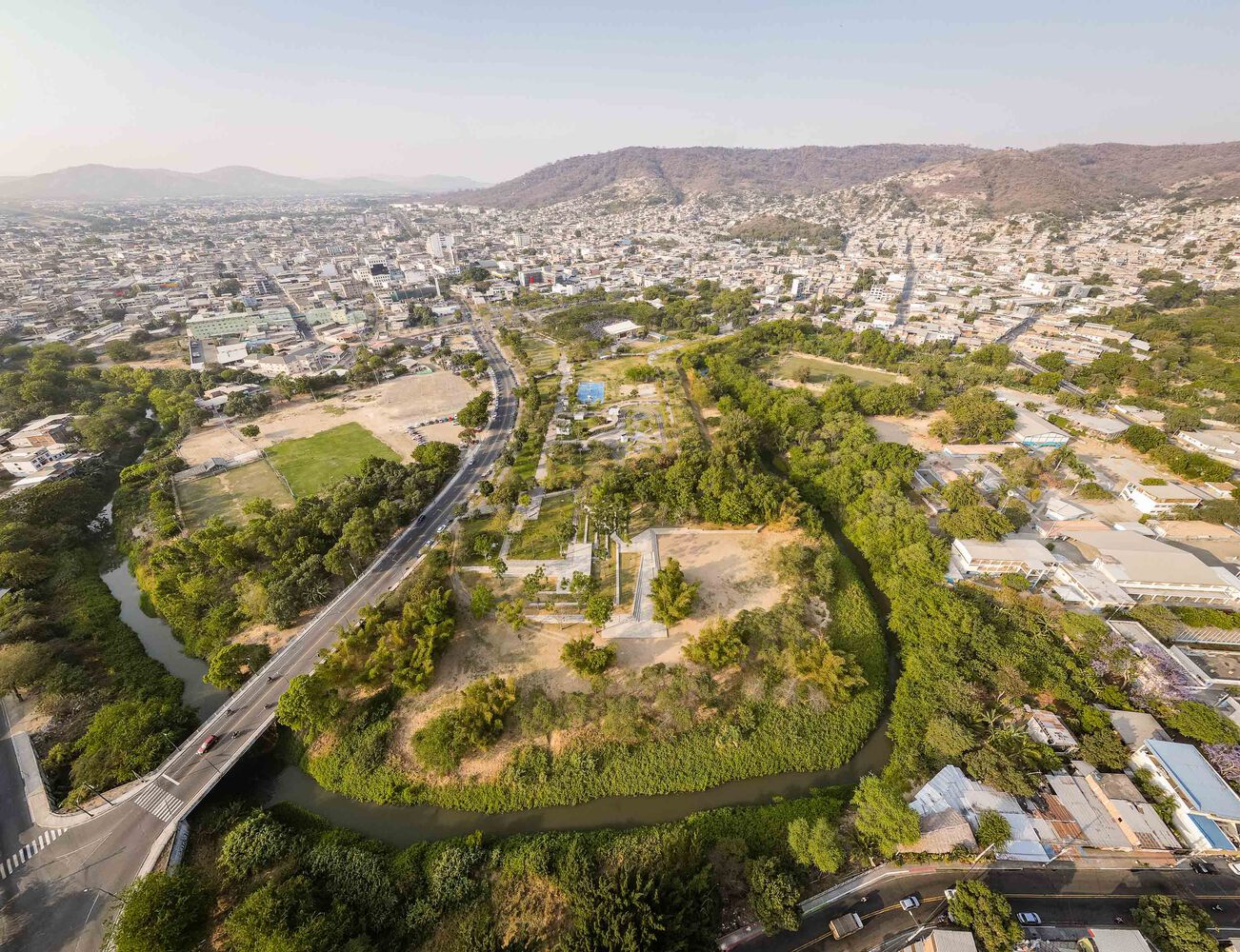
The slopes of the artificial hill provide a cool space that invites picnickers to enjoy the shade of the saman trees.