Beijing Haidian Xiaojiahe Green Dynamic World
BEIJING HAIDIAN XIAOJIAHE GREEN DYNAMIC WORLD
DDON
ARCHITECTS
DDON
LEAD ARCHITECTS
Yuan Songting
DESIGN TEAM
Shi Ke, Wu Jingtao, Li Rong, Yuan Liu, Tuo Shen, Fan Wanxi, Zhang Xueliang, Wang Yun, Liu Rui, Zhao Heng, Yan Feng, Guo Yuting, Li Zhenyan, Zhang Lu, Lü Zhe, Wang Bing
CLIENTS
Xiaojiahe Village, Haidian Town, Haidian District, Beijing
CONSTRUCTORS
Beijing Rongdi Construction Engineering Co., Ltd. (Earthworks Contractor); Beijing Jingrun Landscaping Engineering Co., Ltd. (Public Welfare Section — Landscaping, Pickleball Courts, Basketball Courts, Running Tracks); Beijing Tengyun Lida Construction Engineering Co., Ltd. (Operations Section — Buildings, Parking Facilities, Soccer Fields, Tennis Courts)
LOCATION
China
CATEGORY
Park
English description provided by the architects.
The design and realization of the "Xiaojiahe Green Dynamic World"project in Haidian District, Beijing, represents far more than the successful construction of a large-scale open space dedicated to sports;
it stands as a groundbreaking practice in the revitalization of urban derelict land, through the view of social governance. The project embodies a rare facet of public space development within Beijing's urban renewal—one characterized by a populist and thematic approach—and reflects an entirely novel model for the adaptive reuse of underutilized urban sites that has yet to be fully explored.
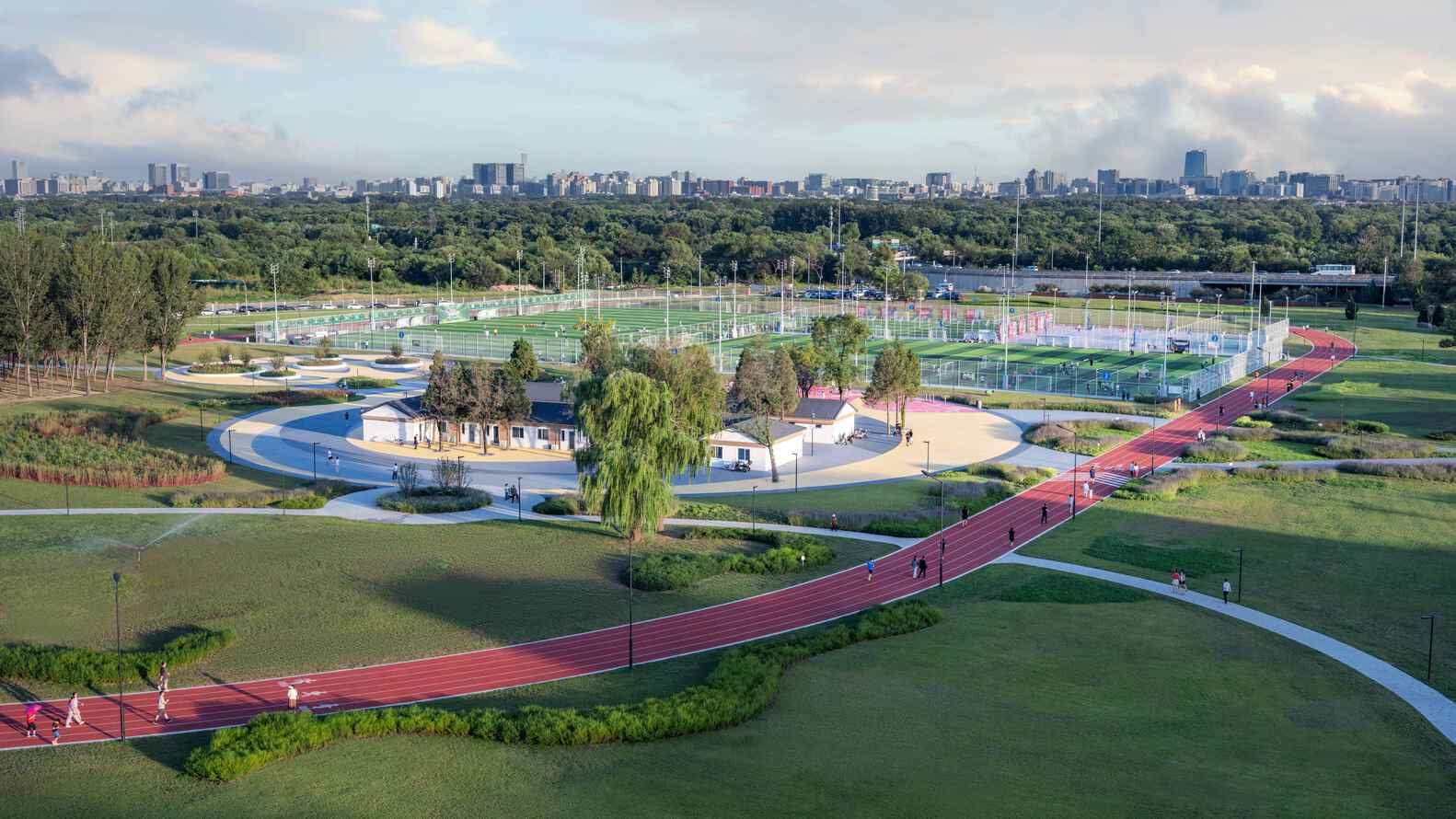
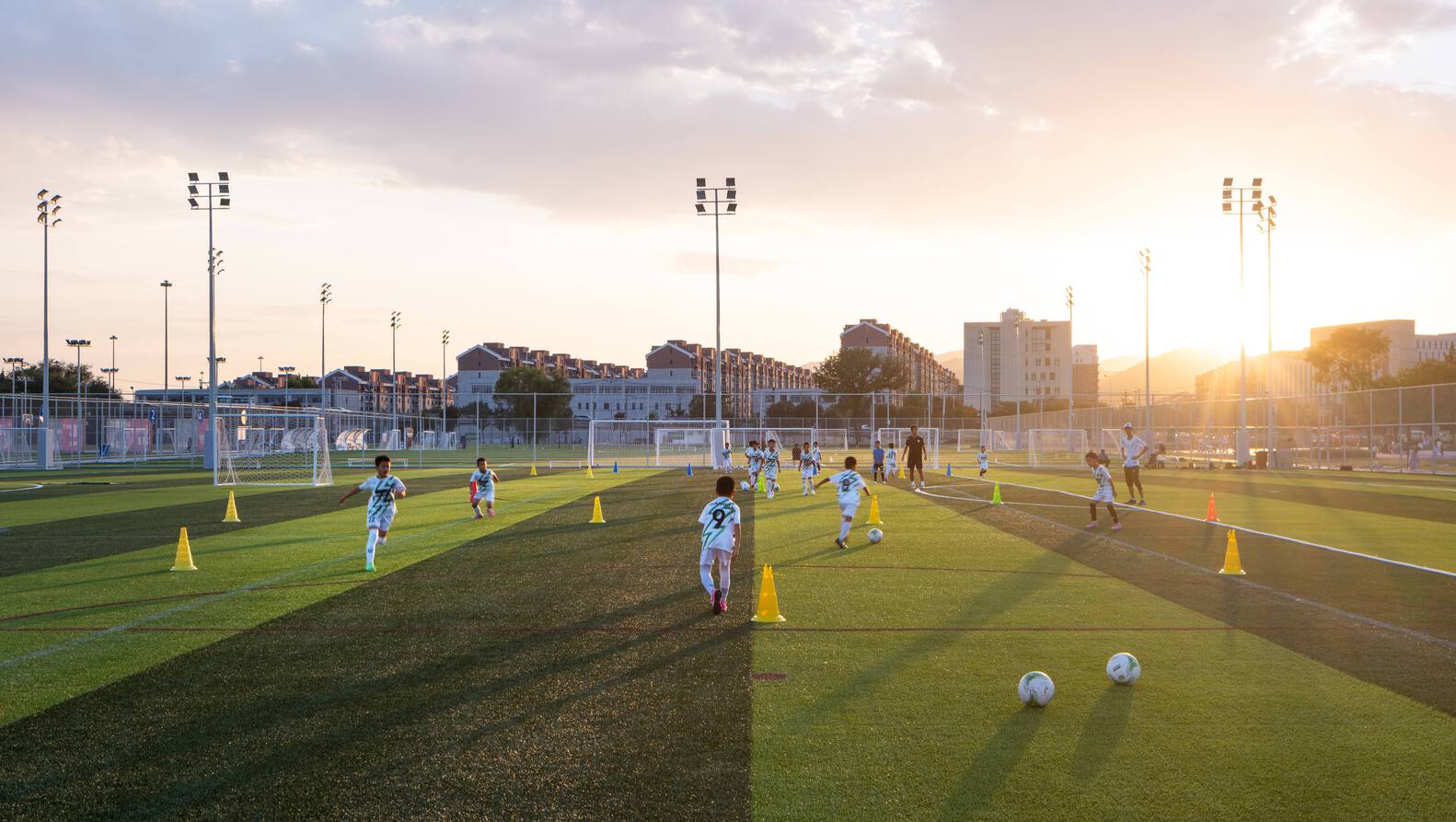
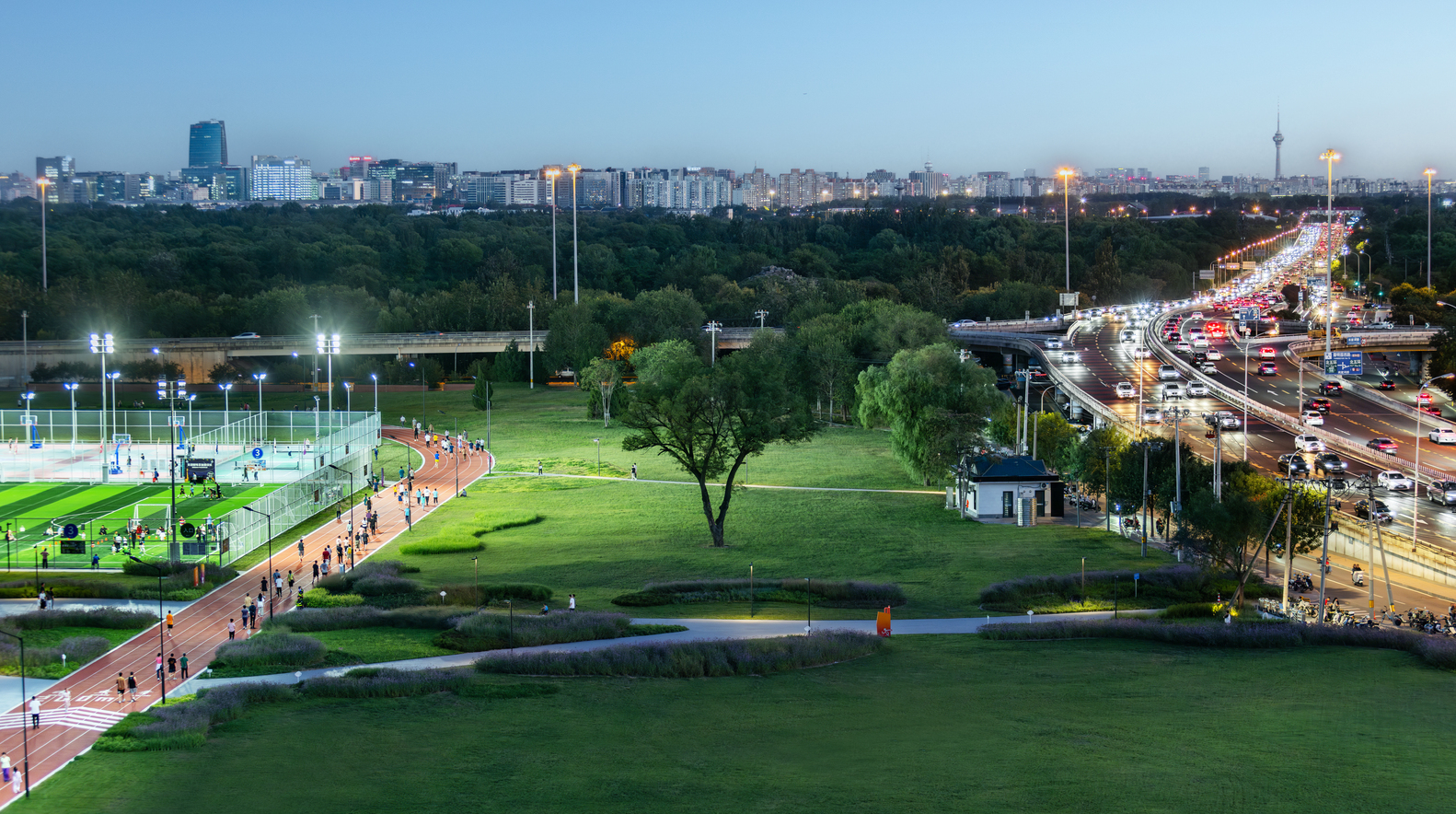
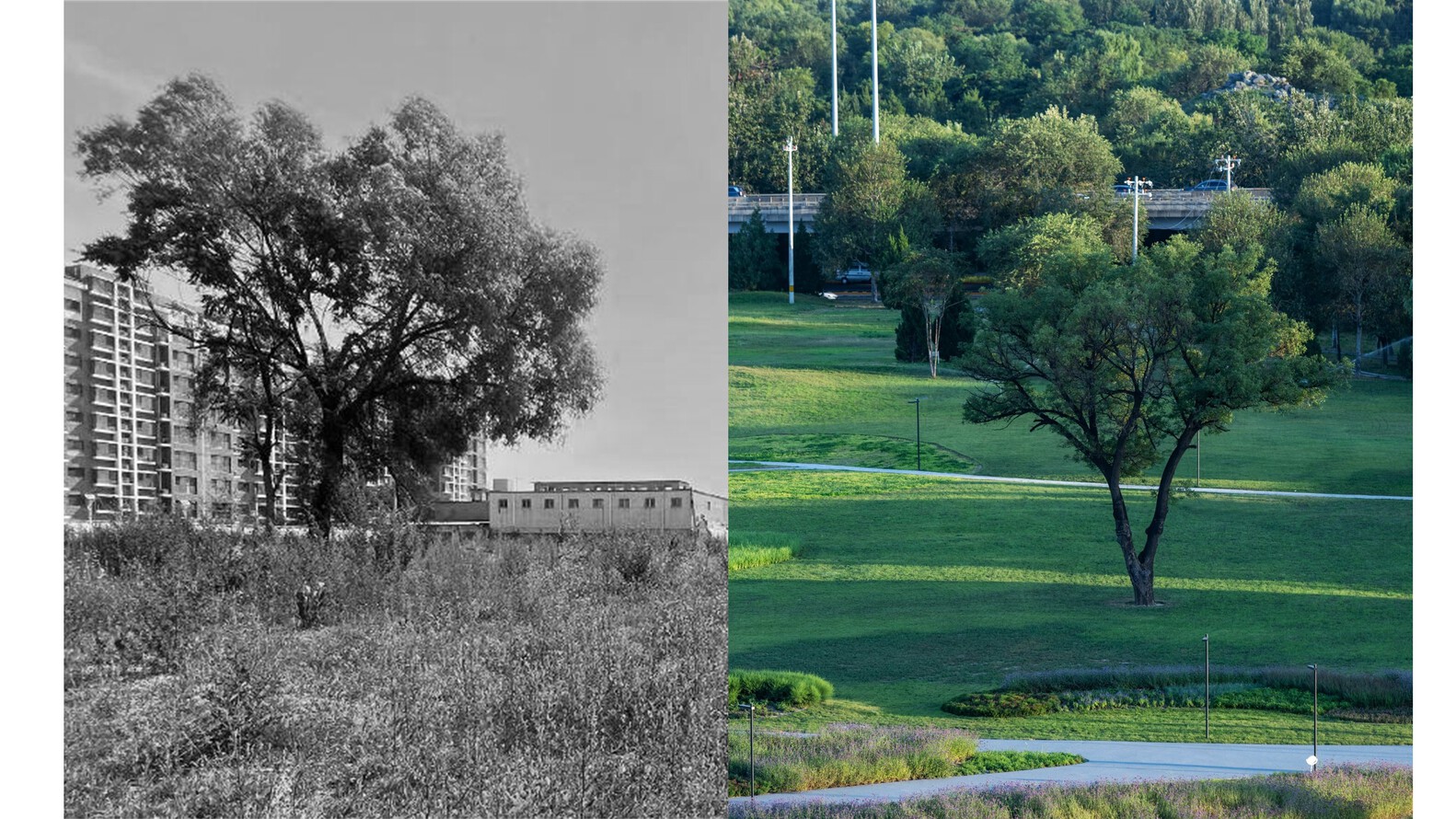
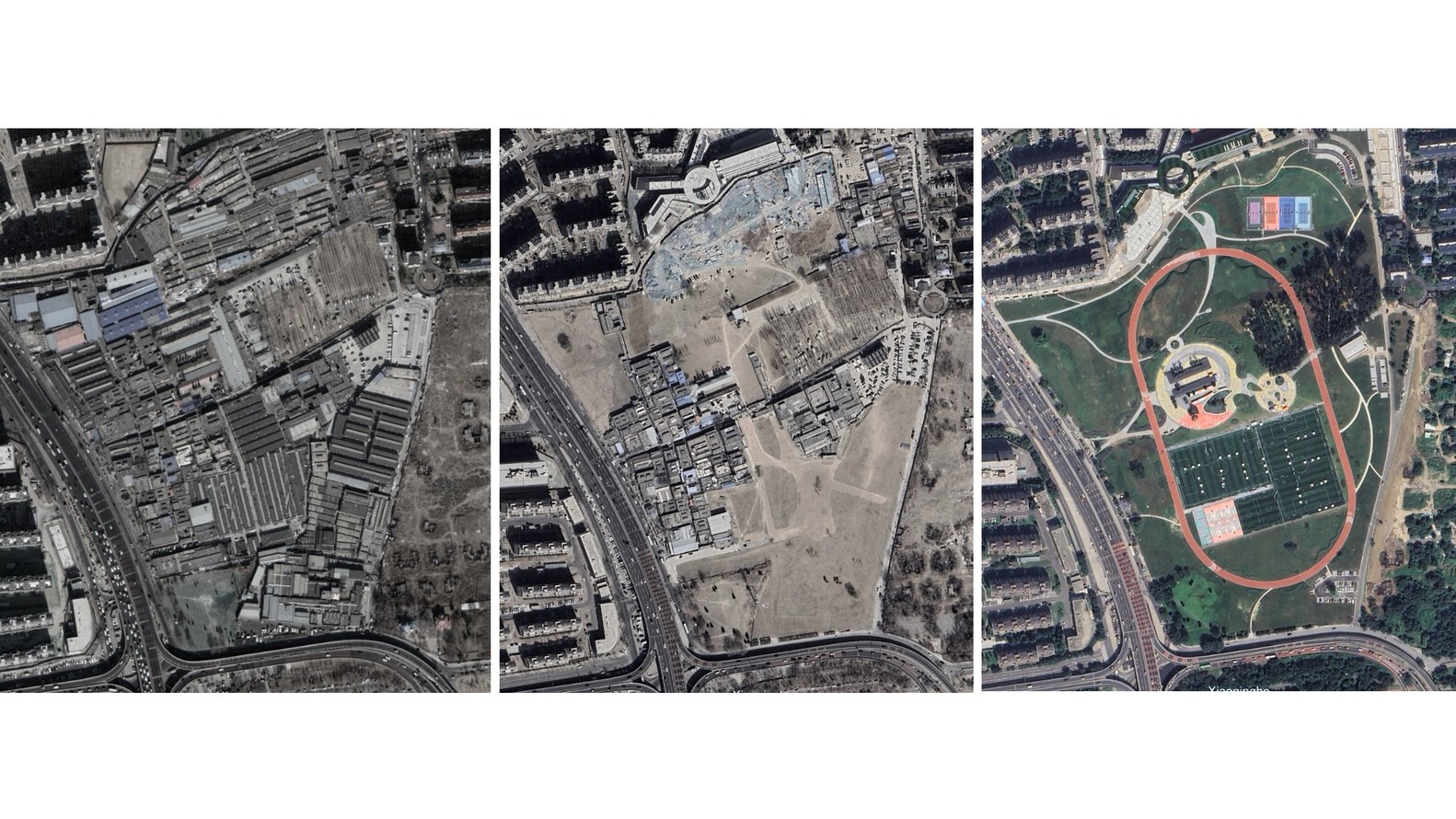
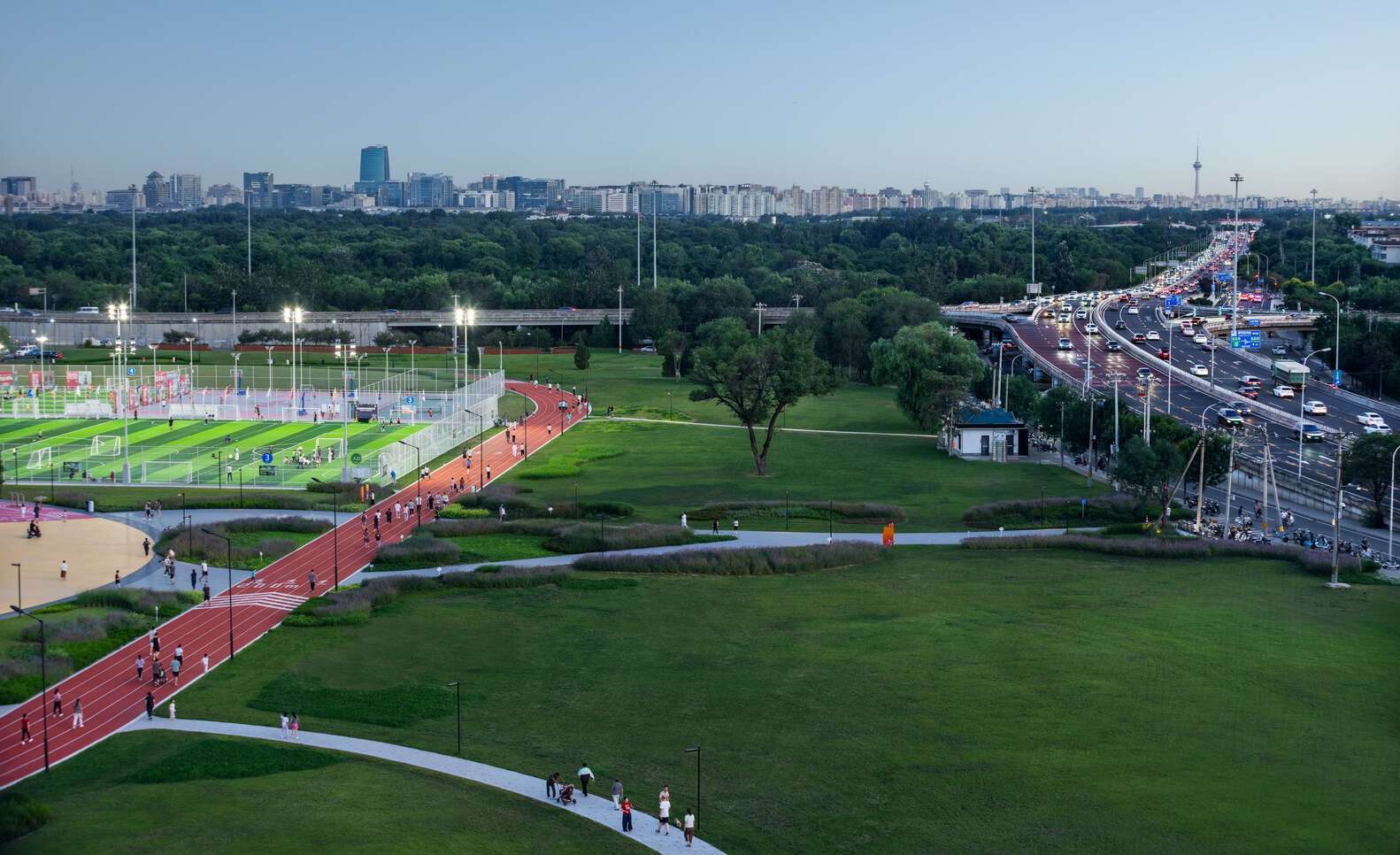
In July 2025, a massive sports-themed complex capable of accommodating 7,000 people officially debuted beside the Xiaojiahe Bridge, right on the north corner of Beijing's Fifth Ring Road in Haidian District. This site—which had languished for over two decades, encumbered by unauthorized temporary structures—has undergone a dramatic metamorphosis.
Driven by the Haidian District government's innovative "transitional" redevelopment strategy and bolstered by dual policy support for both parkland and sports facilities, the area has been transformed into a dynamic new urban landmark—a multifunctional hub seamlessly integrating sports and fitness, ecological leisure, and trendy social interaction.
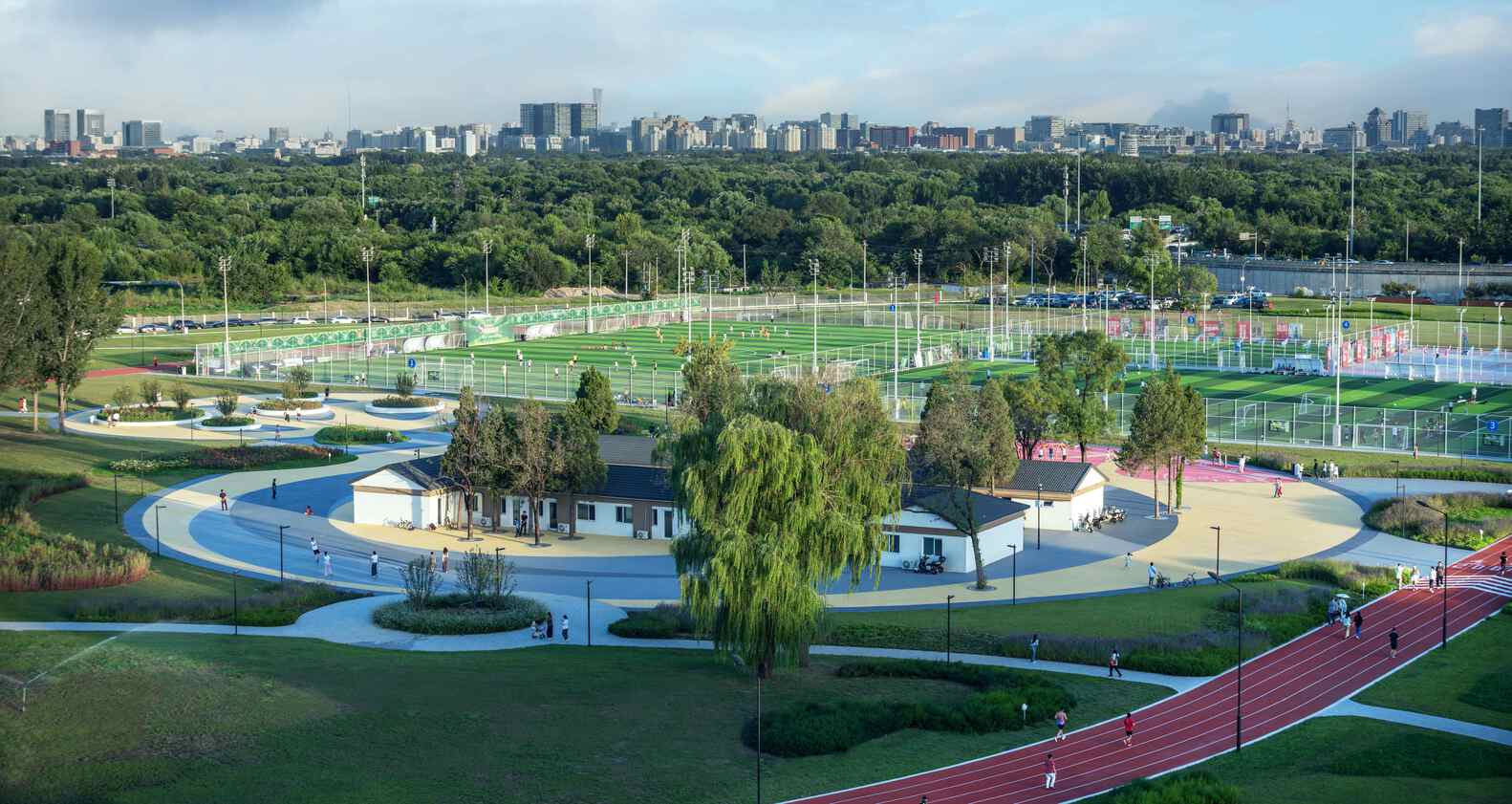
The Xiaojiahe project has rapidly integrated itself into the daily lives of local residents since its opening , achieving an exceptionally high level of community penetration and emerging as an influential "phenomenon-level" case among the recent urban renewal projects.
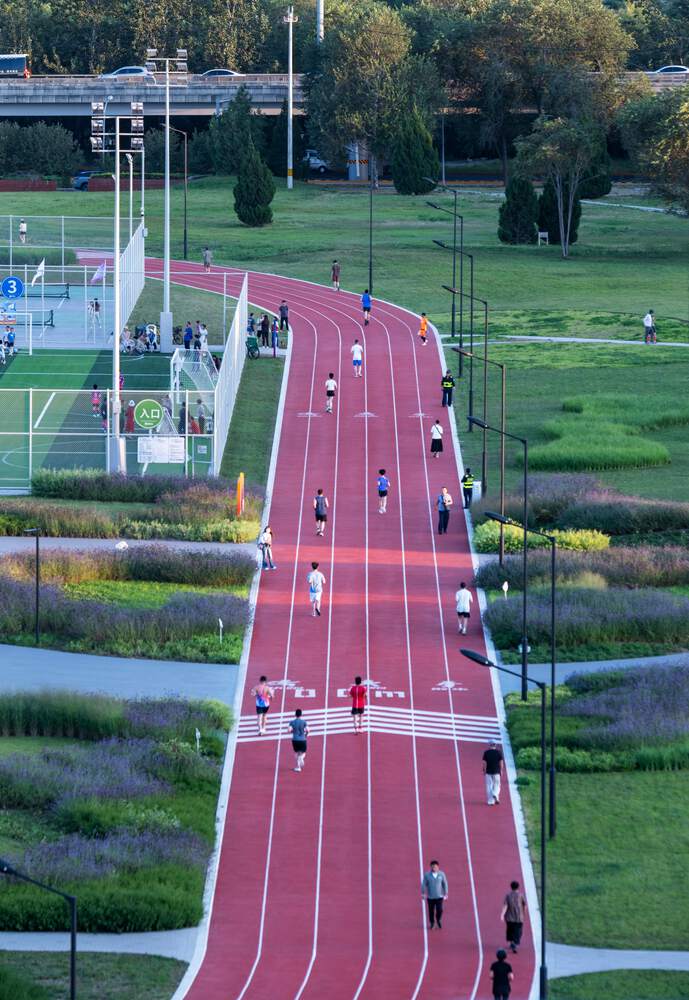
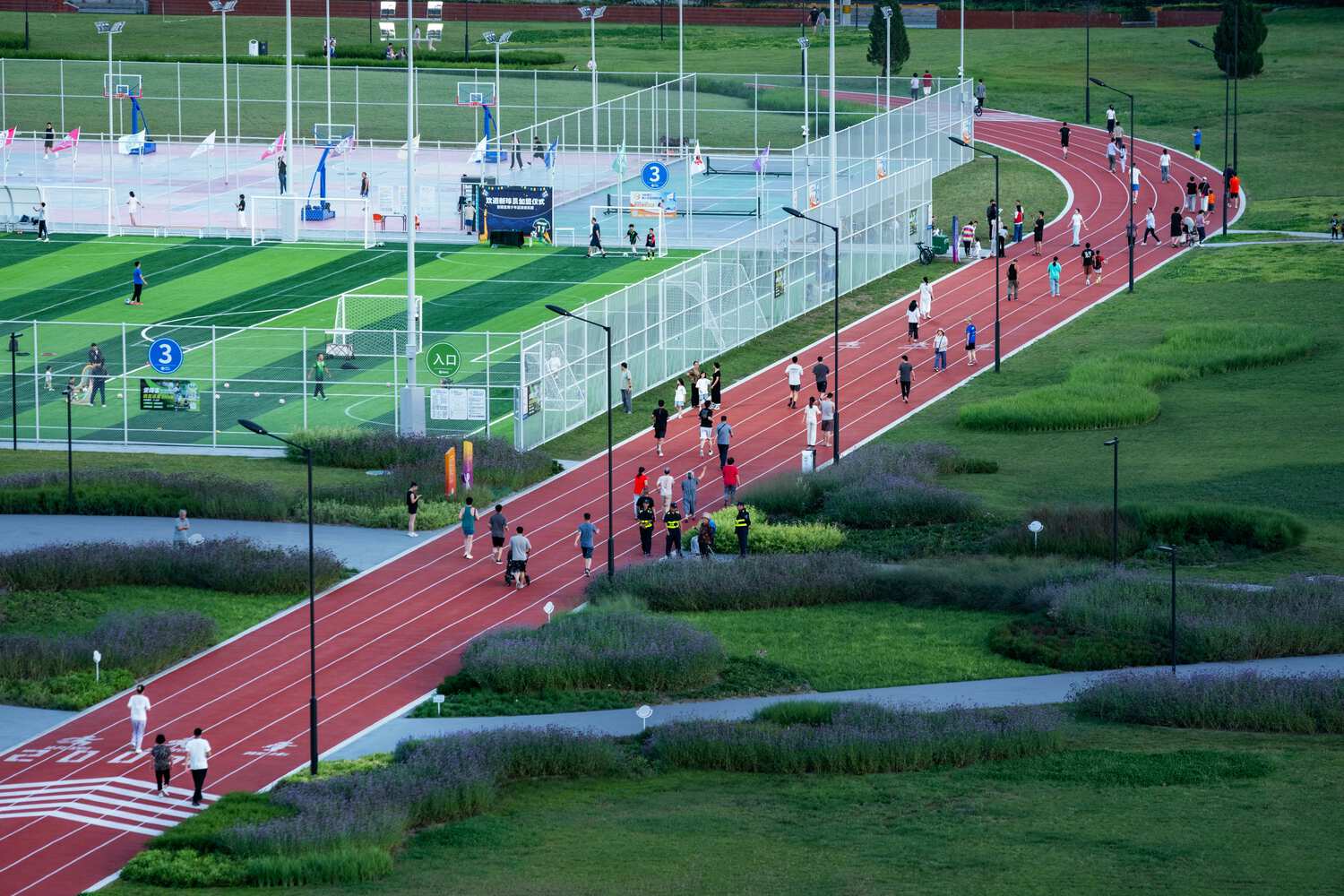
Its central visual focal point—a professional-grade, six-lane running track spanning one kilometer in length and eight meters in width—employs a systematic layout to interconnect the site's diverse array of sports modules, instantly becoming a viral, city-wide "must-visit" landmark across social media platforms.
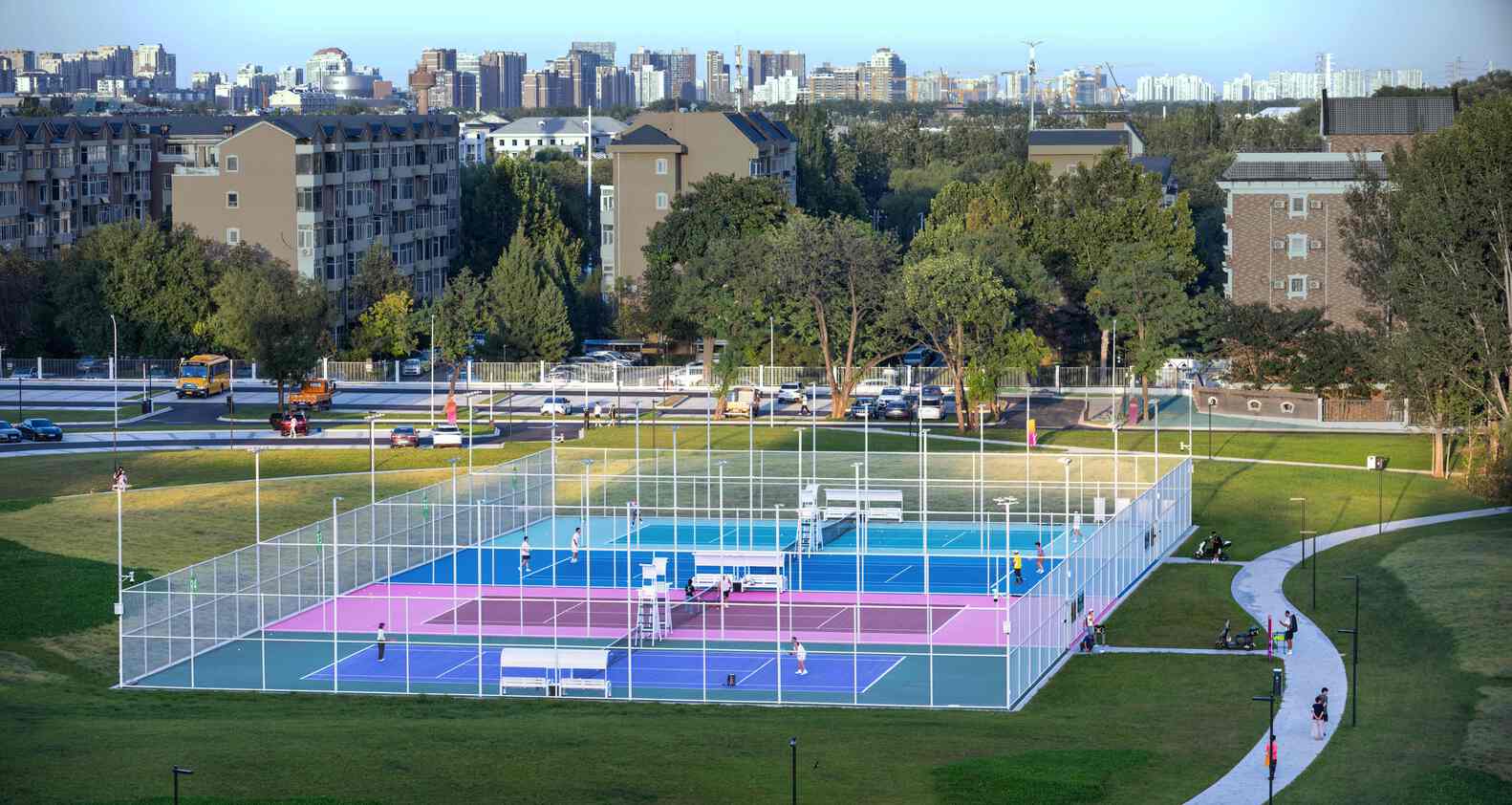
In terms of functional design, the project precisely targets the enhancement of urban amenities; it successfully fills a critical void in the region by providing high-quality public sports facilities, thereby achieving a win-win outcome that boosts ecological benefits and social vitality at the same time.
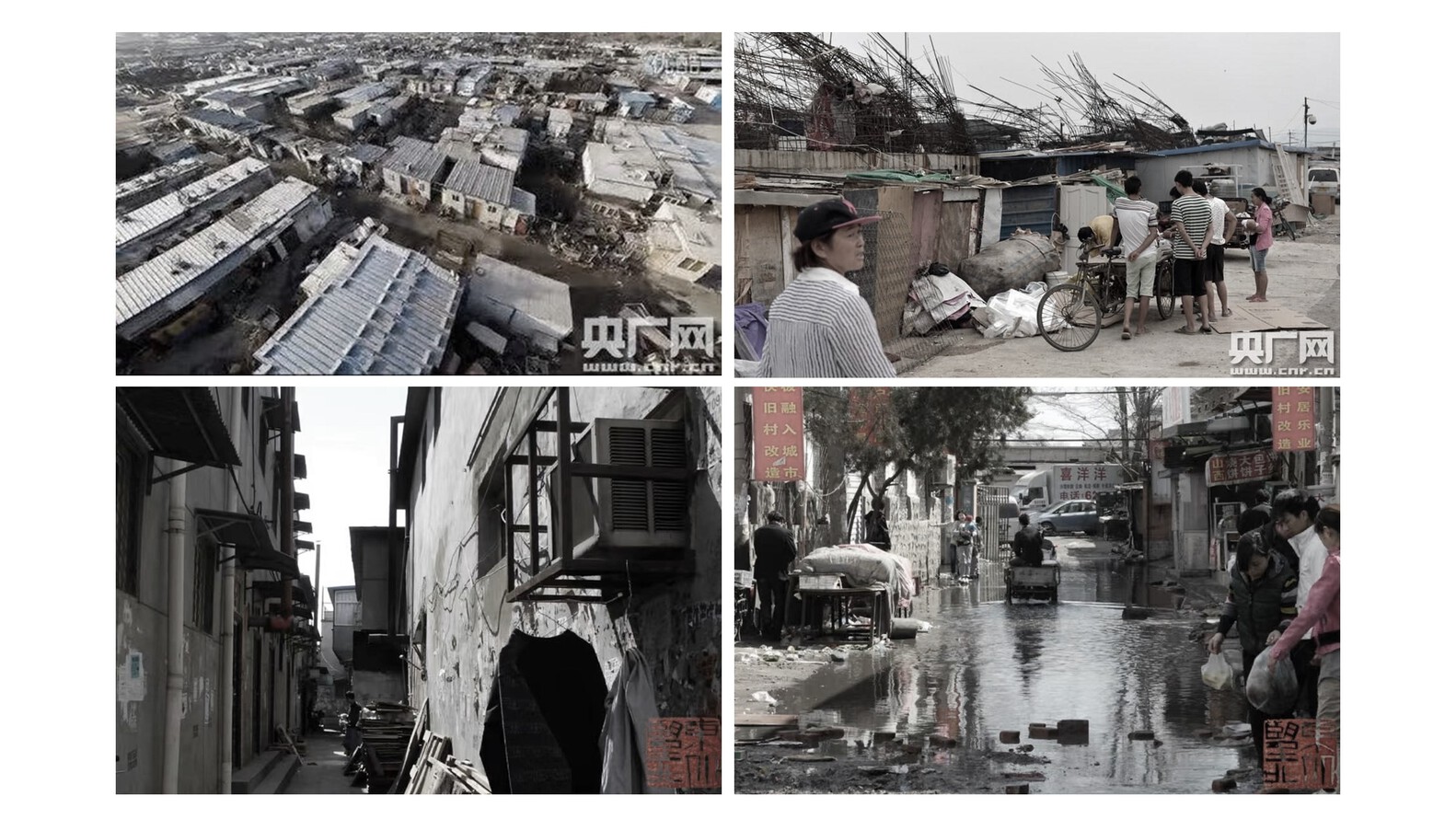
From "Island of Problems" to "Green-Powered Paradigm": A Logical Reshaping. Xiaojiahe was once seen as the typical bottleneck inherent in Beijing's urbanization process. Designated in 2010 as a typical "urban village" requiring urgent attention citywide, the area was for a time a governance blind spot—characterized by dense clusters of illegal structures, severe environmental degradation, and acute safety hazards.
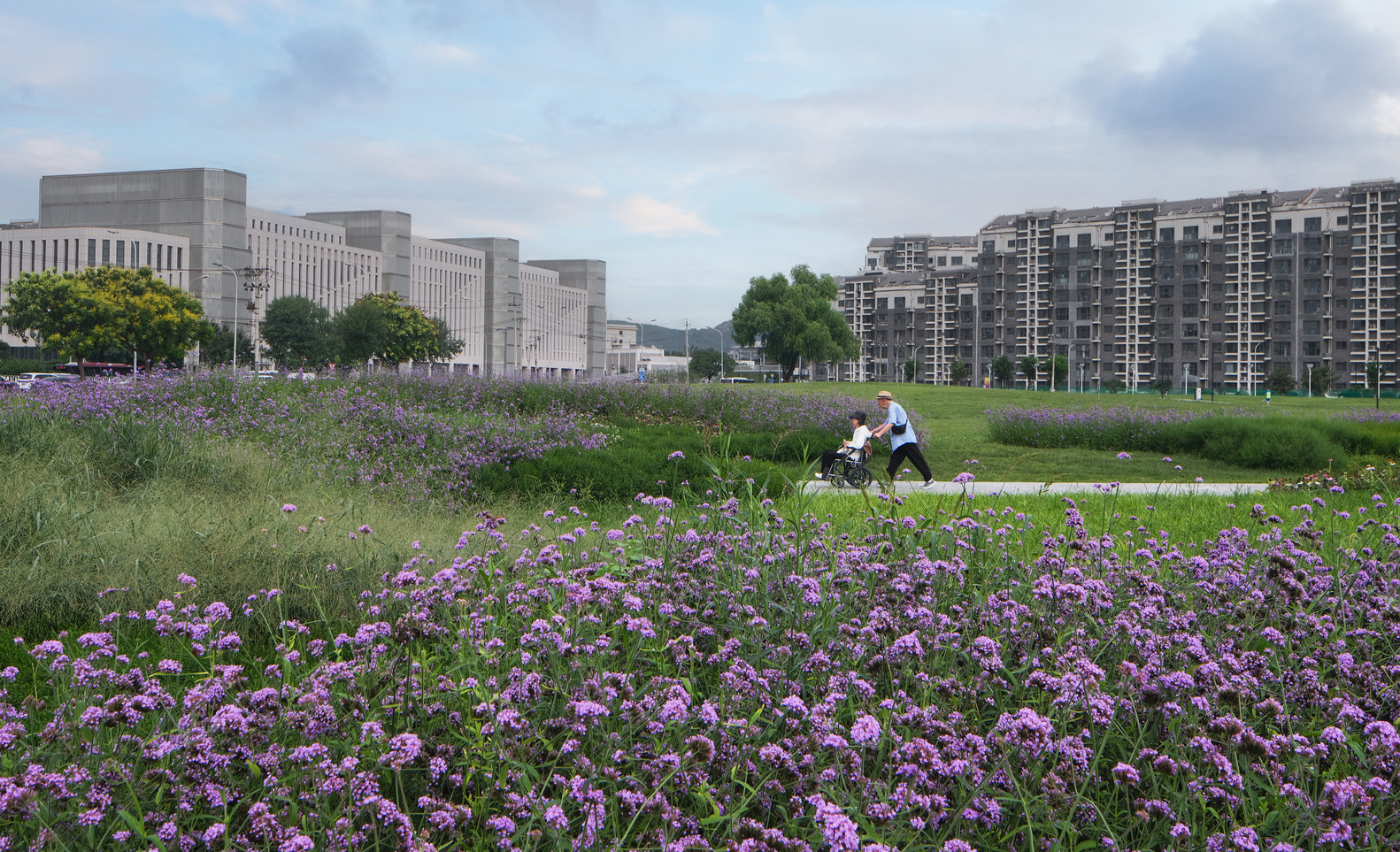
It faced not only the physical dilemmas of complex land ownership and depleted spatial resources but also bore the immense social governance pressures stemming from large-scale population mobility.
Facing such a "problem-laden" site, the traditional fixing proved useless, pioneering an entirely new path is necessary and critical.
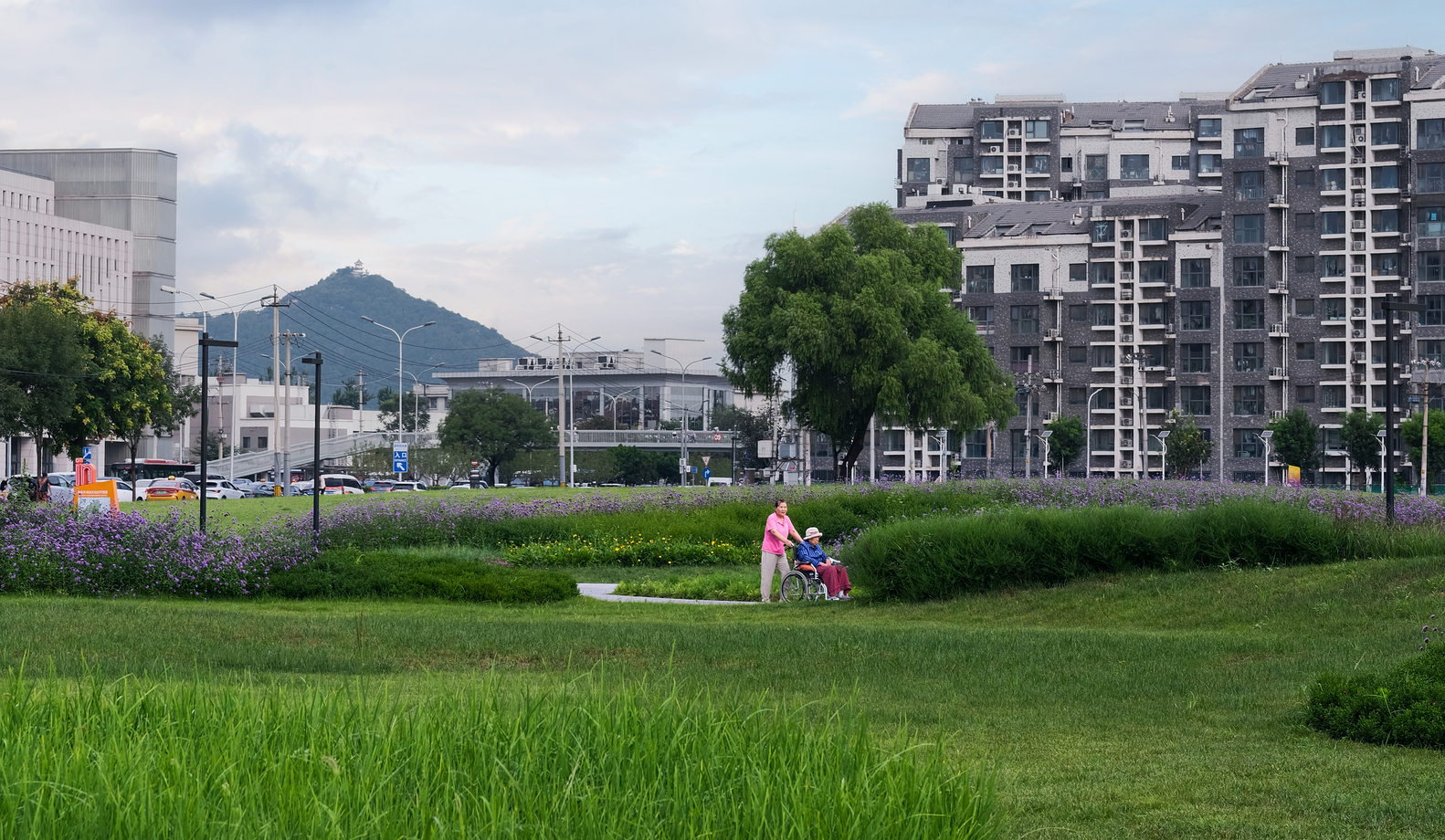
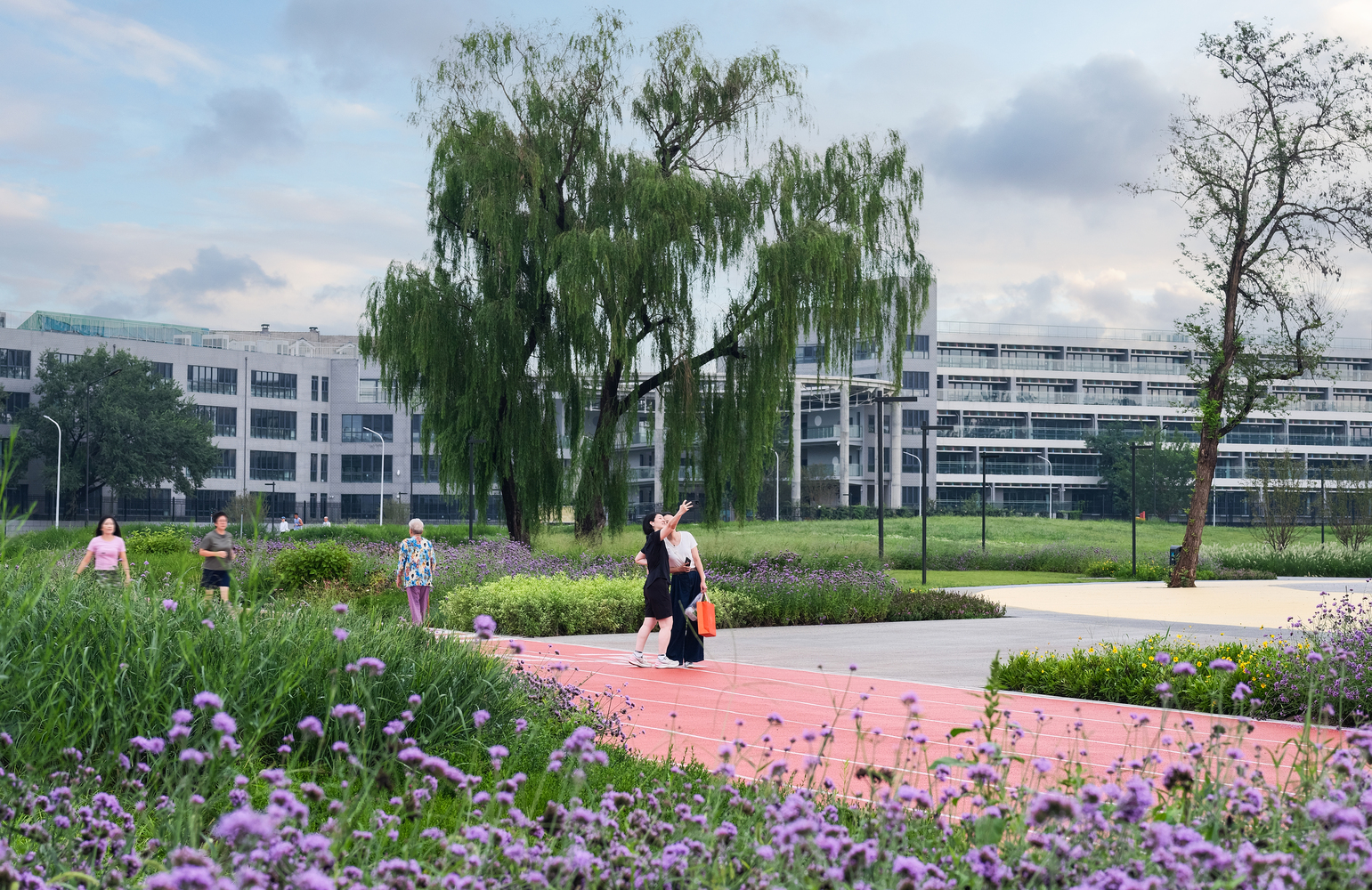
The design practice to reshape the city's "socio-spatial" relationships, the project achieved not only a meticulous extraction of value from existing land but also served as a humane and effective complement to urban public governance.
Although sports-themed facilities and landscape planning are not the only option for revitalizing the abandoned land, the context of the capital's functional positioning and social governance imperatives, the critical choice lies in transcending a mindset focused solely on "landscape beautification" to embrace a practice centered on deep-seated "spatial governance."
For a long time, the public has accustomed to the eye-catching "internet-famous" design in the large-scale public projects. However, the Xiaojiahe project employs a minimalist architectural vocabulary—primarily derived from the old village committee building—and developed simplicity. It features an activity plaza integrated with new "service facilities," alongside outdoor spillover spaces designed to host local markets and festive celebrations.
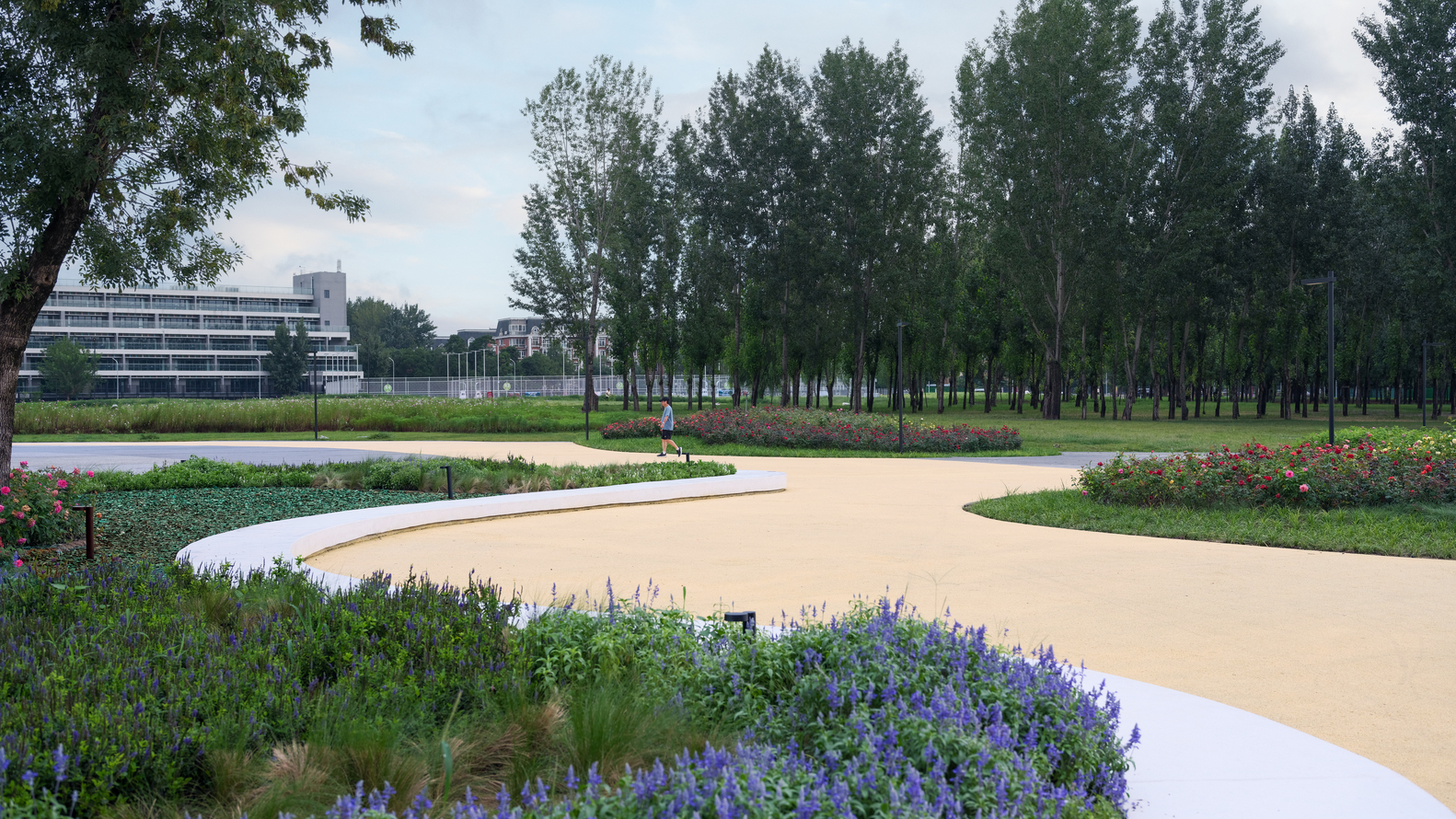
These functional spaces—seemingly conventional at first glance—actually inherit the spiritual core of the site: a magnet for local residents and a repository of profound collective memory. Moreover, they have garnered high praise from the project's operation team, serving as a crucial reference for the future implementation of viable, function-driven architectural preservation strategies in similar urban sites in Beijing.
The spatial character of this site defies easy categorization using traditional typologies or construction details. Instead, it possesses a unique, deeply moving power. The true users of the space—the local residents—instinctively perceive the difference between this environment and ordinary, formulaic designs.
We believe this perception stems from a design logic rooted in the primacy of user experience and utility—prioritizing "how" the space is lived in and used, rather than merely "what" it looks like.
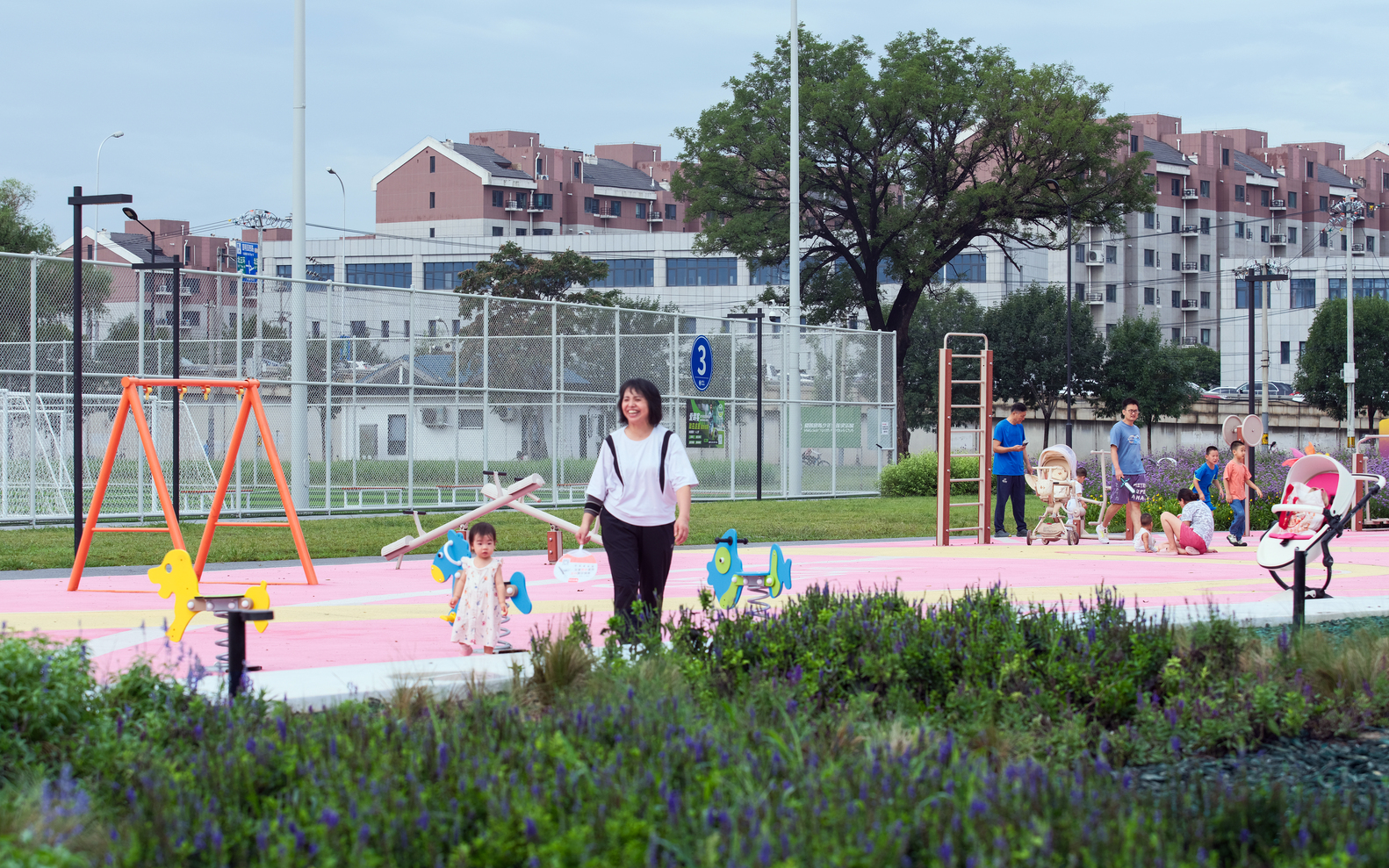
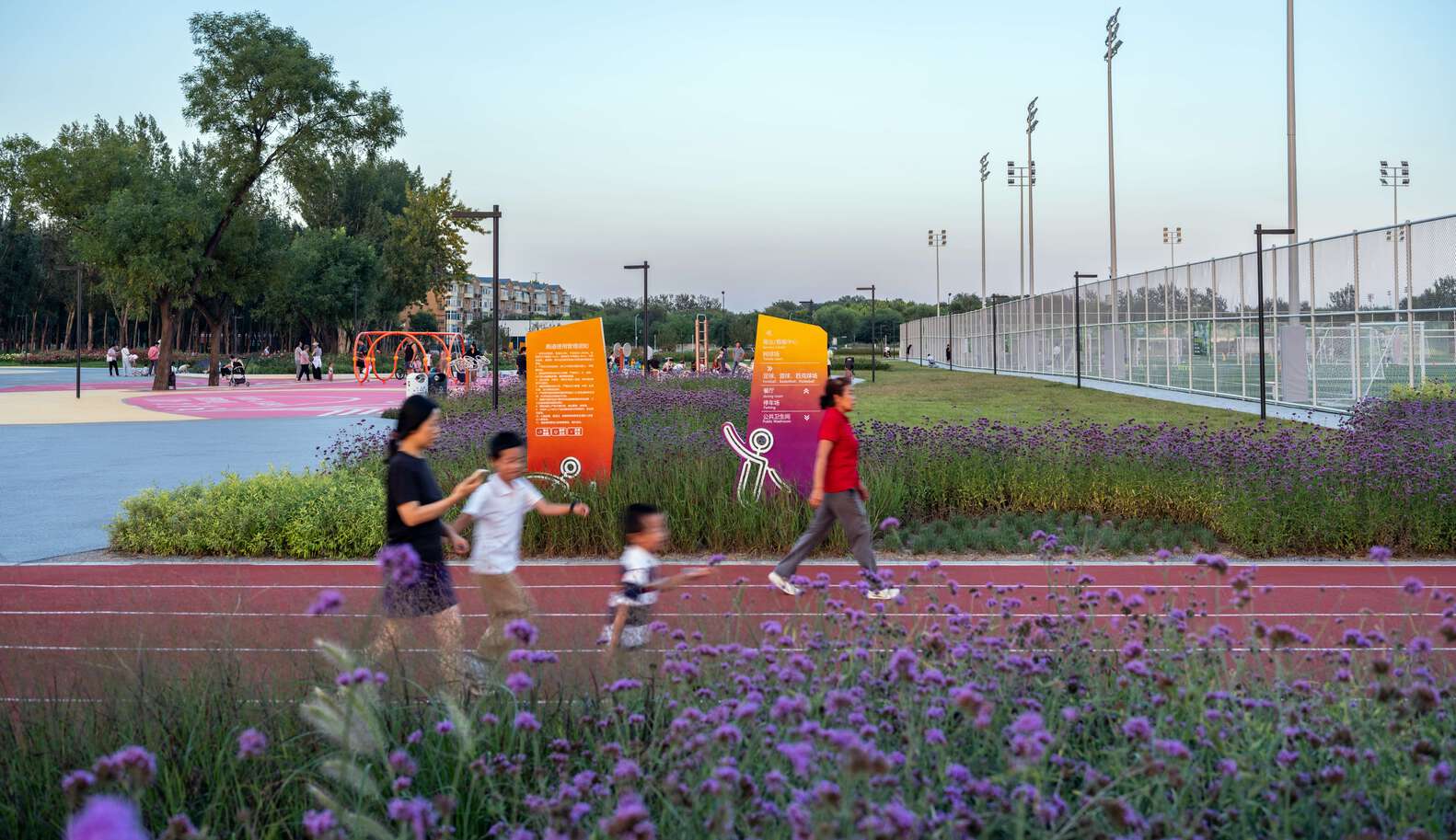
A Design Strategy of Organic Coexistence Between Function and Ecology. Spatial experimentation grounded in the perspective of social governance is, by no means, a mere process of simple "make it green".
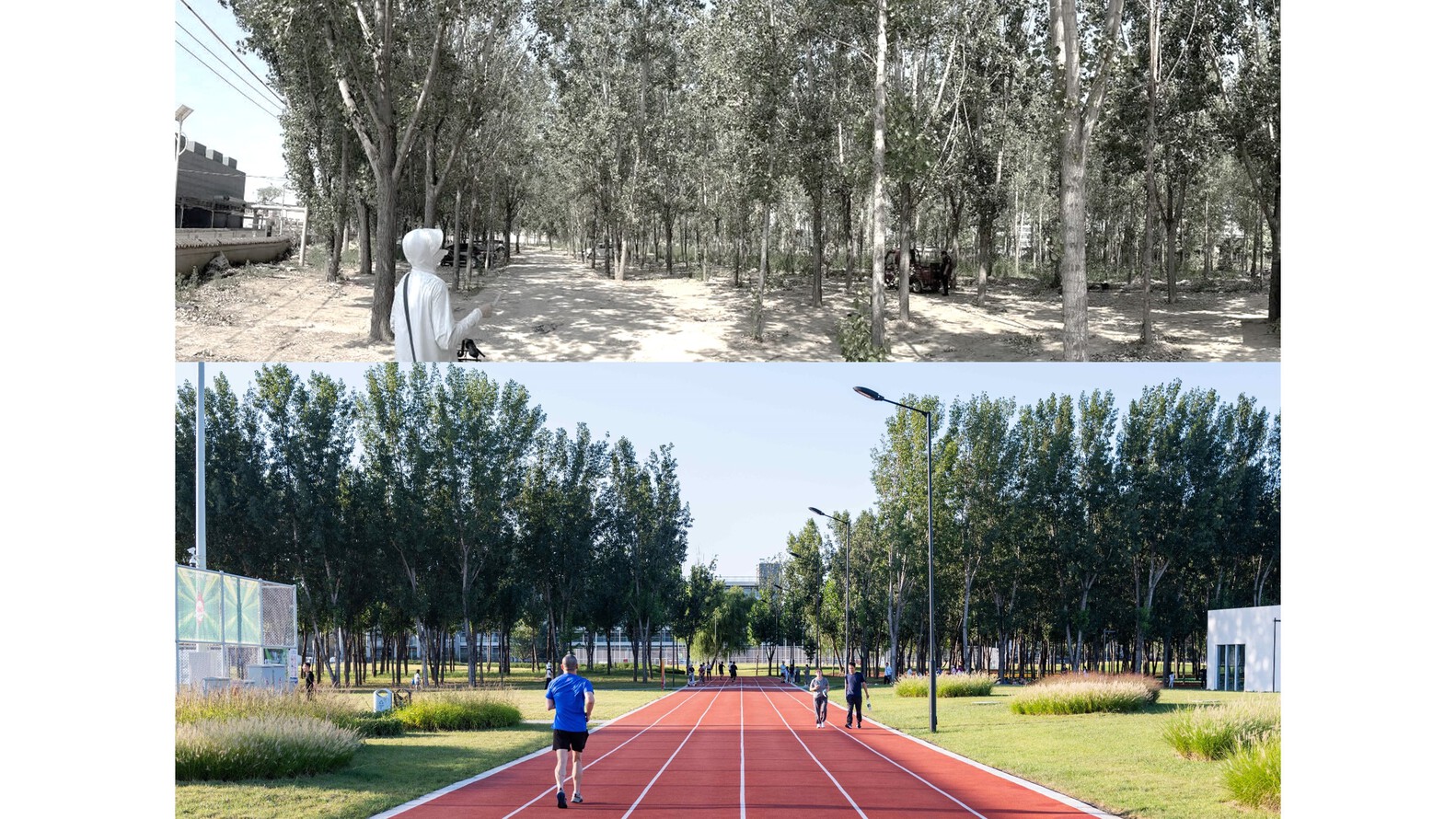
Centered on the core concept of "organic symbiosis between function and ecology," the design focuses on a rigorous reorganization of the site's fragmented urban fabric, achieving a seamless integration of sports zones, natural woodlands, and community life. The mature trees and poplar groves within the former demolition zones were preserved.
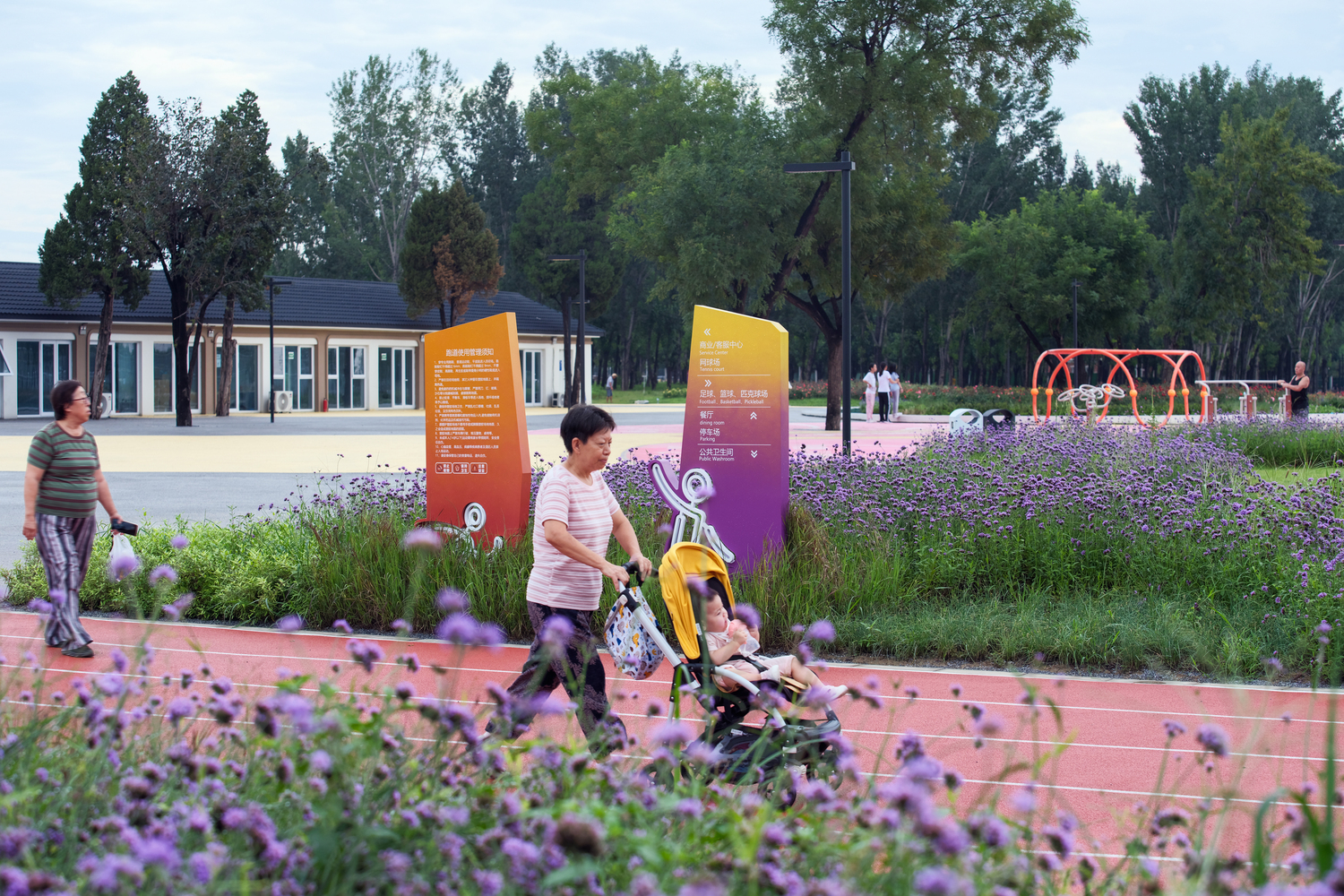
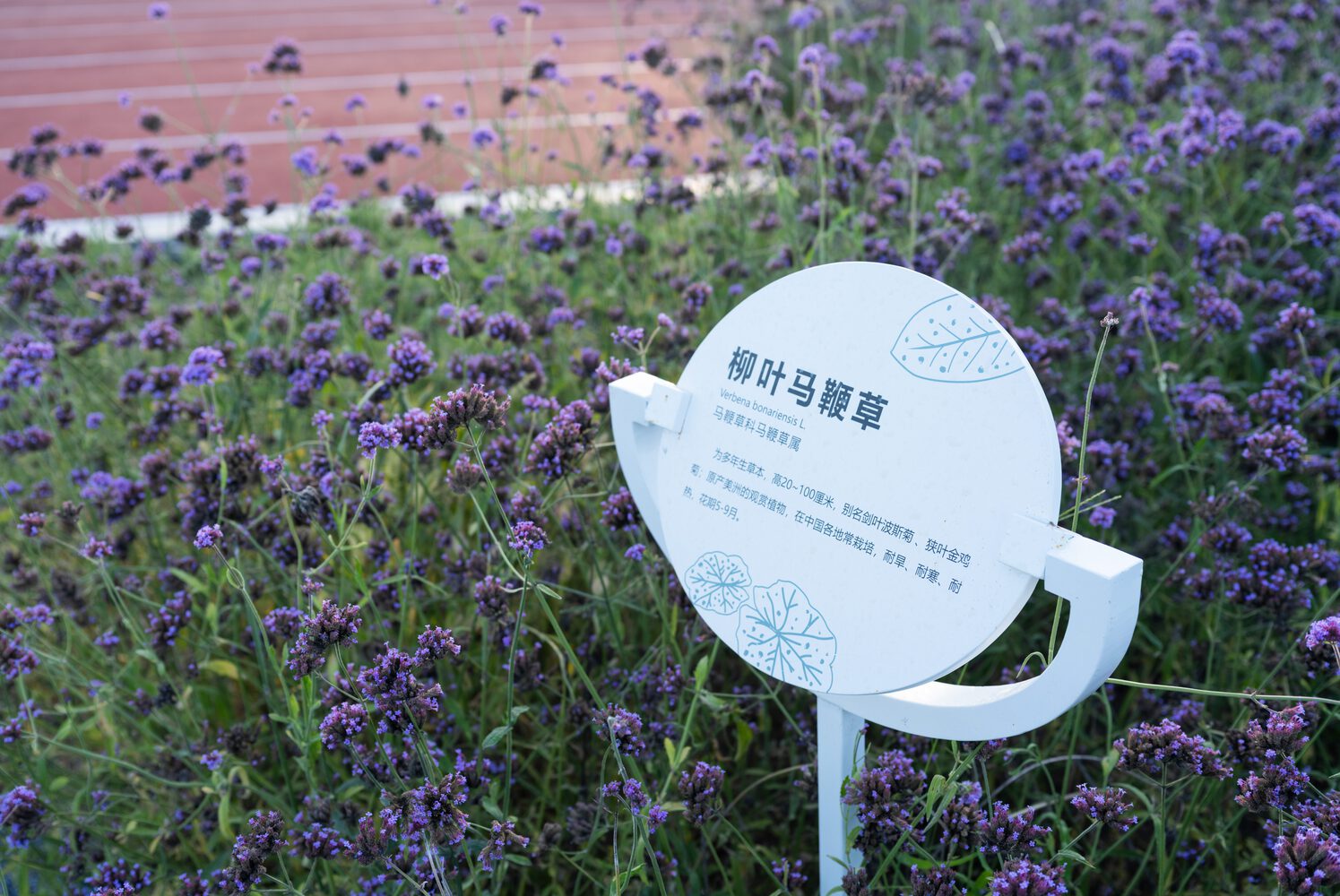
The ground cover consists primarily of simple turf, and the key areas are further enriched with layers of flowering shrubs. This approach effectively resolves long-standing issues—such as a dearth of public space, ecological degradation, and a low quality of life—achieving a fundamental transformation from a "squalid and chaotic" environment into a "high-quality, vibrant urban hub."
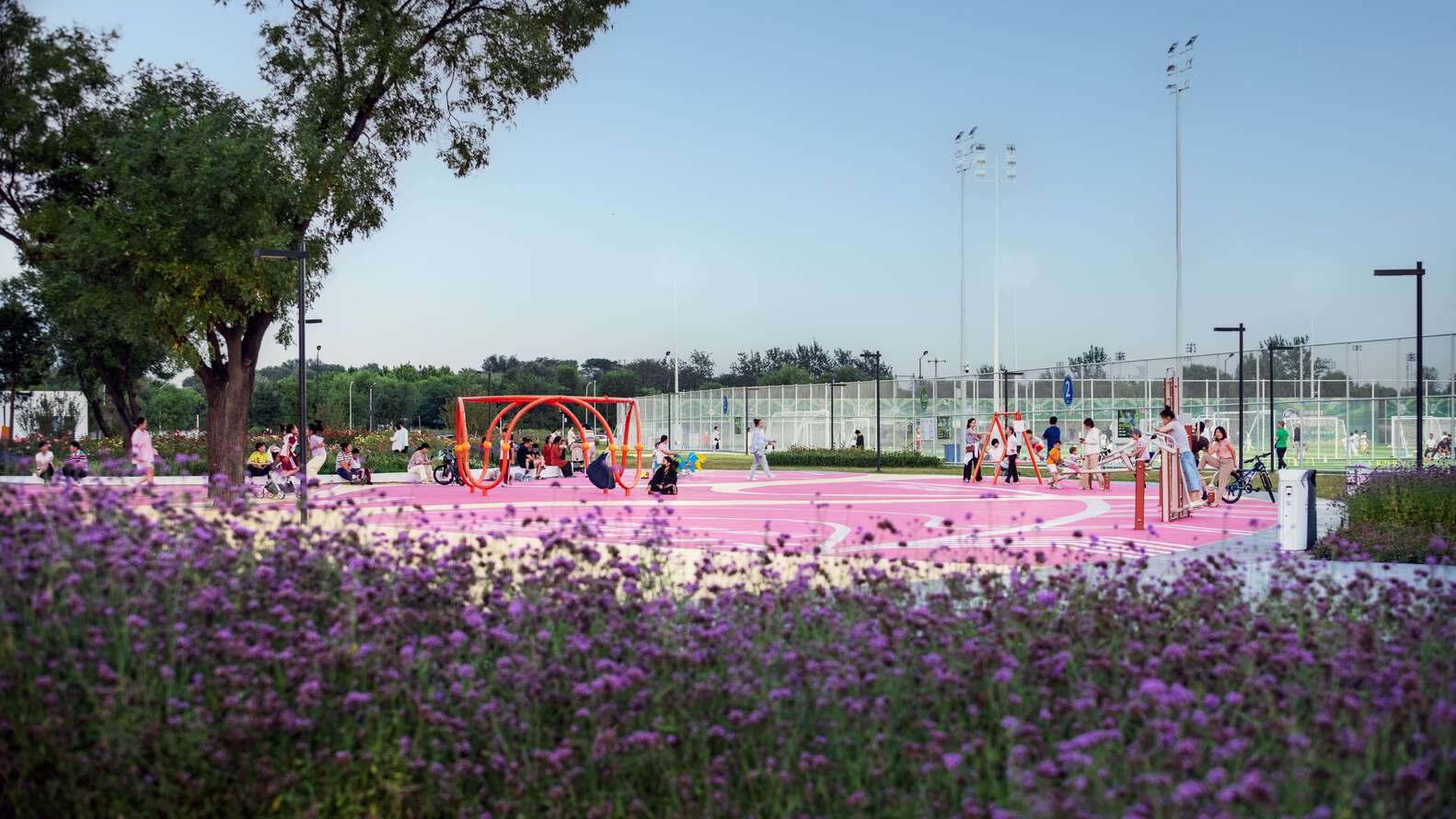
We opted for restraint, refusing to employ assertive design vocabularies that might create spatial noise. The design remains subtle, embedded within quiet response to the site's indigenous elements. Through the strategic use of spatial "negative space", it reserves infinite possibilities for urban life.
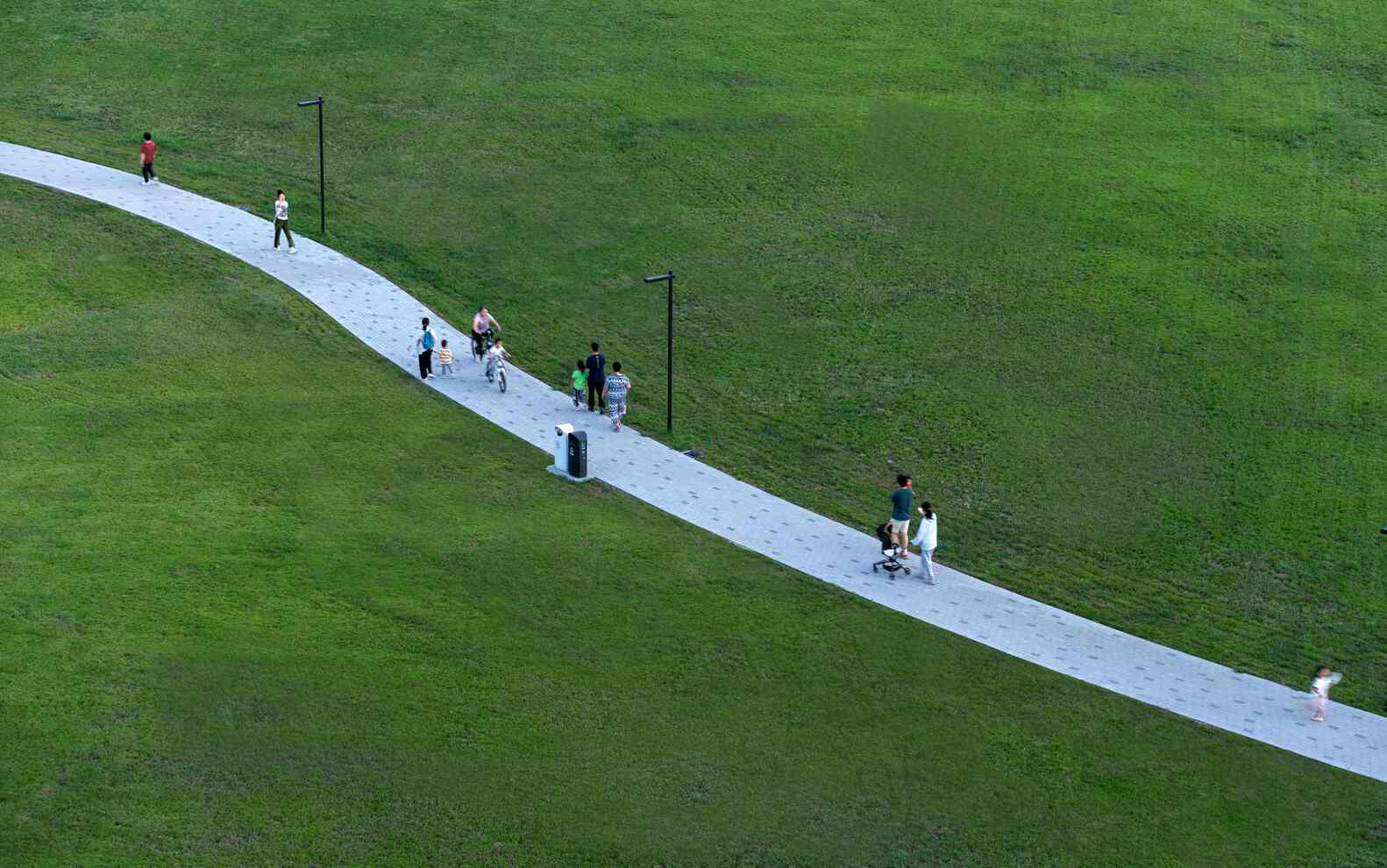
Across nearly 20 hectares of green space, beyond fulfilling the functional requirements of efficient circulation, the design establishes its foundation using the most concise strokes and low-maintenance vegetation.
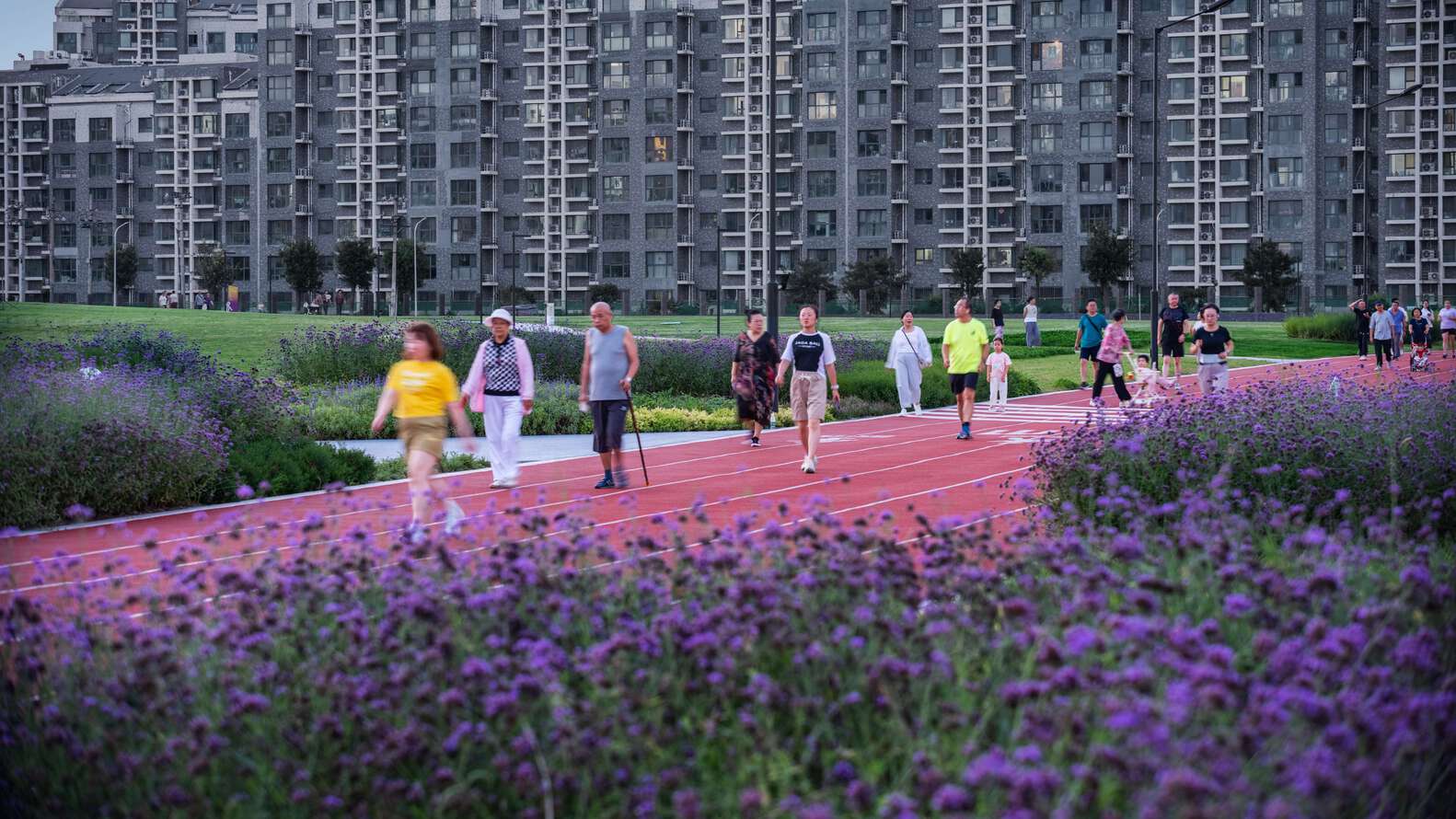
This "unscripted" richness allows visitors—even those without a specific agenda—to genuinely sense the environment's tranquility and to feel a deep sense of inner pride in inhabiting such a beautiful, modern urban space.
It represents a richness that approaches the authentic essence of life, rather than a landscape defined by artificial constraints. And it has been genuinely captured and documented by numerous bloggers on platforms like Xiaohongshu.
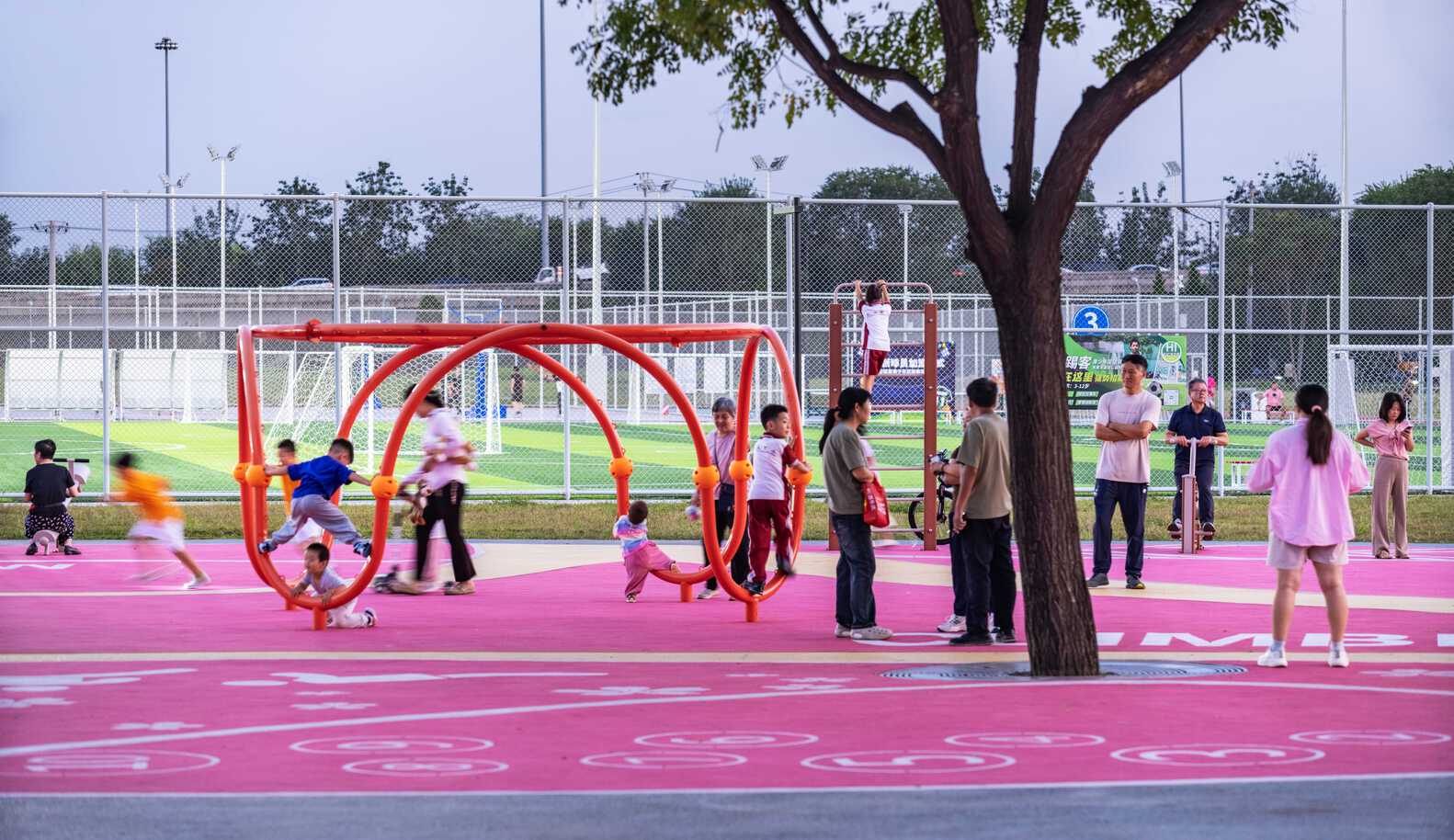
"People-Centric": Endowing Life with Memories. Taking a leisurely stroll in circles after a meal is a familiar outdoor recreational pastime for the general public—one deeply rooted in Chinese culture—and it precisely reflects the most fundamental values sought in contemporary urban public spaces.
When a design chooses to respect this "vernacular" tradition—bolstering it with localized ecological enhancements—the space is no longer a mere isolated landscape. Instead, it evolves into a regional cultural identity with a profound sense of belonging.
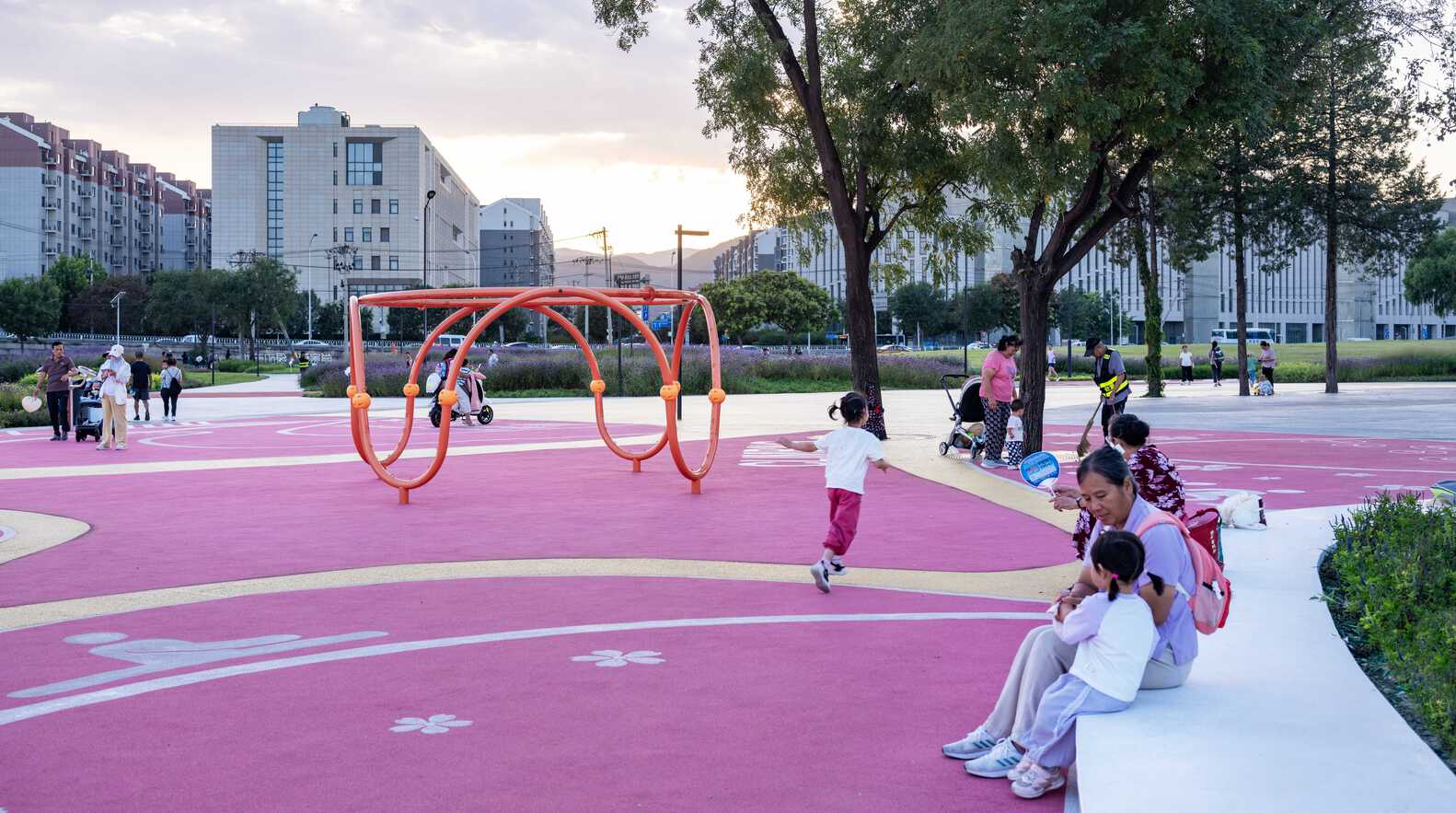
The more centrally located a public space is within a city, the more imperative it becomes to return to prioritizing the fundamental needs of the majority of ordinary citizens. The scale of a site's landscape and the nature of its amenities directly define its intended audience and its social function.
The Xiaojiahe occupies a prime location—highly accessible and encircled by residential communities—yet it eschews the temptation to become an elitist enclave or a mere aesthetic spectacle. Instead, it chooses to dedicate its expansive scale to accommodating the most "ordinary" functional amenities required by the general public.
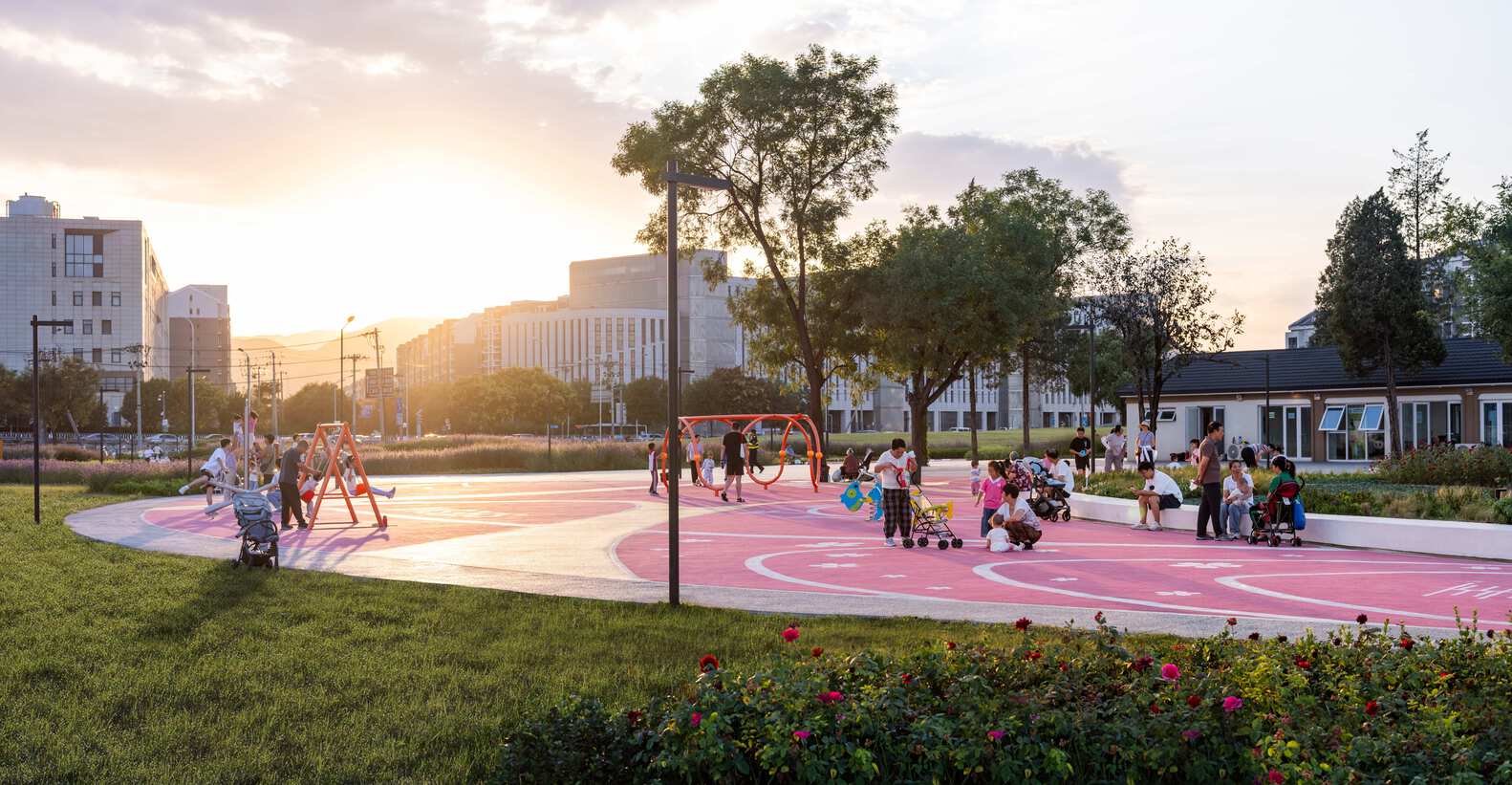
This choice serves as a tangible response to the outdoor recreational needs of local residents, and—more importantly—represents a profound embodiment of the "People's City" philosophy.
Conclusion: As the nation's first megacity to embark on a path of "decline-based development," Beijing finds in the Xiaojiahe project a compelling case study that resonates deeply with the realities of everyday life—one that truly realizes the deep integration of public space into the fabric of civic life.
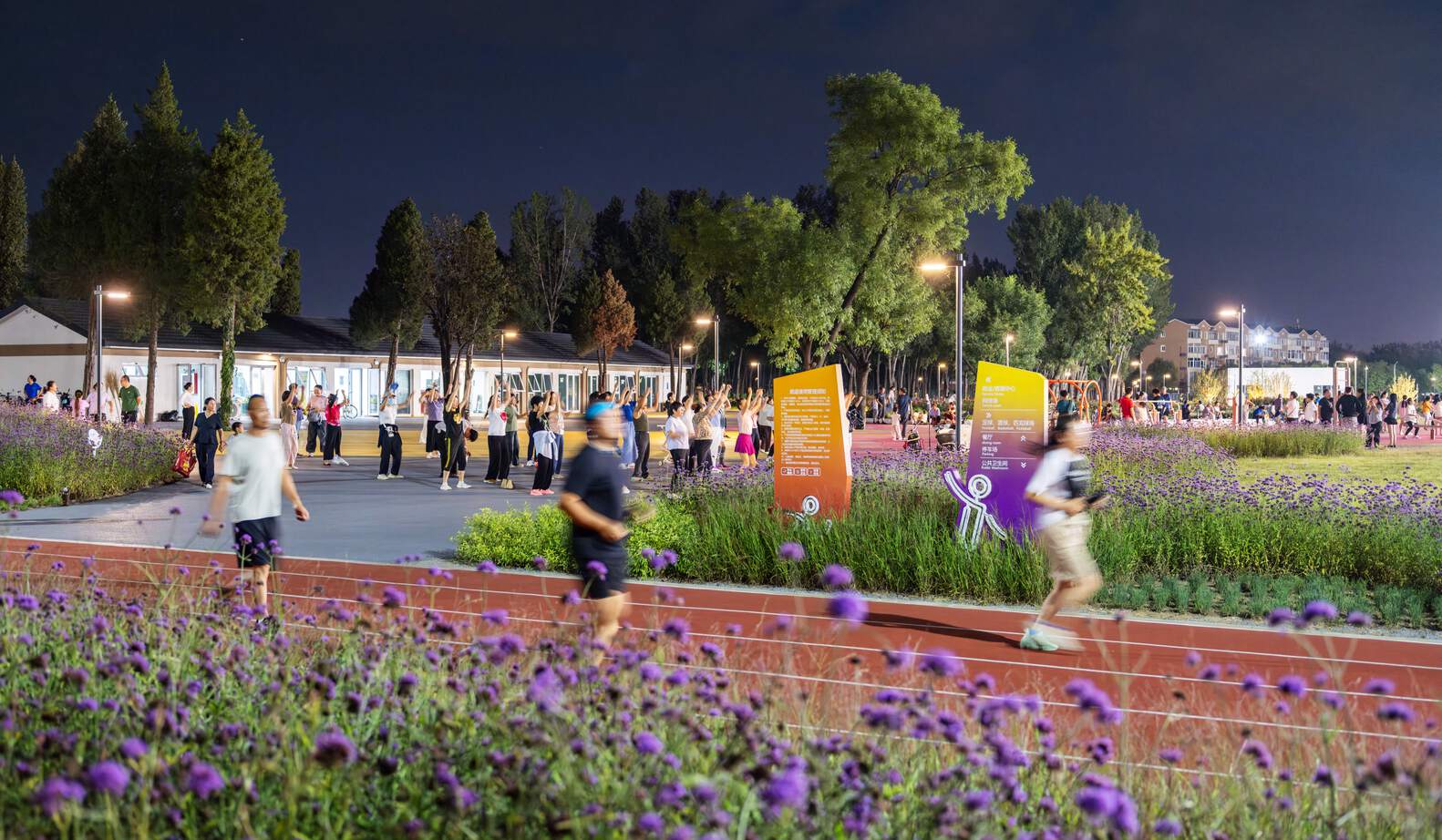
Xiaojiahe Park exemplifies a relatively rare facet of public space renewal within Beijing: a design approach that is both accessible to the masses and thematically focused. It reflects a novel paradigm for the revitalization and adaptive reuse of problematic lands —a realm yet to be fully explored. Furthermore, it illustrates how suburban areas can navigate the unprecedented challenges of "decline-based growth" and institutional evolution, thereby carving out their own distinct niches for survival and development.
Landscape architecture, in this context, transcends the mere aggregation of greenery and amenities, it constitutes a profound experiment in reshaping the spatial logic of the city—viewed through the new dimension of social governance. This practice not only answers the citizens' earnest aspirations for a better life but also imbues this multifaceted social arena with a dual rebirth—revitalizing both its social vitality and its ecological integrity.
Acknowledgments: We extend our sincere gratitude to the Haidian Town Government (Haidian District) for their unwavering support of the Xiaojiahe project. Thanks to the foresight and decisive leadership of government officials, this project was successfully implemented to the highest standards, achieving significant social impact and garnering substantial recognition within the industry.