Soil Stories Pavilion
SOIL STORIES PAVILION
Magicline Studio
ARCHITECTS
Magicline Studio
LEAD ARCHITECTS
Ashwin Vasudevan, Radhika Sukumar, Vishnu Das K P
DESIGN TEAM
Vishnu Das K P, Muhammed Safwan, Dilshad
LEAD TEAM
Ashwin Vasudevan, Radhika Sukumar
ENGINEERING & CONSULTING > STRUCTURAL
Design Academy
ENGINEERING & CONSULTING > MEP
Apta Lighting Studio
MANUFACTURERS
Essco sanitarwares, Wigwam Plywood, onduline sheet
PHOTOGRAPHS
Ar.Prasanth Mohan, Running Studios
AREA
321 m²
YEAR
2025
LOCATION
Kerala, India
CATEGORY
Cultural Architecture, Educational Architecture
English description provided by the architects.
Set within a 14-acre family estate on the outskirts of Kozhikode, Soil Stories occupies a 60-cent site within a campus that was already ecologically rich long before architecture entered the frame.
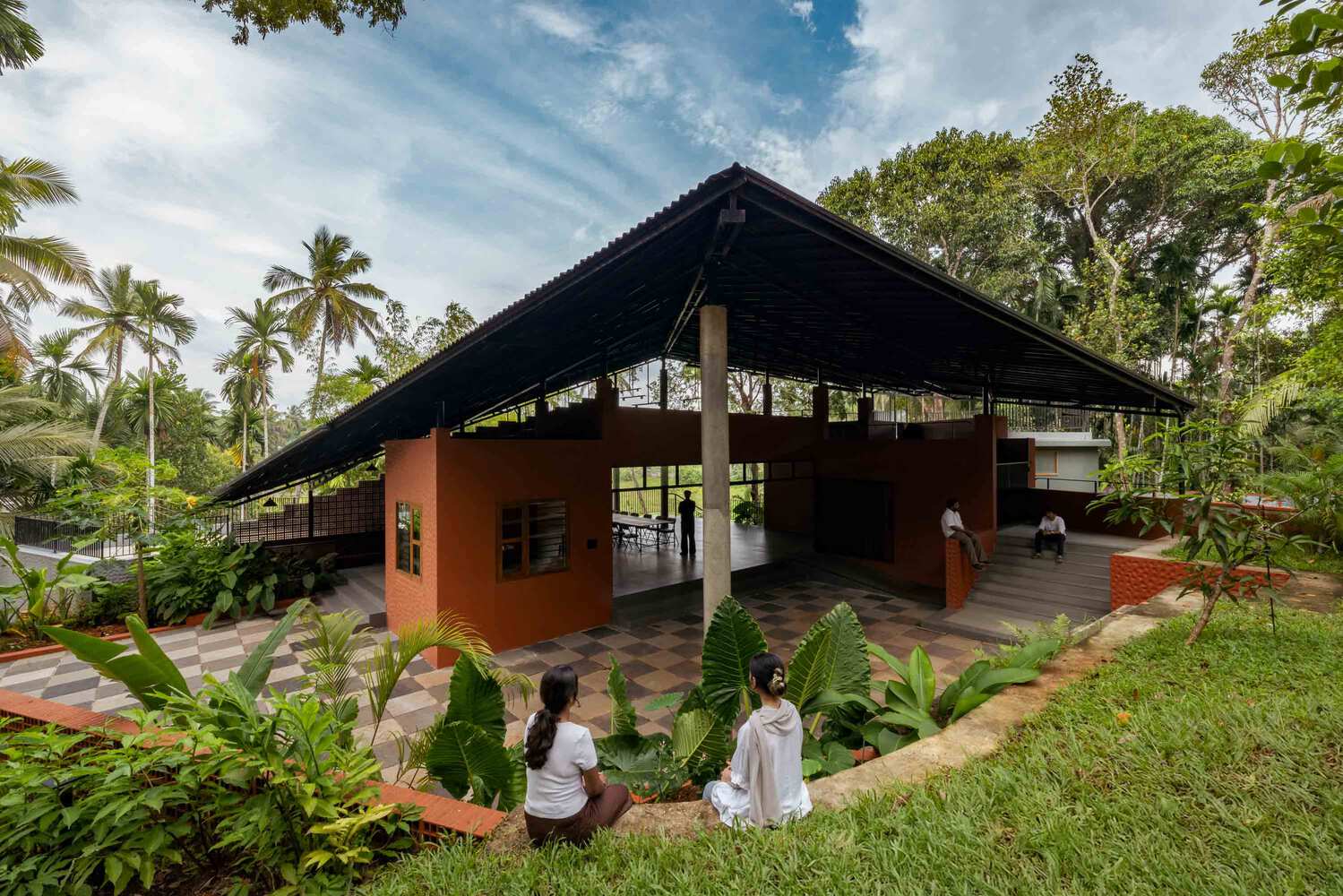
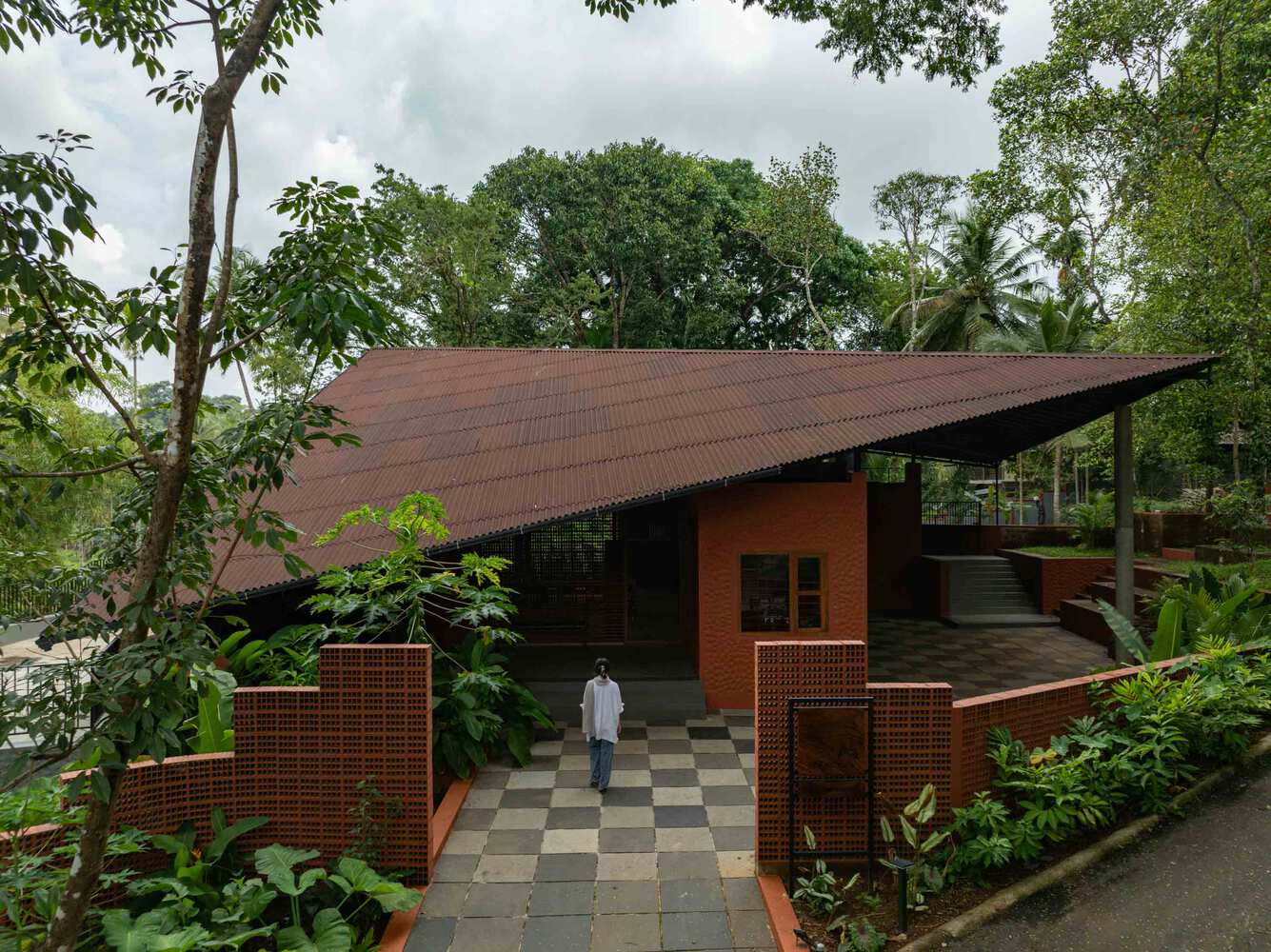
The larger landscape contains three kaavus (sacred groves), a wetland system, and dense native tree cover, together generating a distinct microclimate.
This living terrain supports diverse native inhabitants, with the potential for many more to establish the site as an active ecological system rather than a neutral backdrop.
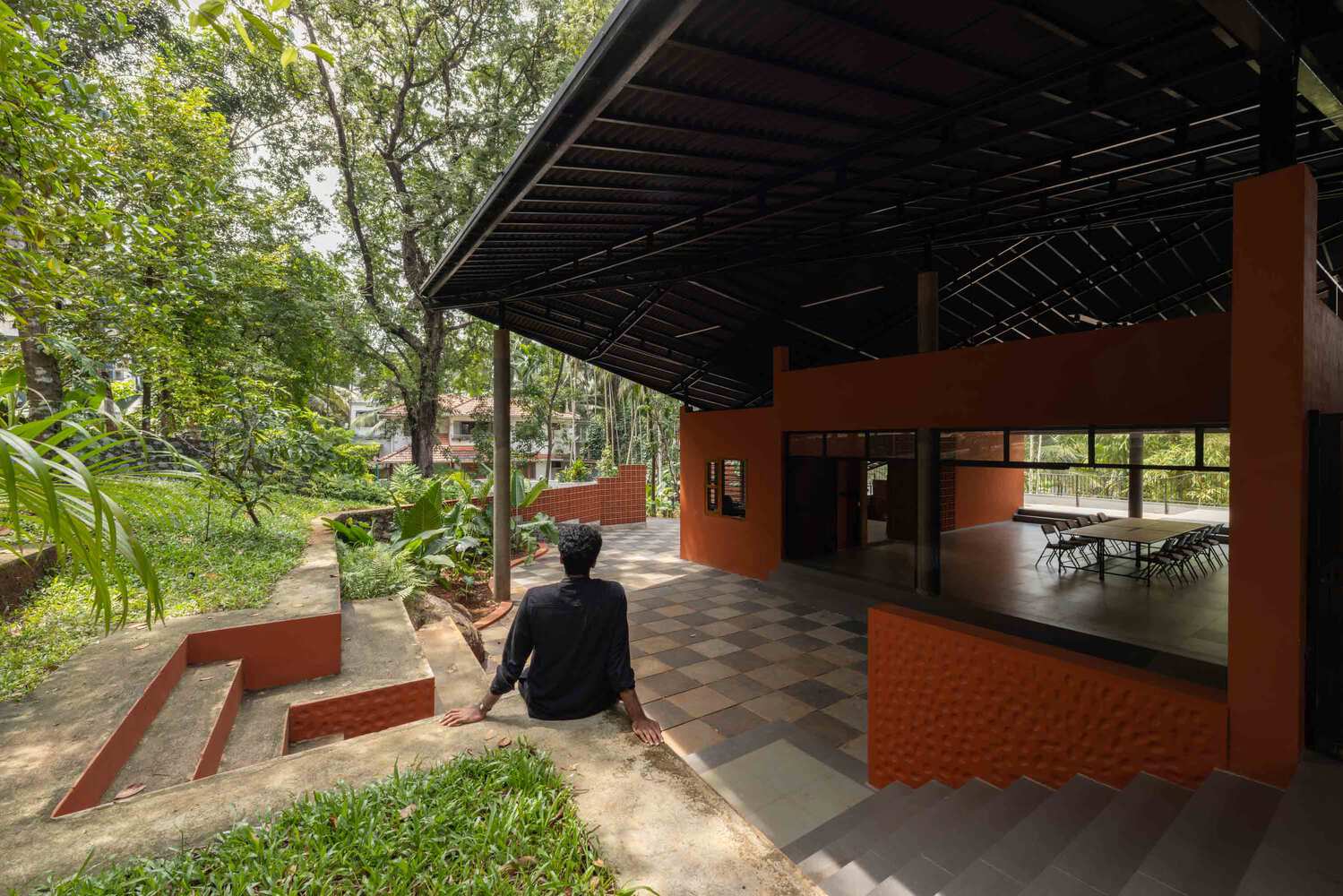
Against this context, Soil Stories was envisioned by the client, a retired educator, motivational speaker, and FIDE-rated (2000) chess player, as a space to engage young minds through chess, conversation, and cultural exchange.
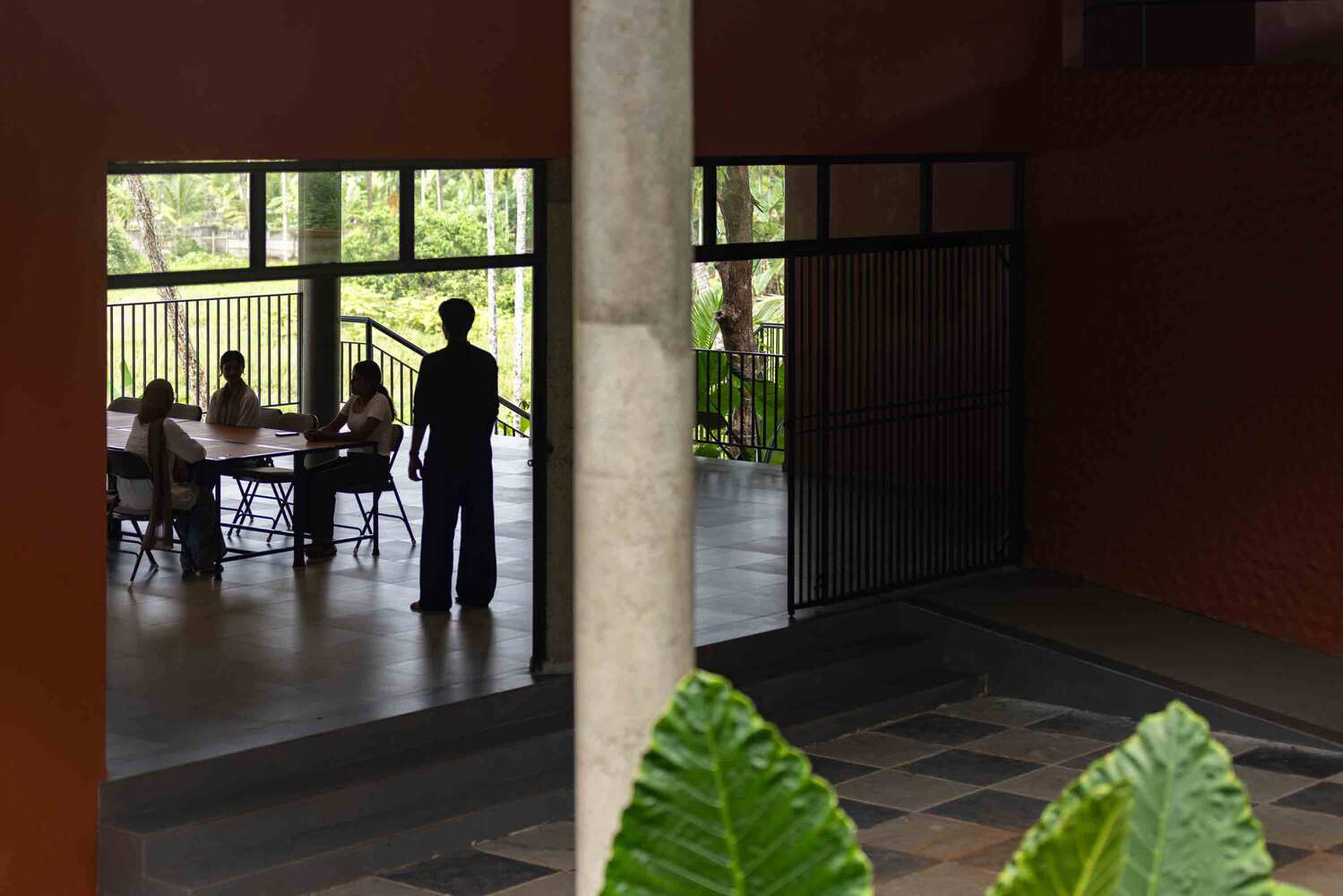
Responding to the lack of venues in tier-2 cities like Kozhikode that support quiet dialogue and intellectual engagement, the project brings together a chess academy and a multi-functional space for talks, readings, workshops, and community-led initiatives programs that typically fall outside formal institutions or commercial event spaces.
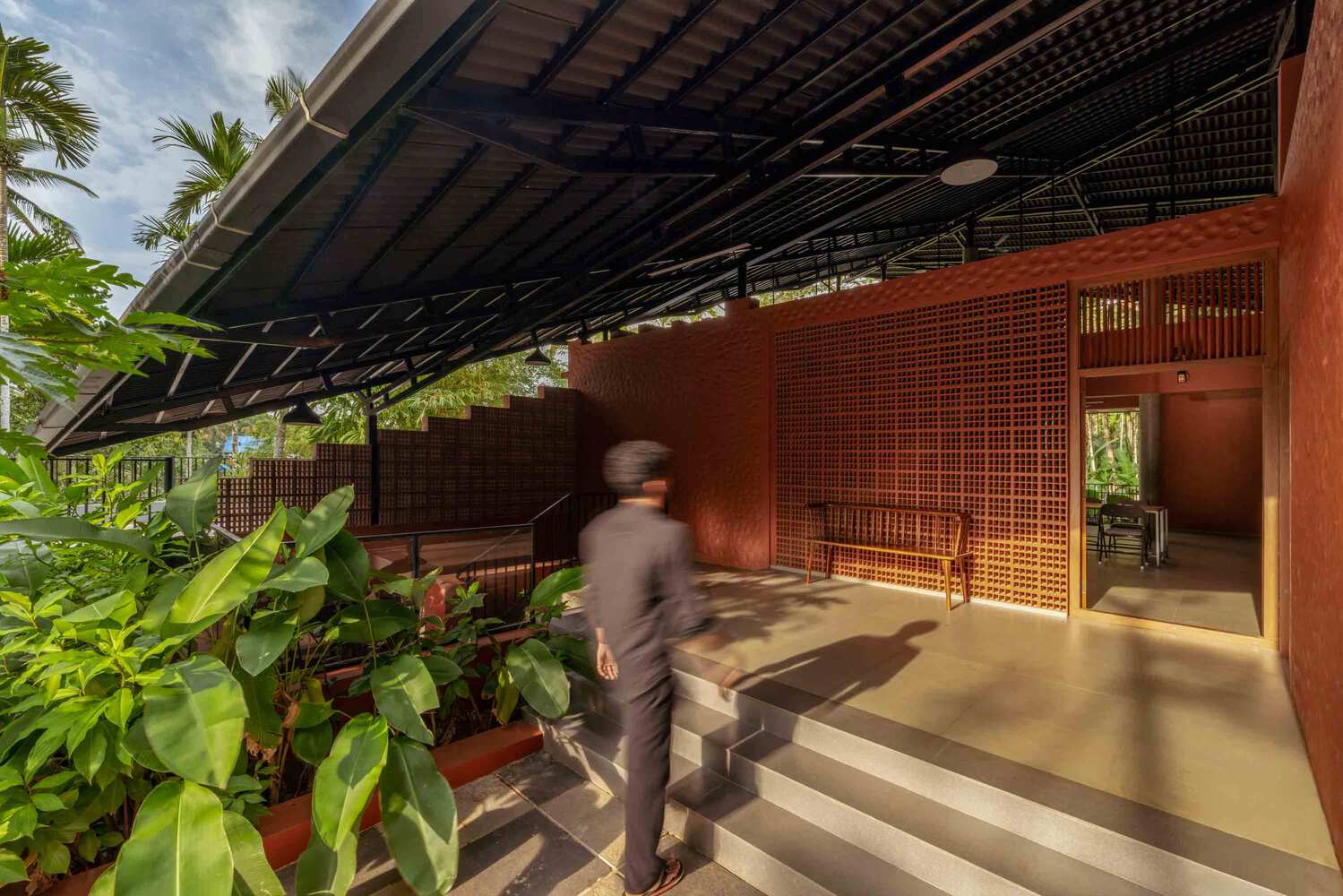
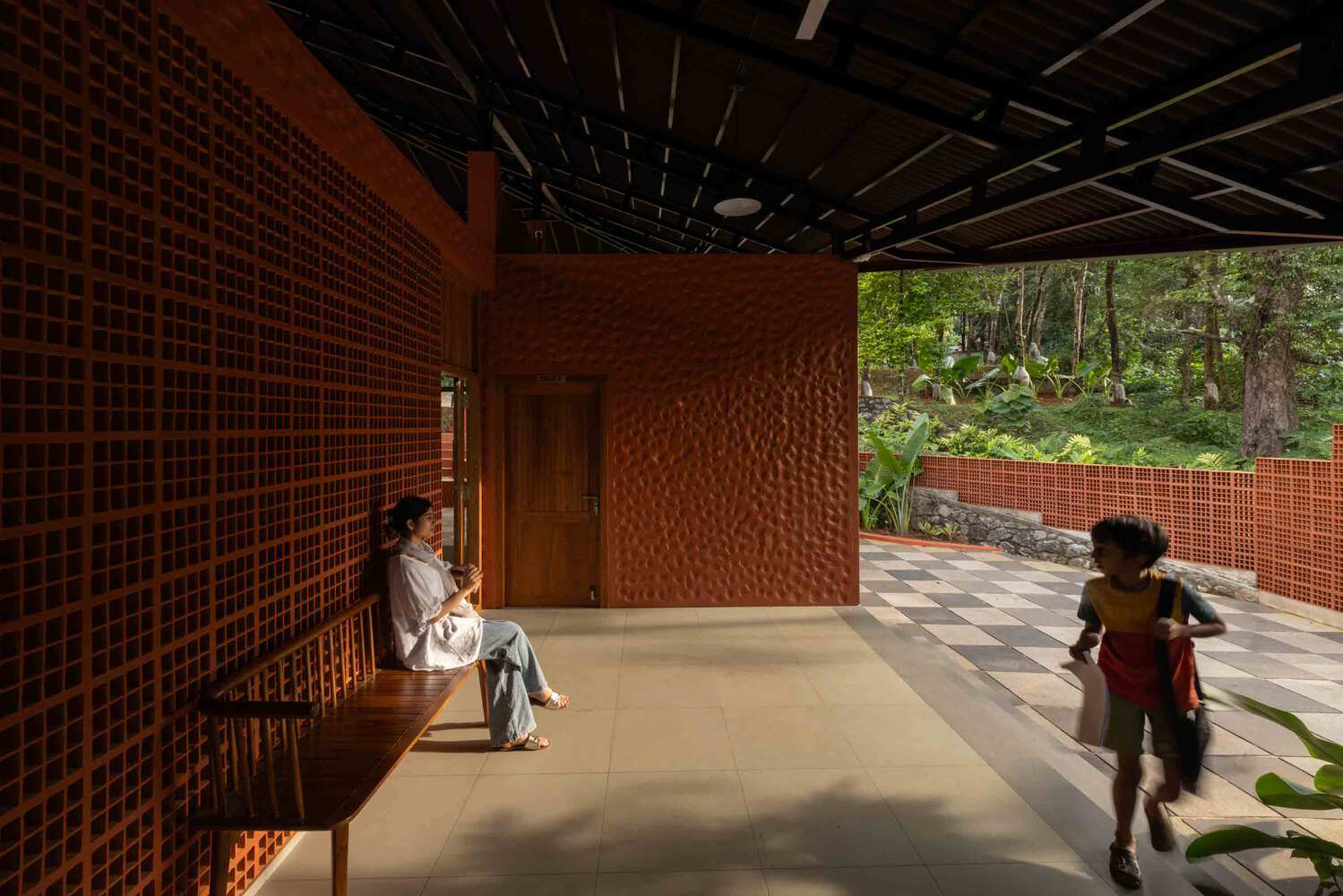
The pavilion's intent was affirmed immediately after inauguration, when it hosted the addition of 9,50,000 new Malayalam words to the online dictionary Olam, based on Kurup Sir's thesaurus, positioning the space as an infrastructure for ideas rather than events.
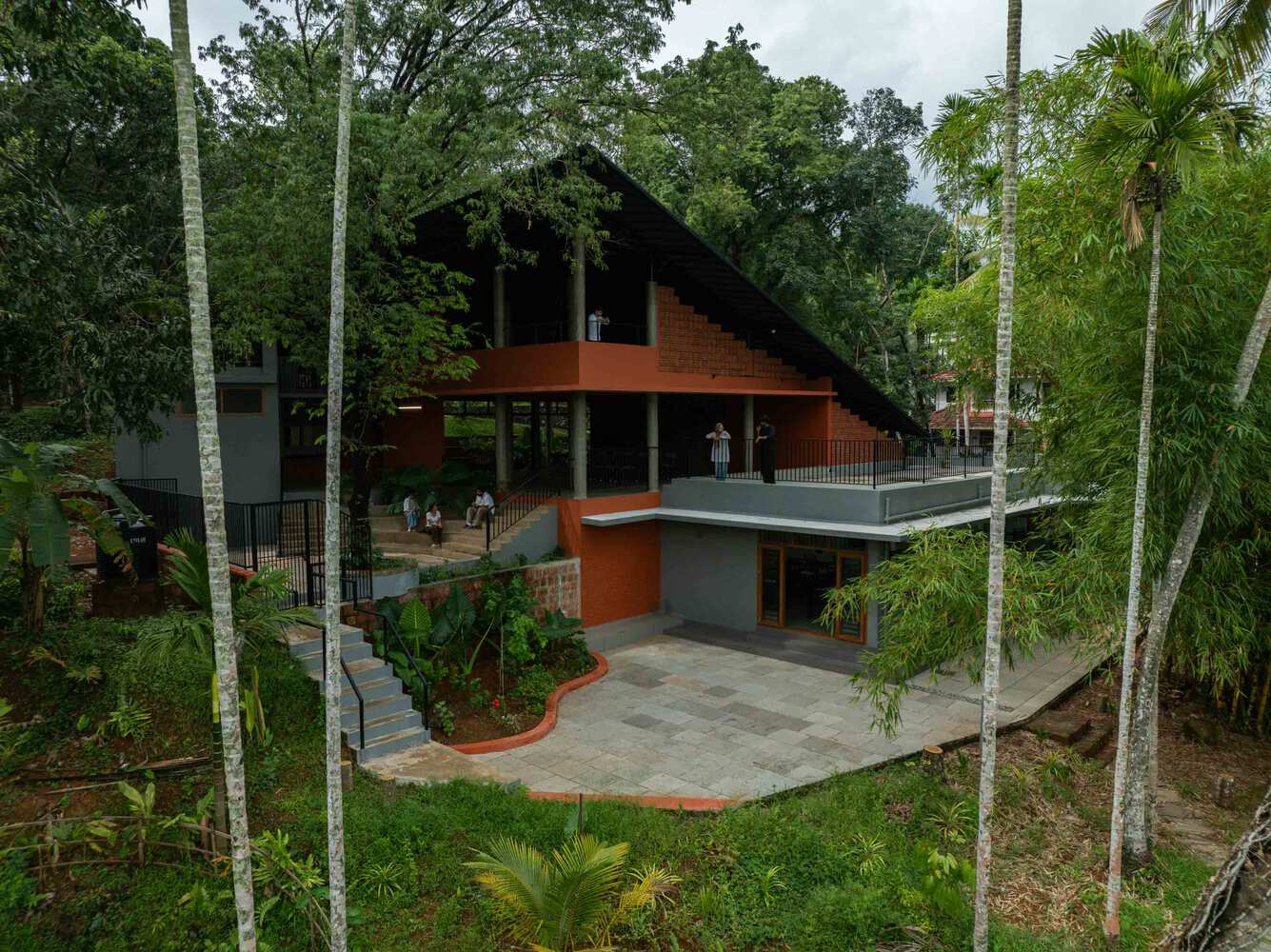
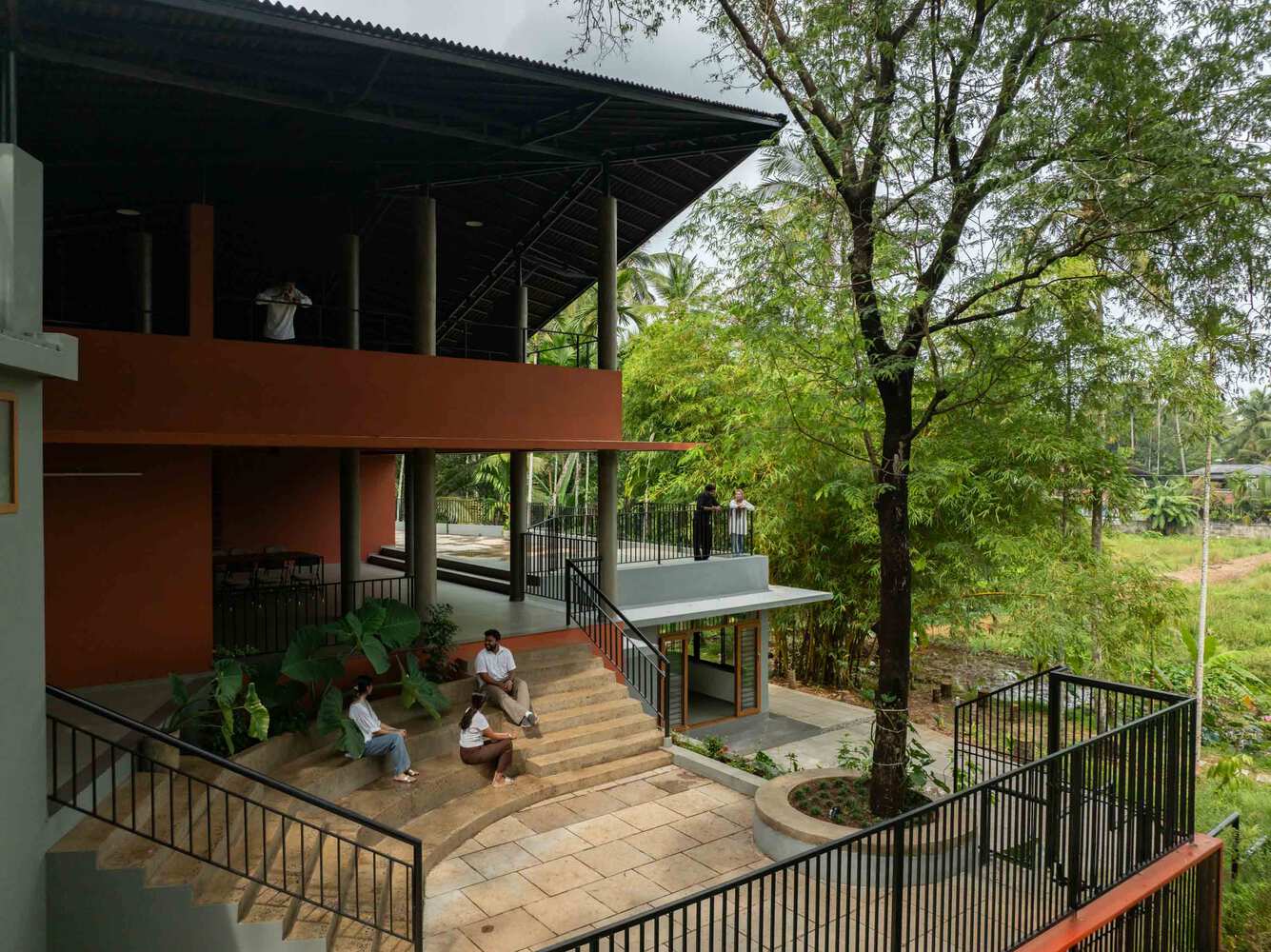
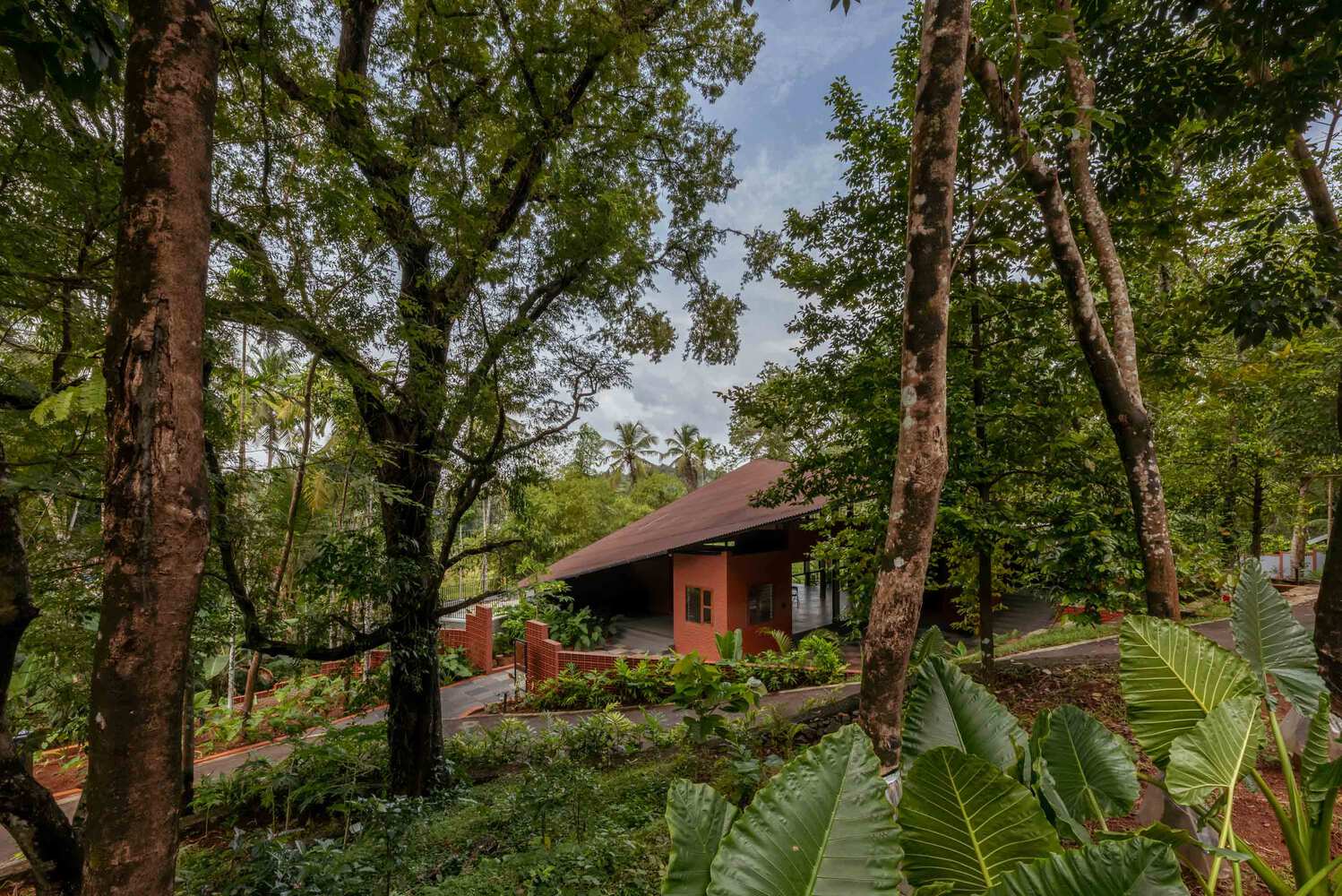
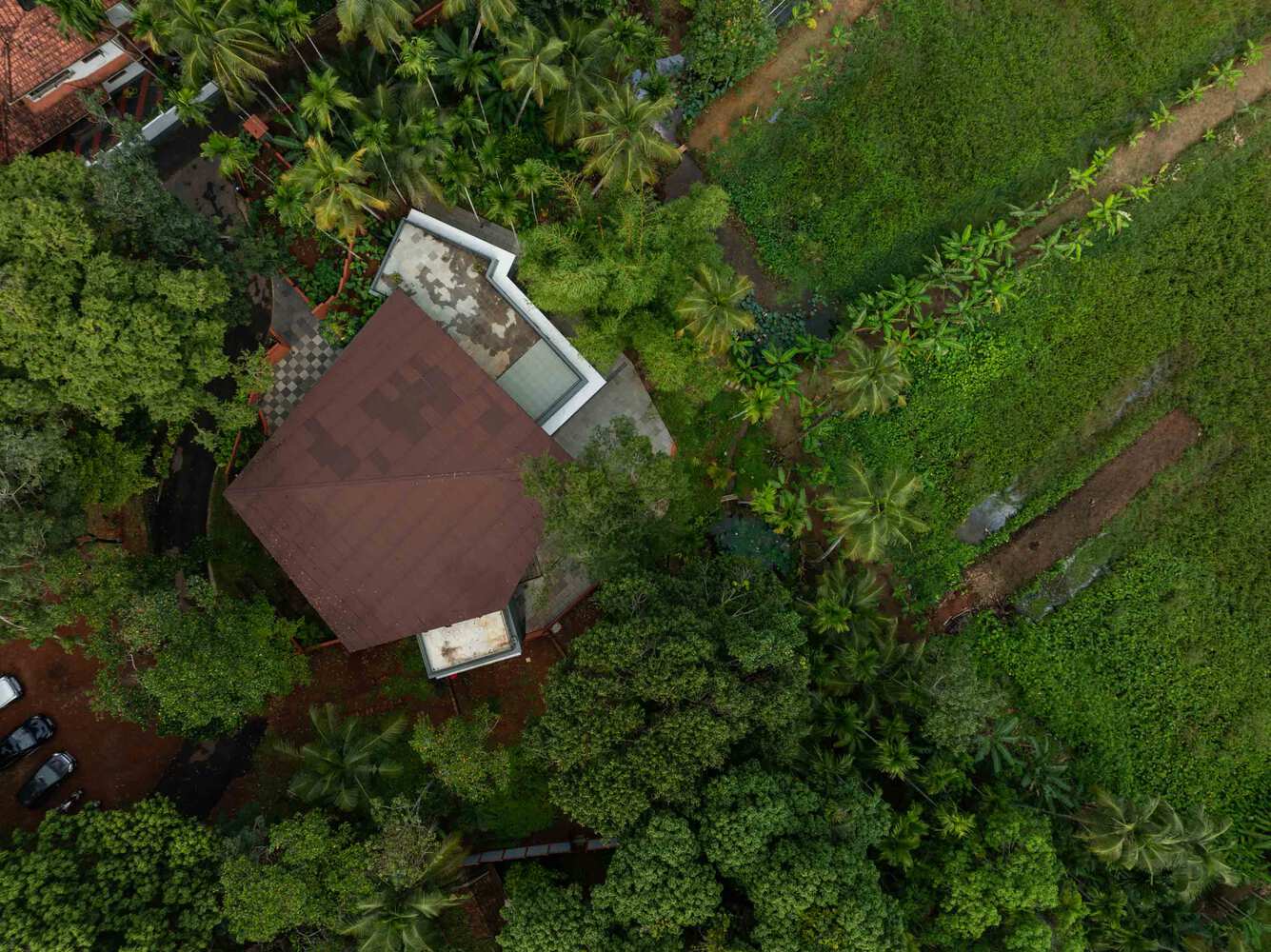
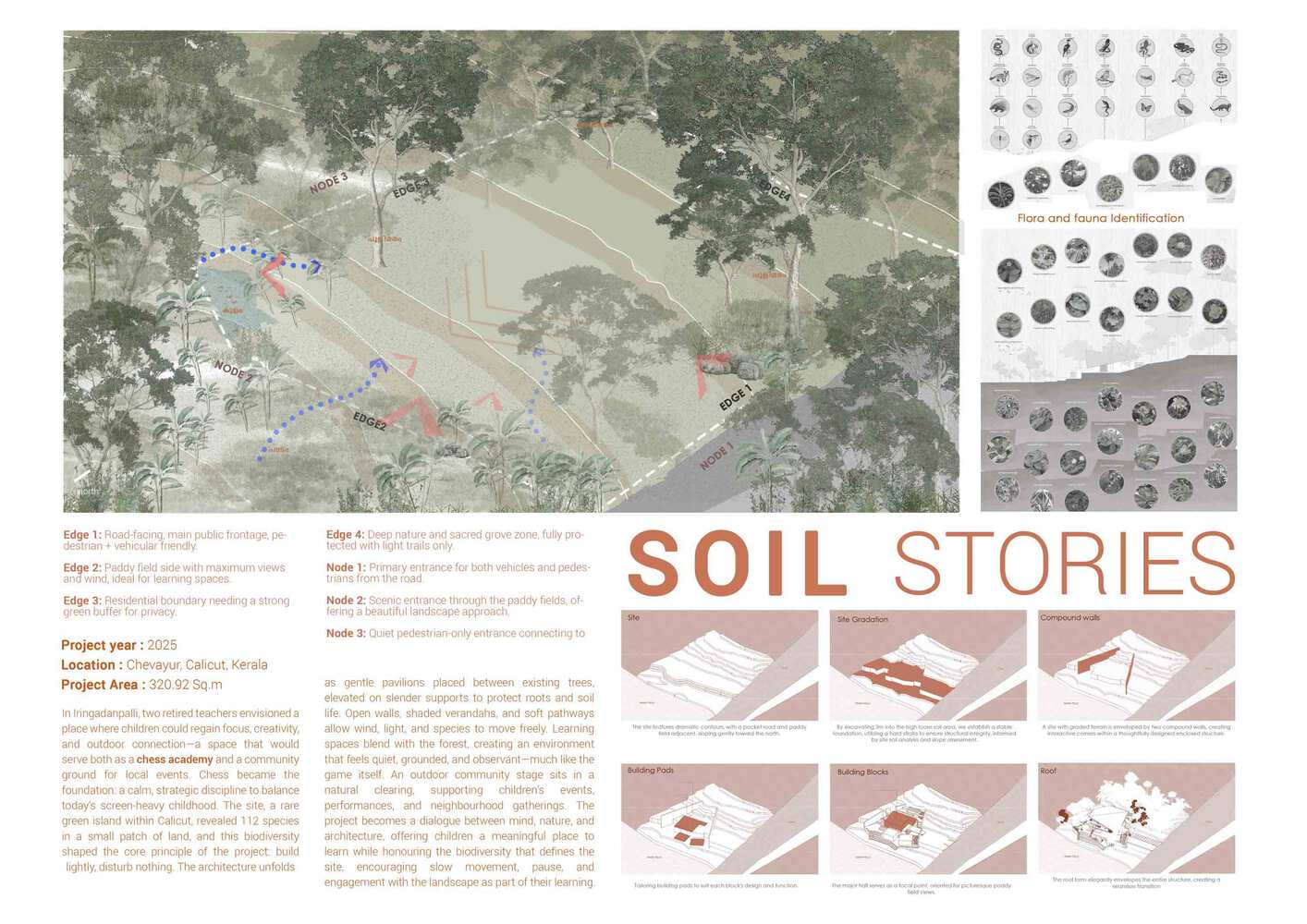
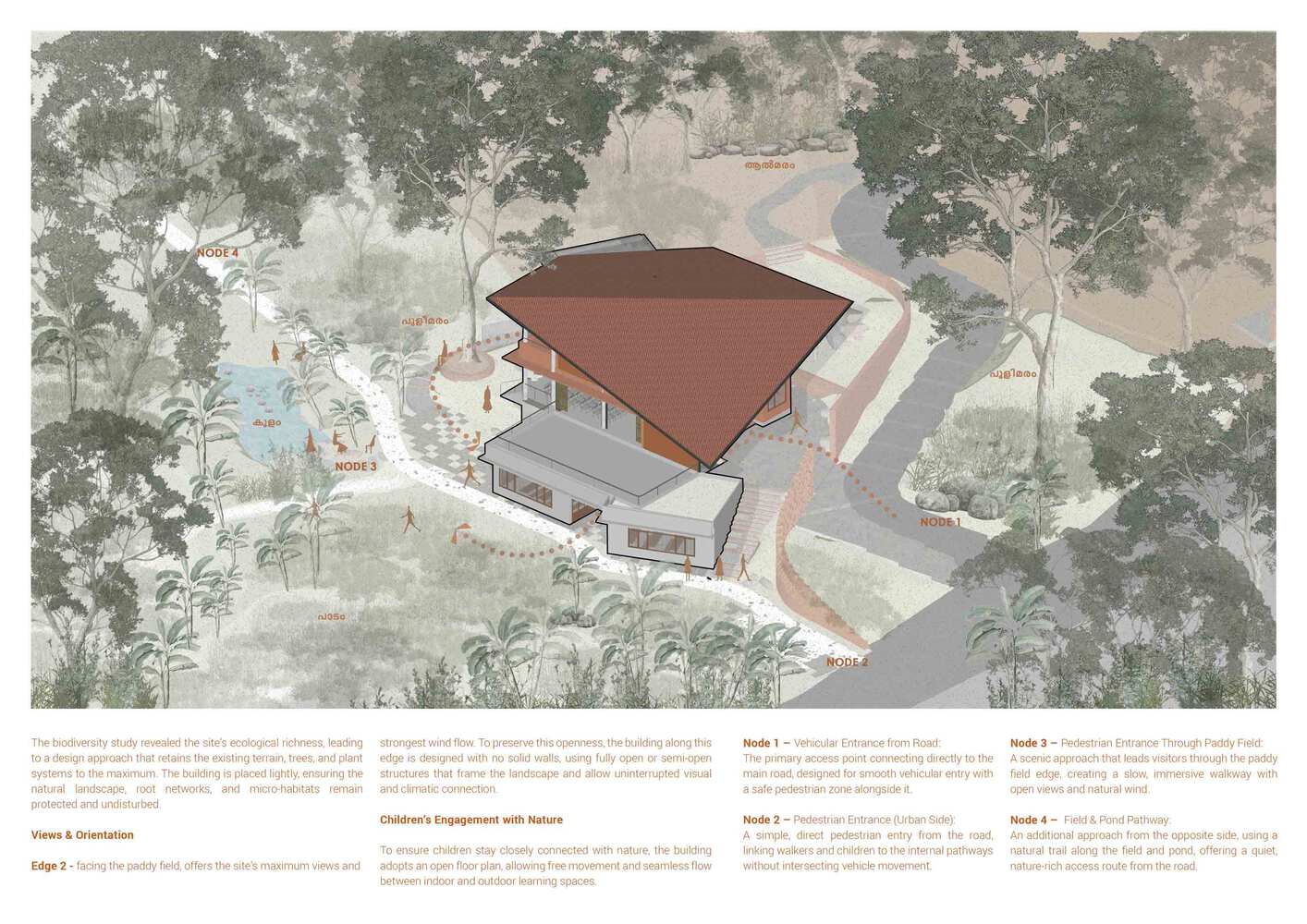
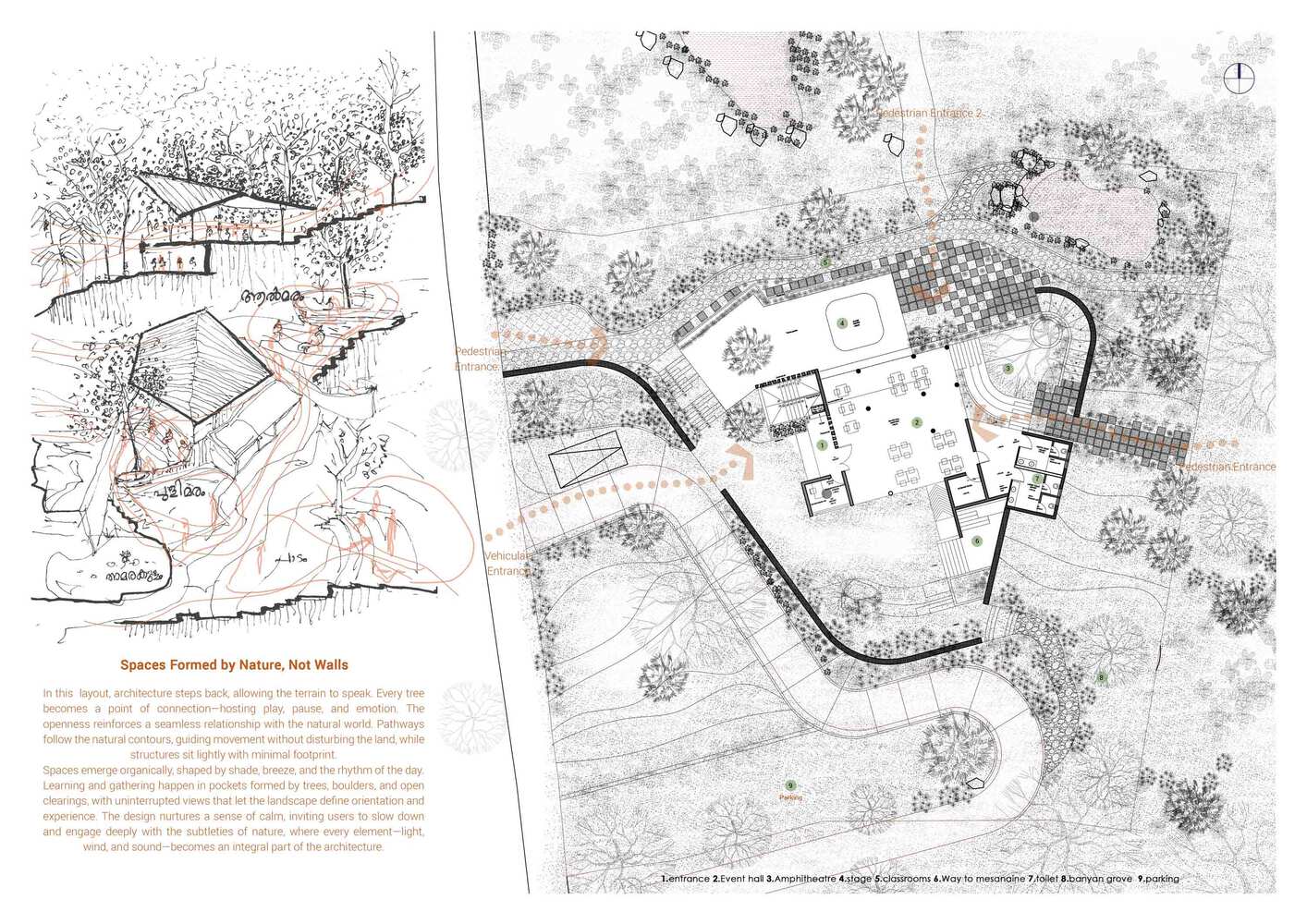
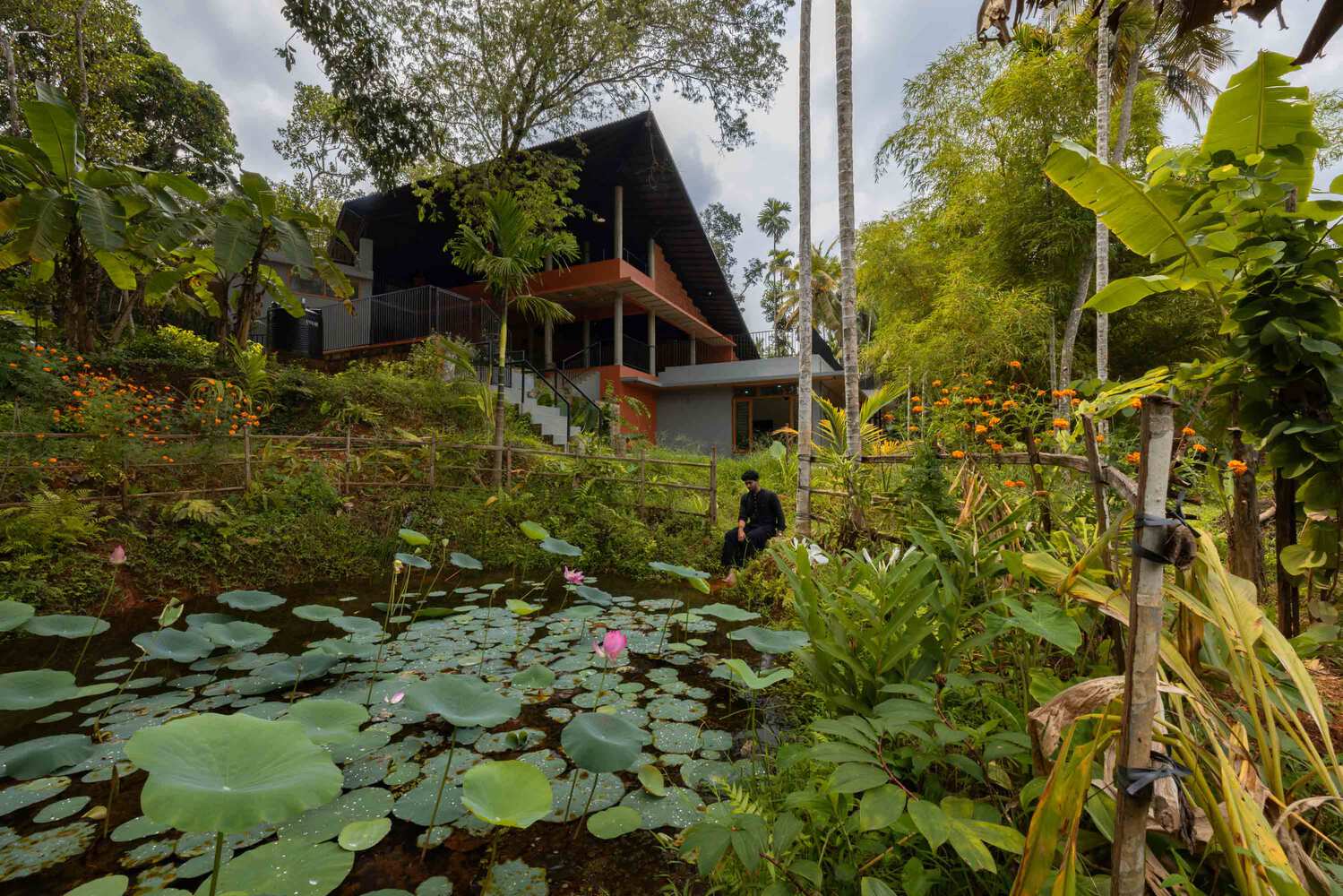
Architecturally, the building is carefully embedded within existing trees and land contours, ensuring minimal disturbance to the site's ecological balance.
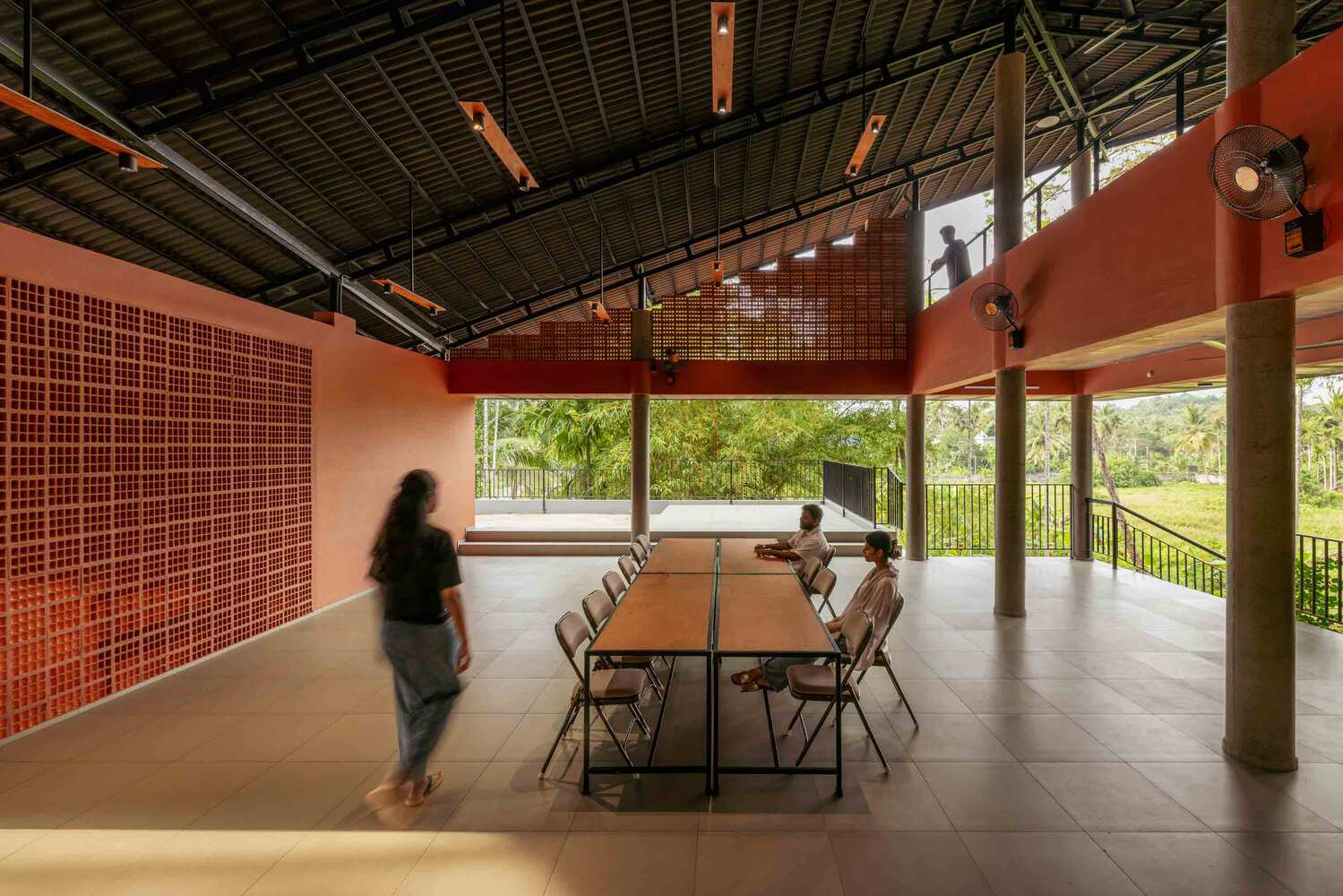
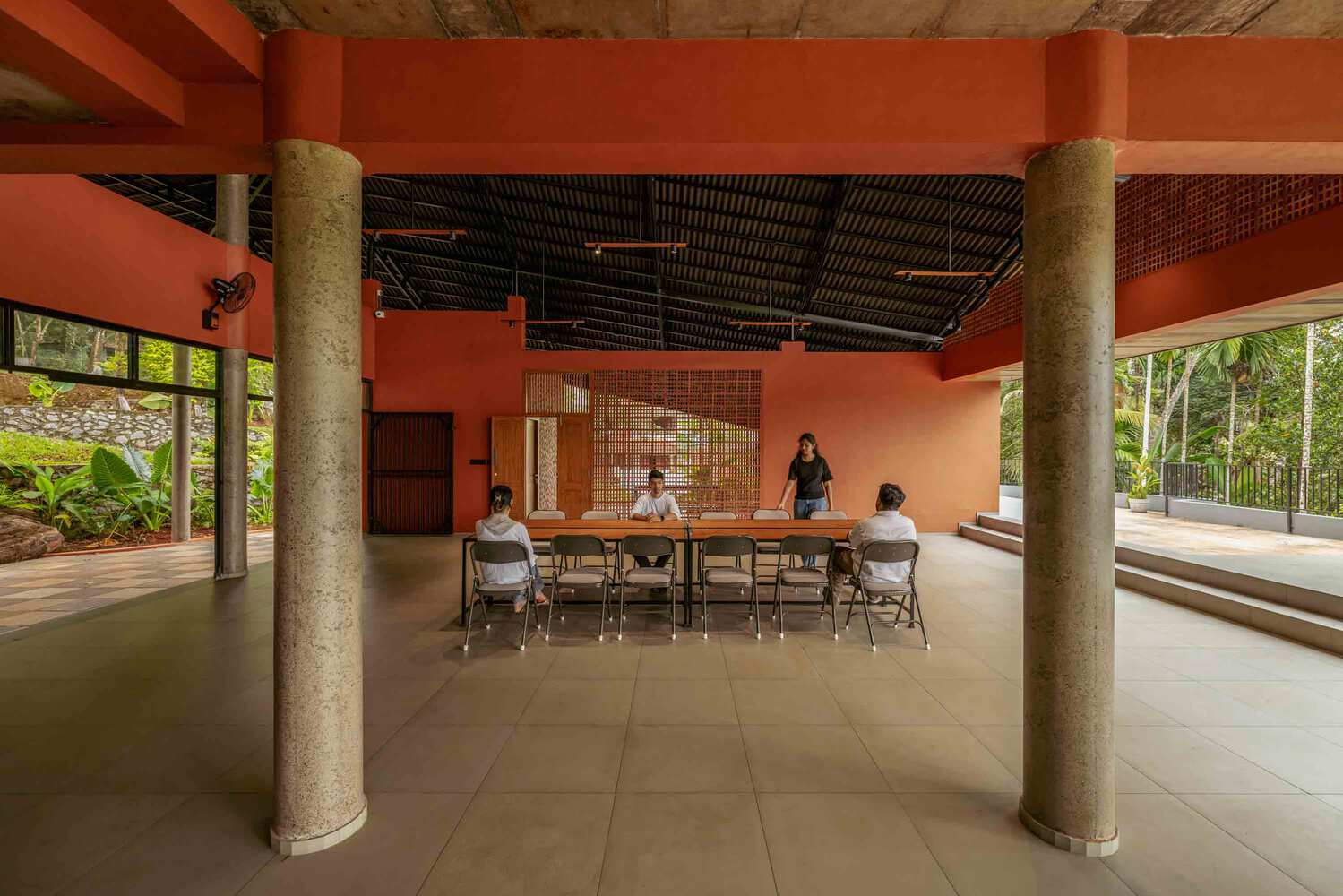
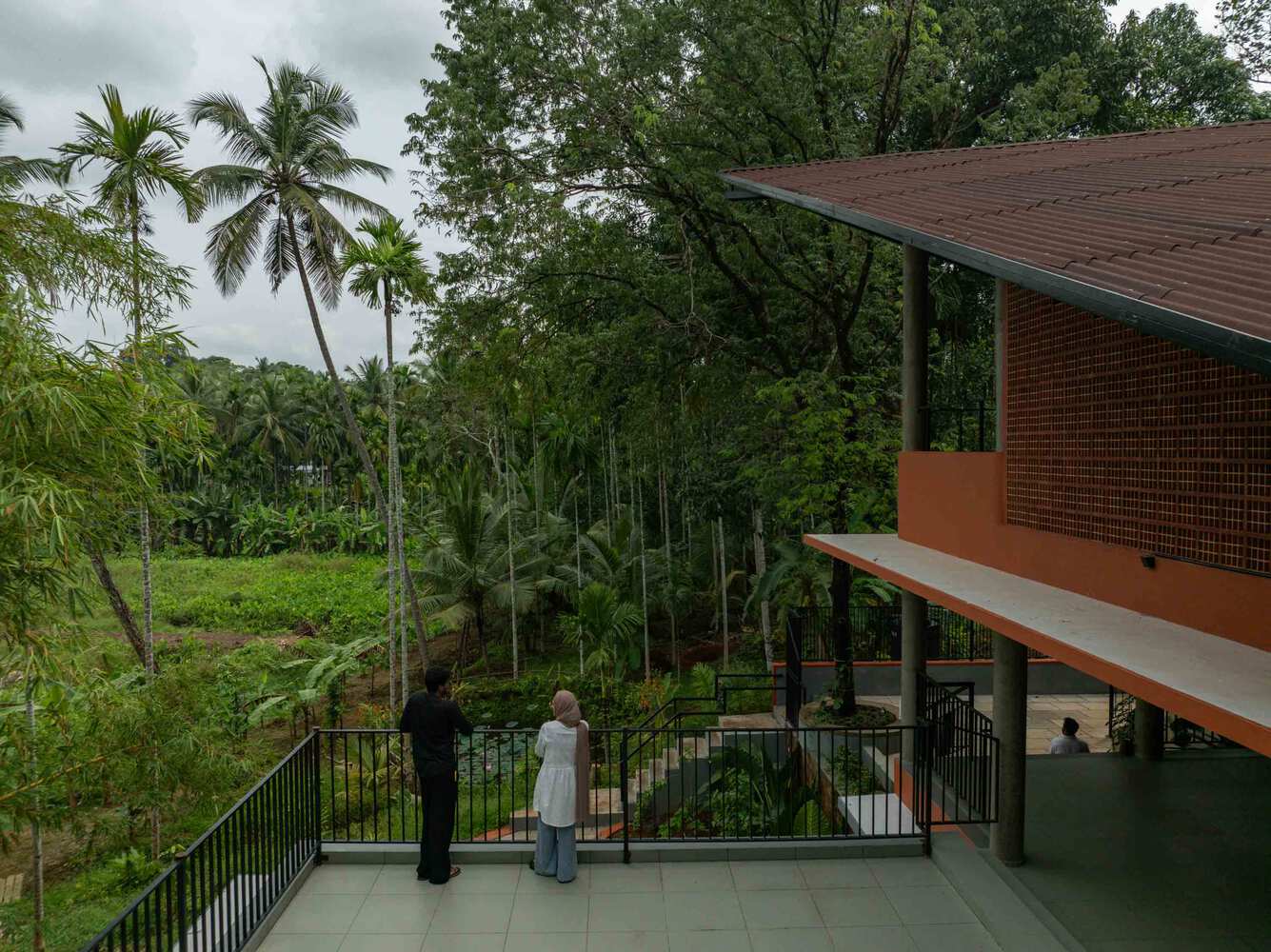
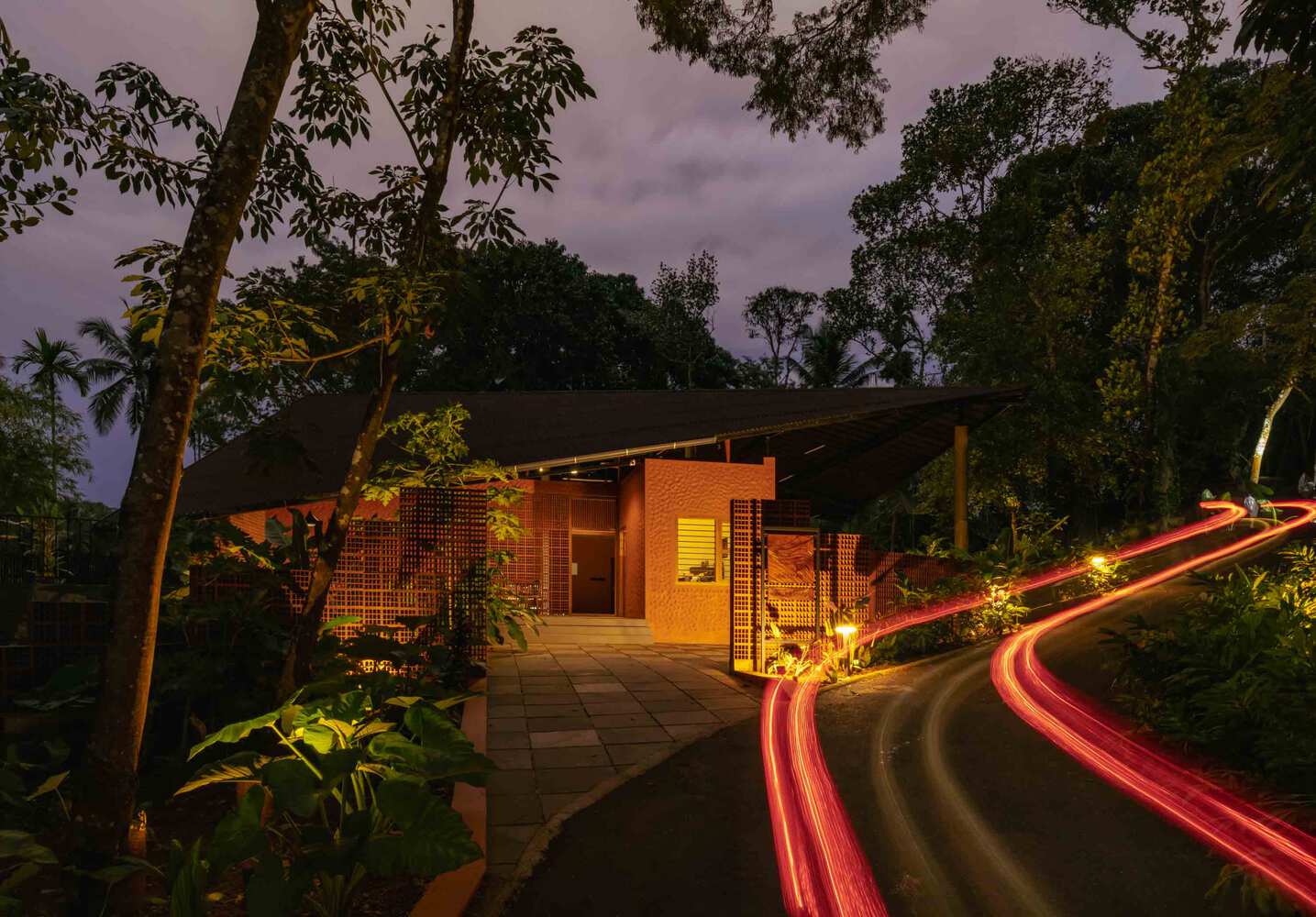
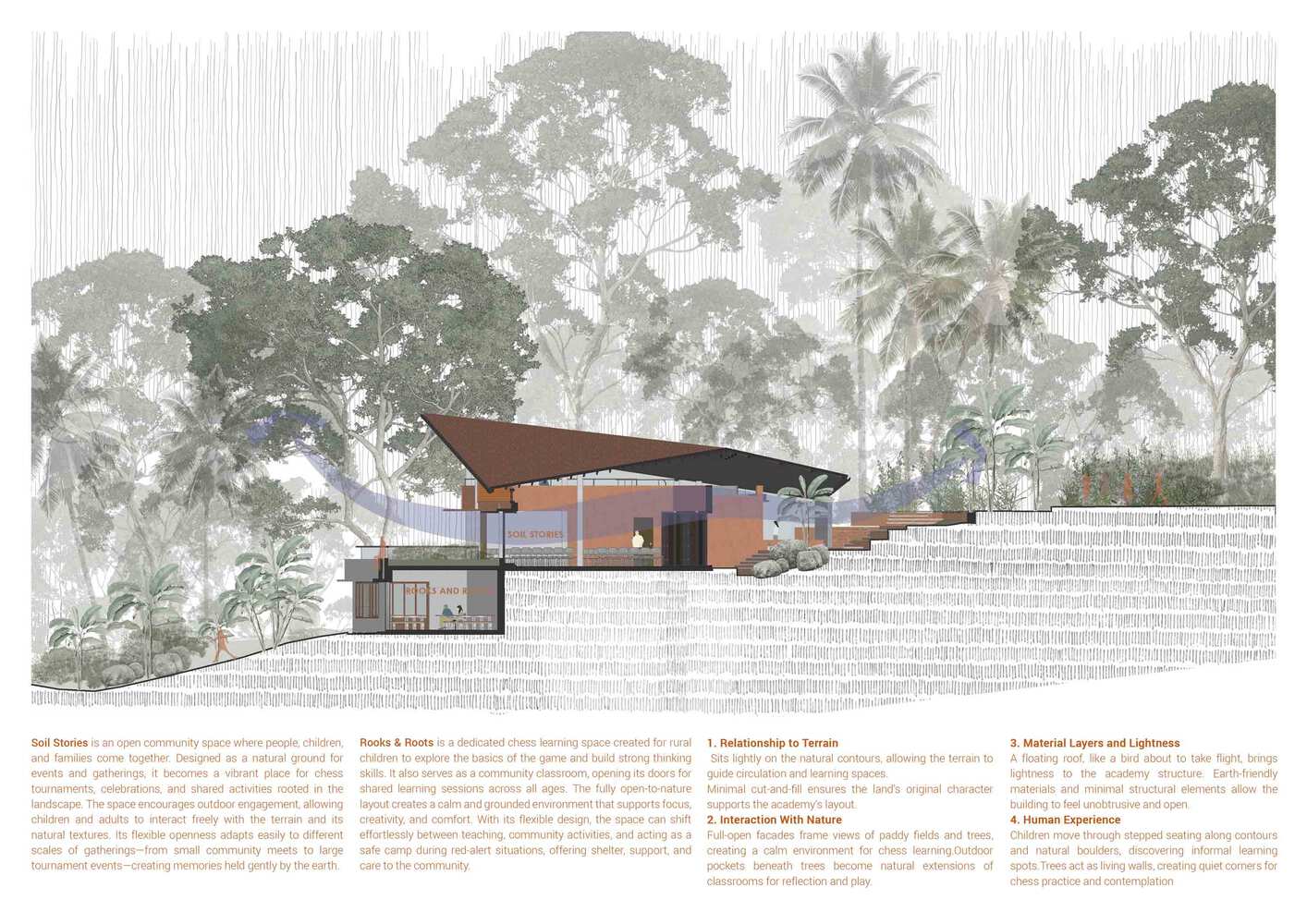
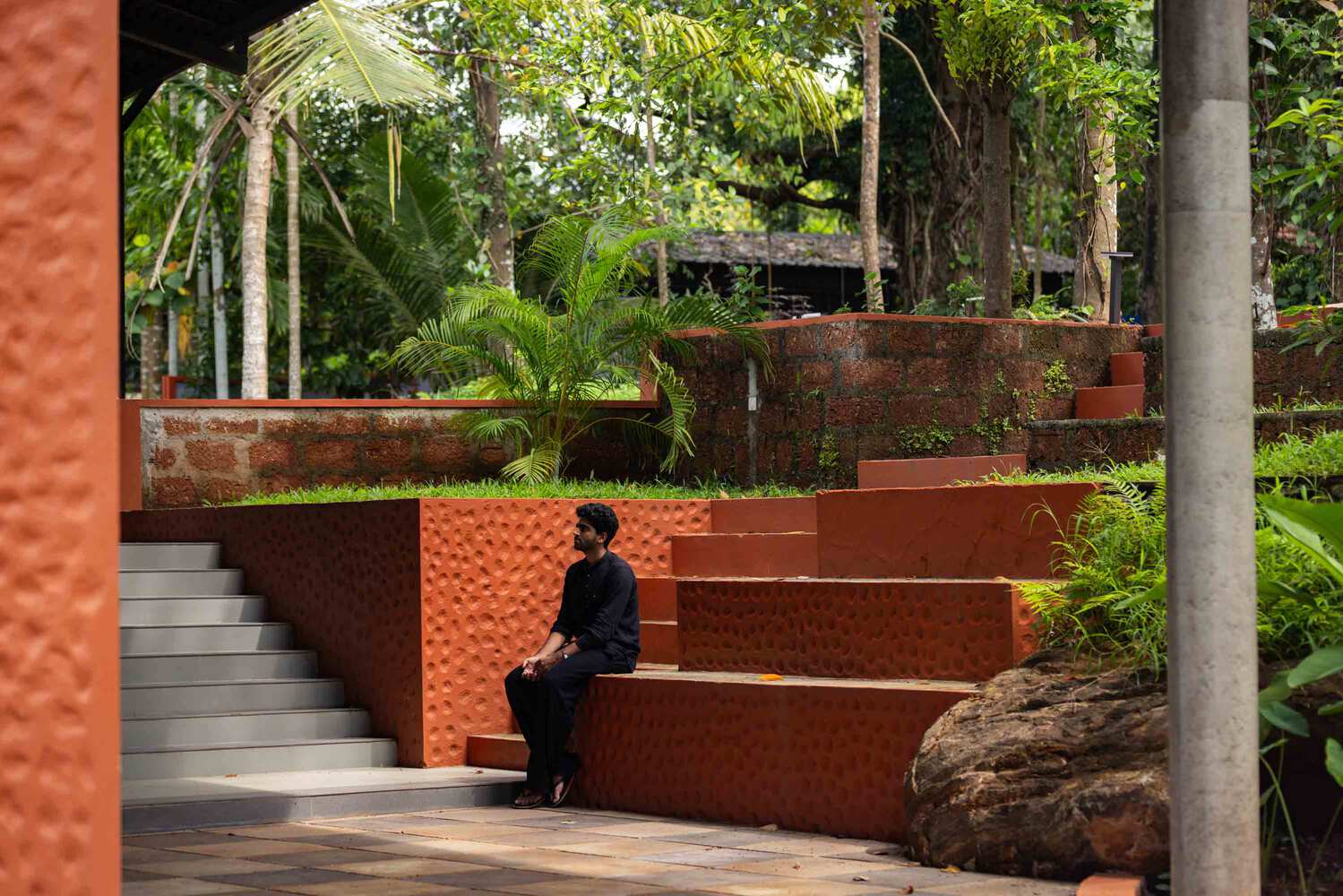
Organised across three staggered levels, the pavilion sequences arrival, learning, and gathering while offering varied spatial conditions that open differently to the landscape.
A singular sloping roof unifies the built form, visually holding the structure beneath it grounded yet light, as if shaped by the terrain itself.
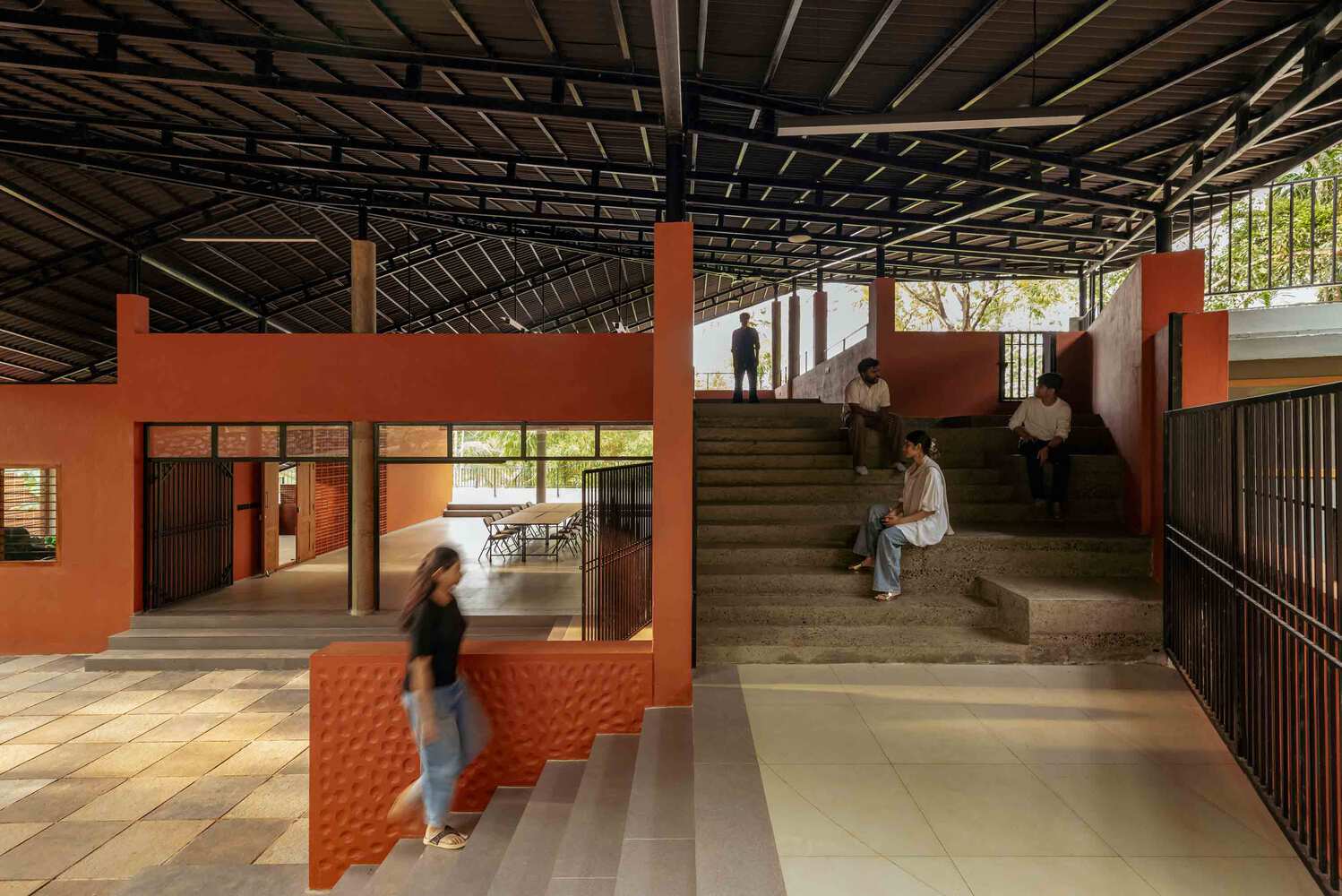
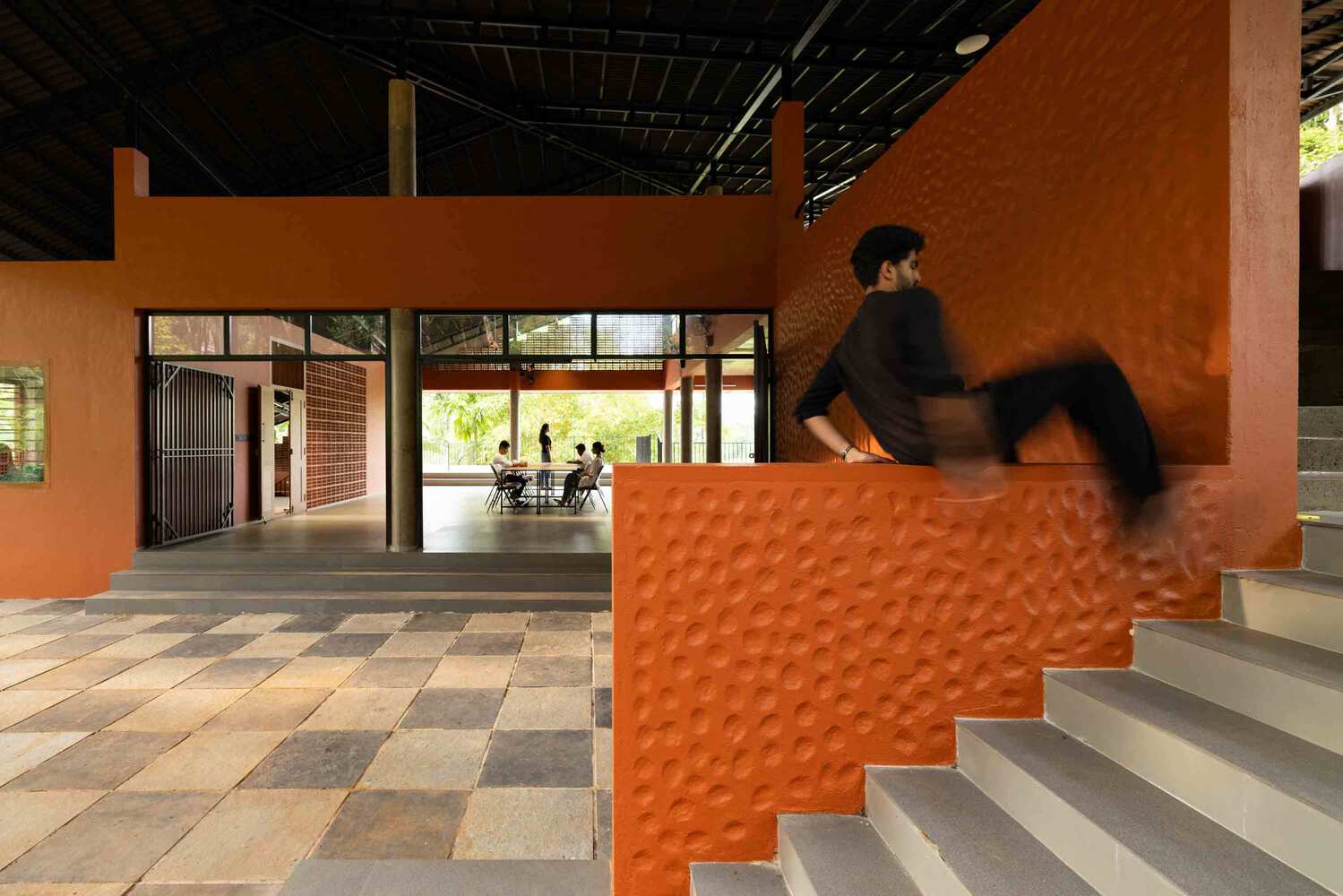
Landscape intervention is deliberately restrained and non-decorative. Plant species were identified from within the site and reintroduced, reinforcing continuity rather than imposing aesthetic order.
An adjacent former paddy field is being gradually reactivated as a wetland, an ongoing process that enhances biodiversity and becomes a living pedagogical environment for young users.
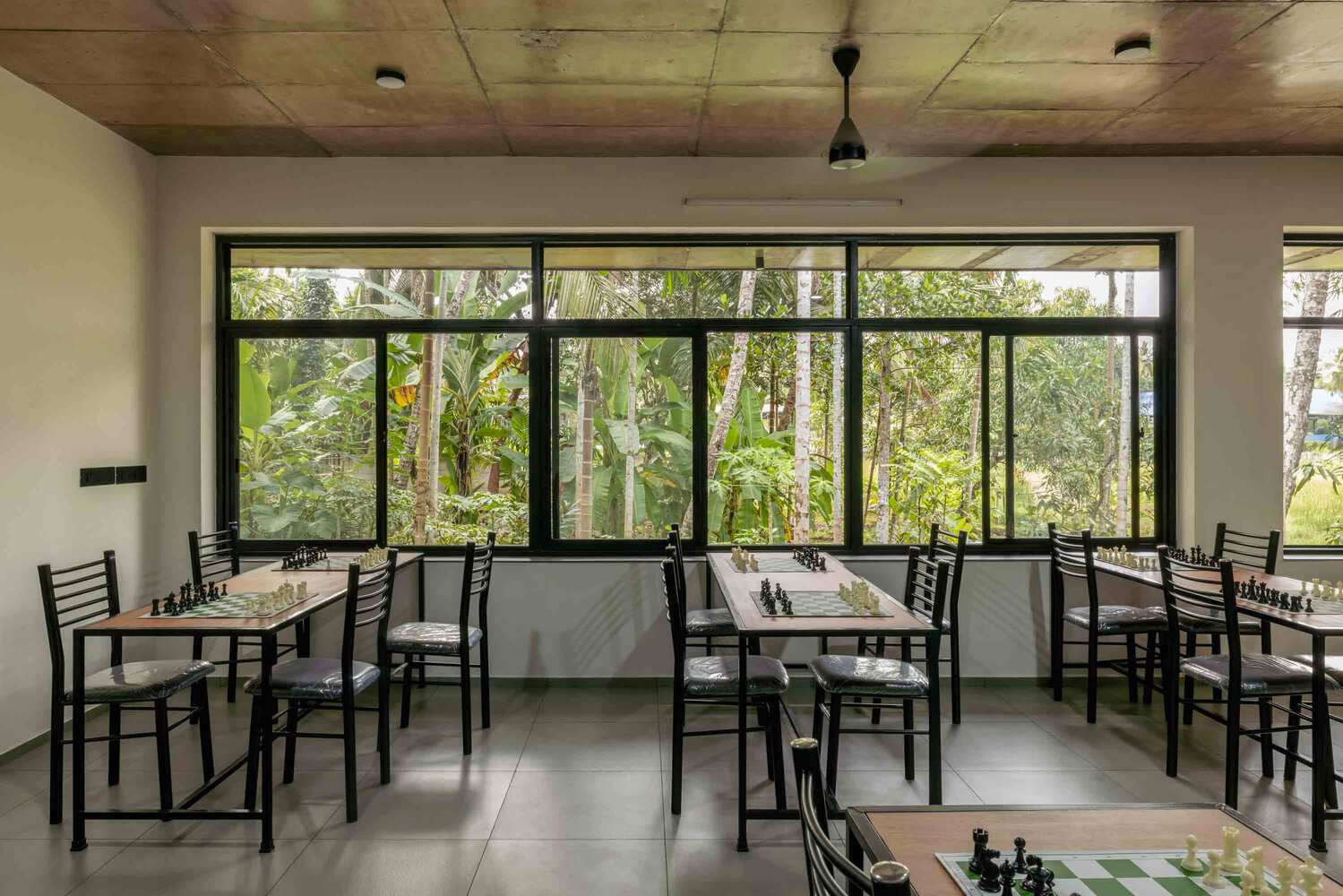
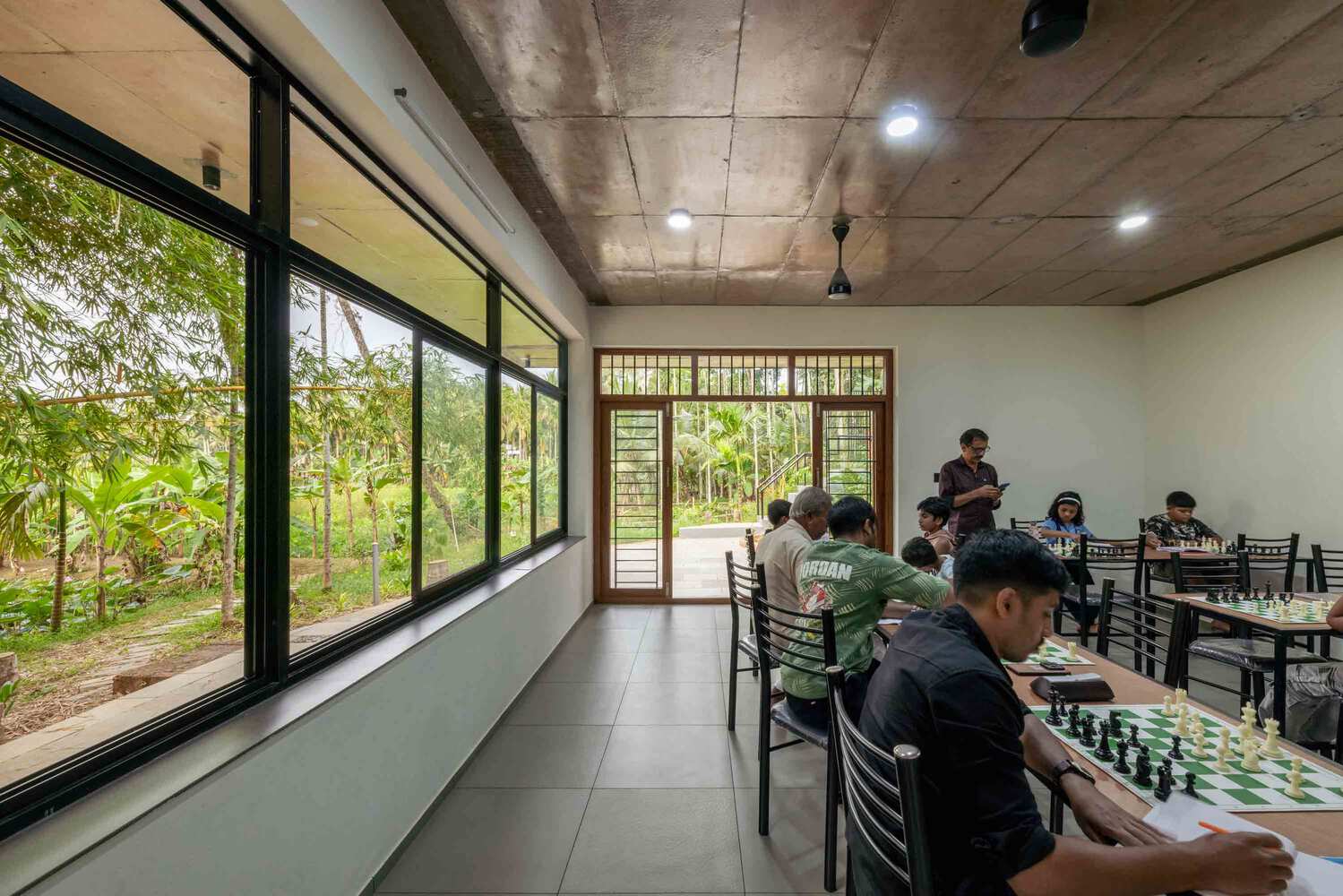
Soil Stories emerges not as an isolated object, but as a quiet insertion—where land, learning, ecology, and memory collectively shape a space for sustained engagement.