Floating Pavilion
FLOATING PAVILION
Studio RE+N
ARCHITECTS
Studio RE+N
LEAD ARCHITECTS
Yuting Zhang, Pu Zhang
DESIGN TEAM
Jianwu Han, Meng Zhang
CONSULTANTS
Xiangdi Ji (Design & Construction Coordination)
COLLABORATORS
Hangzhou Baiguyuan Construction Co., Ltd. & Zhejiang Huafang Construction Co., Ltd.
CLIENTS
Xinxing Town Government, Songyang County, Zhejiang Province
ENGINEERING
Lihui Feng (Structural)
PHOTOGRAPHS
Kejia Mei
AREA
85 m²
YEAR
2025
LOCATION
Lishui, China
CATEGORY
Installations & Structures
English description provided by the architects.
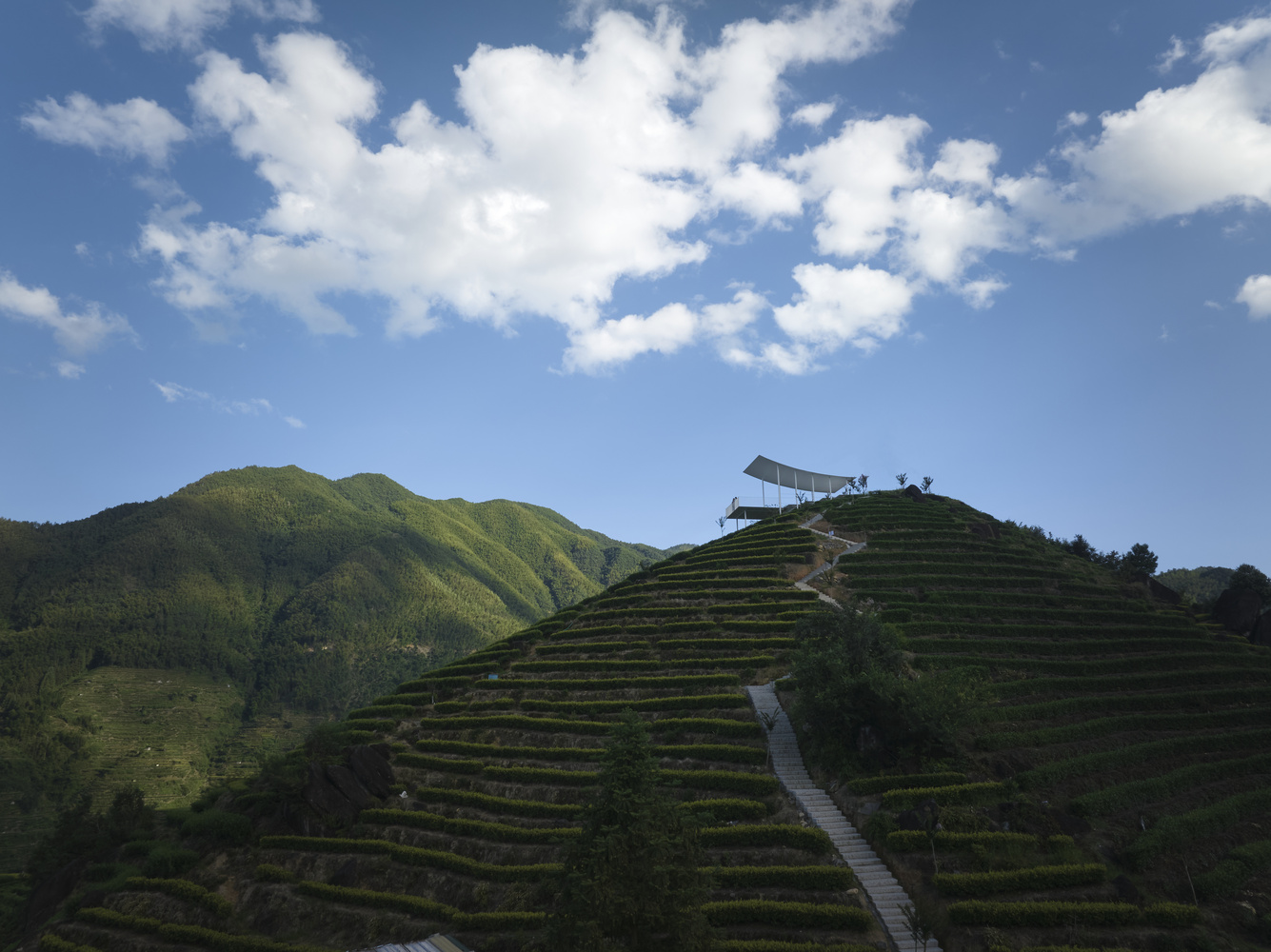
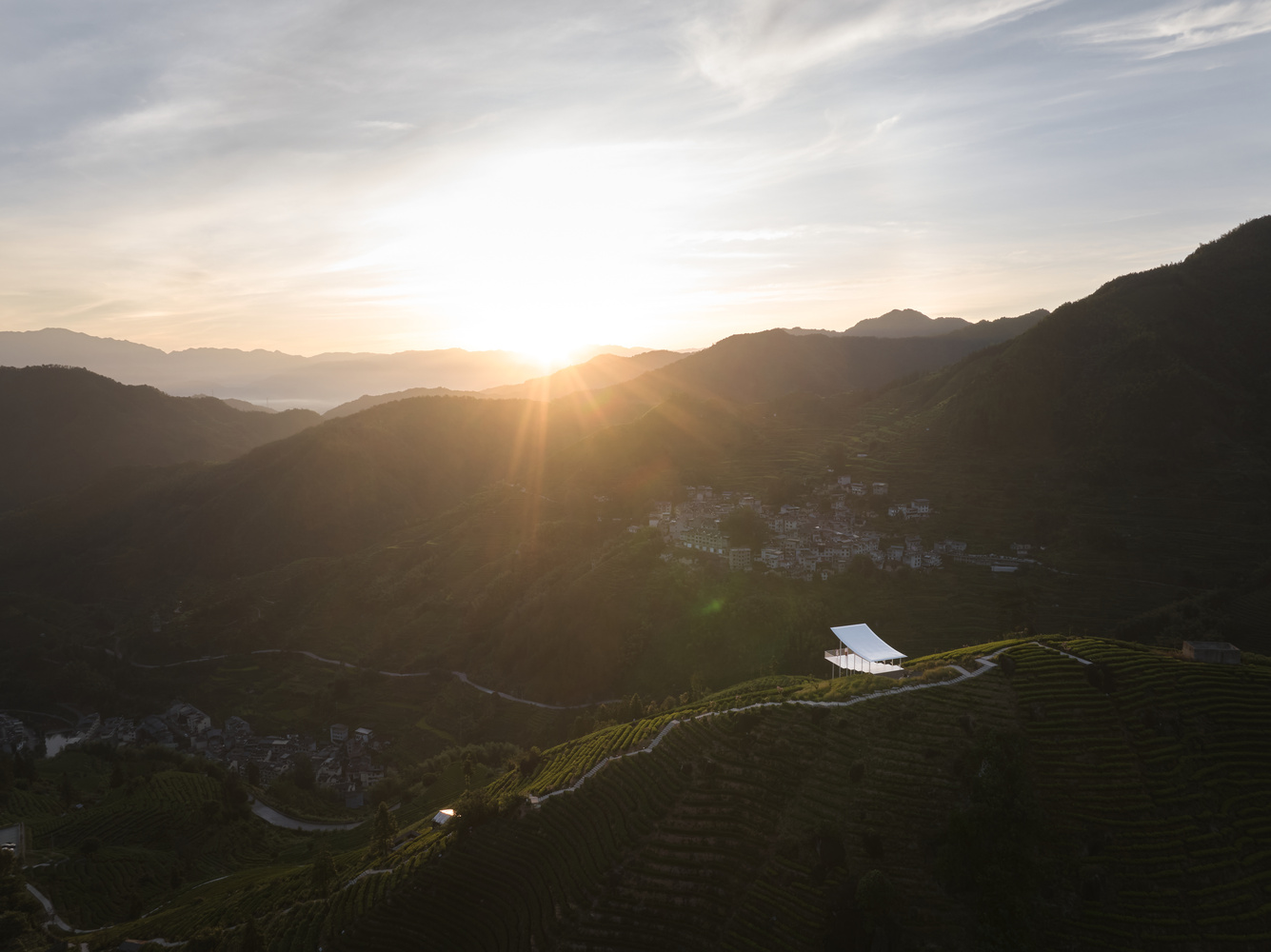
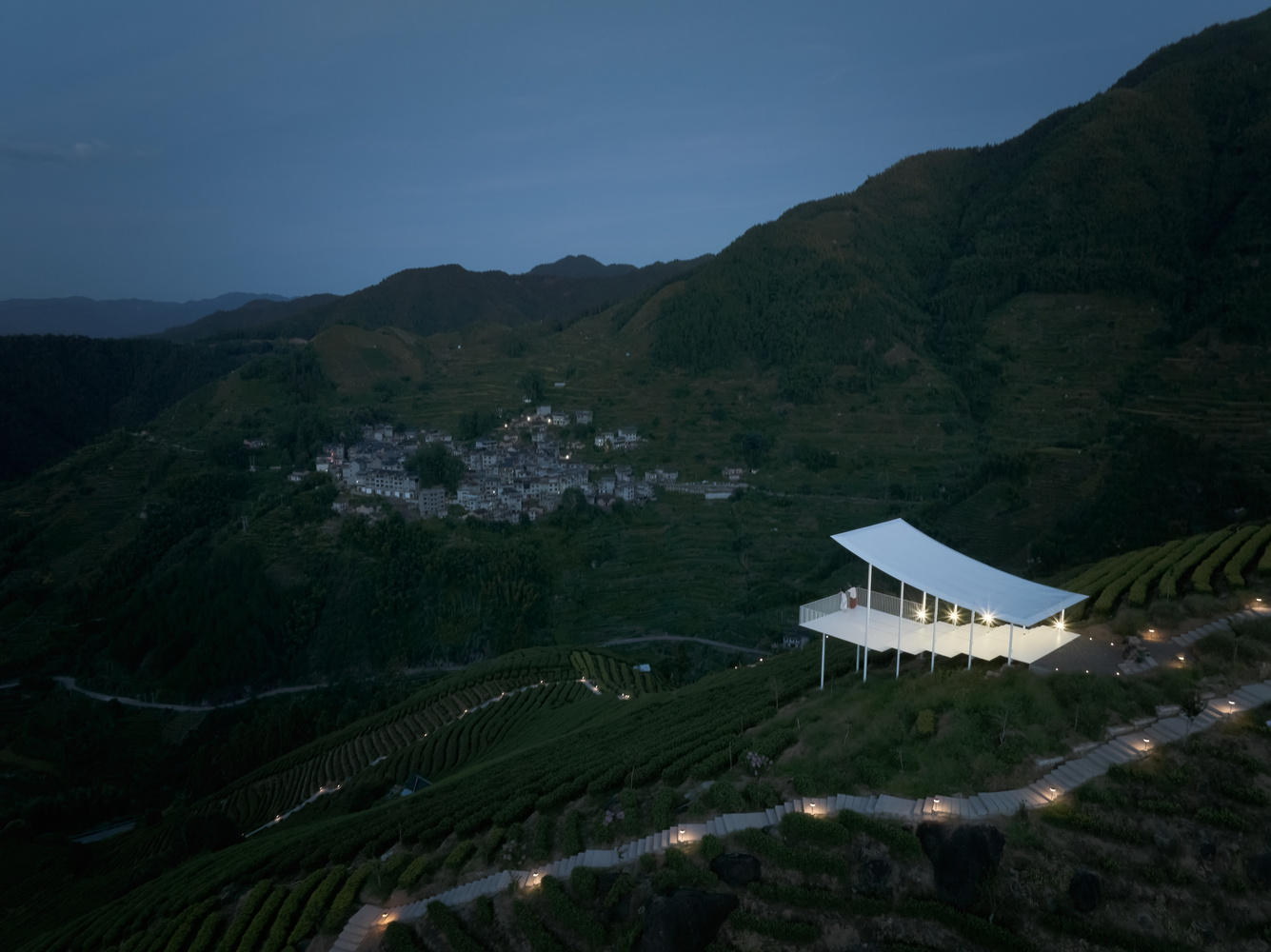
Tea terraces cascade toward the horizon, threaded with drifting mist — the Floating Pavilion sits at the summit of a terraced tea mountain in Songyang County, Zhejiang Province, China, some five hundred meters above sea level.
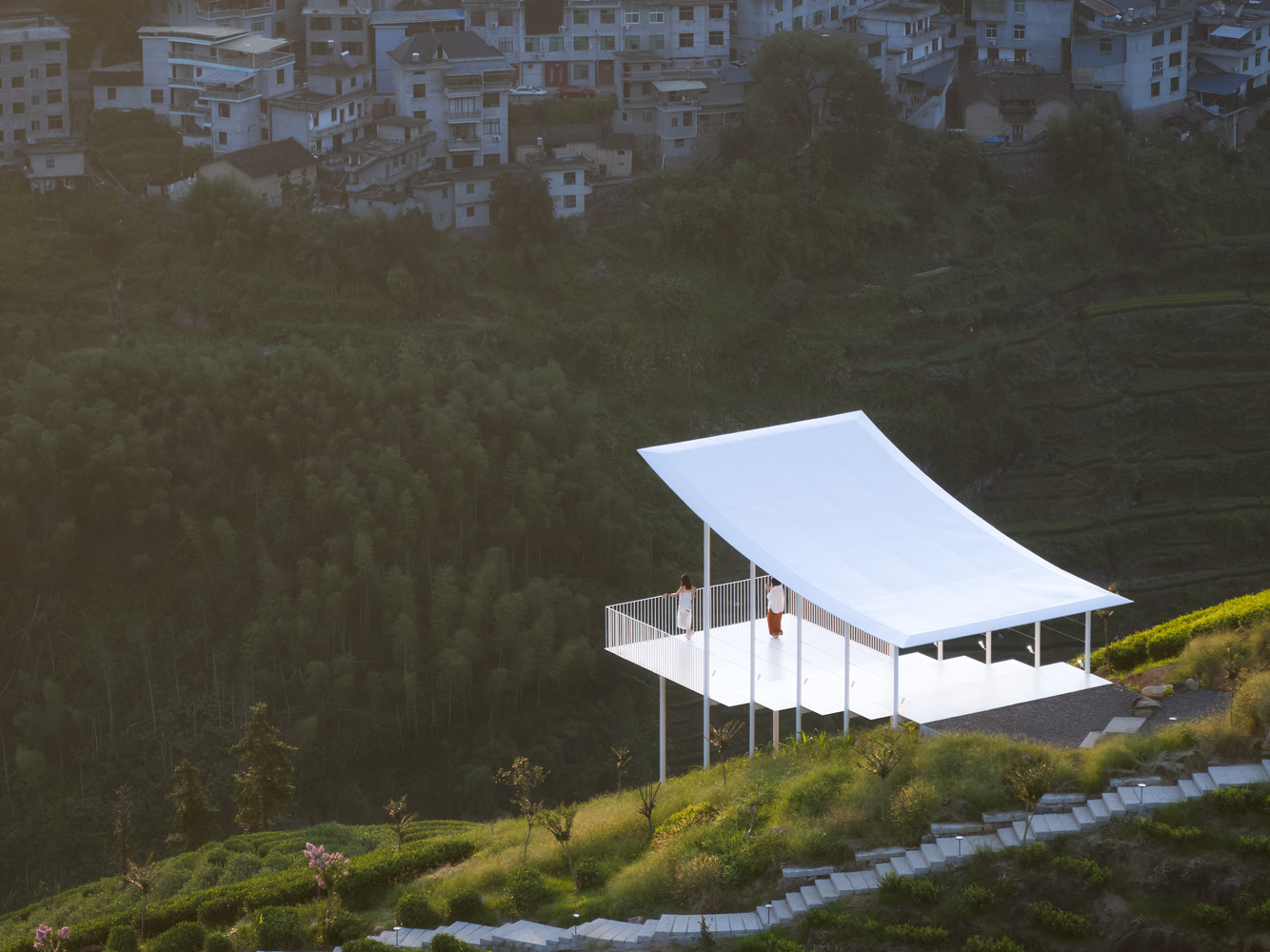
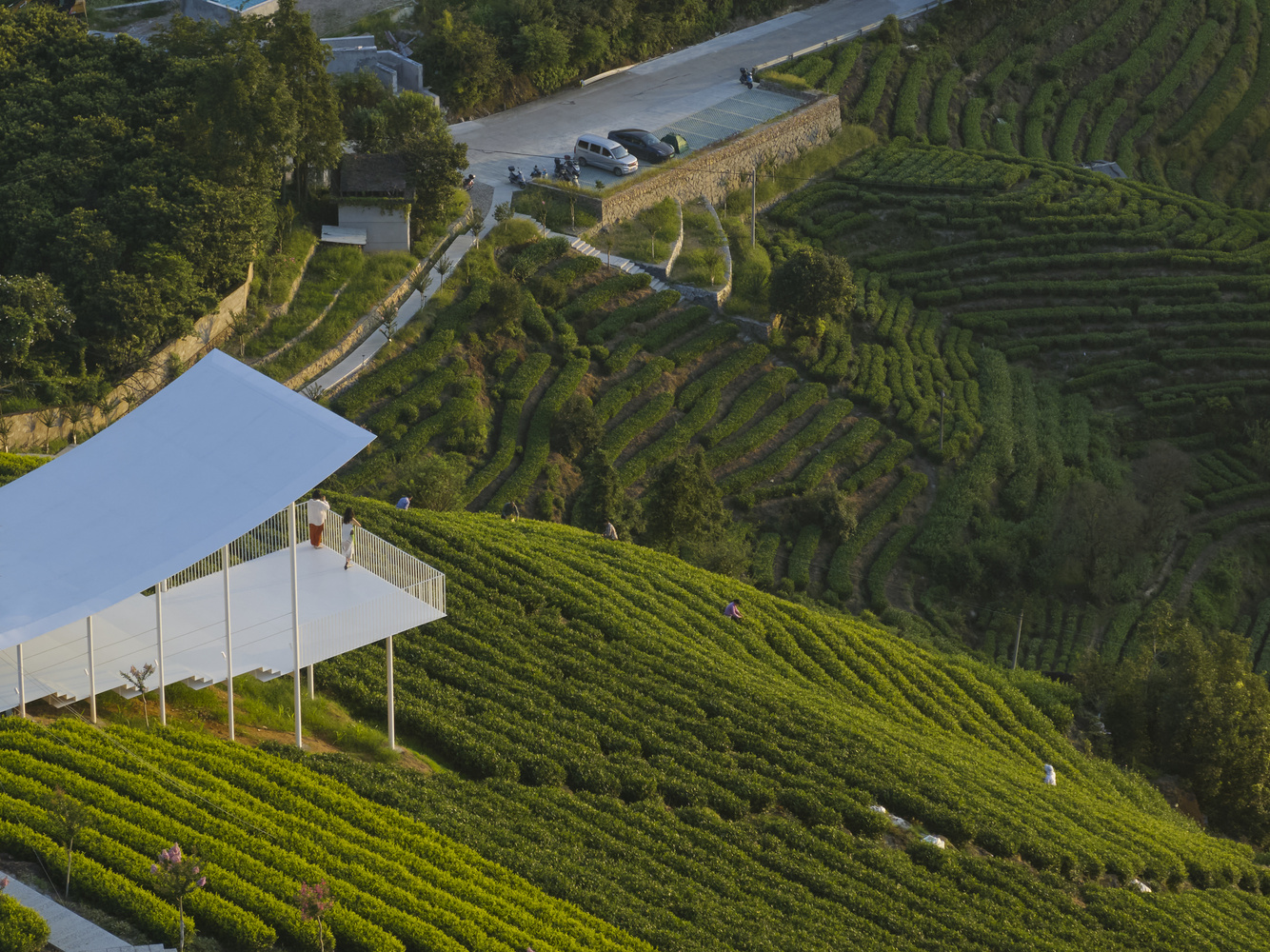
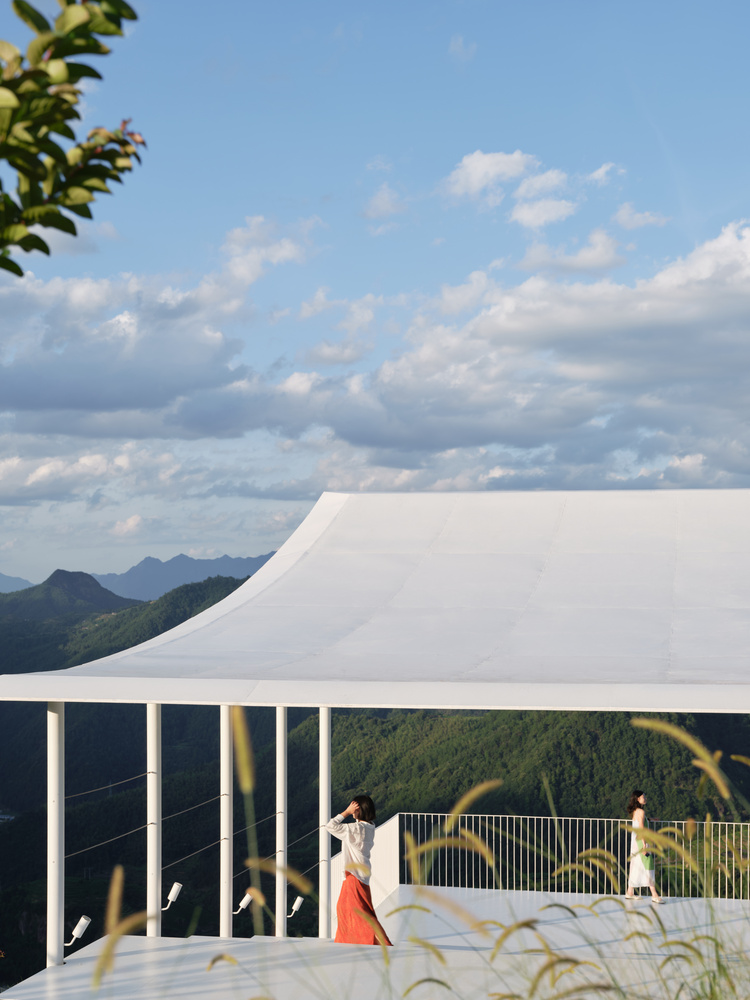
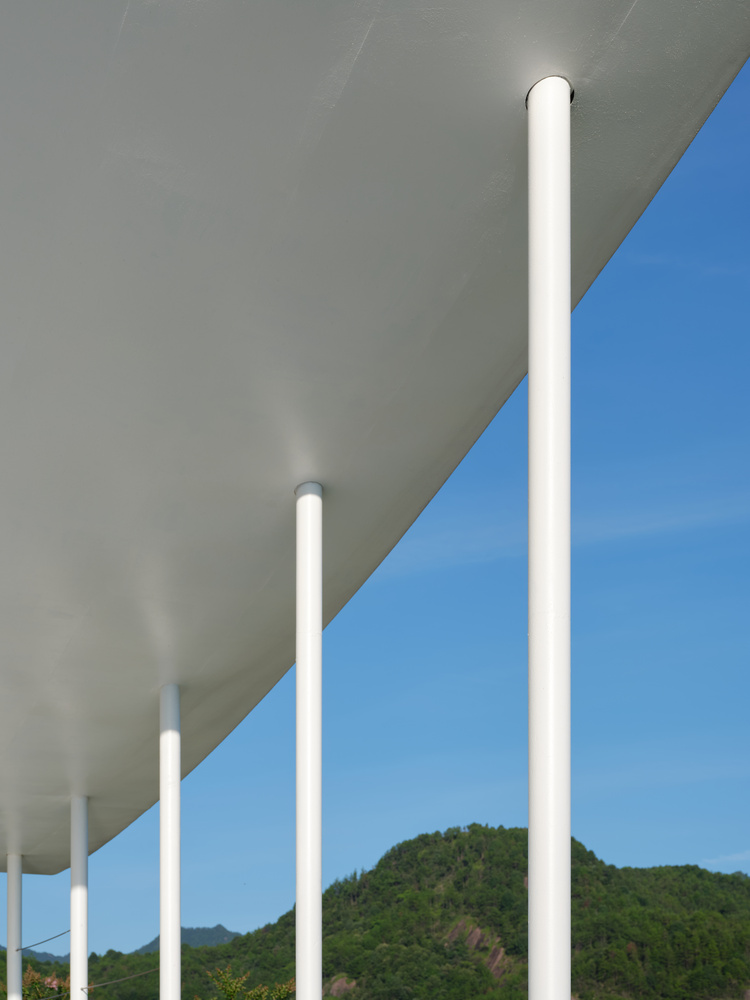
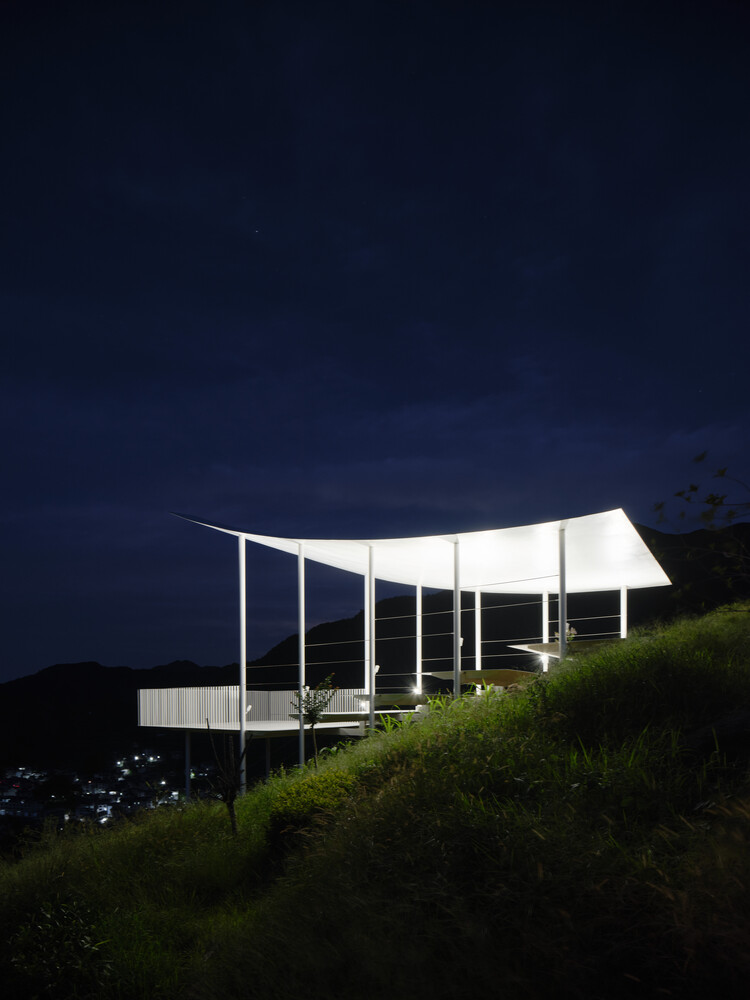
A slender white form hovers above the fields on minimal supports, as if a thin wing had just been lifted by the wind. "Floating" describes both a structural condition — a thin roof suspended above the ground — and a quality of time in this place, where mist drifts, light shifts, and one pauses briefly on the mountain, as in a fleeting moment of respite.
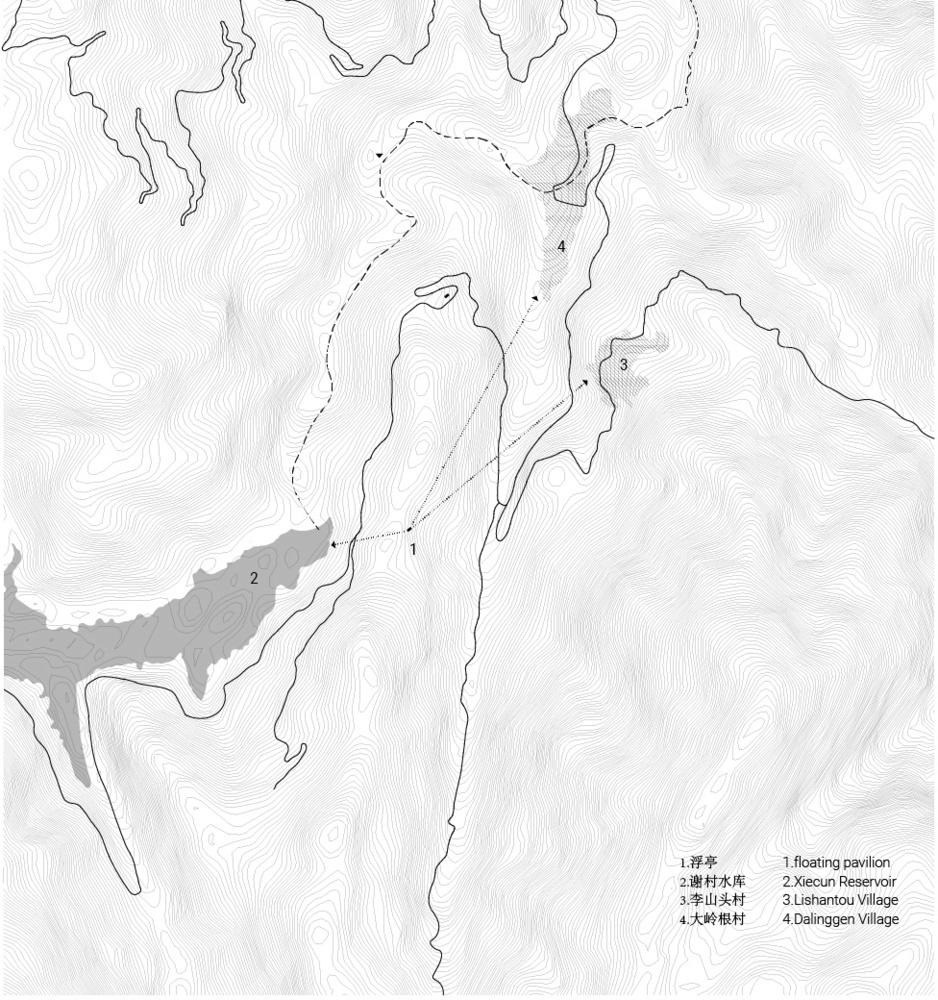
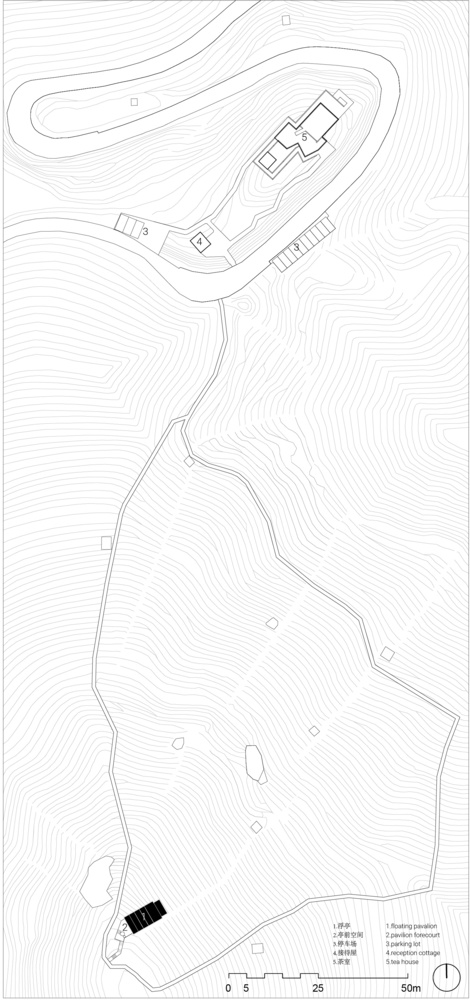
The site lies within the Organic Tea Valley of Xinxing Town, surrounded by rolling tea hills, originally accessible only by narrow field paths across steep terrain with no existing structures.
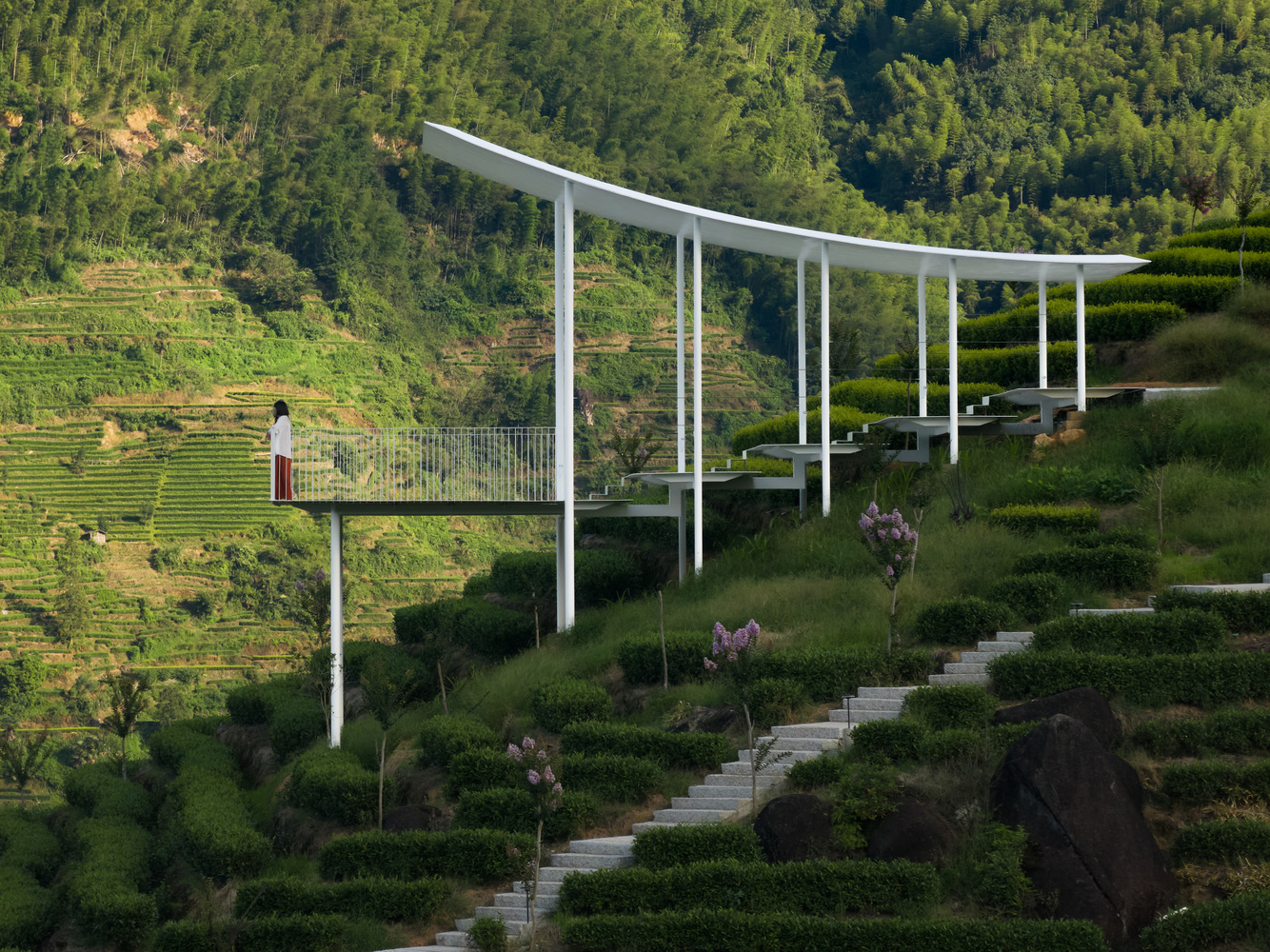
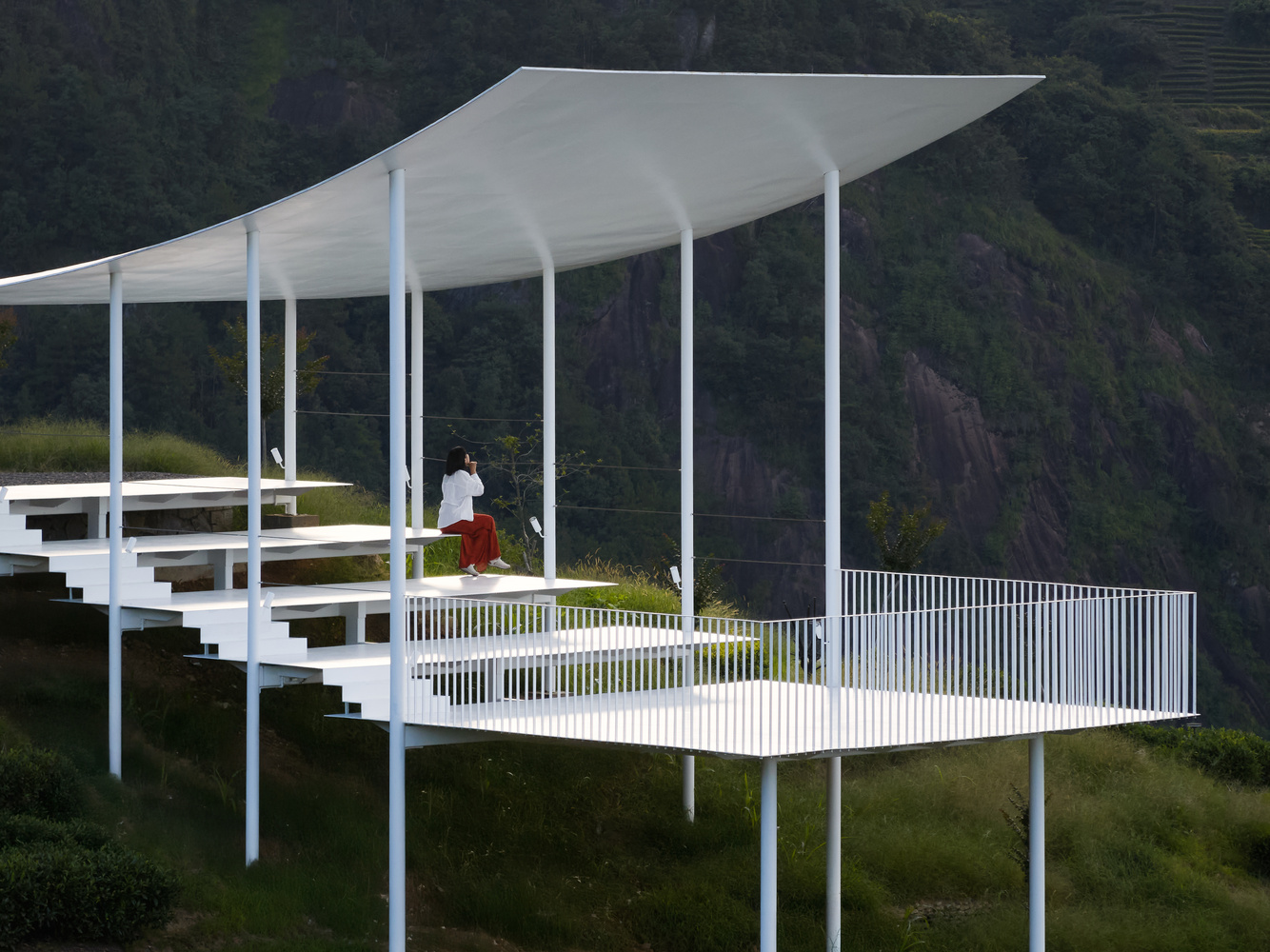
Guided by a principle of minimal intervention, the design employs a lightweight structure hovering above the tea fields, exploring the threshold between architectural presence and natural terrain through spatial sequencing and tectonic precision.
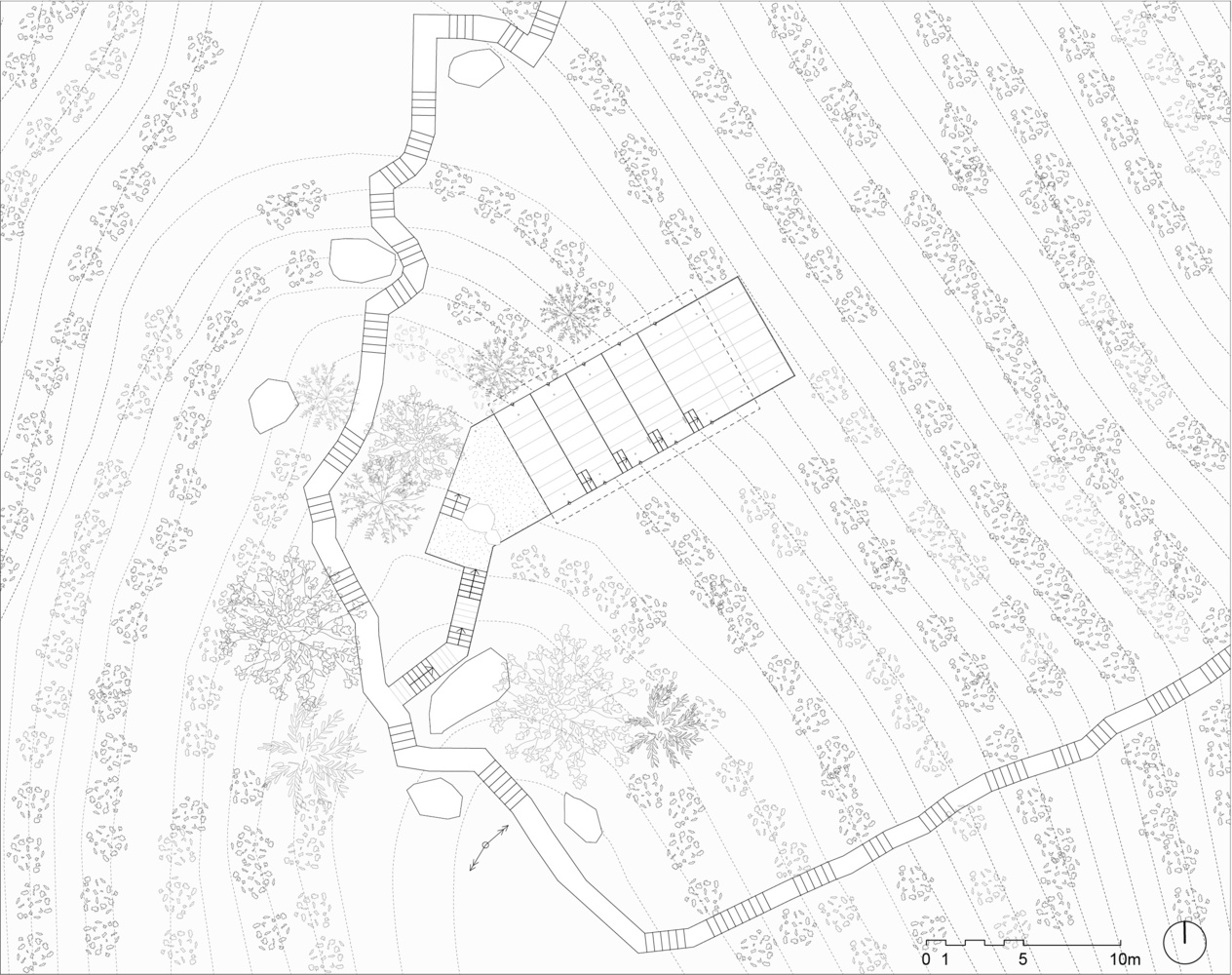
The ascending path follows and reinforces existing tea-picking routes — granite steps wind upward through the terraces with the pavilion intermittently appearing from view, allowing the intervention to emerge as an organic continuation of the cultivated landscape.
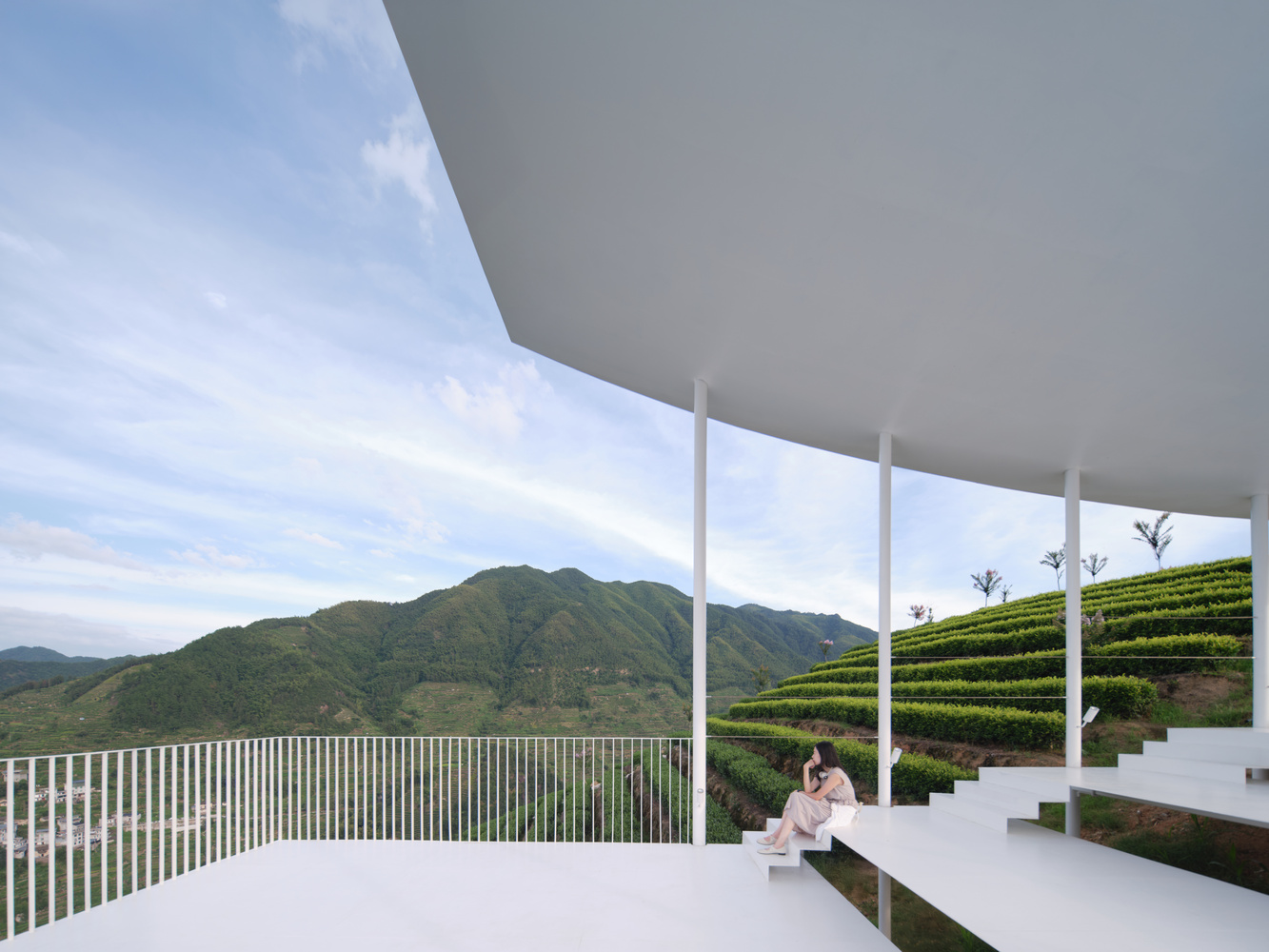
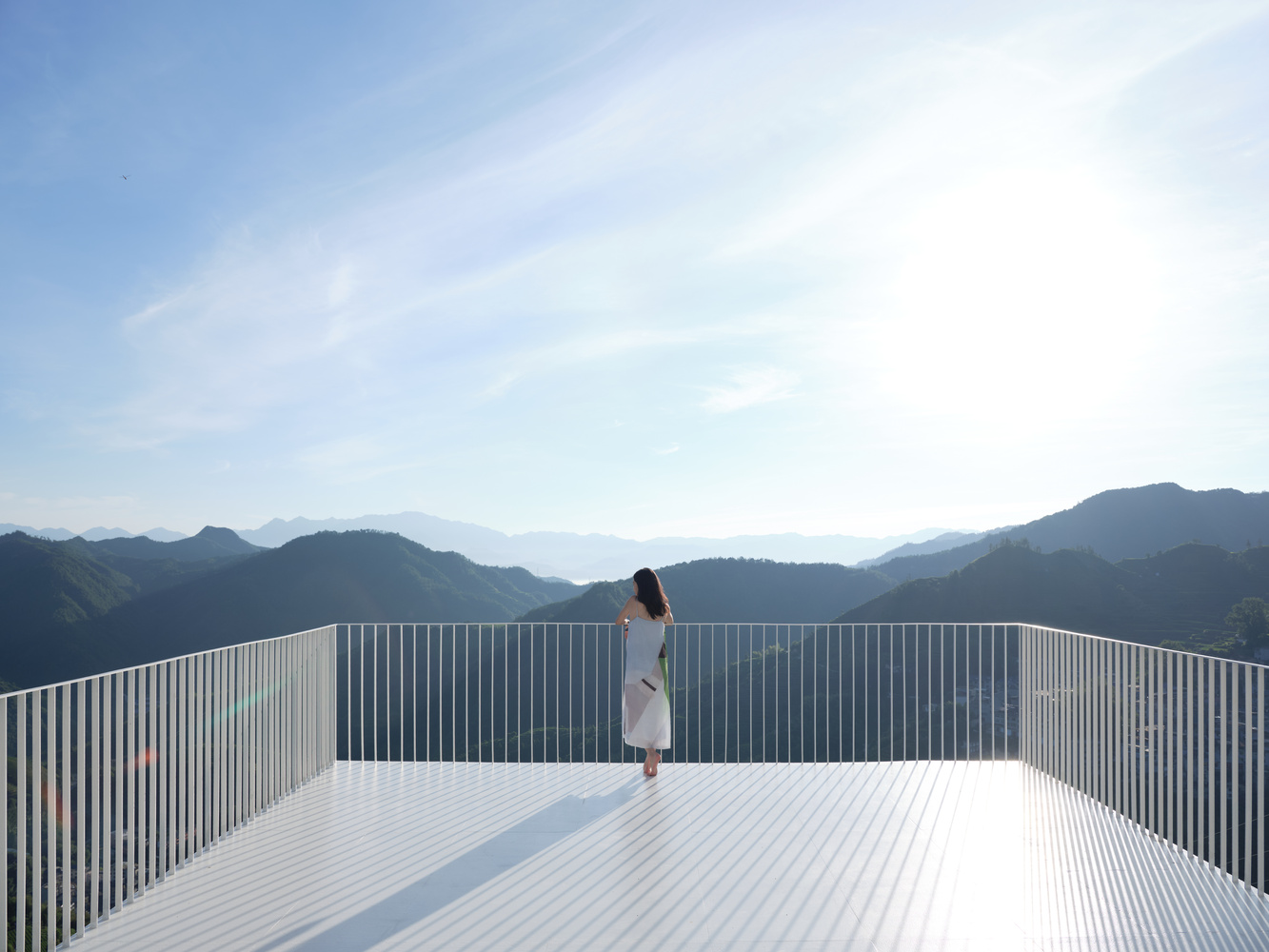
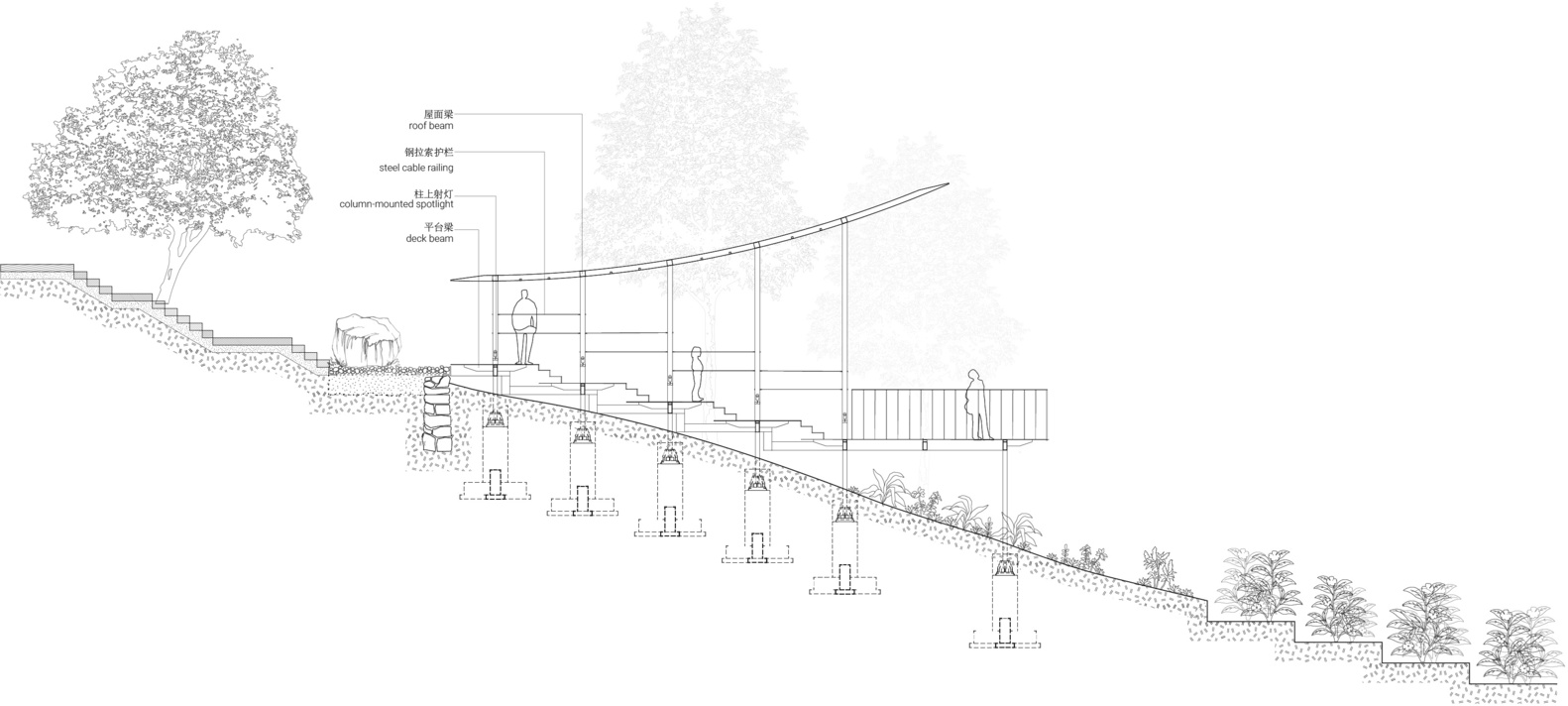
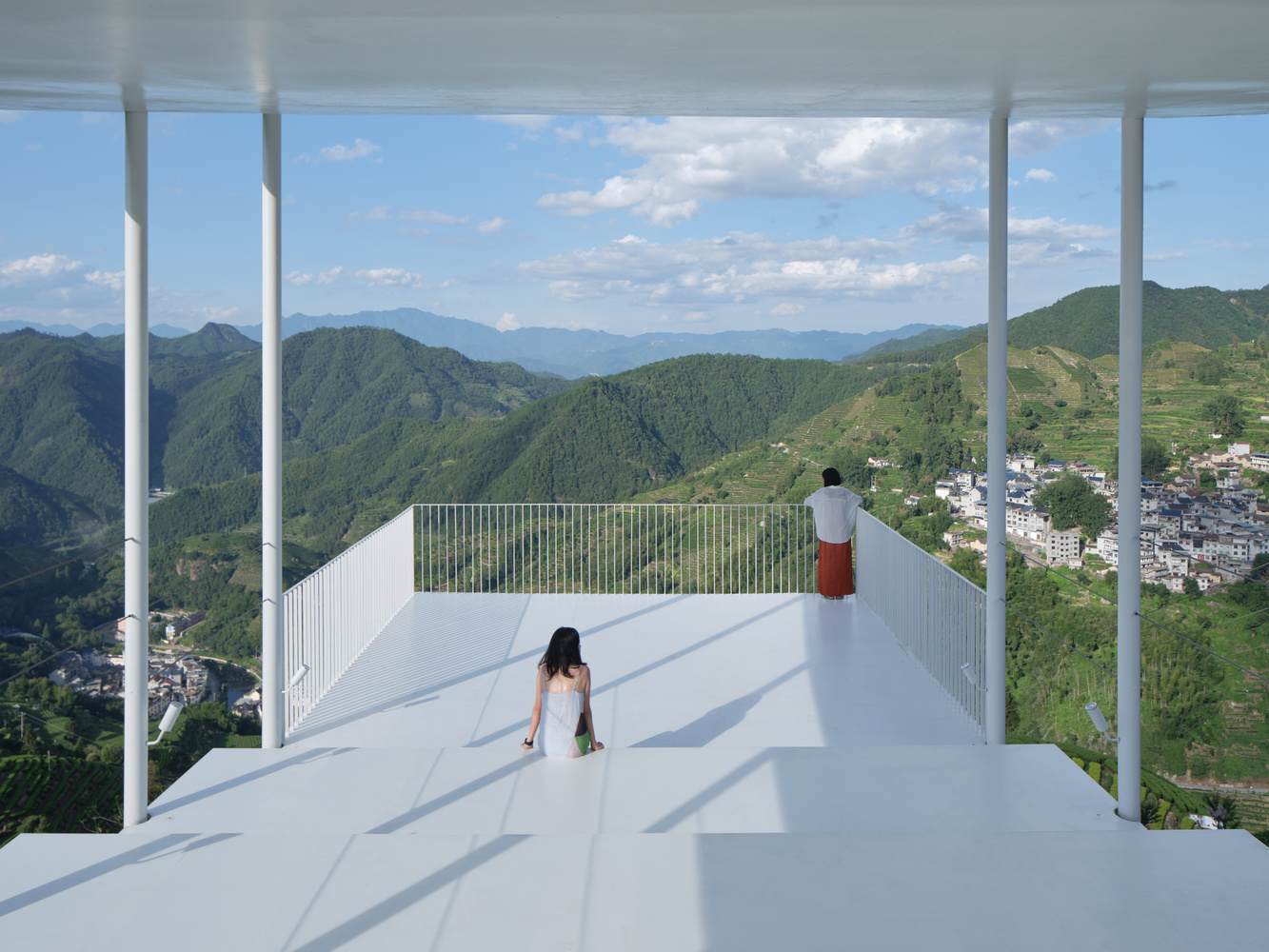
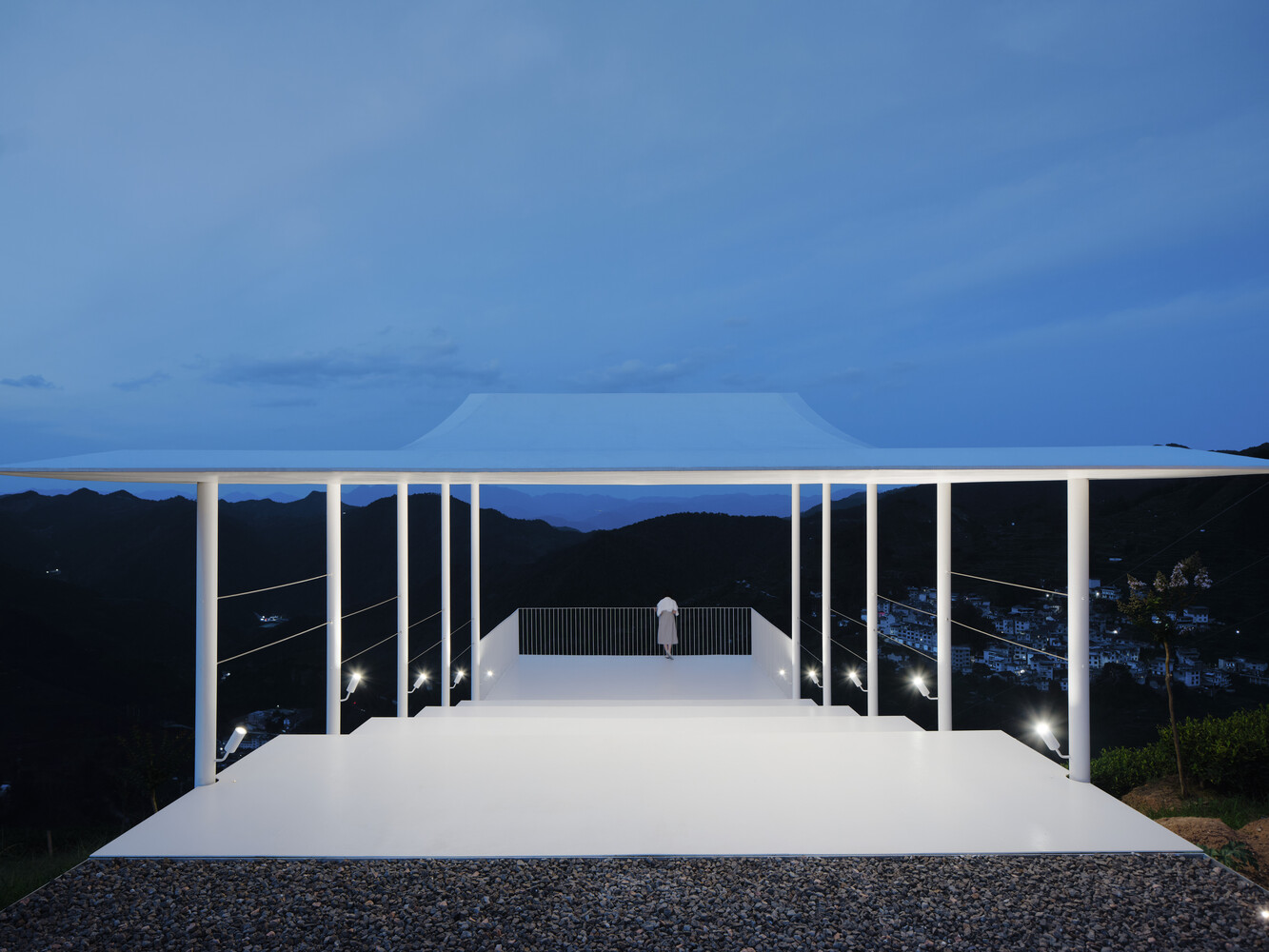
Inside, the viewing experience shifts from compression to release. At the entrance, only a distant scene framed by the roof edge is visible; descending along stepped platforms, daylight and surrounding mountains gradually unfold; at the lowest level, the roof lifts to reveal a full panorama of the tea valley.
This spatial rhythm arises not from formal complexity but from the precise calibration of roof curvature against topographic drop. The stepped platforms respond to the terraced terrain, offering varied scales for pause, rest, and contemplation.
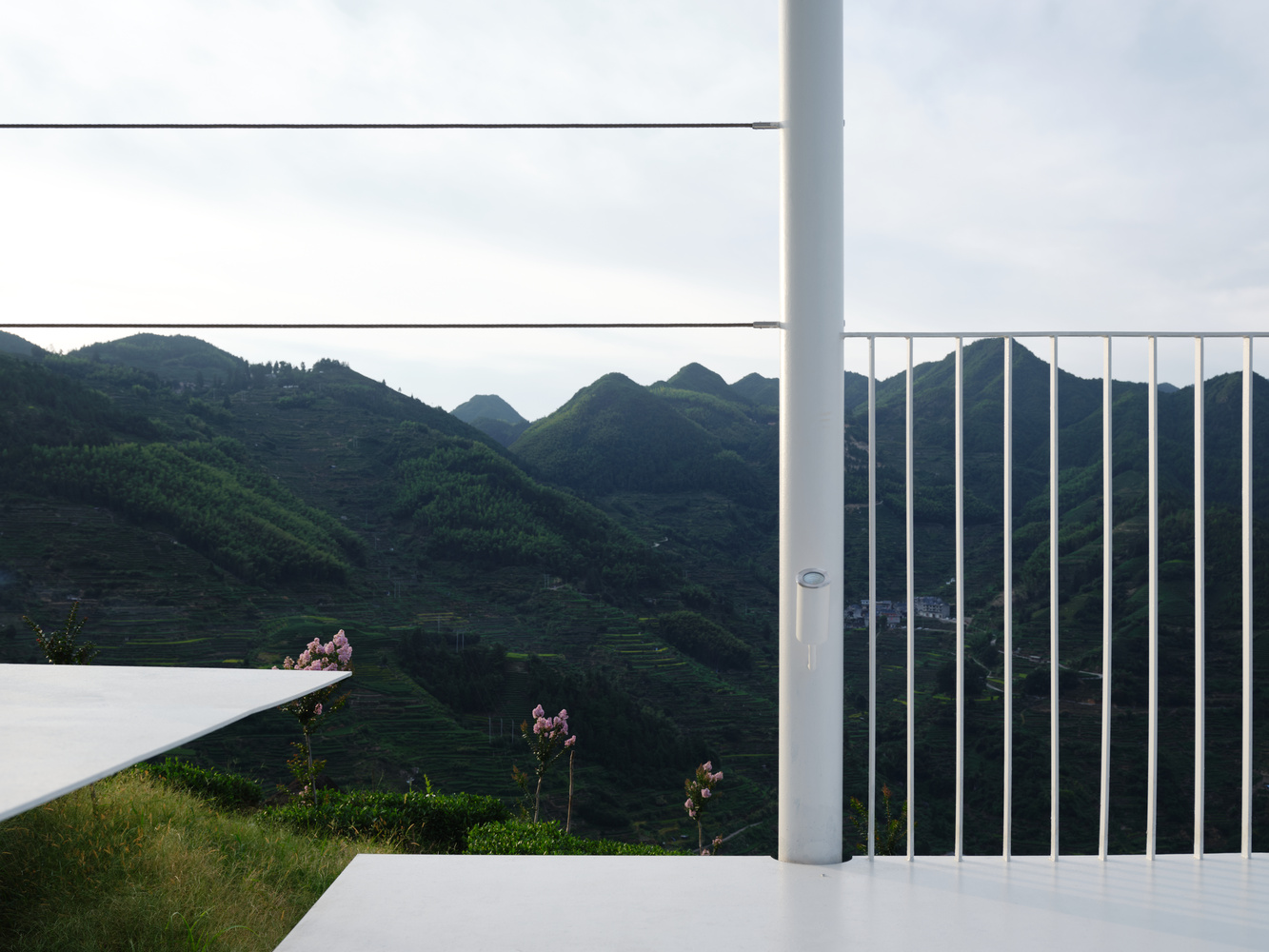
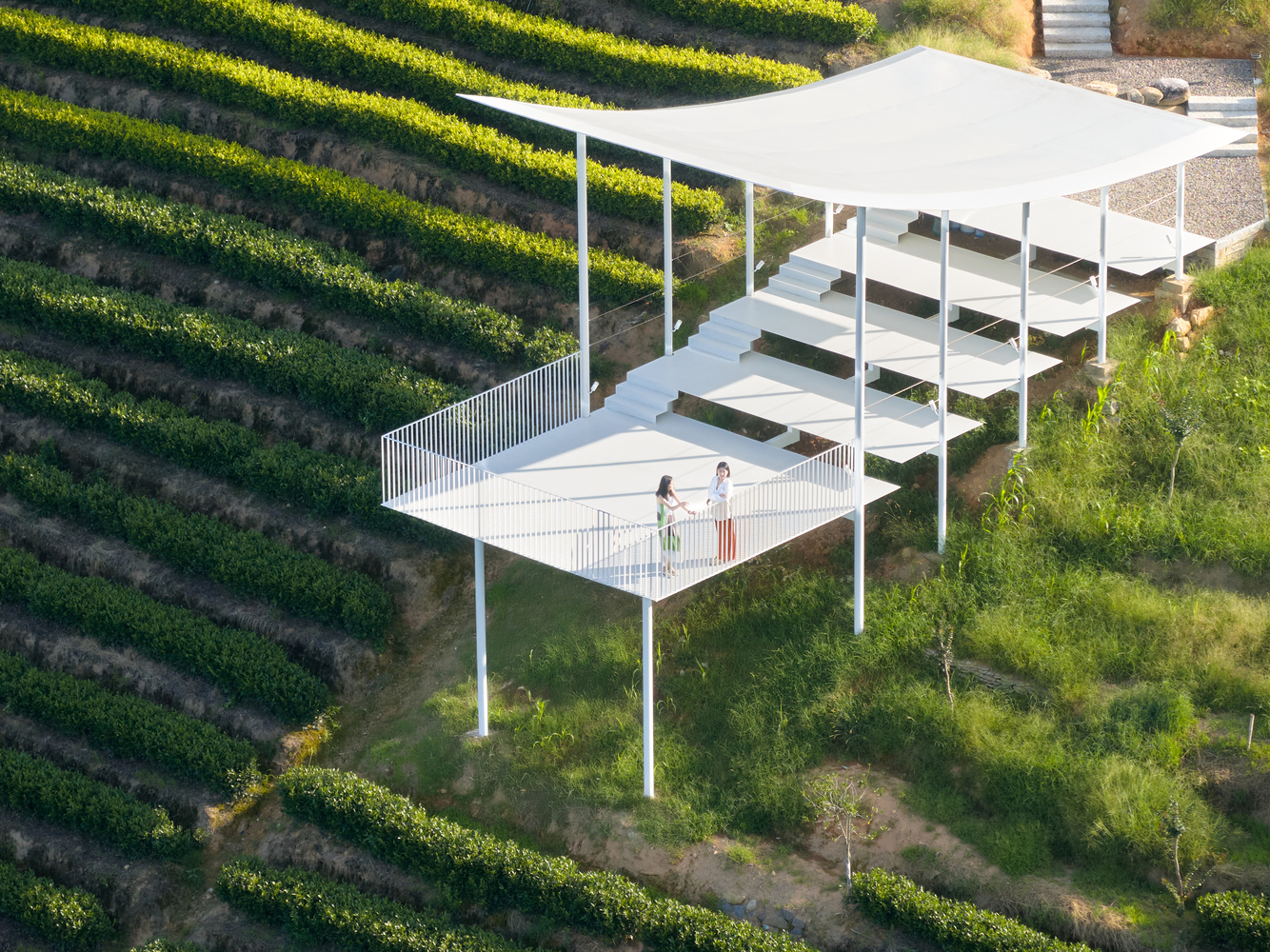
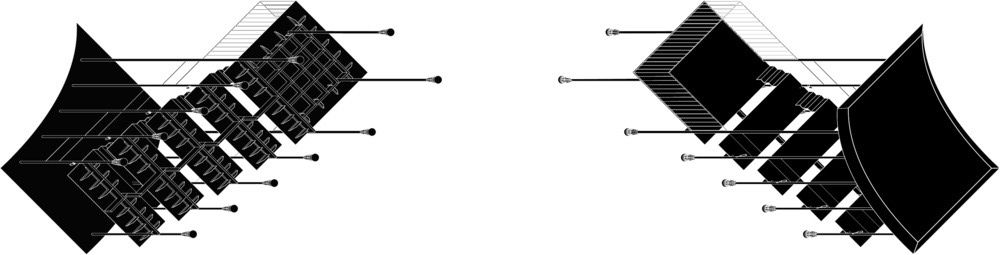
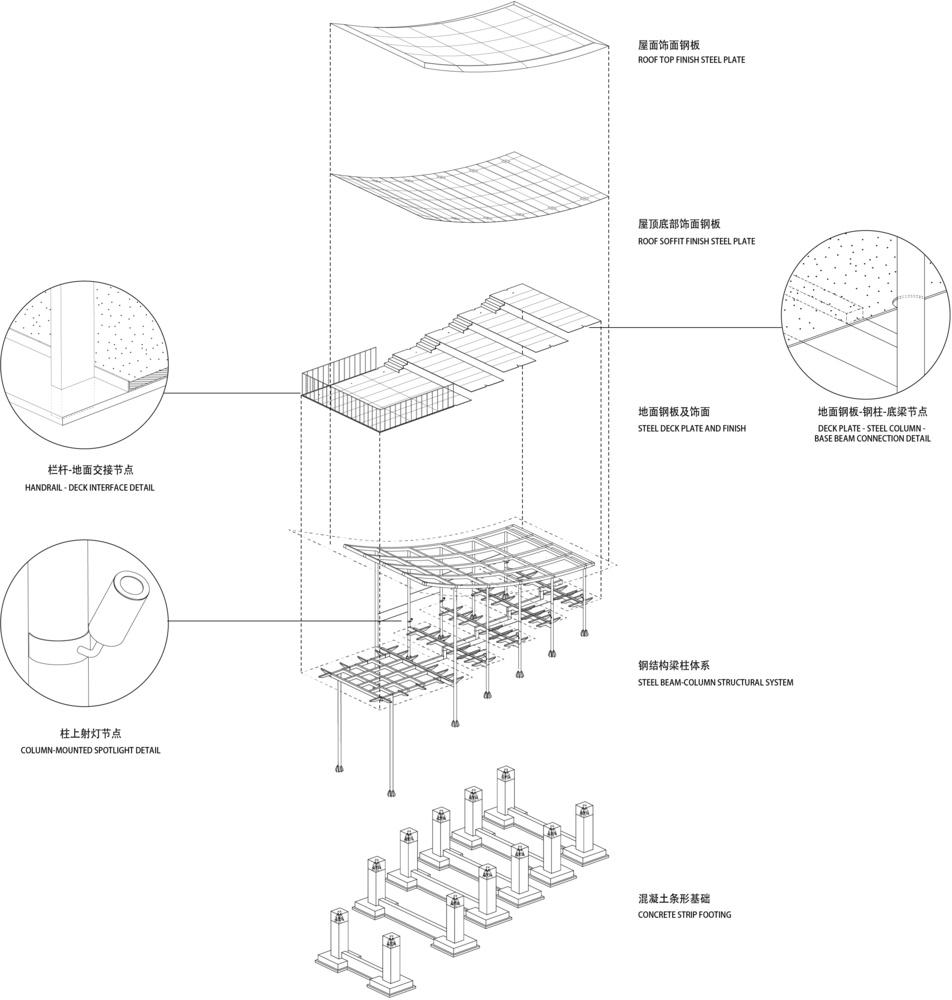
The roof employs a thin composite sandwich construction — a steel grid embedded between upper and lower steel plates — with tapering edges that integrate structural logic, drainage, and visual control into a blade-like profile.
Platforms cantilever from a single transverse beam via wedge-shaped stiffeners, with semicircular gaps between platform edges and columns allowing light to infiltrate from below. Slender steel tension cables between columns provide safety while preserving the pavilion's transparency.
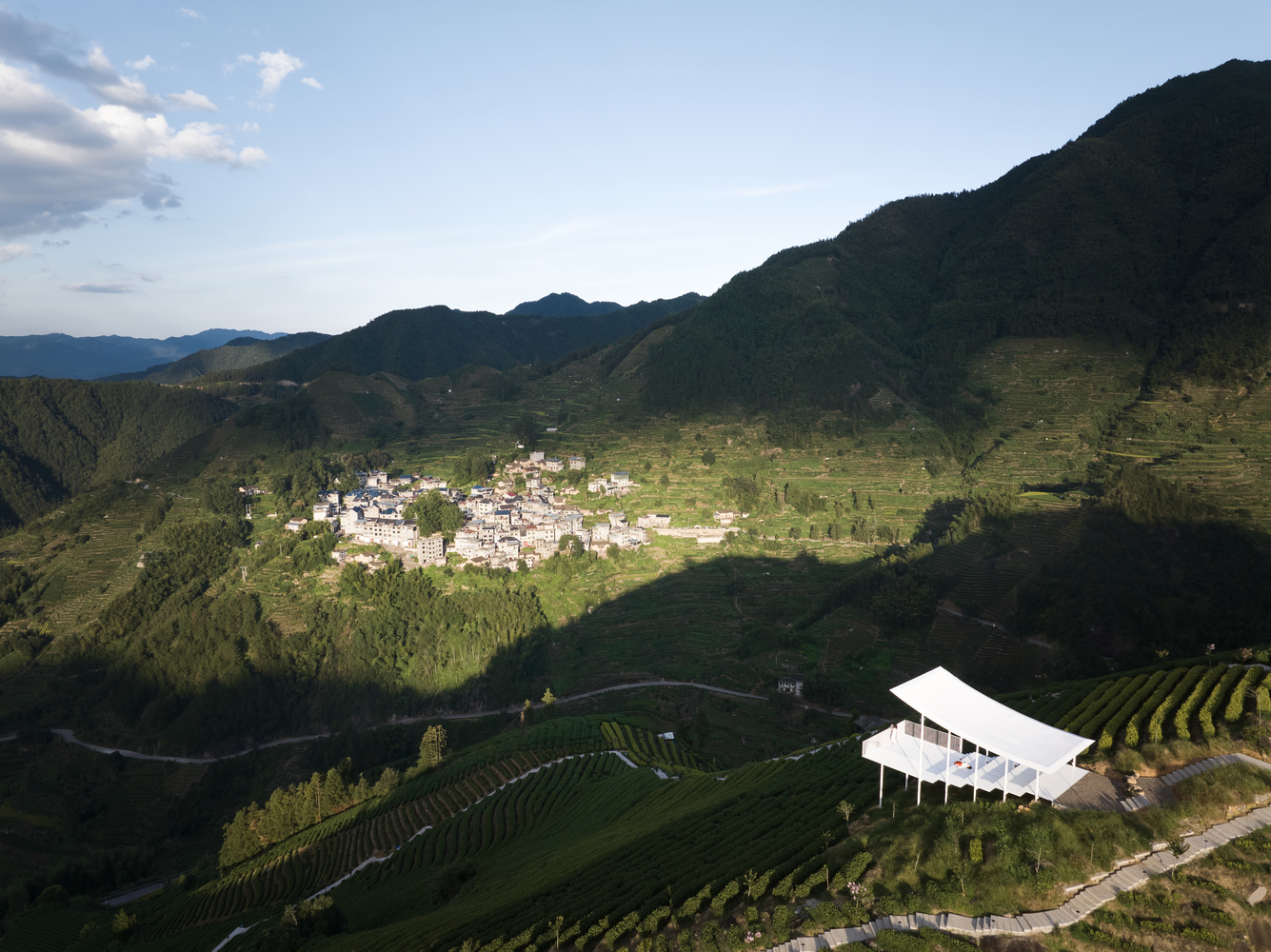
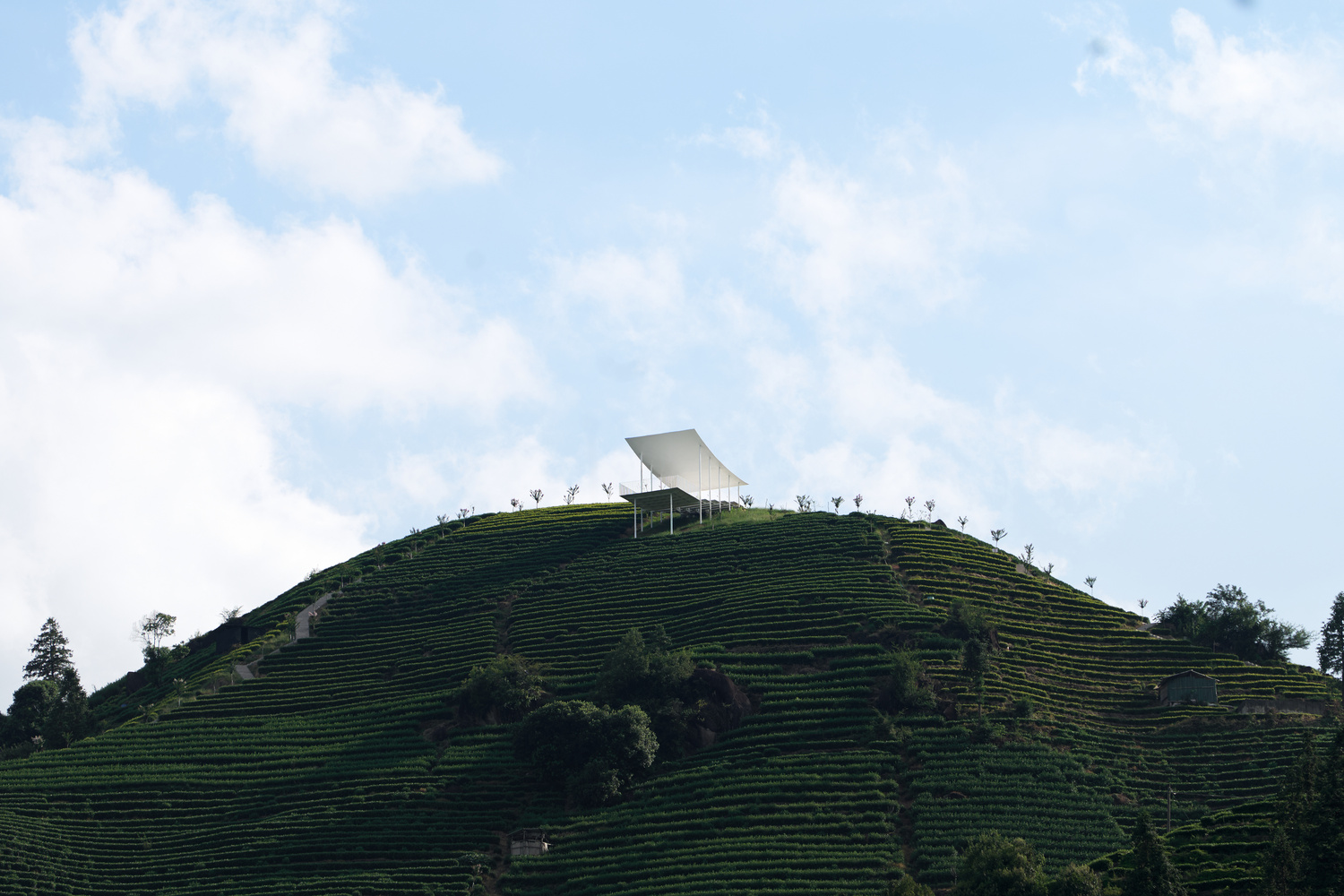
With steep terrain precluding the use of heavy machinery, steel components were prefabricated off-site and transported to the summit using wheeled carts and cable systems.
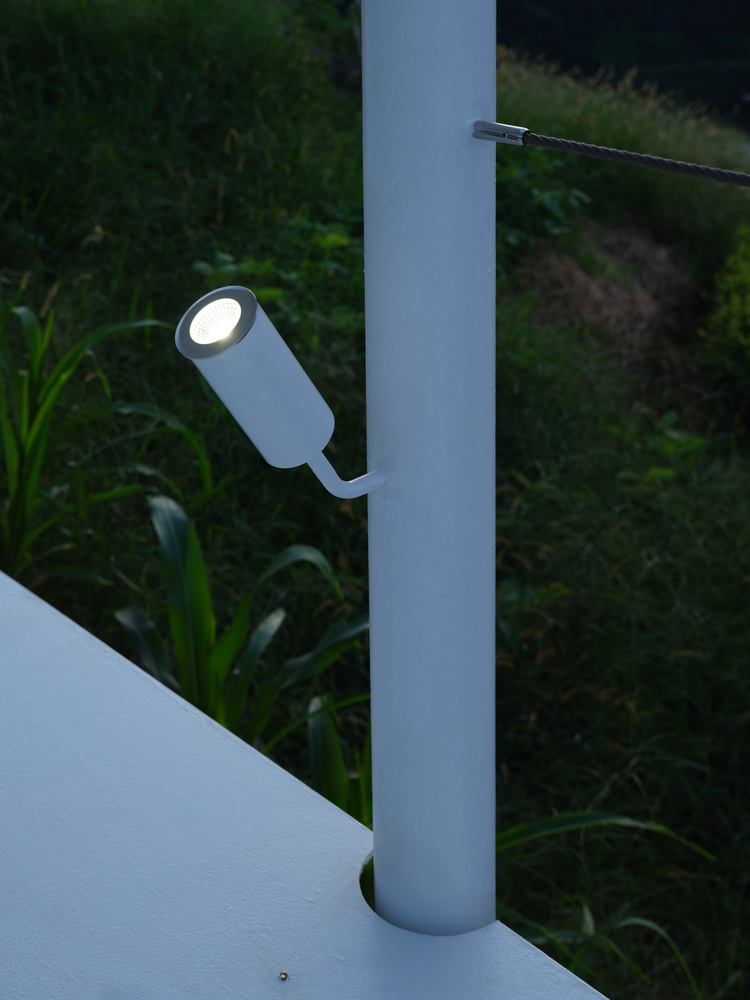
Custom cylindrical luminaires at column bases project light upward along the curved roof, producing a gentle glow that evokes mist drifting above the tea mountain at night.
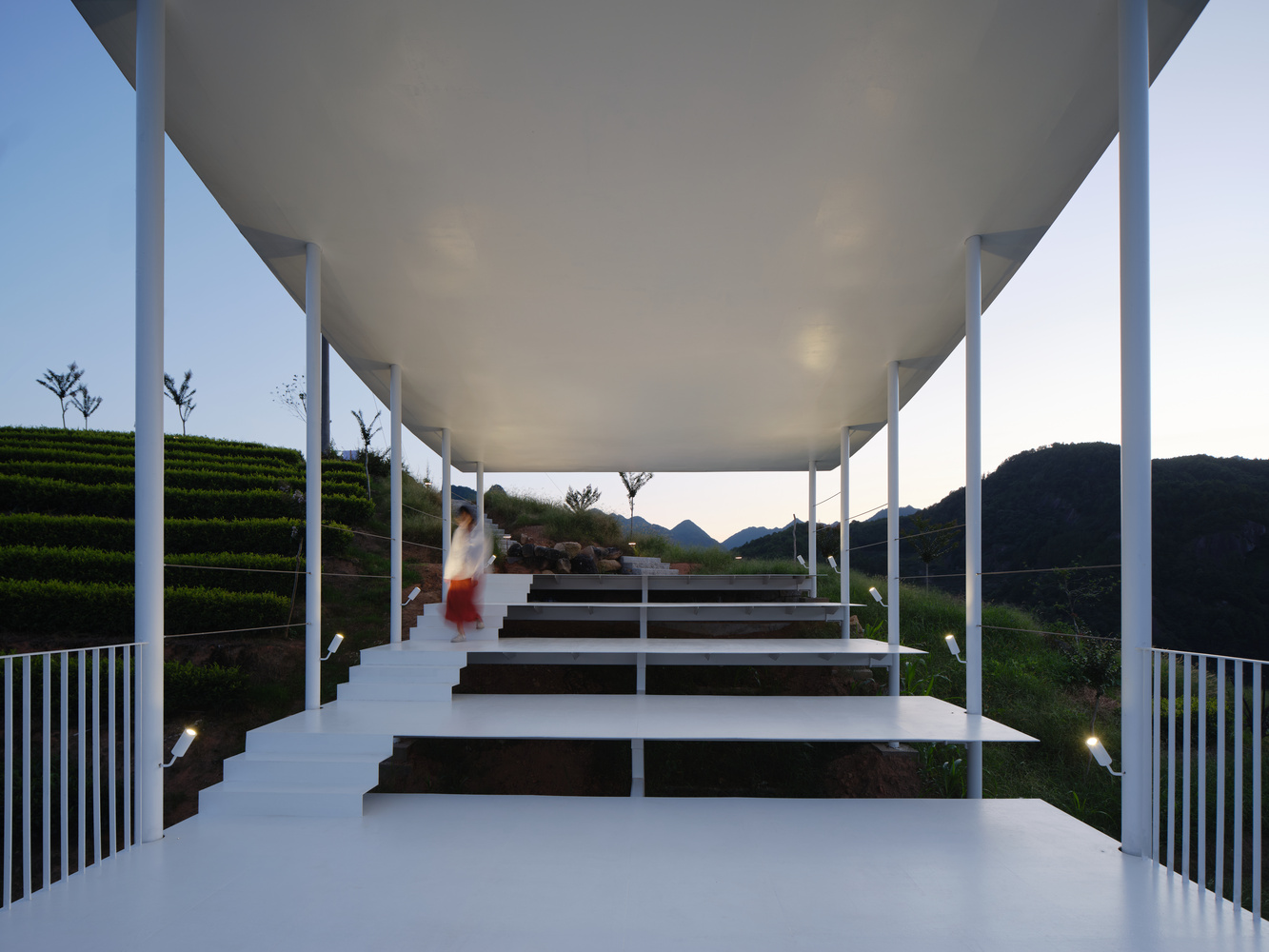
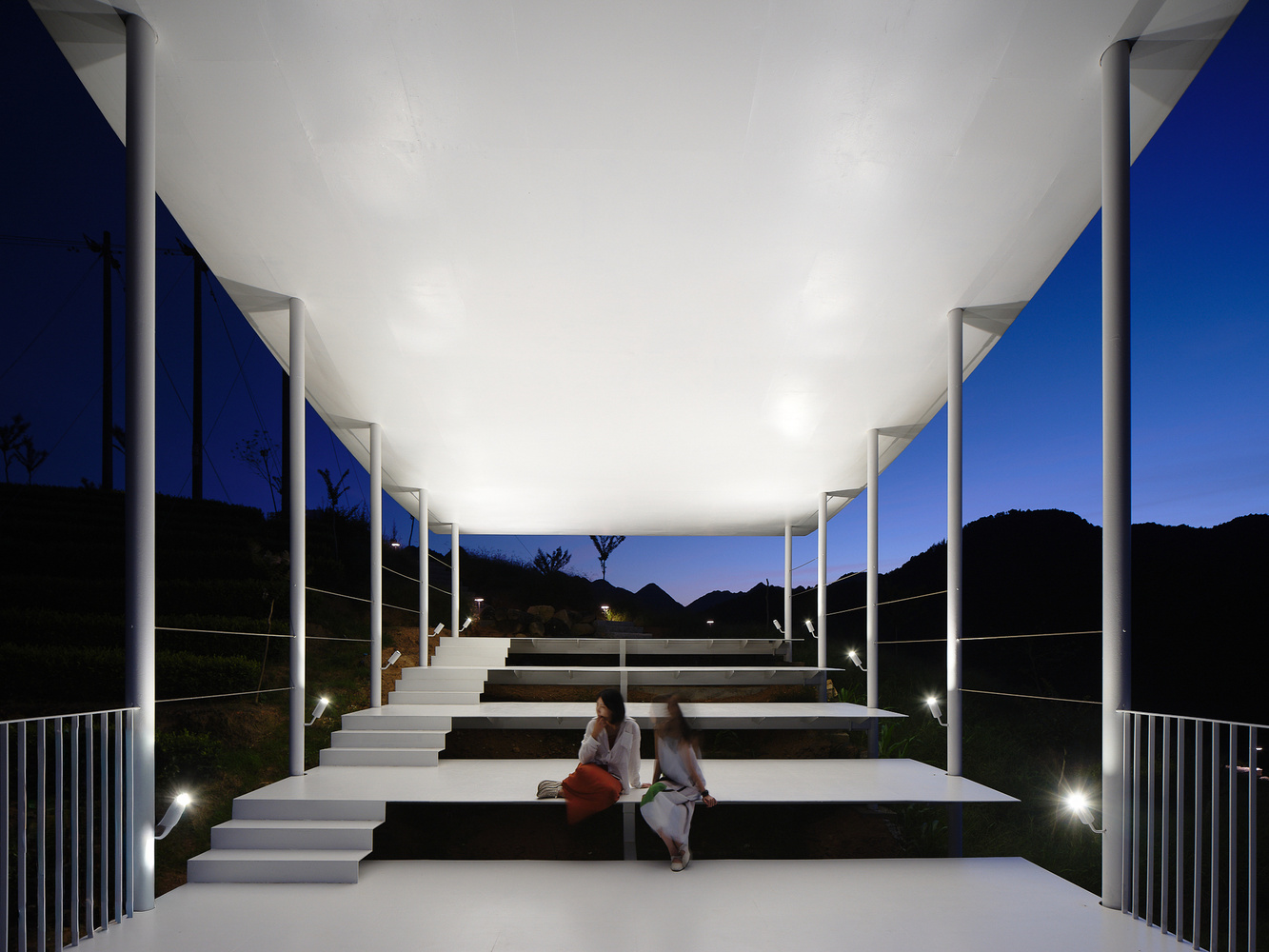
The matte metal skin registers seasonal shifts in ambient color — verdant in spring and summer, cloud-like when diffused through autumn and winter fog.
Since completion, the pavilion and its path have been absorbed into the everyday rhythms of villagers and visitors — a node for walking, pausing, and witnessing sunrise and sunset, while providing improved access for tea farmers during harvest.
The project's ambition extends beyond a scenic landmark: through a light and restrained intervention, it guides perception of the natural landscape while gradually becoming part of that landscape through use.