
Avenue & Son Skatepark
AVENUE & SON SKATEPARK
Various Associates
ARCHITECTS
Various Associates
LEAD ARCHITECT
Lin Qianyi, Yang Dongzi
DESIGN TEAM
Hou Jinwang, Huang Yongliang, Zhang Junbiao, Li Min, Fang Ying
PHOTOGRAPHS
SFAP
AREA
612 m²
YEAR
2025
LOCATION
Qinhuangdao, China
CATEGORY
Landscape Architecture
English description provided by the architects.
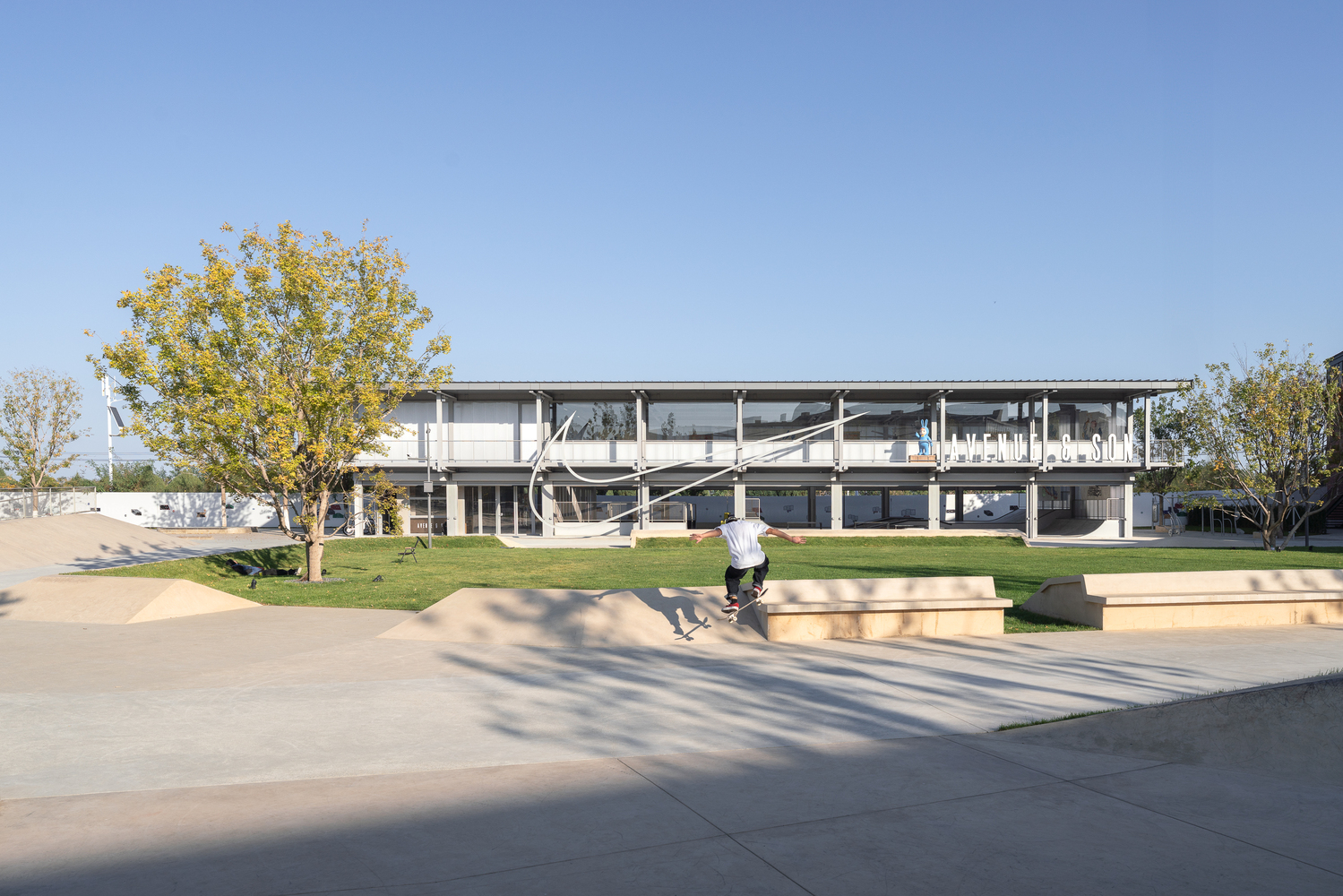
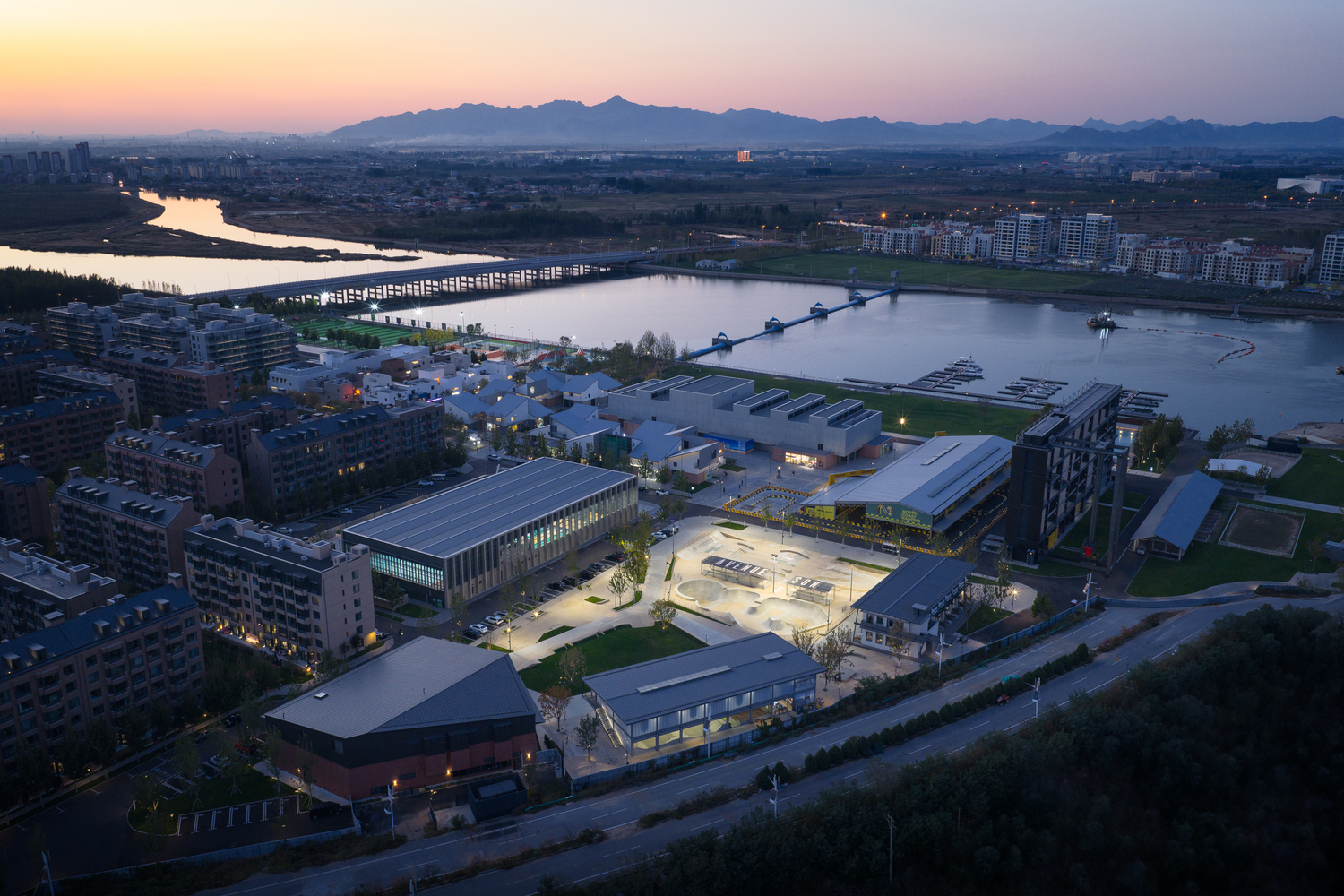
The AVENUE & SON SKATEPARK NORTH COAST is located in Riverain, the ninth-phase development of Aranya, spanning 15,000 square meters beside the UNDEFEATED SPORTS CENTER.
Taking root in a pioneering seaside neighborhood defined by art, culture, and creativity, it has become a popular destination for both residents and visitors.
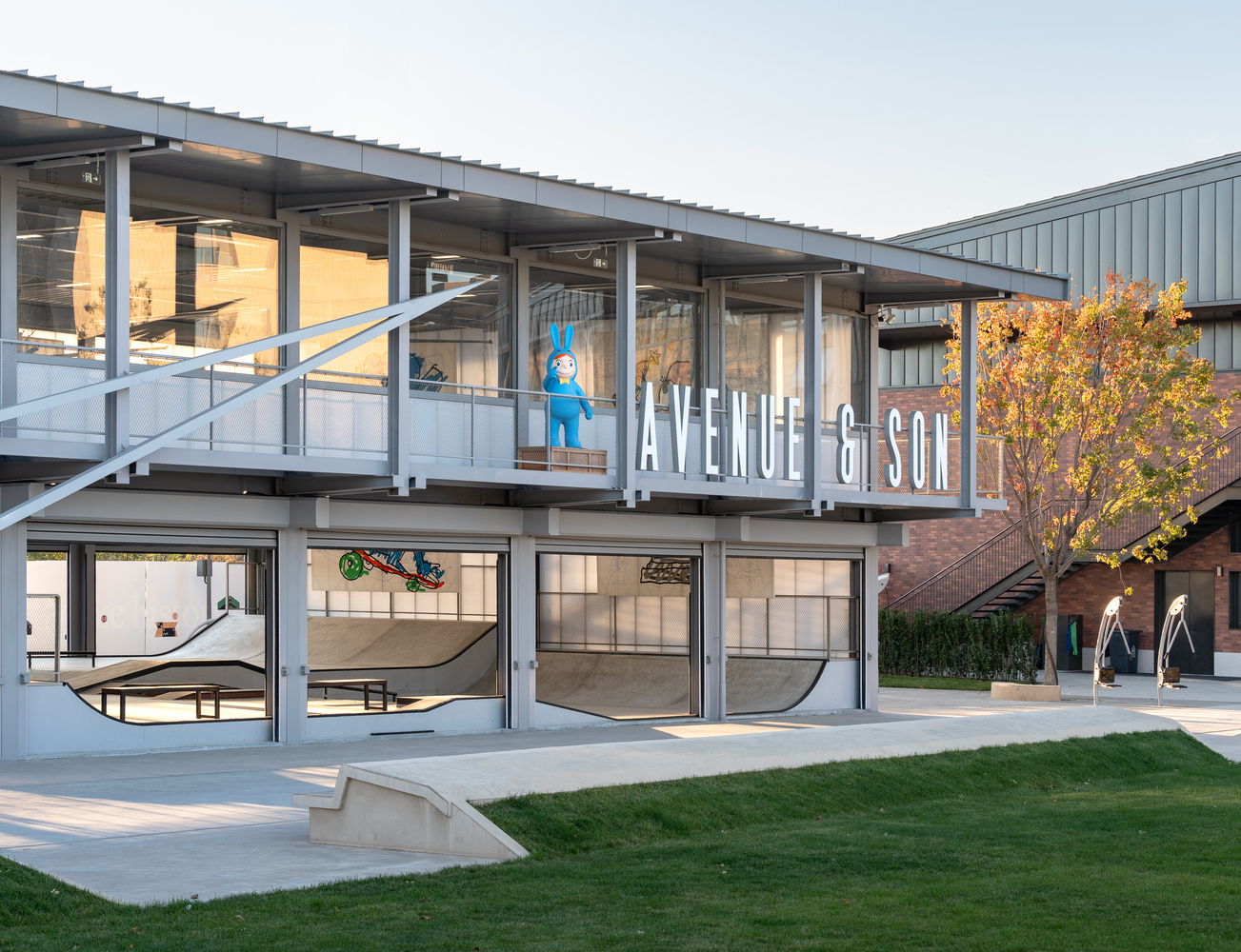
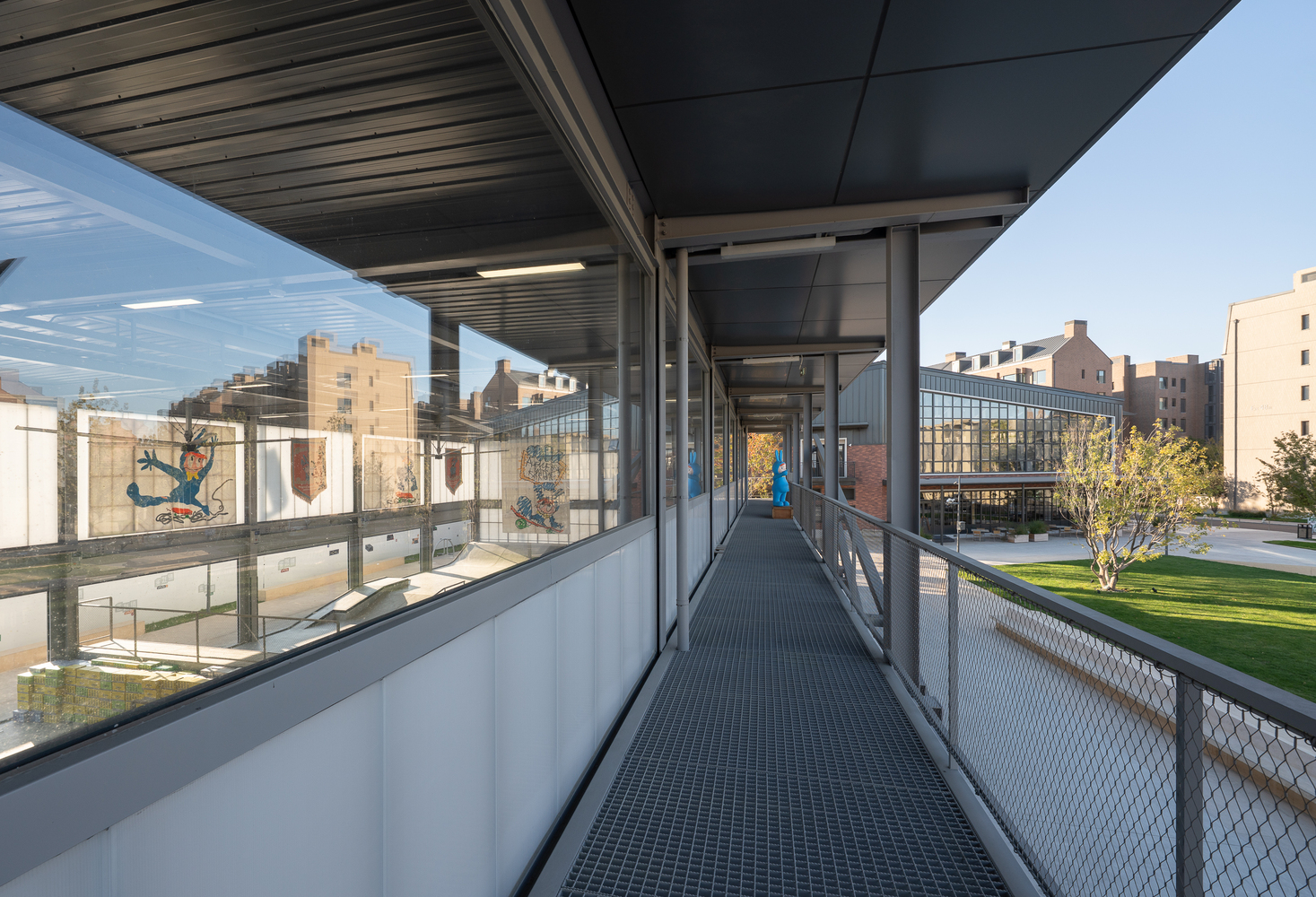
The skatepark stands at the heart of Riverain's vision, weaving sports culture and commercial vitality into public environments to foster a thriving, symbiotic community.
The project redefines the boundary between professional sports facilities and public community spaces, serving as a world-class competition venue as well as a neighborhood park woven into everyday life.
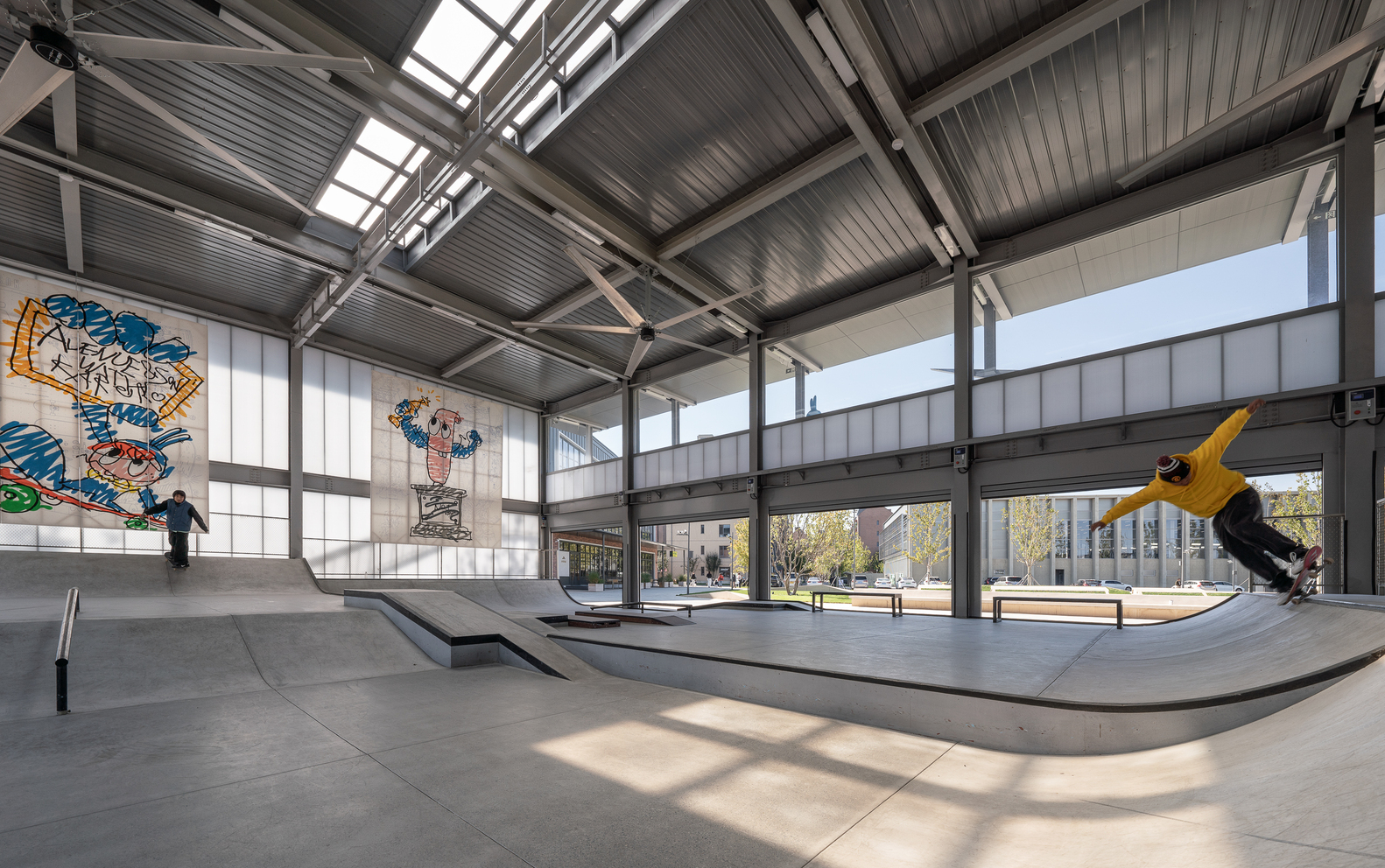
Rooted in the concept of "vitality, imagination, belonging, and community," the design weaves street culture into the landscape, creating an atmosphere that inspires skaters and captivates visitors alike.
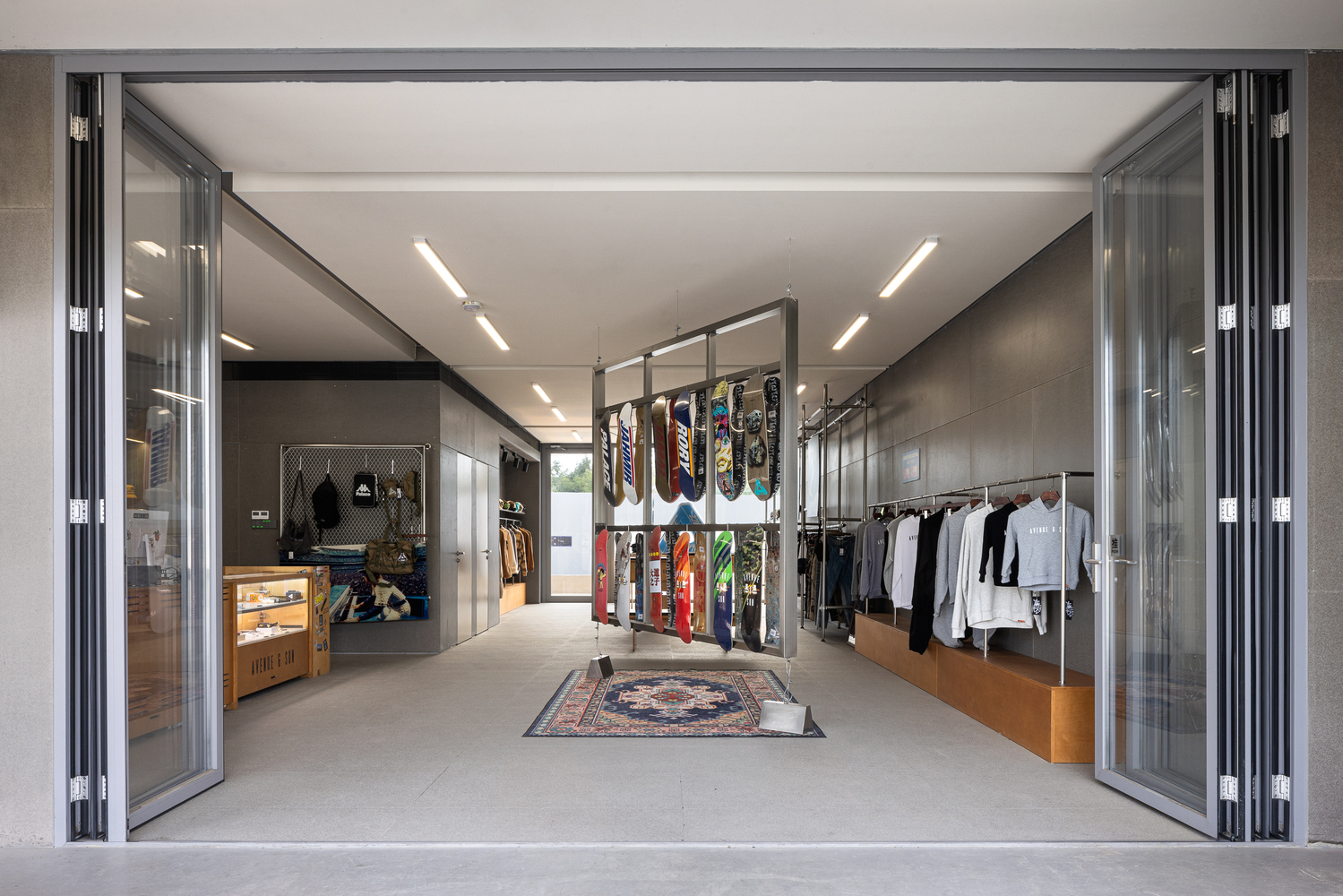
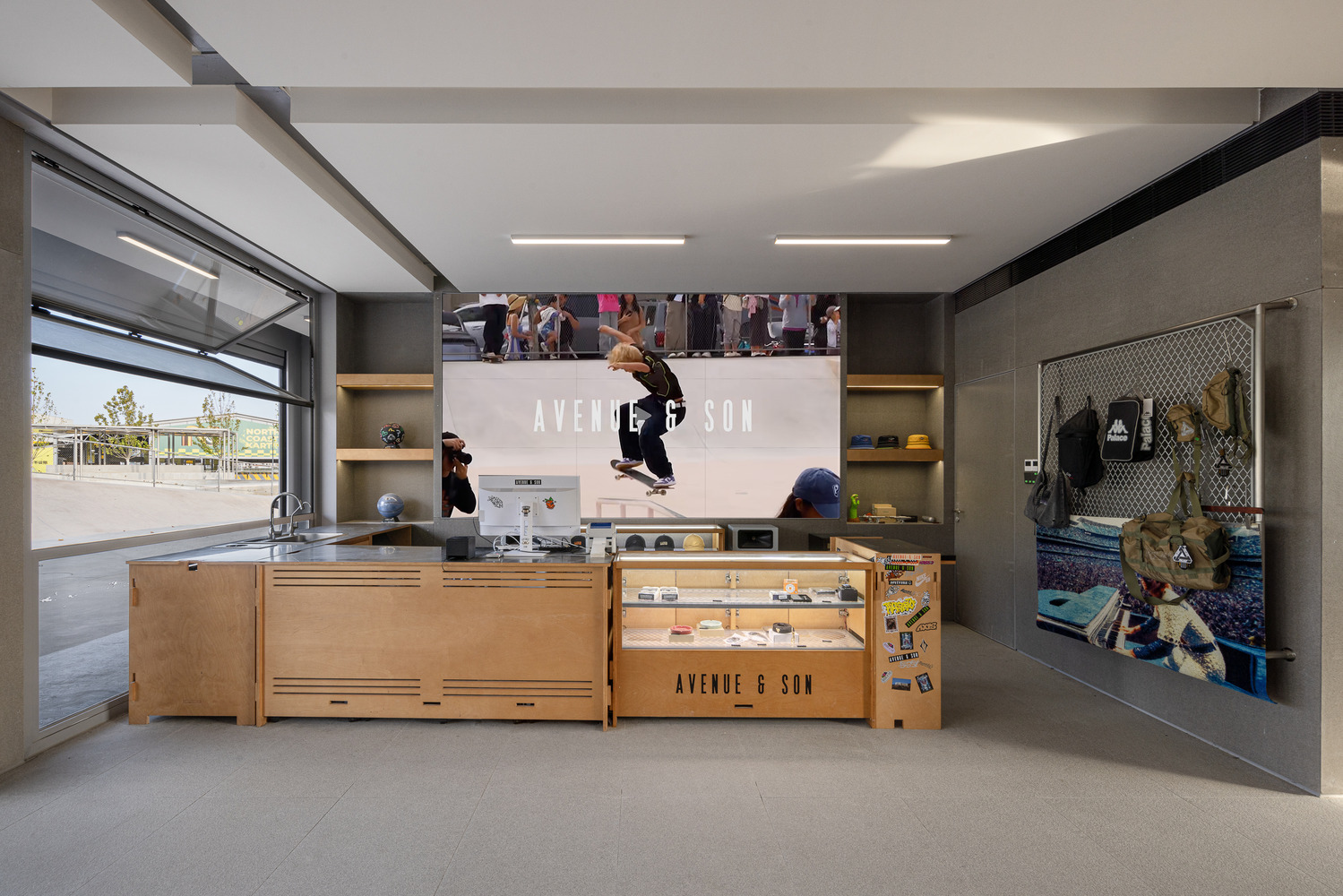
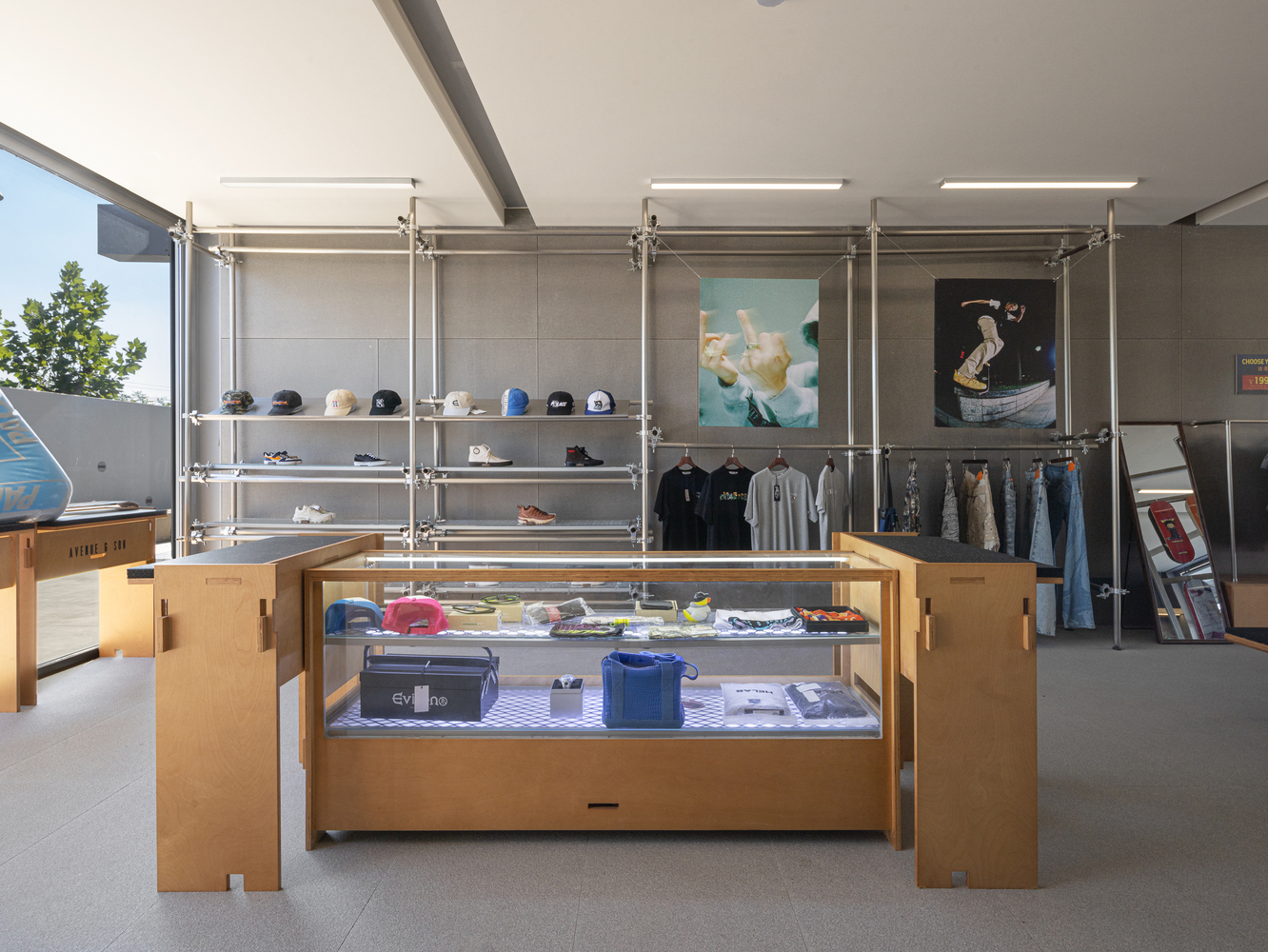
Beyond professional skateboarding facilities, it incorporates inclusive leisure areas, green spaces, indoor skate areas, a dance studio, dining, retail, and a neighborhood park, cultivating a vibrant, symbiotic community.
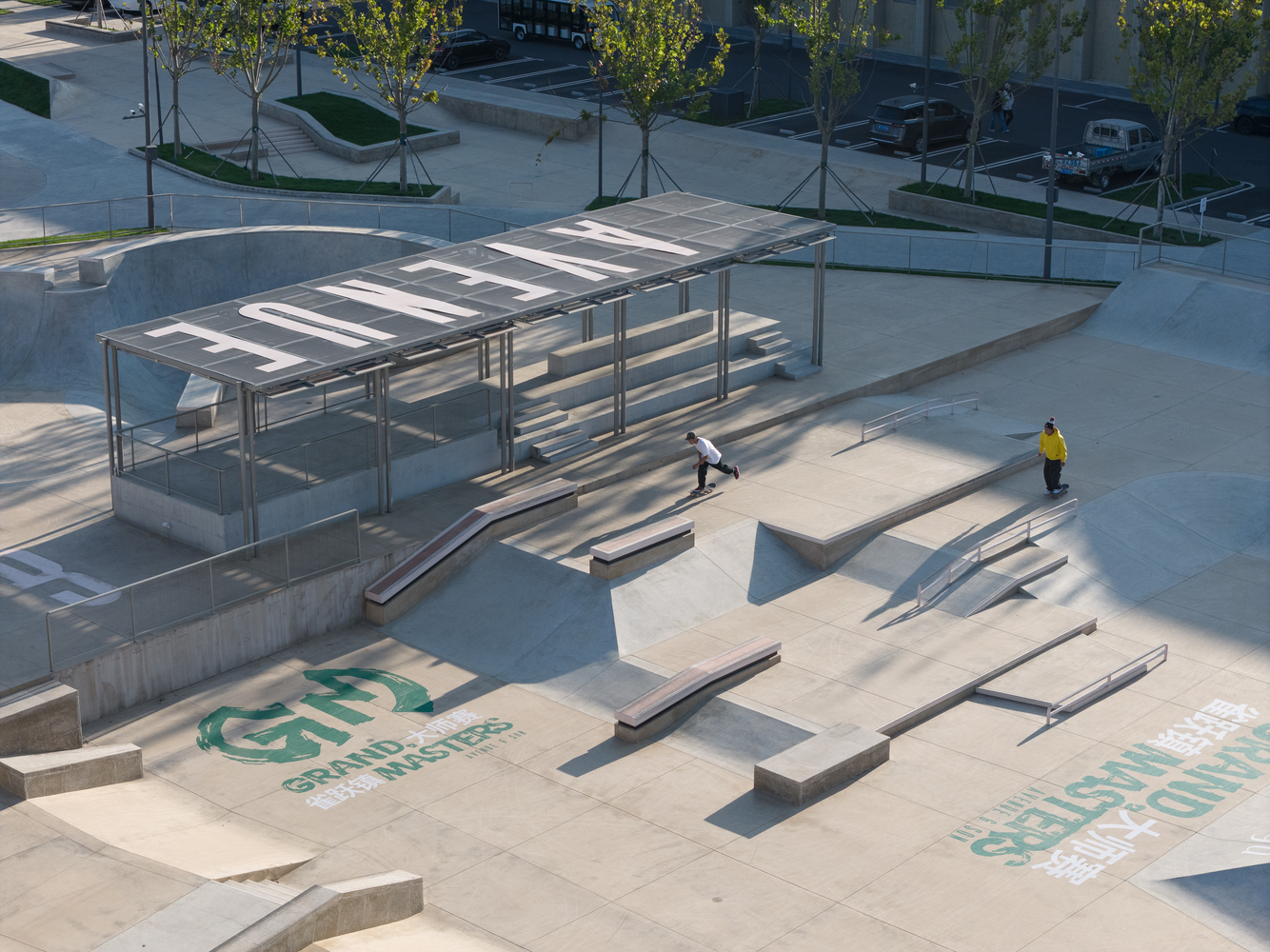
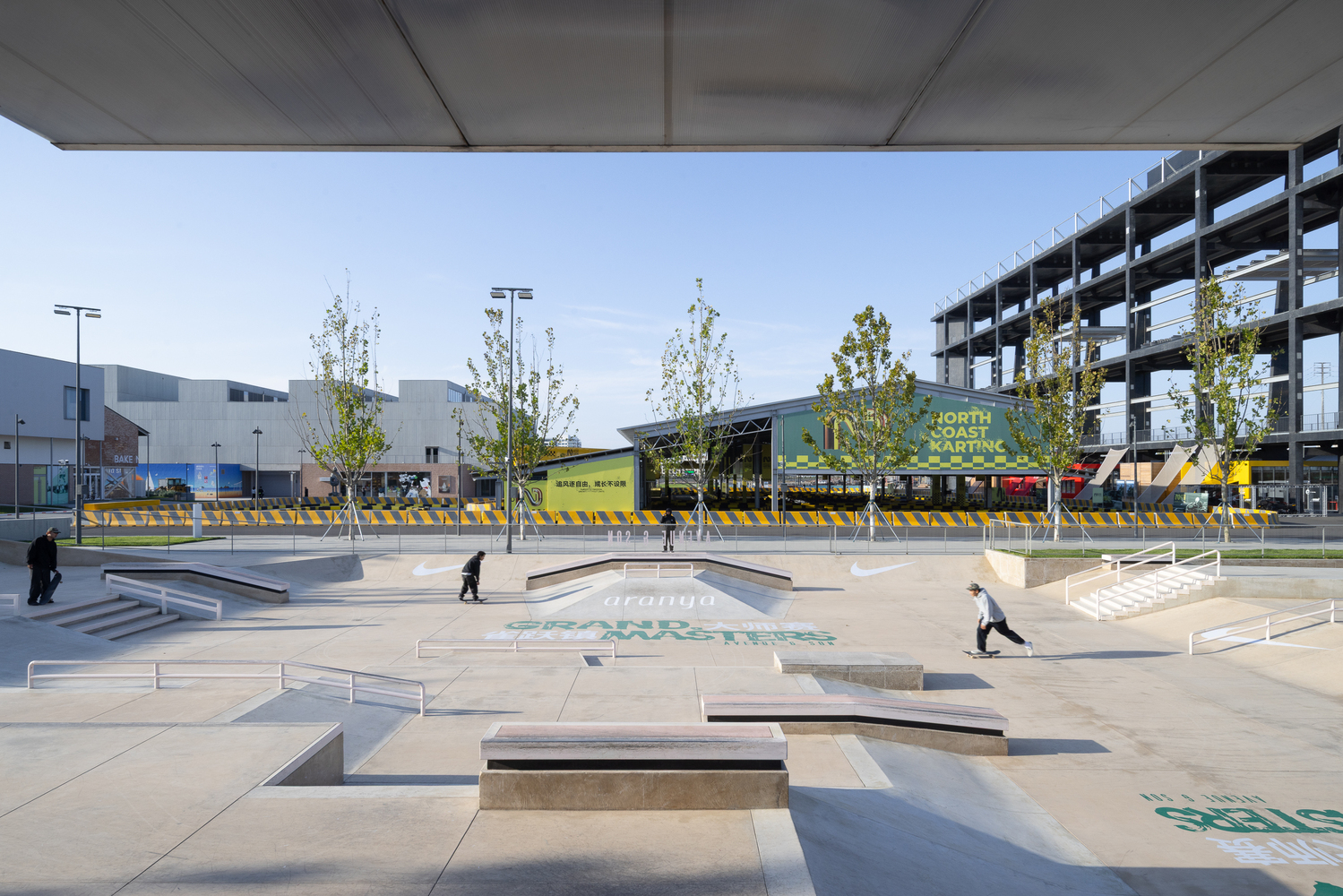
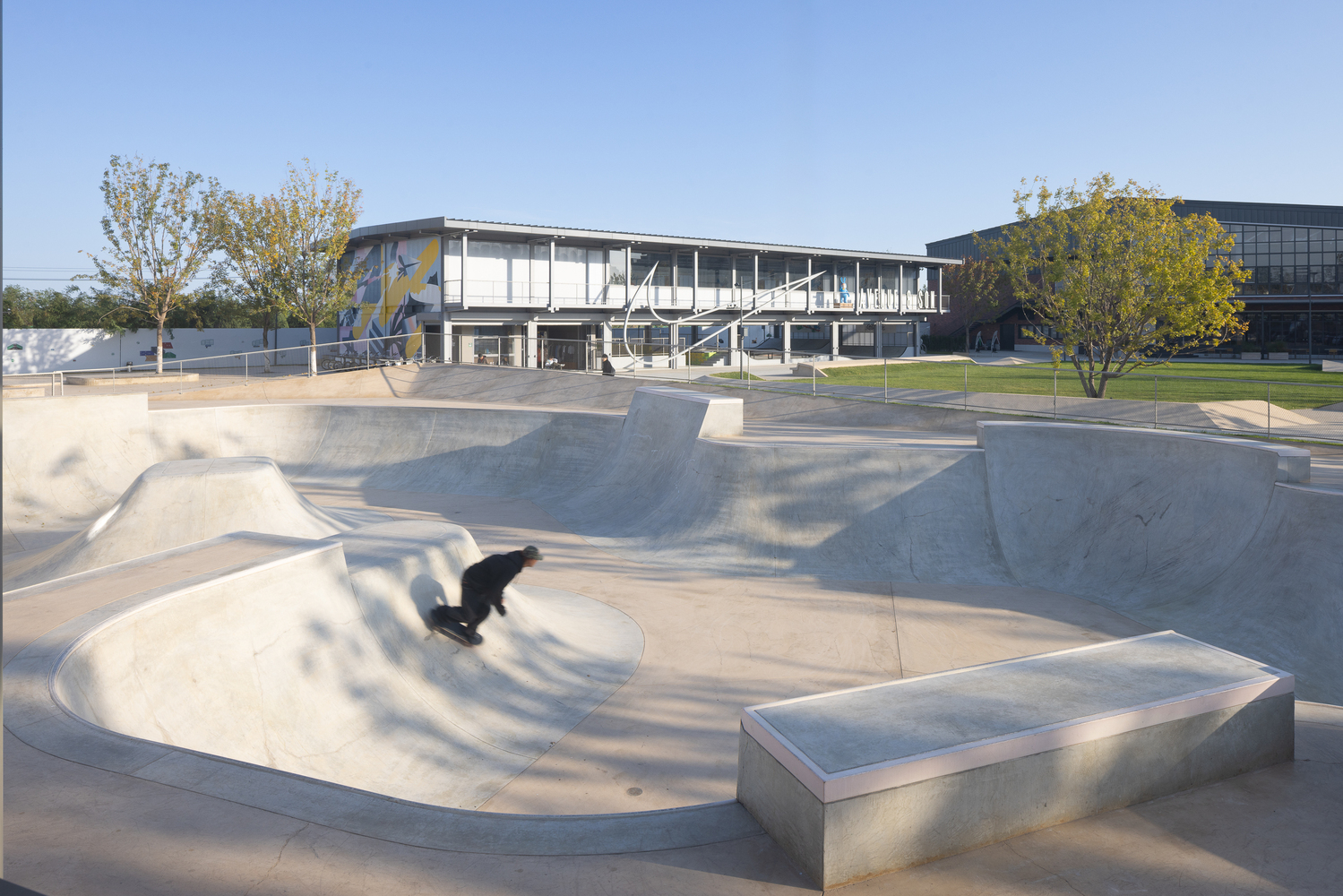
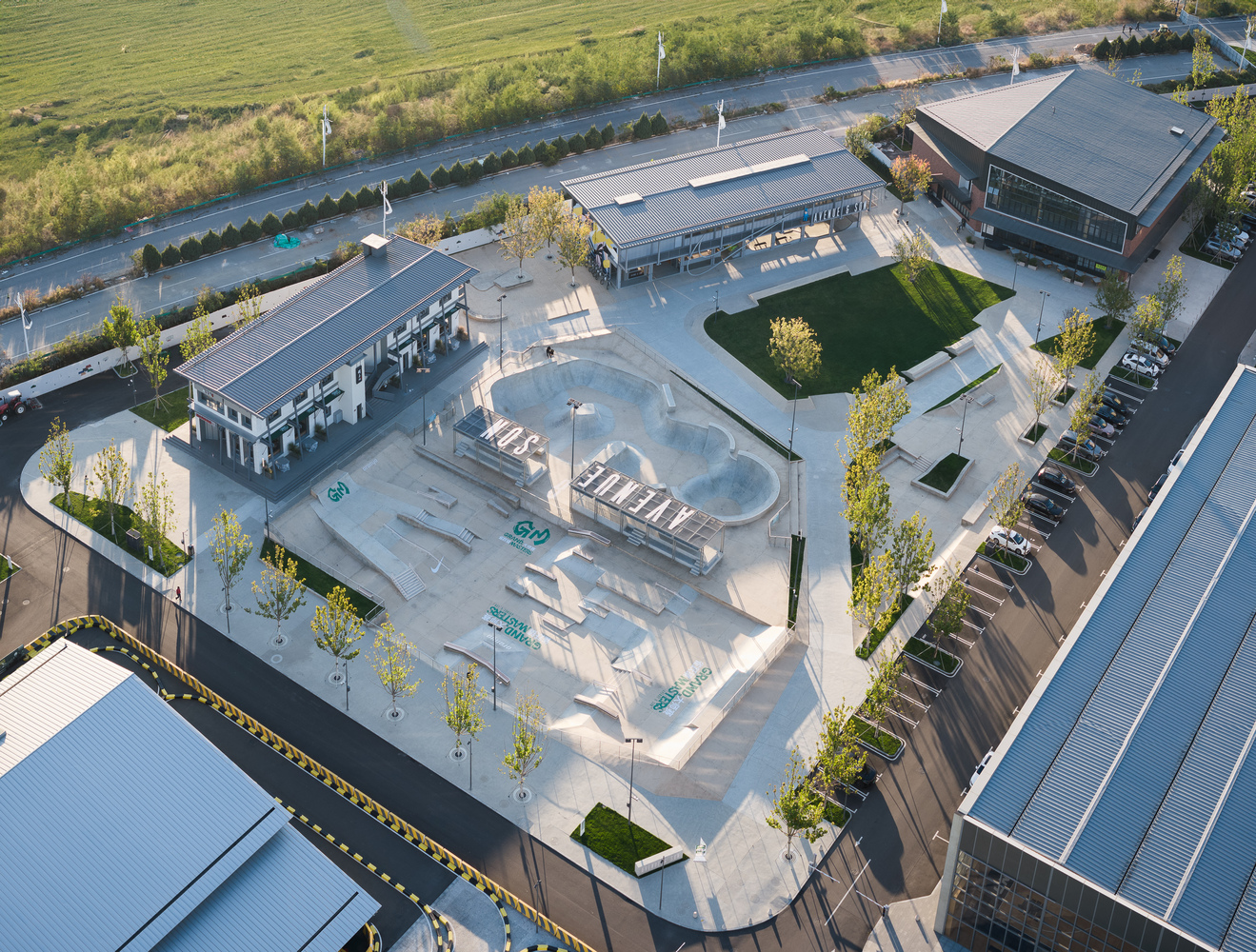
To accommodate everyday use, the skatepark's boundaries are softened into a park landscape. Through carefully sculpted terrain and fluid contours, professional facilities blend seamlessly with pathways and lawns, transforming skate ramps and bowls into sculptures that seem to grow from the land.
As sunlight filters through the trees and casts dappled shadows across the concrete ramps, sport and nature converge in harmony.
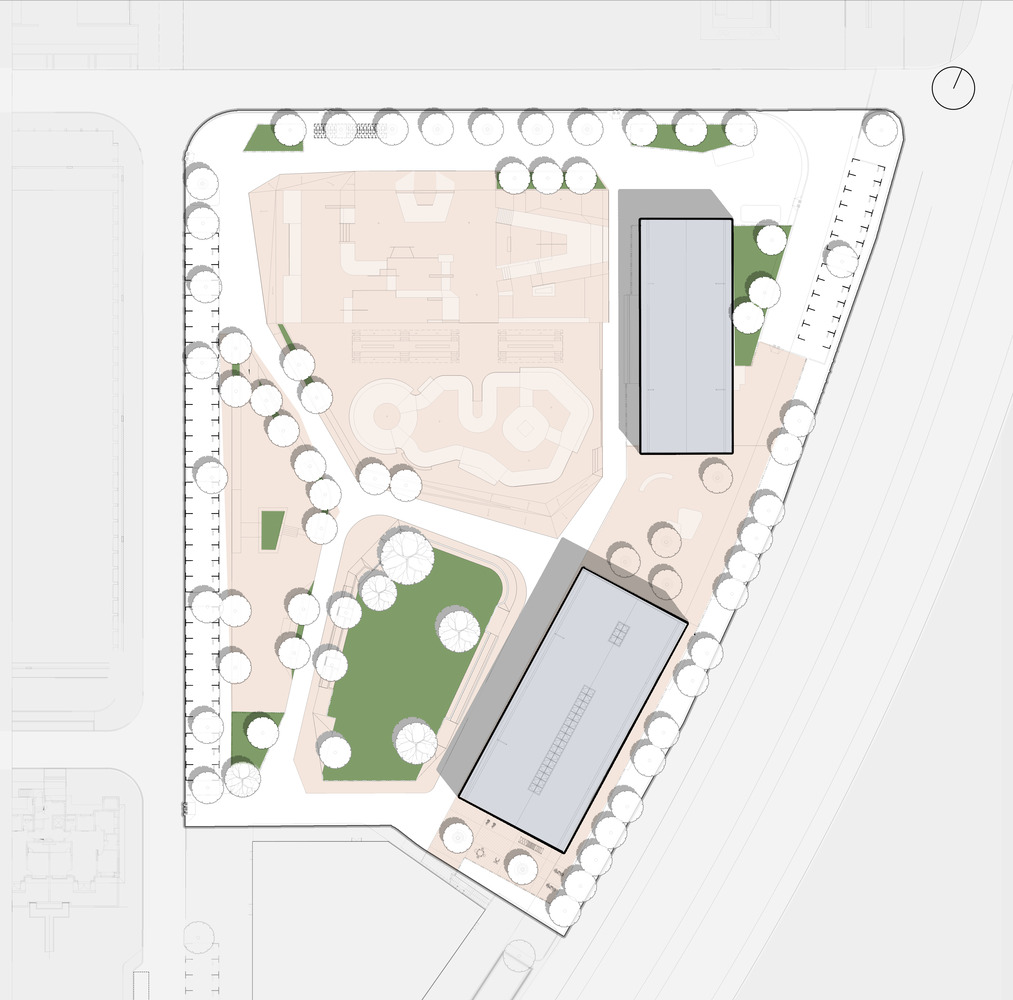
The master plan opens the central zone as a relaxing green space, enhancing ecological value in the urban context. Concrete seating flows organically around it, encouraging spontaneous interaction and community engagement.
Interspersed planting further softens the hardscape, injecting vitality into the environment. Through a coherent design language, the landscape and supporting amenities merge into a harmonious, fluid experience across the site.
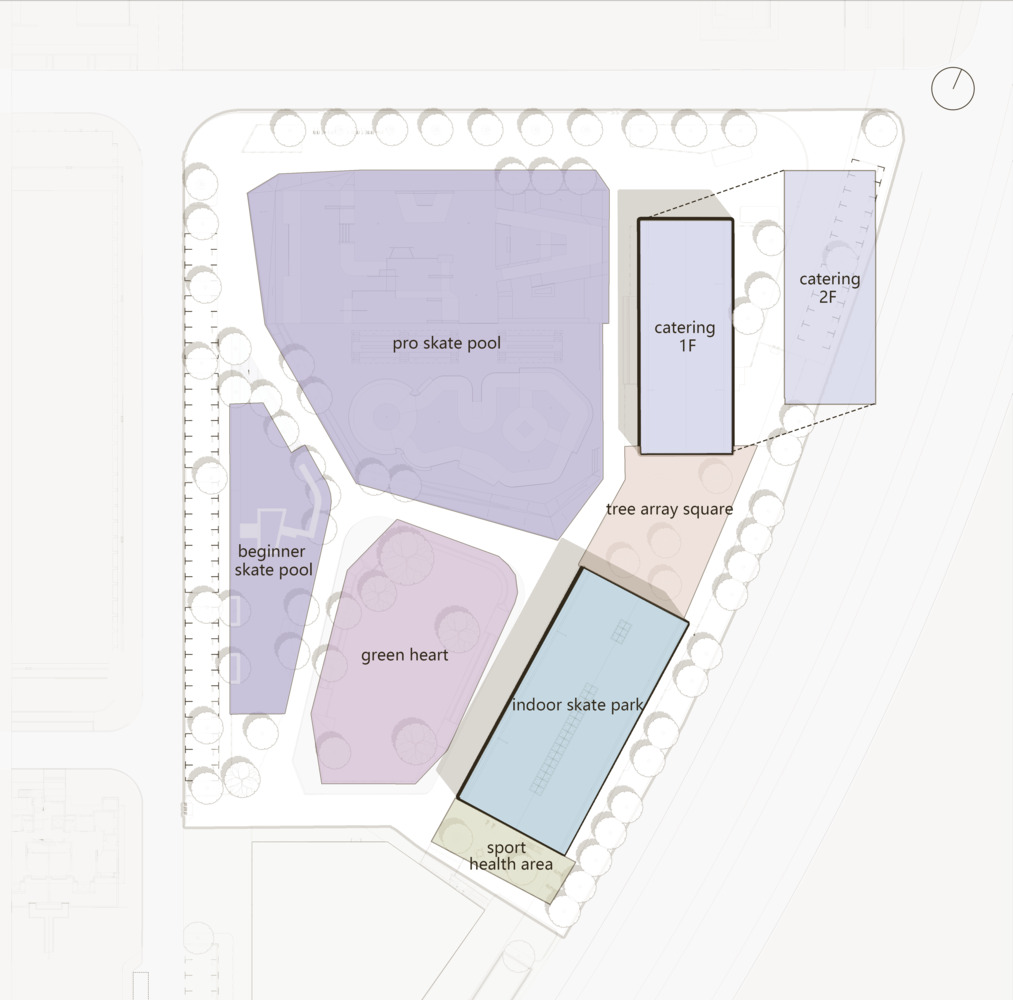
At the park's center lies an irregular lawn—the "green heart." It breaks the monotony of expansive hardscape, becoming a visual anchor that brings openness, comfort, and a natural rhythm into community life.
The central lawn provides a flexible venue for markets, music events, and pop-ups, ensuring the park remains active and adaptable. All functional areas are organized around the "Green Heart," forming a radial, highly connected layout that guides users seamlessly through diverse experiences.
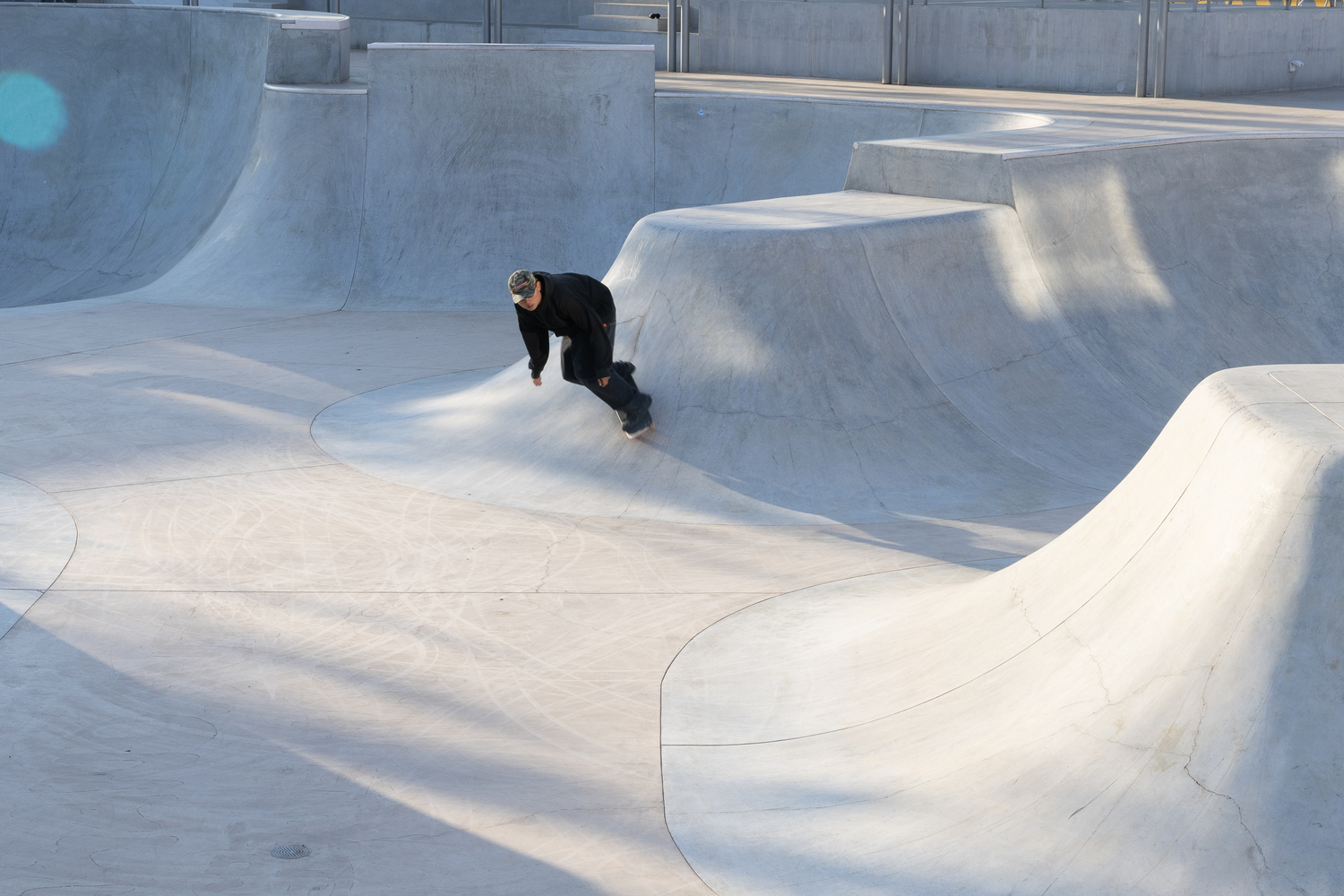
Pro and beginner skateboarding zones are positioned on either side, catering to different skill levels. An indoor skatepark and a training club occupy one corner, offering all-weather activity spaces.
The children's play area is set beside leisure zones for convenient parent-child interaction, while community leisure spaces are scattered around the perimeter, providing a variety of options for relaxation and social engagement.
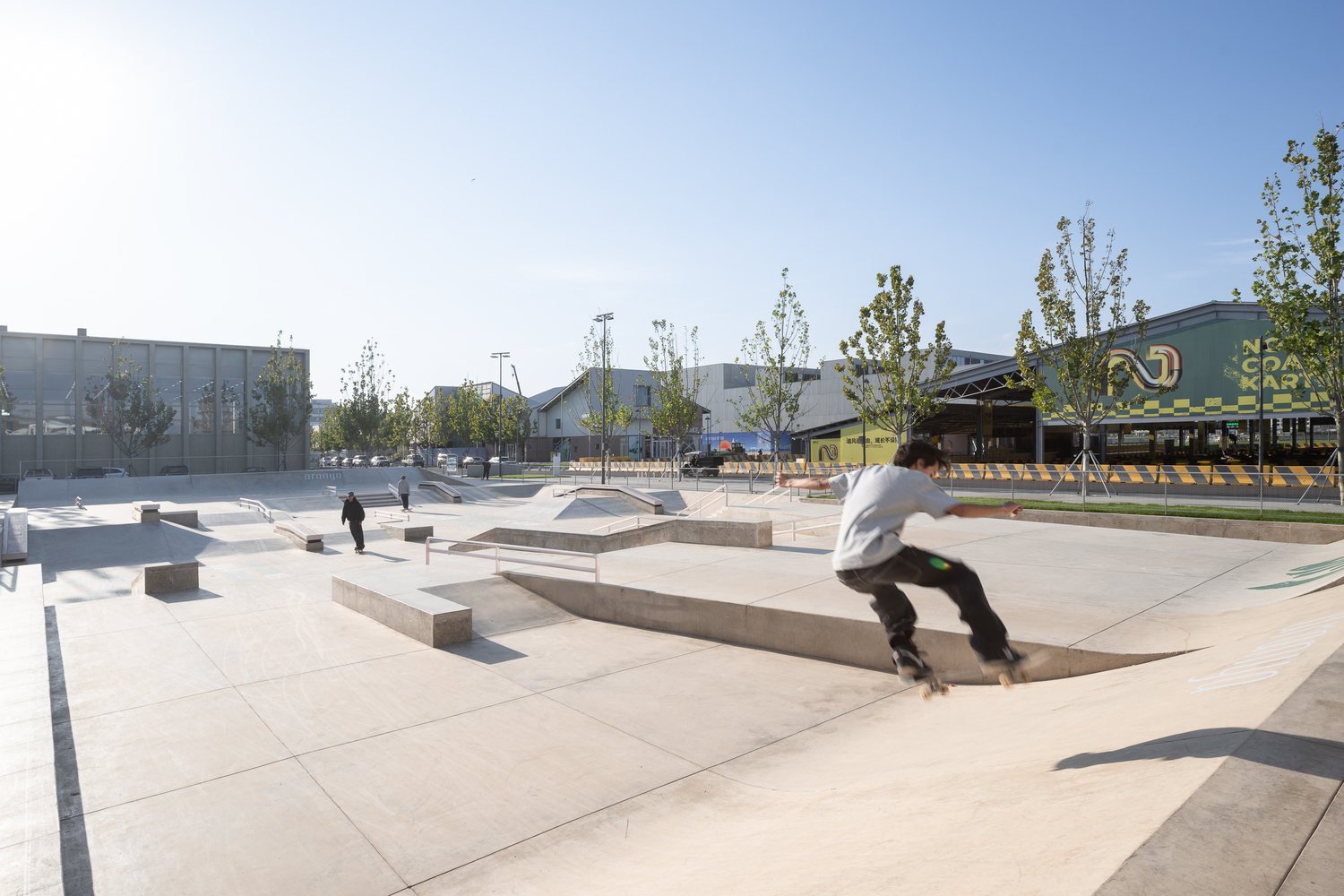
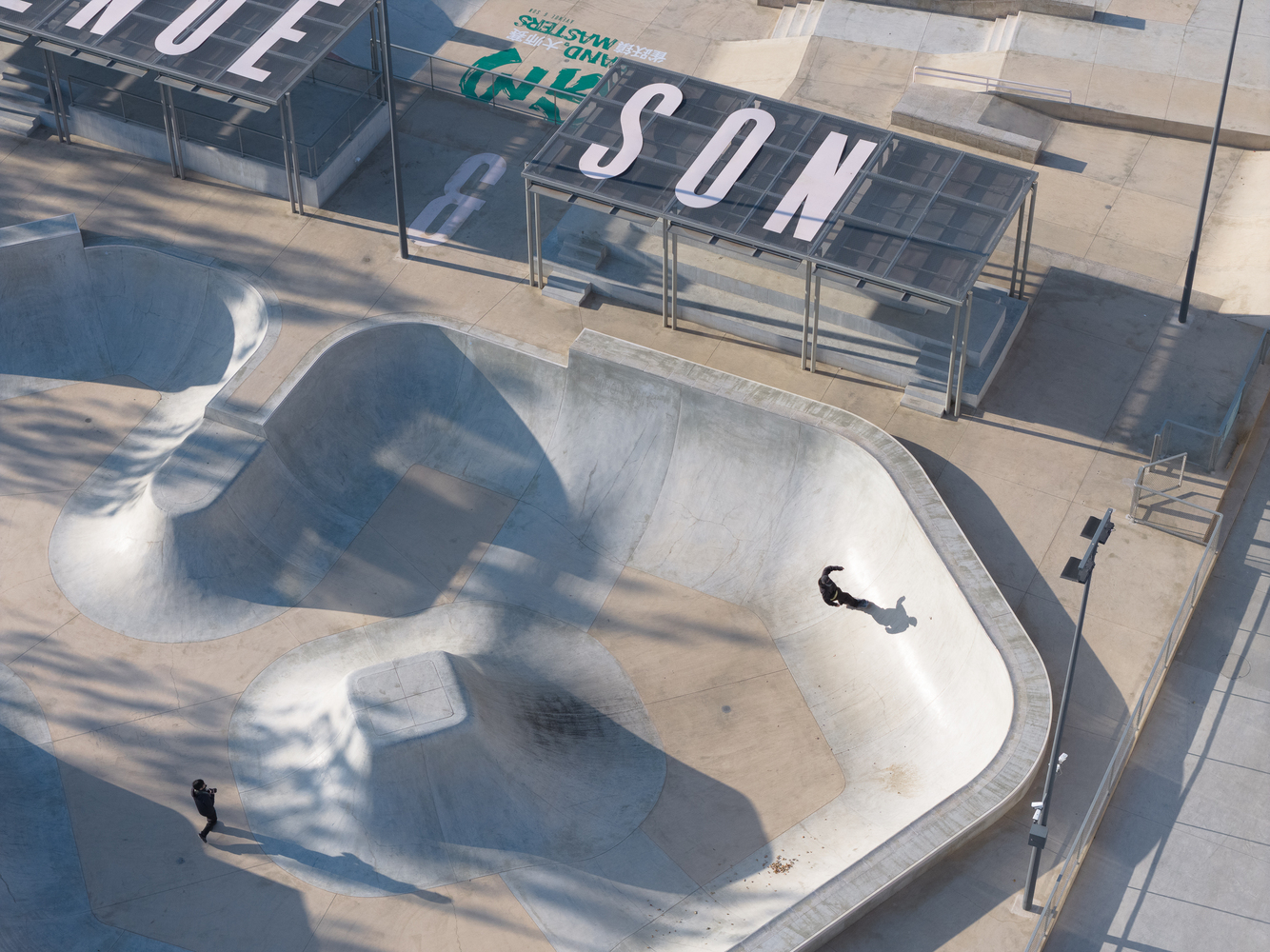
This radial layout fosters a strong sense of community, allowing diverse activities to coexist while remaining subtly connected. A major goal of the project is to create Asia's largest and most comprehensive professional skatepark, integrating an international-standard street course, bowl zones, and beginner practice areas.
The landscape color scheme echoes both the coastal setting and street culture. Artist Lin Zinan grounds the palette in soft grays and earthy tones, with low-saturation coral accents adding a sense of dynamism. The resulting visual identity is fresh, energetic, and artistic, yet suited for everyday use.
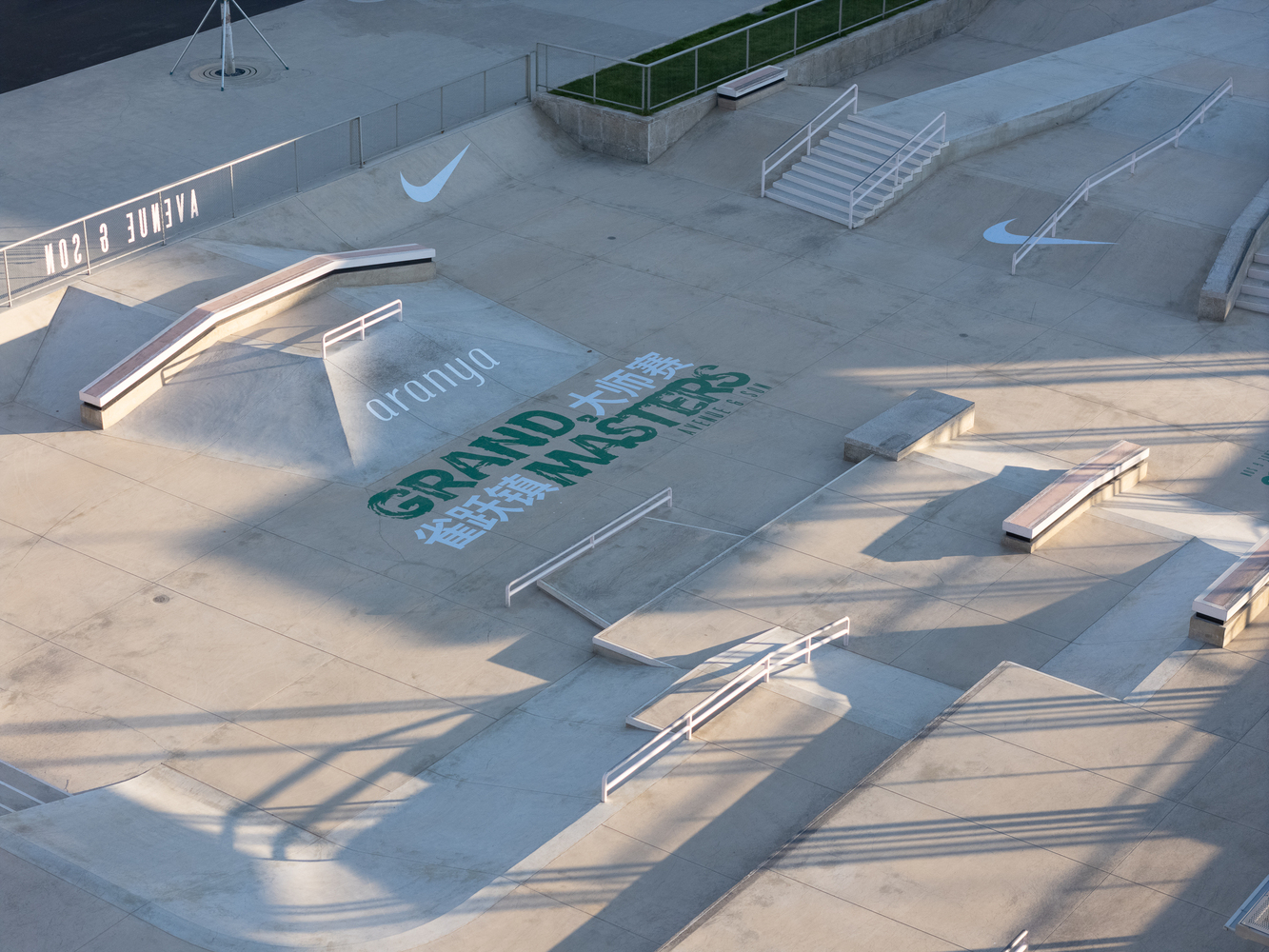
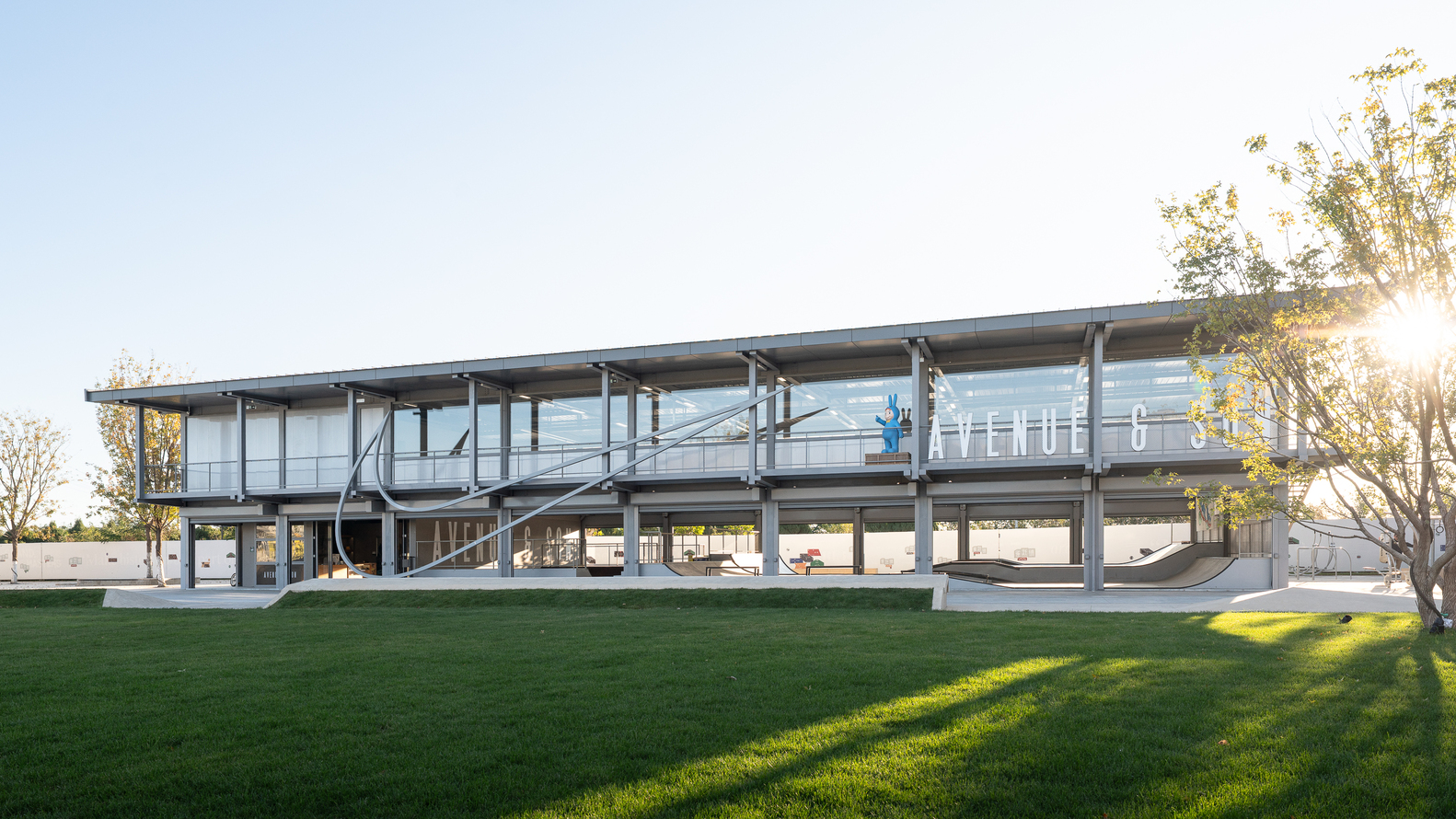
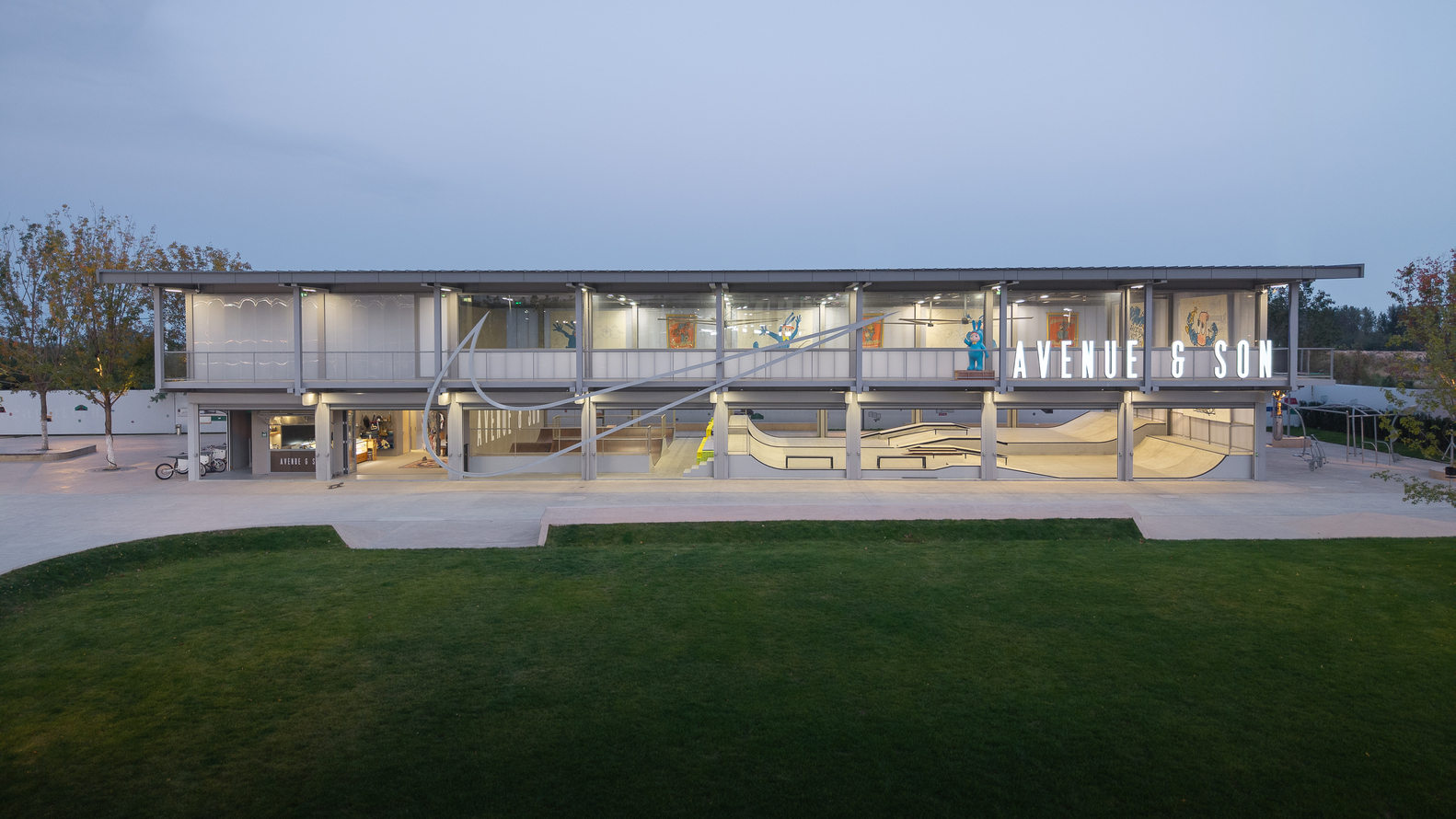
The architectural design embraces uncertainty with a flexible framework. Potential uses—from student accommodation to retail or exhibition—can be inserted within it, with walls and interiors configured as needed.
This open-ended strategy keeps the architecture primed for infinite future possibilities. During the GRAND MASTERS 2024, the building became a stage for live graffiti by artists, serving as a public showcase of street culture.
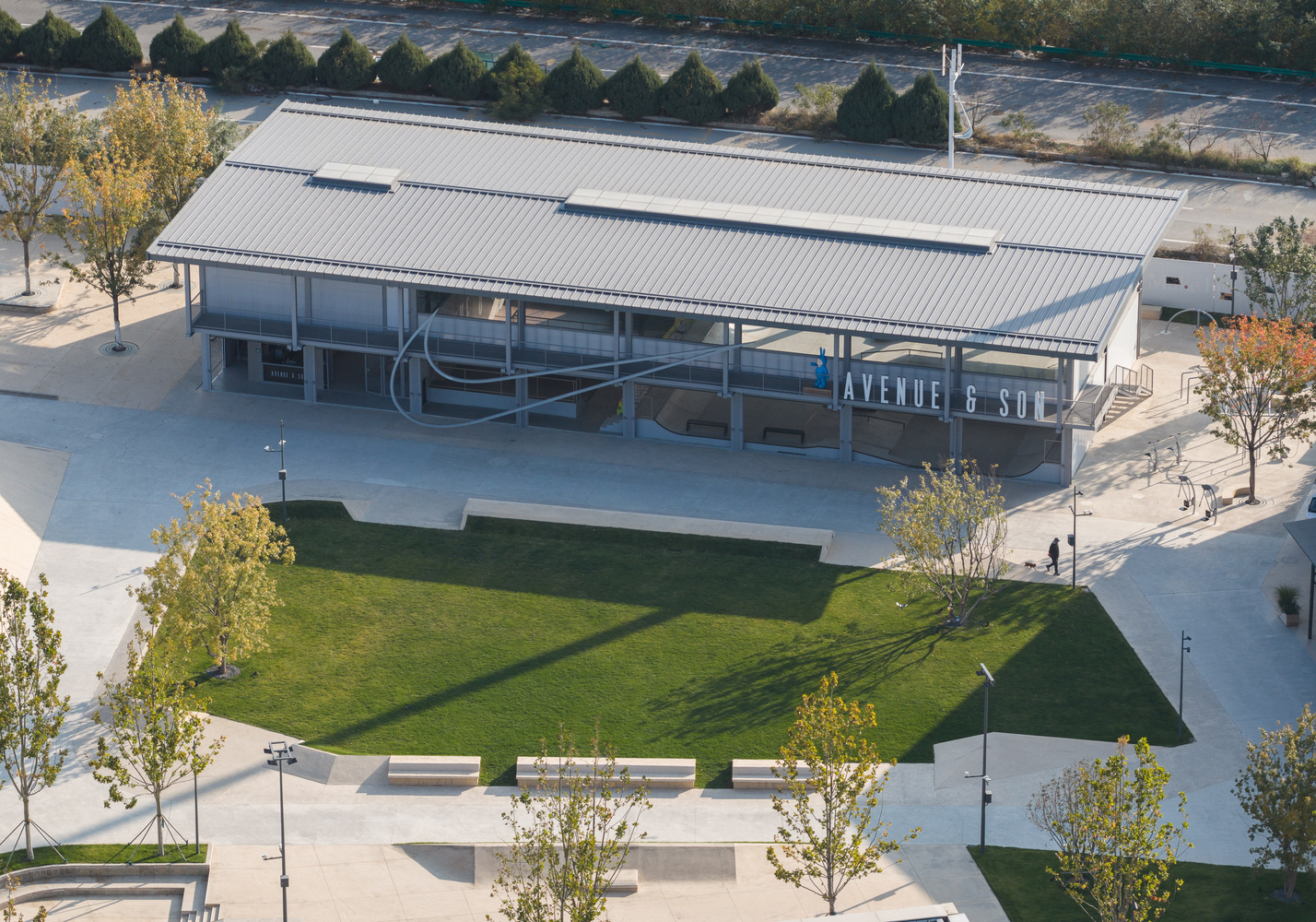
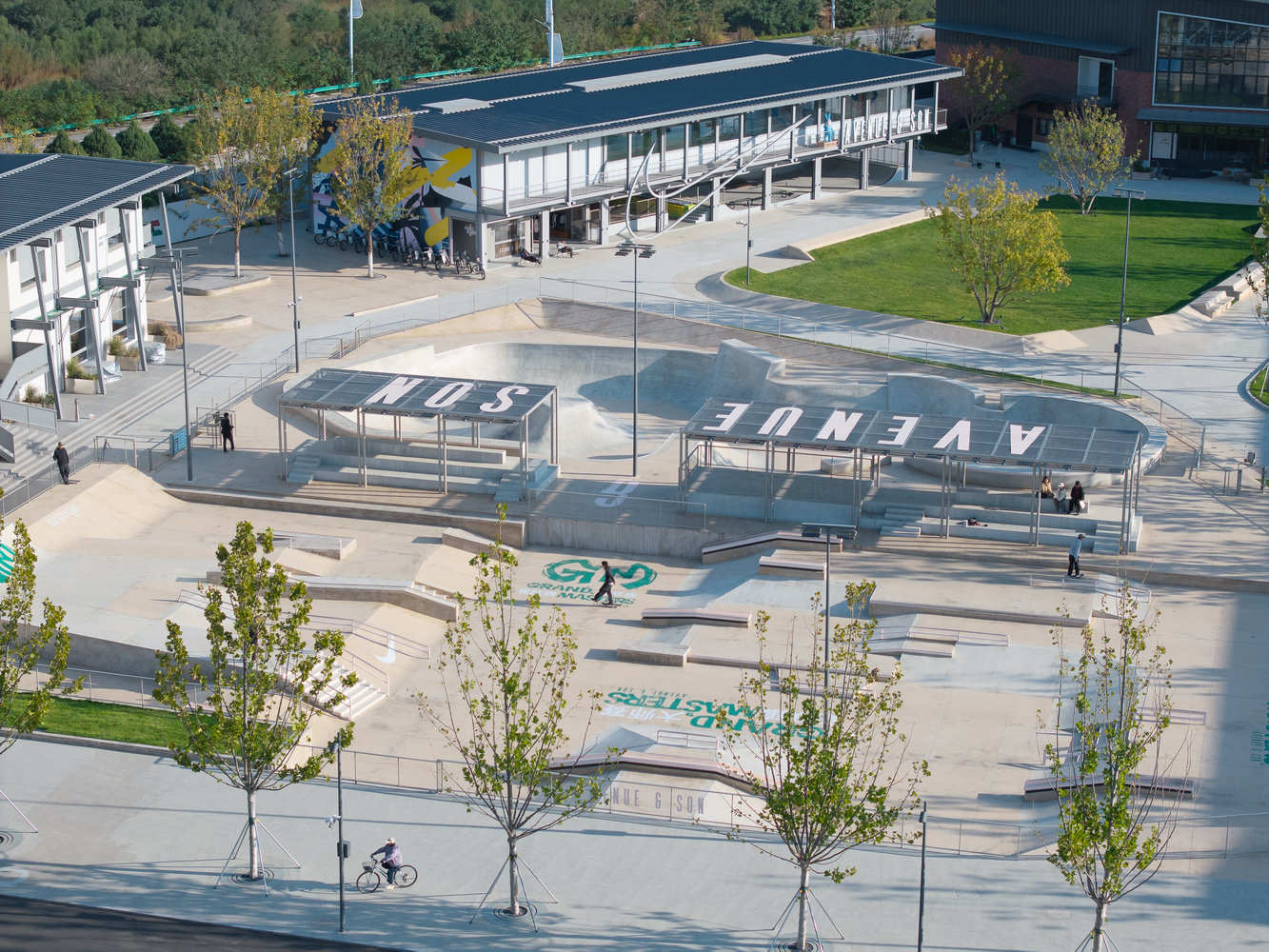
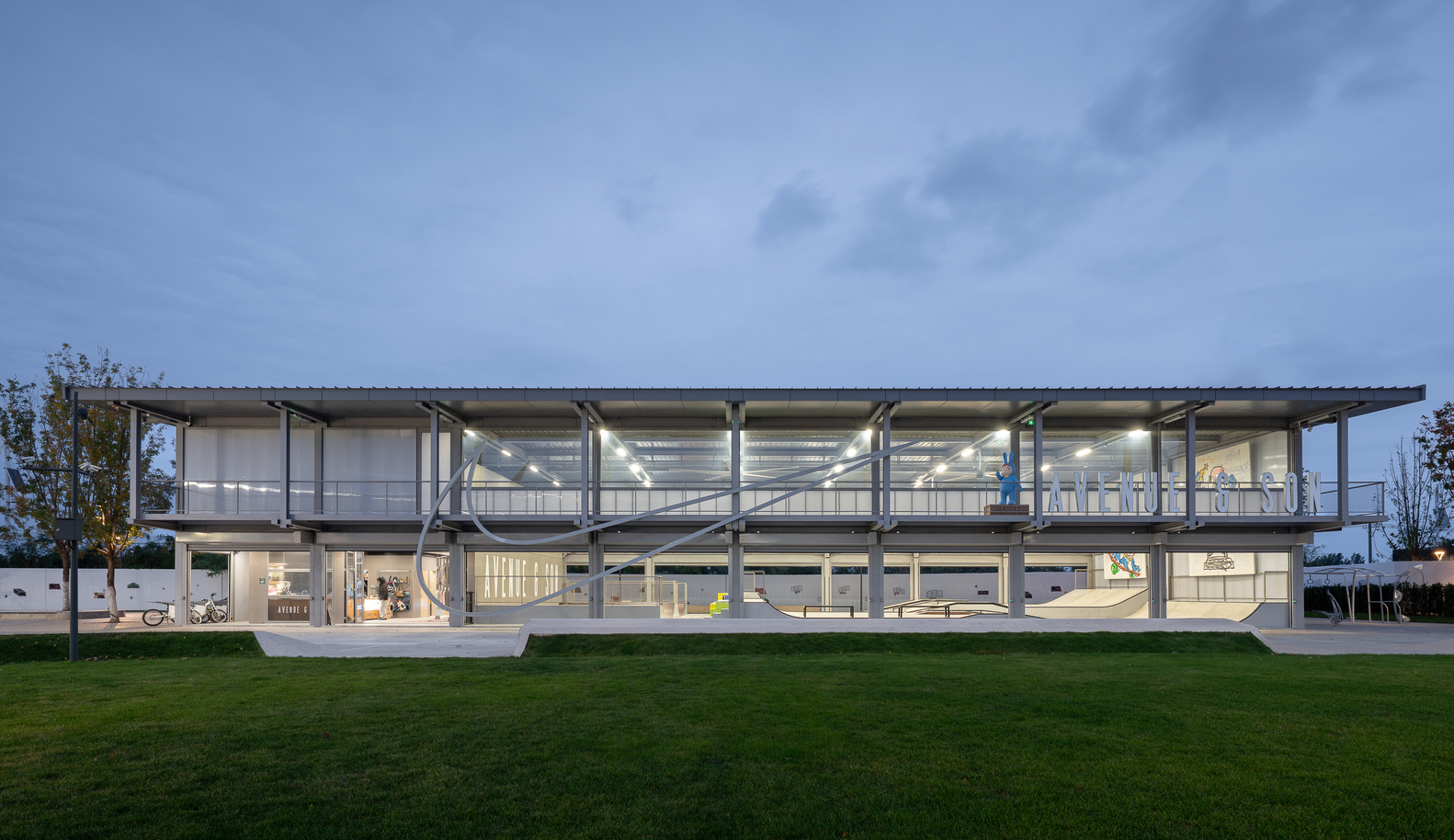
In 2025, it was transformed into a dining venue. The architectural design employs a modern, lightweight steel structural system for construction efficiency and cost-effectiveness.
A large-span cantilevered roof, transparent facades, and contemporary materials such as composite panels and polycarbonate sheets create a clean, serene atmosphere with a touch of Zen.
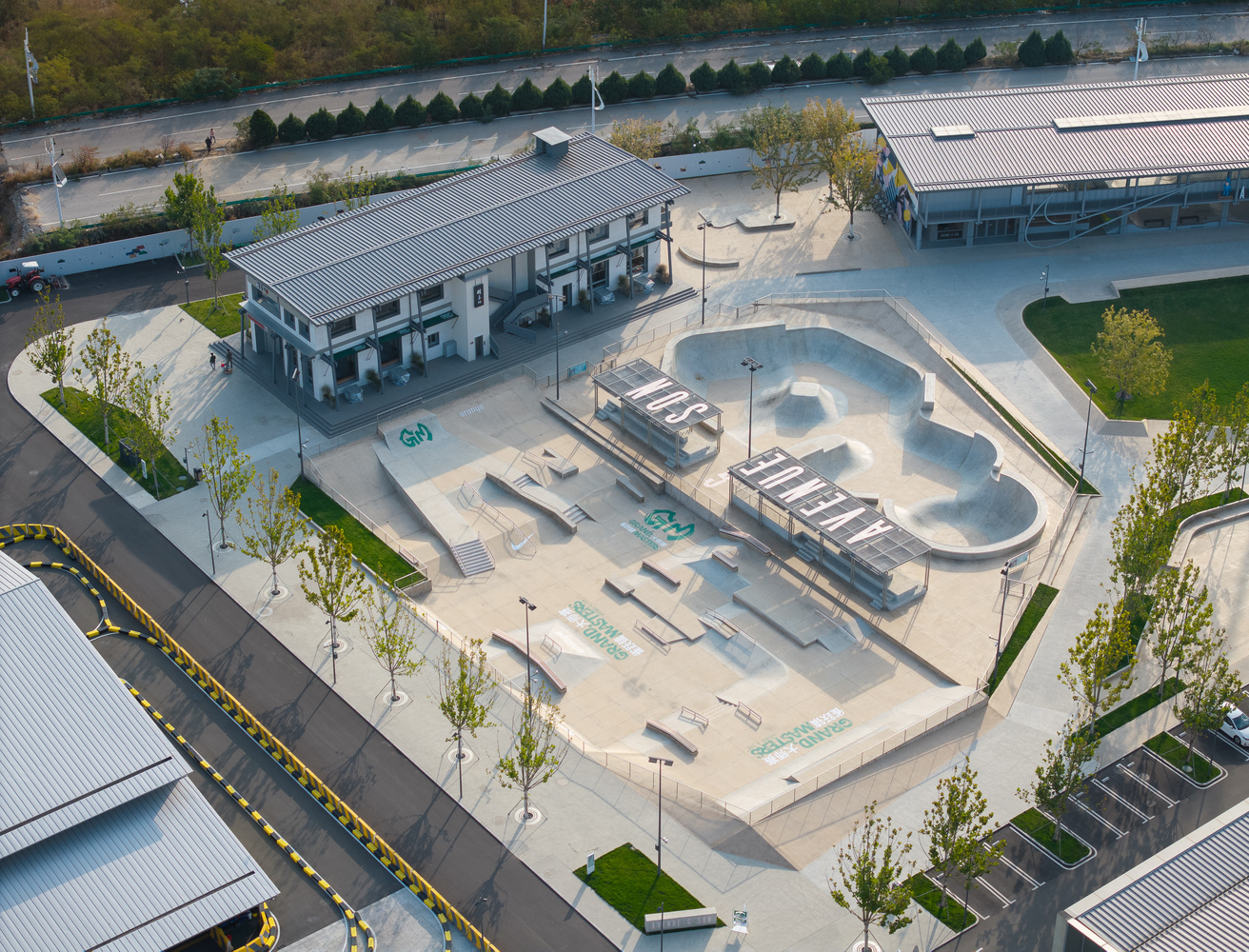
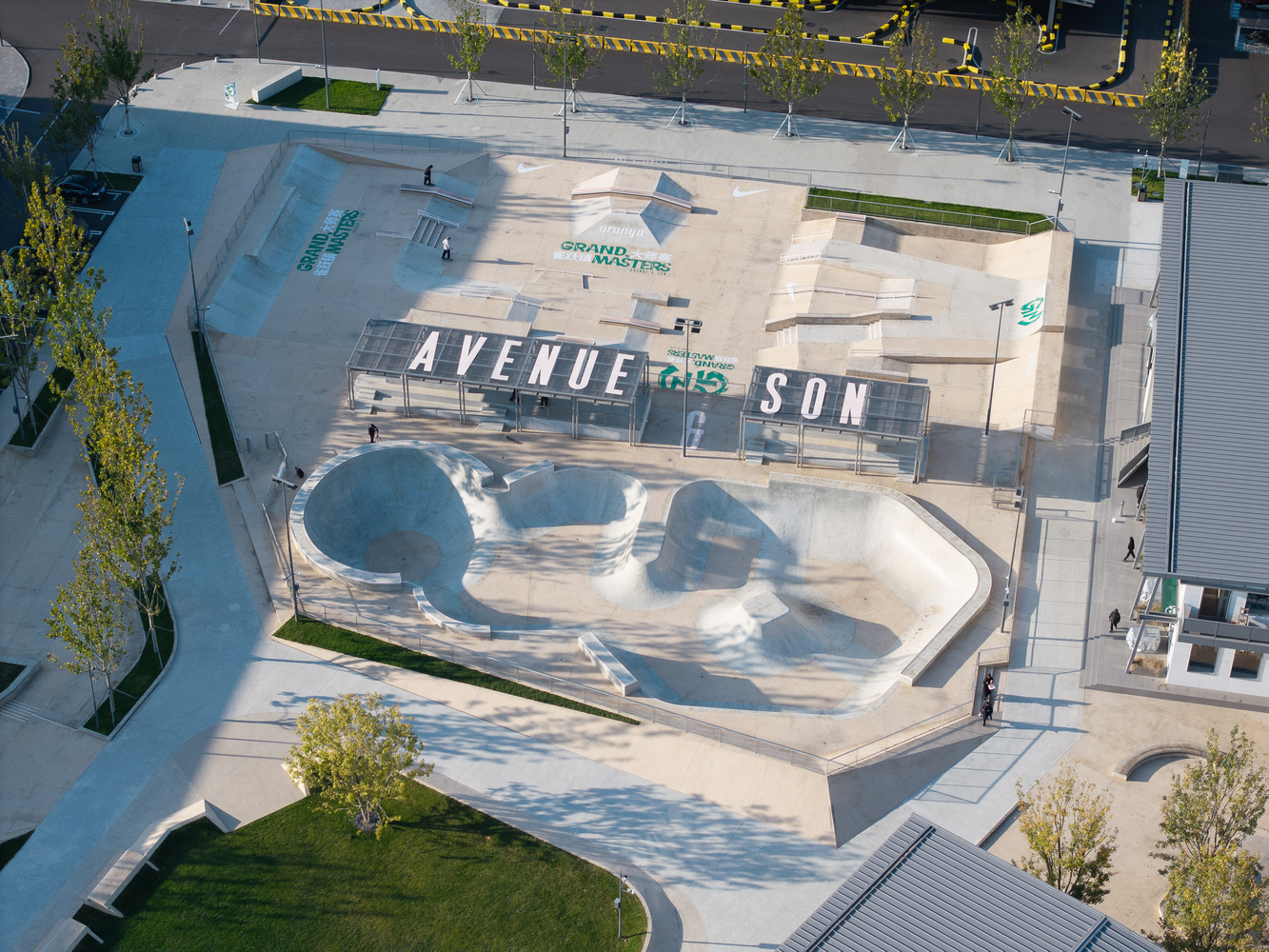
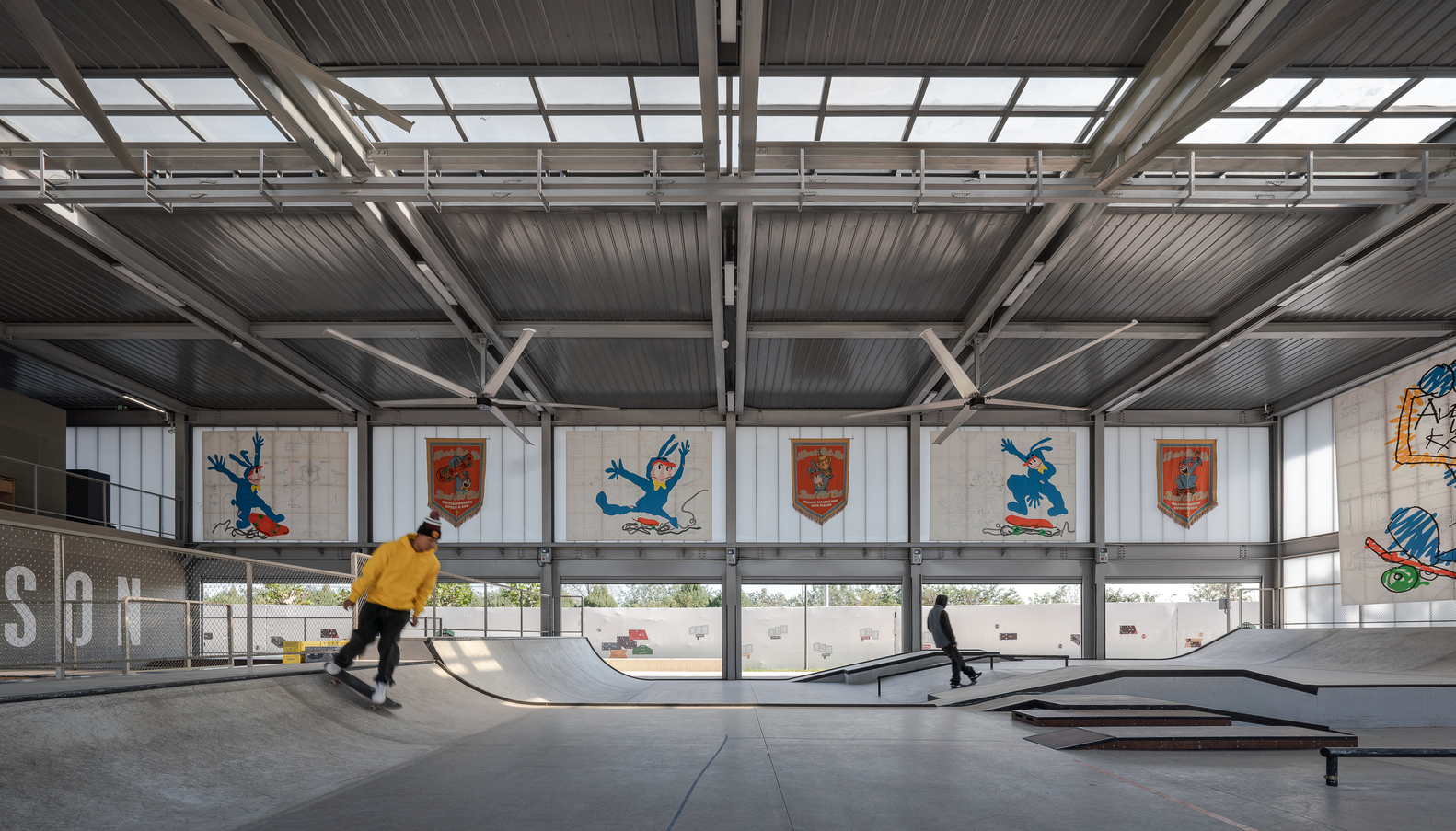
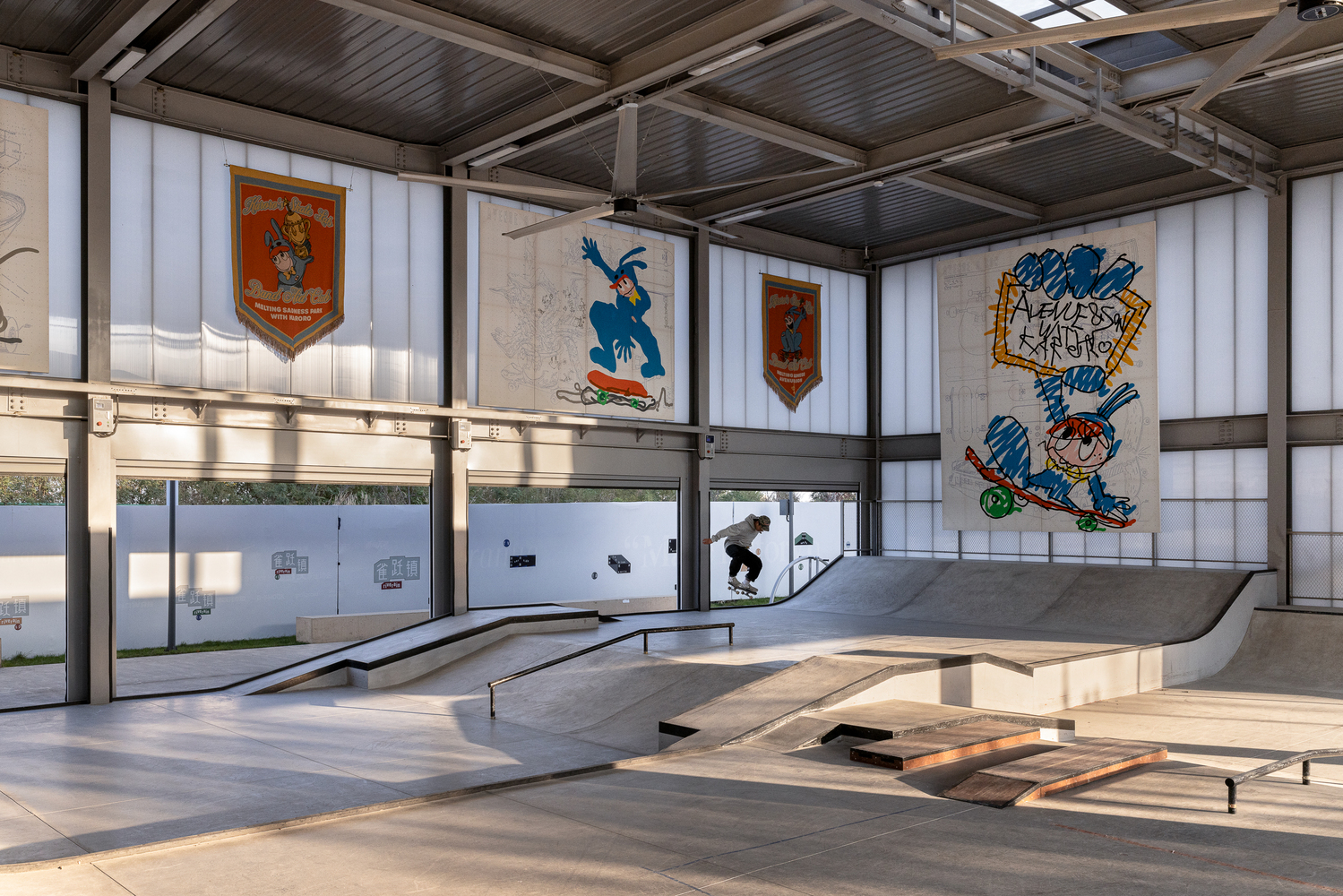
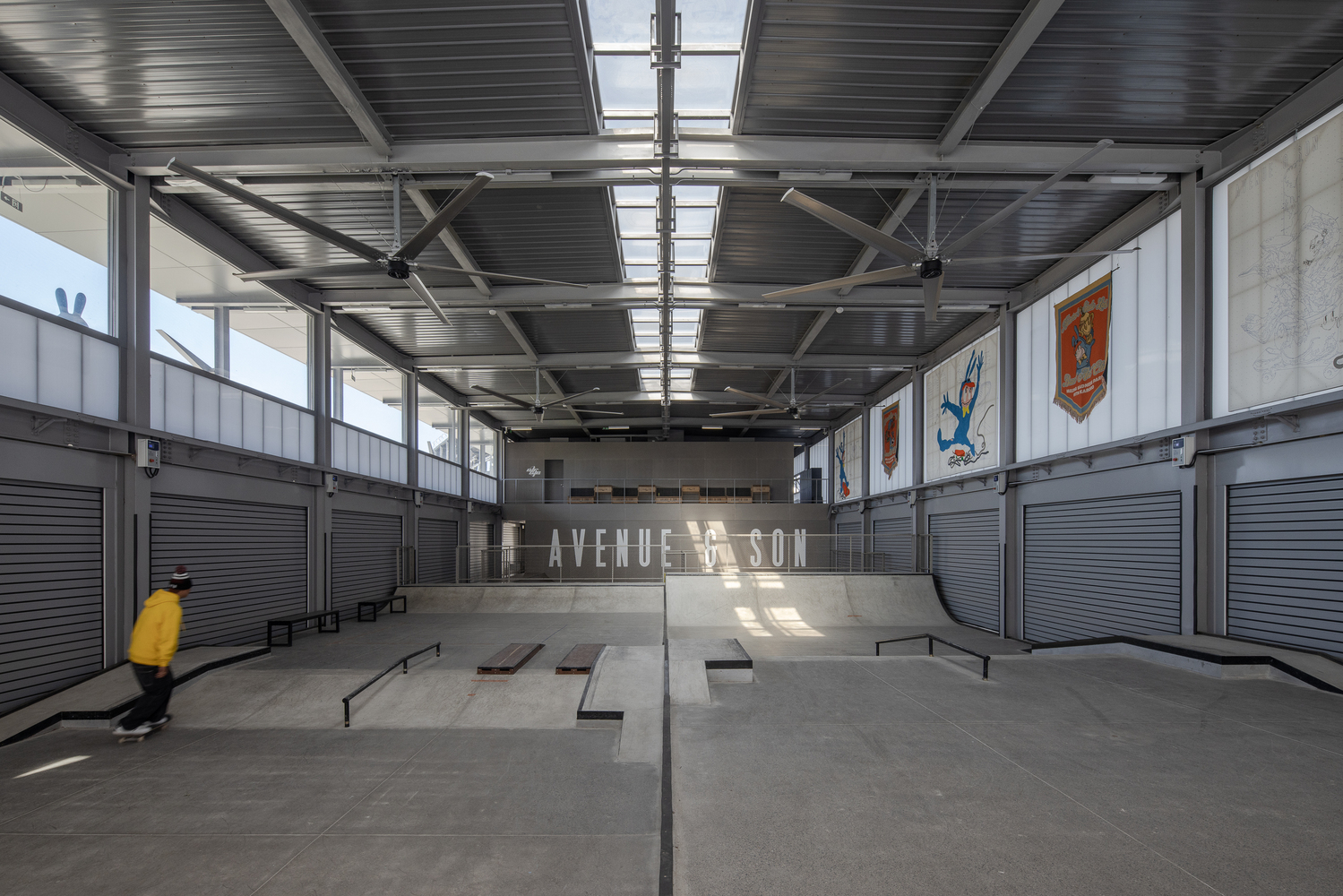
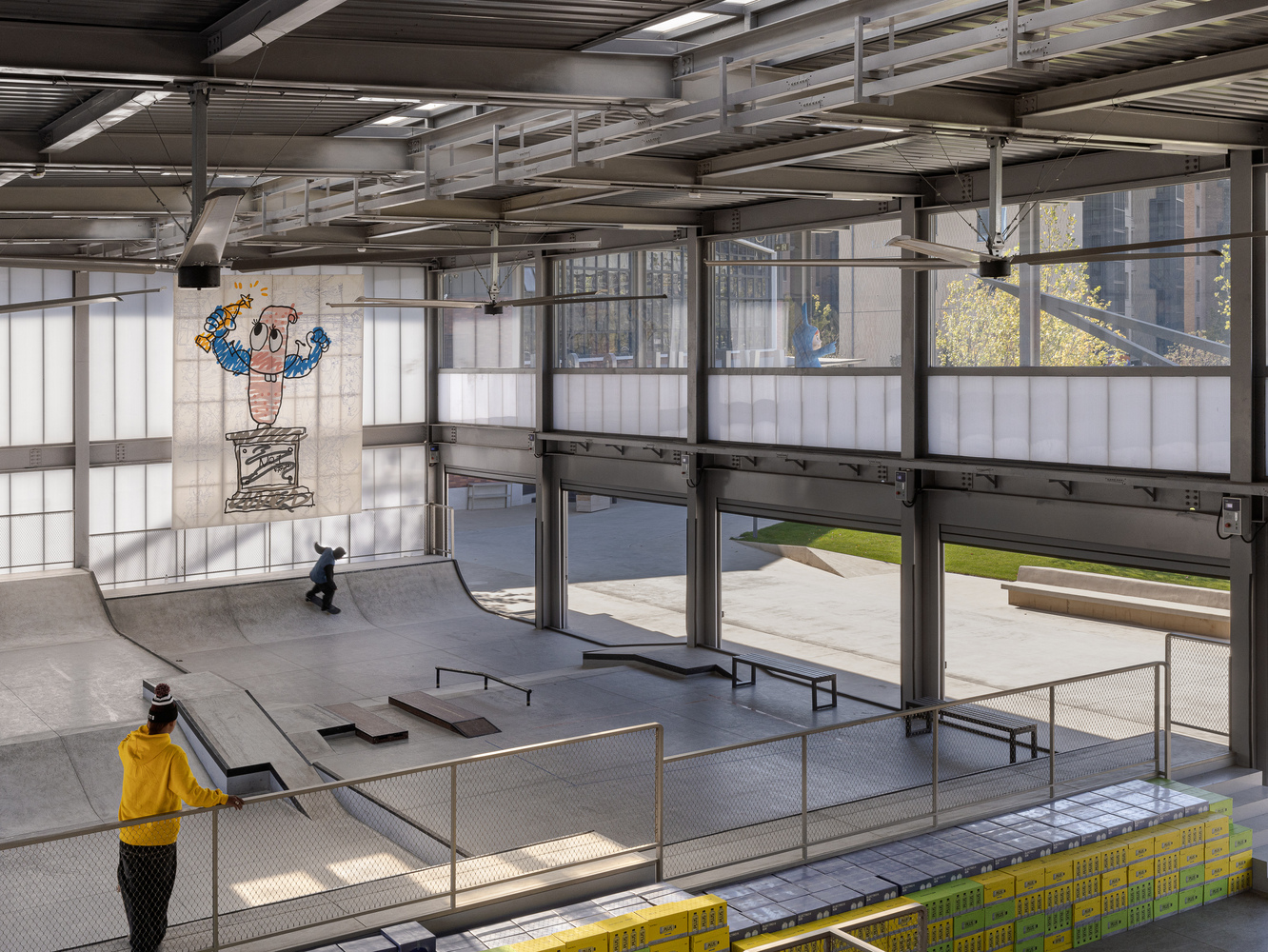
Another building houses the indoor skatepark, supported by NIKE as a long-term partner of the GRAND MASTERS and Riverain's sports community.
Together with a training club, the indoor skatepark aspires to nurture China's next generation of skaters with all weather facilities.
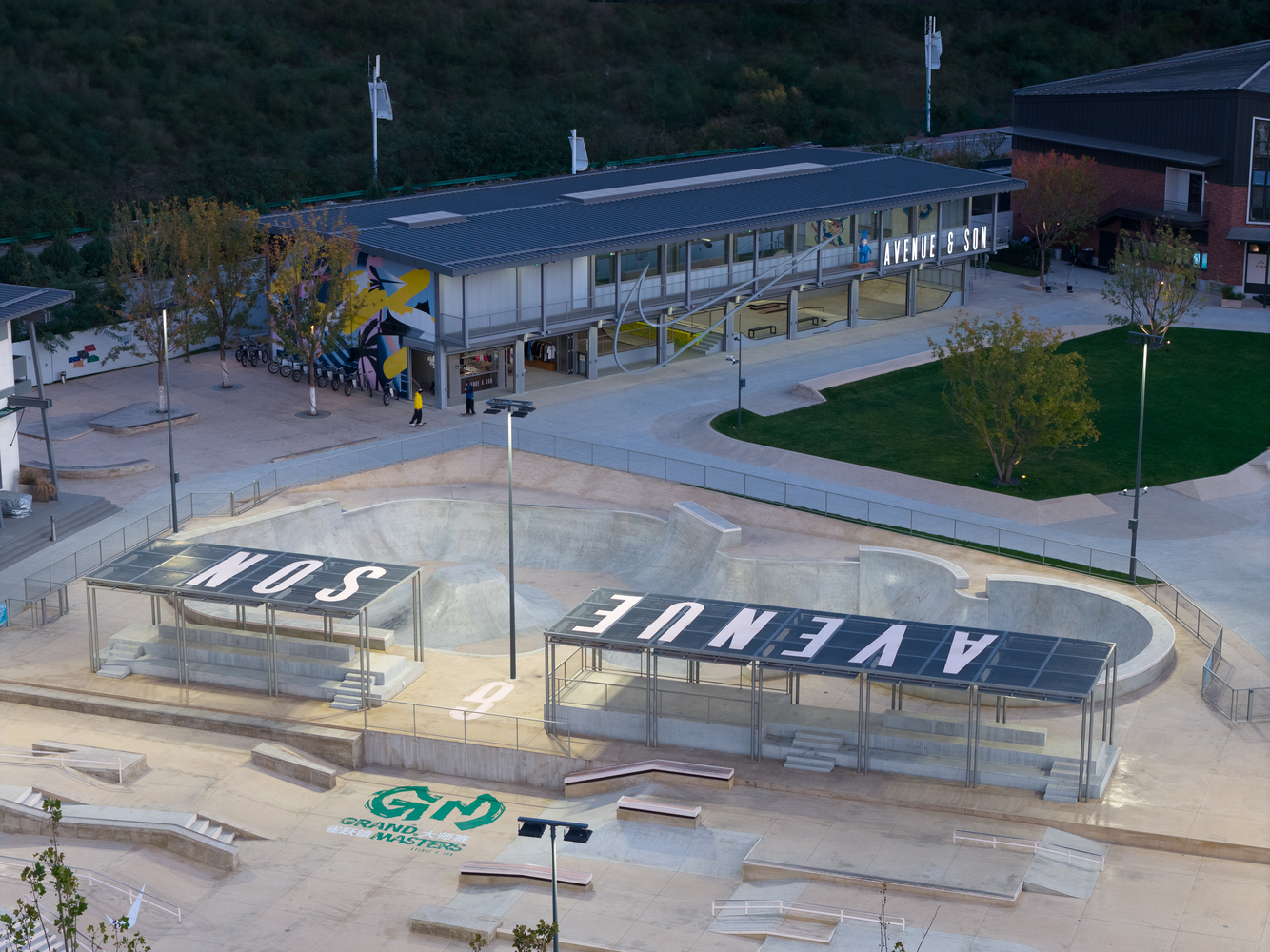
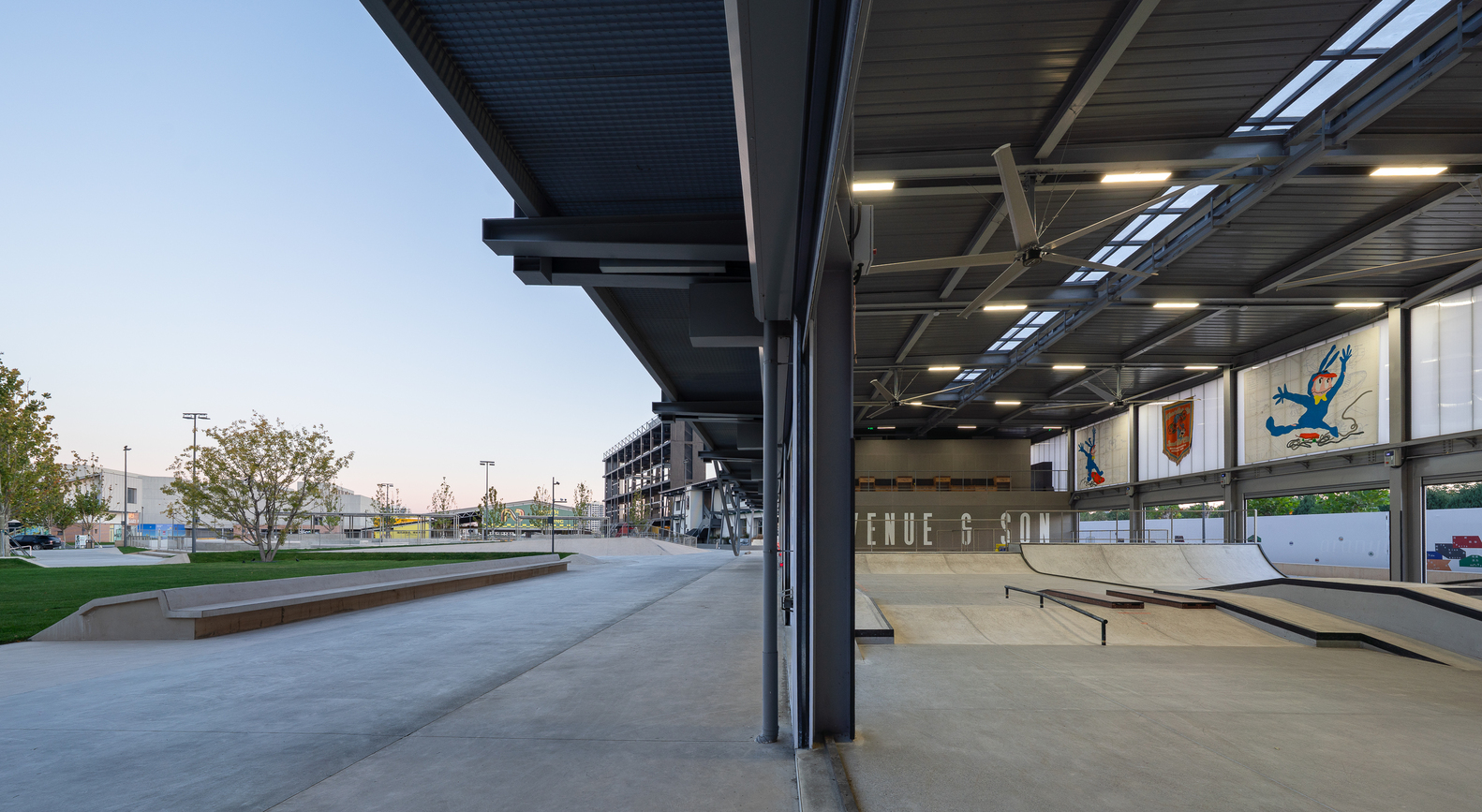
To reduce environmental impact and operational costs, the indoor skatepark employs a lightweight steel structure.
The curtain walls feature roll-up fireproof shutters that can be opened in favorable weather, allowing natural airflow and seamless connection with the outdoor skatepark.
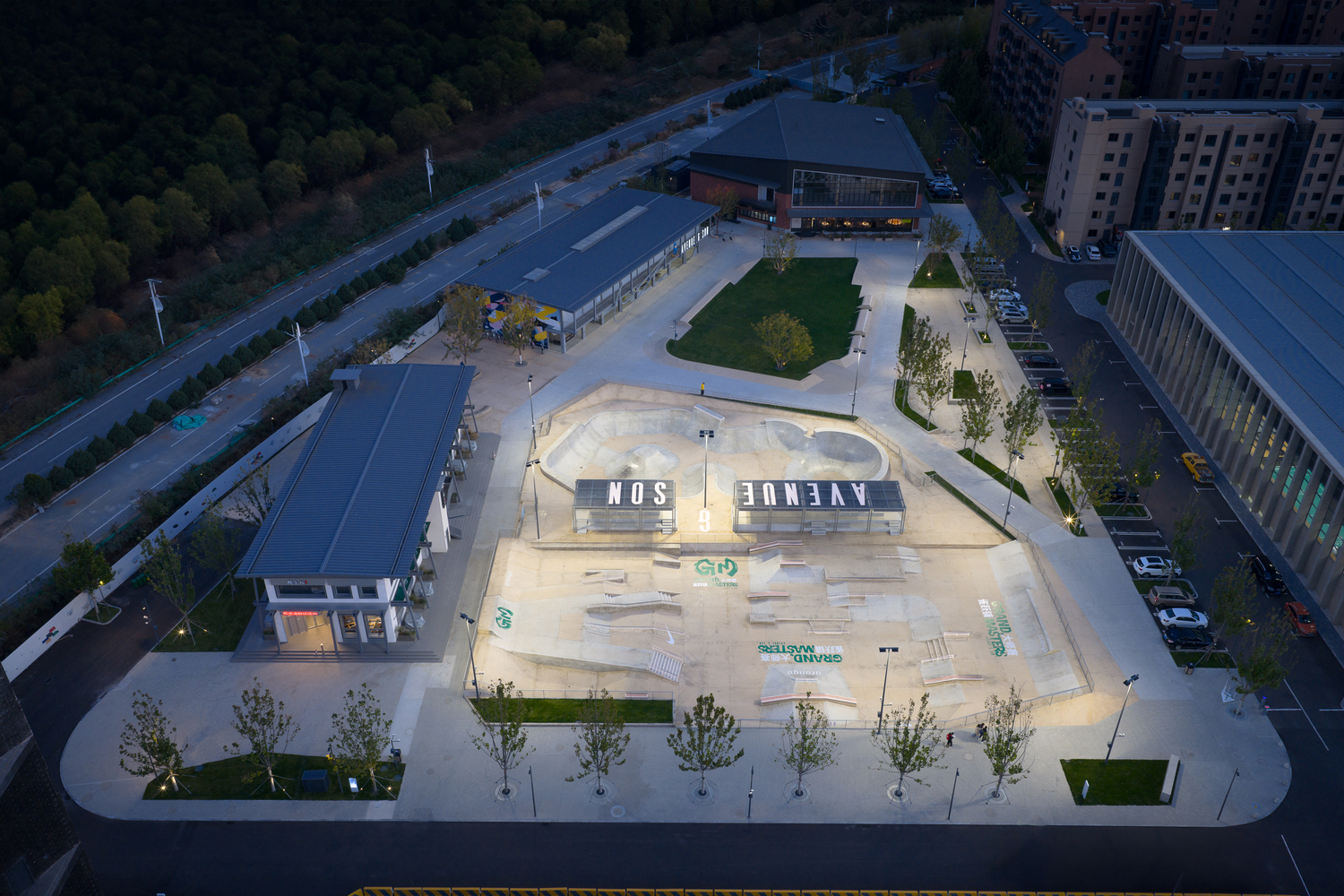
Large ceiling fans provide thermal comfort in the hot summer. Additional facilities include a dance studio, storage areas, and indoor and outdoor spectator stands, supporting training and community engagement.