CHARCOAL HAUS
Moc Architects
ARCHITECTS
Moc Architects
LEAD ARCHITECT
Shin juyoung , Hwanghyunhye
DESIGN TEAM
Haily Yoon
PHOTOGRAPHS
texture on texture
AREA
247 m²
YEAR
2024
LOCATION
Yangsan-si, South Korea
CATEGORY
Commercial Architecture
English description provided by the architects.
FROM THE PLACE
Chacol Haus (charcoal) is located midway up an unremarkable Korean hillside, densely covered with pine trees.
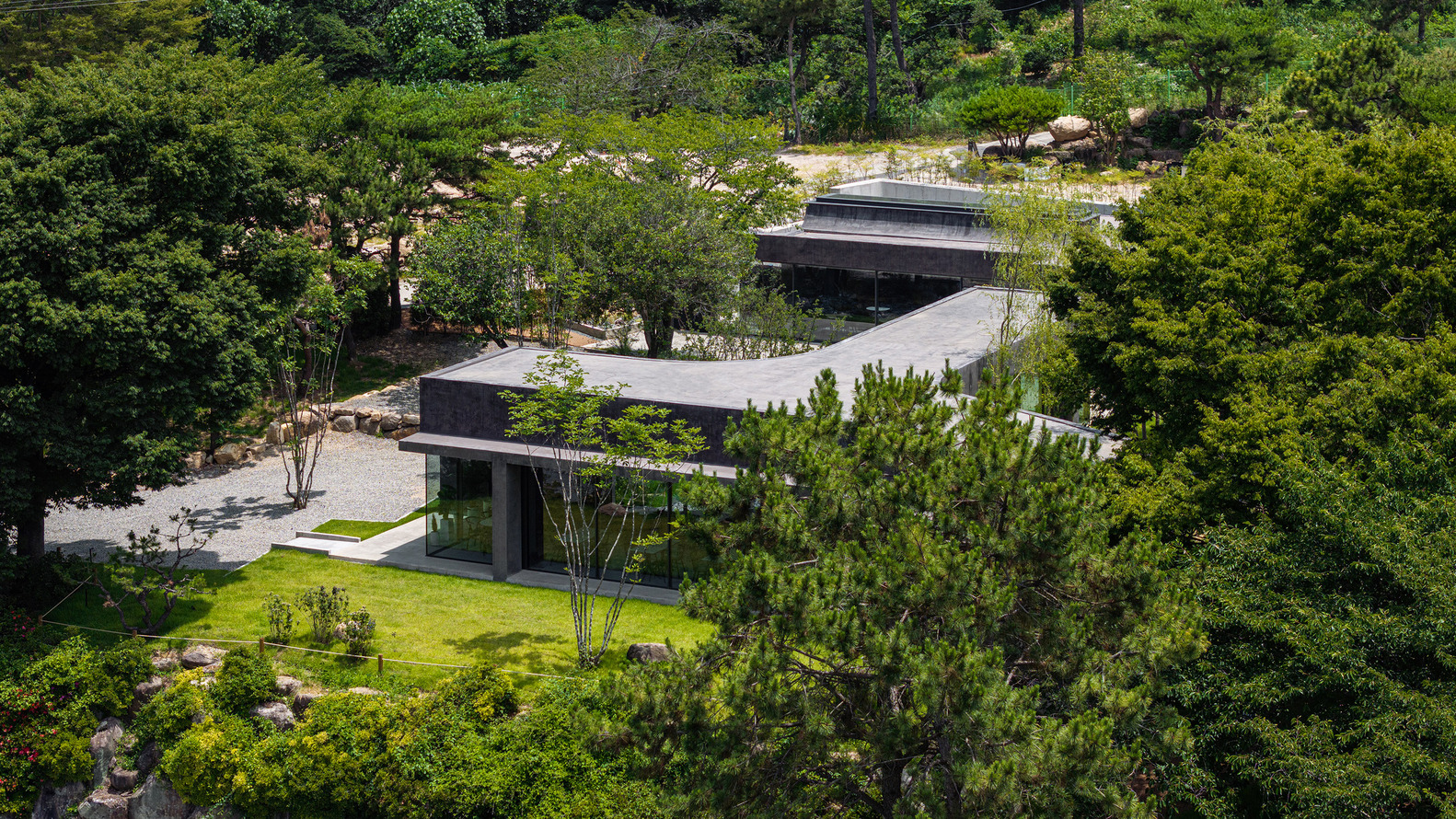
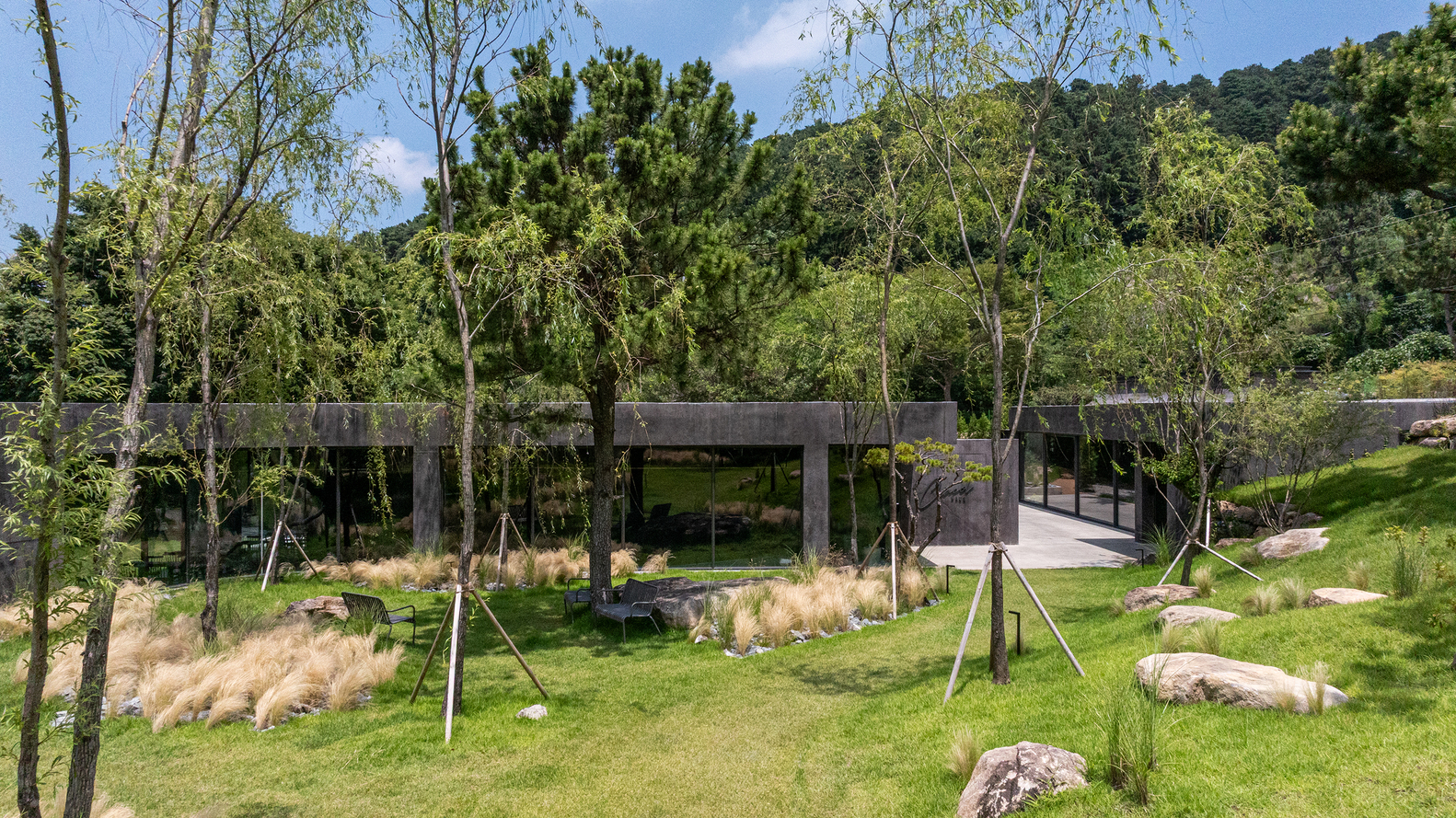
Below the site, an industrial complex is planned. This creates an unexpectedly open view. Because the land is within a greenbelt zone, there are few buildings nearby.
What makes the site unusual is the presence of a half-finished garden and fish pond. These remnants of a former business give the place an awkward atmosphere, rather than a natural one.
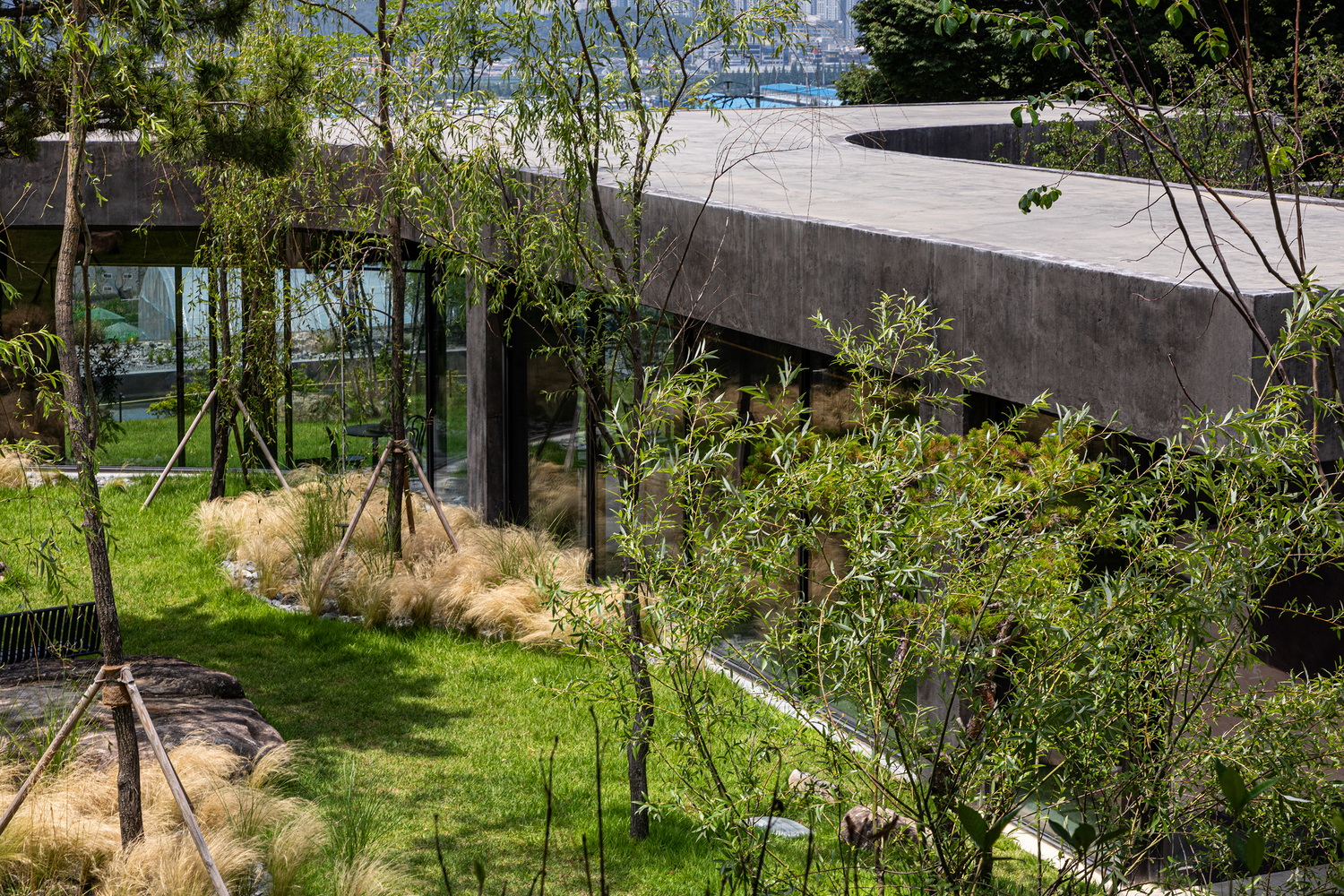
Faced with this ambiguous landscape, the first question was not what kind of architecture to build. It was how to define the place itself. Architecture creates form and space.
But it can also be a tool to make the landscape more meaningful. A vacant, uneasy space begins to shift the moment architecture arrives. Even an ordinary site can gain significance.
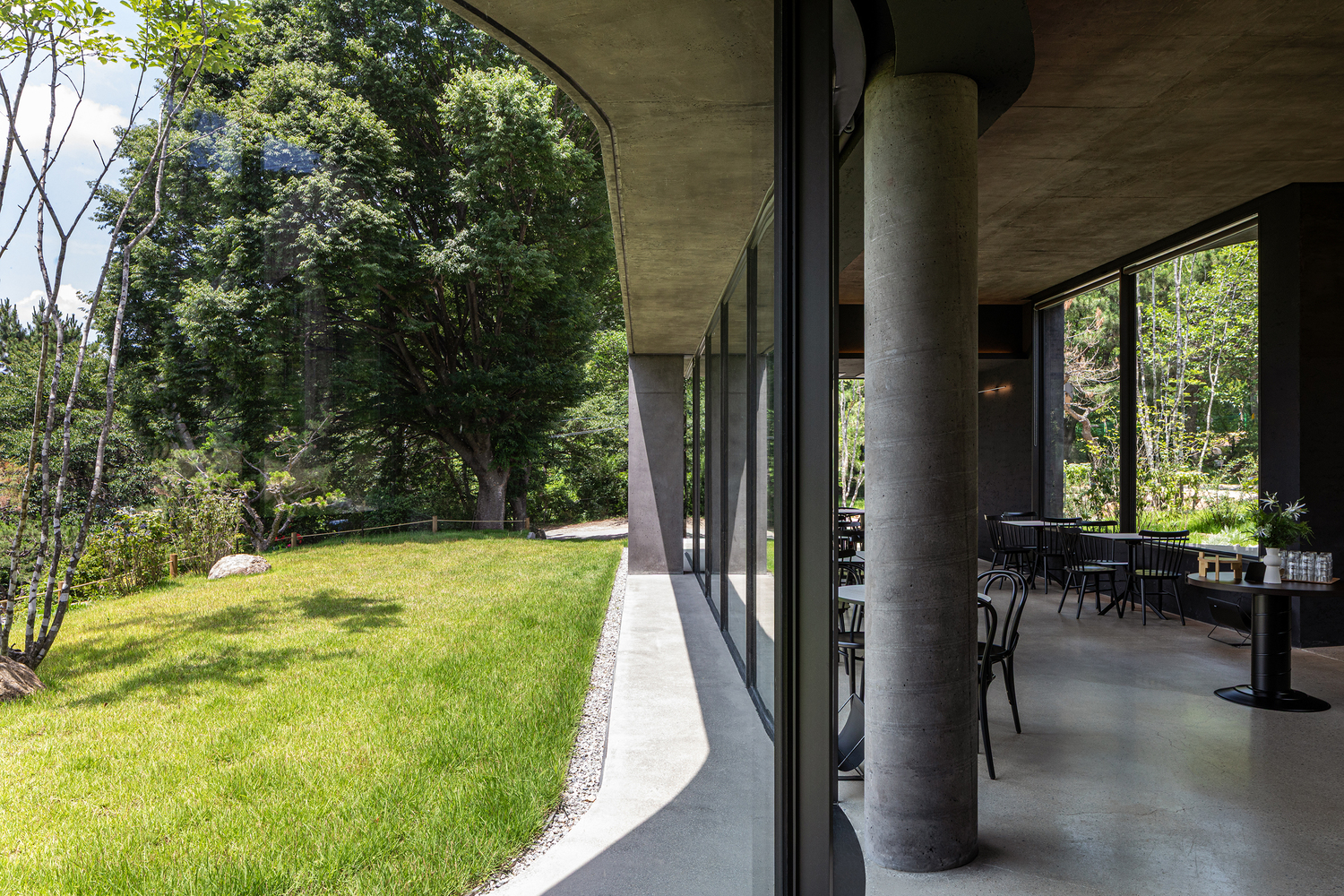
MINIMAL ARCHITECTURE
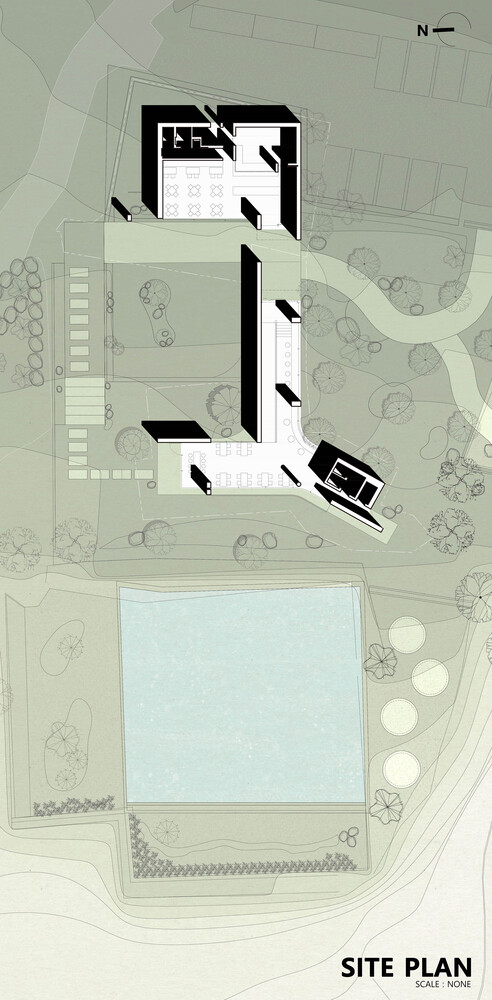
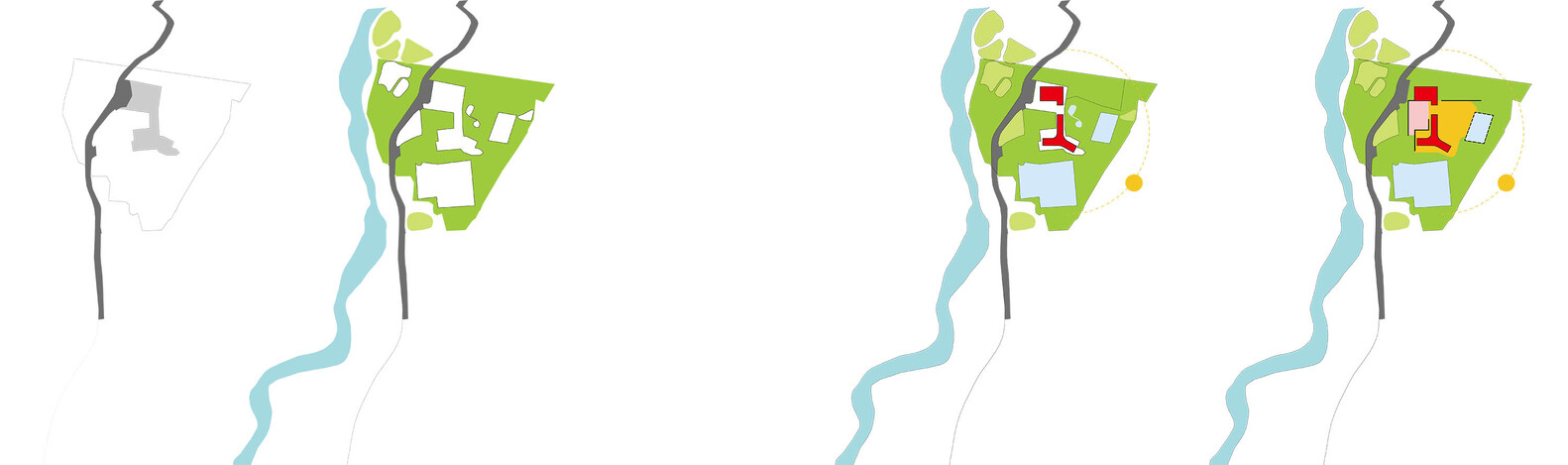
This project required two buildings on two neighboring plots. Each site follows a slope, with a one-meter difference in height between them. The construction method was simple.
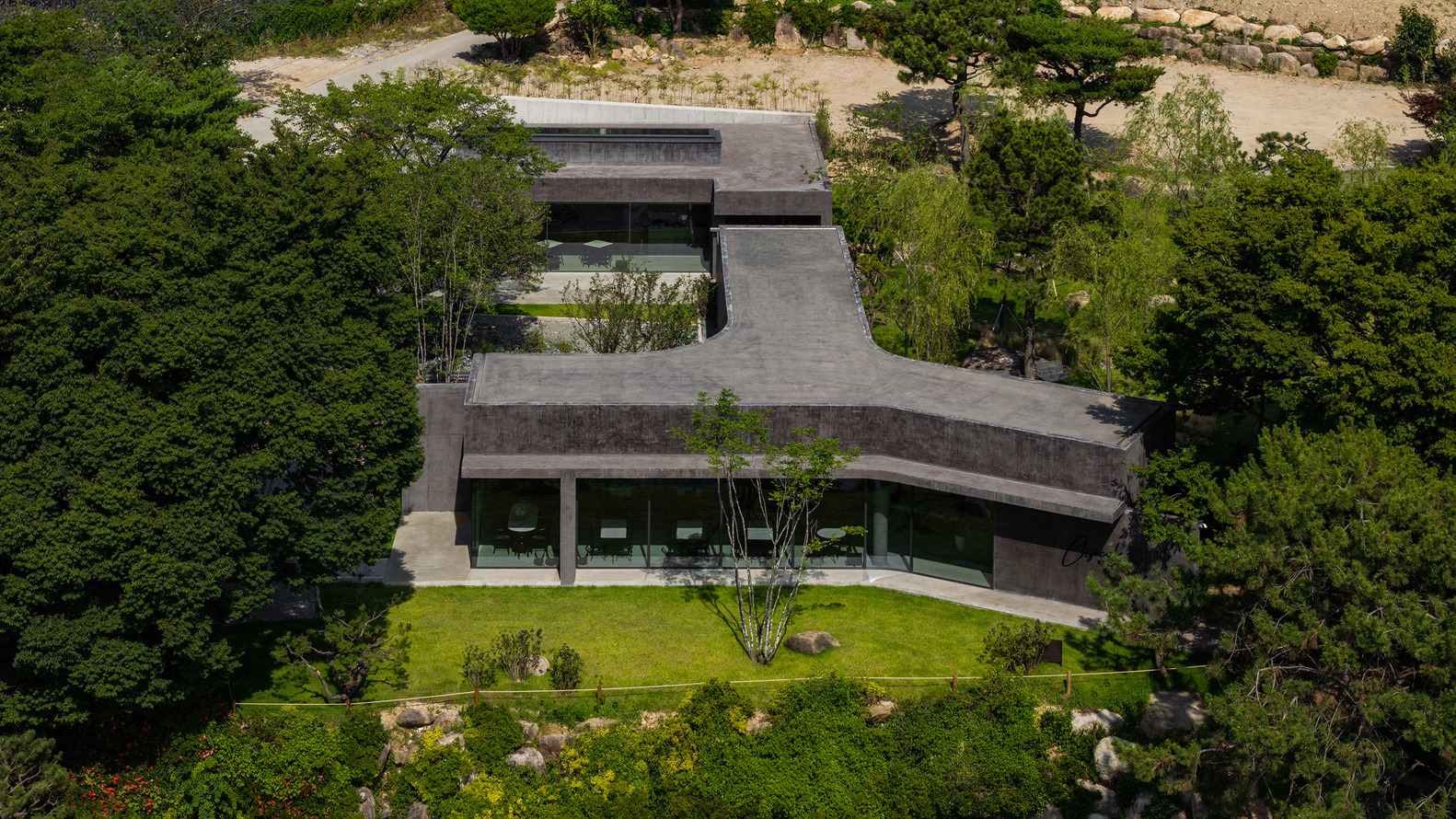
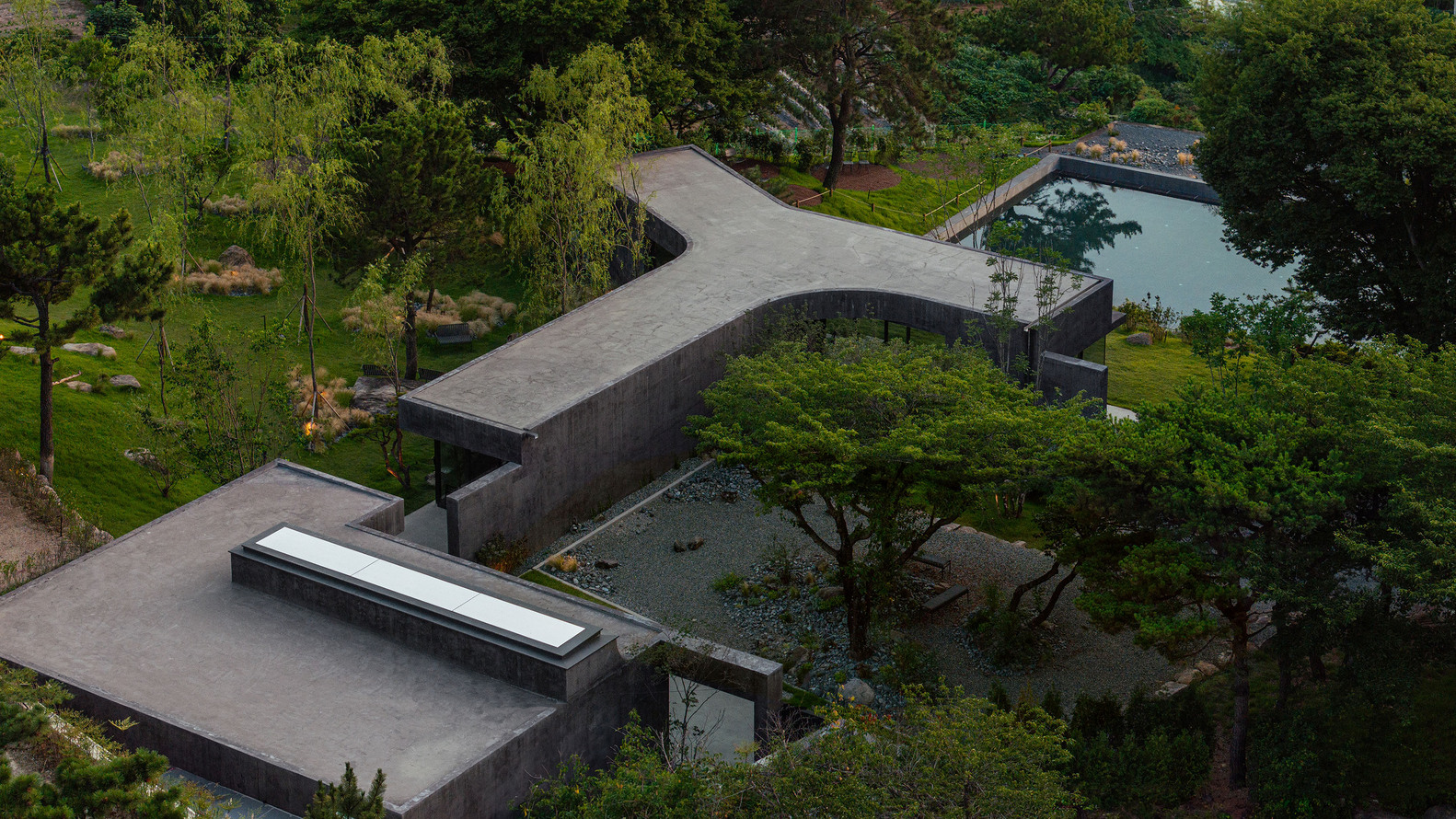
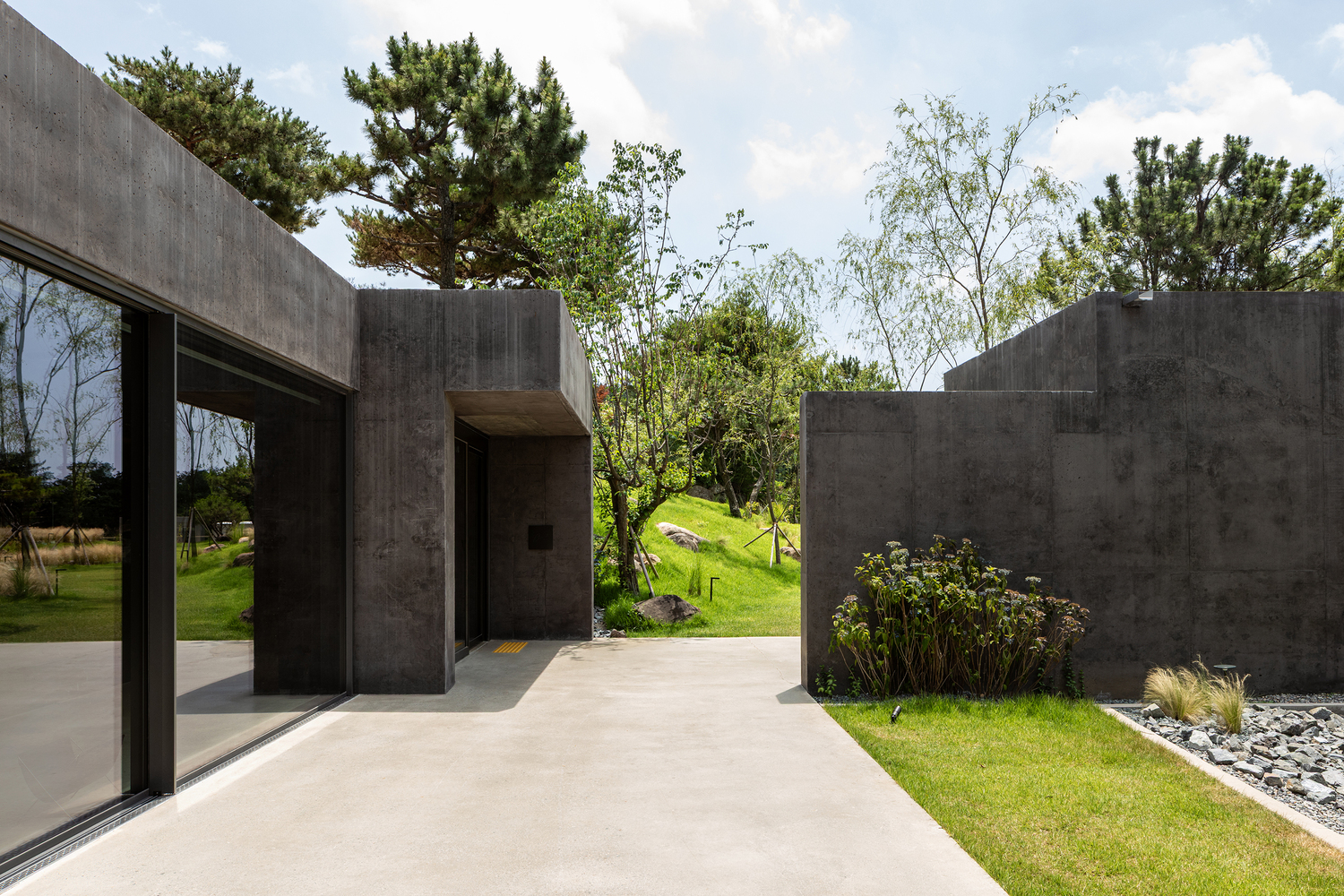
Wall, column, floor, and roof. Only these four elements were used. A long wall was built along the slope. It divides the land and gives scale to the wide, open site. On one side, a clean courtyard greets visitors.
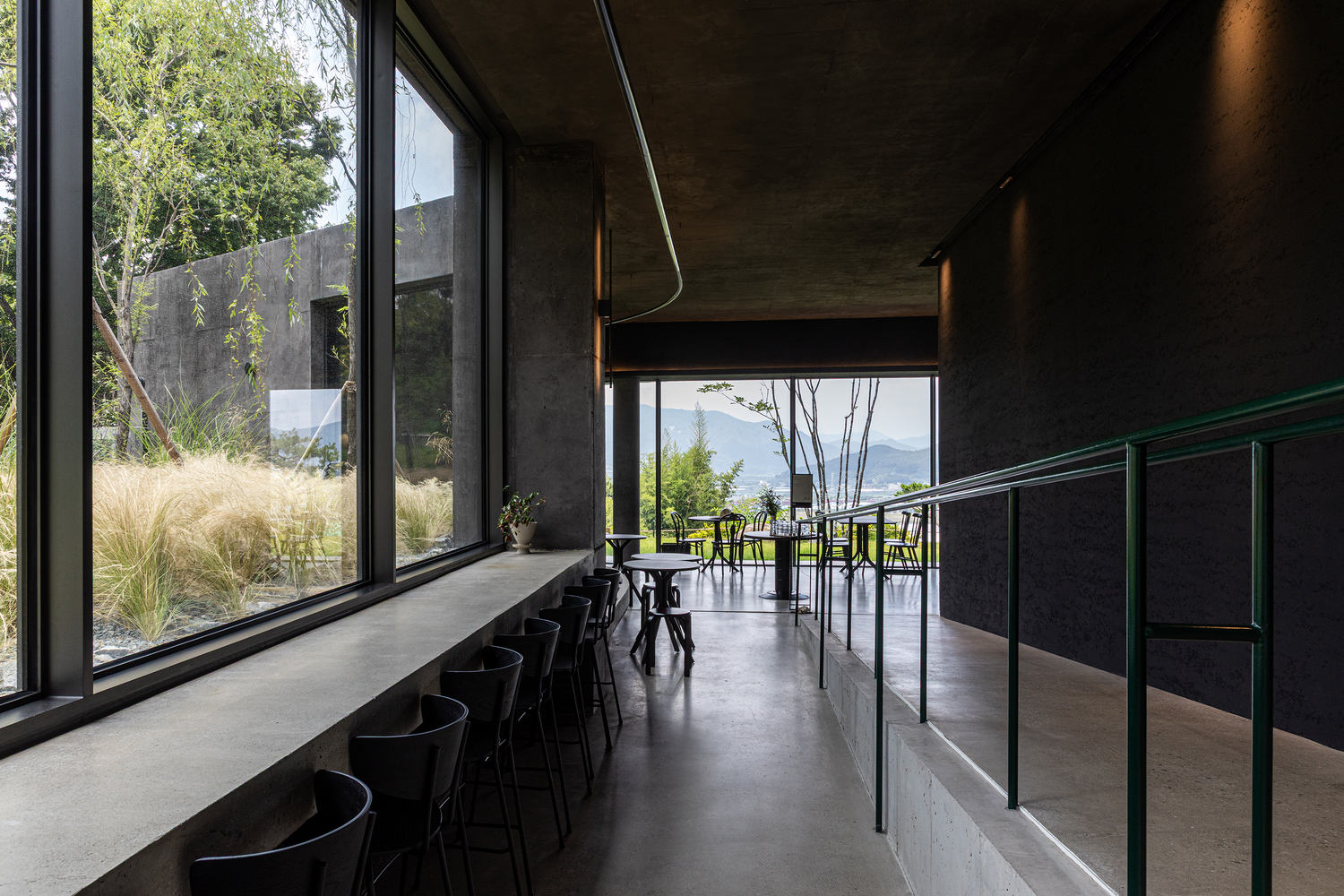
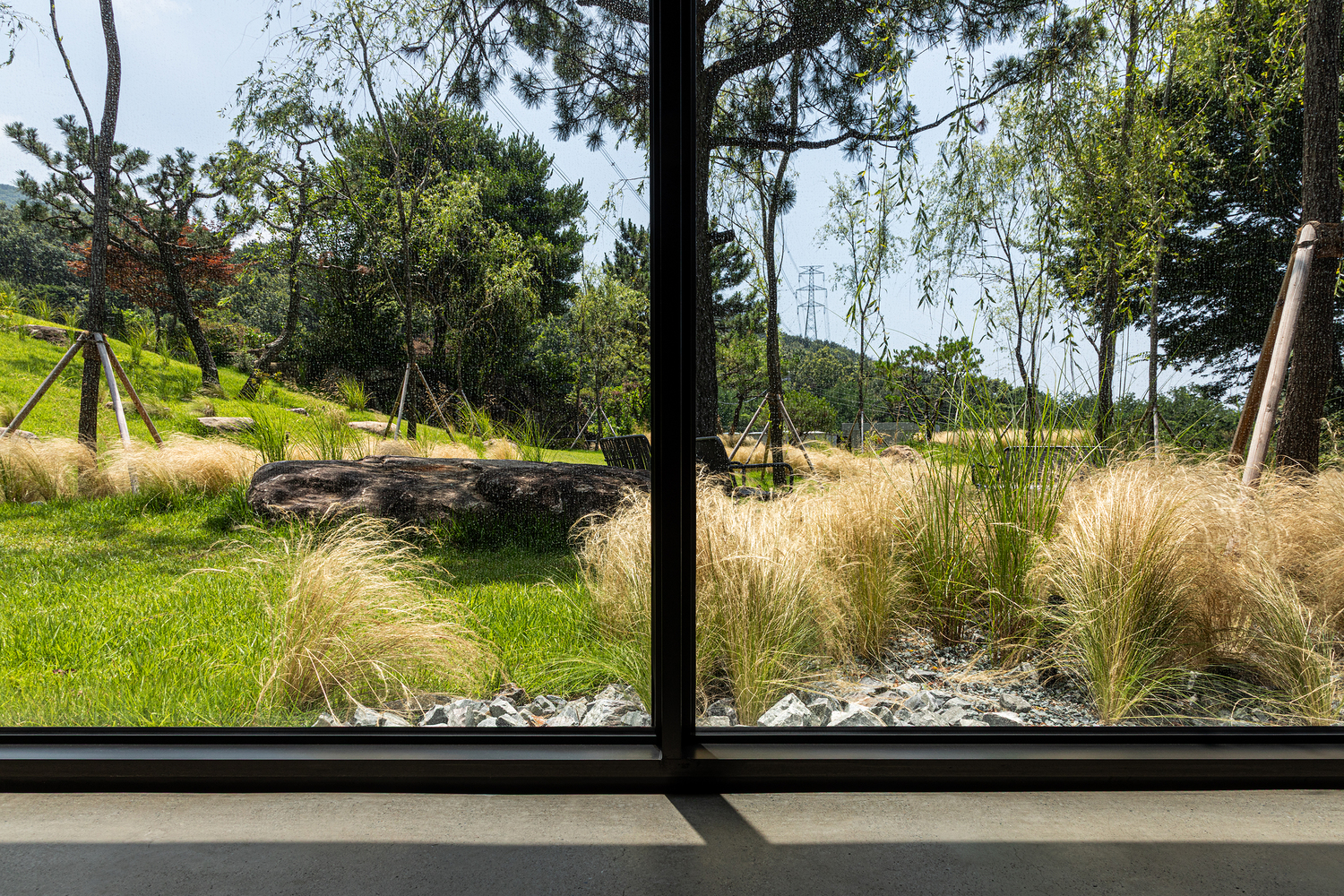
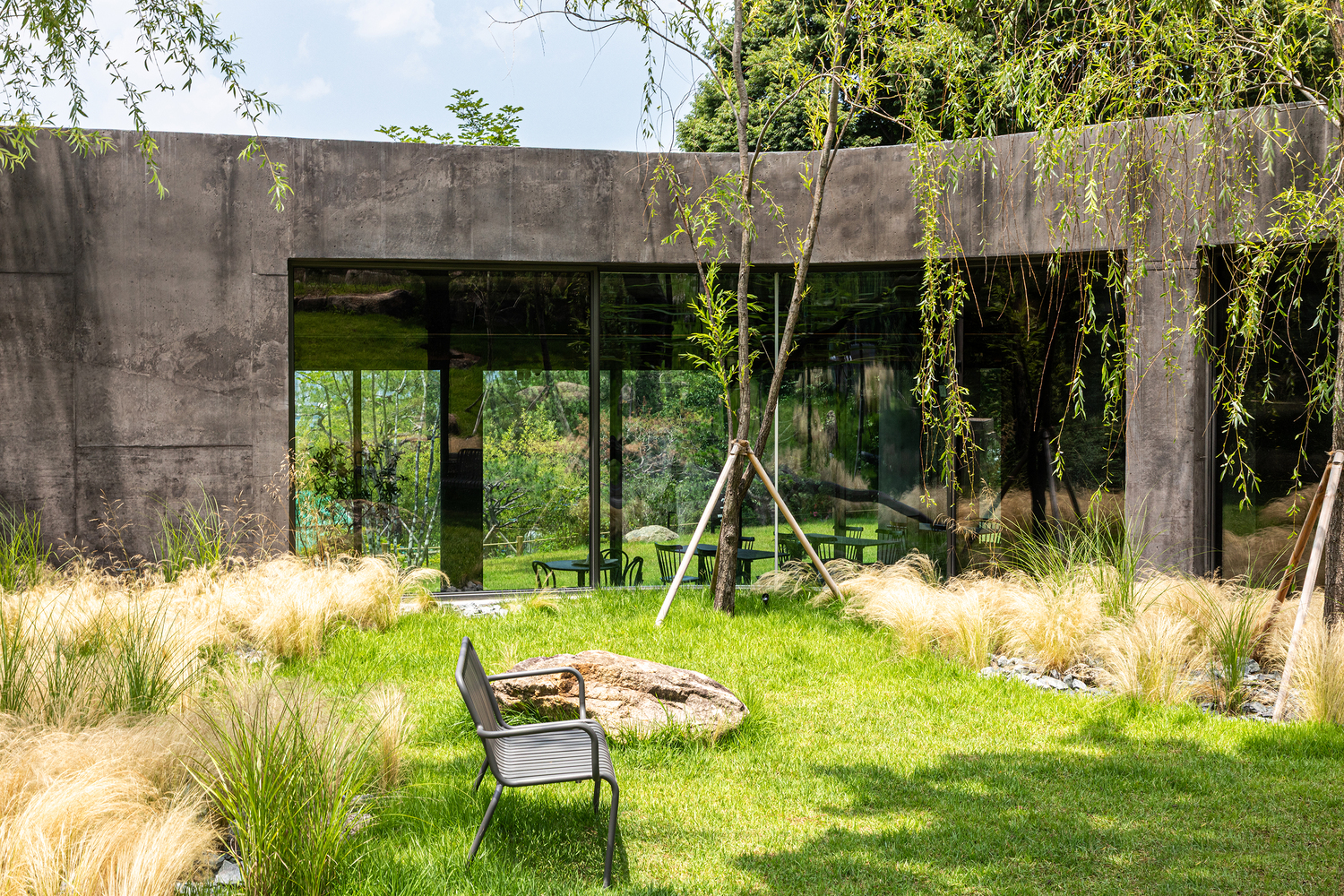
On the other hand, a messy garden revives a broken forest. Instead of evergreen pines, willows were planted to express seasonal change.
Their moving branches at eye level create a lively atmosphere in place of rigid landscaping. The floor accepts the one-meter height difference.
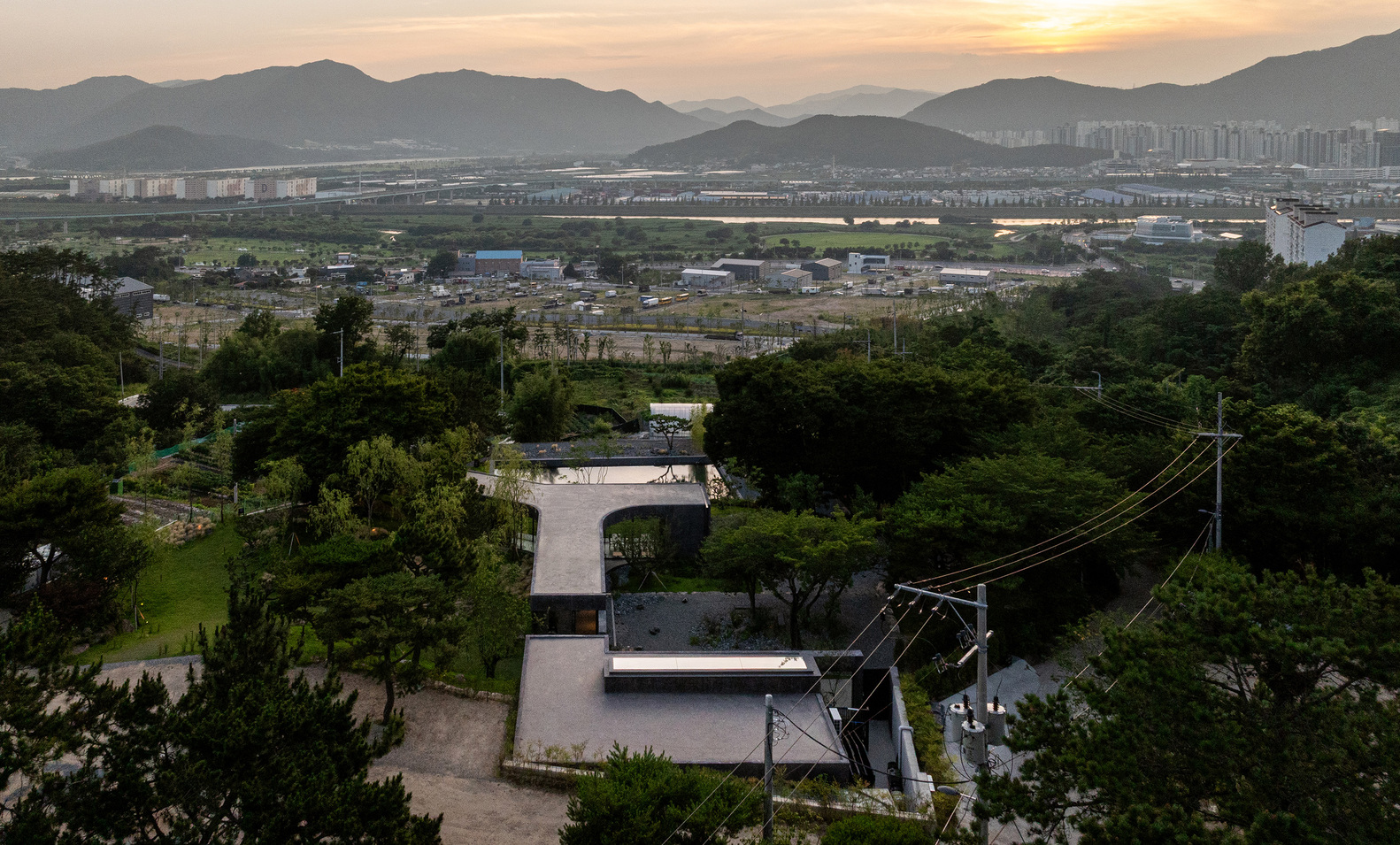
As you walk along the slope, the garden below gradually rises to eye level. It offers a closer and more intimate experience of the forest. The interior is compact, but it feels protected and cozy.
There are a variety of seats and spatial changes throughout. The roof runs in a continuous horizontal line. Because of this, ceiling heights vary across each room. Columns and walls were placed carefully.
Some extend outward to give space. Others frame views beyond the windows. This created a range of facades. There are curved openings, straight-lined windows, and bold triple sliding doors.
THE THICKNESS OF THE BOUNDARY
Charcoal explores the idea of the boundary. We often imagine boundaries as thin and tall. They divide, block, and separate. But what if space exists on top of a boundary? A low and wide boundary can become a buffer. It connects different sides, rather than cutting them off.
Charcoal is a void made from only minimal architectural elements. It divides, but also integrates with the surrounding environment. Changes in ground level, growing vegetation, and shifting sunlight allow the space to blend with its context. Like its name, Charcoal sits quietly in between. It shares the tone and ambiguity of gray.