
Waverley House
WAVERLEY HOUSE
Sam Crawford Architects
ARCHITECTS
Sam Crawford Architects
STRUCTURAL ENGINEER
Structure Consulting Engineers
LANDSCAPE CONSULTANT
Tarn
QUANTITY SURVEYOR
Qs Plus
PROJECT TEAM
Sam Crawford, Jarad Grice, Charly Watson, Jacqui Singer
COUNCIL
Waverley Council
BUILDER
Build By Design
PHOTOGRAPHS
Brett Boardman
YEAR
2024
LOCATION
Waverley, Australia
CATEGORY
Houses
English description provided by the architects.
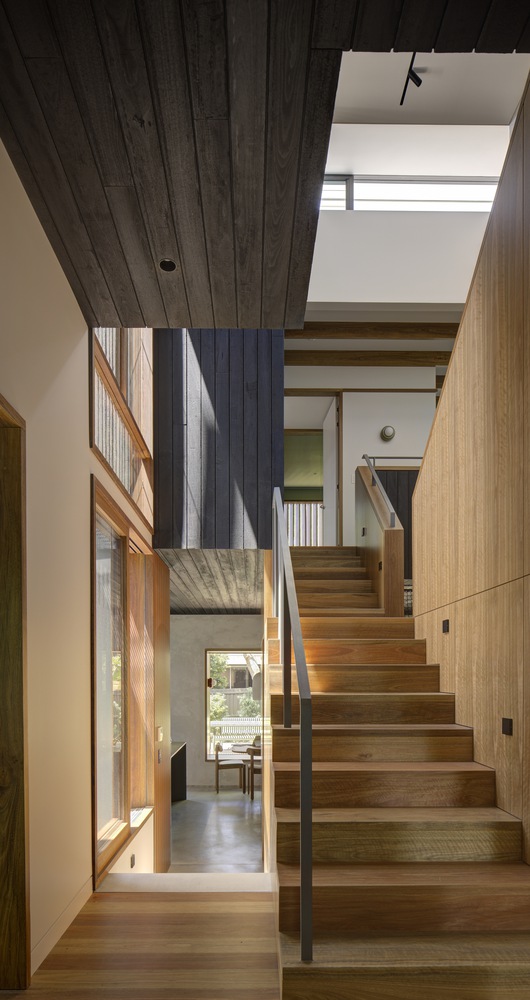
A light-filled, central staircase forms the heart of this renovated home, opening up layered views across its split levels, physically and metaphorically connecting spaces whilst simultaneously generating private nooks.
The renovation of Waverley House for a young family in Sydney's eastern suburbs by Sam Crawford Architects (SCA) fosters deeper connections—to nature, home, and each other. Clever details create spaces to play, for quiet contemplation, whilst maintaining a dialogue with the surrounding greenery.
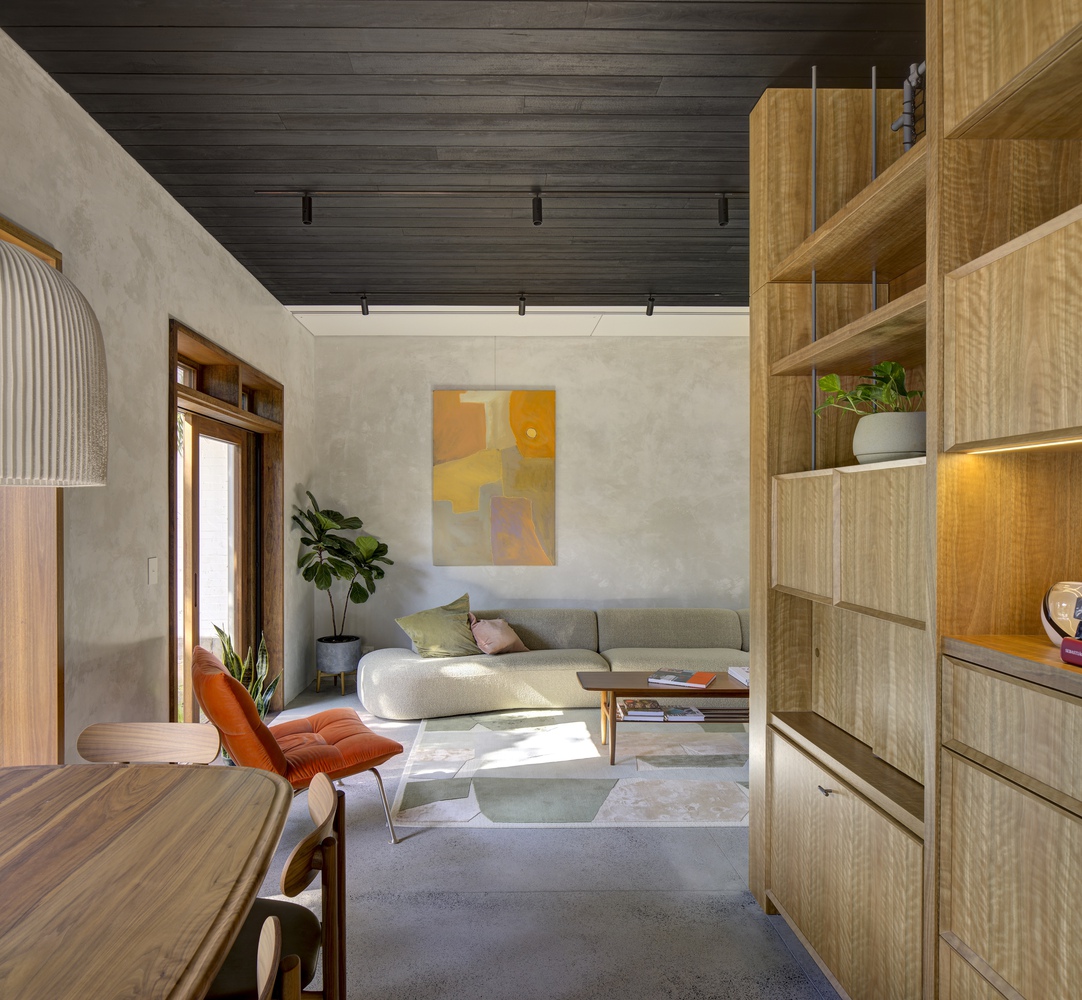
Jarad Grice, SCA Senior Associate and Project Architect, said: "The design responds directly to the family's desire for a home that supports their evolving needs—a place that allows for growth. It fosters familial connection as well as allowing parents and kids to inhabit separate spaces."
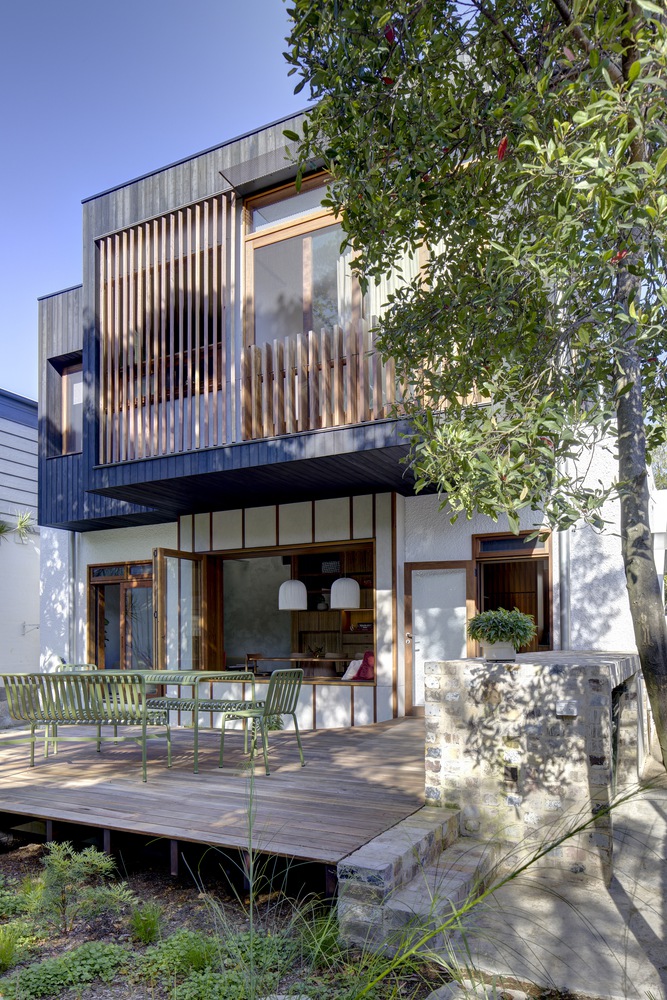
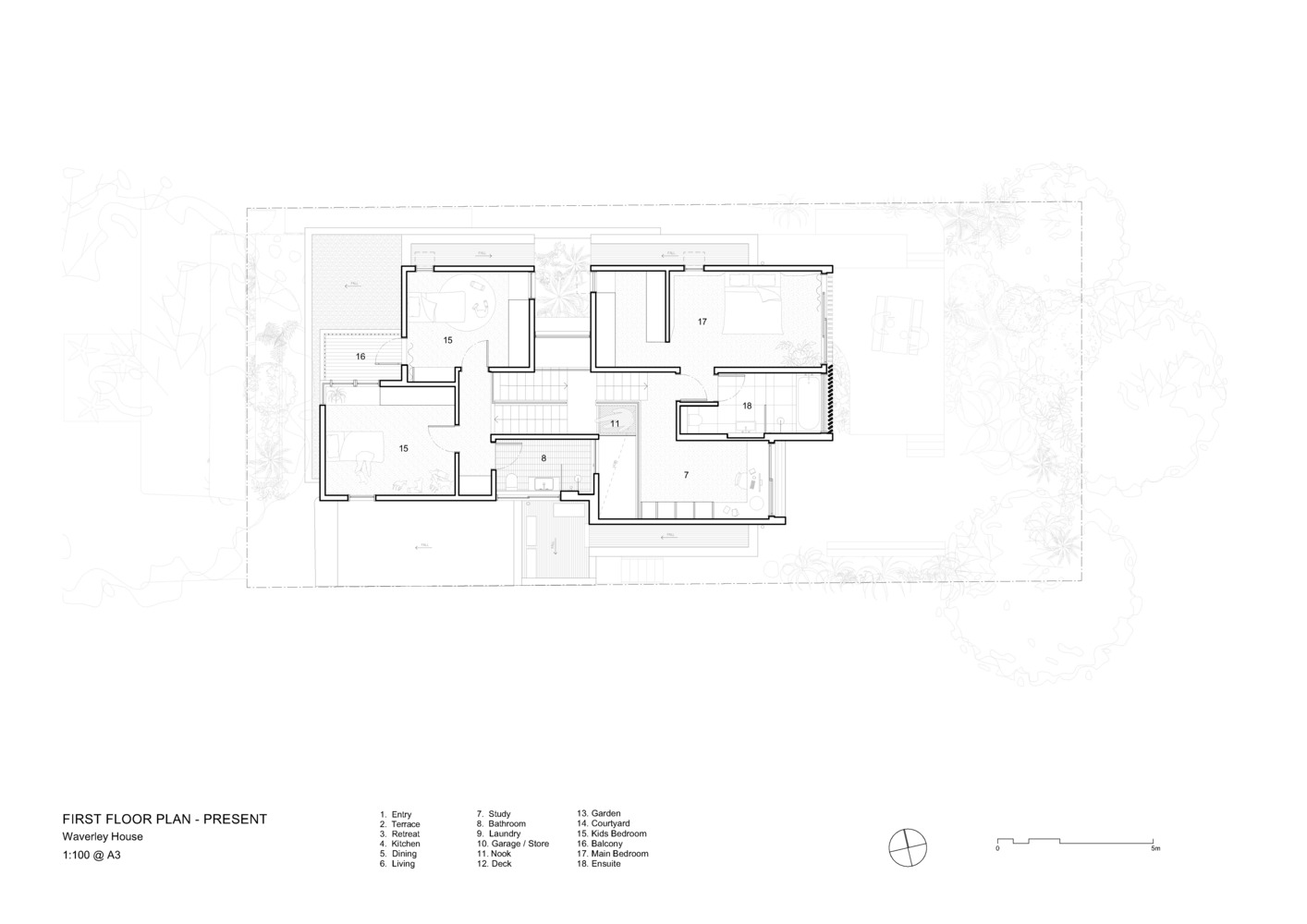
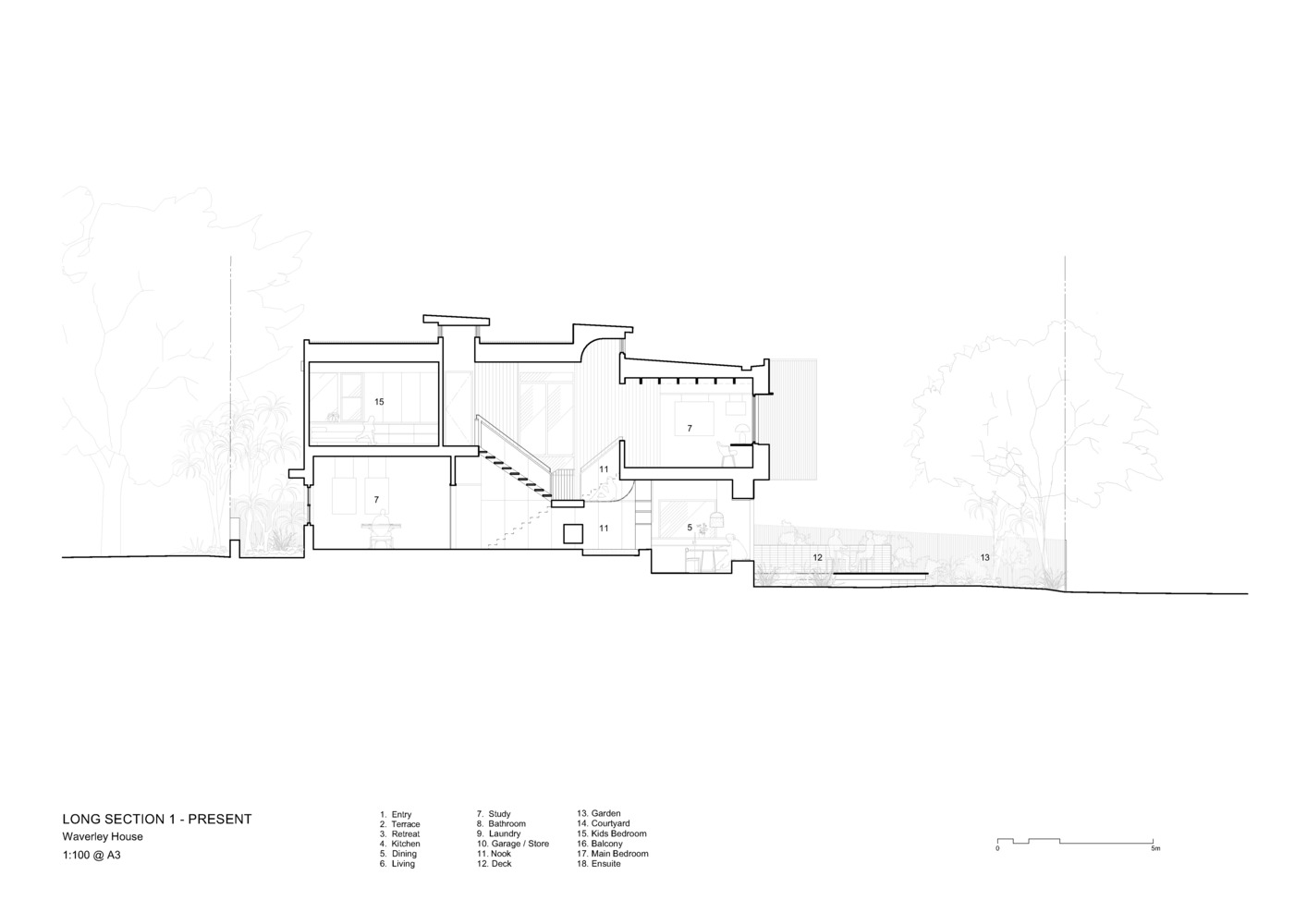
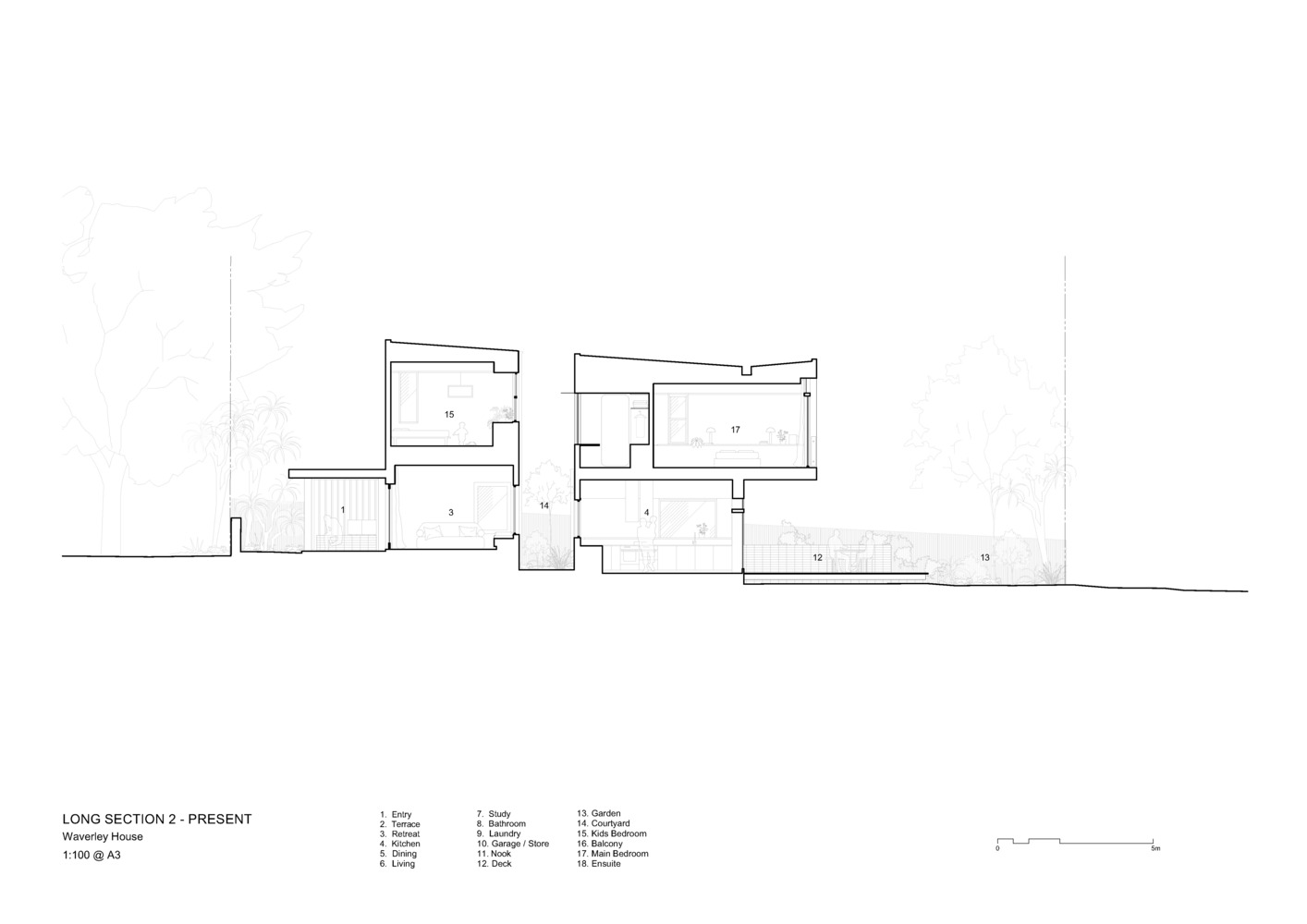
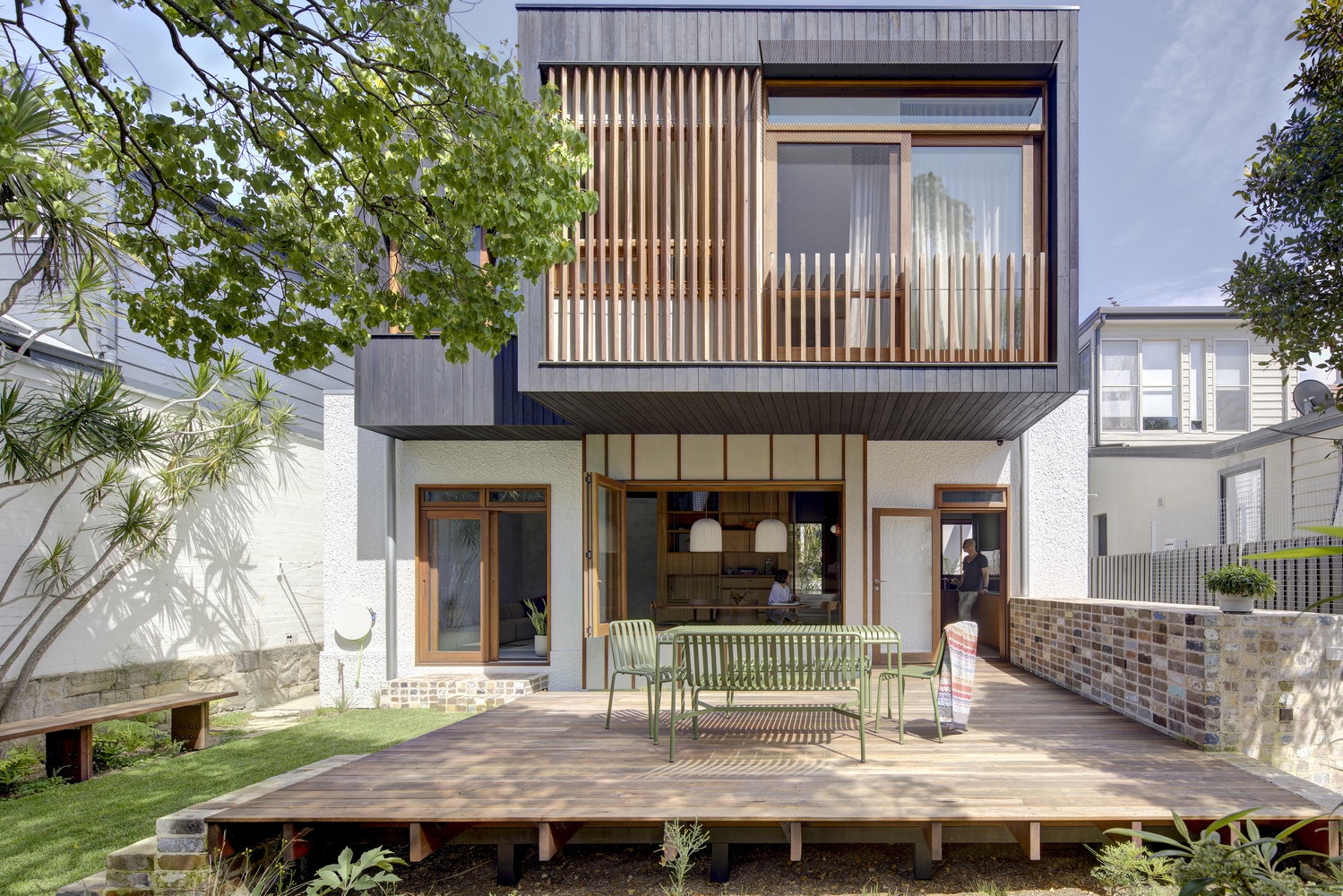
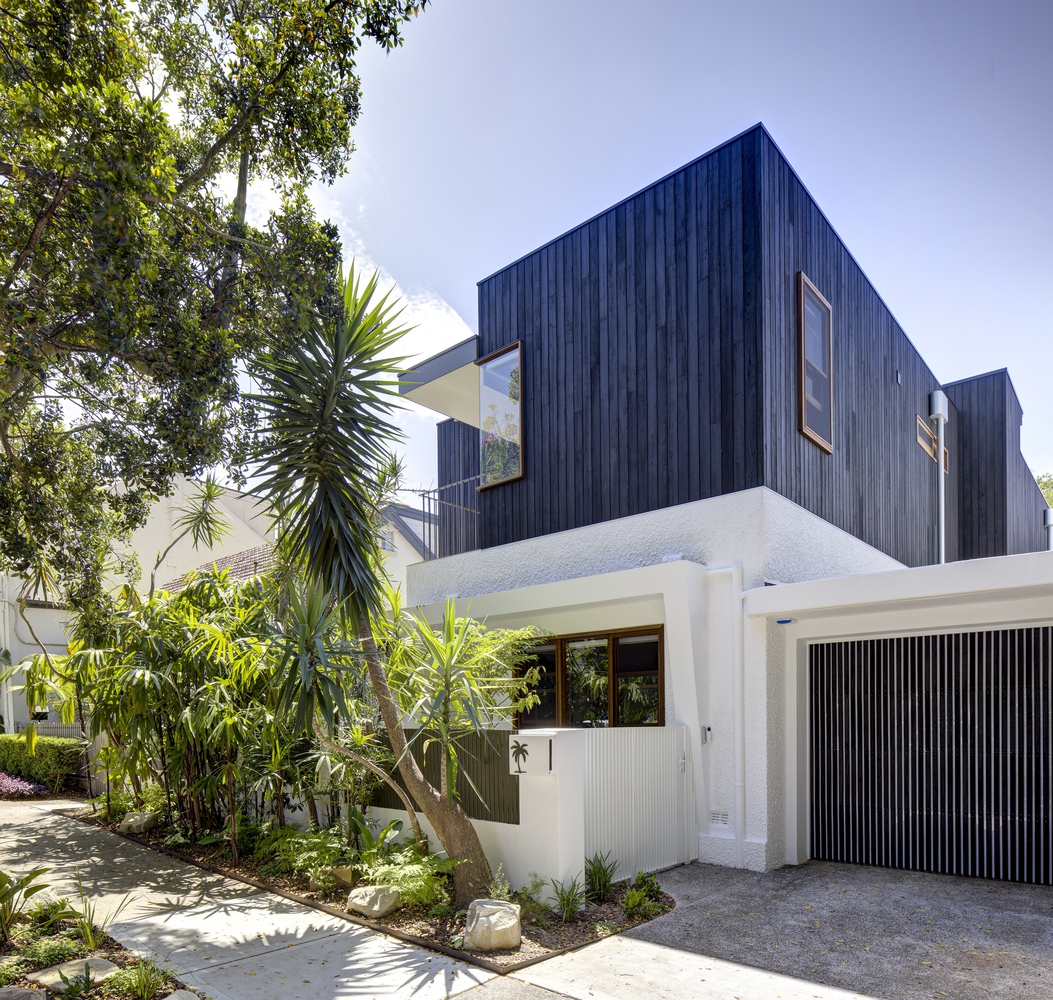
The original 1950s single-storey bungalow sits in a landscape-heritage street lined with mature Moreton Bay figs. Strategic modifications kept the same floor print and original external walls. In response to the site's gentle slope, SCA lowered the rear ground floor to meet the garden, embedding the living spaces within the verdant surroundings, and added two split levels above.
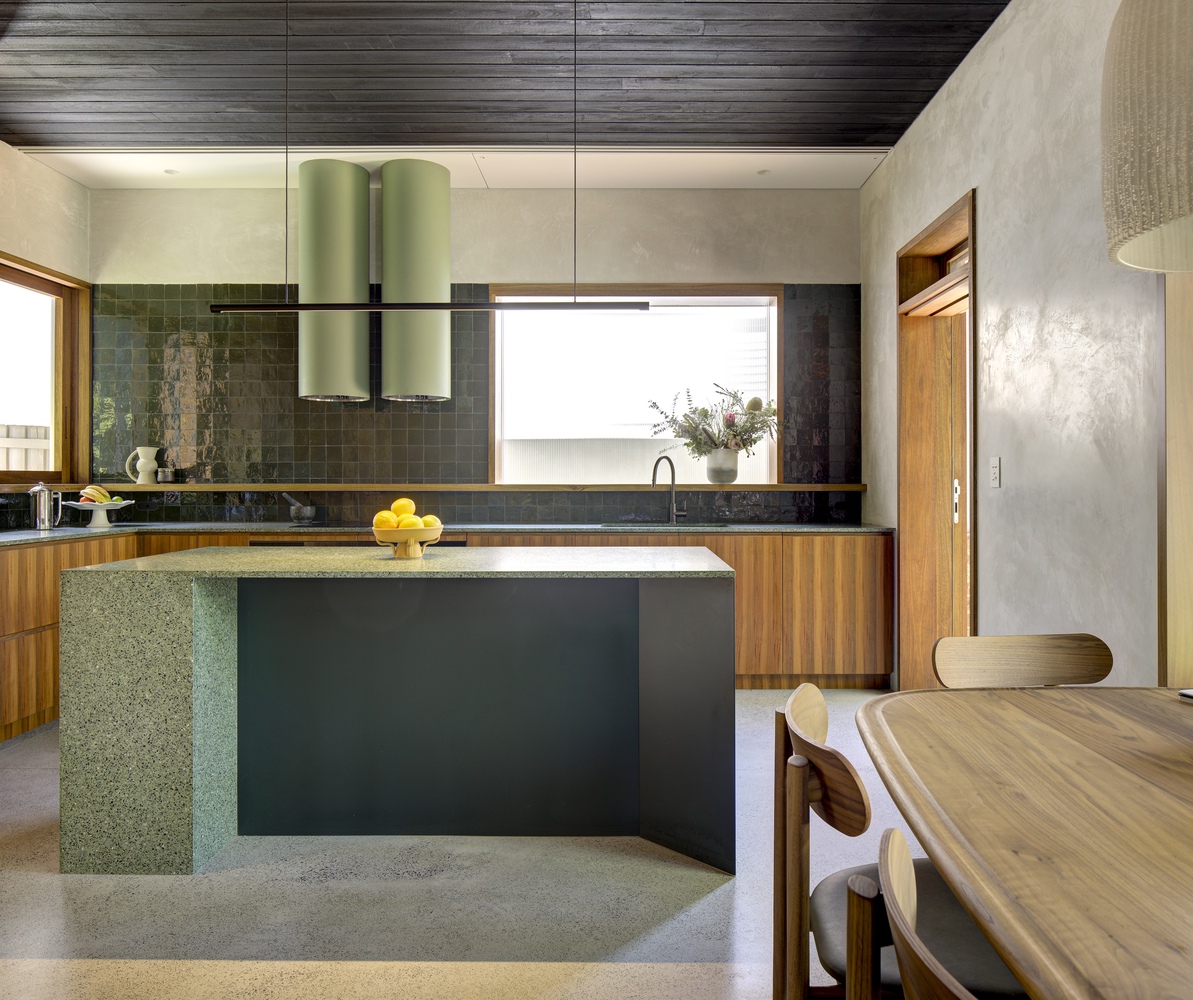
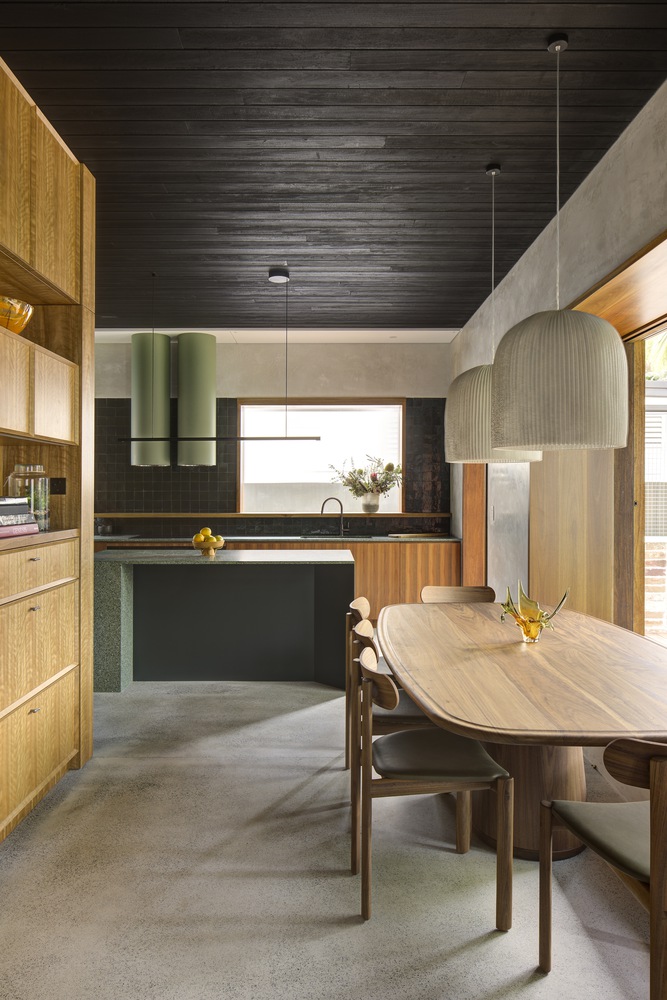
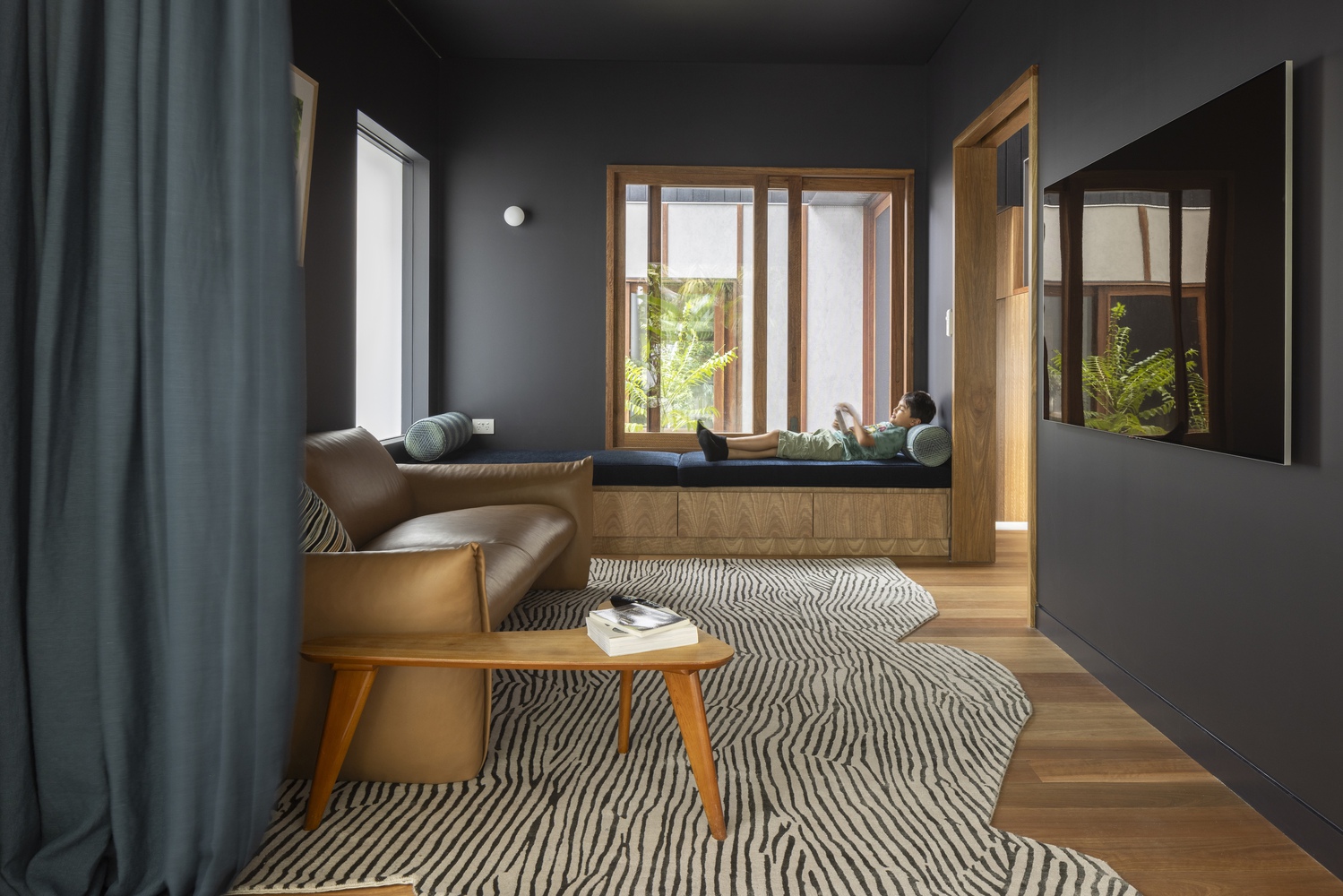
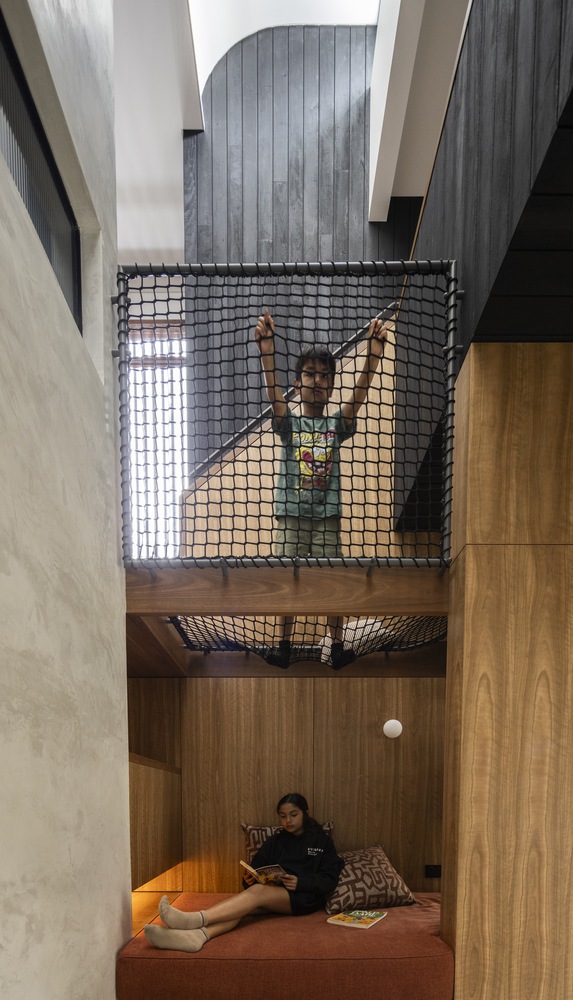
Charly Watson, SCA Associate and Project Architect, noted: "The arrangement of the plan over these four split levels created a variety of opportunities for overlapping and intersecting spaces, resulting in considered places to slow down (window bench seats, cosy nooks, mesh hammock).
Each space has been crafted to maintain visual connections—outward, through, and across—to the gardens and tree canopy beyond, linking inhabitants back to their tranquil surroundings."
"The entry sequence provides a sheltered transition from public to private space, where occupants pause before crossing the threshold.
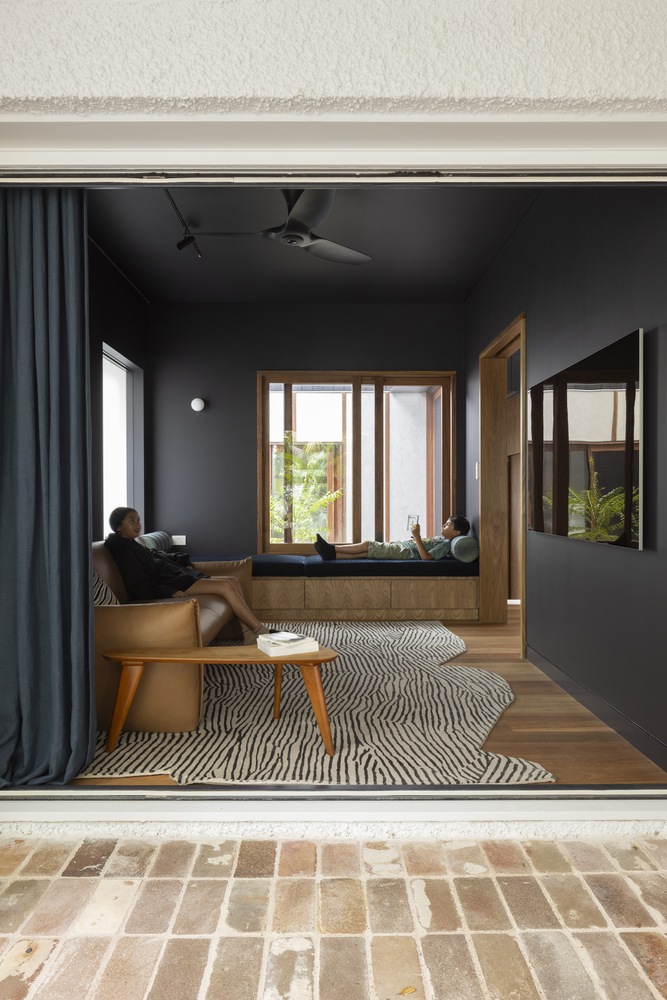
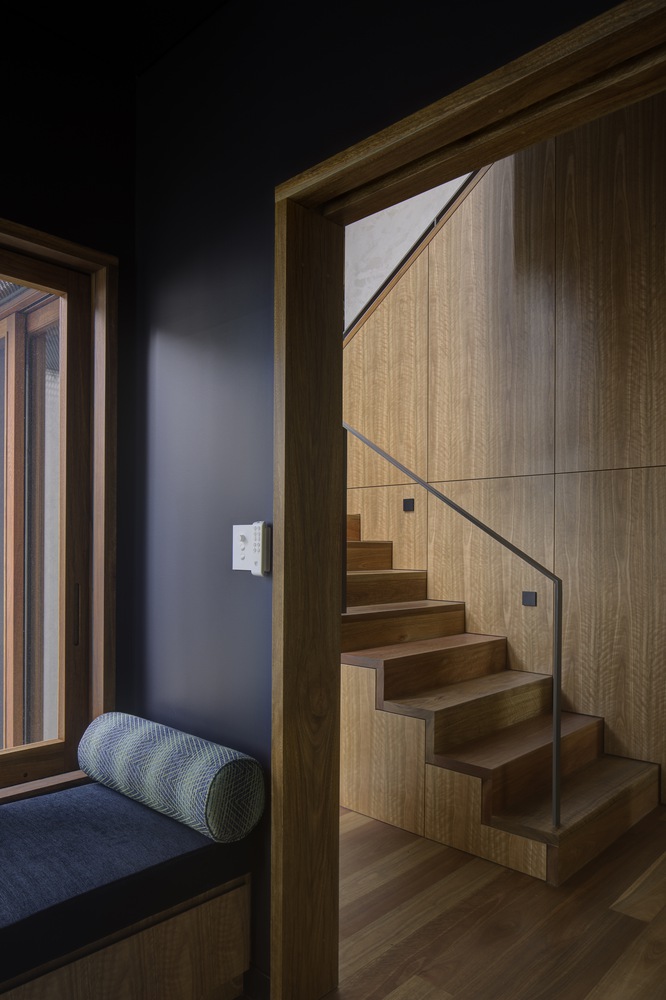
Beyond, the eye is drawn through carefully composed layers of space to the rear garden, establishing a design language that threads throughout the home. One can stand in the centre of the house and look in multiple directions to greenery."
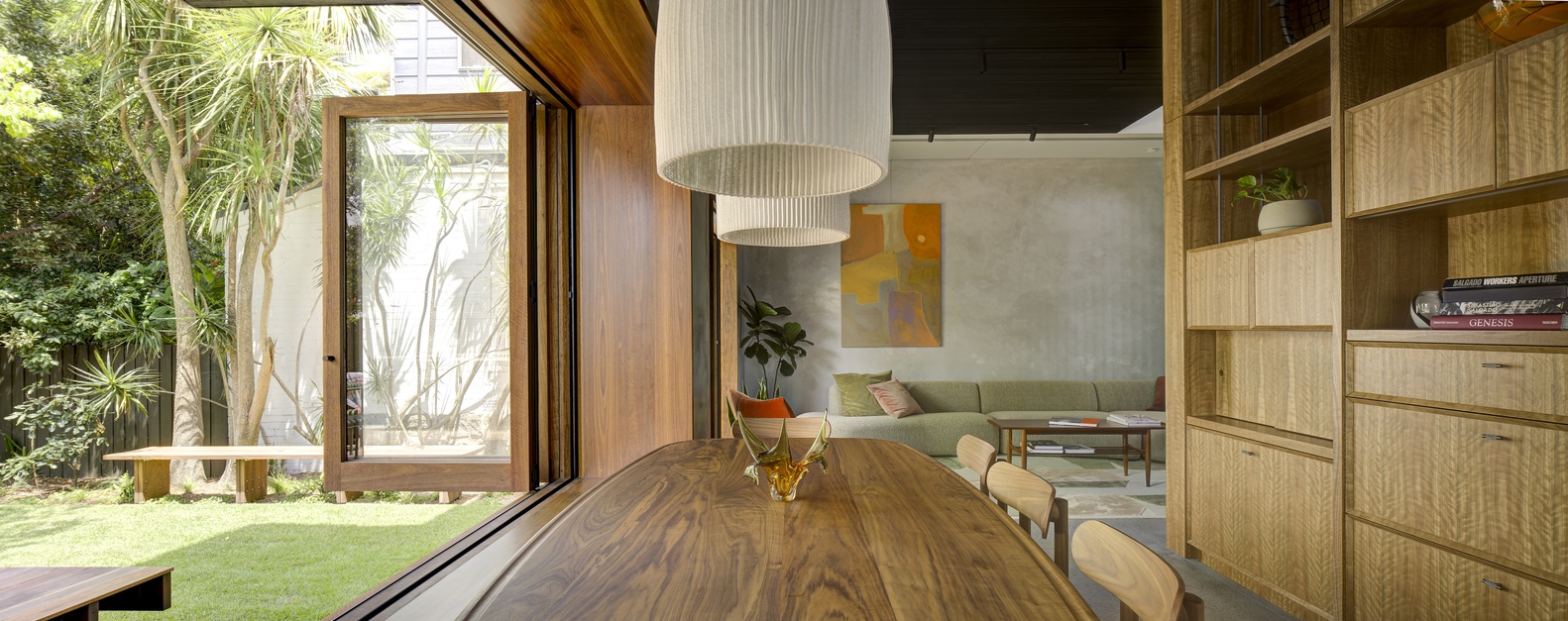
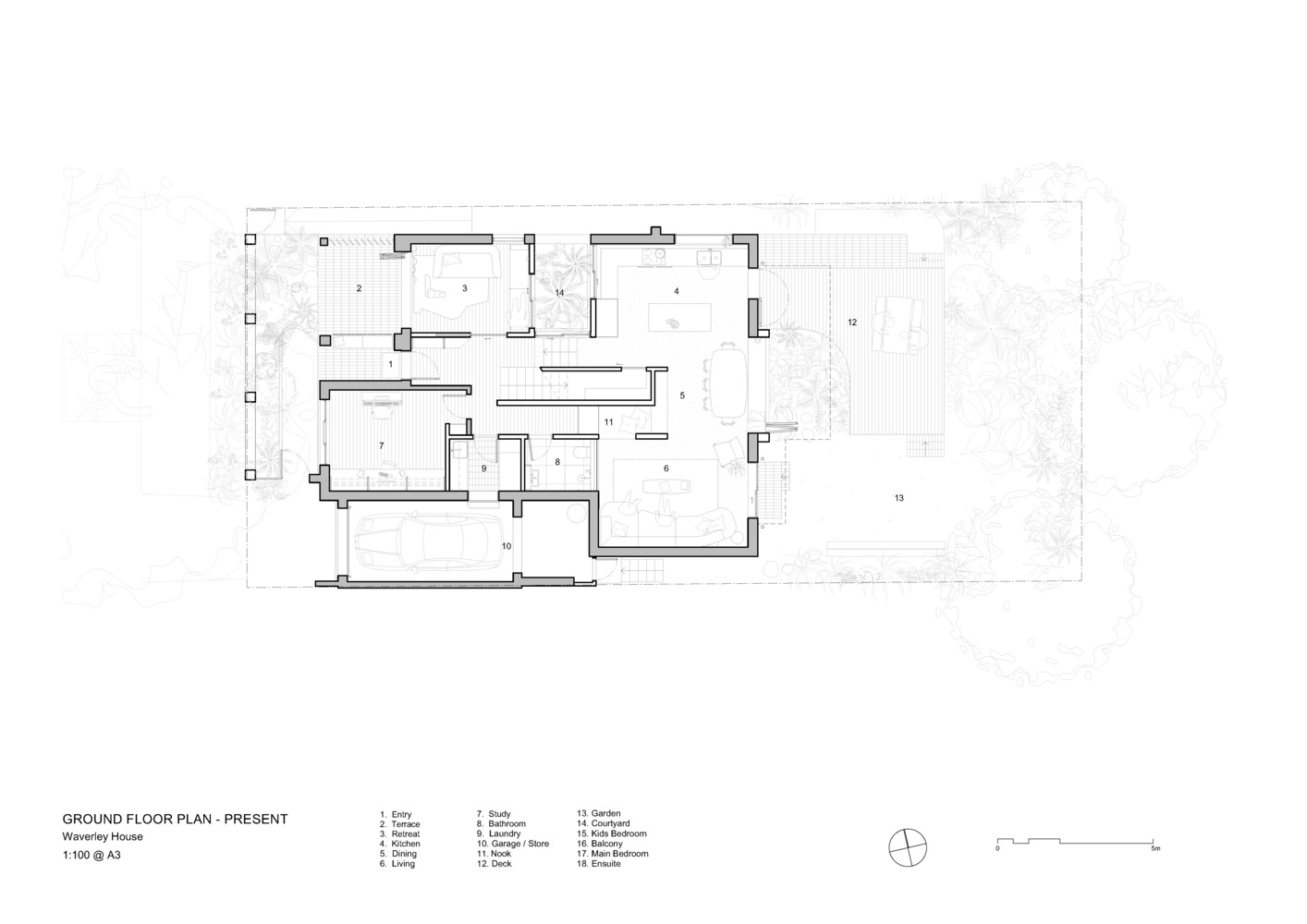
The ground floor plan places primary living areas towards the rear garden, with smaller, quieter spaces to the front of the house, a subtle separation between public / private space, all wrapped around the central stair.
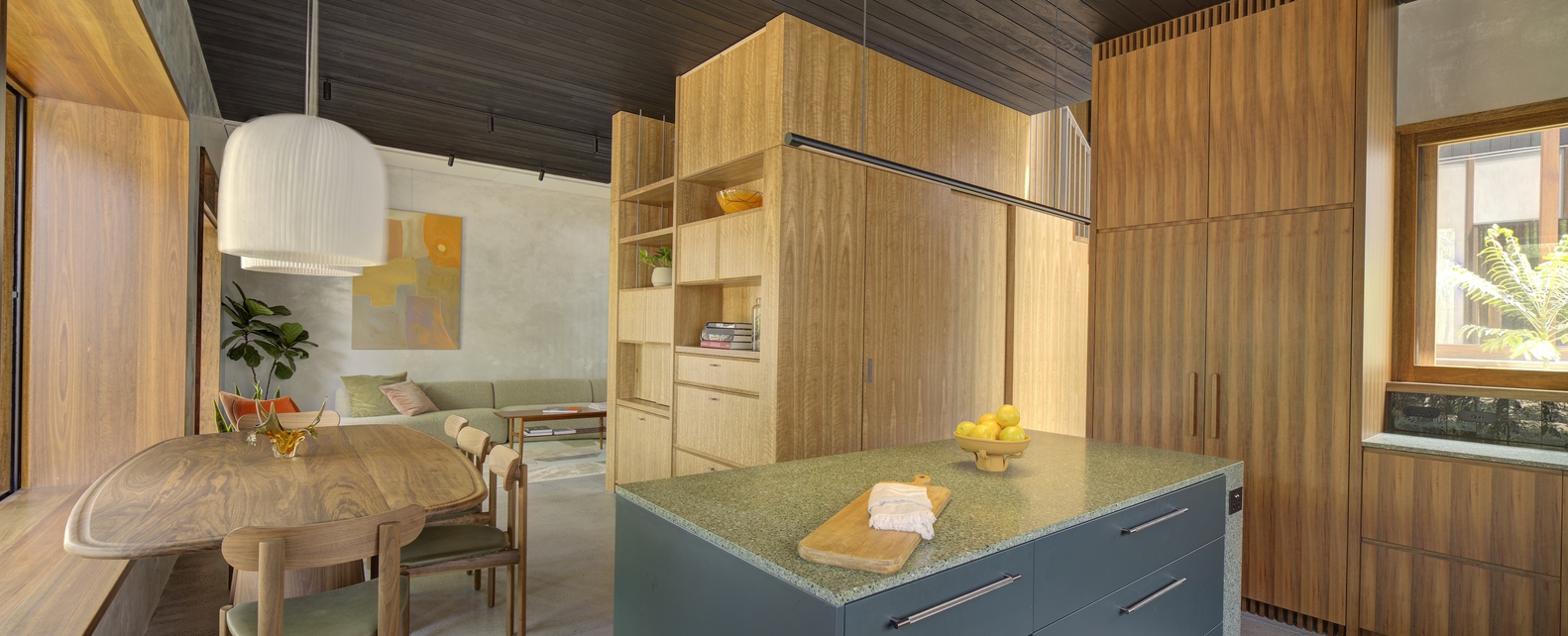
The spatial arrangement shifts away from open-plan to favour intimate settings, supporting differing moods, activities, and individuals.
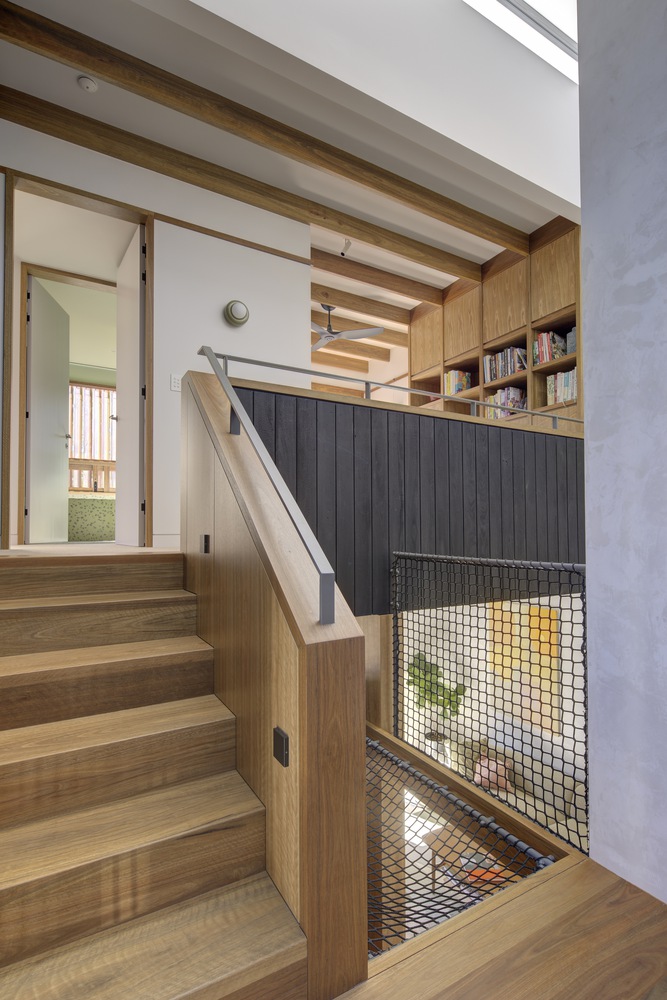
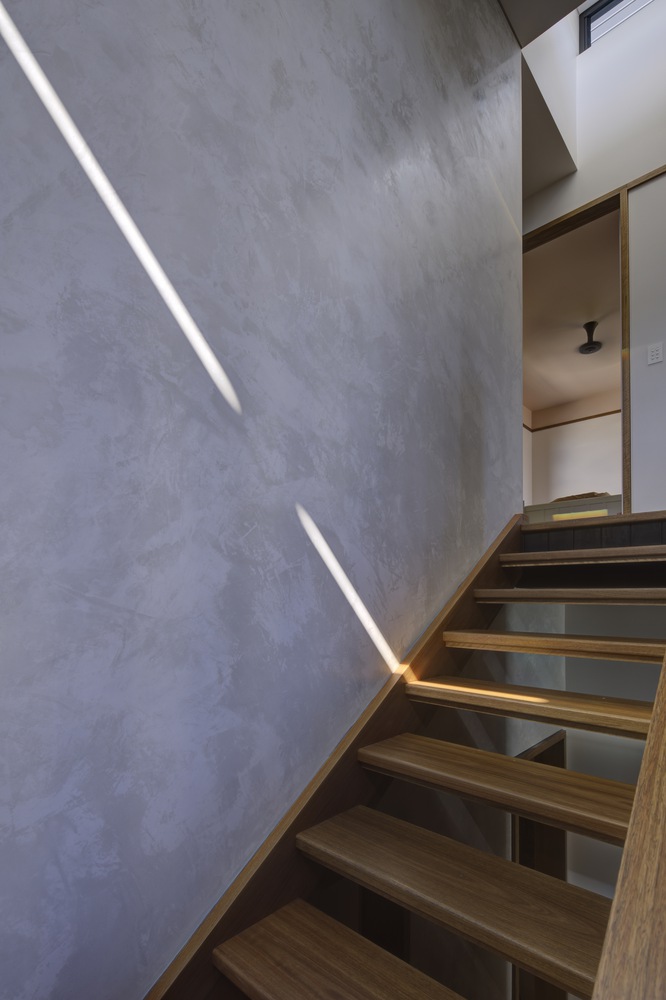
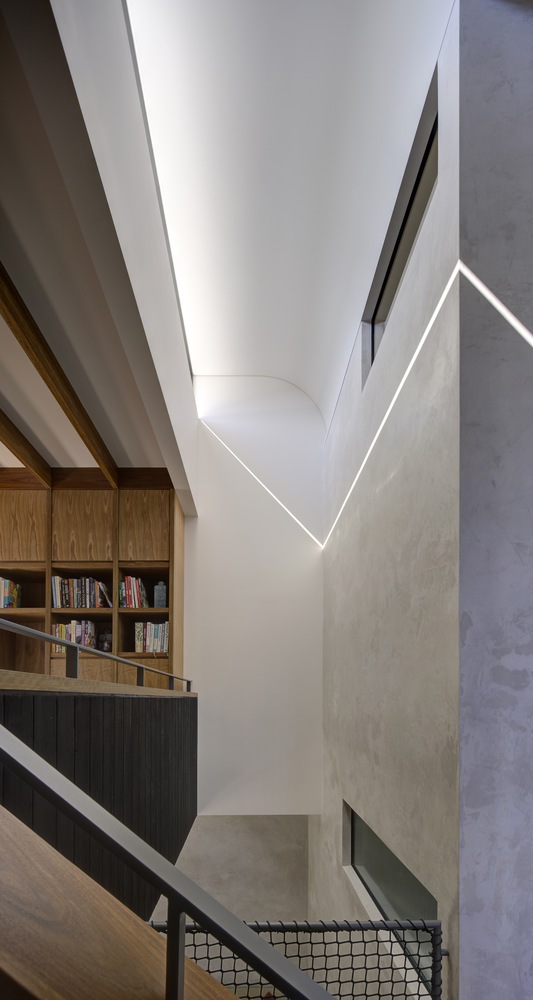
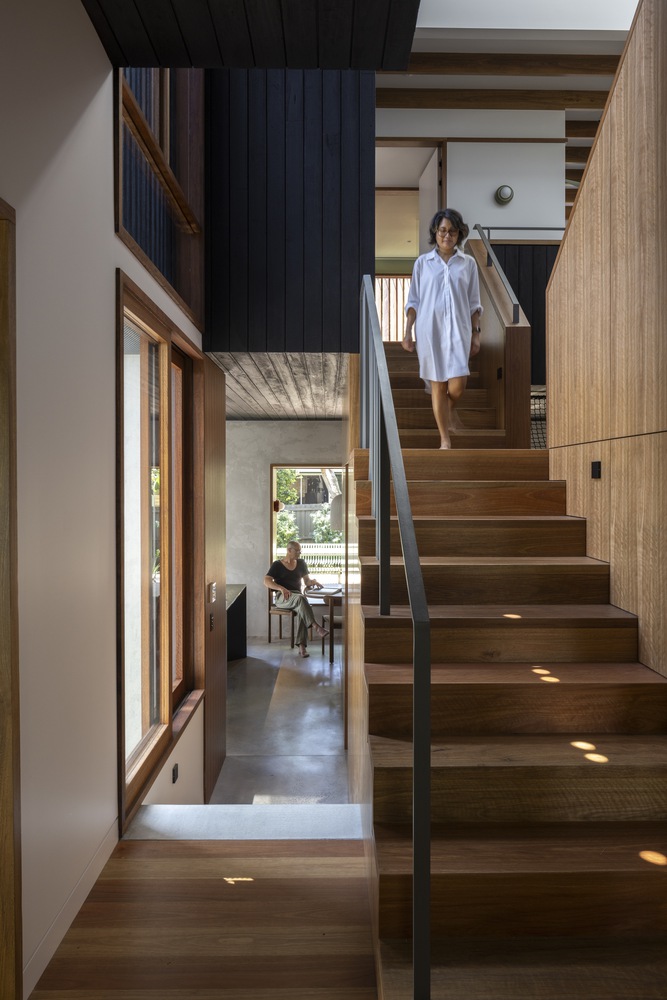
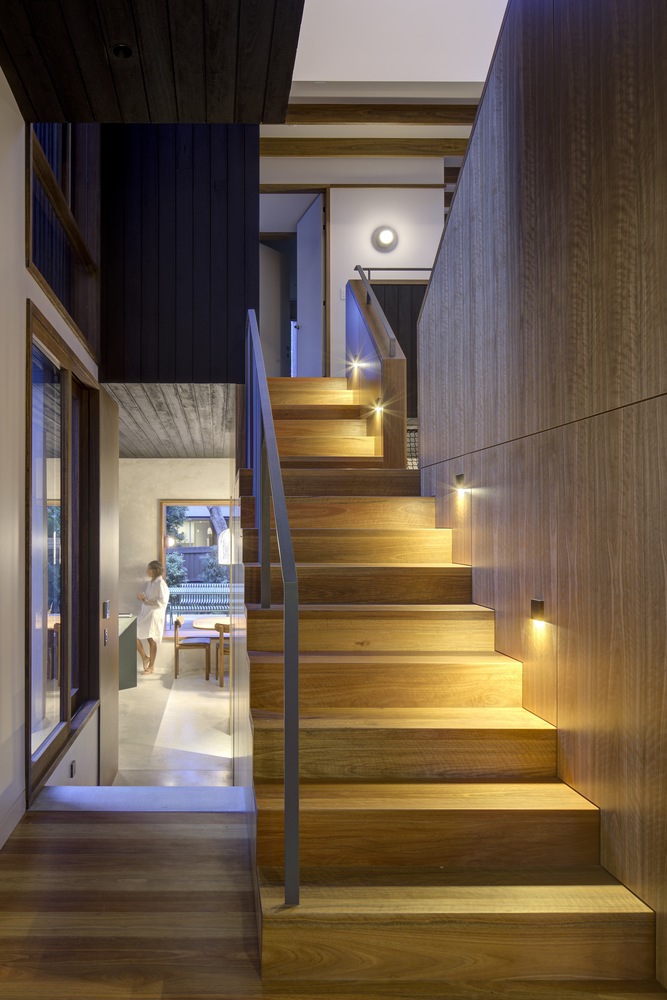
Jarad noted that: "The central spotted gum staircase is the heart of the home - the solid timber core draws each of the spaces together. It's a unifying element, with its own spatial qualities, a distinctive volume connecting the various spaces - more than merely a place of transition. A lightwell above brings natural light deep inside, creating playful shadows".
New upper levels step up to create separation between parent and child domains. The clients note: "The interconnectedness of spaces has allowed greater quality of family interaction.The spaces are simultaneously restful and contemplative, punctuated by pockets of playfulness for children and adults alike. The nooks are used to play together, read together (or alone), to chat, repose or to hide".
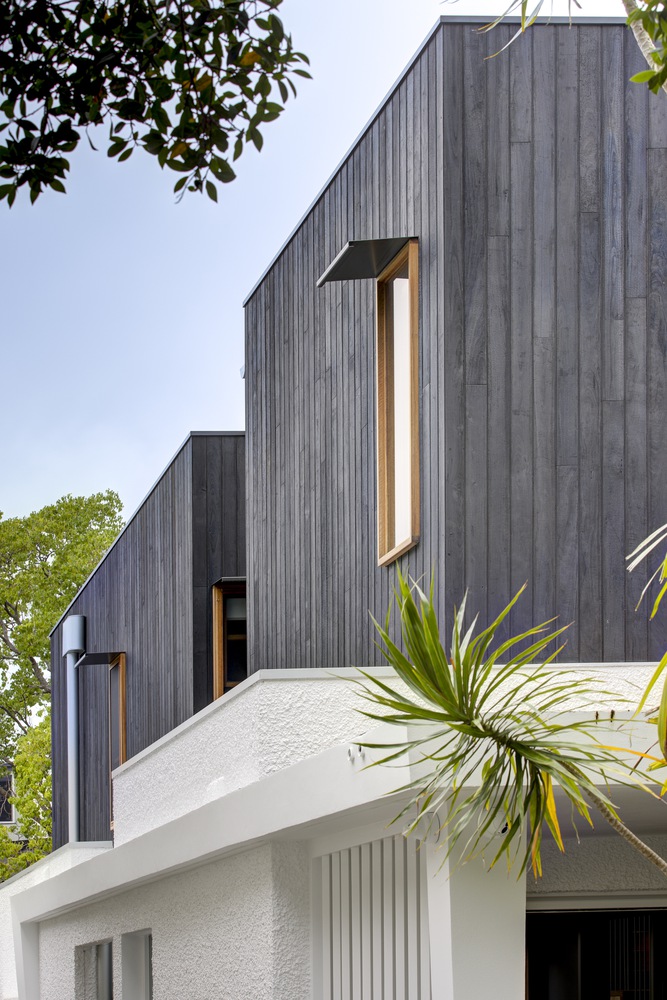
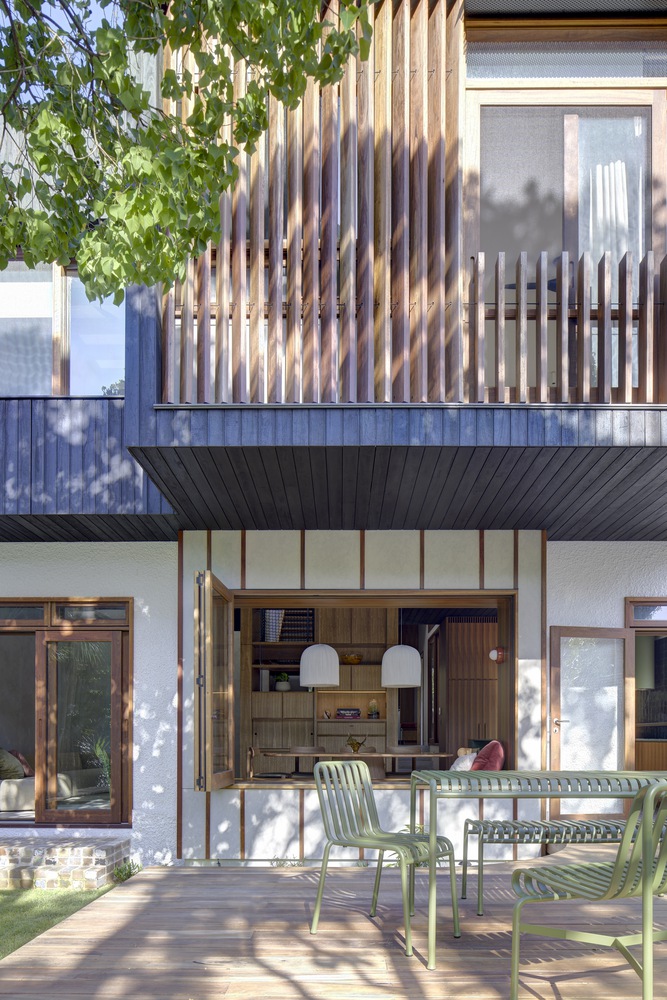
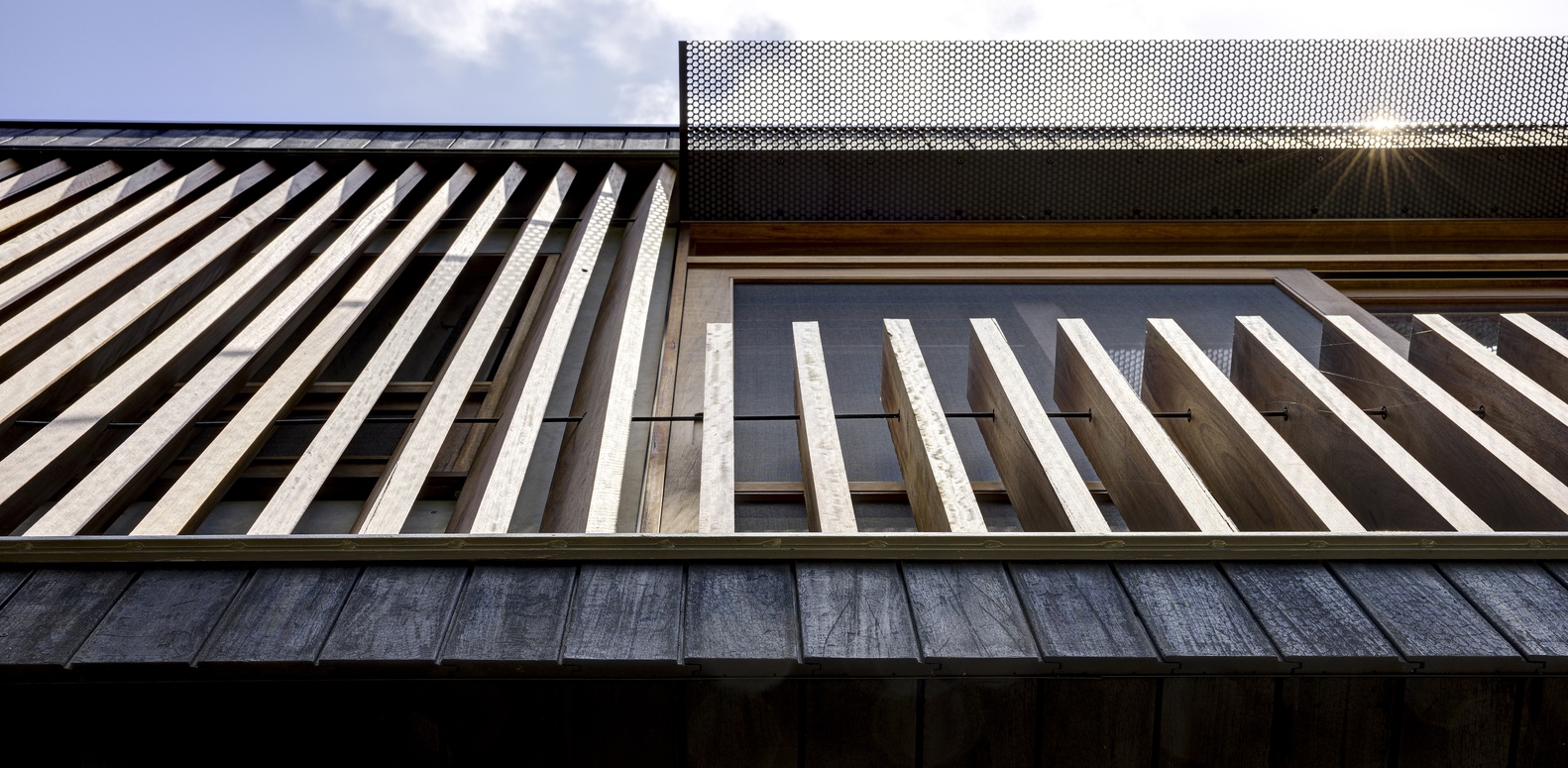
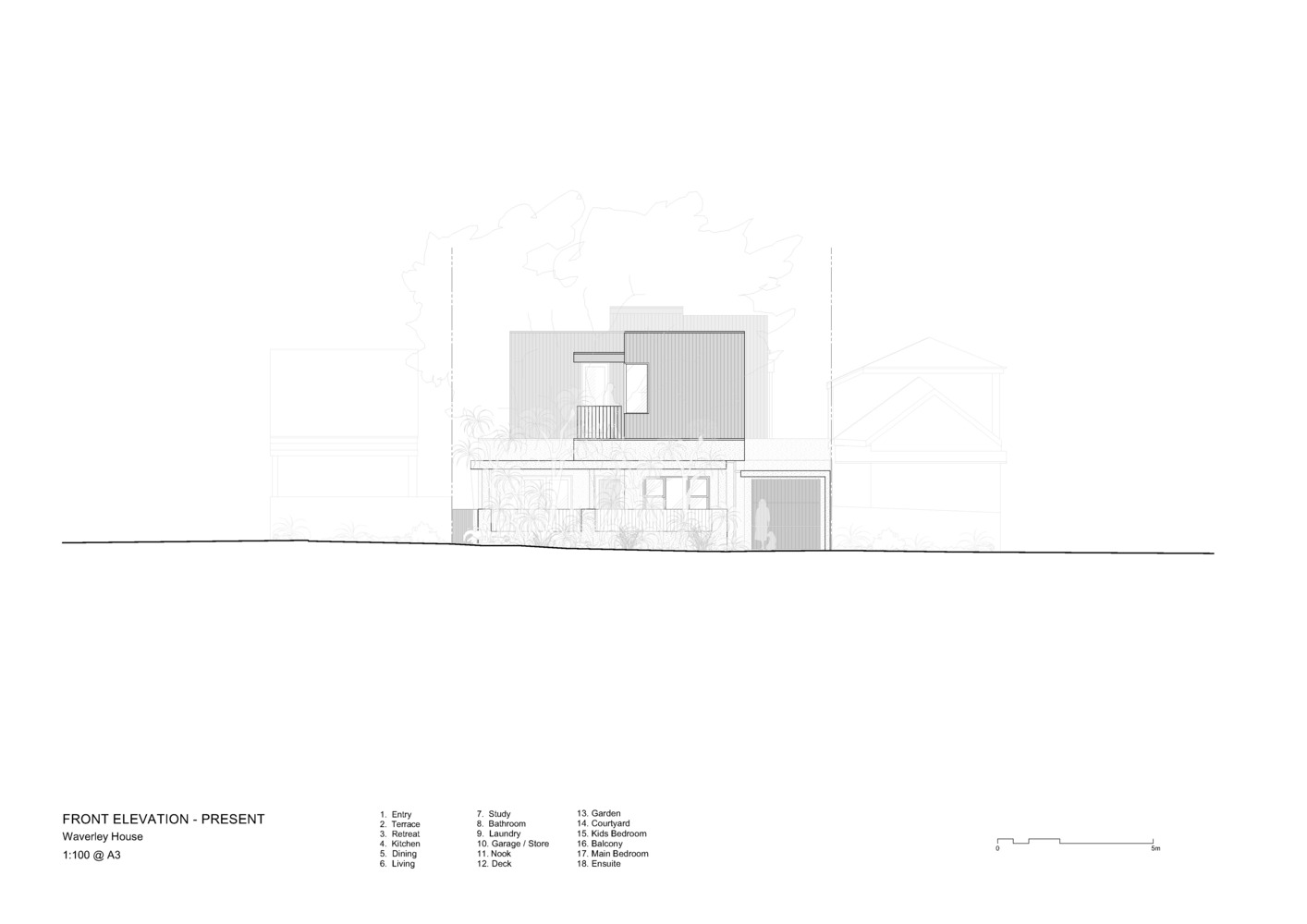
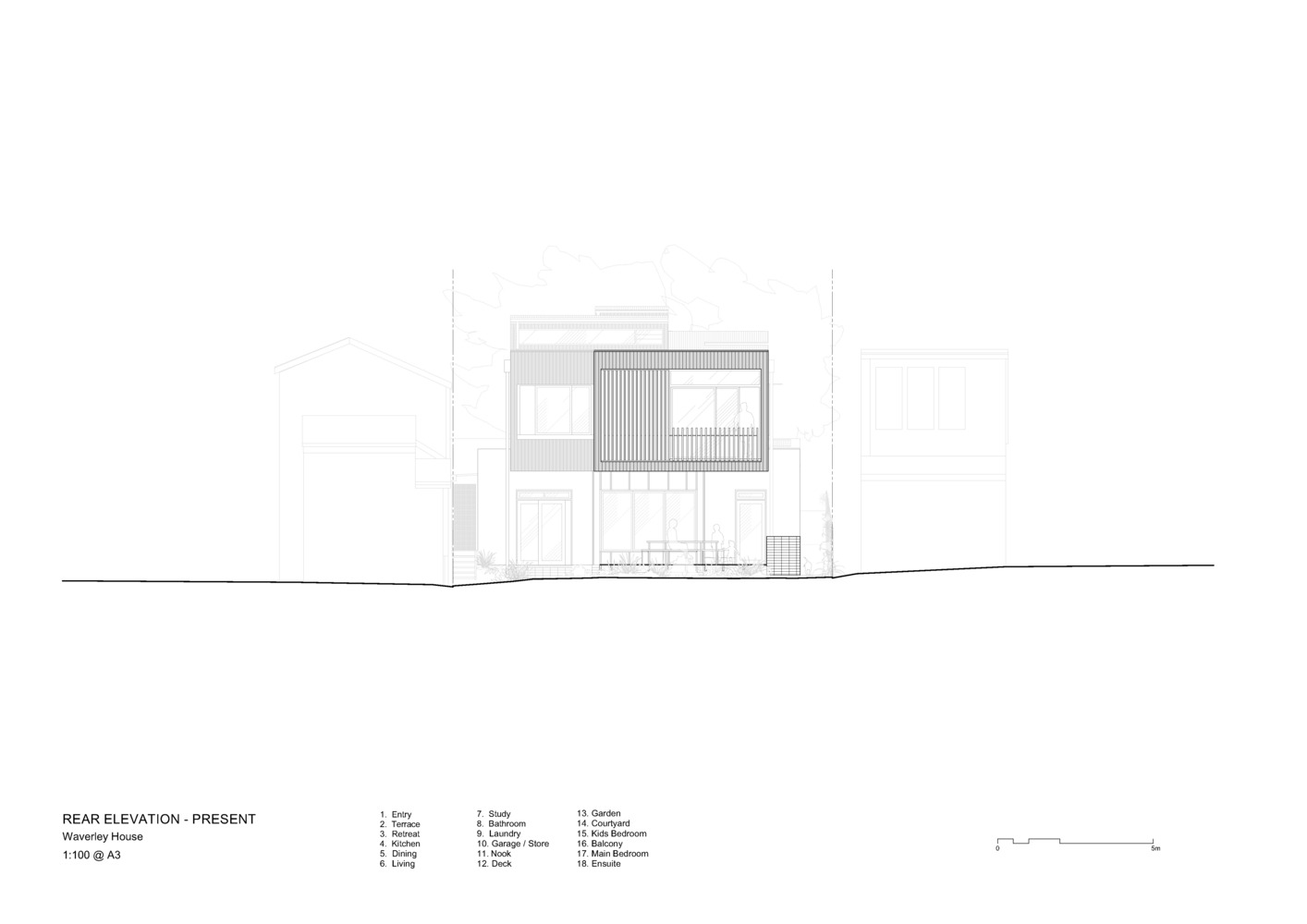
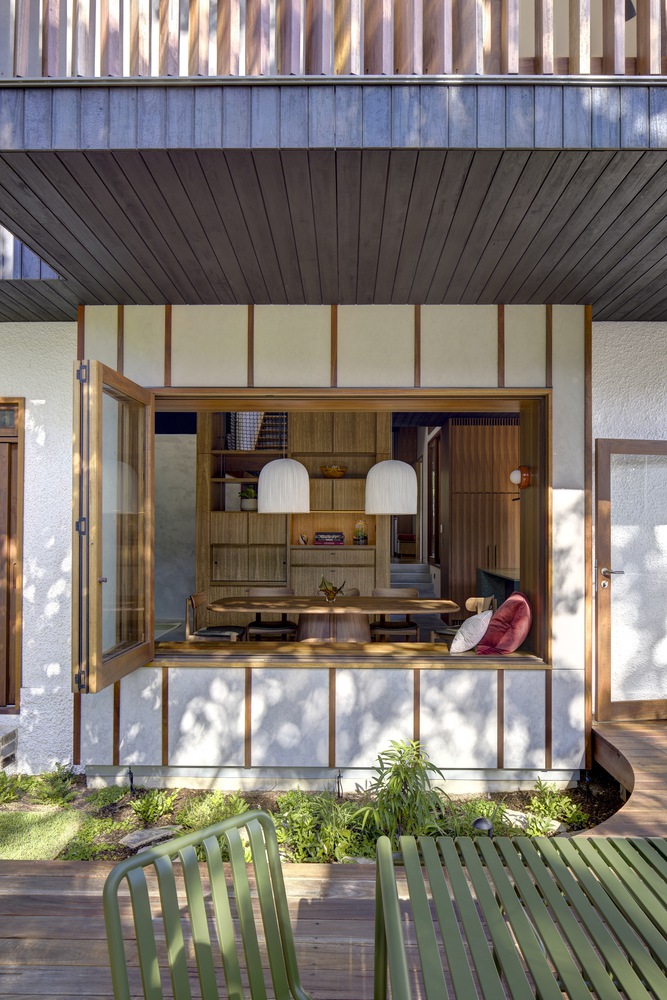
The materiality creates a dialogue between old and new, exterior and interior. Externally, the charred timber cladding wraps around the first-floor addition, a contemporary counterpoint to the existing structure, while the overall form remains respectful of the surrounding built environment.
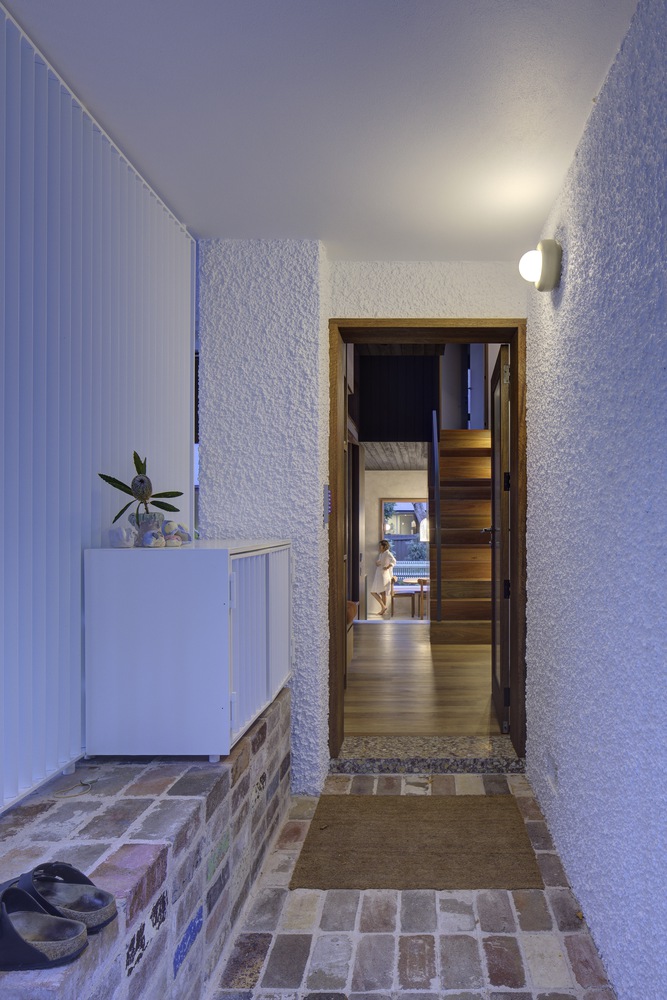
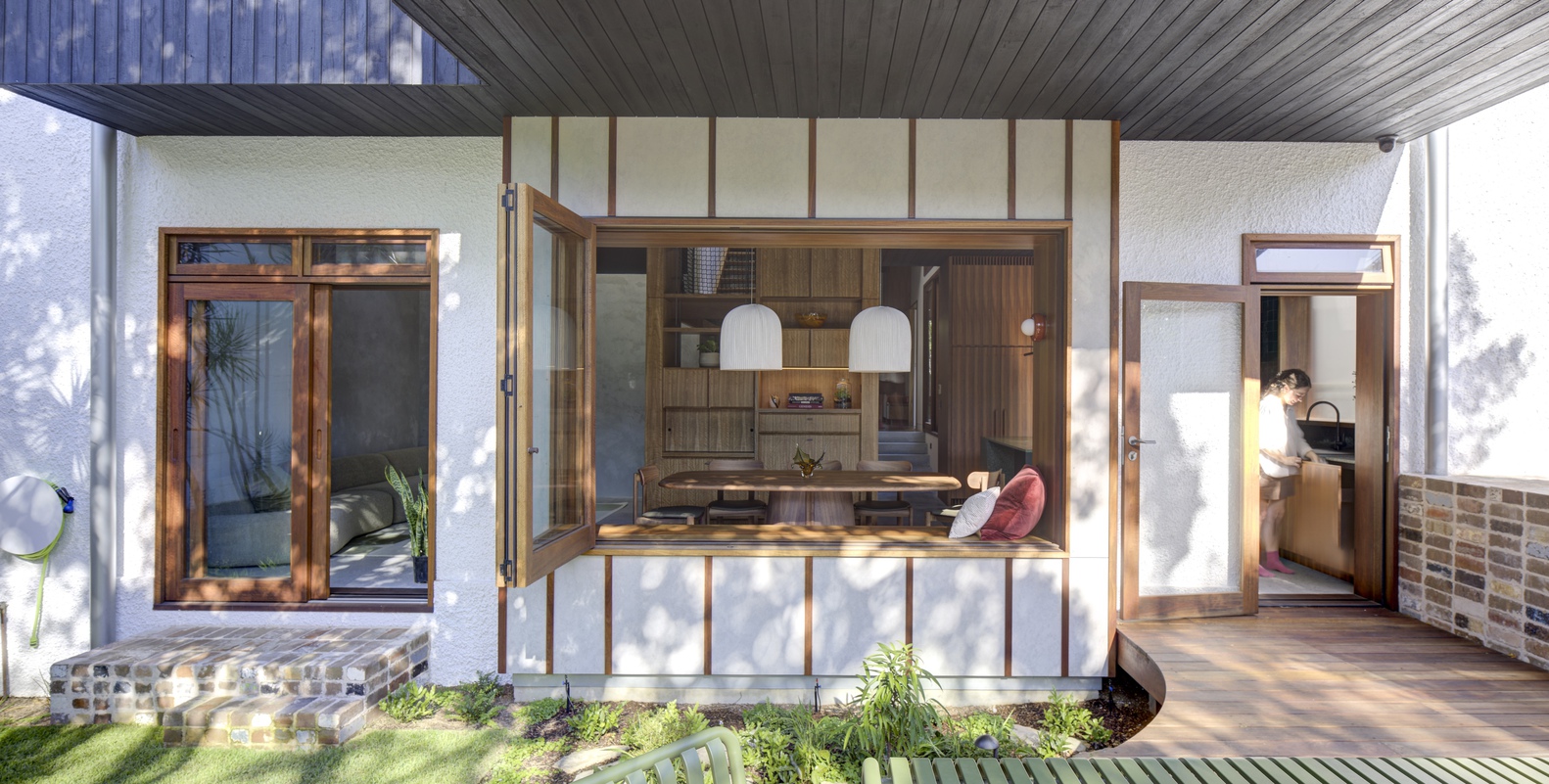
It contrasts with the original building, now featuring the original white popcorn render, and contributes to the textural layering of the overlapping spaces.
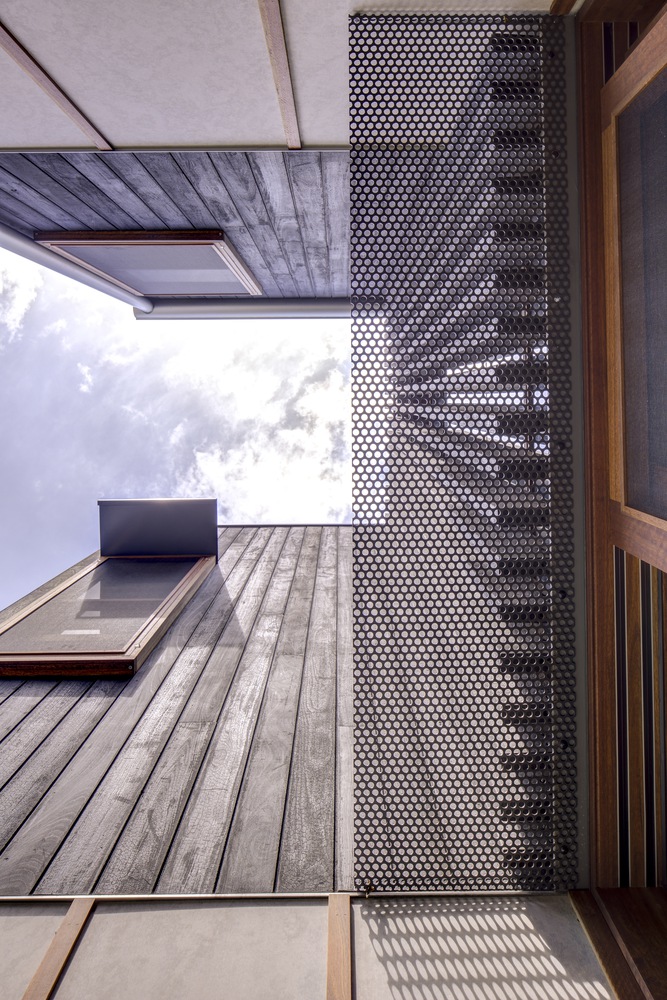
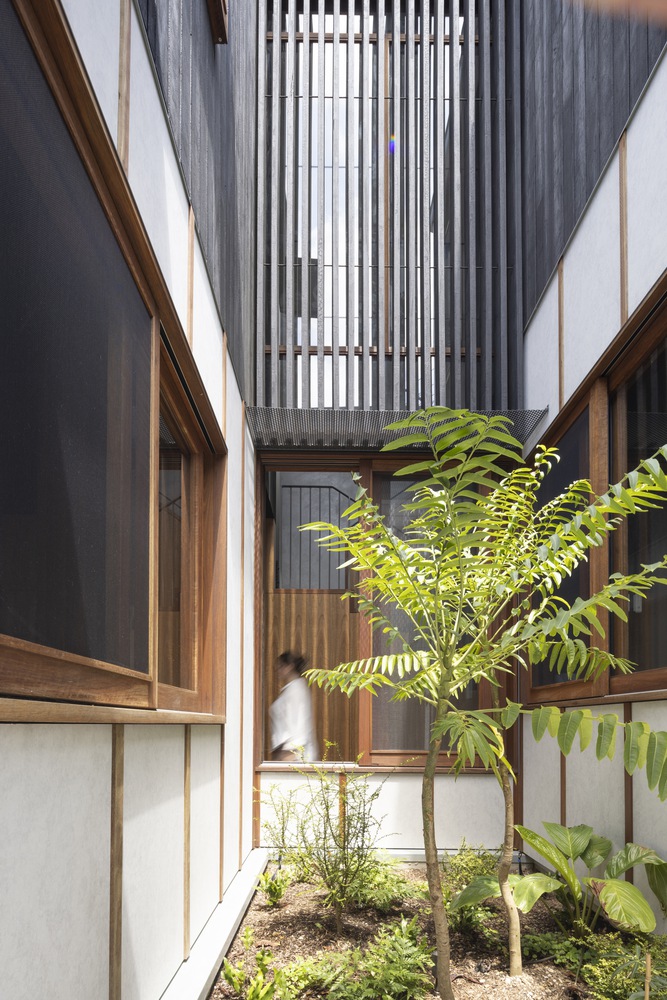
Roof periscopes draw out warm air, keeping the house cool, and bring natural light deep into the home.
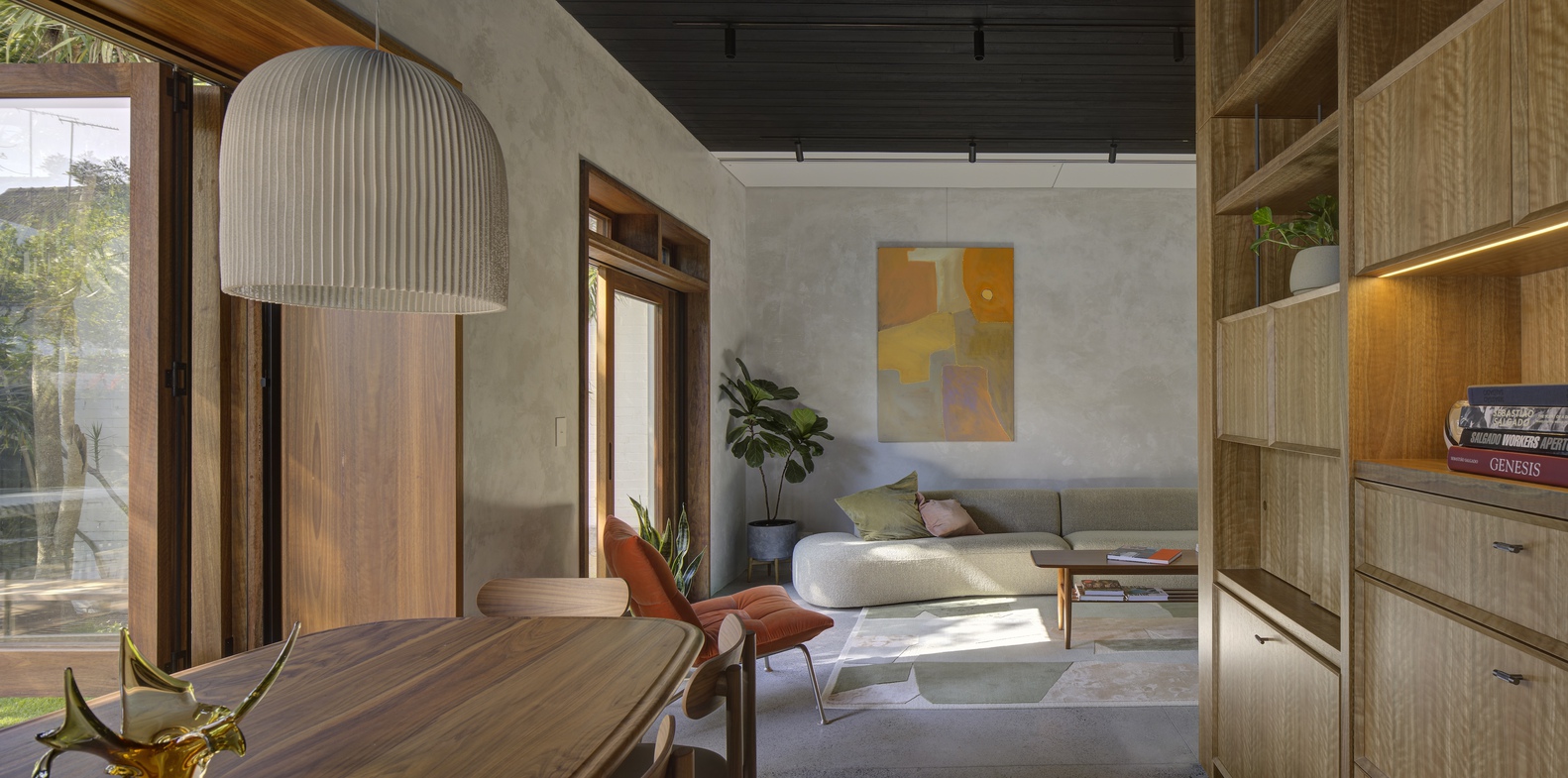
The light reflects, refracts, and absorbs into varied textural finishes and colours, creating an ever-changing backdrop to complement the family's daily lives.
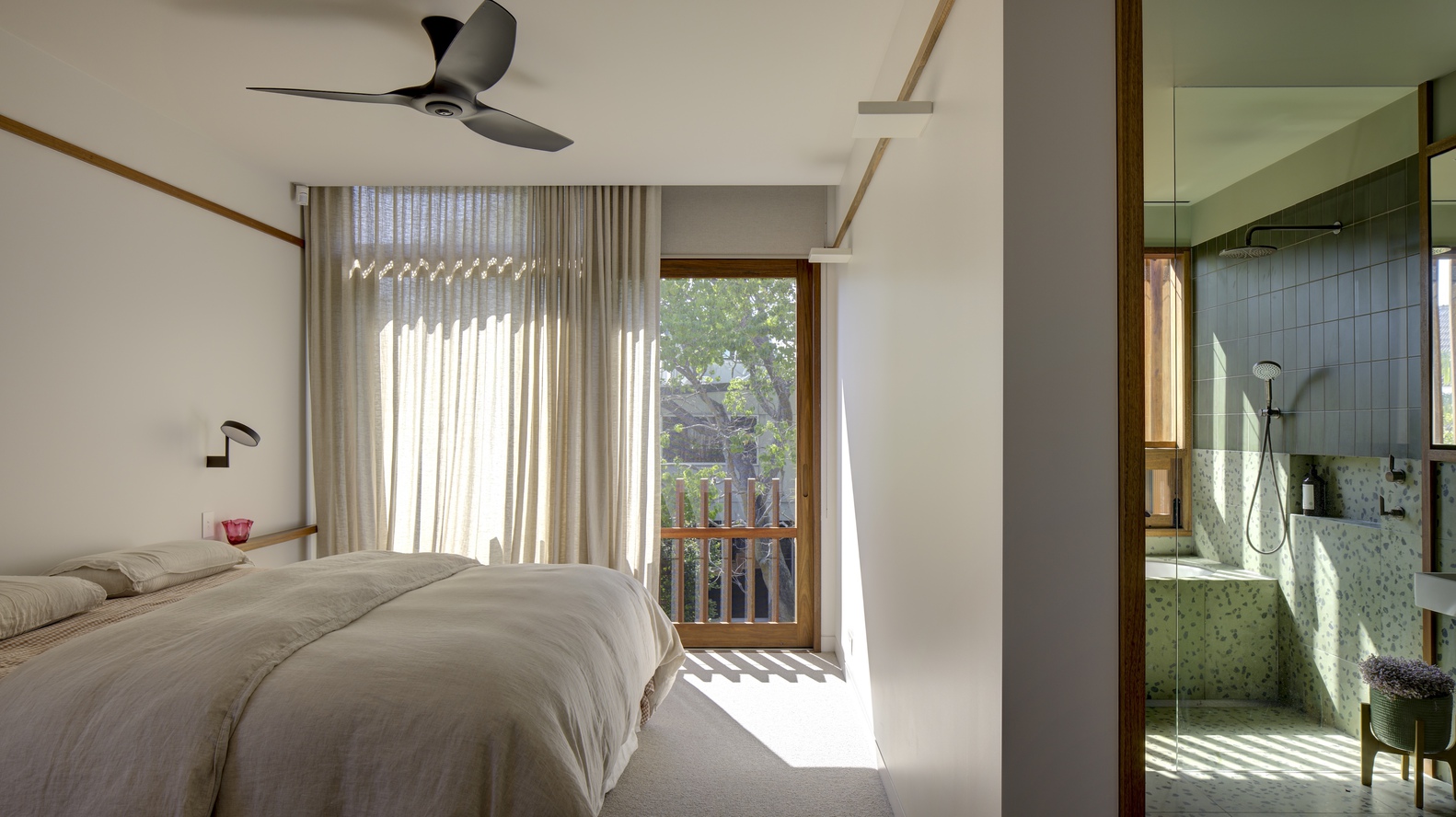
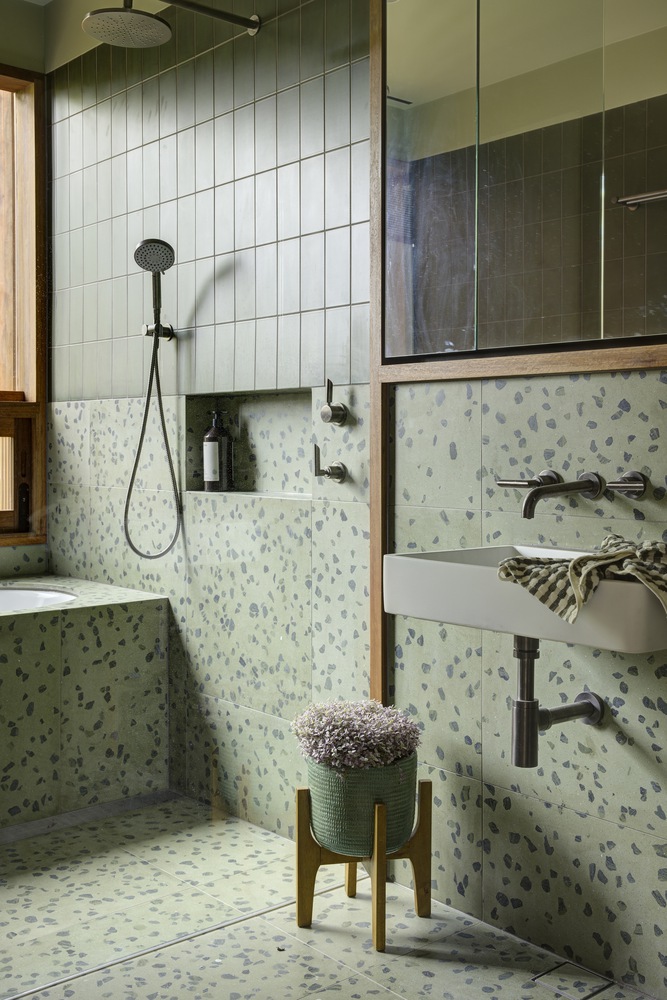
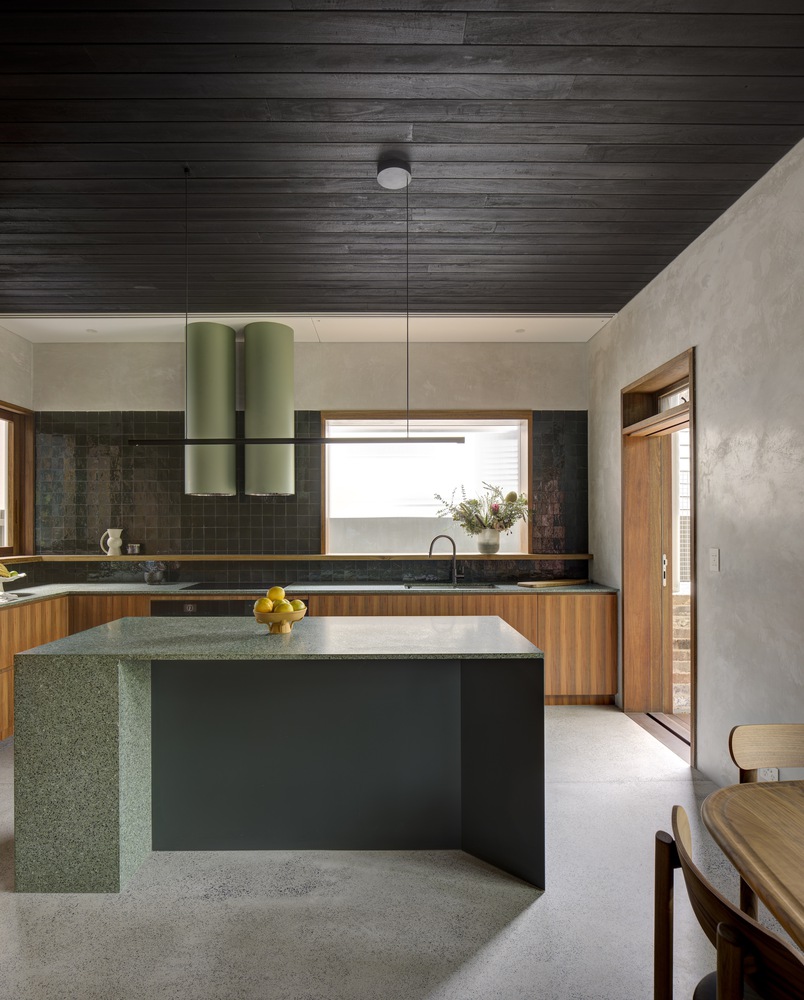
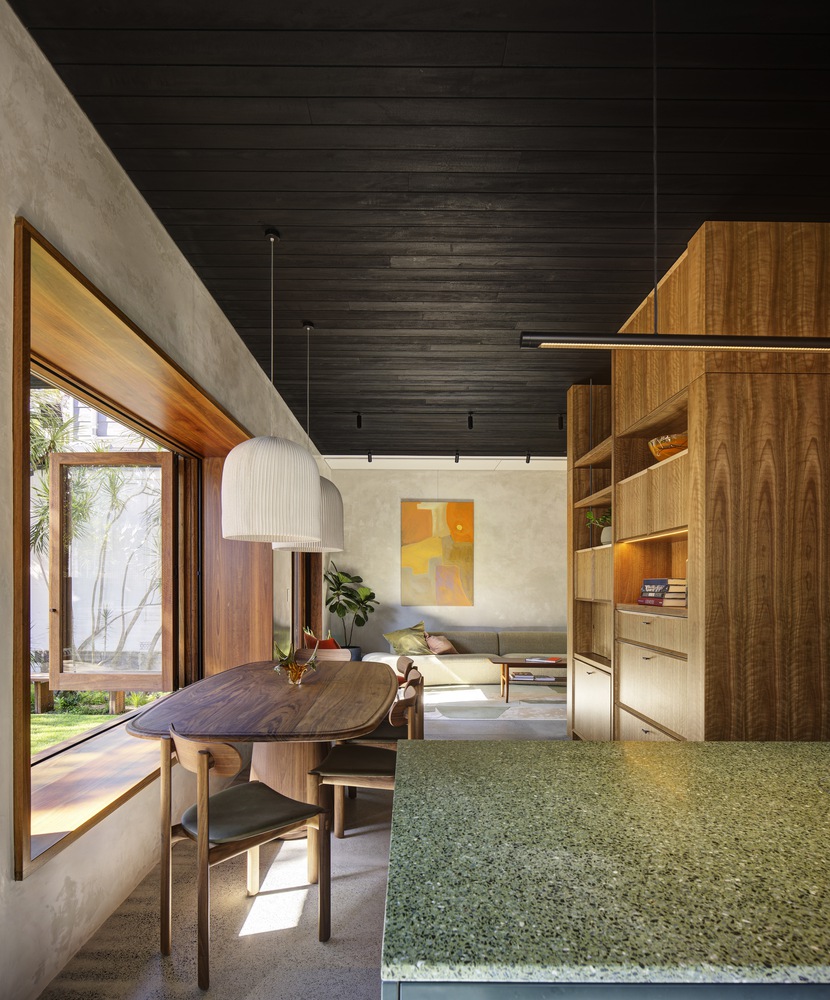
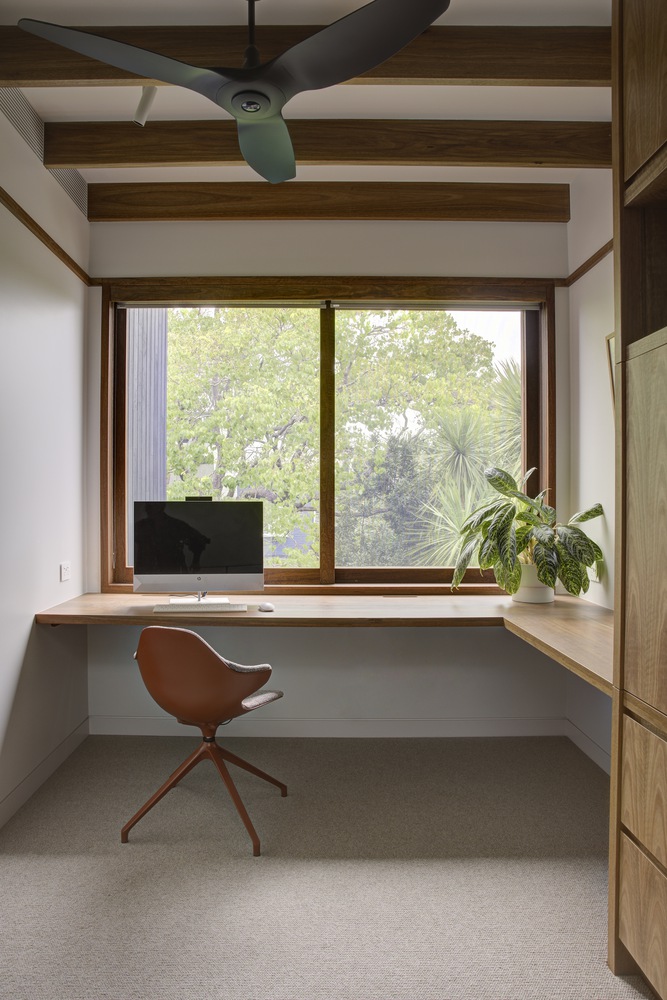
Inspired by the client's desire to avoid stark white walls, the internal palette features earth-toned hues carefully selected to harmonise with the Australian hardwoods used throughout for windows, joinery, and detailing.
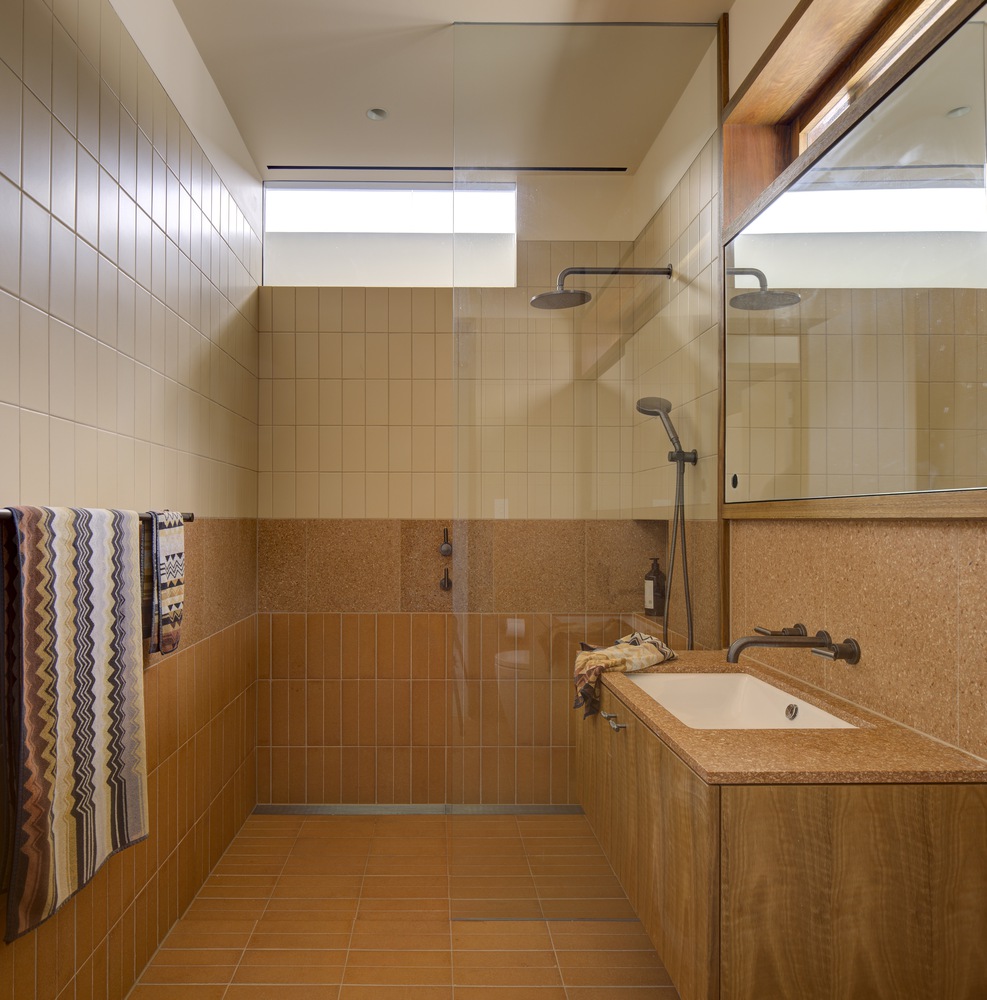
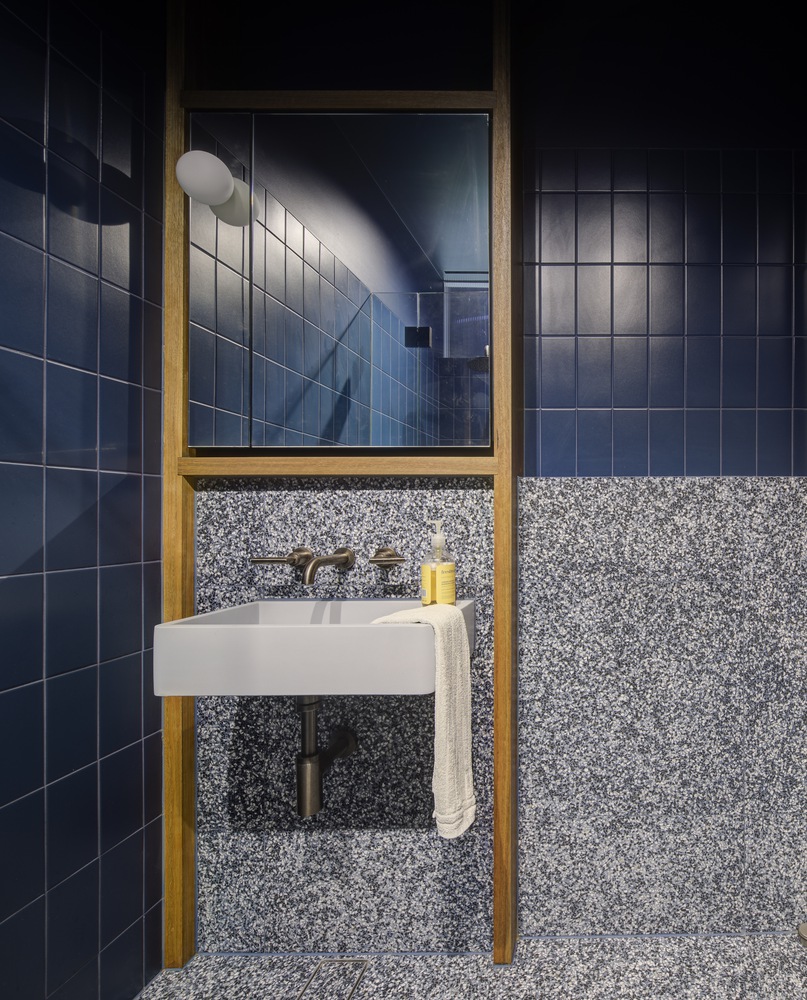
These organic colours extend into a curated selection of tiles and terrazzo, imbuing smaller spaces with distinct personalities, creating interest and intrigue. The stair, pantry, joinery, nook, and mesh hammock are a mix of solid and veneer panels of spotted gum.
Working with TARN landscape designers, various green spaces, each with its own identity, create an ever-changing natural backdrop that complements the family's life.
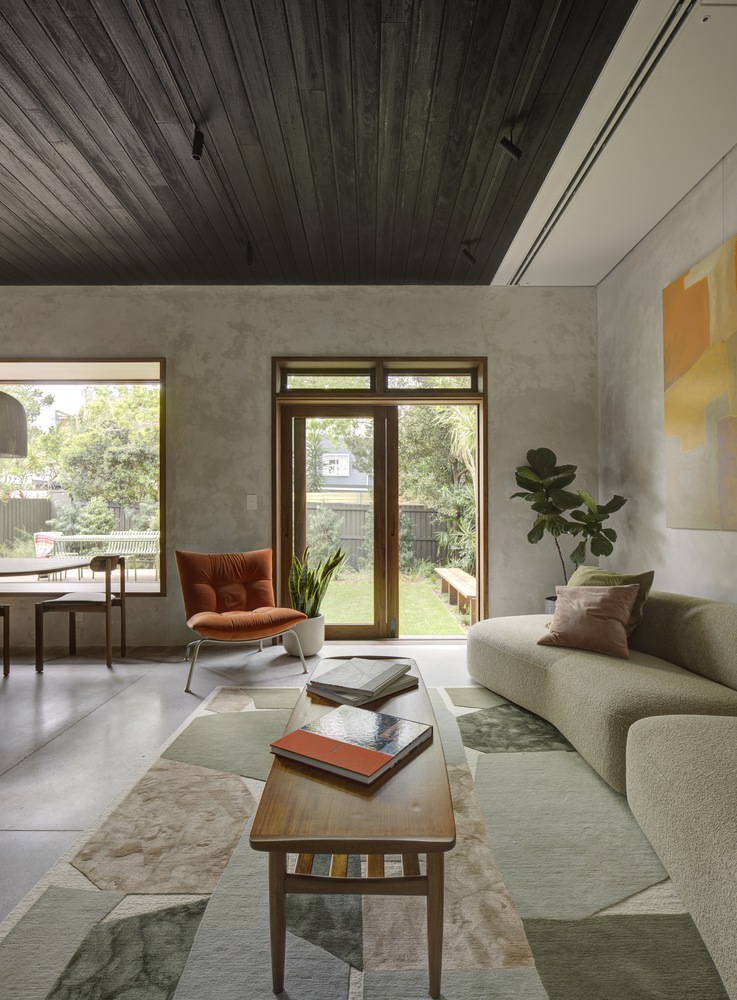
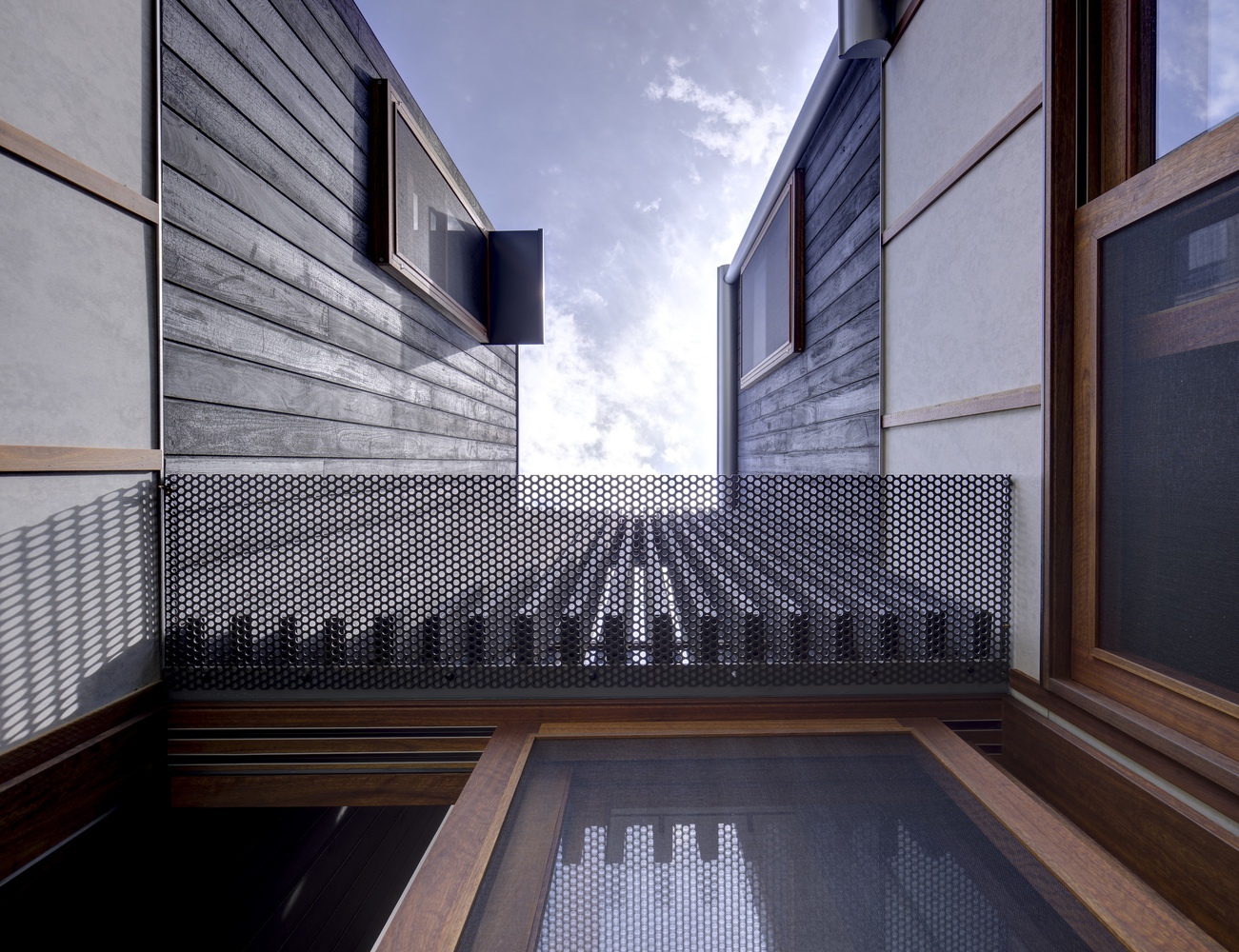
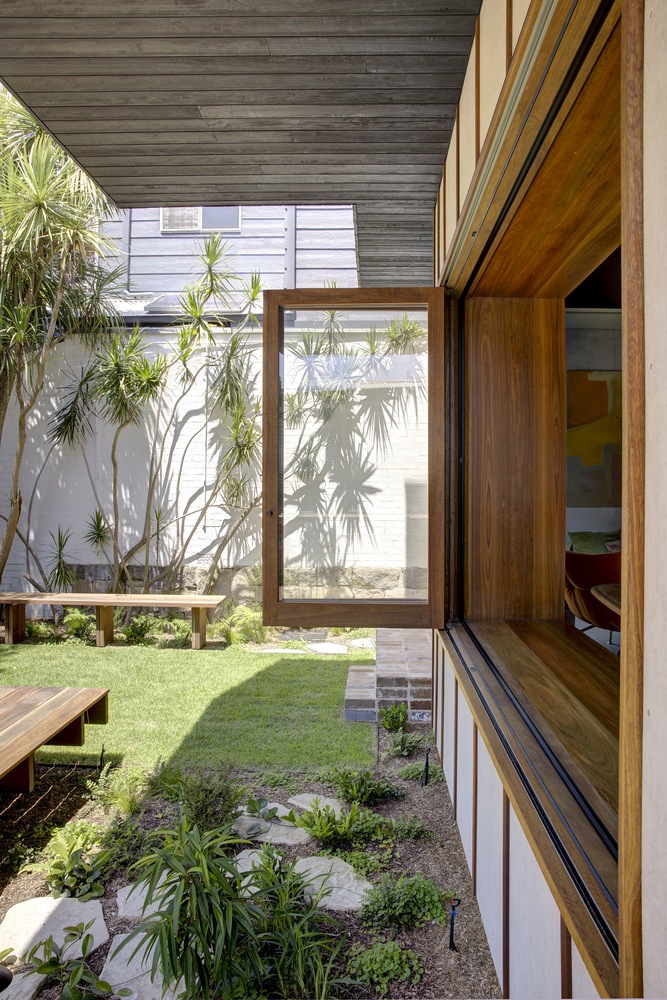
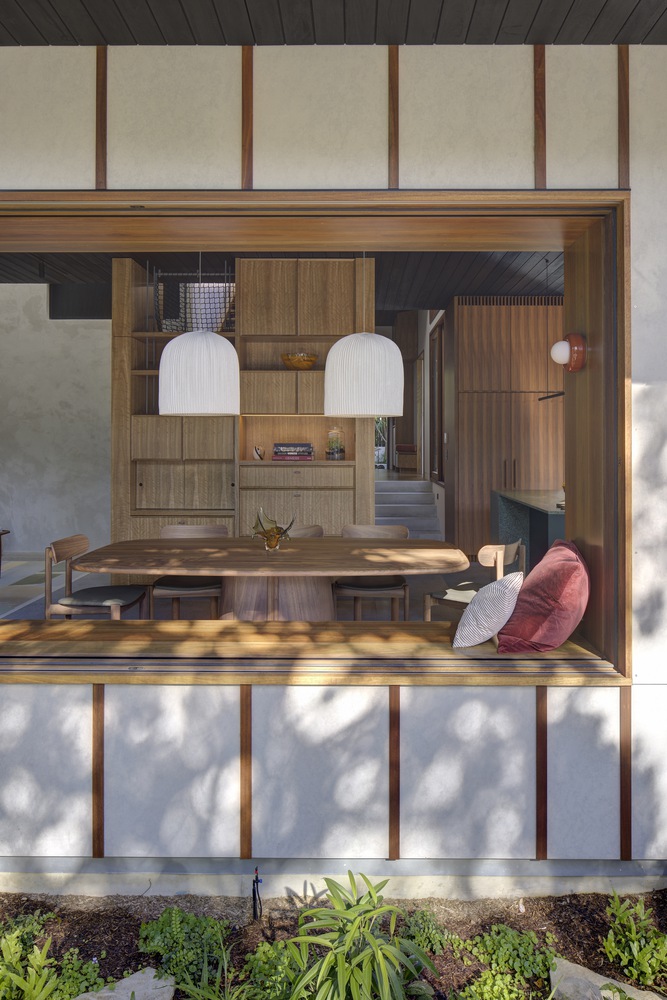
An internal green courtyard brings garden views and light to multiple areas, whilst a back garden deck floats on a small lawn, allowing vegetation to brush up against diners sitting on the living room window seat.
The home is unified by continuous horizontal elements - timber picture rails and tiled bands - that draw connections and guide movement through the home.
"The carefully orchestrated material and colour selections harmonise seamlessly with furnishings and artwork, crafting a home that embraces and nurtures the fluid nature of family life," added Jarad.
Sustainability considerations include the preservation of the existing structure, minimising demolition waste, use of Australian hardwoods, passive ventilation, 100% electric home with PV, and provision for battery storage.
The clients note, "There is artfulness incorporated into our daily lives, quiet luxury in the layered texture and detail, and a respectfulness of nature reflected in the materiality and palette.
This design has fostered a mindfulness in our daily home life, in meals together and simple domesticity - an appreciation of the need to slow down and enjoy simple things like changing light and shadow, or growing greenery through the window."
Sam Crawford, director of SCA, said: "The home demonstrates how SCA's thoughtful approach respects existing structures, while significantly improving environmental performance, creating a living environment that nurtures the inhabitants".