HOLLOW HOUSE
Augusto Quijano Arquitectos, Boyancé Arquitectura + Edificación, Muñoz Arquitectos
ARCHITECTS
Augusto Quijano Arquitectos, Boyancé Arquitectura + Edificación, Muñoz Arquitectos
LEAD ARCHITECT
Gerard Boyancé Ancona, Javier Muñoz Menéndez, Augusto Quijano Axle
DESIGN TEAM
Maria Elena Conde Rivero, Elsy Montserrat Fajardo Herrera, Jorge Alfredo Herrera Tolosa
ARCHITECTURE OFFICES
Augusto Quijano Arquitectos
PHOTOGRAPHS
Javier Callejas, Manolo R. Solis
AREA
923 M²
YEAR
2024
LOCATION
Mexico
CATEGORY
Houses
English description provided by the architects.
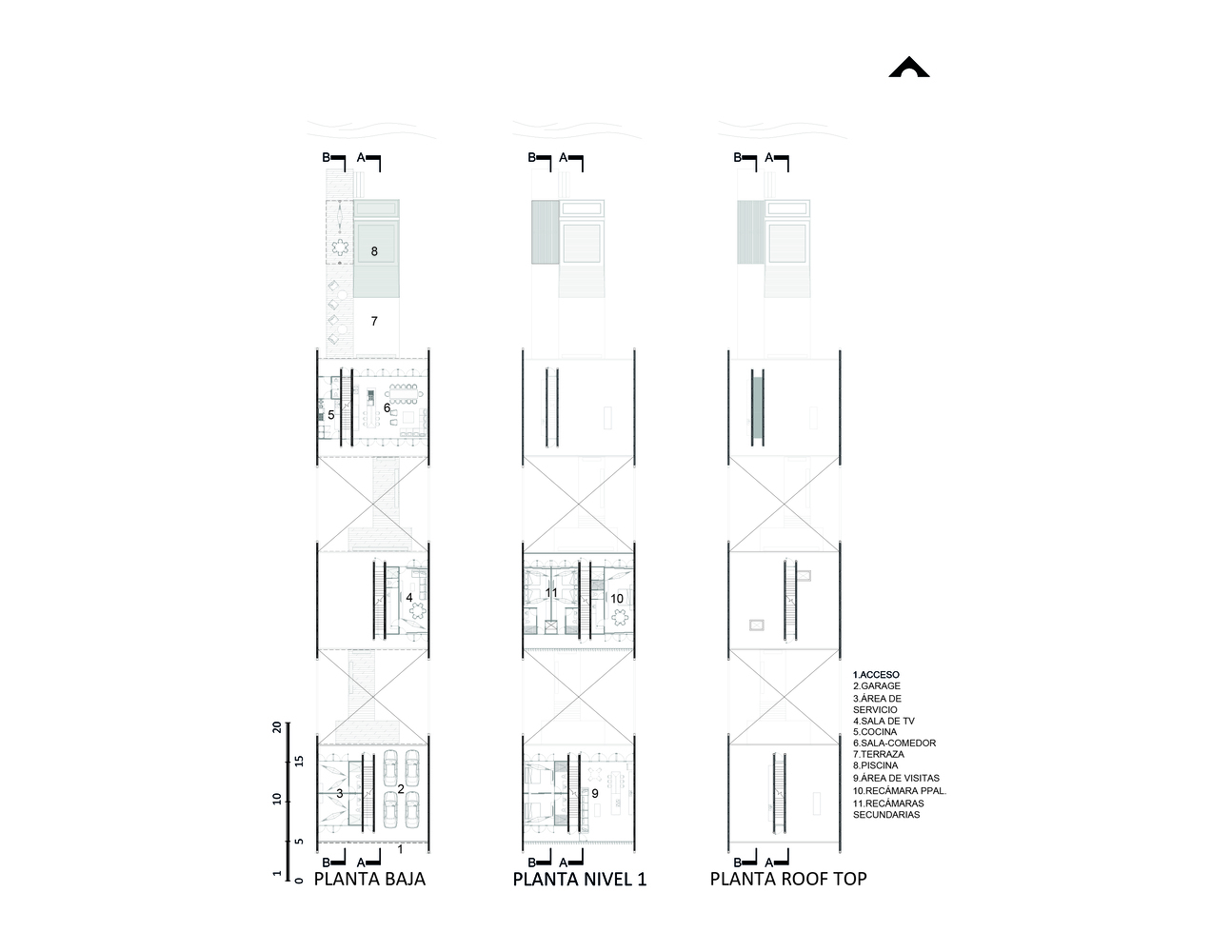
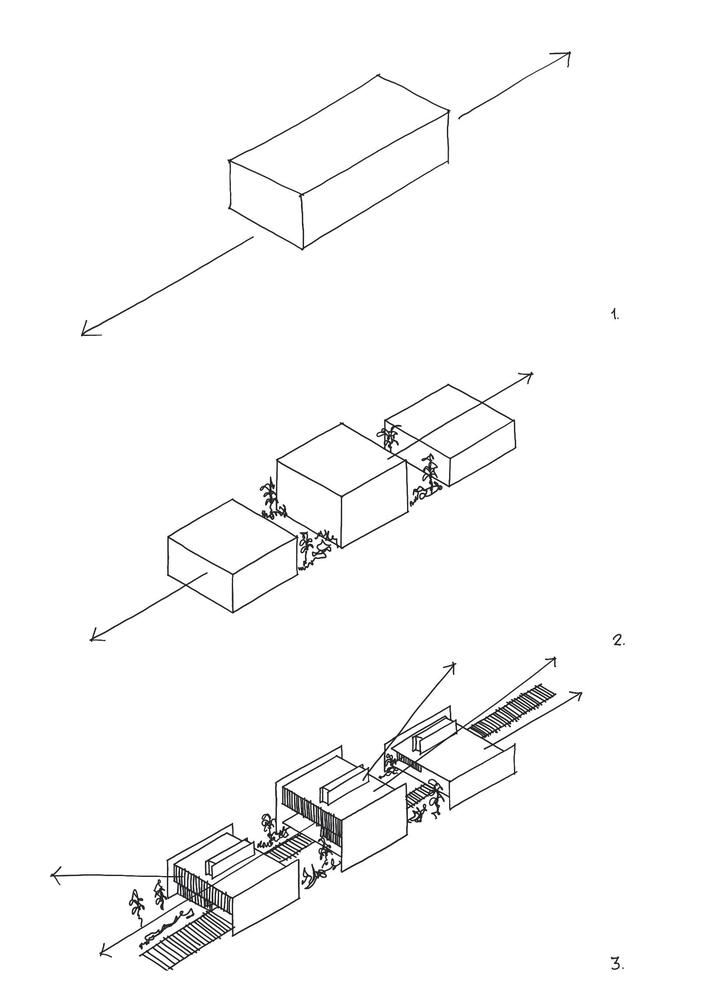
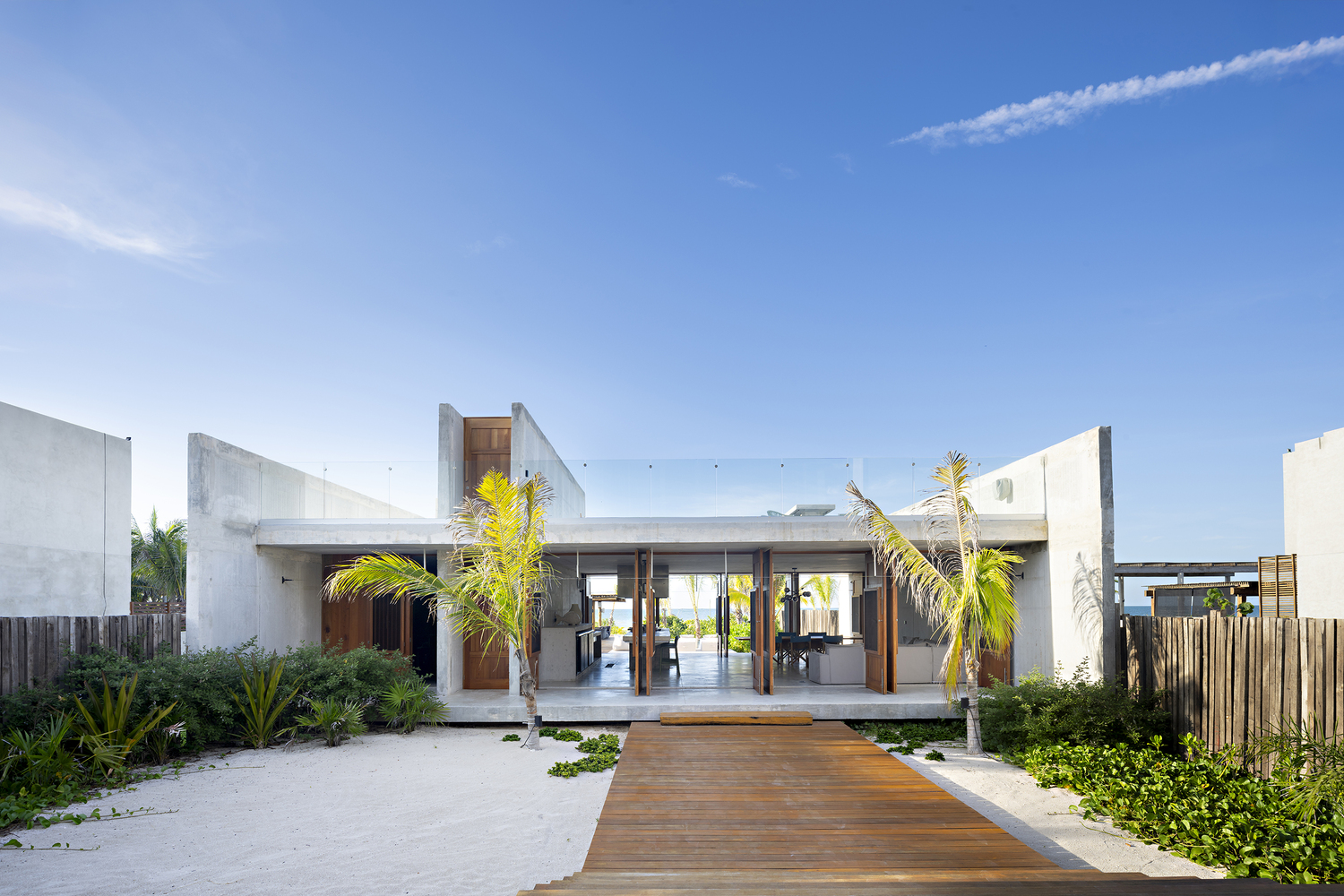
The project is structured through three blocks with differentiated functions: social, private, and services.
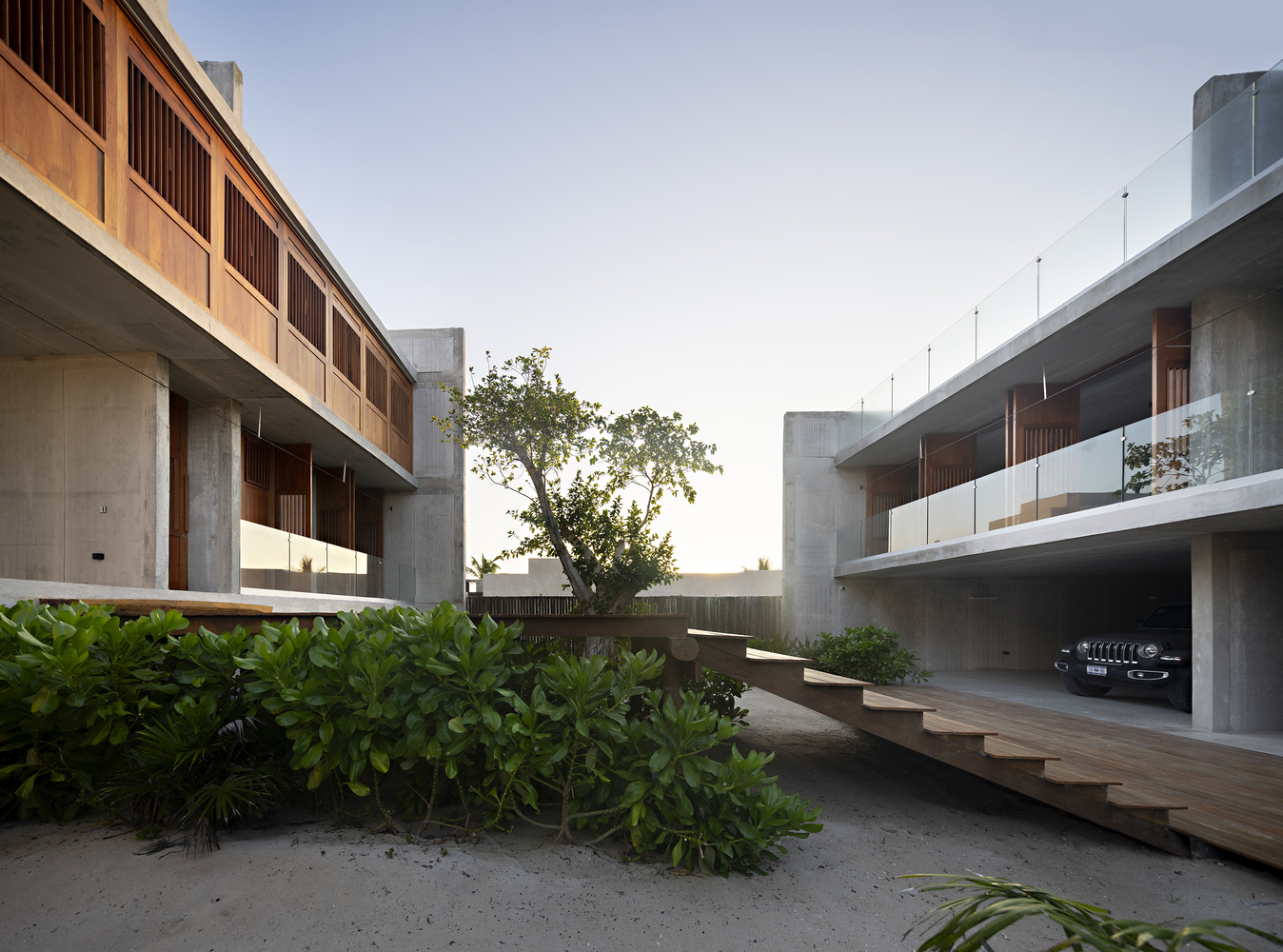
To establish the separation between these volumes, two intermediate courtyards are configured, generating spatial fluidity and favoring natural ventilation and lighting.
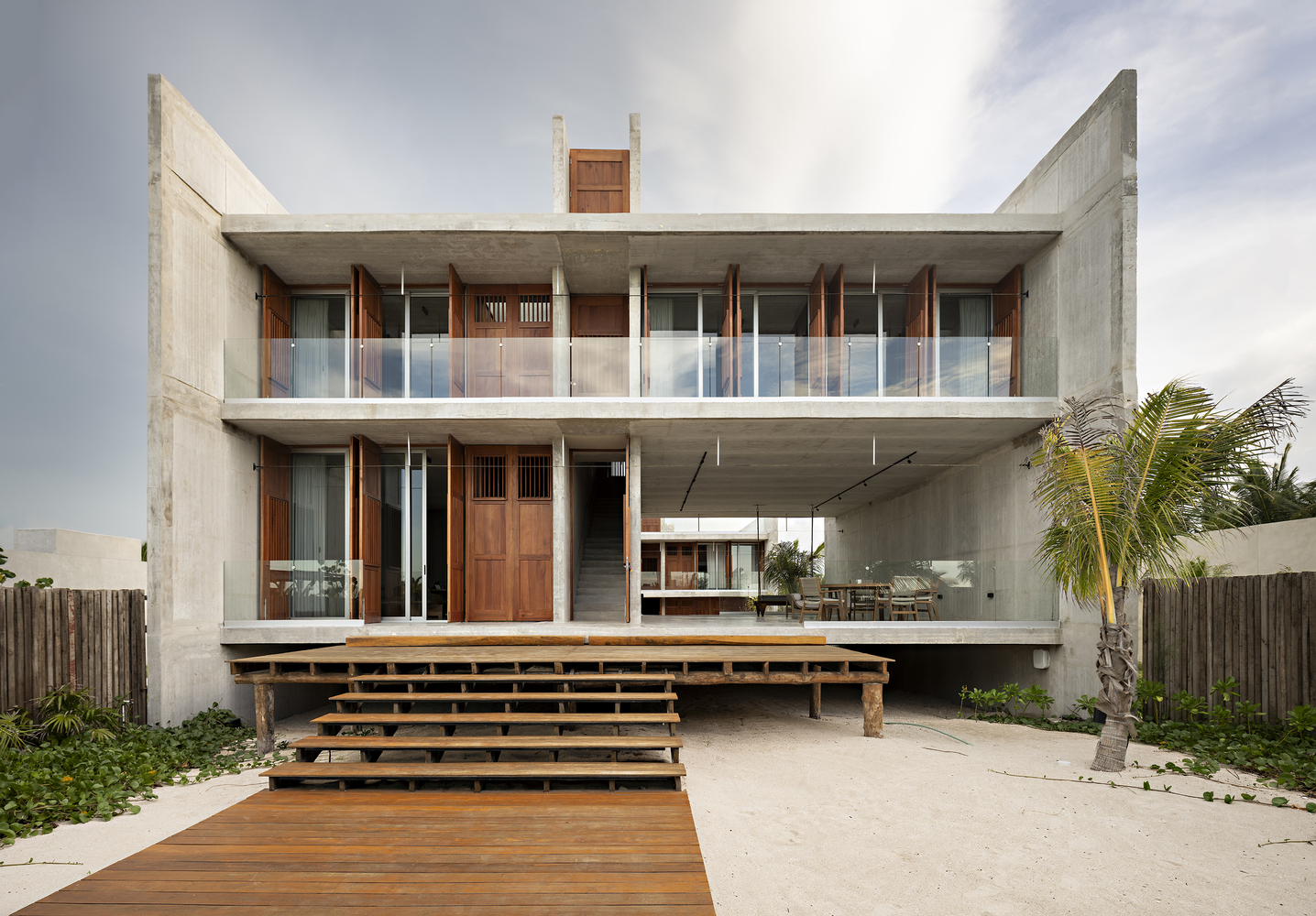
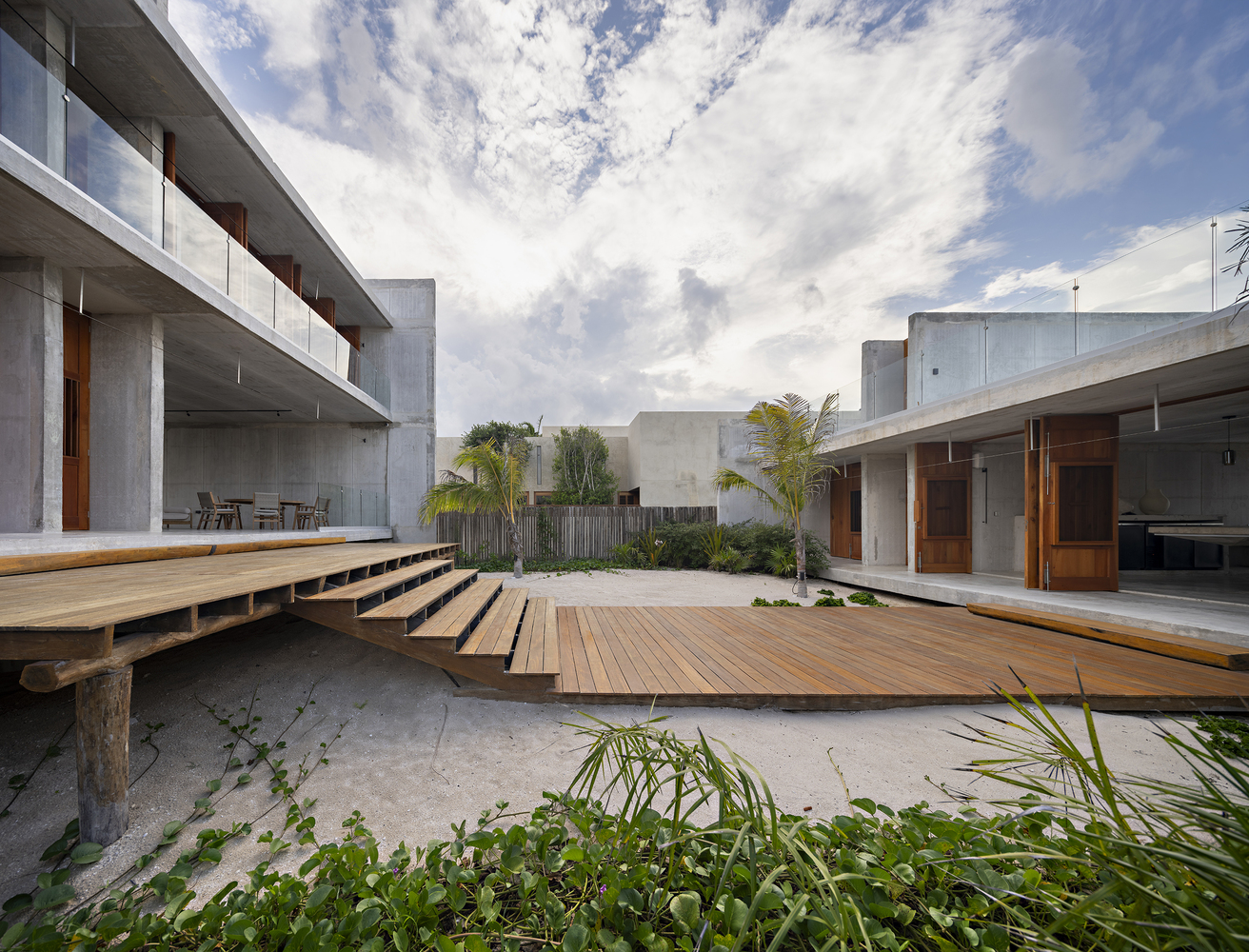
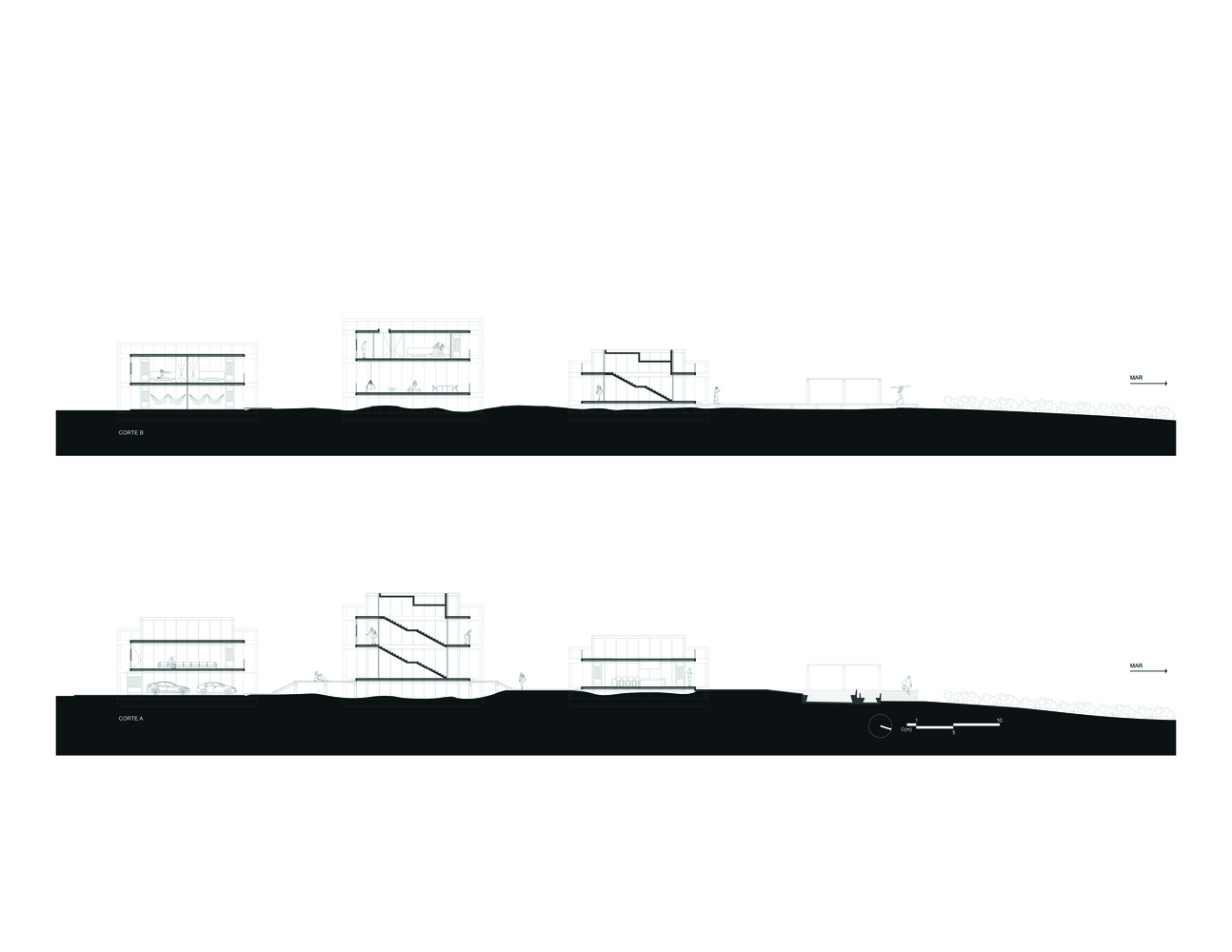
The fundamental aspect consists of the views towards the coast.
To materialize this intention, each block is arranged at different levels, aiming to maximize the views of the sea and optimize cross ventilation.
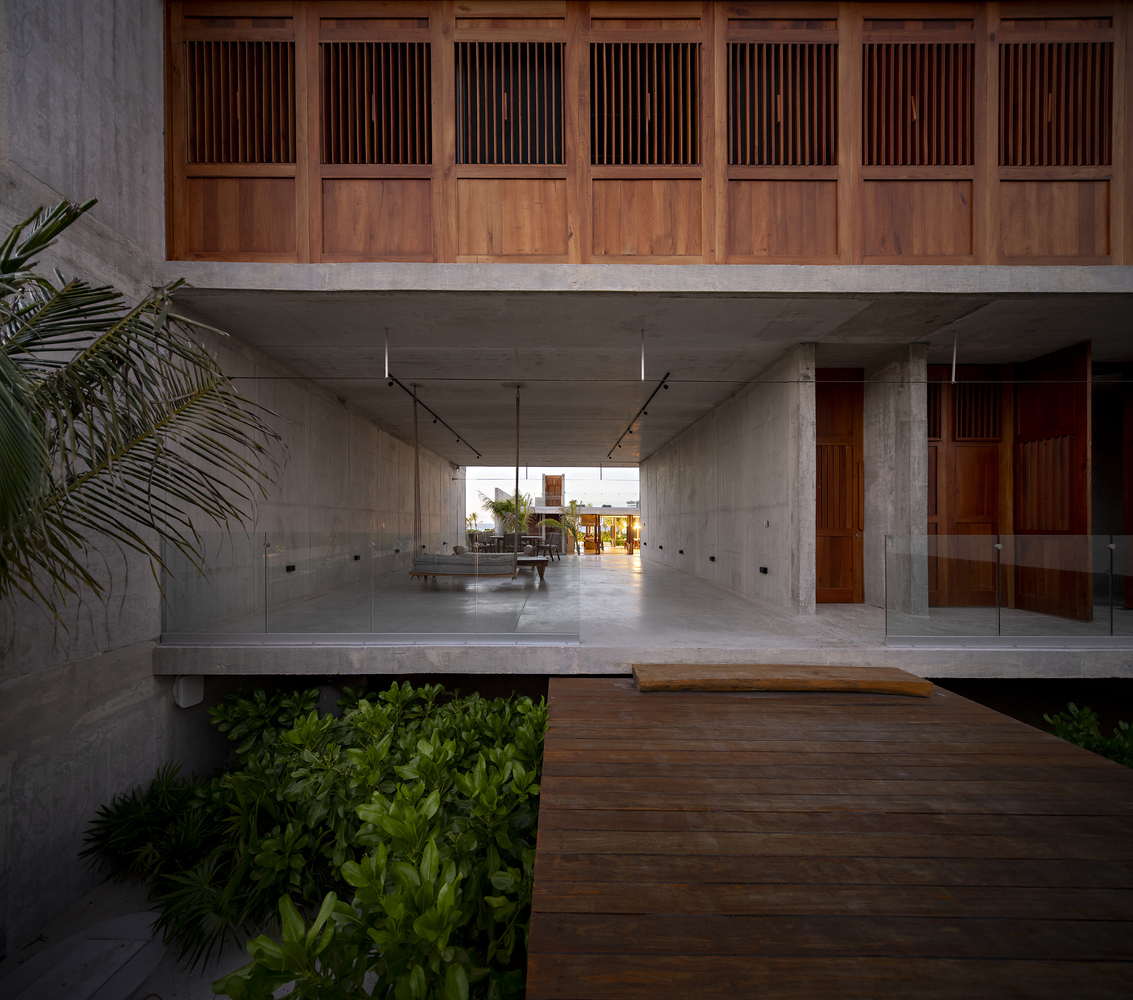

The orientation captures the sea breeze, while the interior courtyards function as bioclimatic regulators, providing shaded and cool spaces.
Each block incorporates horizontal planes where terraces are developed, which integrate the building with the tropical environment, blurring the boundaries between the interior and exterior.
The building is elevated above the ground, allowing the passage of flora and fauna, as well as wave action in case of environmental contingencies.
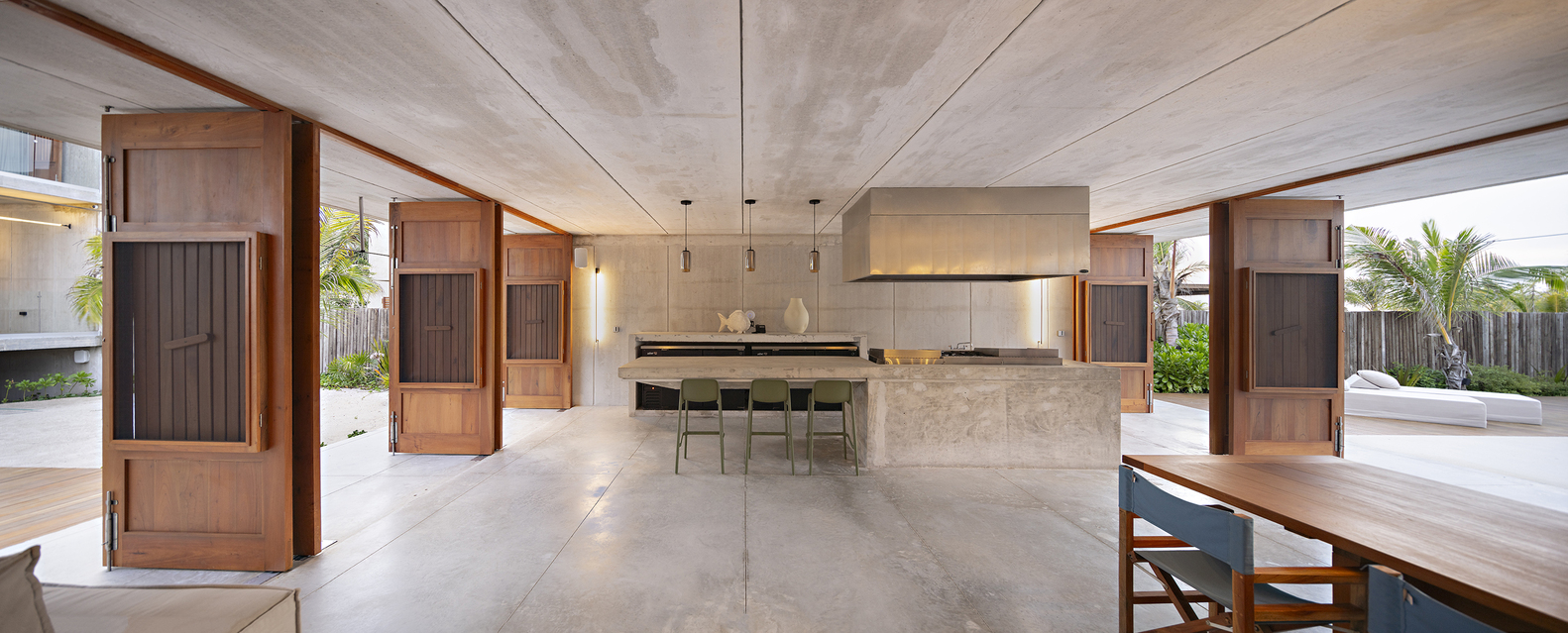
This strategy minimizes the ecological footprint and conveys volumetric lightness, making the architectural bodies appear to float over the landscape.
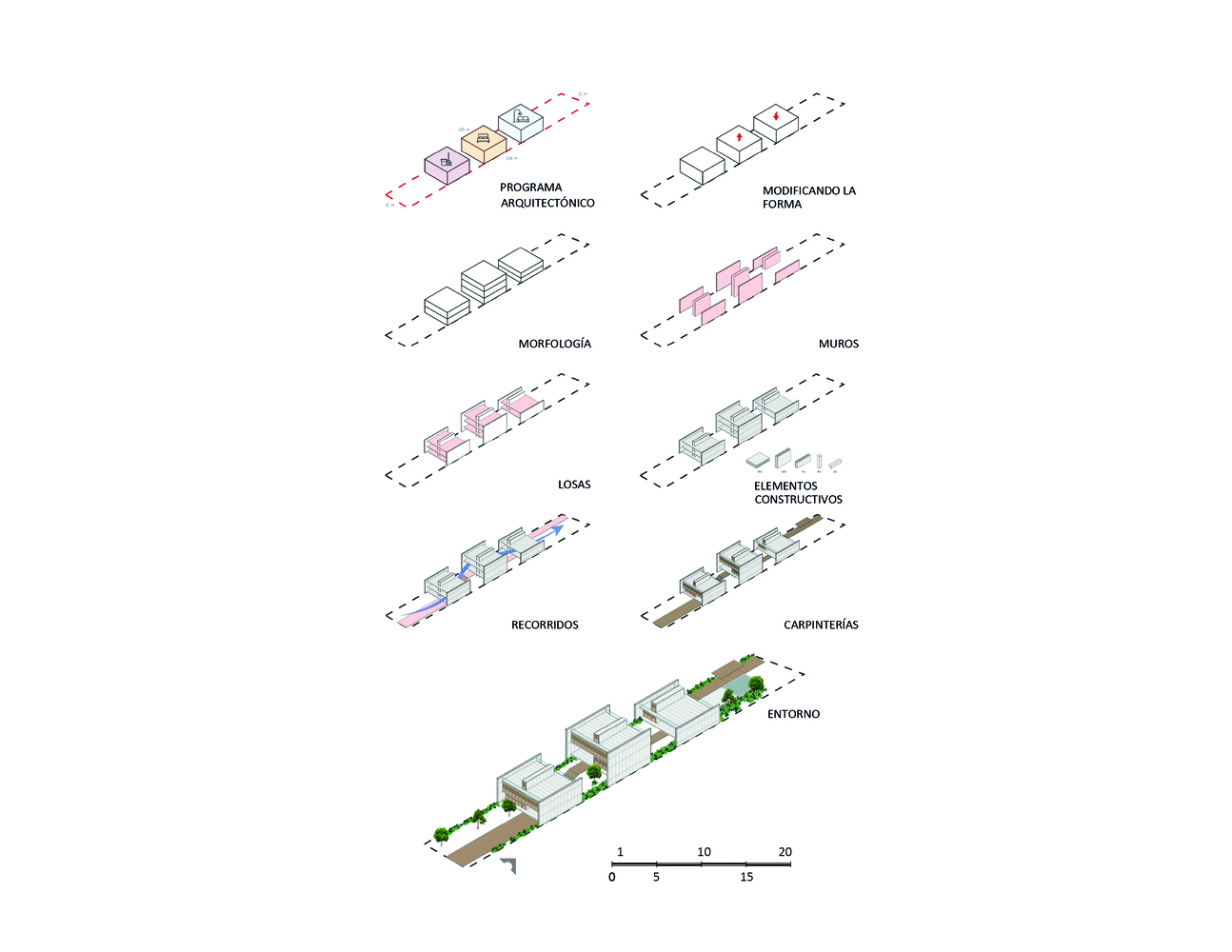
To connect all the spaces, wooden walkways are configured that link the areas, from the access to their connection with the beach.
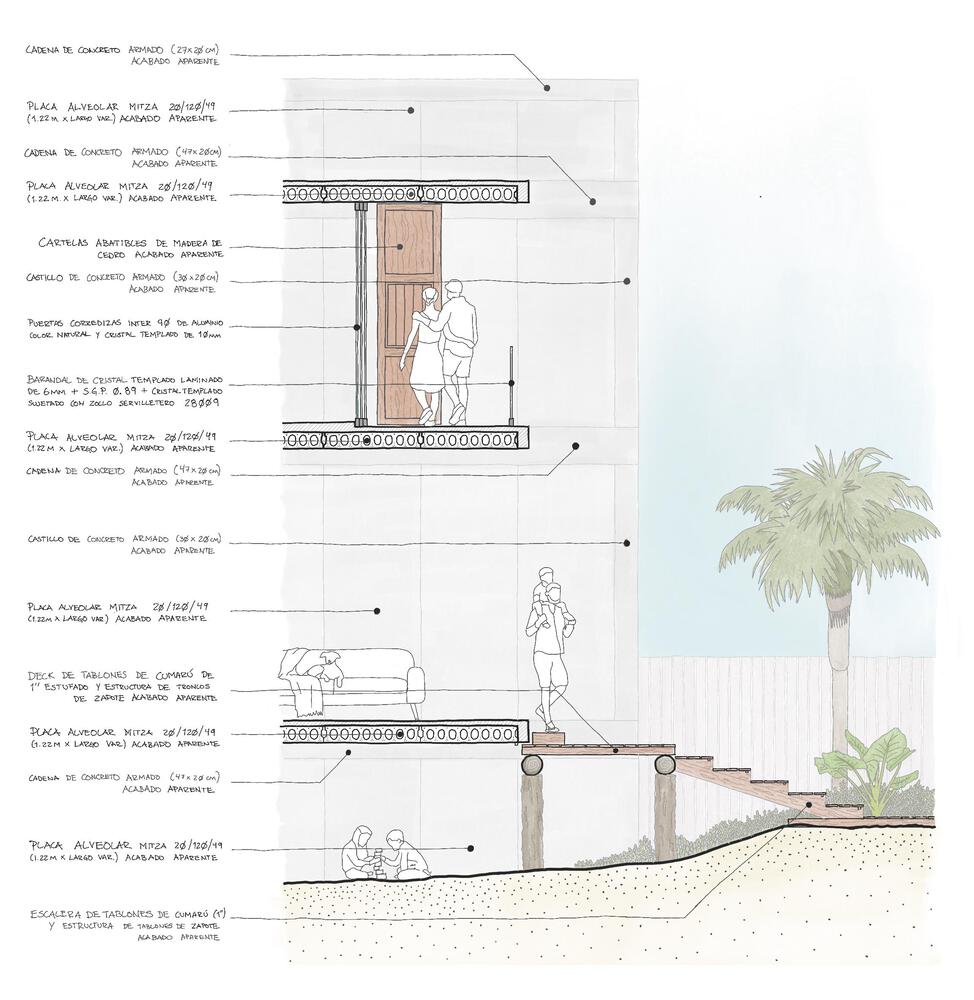
The construction innovation lies in the implementation of hollow core slabs that were originally designed for roofing, using them also to form the load-bearing walls, which with the same section of 1.21m wide x 0.20m thick, solves the entire structure, and this was achieved thanks to the modular design that shapes the building.

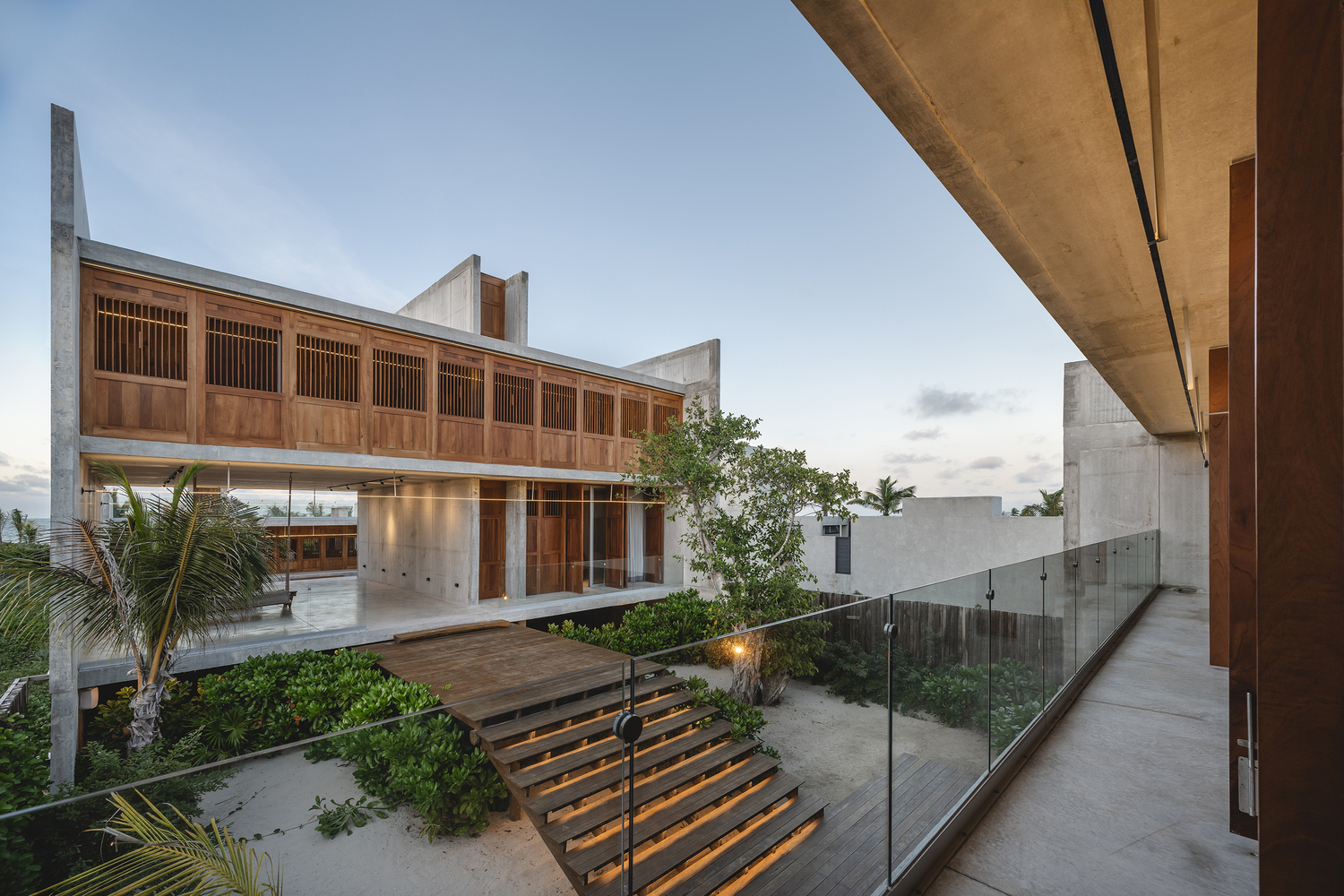
The scheme is of notable simplicity: the three blocks each have only four load-bearing walls: two peripheral and two central. The latter function as the central core for circulation and services, adapting each block according to its function.
The tectonic expression constitutes a remarkable aspect, where all elements remain visible, dispensing with any type of cladding.
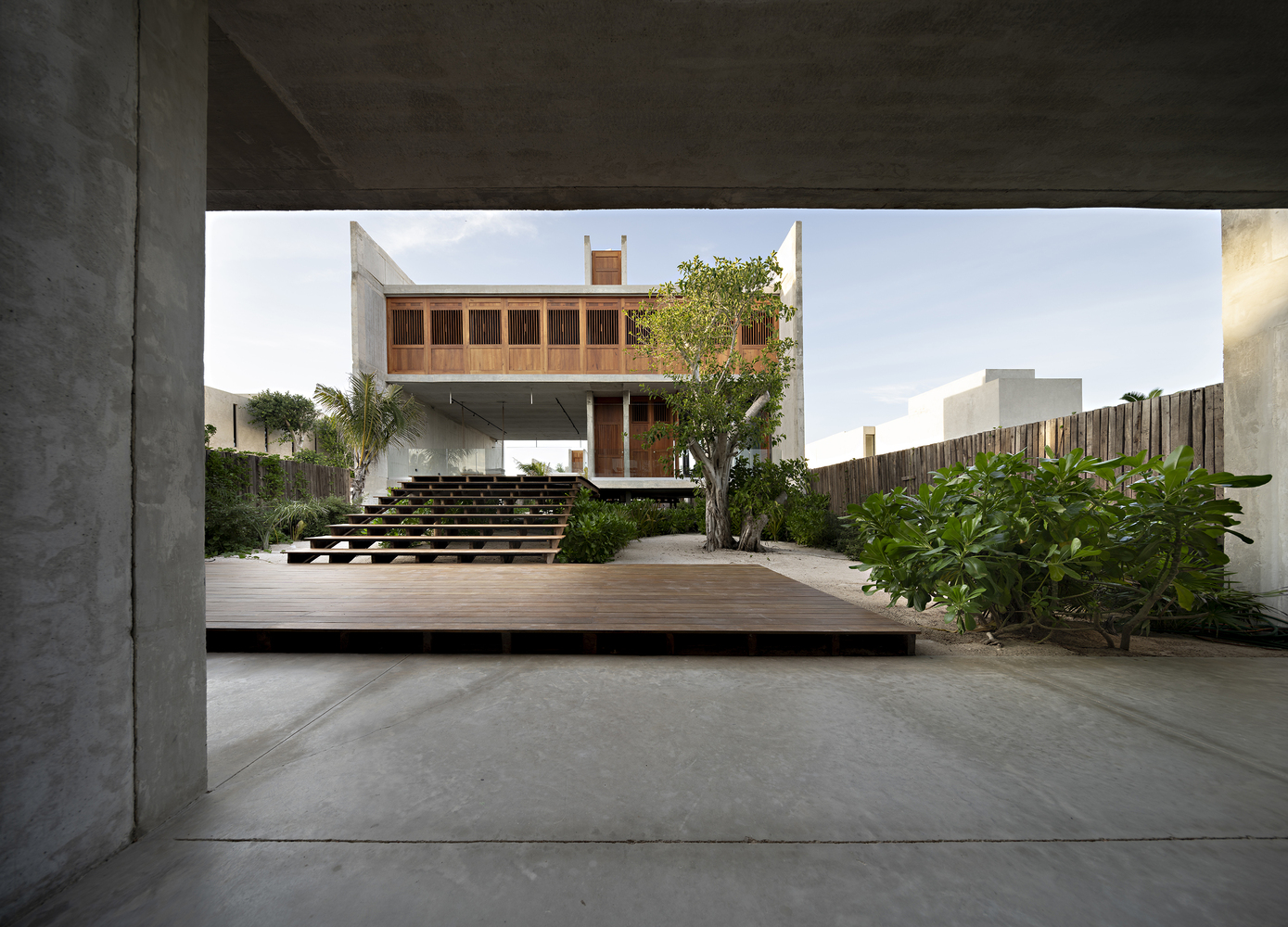
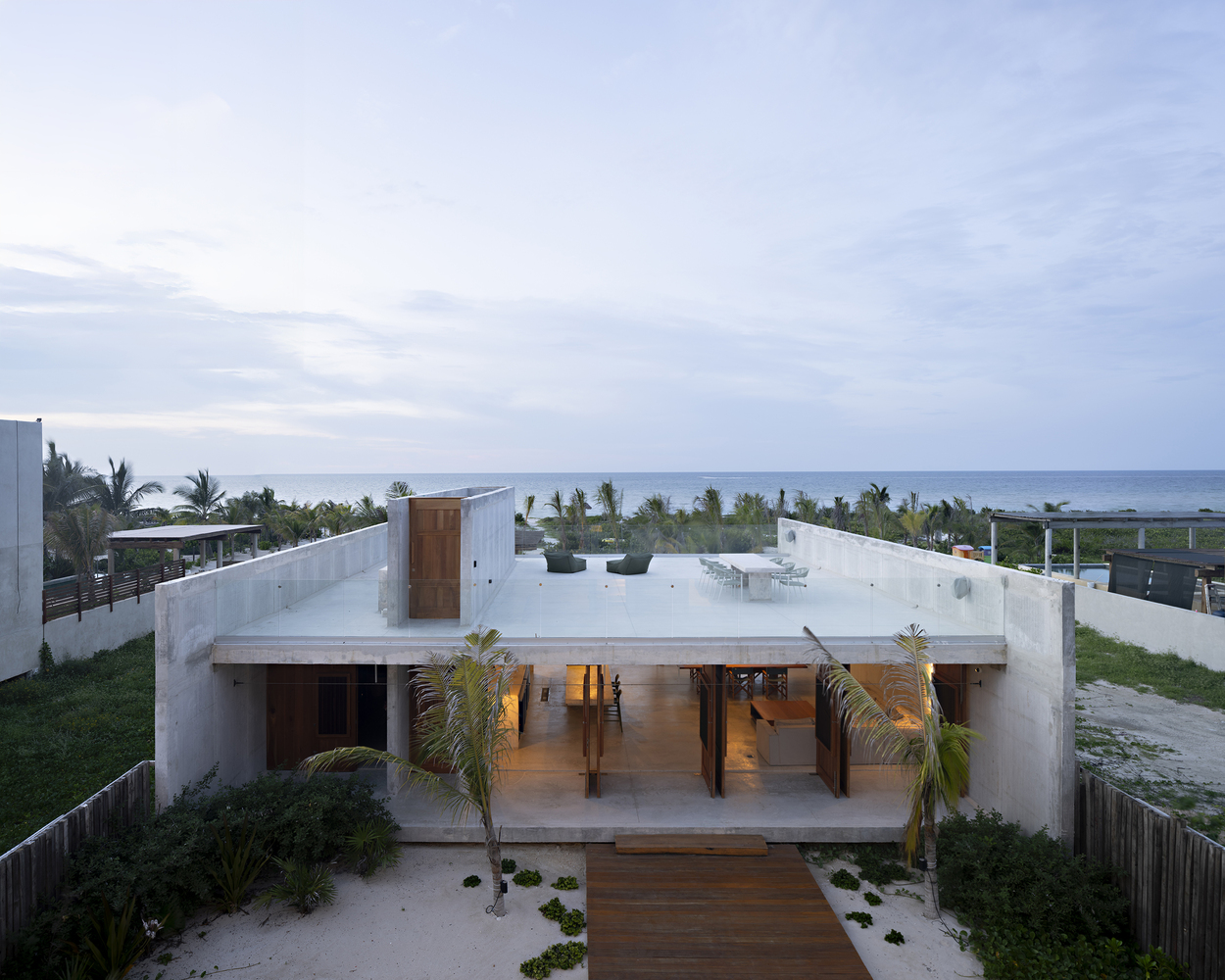
The structural components, chains, and columns are of exposed concrete, and the other elements, such as wood that reinterpret vernacular constructions, reaffirm an architectural expression of material purity and constructive honesty.