Saint-ferréol Résidence
SAINT-FERRÉOL RÉSIDENCE
Jérôme Lapierre Architecte
ARCHITECTS
Jérôme Lapierre Architecte
ARCHITECTS
Jérôme Lapierre, Gabriel Demeule
PHOTOGRAPHS
Maxime Brouillet
YEAR
2025
LOCATION
La Côte-de-Beaupré Regional County Municipality, Canada
CATEGORY
Houses, Extension
English description provided by the architects.
Located in the municipality of Saint-Ferréol, Québec, the secondary residence presents itself as a retreat removed from the everyday, a place of escape that lives to the calm rhythm of the forest.
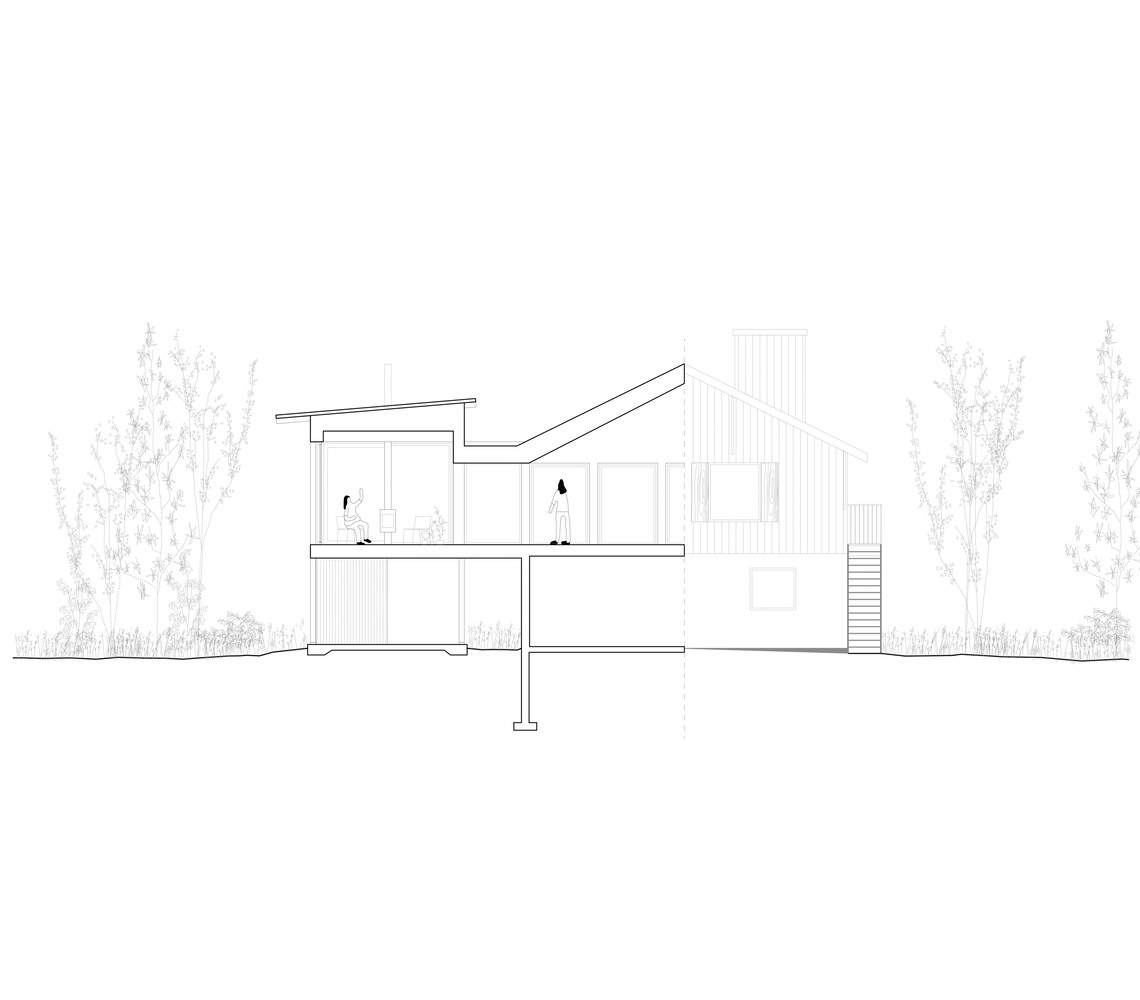
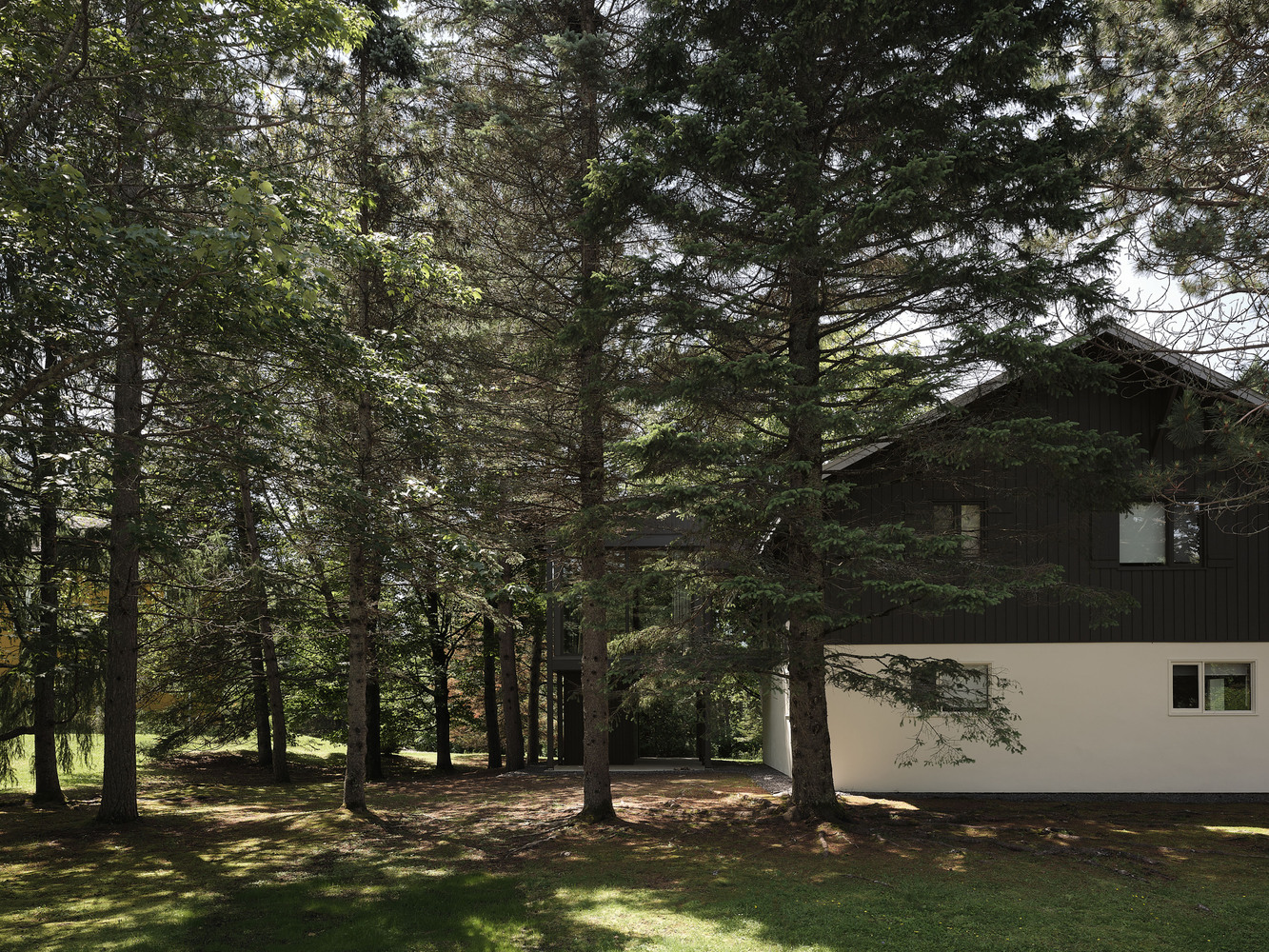
The existing building bears the imprint of architecture inspired by Austrian chalets: a compact elevated volume, a light base, generous roof overhangs, and a strong presence of wood.
These qualities, highlighted and carefully revealed, guided the integration and design of the extension.
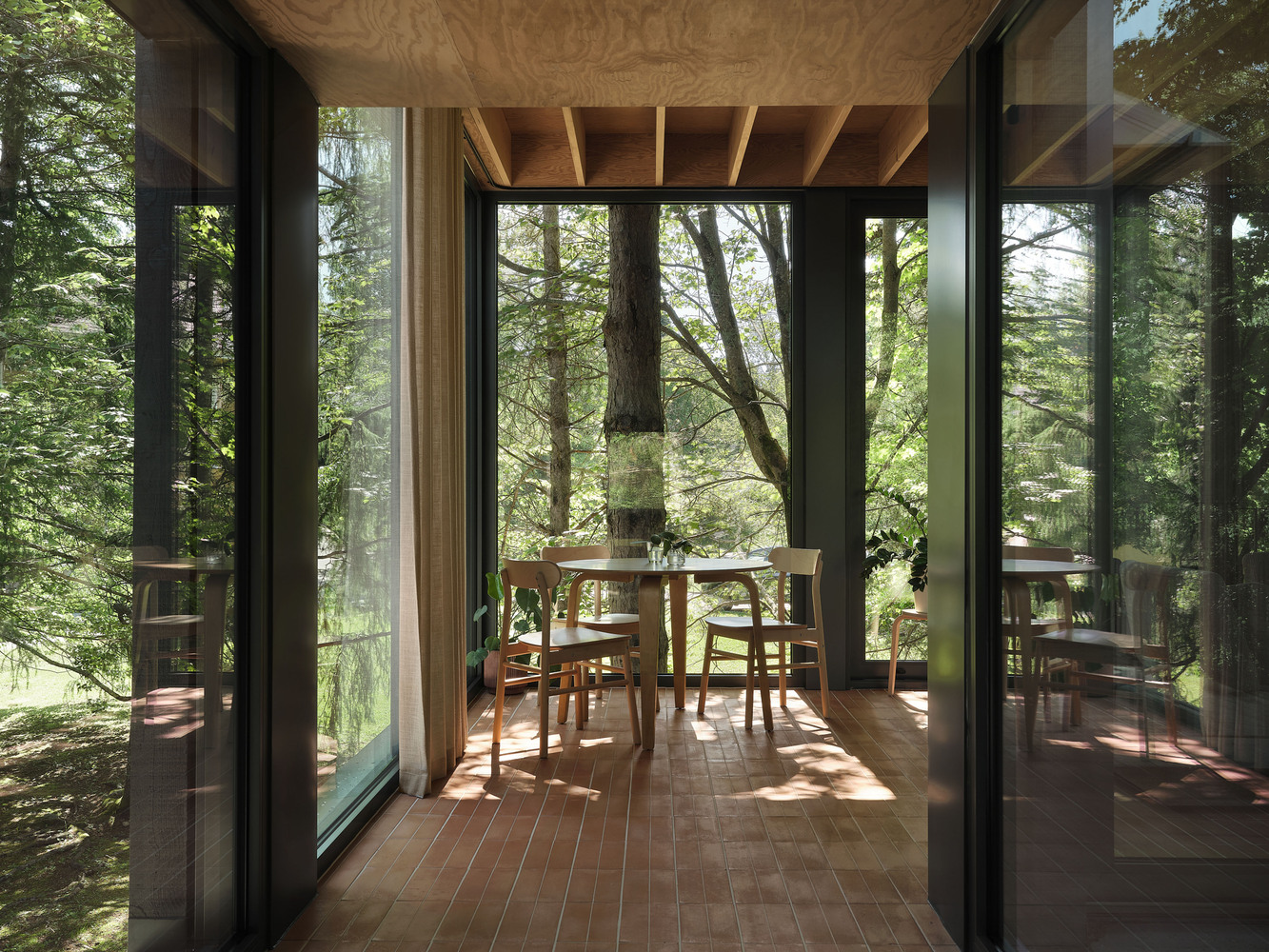
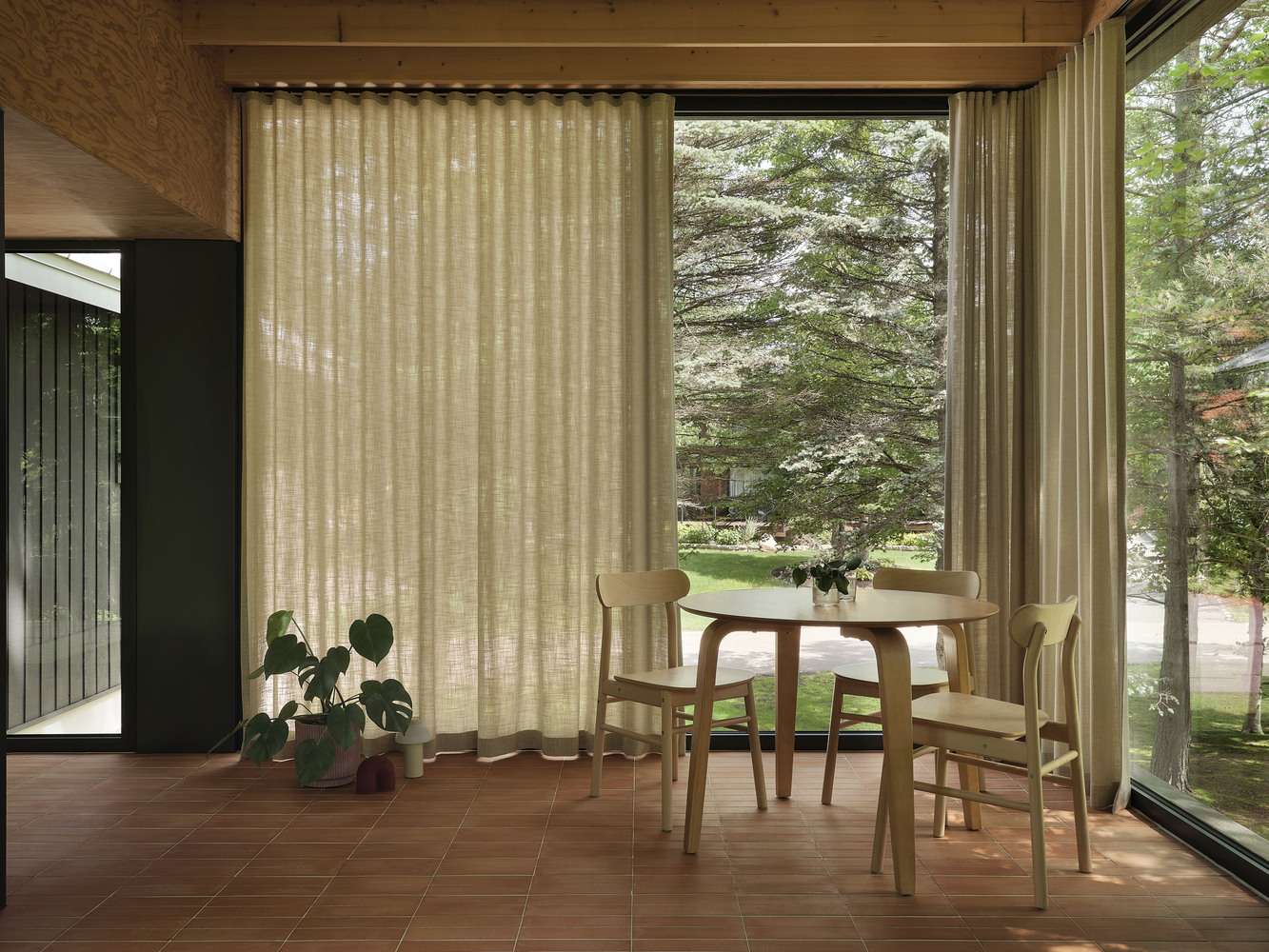
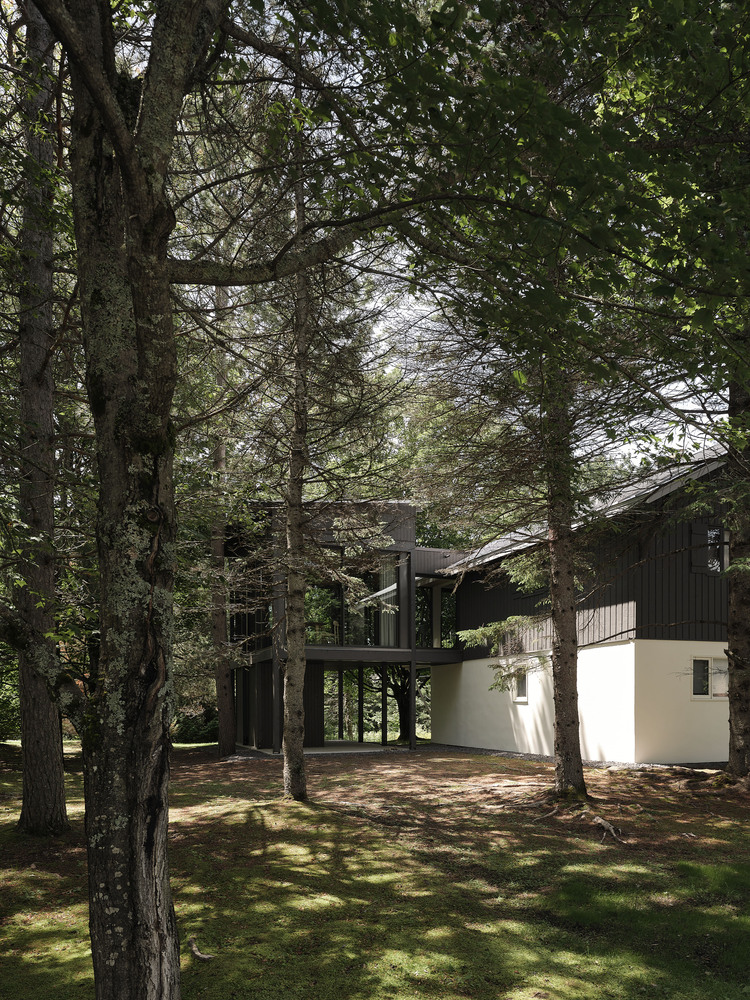
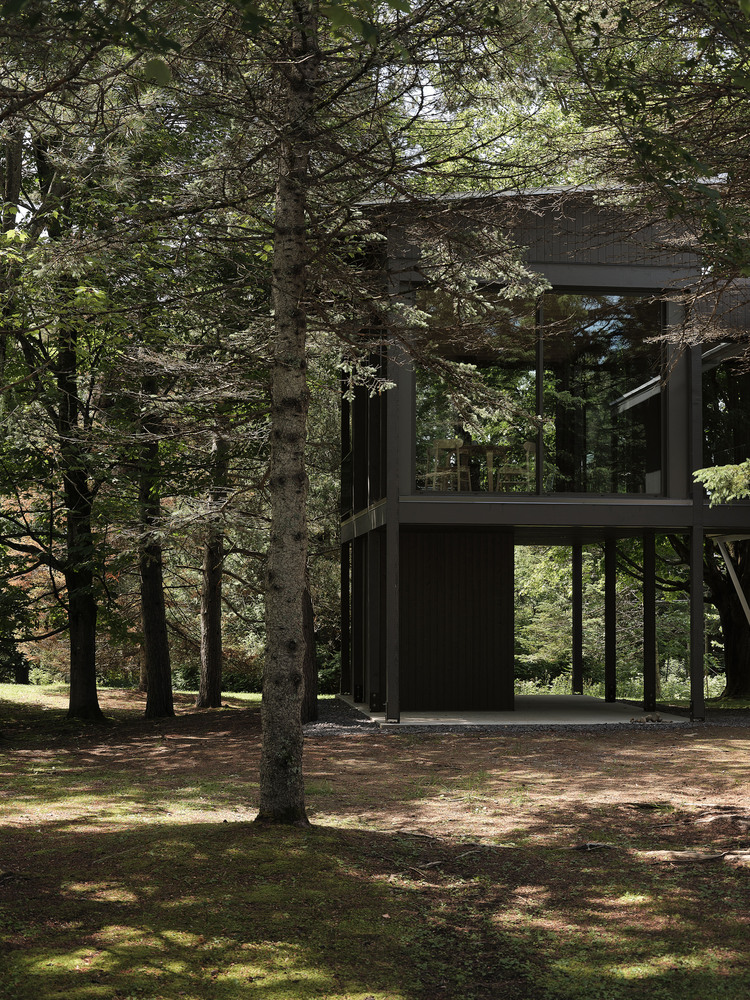
Perched among the site's moss and spruces, the new addition offers a second breath to the existing residence while attaching itself with restraint.
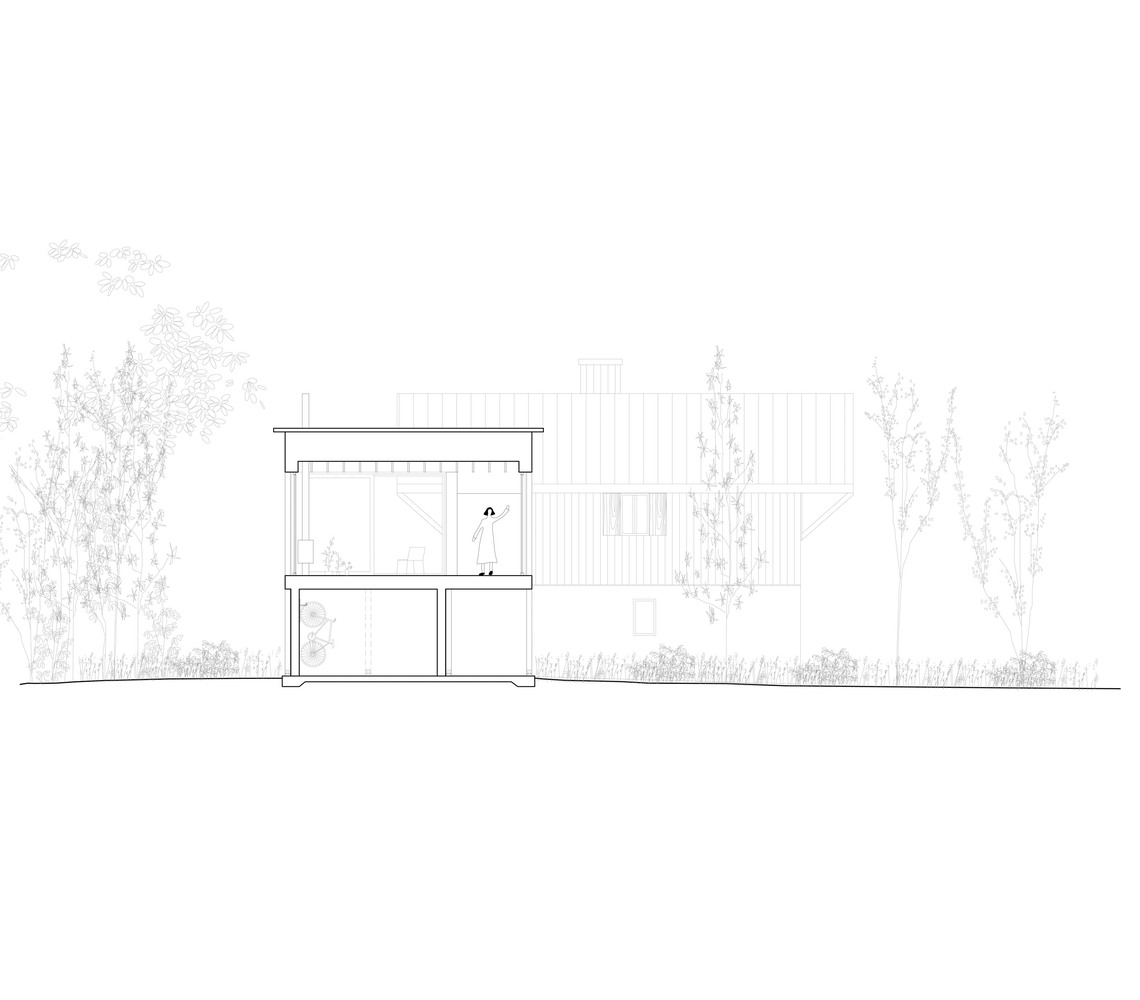
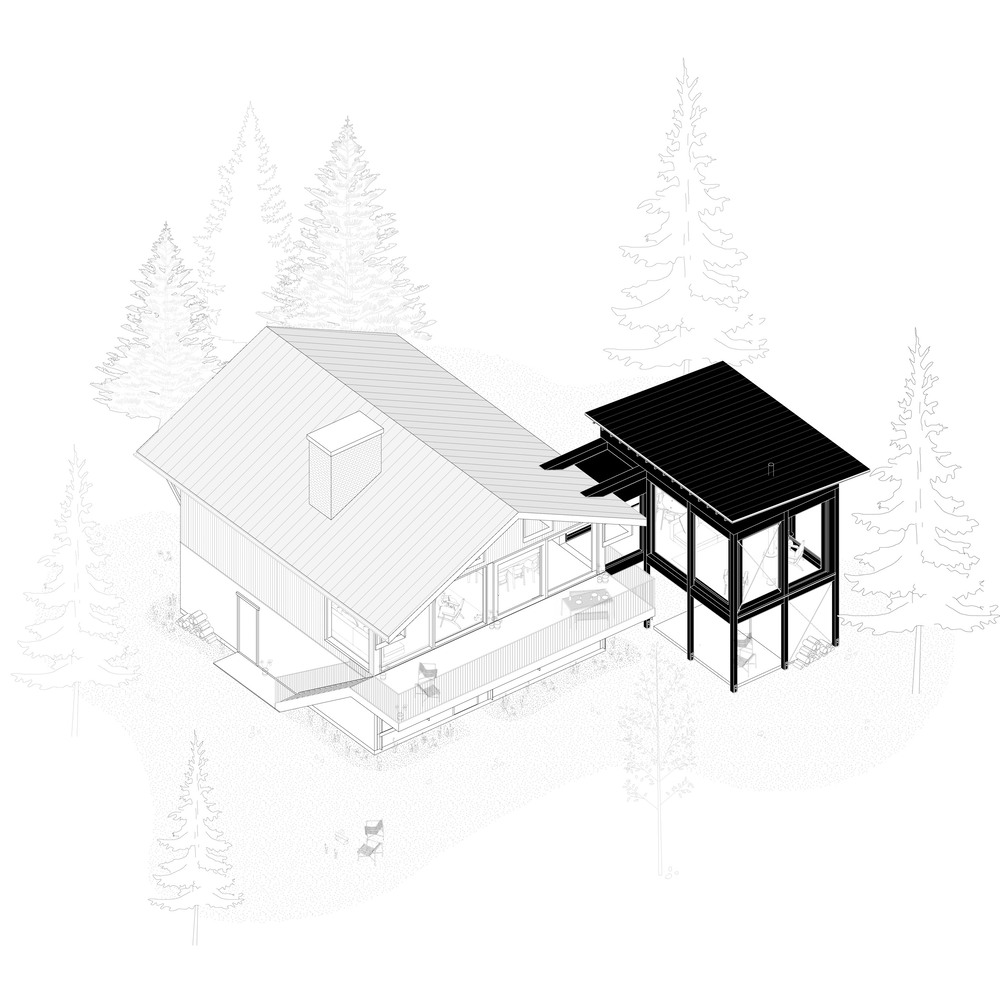
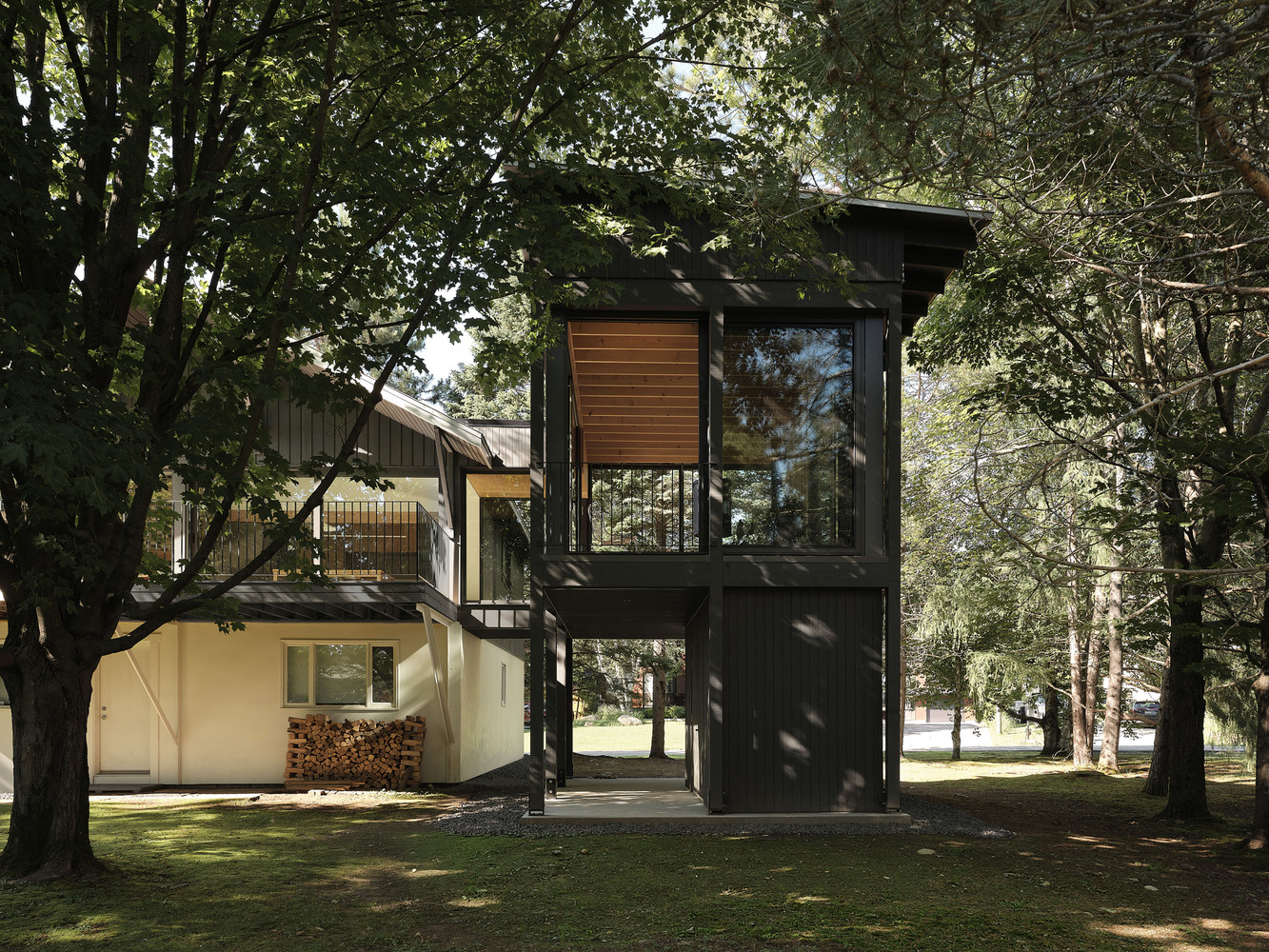
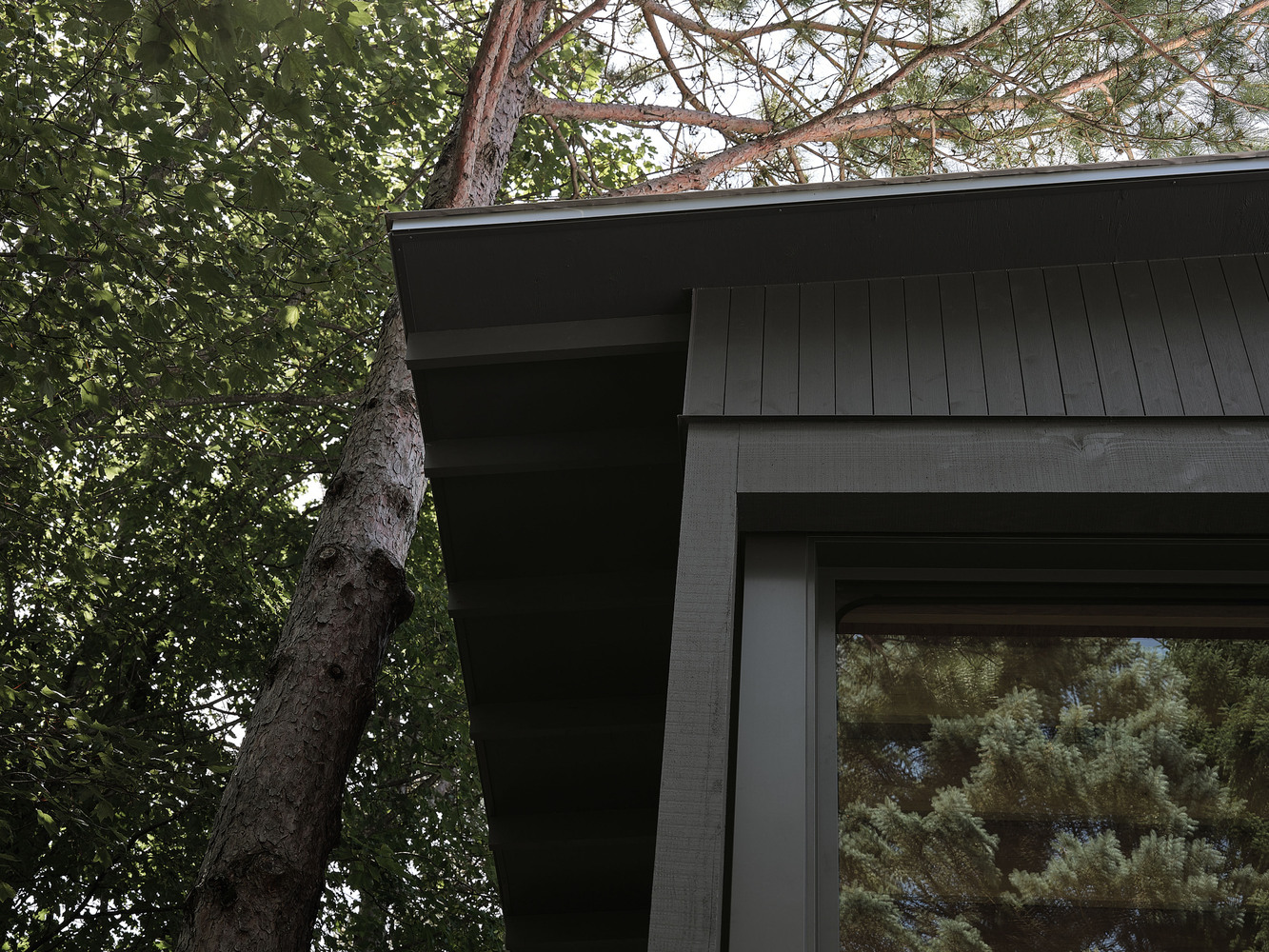
While continuing the language of the original building, it introduces a series of subtle references: a raised volume set on a minimal base, a reinterpretation of the roof overhang, and a contextual materiality in which wood is celebrated.
Despite this relationship, the addition asserts its autonomy through a deliberately minimalist posture.
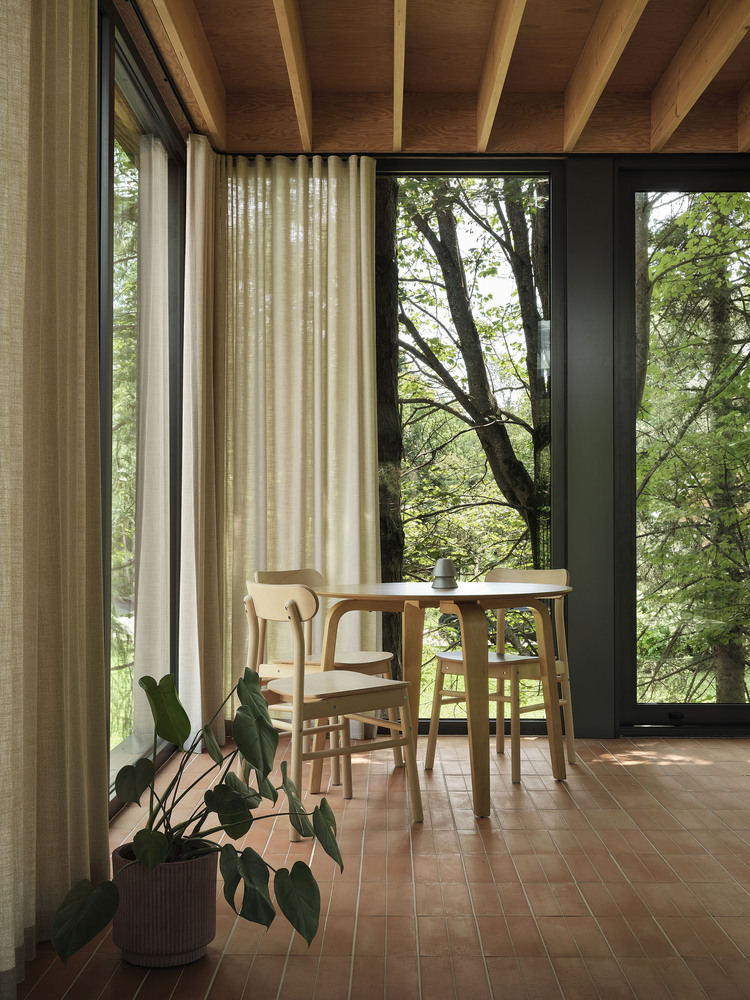
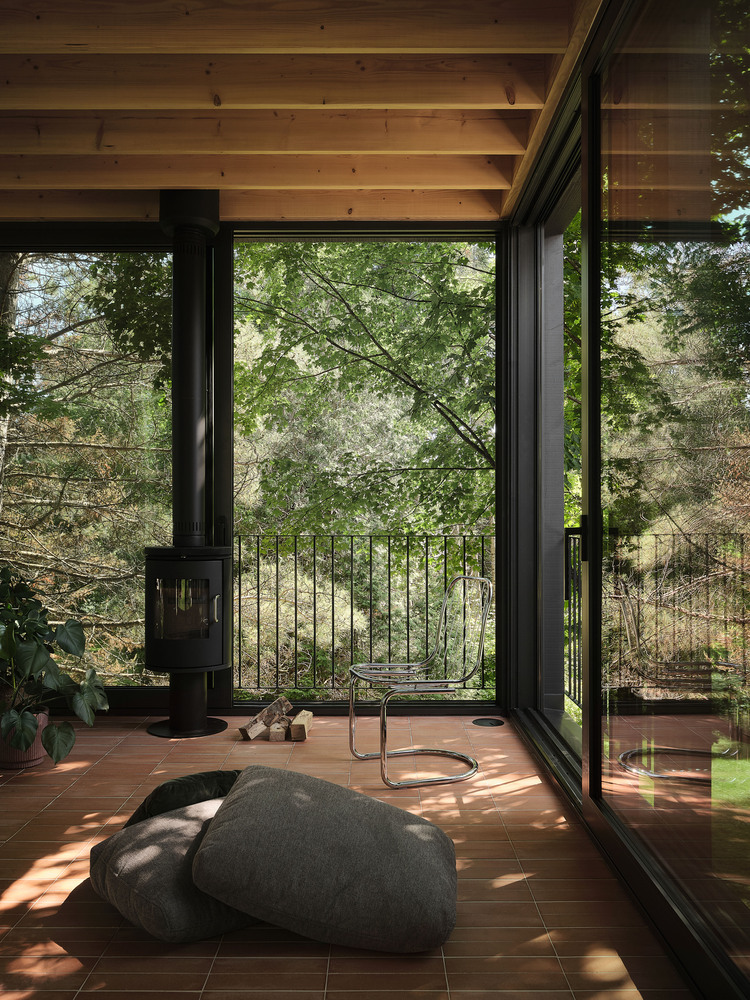
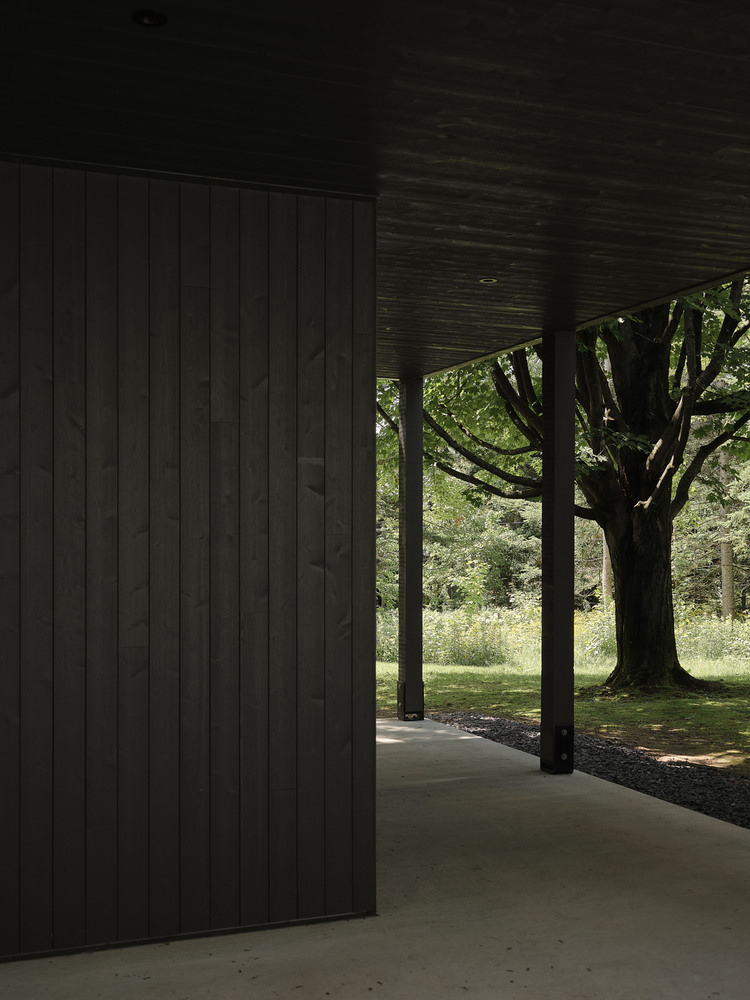
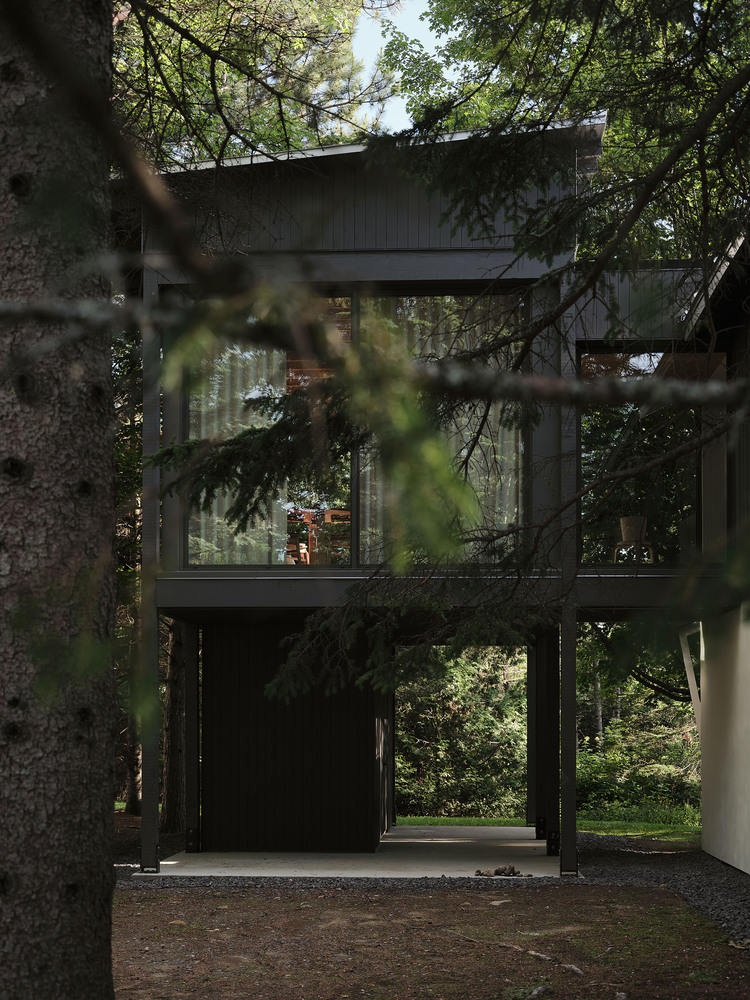
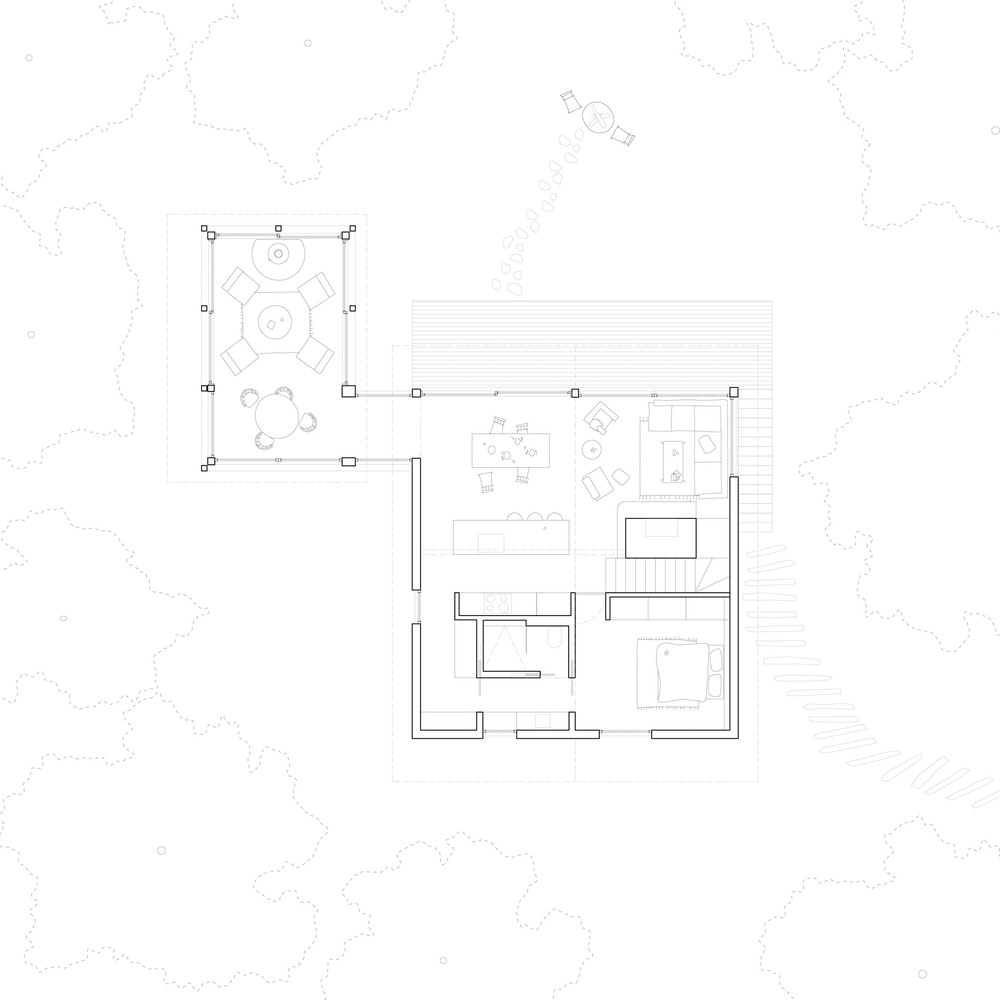
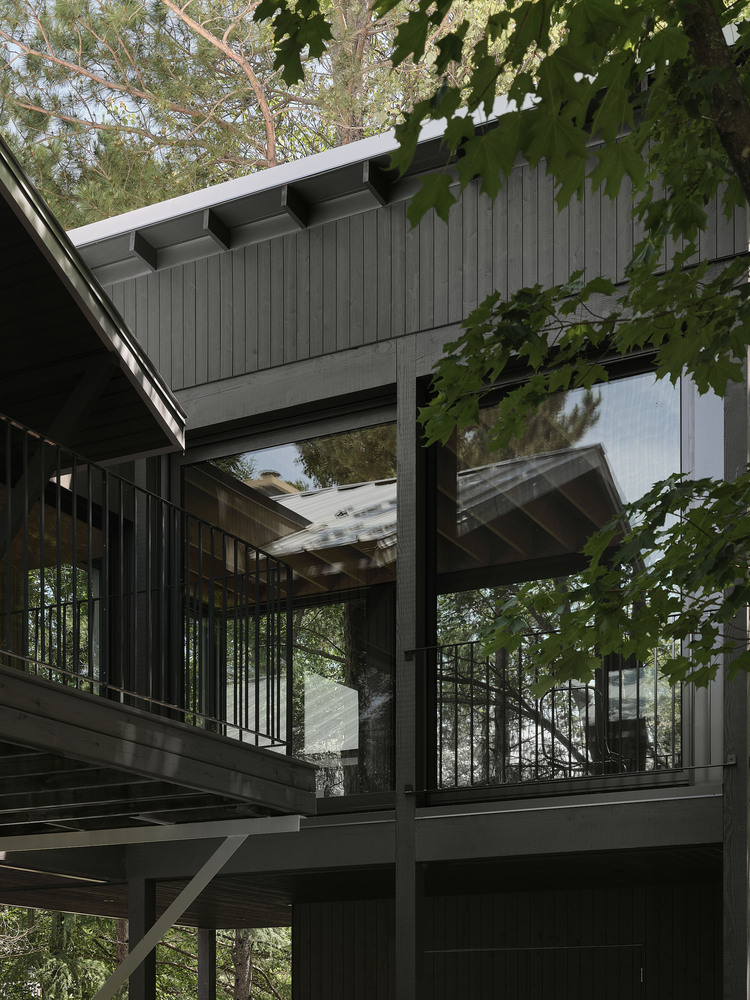
Resting on a structural slab, it reduces its footprint in order to preserve the mature trees and the visual integrity of the site.
The volume slips between the trunks with choreographed precision, preserving the nearest spruces whose tips brush against the project's roofline.
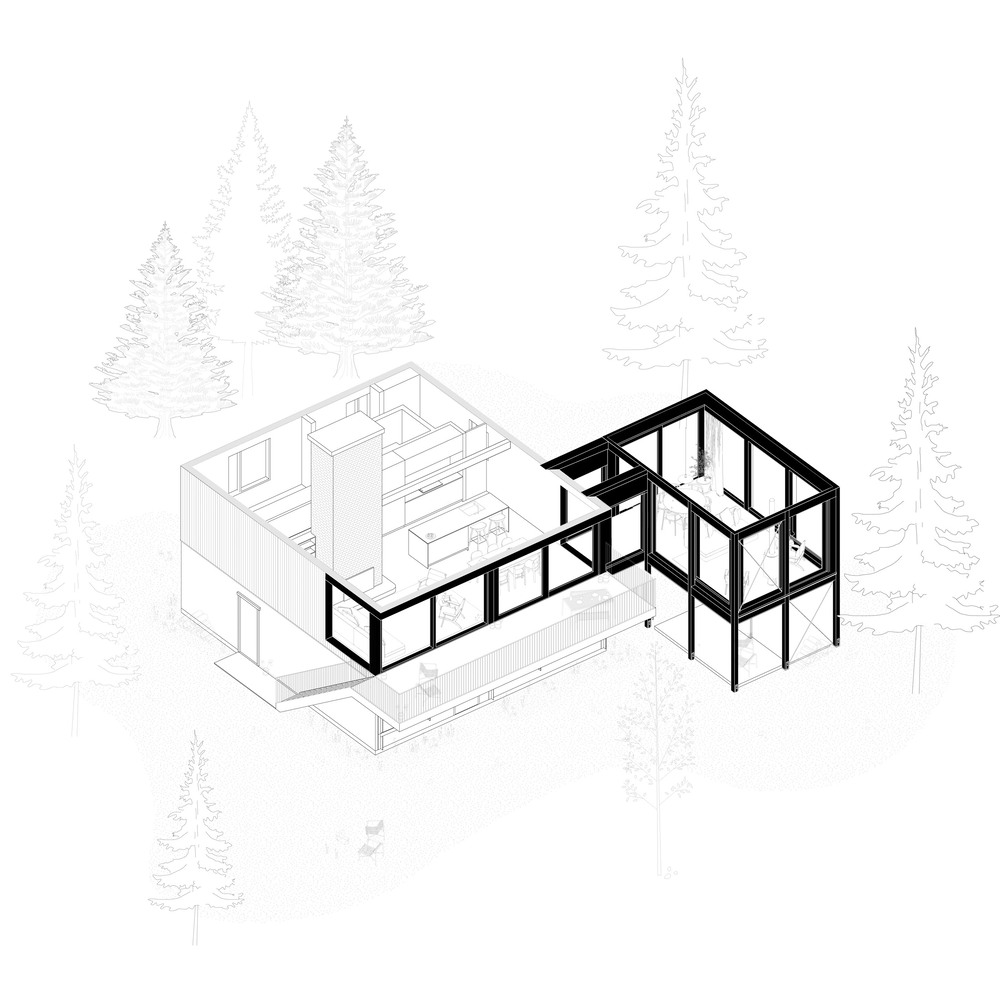
A lightweight aerial walkway discreetly separates the extension from the main building, enhancing the sense of a pavilion suspended in the boreal canopy.
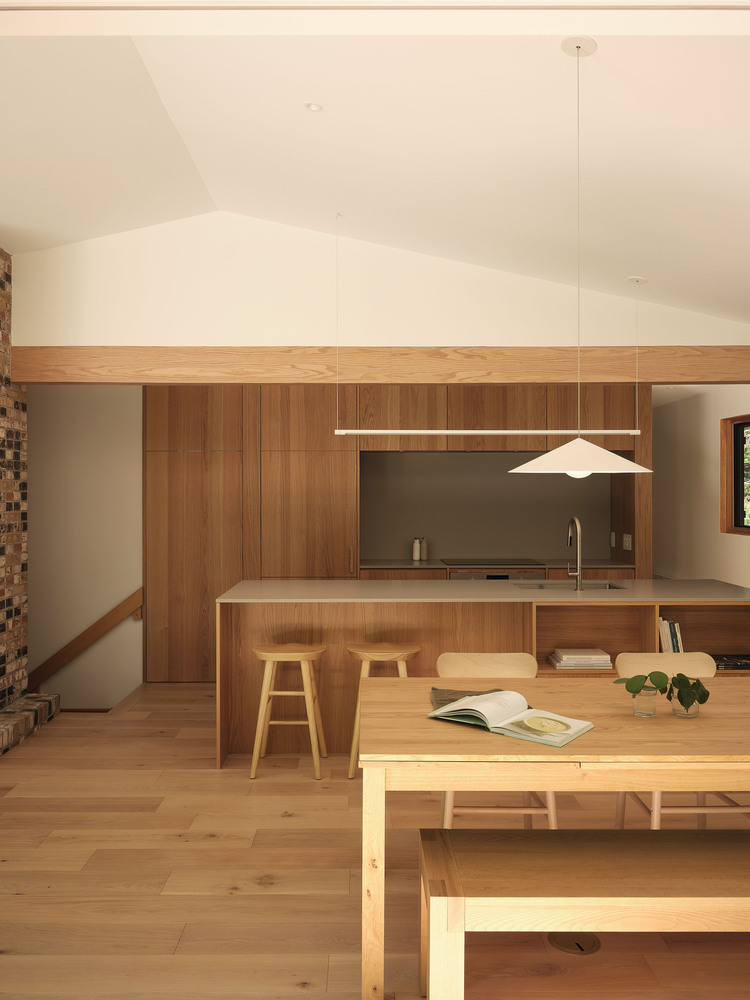
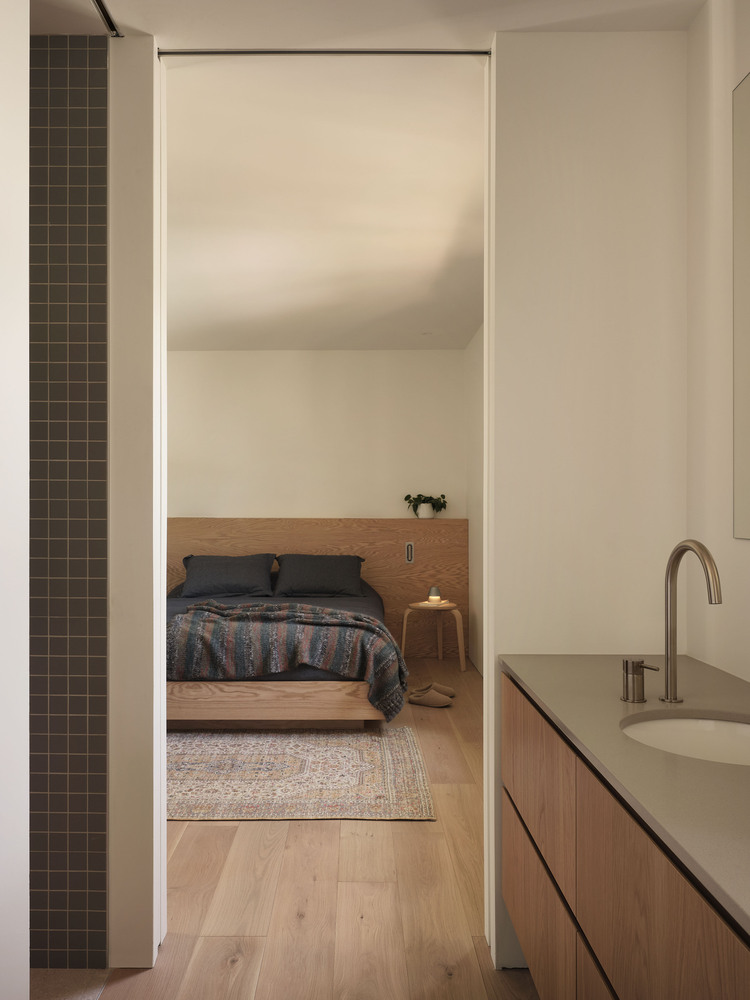
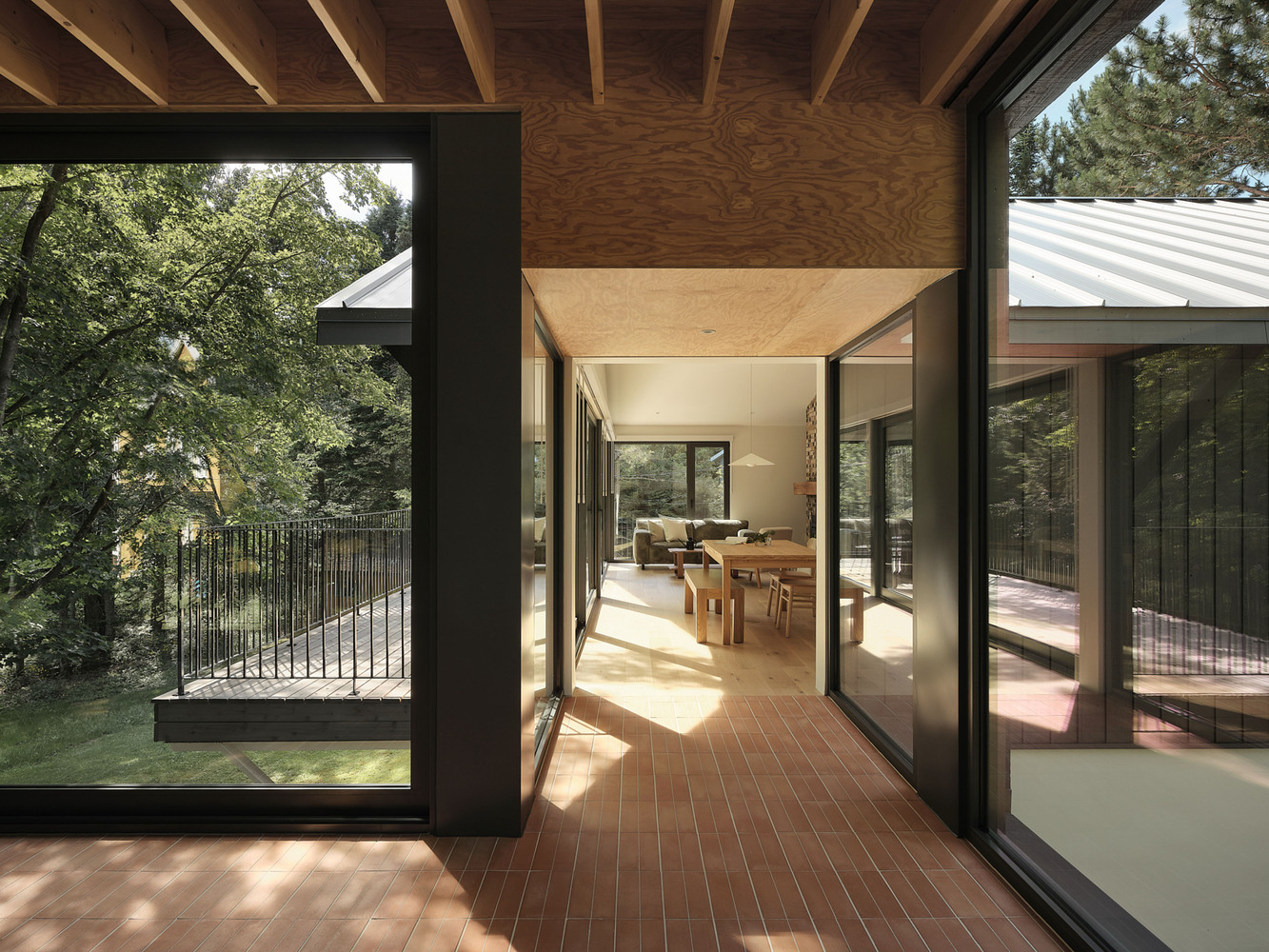
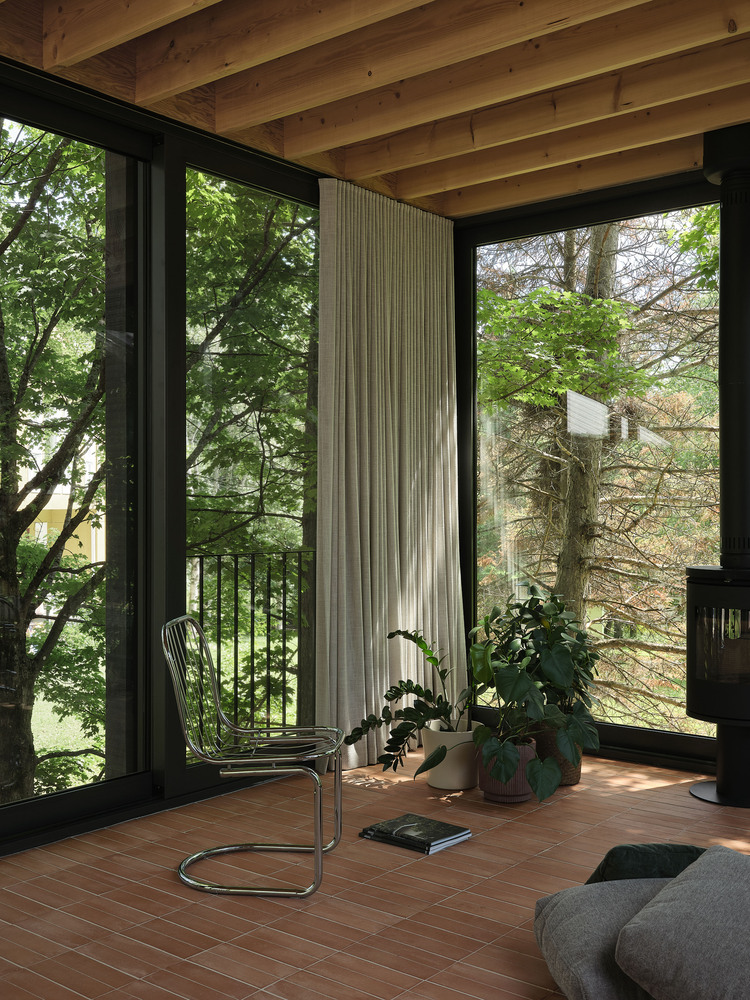
Inside, the fully glazed envelope unfolds between the exposed structure and a terracotta floor, deepening the connection to the forest.
The room transforms with the seasons: fully open in summer, it becomes a screened-in space that breathes with the wind and the trees.
During winter, it closes in and condenses into a warm cocoon evoking forest refuges nestled within snow-laden conifers.
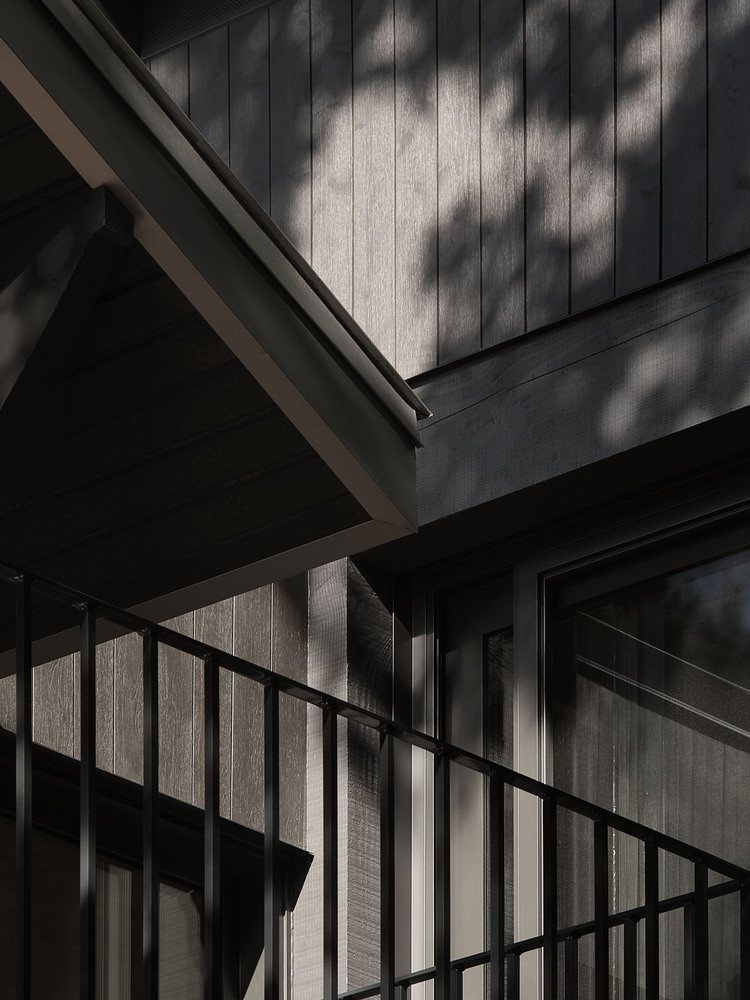
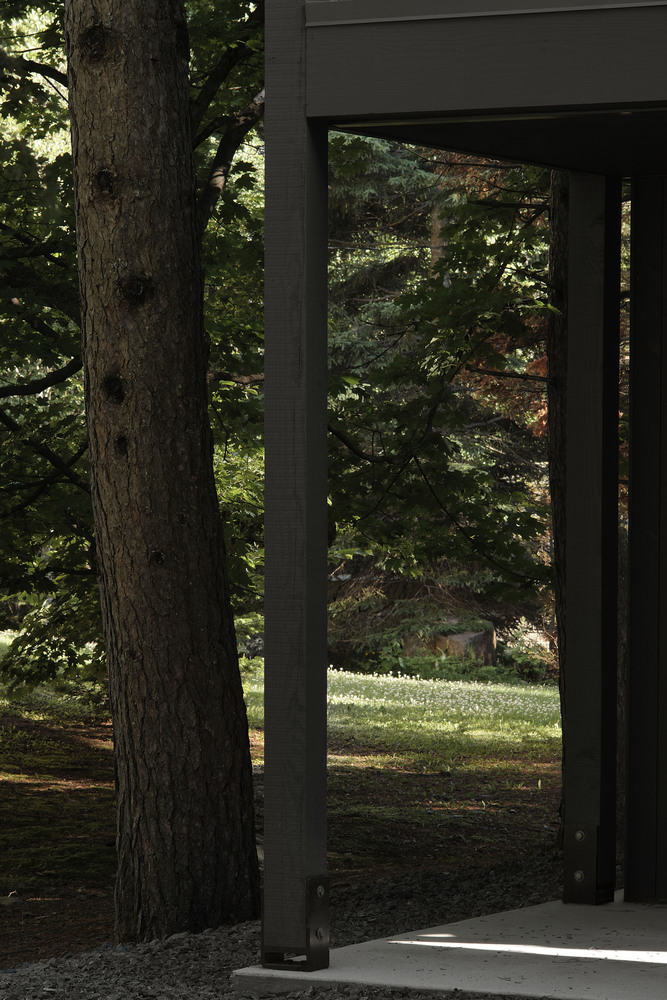
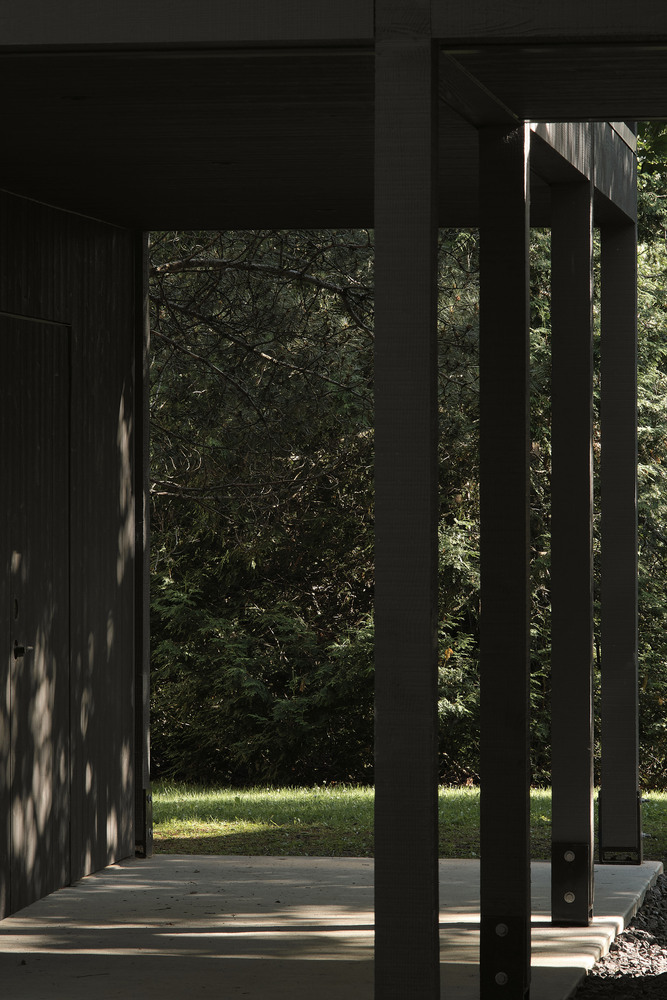
The glass walls generate a play of reflections that converse with the surrounding vegetation, giving the impression that branches extend directly into the space.
The insertion within the woods is so tight that it creates remarkable proximities, some branches appear close enough to touch from inside, heightening the sense of immersion.
The exposed structure sets the rhythm of the space and introduces a tectonic expressiveness that embraces both simplicity and constructive clarity.
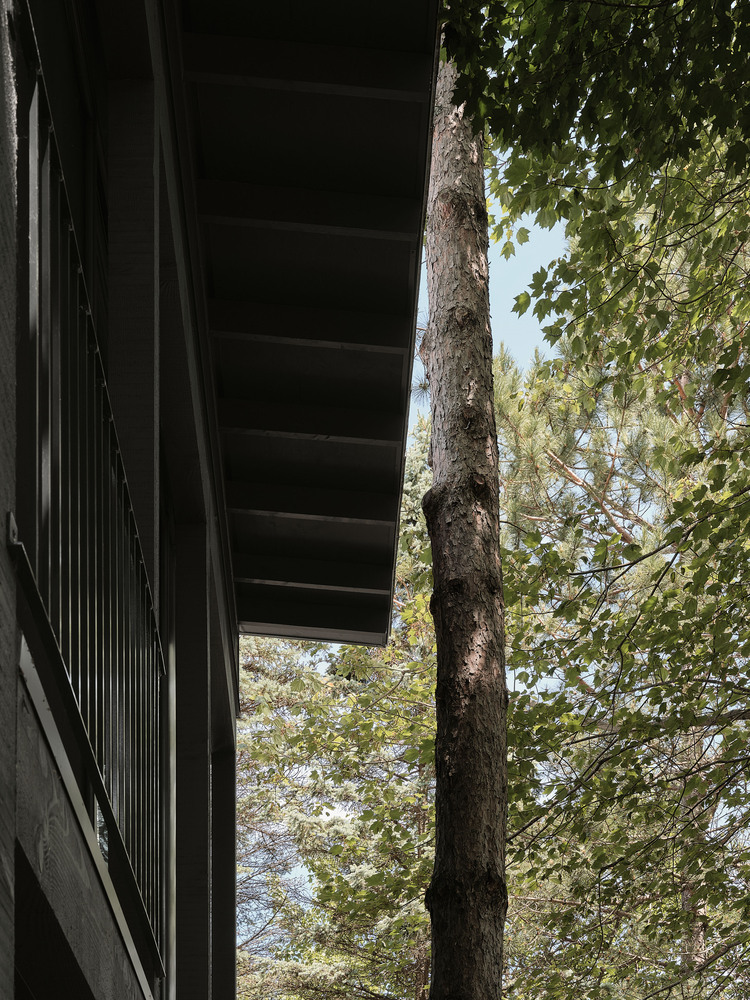
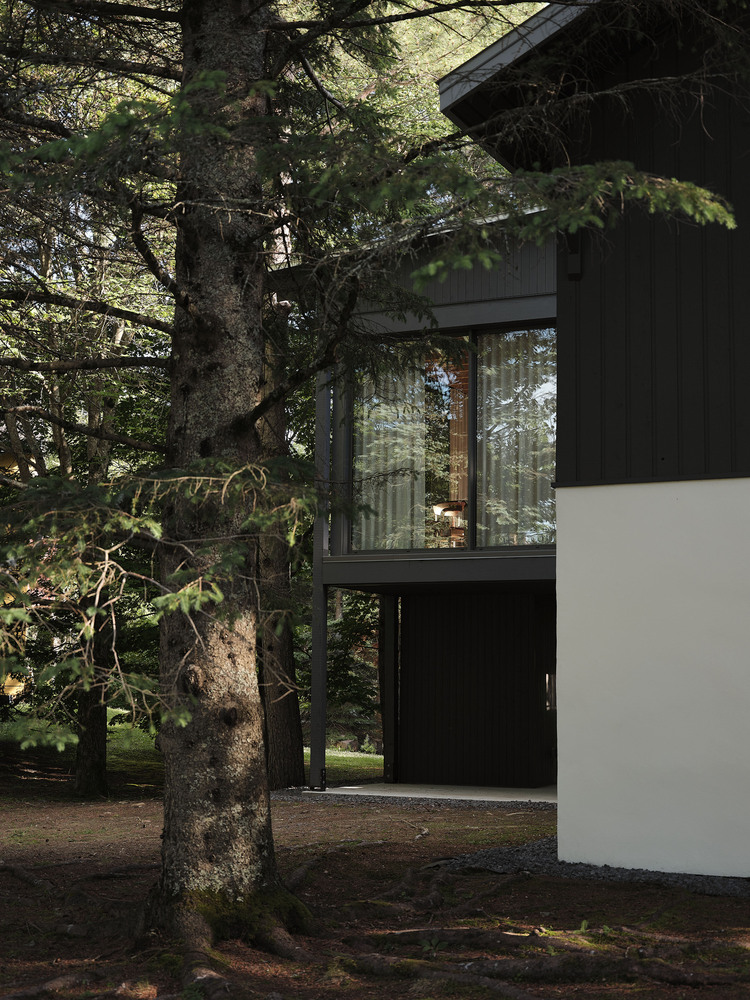
Detached from the glazed envelope, it creates a subtle separation that reinforces the idea of a place lightly suspended among the trees, simultaneously anchored in the forest and held apart through a deliberate architectural gesture.
The result is a space where lightness, intimacy, and immersion converge, a place attuned to the changing moods of the forest and of those who inhabit it.