Children's Dining Room In Oviedo
CHILDREN'S DINING ROOM IN OVIEDO
Rogelio Ruiz, Macario G. Astorga
ARCHITECTS
Rogelio Ruiz, Macario G. Astorga
ARCHITECTS AUTHORS
Rogelio Ruiz, Macario G. Astorga
CONSTRUCTION MANAGEMENT
Inspyra Ingeniería
CONSTRUCTION
Terra Ingenieros
PHOTOGRAPHS
Marcos Morilla
AREA
248 m²
YEAR
2025
LOCATION
Spain
CATEGORY
Educational Architecture
English description provided by the architects.
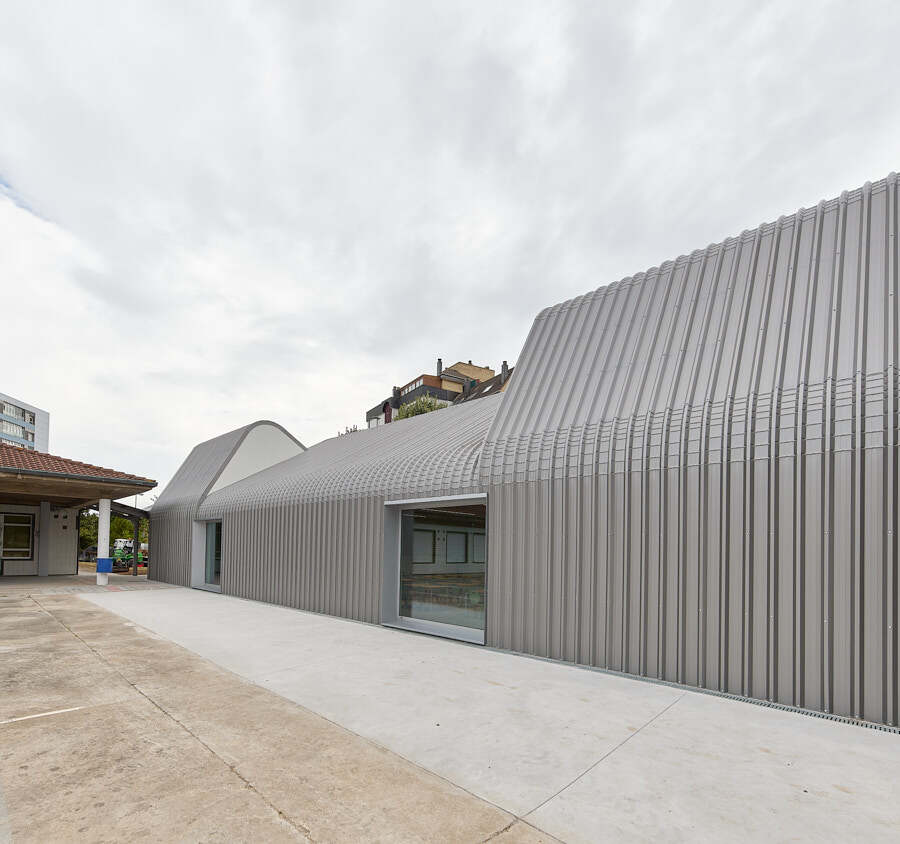
This is an independent piece attached to the preschool.
FUNCTIONAL ASPECTS
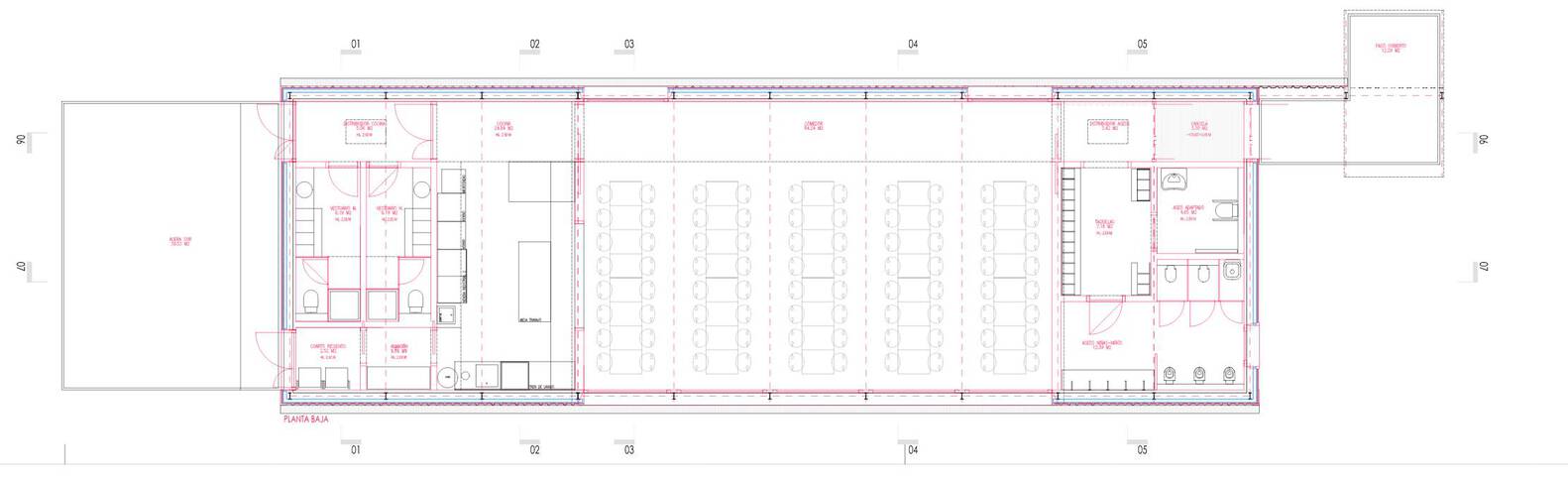
In a children's dining area, there are two types of users: the children and the staff. The latter are of two types: those who come from outside with the catering and handle the food, and the staff who must take care of the children during meal times.
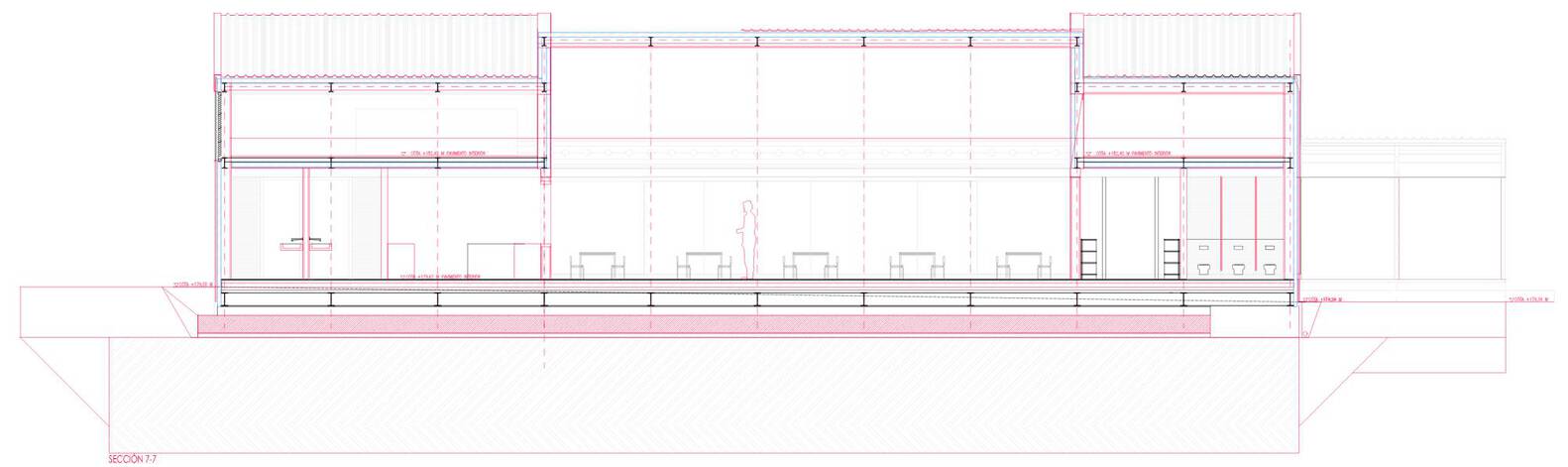
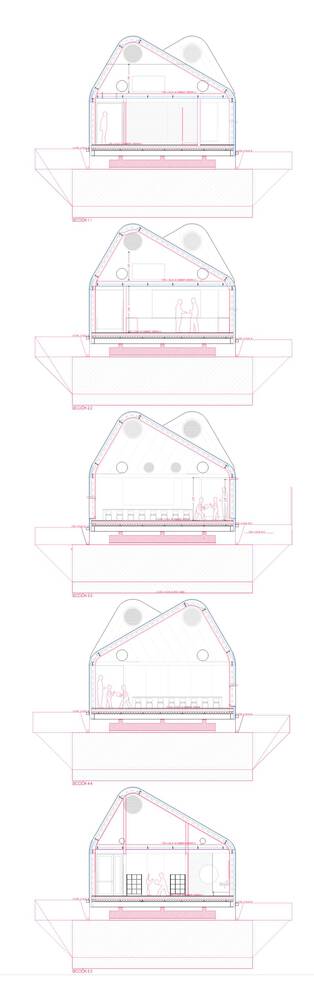
Thus, we separate the kitchen area from the food entrance and the children's area, which includes restrooms and a space to leave backpacks. Therefore, the project consists of two lower height sections (as they have air conditioning installations on their upper parts) and a central hall with full height, where the dining area itself is located.
FORMAL AND DESIGN ASPECTS
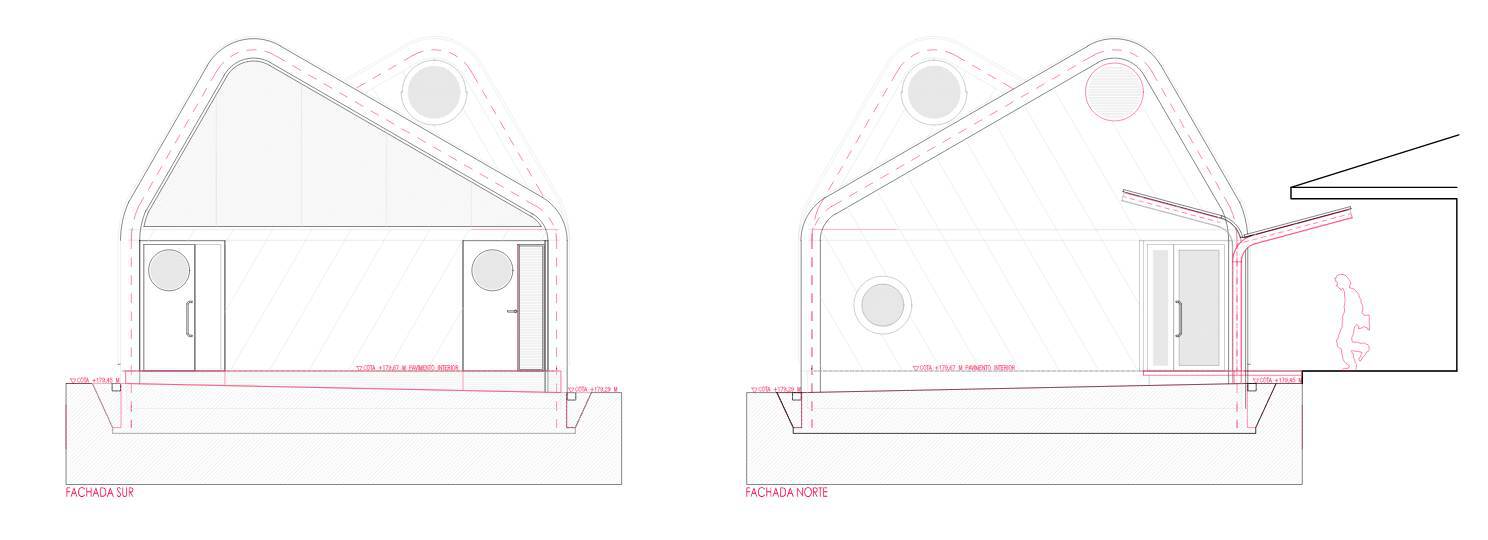
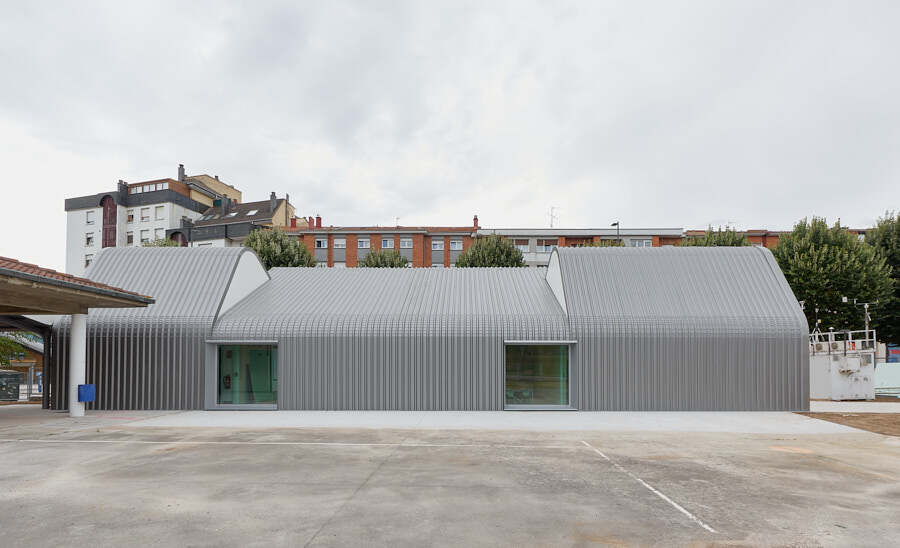
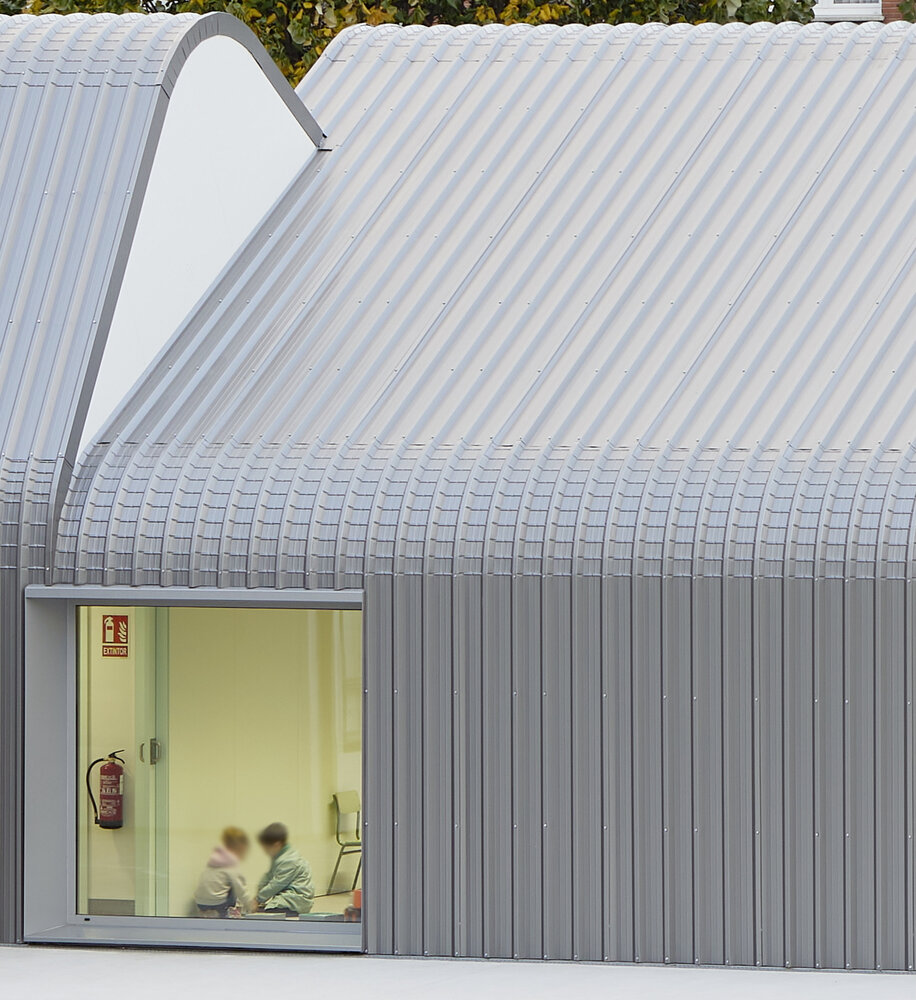
Despite the modularity of the project, to give it more movement and cheerfulness, the modules are asymmetrical, changing the direction of the eaves so that different facades appear above the roof. We have used simple mathematics, which, due to its arrangement to the right or left, generates a fragmented volume of great dynamism.
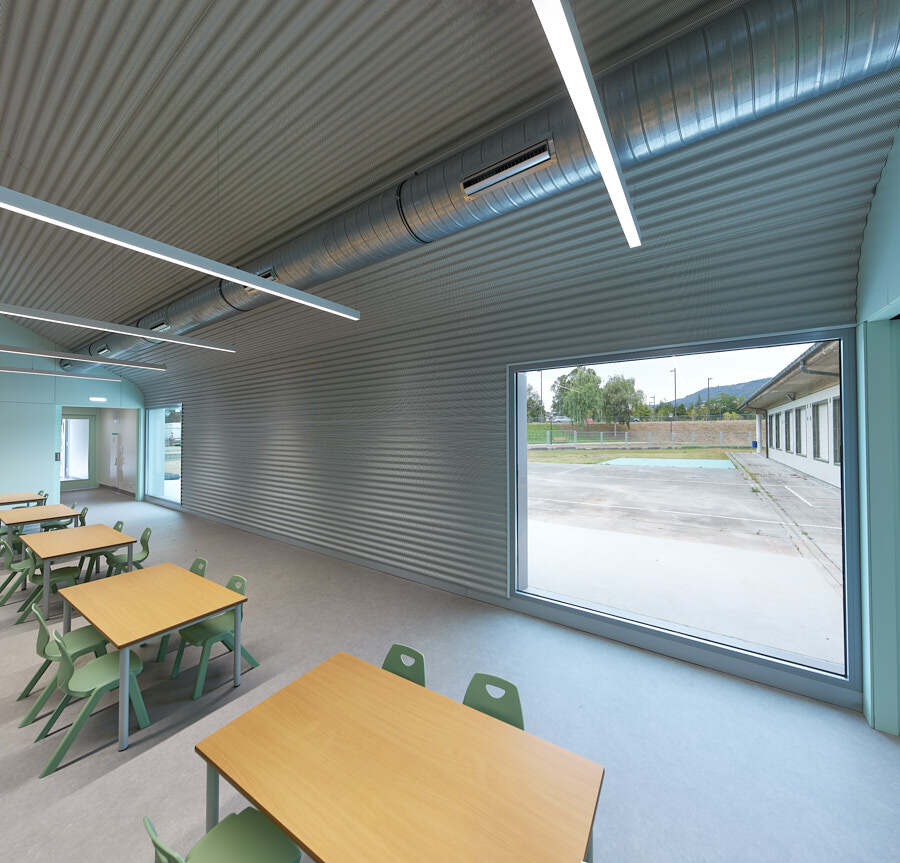
The trusses, and thus the subsequent forms, rest on the angles of the square, that is: thirty and sixty degrees. Also, the interior spatial form has a reminiscence of Alvar Aalto's church in Riola, near Bologna in Italy, with details reminiscent of Scharoun...
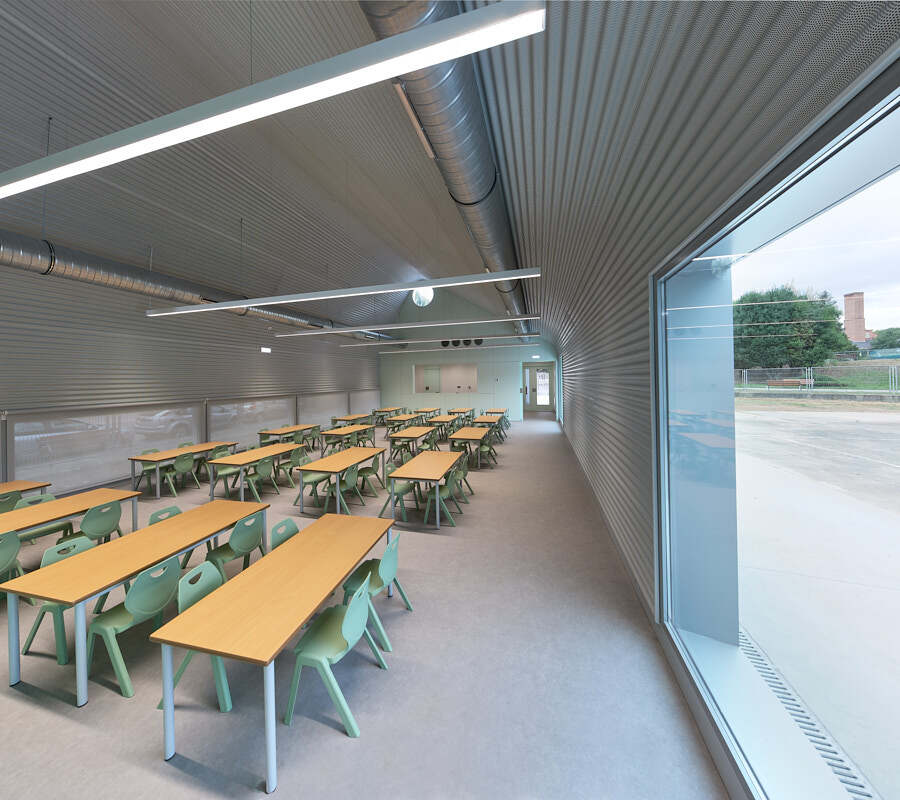
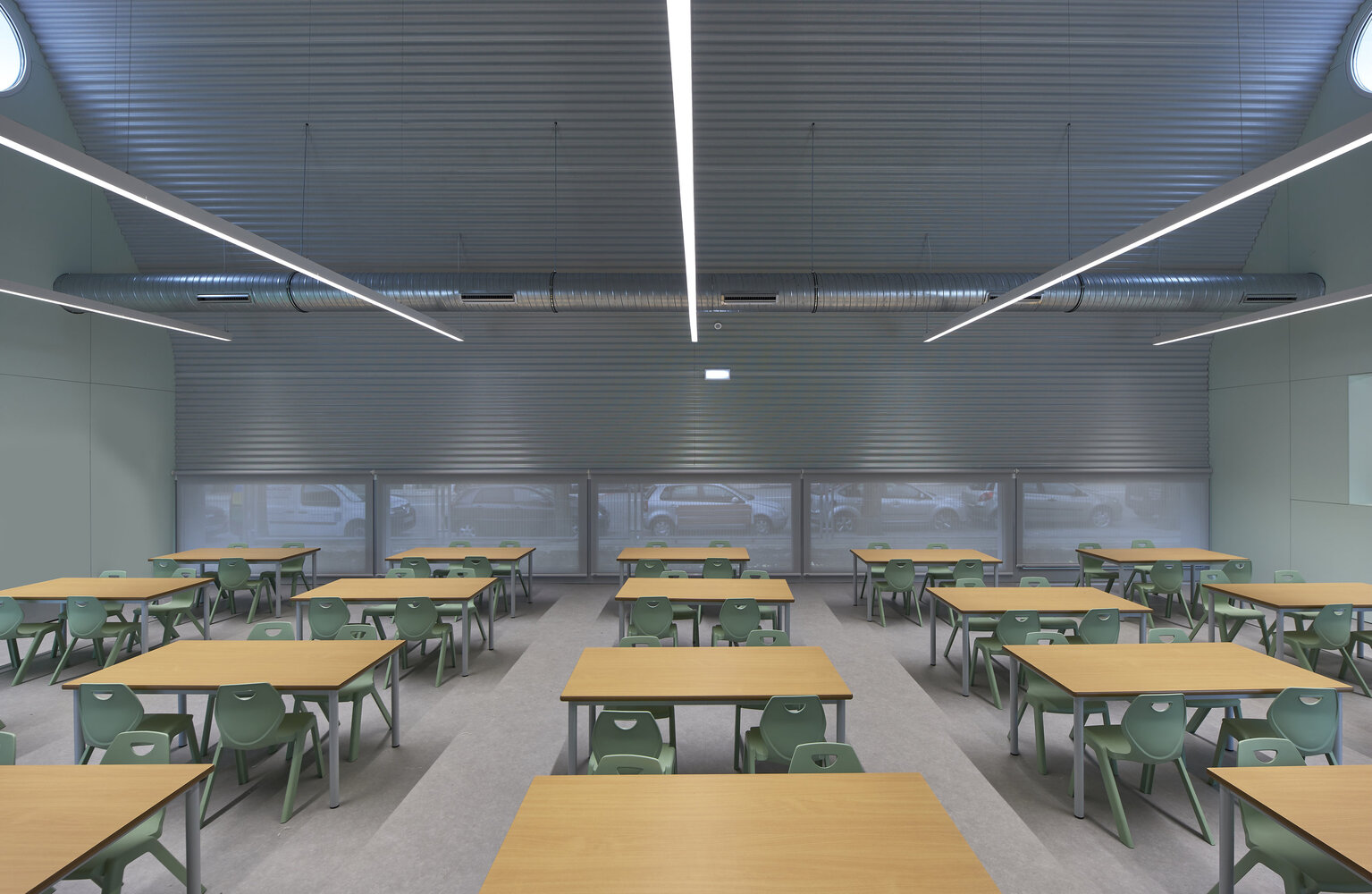
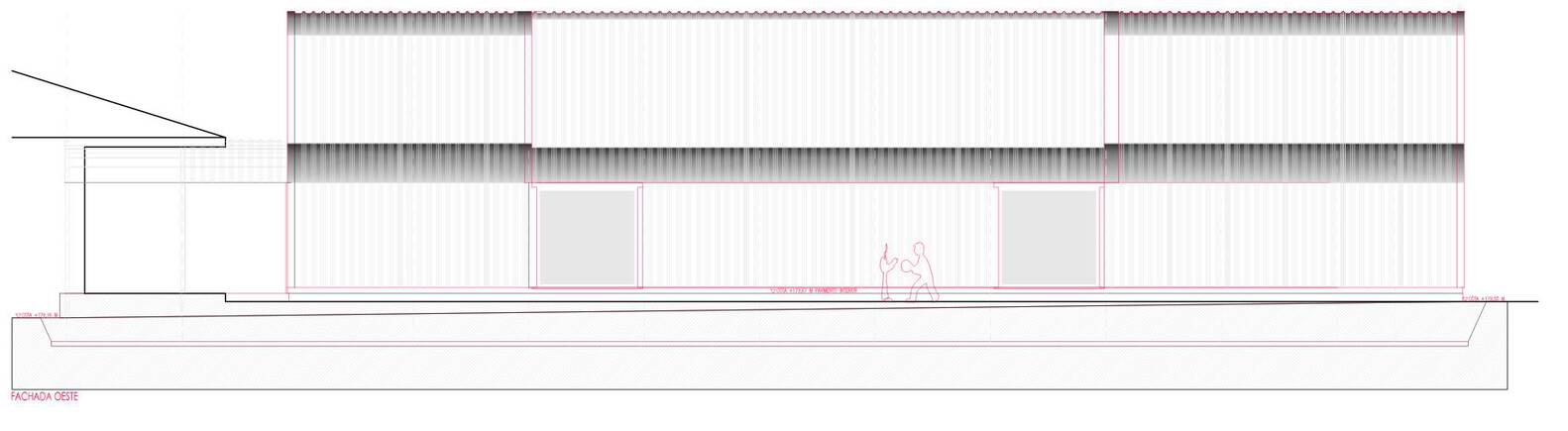
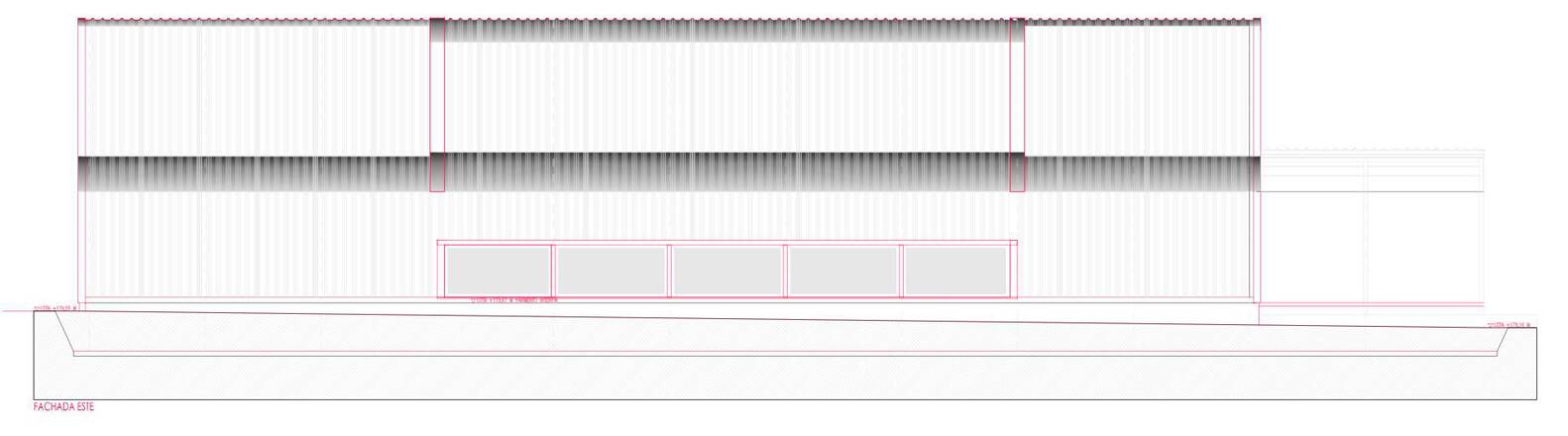
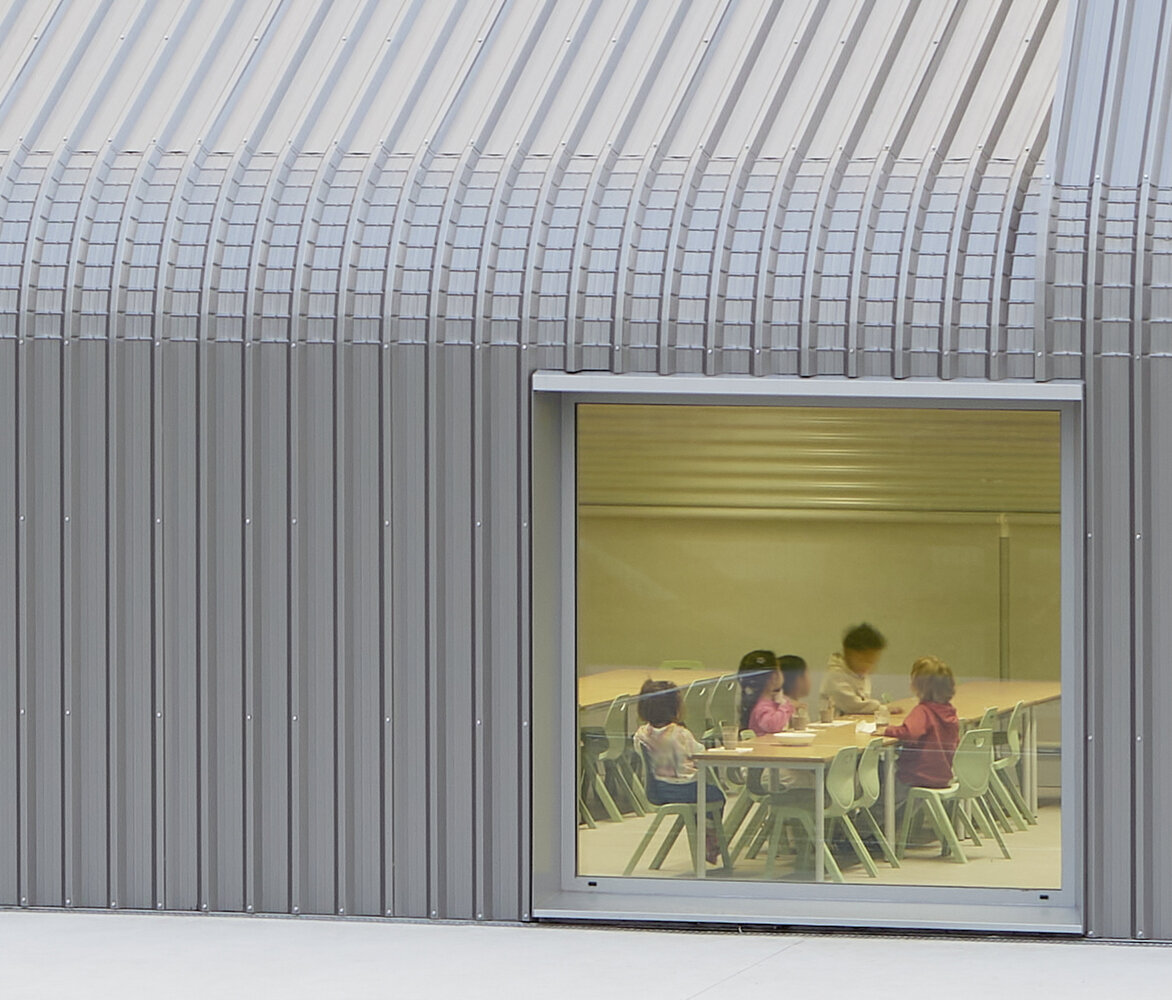
There are two scales, that of the entrance-kitchen axis which is for adults, and therefore relies on windows scaled for "adults", and that of the dining tables, which have a continuous window scaled for "children".
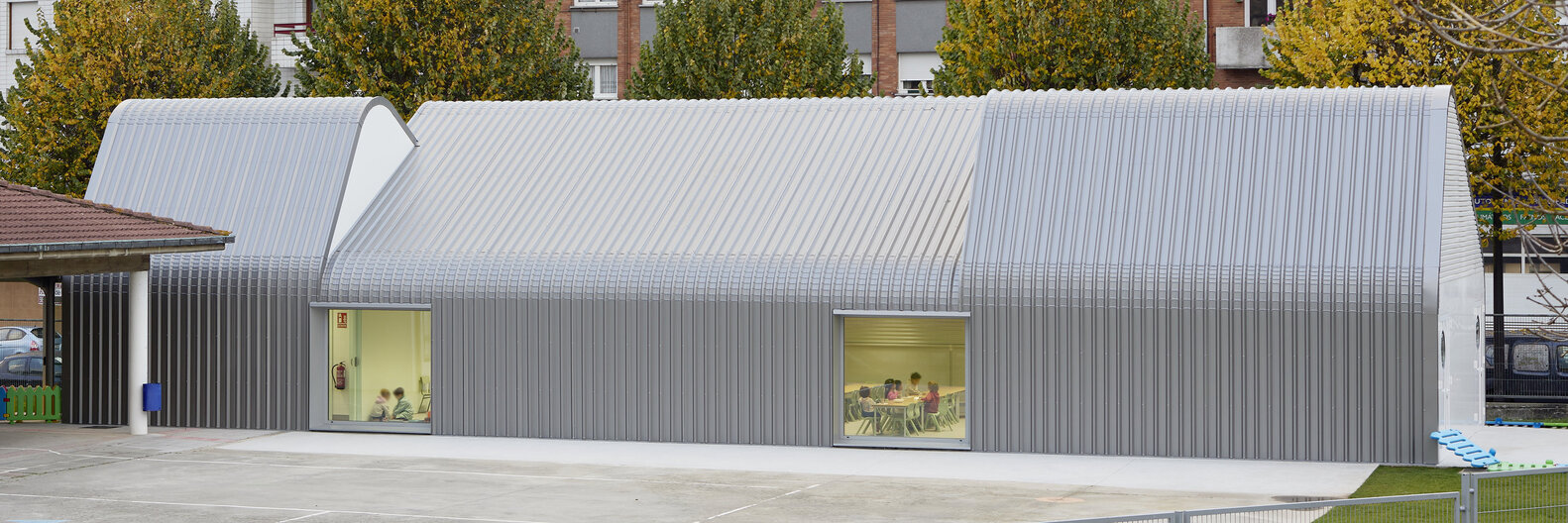
The chosen construction system is a metal structure clad in panels made of different materials placed dry (galvanized sheet, alucobond...), with a play of planes and curves in the roofs that enhance its image in the environment. The air conditioning ducts remain visible.
From the street, one can see the children eating and, in turn, they can see the green of the meadow through the large west-facing windows, as well as cars and trees through the lower east-facing windows.
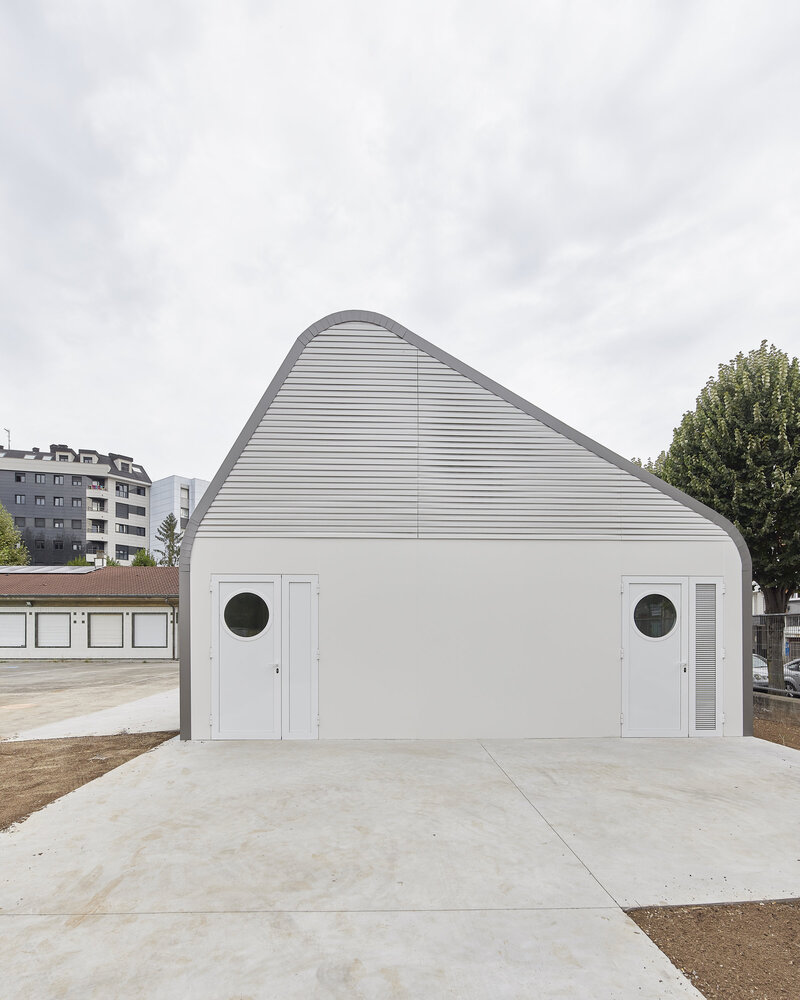
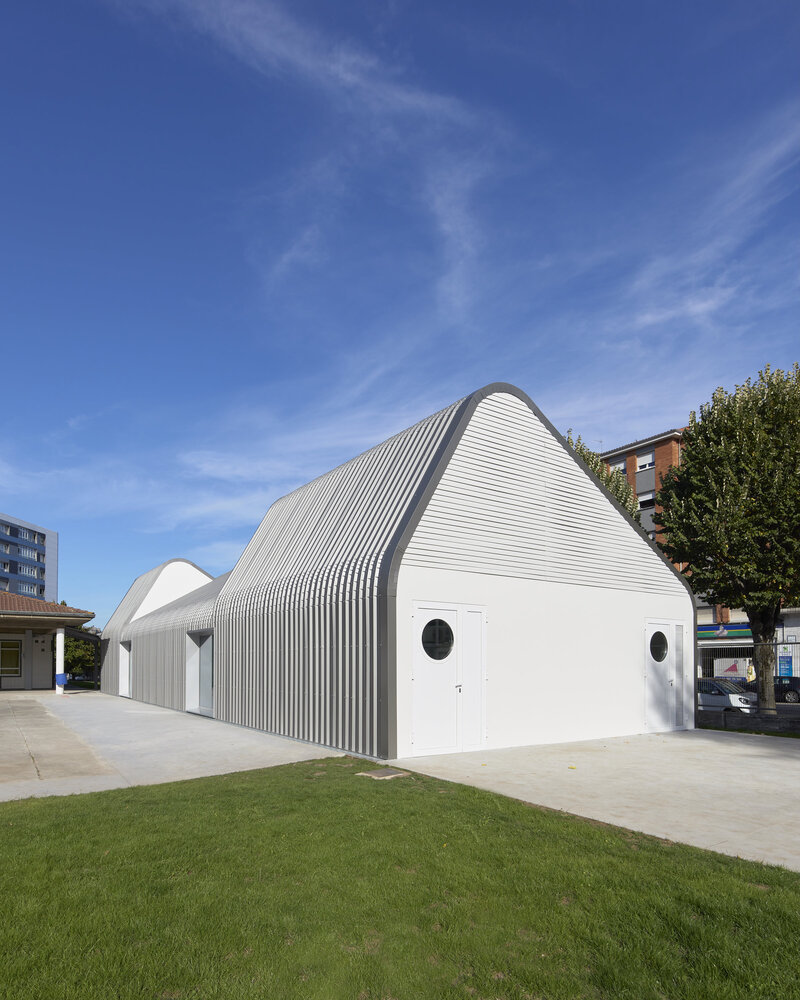
Parents can also see from the outside how their little ones are doing.
High up in the dining area itself, the circular windows, one facing north and the other south, remind us of the sun and the moon.