Hang Tau Kindergarten And Primary School
HANG TAU KINDERGARTEN AND PRIMARY SCHOOL
1+1>2 Architects
ARCHITECTS
1+1>2 Architects
LEAD ARCHITECT
Hoang Thuc Hao, Vu Xuan Son, Bui Duong Uyen Nhi
DESIGN TEAM
Hoang Thuc Hao, Son Vu, Bui Duong Uyen Nhi
CONSTRUCTION MANAGER
Hoang Van Minh, Le Ba Nhiem, Luong Ngoc Hai
SPONSORS
Vietnam Health, Education And Literature Projects (Vnhelp); Mr And Mrs. Tran Bao Ngoc
PHOTOGRAPHS
Nguyen Gia Phong, Son Vu
AREA
1328 m²
YEAR
2025
LOCATION
Dien Bien, Vietnam
CATEGORY
Kindergarten
English description provided by the architects.
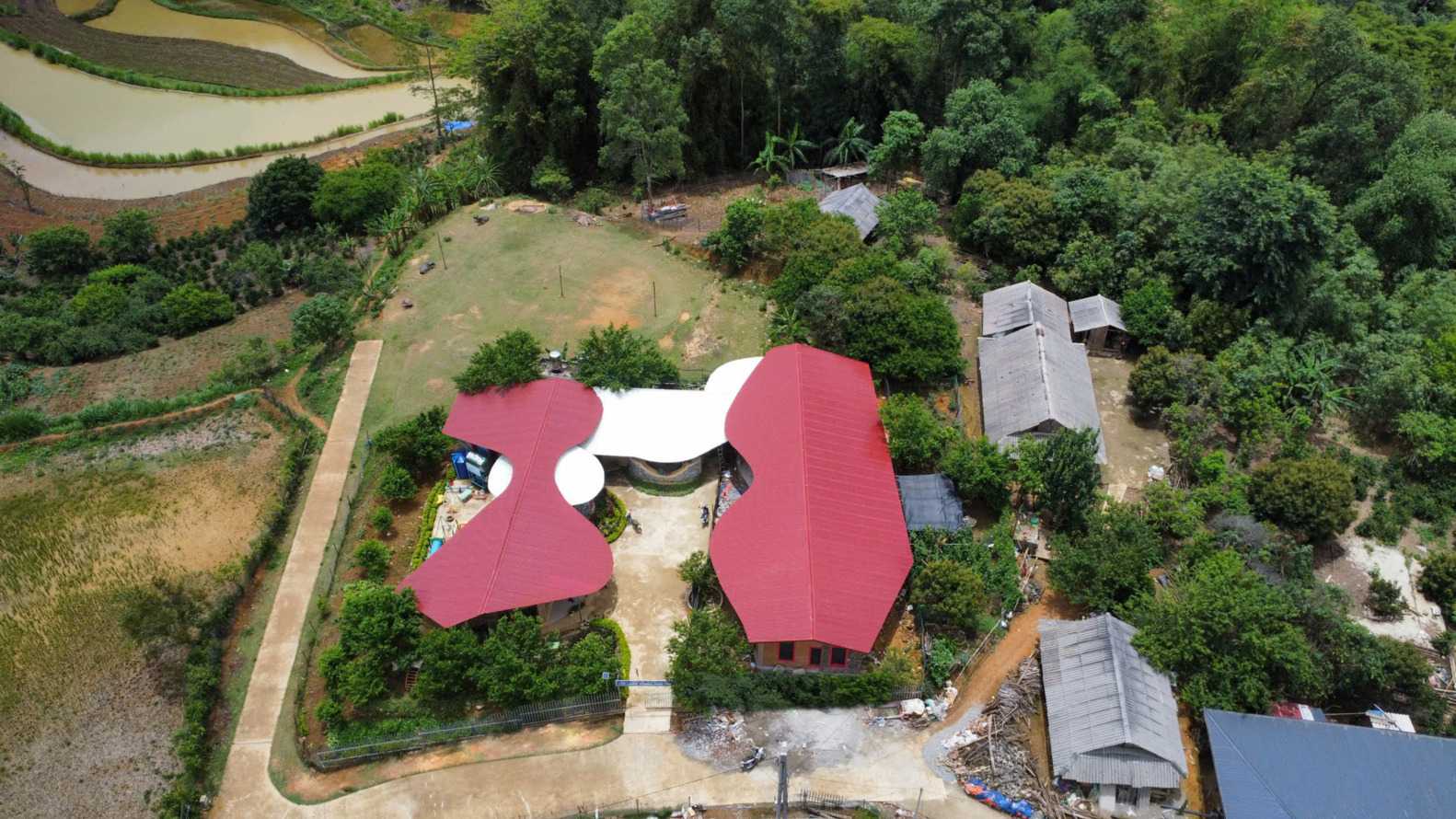
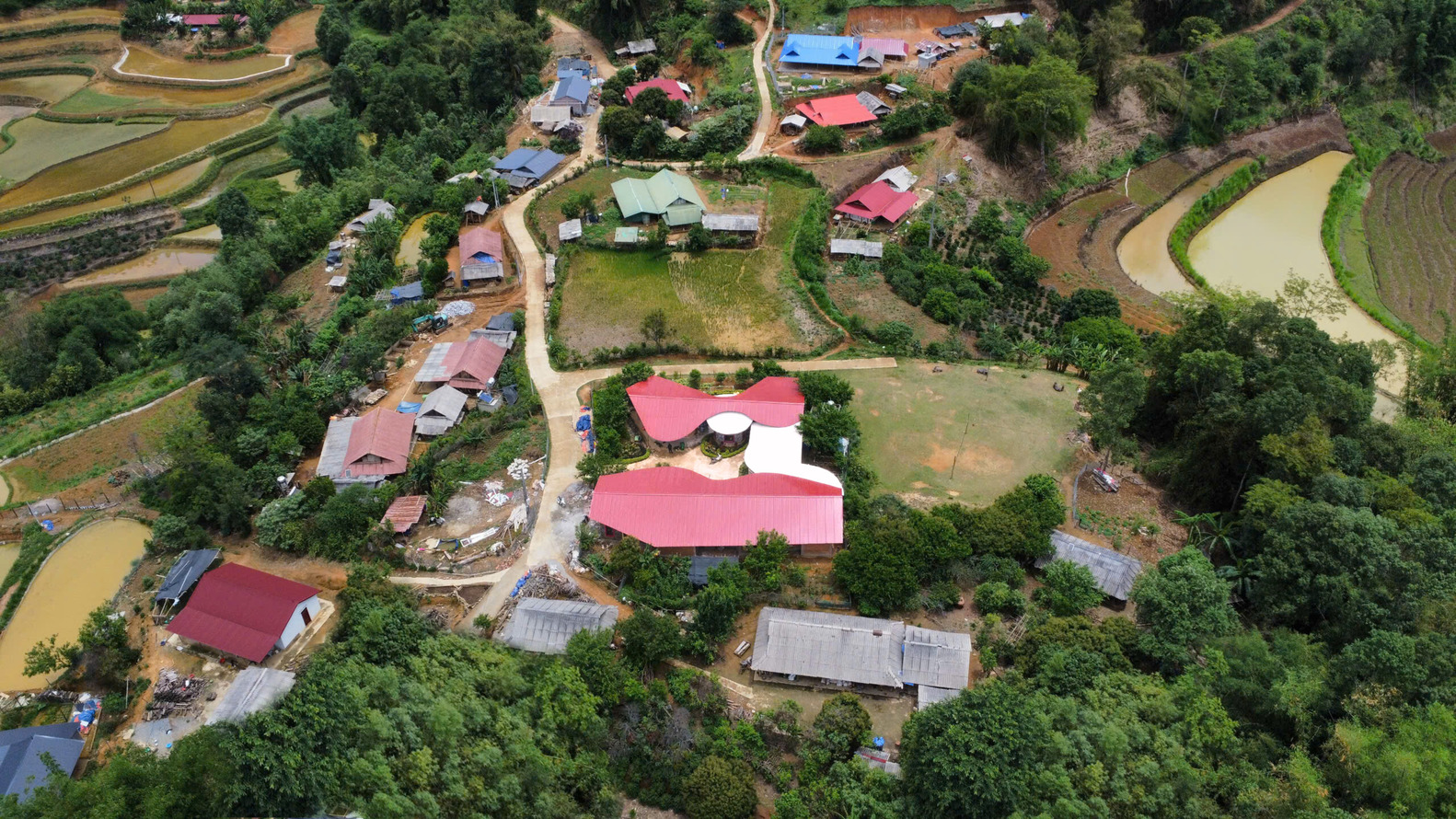
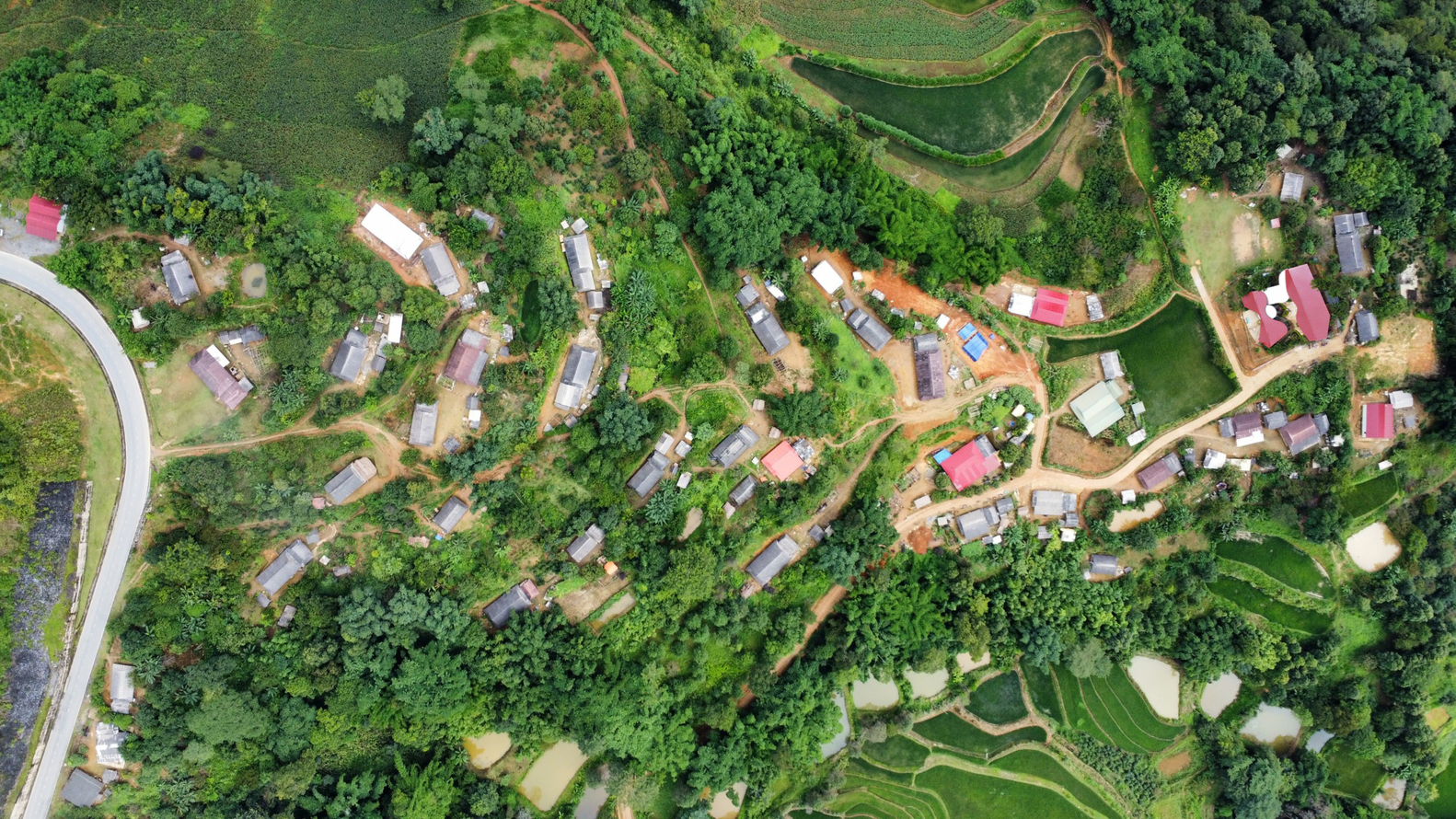
Located in the center of Hang Tau village (Quai To commune, Dien Bien Province, Vietnam), Hang Tau Kindergarten and Primary School sits 20 kilometers from the nearest town center.
Perched midway along the Pha Din Pass, the village is home to the Mong ethnic community, where rugged mountain terrain and limited socio-economic conditions shape daily life.
Understanding these challenges, VNHELP Charity Fund, together with Mr and Ms Tran Bao Ngoc, initiated a gravity-fed water system to bring clean water to the village and commissioned a new school to replace the deteriorated structures.
The project aims to establish essential infrastructure that supports not only basic daily needs but also education, cultural activities, and community life - ultimately improving the overall quality of living for local residents.
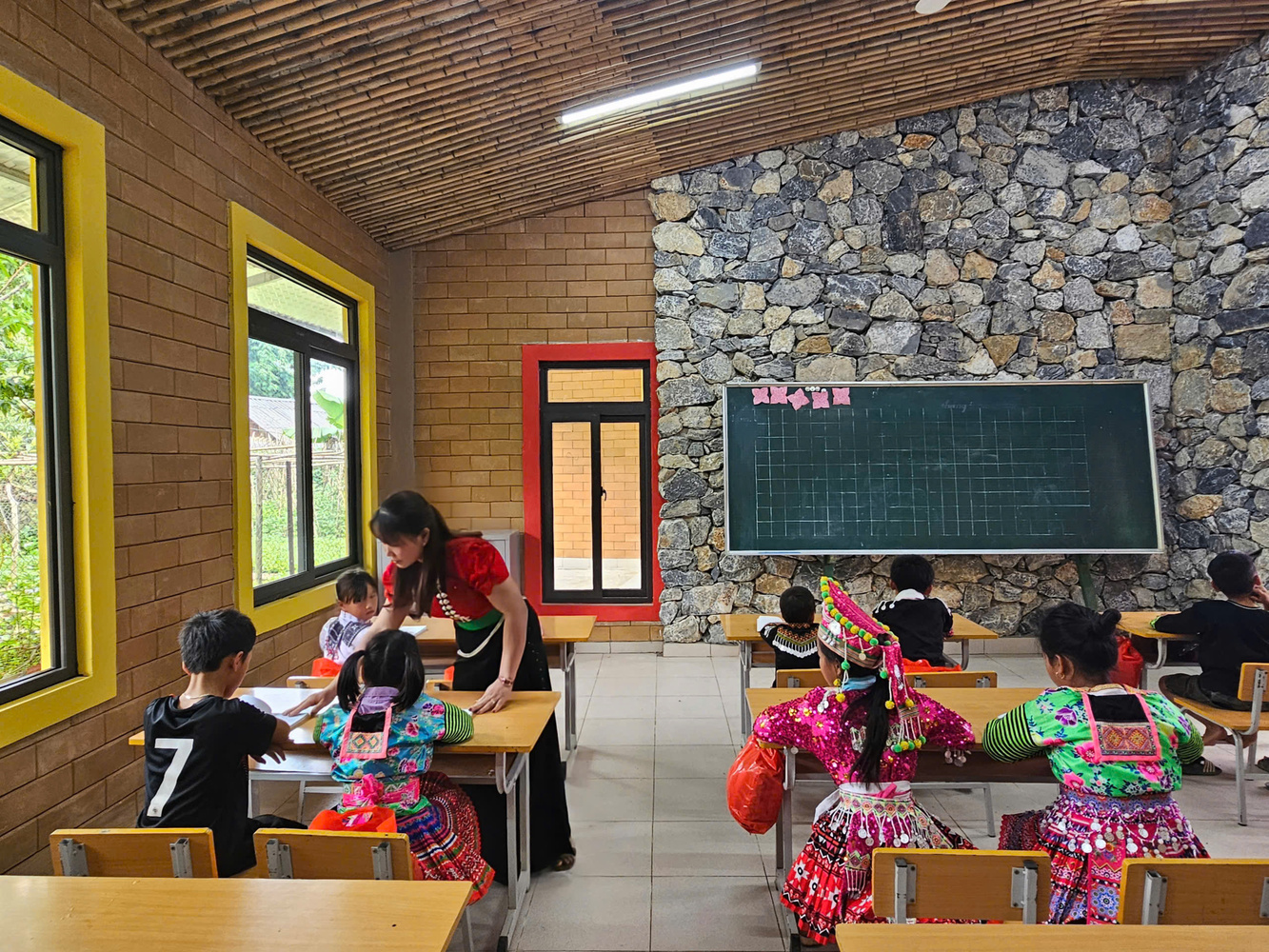
Strategically positioned at the village center, the new school serves more than 100 children, becoming both a learning environment and a vibrant focal point within the vast mountain landscape.
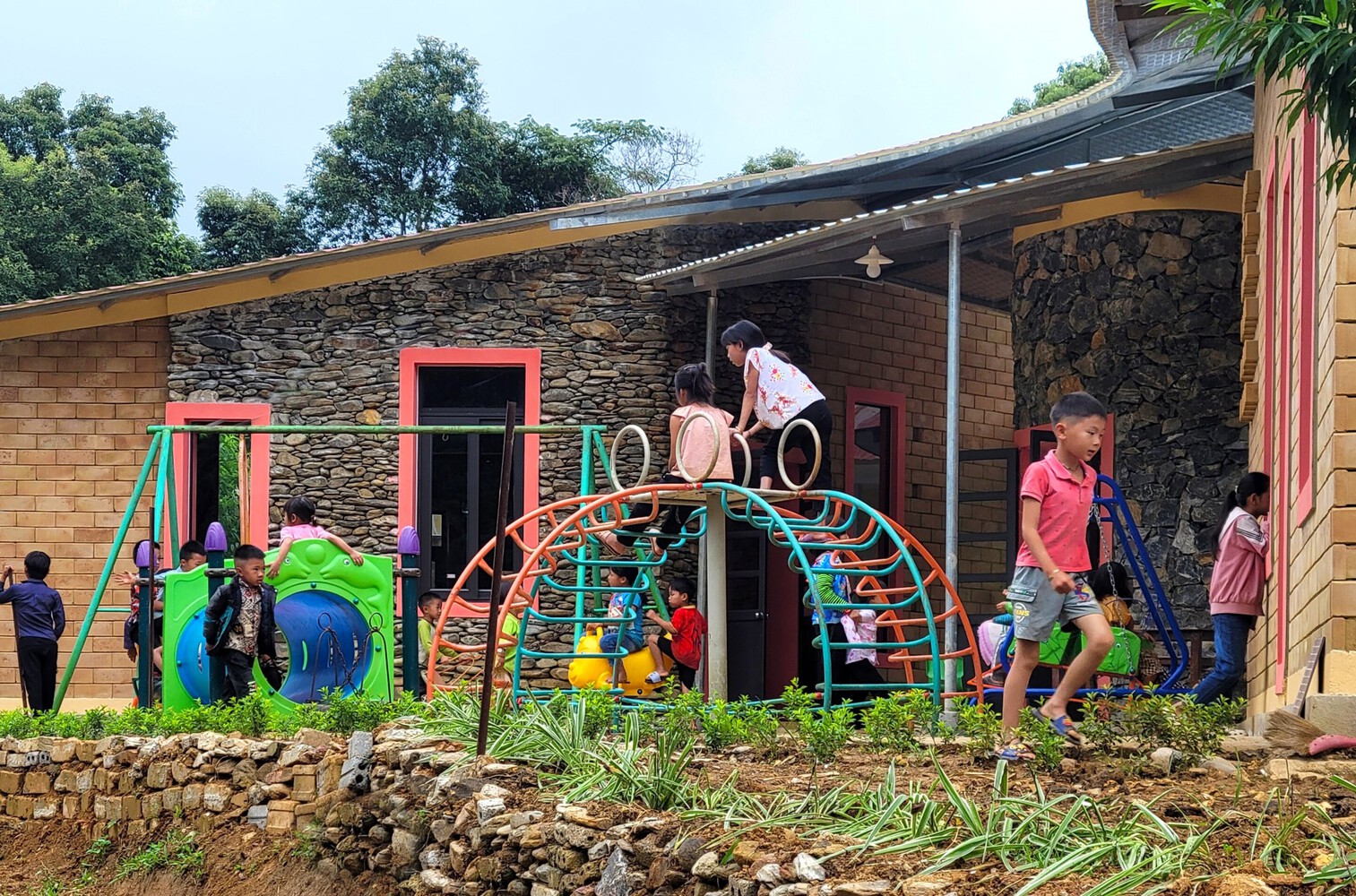
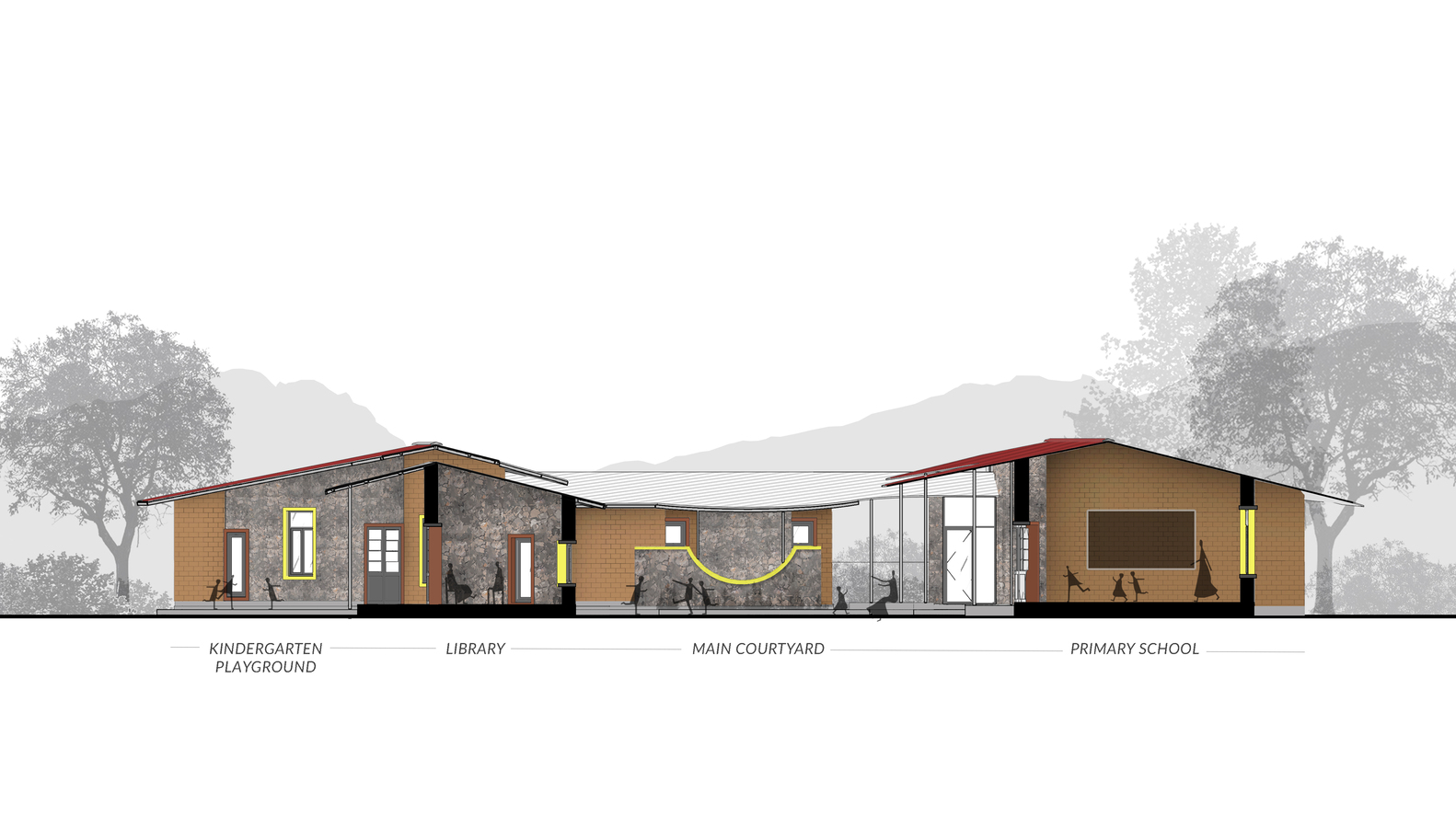
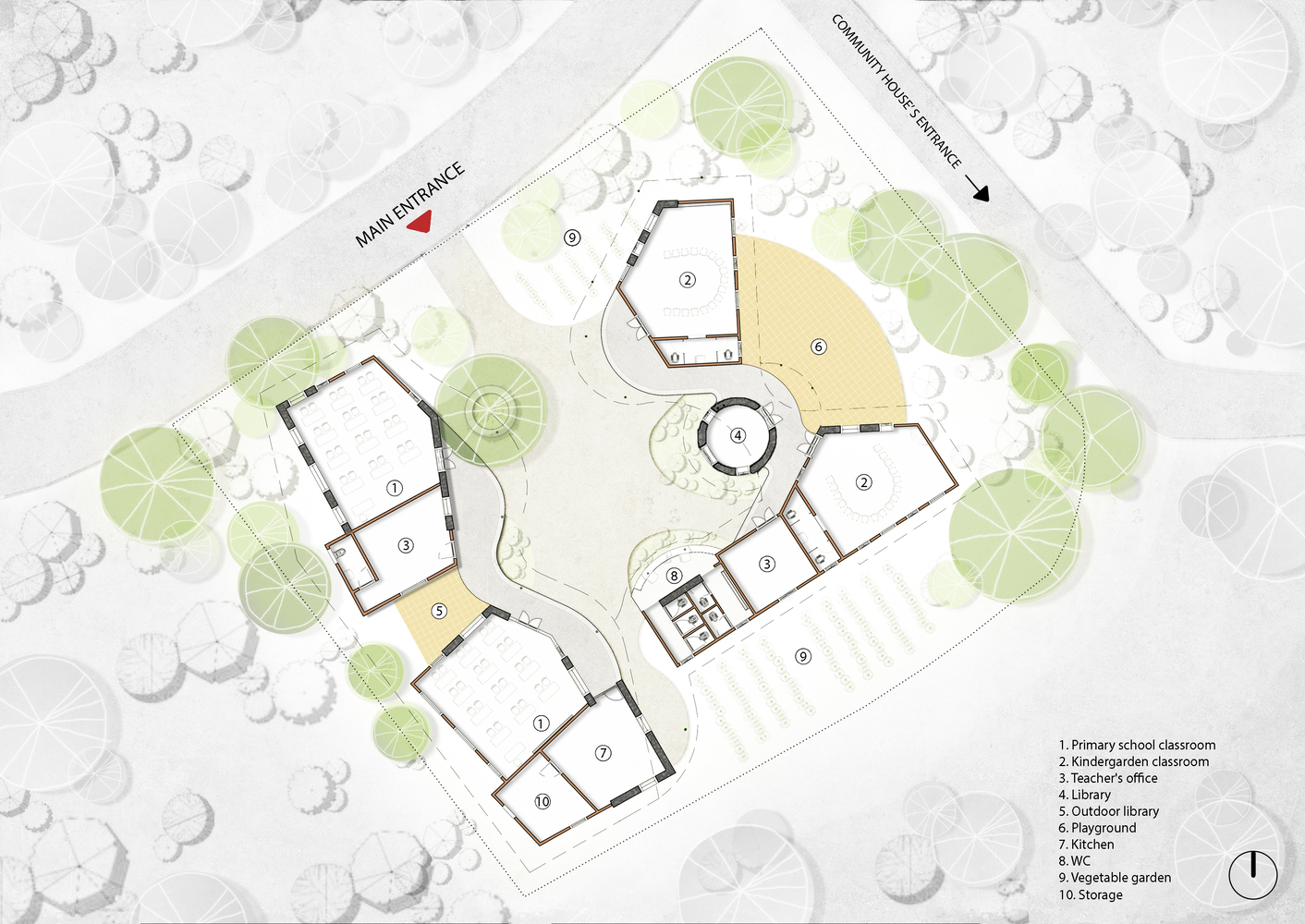
The layout includes four classrooms, two teacher housing units, and two kitchens shared between kindergarten and primary levels.
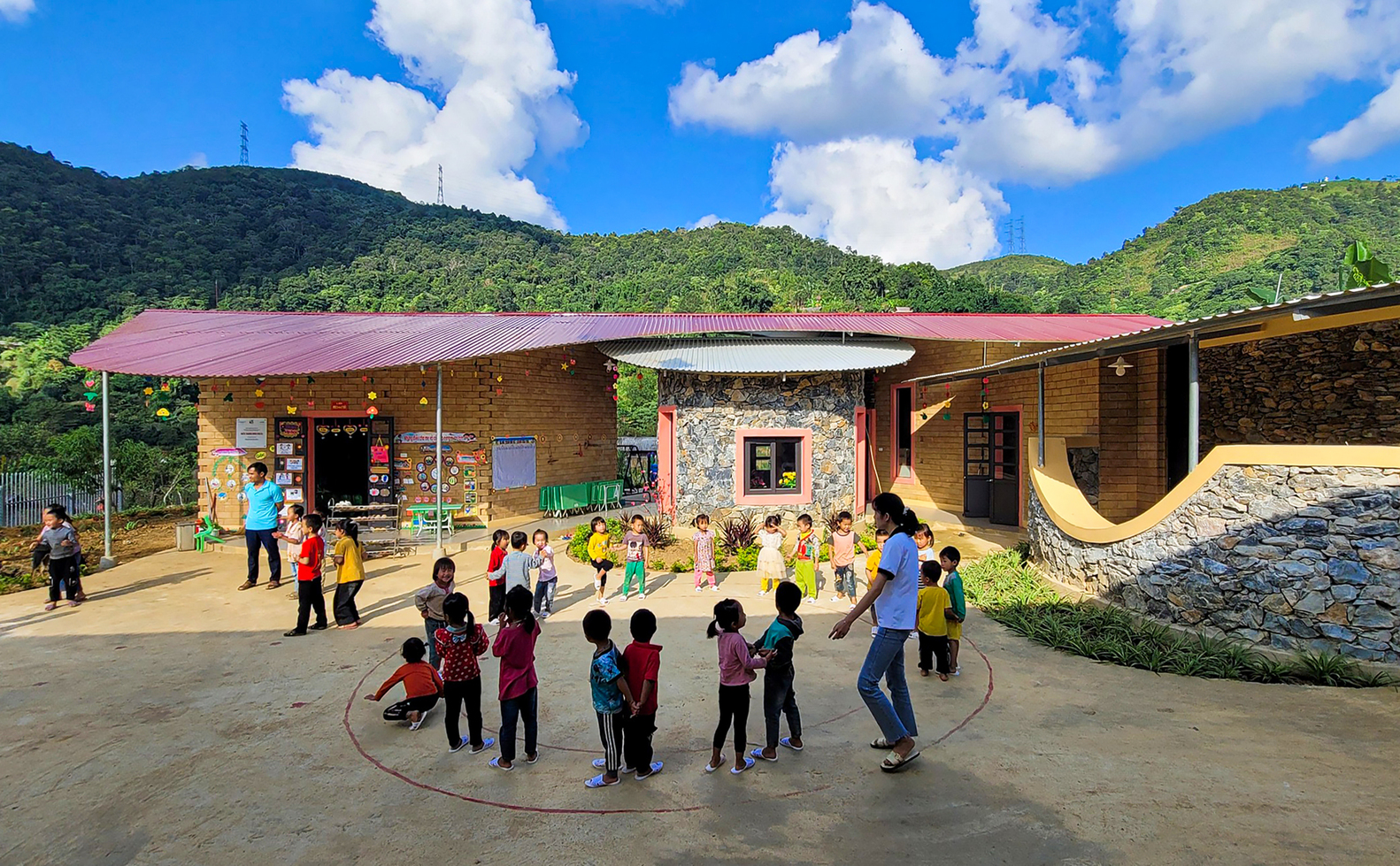
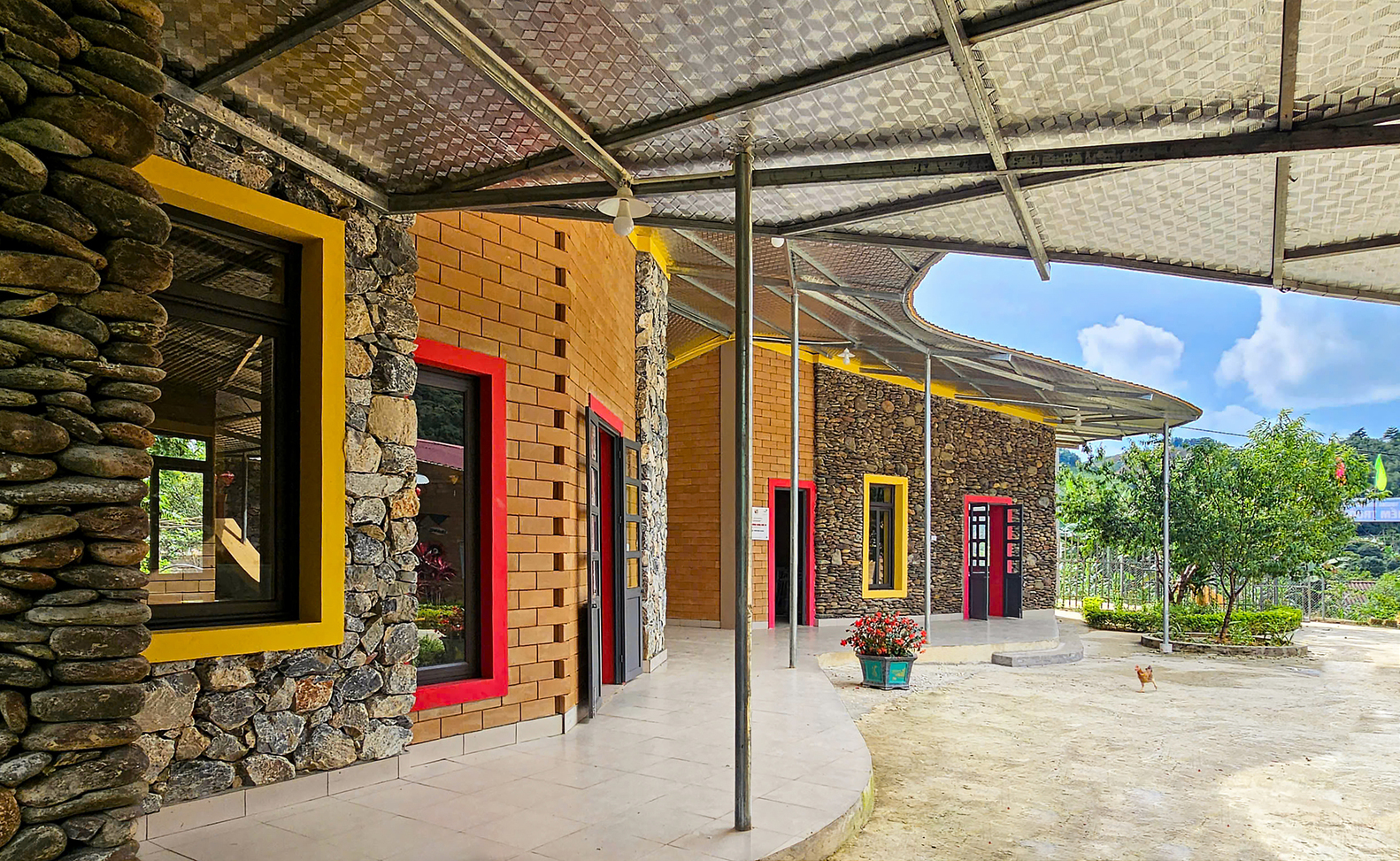
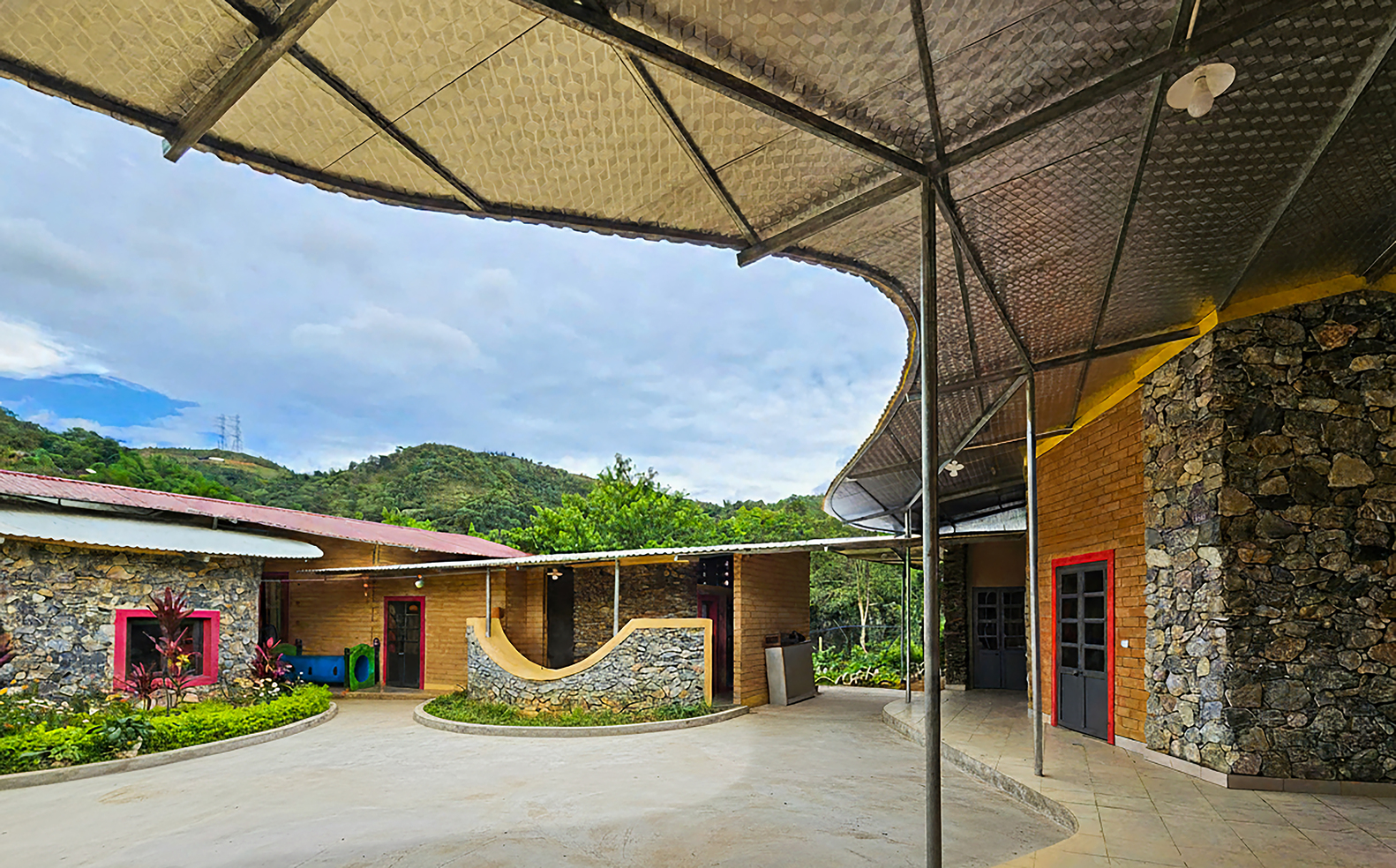
Its architectural form blends into the village and surrounding topography, defined by interlocking functional blocks unified under a sweeping curved metal roof that shelters the main courtyard and kindergarten playground.
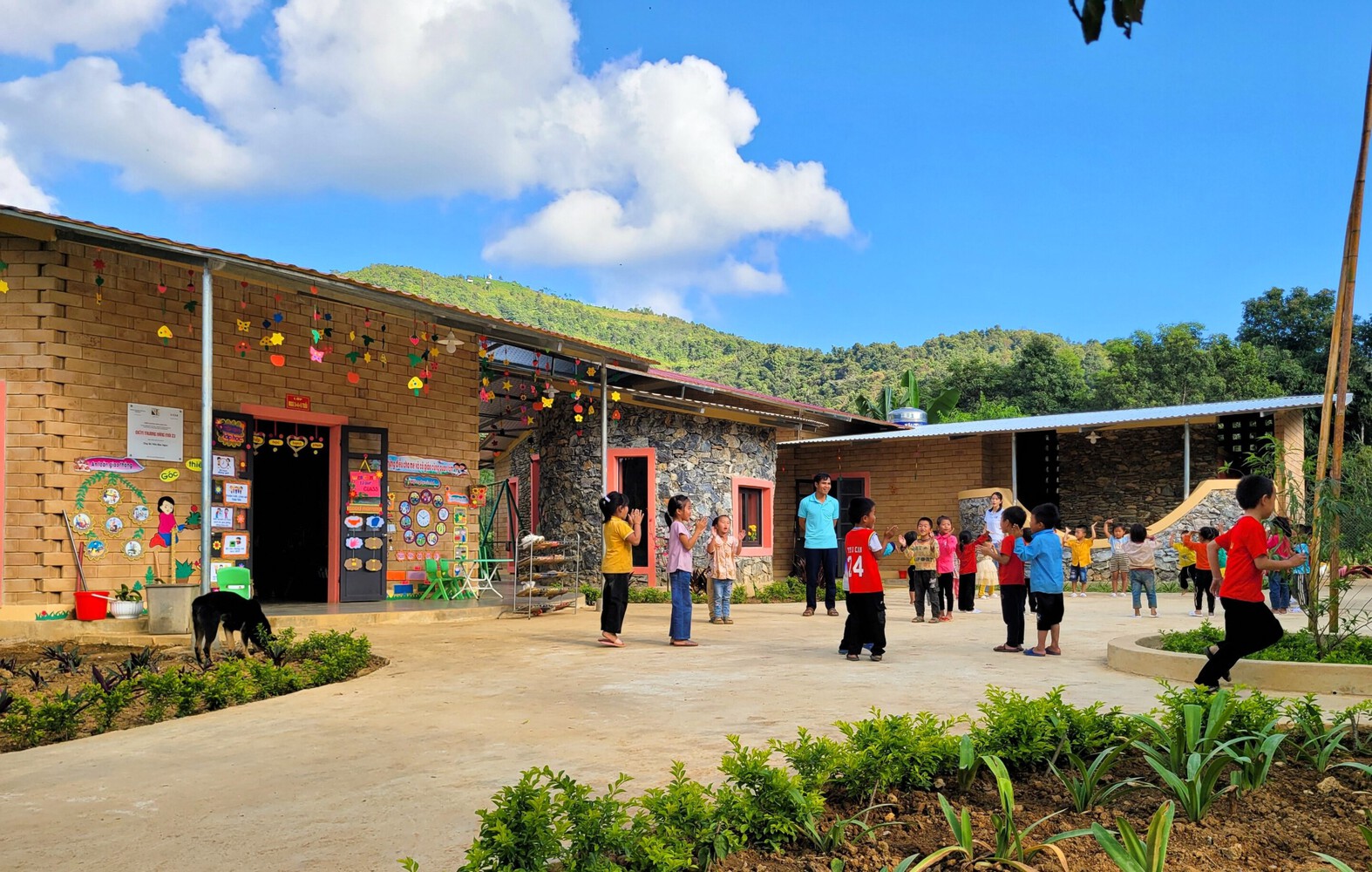
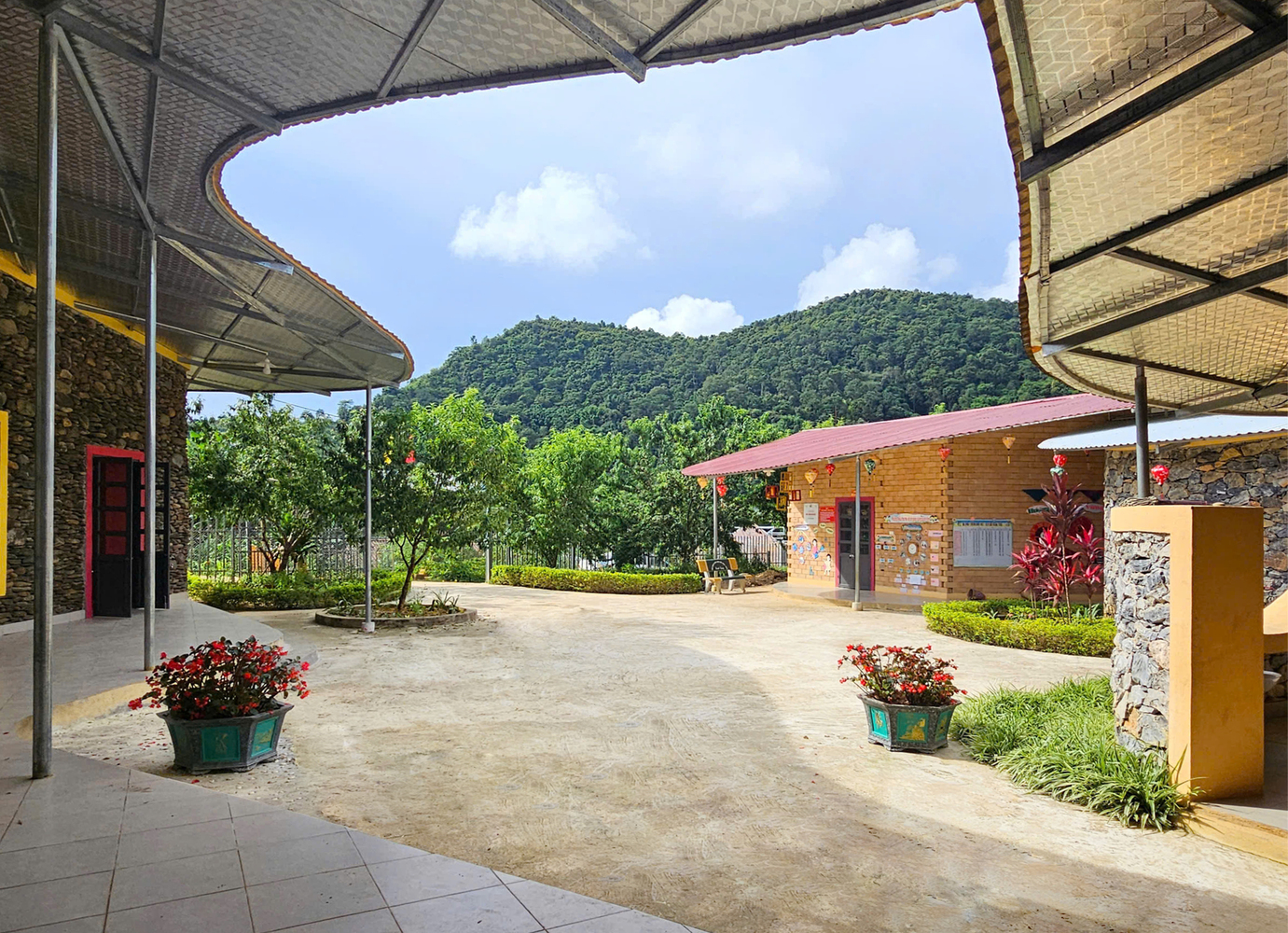
This roof provides self-shading, enhances ventilation, and brings in generous natural light.
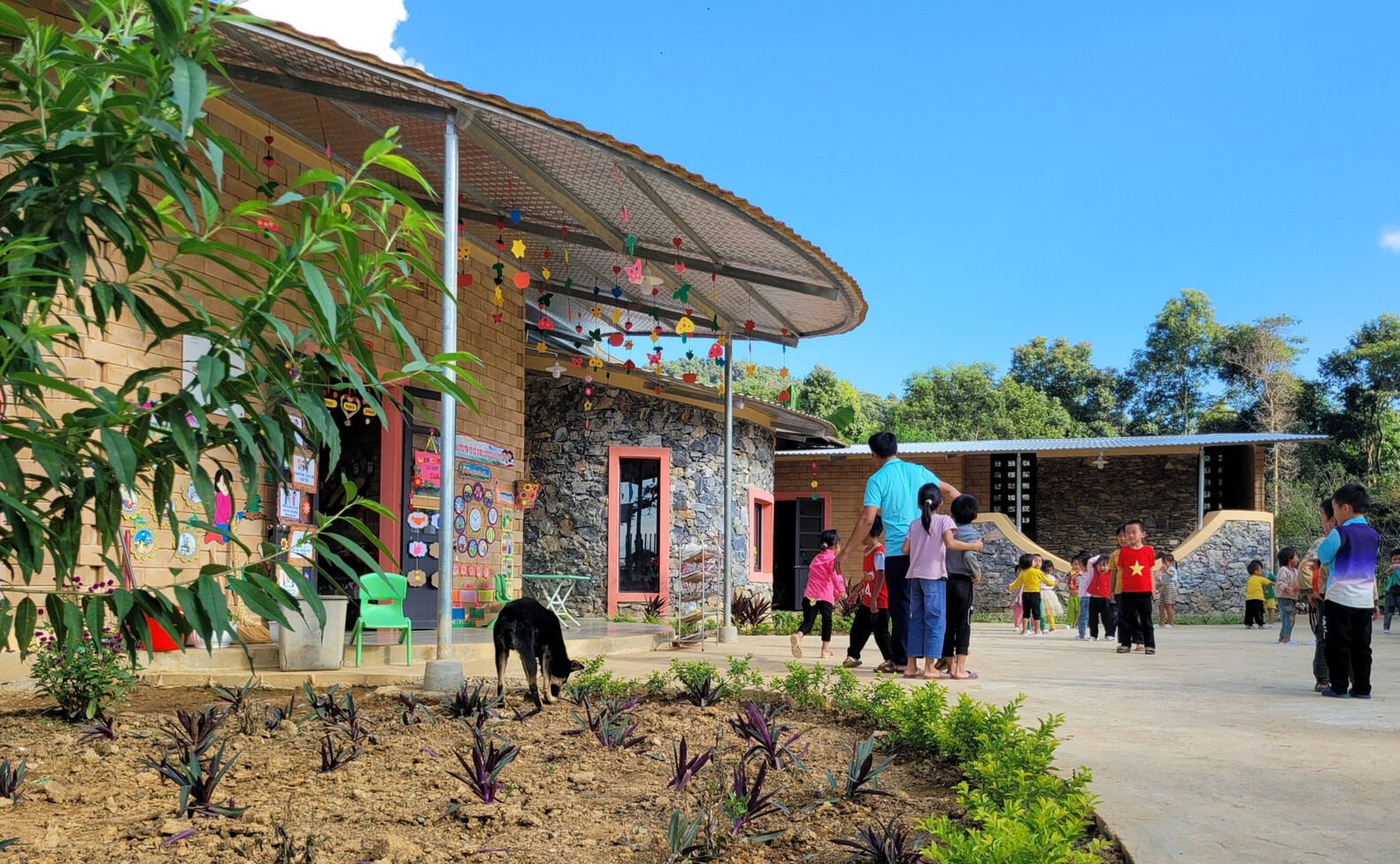
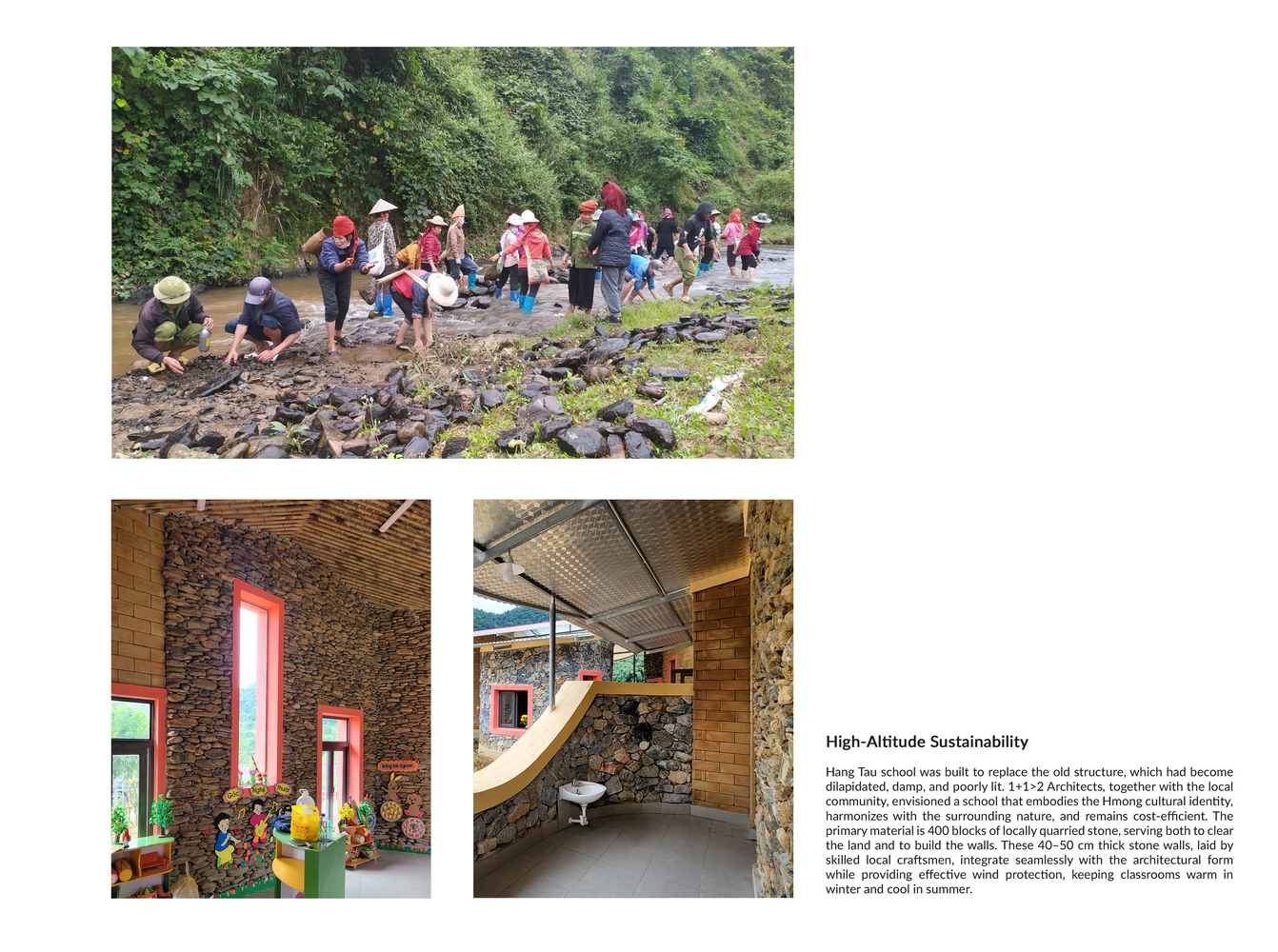
The project adapts traditional stone-stacking techniques of H'mong ethnic and maximizes the use of local materials by producing adobe bricks on site and reusing soil from excavation.
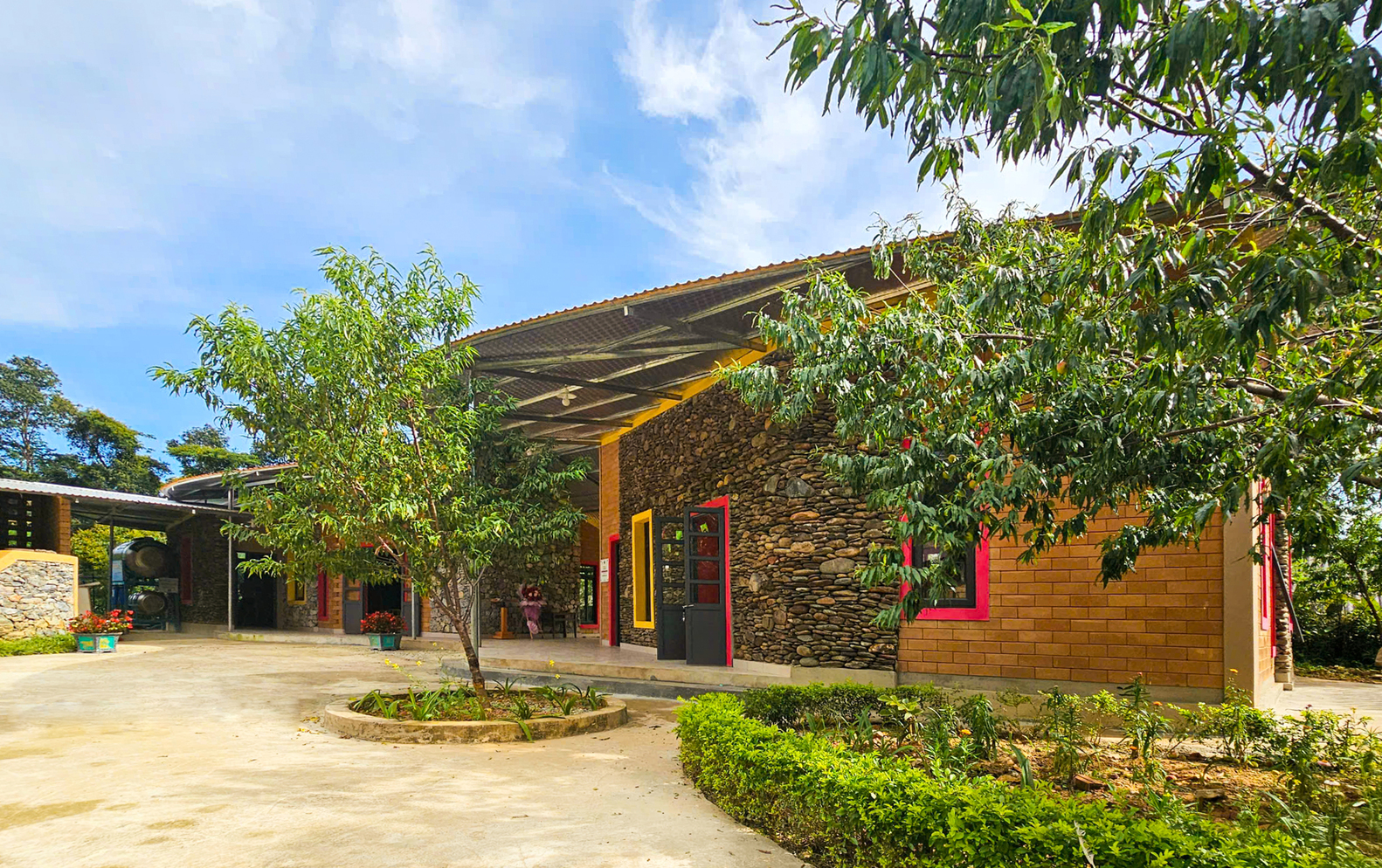
This approach encourages the direct participation of villagers in the construction process and helps foster stronger community cohesion.
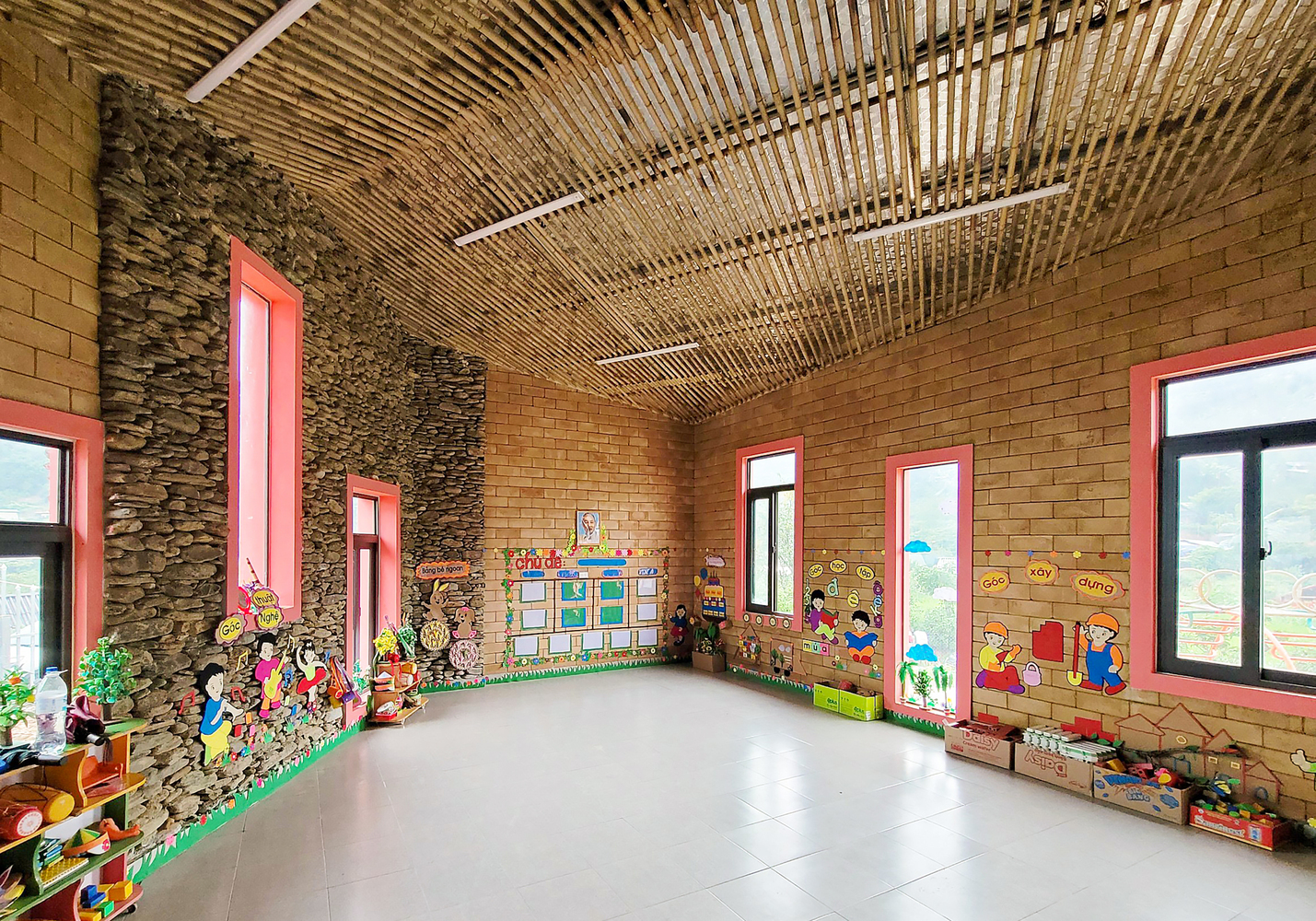
The adobe bricks intertwine with the stone walls, creating interwoven patterns reminiscent of traditional textiles and ensuring warm classrooms in winter and cool spaces in summer.
Completed through the collective efforts of villagers and designers, the Hang Tau School stands out as a contemporary yet familiar presence—harmonizing with its surroundings while signaling new possibilities for the community.
It represents a thoughtful synthesis of traditional craftsmanship and modern solutions tailored to the local climate and mountainous terrain.
Today, children in Hang Tau have access to a learning environment that is spacious, clean, culturally rooted, and dignified.
The school is envisioned as both a nurturing place for future generations and a meaningful architectural landmark reflecting the social aspirations of the local community.