
Triplet Code Sinsa Neighborhood Facility
TRIPLET CODE SINSA NEIGHBORHOOD FACILITY
L'eau Design
ARCHITECTS
L'eau Design
PHOTOGRAPHS
Yongkwan Kim
AREA
598 m²
YEAR
2022
LOCATION
Seoul, South Korea
CATEGORY
Commercial Architecture
English description provided by the architects.
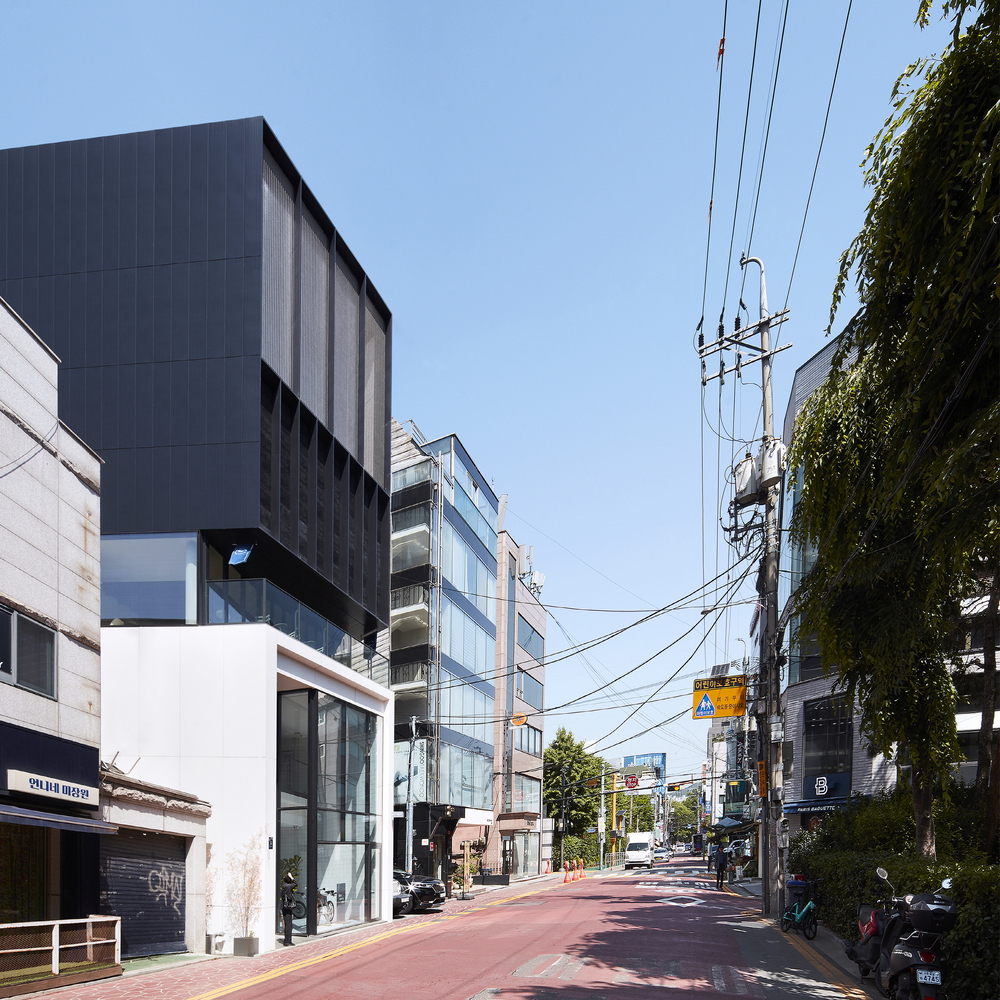
Located not far from Garosu-gil, "Triplet Code, Sinsa" is positioned directly facing a small neighborhood park with greenery at the very end of Serosu-gil.
The site faces the park, has an elementary school right next to it, and is surrounded by neighborhood shops that extend from Garosu-gil, gradually activating even the back alleys.
According to Clarence Perry's Neighborhood Unit theory, the three core elements that promote physical convenience and pleasant living for residents — an elementary school, neighborhood shops, and a small park — are all present in the vicinity, so at first glance, it might seem that the conditions for residents are perfectly met.
However, the recent excessive expansion of nearby commercial facilities is likely making the residential environment feel far from comfortable for existing residents.
In fact, as Garosu-gil became more trendy and commercialized, gentrification reaching this area had already been anticipated for some time.
Because these are neighborhood commercial facilities, it is impossible during the design process to know exactly what programs will eventually move in.
The most important reason for proposing the Triplet Code was to reinterpret the surrounding urban codes and establish a spatial strategy that would induce specific types of facilities to be attracted to each floor according to its distinct character.
For the lower floors, since the park is located directly in front of the site, simply placing an open café only on the first floor would have been a waste of a location with such excellent park views.
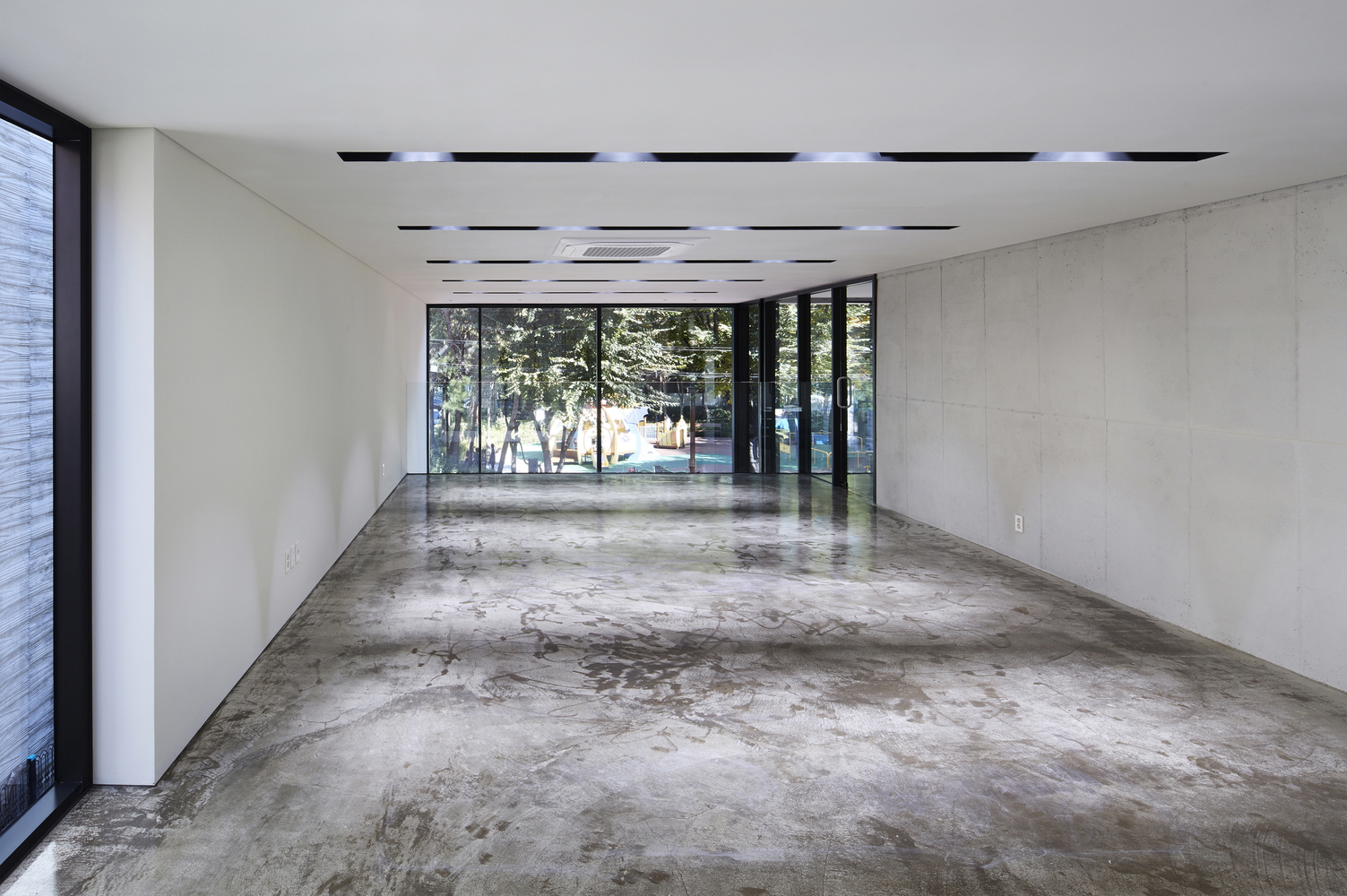
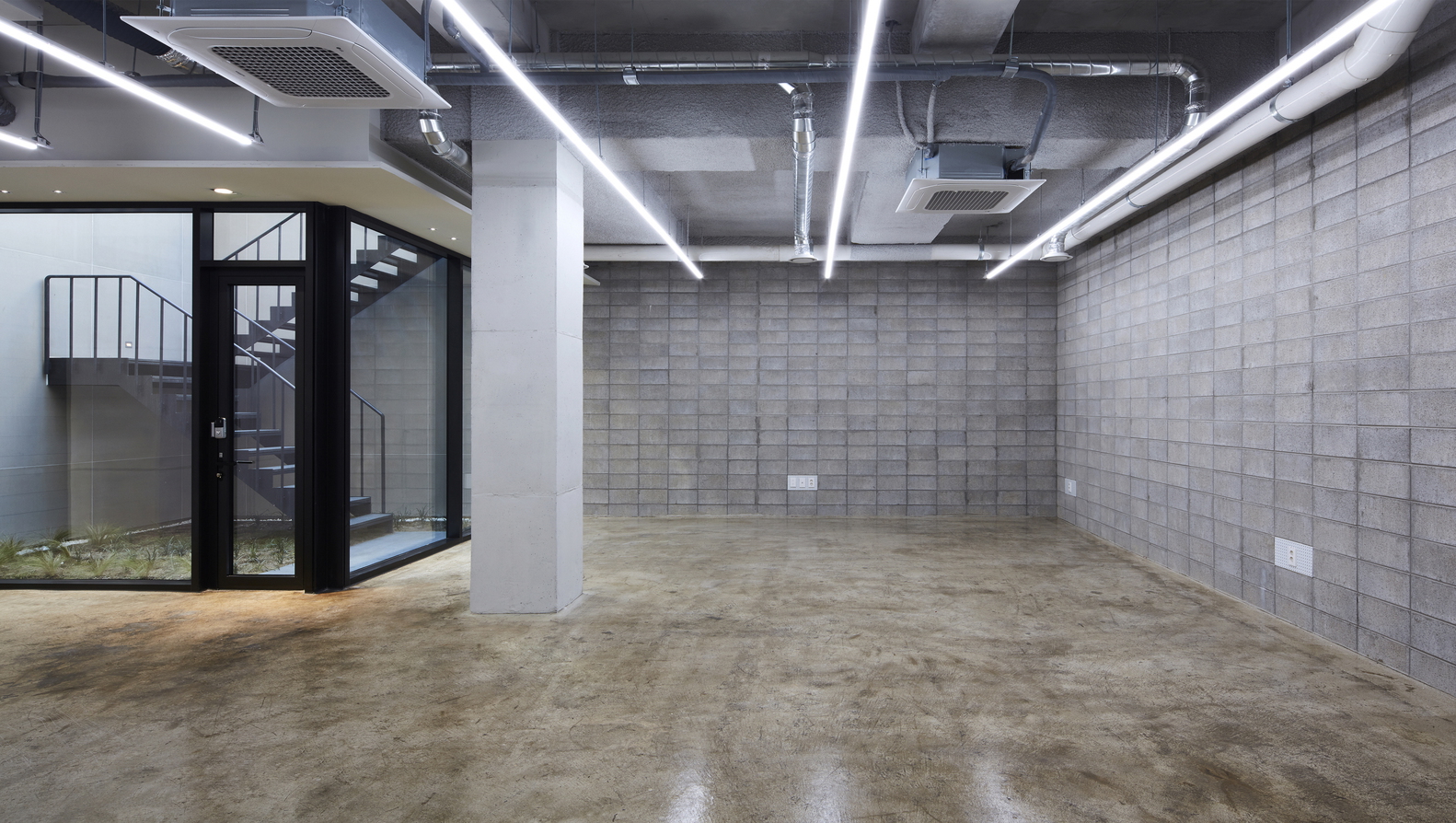
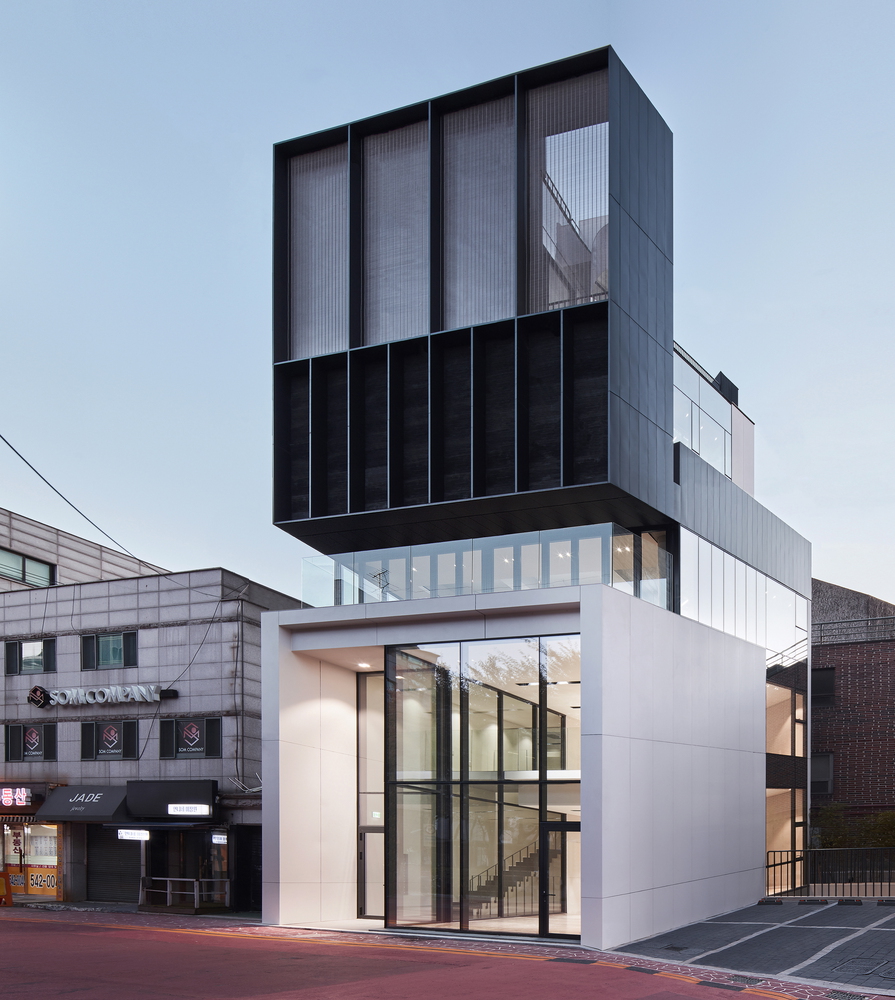
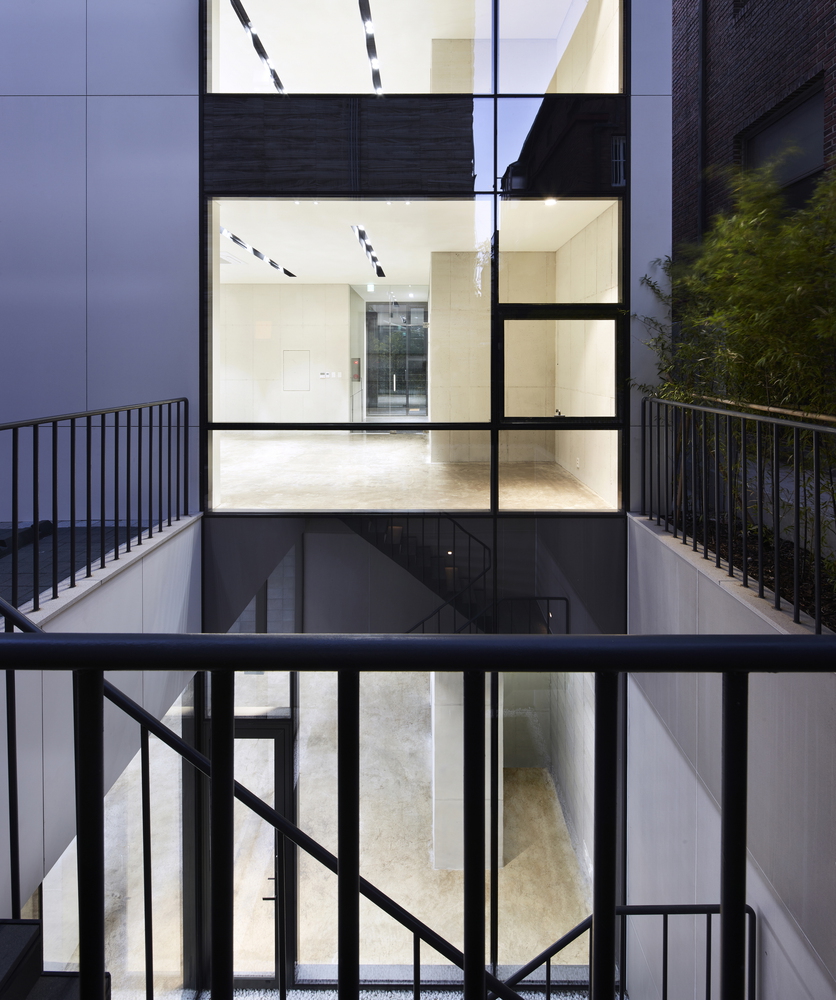
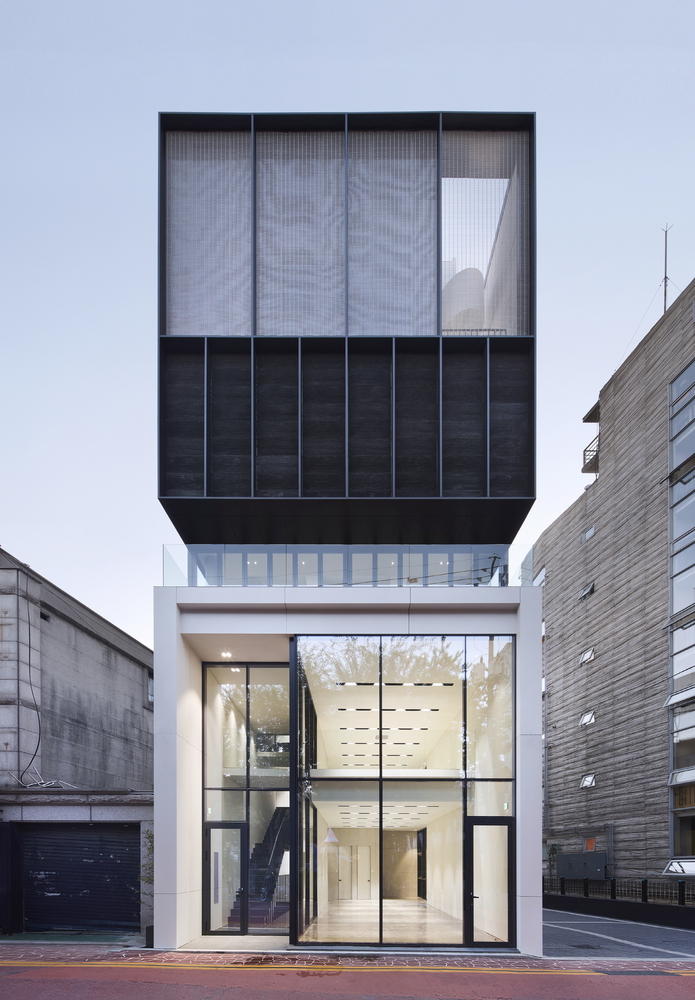
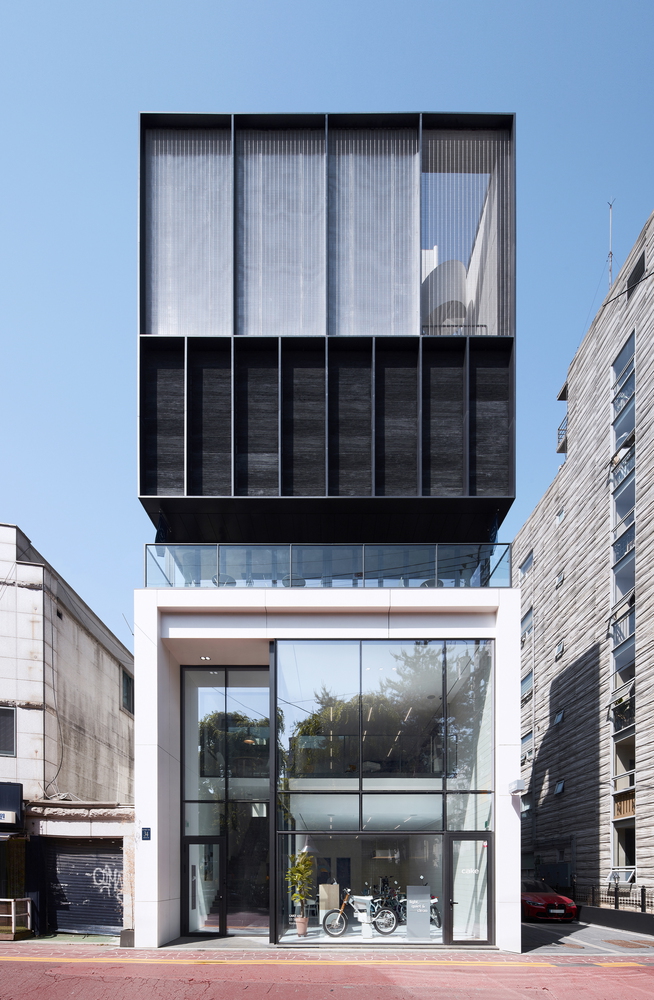
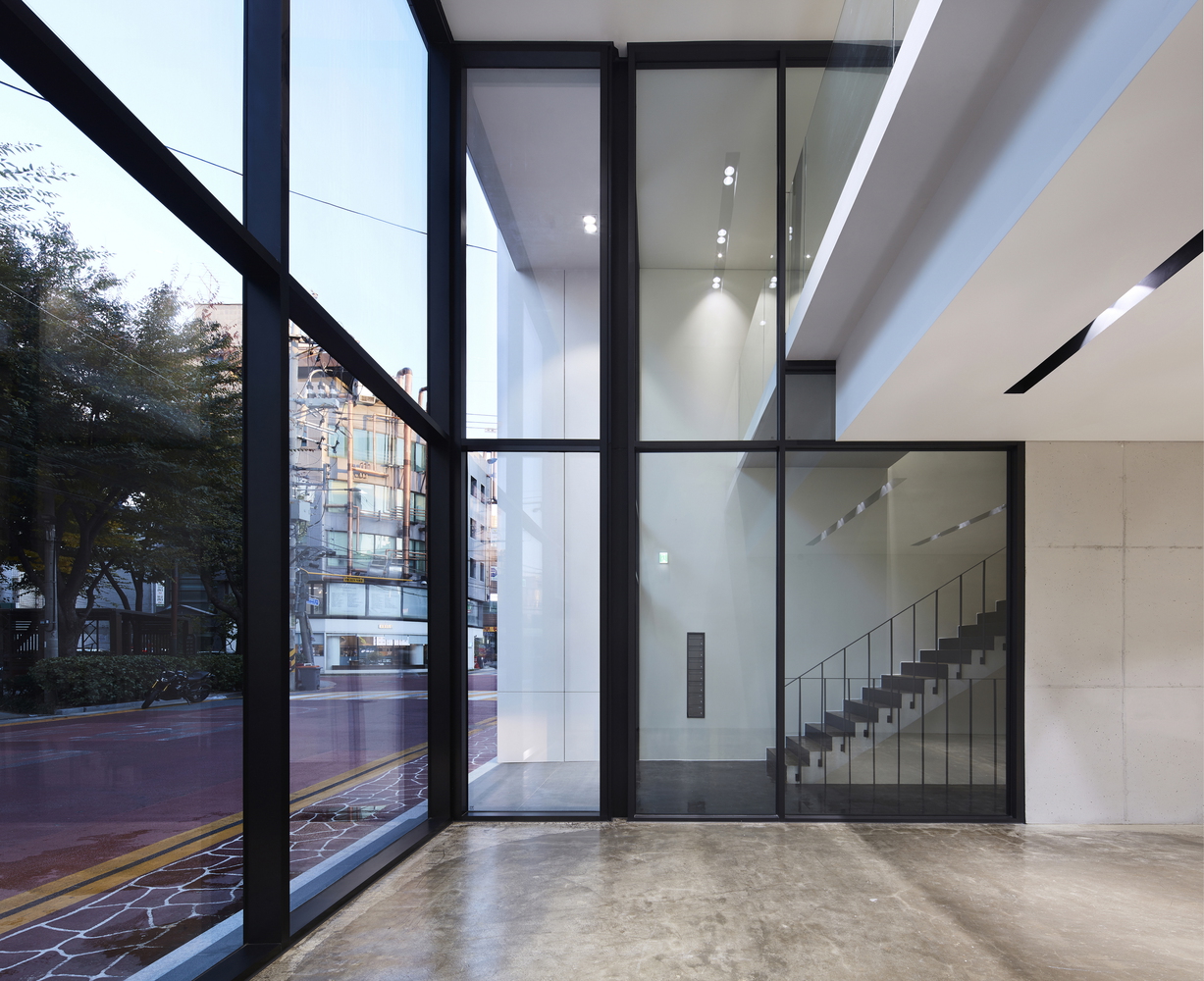
Therefore, a high-ceiling ground-level space was created with a mezzanine on the second floor to form a double-height open volume that actively opens toward the street, and full-height glazing was used to allow light to penetrate deeply into the interior.
The double-height lower section facing the residents' park was planned to operate as an exhibition and display showroom.
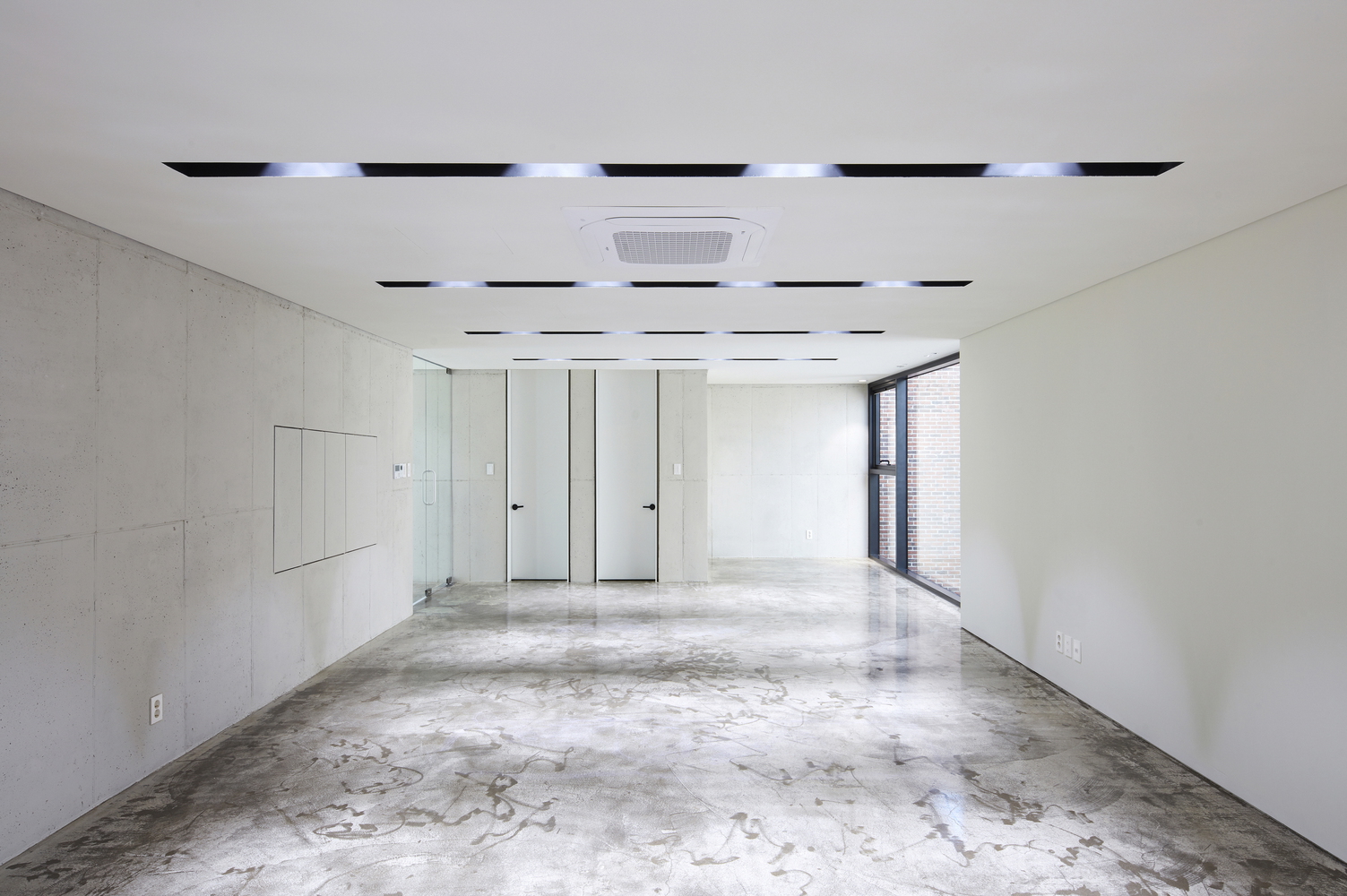
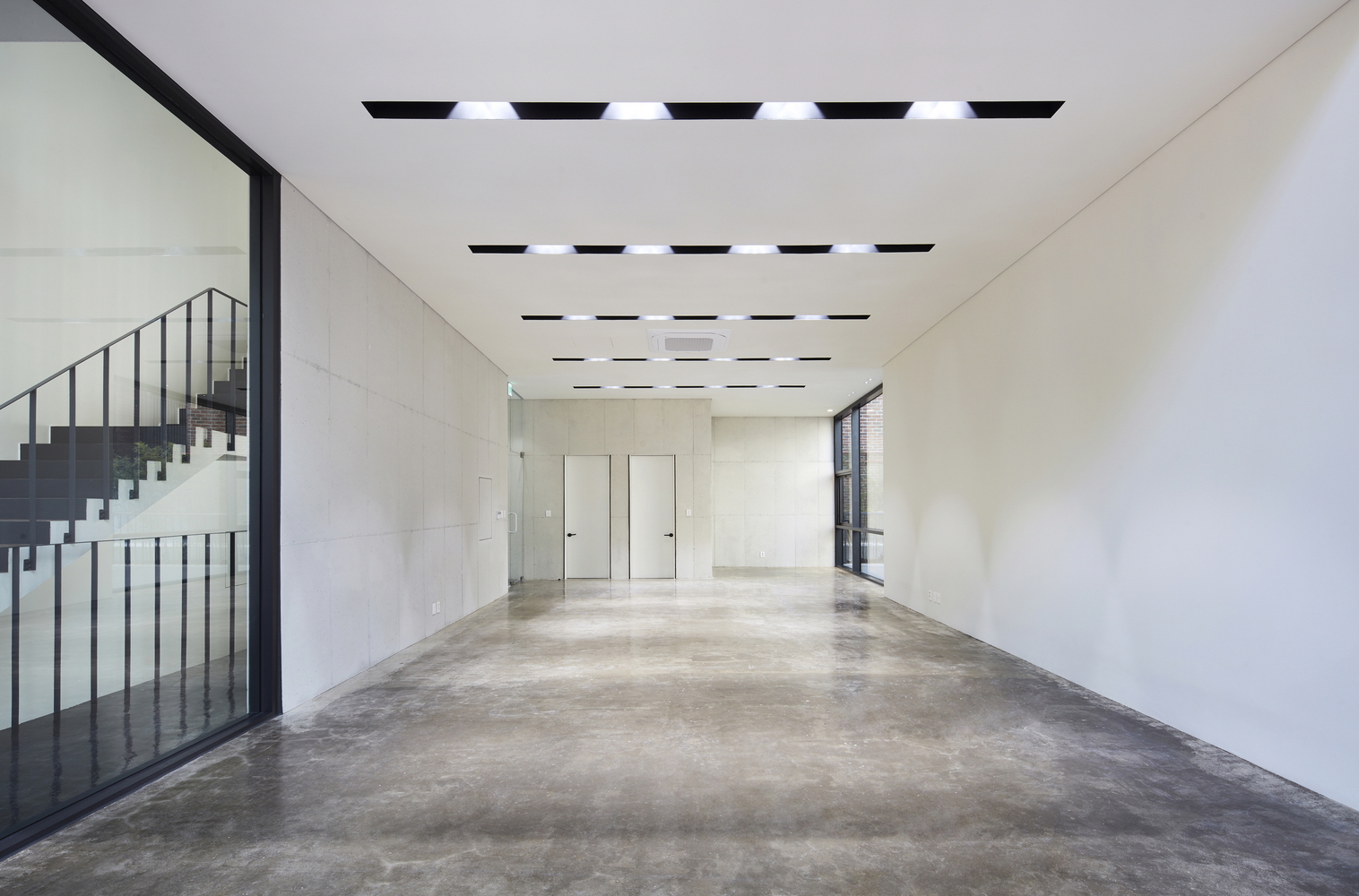
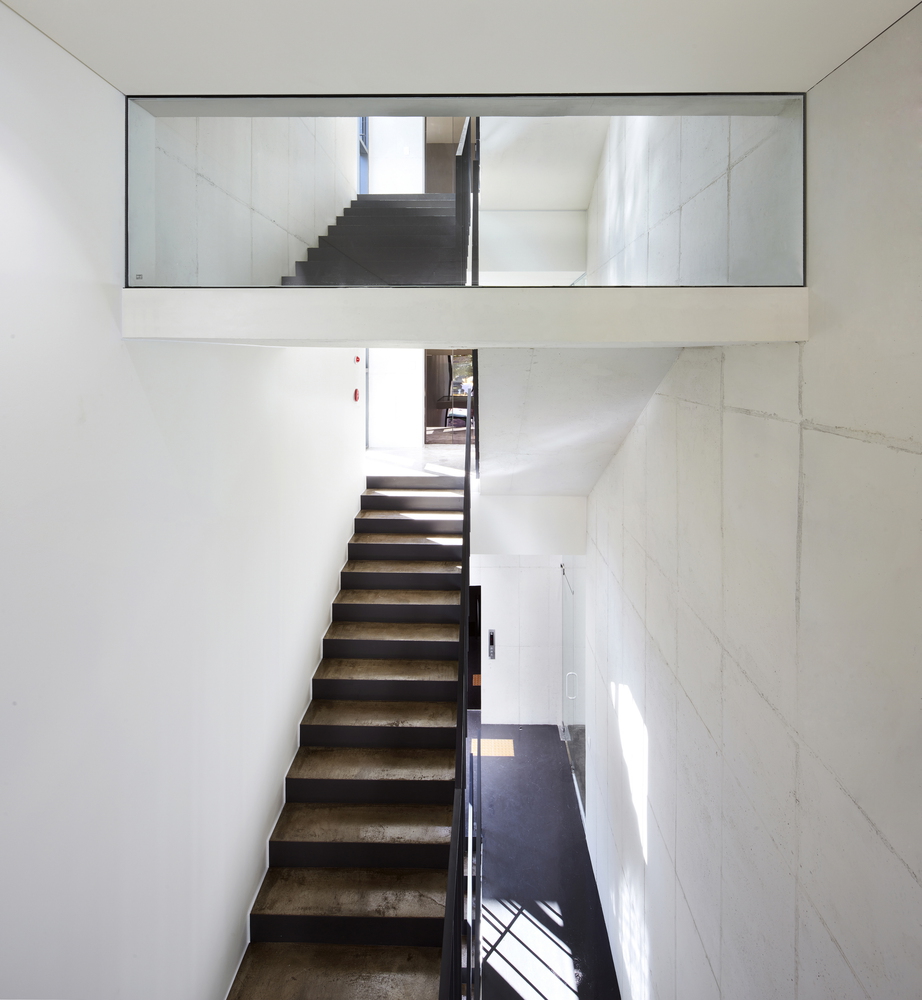
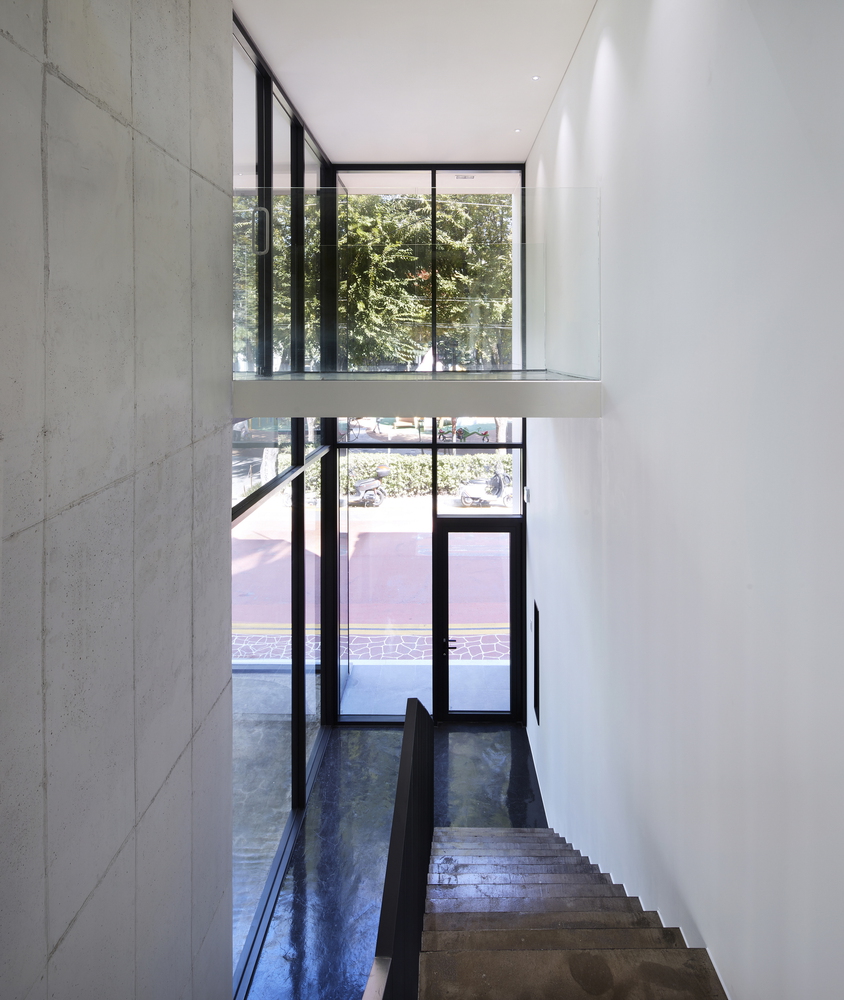
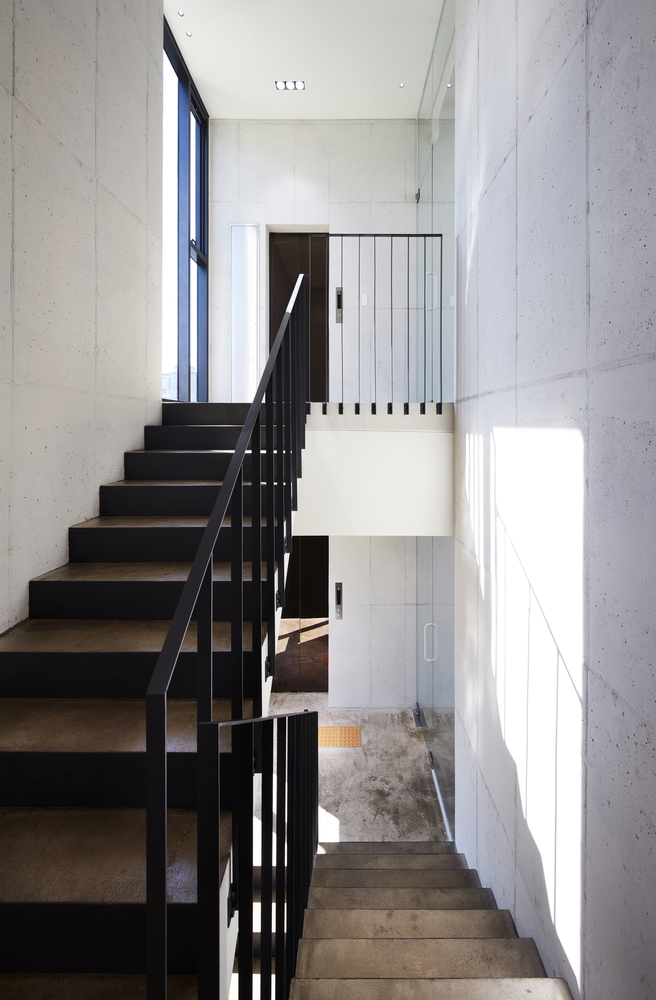
A straight-run staircase hall was also introduced so that from inside the building the view opens generously toward the park, while from the outside the tall, double-height entrance creates an inviting approach that draws people's attention from the street and naturally guides pedestrian flow into the space.
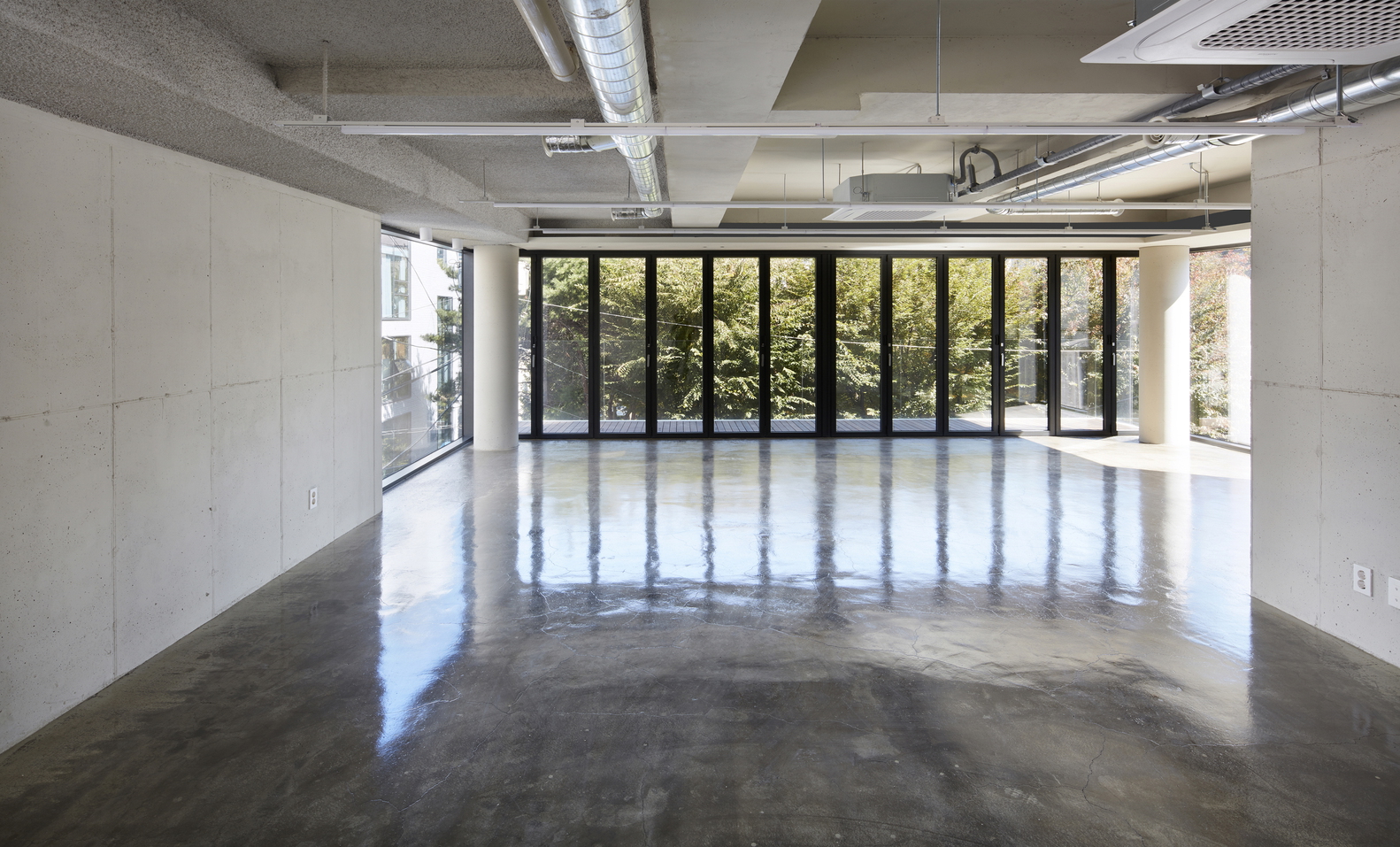
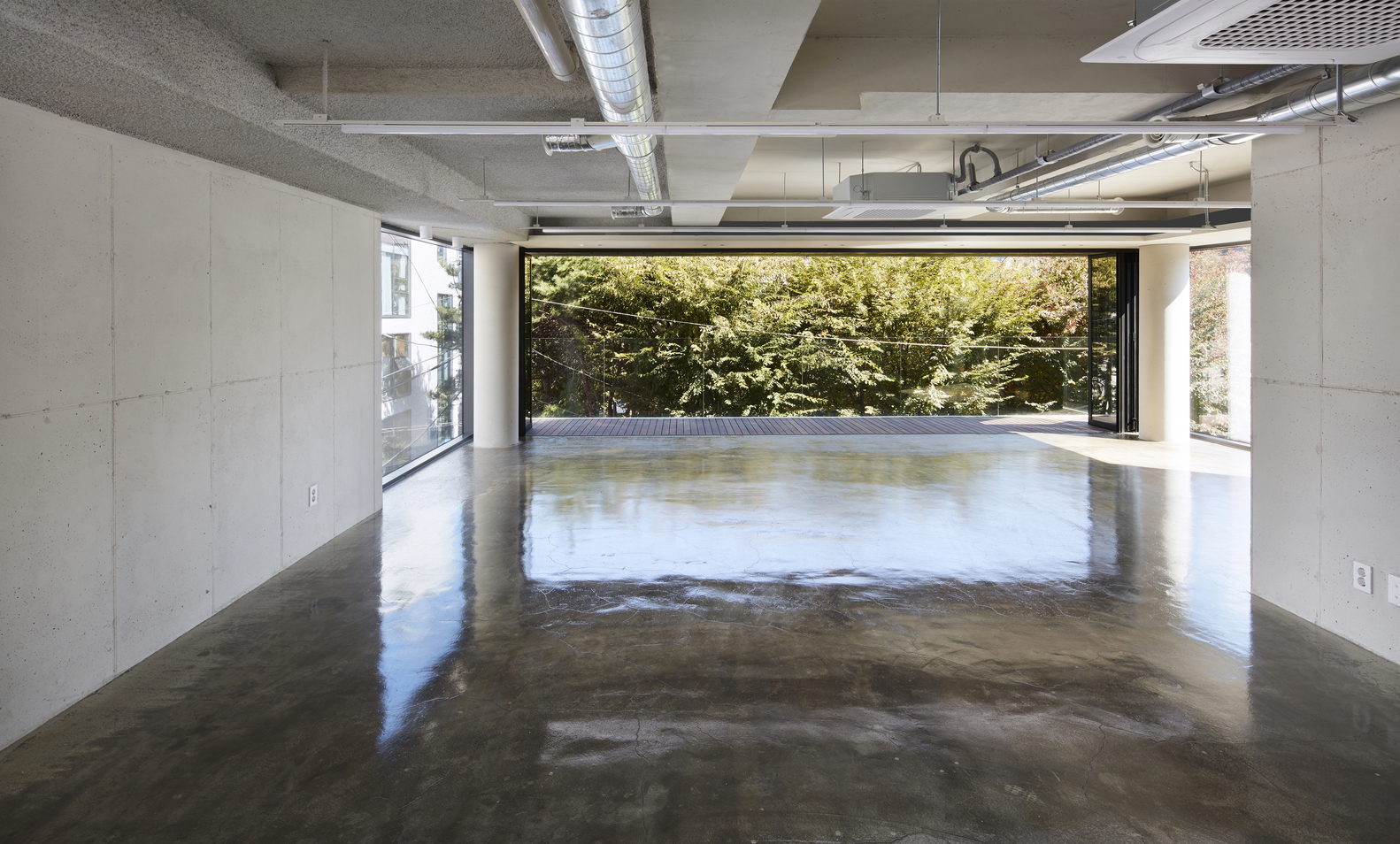
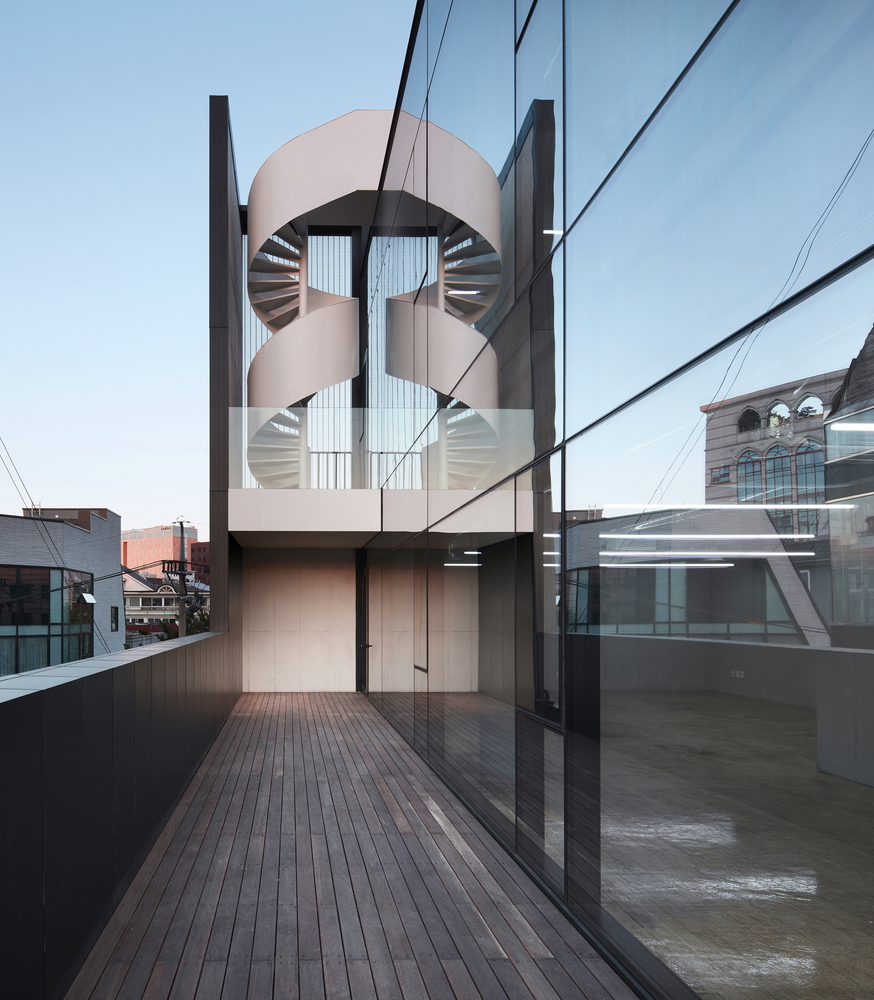
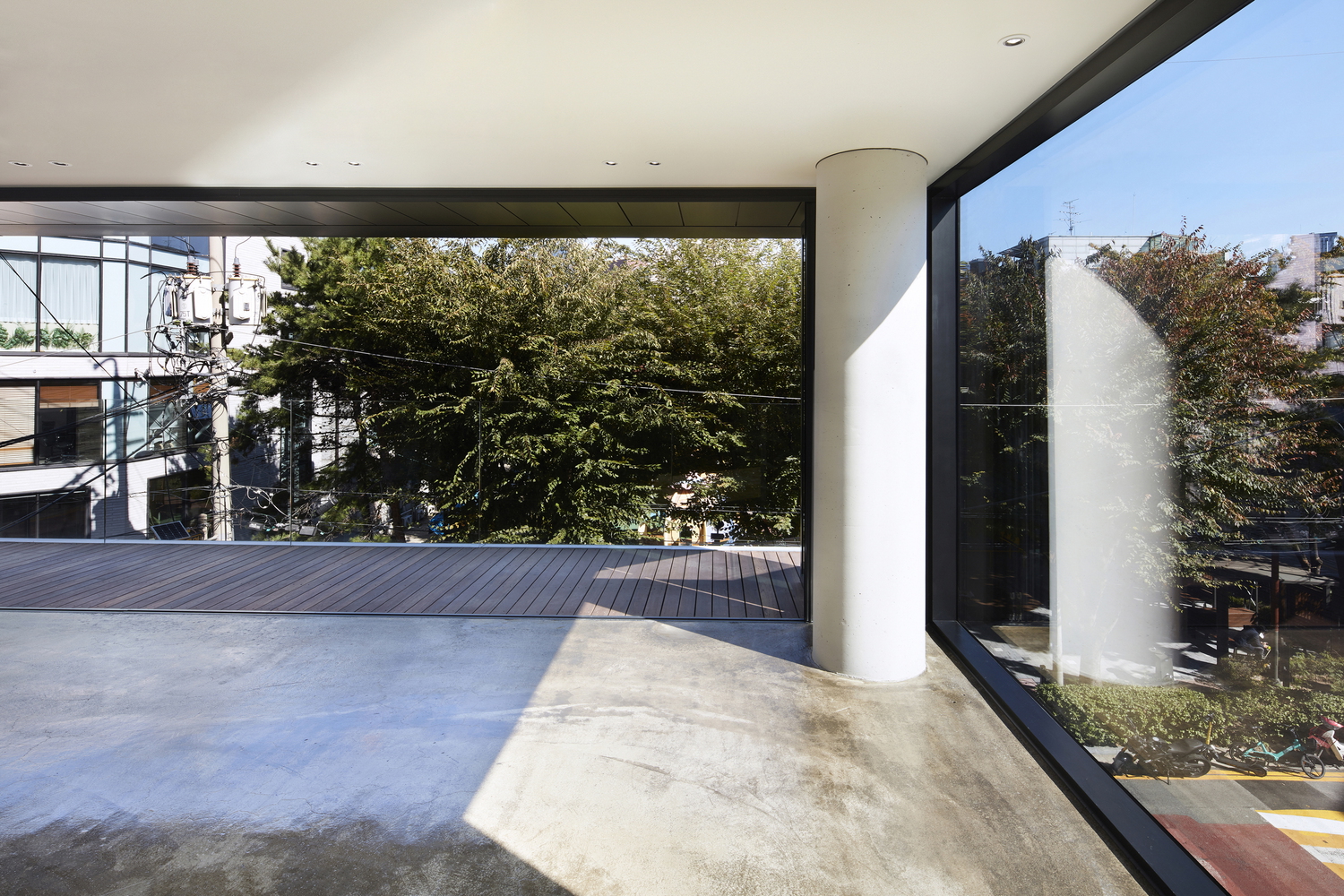
The third floor, situated between the closed upper volume facing the street and the transparently open lower volume, clearly divides and contrasts the two zones above and below while featuring a terrace with a view of the park that can be completely opened with folding glass doors.
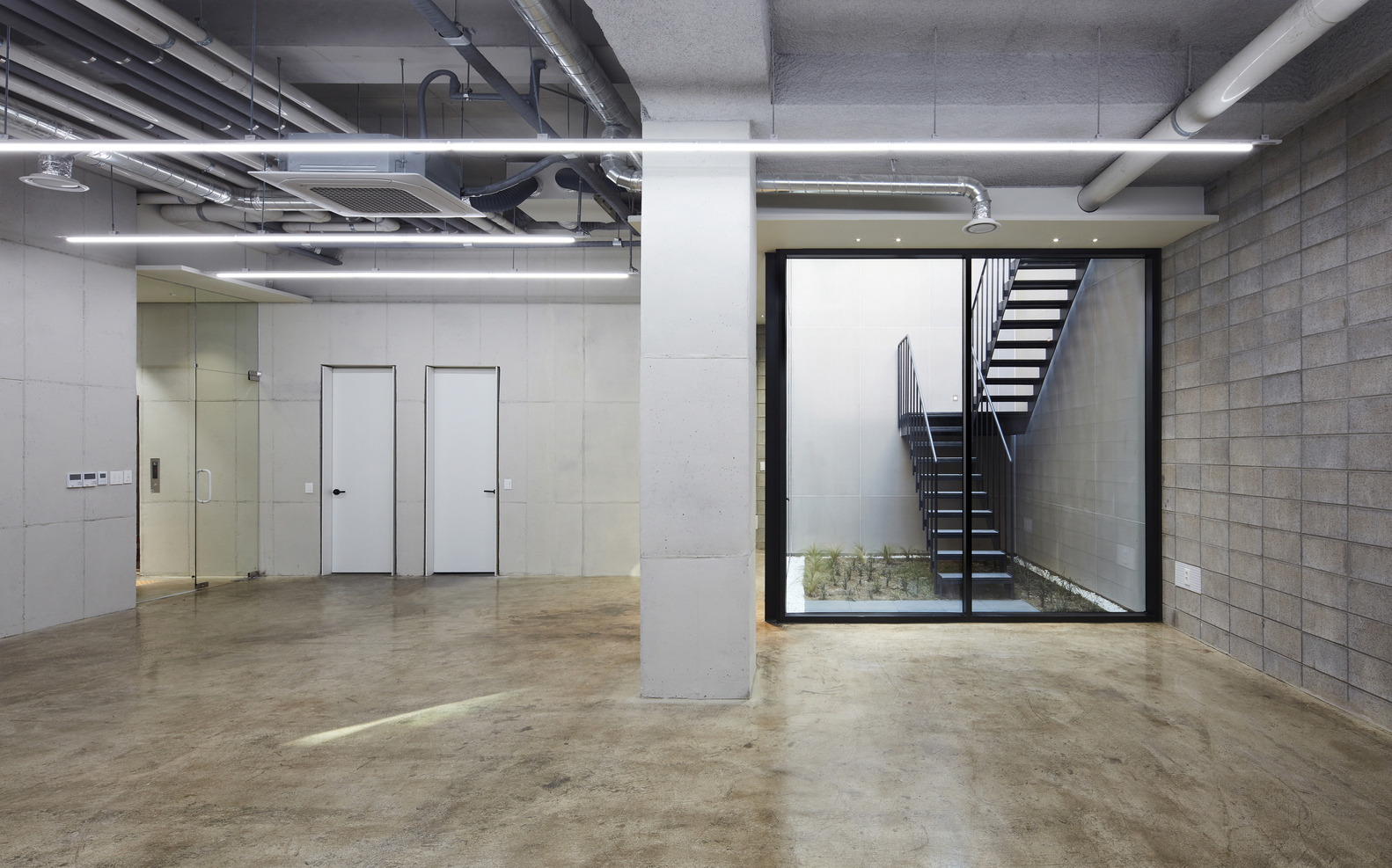
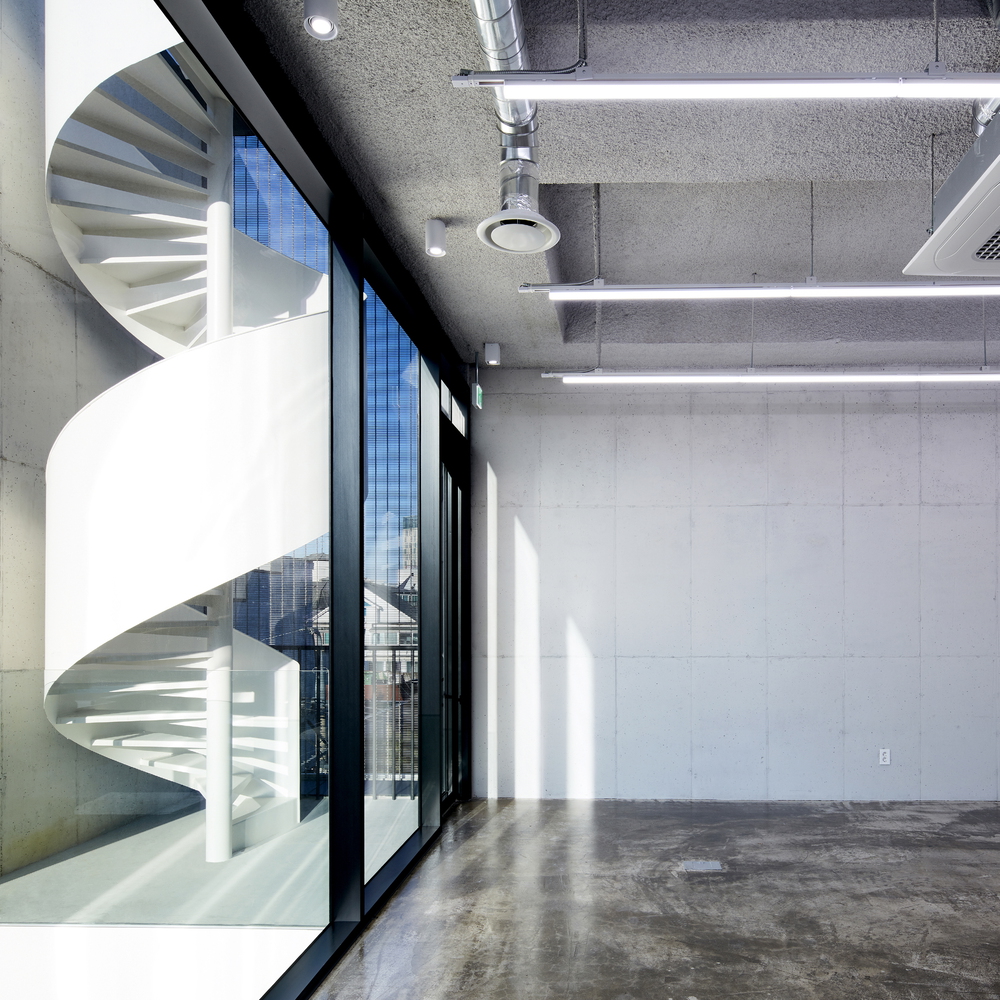
In particular, the terrace creates deep shadows between the two volumes, emphasizing the openings against the heavy mass and dark color of the upper section, and allows commercial tenants on the third floor to enjoy a refreshing, wide-open view down to the park in front.
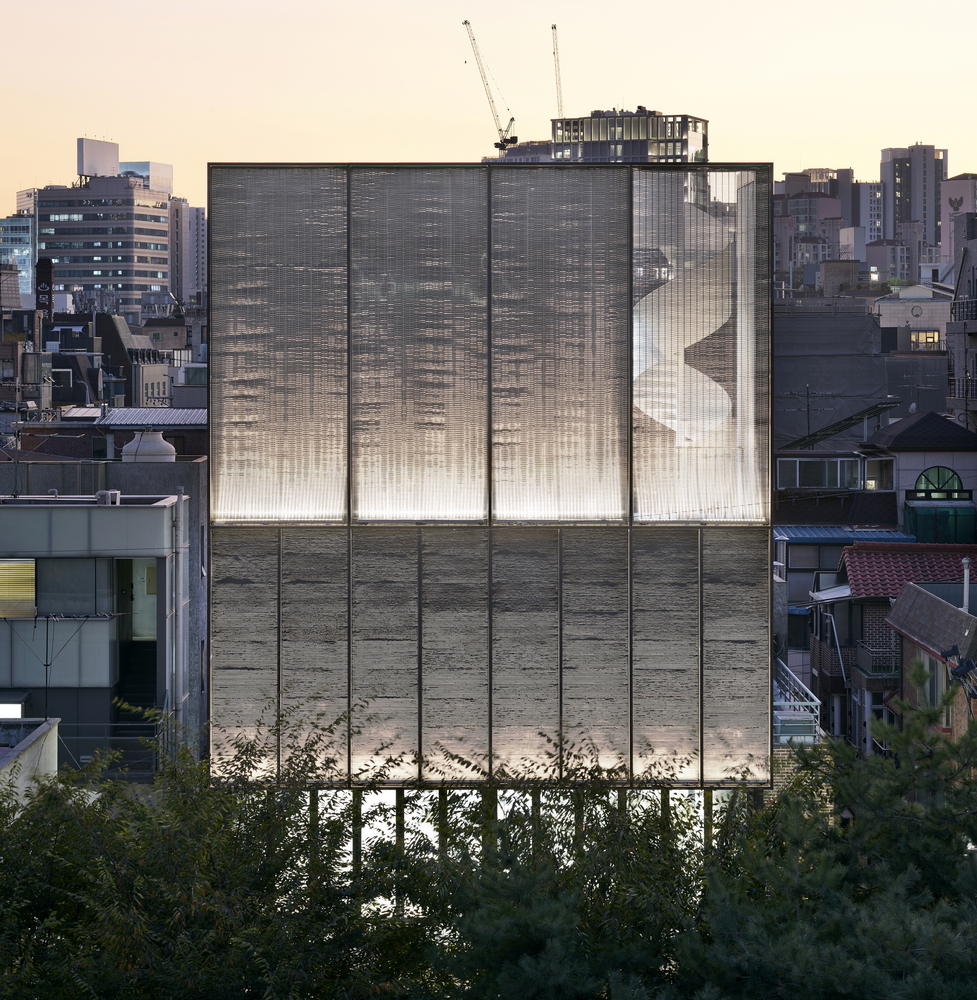
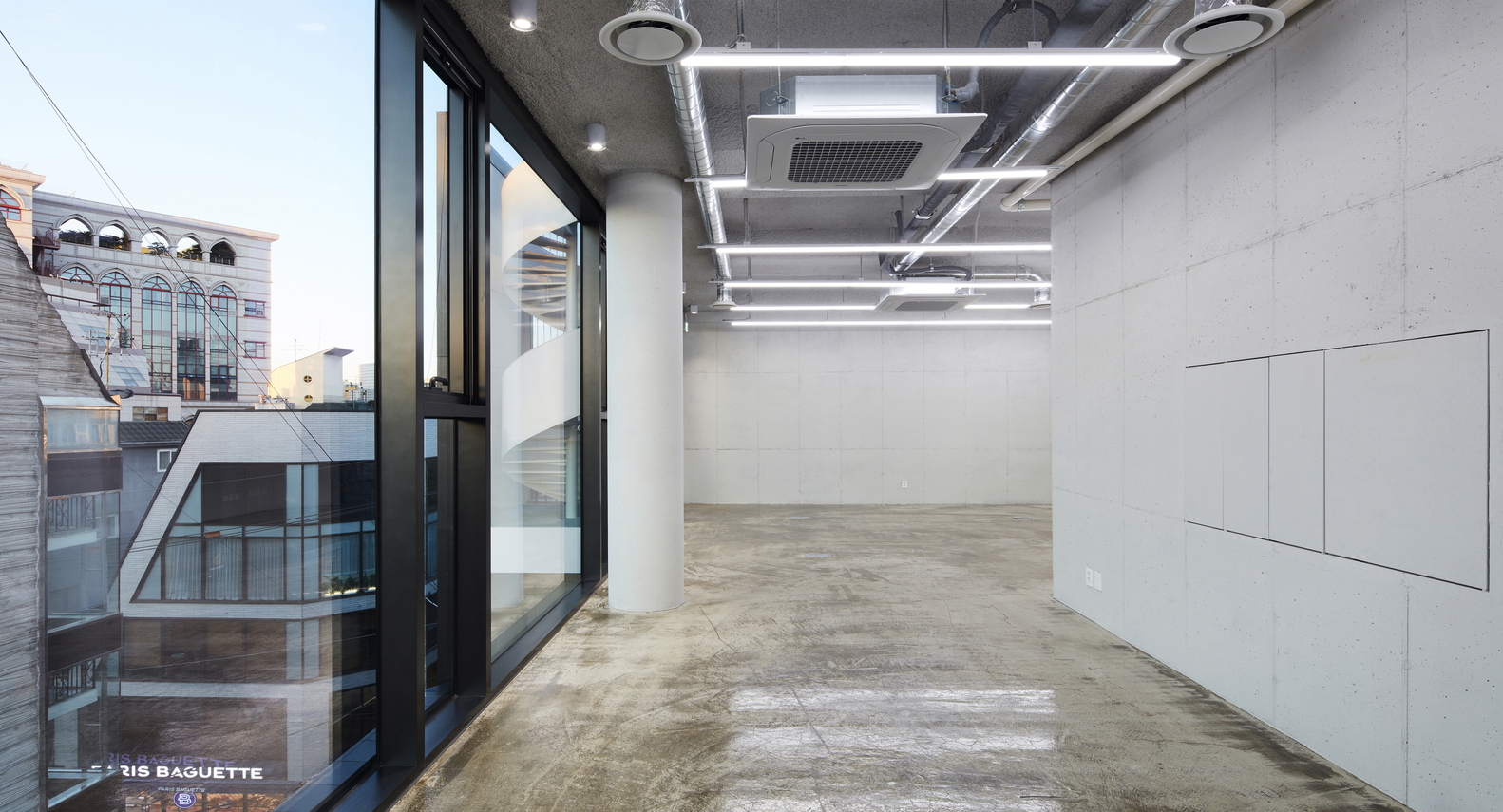
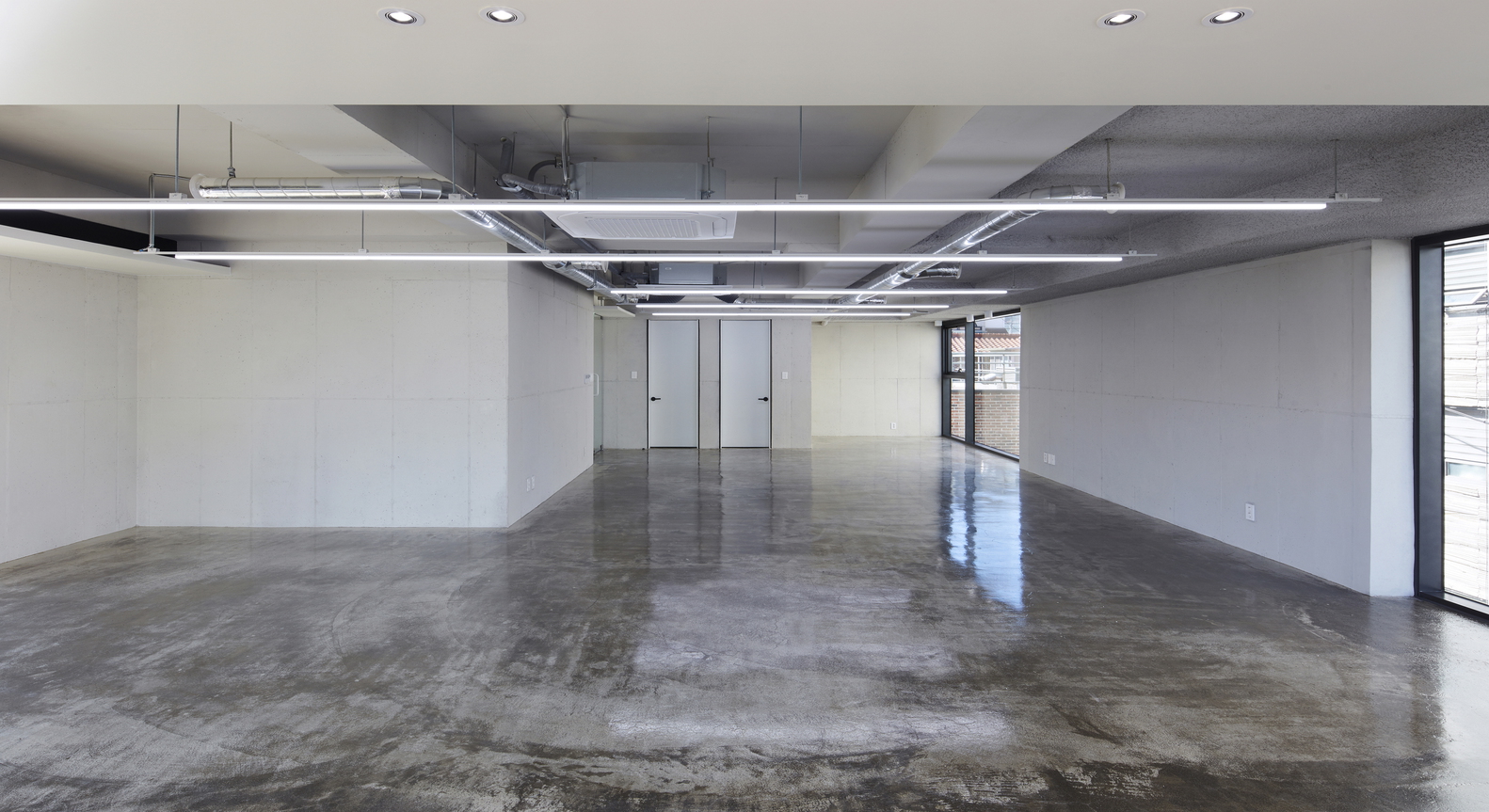
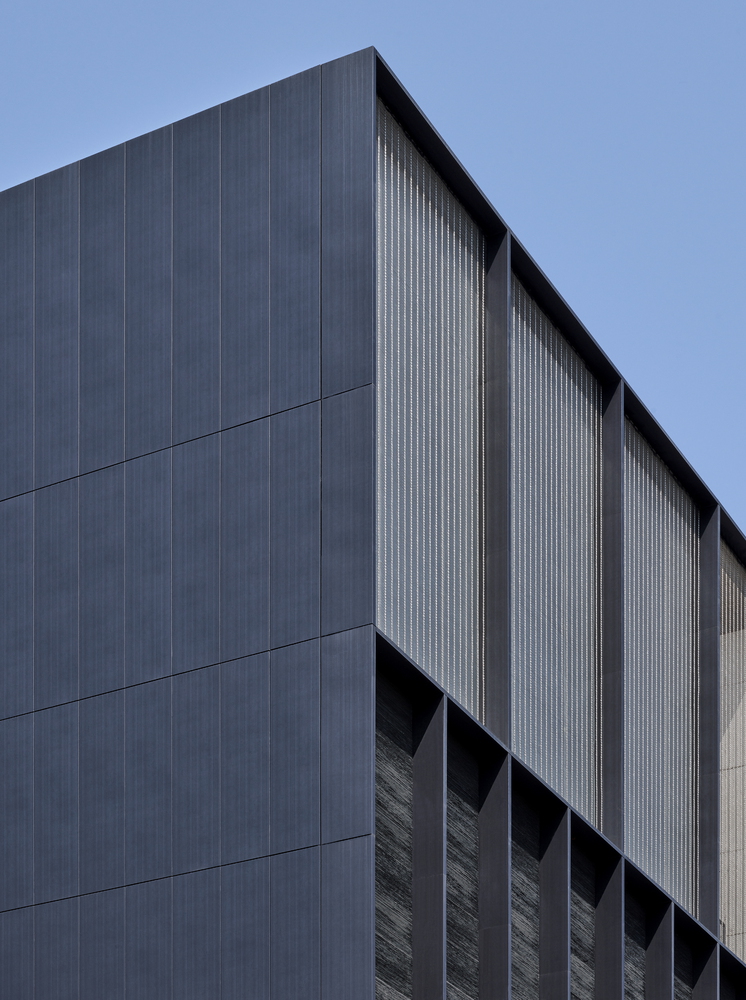
The upper section, consisting of the fourth and fifth floors, is set back from neighboring buildings due to diagonal height restrictions, providing buffer space. This made it possible to include intimate inward-facing terraces that encourage duplex-style independent offices.
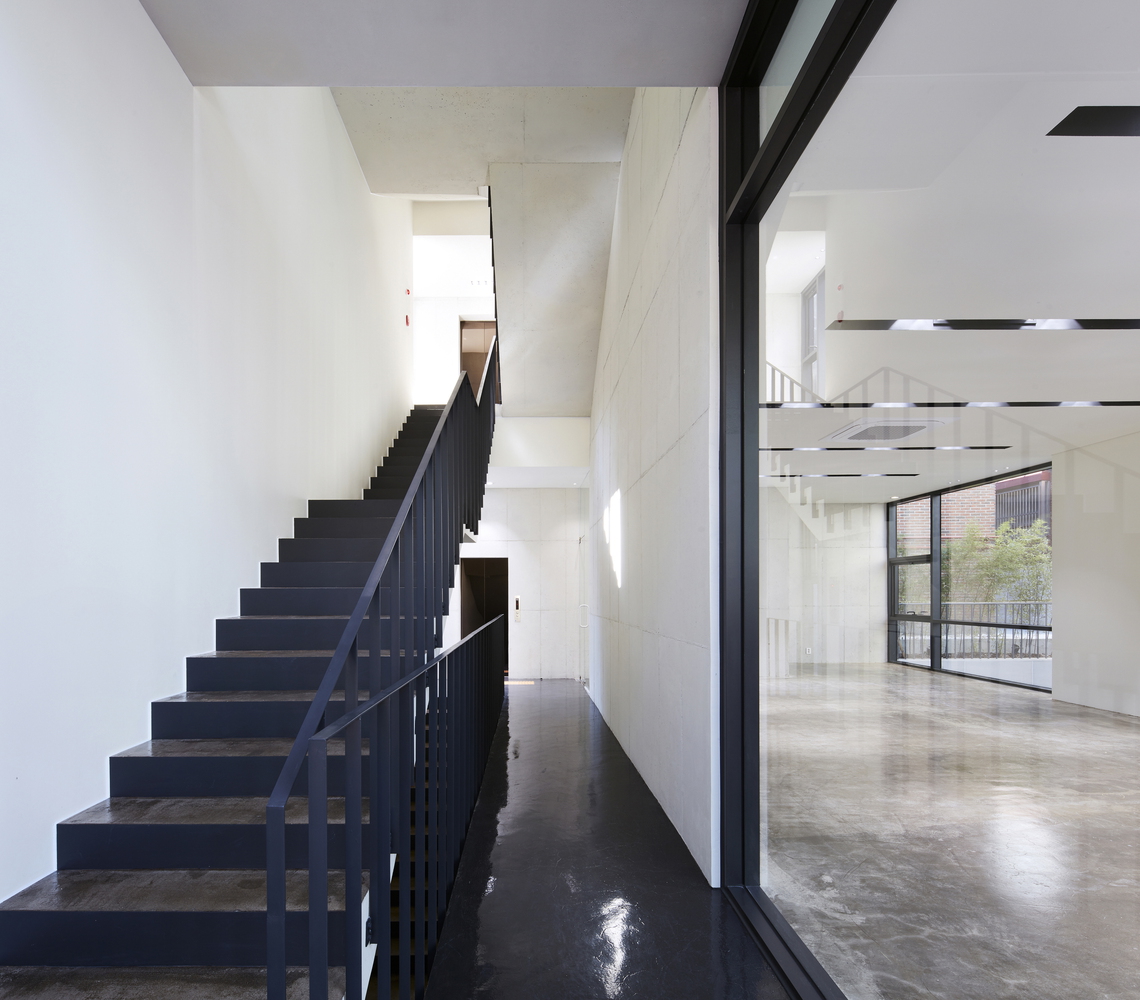
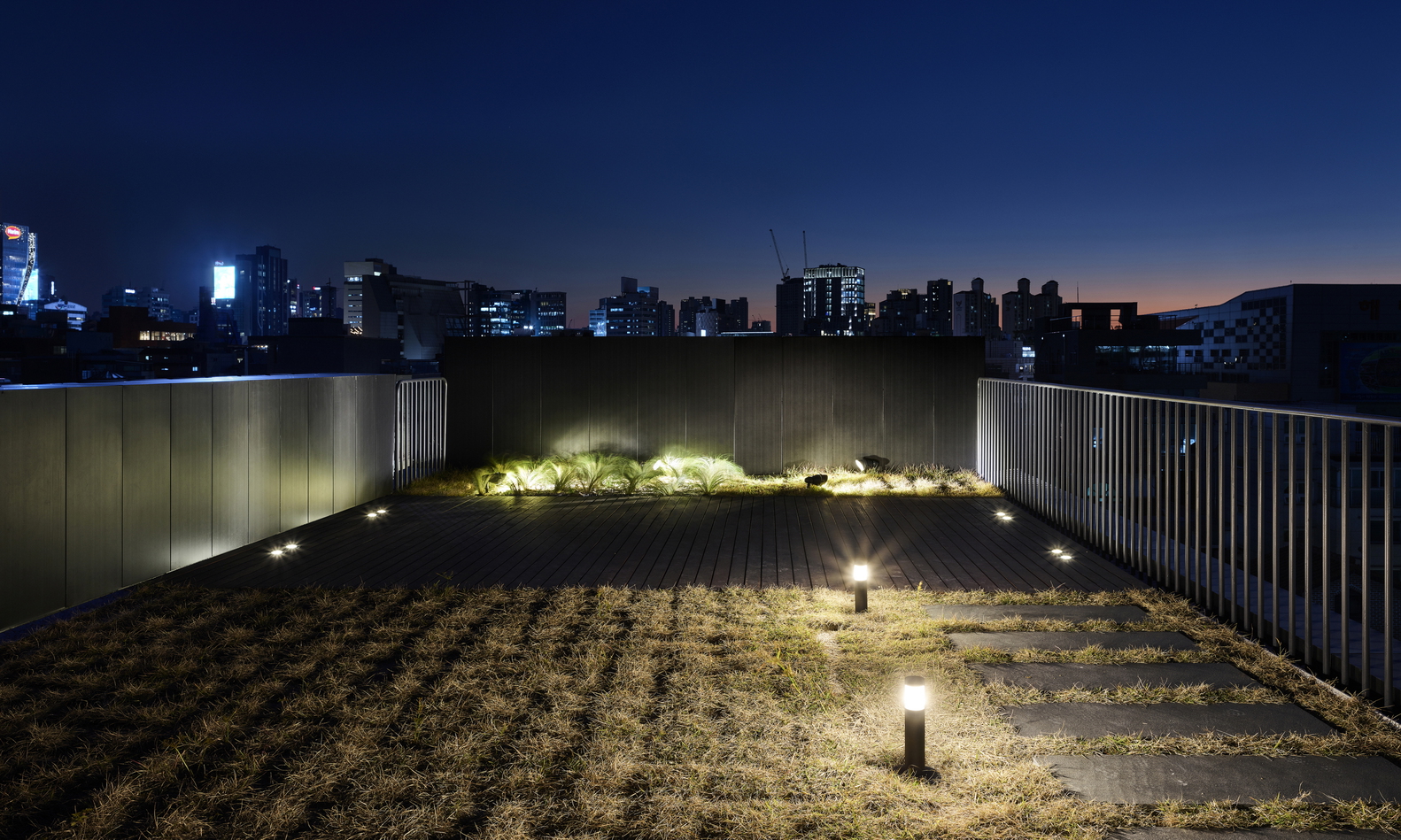
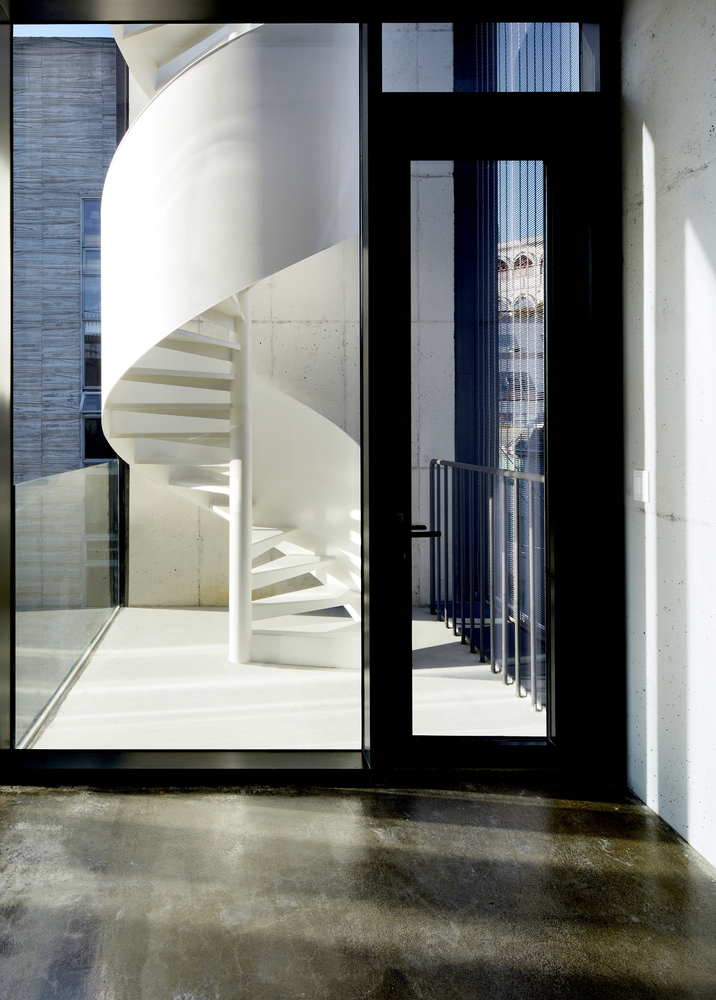
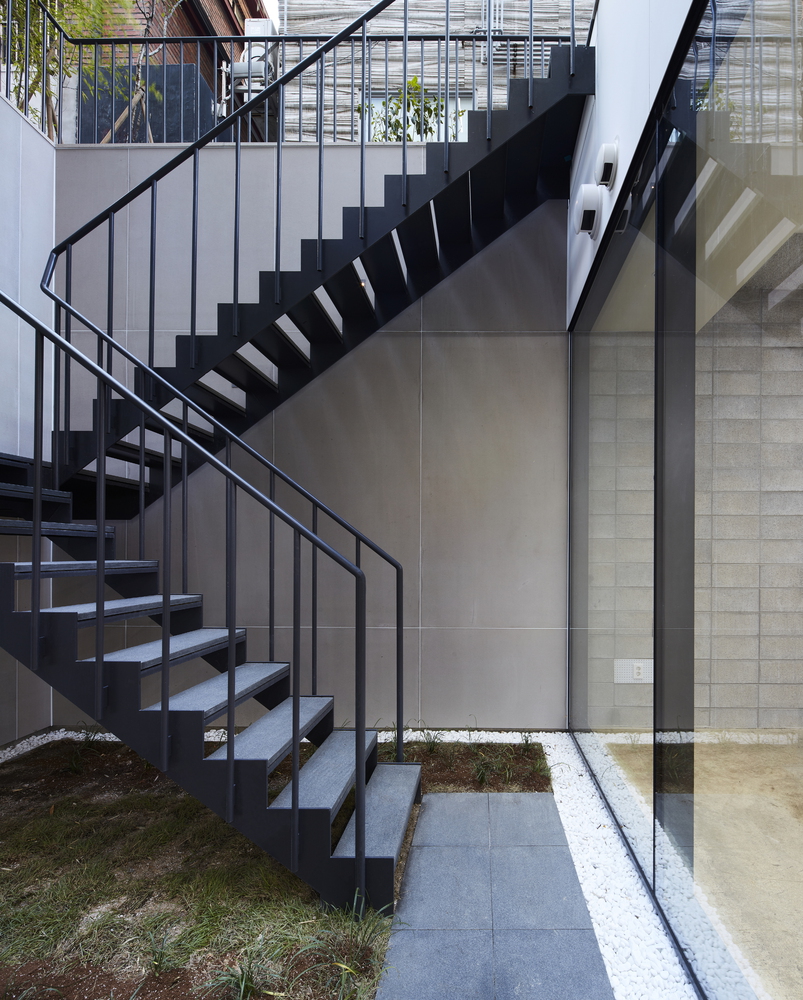
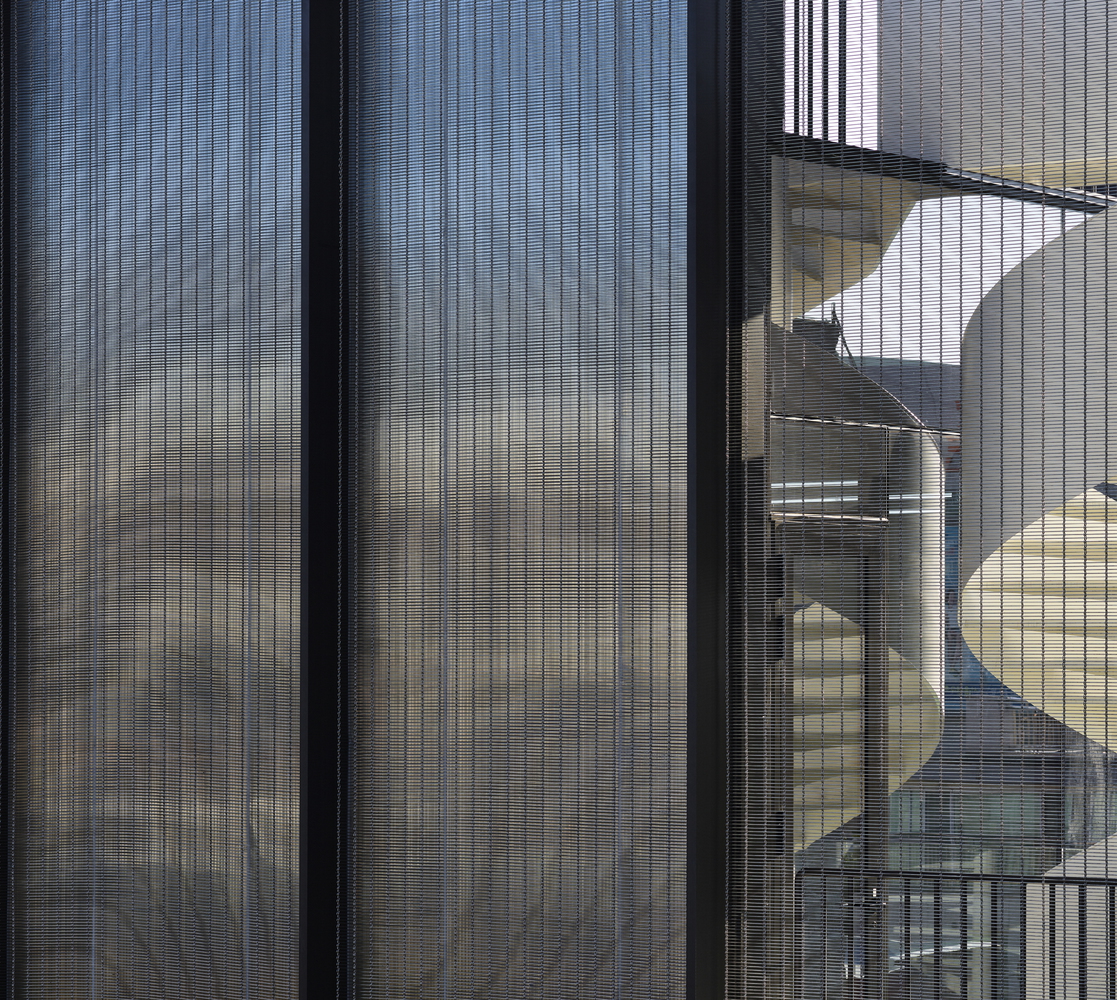
The office zone opens to the north with terraces while remaining closed toward the street, deliberately contrasting with the openness of the lower floors. Parts of the metal façade are subtly opened to reveal glimpses of the rooftop terrace and the curved volume of a spiral staircase, stimulating curiosity.
From the very beginning of the design, two flexible strategies were prepared: one dividing potential tenants into low-, mid-, and high-rise types, and another allowing the entire building to be leased to a single tenant.
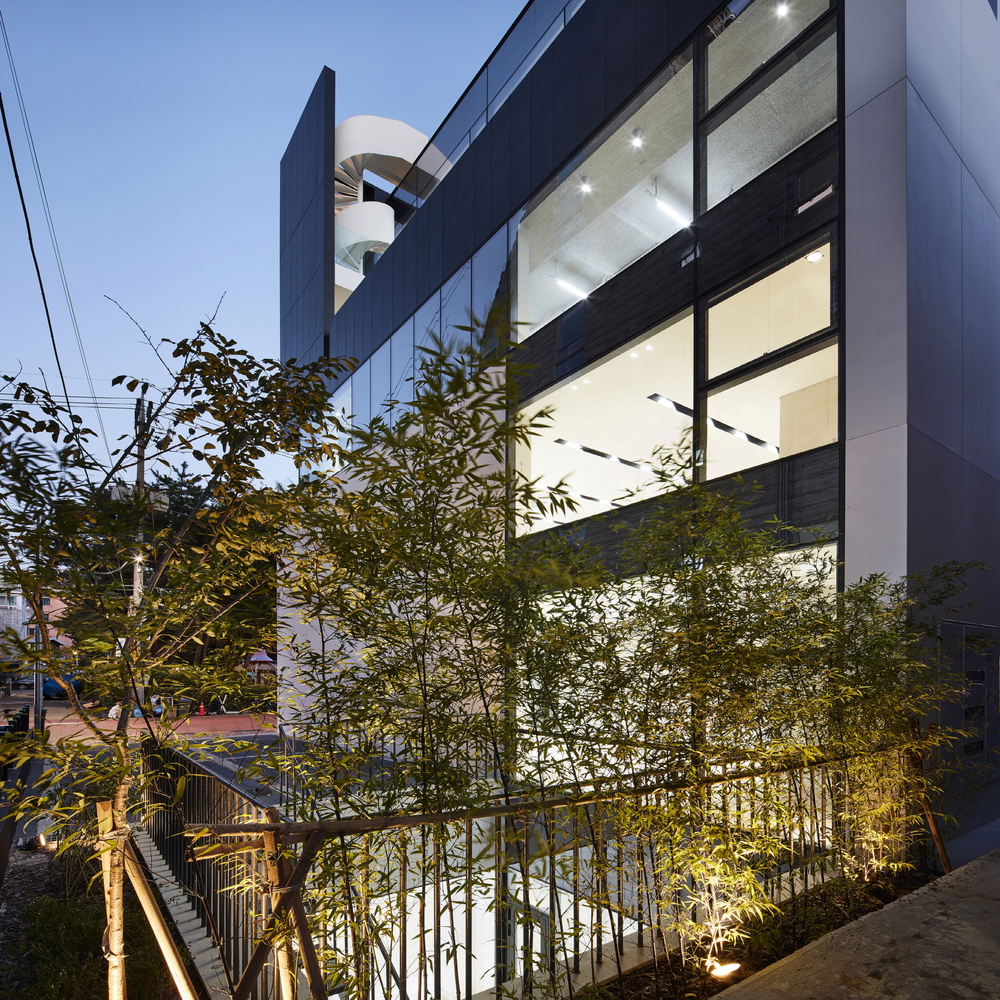
Fortunately, during the leasing process, a company launching its first electric motorcycle store moved in; the lower floors became the showroom, the third floor a café, and the fourth and fifth floors offices — perfectly matching the original design intentions.
In this way, Triplet Code, Sinsa was planned to respond harmoniously to its surroundings through a three-part vertical composition. Each layer naturally reacts in its own distinct way according to its character — low, middle, and high — organically forming a coherent stacked combination.