Center Rog – Renovation And Creative Center
CENTER ROG – RENOVATION AND CREATIVE CENTER
Bax Studio, Mendoza Partida
ARCHITECTS
Bax Studio, Mendoza Partida
LEAD ARCHITECT
Mara Partida, Héctor Mendoza, Boris Bezan, Jaka bezan
COLLABORATORS
Sašo Badovinac, Olga Bombač, German Bosch, Grega Cerar, Oscar Espinosa, Jure Kolenc, Carlos Parra, Damian Plouganou, Bor Pungeršč
CLIENT
Ayuntamiento De Liubliana
AREA
13200 m²
YEAR
2023
LOCATION
Liubliana, Slovenia
CATEGORY
Renovation, Cultural Center
English description provided by the architects.
The architecture design for Center Rog adds to the cultural revitalization of the city by rehabilitating a building that is listed due to its great heritage and historical value, in an urban location on the river embankment that needed a new lease of life and a makeover for use by citizens.
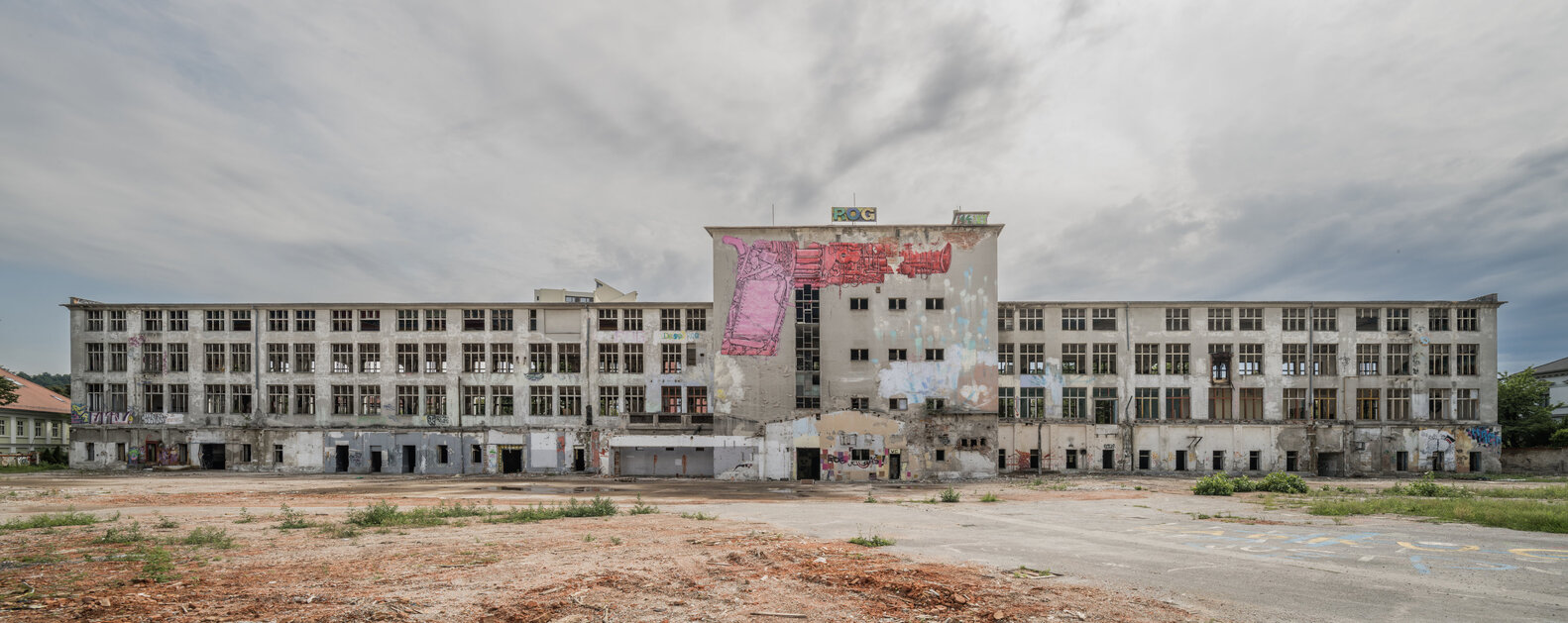
When the Rog factory closed its doors in the early 1990s, the building was first abandoned and then occupied by squatters, until it was purchased by Ljubljana City Council.
In 2008 an international competition was organized to rehabilitate and transform the factory into a cultural amenity for artistic creation and innovation, connected to its riverside setting.
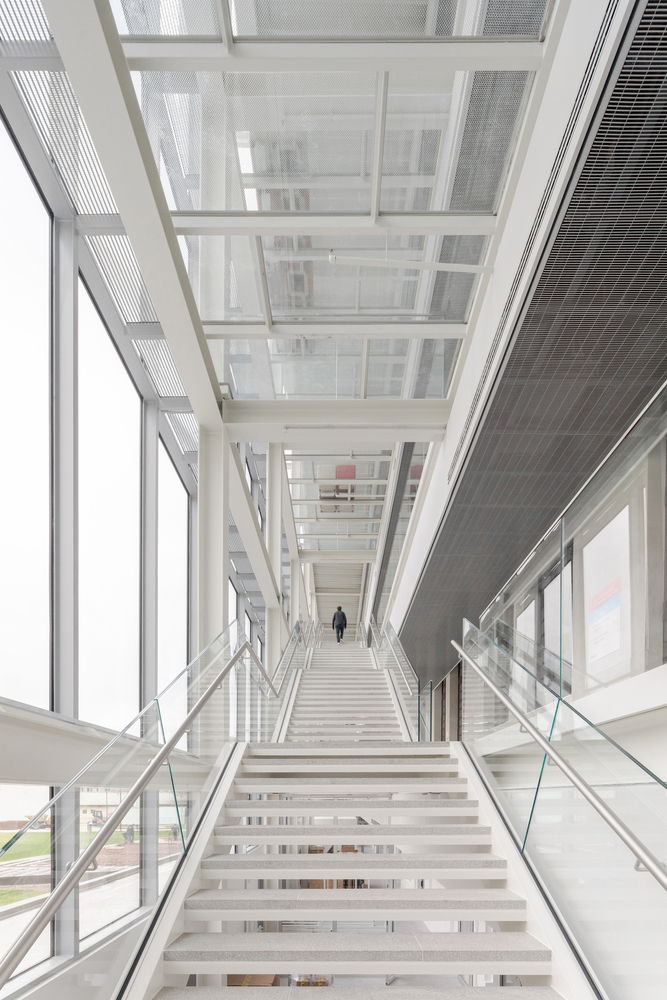
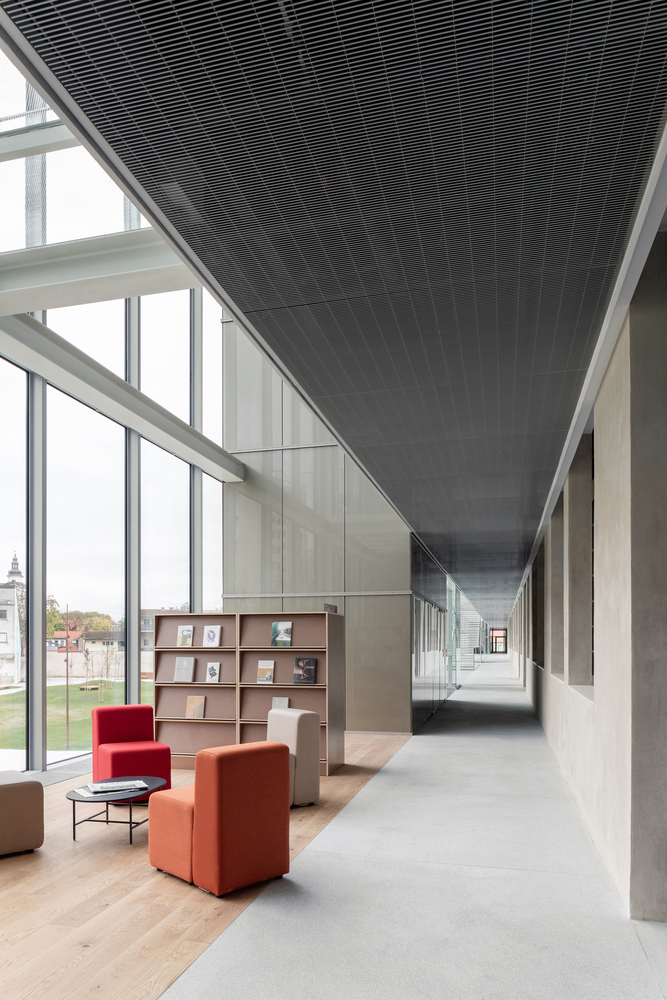
The competition was won by the Barcelona practices Mendoza Partida Architectural Studio and BAX Studio. After years of litigation, because the factory was occupied by squatters, work finally began in 2022, and was completed at the end of 2023.
SINGULAR INDUSTRIAL ARCHITECTURE
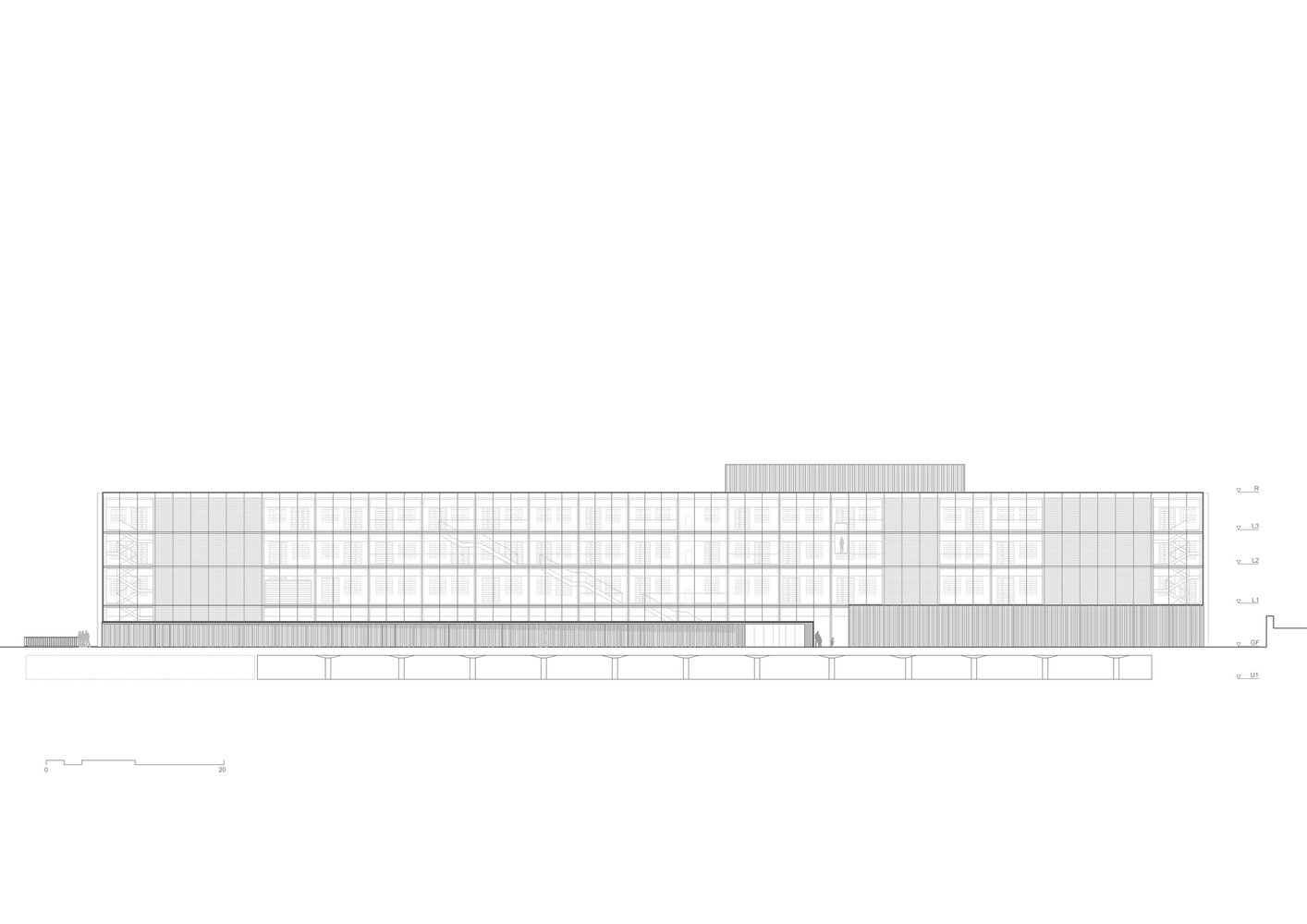
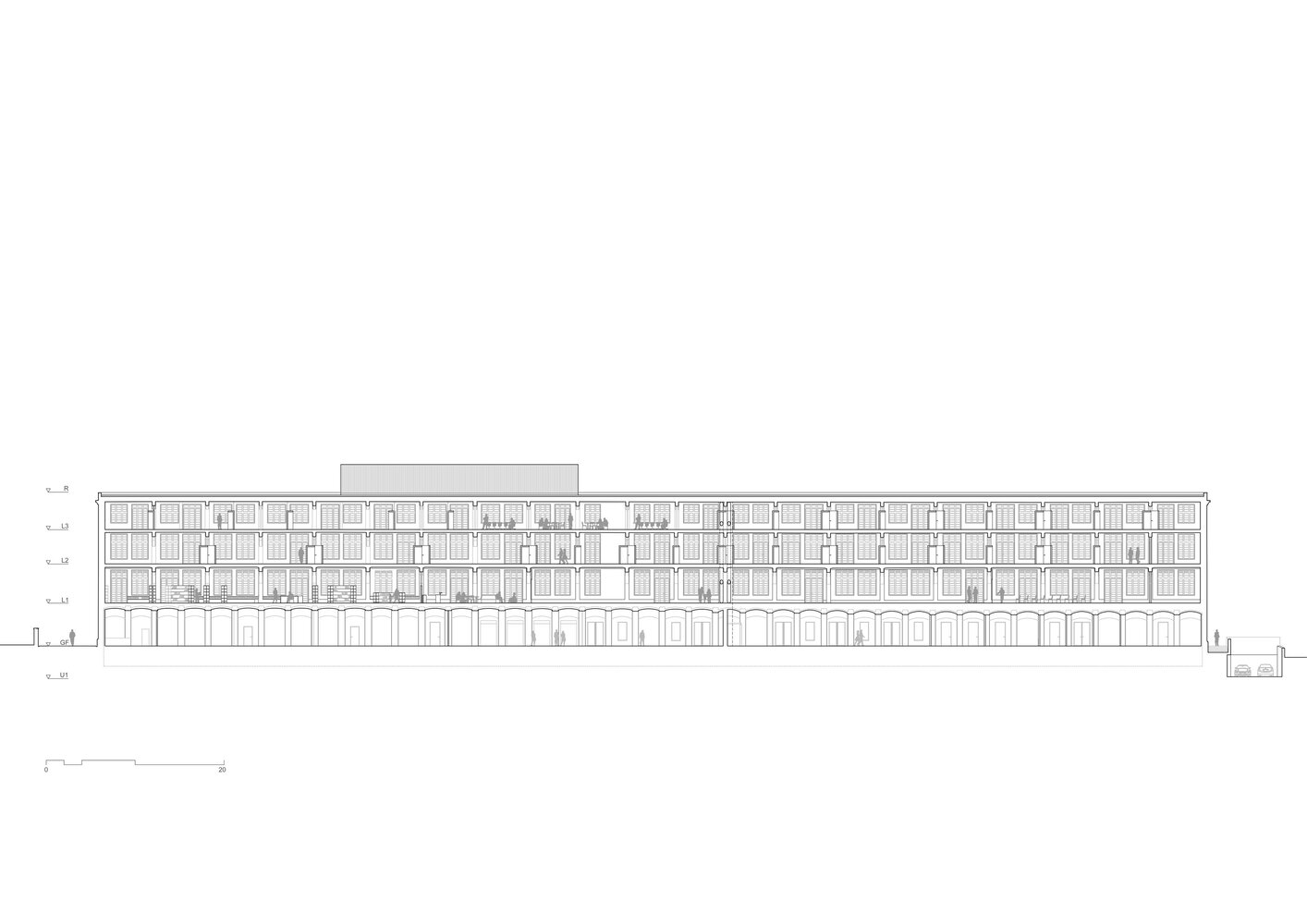
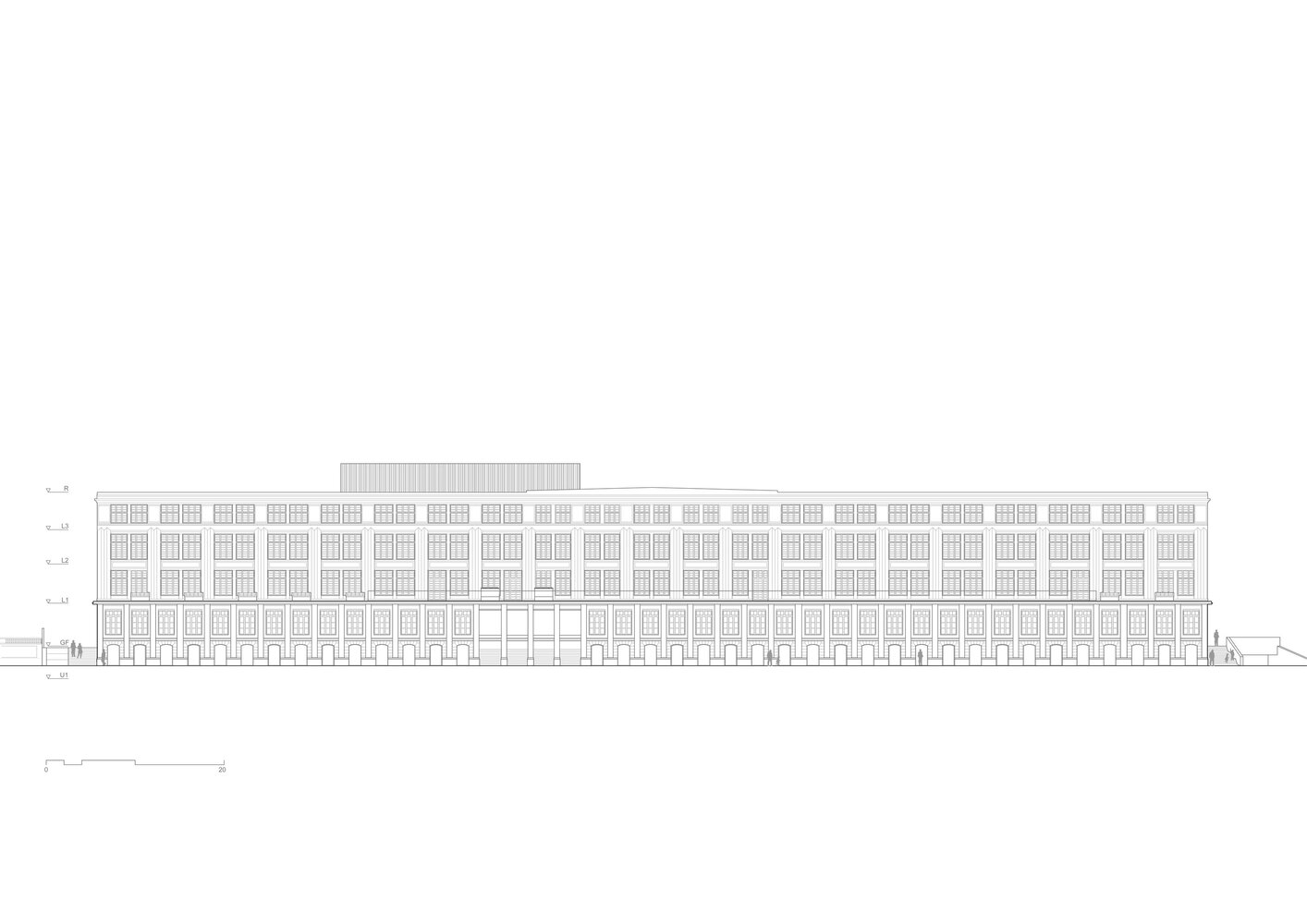
The building stands out in its urban setting both for its considerable size (125 meters of façade) and its architecture.
Its remodeling in 1923 by Czech engineer Alois Kral made it the largest warehouse building in the city, with a simple, efficient design of vertical and horizontal structural elements coordinated with an unusually long façade.
It used the Hennebique system, consisting of a skeletal structure of externally visible beams that was highly innovative in Ljubljana in the years immediately after World War I.
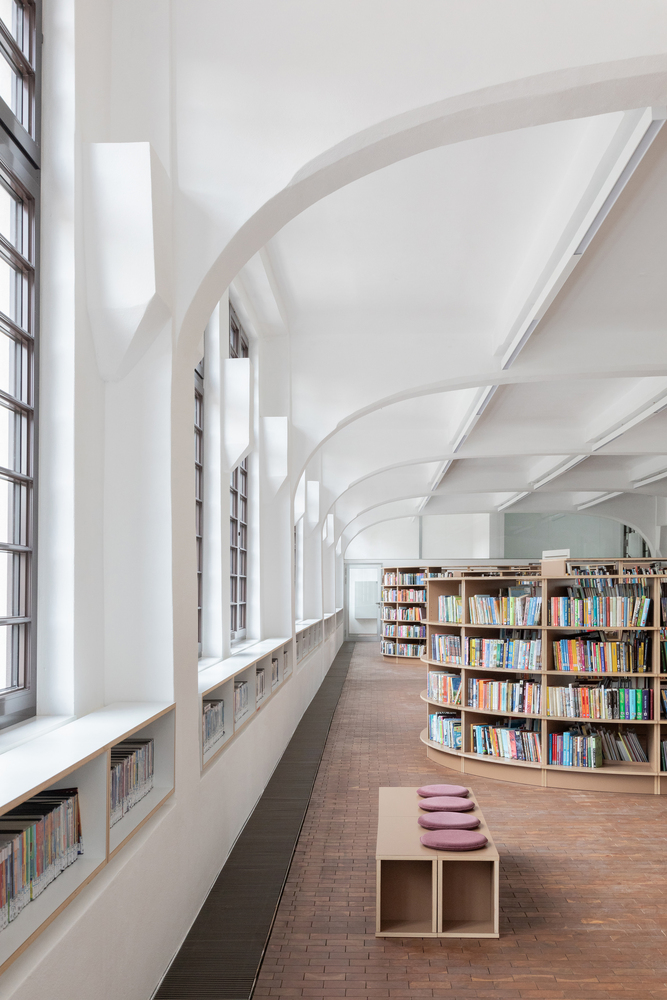
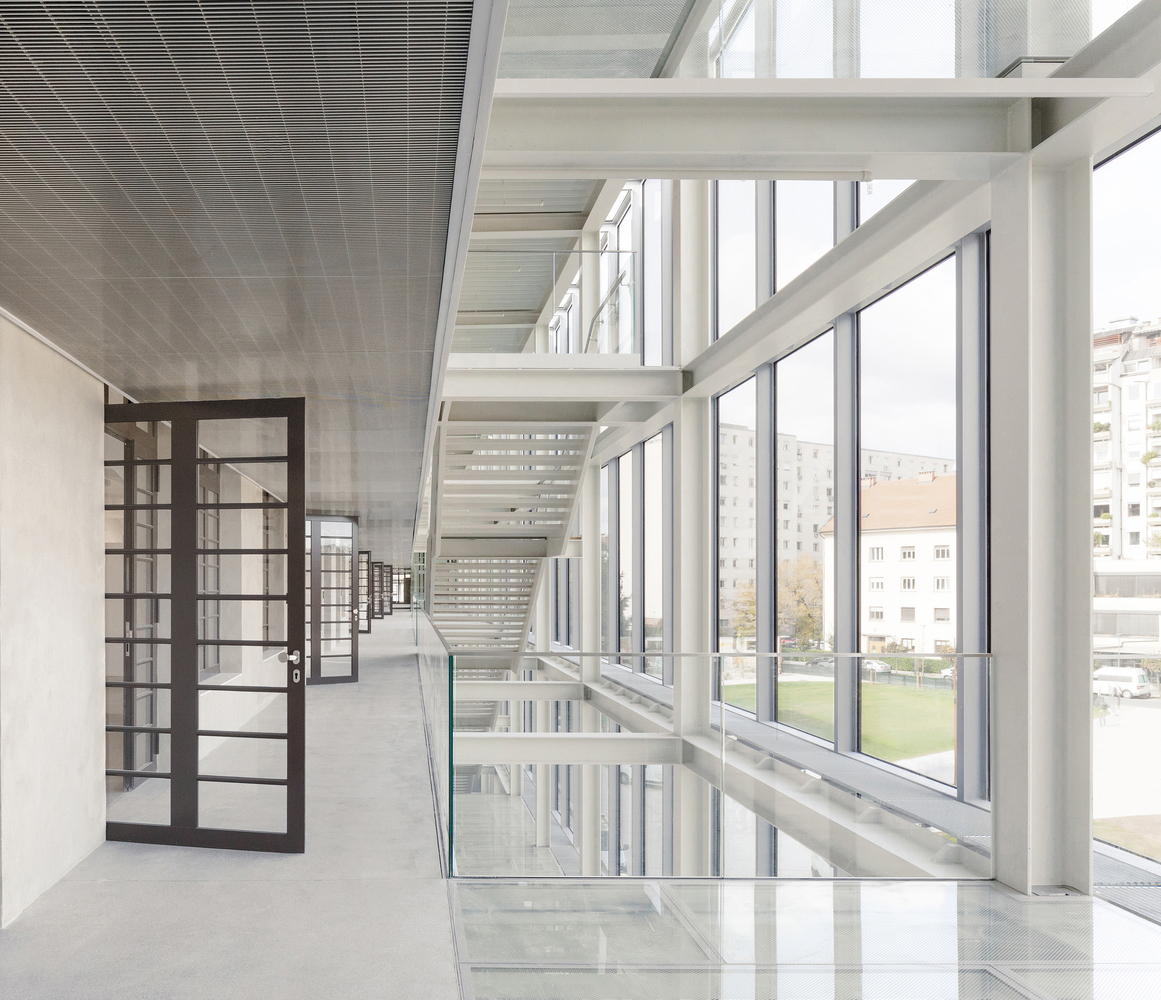
MAIN OBJECTIVE OF THE PROJECT: TO HIGHLIGHT THE VALUE OF THE LARGE ORIGINAL STRUCTURE
With the twofold premise of preserving the industrial building and adapting to the needs of the new arts center, the authors of the project (architects Héctor Mendoza and Mara Partida, of Mendoza Partida;
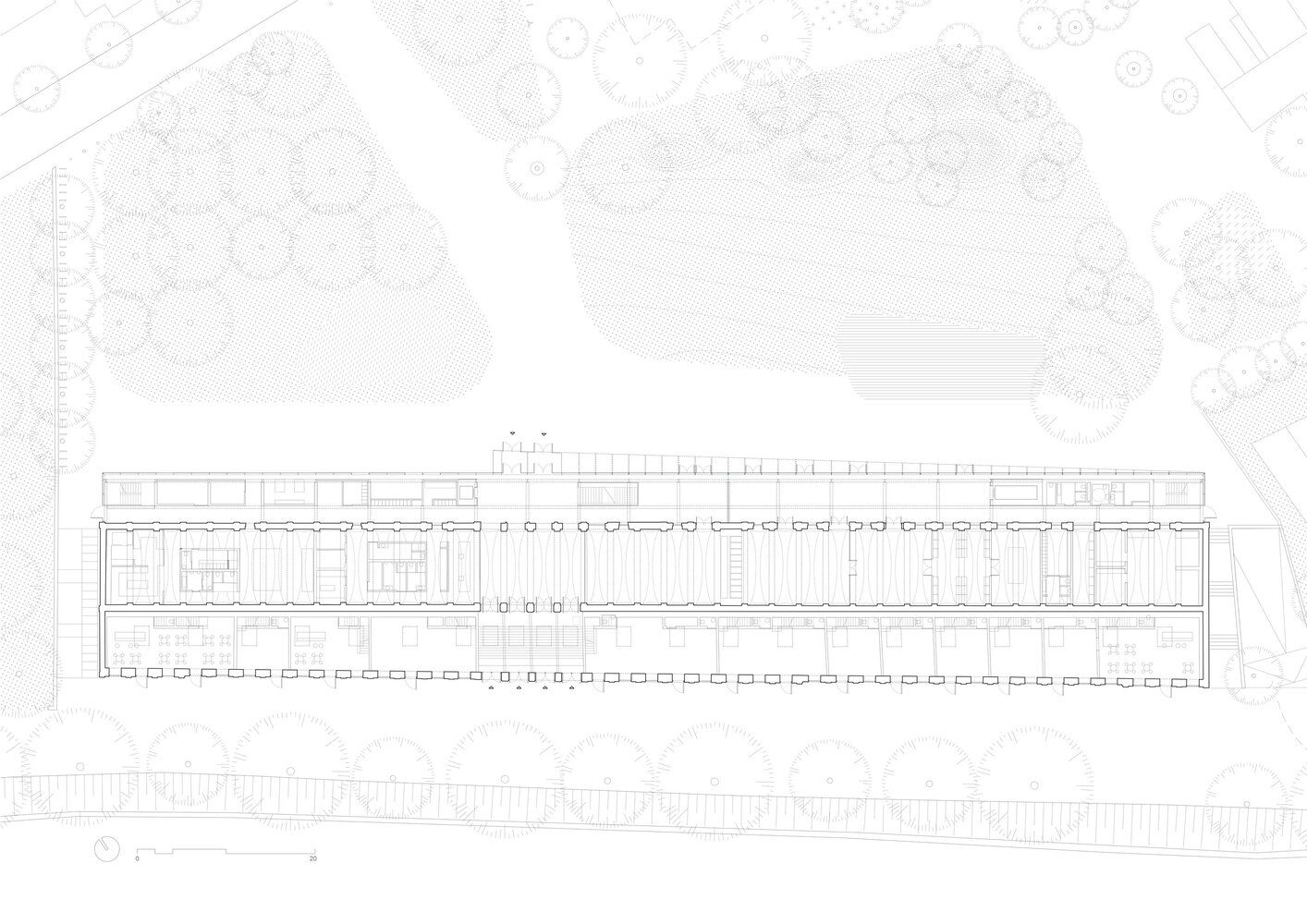
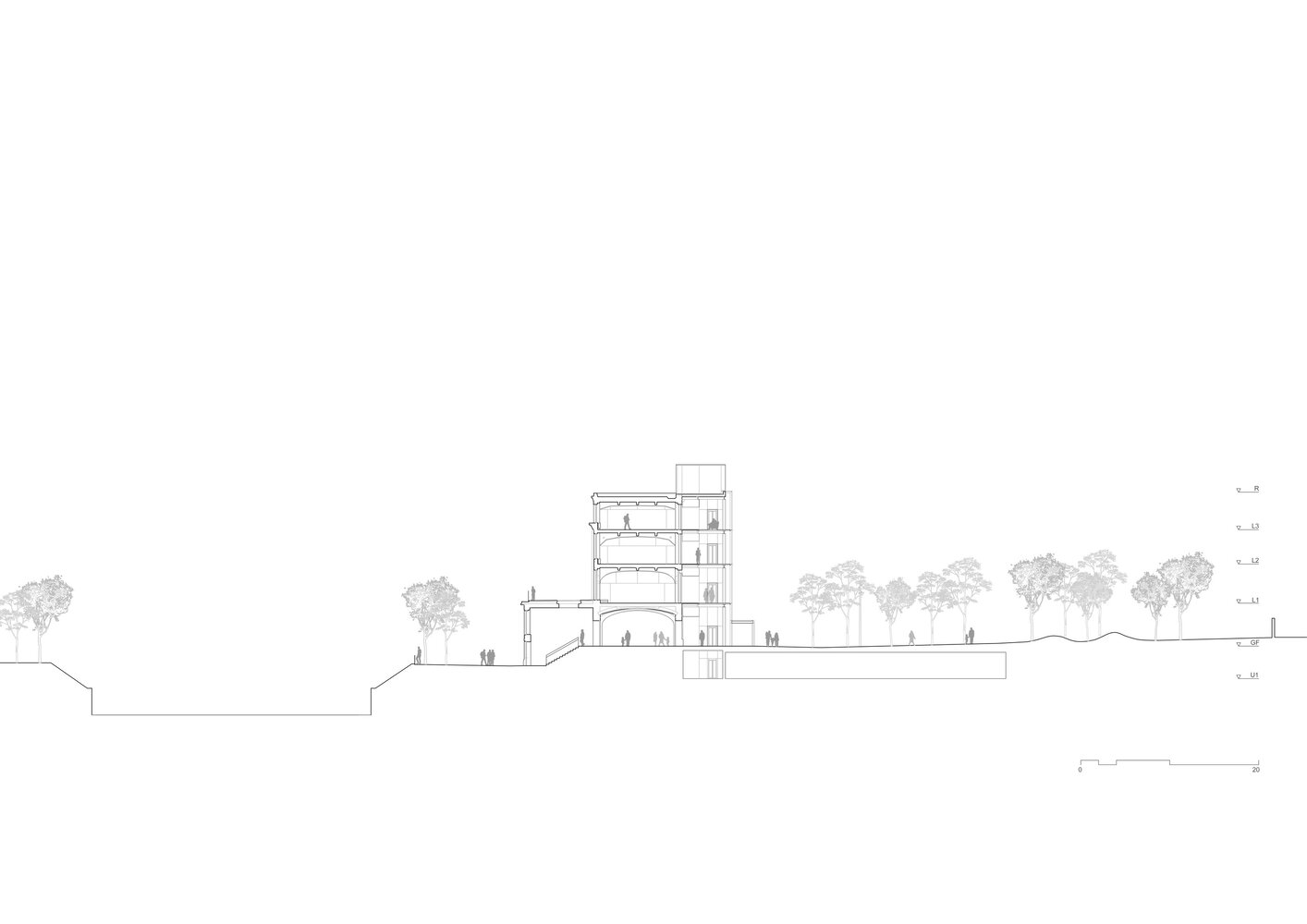
and Boris Bezan and Jaka Bezan, of BAX Studio) decided to add a lightweight structure built adjacent to the north façade to house circulations, services and installations.
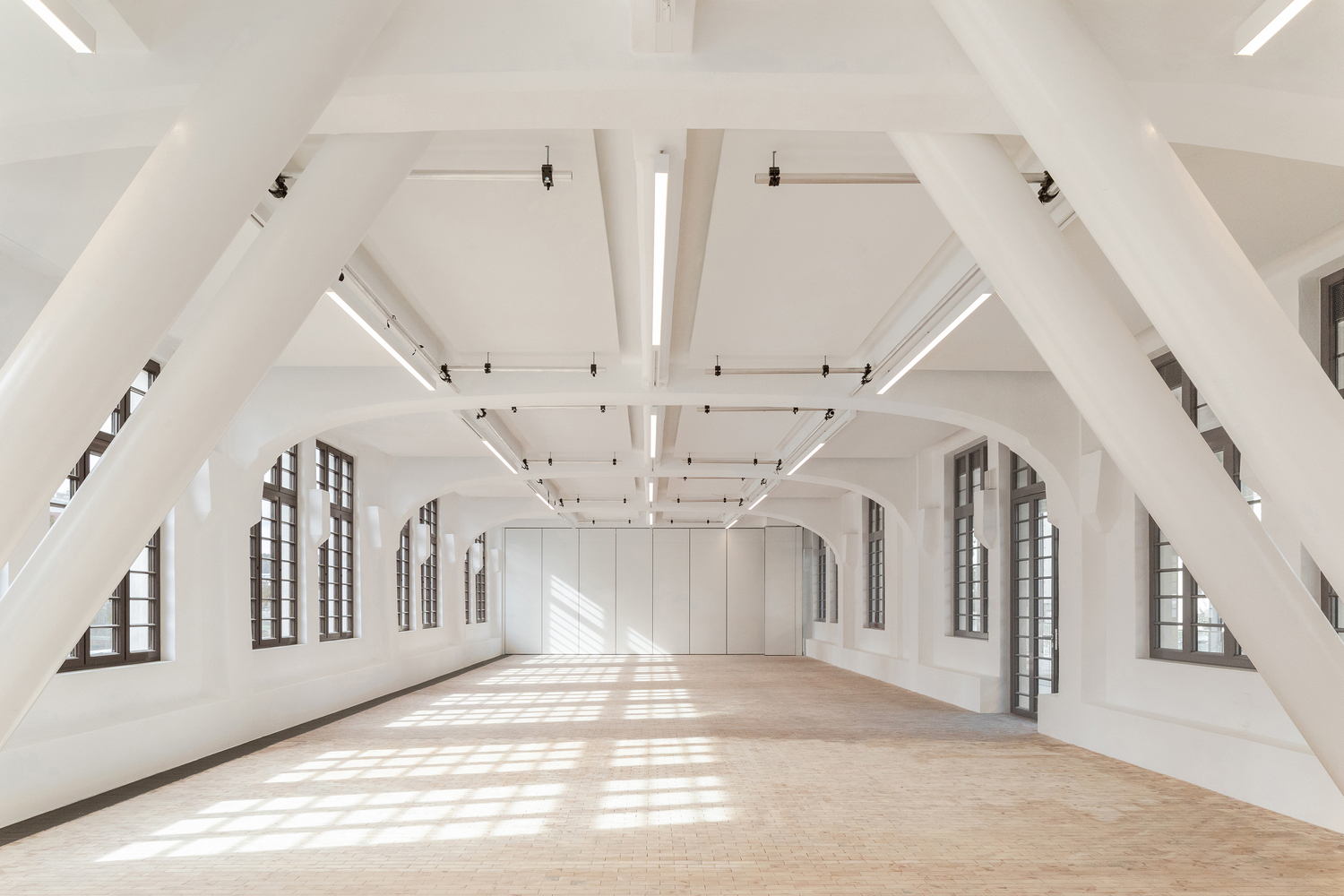
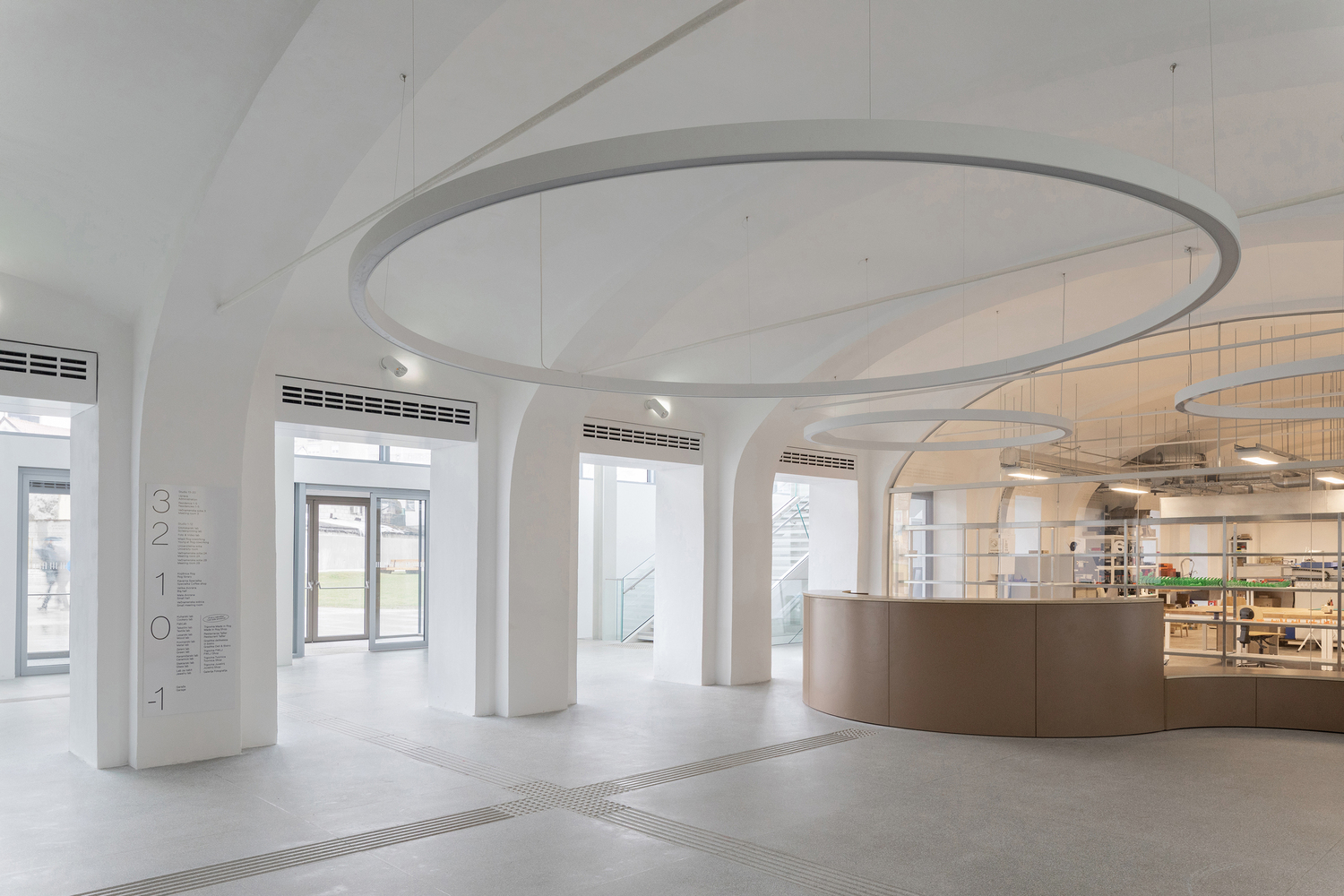
This operation prevents these elements impacting the original shed, which maintains its integrity to house the principal uses, planned in a much freer and more flexible way.
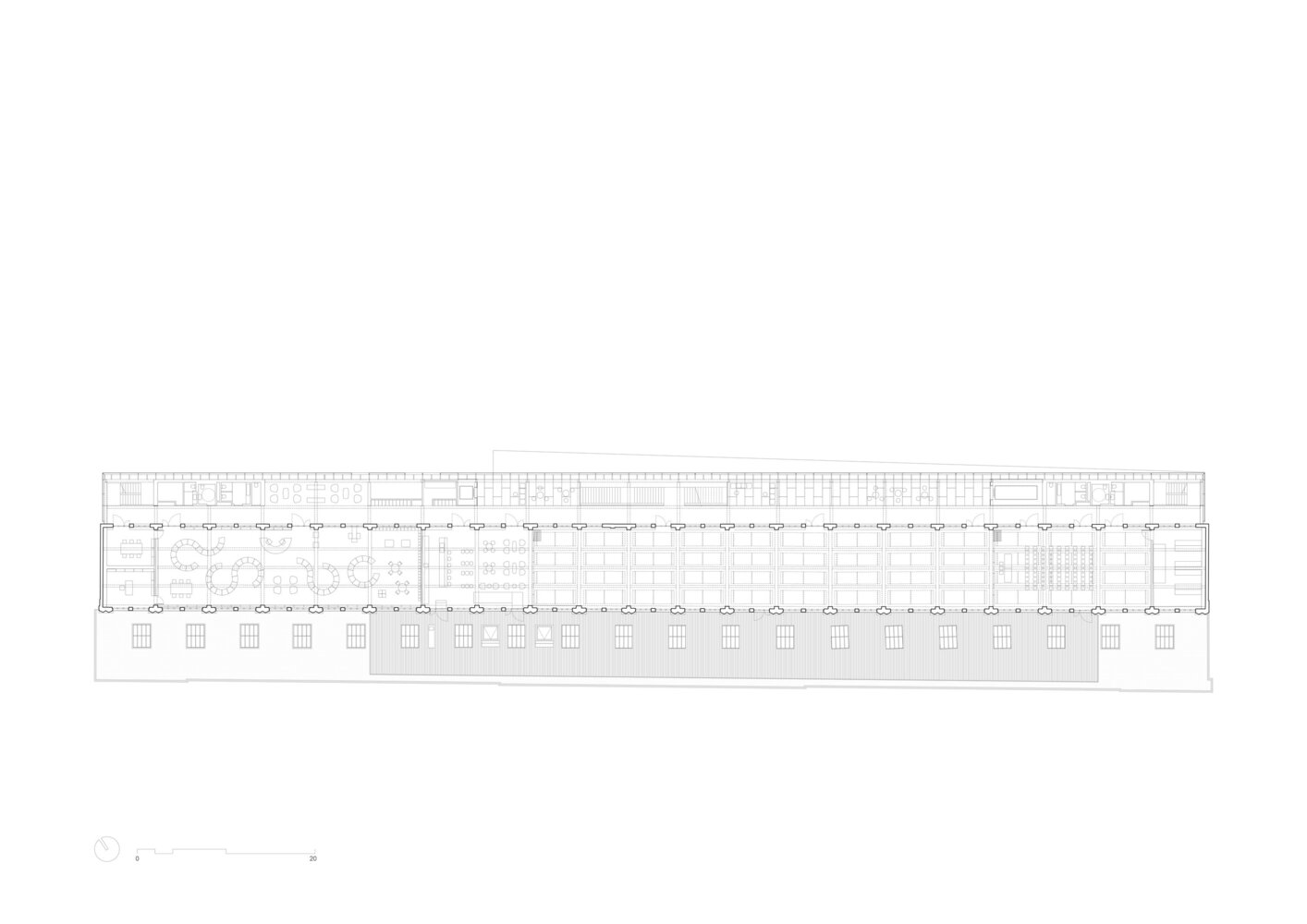
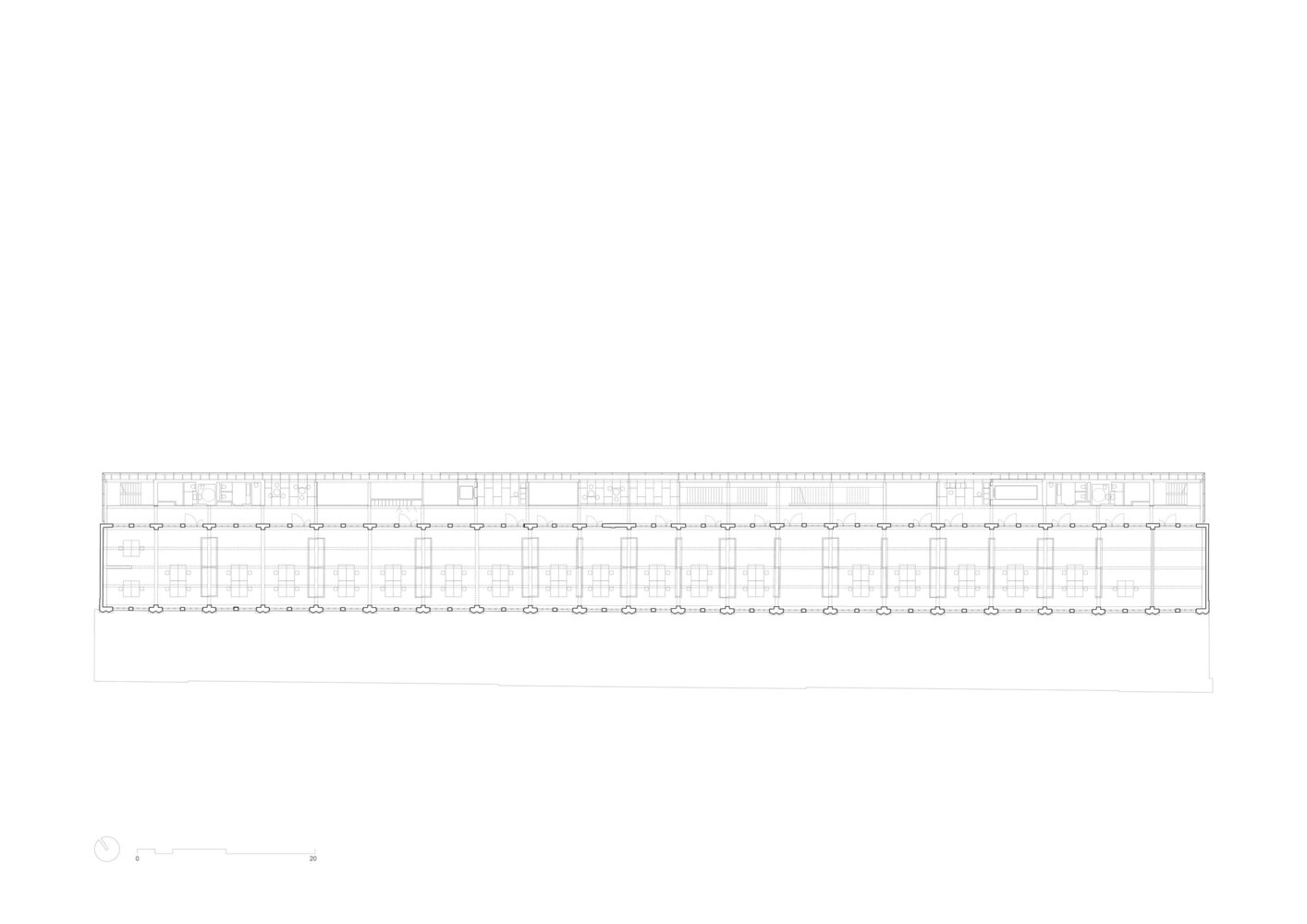
To the building’s original nave, 9 meters wide and 125 meters long, the project adds this new north-facing space, parallel to the existing one, with a transparent construction that offers glimpses of the factory building.
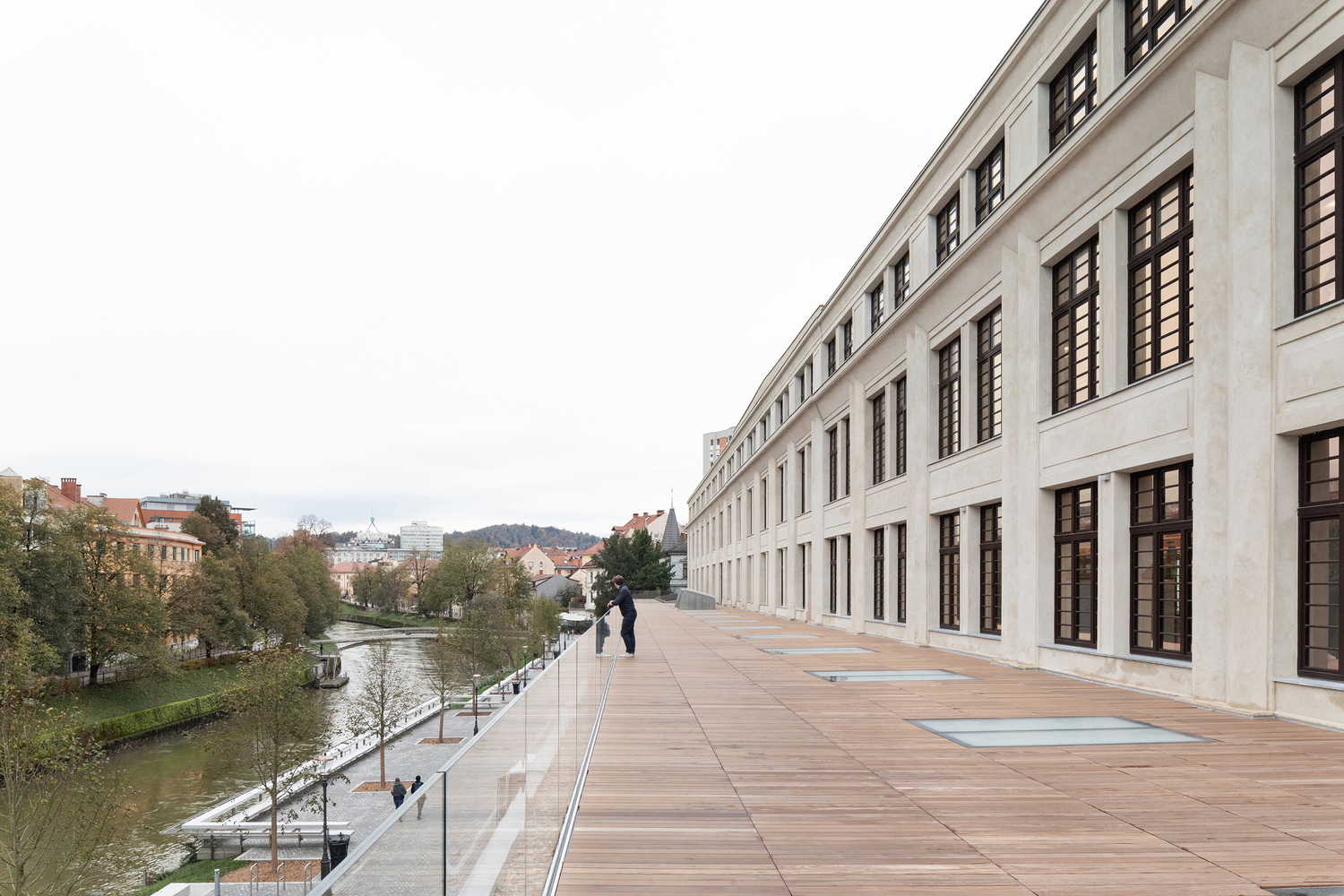
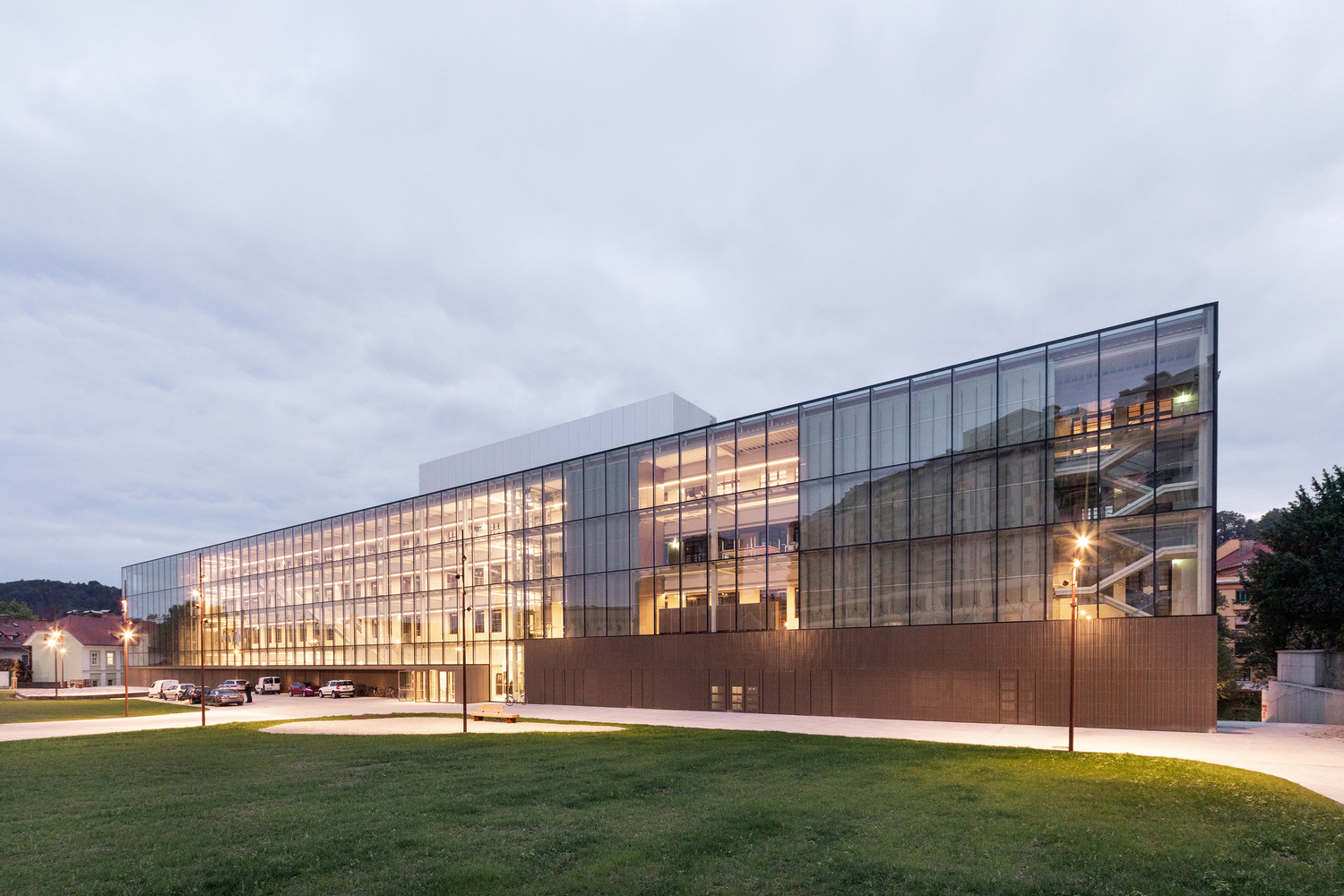
It houses all the circulations in a dynamic way, with services (restrooms, emergency stairs, and lifts for people and goods), and all installations and large technical ducts, especially air conditioning.
The factory building houses many uses: library, production labs, exhibition galleries, multipurpose spaces, offices, workshops and laboratories open to the public, housing units, studios and residential apartments. In short, a creative cultural hub bent on promoting local creative and cultural industries.
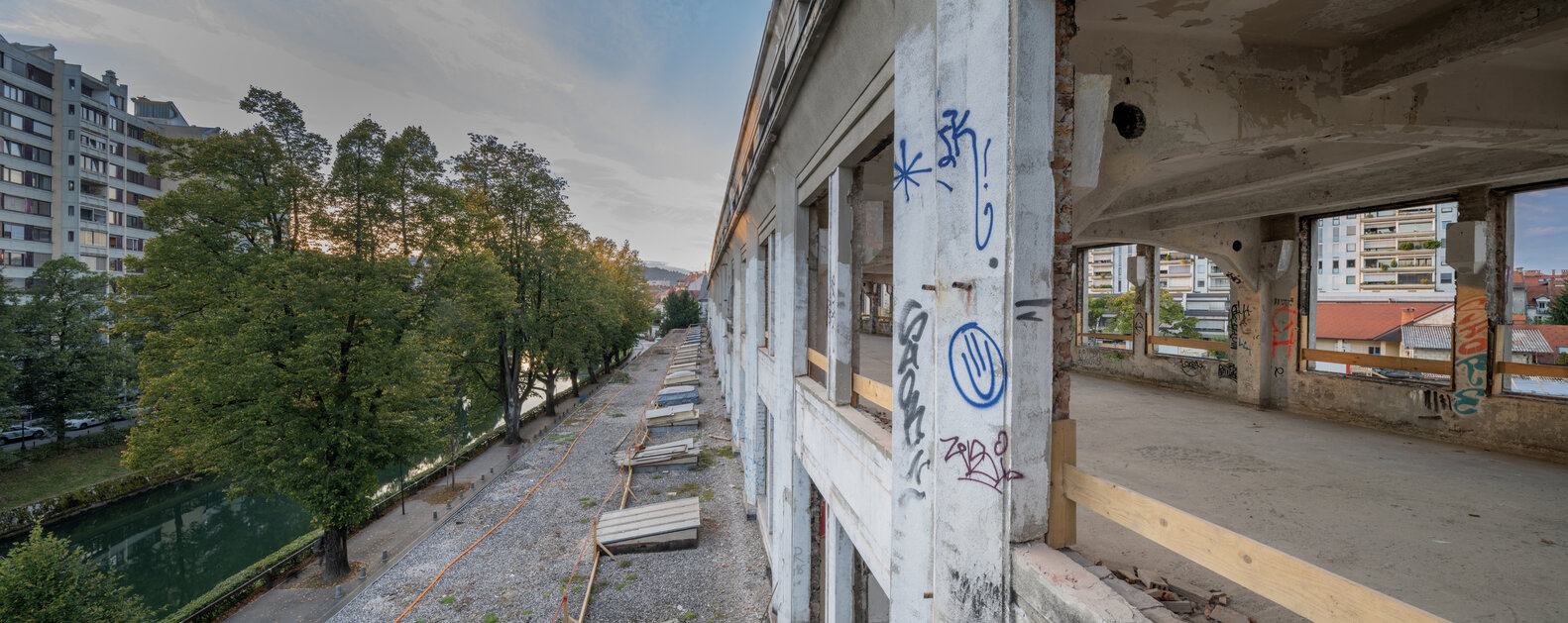
The project involved comprehensive work to reinforce the structure and restore the construction of the vaults and arches that were in a terrible condition, aggravated by the area’s seismic nature. The new added architecture also improves the safety and structural stability of the facility, as it serves as scaffolding to stabilize the old factory.
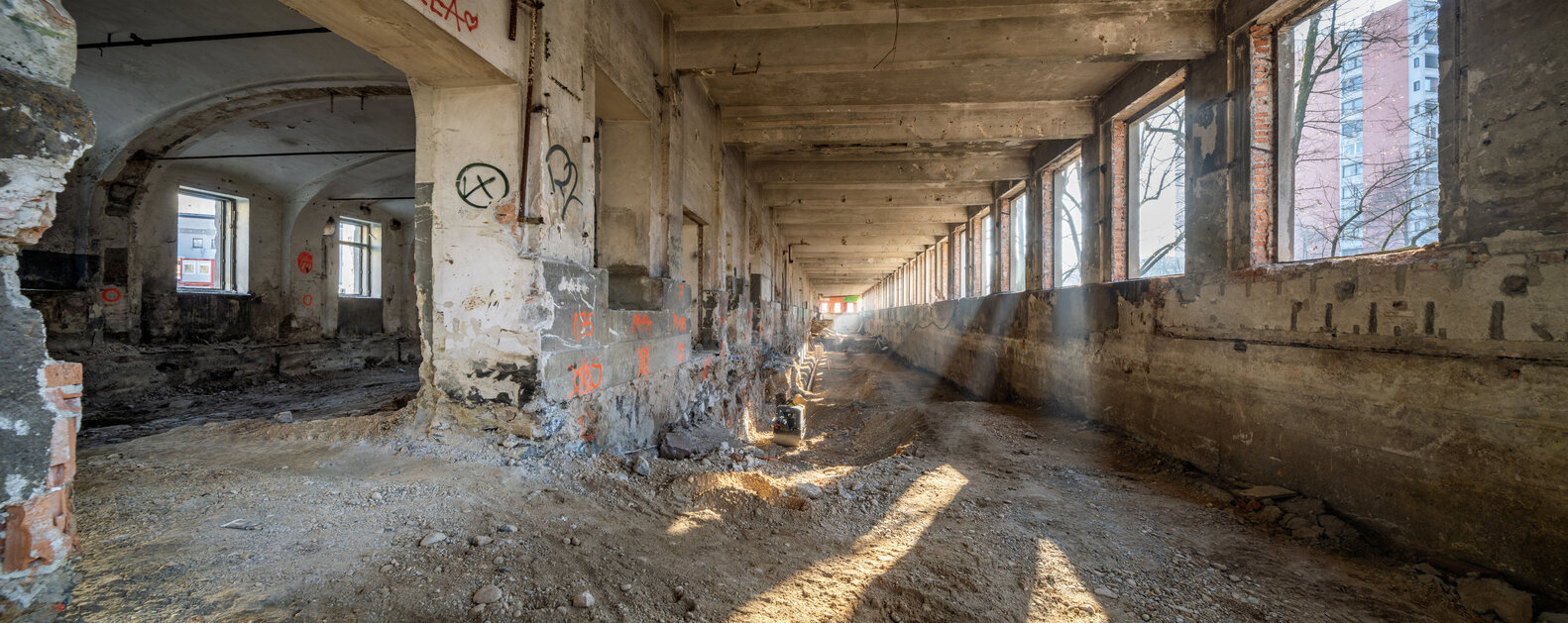
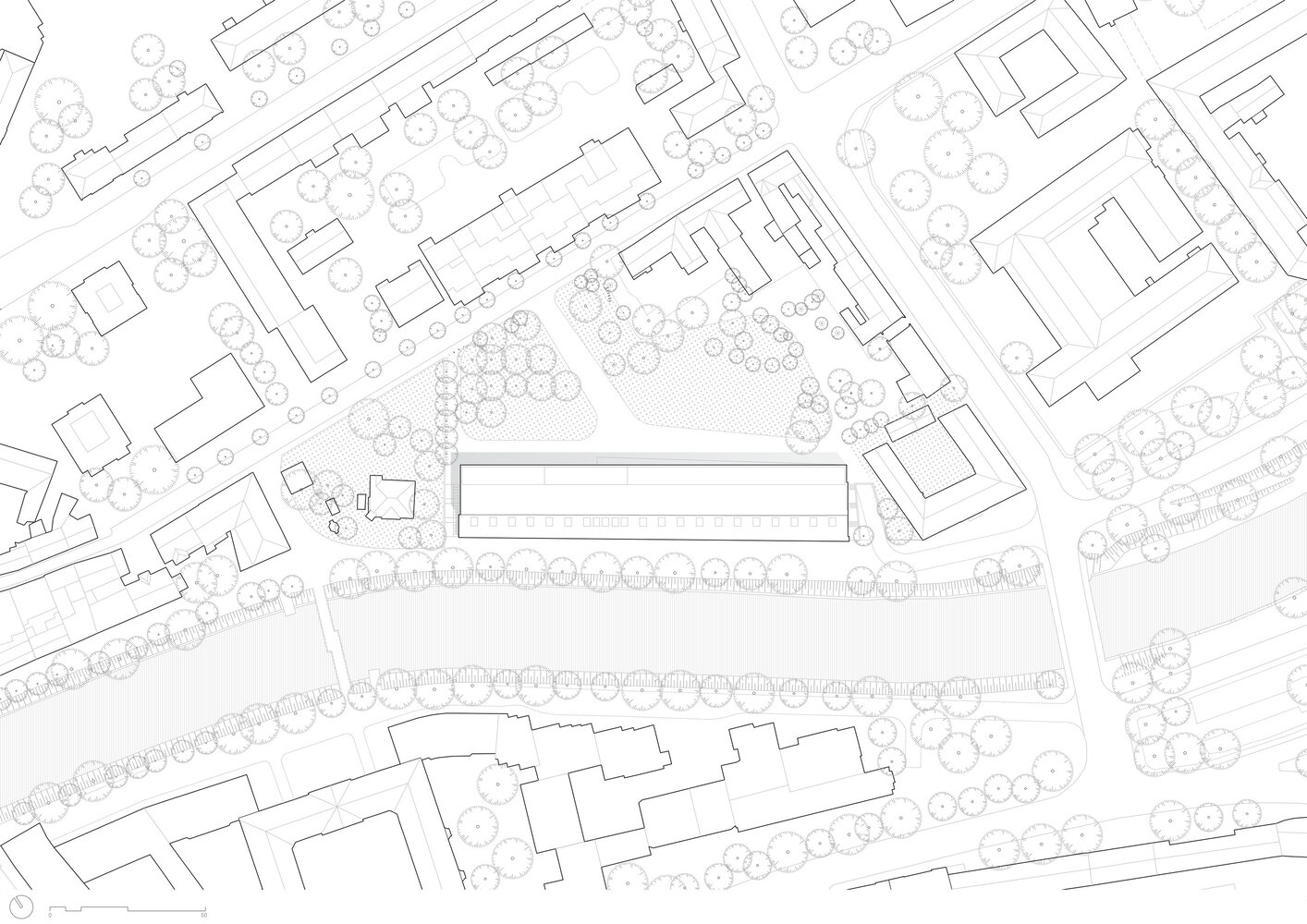
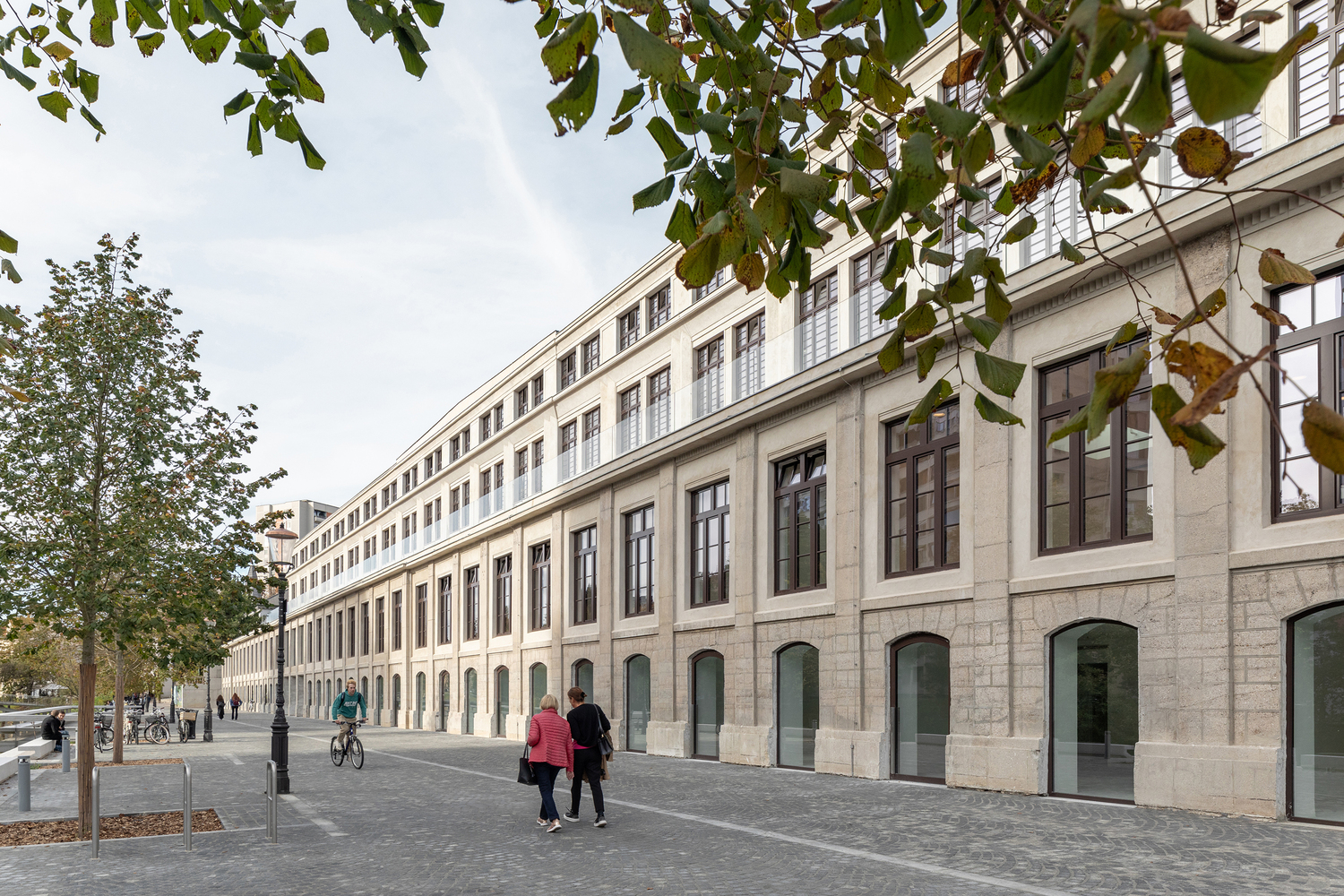
Letting the light shine - in The glazed design of the new structure in the north façade offers respectful views of the old factory, as well as introducing much more natural light into the spaces. Also to this end, another design strategy was to open the ground floor up to the riverside walk, which the factory had completely walled off, and to propose a connection to the new park with a series of commercial premises and creative production spaces to spark interaction with public life.
A KEY PROJECT FOR URBAN RENEWAL AND CULTURAL ACTIVATION
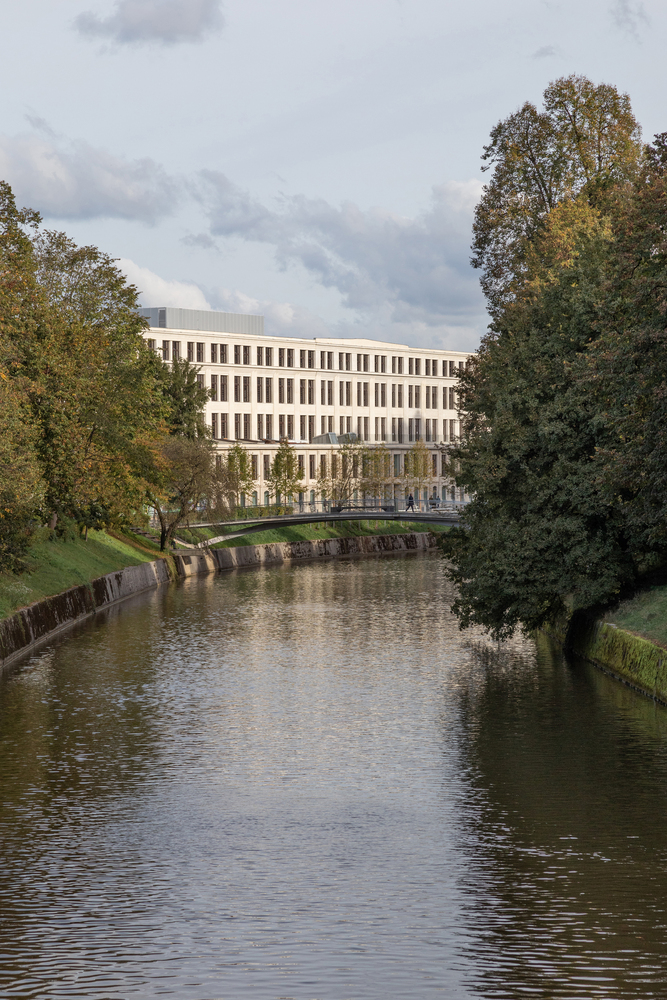
The renovation of the Rog building has been a key project for Ljubljana, since it plays a special role in this point in the river and the city. The project involved the urban renewal of the area, carried out with criteria of respect for architectural and historical heritage, as well as sustainability