

The Butterfly And First Baptist Church Complex
THE BUTTERFLY AND FIRST BAPTIST CHURCH COMPLEX
Revery Architecture
ARCHITECTS
Revery Architecture
CONSTRUCTION MANAGER
Icon West Construction
STRUCTURAL DESIGN
Glotman Simpson
ELECTRICAL ENGINEERING
Nemetz & Associates
MECHANICAL DESIGN
Introba, Inlet Mechanical
LIGHTING DESIGN
Arup
PROJECT MANAGER
Amirali Javidan
PRINCIPAL IN CHARGE
Venelin Kokalov, Bing Thom
HERITAGE
The Haebler Group
HERITAGE CONSERVATIONISTS
Donald Luxton & Associates, Inc.
CLIENT
Westbank Corp And First Baptist Church
LIGHTING ENGINEERING
Nemetz
CODE
Lmdg Code Consultants Ltd.
TRAFFIC
Bunt & Associates Ltd.
LANDSCAPE DESIGN
Swa Group, Cornelia Oberlander, Gauthier & Associates Landscape Architecture
MANUFACTURERS
Nella Cutlery, Rockingham Pool Consulting, Target Zero Waste Consulting, Tillicum Agencies, Unknown (Removed)
PHOTOGRAPHS
Hufton Crow, Ema Peter
AREA
605000 ft²
YEAR
2025
LOCATION
Vancouver, Canada
CATEGORY
Mixed Use Architecture, Residential Architecture
English description provided by the architects.
THE BUTTERFLY + FIRST BAPTIST CHURCH COMPLEX
As cities densify and land grows scarcer, sacred sites – long seen as untouchable – are emerging as unexpected catalysts for urban transformation.
In Vancouver, where rising housing demand and social isolation intersect, The Butterfly introduces a new urban typology: design-forward vertical living anchored in community and culture. This landmark project represents a unique partnership between architects, a religious institution, and developers to reimagine church-owned land as an eclectic mixed-use village.
THE DESIGN VISION
In the heart of Vancouver's downtown core, The Butterfly + First Baptist Church Complex represents a bold convergence of architectural legacy, sustainable innovation, and community enrichment.
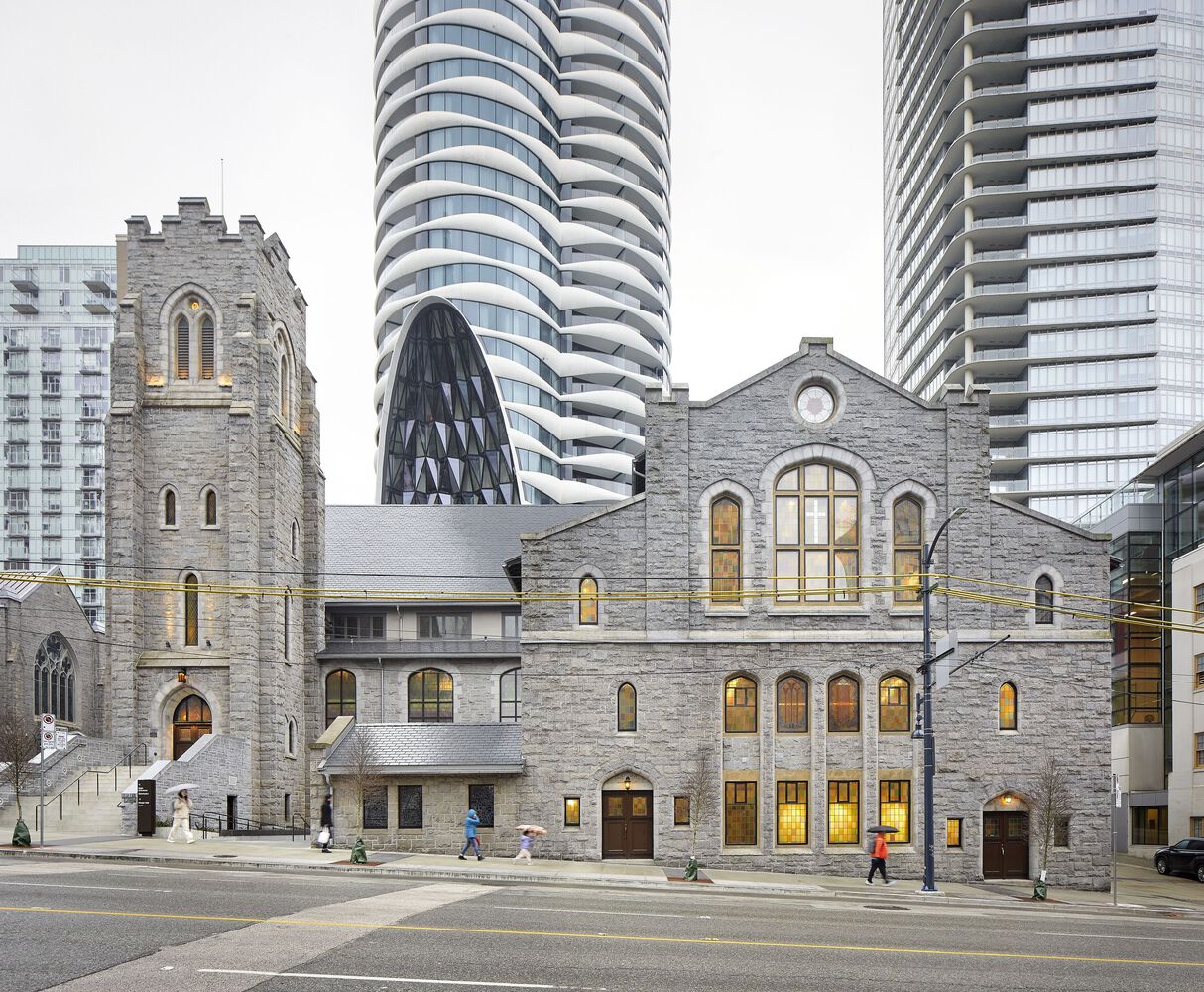
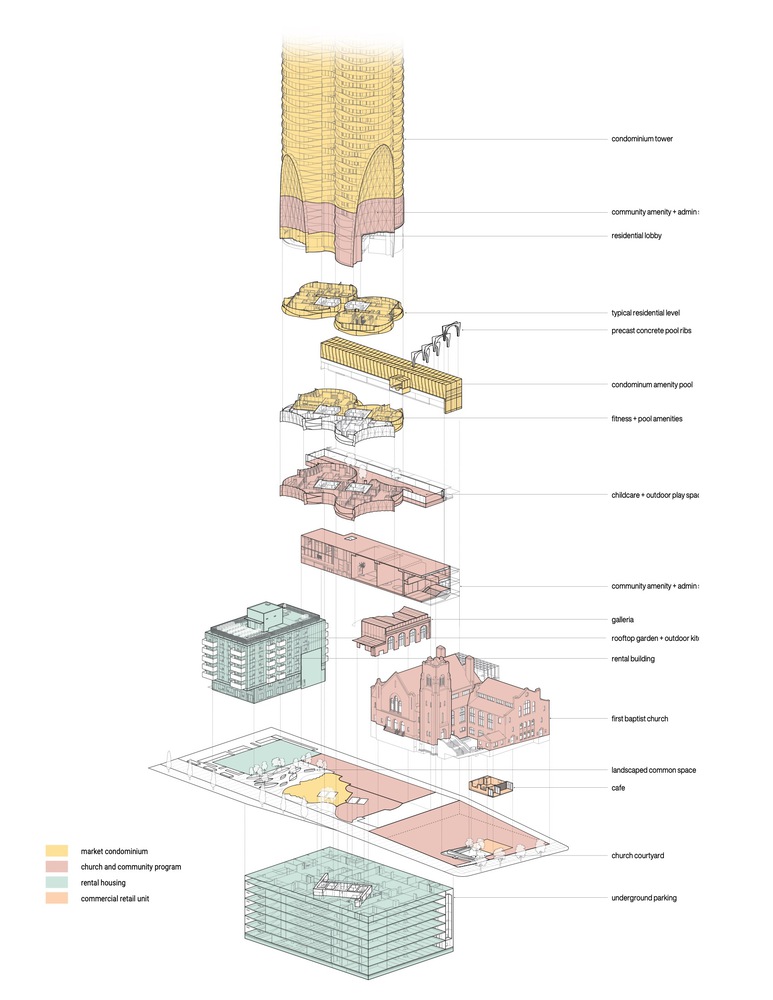
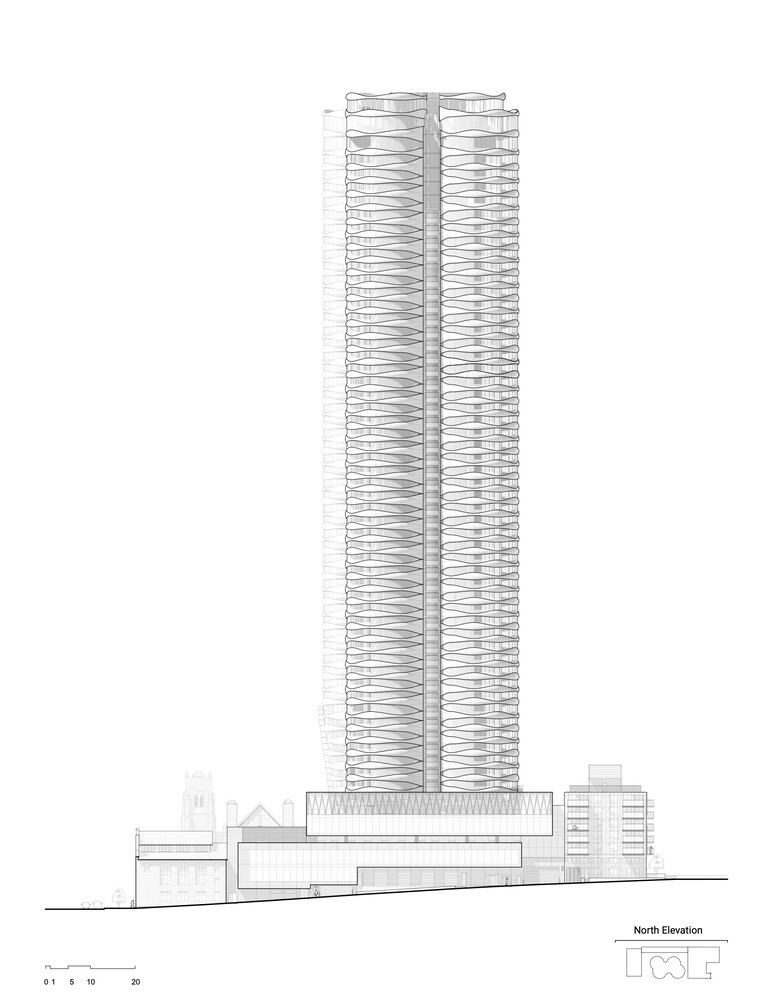
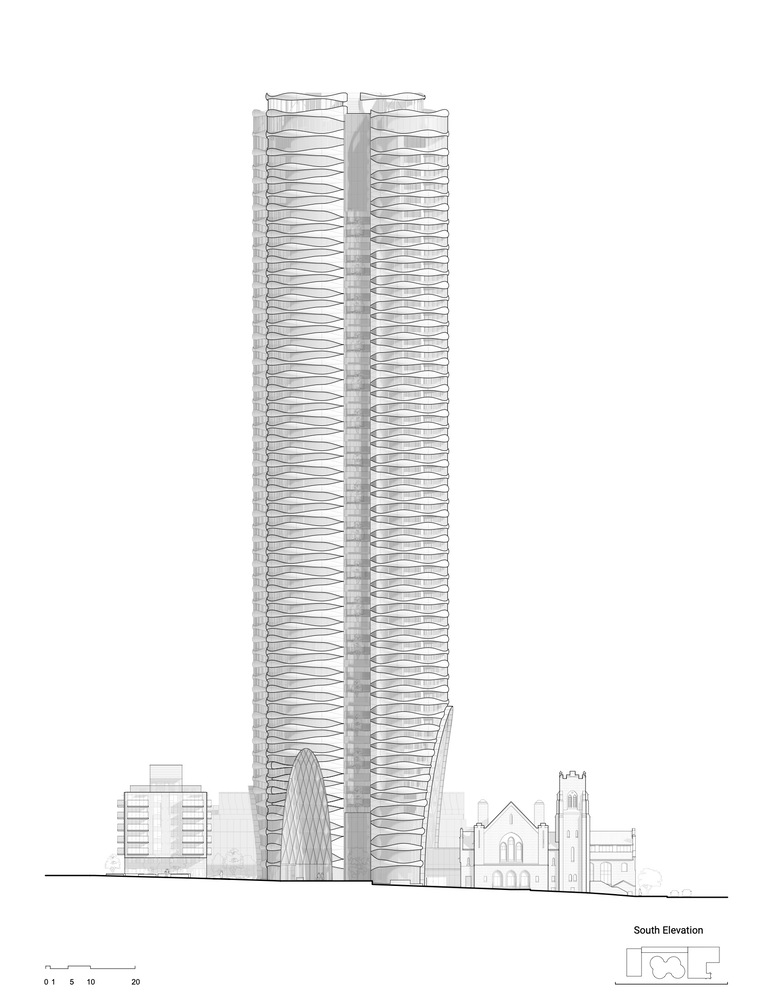
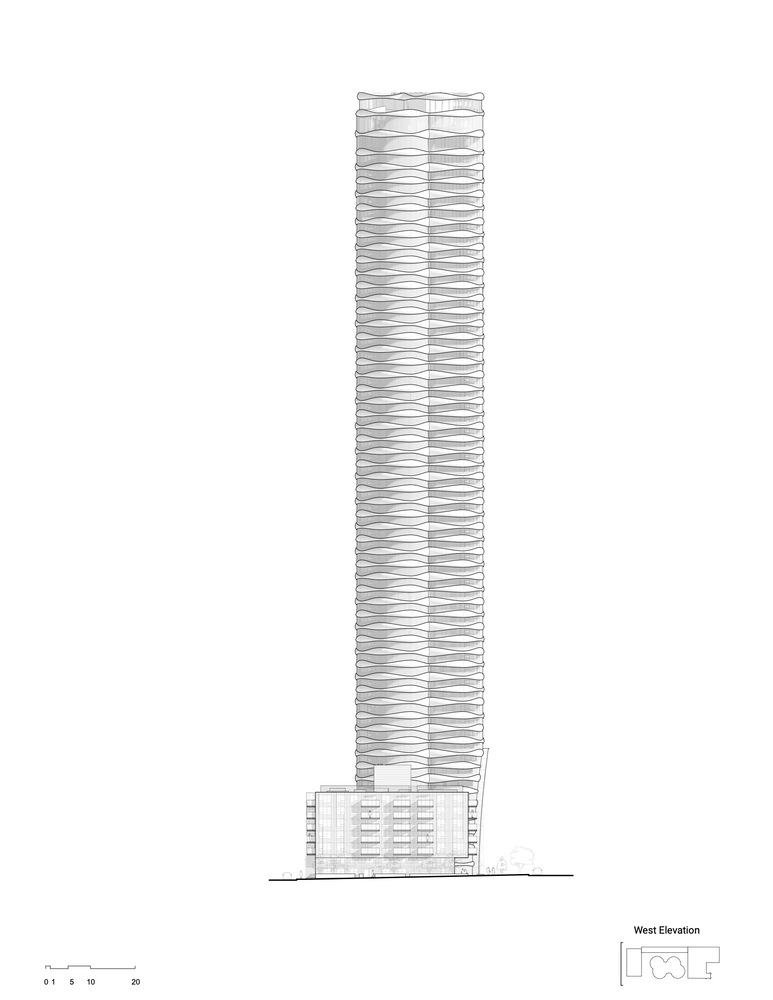
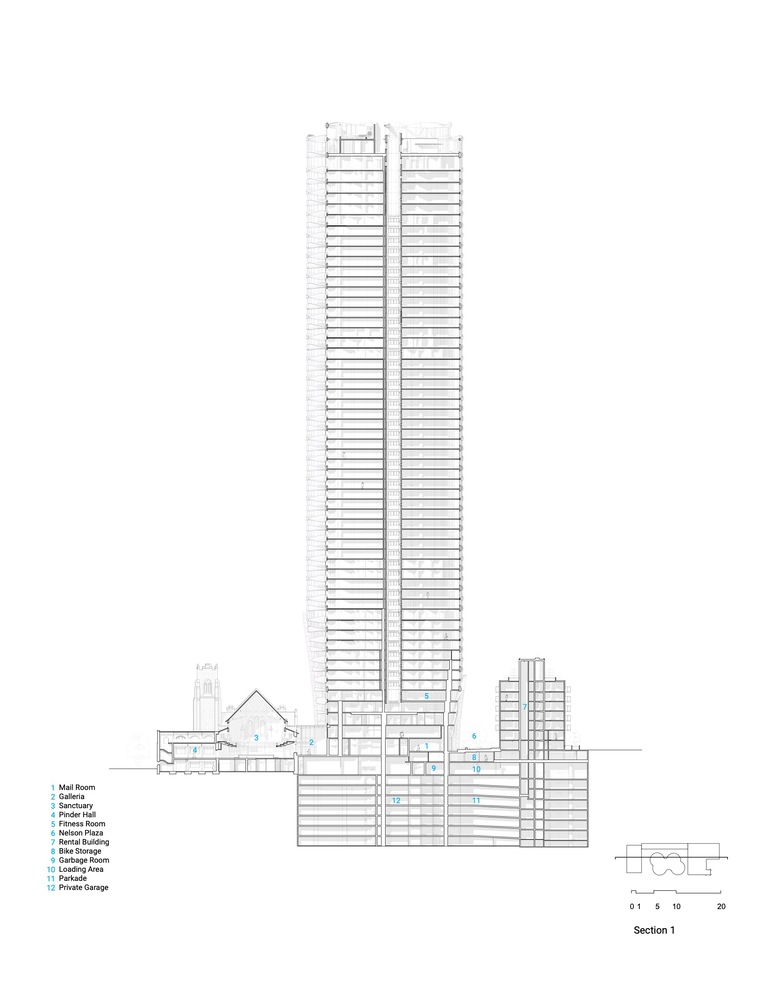
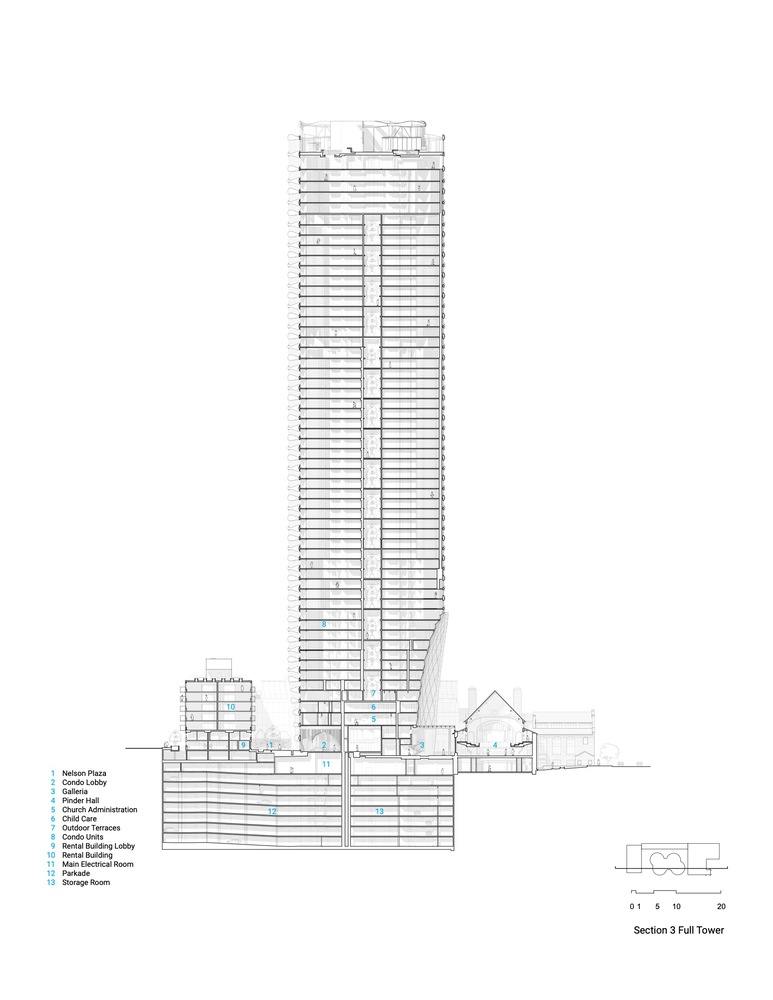
Designed by Revery Architecture for Westbank Corp and the First Baptist Church of Vancouver, the 605,000 square-foot project combines an iconic 57-storey residential tower, a mid-rise social housing building, and the meticulous restoration and expansion of one of the city's most cherished Gothic Revival landmarks.
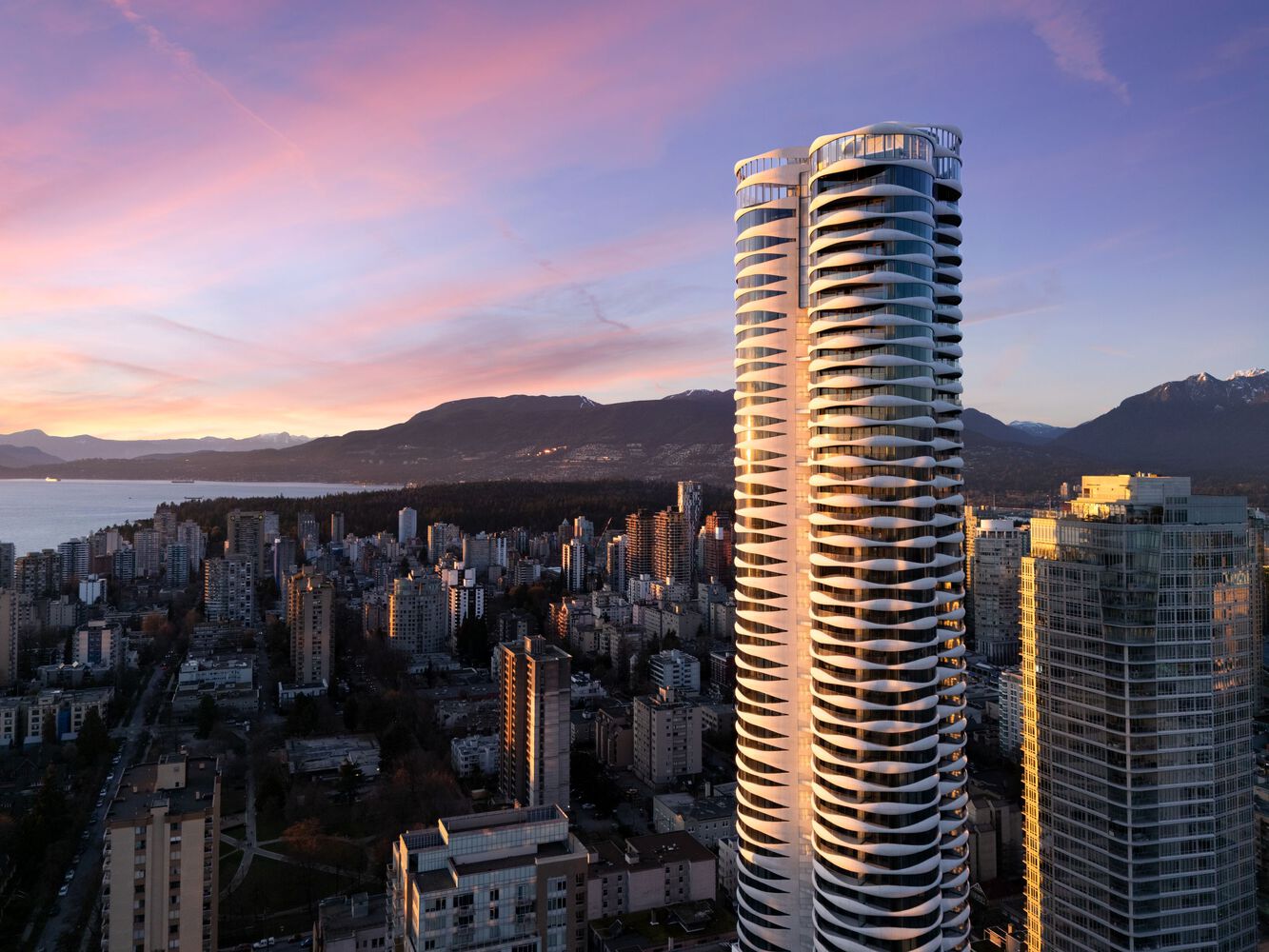
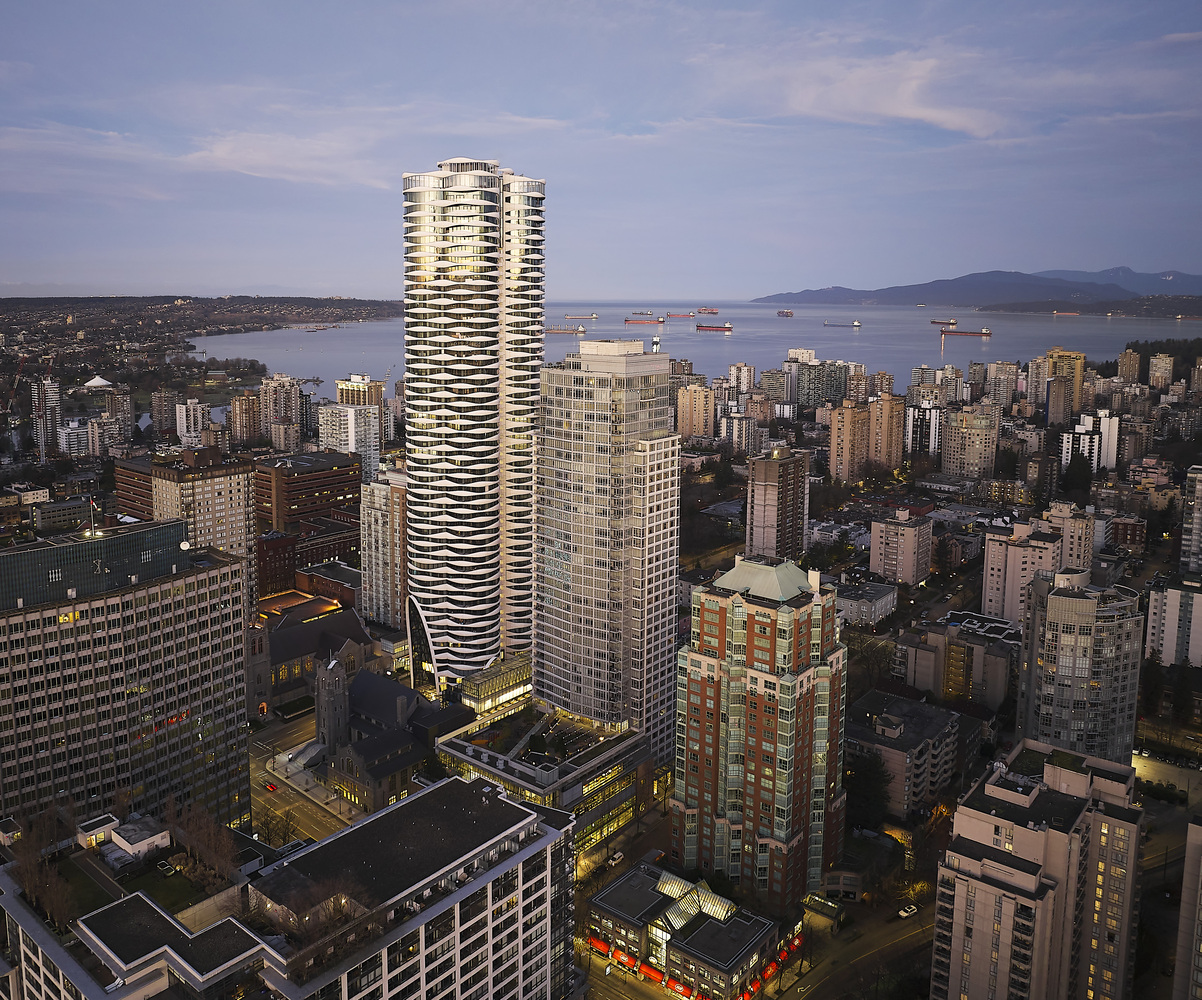
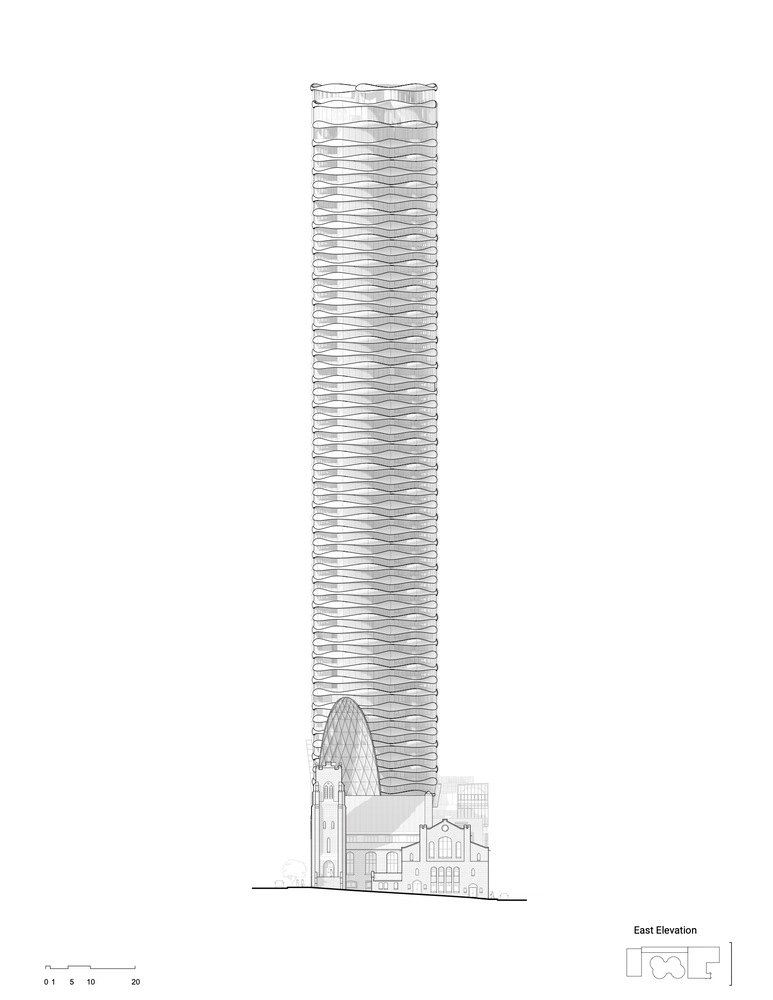
The Butterfly's flowing silhouette rises in poetic counterpoint to the enduring façade of the 1911 First Baptist Church—symbolizing time, nature, and the evolving spirit of place. The result is more than a residential development: it is an urban ecosystem and a cultural icon.
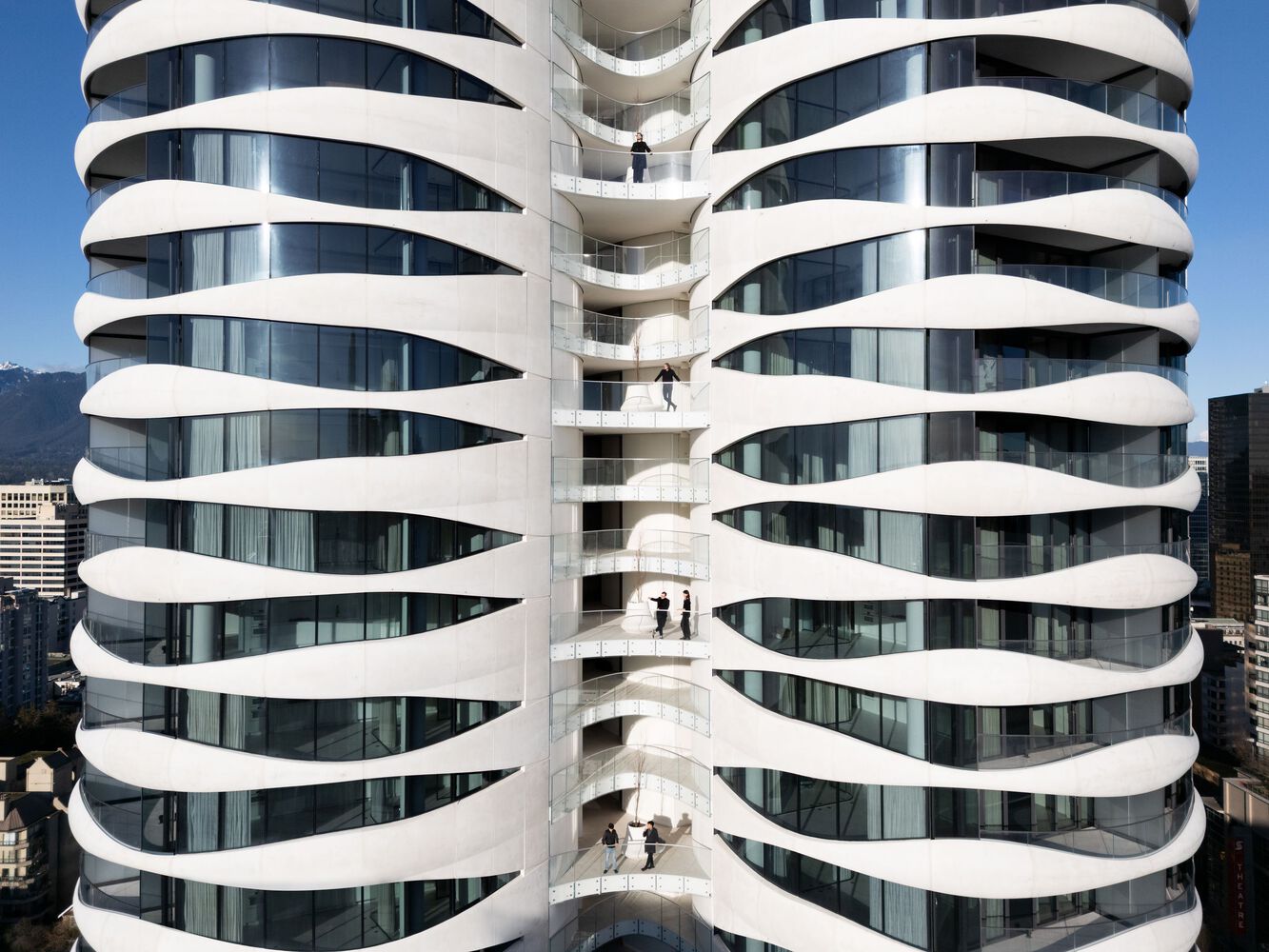
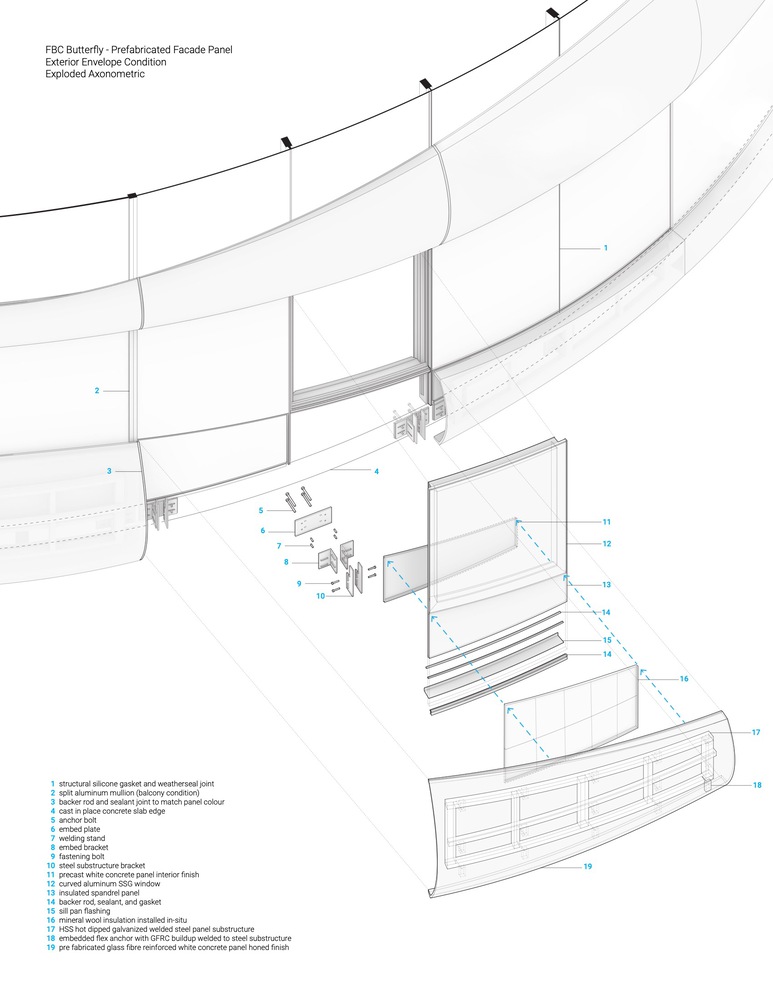
The Butterfly's organic form responds to its urban and natural context with elegance and verve. Inspired by the beauty and transformative spirit of the butterfly, its façade is composed of undulating white GFRC (glass fibre-reinforced concrete) panels and curved high-performance glazing that weave an intricate and harmonious ascent into the clouds.
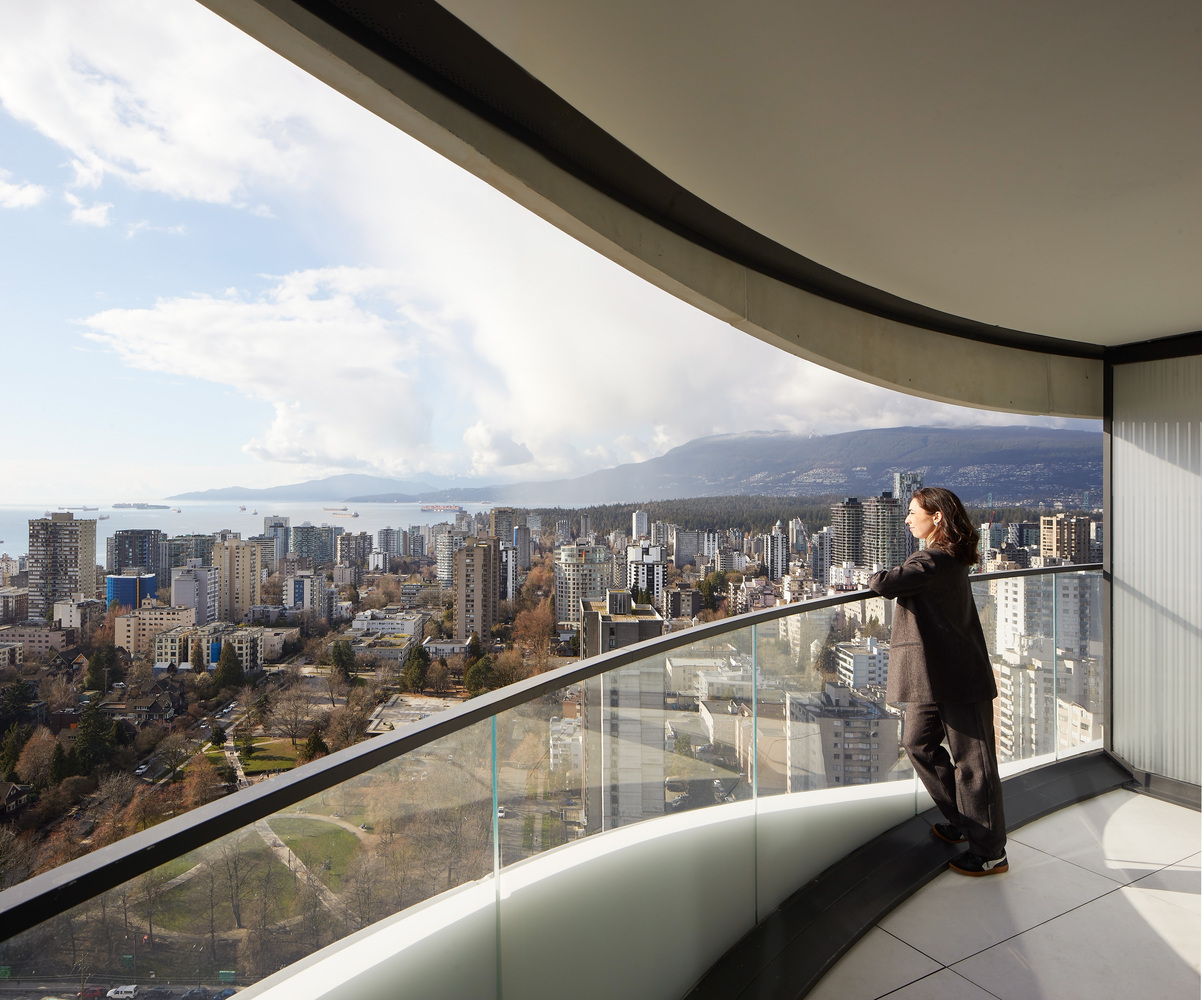
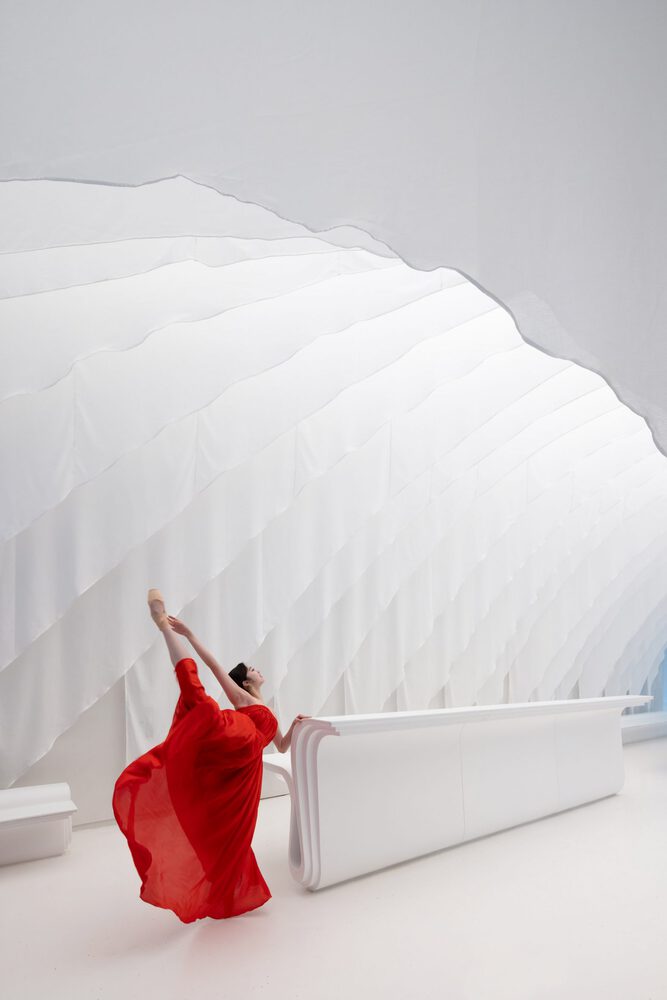
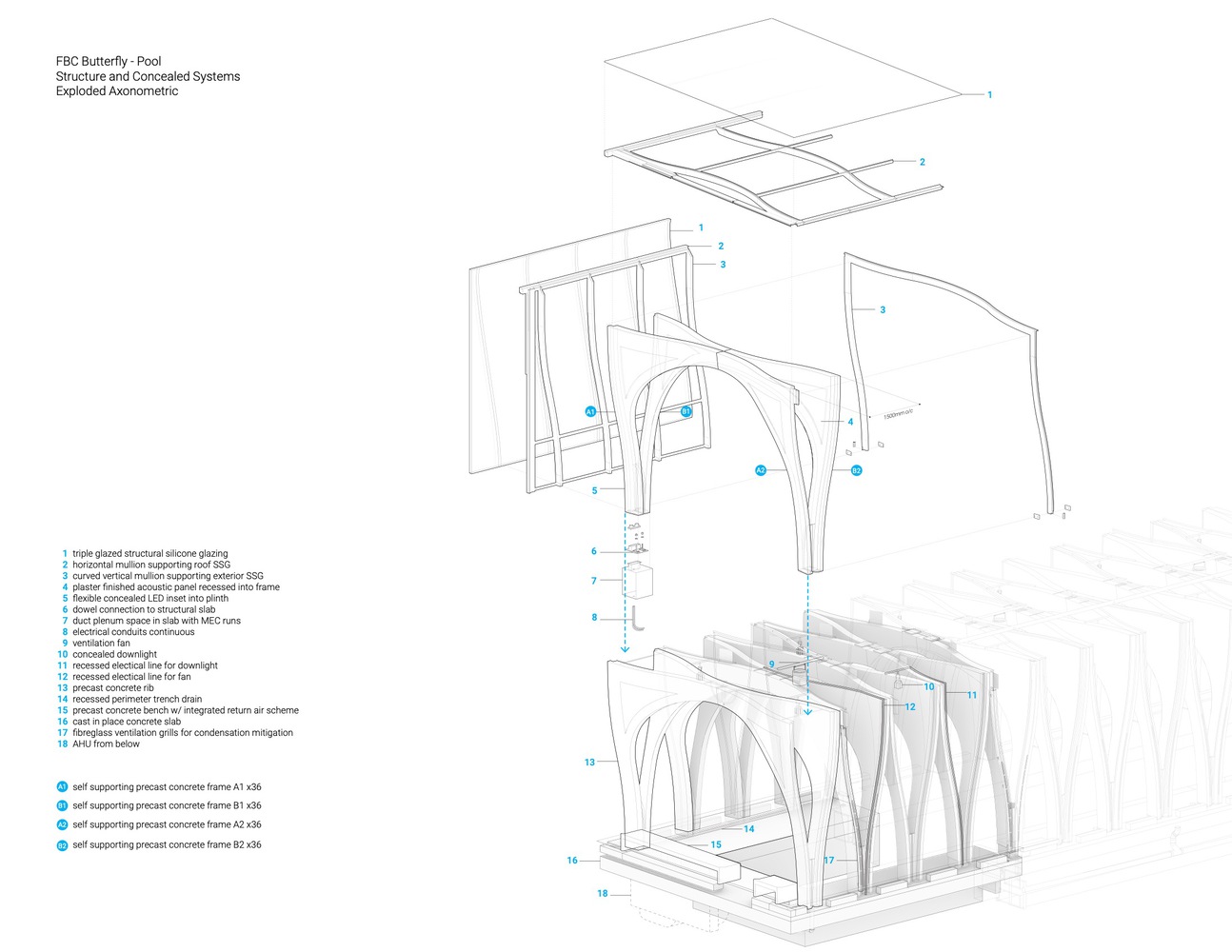
The balconies and shared sky gardens encourage passive cooling and provide panoramic views. Crowning the podium is a 50-meter pool enveloped in a transparent canopy supported by sculptural ribs—an engineering feat that integrates lighting, acoustics, and mechanical systems in a single expressive gesture.
From base to crown, the building's expressive design belies its carefully attuned technical performance. The complex reimagines a prominent downtown site as a mixed-income, mixed-use, regenerative vertical community.
This collaboration between Revery, Westbank, and the First Baptist Church leverages church land as a mutually beneficial urban intervention that protects and elevates heritage, benefits the community, and delivers high-quality metropolitan living. Together, the church, tower, and mid-rise rental building form a layered urban landscape—part landmark, part living system.
HONOURING HISTORY, EMBRACING FUTURE
Revery faced a tall challenge: breathe new life into a beloved heritage church while promoting positive change in high-density urban communities..
The Butterfly + First Baptist Church complex is more than a juxtaposition of heritage and high-rise — it's a reconfiguration of how faith-based land, civic space, and dense urban living can converge to serve future generations.
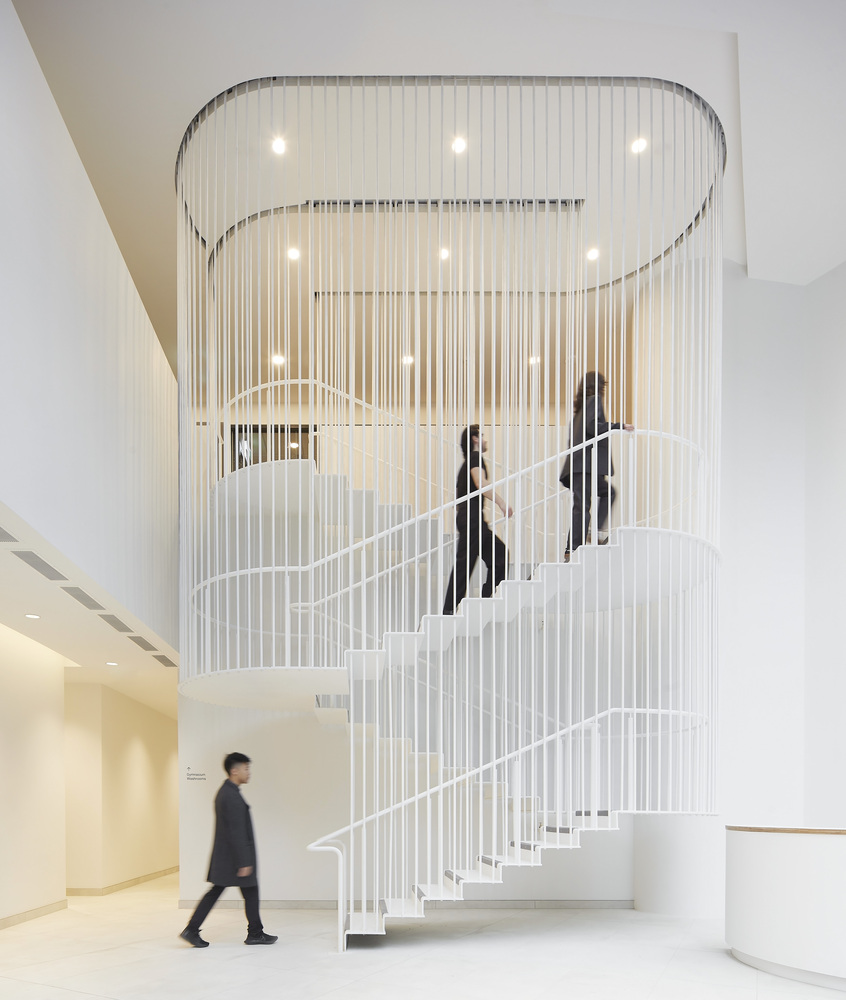
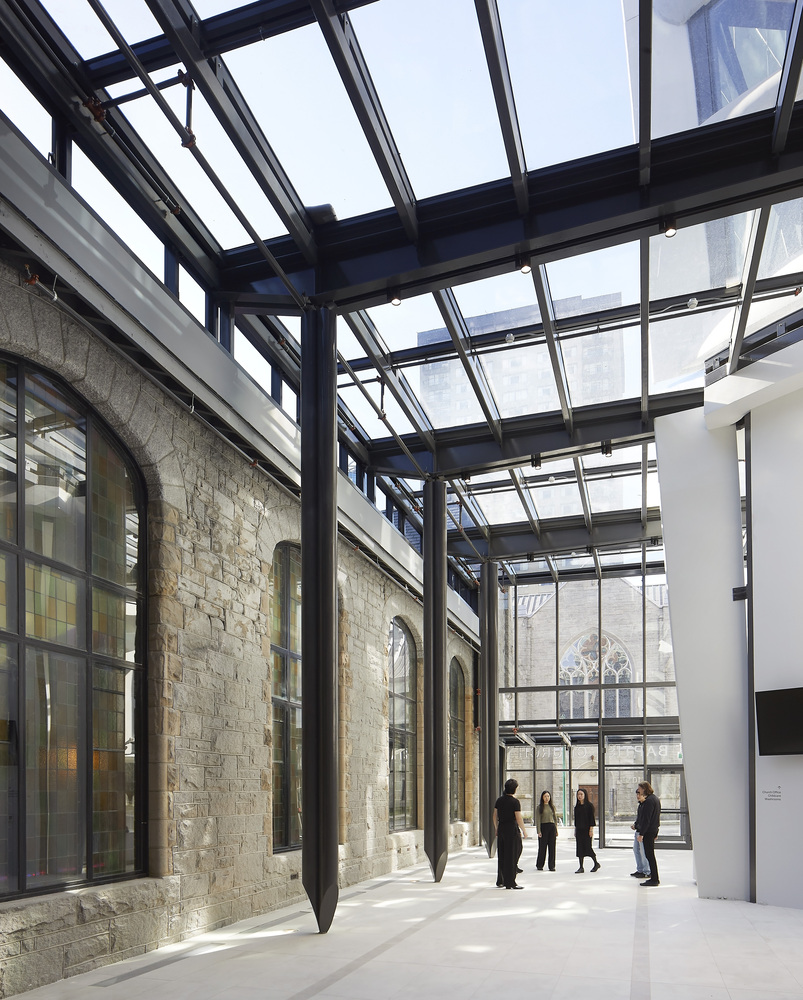
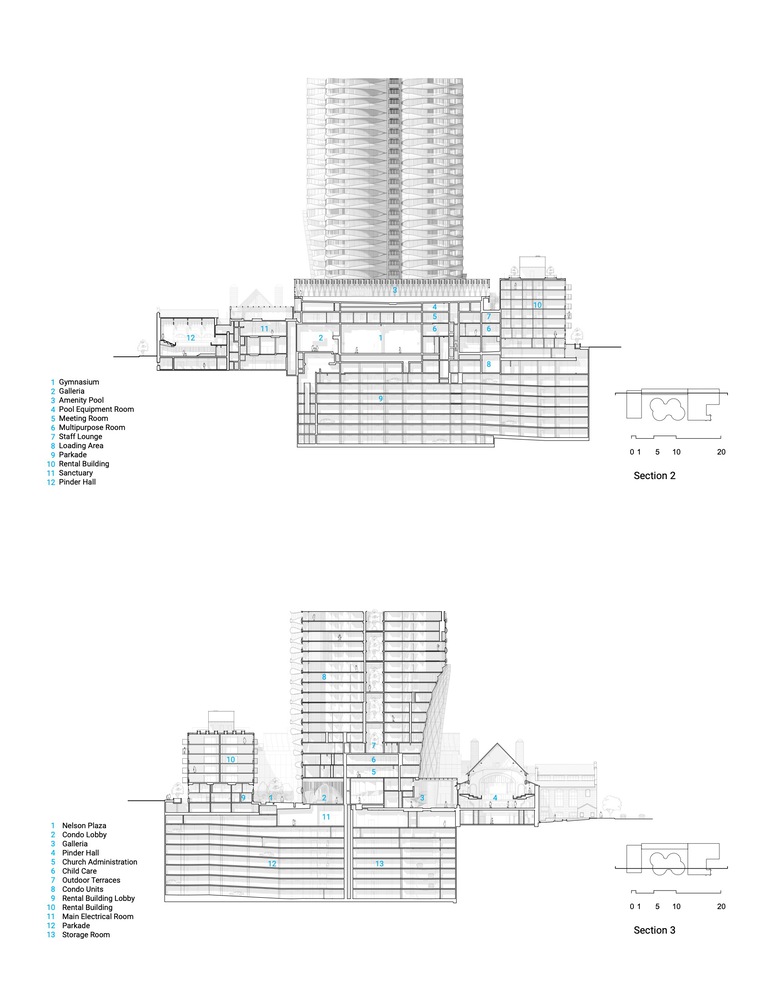
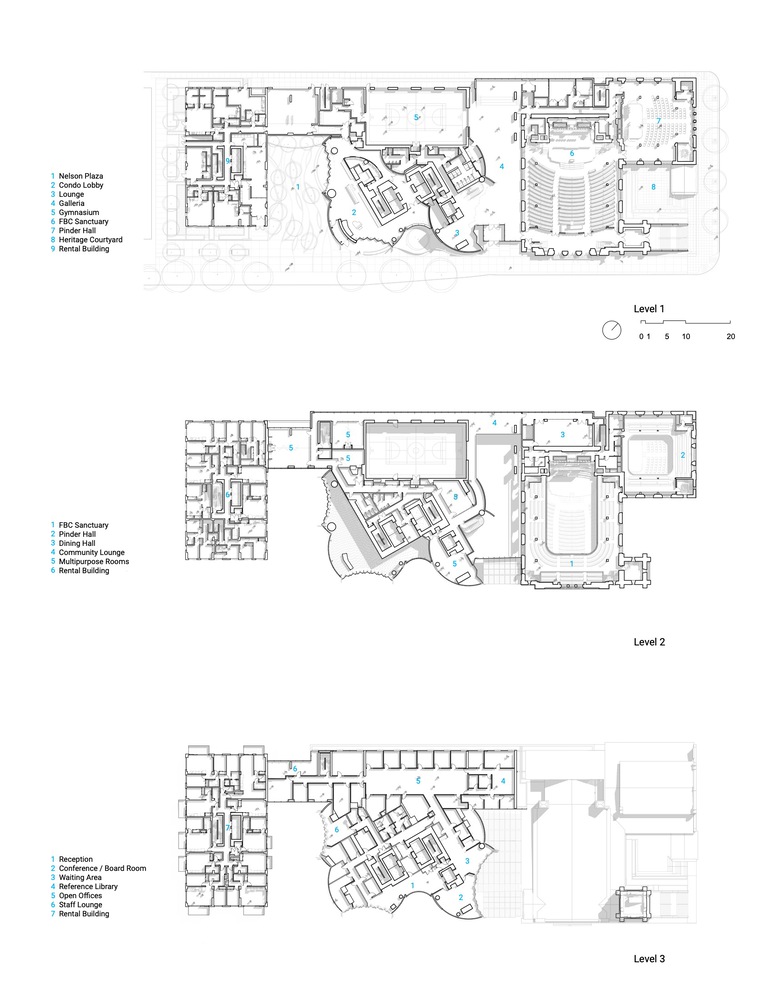
The 605,000-square-foot development integrates a restored Gothic Revival church, a rich network of community amenities, and an iconic 57-storey residential tower connected by a light-filled public gallery.
The result is a mixed-use complex that anchors social infrastructure to architecture, creating a new urban typology in a city grappling with affordability, social stratification, and sustainable growth.
THE BUTTERFLY FORM + MASSING
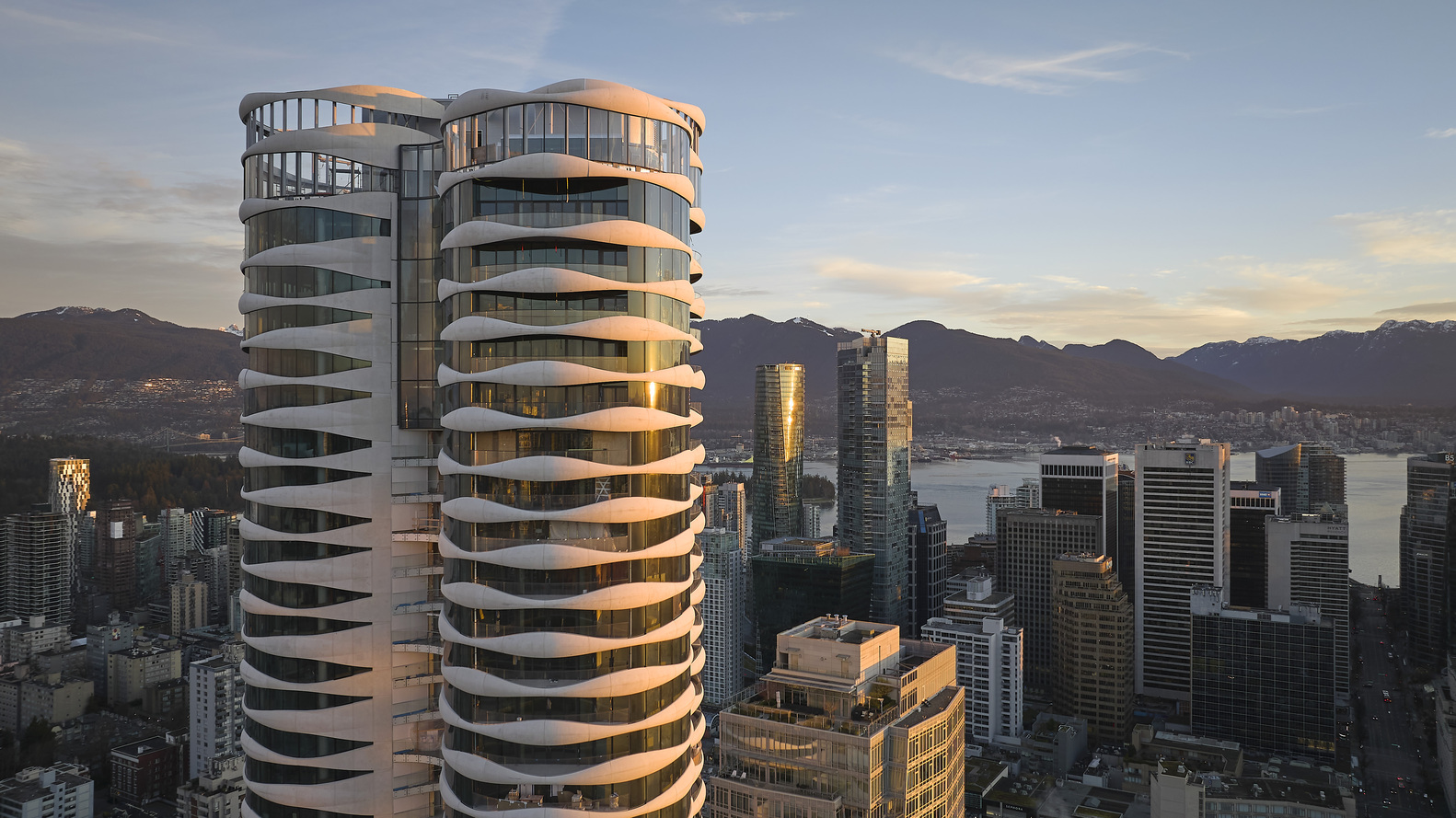
The Butterfly introduces a new sculptural landmark to Vancouver's skyline. Revery reimagined the high-rise typology to achieve the project's desired density without sacrificing quality of life or richness of experience.
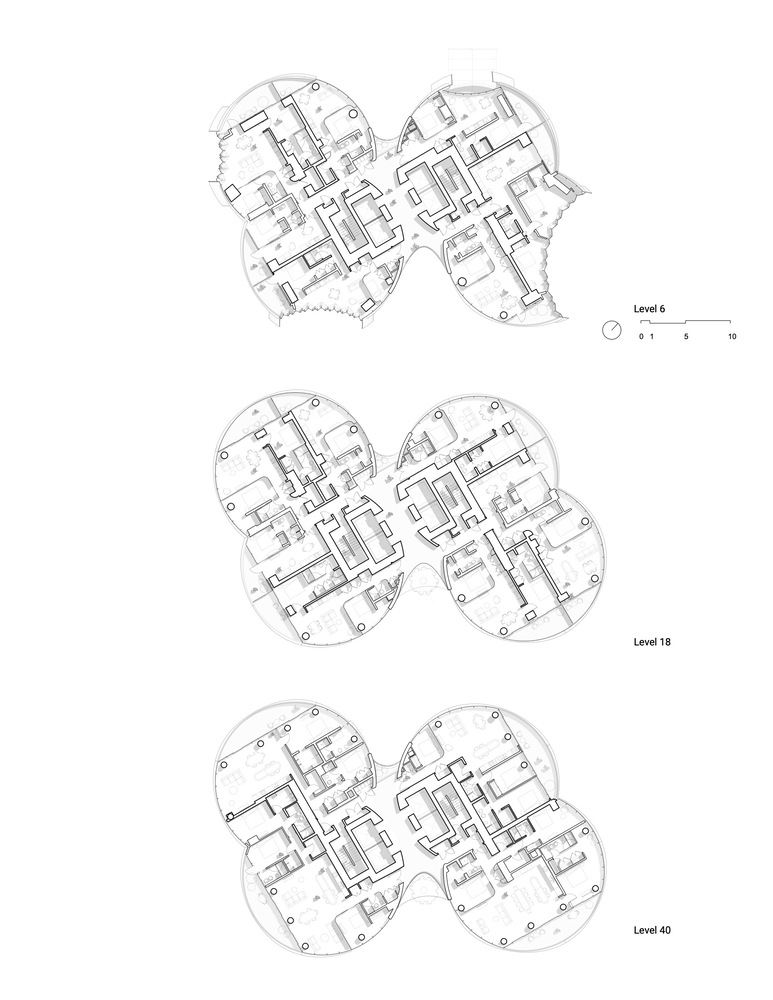
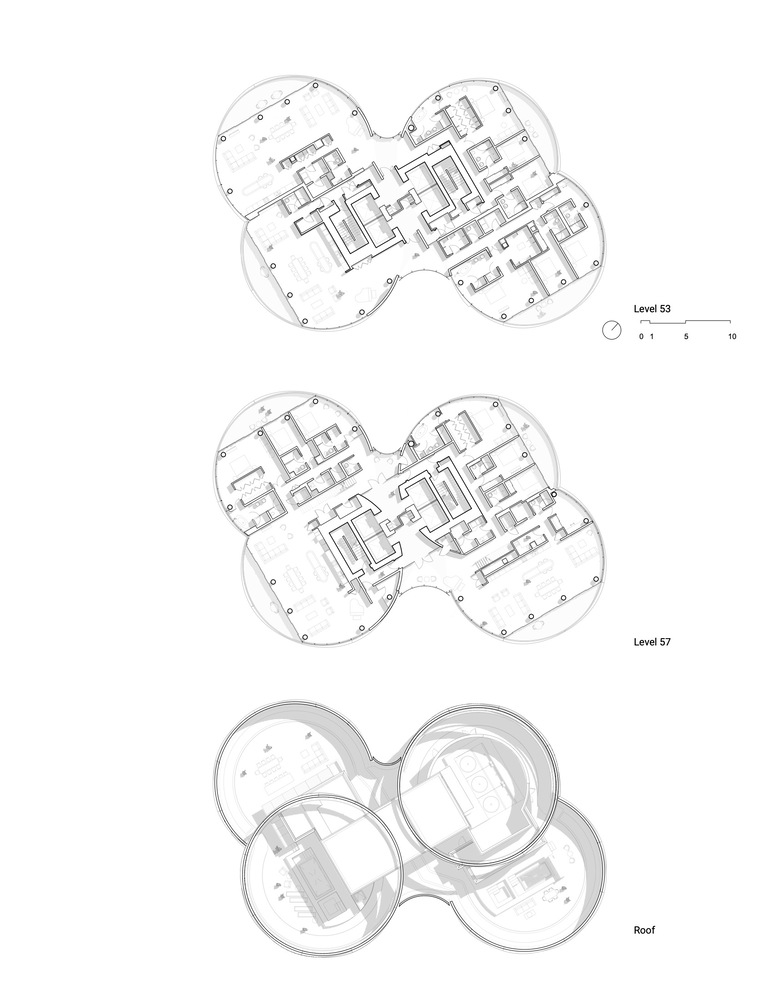
By splitting the floorplate, the architectural response draws fresh air and daylight up and through the tower in the form of breezeways at each level; the rounded form optimizes airflow, maximizes views, and minimizes shadow impact for the tower's neighbours.
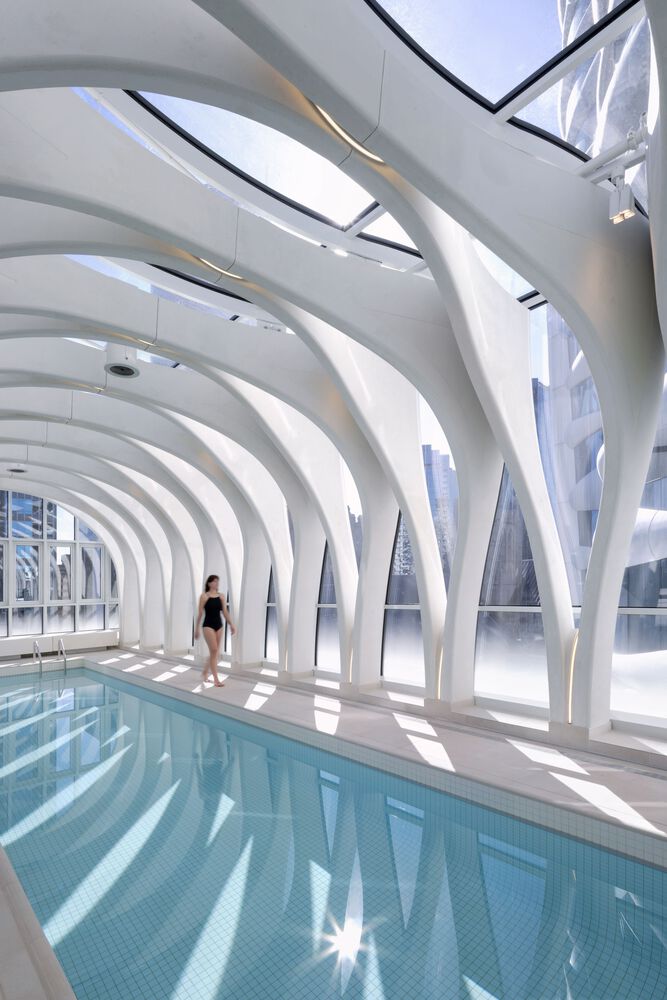
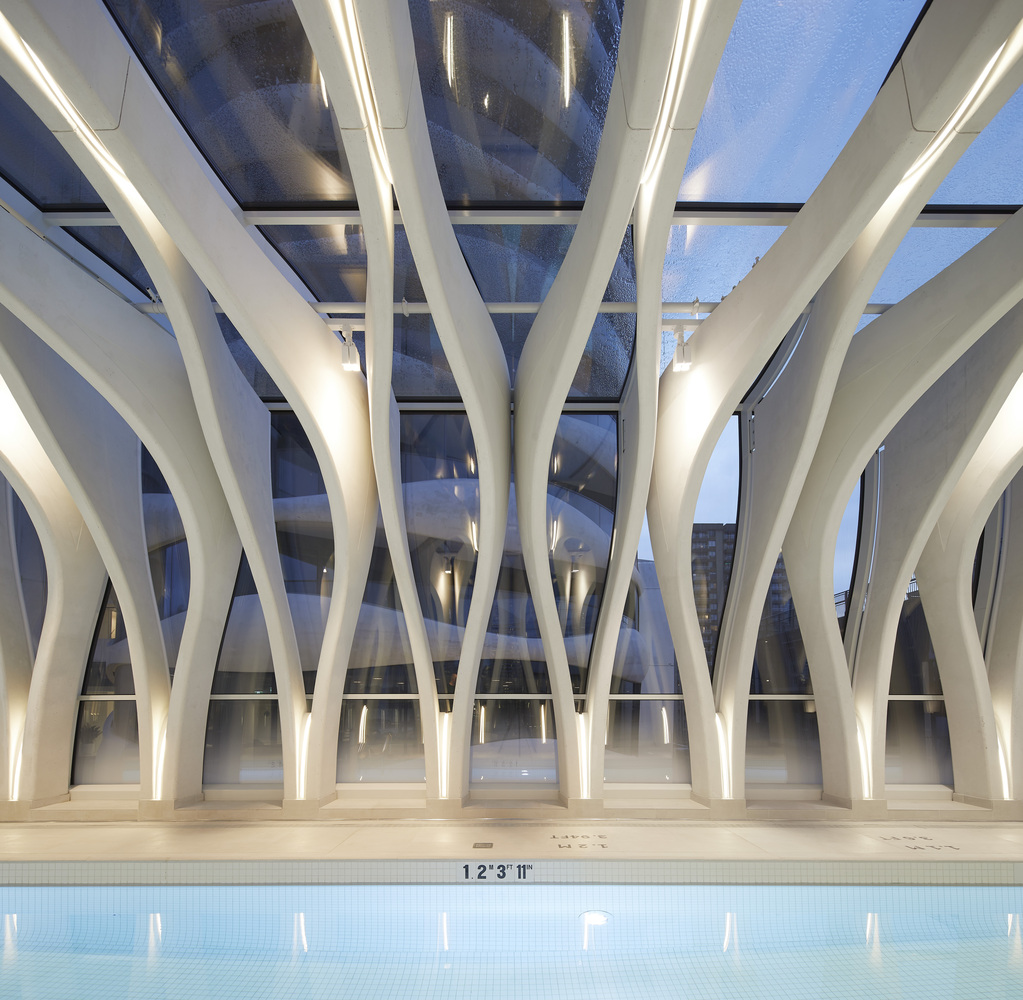
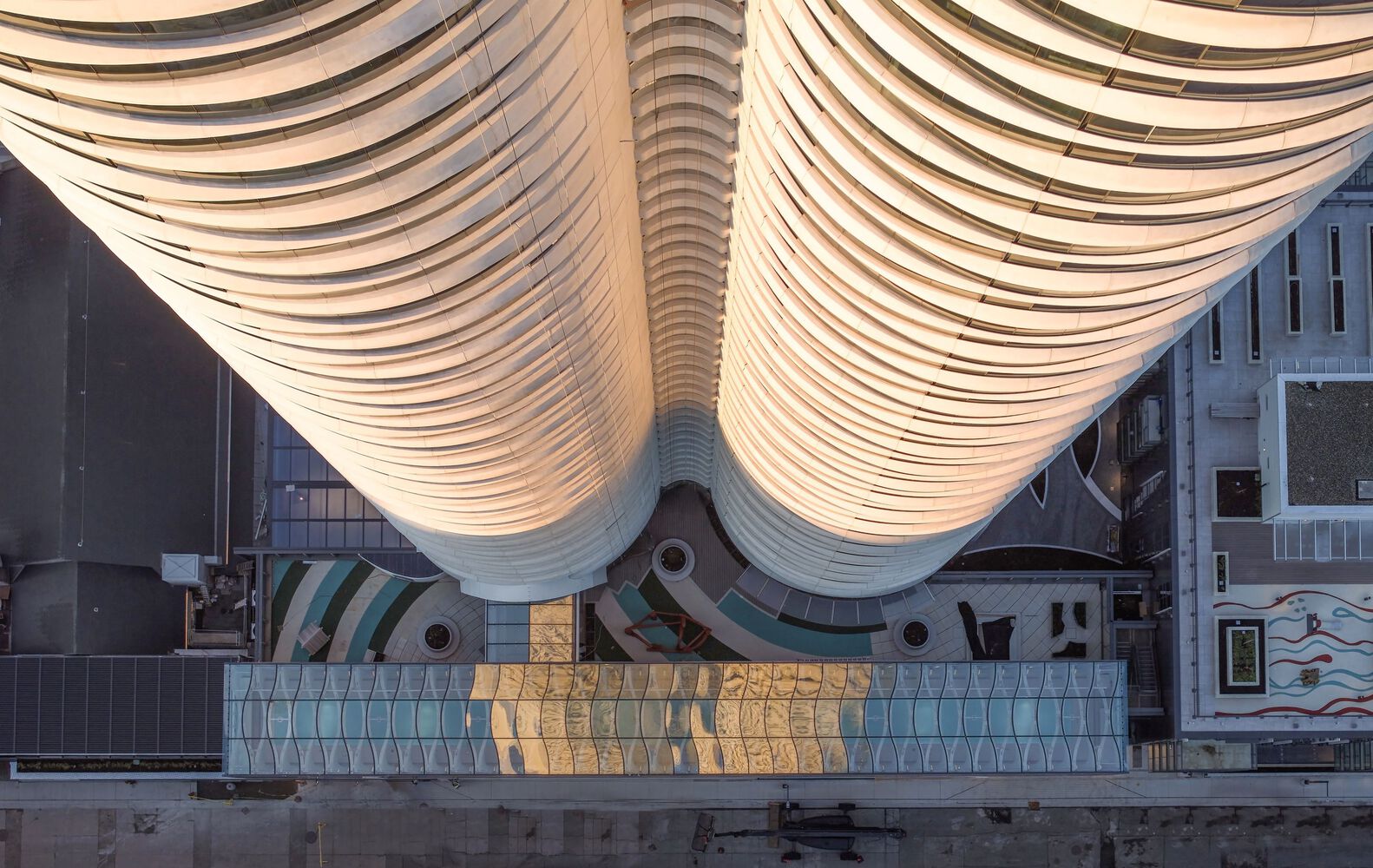
The undulating balconies and glazing dissolve as they meet in the tower's open core, the built form yielding to natural forces and abstracting the mutability of the sky. The tower's podium meets the ground plane in four parabolic chamfers that honour the historic church while also carving out public realm space and articulating the site's interconnected courtyards, plazas, and public spaces.
FACADE STRATEGY
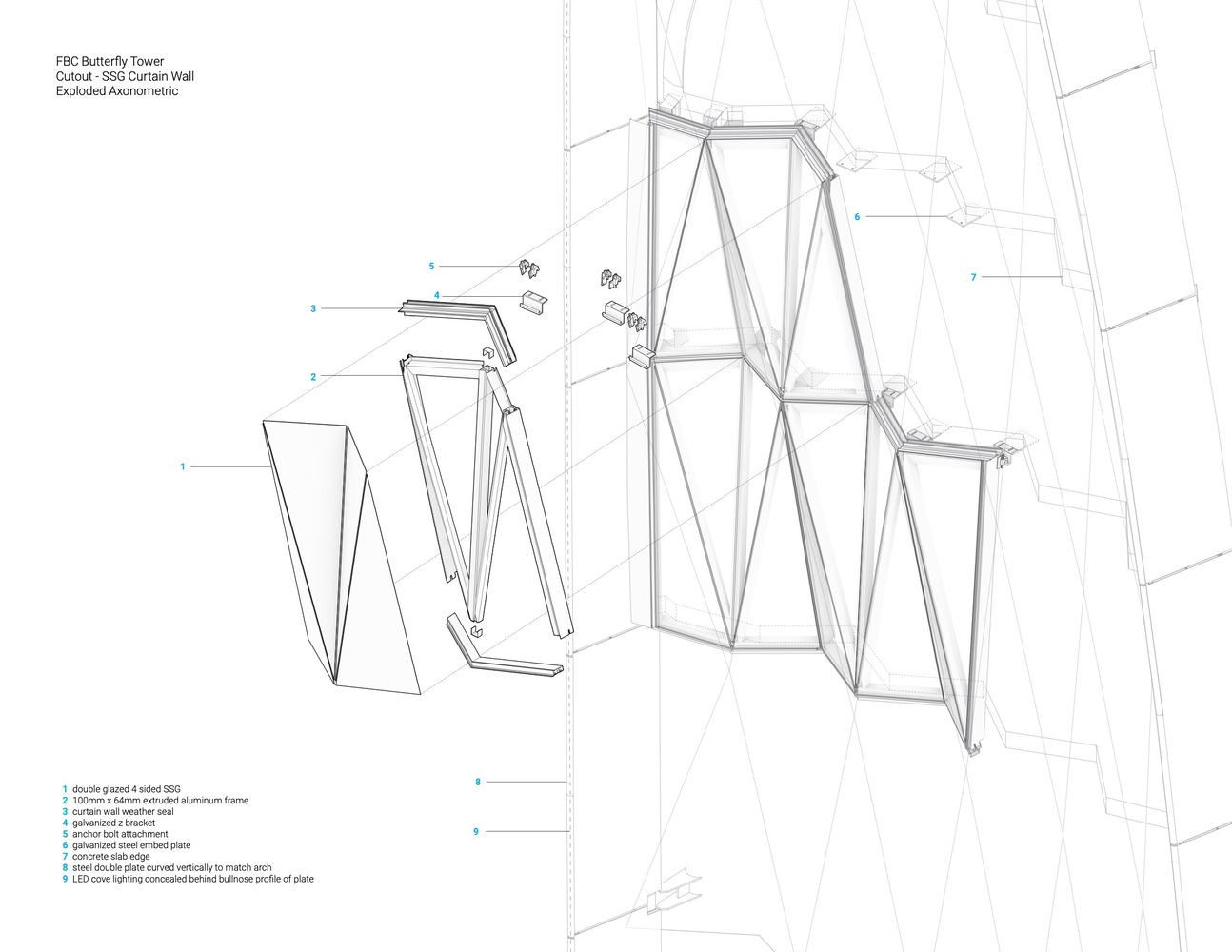
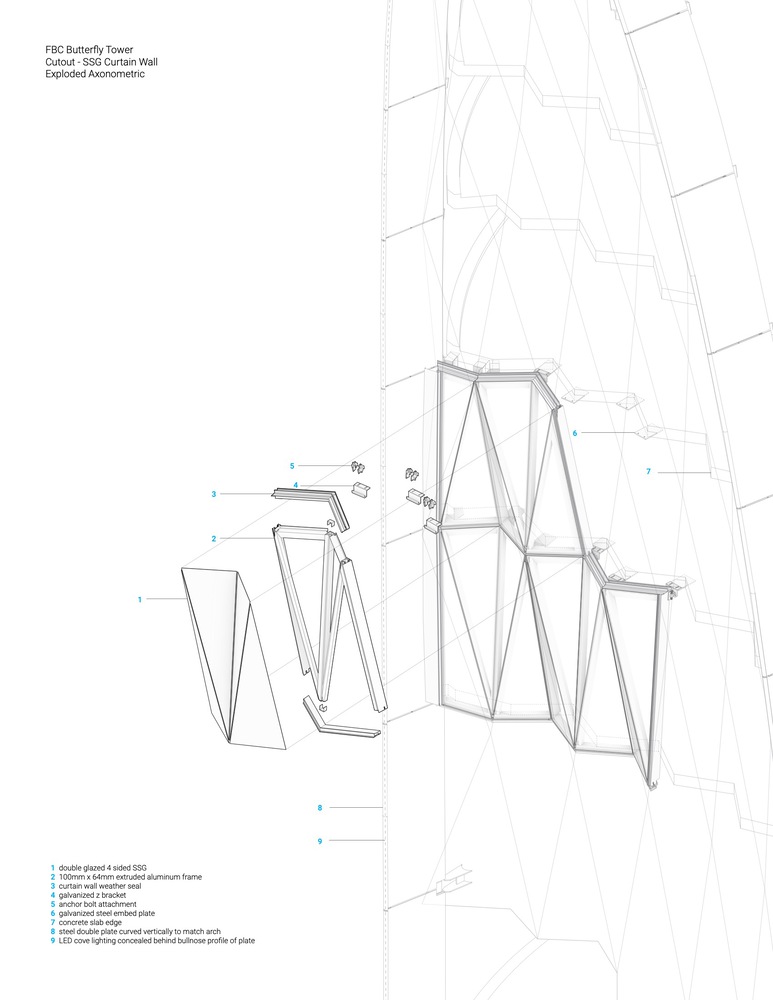
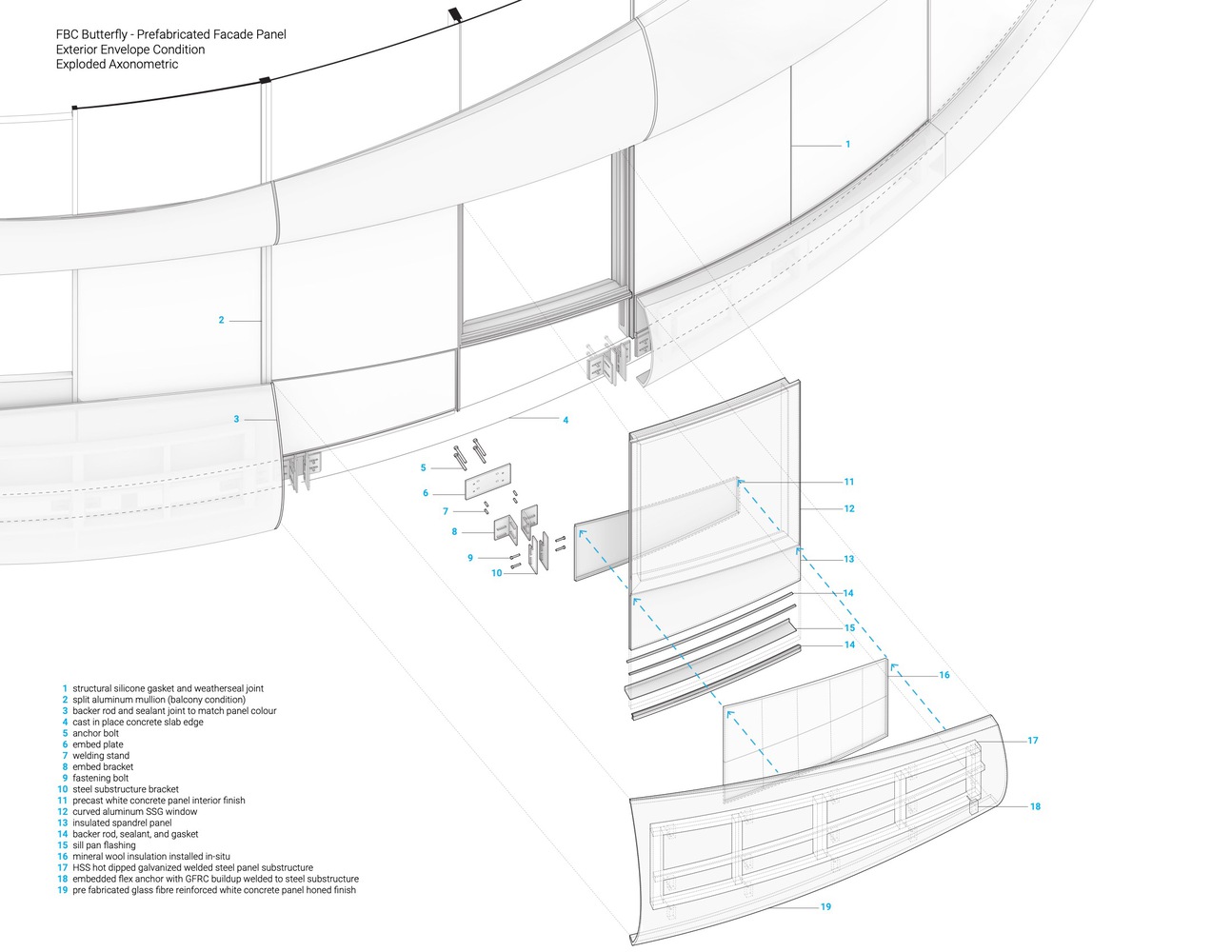
The Butterfly's undulating facade is realized through a highly complex envelope system that merges sculptural ambition with high performance. A dynamic A–B panel pattern defines each floor above level 14, made up of 24 prefabricated Glass Fiber Reinforced Concrete (GFRC) panels per band, 1,341 in total. These double-wythe panels integrate structure, insulation, waterproofing, and finish in a single assembly.
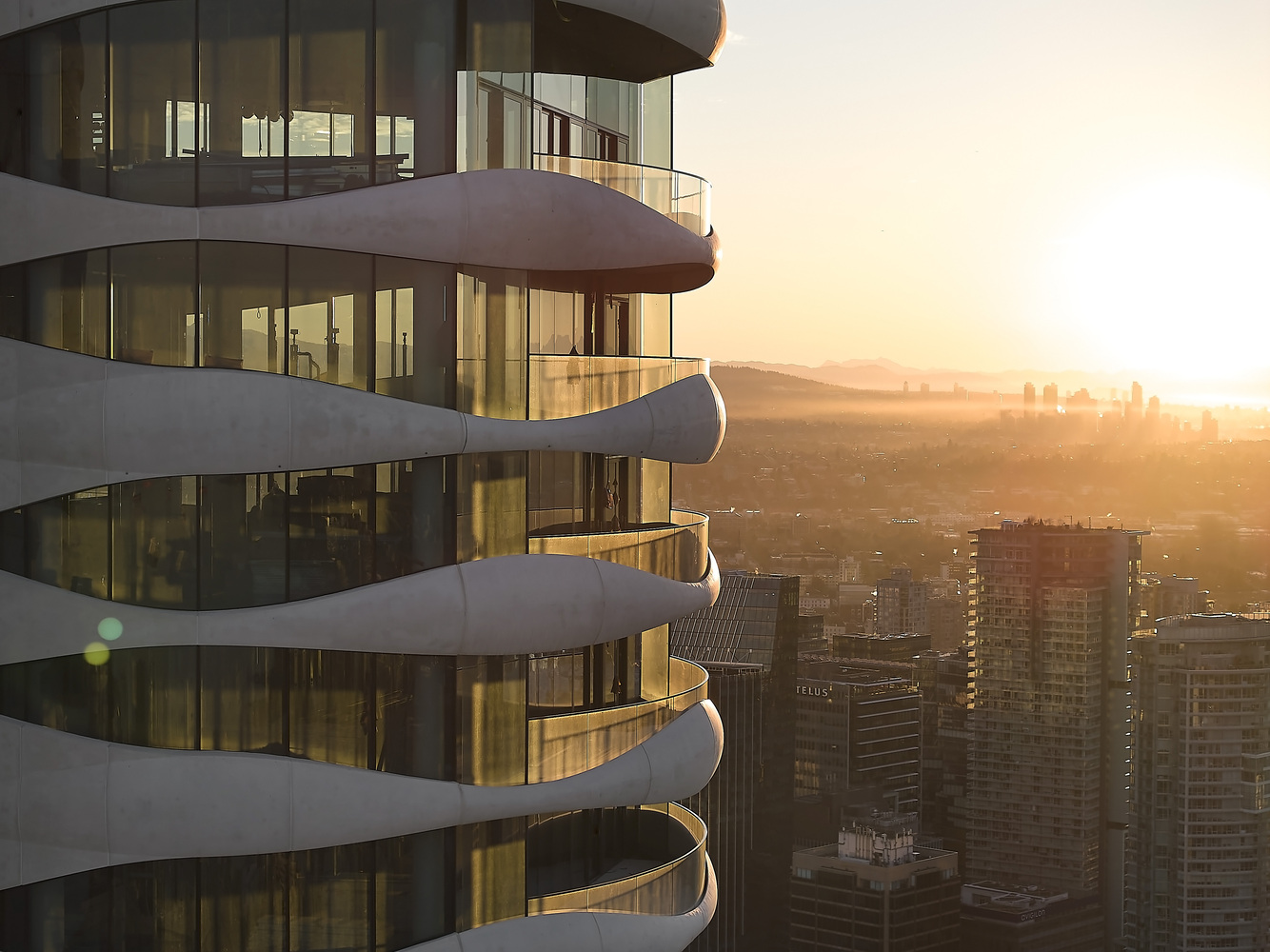
The geometry curves in both plan and elevation, achieving unbounded panoramic views, passive solar shading, and a carefully attuned flow of fresh air. The design team optimized the form variation and cadence using parametric modeling to reduce fabrication complexity while maintaining the dynamic fluidity of the design intent.
Digital platforms, including Revit, Rhino, and CATIA, were utilized throughout, with extensive full-scale mockup testing conducted to evaluate constructability and environmental performance.
UNIT DESIGN + INTERIOR EXPRESSION
The tower's interior units maintain a focus on fluidity, light, and tactility. Reflective white surfaces in the common areas extend seamlessly into the private suites, blending with custom Miele appliances and white glass cabinetry.
A sculptural kitchen island unfurls into two asymmetrical "wings," functioning as both a work surface and dining table — a subtle reference to the butterfly's form. Secondary bedrooms or dens feature full-height glazed partitions for acoustic separation and daylight continuity, with soft fabric curtains for privacy.
Throughout the unit, brushed metal details and warm wood accents evoke intimacy and tactile interest in moments of discovery.. Walk-in closets in the primary suites are finished with satin mirror cladding and gold-accented pulls, while ensuite baths feature custom pedestal vanities, rare Calacatta marble, and gold hardware, reinforcing the tower's quiet sense of luxury and ceremony.
SKY GARDENS + WIND STRATEGY
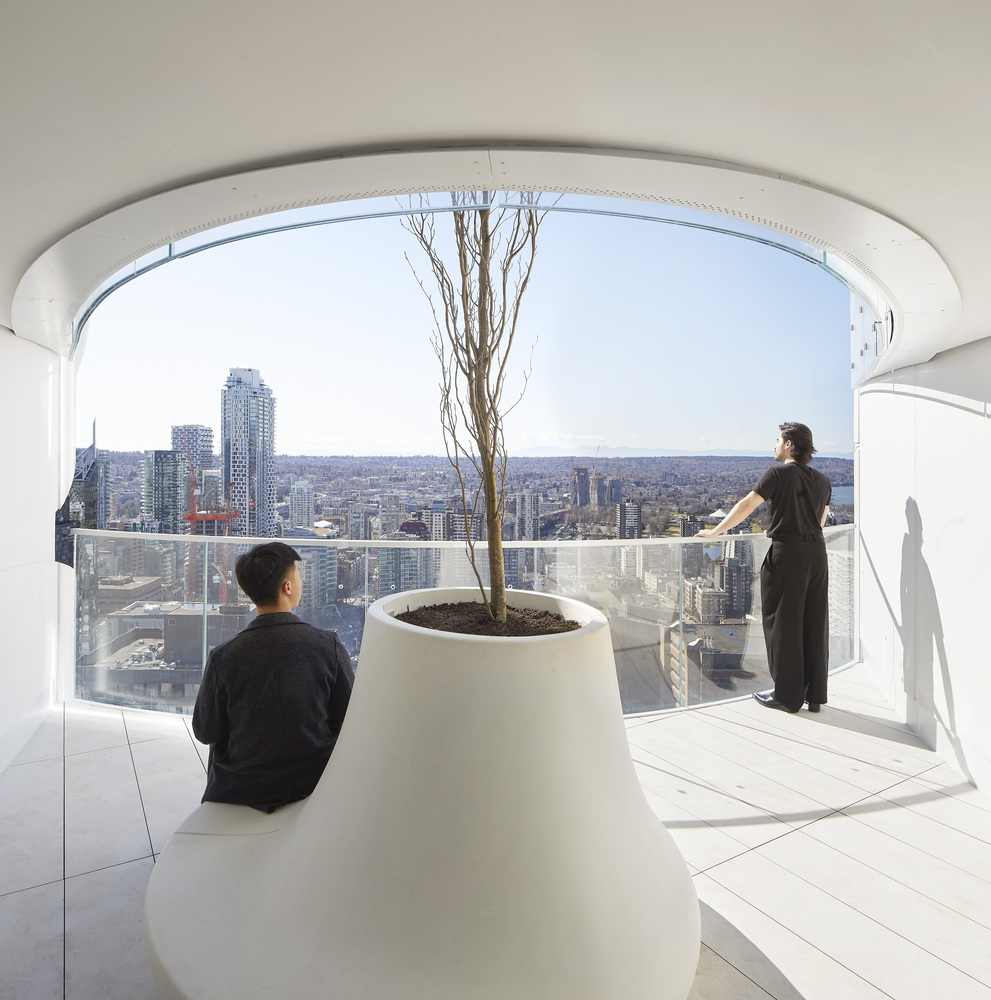
Unlike most tall towers, the Butterfly is defined by openness rather than enclosure. A landscaped breezeway bridges the elevator core and each unit, providing a compelling sense of arrival for residents that connects them to the natural rhythms of the day.
Every floor features open-air breezeways that encourage airflow, movement, and connection throughout the building. Every third level, these breezeways expand into "sky gardens," where Dawyck Purple Beech trees and sculpted benches offer moments of pause, social interaction, and sensory engagement high above the city.
The vertical rhythm of these tree-filled terraces becomes a defining expression of the architecture—an emblem of harmony between nature and humanity, visibly rising through the skyline. To ensure comfort and safety, Revery conducted extensive wind tunnel testing and pedestrian comfort analysis to optimize the microclimate of the breezeways.
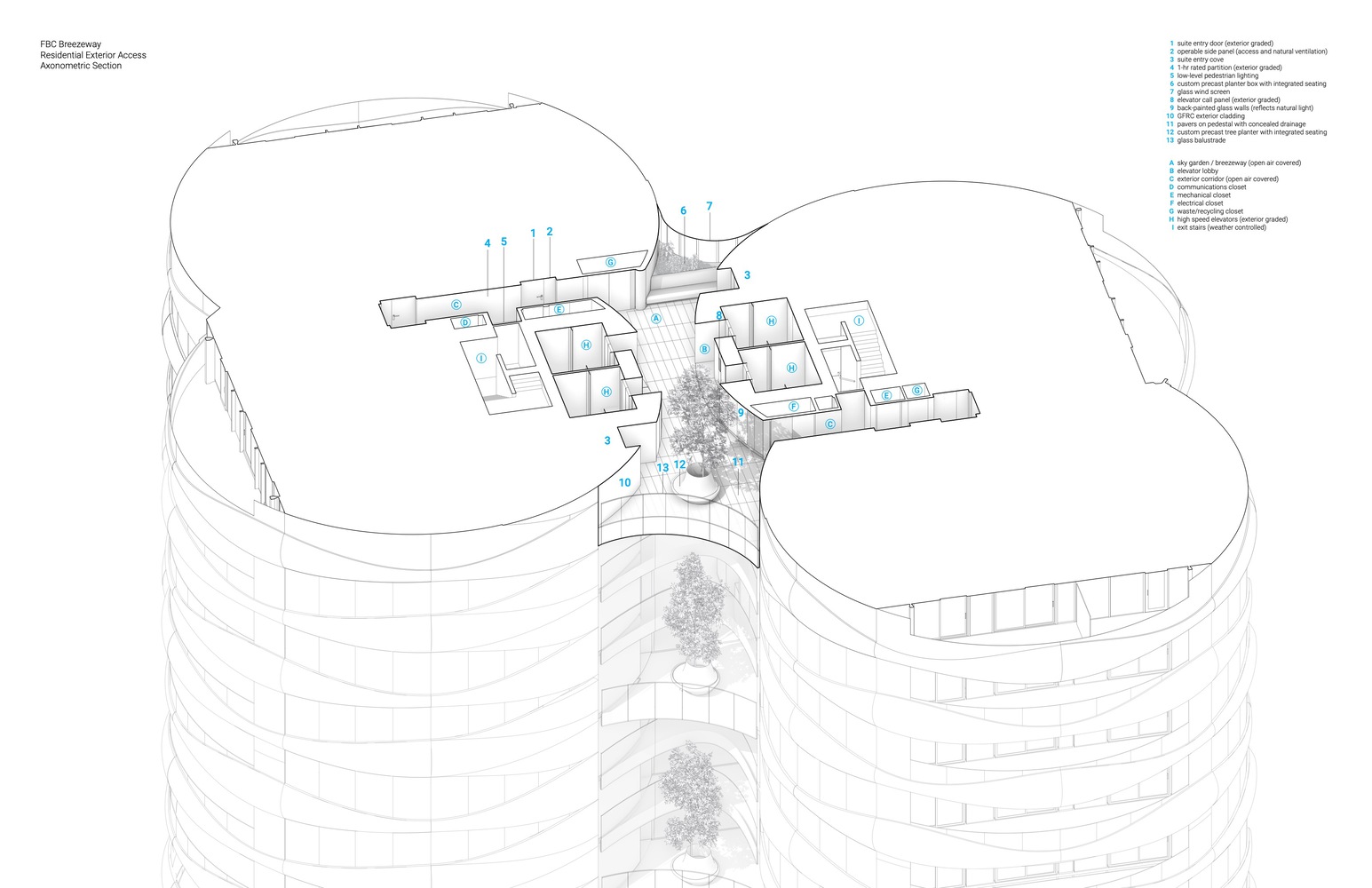
The team calibrated breezeway size and wind screen configurations to maintain ideal airflow, allowing comfortable conditions and suite access even in high winds.
AMENITY POOL
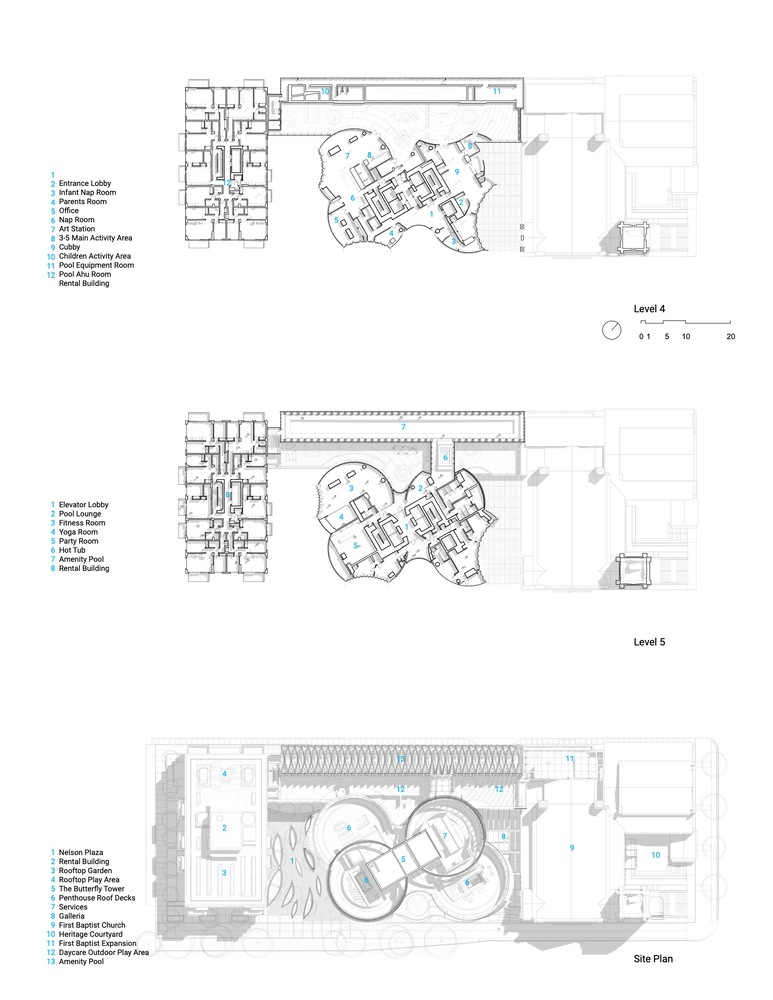
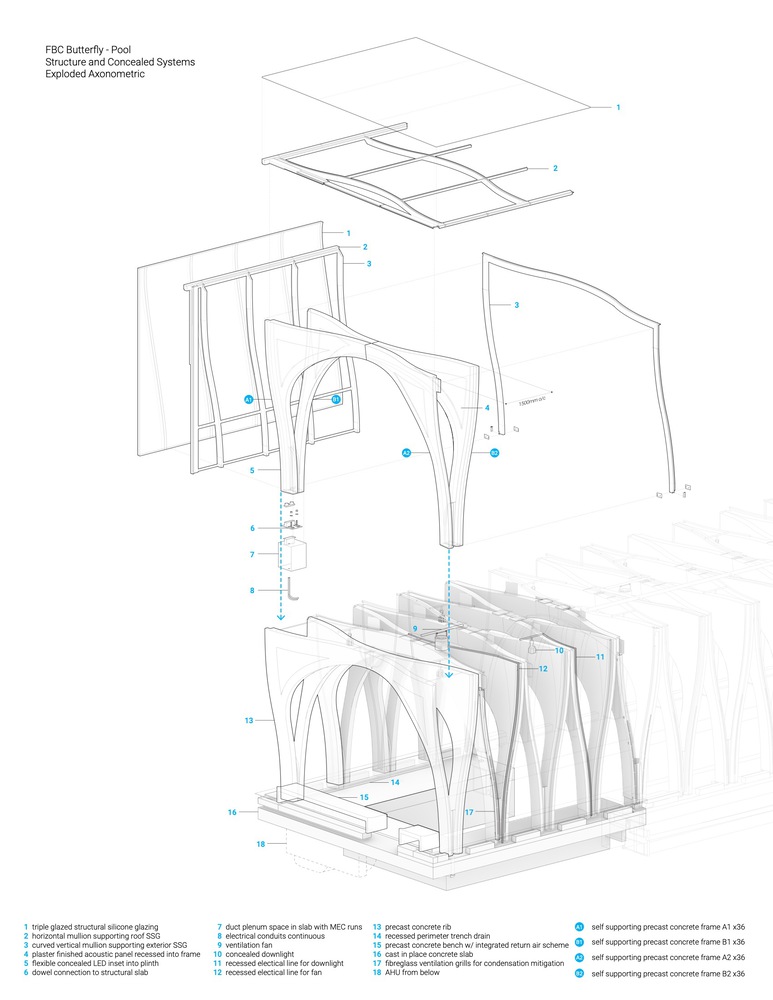
Bridging the tower's fifth level, a 50-meter lap pool offers residents an immersive, almost ethereal experience. Clad in high-performance glazing and supported by 36 prefabricated modular ribs, the pool enclosure integrates and conceals all mechanical, electrical, lighting, and acoustic systems within its form.
Fabricated offsite and craned into place in under a month, the pool structure exemplifies a modular, coordinated approach to design-build execution. The pool's location on the north side of the site leverages passive cooling from the adjacent tower, minimizing mechanical demand while maximizing light and views.
The design team performed detailed condensation studies to validate fan and vent placement for optimal airflow, ensuring thermal comfort without disrupting the enclosure's transparency.
The result is a rooftop retreat that delivers both precision and calm — an architectural focal point for wellness, reflection, and community.
HERITAGE MEETS CIVIC AMBITION
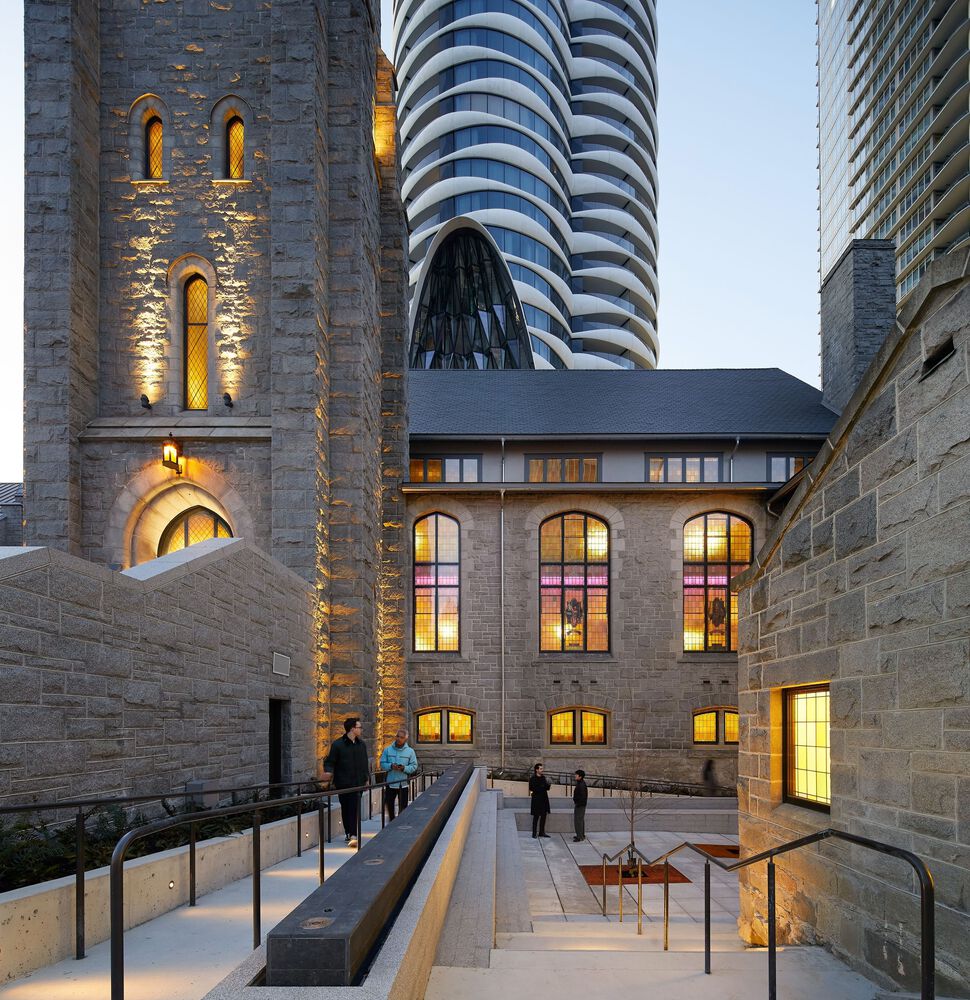
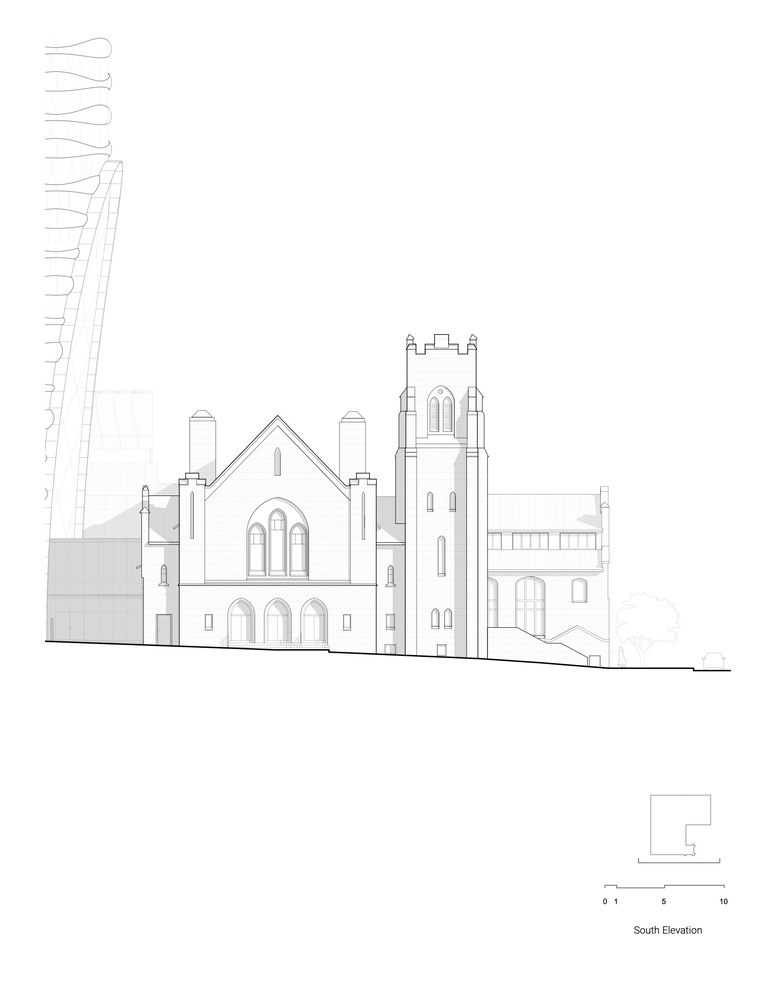
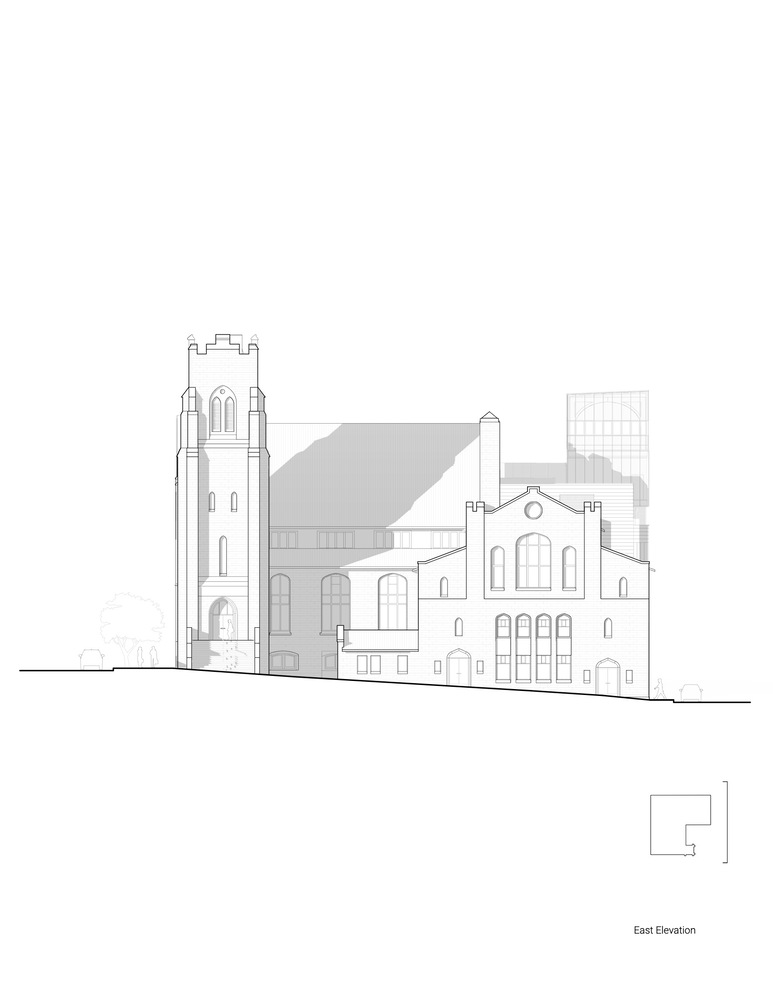
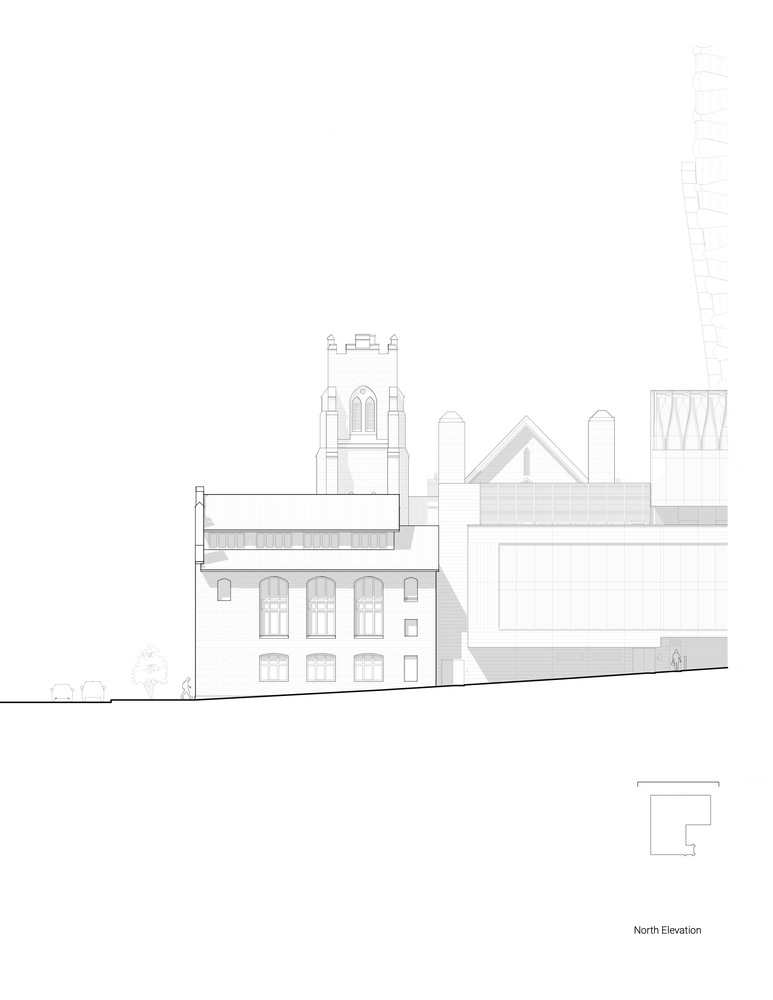
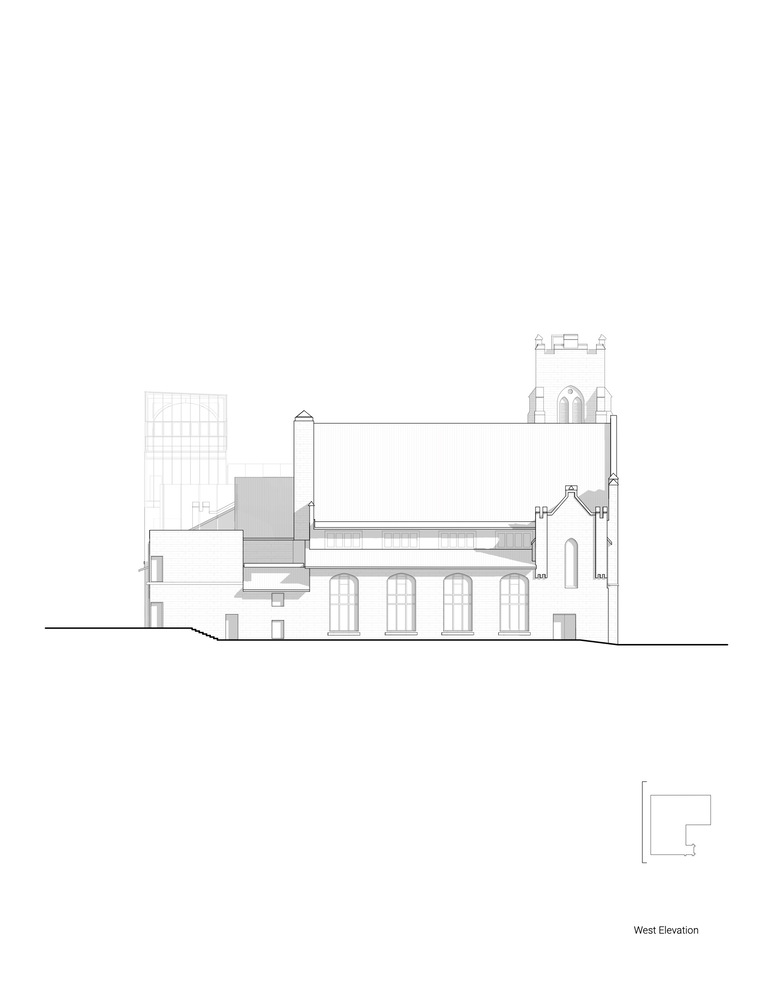
First Baptist Church — completed in 1911 and rebuilt after a catastrophic fire in 1931 — has long served as a gateway to the West End. Its granite-clad form and landmark bell tower stand in quiet conversation with the surrounding skyline.
But its future wasn't guaranteed. Aging infrastructure, piecemeal renovations, and spatial limitations had challenged its ability to serve a growing and increasingly diverse congregation. With Revery, the church saw an opportunity: not just to restore its physical structure, but to reimagine its social role in Vancouver.
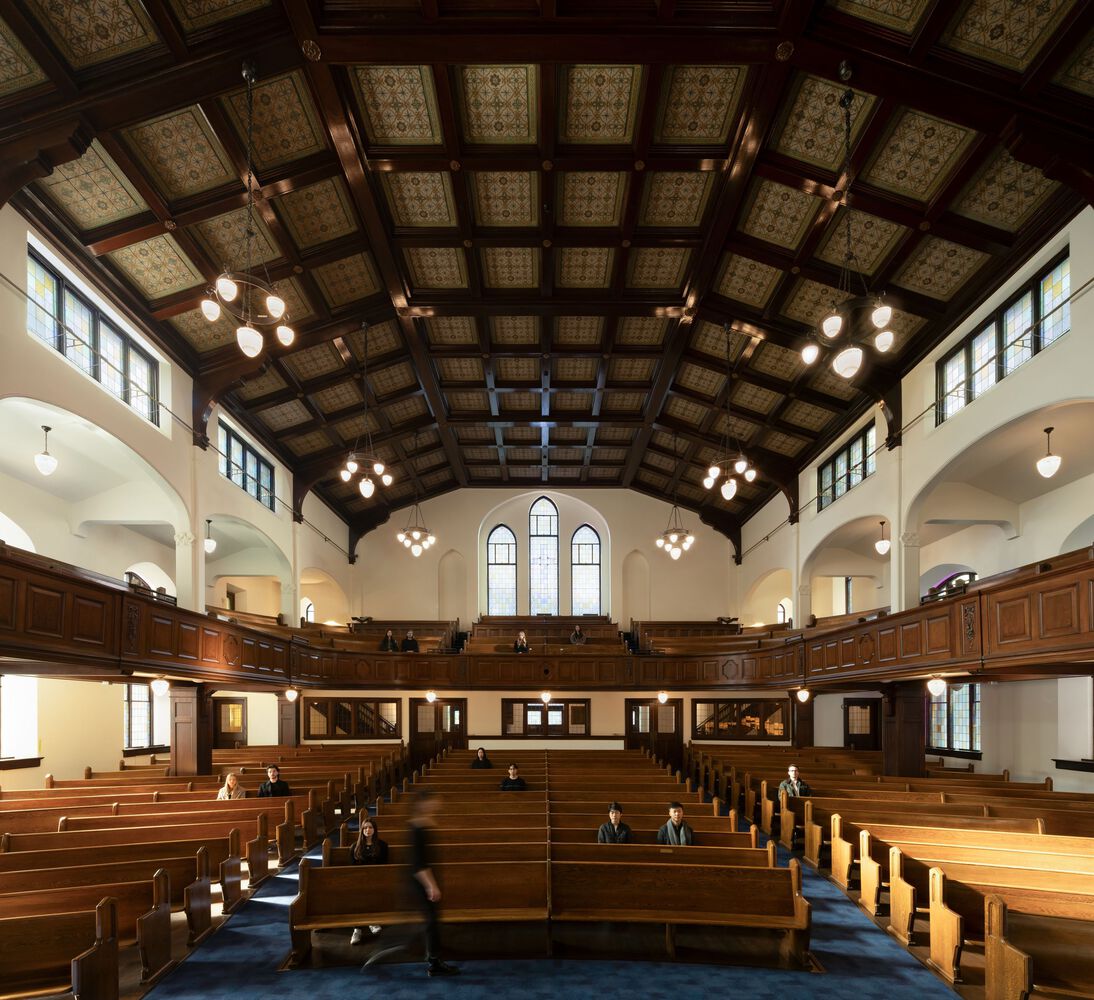
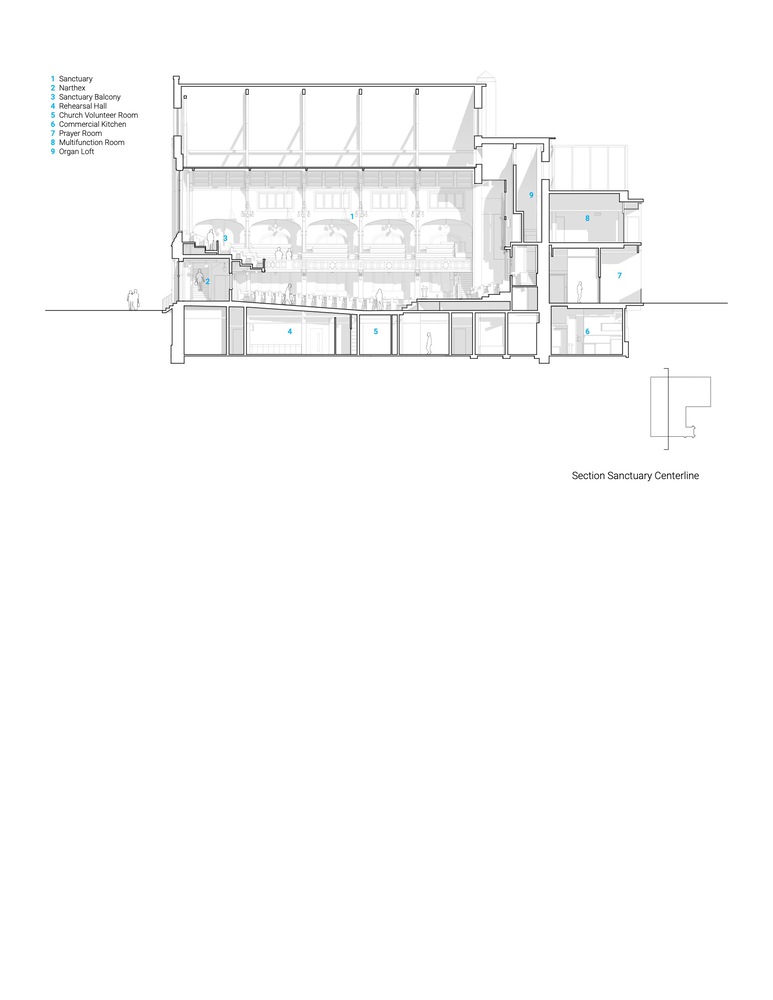
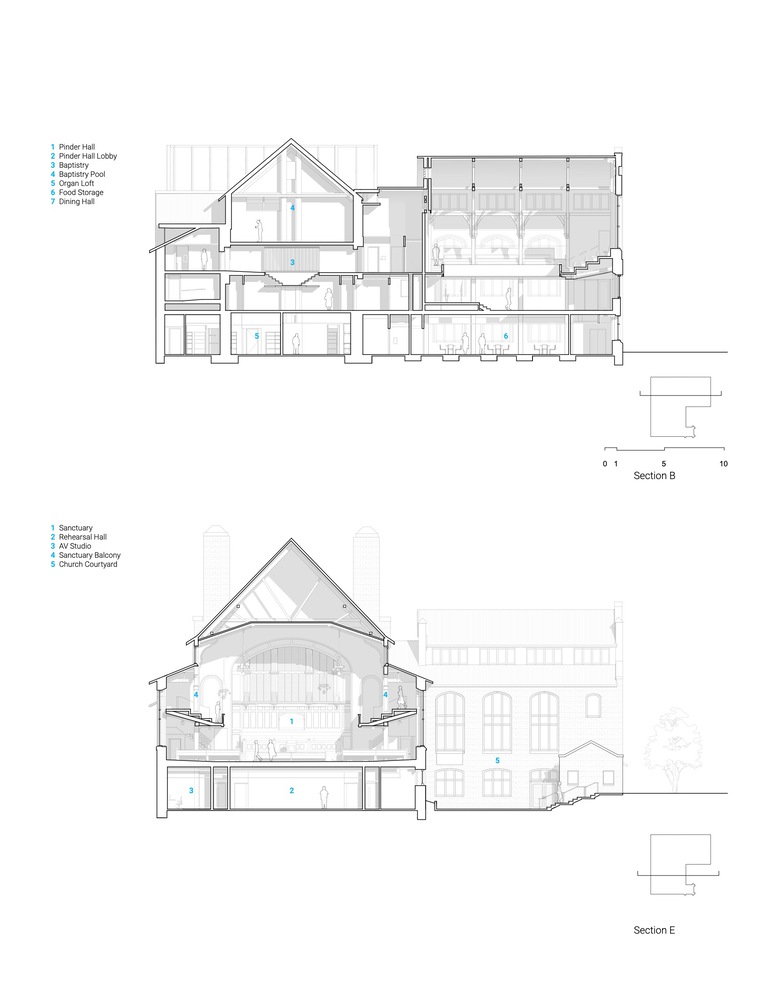
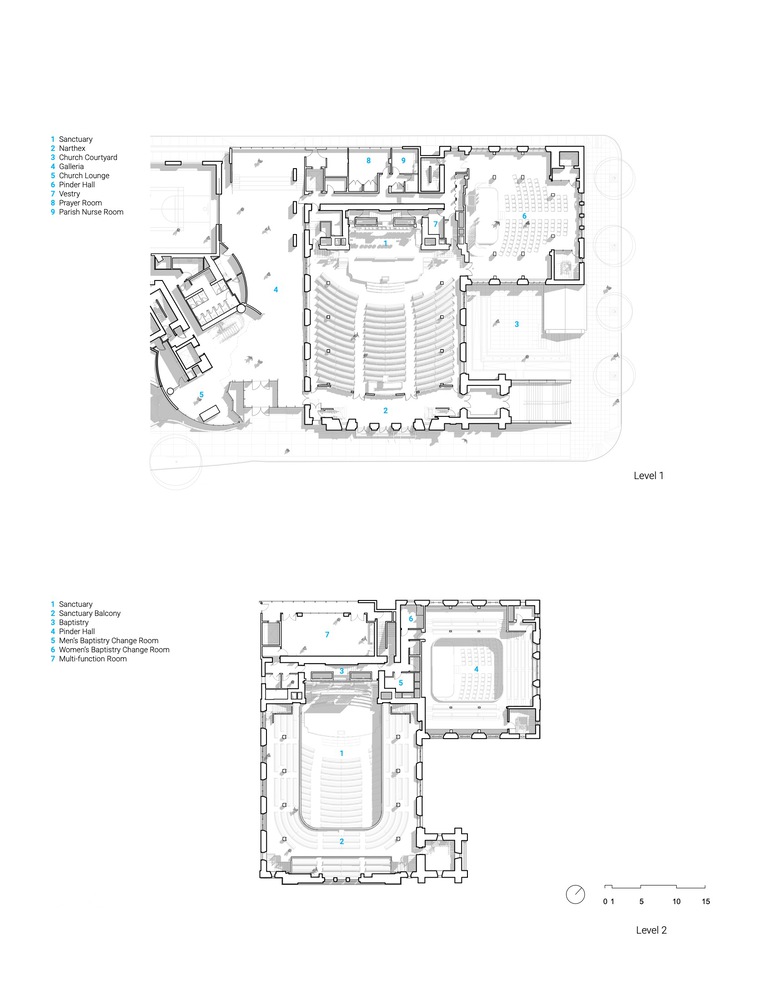
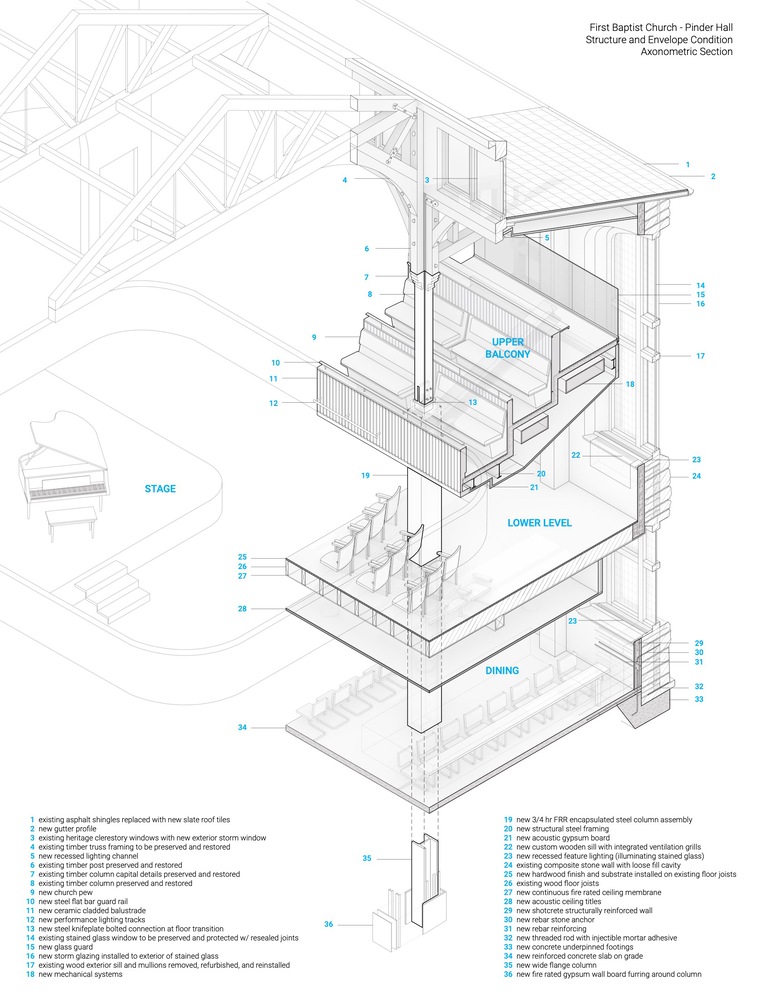
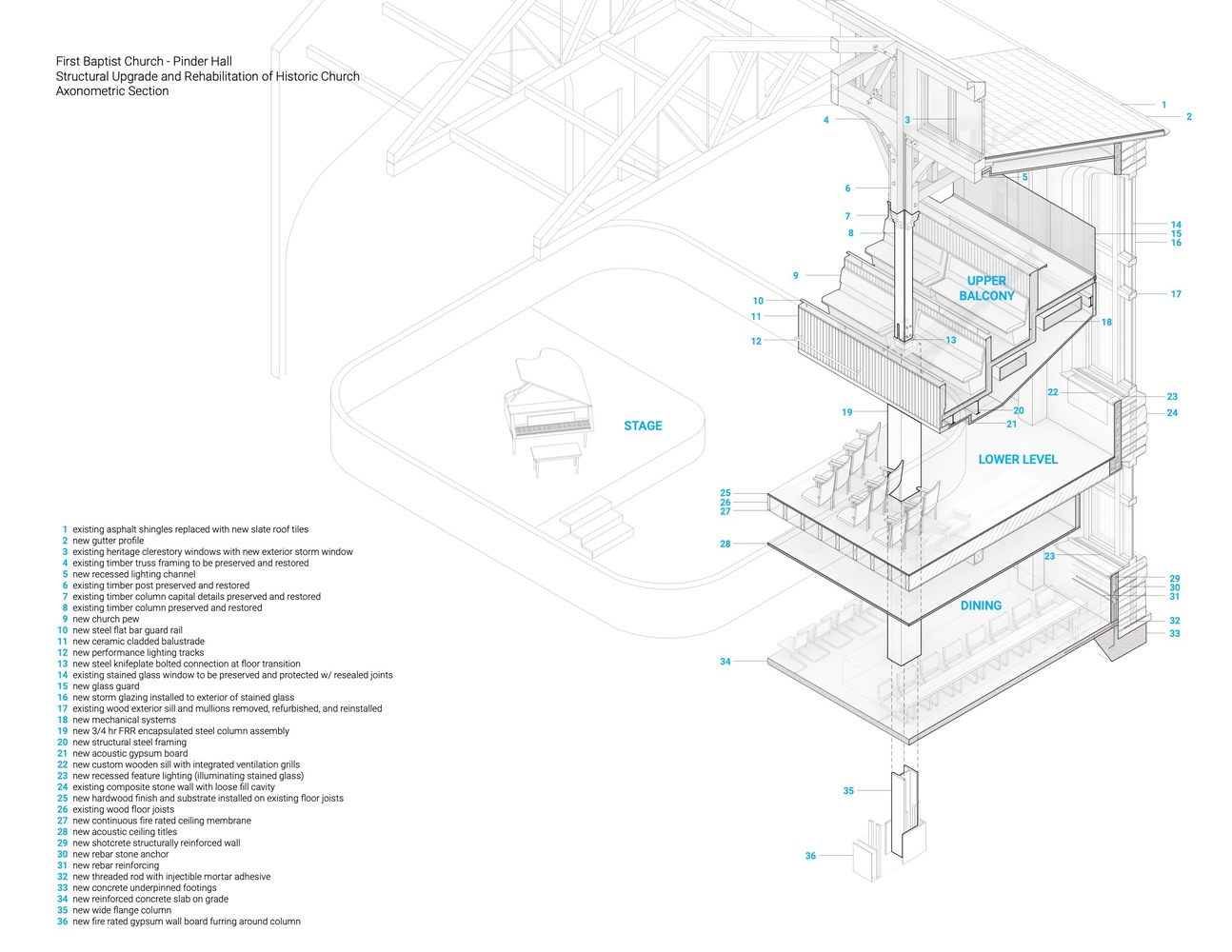
The church's Sanctuary — a municipally designated heritage space — was carefully rehabilitated to preserve its architectural character while integrating seismic, service performance, and accessibility upgrades.
Interior finishes, including the oak pews, coffered ceilings, and stained glass windows, were repaired, restored, or, when necessary, replaced by specialty heritage trades.
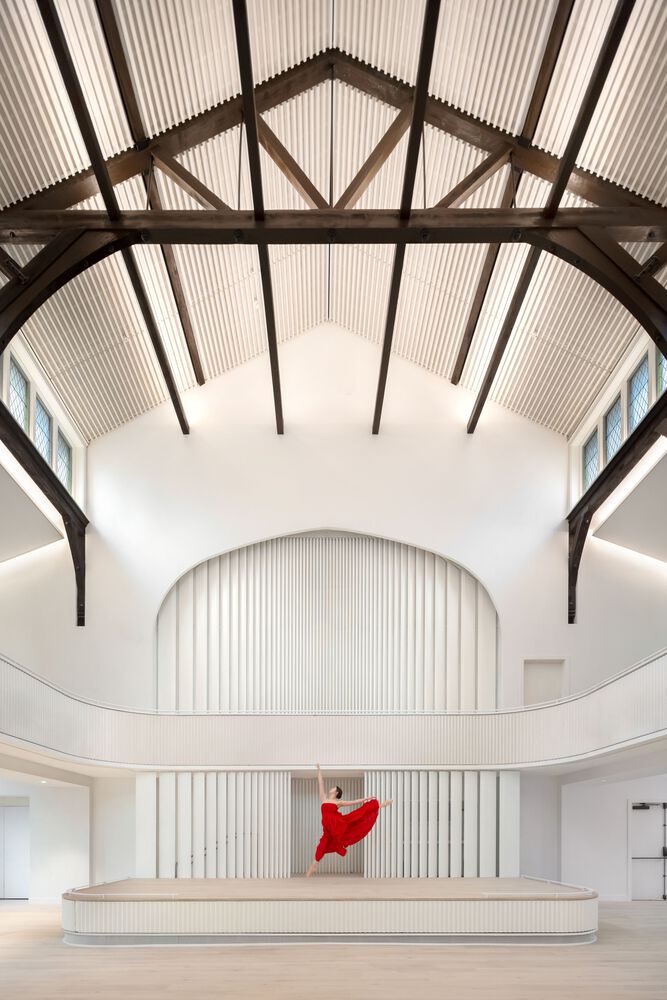
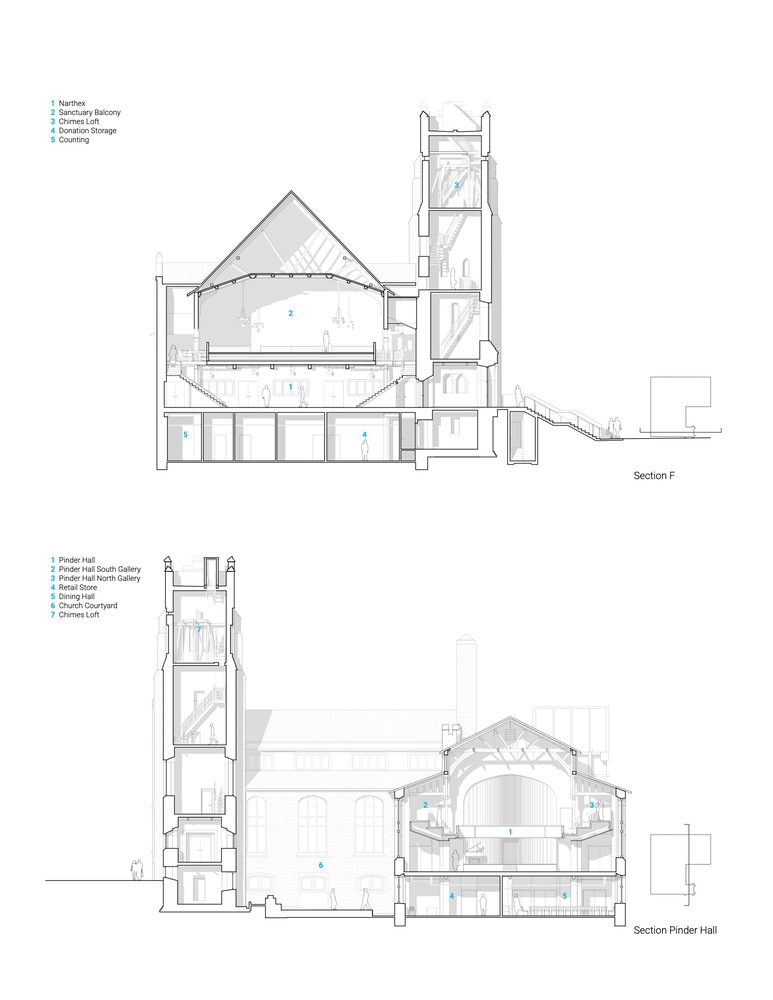
The secondary assembly space, Pinder Hall, was fully reborn. A previous renovation had added a subfloor at the mezzanine level to create additional program space, obscuring the full-height stained glass windows and muting the space's character.
Revery's restoration restored the original double-storey volume and implemented a clean contemporary interior palette that allowed the heritage elements to take center stage.
The original Deagan chimes, dormant for decades, were restored to working order by the single remaining specialist in North America.
Accessibility was also meaningfully addressed by way of a new rationalized basement, and strategic integration of two new elevators and rampways to provide universal access to all spaces, including the main stages of the halls.
EARLY CHILDHOOD IN A VERTICAL CITY
At the podium level of The Butterfly, Revery integrated a 7,800-square-foot, 37-space childcare facility designed to serve both the First Baptist Church and the broader West End community.
Supporting both infant/toddler and 3-5 age groups, the facility was shaped through a highly collaborative planning process involving the City of Vancouver's Childcare and Facilities staff, Community Care Facilities Licensing Office at Vancouver Coastal Health, the daycare operator, and the project's ownership team.
Together, they navigated rezoning, permitting, and approvals to deliver a forward-thinking facility tailored to its urban context. The design responds directly to the challenges of early childhood care in high-density environments.
A dedicated outdoor play area, directly adjacent to the interior space, features rubberized surfaces, high-quality play equipment, and functional landscaping. Organized into zones for art and imagination, physical activity, rest, and nature-based exploration, the playground provides children and staff with a seamless indoor-outdoor experience.
It prioritizes sensory development and creative play while reinforcing the health and educational benefits of everyday access to nature. Set within a vertical mixed-use development, the childcare facility reflects how essential community infrastructure can be thoughtfully embedded into dense urban frameworks.
A GYM FOR THE CONGREGATION AND COMMUNITY
Replacing a mid-century intervention in Pinder Hall, the new gymnasium adds a new dimension of use to the site.
The double-height, light-filled volume accommodates up to 284 people and is equipped for both athletic and cultural programming — from basketball games and concerts to lectures and community gatherings.
An operable glass wall connects the gym to the adjacent galleria, while a folding partition allows the space to flex between large and small formats. Daylight filters in through full-height windows, and adjacent washrooms and shower facilities make it a versatile amenity for everyday use.
From the walkways and lounge above, strategically placed upper-level windows offer visual connectivity into the gym, creating layered sightlines and fostering a sense of openness and energy throughout the space.
A RECLAIMED HERITAGE COURTYARD
Once fenced off and inaccessible, the church's southeast courtyard has been transformed into a lush and welcoming public space.
Slightly sunken to align with the site's sloped topography, the courtyard now serves as an open-air, accessible connector to the lower levels of the church, with direct access to a new public café.
A linear water feature wraps the space, creating a sense of calm while improving microclimate comfort. Planting, bench seating, pedestrian lighting, and a universally accessible ramp turn what was once a leftover corner into a vibrant urban garden — a true extension of the church's spirit of hospitality.
SEISMIC STRENGTH WITH A LIGHT TOUCH
Restoring a heritage structure while embedding modern infrastructure required surgical precision.
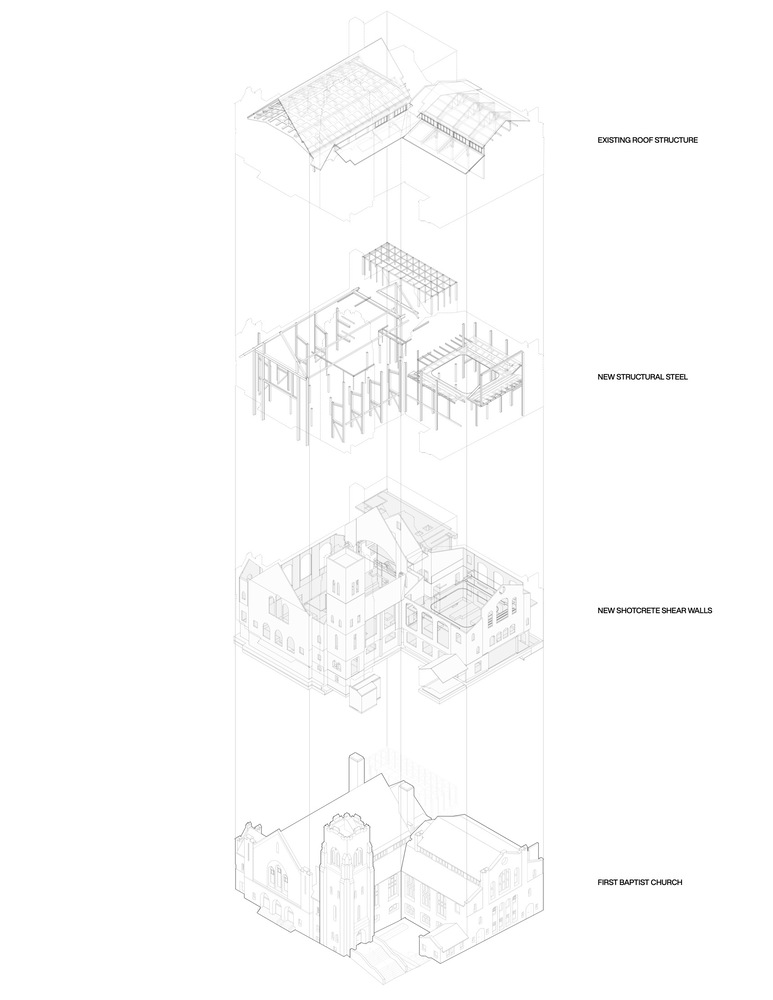
To meet Vancouver's stringent seismic codes, Revery introduced new steel framing and shotcrete to reinforce the church's masonry walls — all while preserving the sanctuary's visual integrity.
New steel columns were recessed into cavities where possible or clad in replica millwork, ventilation ducts were custom-shaped to tuck into balcony floors, and fancoils were concealed beneath windows and within original detailing.
The result is a fully modernized space that appears refreshed yet unchanged to the casual eye — a quiet triumph of engineering in dialogue with craftsmanship.
The result is a fully modernized space that appears refreshed yet unchanged to the casual eye — a quiet triumph of engineering in dialogue with craftsmanship.
DESIGNING FOR BELONGING
First Baptist Church has long served as a refuge for those in need. With this revitalization, its ability to provide support, from emergency shelter and hot meals to counselling and spiritual care, has been expanded and reimagined.
But the project goes far beyond accessibility alone. It is the only development in Vancouver where individuals experiencing homelessness and residents of multi-million-dollar homes live within the same footprint, a rare and intentional integration of the city's full socioeconomic spectrum.
The complex includes mixed-income housing and multi-generational residences, with both the tower and the rental buildings significantly exceeding the City's requirements for family-oriented units.
Accessibility remains a core value, with nearly all units in the rental building designed for wheelchair access.
Thoughtful features, such as barrier-free routes to the Sanctuary chancel, Pinder Hall stage, and two new elevators, enable universal access throughout the church. This is a community designed not only to house people, but also to foster genuine belonging for everyone.
A CIVIC ANCHOR REBORN
More than a development, this project represents a vision for socially grounded density. It is as much about preserving legacy as it is about designing for today's needs: from social housing and emergency food and shelter to multipurpose community spaces.
Through careful design and deep collaboration, Revery Architecture has helped transform a prominent corner of Vancouver into a layered, living landmark. One that honors a century of civic spirit while offering a framework for the century to come.
THE GALLERIA: BRIDGING PAST AND FUTURE
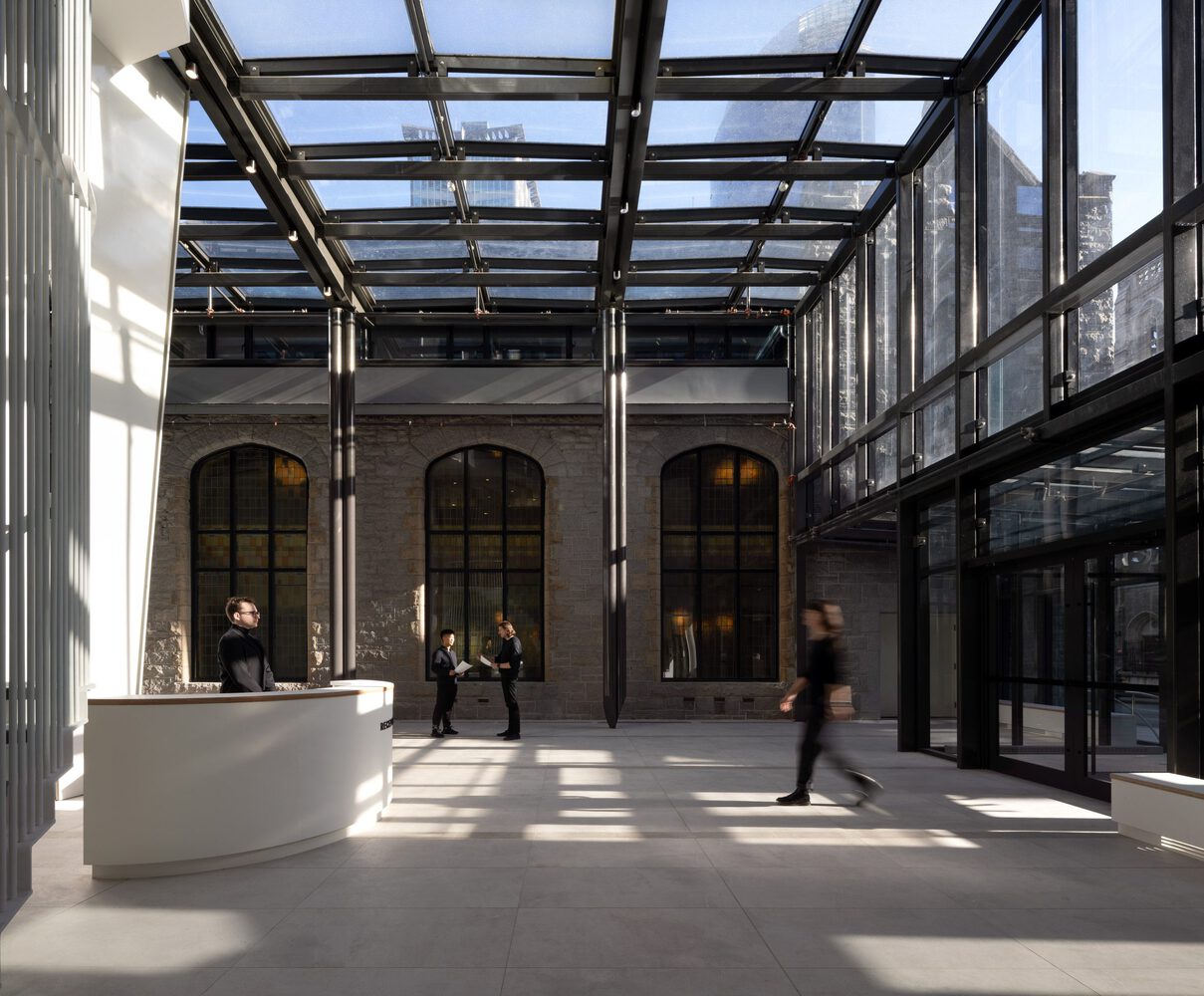
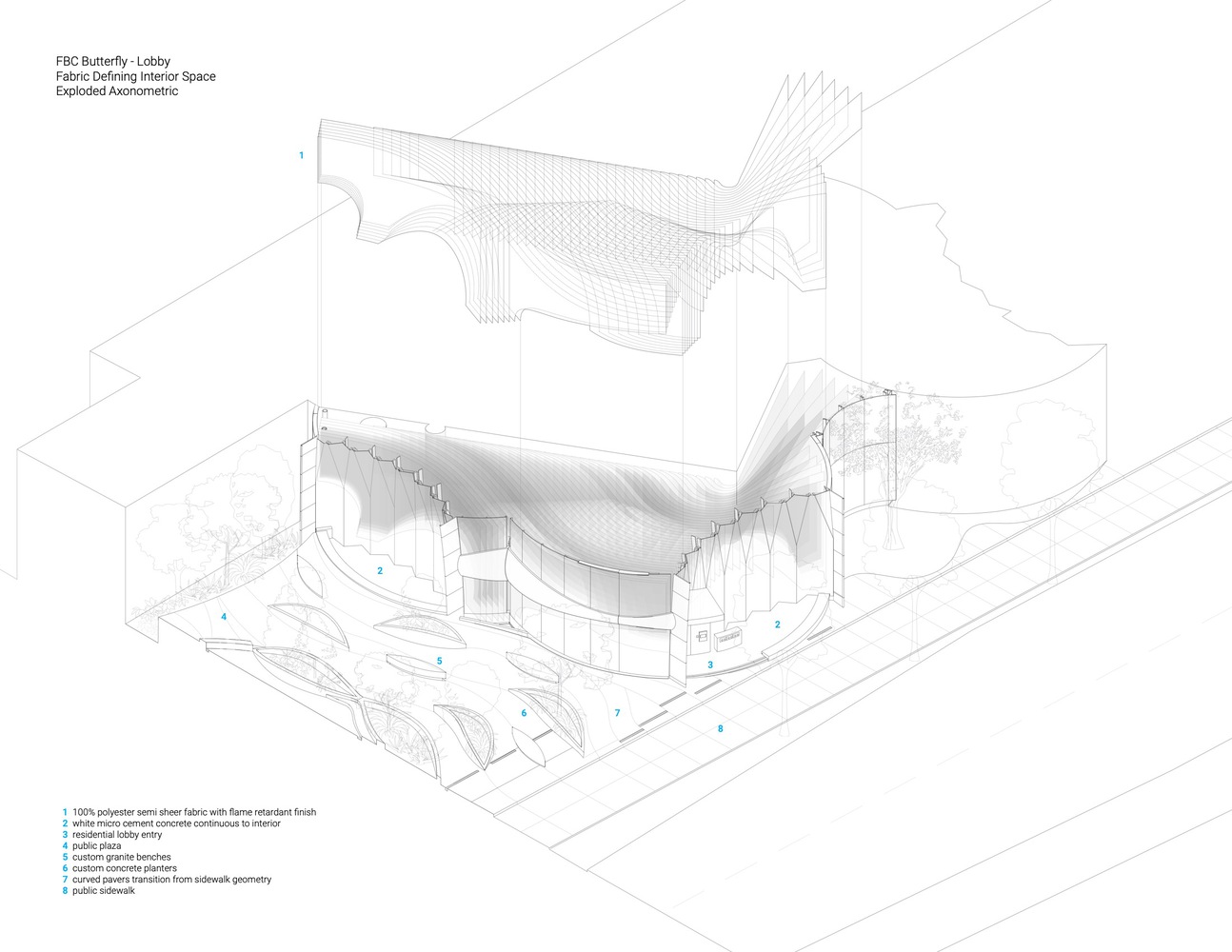
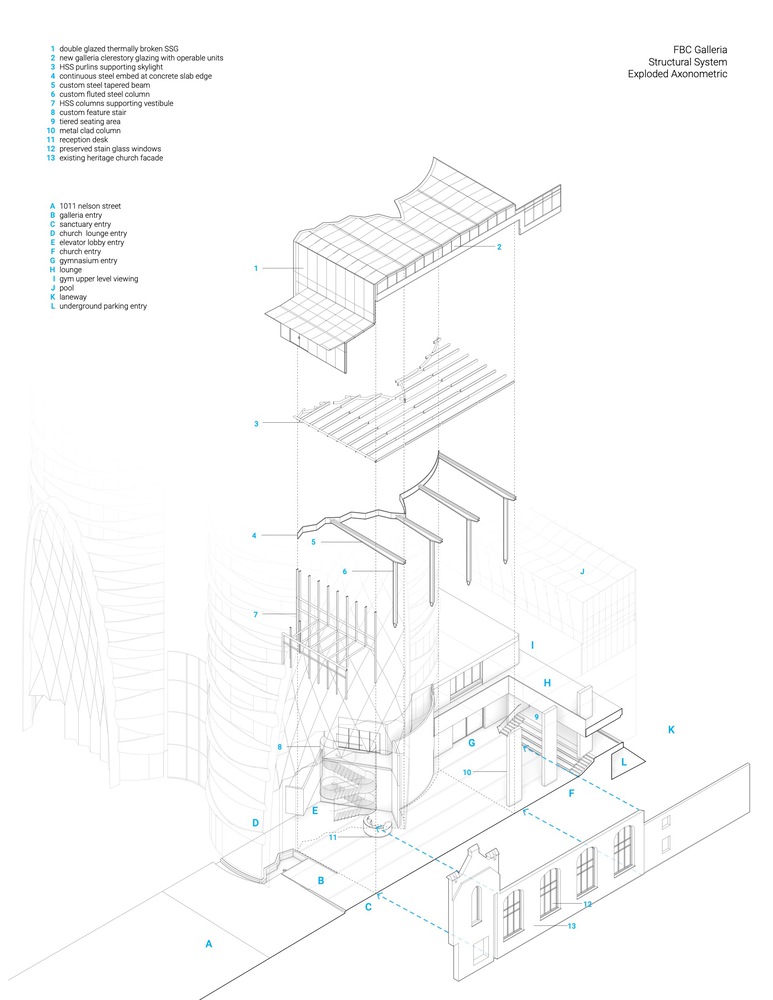
At the literal and conceptual center of the project is the galleria: a transparent, double-height atrium that links the heritage church with the tower podium.
Its restrained steel and glass structure yields to the rough-hewn masonry of the church and the expressive curvilinearity of the tower, creating a dynamic space that brings to life a vibrant discourse between new/old, public/private, and interior/exterior.
The galleria also serves a functional role. It is the entry point for many of the project's expanded community offerings, including a counselling center, childcare facility, multi-purpose rooms and state-of-the-art gymnasium.
A grand stair, informal performance stage, and upper-level lounge animate the space throughout the day, supporting both programmed activity and spontaneous use.
A VERTICAL COUNTERPART
While the church remains the symbolic heart of the site, the Butterfly tower introduces a human-centered approach to high-rise living.
Its gently undulating form and split floorplate create a stack of open-air breezeways and lush sky gardens at every level, offering residents moments of connection to nature, the city, and one another.
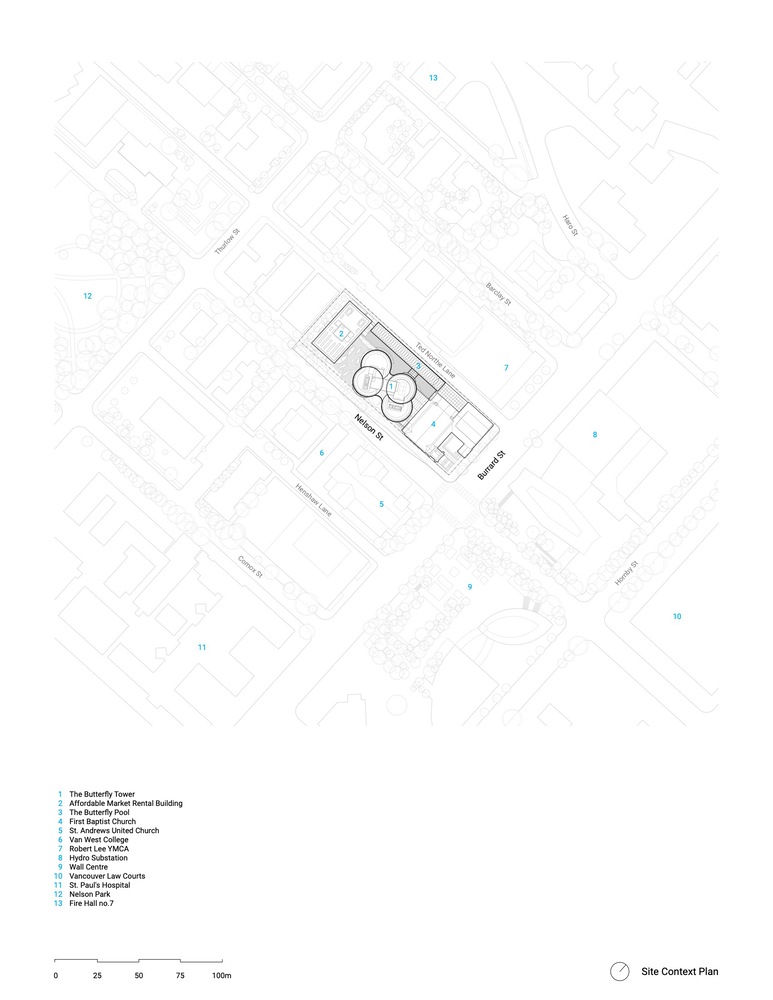
The tower's base is carved back to make room for courtyards, plazas, and ground-level greenery, creating a soft threshold between the commercial Burrard Corridor and the residential West End. A new public lane and upgraded landscape further embed the development into the fabric of the neighborhood.
Built to LEED Gold standards, the tower incorporates an insulated precast envelope, low-carbon district energy system, high-efficiency fan coils, and operable windows. The building targets a 68–85% reduction in greenhouse gas emissions compared to the baseline — a remarkable feat given its scale.
Notably, emissions reductions be% are achieved through the use of renewable energy sourced from its on-site district energy system.
BUILDING PERFORMANCE + ENVIRONMENTAL DESIGN
From envelope to energy systems, the Butterfly complex reflects an integrated approach to environmental performance.
Designed to LEED Gold standards, the project reduces operational carbon by 84%, energy use by 45%, and energy costs by 25%—surpassing City of Vancouver requirements for tall buildings and large sites.
A water management strategy reduces potable water use by 50% and domestic water use by 35%, while promoting long-term resource conservation. The tower's curved massing optimizes views and daylight while minimizing overheating and shadow impact.
A high-performance R-15 precast envelope, paired with moderate glazing ratios and four-pipe fan coil systems, supports year-round comfort with reduced demand on mechanical systems.
Daylighting, natural ventilation, and integral shading strategies are embedded across all building zones—from the tower's breezeways to the church's reoriented courtyards.
The restoration of First Baptist Church reinforces the environmental value of building reuse. Existing materials—masonry walls, timber framing, oak pews, and millwork—were carefully preserved, repaired, and re-integrated wherever possible.
Outdated heating systems were replaced with energy-efficient hydronic and ventilation systems, carefully threaded through the historic interiors with minimal visual impact.
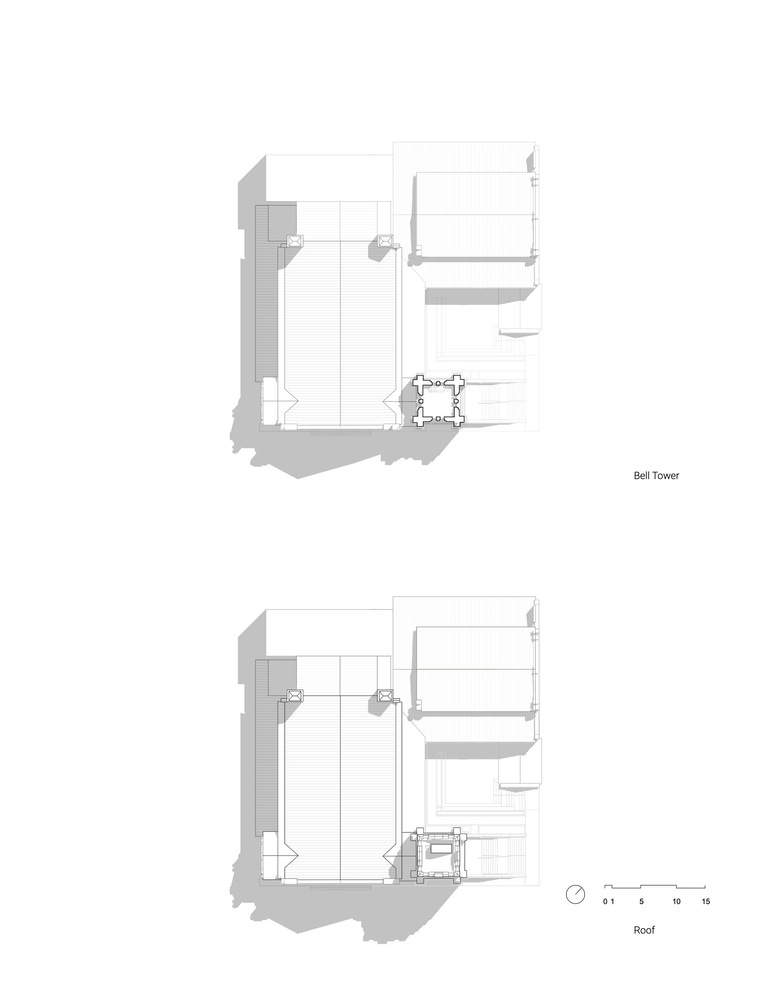
A deteriorated asphalt roof was replaced with natural slate—projected to last 200 years—while all windows were restored and upgraded with storm glazing to protect them and to improve their thermal and acoustic performance.
These low-carbon choices honor craftsmanship while reducing embodied carbon and construction waste. The envelope's unconventional form required advanced digital modelling processes; the architectural and fabrication team utilized 3D software such as Revit, Rhinoceros, and CATIA to realize the design.
From an architectural perspective, it was essential to strategically manage the Butterfly's model with parametric thinking.
The control of complex geometry was broken down to just a few nested families, with key parameters that are shared by the GFRC panel and glazing. This approach optimized visual evaluation of design options, such as maximizing views while reducing the panel area. —
From a fabrication perspective, the use of advanced software was central to visualization, engineering, and fabrication.
The complexity of the Butterfly project's geometry nonetheless required extensive prototype testing with fabricators. Several independent full-scale mock-ups were completed, with varying emphasis on visual and material quality, performance, and construction methodology.
They not only responded to the traditional concerns inherent in high-rise buildings, such as wind and seismic load, but also aimed to defy the limitations of conventional precast fabrication methods to achieve complex geometry without compromising performance requirements.
SOCIAL SUSTAINABILITY
Sustainability at The Butterfly is also rooted in social equity, housing diversity, and inclusive infrastructure. A new midrise rental building delivers 61 affordable units—with ⅔ of units held at CMHC Housing Income Limit rates, while the remainder are affordable rentals offered at below market rates.
40% of units are designed for families, with several units supporting universally accessible living. Rooftop gardens, a landscaped playground, and an outdoor kitchen extend shared living spaces beyond the front door. Mobility options prioritize low-emission access: 465 secured bike stalls, dedicated private and public car share services, and a resident-focused "Eco-Wheels" program offering electric vehicles and bicycles as alternatives to private car ownership.
Every residential floor includes a dedicated waste sorting room to encourage zero-waste behavior, supported by active maintenance routines and resident education. Nature is also integrated across the site, from courtyards and green roofs to a 1:3.5 tree replacement strategy that brings more than 40 new trees to the West End. Together, these features support environmental resilience while promoting stewardship, access, and connection within a high-density urban context.
SOCIAL ISOLATION + RESEARCH ON VERTICAL LIVING & WELLBEING
In Vancouver—where surveys show that social isolation is a top civic concern—The Butterfly responds not only with amenities but with research-backed design interventions. Partnering with the Open Green Building Society and UBC, Revery studied the social impacts of open-air corridors and breezeways in five precedents across Metro Vancouver.
Their findings underscored the potential of semi-public space to foster resident connection, especially in buildings taller than five storeys—where studies show residents often report diminished feelings of welcome and difficulty forming friendships. This research informed the design of the Butterfly's sky gardens: lush, open-air breezeways that appear every third level, acting as vertical "front porches" for the tower. Rooted with deciduous trees and sculpted planters, these spaces are designed for interaction, movement, and connection. Energy modeling indicates that the breezeways also reduce cooling demands by up to 65% during peak months, contributing to an estimated 400,000 kWh in annual savings, equivalent to fully triple-glazing the entire tower.
More than an architectural gesture, the tower's breezeways and communal zones act as connective tissue—bridging personal space with shared experience and creating new opportunities for the community to take root at height. Stitching together this multi-use development, the landscape creatively bridges the public and private realms, providing valuable "third spaces" that promote social connections, nurture a vibrant community spirit, and create biophilic havens in the heart of the city. Two key public realm landscapes include the Nelson Street Plaza and the First Baptist Church courtyard.
A LEGACY OF TRANSFORMATION
The Butterfly + First Baptist Church Complex is not merely a building; it's a story of transformation—of metamorphosis and transcendence. It invites us to reimagine a city where towers breathe, where heritage lives, and where architecture uplifts the human experience. Revery Architecture has crafted not just a skyline-defining work, but a place where the past finds its future and the future is built with care.
The Butterfly's distinctive form establishes a bold new landmark for Vancouver, gracefully announcing the high point of the city's downtown peninsula and the gateway into its vibrant West End neighbourhood. The tower's unique sculpted façade is achieved with an innovative assembly of insulated pre-fabricated panels, high-performance glazing, and wide-spanning balconies that together provide exceptional performance and enhanced occupant comfort. The dynamic chamfered forms at the tower's base honour the historic building while maximizing the use of its landscaped ground plane.
LESSONS FOR THE CITY
What if our densest neighborhoods were also our most welcoming? What if heritage sites became anchors of inclusive growth? What if towers brought people together instead of keeping them apart?
By partnering with a faith-based institution to reimagine sacred land for public benefit, The Butterfly + First Baptist Church Complex offers a replicable model for socially and environmentally attuned development. This is not just a project – it's a paradigm shift in how we build, restore, and belong.
