WUTONG PAVILION
Ccdi Dongxiying Studio
ARCHITECTS
Ccdi Dongxiying Studio
LEAD ARCHITECT
Zhu Xiongyi、 Wang Zhaoming
COLLABORATORS
China Railway Inter-city Planning And Construction Co., Ltd.
CLIENTS
The People's Government Of Yantian District, Shenzhen
DESIGN TEAM
Yang Yi, Li Jingyi, Wu Zhexuan, Song Huizhong, Zhan Wenze, Liu Lei,wang Yawei, Zhu Lixi
STRUCTURAL DESIGN
Wu Guoqin
PHOTOGRAPHS
Zhaoming Fan, Fang Fang
AREA
800 m²
YEAR
2024
LOCATION
Shenzhen, China
CATEGORY
Visitor Center
English description provided by the architects.
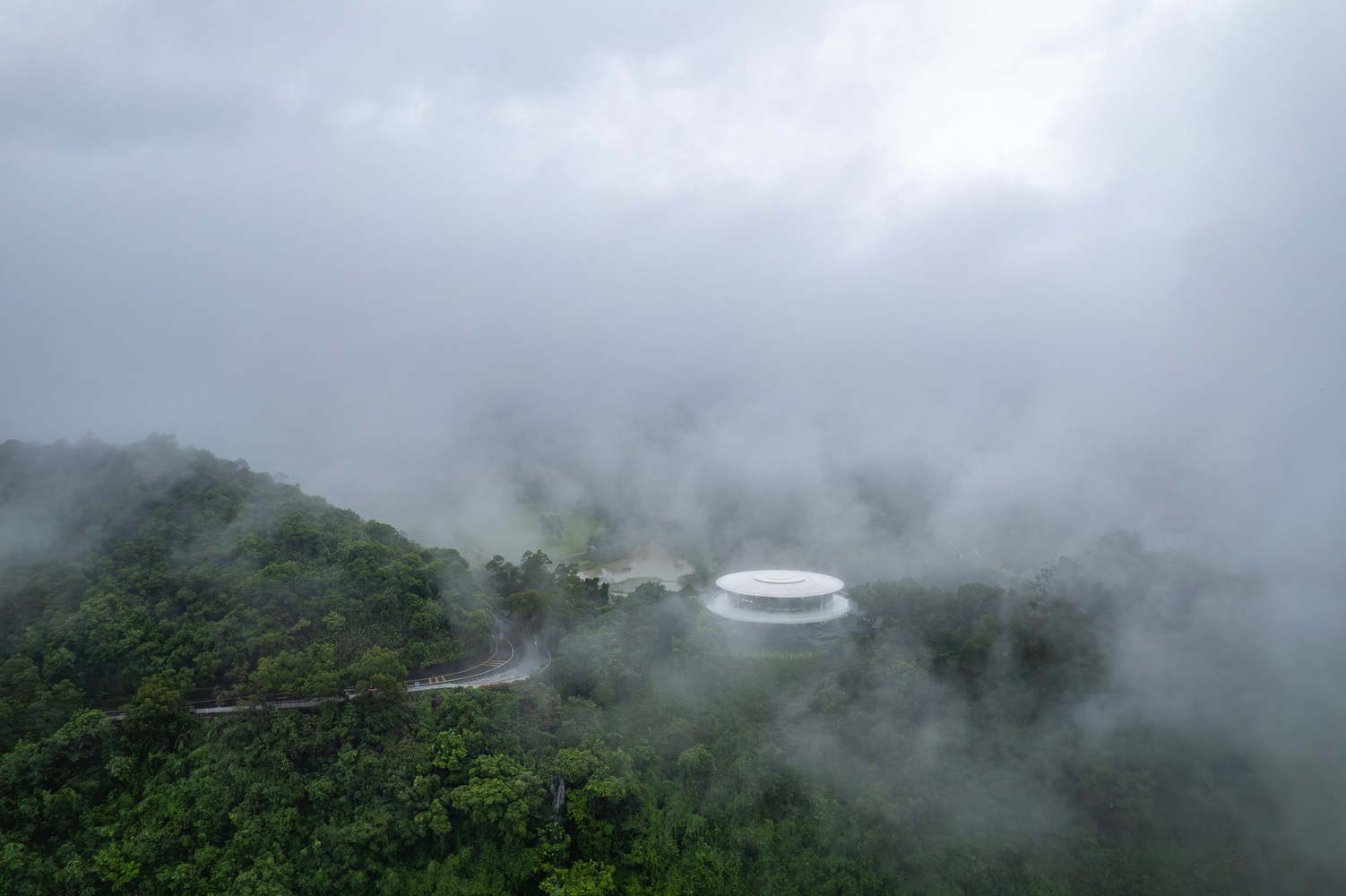
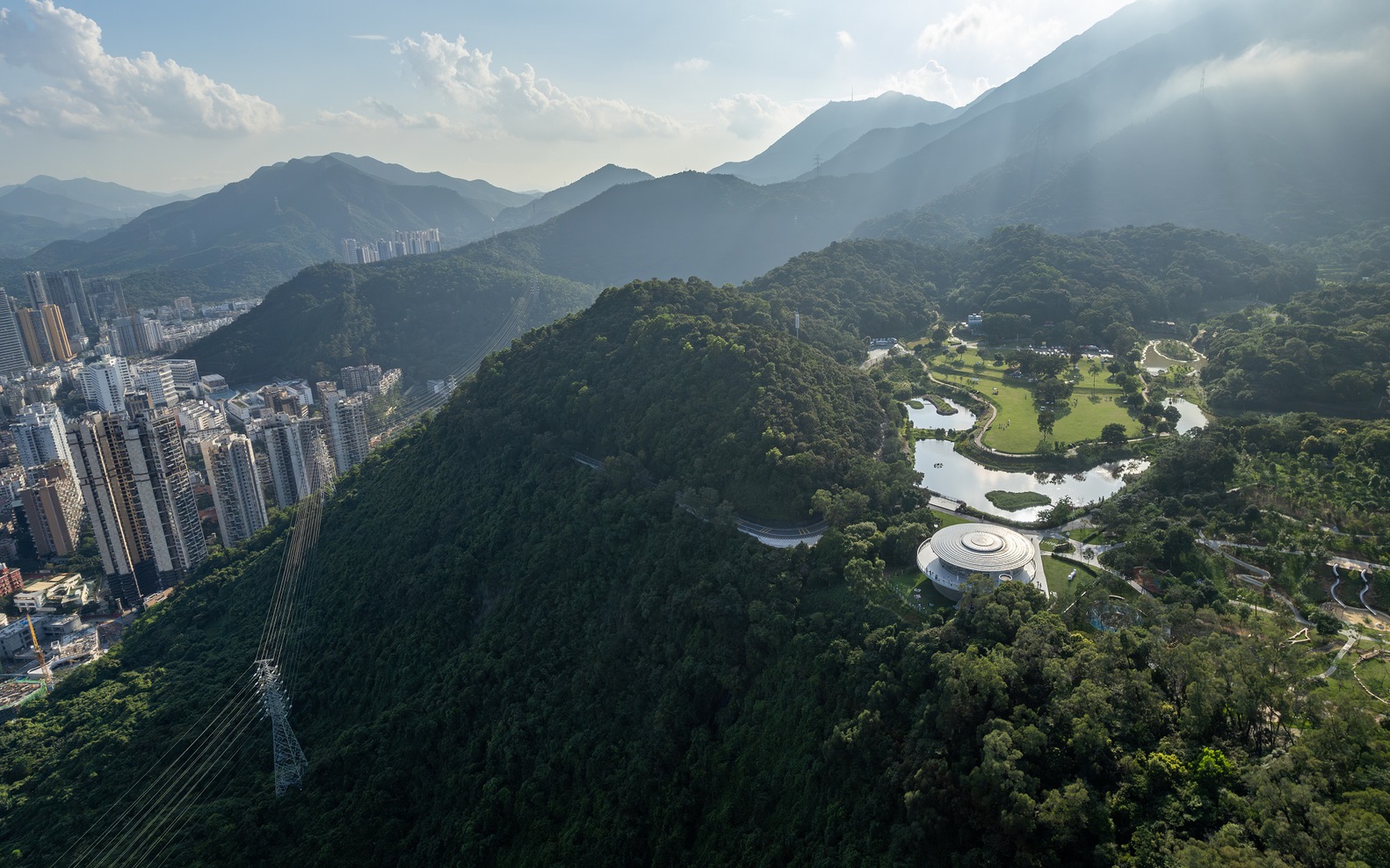
The project is located within Ensheng Wetland Park atop Wutong Mountain in Yantian District.
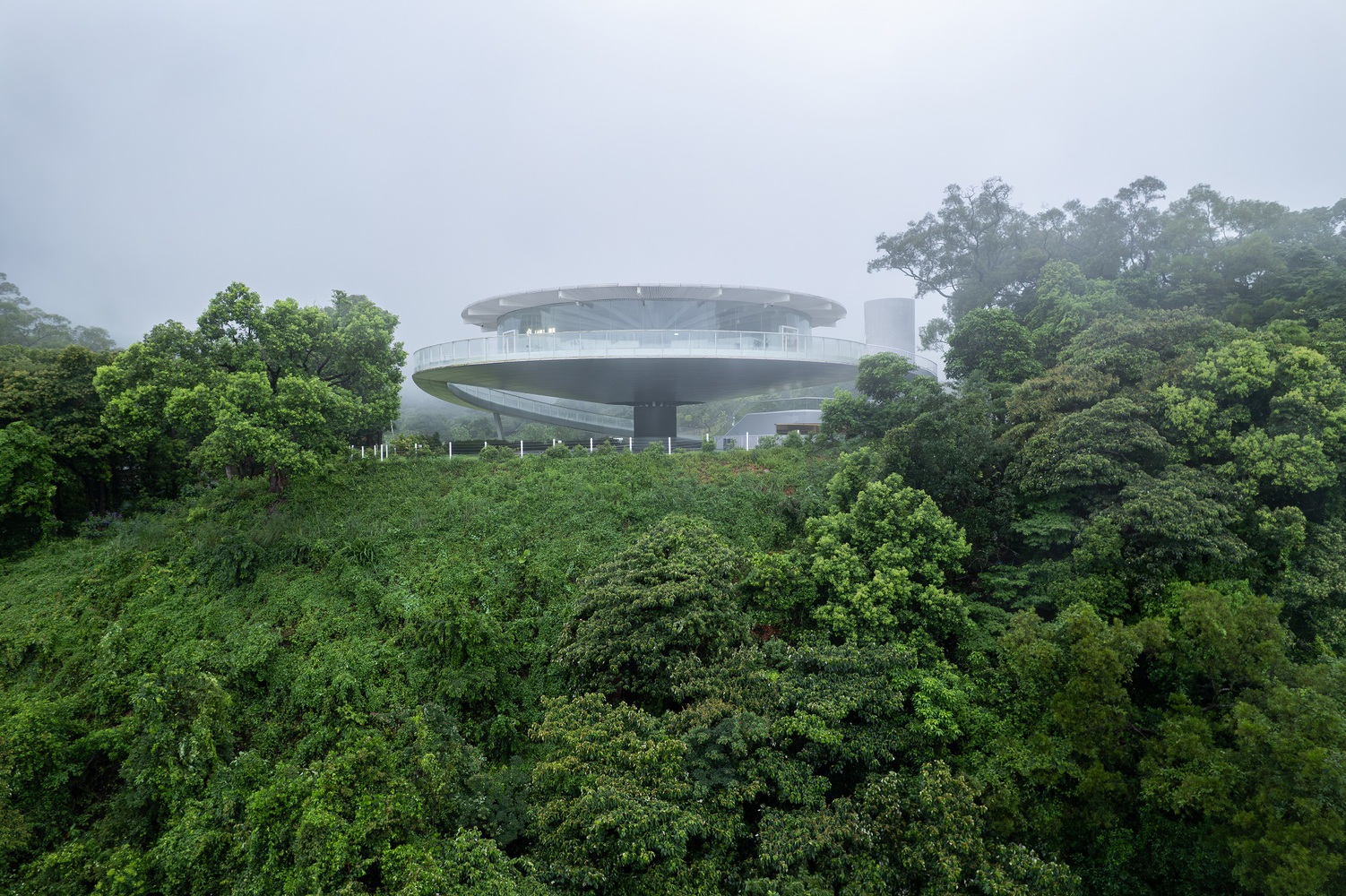
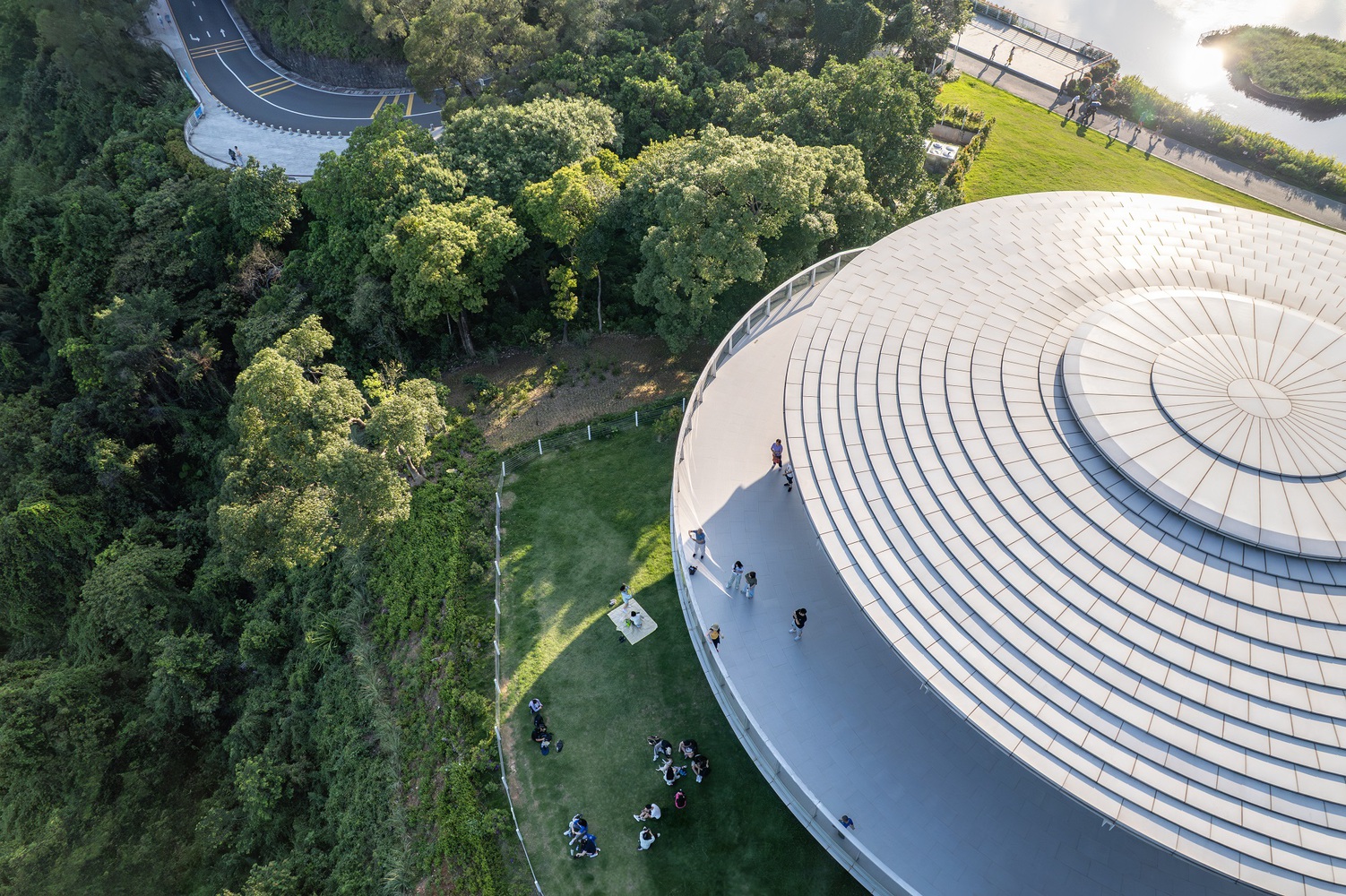
Here, on one side lies the summit landscape of the Ensheng Wetland with Wutong Mountain, and on the other stretches the seemingly endless seascape of Yantian Port, reminiscent of "mystical mountains beyond the sea," alongside the continuously stacked containers within the port itself.
The wonders of nature and human artifice are presented here almost simultaneously. The client's brief was clear: this pavilion must offer a view of the sea.
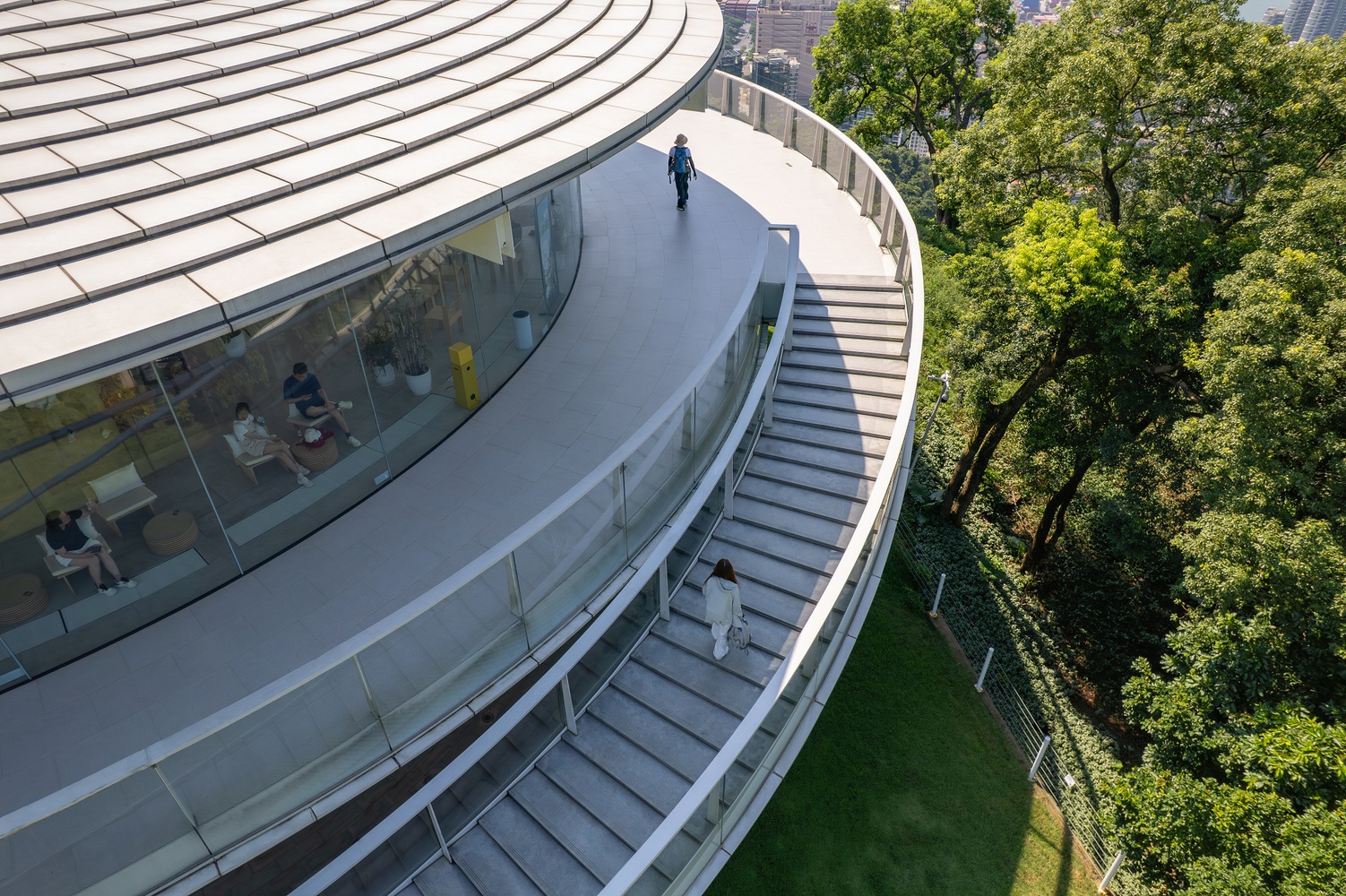
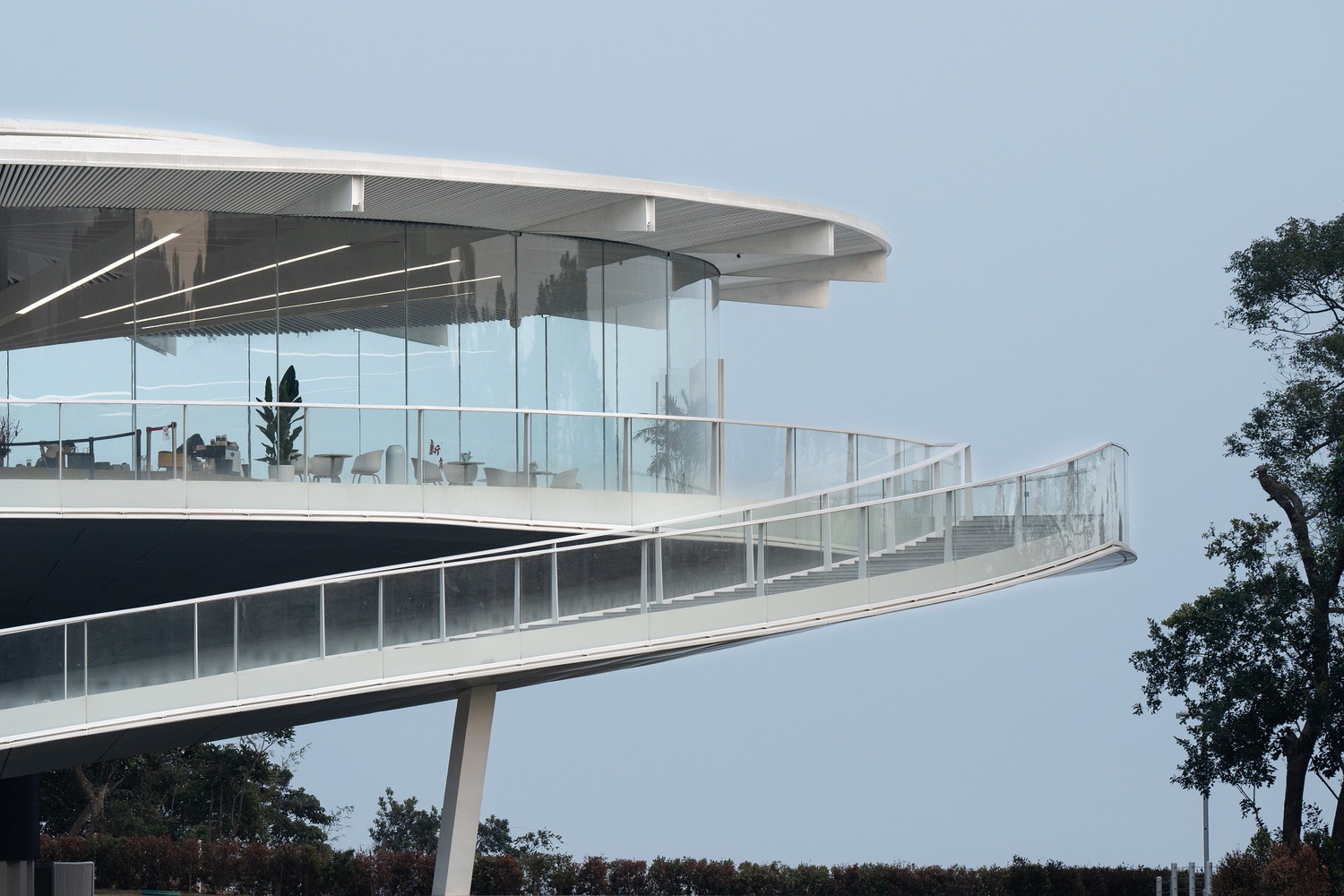
This inspired a broader aspiration: to create a "space" where one can enjoy 360-degree panoramic views. Concurrently, we set ourselves a requirement: the presence of the architecture must not disturb the natural ground.
CONCEPT: DANDELIONS IN THE MOUNTAINS
Shenzhen is a city of migrants. Everyone who arrives here settles and takes root, much like dandelion seeds, becoming a part of the city.
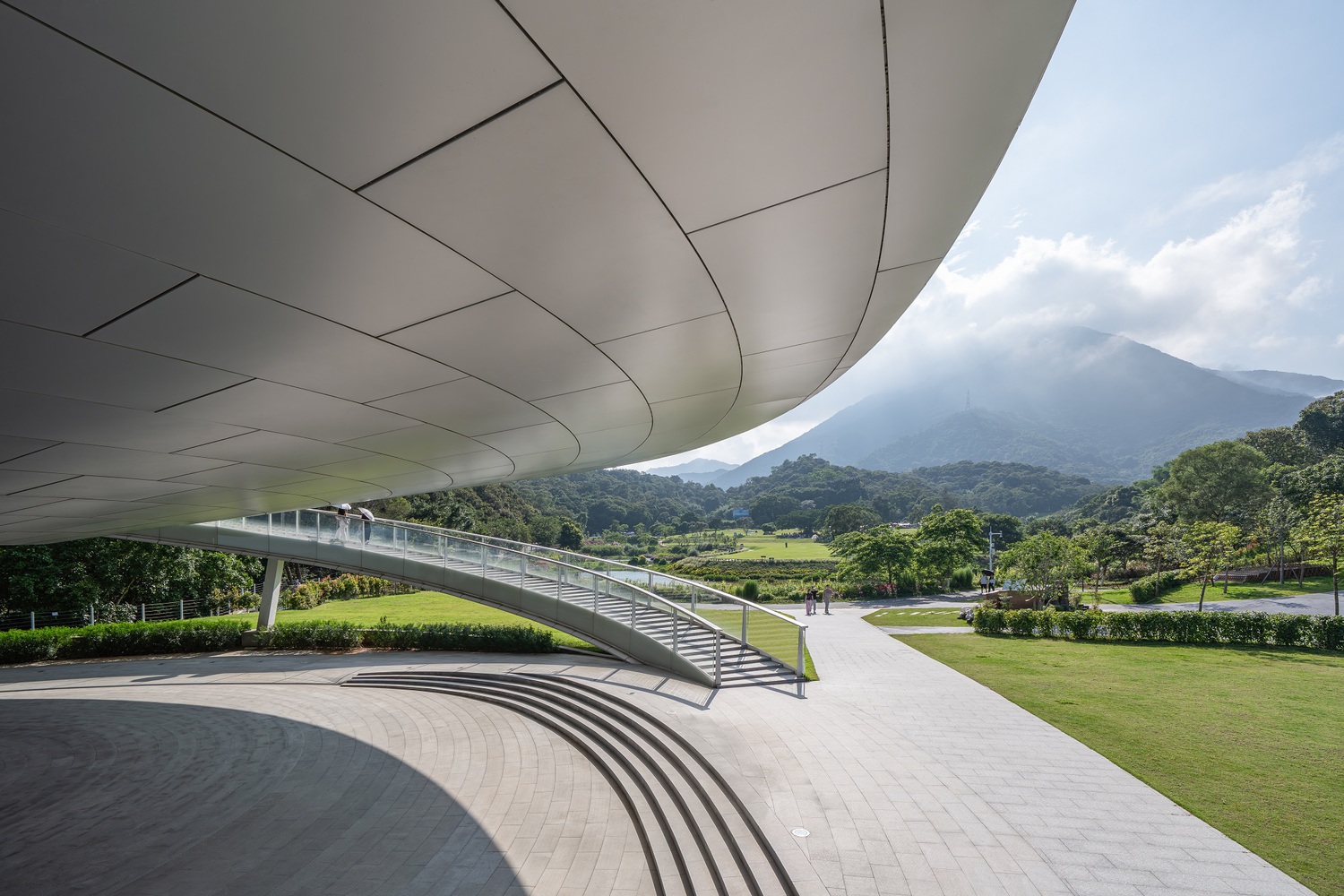
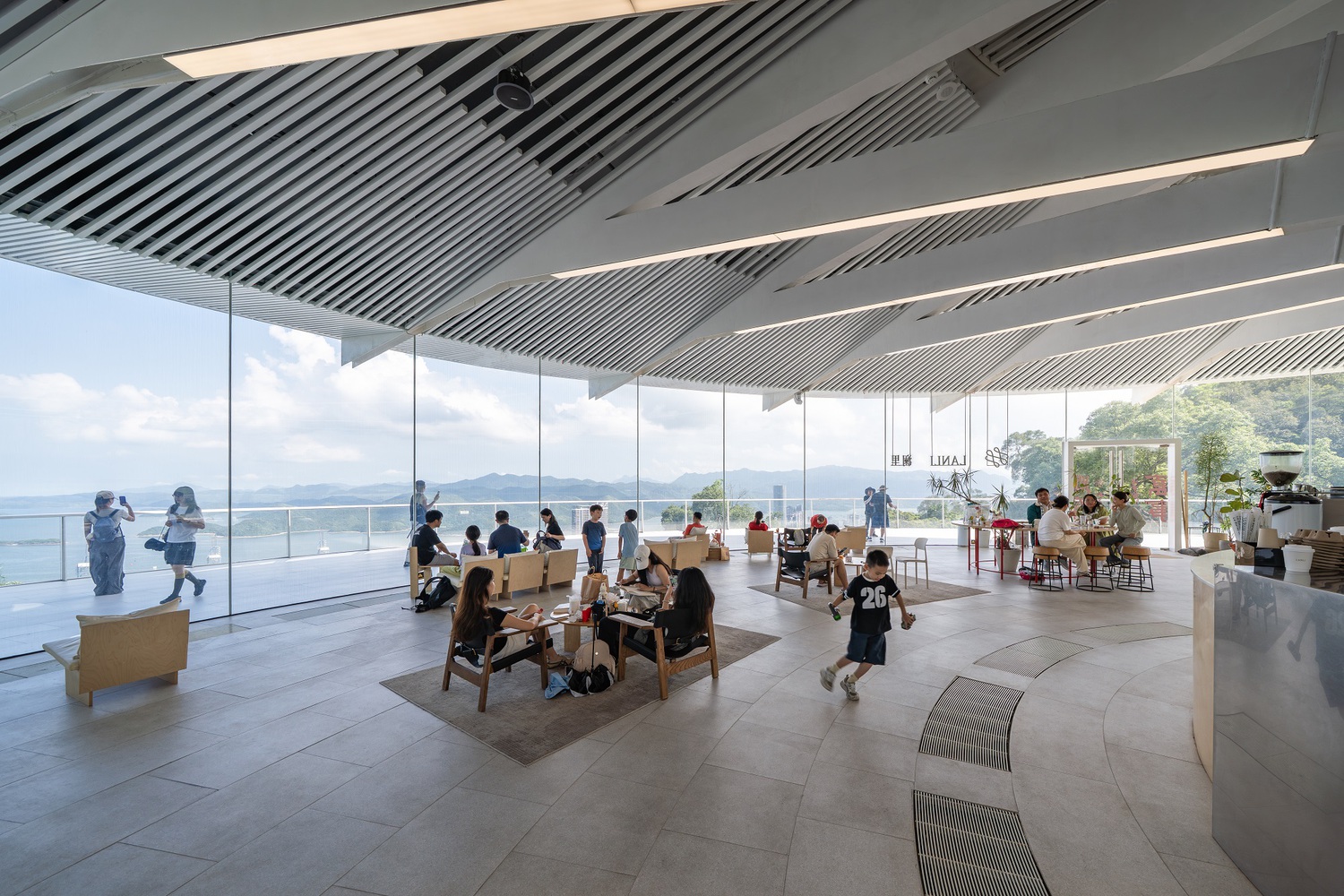
Using the imagery of "Dandelions in the Mountains," we aimed to create a gathering place. Within this ecological environment, our goal was to minimize the impact of the building's introduction on the natural surroundings.
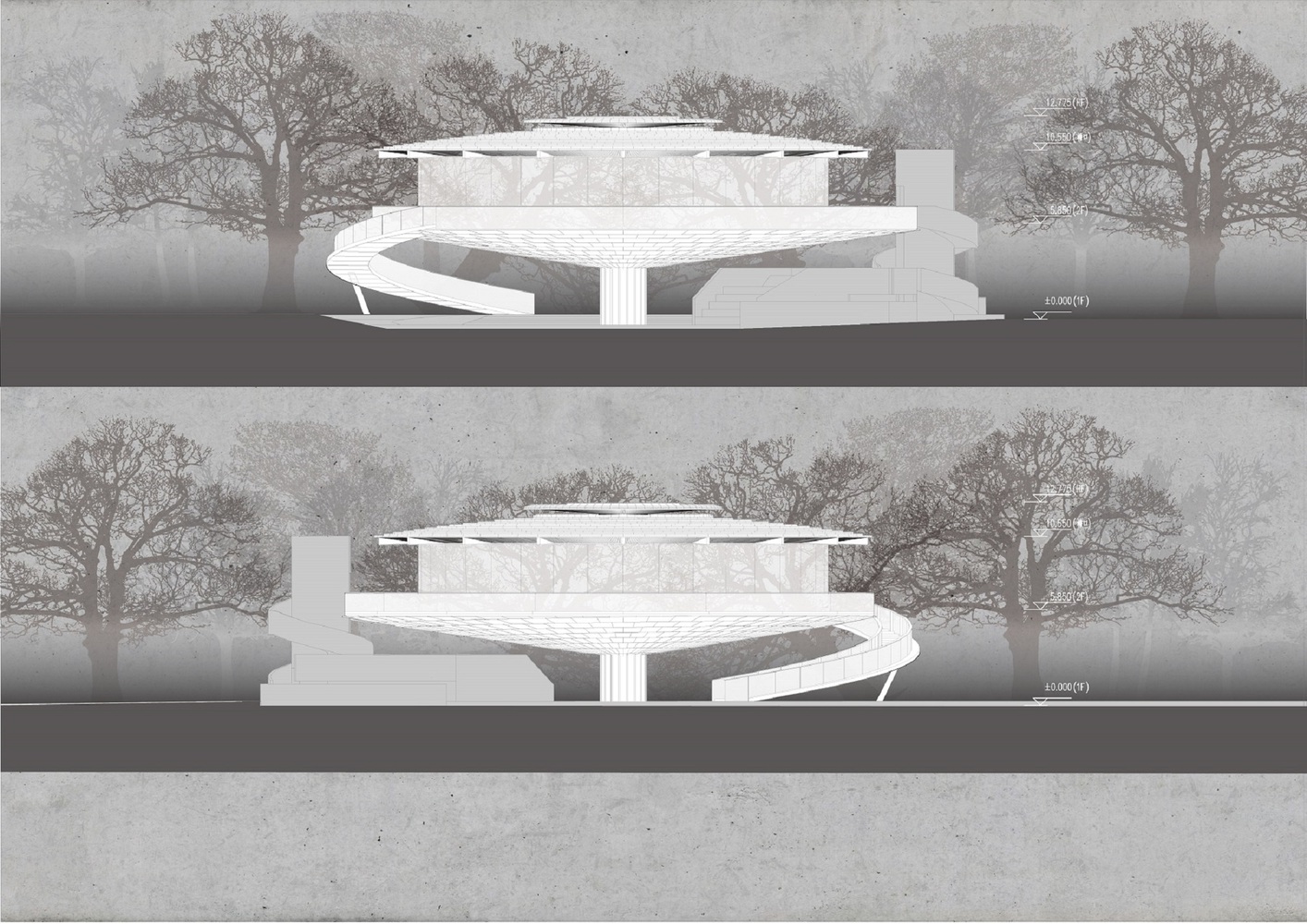
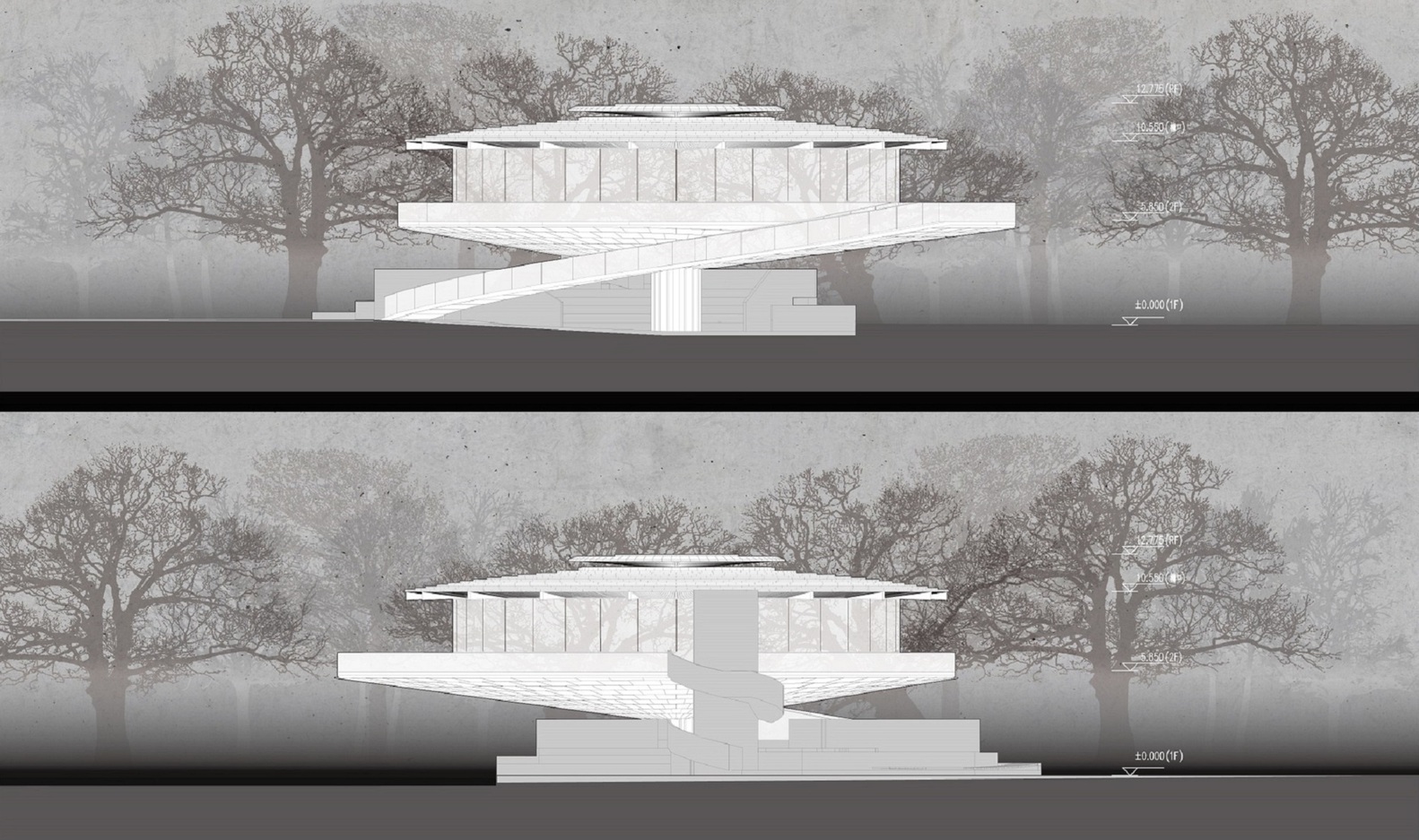
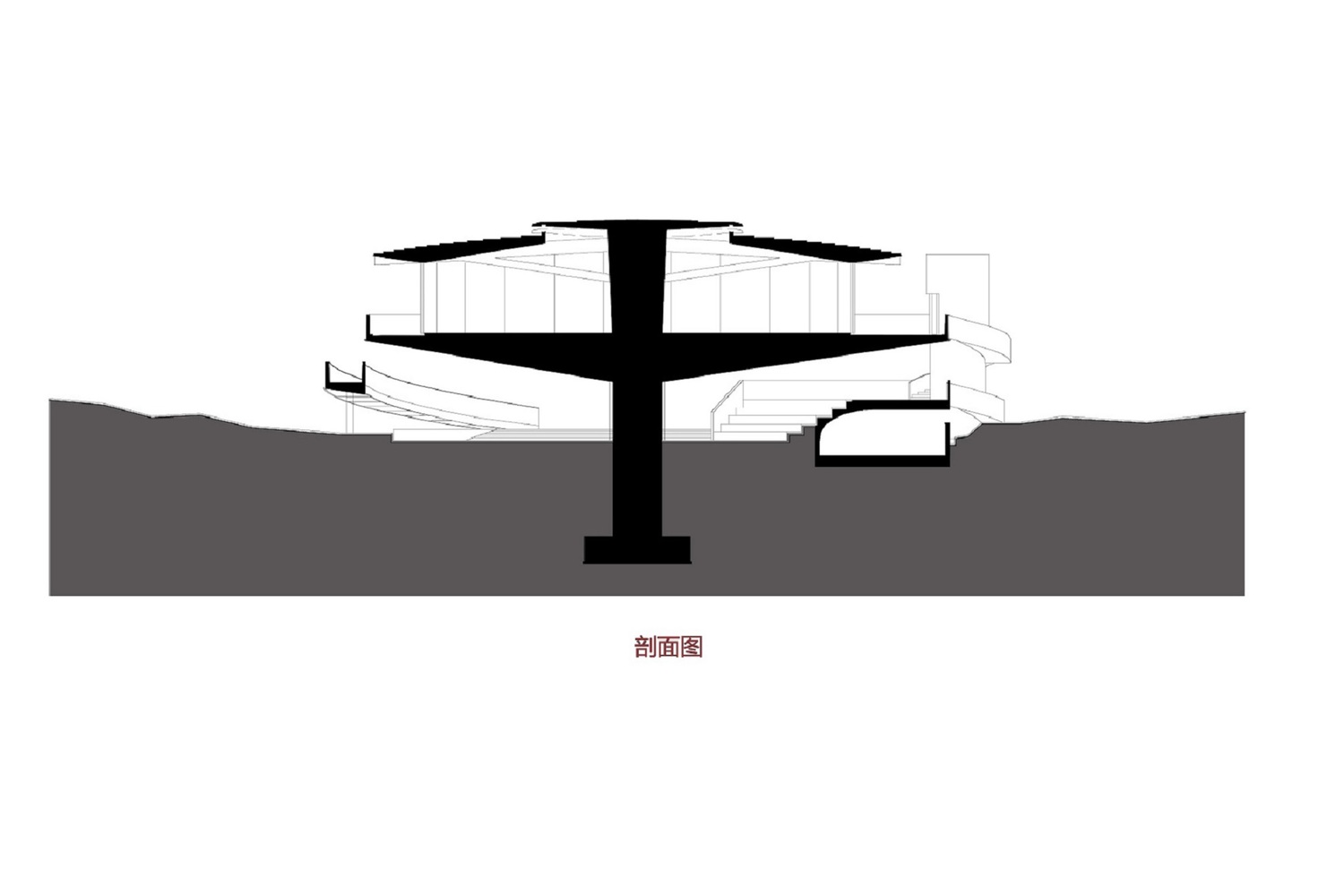
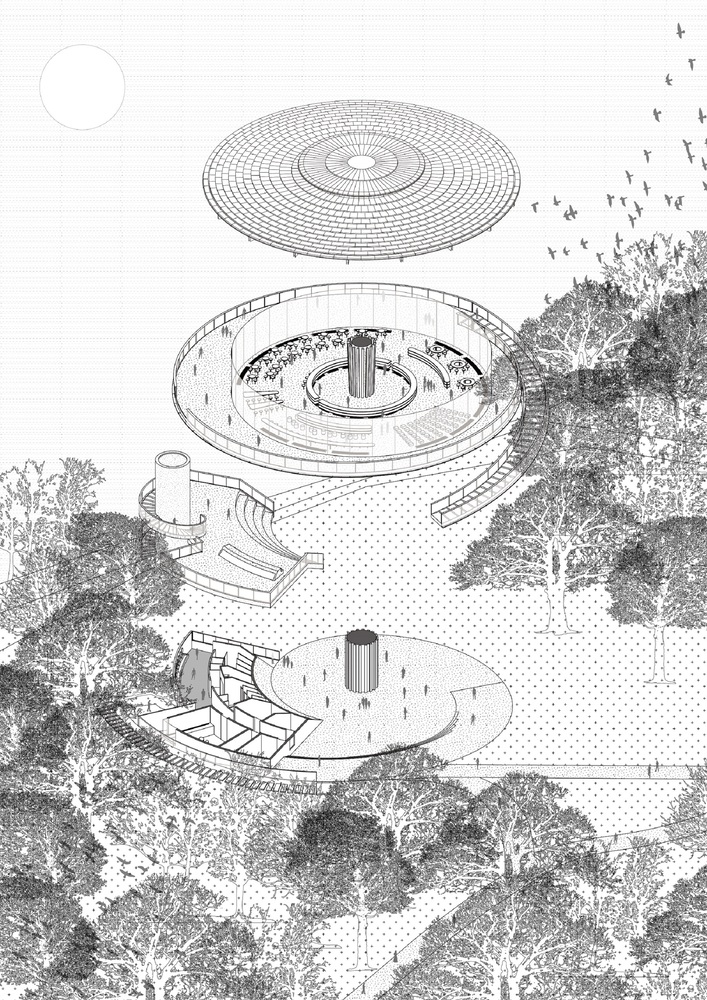
Consequently, we opted for an "umbrella-like" circular steel structural system, reminiscent of a dandelion: the ground floor is largely elevated on stilts, while the roof and floor slab are supported and connected by upper and lower trussed Vierendeel frame systems, all transferring loads via a central column.
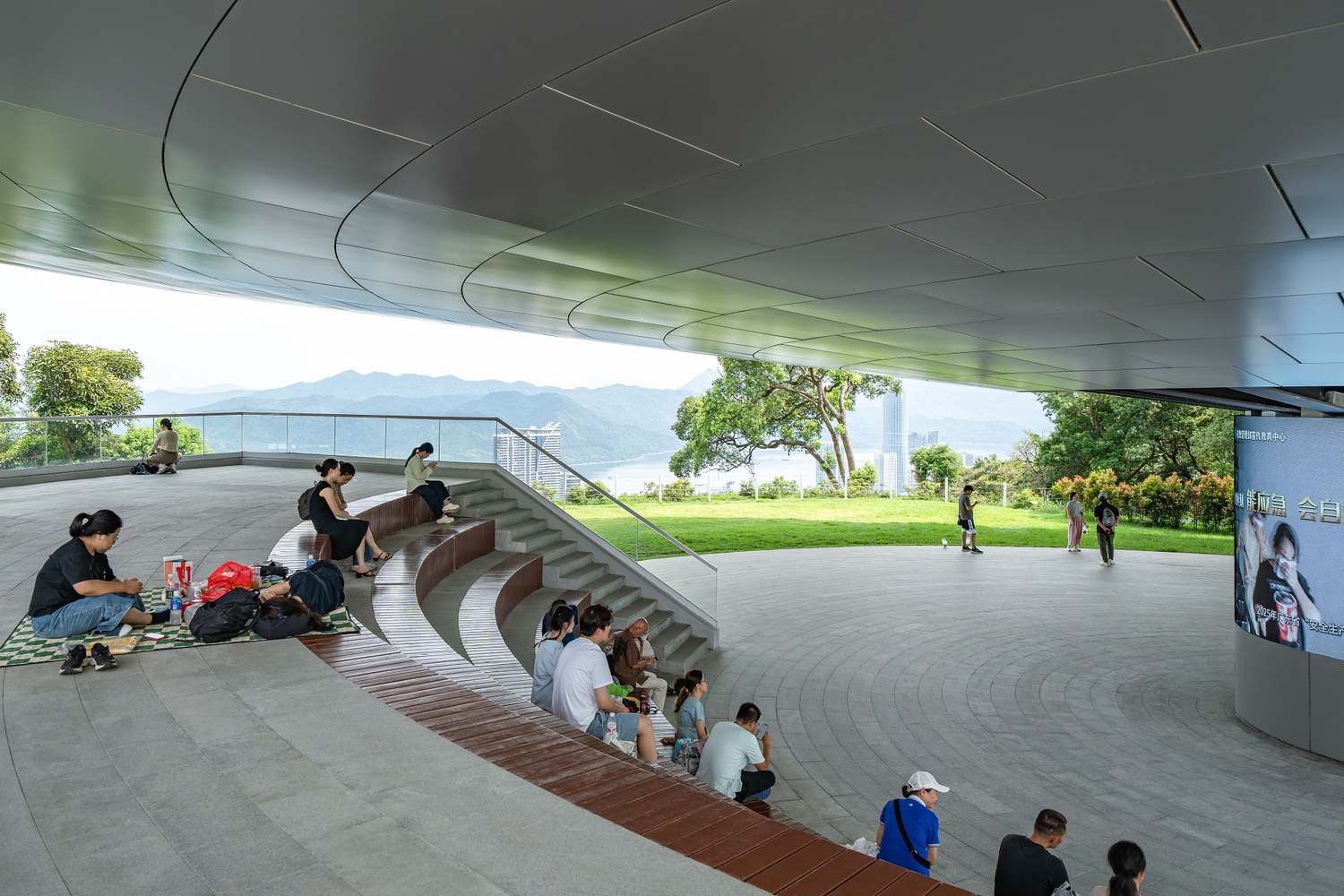
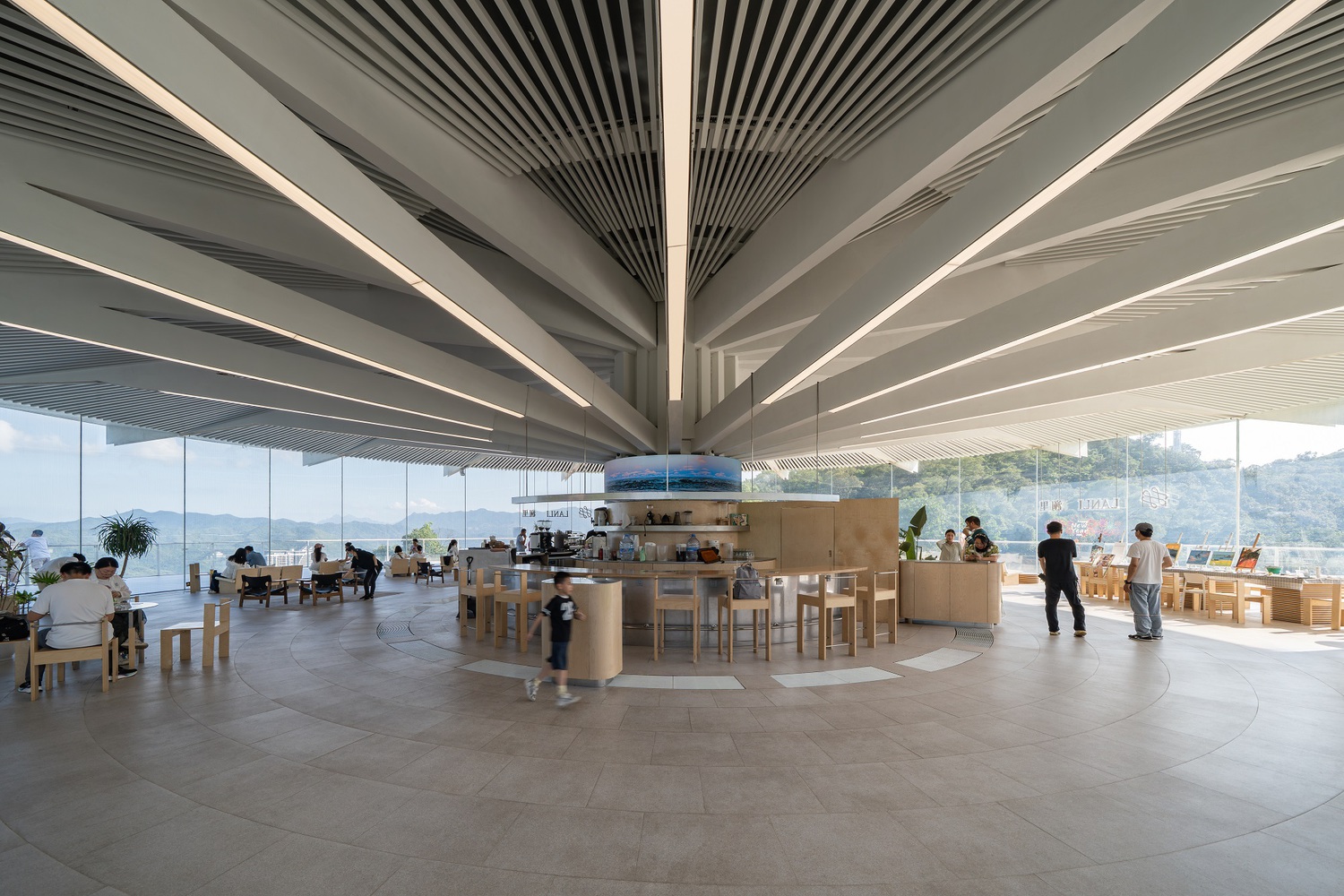
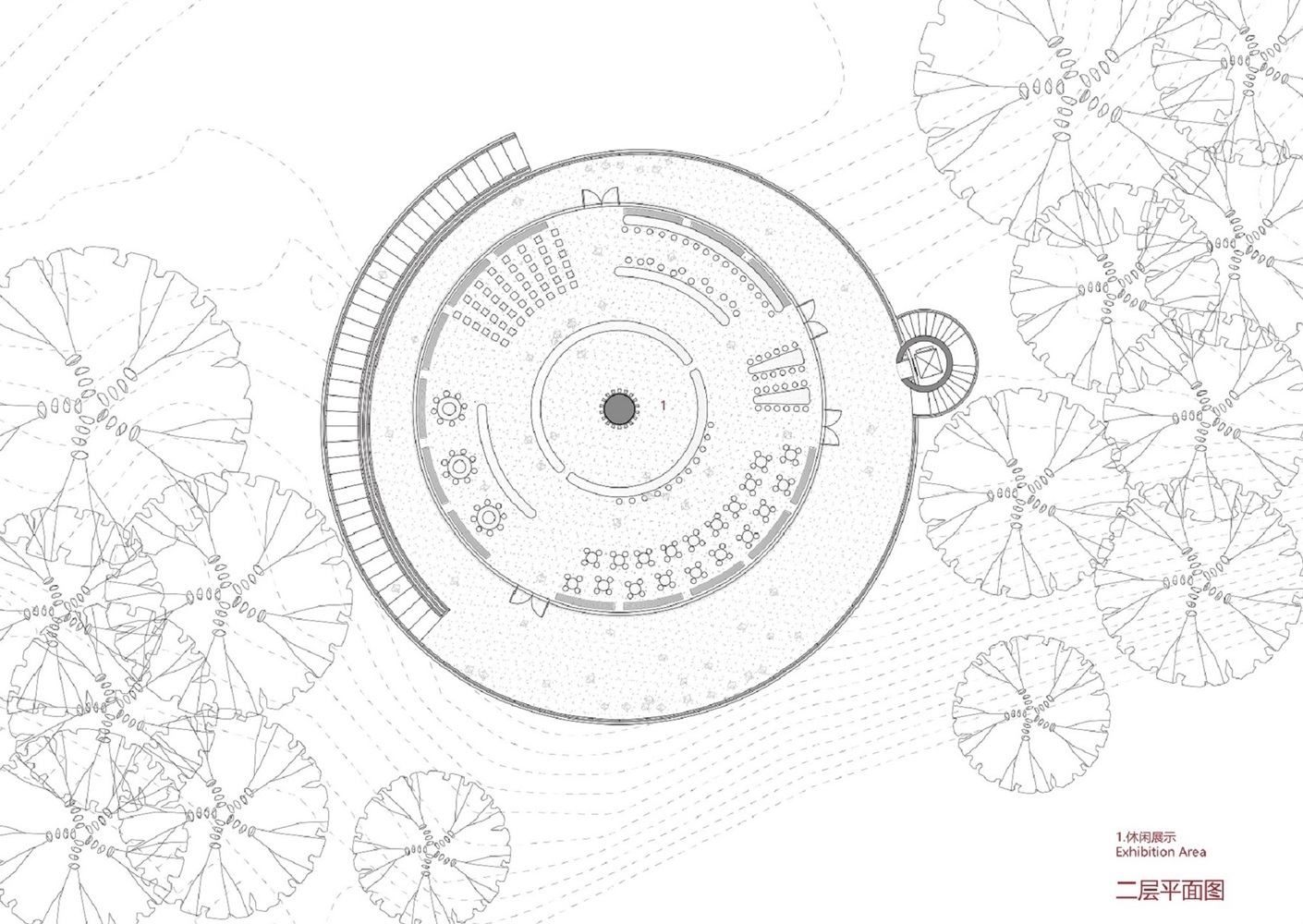
This arrangement allows the activity area on the second floor to be free of peripheral columns, achieving fully open sightlines and 360° panoramic views.
The non-accessible roof is supported by a central column within a 16-meter radius umbrella structure. The main activity platform on the second level, which serves as the primary circulation space, forms a circular plane with a 19-meter radius.
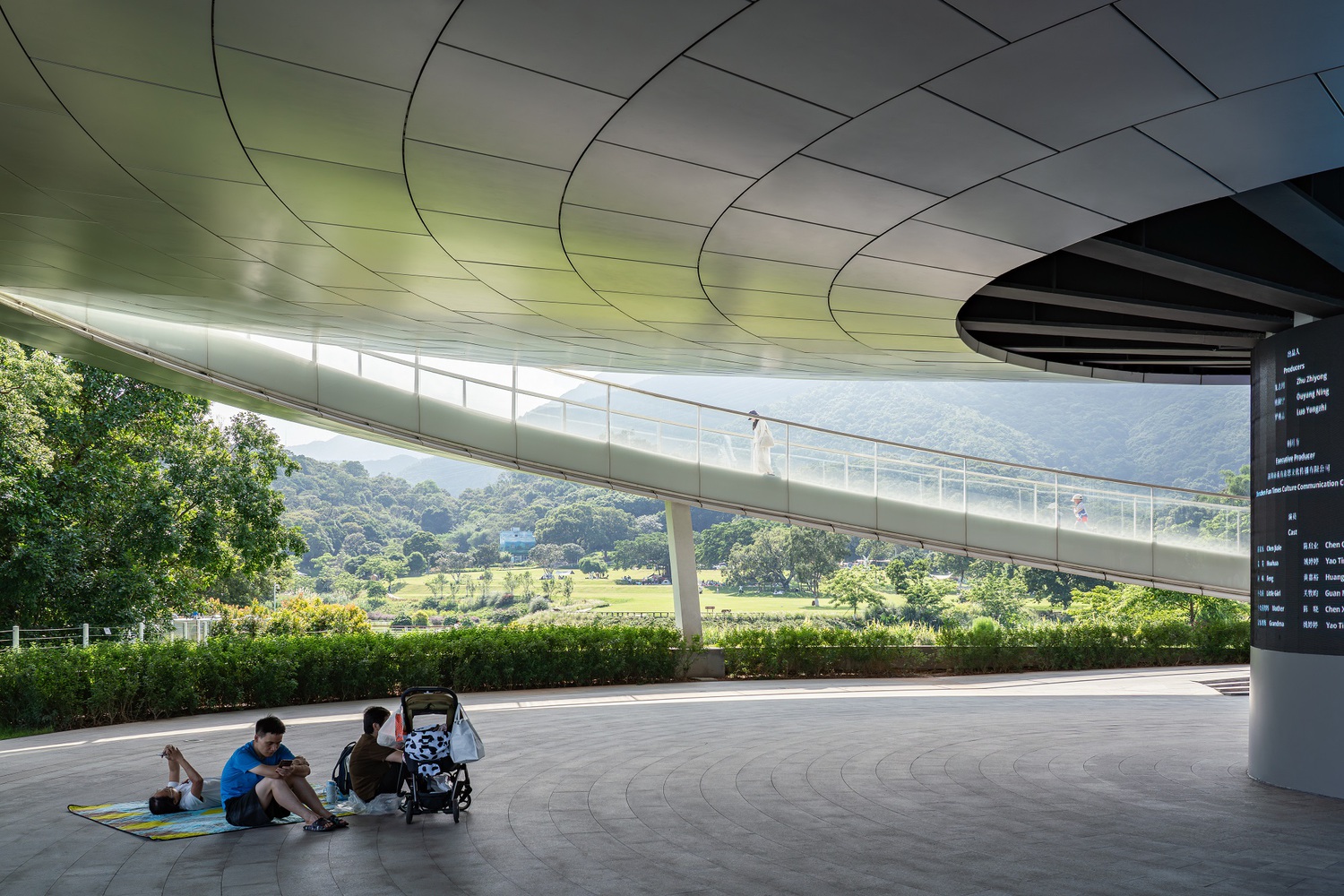
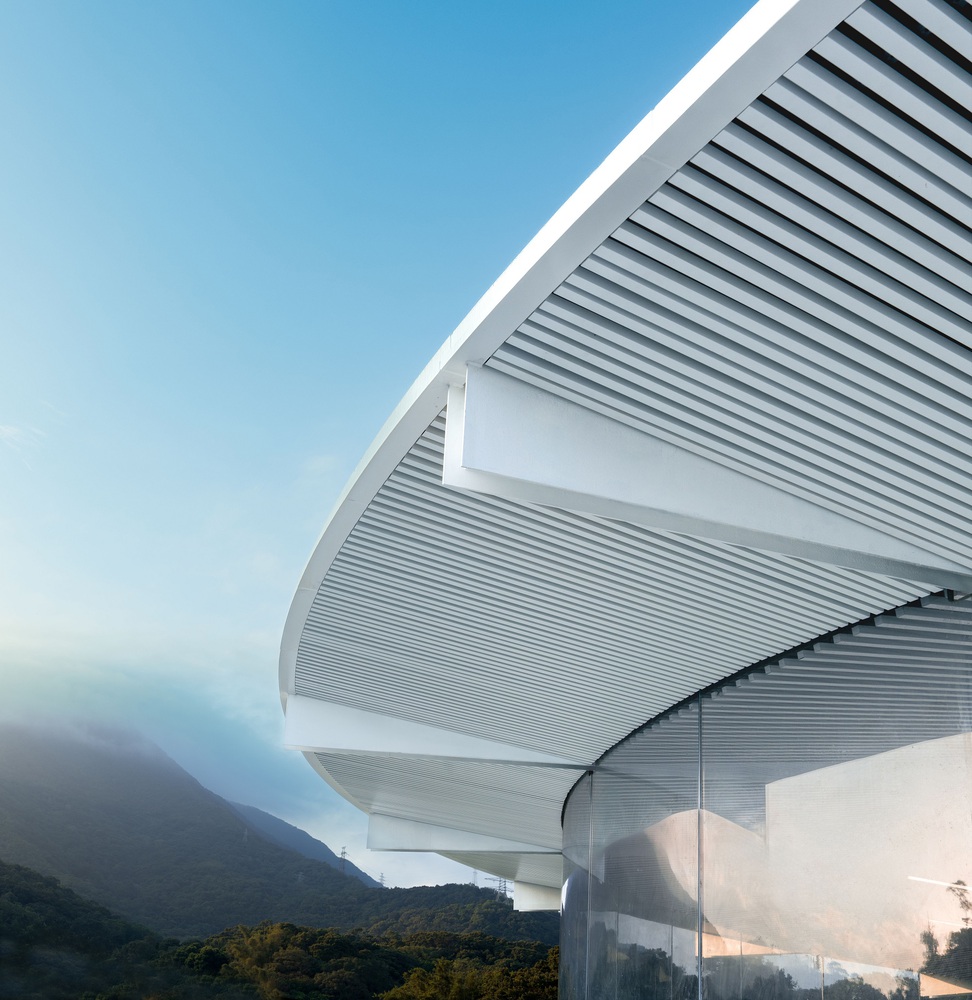
It is supported by a three-point system consisting of the central column, the circular elevator core (for the cantilevered section), and a curved staircase (the mid-span of which is reinforced by an inclined column).
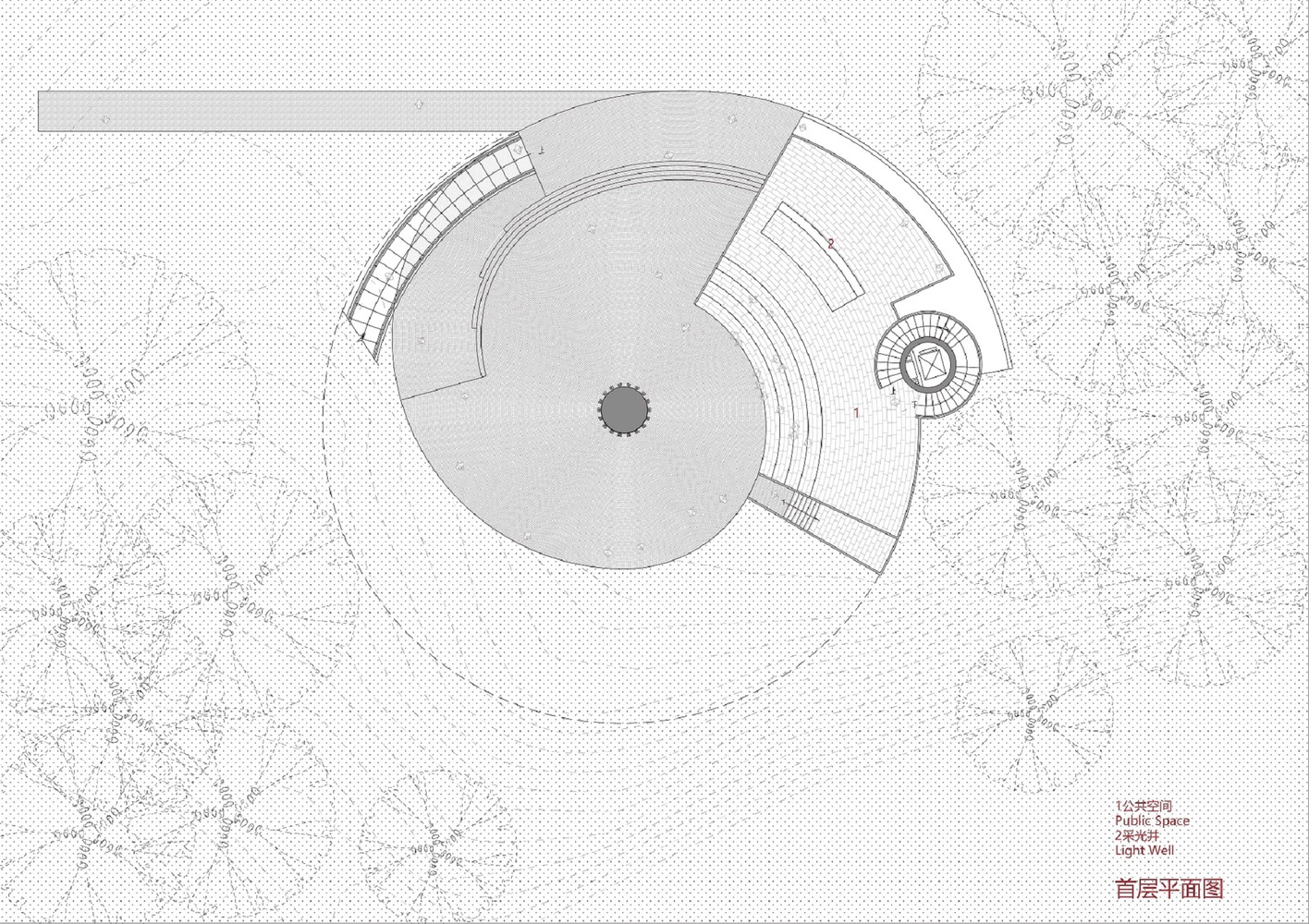
To achieve the panoramic view, a circular plan was adopted: a circular gathering space at ground level, a circular platform on the second floor, and a circular roof.
Three circles with different radii (16m, 13m, and 19m, respectively) are positioned with offset centers around the central structural column. This deliberate misalignment creates varying overhangs, introducing a dynamic, slightly unstable spatial sensation.
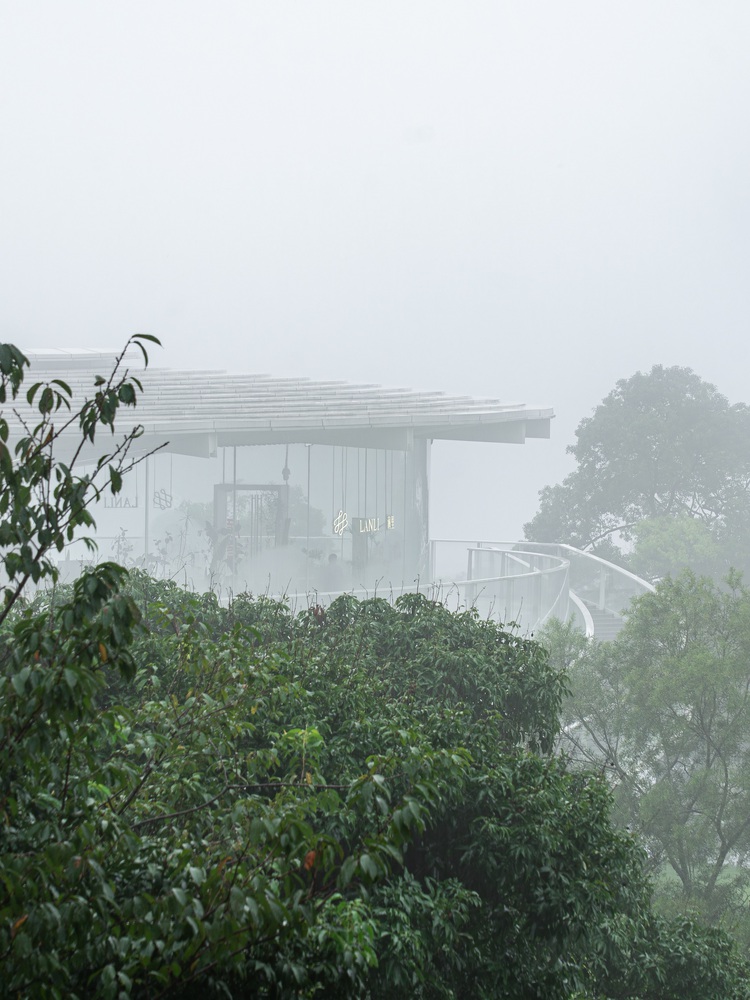
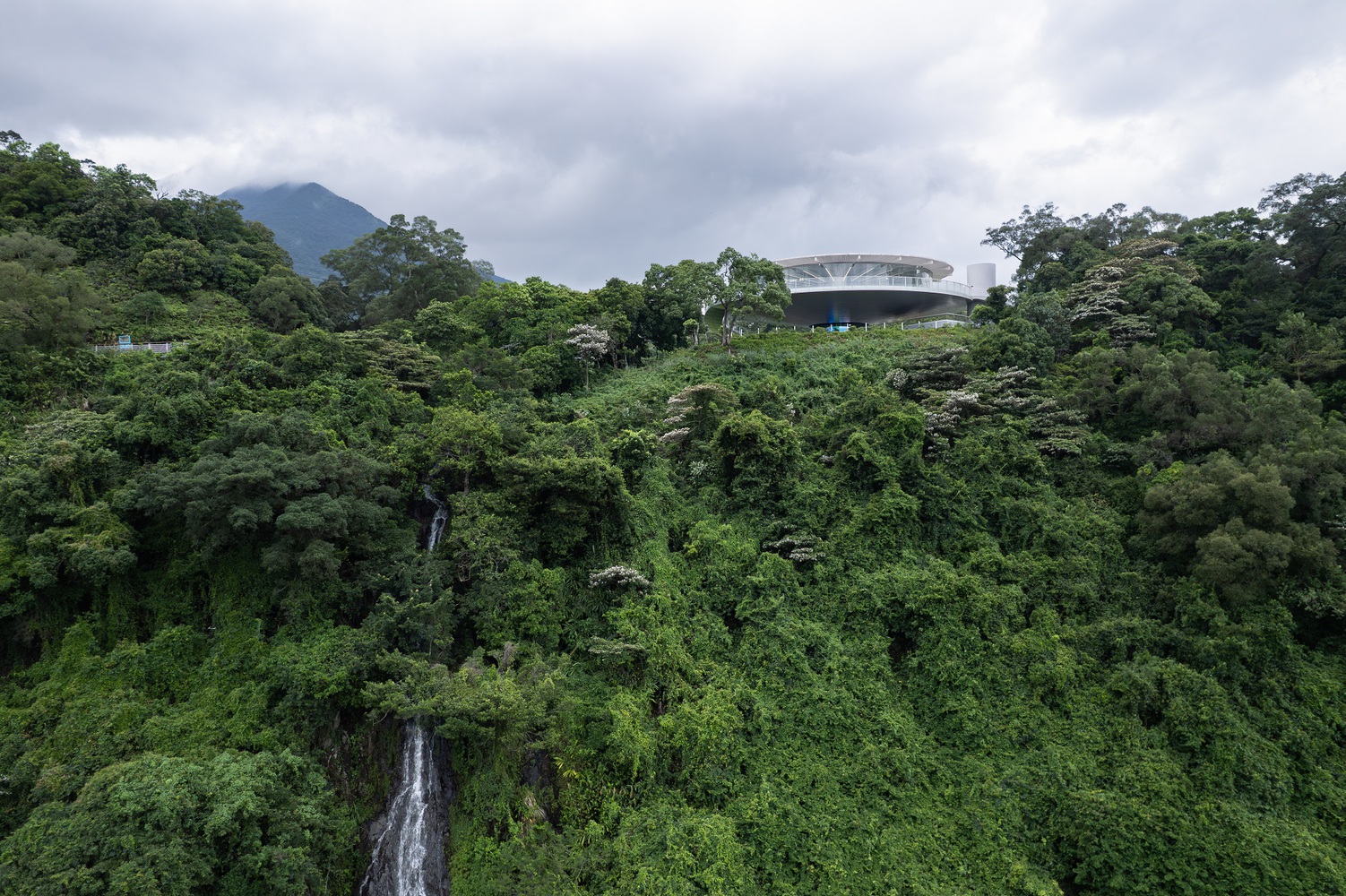
The largest cantilever extends towards the sea, forming an expansive outdoor platform that serves as a public viewing deck.
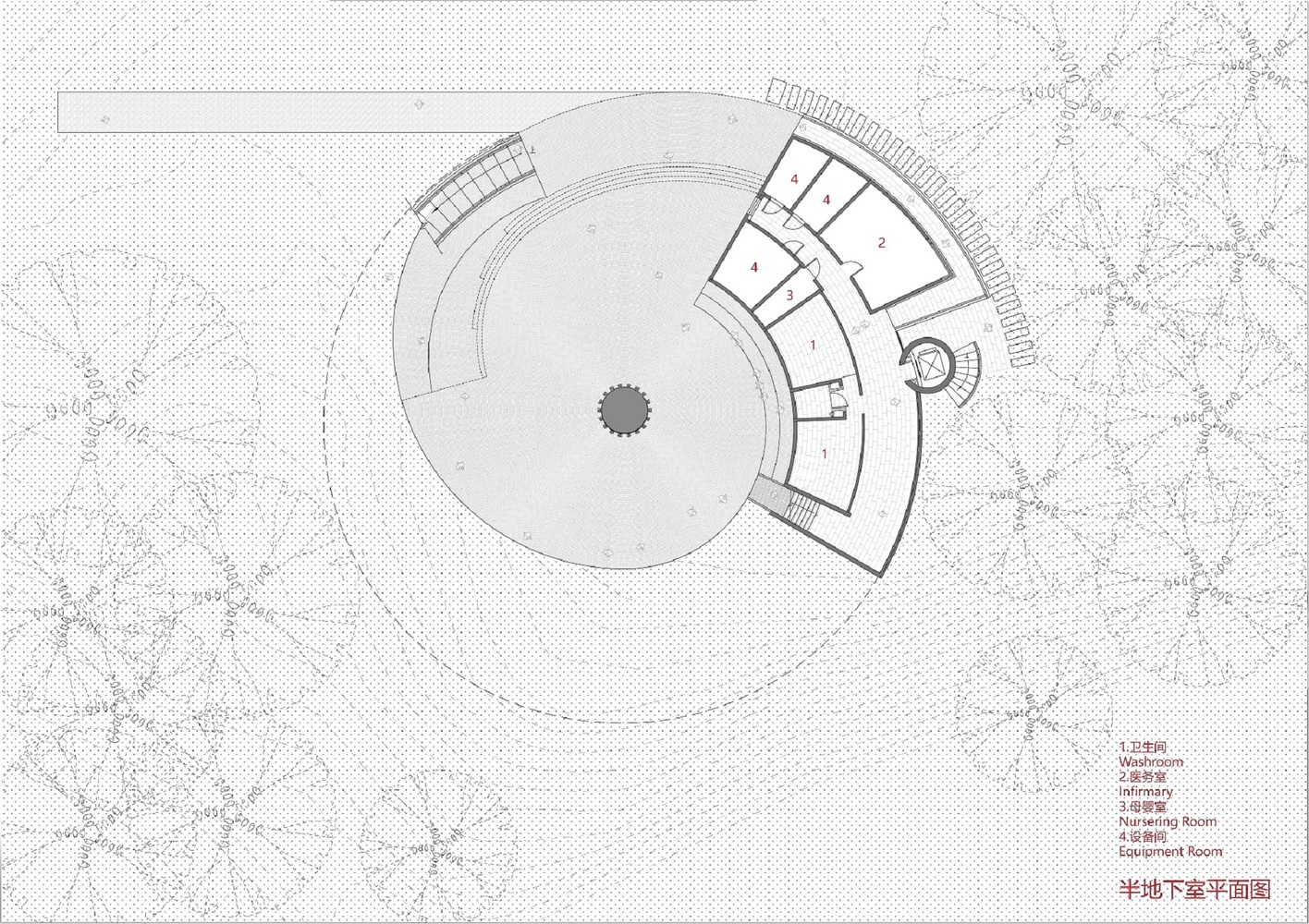
A single-flight curved staircase guides movement and view in a rotating sequence—from the mountain, through the trees, and finally towards the ocean horizon. Service spaces, including restrooms, an elevator, and mechanical equipment, are consolidated on the north side.
Partially embedded into the slope in a semi-sunken configuration, their exposed upper volumes form steps that connect with the ground level. Encircling the central column, these elements create a sheltered, semi-outdoor amphitheater at the ground floor.
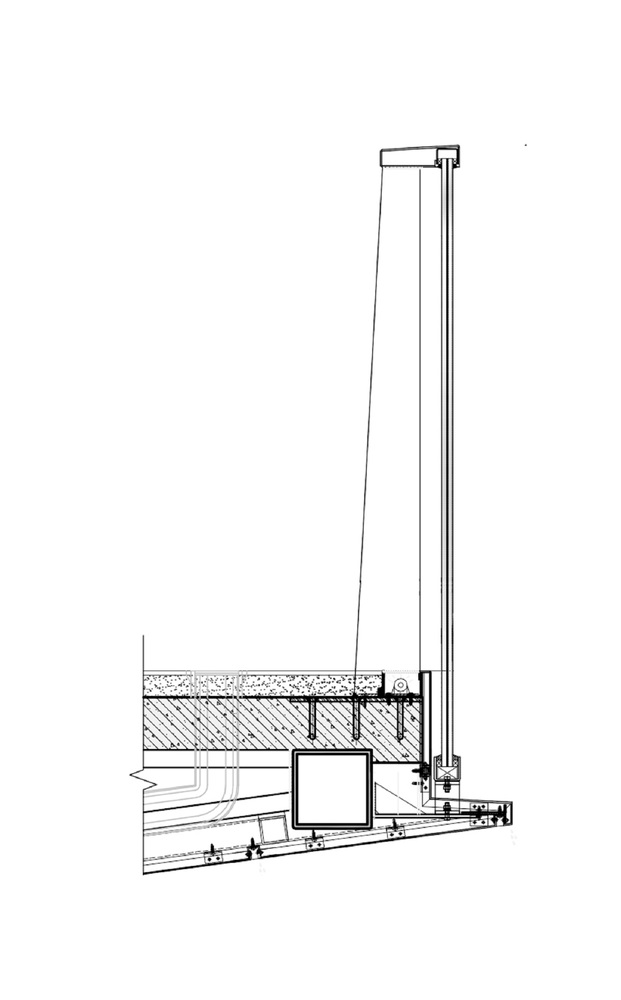
The design highly integrates equipment and structure: the variable cross-section "structural cavity" of the second-level floor slab is rationally utilized to accommodate underfloor air conditioning supply, drainage, electrical conduits, and other services.
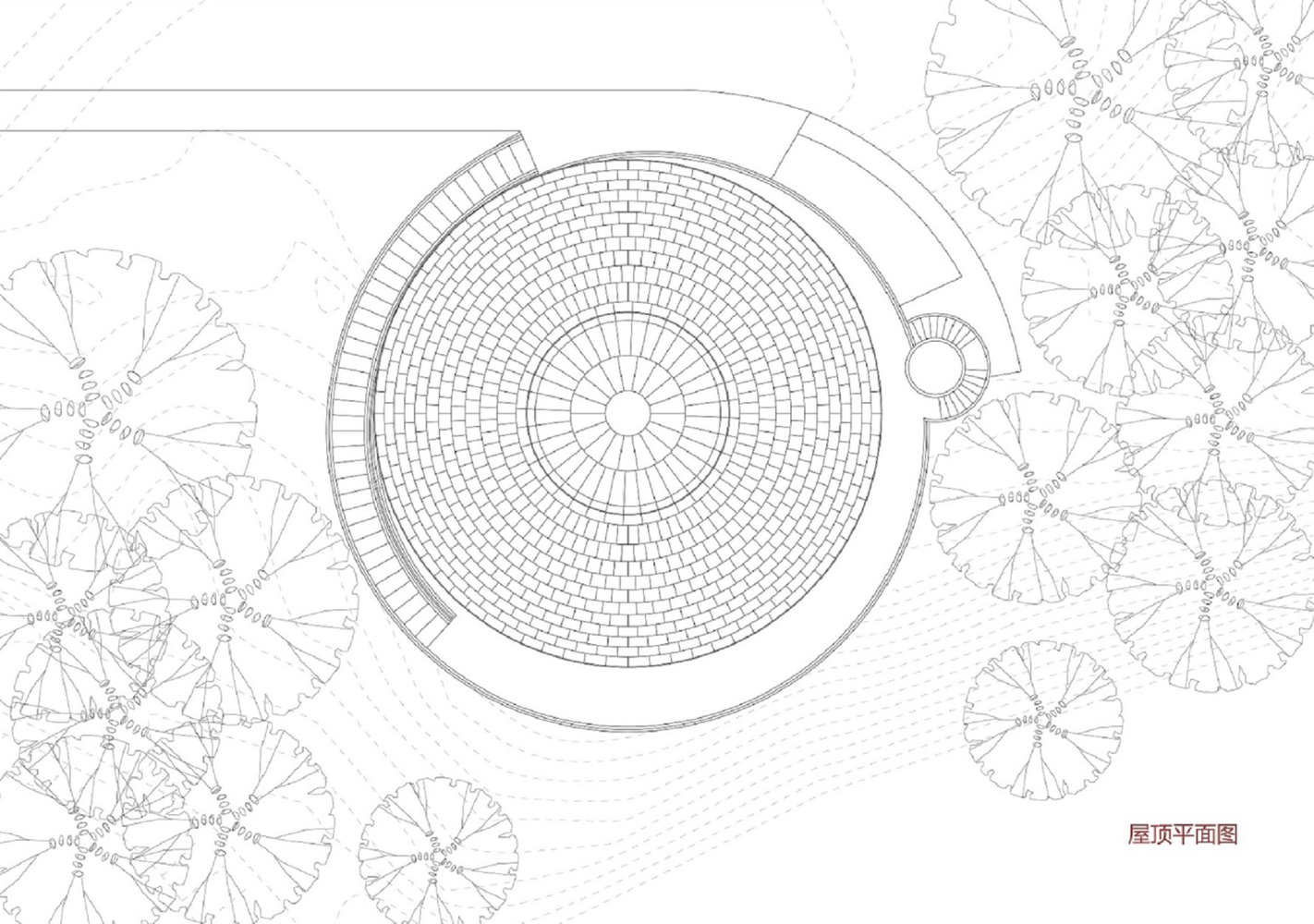
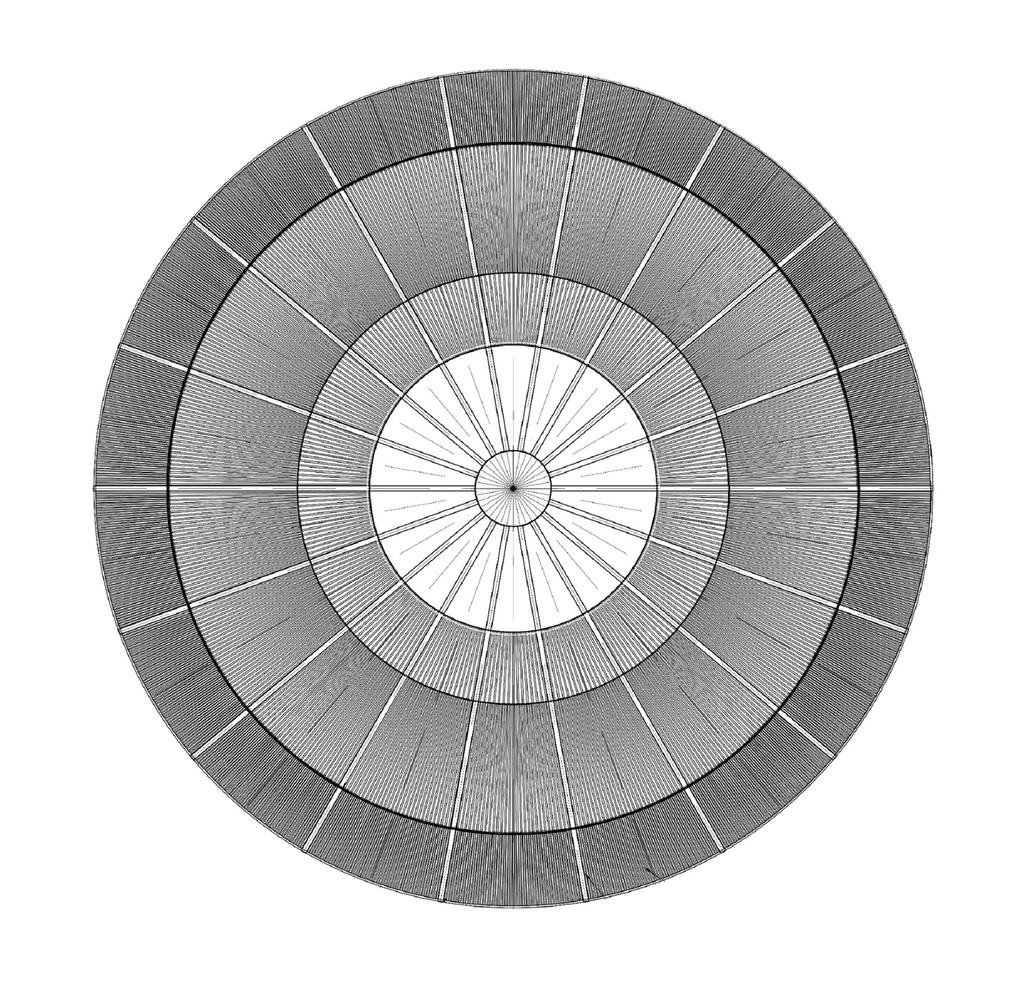
A hydraulically operable skylight is centrally placed on the roof to exhaust hot air from the interior when temperatures rise. The channels of the I-beam sections within the roof truss are repurposed as lighting troughs.
The perimeter glazing employs single-pane curved glass panels that are self-supporting, ensuring unobstructed panoramic views and a sense of transparency from the interior.
The ceiling for the second-level roof, which must conceal equipment and conduits, features a white gridded drop ceiling aligned with the radial pattern of the main beams, realizing the spatial metaphor of the "dandelion."
The sizing of the steel structural members carefully balances the ease of factory prefabrication, transportation constraints, and the project's requirements for precision and economy.
THE INTERPLAY OF "CONCEALMENT" AND "REVELATION" IN NATURE
The ascent follows a winding path that offers captivating views along the way. To preserve the experiential quality of this journey, the pavilion was deliberately designed not to disrupt this intimate scale.
During site selection, a cluster of trees just before reaching the destination was intentionally preserved.
Through careful comparison of the building's massing and height, the structure is partially hidden and screened upon approach, creating a sense of discovery.
On the other side, however, the pavilion marks the endpoint of the open grassland within the mountaintop Enshang Wetland Park—a key spatial node.
Here, the building presents itself in its complete form, establishing itself as a clear focal point within the expansive landscape.