VILAKK RESIDENCE
3dor Concepts
ARCHITECTS
3dor Concepts
LEAD ARCHITECT
Ahmad Thaneem, Muhammed Jiyad, Muhammed Naseem
TECHNICAL TEAM
Rahul V
GENERAL CONTRACTOR
Deem
INTERIOR DESIGN
3kitchh
ENGINEERING & CONSULTING > STRUCTURAL
De Framez
LEAD TEAM
Tejas M
DESIGN TEAM
Roshan, Ajmal
MANUFACTURERS
Simpolo, Tostem
PHOTOGRAPHS
Studio IKSHA
AREA
3000 ft²
YEAR
2025
LOCATION
Payyanur, India
CATEGORY
Houses
English description provided by the architects.
Sumesh and his family want to build his dream home at his native place, Payyanur, a vibrant town known for its cultural heritage, traditions, and scenic charm also has a rich history that blends folklore like theyyam, spirituality, and artistry.
Being a devout spiritualist and residing in a village with a rich cultural heritage, he wanted the symbolisation of the local context and the richness of the temple architecture to reflect in the very own space that can be defi ned as his home.
The site is situated in a rural area, which is closely associated with Theyyam, an ancient ritual art form that showcases the region's spiritual depth and cultural pride.
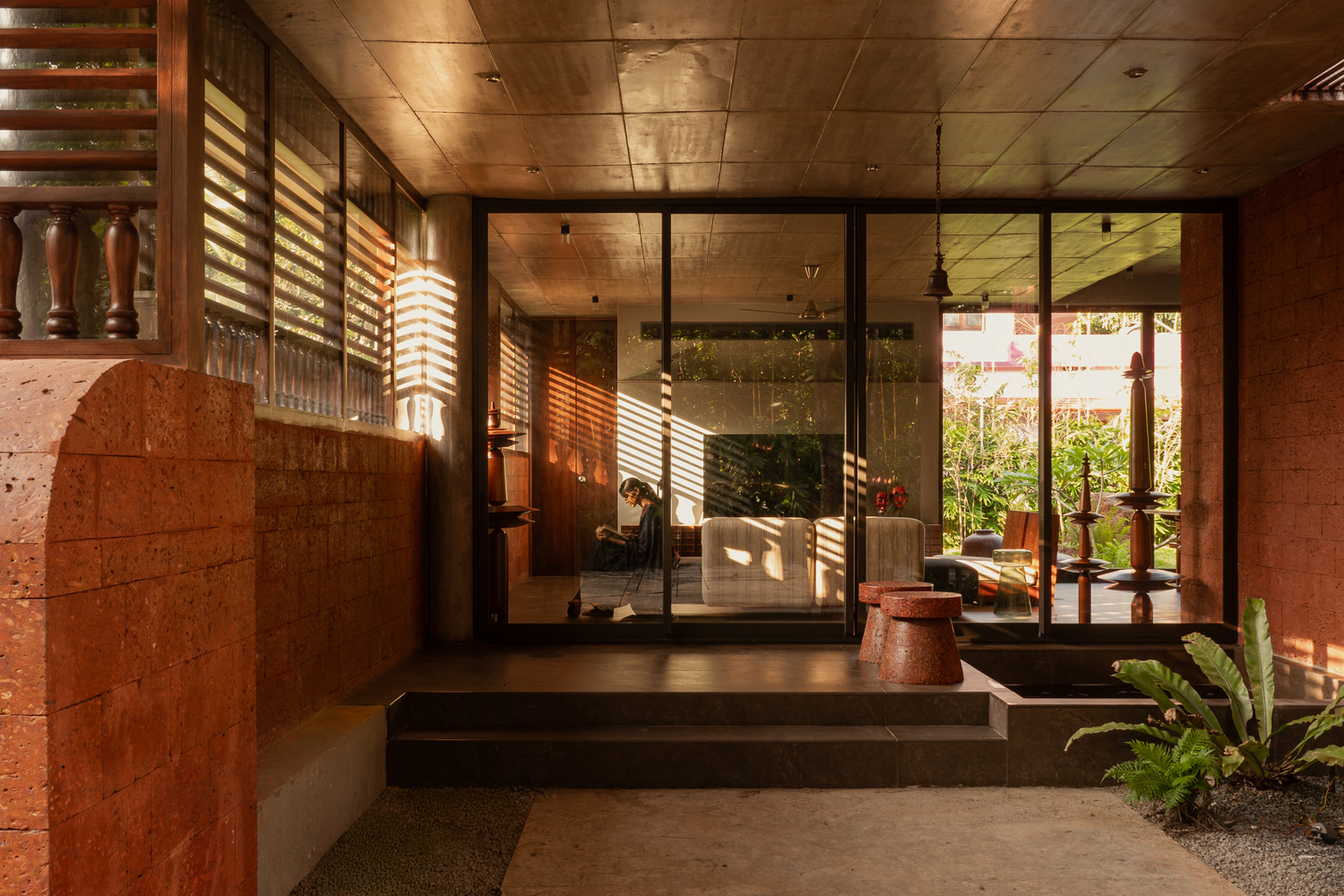
As we approach the site, we encounter the beauty of paddy fields and the intricate character of Northern Kerala temples.
Hence, it was crucial that the design enhances the context, rather than being an odd character in the midst of the rich culture. This was the root of the concept that later evolved as the core of the design.
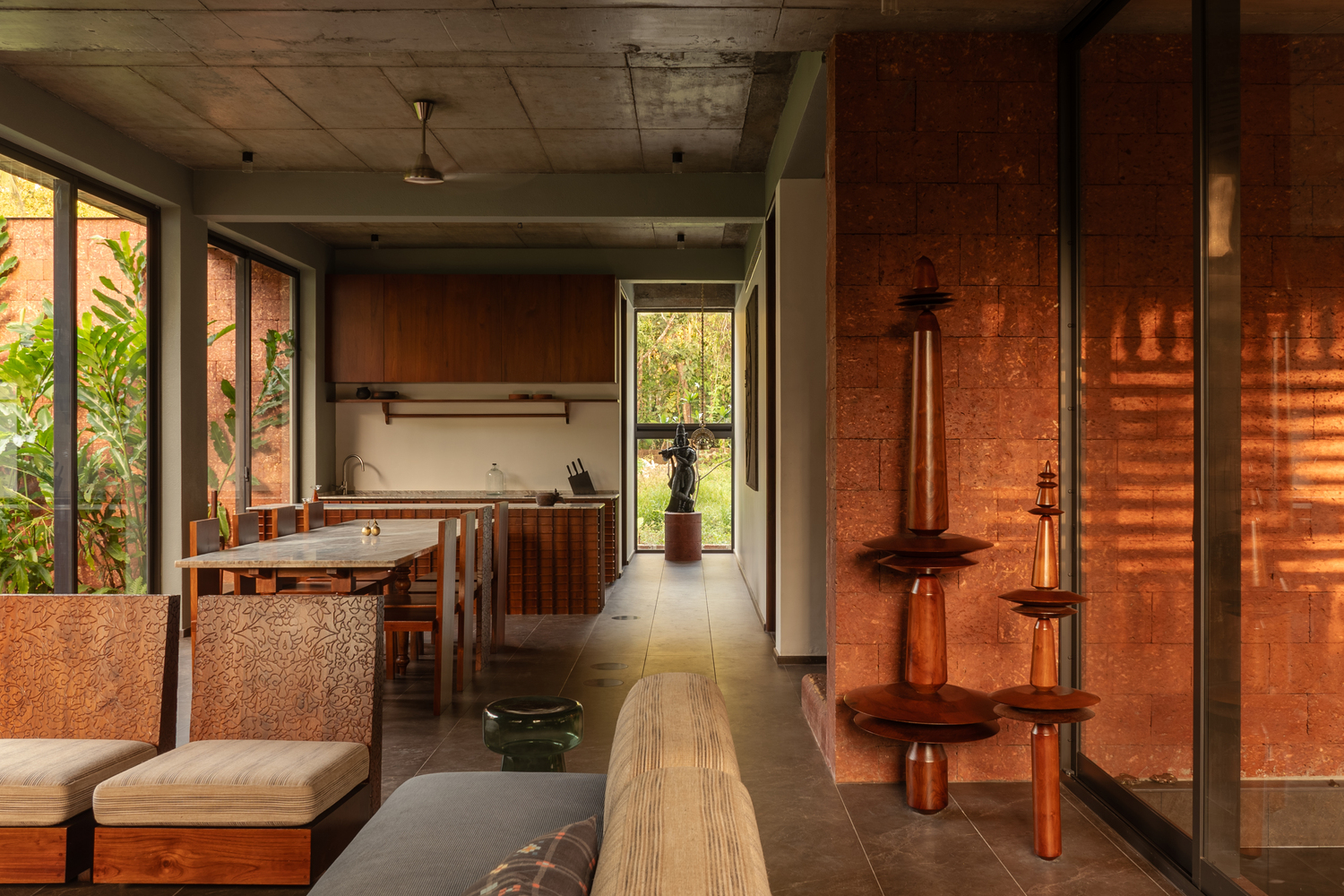
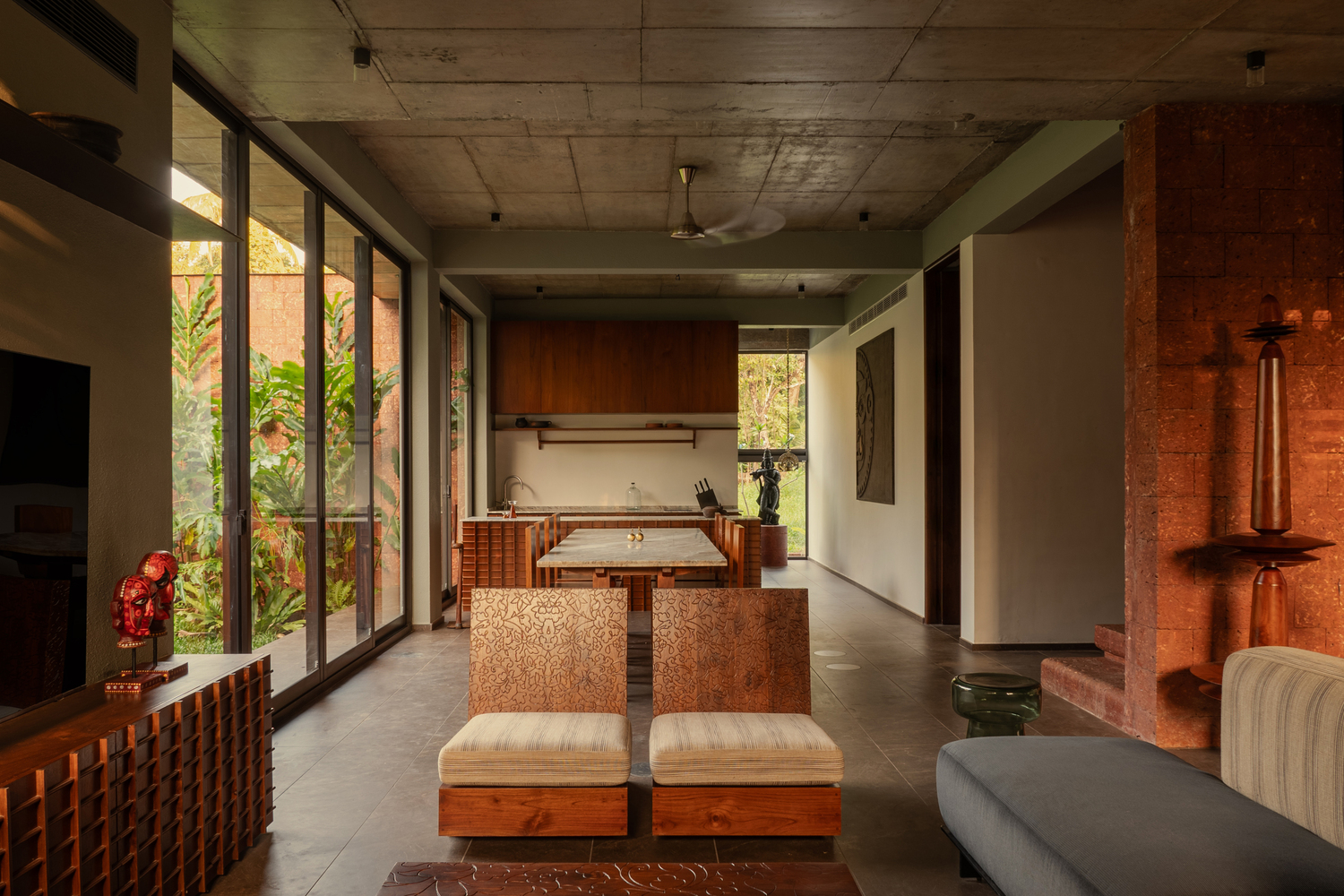
The residence, its surrounding landscape, and every detail that comprises it, harmoniously evolve as part of the site context, as if it had always belonged there.
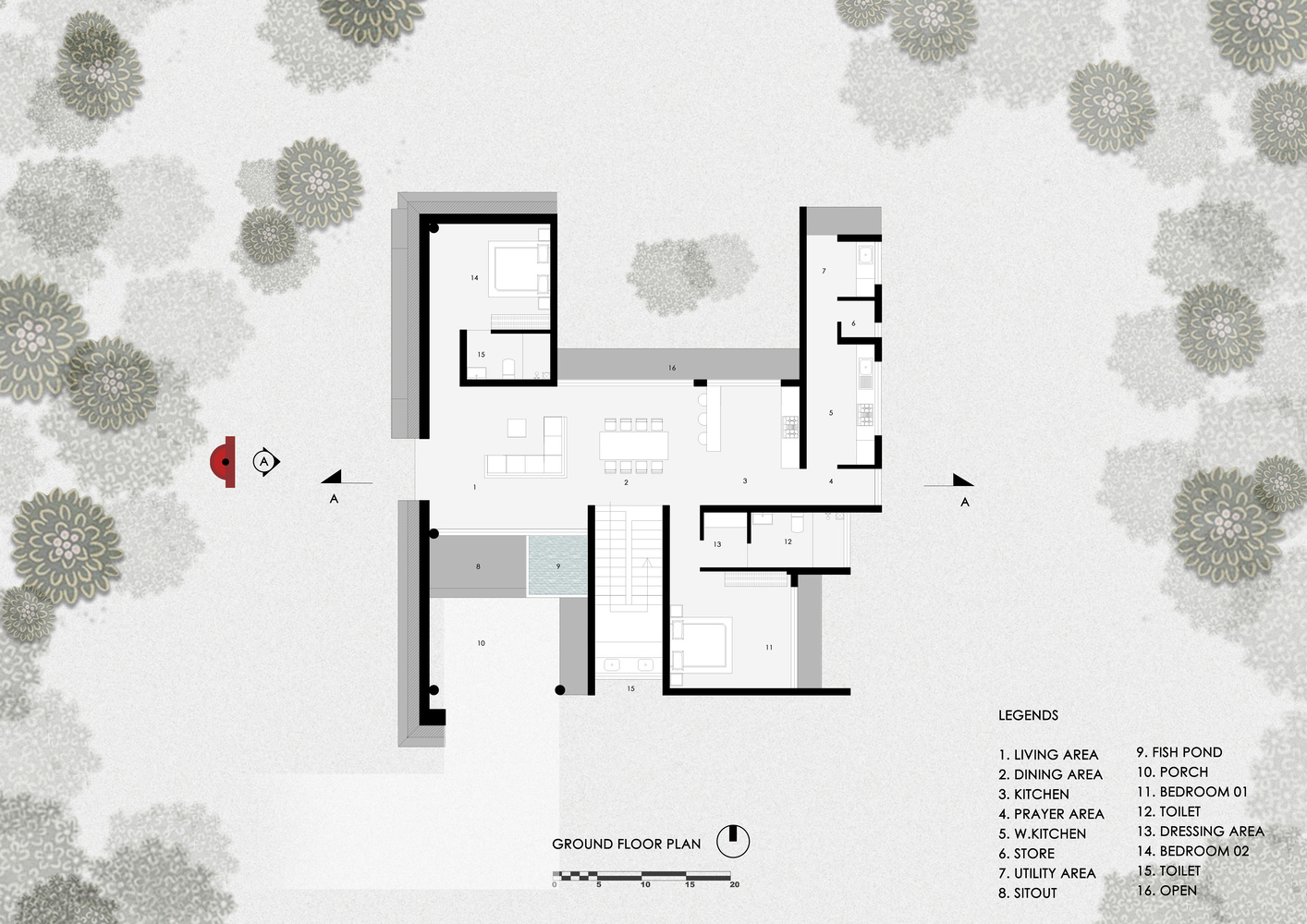
The residence has its frontal approach welcomed by a pond, rhythmically adjacent to the sitout, which then leads to the main entrance of the house.
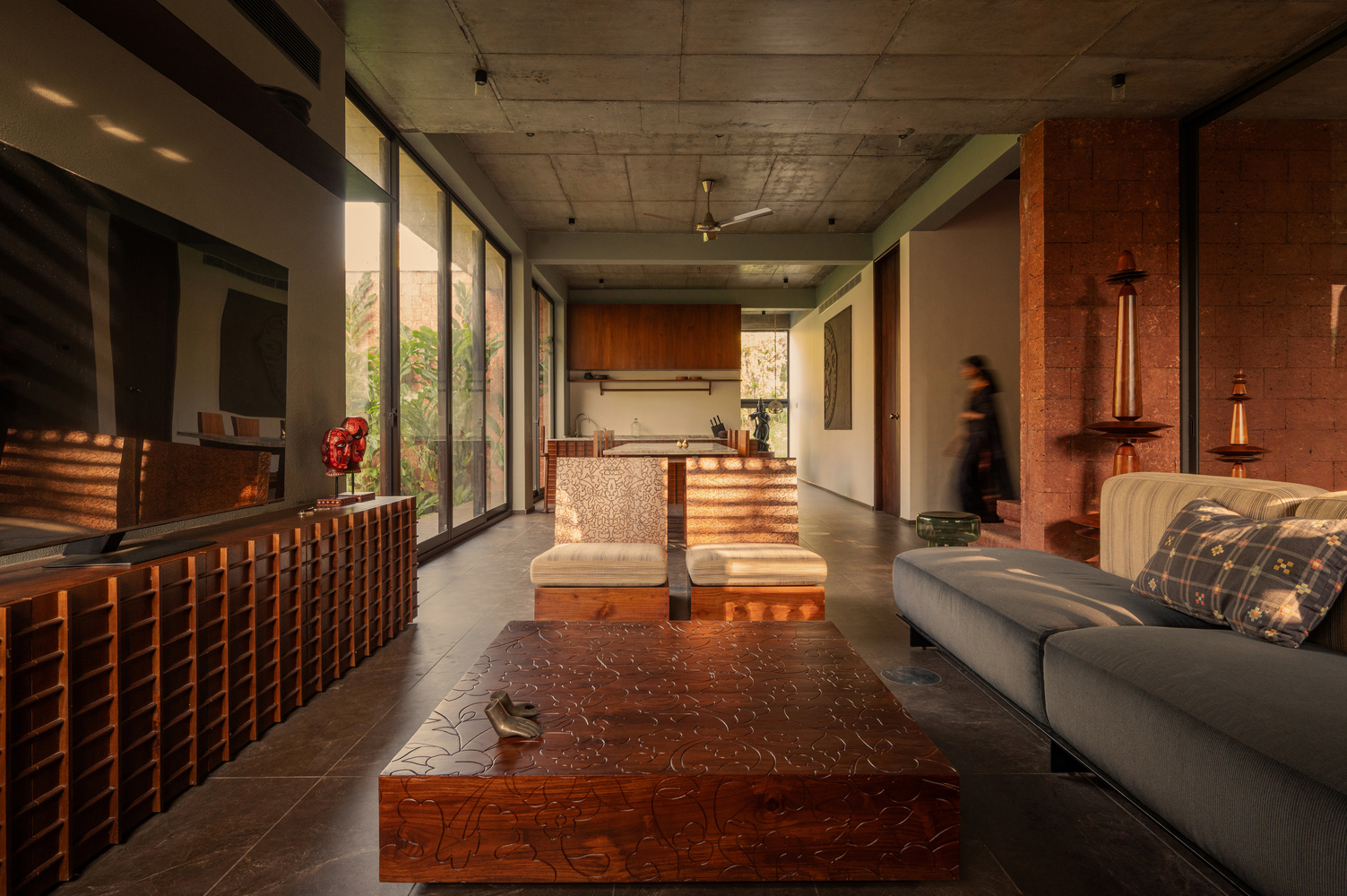
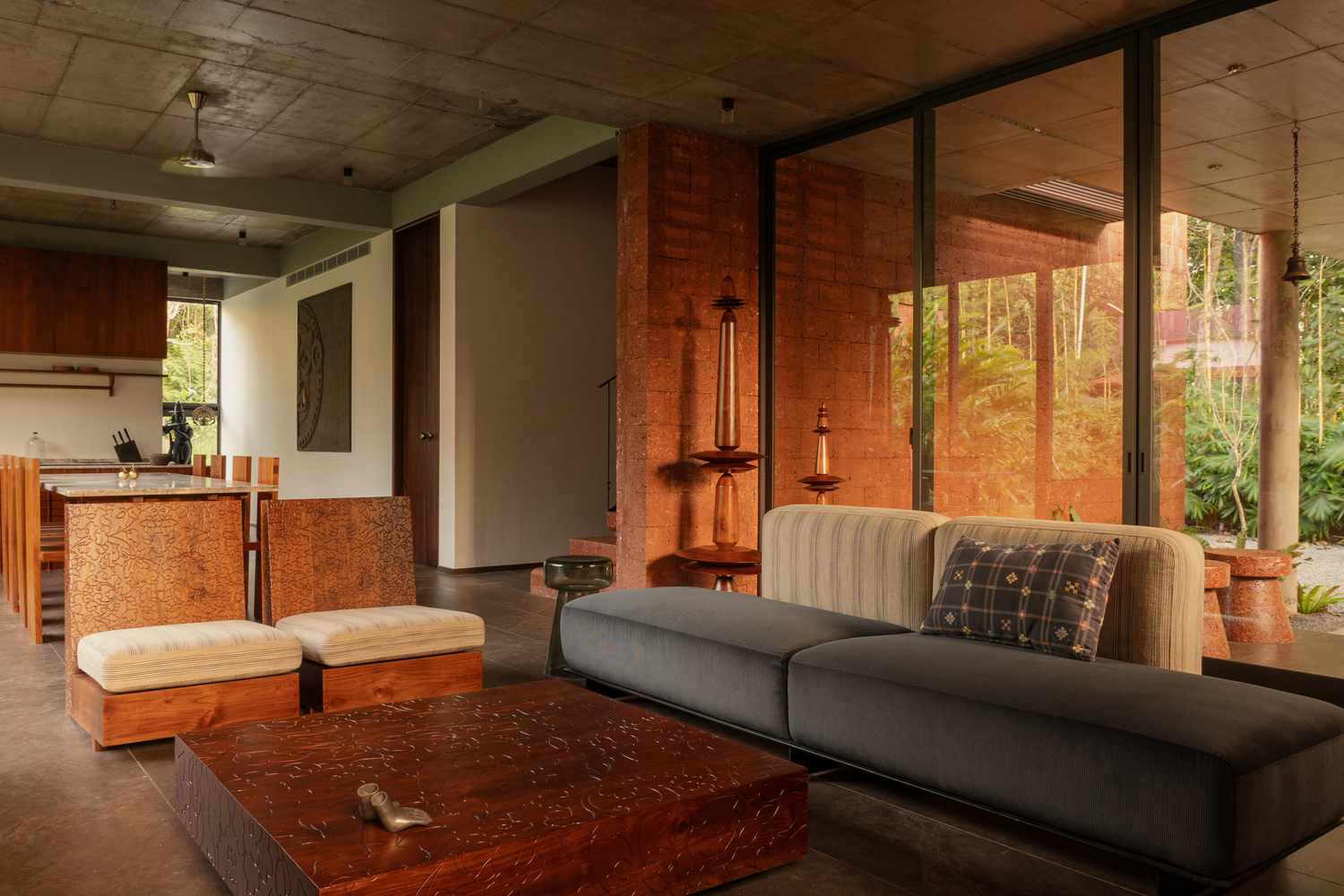
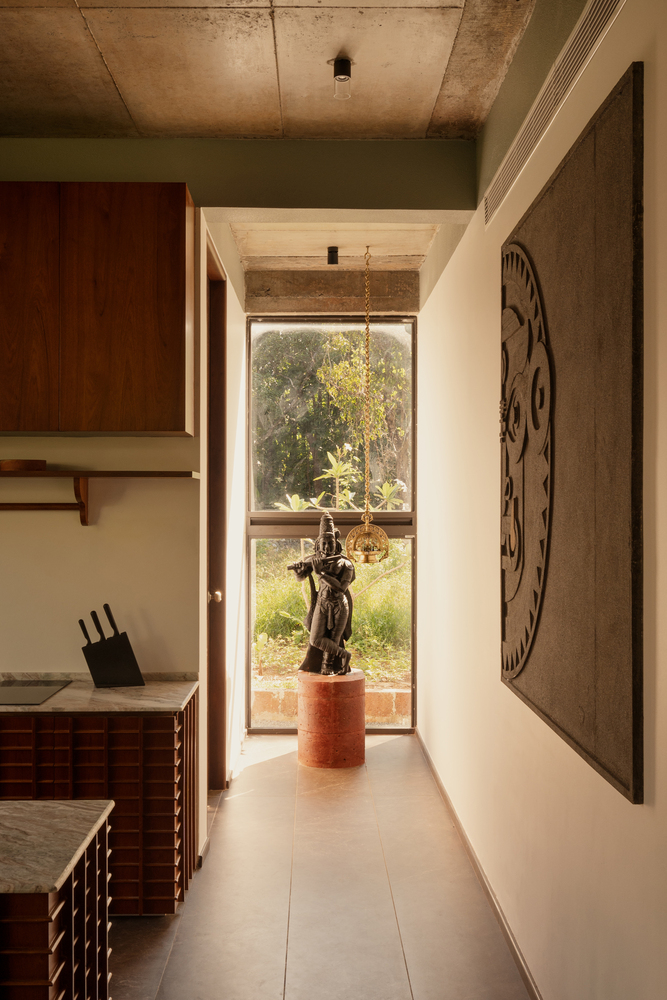
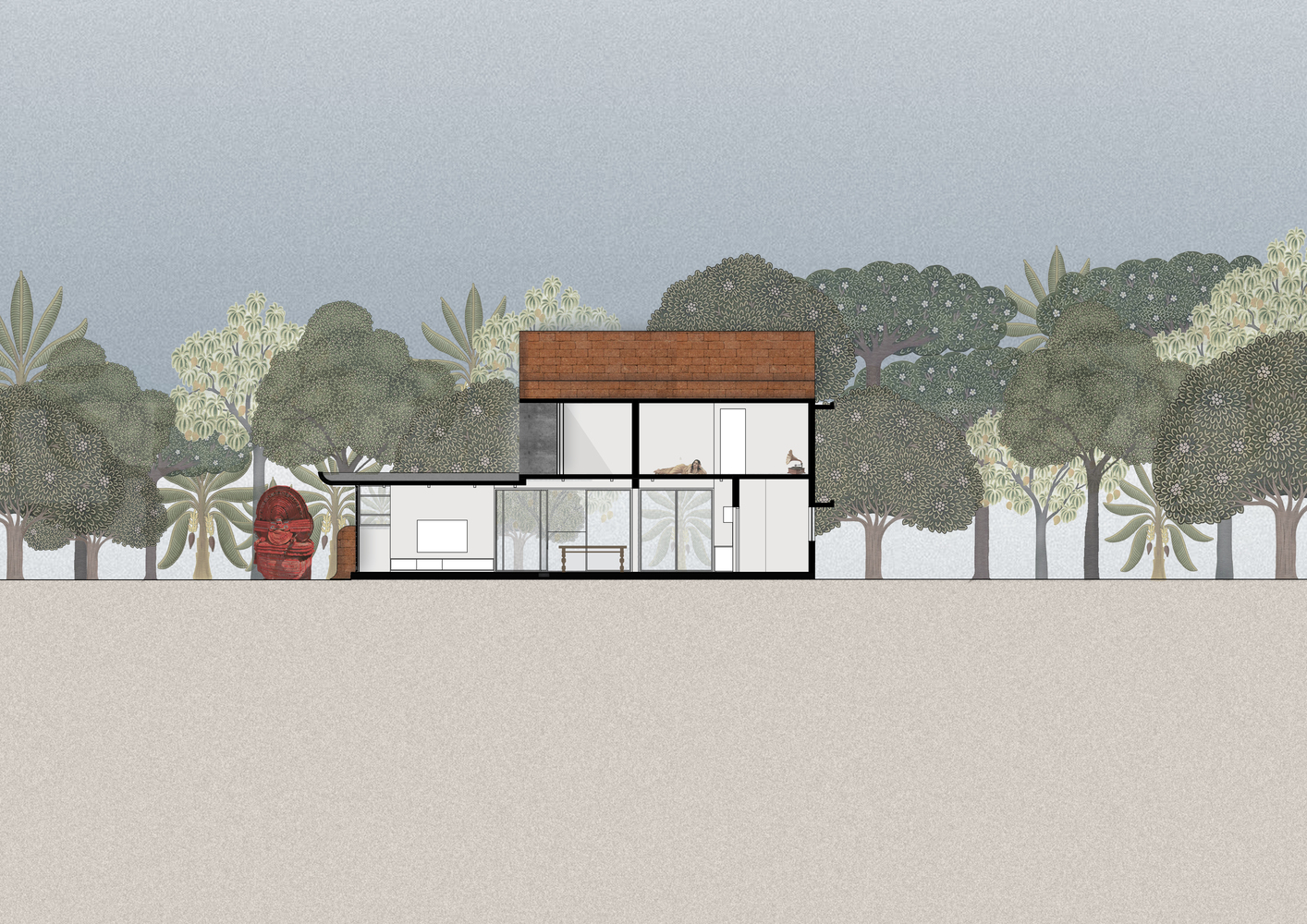
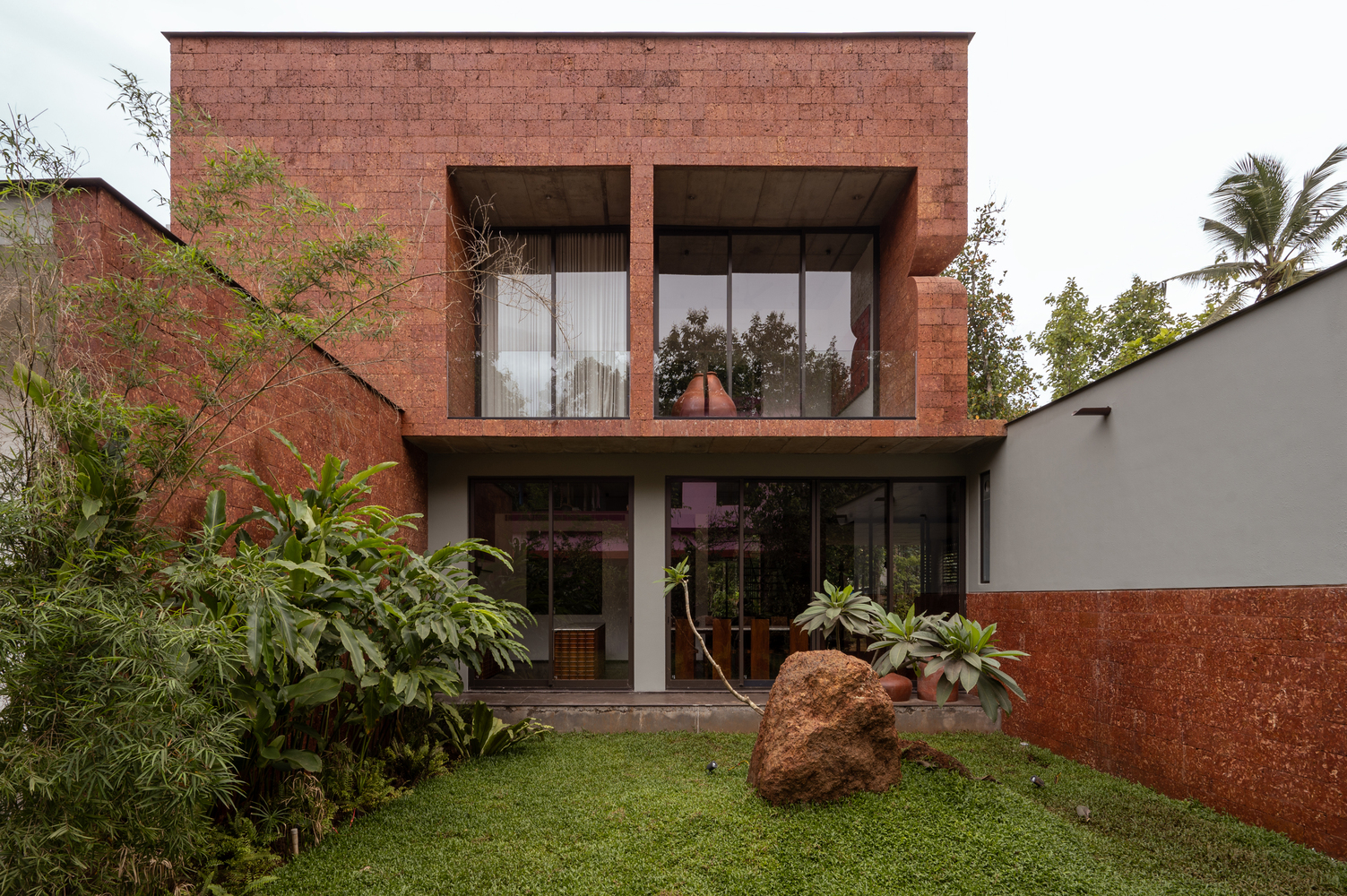
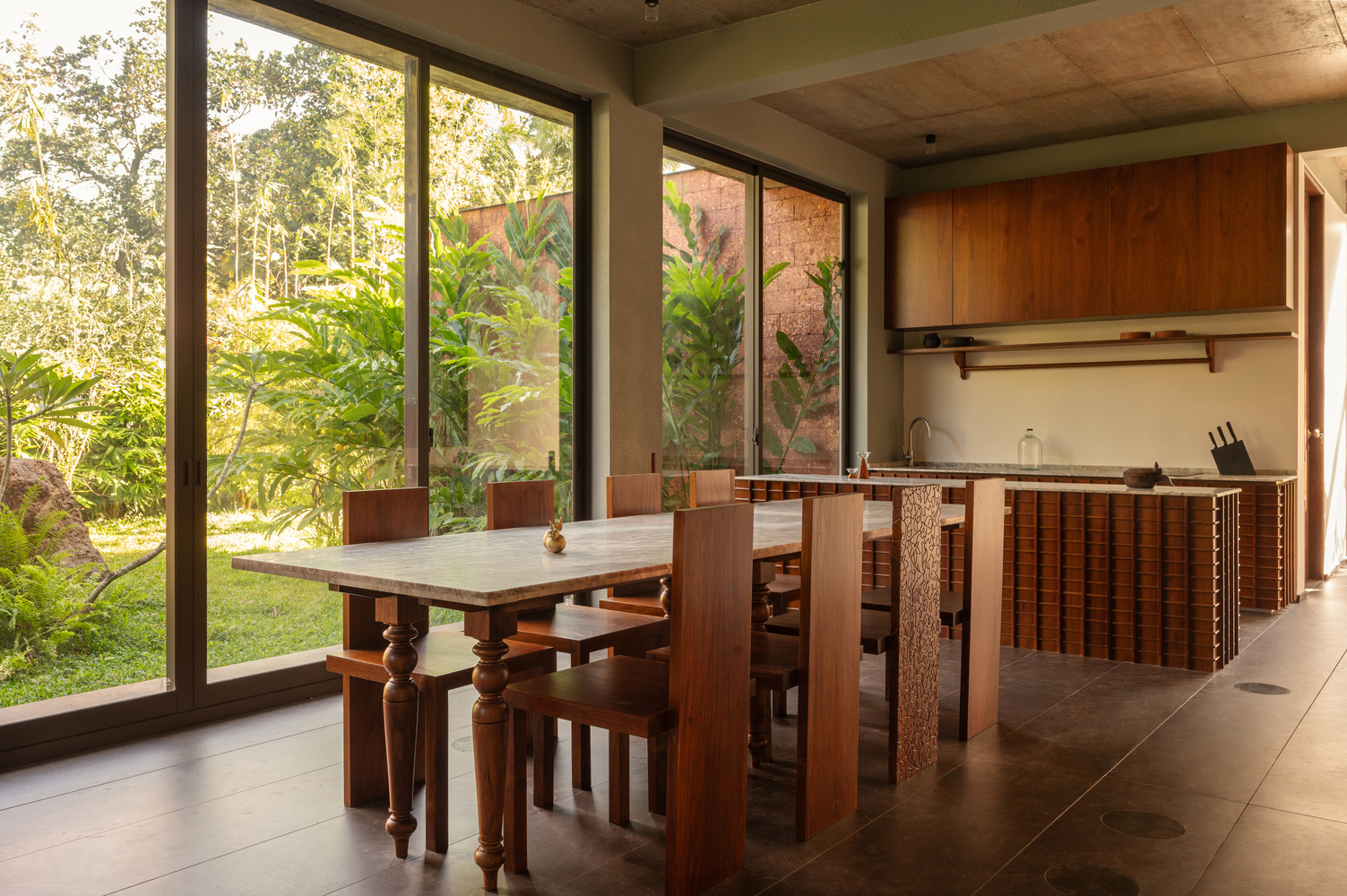
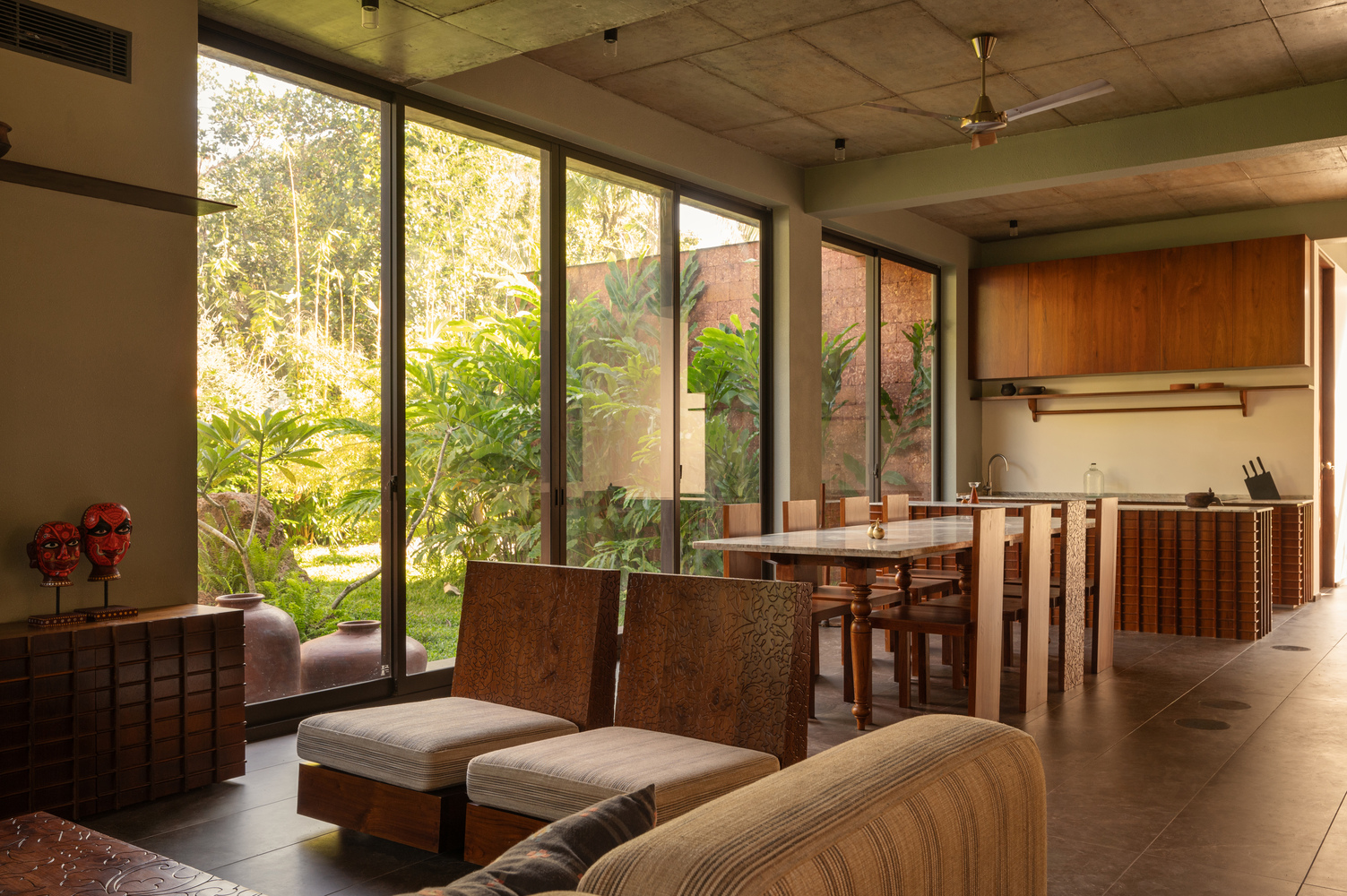
The spaces follow an open plan layout, with the core public and semi-public spaces, such as the living, dining, and kitchen, forming the linear open core of the house.
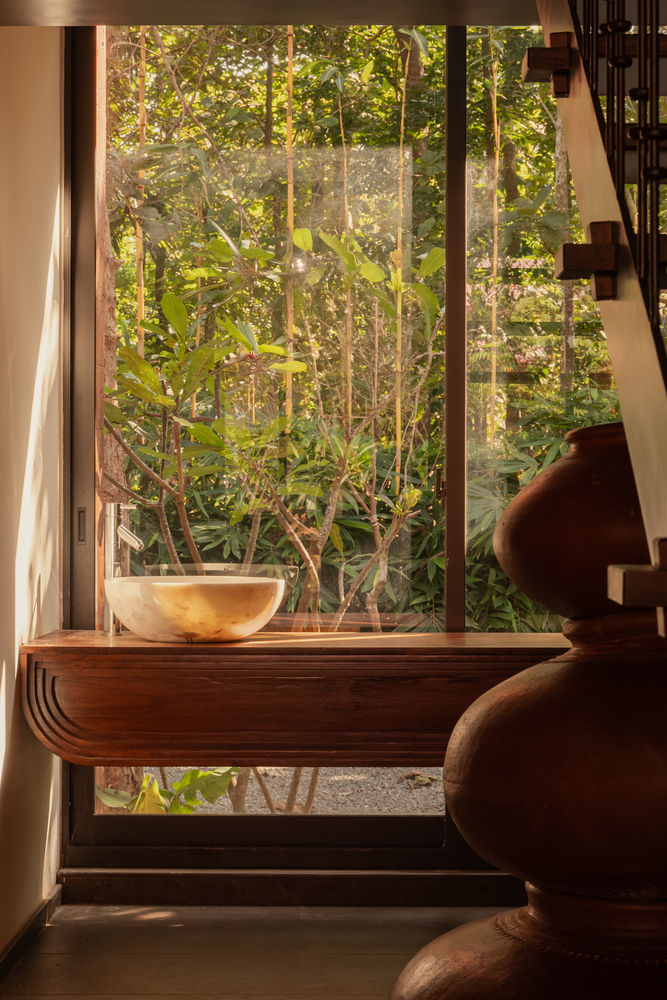
The interiors seamlessly blend with the landscape through the use of large openings and the courtyard space facing it.
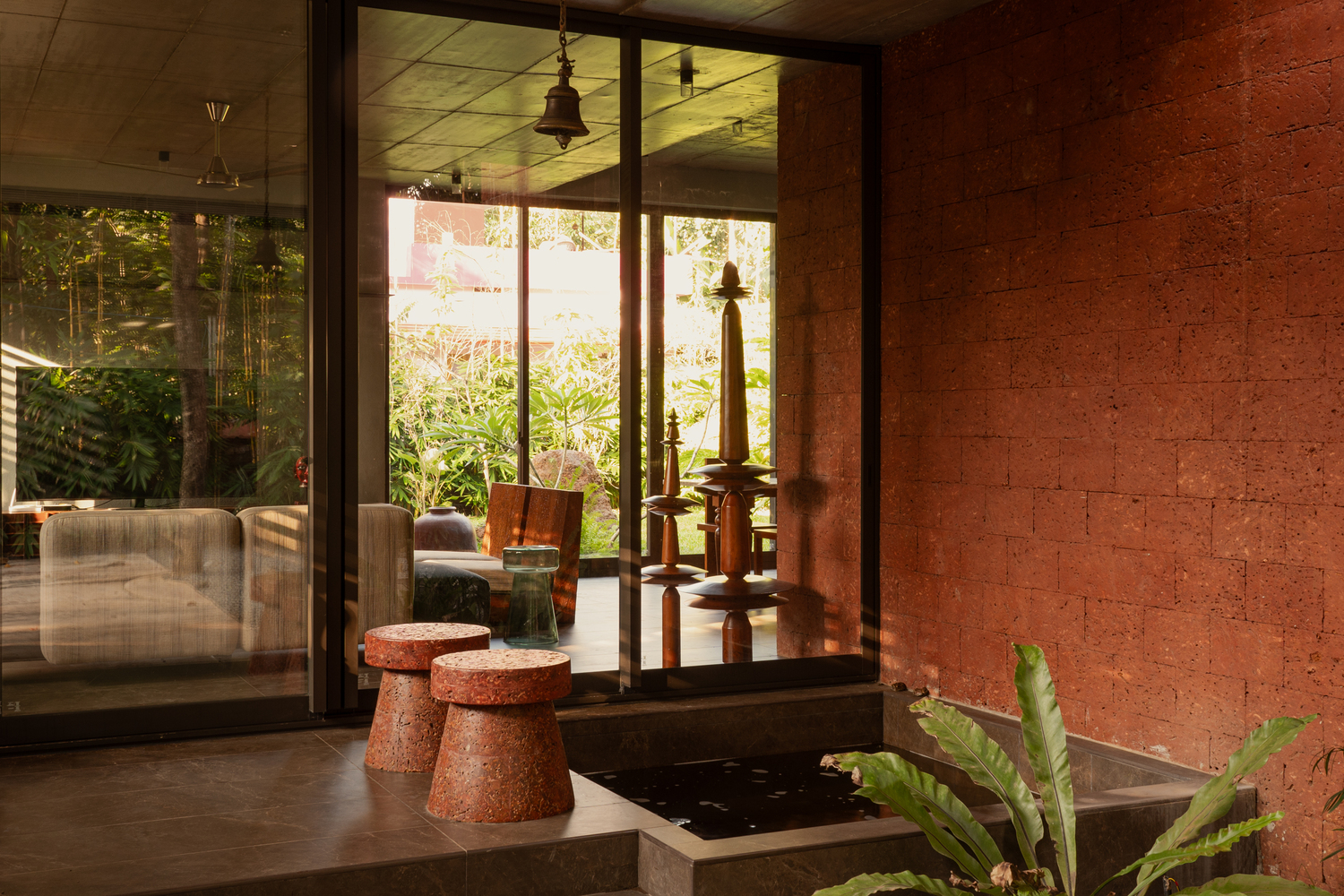
This is the core interacting zone of the whole residence, where the warmth of the sun, the subtleness of the rain, and the best view are all experienced, owing to the north orientation.
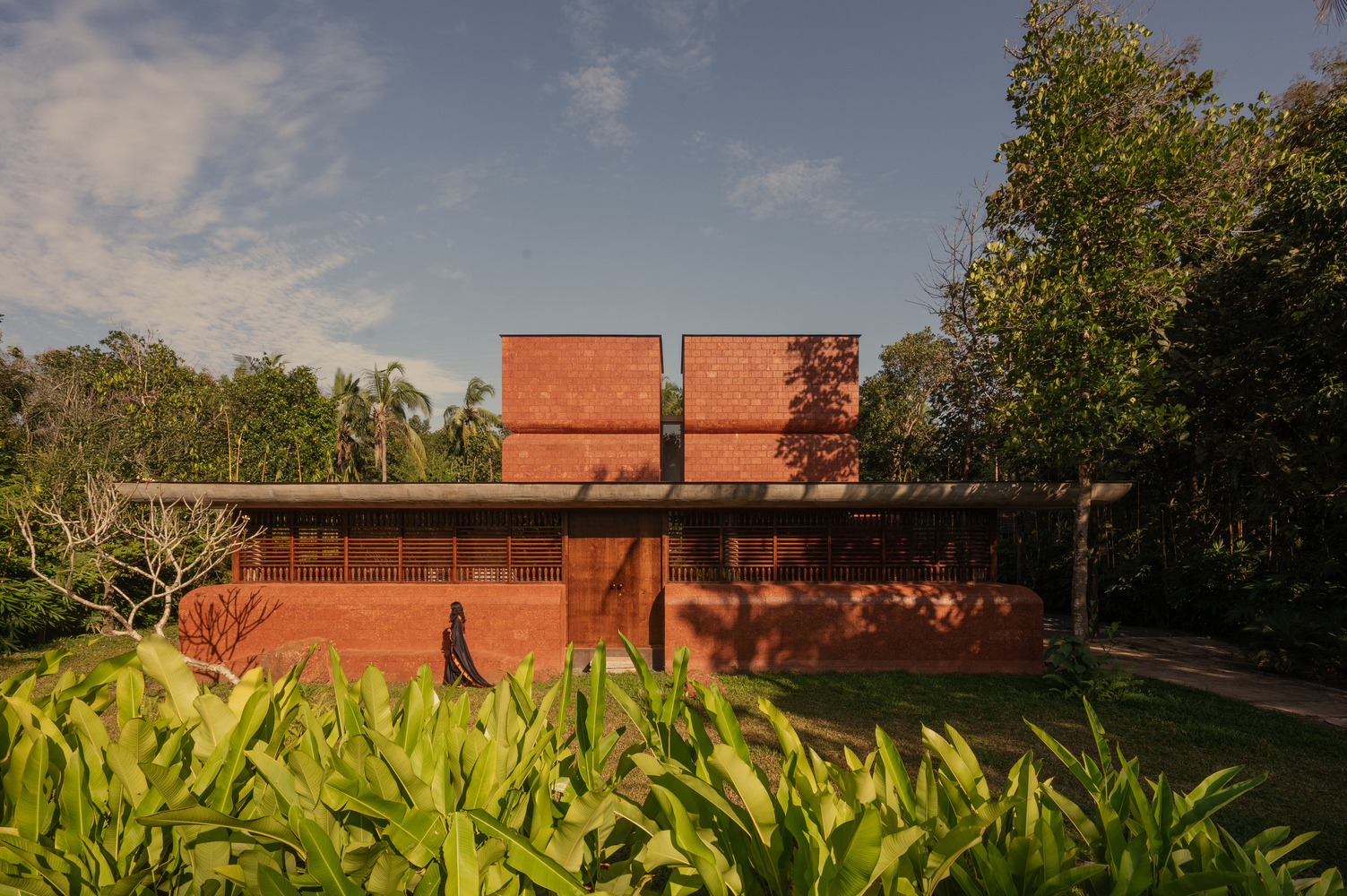
The symmetry of the overall form is nuanced with a large door opening, additionally providing ventilation, and acts as the primary face of the house; the elevation that faces the main road that approaches it.
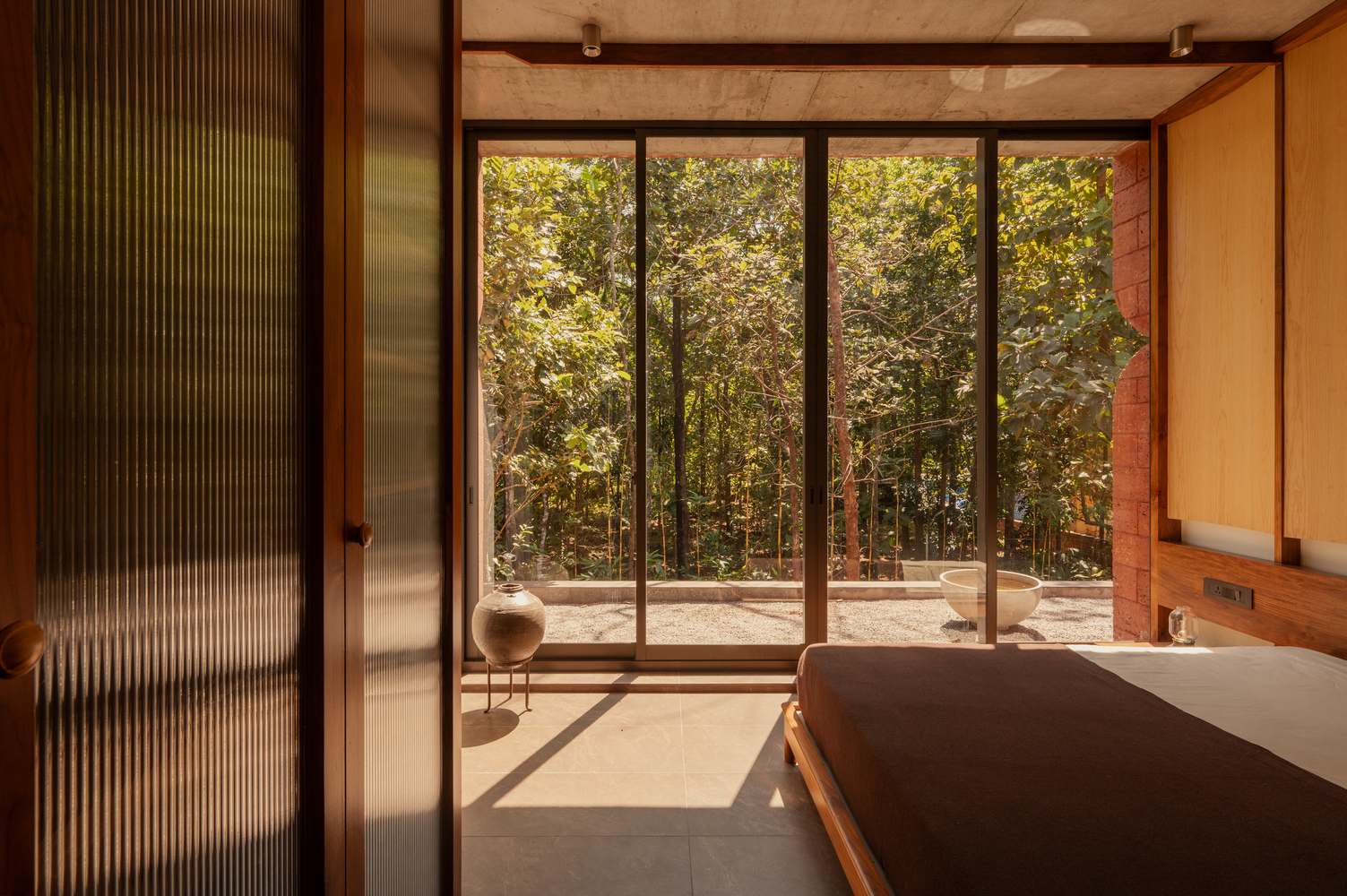
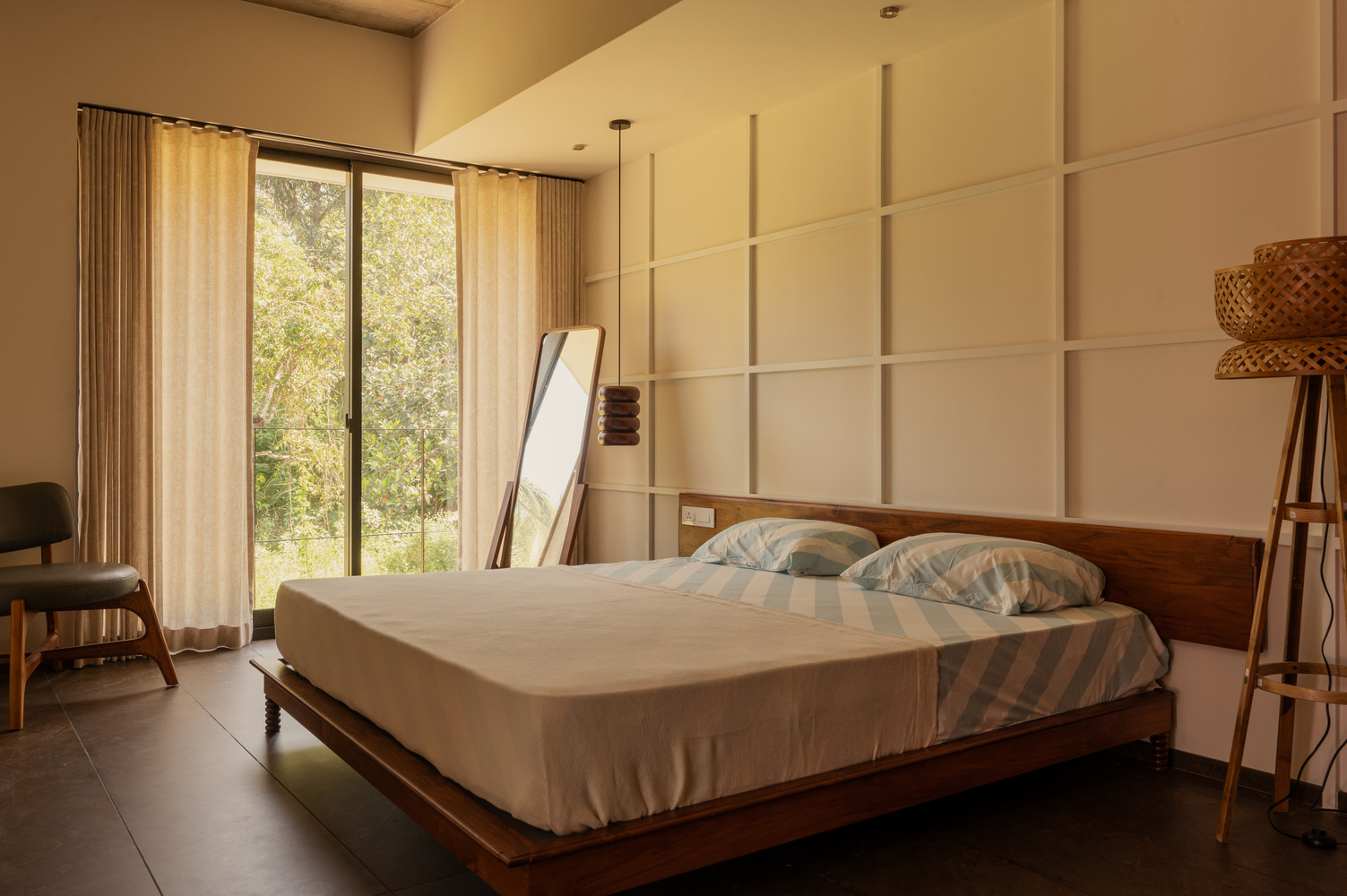
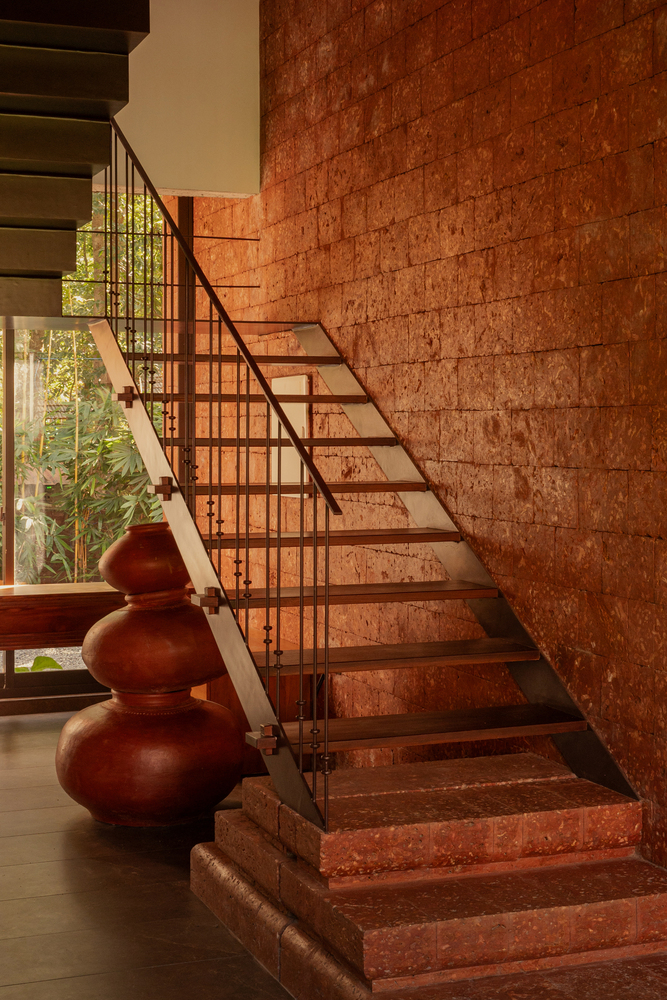
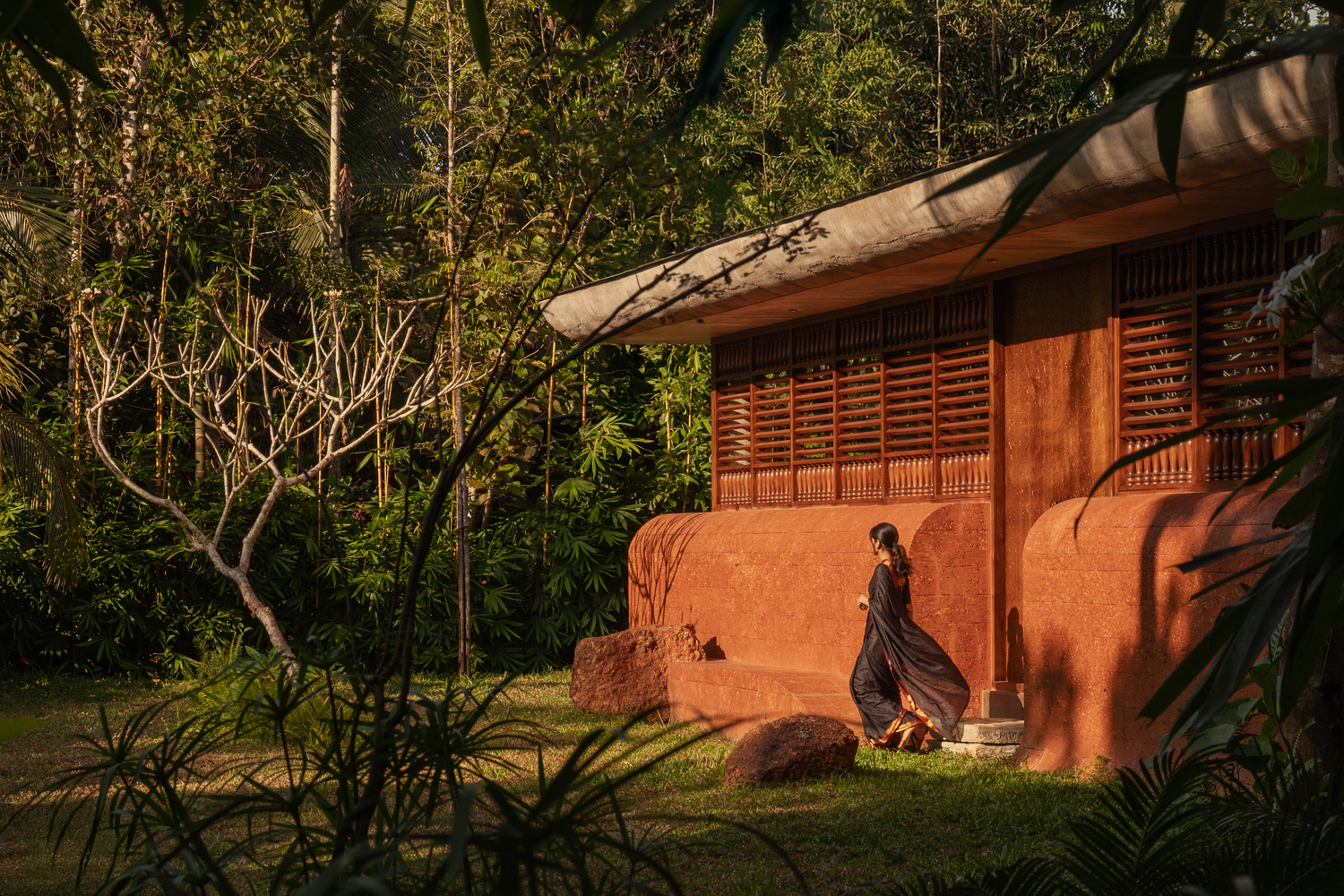
The design is rooted in its climatic context, incorporating climate-responsive features such as the thick laterite walls that provide insulation for the south-facing walls, and the large openings that enhance natural ventilation into the interiors.
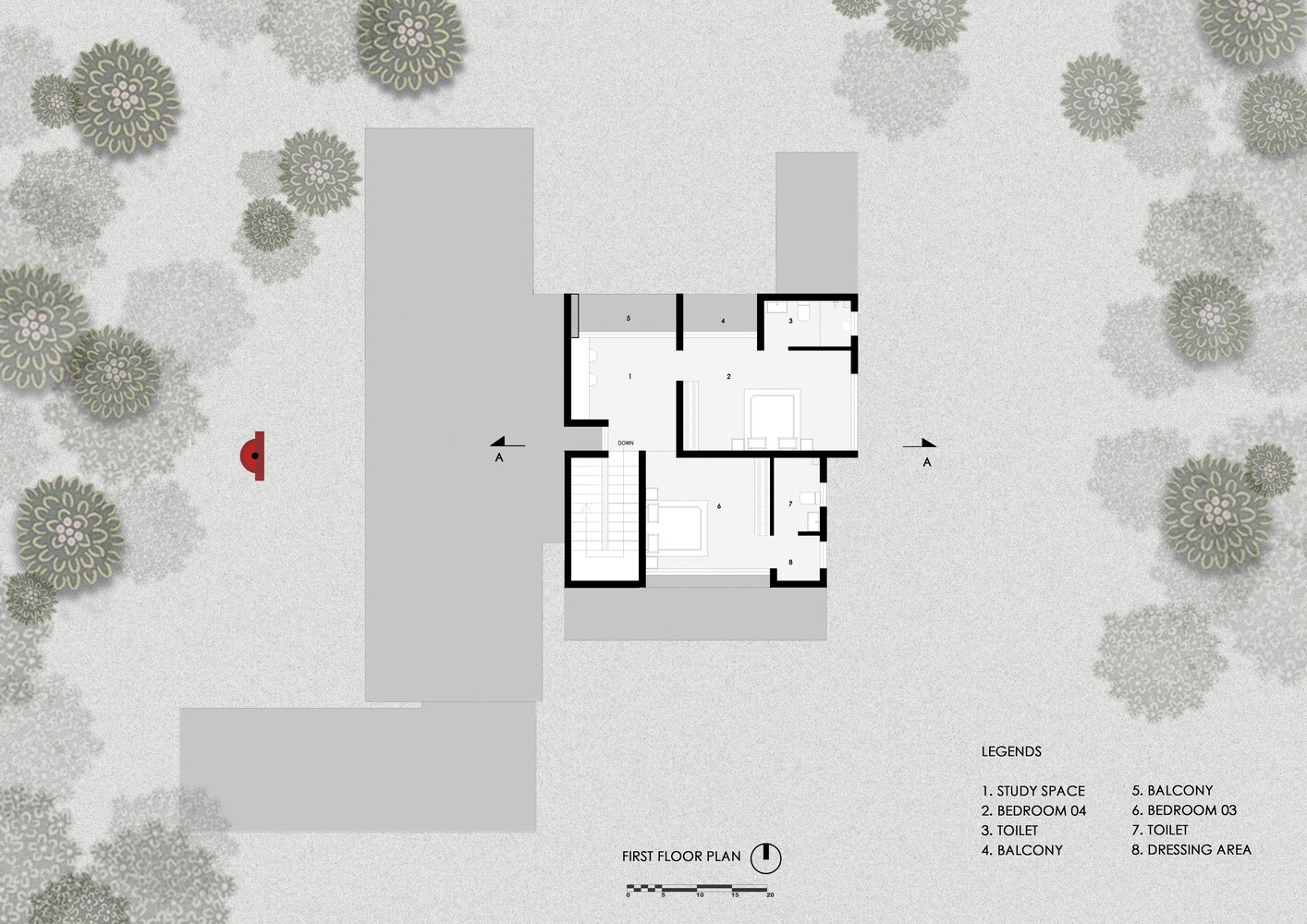
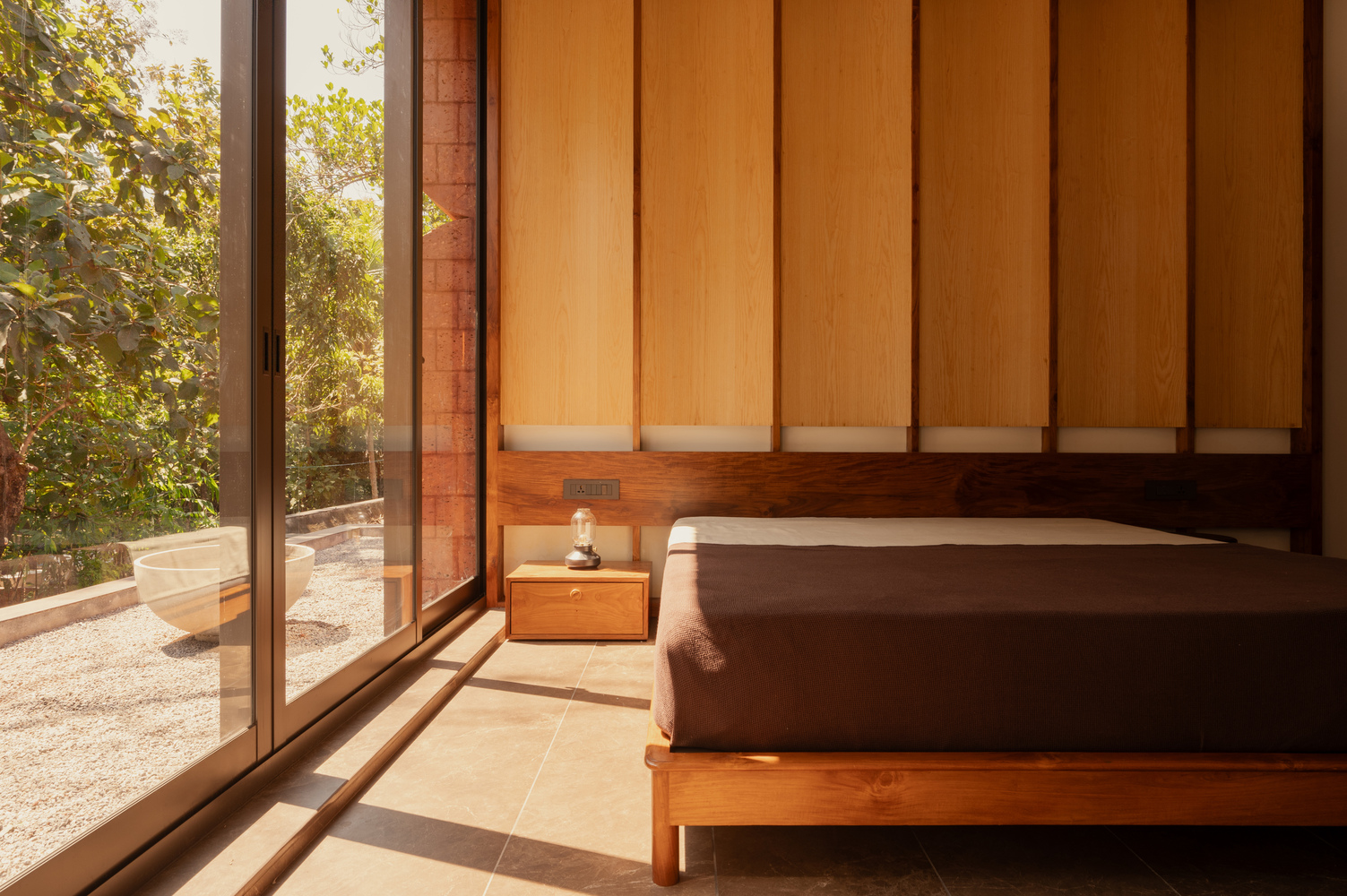
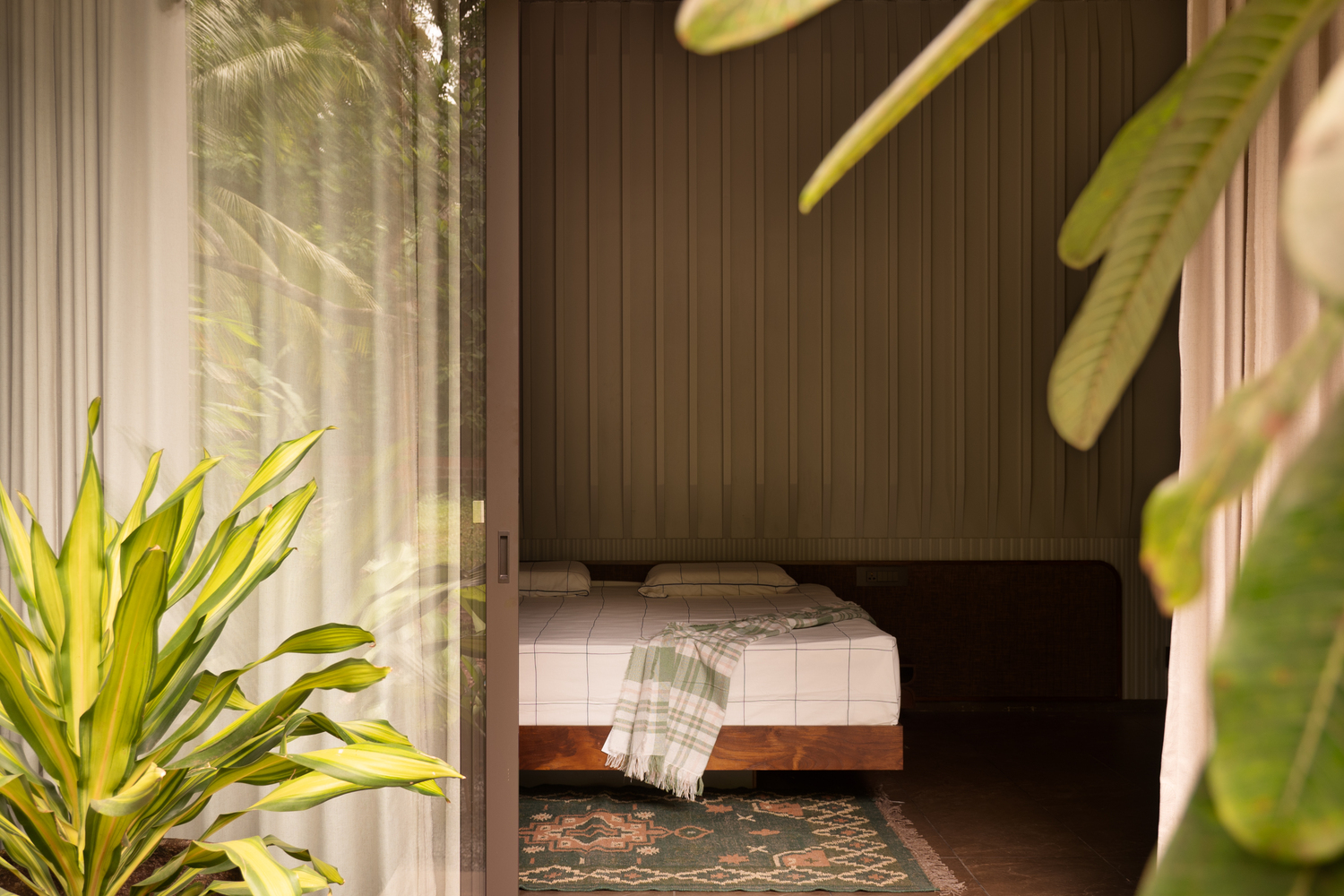
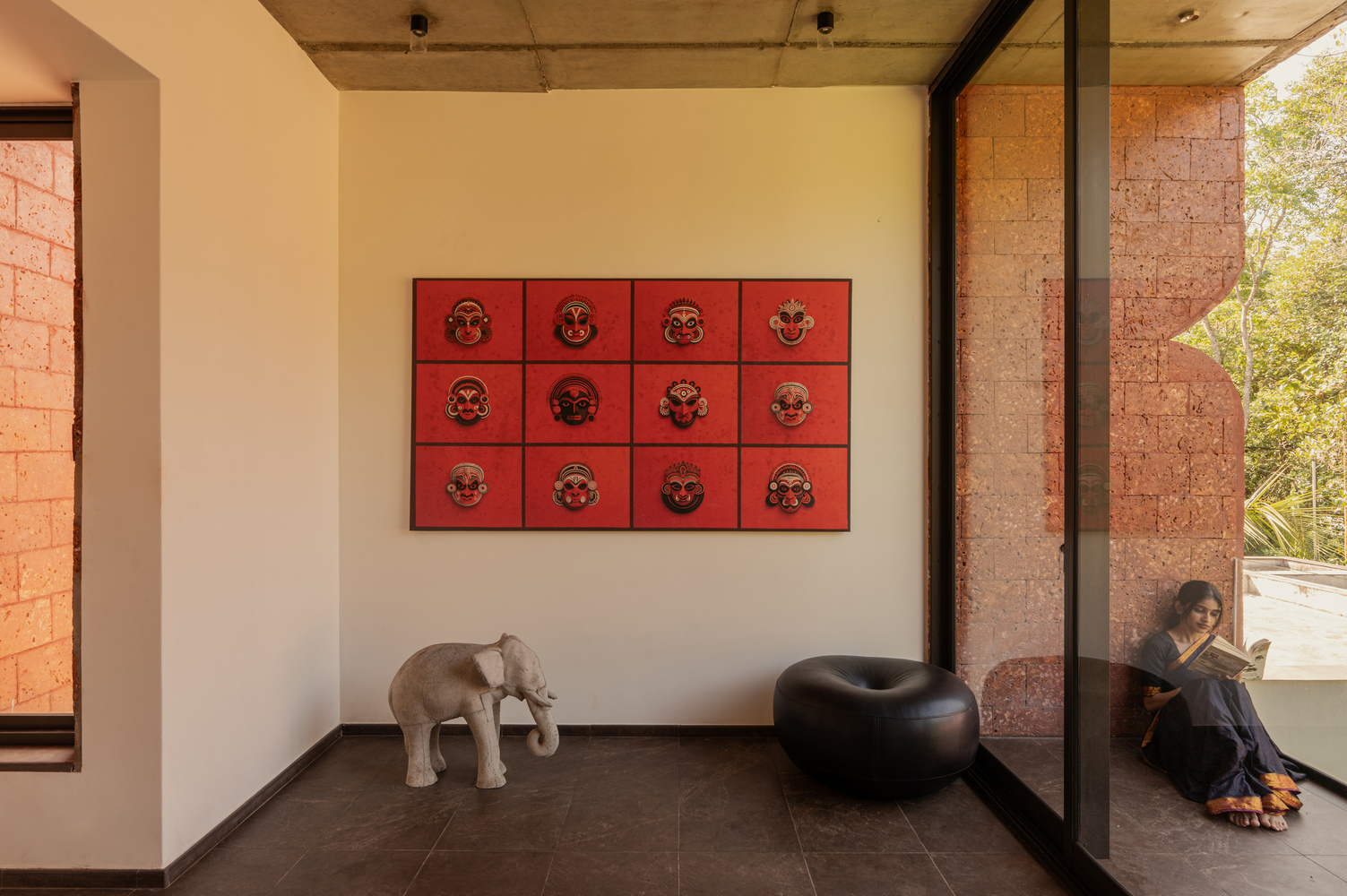
The bedrooms are minimal yet have their defined identity, be it the folded veneer panels above the headboard, or the theyyam painting that vibrantly stands out in the room; it fully realizes the intention- staying true to the concept throughout.
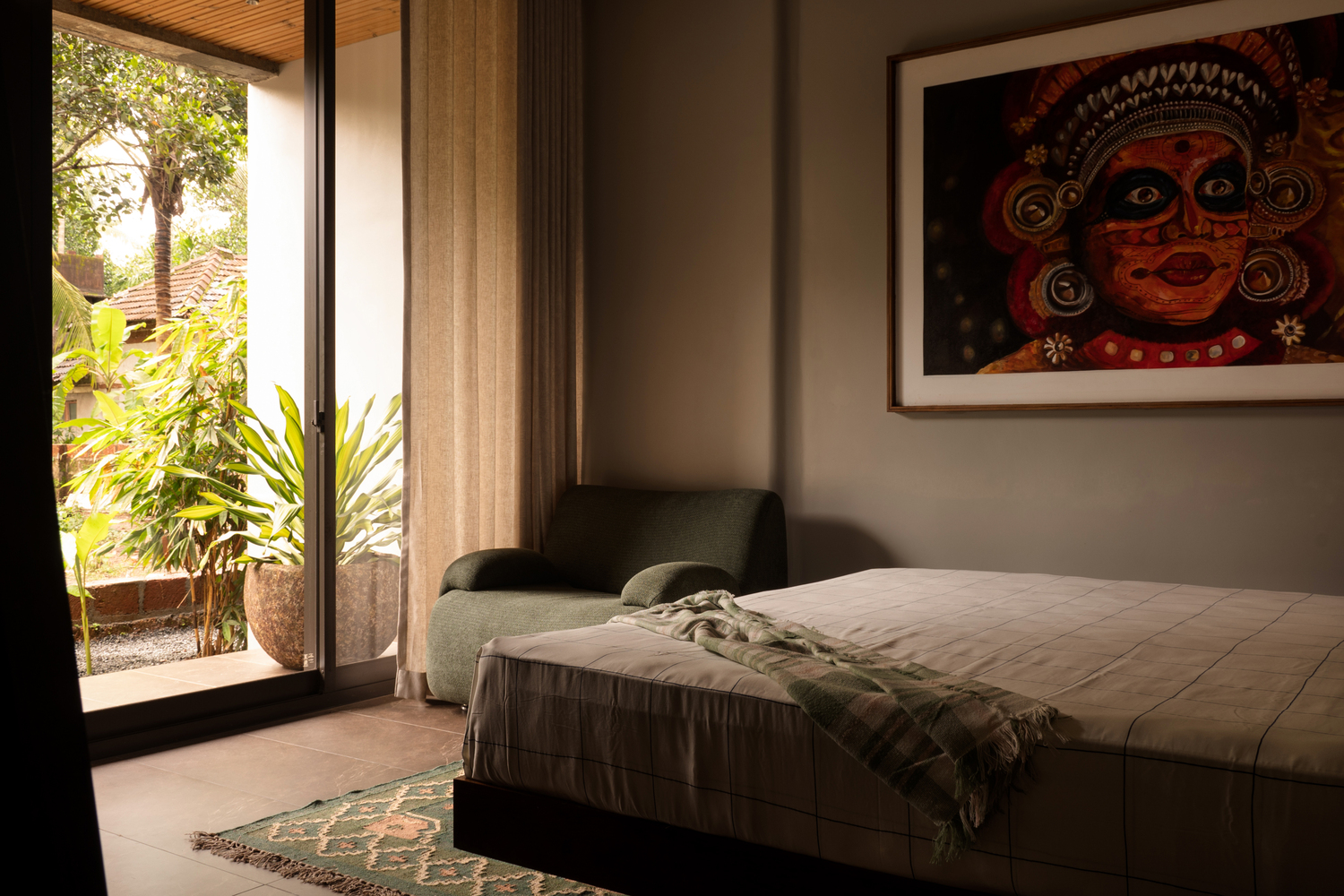
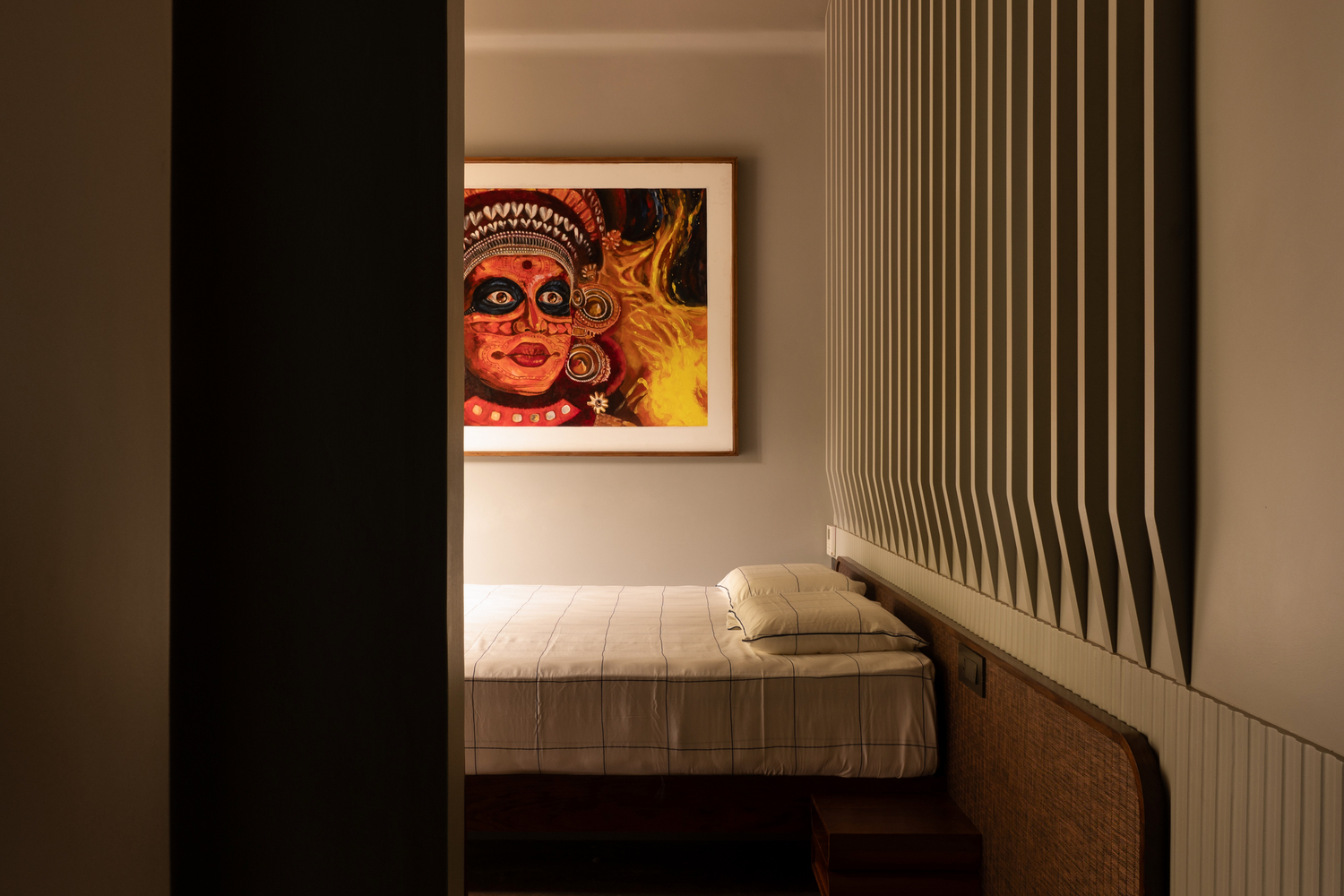
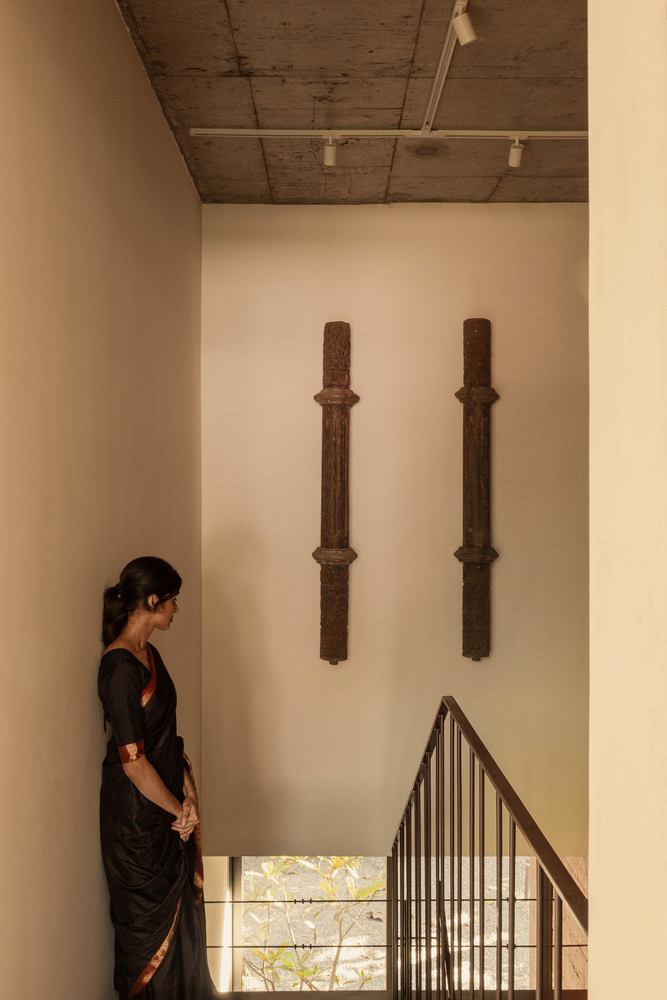
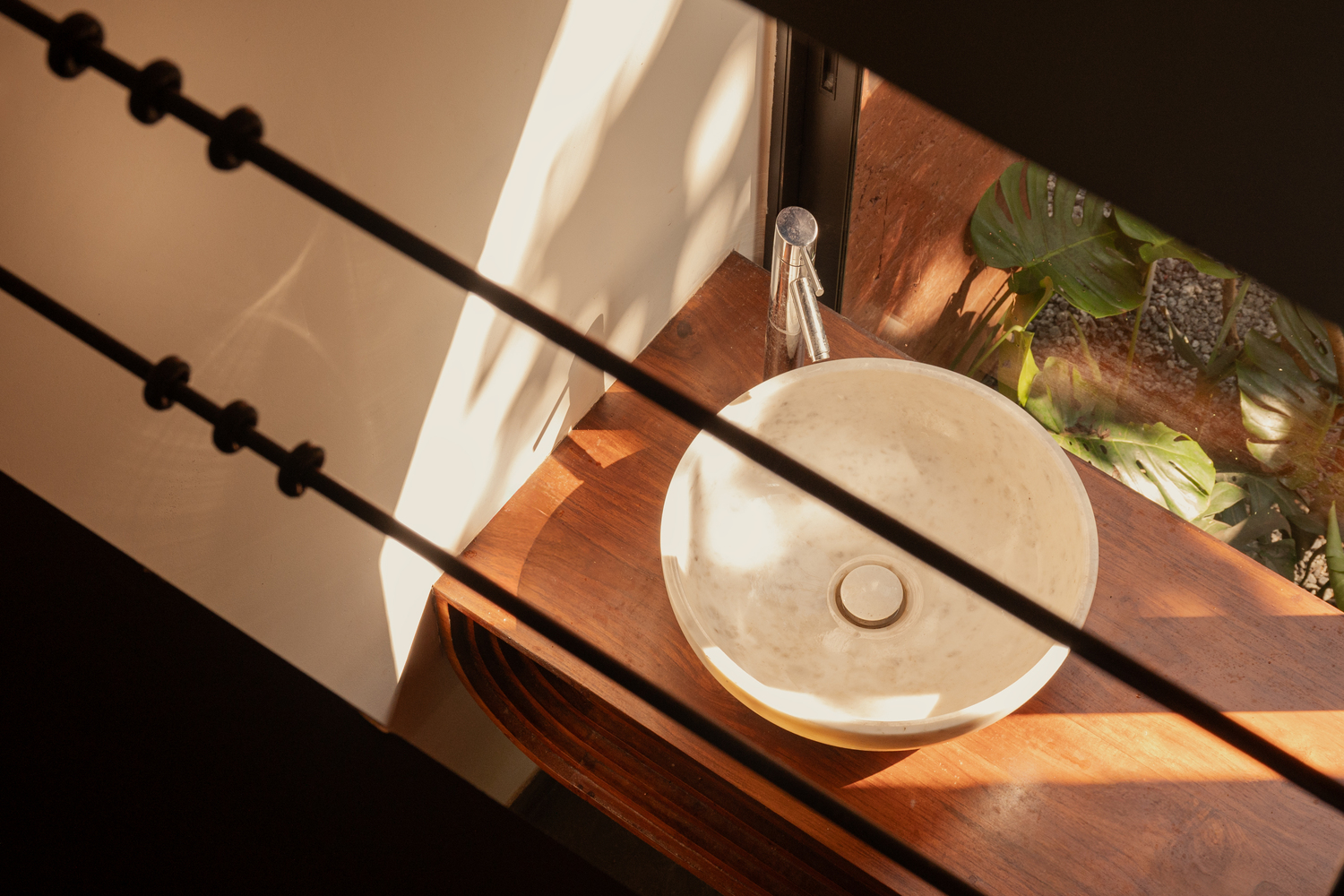
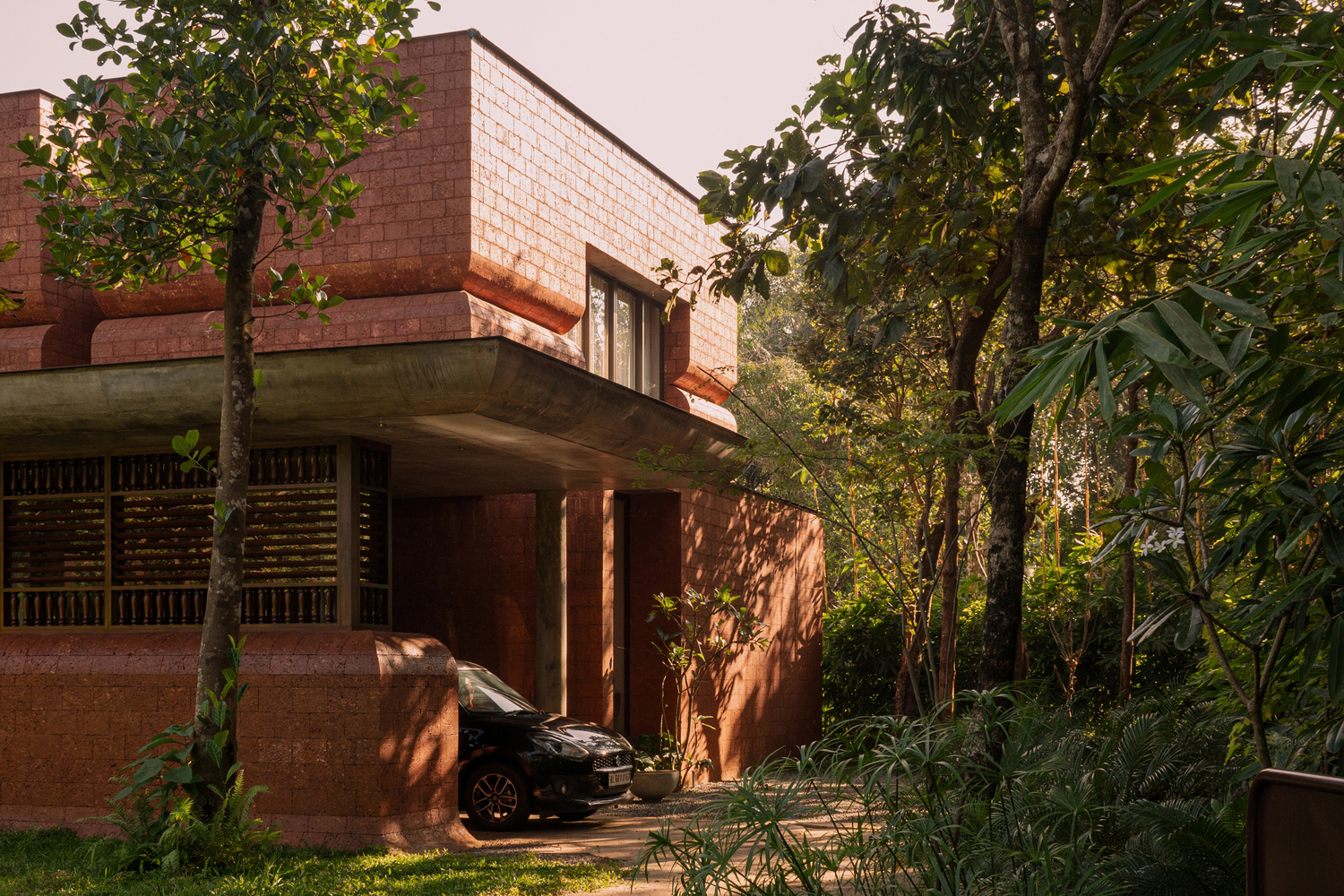
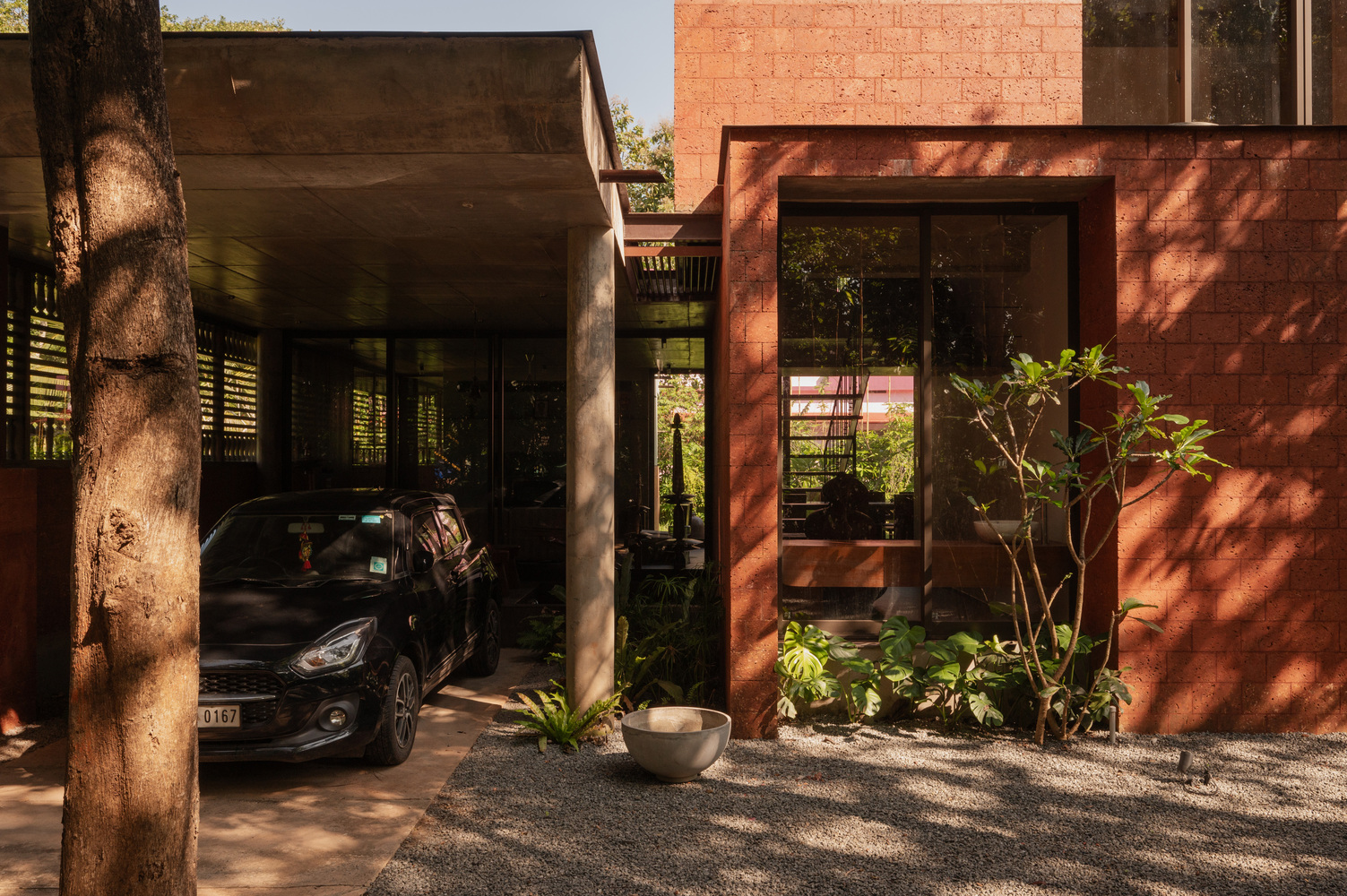
The materiality of the project solely focuses on the locally available materials- the raw and exposed laterite stone, along with the warmth and intricate character of wood, which softly blends together throughout the built form.
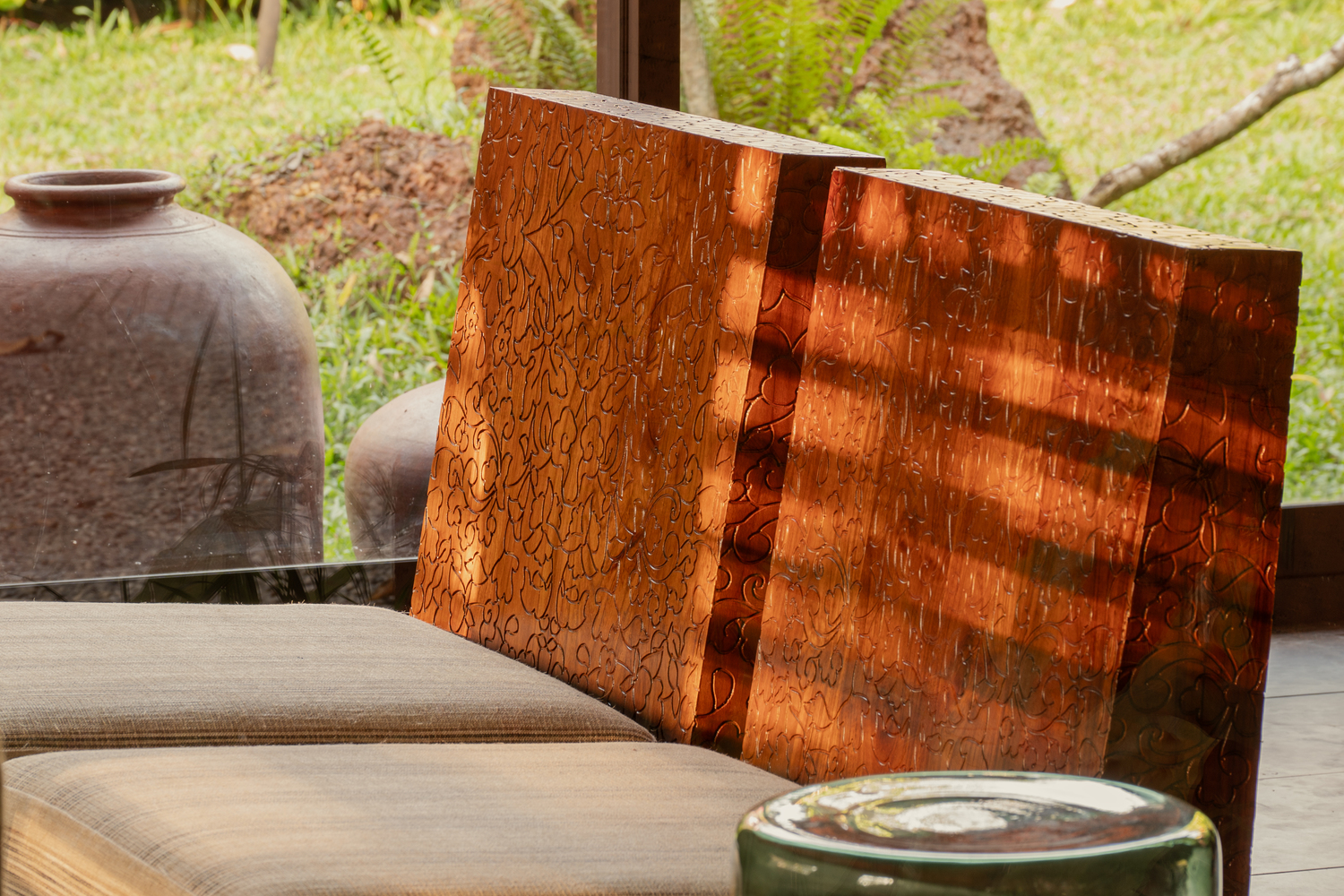
The materials used are raw and simple, but the uniqueness lies in the variety of its carvings, such as the curves out of laterite, the floral grooves on the doors, and the wooden screens that are designed in the traditional style.
The concrete slab cast has curves that soften its appearance and provide large overhangs that serve as both protective features whilst are aesthetically appealing.
The overall detailing of each element adds further depth and character to every material that is used. The flooring has tiles that are raw and smooth-textured, blending with the overall theme.
The wooden steps, along with the sleek metal rails, add an overall visually pleasing circulation core.
The major environmental considerations revolve around having various climate-responsive features incorporated into the design, focusing on the overall thermal comfort and well-being of the occupants.
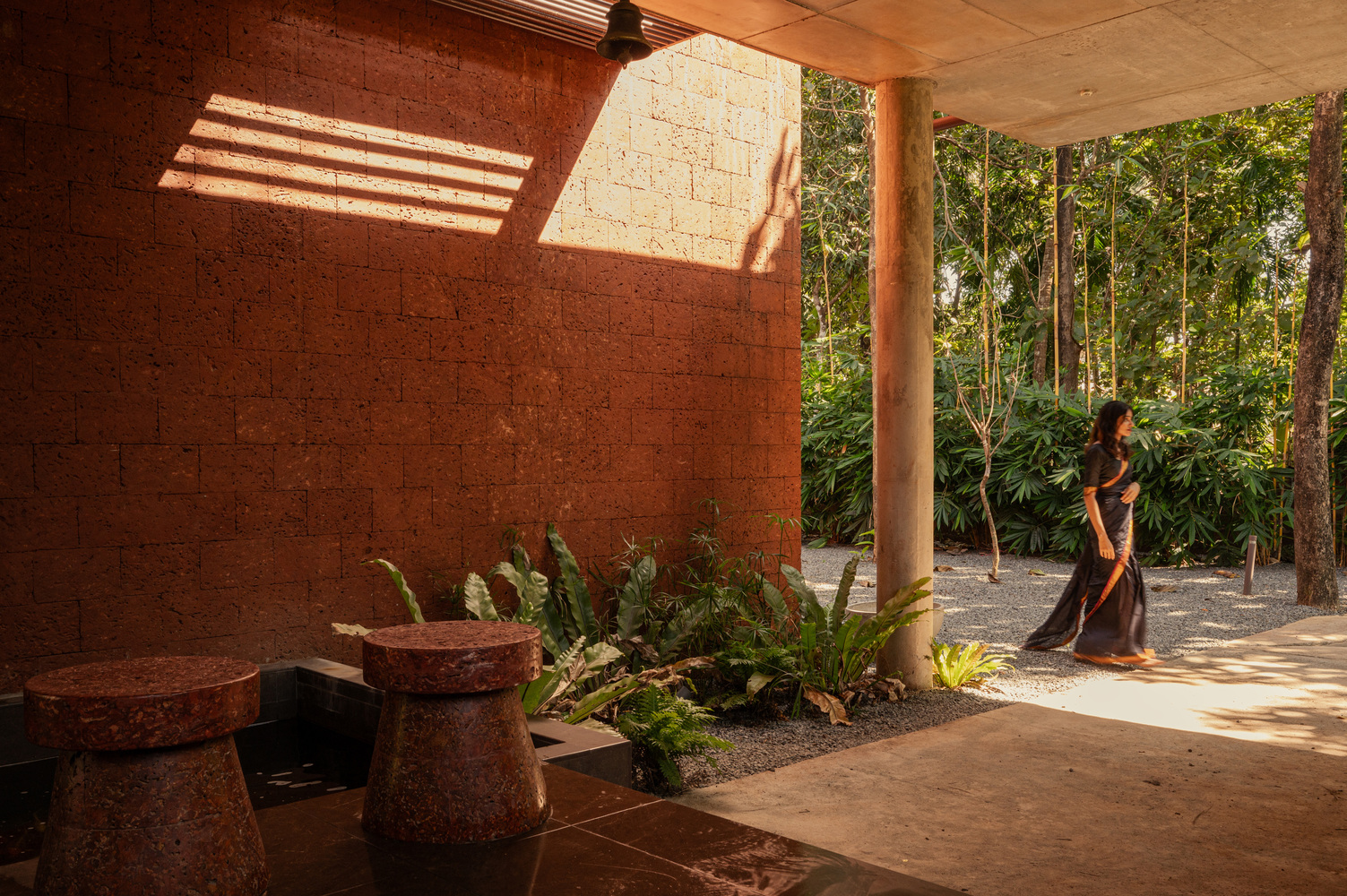
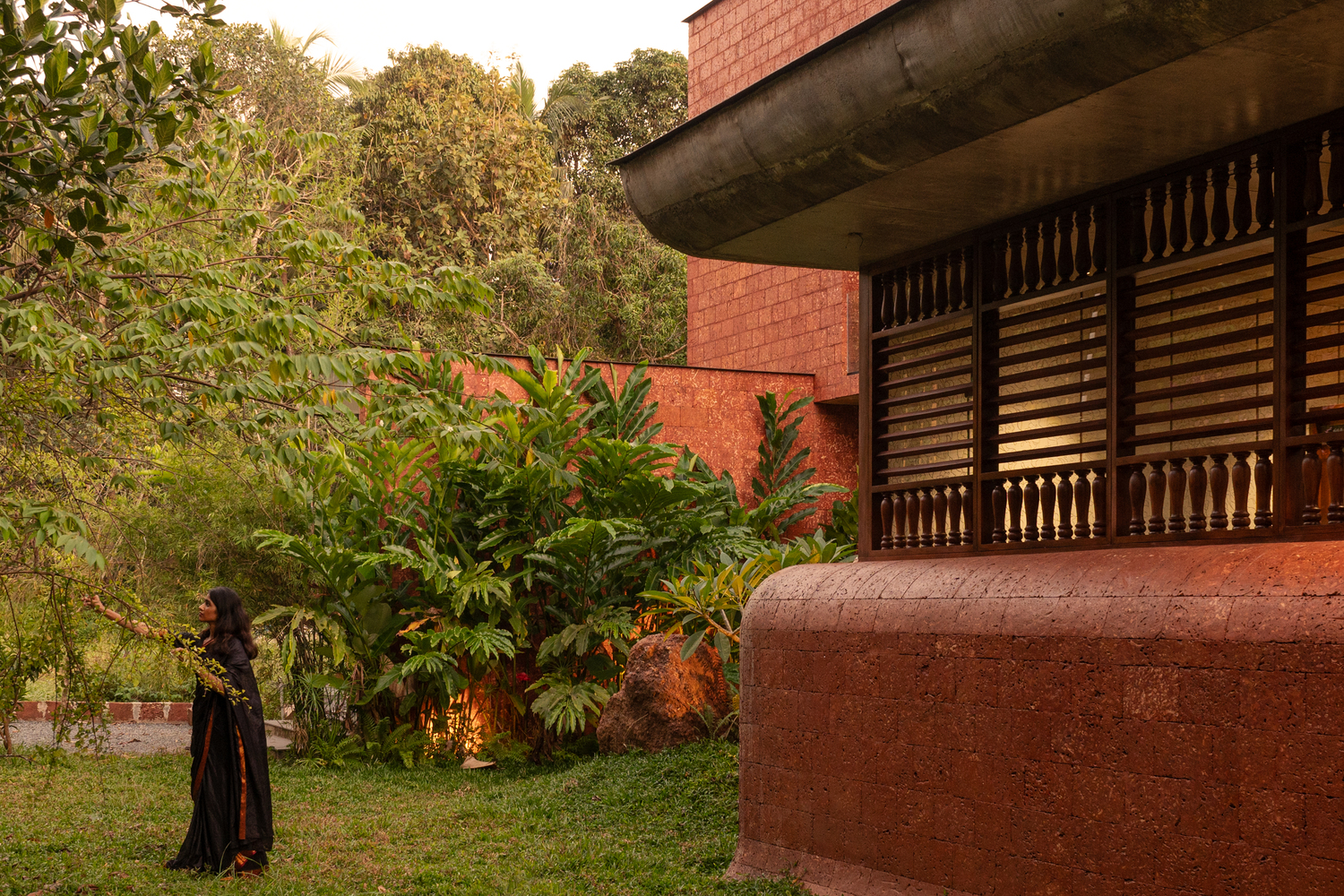
The site being situated in a warm-humid context, desires large overhangs that protect it from both the harsh sun and rain during the monsoon.
Furthermore, the large openings are a testament to maximising daylight and ventilation, which are strategically positioned in order to prevent glare.
This residence is a blend of traditional design principles- rooted in its rich temple architecture context, and modernist principles that are meticulously planned and executed towards the final outcome.
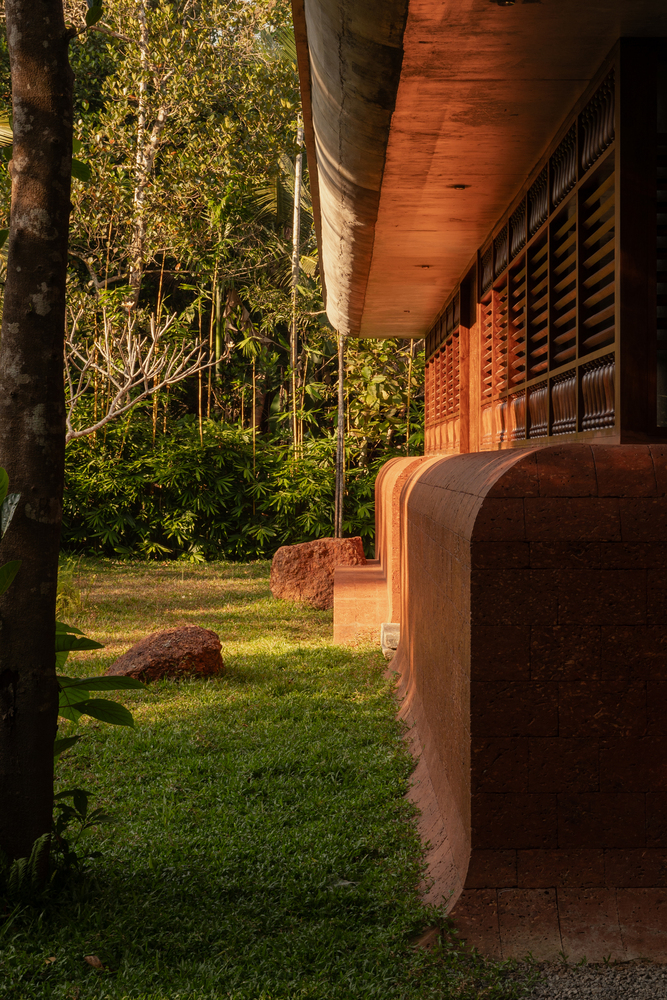
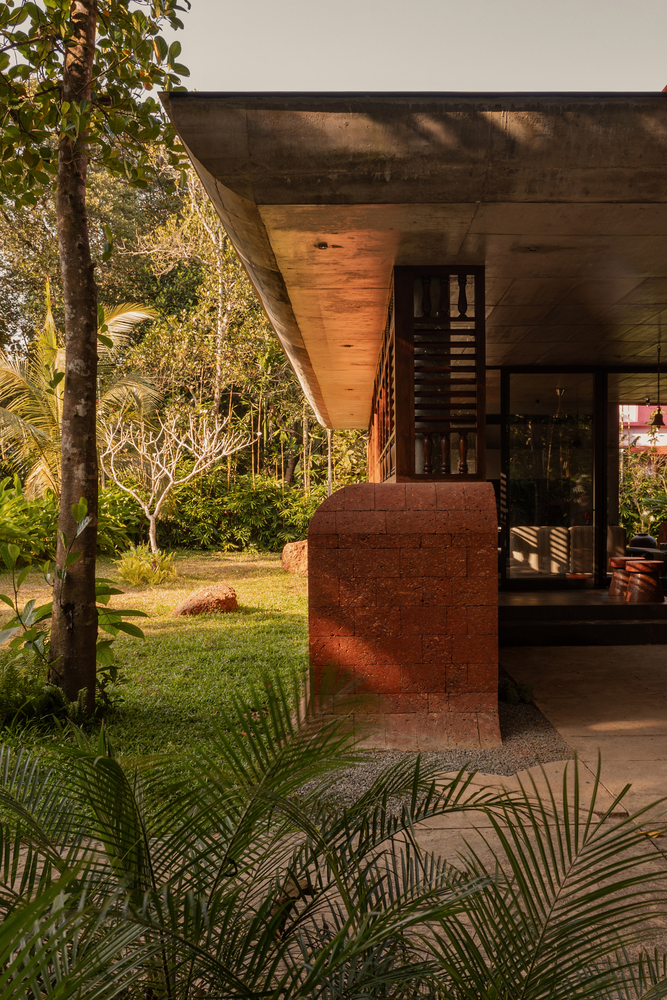
From the seamless blend of locally sourced materials to the use of modern contemporary principles are certainly a source of inspiration to look back to the rich cultural heritage- and work towards the revival of vernacular style in modern buildings.