
The Blue Rotary Membrane Bridge
THE BLUE ROTARY MEMBRANE BRIDGE
People's Architecture Office
ARCHITECTS
People's Architecture Office
DESIGN PRINCIPALS
He Zhe, James Shen, Zang Feng
PROJECT TEAM
Qi Ji, Lin Mingkai
STRUCTURAL DESIGN
Beijing Shouang Architectural Structure Studio, Liu Su
STEEL STRUCTURE
Suzhou Shengyao Environmental Art Engineering Co., Ltd.
STRUCTURAL CONSULTANT
And Office
PHOTOGRAPHS
Yumeng Zhu, AHstudio
AREA
30 m²
YEAR
2024
LOCATION
Shanghai, China
CATEGORY
Bridges
English description provided by the architects.
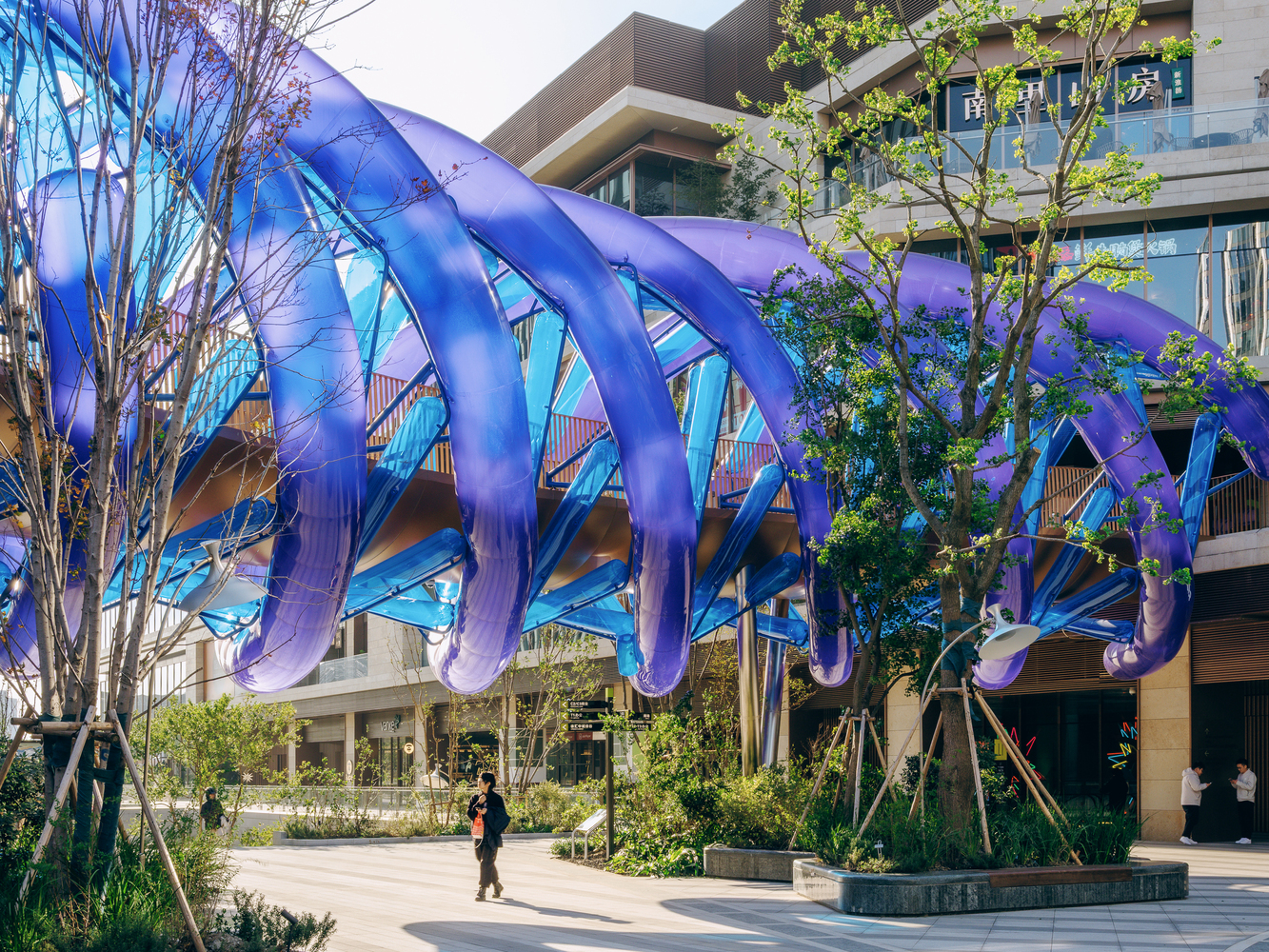
PAO (People's Architecture Office) has inserted the Rotary Membrane Bridge installation into the public space through a gentle intervention approach.
Using materials, light, and interactive design that harmonize with the site, it injects vitality and color into the space, making it an urban visual landmark that combines artistry and high communicability.
SITE
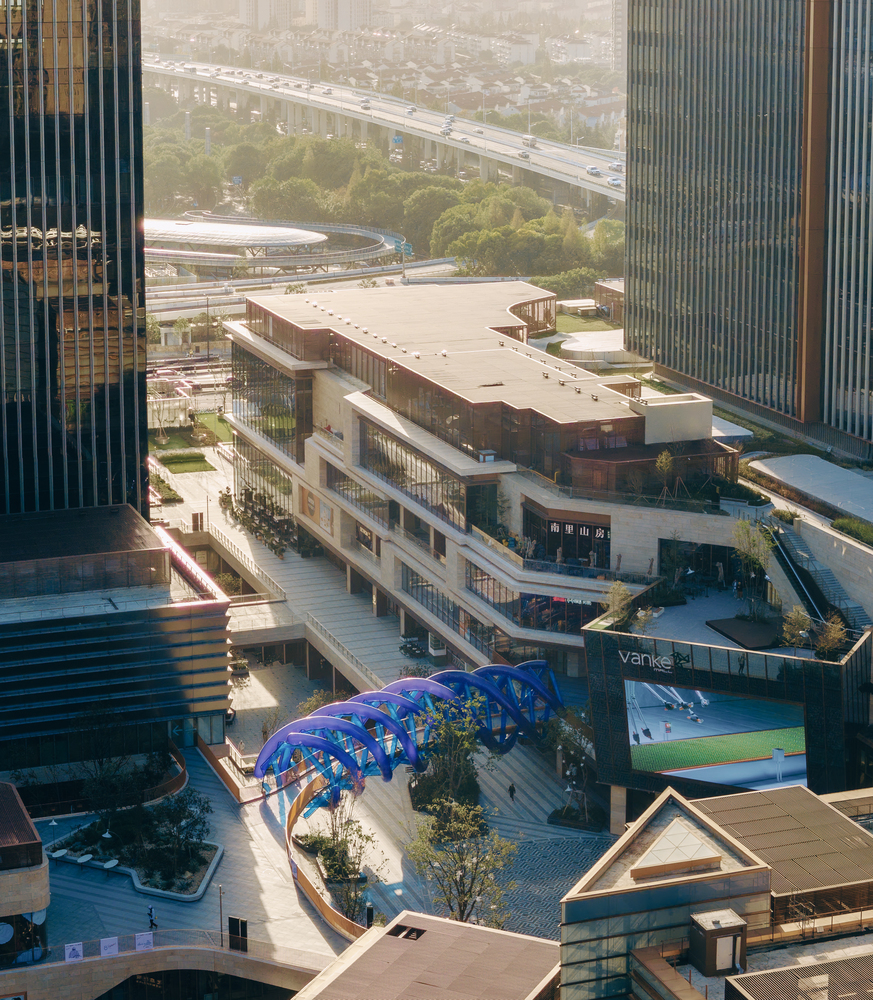
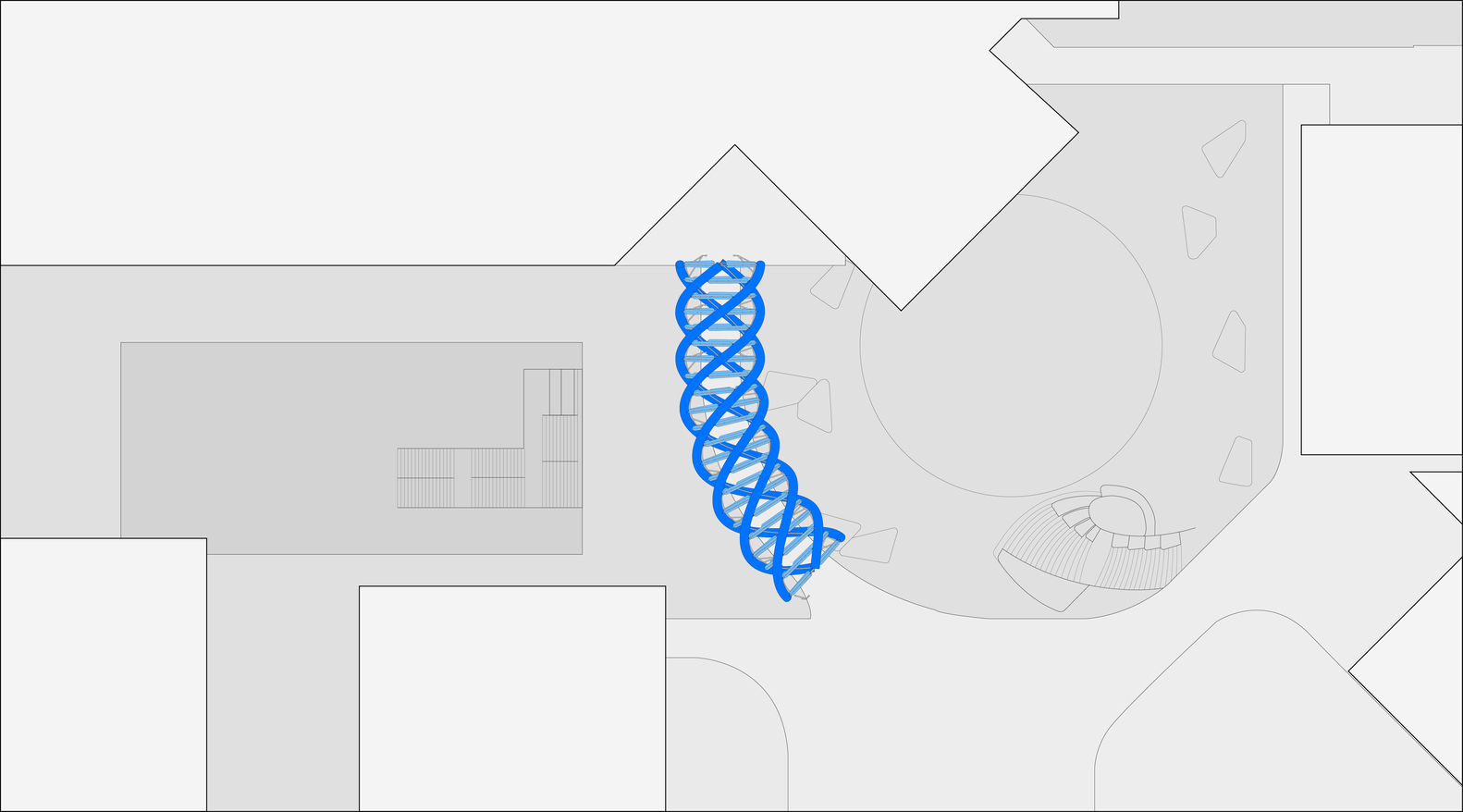
The project is located in Shanghai Xuhui Vanke Plaza, a newly built TOD commercial complex.
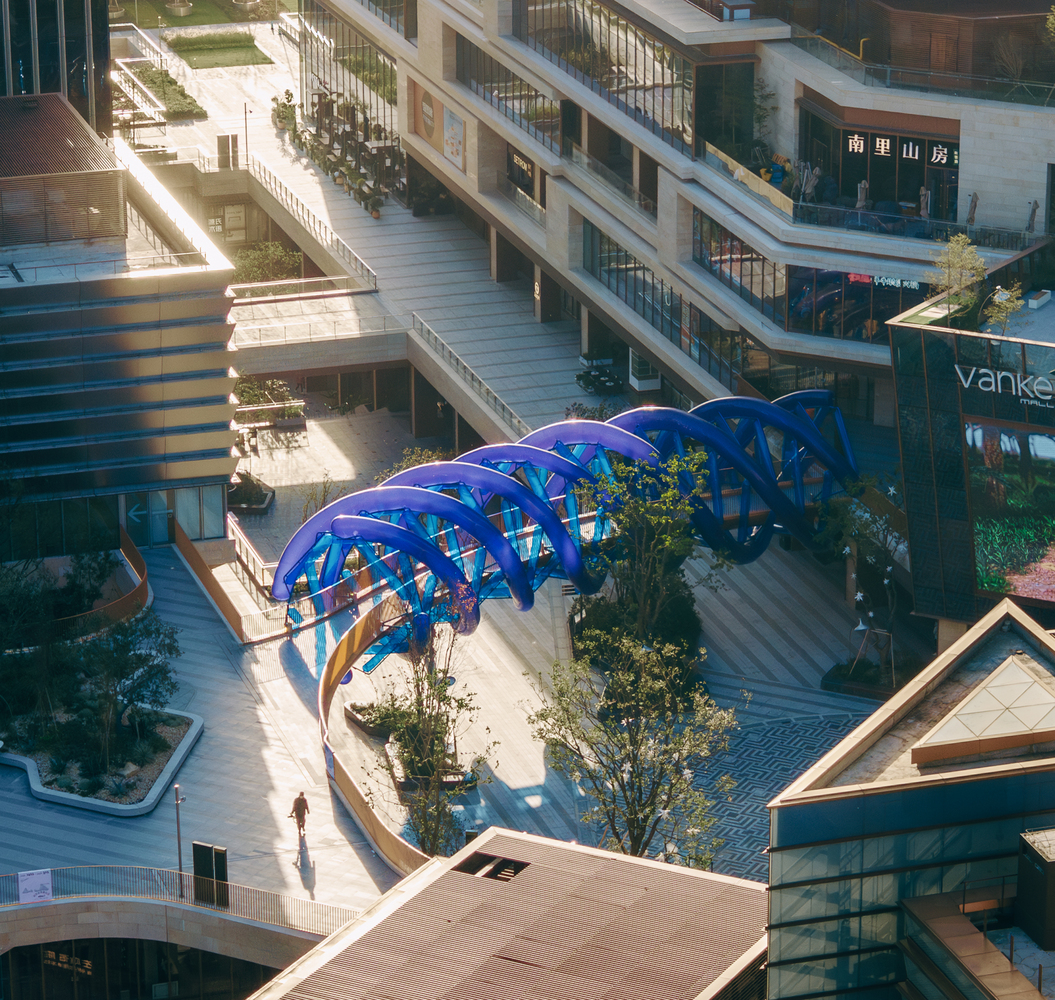
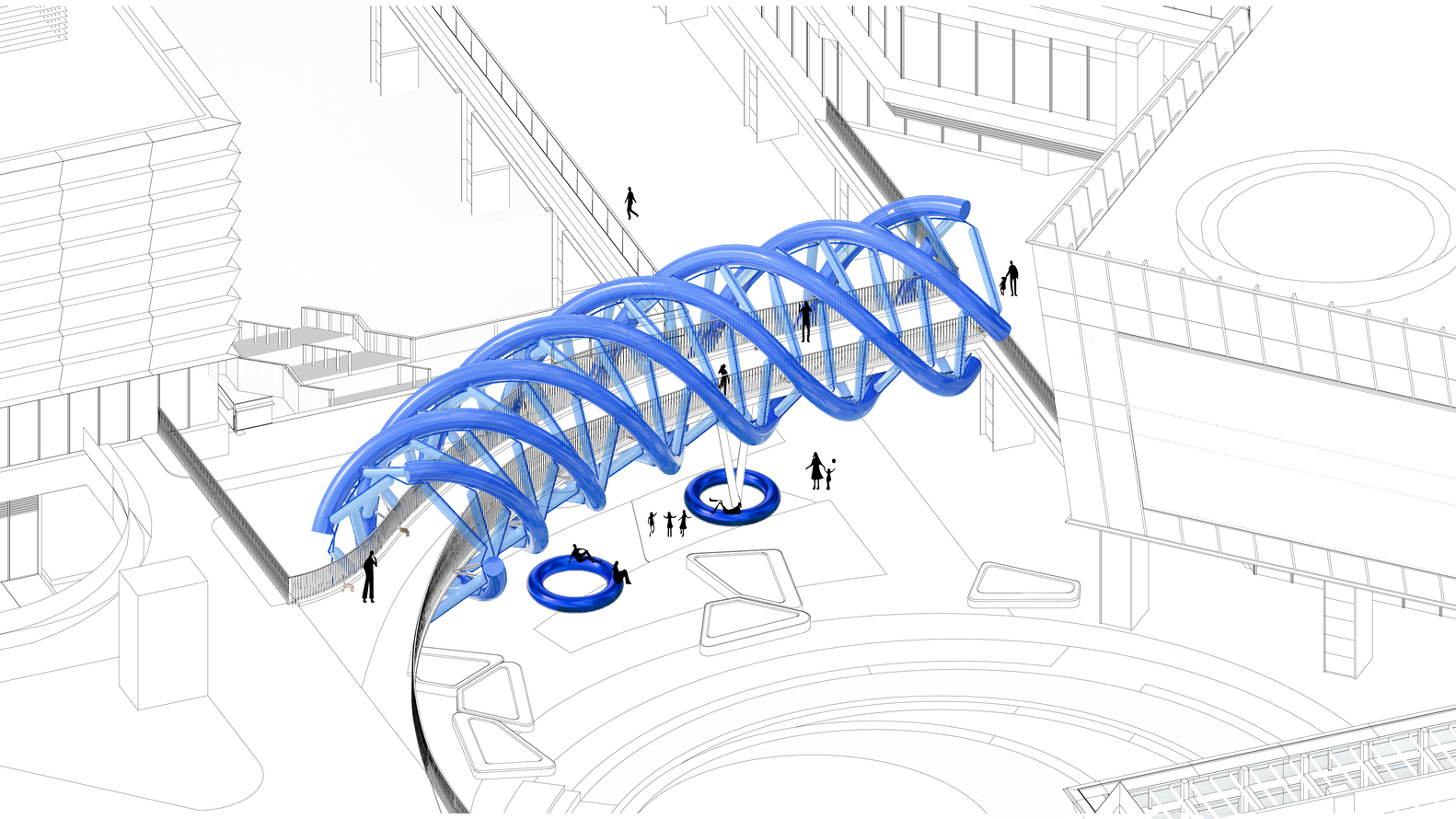
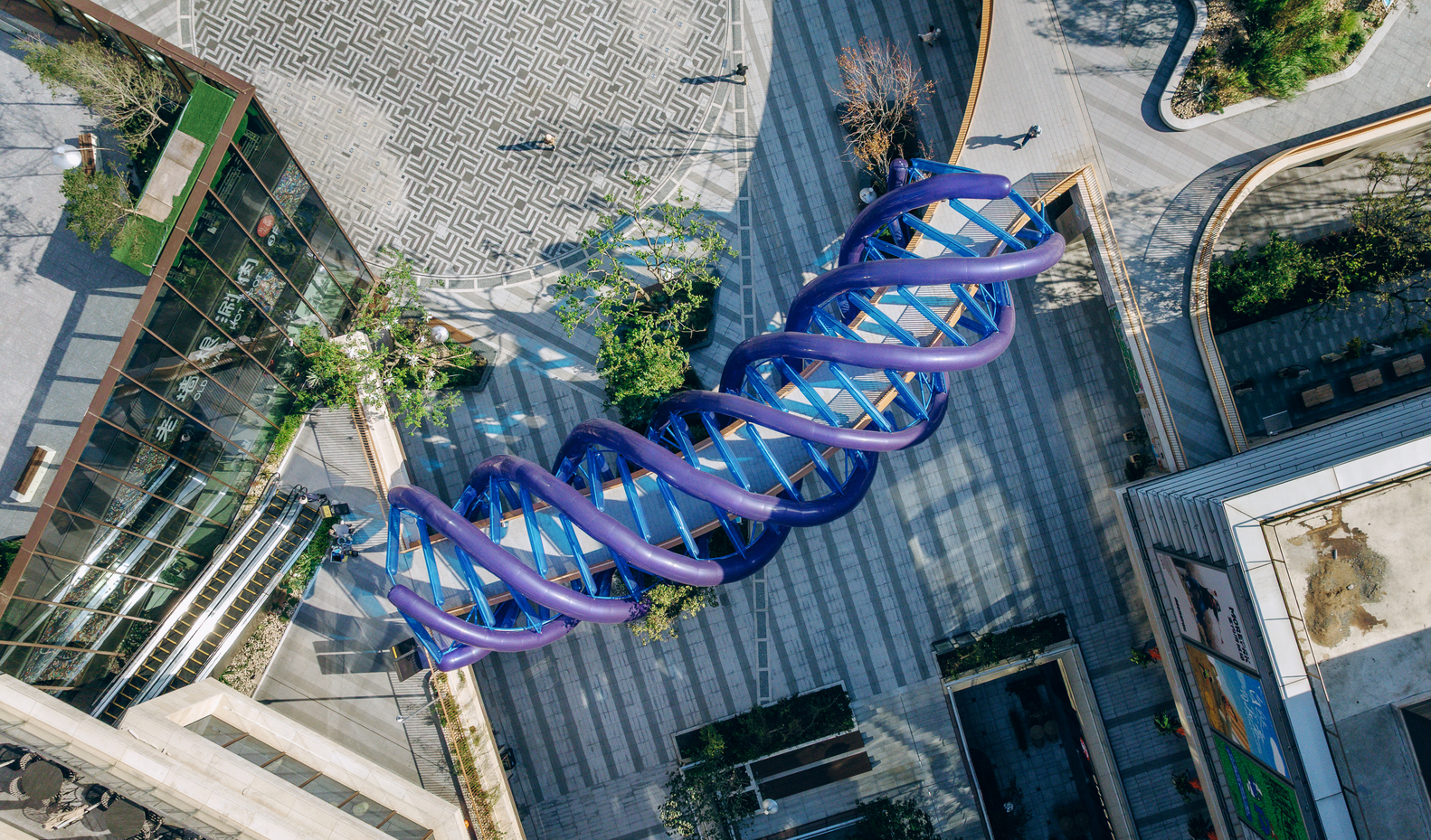
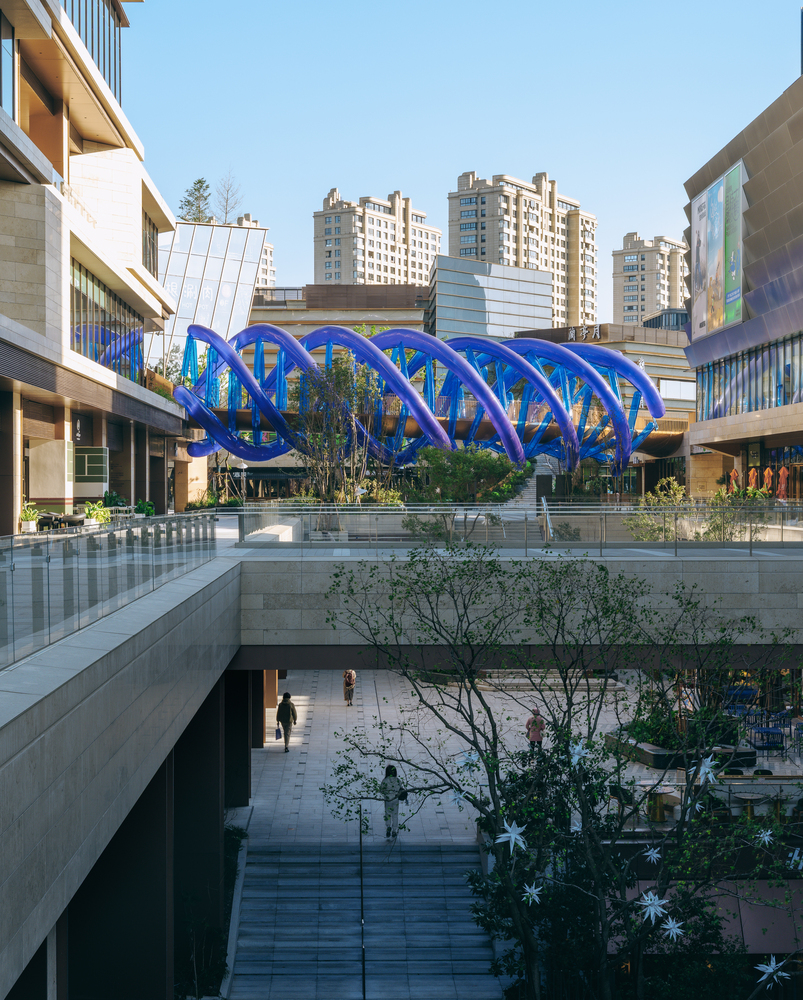
The Rotary Membrane Bridge is situated on a curved connecting bridge in the central part of the commercial complex, linking the east and west second-level platforms.
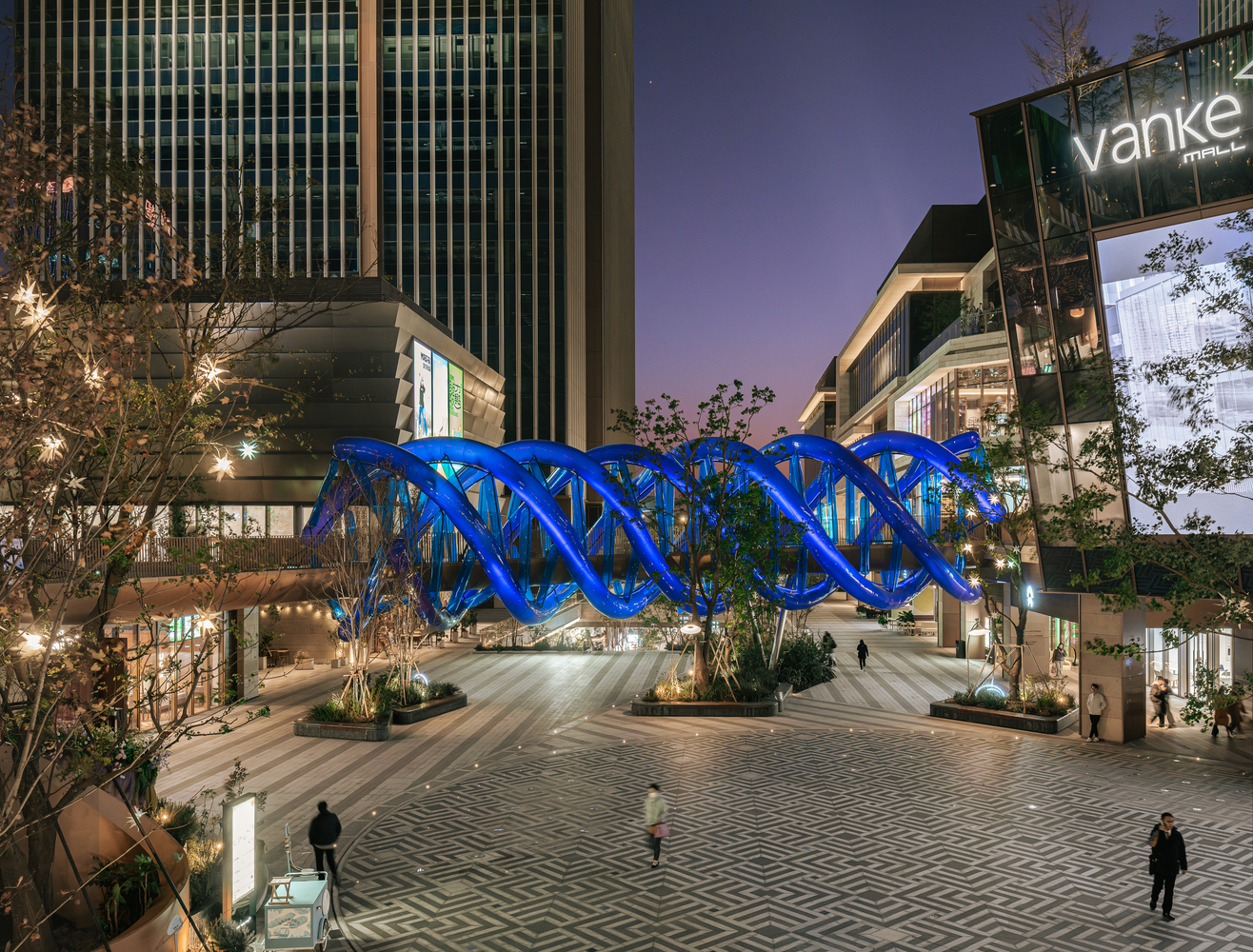
Below the bridge lies the main central outdoor passageway and a sunken courtyard, facing the main entrance on the southwest side.
INTERVENTION
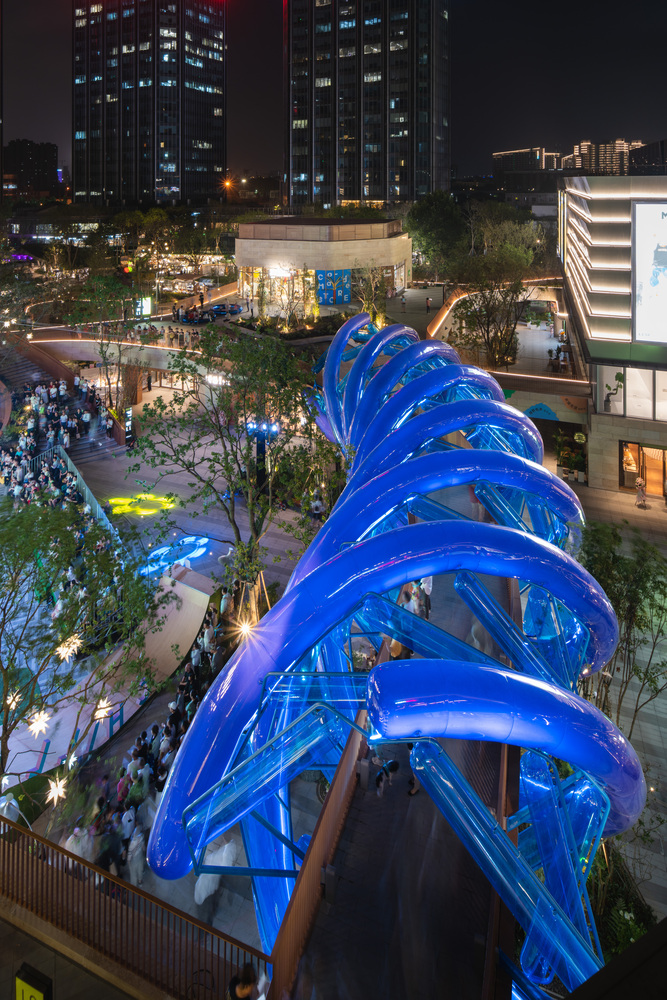
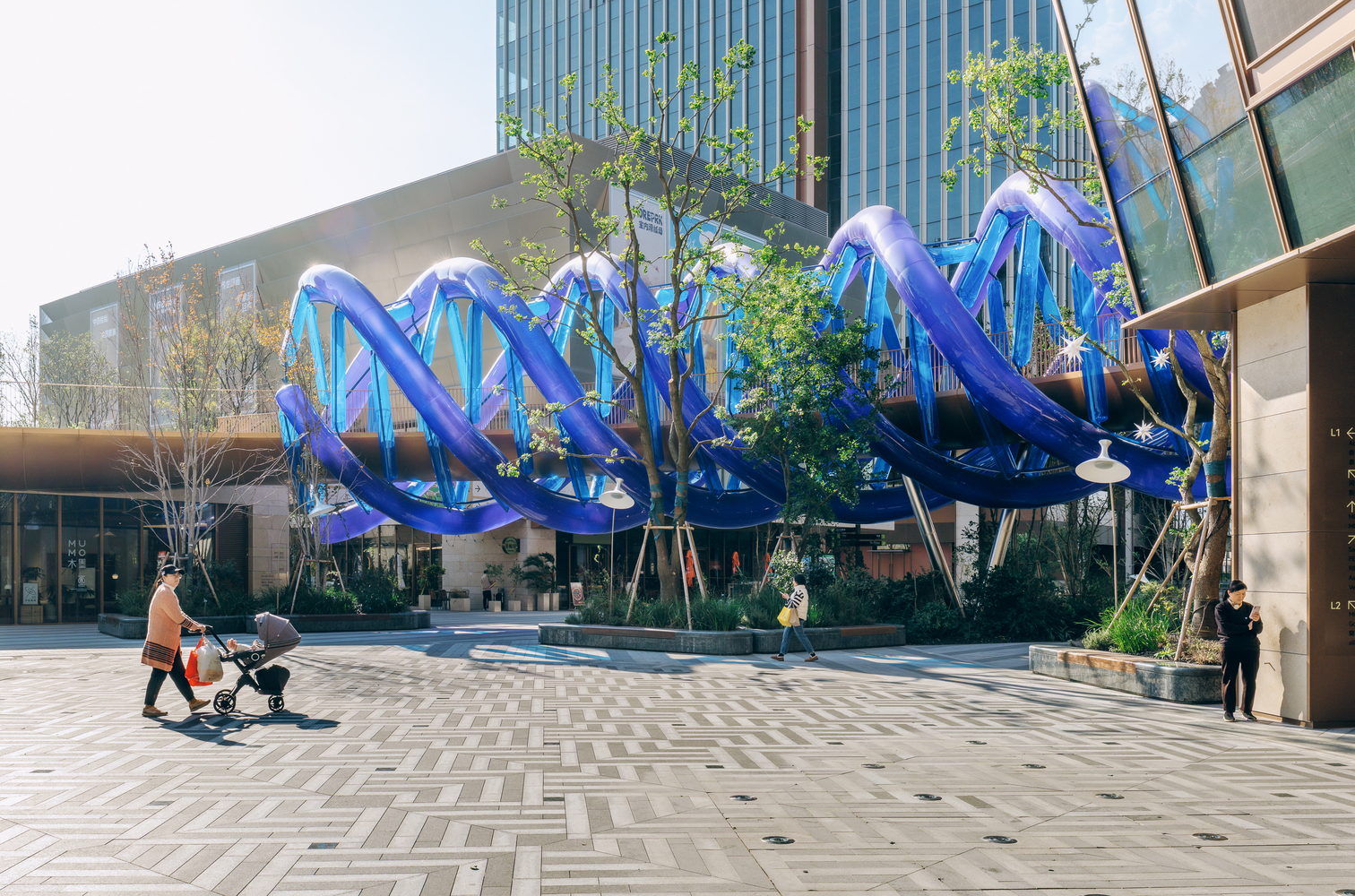
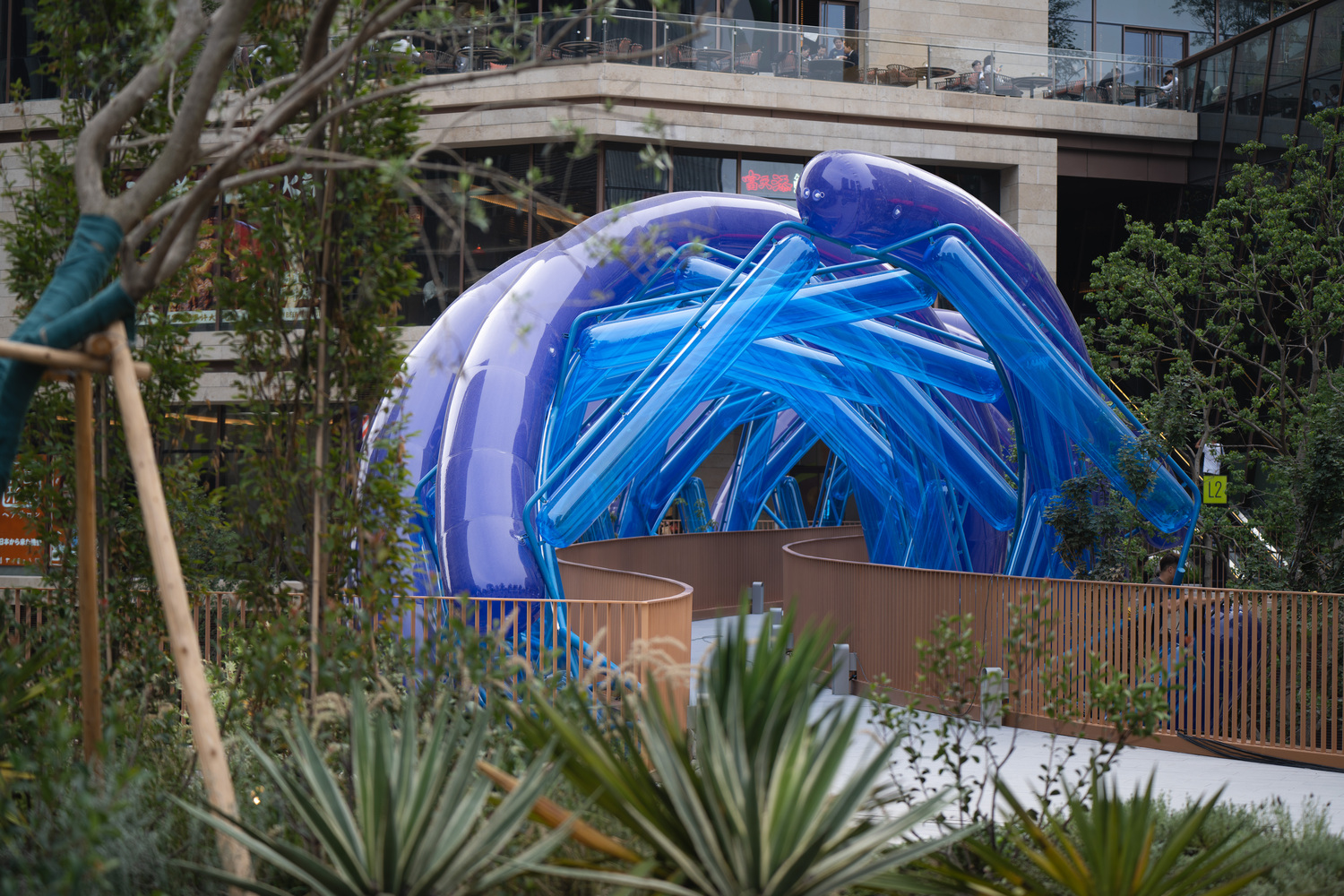
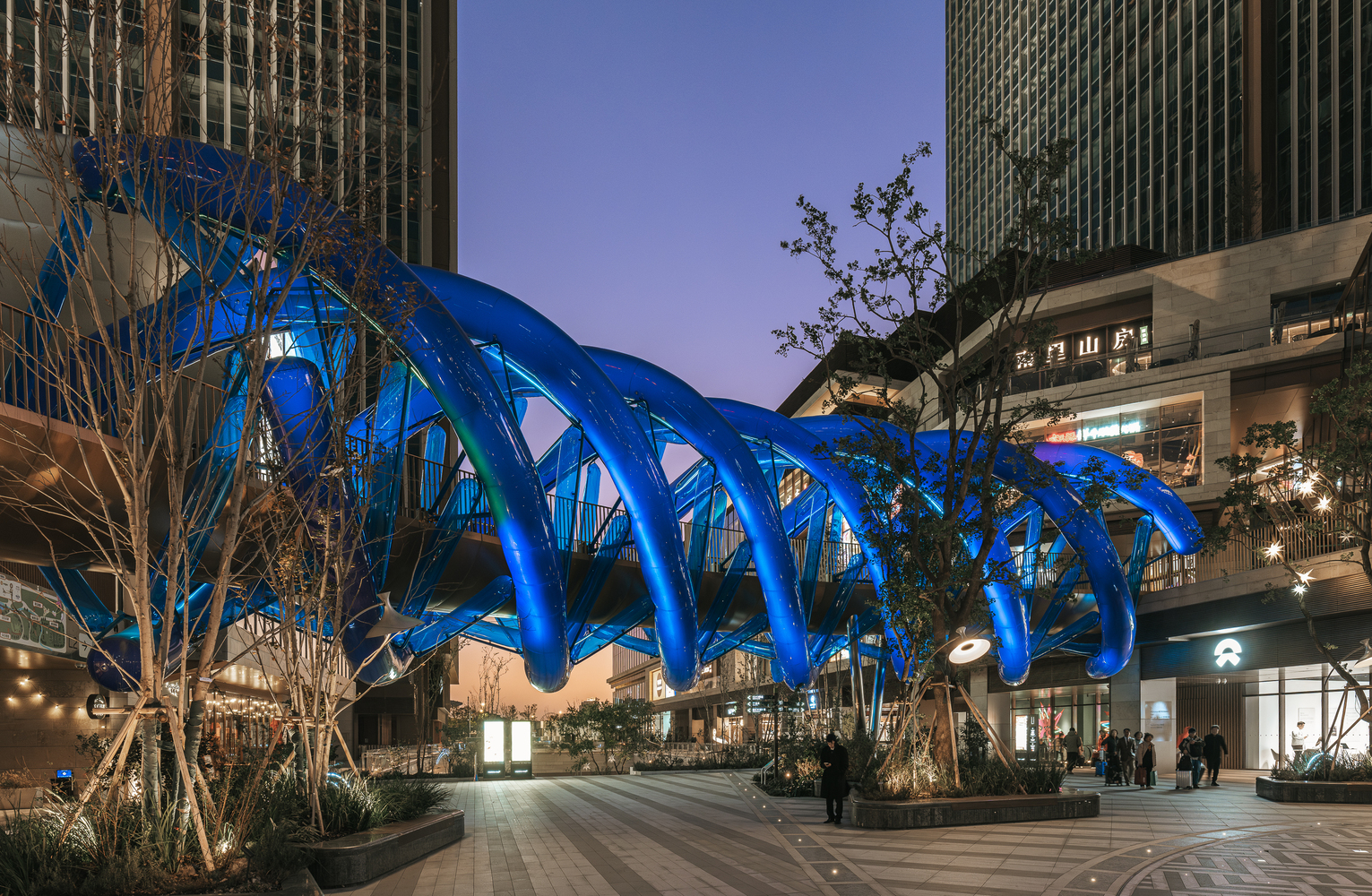
The Rotary Membrane Bridge employs rotating blue inflatable membranes to envelop the entire curved bridge structure.
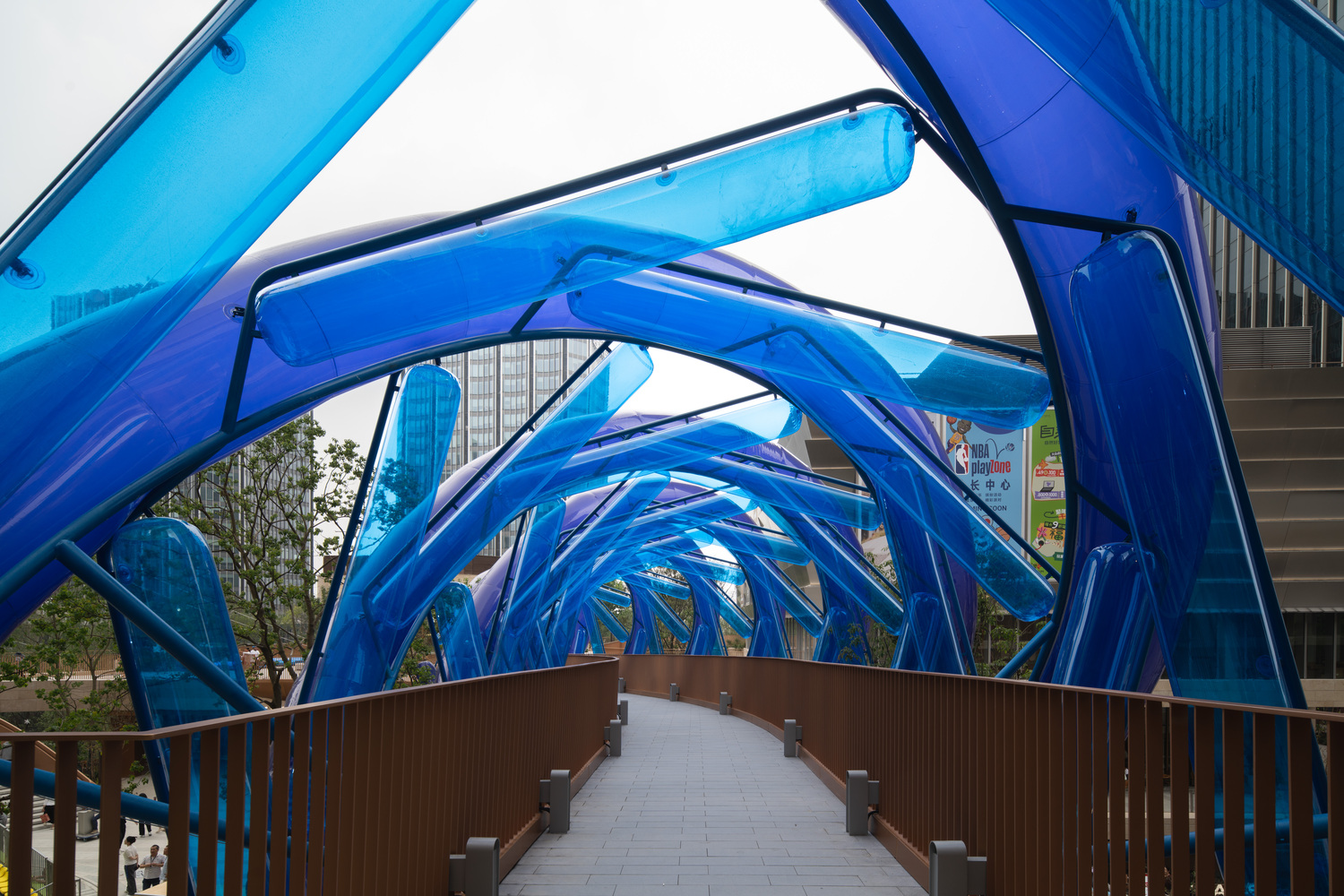
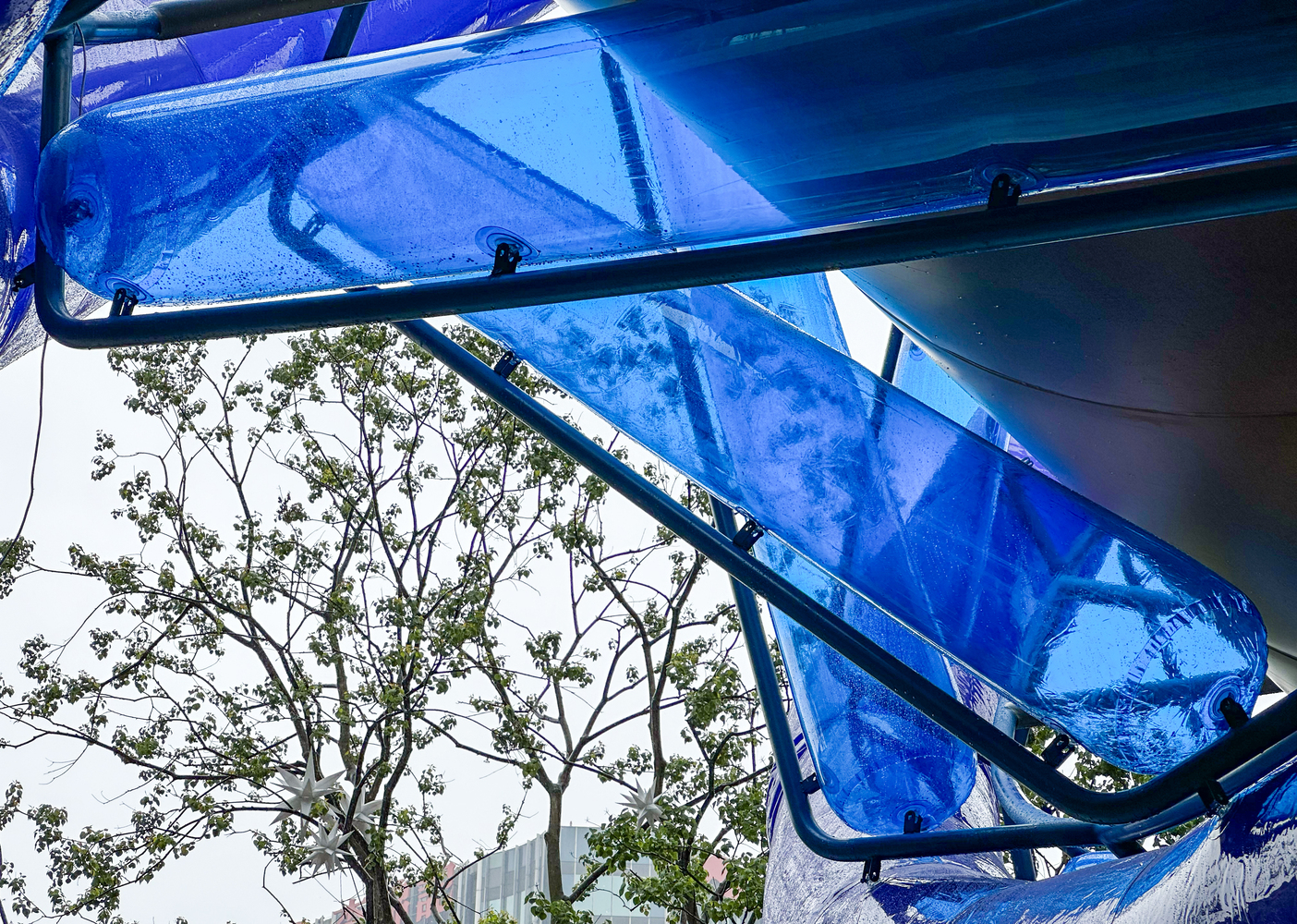
Using minimal materials and the lightest intervention method, it creates a visually striking spatial focal point.
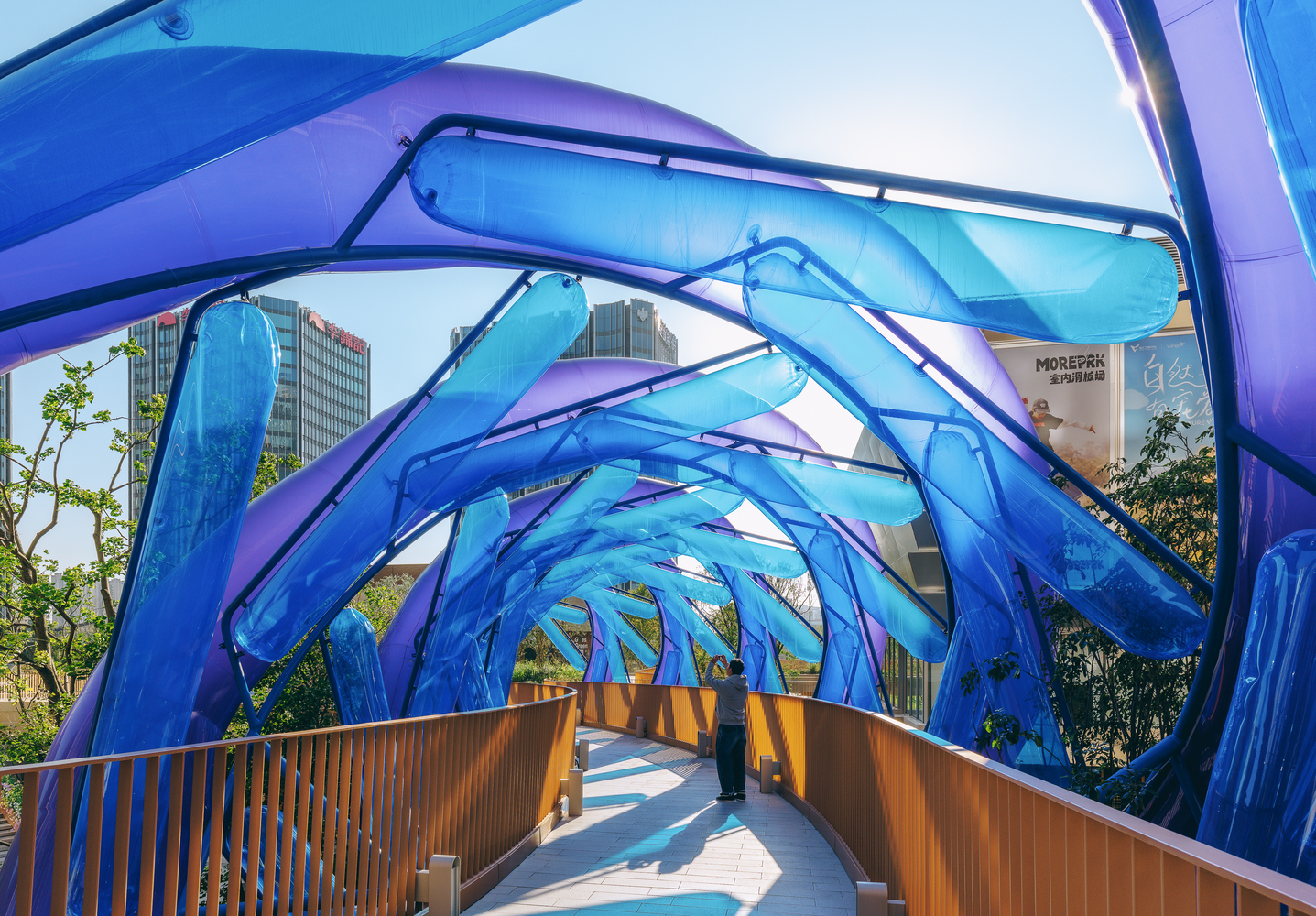
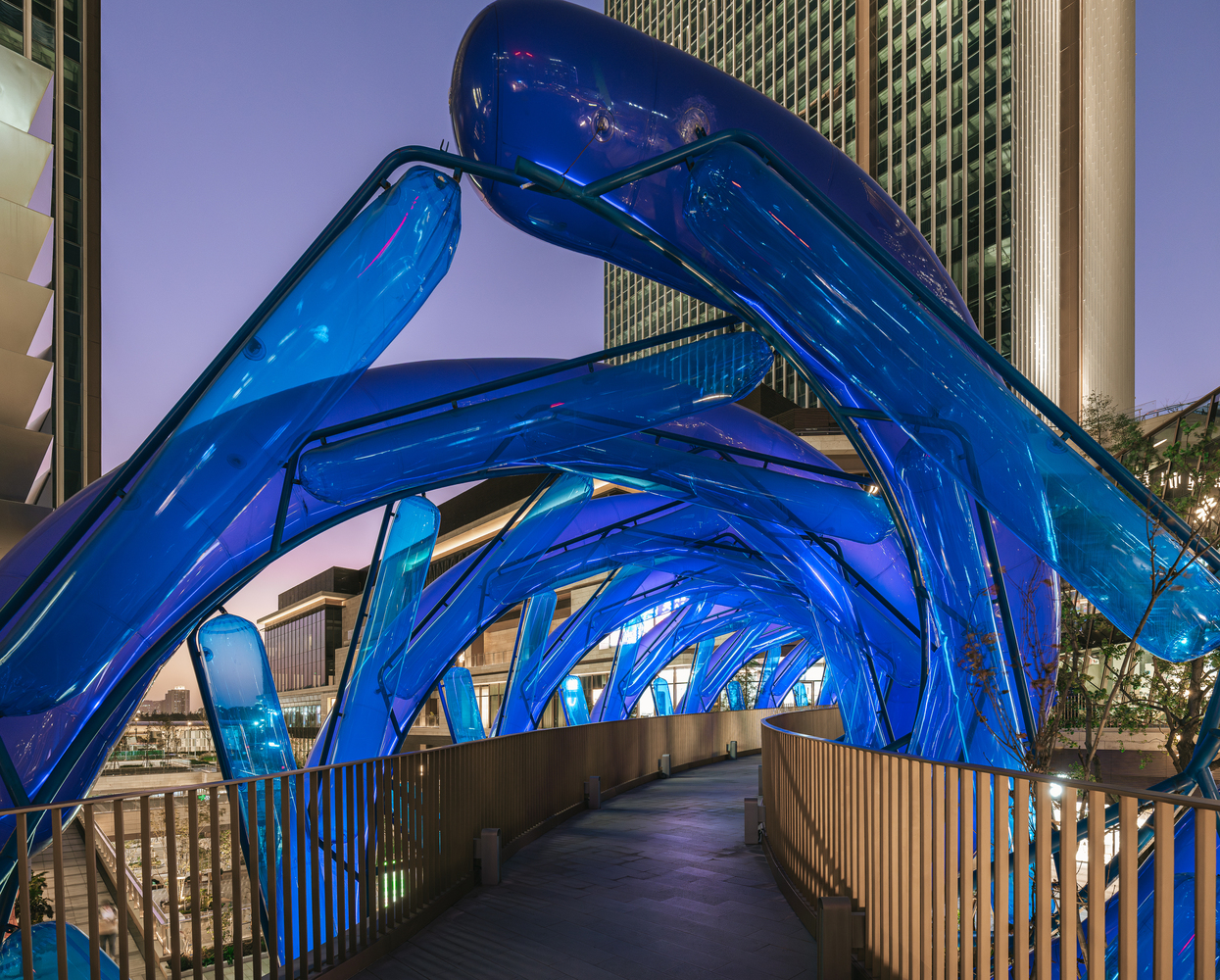
From a distance, the bridge serves as an iconic art installation; up close and inside, it becomes an experiential rotating tunnel.
COMPOSITION
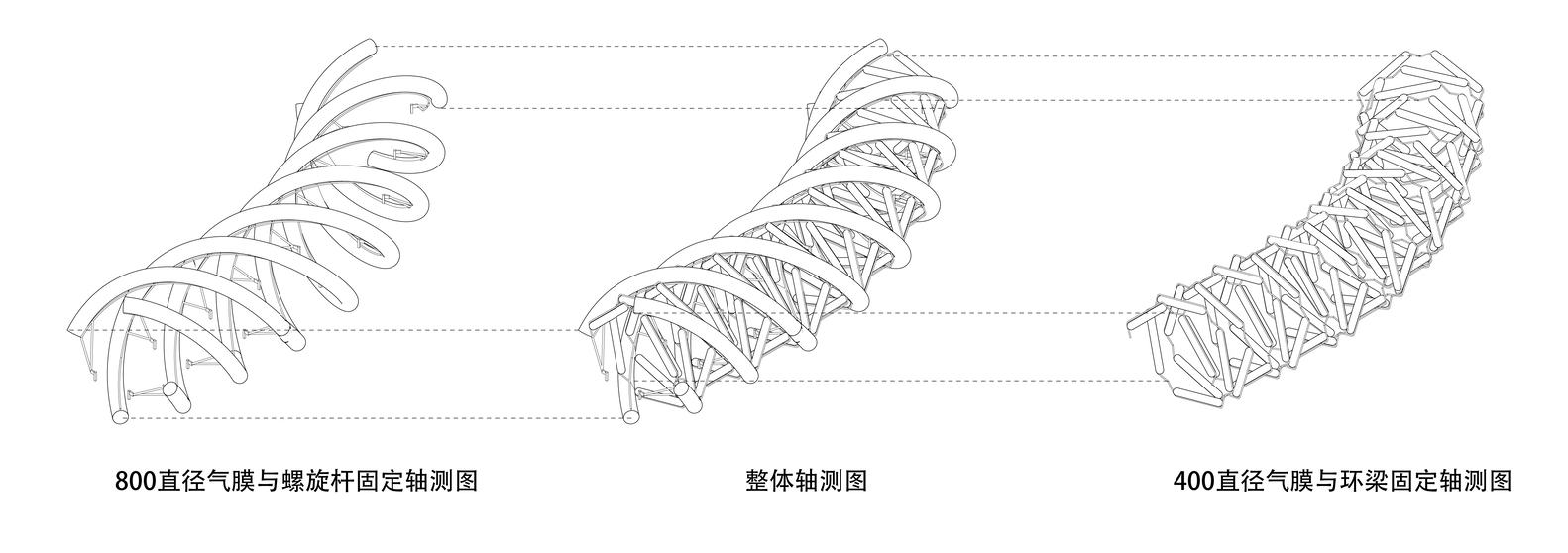
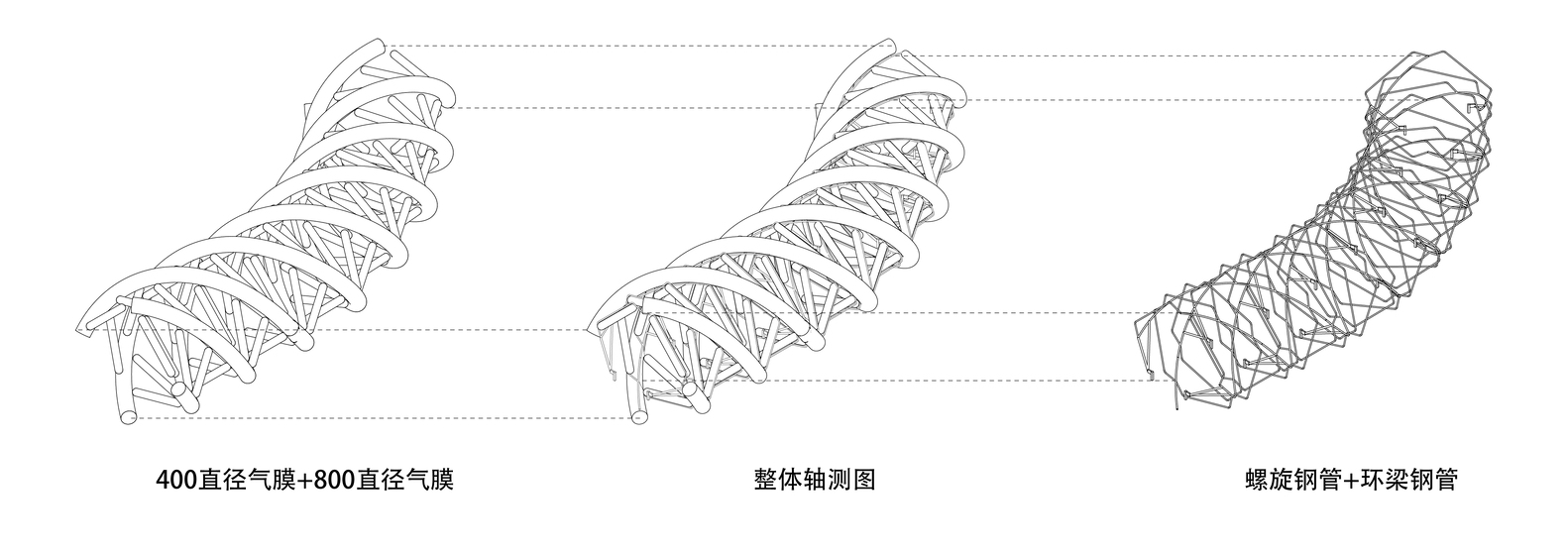
The Rotary Membrane Bridge consists of two types of inflatable membranes:
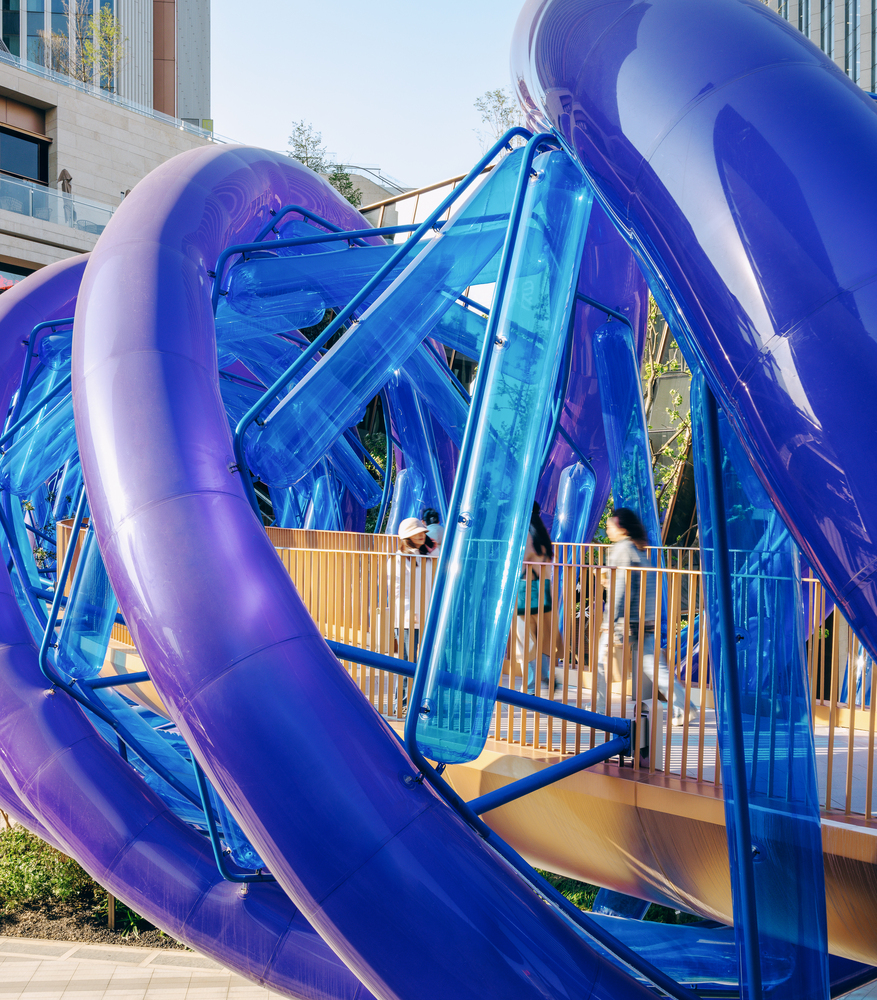
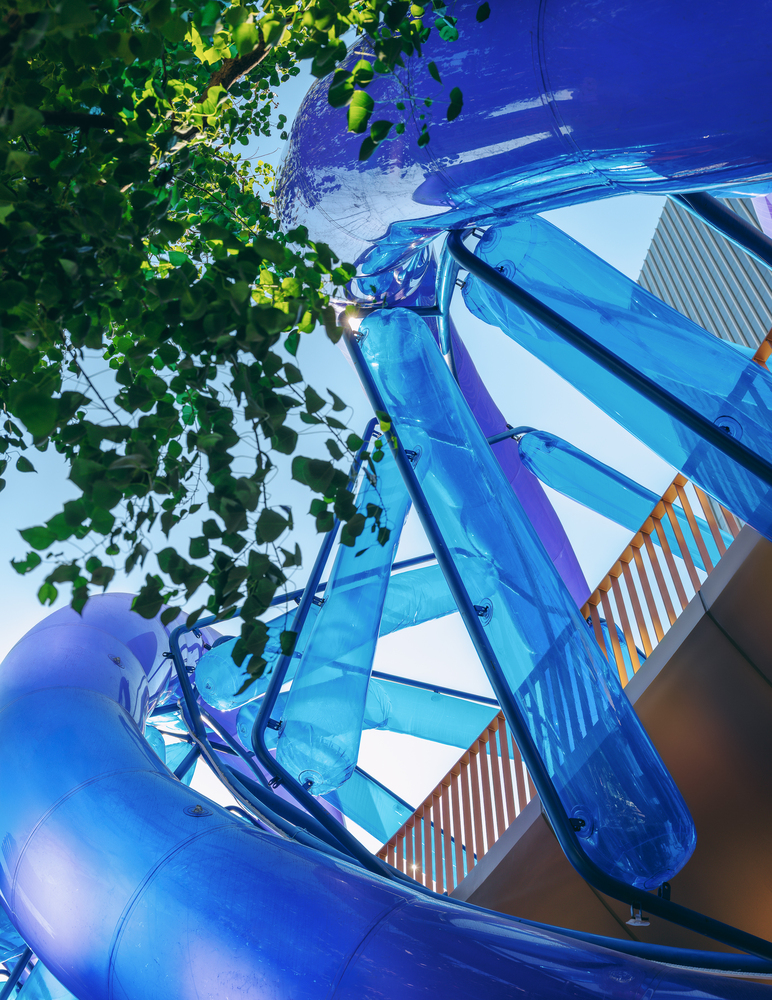
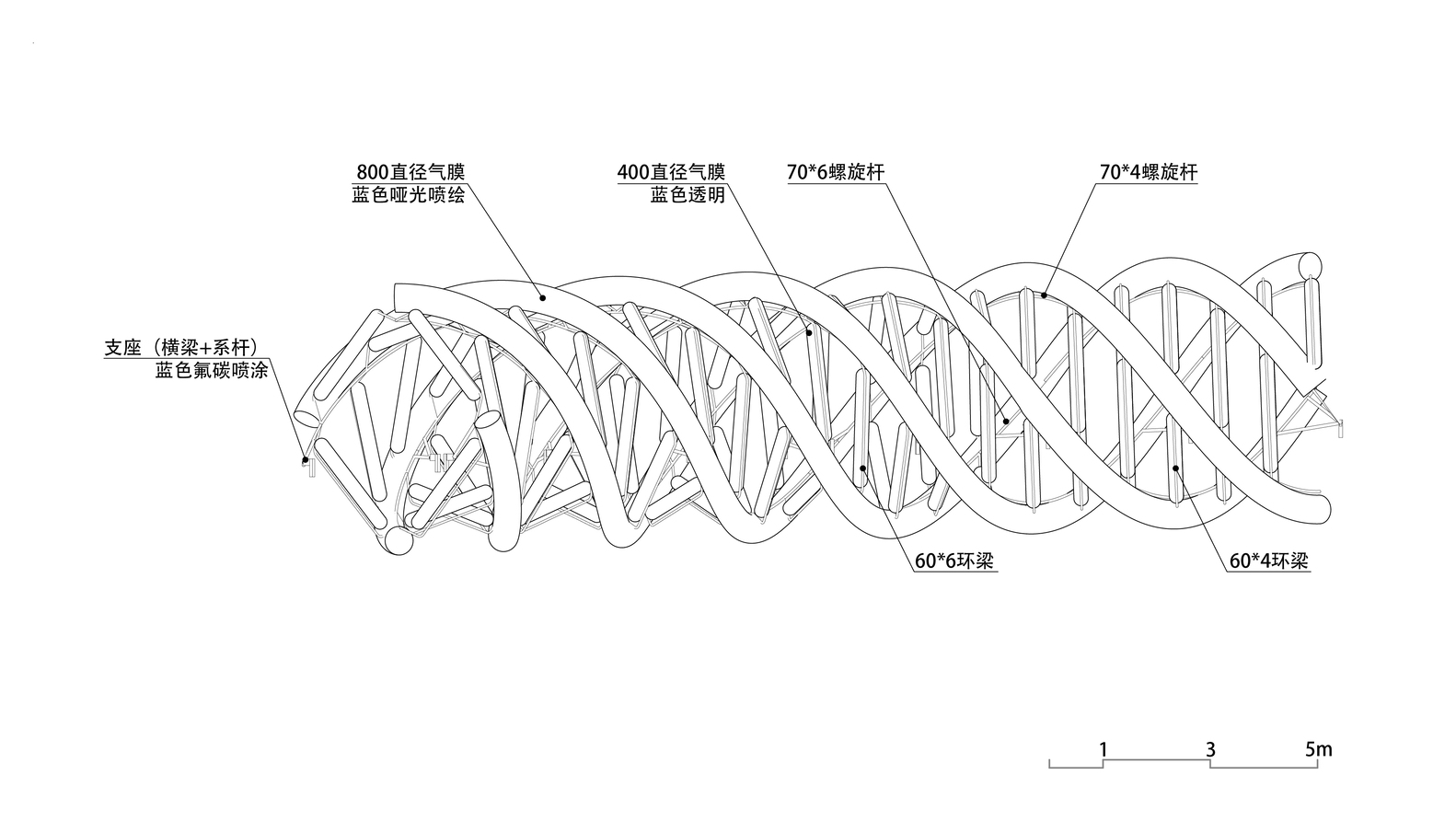
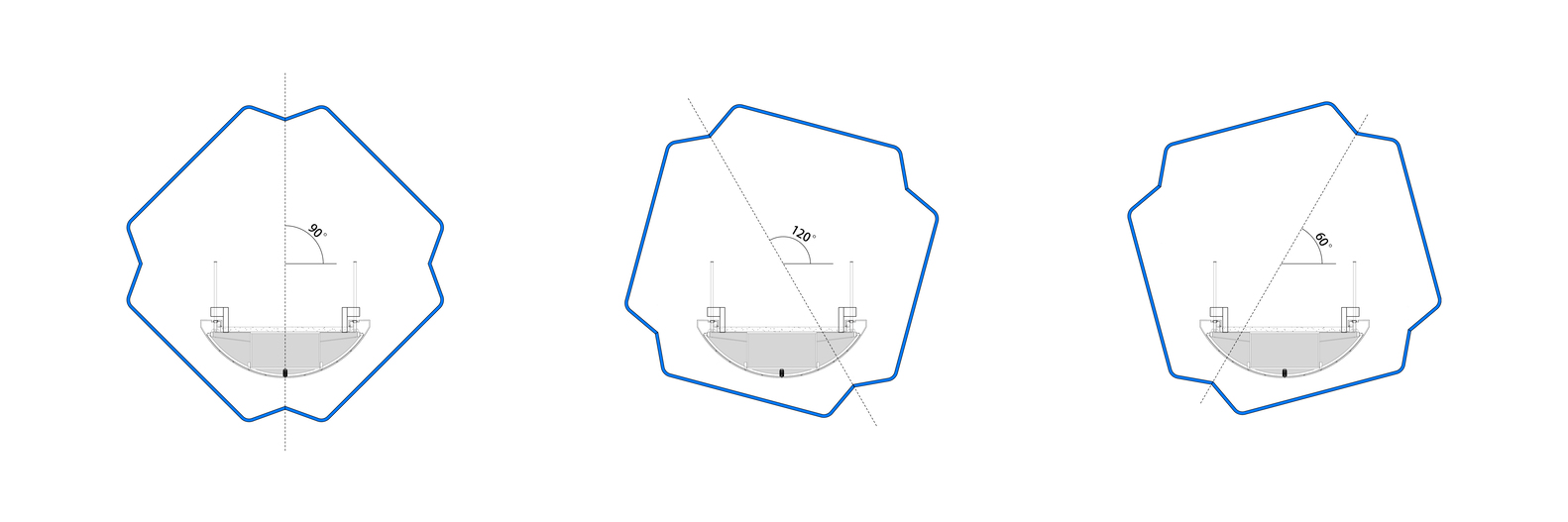
one is a spiral type with a diameter of 600mm, and the other is a linear type with a diameter of 400mm. These two membranes form different spiral configurations, interlinked with each other.
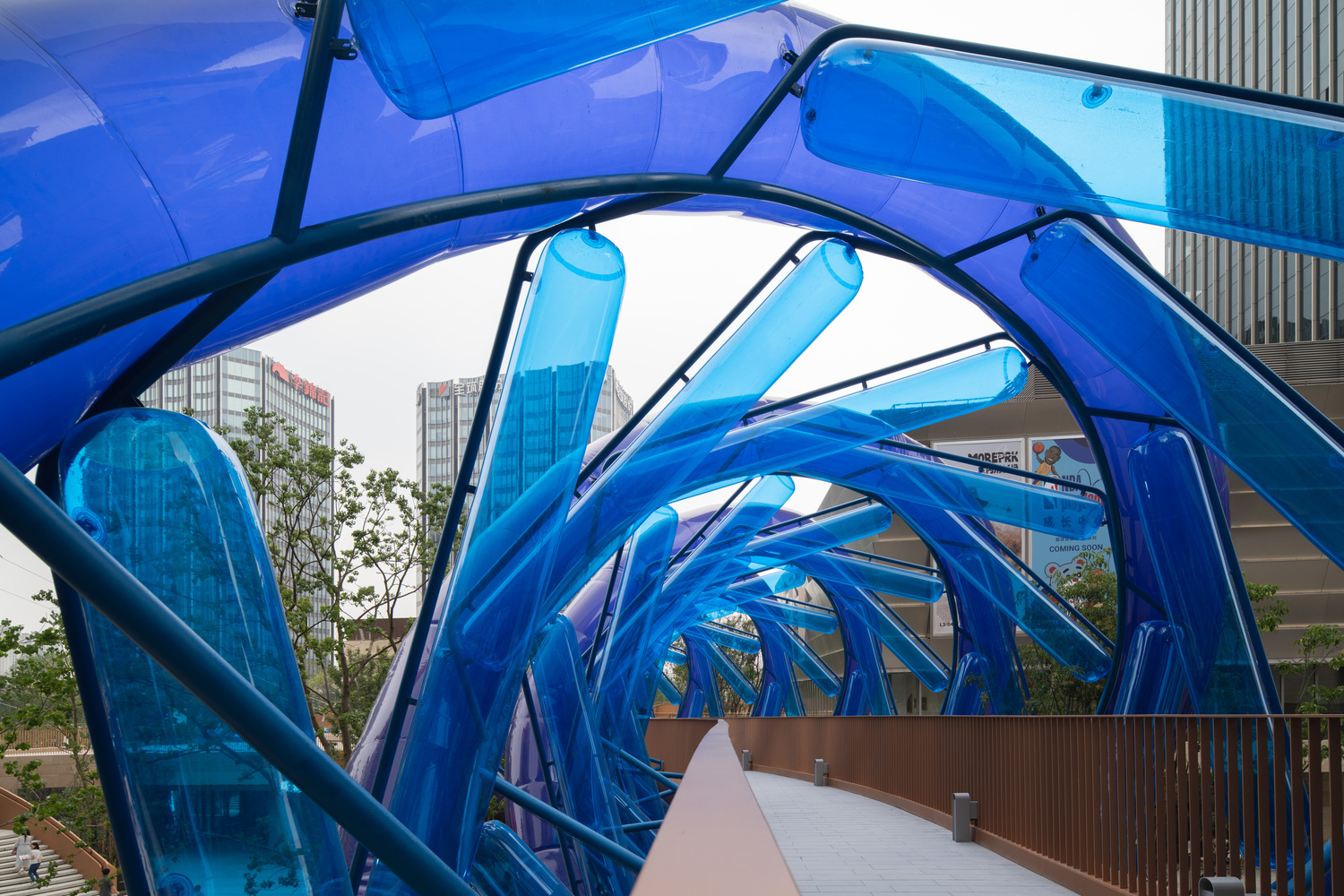
The spiral membrane is made of matte dark blue material, while the linear membrane is made of transparent light blue material, presenting different textural effects under sunlight.
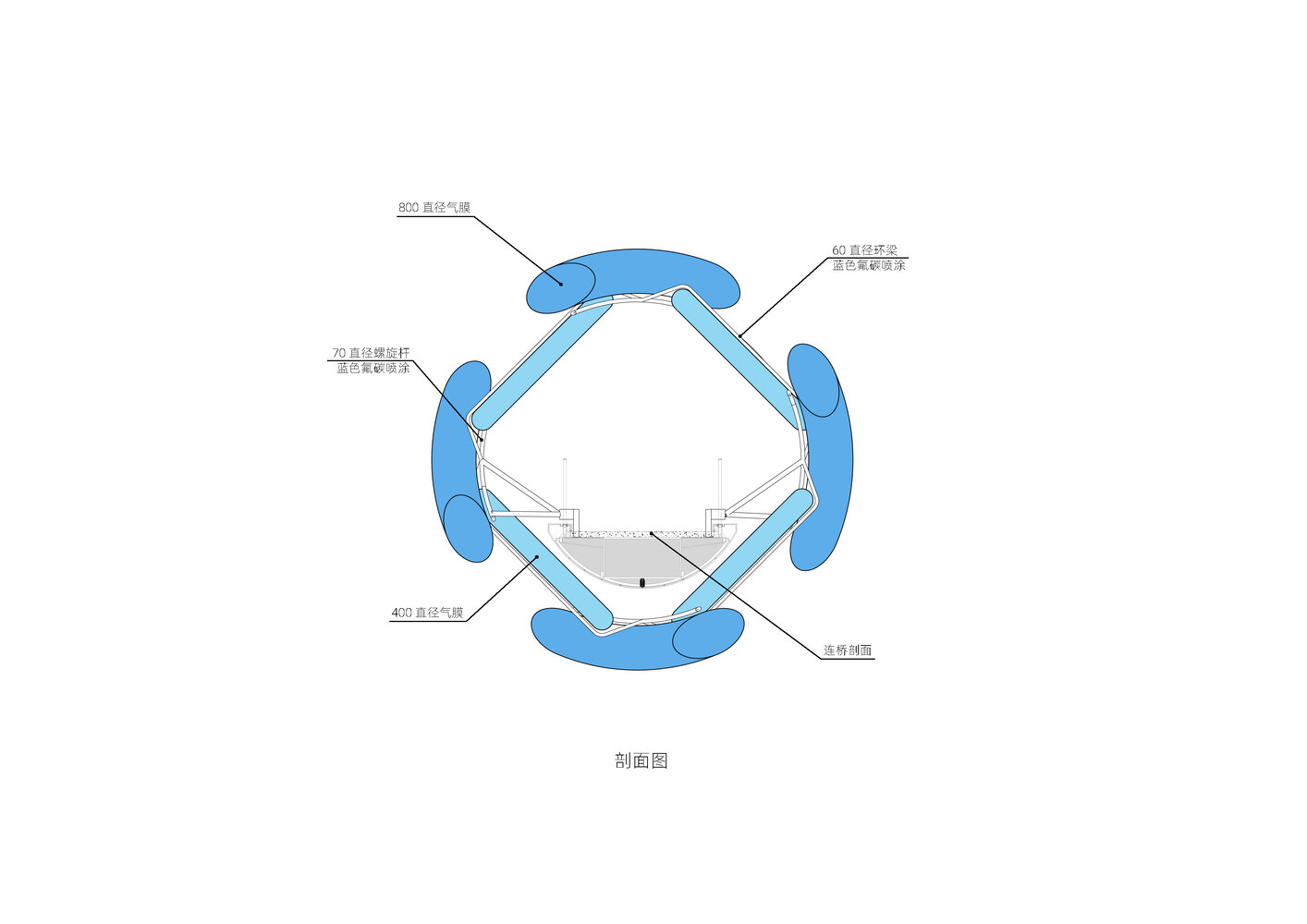
The structure is composed of thin steel circular tubes. Spiral circular steel tubes with a diameter of 60mm serve as the primary structure, connected to the main beams on both sides of the bridge via diagonal V-shaped supports.
Linear circular steel tubes with a diameter of 40mm act as secondary structures, arranged rotationally to connect the spiral tubes, forming a slender support frame for fixing the inflatable membranes.
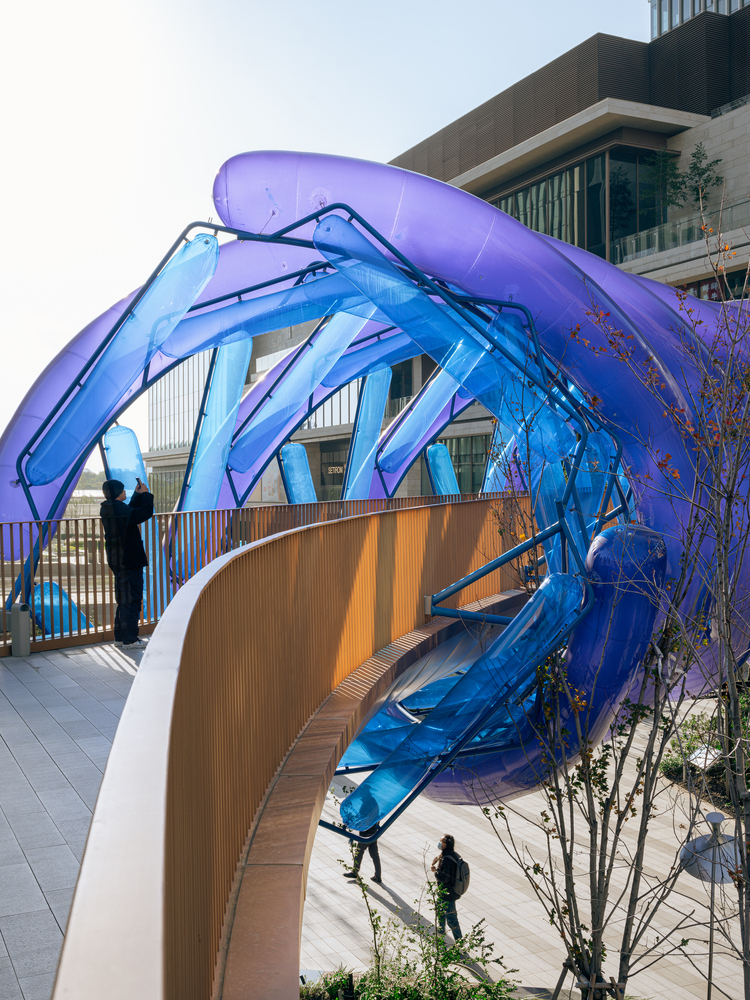
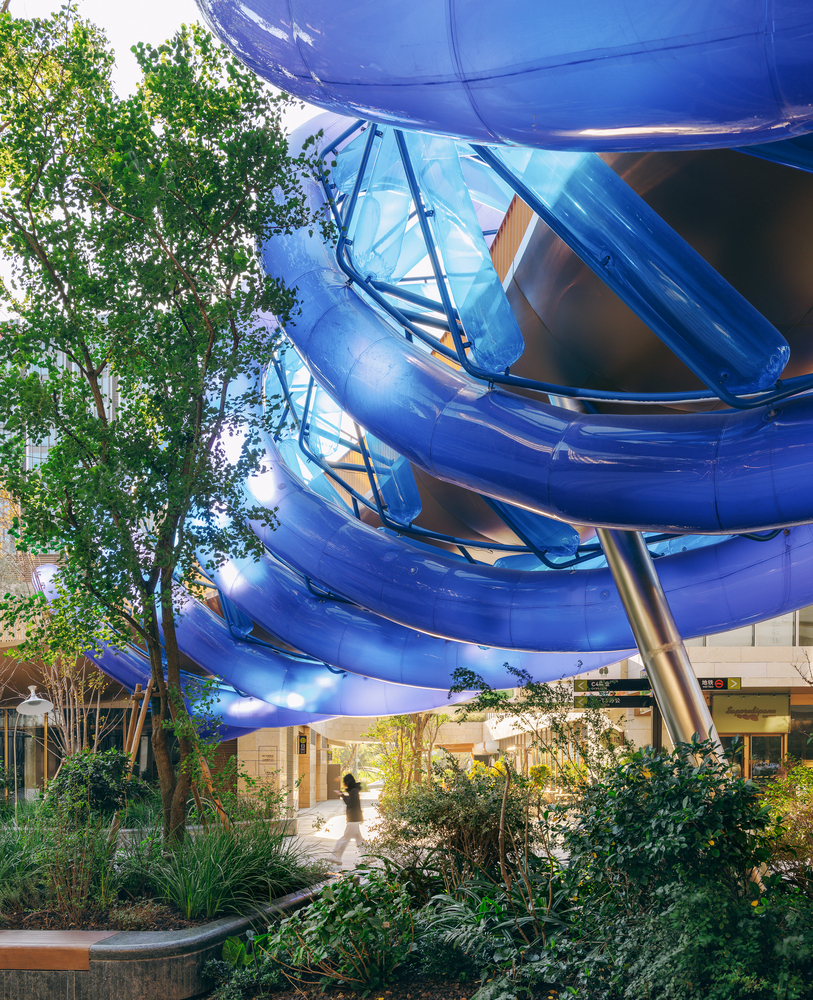
The spiral inflatable membranes are fixed to the outer side of the steel frame, emphasizing the outward visual characteristic of the spiral.
The linear inflatable membranes are fixed to the inner side of the steel frame, focusing more on the spatial experience for pedestrians inside the bridge.
INTERACTION
The Rotary Membrane Bridge interacts with the environment and the people passing through in various ways, further activating the public space.
Upon entering the bridge, people are instantly enveloped in a translucent blue. The projected light turns blue; looking up, the sky also appears in different layers and more vivid shades of blue.
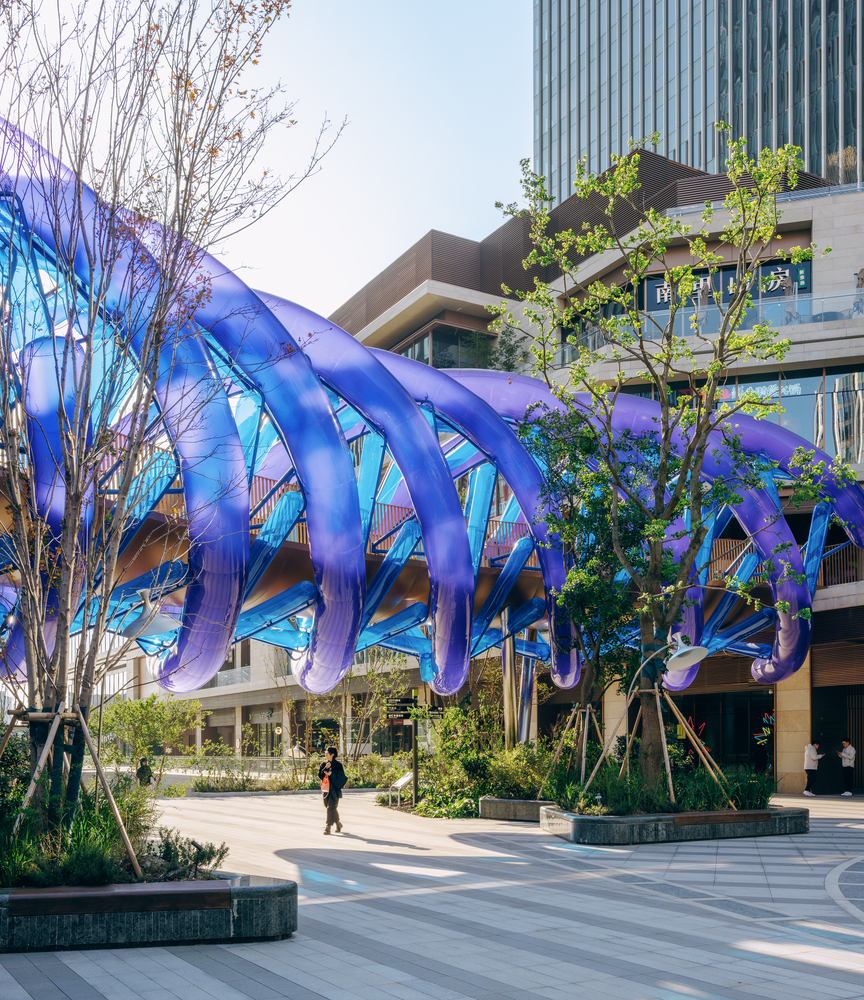
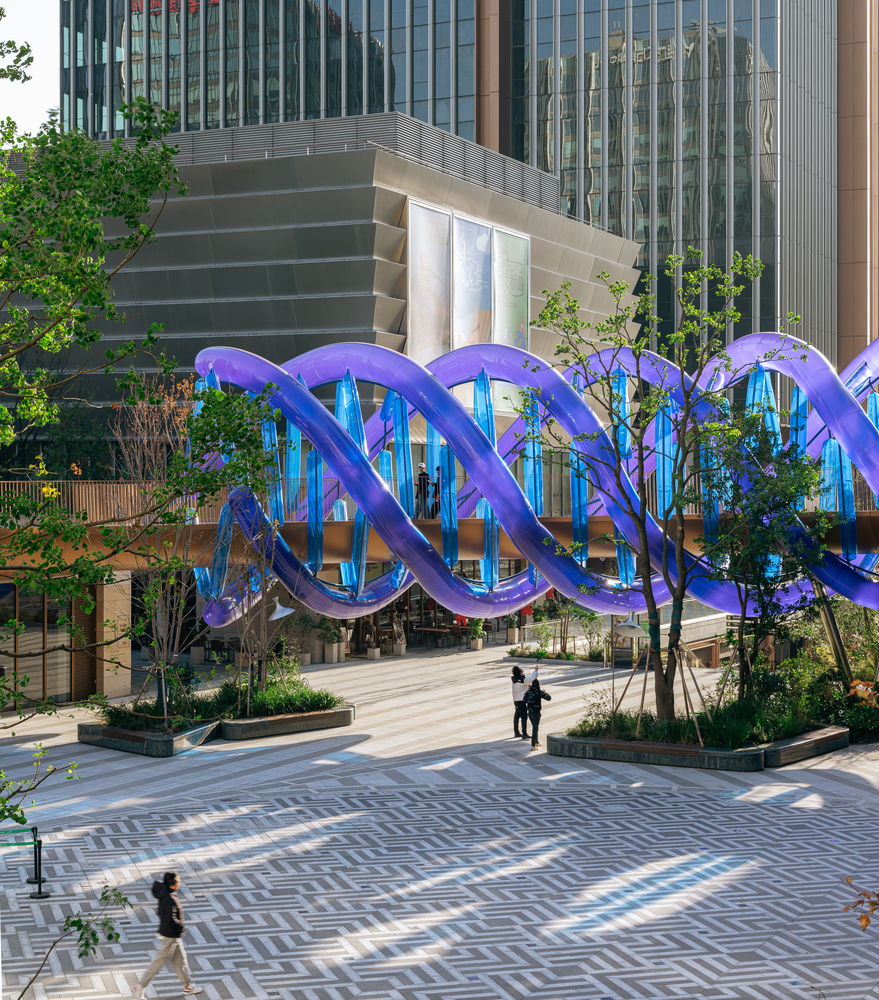
While moving through it, people can more clearly perceive the dynamic spatial changes created by the spiral form.
IMAGERY
After the art installation enters the public space, it becomes part of the spatial experience.
Simultaneously, due to its iconic nature, it forms an urban image, becoming a crucial part of the site's character, and is disseminated and perpetuated through channels like photography or painting.
The image above is a sketch work depicting Shanghai Xuhui Vanke Plaza.
Many people chose the Rotary Membrane Bridge as the primary impression of this place for their creative works and drawings.
SUMMARY
The Rotary Membrane Bridge lightly intervenes in the public space through its form.
Through interactivity, it establishes various connections with the environment and people, thereby strengthening public participation and the public character of the place.