Central Nakhon Pathom
CENTRAL NAKHON PATHOM
Stu/d/o Architects
ARCHITECTS
Stu/d/o Architects
LANDSCAPE ARCHITECT
Landscape Tectonix Limited
INTERIOR ARCHITECT
Phtaa Living Design / Be Gray
GRAPHIC DESIGNER
Cookiesdynamo / Meanmoremind
LIGHTING DESIGNER
Vesign
STRUCTURAL ENGINEER
Vsd Consultant
MECHANICAL ENGINEER
Mitr Technical Consultant
CM
Pps Project Planning Service
CONTRACTOR
Spc Technocons
STU/D/O PROJECT TEAM
Apichart Srirojanapinyo, Chanasit Cholasuek, Panfan Laksanahut, Janejira Hu, Orana Lohasiripong, Kandanai Sudsanguan
PHOTOGRAPHS
Art4d x Jinnawat Borihankijanan, W Workspace
AREA
140000 m²
YEAR
2024
LOCATION
Nakhon Pathom, Thailand
CATEGORY
Shopping Centers
English description provided by the architects.
Central Nakhon Pathom's design is centered around a harmonious blend of old and new, drawing its core concept from the architectural elements and design language of Phra Pathom Chedi, the iconic historical landmark that has long shaped the identity of the city.
This thorough integration of tradition and modernity creates a dynamic architectural dialogue, where the heritage of the past meets the innovation of the present.
It is set on a 45-rai land plot with a total building area of 140,000 square meters. The project forms part of a larger mixed-use compound, with retail components positioned at the front of the site and a residential development situated toward the rear.
Rather than beginning with the building mass, the design process began with the open spaces. At its heart, a central green park serves as the primary anchor, responding directly to the community's need for accessible public space.
This notion of openness extends across the site through the introduction of two additional squares, each supporting different types of activity. These public spaces are unified by a main circulation spine that establishes a clear, continuous pedestrian journey from the main entrance through to the park.
Retail units line this spine, fostering a seamless interface between commercial programs and the public realm. The circulation itself is conceived as a closed loop, offering an uninterrupted, exploratory experience.
The project integrates both fully air-conditioned indoor environments and semi-outdoor spaces with natural ventilation, providing users with adaptable settings responsive to varying climate conditions.
DESIGN APPROACH
TO SOLVE THE LOCAL CHALLENGES
Historically, Nakhon Pathom city's spatial and social fabric was shaped by sacred architecture; temples and palaces acted as central urban anchors, structuring movement and communal life.
Phra Pathom Chedi, in particular, functioned not only as a spiritual monument but also as a civic hub where religious rituals, markets, festivals, and everyday activities coexisted, creating a uniquely vibrant public realm. As the city modernized, this intensity of communal activity gradually diminished.
Shifts in urban development, land use, and lifestyle patterns weakened the connection between residents and the historic public spaces that once defined the city's core. In response, the design of the new commercial development seeks to reinterpret this civic role within a contemporary context.
The goal is not merely to create a retail destination, but to establish an architectural framework that reconnects with the people of Nakhon Pathom—reviving the essence of shared gathering spaces and extending the city's cultural continuity into the future.
THE INTEGRATION OF OLD AND NEW
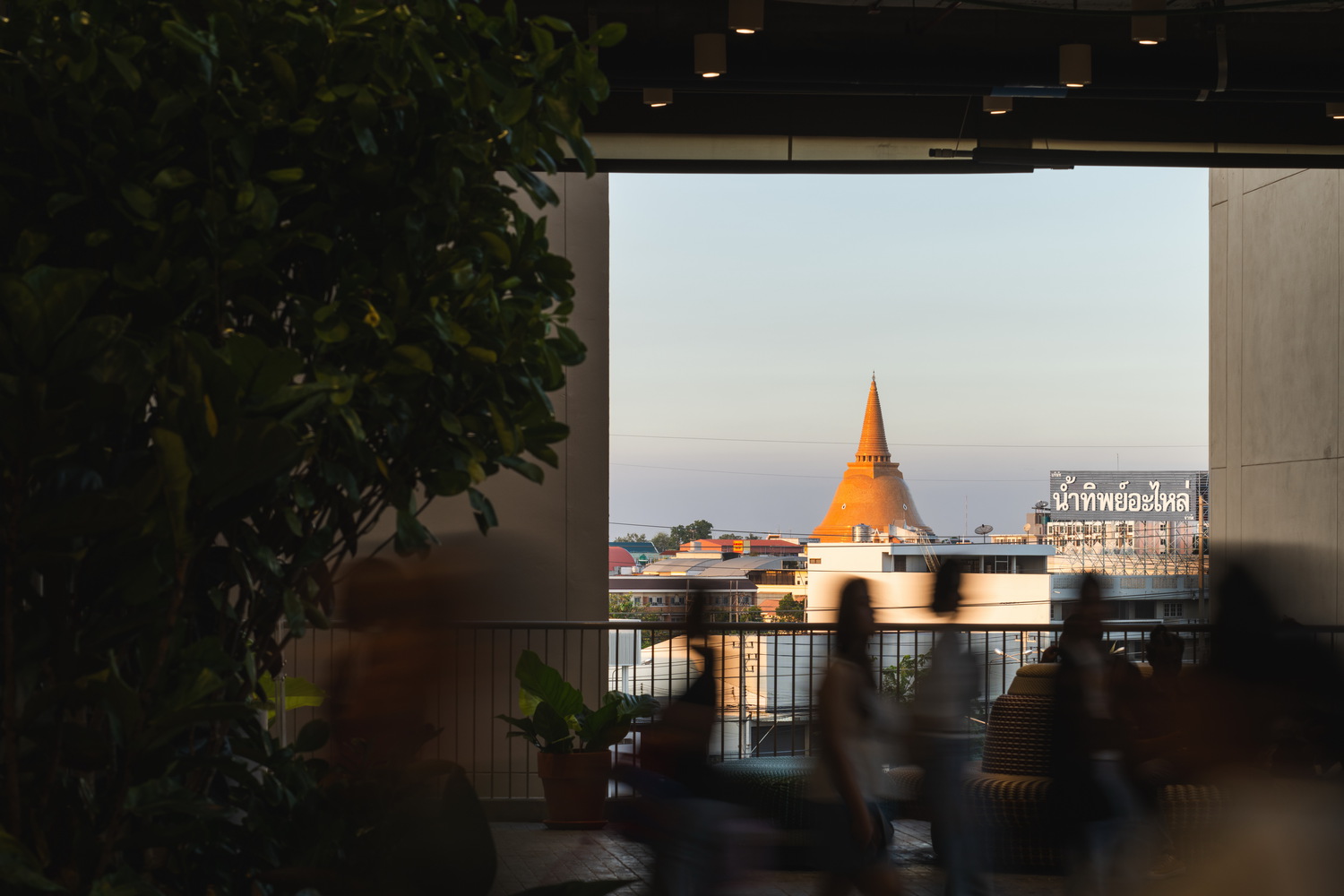
A key ambition of the project was to reinterpret Nakhon Pathom's local identity through a contemporary architectural language. Elements inspired by Phra Pathom Chedi were integrated into the design.
Meanwhile, the incorporation of a gabled roof shape and a checkerboard pattern introduces a sense of warmth and familiarity, grounding the project in its everyday cultural context.
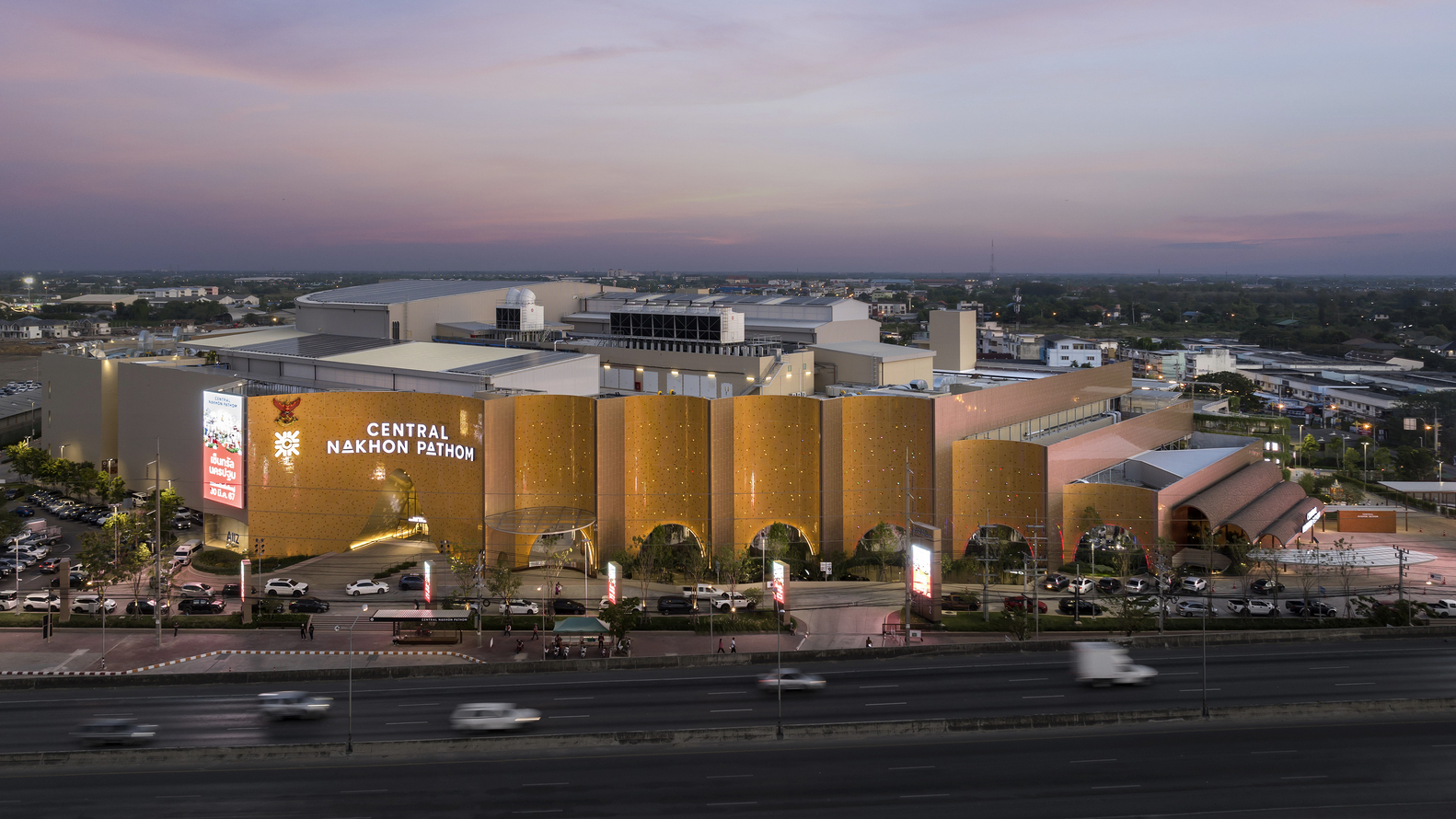
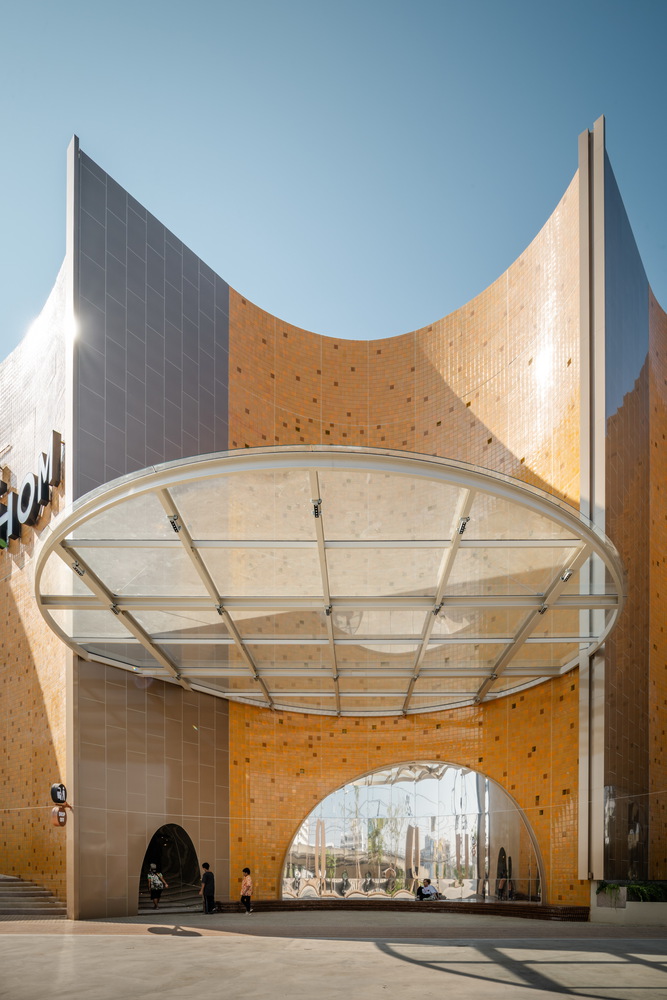
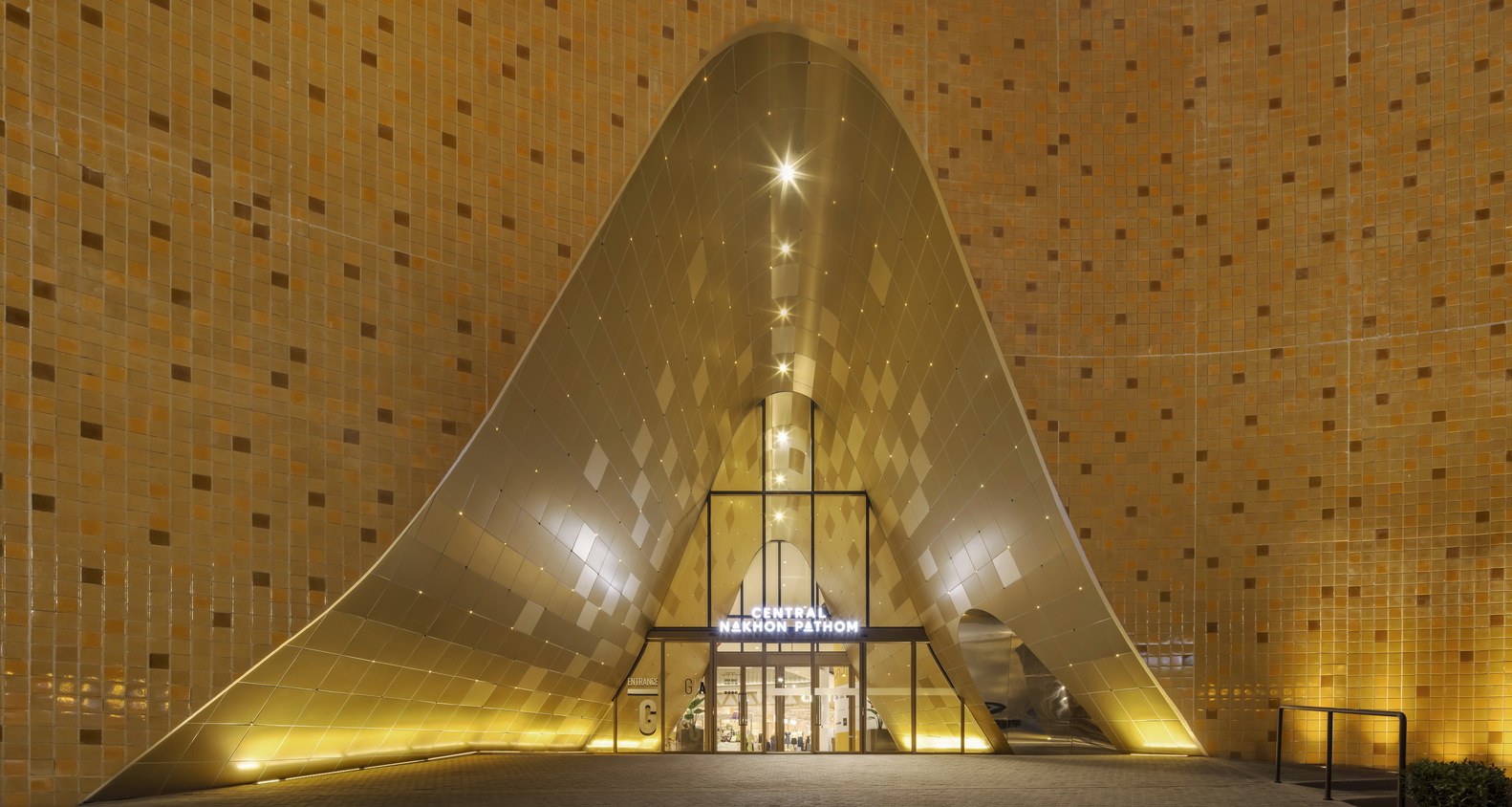
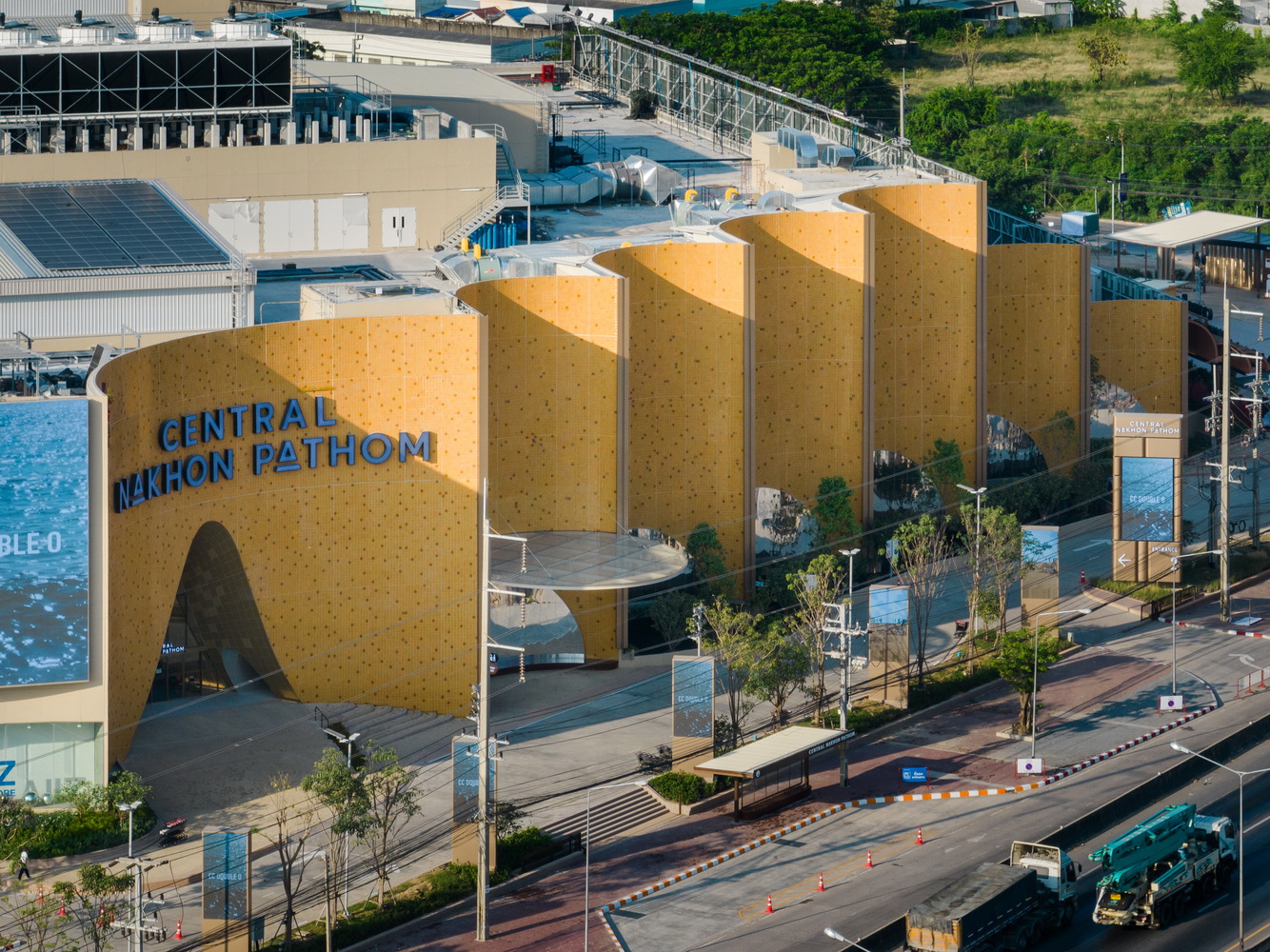
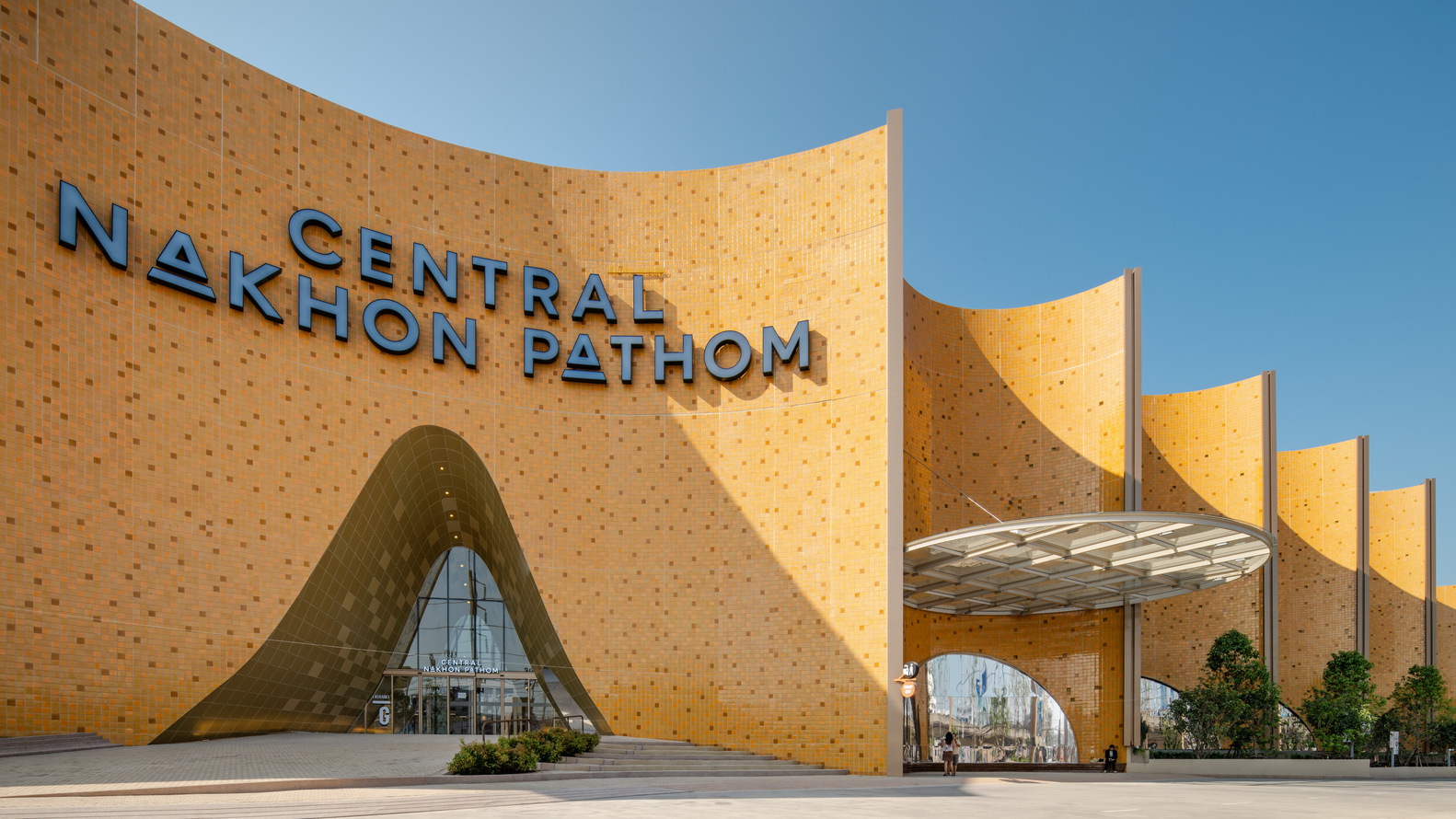
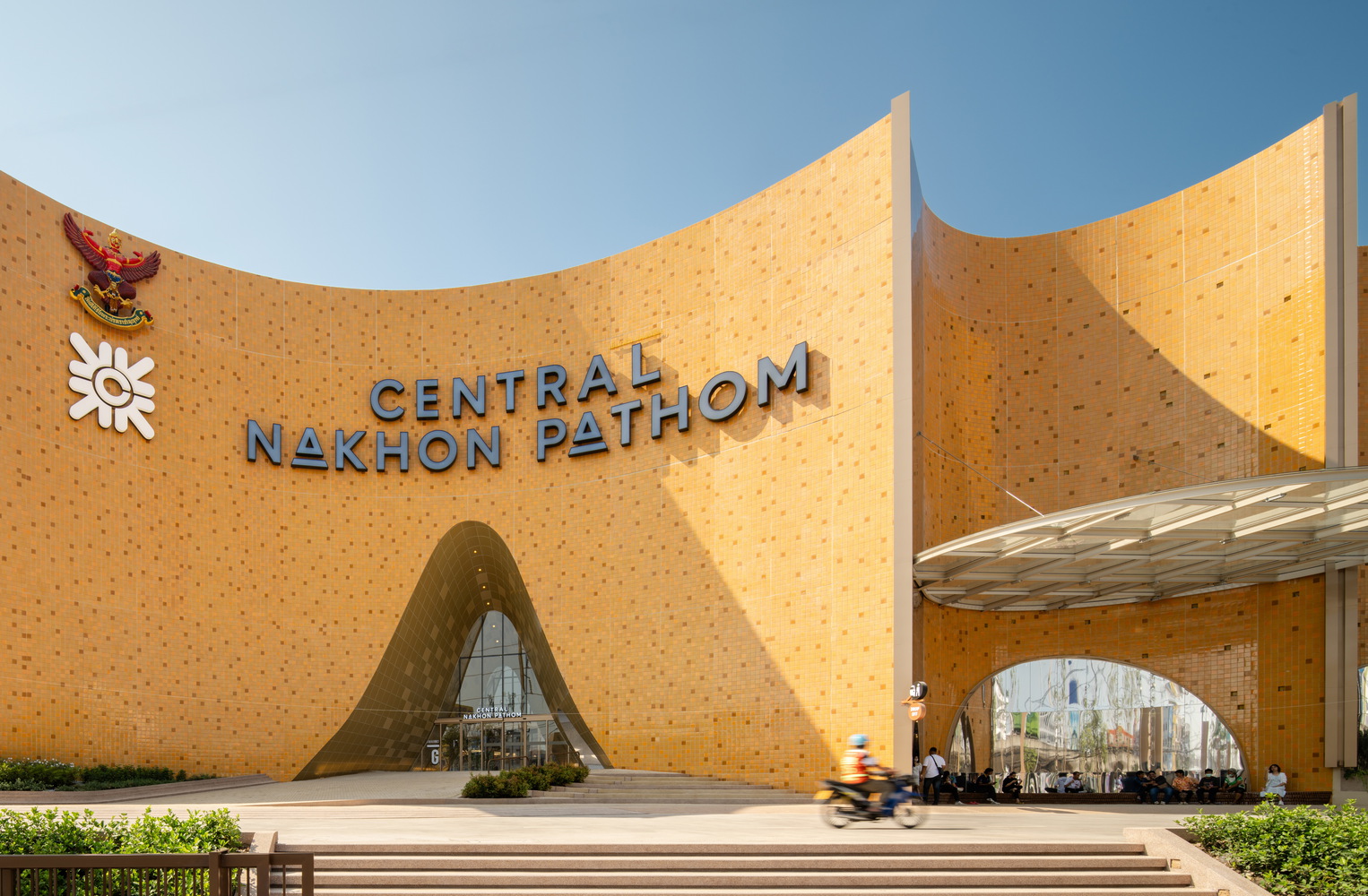
The front façade serves as a key backdrop for public gatherings and is designed to be iconic and welcoming, immediately recalling the form and material character of Phra Pathom Chedi.
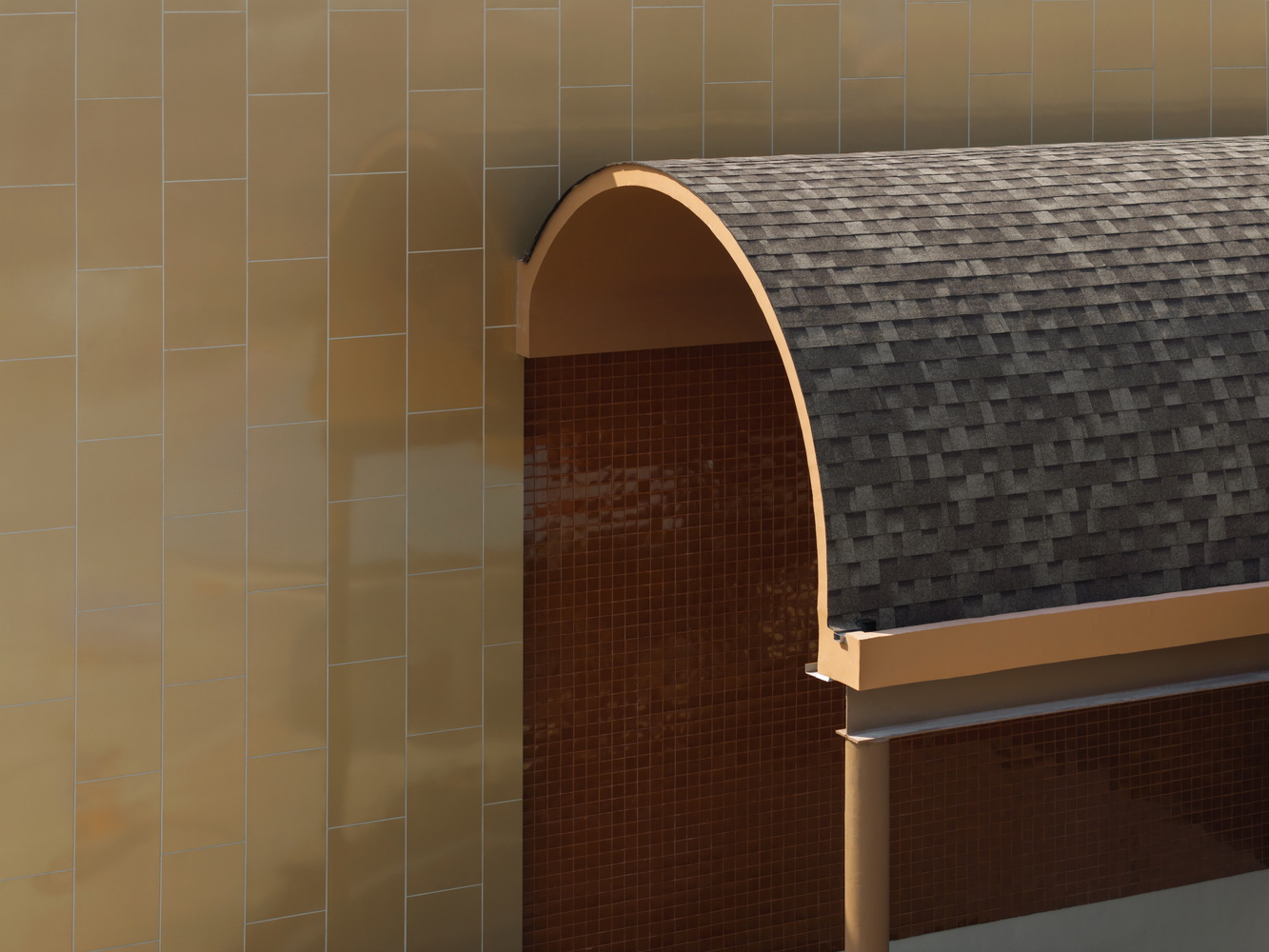
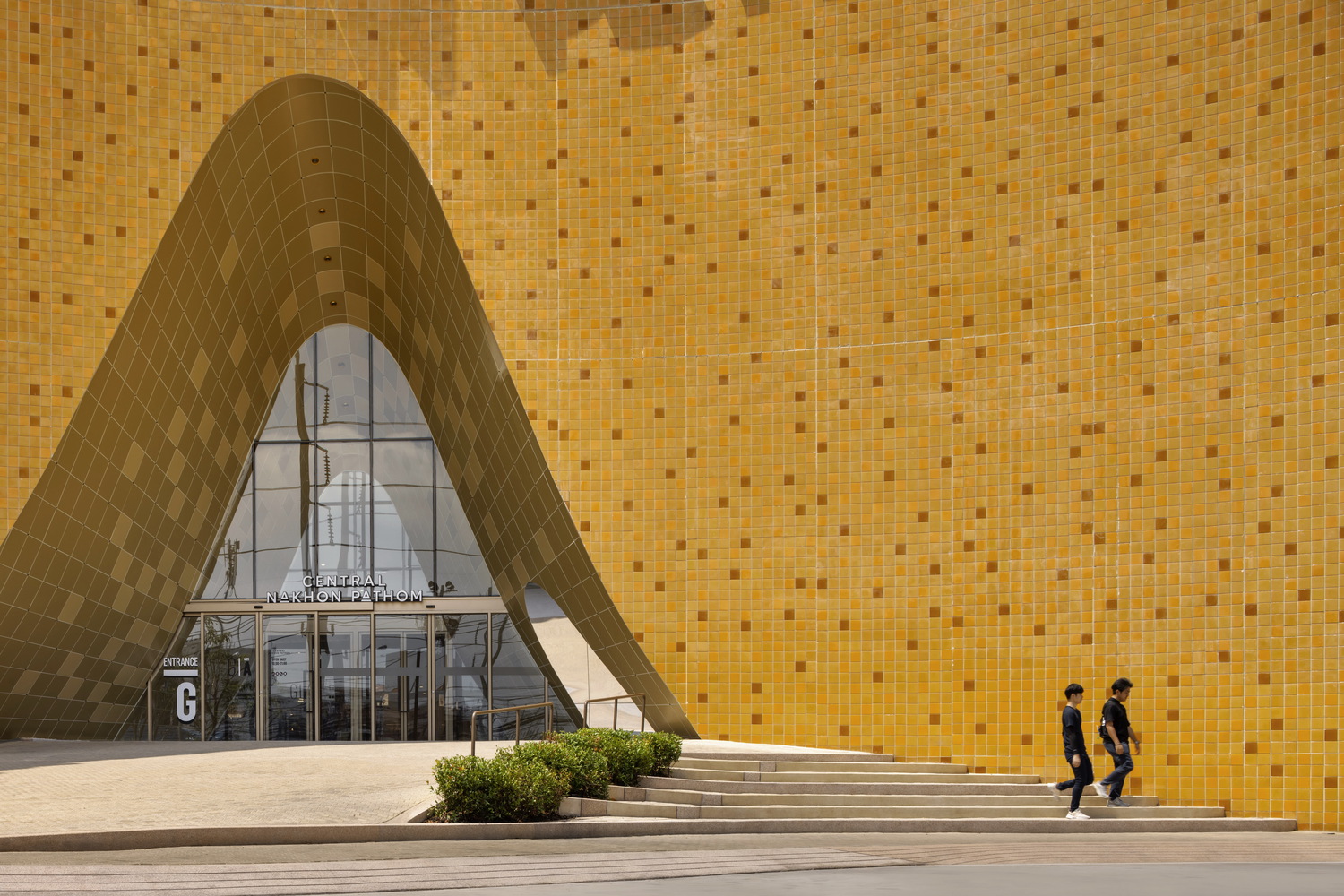
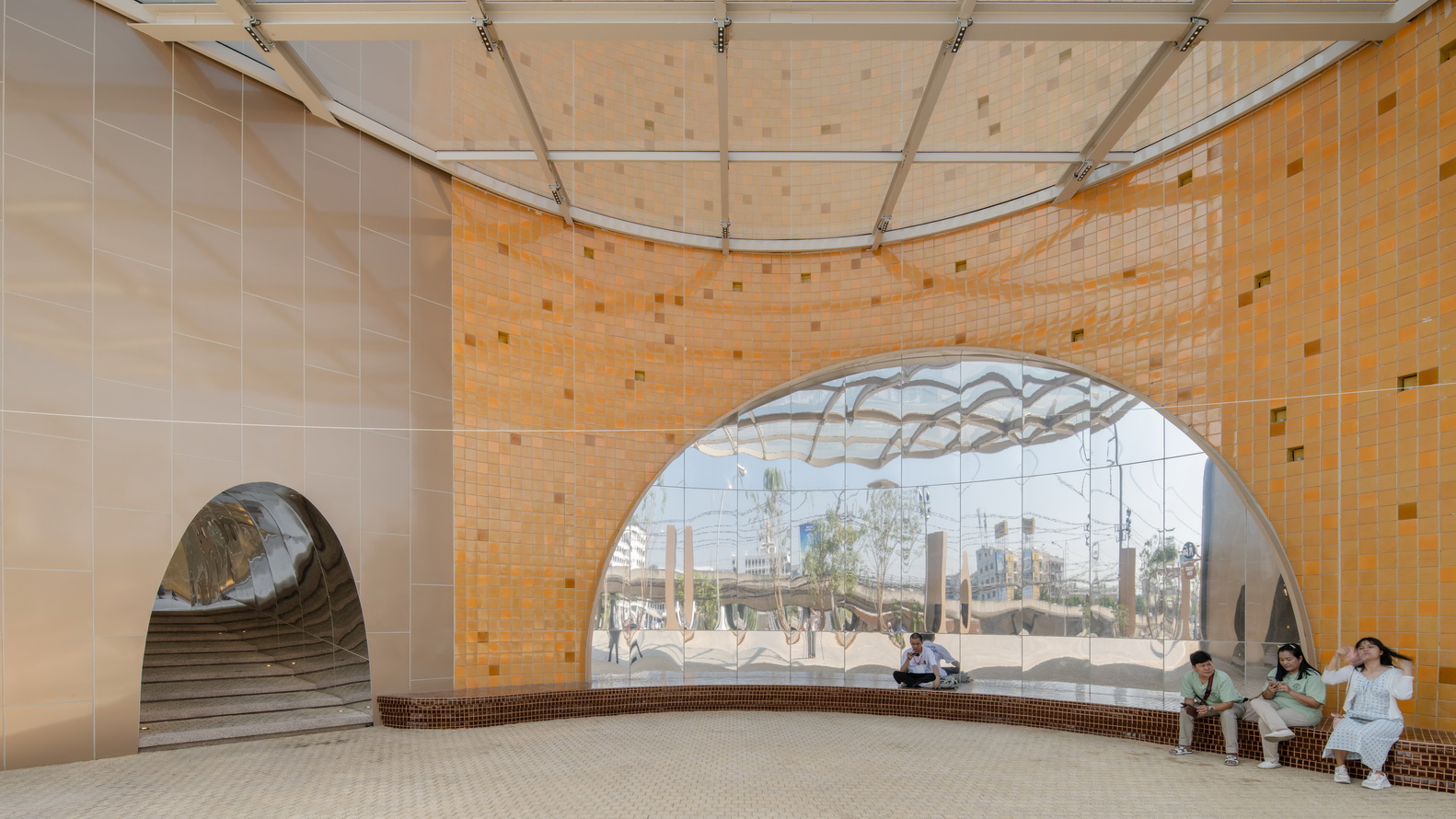
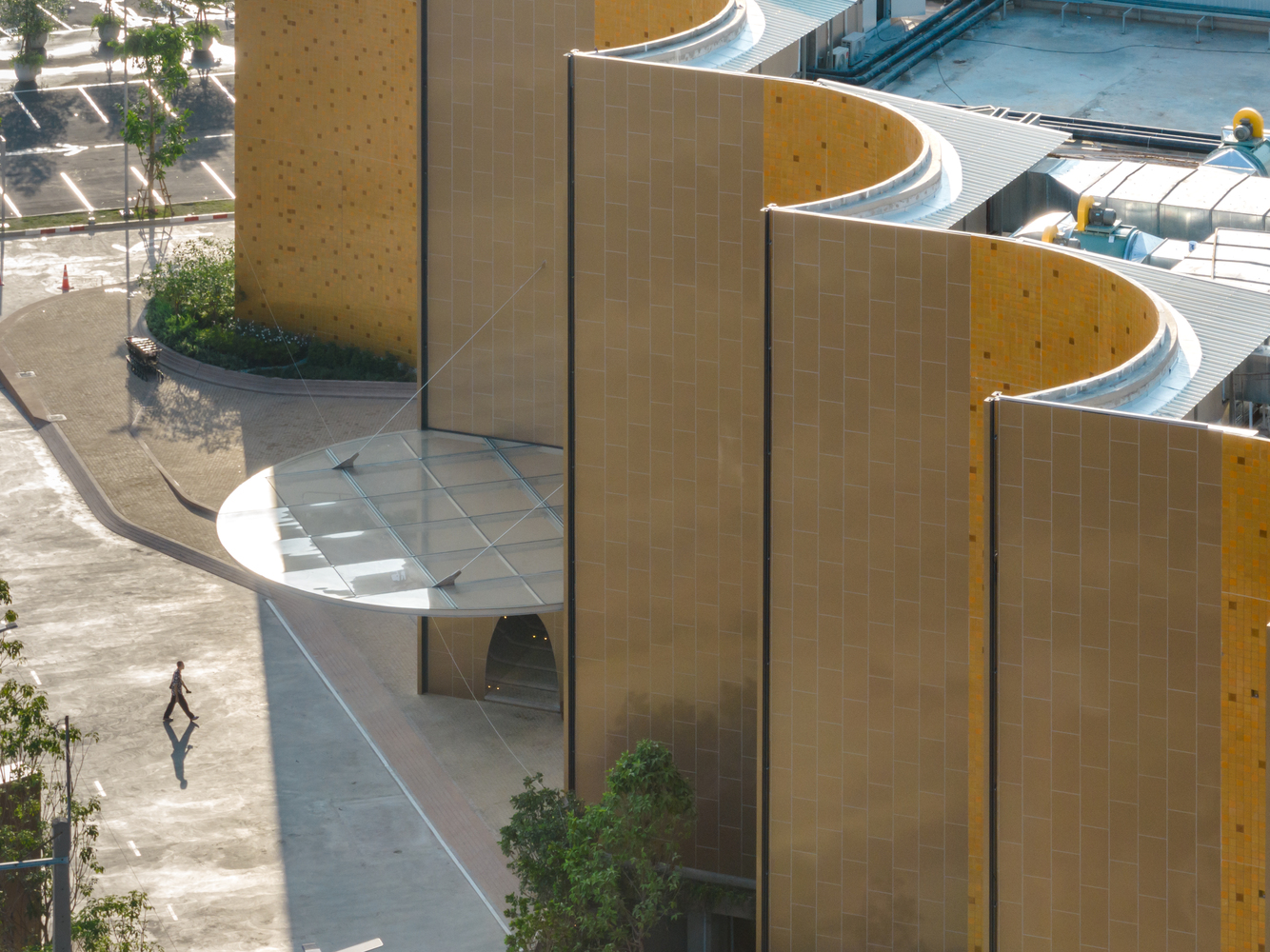
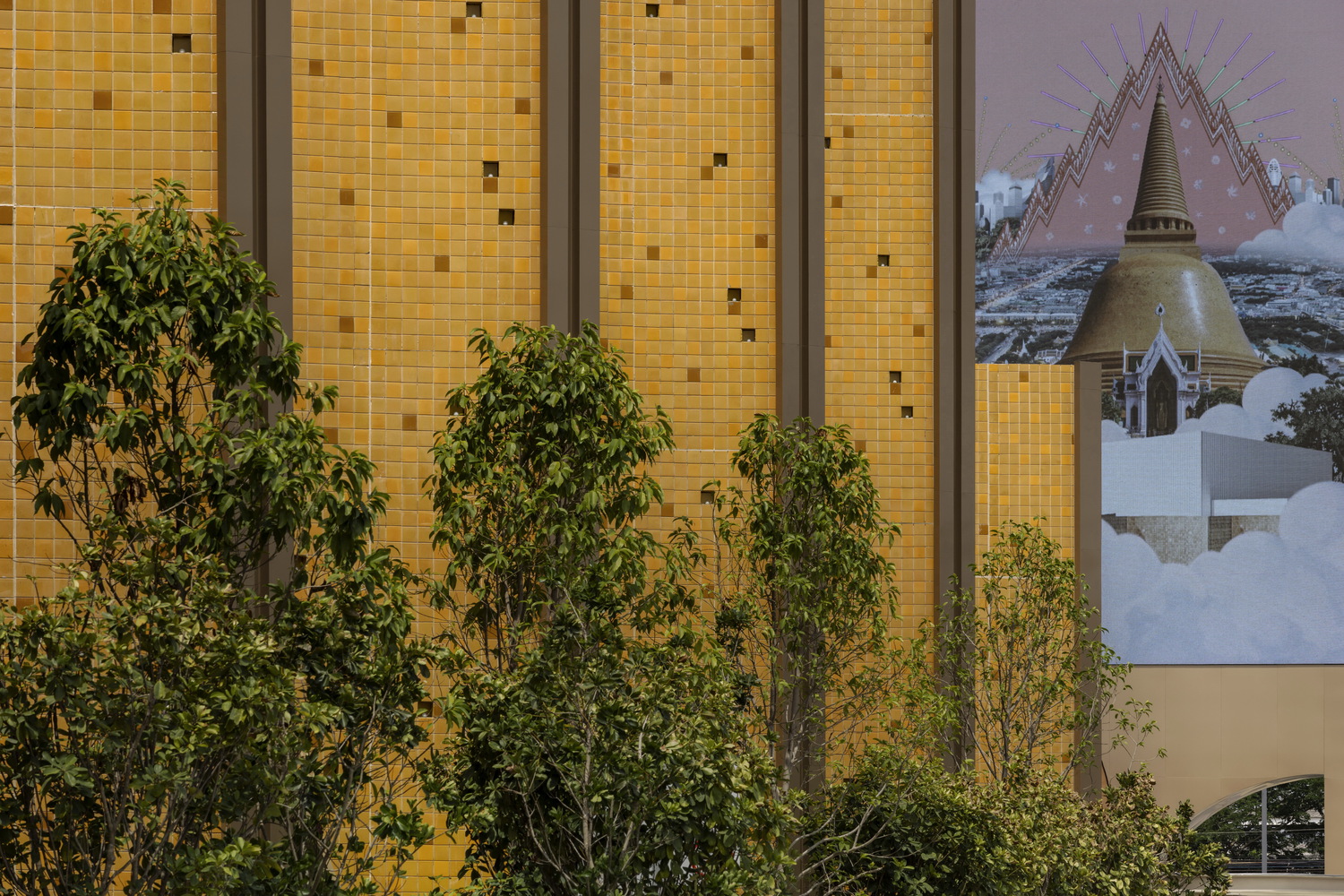
To strengthen this connection, yellow terracotta tiles sourced from the same artisan responsible for the Chedi were incorporated into the design. The recessed profile of the main entrance further abstracts the silhouette of the pagoda, creating a simplified yet recognizable gesture.
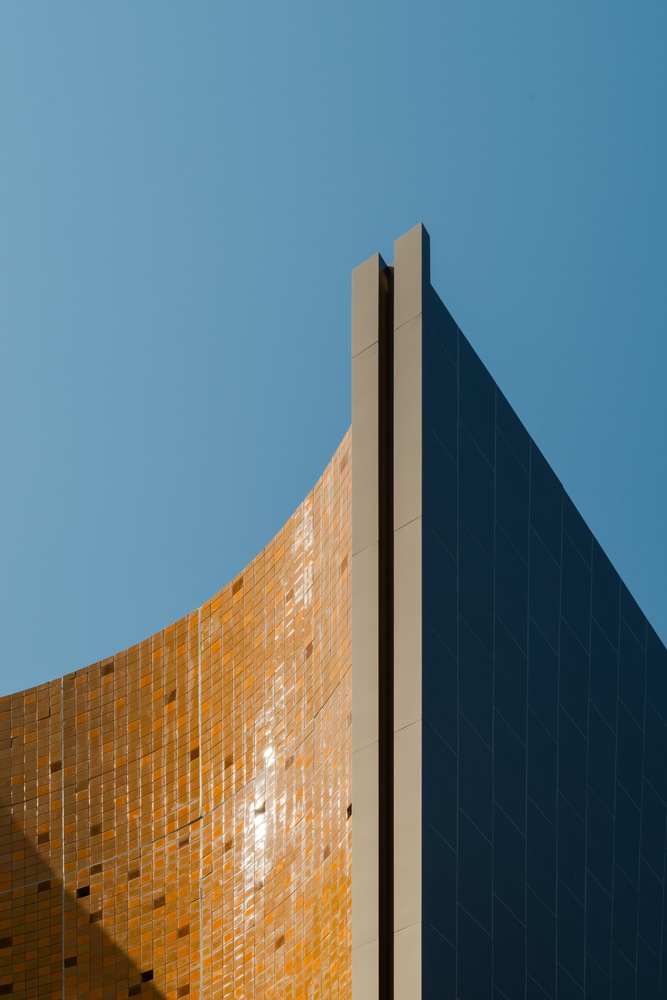
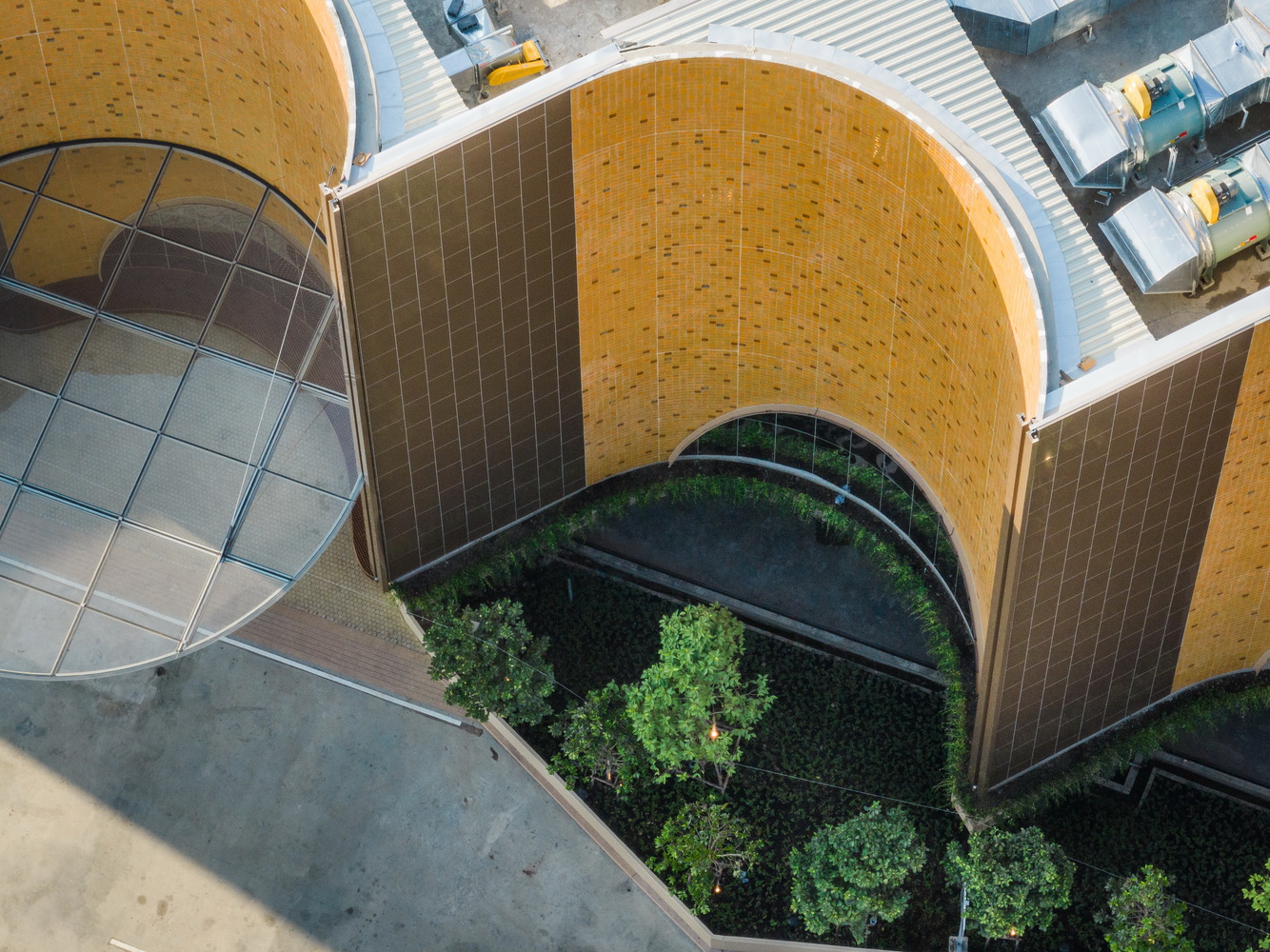
Here, the textured terracotta surface is set in deliberate contrast against sleek aluminum composite cladding, symbolizing the project's core narrative of tradition meeting modernity.
This juxtaposition is expressed across the entire front façade, where the composition is inspired by the recessed corners of Phra Pathom Chedi.
The two primary materials are strategically oriented: the curved terracotta-clad wall faces Phra Pathom Chedi and greets visitors arriving from Bangkok, establishing the development as a new gateway to the province.
In contrast, the straight aluminum-clad wall faces the city, guiding those departing Nakhon Pathom back toward Bangkok.
Through these contrasting elements, the façade becomes an architectural dialogue between the old and the new—an expression of continuity, transition, and the evolving identity of Nakhon Pathom.
STORY OF THE CRAFTSMANSHIP
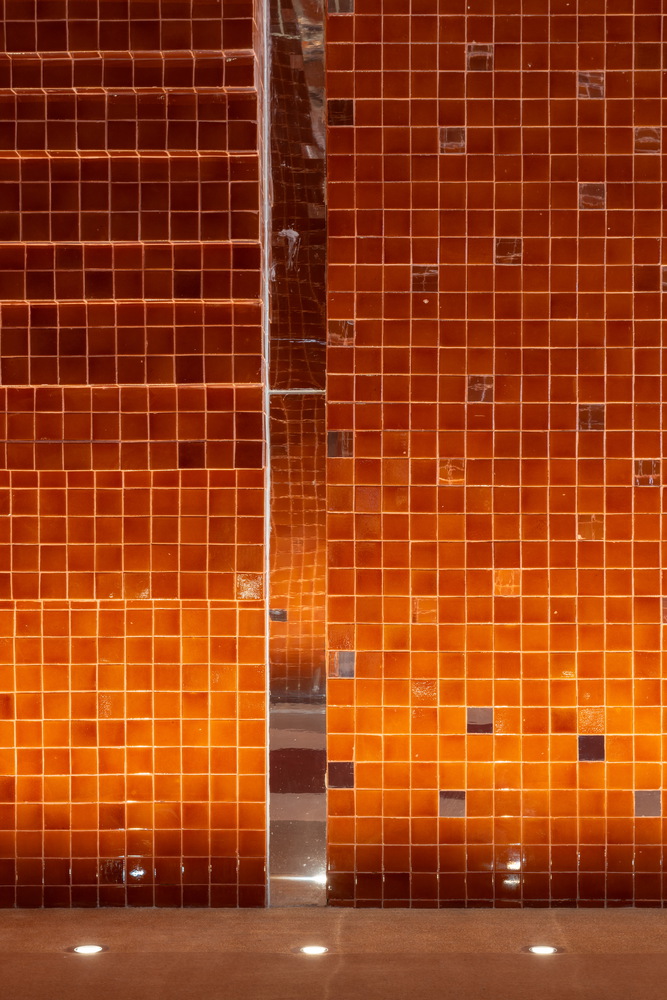
The front façade features yellow terracotta tiles sourced from the same artisan responsible for the cladding of Phra Pathom Chedi. Each 6" × 6" tile is meticulously hand-laid by skilled craftsmen onto precast concrete modules, following precise alignment patterns tailored to each panel.
Once positioned, concrete is poured over the reverse side of the tiles, allowing the ceramic surface and structural panel to form a unified, durable assembly that prevents detachment during transport or on-site installation.
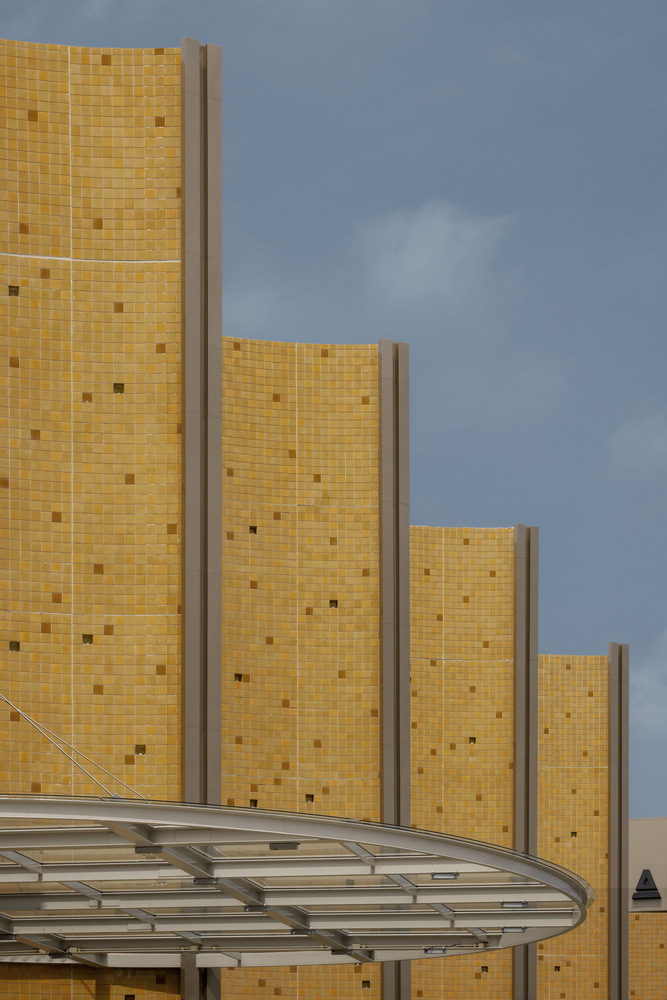
To achieve the desired depth and richness of color, the façade incorporates three primary shades of yellow terracotta.
These tones were selected through a series of mock-ups and full-scale installation tests, which helped determine the optimal balance, rhythm, and visual consistency for the building's exterior expression.
CREATING THE NEW FORM ROOTED IN TRADITION
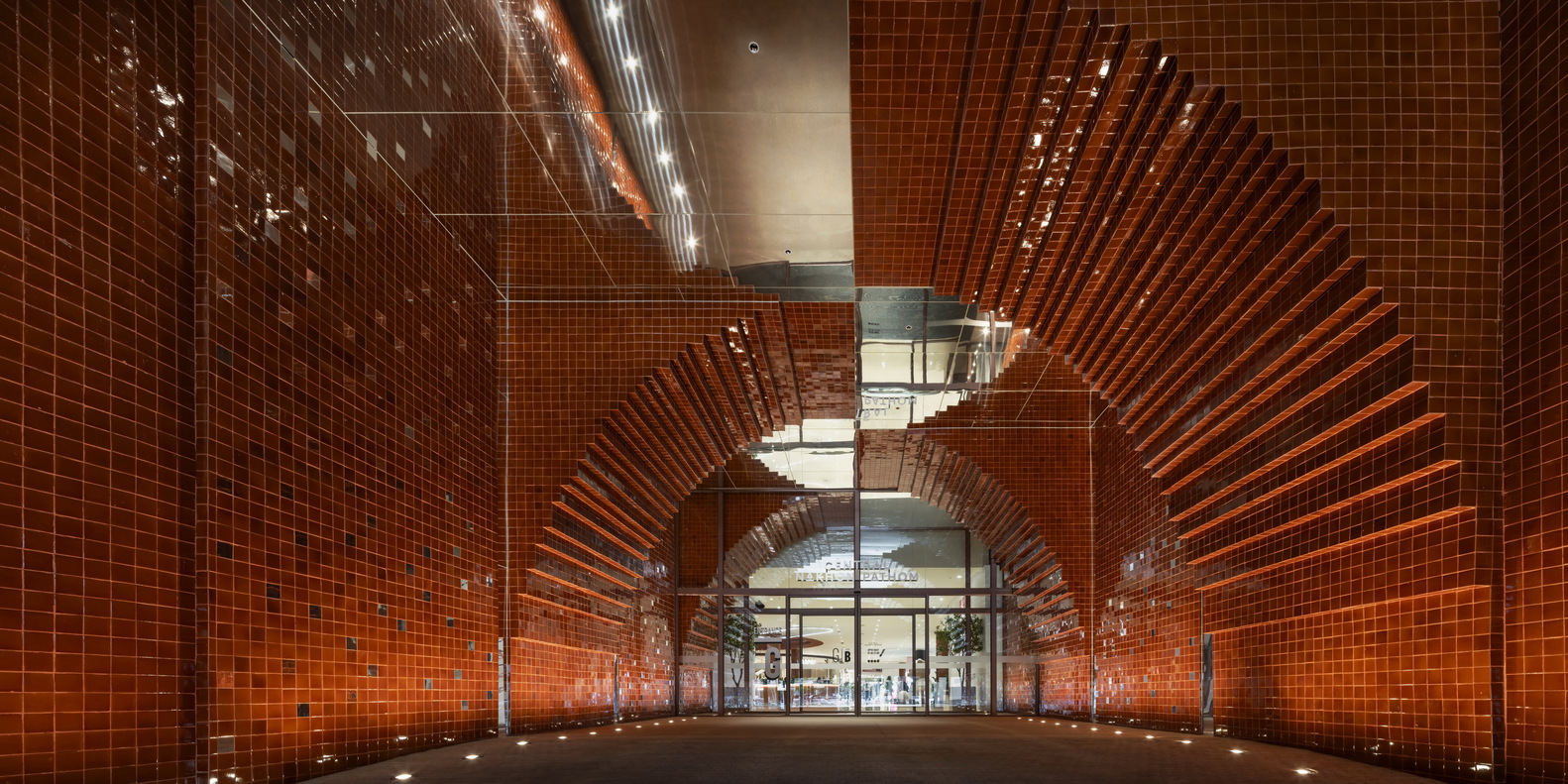
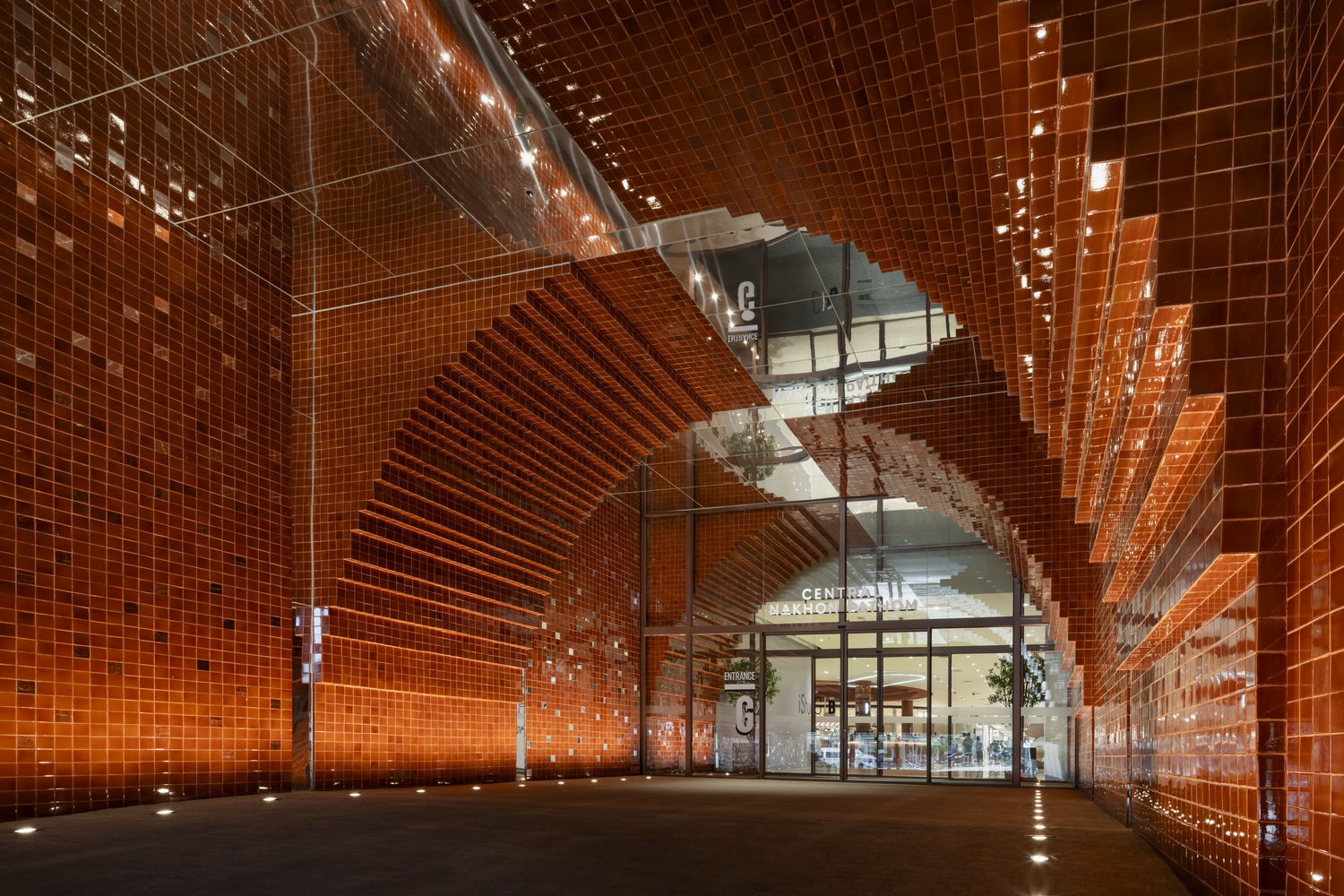
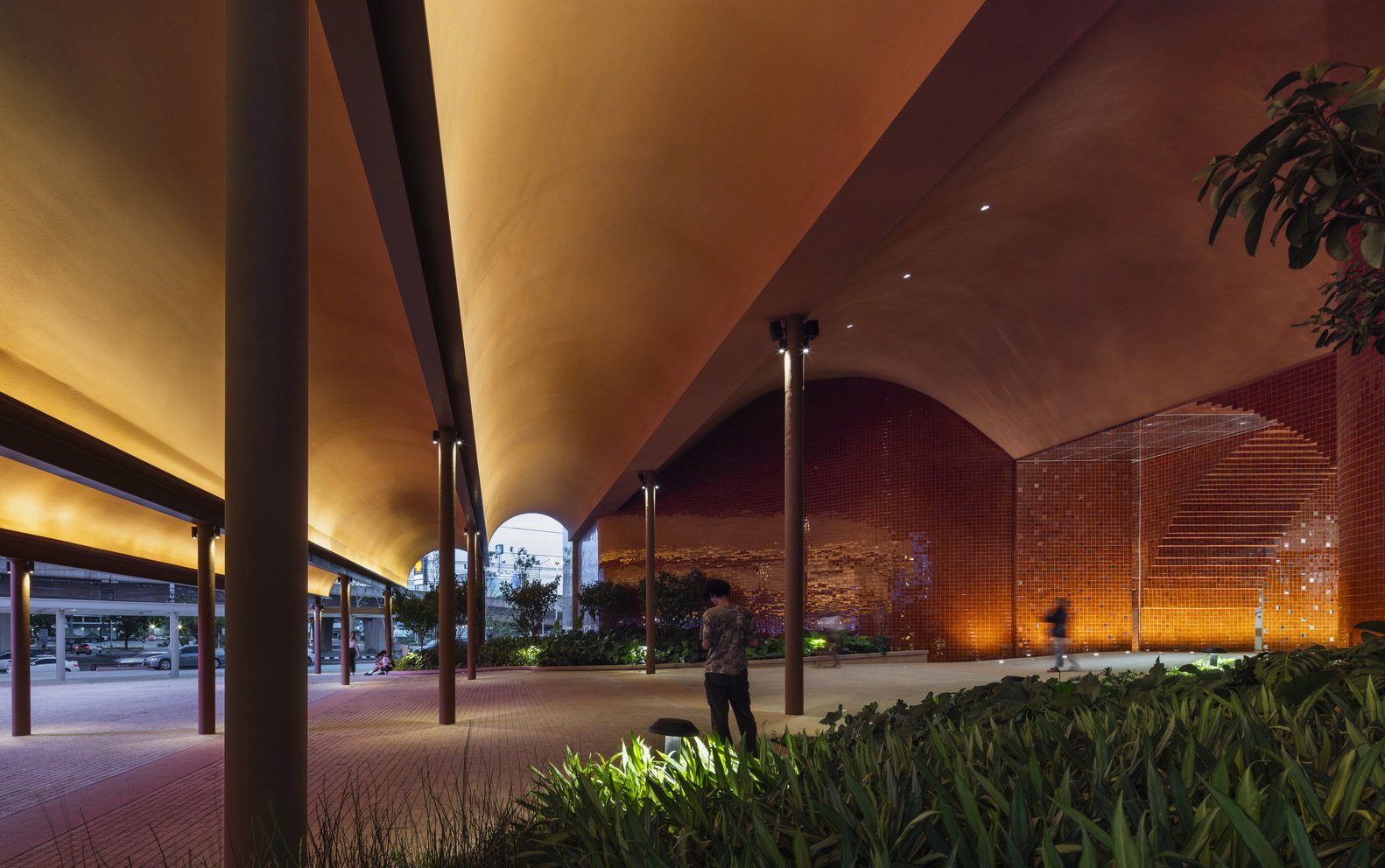
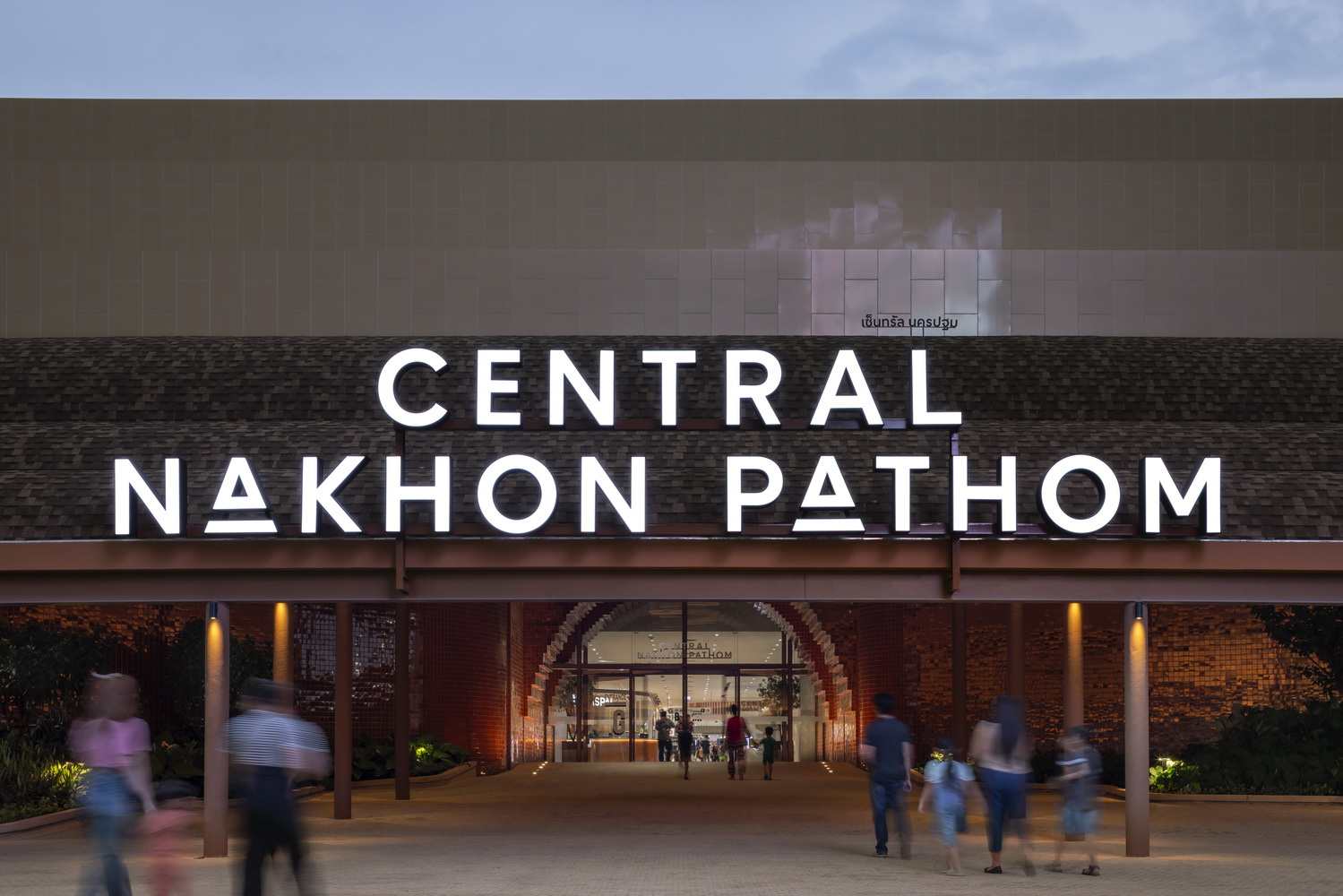
At the second entrance, the hallway unfolds through a sequence of alternating curves, inspired by the interstitial spaces within Phra Pathom Chedi—spaces that emerged as successive layers were added to the original structure over different eras.
Clad in red-toned terracotta tiles drawn from the color of the Chedi itself and complemented by a reflective ceiling, the corridor heightens the sensory transition from exterior to interior. Unlike the grandeur and openness of the main entrance, this passage evokes a sense of discovery and invitation, drawing visitors inward.
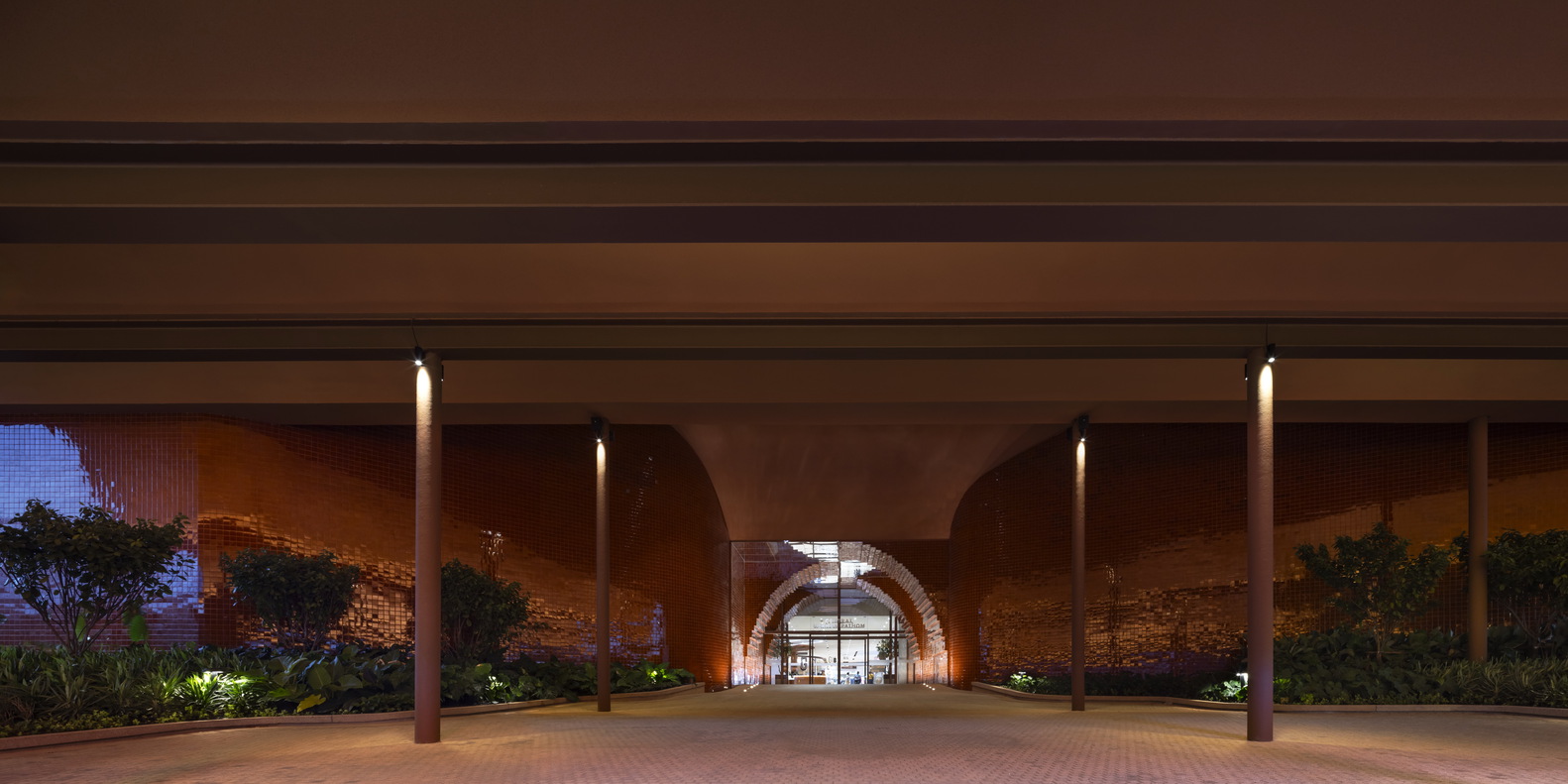
By reinterpreting this hidden architectural condition in a contemporary form, the design achieves a balance that is simultaneously forward-looking and deeply connected to the local heritage.
THE GREEN JOURNEY
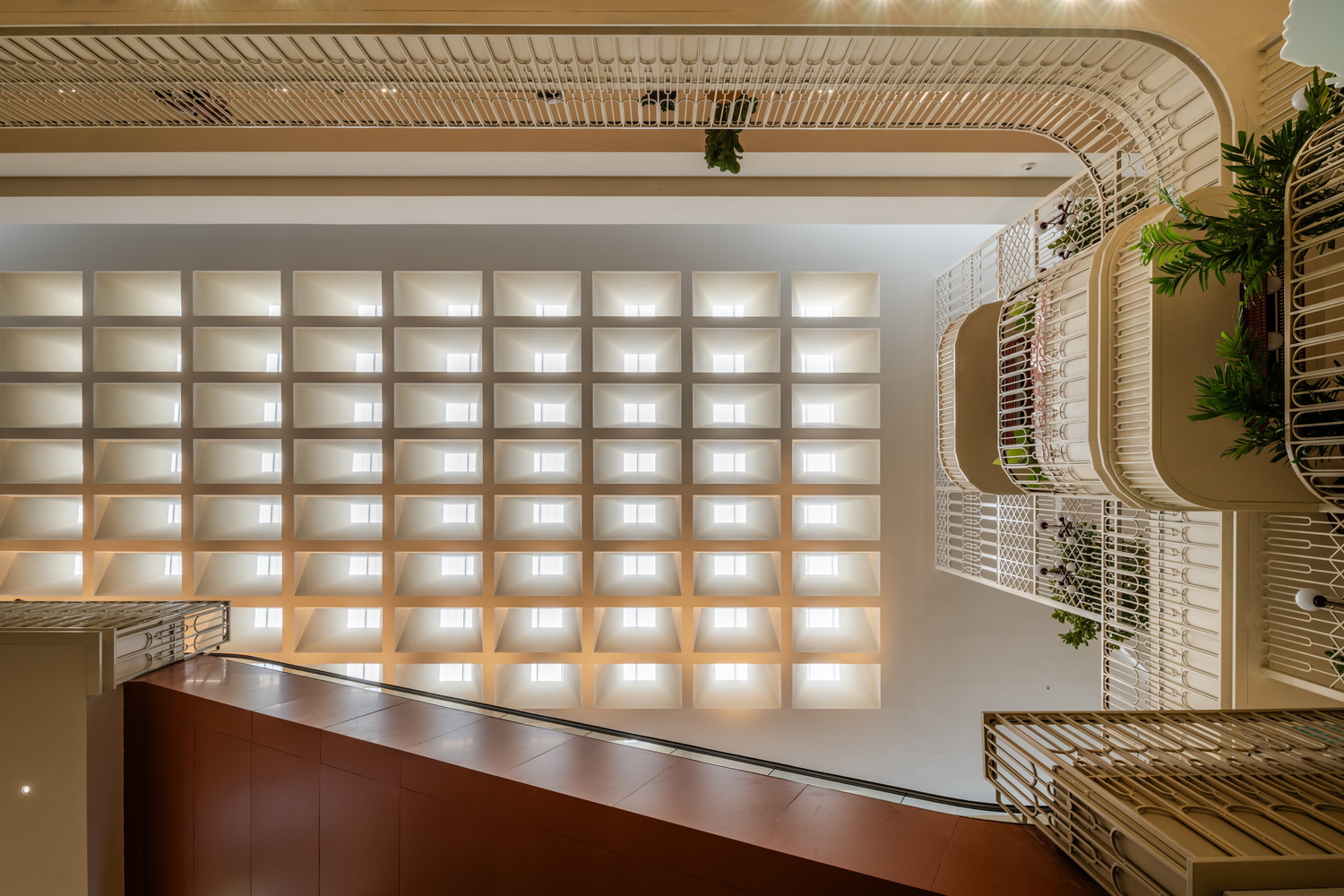
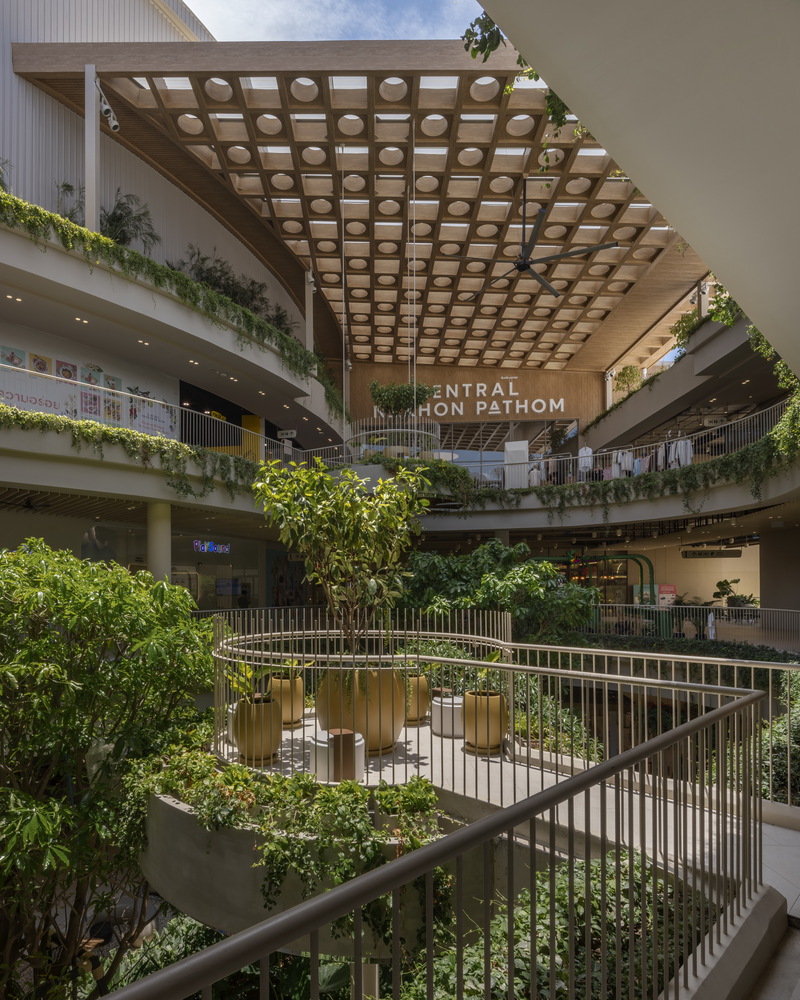
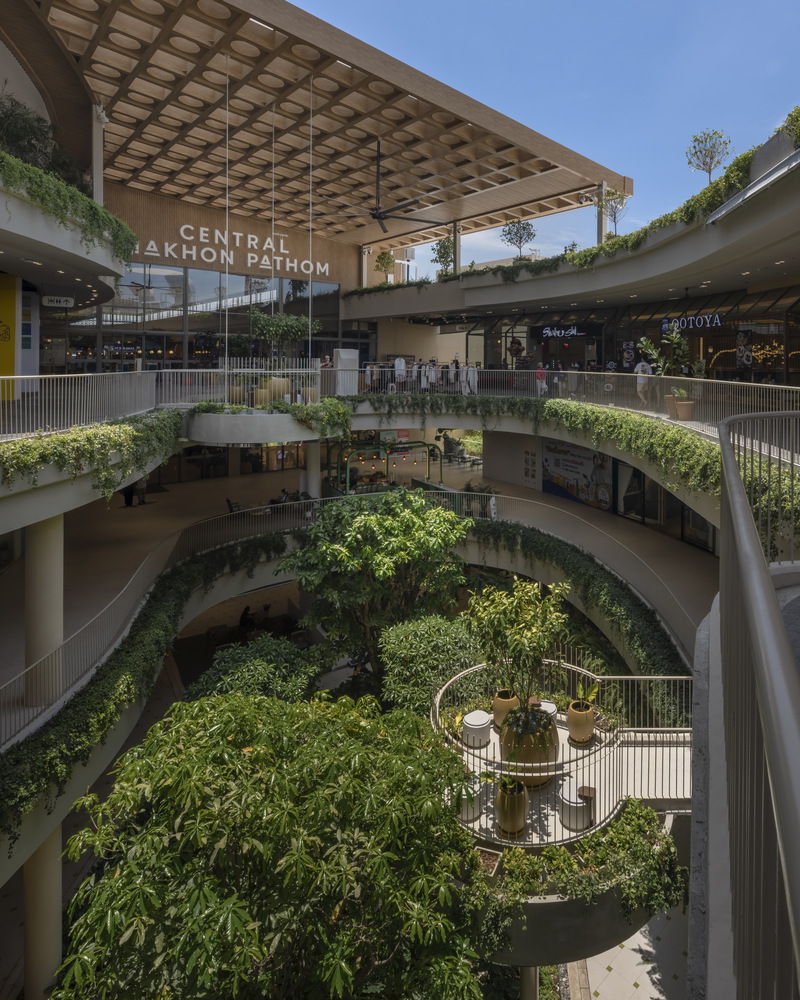
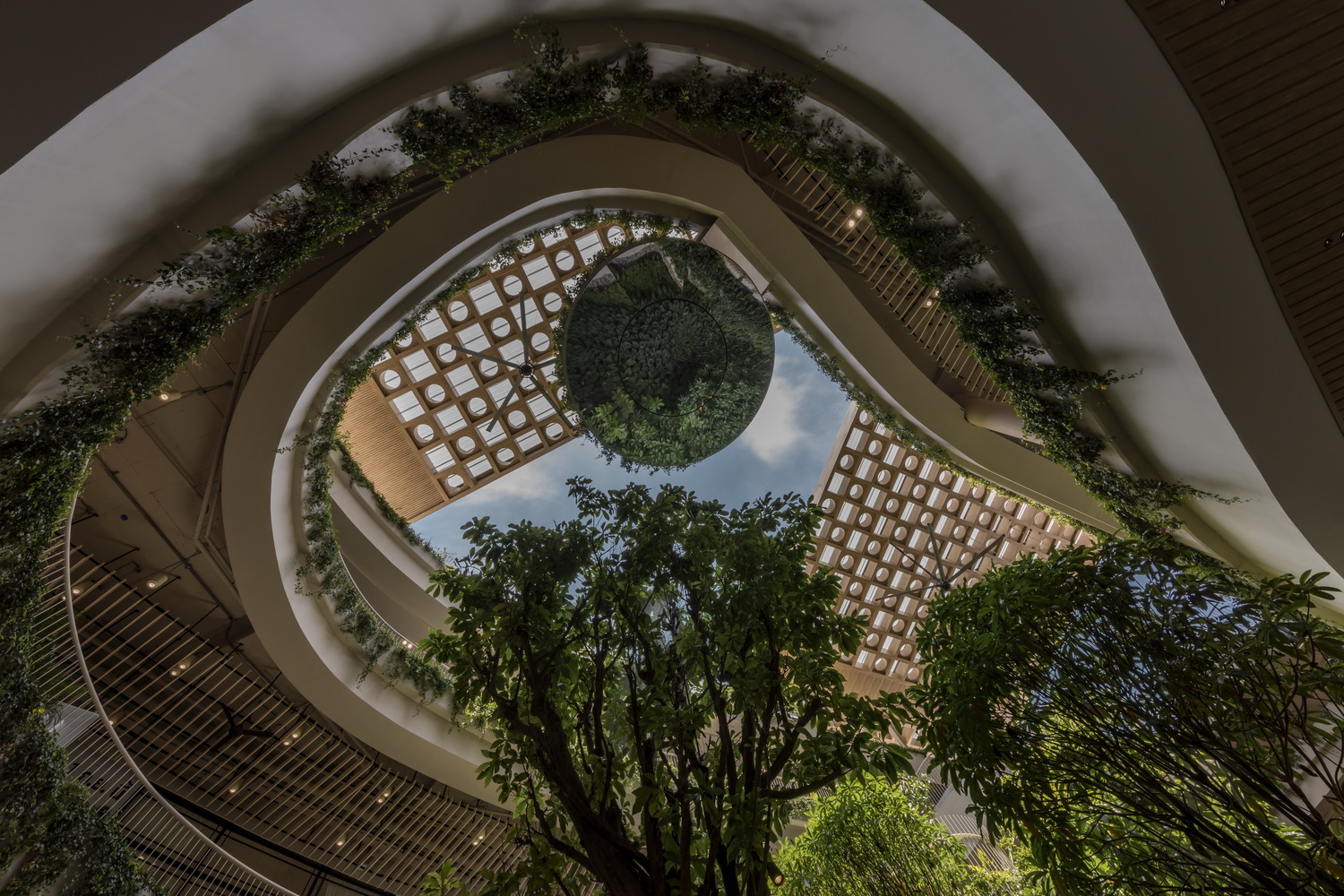
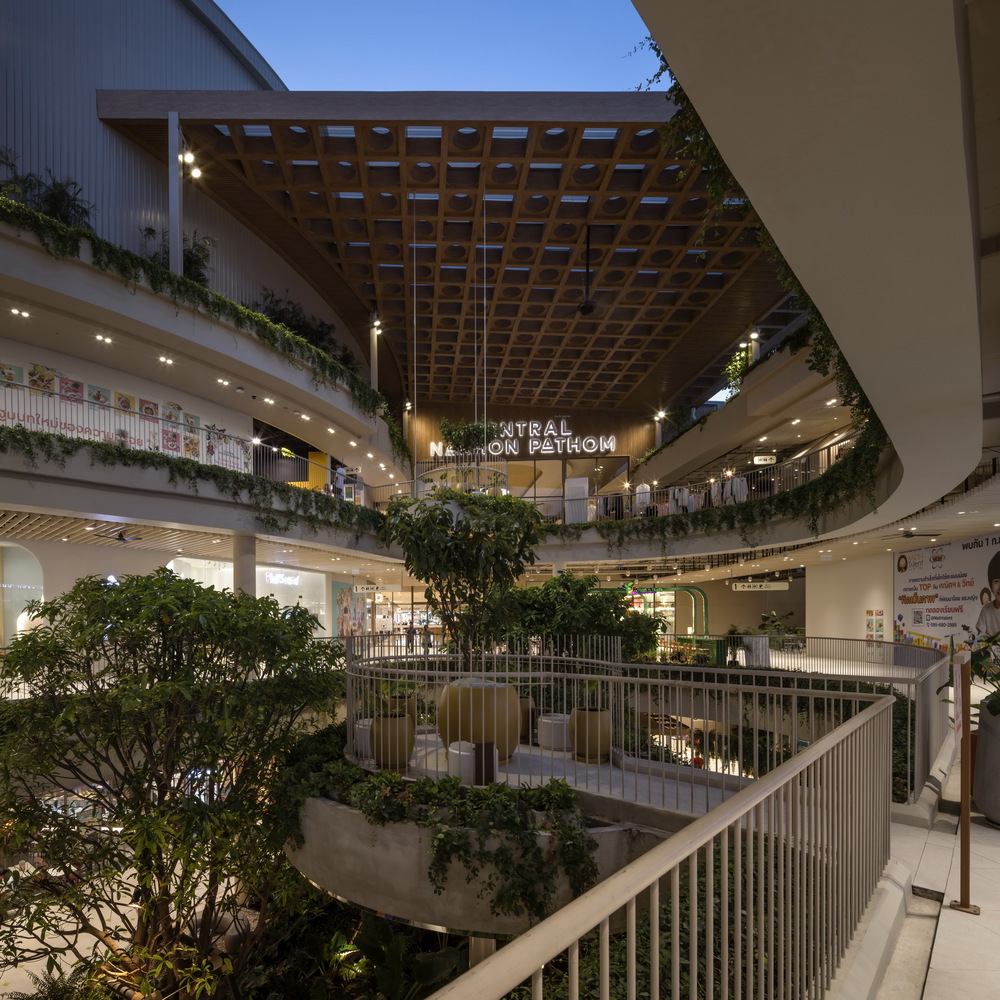
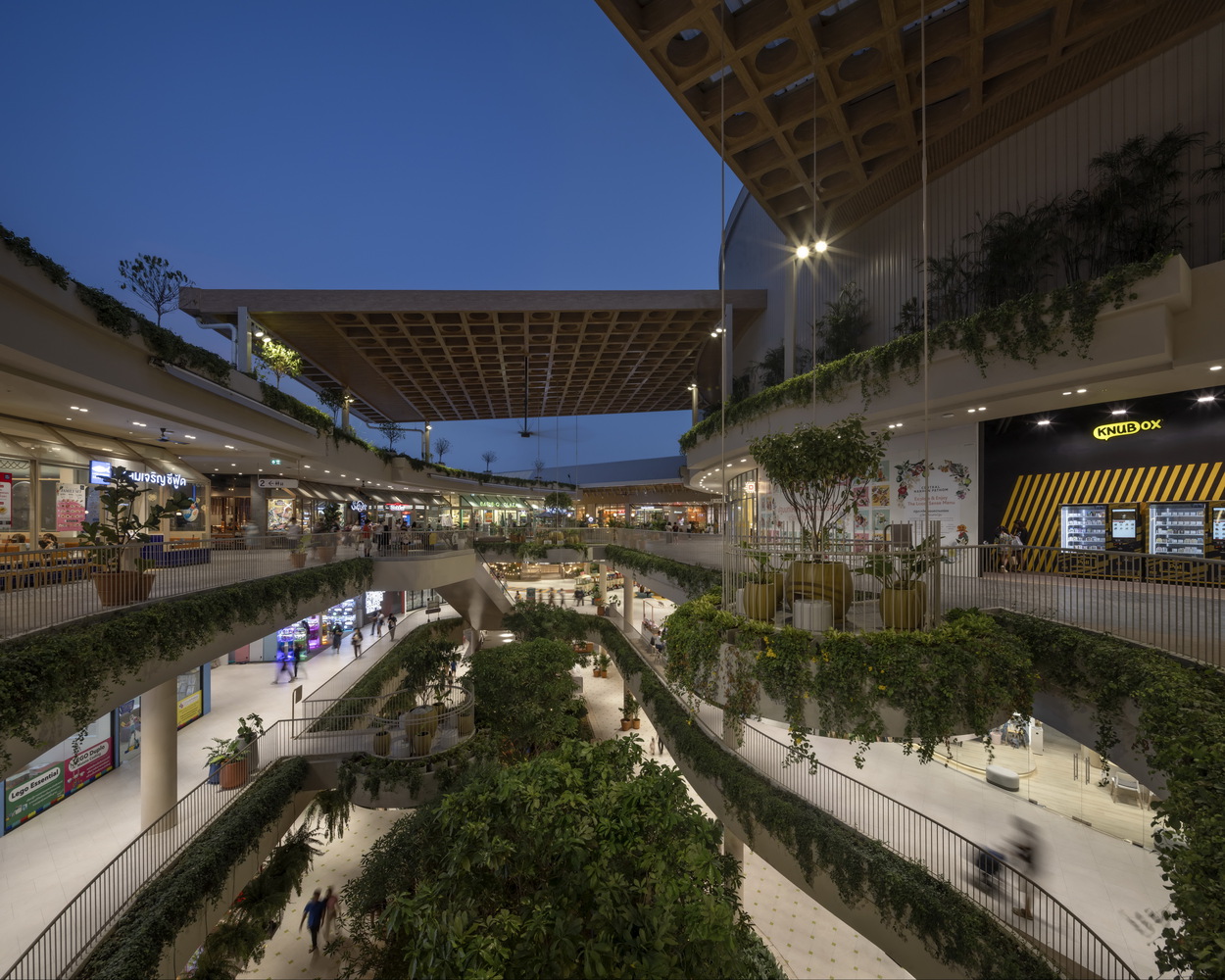
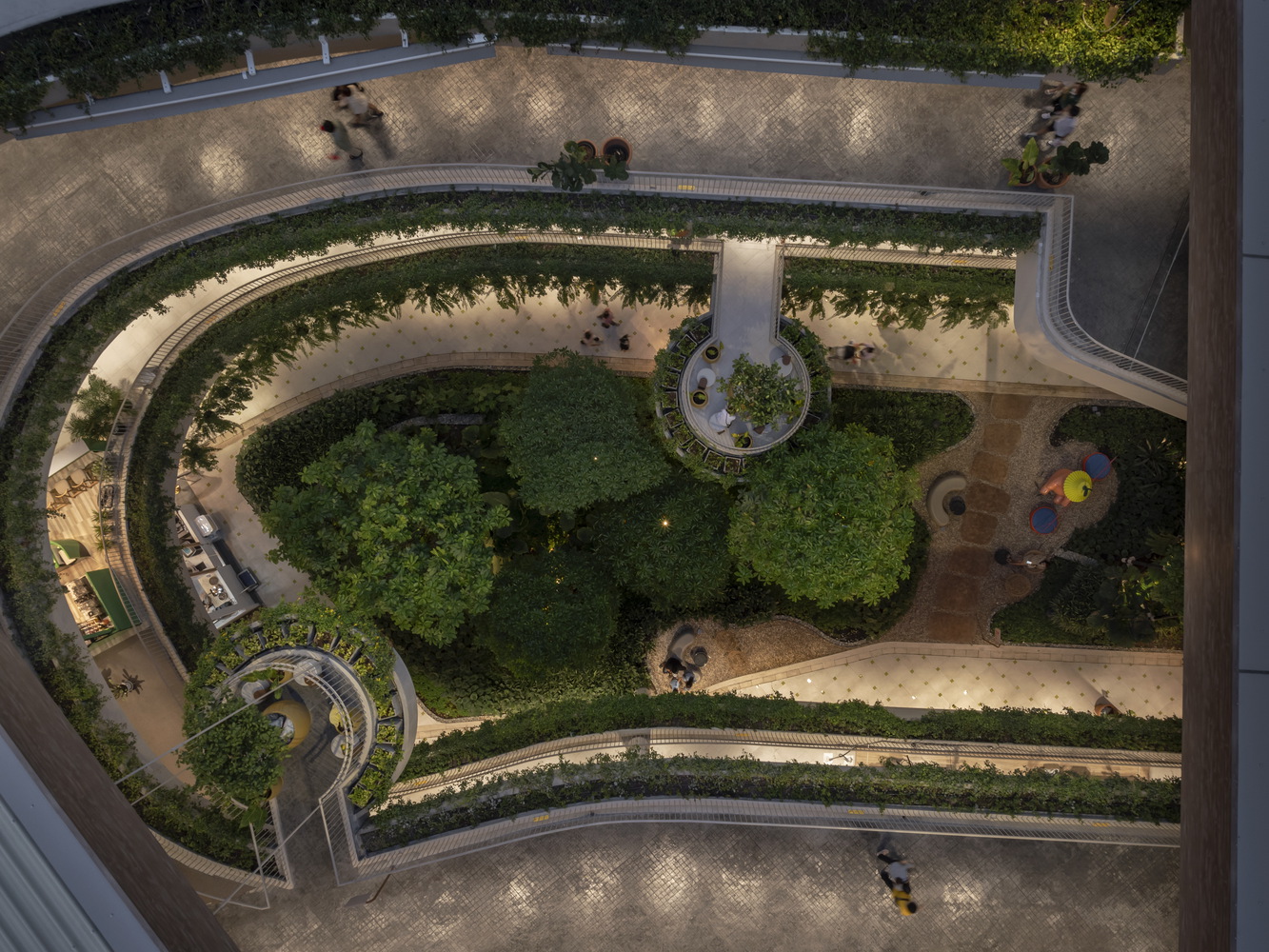
Leading from the air-conditioned atrium, visitors enter a semi-outdoor green oasis tucked within the building, offering a calm and refreshing experience.
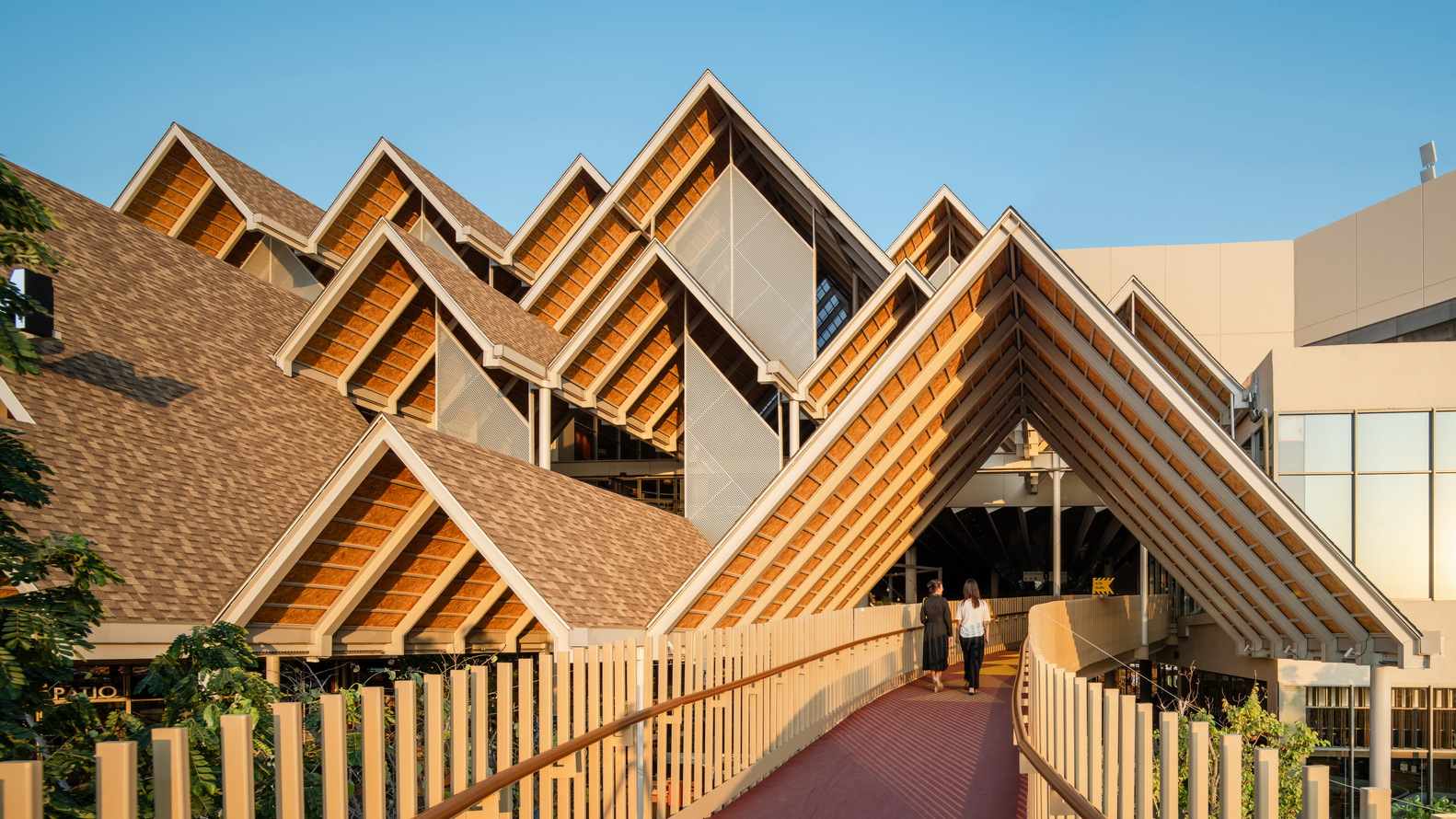
This space is designed as a three-story vertical garden that provides shade, fresh air, and a sense of retreat, with retail units lining the surrounding walkways to create a lively yet relaxed environment. Floating sky pods act as pocket seating, inviting visitors to pause and enjoy the natural surroundings.
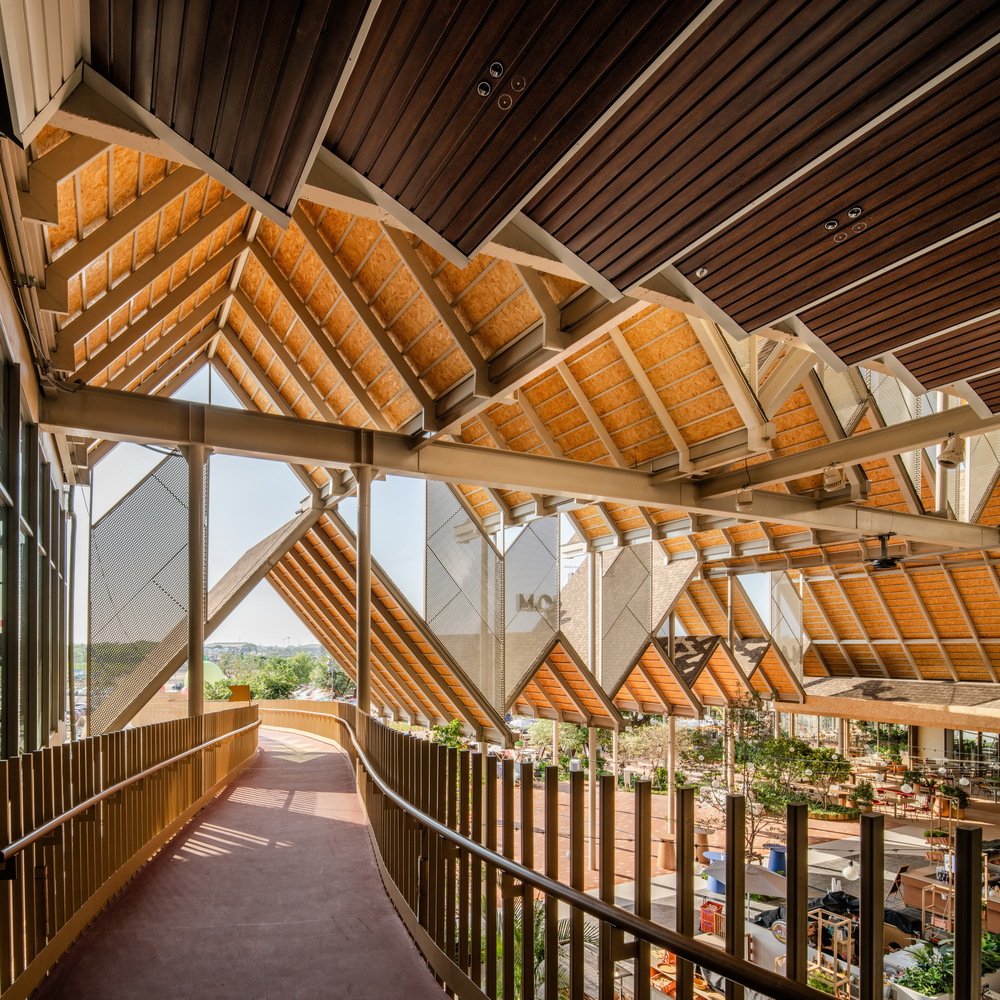
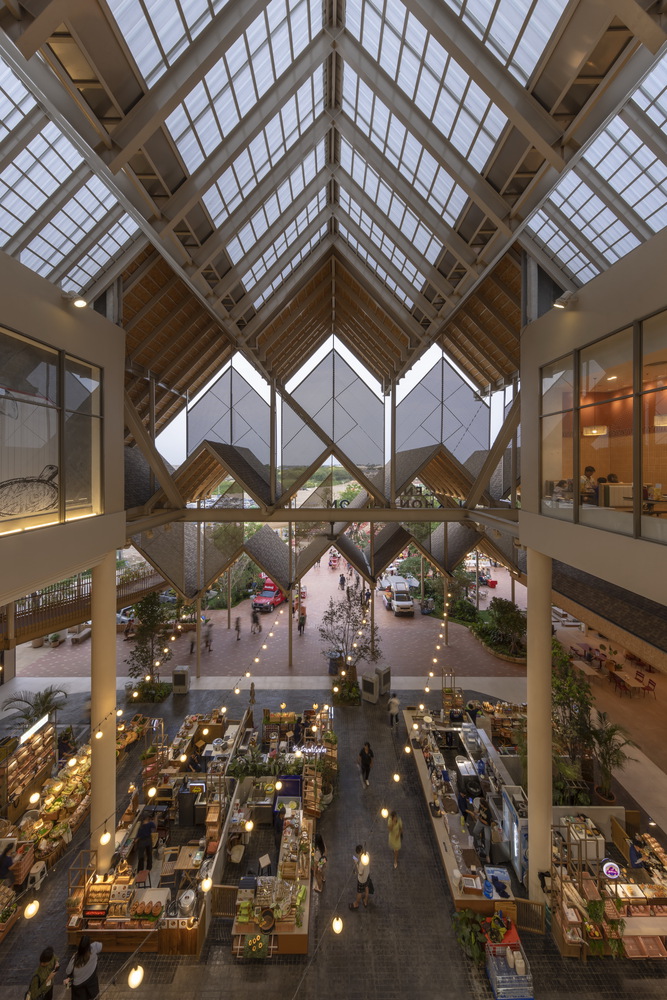
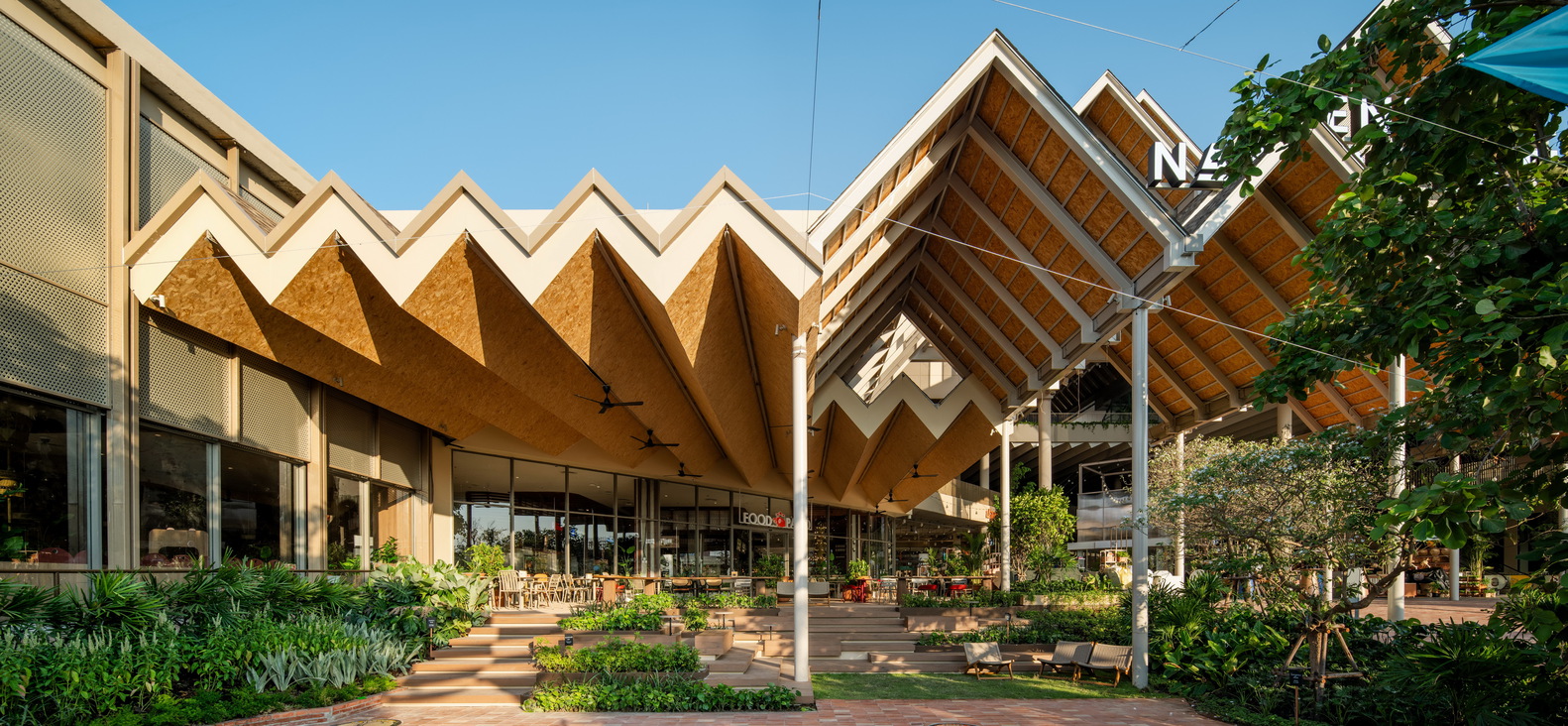
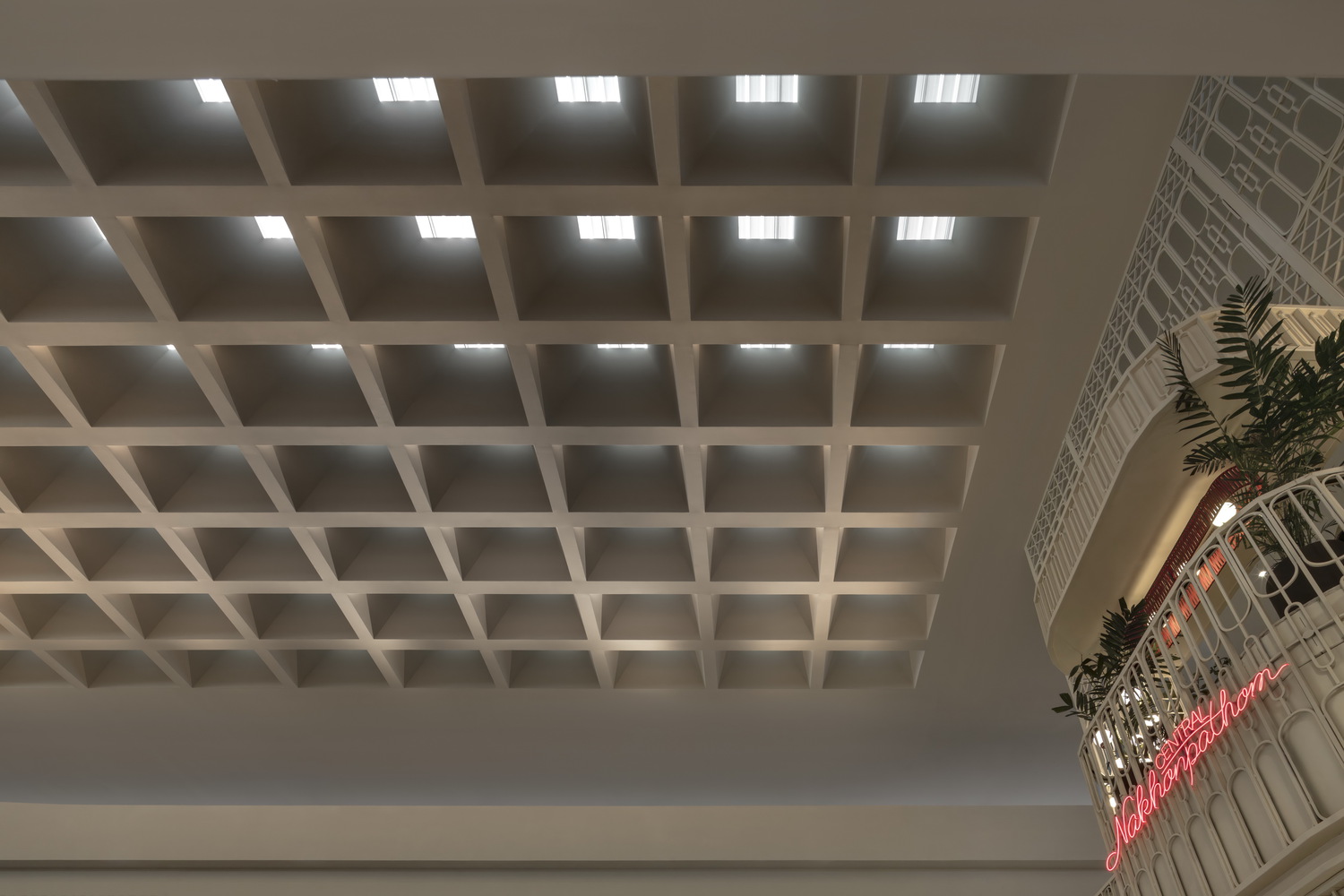
A large canopy roof shelters the area from rain, while the ceiling pattern, inspired by a checkerboard, reflects local activity patterns, adds visual interest, and helps diffuse direct sunlight to prevent overheating.
THE LOCAL MARKET
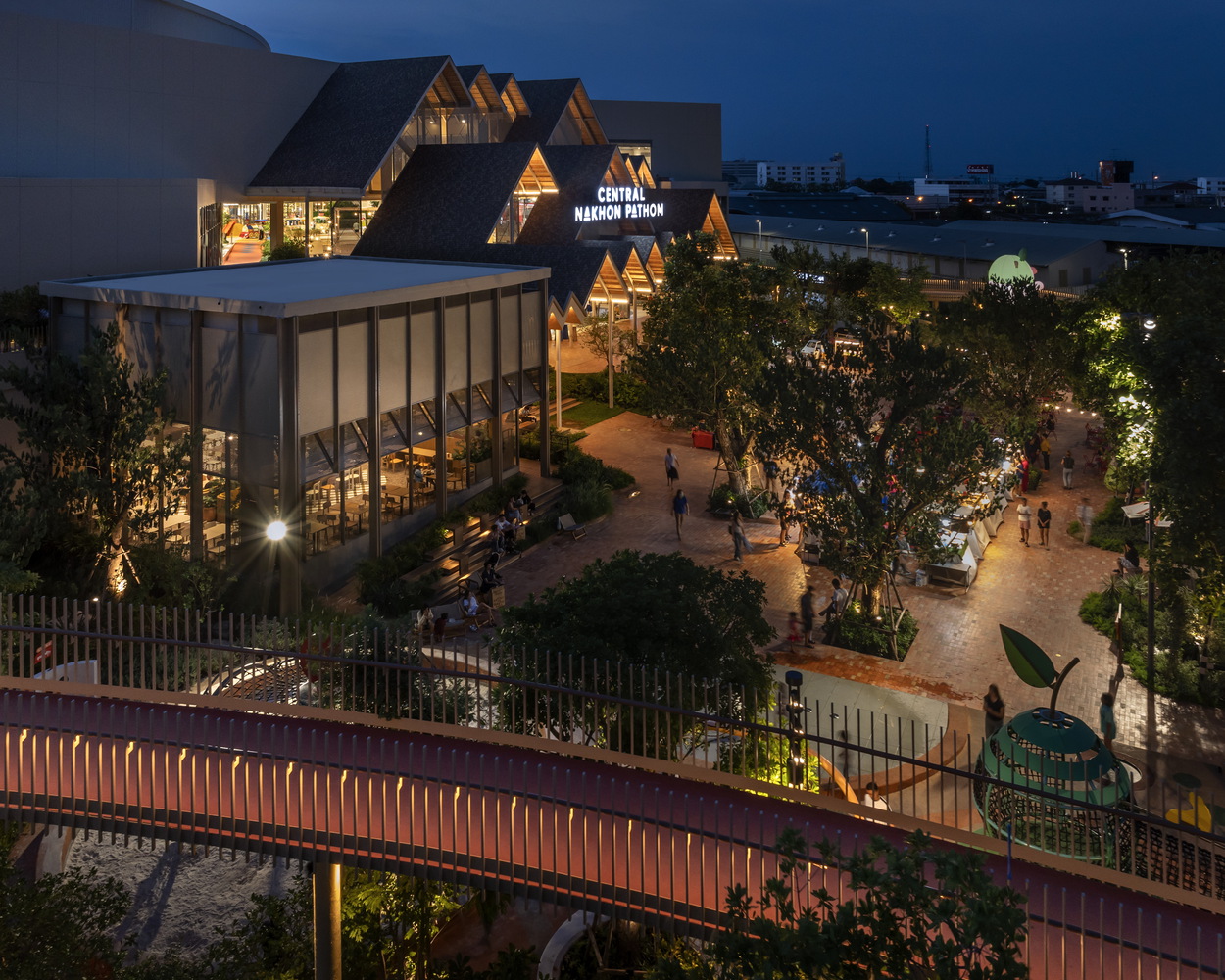
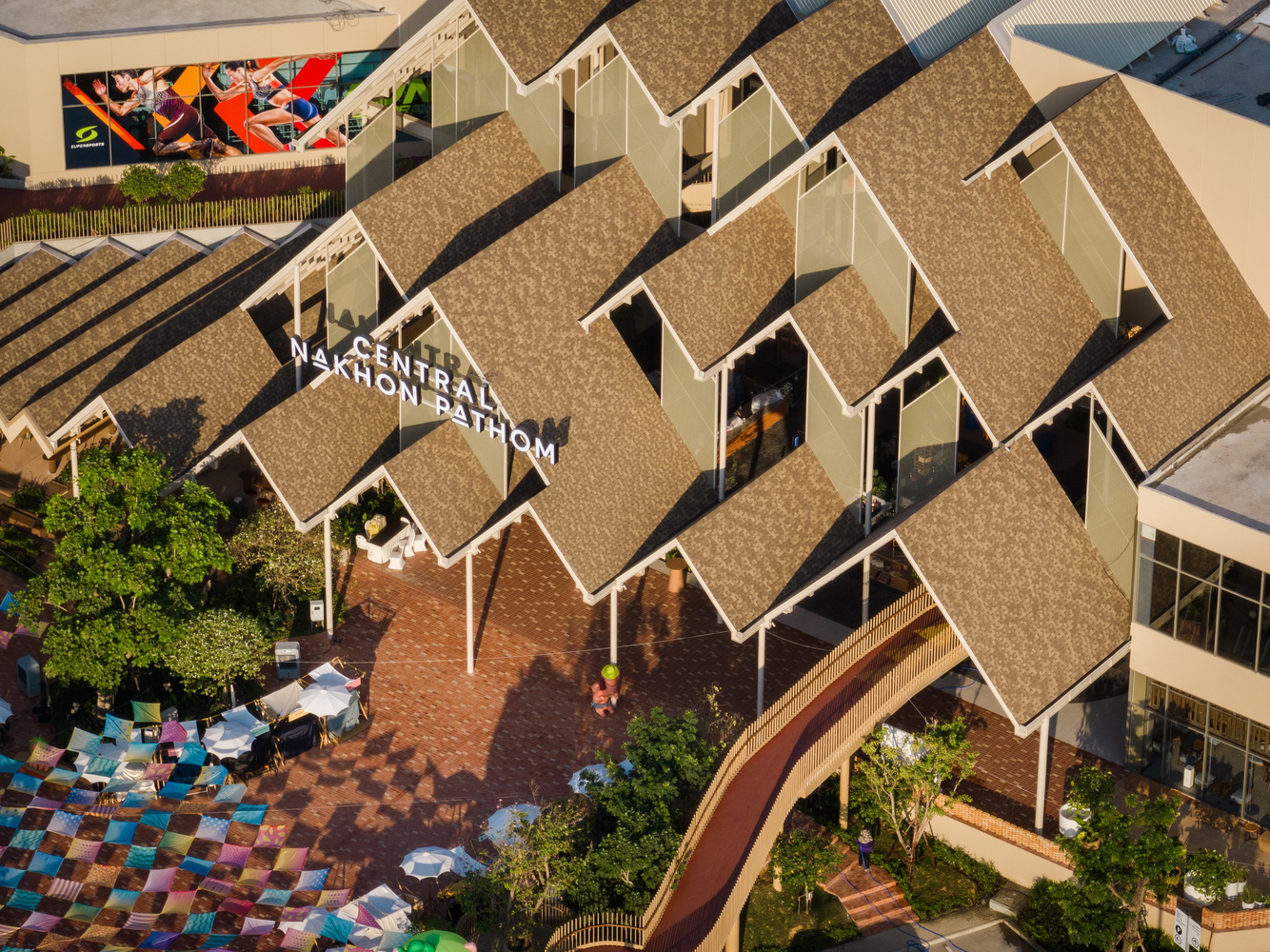
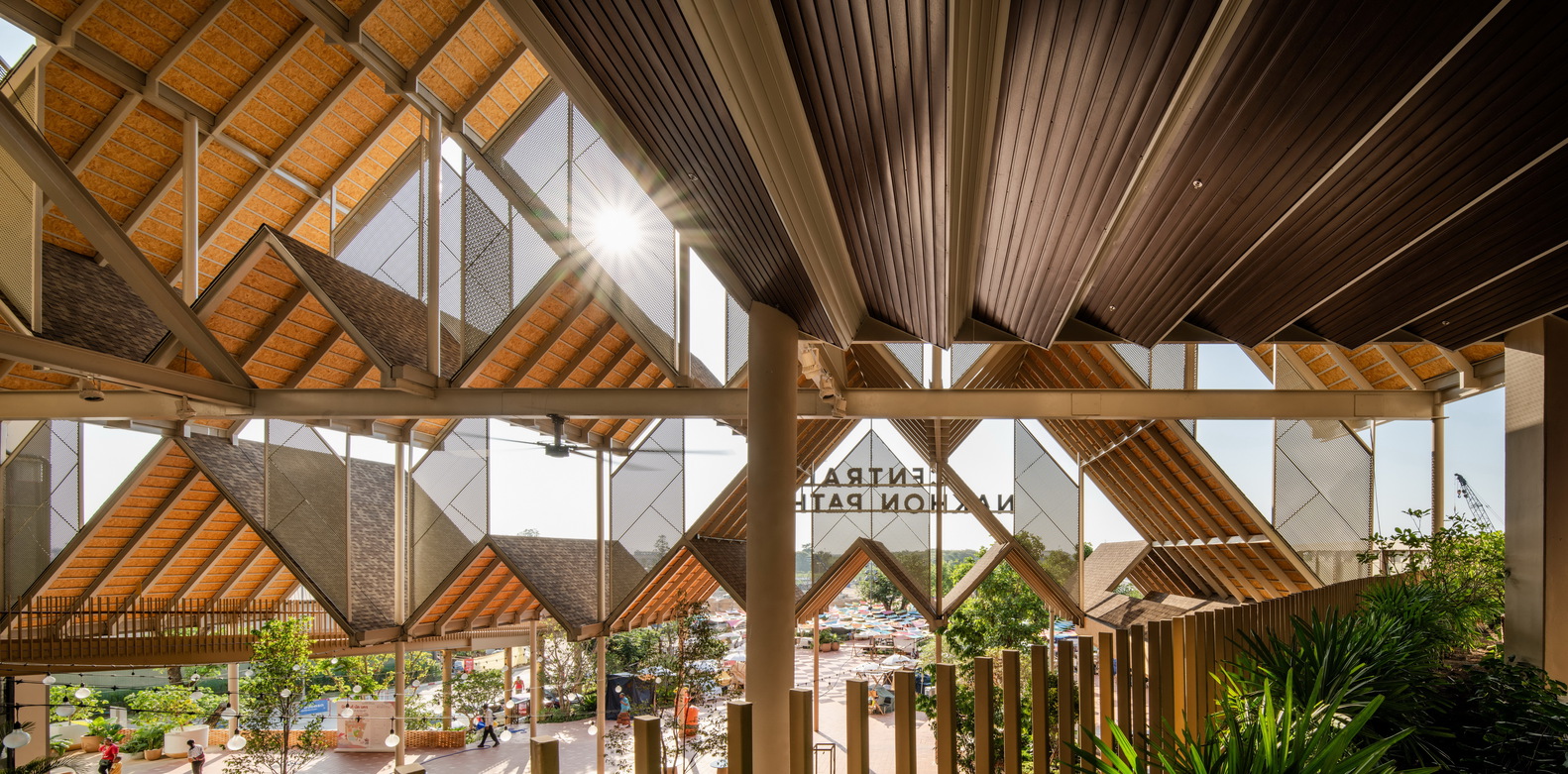
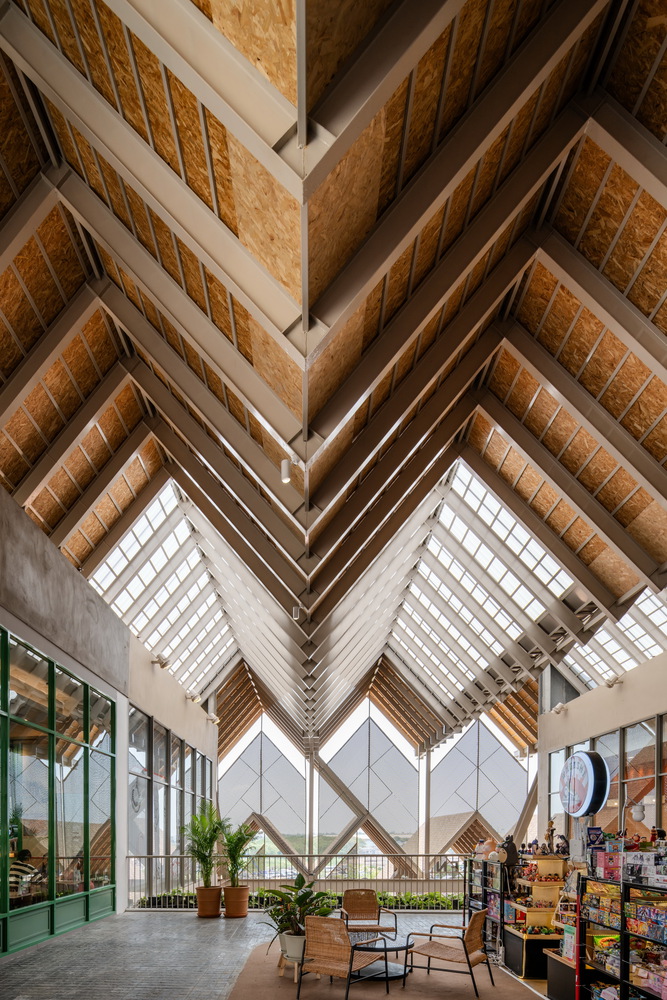
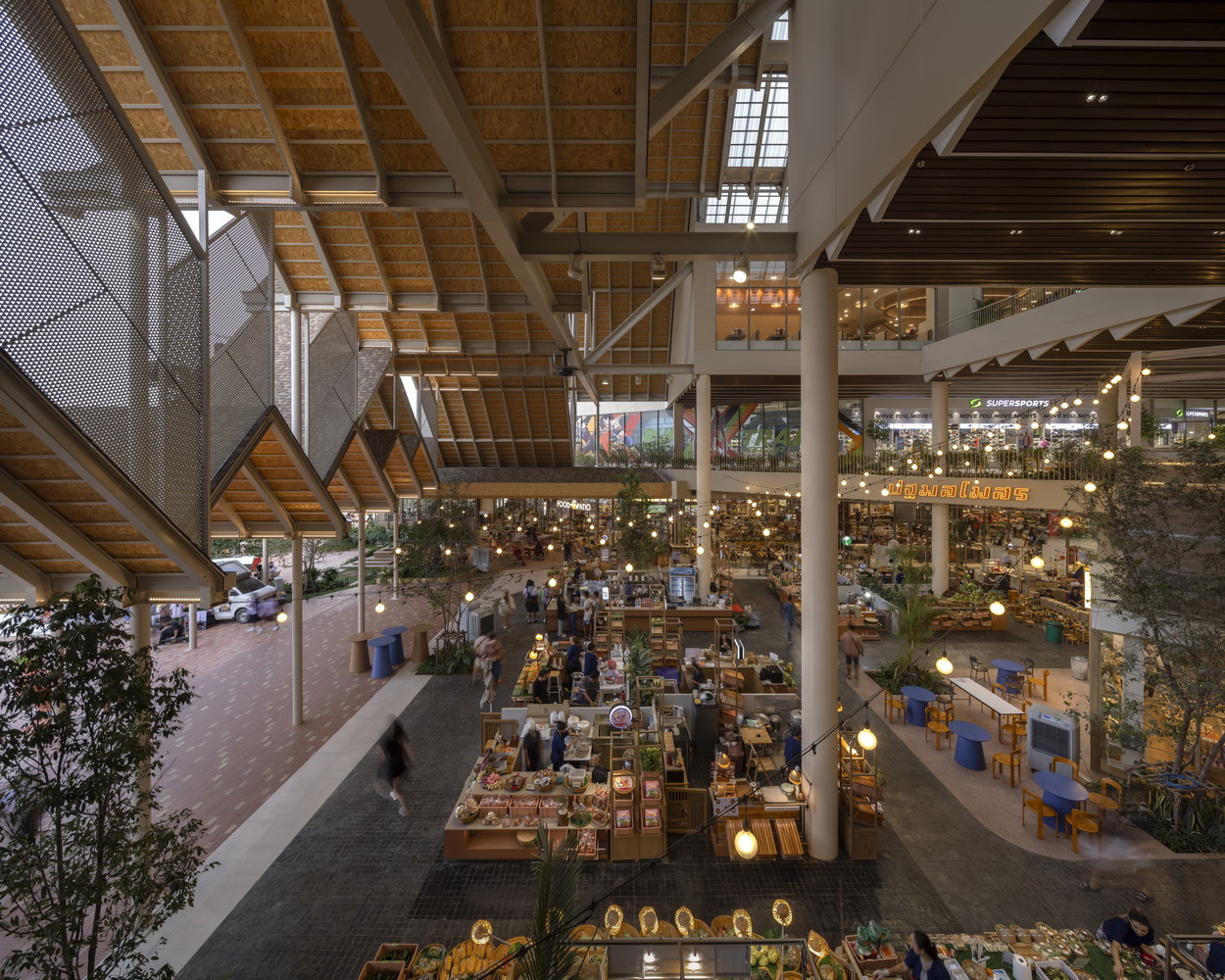
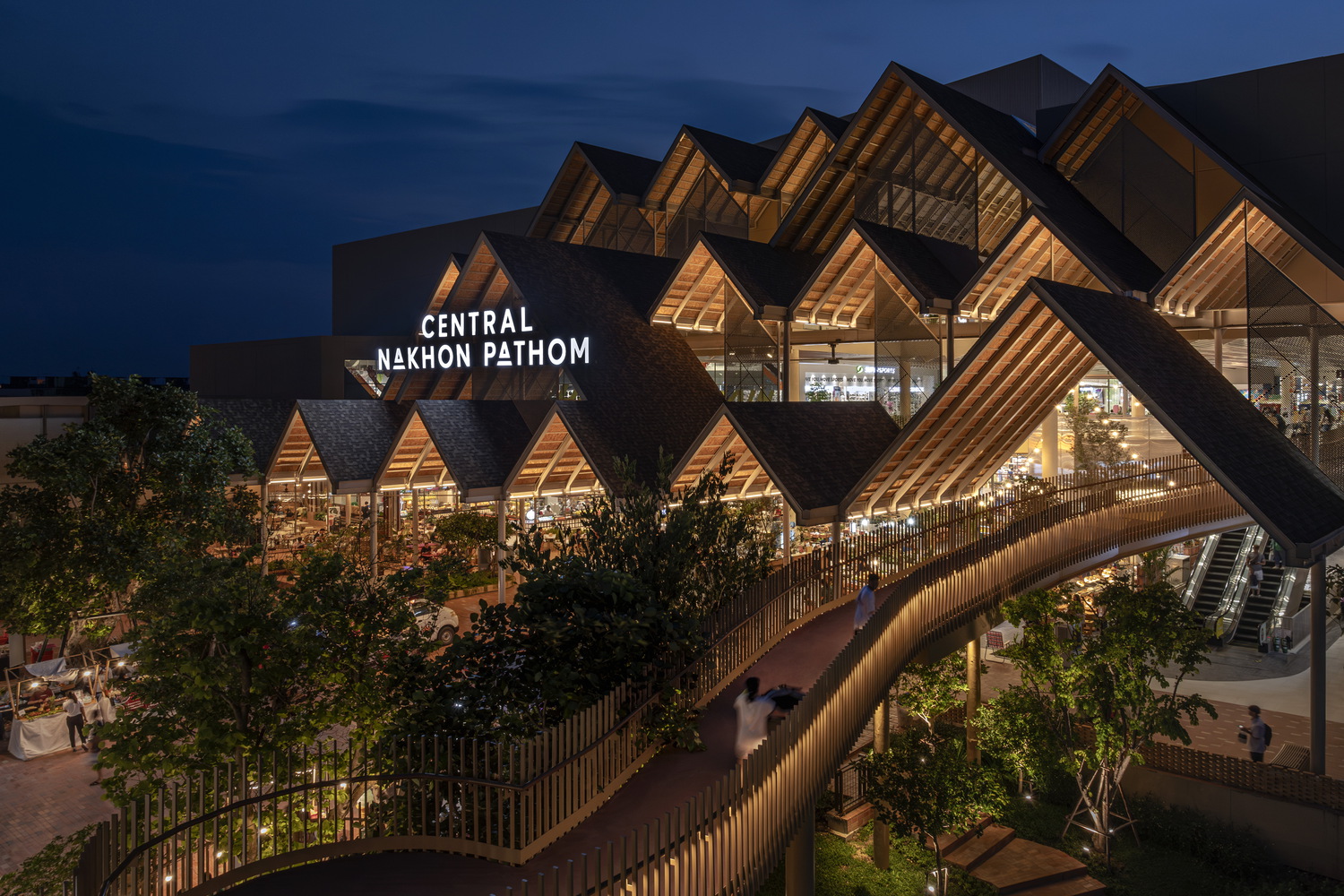
As visitors progress along the path, the space gradually opens into a triple-height volume beneath a layered gable roof, revealing a vibrant local food market, Pathom Samosorn. Designed to evoke the character of a traditional market, the area is cozy and intimate, encouraging visitors to linger, relax, and enjoy views of the surrounding garden.
The market features familiar local cuisine and connects seamlessly with the adjacent food patio, creating a central hub for dining that recalls the atmosphere of the market in front of Phra Pathom Chedi. Beyond its function as a culinary destination, this space also serves as a subtle transitional zone, bridging the interior of the building with the expansive outdoor activity ground.
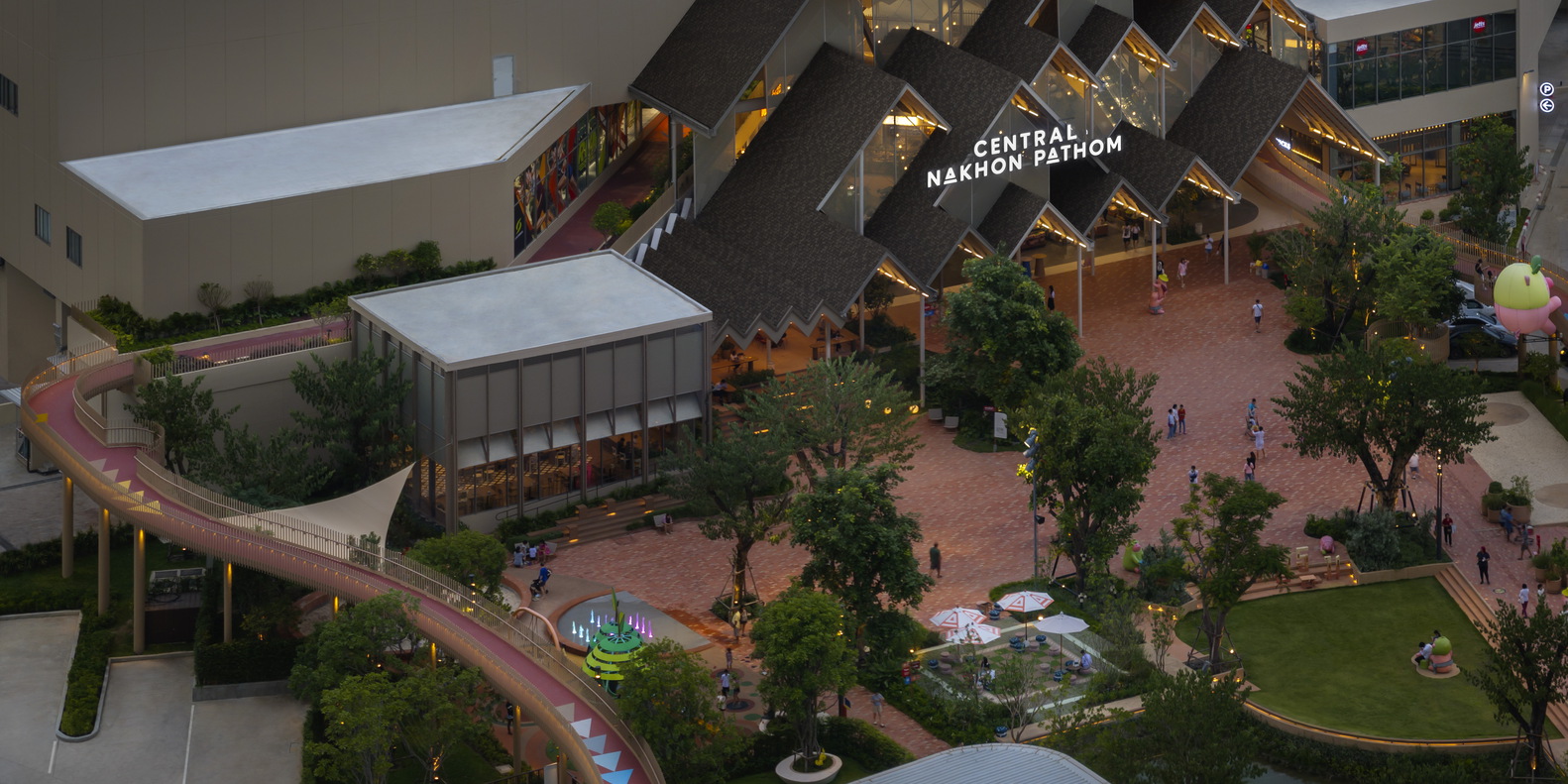
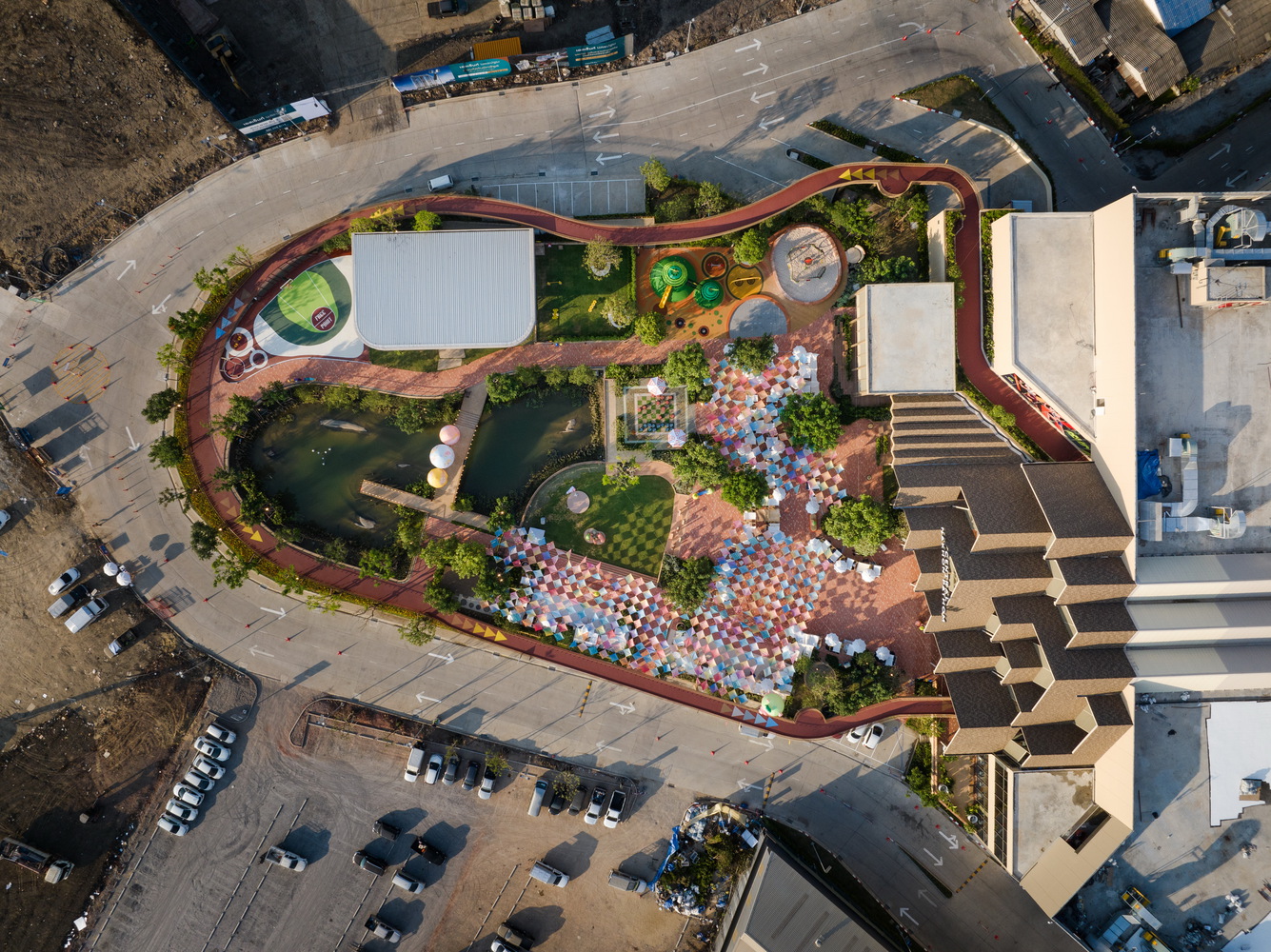
On the second-floor terrace above, a dedicated sports zone features a 200-meter running track that weaves from the park through the upper level, visually and physically linking the building with the exterior garden. This design encourages continuous use across levels, fostering active engagement and a seamless connection between interior and outdoor spaces.
THE MAIN PARK
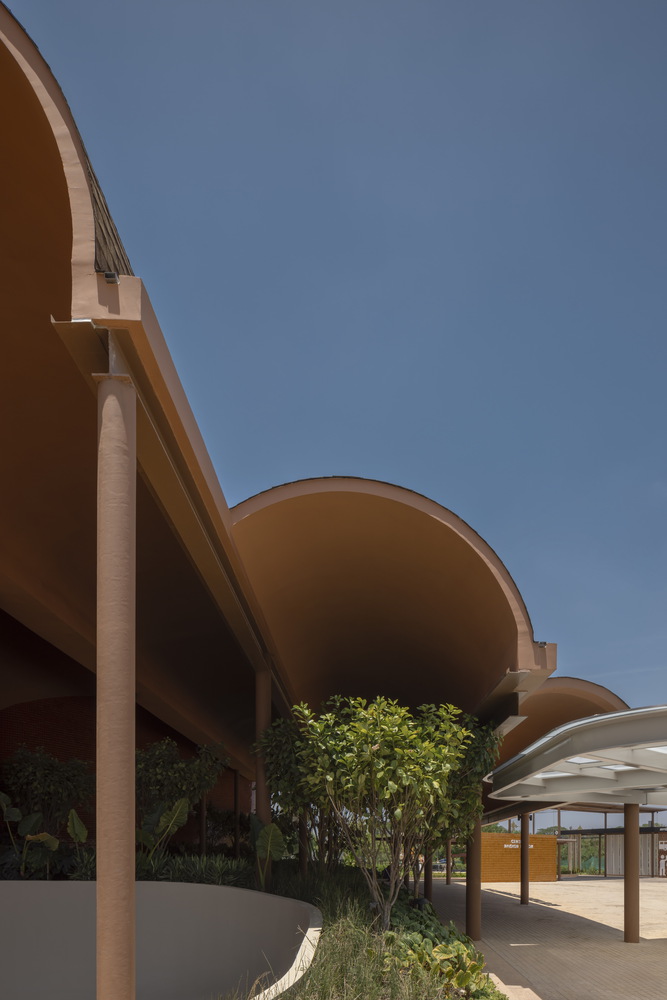
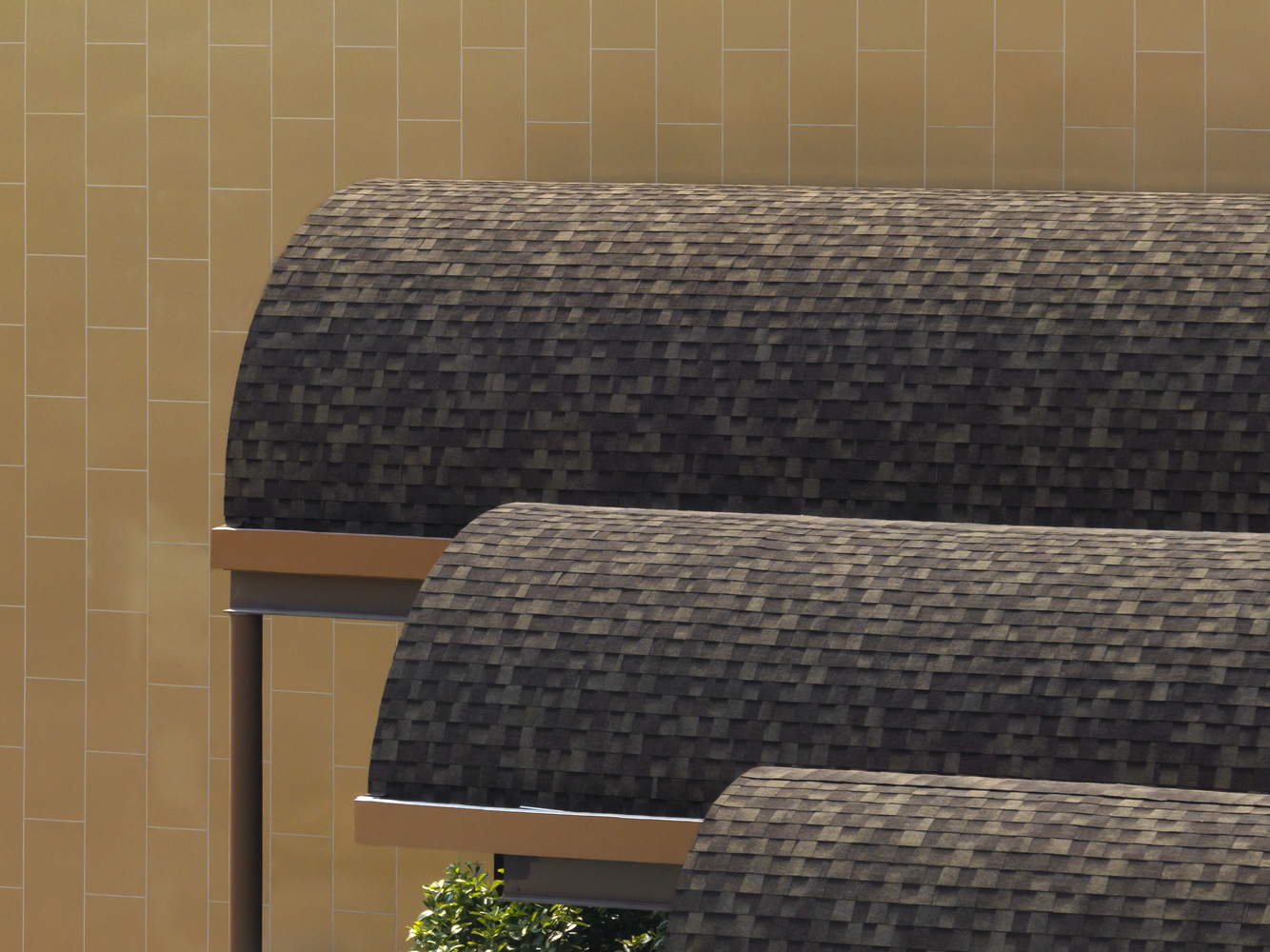
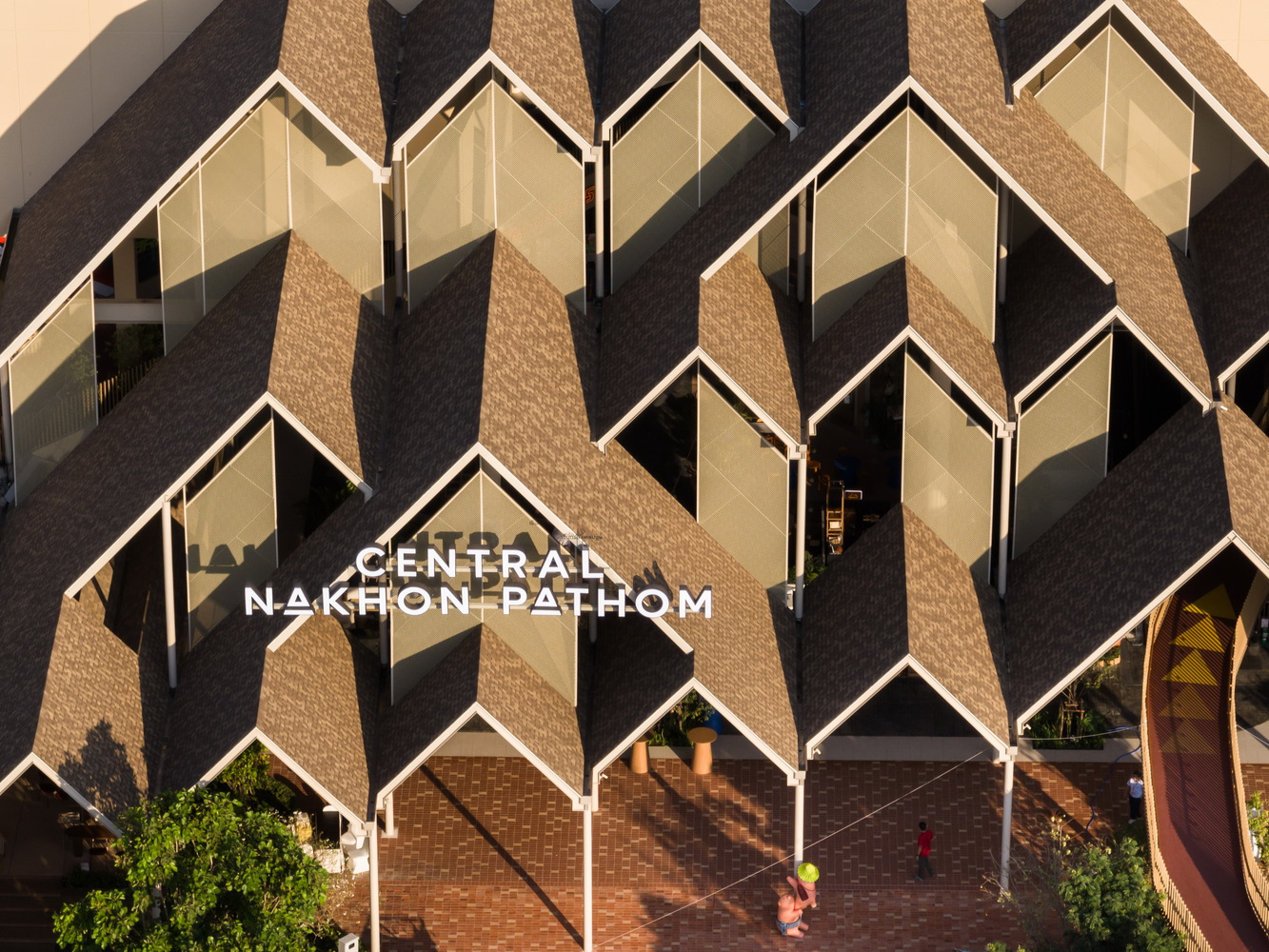
To strengthen the sense of local familiarity, the rear façade is composed of overlapping gable roof forms—an architectural language drawn from vernacular Thai houses that residents instinctively recognize. These gables open toward the park (Pomelo garden), a pet-friendly, lush green park designed to accommodate a wide range of activities.
At the heart of this landscape sits a large retention pond, anchoring the public space and encircled by a running track, event lawn, art installations, play areas, and various pockets for rest and gathering.
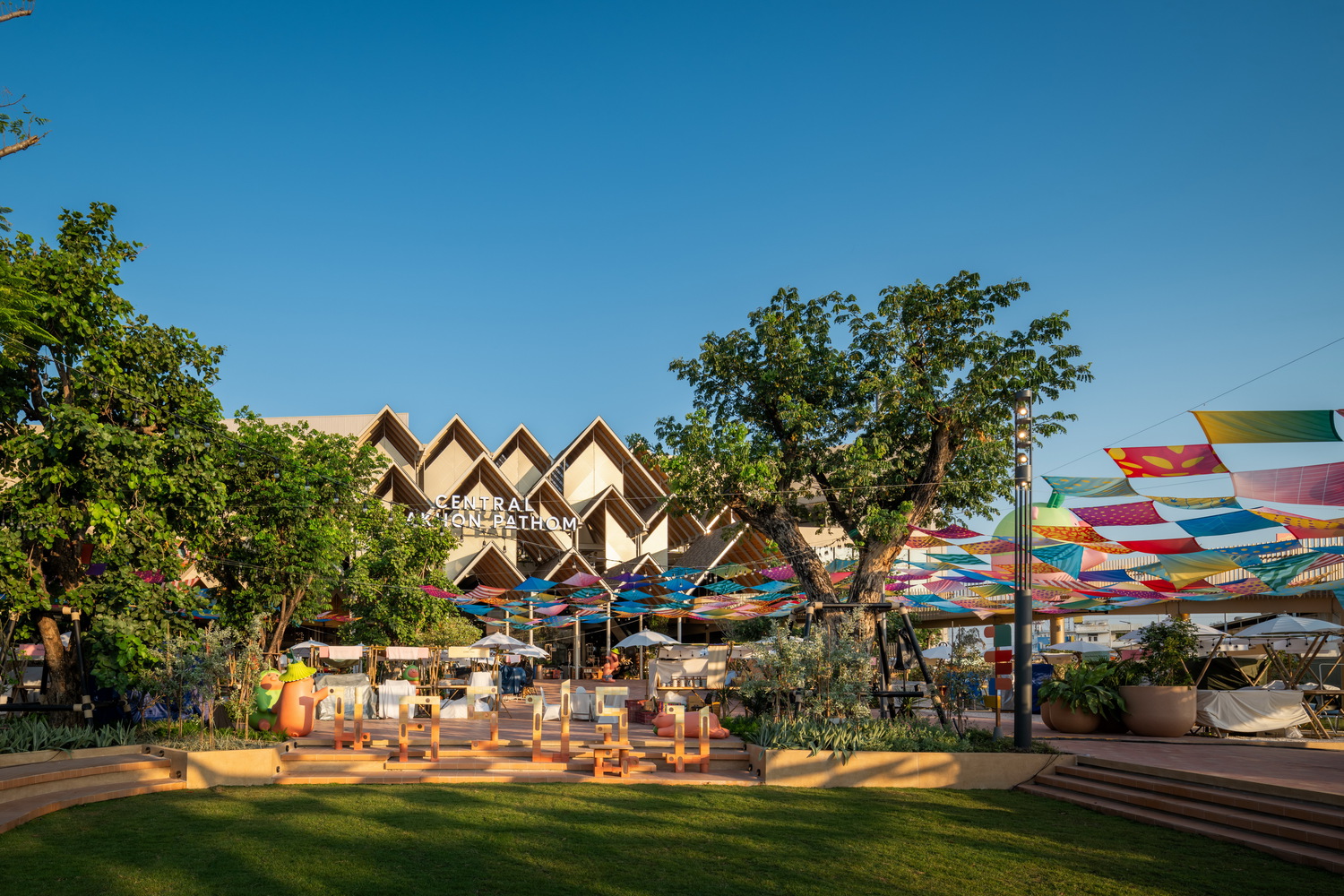
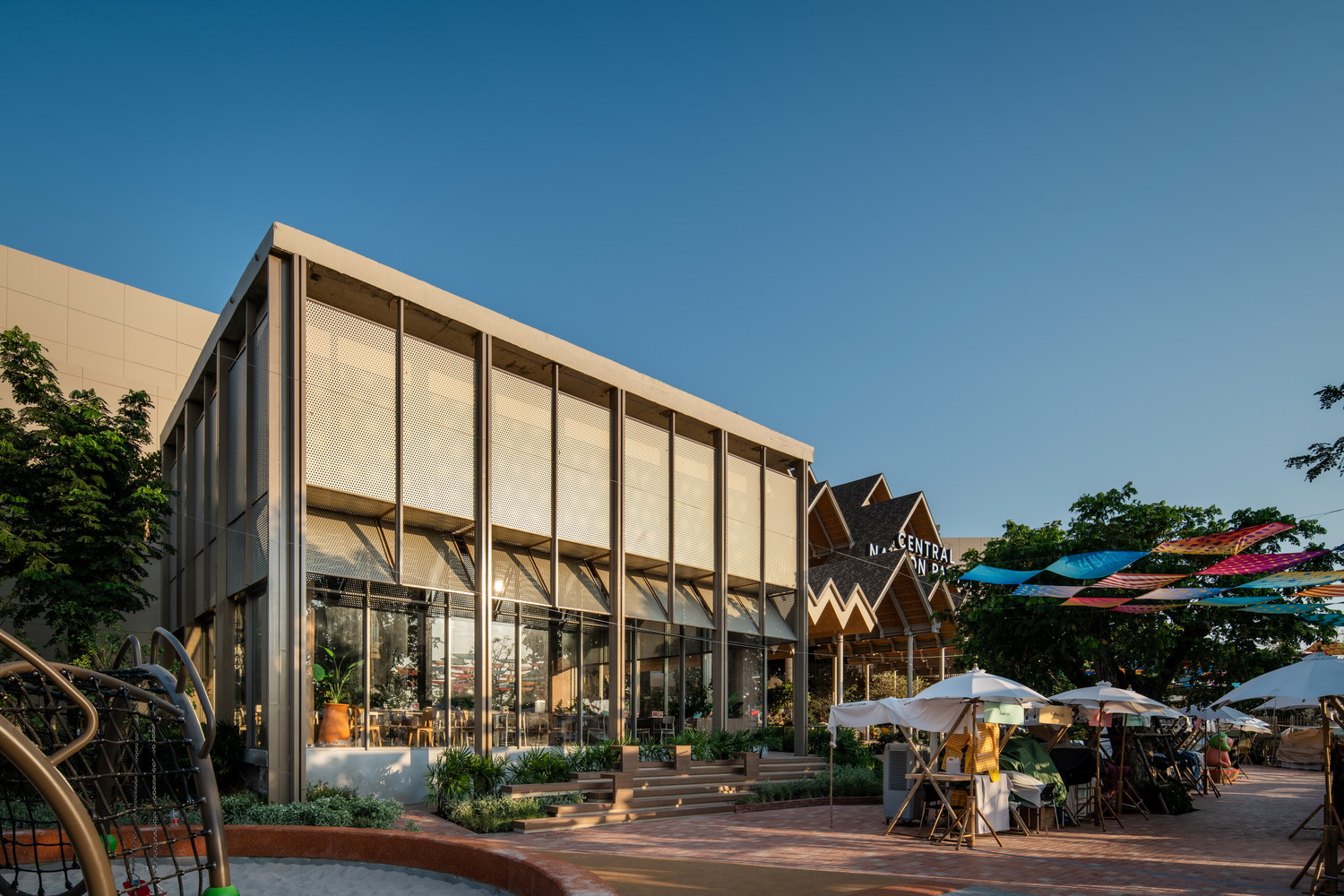
An 800-square-meter event space further supports the province's cultural calendar, hosting major festivals such as Songkran, Loy Krathong, New Year celebrations, as well as weekly community events.
Reminiscent of the vibrant life historically found around Phra Pathom Chedi, this area functions as a new center of activity for the city—cultivating a lively, engaging, and inclusive environment for residents and visitors alike.
SUSTAINABLE DESIGN APPLICATION
SITE LAYOUT & LANDSCAPE DESIGN
The master plan incorporates an Open Space Ratio (OSR) of 31%, ensuring generous, breathable areas throughout the development.
A central green park forms the heart of the site, planted with local and low-maintenance species to support ecological resilience and reduce long-term upkeep.
A dedicated retention pond of approximately 800 sq m (capacity 1,200 cu.m, 1.50 m depth) is integrated into the main public park, contributing to sustainable stormwater management and enhancing the overall landscape character.
BUILDING MATERIALS & ENVELOPE PERFORMANCE
Low-VOC interior materials are specified to support healthy indoor air quality.
Exterior façades utilize glazing and composite cladding with surface reflectance values below 15%, minimizing glare and heat gain.
Hardscape materials with SRI values above 30 are applied to reduce urban heat island effects.
Thermal protection is strengthened through roof insulation exceeding 50 mm, while local materials—such as terracotta tiles are used as the main façade material to express regional craft and reduce transportation impacts.
SANITARY & WATER EFFICIENCY FEATURES
Water-efficient fixtures are integrated throughout the project. Single-flush toilets limit water consumption to no more than 6.0 liters per flush, and automatic water taps operate at flow rates below 5.0 liters per minute, supporting responsible water use in daily operations.
THERMAL COMFORT & DAYLIGHT ANALYSIS
The semi-outdoor area is carefully engineered for comfort, with natural ventilation and daylighting optimized through building massing that allows airflow.
Microclimate analysis and strategically placed big fans and ceiling fans help enhance air movement and reduce temperature without reliance on mechanical cooling.
Studies have shown that the use of mechanical fans can help lower the perceived temperature by approximately 1°C.
Daylight analysis was also applied throughout the main atrium and corridors on every level to utilize both direct and indirect natural light, minimizing electricity use while maintaining a bright, pleasant environment.