Lattice Creative Garden
LATTICE CREATIVE GARDEN
Rad+ar (Research Artistic Design + Architecture)
ARCHITECTS
Rad+ar (Research Artistic Design + Architecture)
LEAD ARCHITECT
Dadi Prasojo, Antonius Richard Rusli
DESIGN TEAM
Bahrumsyah Bila Sahil, Indra Zhafrandary Kusuma, Zulfan Fadilah, Florentina Harly, Justyn Andhika Xavier Halim, Tyto Rezki Alfalih S, Helen Saphira Wibowo
PHOTOGRAPHS
Ernest Theofilus
AREA
3000 m²
YEAR
2025
LOCATION
Jakarta, Indonesia
CATEGORY
Commercial Architecture
English description provided by the architects.
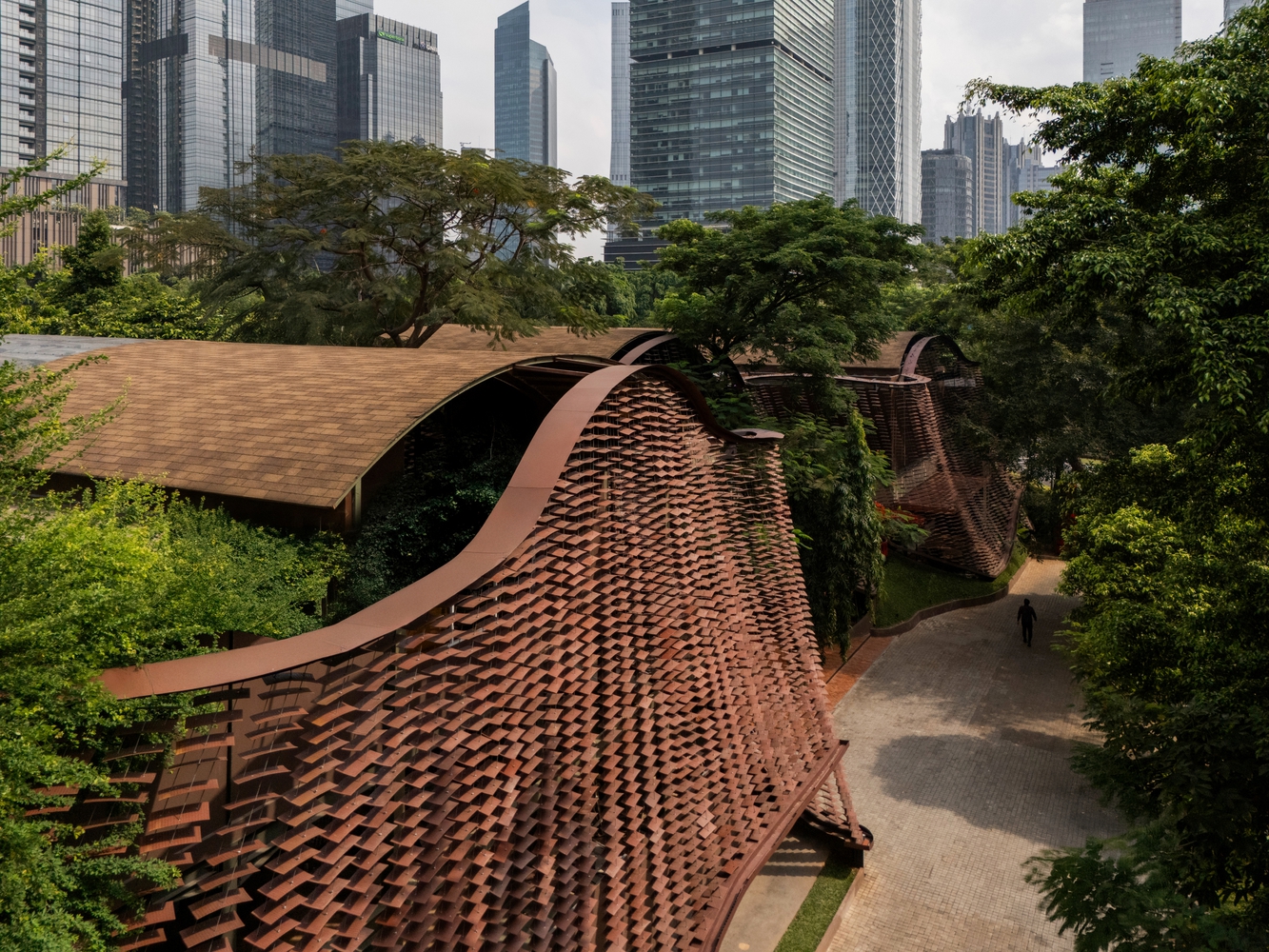
The latticework principle, having been essential in the hot, humid tropical climate of Indonesia for hundreds of years, is a key identity component for essential climate control and a brilliant example of bioclimatic design.
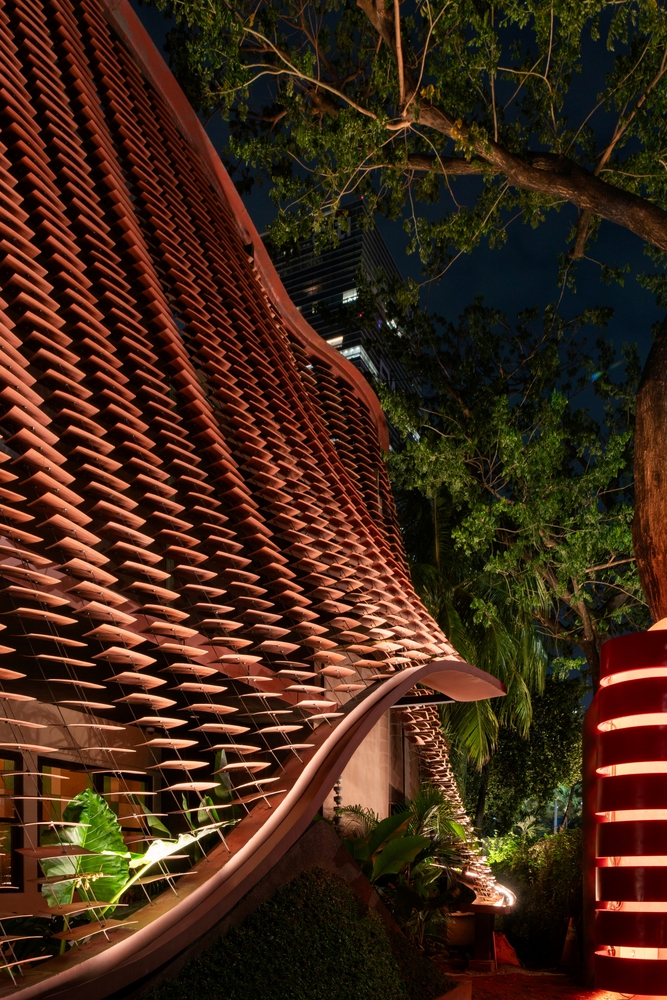
When readapted with greater design freedom and flexibility through dual coding (function and symbolism), the lattice becomes a modern, high-performing shading device that simultaneously serves as a visually rich, contextually relevant screen recalling local architectural experimentation in sustainability.
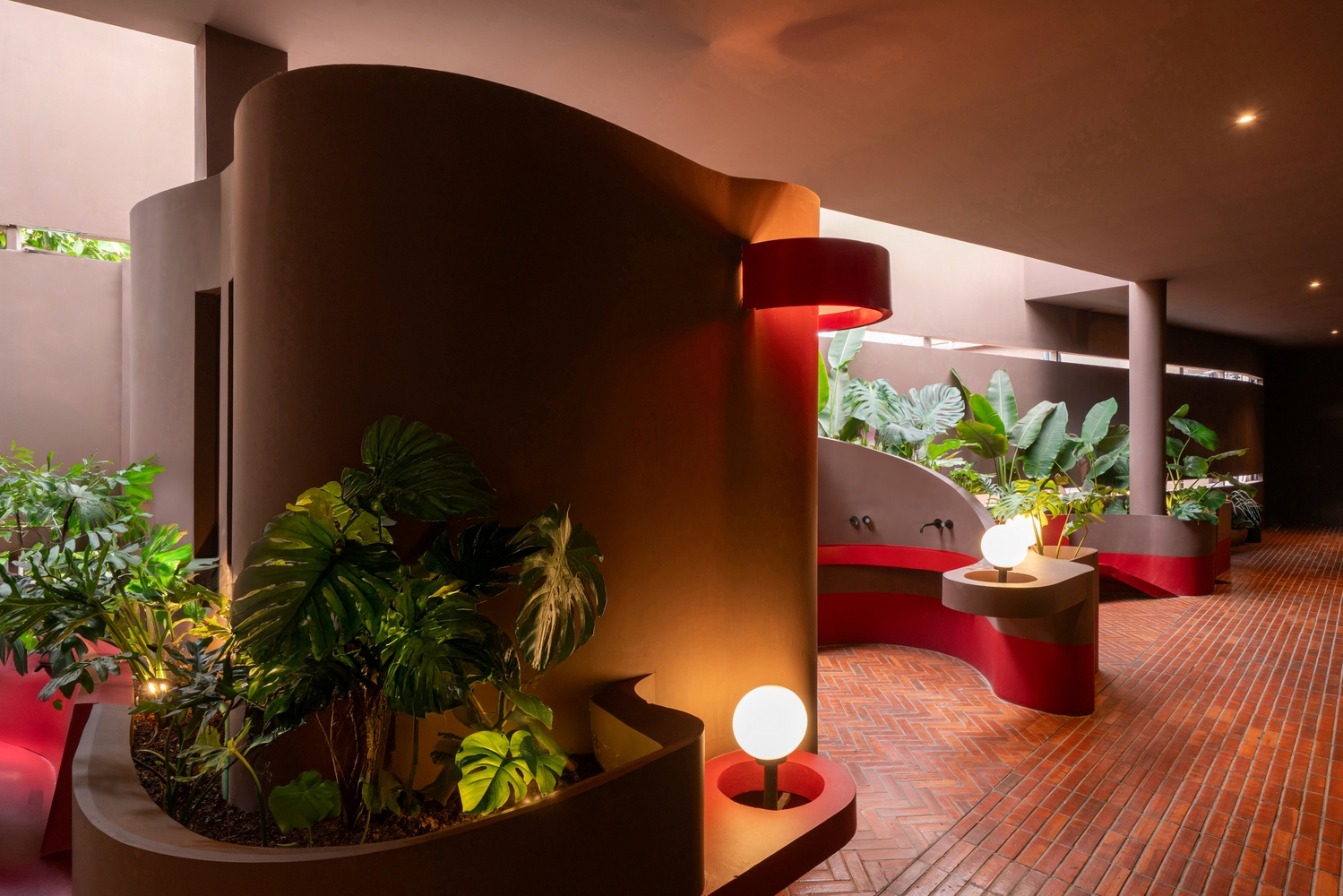
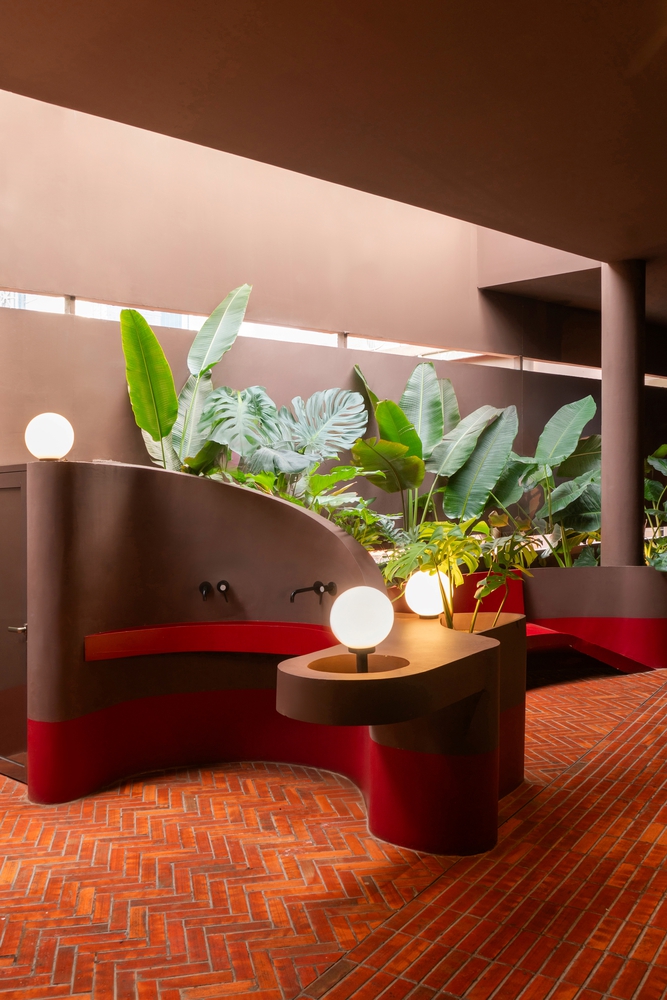
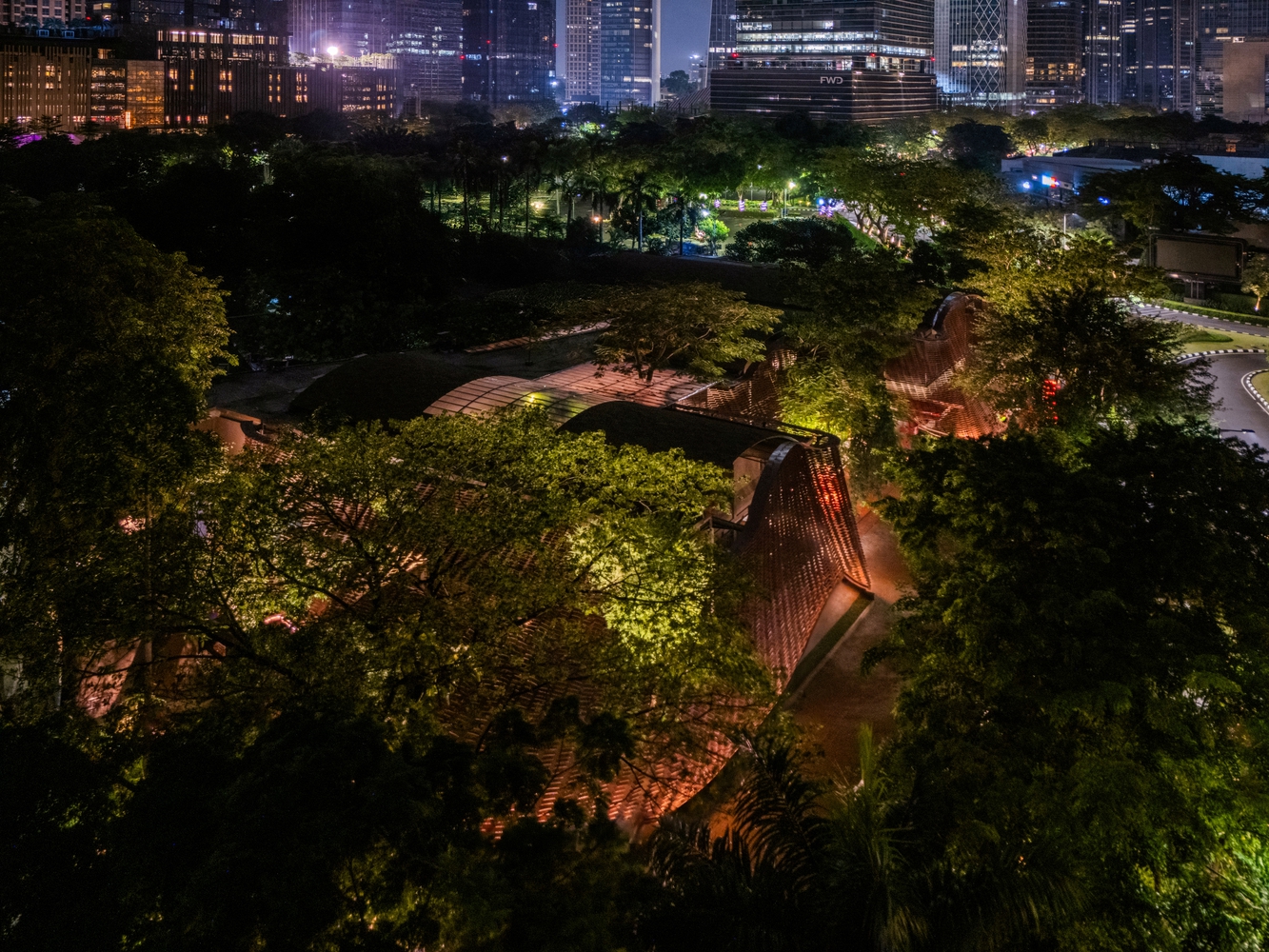
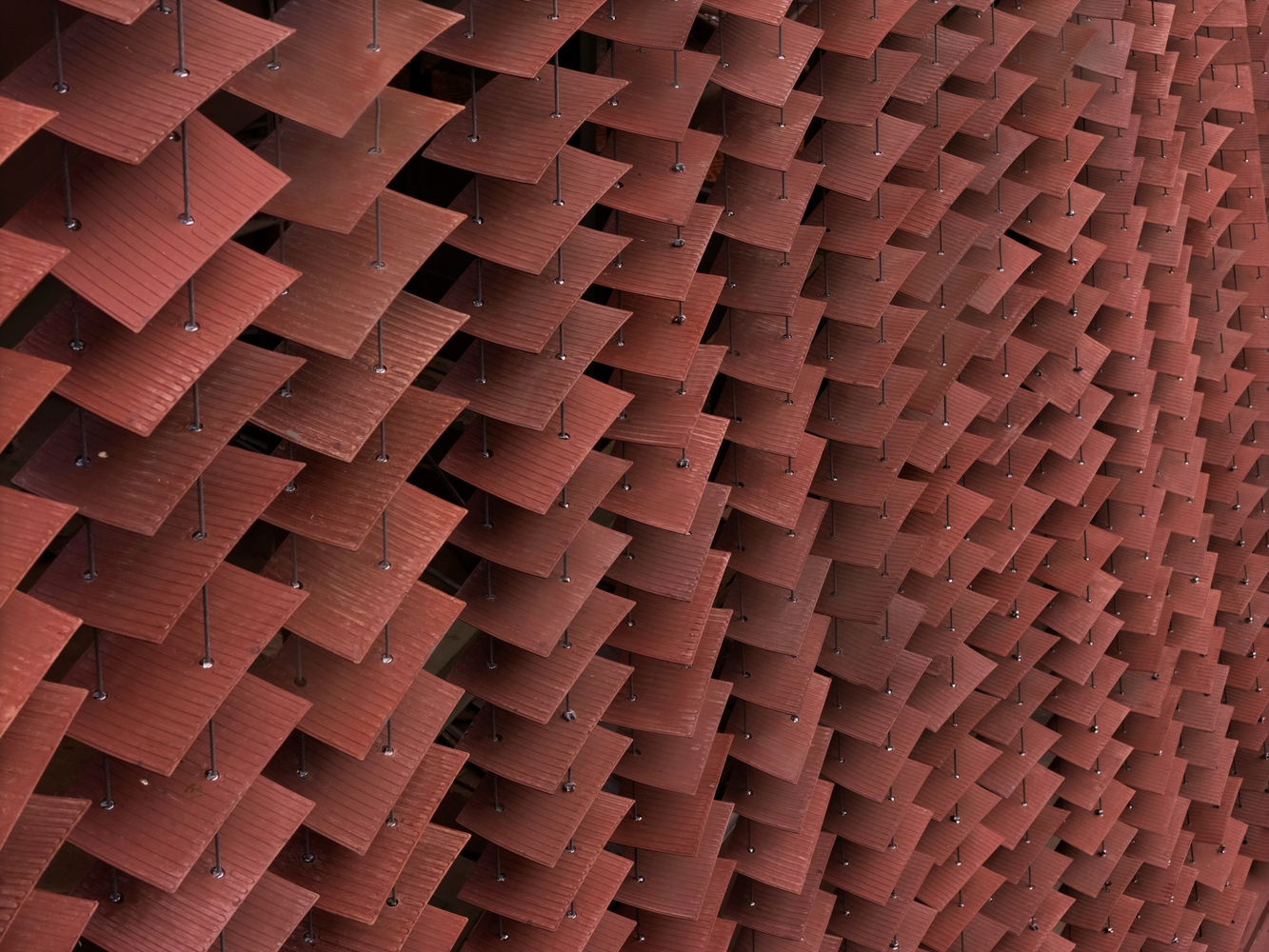
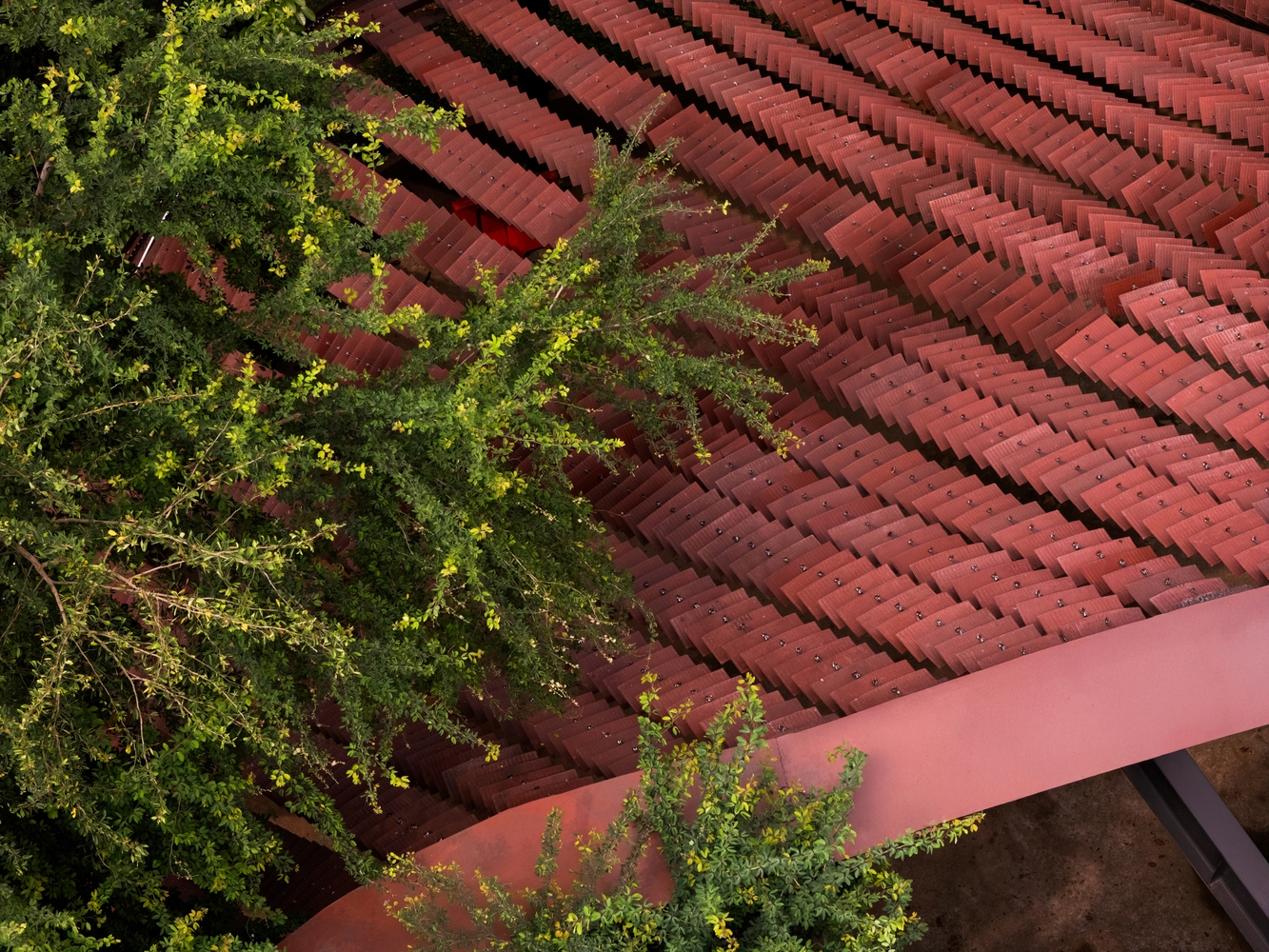
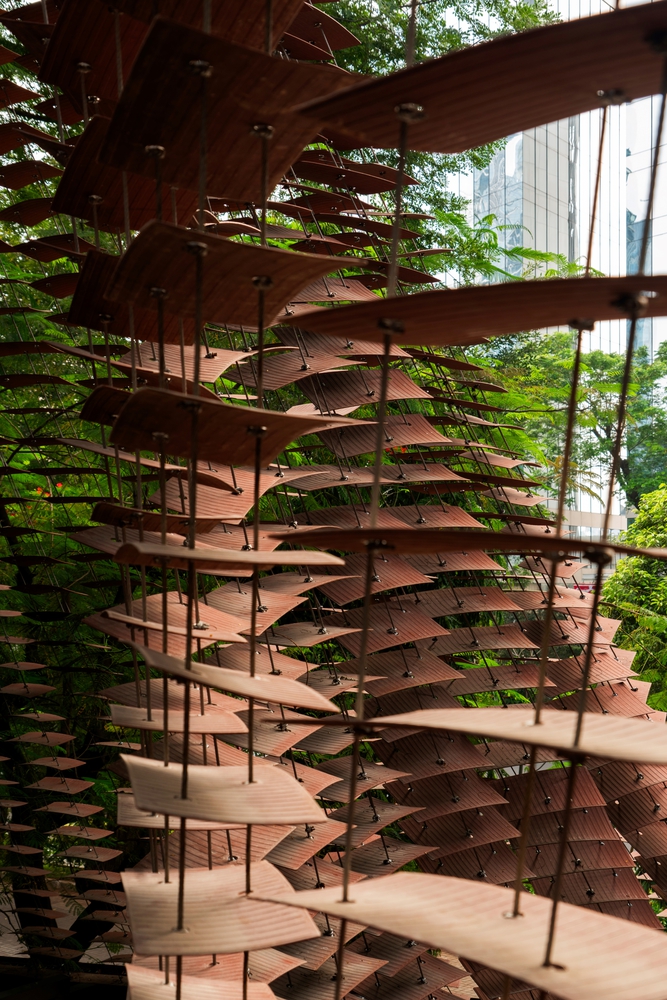
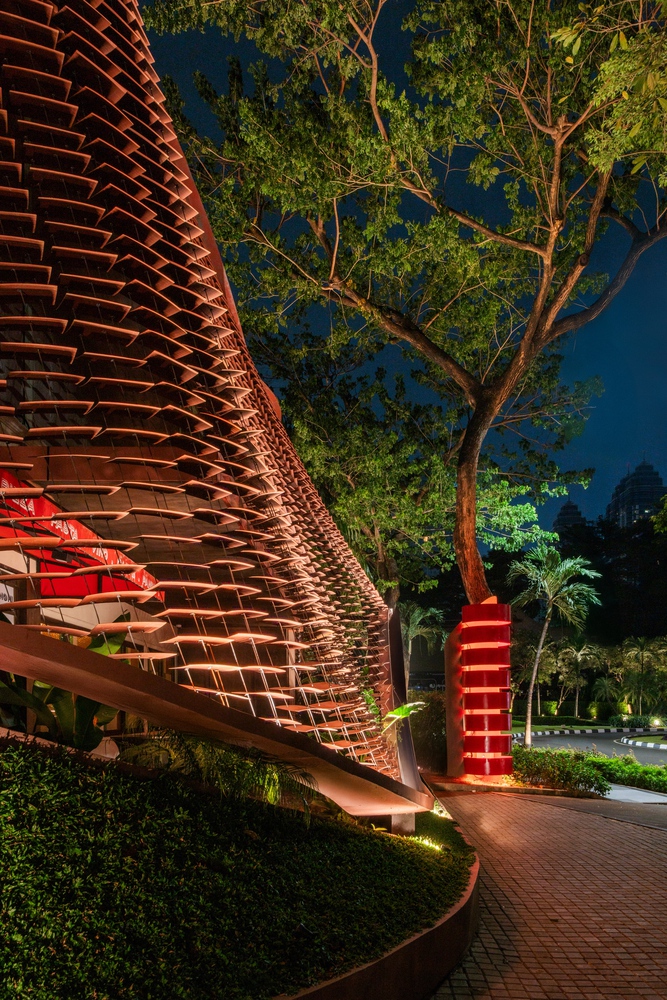
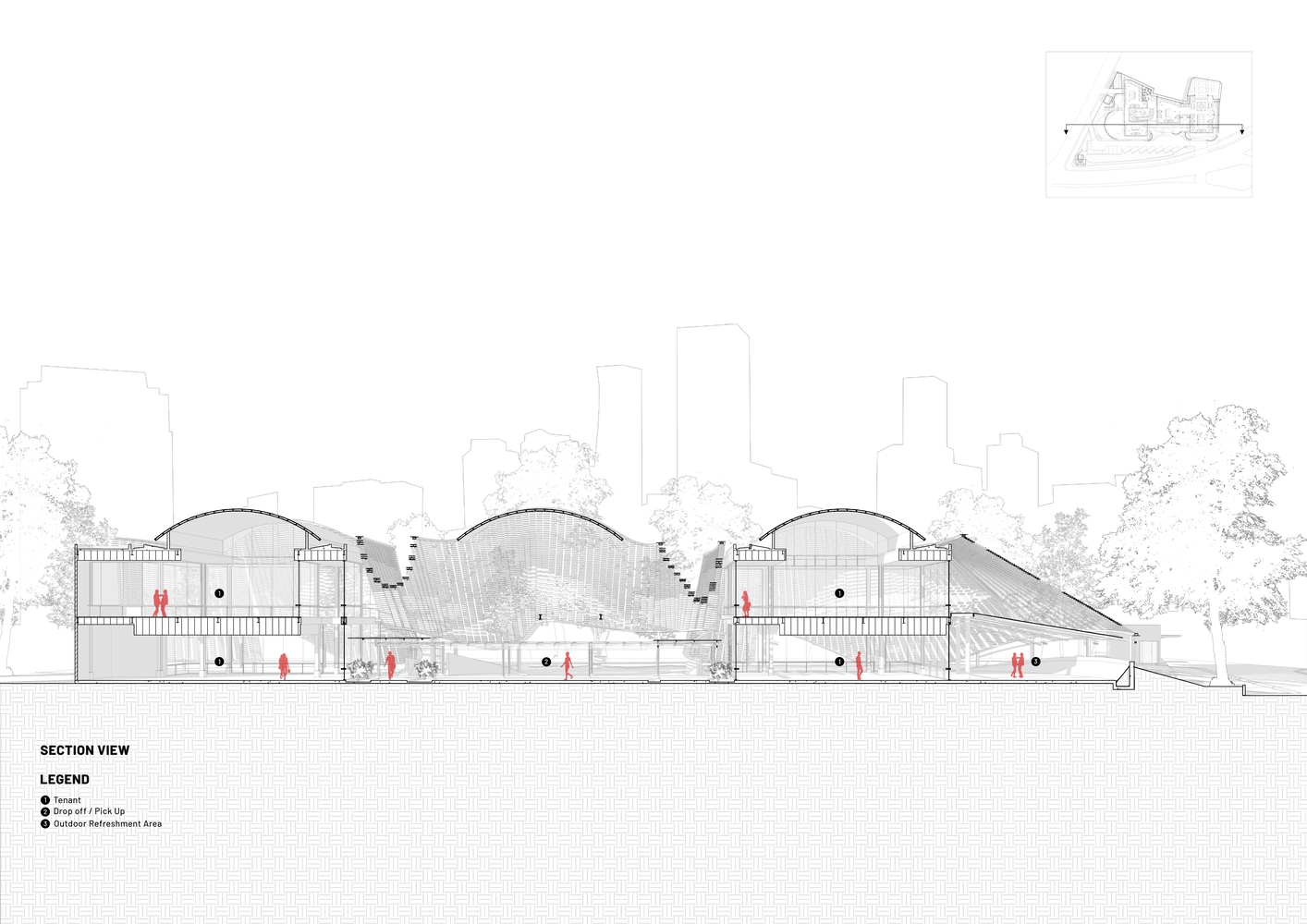
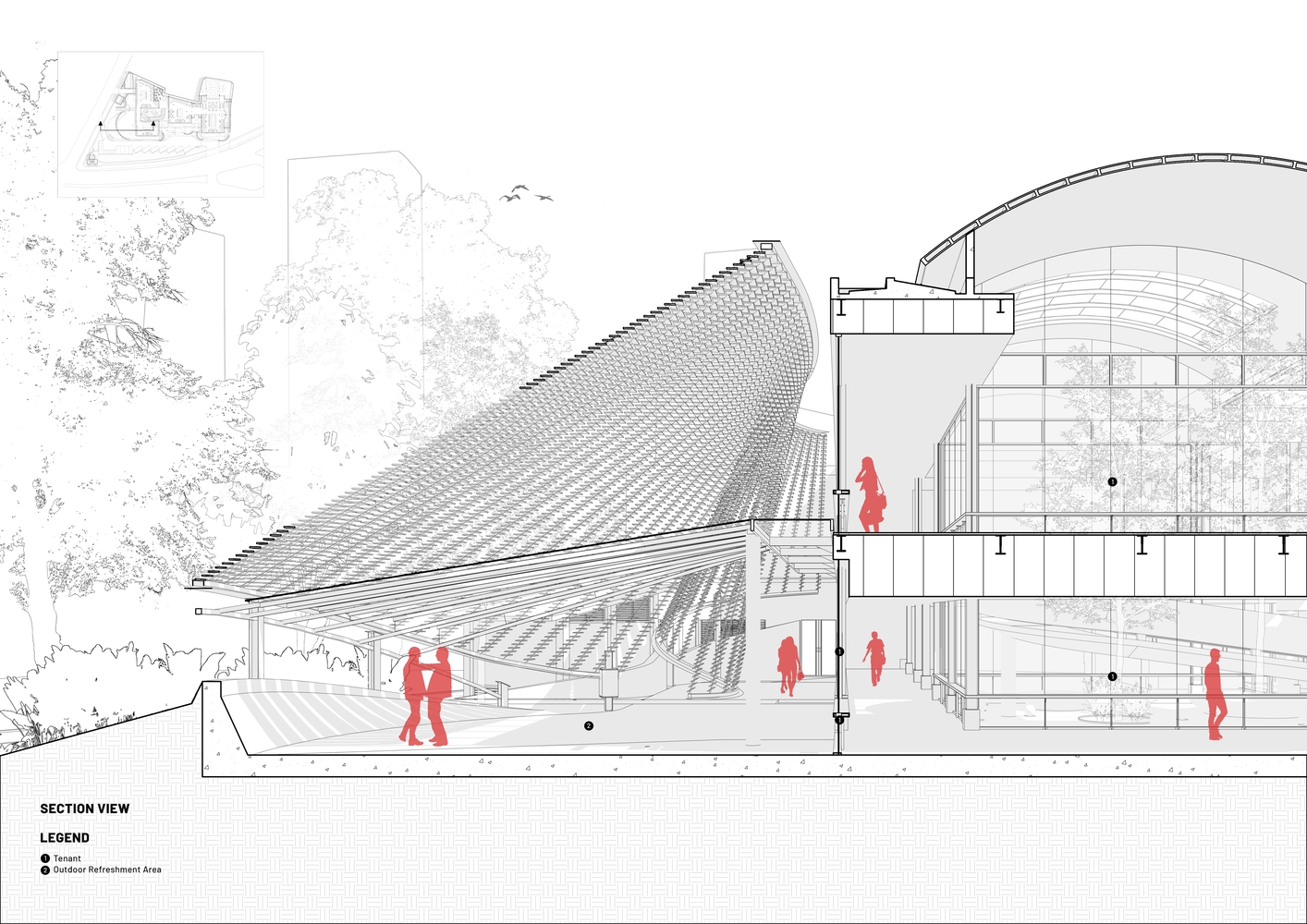
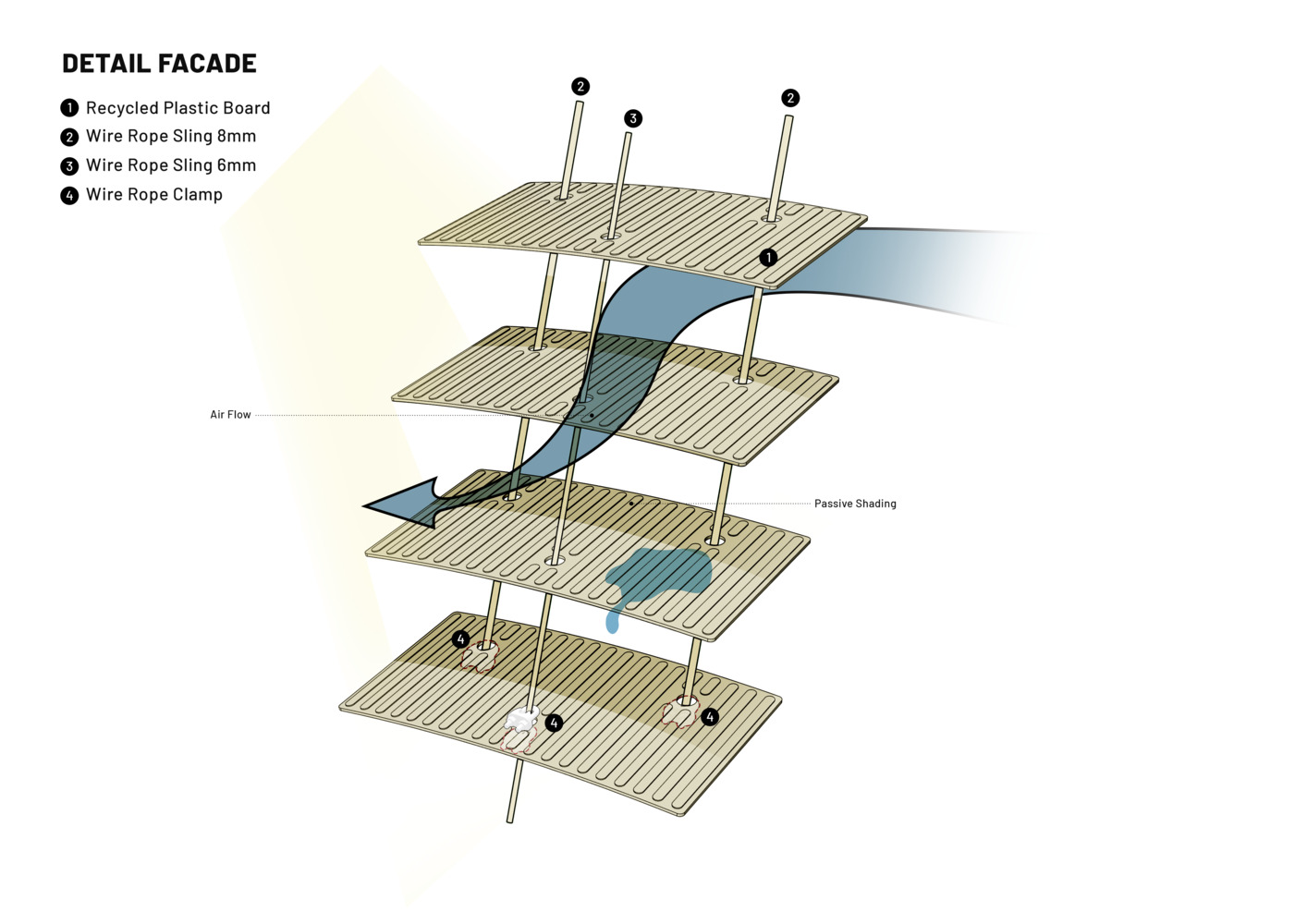
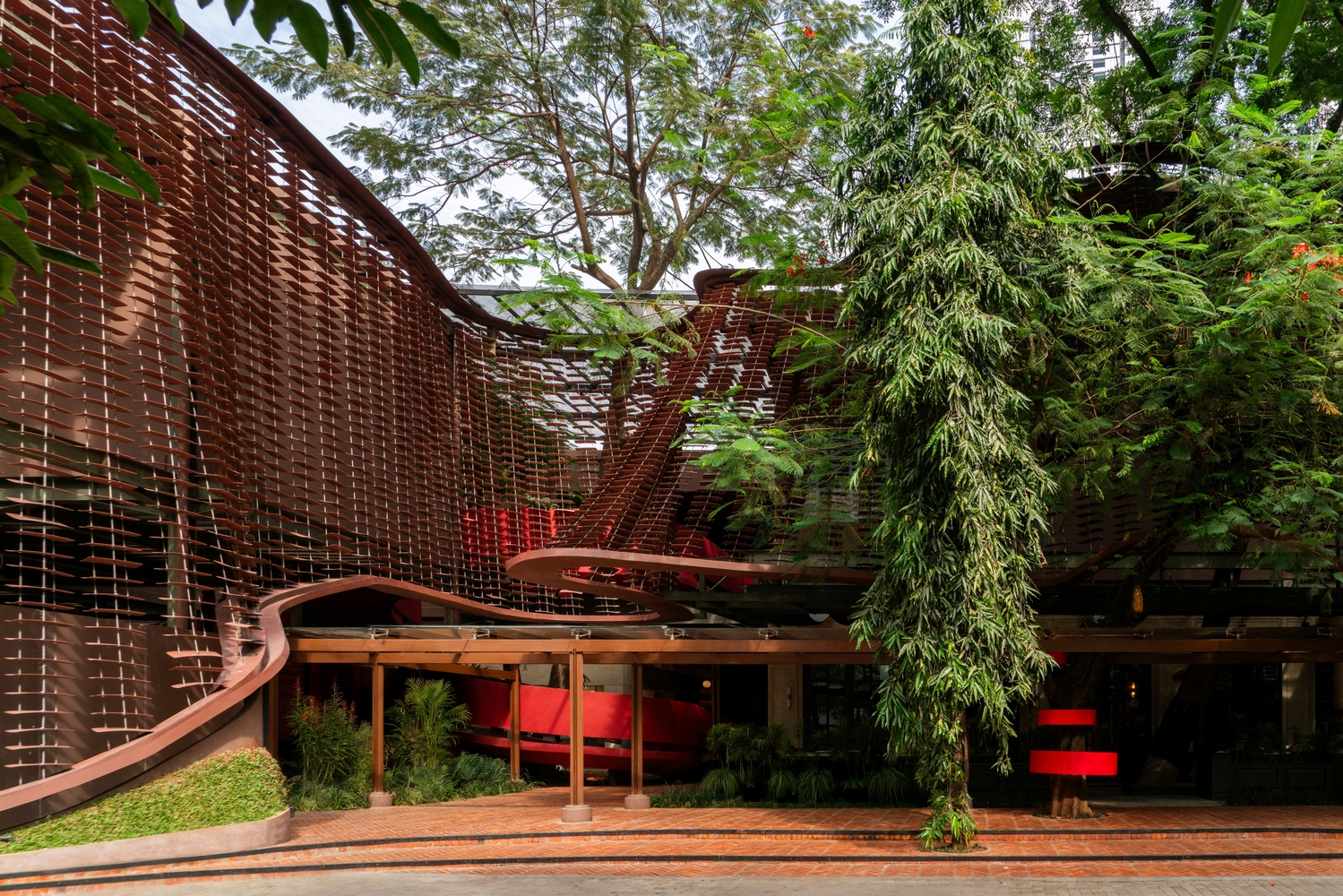
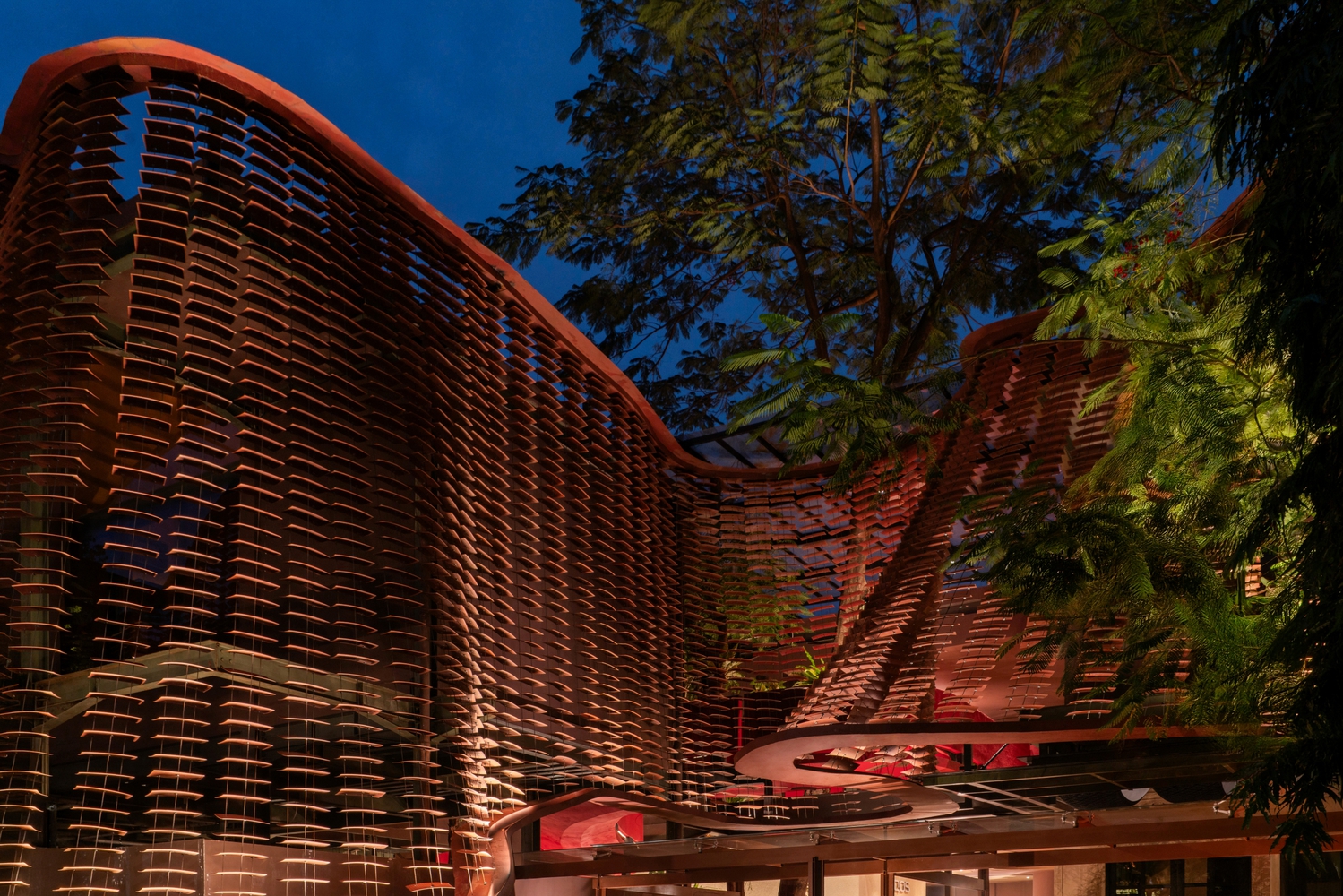
Refined by a tensioned cable geometry, the recycled plastic elements create an undulating form that dances among the trees.
This wrapping lattice skin is parametrically derived to provide calculated solar protection, functioning as both a climate control mechanism and a symbol of responsive bioclimatic architecture.
Sourced from 4,800 kg of SCBD's (Business Districts Area) weekly plastic output, this project generates 16,800 units of functional architectural Lattice Plates.
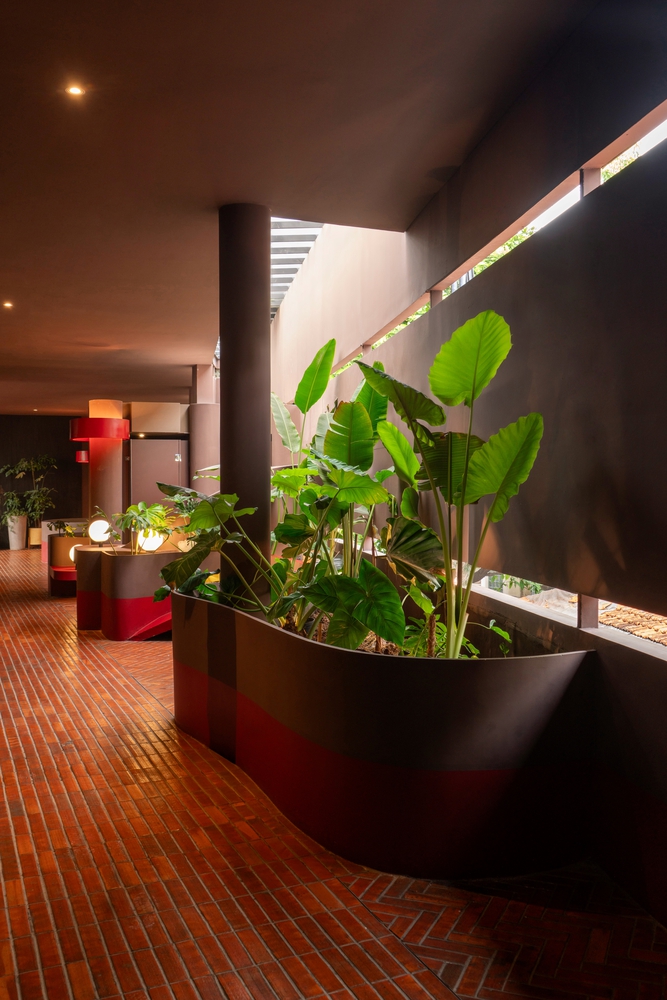
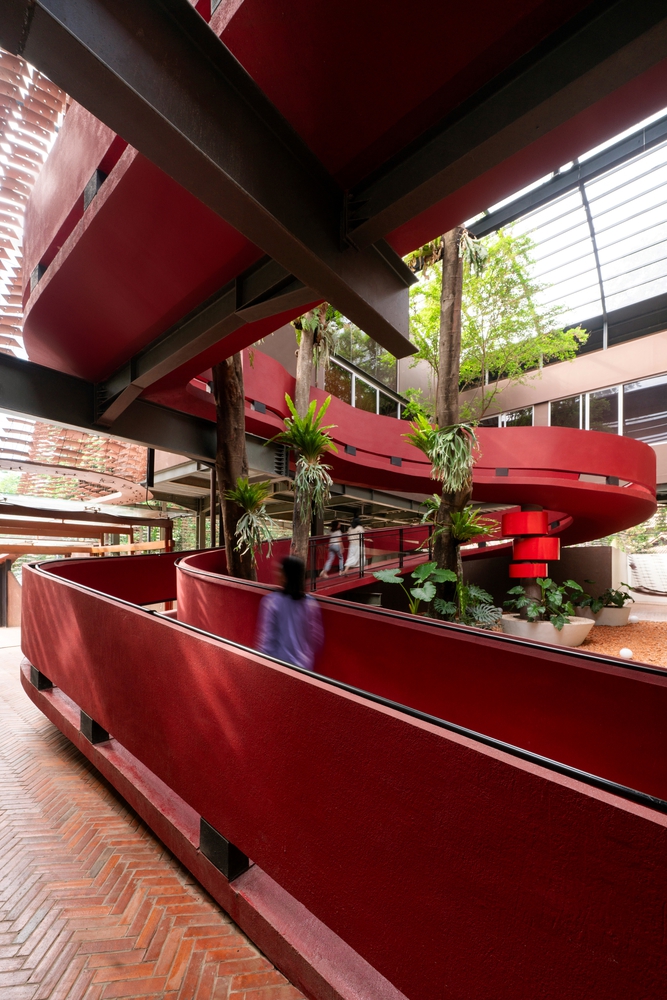
By integrating this recycled material system into a prominent site of Jakarta, the structure stands as a testament to waste management issues, reminding the public and policymakers of the 7 million tons of plastic untreated annually in Indonesia.
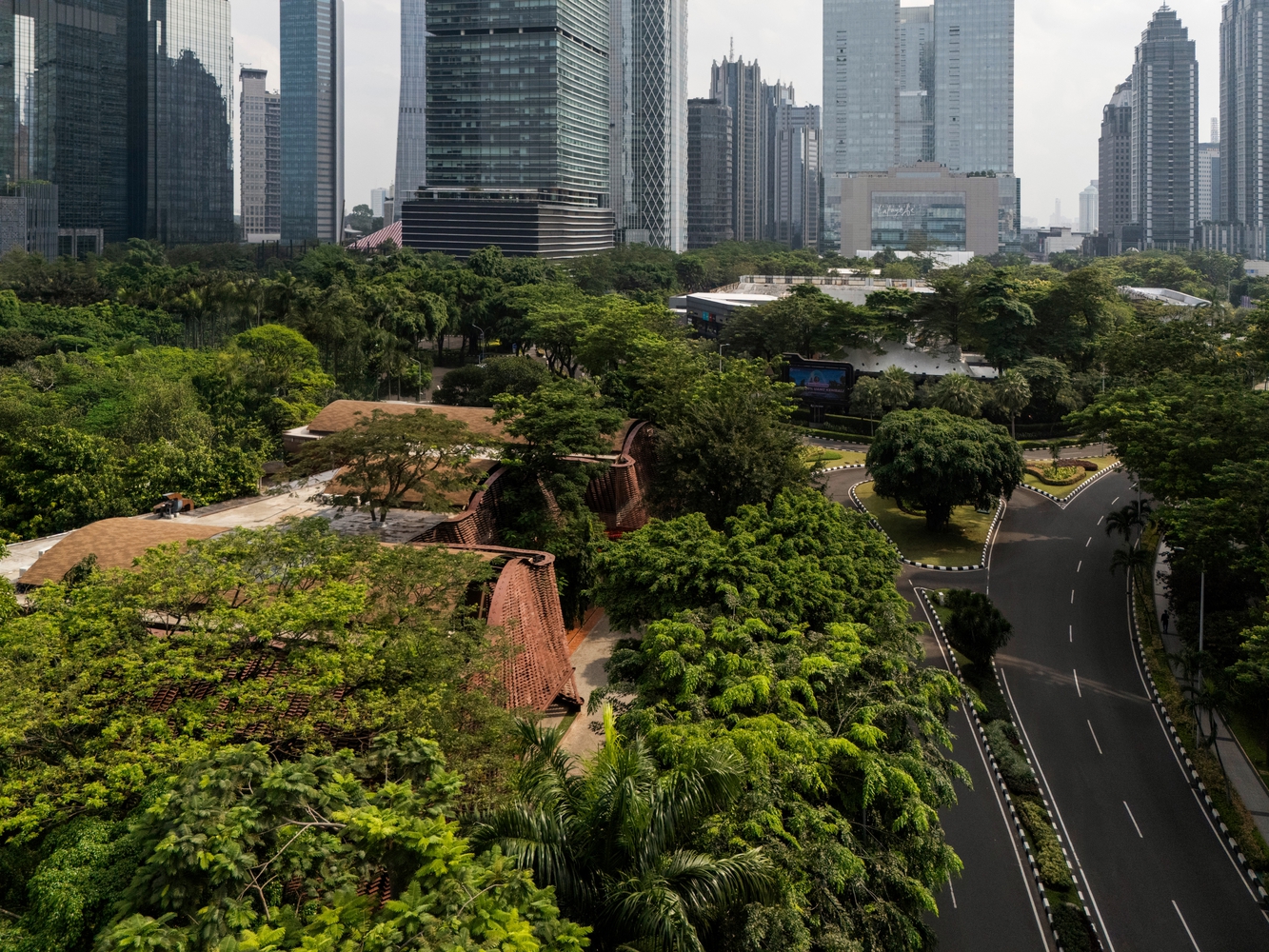
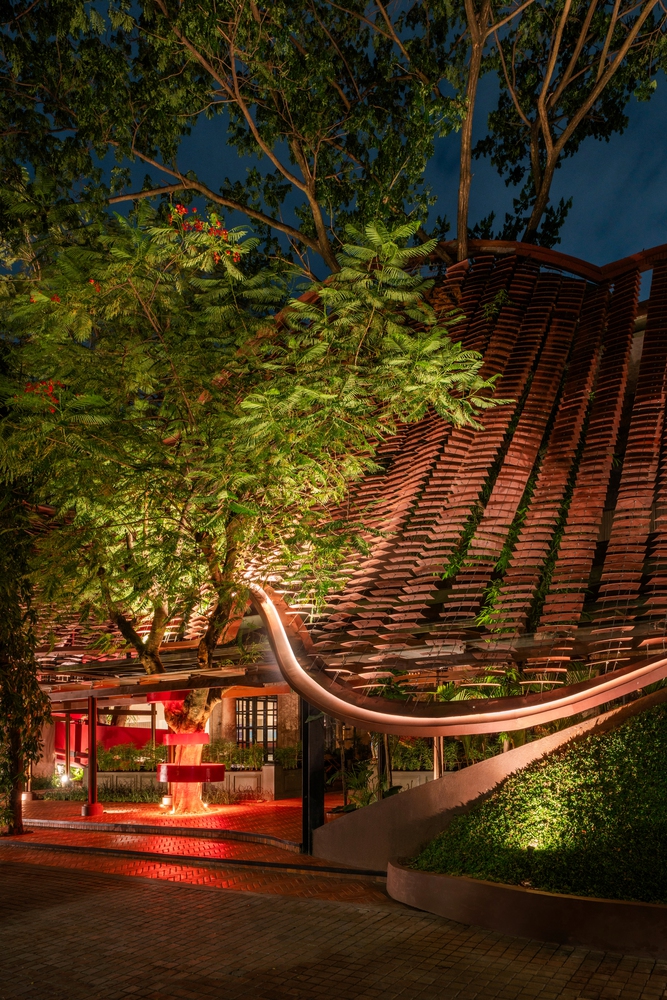
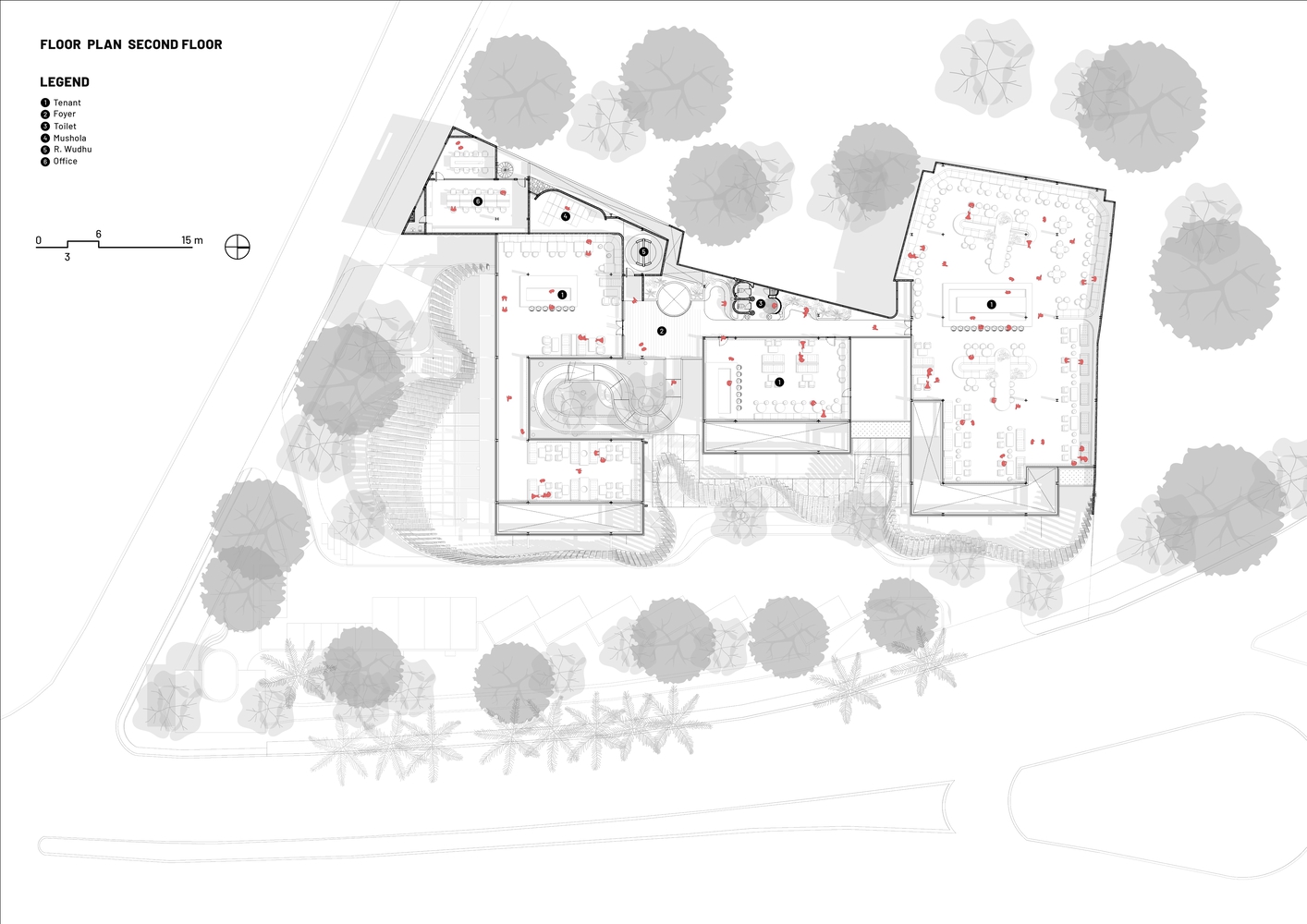
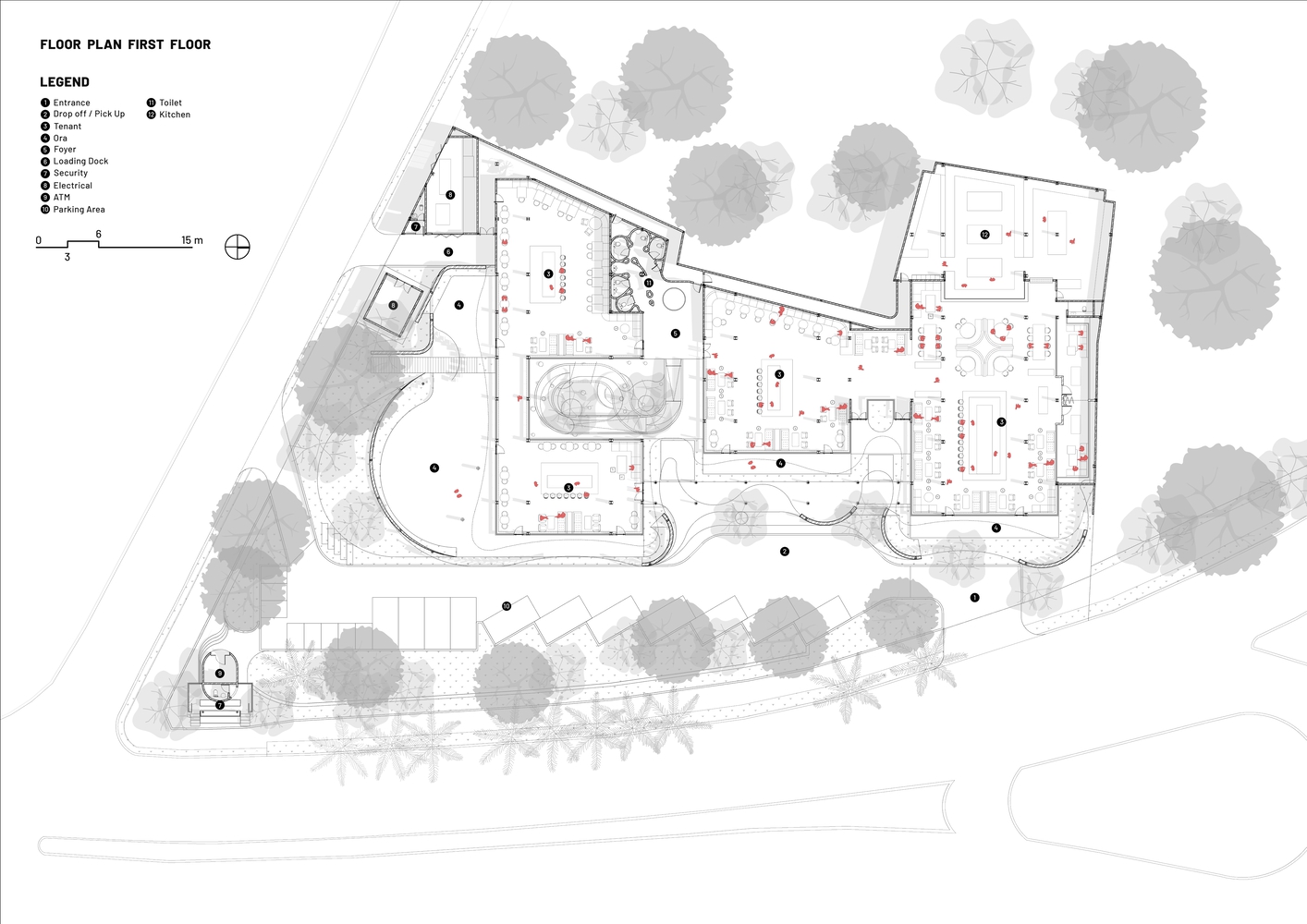
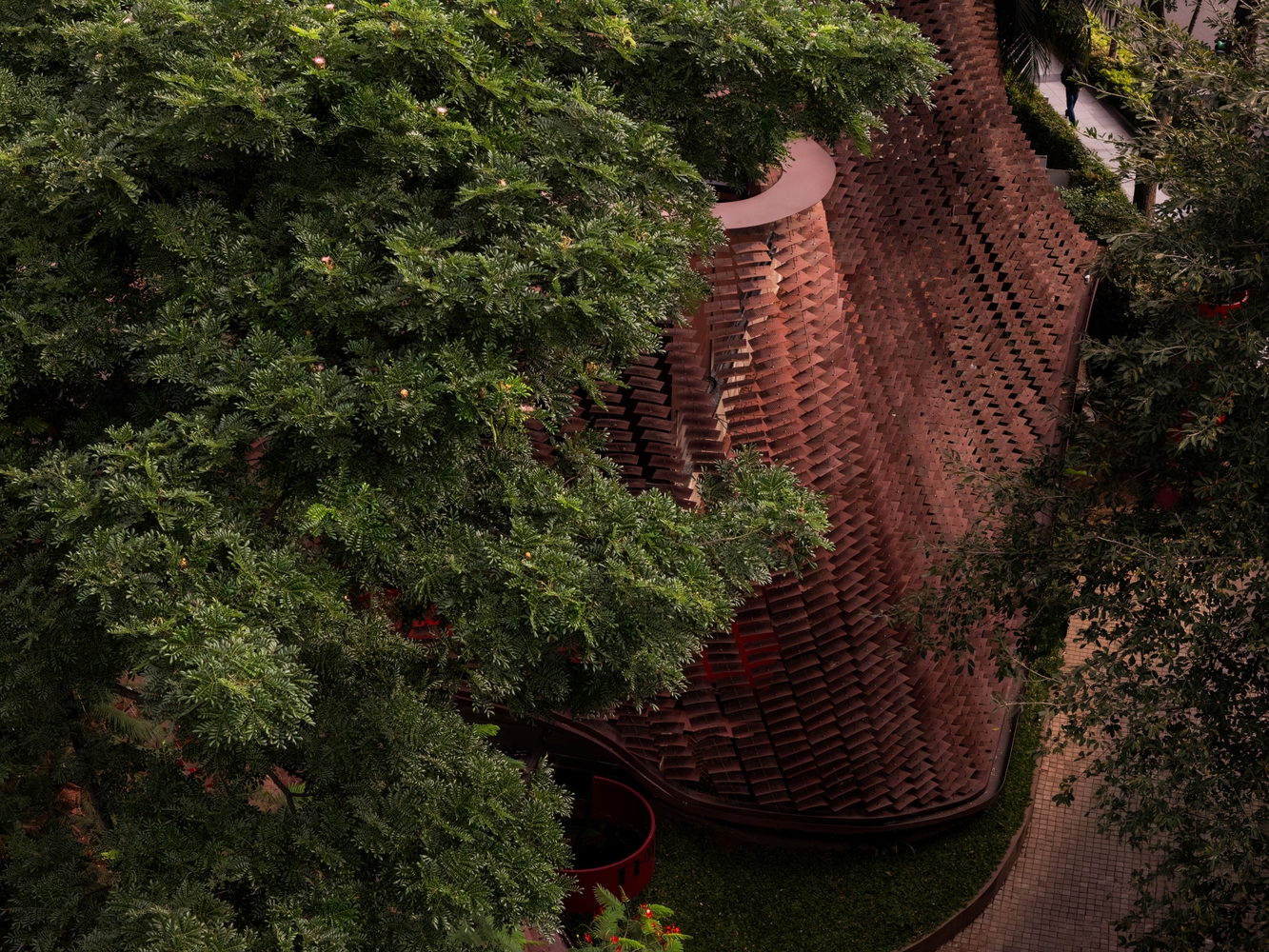
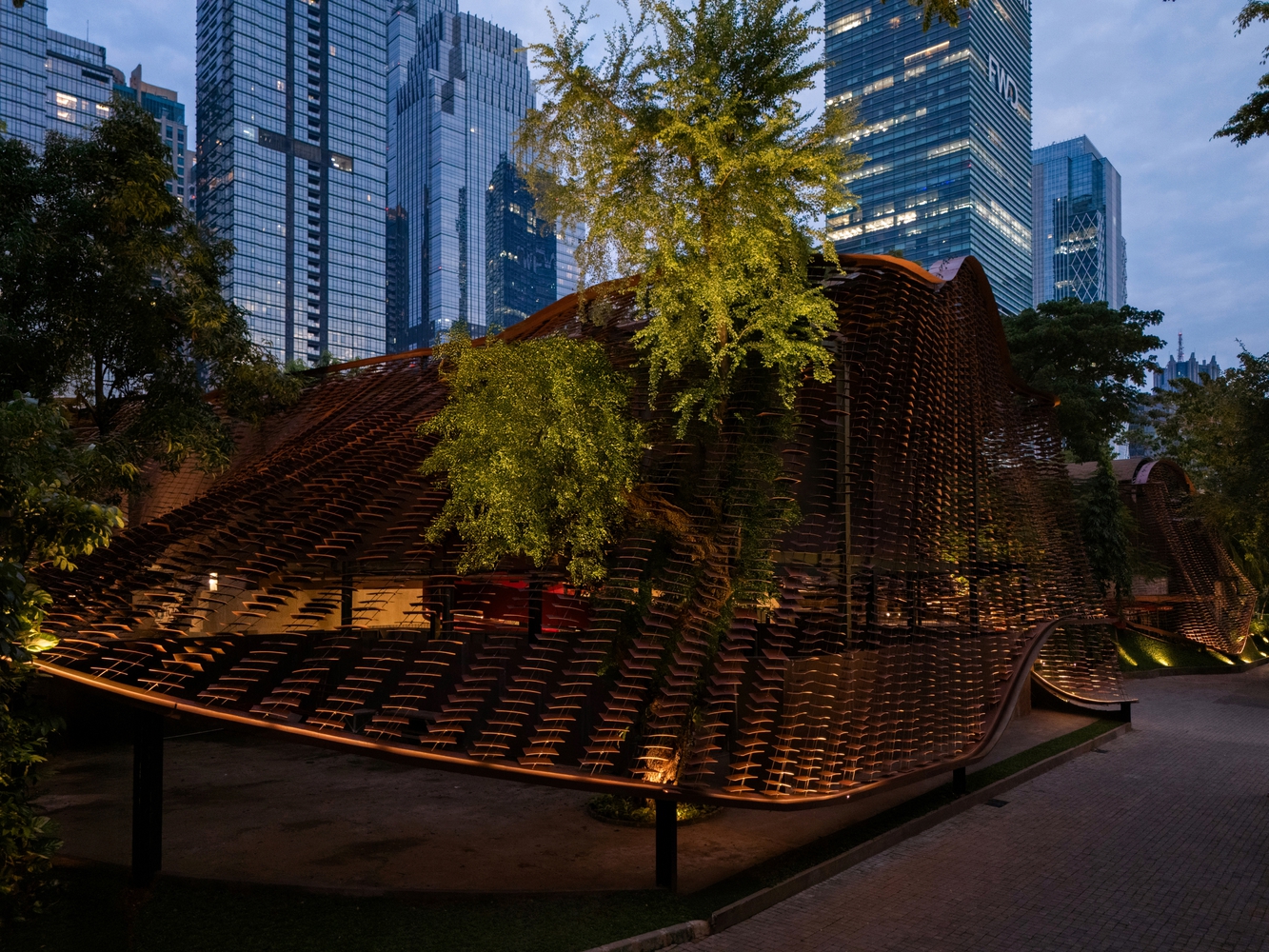
In a move to coexist with the site's ecology, the design maintains a minimal 40% ground cover, choreographing saleable areas and activity spaces to interweave with the existing 20-meter tall trees.
Rather than treating landscape as a supplement to architecture, the process was reverse-engineered: the massing was generated around the preserved tree zones.
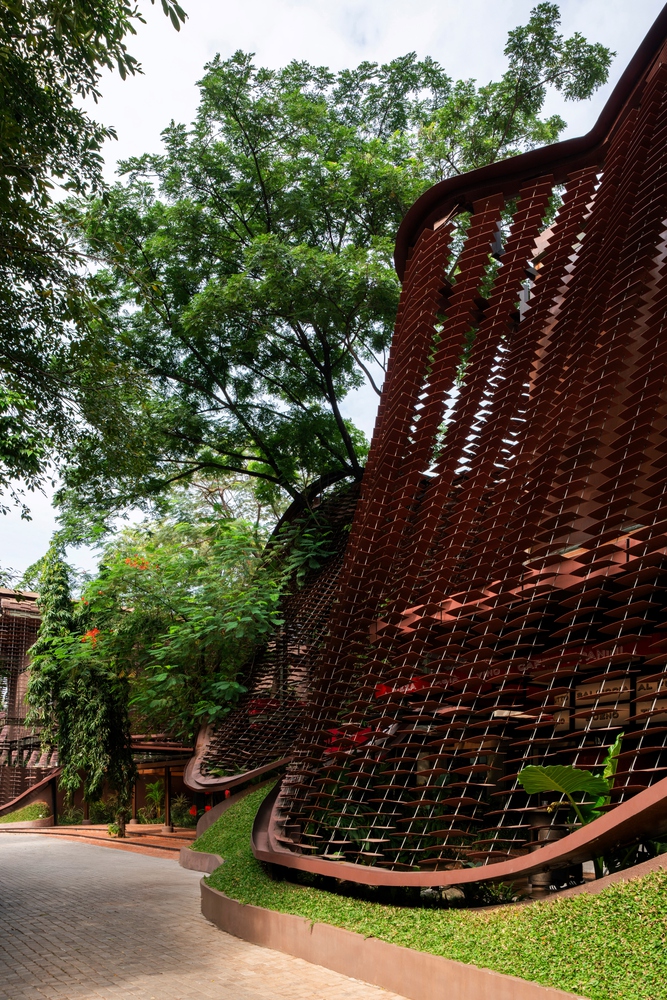
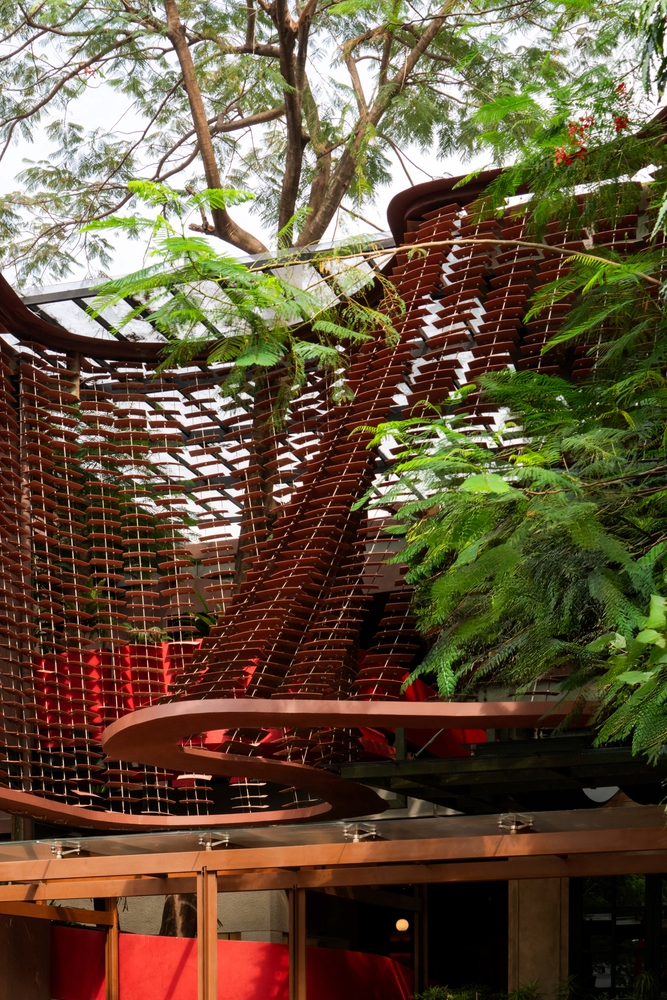
This creates a fluid dialogue between the parametric envelope and nature, connected by porous terraces that allow the trees to thrive while optimizing the functional area.
The resulting massing maximizes leasable efficiency through a series of transitional outdoor terraces that bridge the parametric facade with the trees, accommodating arboreal growth while retaining commercial value."
Lattice Garden is one of the architect's prototypes on tenant behavior and energy stewardship. In a landscape driven by high property values, it reclaims the passive design agenda.
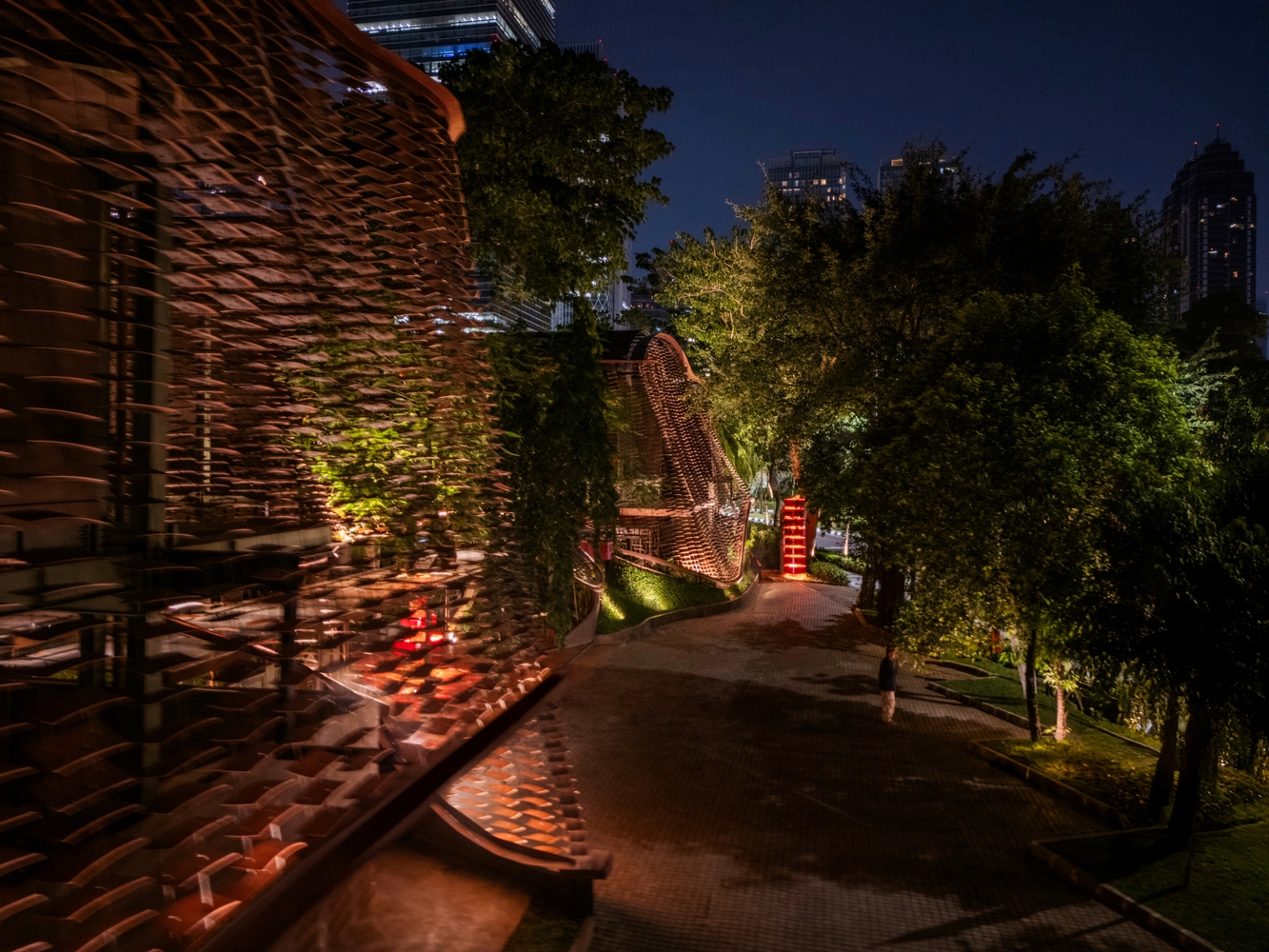
The architecture engages in a dialogue with the thriving trees to construct an extreme shading system.
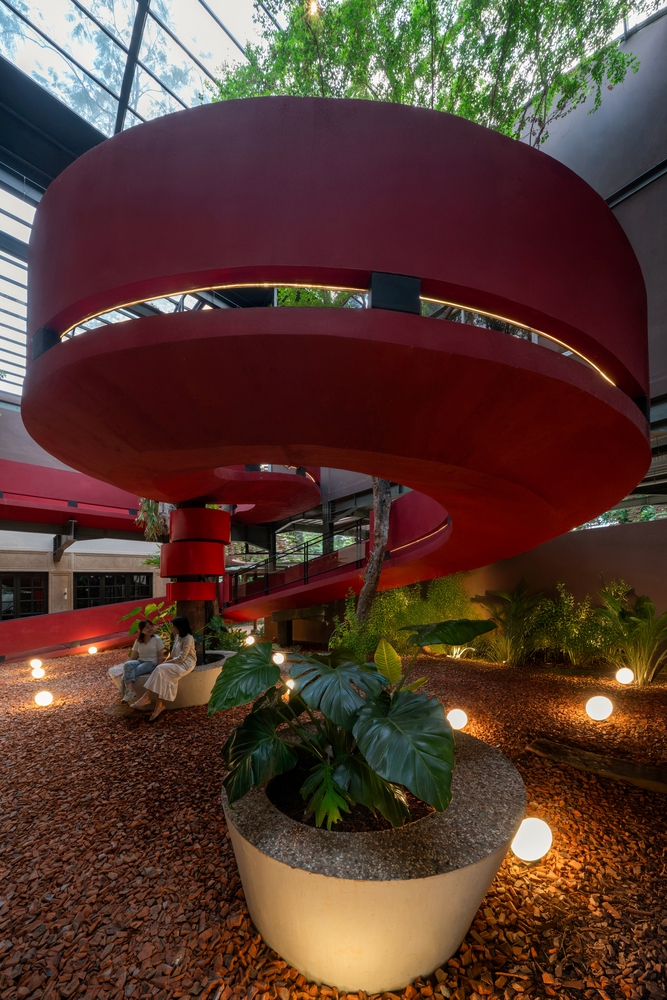
By decoupling the facade to create breezeways and thermal chimneys, and replacing mechanical lifts with a meandering garden ramp, the design challenges the standard typology of vertical circulation.
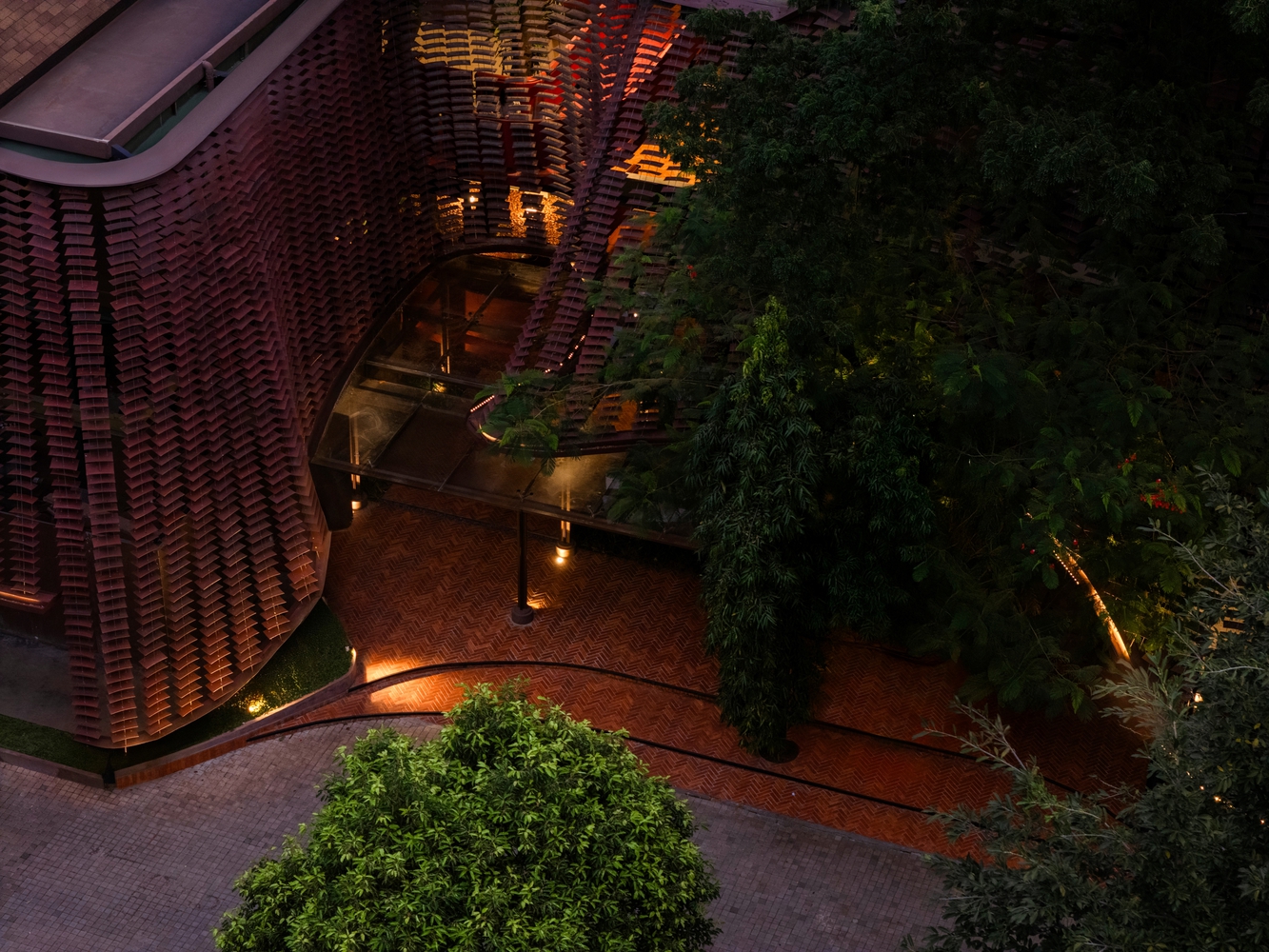
The result is a significant reduction in air conditioning and elevator dependency. It stands as a beacon of possibility, illustrating that in a developing economy, environmental responsiveness need not be sacrificed for economic gain.