Kalam By Paddy House
KALAM BY PADDY HOUSE
Episode Architects
ARCHITECTS
Episode Architects
GENERAL CONTRACTOR
Concrete Factory
TECHNICAL TEAM
Vignesh Ts
MANUFACTURERS
Ruhe
PHOTOGRAPHS
Abhimanyu KV
AREA
1000 ft²
YEAR
2025
LOCATION
Kerala, India
CATEGORY
Houses, Refurbishment
English description provided by the architects.
For 20 years, this building stood abandoned — a silent reminder of forgotten spaces and wasted potential.
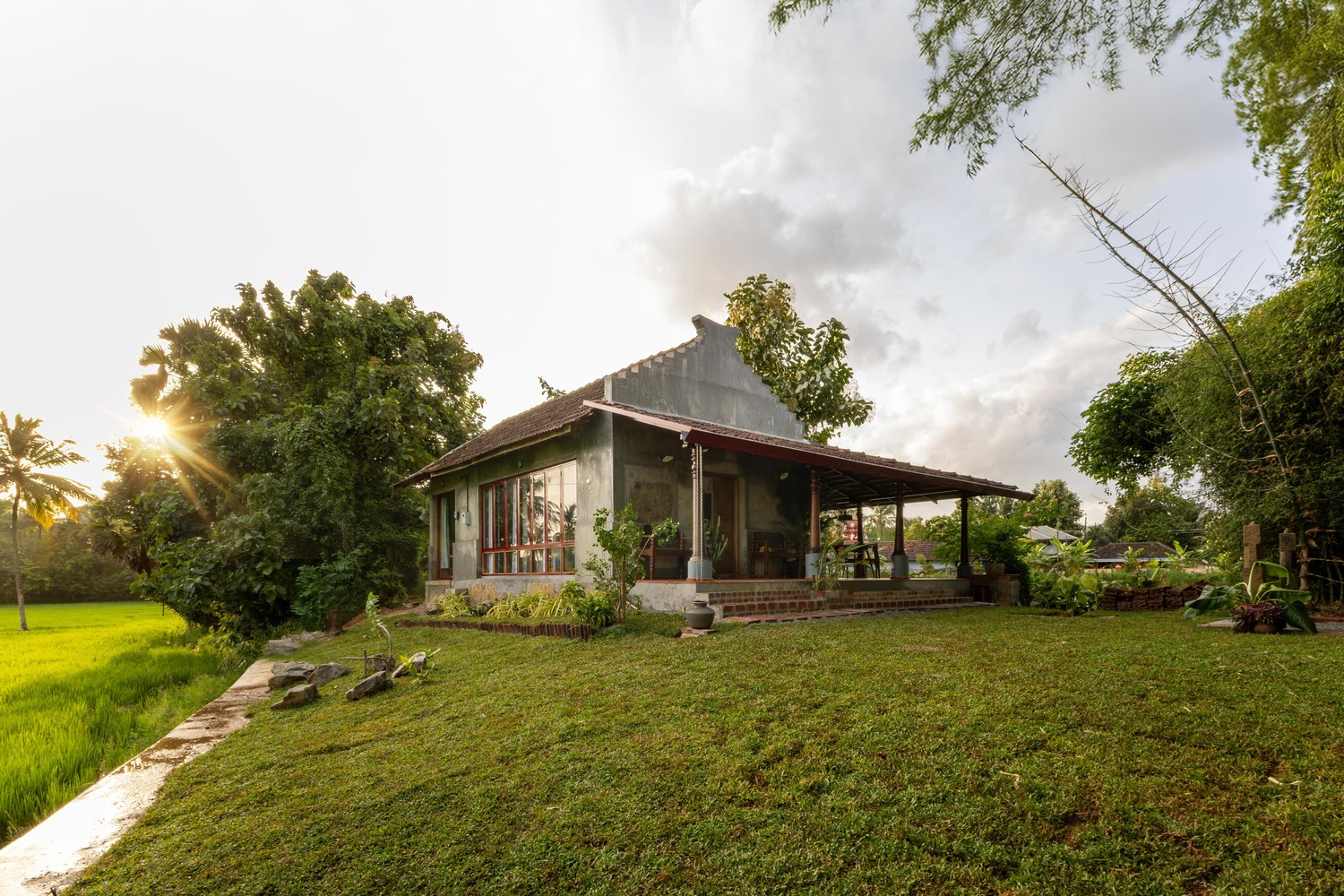
Yet every abandoned structure carries hidden stories waiting to be reimagined. A century-old granary, left unused for decades, has now been thoughtfully transformed into a boutique farmhouse through architectural ingenuity and carefully chosen materials.
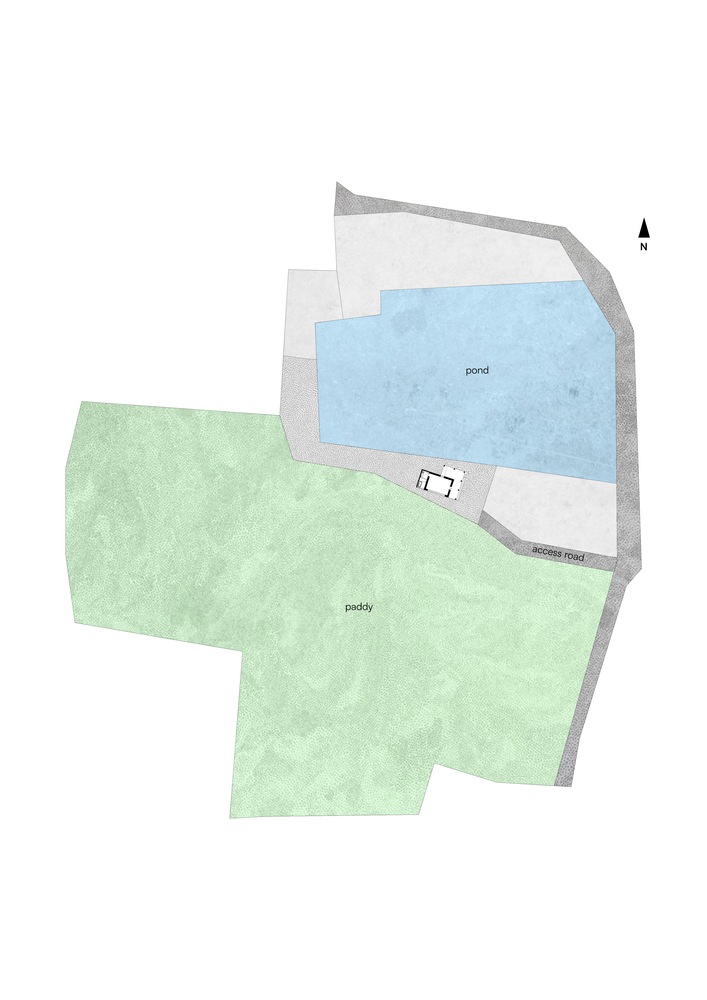
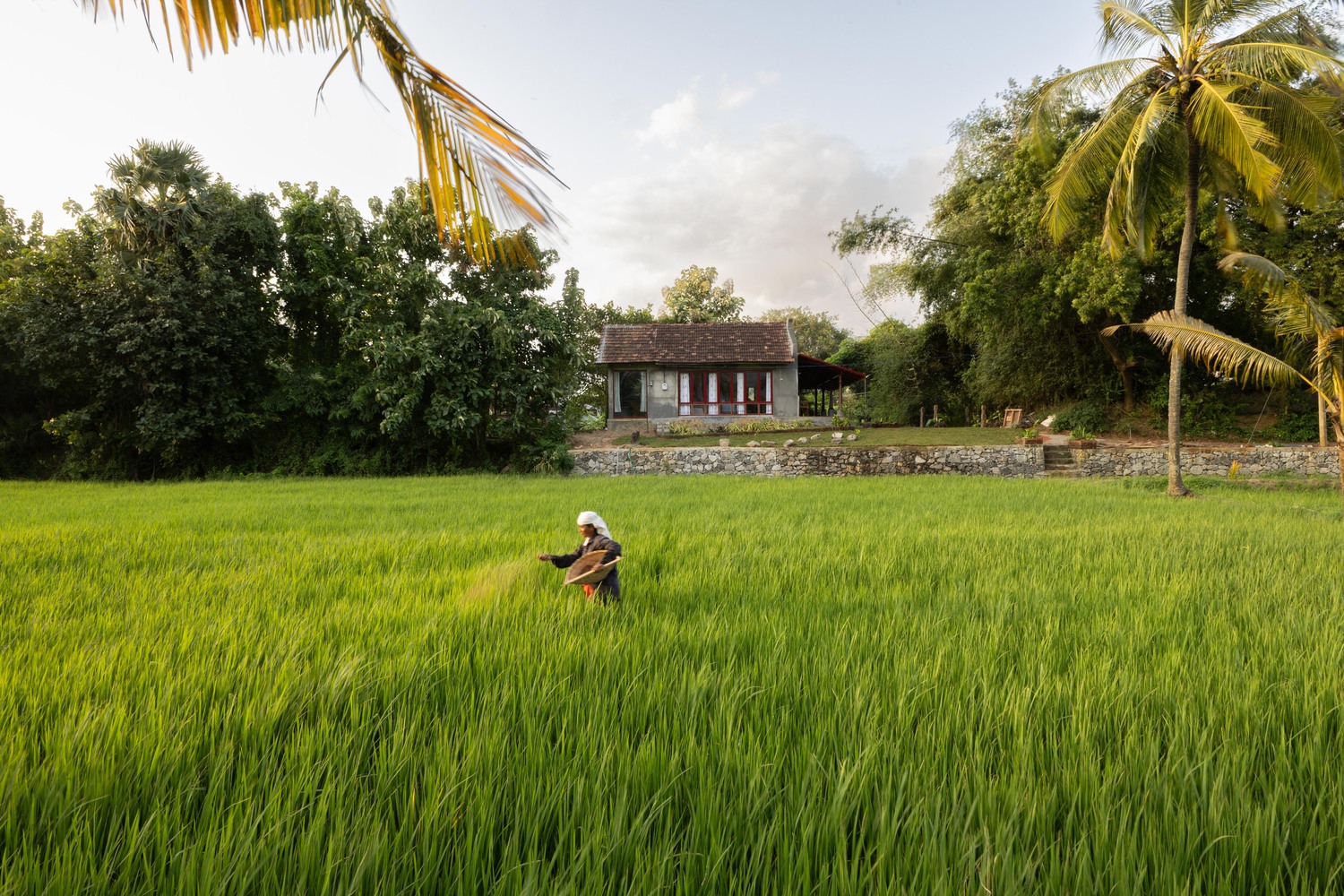
Set against the backdrop of the Western Ghats and nestled between lush paddy fields and a serene pond, Kalam embodies rustic charm and timeless beauty.
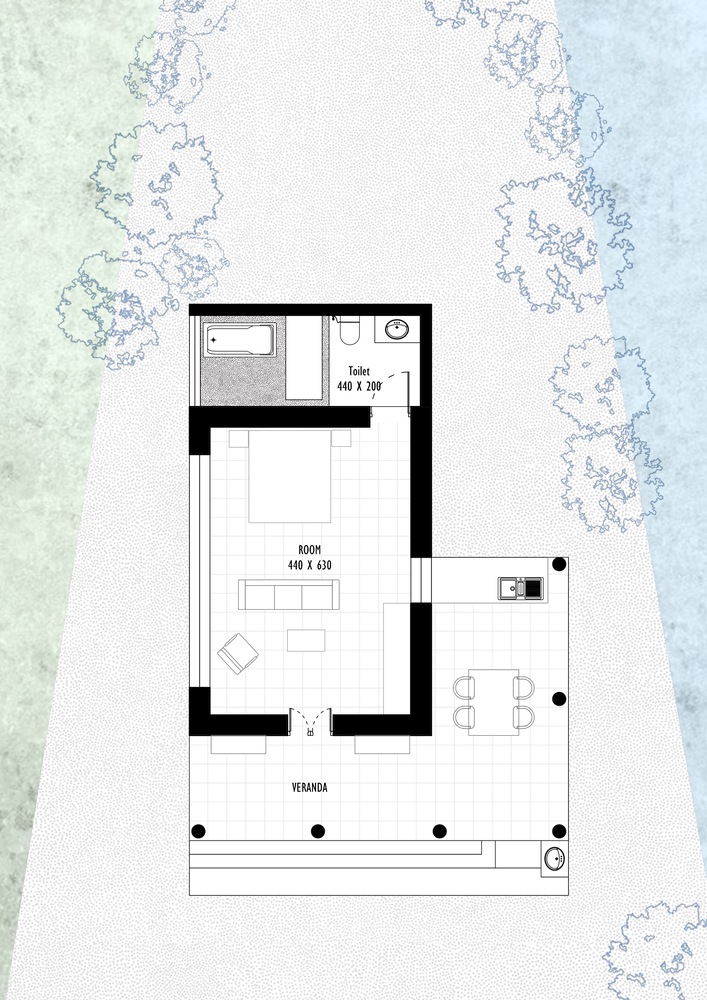
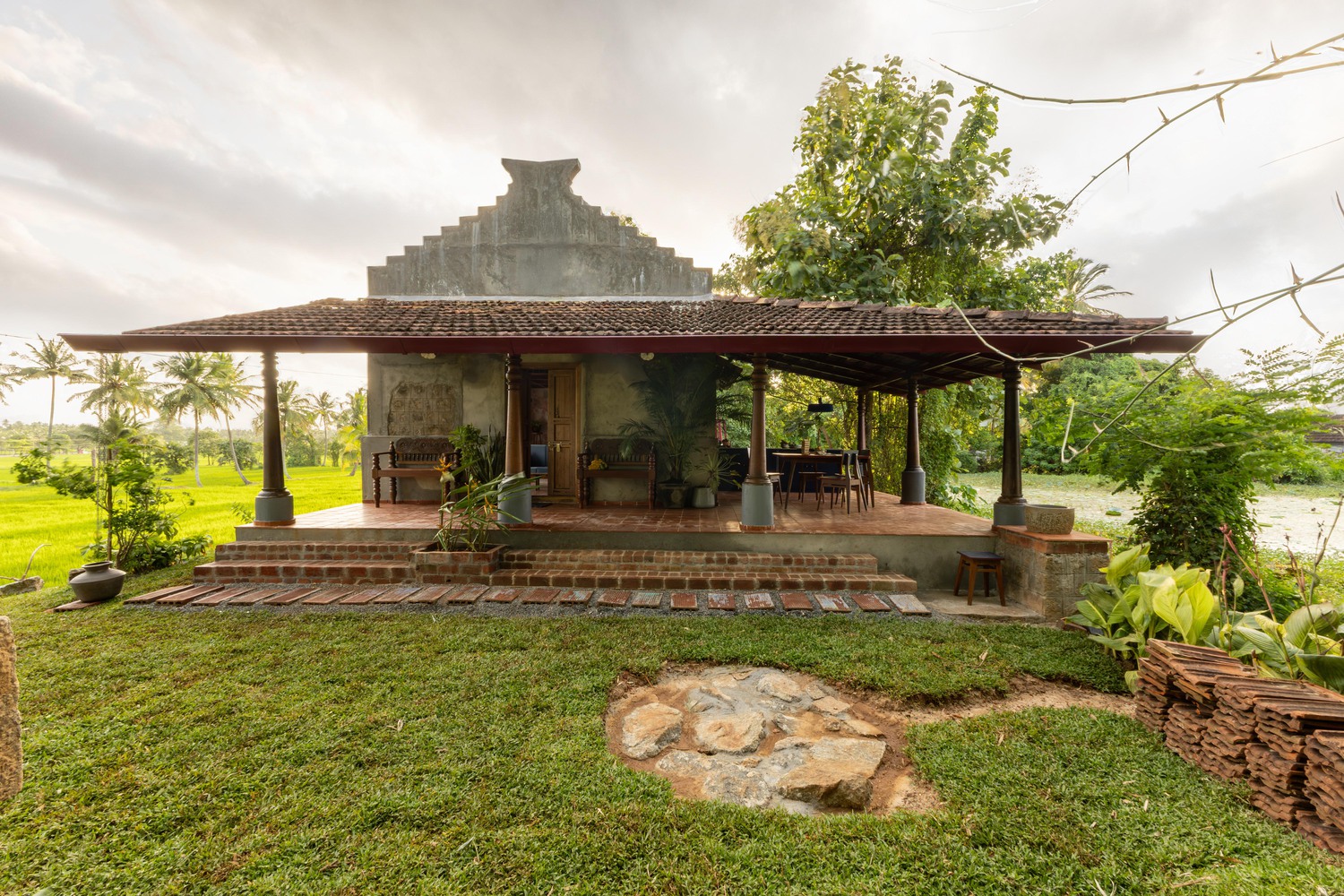
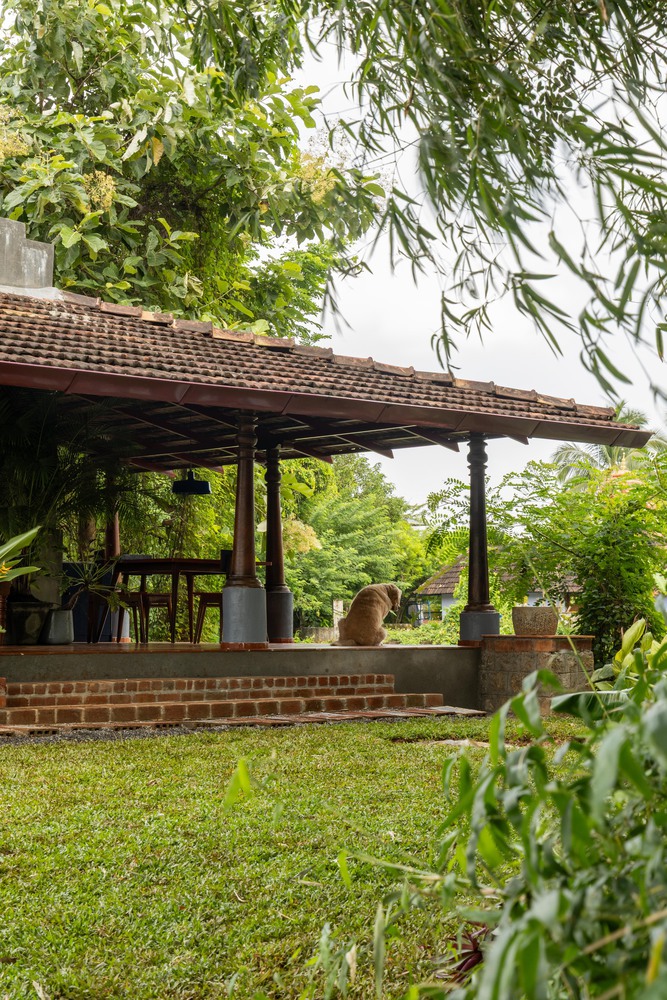
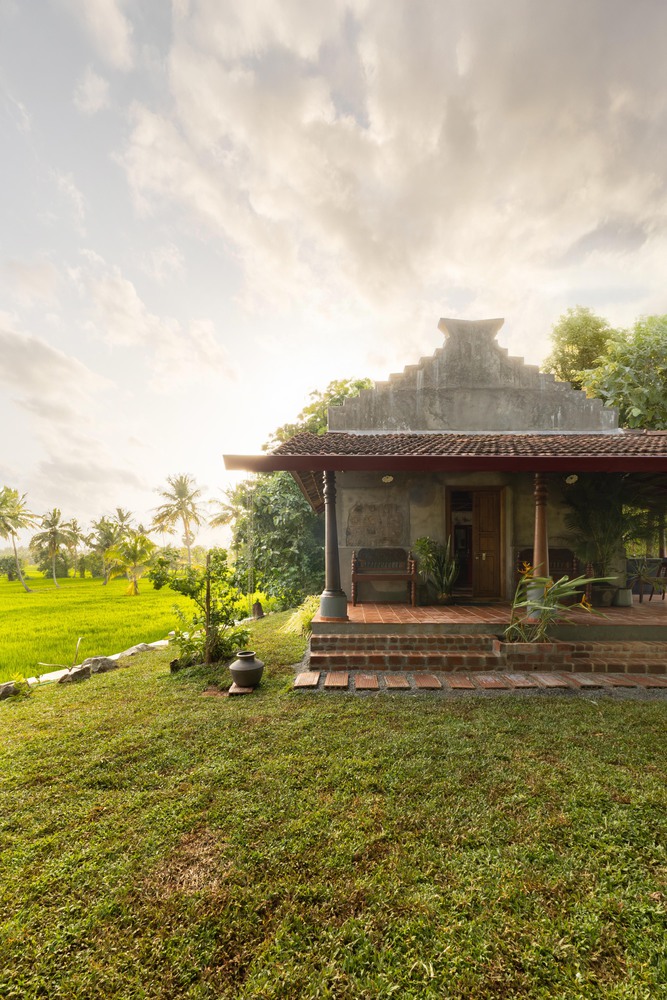
A veranda and bathroom have been added to the existing structure while preserving its original character.
Our vision was not to demolish and replace, but to revive — to transform what already existed into something purposeful, sustainable, culturally rooted, and community-driven.
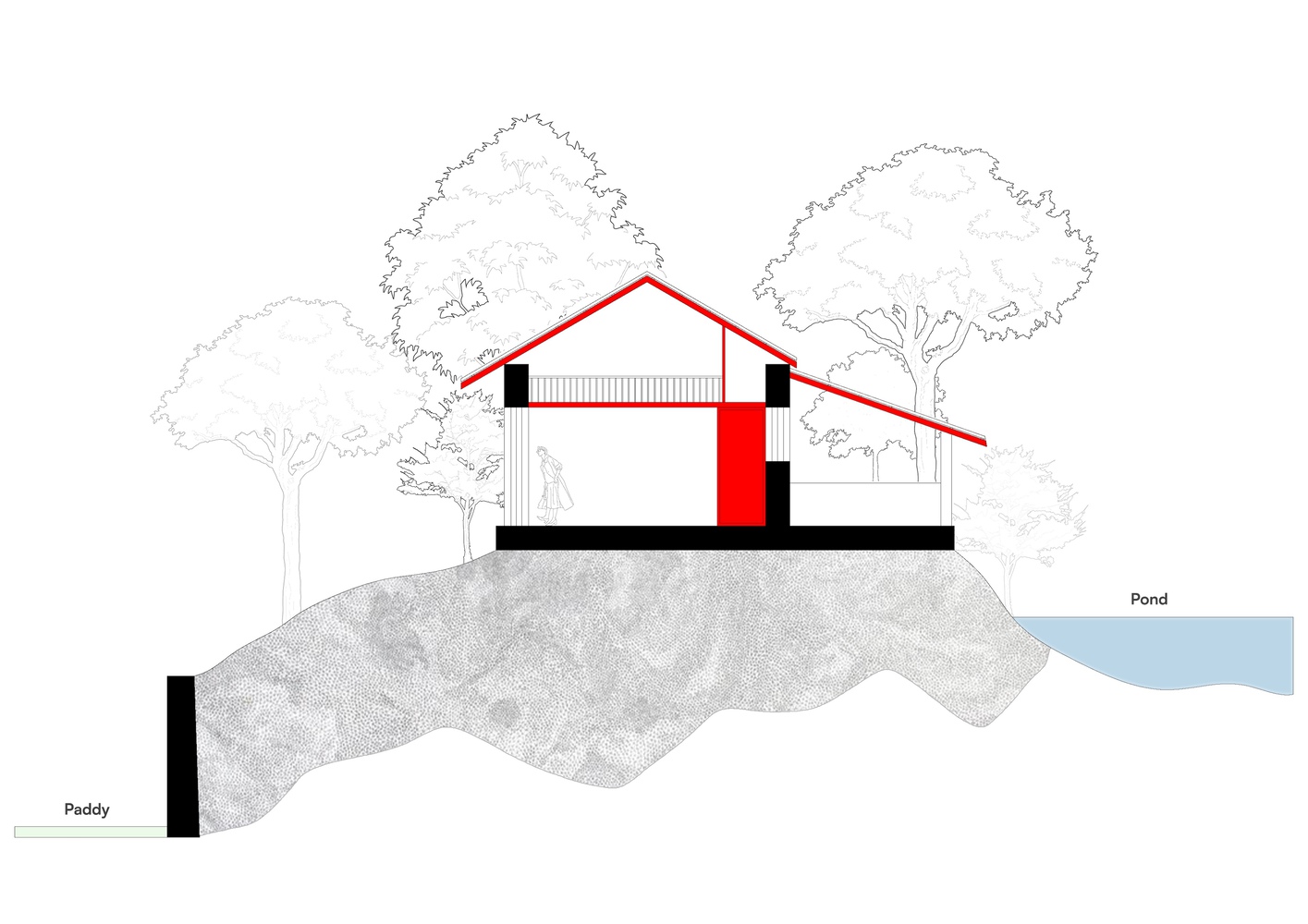
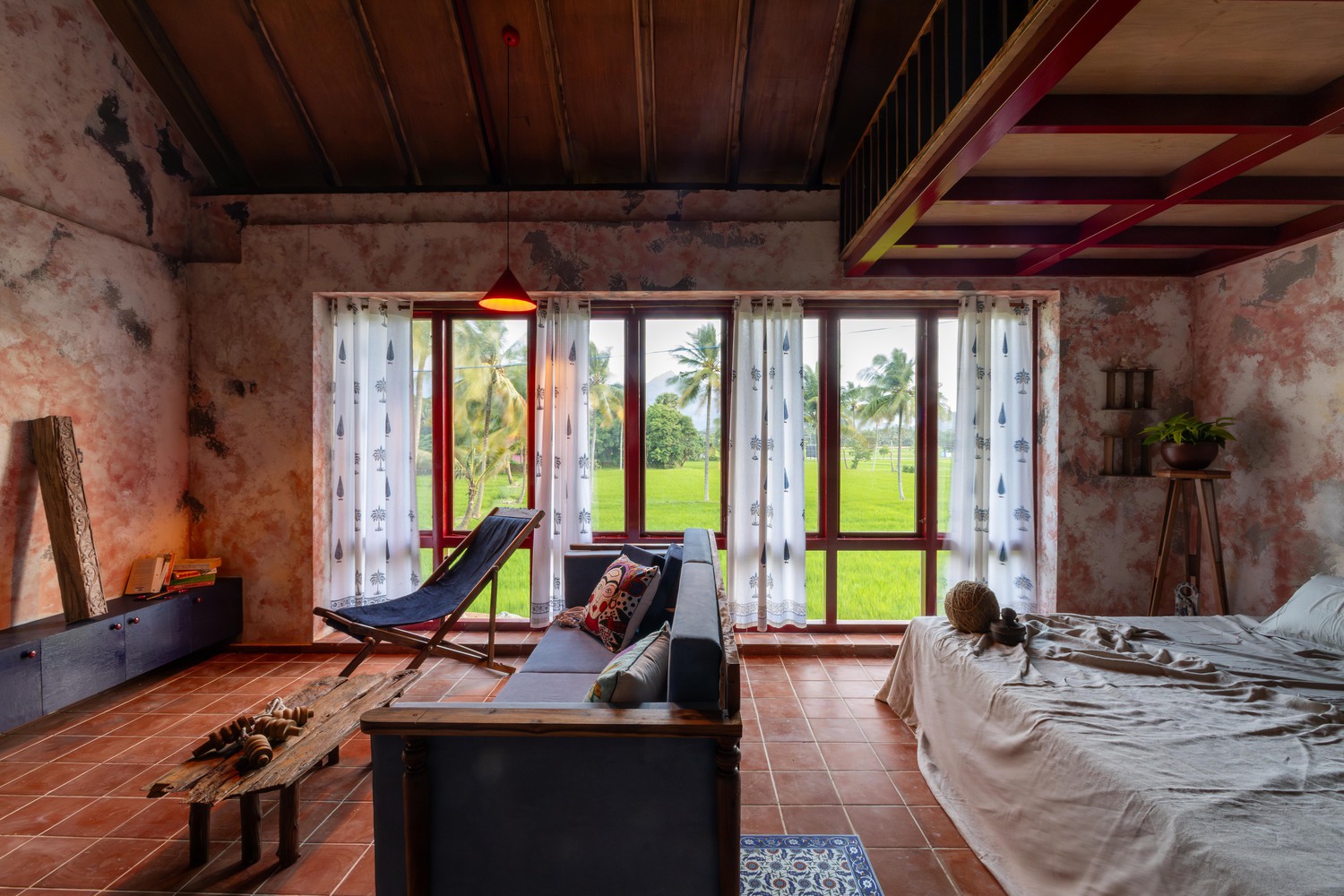
The spatial layout is designed to capture serene views of the paddy fields and the pond. Openings channel natural airflow, enabling comfortable cross-ventilation.
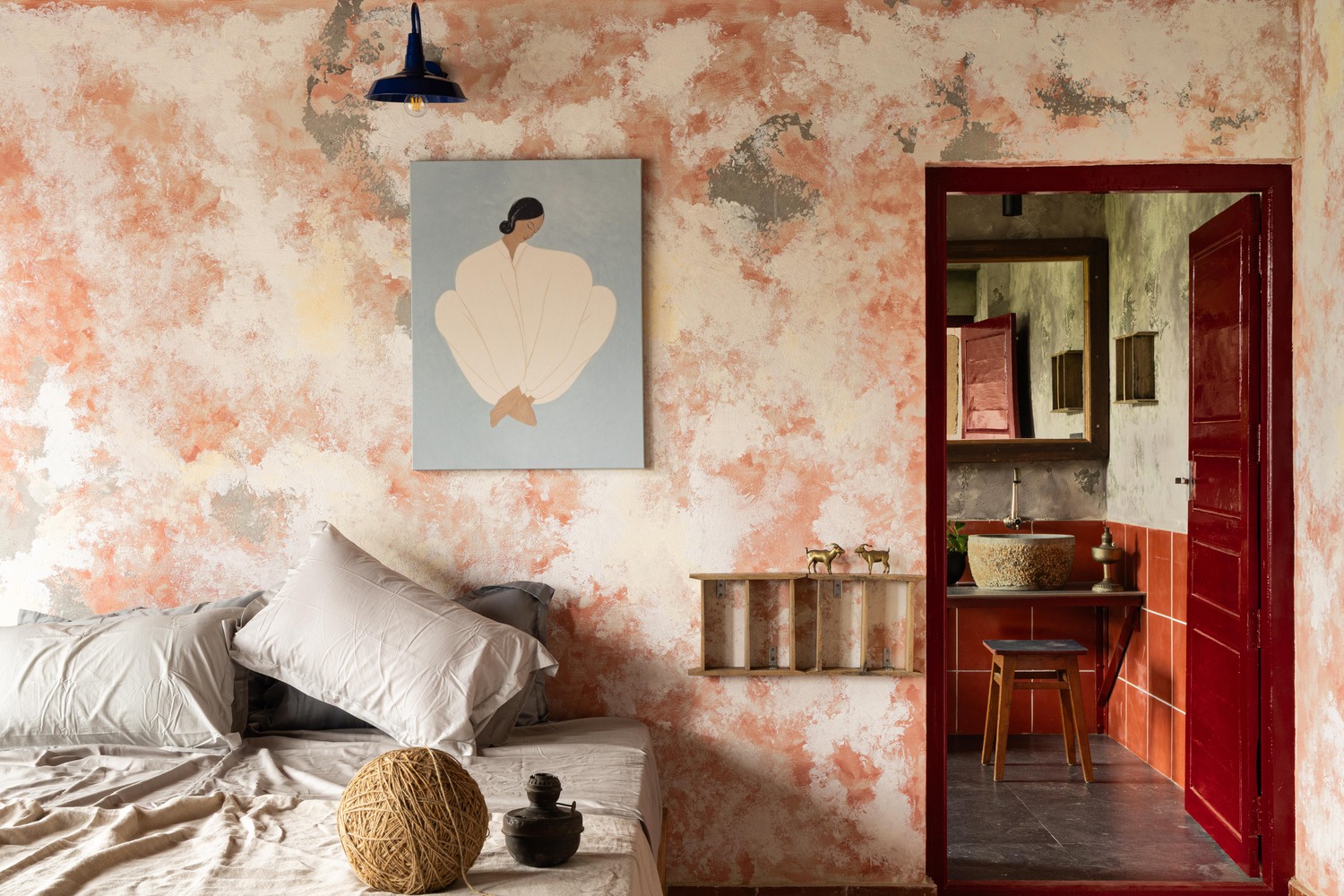
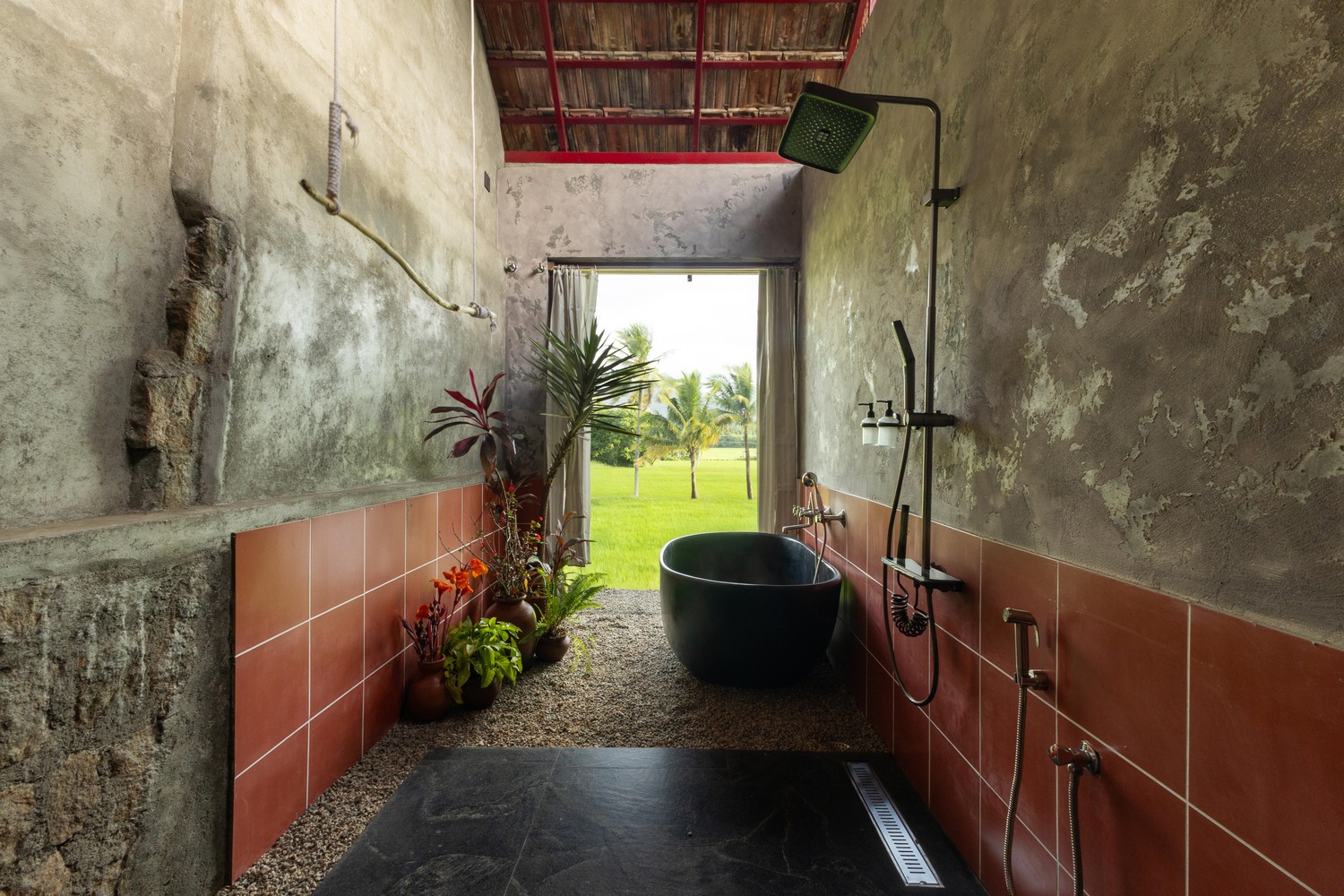
The bathroom frames picturesque paddy views, with a bathtub positioned to soak in the scenery. Every space has been crafted for comfort, while remaining adaptable to the rhythms of village life.
Existing greenery has been retained to provide natural cooling, blending the built environment seamlessly with the landscape.
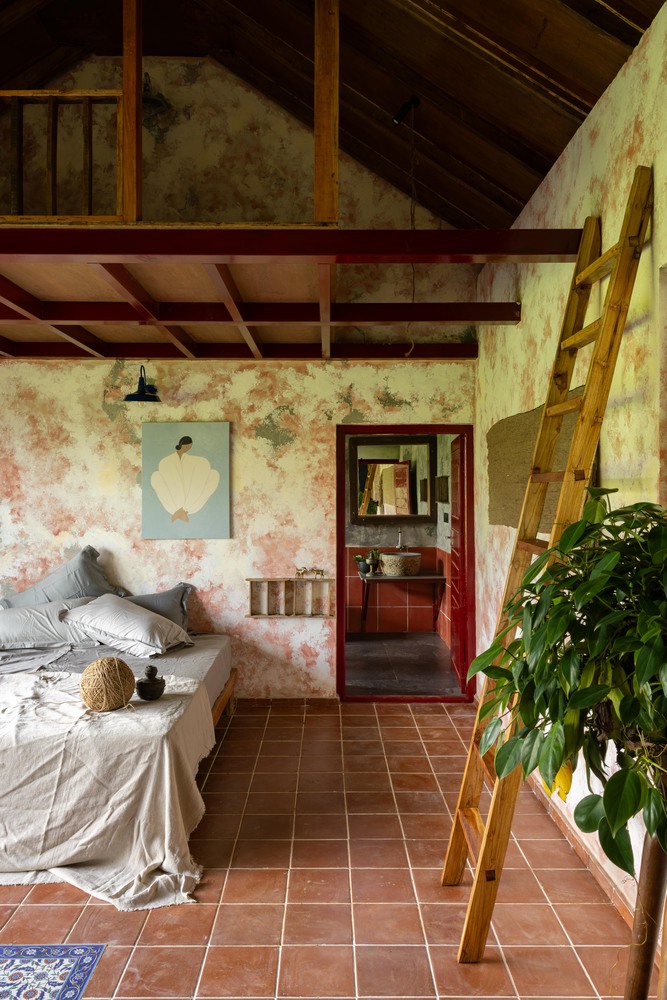
The exterior colors have been carefully selected to harmonize with nature. Some walls have been left untouched, with exposed concrete plaster retained to enhance this natural connection.
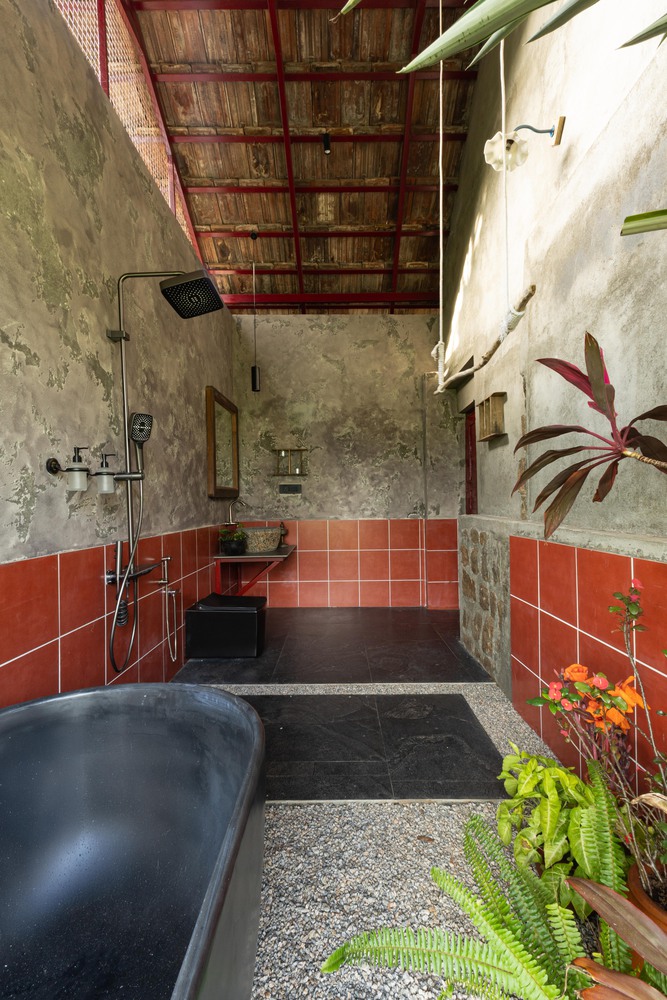
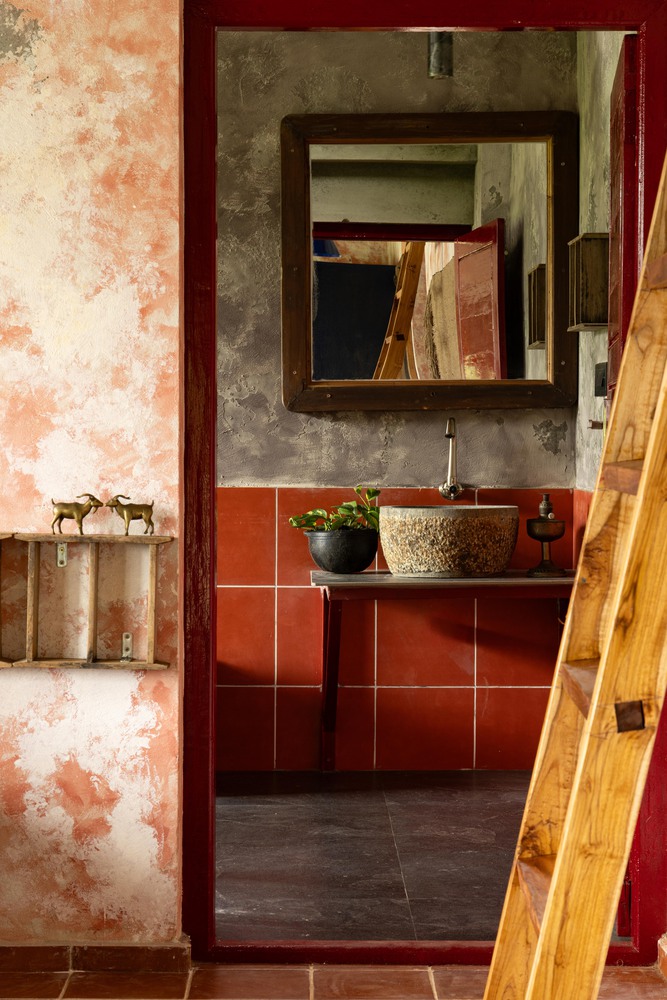
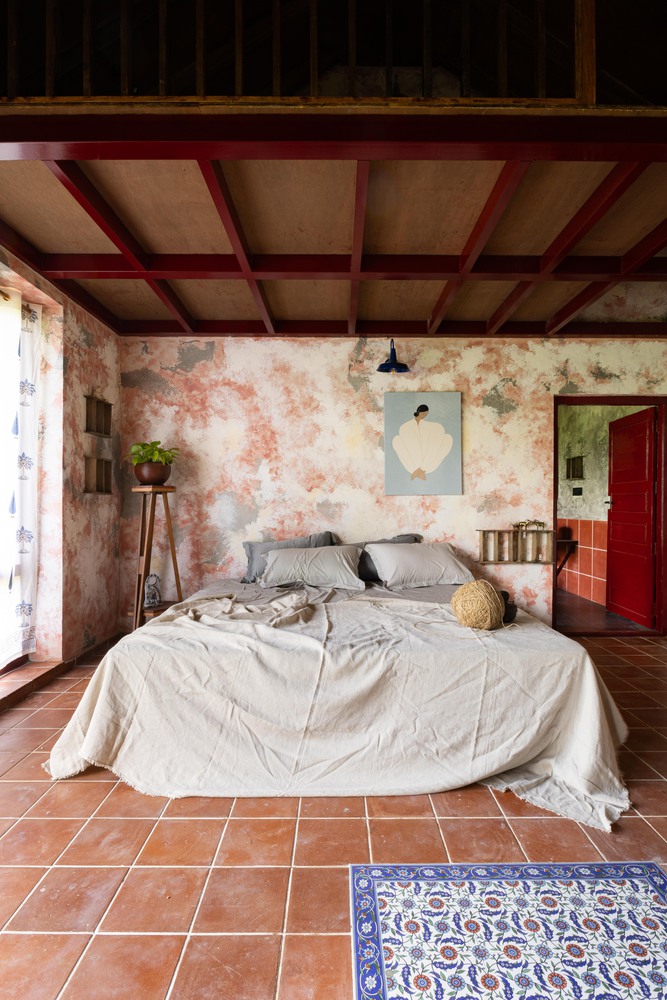
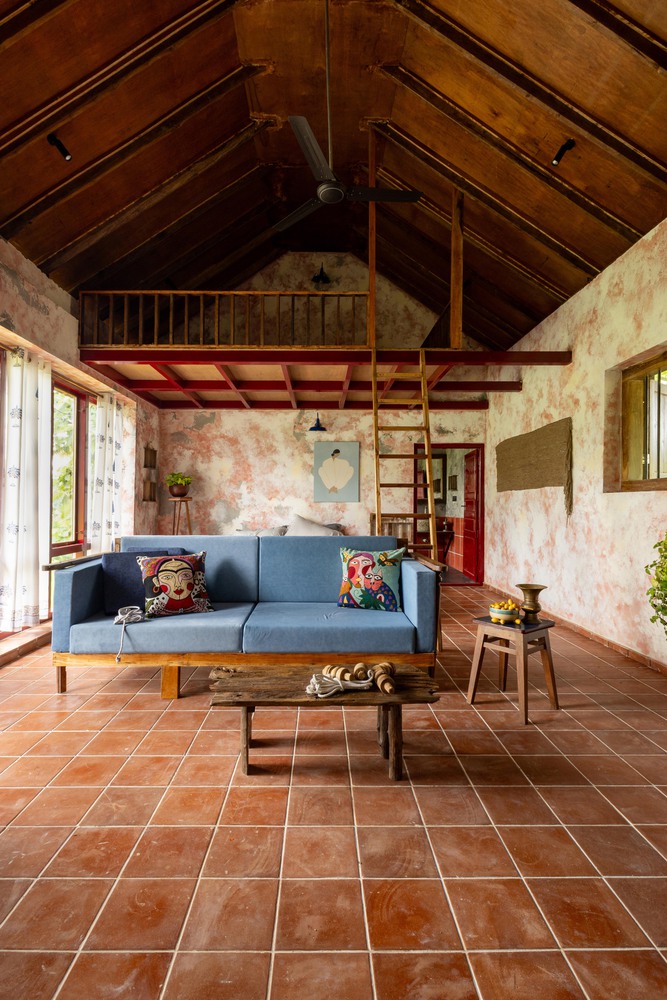
Inside, warm and cozy tones create a welcoming contrast for guests. The bathrooms feature rustic color palettes with subtle red accents that add depth and character.
A bathtub overlooking the fields and a screened opening at the top allow light and fresh air to flow in naturally.
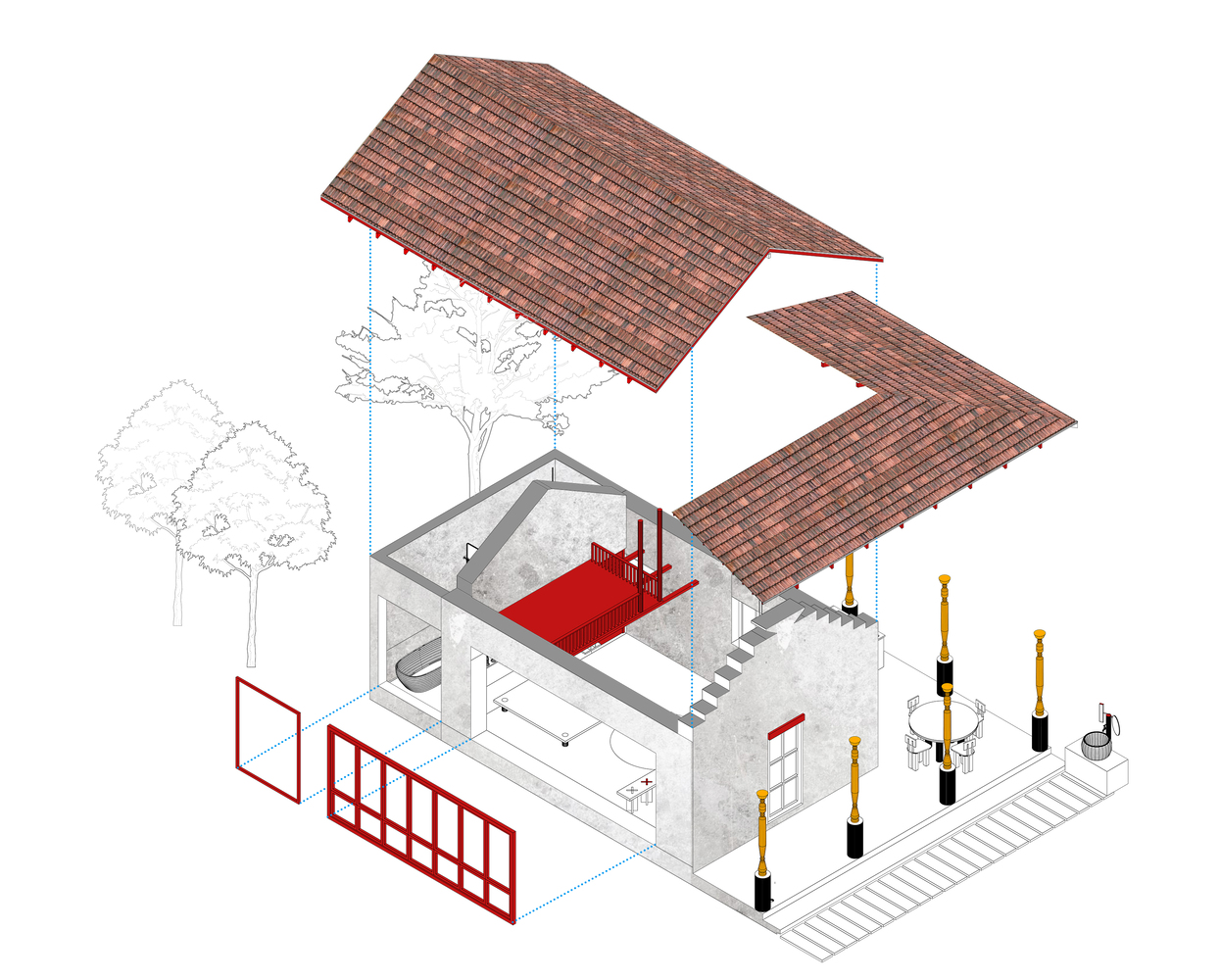
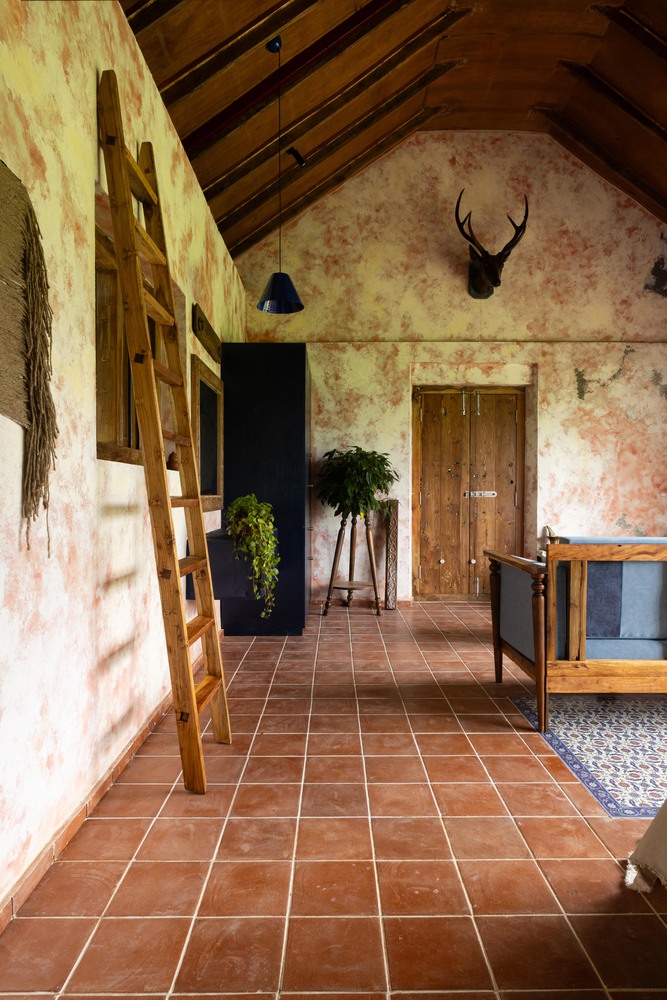
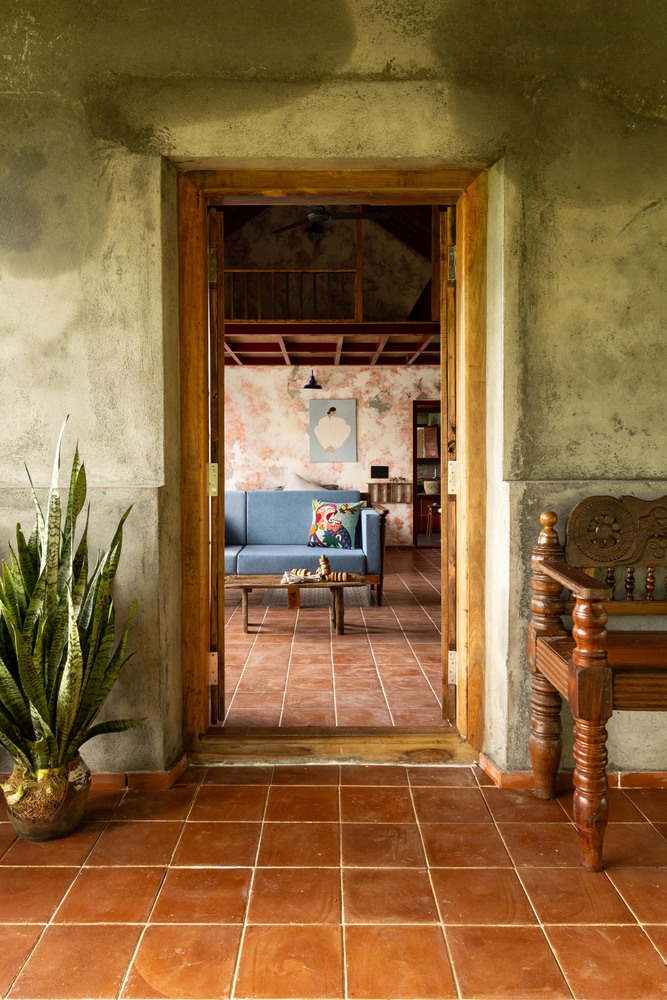
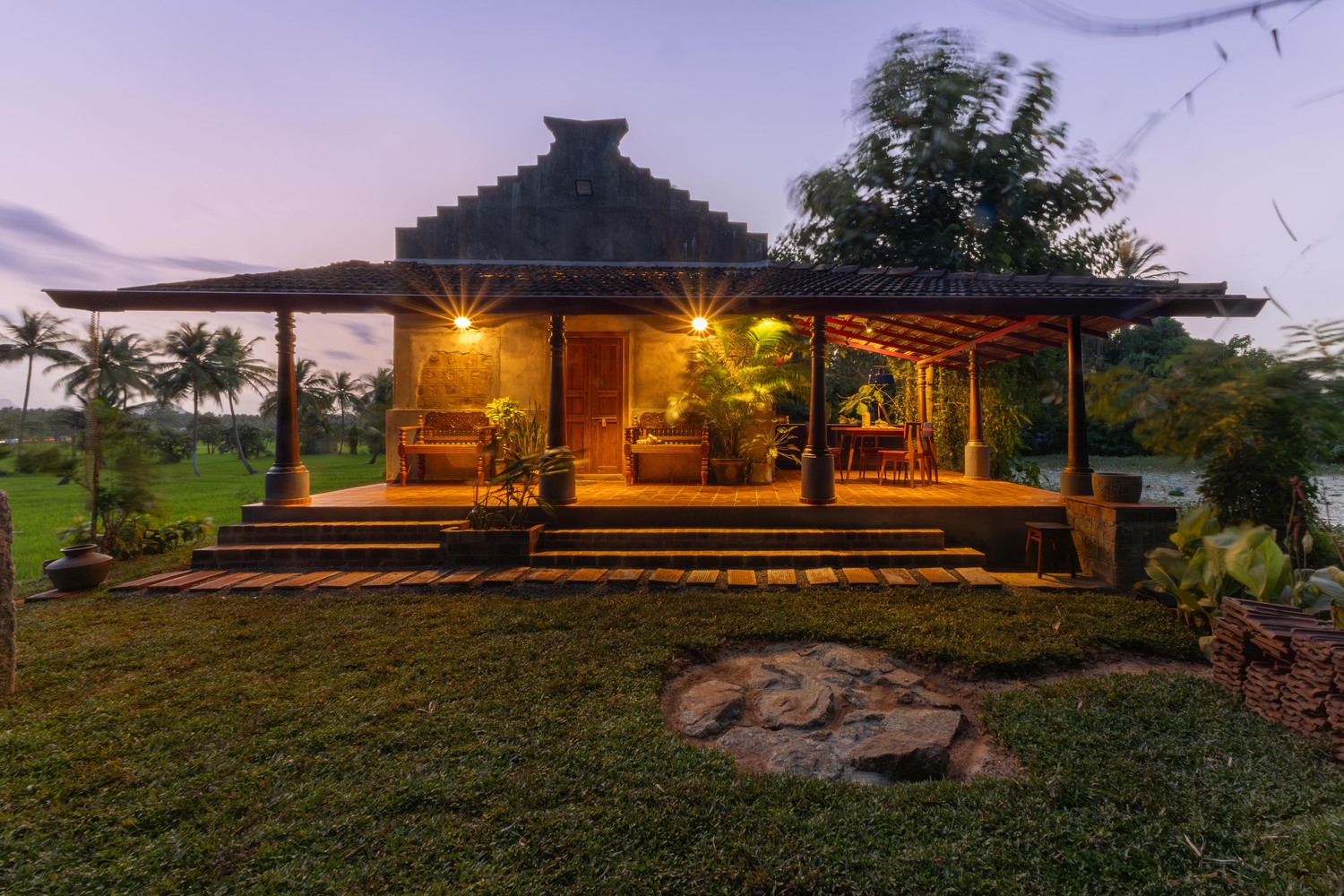
We chose to build with memory. Existing windows, doors, tiles, and columns were revived for reuse.
The veranda features columns salvaged from a dismantled local home, carrying with them nostalgia and stories of the past.
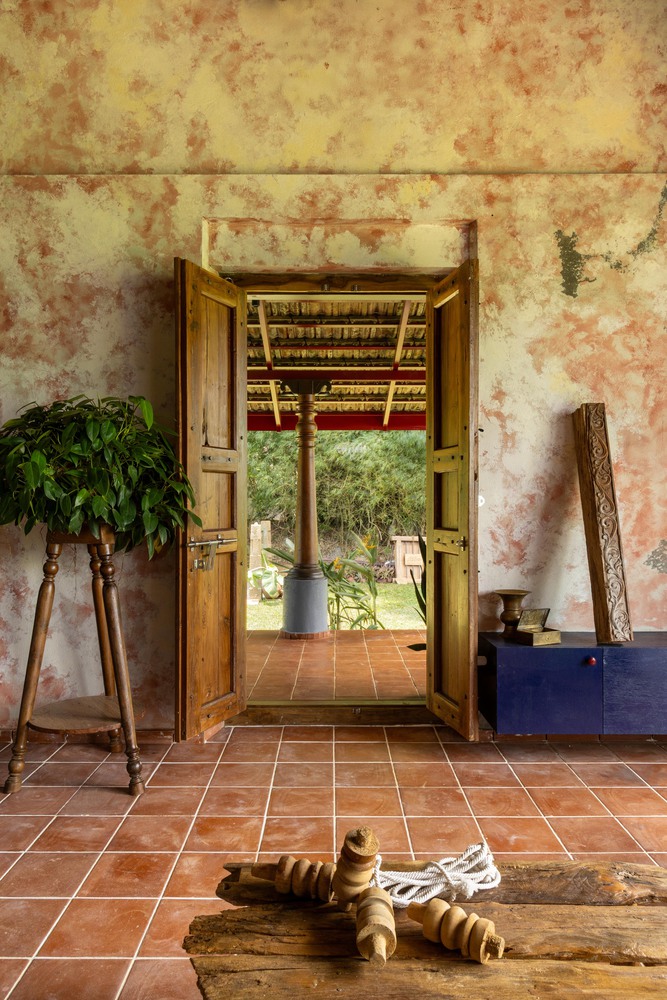
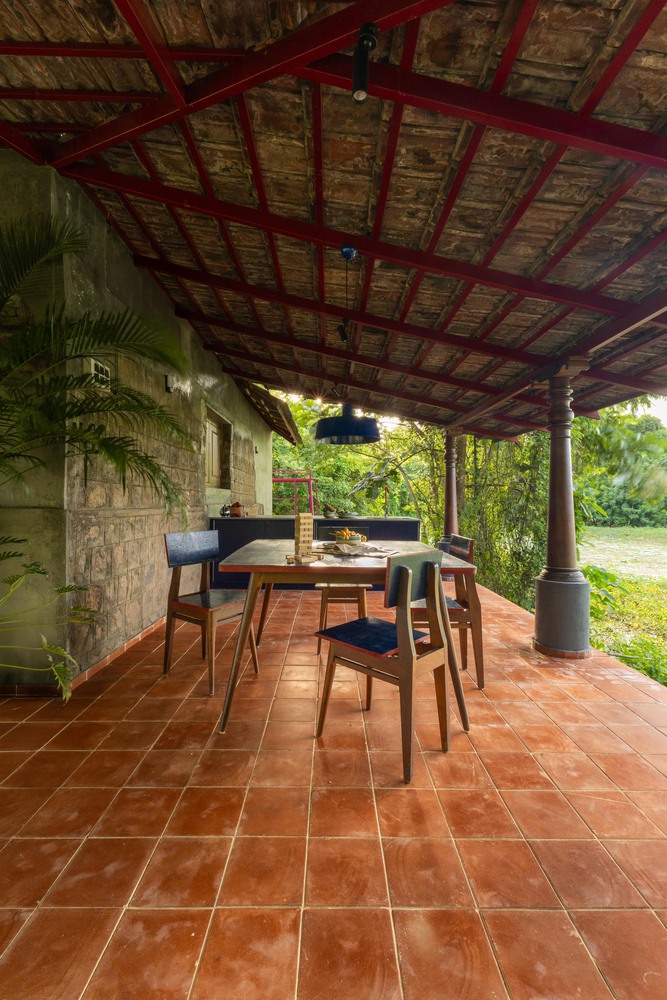
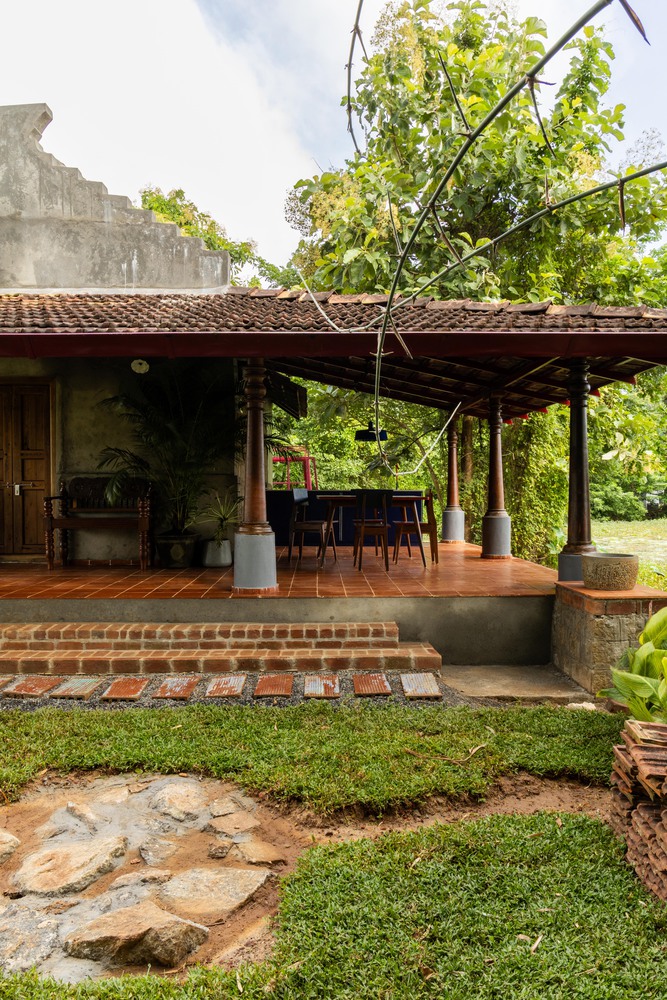
A stone pillar sourced from a nearby dismantled temple now supports and shapes the outdoor space. The main door — restored from the original structure — proudly carries forward its legacy.
Bricks were used for the steps — chosen to complement the earthy palette and as an eco-friendly material choice. Clay tiles line the building, offering a natural, durable, and sustainable finish.
Old furniture and reclaimed wood were sourced both locally and from the existing structure, reducing waste while enriching the space with character and warmth.
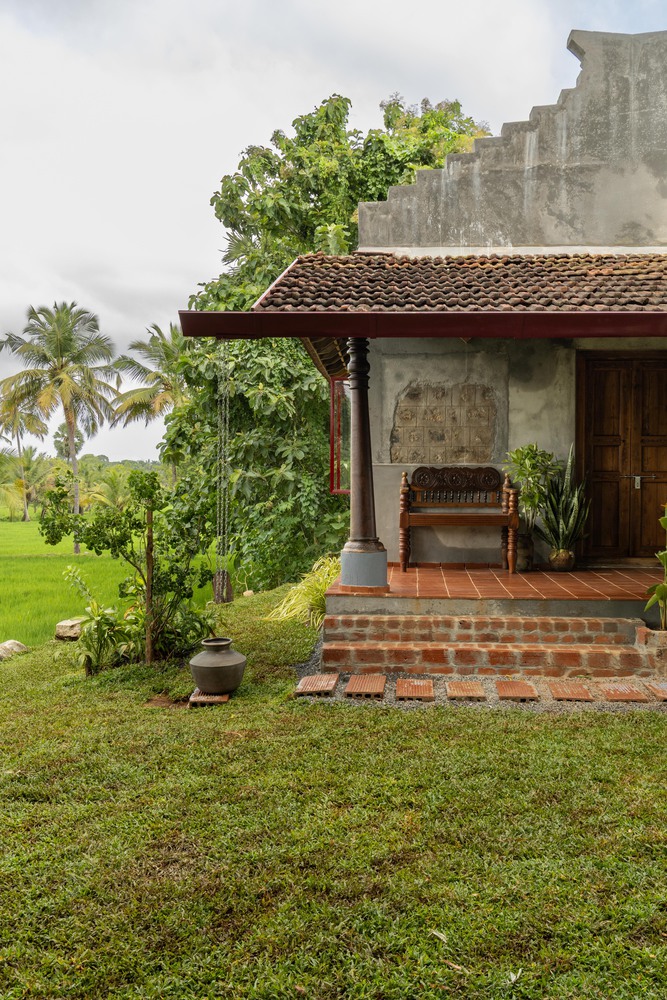
Beyond walls and roofs, this project created employment for local craftsmen, empowered farmers, and encouraged neighboring landowners to rediscover value in their land.
It brings visitors closer to village life, generating both pride and livelihood.
This is more than a building. It is a story of revival — of materials, of community, and of hope.
A model that inspires others to build for tomorrow without wasting what yesterday left behind.