
XINGYUN-1 BUILDING
Nikken Sekkei
ARCHITECTS
Nikken Sekkei
LEAD ARCHITECT
Nikken Sekkei Ltd
JV, JOINT DESIGN, SUPERVISION, CONSULTING
Shanghai Architectural Design & Research Institute
ARCHITECTURAL CURTAIN WALL CONSULTANT
Alt Limited
CONSTRUCTION CONTRACTOR
China Construction Eighth Division Co., Ltd.
CLIENT
Shanghai Building Material Group Technology Development Co., Ltd.
PHOTOGRAPHS
Yangmin/ mintwow
AREA
78855 m²
YEAR
2023
LOCATION
Xuhui District, China
CATEGORY
Offices
English description provided by the architects.
BUILDING DESIGN AND PRESENCE
This super-tall building is located at the southwest corner of Shanghai West Bund Media Port, an area that is home to a concentration of cutting-edge media and cultural industries, on the west bank of the Huangpu River in Shanghai, China.
It is designed to support the new working styles of future-oriented creators as a hub for advanced ICT (information and communications technology) companies and the gaming industry, while also revitalizing the city.
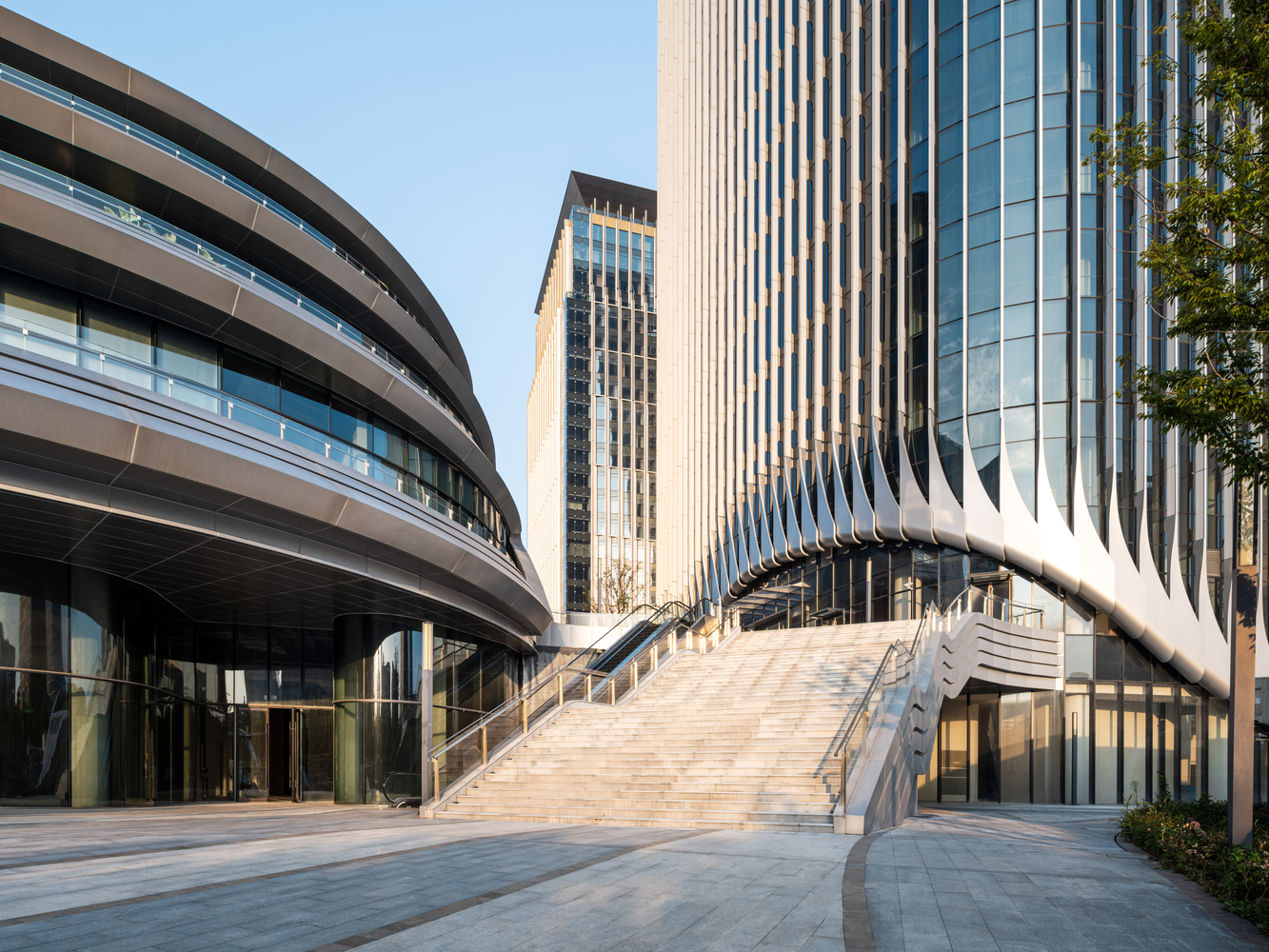
In addition to its development and administrative functions, the building features showrooms and halls for product launches, embodying the worldviews of people who convene online and fostering an ecosystem of corporate activities where creators and enthusiastic fans can interact in person.
The architecture gives birth to new ideas and product launches, and also fosters human connections through interactions between creators and fans, thereby serving as a bridge between virtual and real worlds.
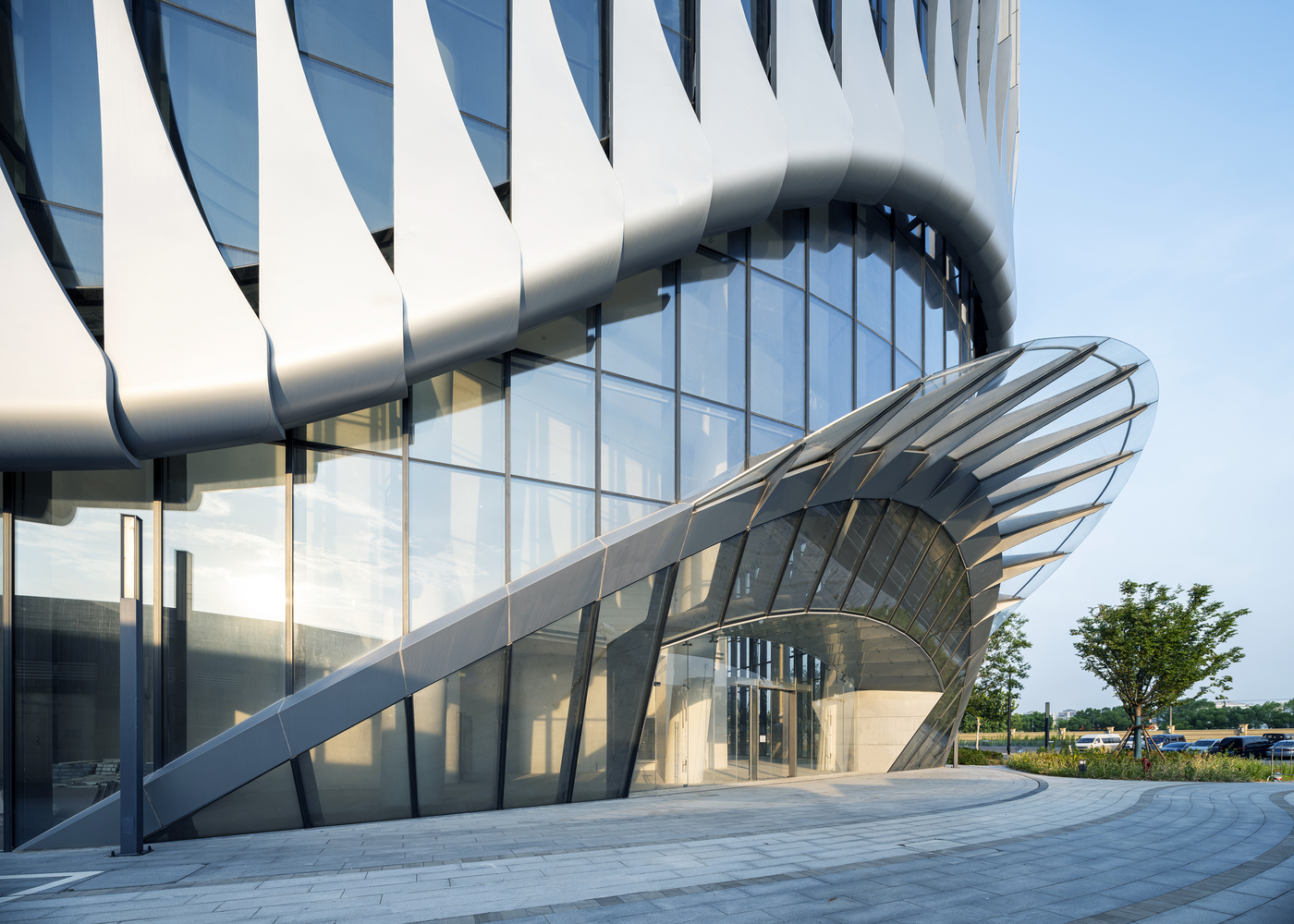
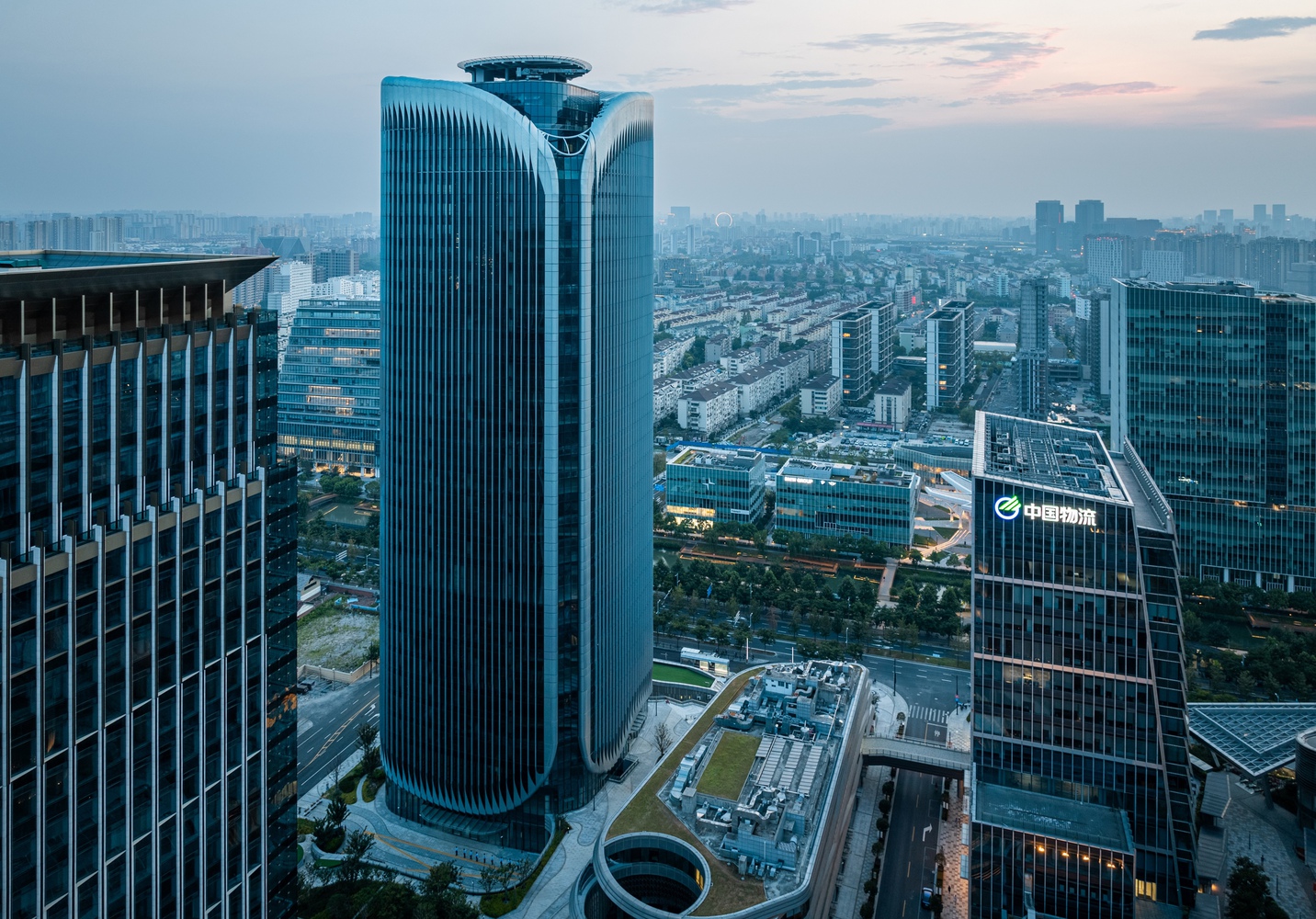
The building's exterior has a soft presence, resembling a tangible manifestation of an online cloud. Its distinctive skyline is visible from anywhere in the city, adding a new charm to the landscape. By opening the public spaces within the premises to both building users and city visitors, the building provides safe access and a place to gather, reinforcing the concept of "the company and the city."
APPROACH TO SUPERTALL BUILDING DESIGN
This supertall building is designed to delight people from near, medium, and far distances. From a distant view, we focused on the city's appearance and its distinctive skyline, while from a medium view, we emphasized the layout plan and building's appearance as experienced on site. In the foreground, particular effort was put into the functions and details created by the building's dynamic form."
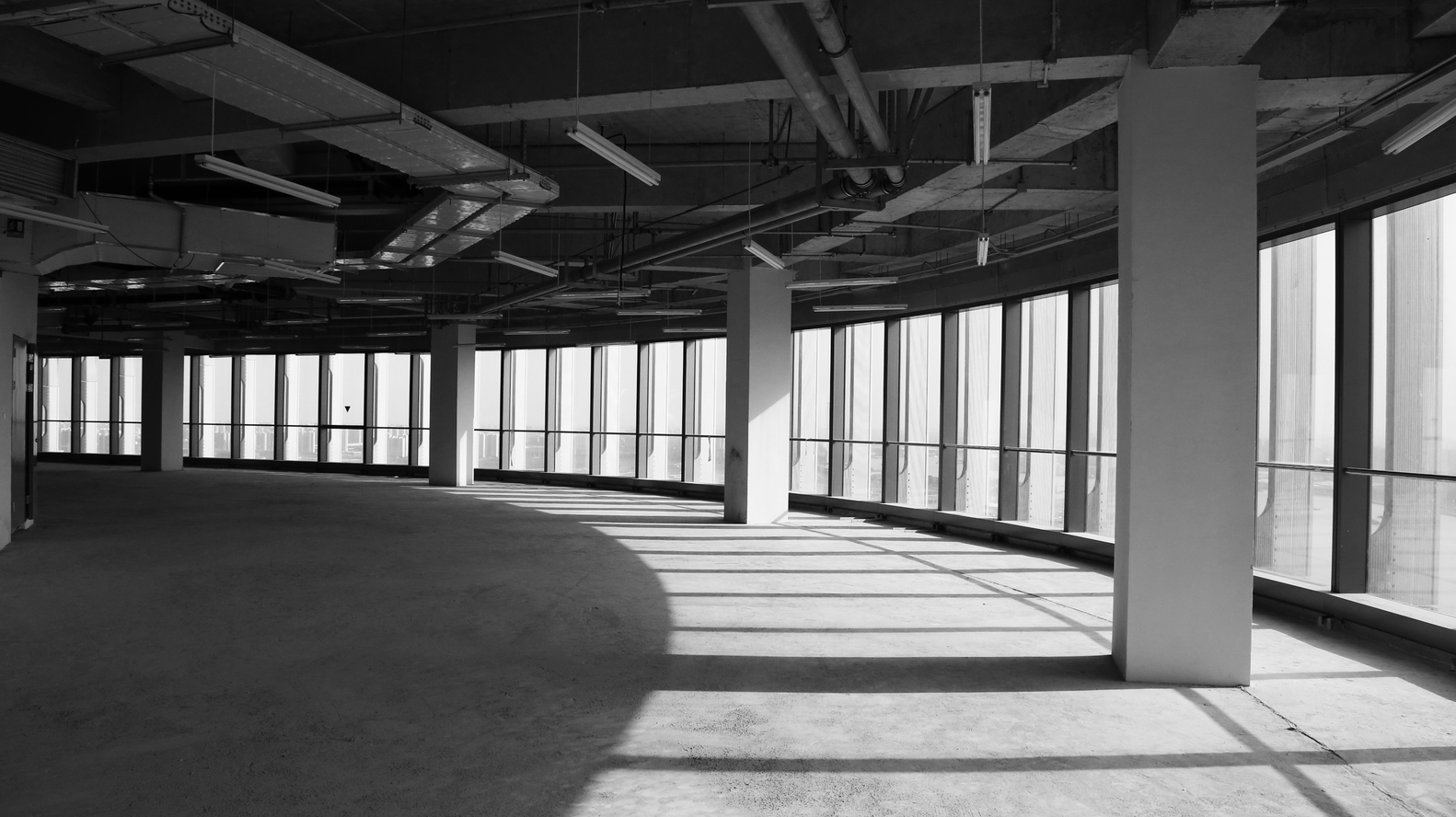
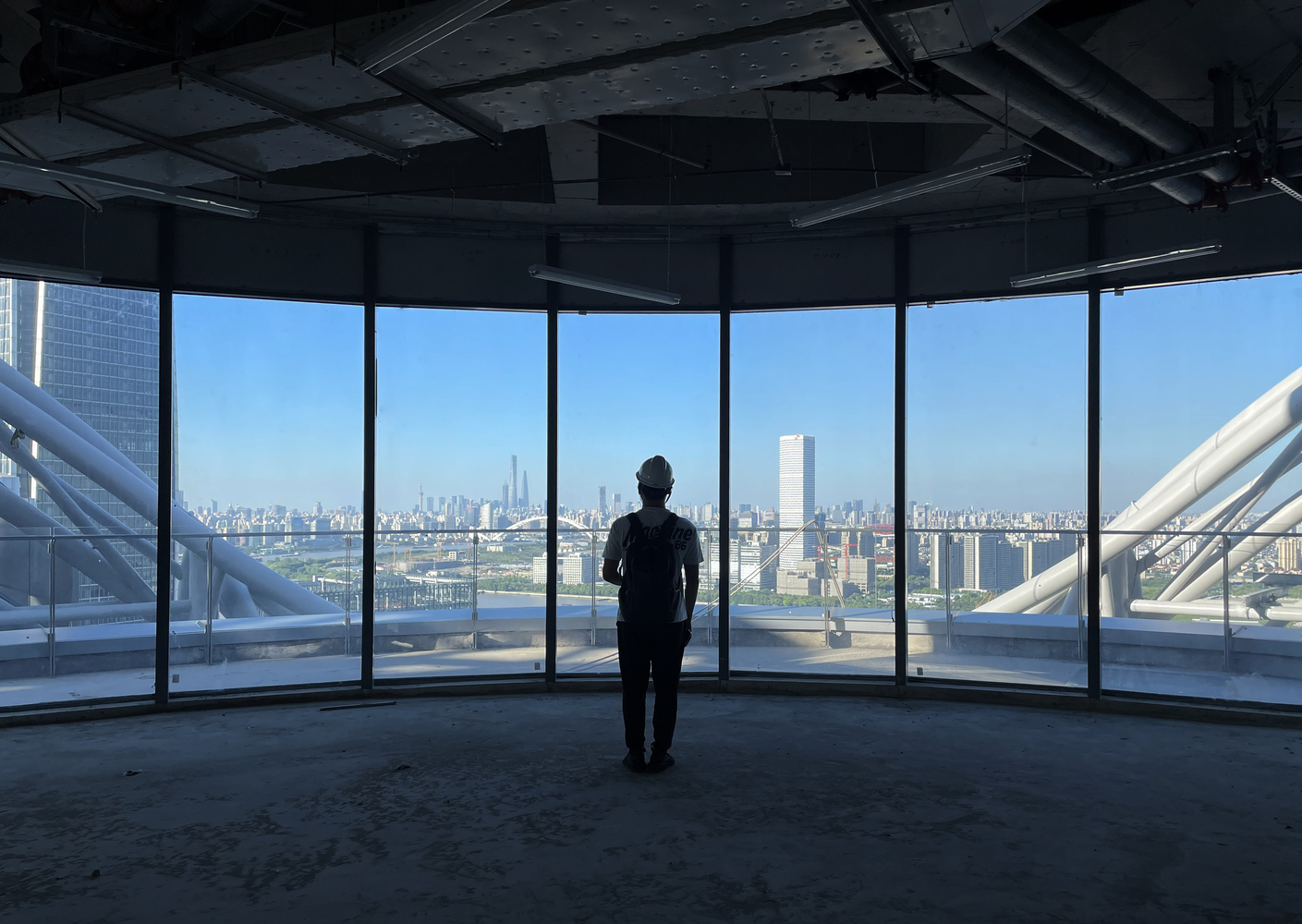
In response to the aerial view perspective that has become commonplace in recent years, the top of the building is designed as the "fifth façade." This space integrates multiple functions, including a rooftop garden, an observation deck with a helipad at 160 meters above ground level, storage for maintenance machinery, and an air conditioning machinery room.
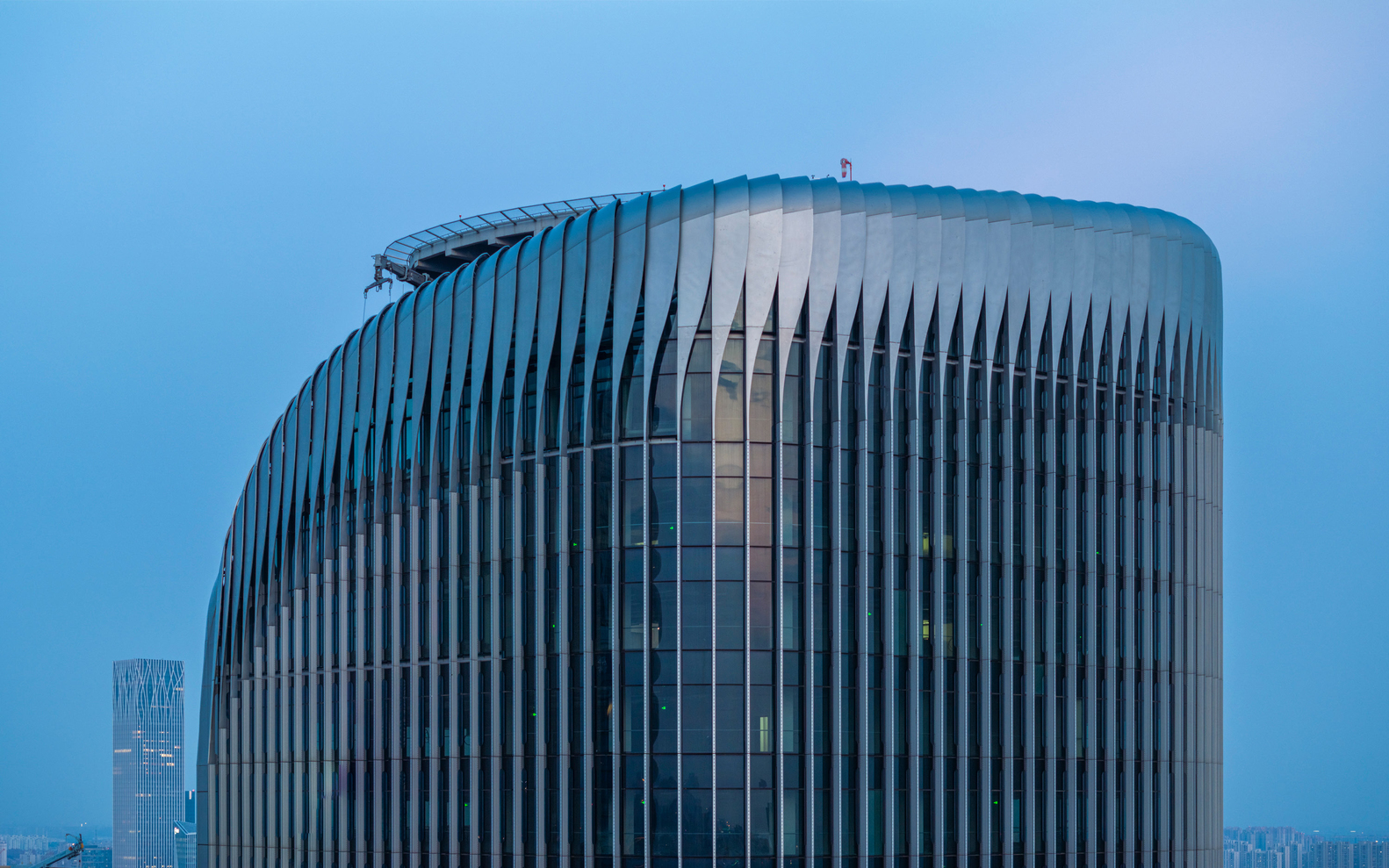
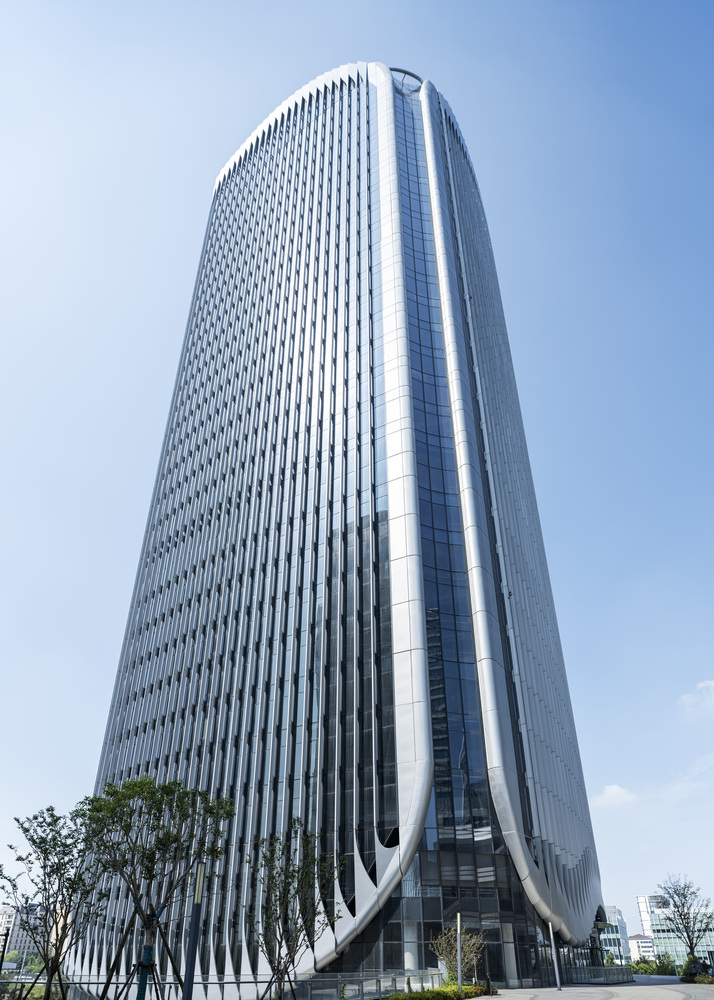
Among the skyscrapers in this area, it forms a particularly soft skyline. The fins that cover the building's structure and extend to the top are louvers that alter their configuration and appearance depending on the angle of the sunlight at different times of the day. They are arranged in a 130-meter radius arc.
18-millimeter pitch ribs were carved into the sides of the 400-millimeter-wide louvers to delicately capture reflected light.
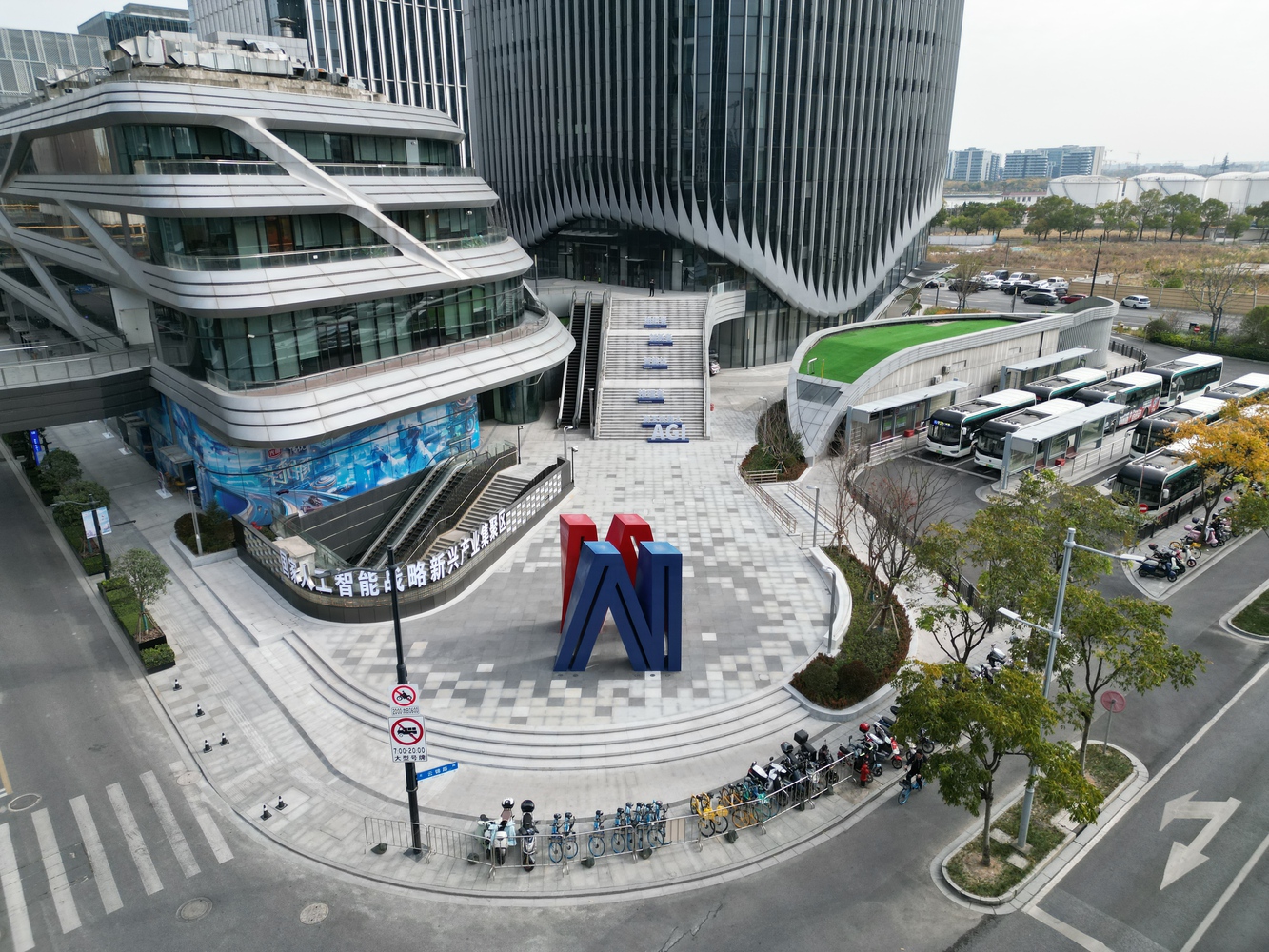
In the lower sections, the building's entrance facade is raised by two stories to create a welcoming gesture and clearly indicate the location of the entrance and pathways, ensuring visitors can move freely without getting lost.
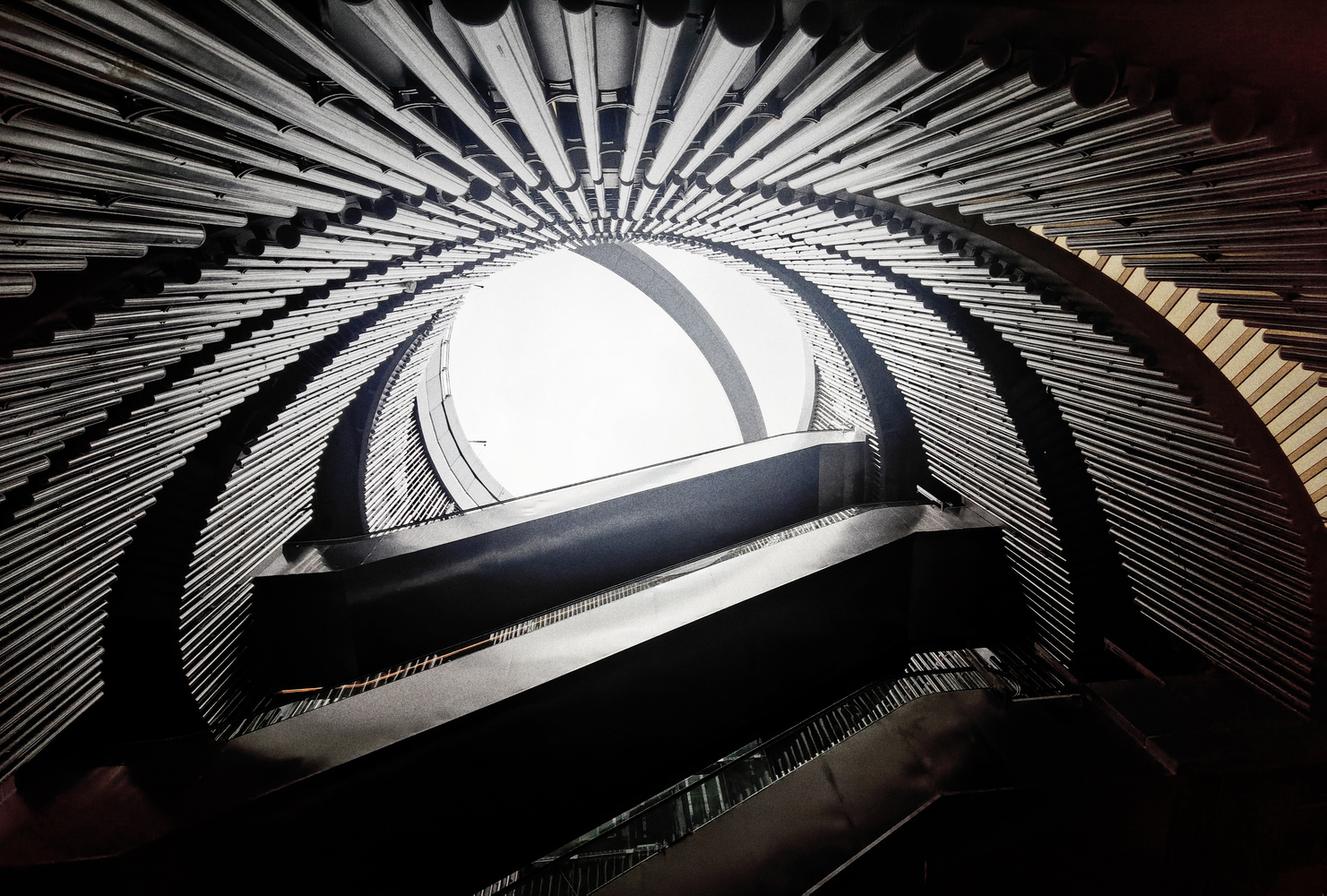
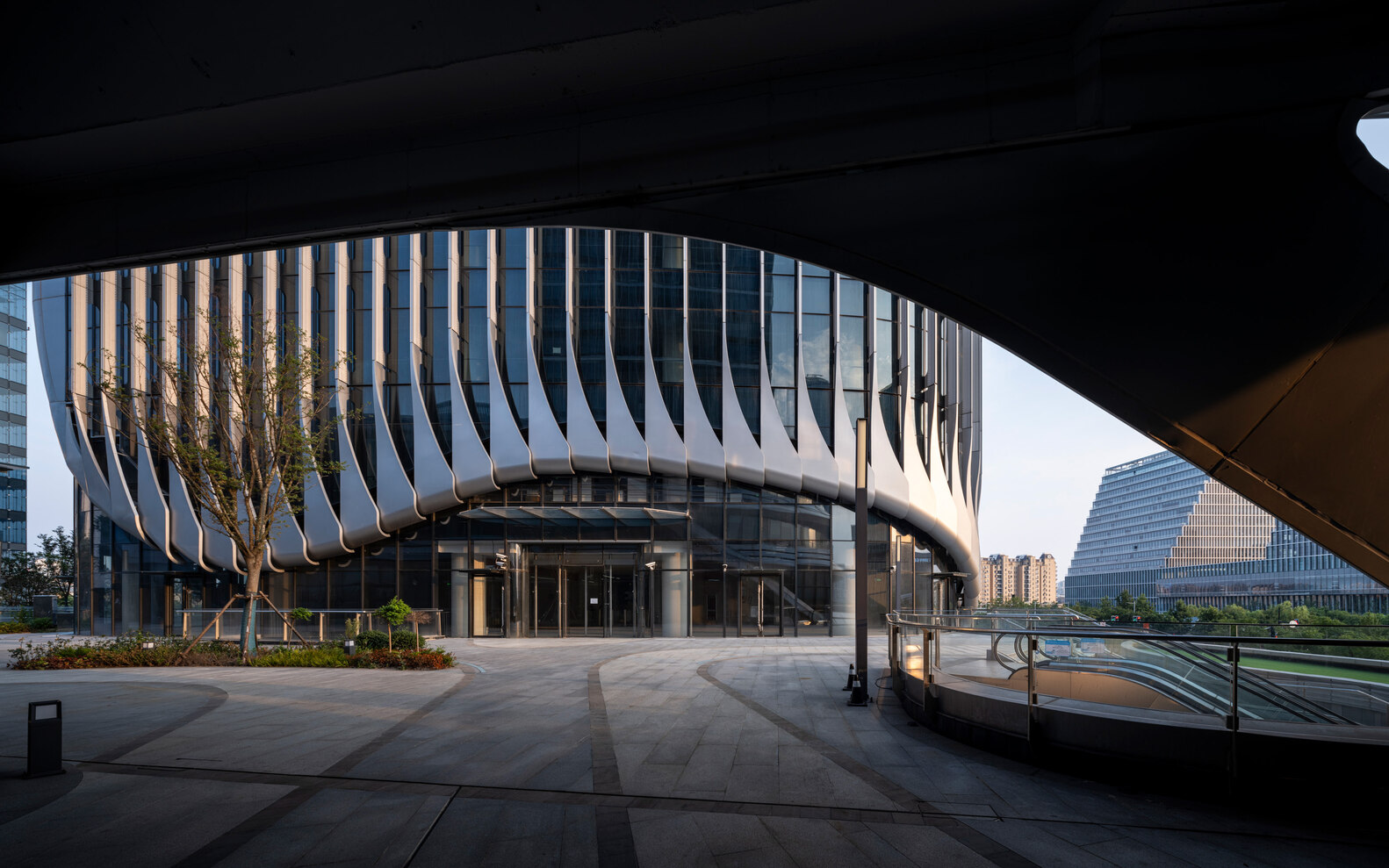
The 9-meter elevation difference in the entrance facade features a generous 1.5-meter-wide overlapping wing design that embodies the building's "people friendliness."
CREATING CONNECTIONS WITH THE CITY AND A NETWORK OF CULTURE & CREATIVITY
This skyscraper, which serves as the southwestern gateway to the district, is fully open to visitors, with public spaces and walkways within the grounds.
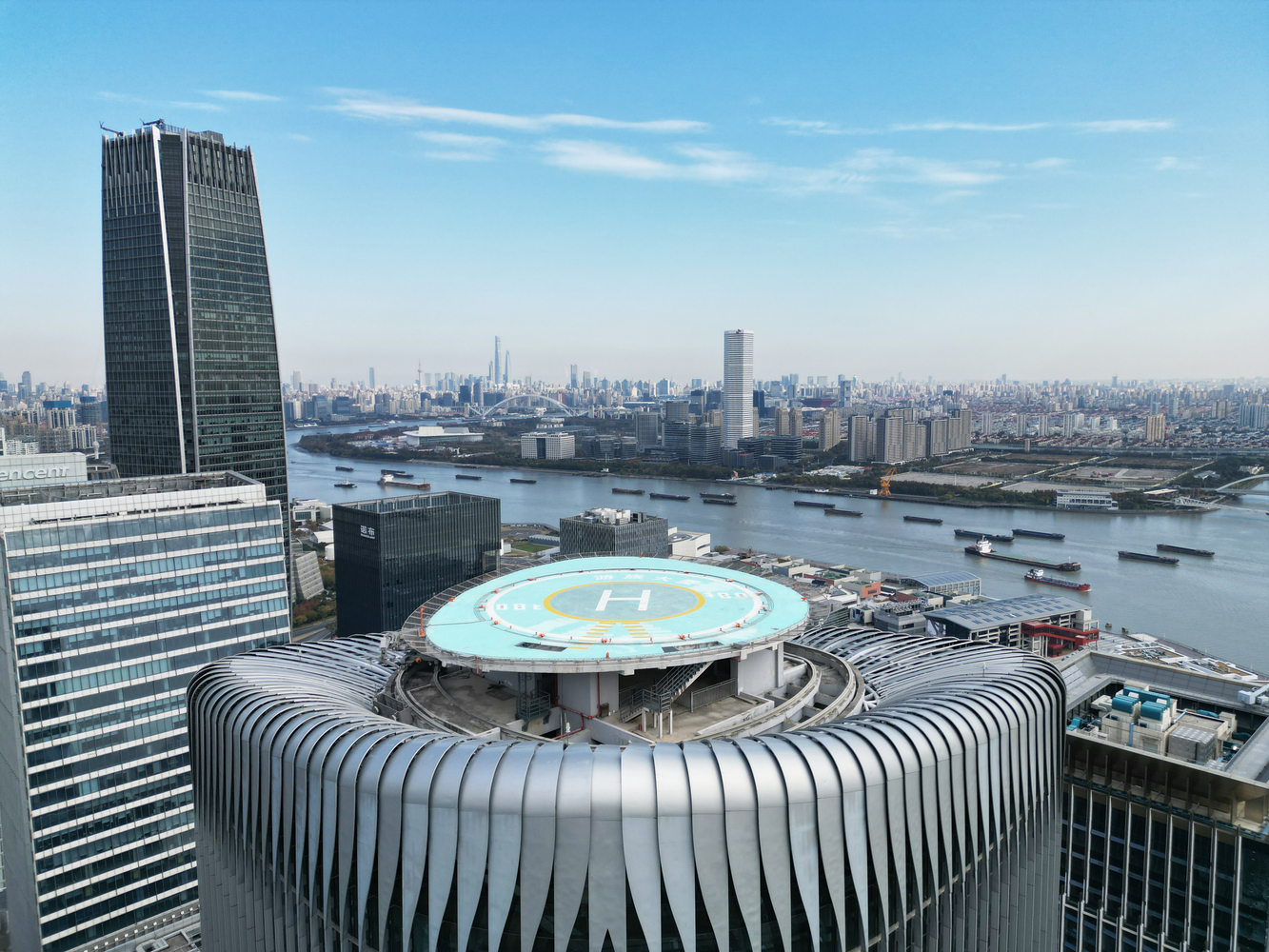
Rather than enclosing the public spaces around the building and within the grounds, it actively links to neighboring properties and shares space.
This supports the city's human network and strengthens the role of the entire area as a hub for cultural and creative industries. It's 76,000 square meters of floor space connected with the surrounding urban environment.
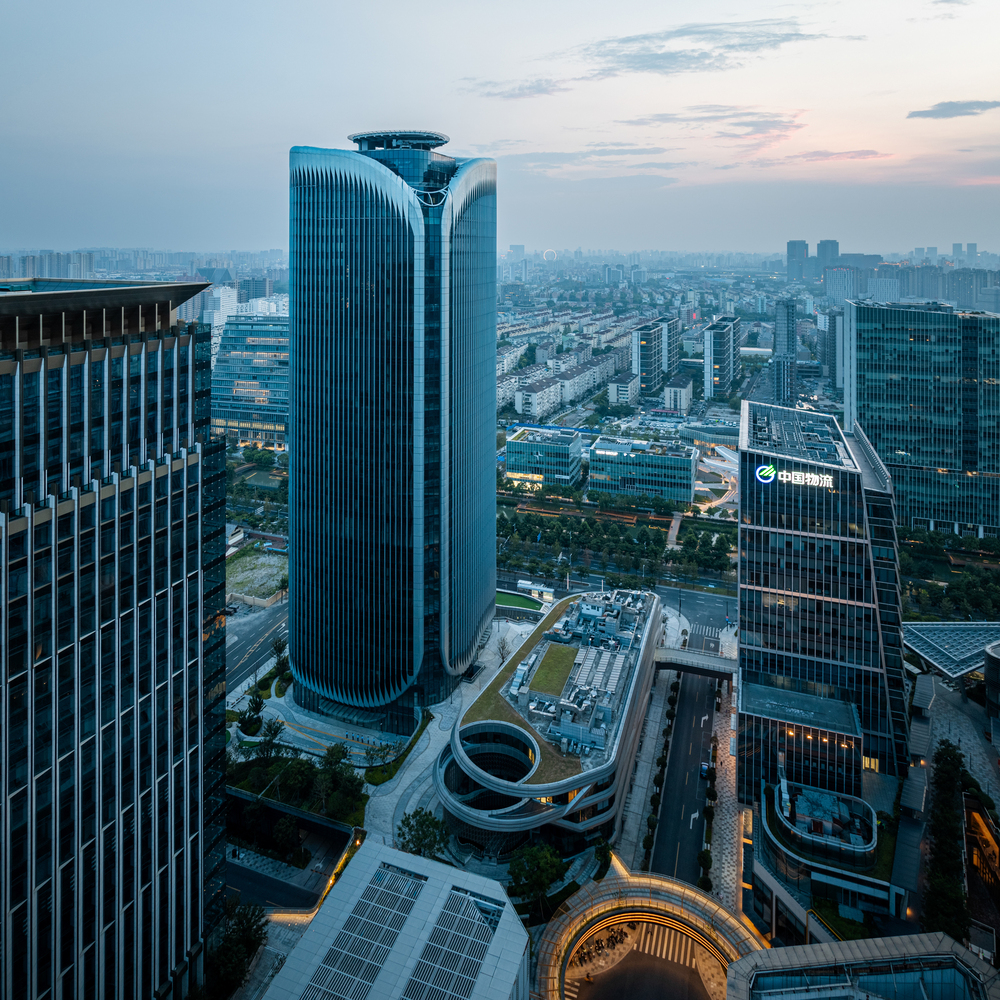
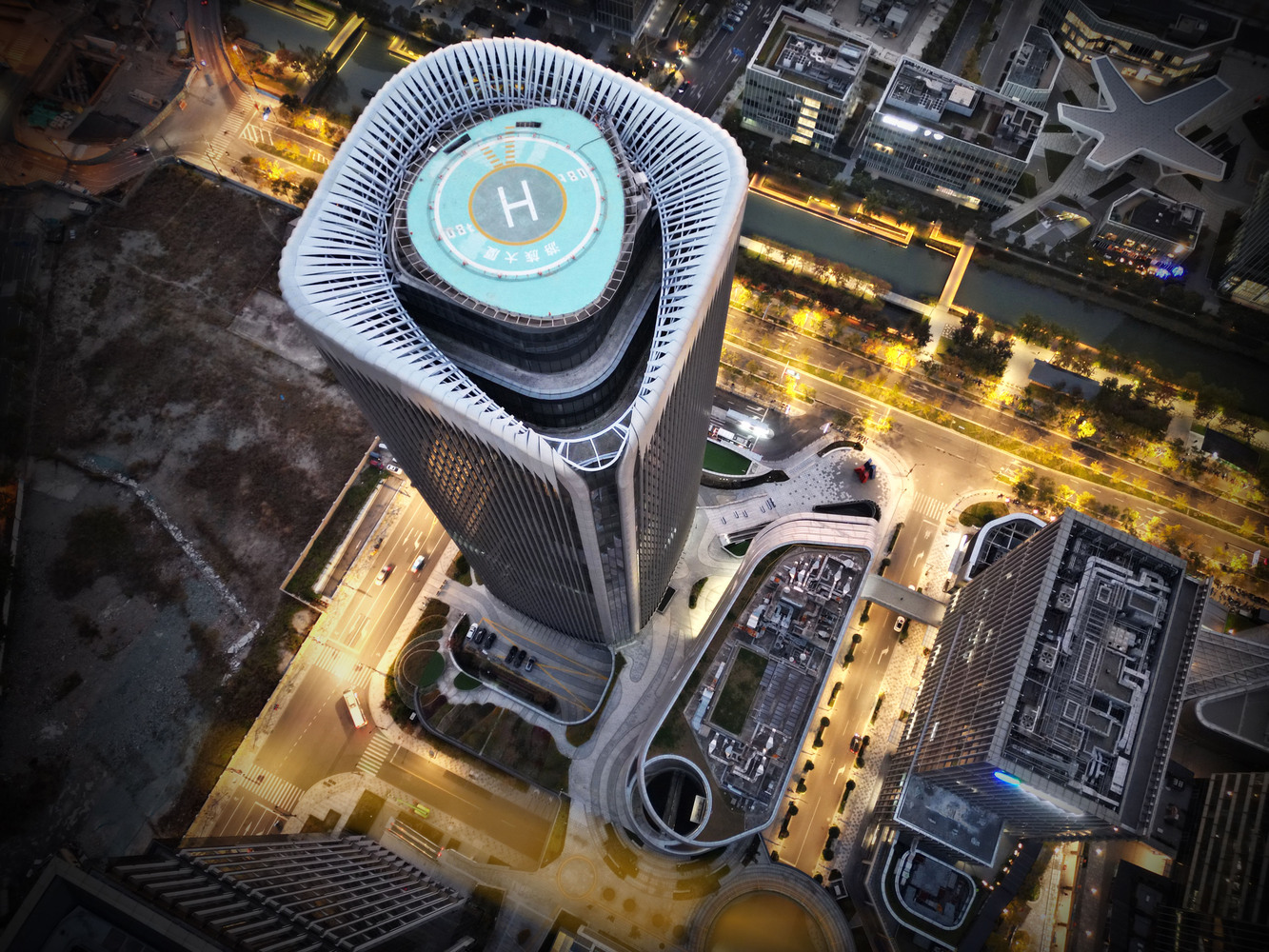
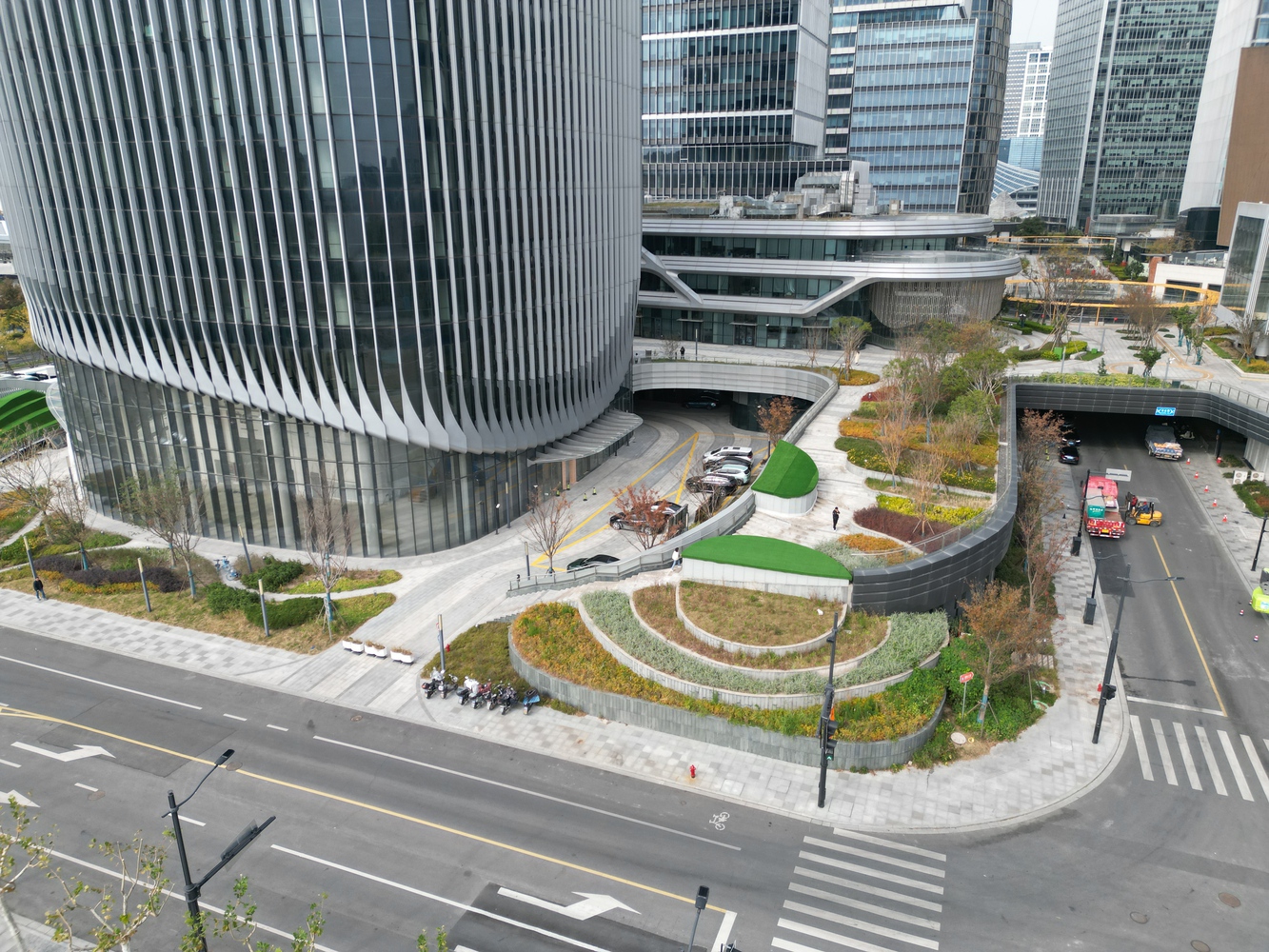
To achieve this, the link between the building and the ground level has been carefully designed. The deck connecting the skyscraper tower and the podium serves as a public space for visitors.
The "Urban Core," which connects the underground and first and second floors three-dimensionally, is integrated with the podium architecture, allowing access to the building from any direction and freedom of movement between different heights.
The second-floor pedestrian deck expands to blend in with the landscape and extends beyond the site boundaries. While connecting with surrounding buildings, it provides free (public) spaces.
The building's layout and shape were designed to facilitate movement and access by considering connectivity with the surrounding site to facilitate movement and access.
Seven sky lobbies with three-story atriums are stacked over 21 floors, with each atrium serving as an arrival hall with large windows that visually connect to the city.
The building is not a "closed structure" per se; its two external rooftop terraces allow access to the outside. Additionally, it connects to air routes via a helipad, opening the building's architecture toward the sky.
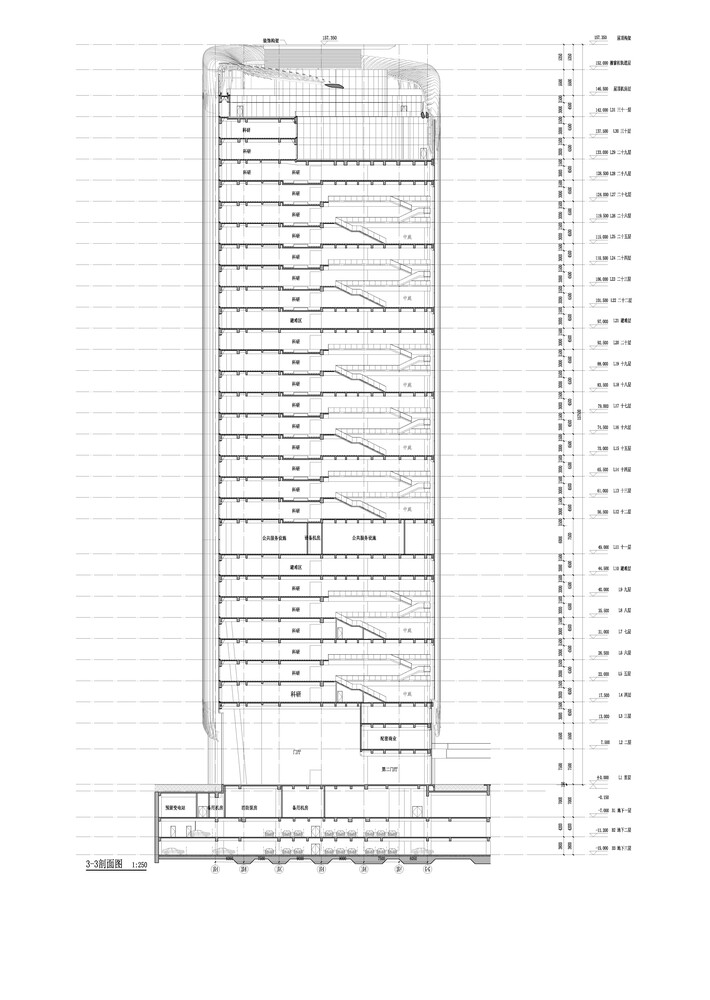
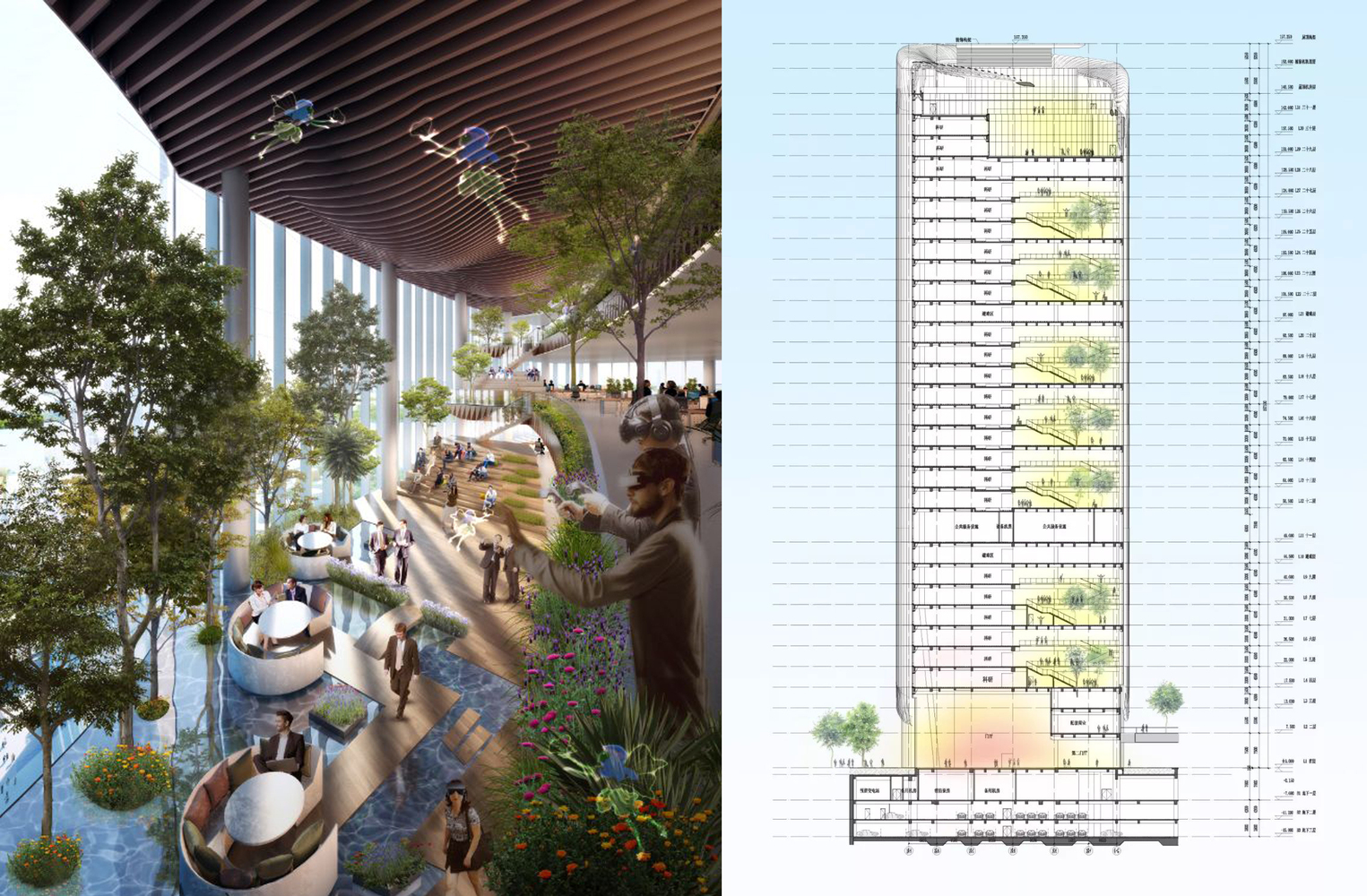
By fostering a mutually beneficial relationship with the city beyond the site boundaries, the architecture promotes interaction among people, celebrating life and exchange within the urban environment.
To achieve this, the link between the building and the ground level has been carefully designed. The deck connecting the skyscraper tower and the podium serves as a public space for visitors.
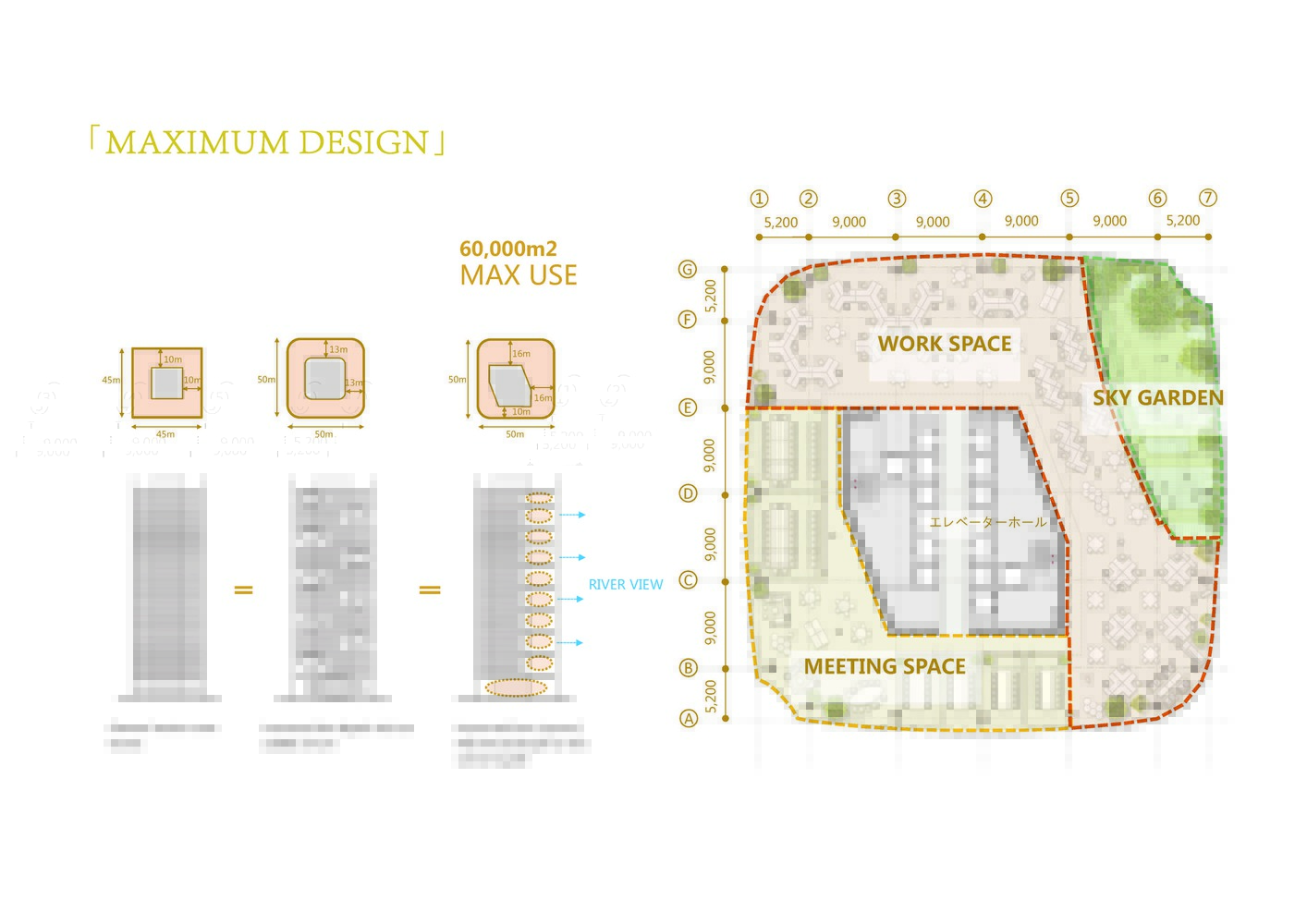
The "Urban Core," which connects the underground and first and second floors three-dimensionally, is integrated with the podium architecture, allowing access to the building from any direction and freedom of movement between different heights. The second-floor pedestrian deck expands to blend in with the landscape and extends beyond the site boundaries.
While connecting with surrounding buildings, it provides free (public) spaces. The building's layout and shape were designed to facilitate movement and access by considering connectivity with the surrounding site to facilitate movement and access. Seven sky lobbies with three-story atriums are stacked over 21 floors, with each atrium serving as an arrival hall with large windows that visually connect to the city.
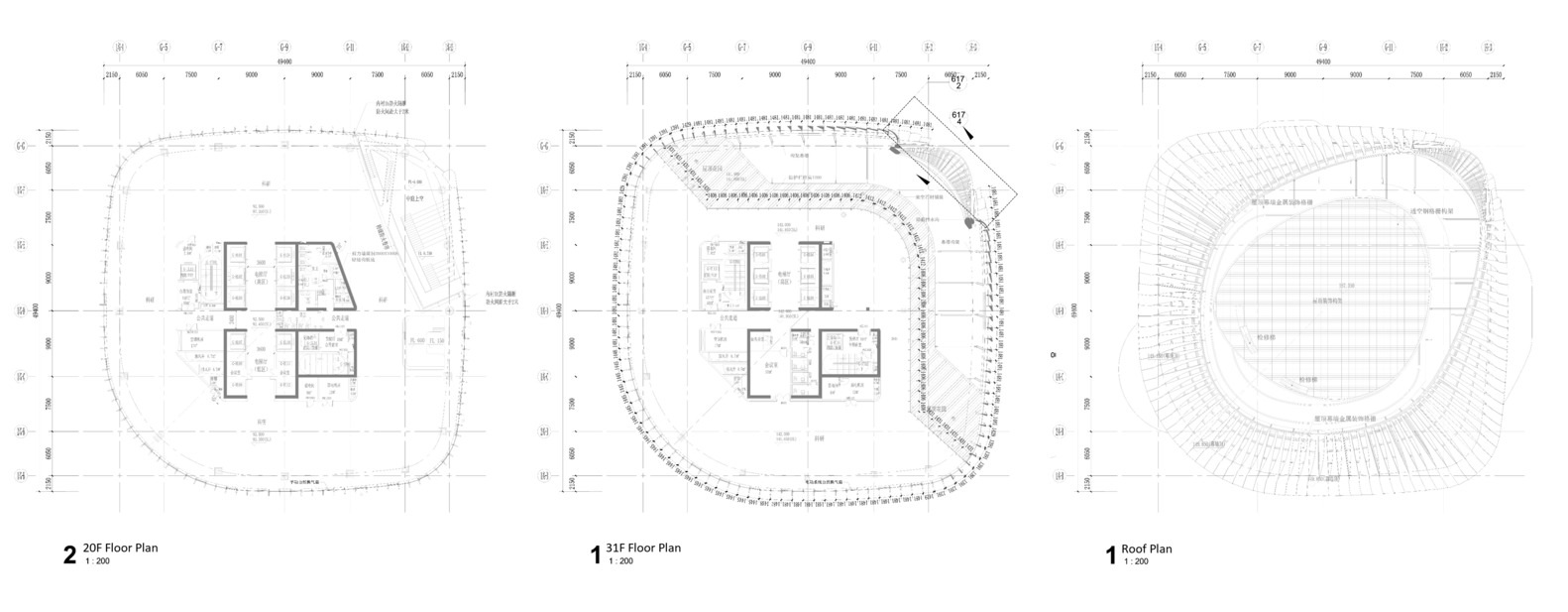
The building is not a "closed structure" per se; its two external rooftop terraces allow access to the outside. Additionally, it connects to air routes via a helipad, opening the building's architecture toward the sky. By fostering a mutually beneficial relationship with the city beyond the site boundaries, the architecture promotes interaction among people, celebrating life and exchange within the urban environment.
CONSIDERATION FOR THE ENVIRONMENT AND SUSTAINABILITY
In this project, we aimed to create open and sustainable architecture that takes advantage of Shanghai's warm climate. Compared to conventional high-rise buildings with closed, fully air-conditioned, energy-consuming systems, this building has many non-air-conditioned indoor and outdoor areas.
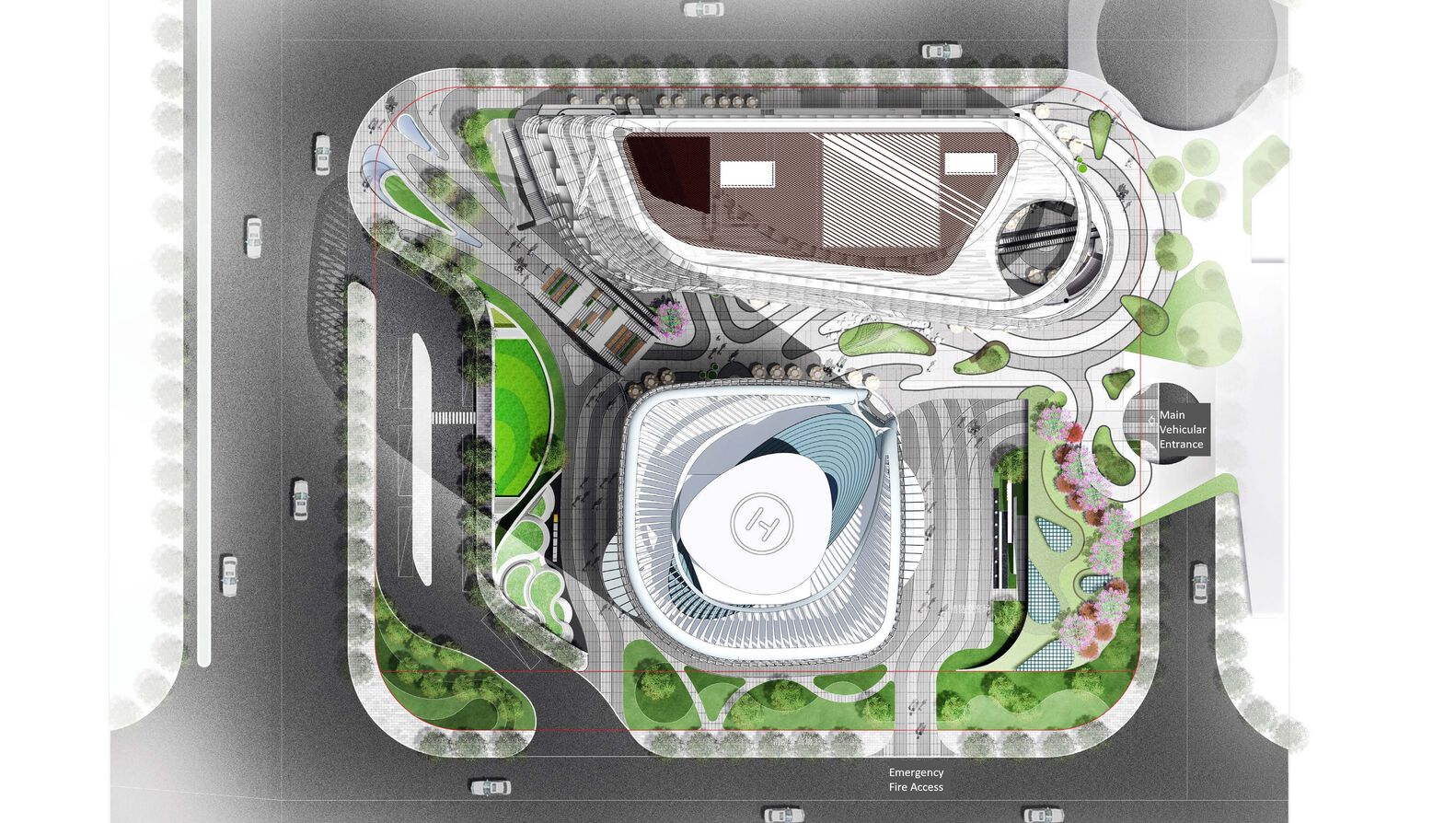
While using only safe, readily available materials such as glass and aluminum, we pursued a level of detail that is possible only with the scale of a spacious skyscraper. We efficiently achieved a distinctive design during the construction phase using materials and methods that minimize waste.
To enhance the energy efficiency of the air conditioning, the standard 400mm-wide exterior fins were extended by 200mm outward, reducing aluminum usage while achieving the same solar shading effect as 600mm-deep fins. Combined with Low-E glass, this prevents excessive energy influx, reduces energy loss through windows, and minimizes wasteful air conditioning energy consumption.
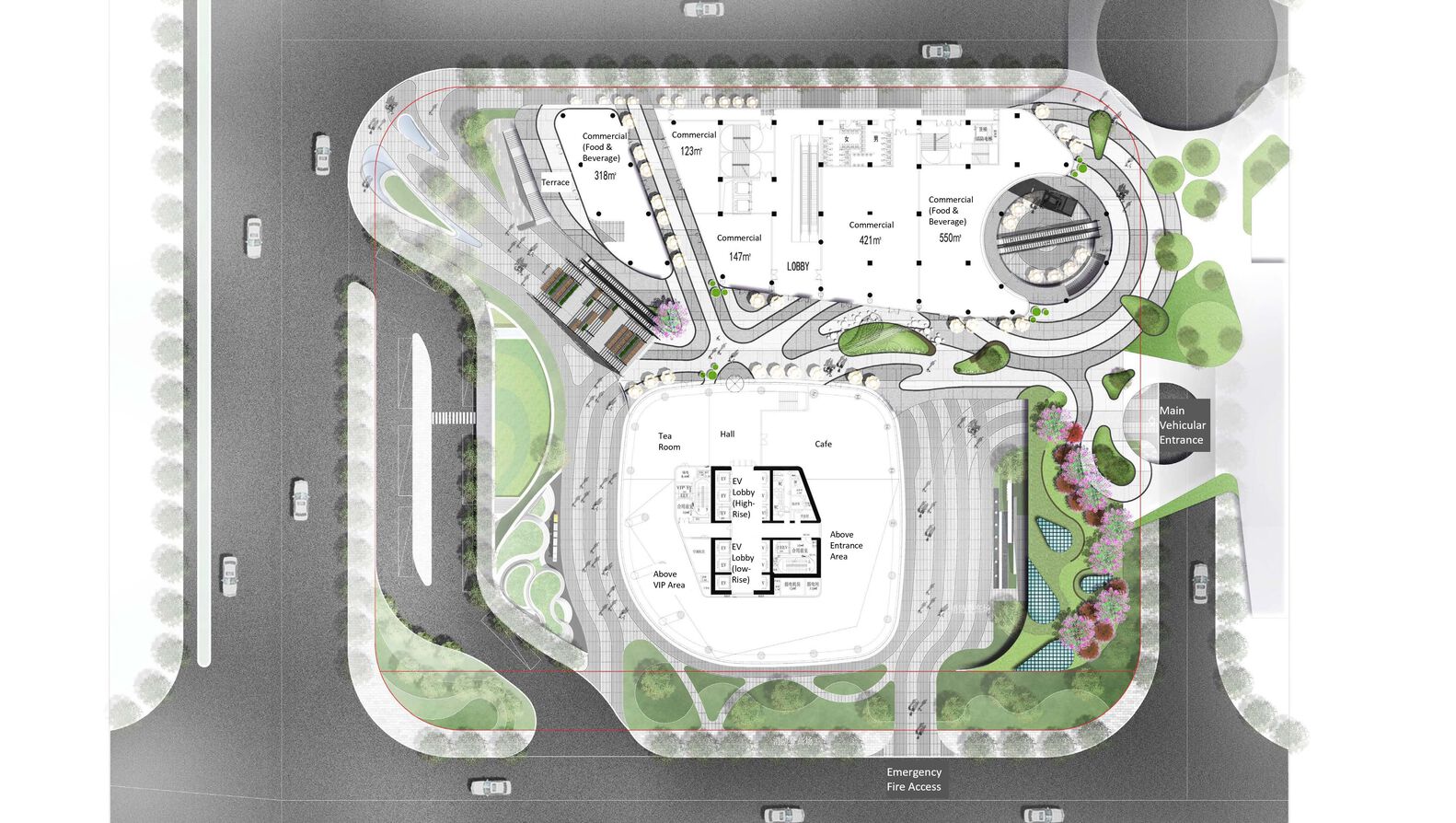
Additionally, natural ventilation hoppers are integrated near the windows. This allows occupants to leverage the steady local wind by opening windows themselves and promotes natural ventilation through pressure differences in the atrium, without mechanical power assistance.
POSITIVE DESIGN CHAI
The soft forms and rich public spaces of this project provide visitors with a place to relax, allowing them to move around comfortably without getting lost, altering their actual city experience, and promoting regional revitalization and interaction.
This high-rise building serves as the headquarters of a leading company, but it also has an altruistic "attitude" toward the city in its role as a hub. By awakening the positive behavior inherent in architecture, it transcends conflicts of interest with neighboring properties, positioning itself as a partner in revitalizing the city.
It is expected to positive influence on surrounding buildings. Such altruistic architectural gestures transcend individual buildings. In this project, they embody the symbolic stance of the entire Media Port complex in fostering public spaces and cultural exchange, with a new vision for urban living.
As tenants move in, each sky lobby will be decorated with its own unique interior design, and the three-story atrium will be equipped with the latest technologies, such as AR (augmented reality). (Current as of spring 2025) The term 'Xingyun' used in the project name corresponds to 'Nebula' in English.