GADI HOUSE
Pma Madhushala
ARCHITECTS
Pma Madhushala
CLIENT
Chetan Khandge
IPS FLOORING
Bhagwandas And Team
BRICKWORK
Shakeel And Team
BUILDER
Chetan Khandge
STONEWORK
Dnyaneshwar Dhotre And Team
MANUFACTURERS
Duravit, Saint-Gobain, Hettich, Queo, Tata Steel
DESIGN TEAM
Naresh Shivakoti ,darshan ,divya Jyoti, Prasanna Morey
STRUCTURAL CONSULTANT
Subduction Zone Engineers
PHOTOGRAPHS
Hemant Patil
AREA
650 m²
YEAR
2020
LOCATION
Talegaon Dabhade, India
CATEGORY
Houses
English description provided by the architects.
DREAM
Carrying forward the honor and lineage of a family of Maratha sardars, the present heirs, the two brothers wanted to build a new house for their family.
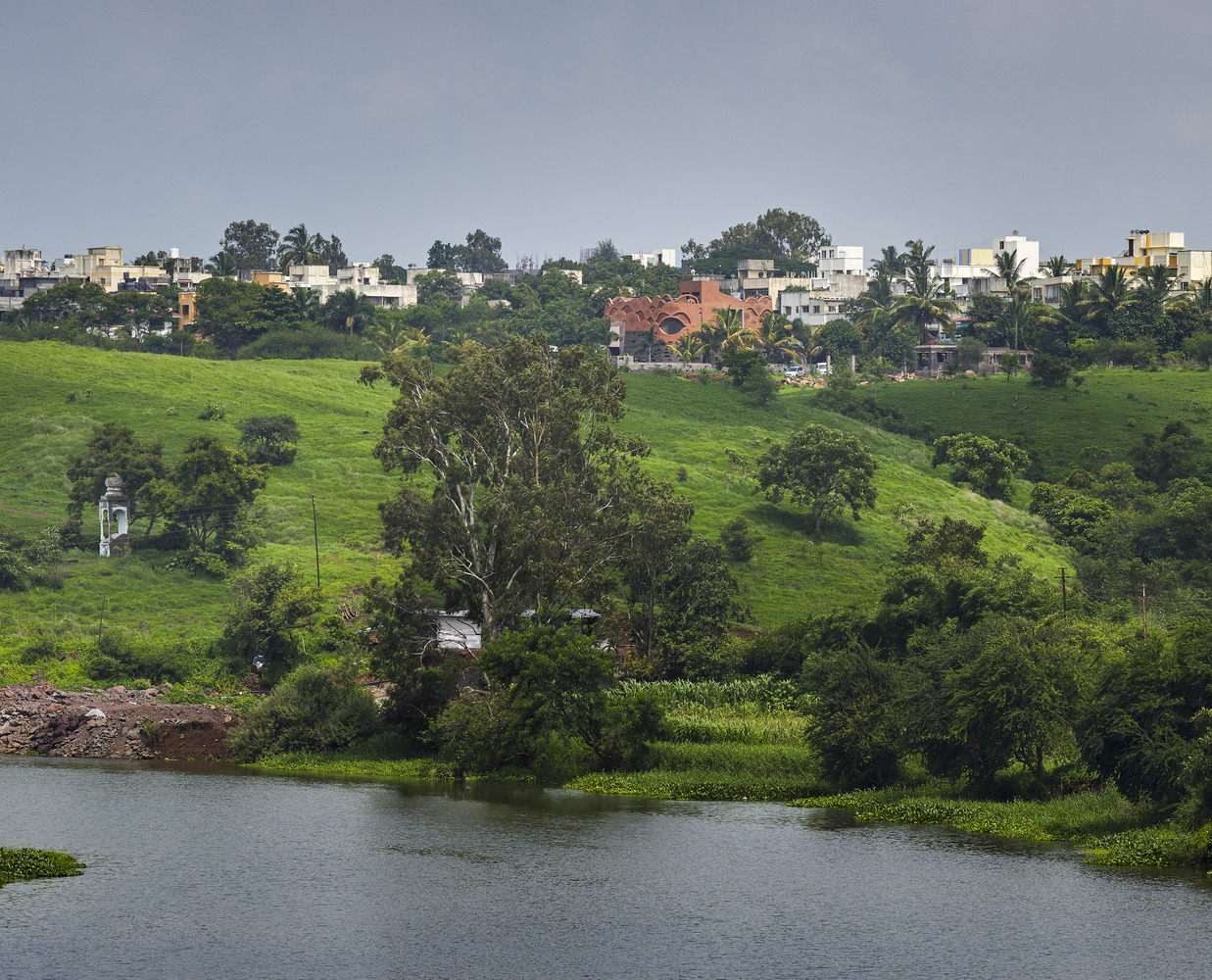
For their honor and societal standing they wished for an ornament of pride, standing strong in their ancestral grounds, beyond the crowds of the city, and secure as a fortress.
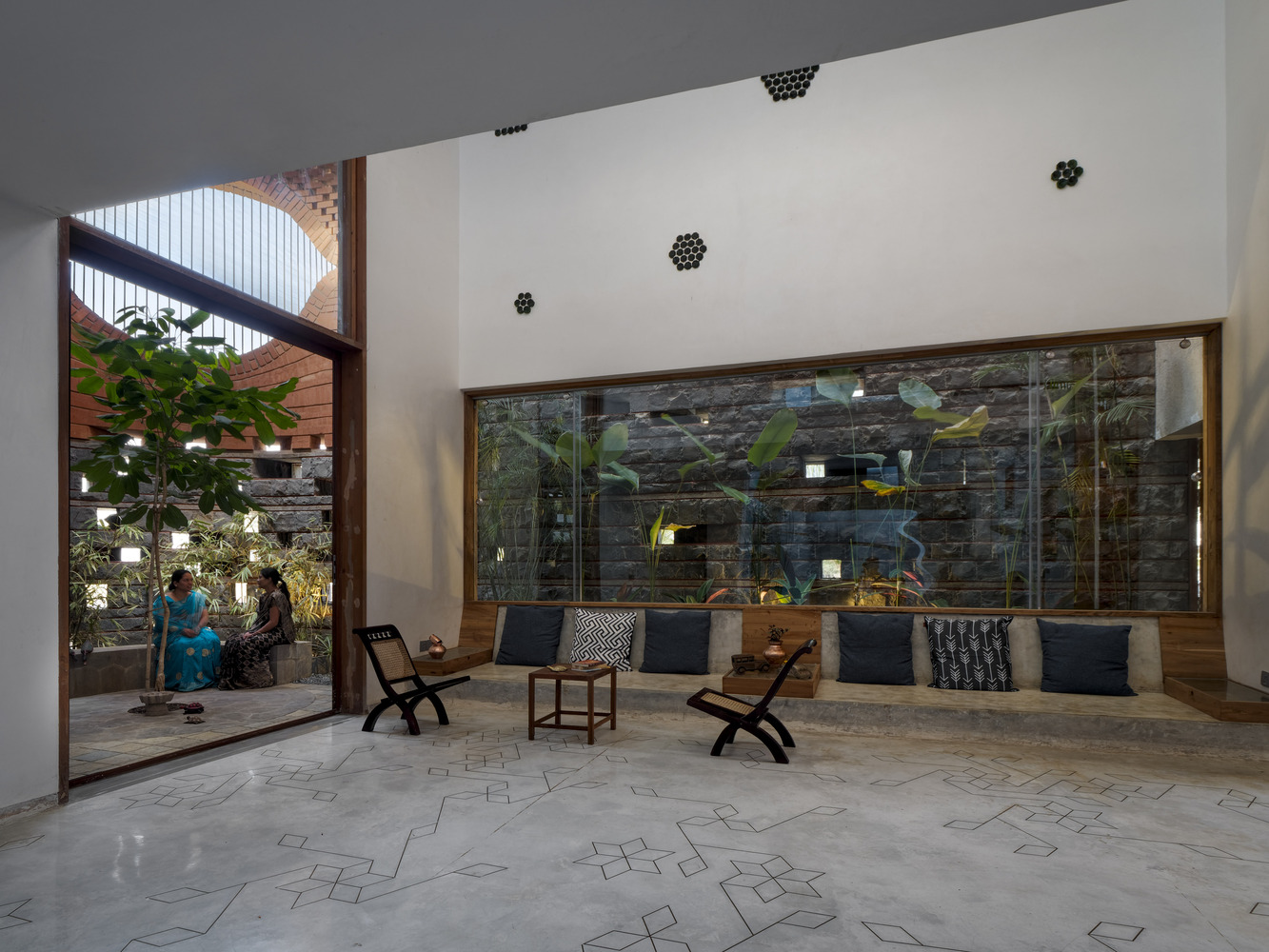
Since generations they have been living in the traditional 'Wadas' and have developed a lifestyle of a similar understanding of a protected envelop, internal courts, large external open areas and farming.
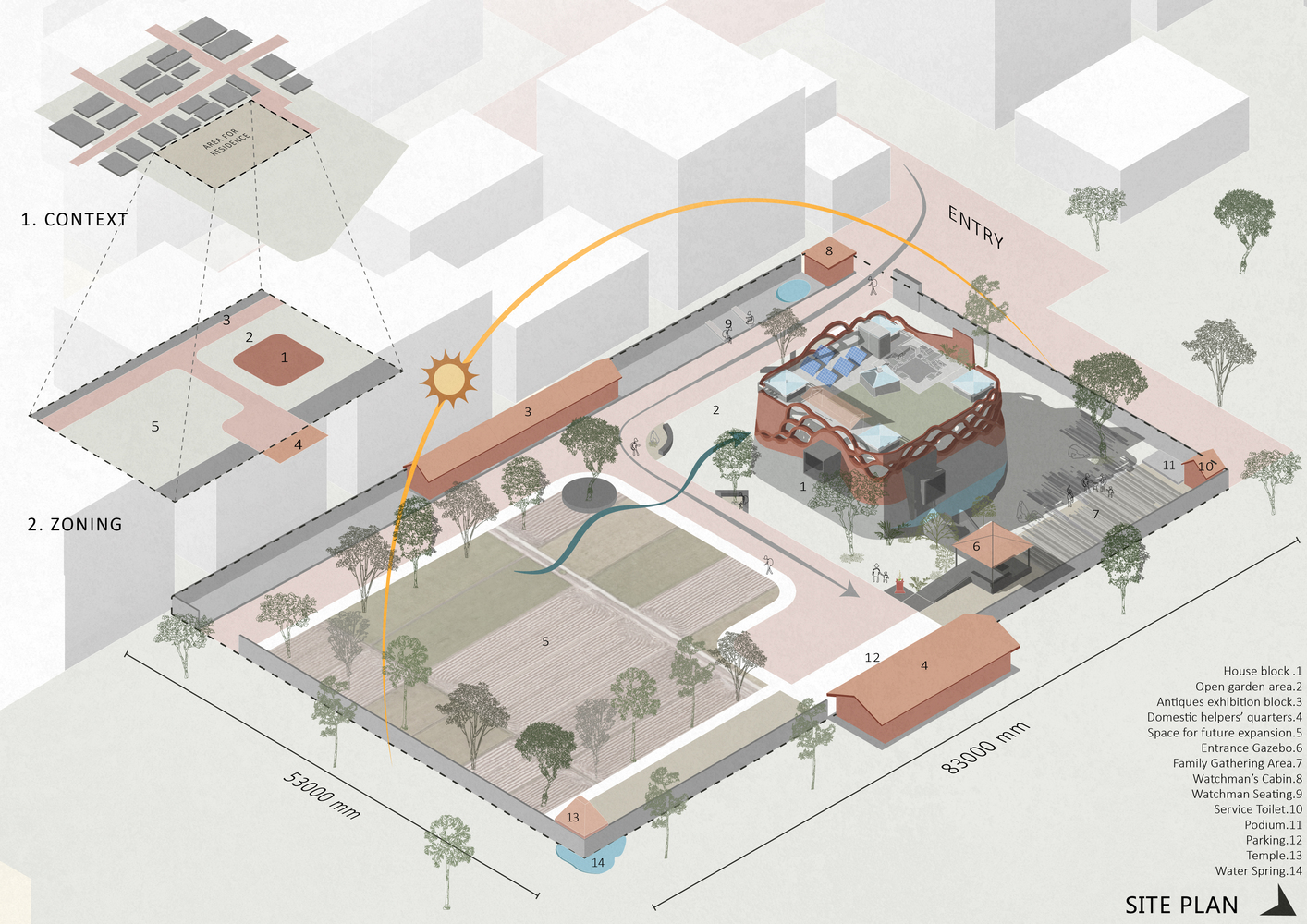
Accordingly, they wanted an architectural manifestation on a 1.2 acre of land, for their collective family to create an inward environment which will be independent and self-sustain its existence.
CONCEPT
Thereby in its very principle, there is an attempt to find a link between the traditional understanding and the modern day life.
The design philosophy draws inspiration from the regional house form called 'Gadi', its elements, spatial planning and details of ornamentations and fenestrations.
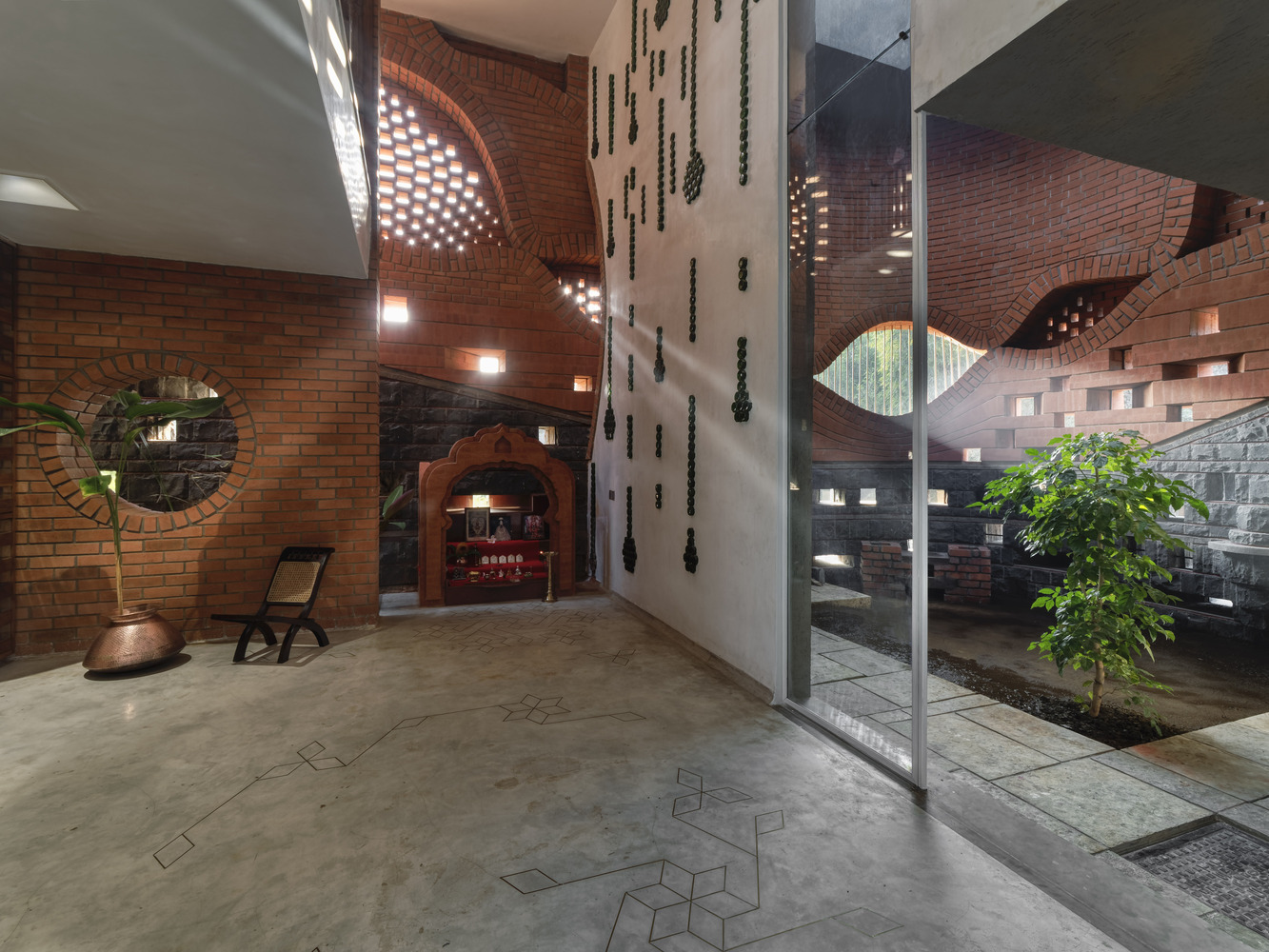
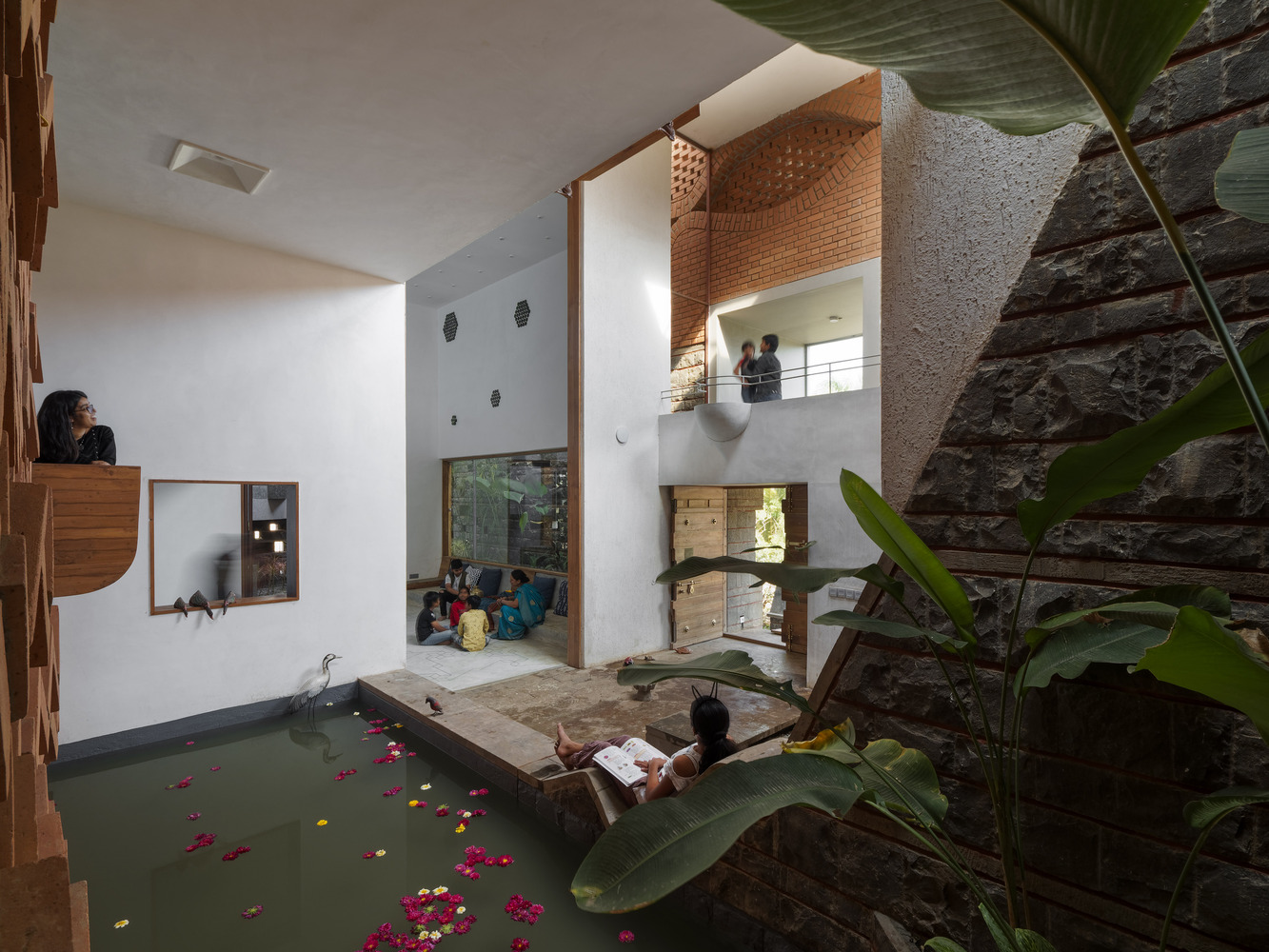
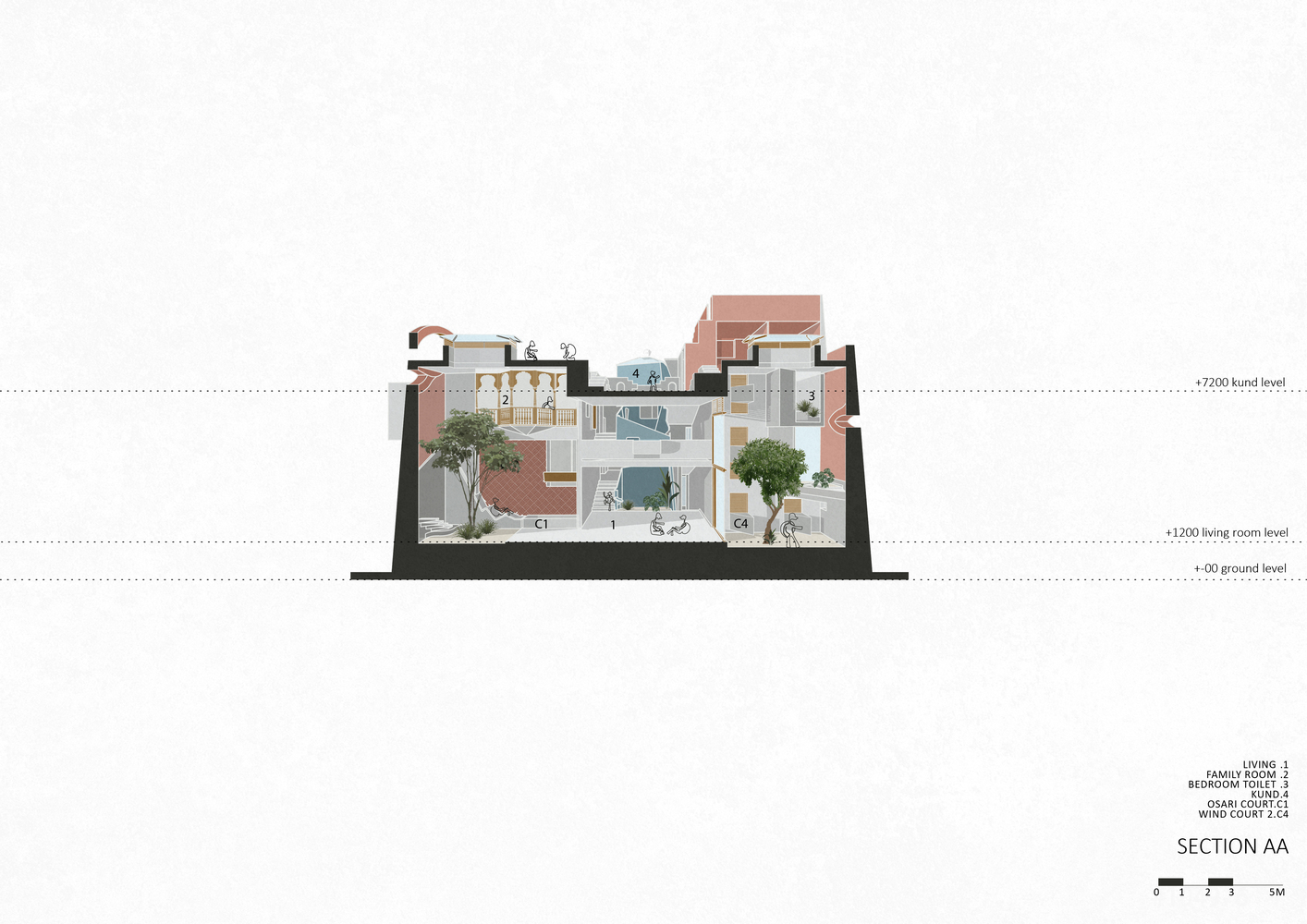
'A Gadi' is like a small fortress with thick walls secured from outside, with internal courts, balconies, common areas that create an interesting hierarchy of open, semi open and enclosed spaces.
All these elements are then redefined to find solutions that cater to the present modern needs and construction systems.
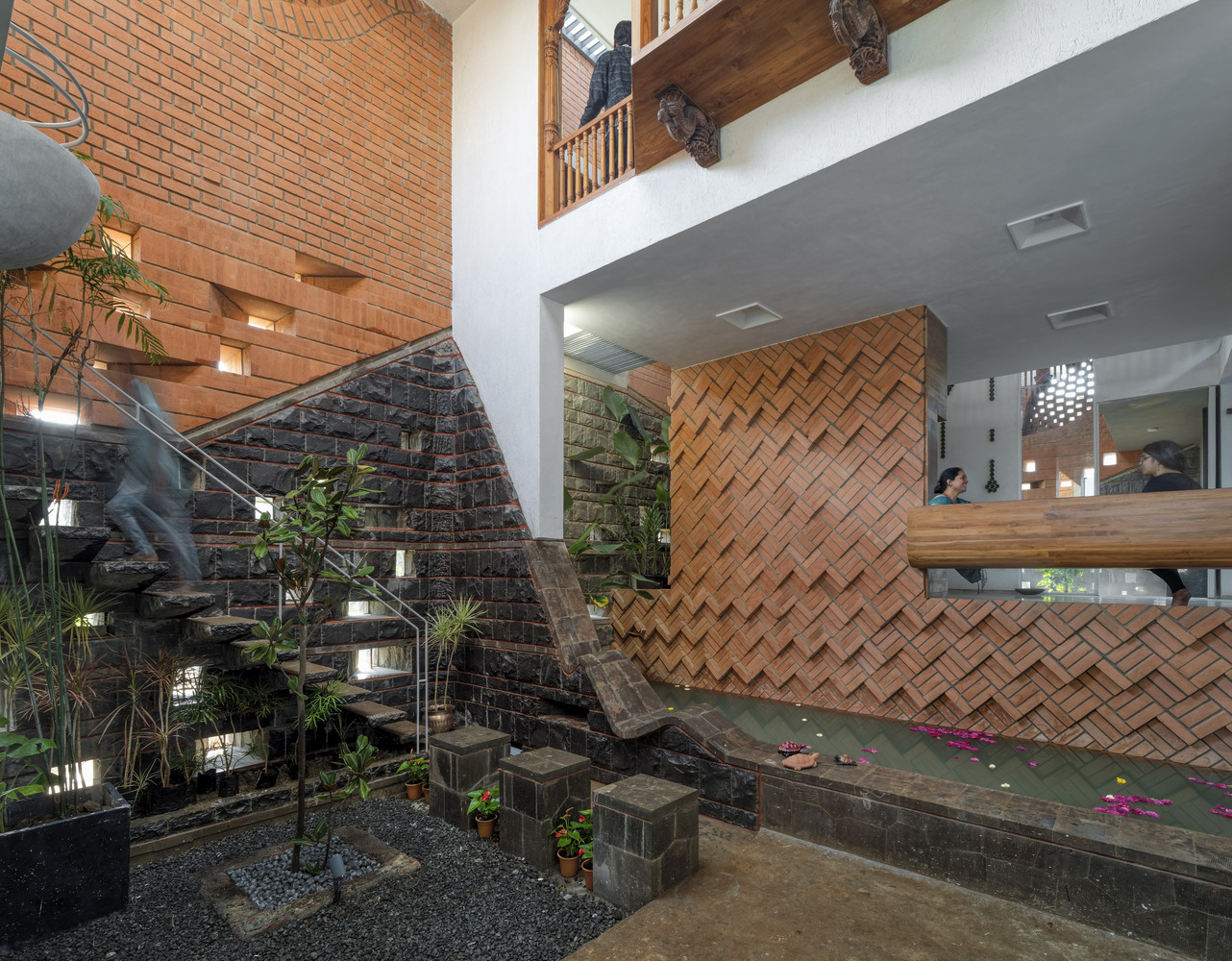
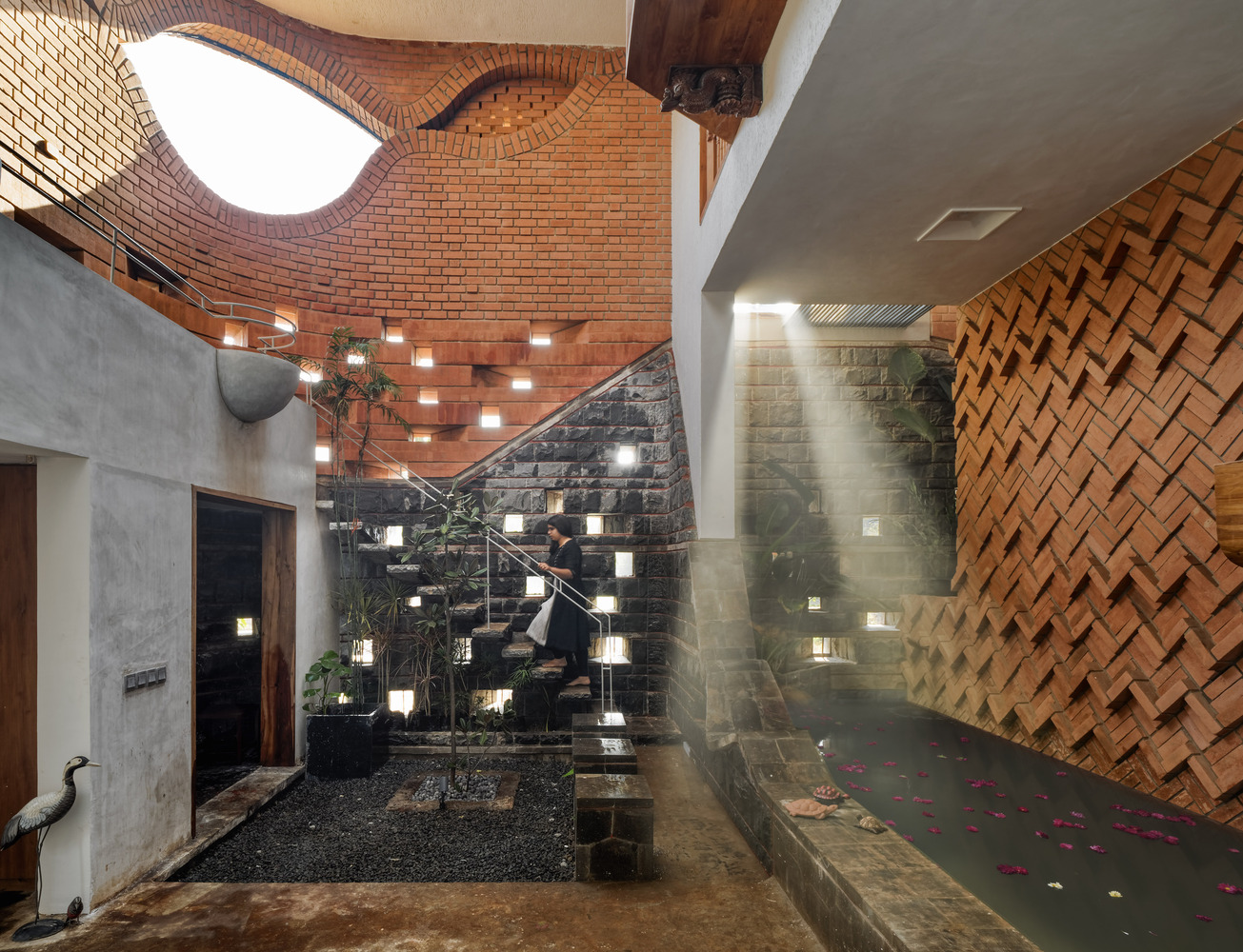
In this process, where architecture is serving the present needs while imbibing traditional understandings, the building then emerges as a timeless entity.
ORGANIZATION
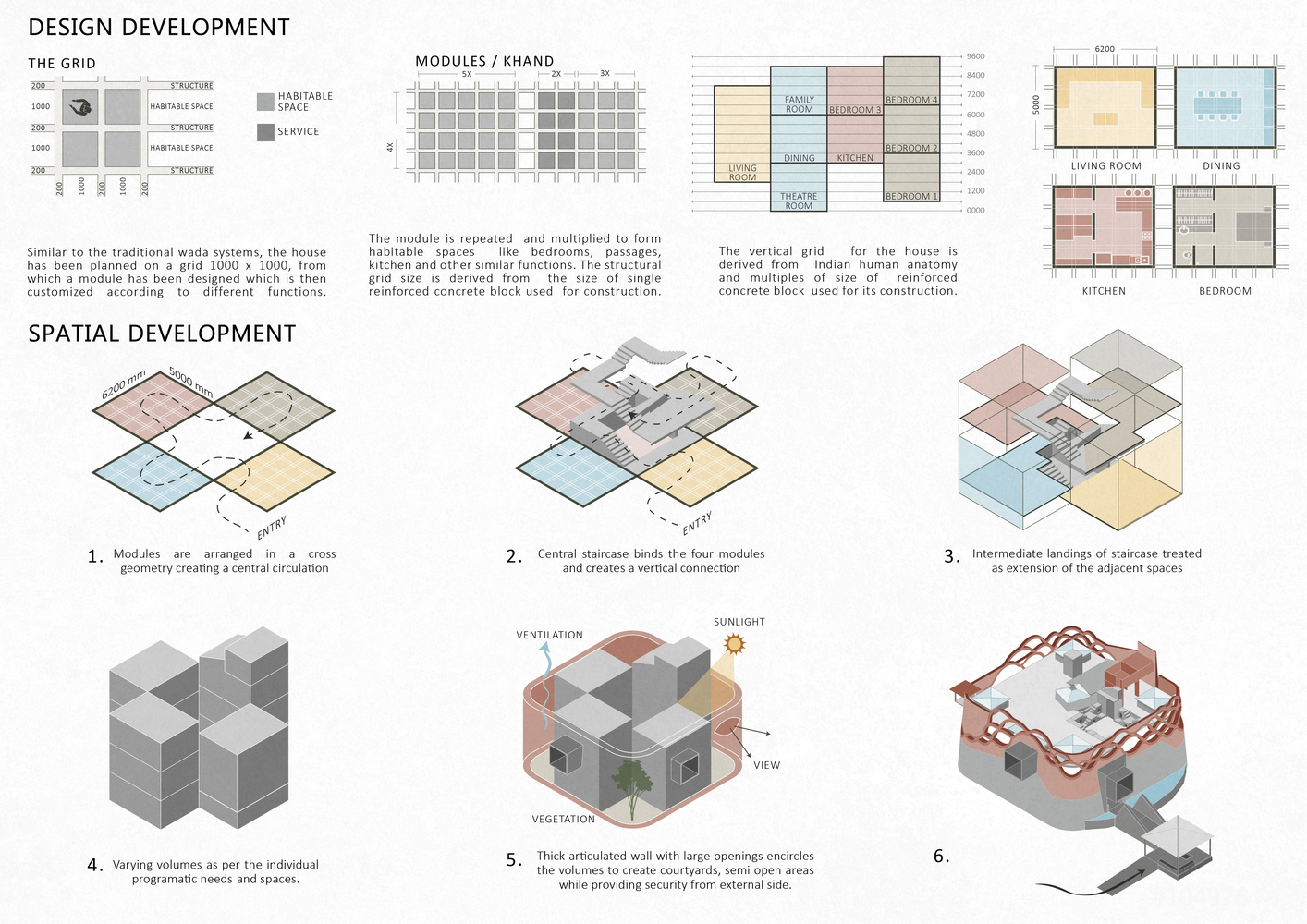
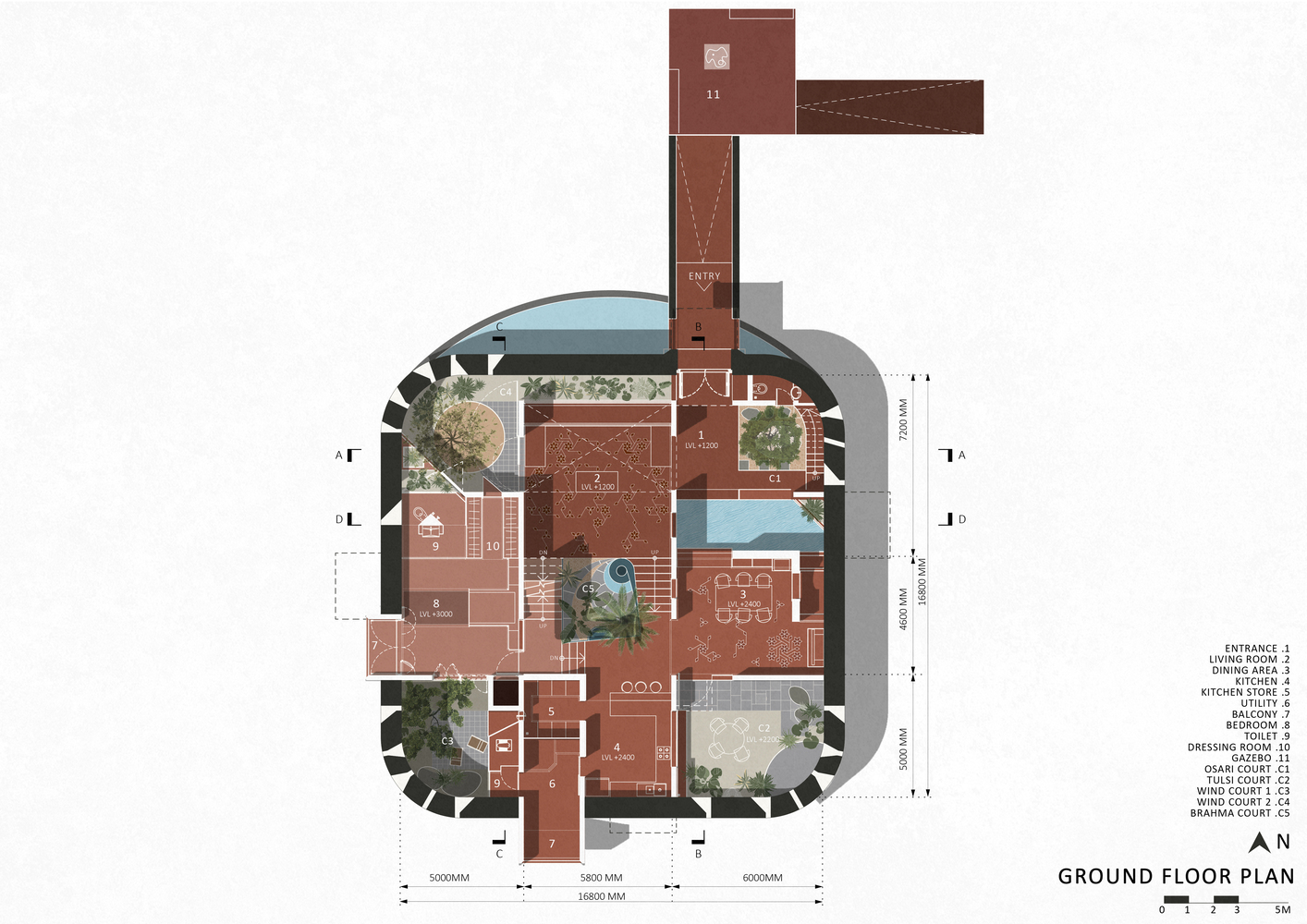
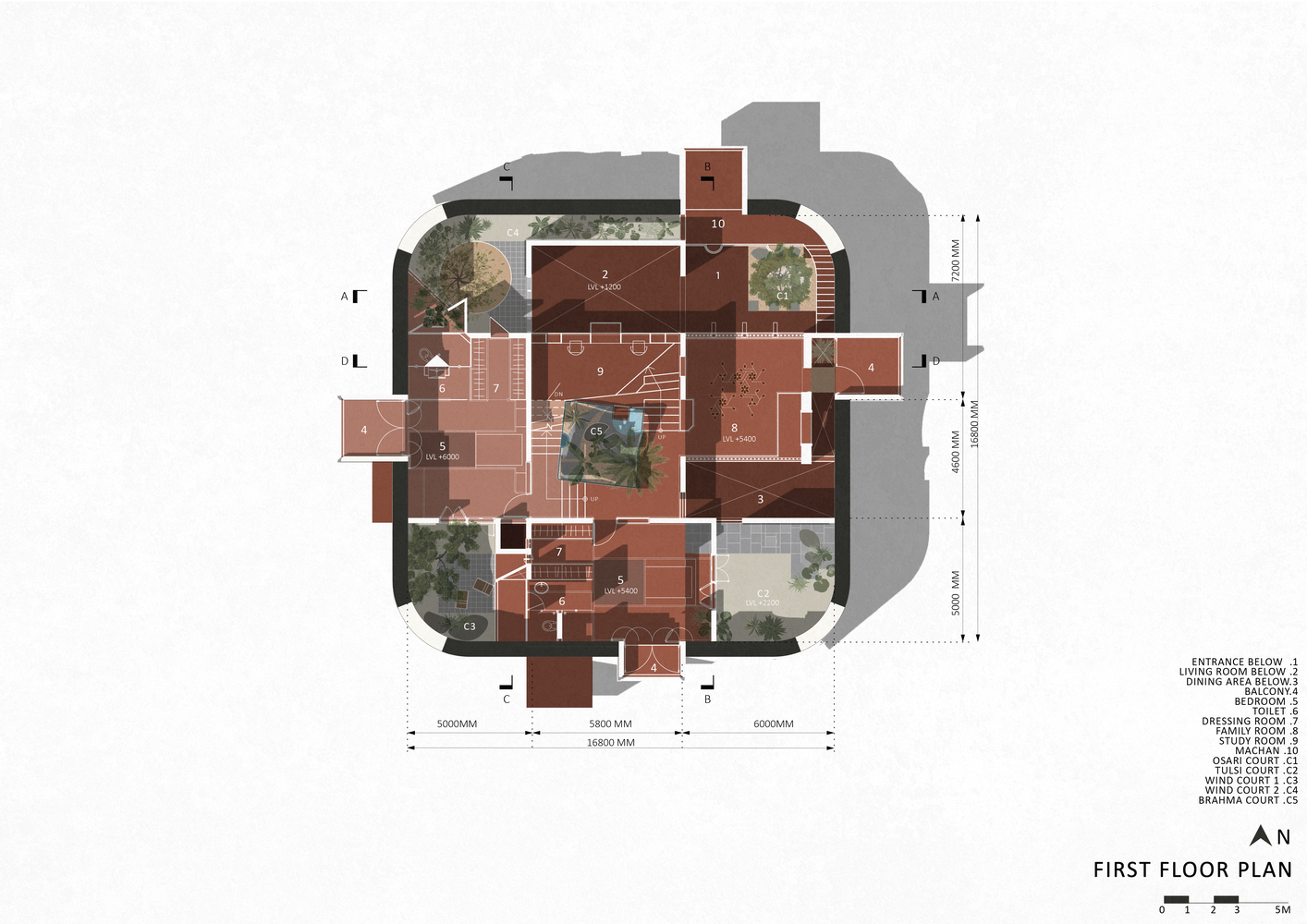
The spatial organization is inspired from the 'Khand' – a module derived from functional space required for a single person in traditional architecture, where a set of proportions and grid have been put in place, that can be modified with different spaces and their purpose.
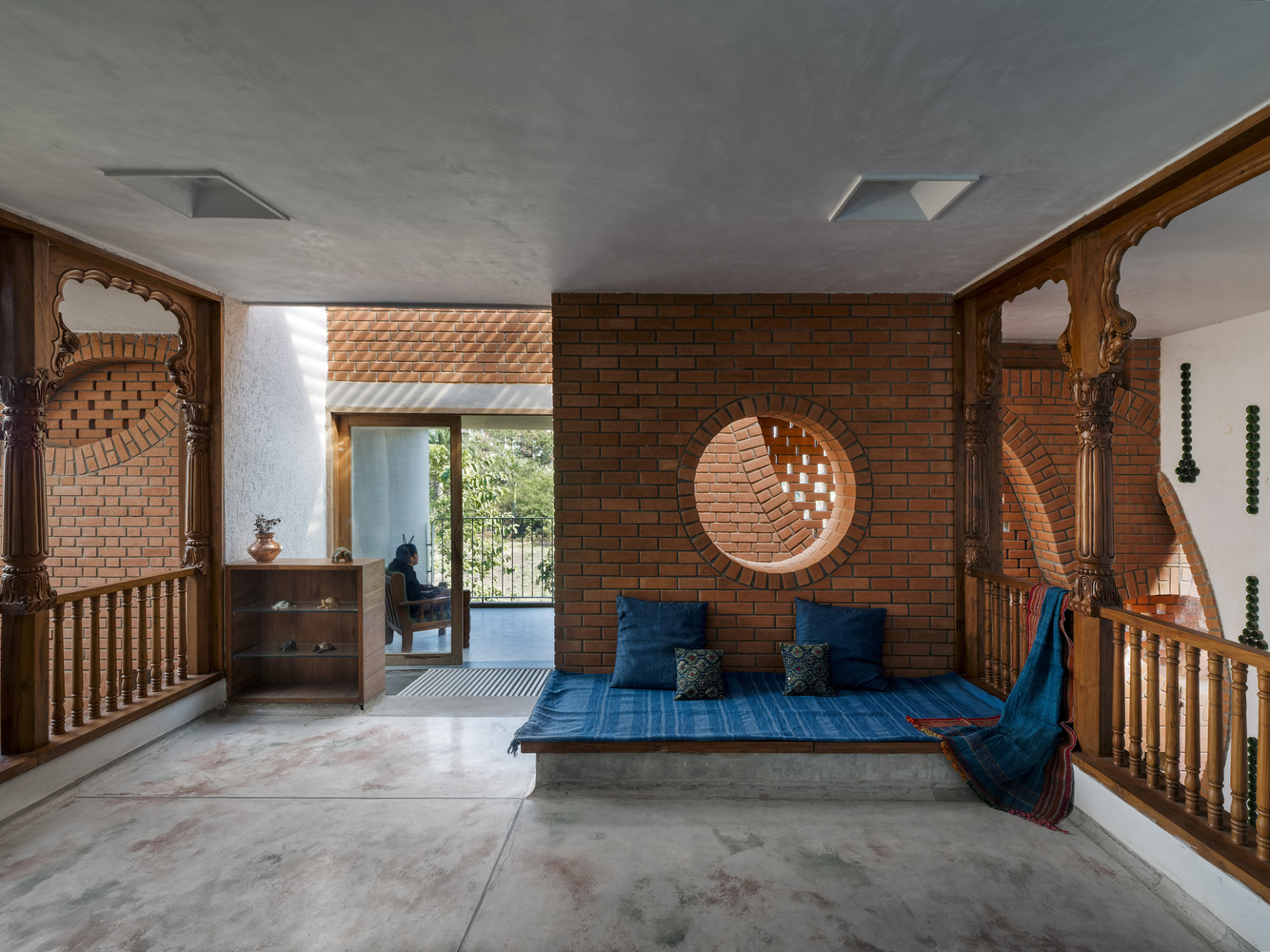
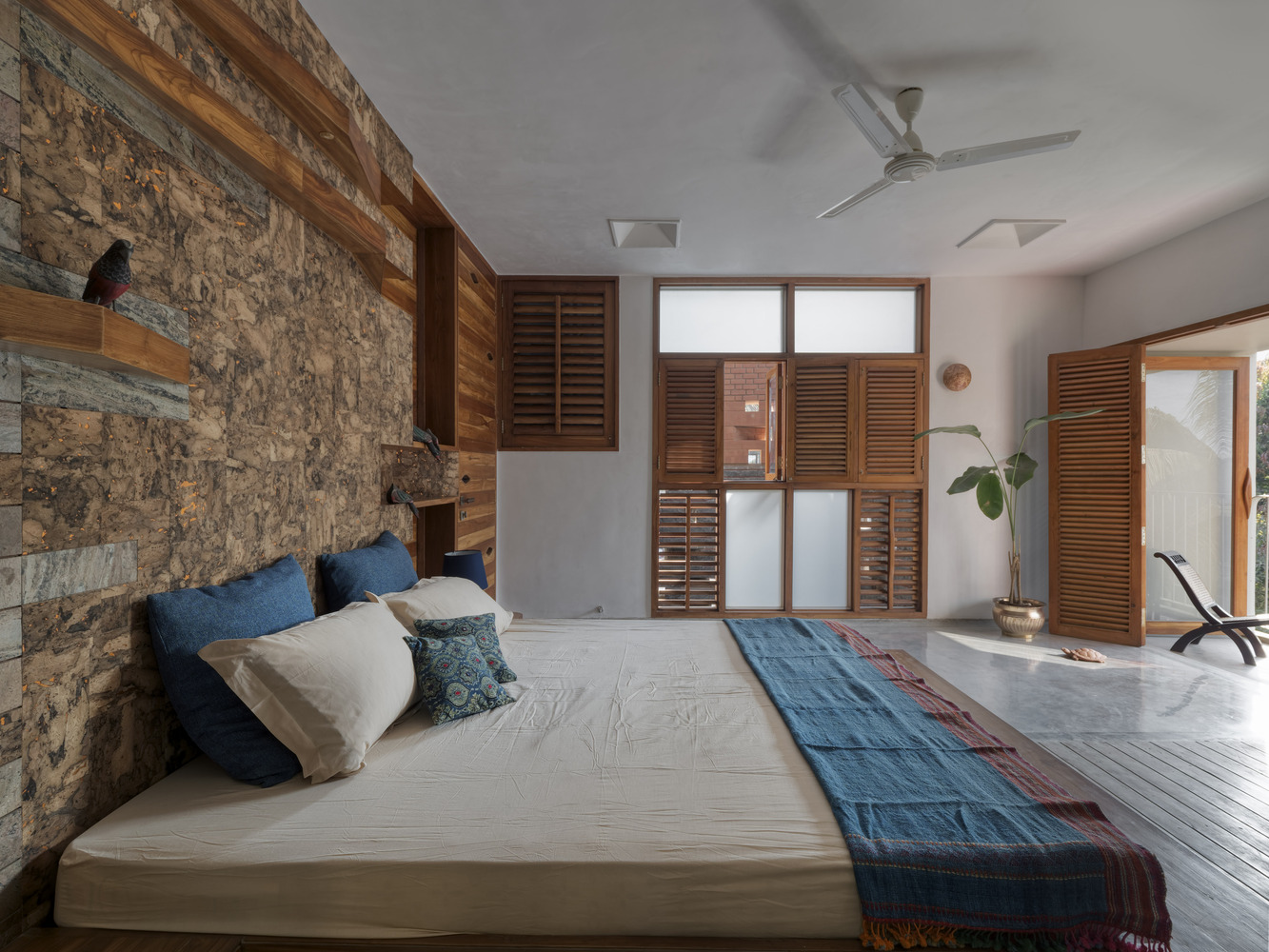
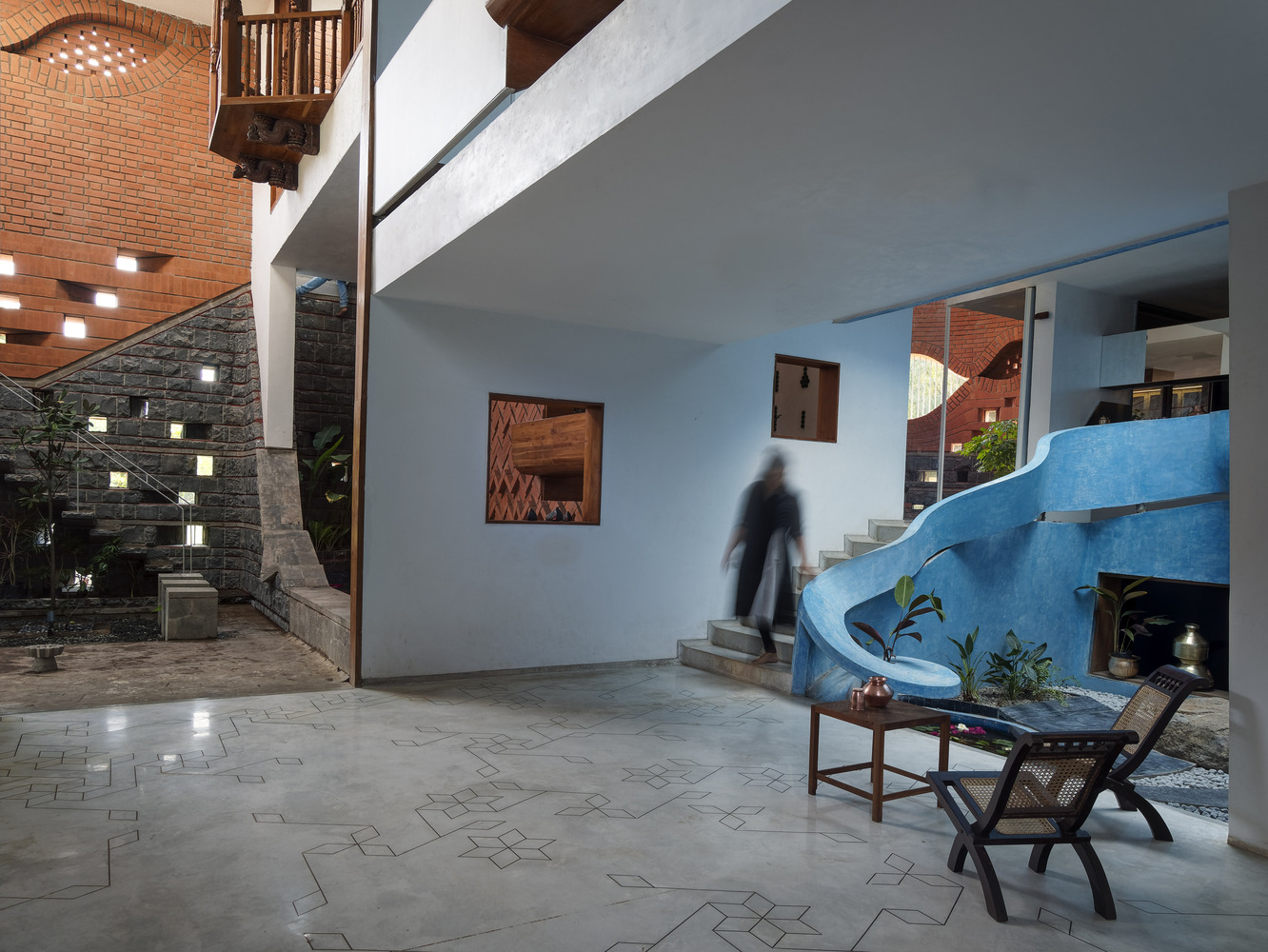
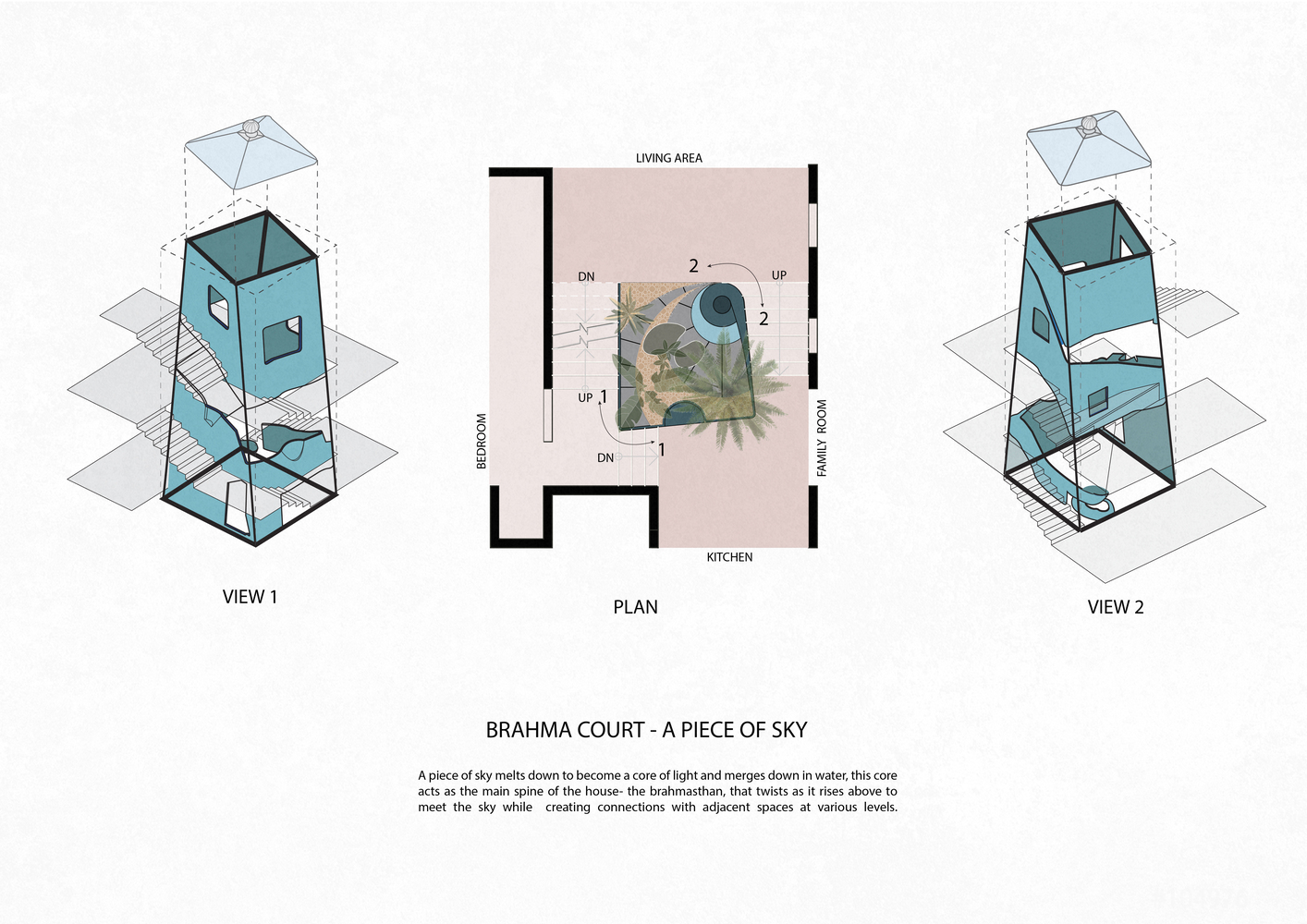
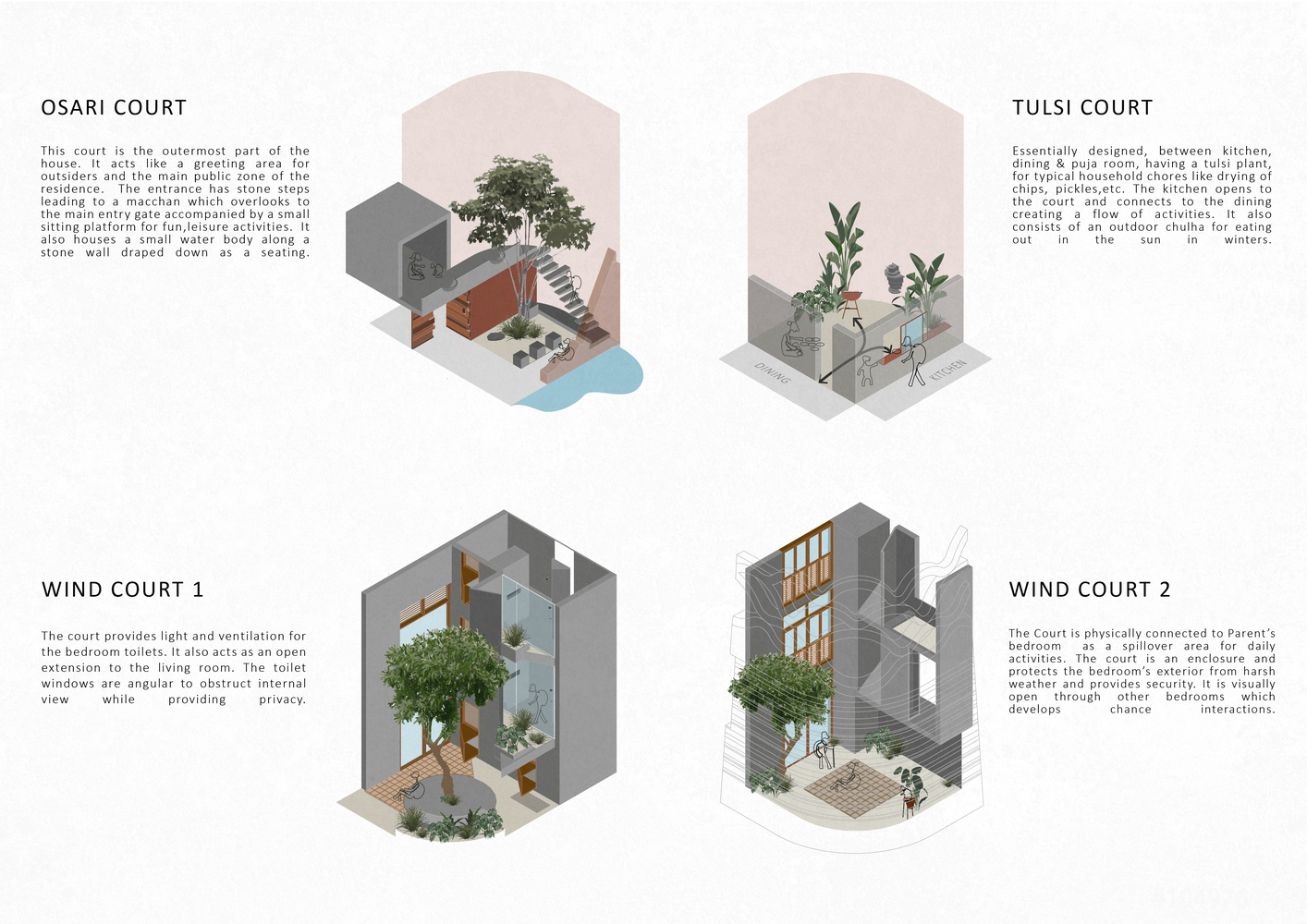
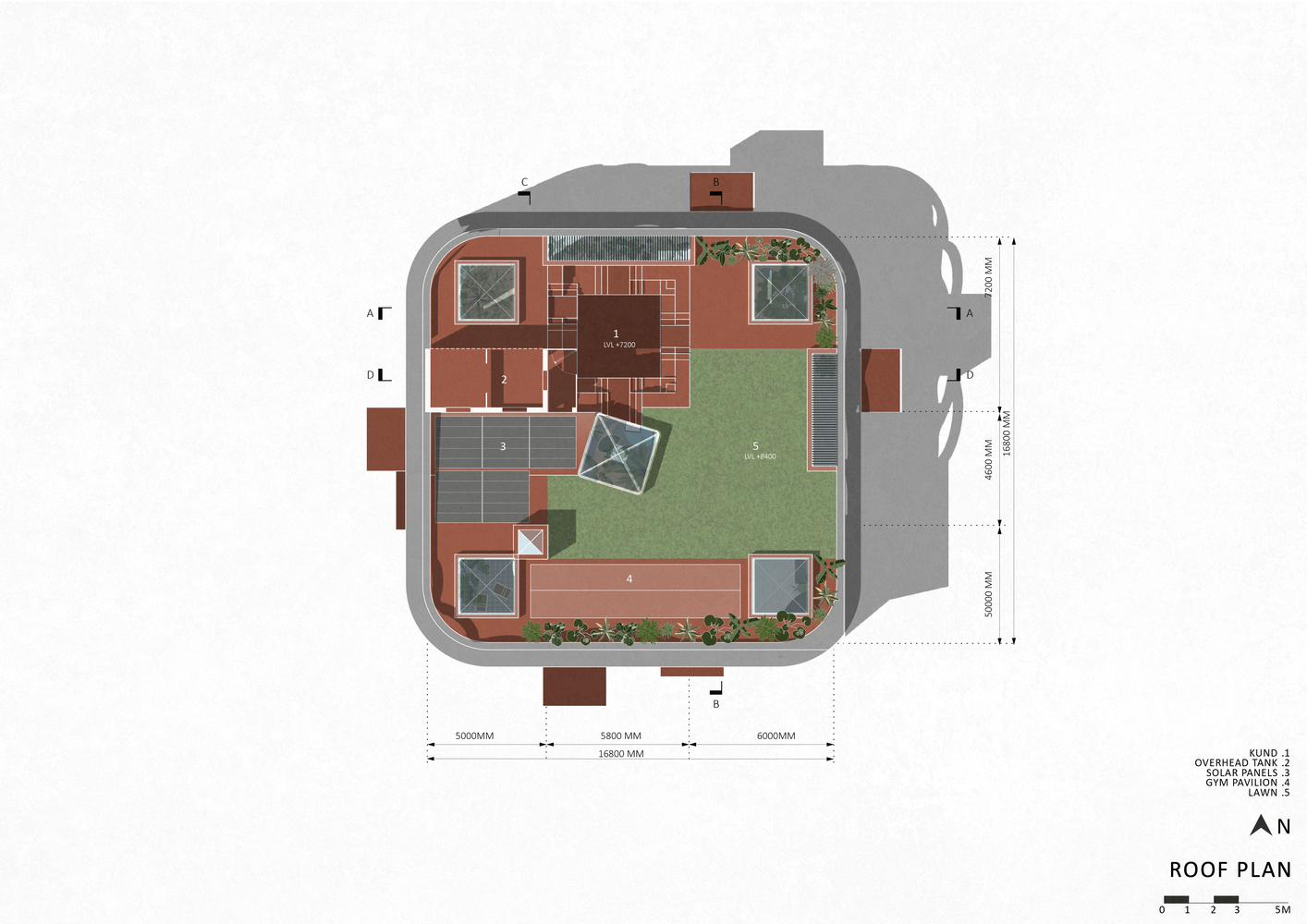
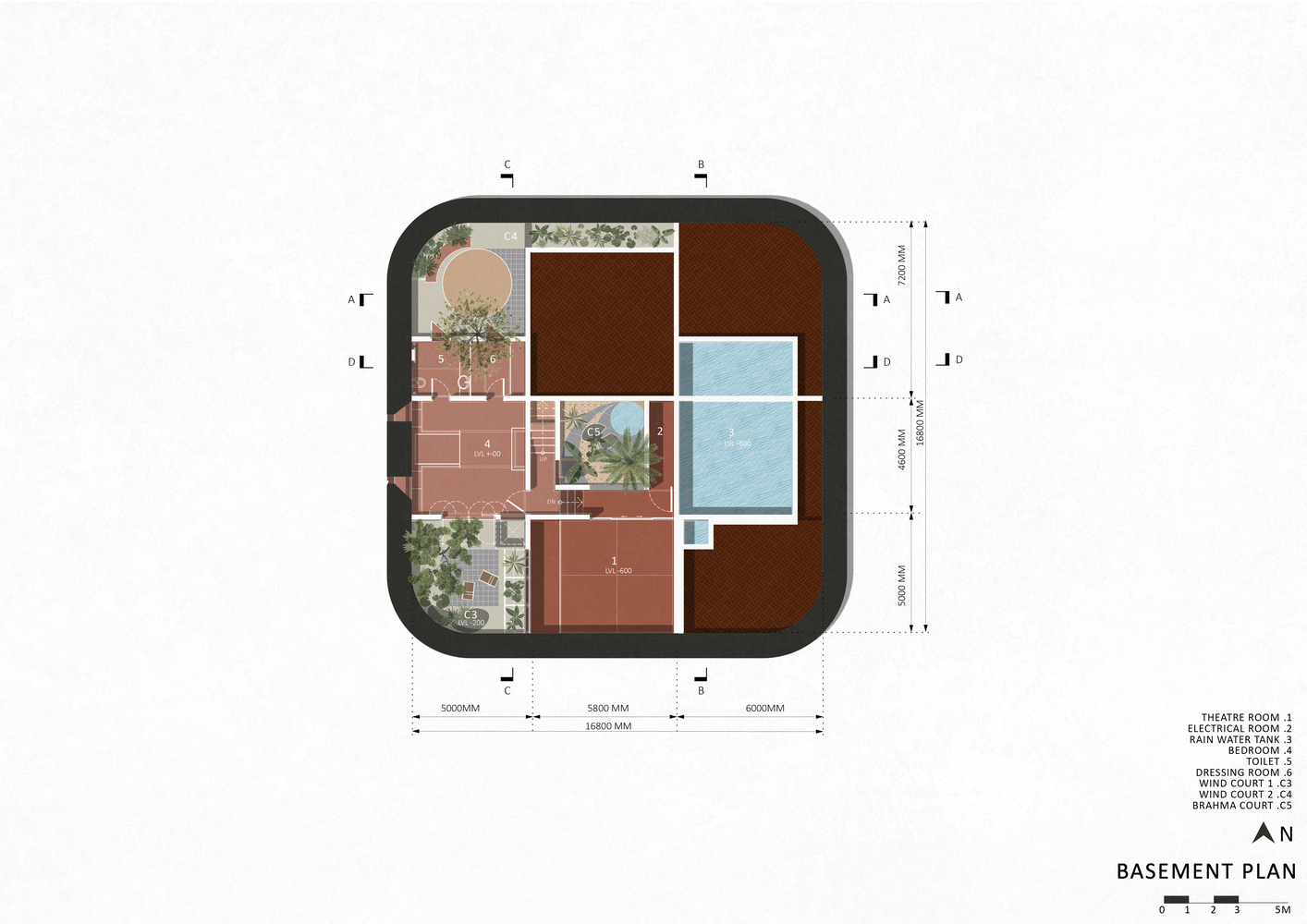
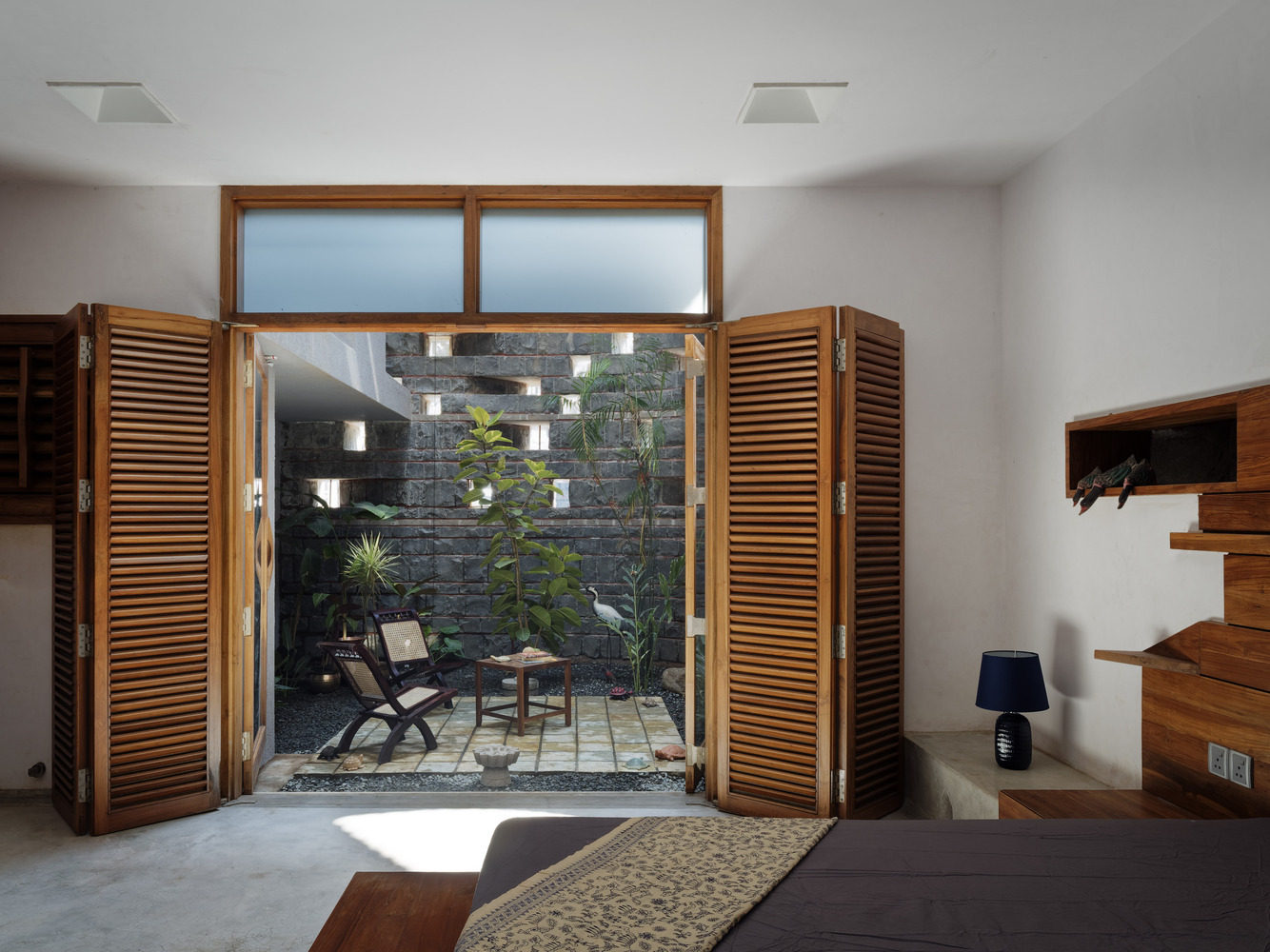
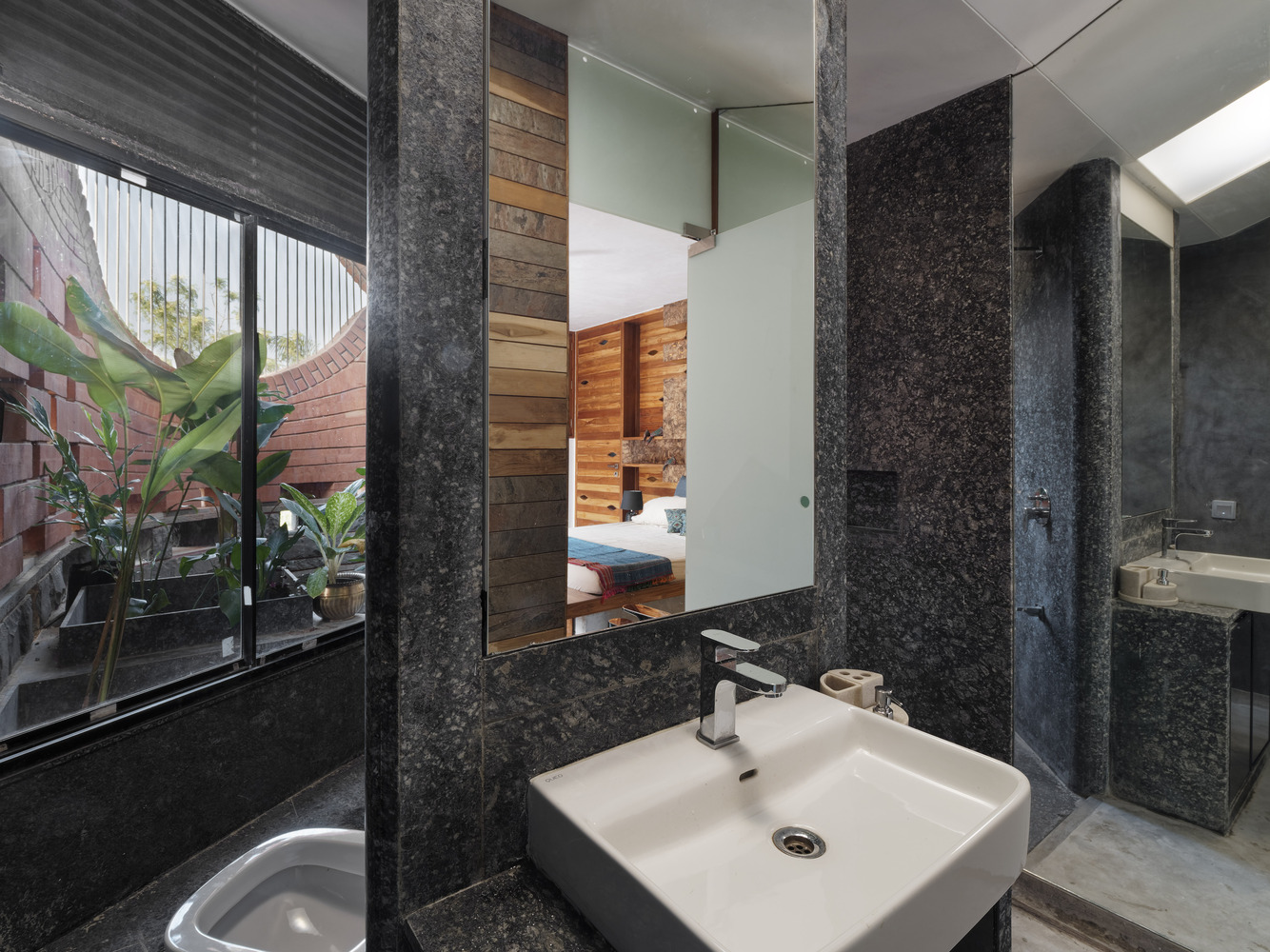
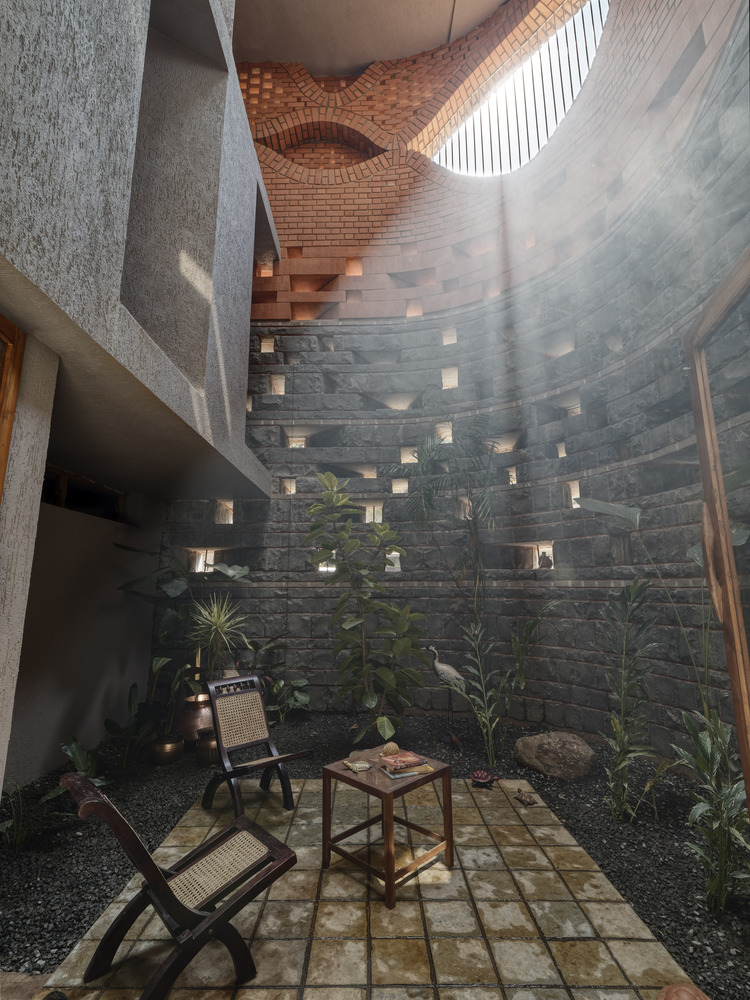
These modules are then arranged in a cruciform, retaining the corners as breather extensions that are open to the sky and specifically articulated to create different experiences and cater individual functions.
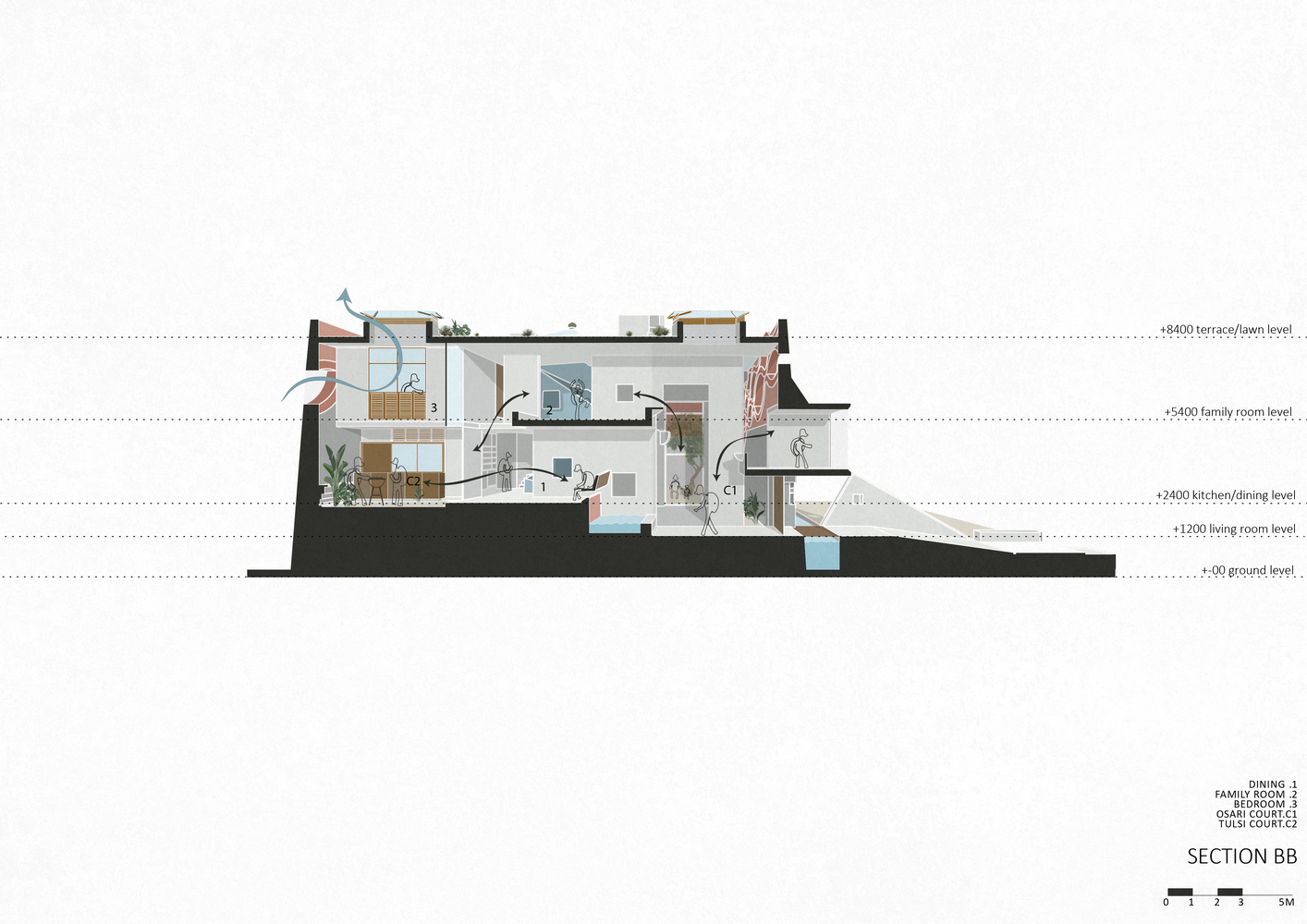
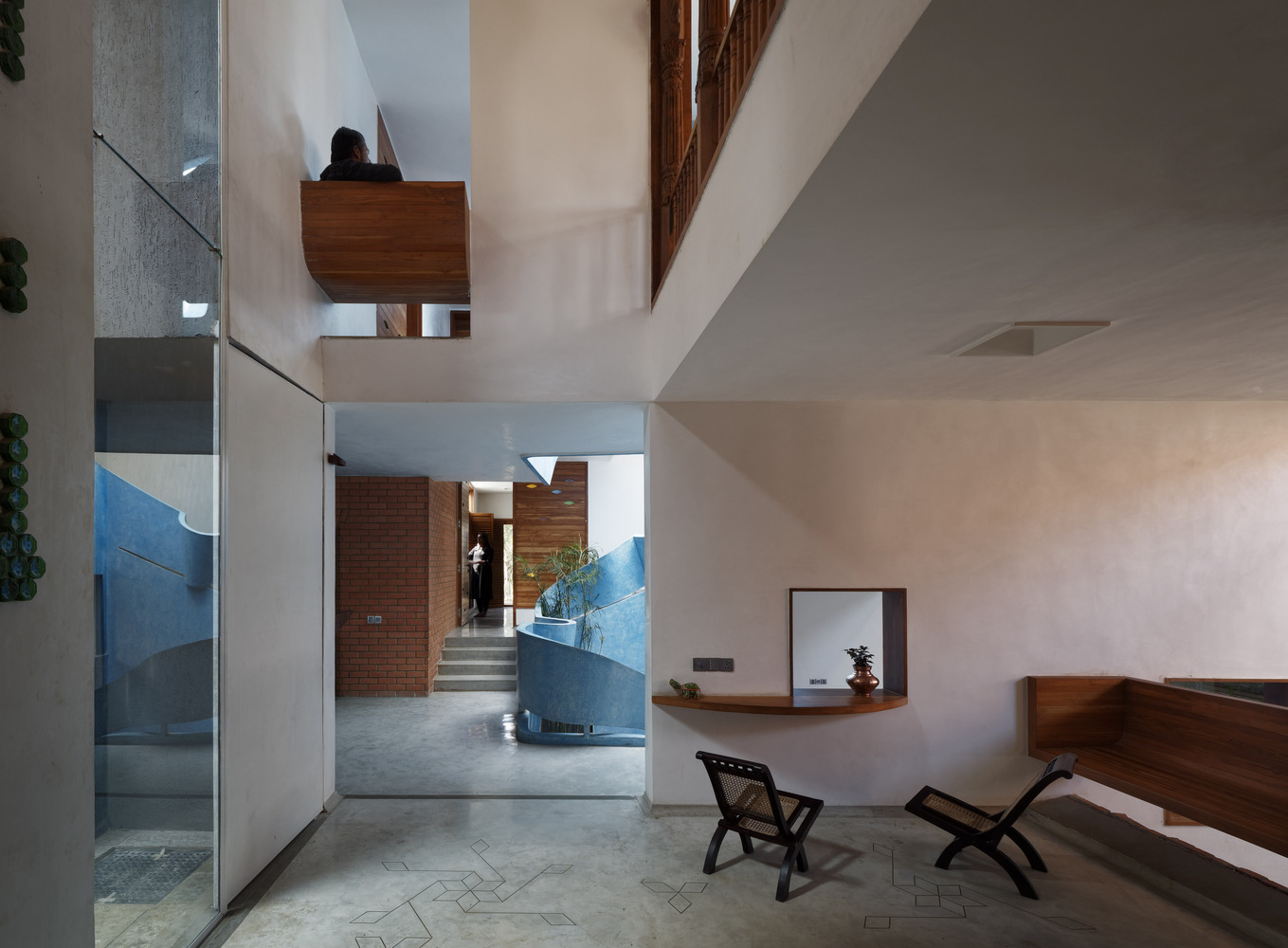
Further these modules transform as ascending volumes into levels that are transitioned with steps morphing along the functions and are bound together as amorphous entities into the vertical space.
ENVELOP
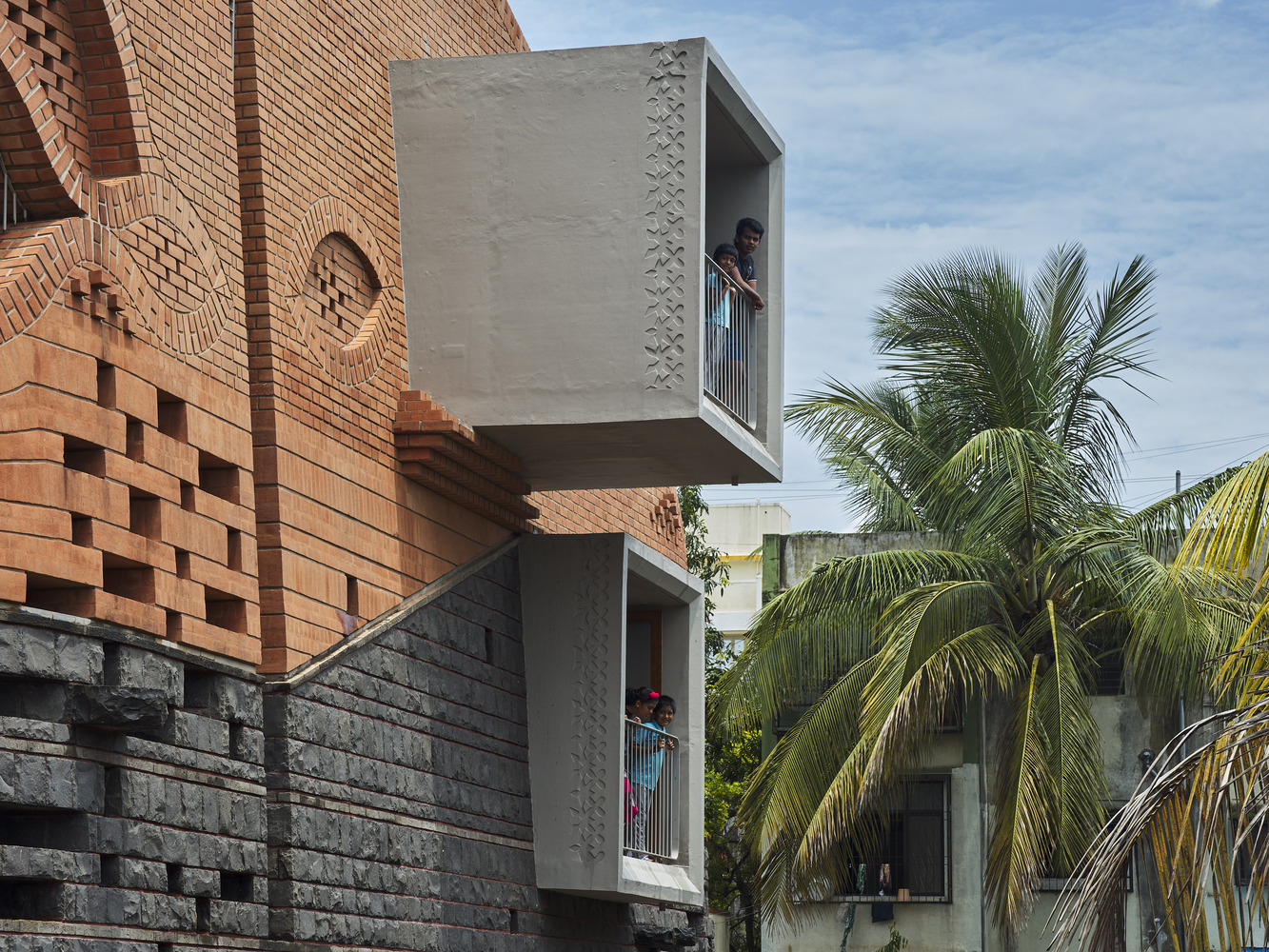
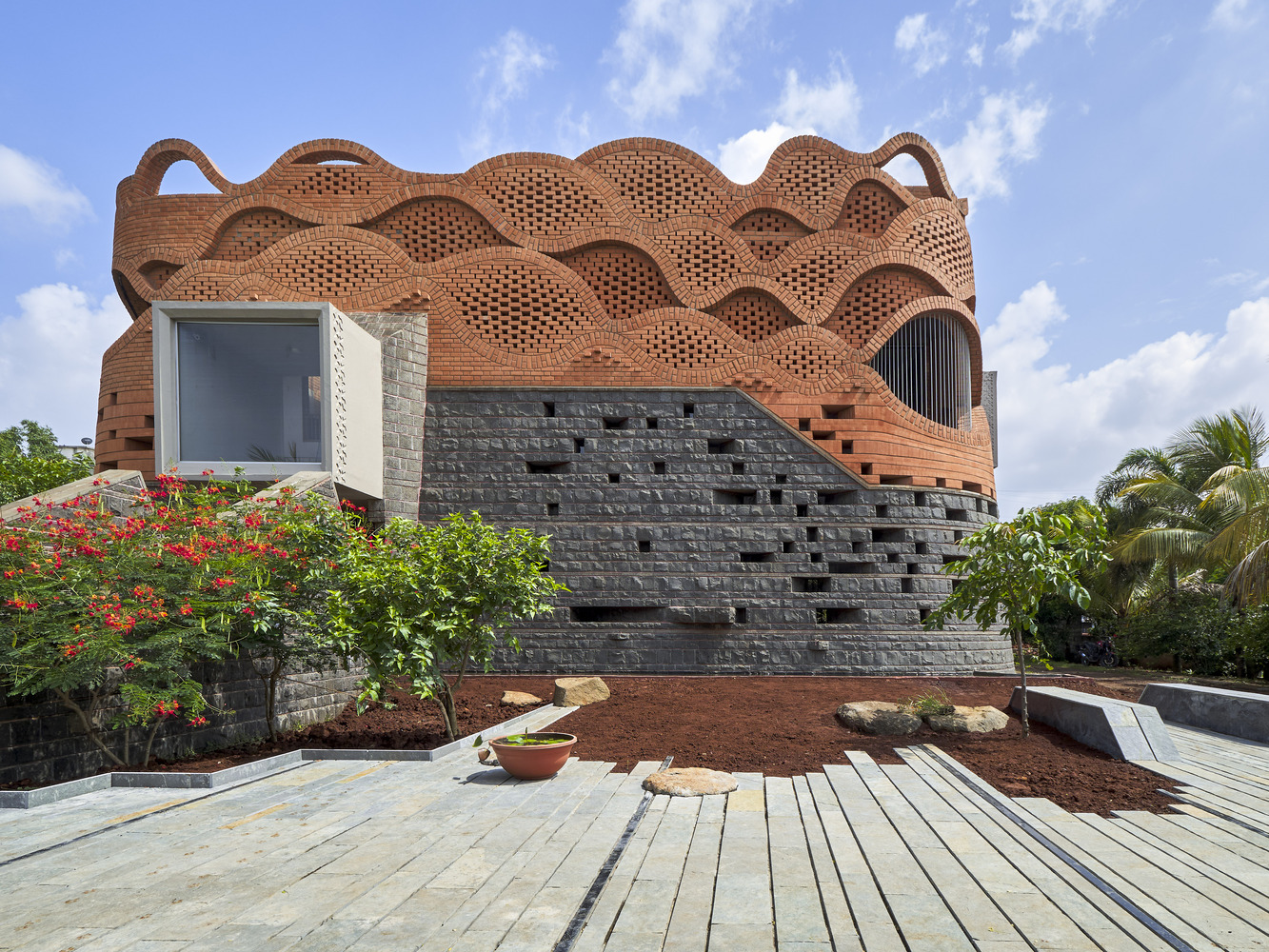
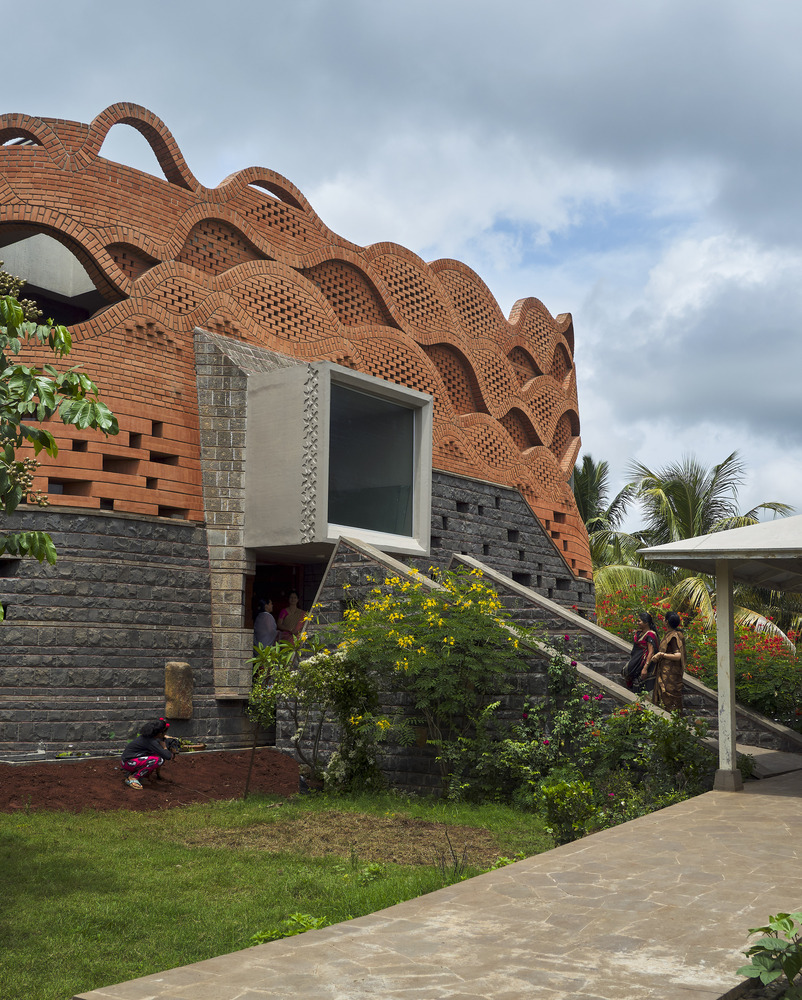
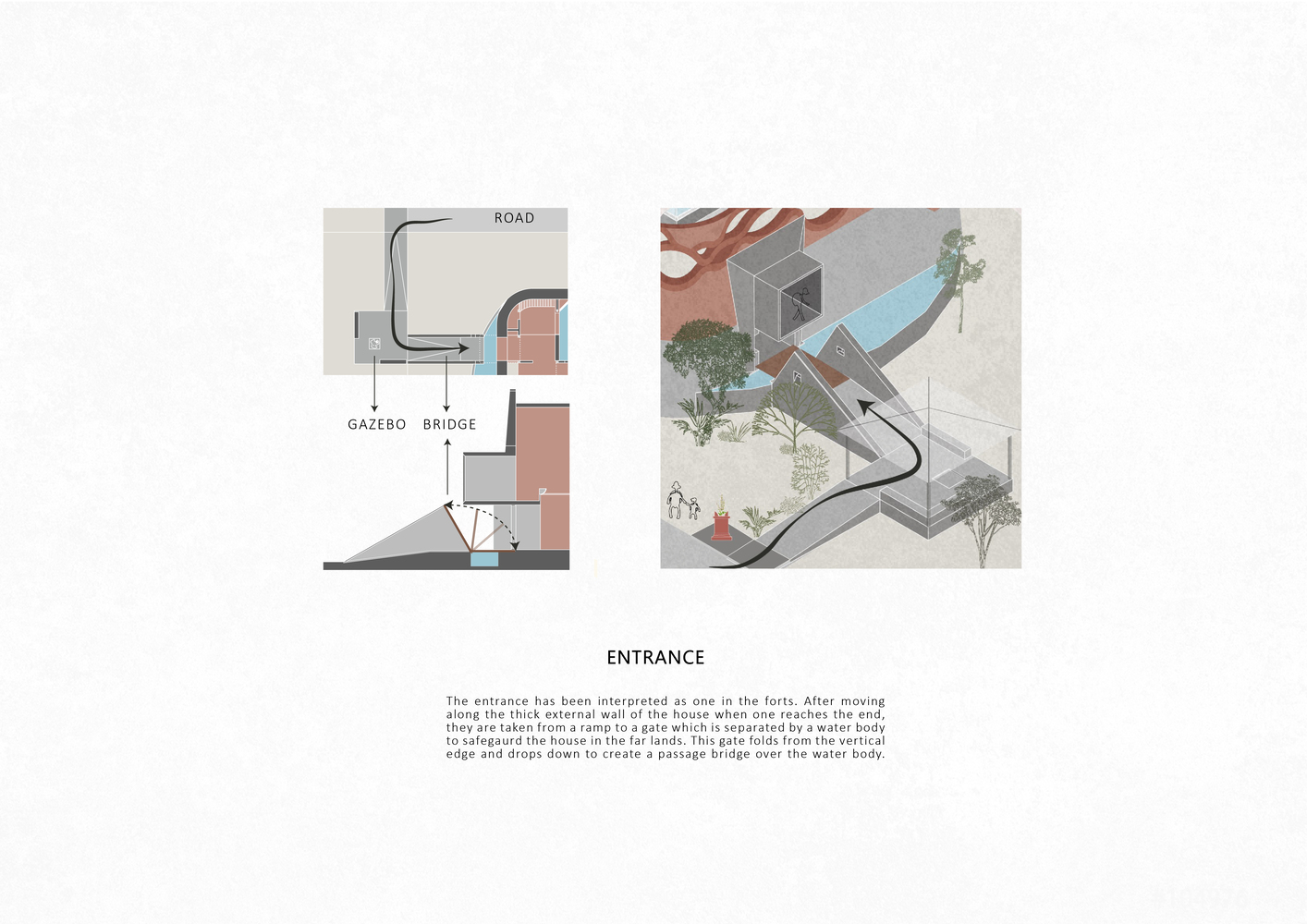
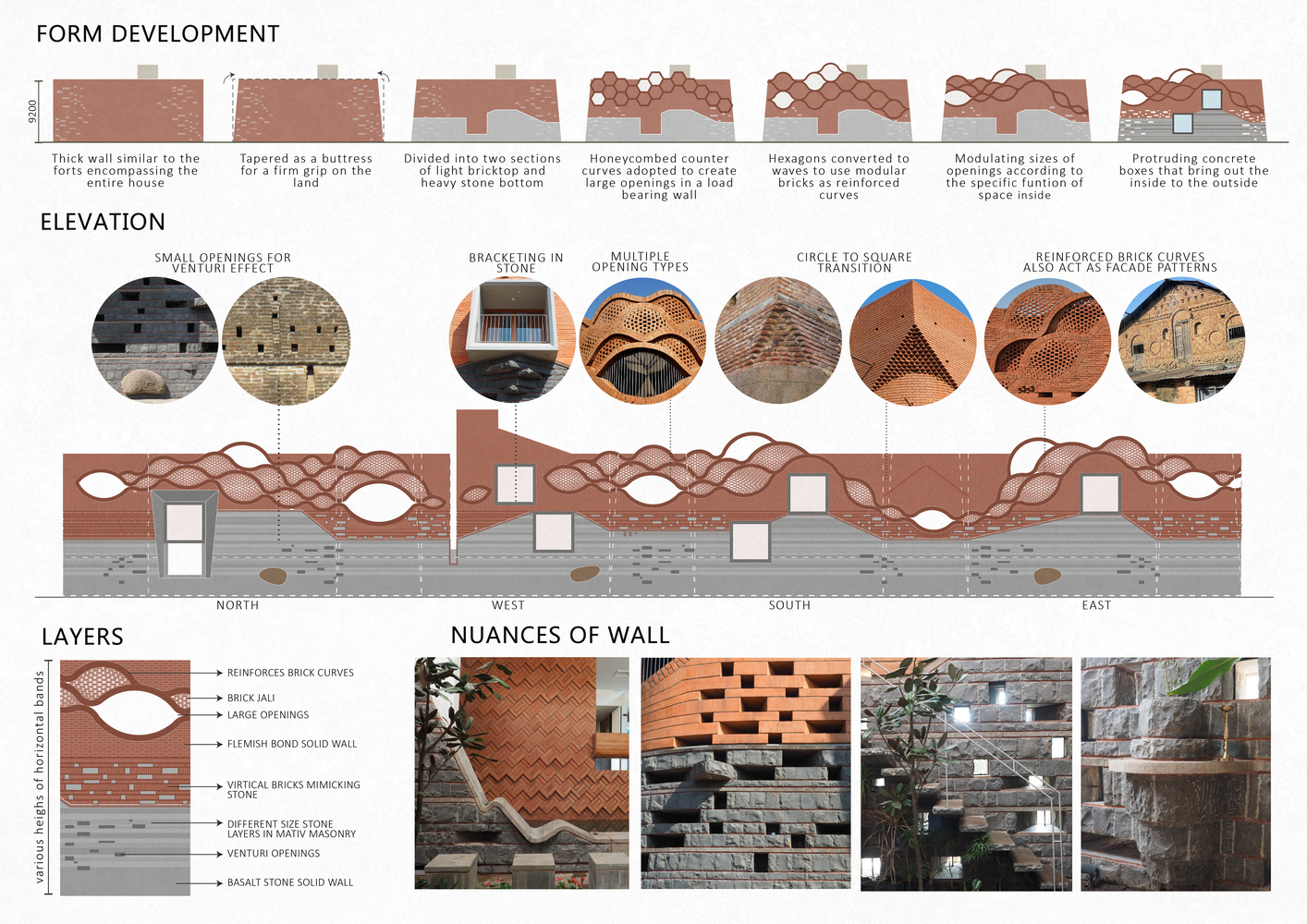
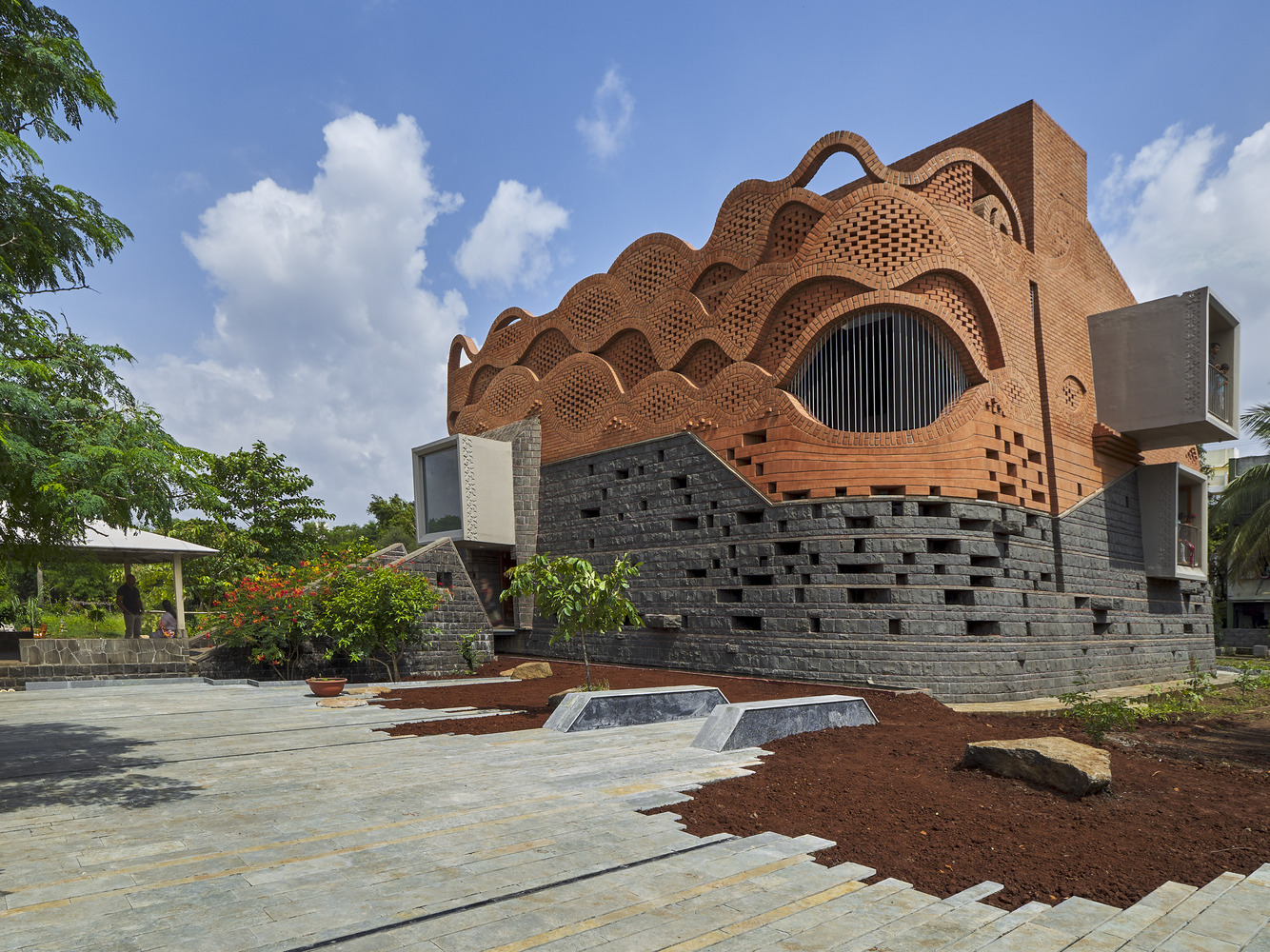
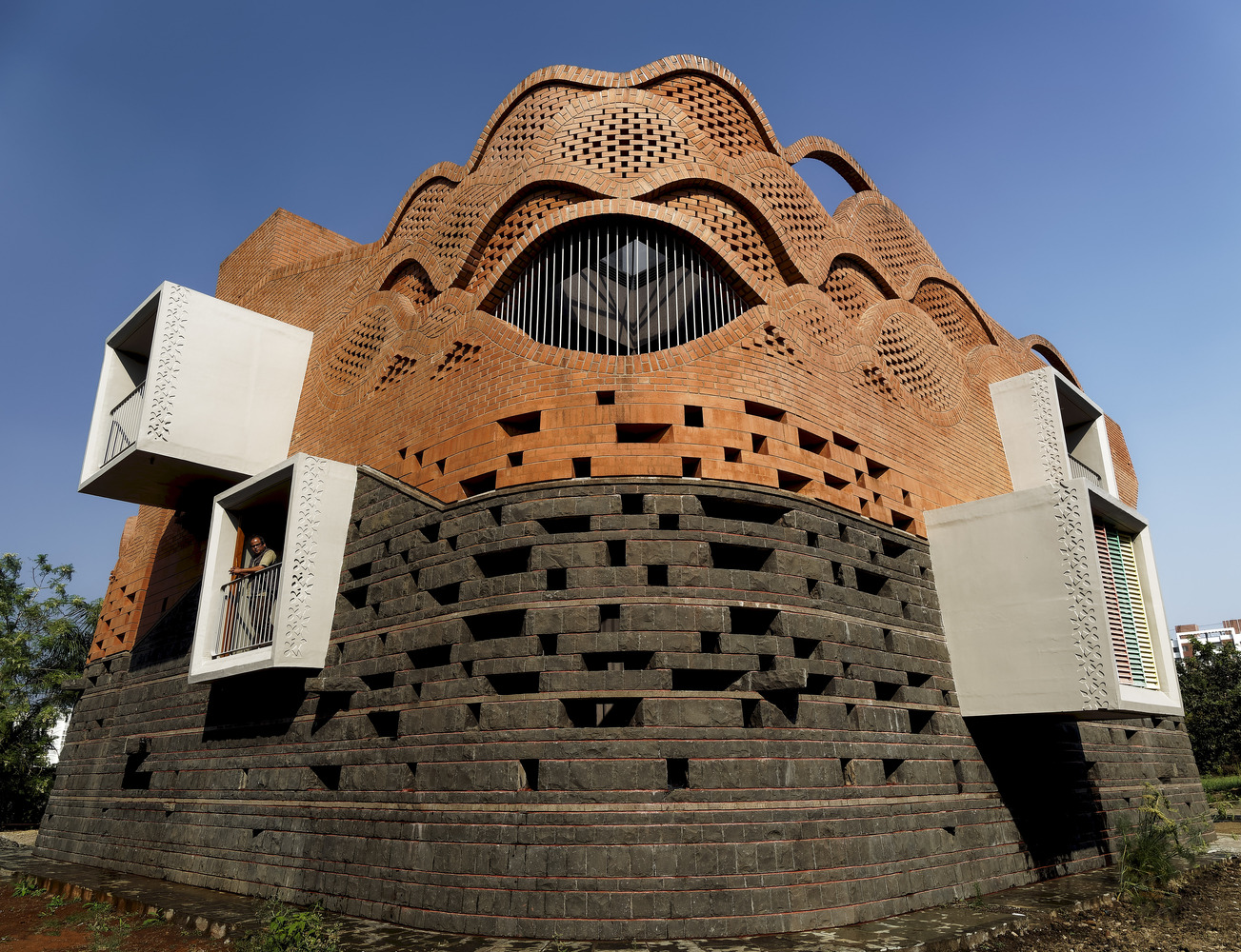
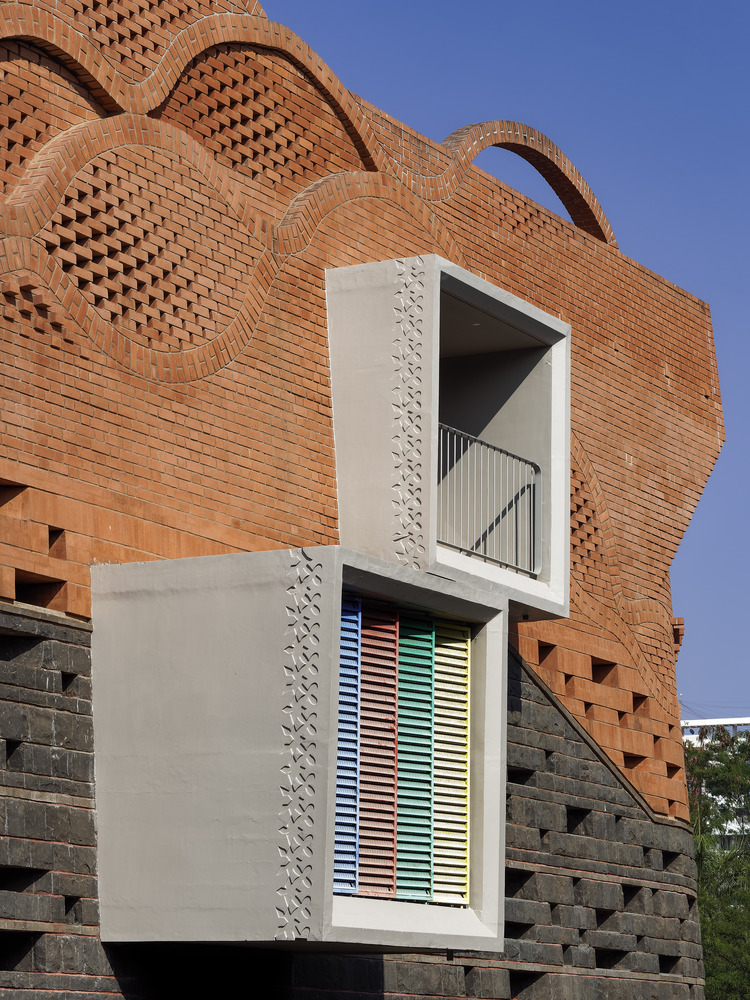
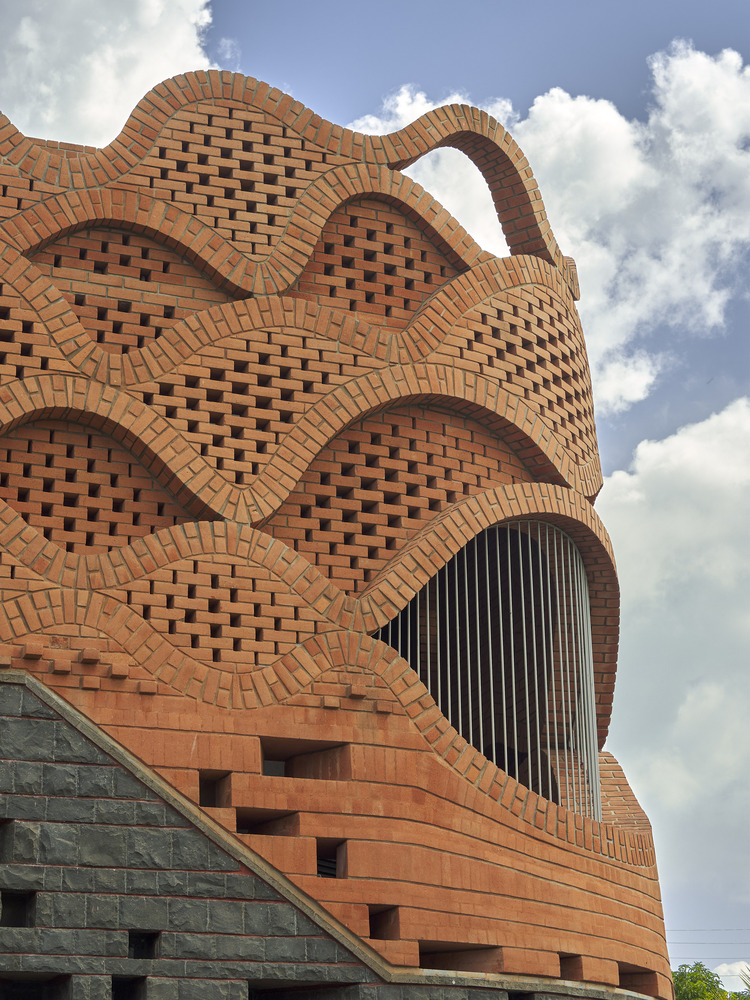
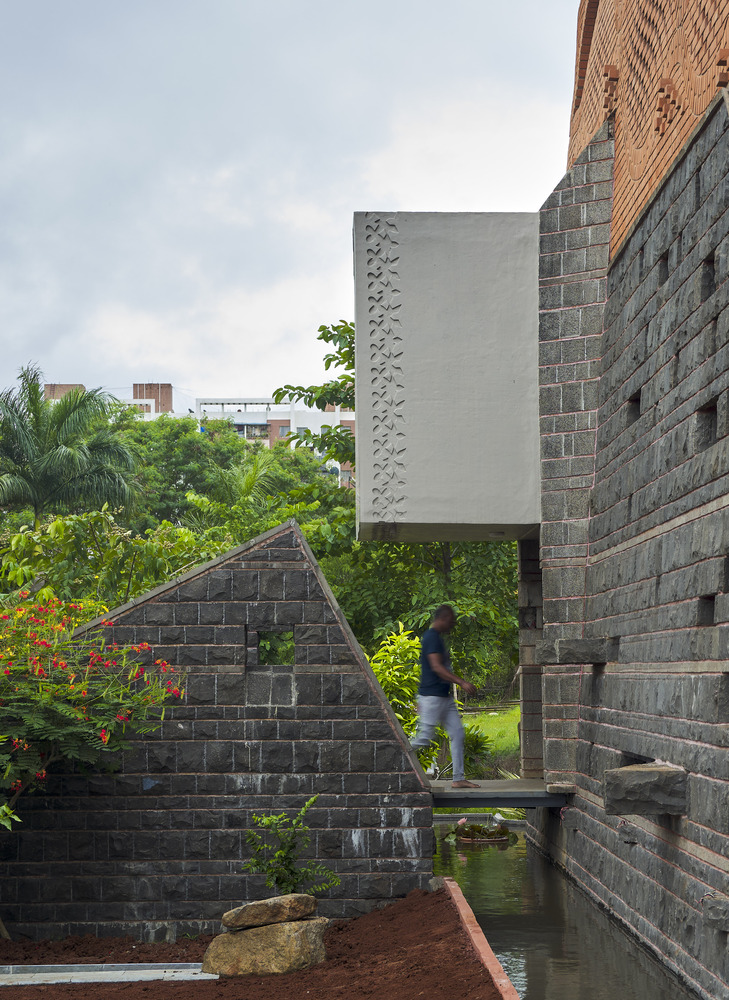
The form originates with the idea of a 'Gadi' (land fortress), a thick wall made from stone and brick encompassing the house to provide security in the far lands but within itself, celebrating the nuances of life.
The material and aesthetic characteristics of stone and brick are considered with the traditional understandings while designing the fortress. The structural characteristics of brick and stone are considered with respect to traditional understanding.
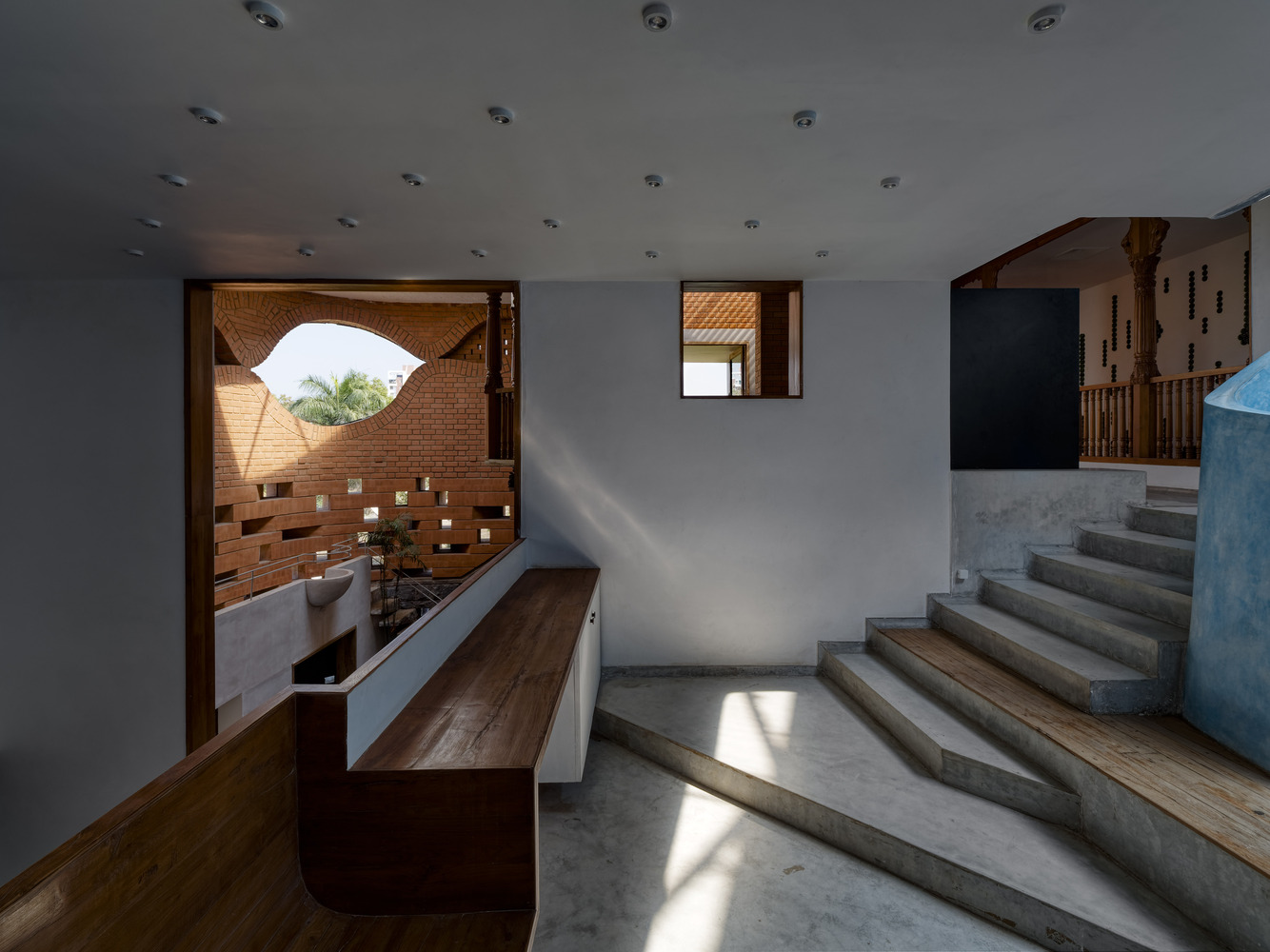
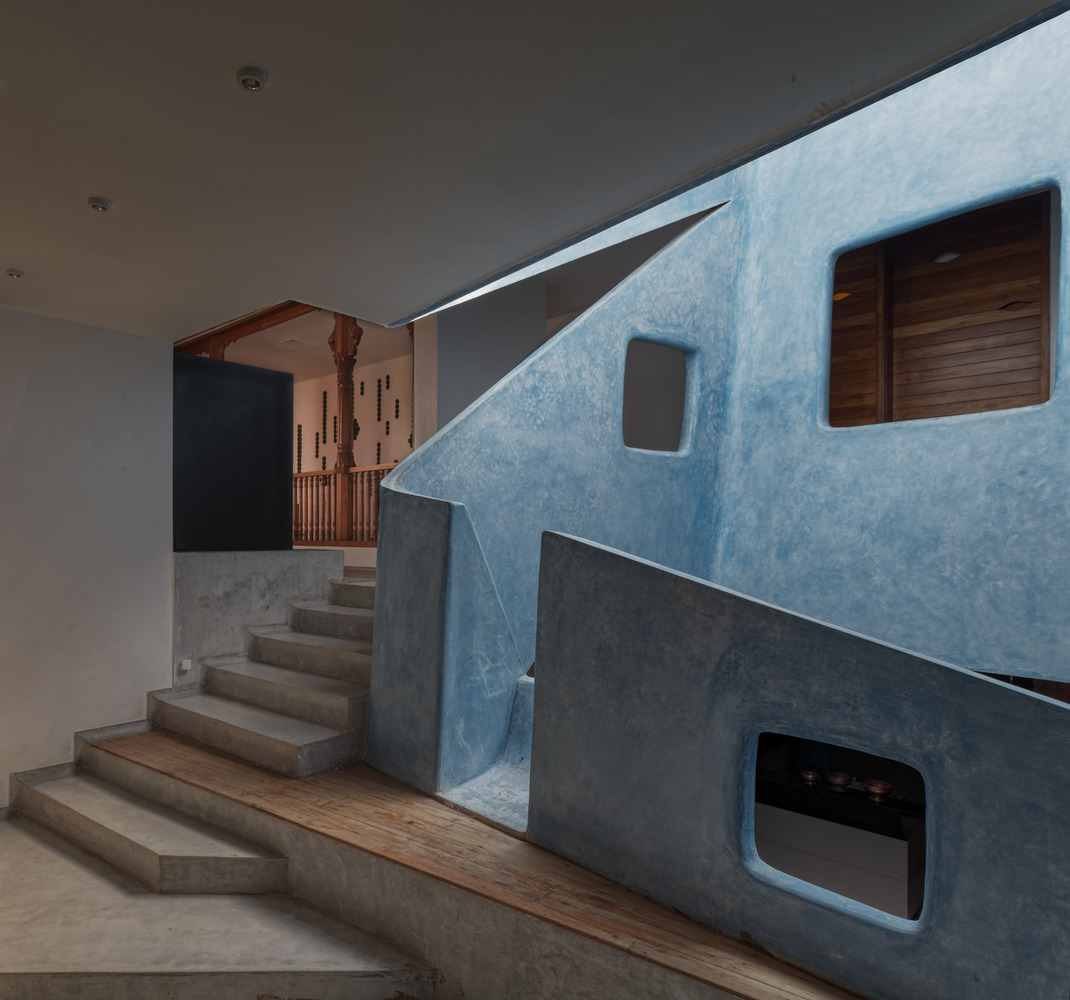
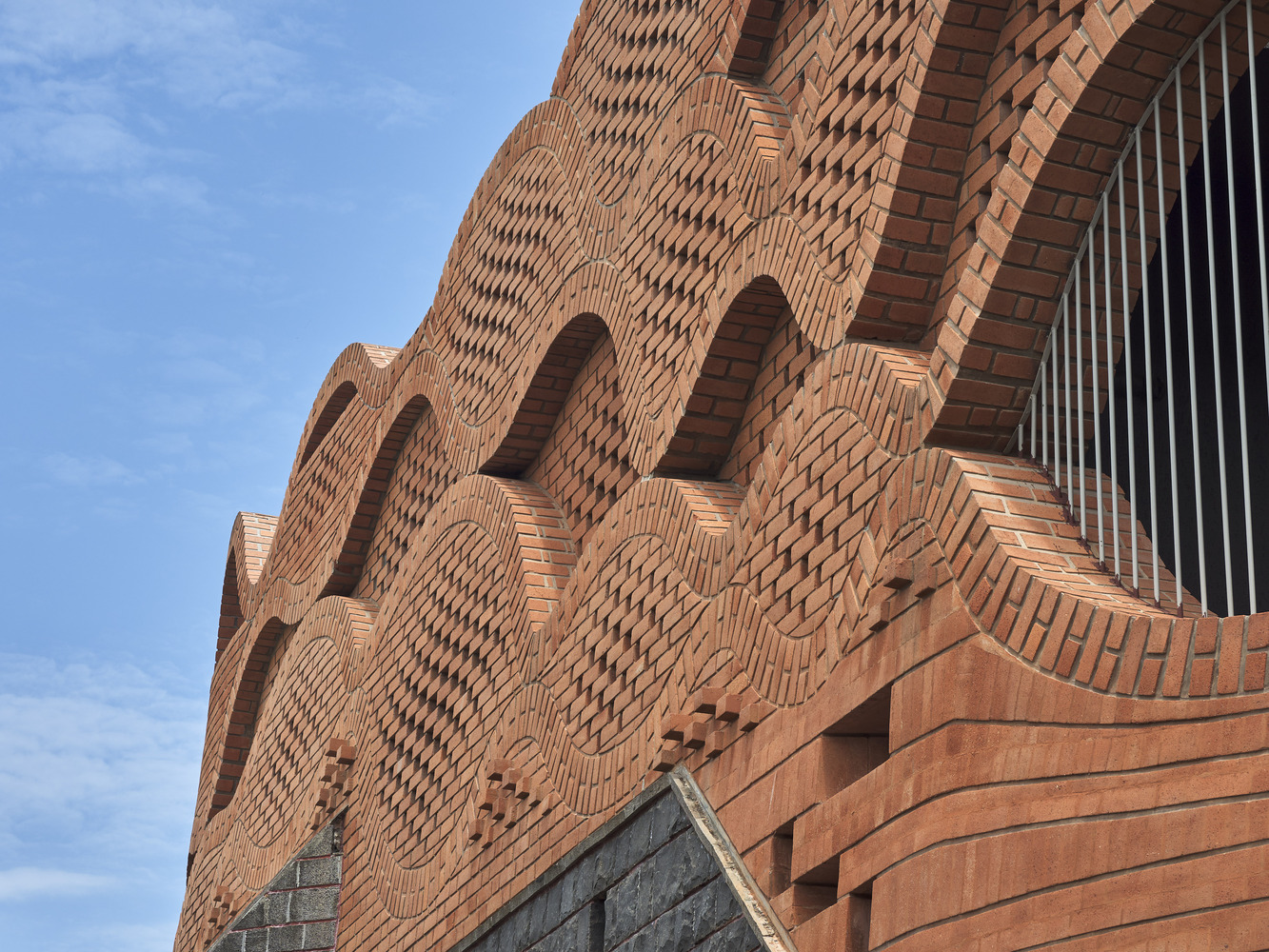
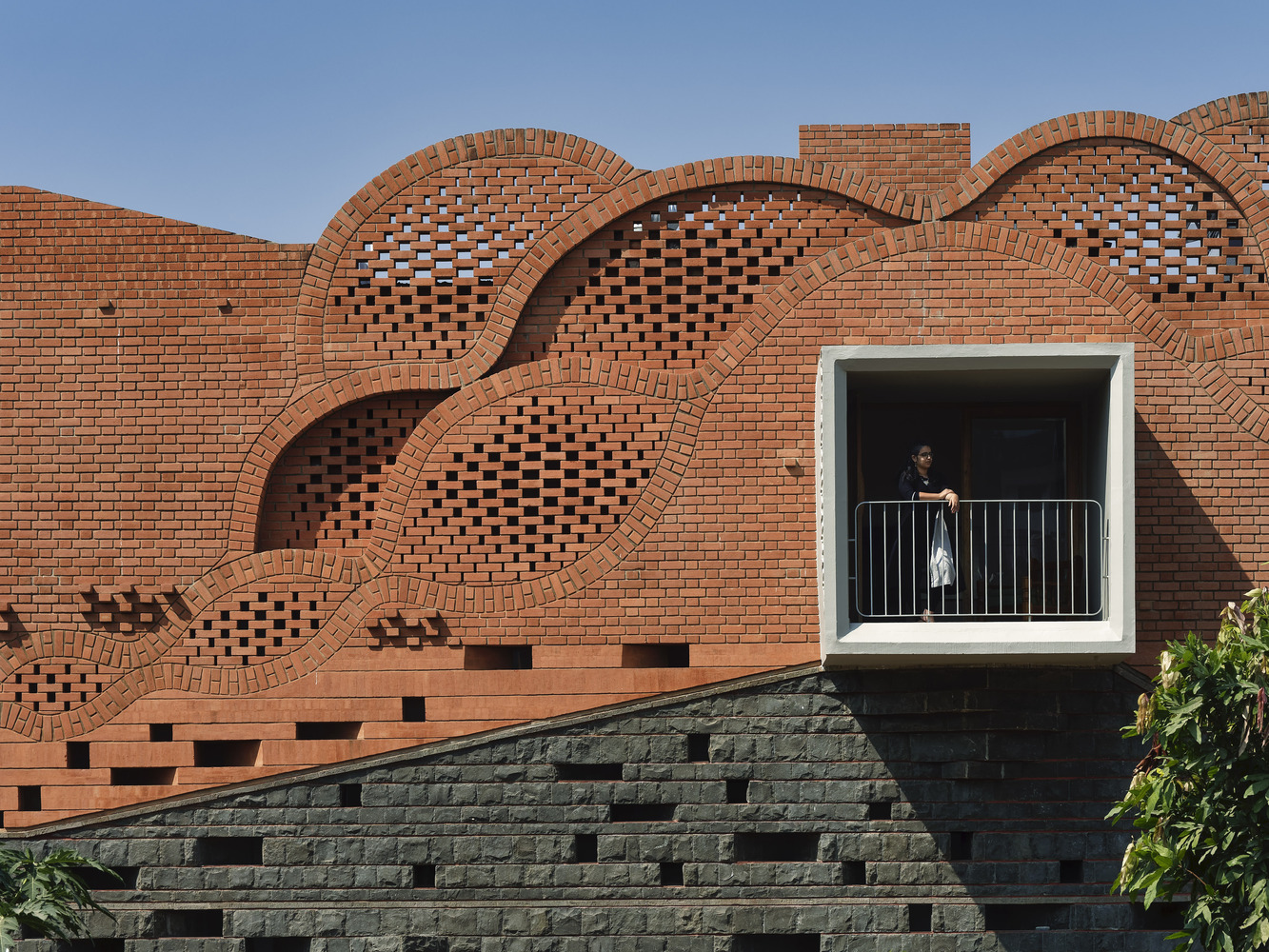
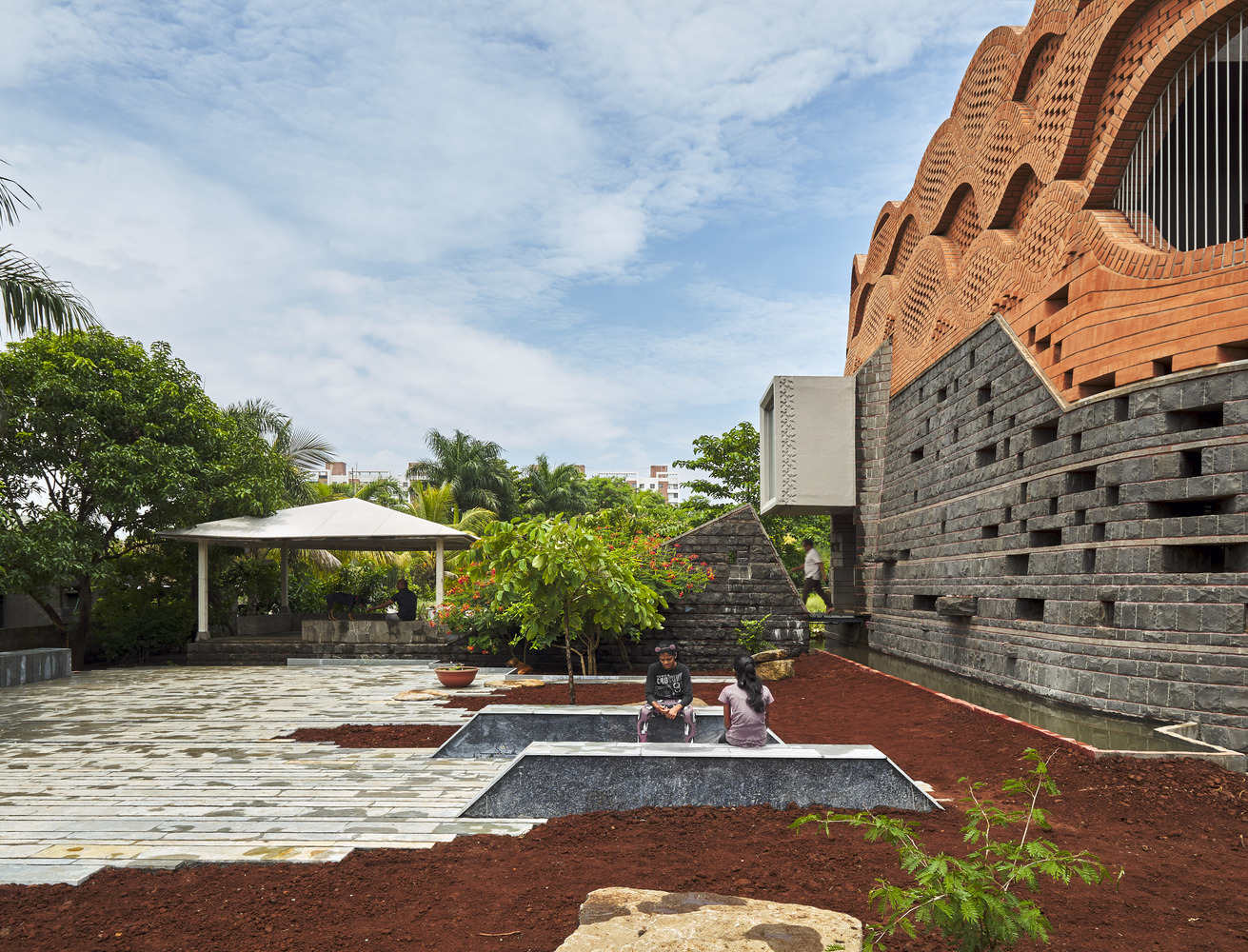
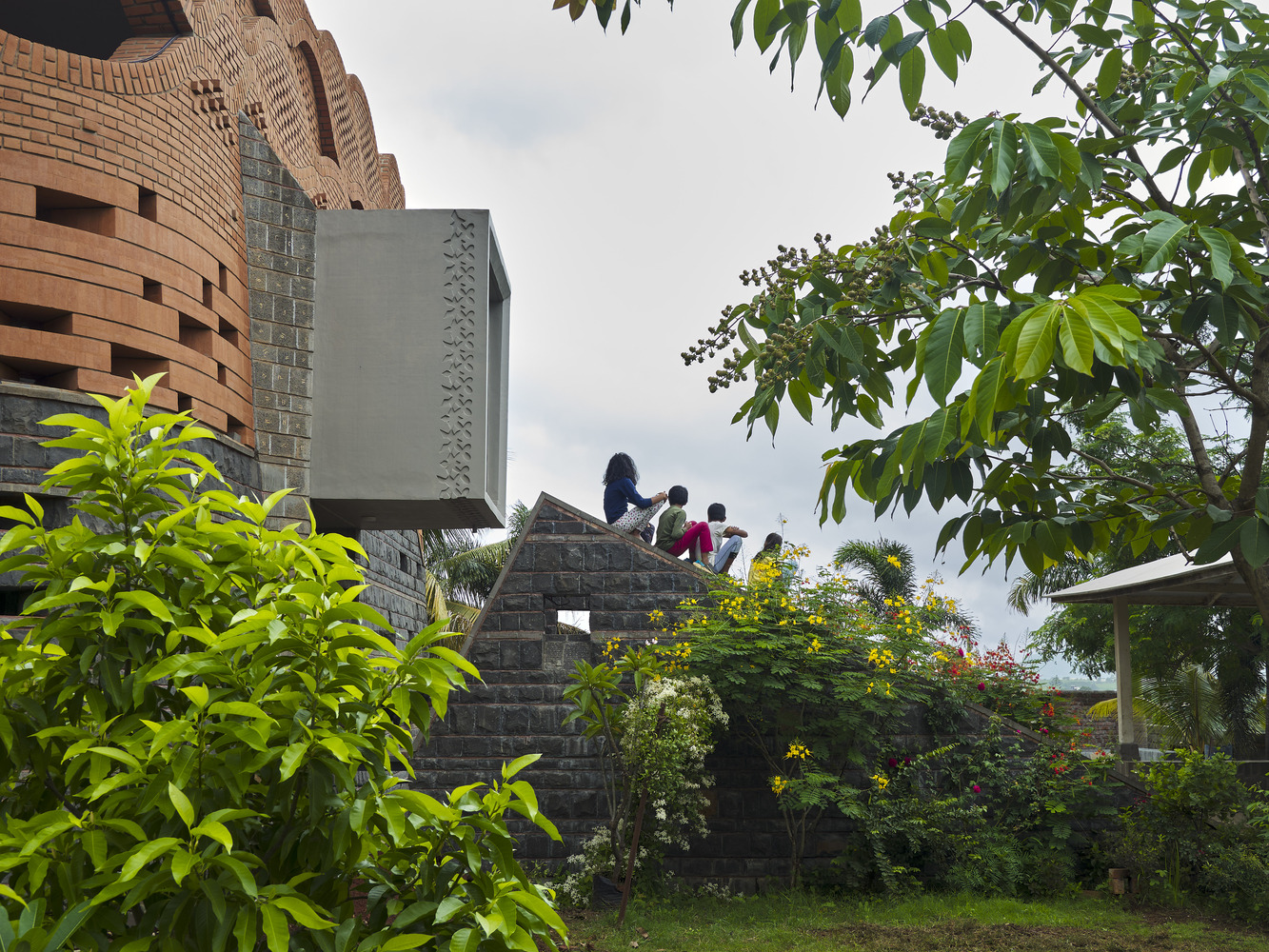
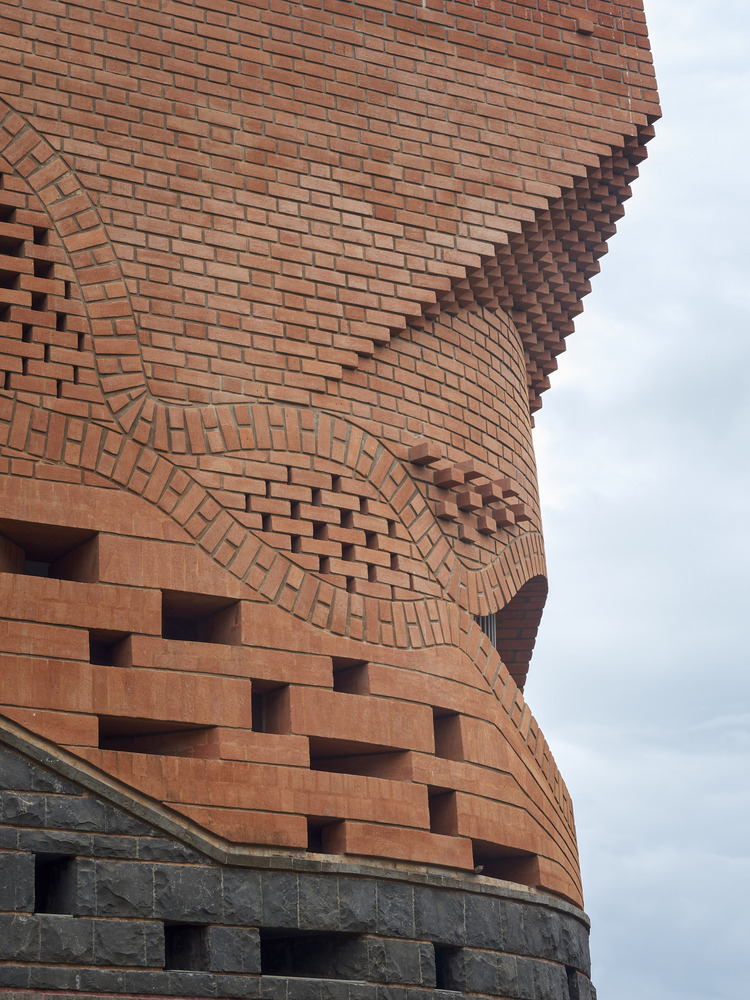
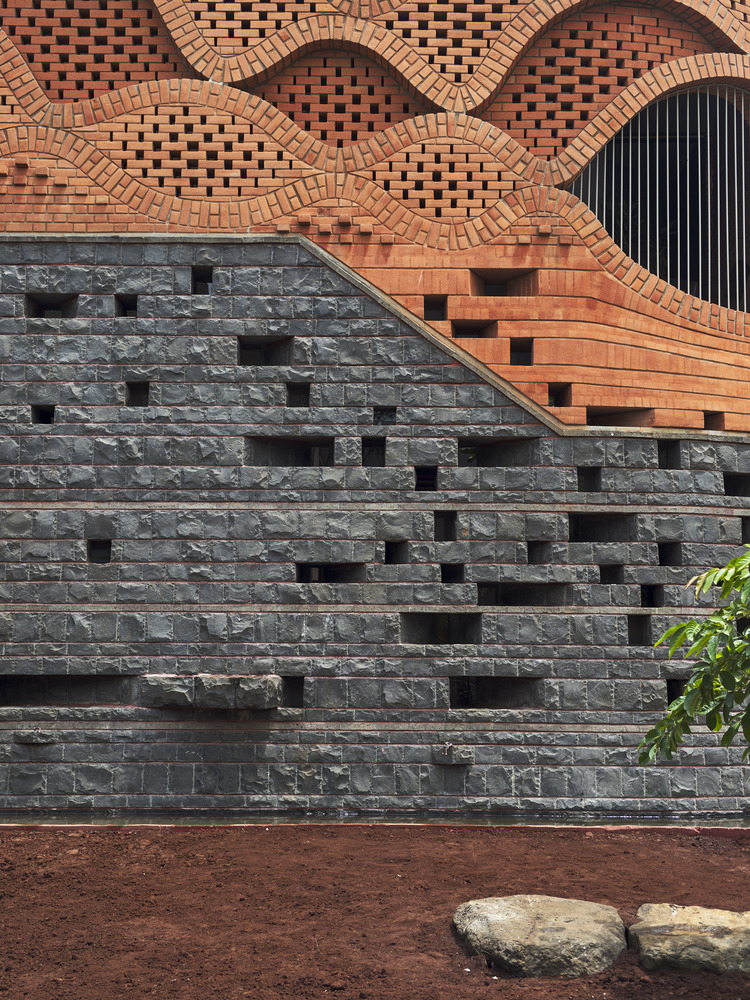
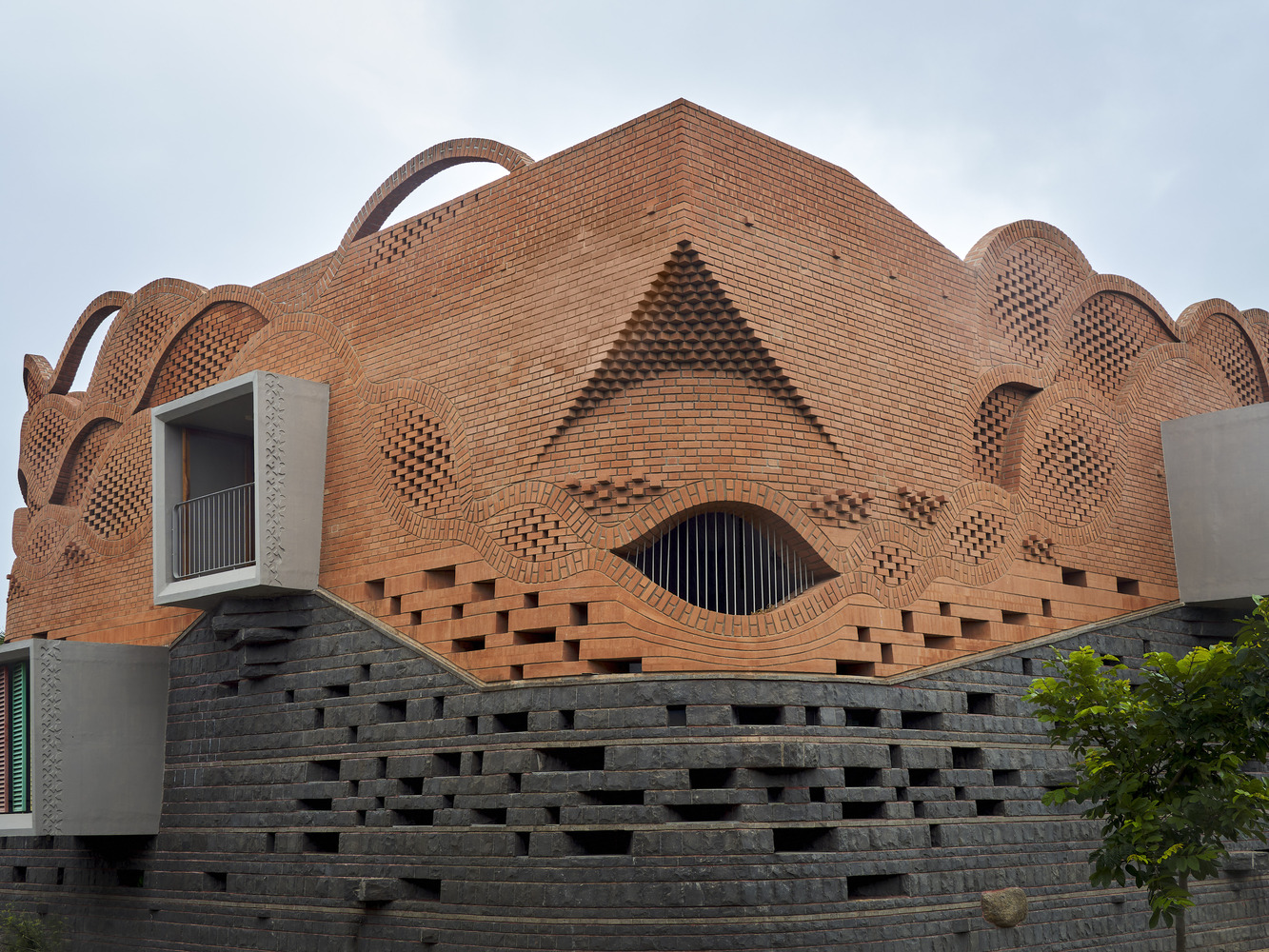
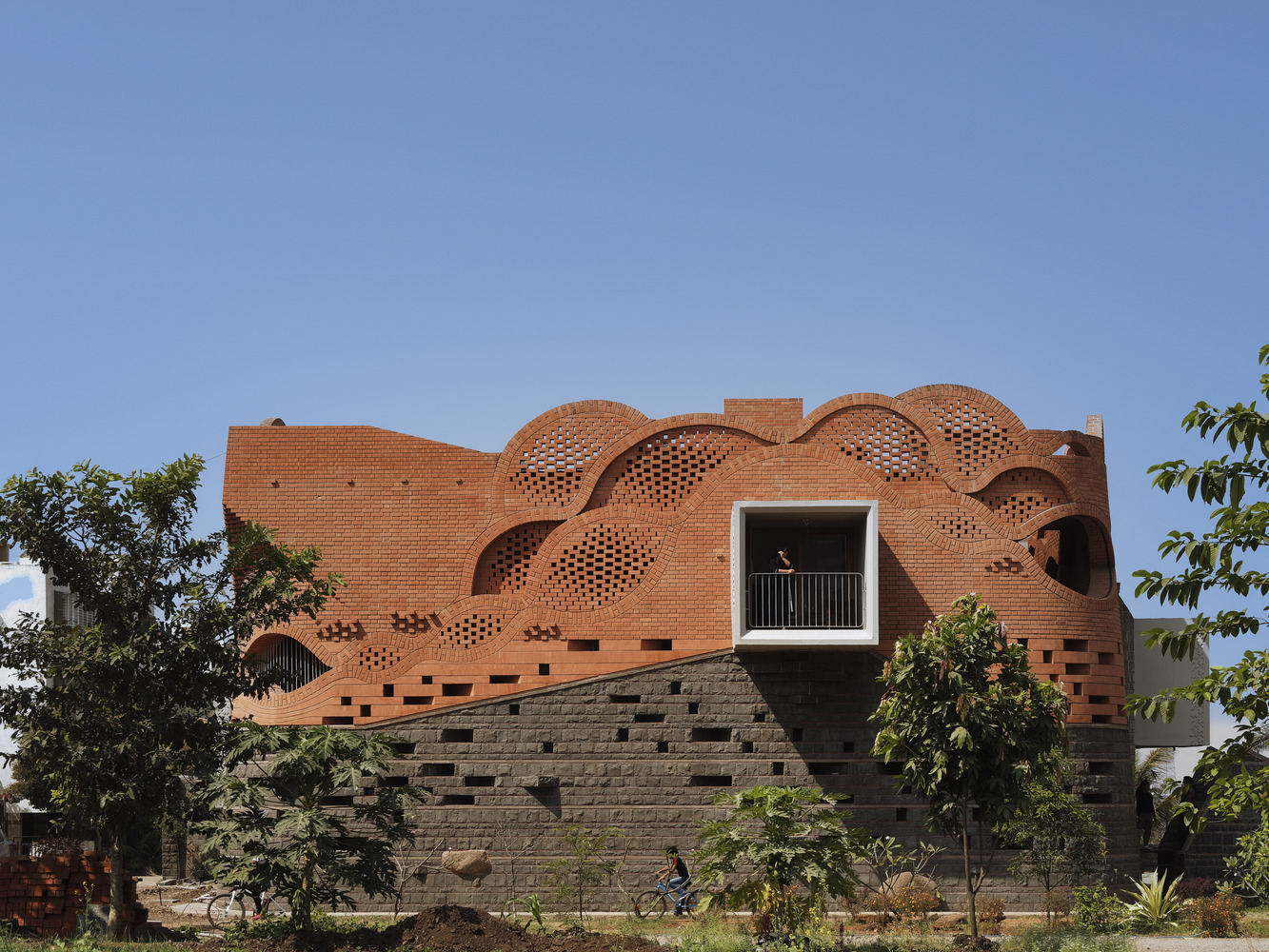
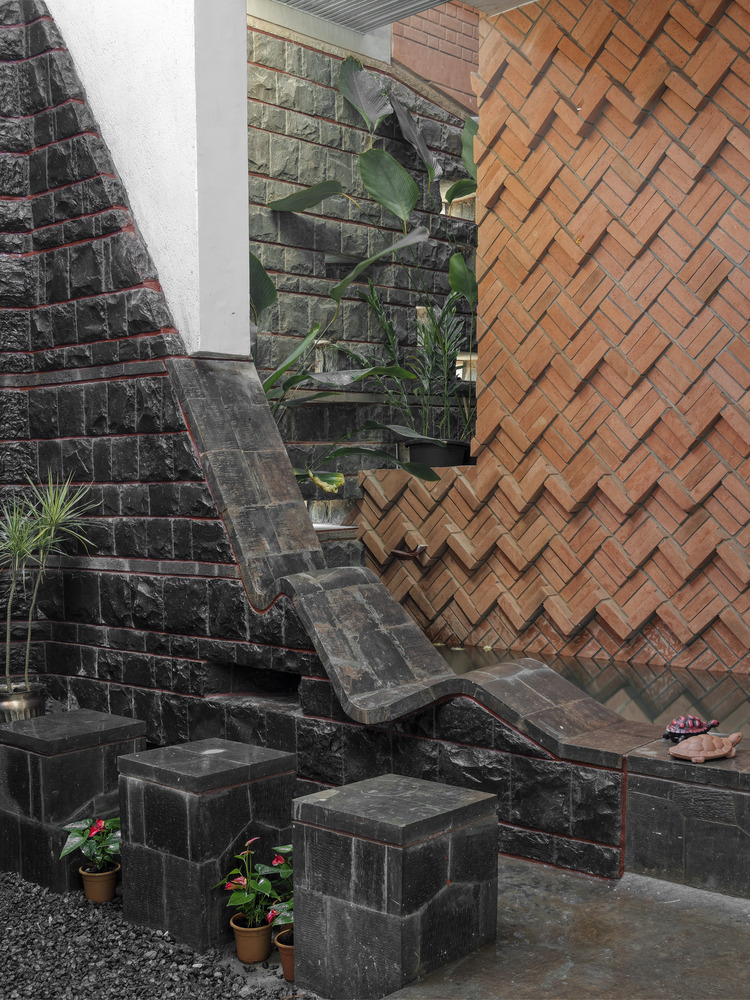
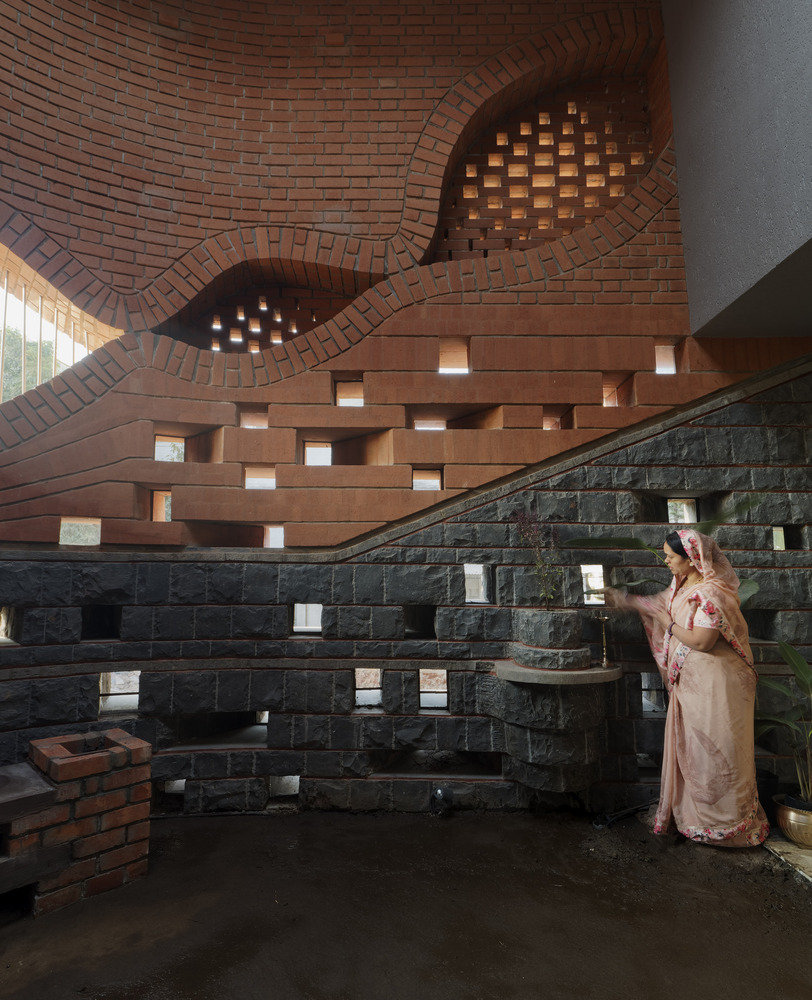
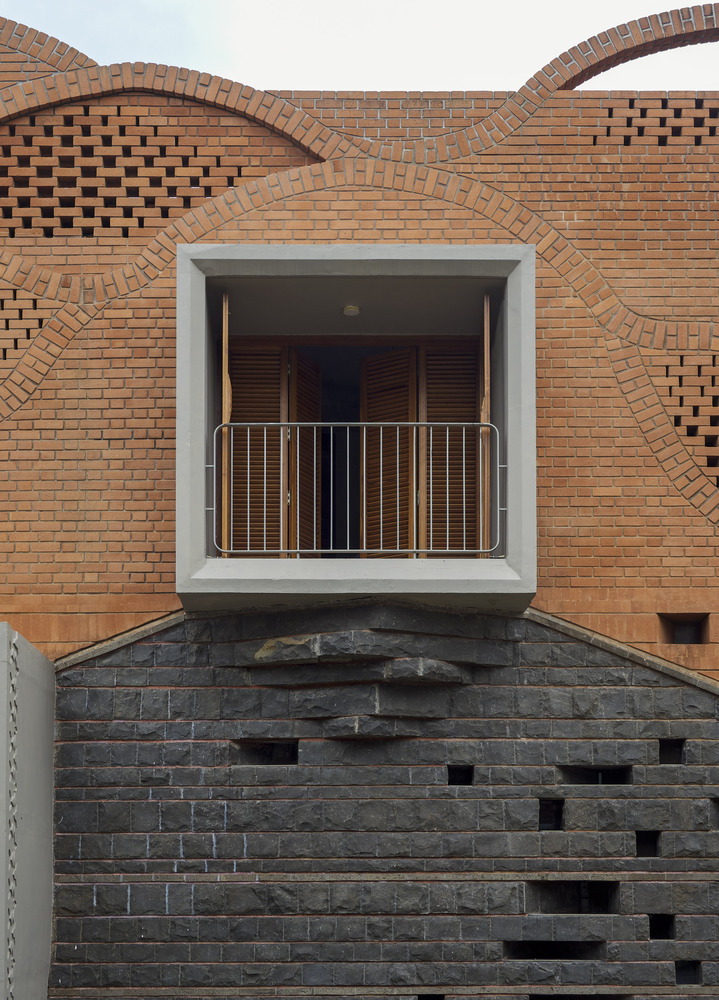
The walls are built with horizontal bands layered upon vertically for ease in construction with varied spacing. Brick being a light and feminine material tops the stone at the bottom as a muscular base.
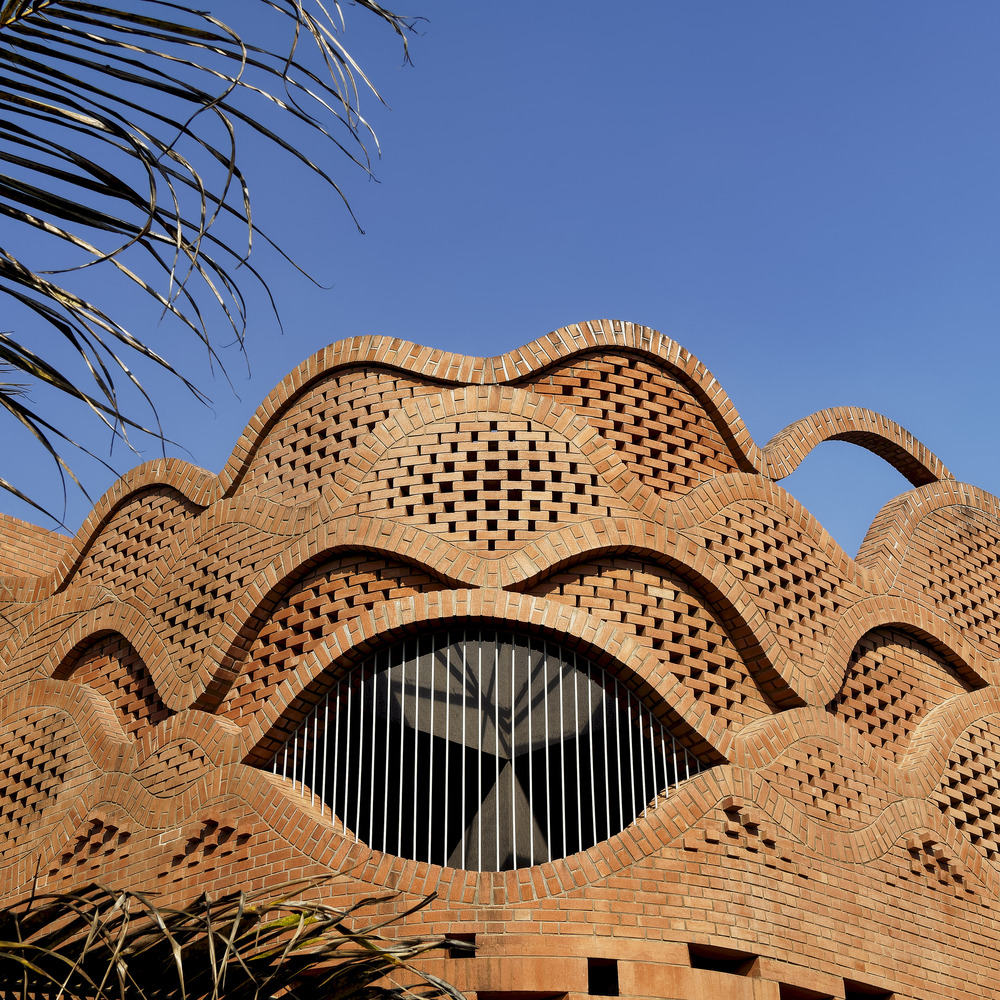
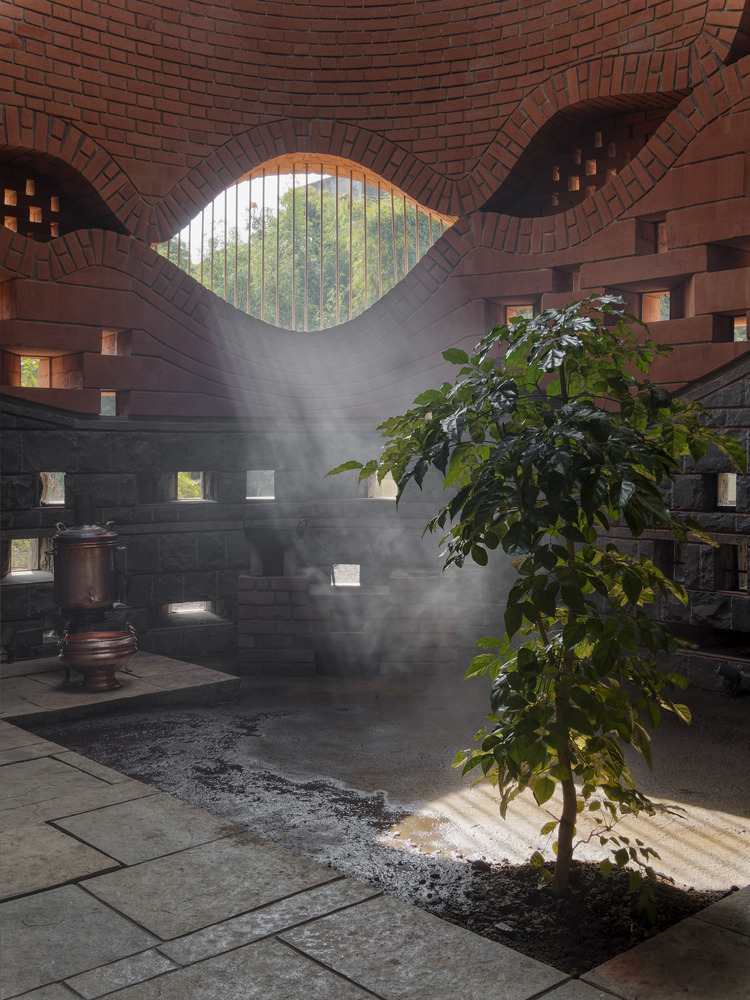
Openings at lower level in stone are according to the width of the horizontal bands. The amalgamation of both materials is further enhanced with openings made like honeycomb loop structure with brick curves, giving the entire structures a crown like appearance.
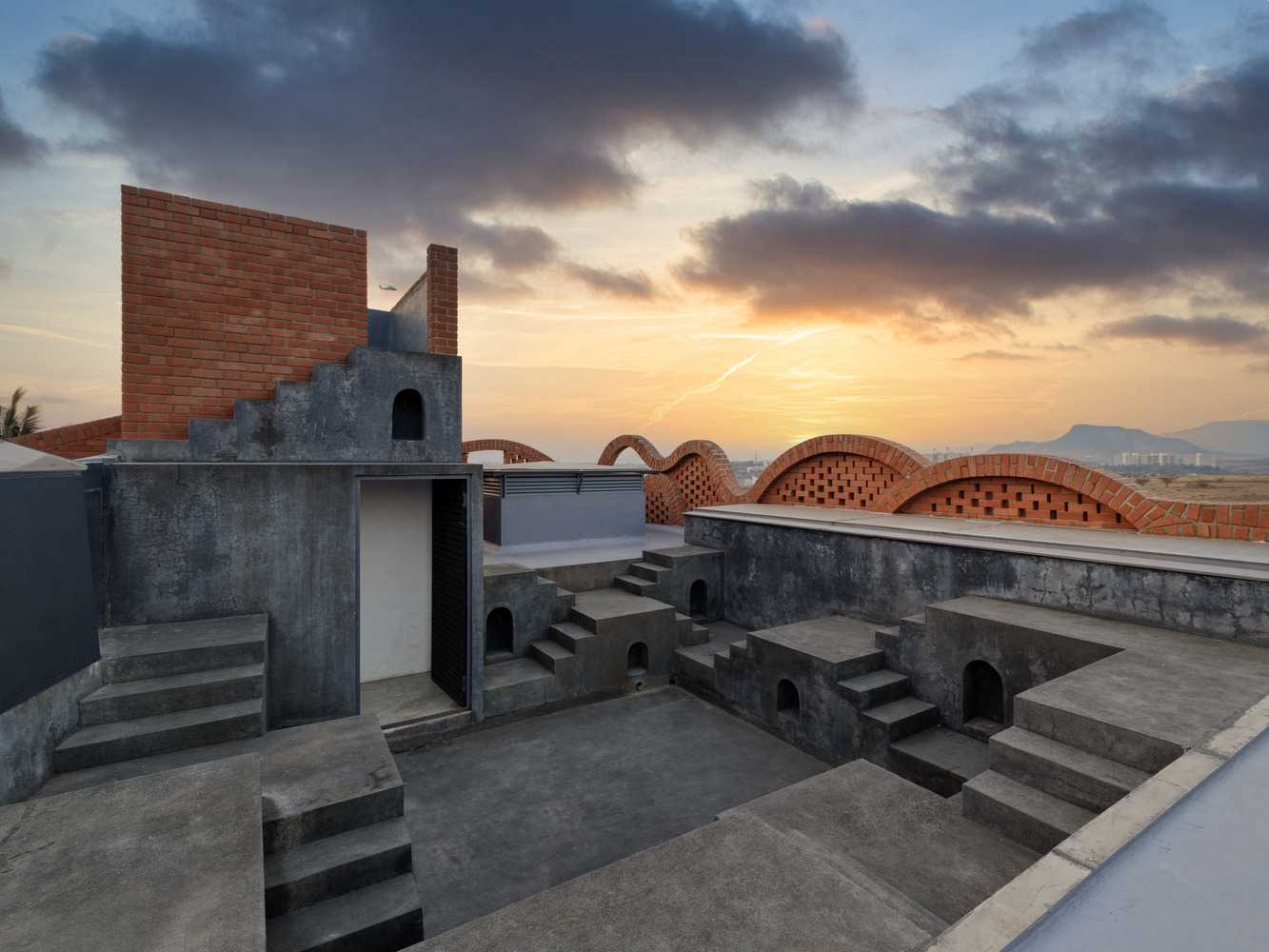
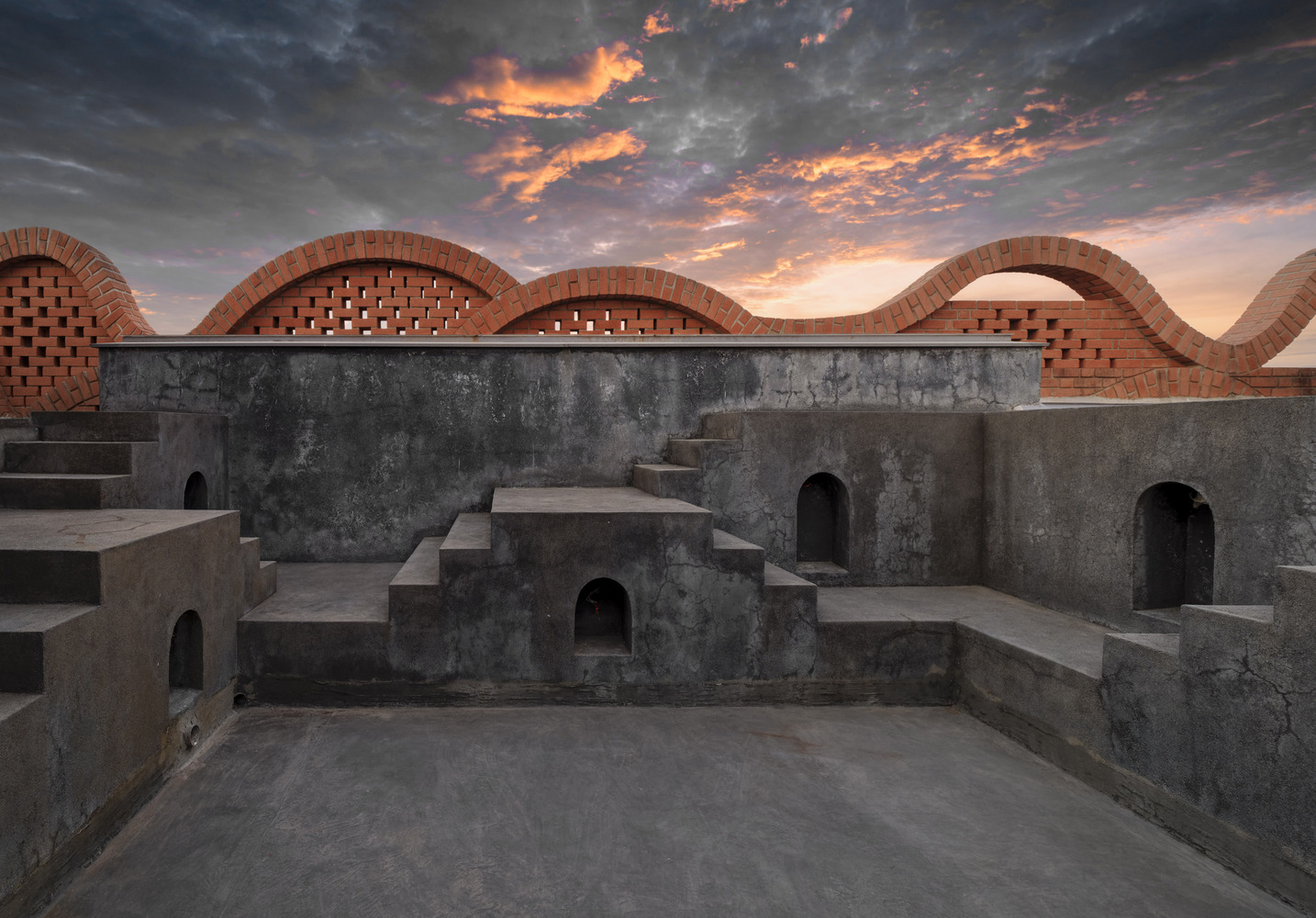
The honeycomb geometry provides flexibility for location and size of the opening according to the internal functions, all in a load bearing structure.
CONSTRUCTION
There has been a strong focus on the integration of traditional construction knowledge of the local artisans.
Correspondingly a composite construction methodology has been adopted, with a palette comprising of both natural, local materials as well as modern concrete block technologies, finding appropriate solutions for different structural implications.
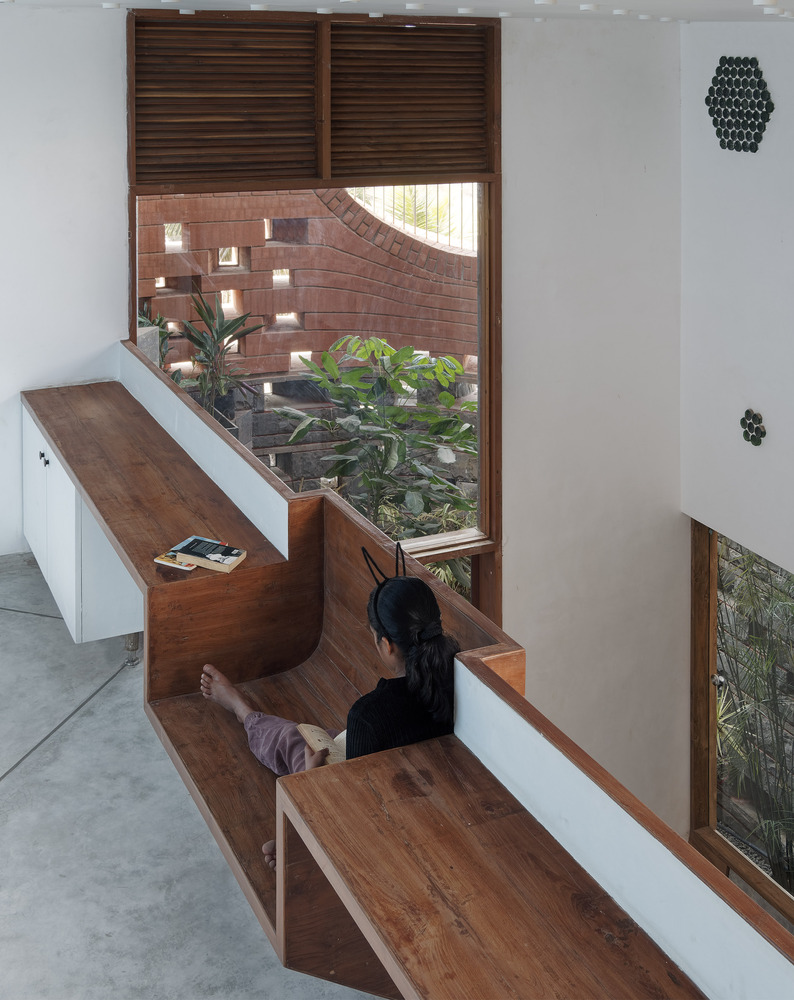
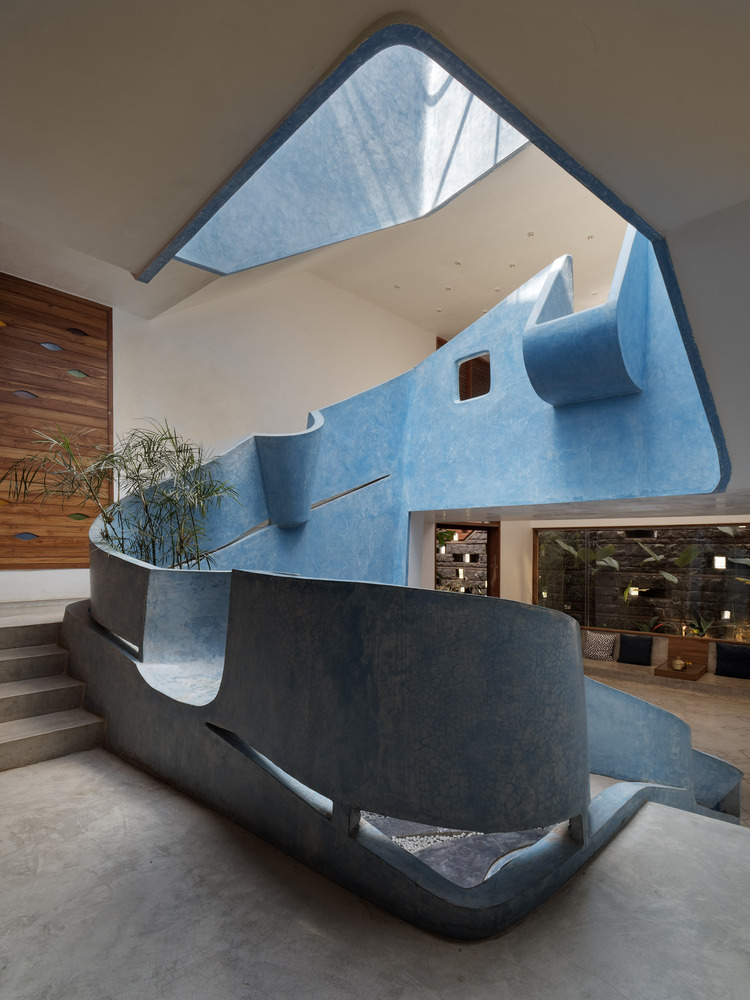
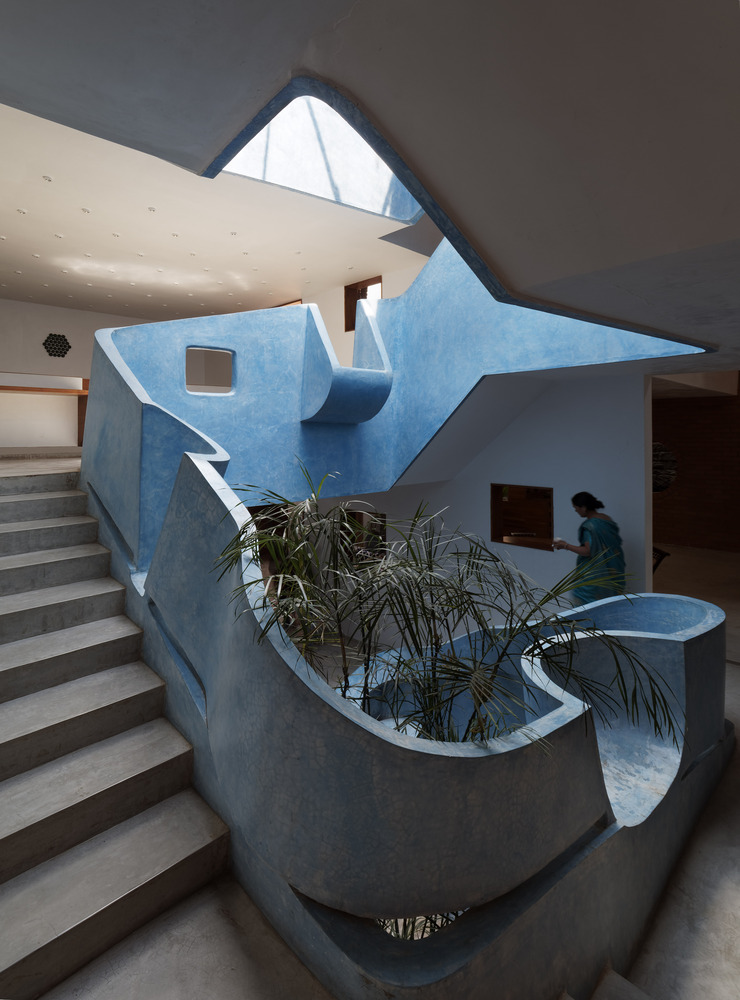
The external thick load bearing wall has been designed to resist seismic forces and extreme climatic conditions.
The internal structure has been built with Reinforced Concrete Blocks for ease of construction and minimization of material usage, to avoid offsets from slabs and walls imparting a modern language of homogenous and clean interior.
Intermediate steps and staircases have been designed with the "Ferrogami" method reducing overall weight on the main structure. The internal partitions have been done in lightweight wood or stone.
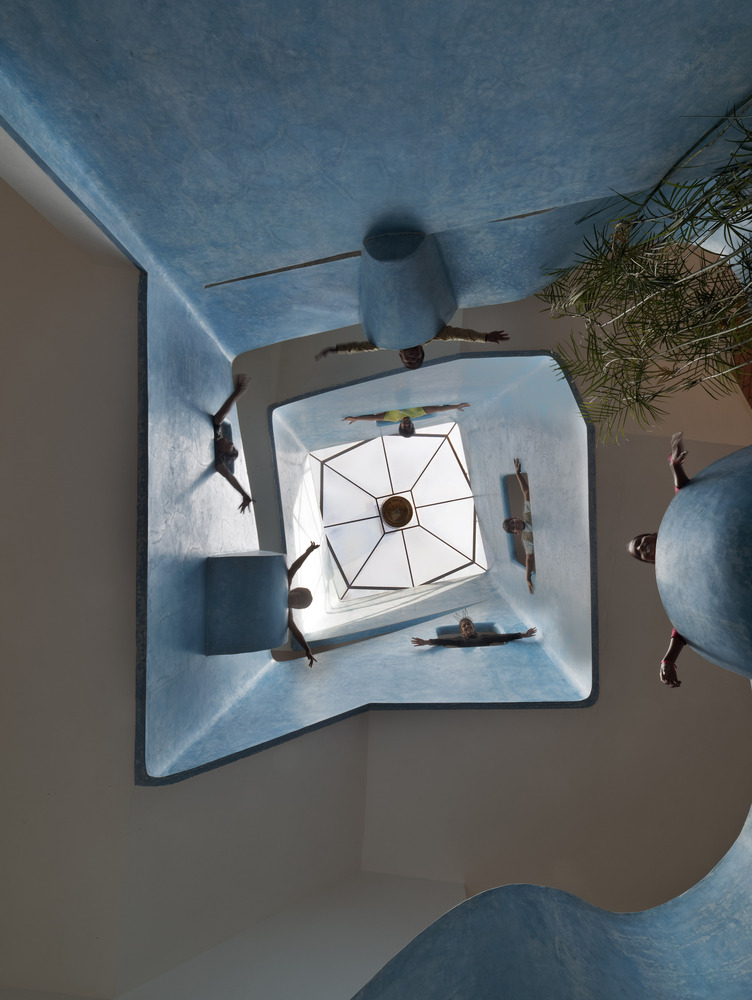
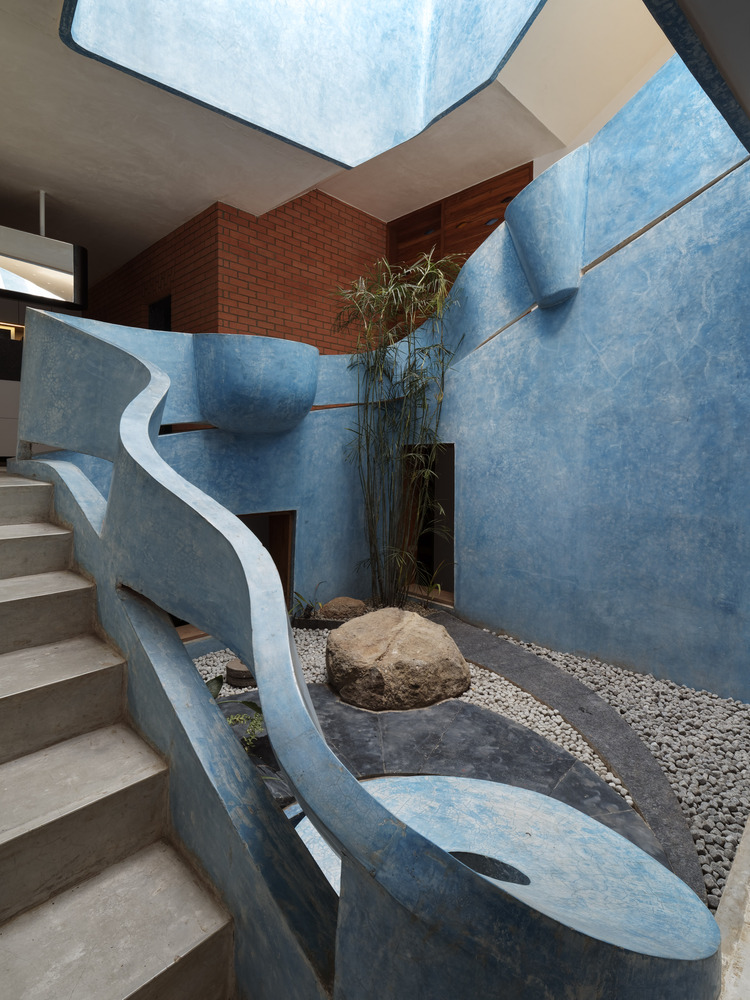
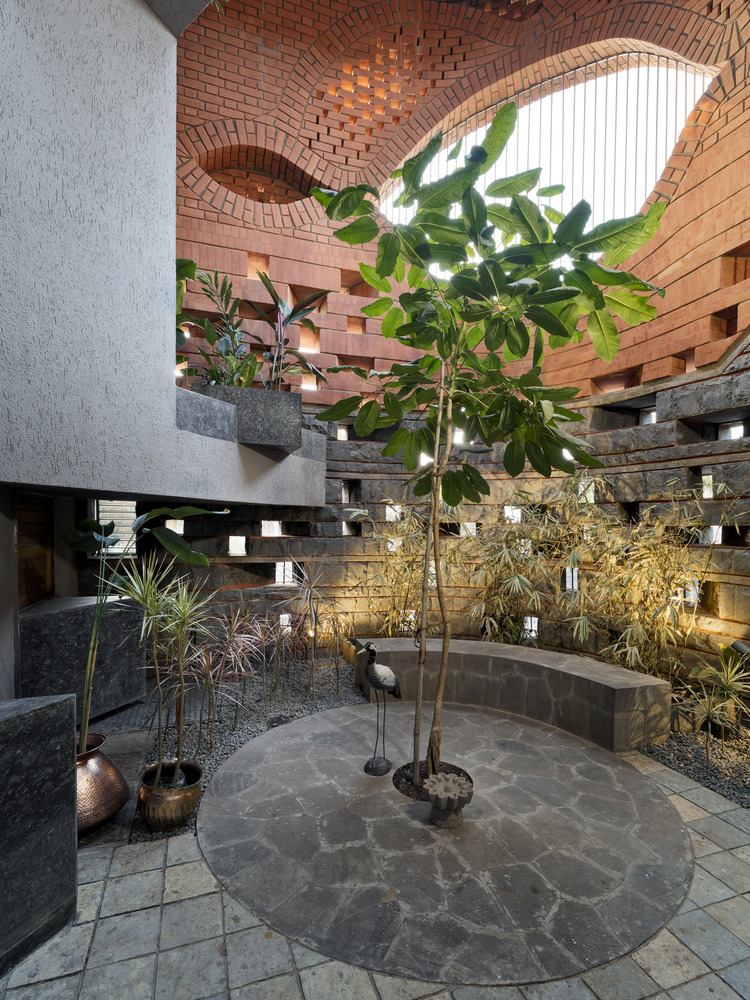
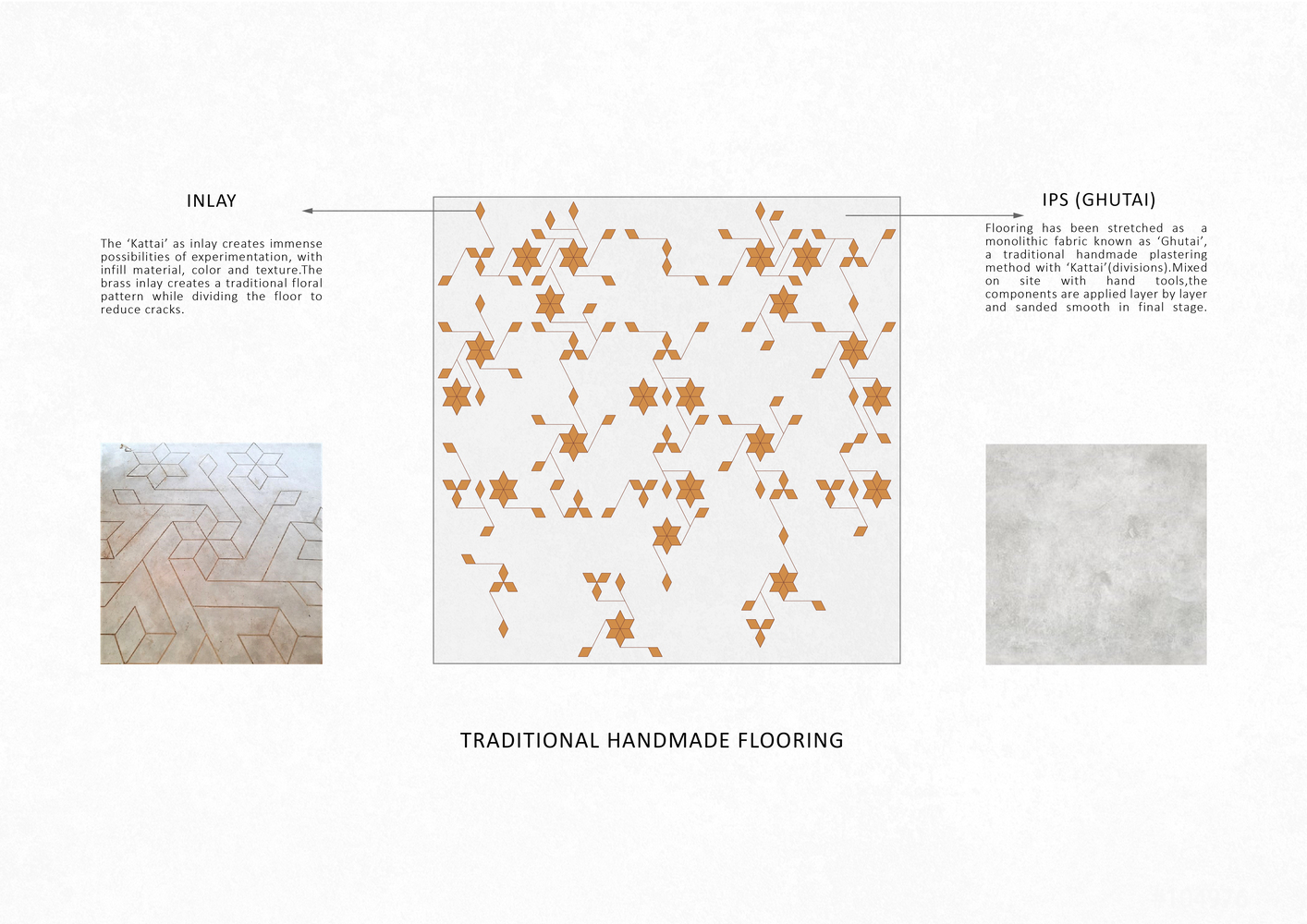
The inner walls have been rendered with traditional lime stucco to bring seamlessness in the flow of activities inside the spaces enhancing the overall interior volume.
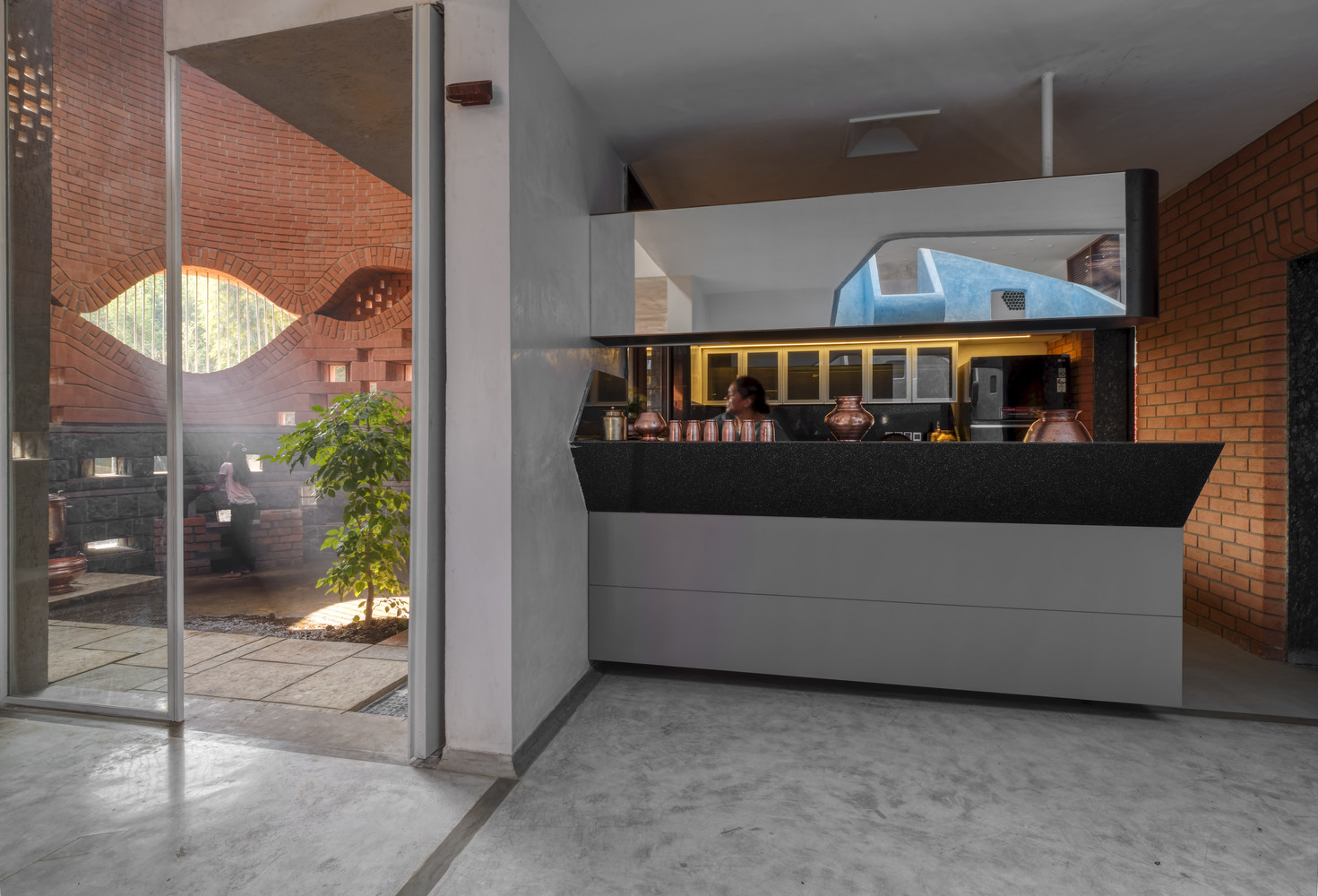
On the other hand, the external walls celebrate the rawness of the original materials like brick and stone.
The structure intends to intensively experiment with the versatility of the materials and was crafted on the site promoting the labour and enhancing their knowledge.
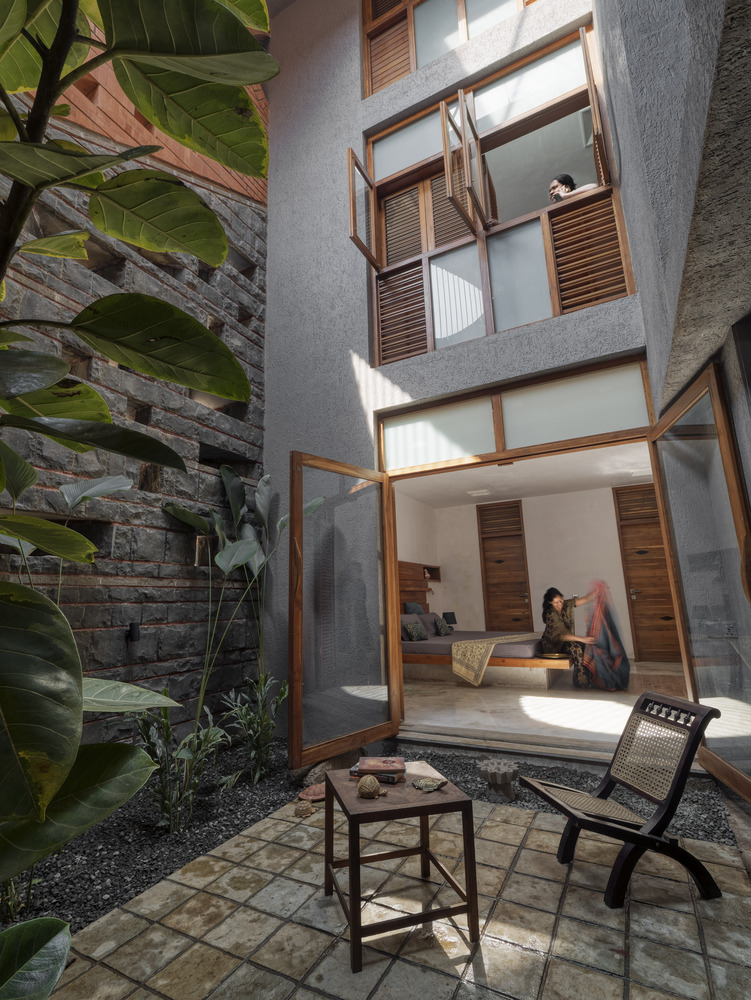
SUSTAINABILITY
In the search of timelessness, the house is adapted to sustain over generations with passive systems that maintain suitable living conditions inside the house and minimizing energy usage.
It is sensitive to its natural environment, is designed and oriented accordingly and implies maximum use of natural techniques for light, ventilation as well as water and energy conservation.
The structure contains wind towers for natural cooling and multiple internal courts with plantation and openings producing 'Venturi effect' with negative and positive air pressure zones.
The building consumes energy from photovoltaic solar panels placed upon sloping roofs and parking shed.
Along with rain water harvesting system, proper sewage treatment has been planned which provides water for the kitchen garden.
The kitchen garden has the potential to suffice the daily needs of the family for an independent living.
The house can be regarded as a flow of everyday household activities from top to bottom with intermediate pause points and celebratory spaces bound together in a symphony of traditional and modern built environment with a sustainable and independent living approach.