Xinchang Globular Center
XINCHANG GLOBULAR CENTER
Line+ Studio
ARCHITECTS
Line+ Studio
LEAD ARCHITECT
Zhu Peidong
CLIENT
Xinchang Public Service Group Co., Ltd.
CONCEPTUAL/COMPETITION PHASE PROJECT LEADER
Xing Mingquan
COLLABORATING DESIGN INSTITUTE
Huahui Engineering Design Group Co., Ltd.
LANDSCAPE CONCEPTUAL DESIGN TEAM
Li Shangyang, Rao Feier
COMPETITION/IMPLEMENTATION PHASE PROJECT LEADER
Hu Runzhi, Xing Mingquan
INTERIOR CONCEPTUAL DESIGN TEAM
Jin Yuting, Ye Xin, Yu Jun, Zheng Liu, Zhu Yingyue, Mao Ling
CONCEPTUAL/COMPETITION PHASE DESIGN TEAM
Bao Wangtao, Liang Shiqiu, Zhou Wenyu, Liu Xiangjun, Sun Jiahao
COMPETITION/IMPLEMENTATION PHASE DESIGN TEAM
Bian Qian, Zhao Censen, Bao Wangtao, Duan Xiajing, Xu Zifeng, Zhang Daozheng, Tao Xufeng, Guo Zhenghao
CURTAIN WALL DESIGN
Zhongnan Curtain Wall
PHOTOGRAPHS
Xi Chen
AREA
121132 m²
YEAR
2025
LOCATION
Shaoxing, China
CATEGORY
Sports Architecture
English description provided by the architects.
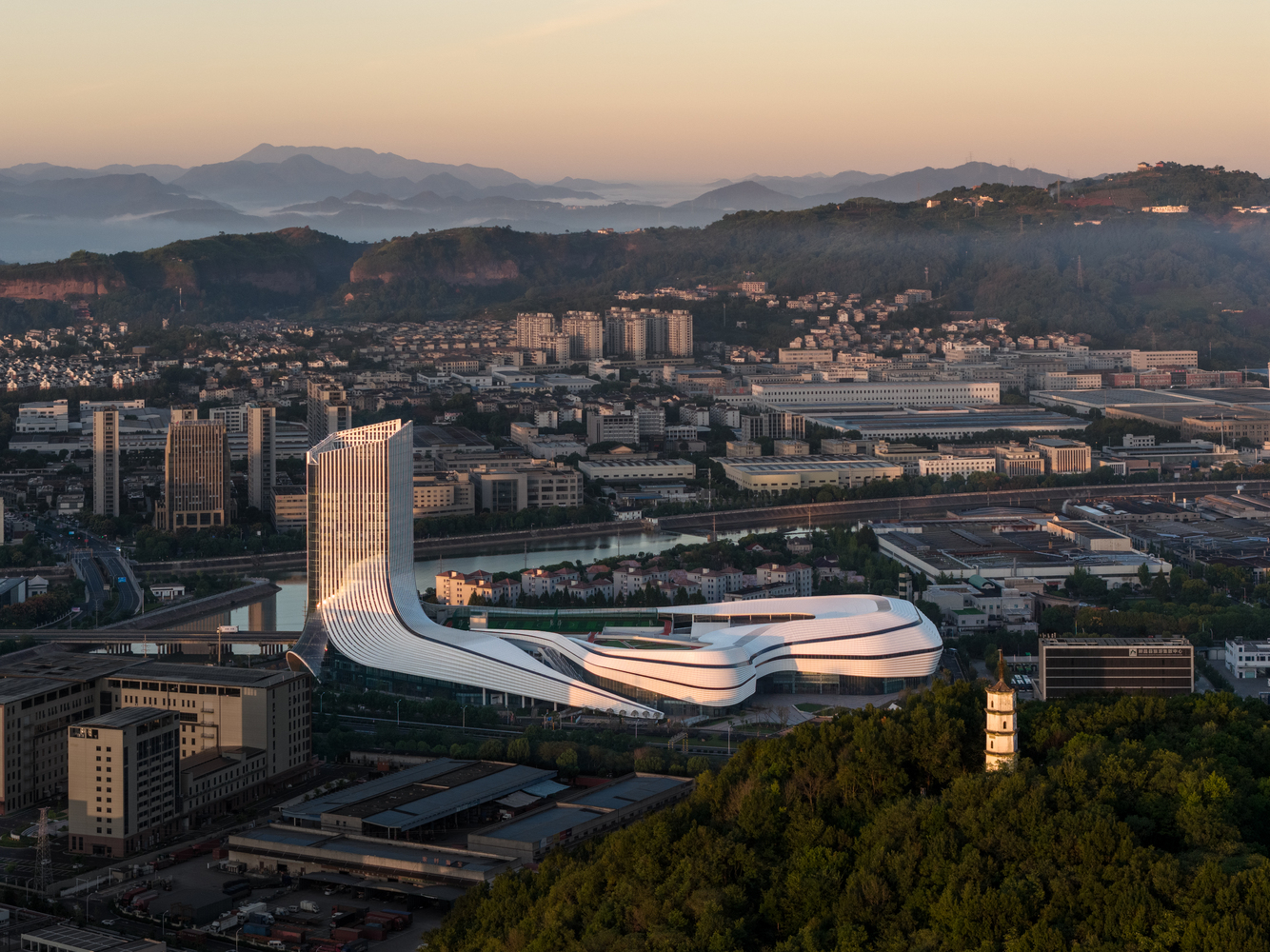
The Xinchang Globular Center, designed by Dr. Zhu Peidong and the line+ studio team, is a 120,000 m² sports and public complex and a major component of Zhejiang Province's "4+1" strategic projects.
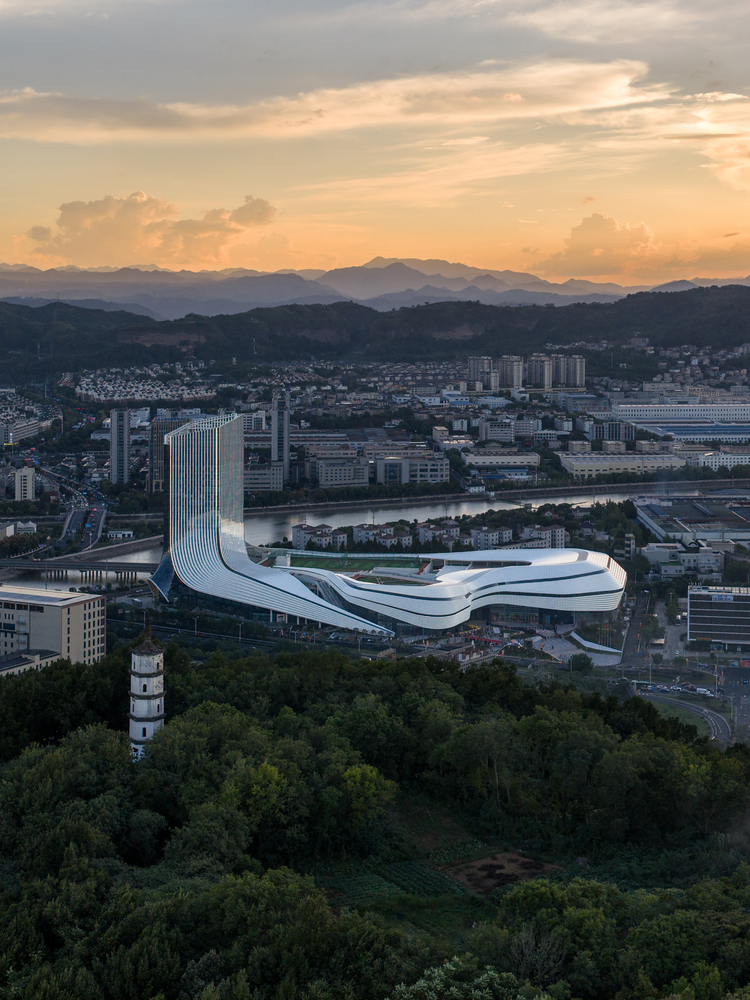
Positioned at the northern gateway of Xinchang—a county-level city in Eastern Zhejiang—the project supports the city's ambition of "a small city hosting major championships."
Since opening, it has hosted national badminton and table tennis competitions and will welcome its first international snooker event in 2025.
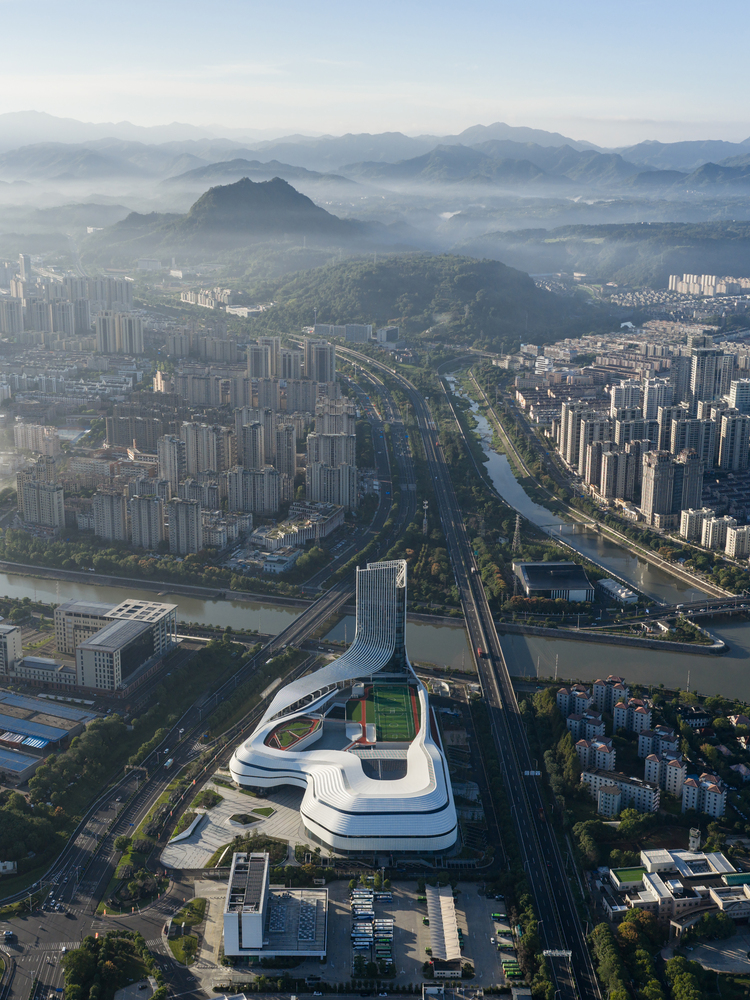
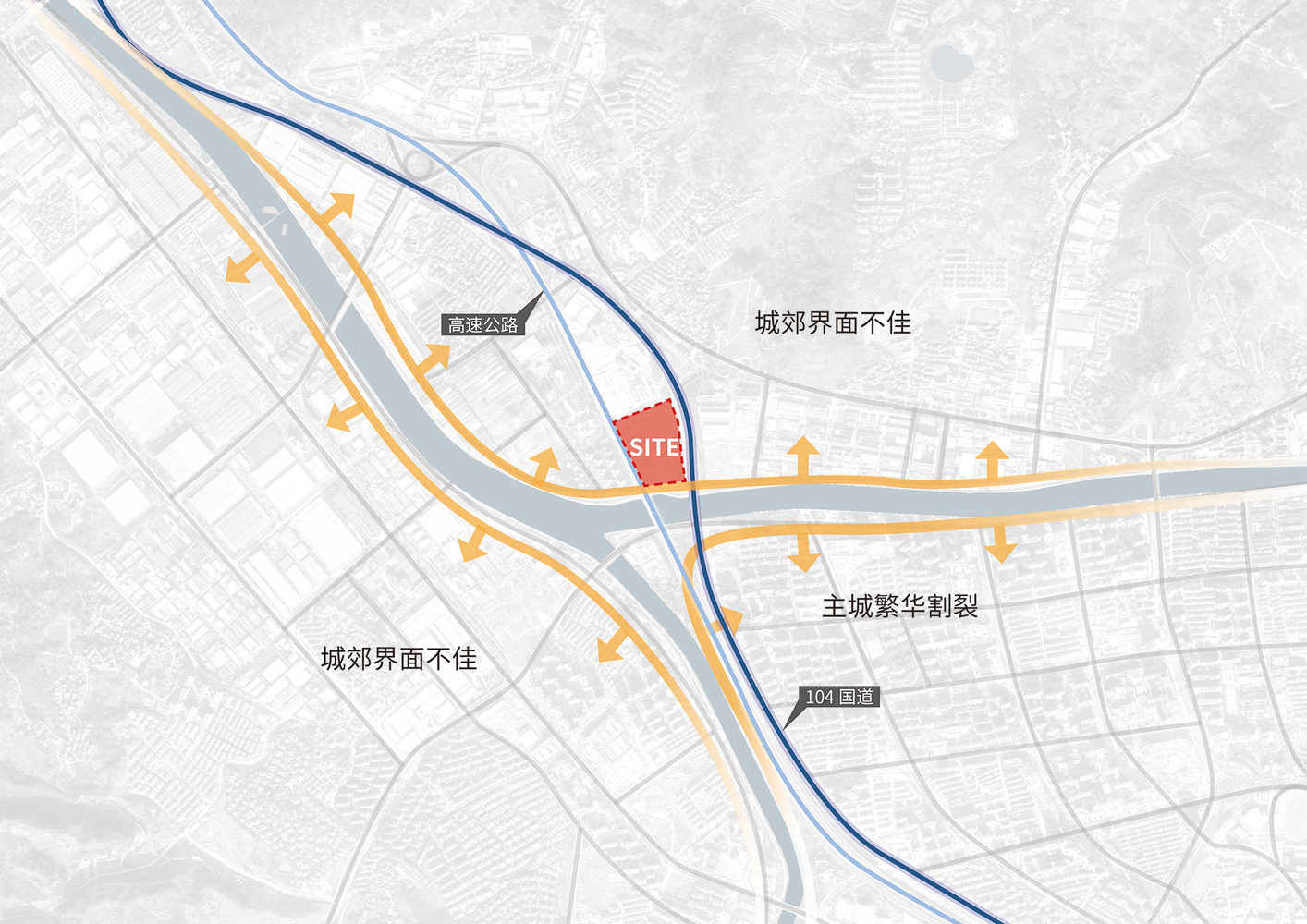
The site sits at a critical juncture where the expressway, national highway, and new high-speed rail station converge.
Prior to redevelopment, the area consisted of fragmented industrial land, abandoned factories, and limited pedestrian accessibility—urban "scraps" lacking civic vitality.
Despite its modest population, Xinchang maintains strong economic activity and a widespread small-ball sports culture, creating chronic shortages of quality venues.
The commission of a large-scale complex comparable to facilities in major cities required not only architectural design but a sustainable operational model capable of driving long-term urban renewal.
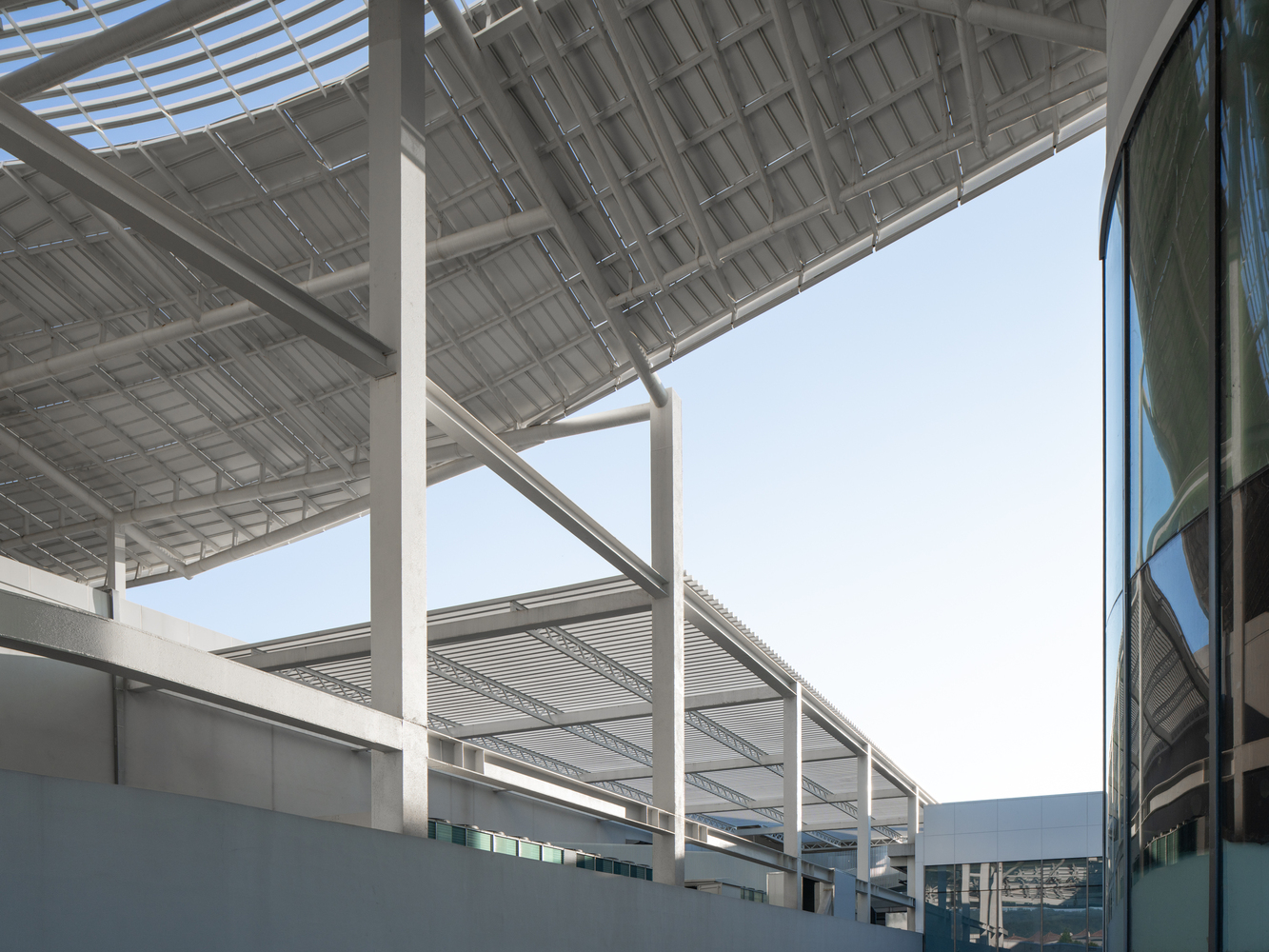
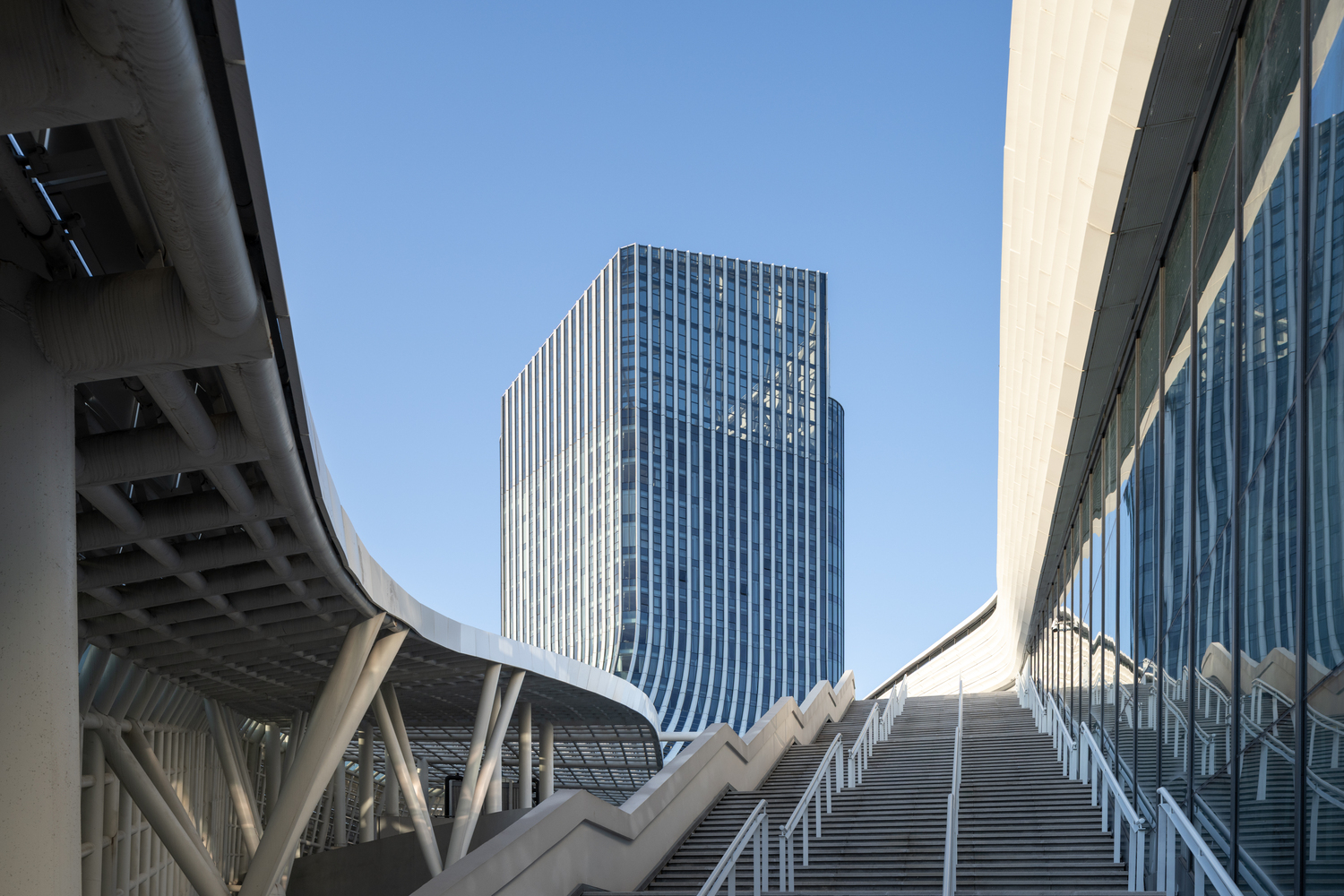
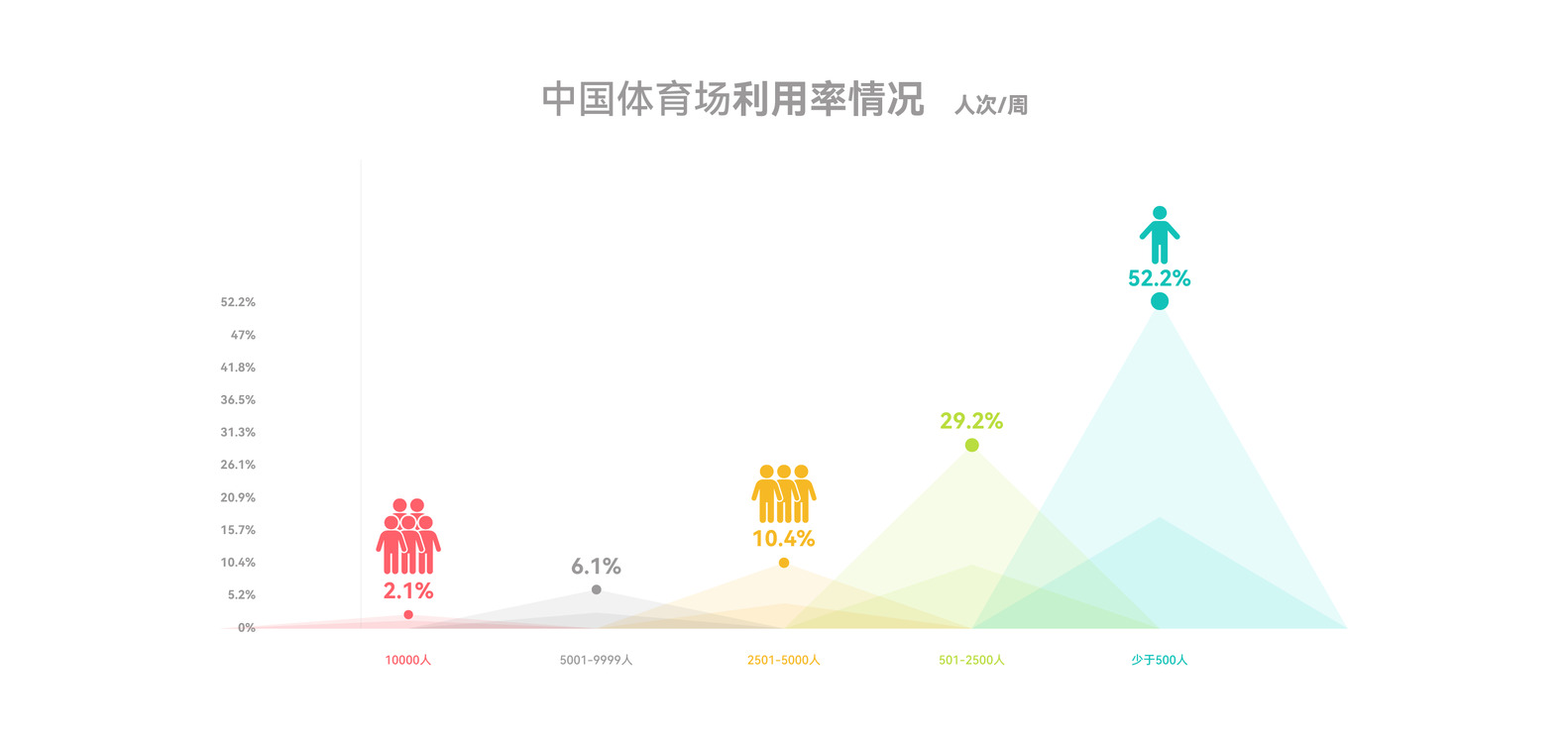
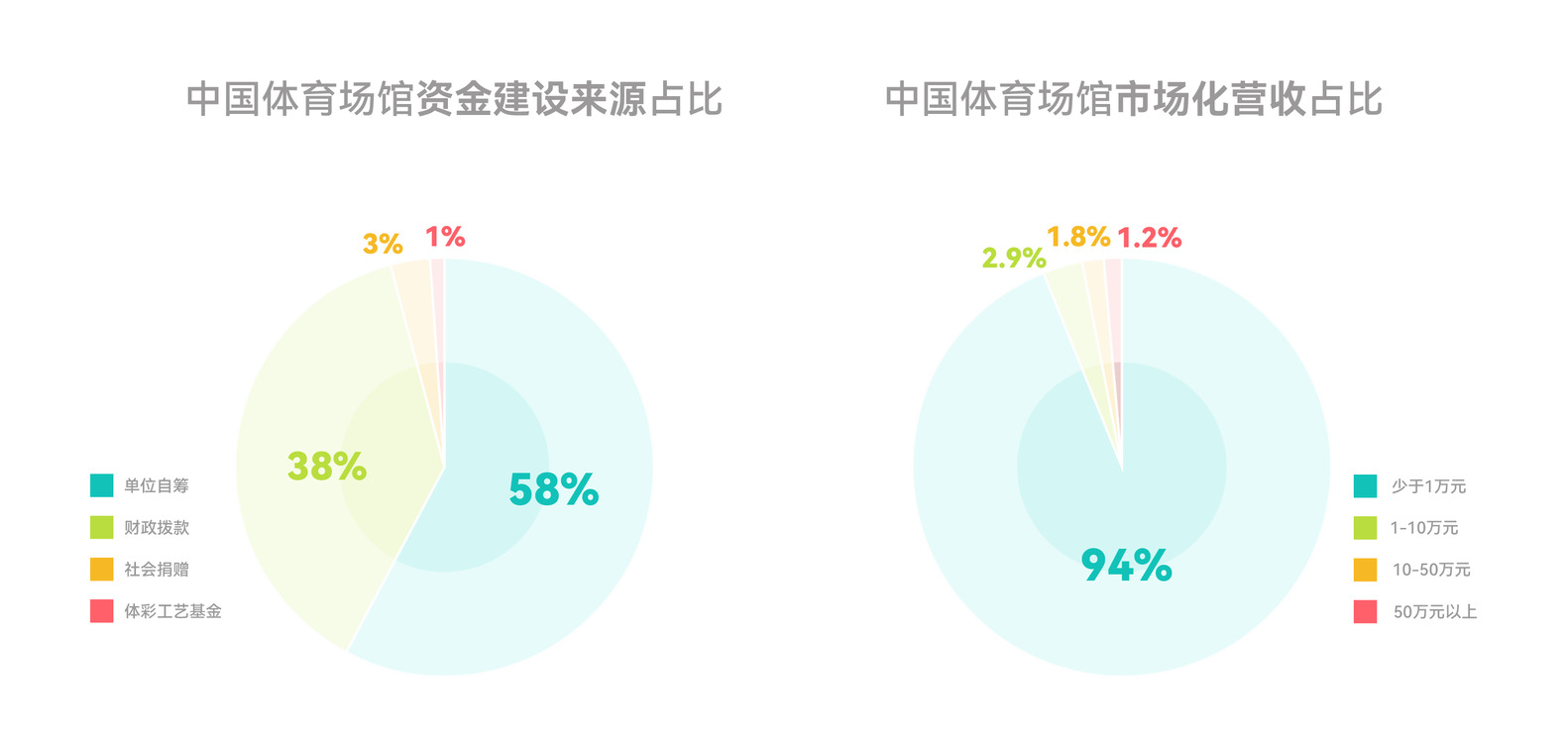
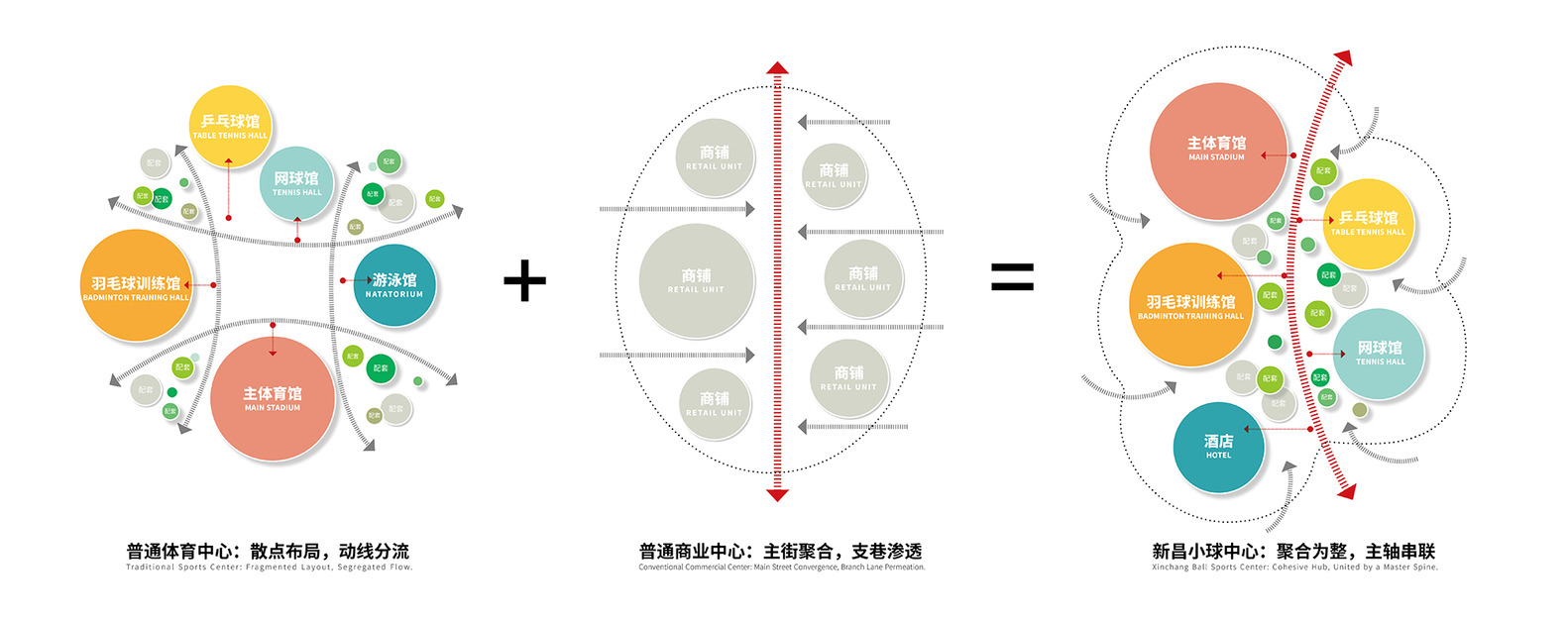
line+ introduced the concept of a "Sports Mall," a 1+N composite model integrating sports, commerce, leisure, and hospitality to overcome the low utilization typical of event-driven venues in China.
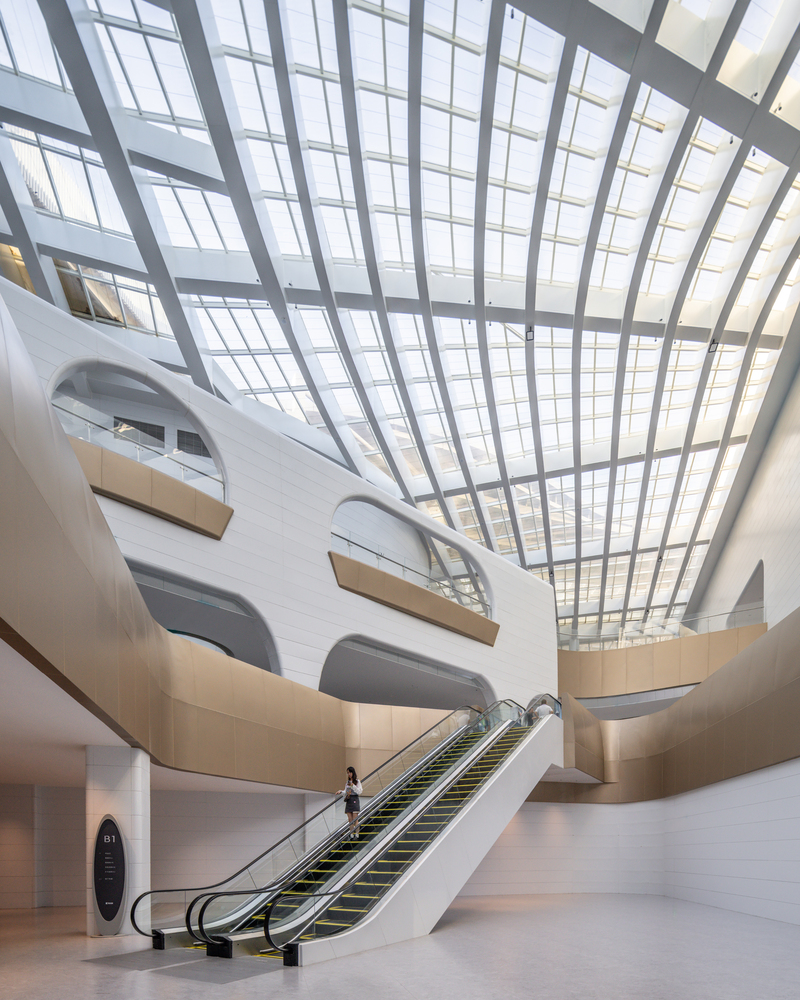
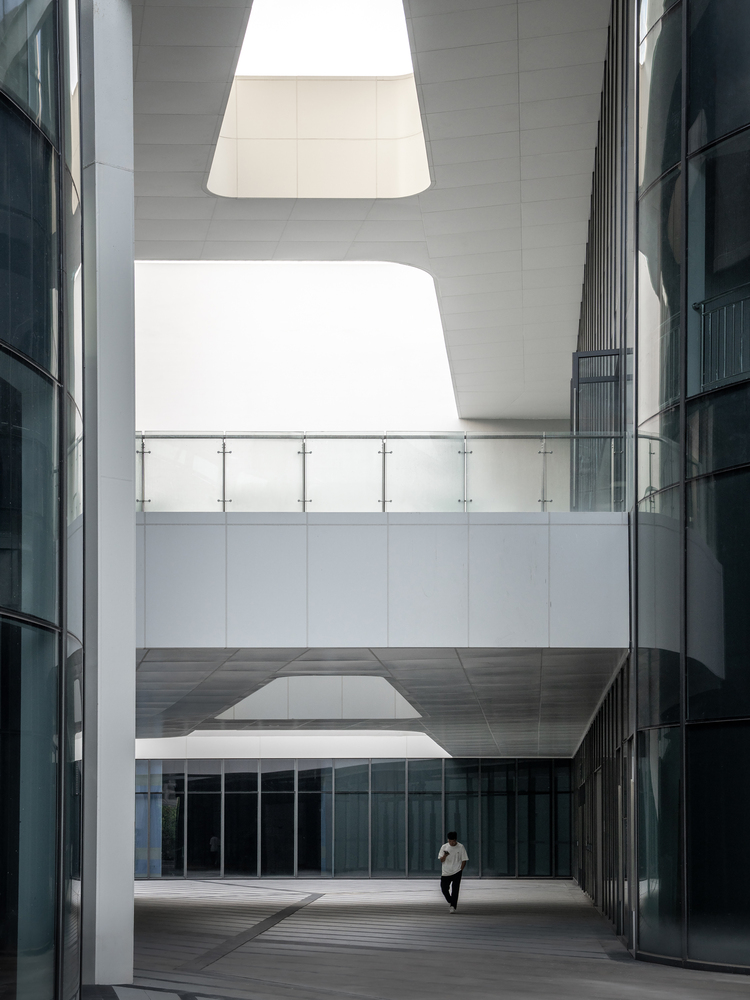
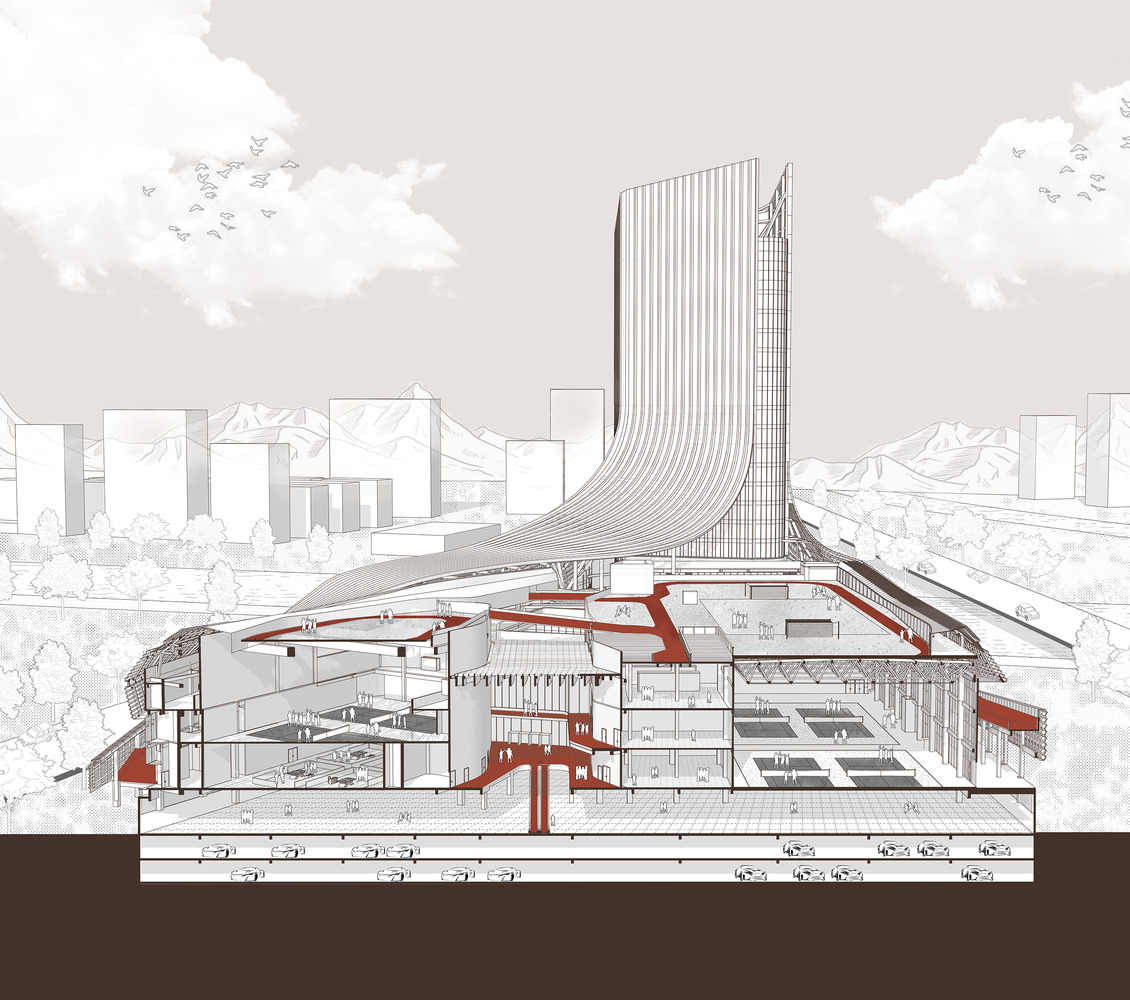
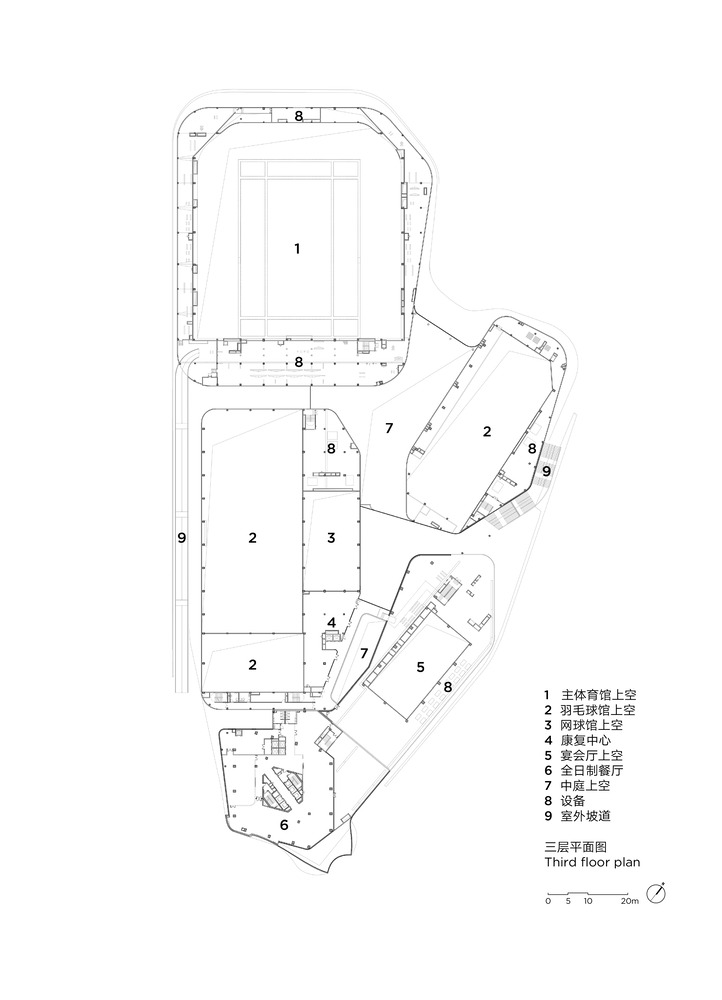
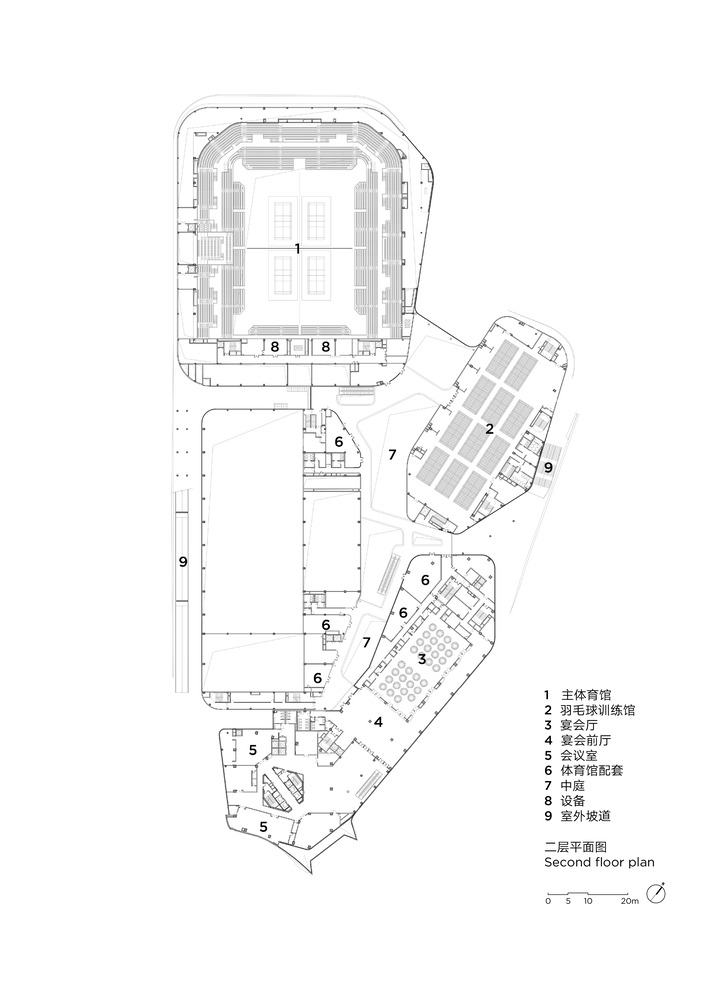
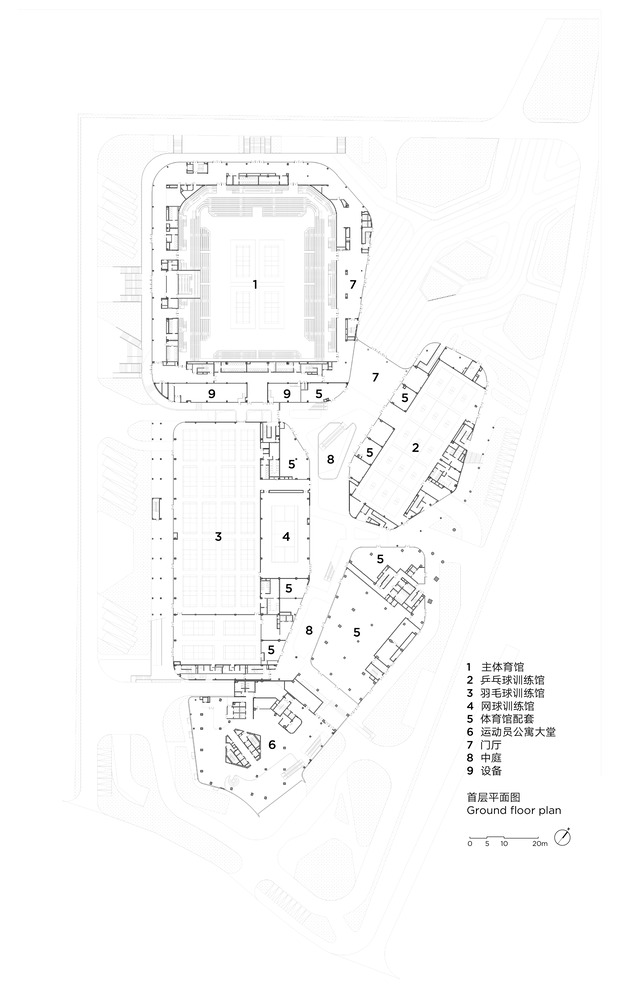
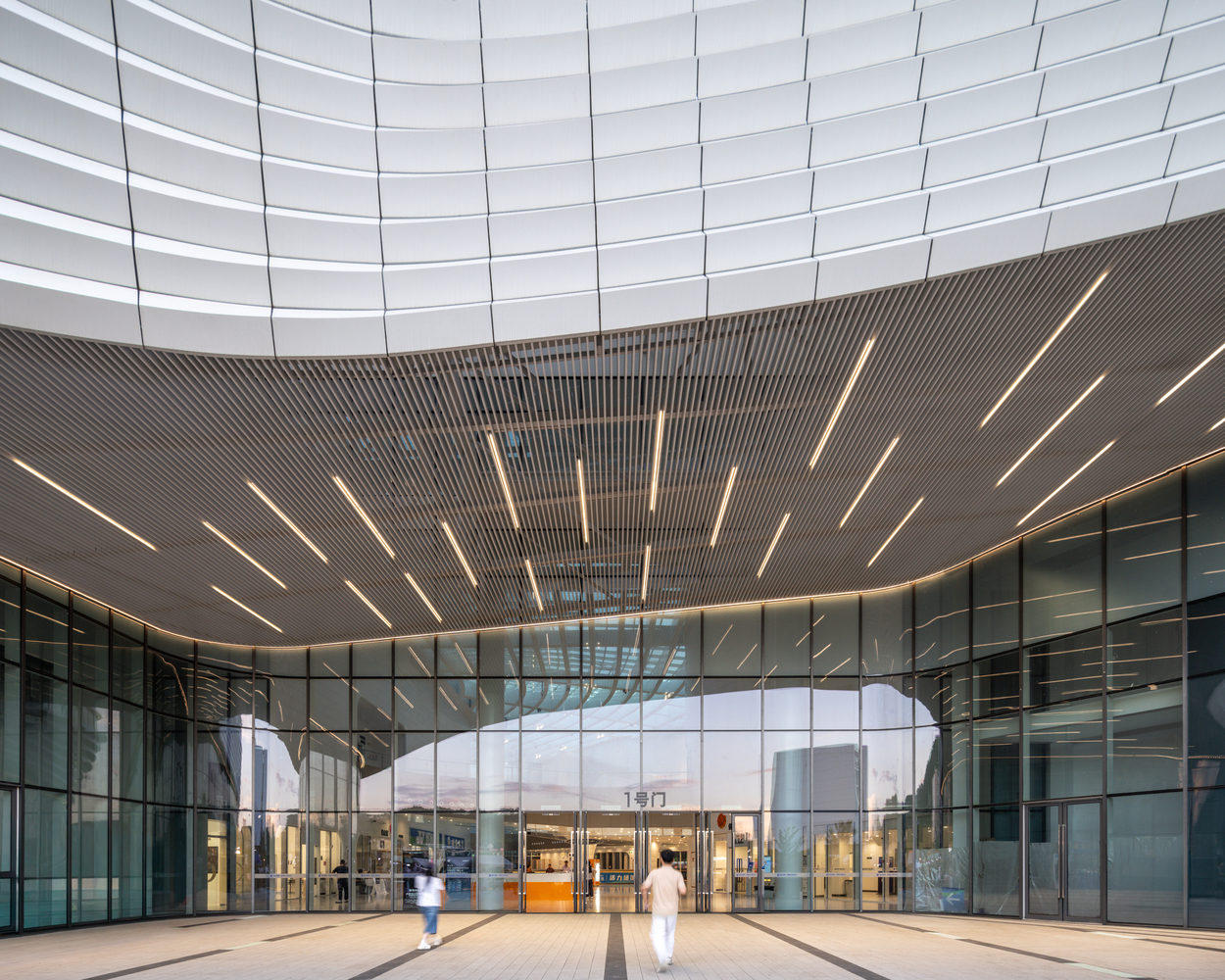
A central atrium operates as an internal urban street linking five major volumes: the main gymnasium, small-ball halls, training halls, commercial areas, and a 19-story athlete hotel.
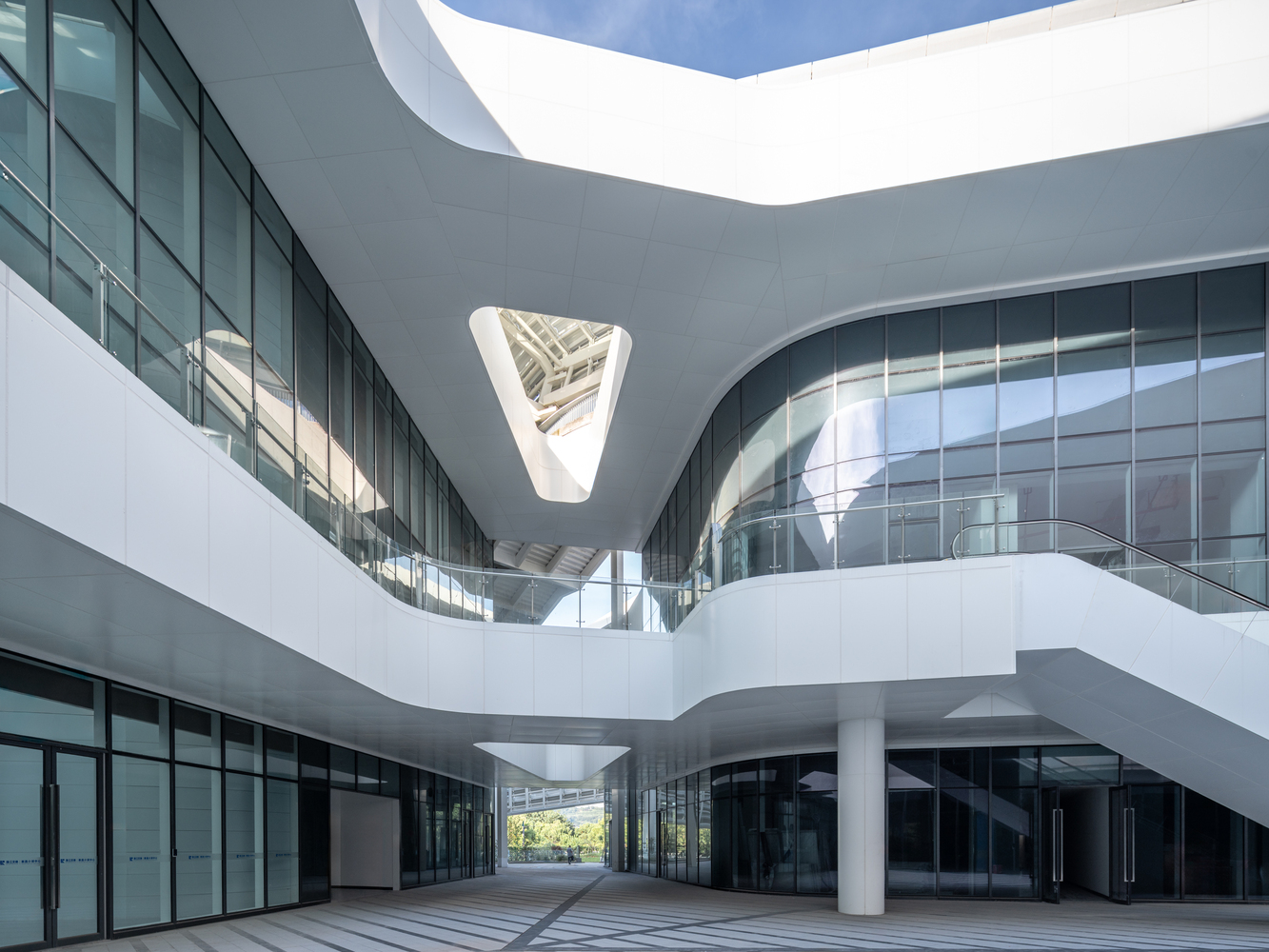
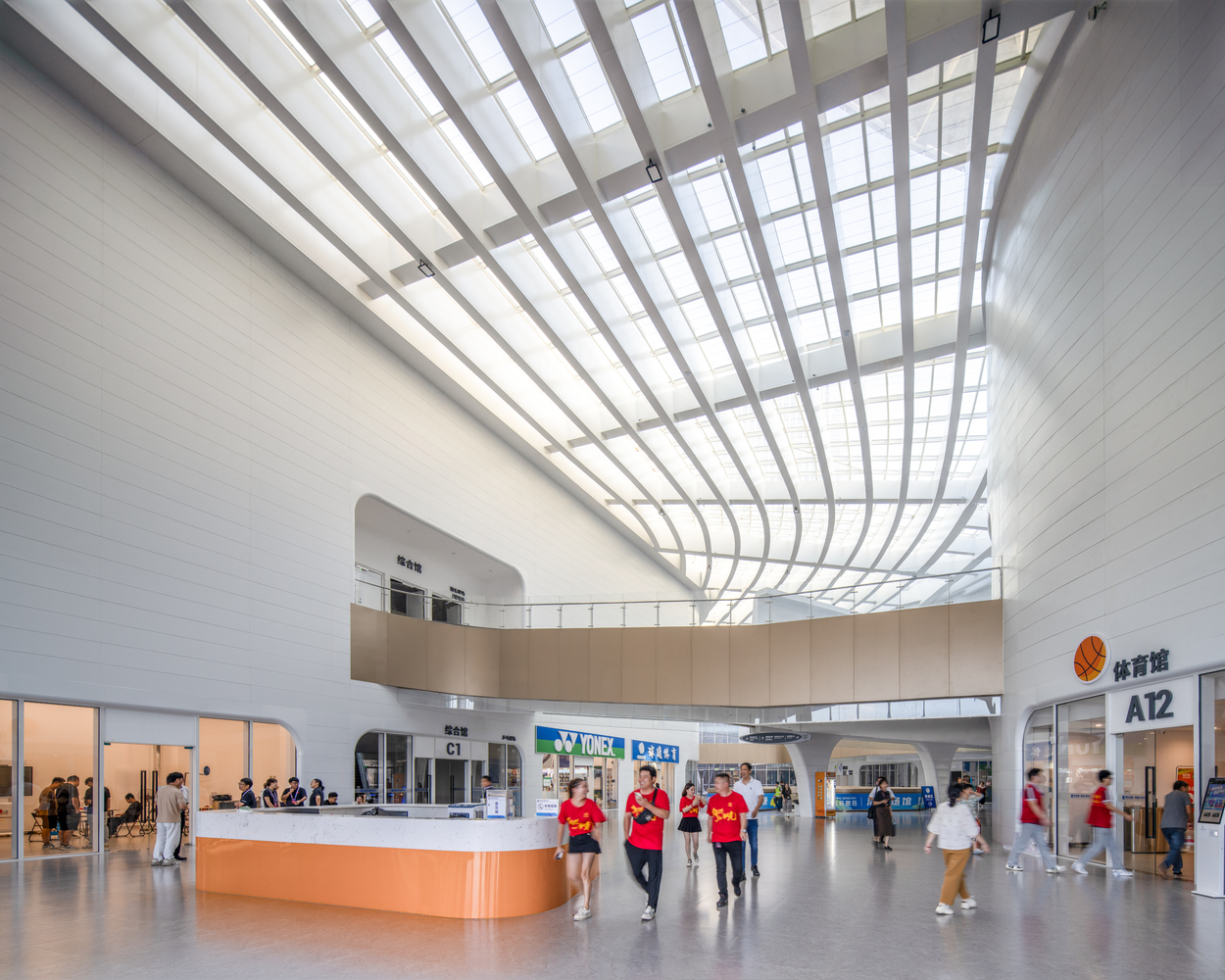
Public-facing programs are oriented toward the northern transport hub, while the hotel is placed on the quieter riverside to ensure privacy and views.
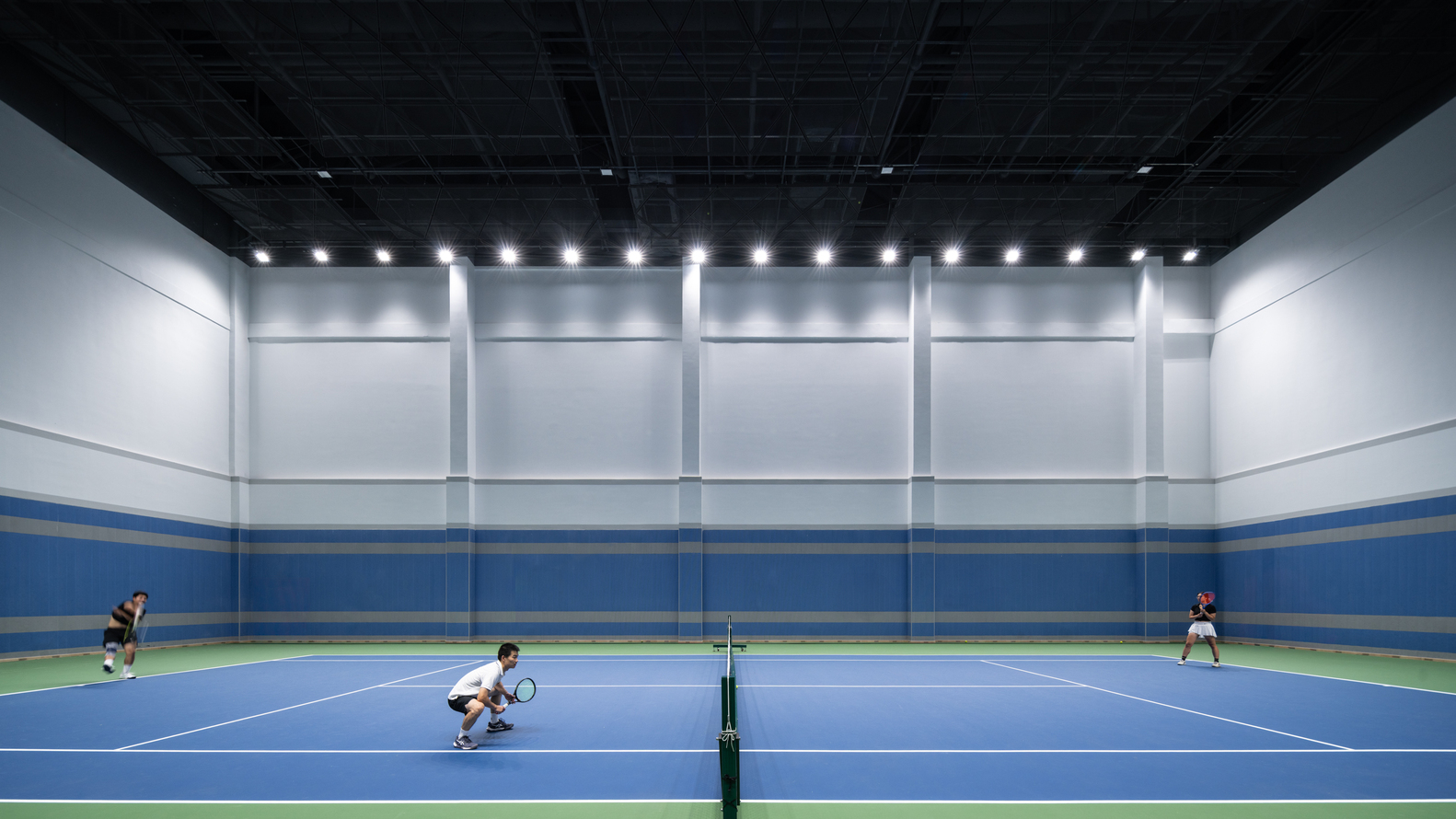
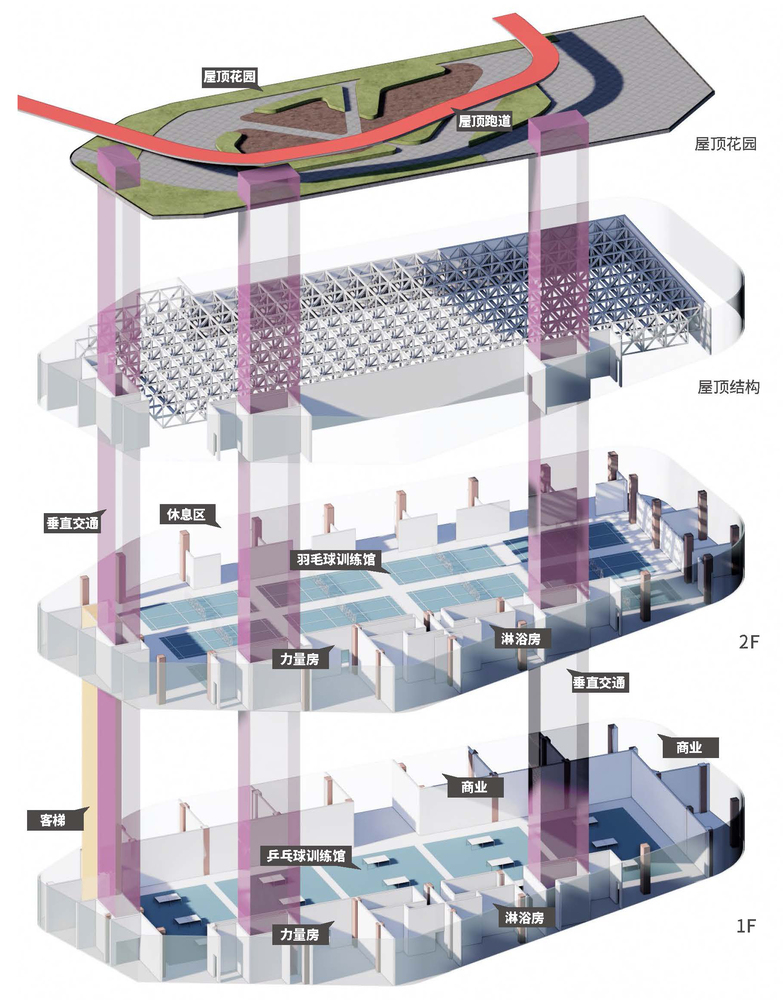
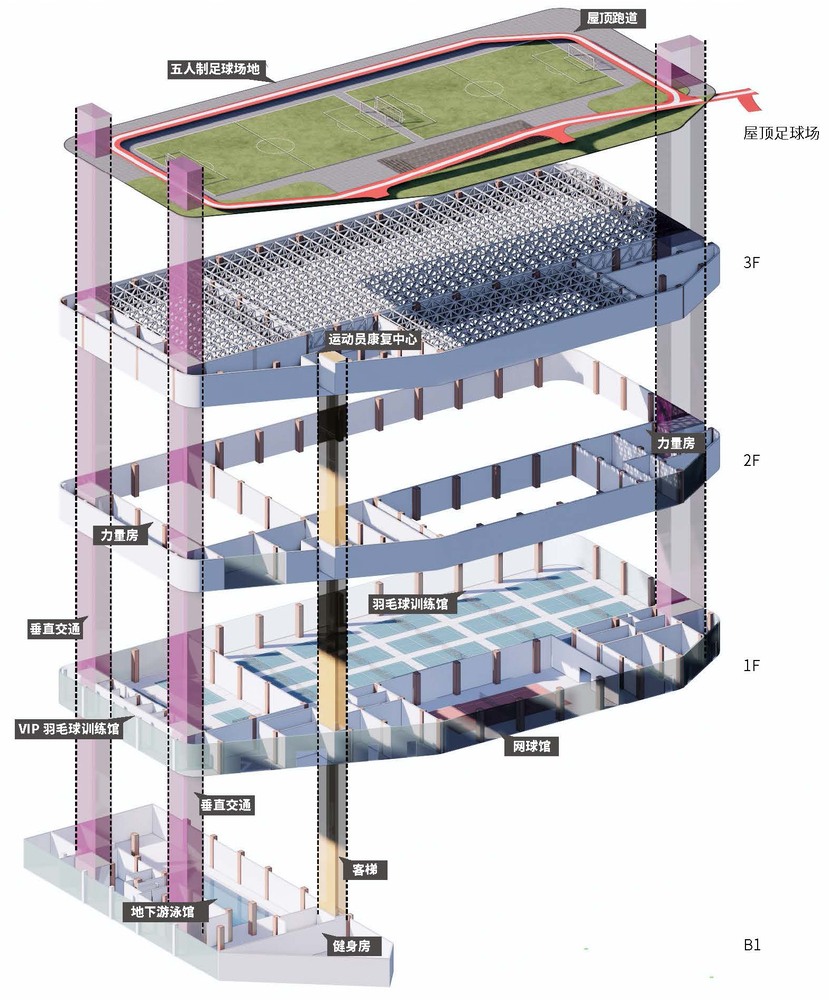
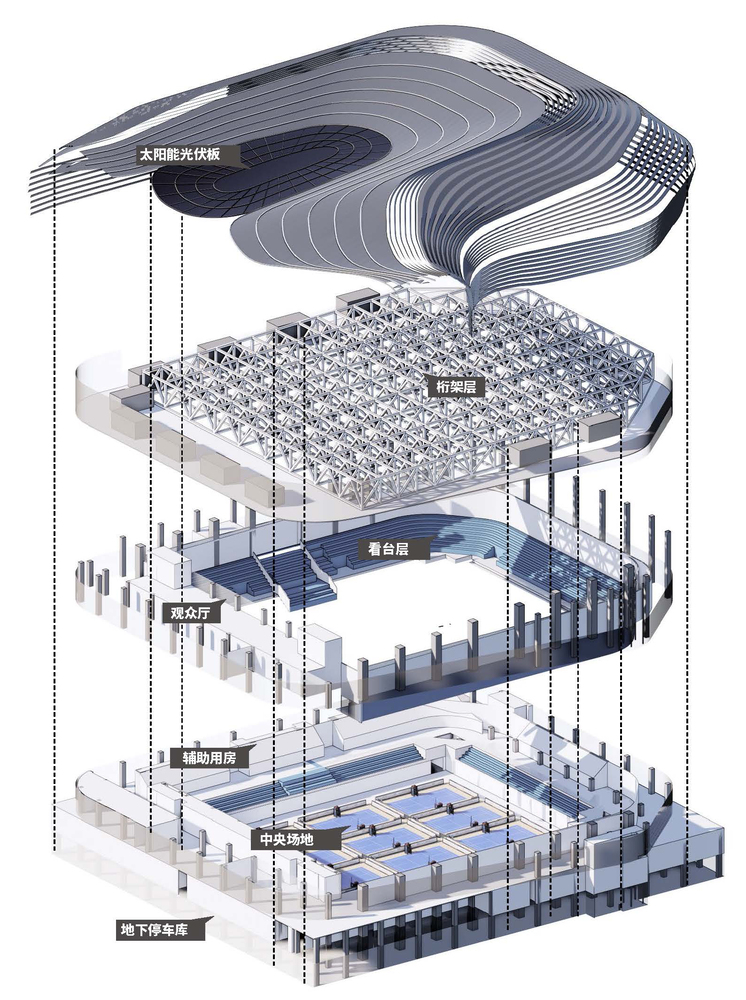
A flexible "elastic grid" enables rapid conversion between sports configurations. The main arena can accommodate professional layouts for badminton, basketball, table tennis, or tennis with 5,000 retractable seats.
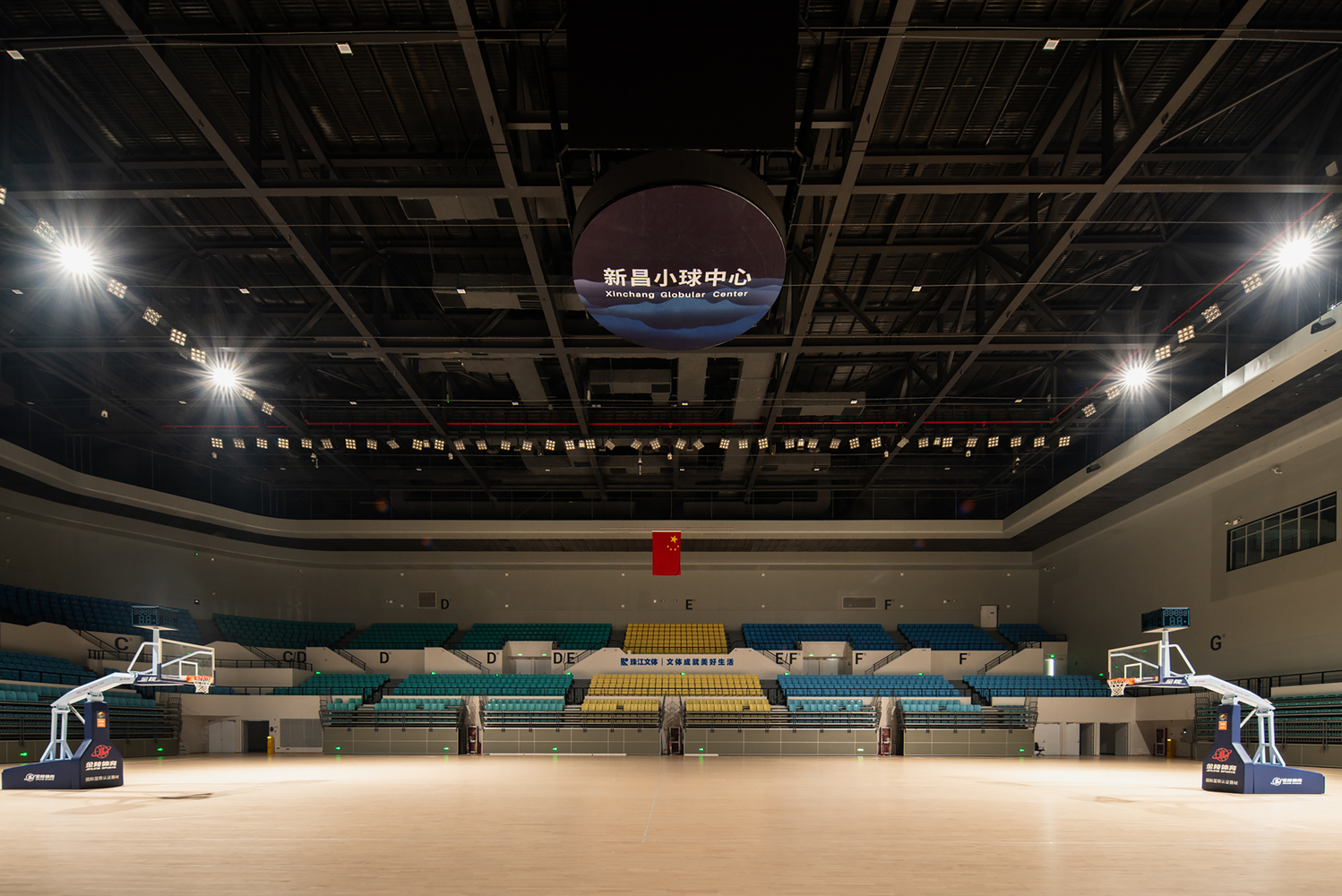
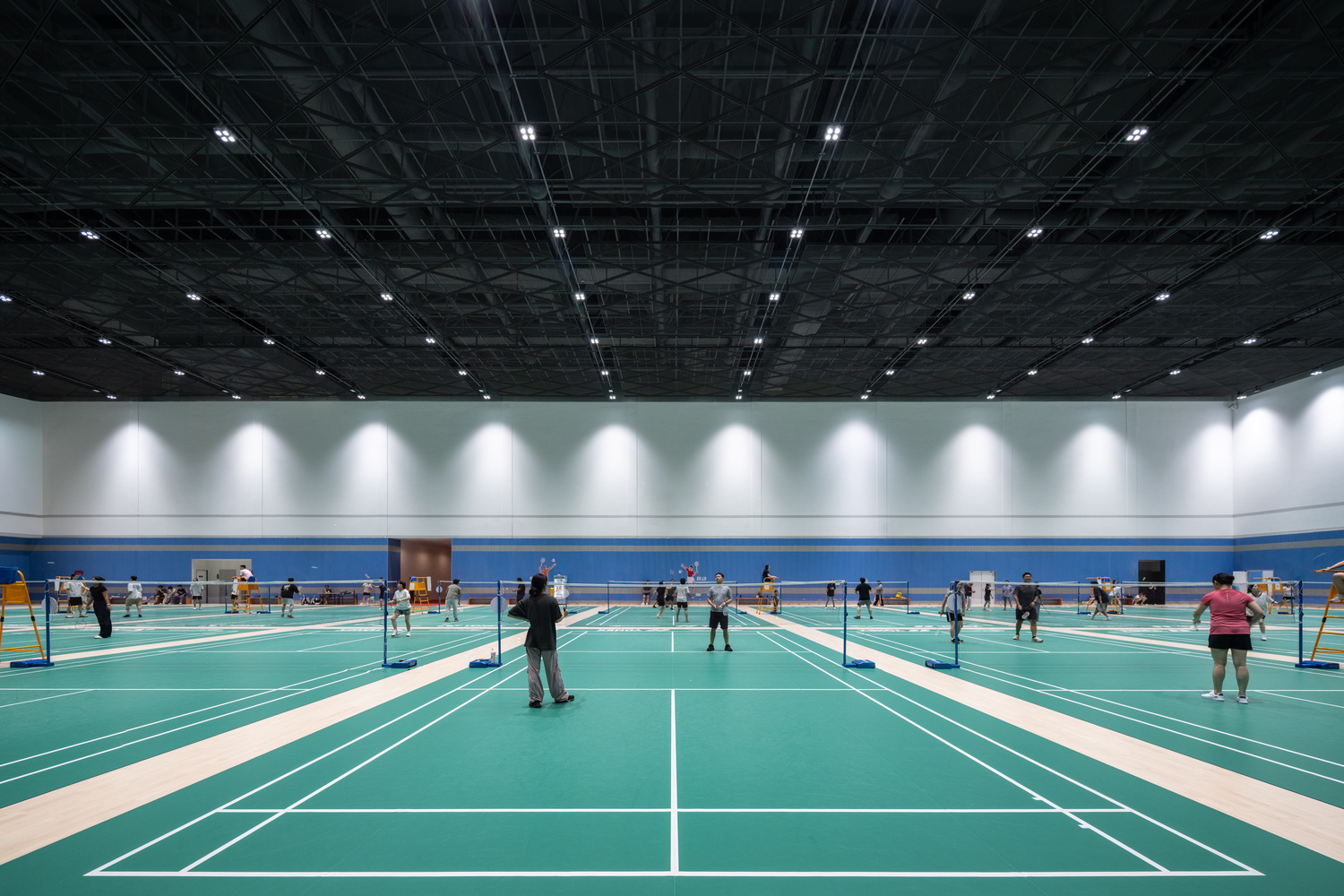
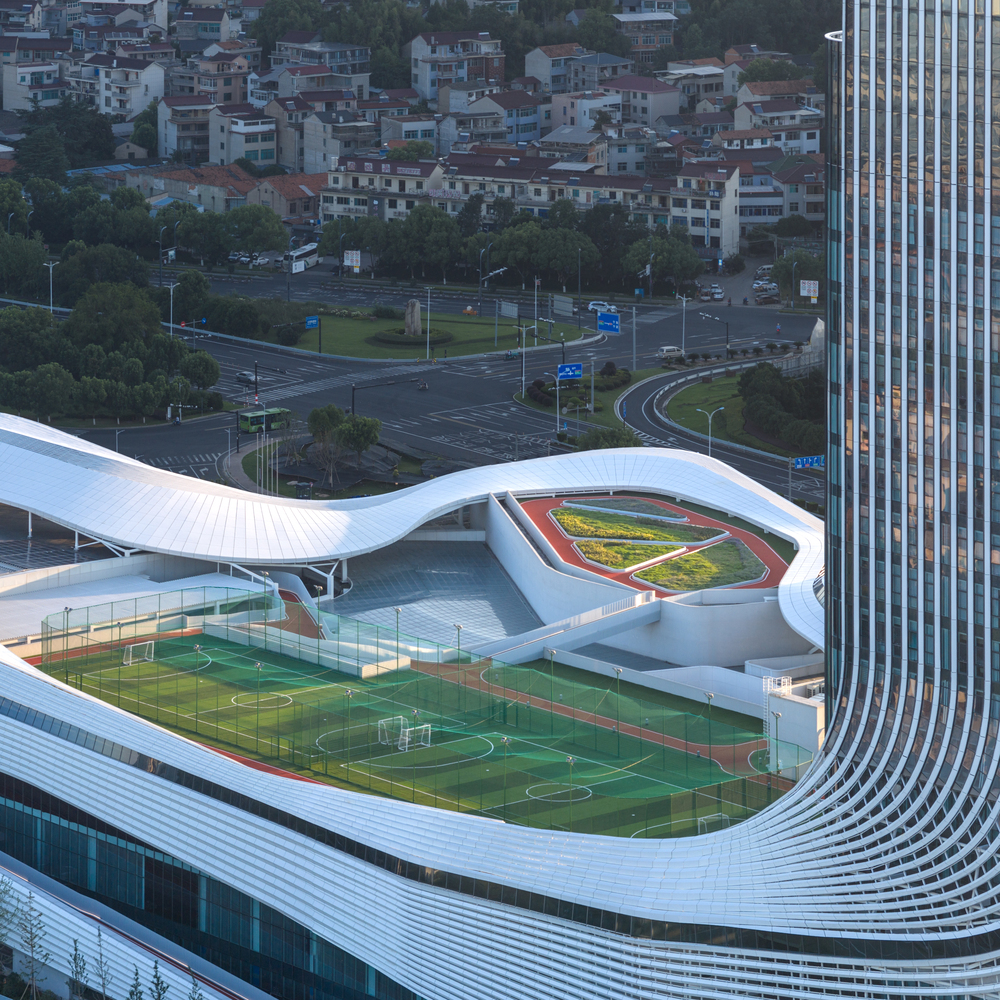
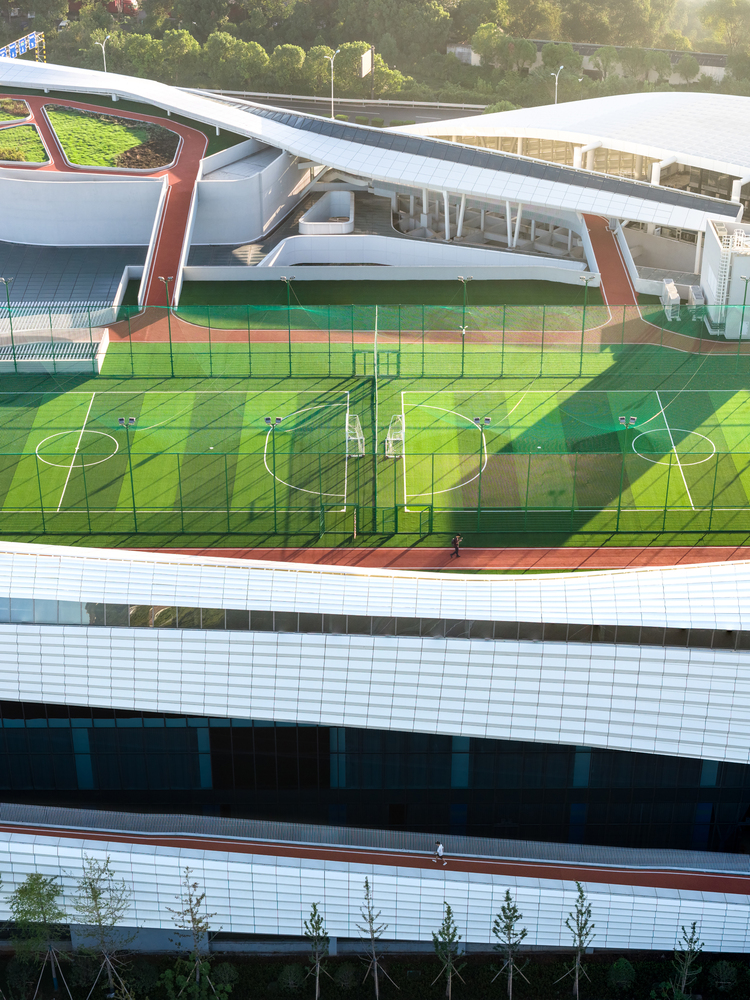
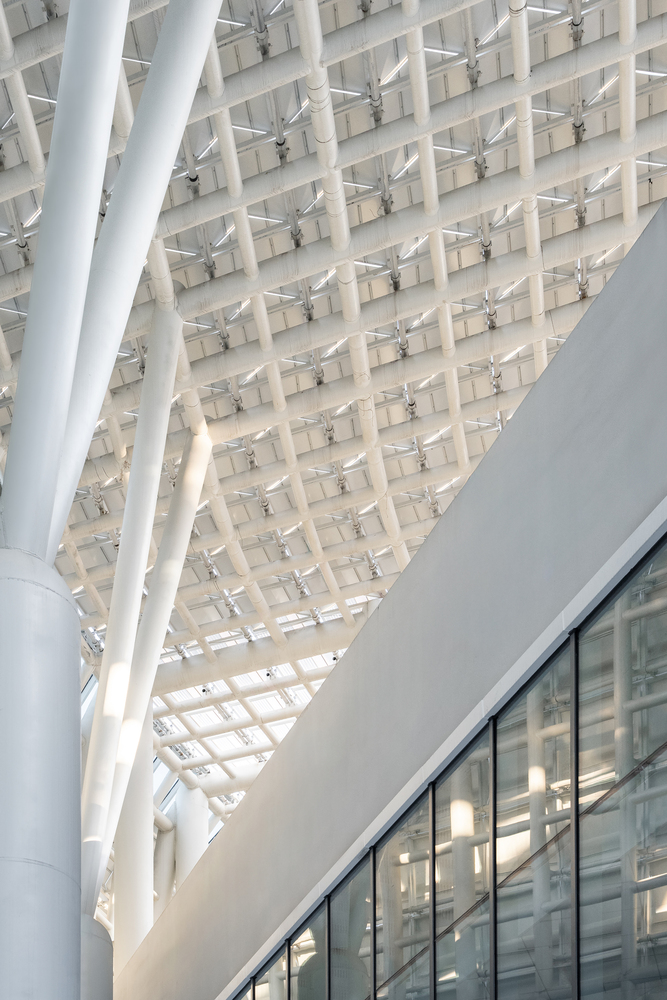
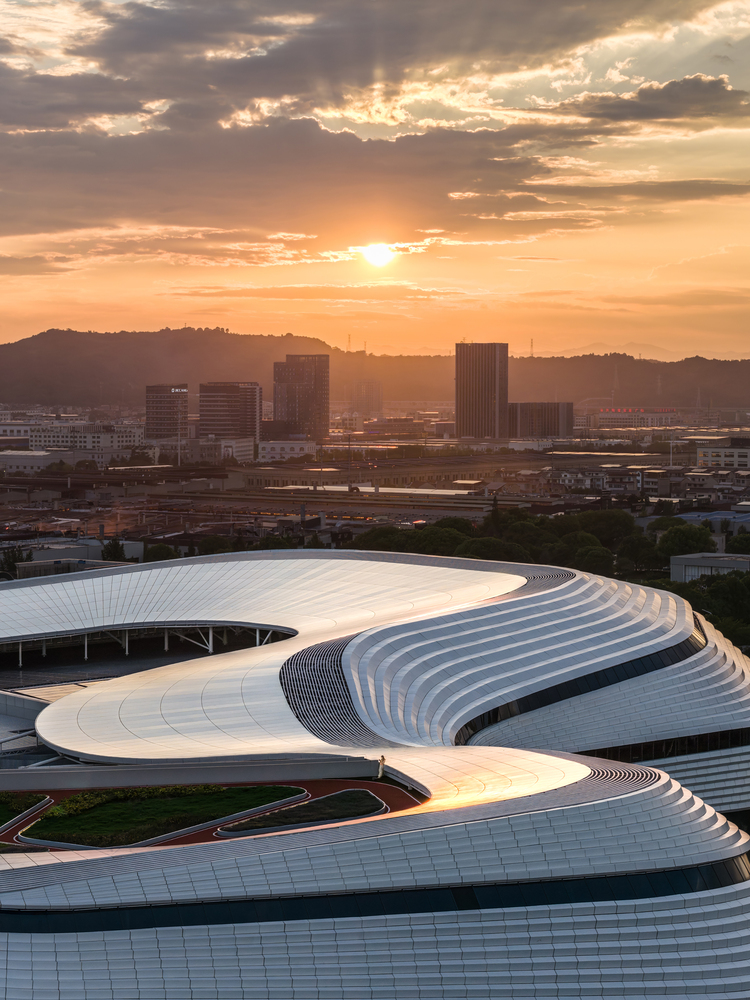
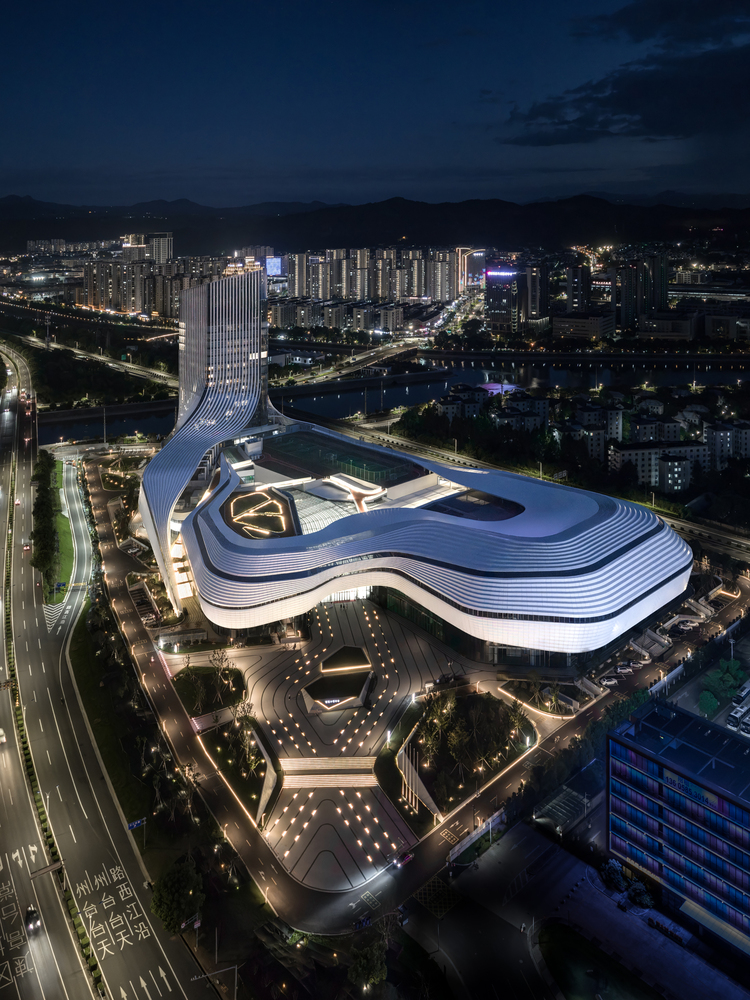
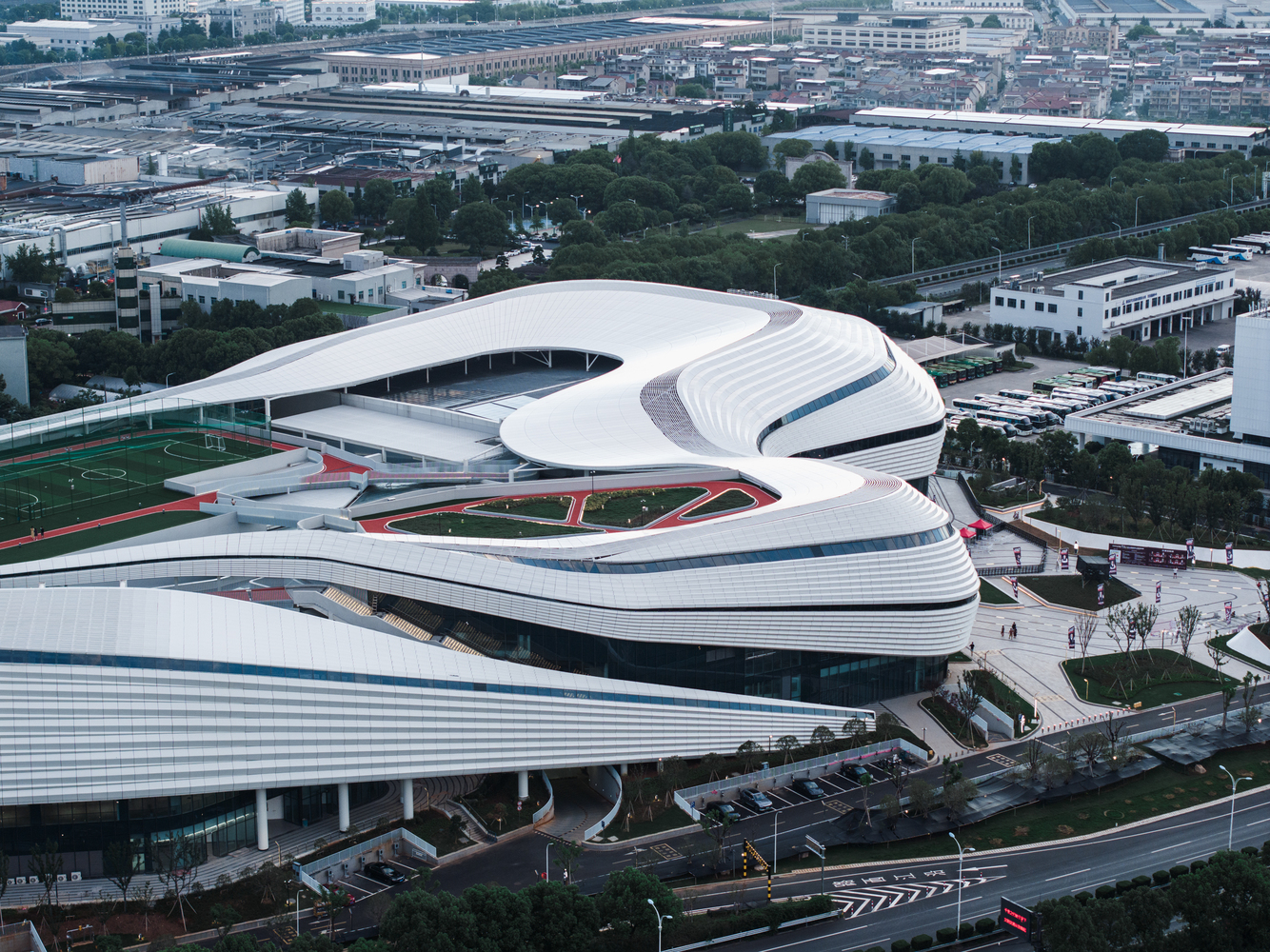
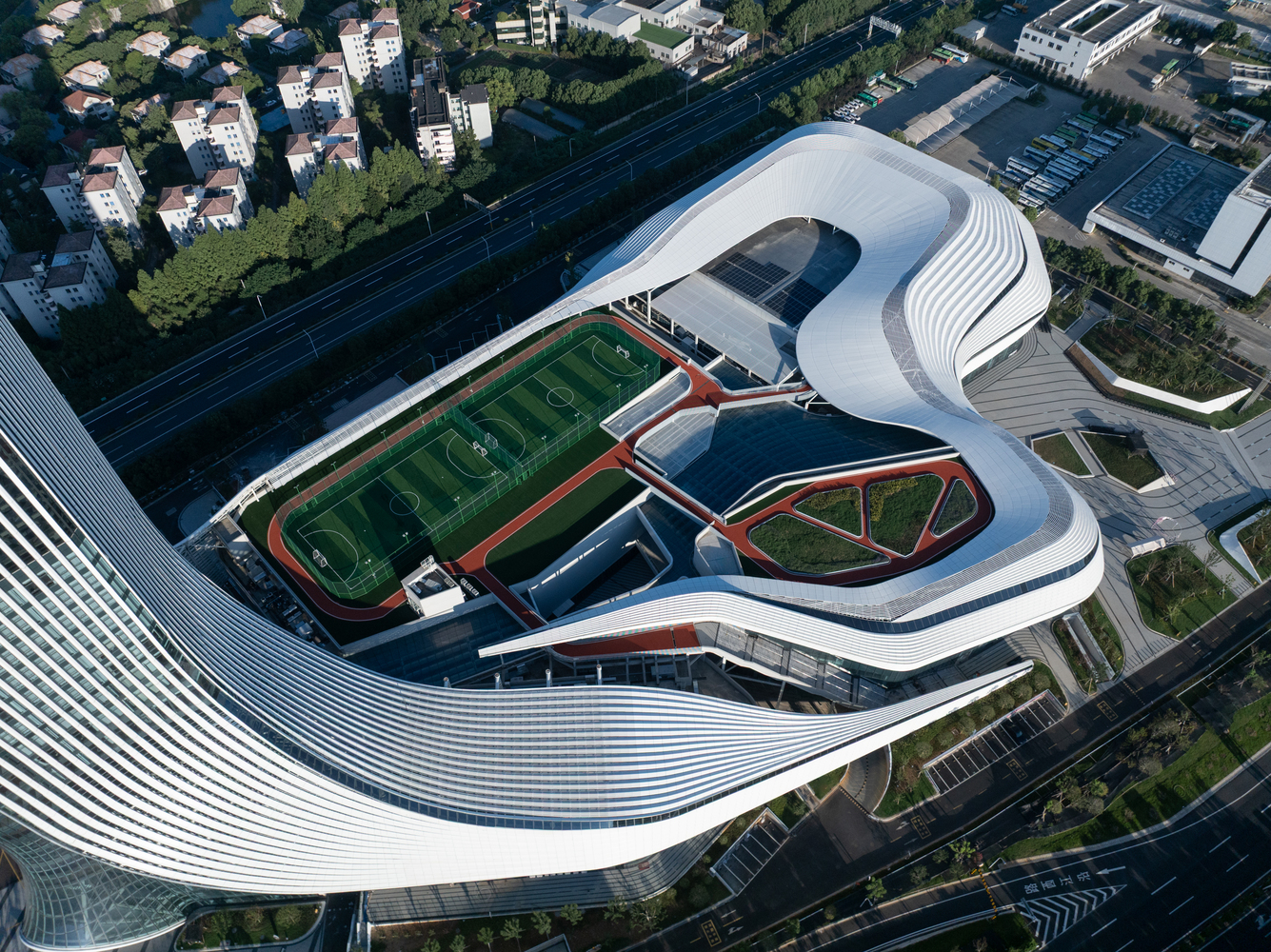
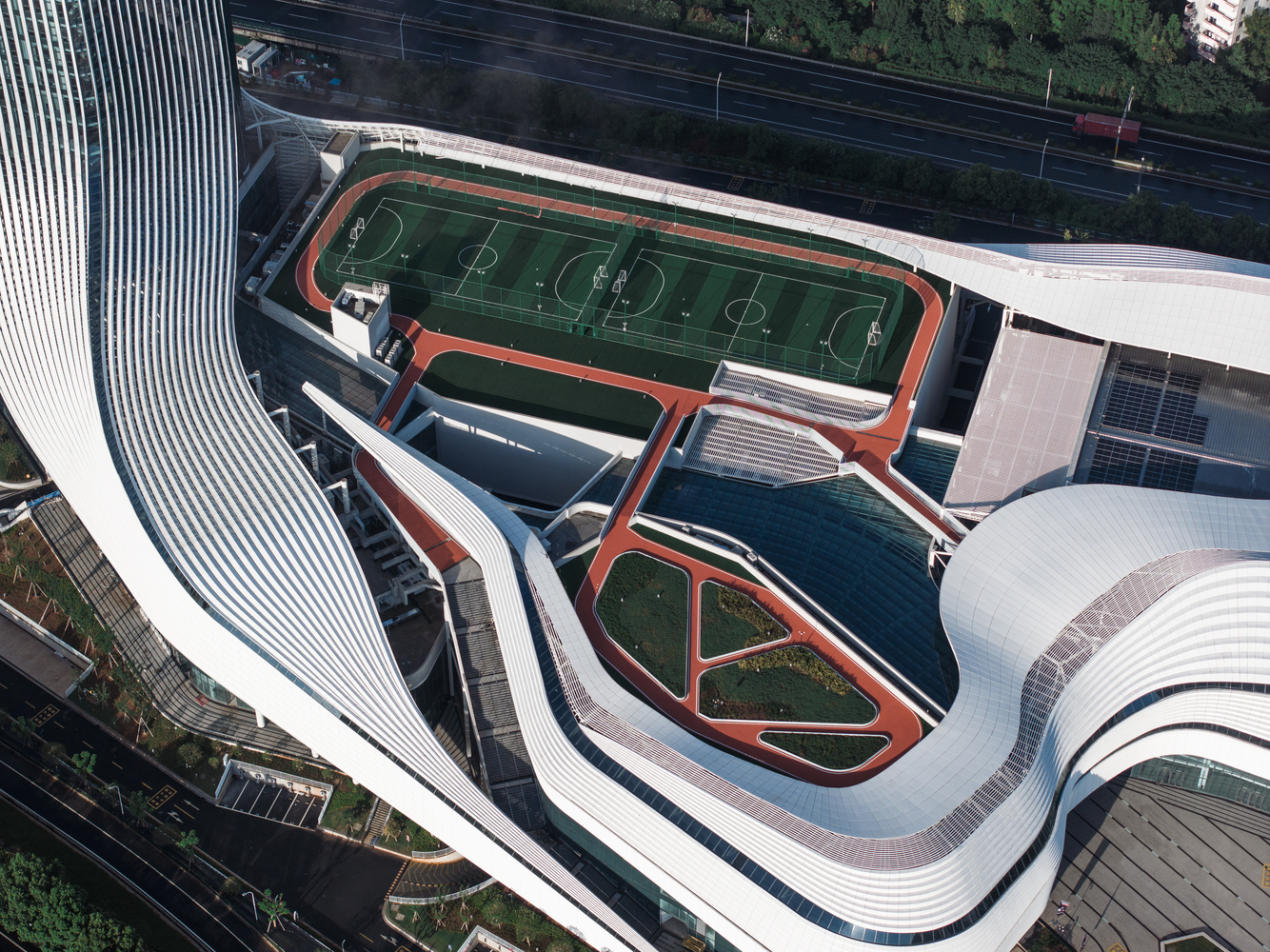
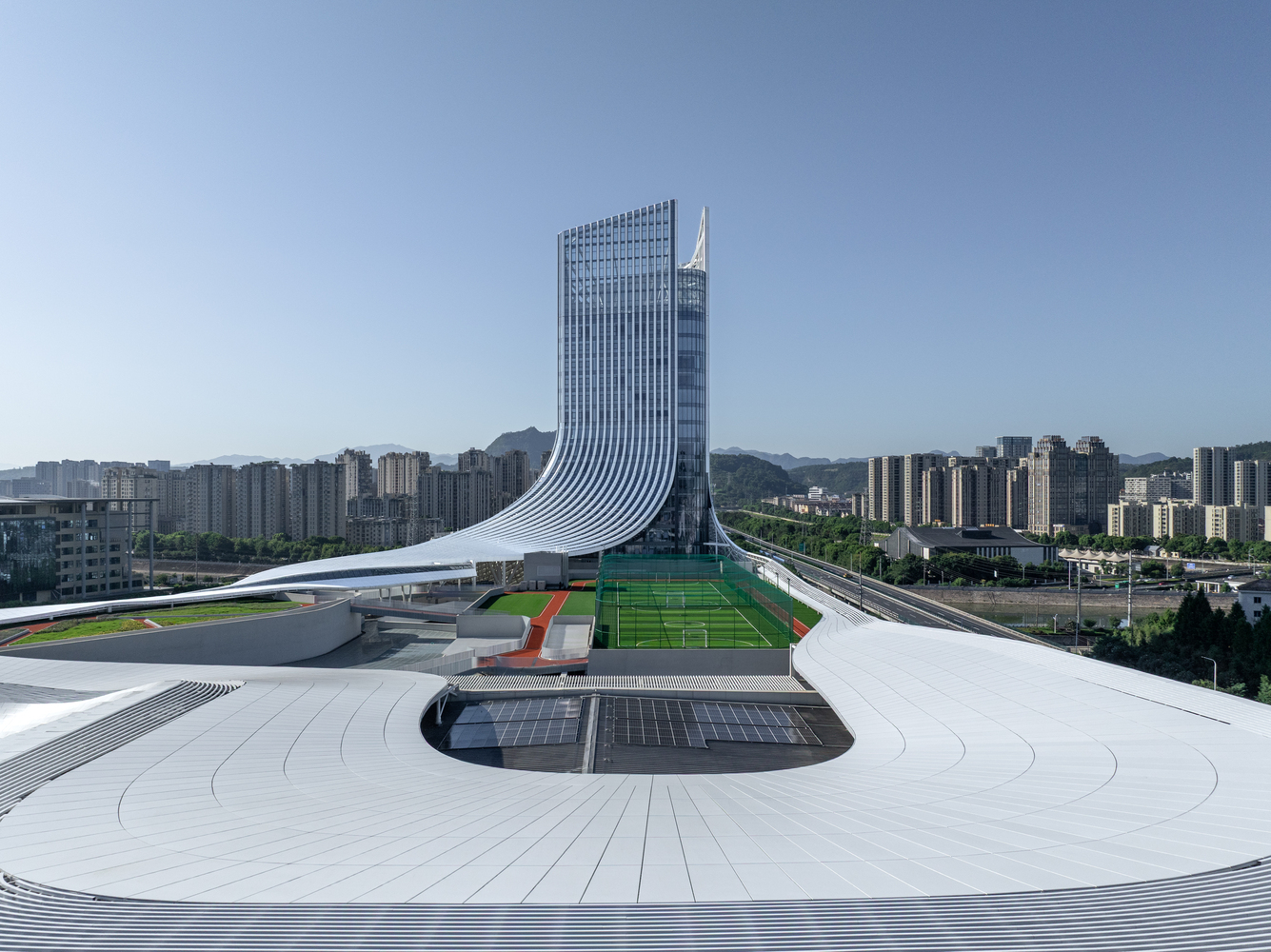
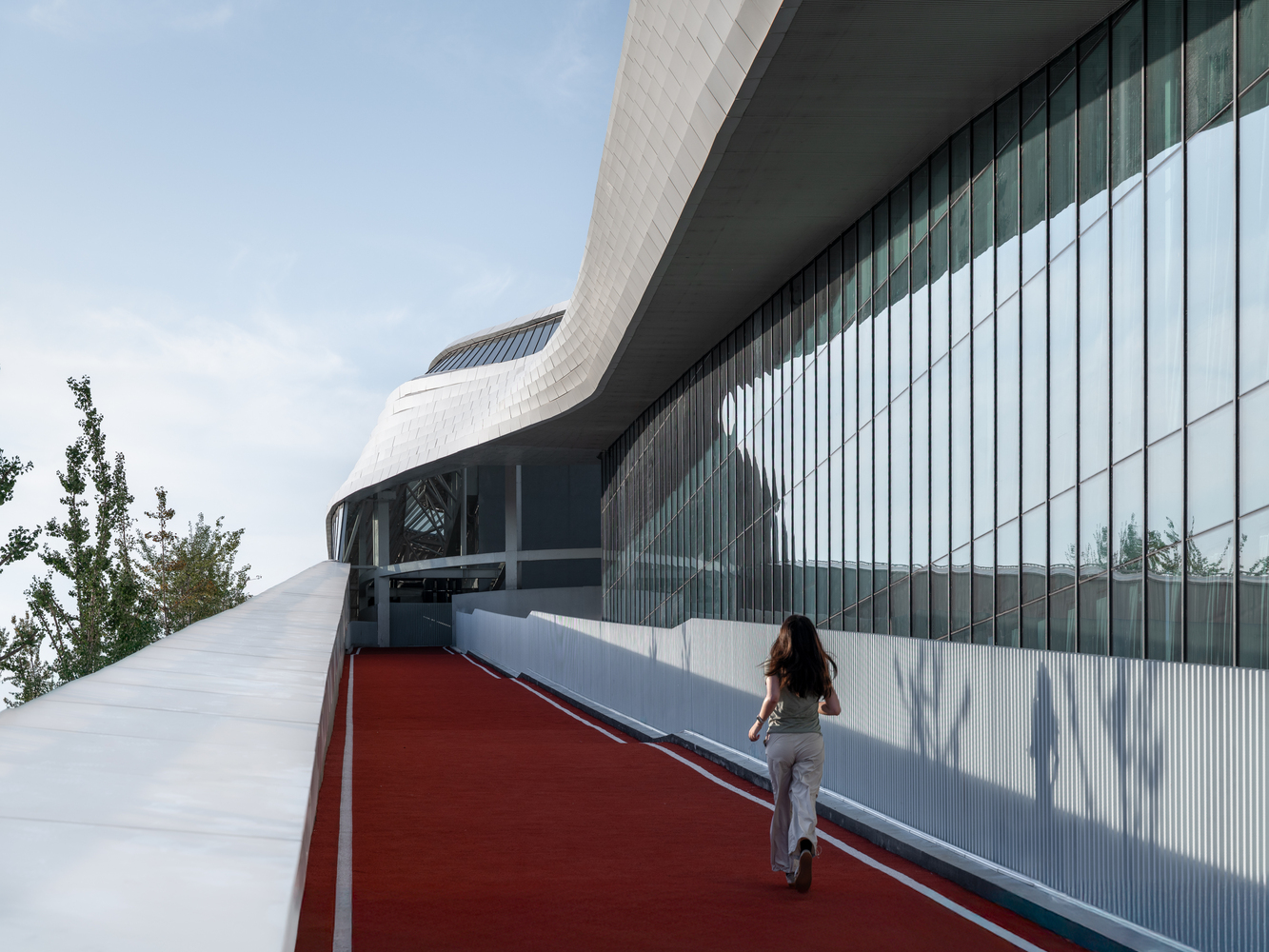
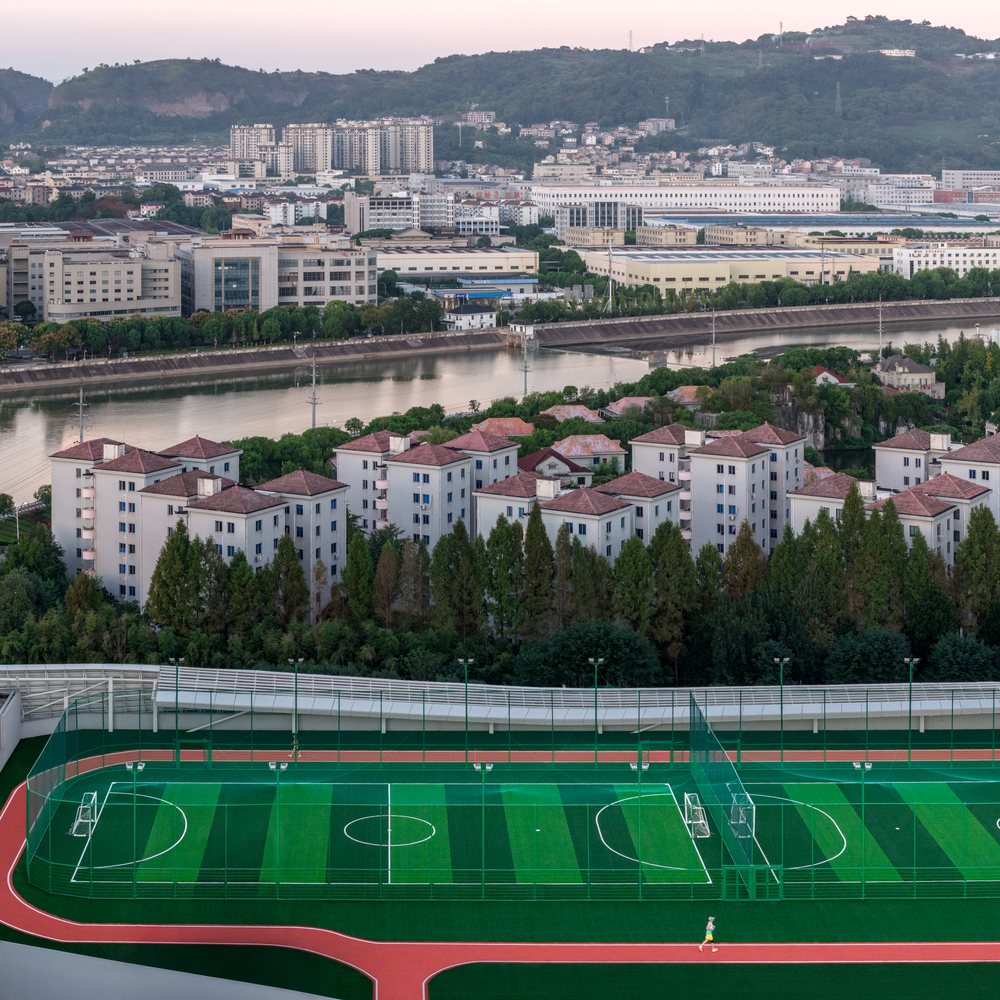
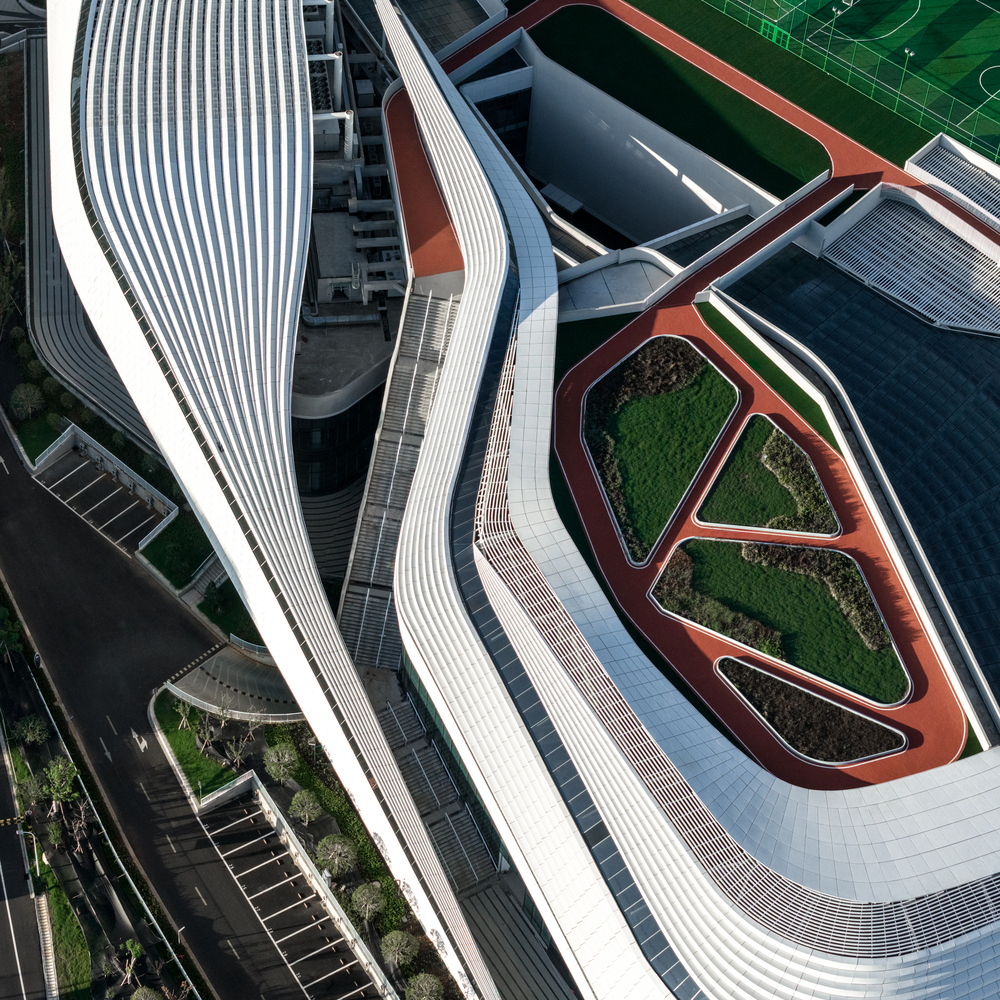
Additional training halls provide varied clear heights tailored to different sports. Above, a continuous roof unifies the complex and contains a soccer field, running track, and viewing deck—open to the public 24/7 via exterior ramps—extending urban life onto the rooftop.
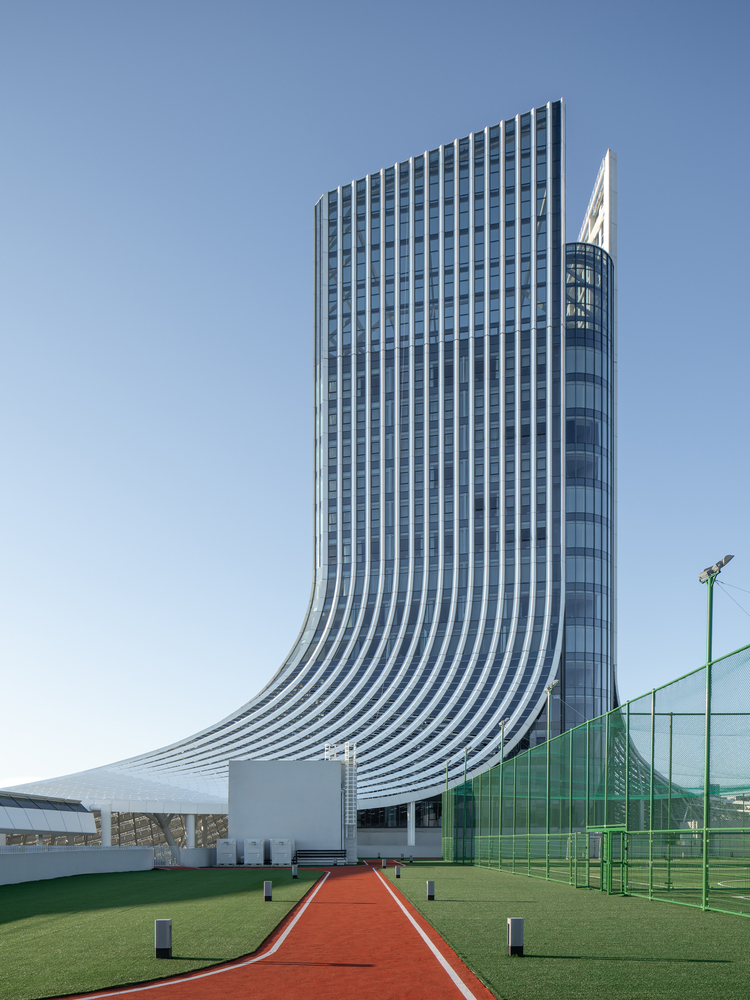
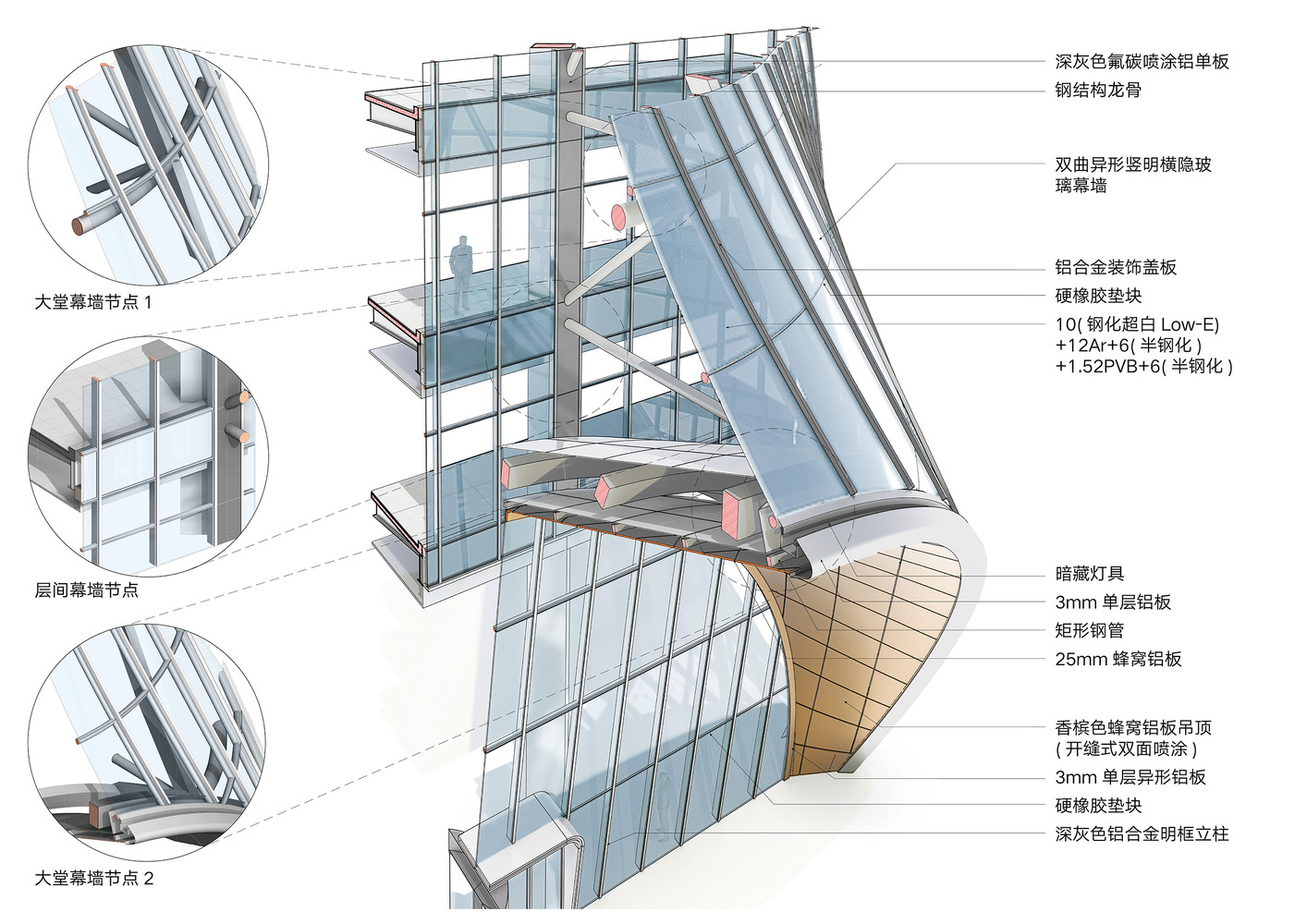
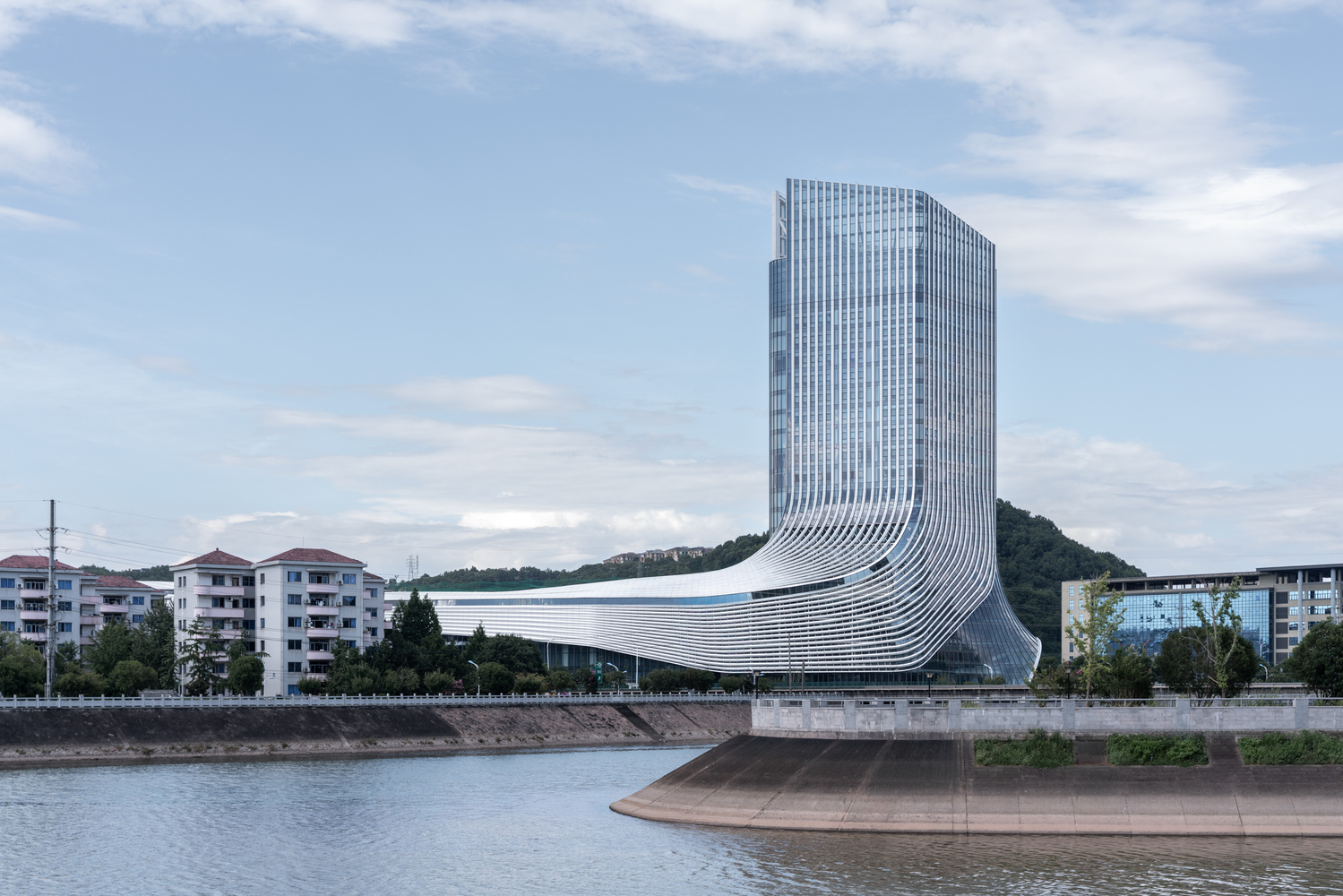
Drawing from Xinchang's mountain-and-water landscape, the architectural form employs horizontal massing and fluid rooflines to create a new waterfront interface. The hotel tower establishes a vertical landmark, with its cascading atrium suggesting the movement of water.
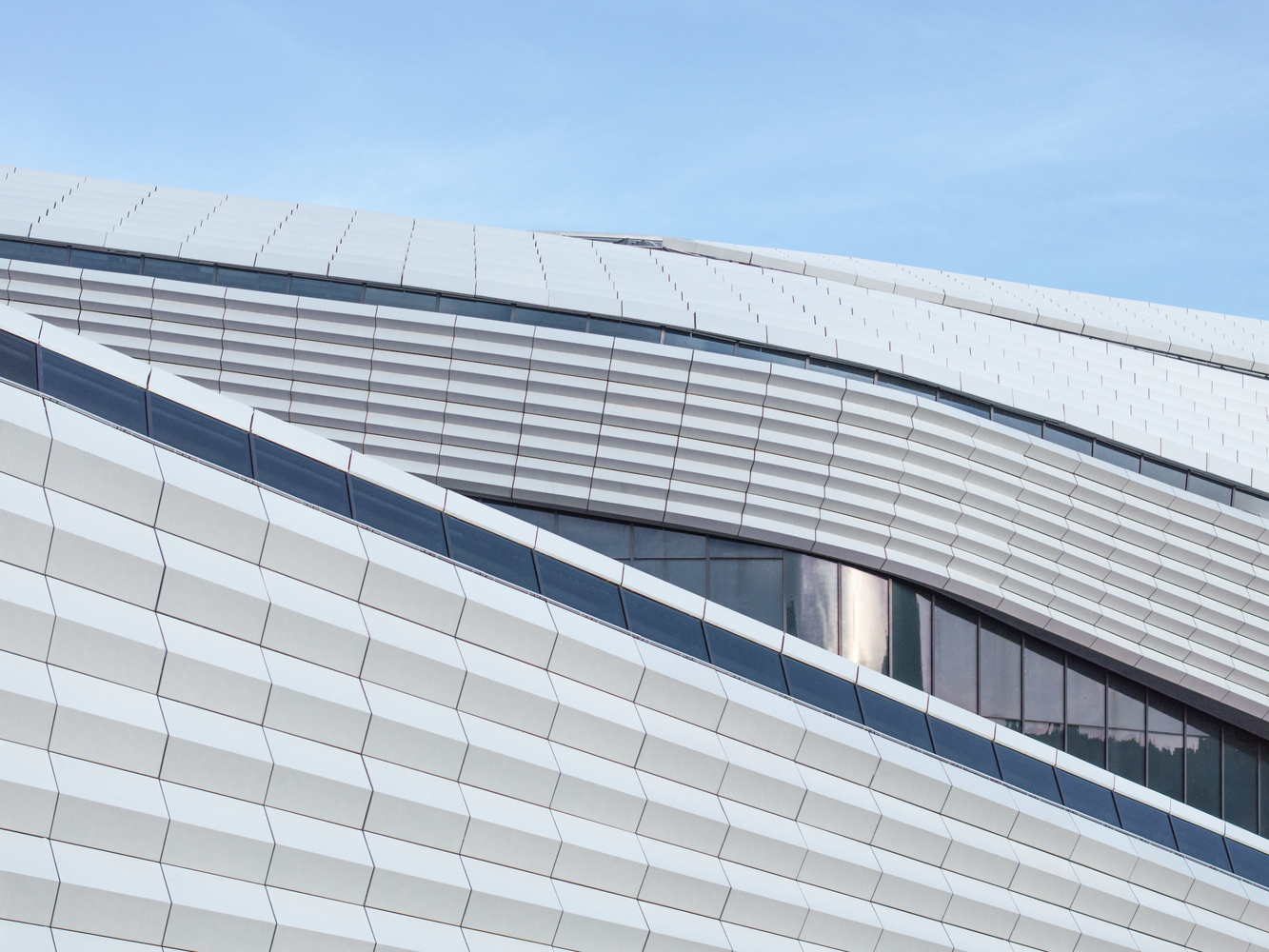
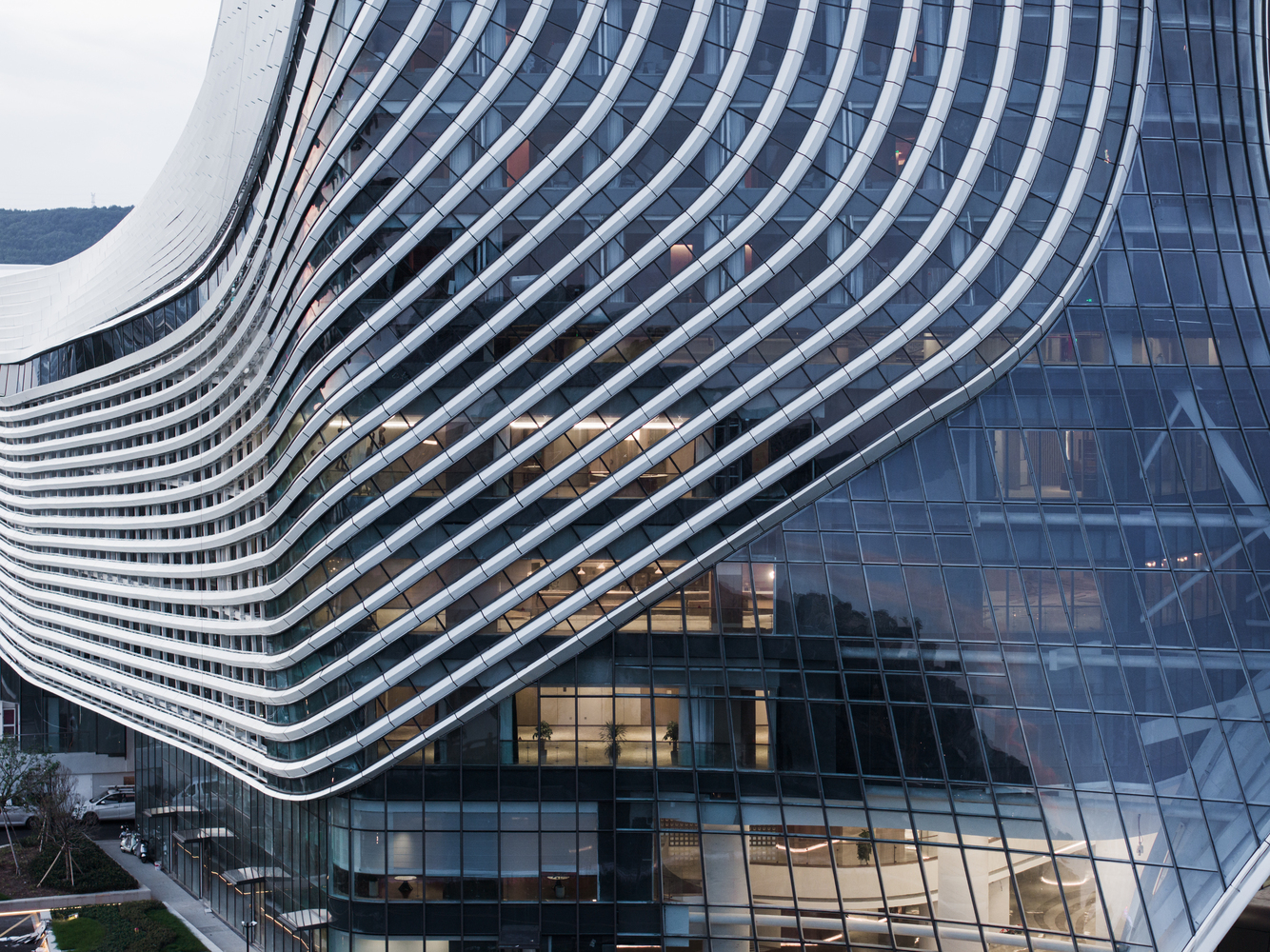
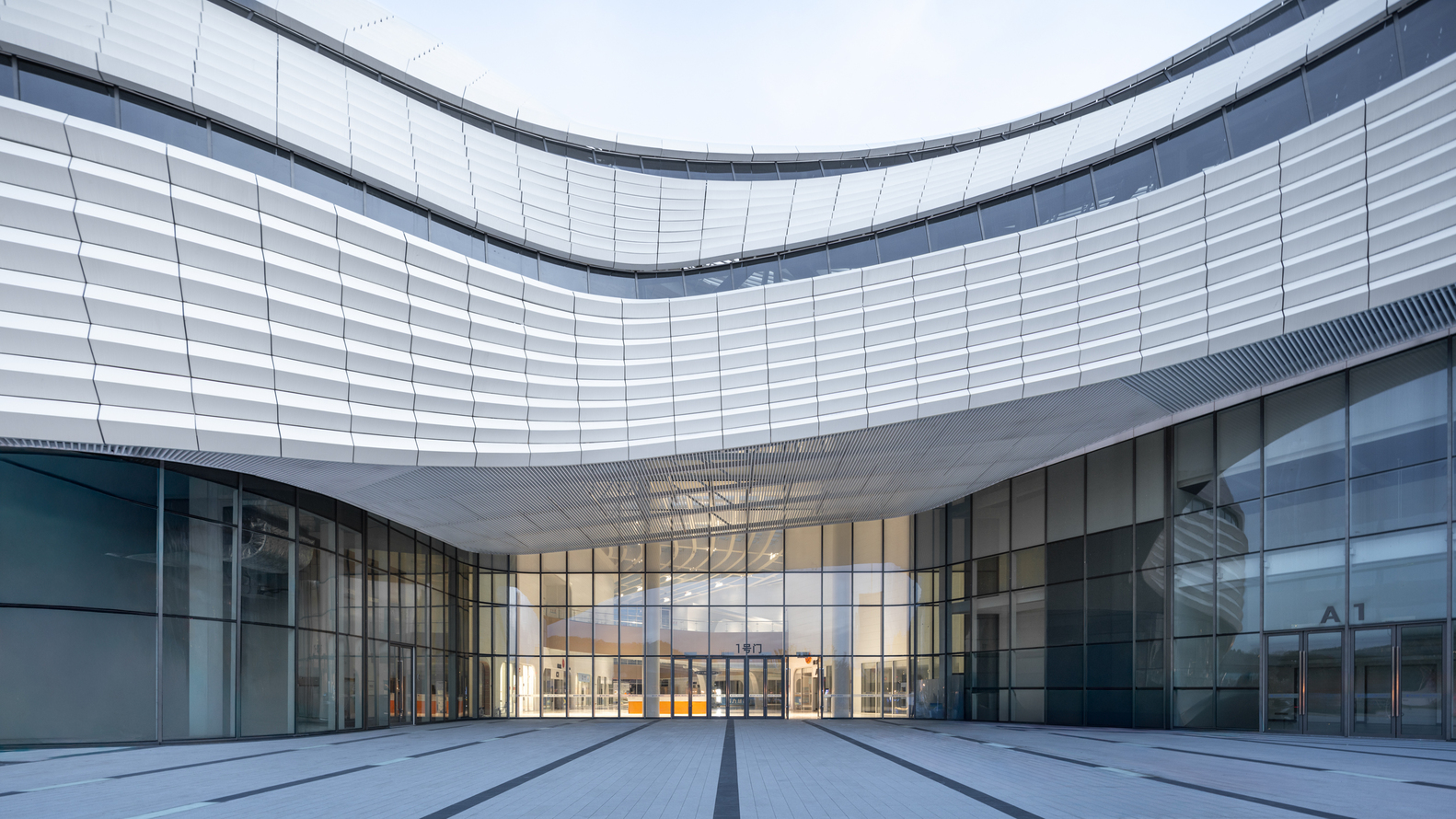
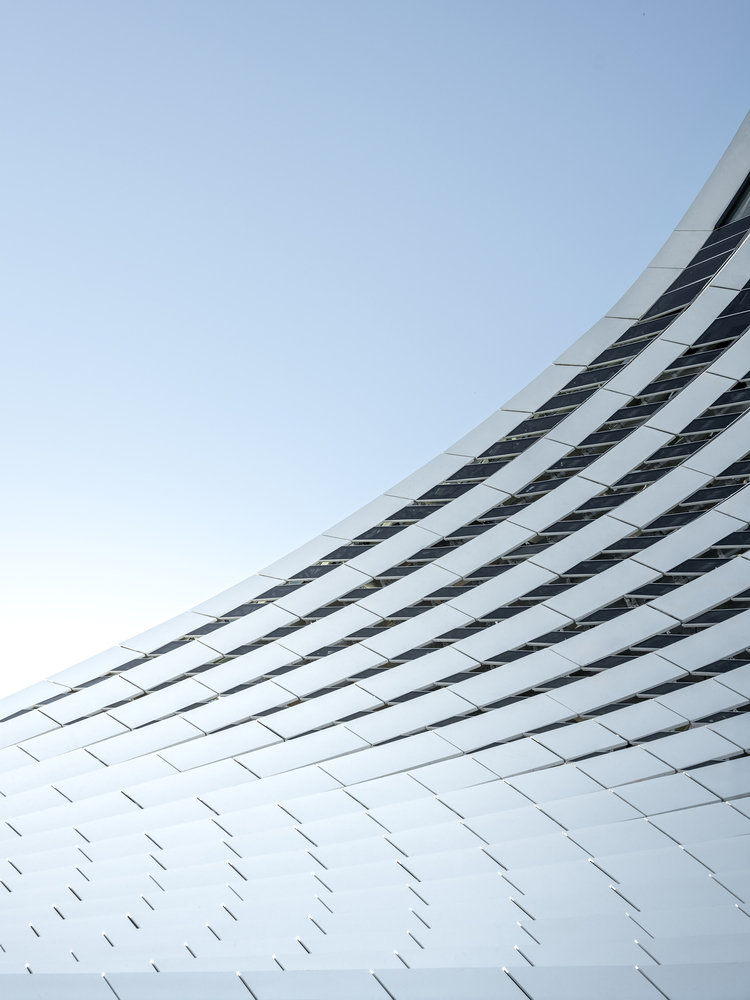
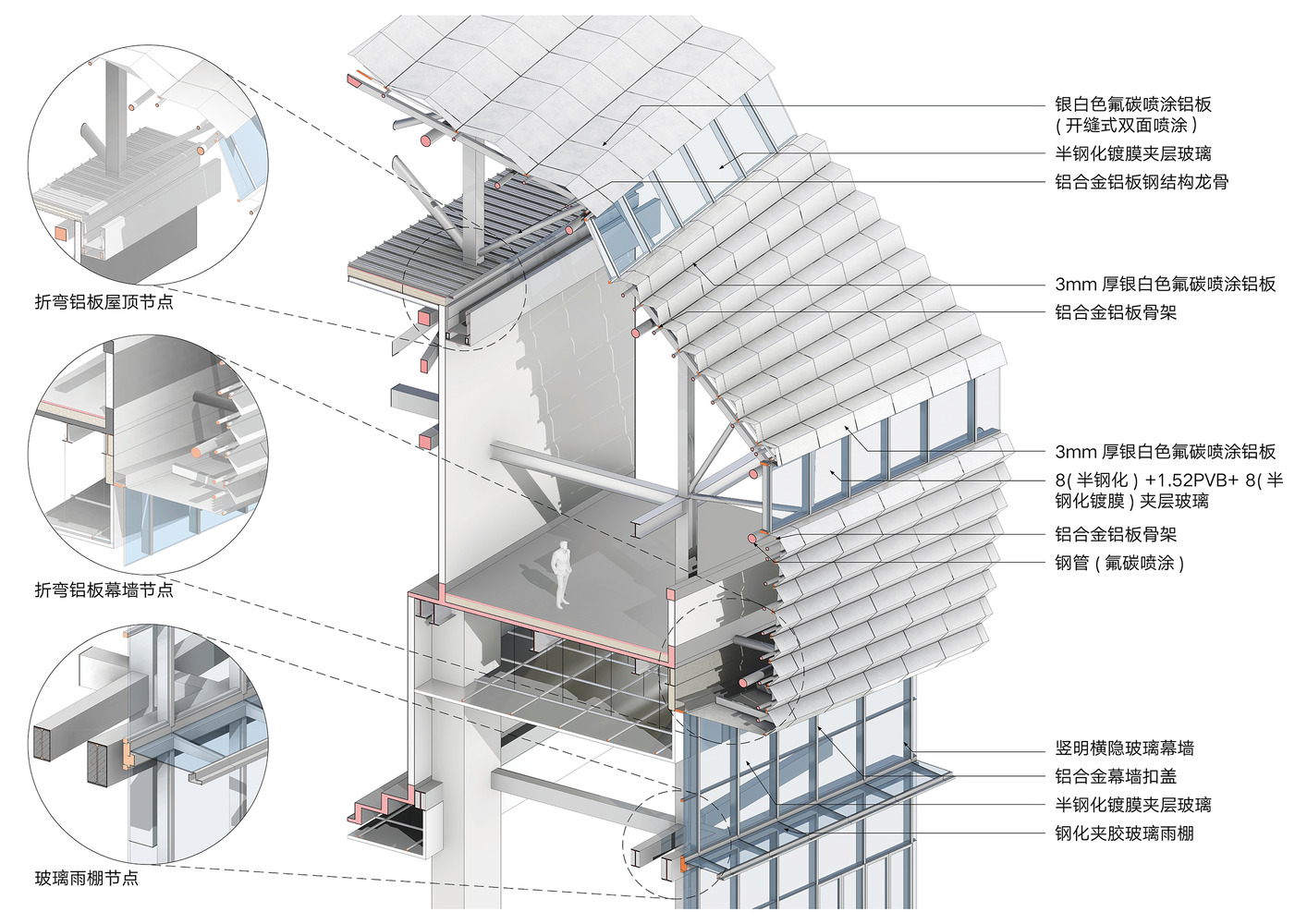
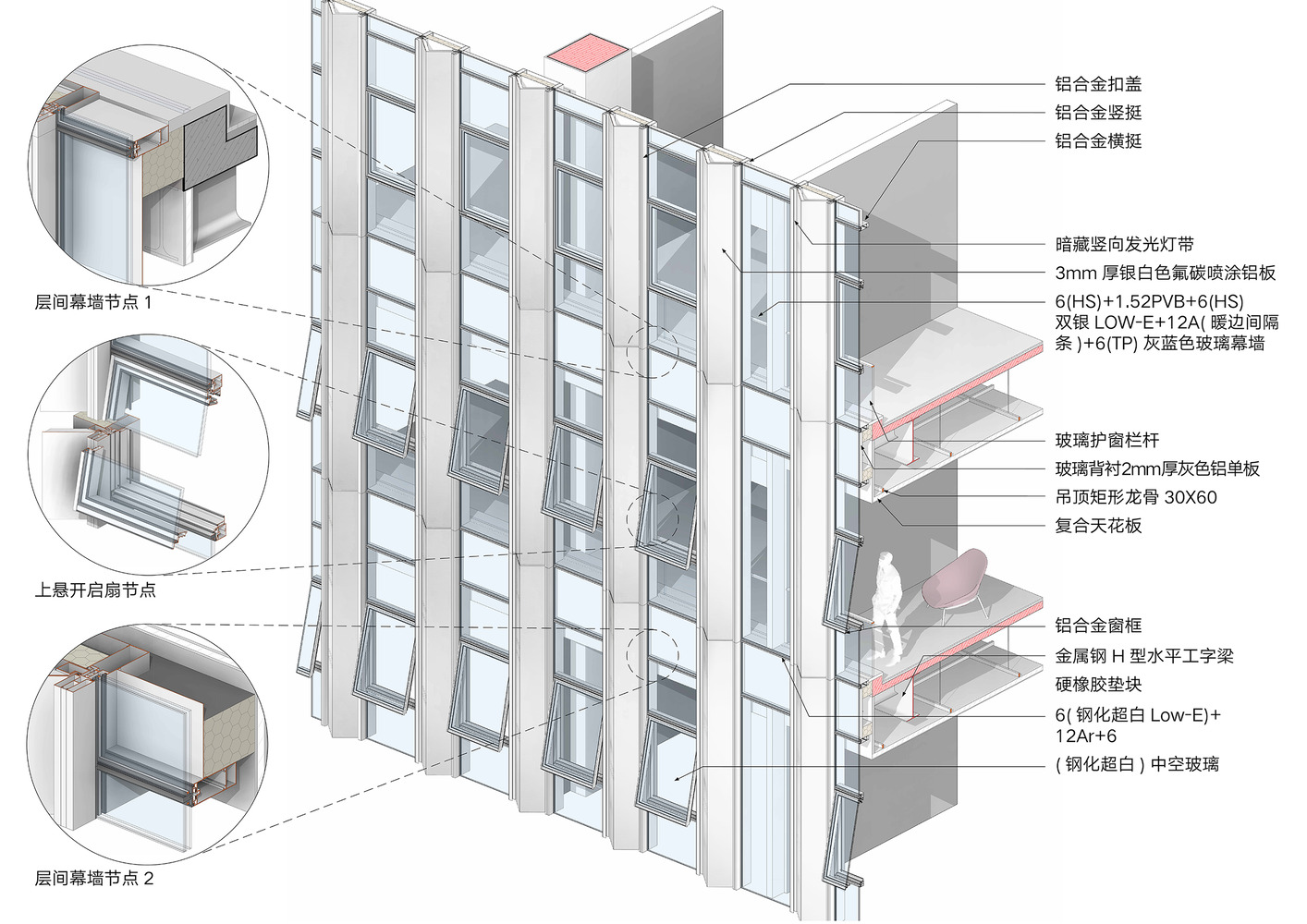
Perforated aluminum panels and metal grille elements generate a changing façade that mediates daylight and produces a distinctive illuminated presence at night.
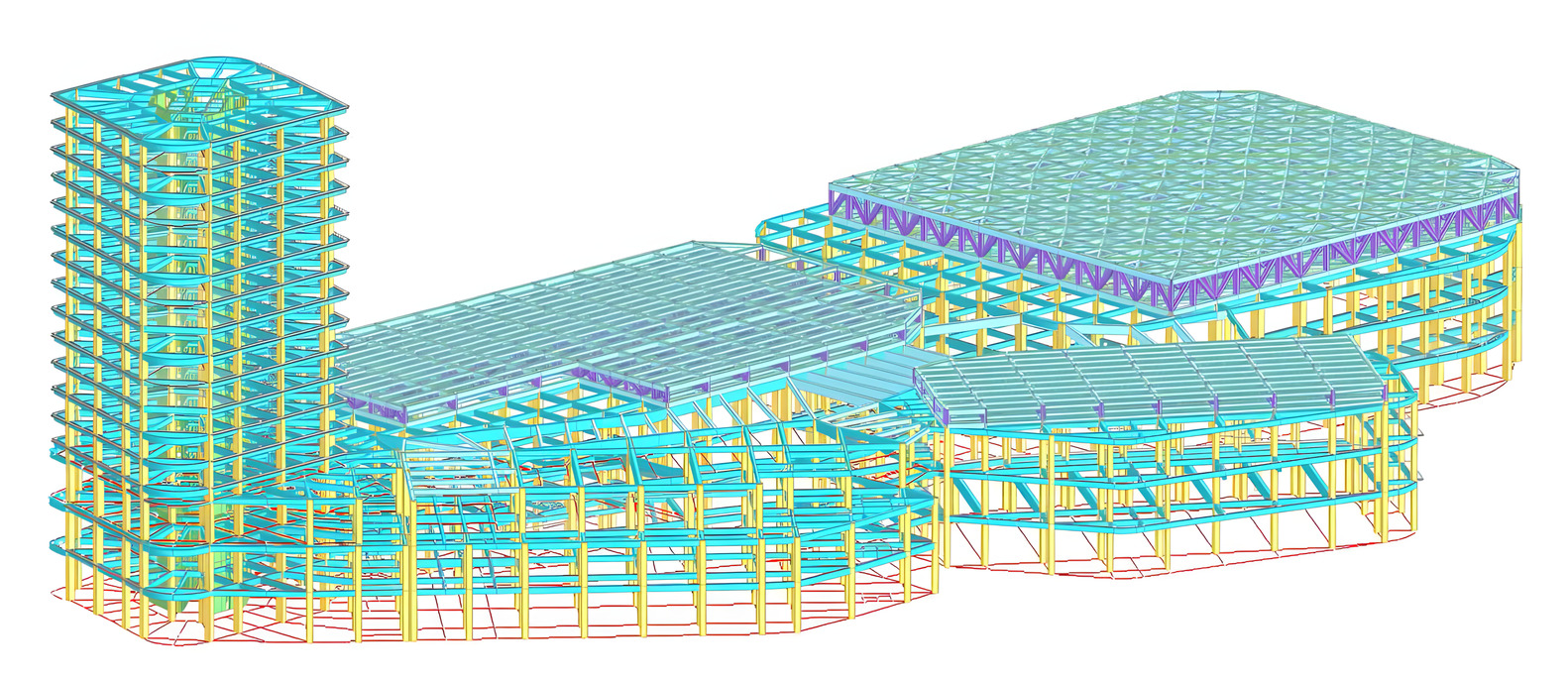
Structurally, the complex adopts large-span trusses and a frame–core tube system to balance spatial flexibility and construction efficiency. Spans range from 30–36.5 m in the training halls to 75.9 m in the main arena, supporting large unobstructed volumes.
Since operation, the center has developed a pattern of "monthly major events and weekly competitions," attracting over 220,000 visitors and generating significant economic and cultural impact.
More importantly, it has become an everyday setting for recreation, fitness, and social interaction. By merging professional sports facilities with daily urban life, the Globular Center provides a sustainable model of sports-driven urban activation for small and medium-sized cities.