
House Of Verdizela
HOUSE OF VERDIZELA
Estúdio Amatam
ARCHITECTS
Estúdio Amatam
ELECTRICAL INSTALLATIONS AND ITED
J. Agostinho Silva, Engenharia Lda
THERMAL AND ACOUSTIC STABILITY OF WATER AND SEWAGE SYSTEMS
Maurício Dias, Engenharia Lda.
MANUFACTURERS
Cosentino, Geberit, Sika, Grohe, Lunawood, Alunik, CIN, Dekton, Italbox, Muuto, Pluscover, Sanindusa, Secil
PHOTOGRAPHS
Garces
AREA
284 m²
YEAR
2023
LOCATION
Corroios, Portugal
CATEGORY
Houses
English description provided by the architects.
Near Aroeira, where the Atlantic breeze tempers the pine forest and low density preserves quietness, this dwelling arises from the clients’ desire for a private, simple, and refined atmosphere — a discreet house that does not impose itself on the act of inhabiting, but instead nurtures it. A retreat from the bustle of city life they once knew, capable of embracing a calmer, slower rhythm.
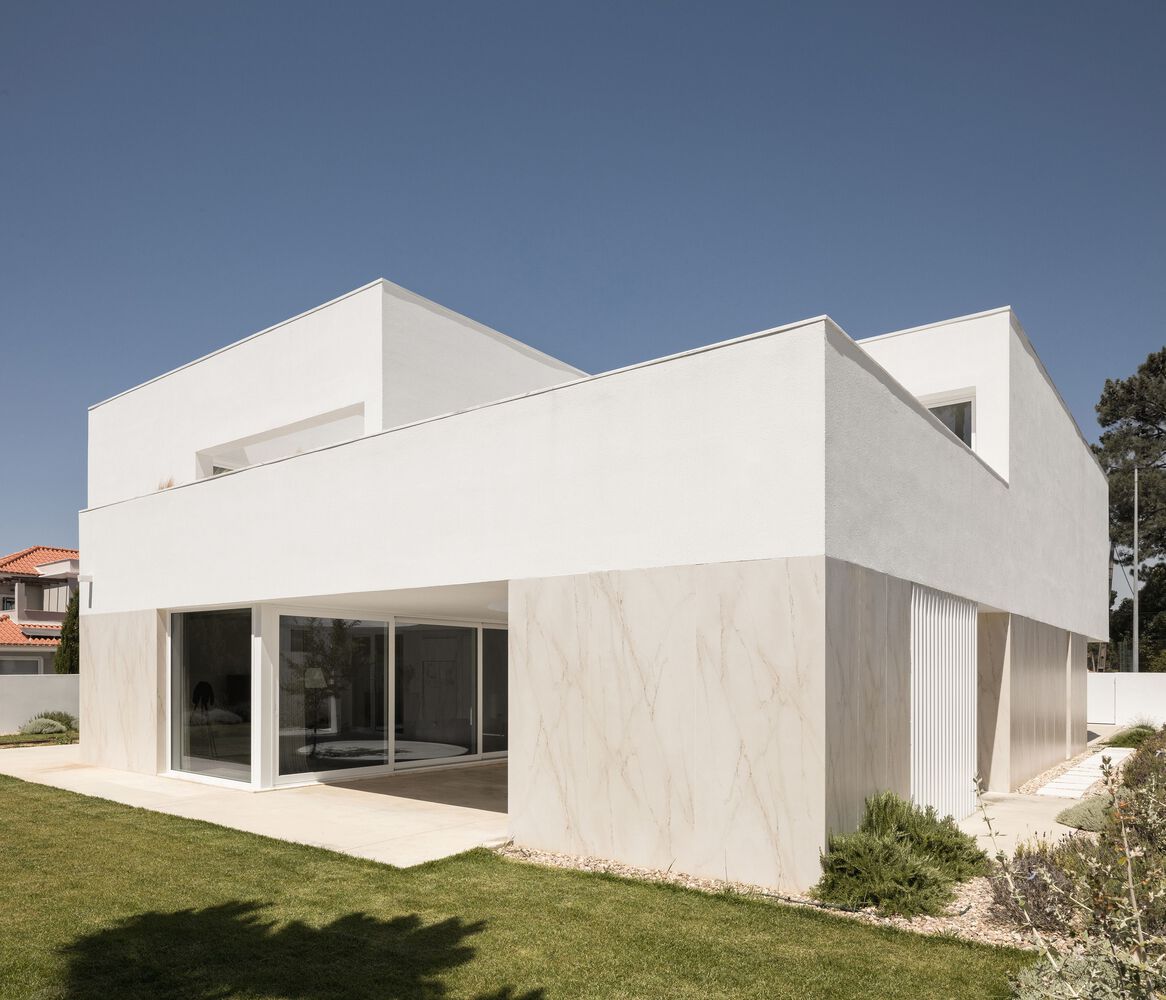
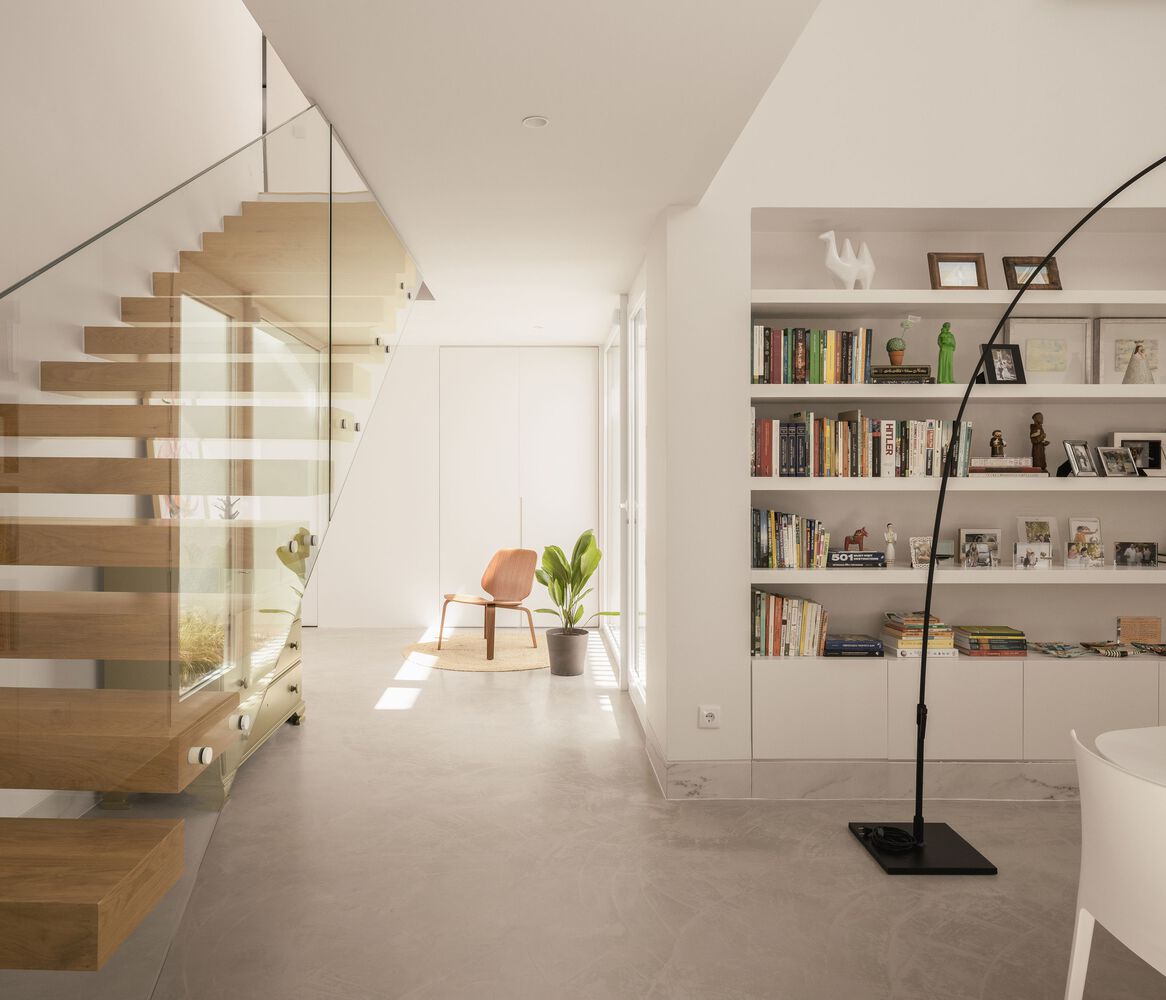
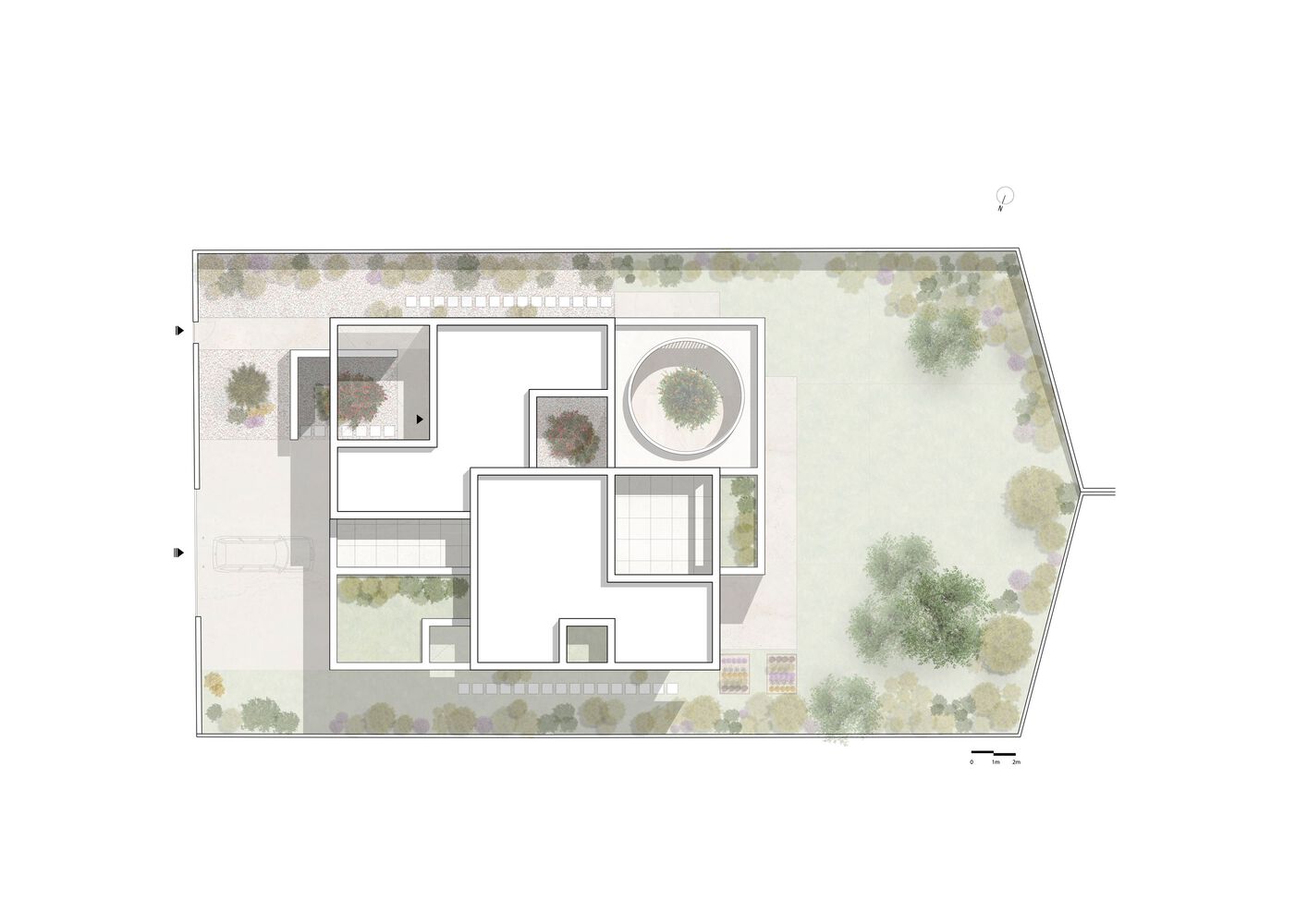
Rooted in an idea shared by the couple, the project takes form as a contemporary reinterpretation of the Mediterranean and Islamic courtyard house: an introverted ensemble of spaces that open inward, articulated through patios that regulate light, air, and temperature, weaving an intrinsic dialogue between interior and exterior — not through rigid boundaries, but through subtle thresholds.
The initial premise was both simple and powerful: to create a protected refuge, where life unfolds between white walls and purified surfaces, paced by patios and by carefully positioned openings to the outside.
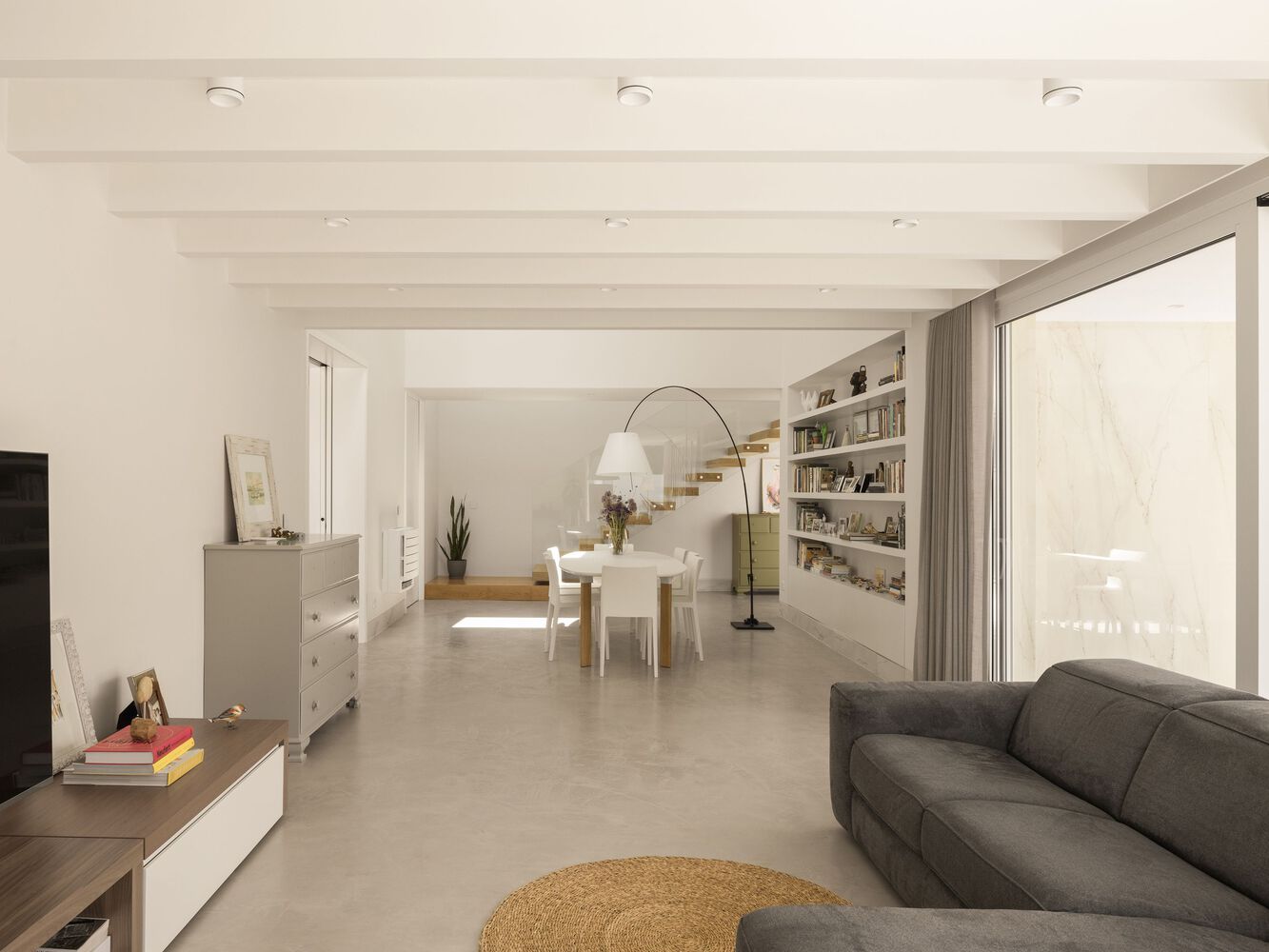
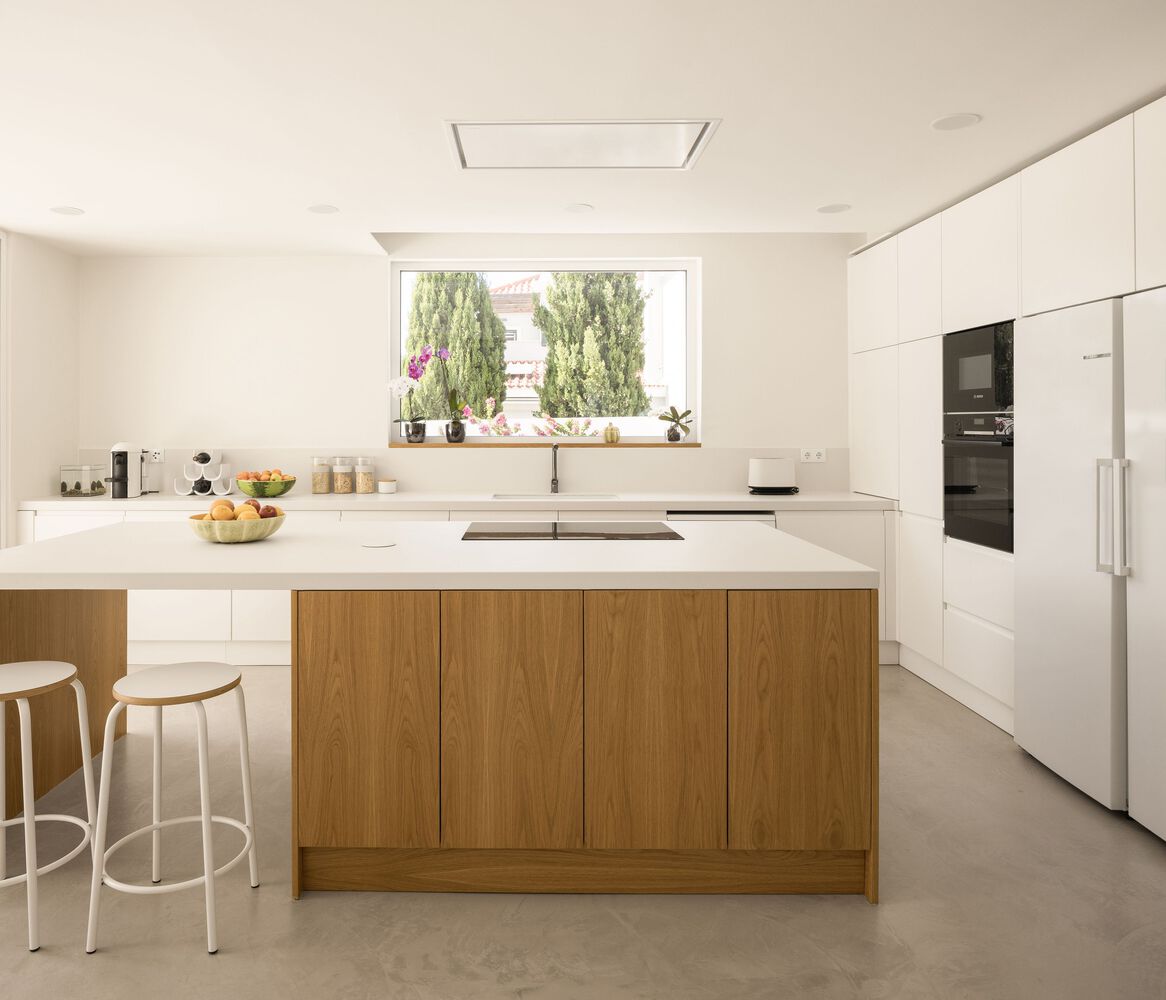
Like a Riad in the Medina, the relationship with the street remains discreet, almost mute, while the richness of spatial life reveals itself within.
The inner courtyards become the very core of dwelling: they capture light, enable cross ventilation, and create naturally cool areas in summer, while in winter they retain heat and shelter from the winds — in resonance with ancestral bioclimatic wisdom.
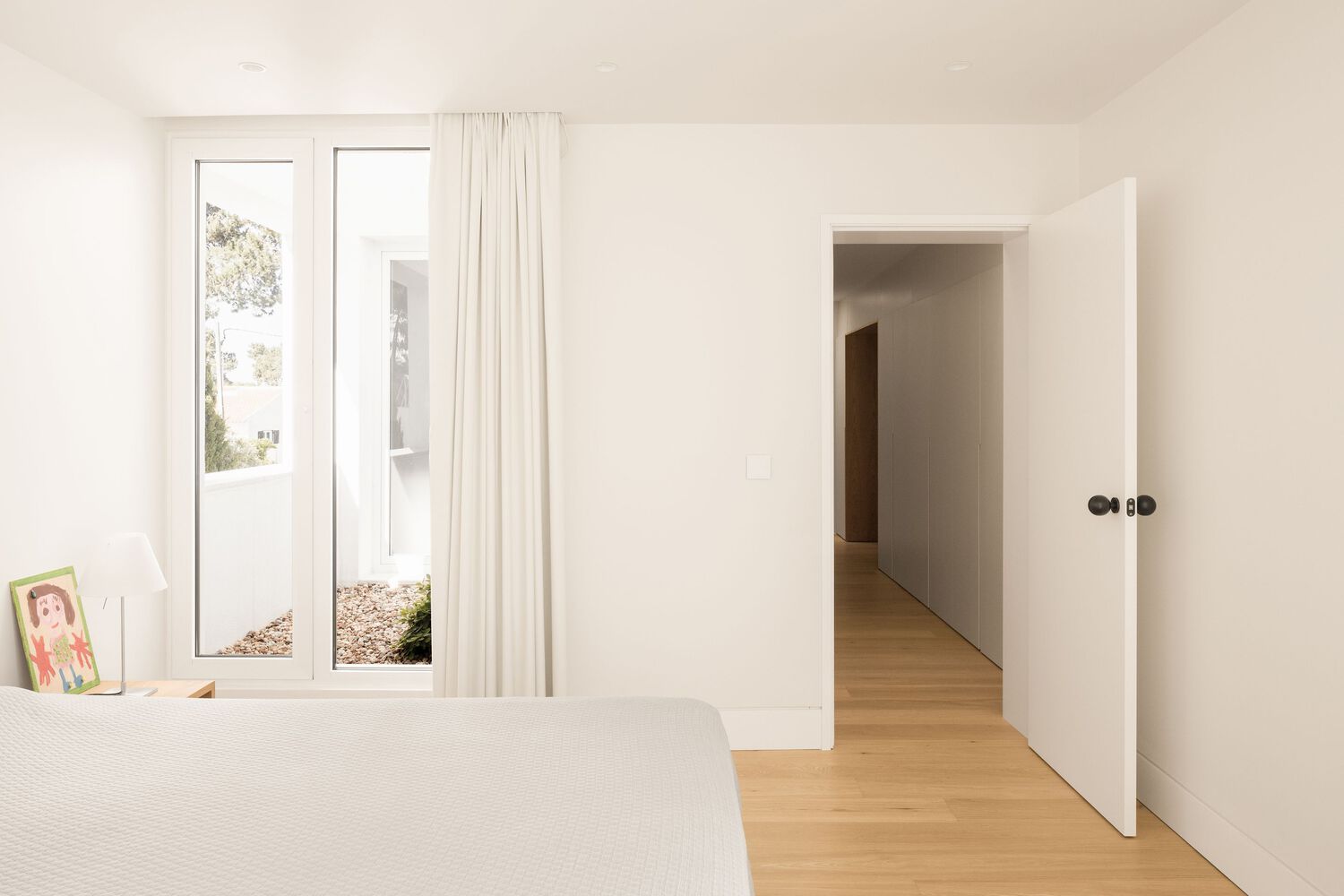
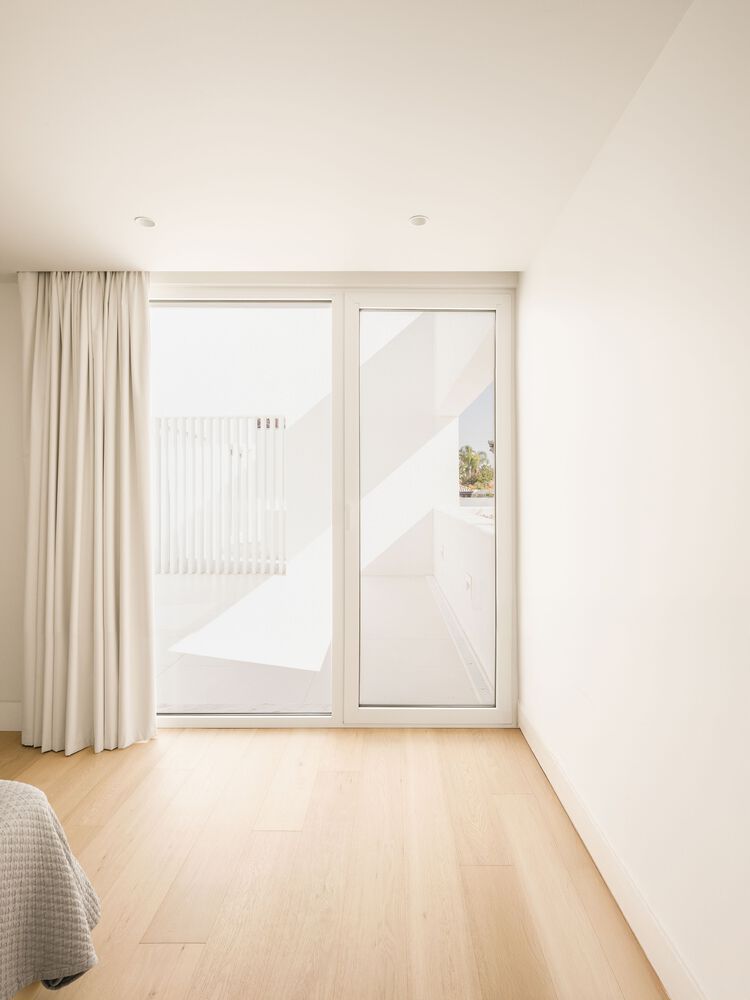
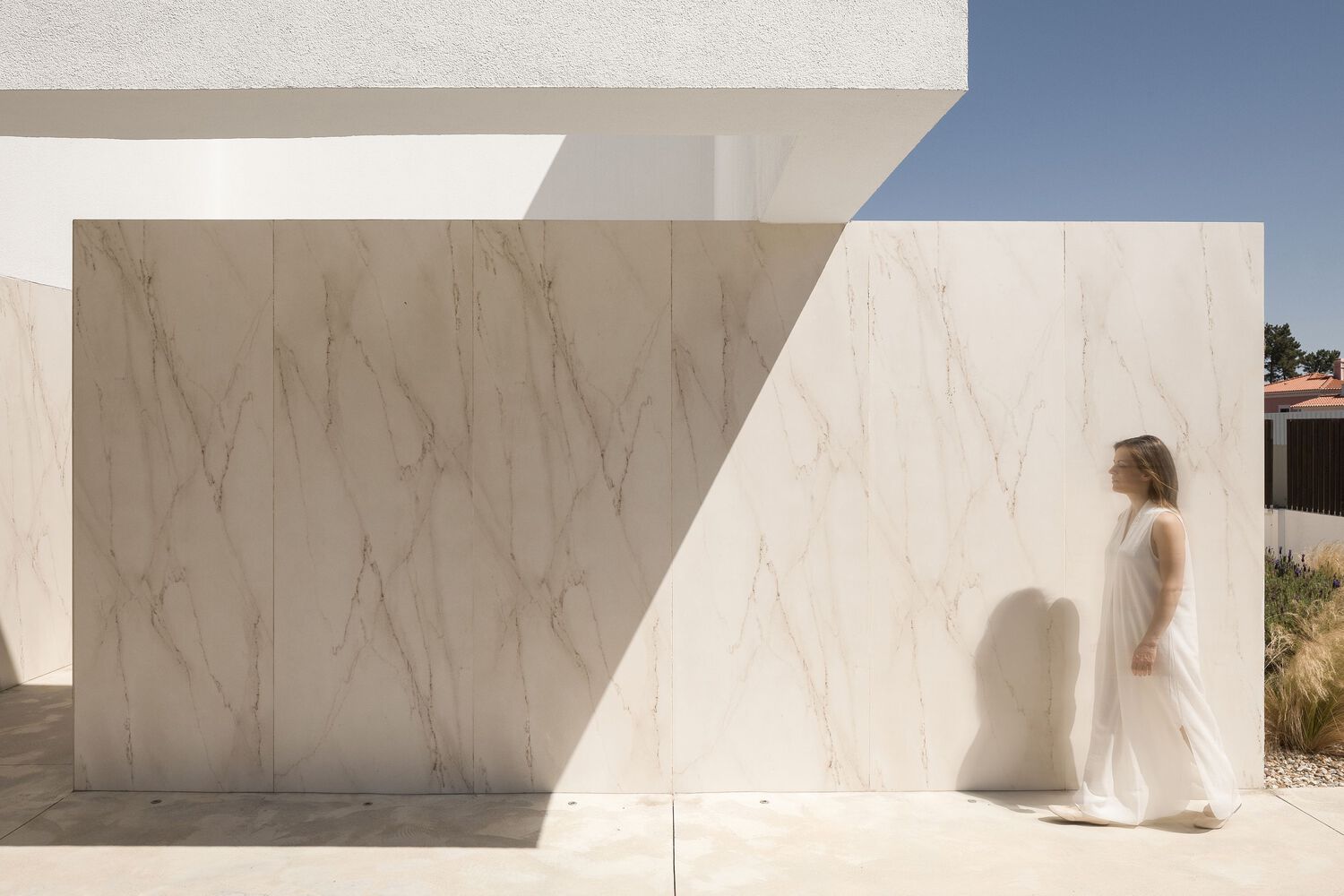
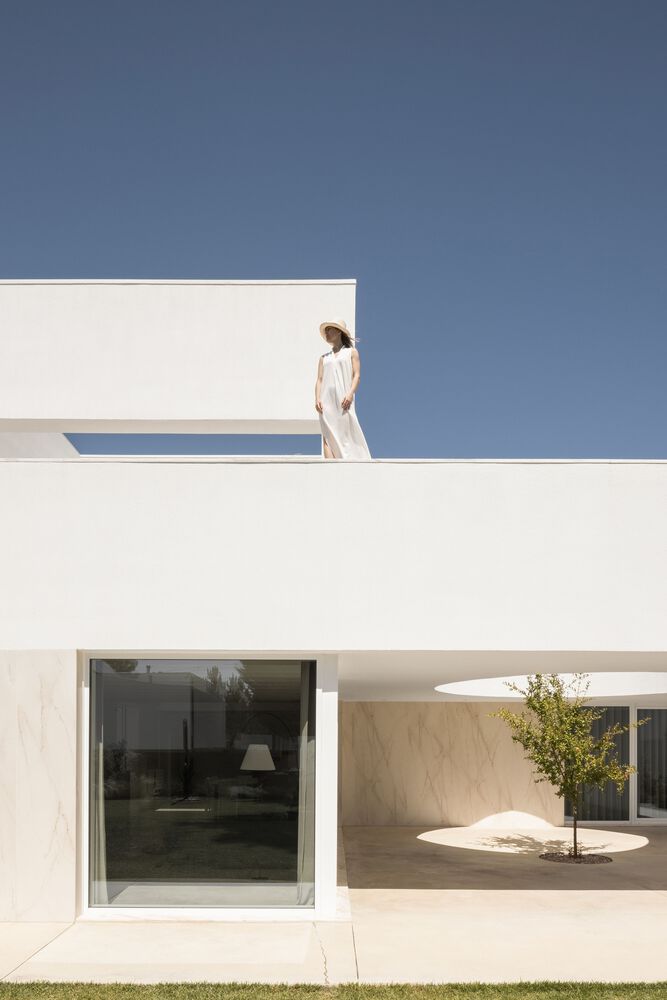
Sunlight, striking against the sealed white surfaces, orchestrates a shifting play of shadows and reflections, endowing expression to material simplicity and transforming the passing of hours into a silent choreography.
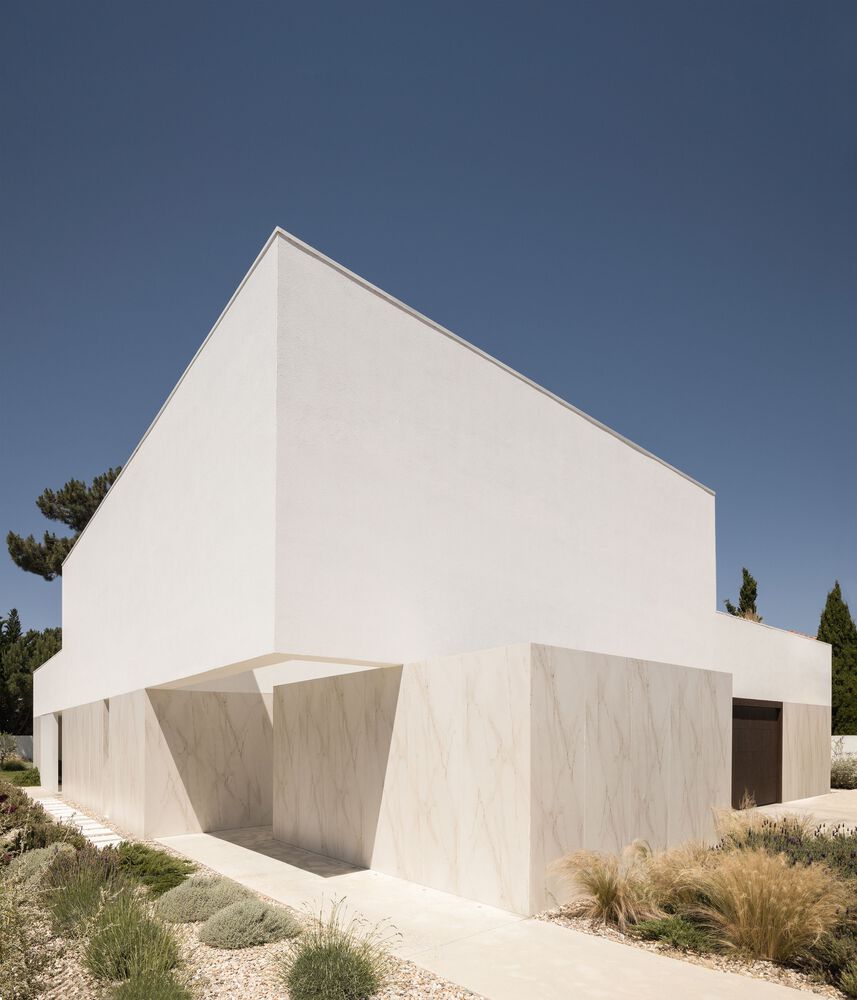
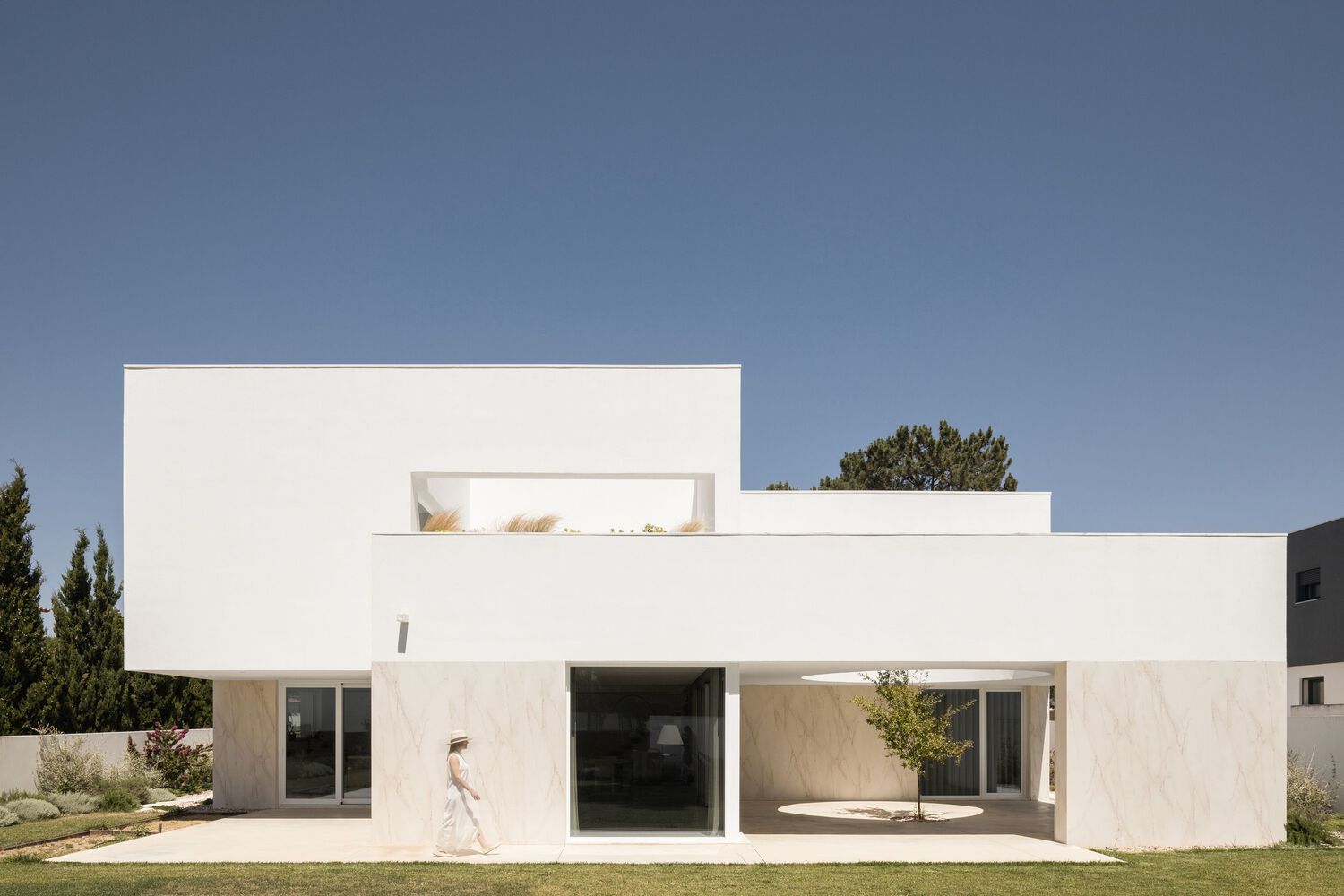
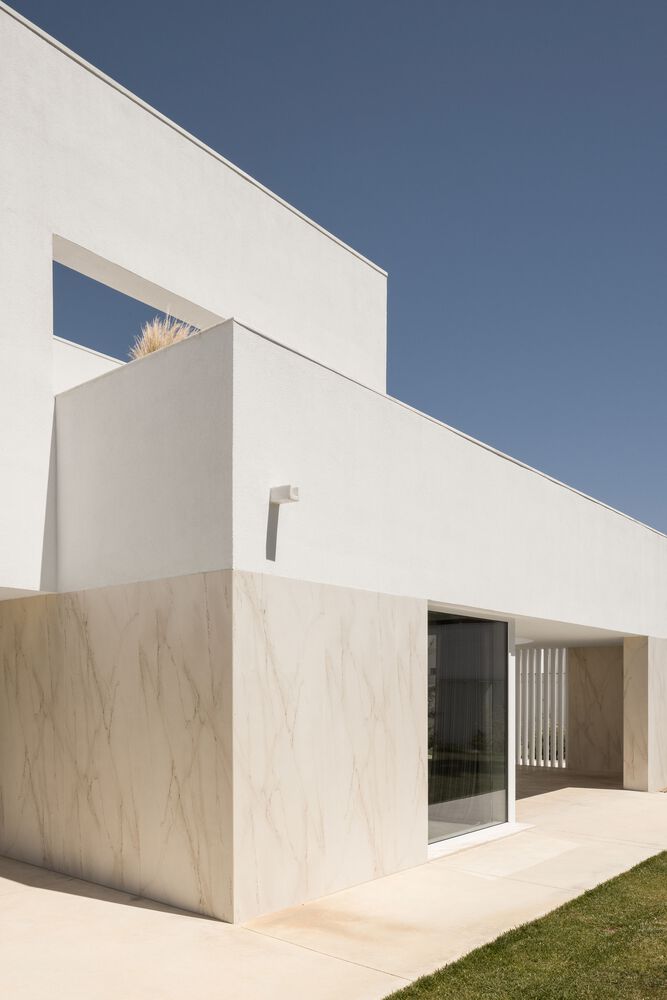
The architectural language is restrained, the volumetry sculpted by subtraction, and compositional silence itself becomes an argument. There is no excess, only precision.
The front of the plot maintains distance and reserve; the interior unveils the intensity of life around voids, in a play of solids and shadows that evolves with the day.
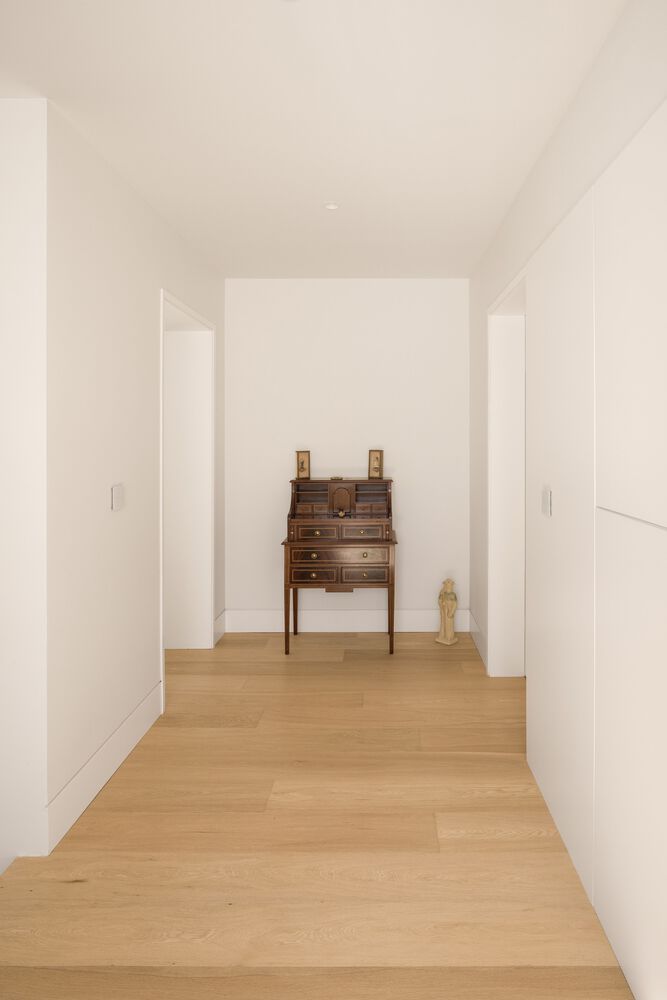
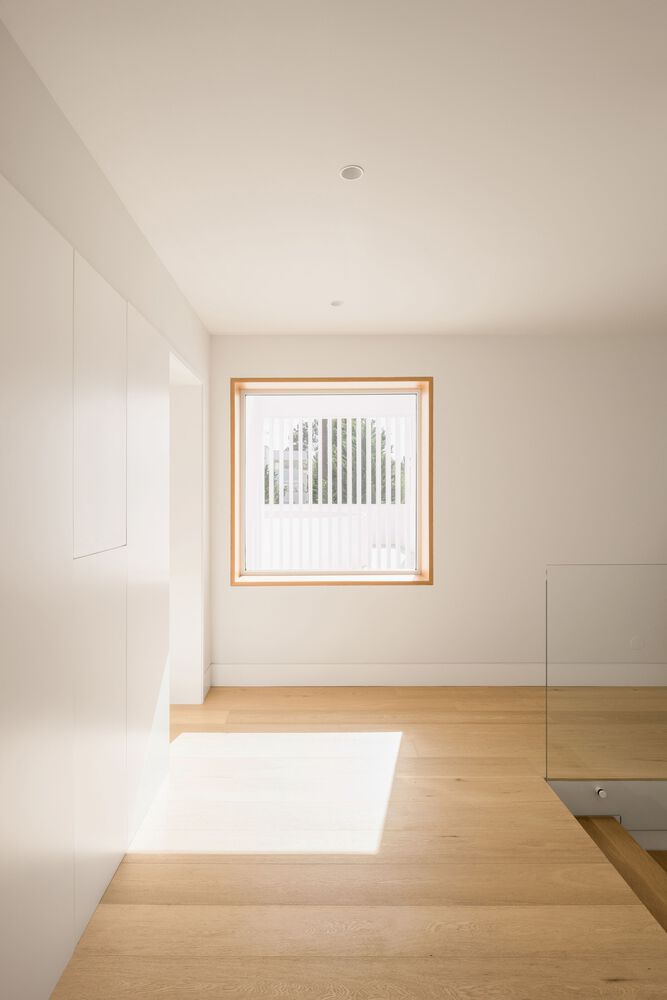
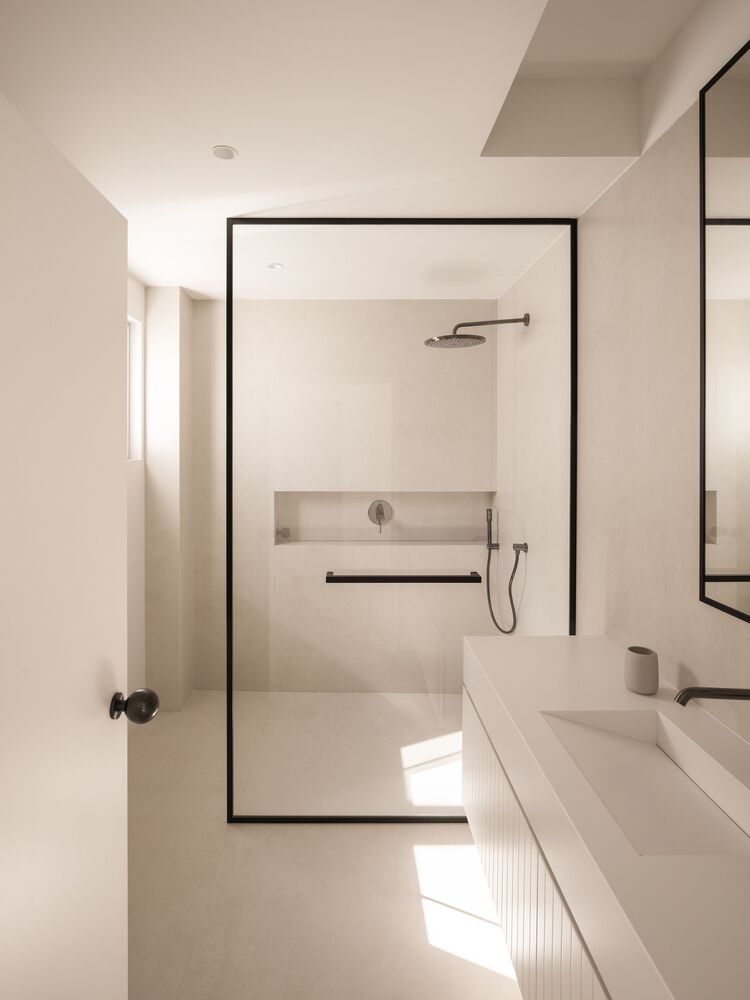
The narrative approaches an architecture of discreet presence — tactile and luminous — one that summons without excess.
It echoes a sensibility that praises shadow, the tactility of materials, and the capacity of light to erect emotion, where the work speaks softly — and therein lies its comfort.
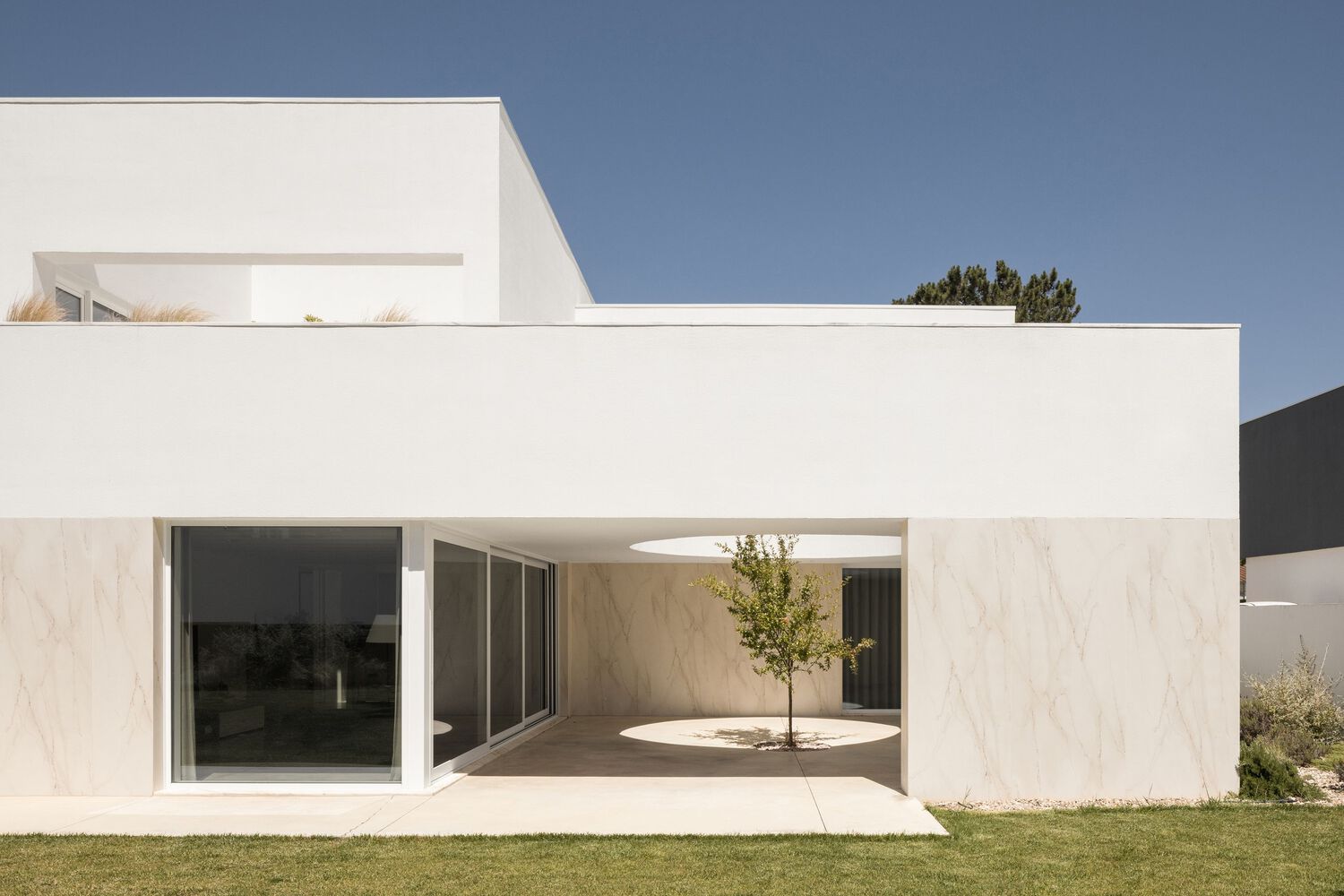
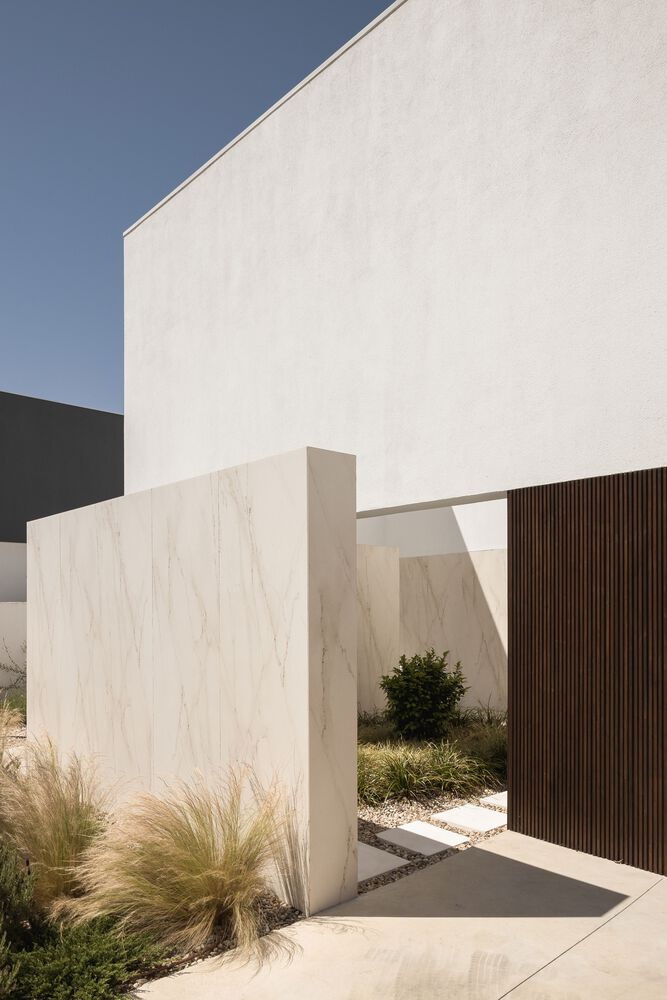
Materiality follows the same principles of honesty and permanence, expressed in two main textures: ultra-compact sintered stone cladding that grounds and protects the lower level, and certified thermo-modified timber panels, contributing to a sustainable constructive approach with a contained ecological footprint.
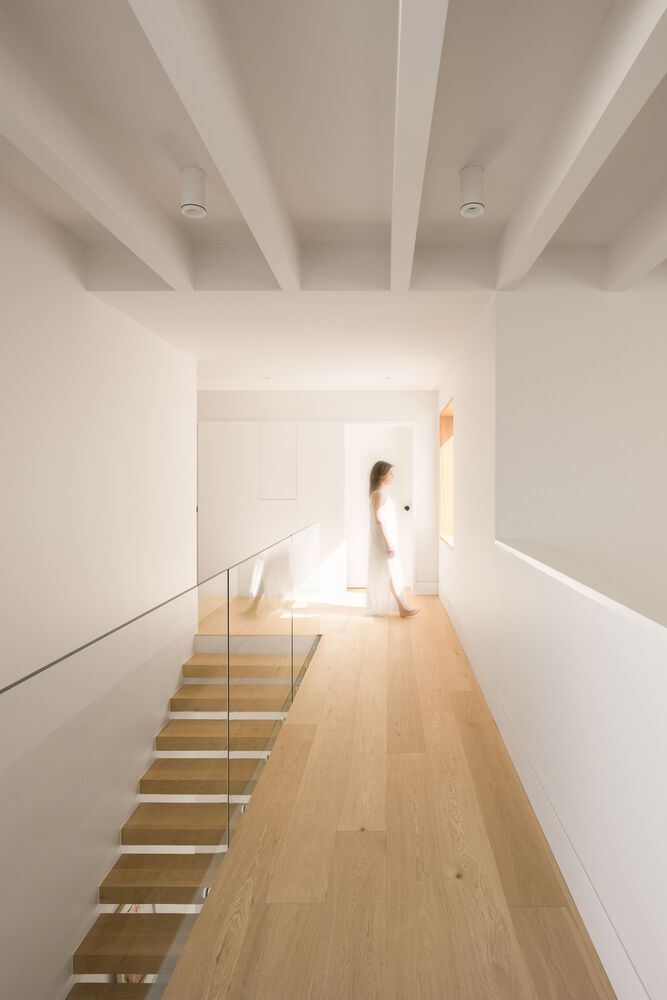
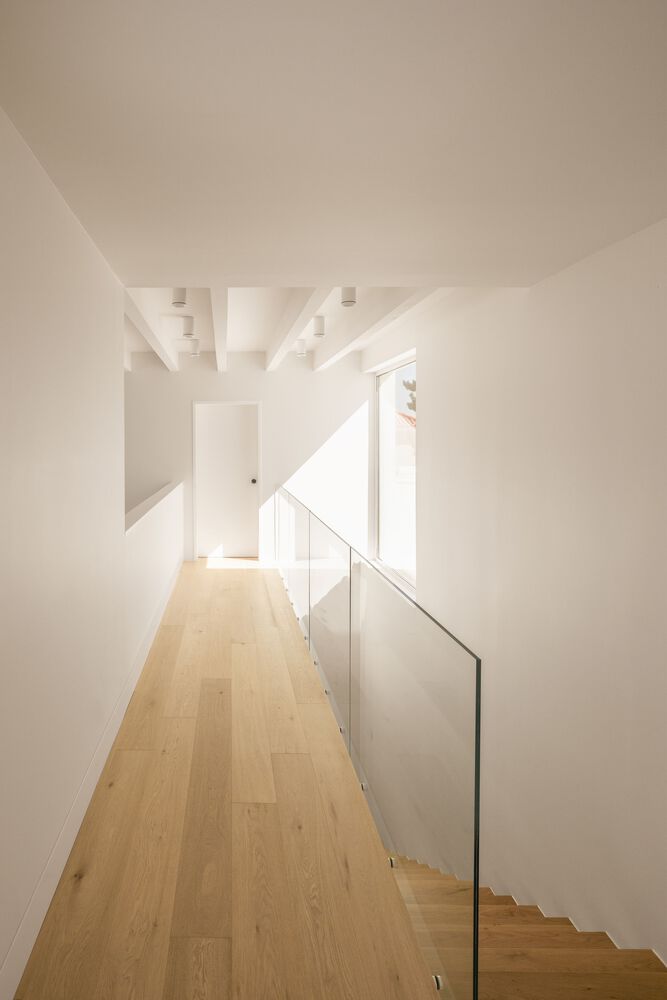
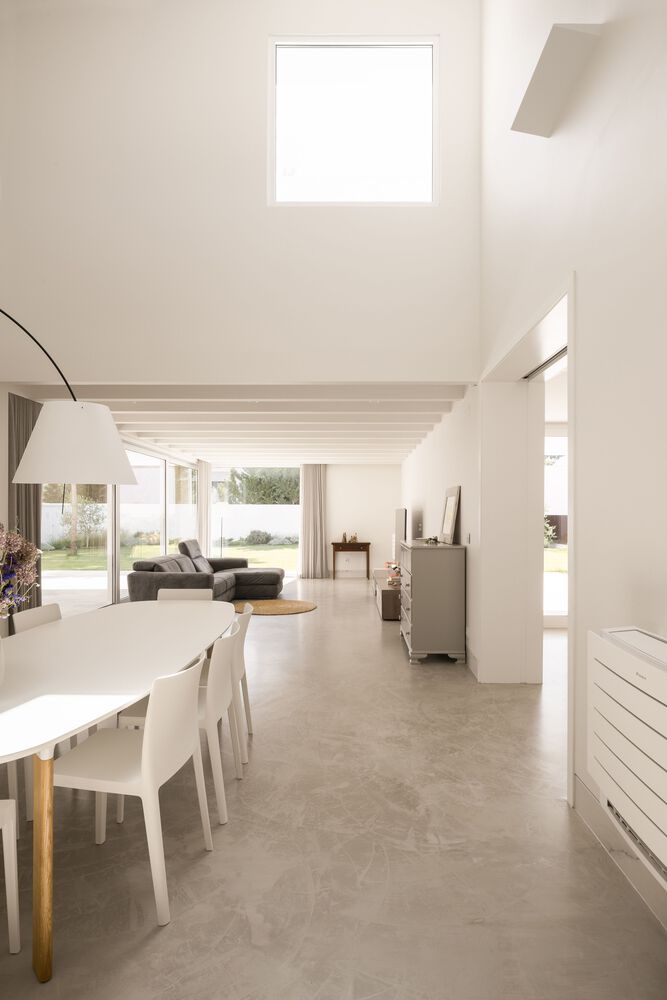
The interplay of these two materials establishes a dialogue between technology and tradition, between industrial precision and organic texture.
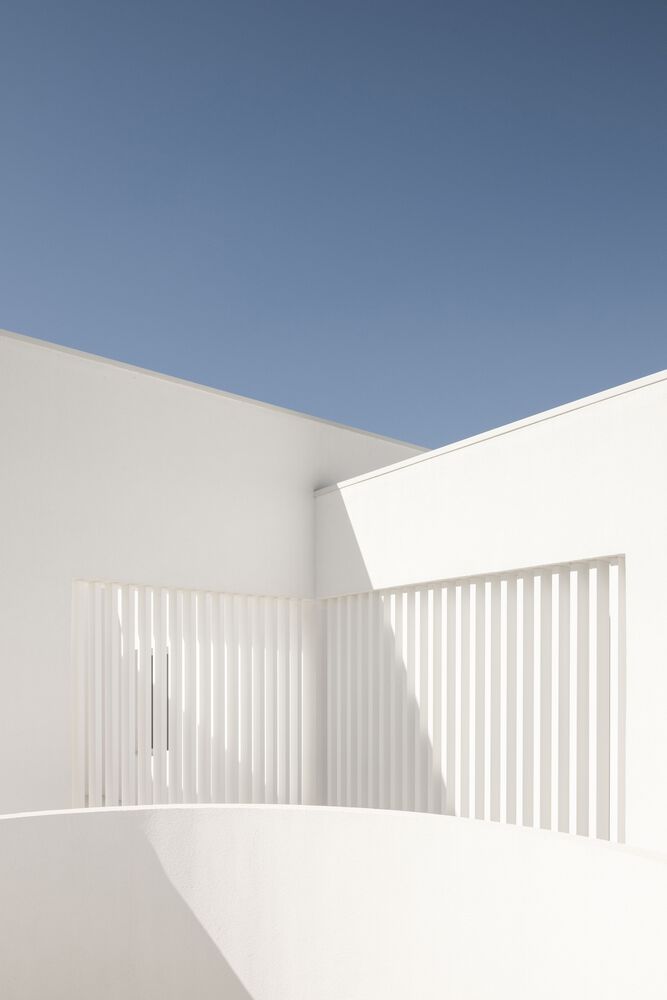
White vertical slatted screens act as solar and visual filters, refining the balance between luminosity and privacy, while reinforcing the bioclimatic performance of the whole.
Inside, the chromatic palette extends and condenses the serenity of the exterior. On the ground floor, warm-toned microcement forms a continuous, silent, tactile surface that embraces light and unifies the social areas.
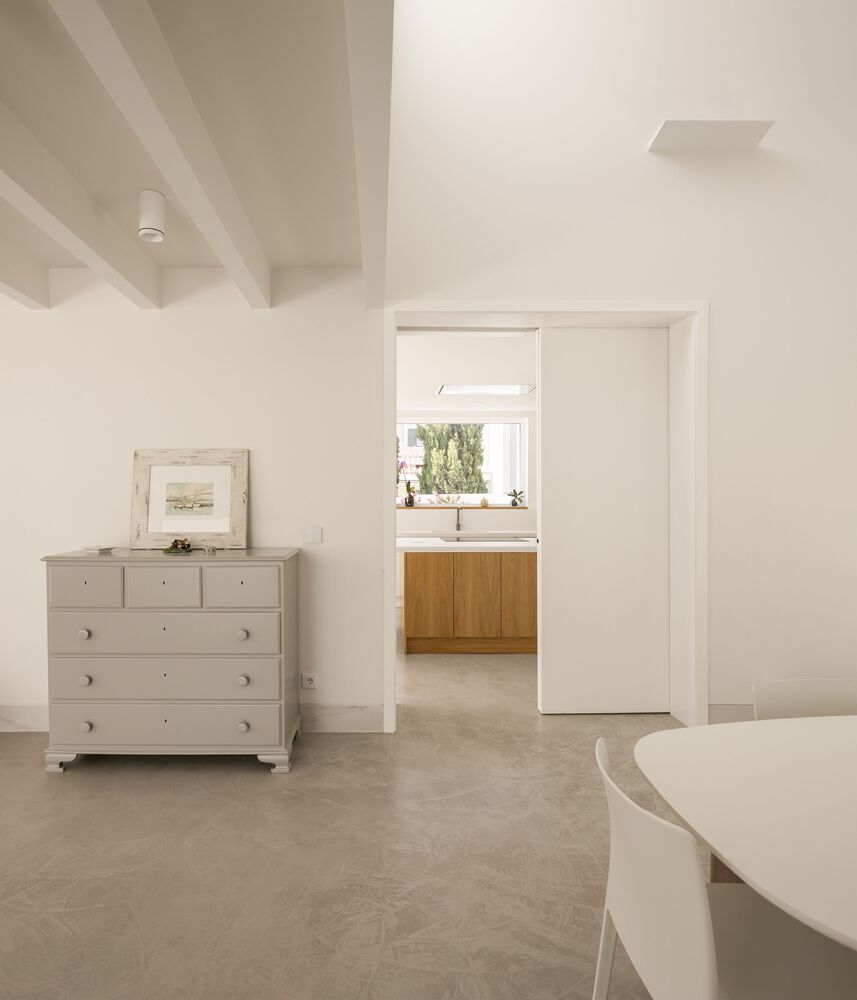
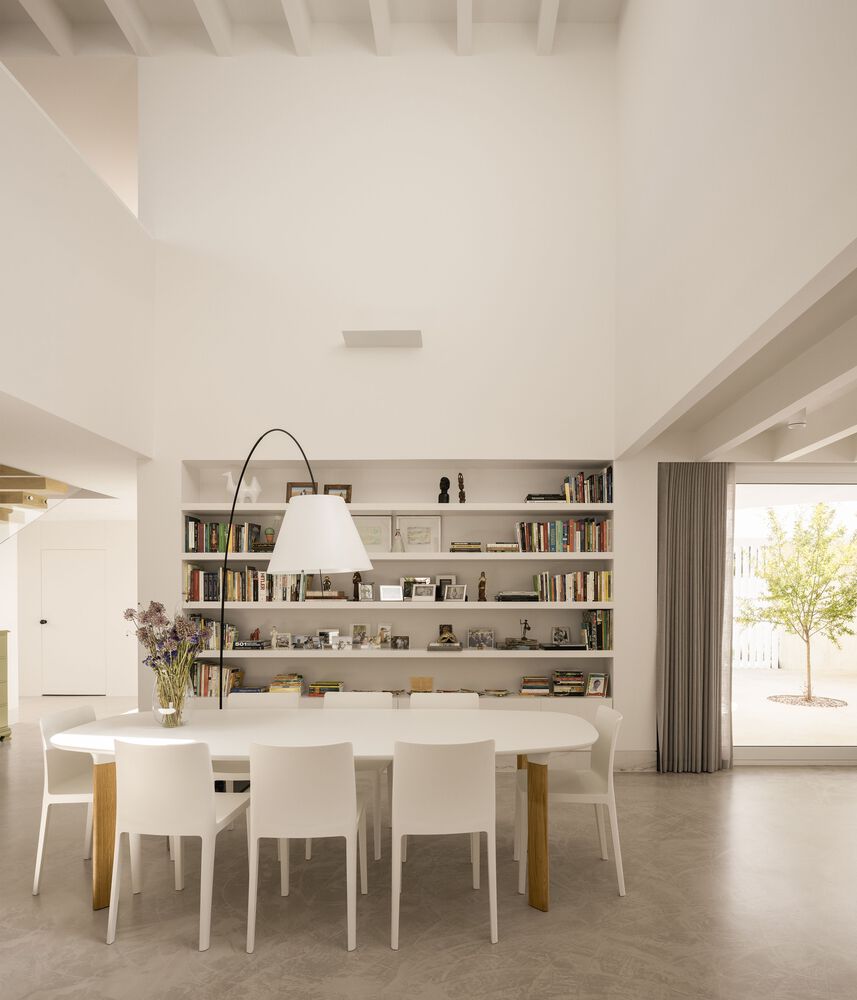
On the upper floor, natural oak flooring introduces a gentle domestic warmth, inviting retreat.
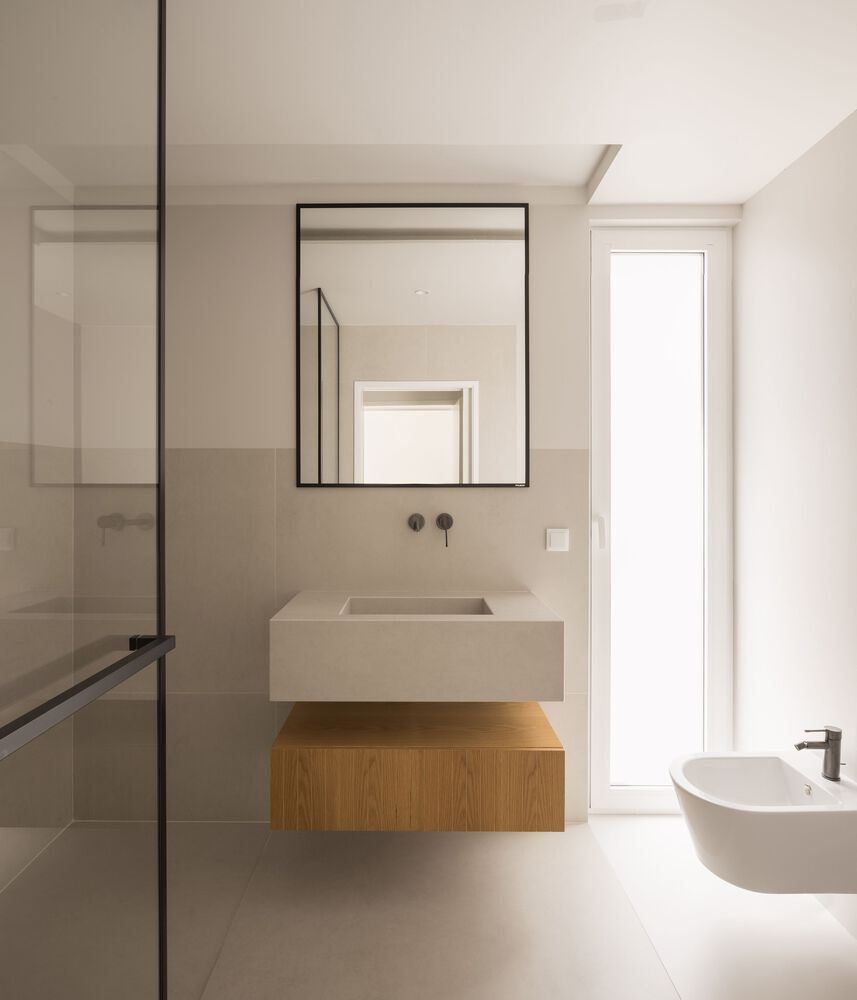
In wet areas, sintered stone maintains coherence: sober surfaces of high resistance and low maintenance, affirming durability without ostentation.
Discreet black accents in hardware and lighting punctuate the neutrality, infusing elegance and sophistication into the interior atmosphere.
Ultimately, this house is a finely tuned instrument for the life of its inhabitants.
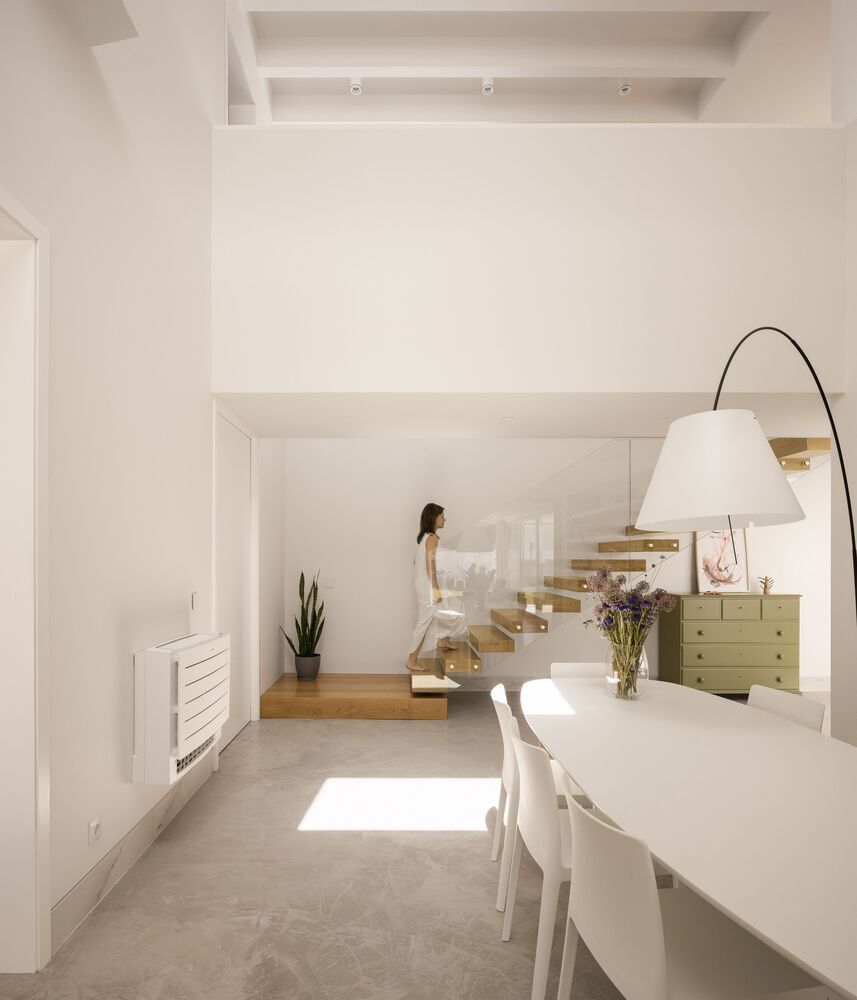
Programmatic flexibility — the gradation between intimate and collective, controlled transparency, and the possibility of inhabiting the courtyards across seasons — makes this a framework for varied rituals, one that does not constrain but amplifies ways of living.
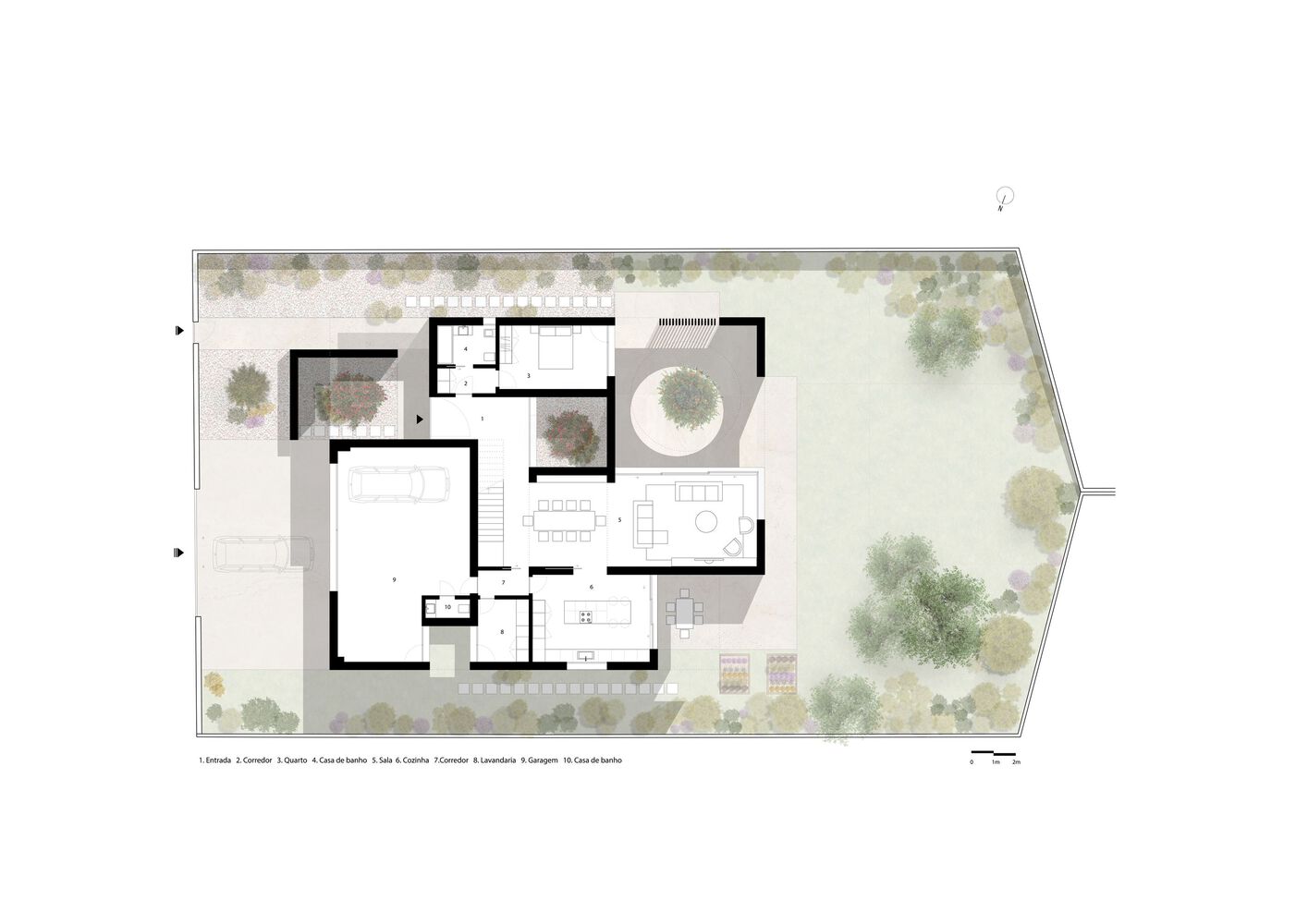
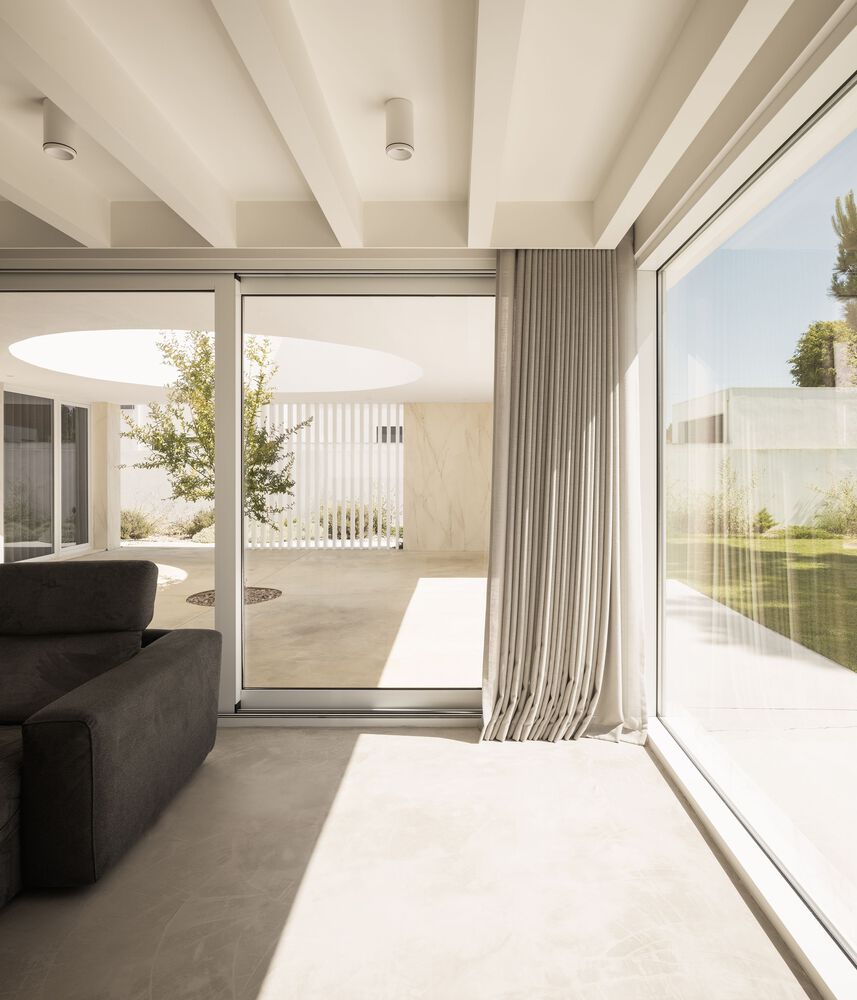
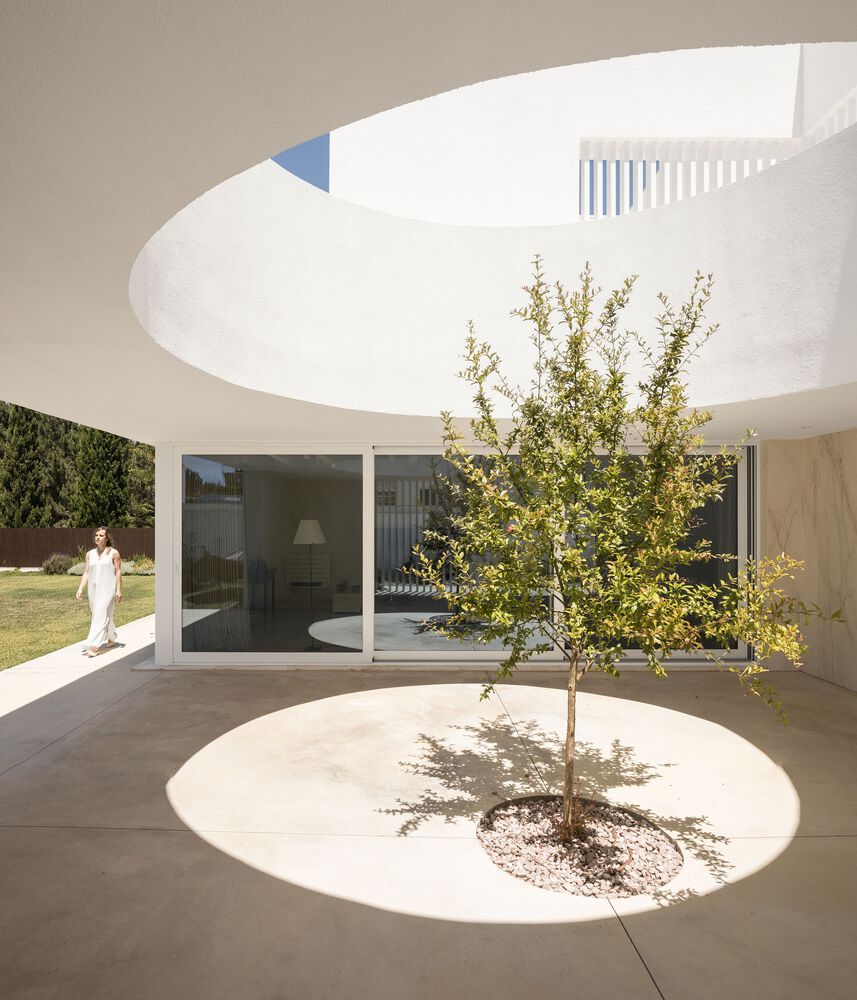
The living room extends onto the main outdoor courtyard, hierarchised around a pomegranate tree that honours the Mediterranean identity of the house.
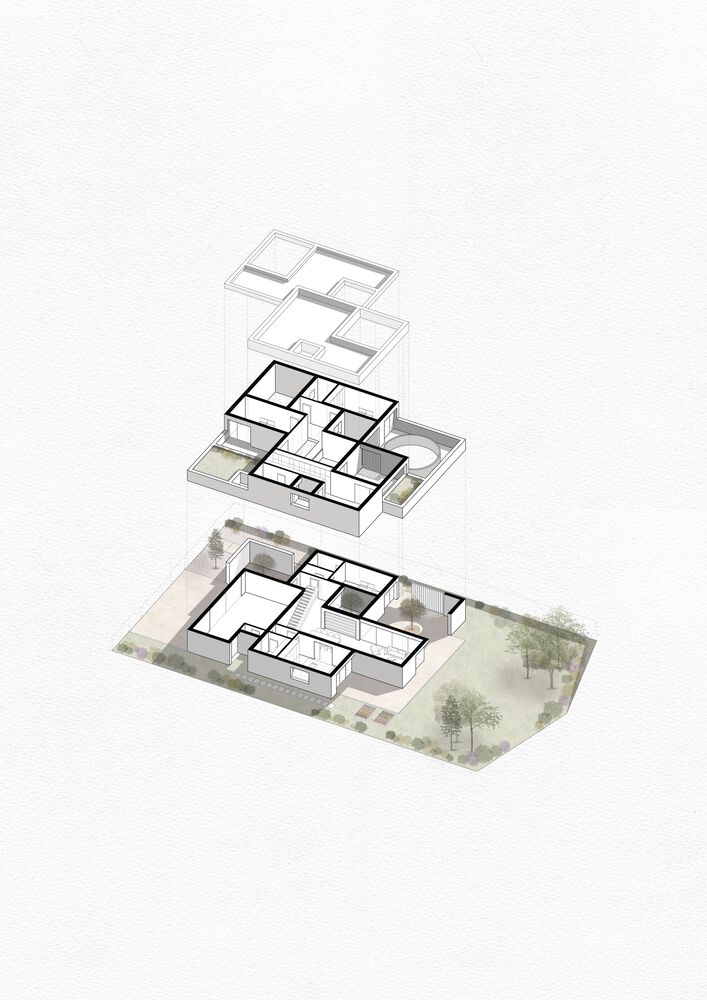
The kitchen, fluidly yet carefully connected to the social spaces, unfolds onto an outdoor terrace, while the double-height void binds the two levels into a unified perception.
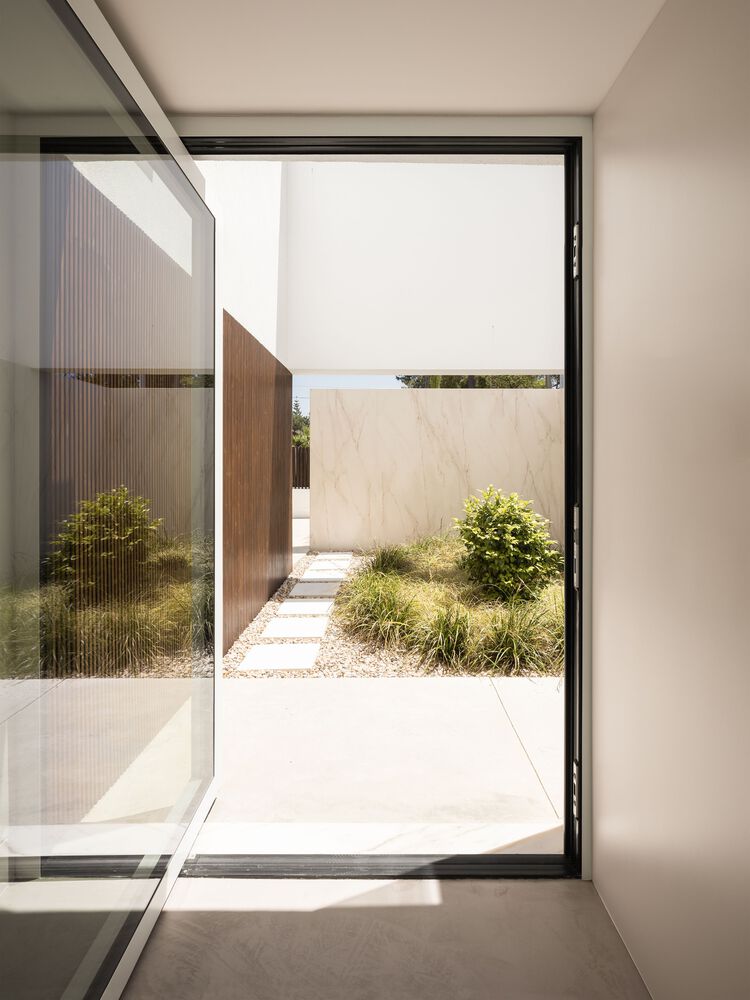
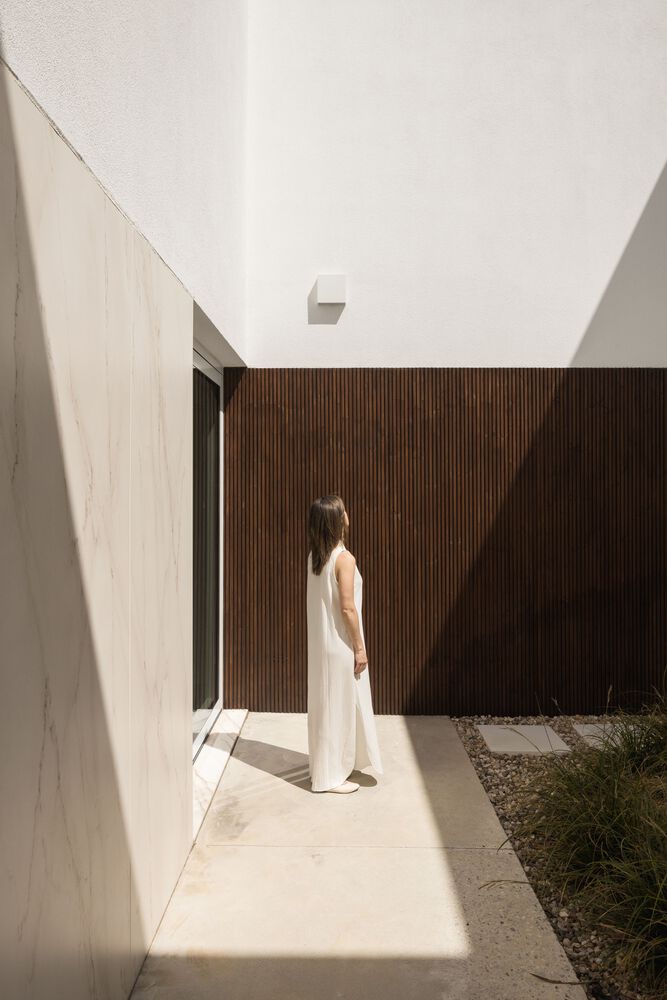
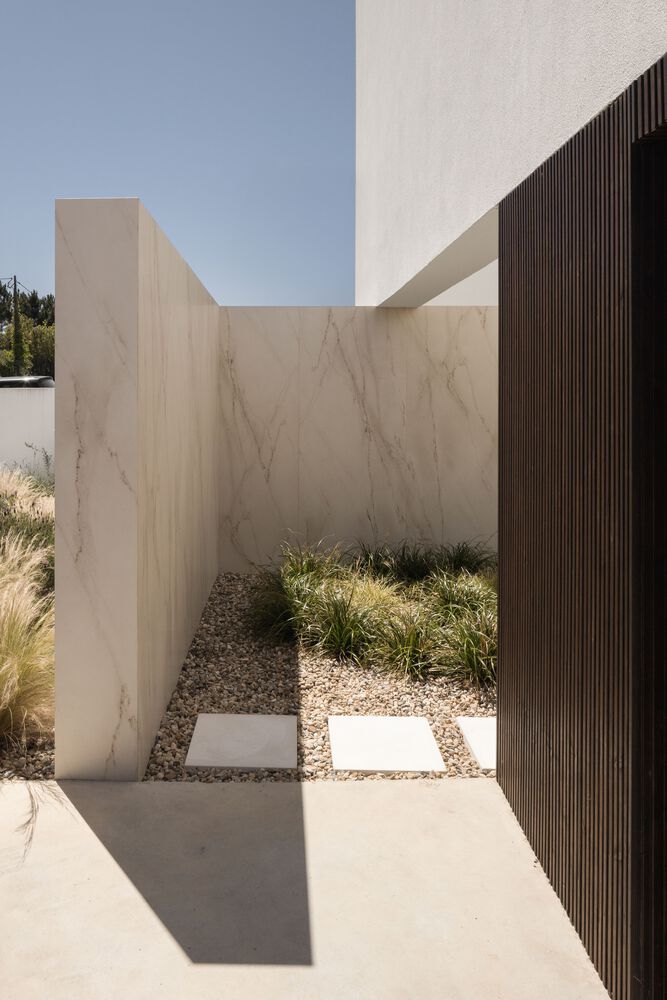
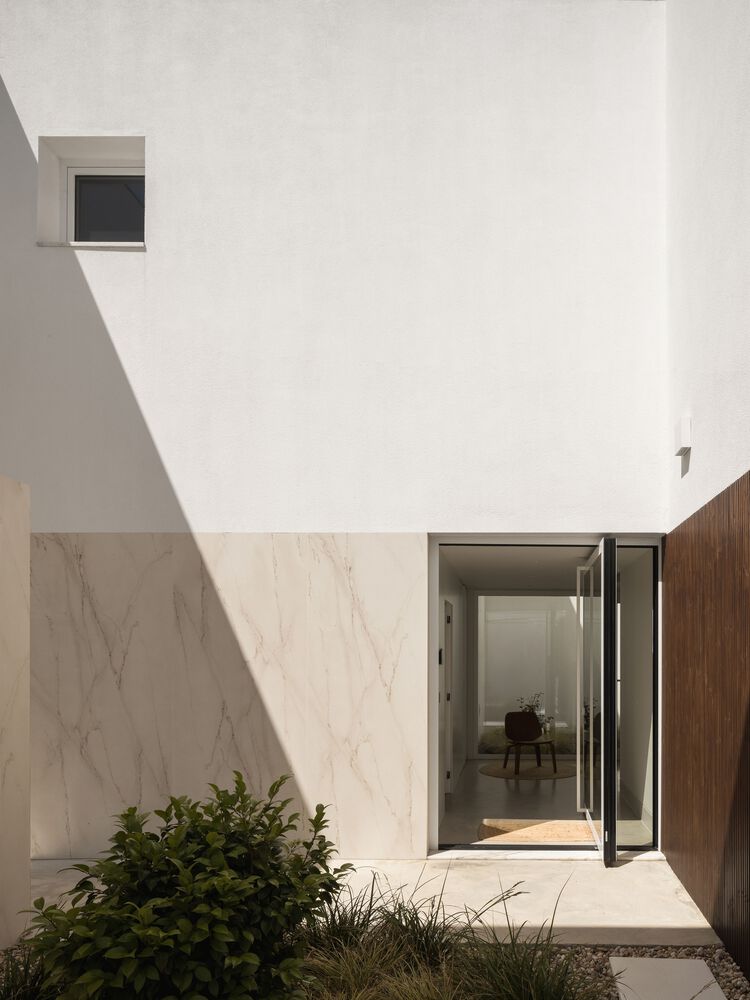
Each courtyard assumes a distinct role: the entrance patio, scenographic, enclosed in stone and timber walls, bathed in zenithal light, functioning as an emotional antechamber — a threshold between the exterior world and the intimate universe within;
the central courtyard, with its solitary tree becoming protagonist through the seasons, the true heart of the house, mediating between interior and exterior social spaces, offering shade in summer and shelter in winter, a living backdrop for everyday life;
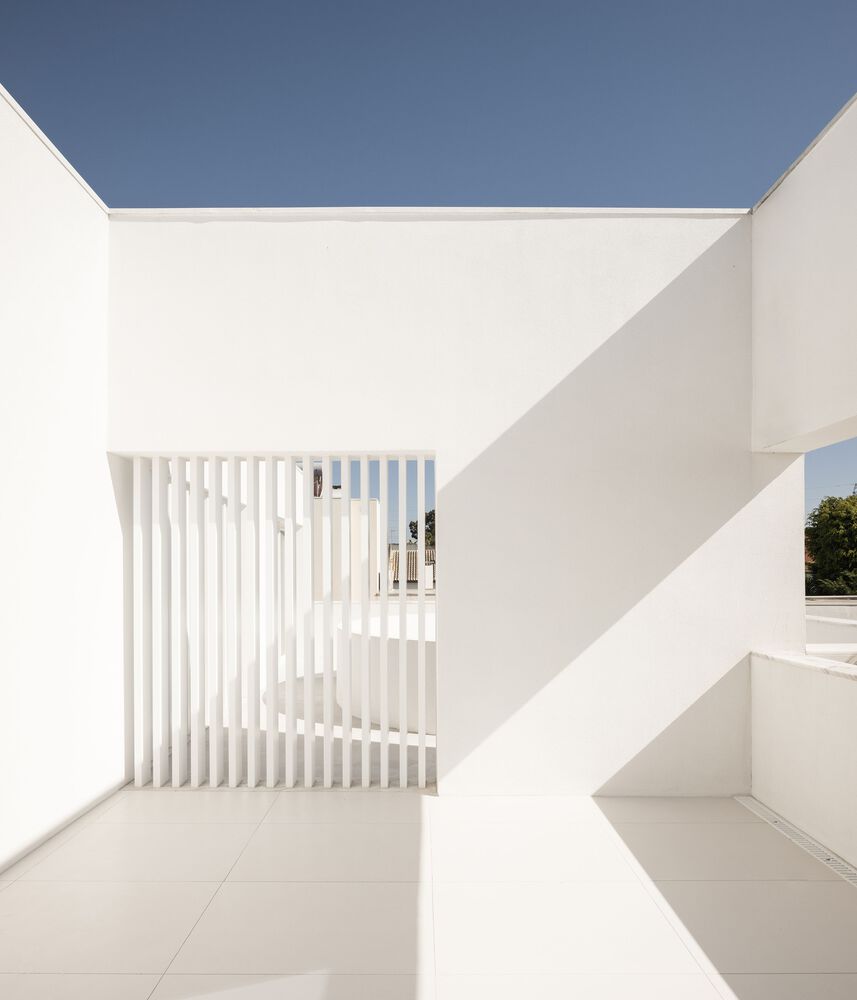
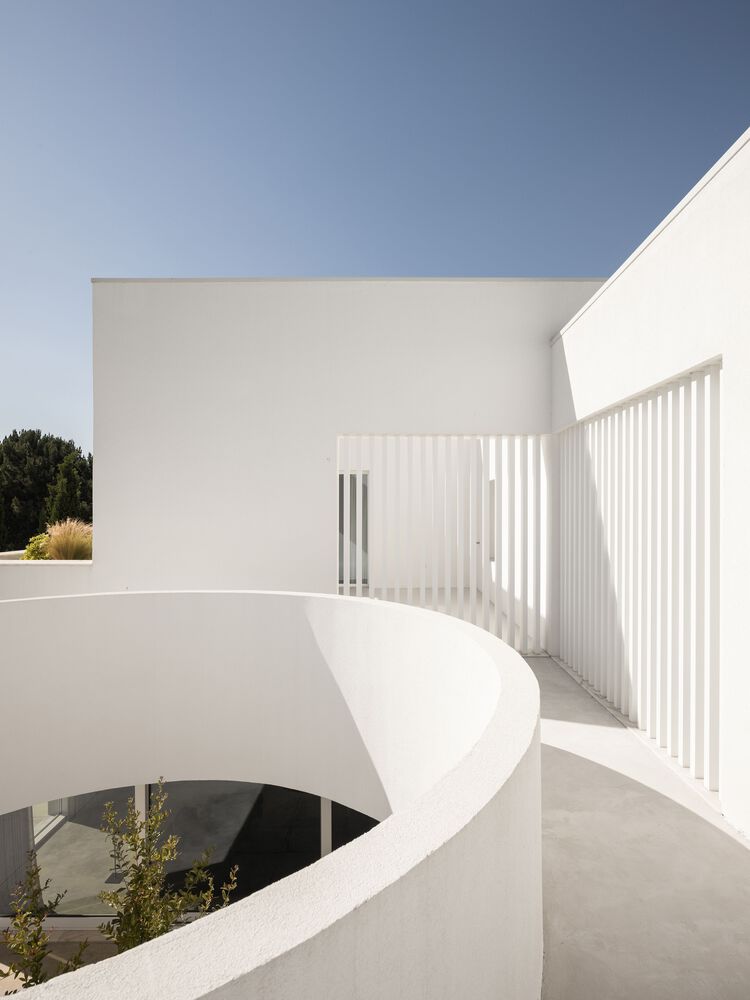
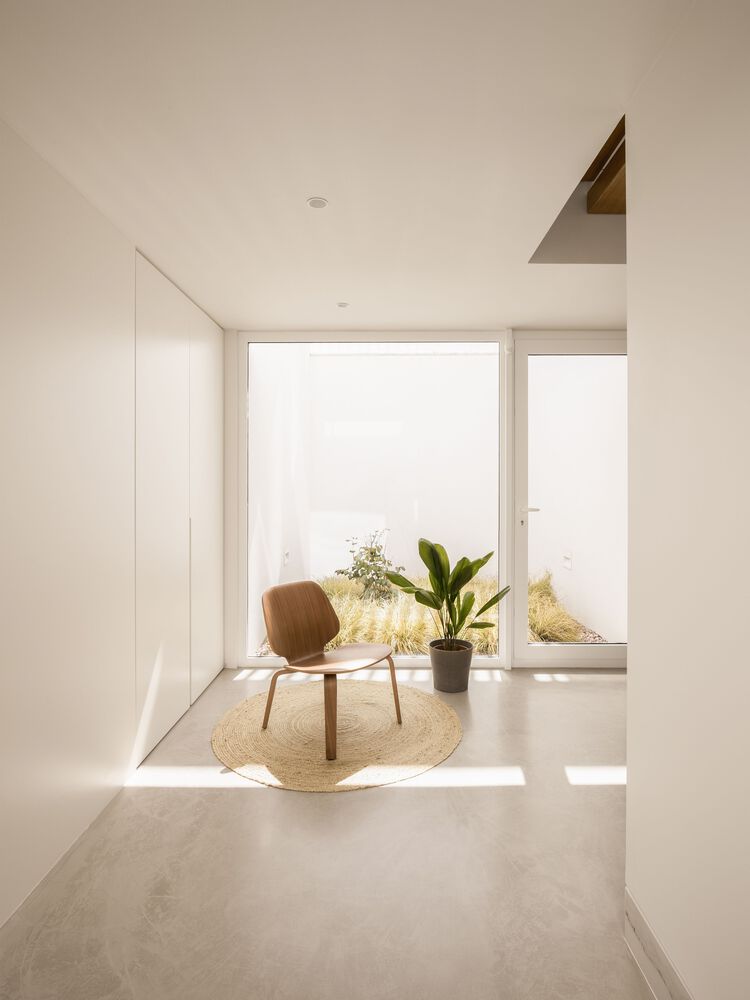
the interior lightwell, introducing daylight and natural ventilation to circulation areas across both floors; and, finally, smaller transitional courtyards, designed as visual and atmospheric respites adjoining secondary spaces.
This volumetric strategy allows light, throughout the day, to sculpt volumes and intensify the dialogue between the built form and its natural surroundings.
This is an architecture of silence and restraint, one that unfolds without clamour. A space that works with time, celebrating light and material with modest honesty and bioclimatic awareness, offering a free stage for intimacy and conviviality alike.
In Verdizela, between shadows and gleams, a home was built that does not dictate rules of use, but inspires a serene, fluid way of dwelling — attuned to its place.
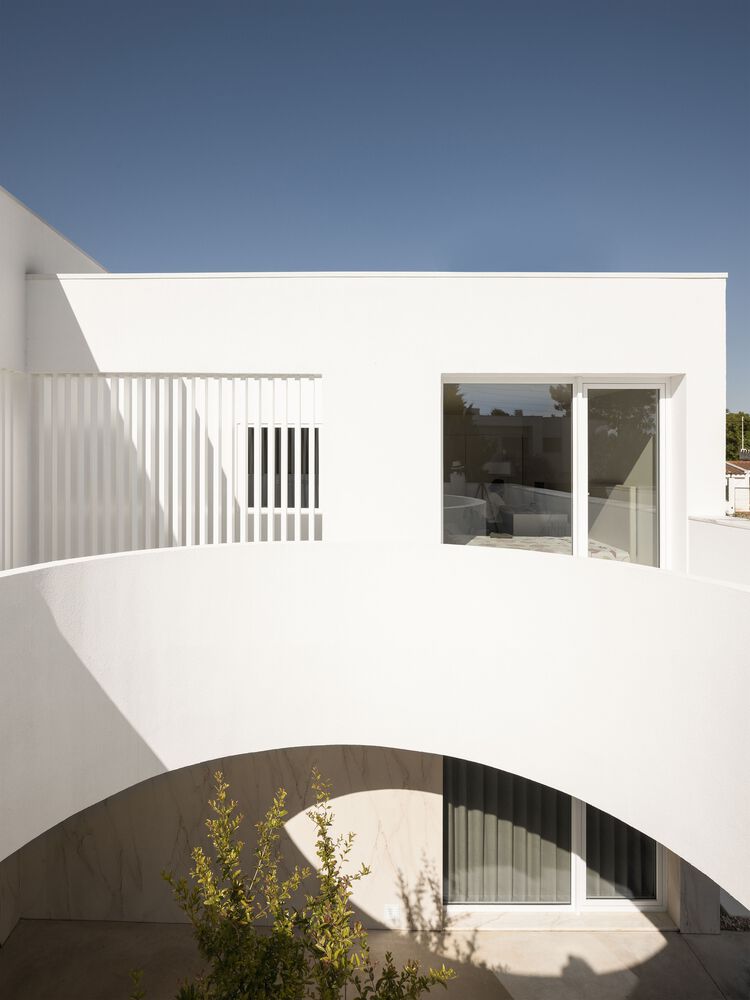
Cada pátio desta casa tem um propósito. O primeiro pátio, junto à entrada, é um espaço cenográfico, com um jardim murado em pedra e madeira, e banhado por luz zenital.
É uma antecâmara emocional, um lugar de transição entre o mundo exterior e o universo íntimo da casa.
O grande pátio central, com a sua árvore solitária que se tornará protagonista ao longo das estações, é o verdadeiro coração da casa.
Ele articula os espaços sociais interiores e exteriores, oferece sombra no Verão e abrigo no Inverno, e transforma-se num cenário vivo que acompanha o quotidiano dos habitantes.
O pátio interno, após a entrada, que traz luz e ventilação natural aos espaços de circulação em ambos os pisos.
E por último, pequenos pátios de transição junto a áreas secundárias, pensados como respiros visuais e de ventilação.
O resultado desta estratégia volumétrica, permite que ao longo do dia, a luz modele volumes e intensifique a relação entre o corpo construído e a envolvente natural.
Esta casa é uma arquitectura de silêncio e contenção, que se deixa descobrir sem clamor.
É um espaço que trabalha com o tempo, que celebra a luz e os materiais com honesta modéstia e consciência bio-climática, e que oferece um palco livre para a vida íntima e para a convivialidade.
Na Verdizela, entre sombras e fulgores, construiu-se um lar que não dita regras de uso, mas inspira uma forma de habitar serena, fluida e em sintonia com o lugar.