
Music Practice Building - University Of The Andes
MUSIC PRACTICE BUILDING - UNIVERSITY OF THE ANDES
Alejandro Puentes, Carolina Jaimes, Juan Esteban López
ARCHITECTS
Alejandro Puentes, Carolina Jaimes, Juan Esteban López
CLIENT
Universidad De Los Andes, Bogotá, Colombia
ENGINEERING & CONSULTING > ACOUSTICS
Wsdg, Daniel Duplat
ENGINEERING & CONSULTING > STRUCTURE
Construcciones Sostenibles
ENGINEERING & CONSULTING > SOILS
Carlos Restrepo Y Equipo
EXTERNAL INTERVENTIONS AND CONNECTION WITH CAMPUS
Casas Y Casas Ingenieros
FINISHES AND INTERIOR DESIGN
Construcciones Acústicas – Gonzalo Durán
CAMPUS MANAGEMENT
Maurix Suárez, Álvaro Bohórquez, Juan Carlos Pardo
ARCHITECT SPECIALIST IN HERITAGE
Lina Beltrán
CONCRETE STRUCTURE
Obreval
PHOTOGRAPHS
Mónica Barreneche
AREA
750 m²
YEAR
2024
LOCATION
Bogotá, Colombia
CATEGORY
University
English description provided by the architects.
CONTAINED RESONANCES
Between the silence of concrete and the echo of wood, a new building discreetly emerges on the campus of the University of the Andes.
The Music Box is a piece that contains more than it shows: an architecture that seeks not to impose itself, but to resonate.
Conceived in 2017 from a competition for graduates under 40, the project brought together architects Carolina Jaimes, Juan Esteban López, and Alejandro Puentes, three friends trained at the same university.
"We had never worked together, but it seemed like an opportunity to do something interesting," recalls López.
The call for proposals, organized by the Faculty of Architecture and the Department of Music, sought a solution to a double challenge: to provide the university with specialized spaces for musical practice while preserving the urban and landscape balance of a campus with heritage value.
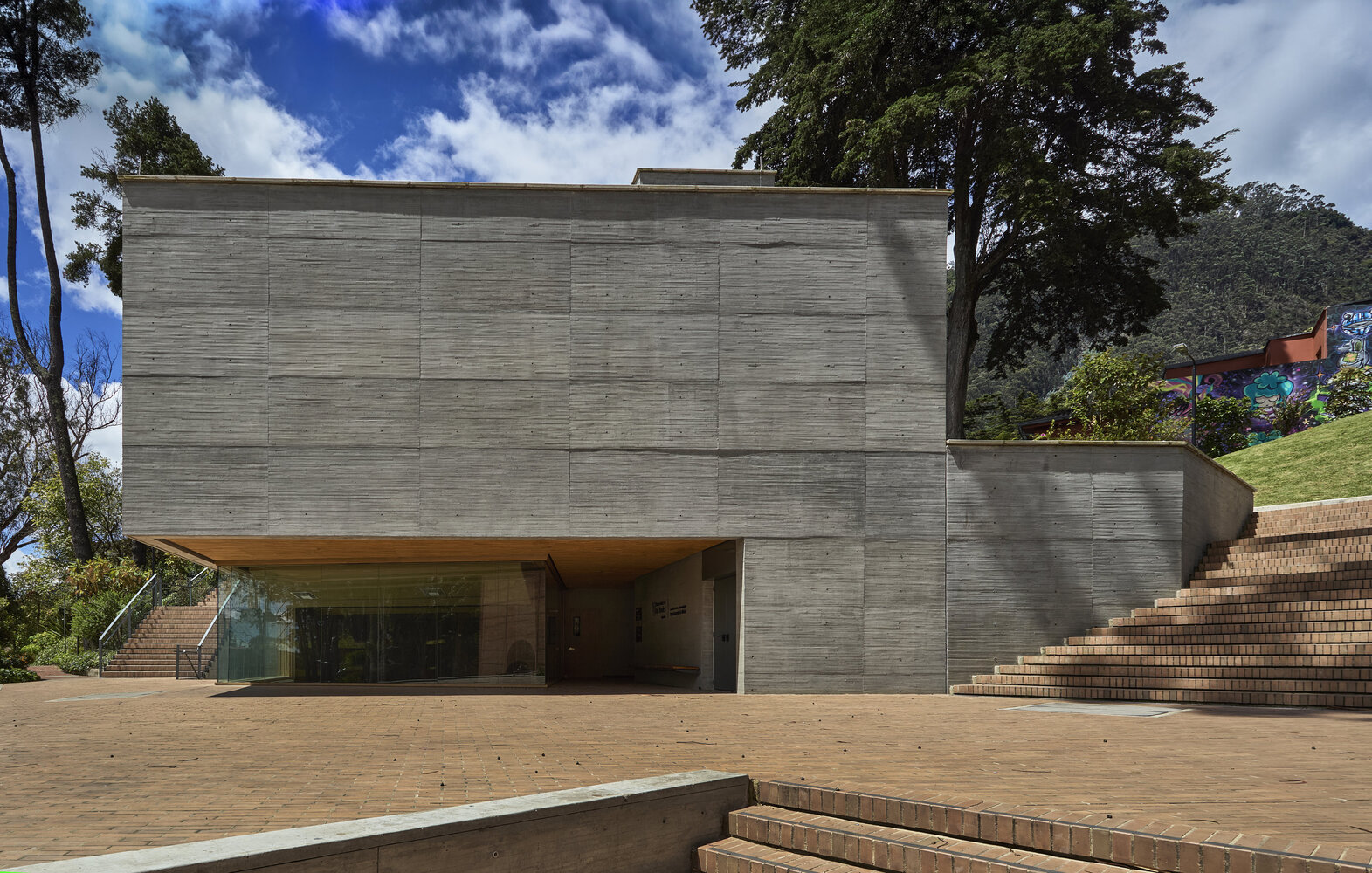
Seven years later, the construction of 750 square meters materialized as a silent volume, partially buried between the Faculty of Architecture and the Campito de San José, an old pavilion that has been a social, cultural, and artistic nucleus of the university.
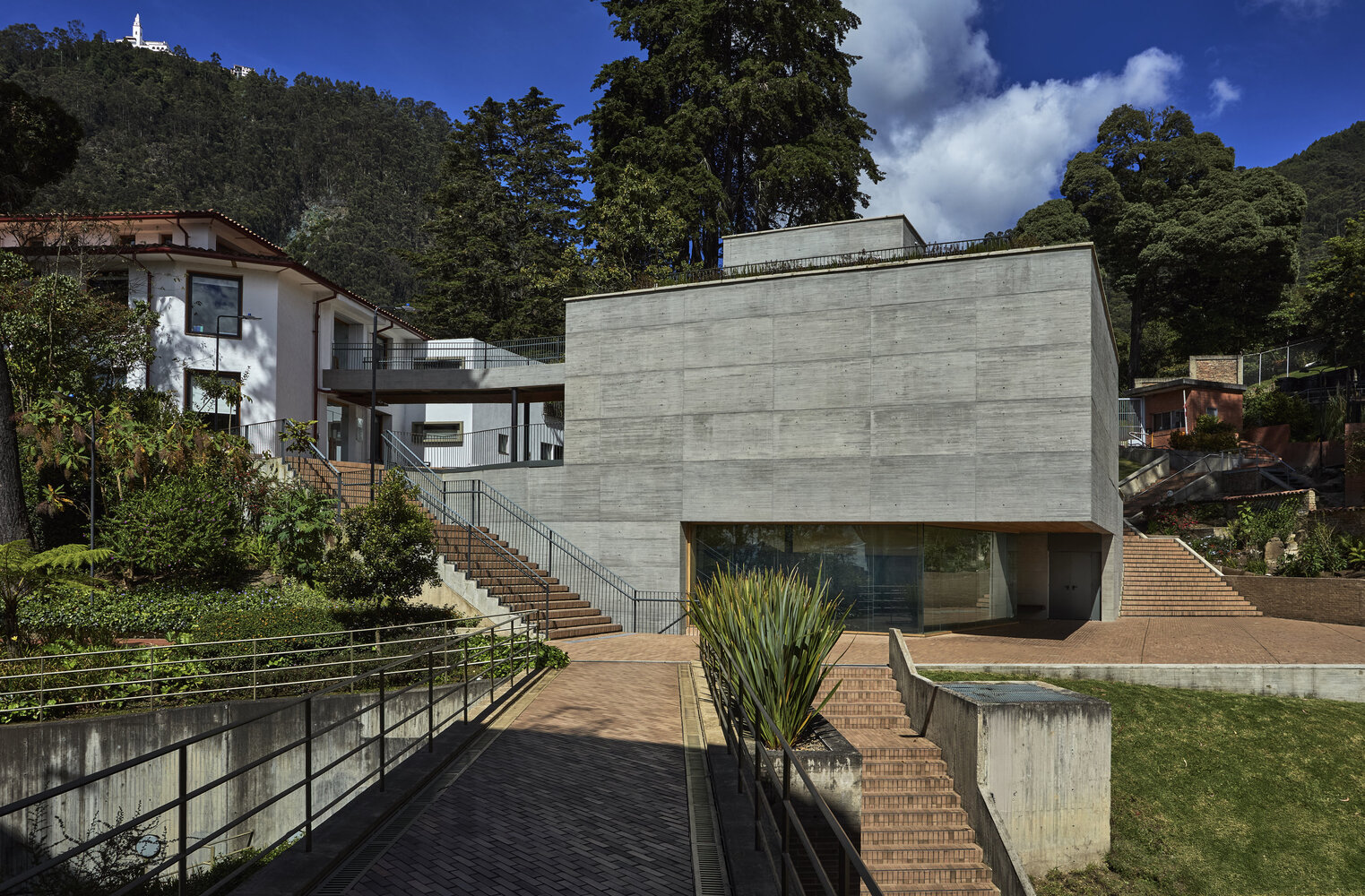
"We wanted to connect the campus, but in an almost silent way," explains Puentes. Two-thirds of the building are underground, a gesture that responds not only to acoustic reasons but also to the intention of keeping the view towards the eastern hills clear.
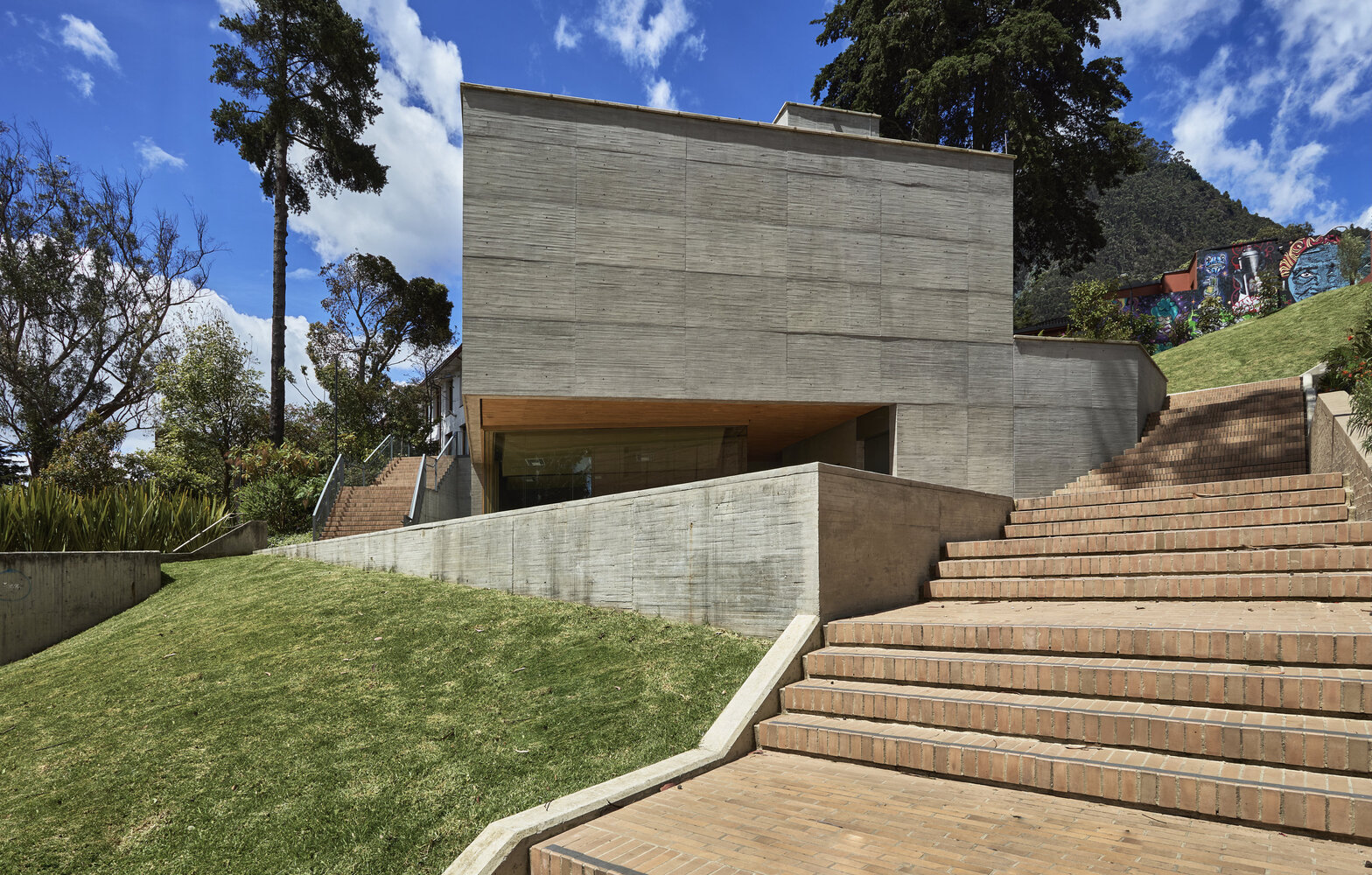
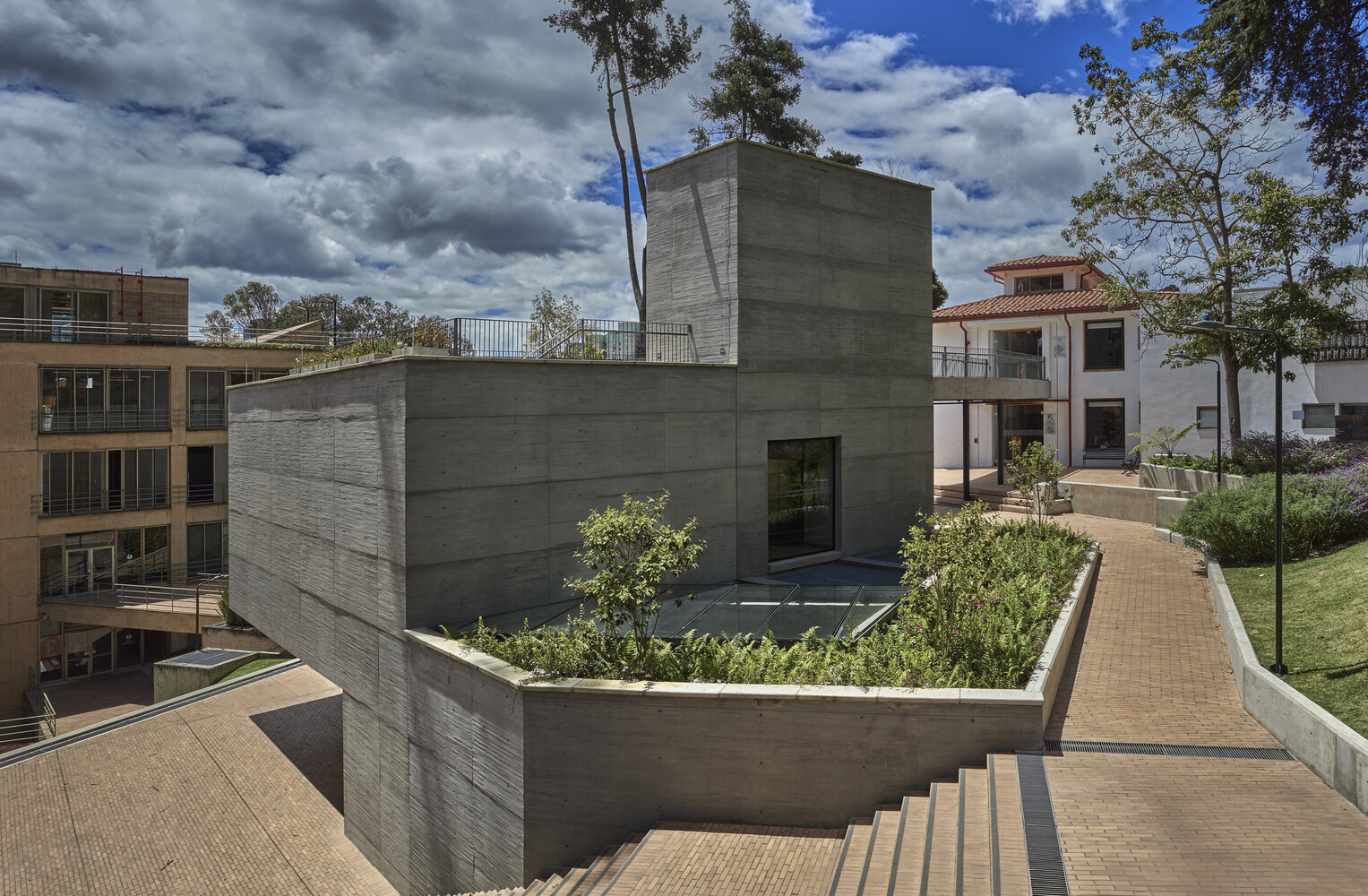
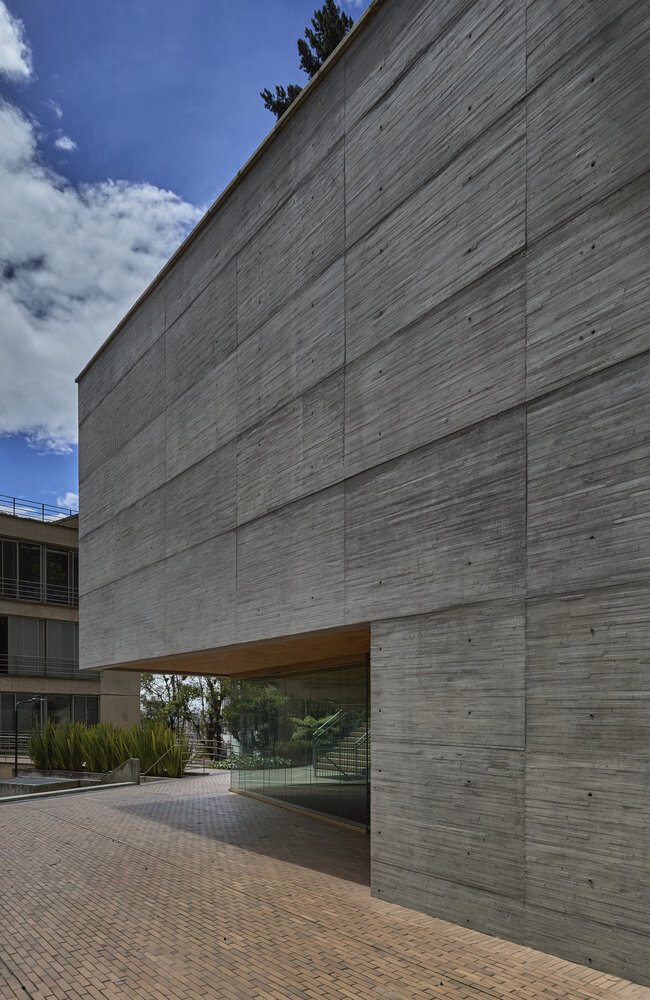
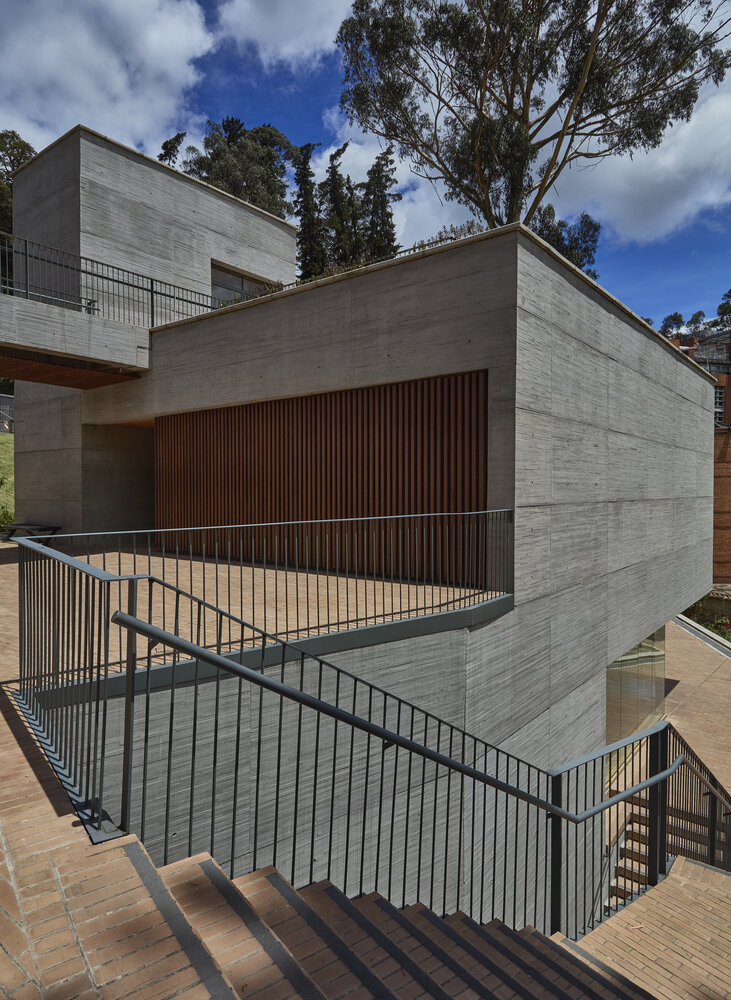
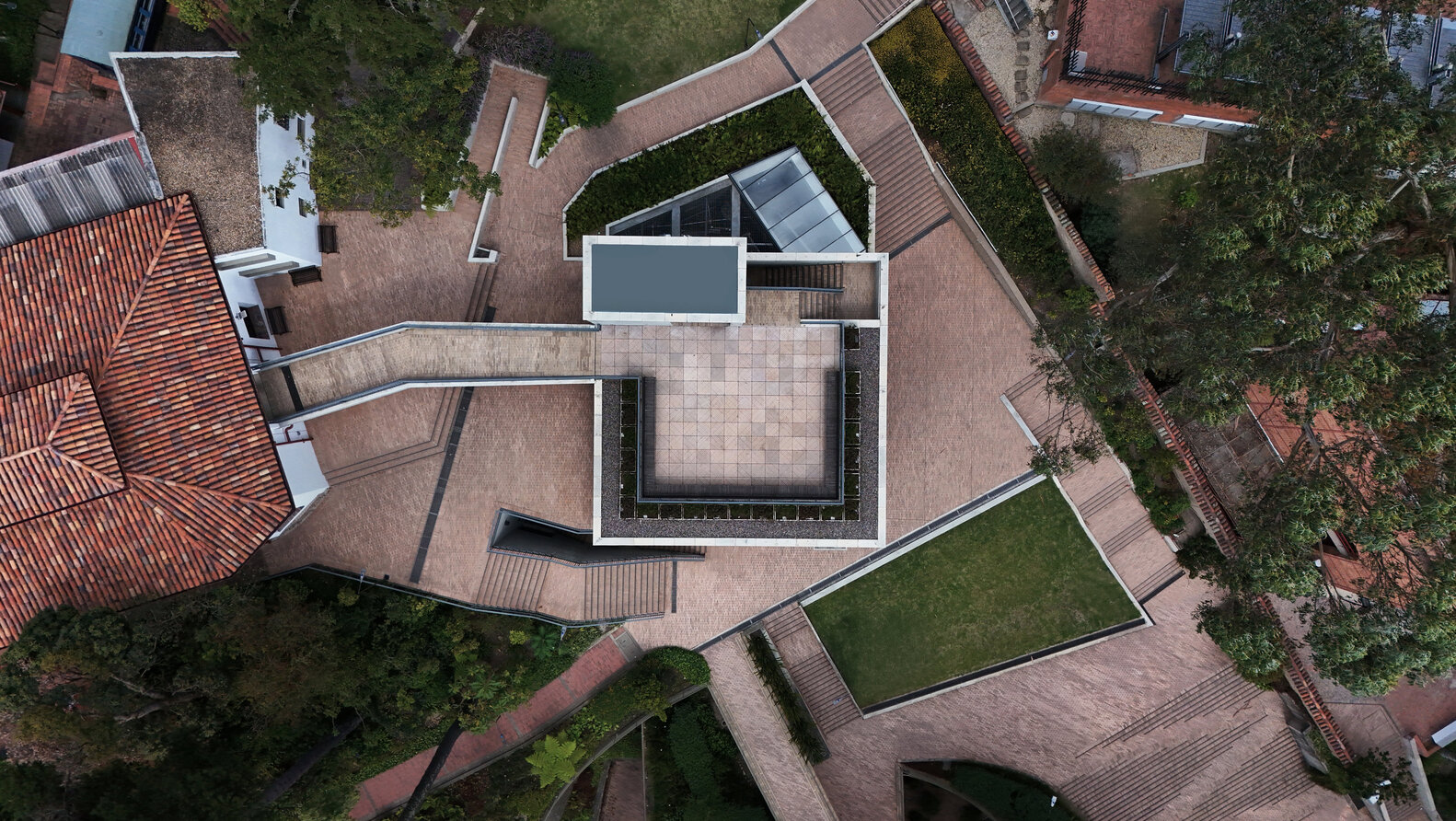
From the outside, the building is perceived as a sober mass of exposed concrete. There is no ornament or stridency: just a contained presence that seems to await discovery. In its center, a void breaks the compactness of the volume and introduces natural light to the lower levels.
This void—more than just a simple atrium—functions as a meeting, rehearsal, and performance space, a place where sound expands freely before being contained again.
THE SPACE AS AN INSTRUMENT
The name The Music Box arose simultaneously in the team's conversations and in the brief of the competition.
"We started talking about the music box… and then we realized that in the brief they also referred to it that way," recalls Jaimes. The coincidence became a conceptual axis: a building conceived as an architectural instrument that, when opened, releases its sound.
The program is organized into three levels that respond to different acoustic intensities. The lower floors house rehearsal and recording rooms, designed under the principle of box-in-a-box, a system that decouples each room from the main structure to eliminate vibrations and guarantee absolute isolation.
Testing and calculations were developed with the collaboration of WSDG, an acoustic firm based in Miami, and Colombian engineer Daniel Duplat, who adapted international standards to the tropical conditions of Bogotá, marked by humidity and altitude.
The upper levels contain circulation areas, control rooms, and common spaces that promote interaction between musicians and architects. "We wanted it to be a place where students could meet informally, where sound wouldn’t be locked away but could circulate," explains Jaimes.
The central void acts as a resonance chamber between the different floors, generating a vibrant and changing atmosphere depending on the time of day or type of activity.
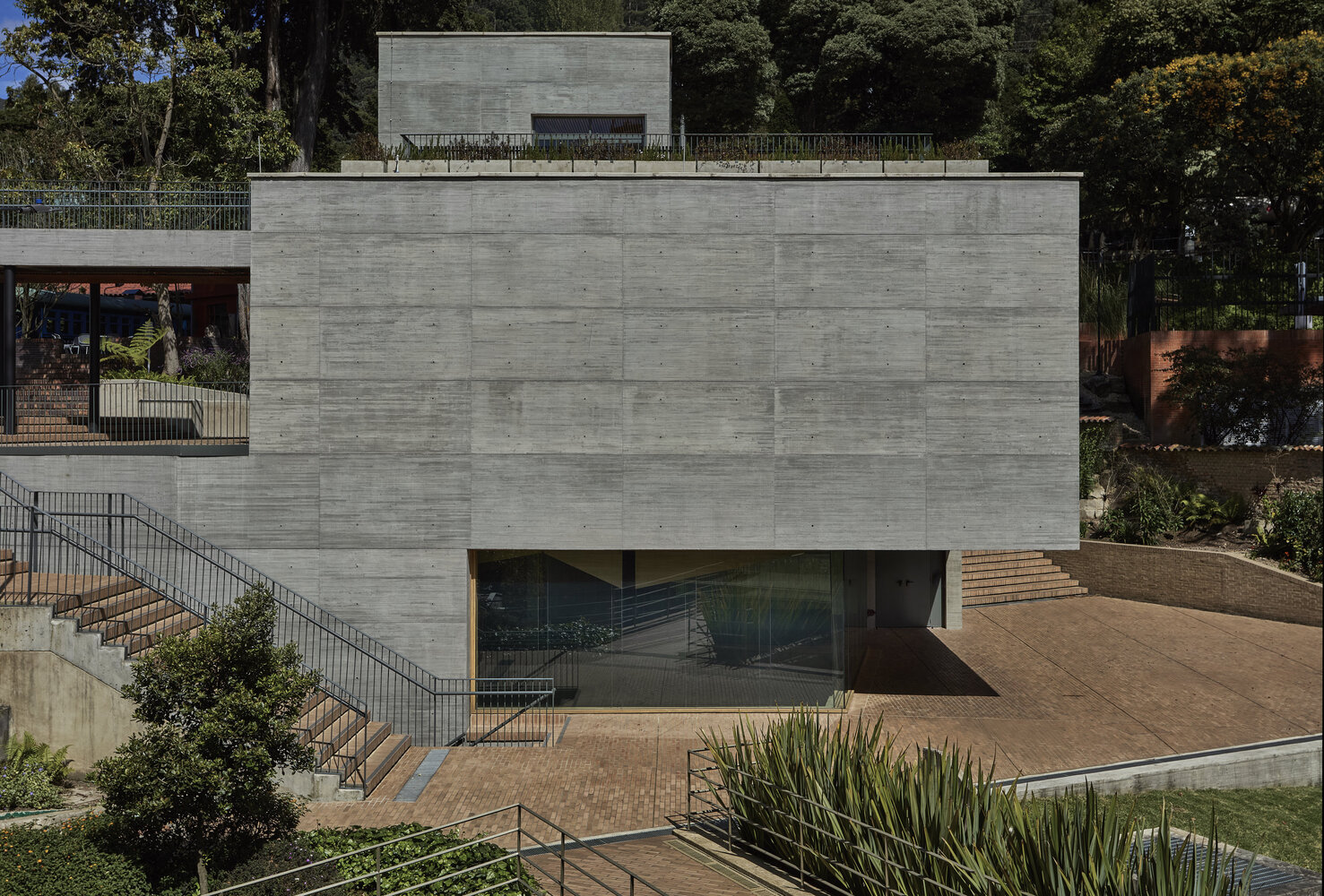
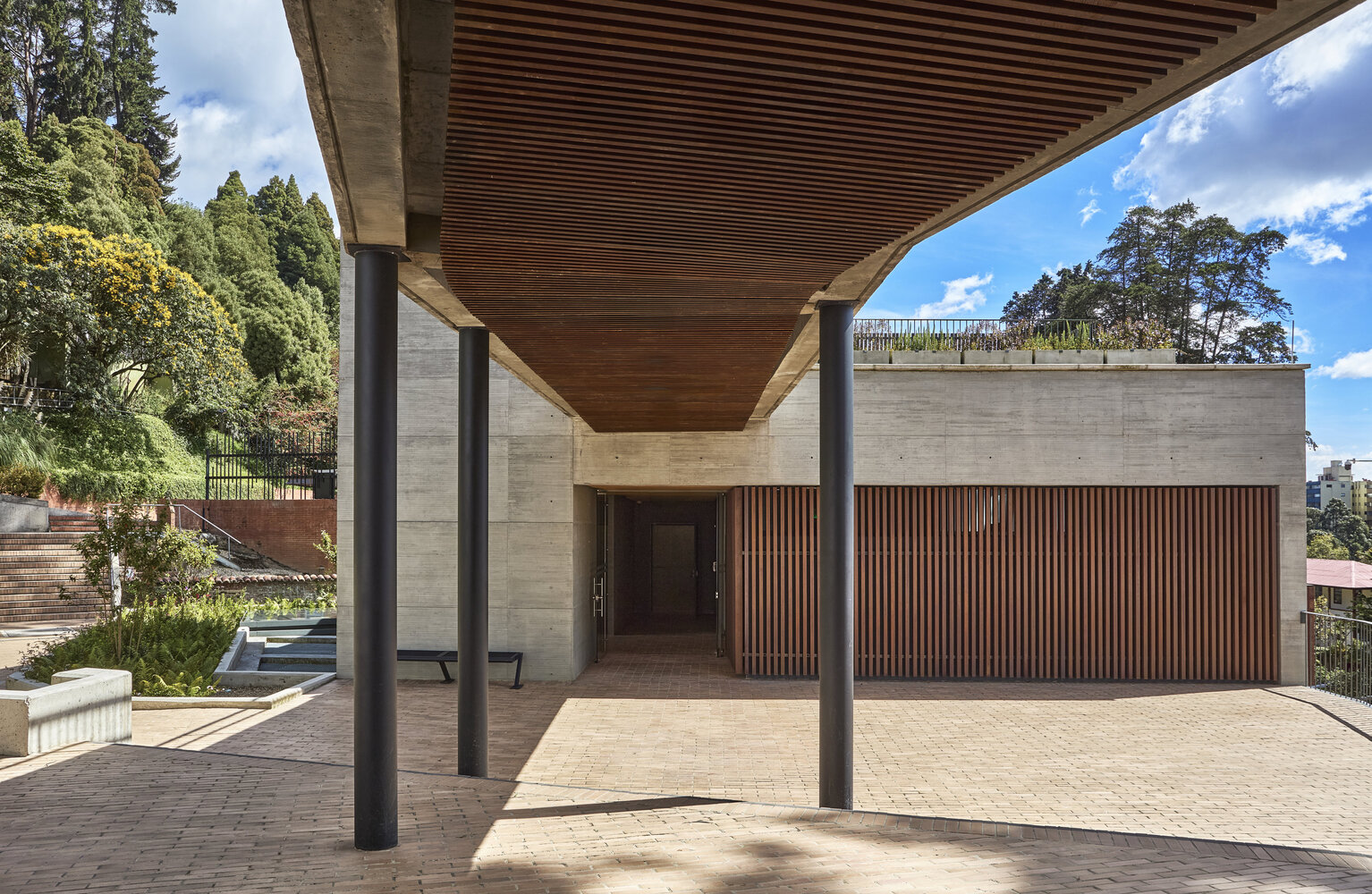
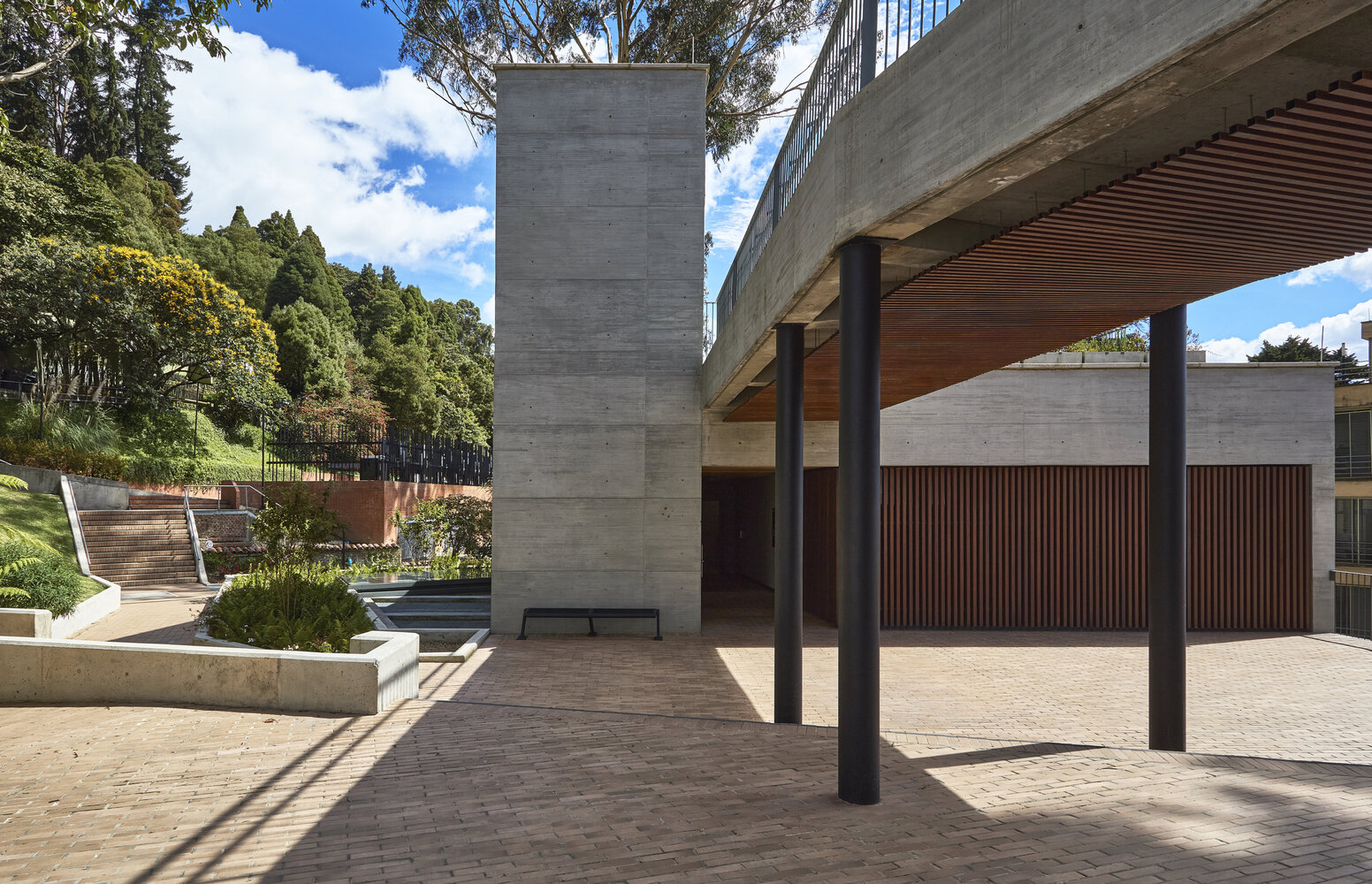
The structure of the building is supported by two large concrete beams that completely free the lower level, creating a space without columns or visual interruptions. "There is not a single vertical frame.
It’s all continuous glass," points out López. This continuity of planes generates a sense of architectural transparency that contrasts with the density of the structural material.
MATERIAL AND SENSORY DUALITIES
The materiality of the building establishes a dialogue between opposites: the coldness of concrete and the warmth of wood, the opaque and the translucent, the heavy and the light.
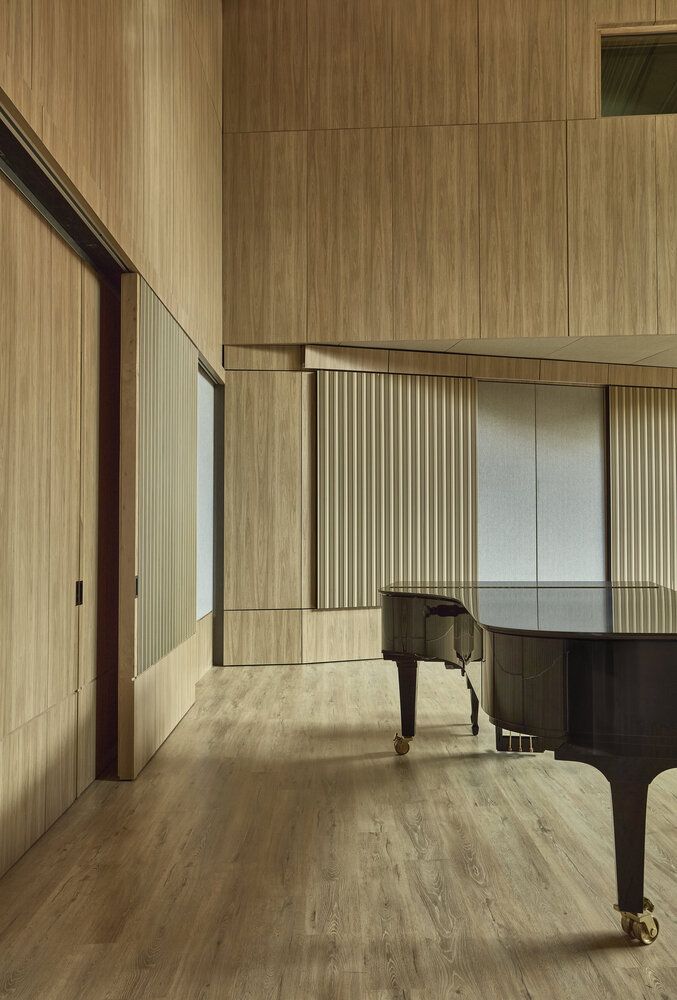
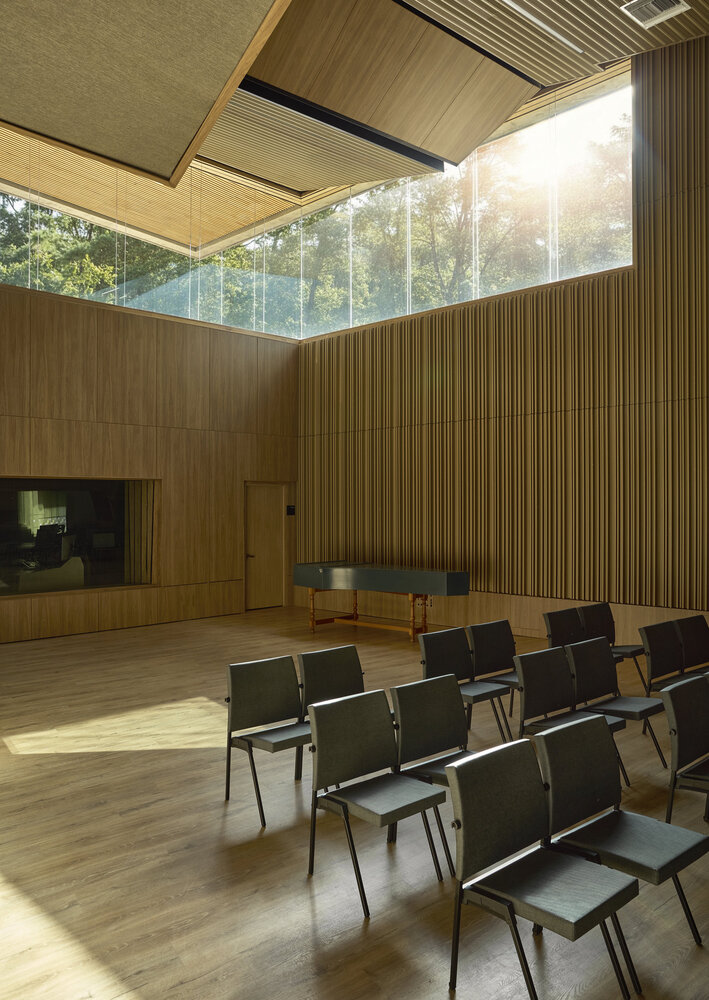
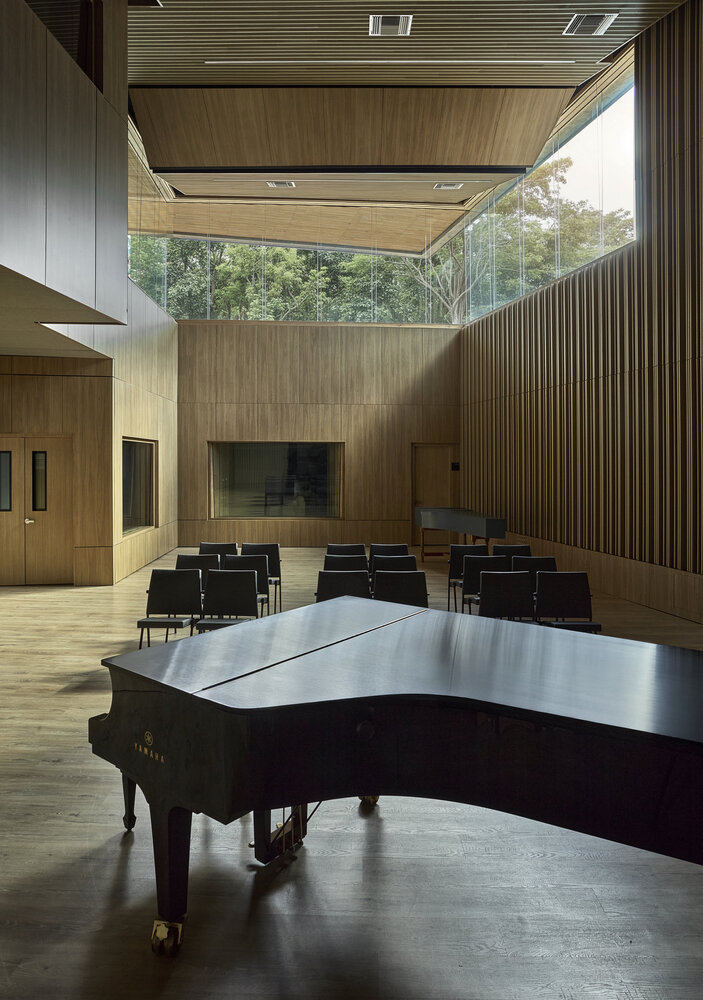
"The contrast between the technical and the sensory was fundamental," comments Jaimes. The exposed cast concrete conveys a sense of permanence, while the clear wood finishes inside absorb sound and soften it, transforming each room into an acoustic microclimate.
The interior surfaces were designed with artisanal precision: angled panels, hidden frames, and invisible joints that prevent unwanted reverberations.
Natural light, filtered through the central void, bathes the wooden walls and reveals their texture with changing nuances. The result is a warm and enveloping atmosphere, where each surface seems to participate in the rhythm of the building.
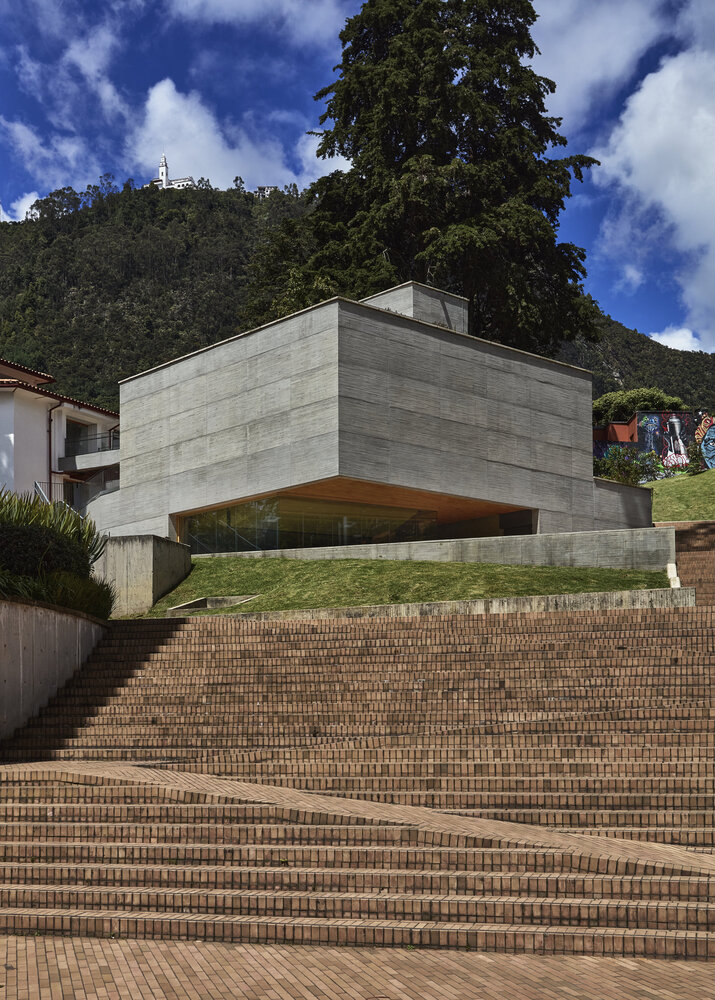
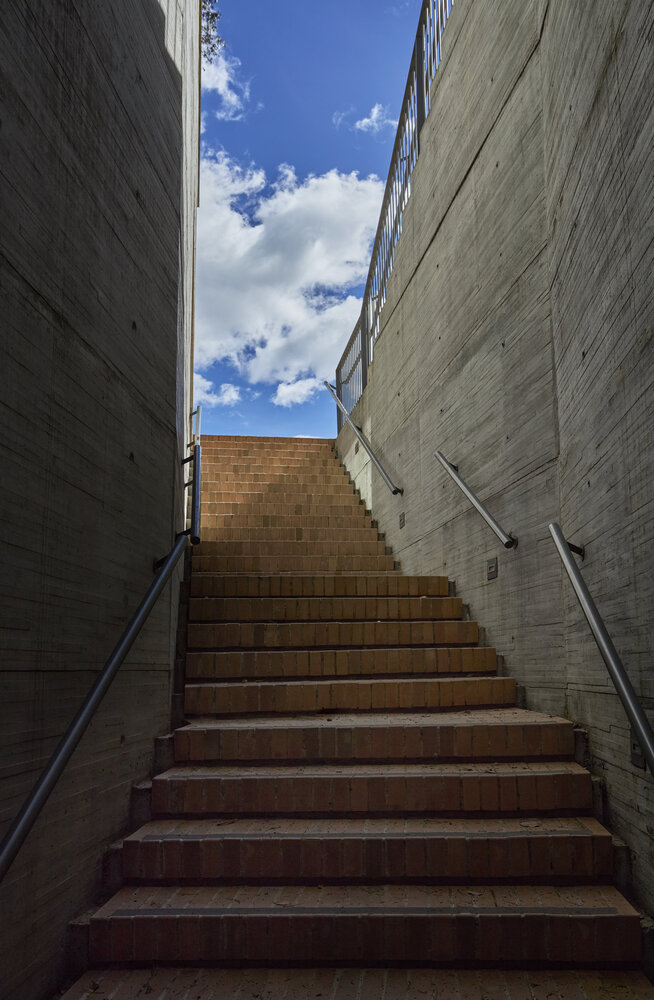
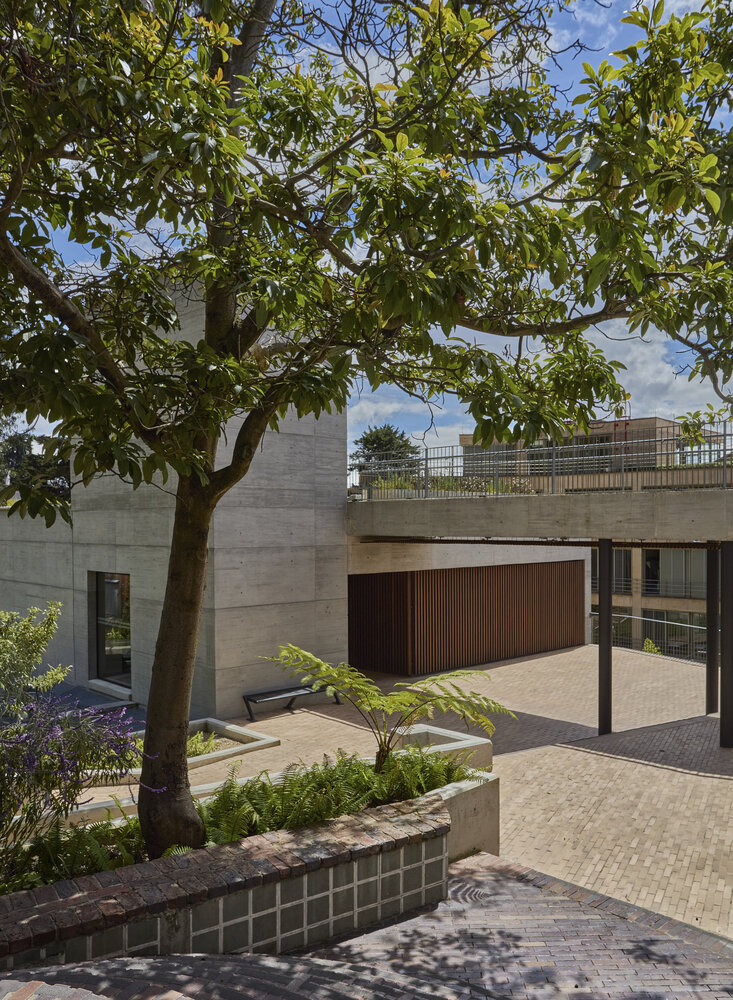
On the outside, concrete takes on a landscape role. The grayish color of the material blends with the Bogotá sky, while green roofs and rain gardens with native species extend the campus's topography.
Pedestrian pathways adapt to the slope of the land, connecting the Faculty of Architecture with the Campito and resolving accessibility routes without altering the character of the place. "The building acts as a silence between the heritage brick and the orange of the neighboring buildings," describes López.
RESONANCE AND MEMORY
Since its inauguration in September 2024, The Music Box has become a reference point within the university. Its discreet presence and functional versatility have integrated it into the daily life of students and professors.
"Sometimes people say: 'Let’s meet at the Music Box,'" comments Puentes. That nickname, which initially seemed trivial, ended up being a testament to the affection that the building has generated.
Beyond its immediate use, the project embodies a deep symbolic weight for its authors. "It is our axis mundi, a center of professional practice, a place of reference," says Puentes. For the three of them, intervening in the campus that shaped them was an act of gratitude and responsibility: an opportunity to contribute to the architectural continuity of a place marked by emblematic works of Bermúdez and Cerón.
As time goes by, the architects hope that the concrete will acquire a natural patina and that the vegetation will embrace it completely, integrating it into the landscape. "It can be a very interesting building in 10, 15, or 20 years", anticipates Jaimes. Because The Music Box, more than just a building, is a sonic pause within the urban fabric: a contained resonance that connects memory, matter, and landscape.