DETACHED HOUSE IN TSKNETI
Wunderwerk
ARCHITECTS
Wunderwerk
LEAD TEAM
Gigi Shukakidze
LANDSCAPE ARCHITECTURE
Ruderal
ENGINEERING & CONSULTING > STRUCTURAL
Q Engineering
ENGINEERING & CONSULTING > SERVICES
Casa Calda
DESIGN TEAM
Nikoloz Lomidze, Barbare Kacharava, Irina Dikhaminjia
PHOTOGRAPHS
Angus Leadley Brown, Gigi Shukakidze
AREA
300 m²
YEAR
2025
LOCATION
Tbilisi, Georgia
CATEGORY
Residential Architecture, Houses
English description provided by the architects.
For centuries, the mountainous belt around Tbilisi has acted as the city's natural filter and refuge.
Among these elevations, Tskneti stands out - situated on the eastern slope of the Trialeti Range, where the dense urban grid dissolves into oak and pine forests. Historically perceived as a place of escape, Tskneti offered an alternative to the noise of Tbilisi, a setting where architecture mediated coexistence with nature.
During the Soviet era, Tskneti became a suburban resort shaped by state-planned sanatoria and an artificially planted forest. Over time, however, private dachas formed a closed social world, reserved for party officials and the intelligentsia. A wider society remained excluded from these comforts - privilege was meant to be present yet concealed.
The 1990s overturned this hierarchy. As state structures collapsed, abandoned villas were occupied by internally displaced families, while a new elite emerged behind four-meter concrete walls. This shift produced two parallel forms of enclosure: temporary residents dismantled old wooden fences for firewood, while the wealthy fortified their plots with solid barriers.
Walls ceased to be architectural elements; they became social borders, redefining the landscape and dissolving communal space. Over decades, the culture of enclosure became an inherited instinct, shaping both perception and construction habits.
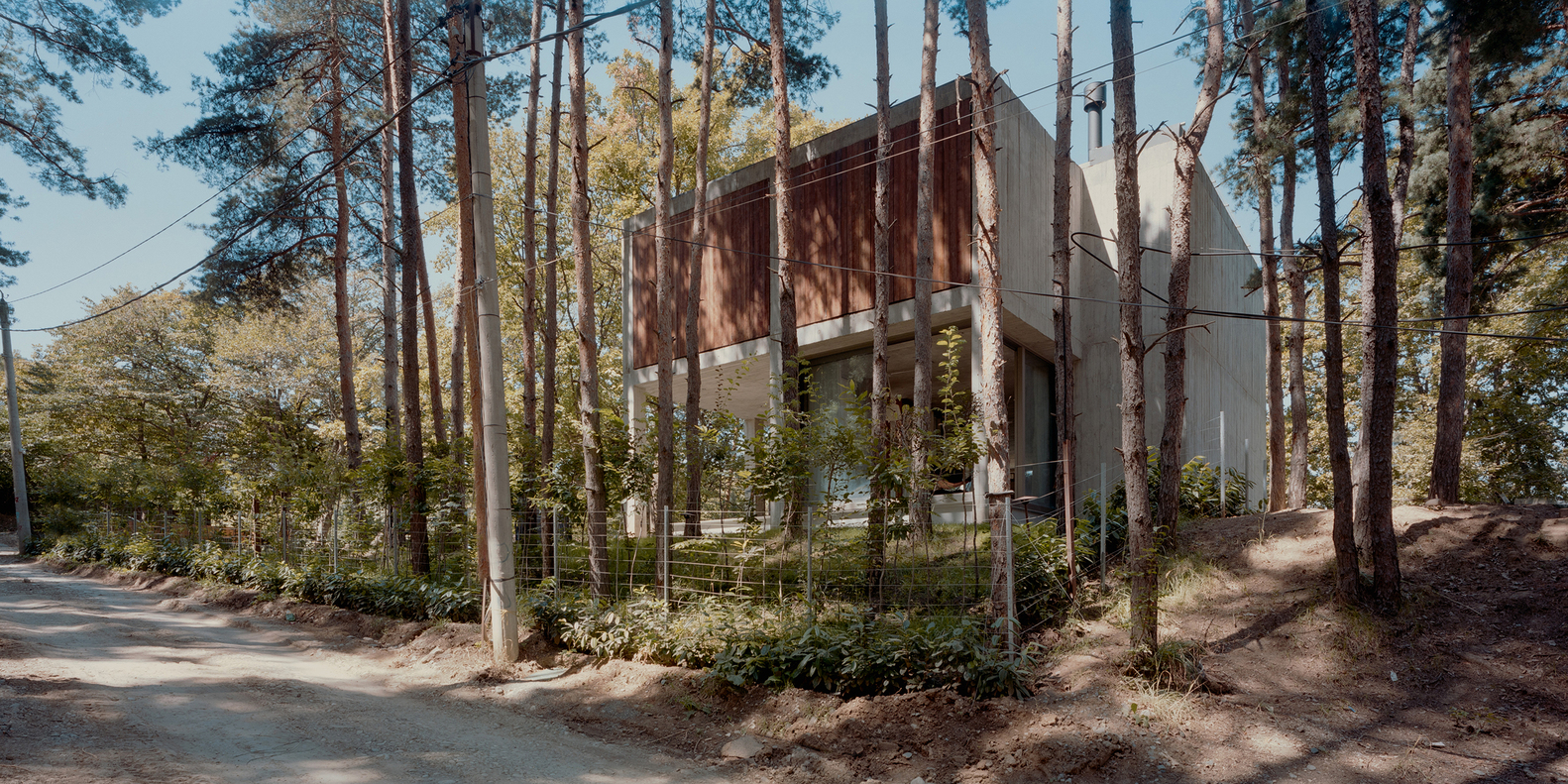
Today, the municipality is slowly regulating this phenomenon, placing limits on tall, opaque fences in an effort to restore the openness that once defined the area. The house presented here is conceived as a response to this long-standing culture of retreat and separation, an attempt to propose a different architectural ethic in Tskneti: to live without walls.
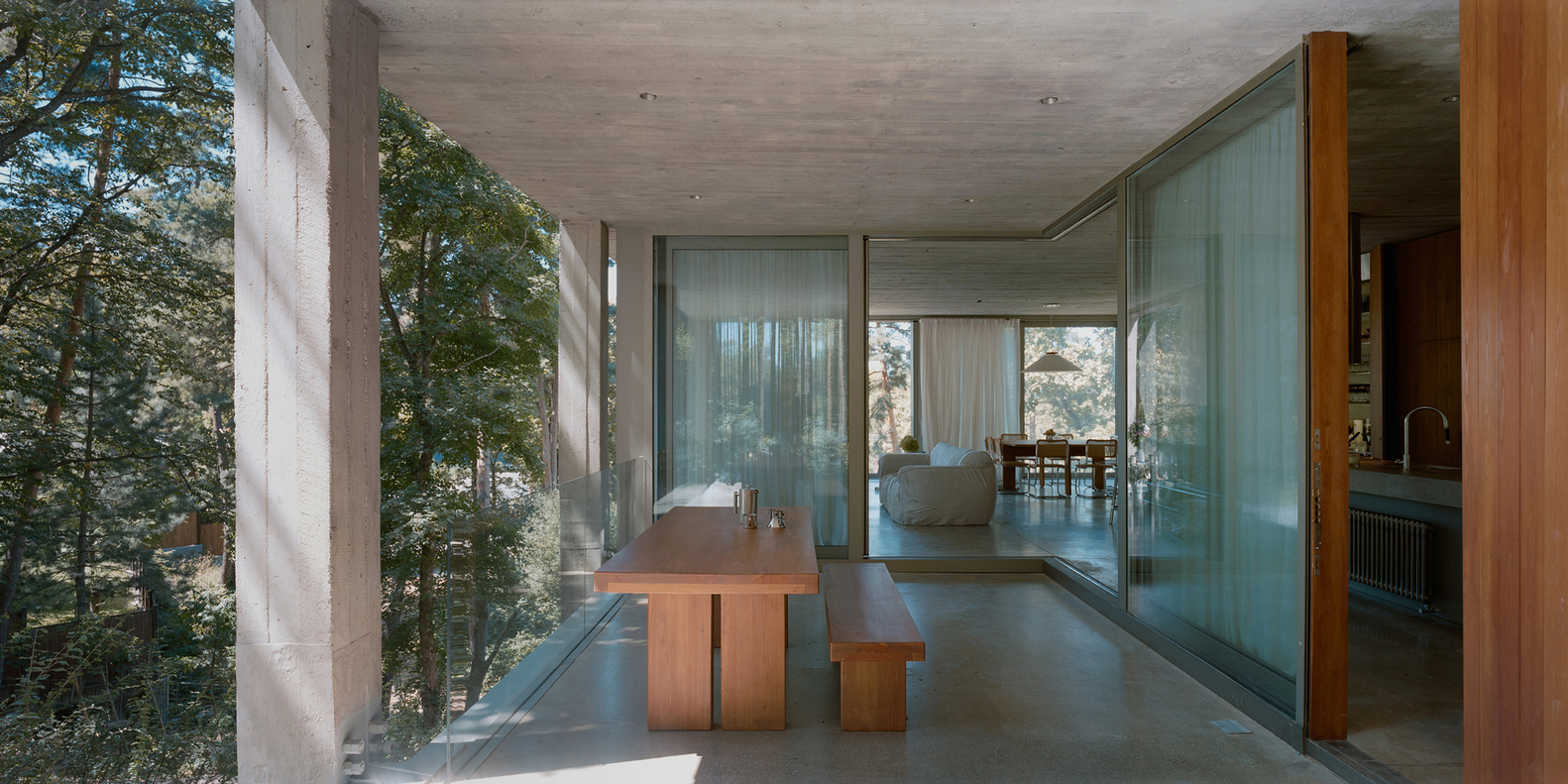
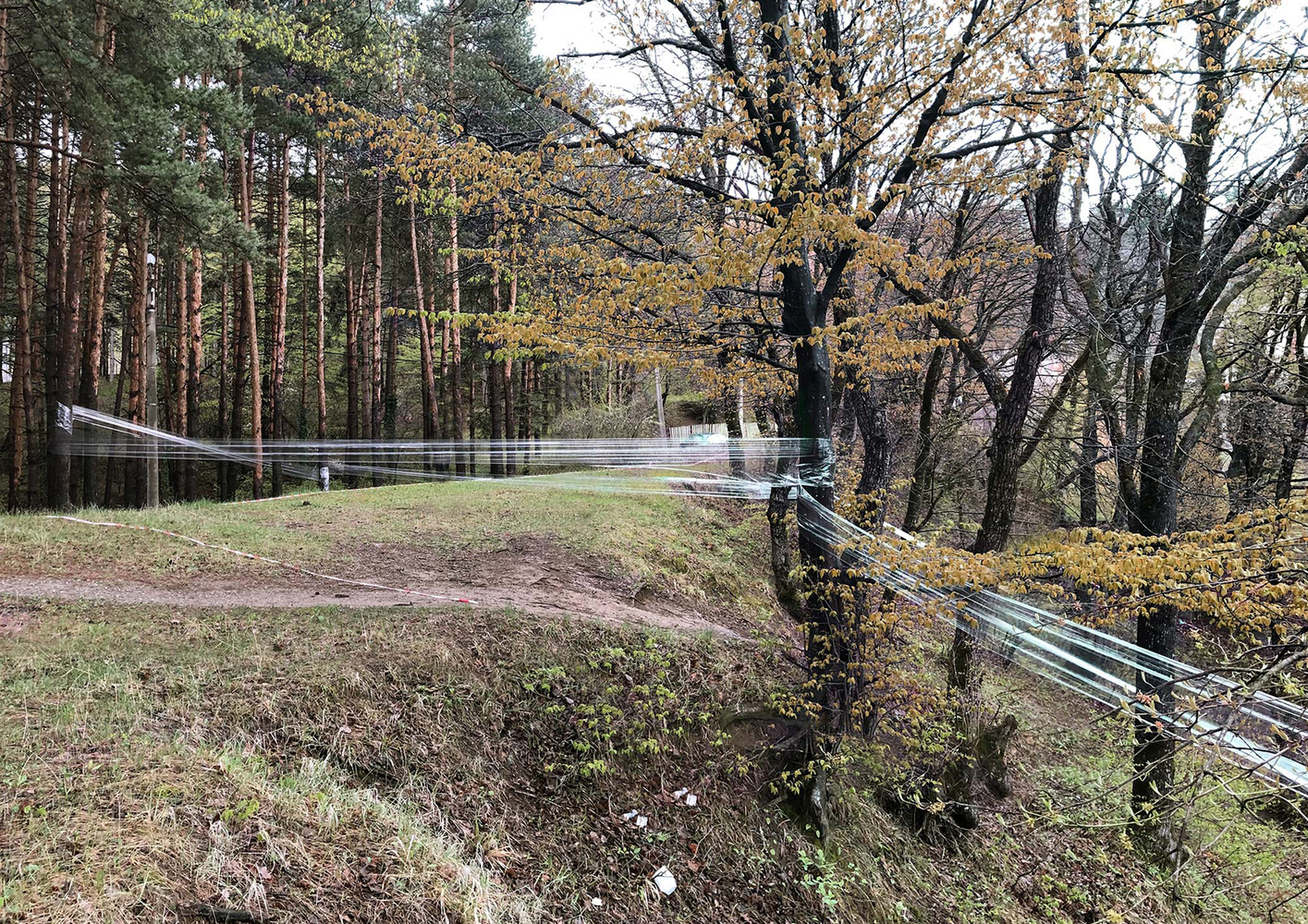
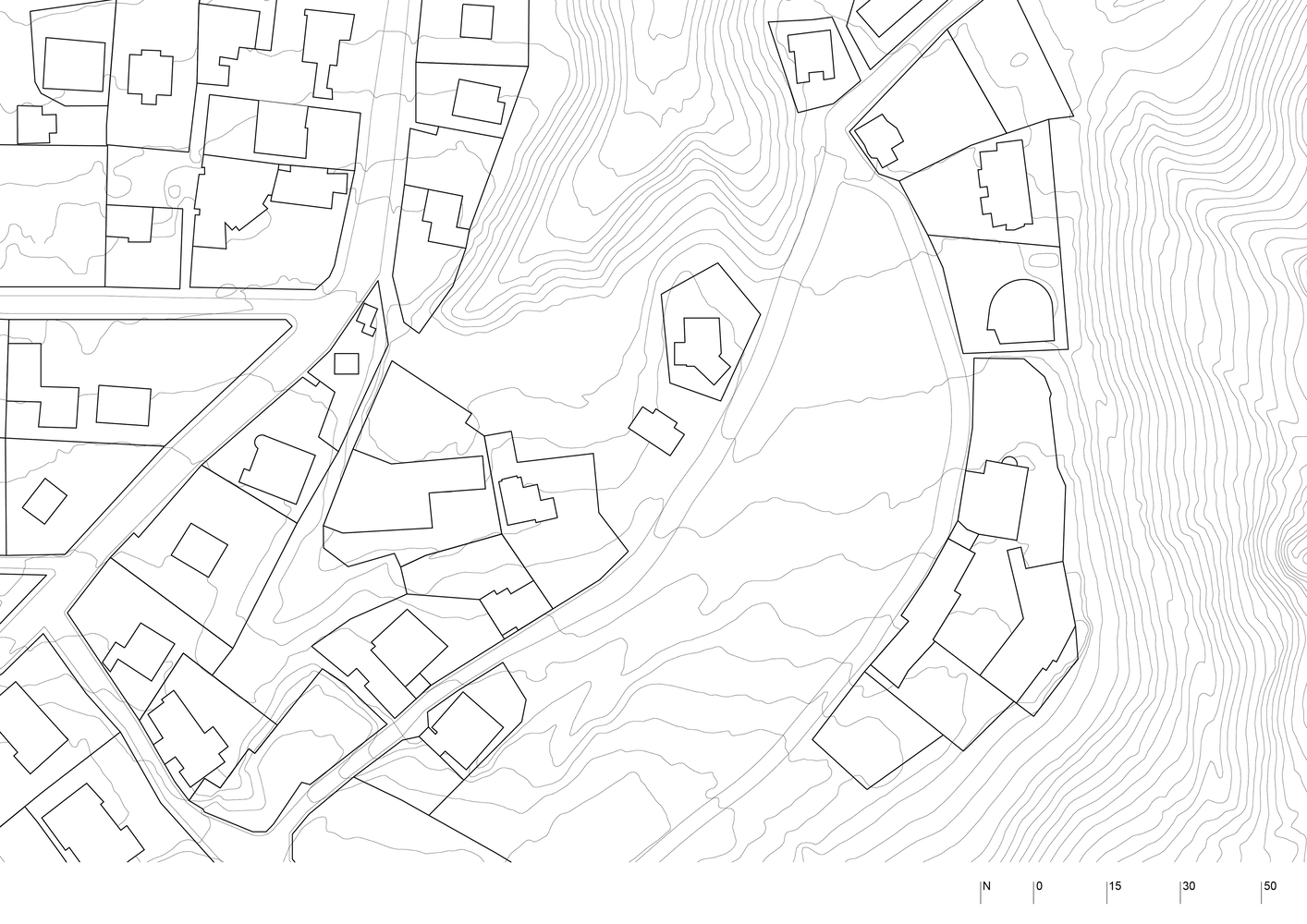
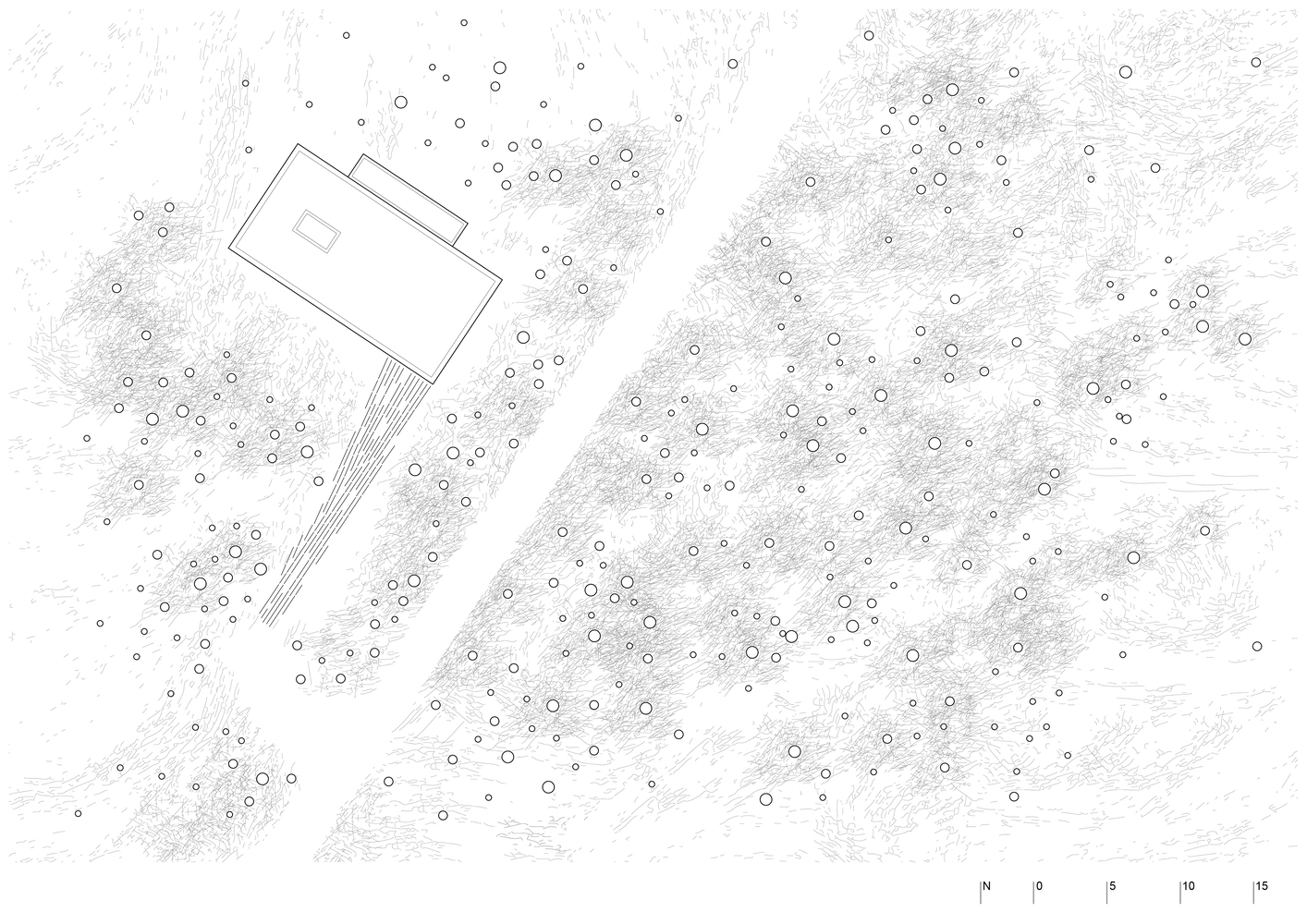
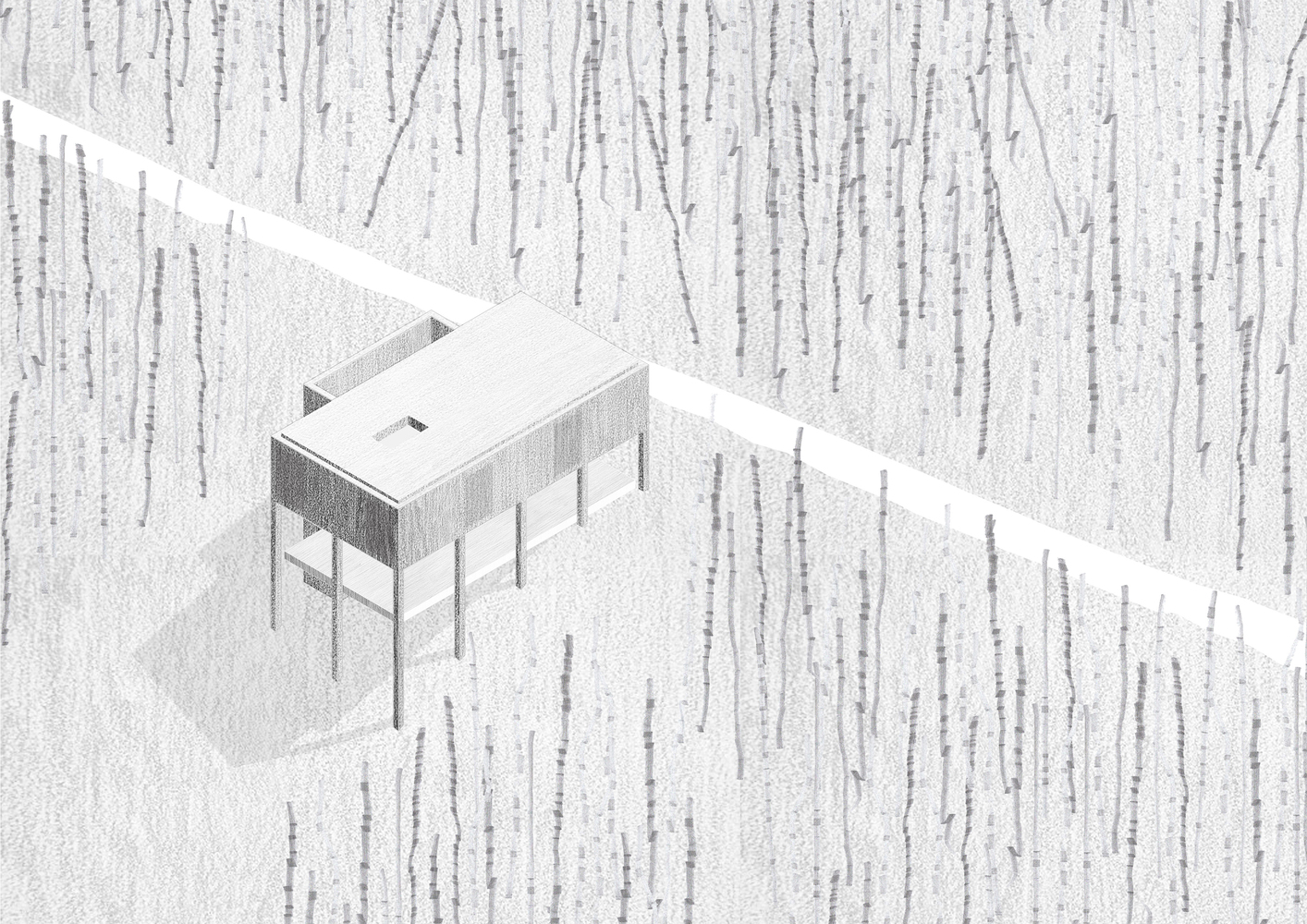
Located on the southeastern edge of the settlement, the site borders a natural ravine that forms part of the ecological ventilation system for both Tskneti and Tbilisi. Although surrounded by forest, the steep topography had long discouraged development.
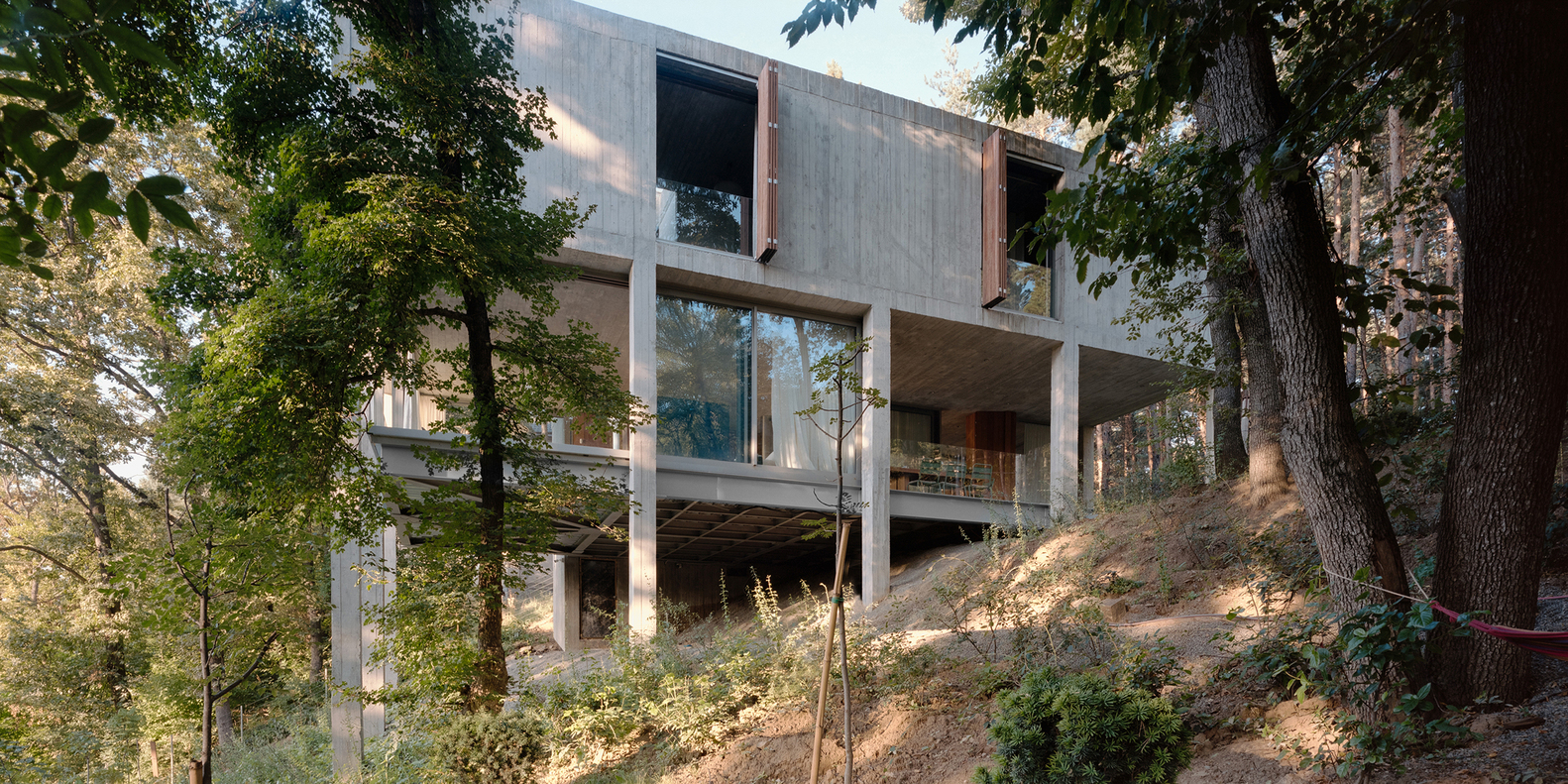
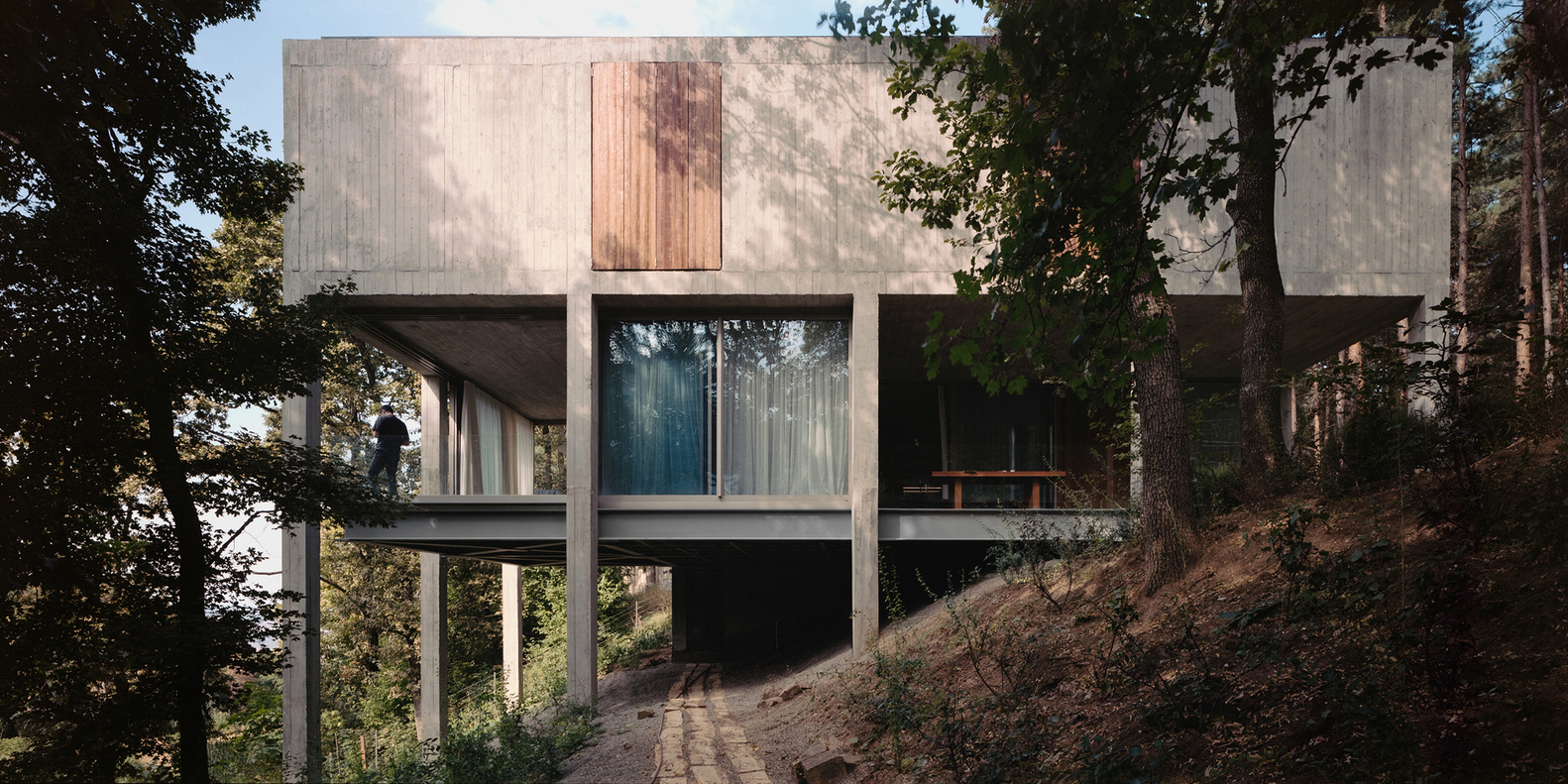
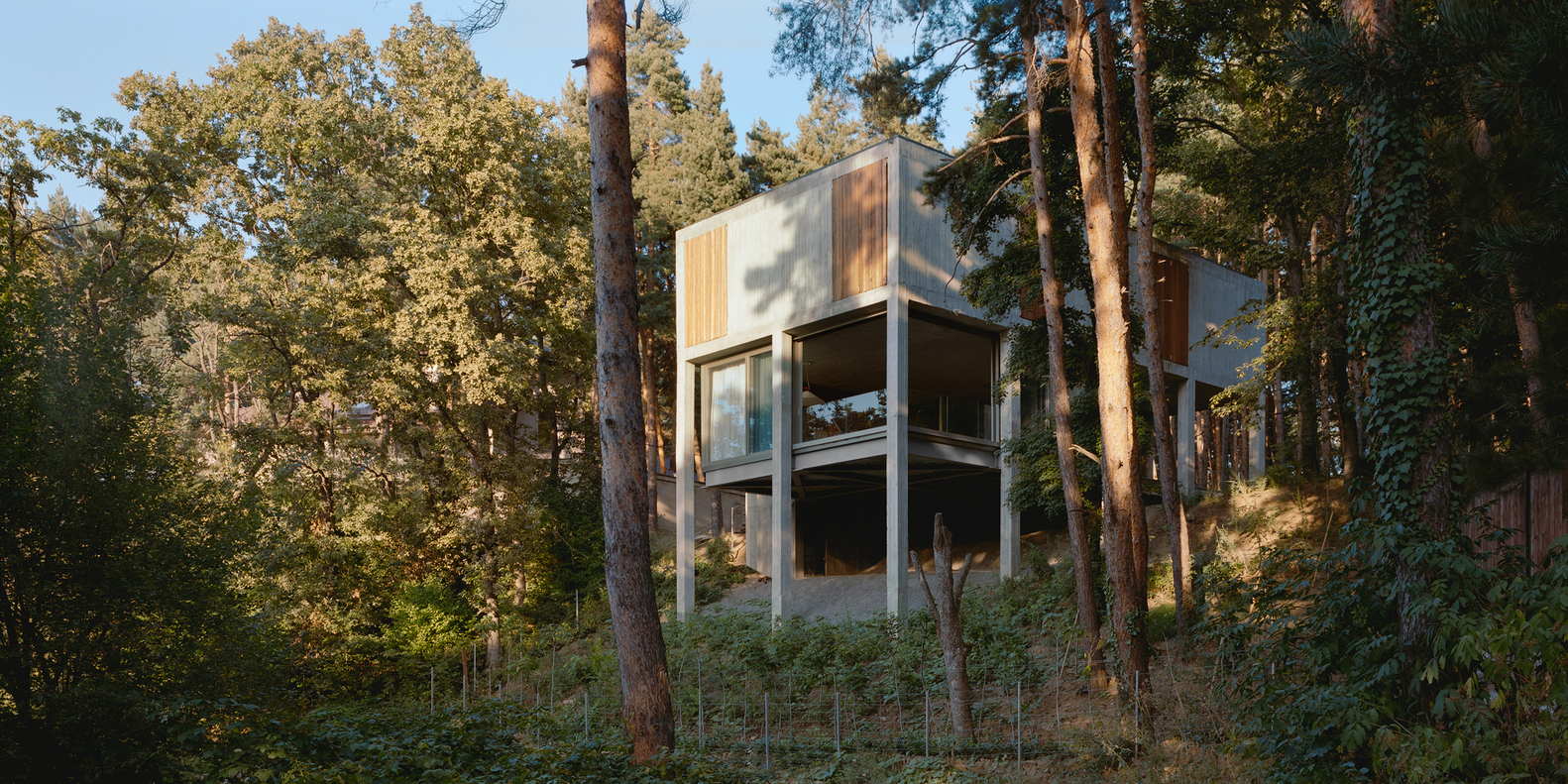
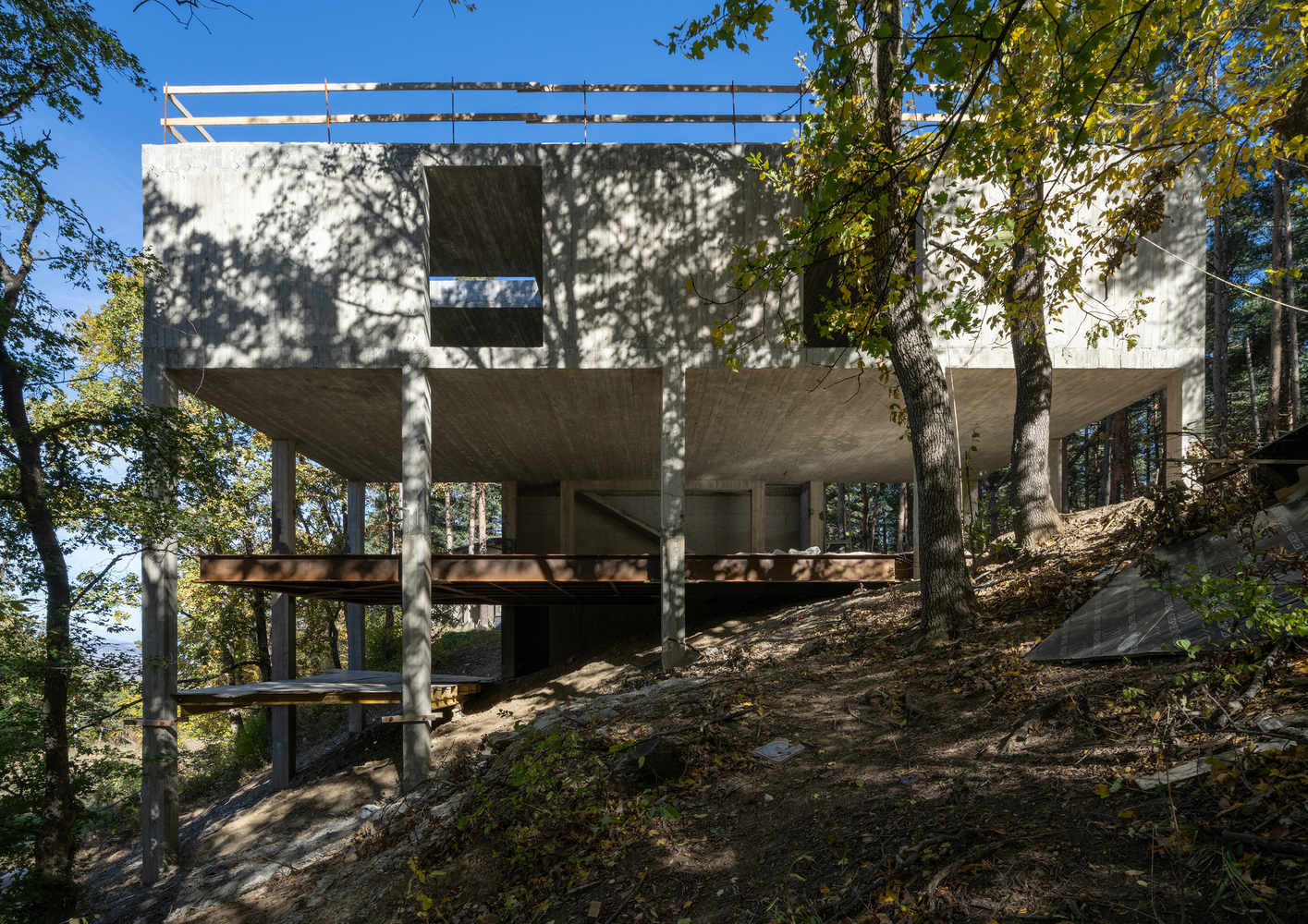
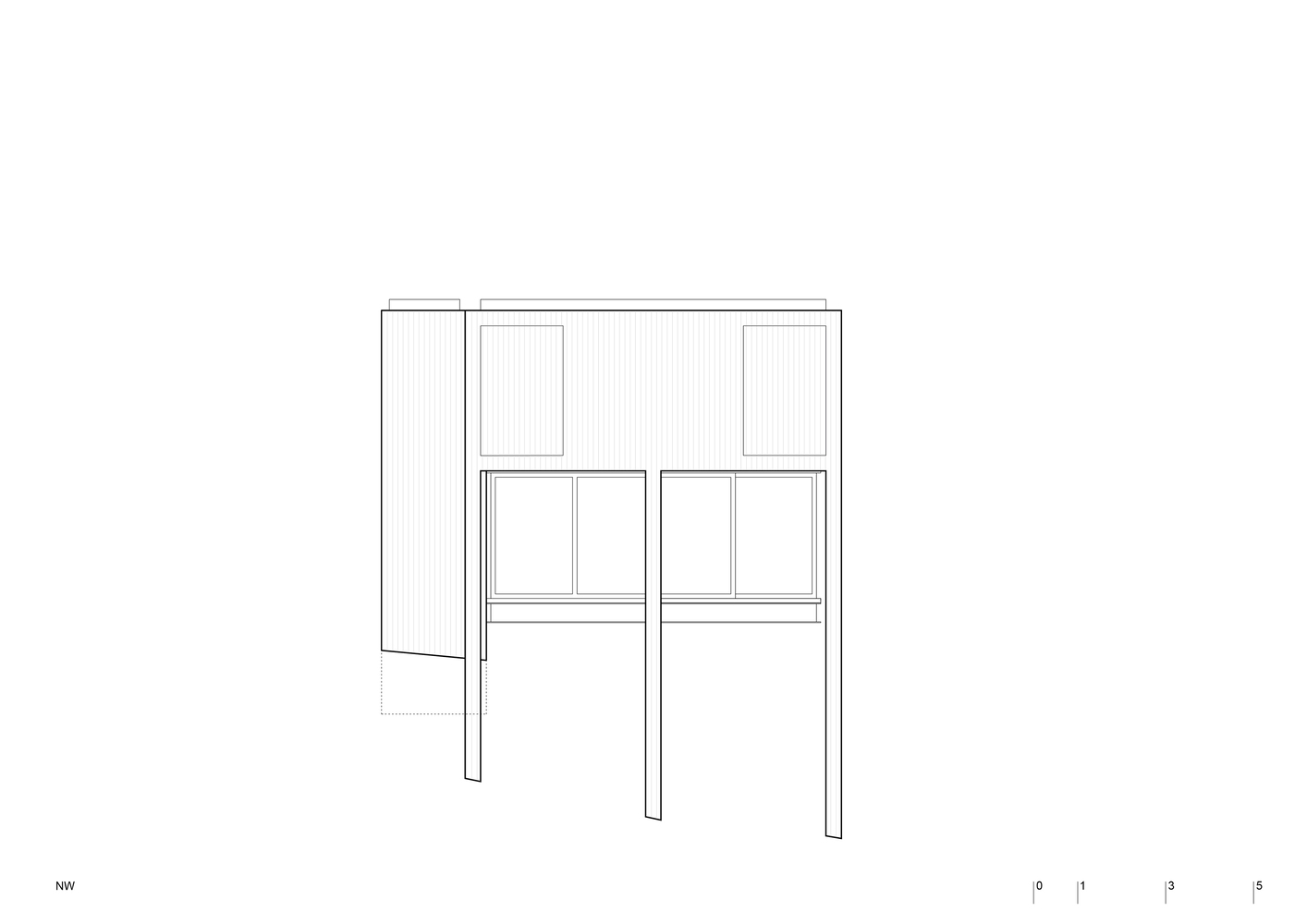
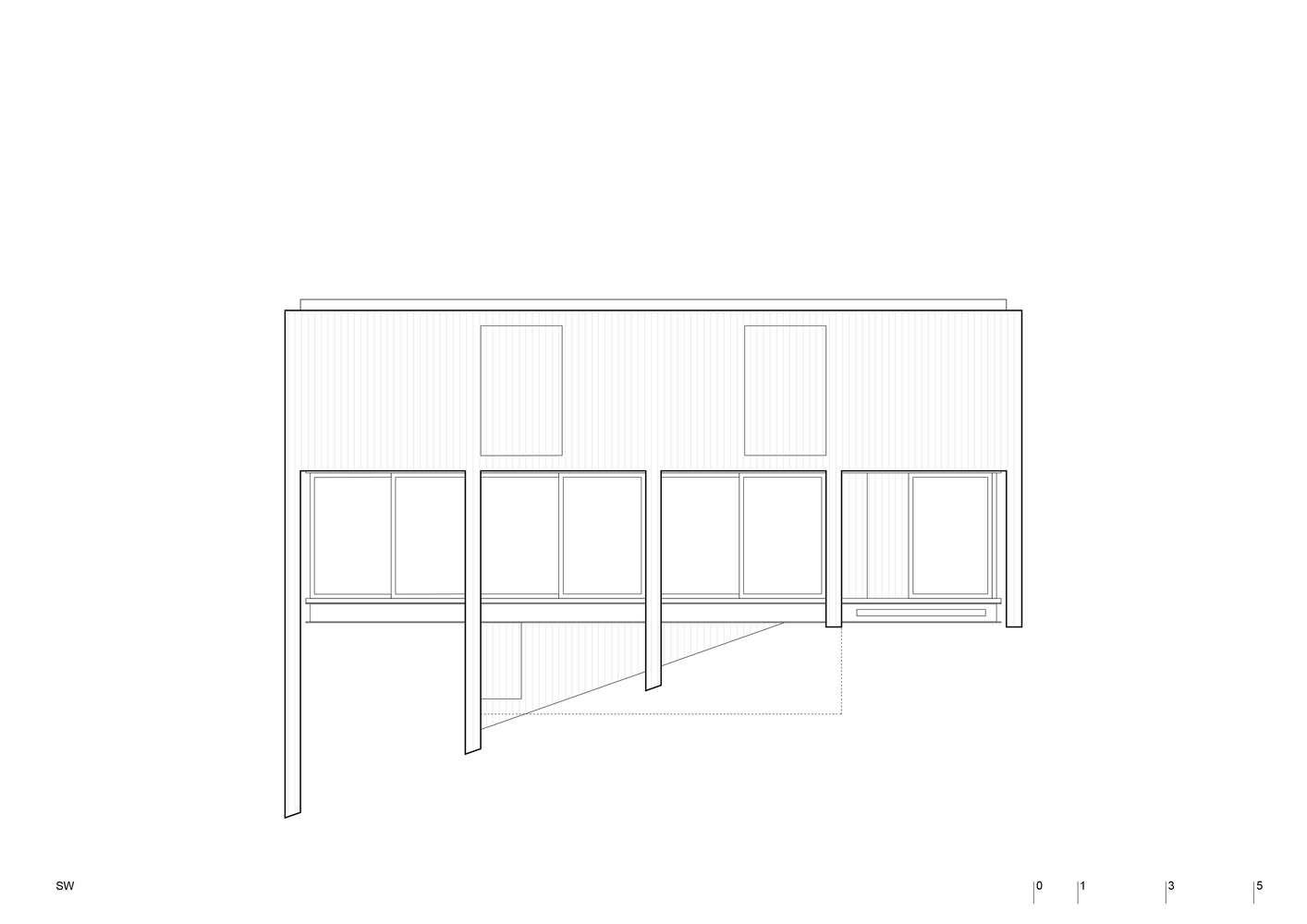
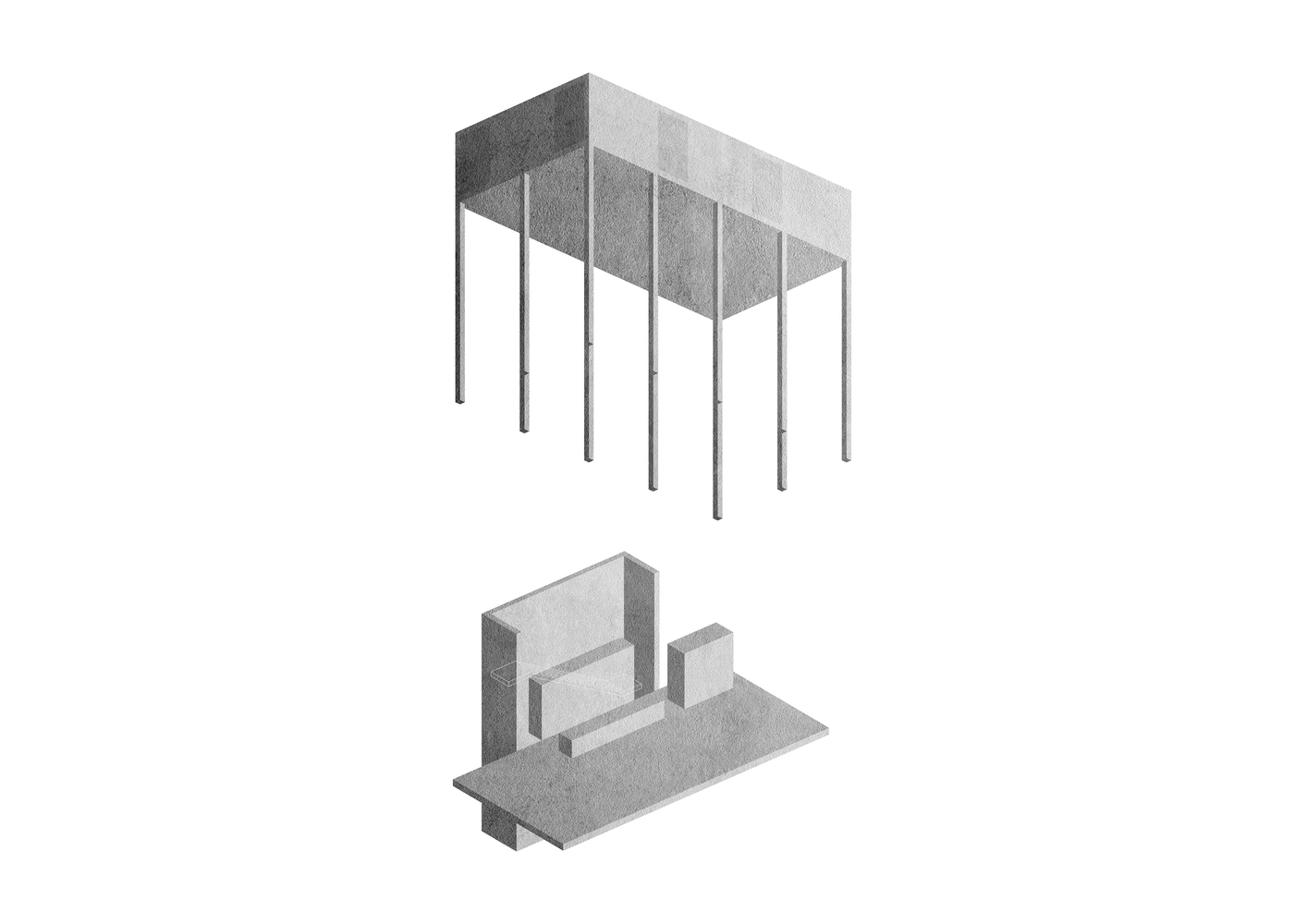
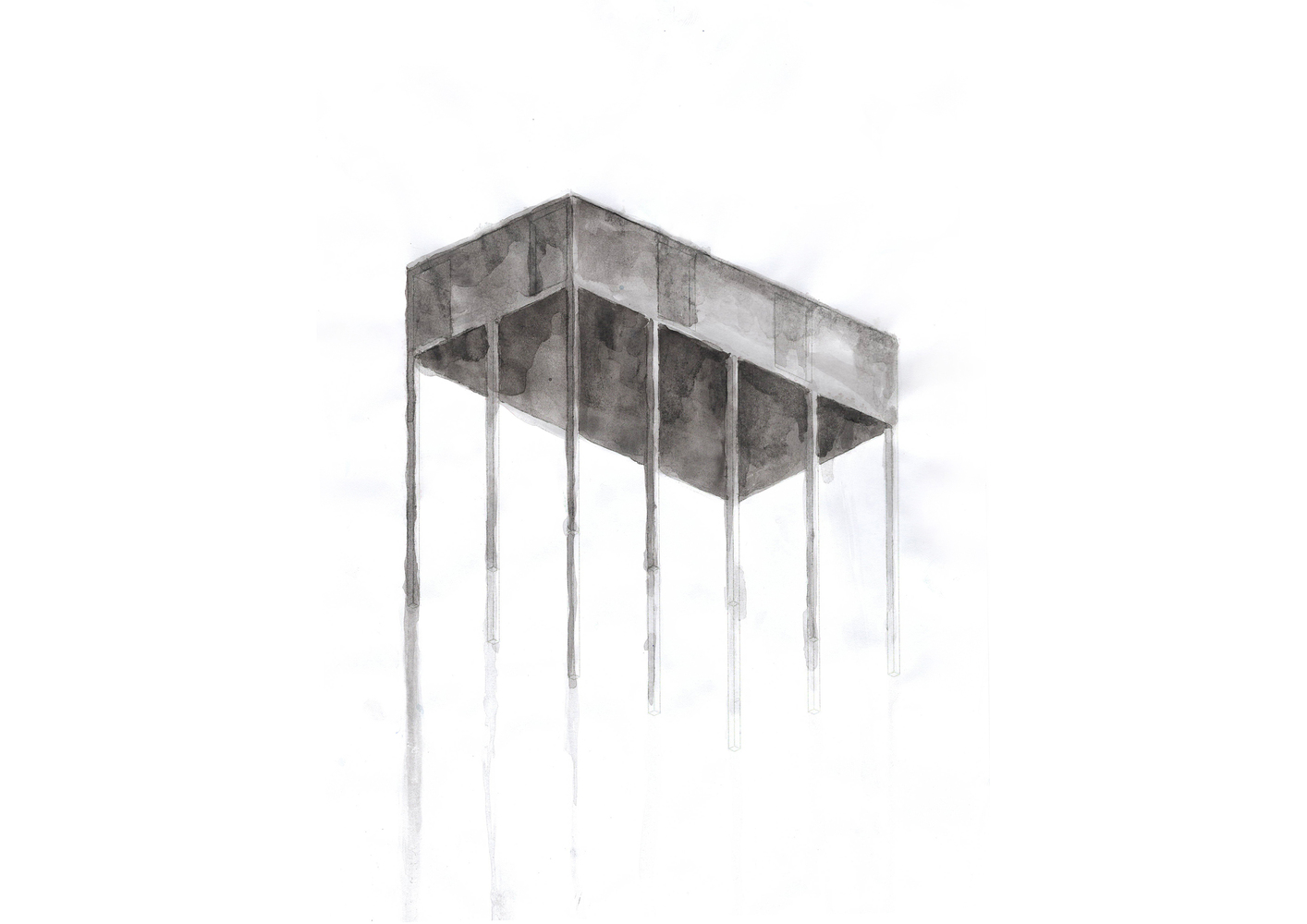
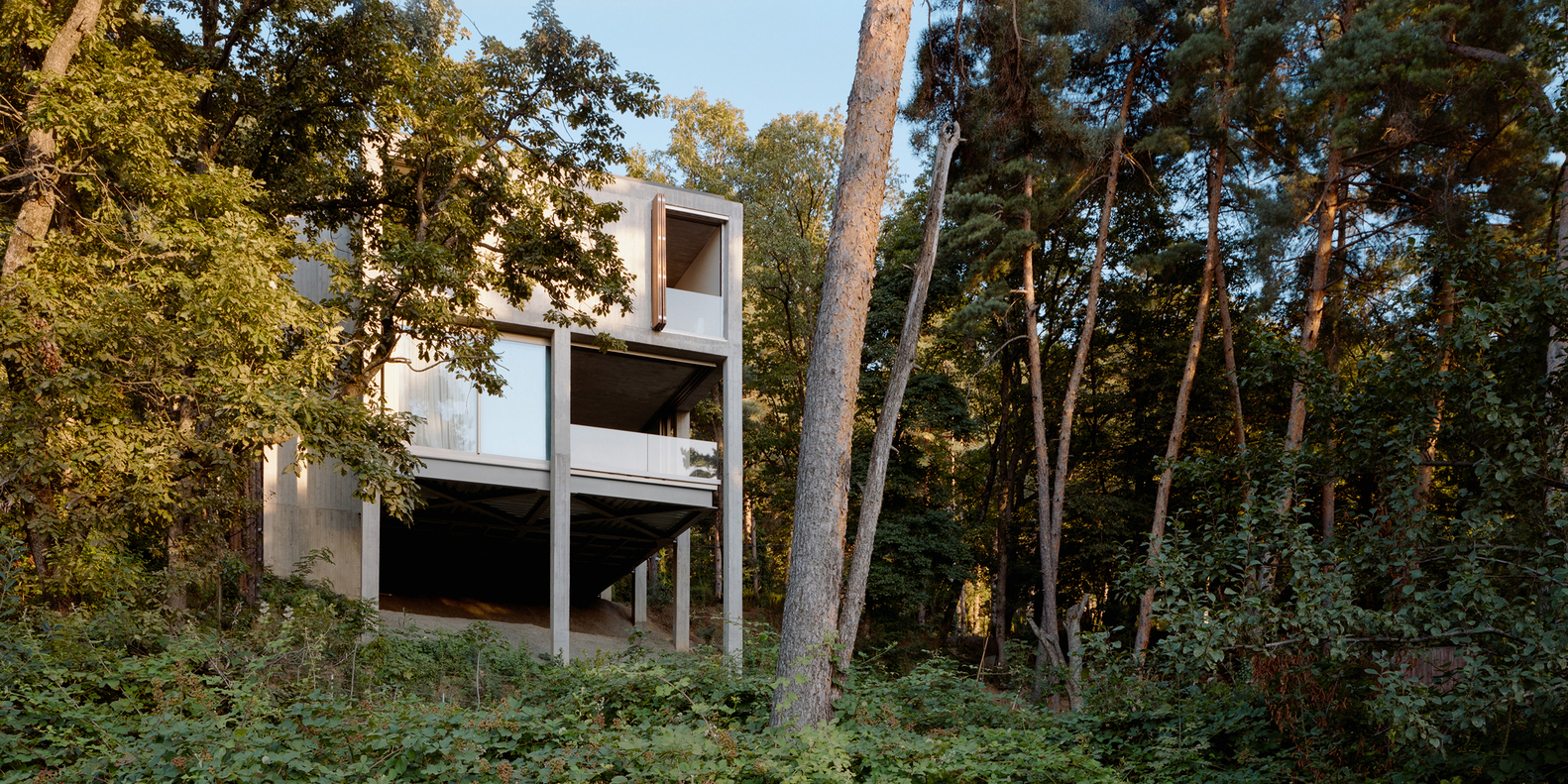
The design began with a simple question: How can architecture occupy a site without damaging it, allowing the landscape to remain an active participant? The resulting strategy is one of minimal contact. The house stands lightly above the slope in a natural clearing, supported by tall concrete columns anchored to bedrock.
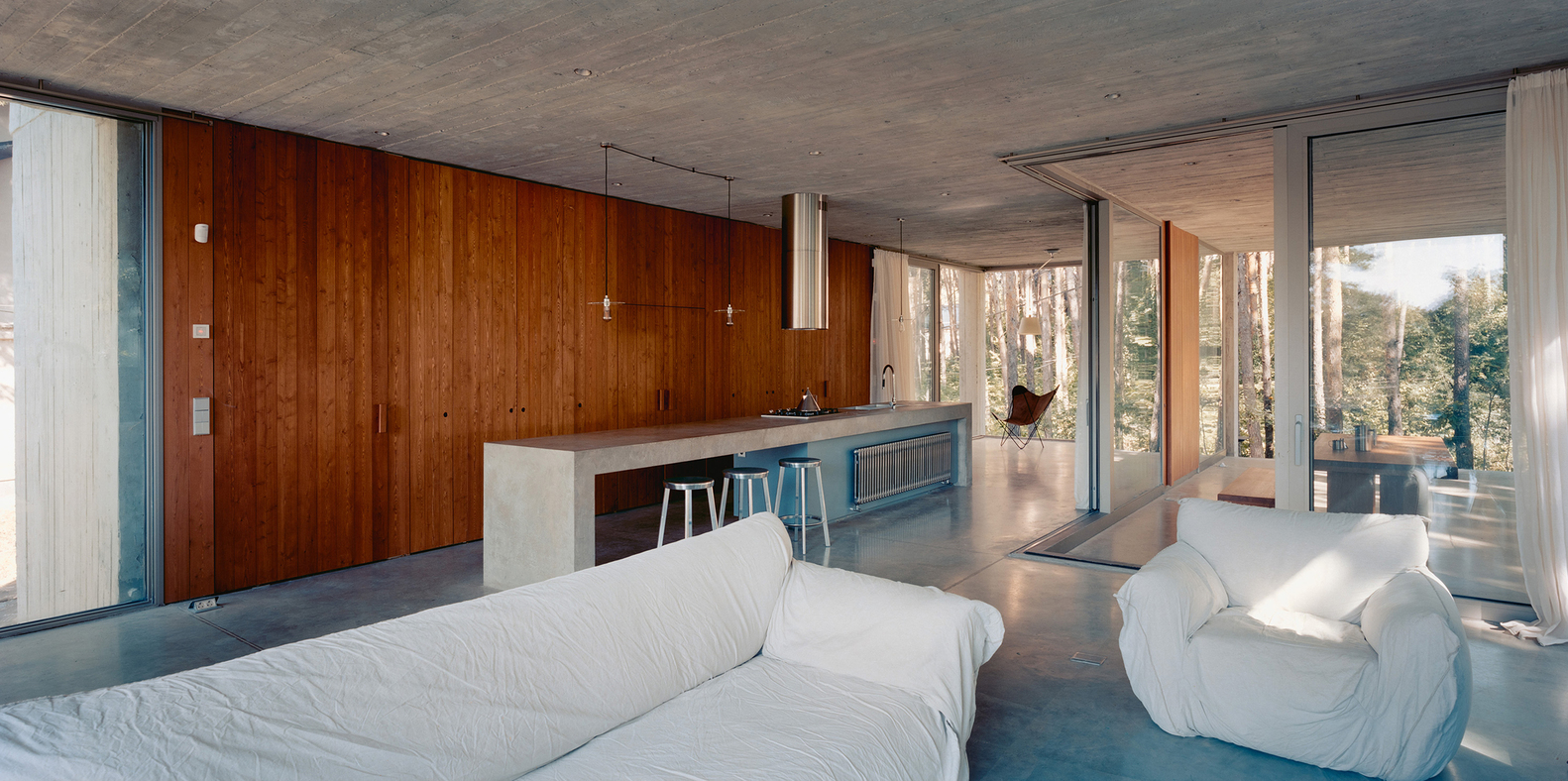
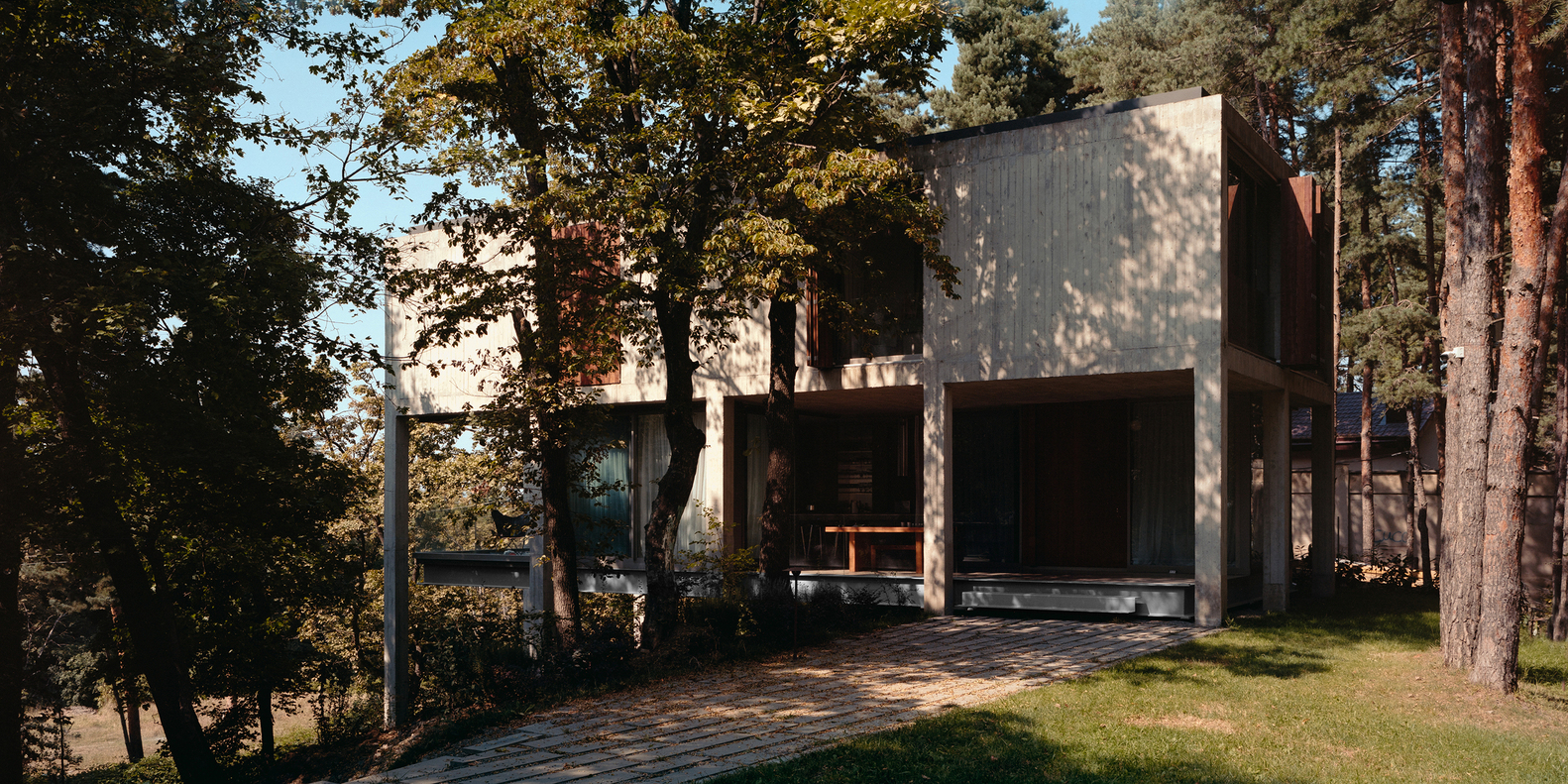
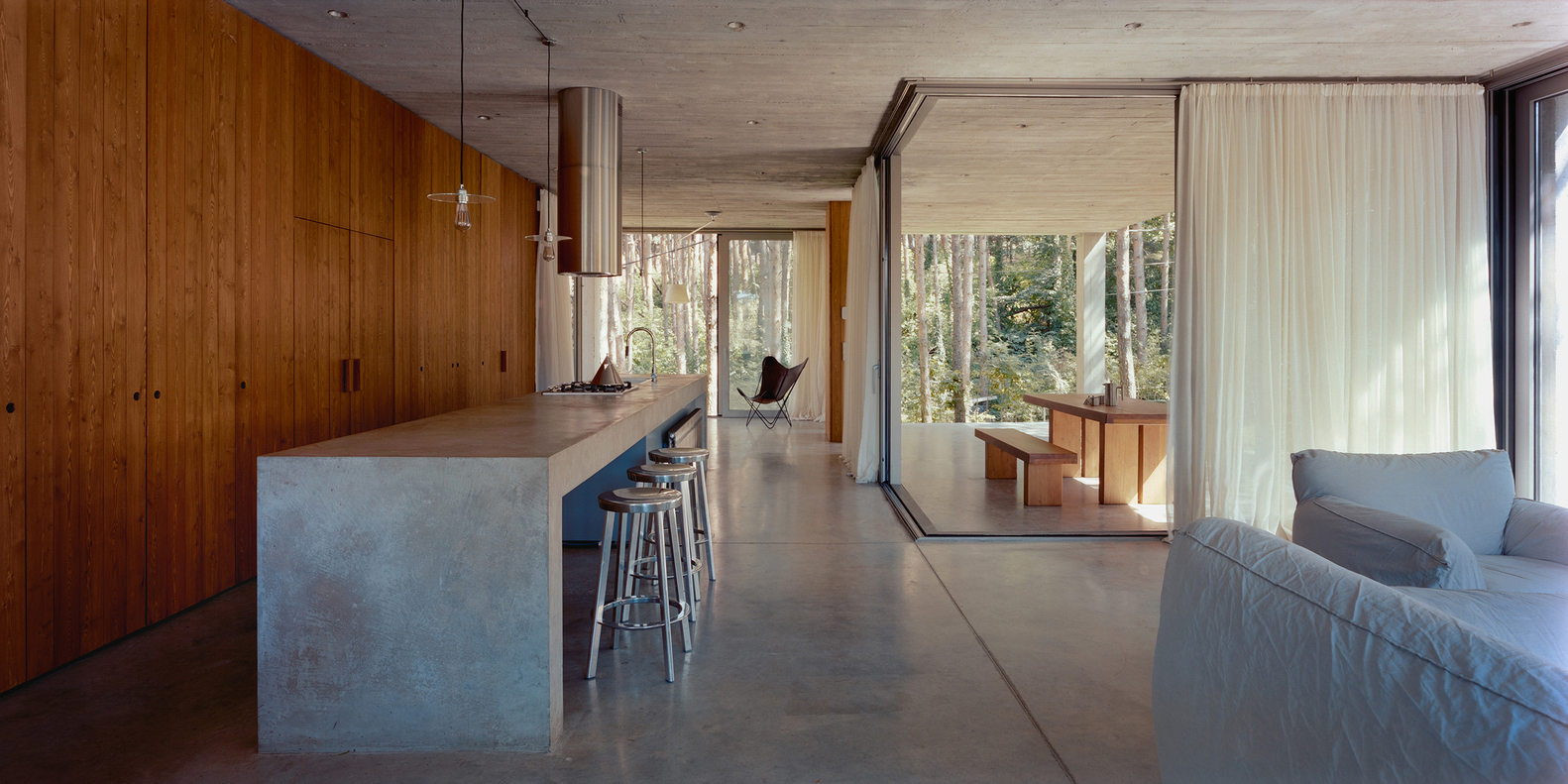
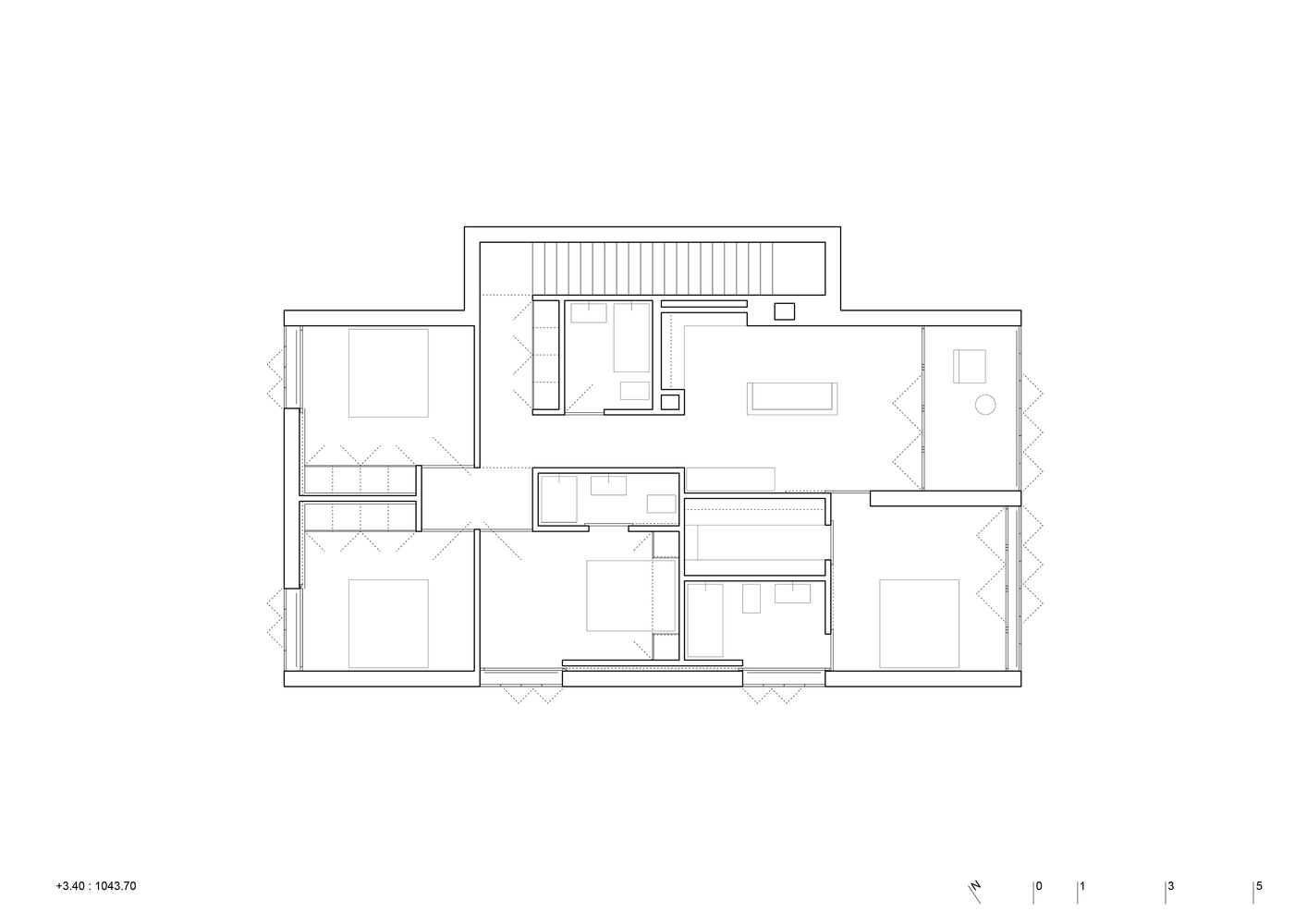
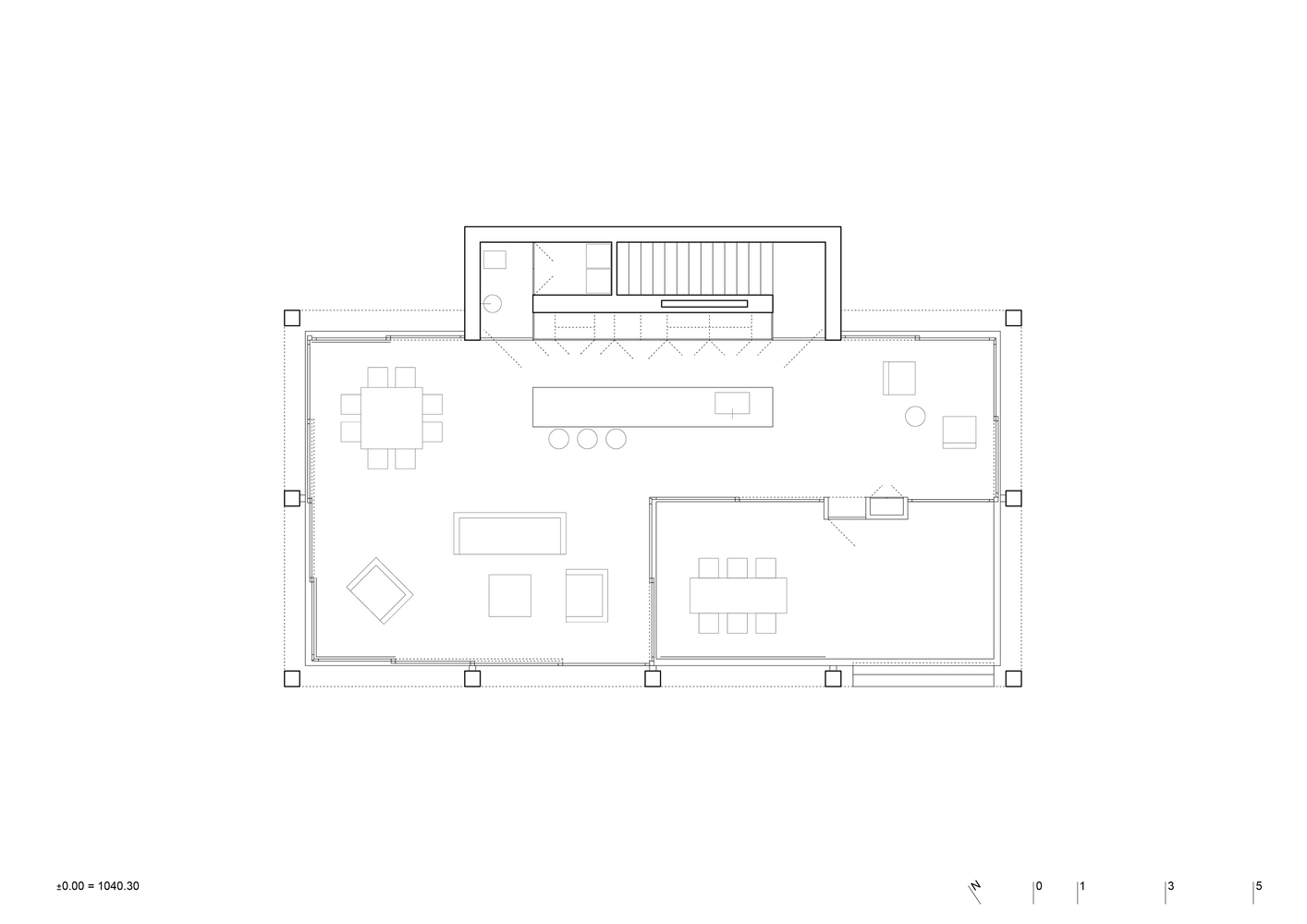
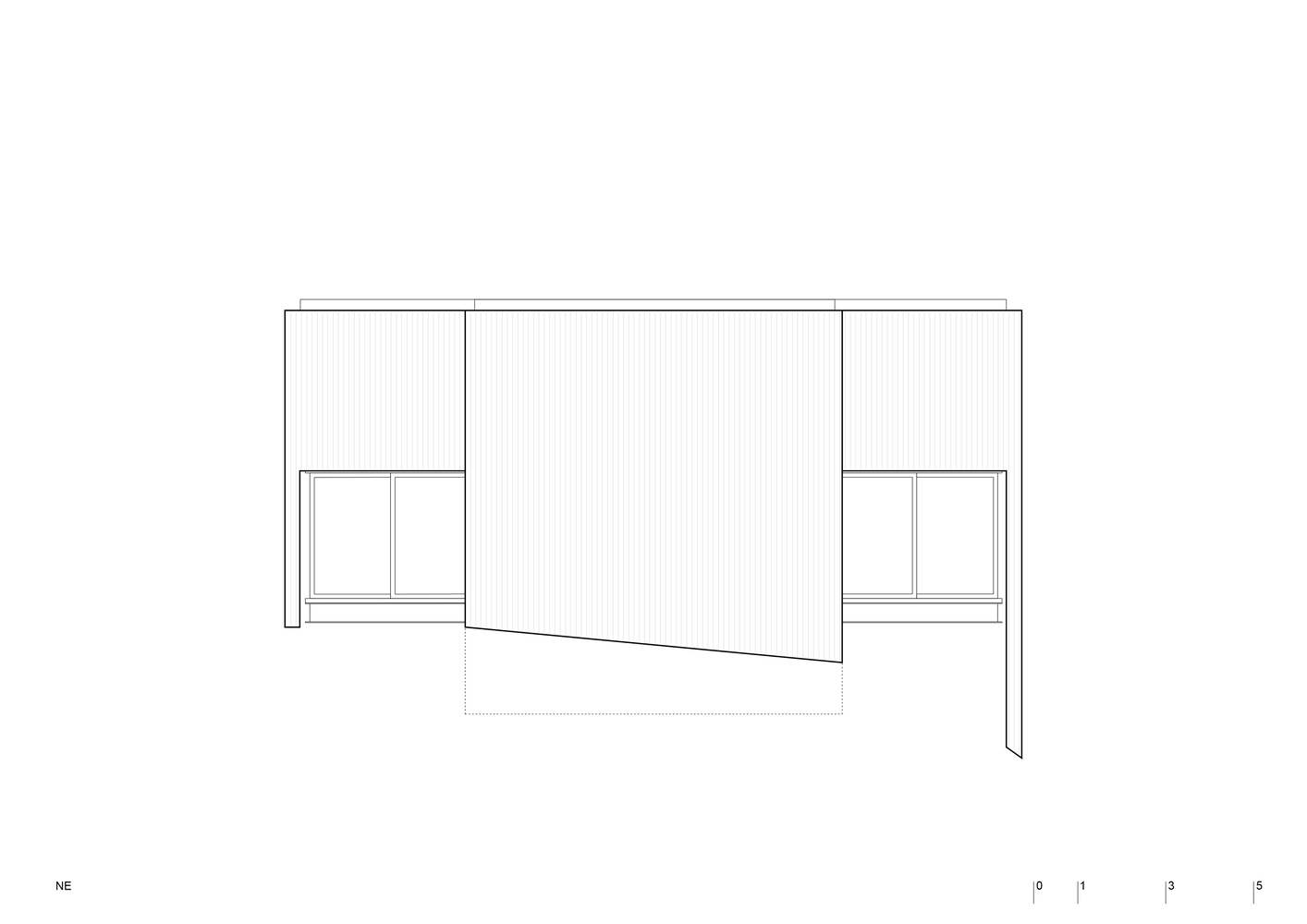
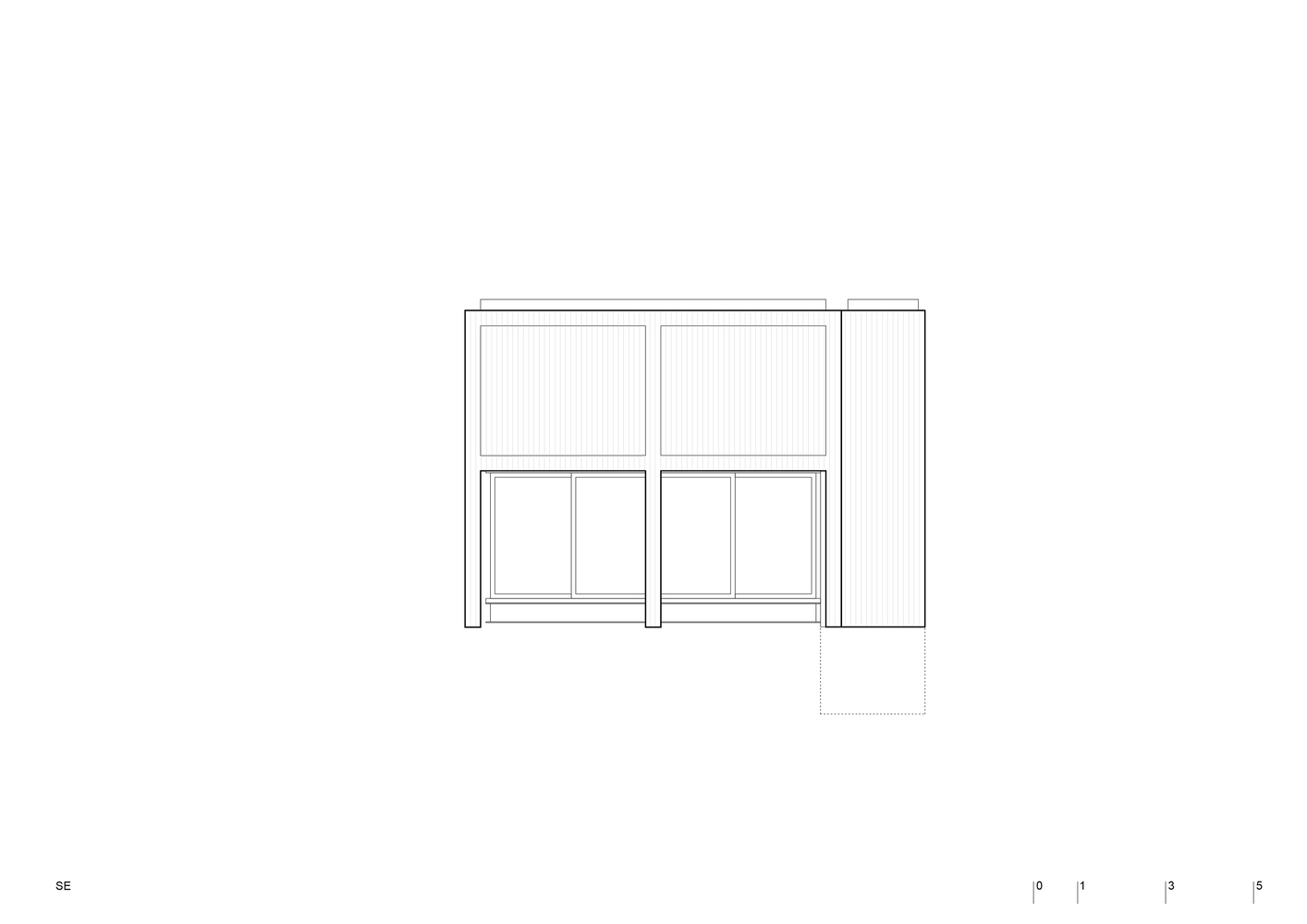
These columns rise to carry a monolithic concrete volume containing the private areas. Beneath it, a suspended metal frame forms the ground-level platform - housing an open living space defined by a fully glazed facade that dissolves into the forest.
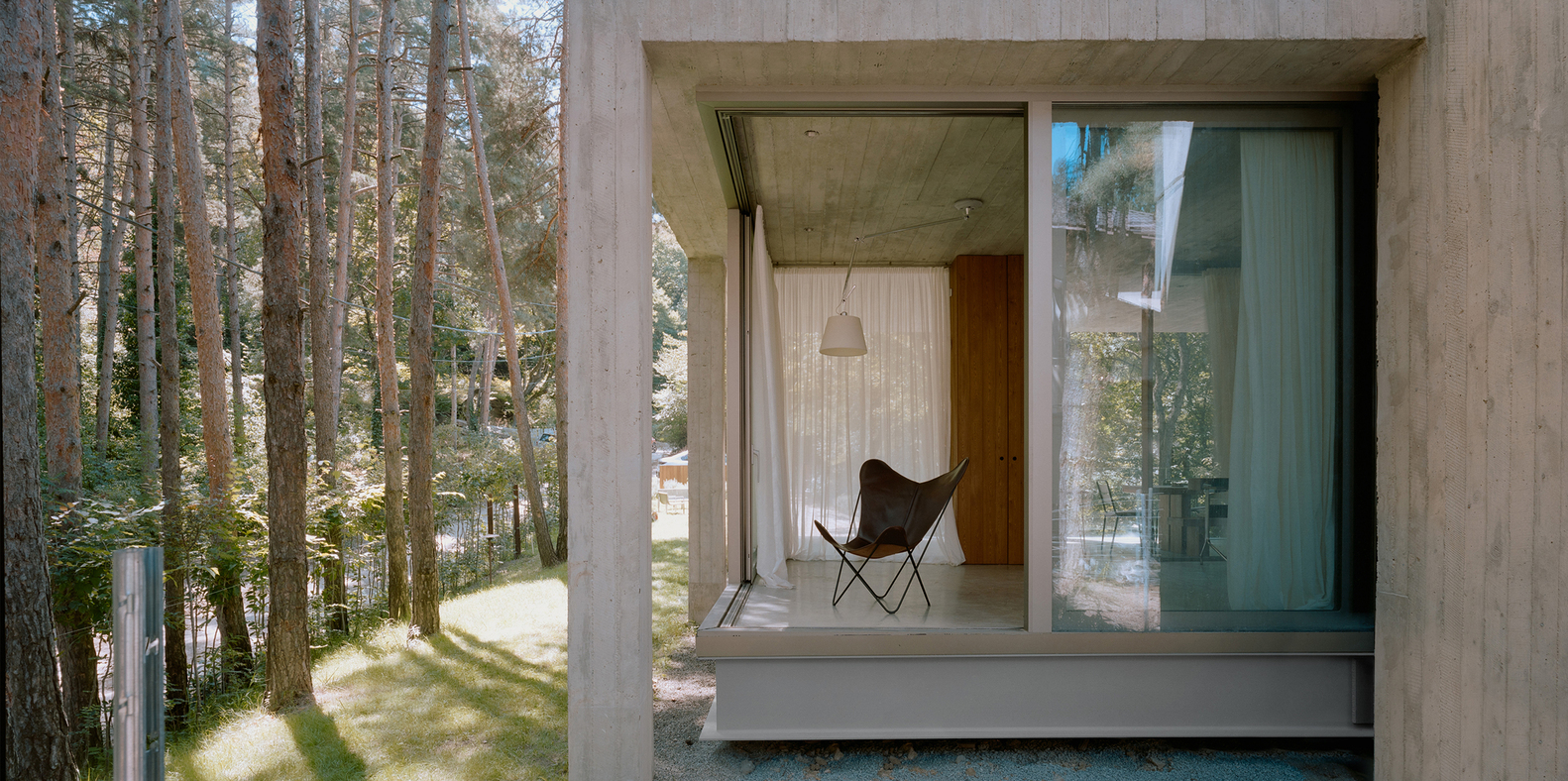
Landscape design by Studio Ruderal extends the surrounding vegetation directly into the plot, using native species to recreate the continuity of the forest and eliminate the need for enclosing walls. A large terrace mediates between interior and exterior, while a sliding corner facade blurs their boundary.
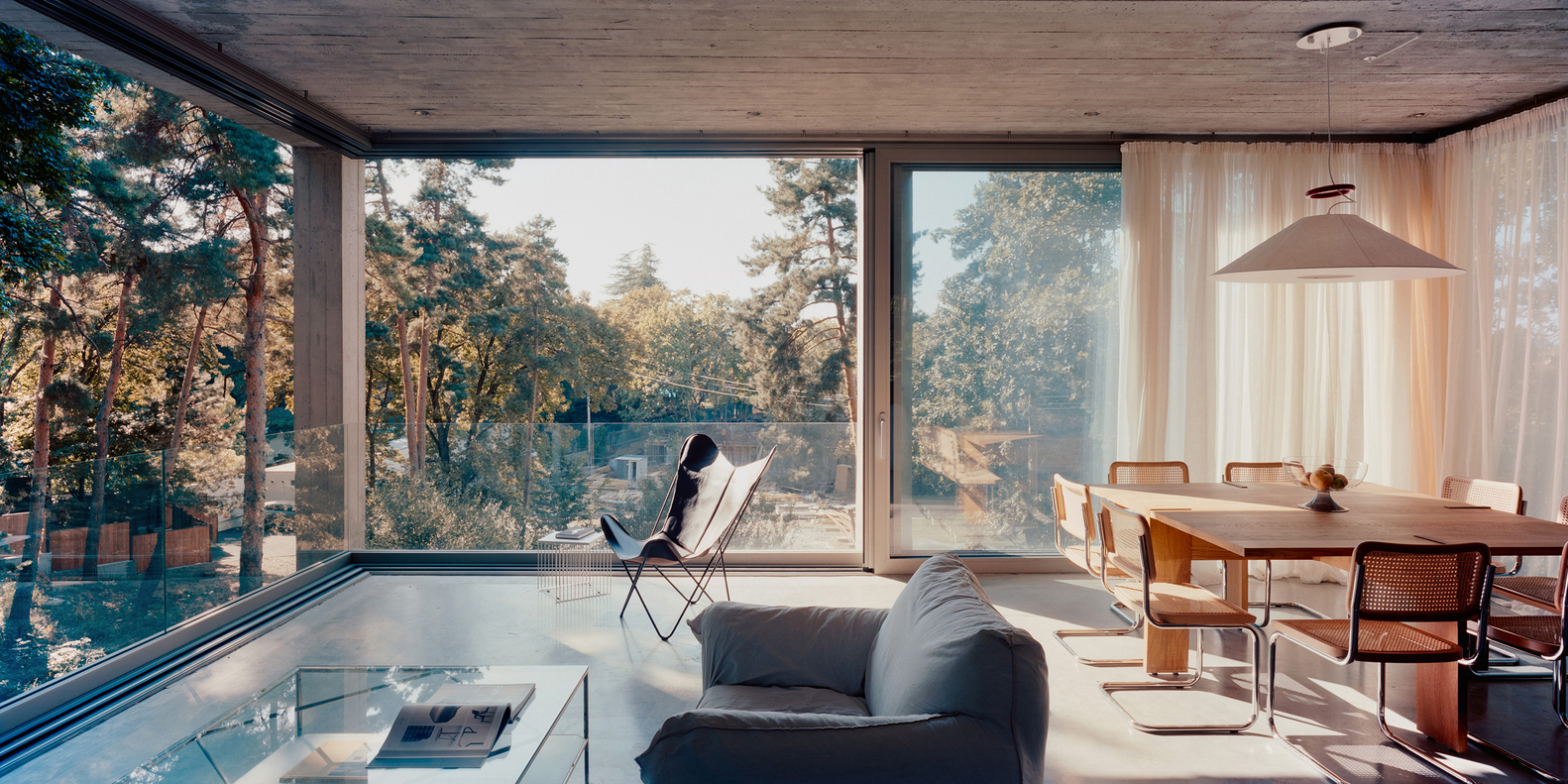
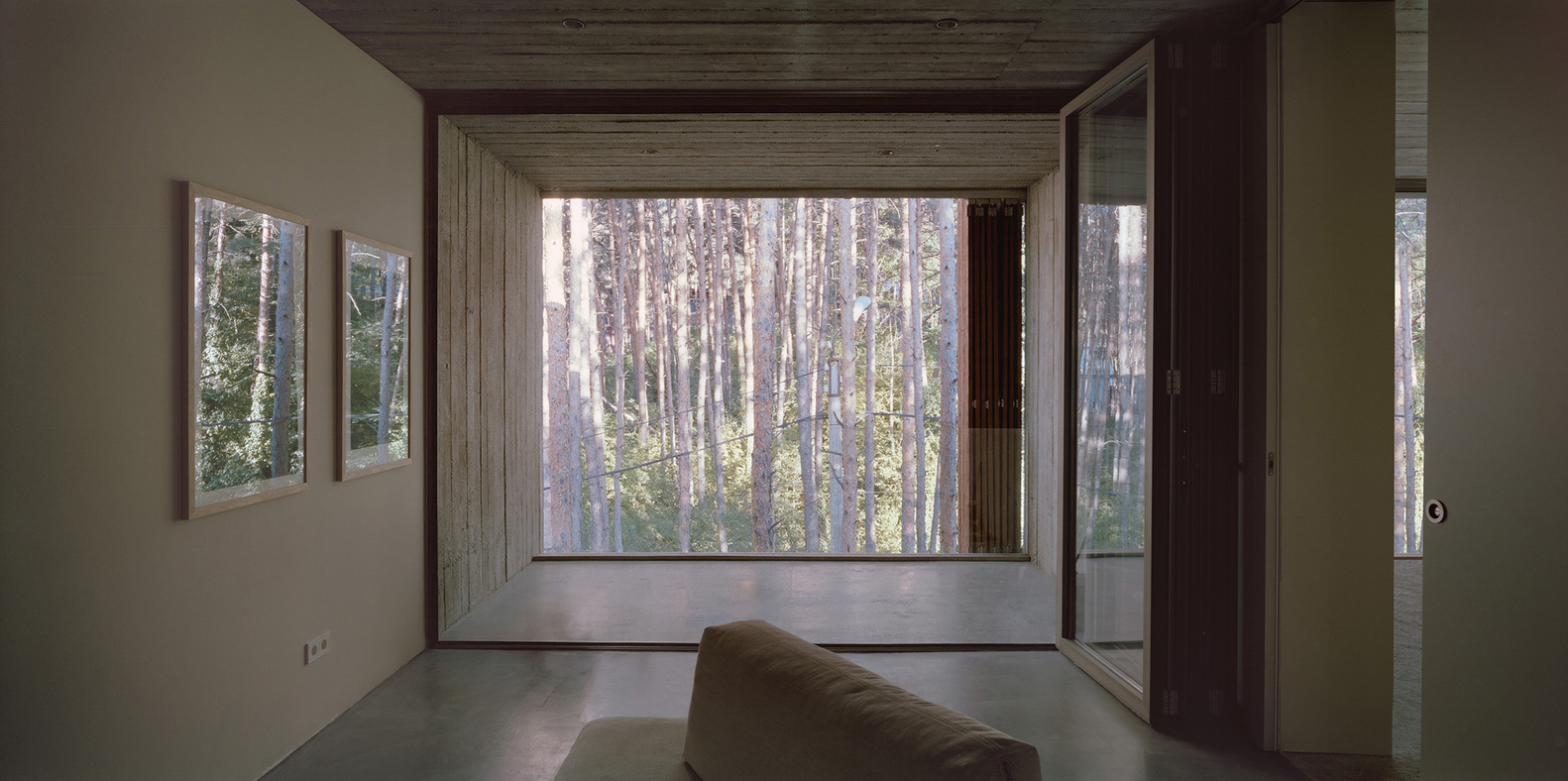
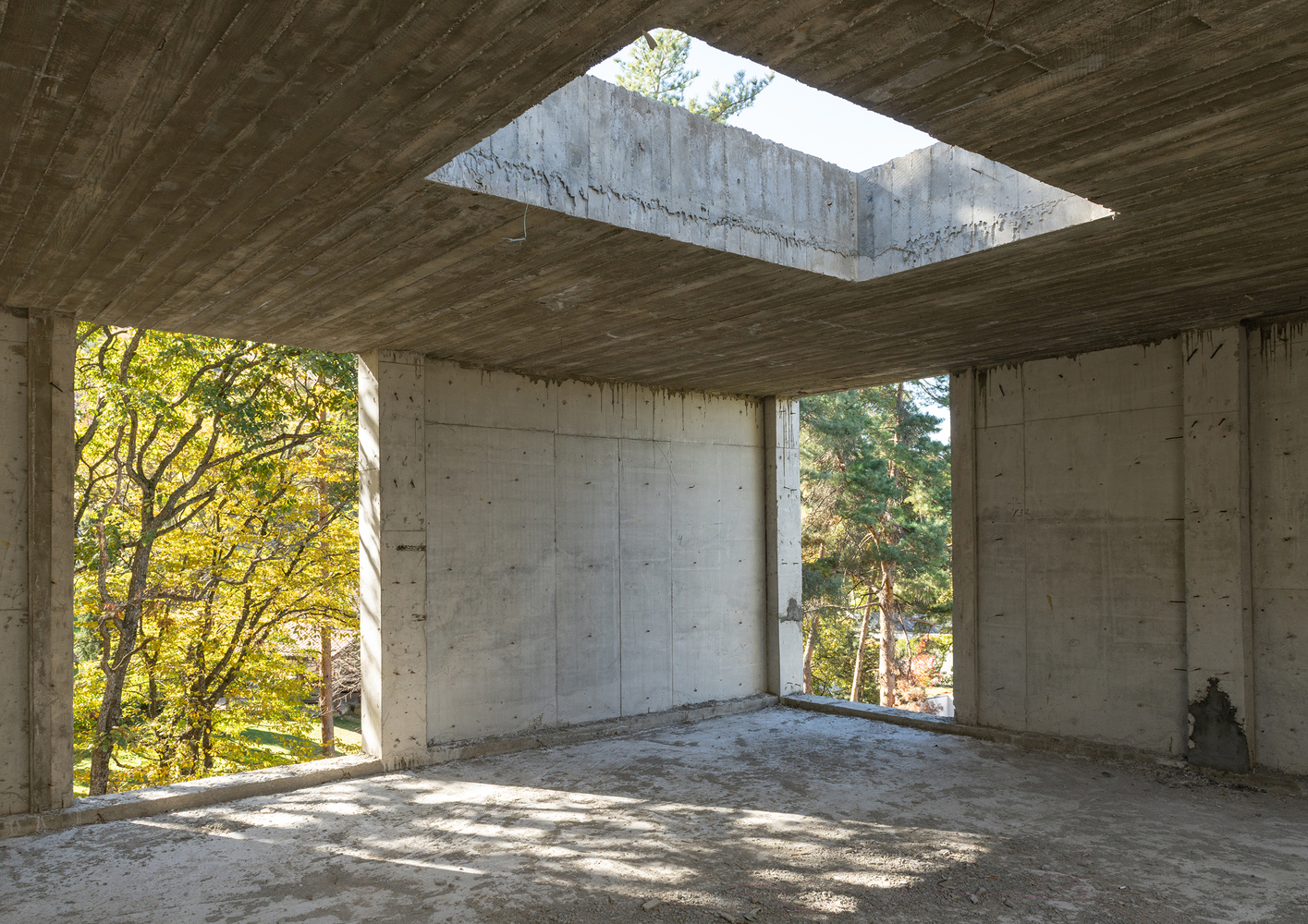
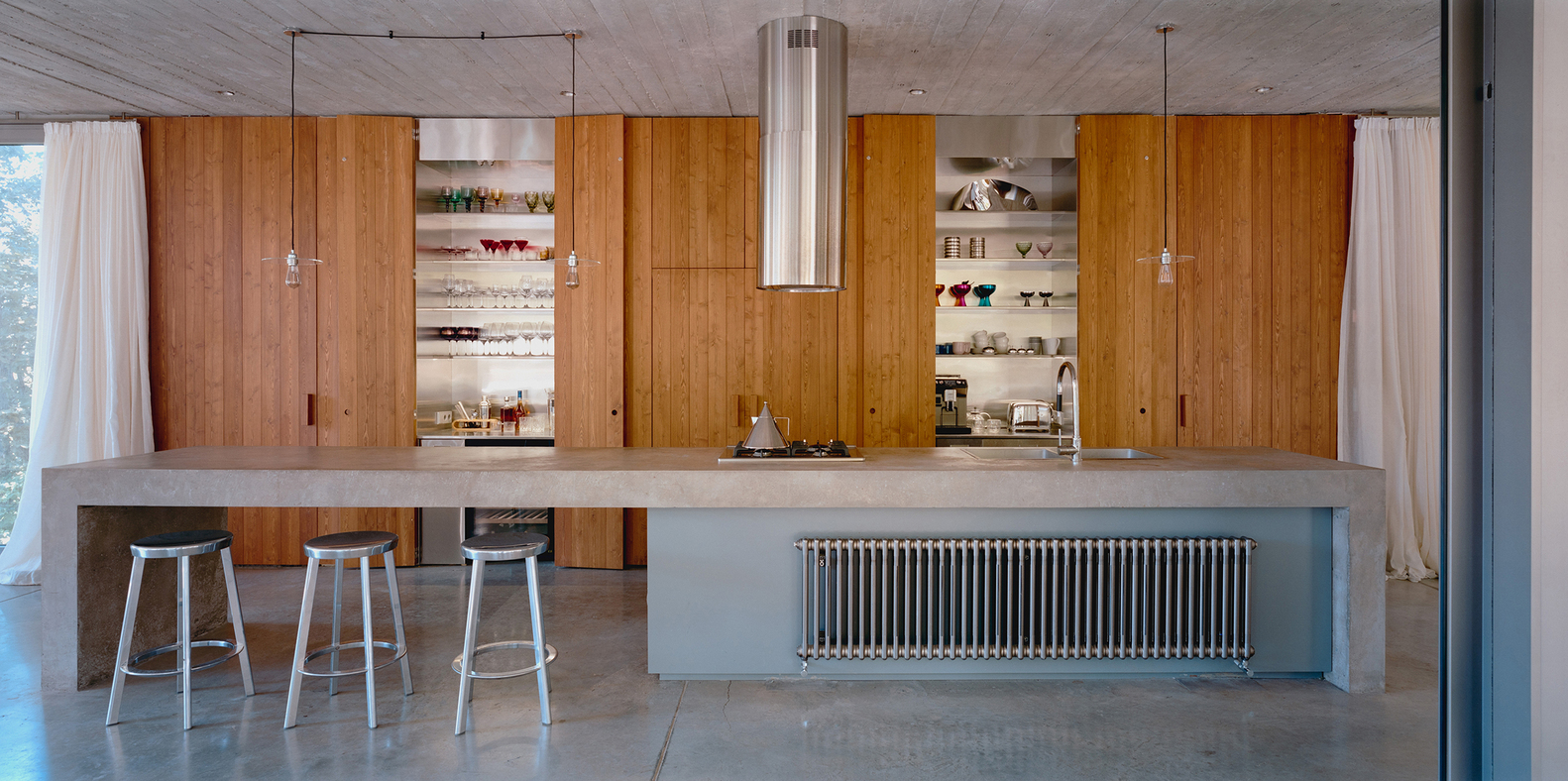
On the upper level, each window is precisely framed to capture the forest; externally, folding wooden shutters and rough timber-form concrete merge over time into a unified texture. Interior detailing echoes this language through shutter-like wooden elements that hide functional components.
The house becomes a reinterpretation of the "Tsknetian wall" - not as a barrier of fear, but as a suspended, textured volume paired with an open, permeable ground floor. Its architecture seeks to restore immediacy between people and place, inviting light, air, and the forest back into daily life.