
ATTACHE
Bricklab
ARCHITECTS
Bricklab
LEAD ARCHITECT
Abdulrahman Gazzaz & Turki Gazzaz
LEAD TEAM
Abdulrahman Gazzaz, Turki Gazzaz
ENGINEERING & CONSULTING > LIGHTING
Via Lighting
LANDSCAPE ARCHITECTURE
Studio Libani
GENERAL CONTRACTOR
Mac
TECHNICAL TEAM
Osama Altal
PROJECT MANAGEMENT
Dar
DESIGN TEAM
Zahiyah Al Raddadi, Abeer Nowality, Zeina Zenati, Aseel Amoudi,adil Sharef, Seema, Razan Alnajjar
PHOTOGRAPHS
Sultan Bin Mutarrid, Baya Studios
AREA
5000 m²
YEAR
2024
LOCATION
Riyadh, Saudi Arabia
CATEGORY
Landscape Architecture, Commercial Architecture
English description provided by the architects.
For decades, musical performances and other non-religious public gatherings were strictly controlled by the Saudi government. This practically confined most forms of public cultural expression, especially music, to the privacy of homes and gated communities.
By 2016, the country witnessed wholesale social, cultural, and economic transformations to wean off religious extremism, improve the quality of life, and attract foreign investment.
In 2019, a small group of entrepreneurs established Middle Beast (widely known by the acronym MDL Beast) to launch a series of large-scale music festivals across the country.
This historic moment represented a dramatic shift in common attitudes towards public gatherings. More importantly, it is considered the first time that the hidden underground culture of electronic music was accessible to the public.
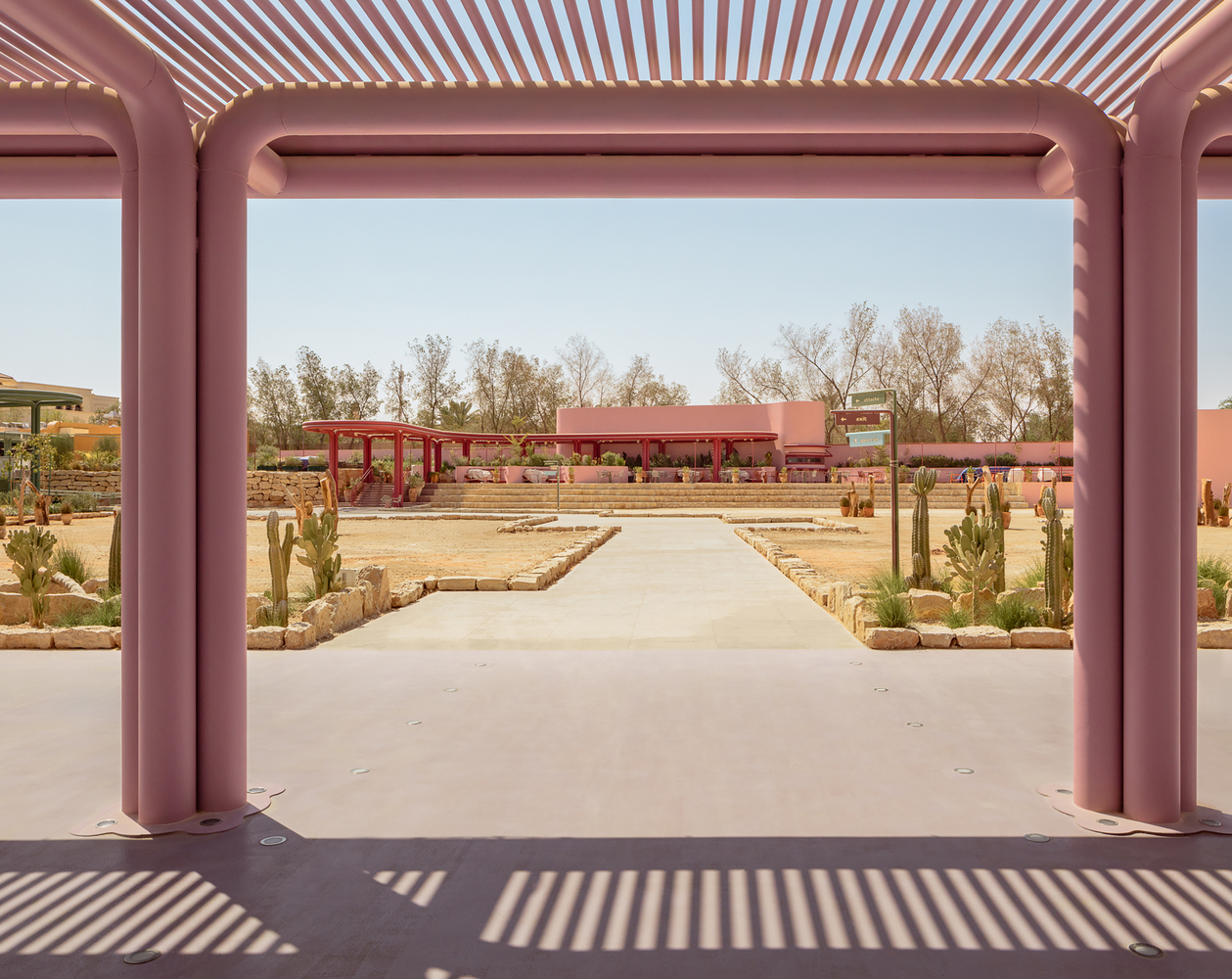
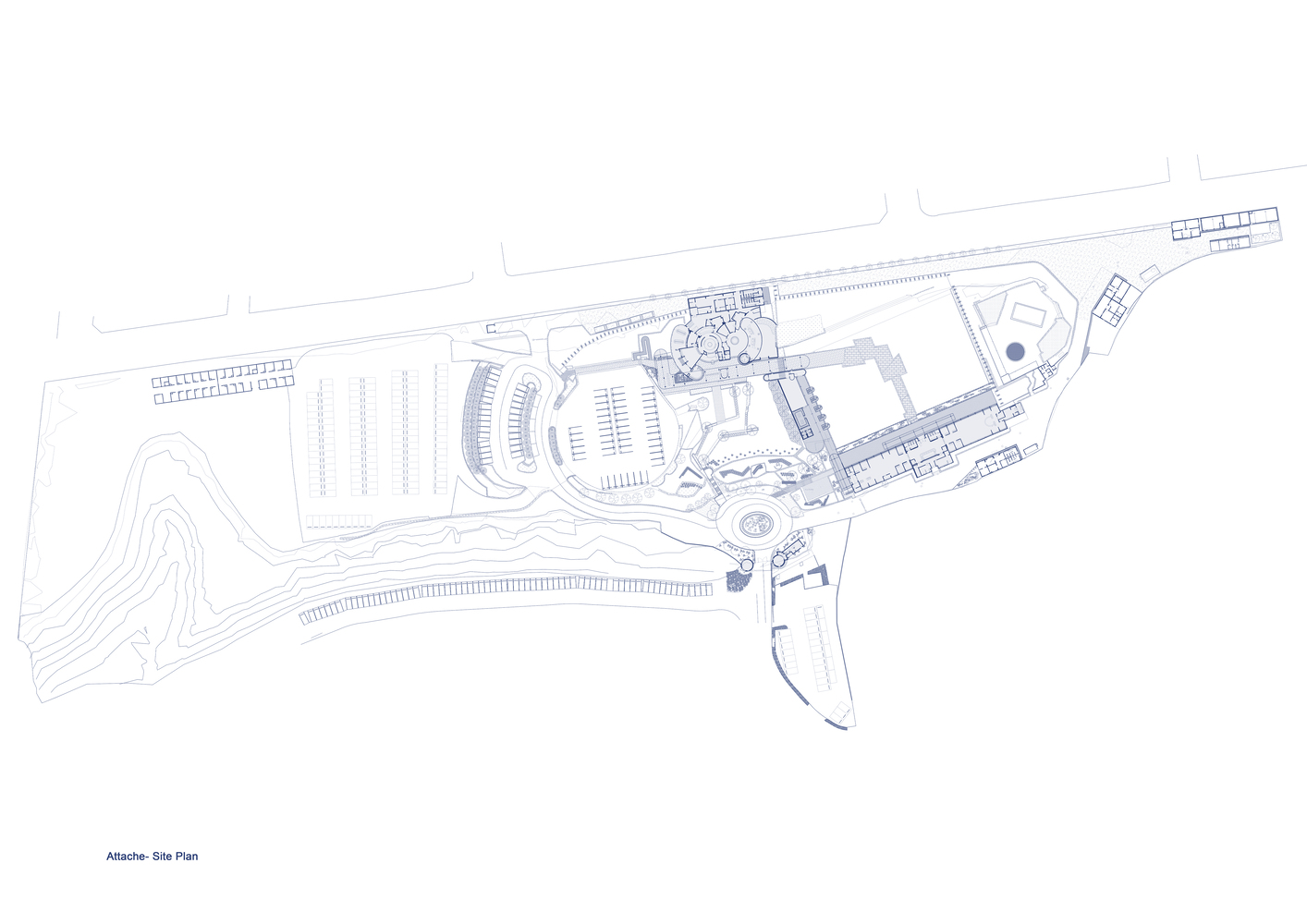
In 2023, following the success of their recurring events, MDL Beast approached Bricklab to design one of their first permanent venues. Located in the Saudi capital's Diplomatic Quarter, their 18,000 m2 property was once one of Riyadh's most prominent equestrian facilities.
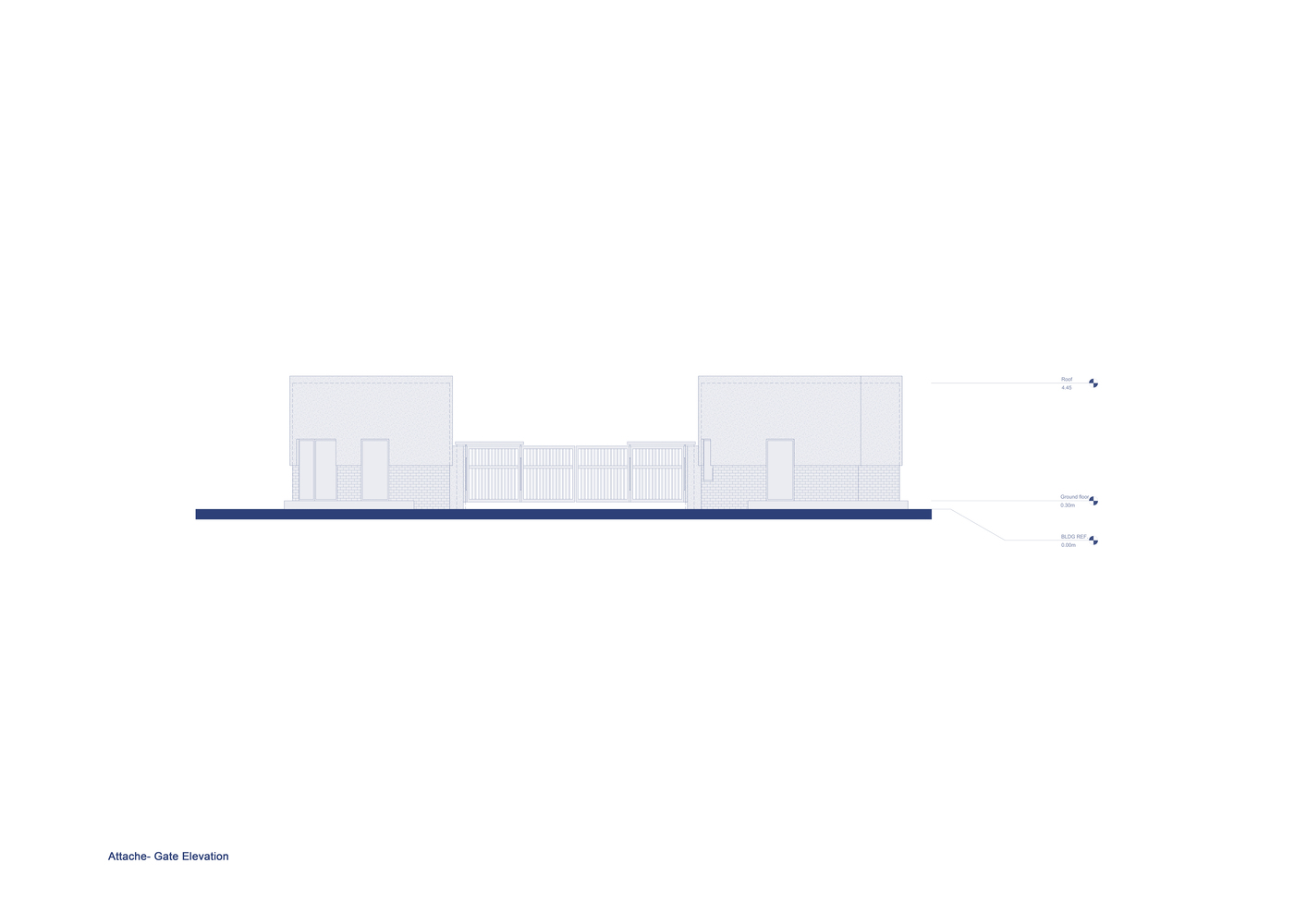
The large site includes a large horse stable, an administration block, and a handful of small service facilities scattered throughout an expanse of delicate desert landscapes.
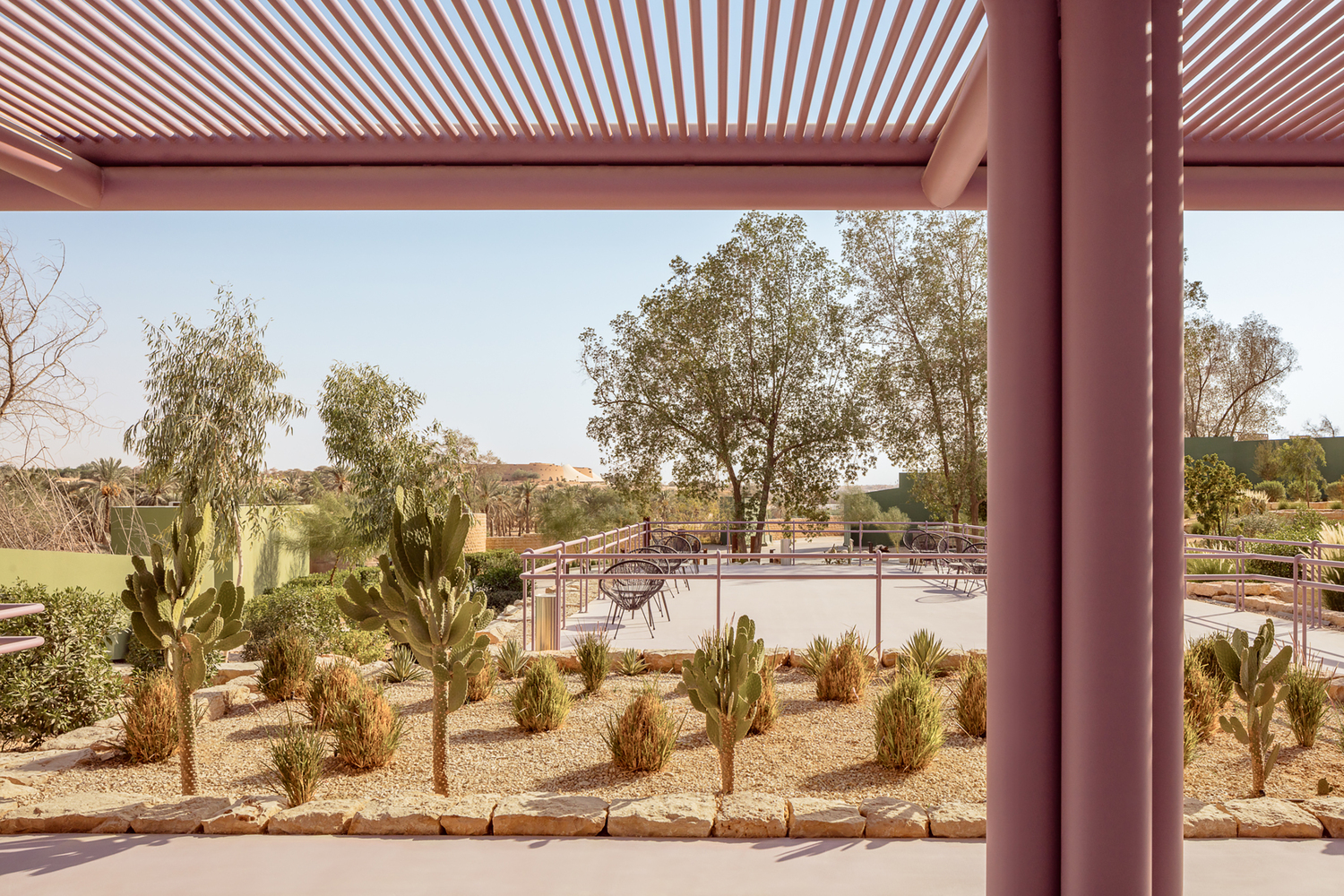
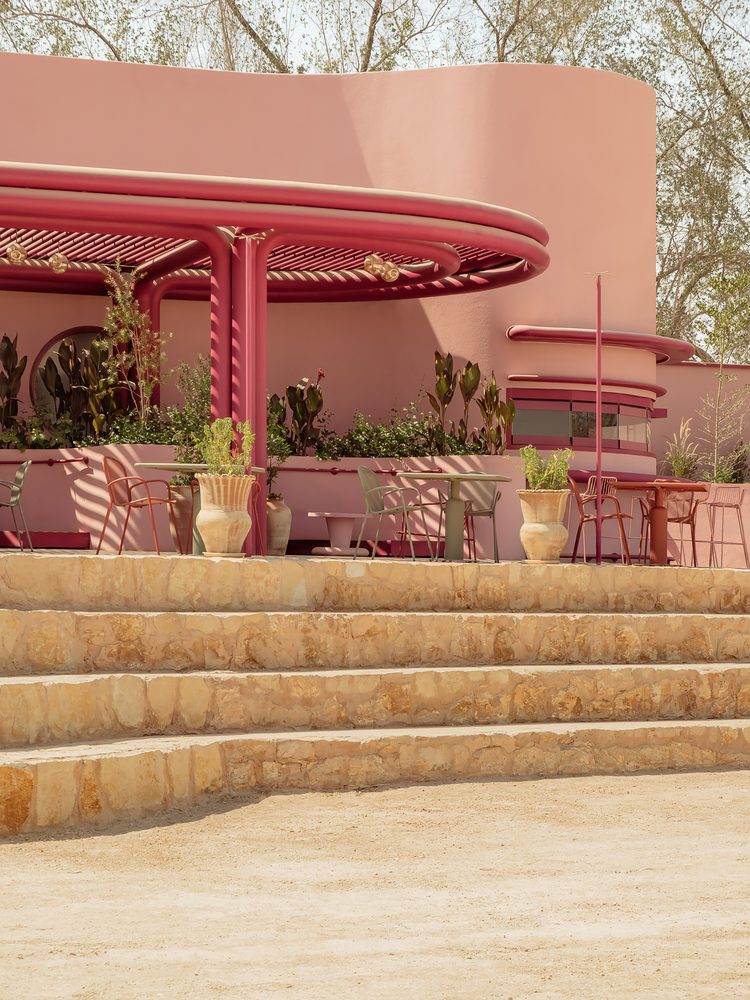
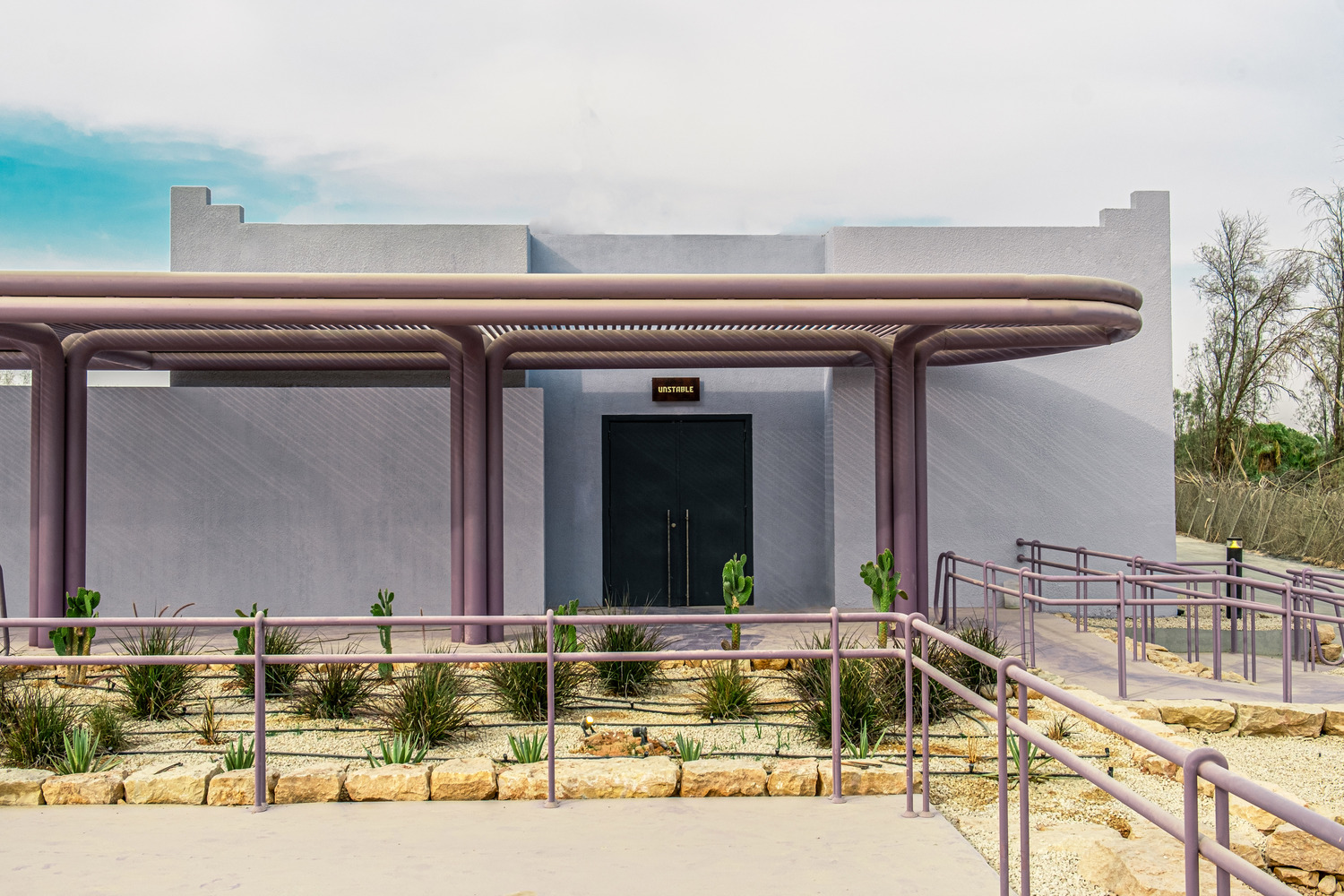
Constructed in the 1990s, the architectural language across the site clearly drew influences from the wider central Najd region with triangulated windows, stepped parapets, and the use of local Riyadh stone.
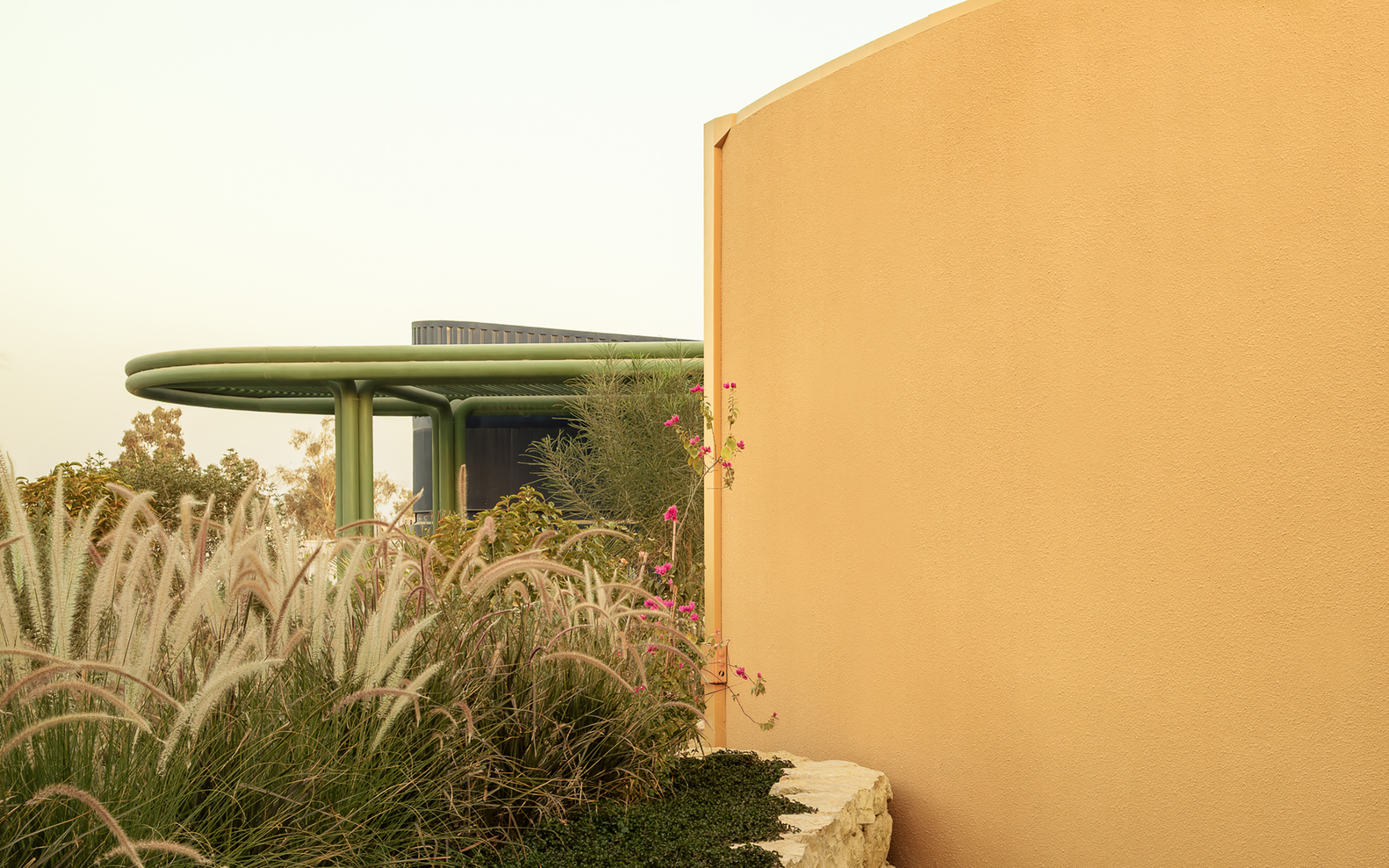
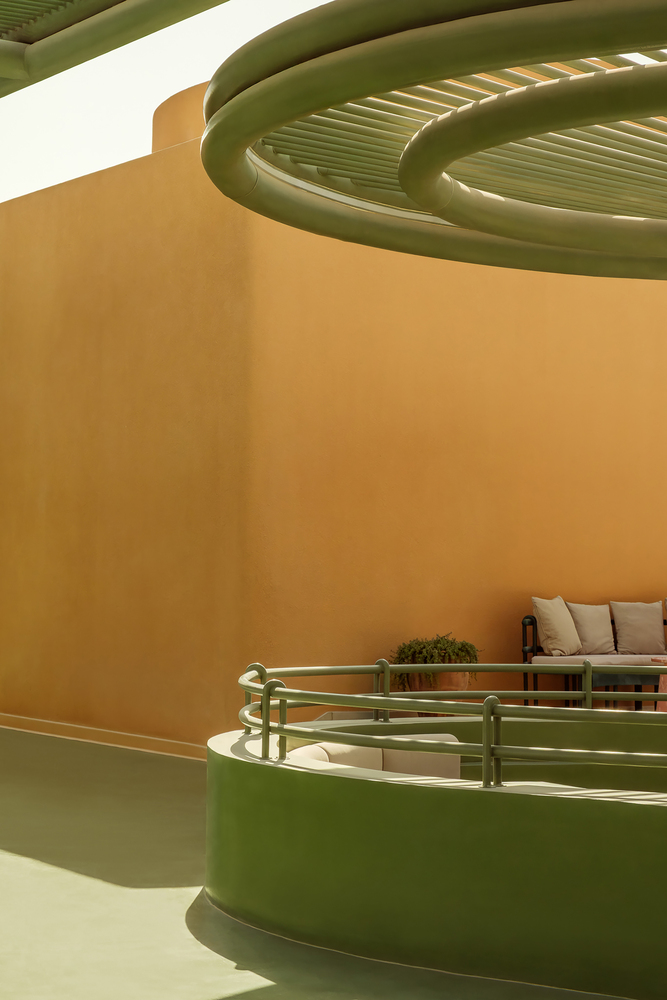
However, the buildings are all set in an unusual flurry of bright pinks and yellows akin to the work of Mexican architect Luis Barragan.
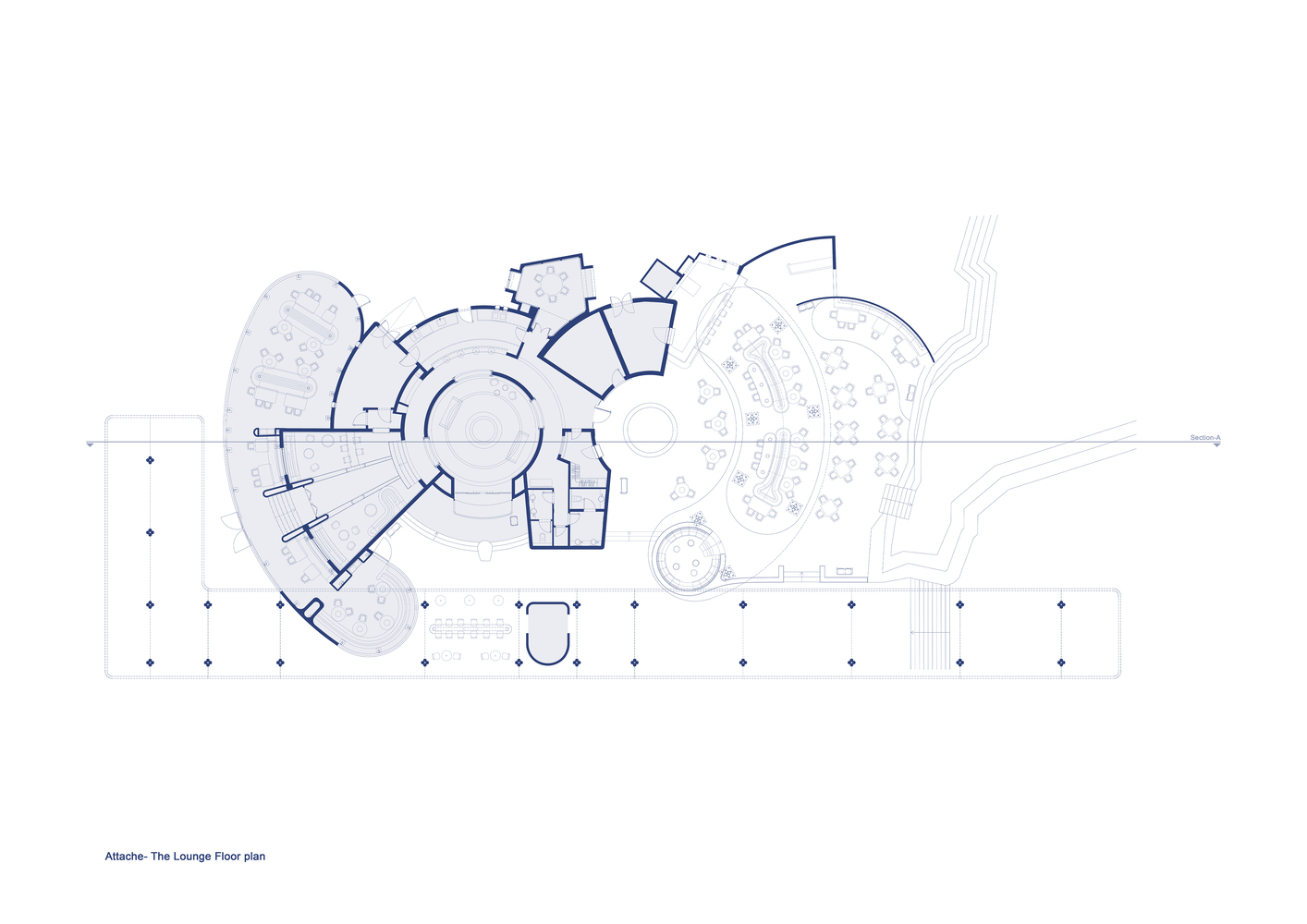
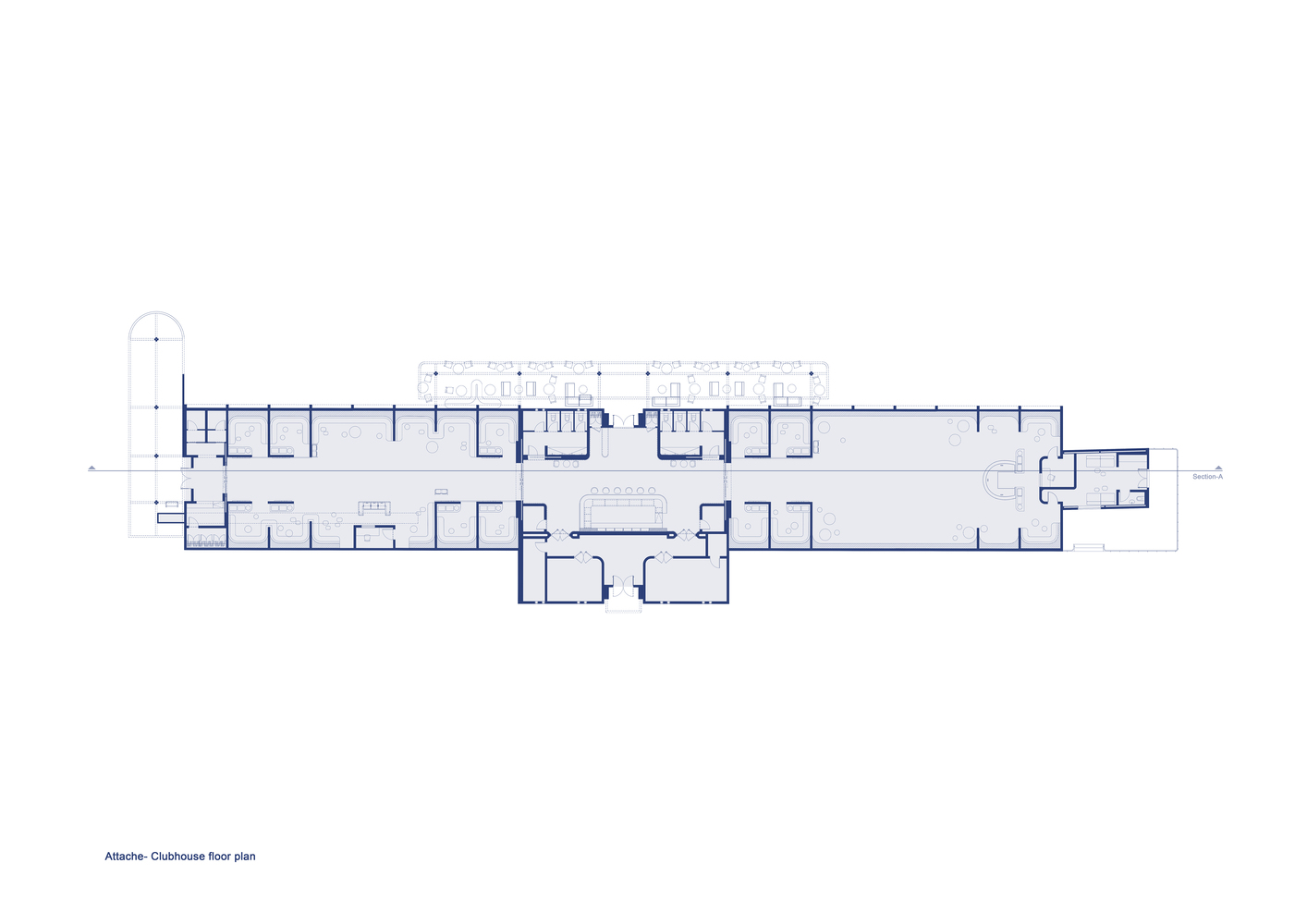
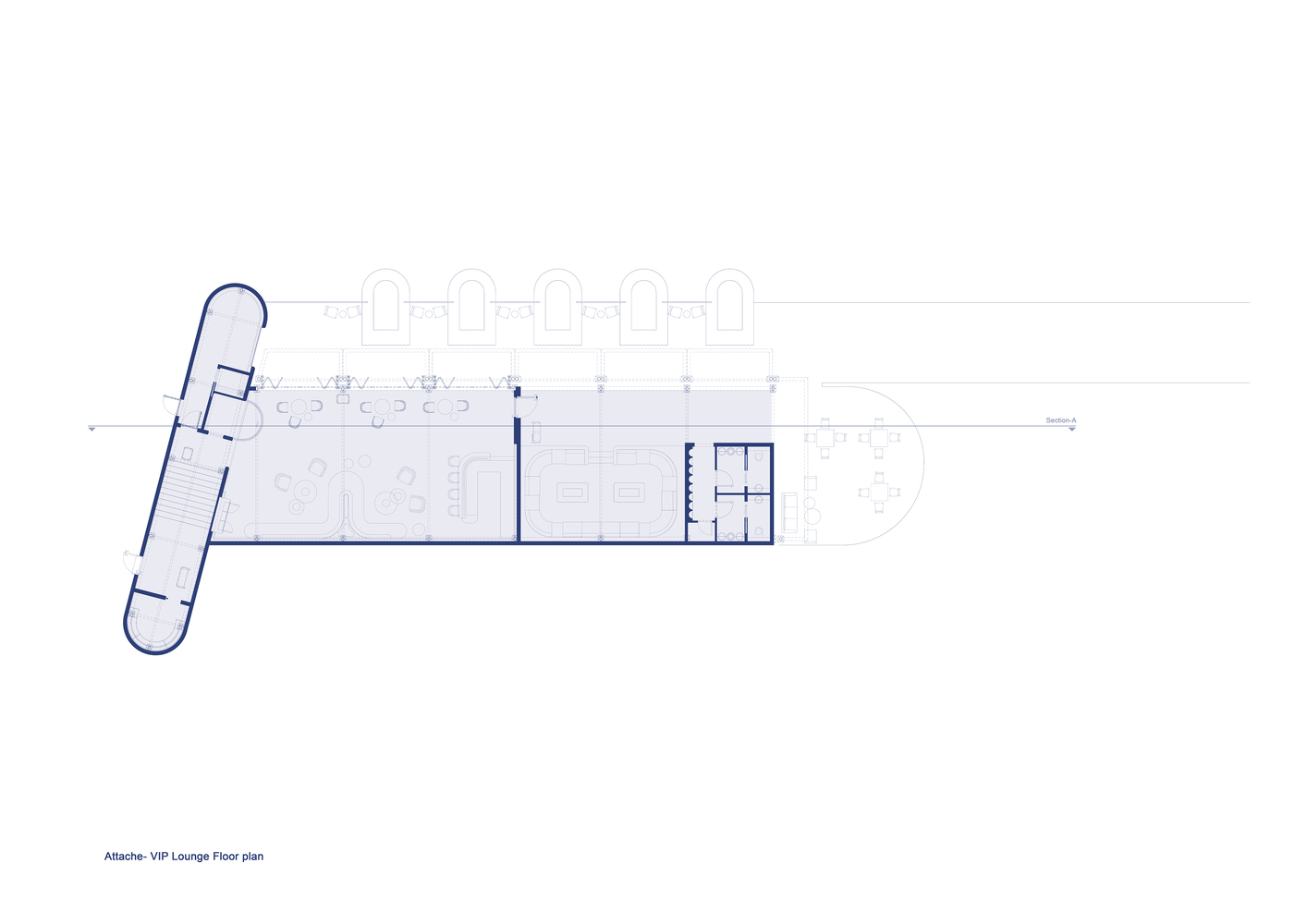
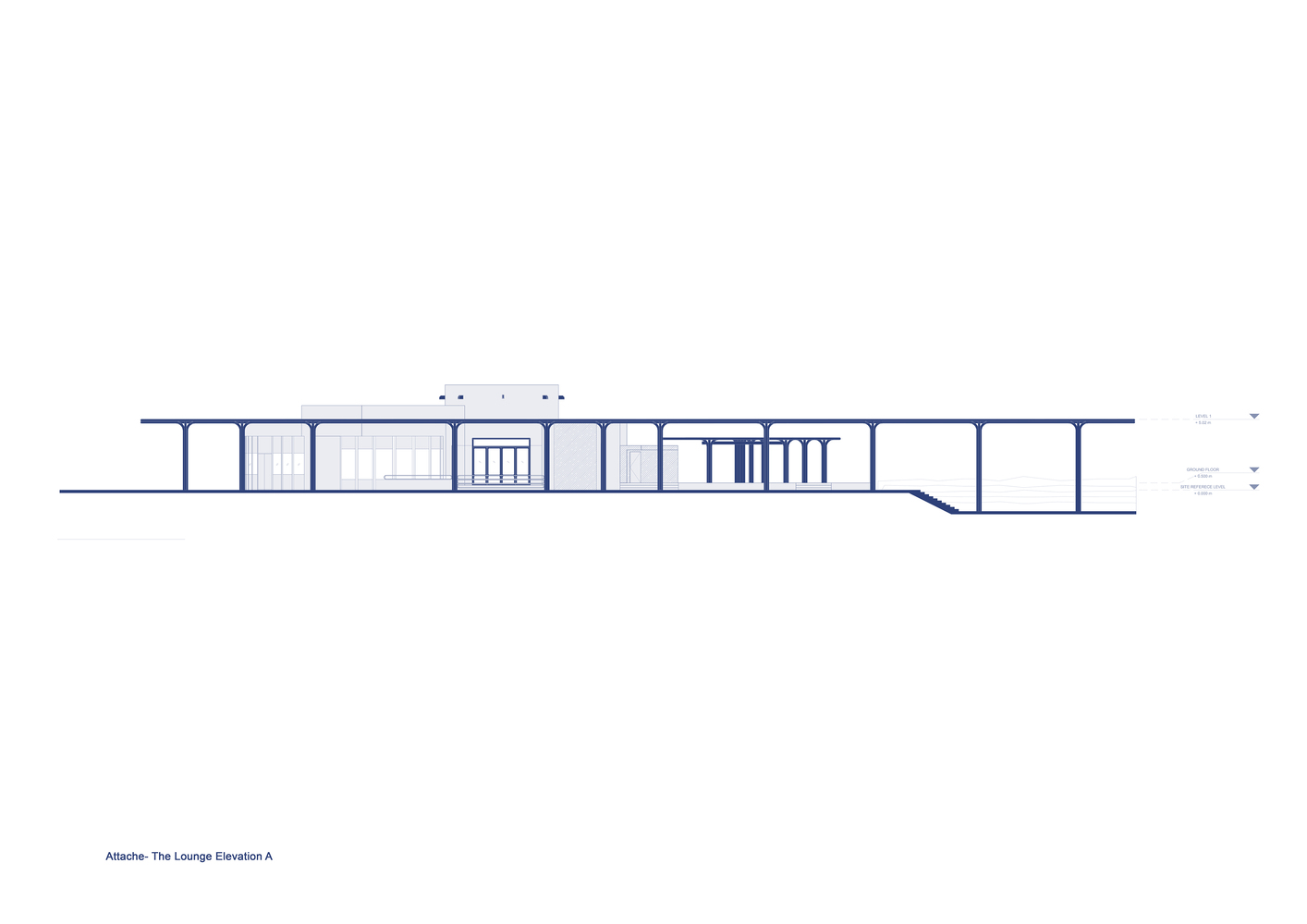
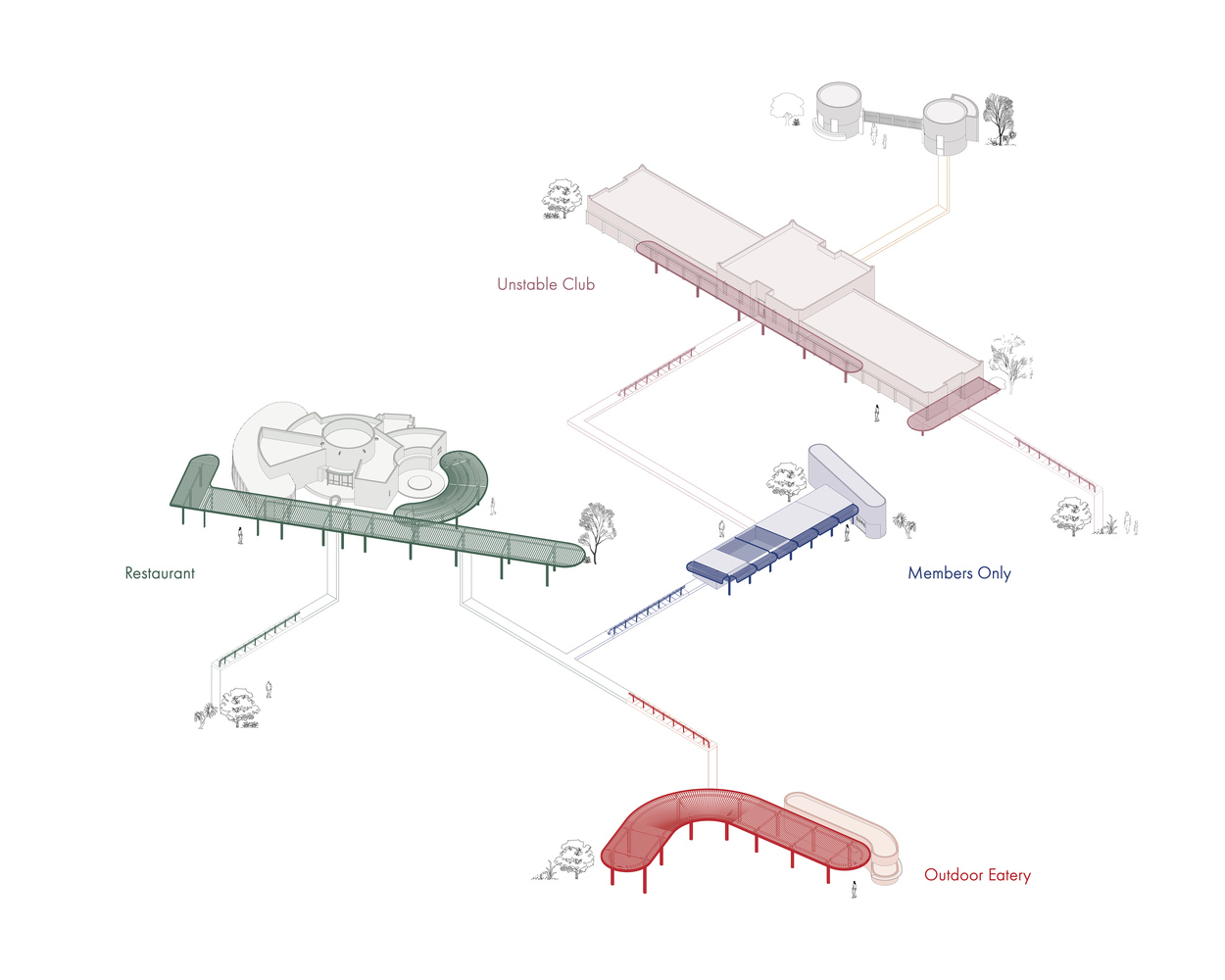
The scope of the project includes three main interventions with specific programs across the large, relatively desert landscape that comprises the site.
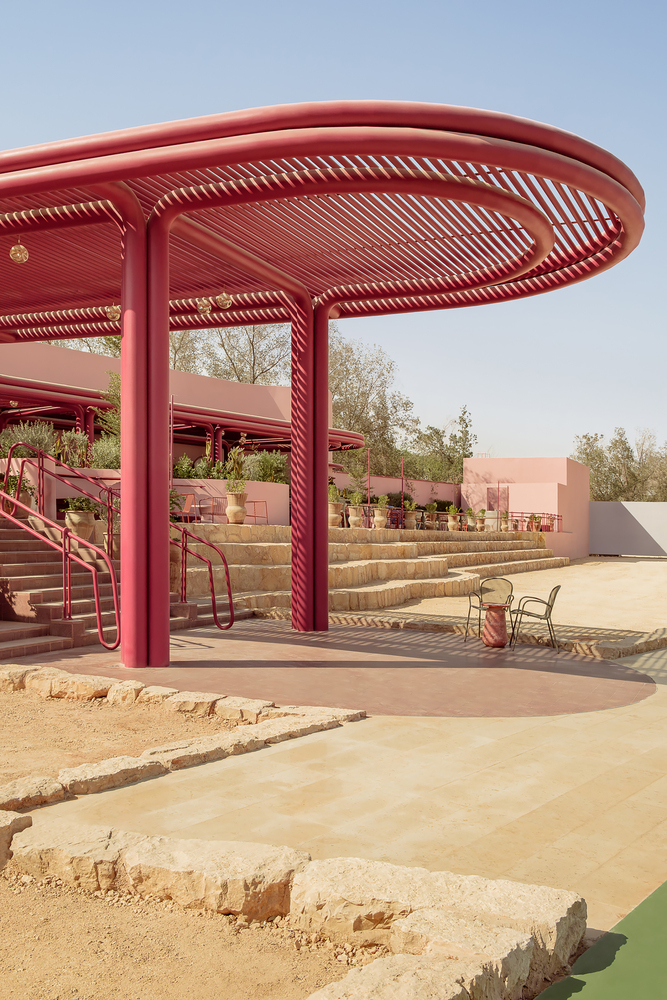
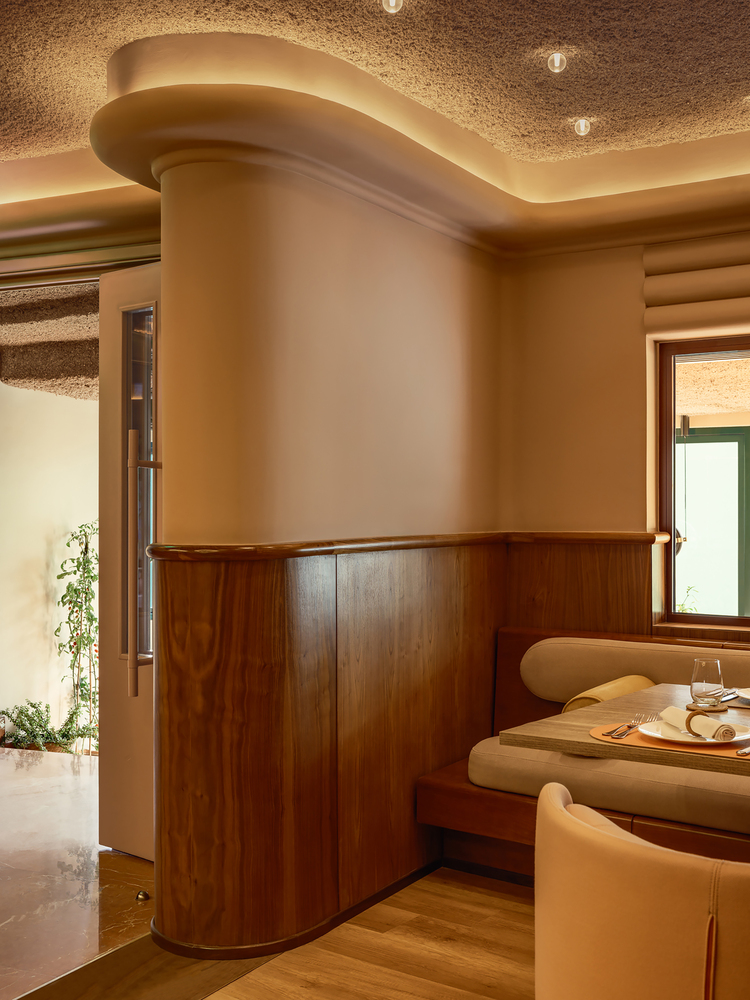
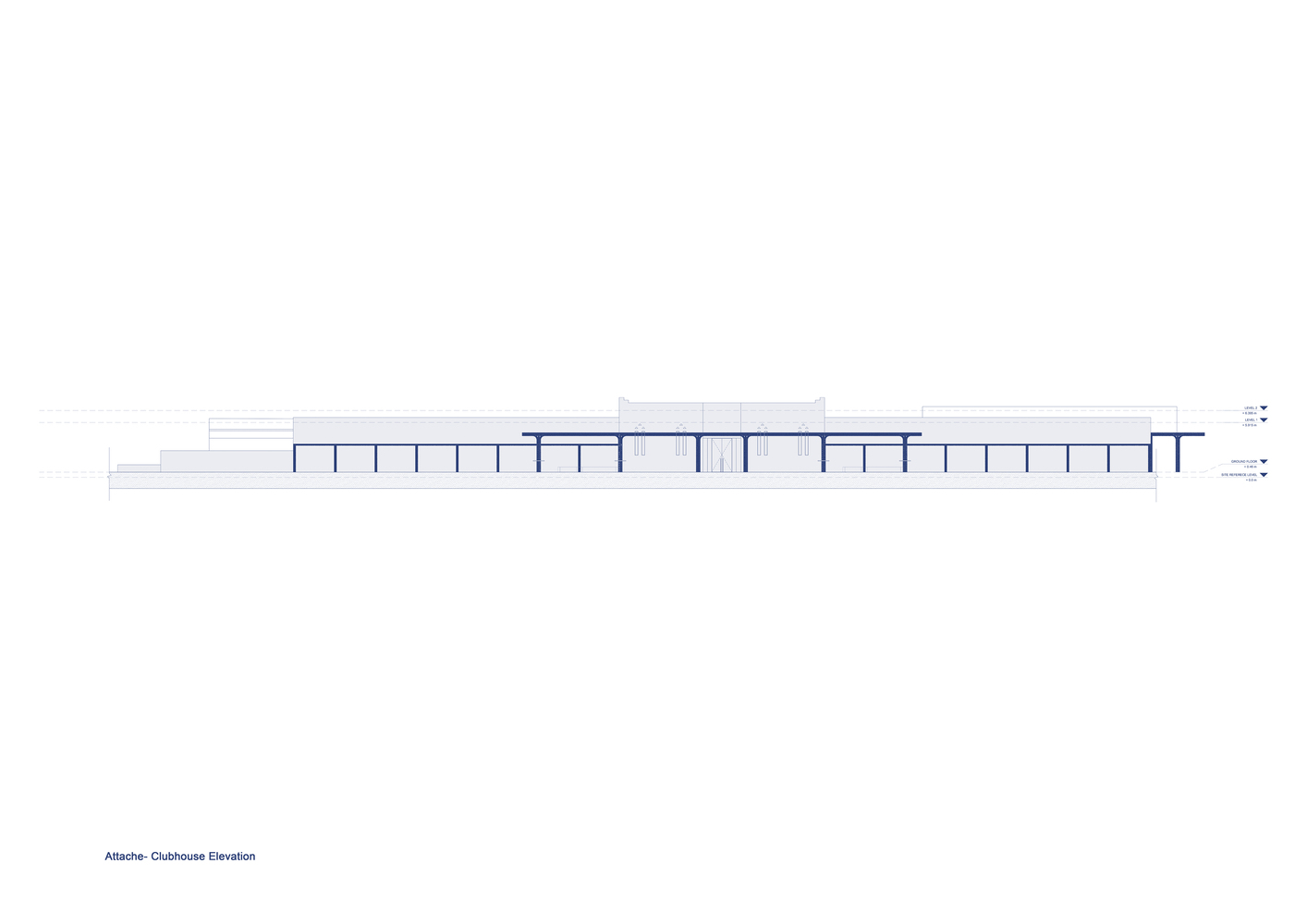
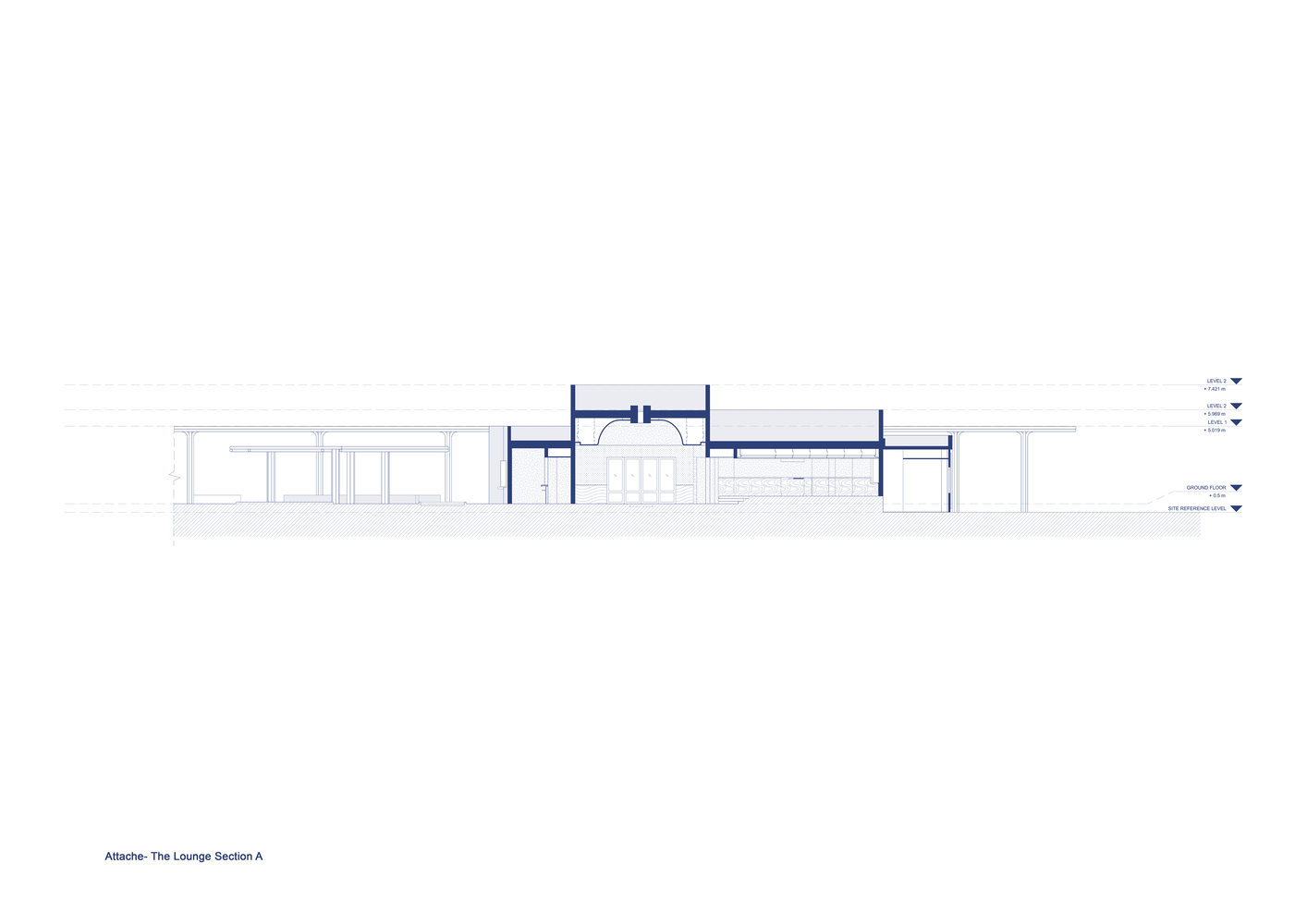
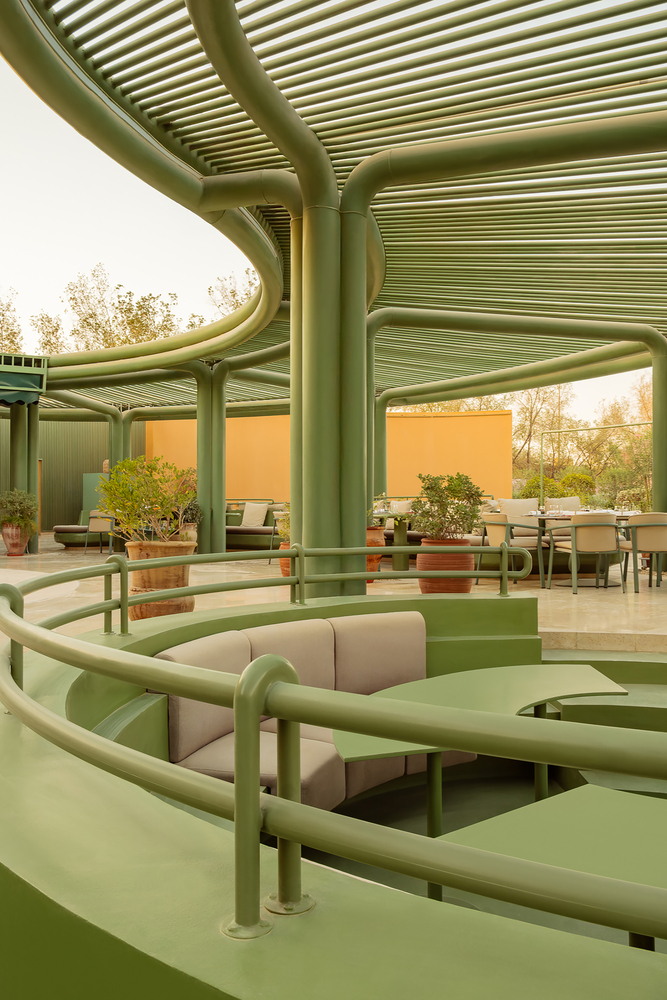
Perched on an elevated plateau, the 500 m2 administration building was rehabilitated and expanded to host a fine dining restaurant/ lounge.
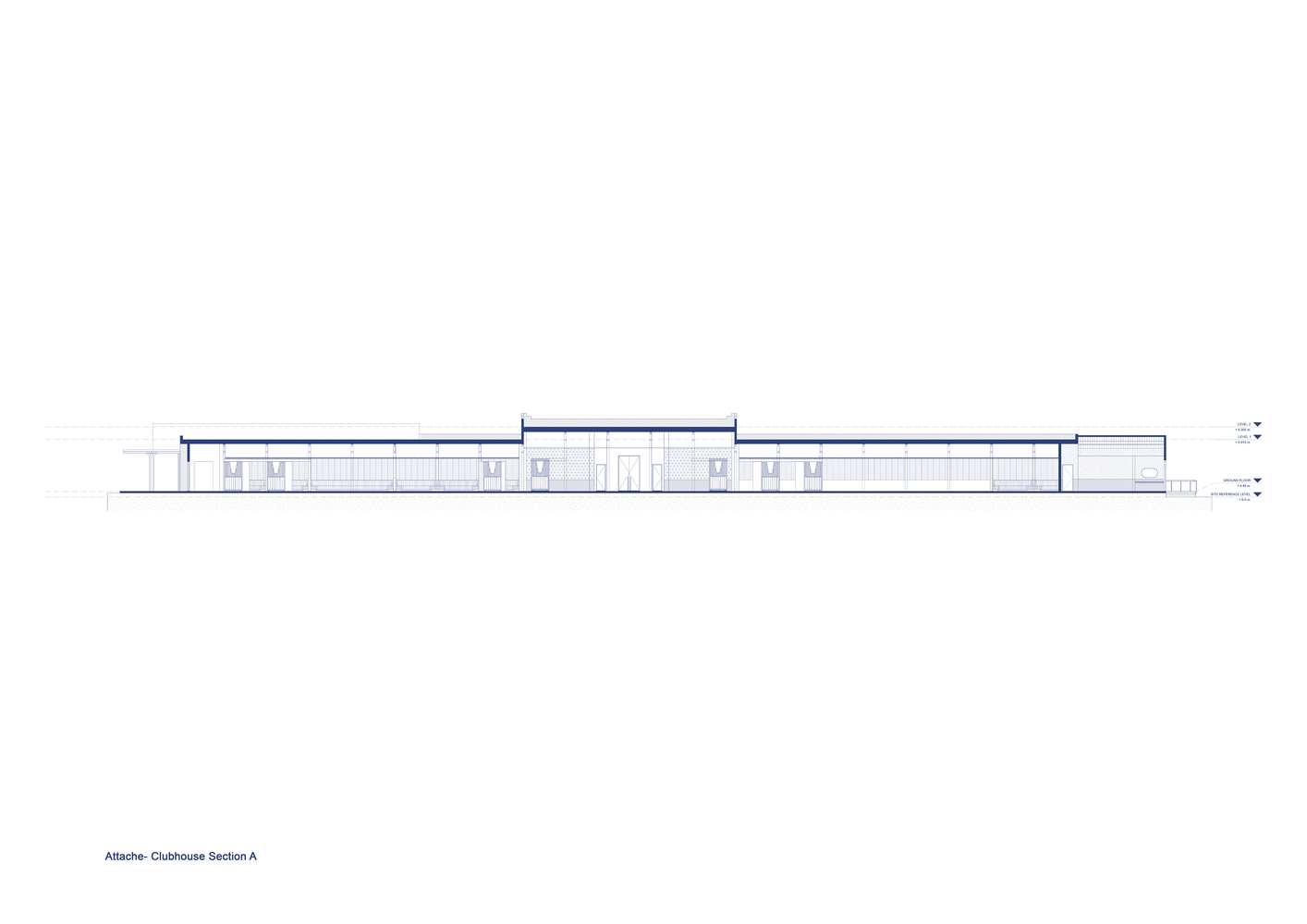
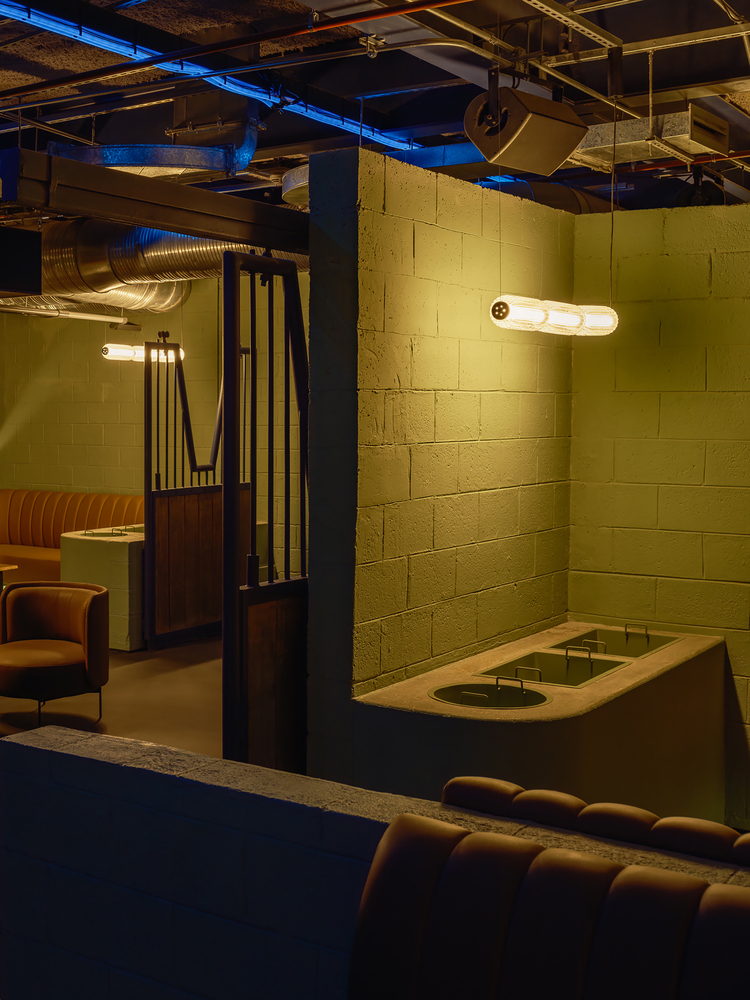
On the other end of the site, the deteriorating 1,000 m2 stable building was structurally reinforced to become a world-class music venue.
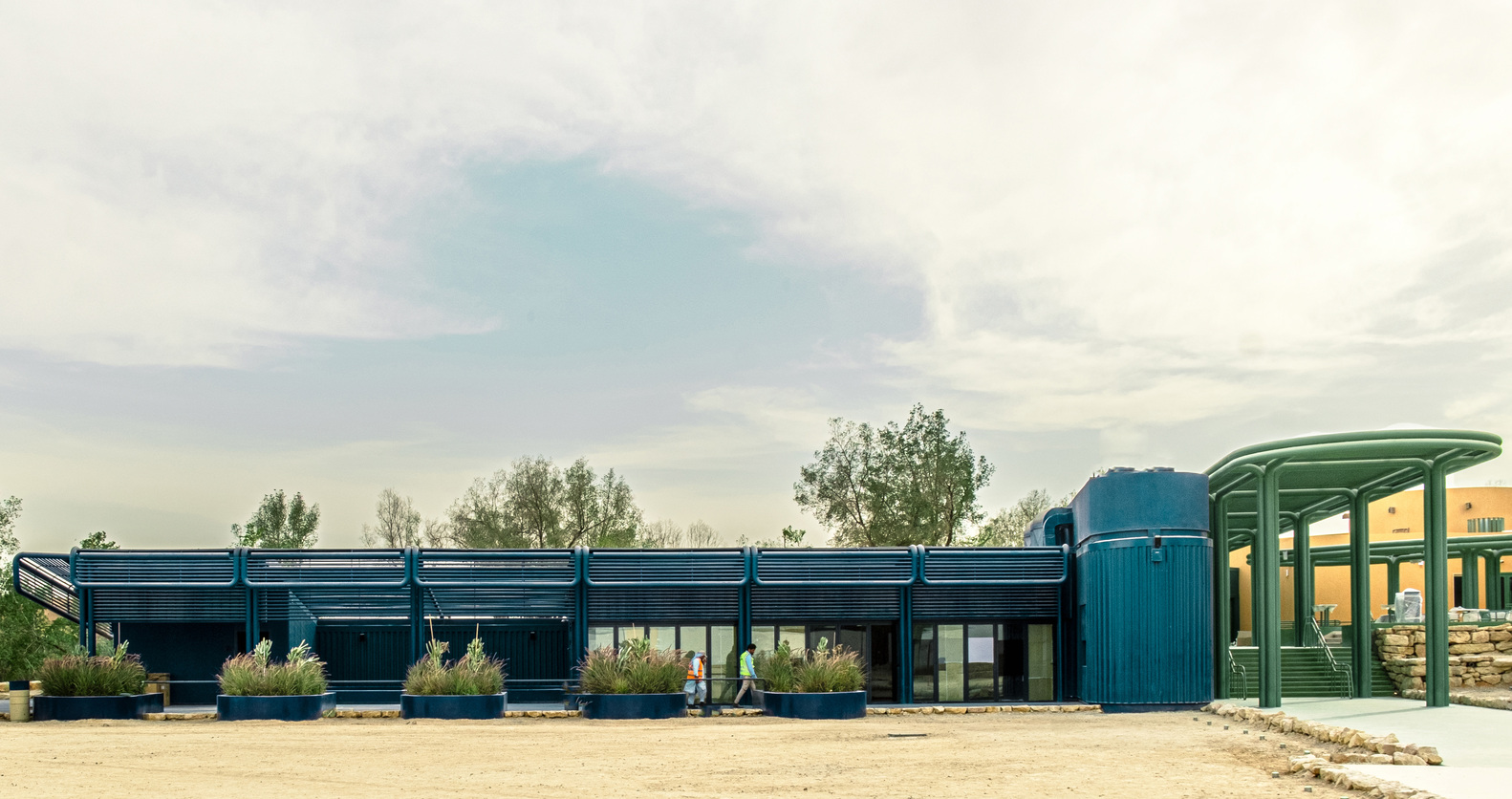
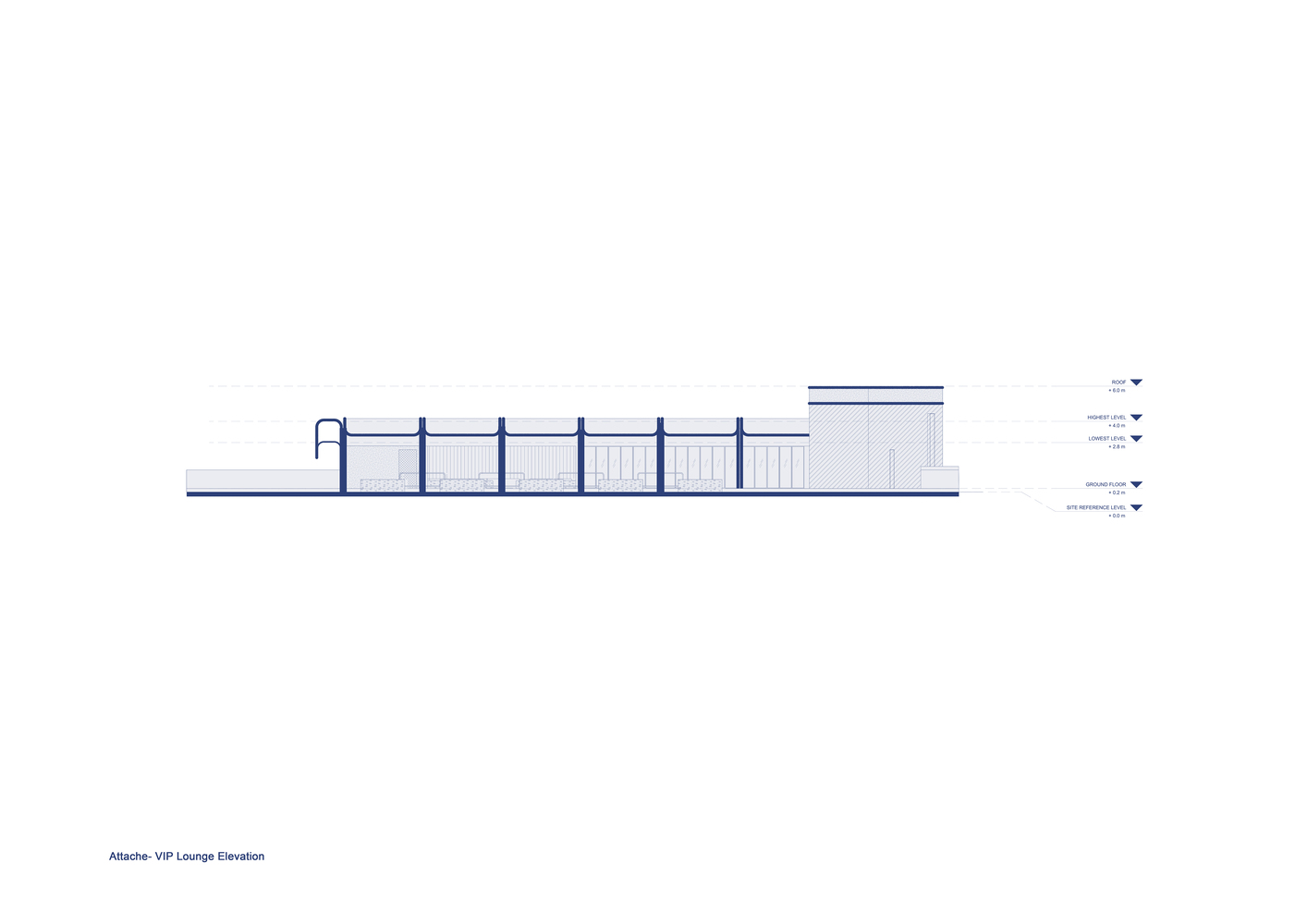
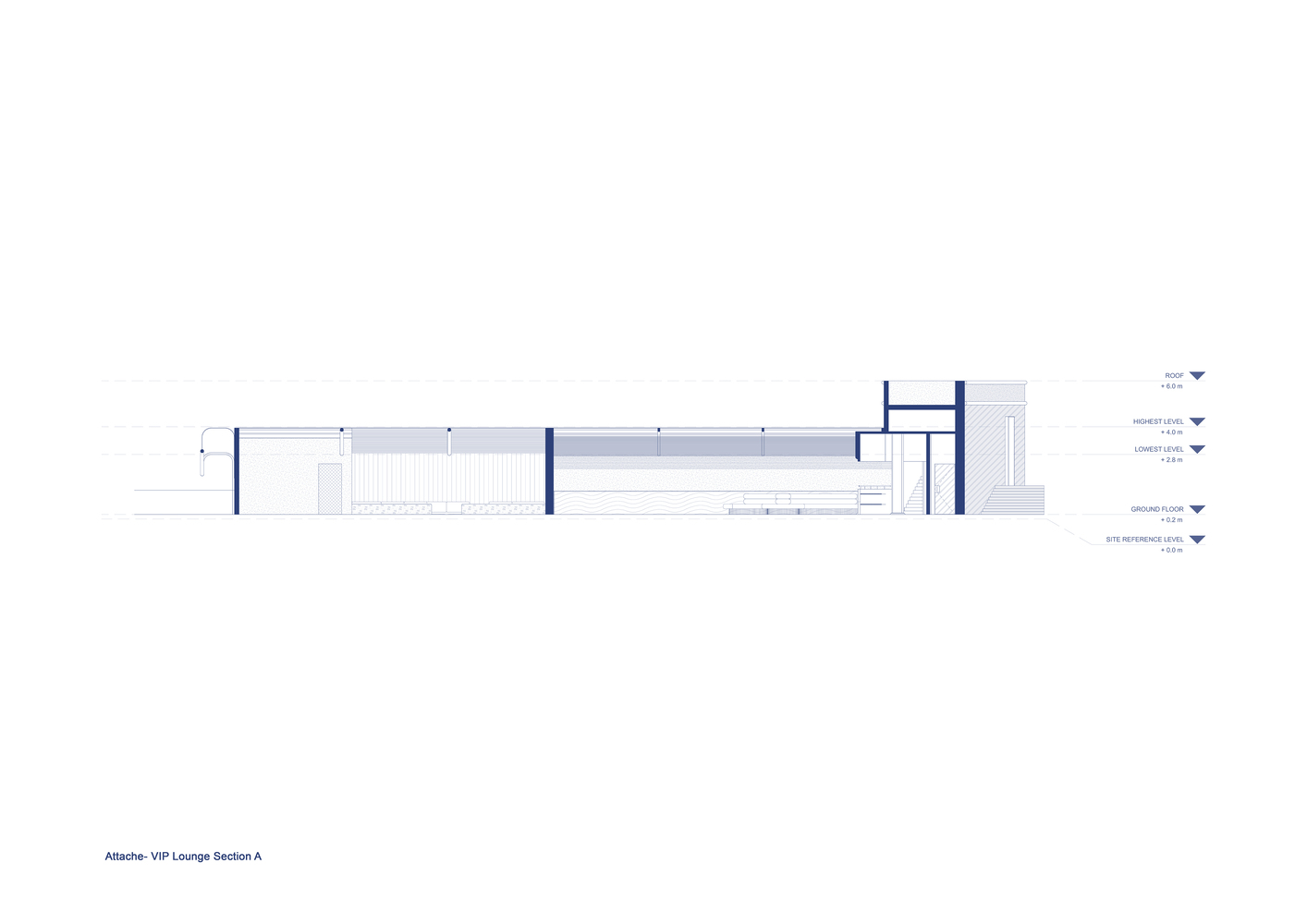
An additional 250 m2 independent structure was added to the ensemble for members and VIP guests.
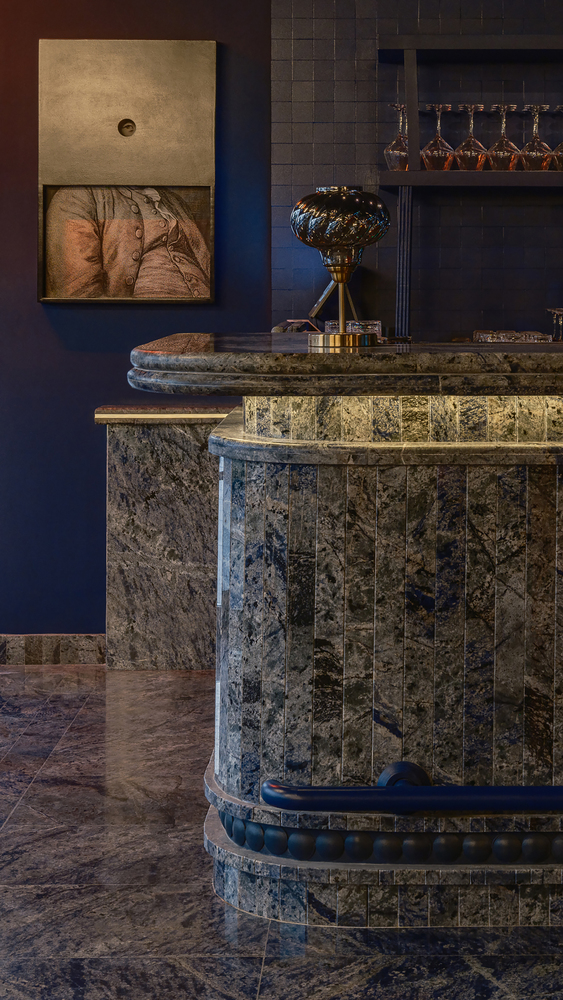
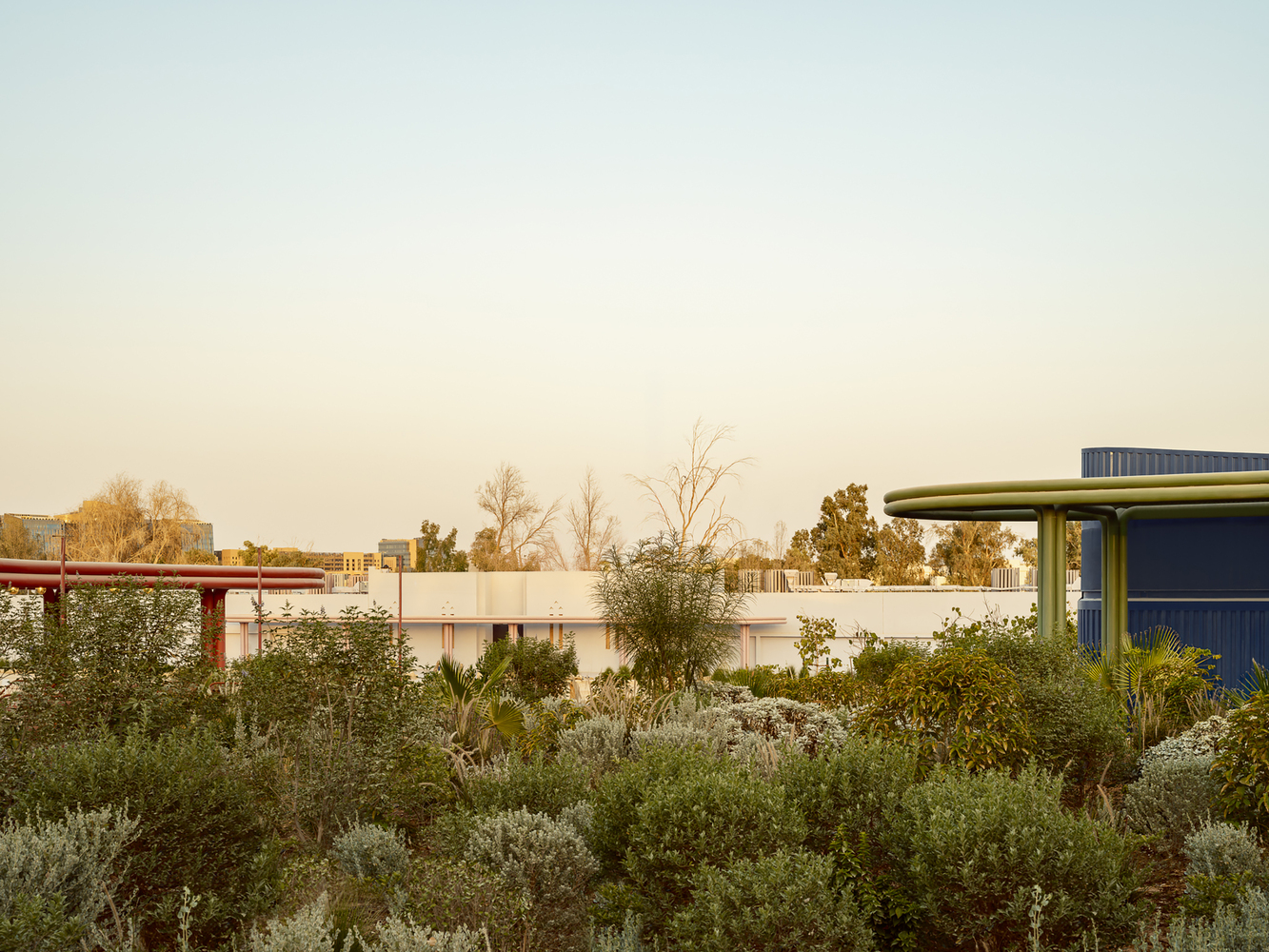
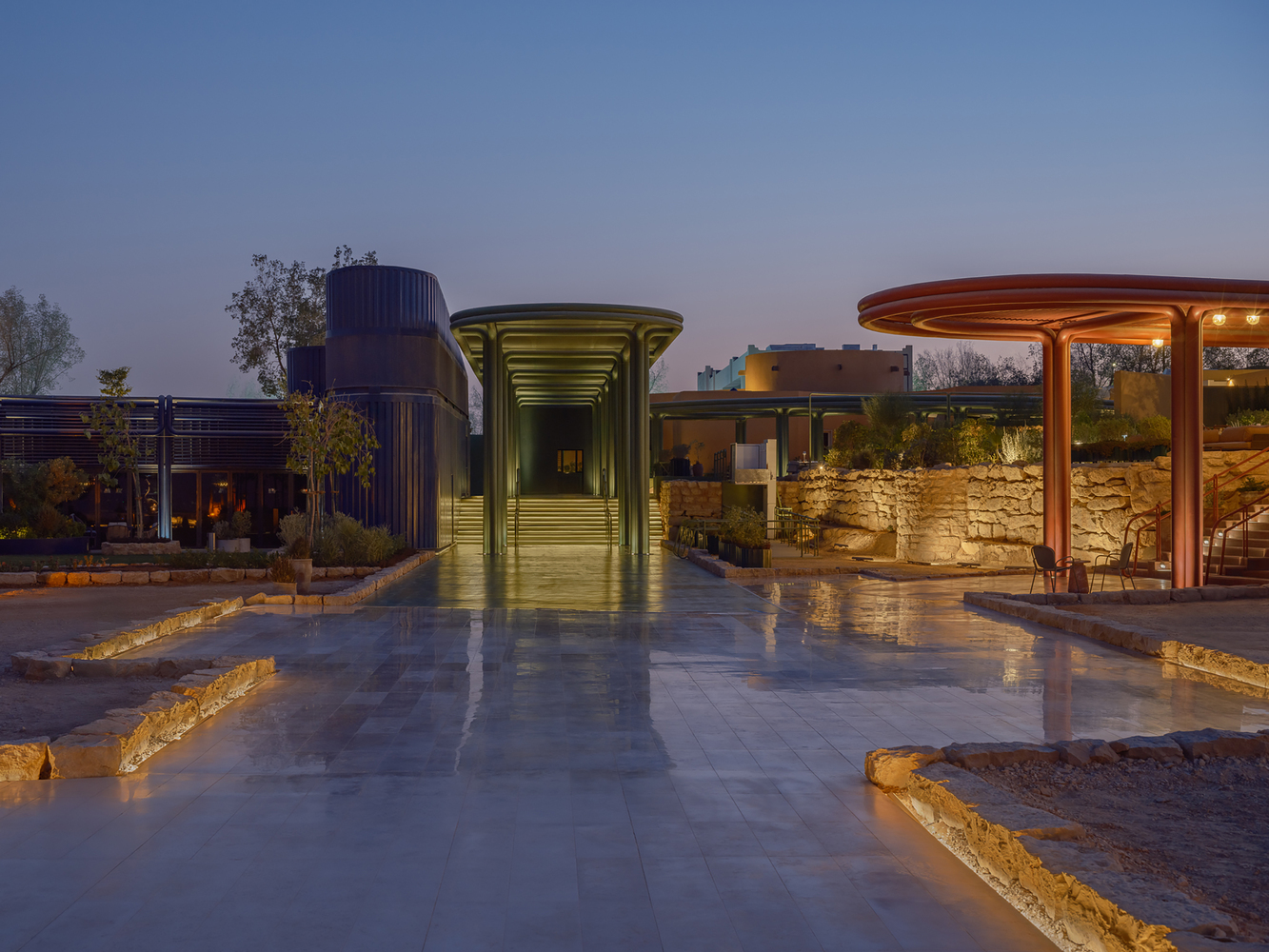
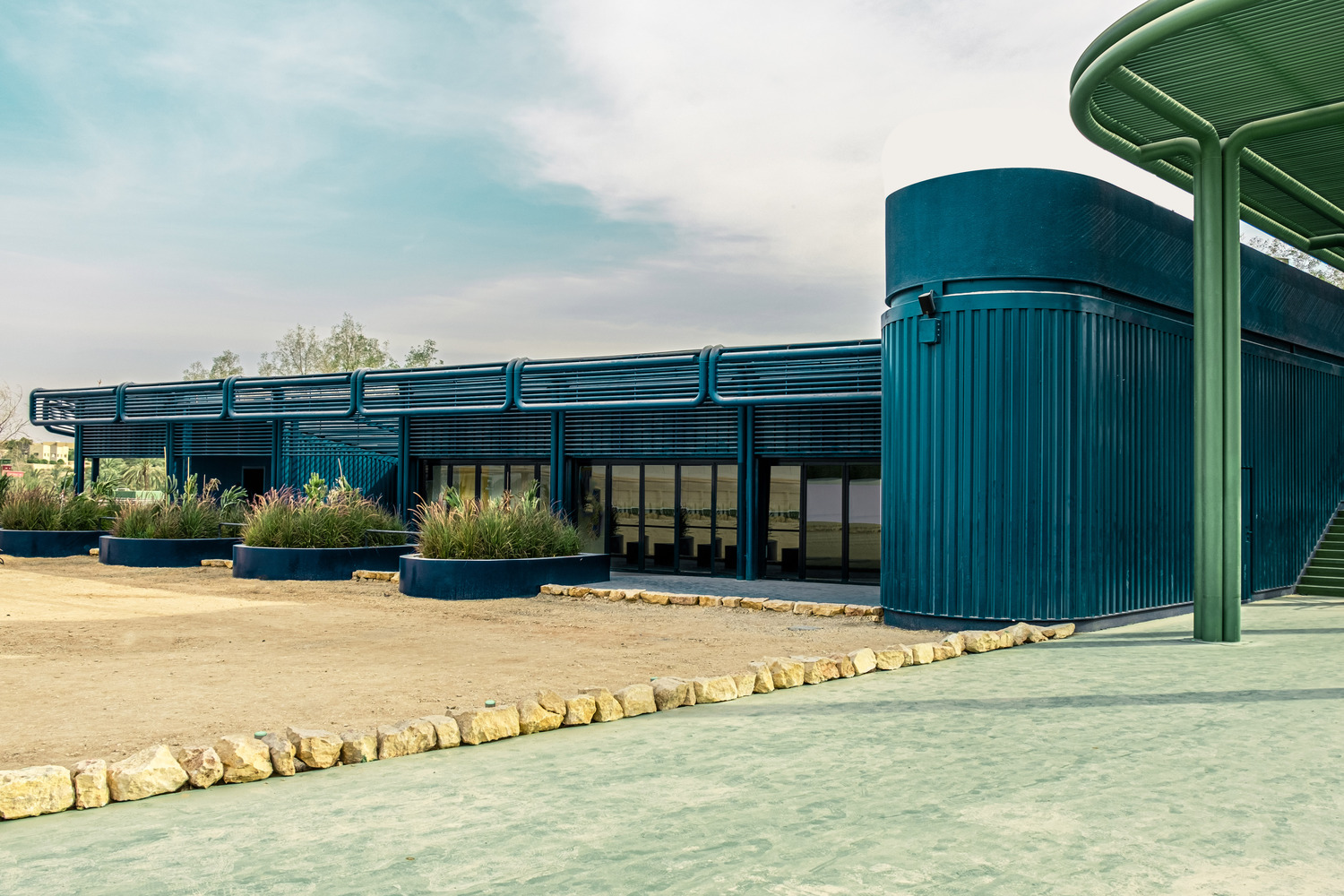
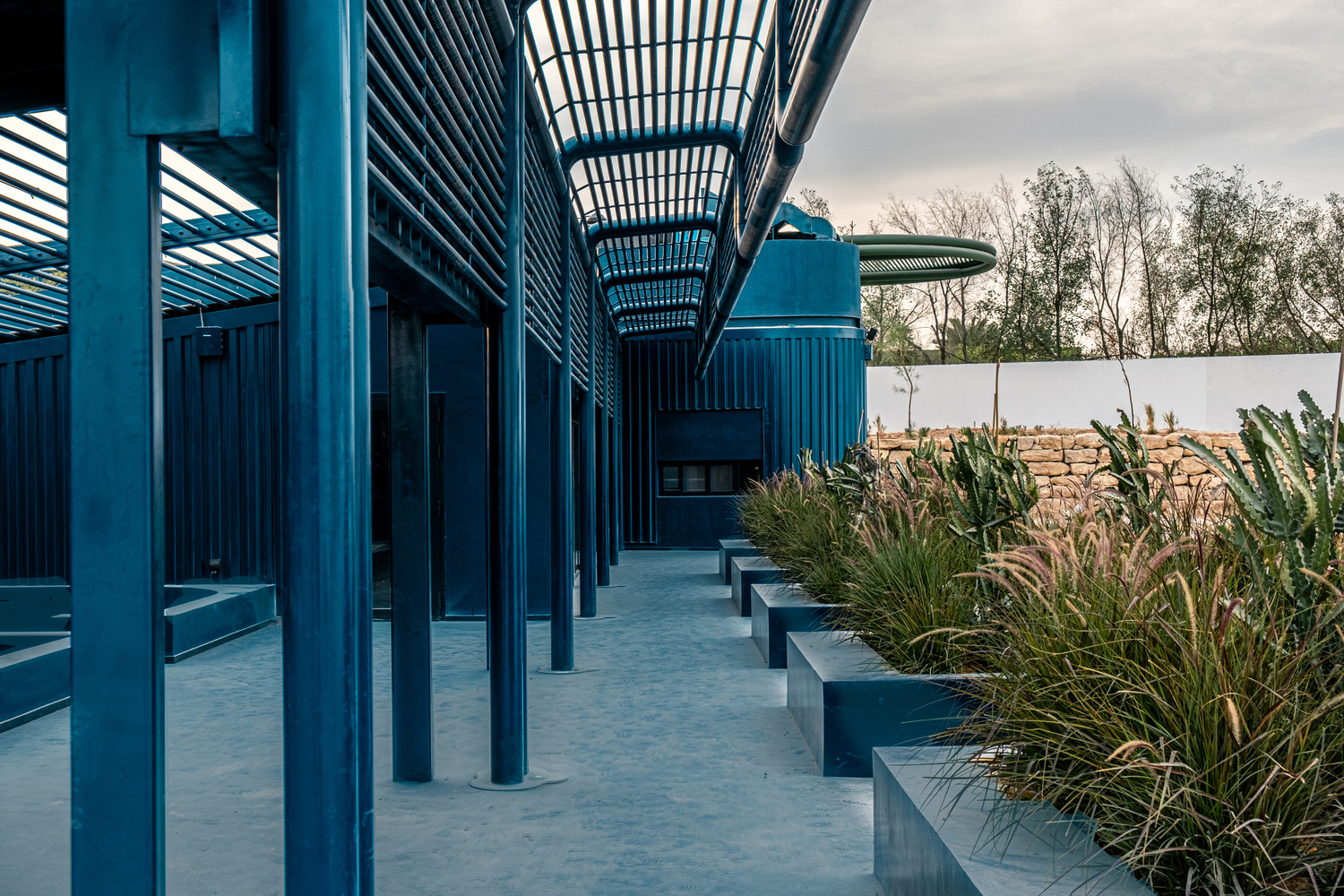
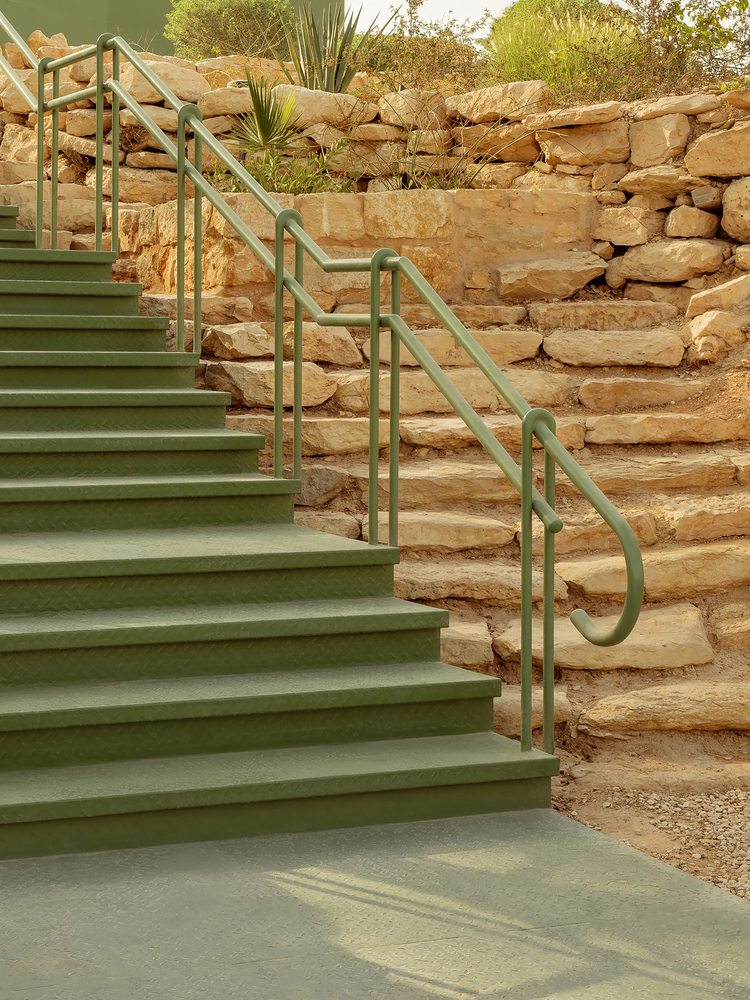
With the distinctive patinas of the existing buildings in mind, a contrasting palette loosely based on the RGB model was assigned to each structure.
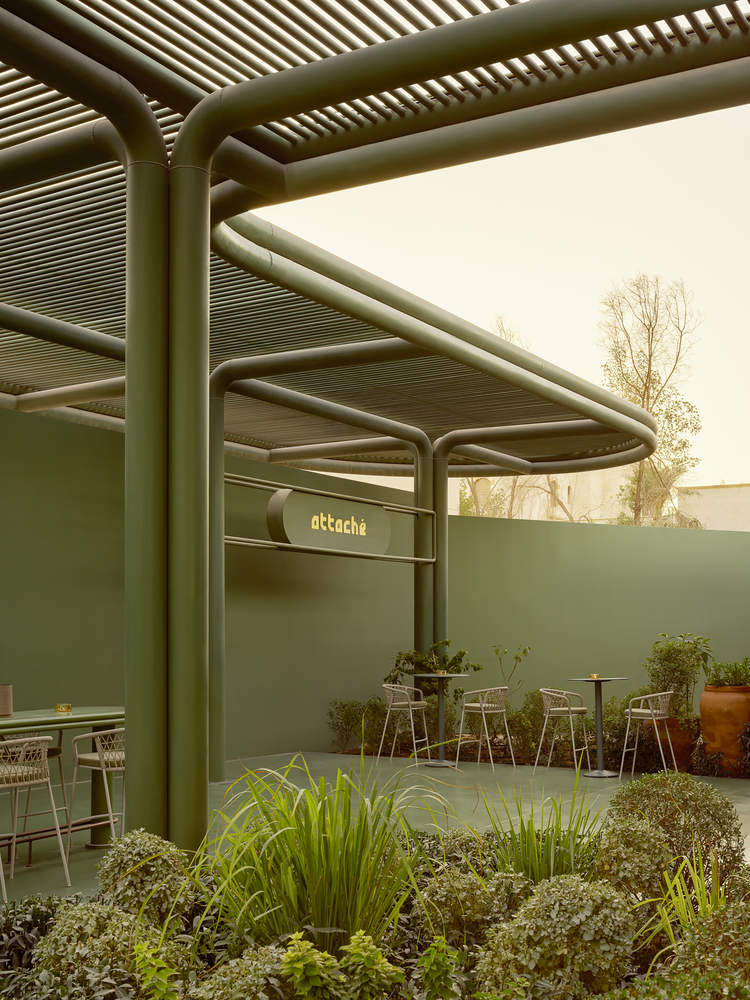
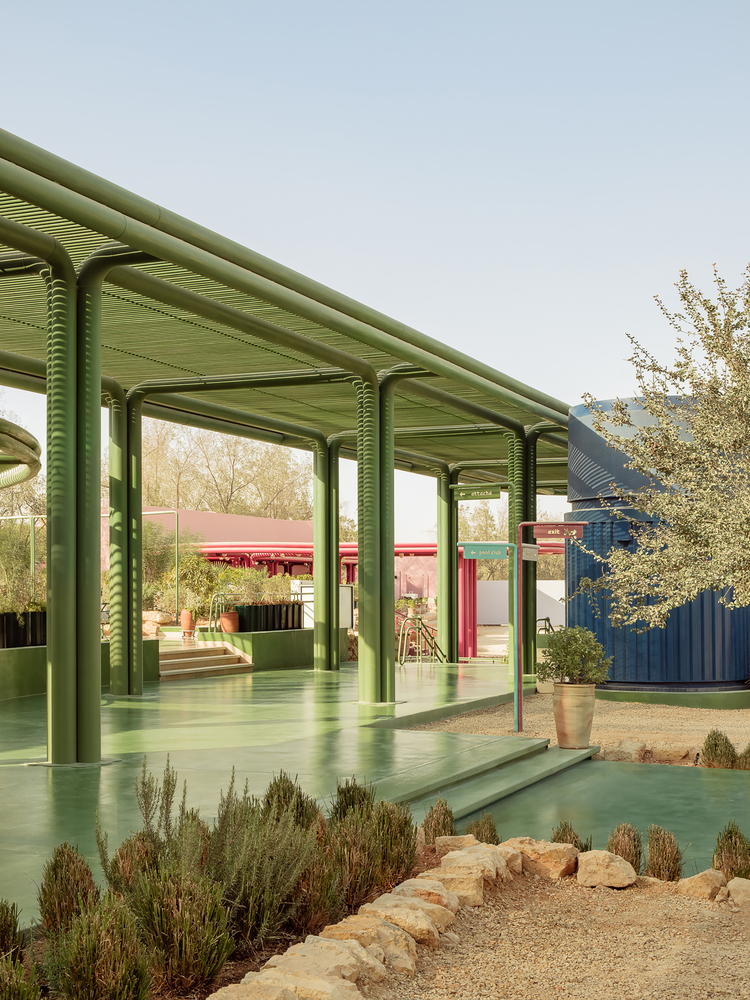
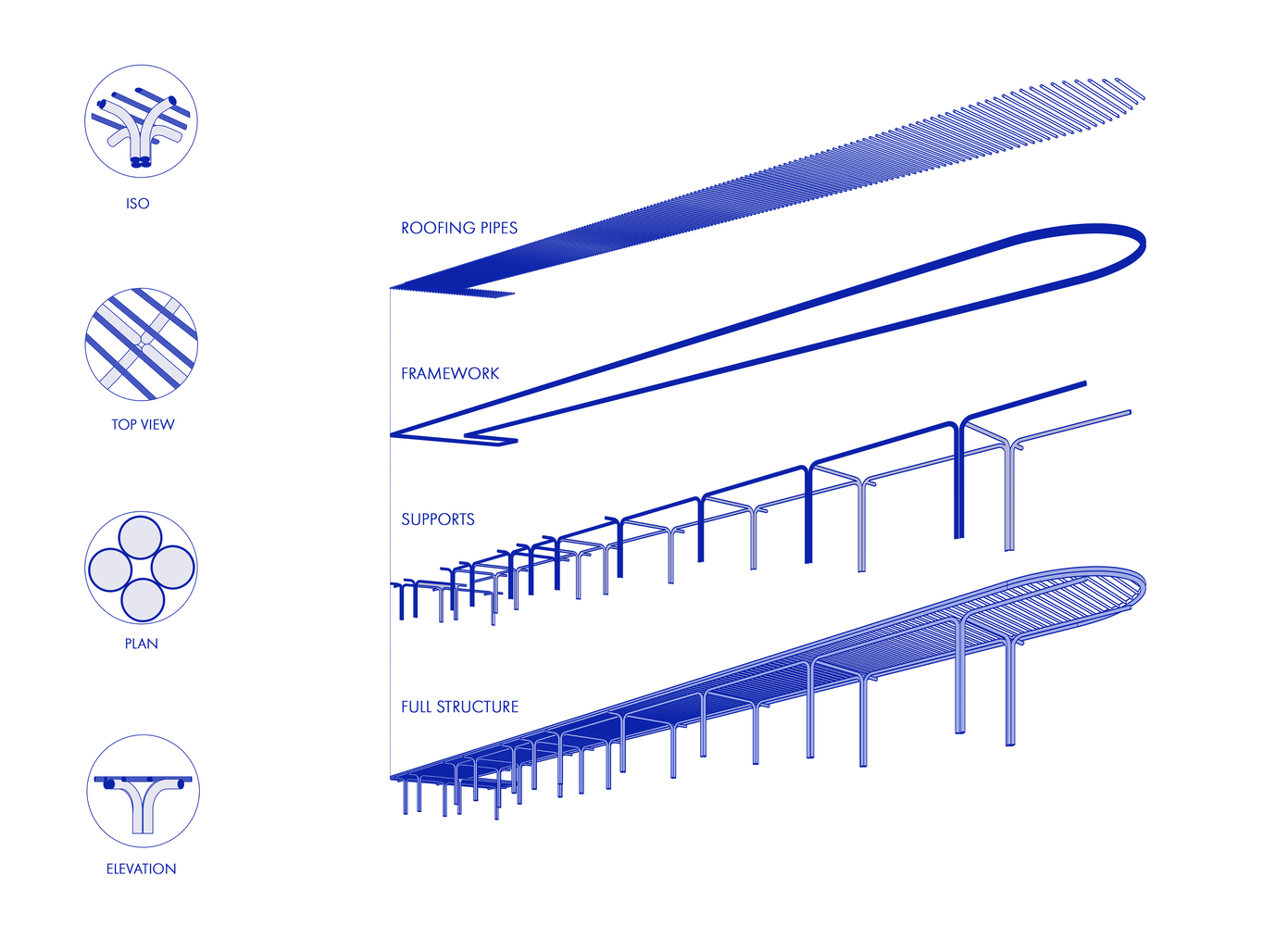
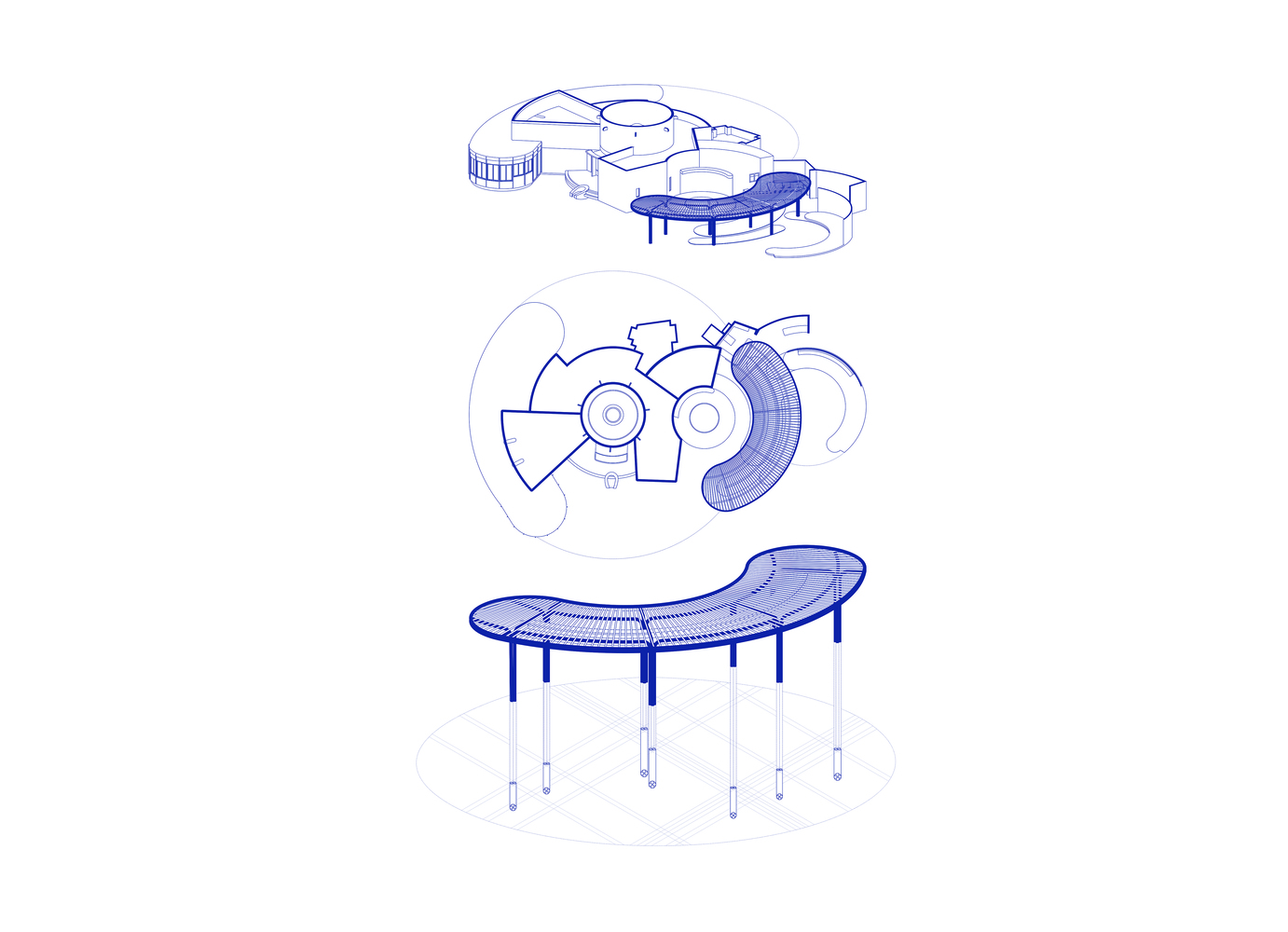
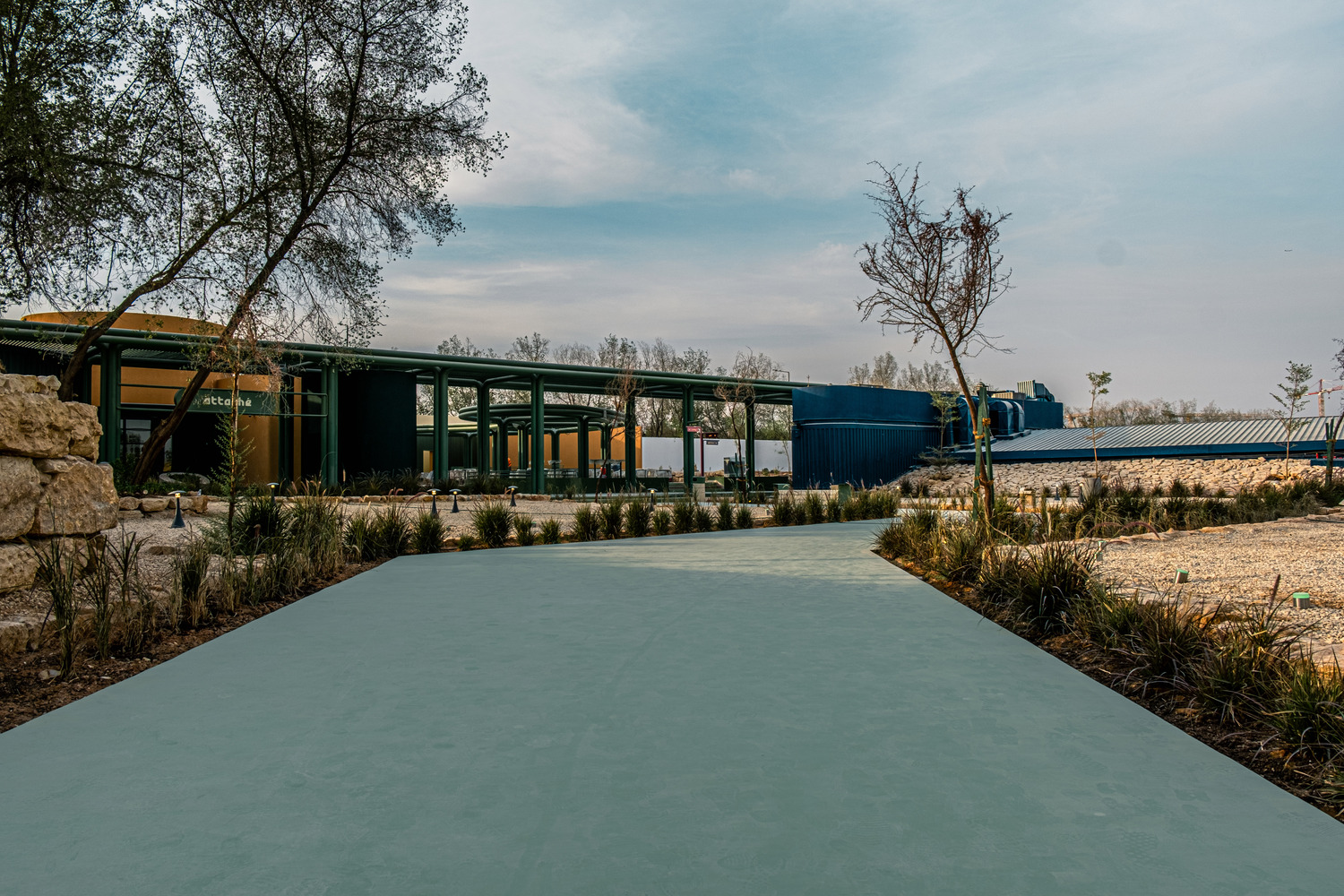
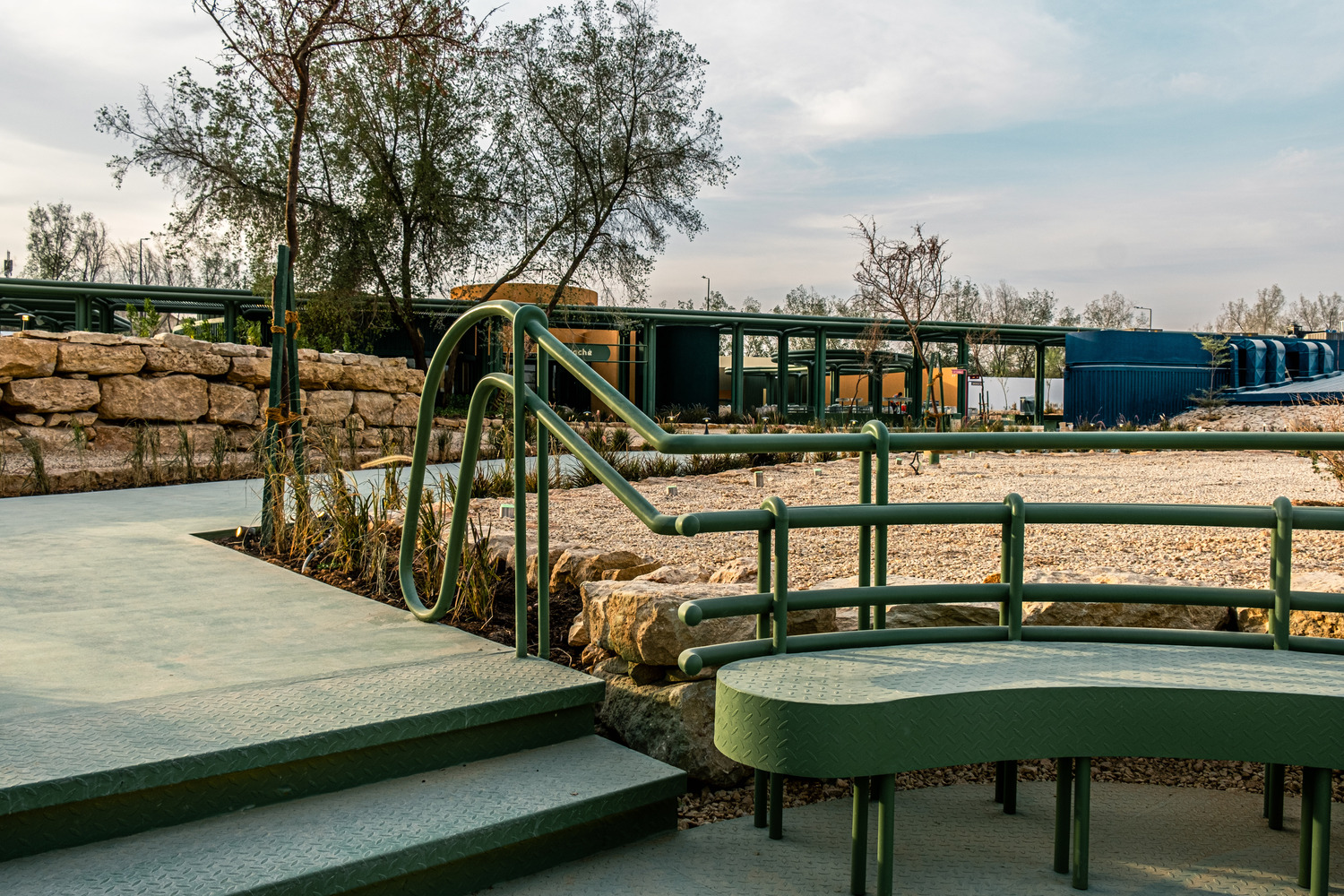
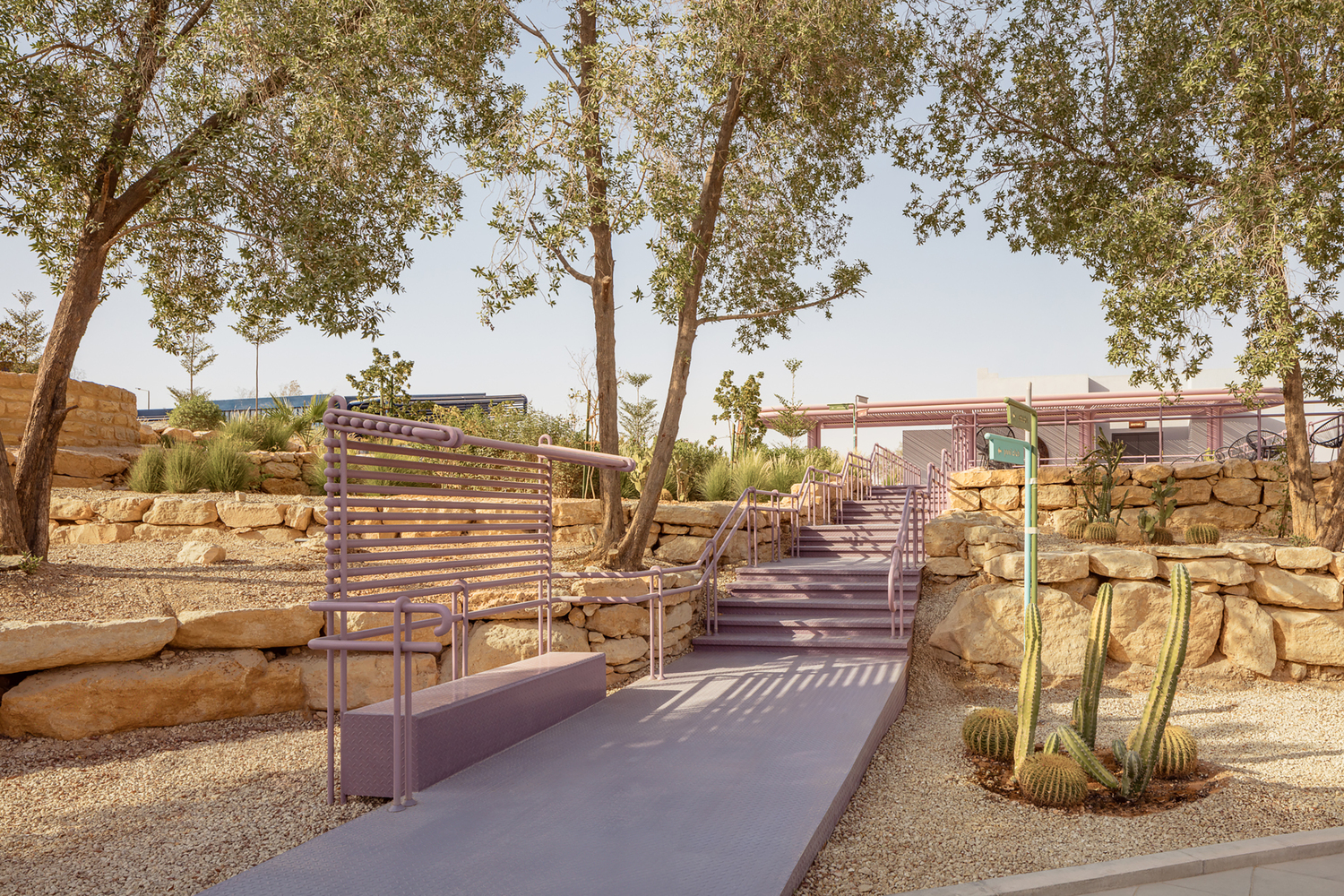
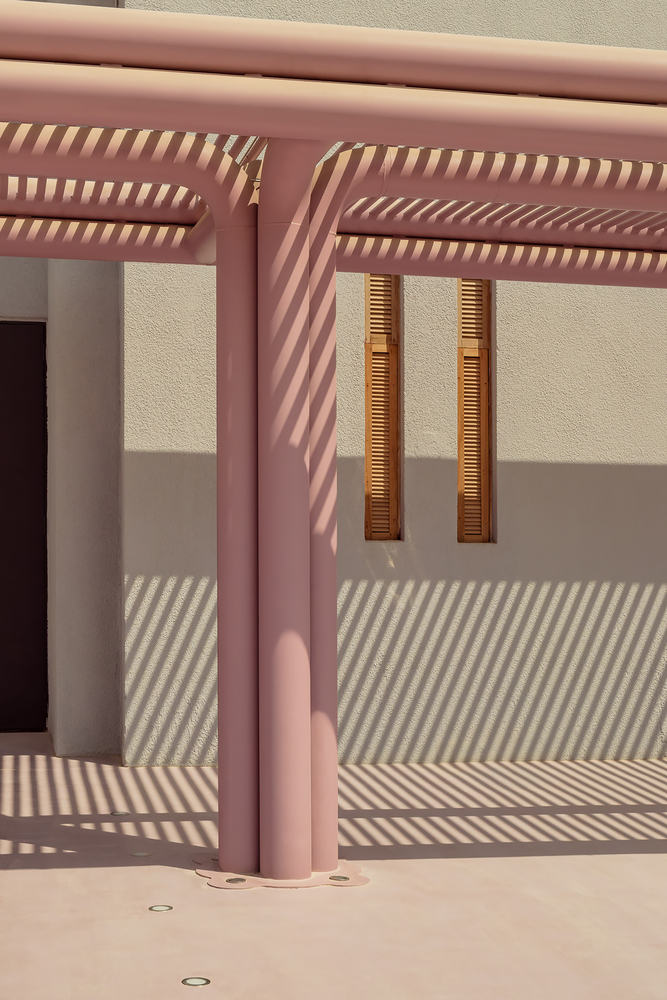
Bright colored steel structures are juxtaposed against the existing buildings to expand their interior spaces, accommodate new programs, and create shaded outdoor areas.
These add-ons are composed of tubular steel components with expressive tectonic qualities that celebrate the processes of welding and assembly.
The bright RGB interventions stand out in sharp contrast to the landscape strategy developed by the Beirut/Dubai/London-based studio Libani, which draws references from the subtle qualities of the local Wadi Hanifa ecosystem characteristic of the site's existing condition.
Conceived as a dry ranch concept, a carefully curated set of lush landscape islands is scattered across the predominantly arid hardscape of stone, sand, and pebbles.
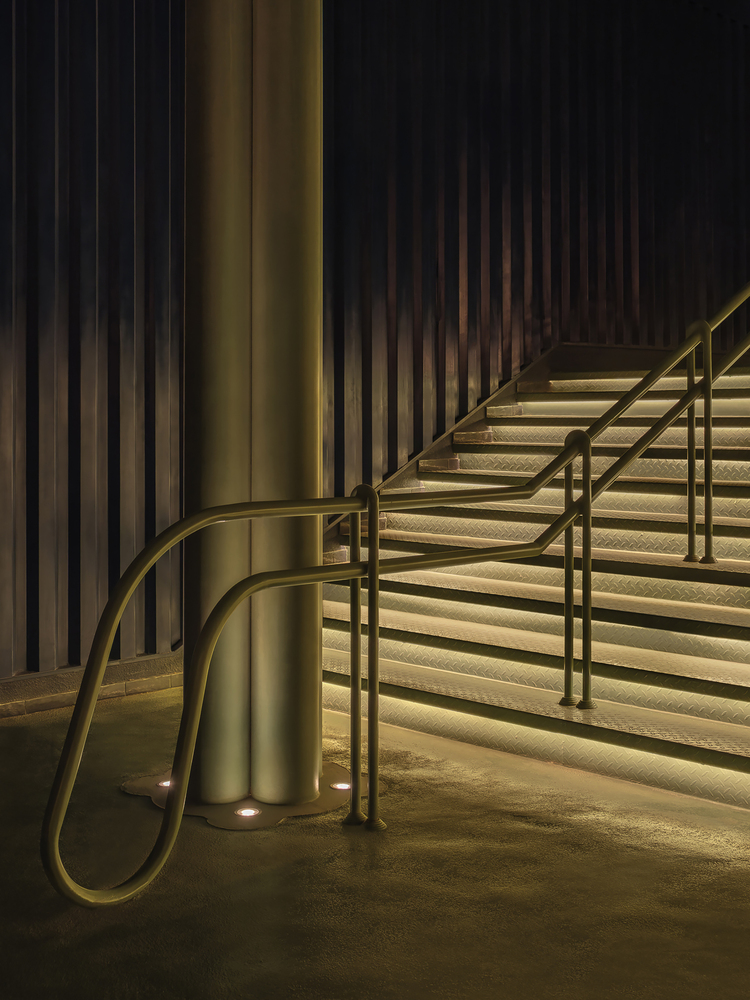
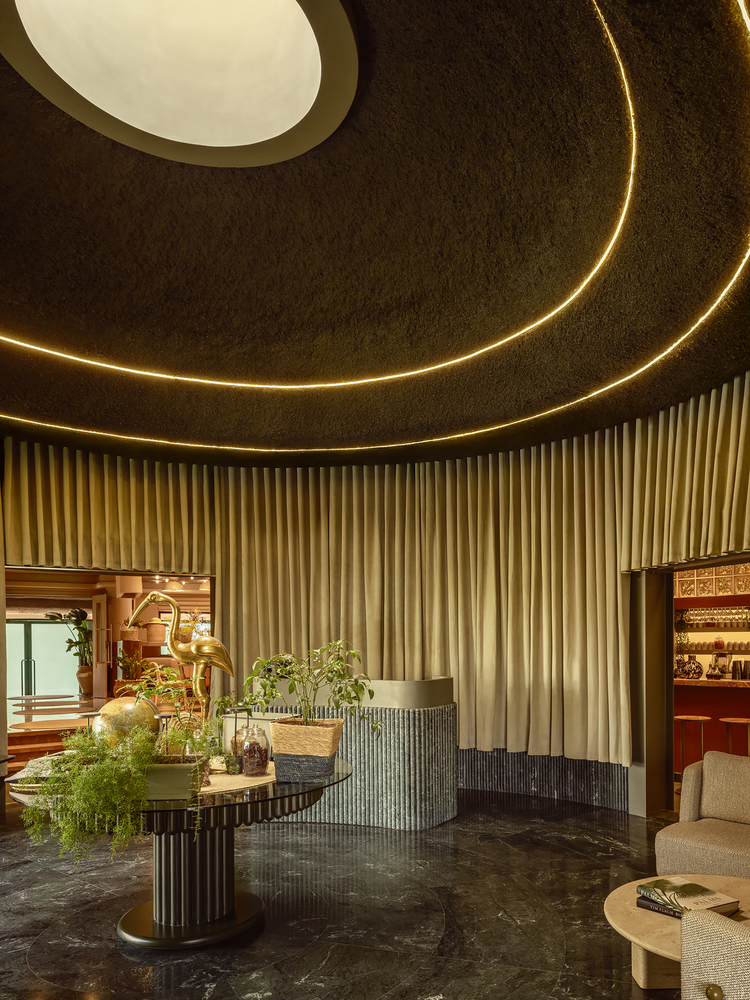
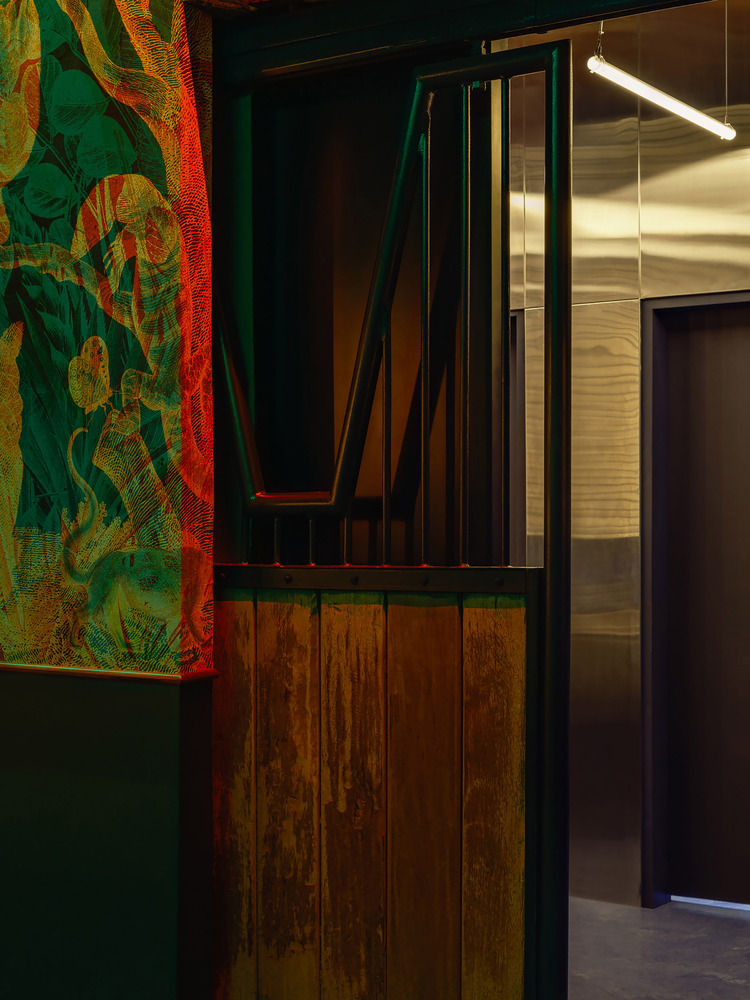
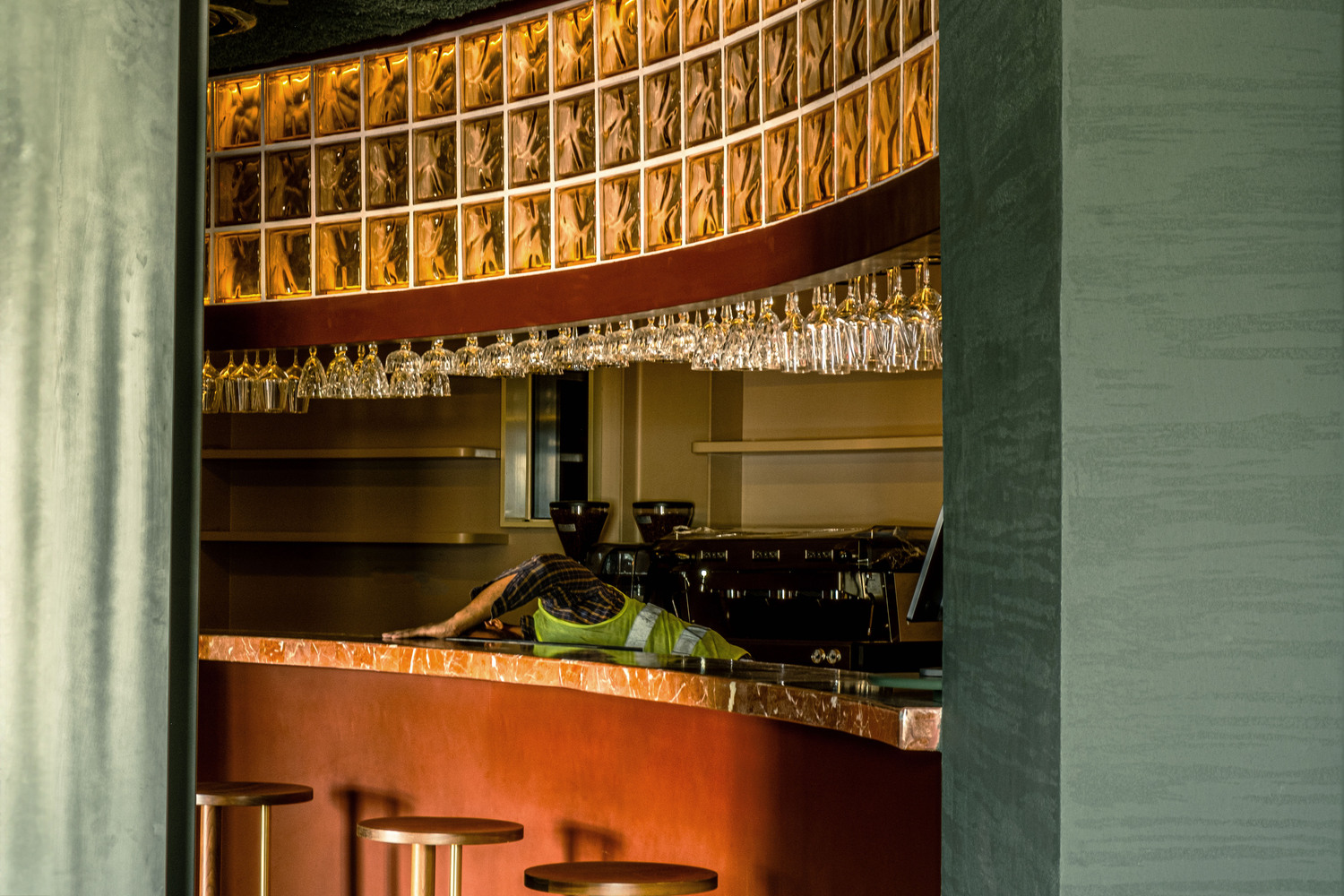
The interior spaces of the project are conceived as continuities of the architectural language in terms of color palette and contrasting materials.
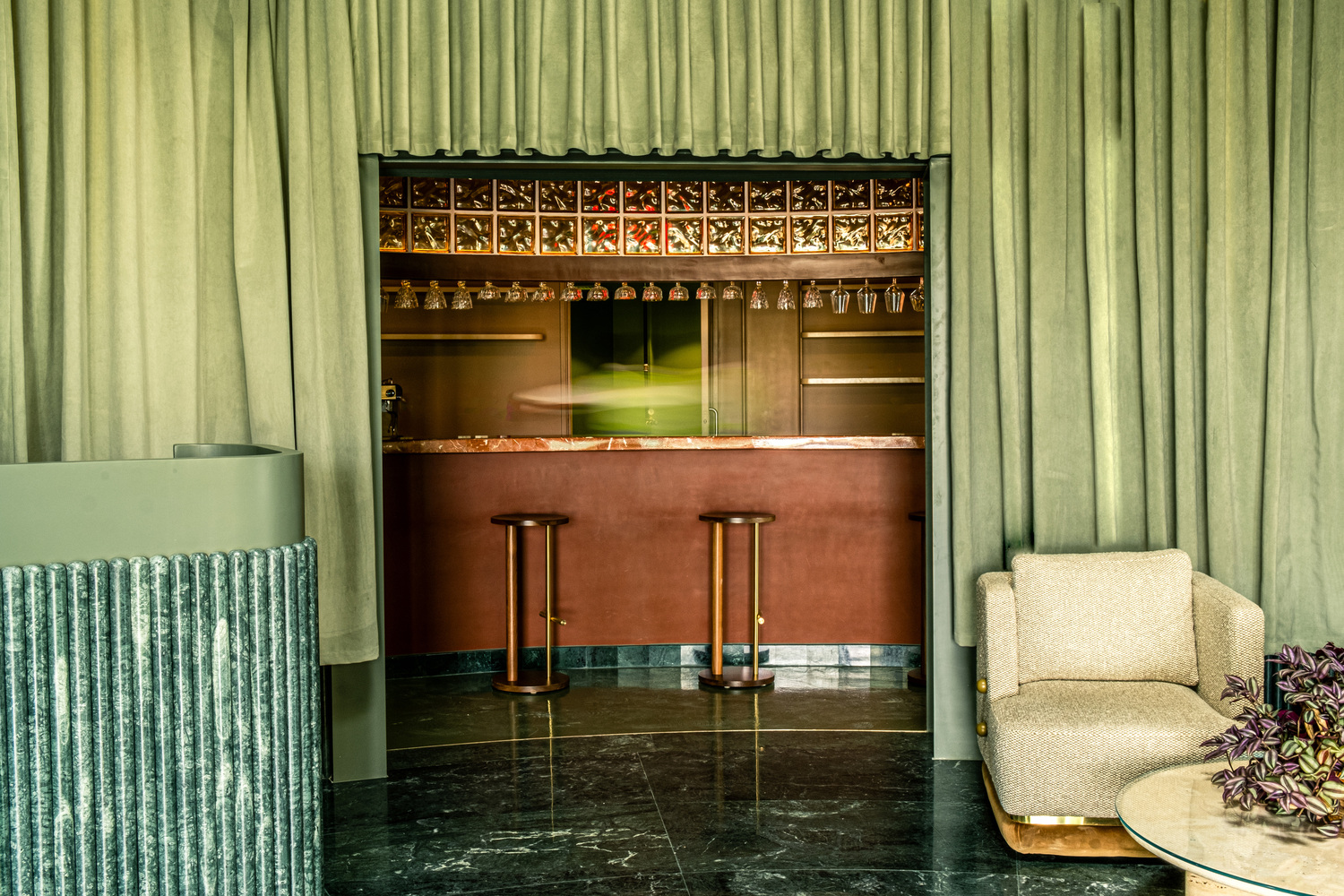
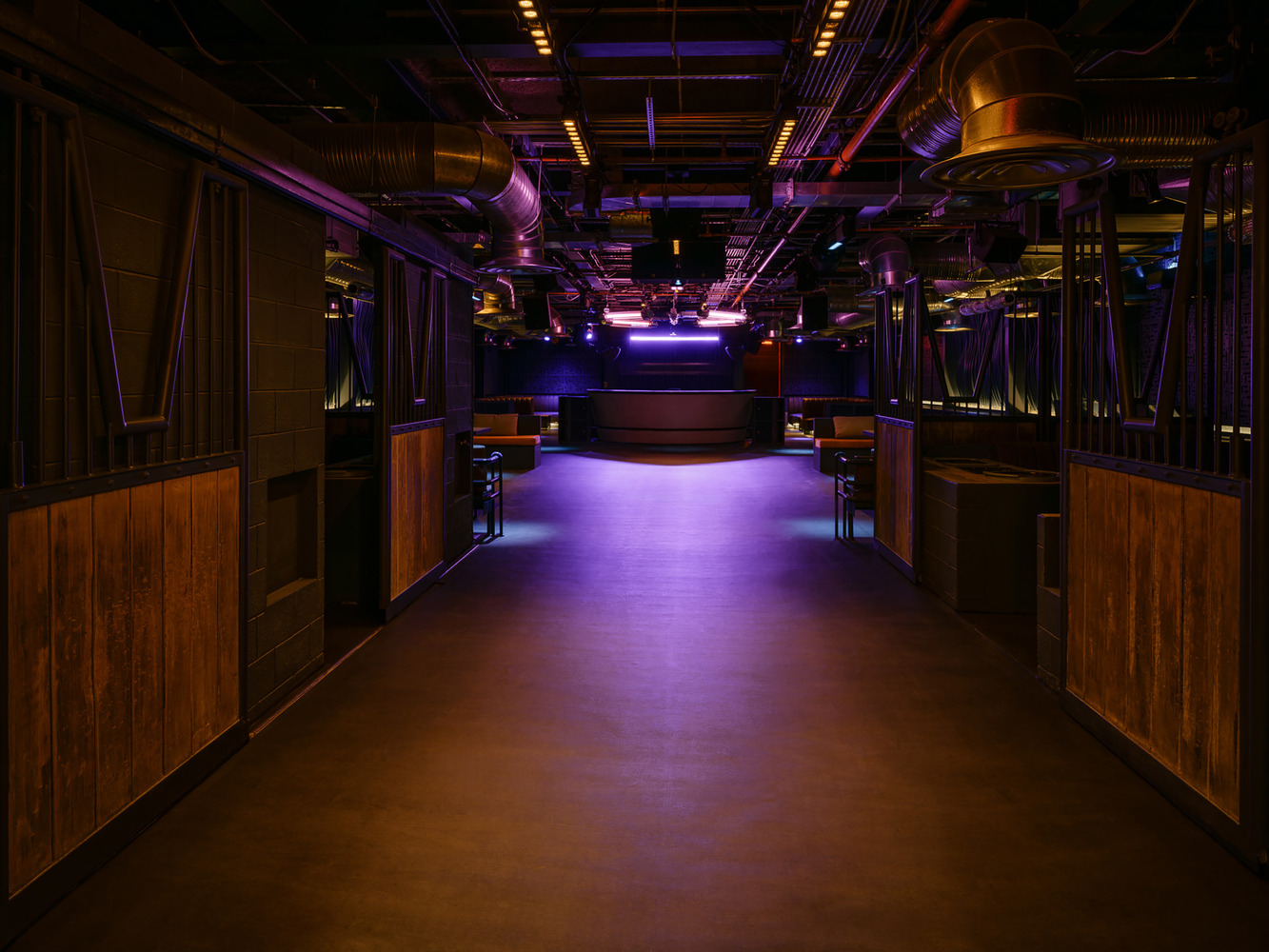
While elements of the building's equestrian past are preserved, a narrative succession of ambient qualities is established.
Visitors are drawn to roam between halls, rooms, and corridors to experience a set of atmospheres conducive to different types of social interaction.
The architectural approach to the project is a meditation on preservation and renewal.
It is an open call to reevaluate the role of architecture as the custodian of progress during a period of rapid new construction and imminent demolition.
By celebrating the poetics of memory and adopting a conscious approach towards material resourcing, this project attempts to demonstrate the advantages of rehabilitation and adaptive re-use in the development of our collective urban landscape.