Træ High-rise Building
TRÆ HIGH-RISE BUILDING
Lendager Arkitekter
ARCHITECTS
Lendager Arkitekter
CLIENT
Kilden& Hindby, Pfa Ejendomme
COLLABORATORS
Artelia, Kaj Ove Madsen, Aarhus Municipality, Realdania
DESIGN TEAM
Lendager Arkitekter
PHOTOGRAPHS
Rasmus Hjortshøj
AREA
14850 m²
YEAR
2025
LOCATION
Denmark
CATEGORY
Mixed Use Architecture
English description provided by the architects.
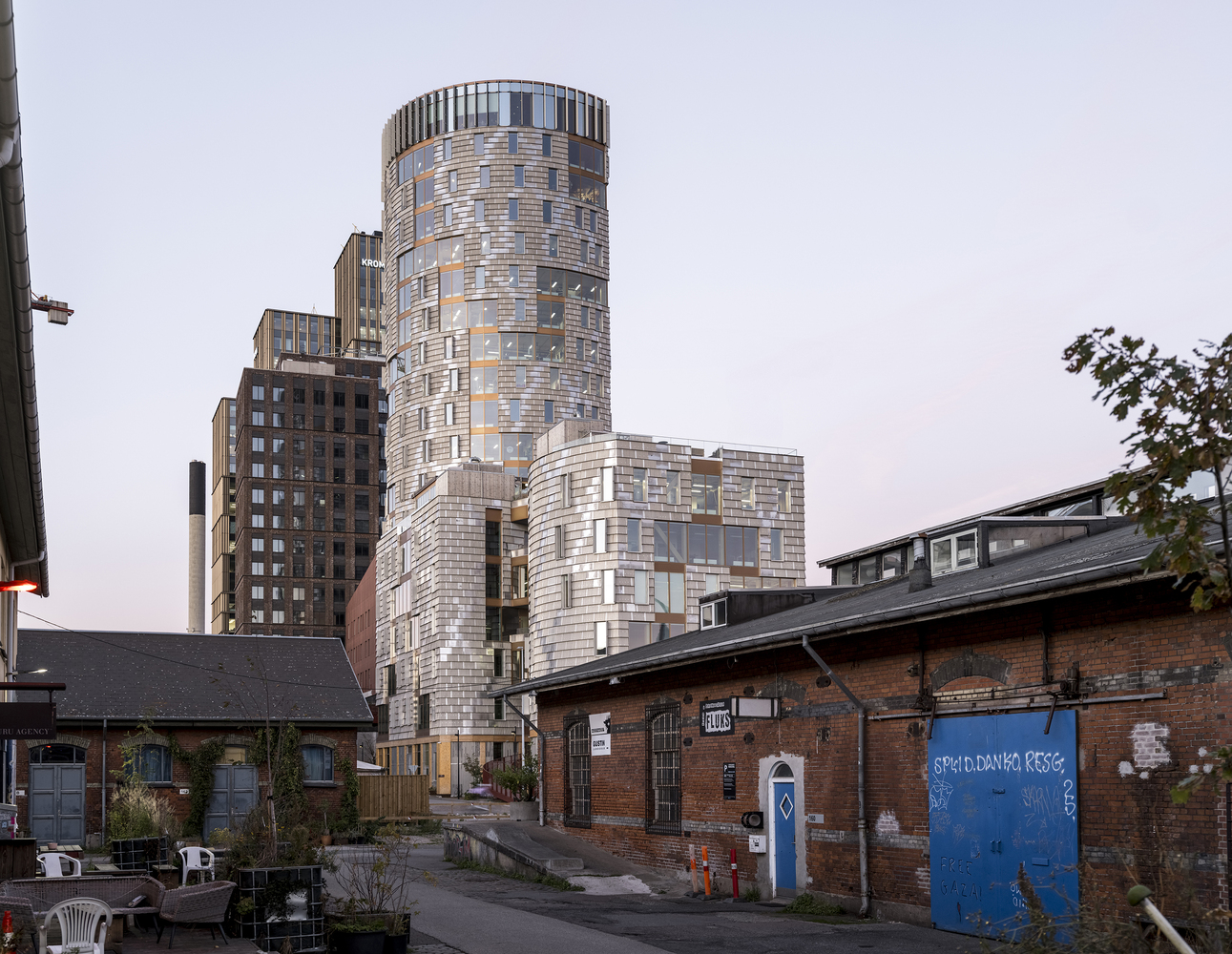
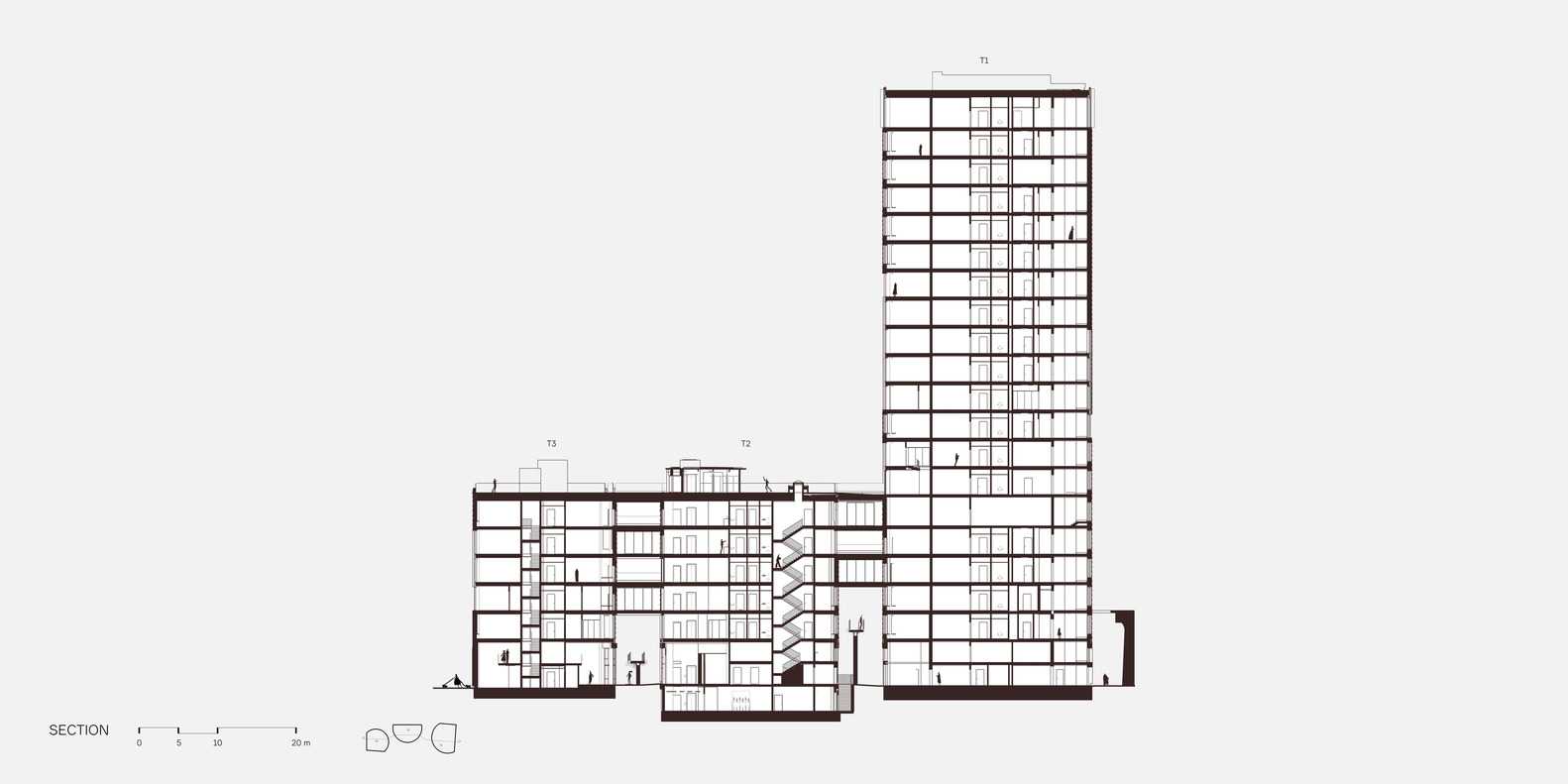
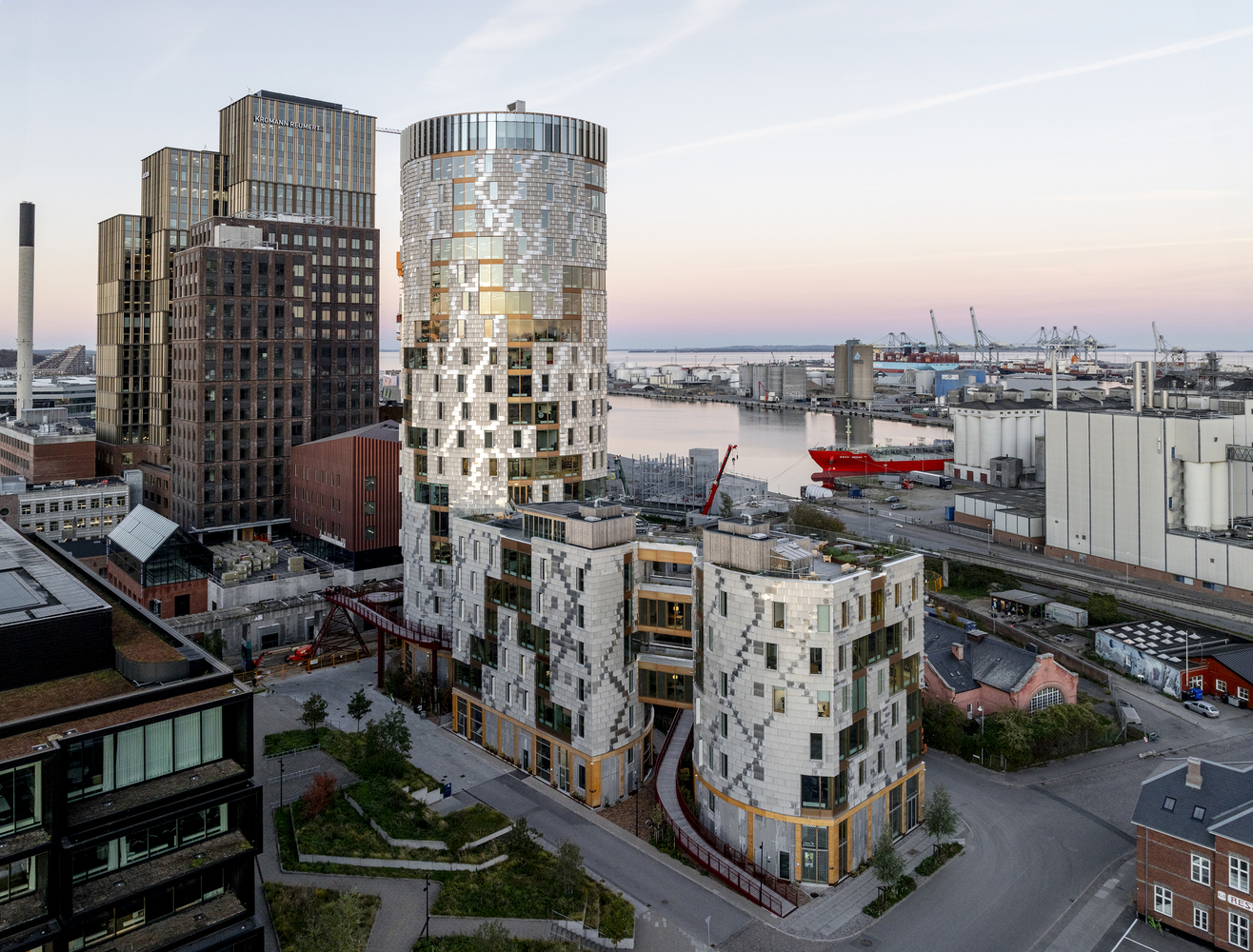
The world's first upcycle timber high-rise and Denmark's tallest timber tower, TRÆ, is a 78-meter beacon of circular construction, showing that large-scale architecture can combine reused materials, biogenic resources, refined aesthetics, and high performance without compromise.
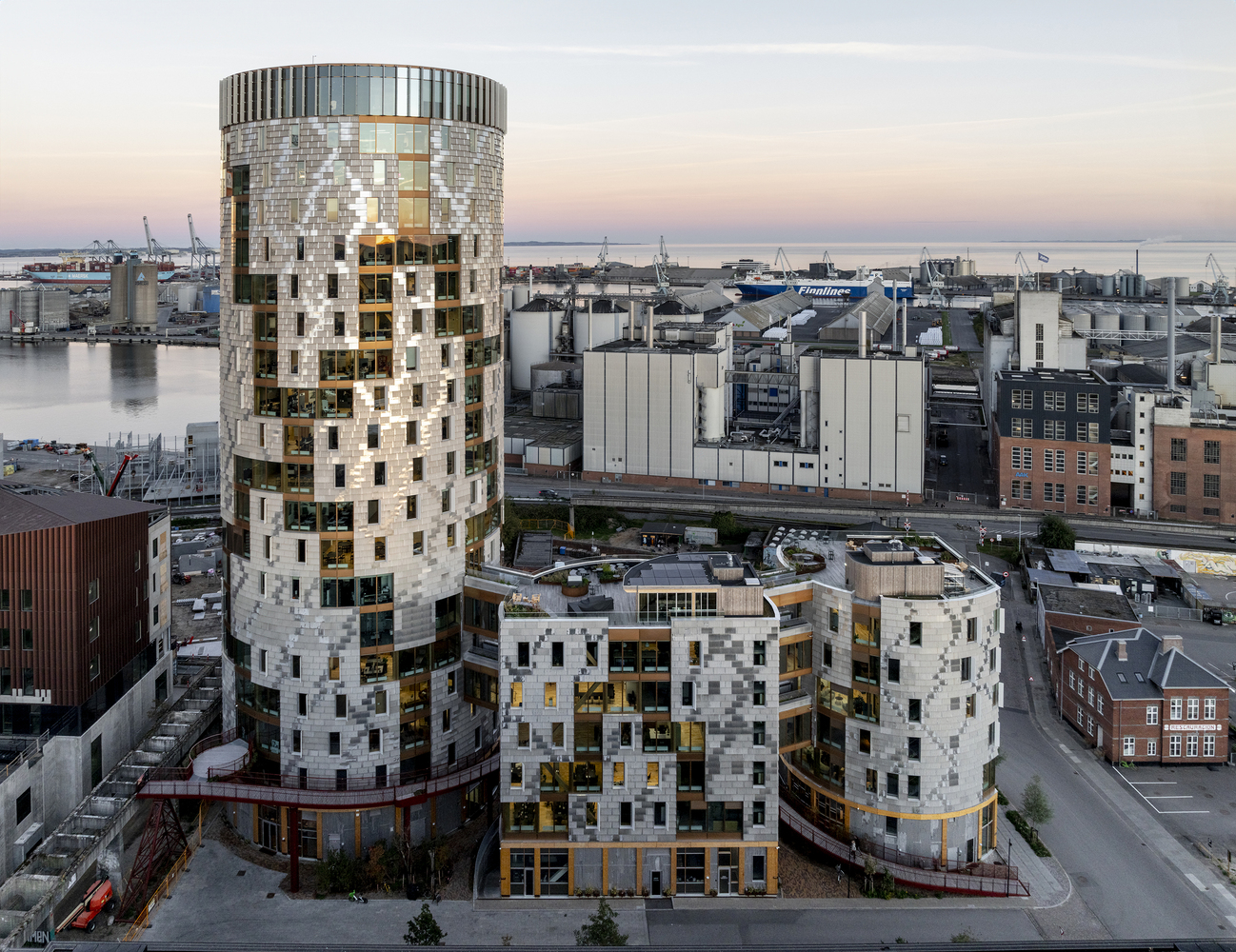
Located in Aarhus' raw harbor area, marked by industrial traces and social inequality, the project sought to merge ecological, social, and architectural renewal.
The site's cultural context - a former industrial zone now transforming into a vibrant urban district - called for a design that could symbolize change and set new standards for sustainable development.
The client's ambition was clear: create a building that accelerates a movement toward circular construction. "If we can do things differently, we can help accelerate a movement. This is what we are trying to accomplish with this project.
We are all in. We truly believe there is a demand for this type of building from businesses. This type of building and living sustainably will become a part of their DNA," says Michael Bruhn, Director of PFA Real Estate.
Conceived as a radical experiment, the project set out to prove that a high-rise could be built from timber and waste without compromising safety, performance, or economy.
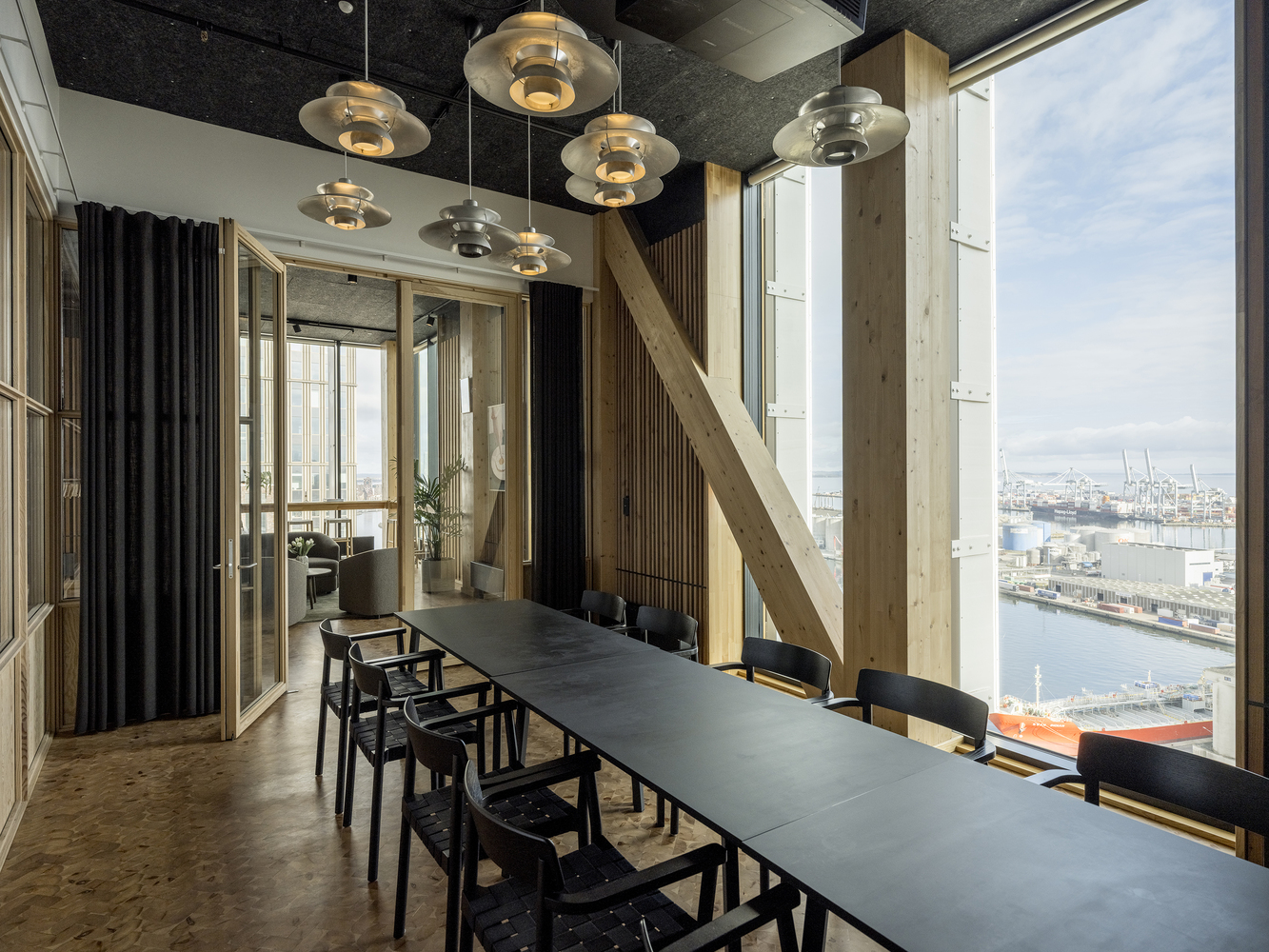
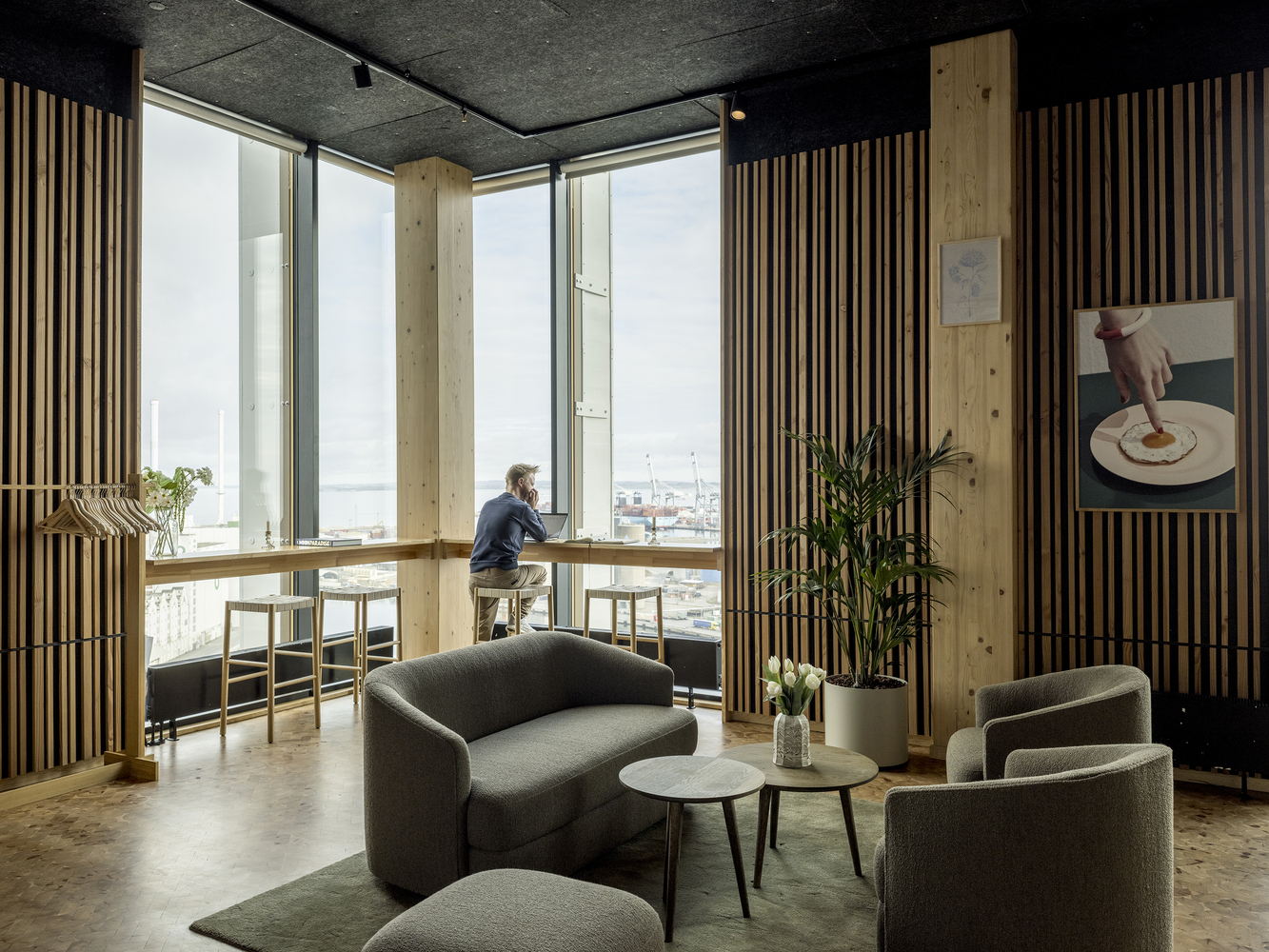
Building Denmark's tallest timber structure meant navigating uncharted territory. With no local precedents for timber towers, the team faced stringent fire and robustness requirements, saline sea air, explosion safety zones, and air pollution from a nearby power plant.
The ambition to integrate as many reused materials as possible added further complexity, demanding new technical standards and regulatory pathways.
Intensive collaboration between architects, engineers, contractors, and municipal authorities was essential, alongside iterative innovation processes and full-scale fire tests for unconventional components such as wind turbine blades repurposed as solar shading.
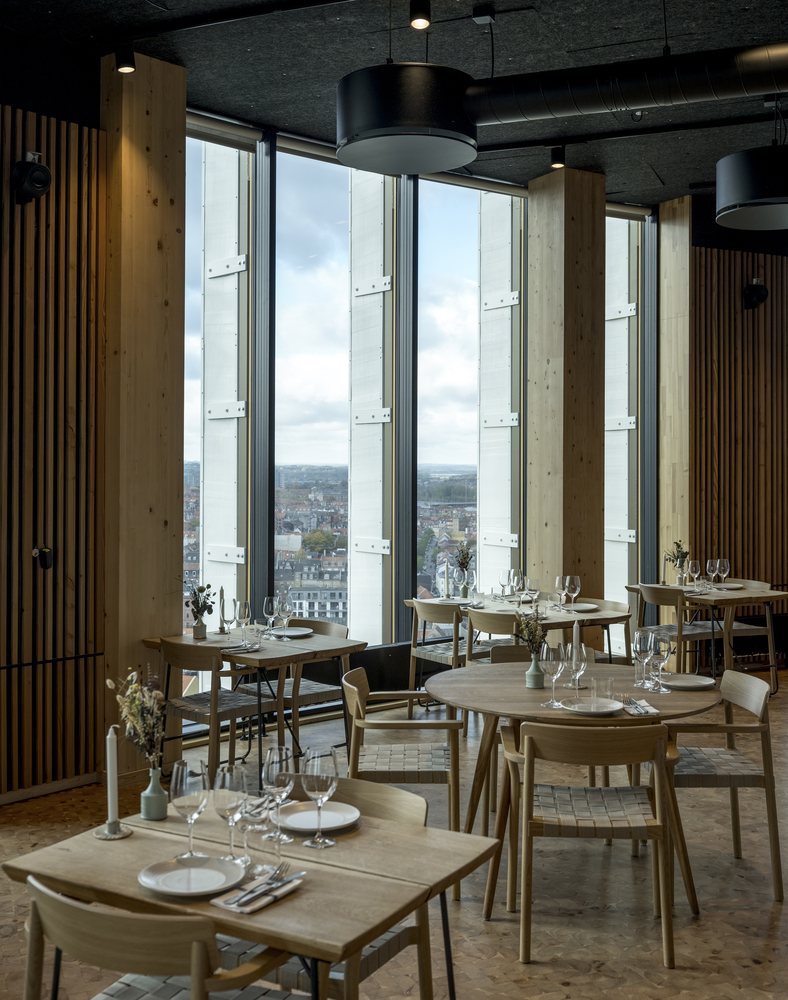
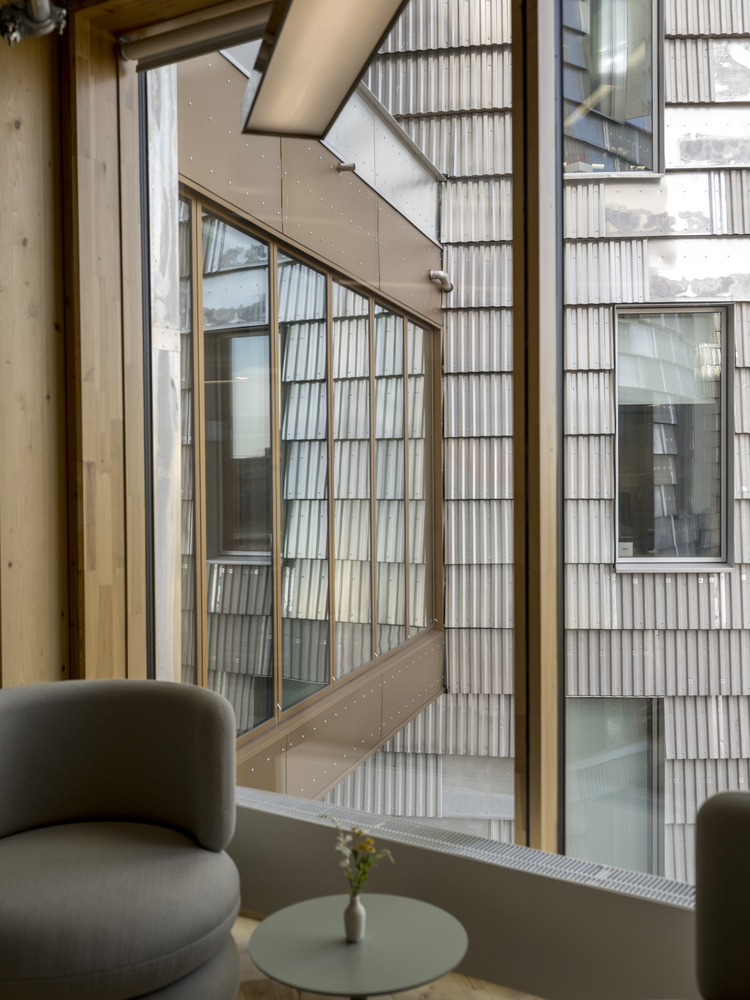
The overall concept aligns with Lendager's philosophy: form follows availability. This approach celebrates the beauty of waste, transforming discarded resources into architectural value.
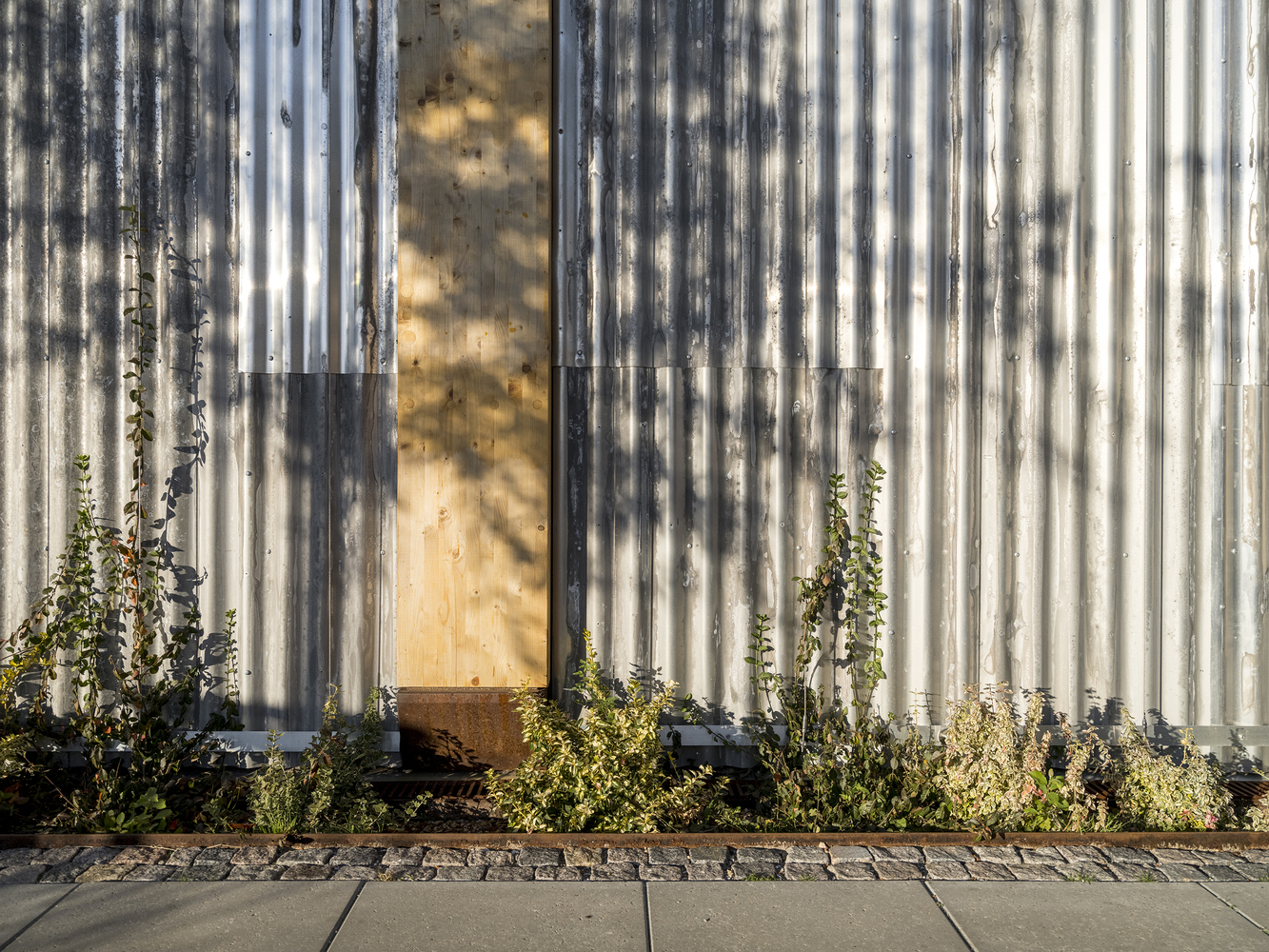
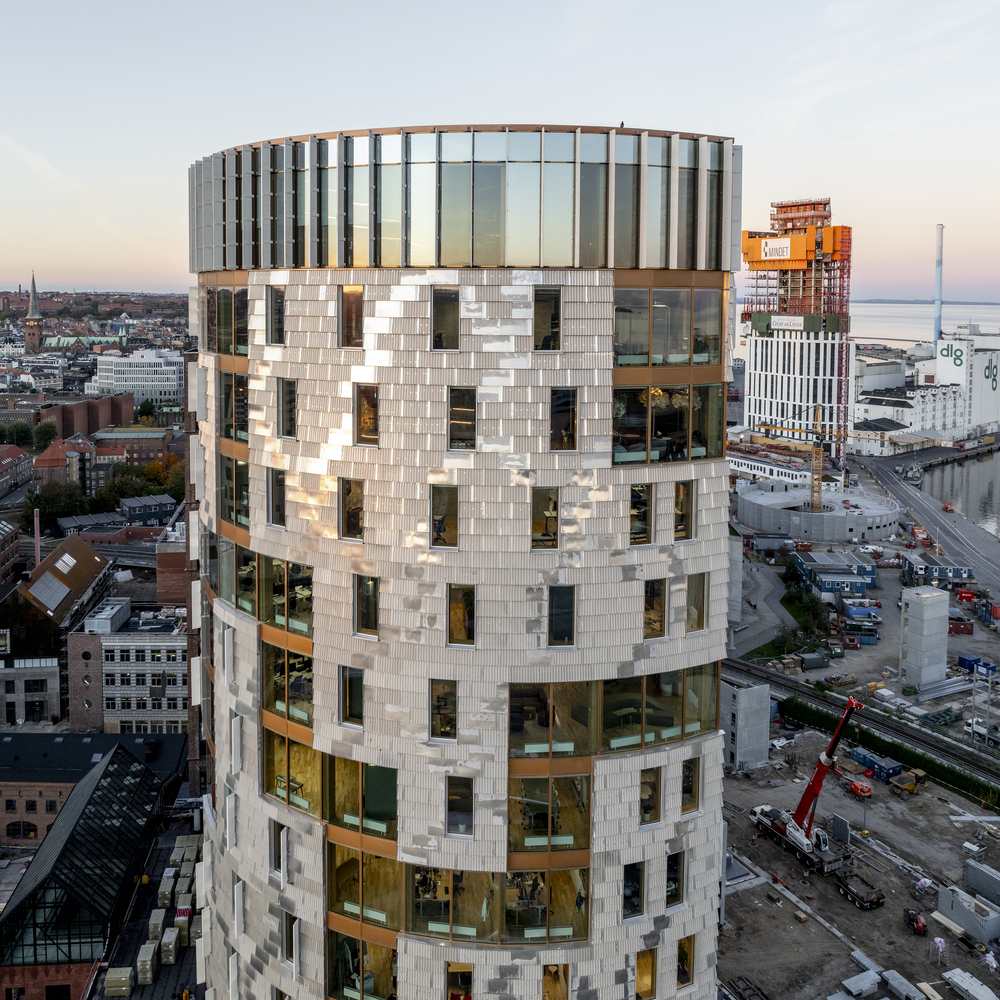
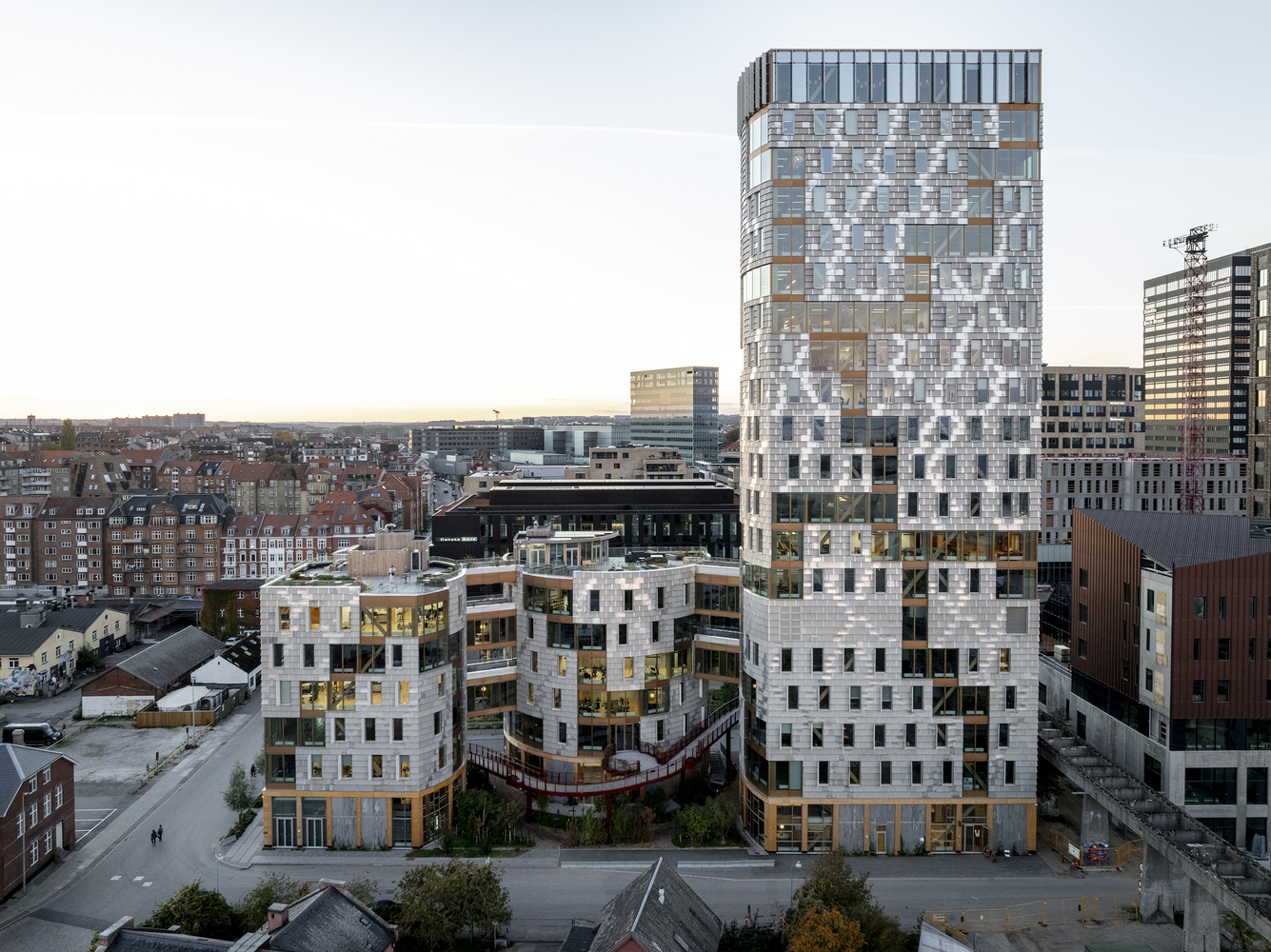
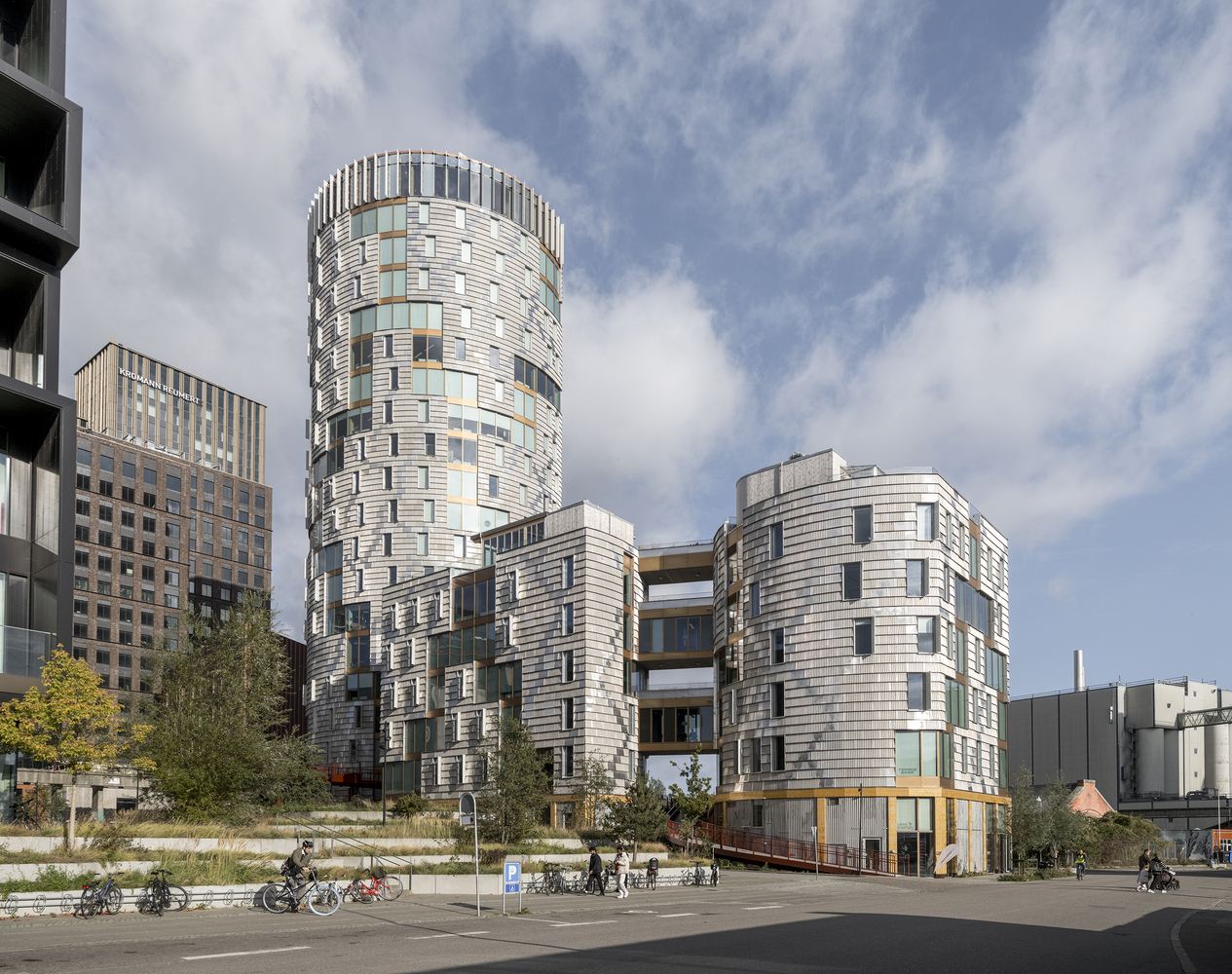
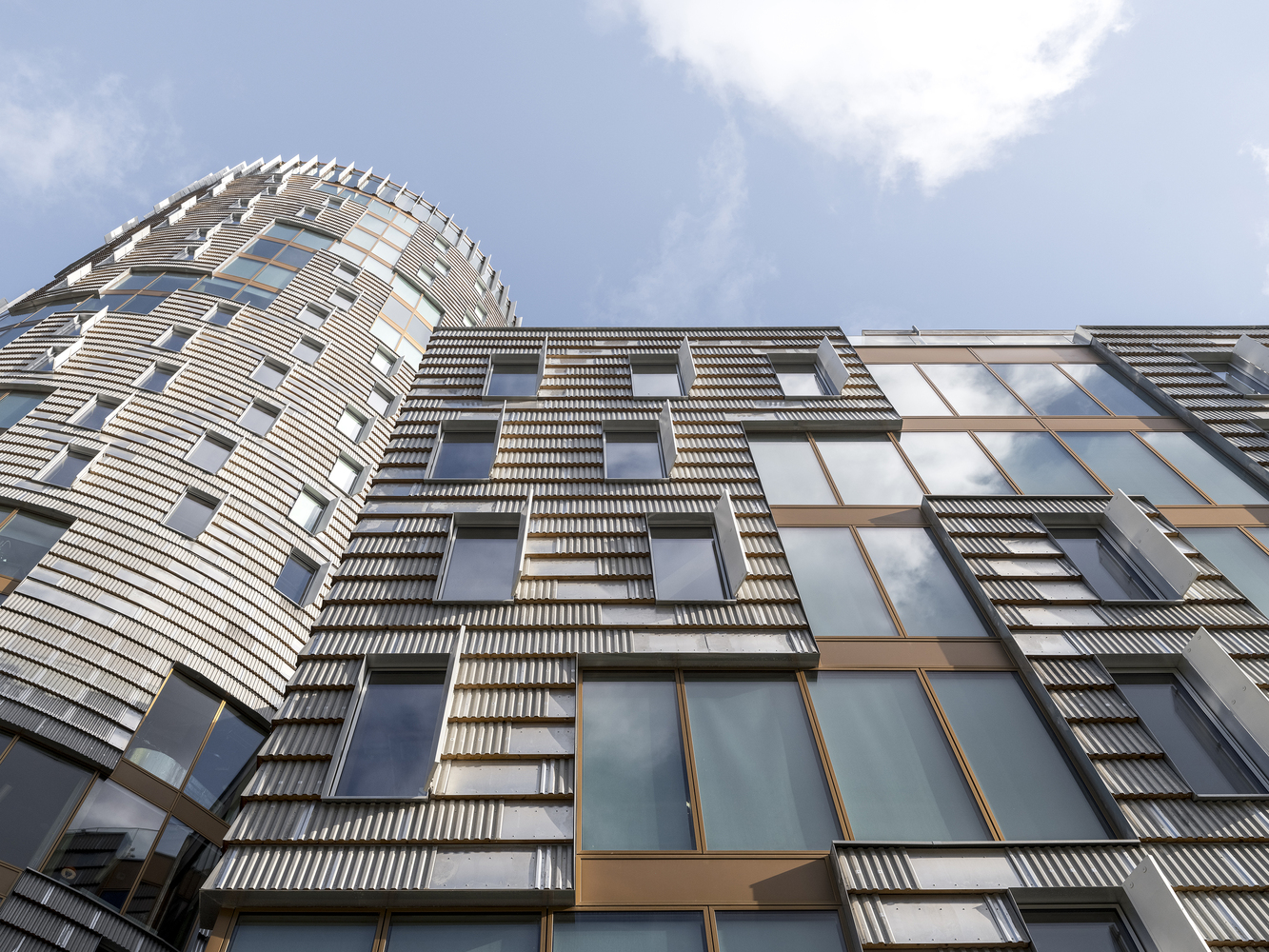
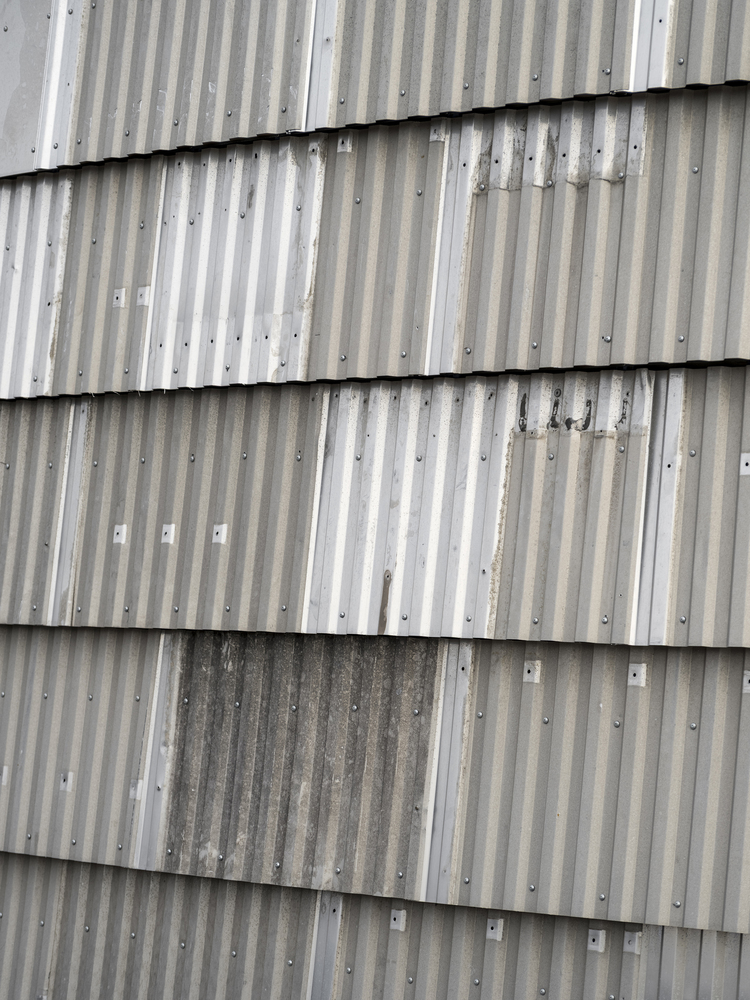
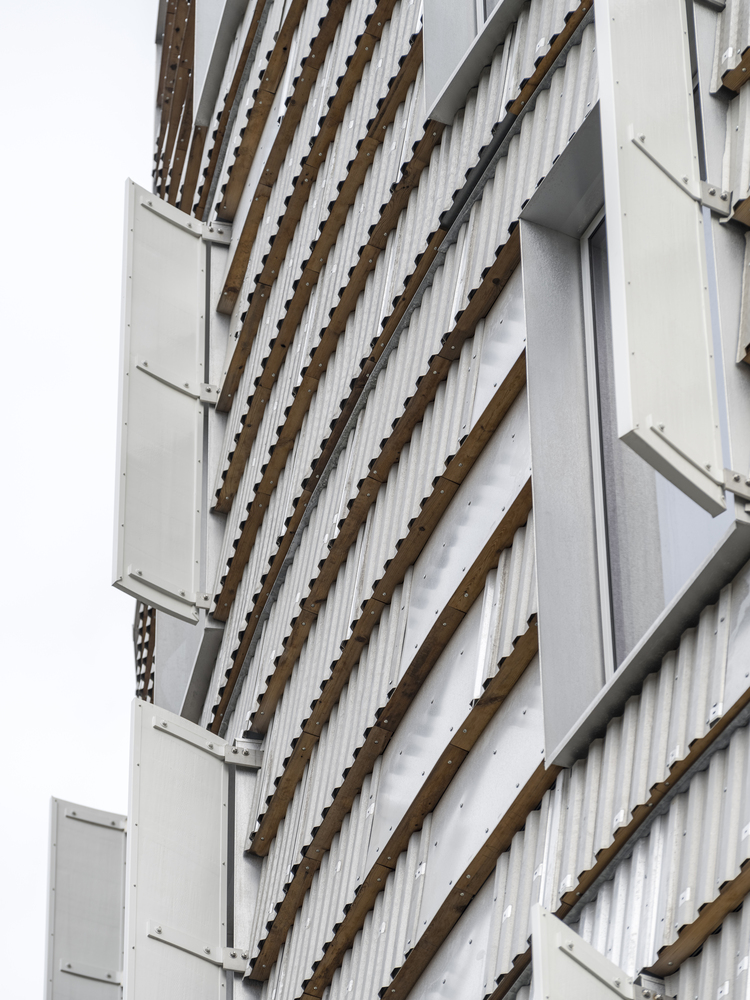
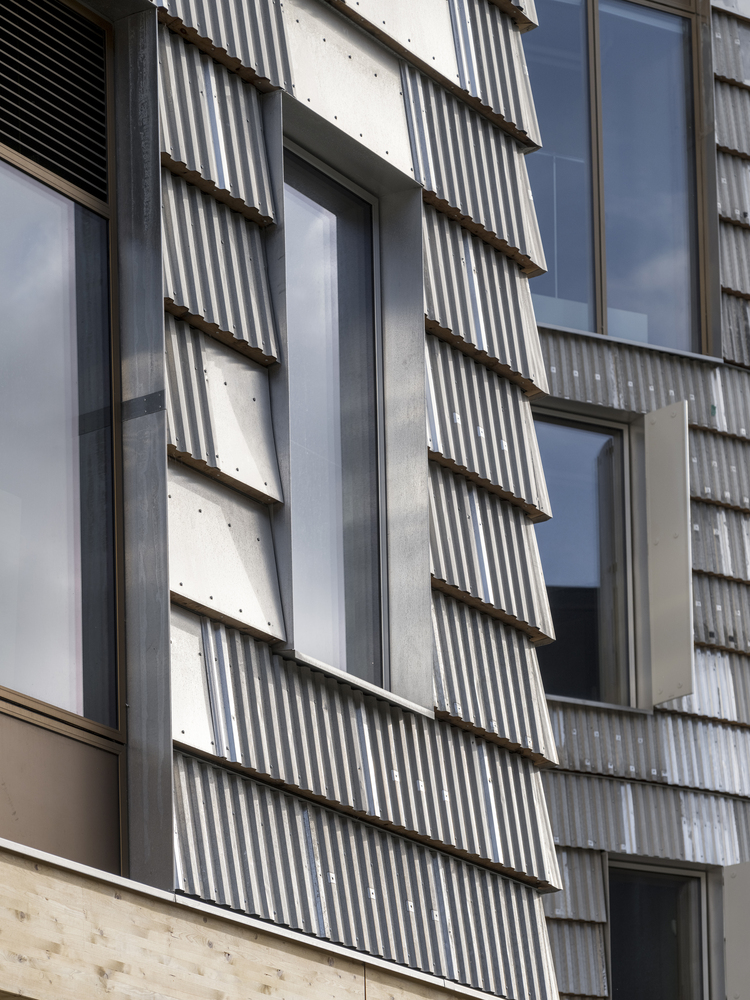
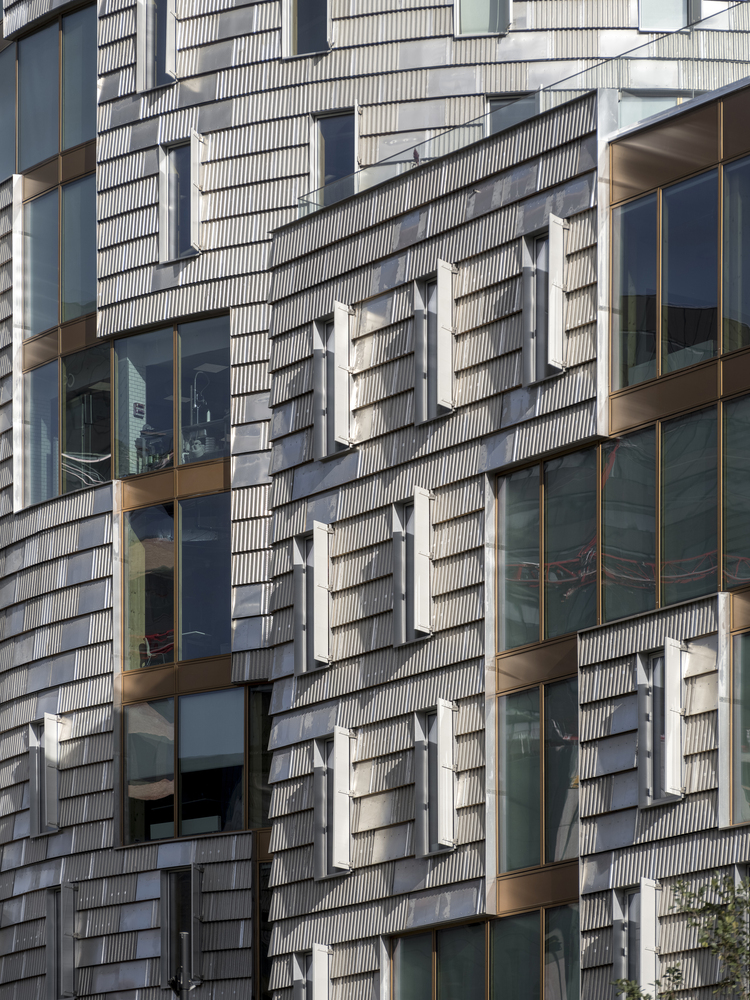
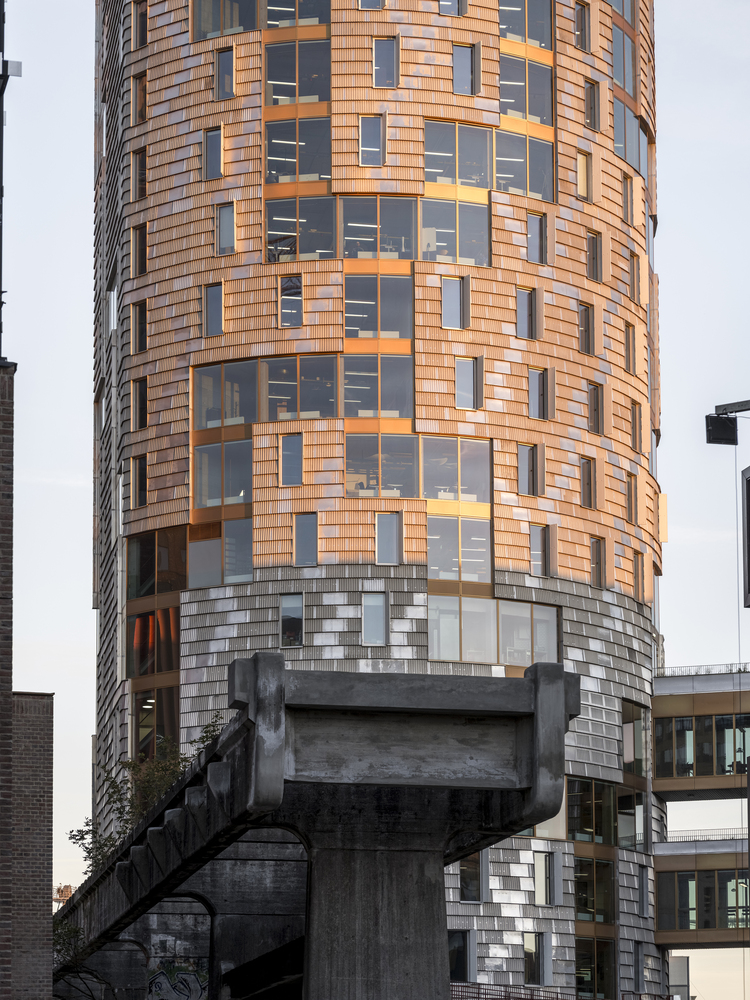
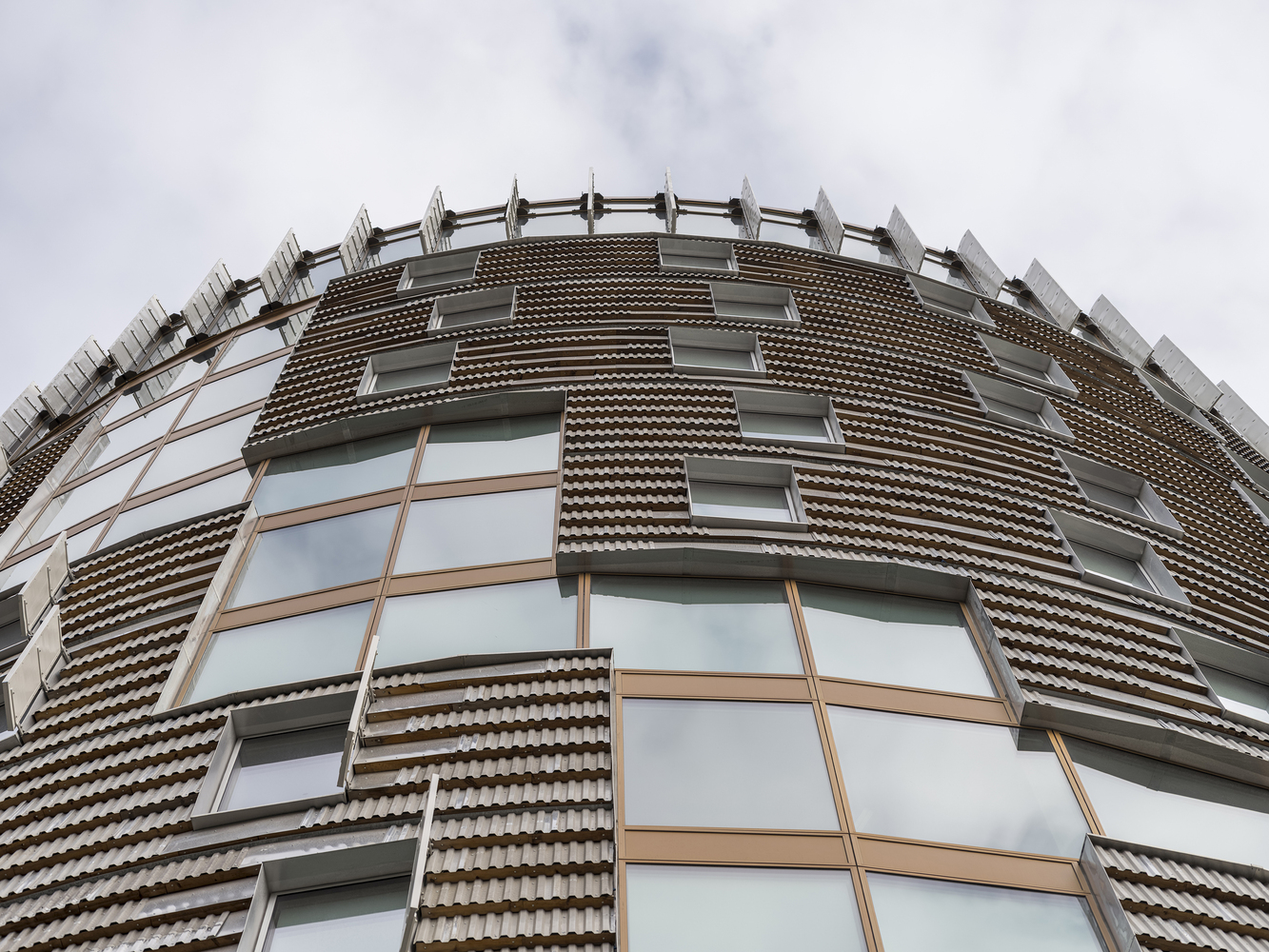
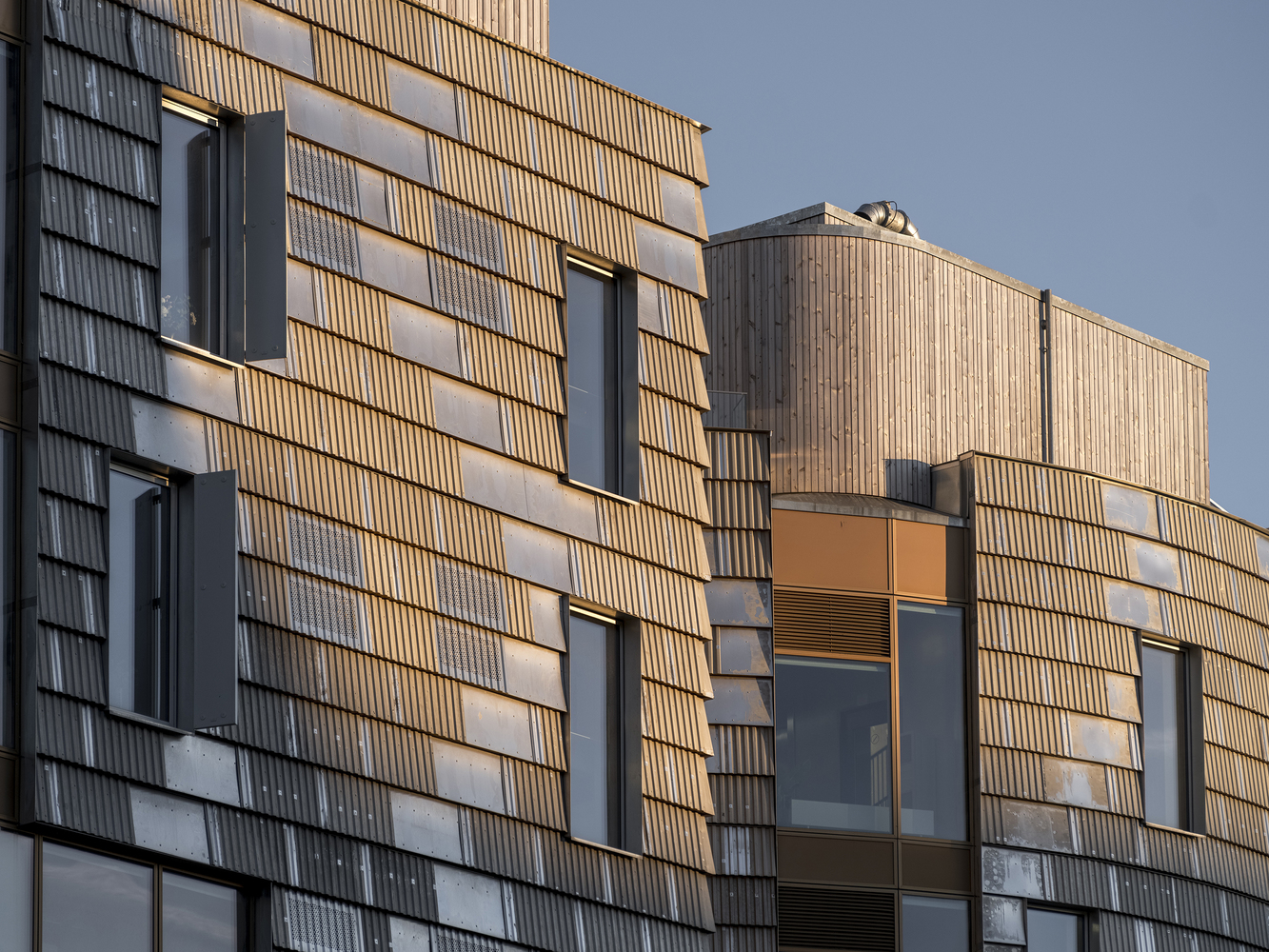
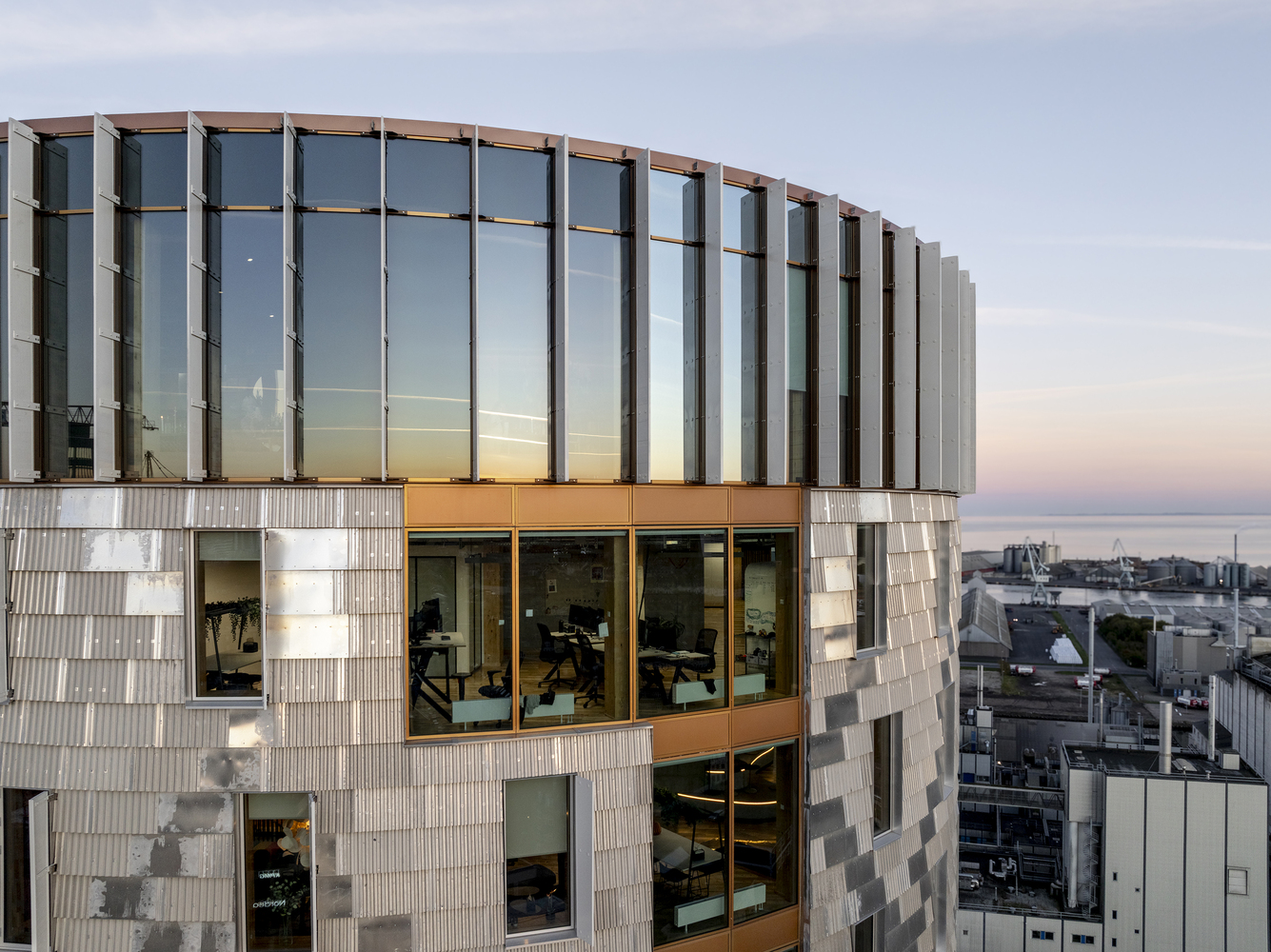
Located in Aarhus's former industrial harbor, TRÆ responds to its raw context with facades made from salvaged aluminium sheets arranged to evoke birch bark: mottled, imperfect, and alive.
This aesthetic choice turns irregularity into identity, creating a tactile, shimmering surface that changes with light and weather.
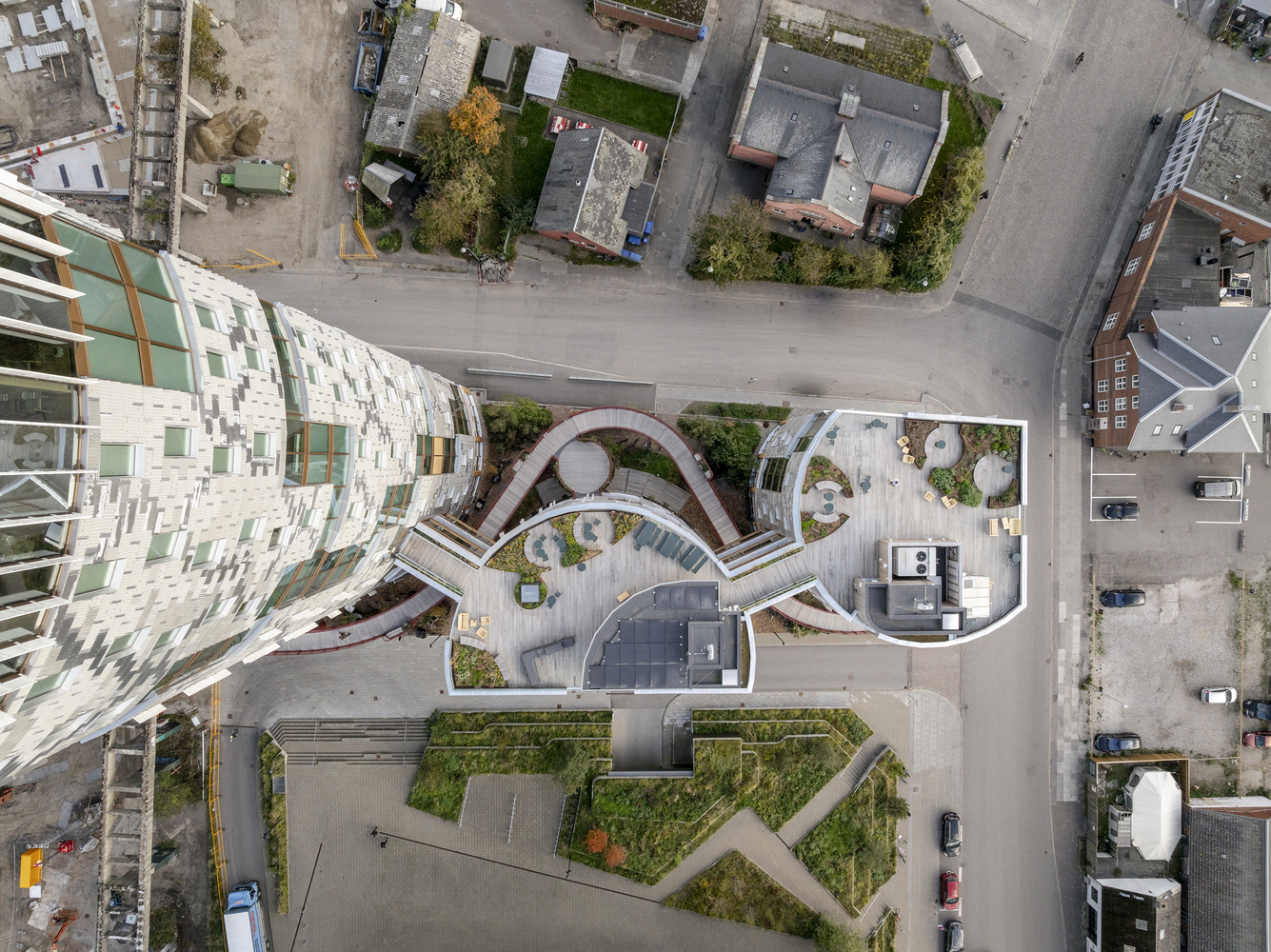
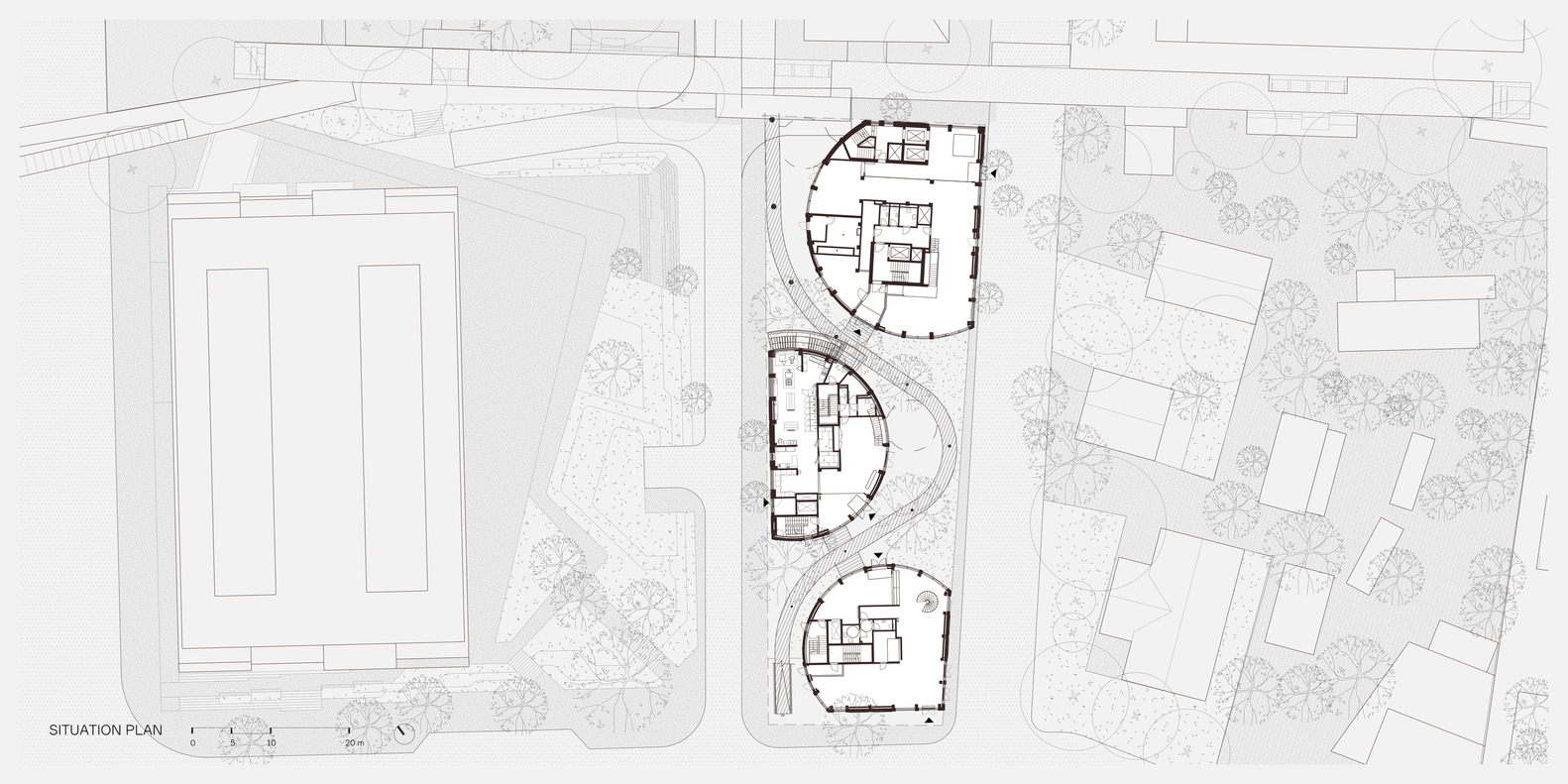
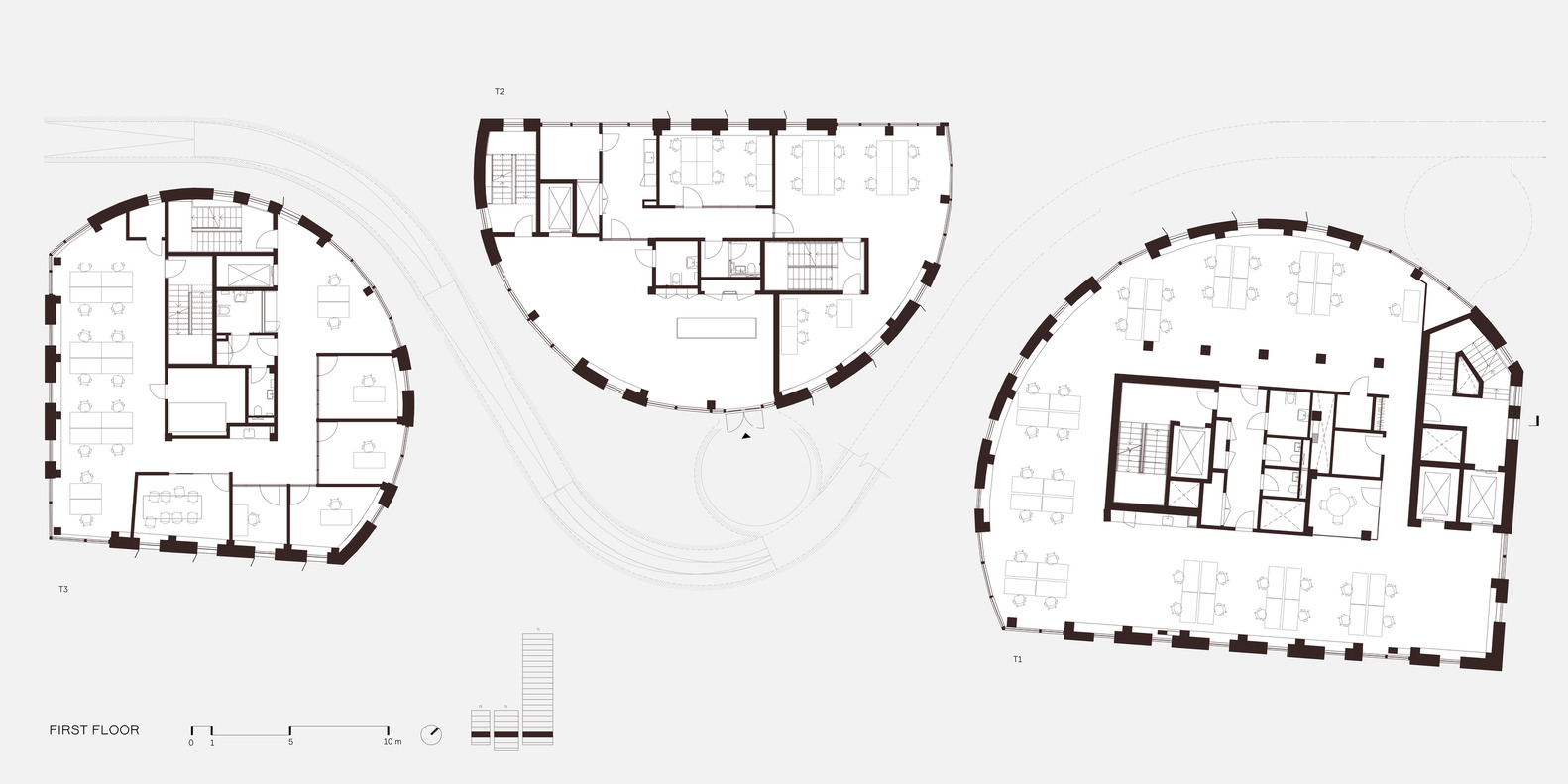
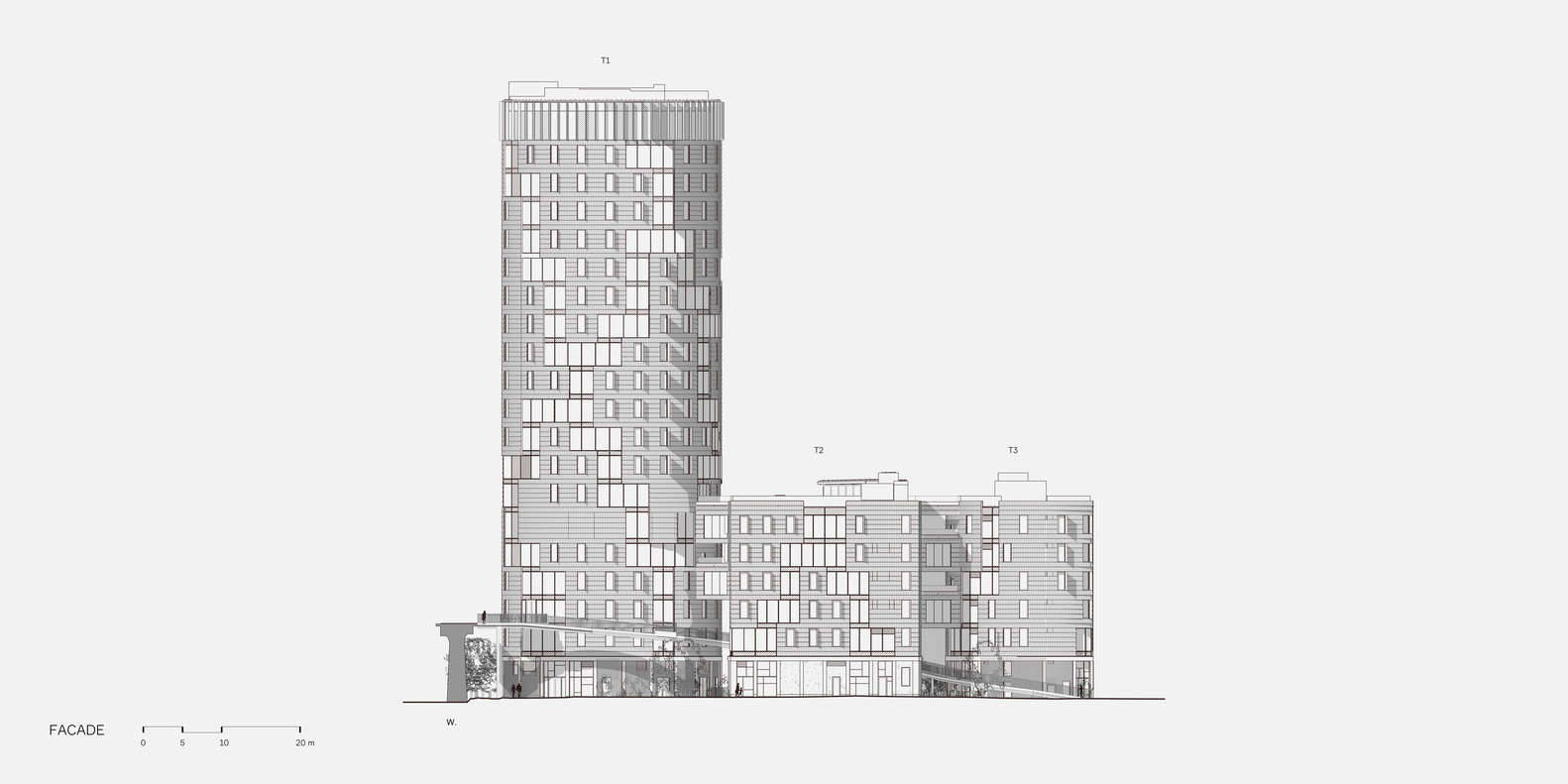
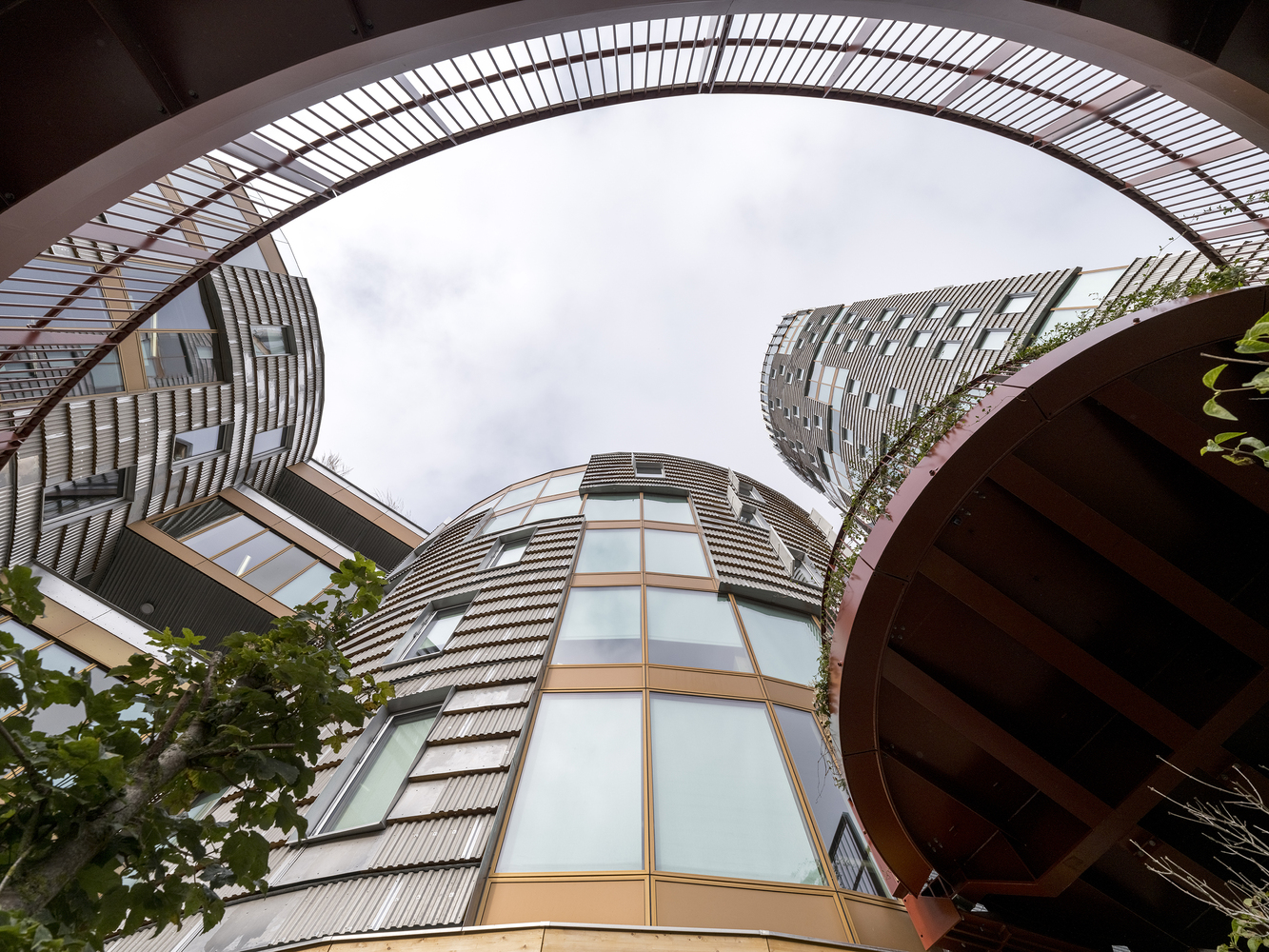
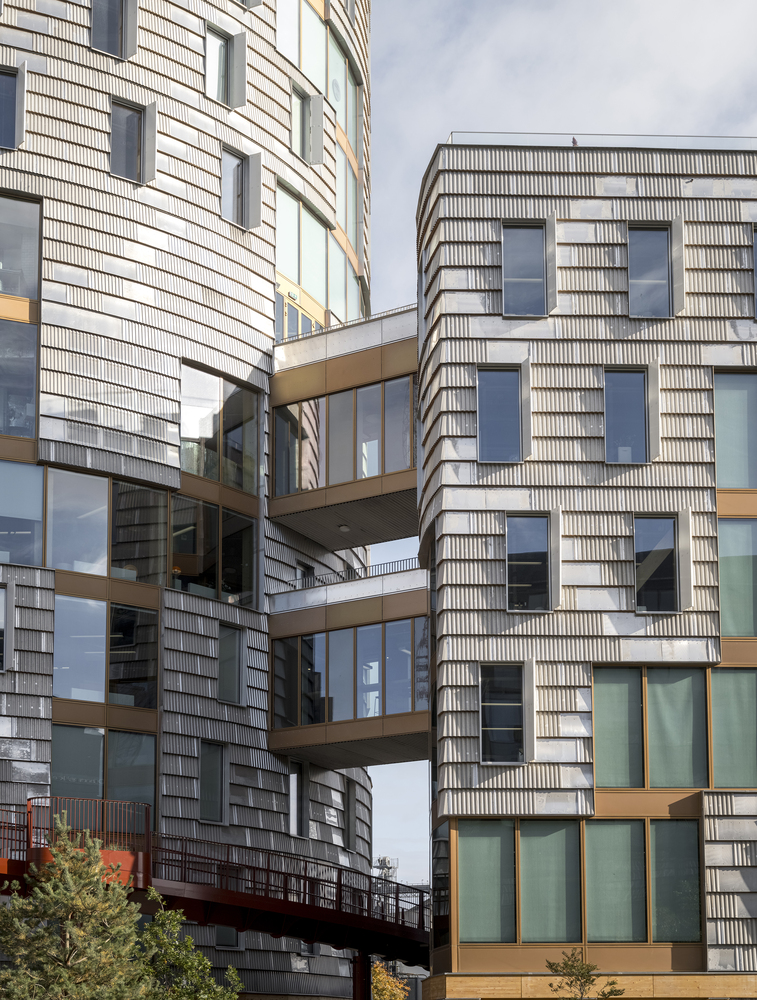
The name TRÆ carries three meanings in Danish: tree, timber, and three - reflecting its biogenic materiality, its ecological ethos, and its three interconnected volumes.
These three rounded towers rise from a tight site, their soft geometry maximizing daylight and creating a sculptural presence on the waterfront.
An undulating pedestrian bridge links the ground level to Aarhus's new highline, weaving the building into the city's fabric and inviting public interaction.
Ground-floor functions, including a restaurant operated by a social initiative, activate the street, while the "snake" walkway draws people into the site.
Beyond architecture, the project embeds social sustainability by involving homeless people in upkeep and hosting a volunteer initiative that provides daily meals for families in need.
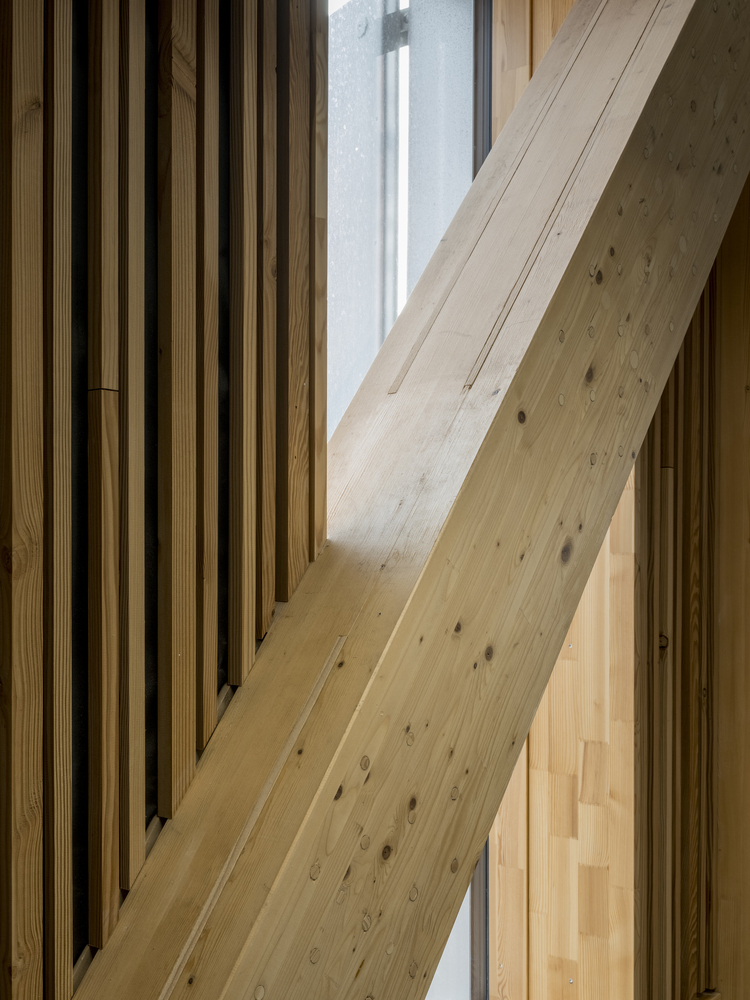
Structurally, TRÆ combines glulam columns and CLT floor slabs, with low-carbon concrete cores ensuring stability and fire safety. Nearly all visible surfaces are reused, upcycled, or biobased.
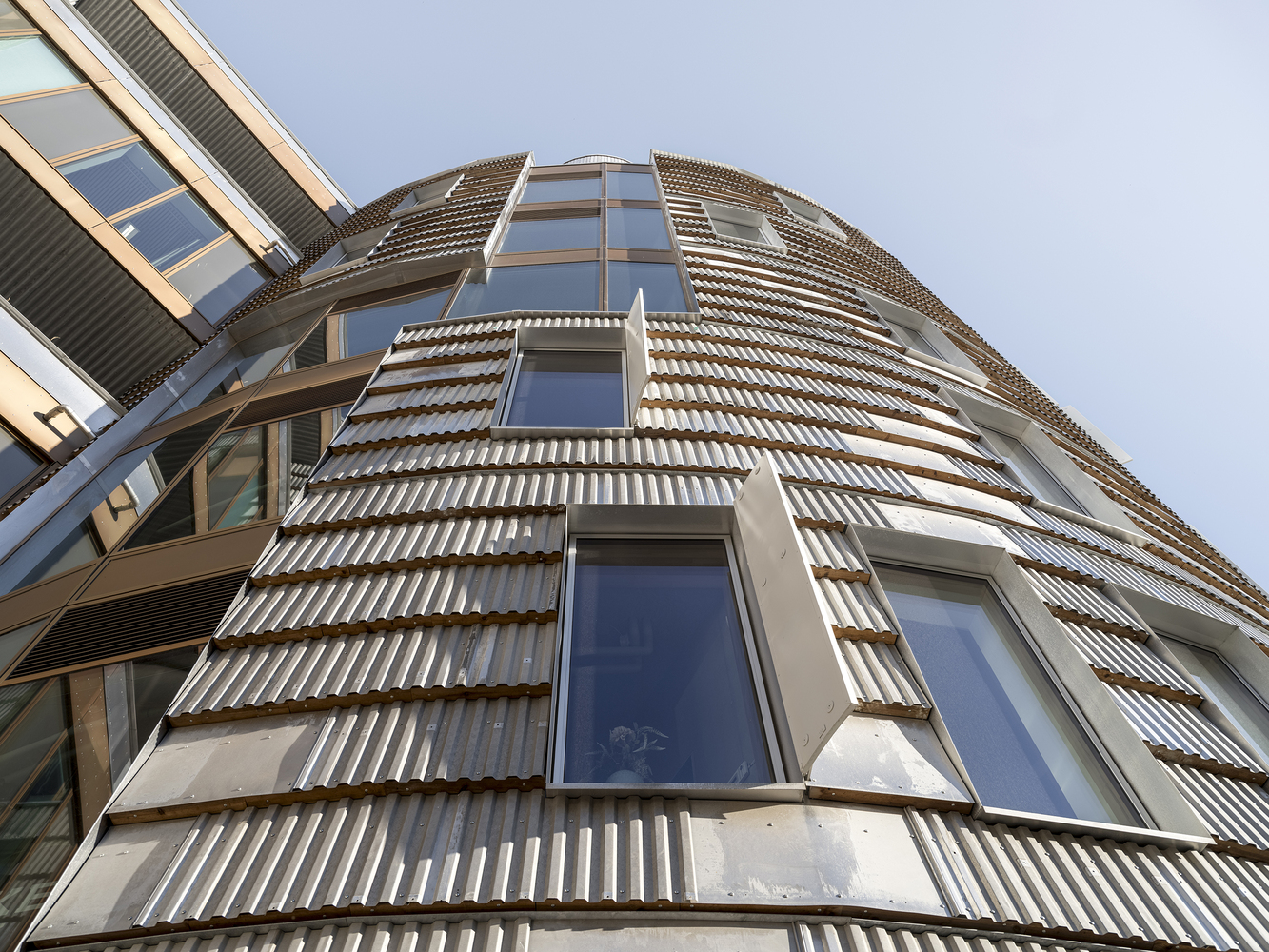
Timber cassettes form the façade, clad with aluminium sheets salvaged from industrial and farm roofs and water-damaged post boxes.
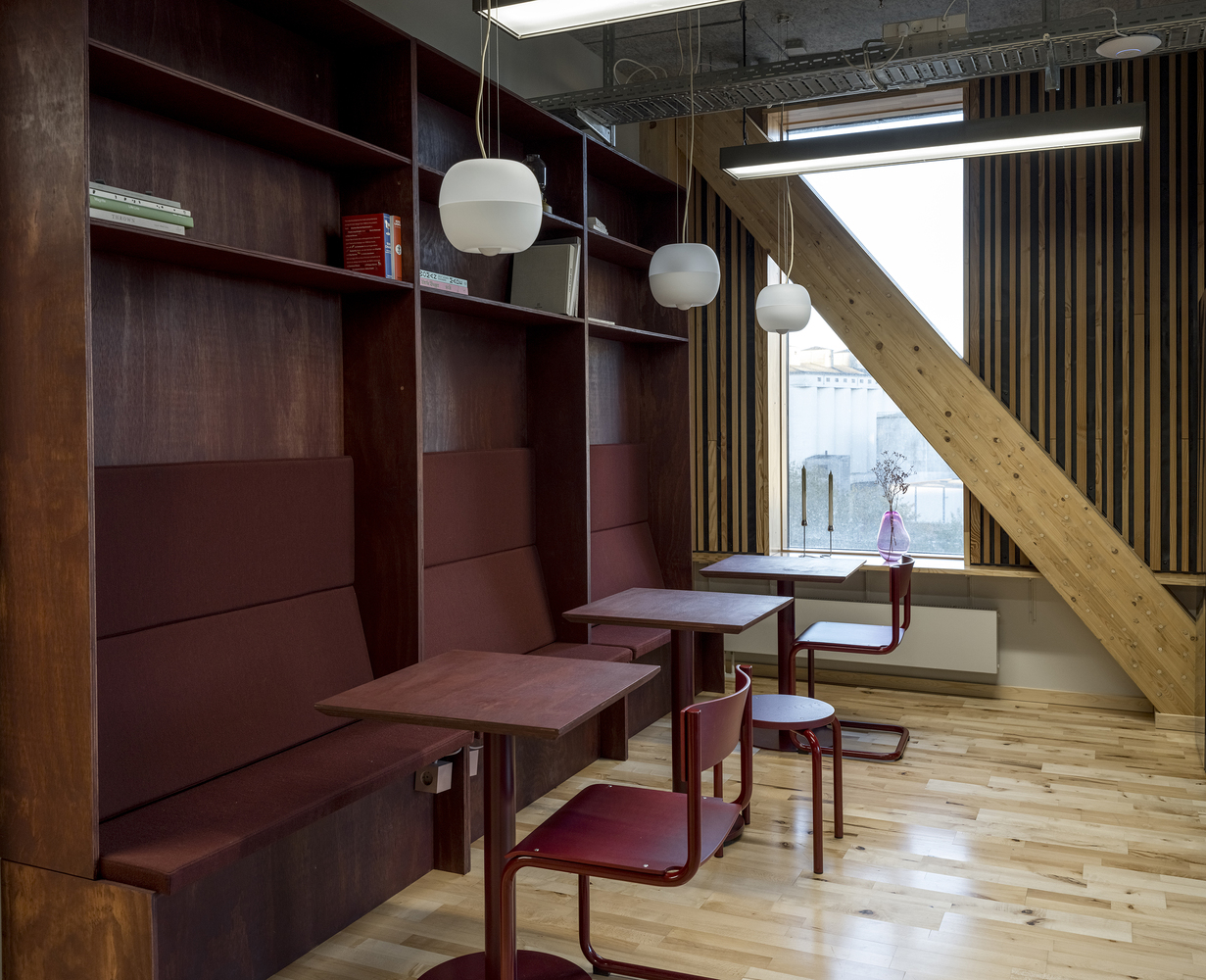
Wind turbine blades provide solar shading, while reused windows, waste textiles, and PET felt form acoustic surfaces.
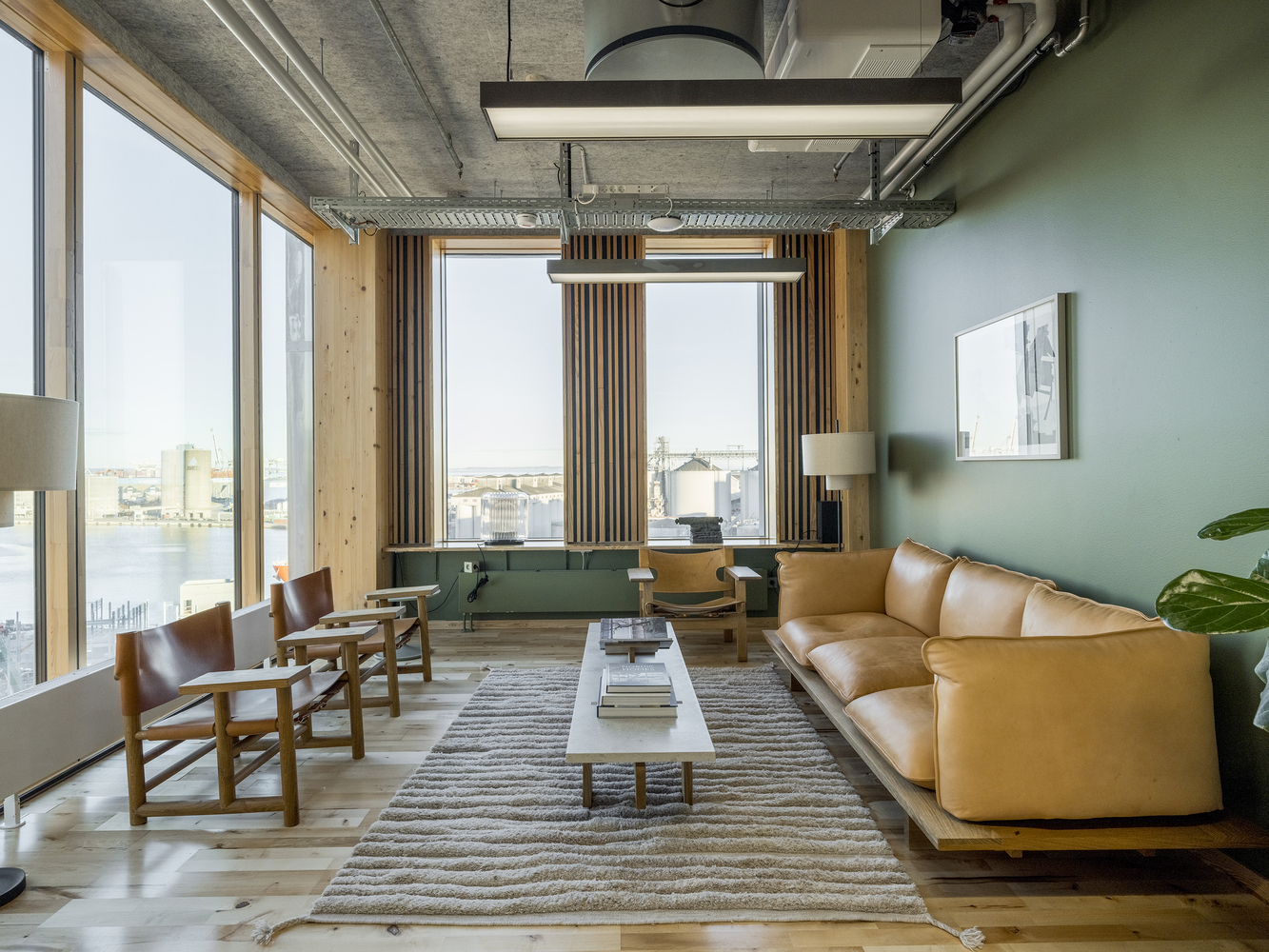
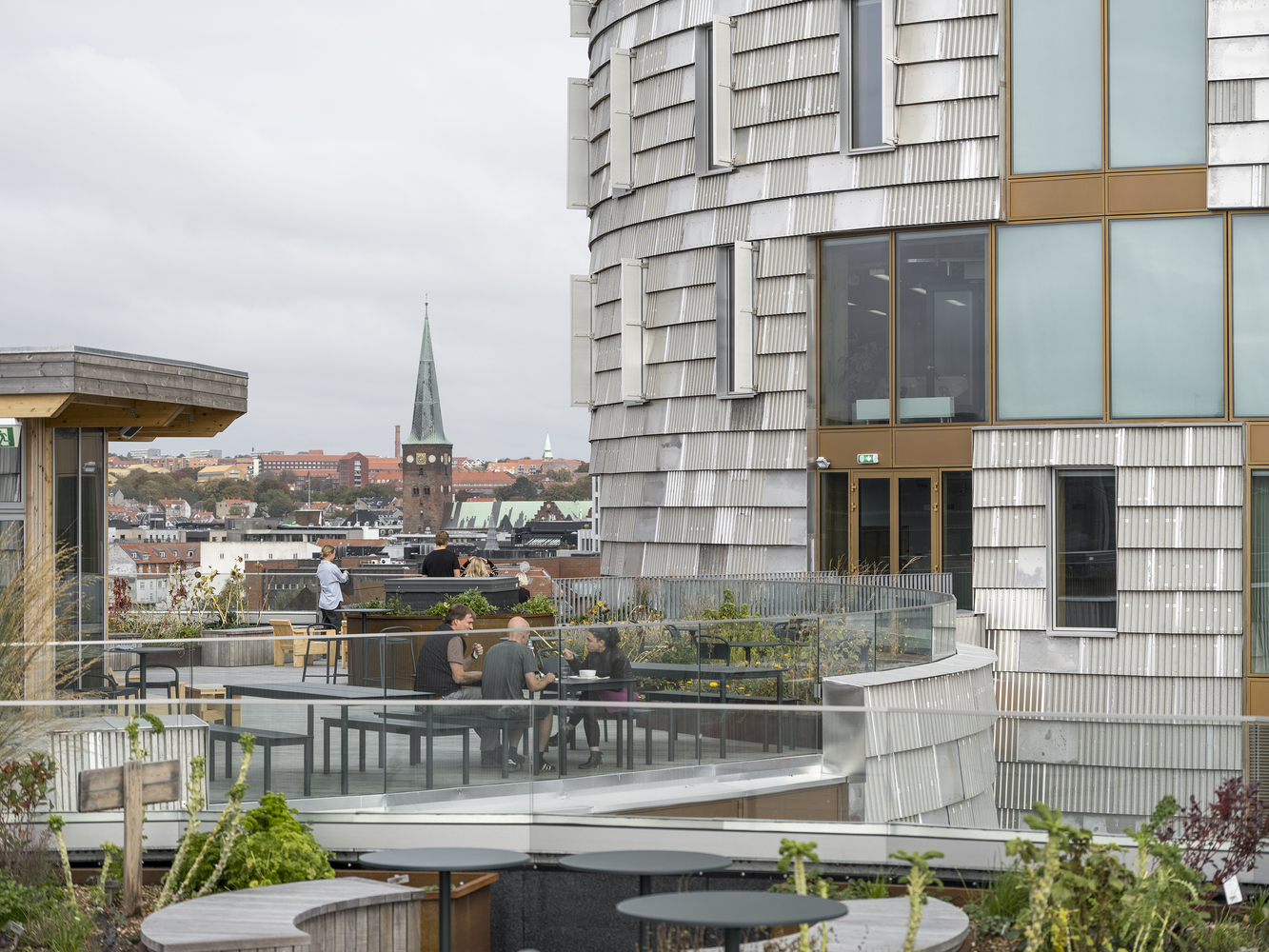
Interior finishes include reclaimed timber flooring and panels, while mature trees relocated from municipal sites reinforce the "tree" concept and create an immediate green setting. User studies and indoor climate measurements confirm that the spaces feel healthy and inspiring.
Employees highlight the tactile quality of reused and biogenic materials as creating a sense of calm and authenticity, while natural textures and daylight contribute to a perception of better air quality.
Beyond comfort, the innovative concept itself is seen as motivating and forward-thinking, giving users a sense of pride in working within a building that challenges conventions and demonstrates a new way of building.
TRÆ demonstrates that circularity can scale. Life Cycle Assessment shows a 30–50% reduction in embodied carbon compared to a conventional concrete high-rise.
By merging technical innovation with social responsibility, TRÆ sets new benchmarks for regulatory compliance and material reuse in high-rise construction.
Its three "Living Lab" floors further explore biogenic and upcycled materials, generating insights for future circular design and inviting dialogue between users, designers, and researchers.
Beyond its environmental performance, TRÆ contributes to the cultural and social fabric of Aarhus. It transforms a former industrial harbor into a vibrant urban setting, offering tactile façades that shimmer with salvaged aluminium and public spaces that invite interaction.
The building is more than a workplace; it is a statement of possibility. By turning waste into architectural value and reducing carbon at scale, it signals a new paradigm for architecture worldwide.
'TRÆ does not necessarily adhere to a classic architectural or beauty ideal.
It has a different agenda and stands as an energetic reckoning with "well-tested solutions" and zero-error culture, a passionate 1:1 experiment that sparks discussions about what architecture can and should be in our time.'
- Excerpt from the jury of Aarhus Architecture Awards 2025, where TRÆ was awarded "Best Building"