Front Place Chiyoda Ichibancho
FRONT PLACE CHIYODA ICHIBANCHO
Mitsubishi Jisho Design Inc.
ARCHITECTS
Mitsubishi Jisho Design Inc.
PHOTOGRAPHS
Katsuhisa Kida / FOTOTECA
AREA
678 m²
YEAR
2024
LOCATION
Tokyo, Japan
CATEGORY
Offices
English description provided by the architects.
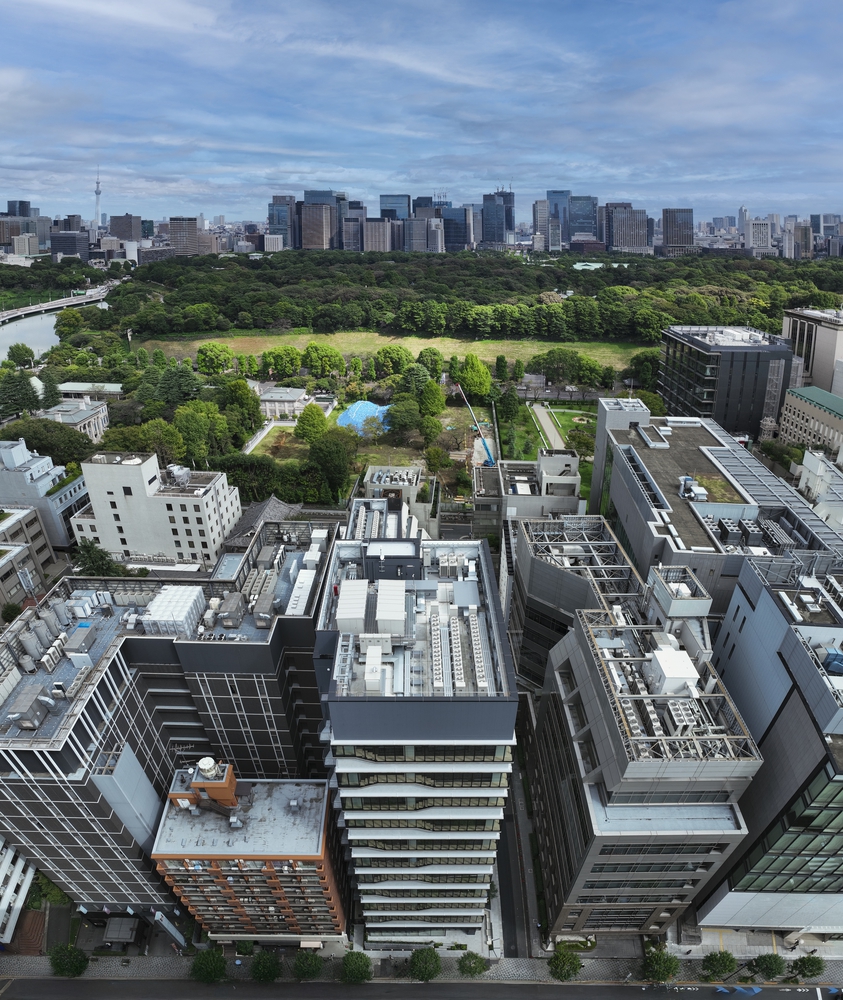
This tenant office building stands just steps from a subway station in the Ichibancho district of Tokyo's Chiyoda Ward—an area near the Imperial Palace (the former Edo Castle), steeped in history and culture.
Conventional tenant office buildings generally house multiple companies within a single structure, yet their facades fail to reflect the diversity within.
On top of this, they lack a sense of connection with the surrounding community and contribute little to the streetscape or the character of the local neighborhood.
This project addresses these problems by creating a building that connects people to the surrounding urban environment while accommodating increasingly diverse work styles and values.
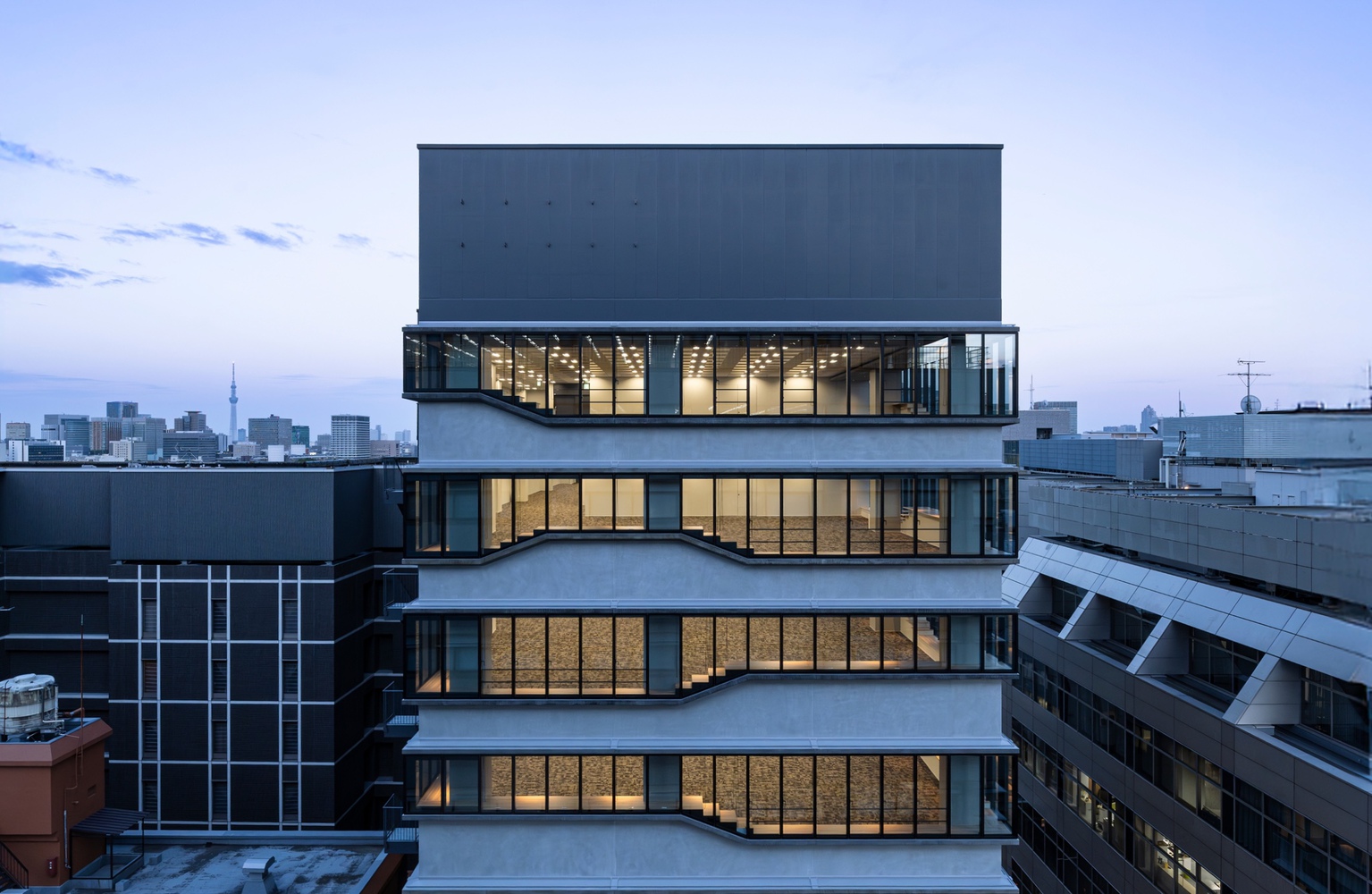
To achieve this, two key architectural elements were incorporated: interior spaces defined by projecting bay windows and an open exterior space.
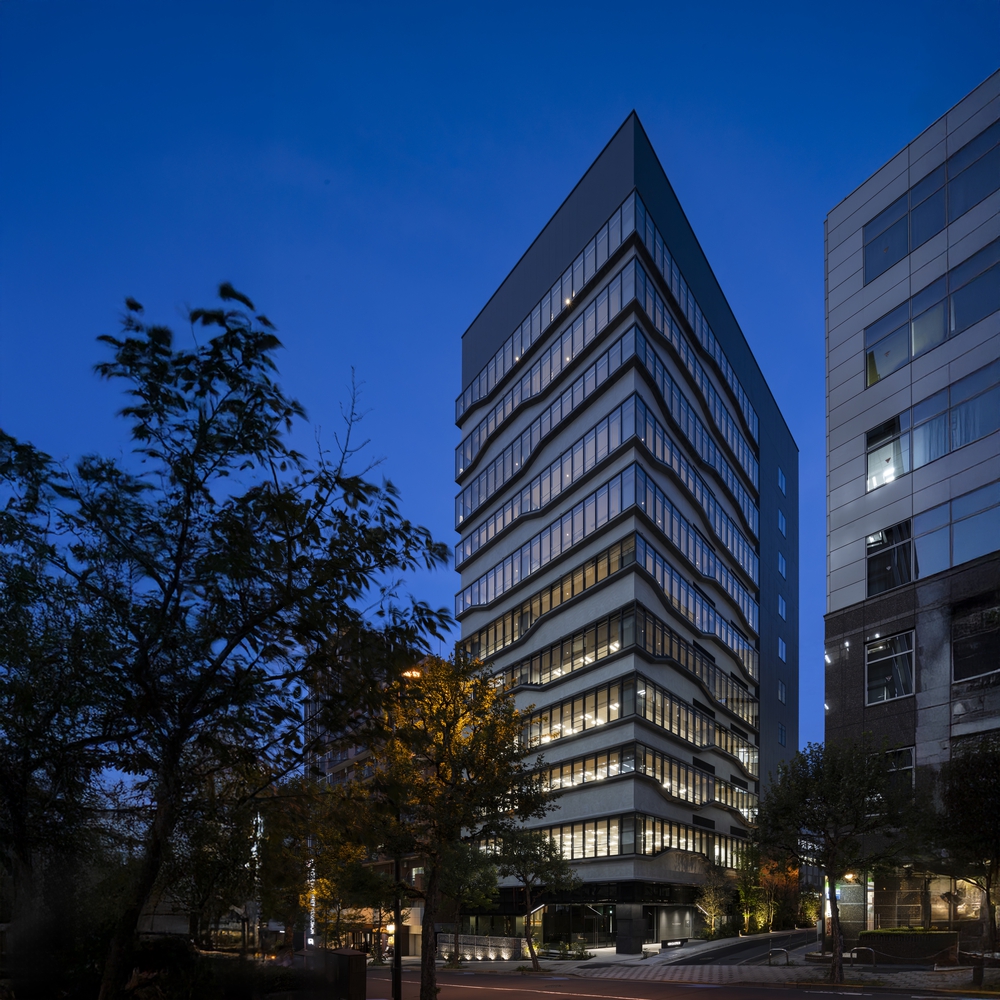
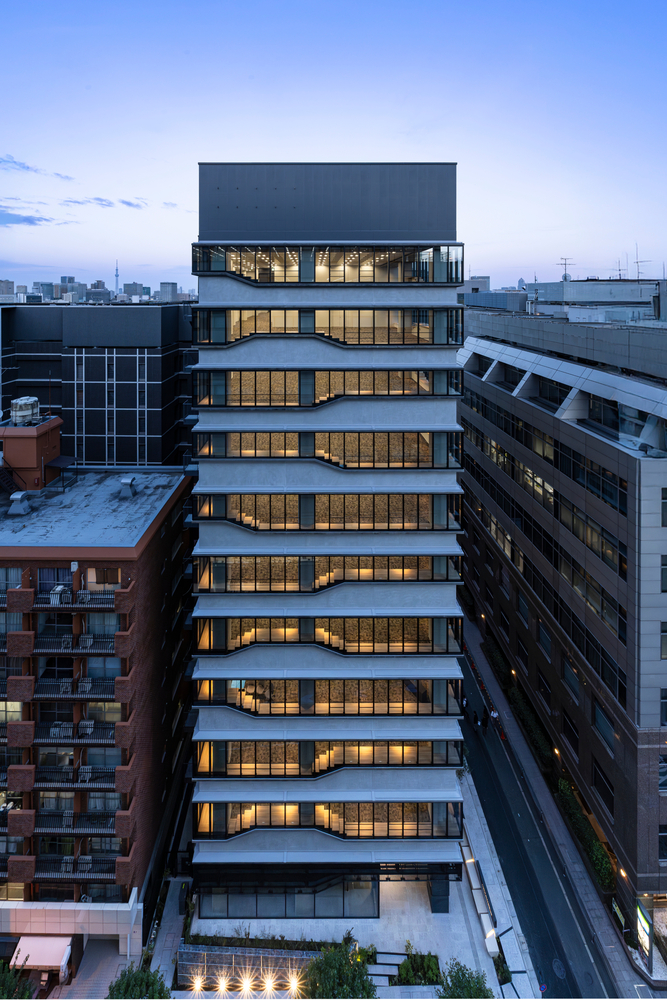
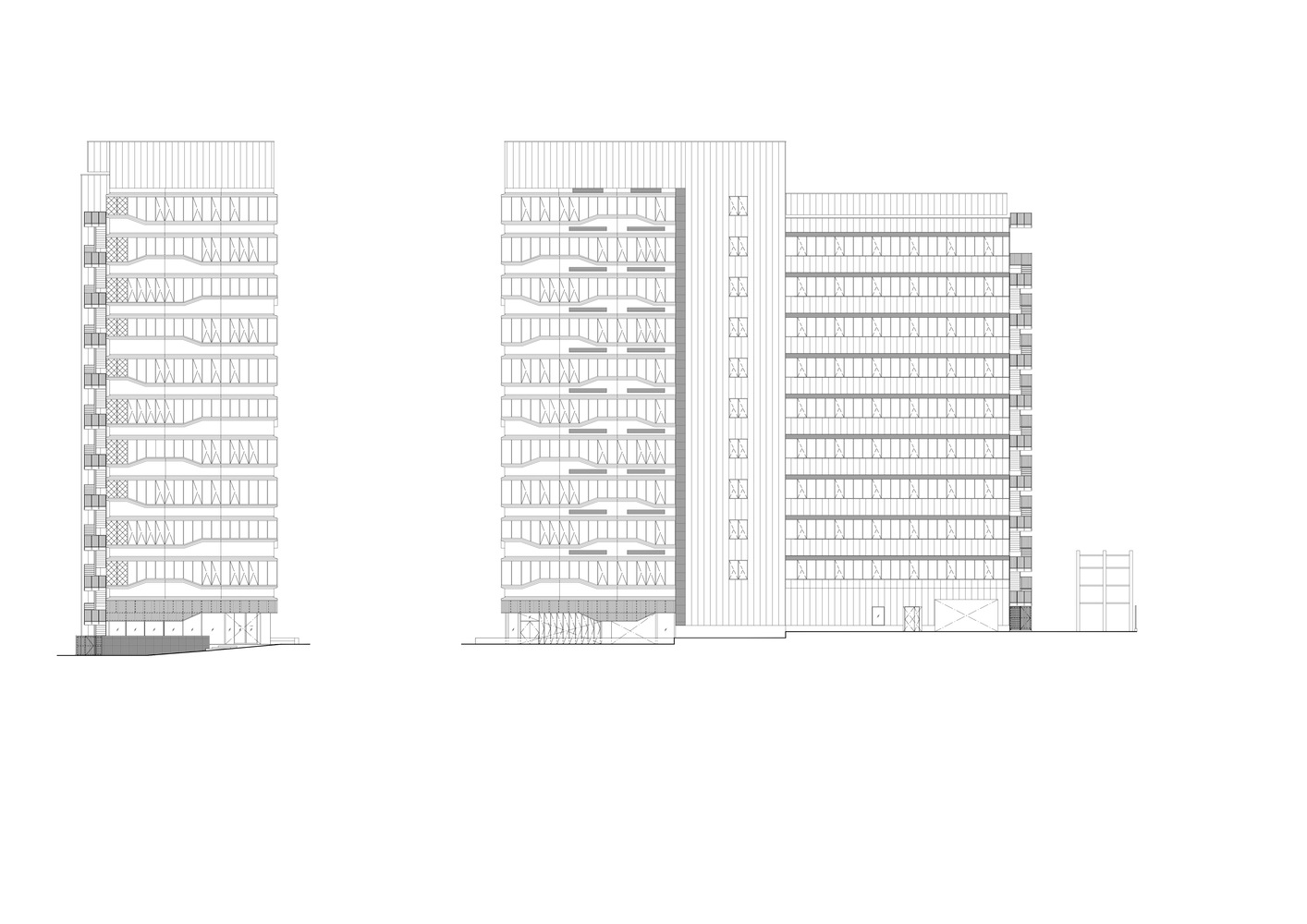
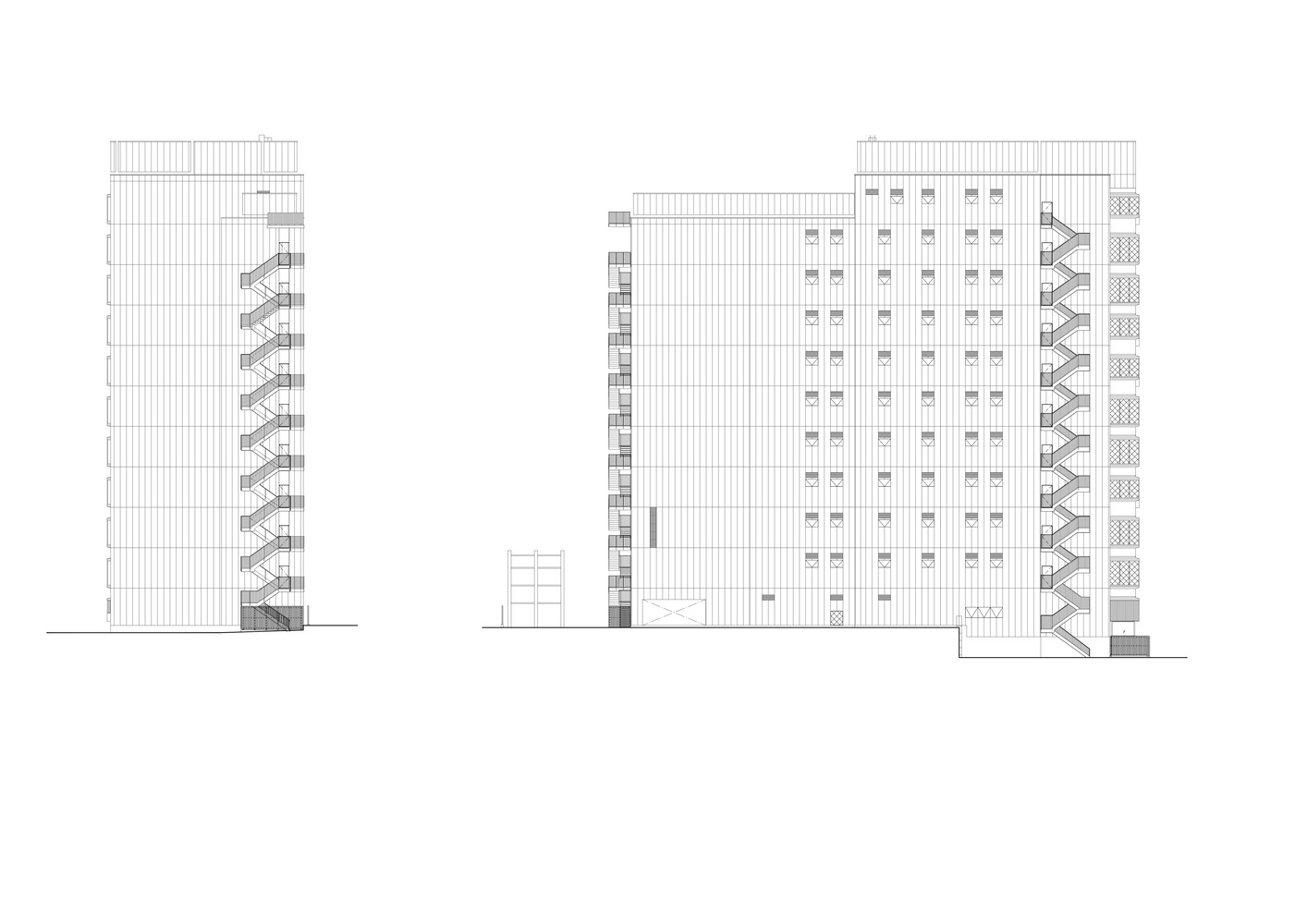
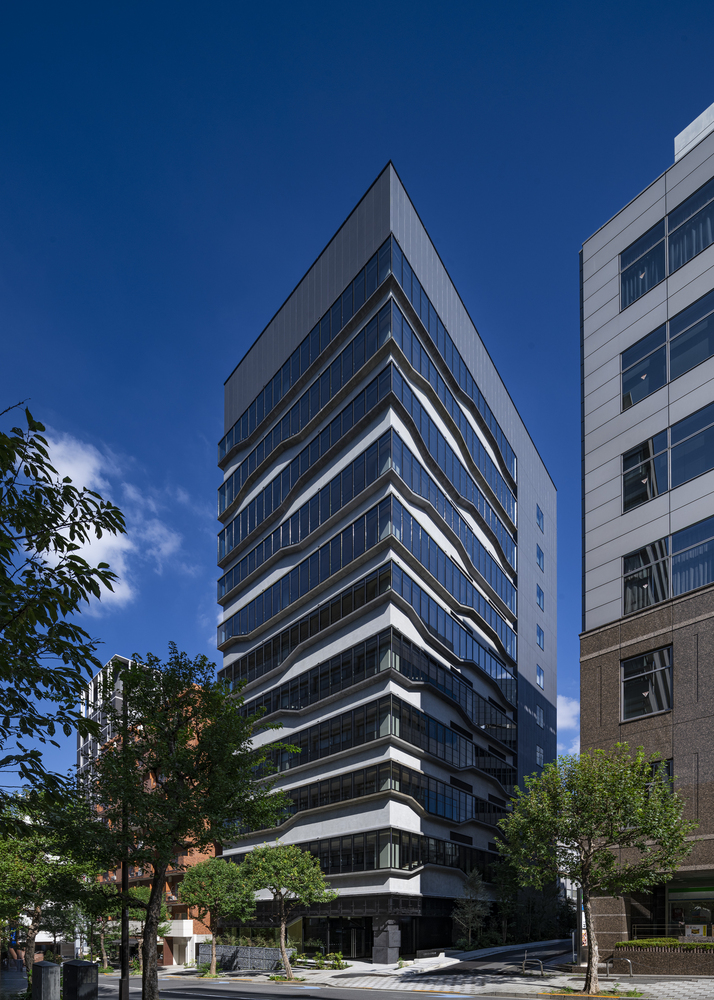
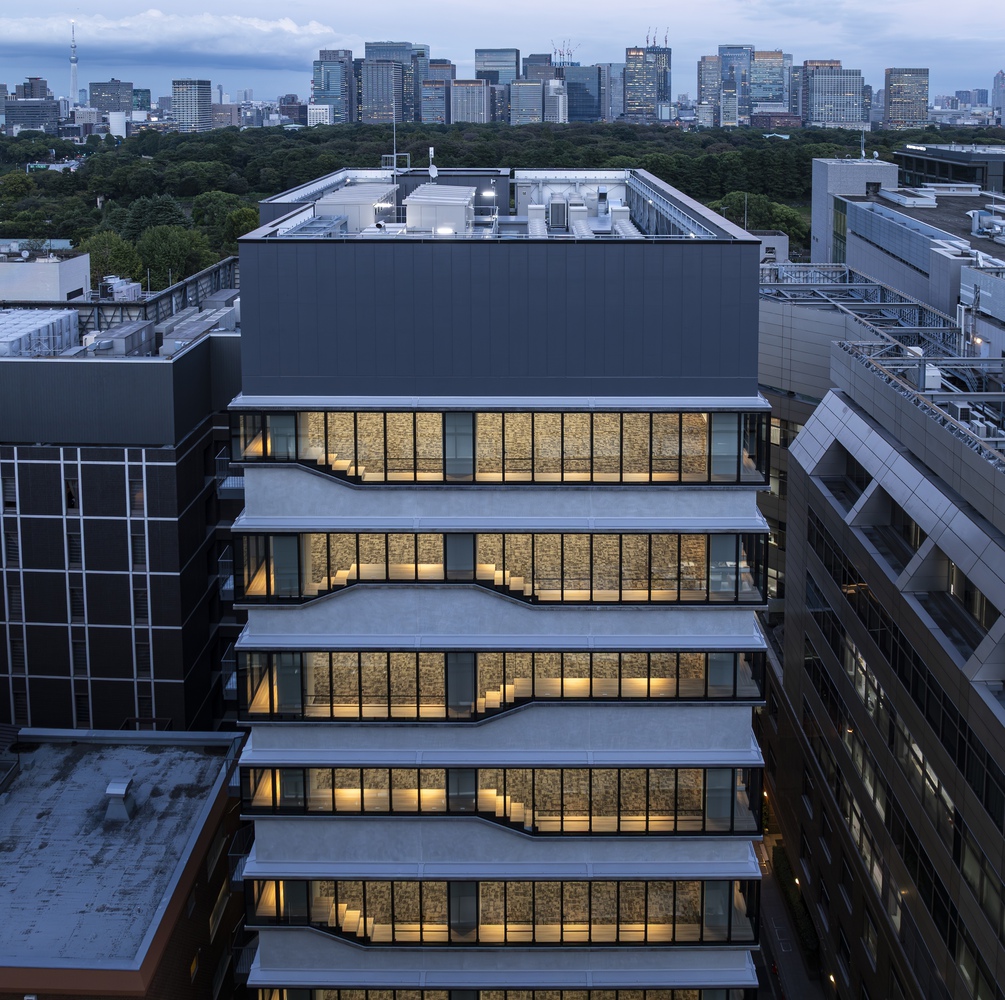
The design for the facade, composed of bay windows of varying shapes stacked floor by floor, is based on the concept of piled stones—a theme inspired by the stone walls still visible along the old castle moat in the vicinity.
The bay windows give expression to the diverse activities of the tenant companies and their employees, enlivening the surrounding streetscape and nurturing a sense of connection between the occupants and their workplace.
The exterior's complex appearance was achieved through a combination of standard aluminum window frames and precast concrete (PC) slabs in four different U-shaped configurations, balancing expressive design with economic efficiency.
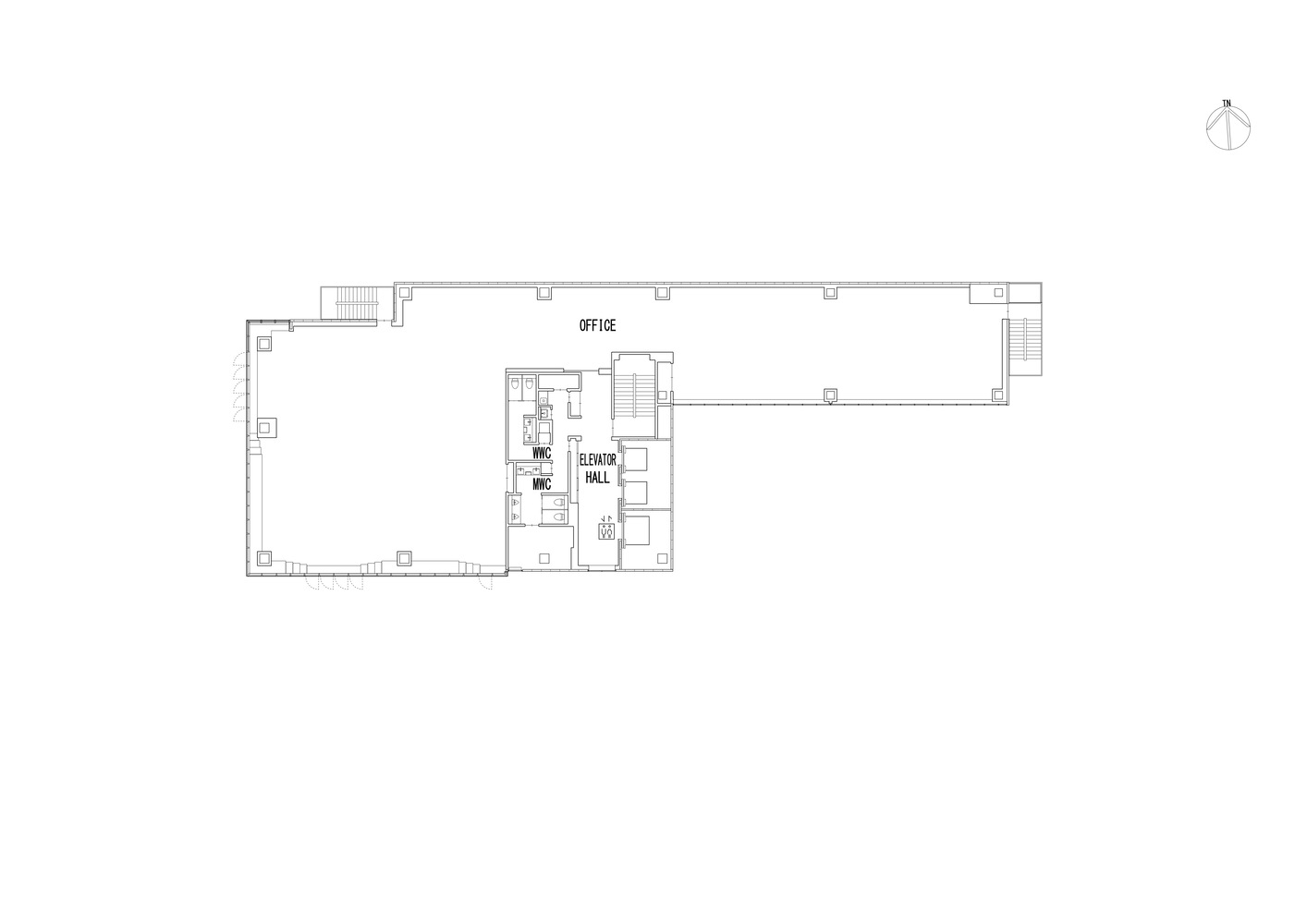
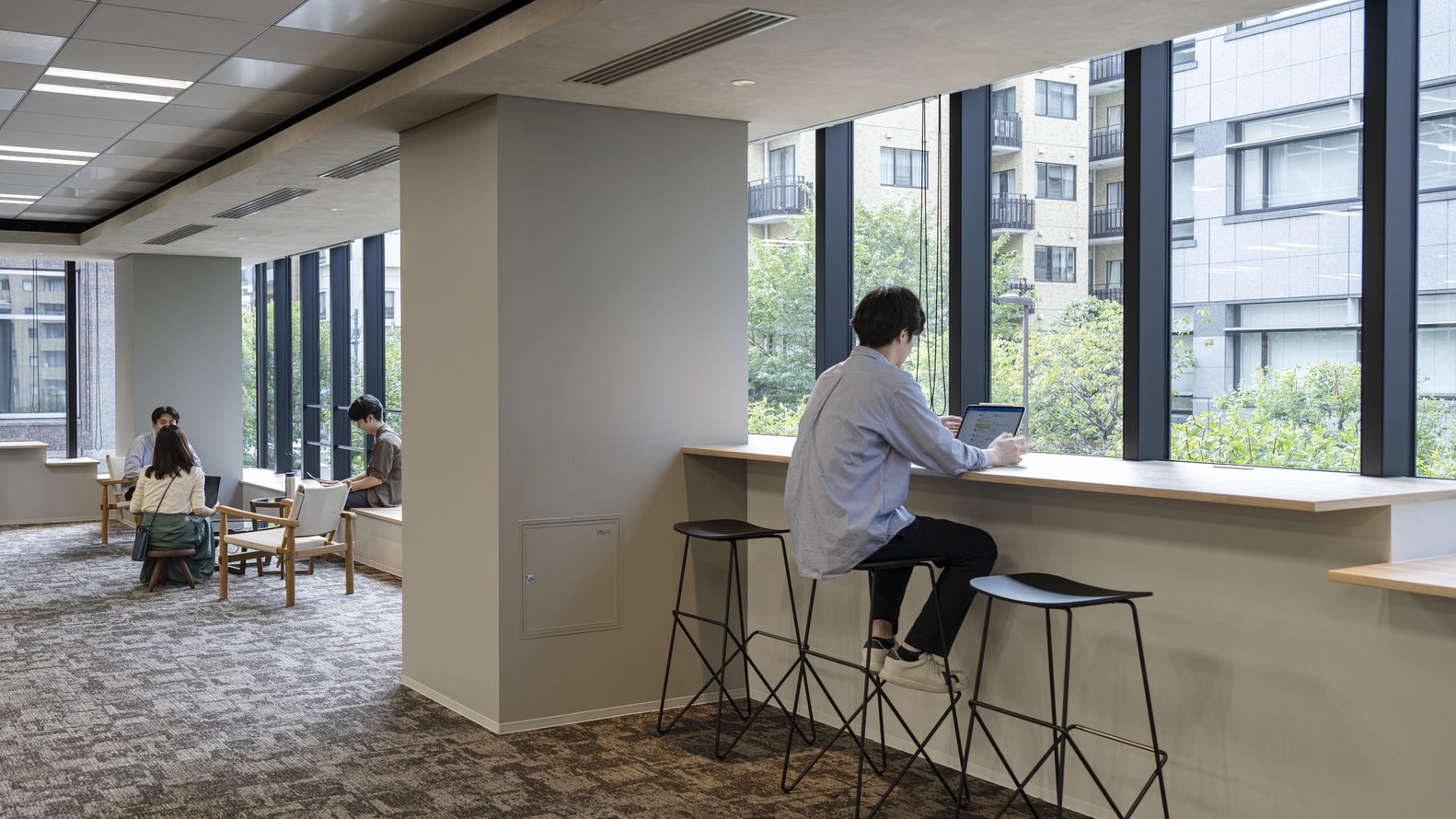
The spaces created by the bay windows on each office floor are integrated with the facade and vary in height, accommodating counter- to desk-level seating.
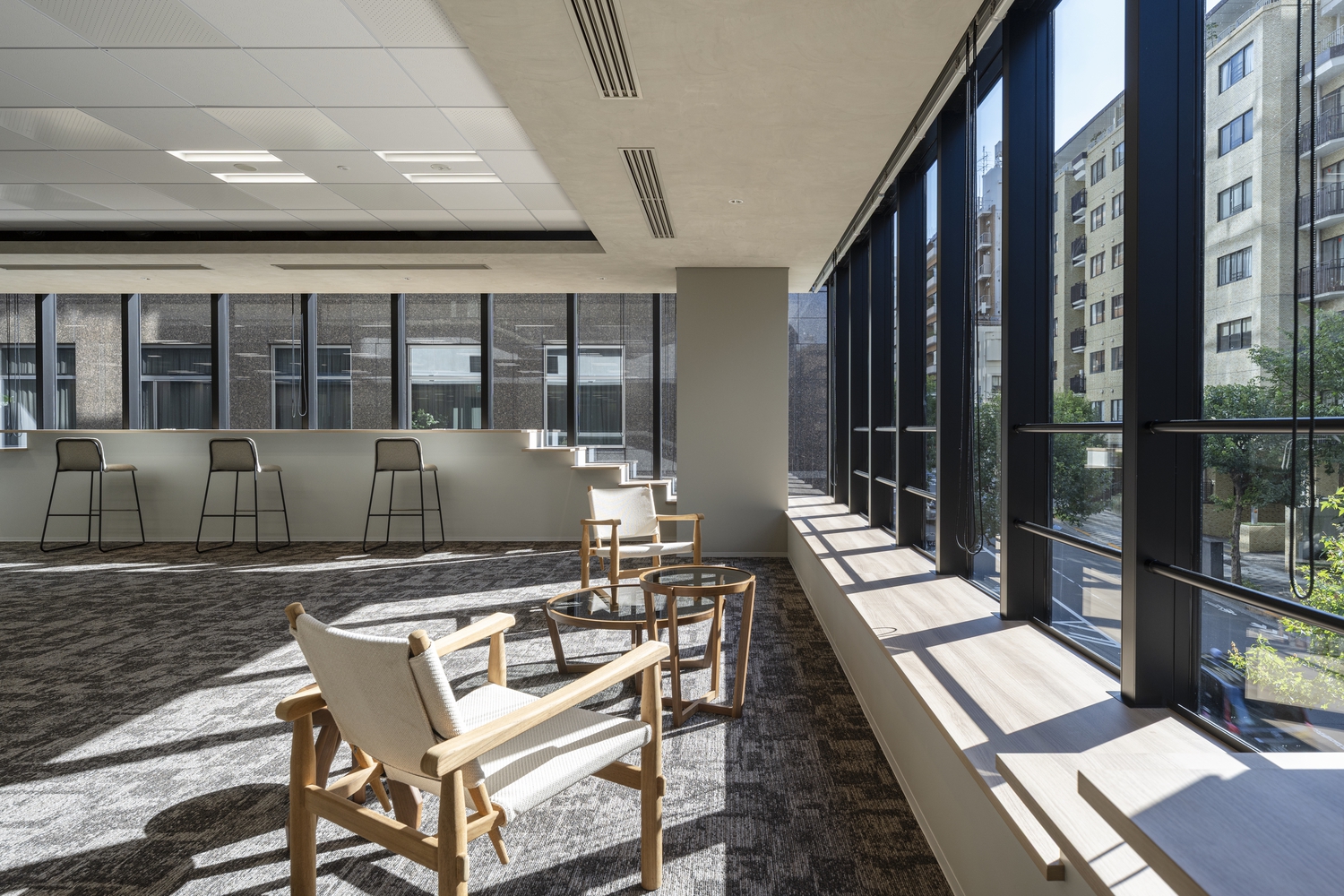
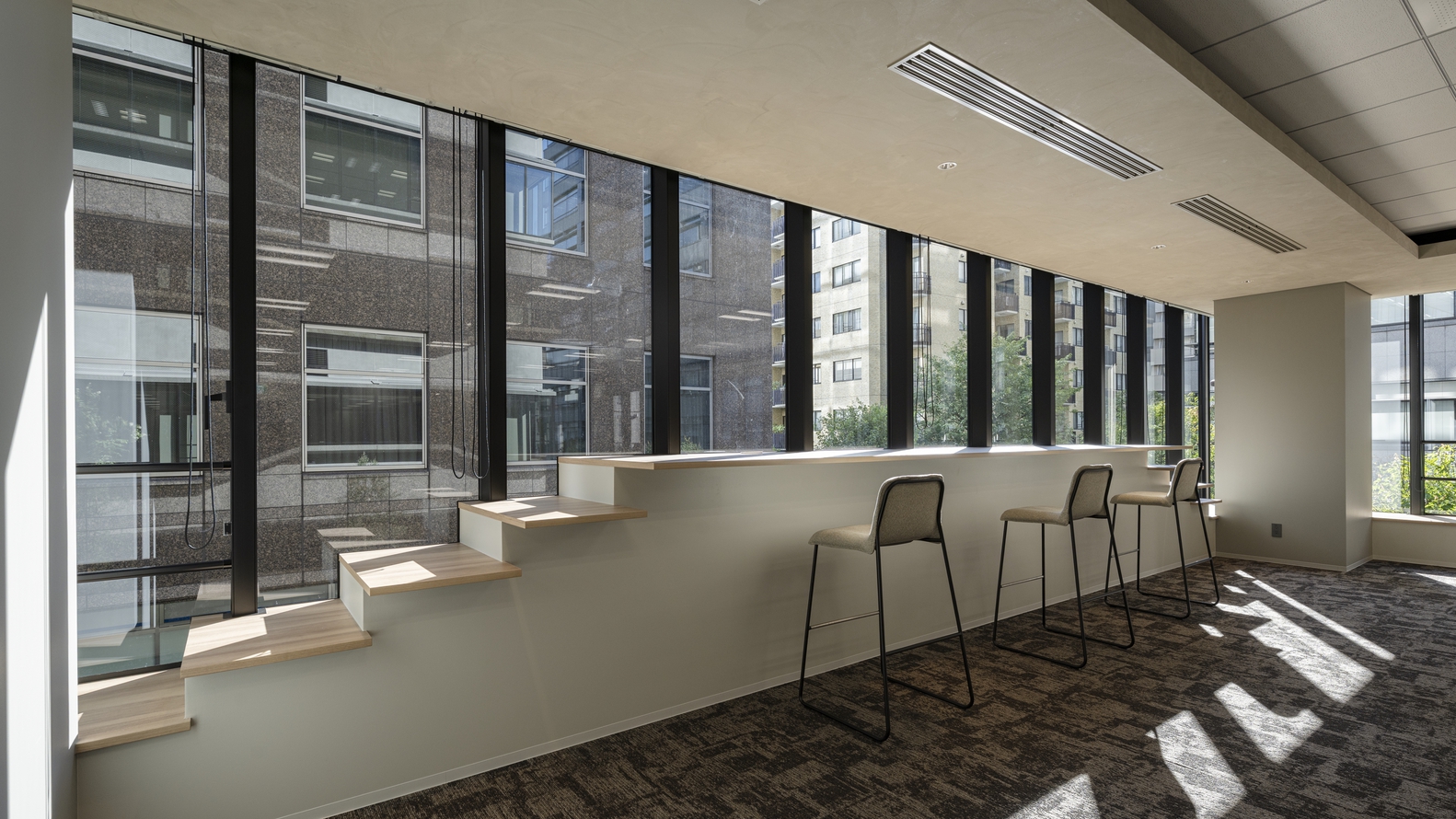
Under building code exemptions, these spaces are excluded from floor area calculations, effectively adding usable workspace within the allotted building volume and creating an economic advantage.
At the same time, the design redefines the window perimeter—an often underused zone in standard office layouts—as an area of activity.
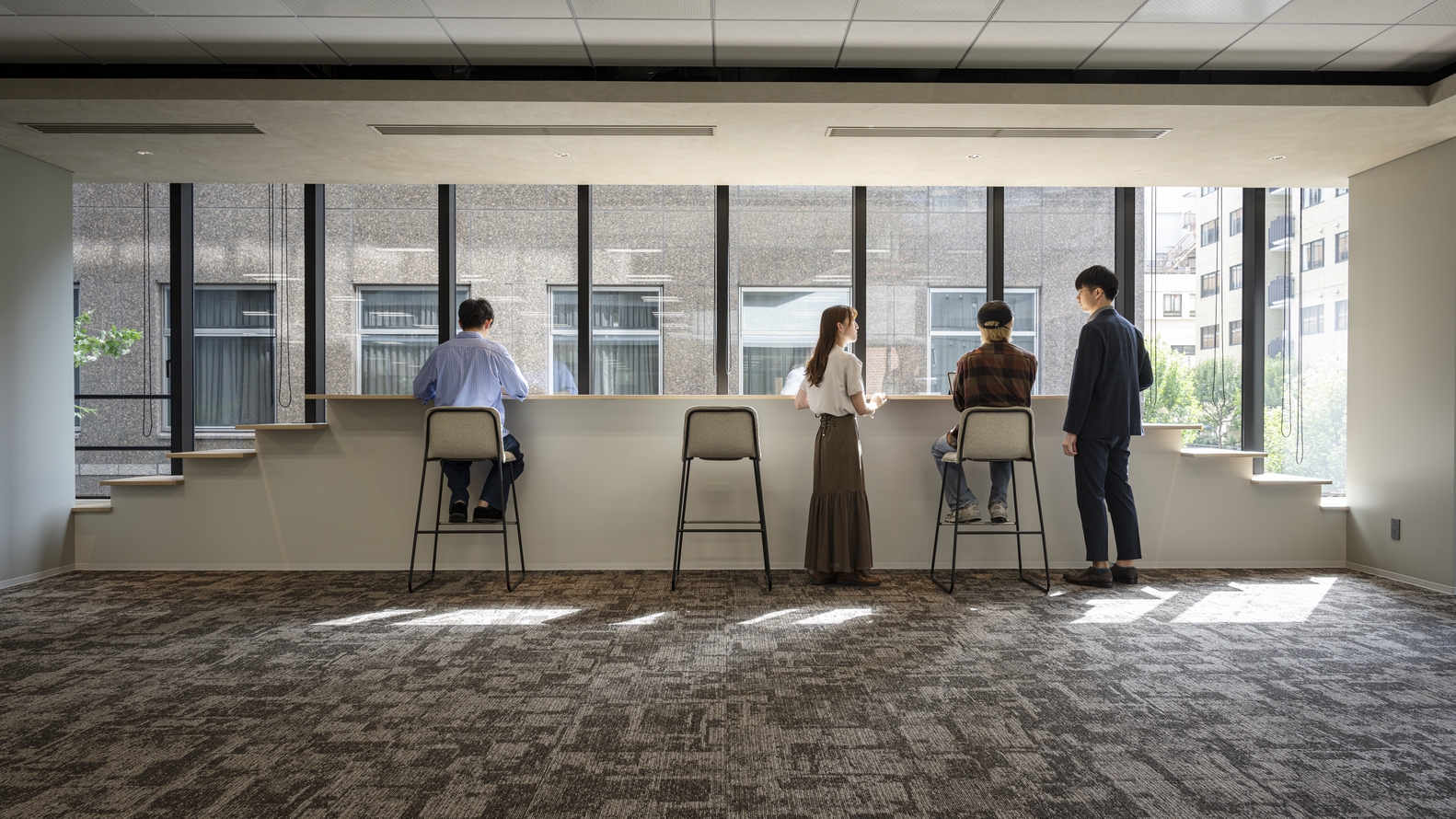
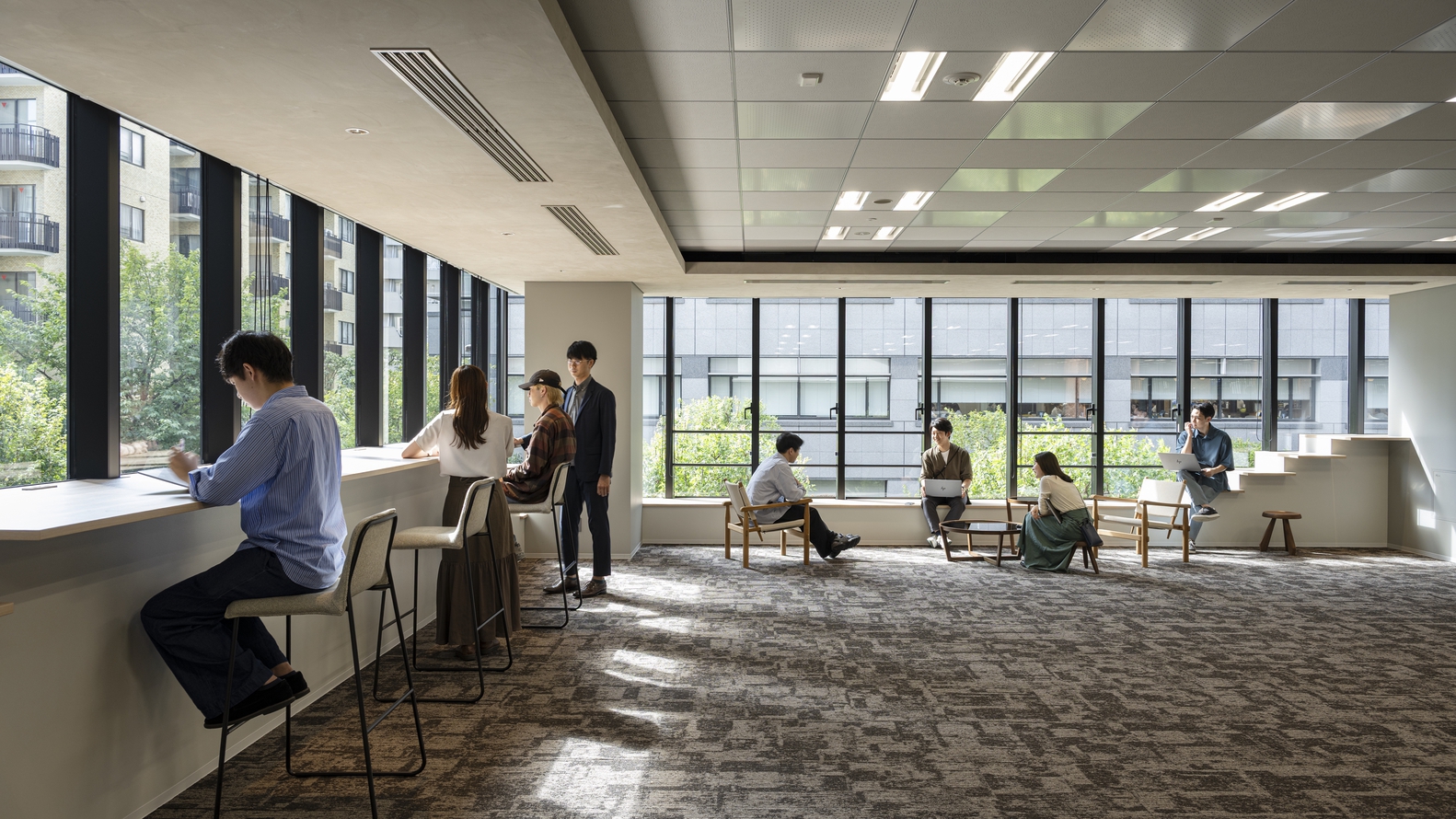
The result is an office building that encourages flexible working styles and imaginative furniture arrangements, with the bay windows as the centerpiece.
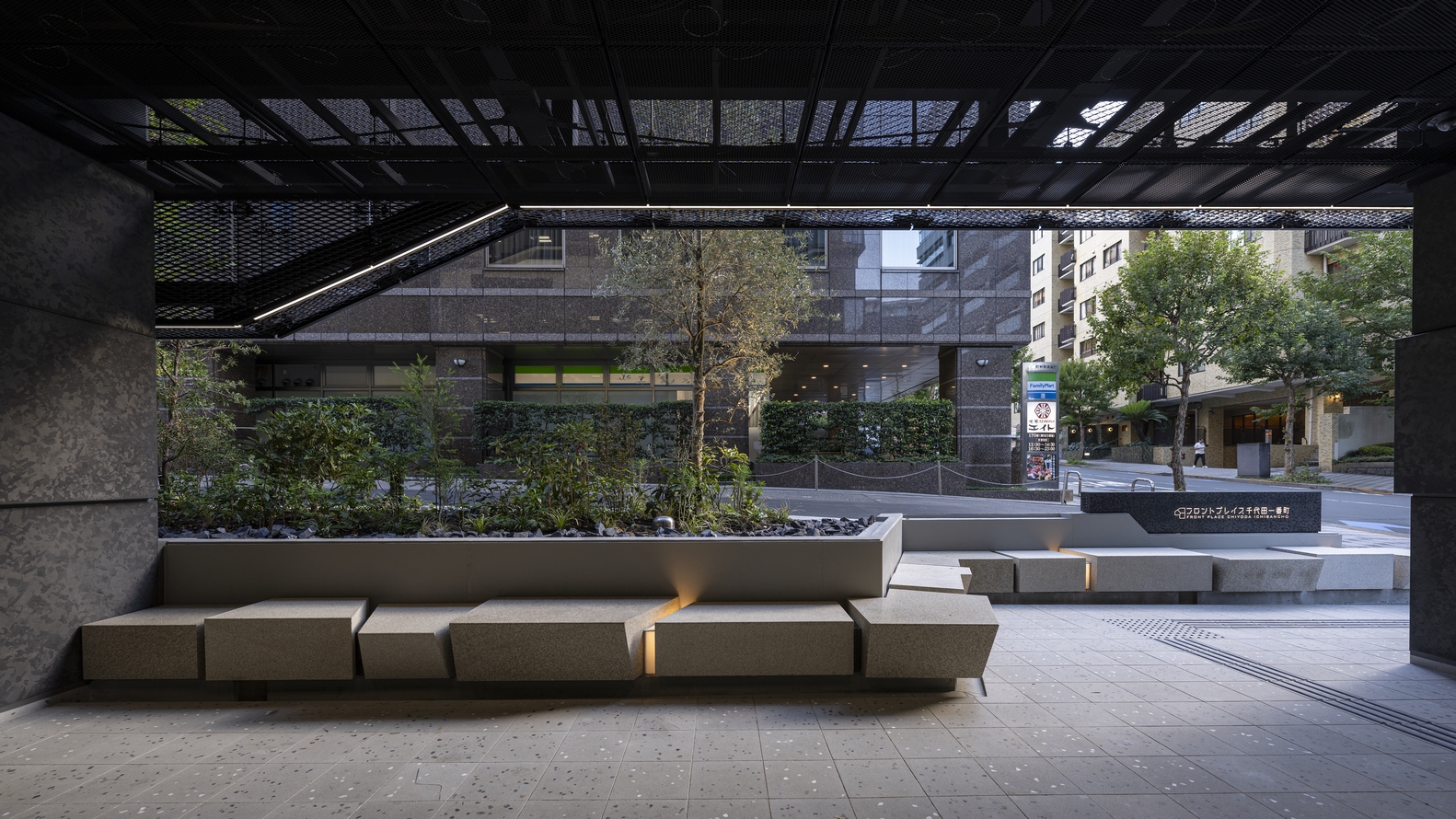
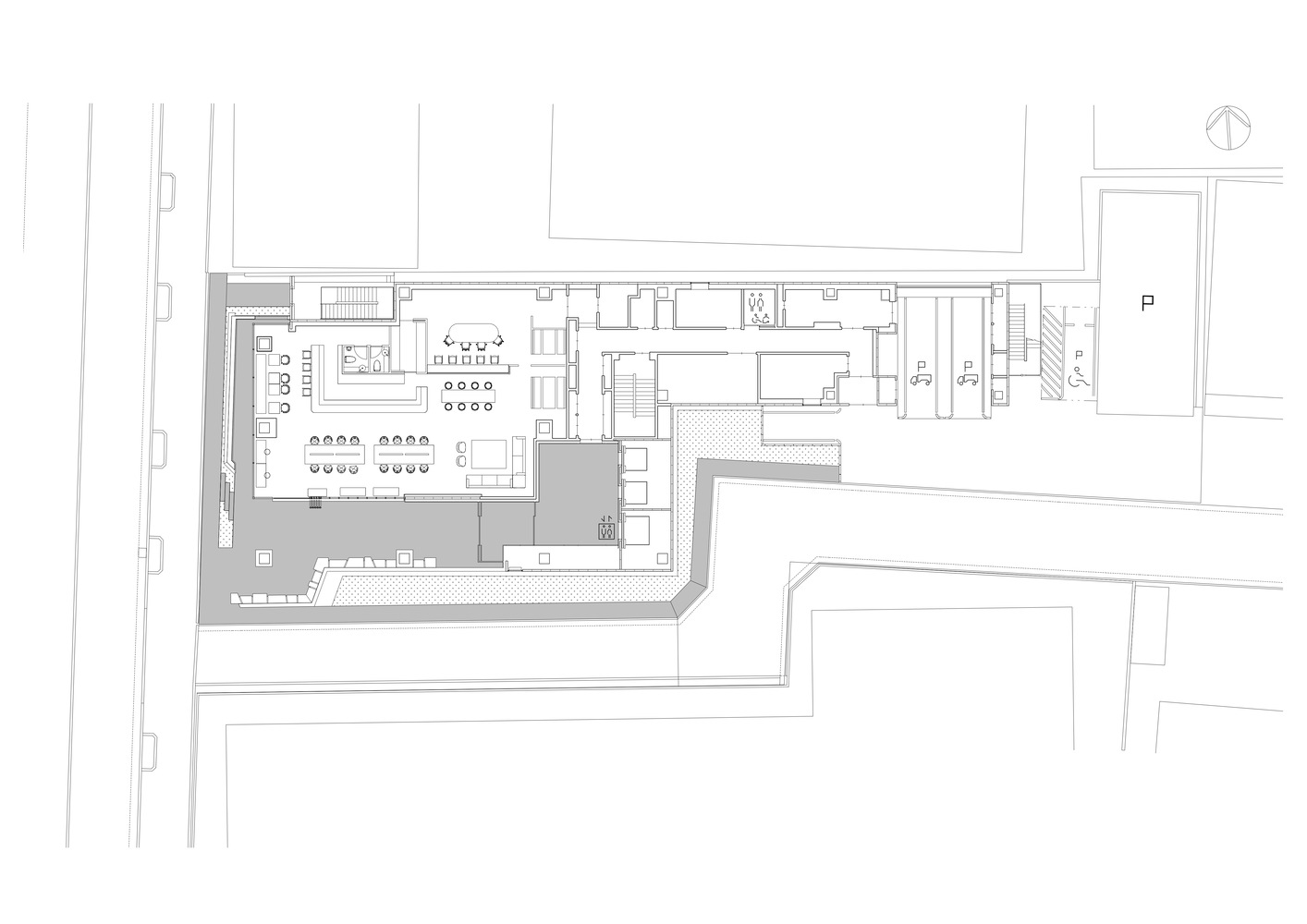
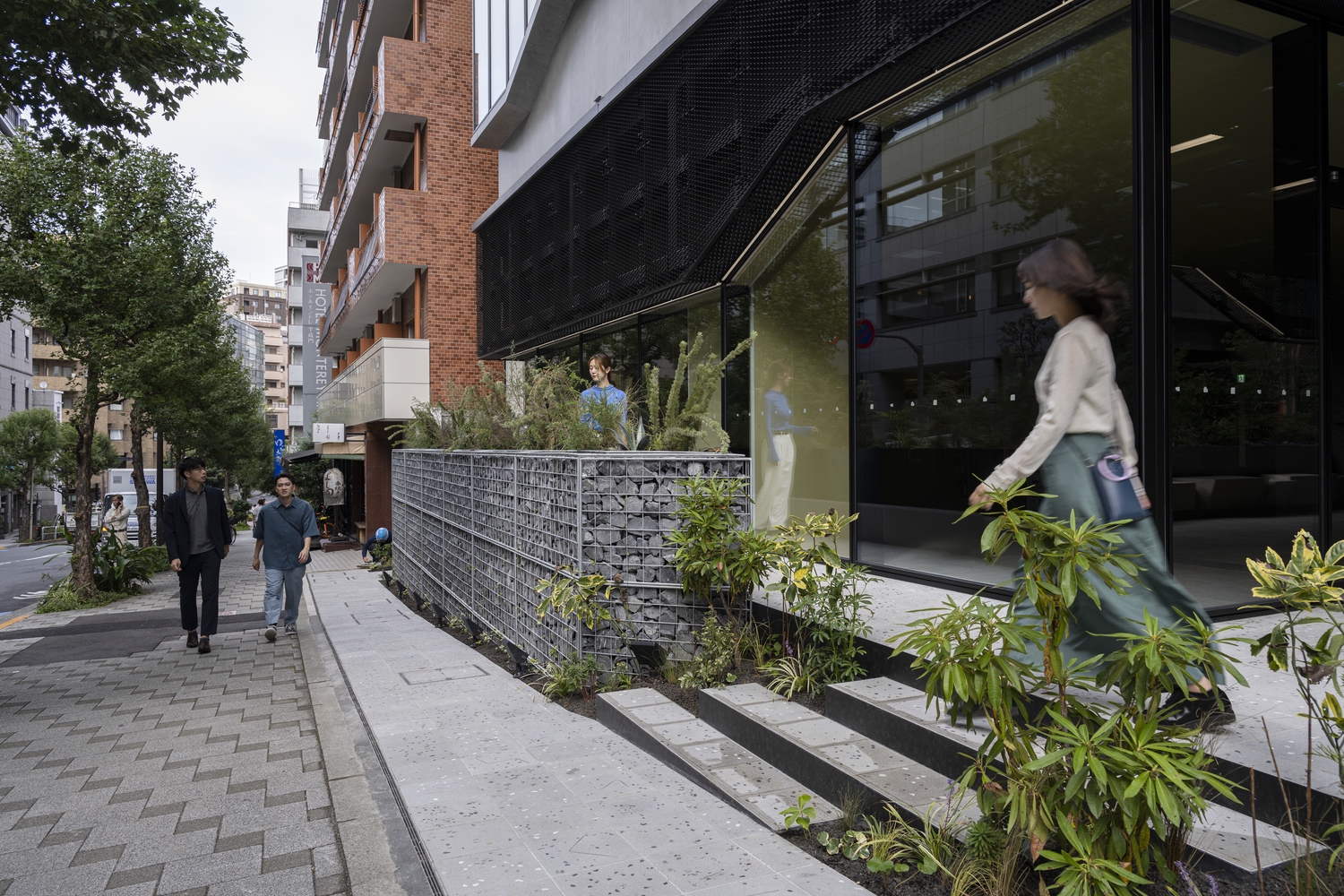
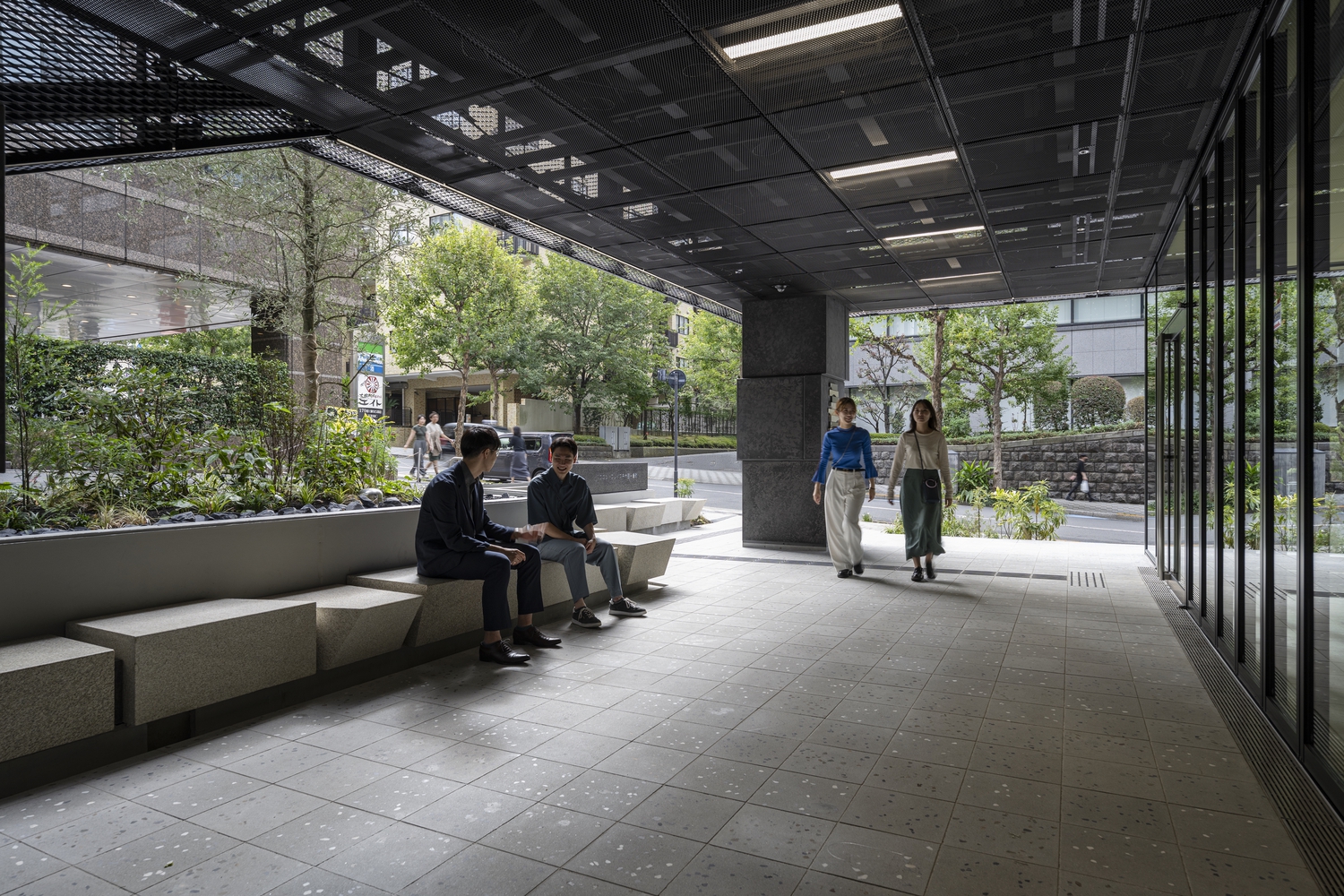
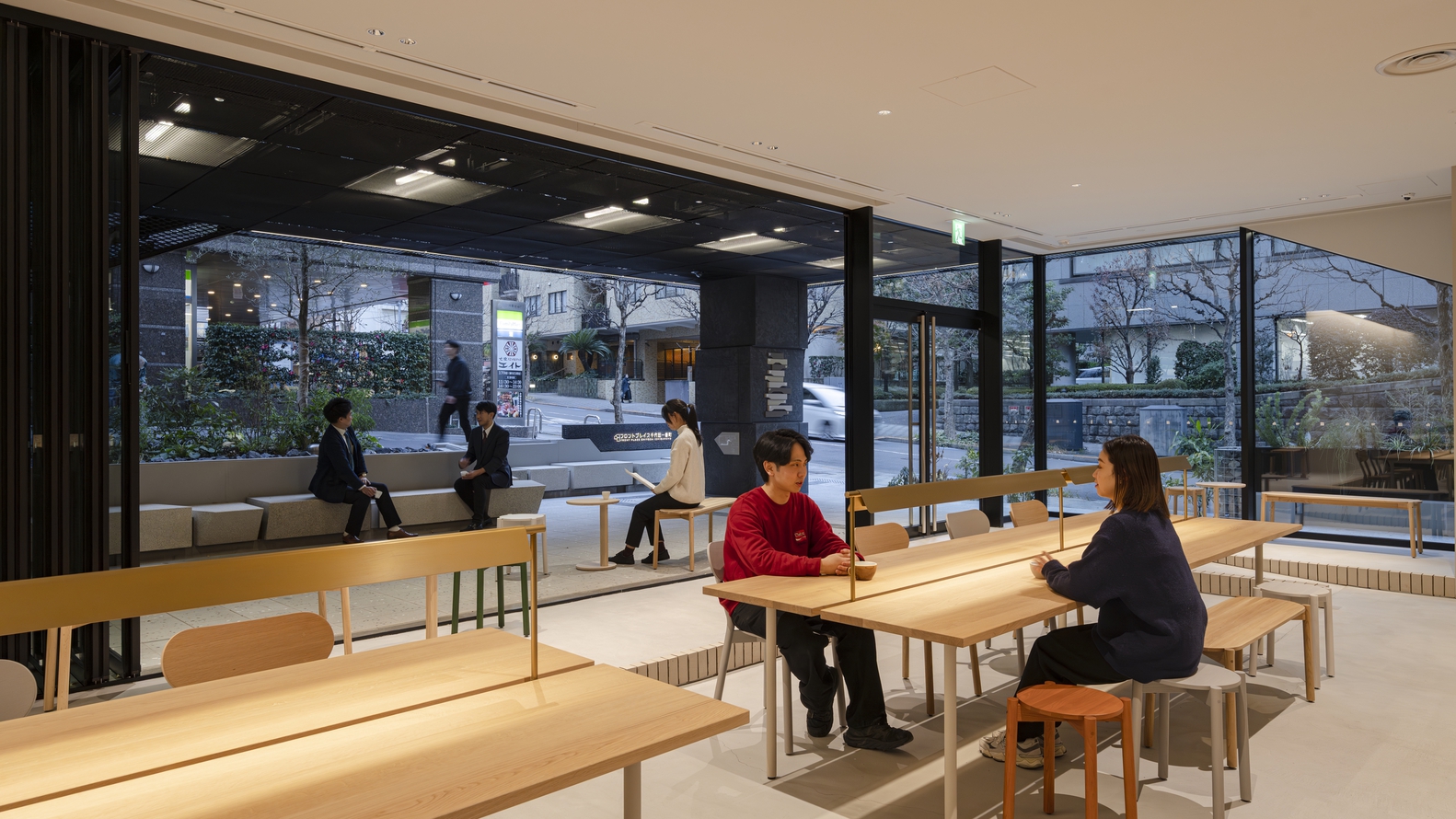
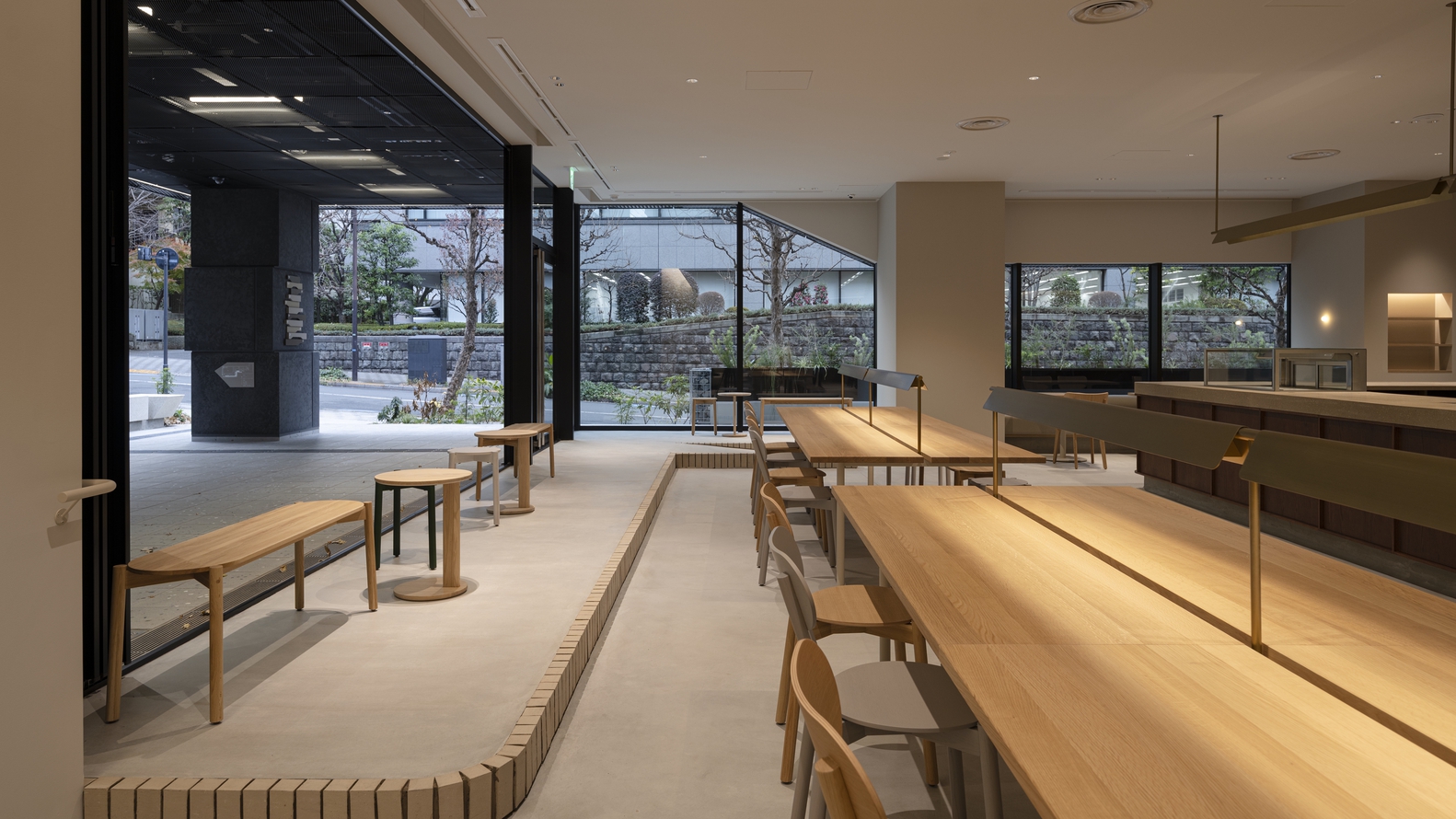
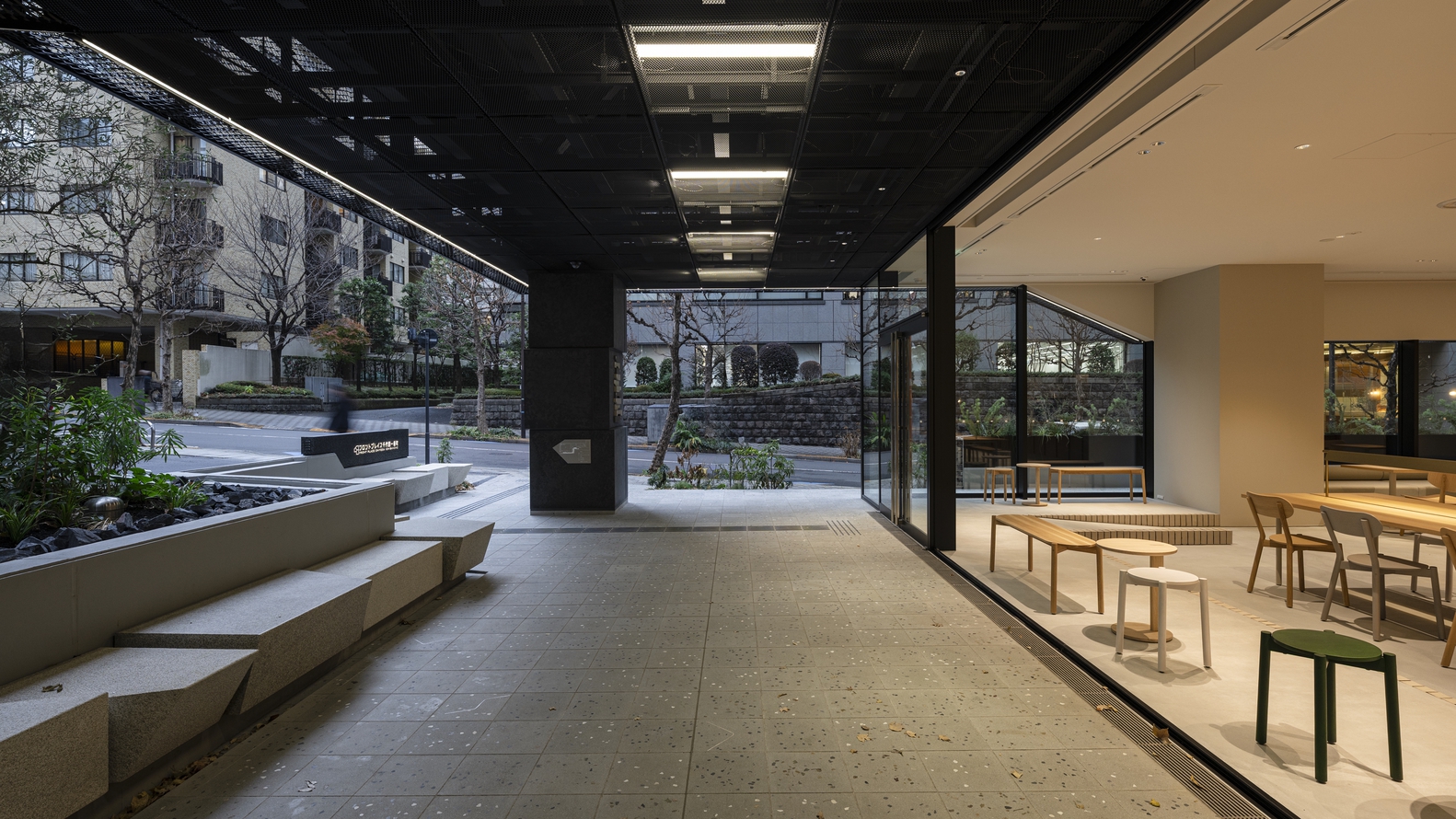
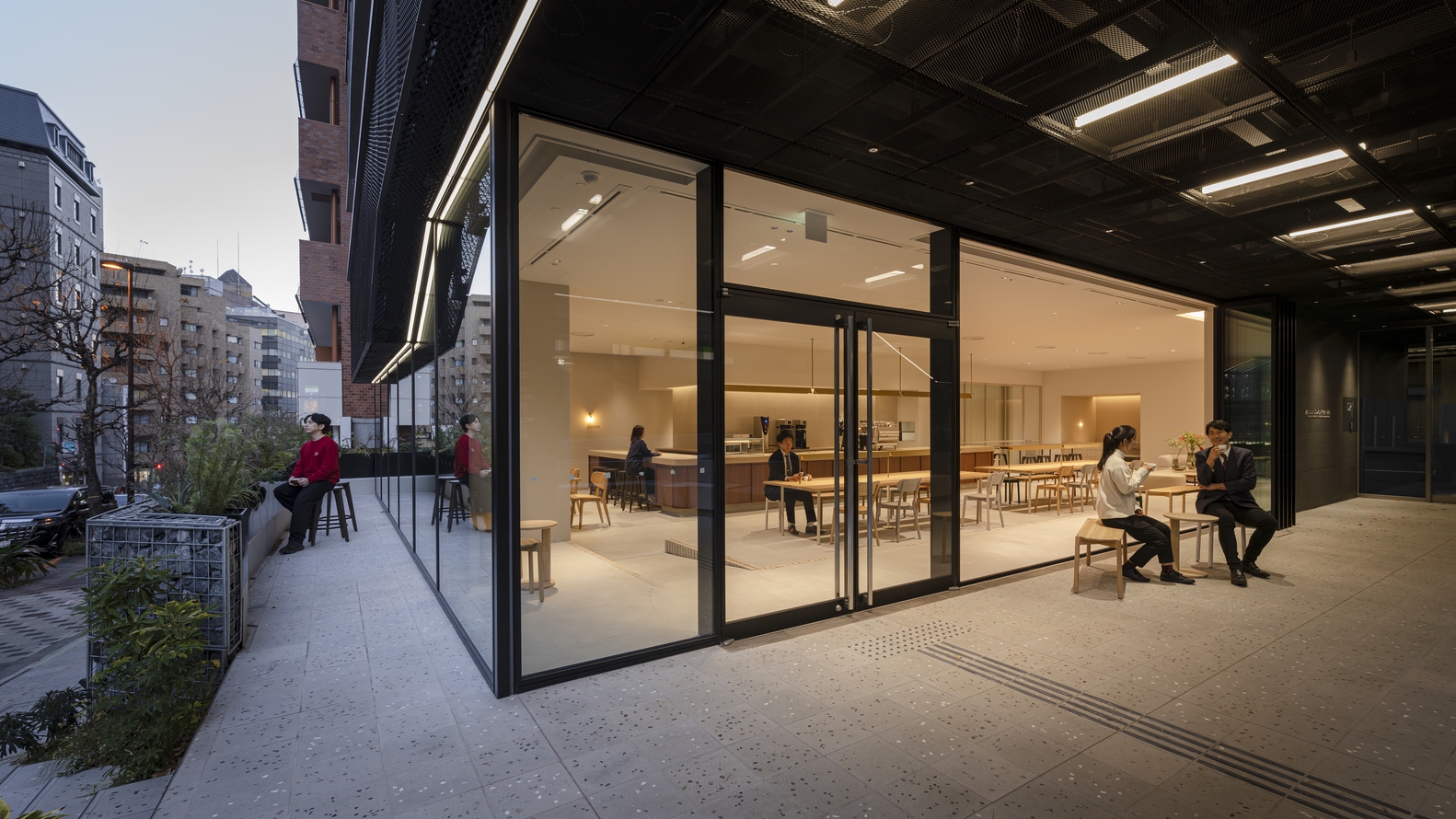
Taking advantage of the sloping terrain, we incorporated benches and terraces at the entrance that utilize the difference in elevation from the surrounding streets.
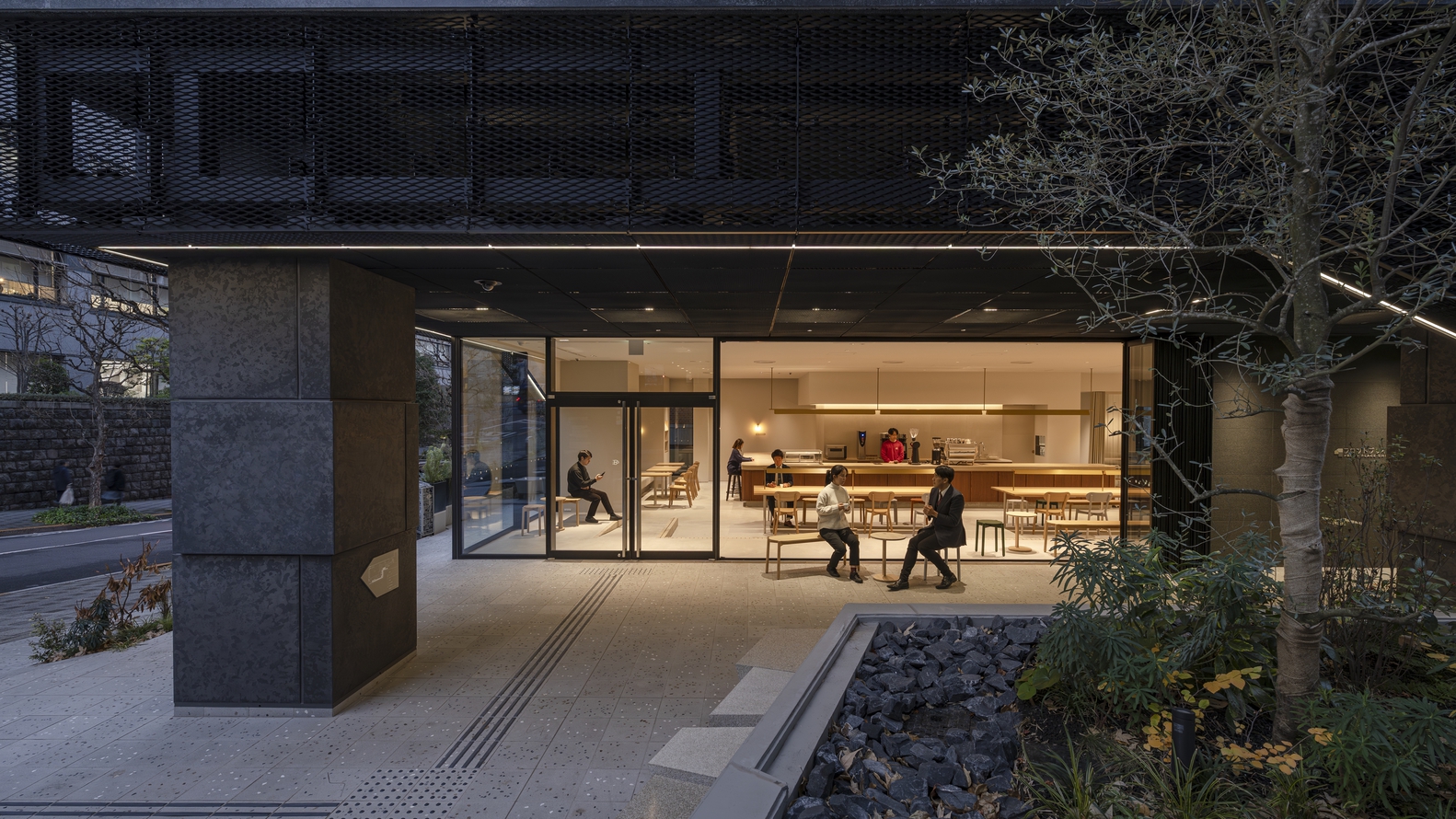
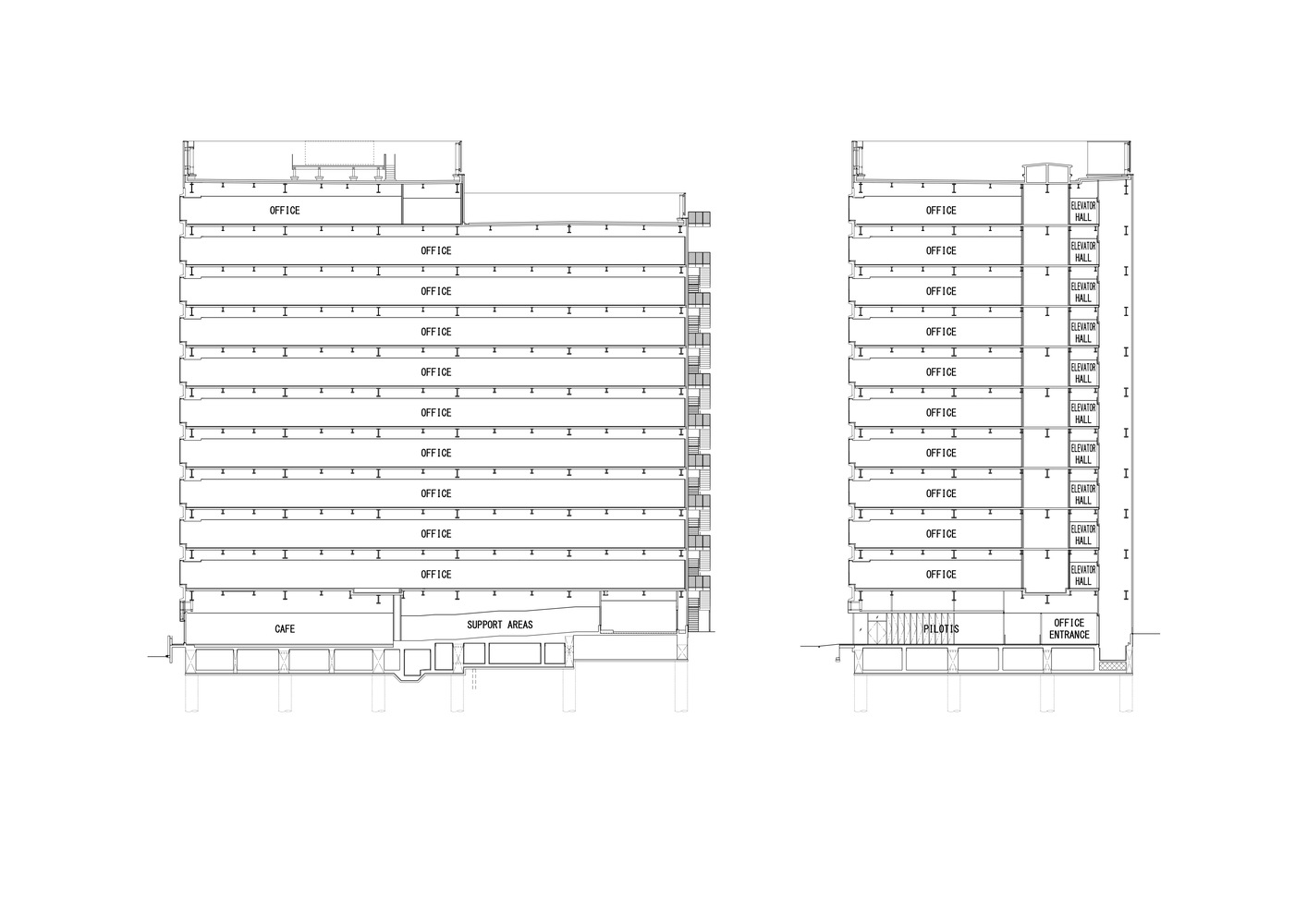
The ground-floor café can be fully opened in the direction of the approach; when the window frames are retracted, the street, office entrance, and café connect seamlessly through the piloti space, creating an inviting exterior that welcomes local residents, office workers, and café visitors alike.
In addition, all office floors are equipped with an air-based radiant cooling system and operable windows for natural ventilation.
The use of a DALI (Digital Addressable Lighting Interface) lighting control system also reduces the environmental impact of tenant fit-outs.
Through these measures, the building achieves a reduction of more than 40 percent in annual primary energy consumption compared to standard benchmarks, corresponding to a BEI of 0.58—equivalent to BELS 5-star and ZEB-oriented performance levels.
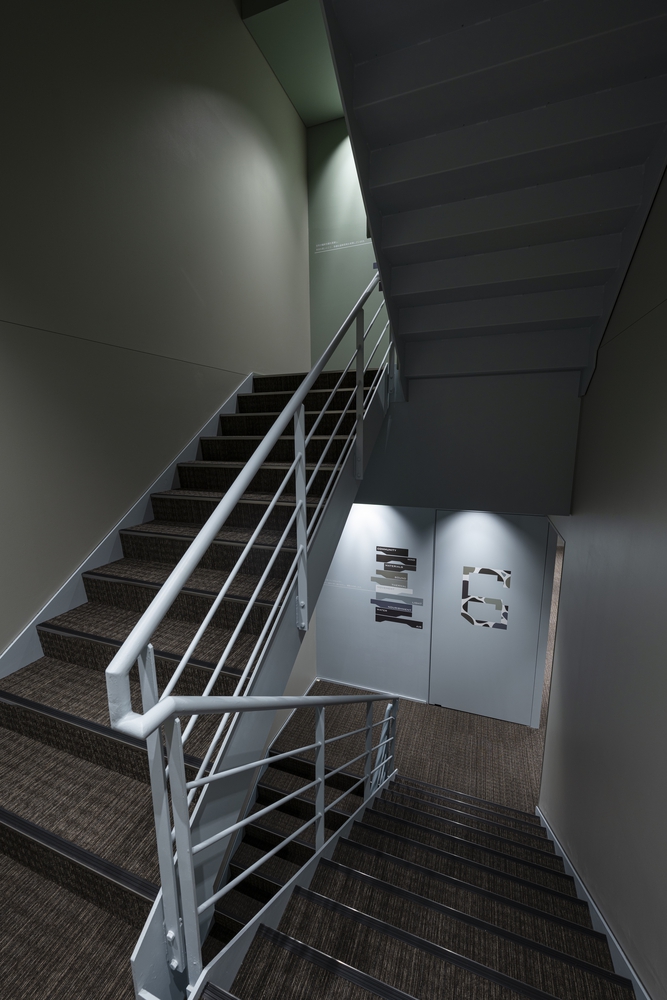
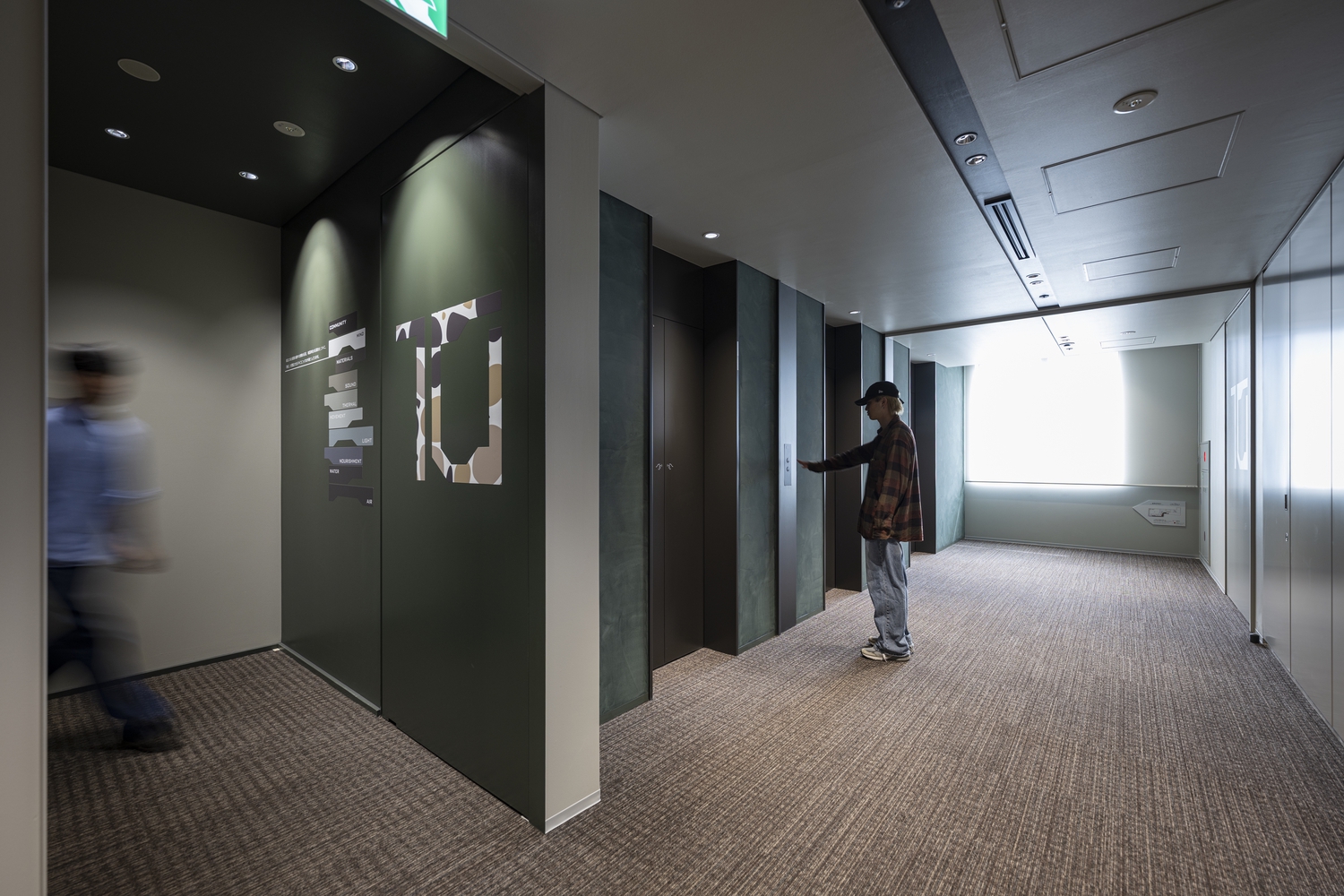
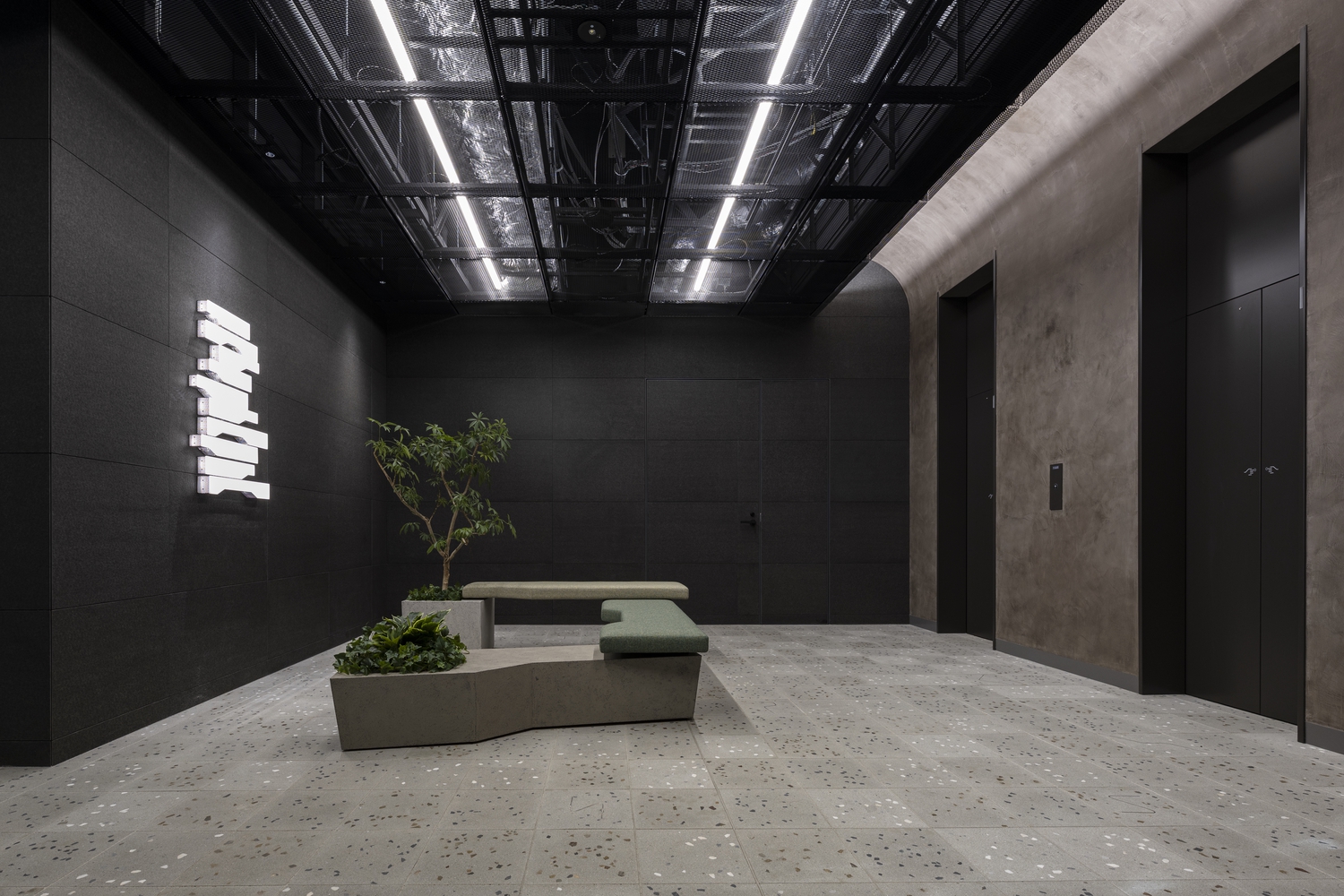
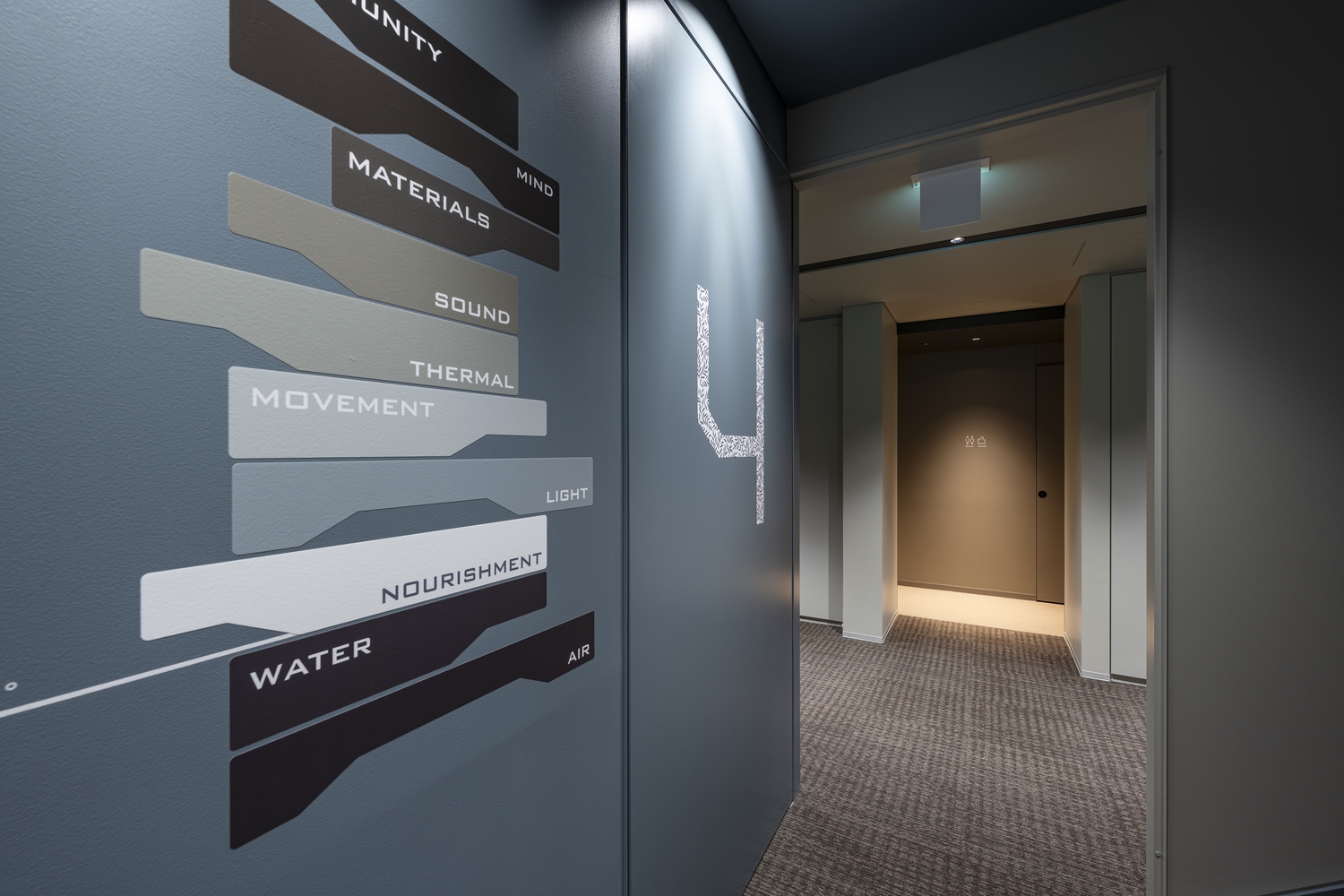
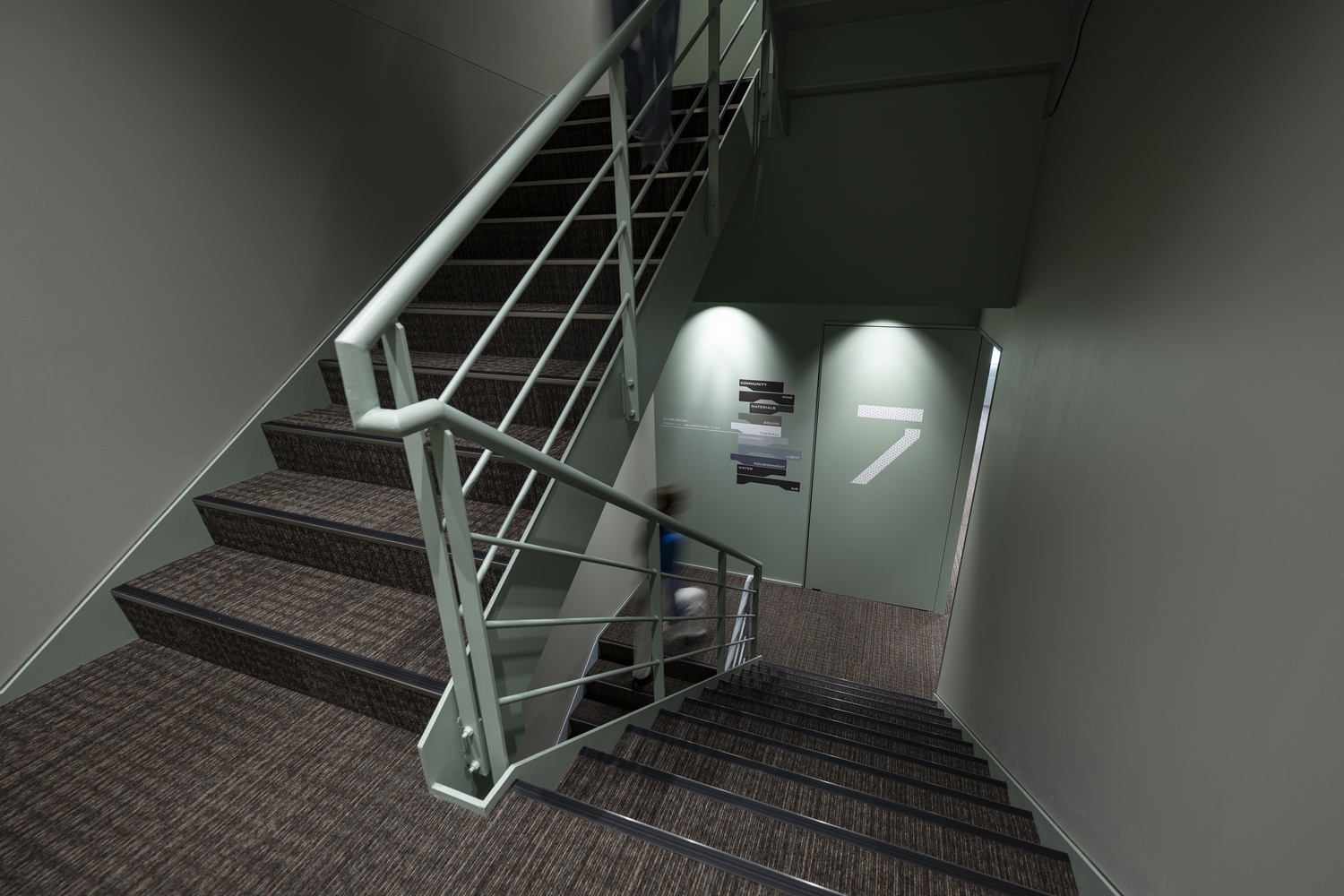
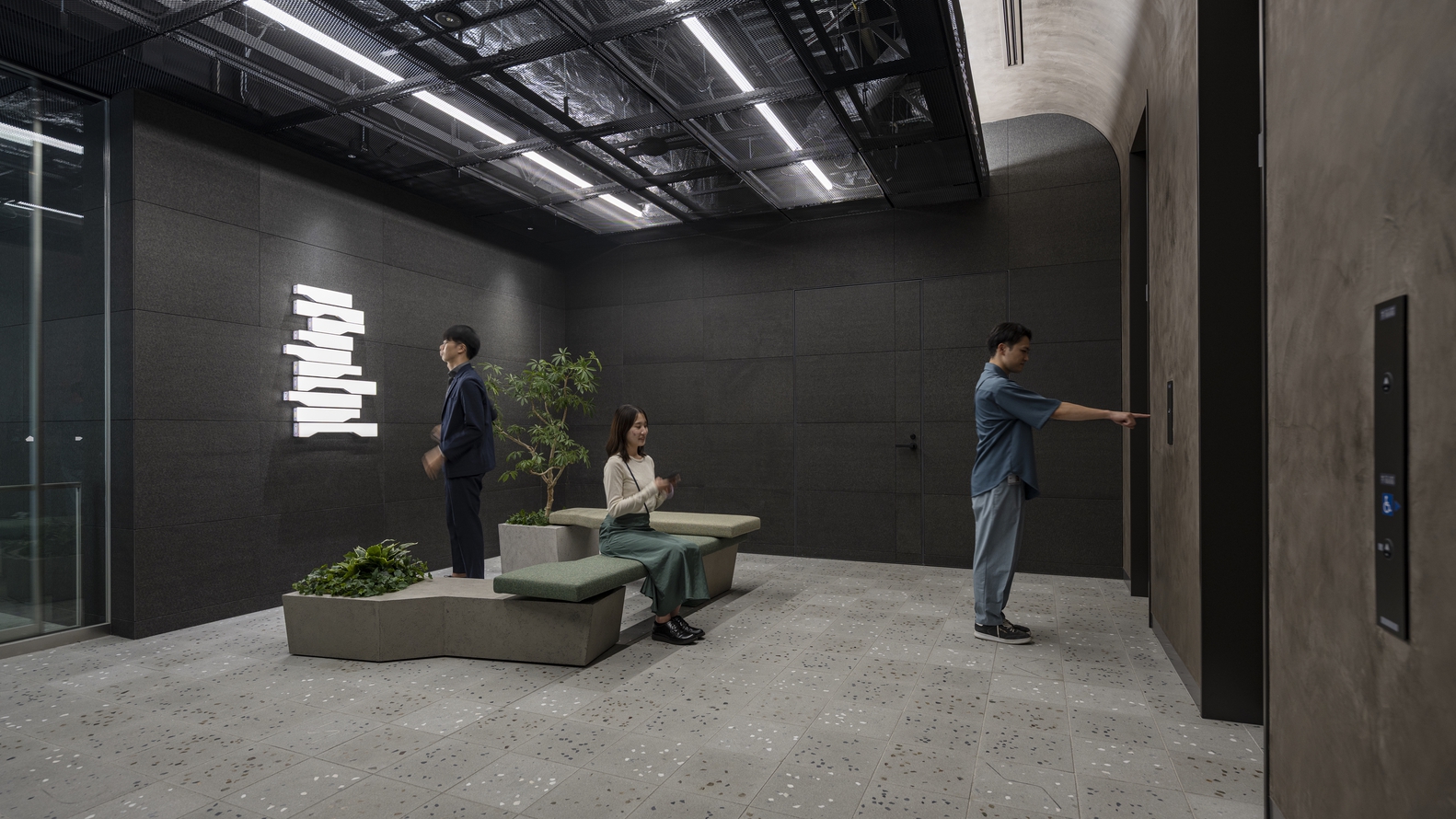
In the common areas, WELL concepts were incorporated through strategies such as distinct color schemes on each floor, signage that facilitates and encourages stair use, and the application of the "piled stones" motif throughout the building.
As a result, the project became the first tenant office building in Japan to obtain WELL Core v2 pre-certification.
The building's tenants include not only businesses that have long called the area home but also foreign-affiliated firms, digital creative companies, jewelry brands, and others—tenants that place strong emphasis on design, WELL principles, and environmental performance.
The project has given rise to a new hub for connecting diverse industries and professions within this urban neighborhood—a model for the future of mid-scale tenant office buildings.