Doshi Retreat Vitra Campus
DOSHI RETREAT VITRA CAMPUS
Balkrishna Doshi, Khushnu Panthaki Hoof & Sonke Hoof
ARCHITECTS
Balkrishna Doshi, Khushnu Panthaki Hoof & Sonke Hoof
ARCHITECTS
Balkrishna Doshi, Khushnu Panthaki Hoof & Sonke Hoof
LIGHT CONSULTANT
Licht Kunst Licht
SOUND TEAM
Paul Oomen, Hans & Aurelio
CONTRACTOR
Jenich, Oestestaal
STRUCTURAL ENGINEER
Jan Knippers, Valentine Vagner
FIRM
Studio Sangath
X CARB STEEL PROVIDED BY
Arcelor Mittal
PROJECT TEAM
Christian Germadnik, Abel Rodrigues , Aysha Nargees, Jerin Pannakel, Shivam Singh, Antorip Chaudhary, Rodolfo, Lucia Andres, Devraj Patel, Sanjana Appachu
PHOTOGRAPHS
Julien Lanoo, Marek Iwicki, Dejan Jovanovic
YEAR
2025
LOCATION
Weil am Rhein, Germany
CATEGORY
Landscape Architecture, Cultural Architecture
English description provided by the architects.
The Doshi Retreat on the Vitra Campus in Weil am Rhein is a contemplative sanctuary conceived and designed collaboratively by Pritzker Prize–winning architect Balkrishna Doshi, his granddaughter Khushnu Panthaki Hoof, and her husband Sönke Hoof.
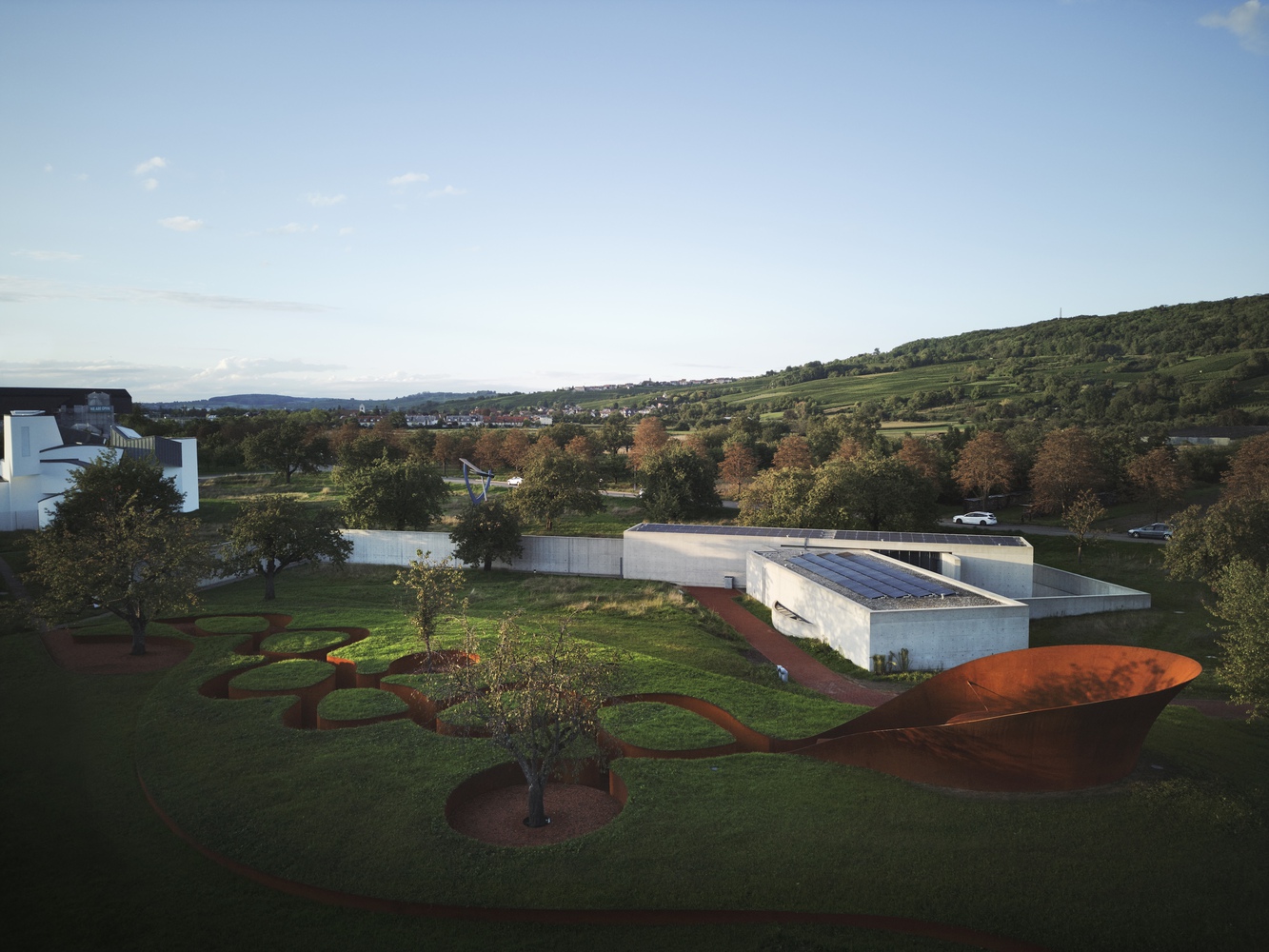
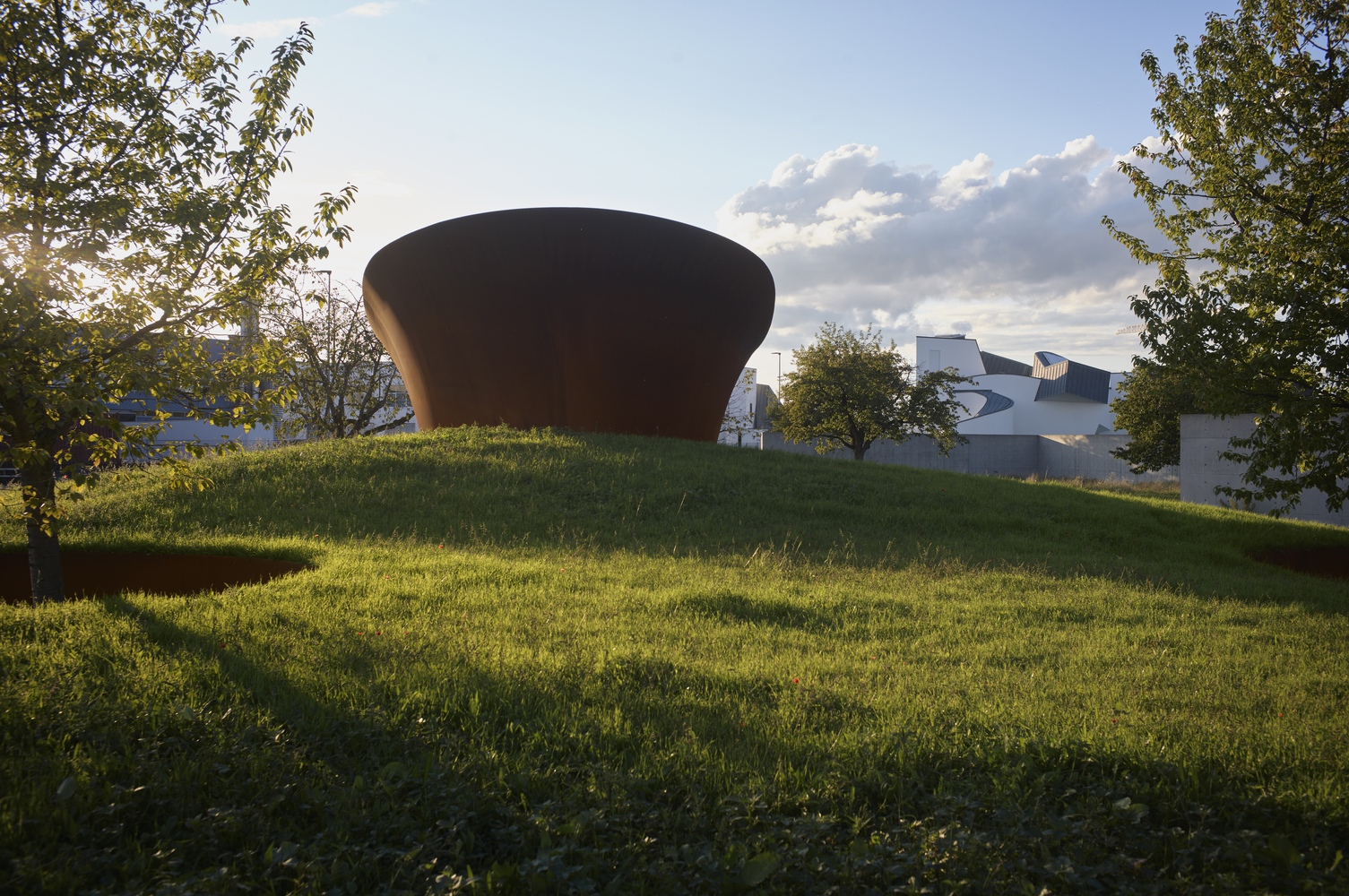
Drawing inspiration from Indian spirituality and the meditative qualities of sound and silence, the retreat offers a sensory journey through space, light, and resonance and a place for solitude, reflection, and transformation.
The project was born from a conversation between Rolf Fehlbaum, Chairman Emeritus of Vitra, and Balkrishna Doshi, following Fehlbaum's visit to the Modhera Sun Temple in India. Moved by a small shrine he encountered there, Fehlbaum invited Doshi to imagine a place of contemplation for the Vitra Campus.
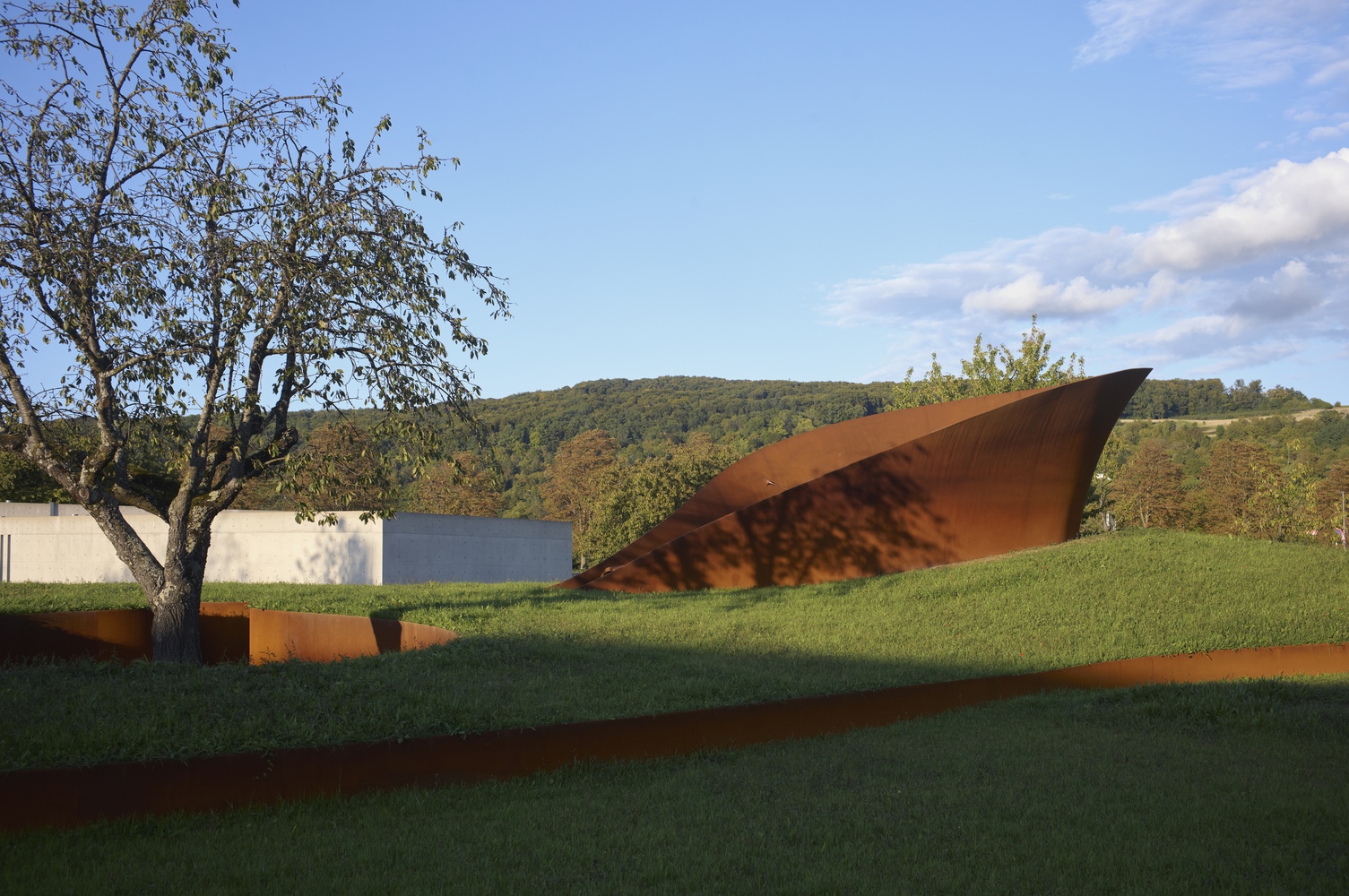
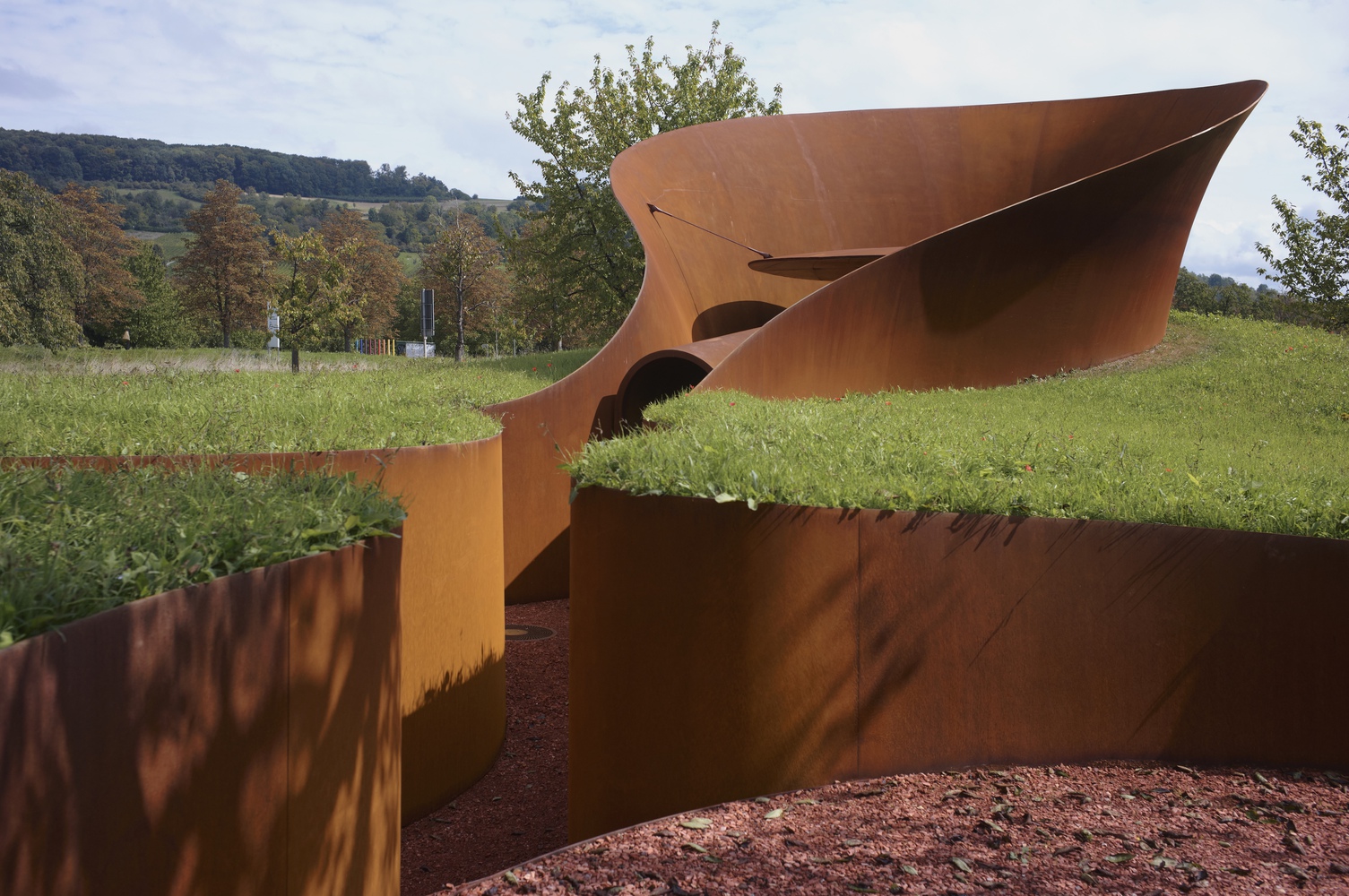
Doshi embraced the idea, and what followed was an intimate creative dialogue between Doshi, Khushnu, and Sönke, through which the Doshi Retreat gradually took form.
Conceived together as an architectural narrative of movement and awakening, the project became Doshi's, Khushnu's & Sönke's first realized work outside India and the last project that Doshi worked on before his passing in January 2023.
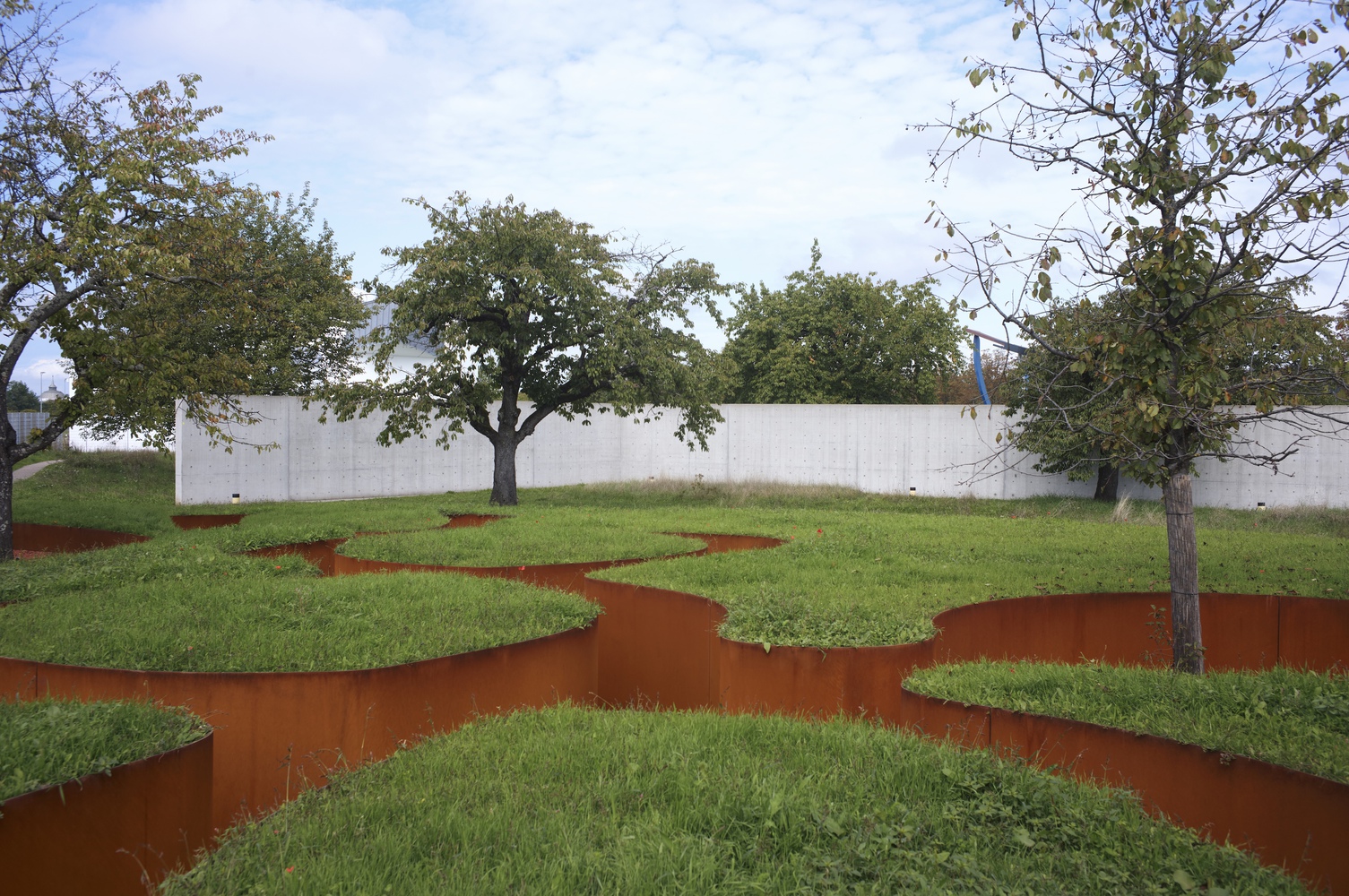
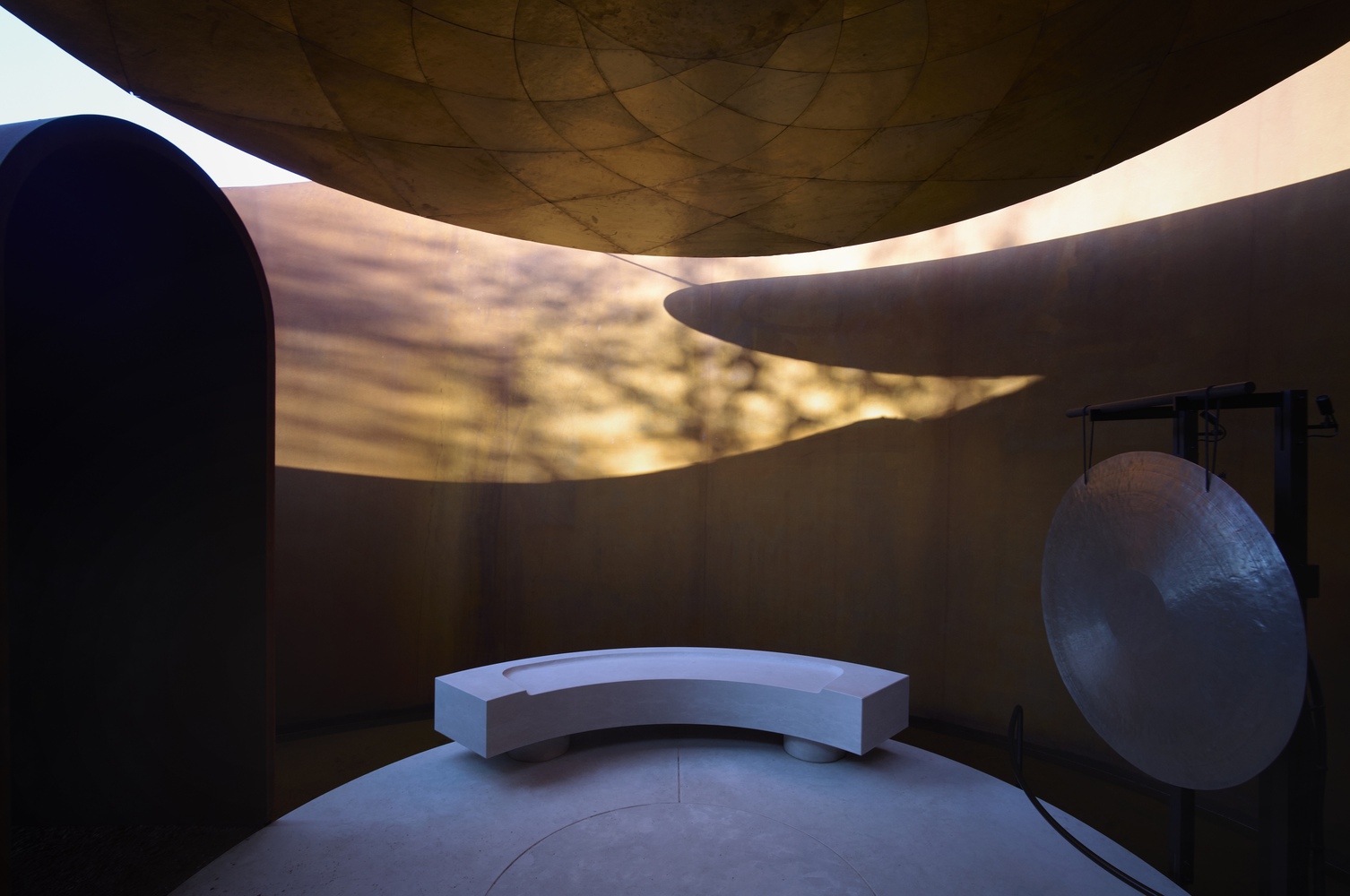
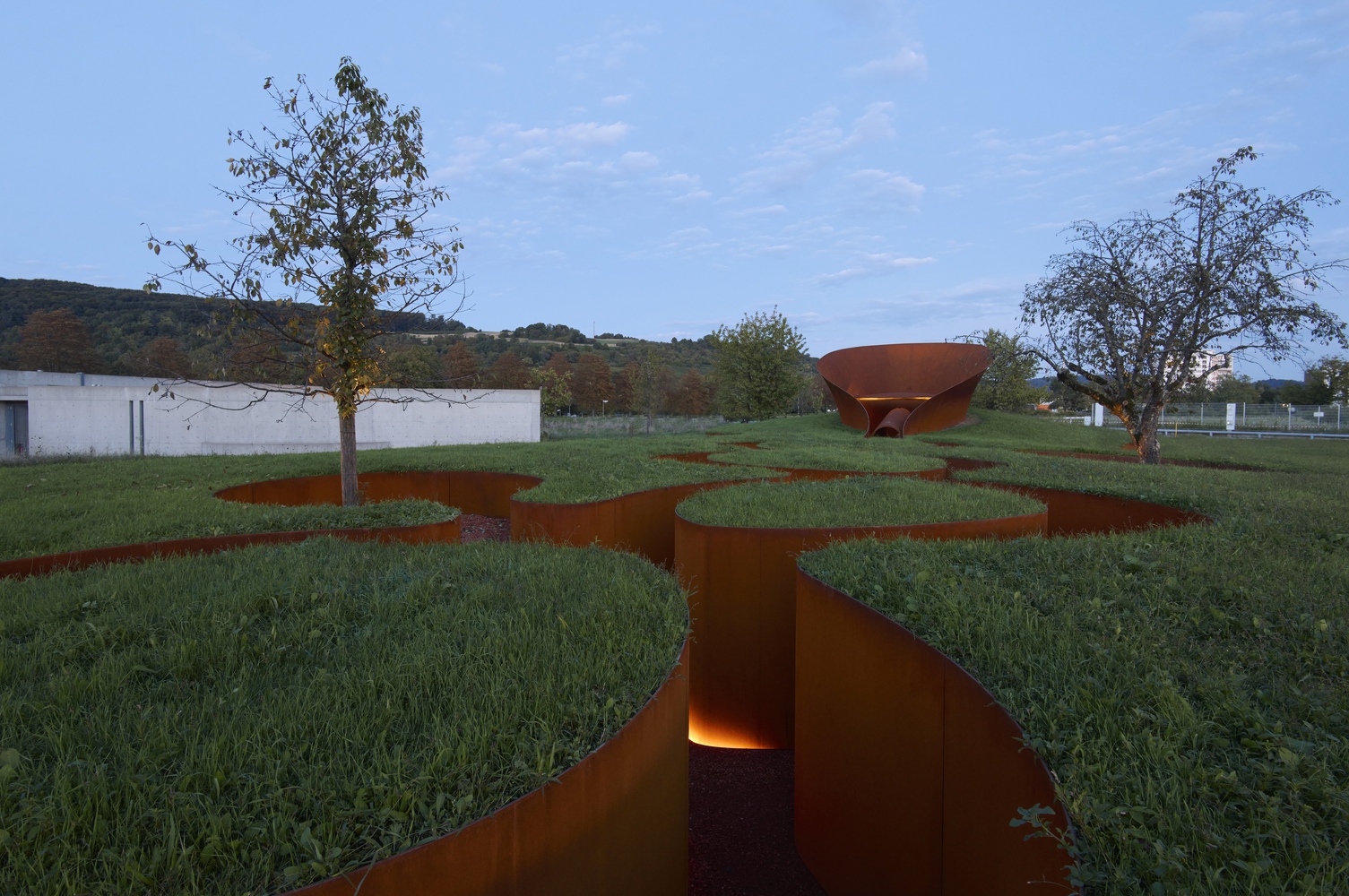
Unfolding as a winding, descending path, the retreat invites both physical and metaphysical exploration. Visitors move along curving walls that hum with subtle sounds of gong and flute, evoking a sense of inward transition.
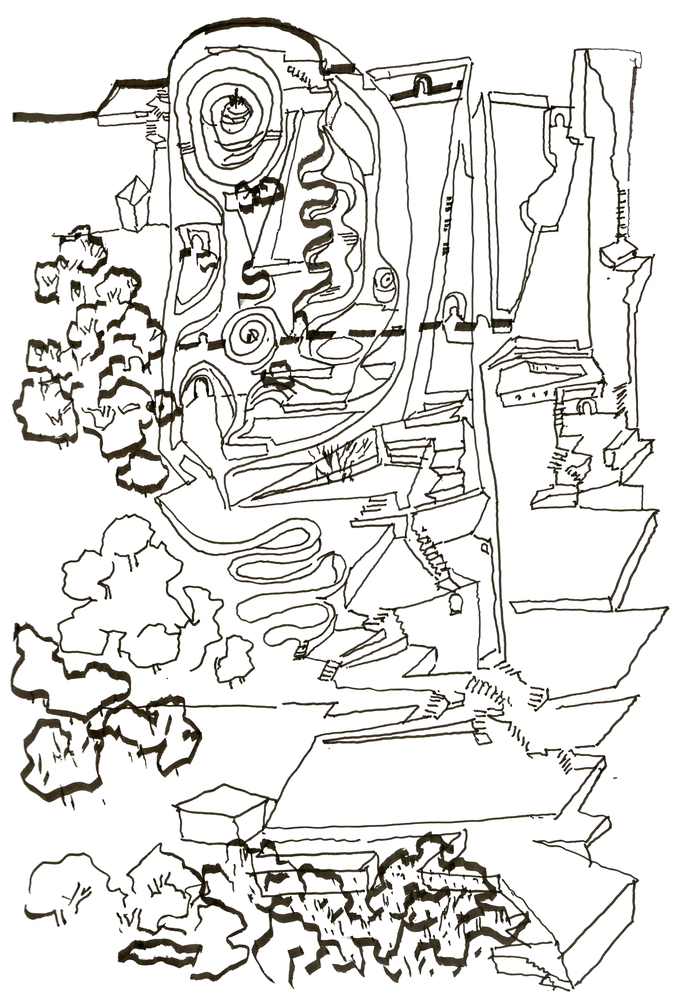
According to Khushnu Panthaki Hoof, 'During the design process, we explored several iterations of the pathway and model.
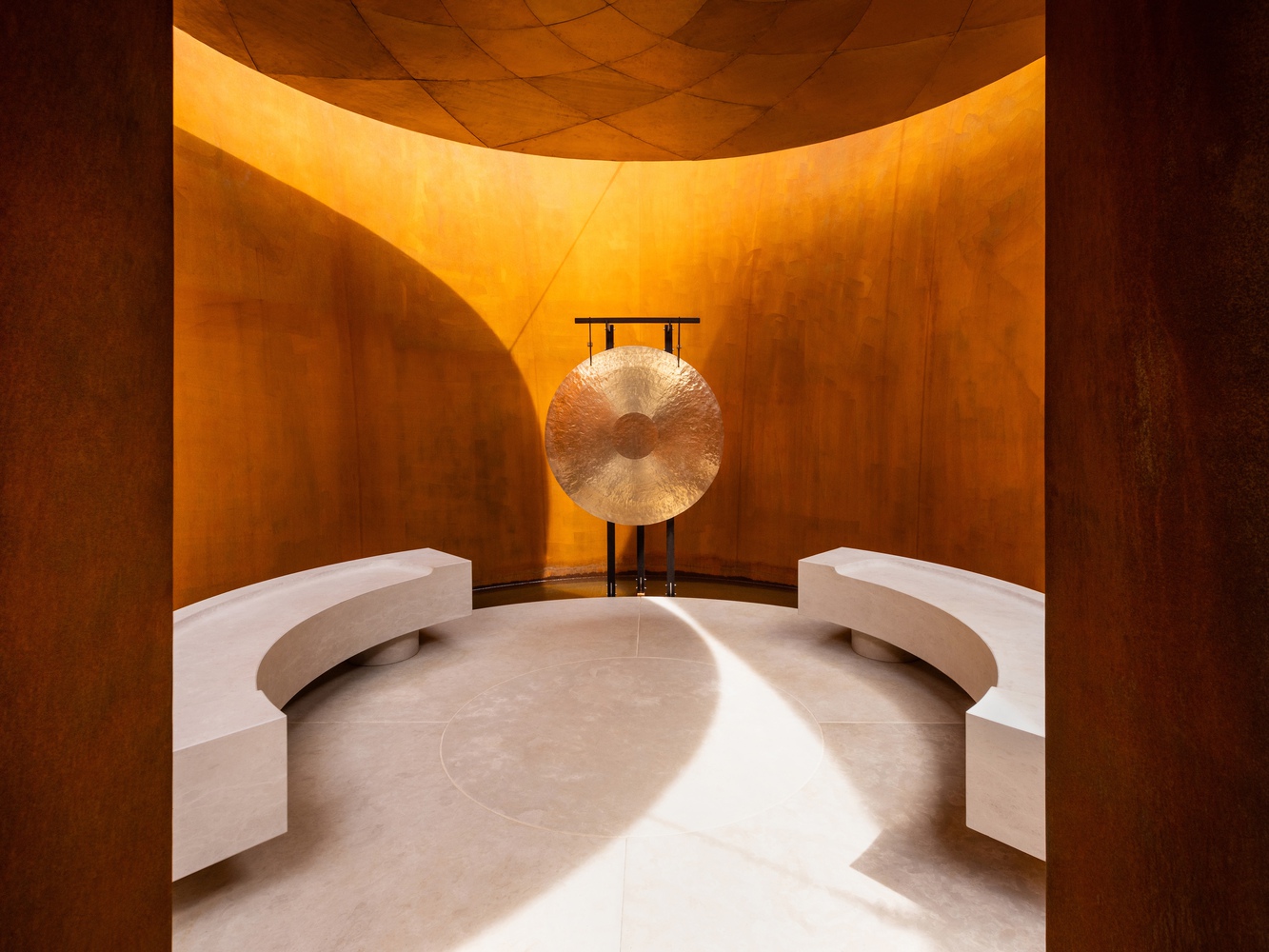
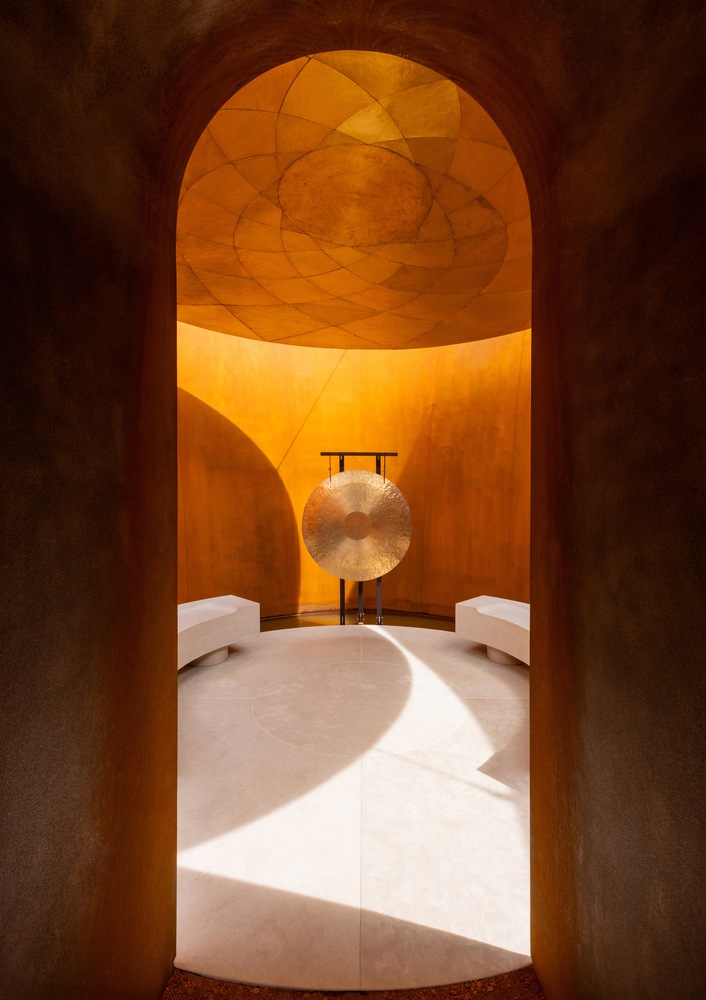
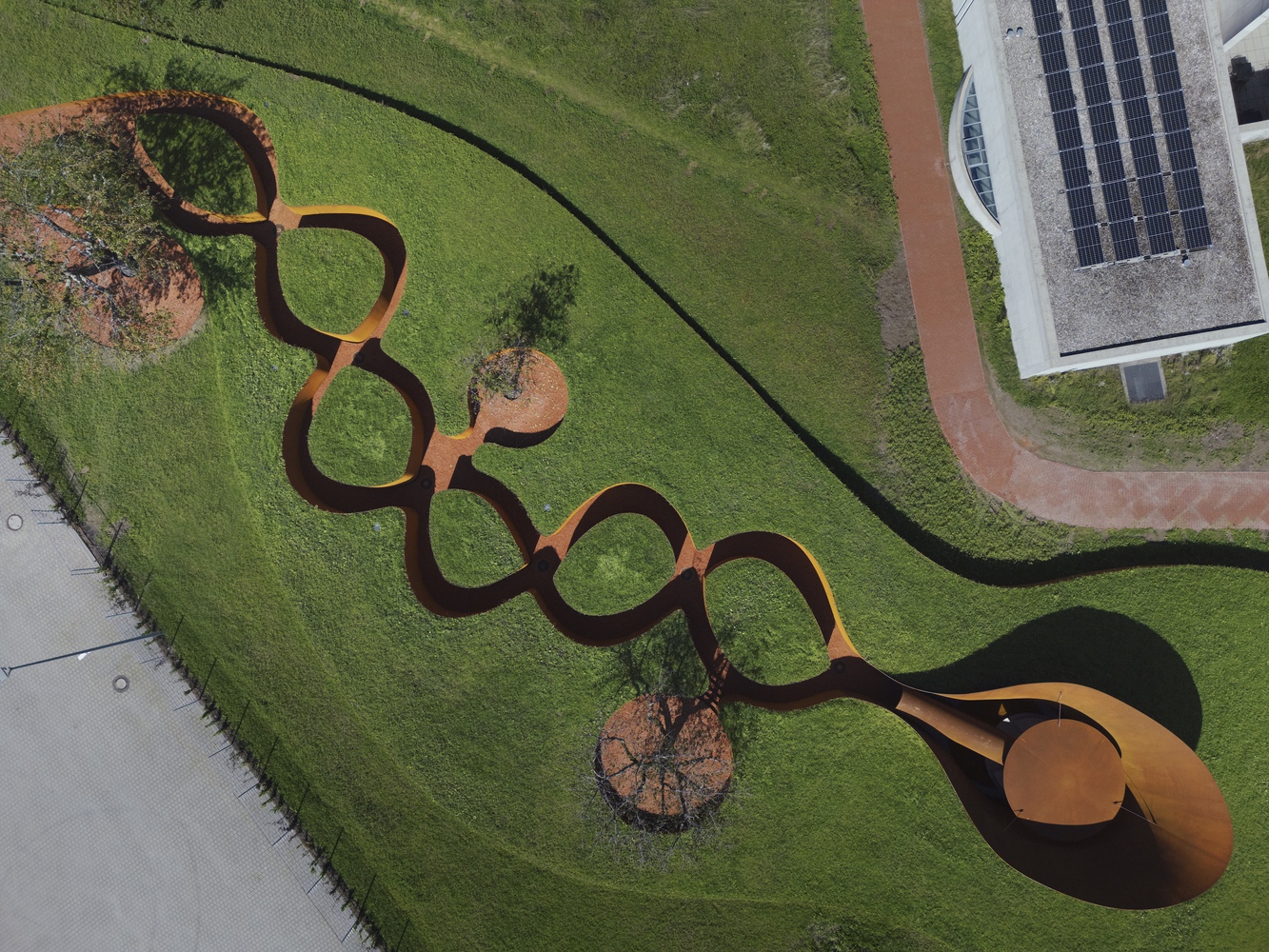
One version featured two intertwined paths, which reminded Doshi of a dream he once had of two interweaving cobras. Intuitively, Sönke and I took this as a sign and developed the design further around that idea.
For us, the vision of the cobras symbolized renewal and transformation, themes that resonated with the spirit of the retreat.
The intertwined paths thus became both a spatial and symbolic expression of awakening and renewal, guiding visitors on a journey of discovery.
The soundscape, integrated through concealed acoustic recesses, accompanies the visitor through the pathway and culminates in a circular contemplation chamber.
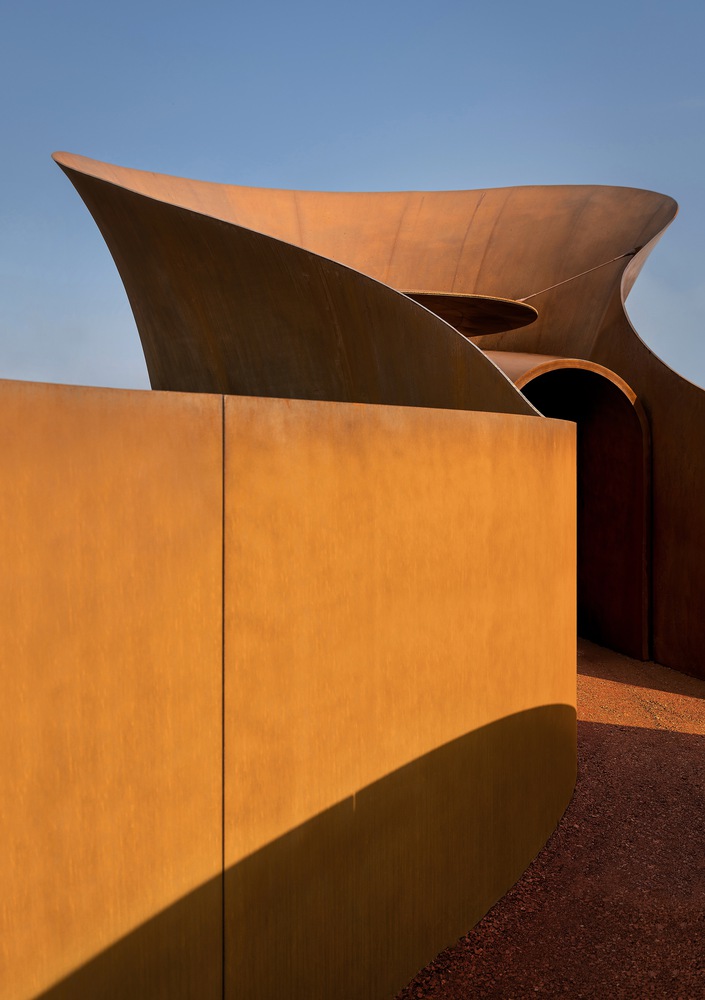
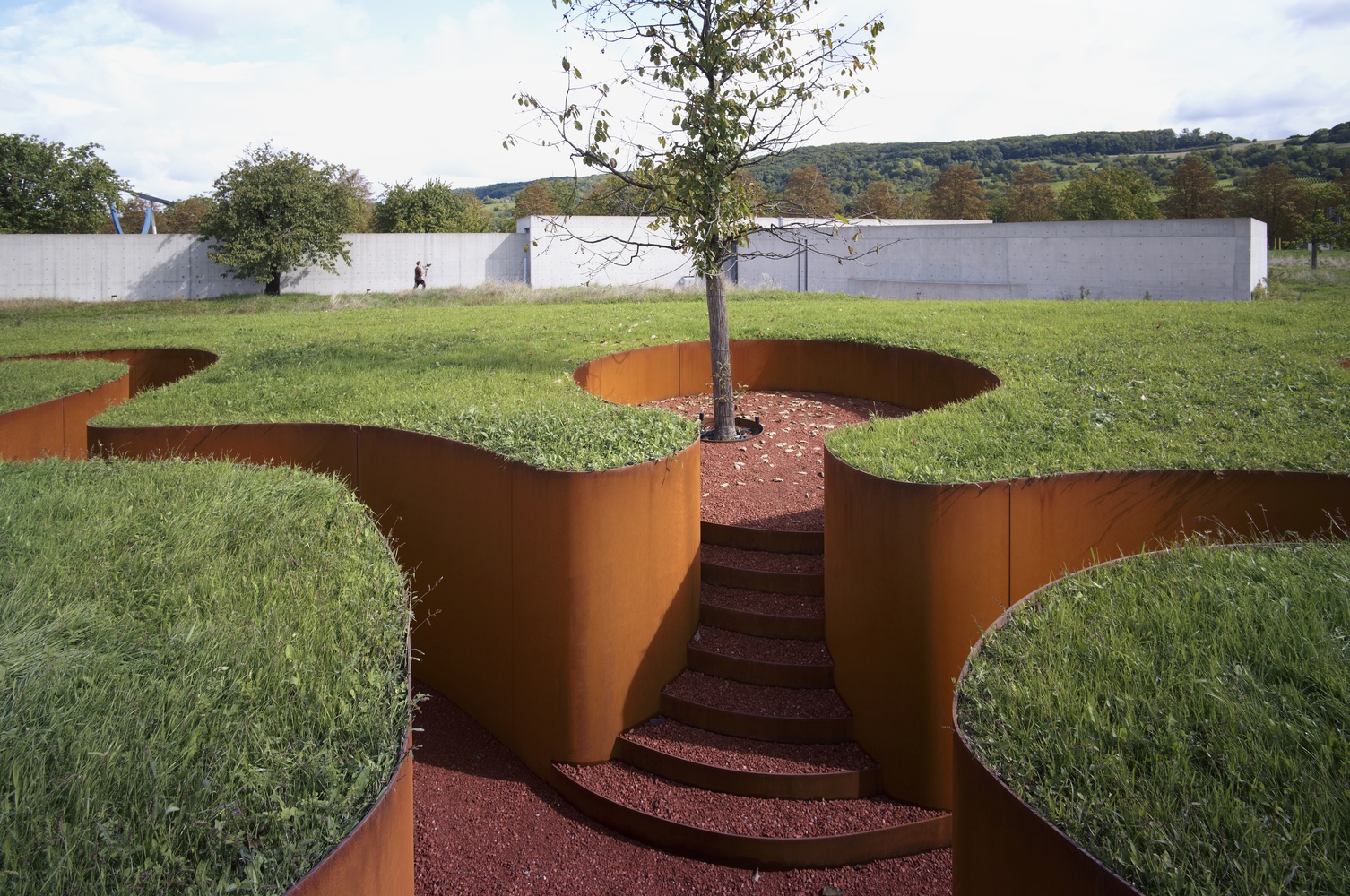
Within this organically shaped space, a rainwater basin, two semicircular stone benches, and a central gong create a meditative atmosphere.
Light filters through an aperture in the ceiling, reflecting from a hand-hammered brass mandala crafted in India, casting delicate patterns across the space.
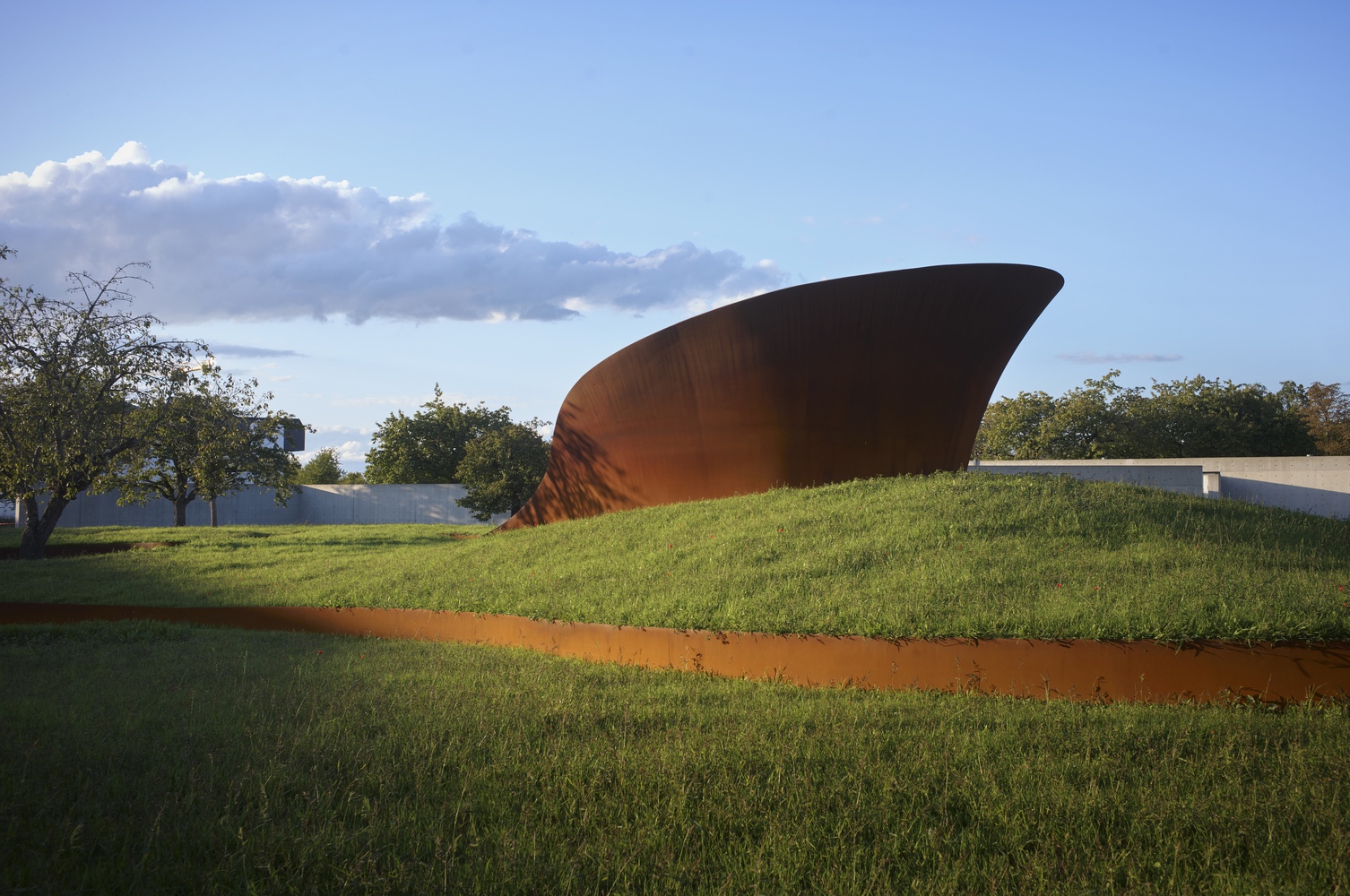
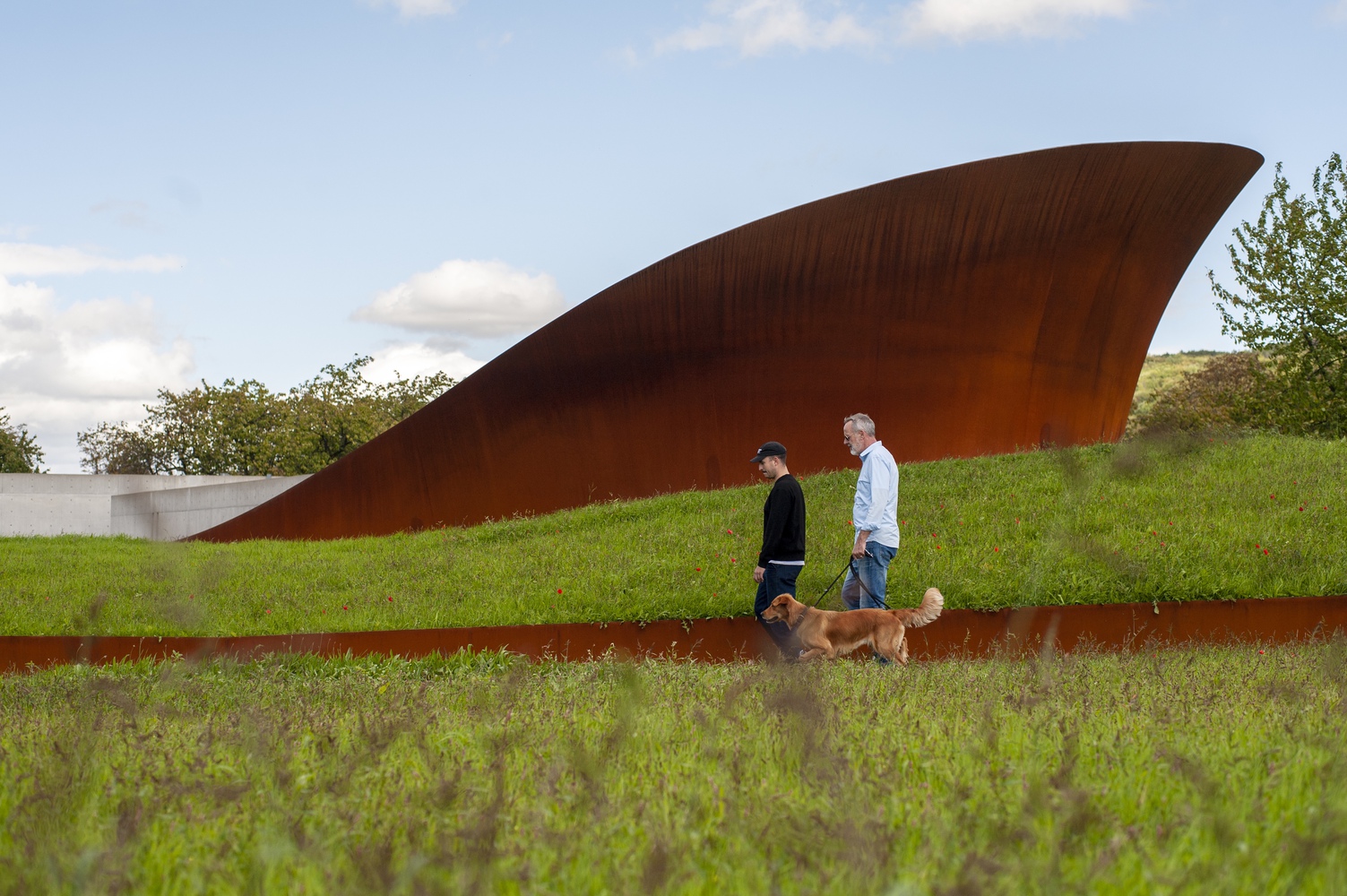
The structure is crafted from forged and formed XCarb® steel, an innovative, low-emissions material generously donated by ArcelorMittal.
Its warm, evolving patina harmonizes with the natural landscape, while the sinuous geometry encourages shifting perspectives and sensory.
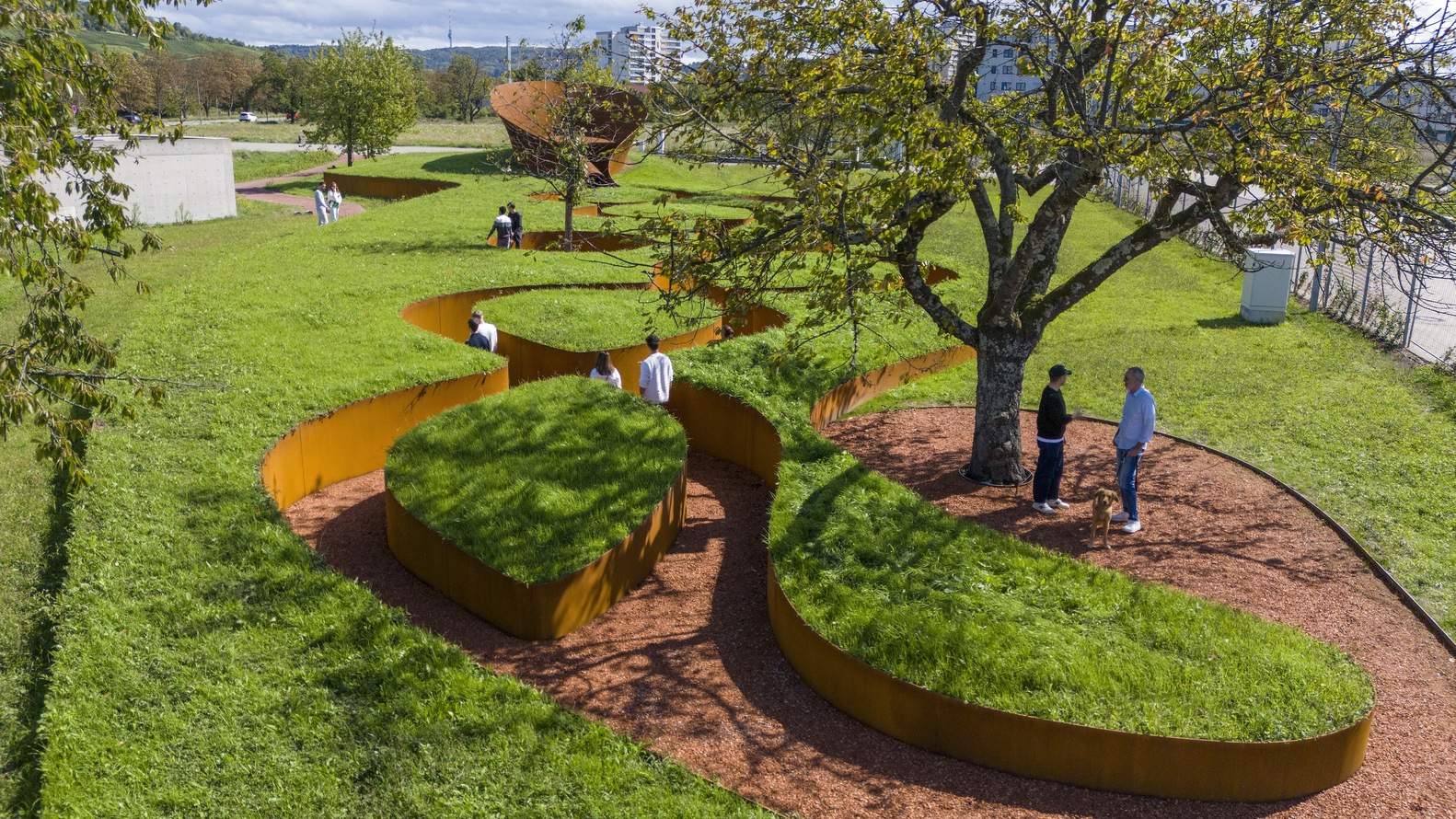
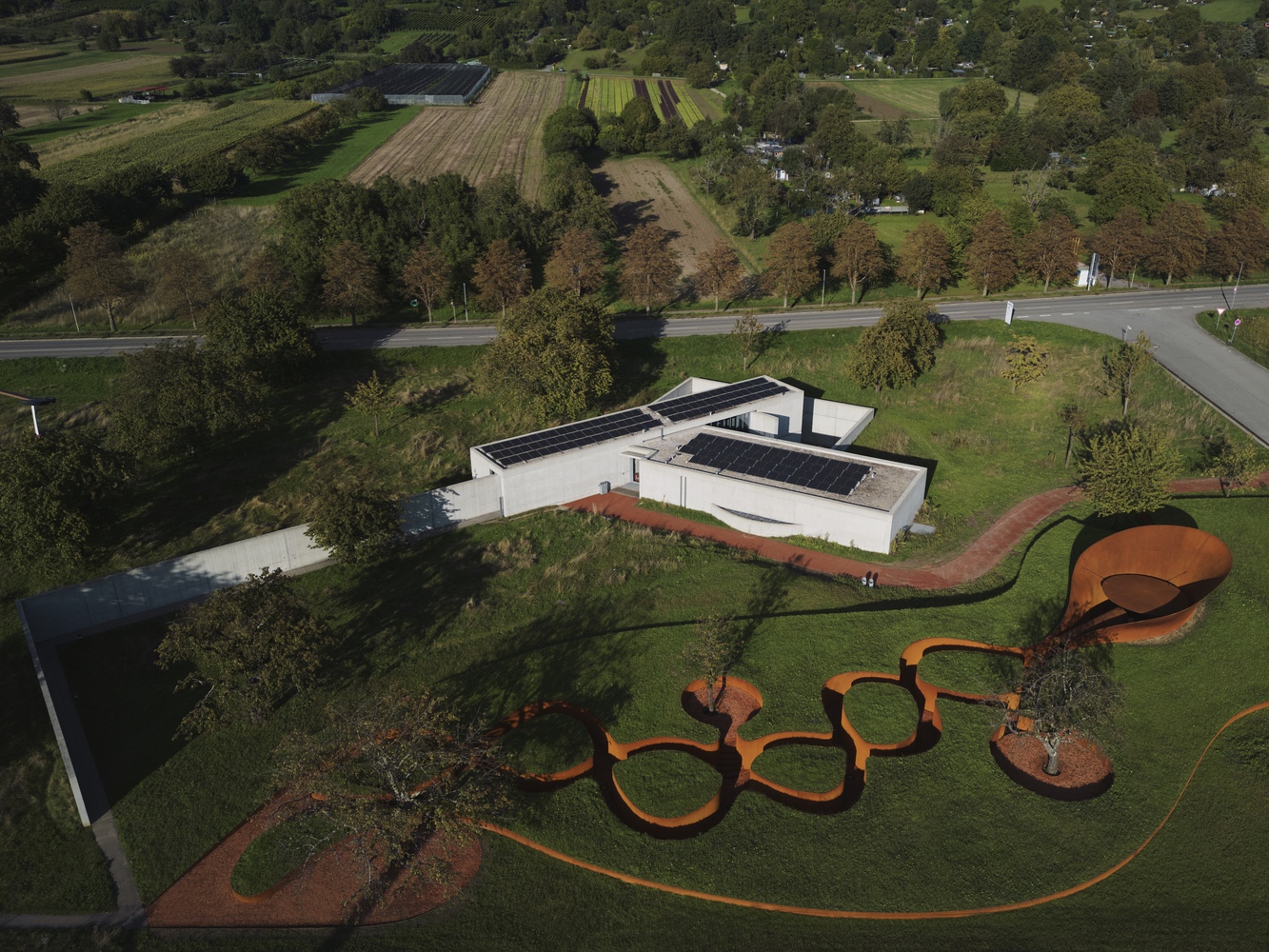
The retreat embodies the process of awakening and ascension through sound and movement.
As Khushnu notes, "Sound resonates through the body, dissolving the boundary between self and structure. The building itself becomes an instrument that is alive, responsive, and transformative."
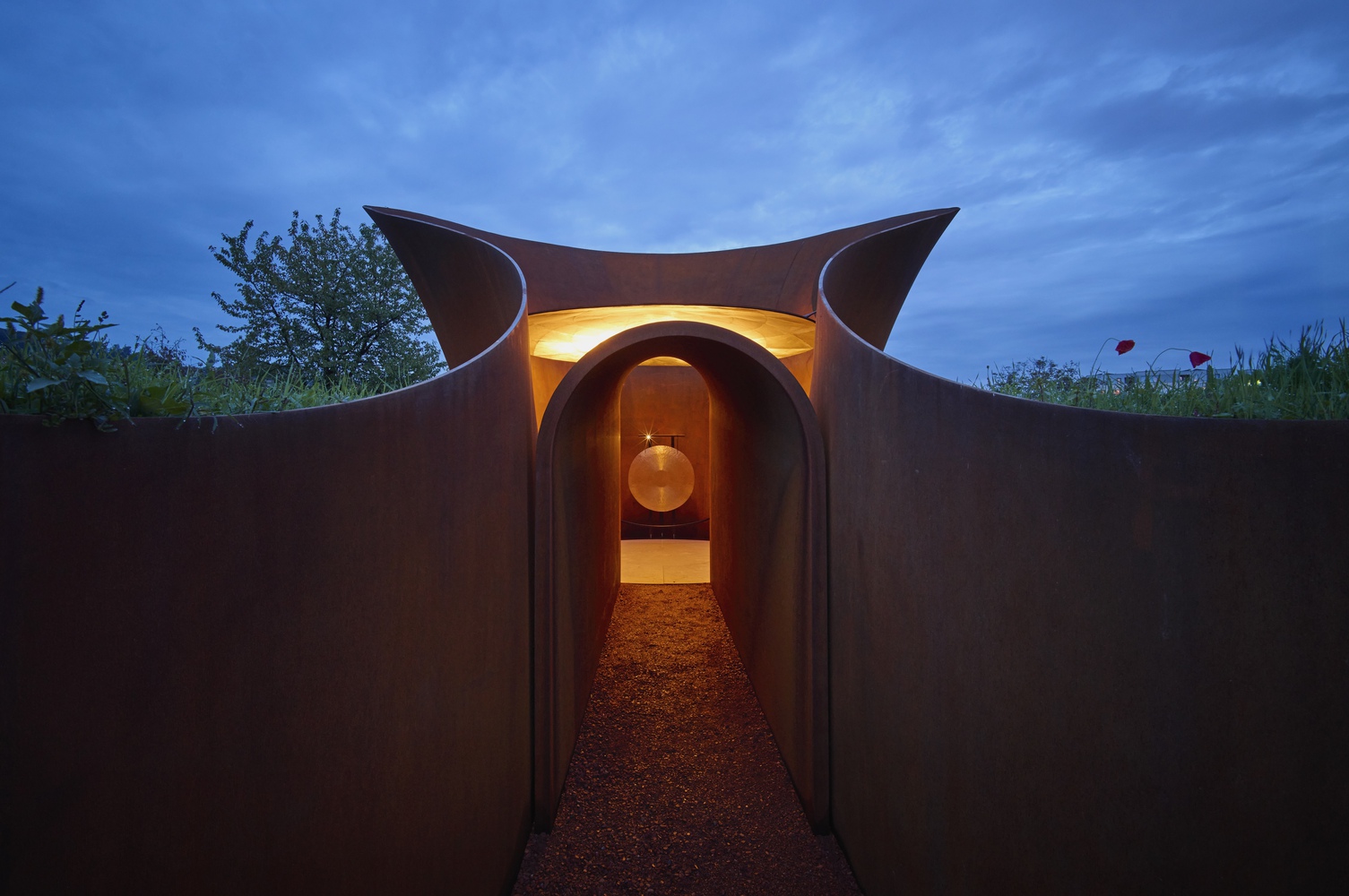
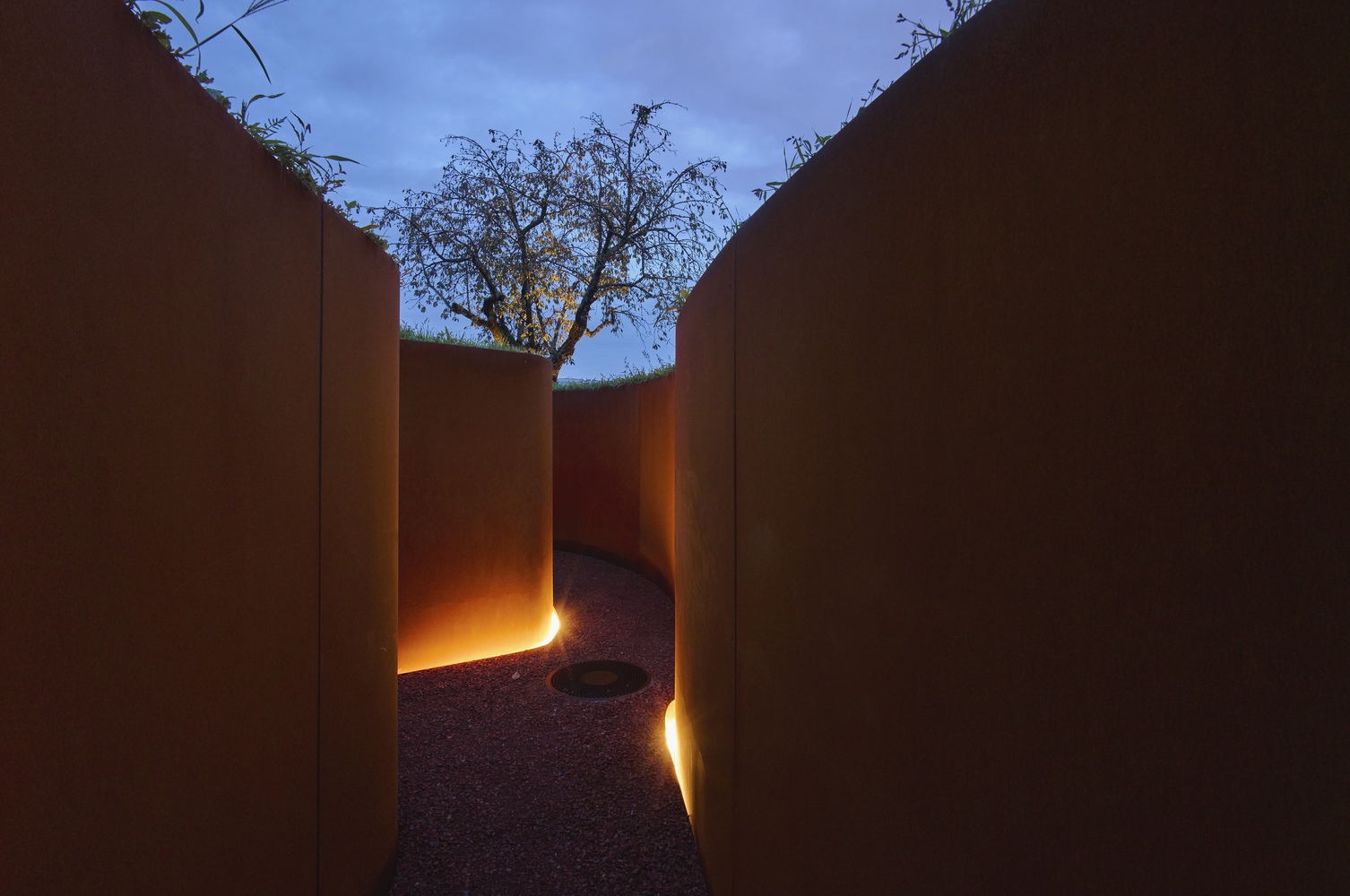
The architects deliberately refrained from assigning the Doshi Retreat a singular label. It stands instead as an open-ended space for contemplation, inviting solitude, disorientation, and encounter, a journey that mirrors the unseen dimensions of being.
Through their shared vision, Balkrishna Doshi, Khushnu Panthaki Hoof, and Sönke Hoof have given form to an experience that transcends architecture: a haven of stillness and spiritual resonance within the evolving landscape of the Vitra Campus.