Yueyang Hualinggang Pier Tourist Center
YUEYANG HUALINGGANG PIER TOURIST CENTER
Wang Hui | Urbanus
ARCHITECTS
Wang Hui | Urbanus
LEAD ARCHITECT
Wang Hui
STRUCTURAL CONSULTANTS
Beijing Master Structural Design Co., Ltd
CONSTRUCTION
Hunan Province Eighth Engineering Co., Ltd.
CONSTRUCTION DOCUMENTS
Cccc Wuhan Harbour Engineering Design & Research Co., Ltd
CLIENT
Yueyang Tianxia Dongting Water Tourism Development Co., Ltd.
DESIGN TEAM
Zheng Na, Yao Yongmei, Sun Fanqi, Dou Yonghui, Zhang Fujun, Li Wenjie, Zhou Xiang, Wang Jingfei, Lu Yong, Chen Yu, Zhao Ping, Zhang Shuyan
PHOTOGRAPHS
TAL
AREA
1624 m²
YEAR
2024
LOCATION
Yueyang, China
CATEGORY
Tourism
English description provided by the architects.
At the end of 2018, the Yueyang Port Industrial Heritage Park officially opened, retaining elements from the industrial era such as gantry cranes, railways, tower cranes, and warehouse structures, while coexisting with both historical districts and the future city.
The ecological park is located to the west of Dongting Lake and borders the Yueyang Tower Scenic Area, Bianhe Street, and Dongting South Road, forming the most important public space resource in the historical core of Yueyang.
However, one shortcoming was its lack of service facilities in the waterfront area. Although this pitfall received many criticisms, any additional construction in this thoroughly de-industrialized area is impossible due to new zoning restrictions.
However, the Tourism Development Conference brought a unique opportunity through special policies, offering a chance to enhance the Yueyang Port Industrial Heritage Park further.
The first breakthrough in the project came with the return of the dock. Yueyang Tower, Dongting Lake, and Junshan Island are the three defining elements of the local landscape.
The tower overlooks the lake, the lake reflects the tower, and the island sits within the lake, creating a golden tourism triangle.
The water journey from Yueyang Tower to Junshan Island offers the best way to experience both the historical culture and natural scenery of Dongting, transitioning from static observation to dynamic engagement.
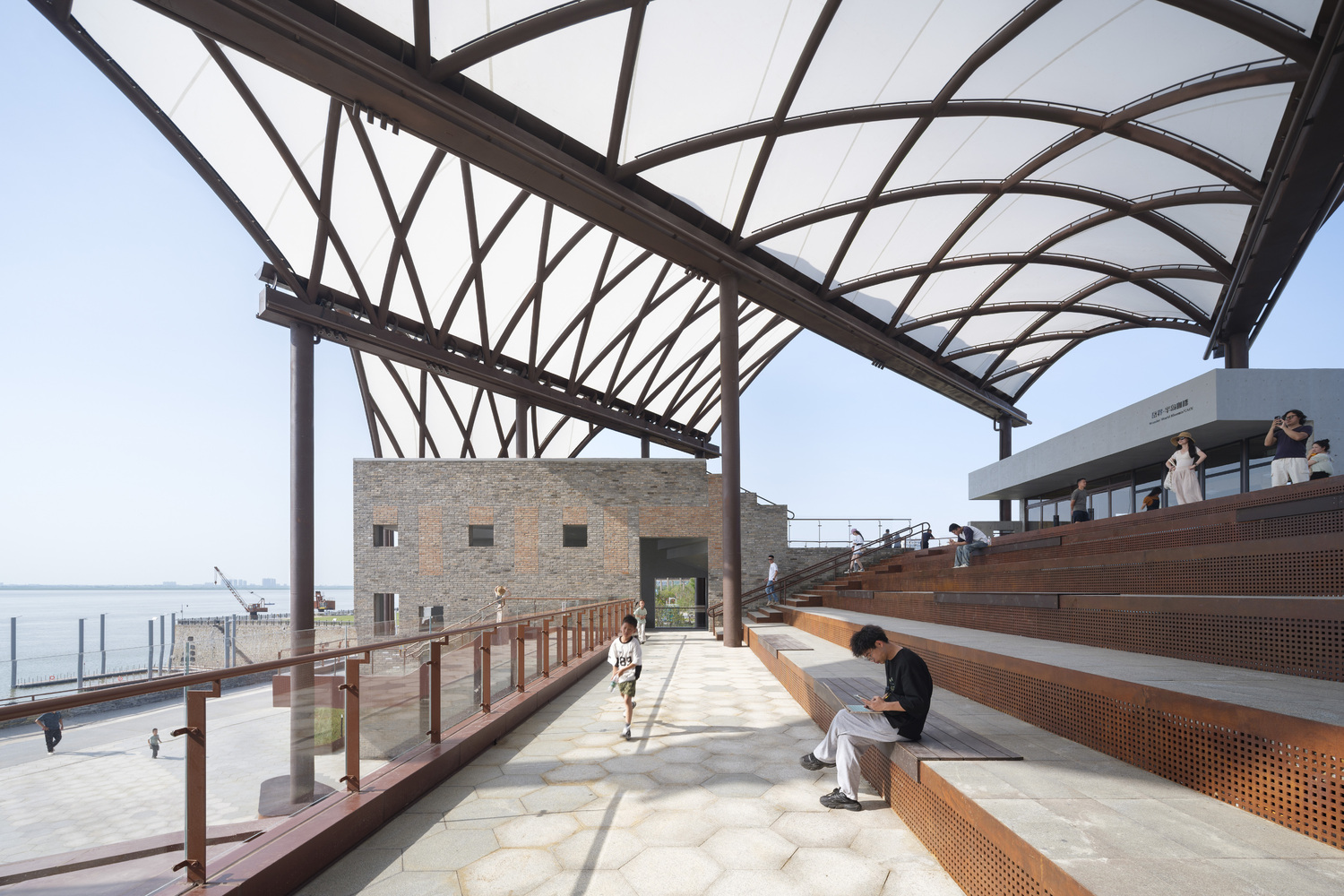
A visitor dock becomes essential for connecting these three elements. In the park's center lies an old cargo dock, which can easily be transformed into a yacht and passenger dock.
With floating bridges, 22 small yacht berths and 15 medium-sized yacht berths can be accommodated, which, even before the launch of water transport, already evoke the emotional value of embarking on a journey across Dongting Lake.
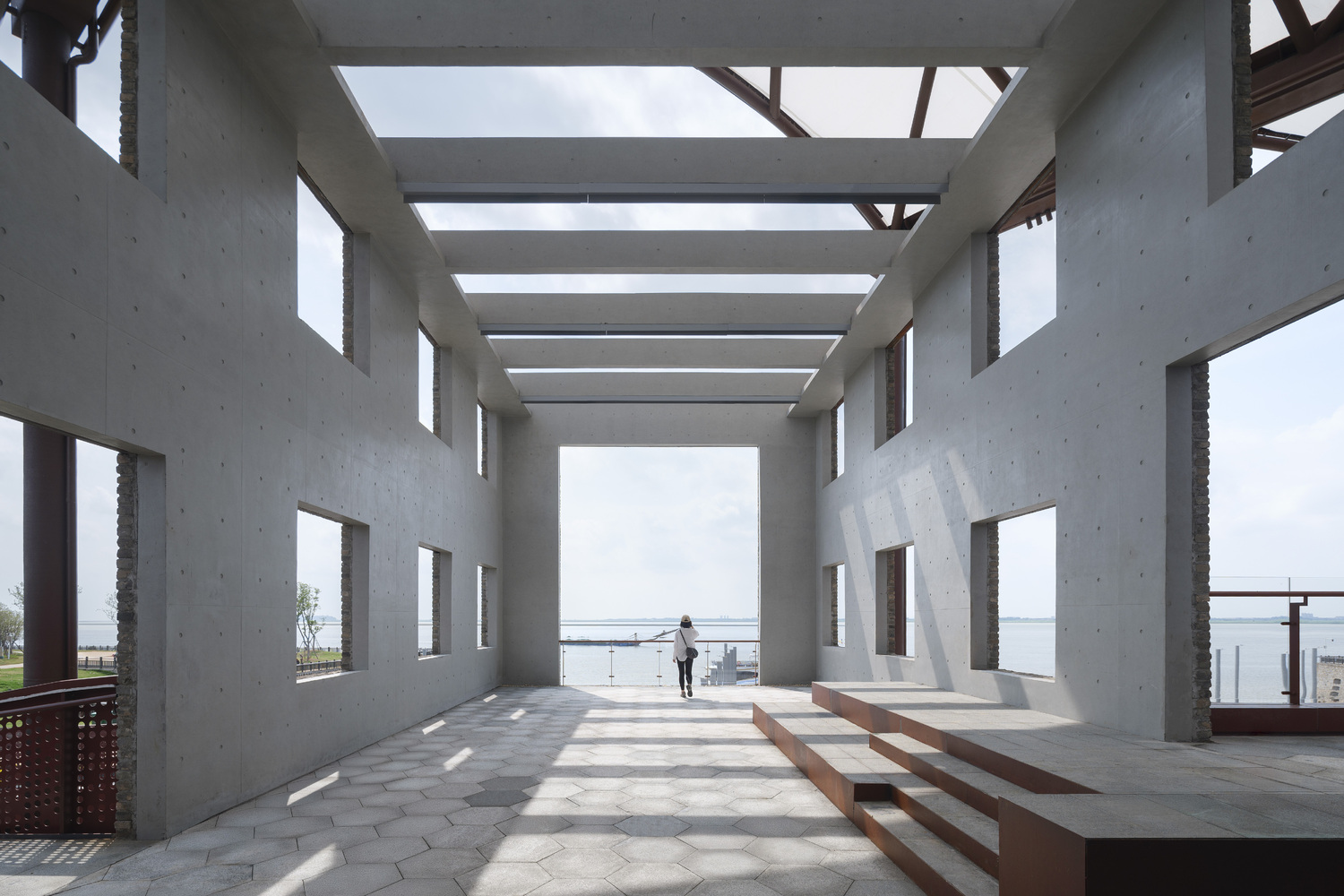
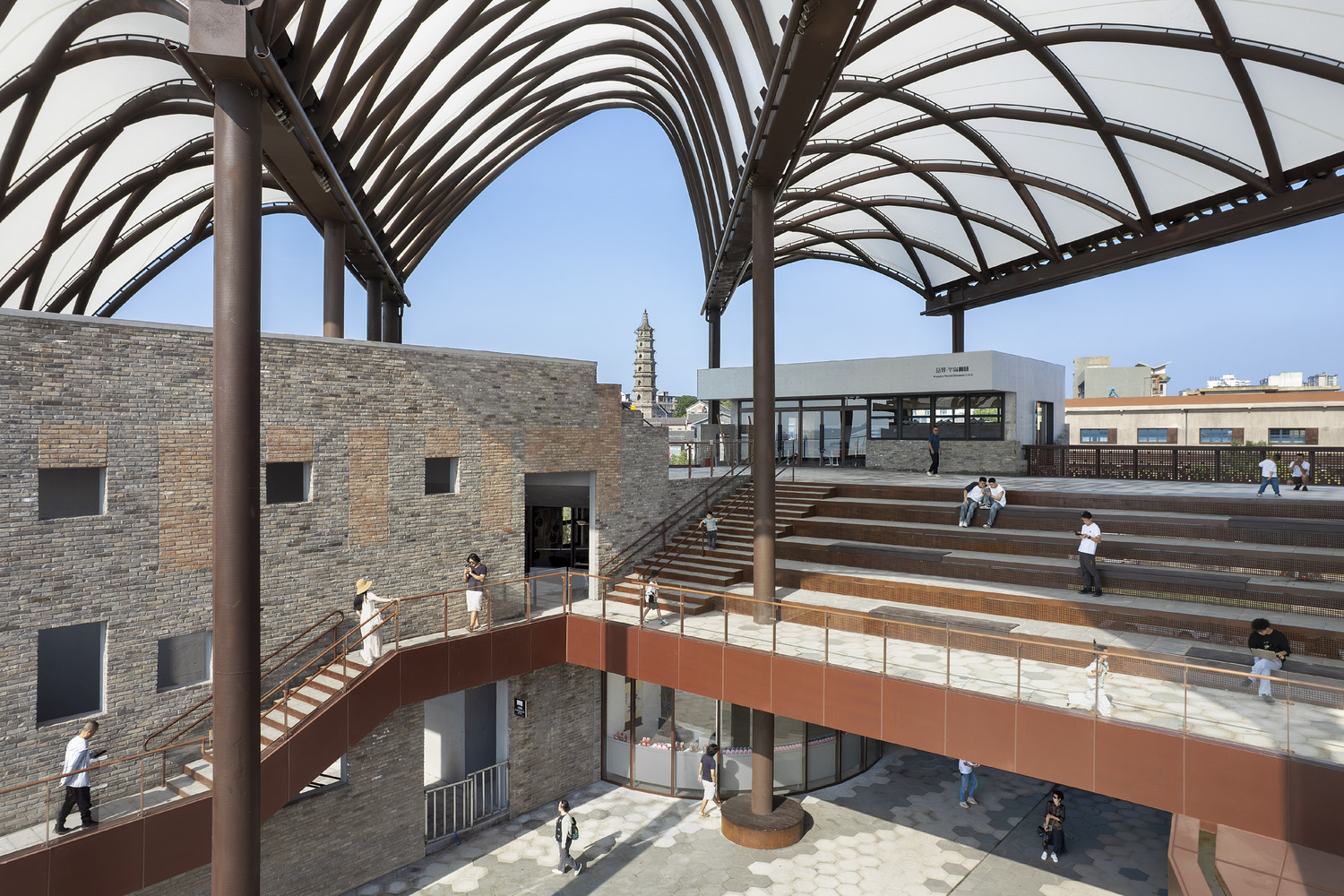
The dock requires supporting structures. During the initial demolition phase, the two parallel office buildings perpendicular to the lake were fortunately preserved, later providing the legal basis for adapting the old structures into the tourist center.
The buildings' east side connects to Yueyang South Road, creating a closed loop for the transportation of visitors via both land and water.
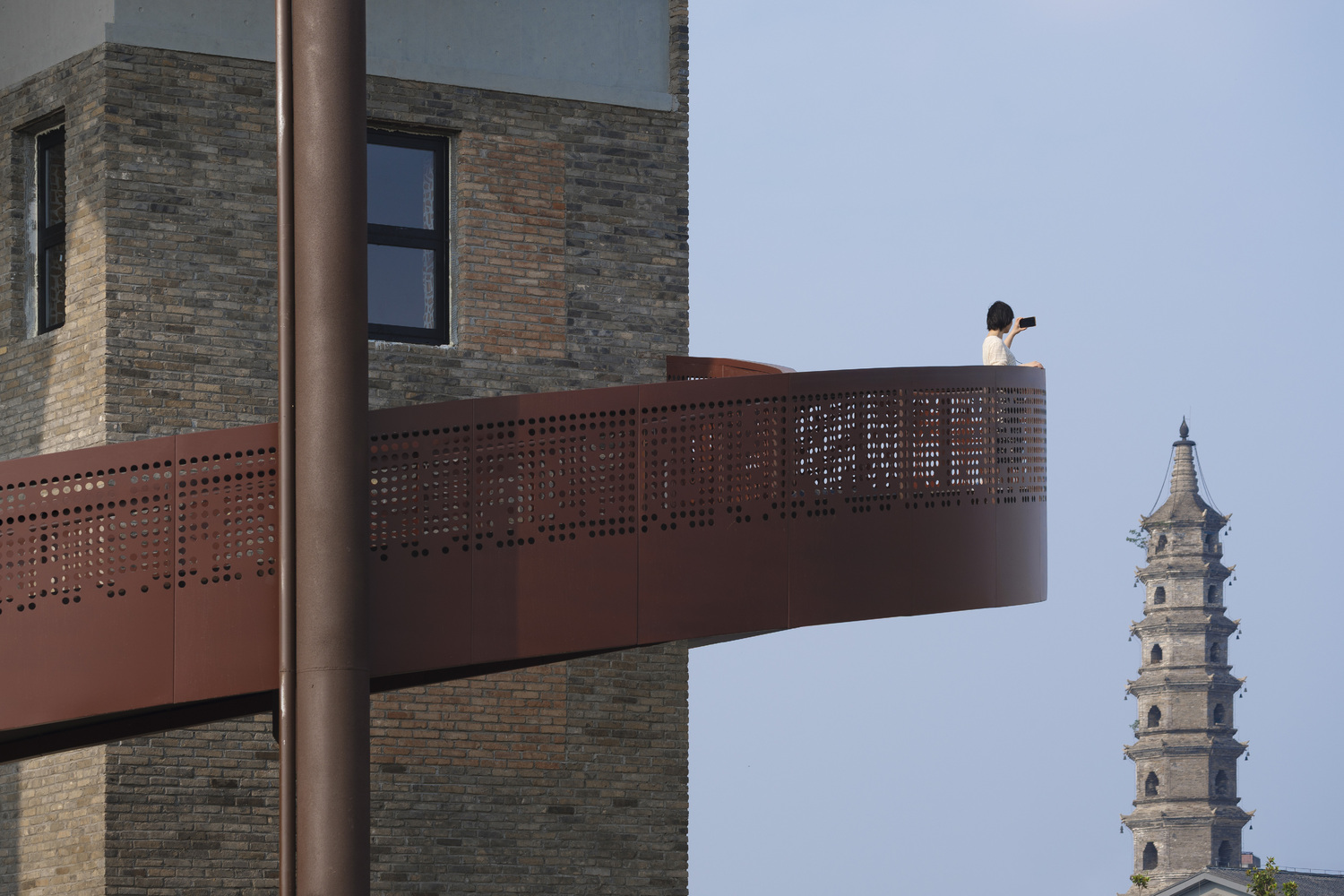
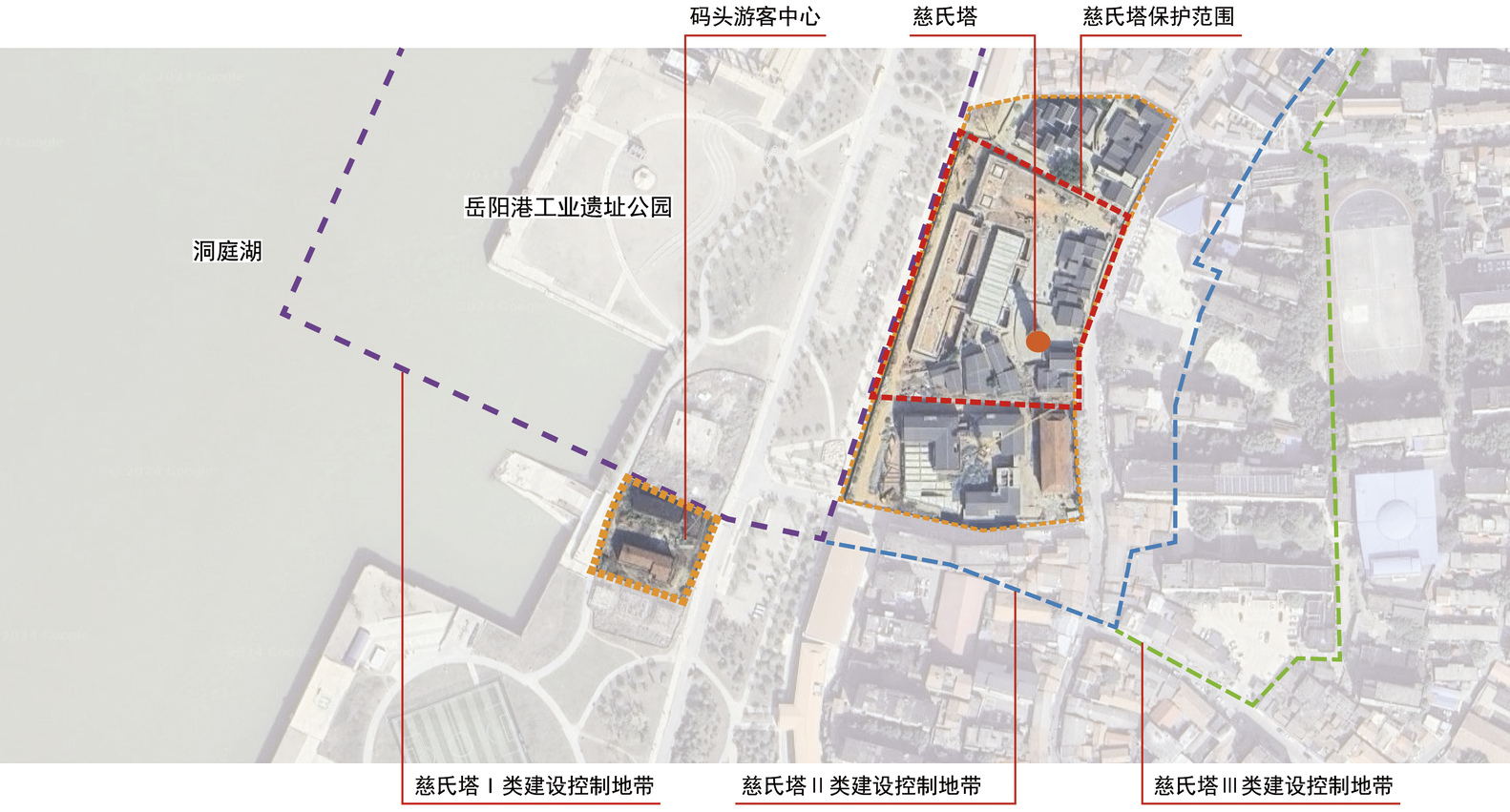
To the northeast, there is a small hill with the 39-meter-tall Cishi Pagoda, a seven-story octagonal brick tower from the Song Dynasty that has historically served as a navigation lighthouse on the turbulent waters of Dongting Lake.
Recent improvements to the surrounding environment have connected the Cishi Pagoda to the Yueyang Port Industrial Heritage Park, bringing it back to the waterfront.
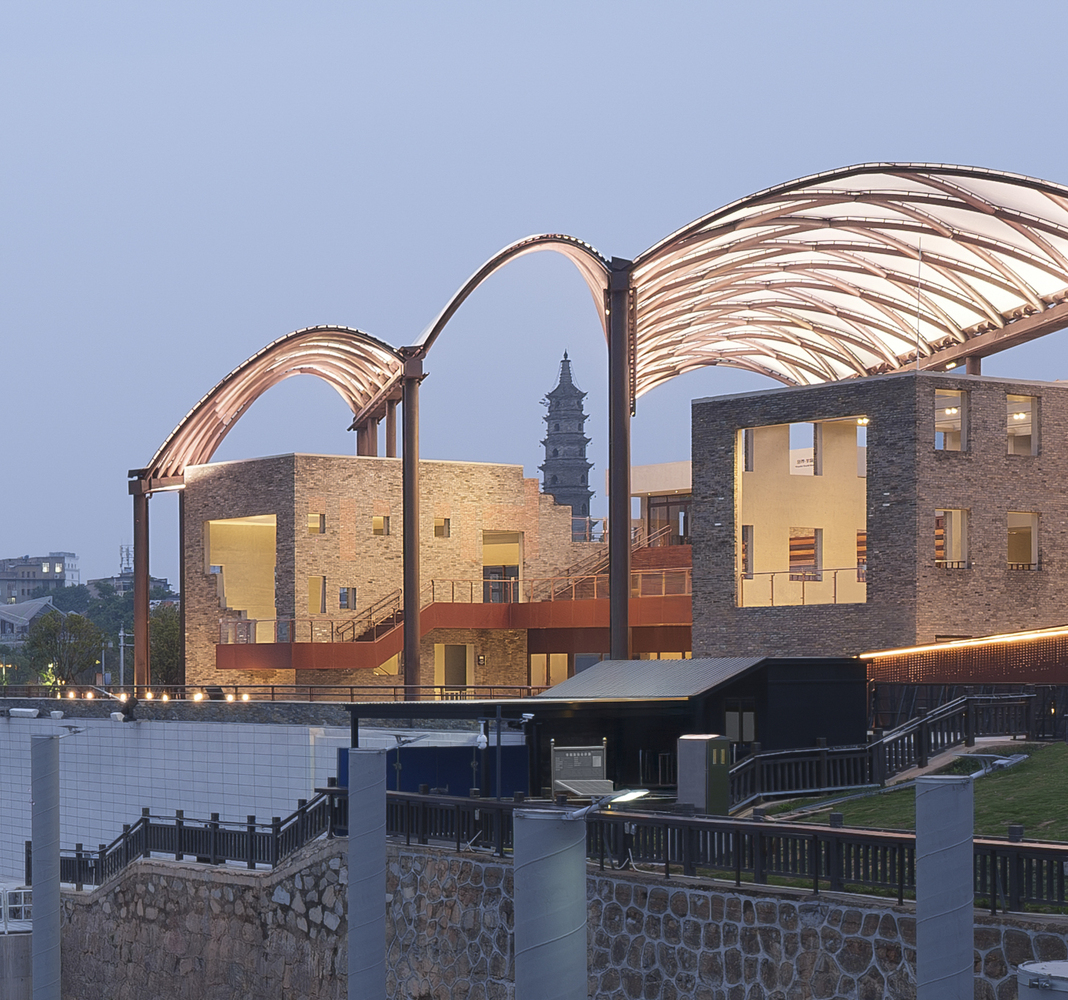
As a national cultural heritage site, the area around the pagoda is strictly controlled for construction, but fortunately, the southwest side of the building control zone is 10 meters away from the existing structures, making the renovation of the two buildings feasible. It seems that this historical lighthouse, which has guided ships into Dongting Lake for centuries, should indeed have a connection with the new visitor dock.
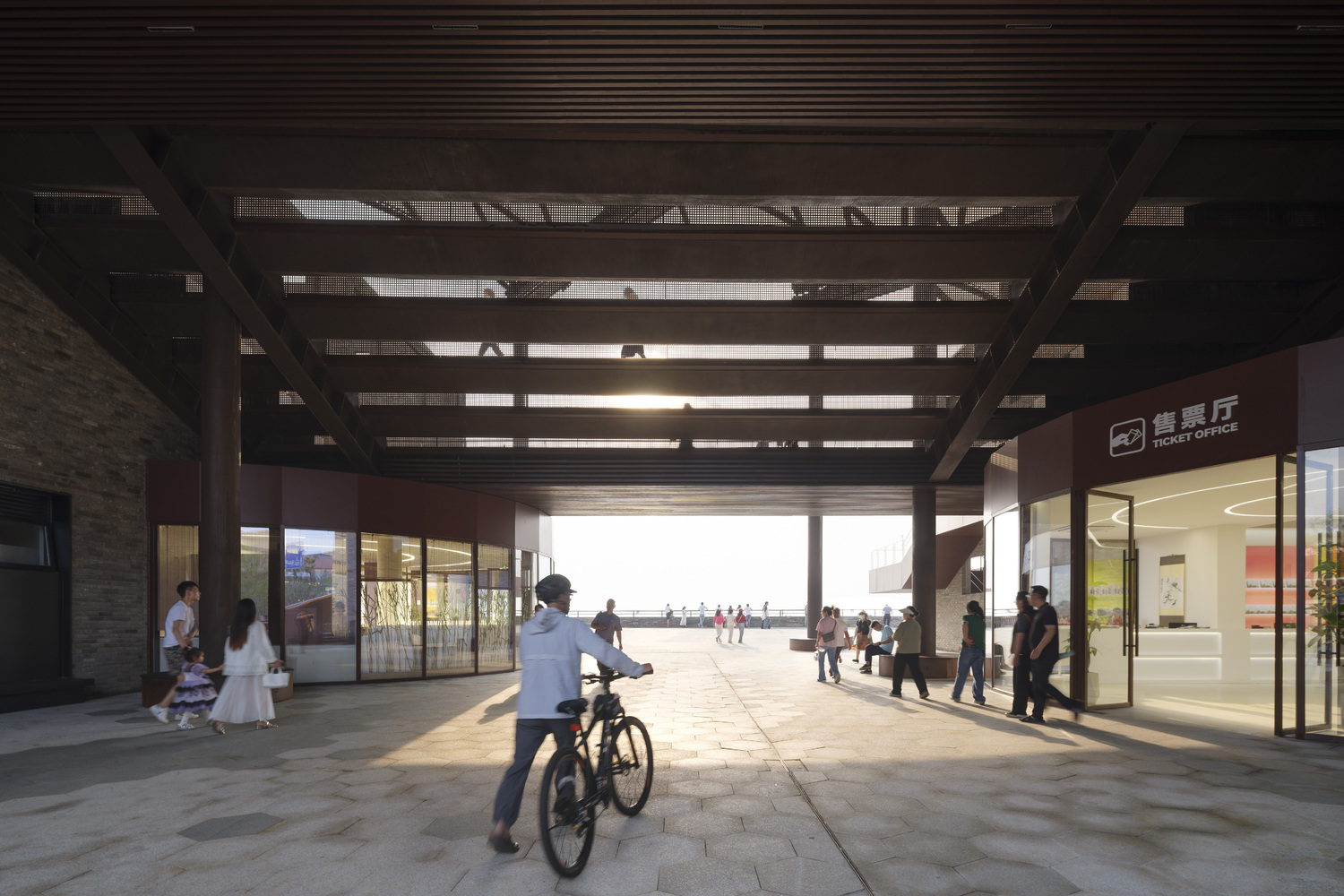
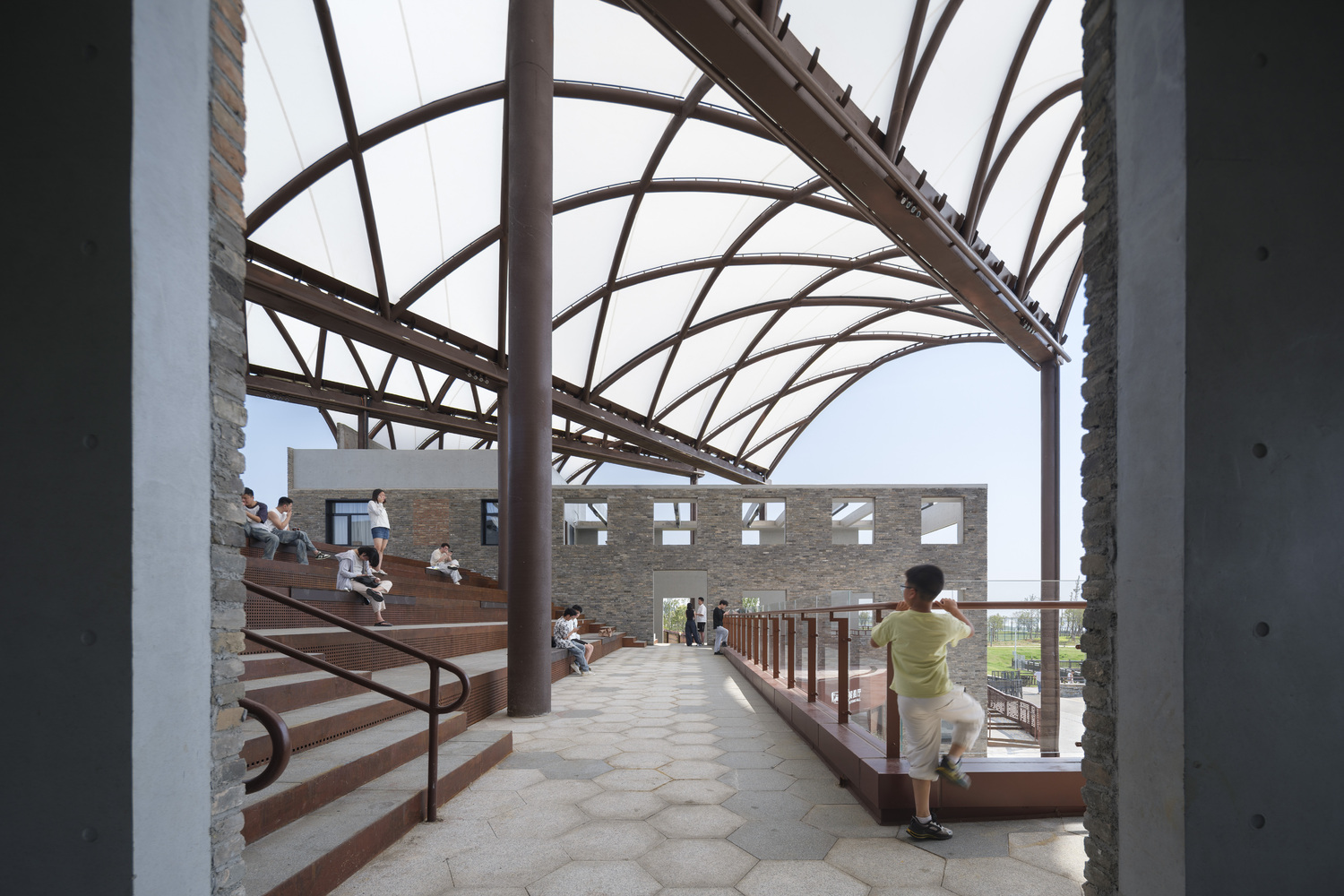
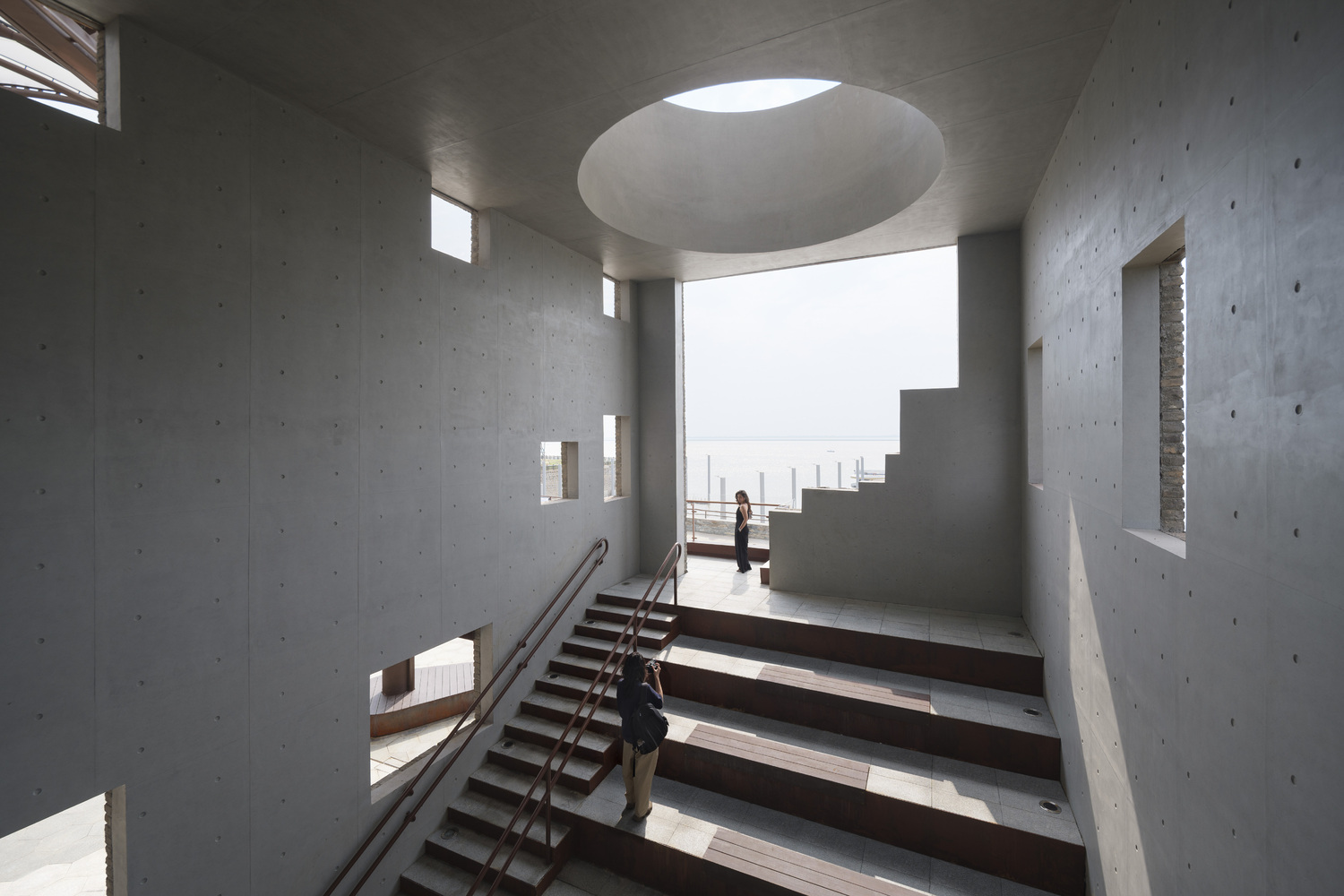
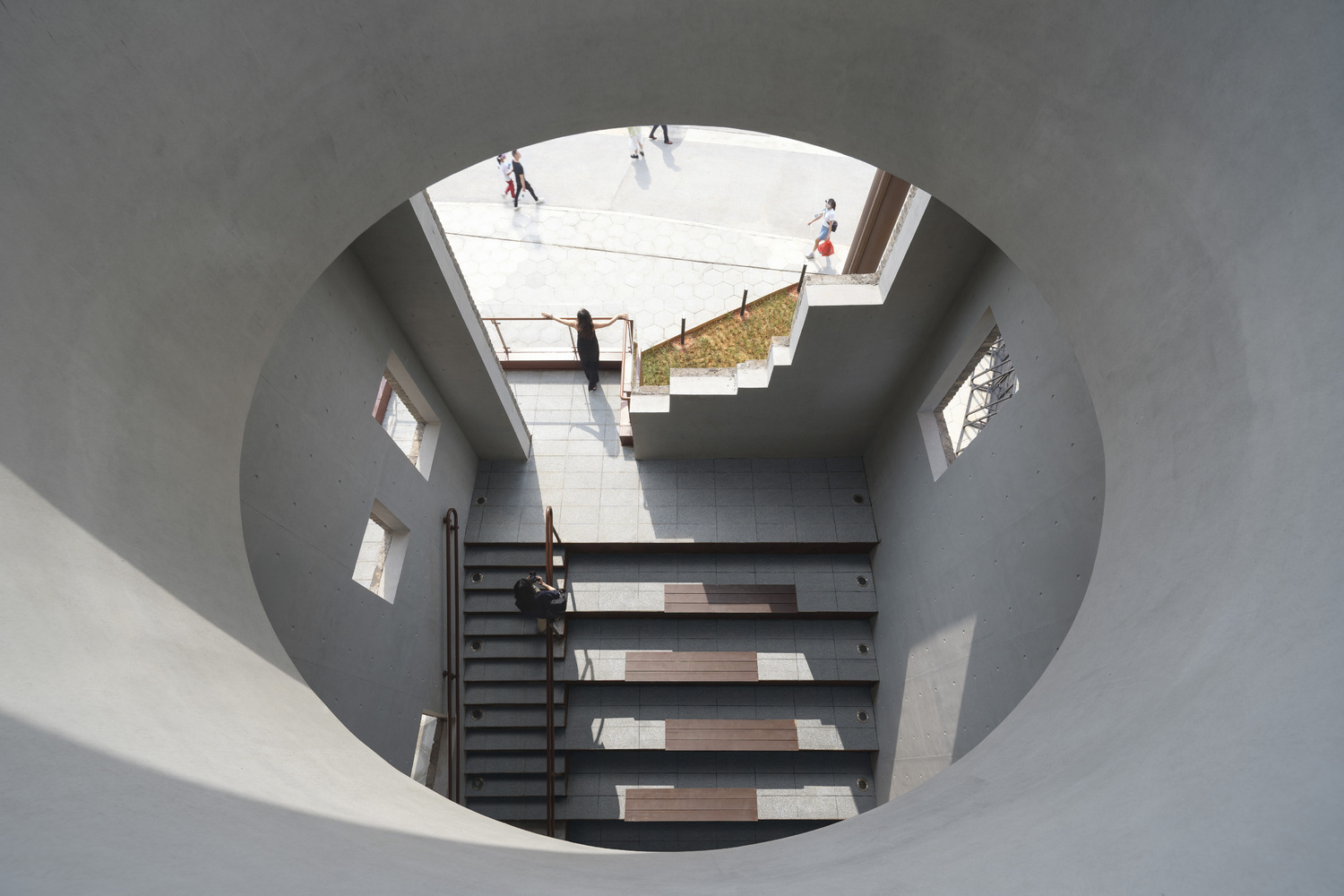
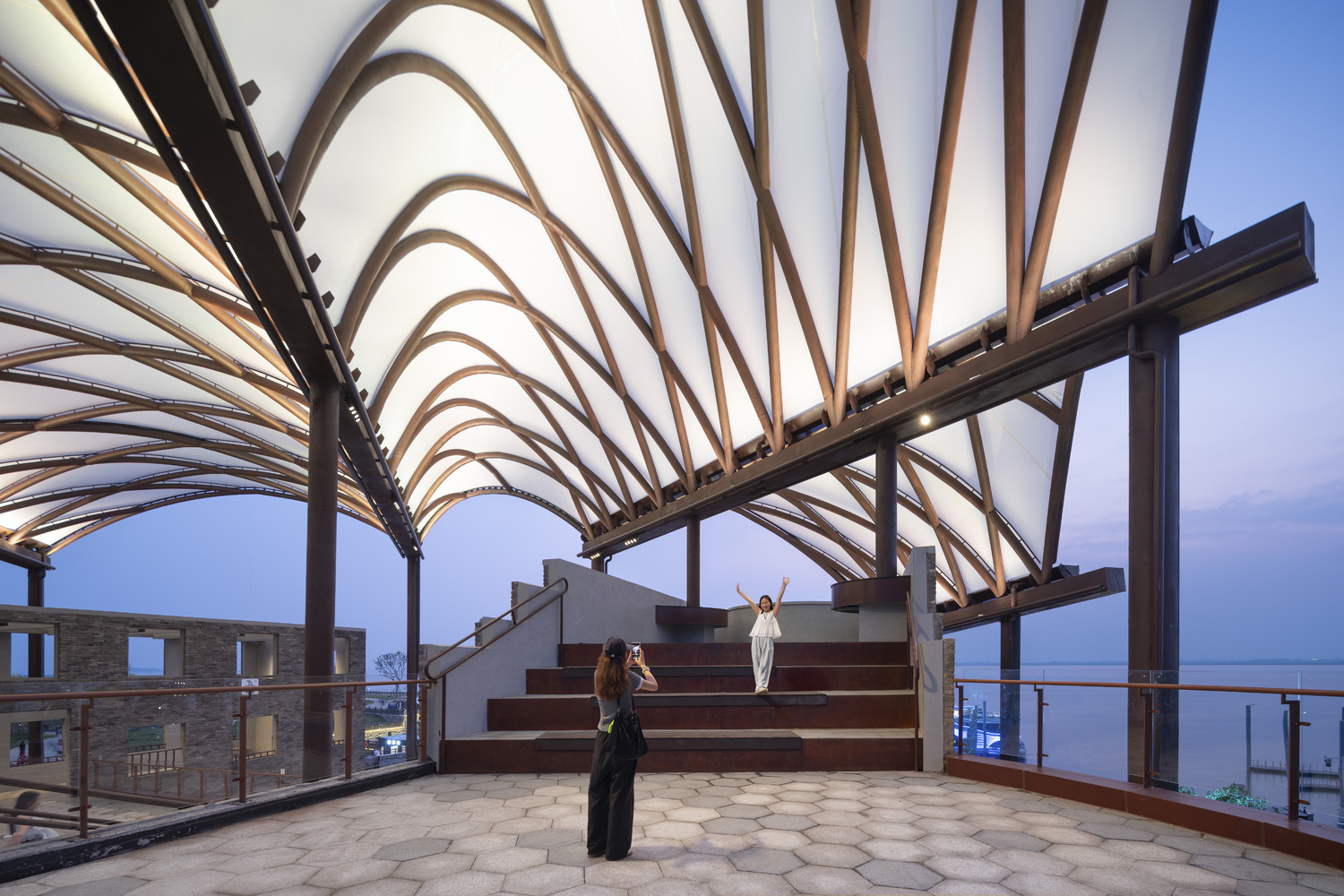
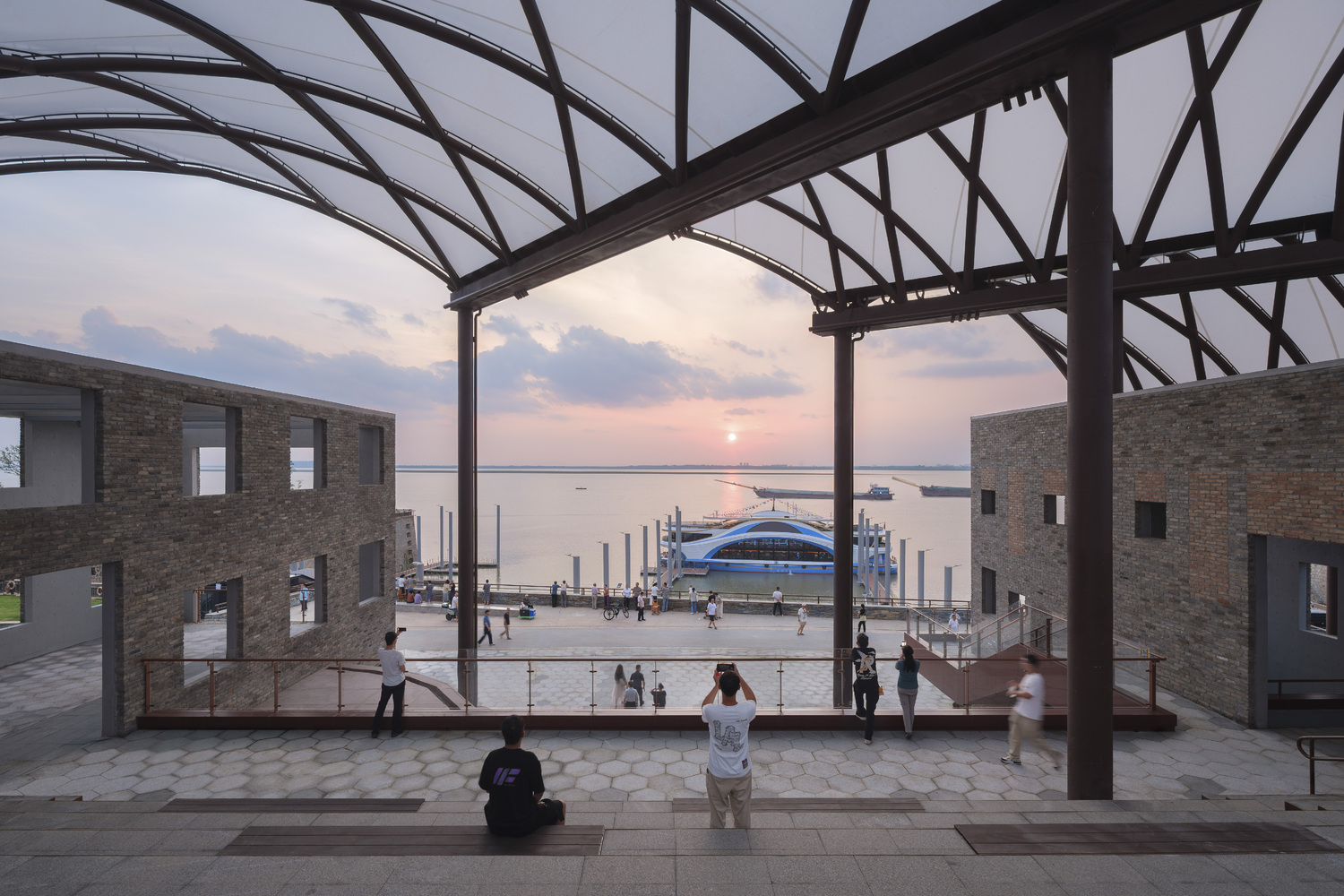
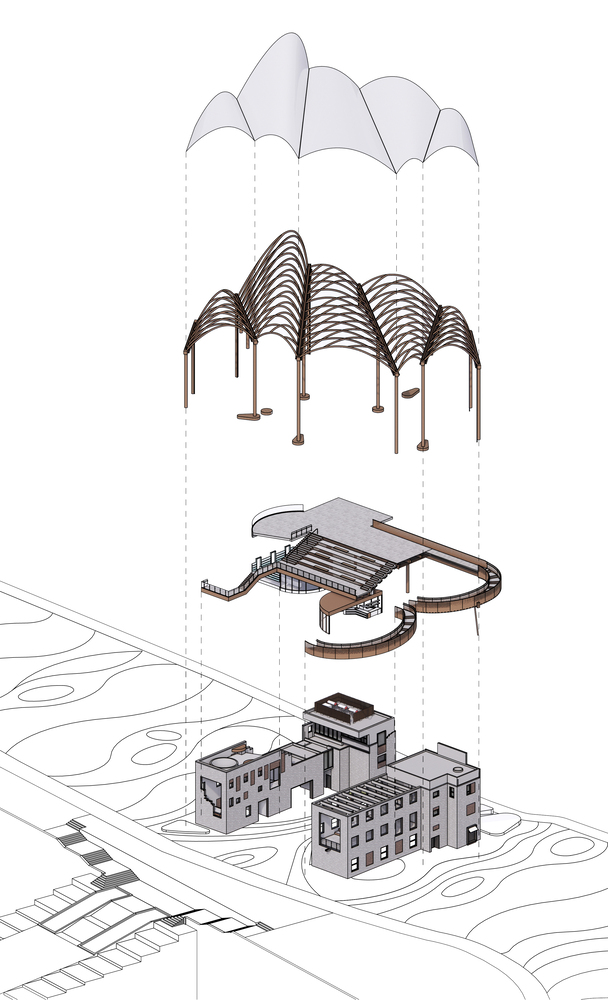
The ground floor of the two buildings meets the functional requirements of a tourist center, including ticket sales, a waiting area, and restrooms. A wide staircase connects the second and third floors, forming a gateway from the street to the dock while also creating outdoor space for the upper-level functions. Here, visitors can sit and quietly enjoy the sunrise and sunset over Dongting Lake, experiencing the ever-changing landscape. In the hot and humid summer months, outdoor platforms require shelter.
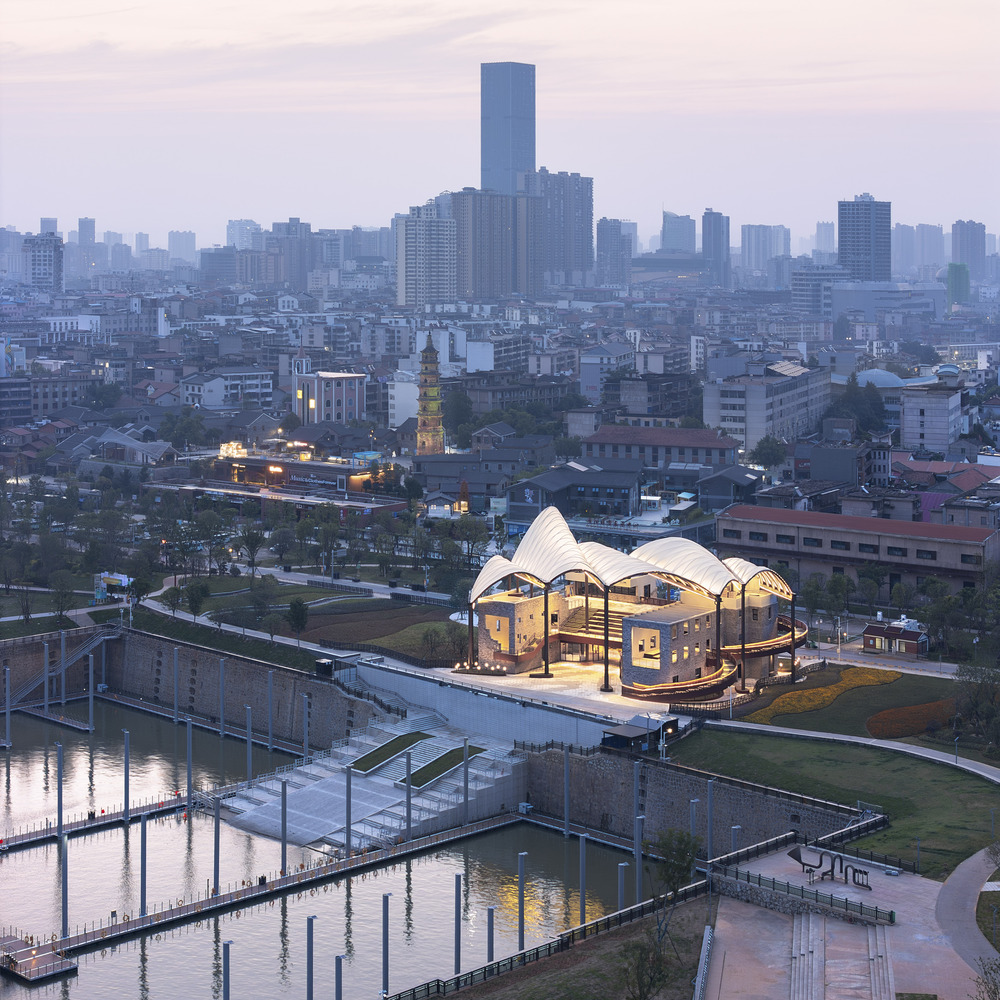
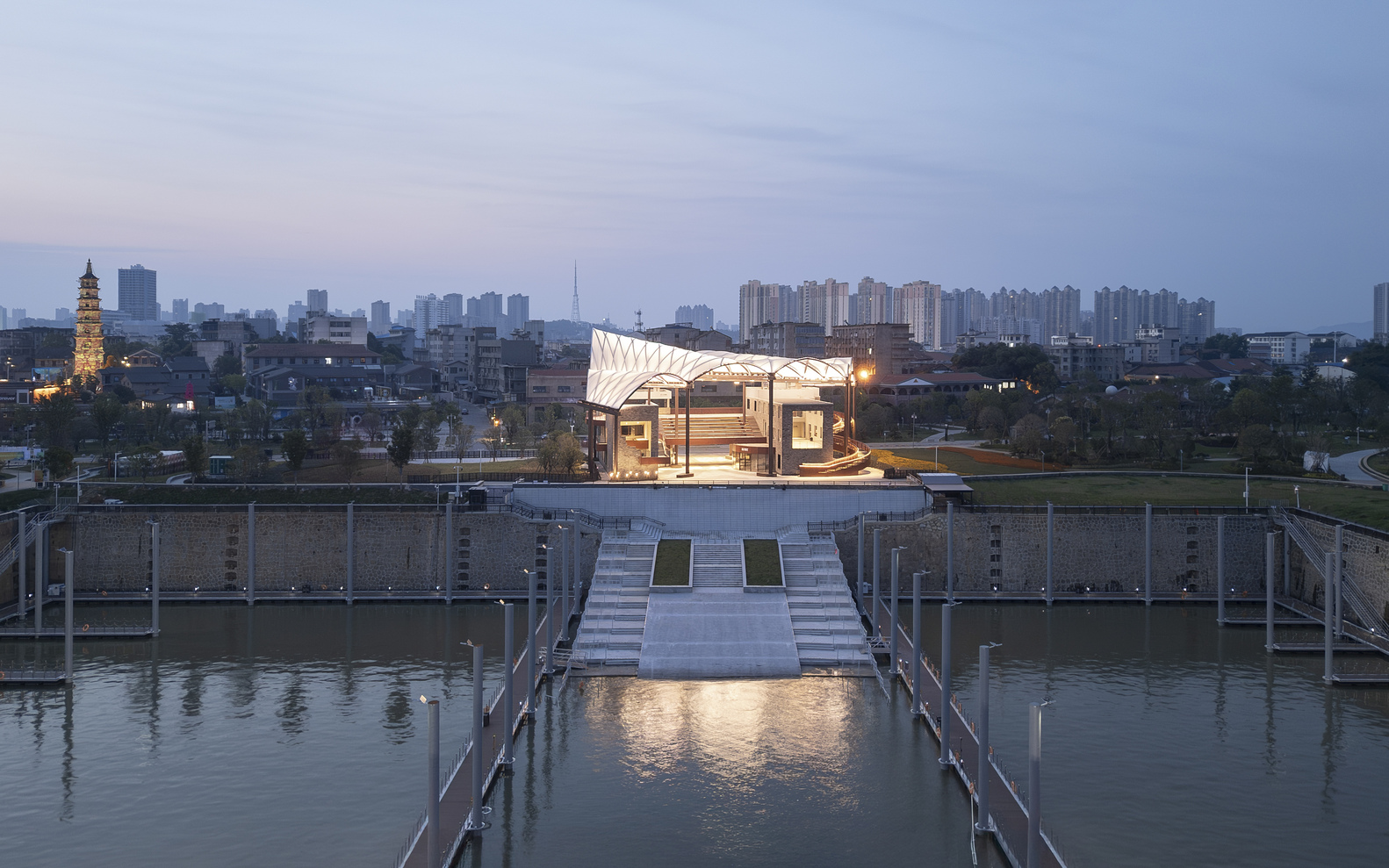
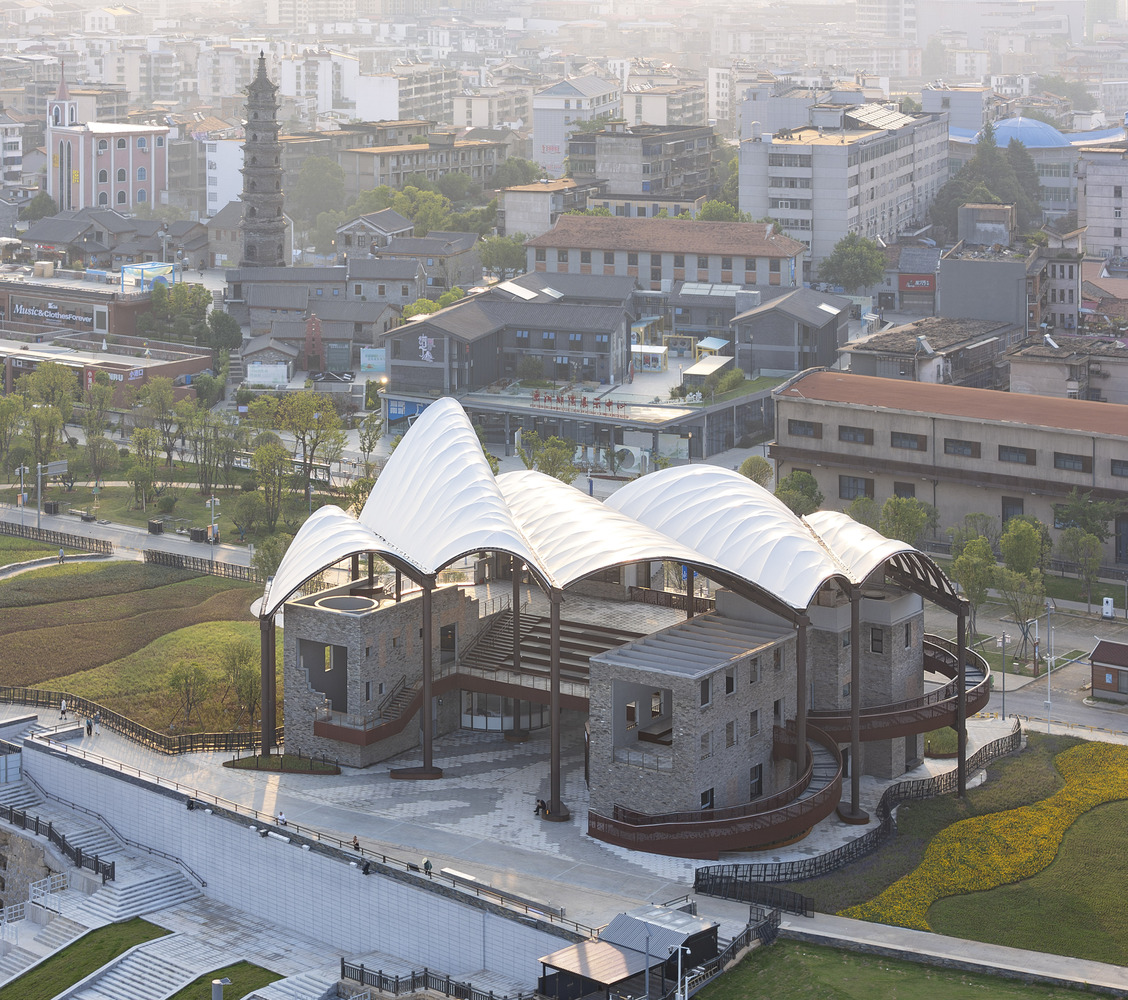
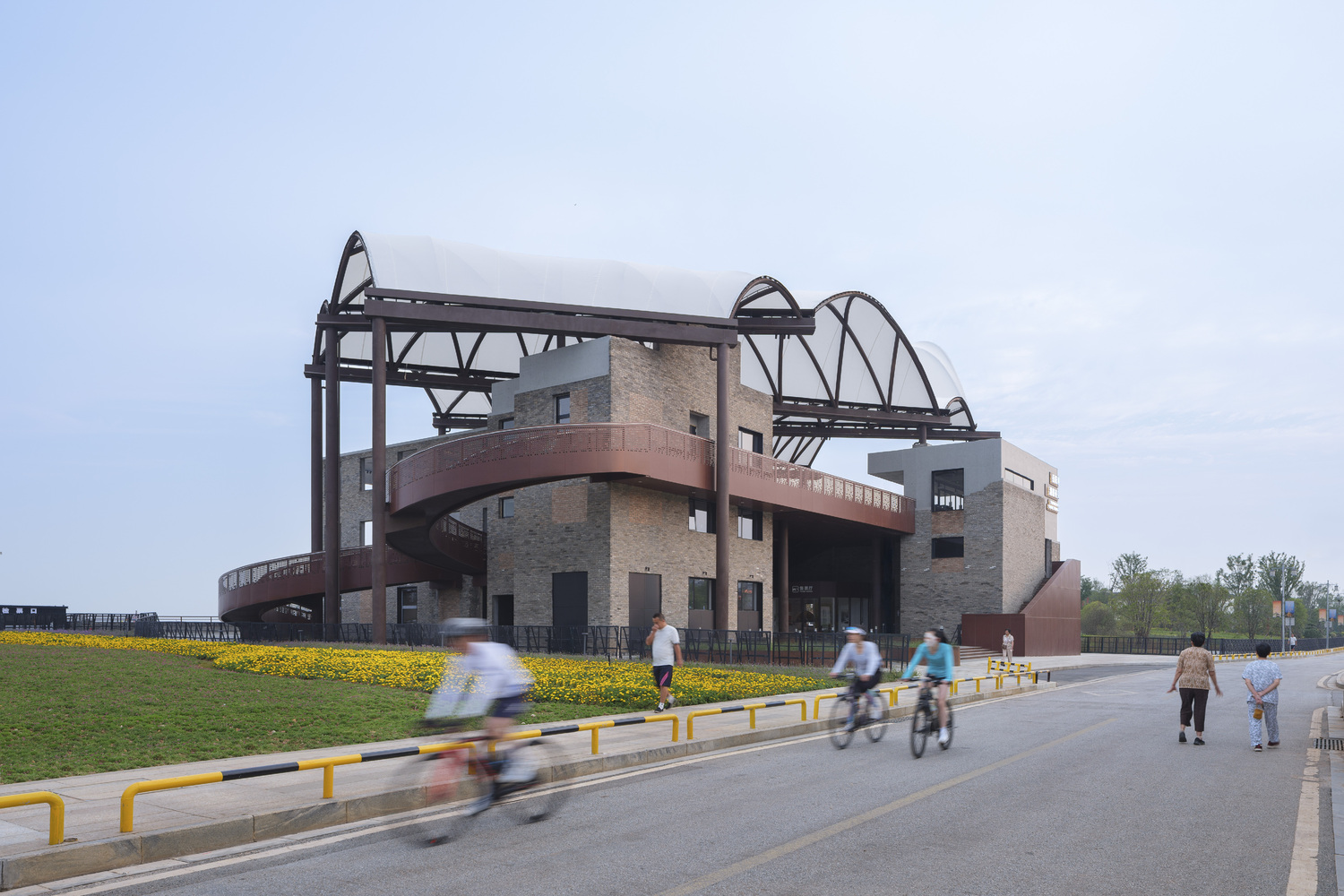
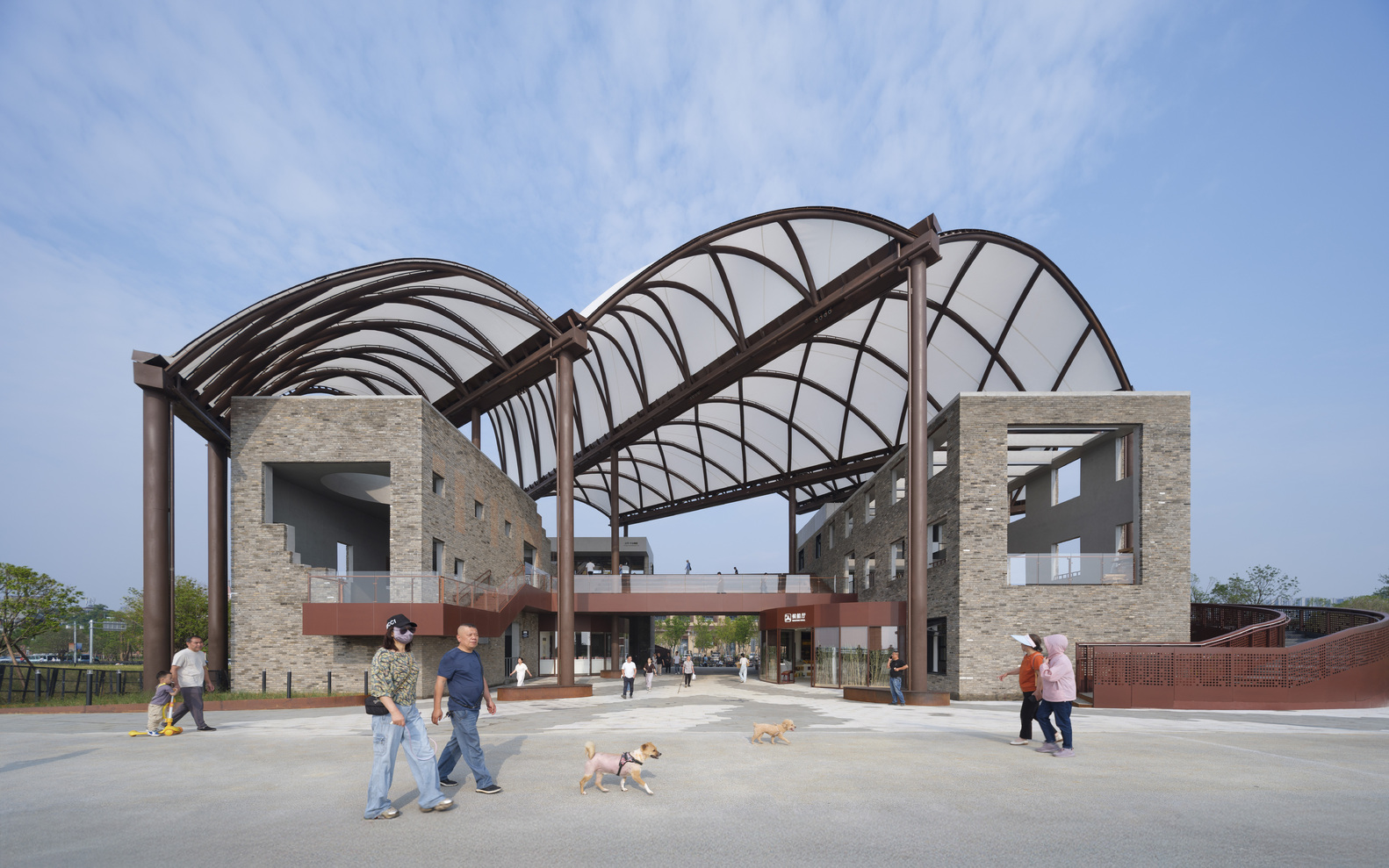
Additionally, the original building's outline lacked a distinctive presence when viewed from the lake. As a result, a canopy designed with a sail-like tensile membrane became a natural choice to top the structure.
The design of the canopy structure was inspired by a spontaneous observation at a nearby viewing platform within the park. This platform featured an artistic installation and provided a perfect view of the two preserved buildings.
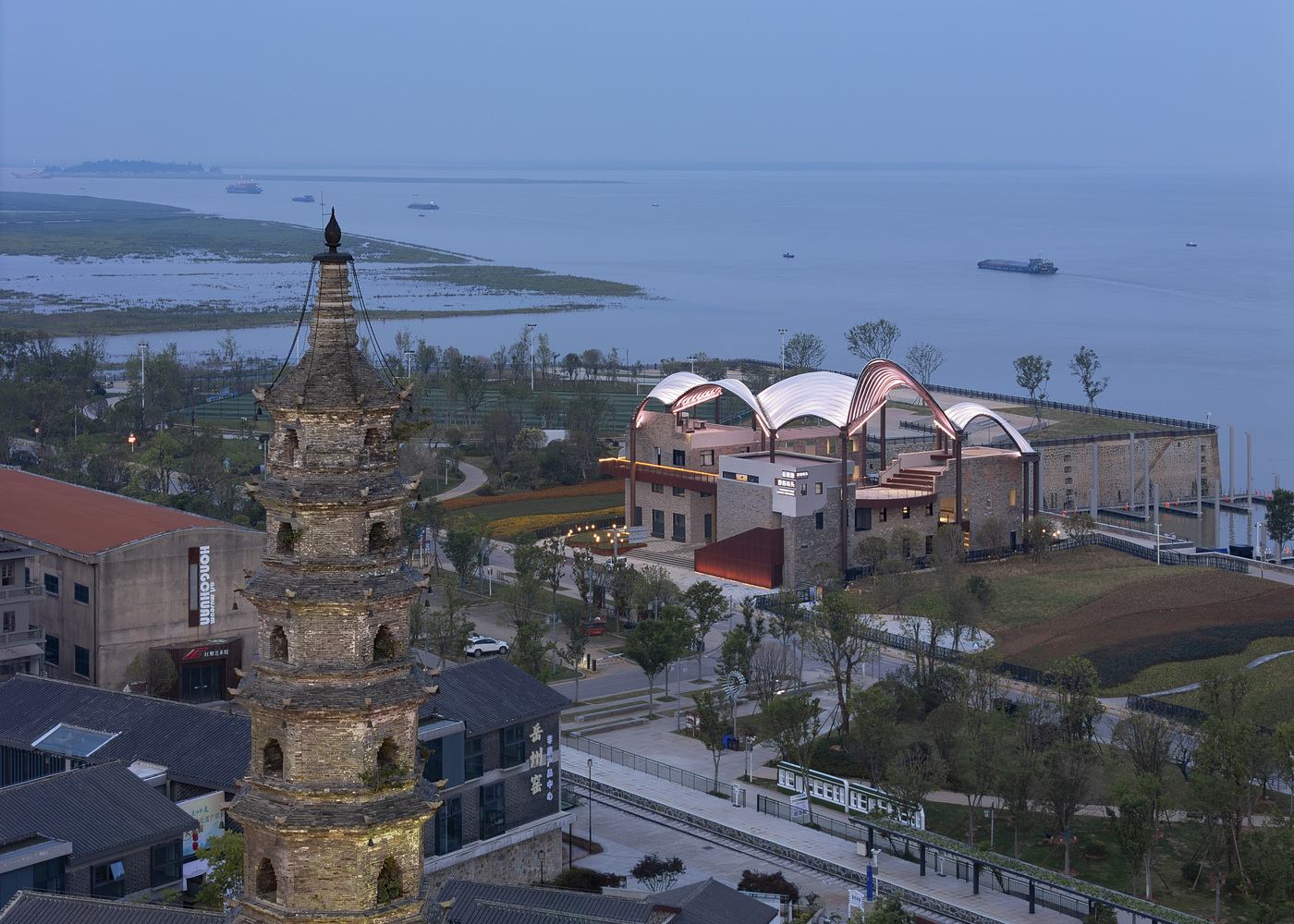
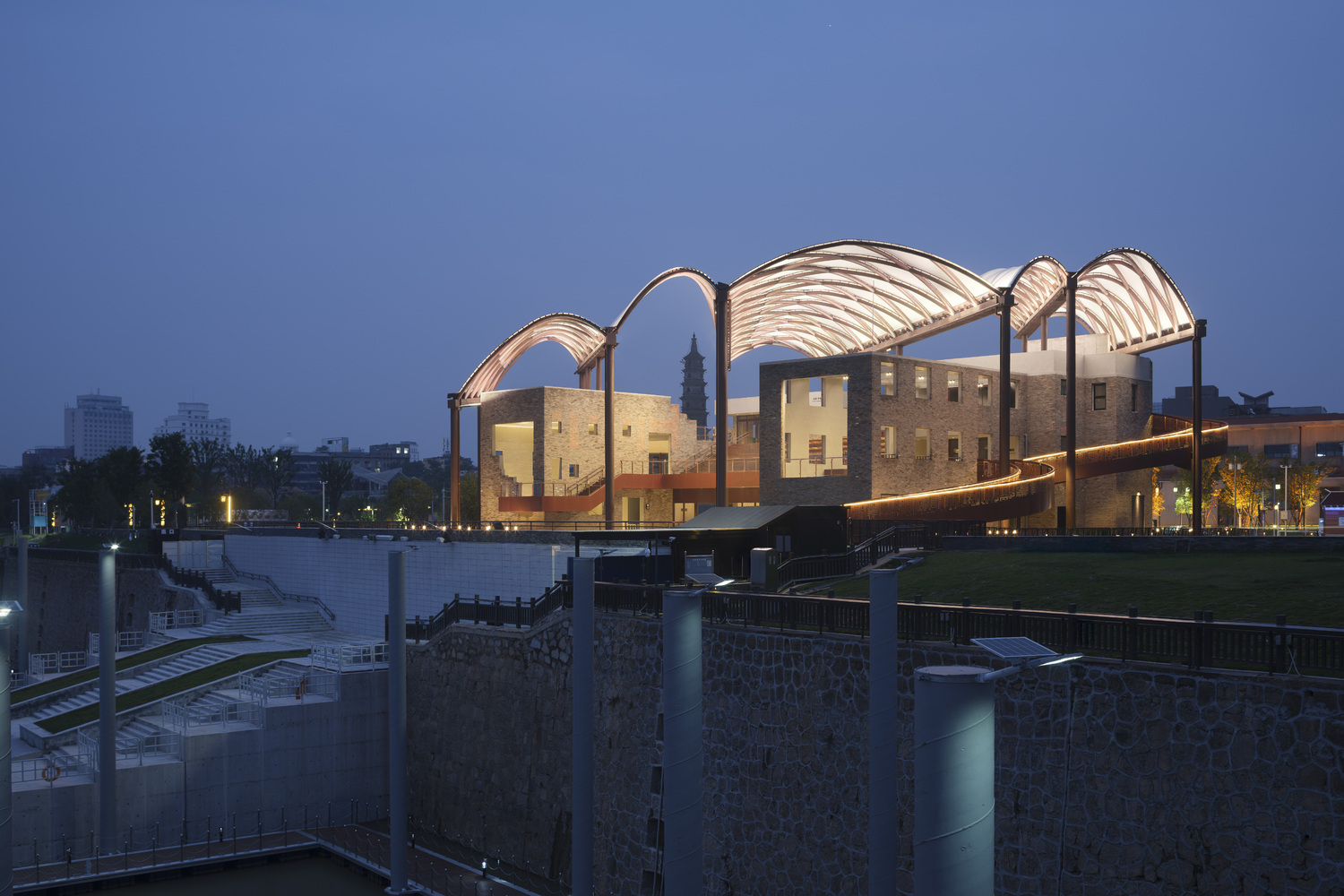
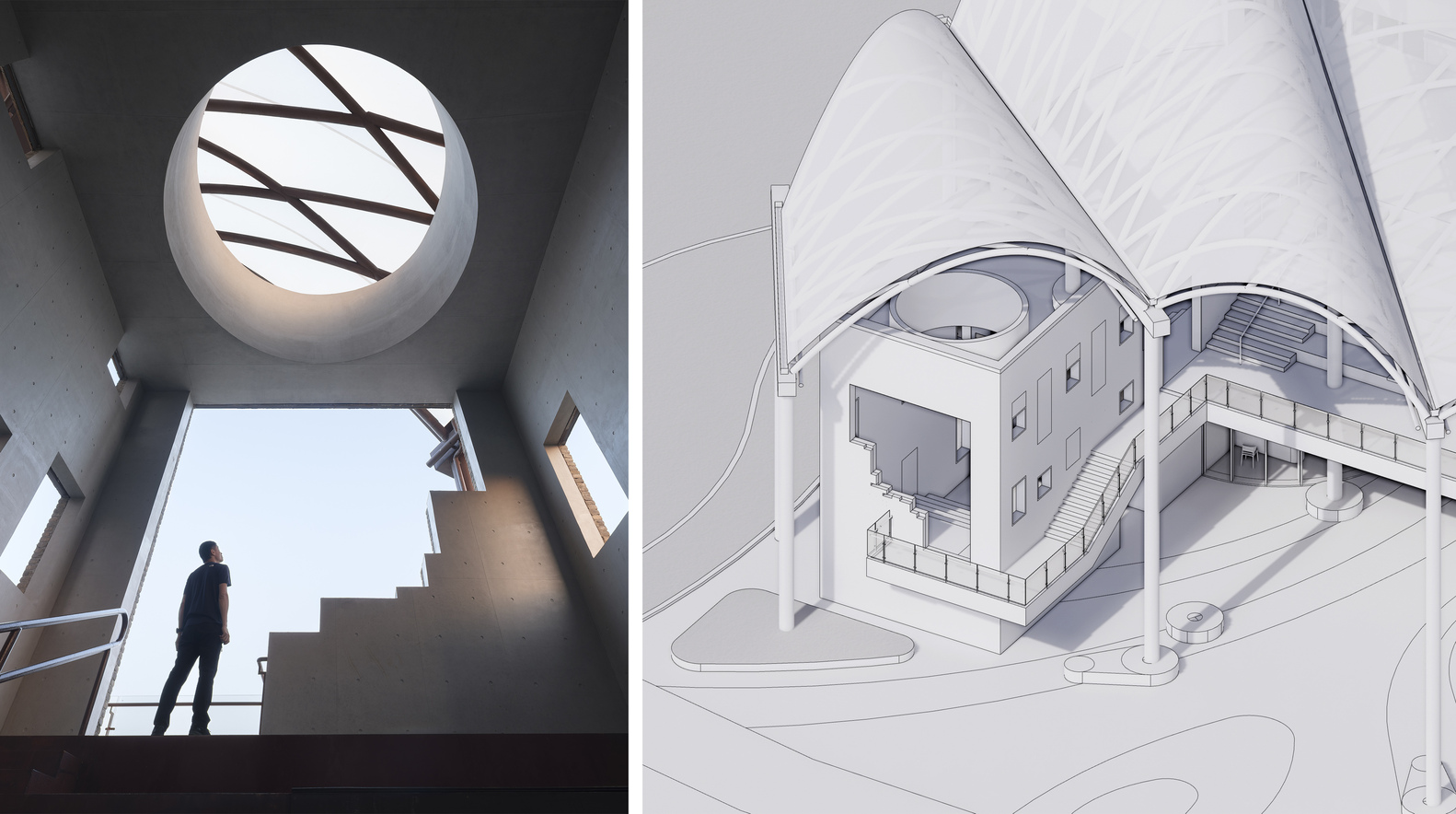
By slightly opening up the north side of one building, the Cishi Pagoda could be framed within the architectural core. With an arching canopy enclosing the pagoda, a dialogue between this ancient lighthouse and the contemporary dock emerged, bridging the historical and the modern.
The large-scale tensile membrane would be quite striking against the surrounding landscape. Drawing inspiration from the surrounding area, where large warehouses and small residences coexist, the roofline of the buildings varies greatly, creating a dynamic and eclectic aesthetic. The canopy structure, designed as continuous barrel vaults, is organized to resemble a small settlement.
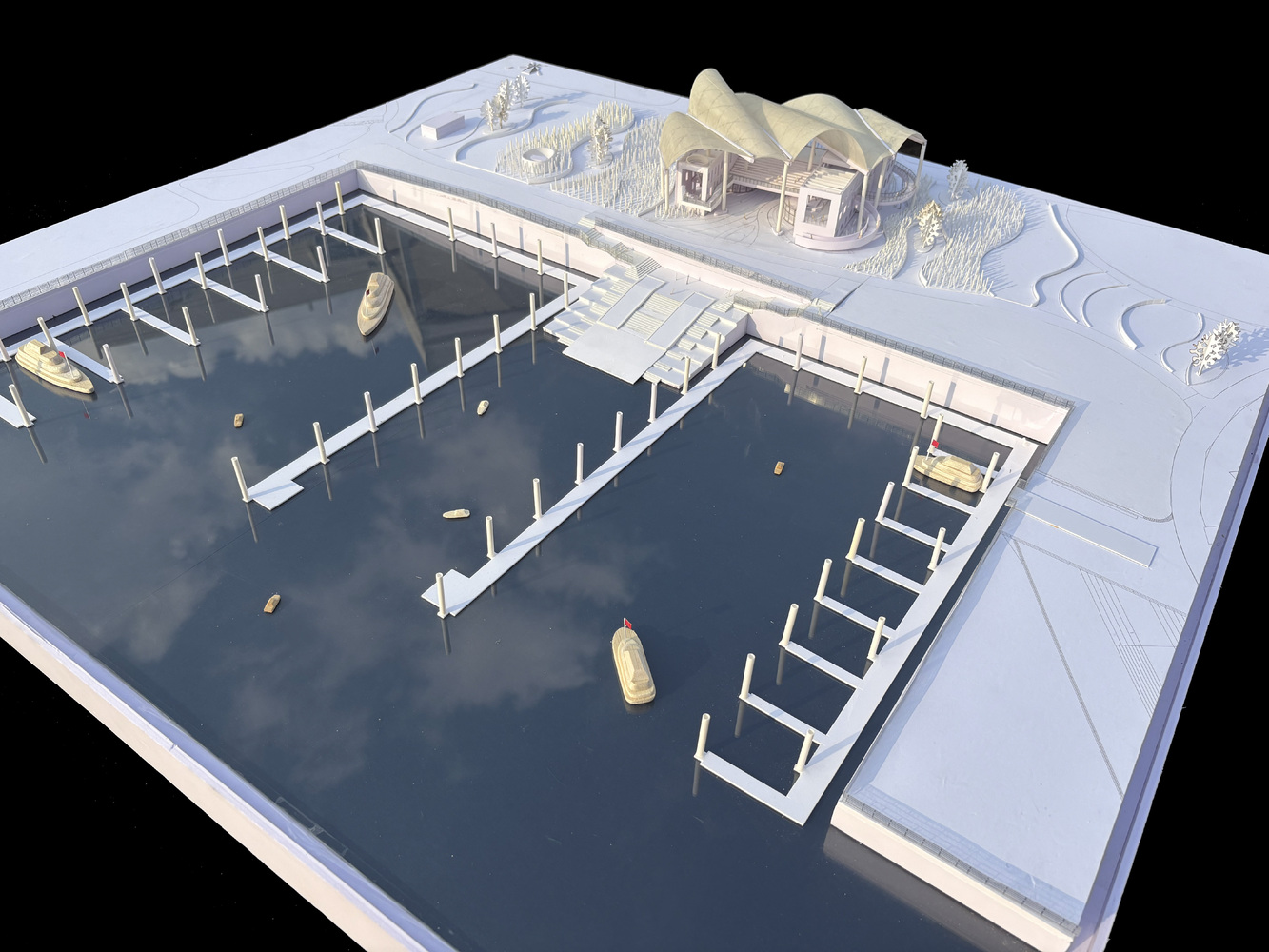
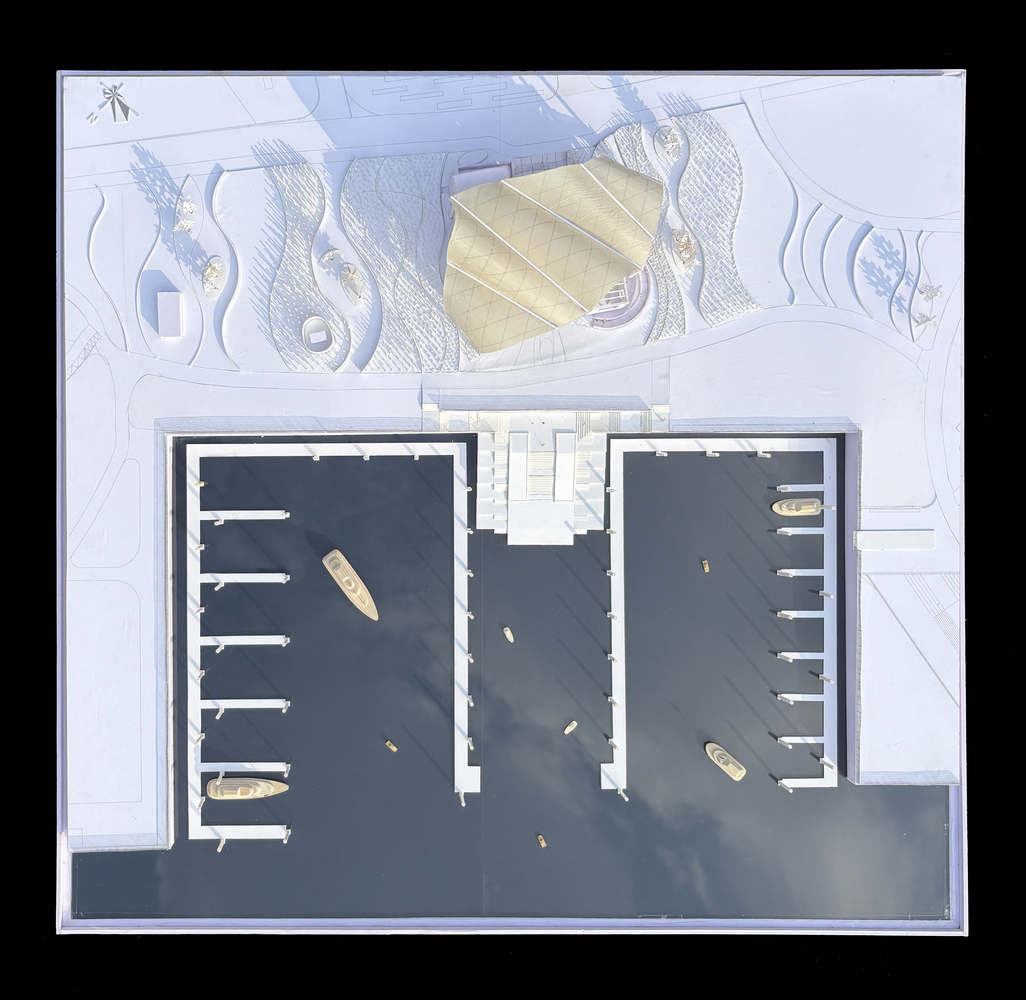
At the same time, using radial arches centered around the Cishi Pagoda, the overall form stays within the limits of the original building's footprint, providing a dynamic outline on all four sides. After careful consideration of the topography, the historical pagoda, and the lakefront environment, a new cultural landmark emerged on Dongting Lake, one that honors the past while embracing the future.
The upper-level with public spaces and service facilities has significantly transformed the waiting experience. The way to access these upper spaces then becomes a key design highlight. By romanticizing the fire stairs, they are reimagined as sculptural elements of the building's profile, converting the original upper spaces facing the lake into public halls.
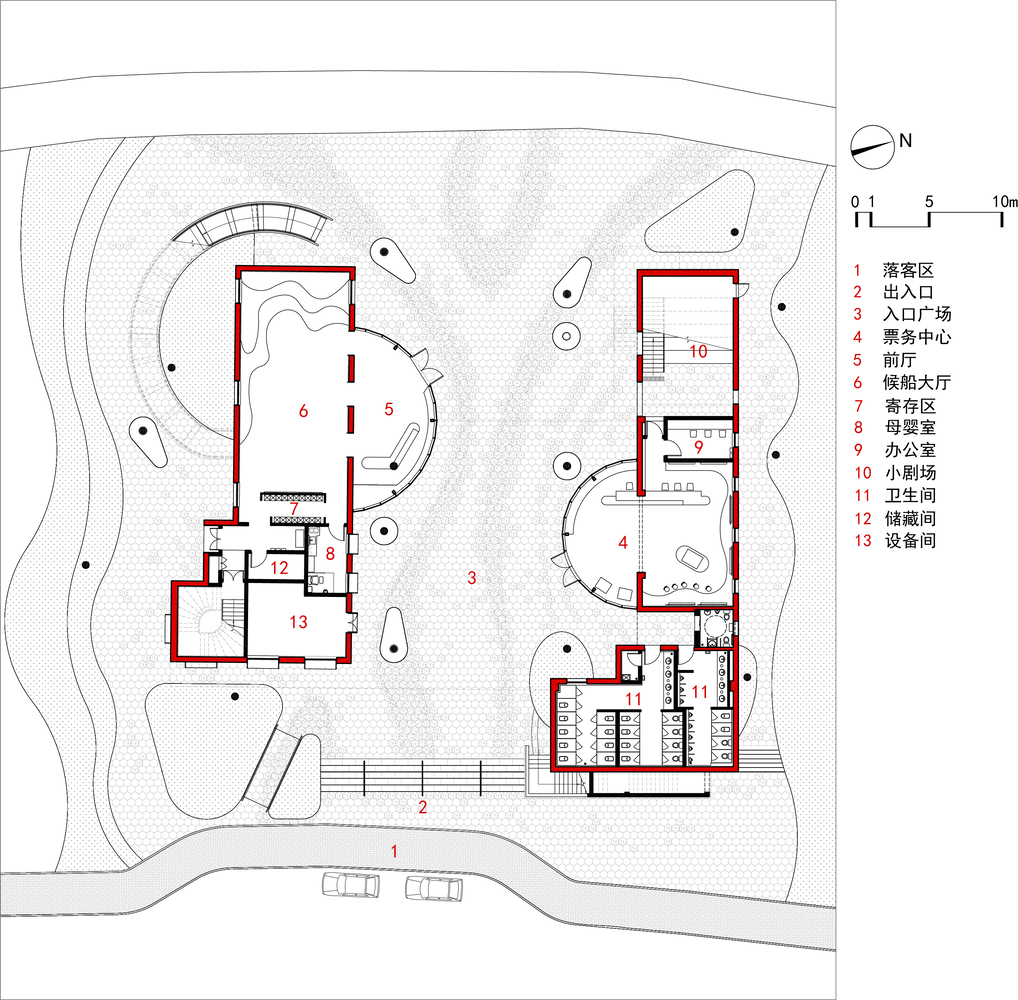
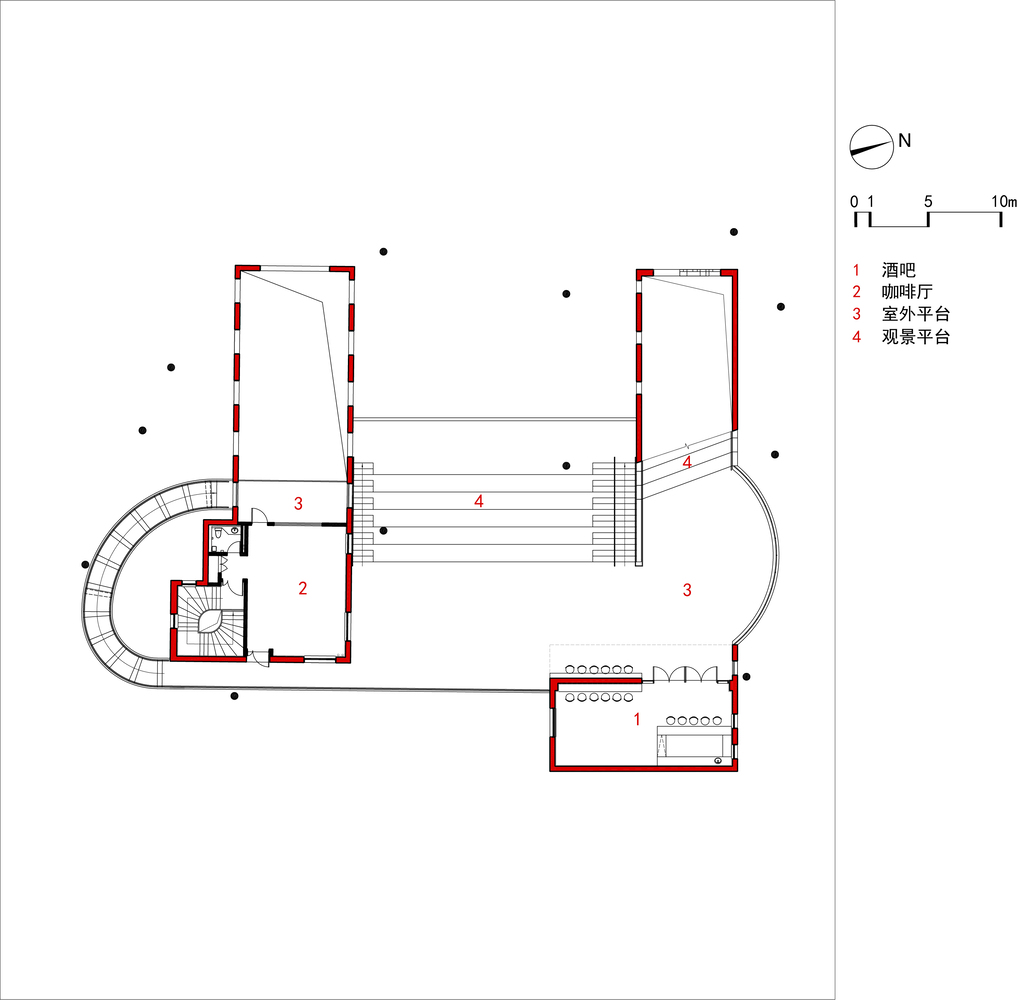
This not only opens up the indoors to a scenic view, but also creates two flexible shaded spaces ideal for small-scale events in the whole complex. Due to the preservation zone restrictions on the north side, its path to the upper levels is concealed inside the building, creating a small theatrical space. The south side remains unconstrained and allows for more freedom.
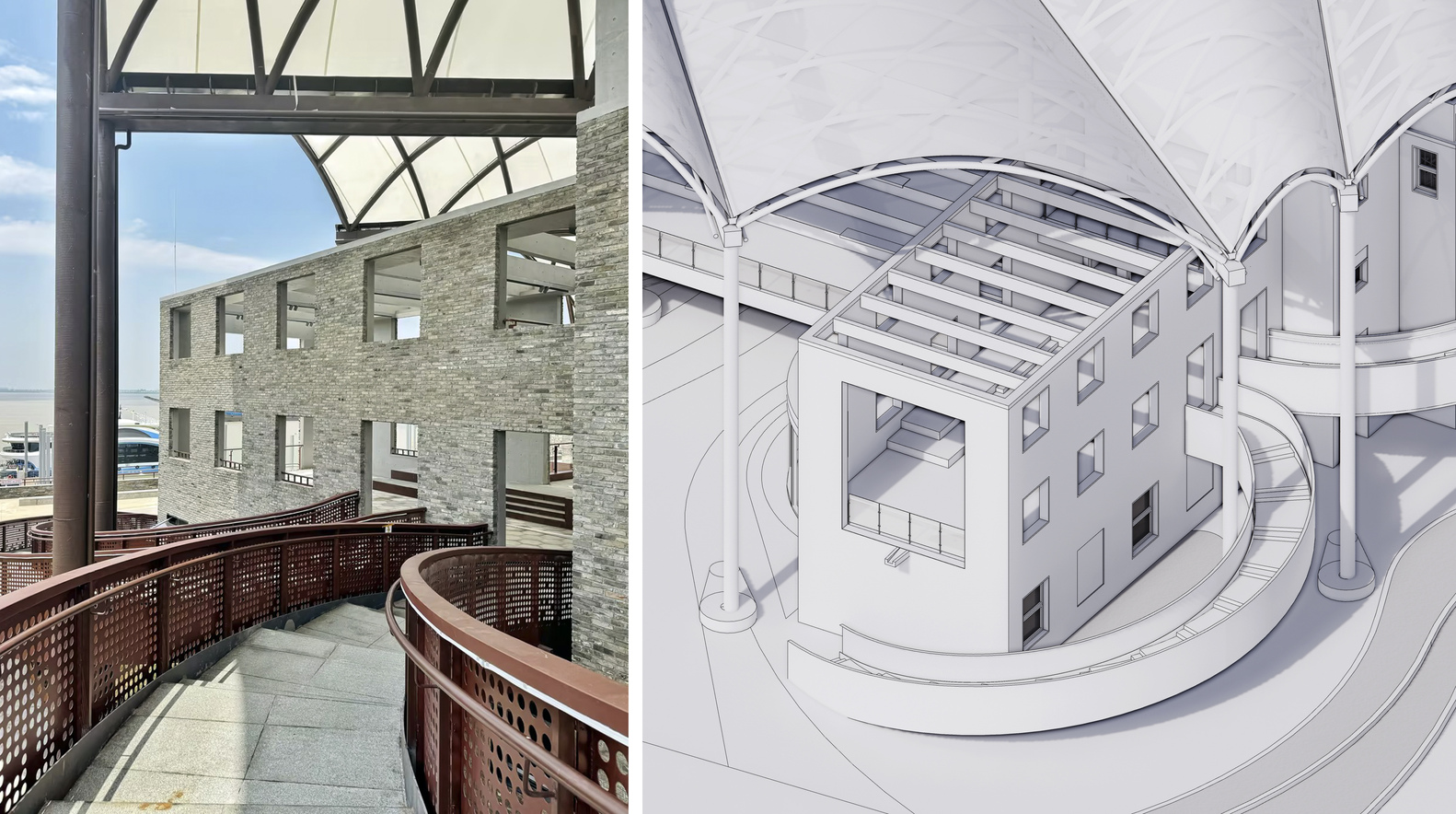
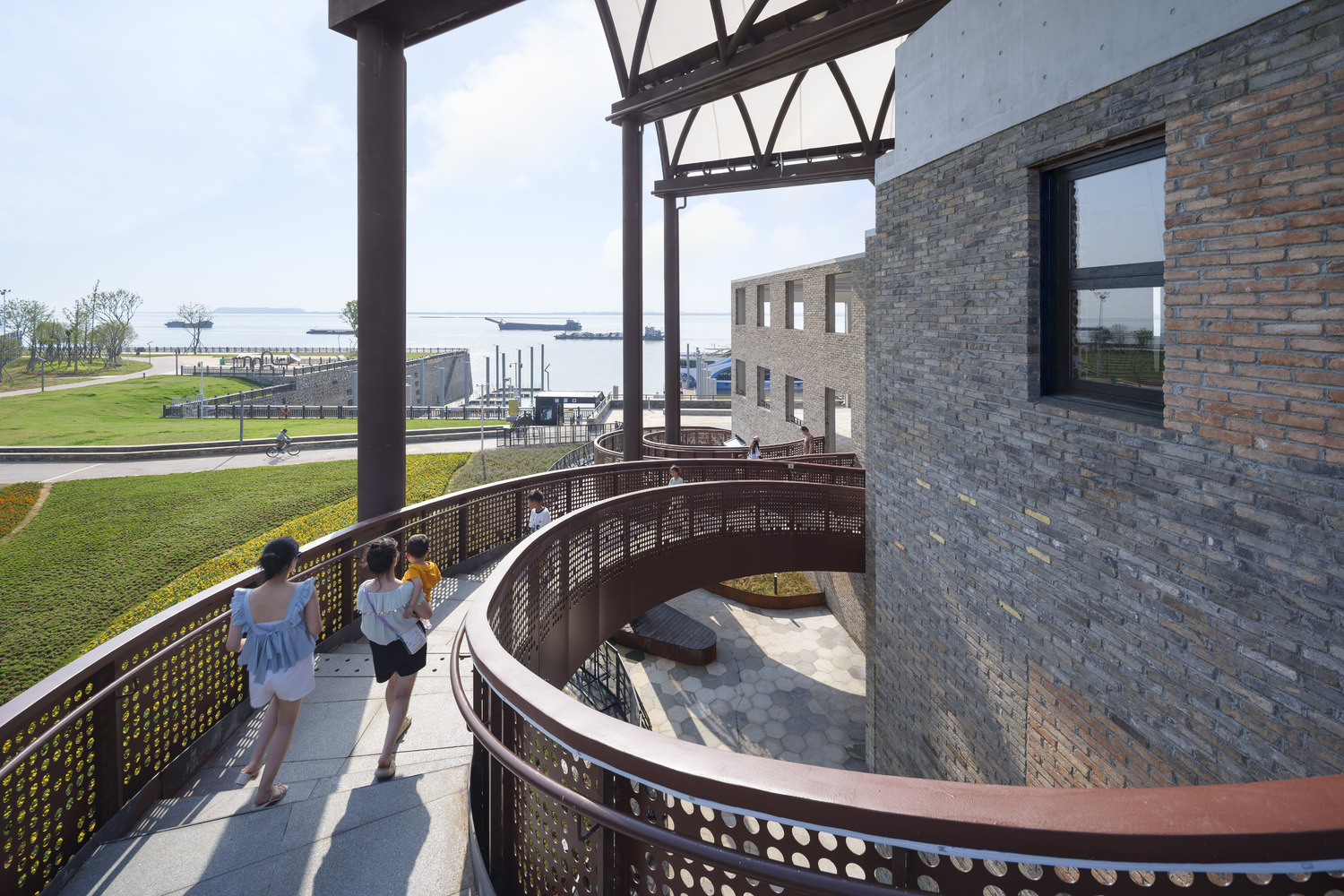
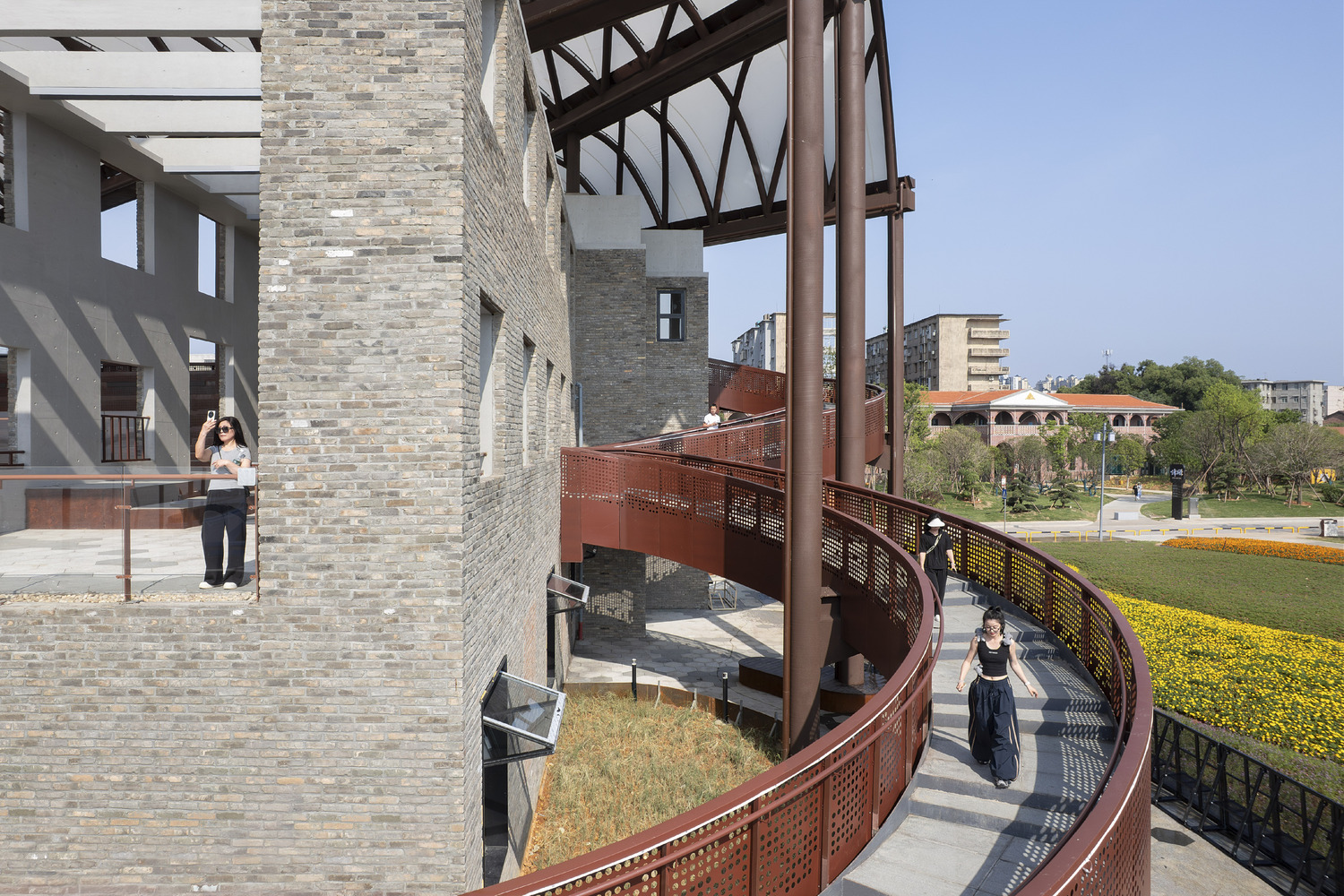
Two semi-circular staircases extend outside the building, offering views of the park and the lake. The resting platforms between the second and third floors of the staircases serve as open social spaces, offering direct views towards the lake.
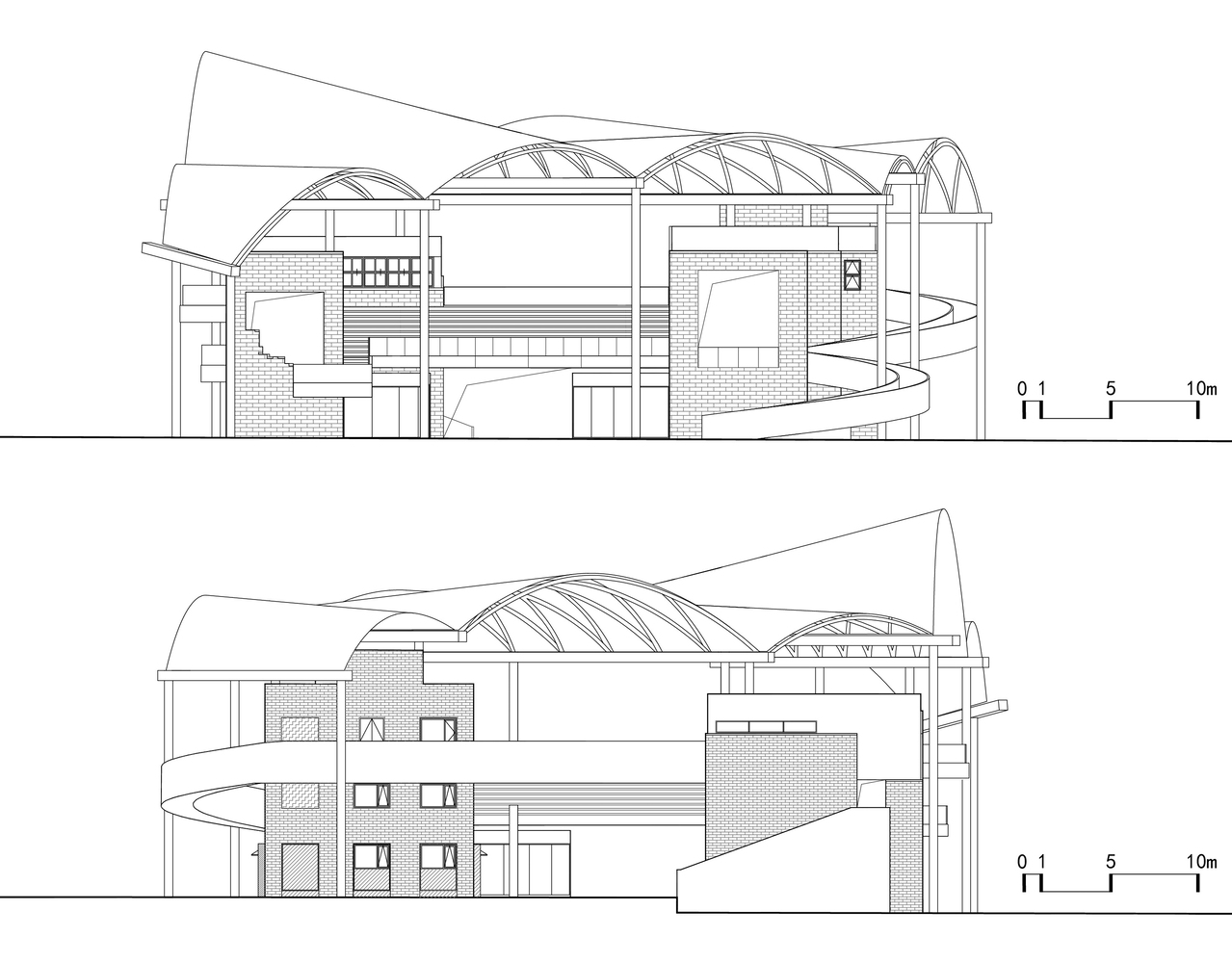
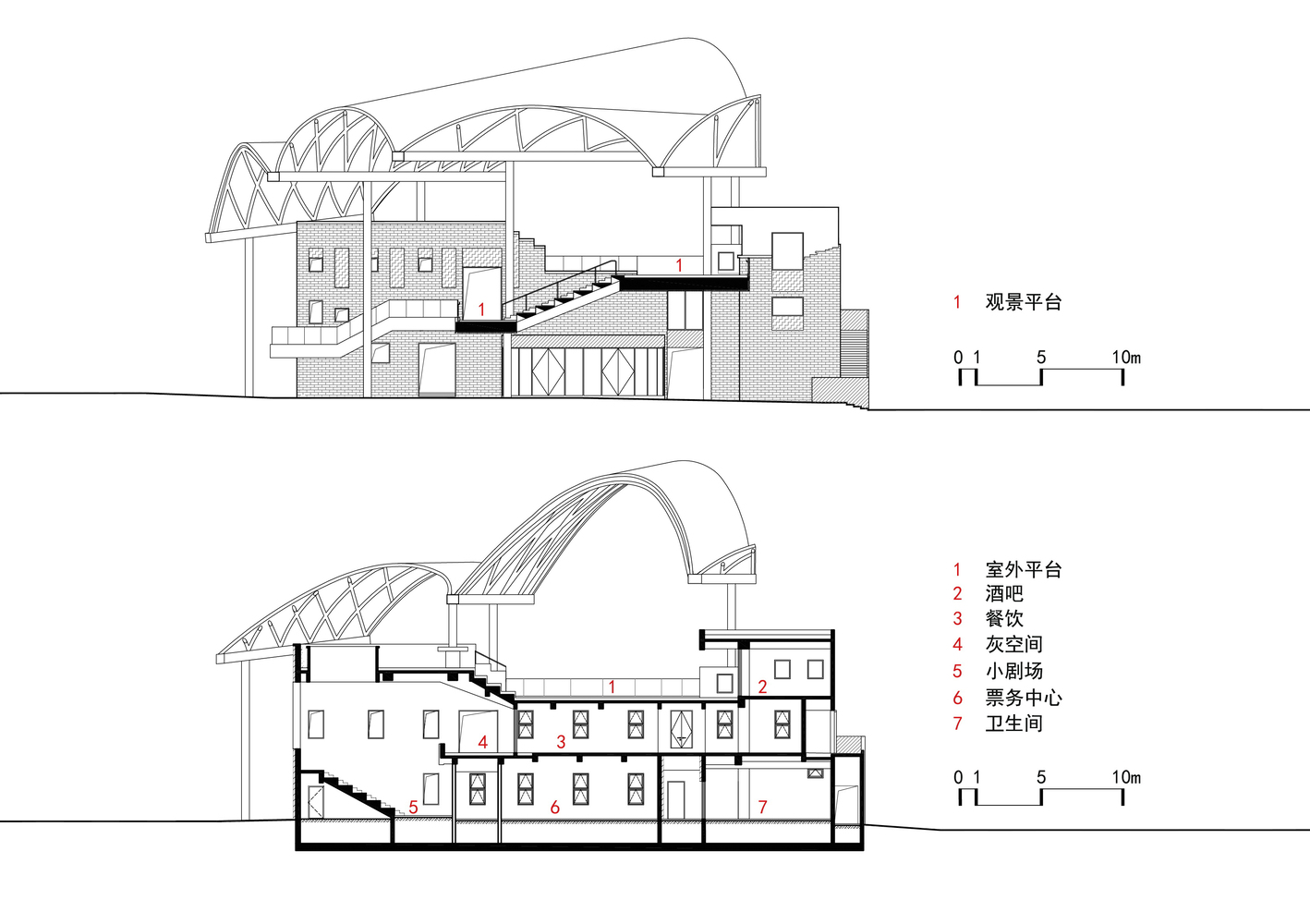
The steel structure of the staircase and canopy, along with the reinforced concrete walls, bring back the so-called industrial style. It offers a strong sense of modernity while engaging in a dialogue of old and new with the weathered brick walls. Hence, the absent aesthetic of the industrial era is represented.
The new well-equipped dock not only serves the tourism, but also fills the gap in amenities missing from the industrial heritage park. Recycling and reusing the remnants of industrial heritage, it introduces opportunities for exhibitions, displays, and events.
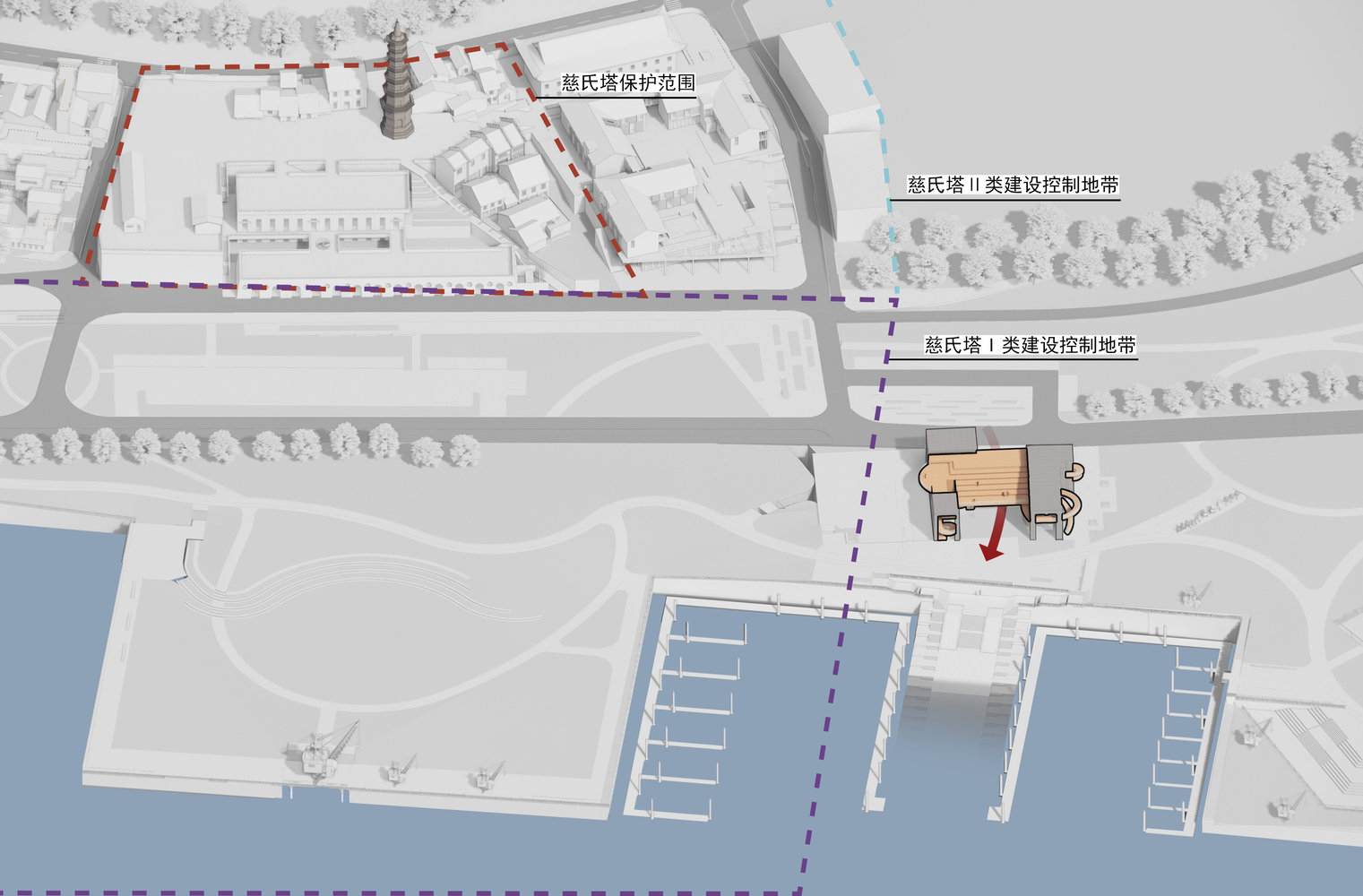
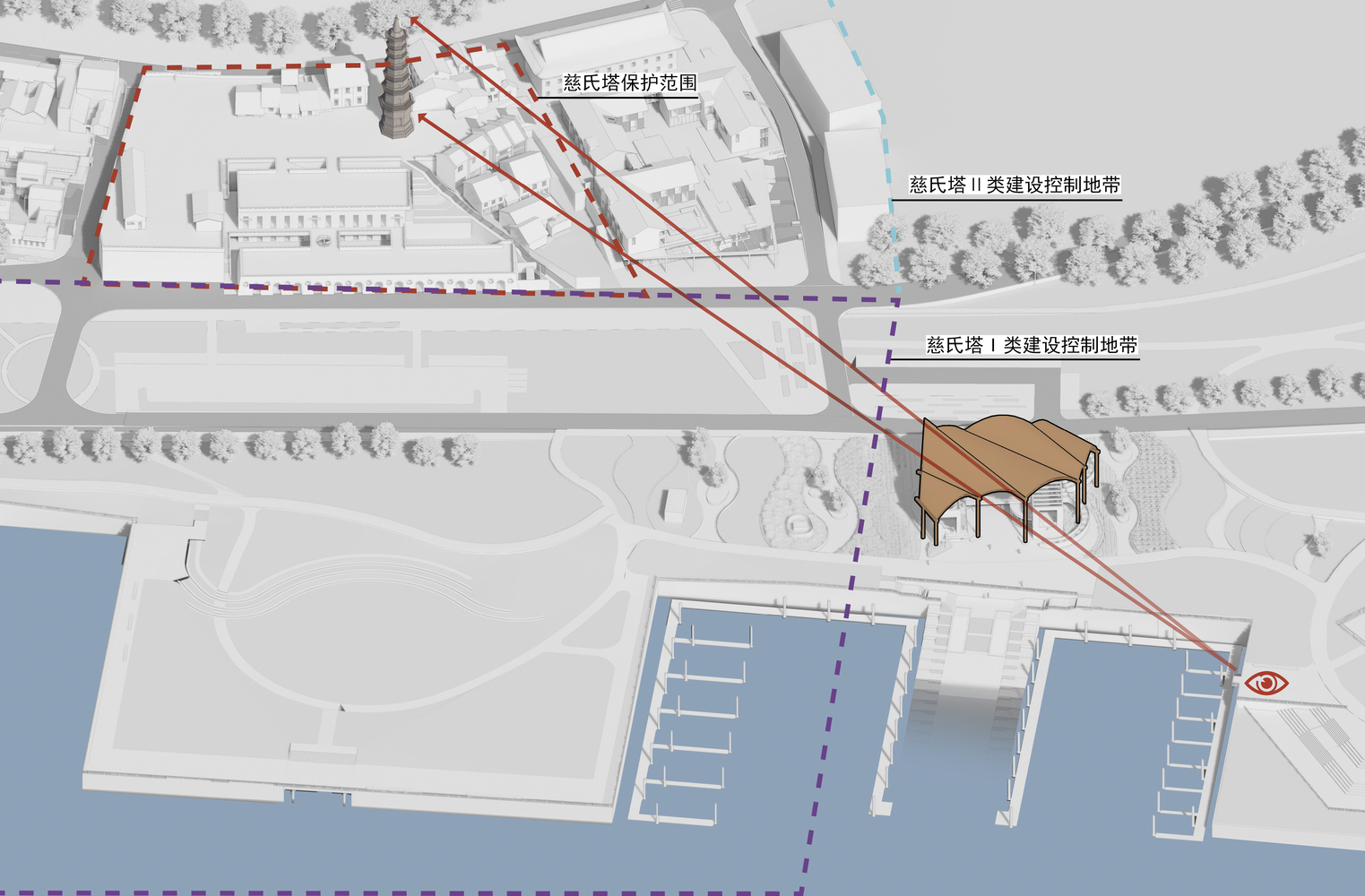
This fulfills the park's mission of "preserving history, looking to the future," allowing visitors to immerse themselves in the site's historical depth and experience a dramatic sense of time and space.
On a broader scale, this tourist center serves as a cultural installation with strong narrative power, symbolizing the spiritual transformation of Yueyang city. On one hand, it enhances the pride and sense of belonging among the local population; on the other, it presents a Yueyang that is not only rich in historical heritage but also forward-looking in its modern development.
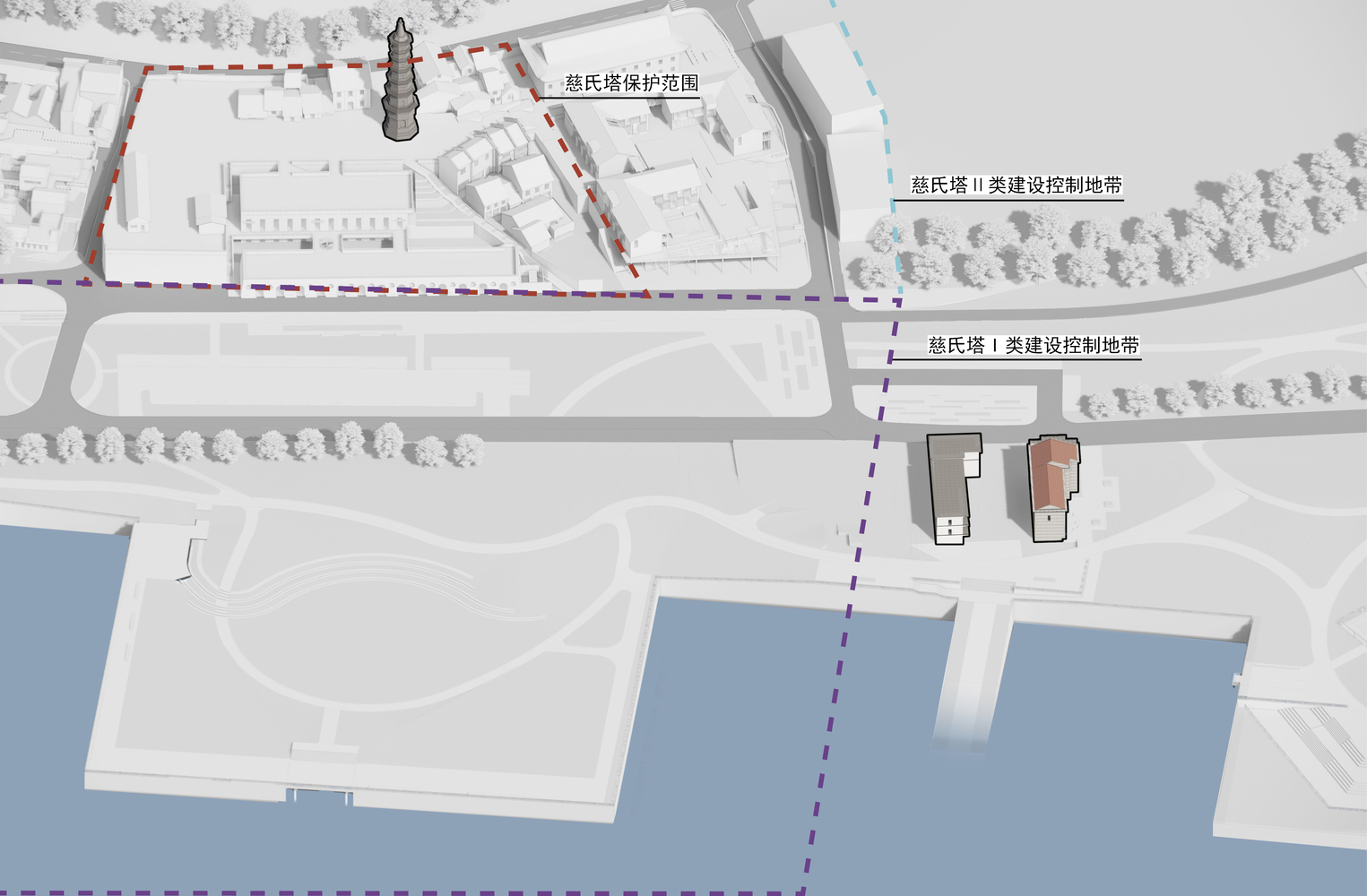
More meaningfully, the design of the tourist center not only preserves the historical environment of the Cishi Pagoda but also provides a deeper perspective for viewing and understanding it through contemporary design language.
The pagoda and the tourist center are no longer isolated landmarks; instead, they together form a spatial narrative that tells the story of the integrated city. Additionally, this site specific renovation has revitalized the entire area and driven the development of the southern part of the industrial heritage park.