A Home For Seniors
A HOME FOR SENIORS
Acau Architecture
ARCHITECTS
Acau Architecture
LEAD ARCHITECT
Bruno Känel, Liliana Teixeira
CIVIL ENGINEER
Structurame Sàrl
THERMAL ENGINEER
Atba Sa
ACOUSTIC ENGINEERS
Aab Sa
HVAC ENGINEER
M+s Ingénieurs Conseils Sàrl
ELECTRICAL ENGINEER
Lc Dessin Sàrl
LANDSCAPE ARCHITECT
Adr Architectes Sa
GEOTECHNICAL ENGINEER
Karakas Et Français Sa
MASONRY CONTRACTOR
Implenia Construction Sa
DESIGN TEAM
Darius Golchan, Liliana Teixeira, Bruno Känel
CONSTRUCTION MANAGEMENT
Bruno Känel, Enric Rovira
WOOD ENGINEER
Charpente Concept Sa
FIRE SAFETY ENGINEER
Charpente Concept Sa
TIMBER CONSTRUCTION
Lanthmann Construction Bois Sa
EXTERIOR DOORS & WINDOWS
Norba Sa
INTERIOR DOORS
Wider Sa
MANUFACTURERS
AutoDesk, Bega, Lanthmann Construction Bois, Norba SA, Norba SA, SEICAL SÀRL, Terrabloc, Wider
WINDOWS
Wider Sa
PHOTOGRAPHS
Federal Studio
AREA
1895 m²
YEAR
2025
LOCATION
Pregny-Chambésy, Switzerland
CATEGORY
Retirement, Sustainability
English description provided by the architects.
The Christinger Residence offers around fifteen rental apartments designed for seniors.
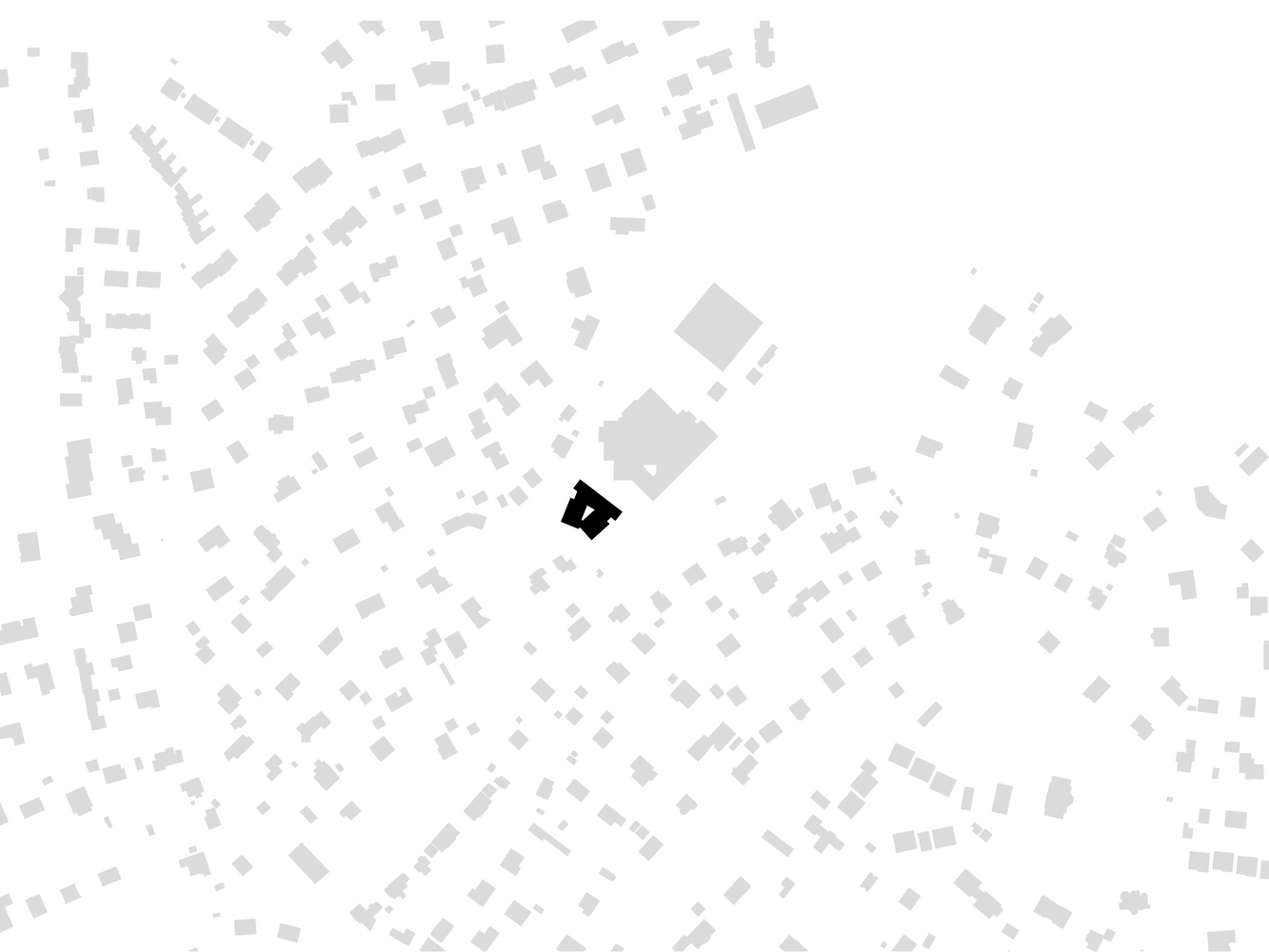
The project originates from the bequest of Mrs. Christinger, who donated to the municipality a 1,933 m² plot of land and the villa that had been built there in the 1940s.
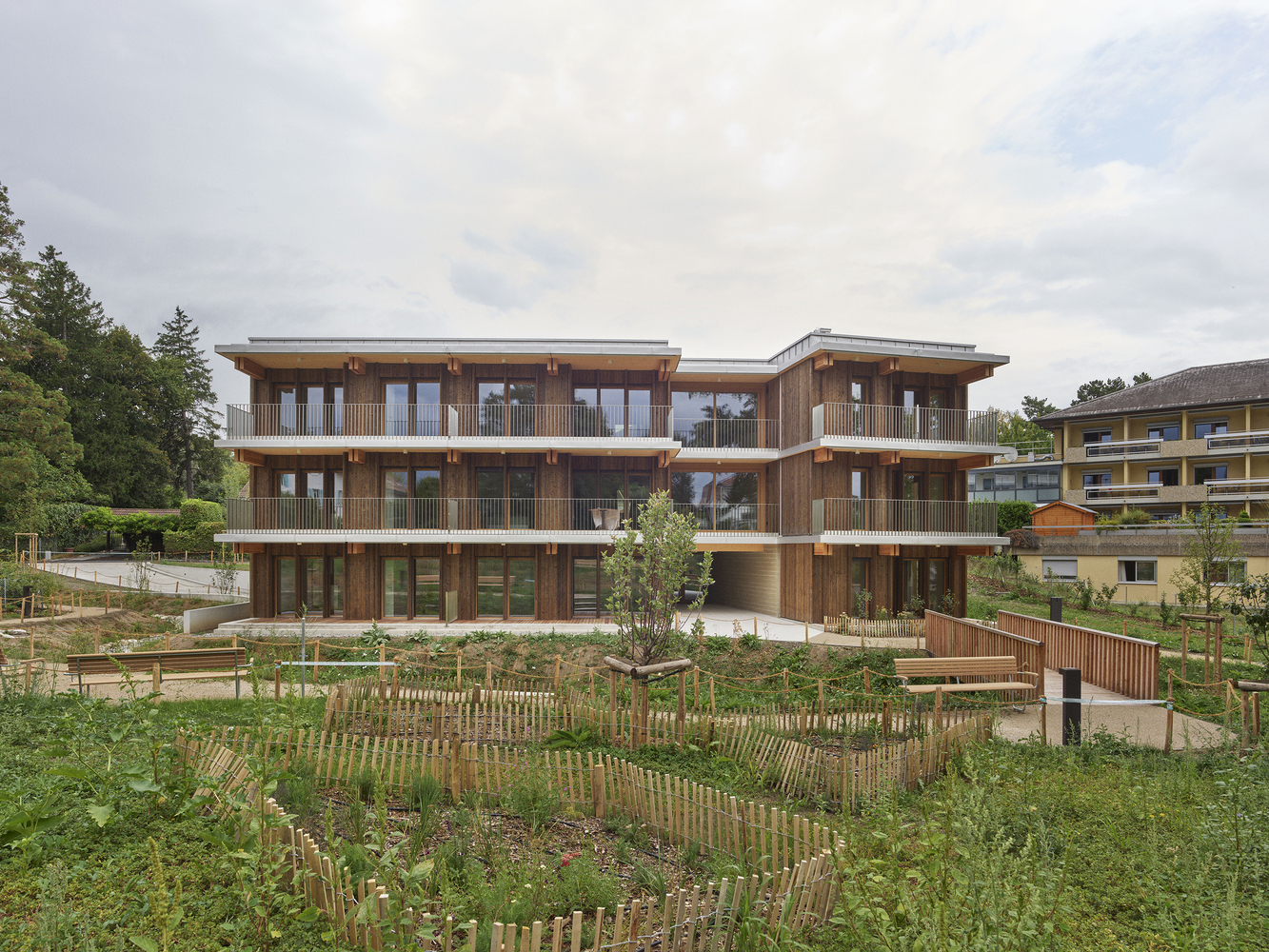
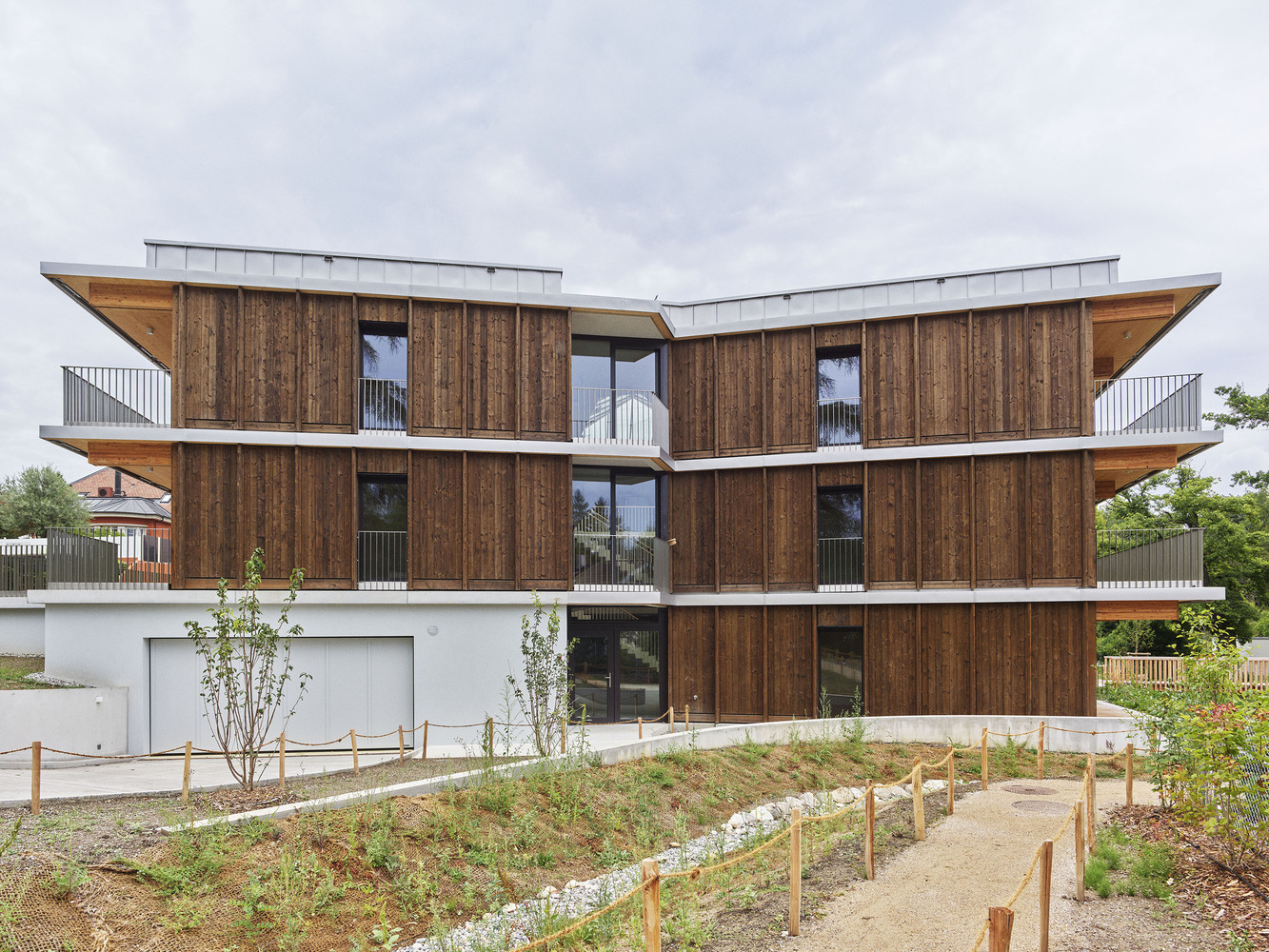
Upon receiving the testament, which dedicated the property to the benefit of the municipality's senior citizens, the municipality initiated a reflection on the type of housing for a population experiencing declining autonomy.
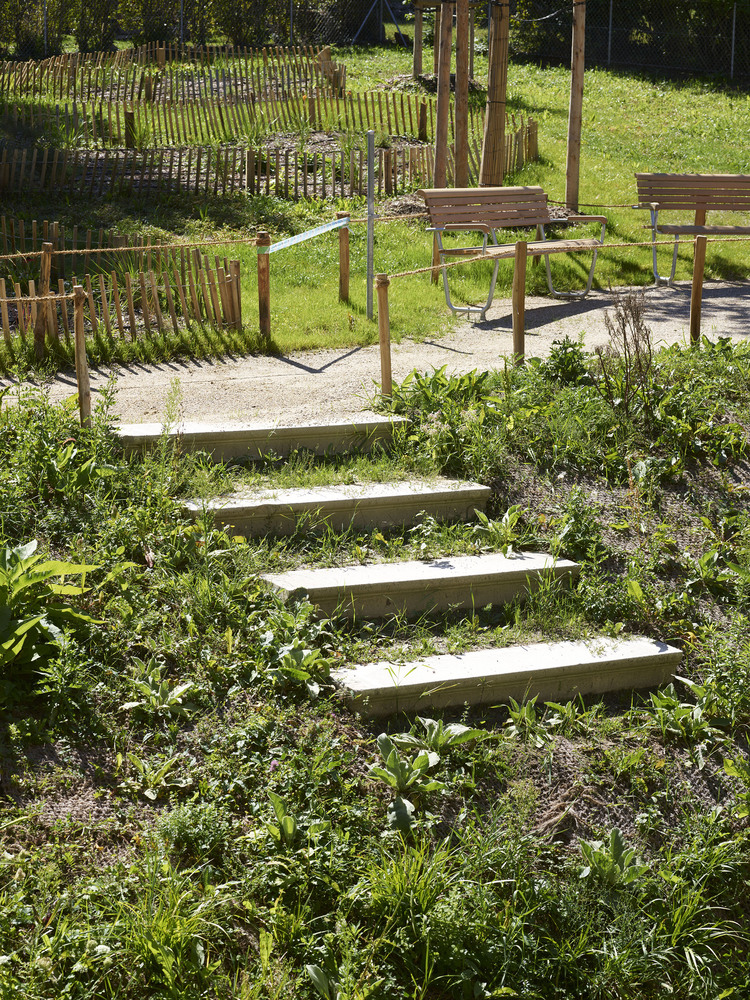
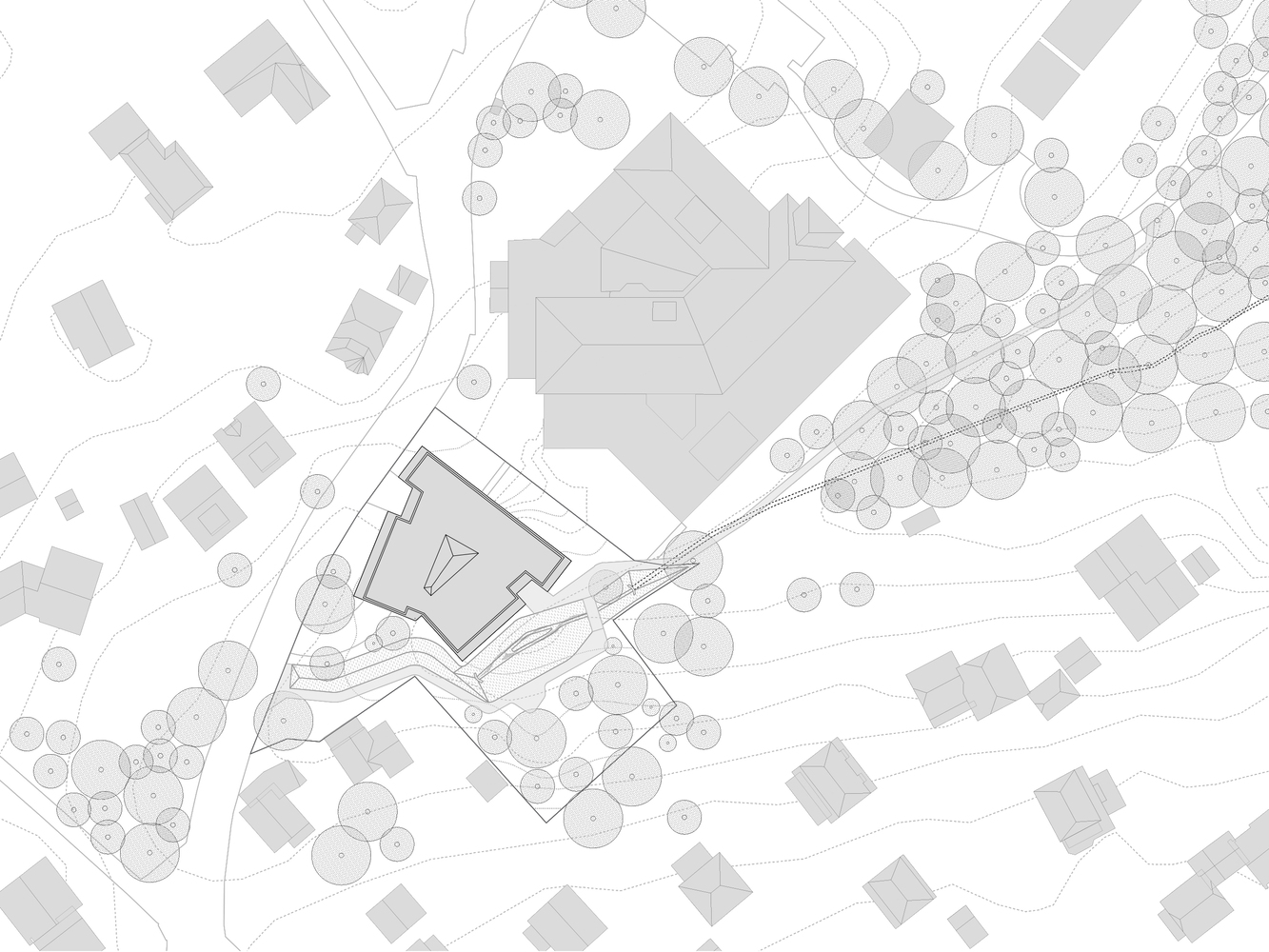
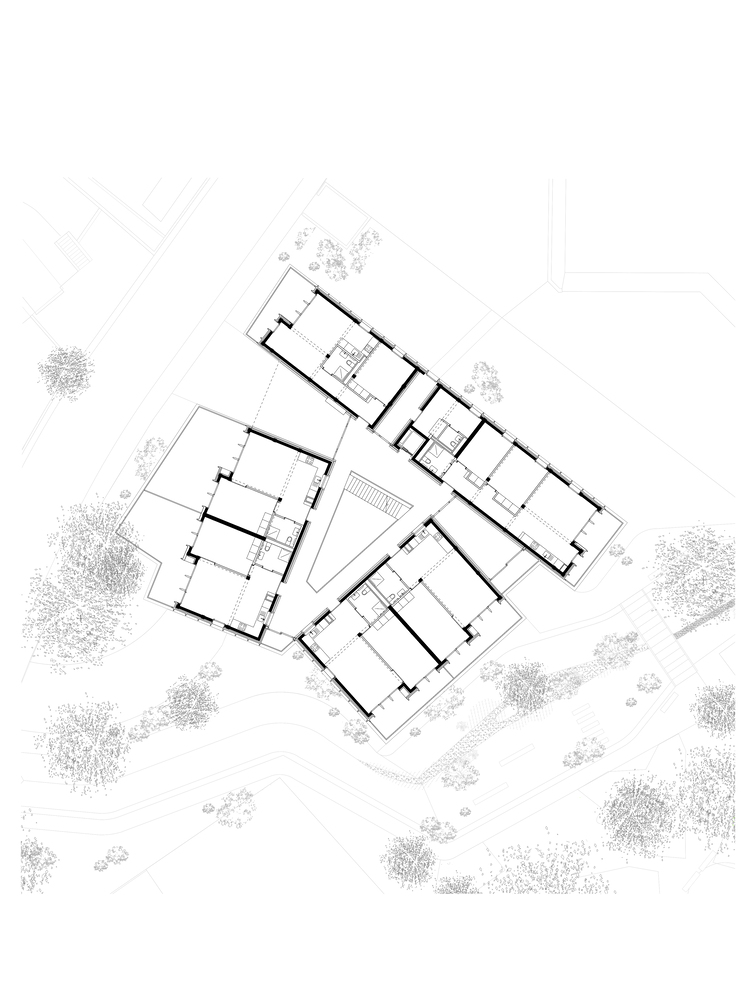
The architectural concept draws inspiration from both the site's landscape qualities and the programmatic intent. By re-naturalizing a stream that had once been buried in the garden, the project combines landscape intervention with the building's typological concept.
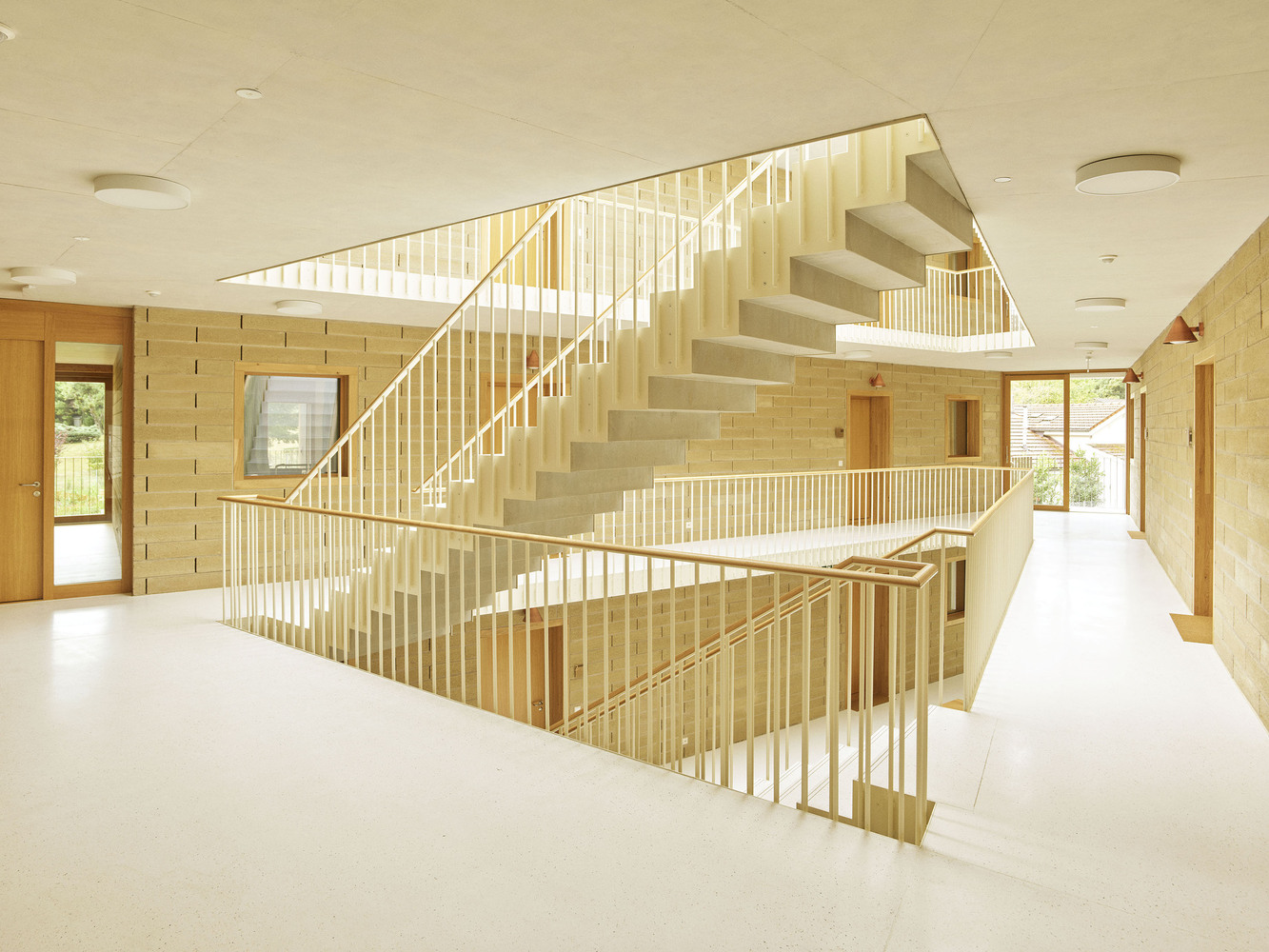
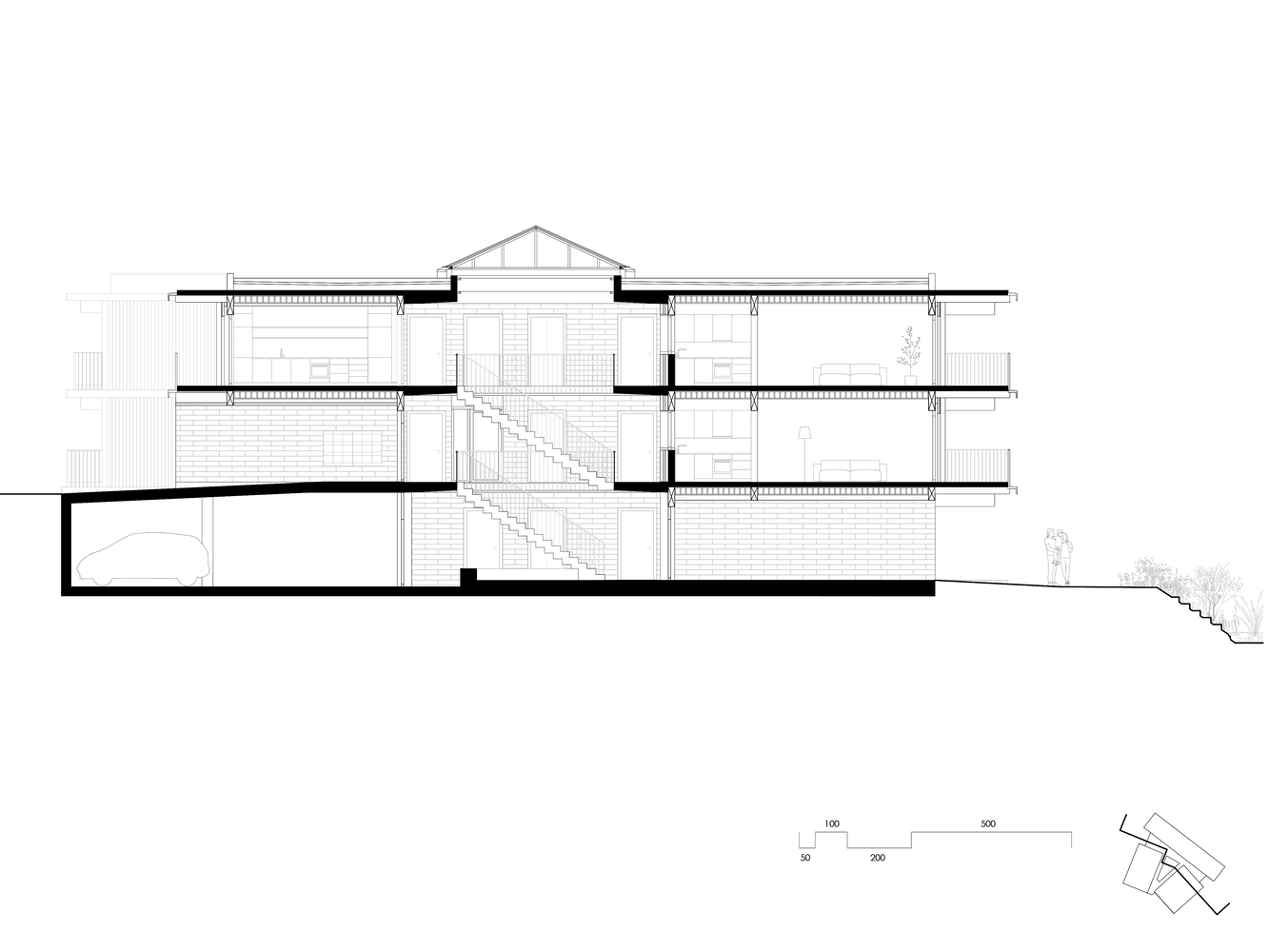
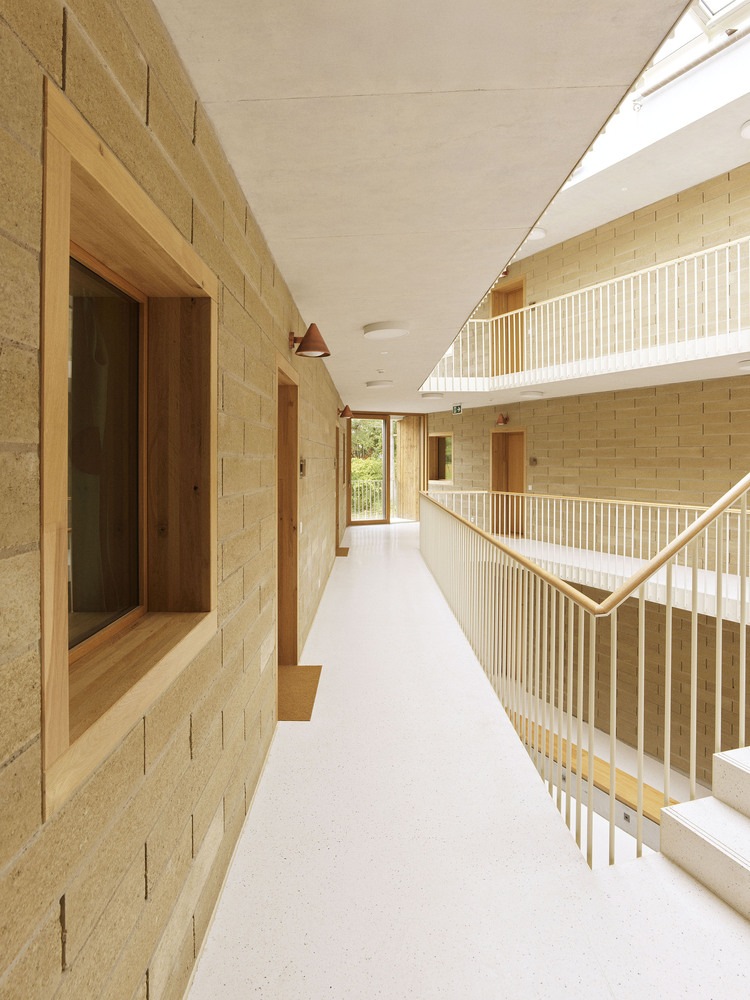
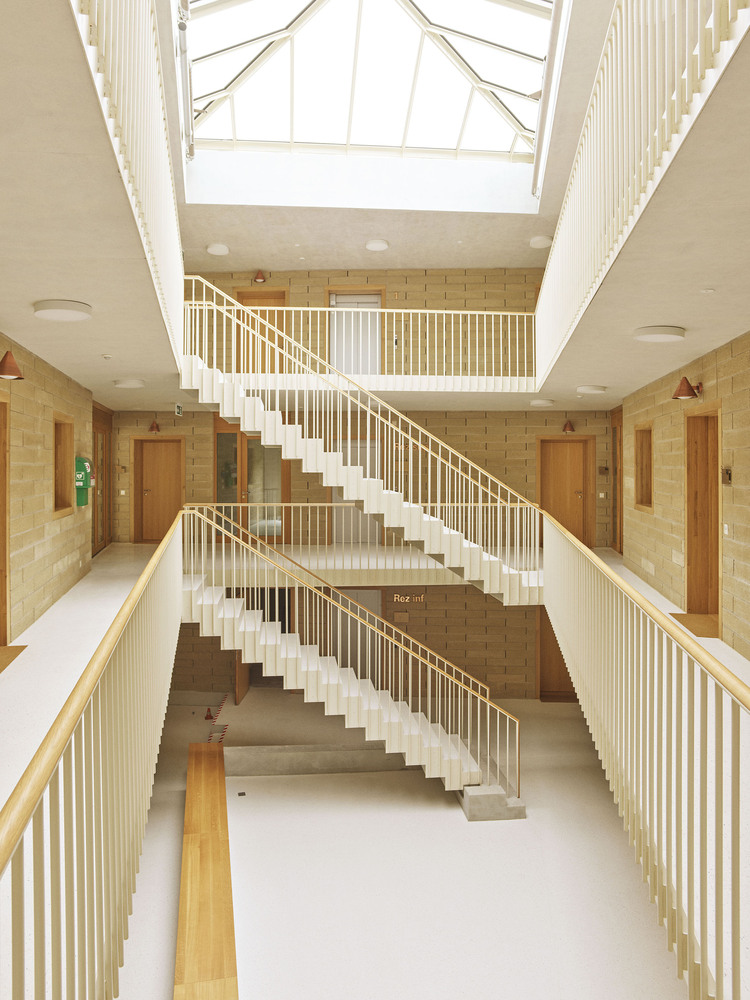
Organized around a central patio that extends the outdoor facilities, the residence seeks to avoid the institutional codes. The exterior circulation continues into the patio and provides access to independent apartments. Gradual thresholds clearly mark the transition between shared areas and private entrances, preserving intimacy.
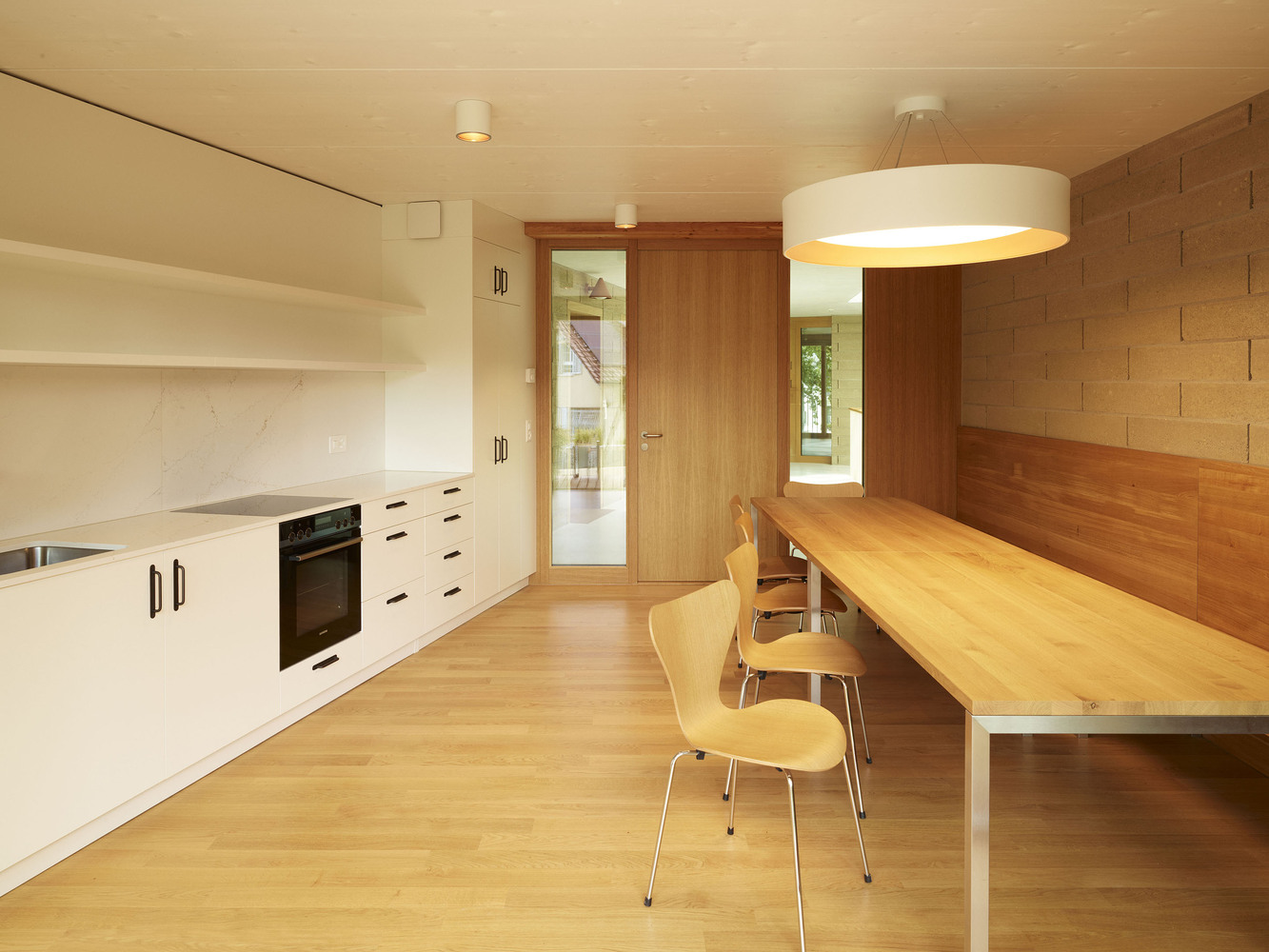
In addition to the patio, several communal spaces are available to residents. A shared kitchen, a gym, a library, a laundry room, and a guest room are shared by the residents.
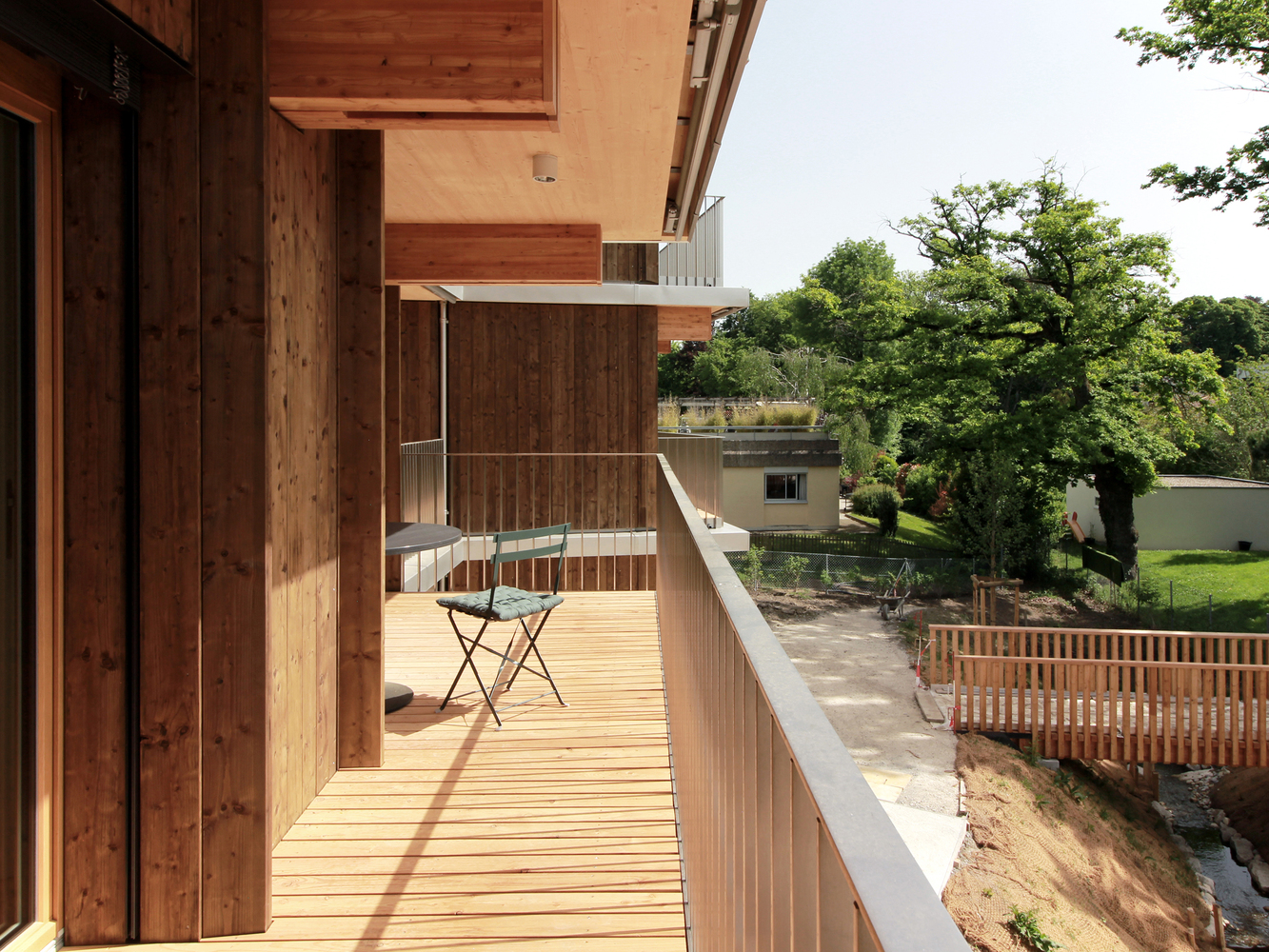
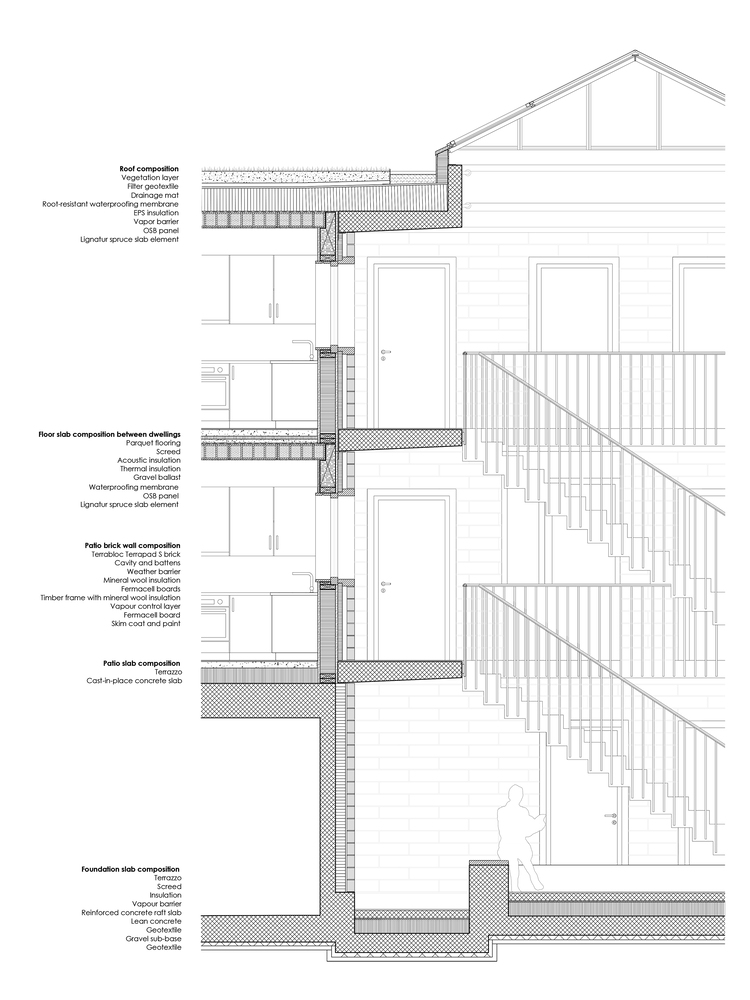
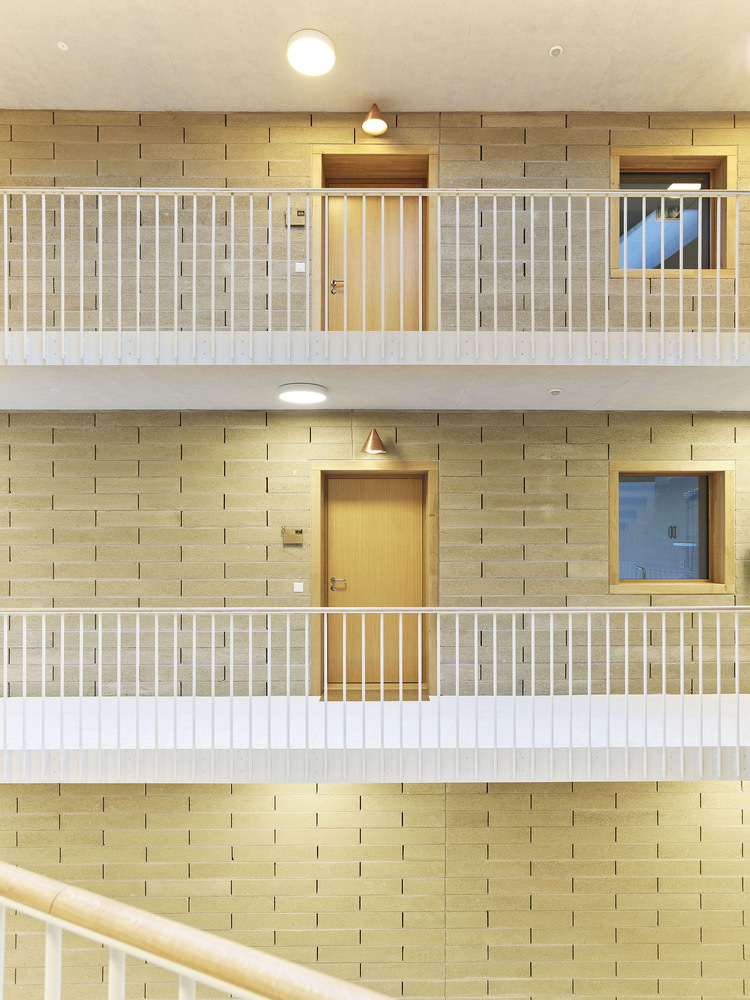
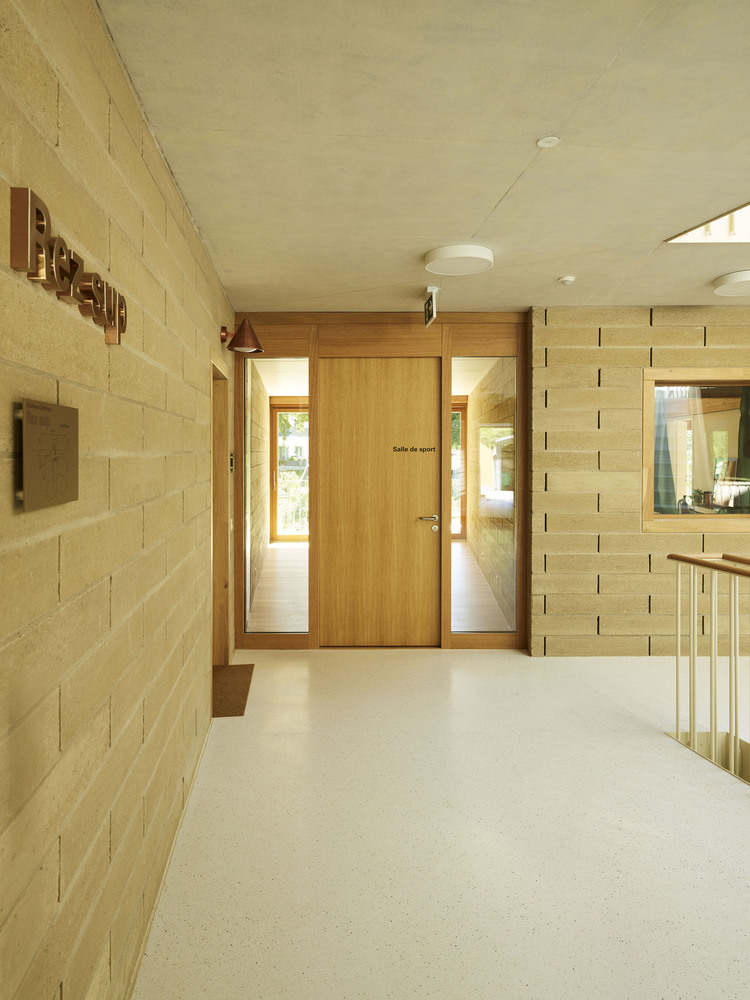
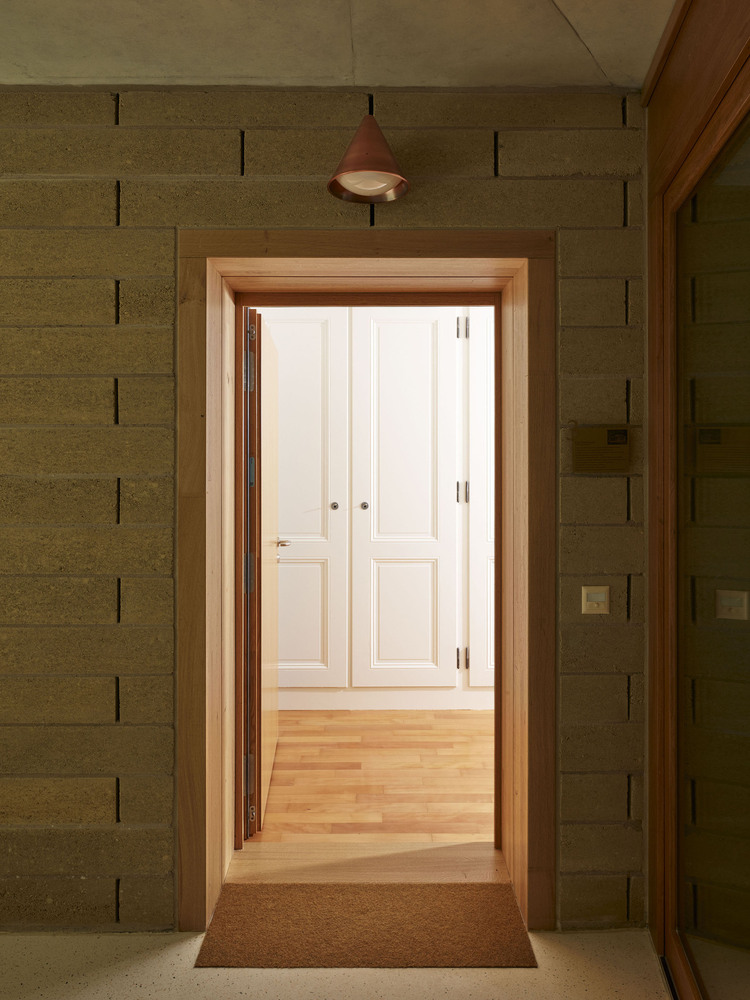
The character of the patio draws in the language of outdoor design, combining mineral materials: a concrete walkway finished with terrazzo, rammed-earth brick walls, and raw copper light fixtures reinterpret the materiality of the exterior and contribute to the ambiguity of this unheated yet tempered space.
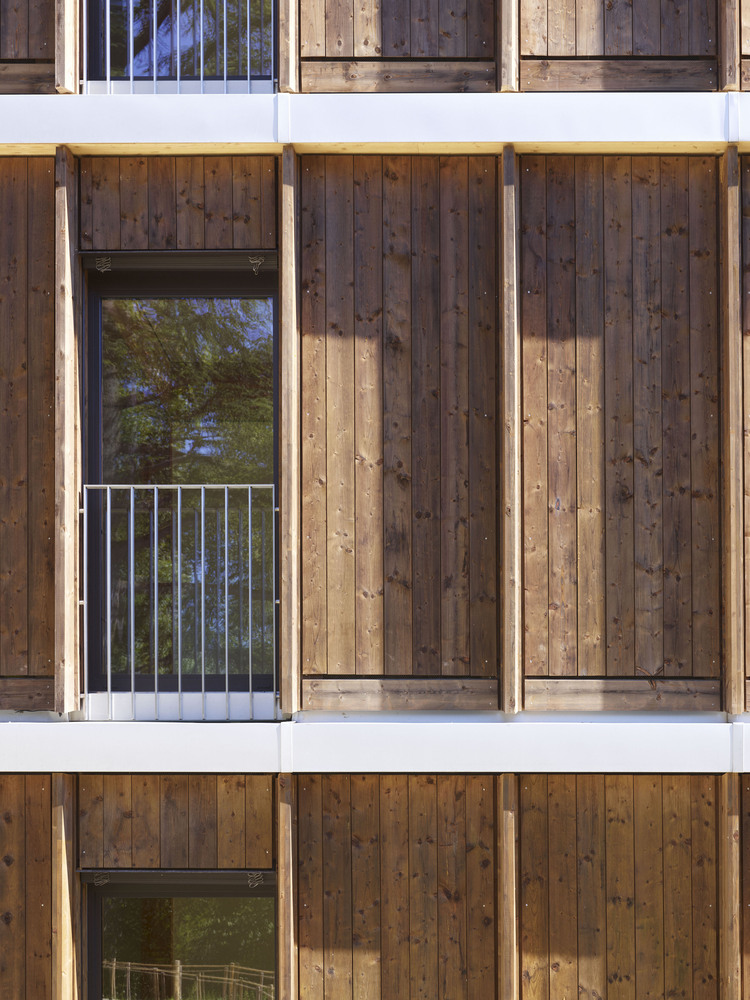
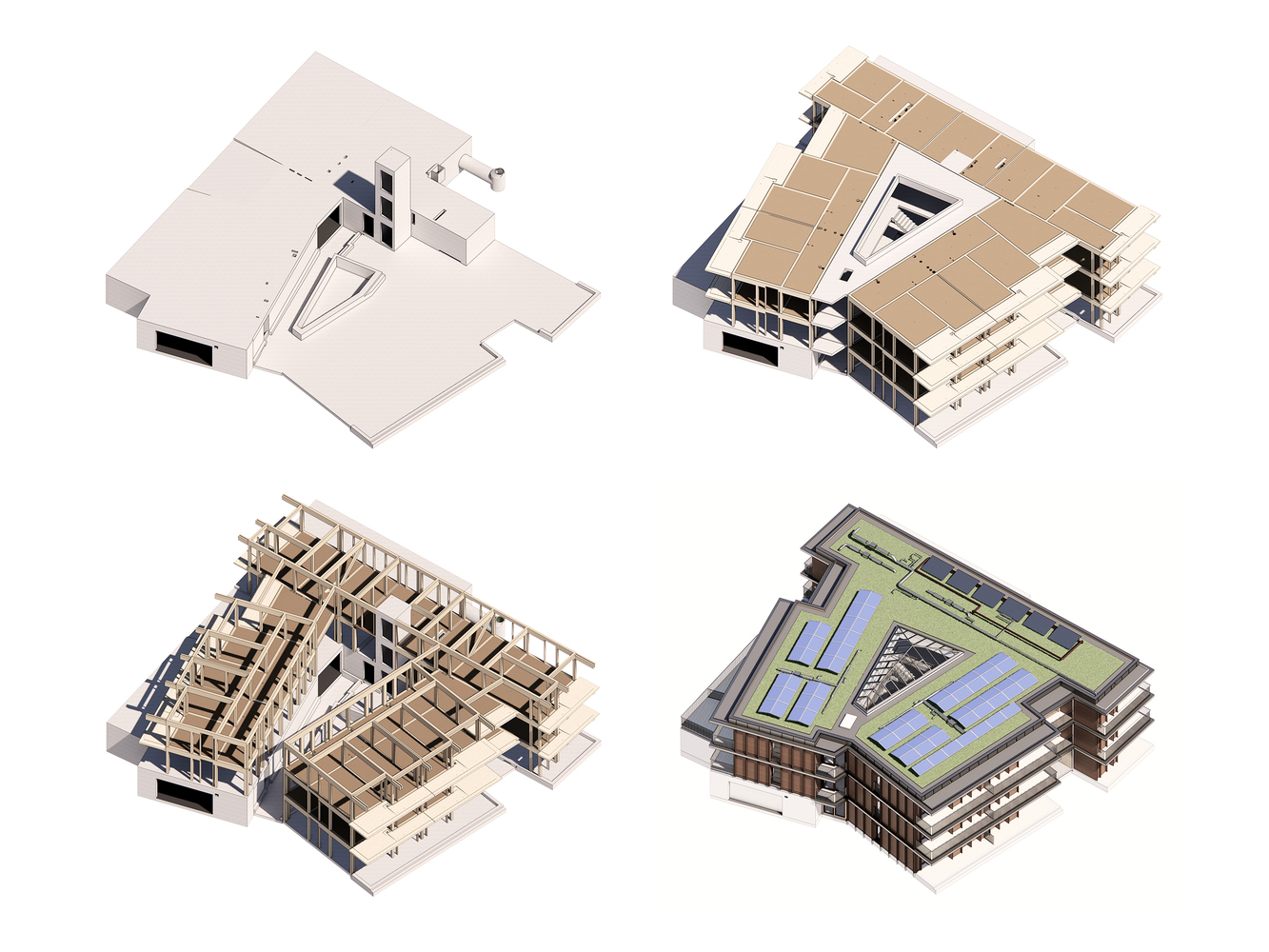
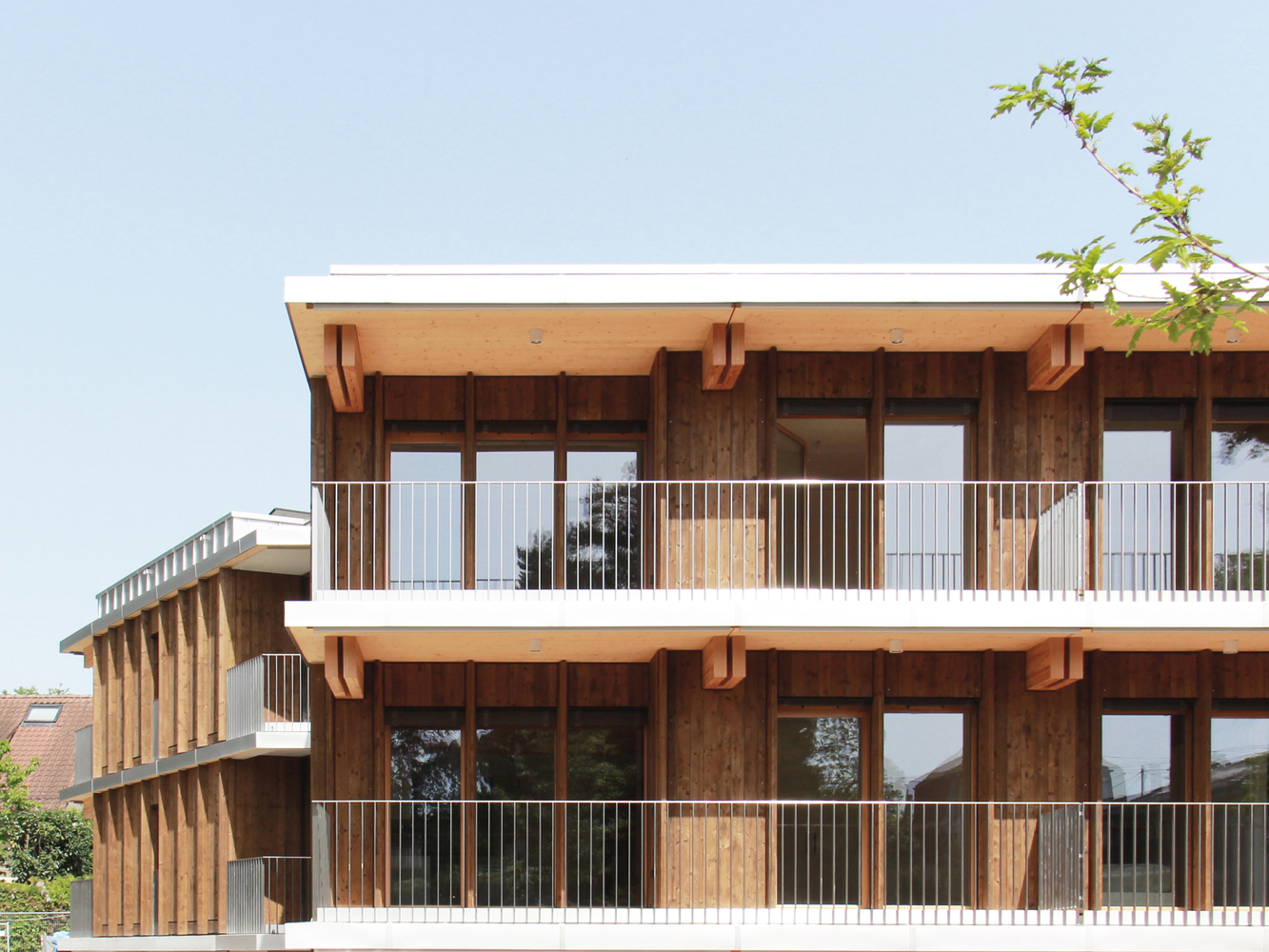
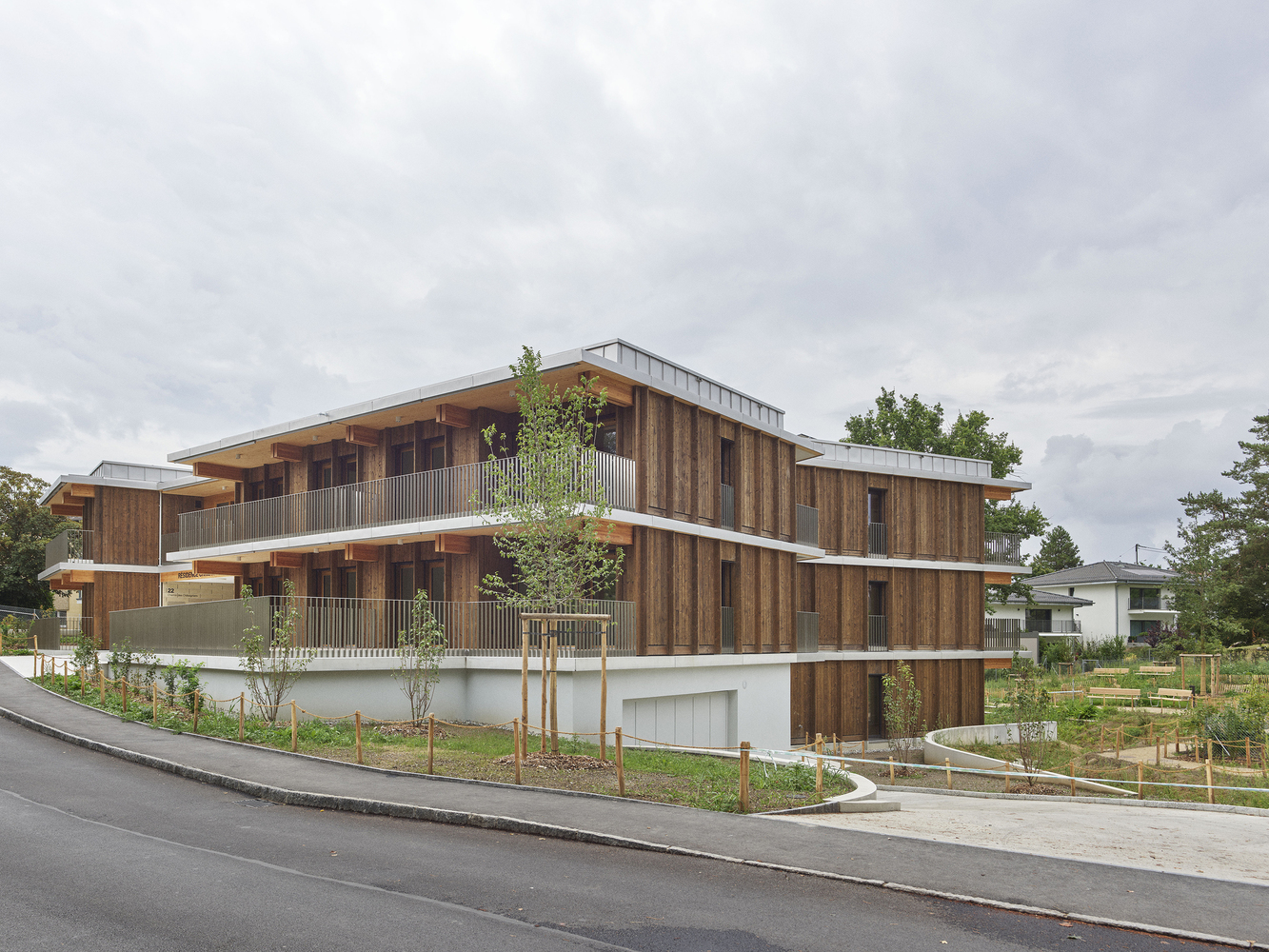
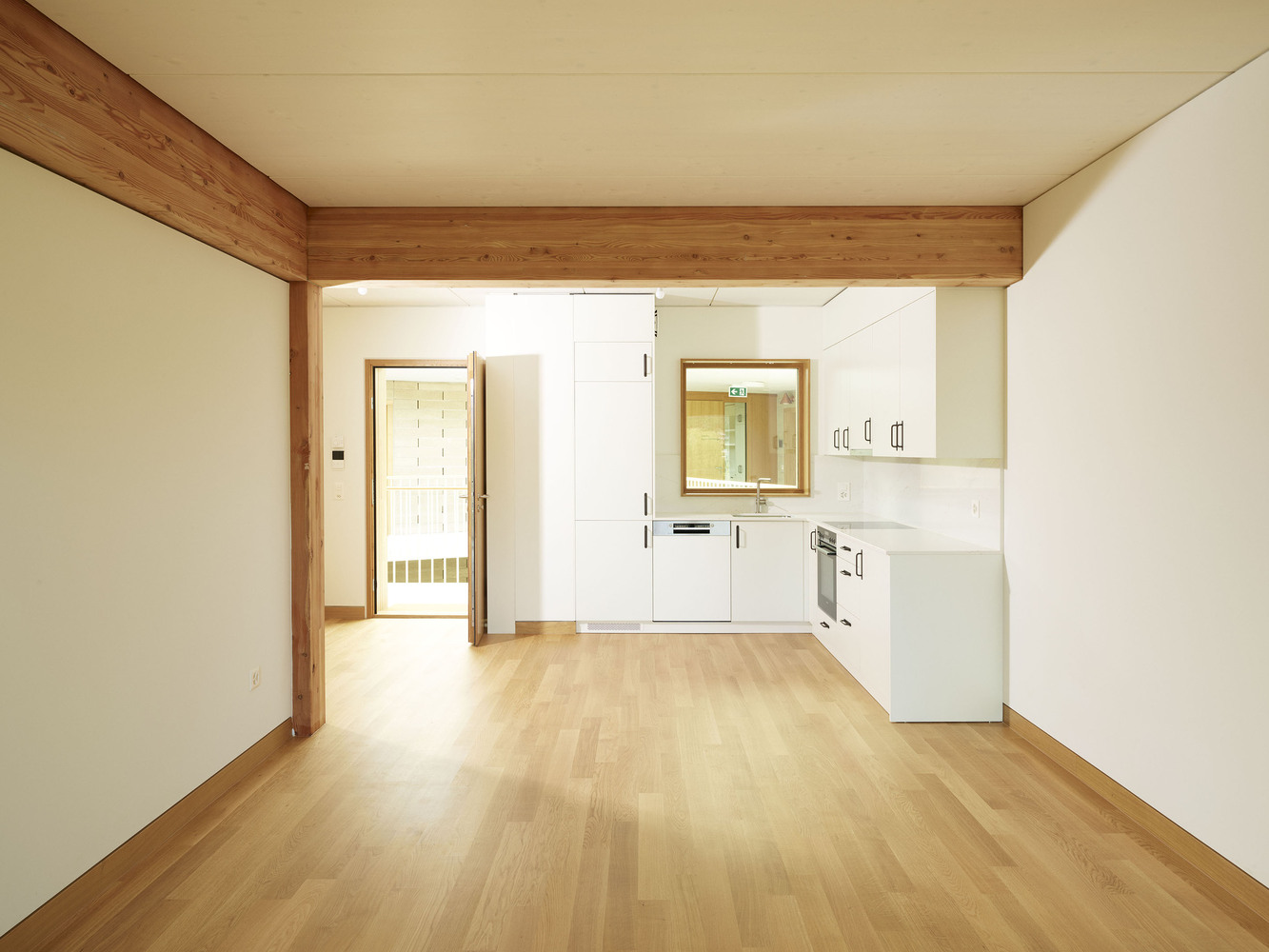
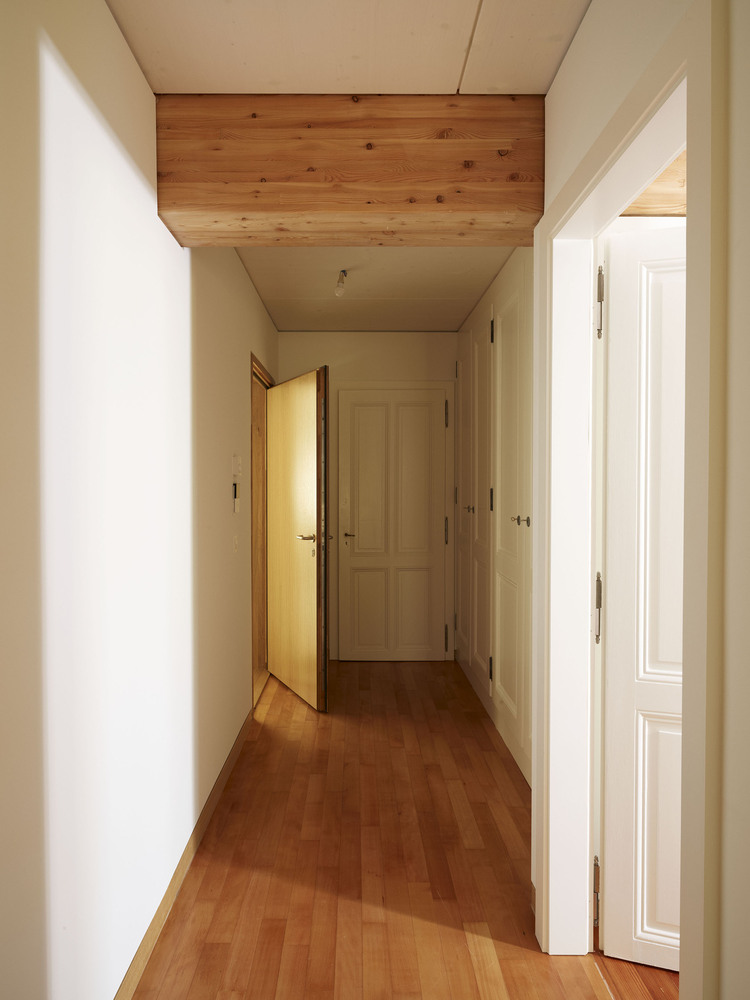
Inside the apartments, a warm domestic character prevails : exposed larch columns and beams, oak windows and floors, and caisson slabs made of timber whitewashed. The entire structure relies on local timber supply chains and is certified "Swiss Wood" (Bois Suisse).
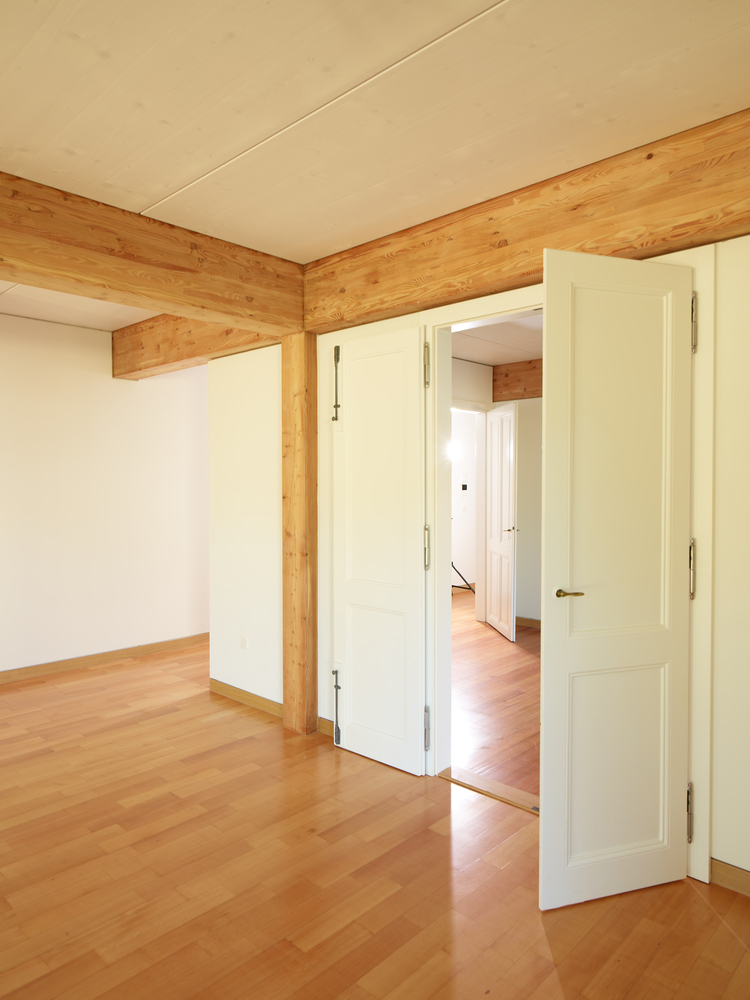
Through its typology and architectural character, the Home for Seniors offers an alternative to conventional assisted-living housing and extends the autonomy of its residents.
A SUSTAINABLE AND INCLUSIVE VISION
The Christinger Residence embodies an exemplary approach to sustainability.
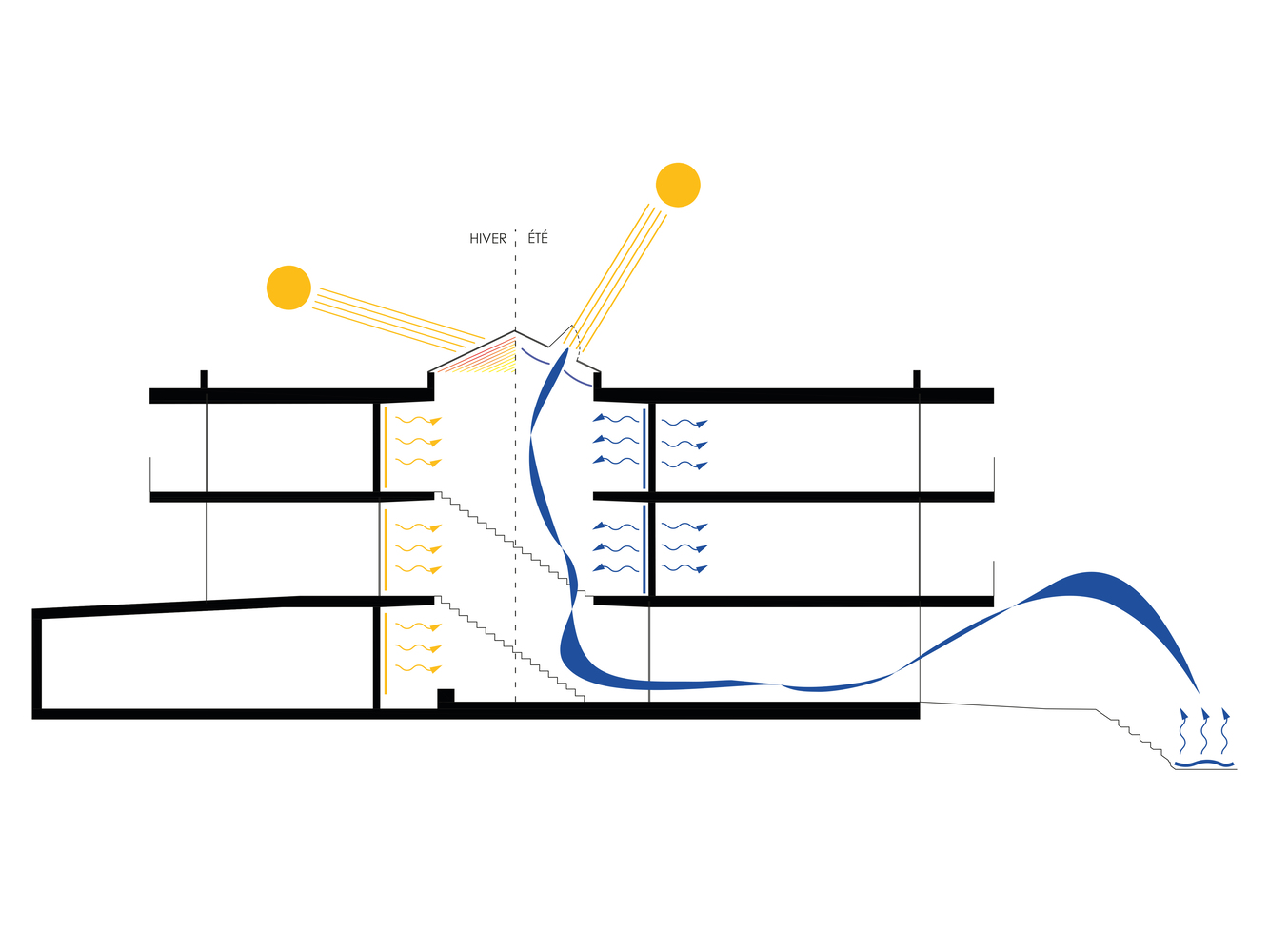
Using bio-based and locally sourced materials — wood, earth, and vegetation — and harnessing the climatic benefits of the patio, the project minimizes its carbon footprint while ensuring passive thermal and hygrometric comfort.
Concrete is used sparingly, limited to the semi-underground parking, elevator shaft, and walkways, while the rest of the building is entirely made of Swiss wood.
Materials were chosen for low environmental impact: wood-fiber insulation, recycled plasterboard and cellulose partitions, and compressed earth bricks for the patio walls.
The patio, an insulated yet unheated space, provides an intermediate climate — warmer in winter, cooler in summer — regulated by the hygroscopic behavior of the earth bricks and operable façade and skylight openings.
The green roof mitigates heat islands while cooling the photovoltaic and solar-thermal panels, improving their efficiency, and contributing to on-site stormwater management through retention and discharge into the stream.
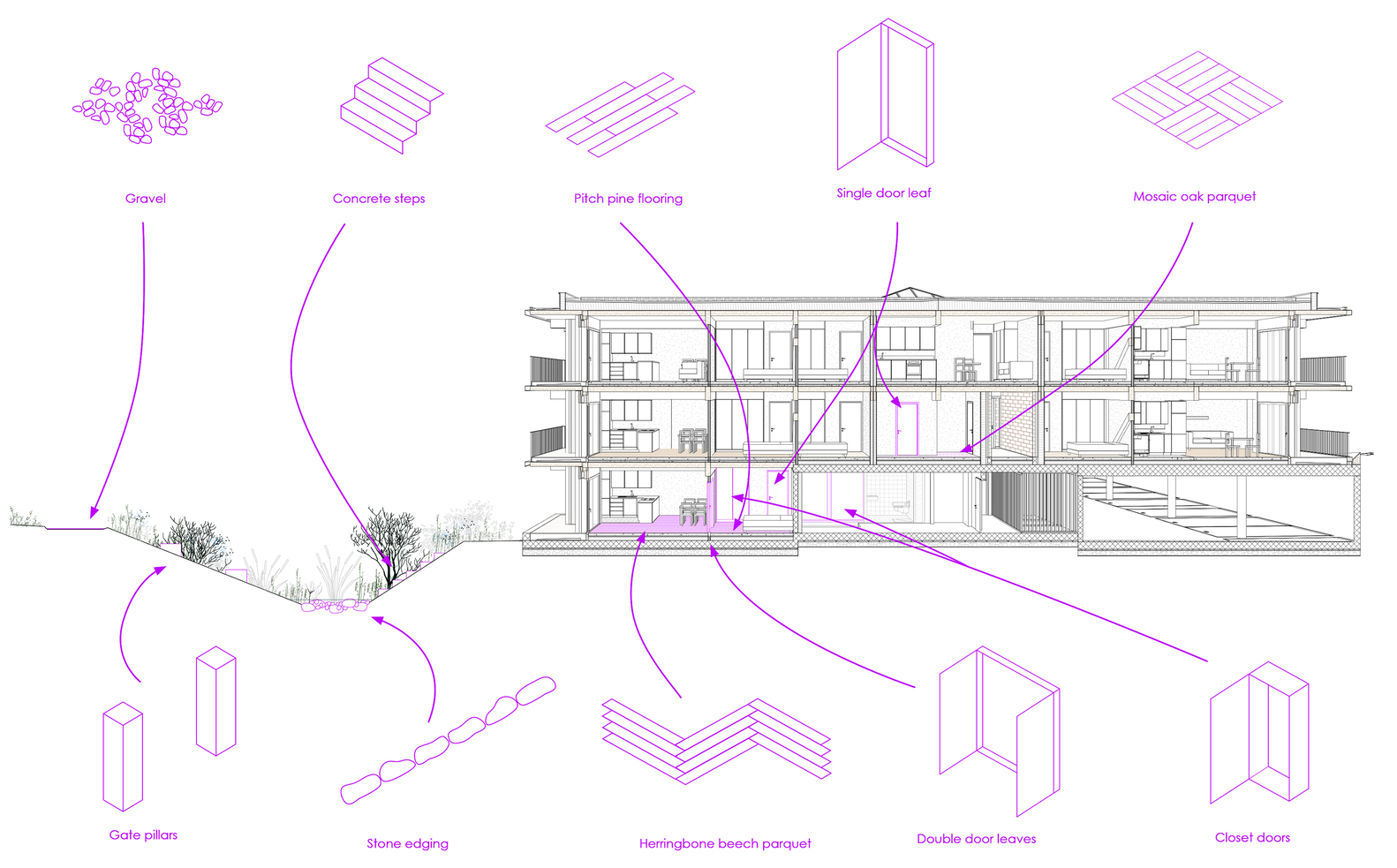
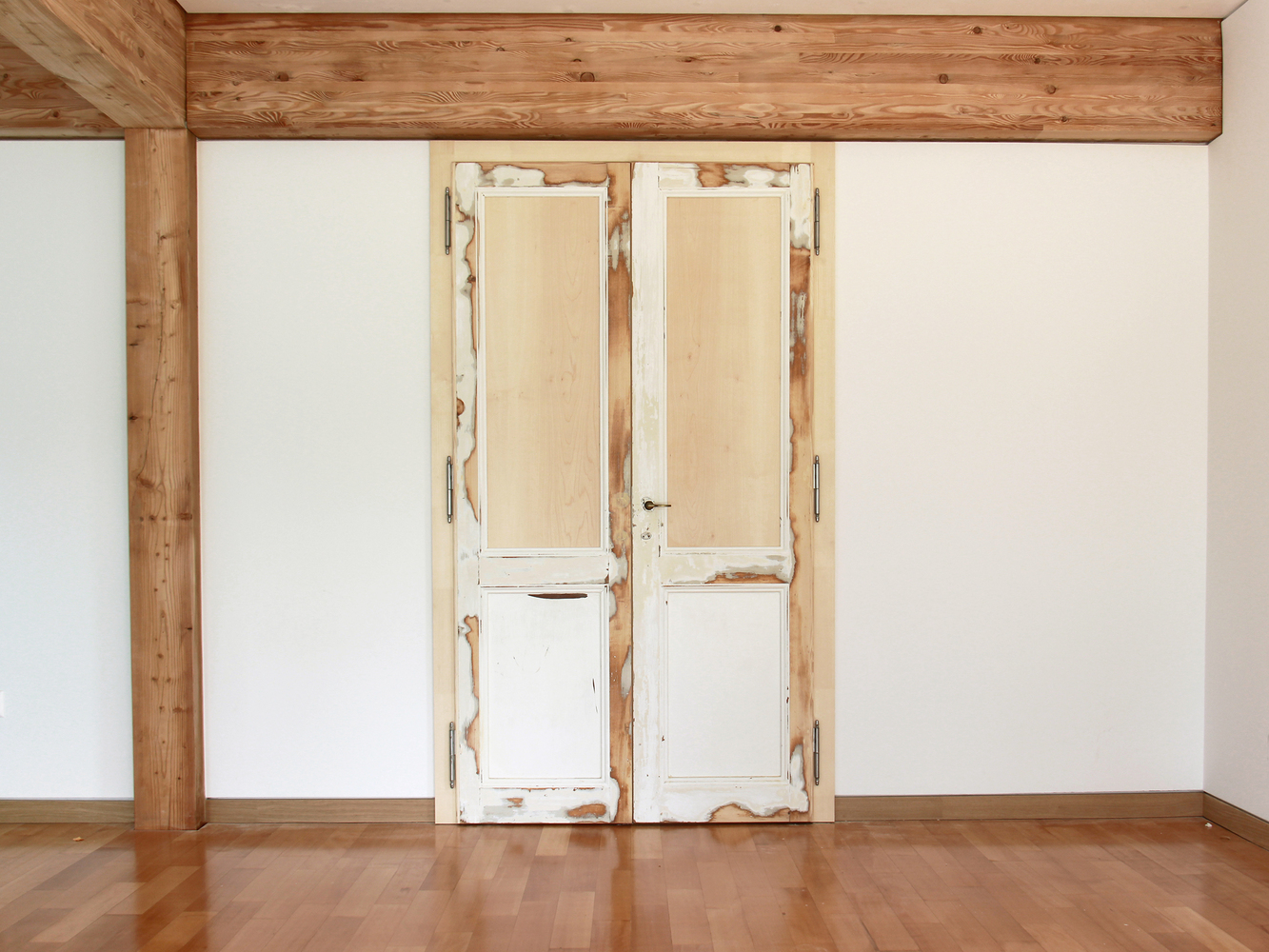
An in-situ reuse strategy guided construction: a carbon cost–financial cost assessment identified villa elements for deconstruction and reuse.
Wood flooring, doors, and cabinet panels were reintegrated, while garden materials were reinterpreted in the landscape, ensuring a tangible continuity of Mrs. Christinger's legacy.