
Grand Canal Gateway Bridge - Hangzhou
GRAND CANAL GATEWAY BRIDGE - HANGZHOU
Zaha Hadid Architects
ARCHITECTS
Zaha Hadid Architects
ZHA PROJECT ARCHITECT
Maria Loreto Flores
ZHA PRINCIPAL
Patrik Schumacher
GRASSHOPPER DEFINITION
Gaganjit Singh, Miron Mutyaba, Qiuru Pu
ZHA CONCEPT PROJECT ARCHITECT
Saman Dangostar
ARTISTIC SUPERVISION
Qiuru Pu, Gaganjit Singh, Miron Mutyaba, Xuan Zhao
CLIENT
Hangzhou Cbd Development Group, Ltd.
LDI
Tongji University Architectural Design Research Institute (Group) Co., Ltd
ZHA PROJECT DIRECTORS
Paola Cattarin, Paolo Matteuzzi
LANDSCAPING
Tongji University Architectural Design Research Institute (Group) Co., Ltd
LIGHTING DESIGNERS
Tongji University Architectural Design Research Institute (Group) Co., Ltd
GENERAL CONTRACTOR
Hangzhou Xiaohong Construction Environment Group Co., Ltd.;
ZHA DESIGN TEAM
Andy Lin, Damir Alispahic, Effie Nakajima, Gaganjit Singh, Gigi Ho, Hangyul Jeong, Iris Chen, Joannasaade, Jose Castaneda, Kalliopi Mouzaki, Ke Yang, Maria Echeverri, Milica Pihler-mirjanic, Millie Anderson, Mironmutyaba, Natasha Tariq, Qiuru Pu, Stefano Iacopini, Xuan Zhao, Yuan Zhai
STRUCTURAL ENGINEERING
Arup, Tongji Universityarchitectural Design Research Institute (Group) Co., Ltd
ZHA CONCEPT DESIGN TEAM
Berkin Islam, Christy Yin, Delfina Bocca, Enoch Kolo, Federico Borello, Hunter Paine, Irenapredalic, Kalliopi Mouzaki, Lorena Espaillat Bencosme, Luciano Letteriello, Marcella Fedele, Maria Tsironi, Mariagrazialanza, Mariana Custodio Dos Santos, Marie-perrine Placais, Mattia Santi, Michael On, Milind Khade, Miron Mutyaba,mohamed Al-jubori, Nastasja Mitrovic, Natasha Marks, Philipp Siedler, Pierandrea Angius, Qiuru Pu, Raquel Arauco Ordas,saman Dadgostar, Satoshi Ohashi, Shahd Abdelmoneim, Shajay Bhooshan, Sven Torres, Thomas Bagnoli, Tommaso Casucci,vincent Konate, Vincenzo Barilari, Vishu Bhooshan, Xiaoyu Zhang, Yuan Zhai, Yuzhi Xu
STEEL FABRICATOR
Hunan Valin Iron And Steel Co., Ltd.
PHOTOGRAPHS
Xue Liang
AREA
390 m²
YEAR
2025
LOCATION
Hangzhou, China
CATEGORY
Pedestrian Bridge, Sustainability
English description provided by the architects.
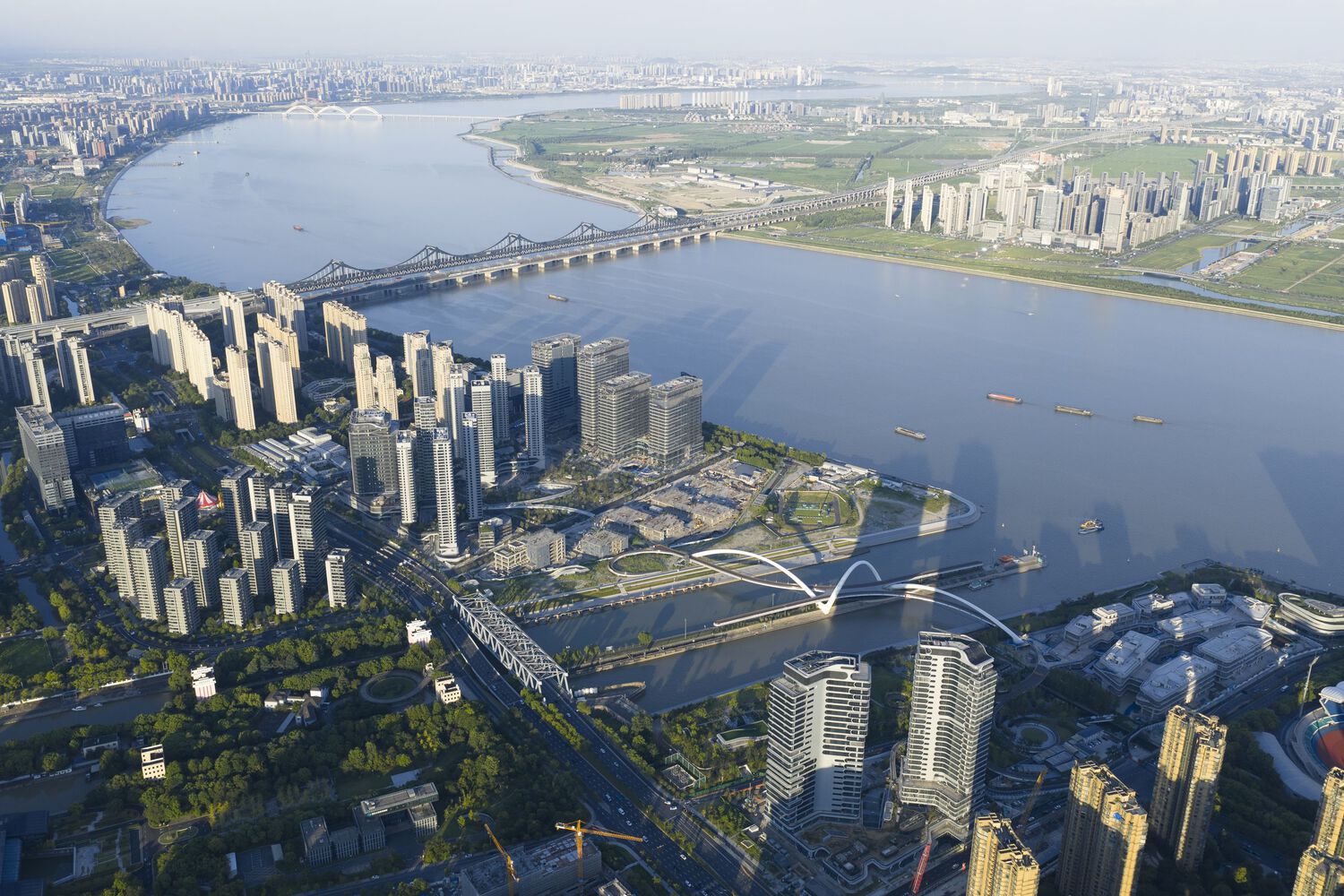
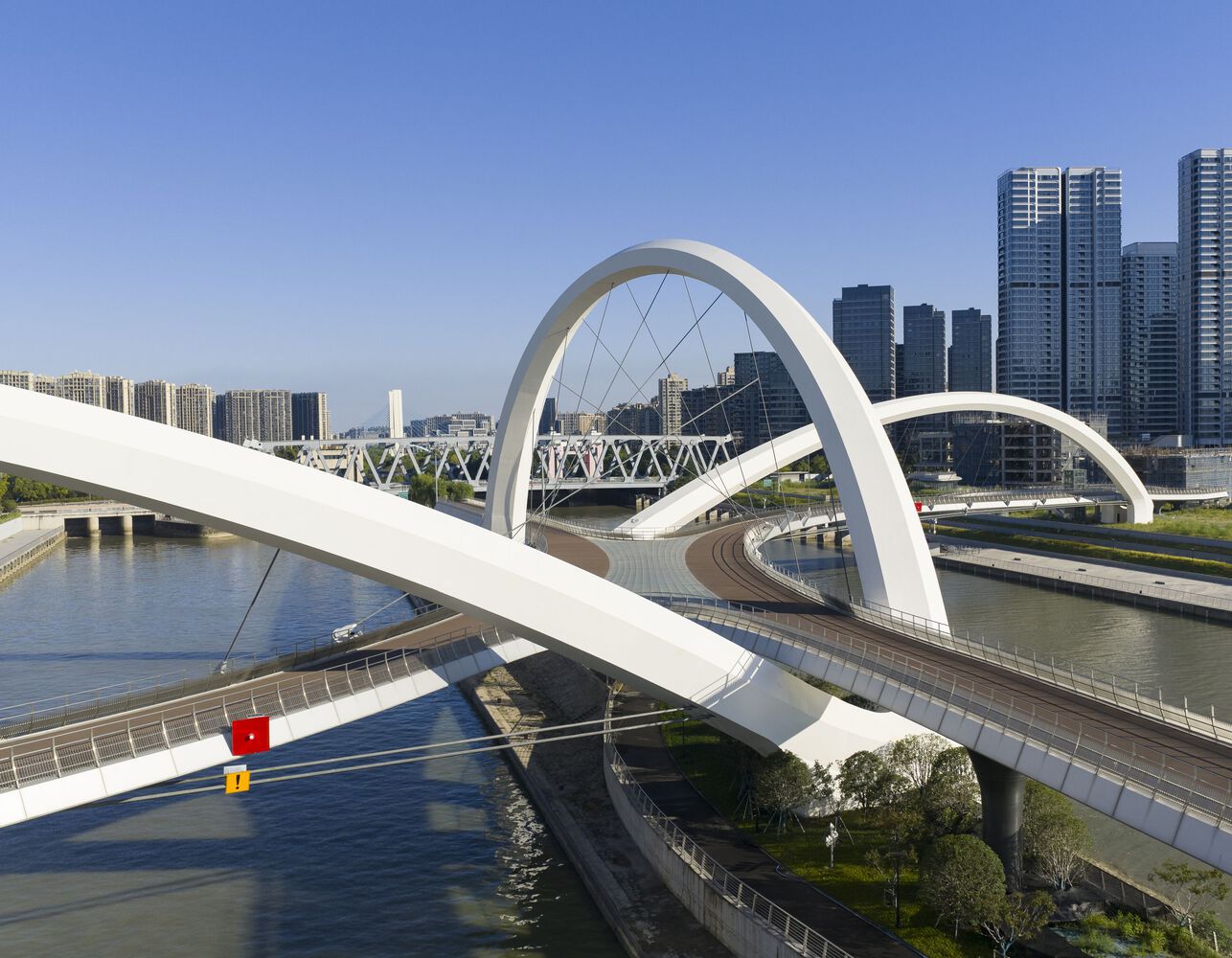
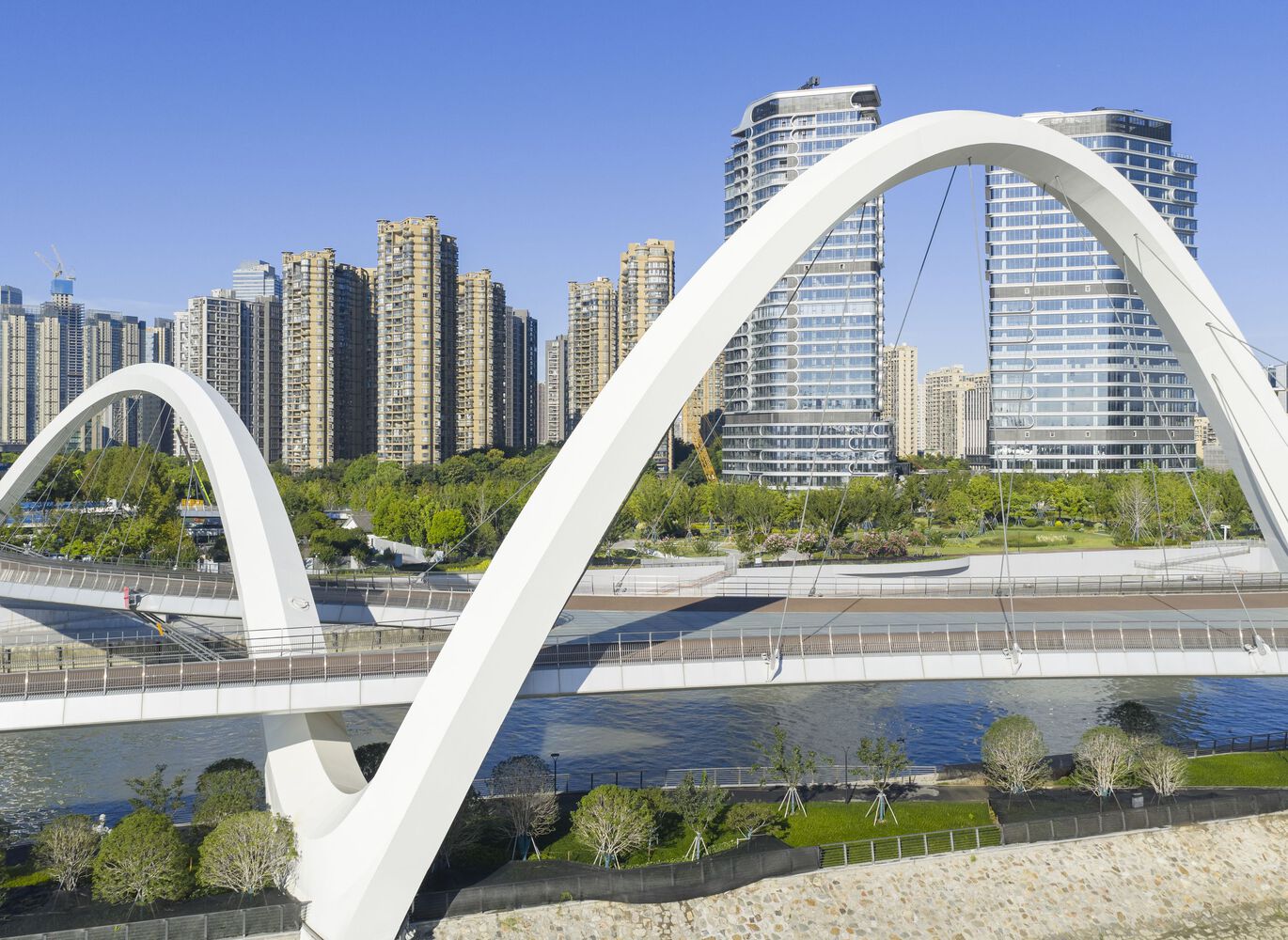
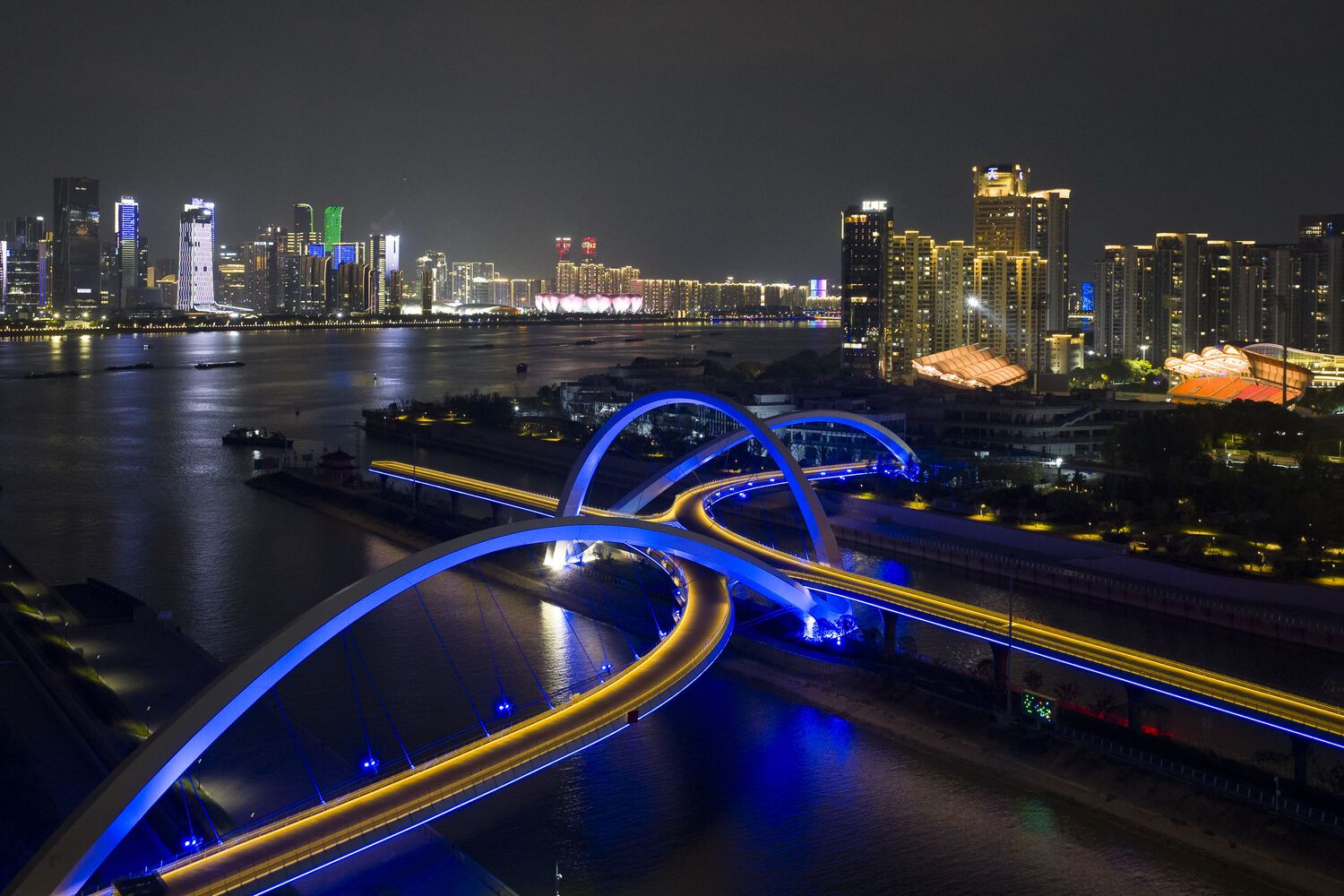
Construction of the Grand Canal Gateway Bridge in Hangzhou is now complete. When opened for public use later this year, the footbridge will unite the 800,000 square metre Seamless City masterplan under construction on the east and west banks of the Grand Canal.
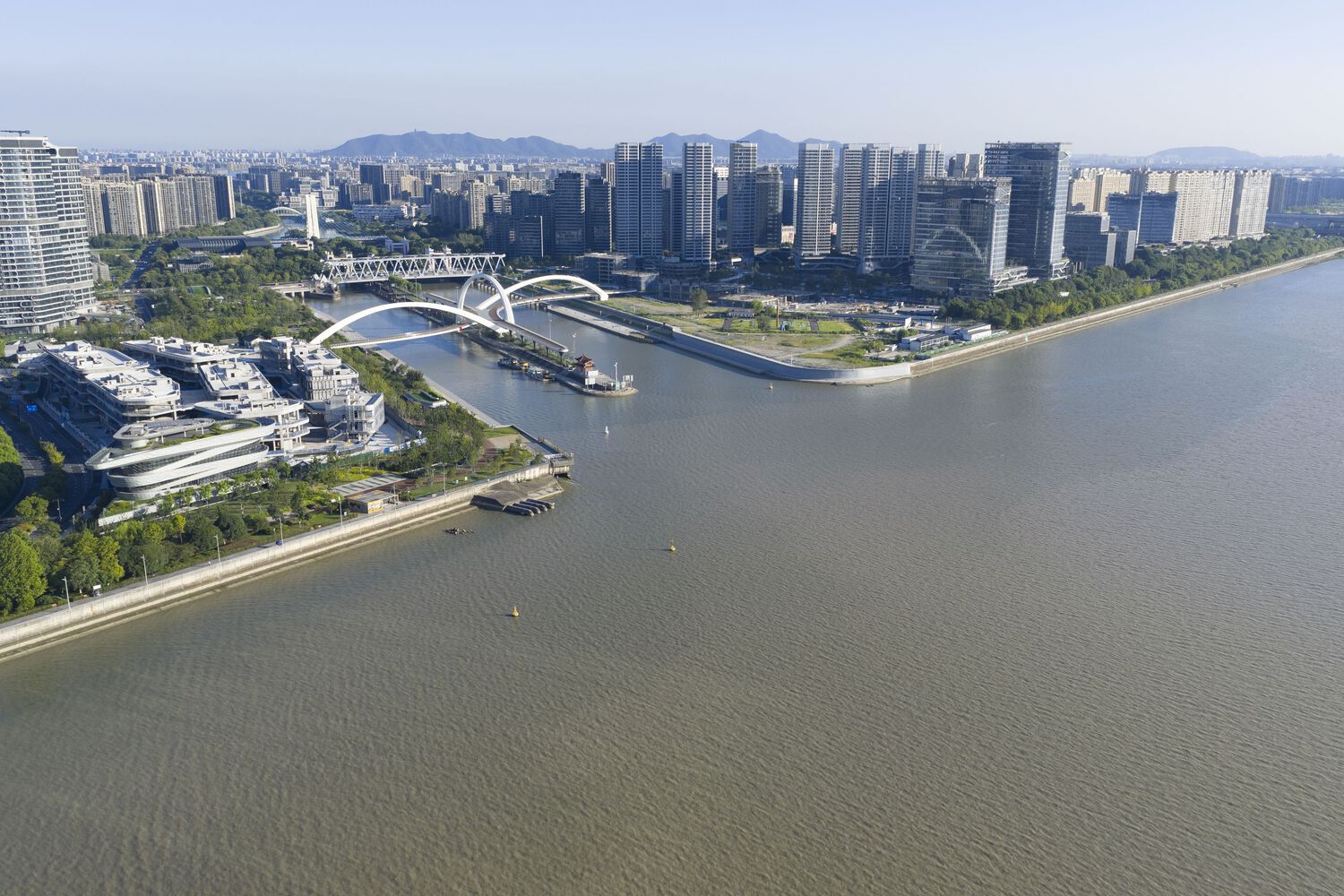
The centre piece of the city's new 14.7-hectare River Middle public park and river promenade, the bridge and surrounding master plan by Zaha Hadid Architects (ZHA) reconnects the city with its historic Grand Canal and Qiantang River by integrating homes, workplaces and amenities for its community with vital civic spaces for recreation, leisure and tourism.
A UNESCO World Heritage site, the Grand Canal is China's most ancient and longest man-made waterway—an extraordinary feat of engineering dating from the 5th century BC—flowing south from Beijing to connect with China's Yellow and Yangtze Rivers before joining the Qiantang River at its southern gateway in Hangzhou.
THE QIANTANG RIVER IN HANGZHOU IS RENOWNED FOR ITS
Silver Dragon, the world's largest tidal bore, generated by incoming tides from Hangzhou Bay surging upstream, creating waves up to 9 metres high and travelling at 40 km/h.
Balancing ecological sensitivity with civic ambition, the bridge's walkways and plaza provide multiple vantage points, allowing visitors to safely experience the raw power and spectacle of the Silver Dragon's force of nature.
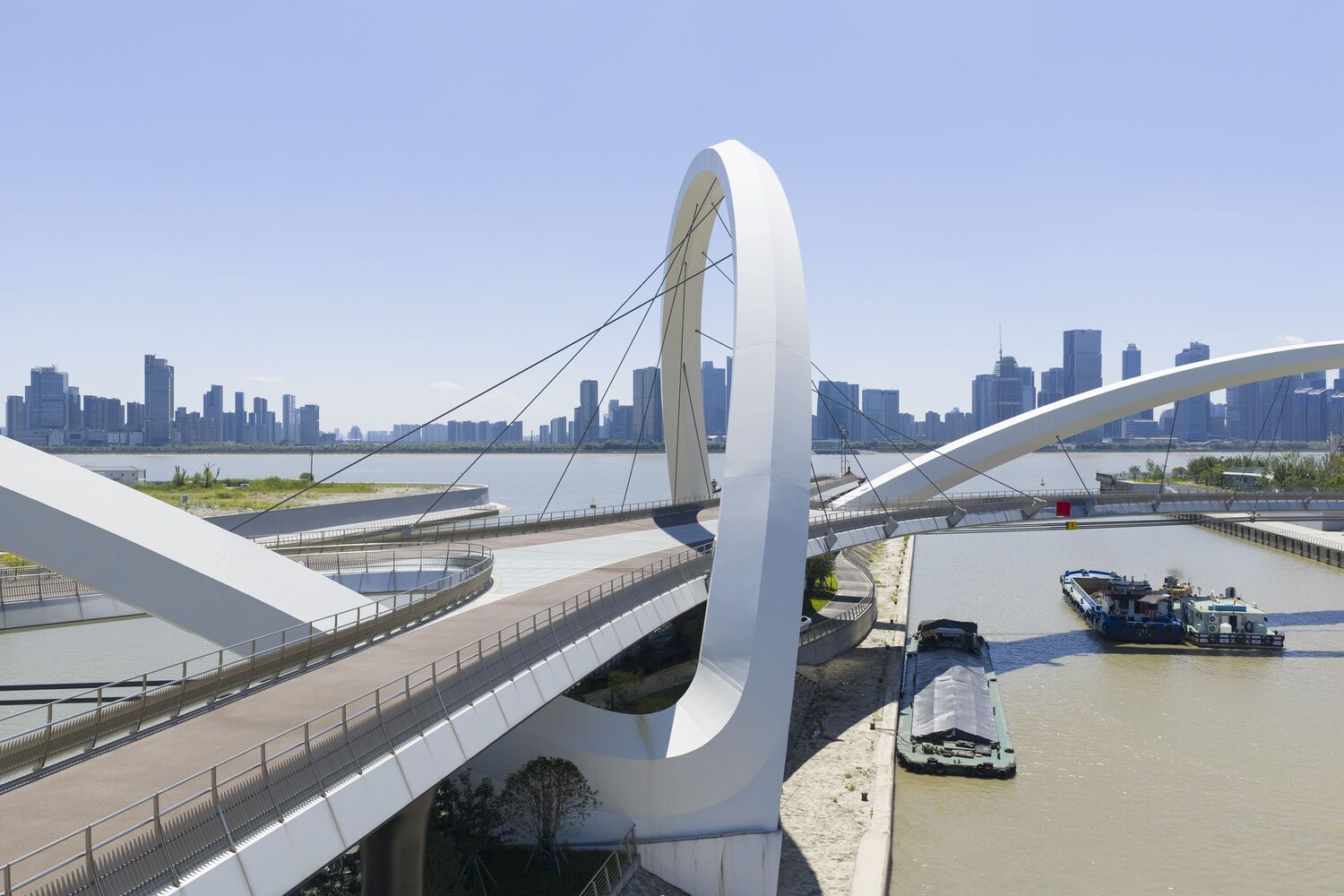
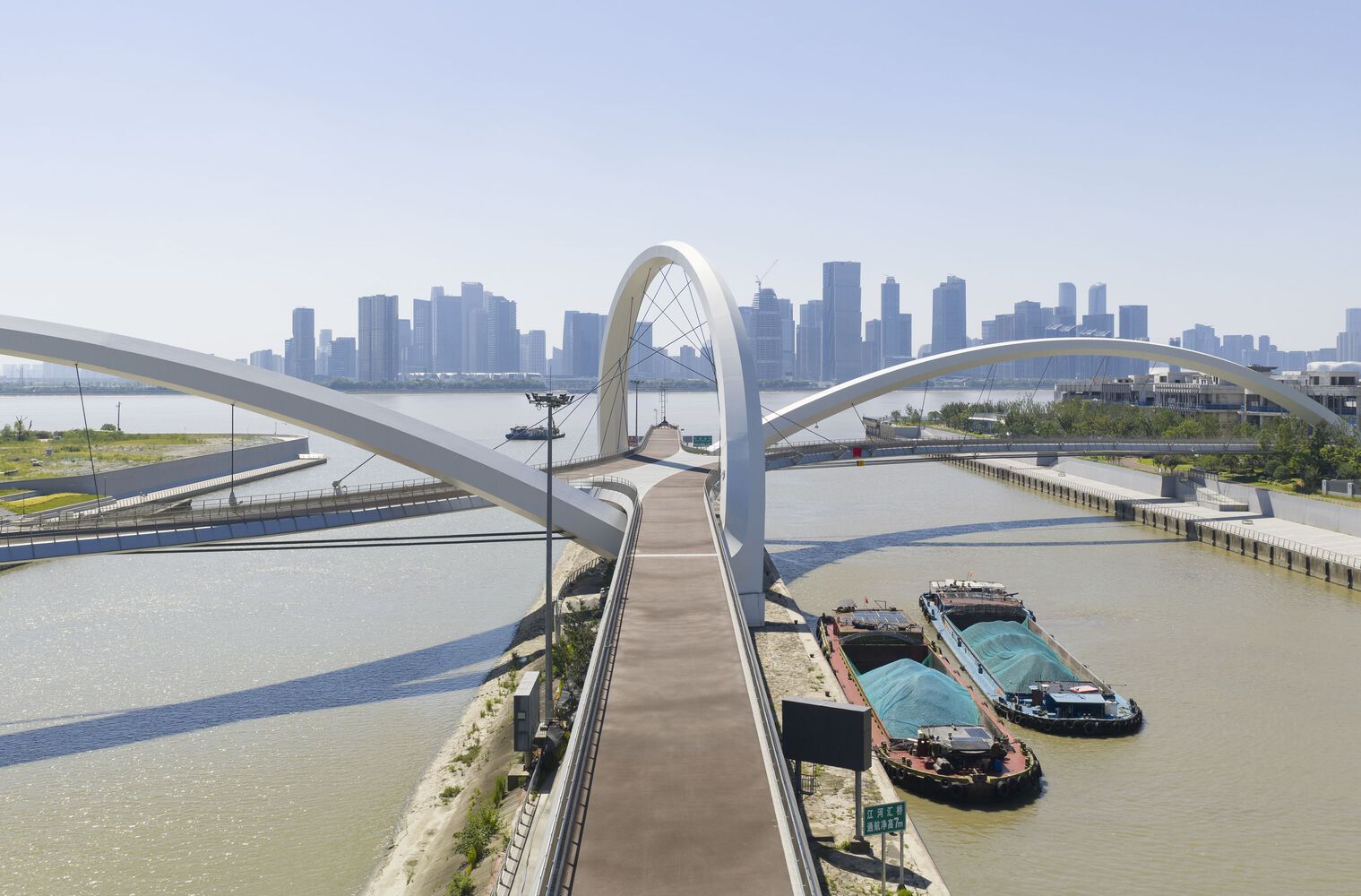
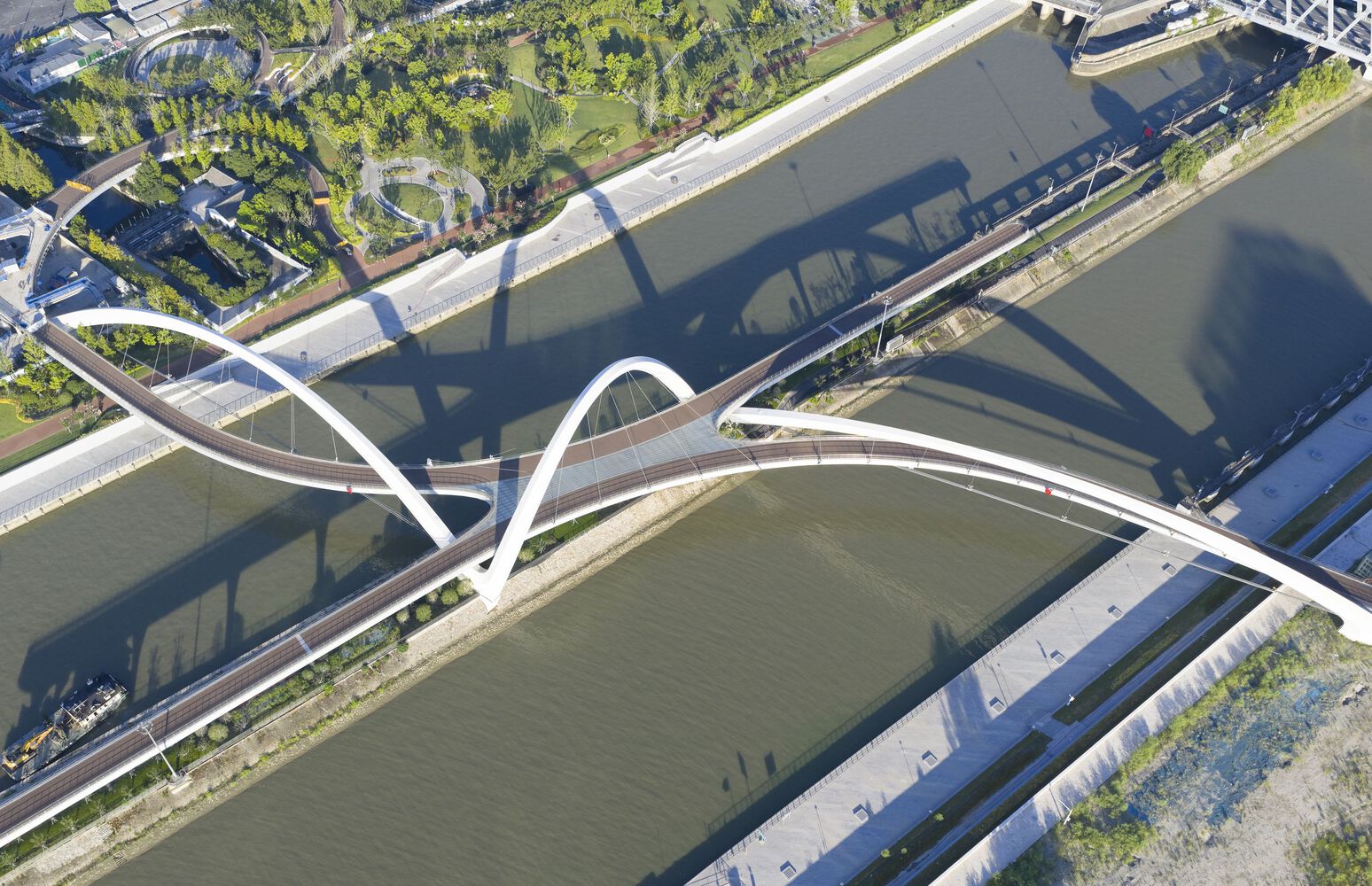
Drawing on the city of Hangzhou's long-established heritage as a centre of excellence for China's renowned silk embroidery, the bridge's design reinterprets traditional stitching techniques.
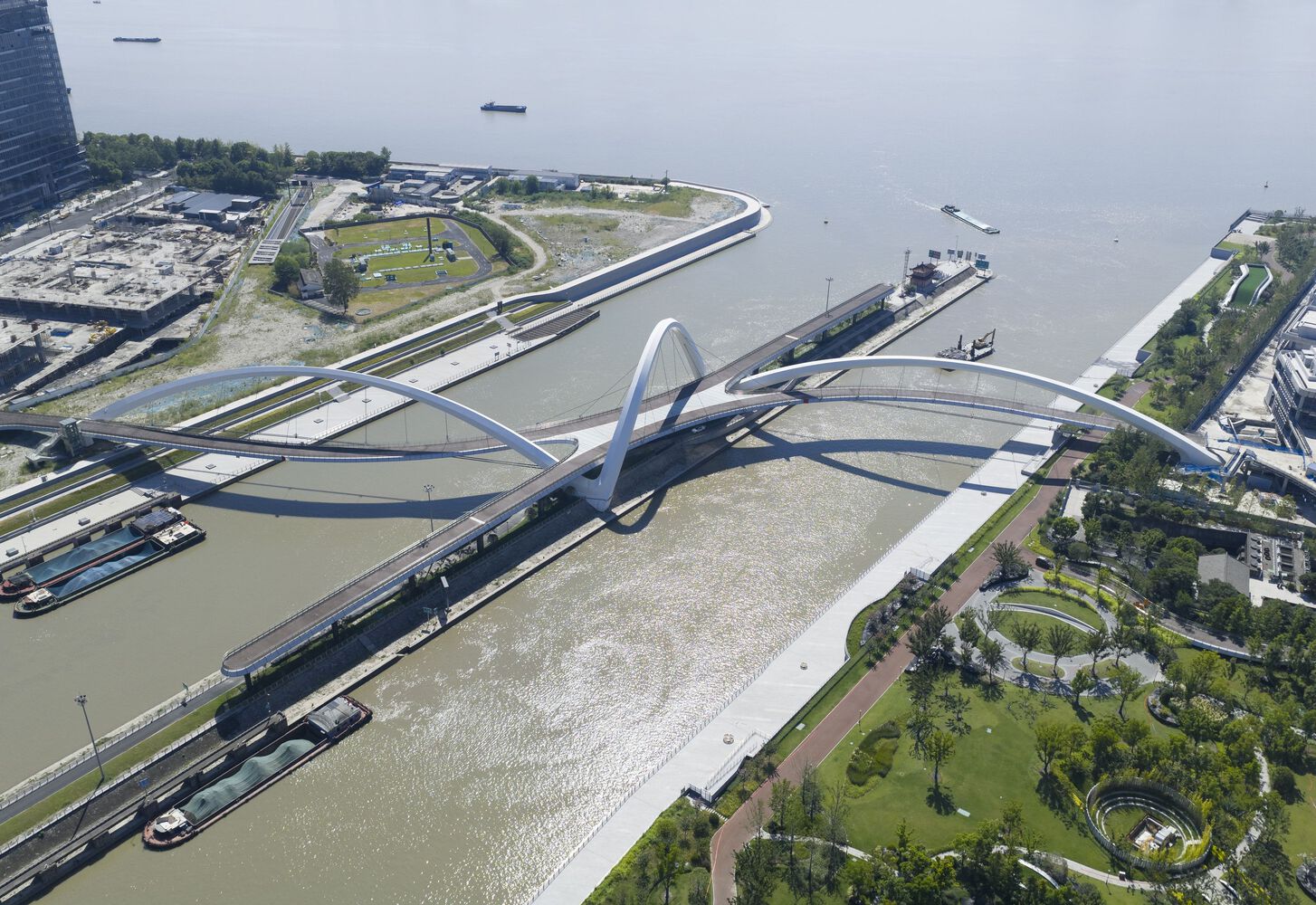
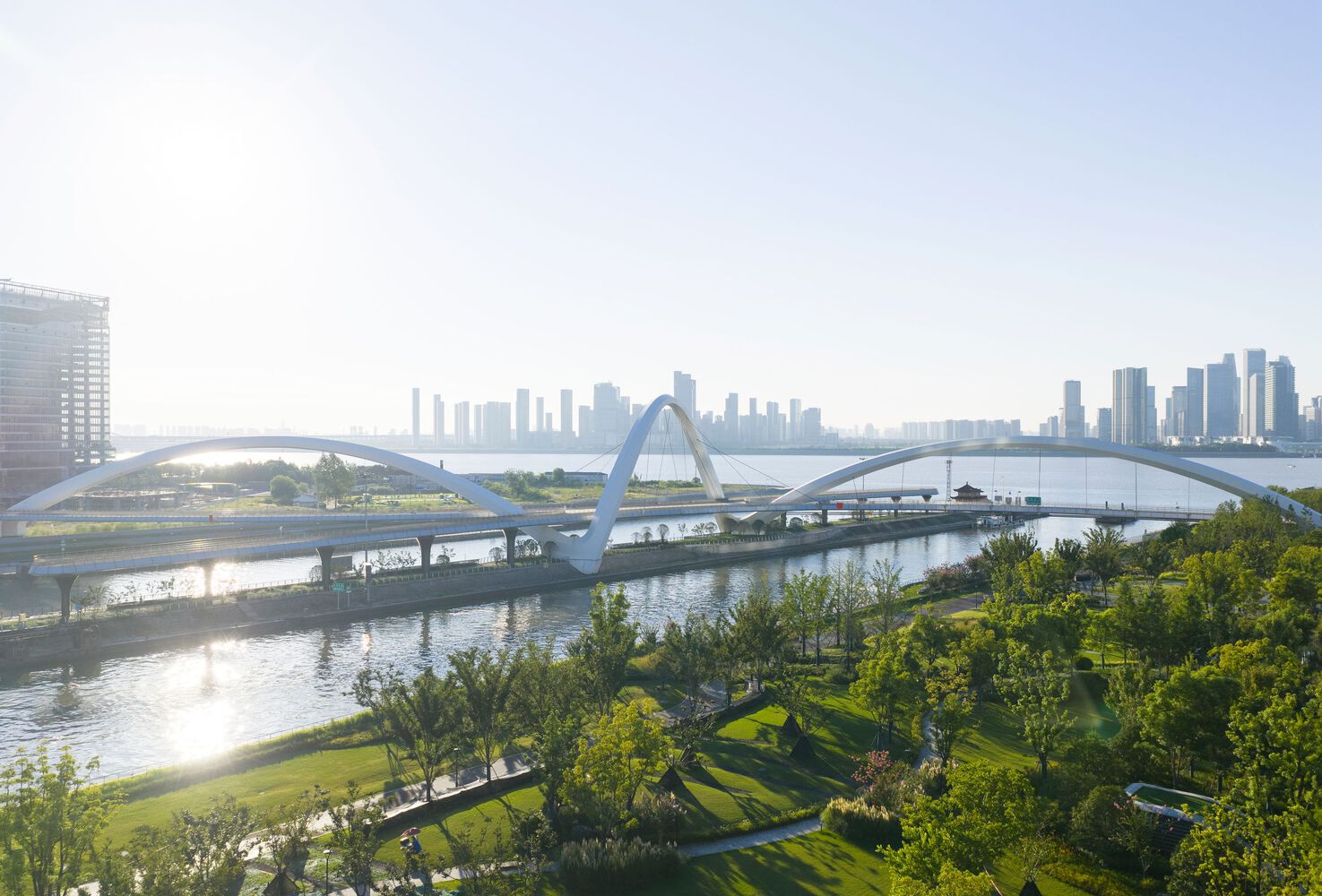
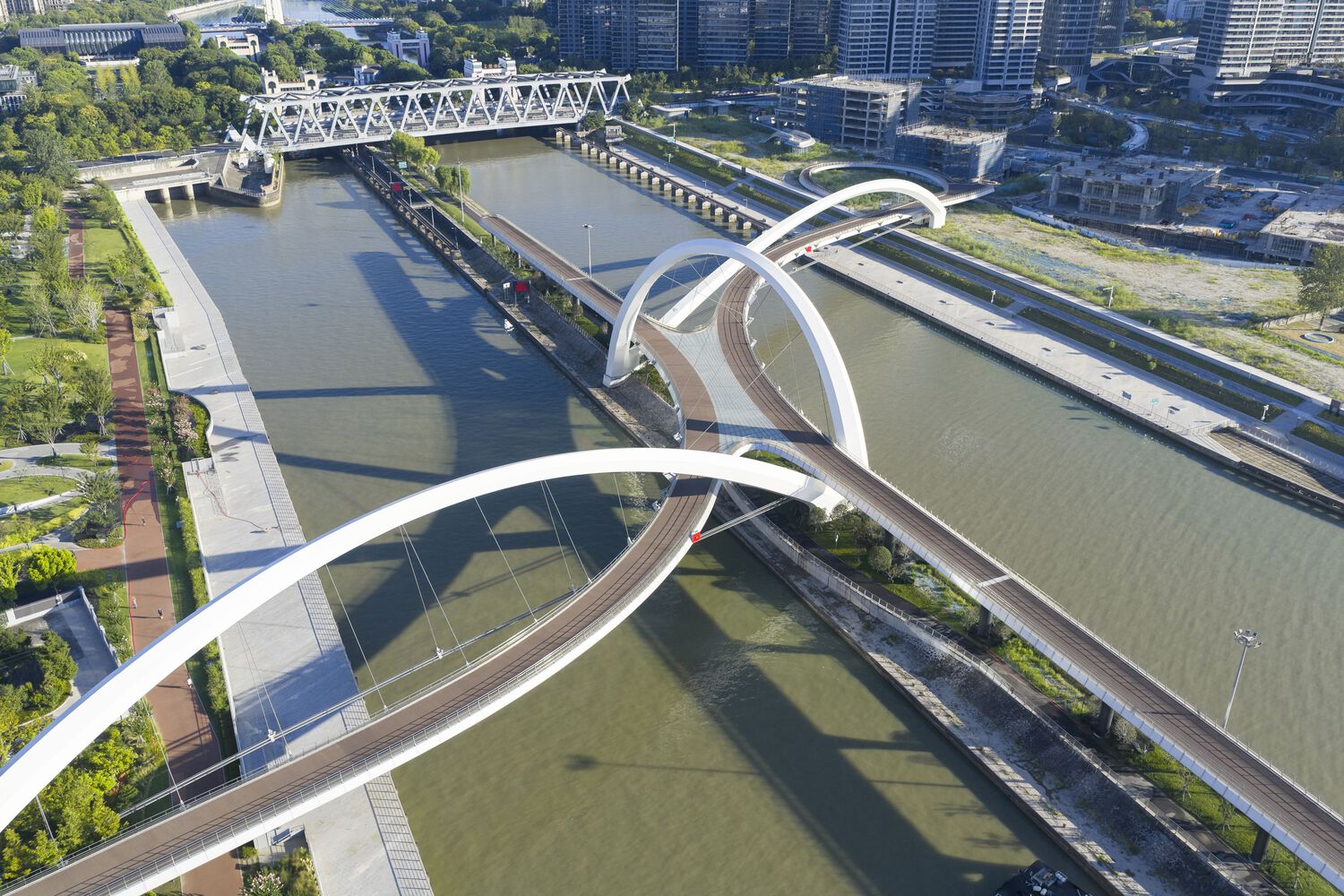
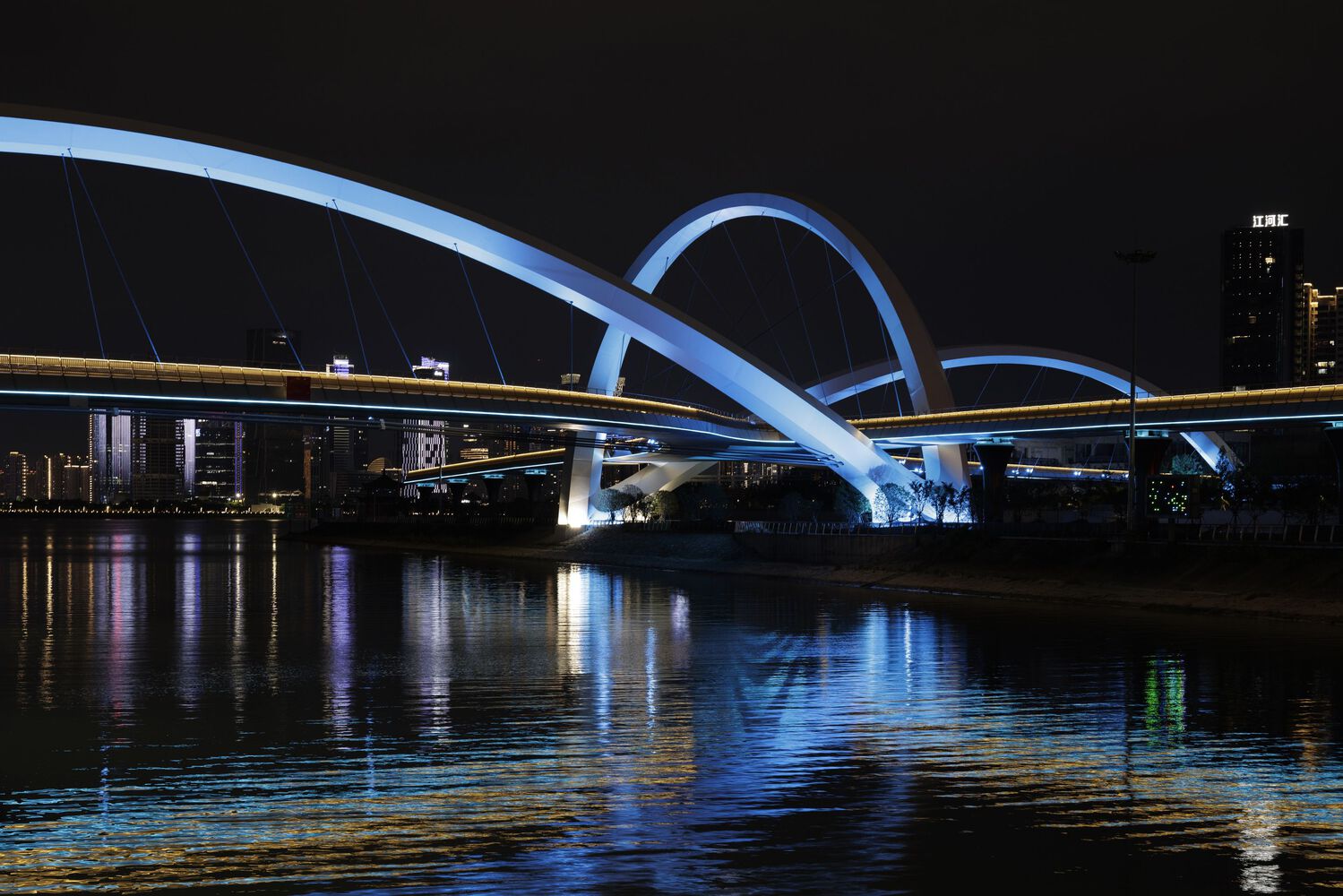
Its sinuous structural system weaves, overlaps and binds to support a bridge for pedestrians and cyclists that connects the new residential, civic and commercial districts of Hangzhou's Seamless City masterplan on the east and west banks of the Grand Canal.
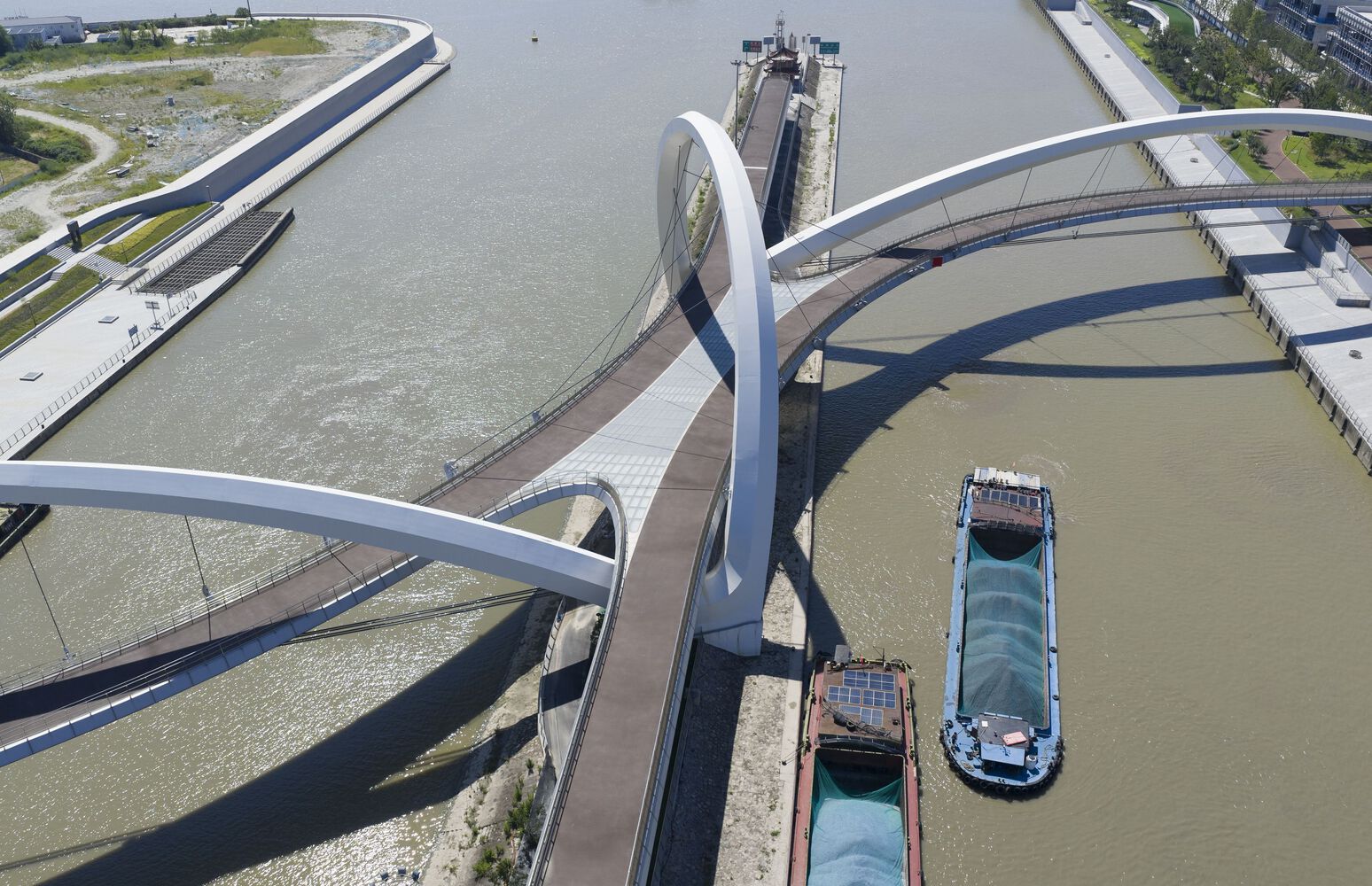
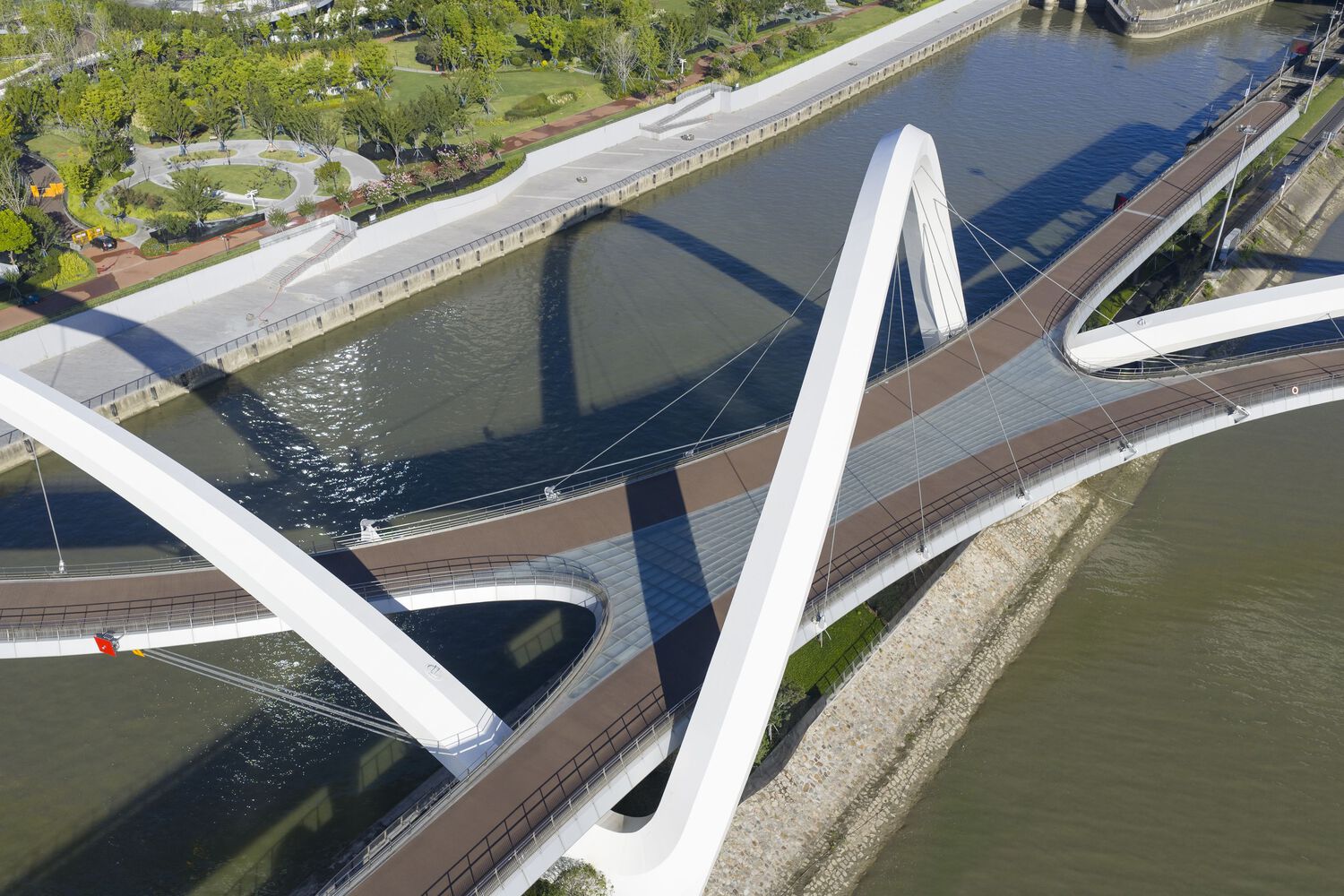
Optimised through advanced digital 3D modelling to minimise material usage, the Grand Canal Gateway Bridge employed prefabricated modular construction with efficient on-site assembly to eliminate waste.
The bridge's construction strategy was specifically designed to shorten build time and minimise disruption to river traffic on the Grand Canal, currently used by 100,000 barges each year to transport 260 million tons of cargo sustainably within China.
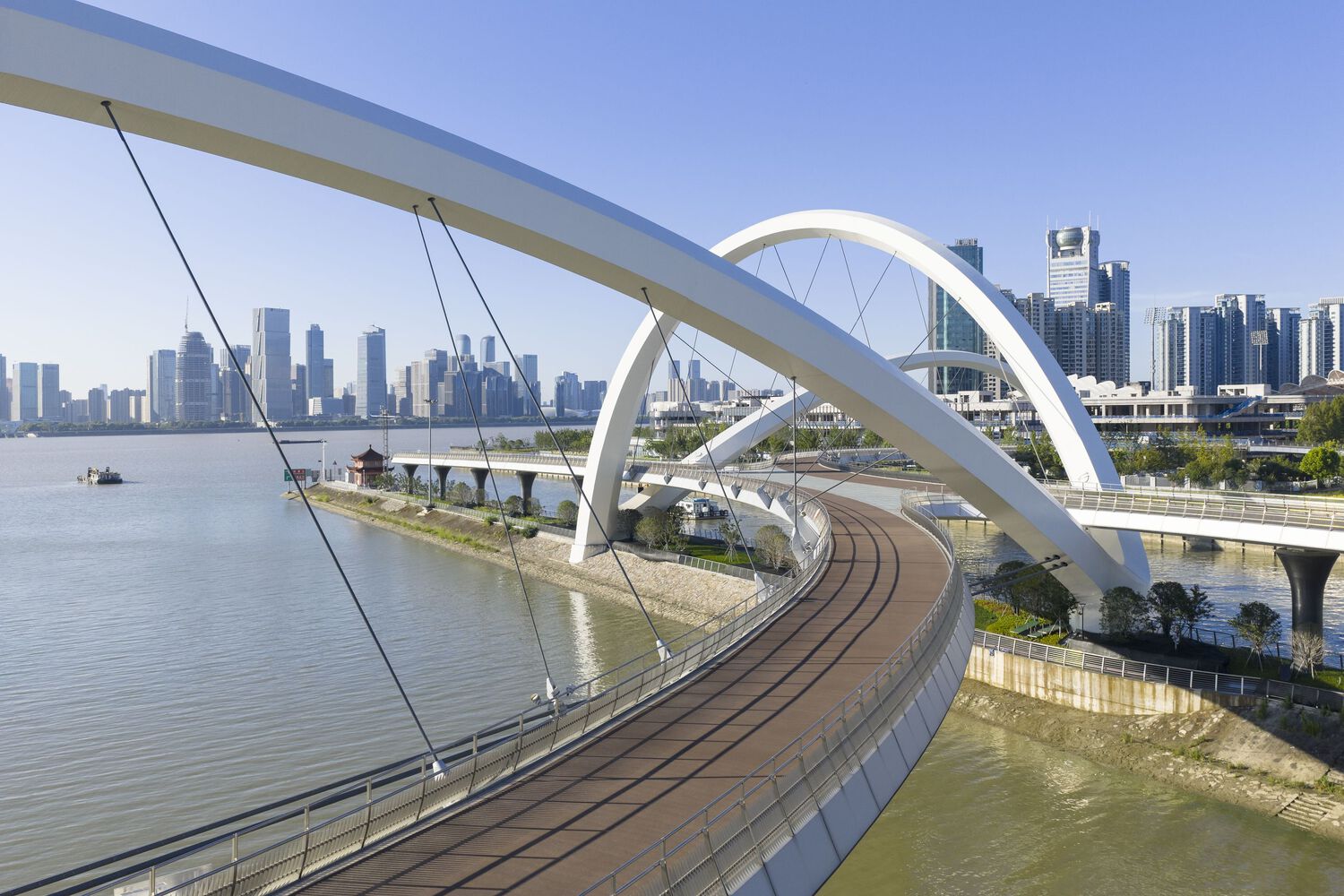
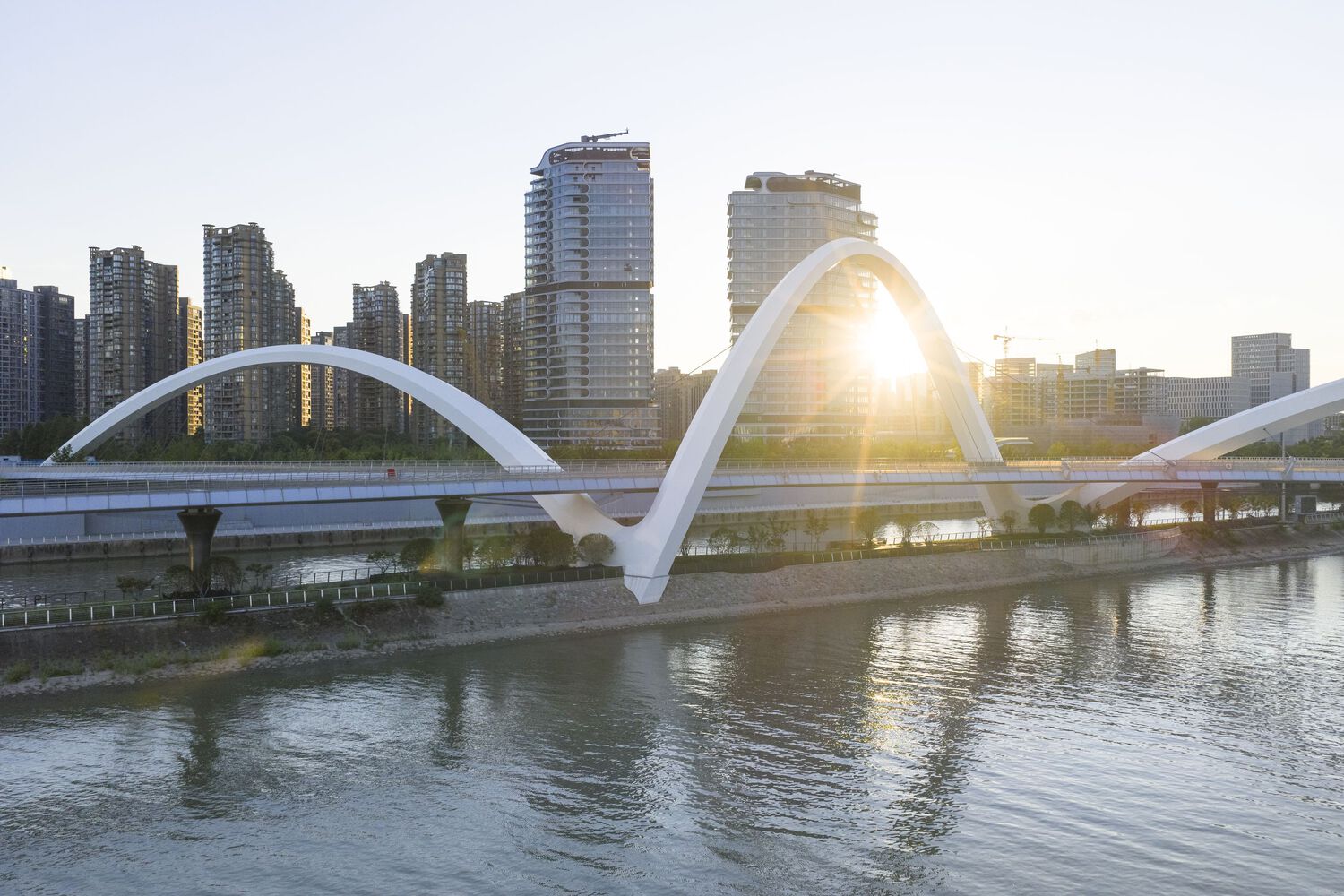
Using locally sourced materials and low-impact finishes, the project supported regional manufacturing and fostered sustainable construction through collective expertise.
Powered by banks of batteries charged throughout the day by renewable energy, integrated LED lighting illuminates the bridge at night.
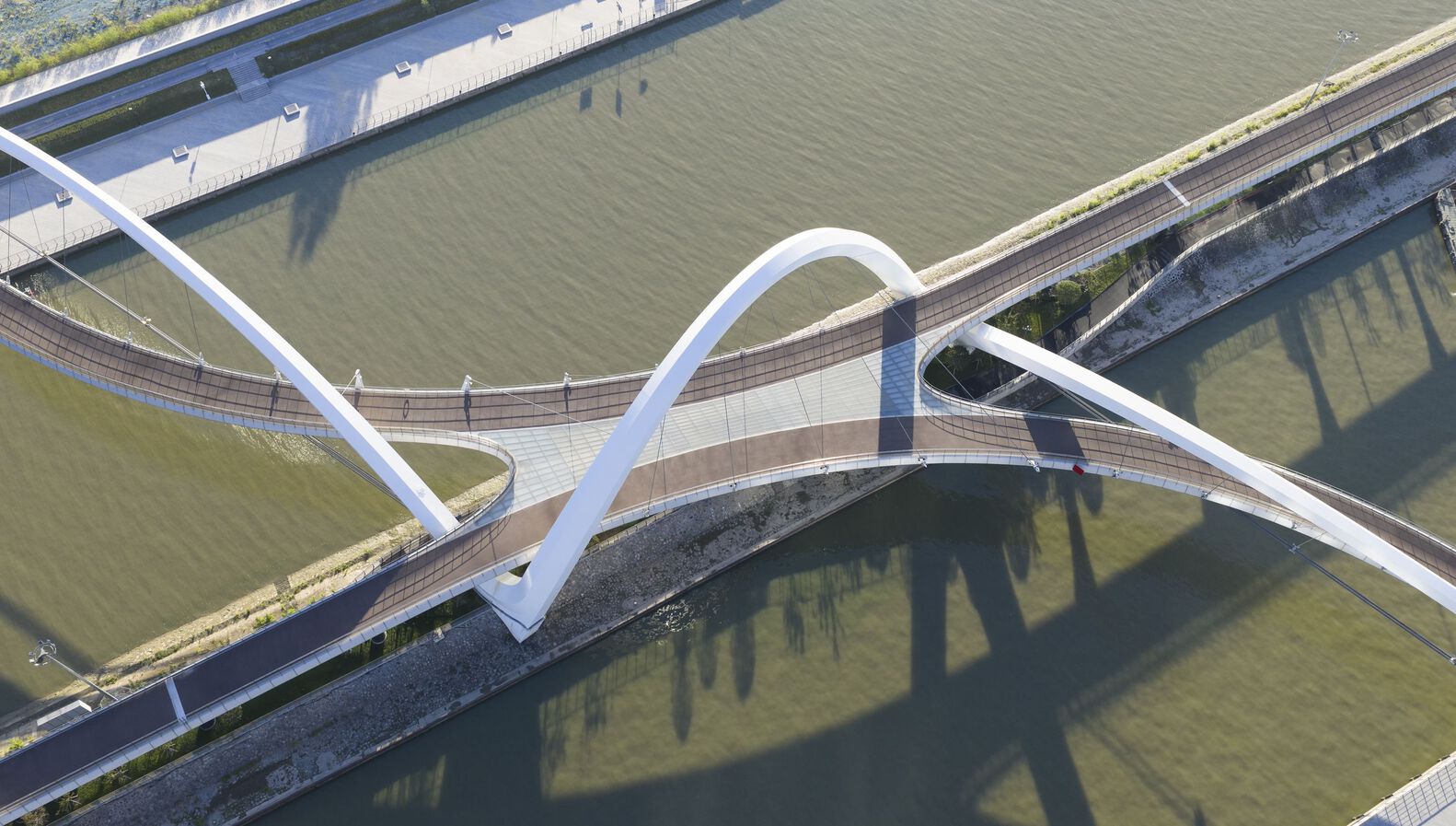
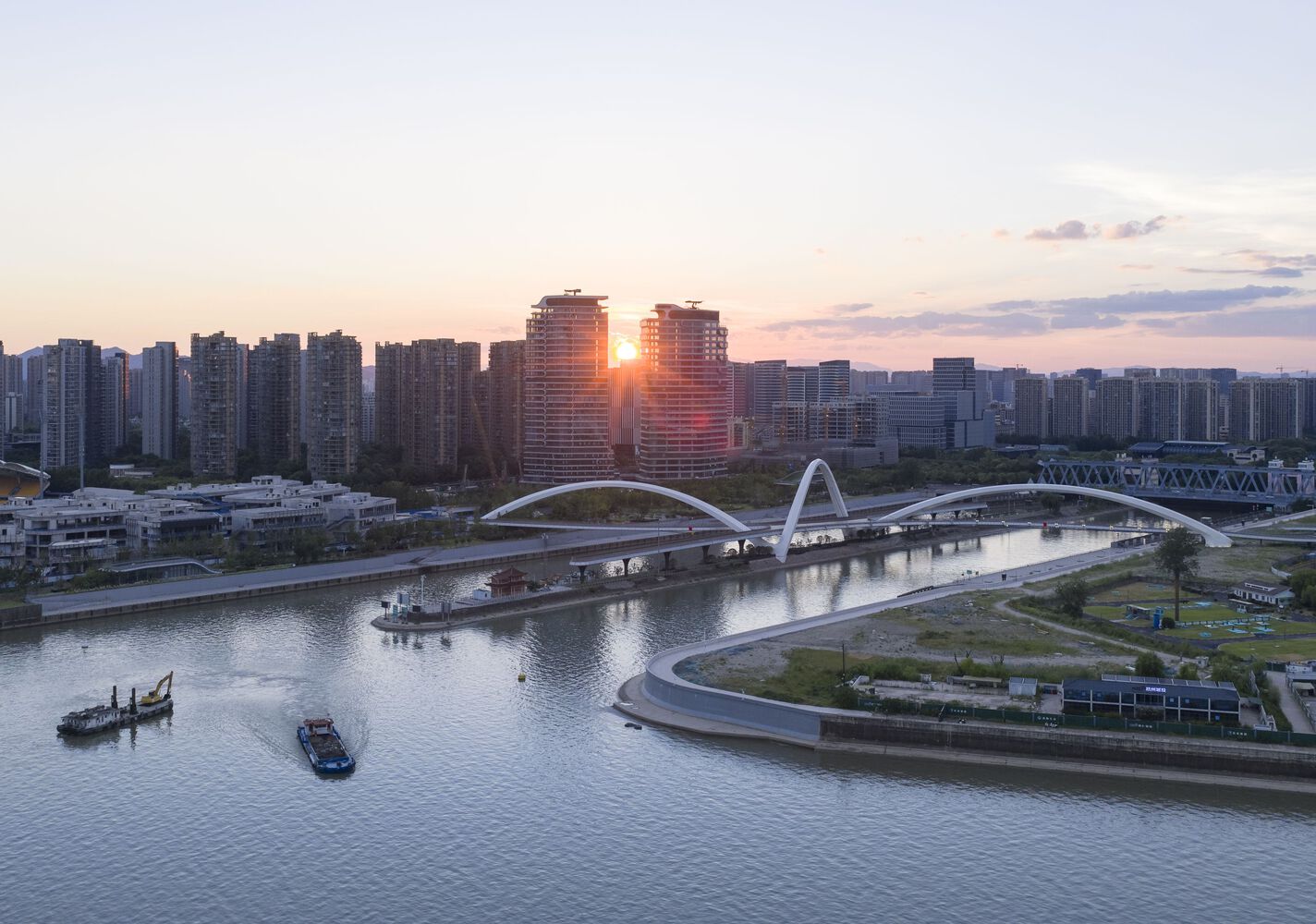
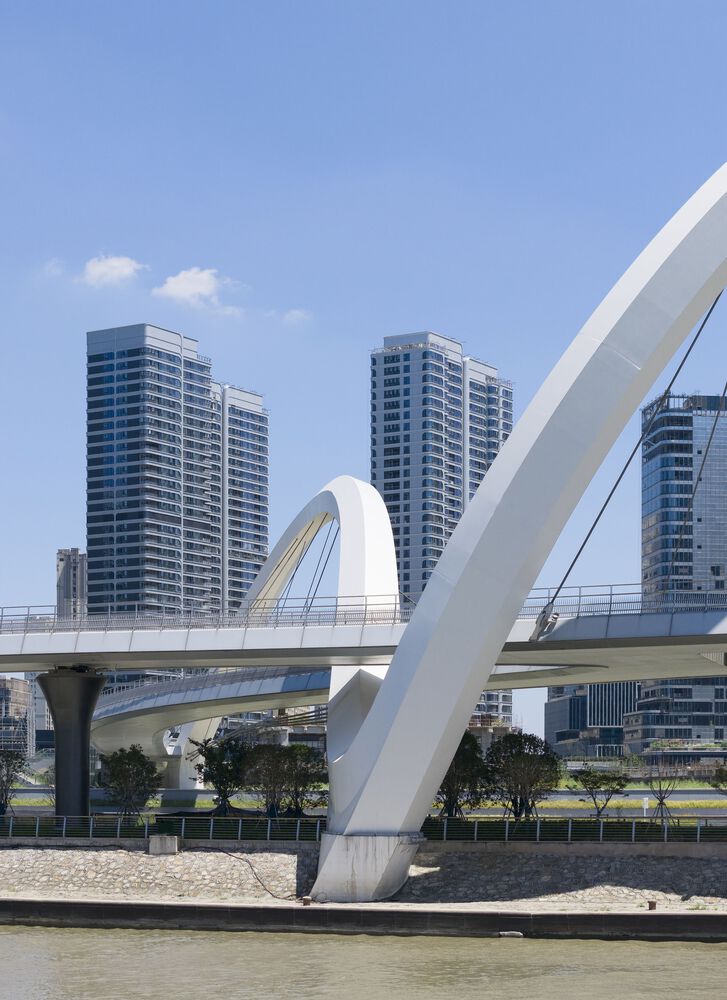
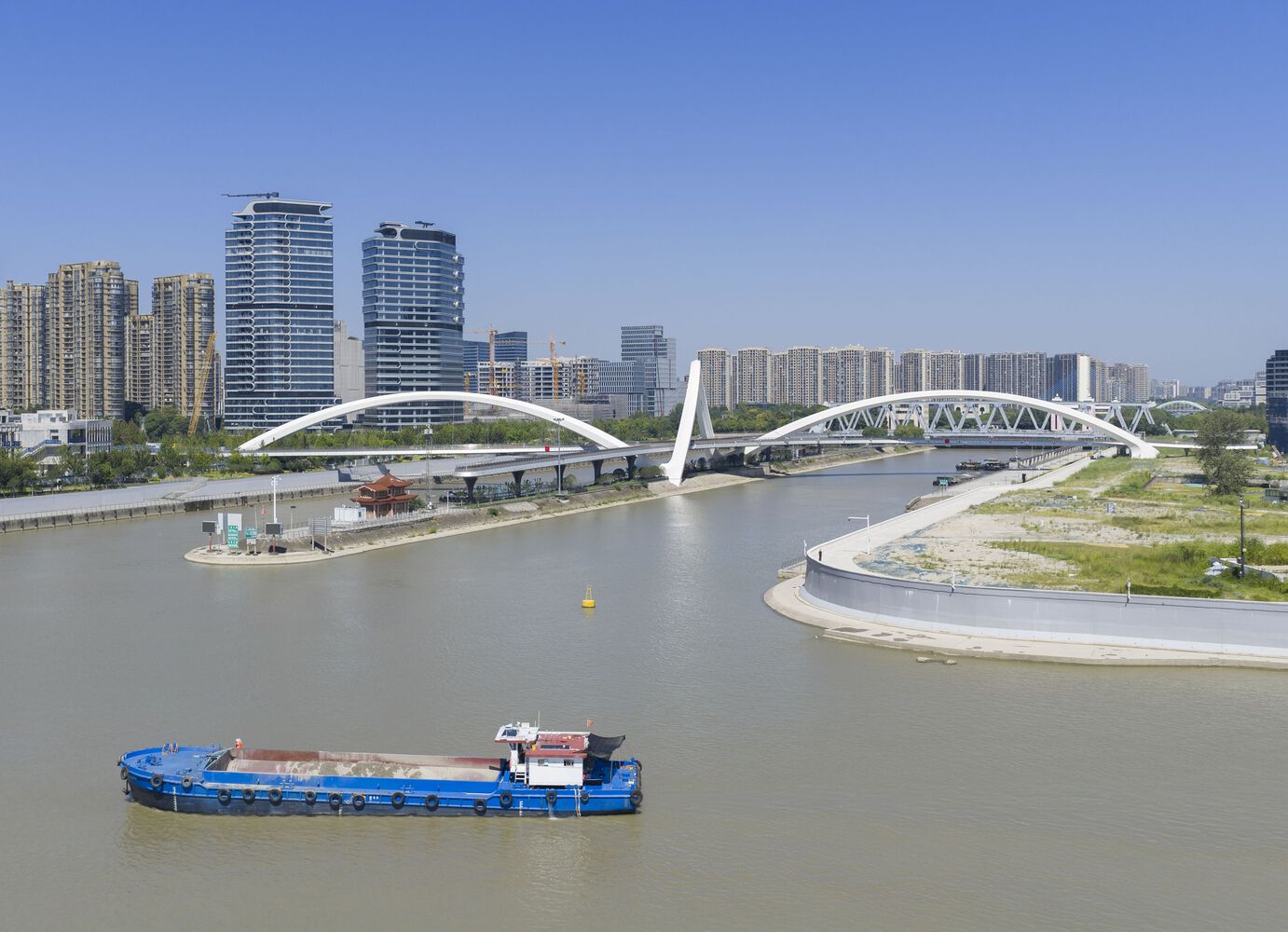
The 390-metre-long bridge is a steel, tied three-arch system, its geometry is precisely engineered to address the weak ground conditions at the confluence of the Grand Canal and Qiantang River.
Preventing the powerful wind forces that blow inland from the river transferring to the sensitive historic site, the design reduces secondary bending, ensuring stability and minimizing lateral forces within the foundations.
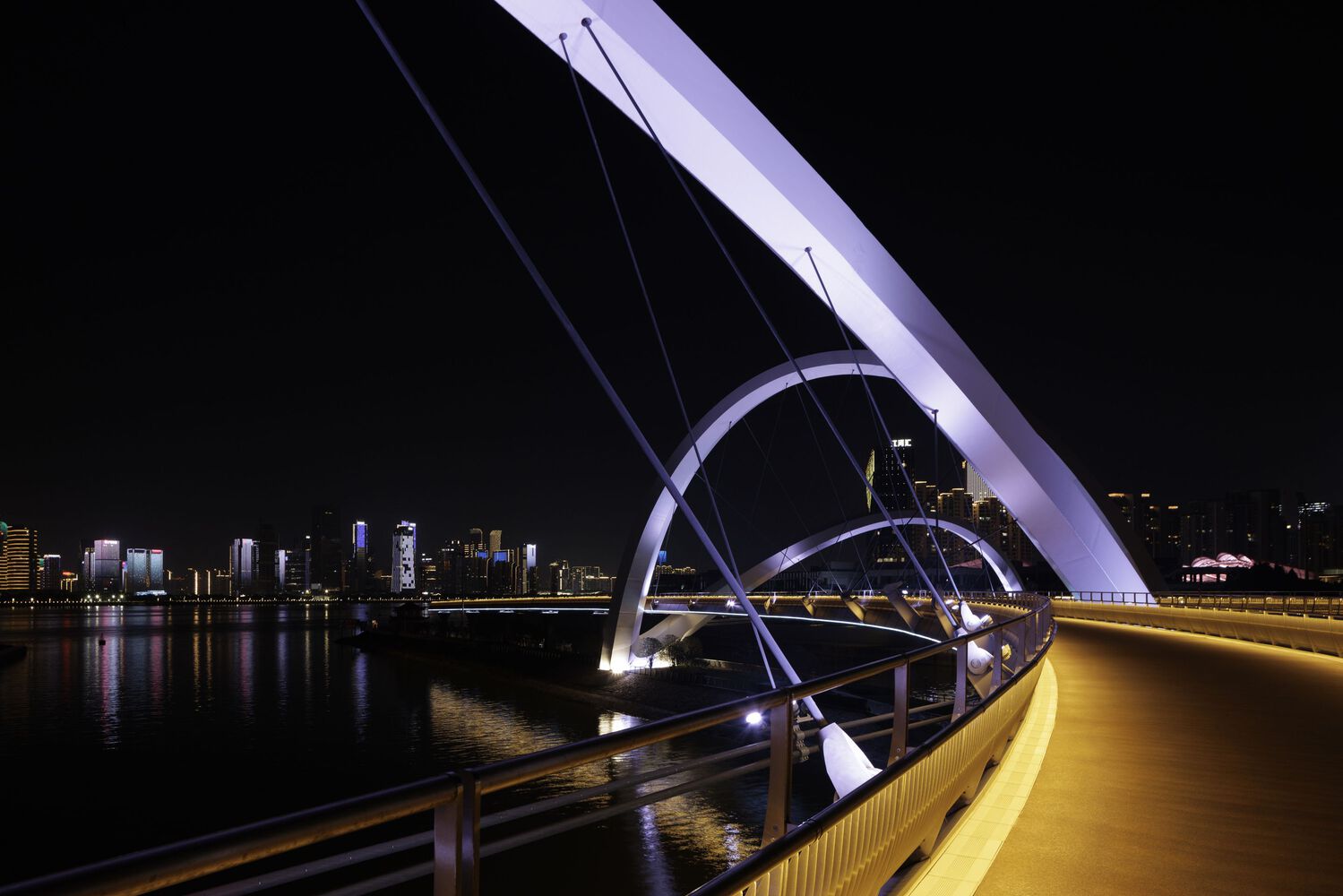
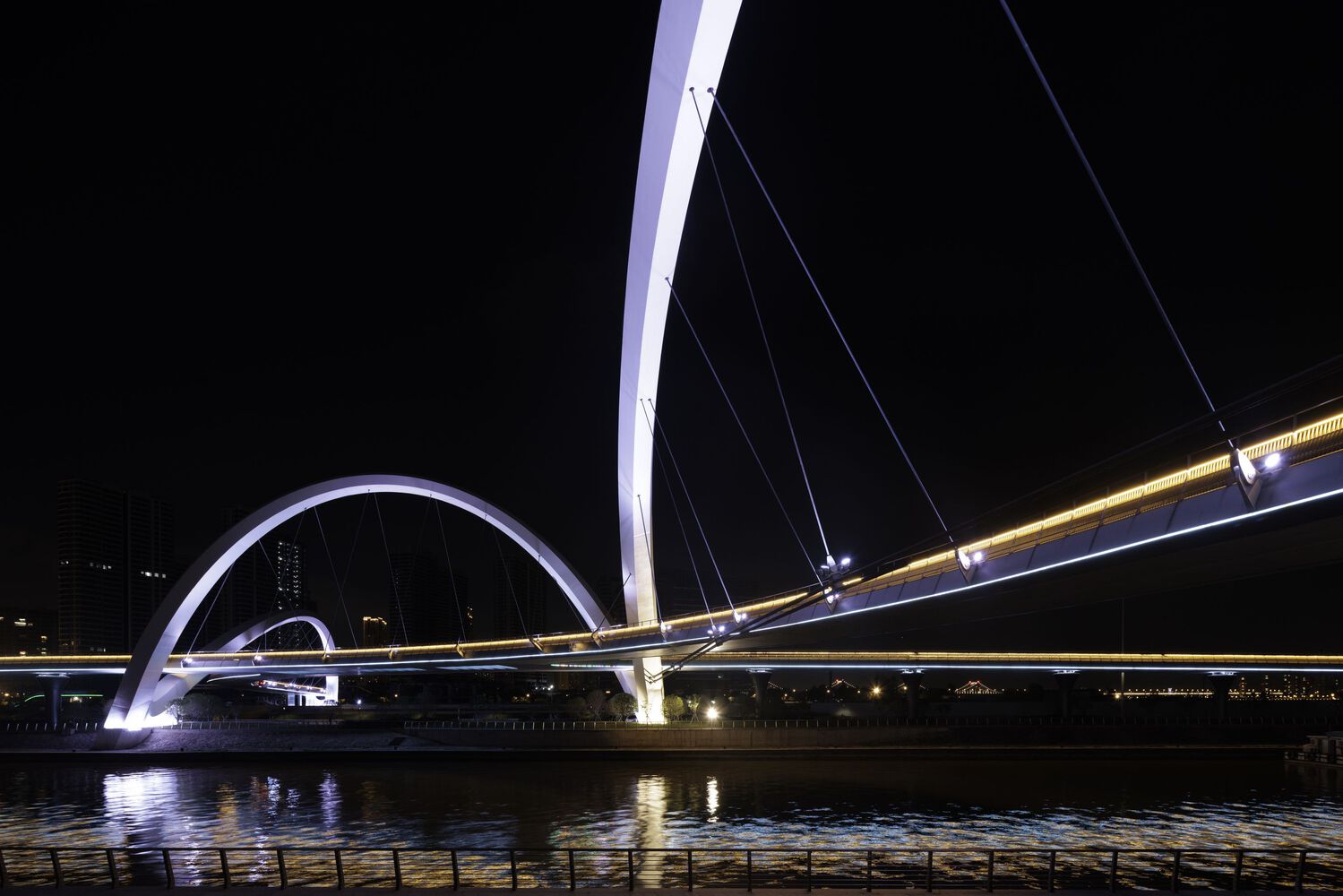
By harnessing steel's high strength-to-weight ratio, the bridge is significantly lighter than concrete alternatives, enabling the most efficient fabrication and installation processes.
Designed to consolidate all forces—including torsion from the deck—and deliver them in balance to its bearings, the bridge lands on a sculpted concrete pier within the island separating the canal's north and south waterways, halving the required spans to cross the canal while providing structural equilibrium and visual coherence.
Uniting cultural heritage with 21st-century engineering and recyclable materials, the Grand Canal Gateway Bridge is both sculptural and sustainable, designed for longevity with minimal environmental impact.