
Brofästet Apartment Building
BROFÄSTET APARTMENT BUILDING
DinellJohansson
ARCHITECTS
DinellJohansson
DESIGN TEAM
Dinelljohansson
ENERGY AND INSTALLATIONS
Incoord
MANUFACTURERS
Assa Abloy, Almedalsgolv, Gebo, Larssons Trä
CONSTRUCTION
Kåver & Mellin
CLIMATE BUILDING
Tyréns
LANDSCAPING ARCHITECT
Tema
FIRE CONSULTANT
De Brand
PHOTOGRAPHS
Mikael Olsson, Stockholmshem
AREA
45511 m²
YEAR
2021
LOCATION
Stockholm, Sweden
CATEGORY
Residential Architecture
English description provided by the architects.
The project is a result of a land allocation competition held by the city of Stockholm.
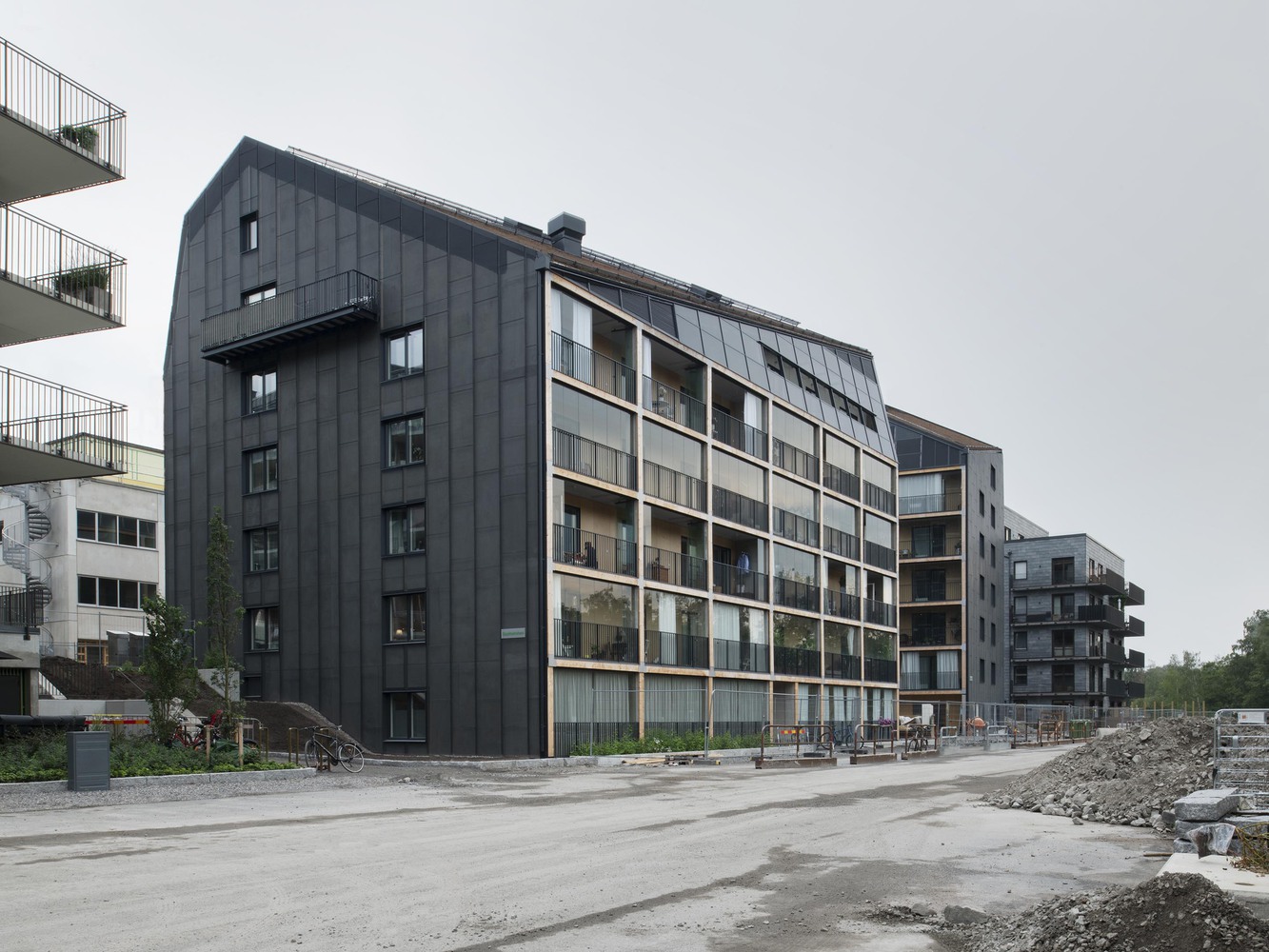
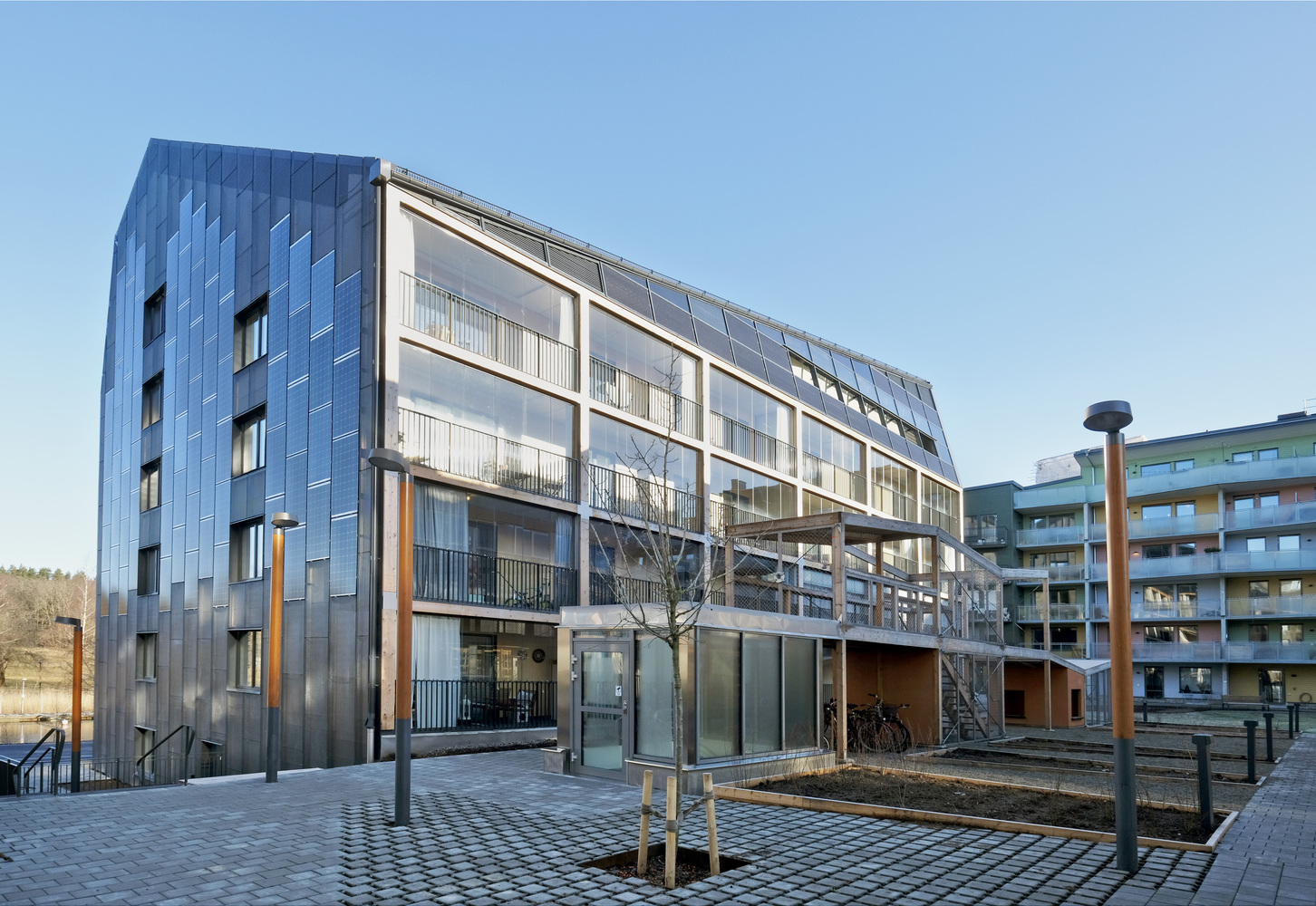
The city asked for a plus-energy building with rental apartments and an architectural design that would express the high ambitions of energy efficiency.
The public housing company Stockholmshem put together a team of experts, and DinellJohansson was commissioned to develop the architectural design. We won the competition, and Stockholmshem got the land allocation to build the project.
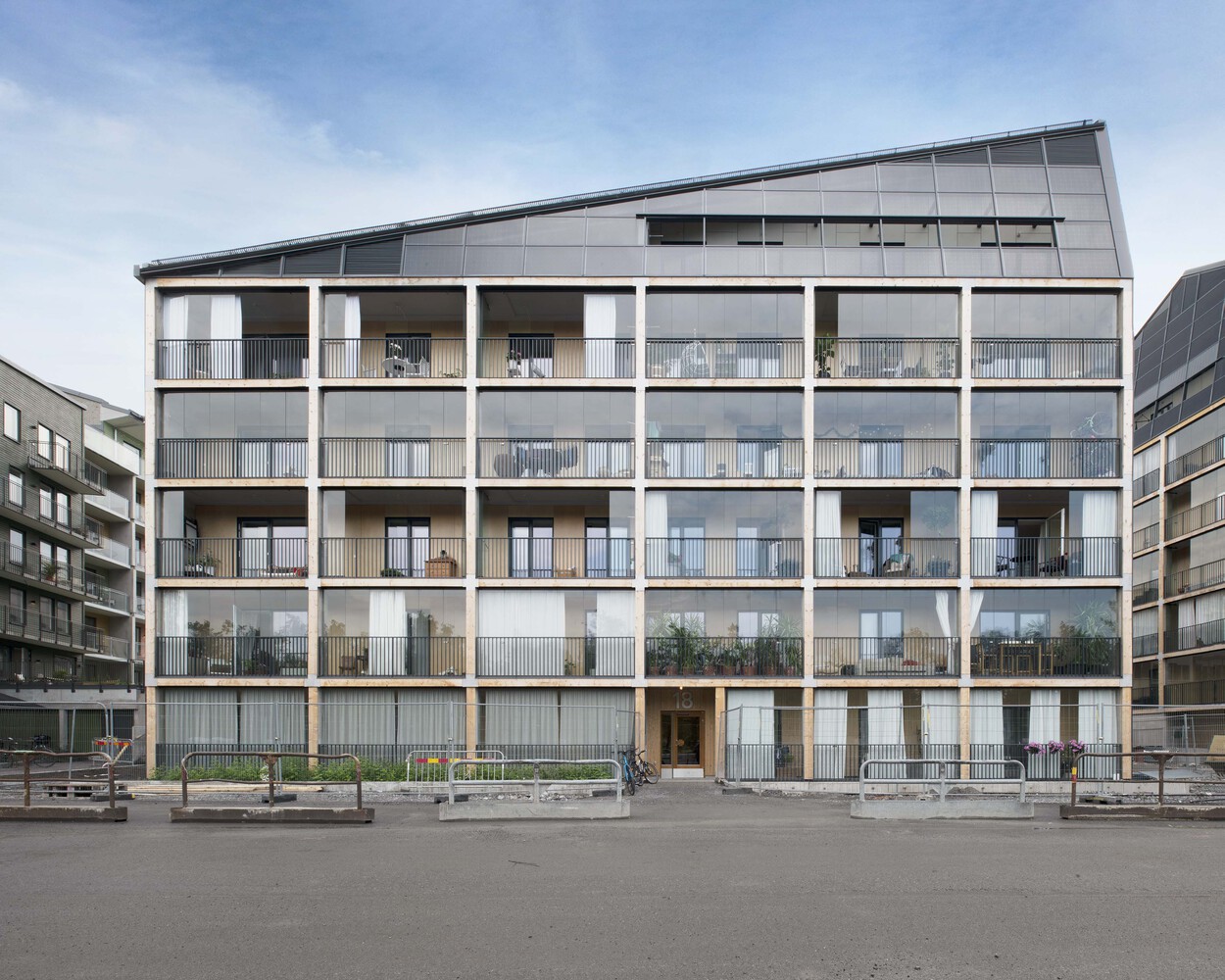
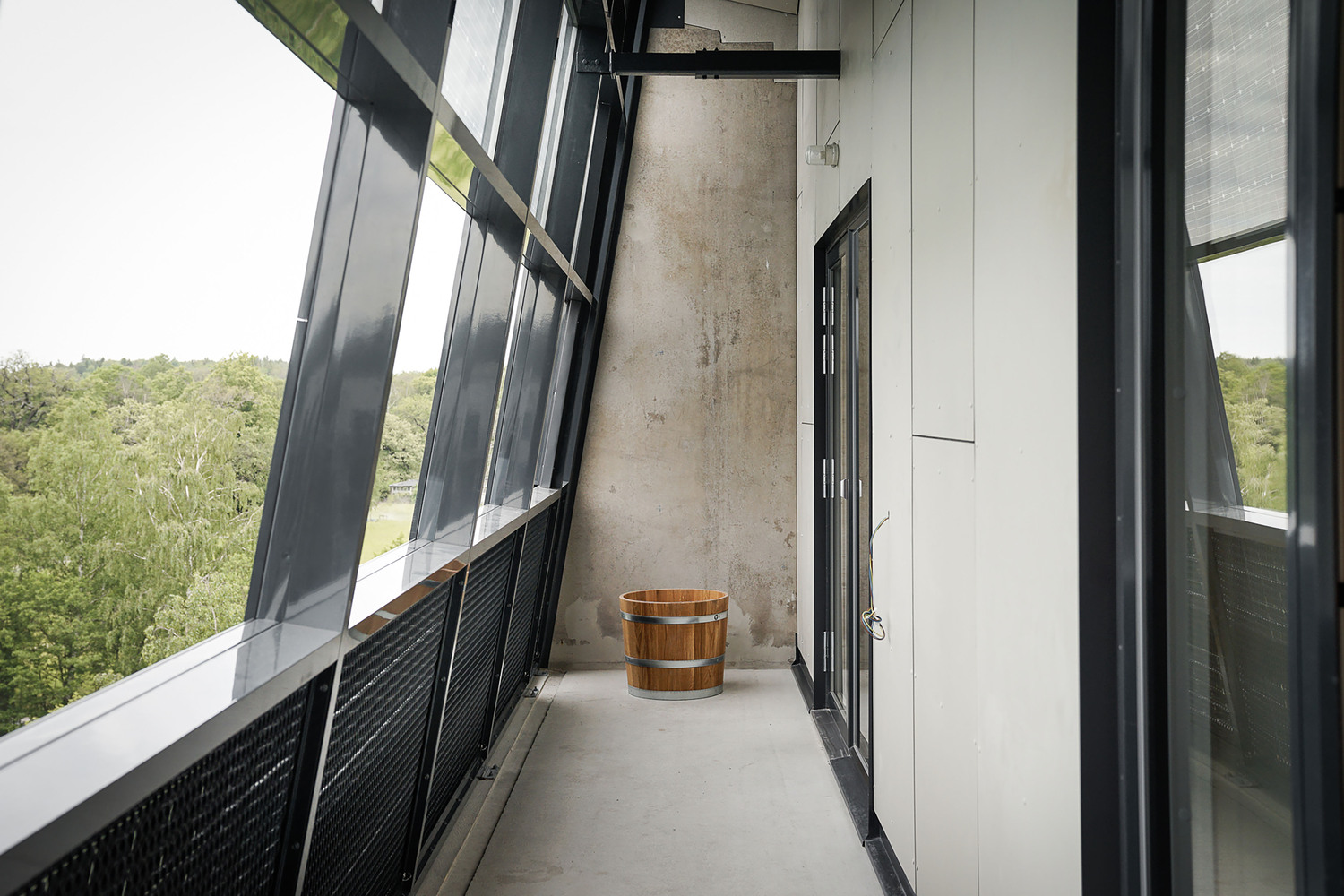
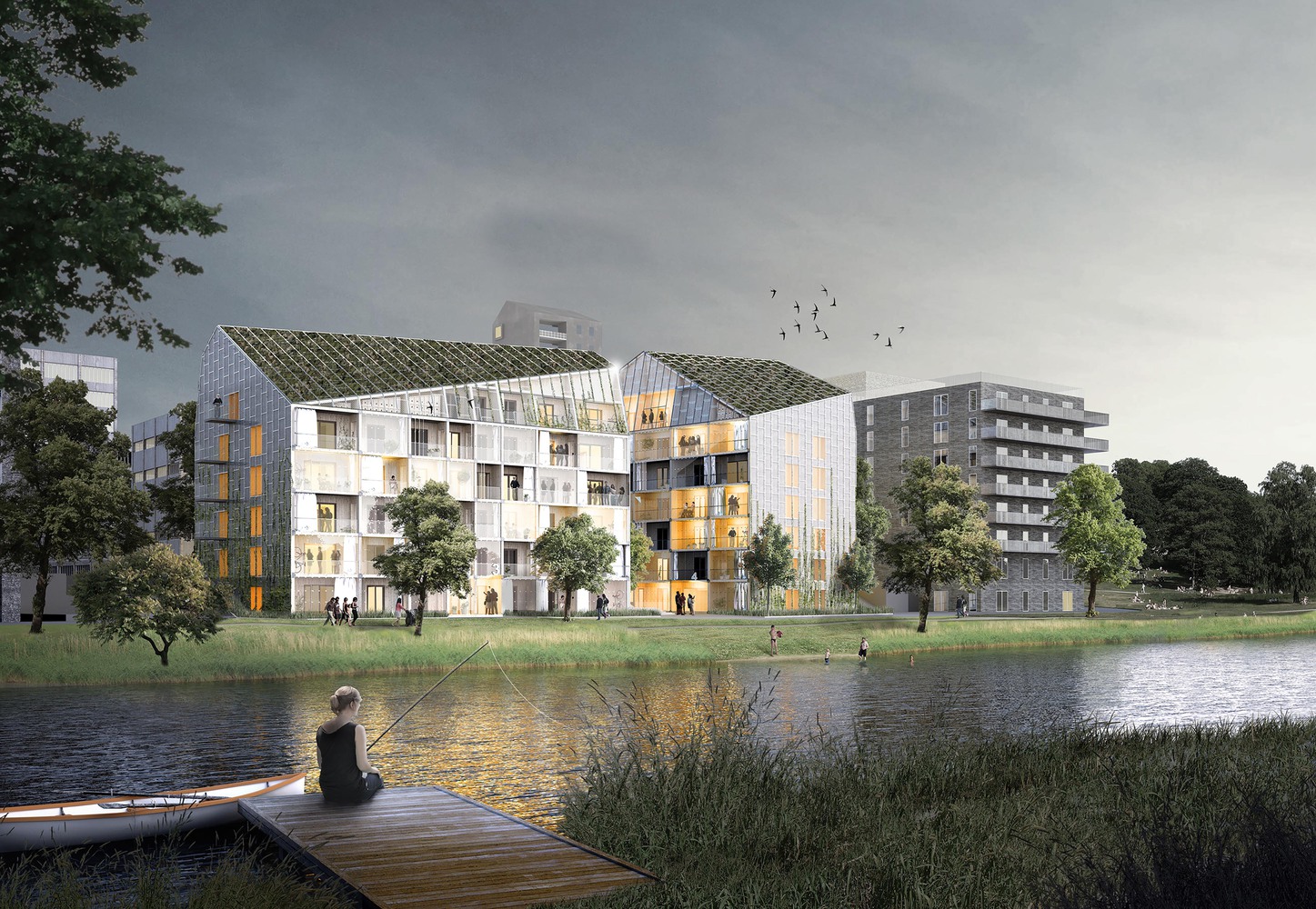
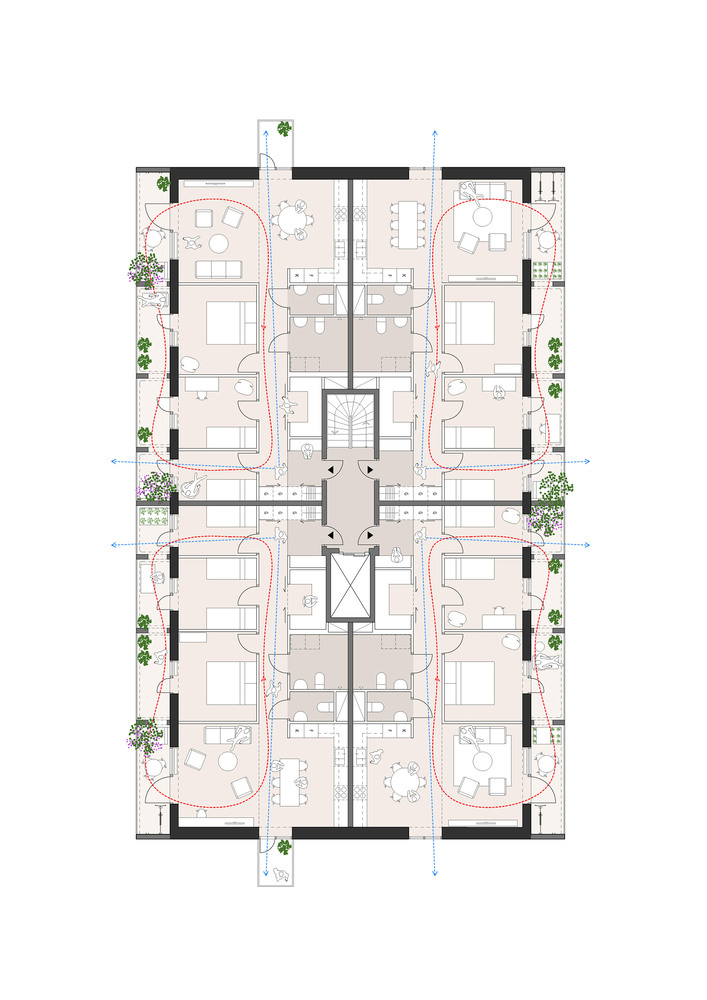
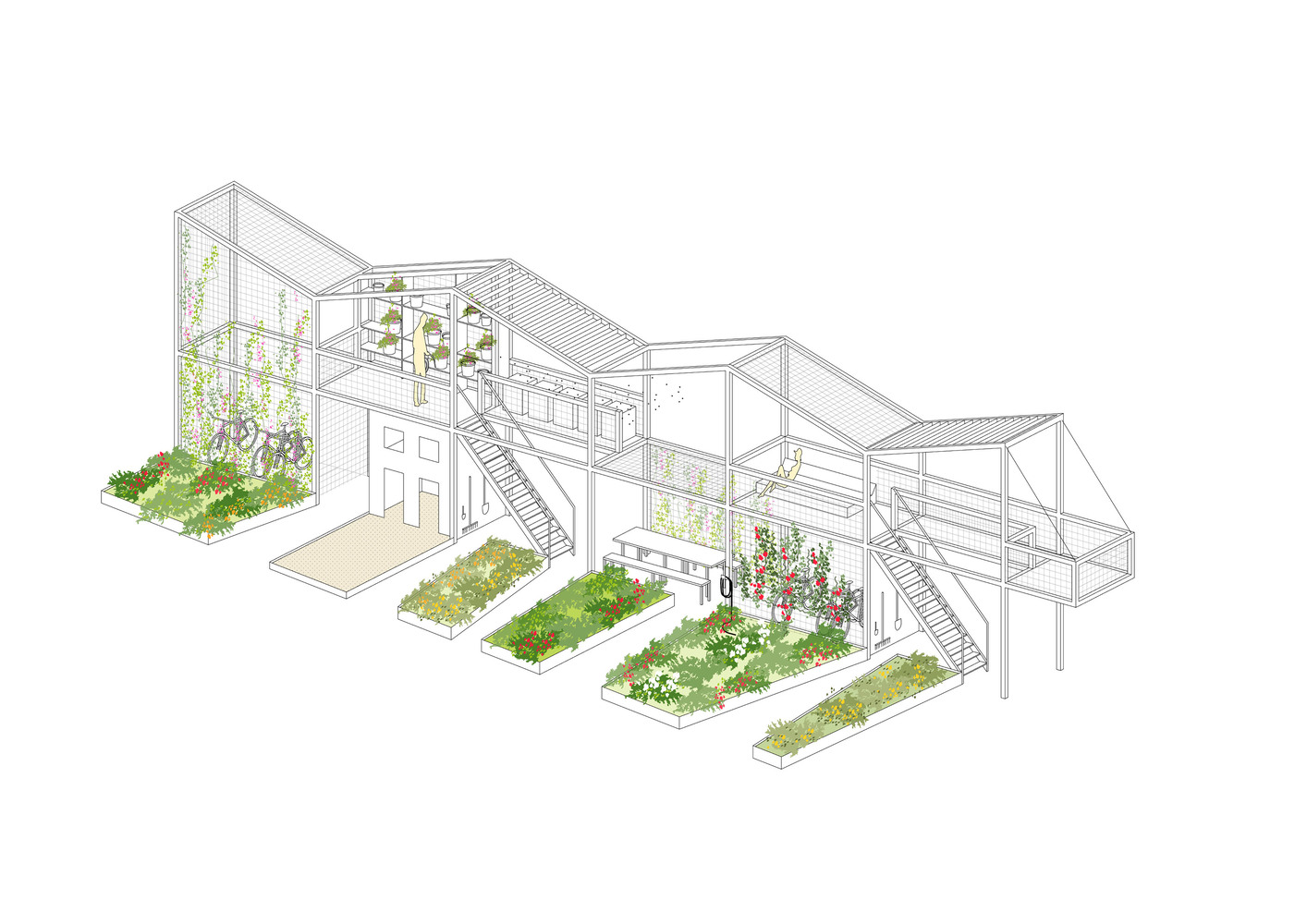
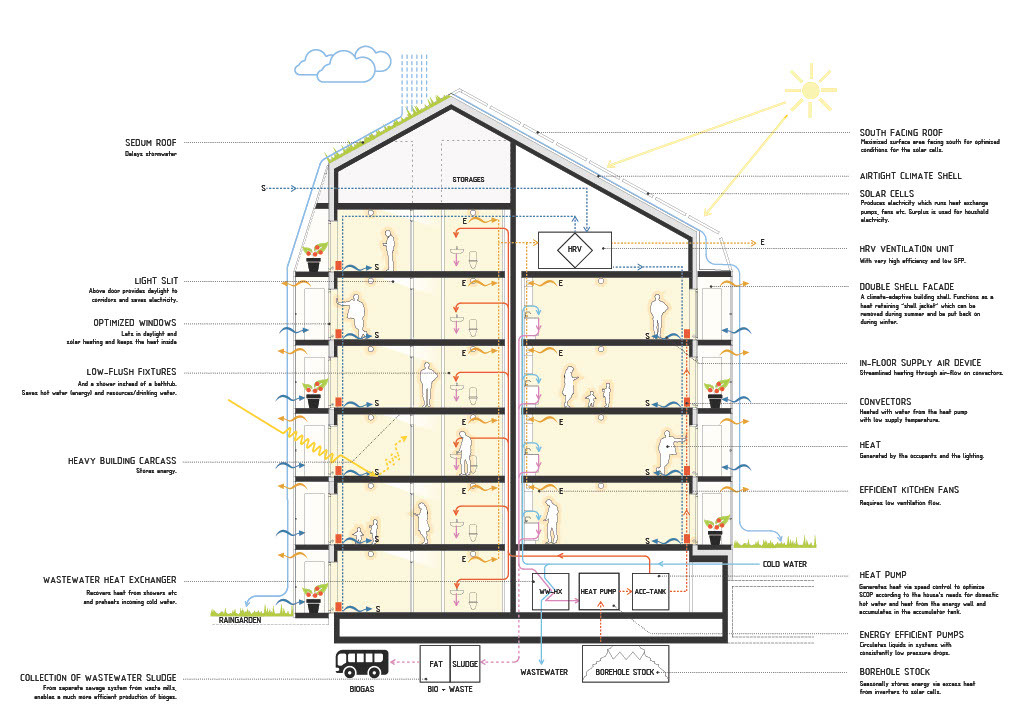
The project consists of two buildings with in all 43 apartments. The buildings are technically connected and share the same system for heating with a geothermal heat pump and a high degree of heat recovery on both used air and wastewater.
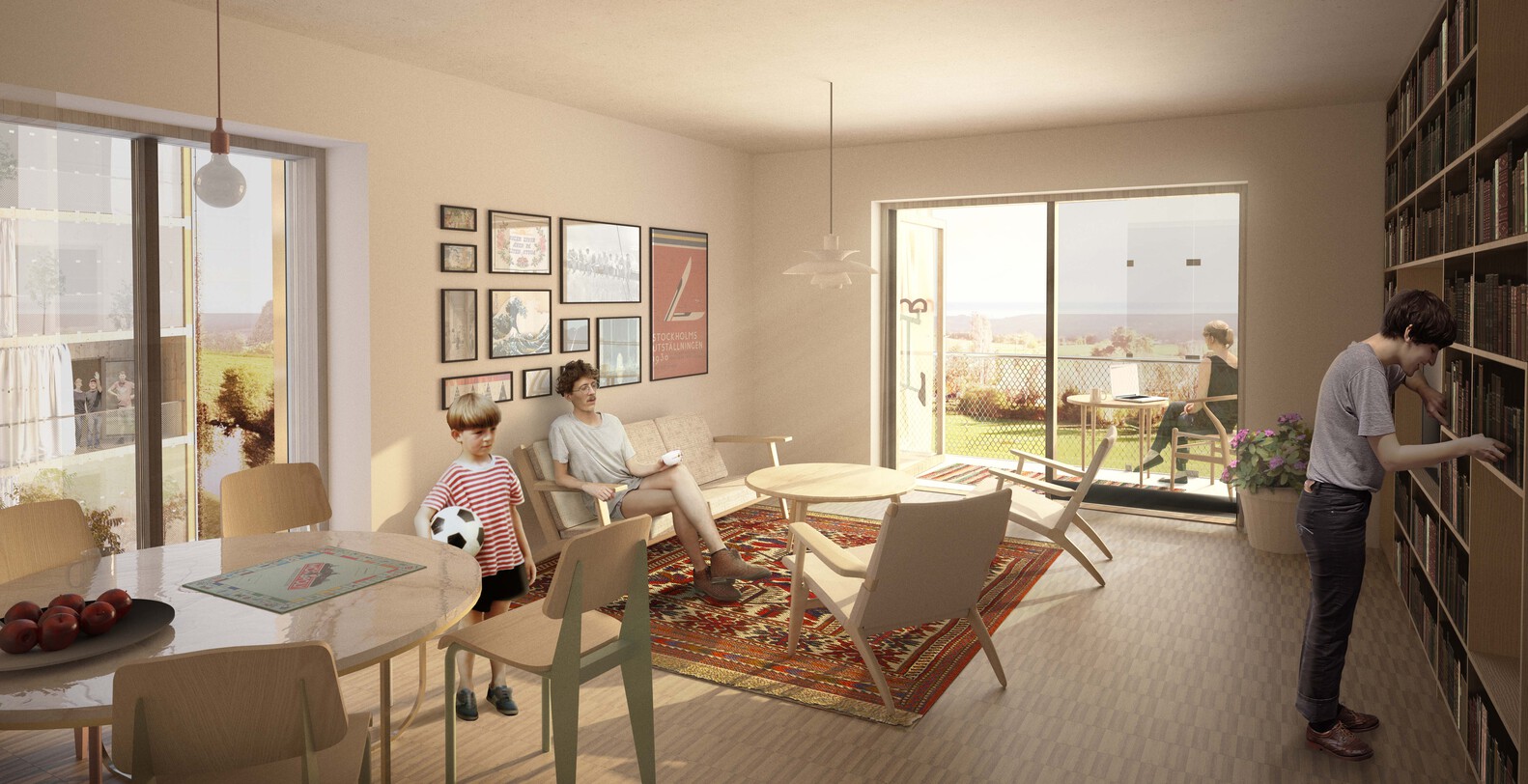
The concept of the dwellings is inspired by traditional rural houses in the Swedish climate. In winter, the dwelling shrank into the one space that was heated, whereas in summer it expanded to the rest of the building and beyond - a smart and pragmatic way of being energy efficient. We wanted to try to apply this principle to modern housing.
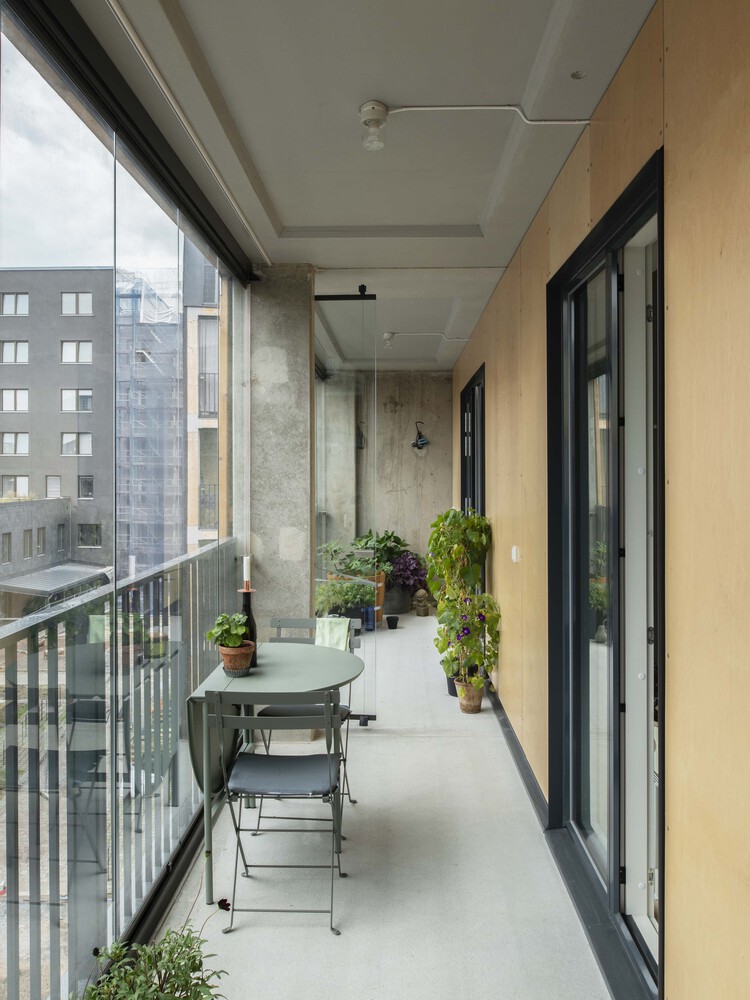
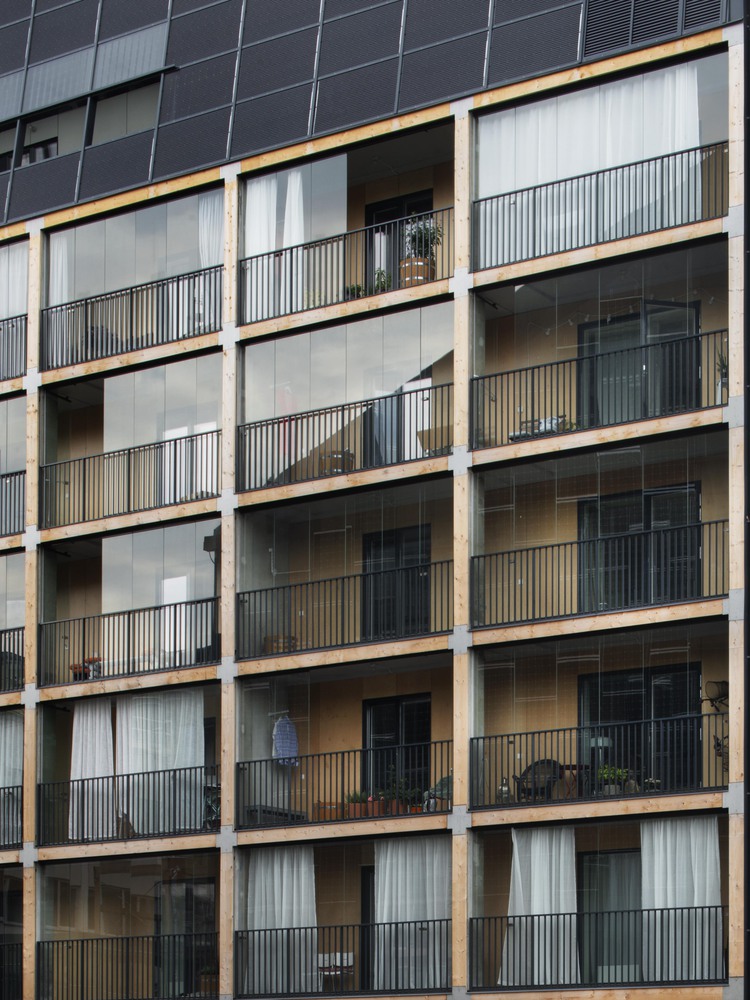
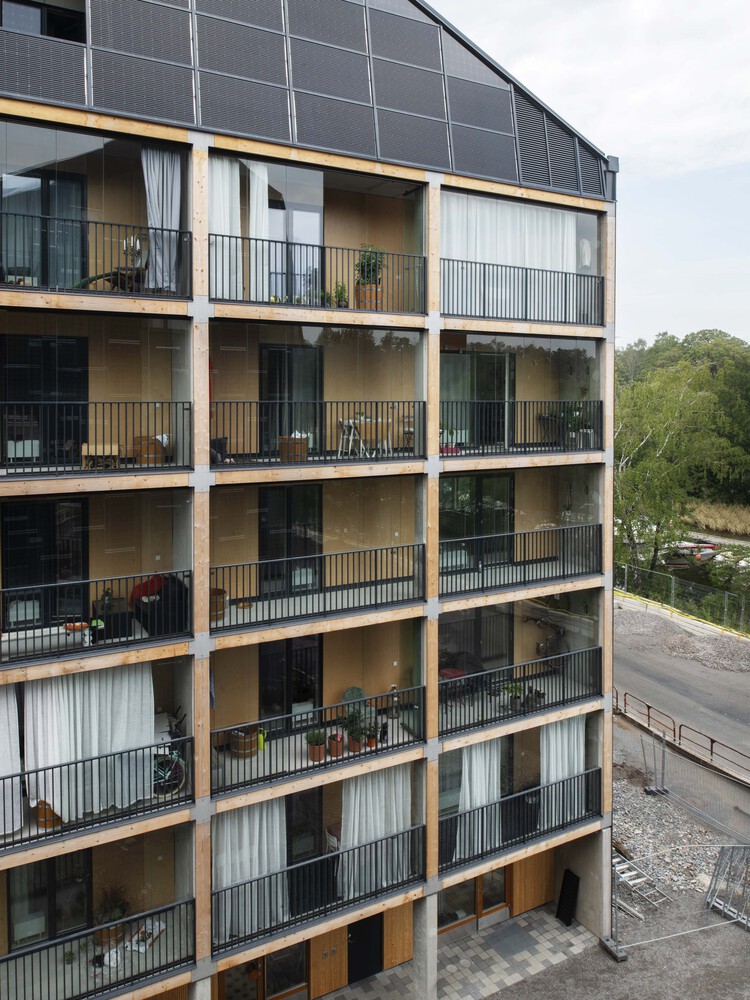
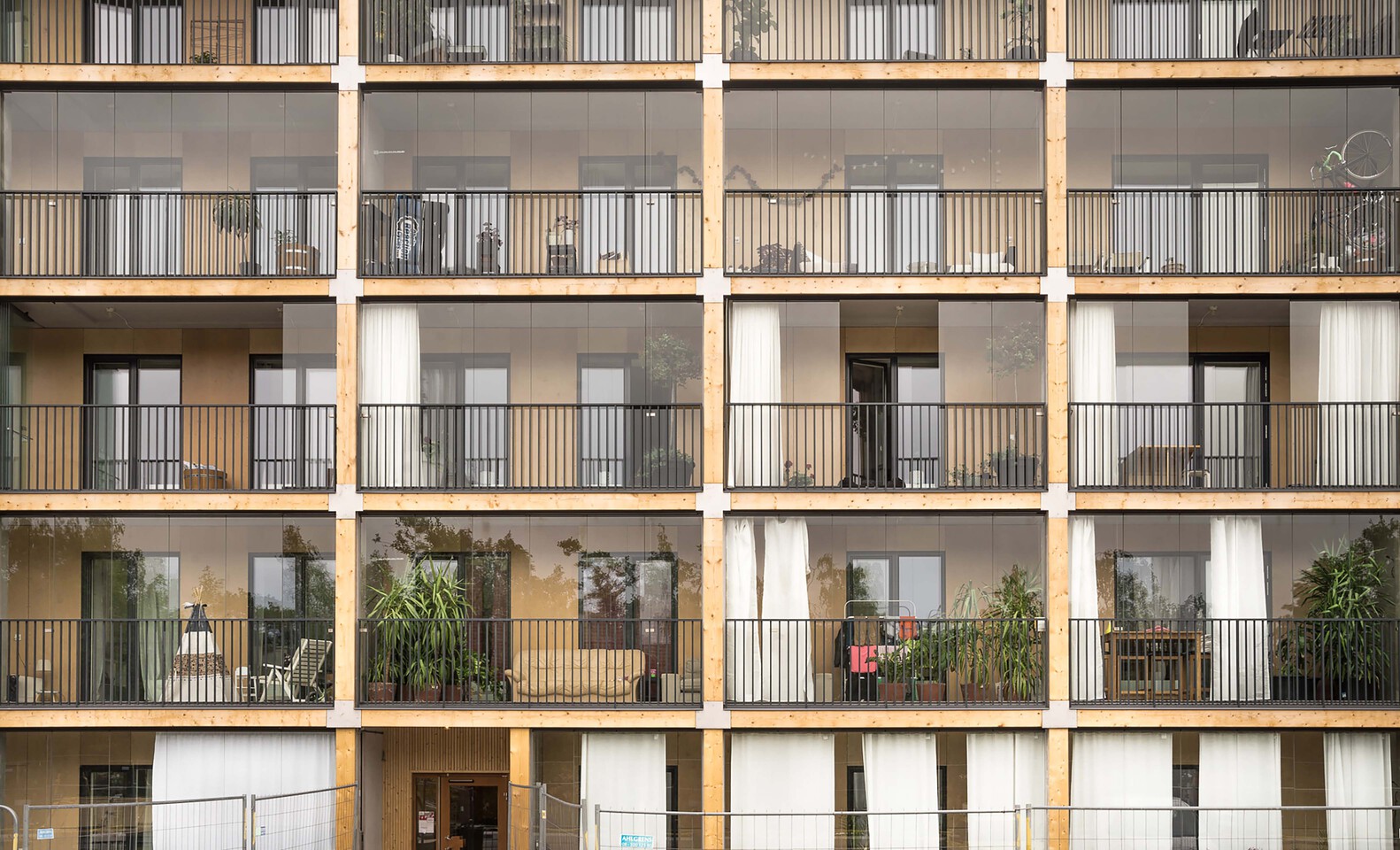
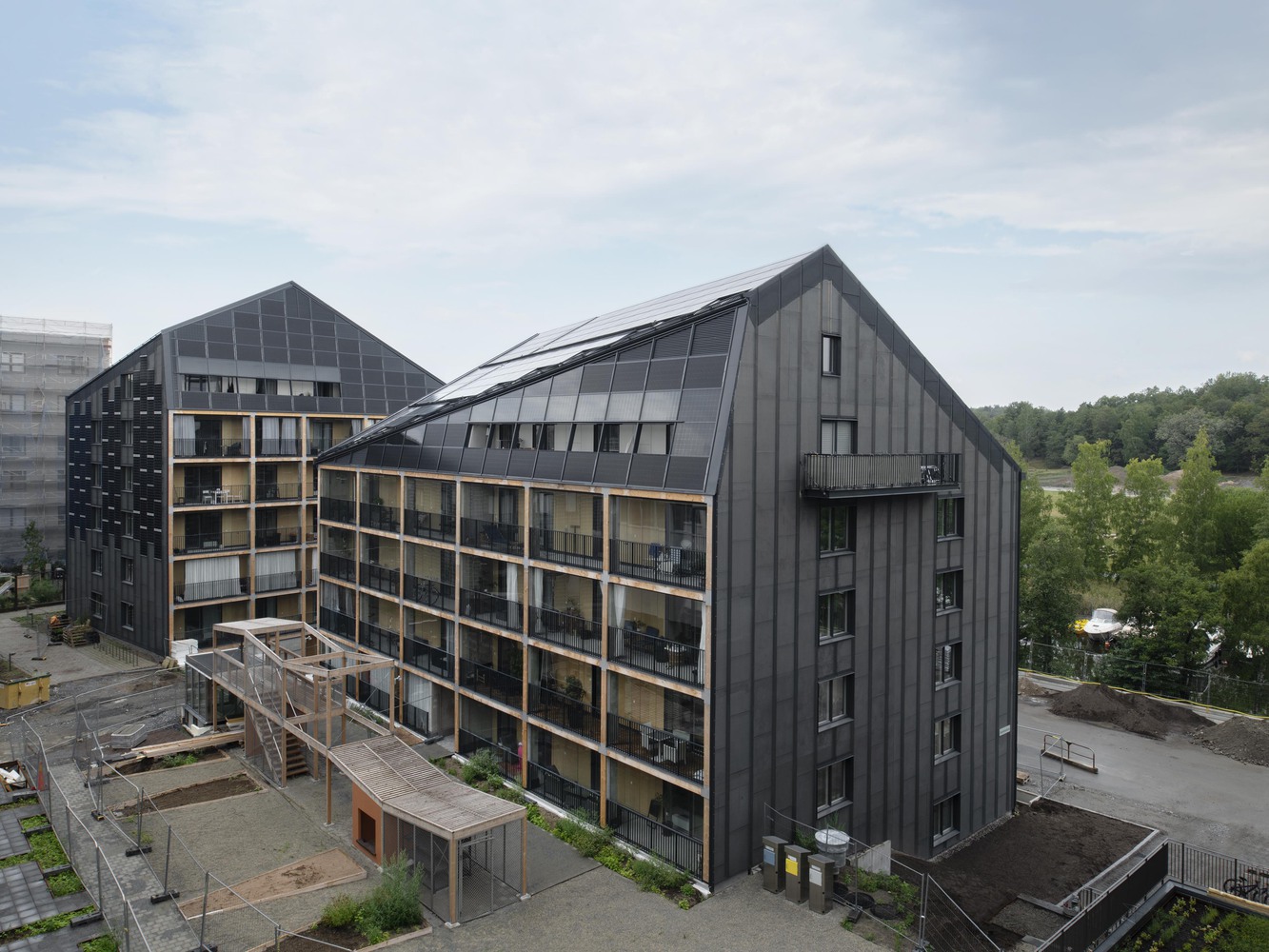
The apartments are quite small, but a glazed gallery allows each individual living space to expand during the warmer season. Hence, the dwelling is elastic in size and reacts to the different seasons.
The glazed gallery zone has its one structure to avoid thermal bridges that ordinary balconies suffer from.
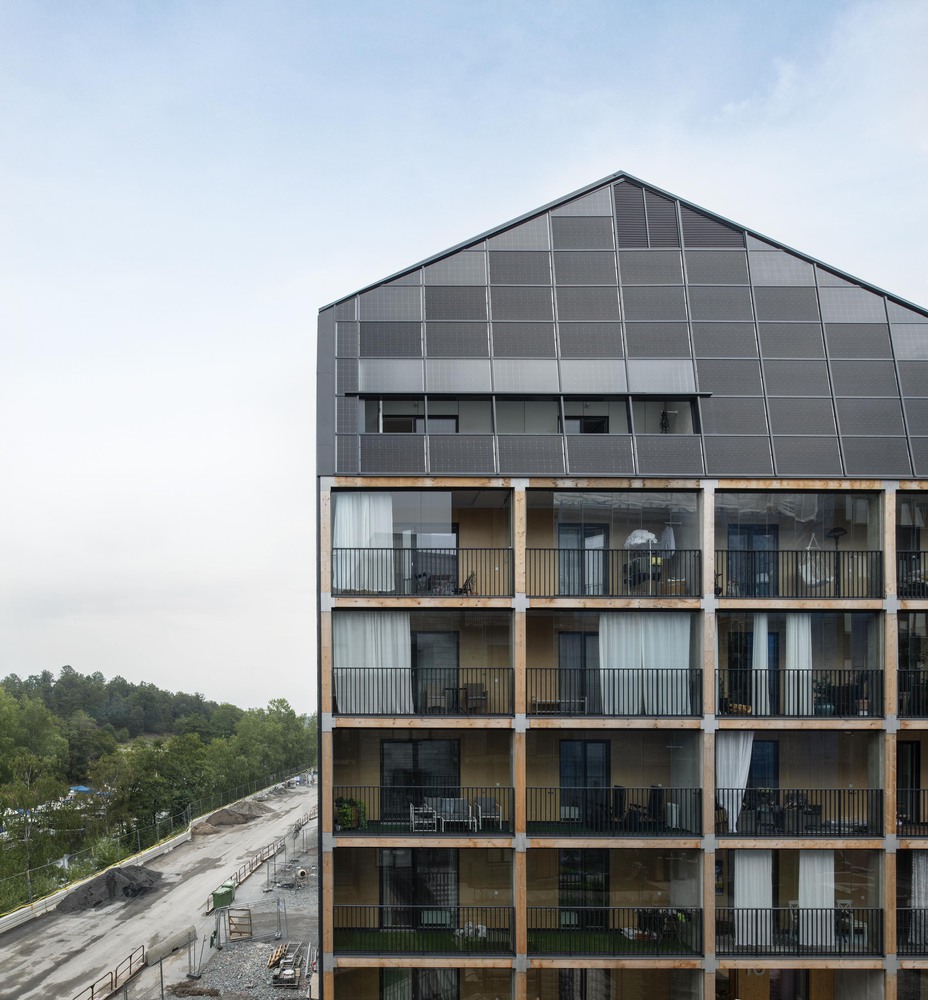
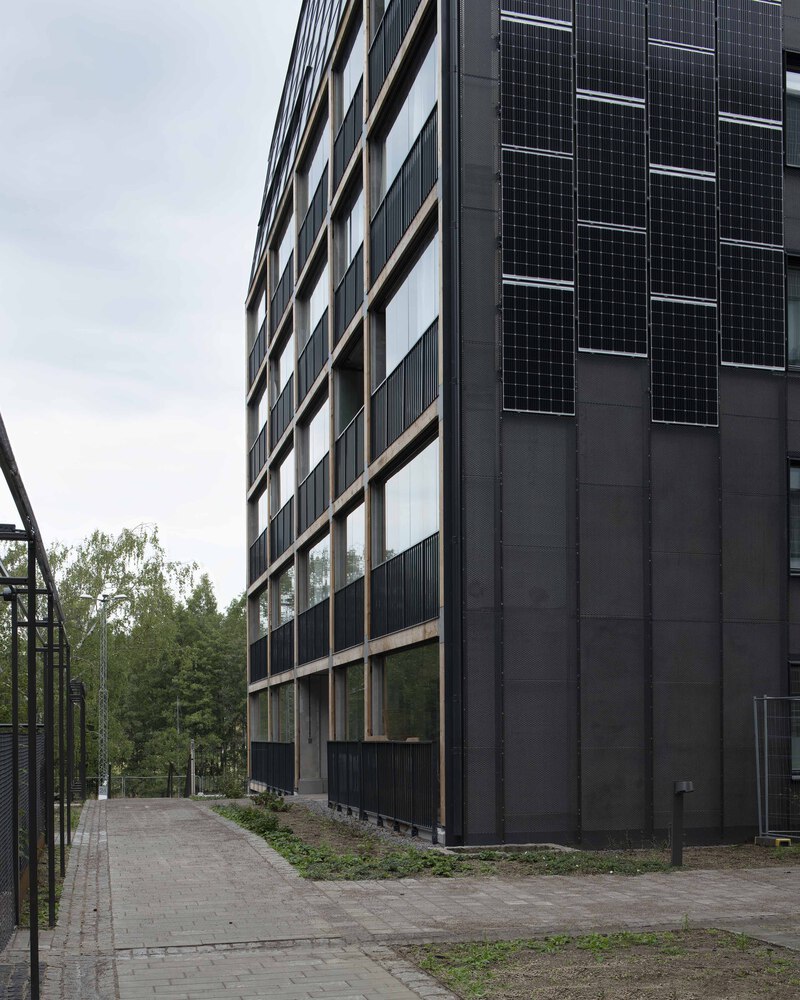
To reach the plus energy standard, the roof and part of the facades are cladded with photovoltaics.
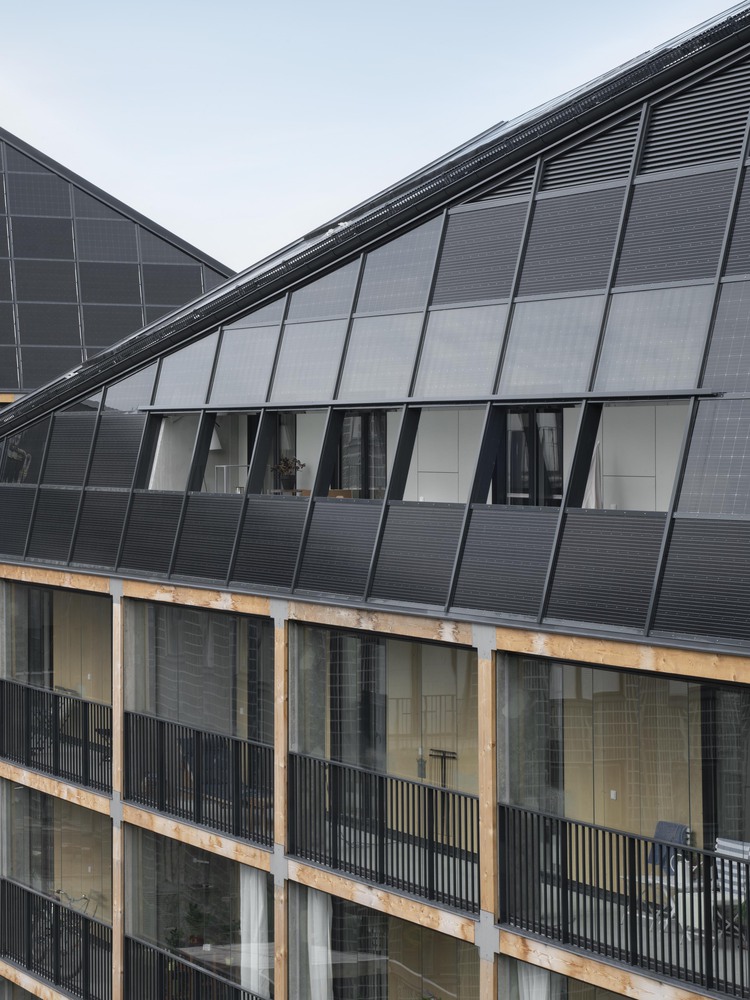
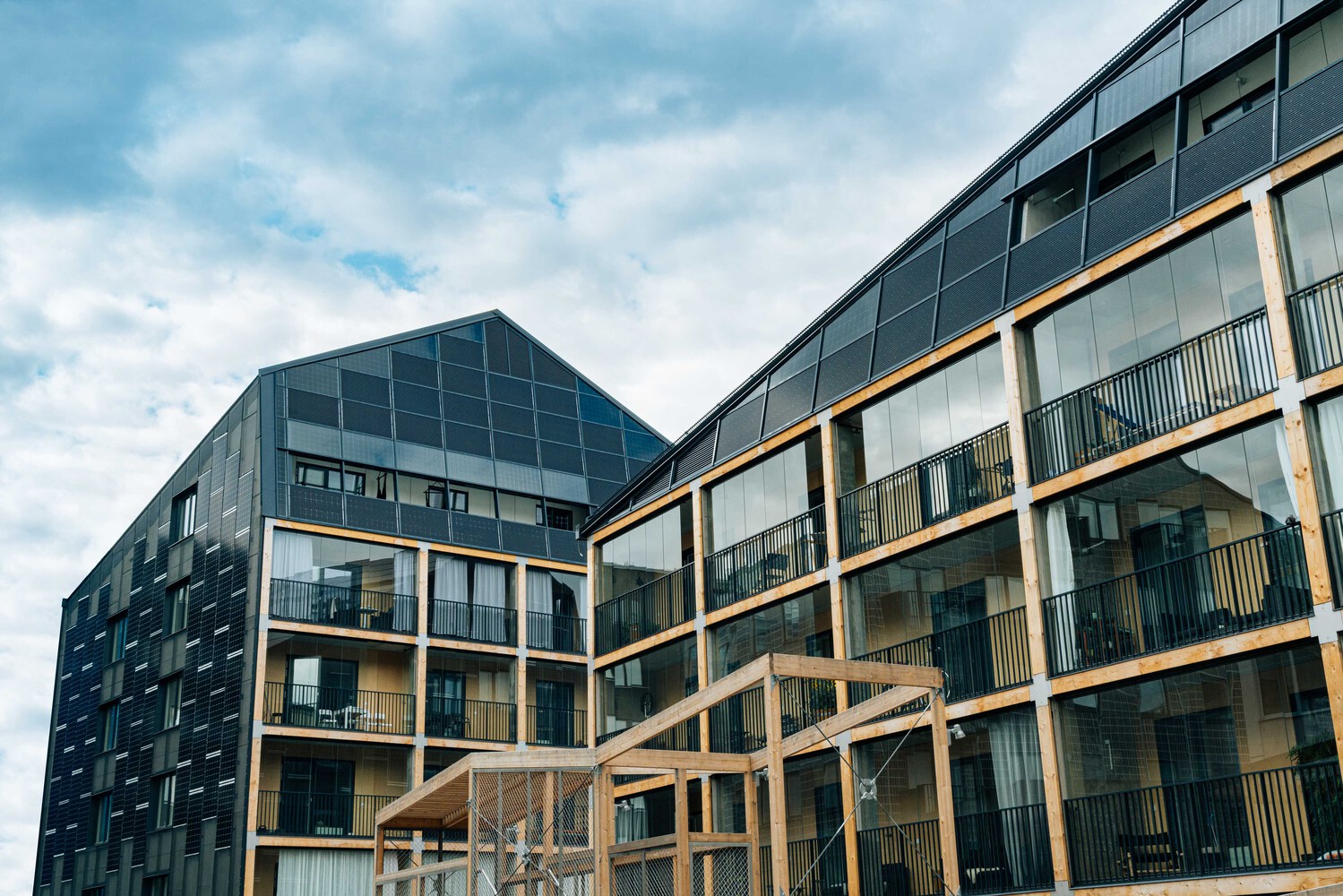
To maximize the effect, the roof ridge of both buildings has been angled to give fully south-facing roof surfaces.
The north-facing roof surfaces are planted roofs to slow down surface water and bind a certain amount of CO2.