
Hursey Center At University Of Hartford
HURSEY CENTER AT UNIVERSITY OF HARTFORD
Payette
ARCHITECTS
Payette
OFFICE LEAD ARCHITECTS
Peter Vieira, Jeff Degregorio
TECHNICAL TEAM
Mike Quinn
DESIGN TEAM
Luke Laverty, Laura Devine, Josh Aaronson, Dane Clark, Mary Gallagher
LEAD TEAM
Sarah Gewerz, Mark Bandzak, Tom Simister
ENGINEERING & CONSULTING > MEP
Rist Frost Shumway
ENGINEERING & CONSULTING > STRUCTURAL
Goldstein Milano
ENGINEERING & CONSULTING > CIVIL
Freeman Companies
ENGINEERING & CONSULTING > LIGHTING
Available Light
ENGINEERING & CONSULTING > OTHER
Howe Engineers, Act Associates
MANUFACTURERS
CTS Cement, Carlisle SynTec, Corian, New England Laboratory Casework, Oldcastle Building Envelope, Panneaux 3D, Porcelanosa Grupo, Preferred Precast, Spinneybeck, Tarkett / Johnsonite, Wausau Tiles
PHOTOGRAPHS
Robert Benson
AREA
5480 m²
YEAR
2021
LOCATION
Hartford, United States
CATEGORY
Educational Architecture, University
English description provided by the architects.
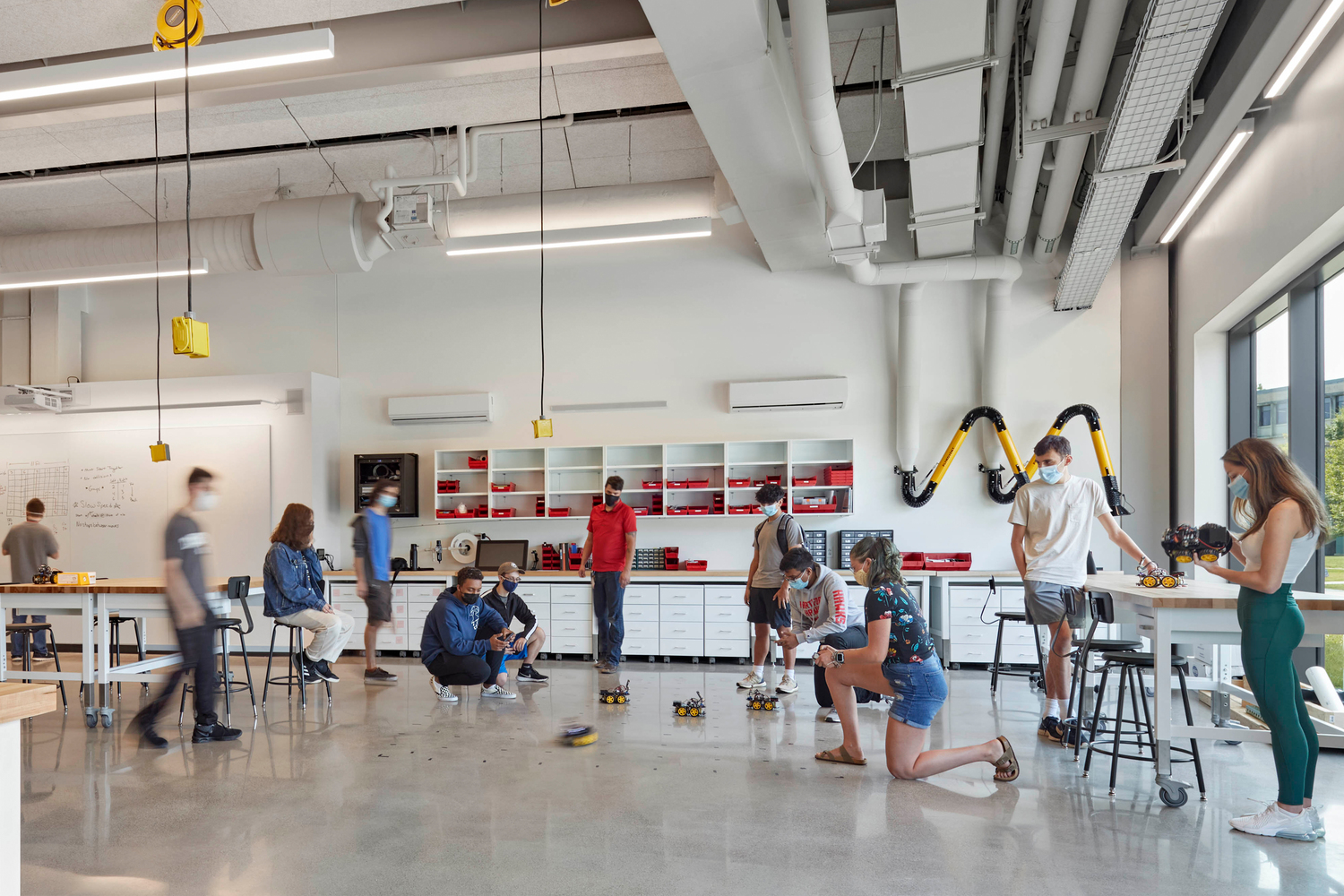
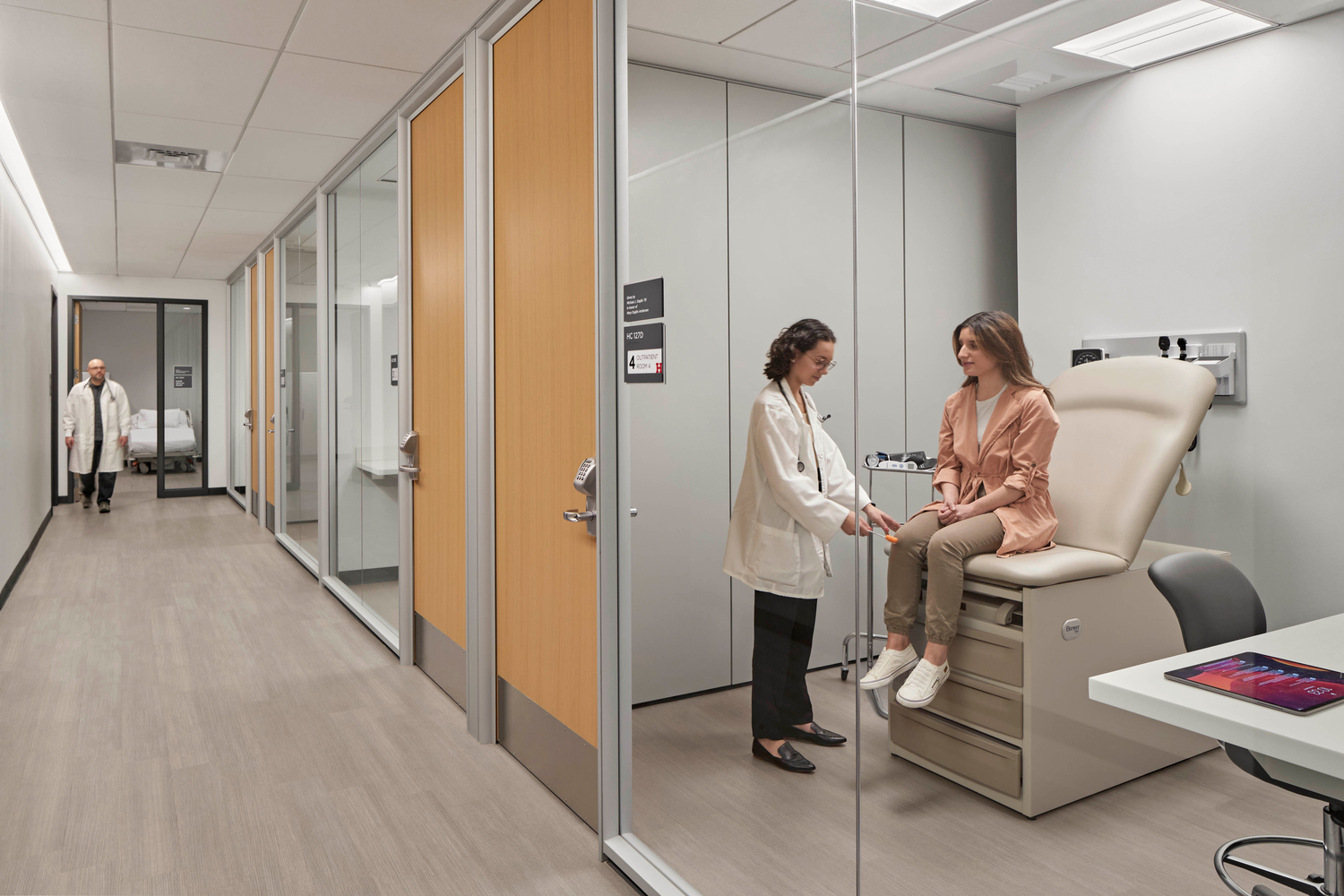
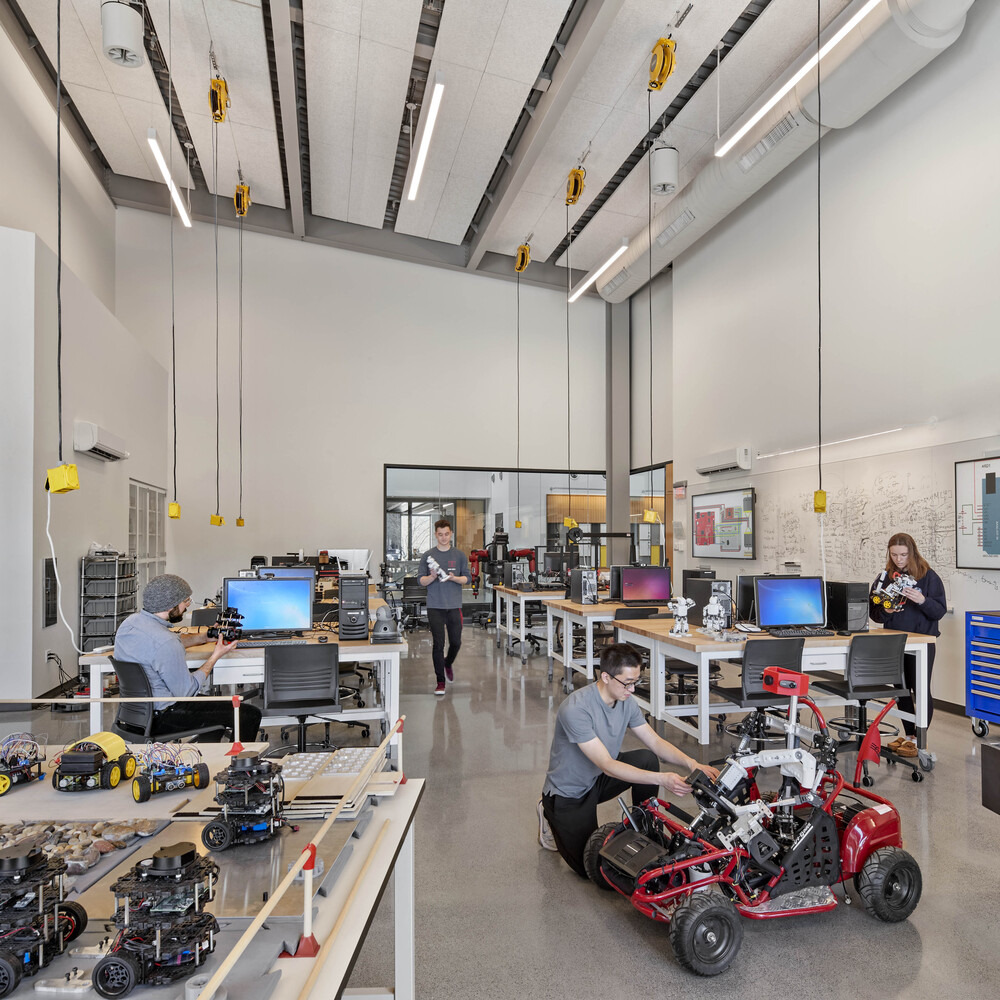
While engineering and the health sciences are not always thought of as sharing natural affinities, combining them in a new building anticipates a world wherein engineers design inventions, like prosthetics, that improve human health, and discoveries in tissue engineering and implants are directly integrated into nursing education and simulation.
The Hursey Center is the physical embodiment of that vision, placing student projects and hands-on learning in a central, highly visible location.
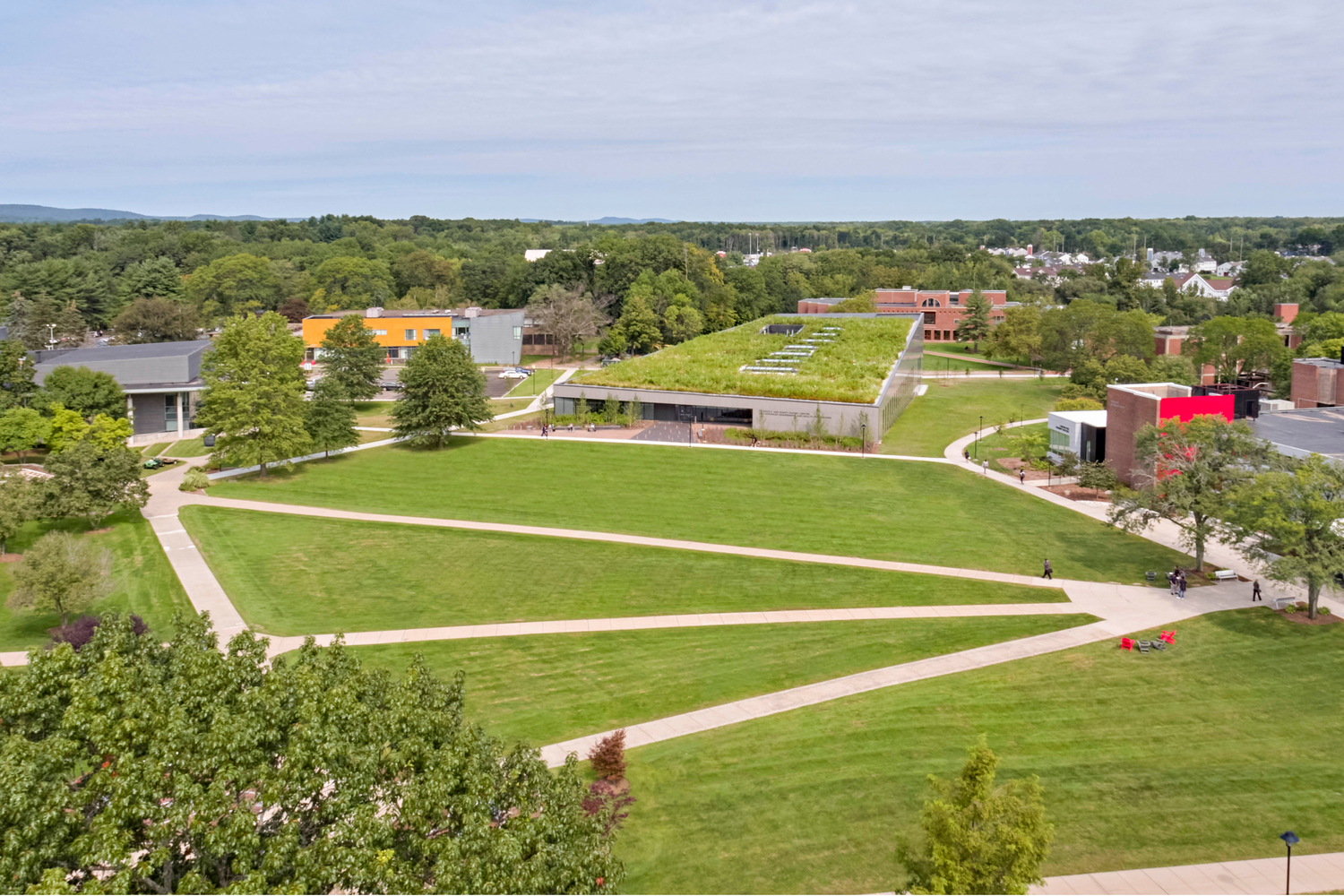
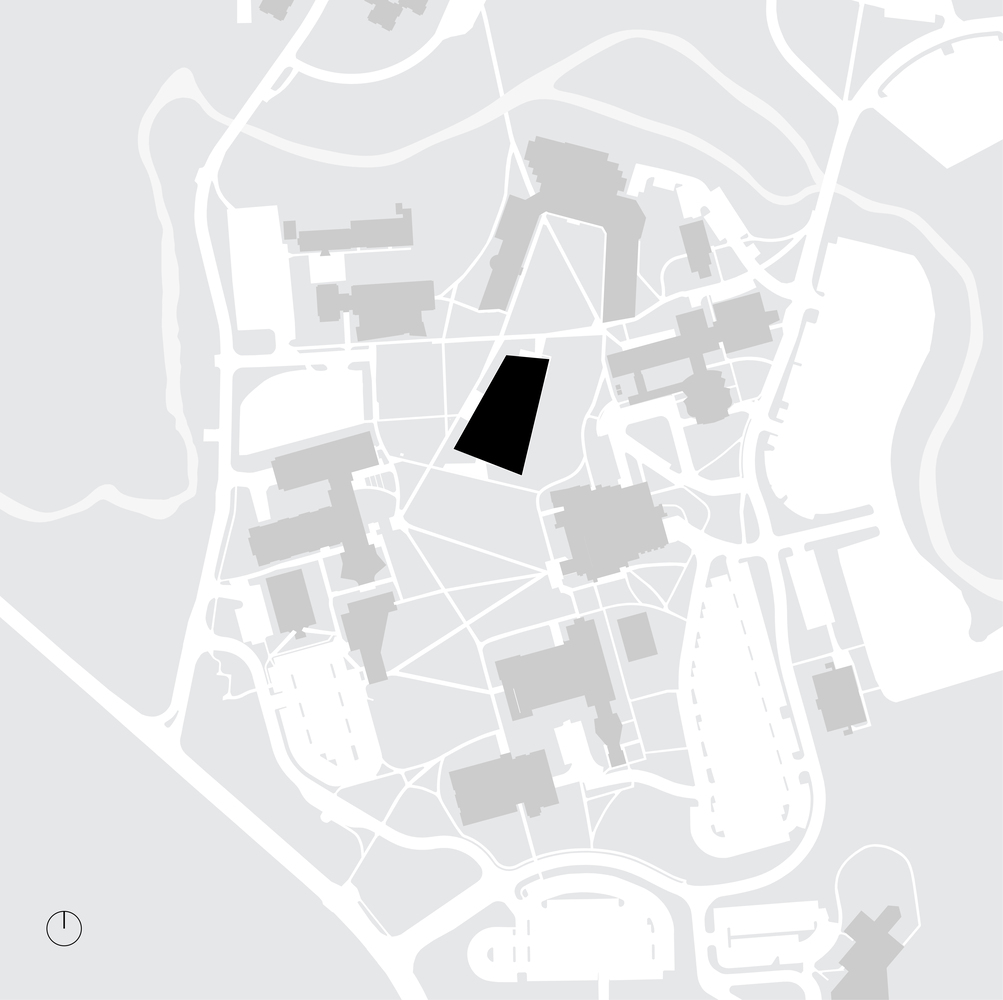
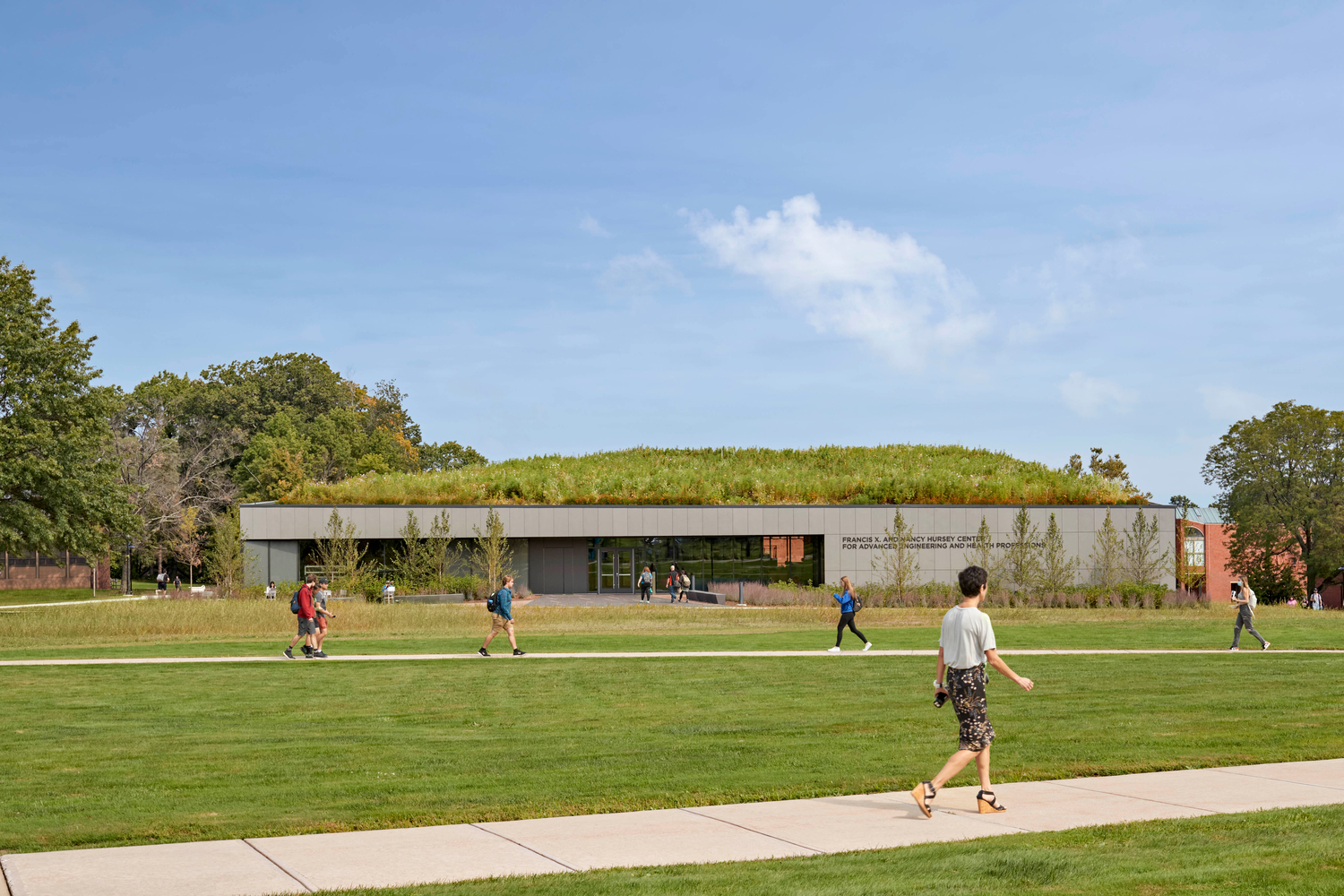
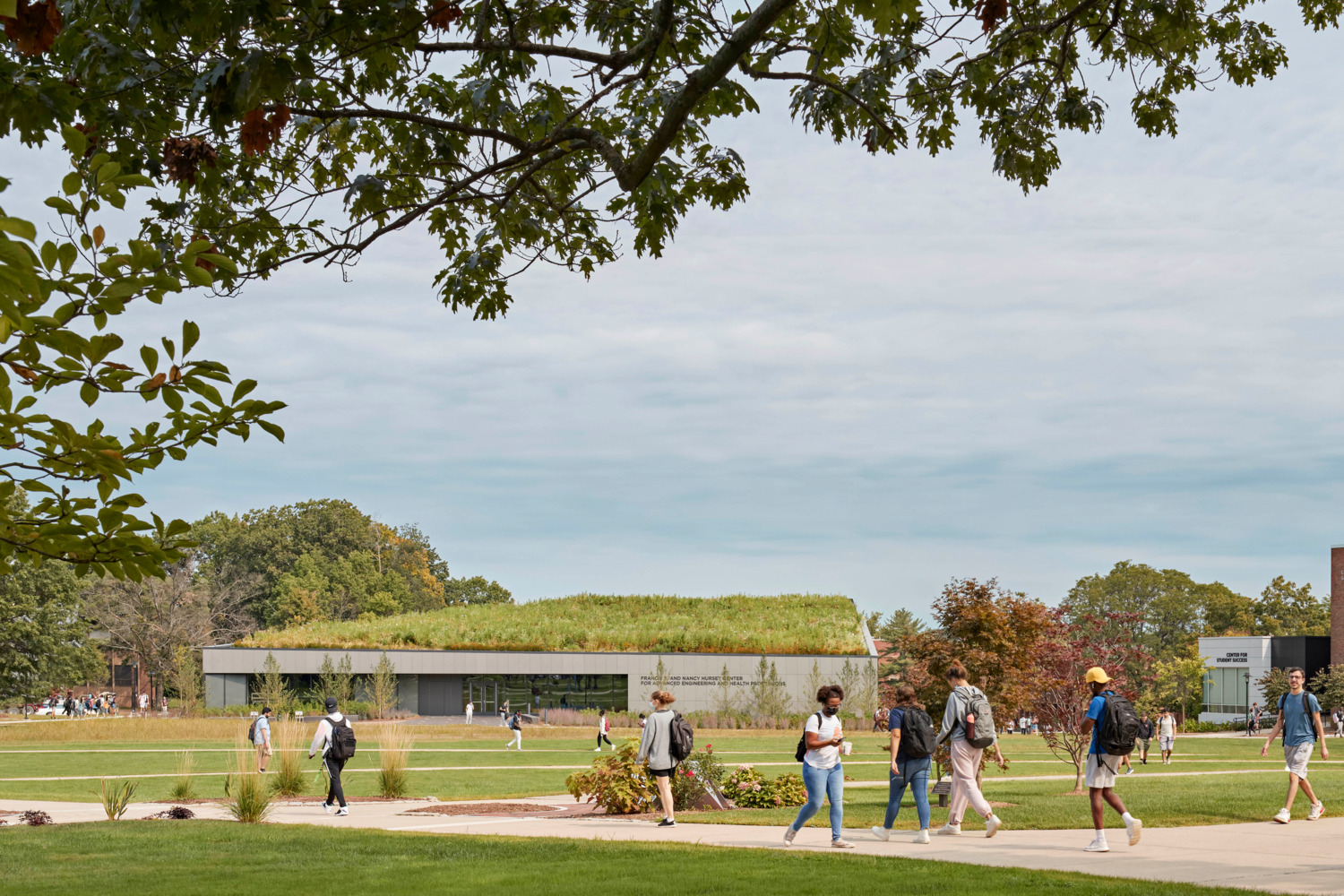
Driven by the University's desire to create a destination and activity hub in the center of its beautifully landscaped campus, the Hursey Center is sited prominently in the middle of the main academic green.
This unconventional approach both gives the new building symbolic meaning, consistent with the client's project goals, and recalibrates the scale and form of the campus by improving its character, spatial structure, and hierarchy.
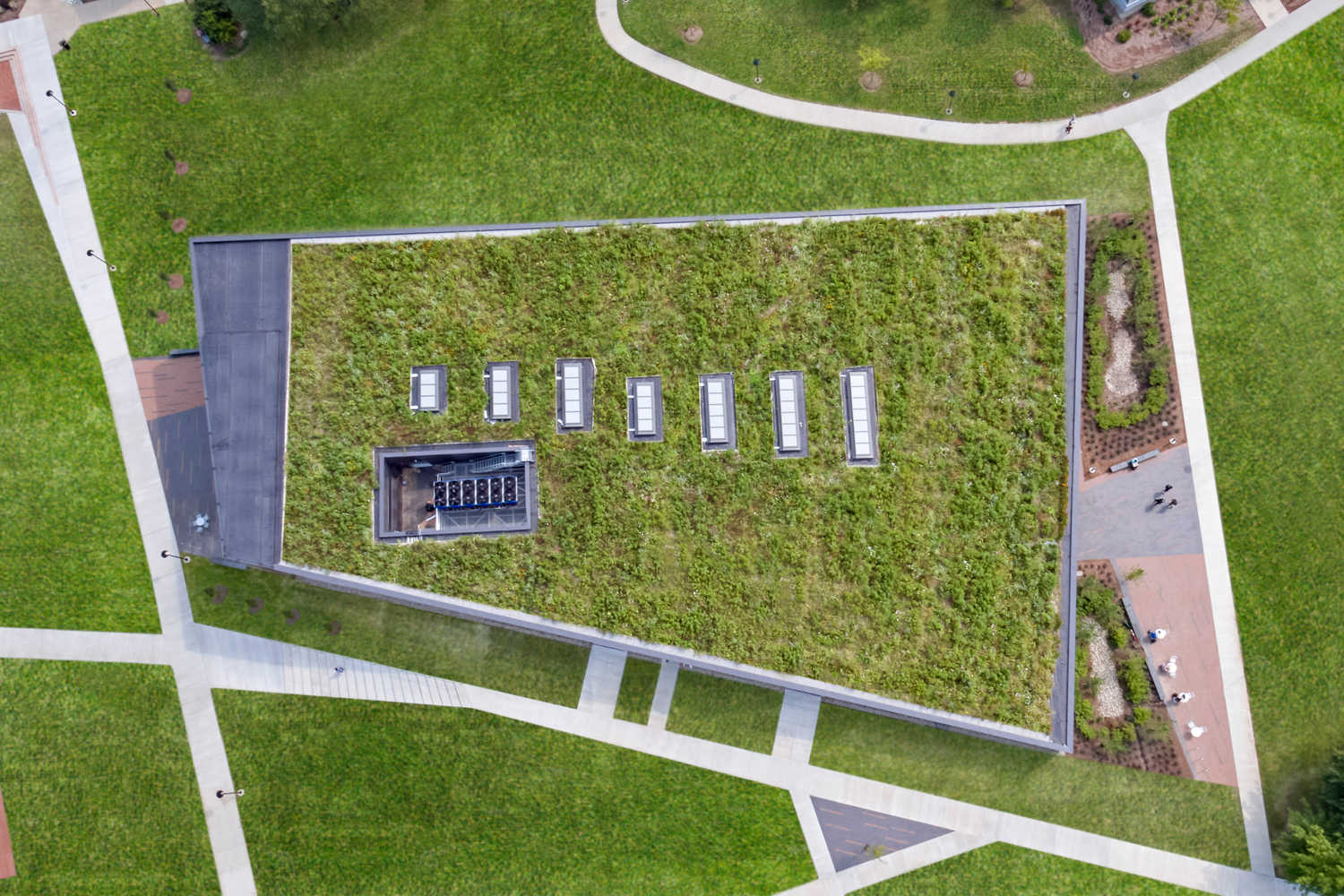
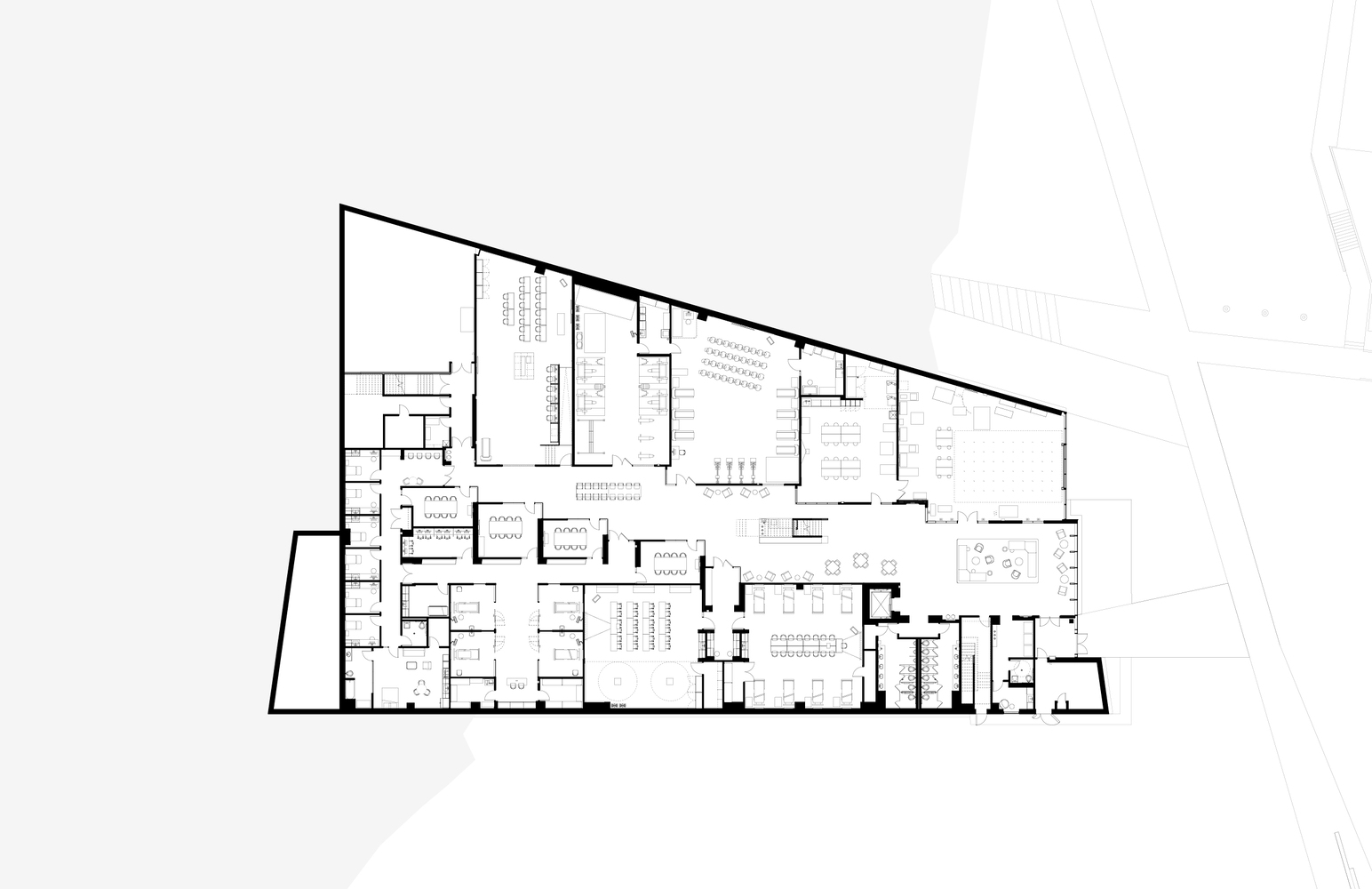
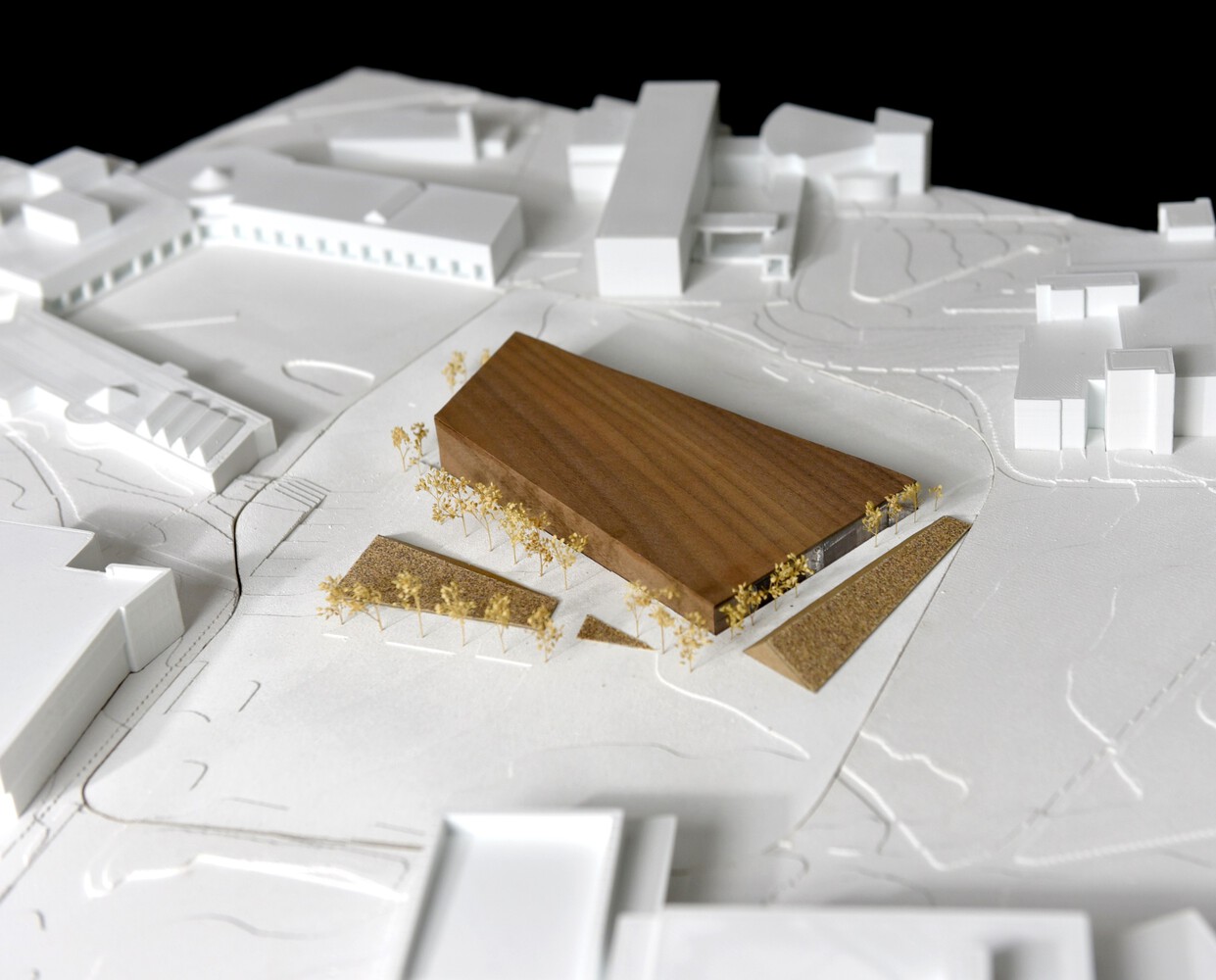
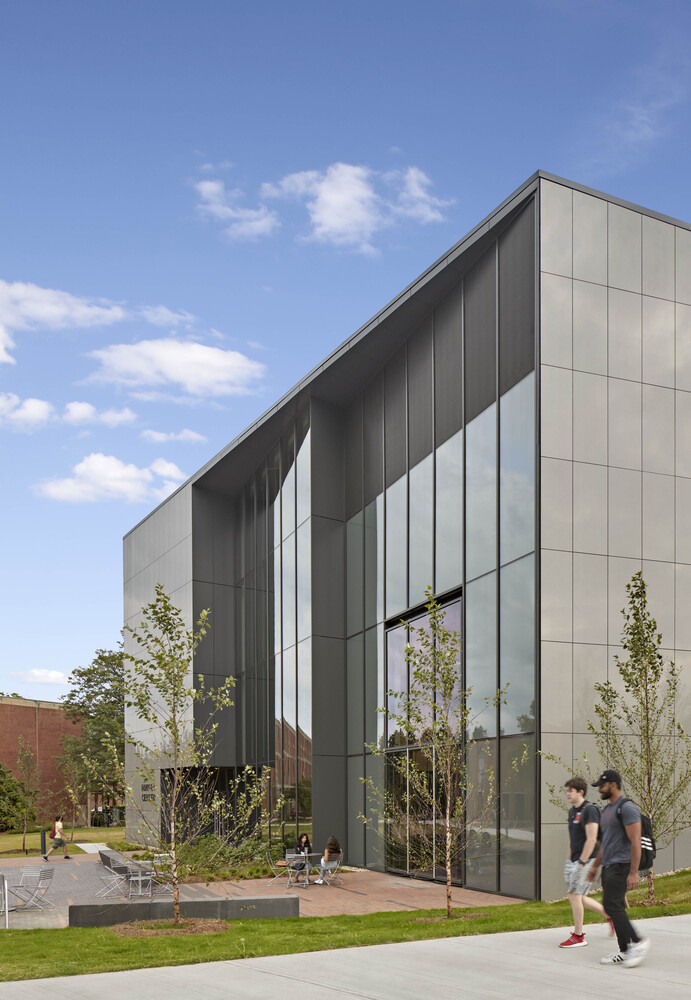
A four-sided irregular polygon in footprint, the Hursey Center's massing is deliberately quiet and subtle.
While the building is unmistakably an independent form, an object that is free from the rules that regulate the existing perimeter buildings, it nevertheless does not try to create a strong contrast with its context either.
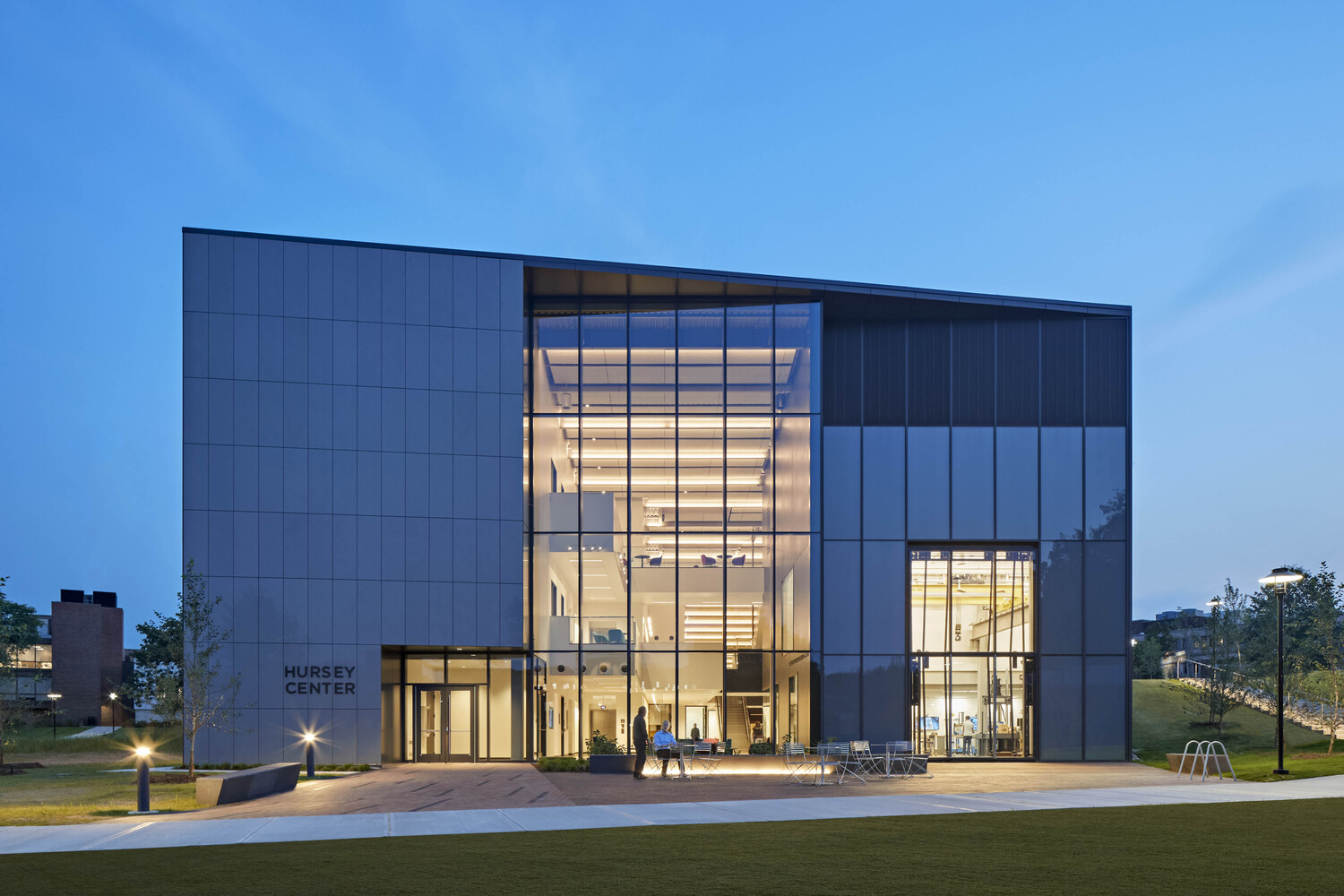
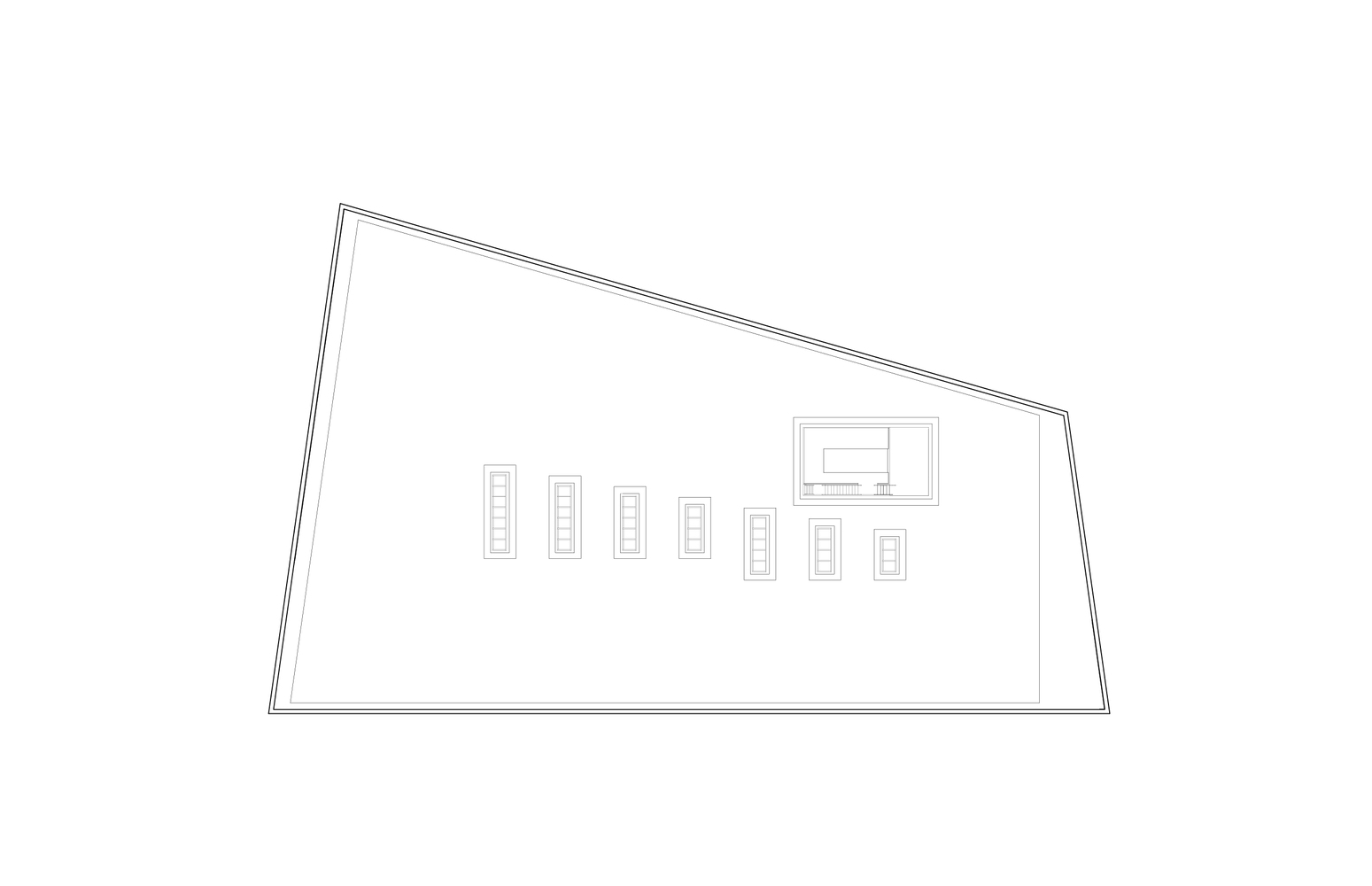
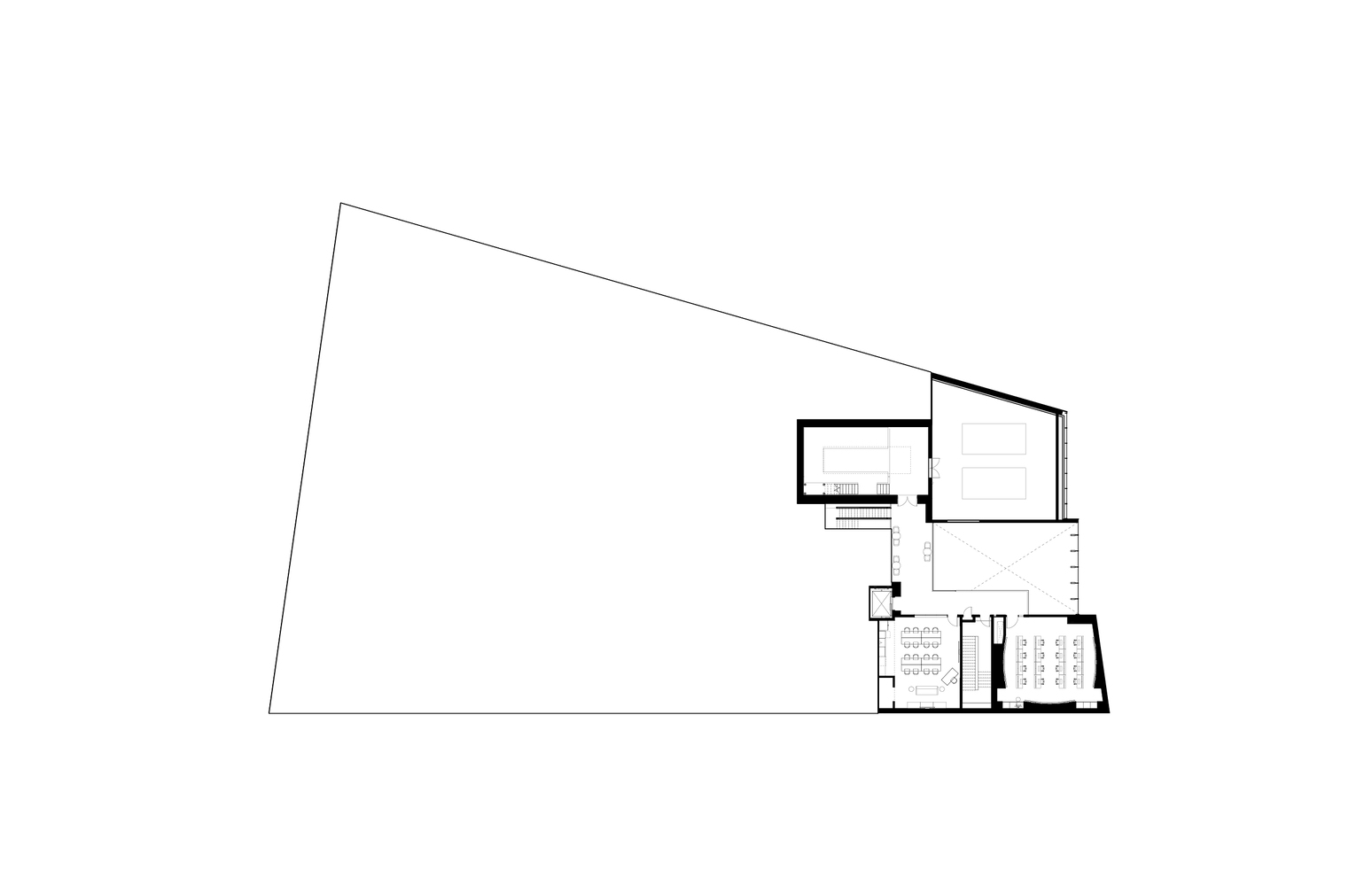
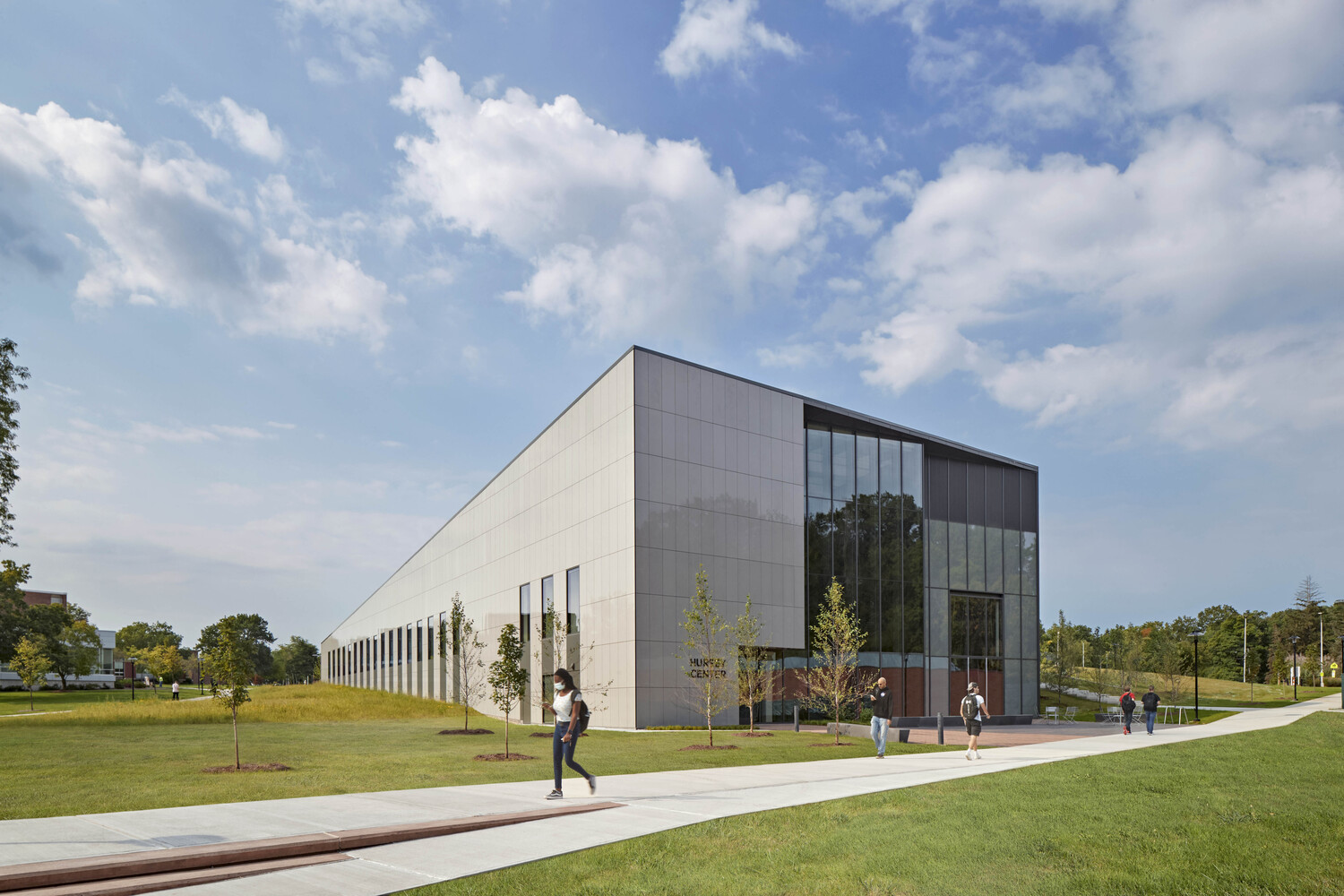
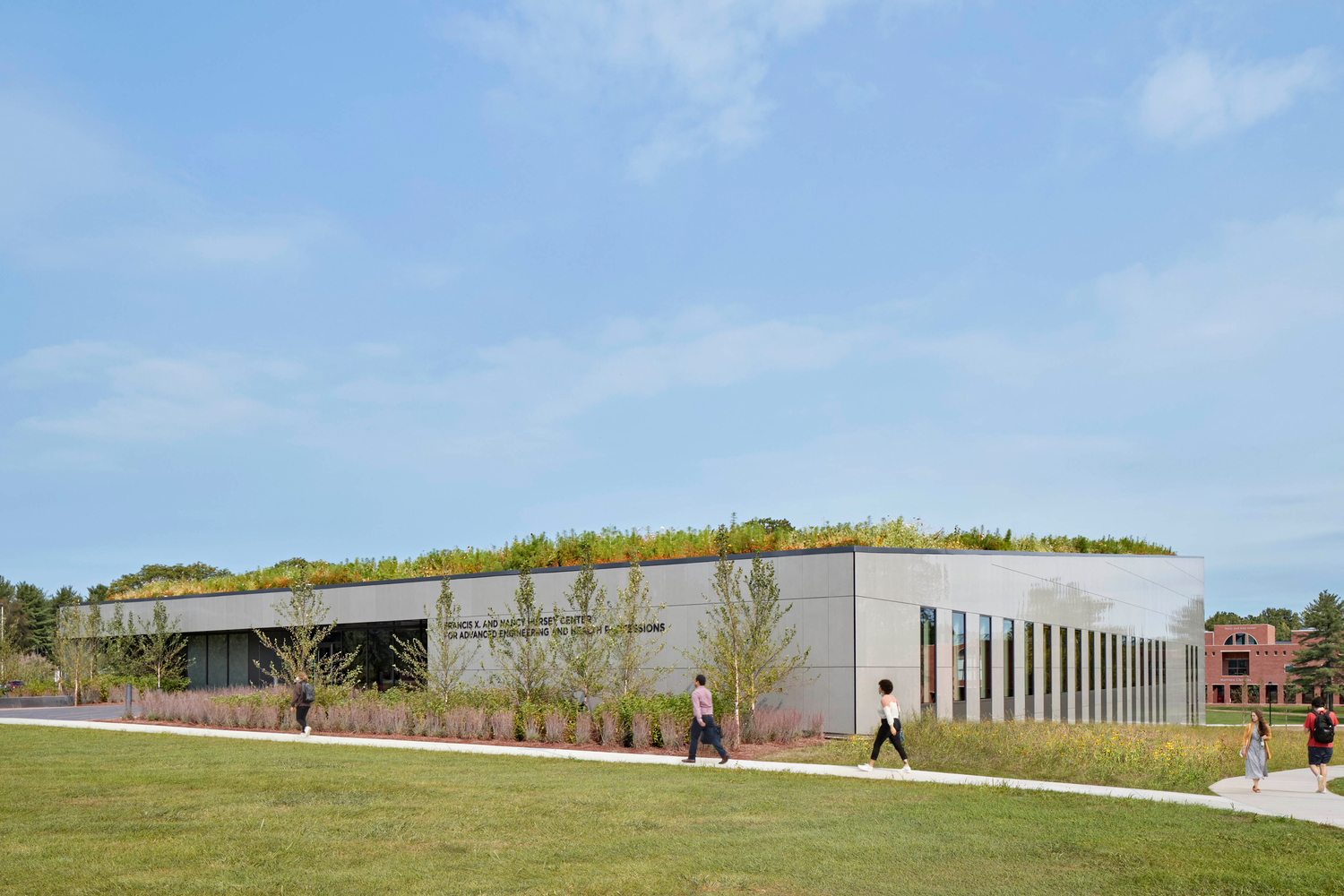
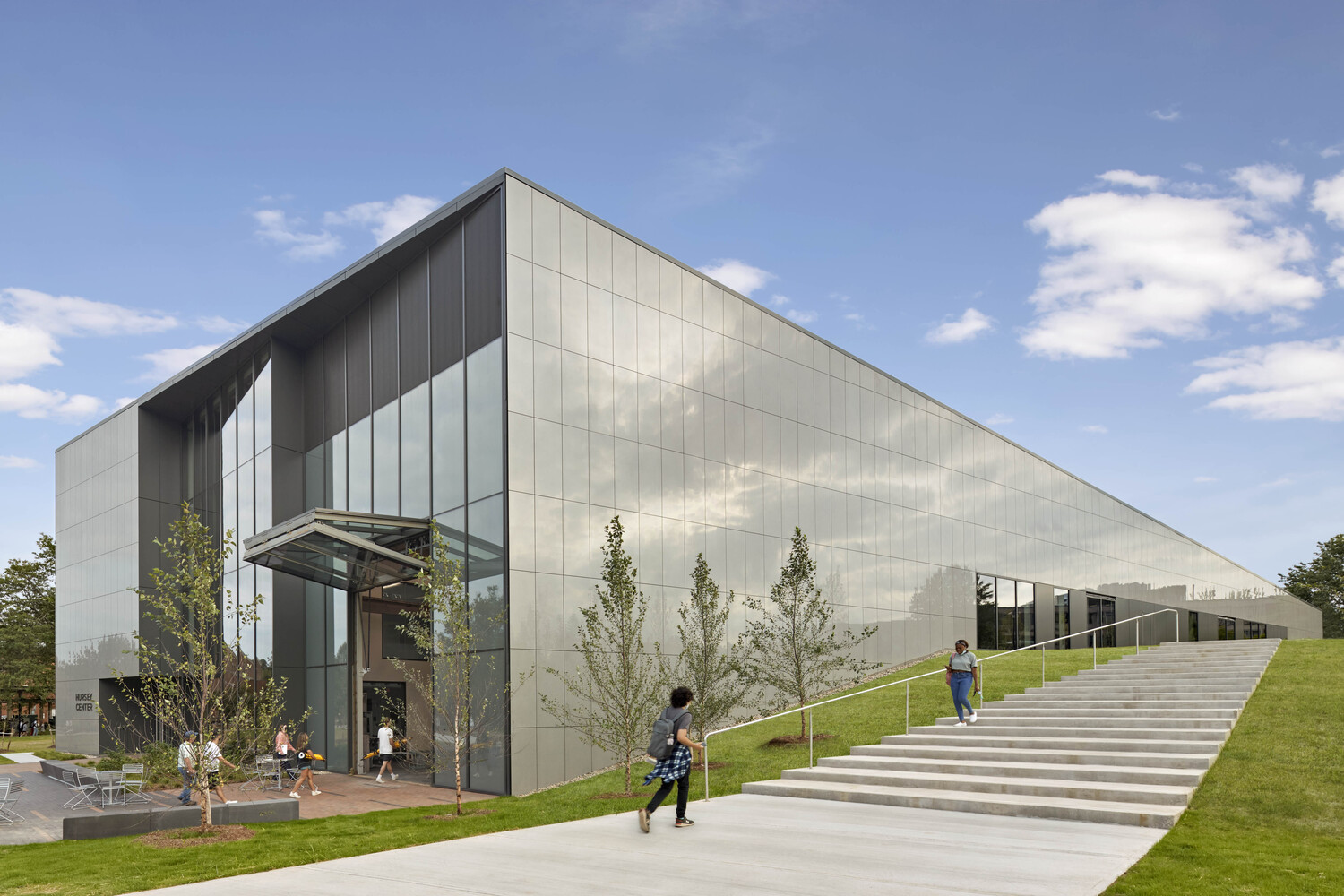
Viewed from the south, where the footprint is widest, its large roof is low, slightly sloped, and planted, essentially suggesting a continuation of the Green. On its north side, the new building is narrower and unexpectedly tall, its lower level emerging from a landscaped slope. Clad in grey polished porcelain panels, its taut surfaces reflect the sky and campus. Its 'comprehensive' green roof combines the benefits of intensive and extensive green roof systems.
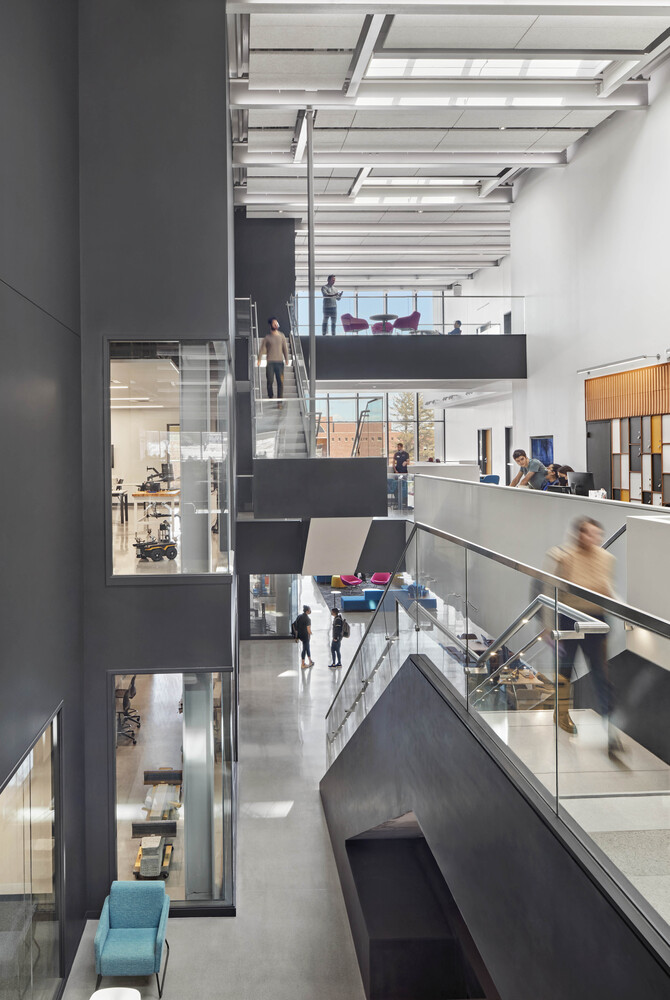
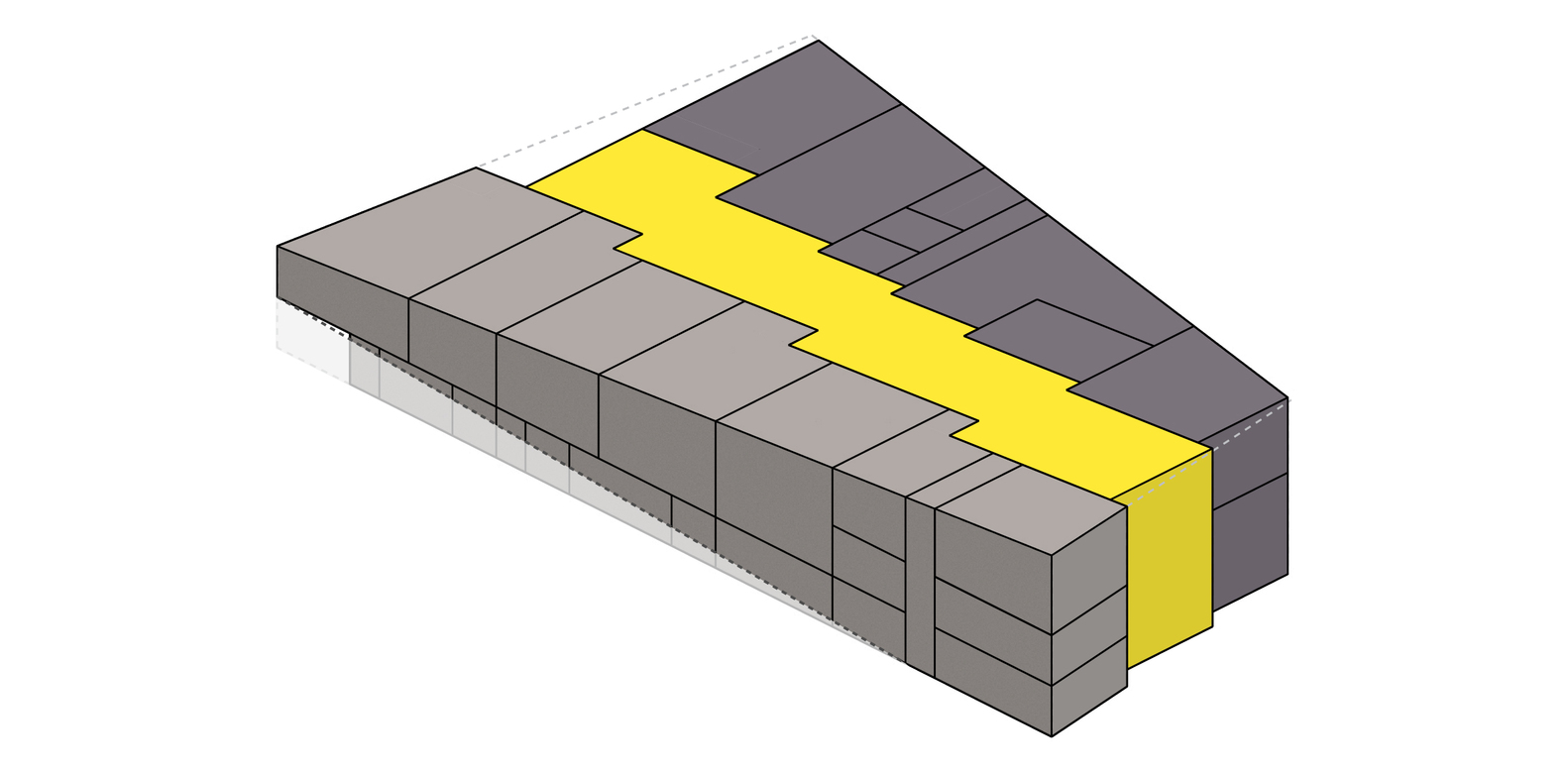
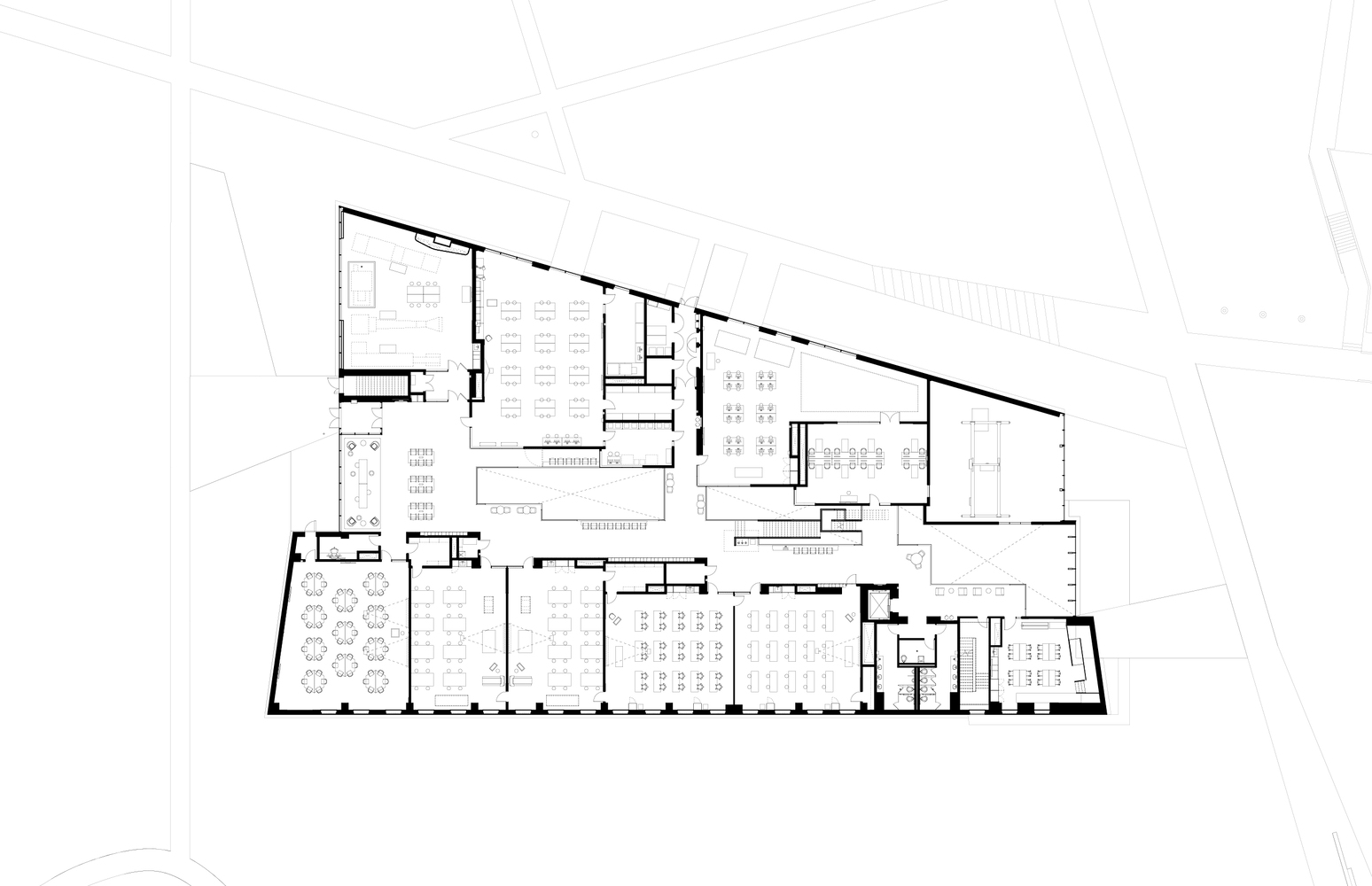
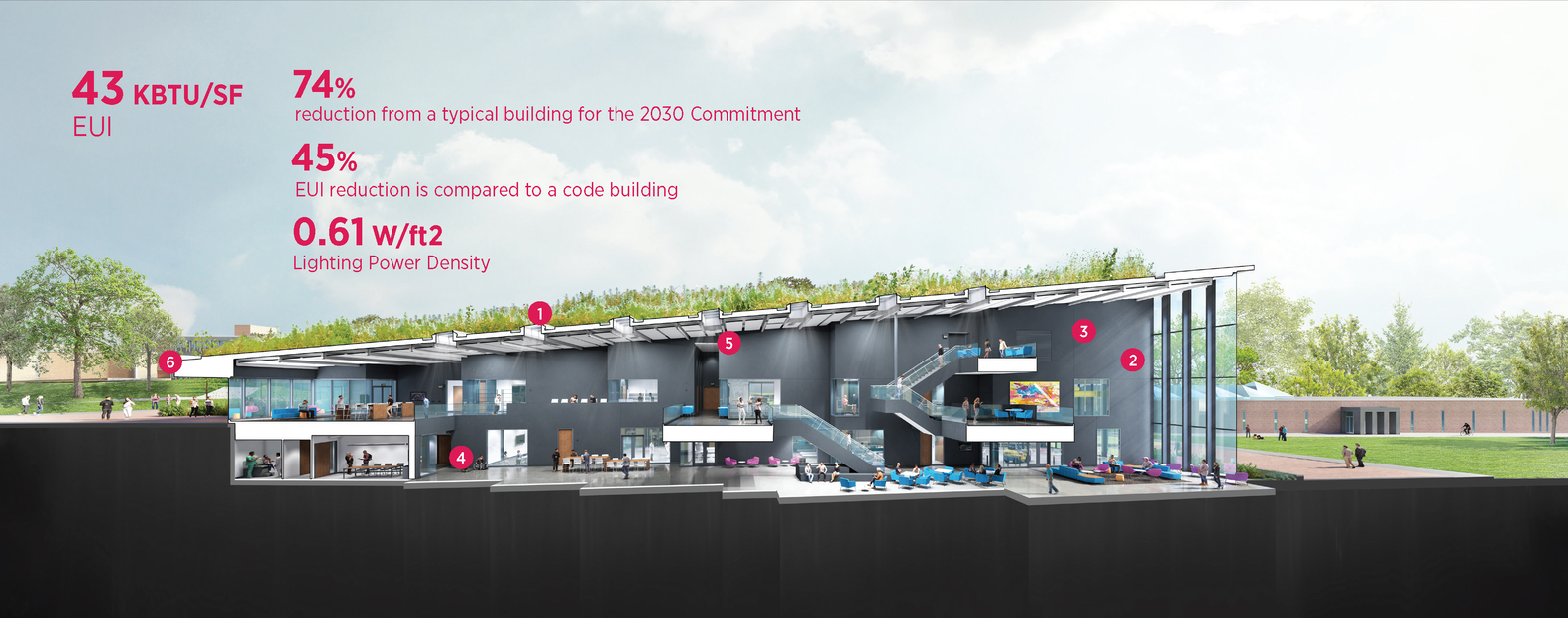
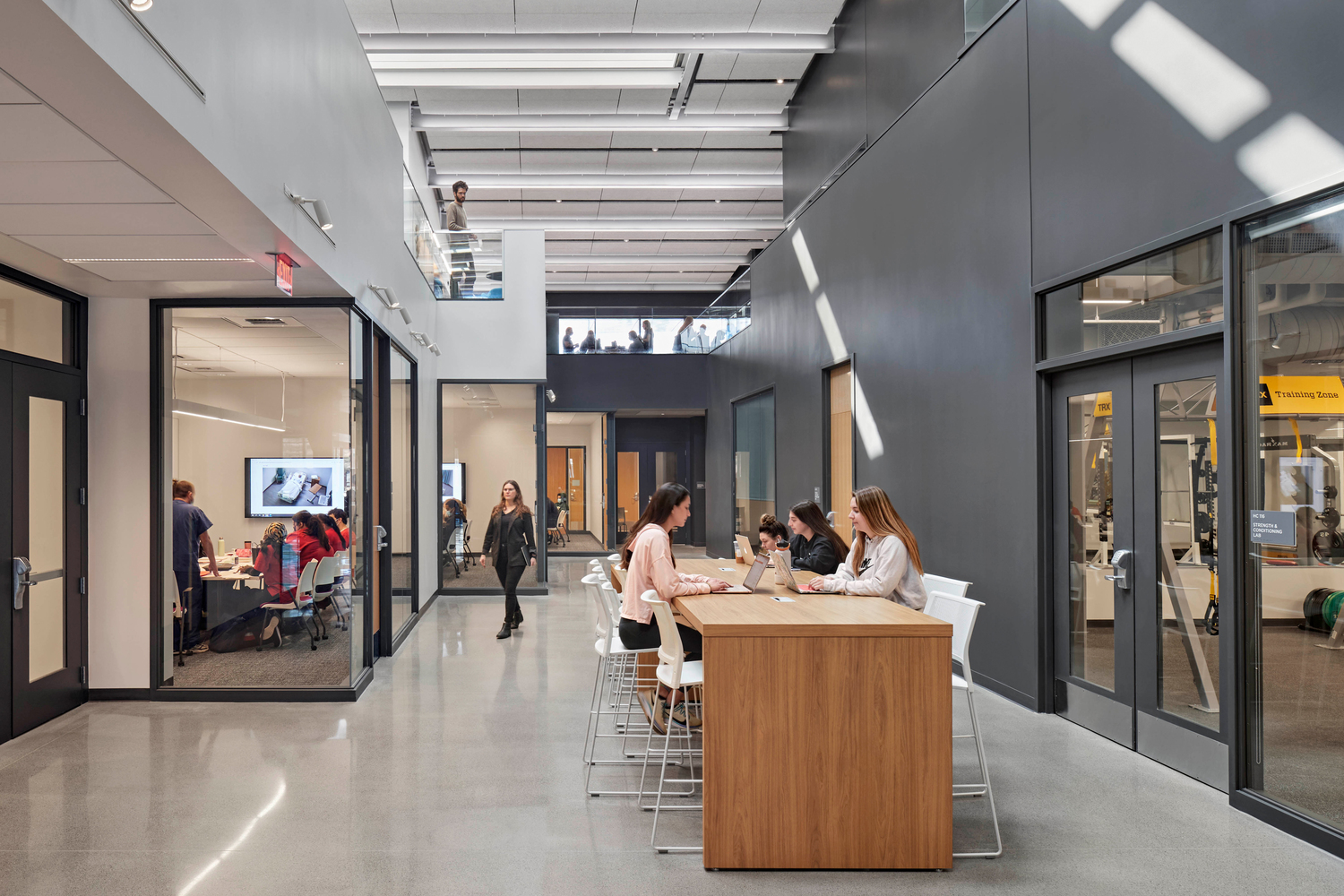
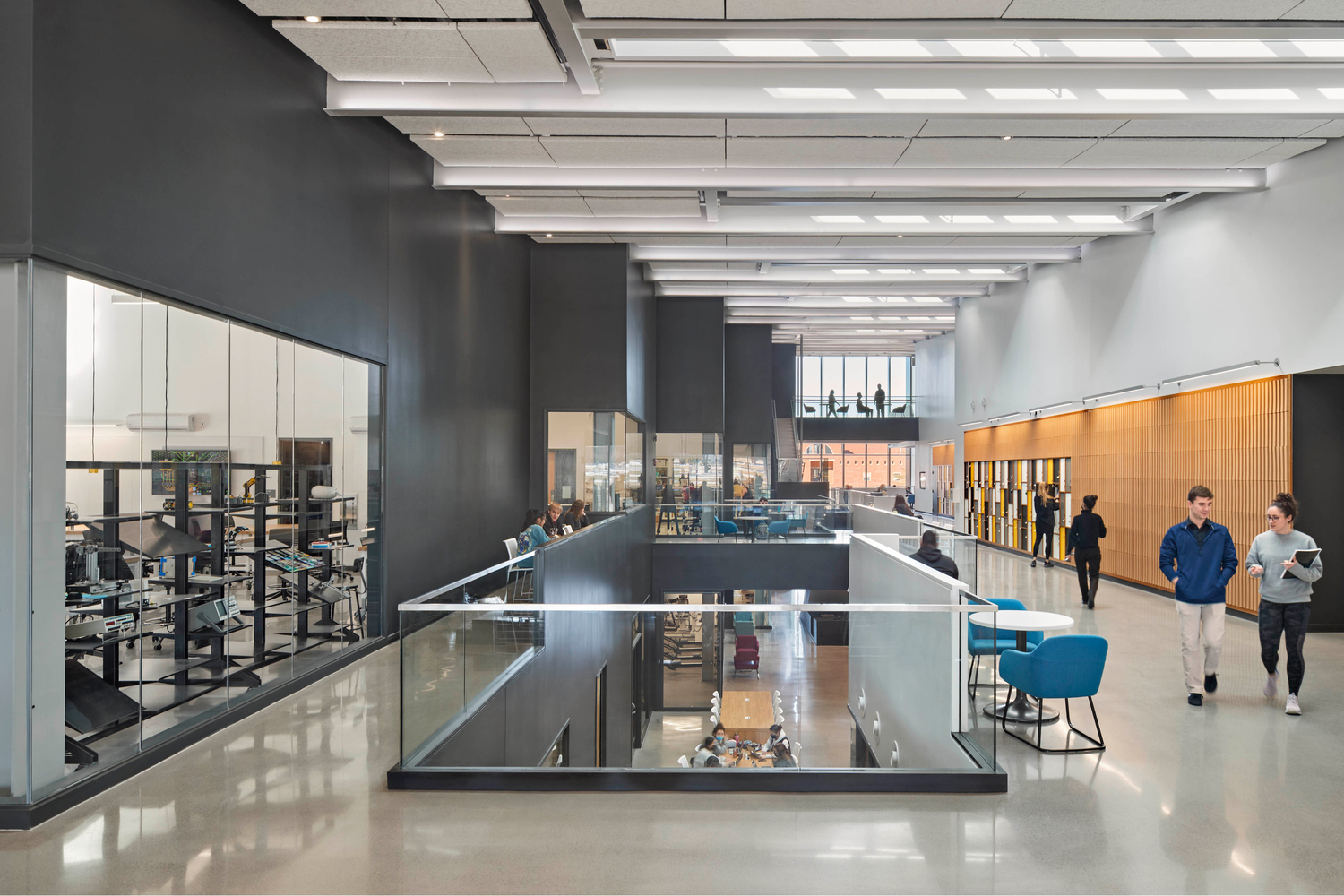
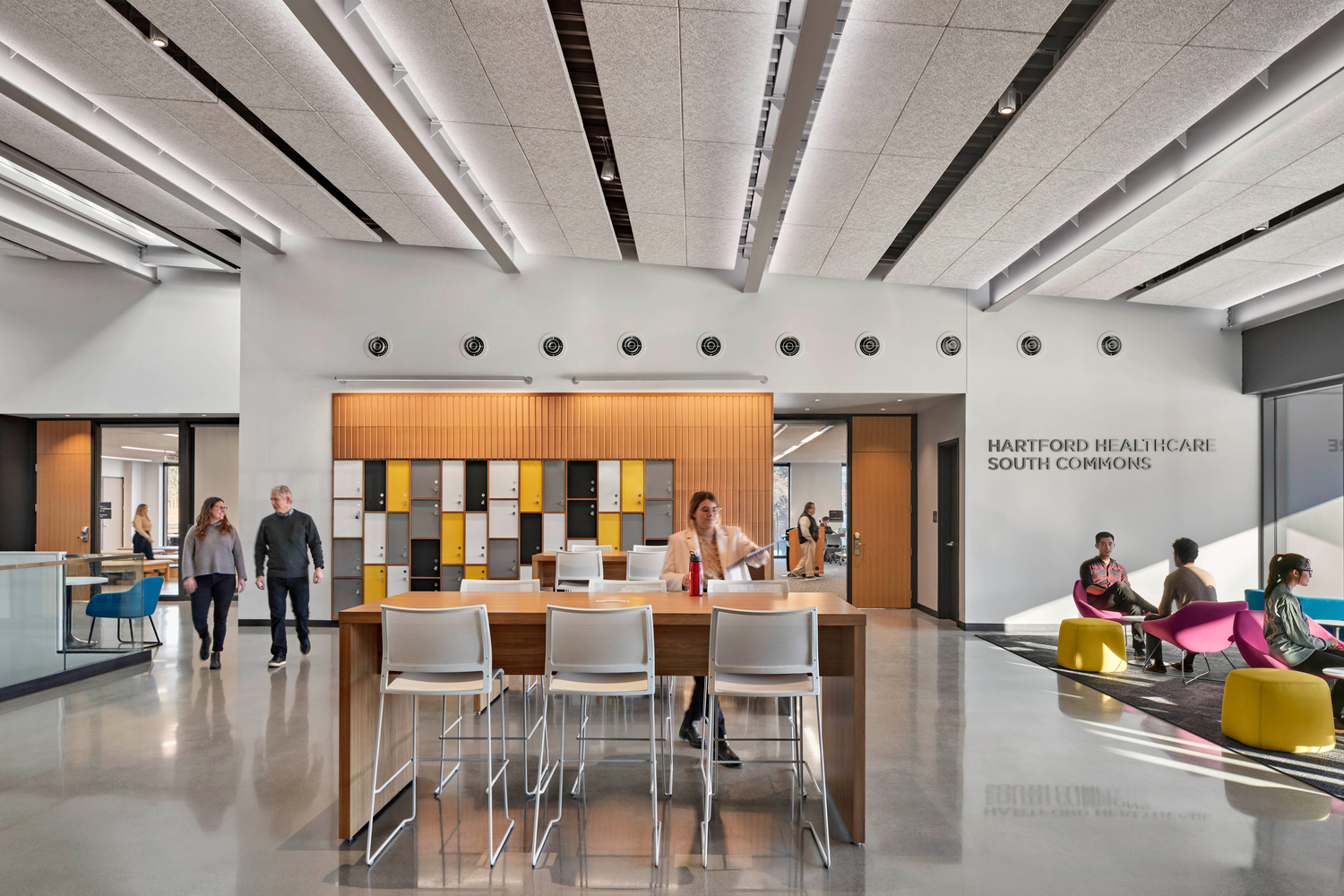
In contrast, the Hursey Center's interior environment is visually dynamic and complex. The building is organized around a multistory, skylit central space linking upper- and lower-level campus entrances, the 'Street', which was conceived of as an interior extension of the campus's main pedestrian pathway.
Within the Street, a rich network of lobbies, bridges, overlooks, and floor openings offers unobstructed views into the instructional, research, and meeting spaces on either side.
To maximize the visual impact of this experience, interior program spaces are stepped in plan so that each has its full-height corner window.
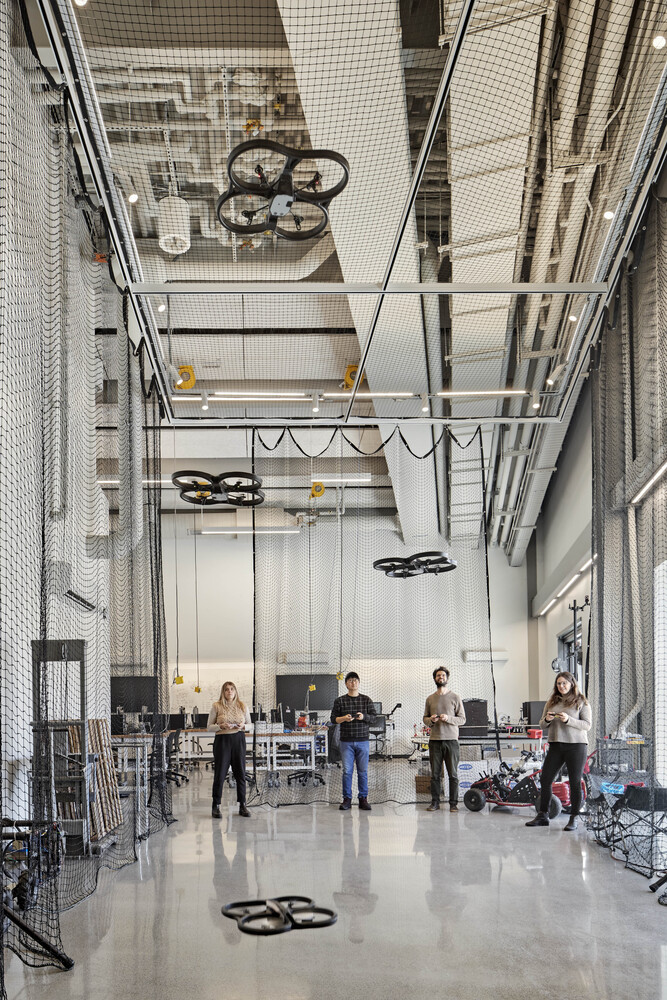
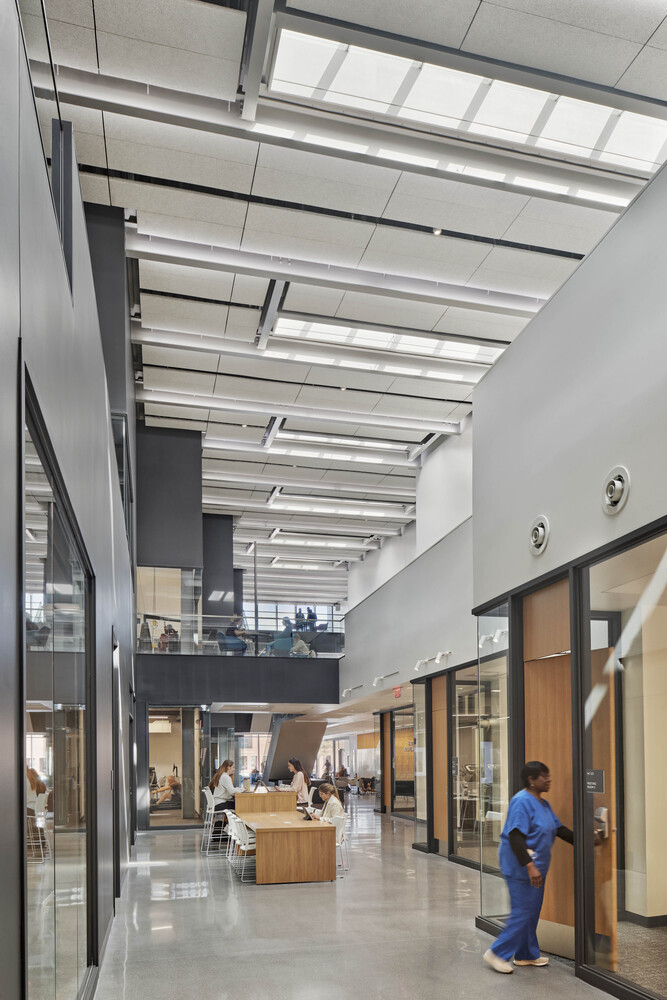
The highly graphic interplay between opposing architectural qualities, projecting and recessive corners, transparency and opacity, lightness and darkness, inside and outside, orthogonal and diagonal lines, invites occupants and visitors to thoroughly immerse themselves within the inner life of the building.
Interior materials include cork produced with waste material from wine stopper production; tectum; glass and solid surface guardrails and stair enclosures; oak veneer doors and transoms; and polished concrete flooring.
The Hursey Center incorporates an impressive array of passive design strategies and energy-efficient building systems, including hydronic fan coil units and a high-efficiency air-cooled chiller.
Lighting is 100% LED and incorporates daylight and occupancy controls. The 5-inch deep green roof absorbs rainwater equivalent to a typical 8-inch stormwater system and helps to prevent floods, overflows, and other water-related issues.
Each façade responds carefully to considerations of solar orientation, internal program, and site-specific context.