
Providence House
PROVIDENCE HOUSE
Mmcv
ARCHITECTS
Mmcv
LEAD ARCHITECT
Sergio Mizraji, Gustavo Losa, Juan Francisco Cerviño
ENGINEERING AND CONSULTING > CIVIL
José Zaldúa
GENERAL CONSTRUCTION
Ormigón
ENGINEERING AND CONSULTING > LIGHTING
Giuliana Nievas
MANUFACTURERS
FLOS, Helmut, Huup, La Base Studio
LANDSCAPE ARCHITECTURE
Bulla
PHOTOGRAPHS
Juan Müller
AREA
295 m²
YEAR
2022
LOCATION
Carlos Spegazzini, Argentina
CATEGORY
Houses
English description provided by the architects.
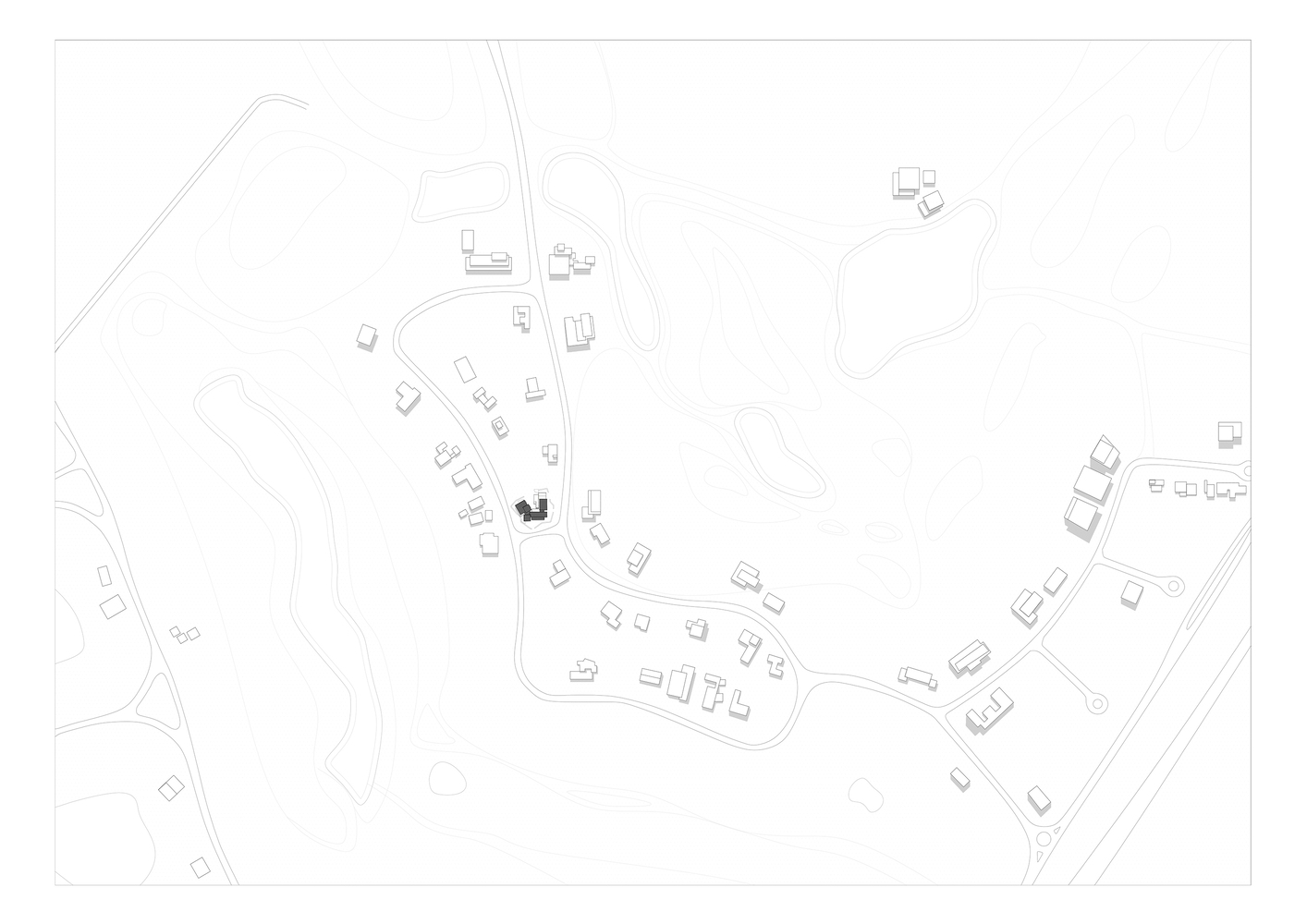
Leaving the bustling capital, on the outskirts of Buenos Aires, along Provincial Route 52 is the La Providencia Resort & Country Club complex.
Surrounded by country clubs and traditional estates, it is one of the growing neighborhoods in the Ezeiza district.
Within the complex, the proposal occupies a lot within the imposed organic layout, with three open fronts and a back of the lot oriented to the north.
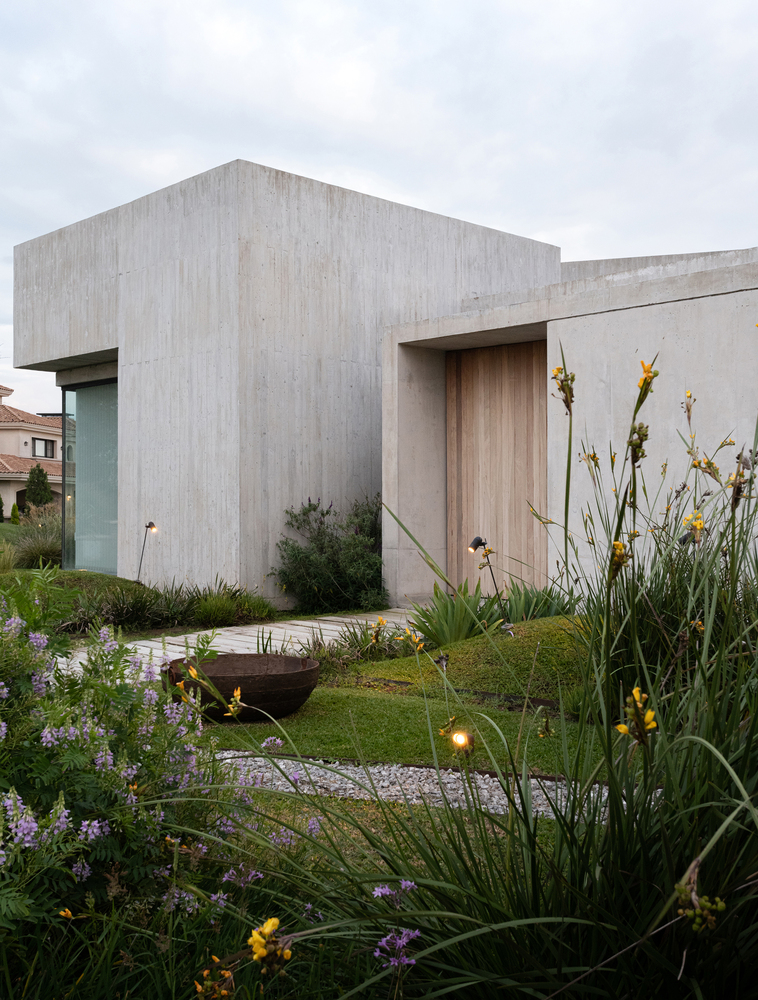
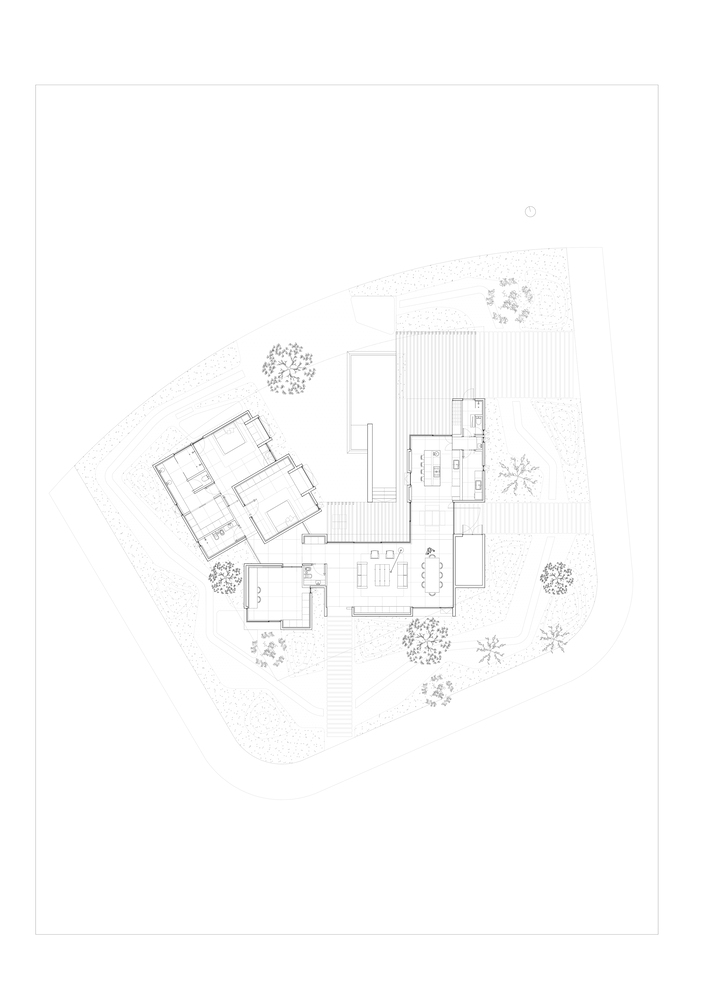
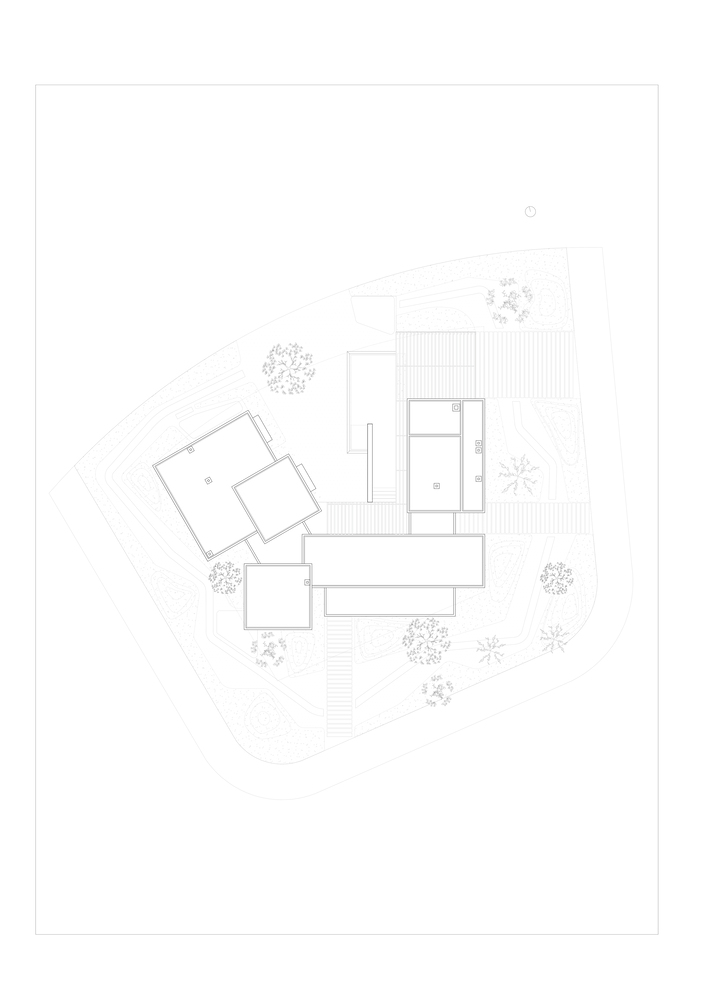
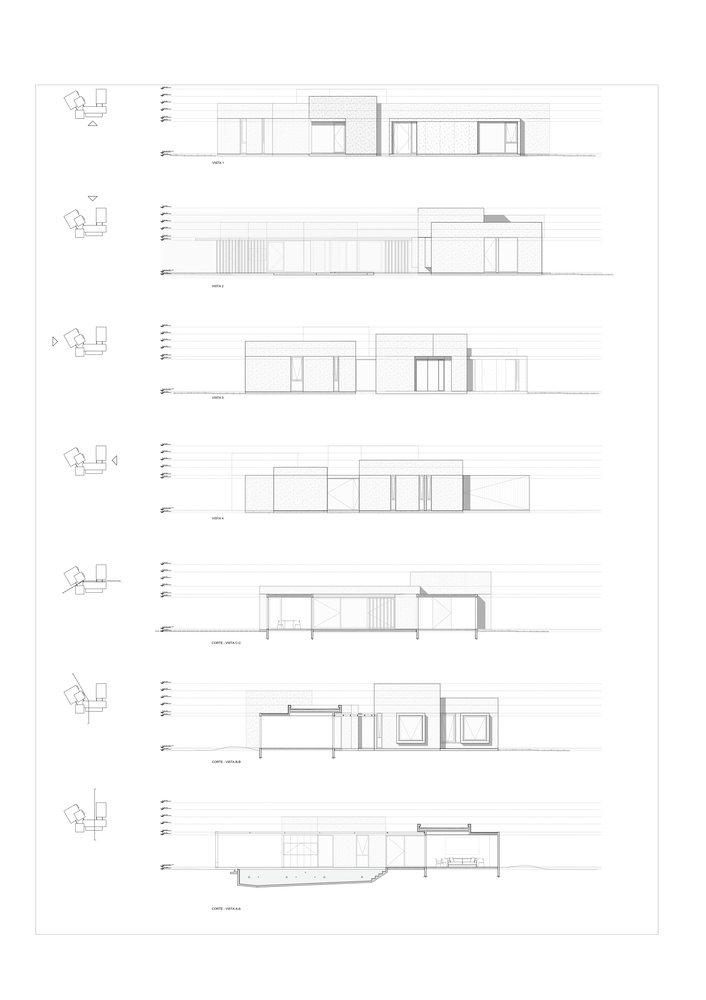
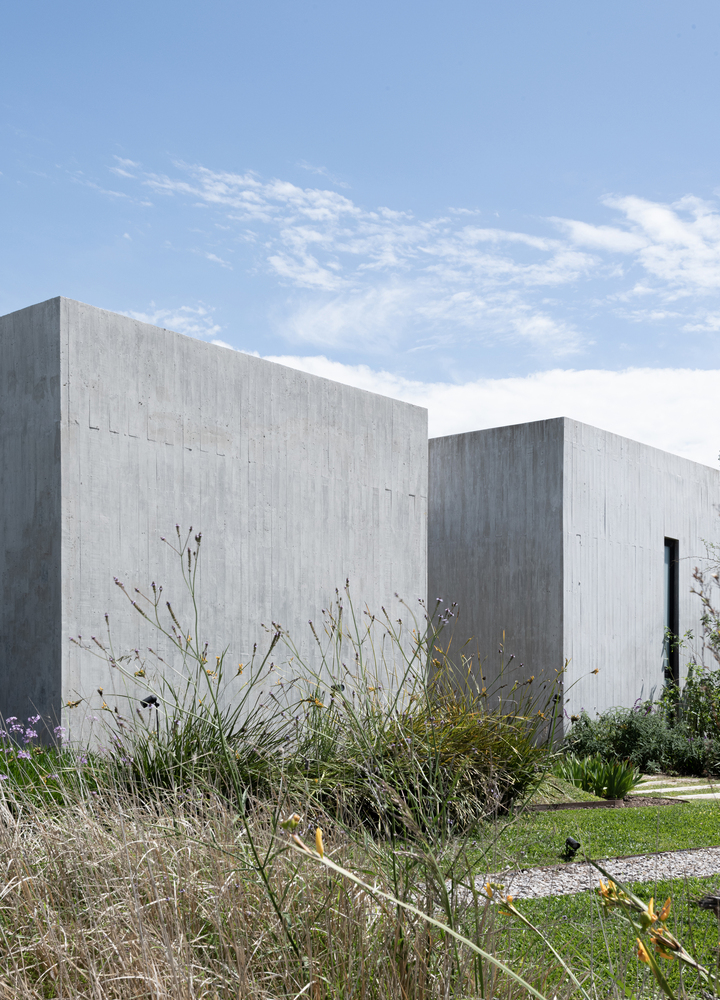
Five volumes of pure geometry, each with its own morphology and height, rise imposingly over the open land, as if emerging from the earth.
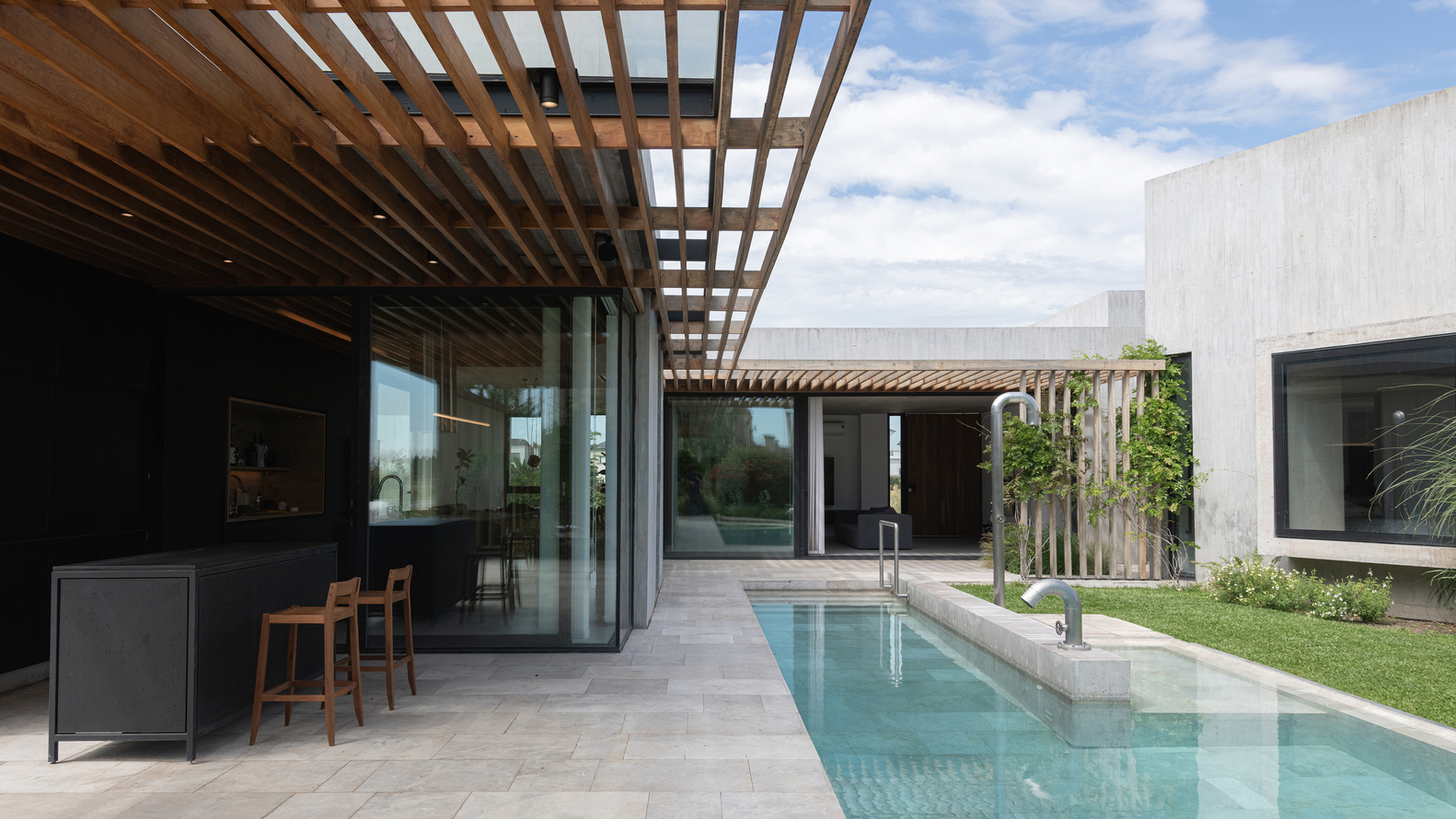
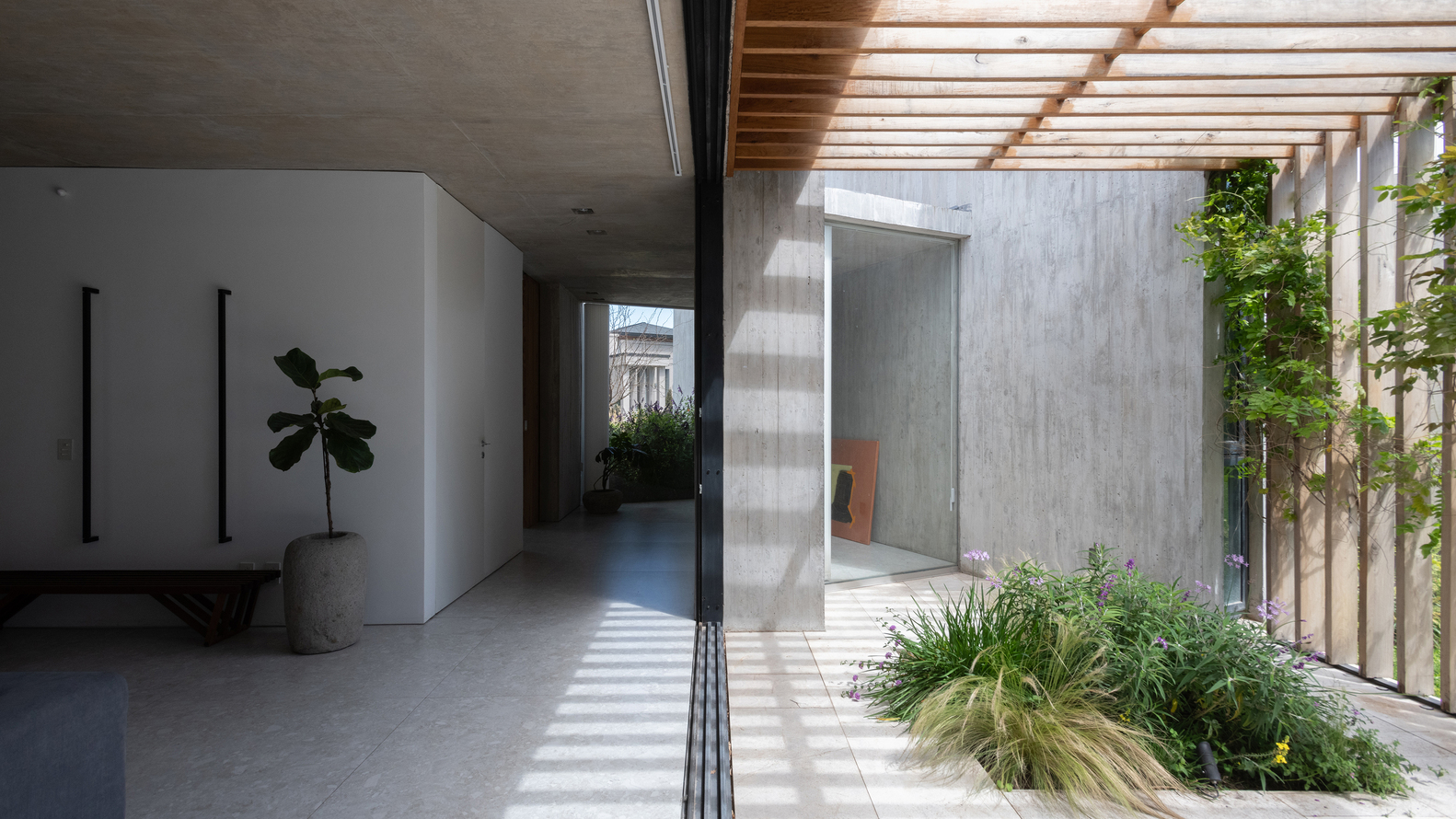
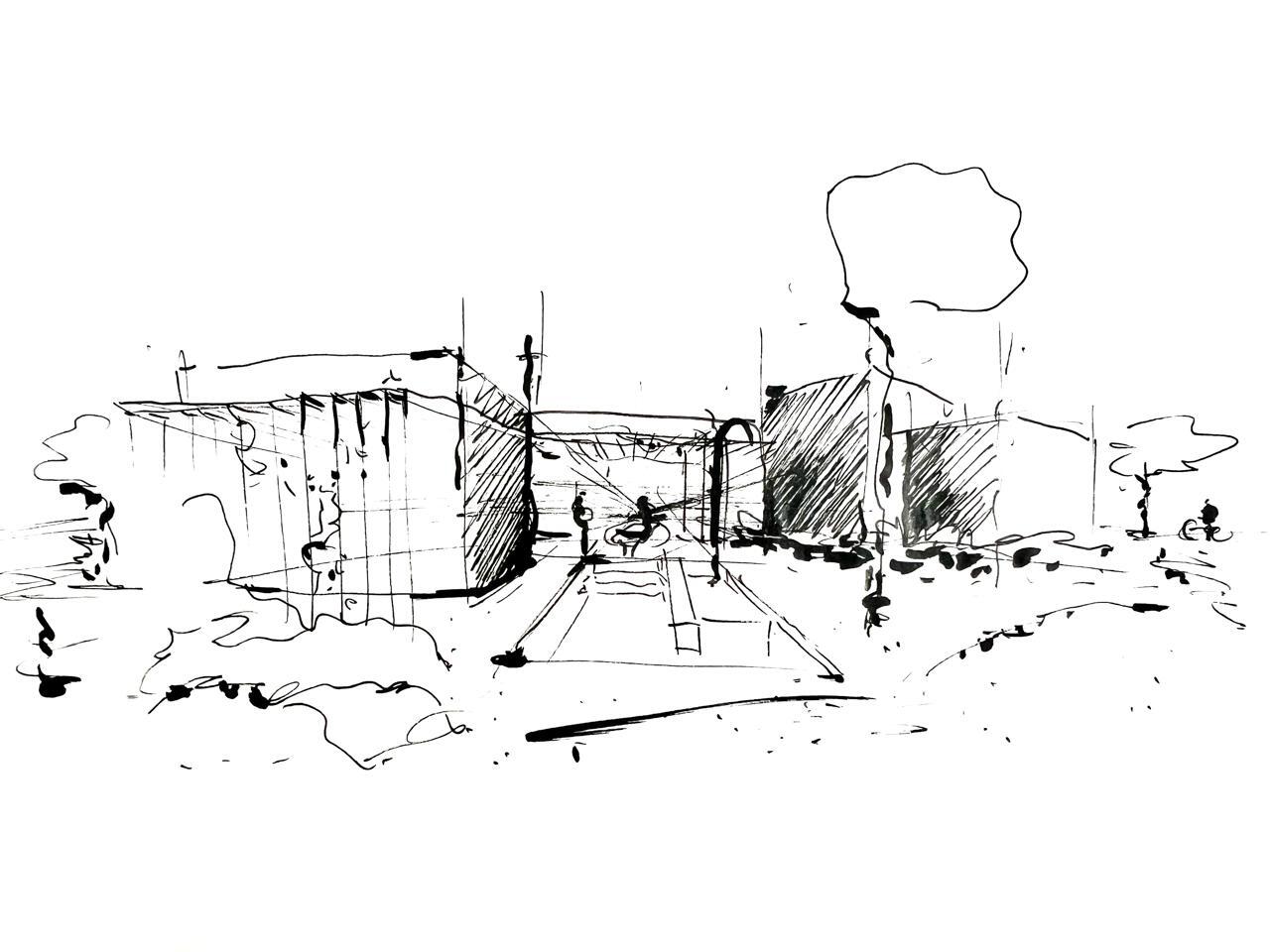
Their arrangement, far from being random, is organized around the central area of the courtyard, the protagonist of the proposal.
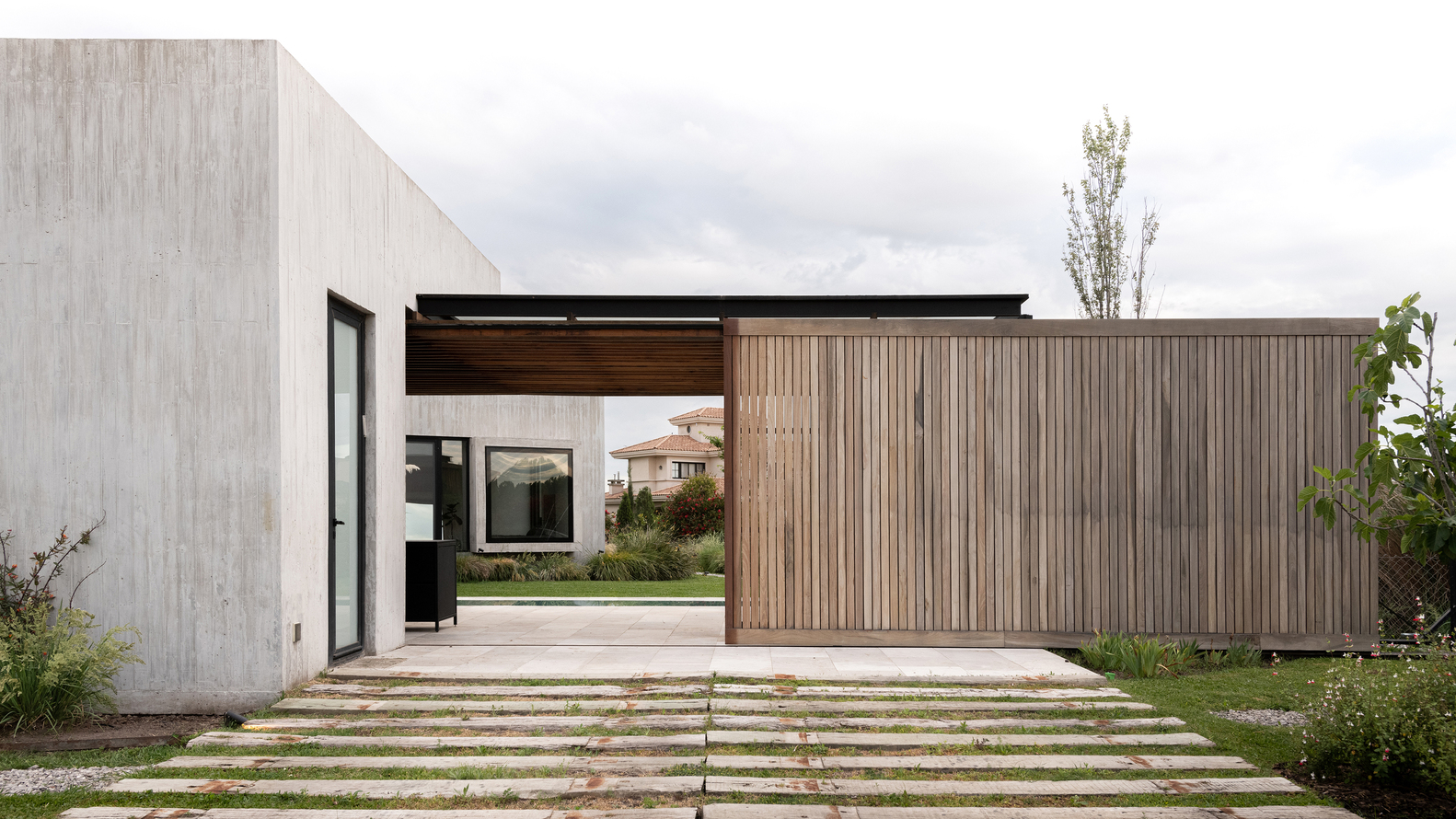
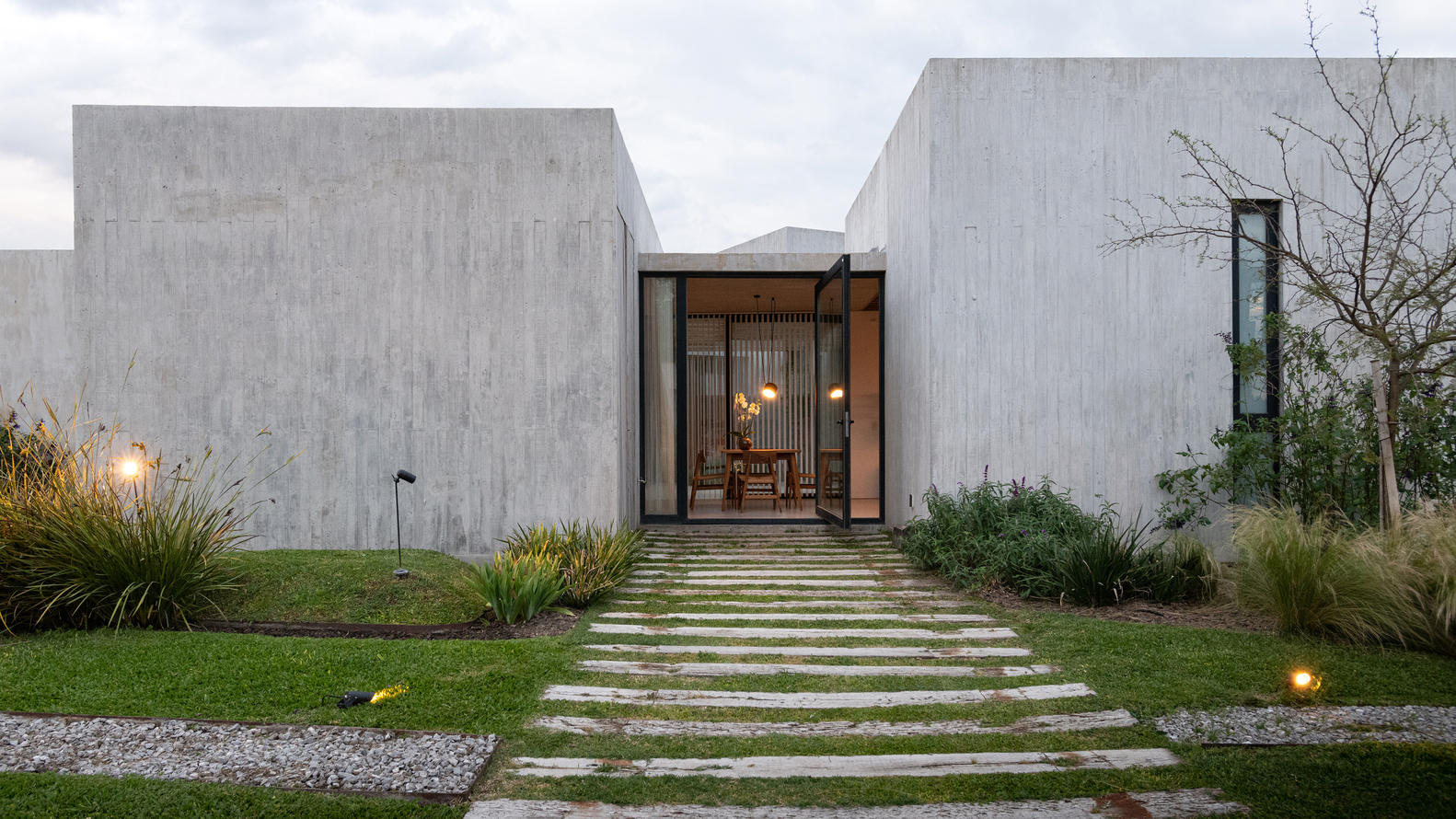
The exposed concrete pieces appear solid and somewhat impermeable from the exterior of the lot, with limited and precise openings.
In contrast, they find their breadth and fluidity with the exterior space as they open towards the north, coinciding with the central part of the lot.
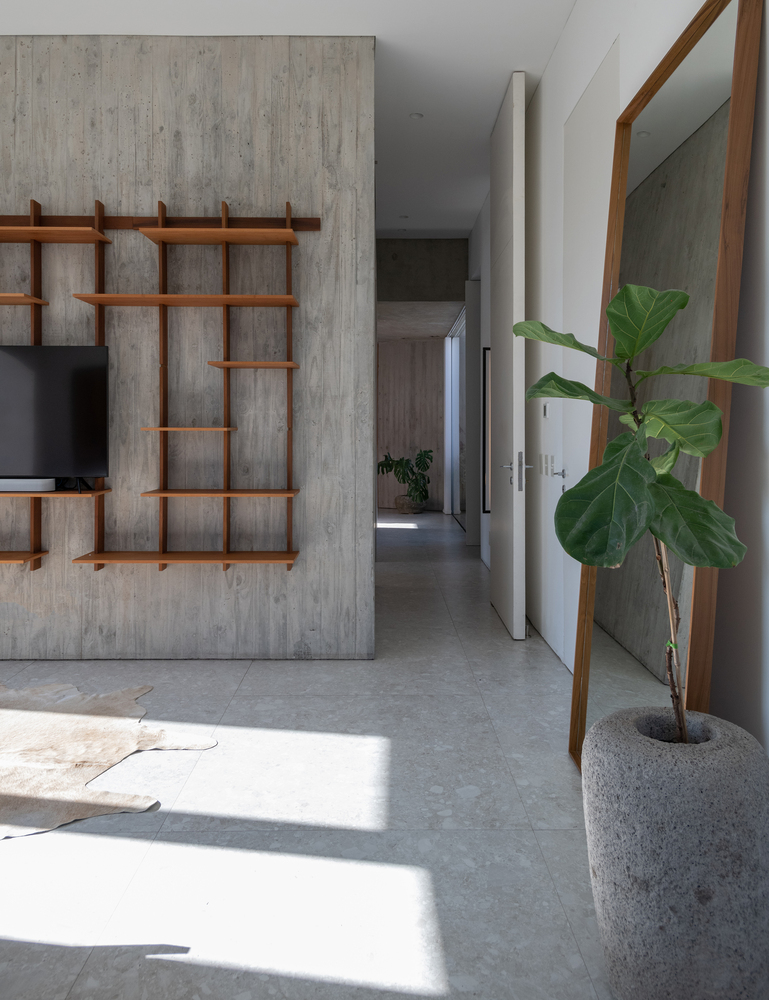
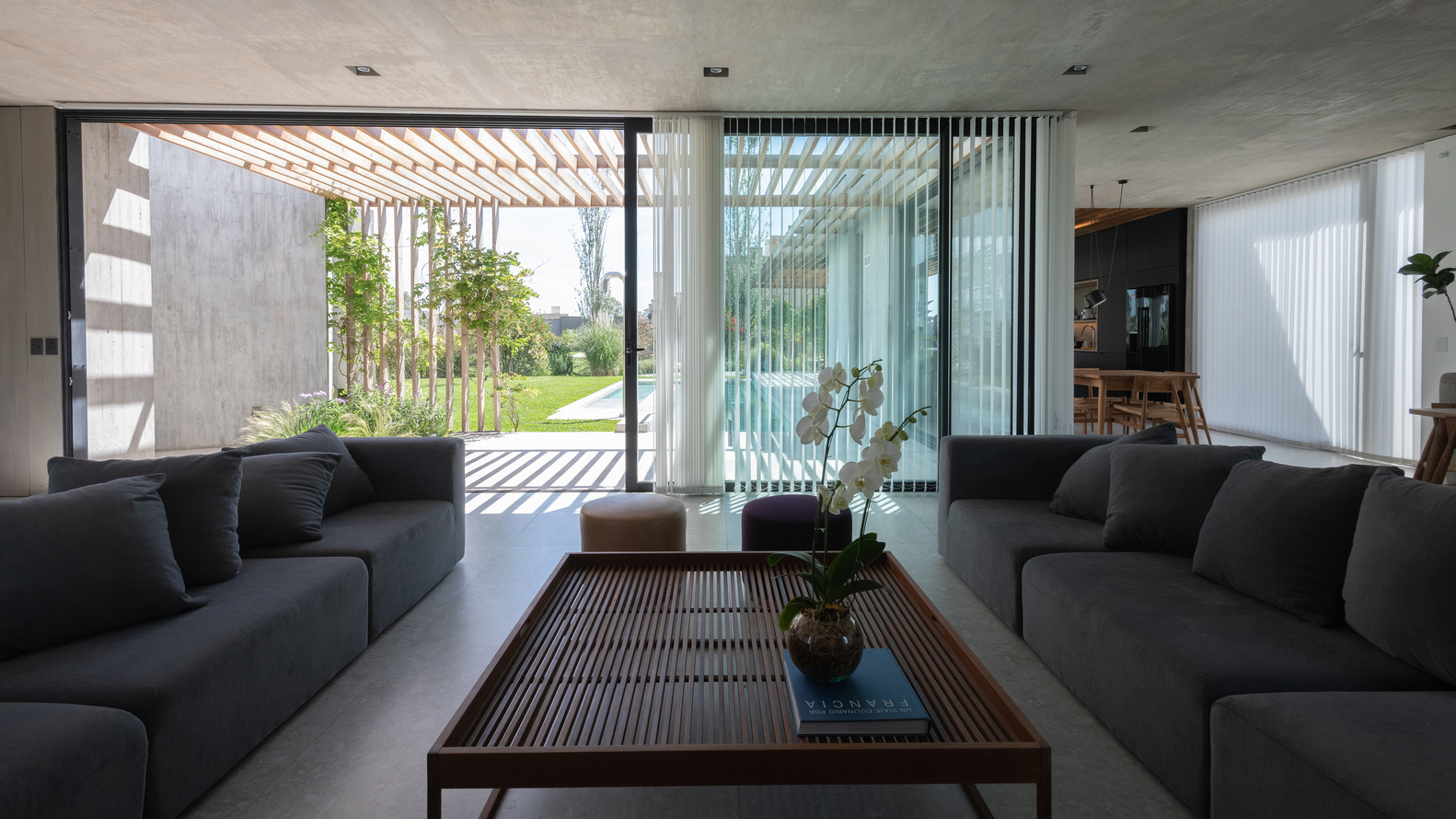
The main entrance, oriented perpendicular to the longitudinal piece of the social area, frames the center of the ensemble from the outside, blurring the boundaries between the interior and exterior of the environment.
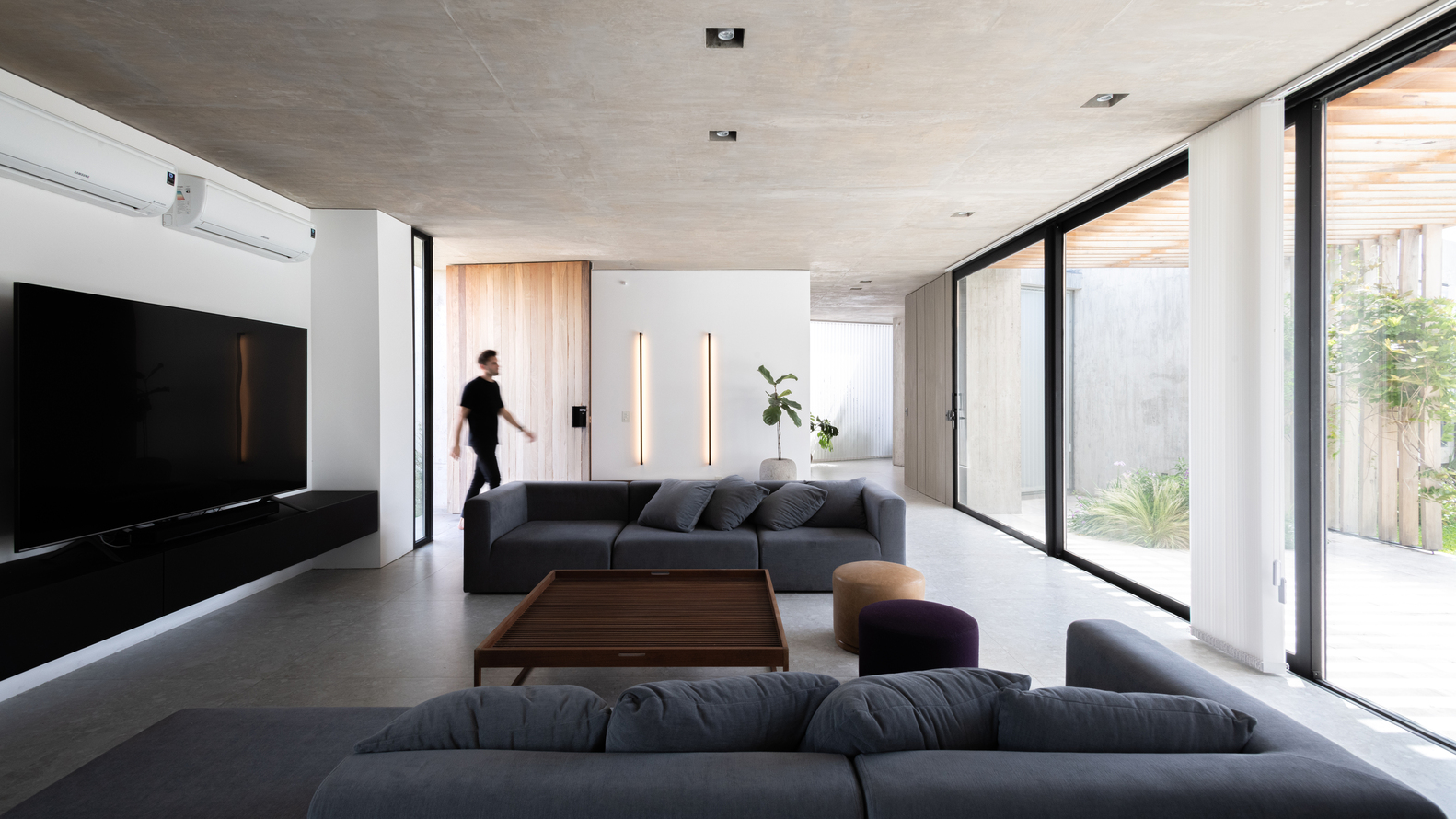
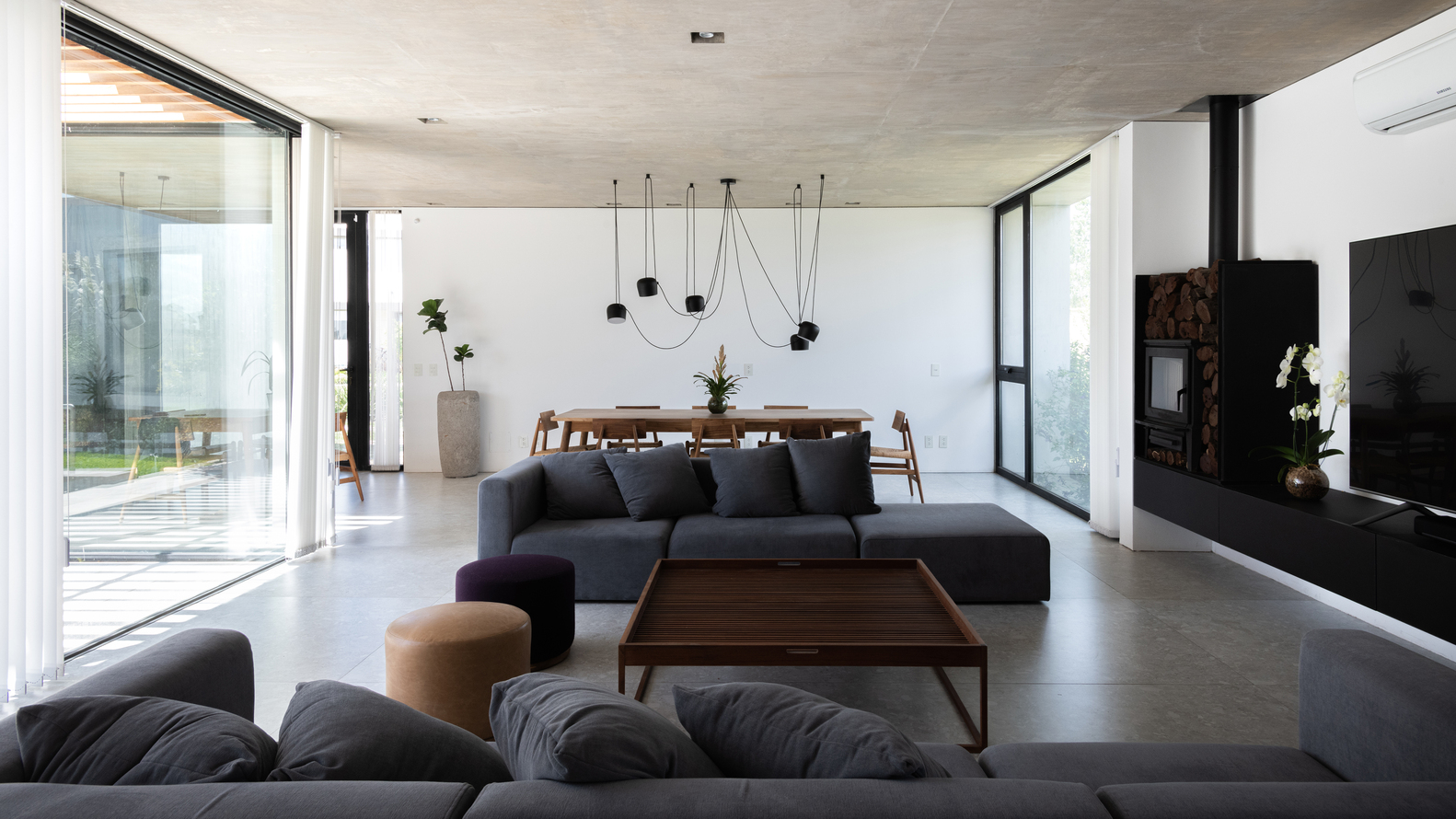
The social area of the complex dominates the center of the composition and connects to the private area and the kitchen area through two lightweight partitions that allow for both the continuity of the main circulation and the possibility of independent use, responding to family routines.
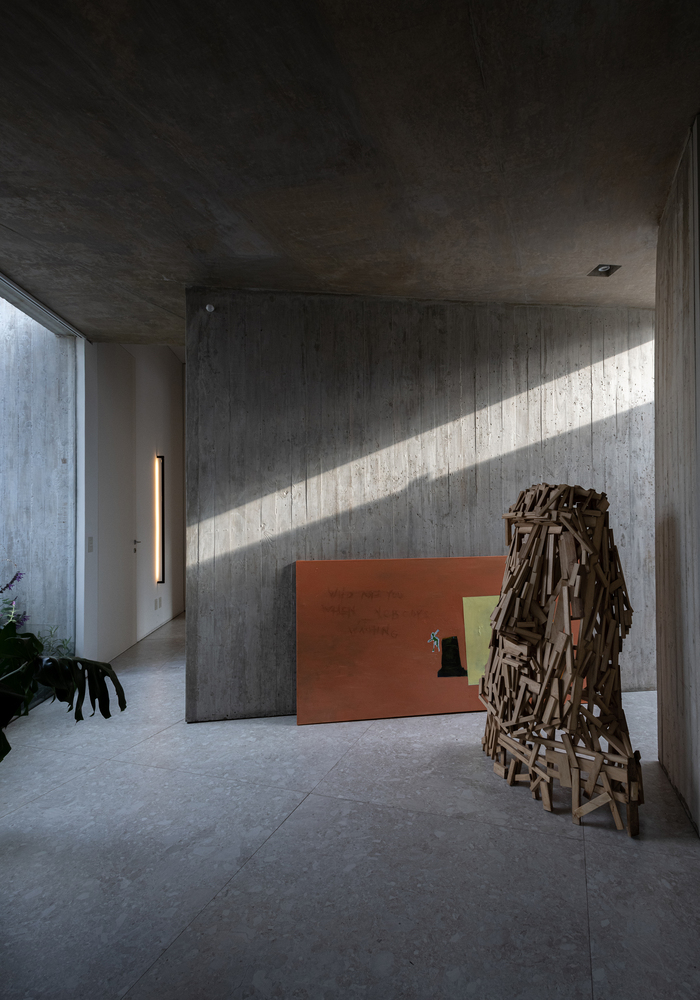
The interior spatiality in each of the pieces is determined by the different heights they adopt and their natural light entry, generating atmospheres that are more spacious and bright combined with others that are warmer and cozier, all in full contact with their immediate surroundings.
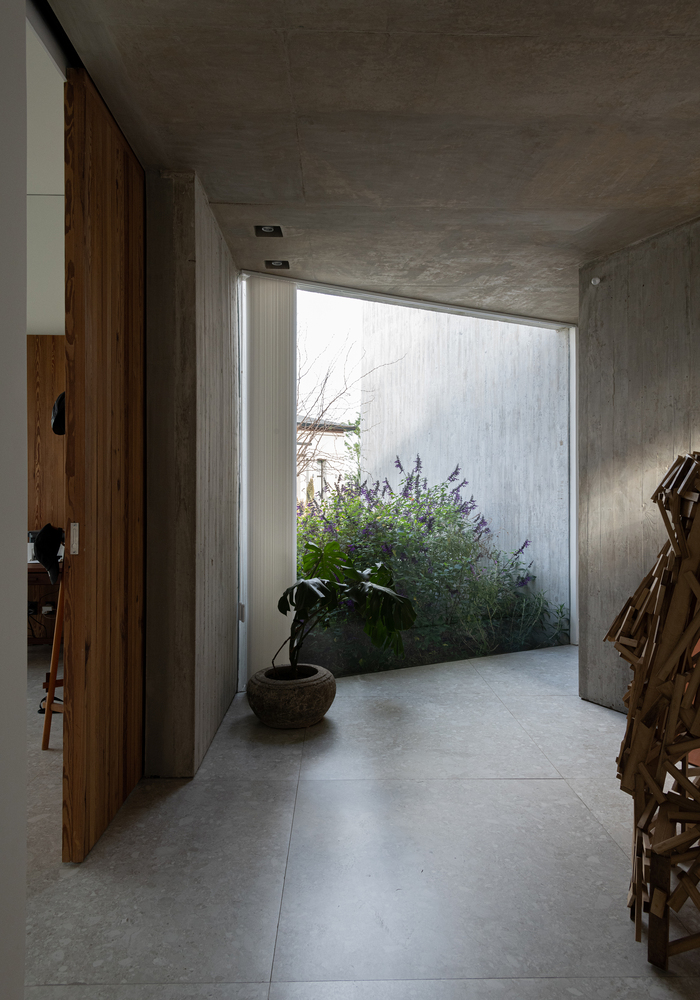
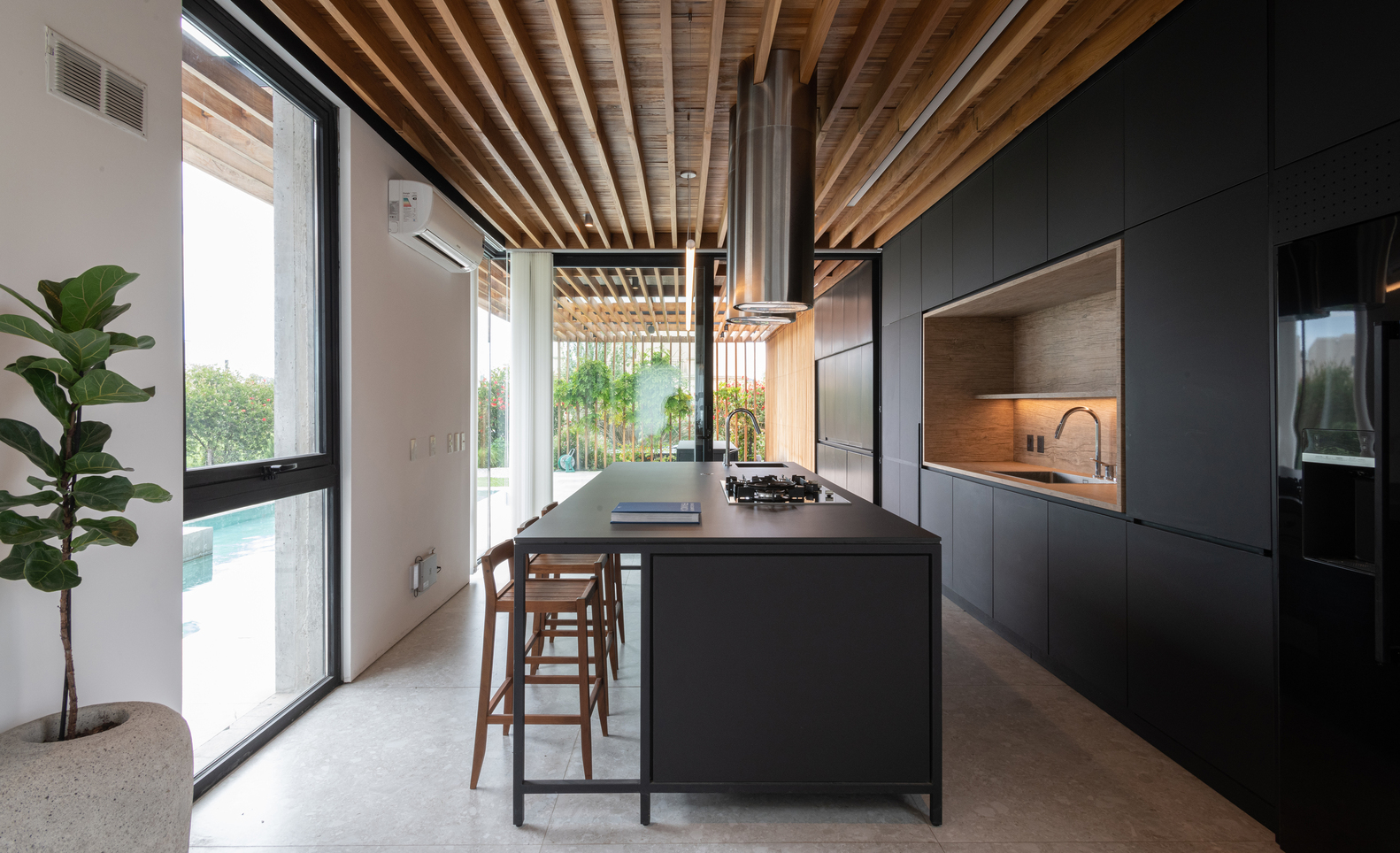
In this way, each volume opens from different angles towards the north, taking advantage of the solar path at different times of the day, and closes towards the southwest with precise and limited openings.
The solar path allows the private area of the bedrooms to receive sunlight from the east in the morning, while the service area receives the sun during the late afternoon.
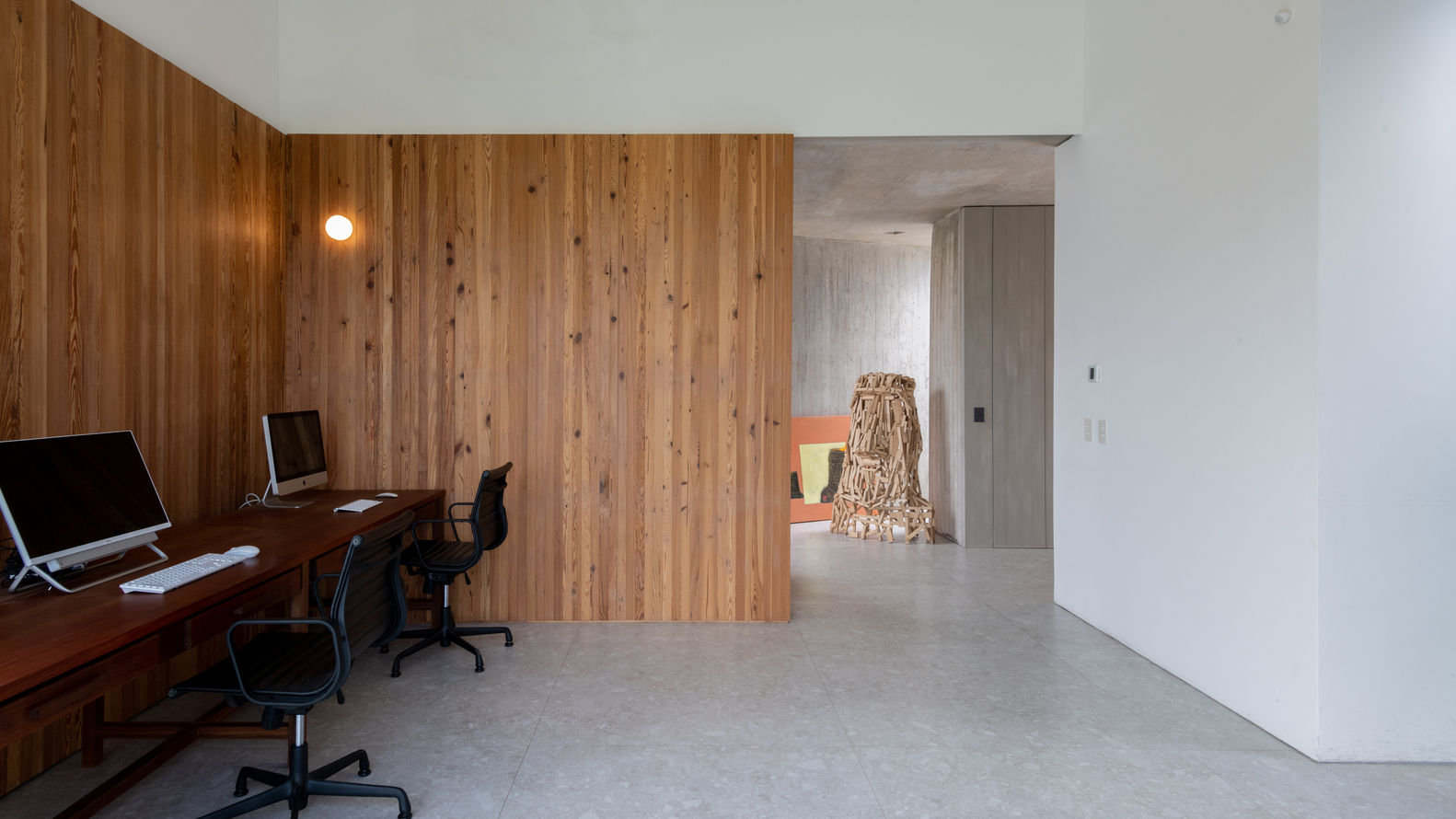
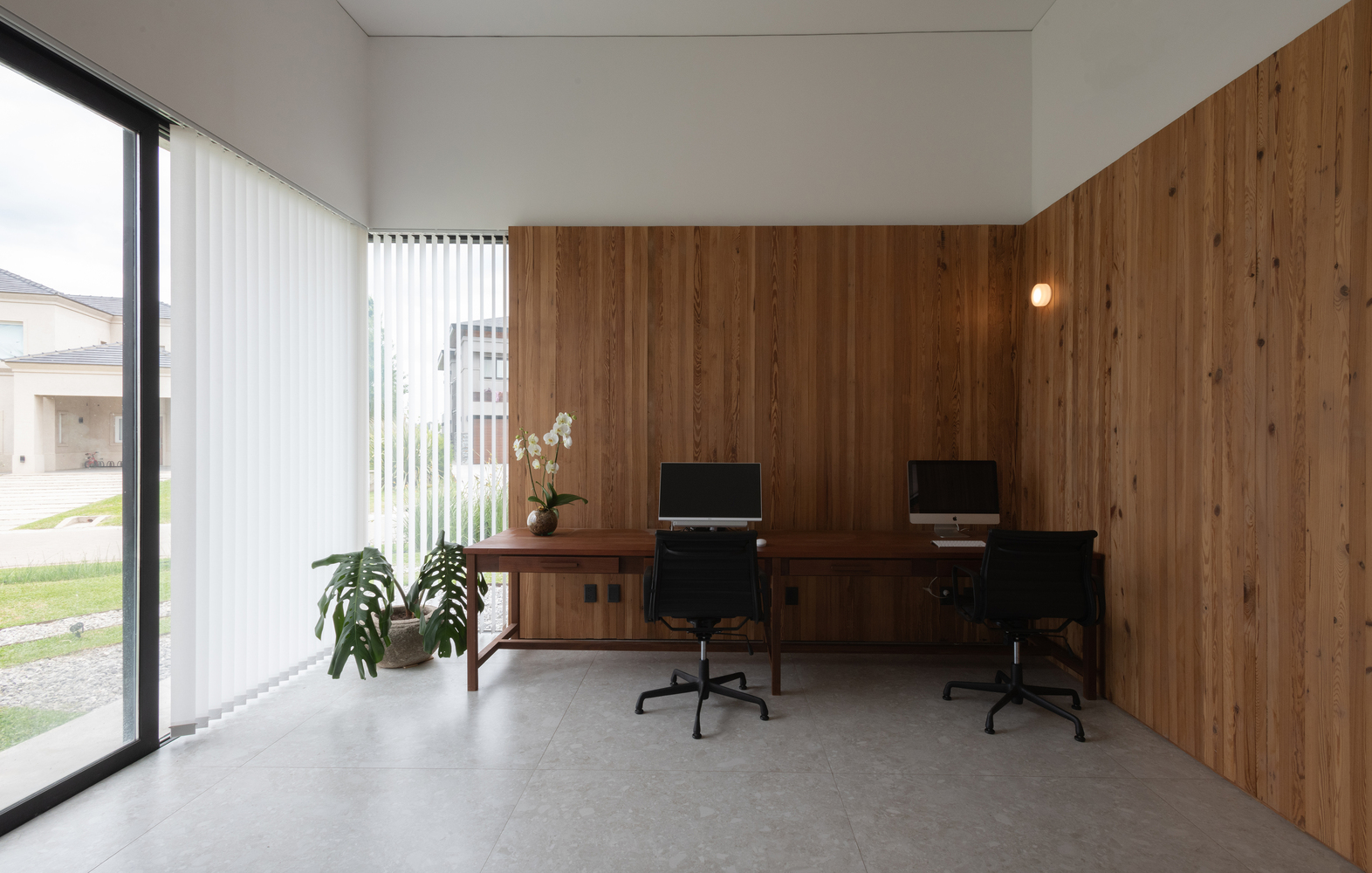
The study area oriented to the south allows for more controlled lighting for a better working environment, while the wet cores supporting the private area are oriented towards the south with minimal openings.
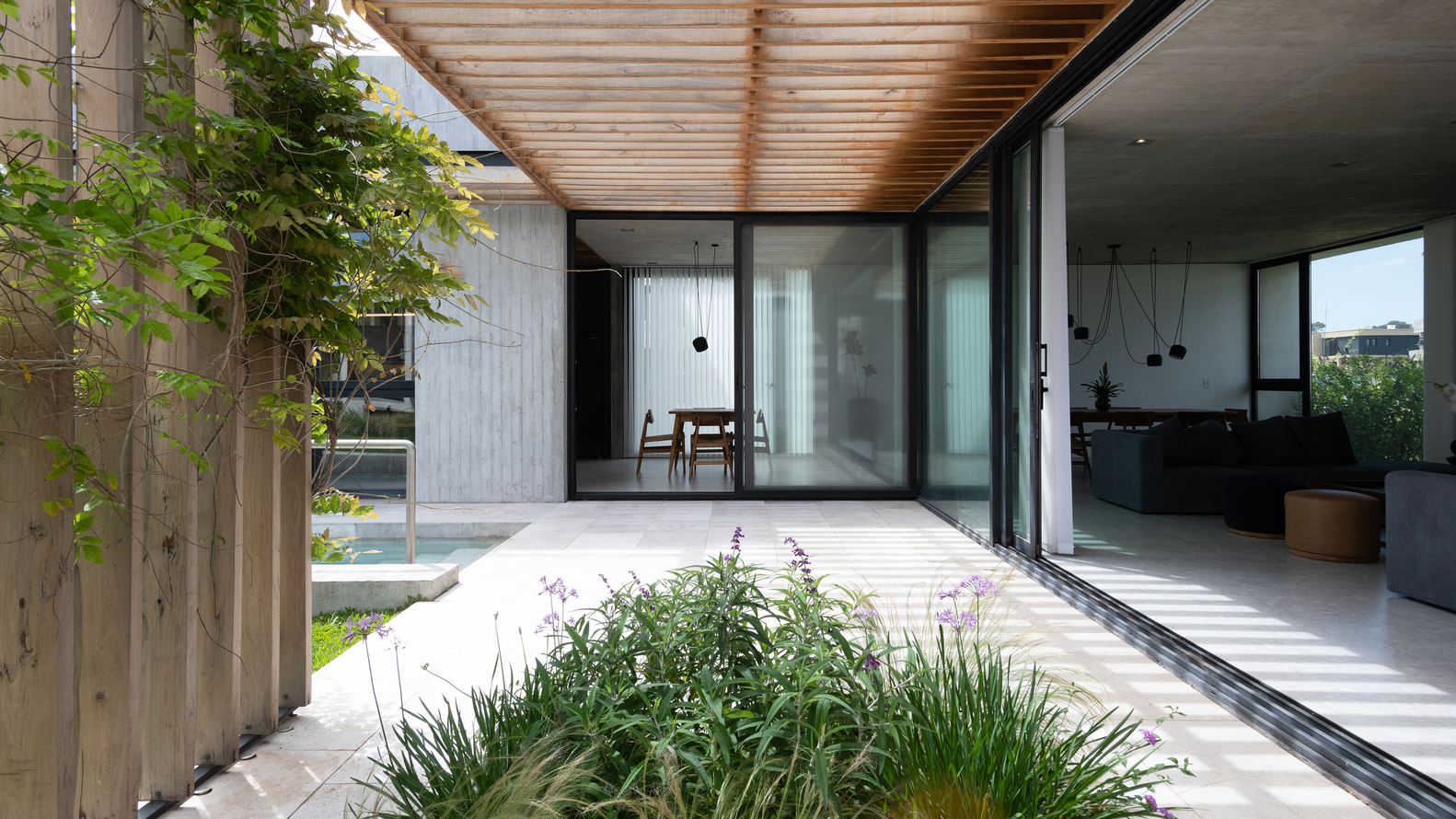
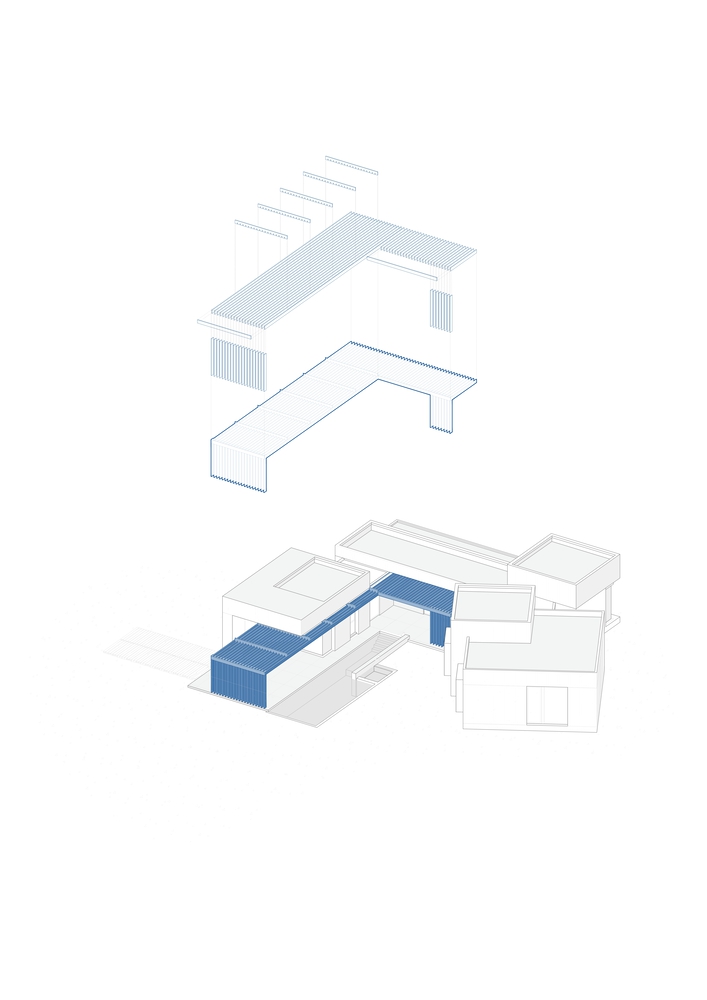
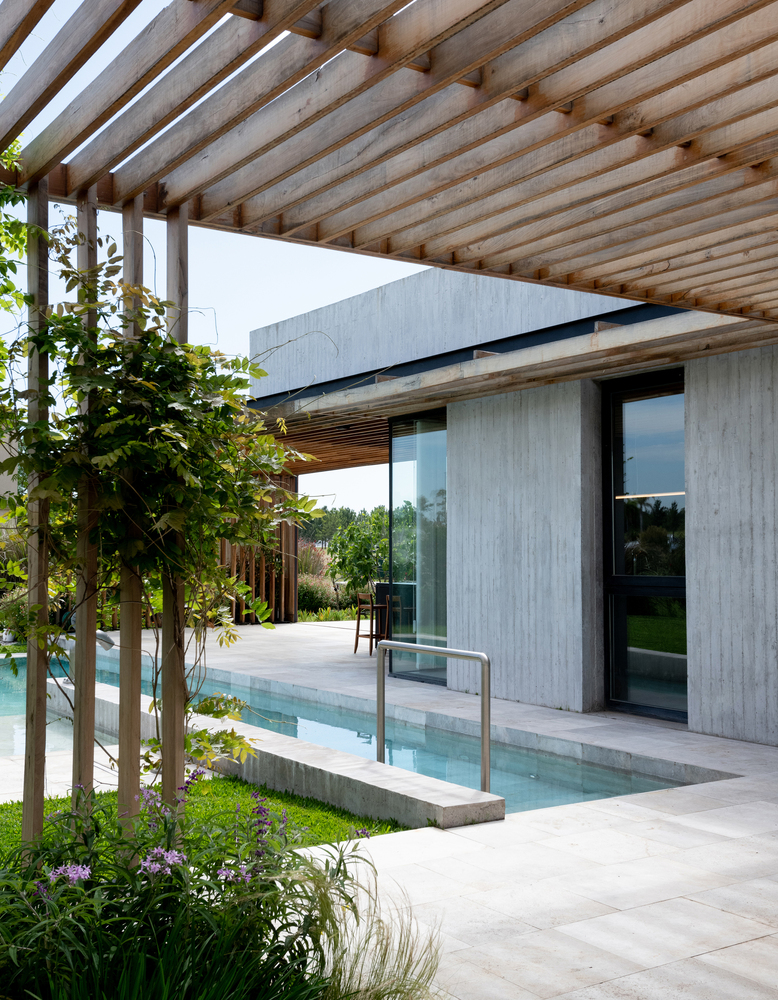
The pergola connects the volumes, generating a semi-permeable funnel between the interior and exterior of the house.
The semi-covered area of the grill under the pergola integrates with the kitchen through expansive carpentry, unifying the uses.
The landscaping of the proposal is divided into two zones: first, a ring of native vegetation that guides the exterior path, filters the light entering the interior, and welcomes visitors to the home.
The "sidewalk" expands and allows the path from the street to take on breadth without the house losing its privacy.
The entire radial pathway finds its beginning and end at the center of the ensemble, led by the longitudinal pool accompanied by the solid lapacho gallery that connects the pieces and frames the landscape, allowing daily activities to expand outward.
The tree species used, oriented to the south, were selected to be deciduous, so that in summer the dense canopy filters the light that hits the volumes, while in winter it allows more direct light into the interior. All the pieces are of native origin from the local ecosystem.
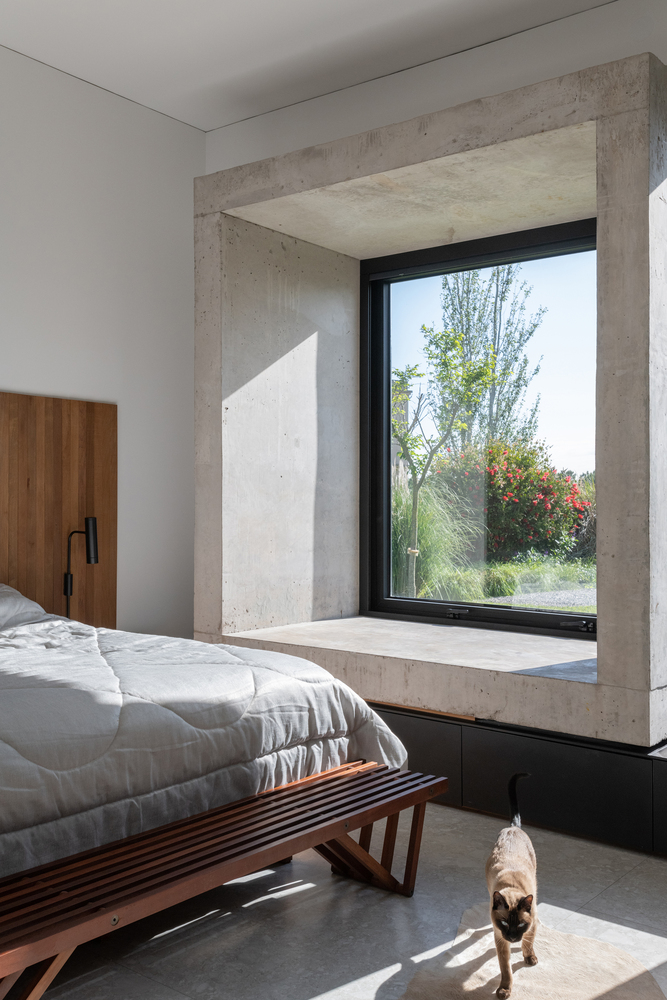
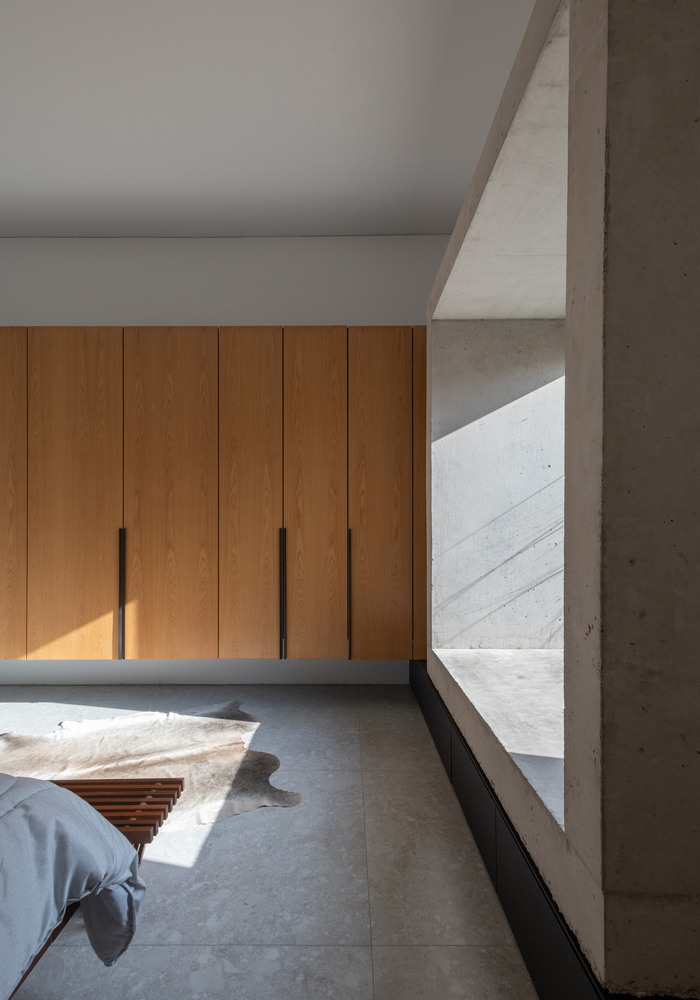
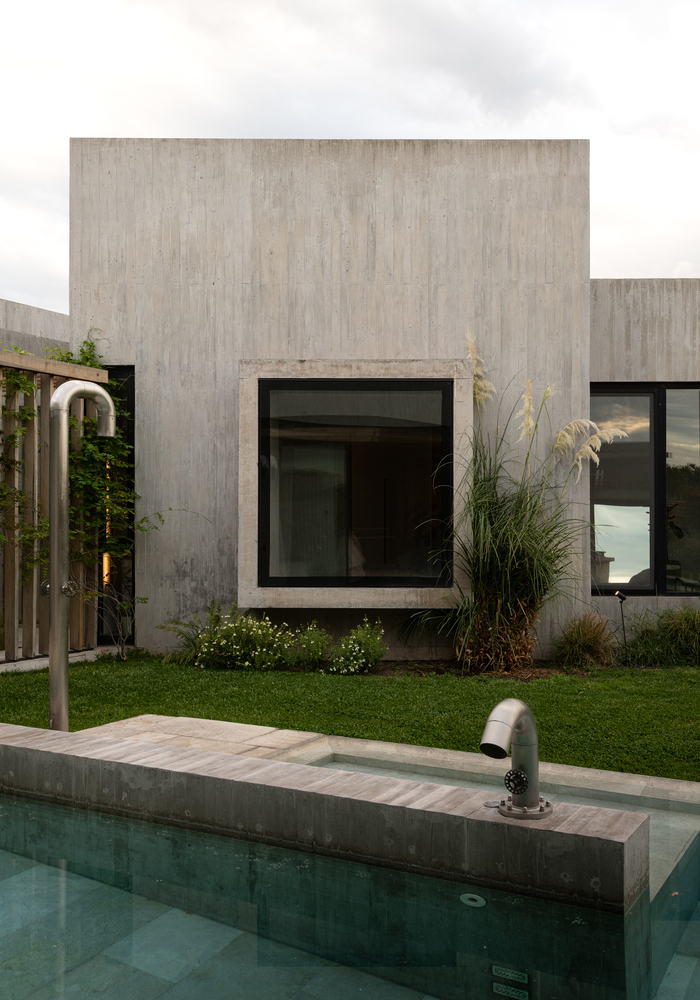
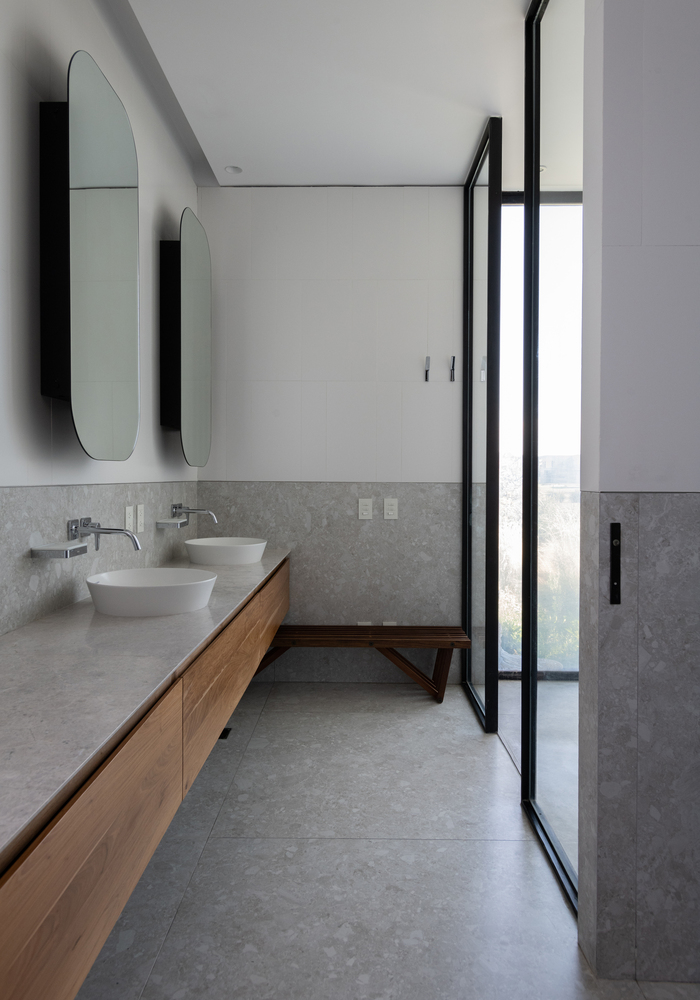
The expressiveness of the materials used creates a play of opposites between cold and warm elements, giving character and dynamism to the proposal.
The exposed concrete and the continuous flooring grid in all interior environments contrast with the warmth of the lapacho wood used in the front door and the structure of the pergola.
The wooden furniture, the wood-burning stove, and the natural textiles enhance the warm and homely quality of each environment.