Transformation House
TRANSFORMATION HOUSE
Studio Juggernaut
ARCHITECTS
Studio Juggernaut
LEAD ARCHITECT
Harsh Vardhan Jain, Saurabh Jain
LEAD TEAM
Harsh Vardhan Jain, Saurabh Jain
DESIGN TEAM
Prabhjot Kaur, Ingid Dutta
GENERAL CONTRACTOR
Juggernaut Associates Pvt. Ltd.
ENGINEERING & CONSULTING > STRUCTURAL
Jai Shree Consultants
ENGINEERING & CONSULTING > ELECTRICAL
Ims Consultants
ENGINEERING & CONSULTING > MEP
Vinod Sharma
MANUFACTURERS
Chaitanya Solar, International Glazing Technologies, Iqrup & Ritz , Kohler, Kone, Lamp Shaper, Mitsubishi Electric, Oorjaa Lights
LANDSCAPE ARCHITECTURE
Brm Farms
PHOTOGRAPHS
Niveditaa Gupta
AREA
540 m²
YEAR
2025
LOCATION
Gurugram, India
CATEGORY
Houses
English description provided by the architects.
Our urban landscapes are undergoing a rapid transformation, pressured by burgeoning populations and increasing demands on city infrastructure. To address these escalating challenges, urban planners continually revise zoning regulations.
In Delhi, for instance, a significant regulatory change introduced mandatory stilt parking on small urban lots with four habitable floors above. Gurugram, a satellite city, subsequently adopted similar amendments. A key distinction, however, lies in the underlying demand: Delhi's housing demand is genuine, whereas Gurugram's is largely speculative, evidenced by numerous vacant lots across its neighborhoods.
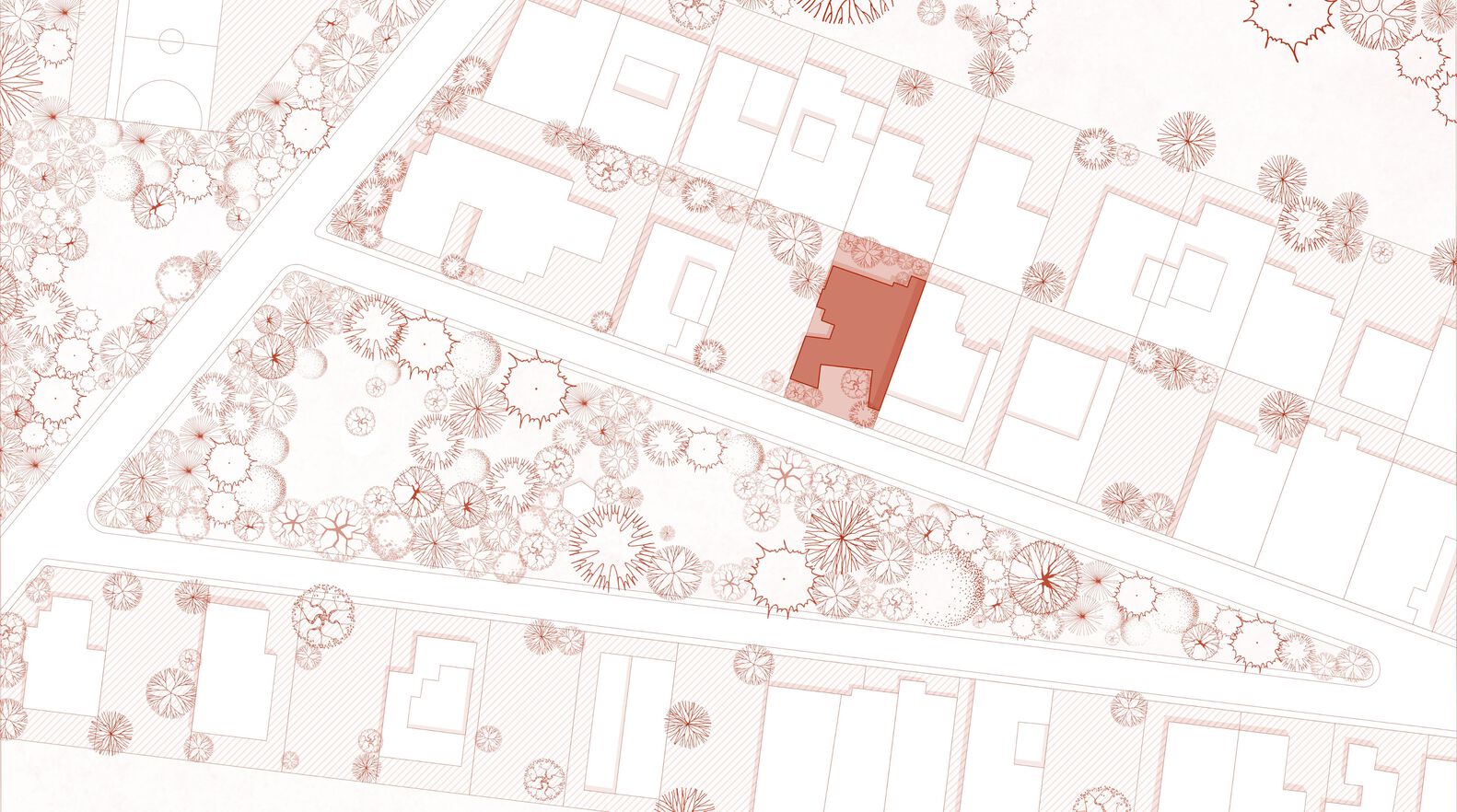
When a speculative housing block commenced construction next to our clients' residence, they sought our expertise to navigate this dilemma. For over two decades, they had resided in a duplex enveloped by gardens, enjoying unobstructed outward views due to the absence of neighboring structures.
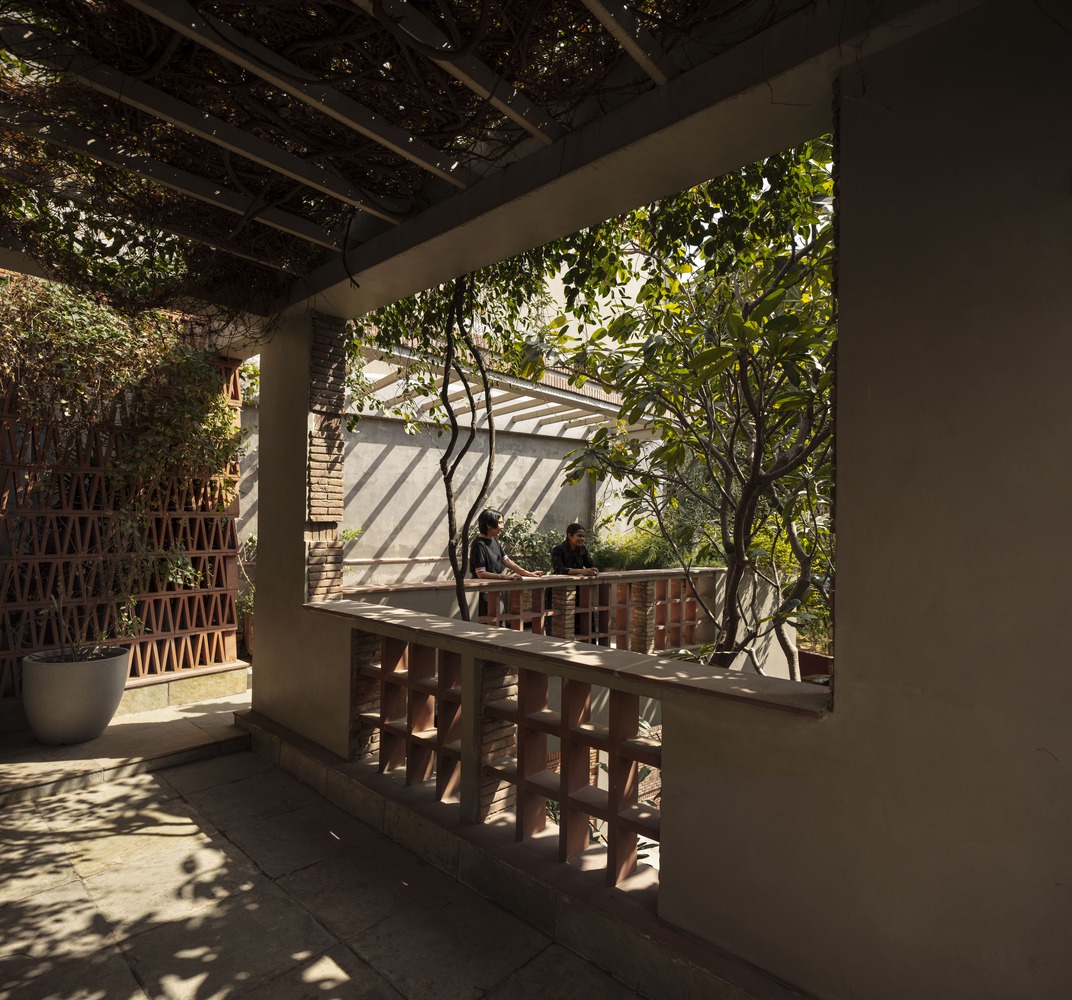
Now, a towering fifty-foot blank wall threatened to dominate their outlook. Their original home, designed twenty-five years prior by the renowned Delhi architect Mr. Rajeev Agarwal, possessed inherent value. Although the option to demolish and rebuild existed, we advocated for the preservation of this modern architectural heritage.
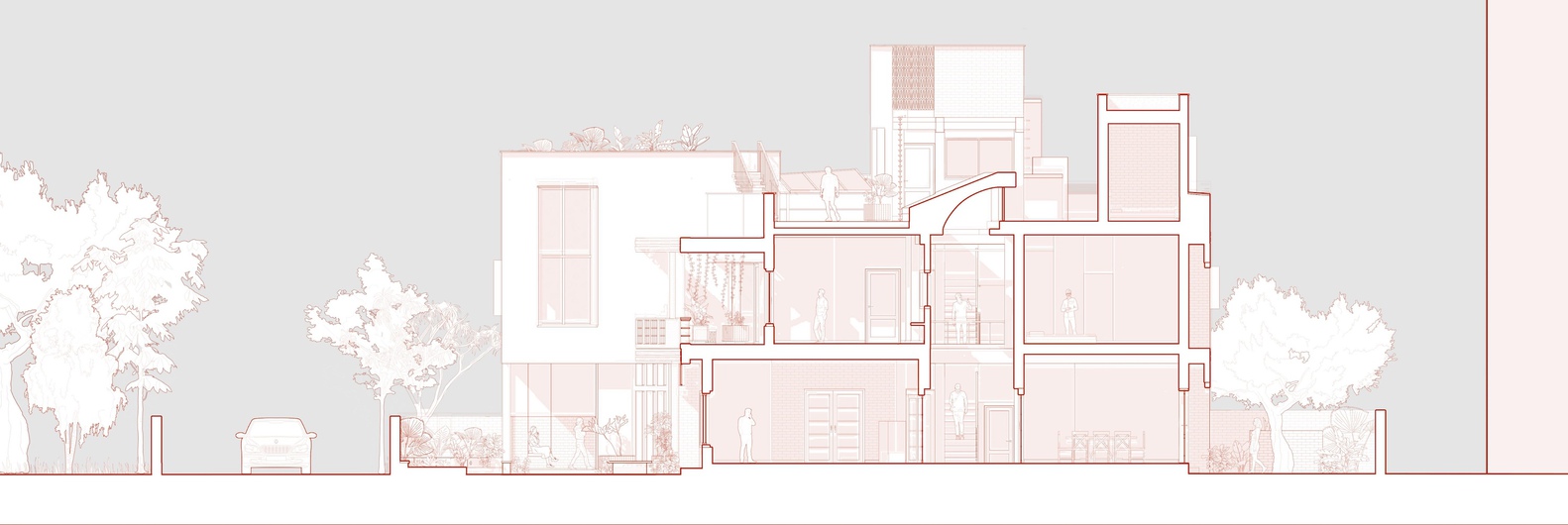
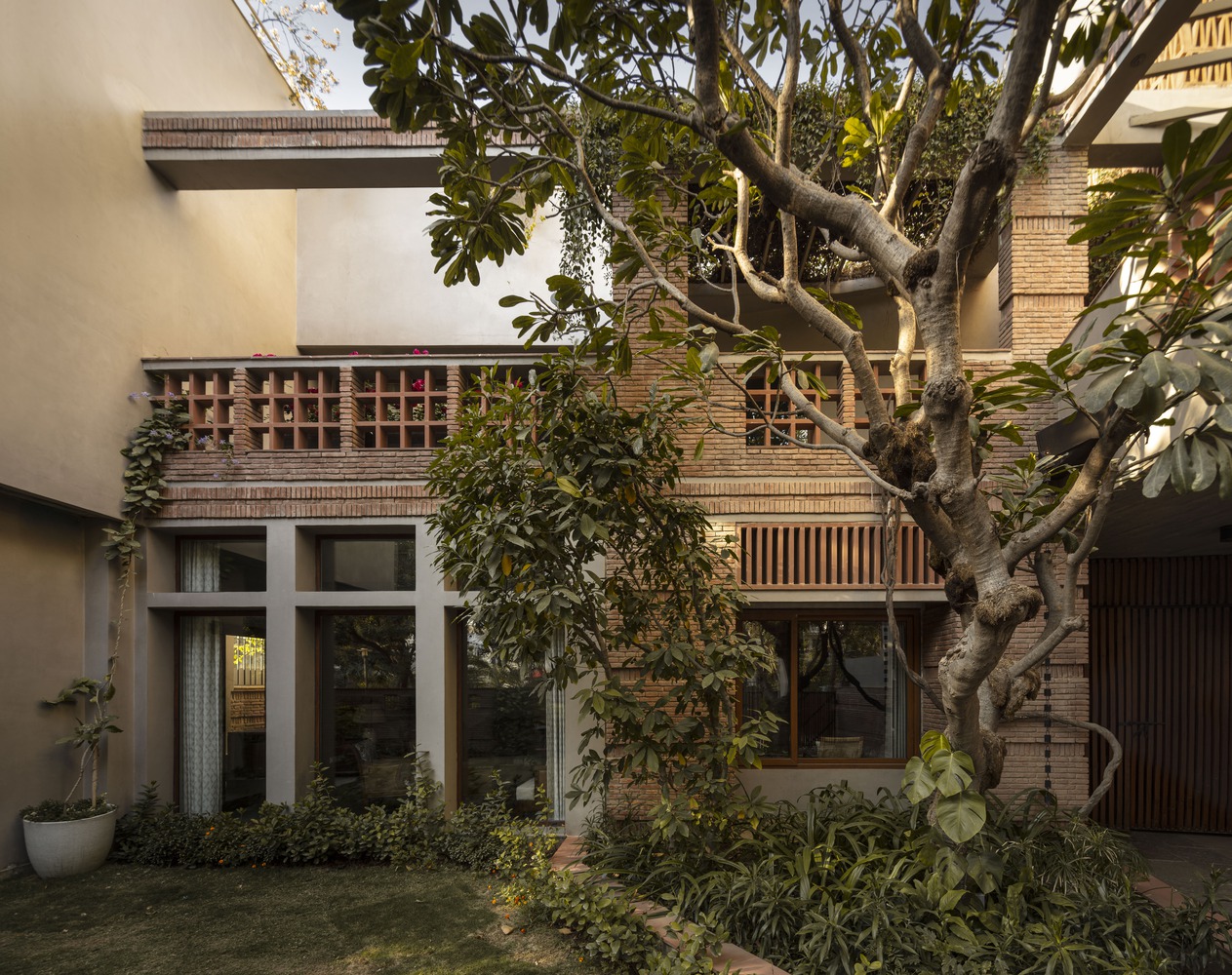
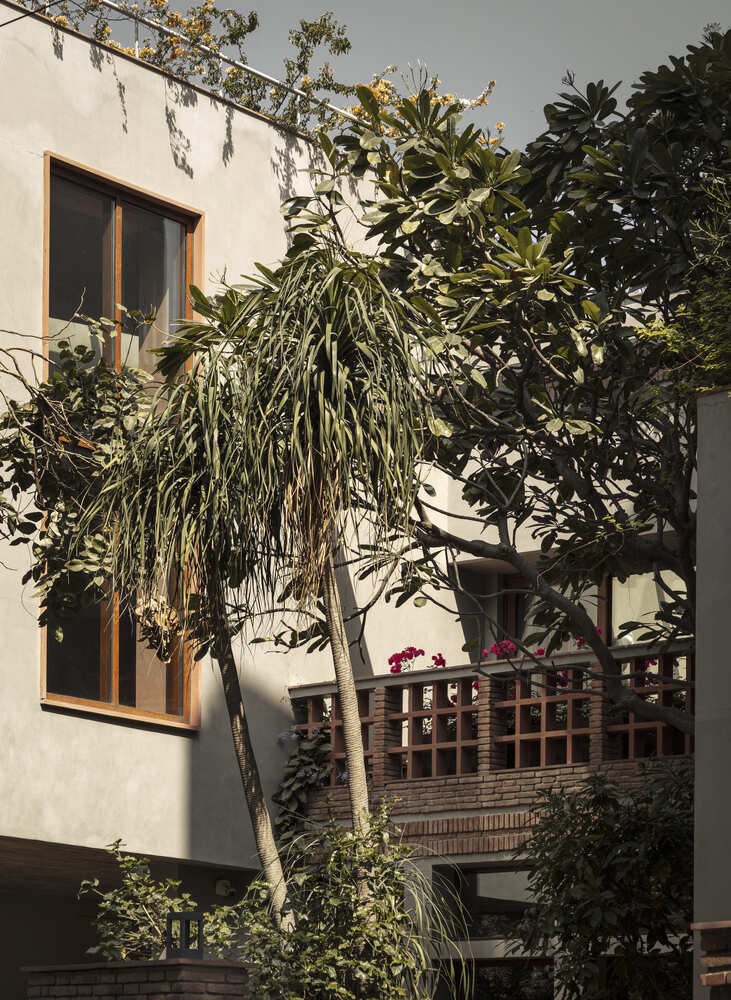
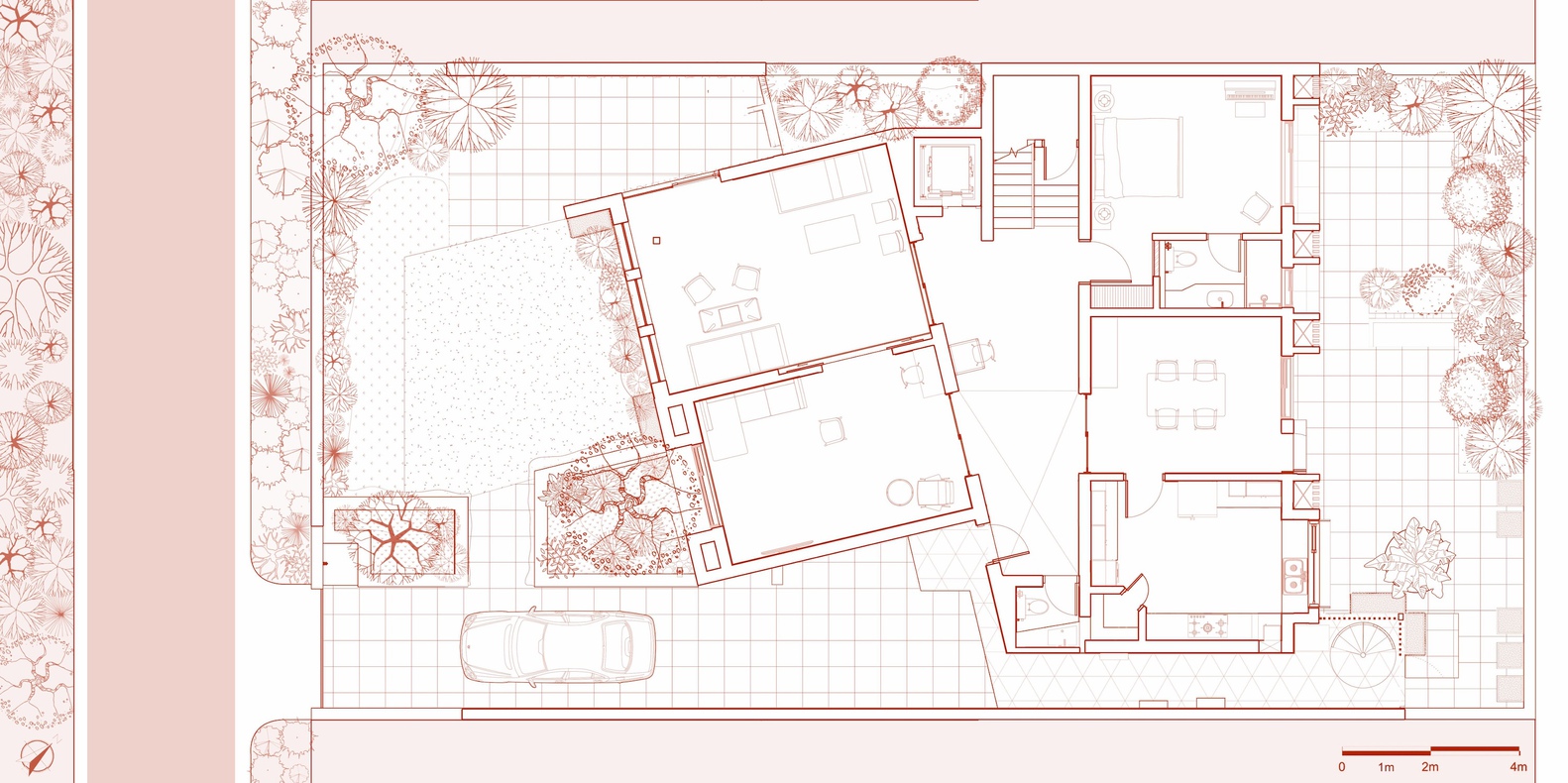
Our endeavor was to orchestrate a profound transformation: converting an outward-focused residence into an inward-looking courtyard house. This strategic shift redirected views inwards, centering on the venerable 'Champa' (frangipani) tree.
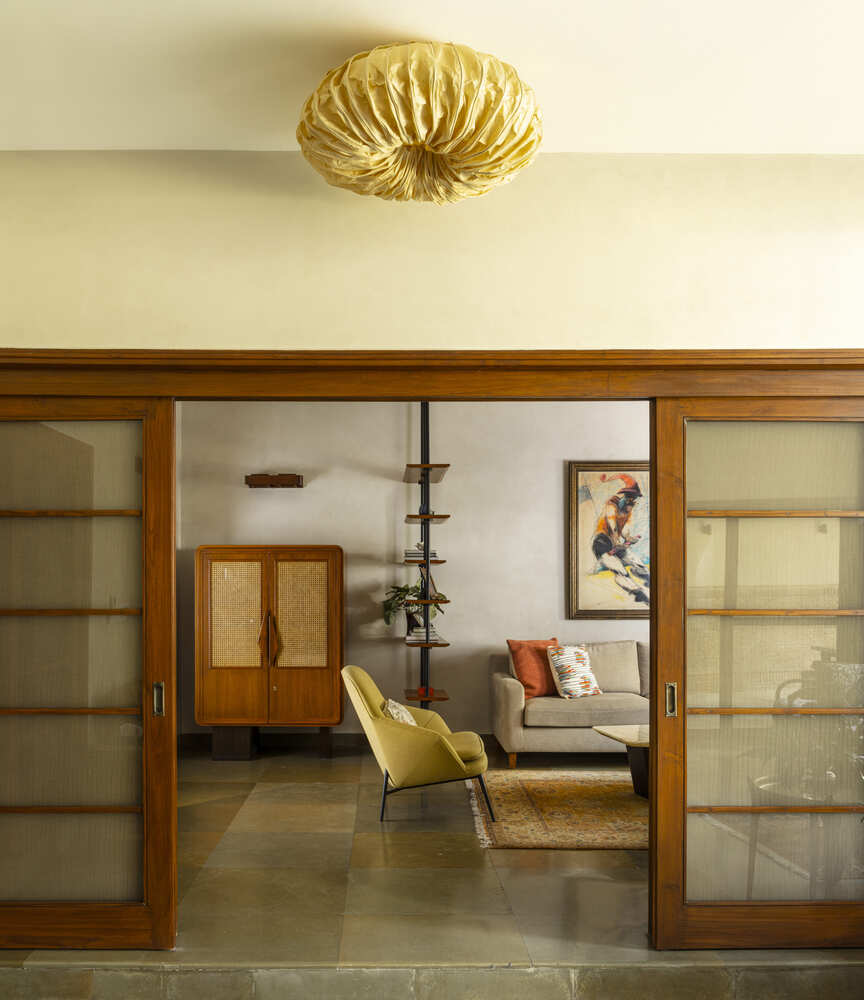
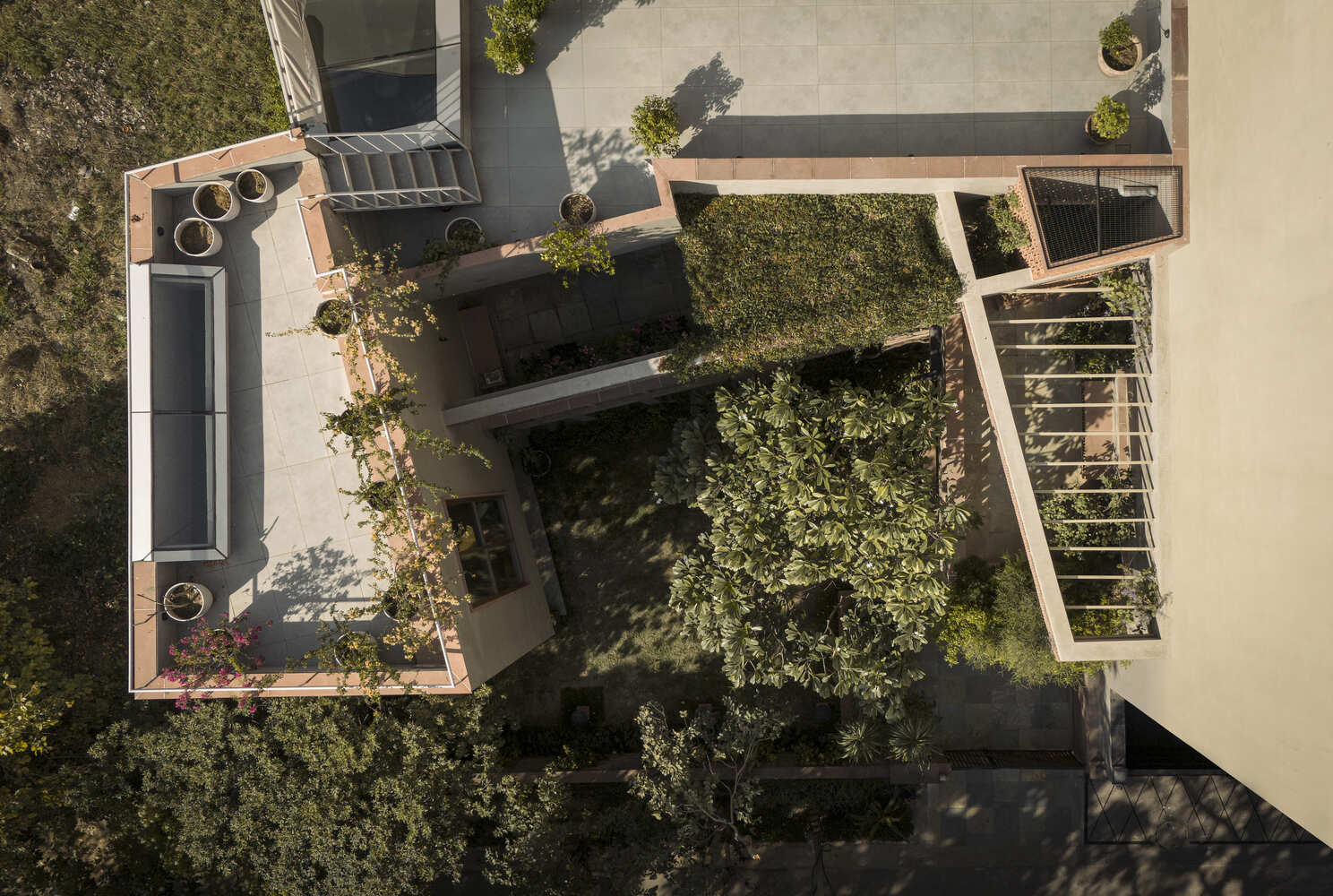
To define the courtyard, we extended the house's existing geometries to the permissible front setback.
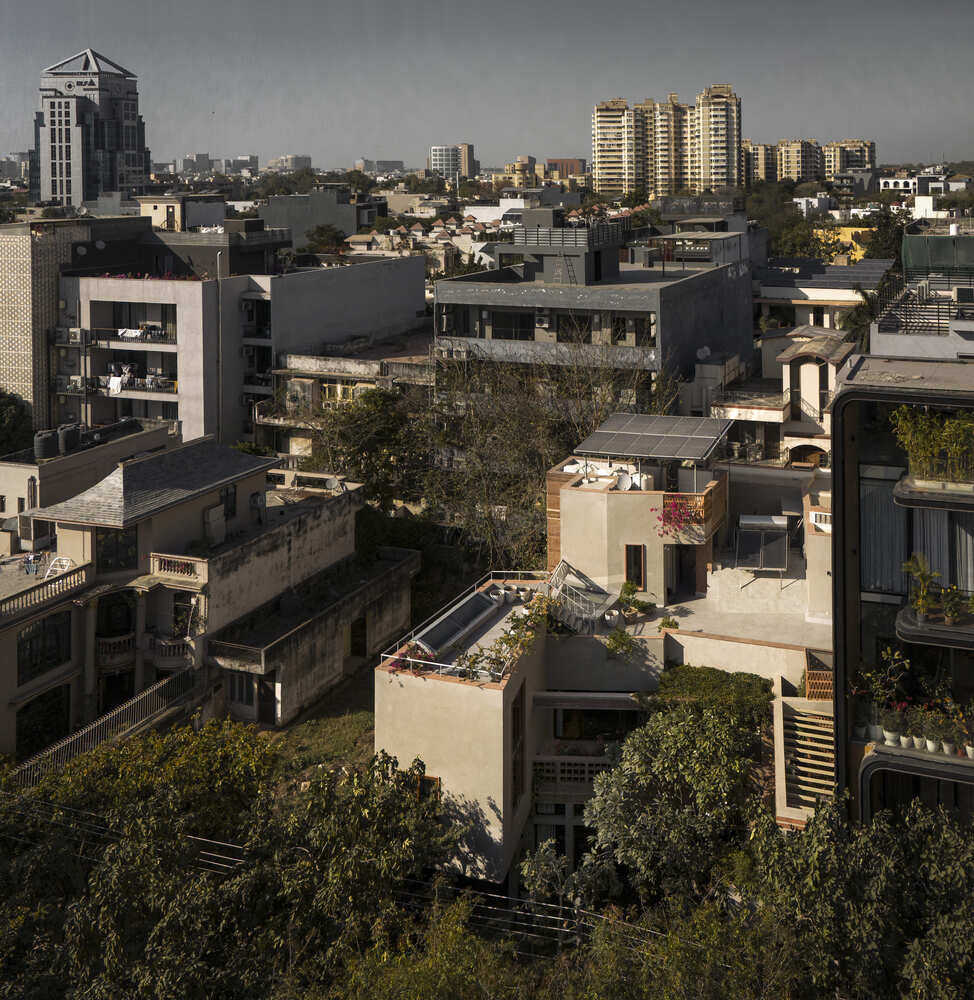
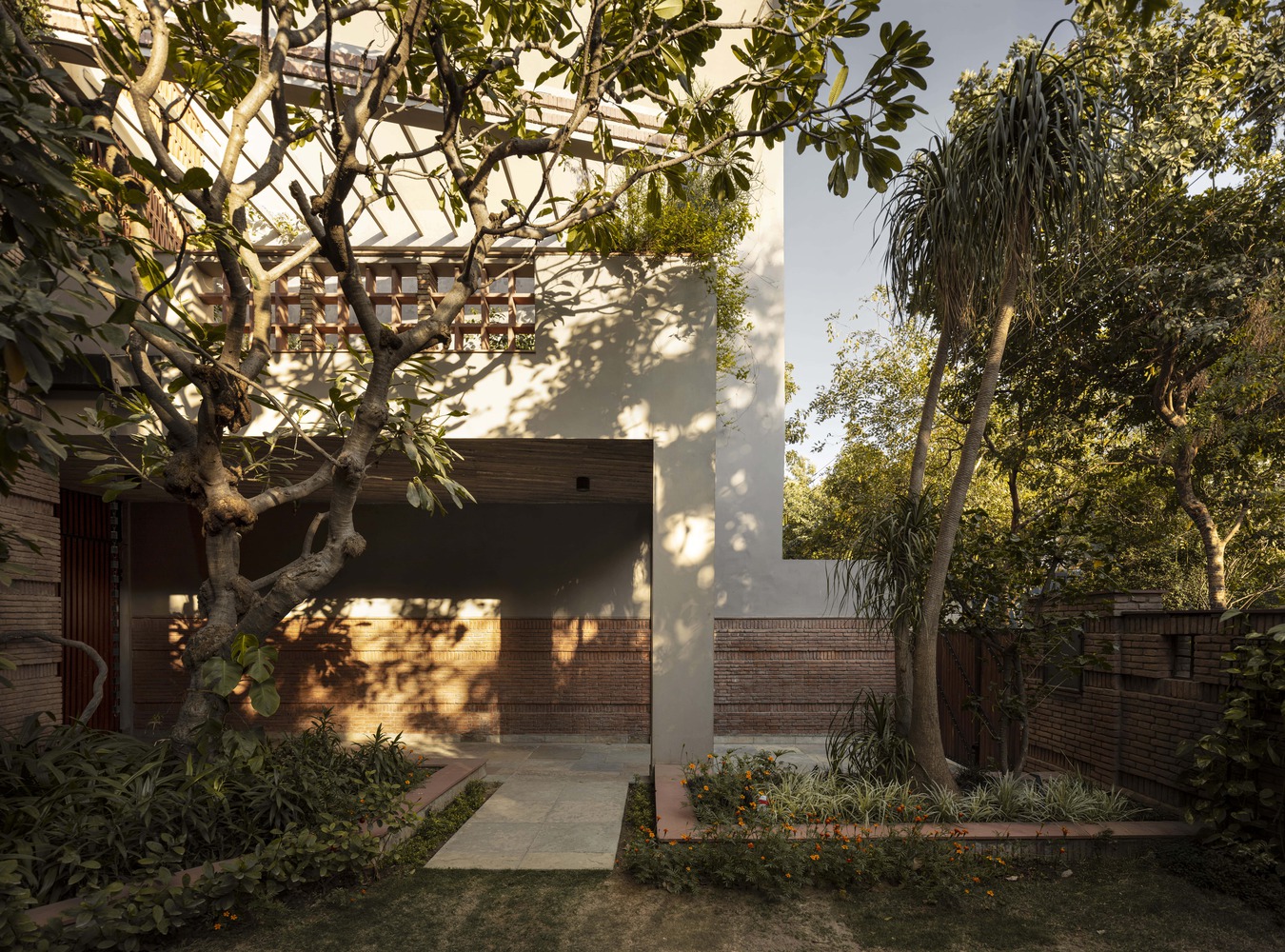
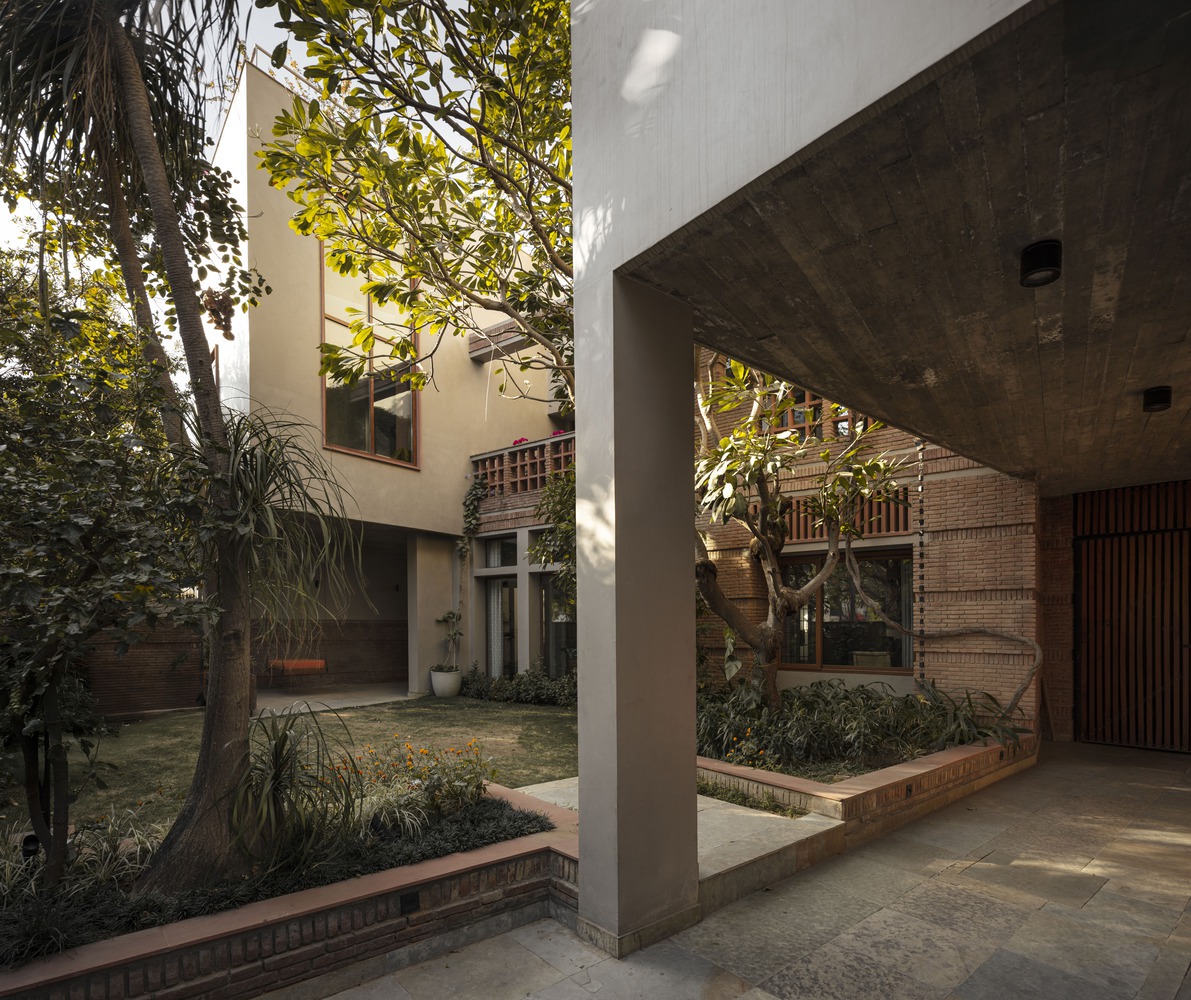
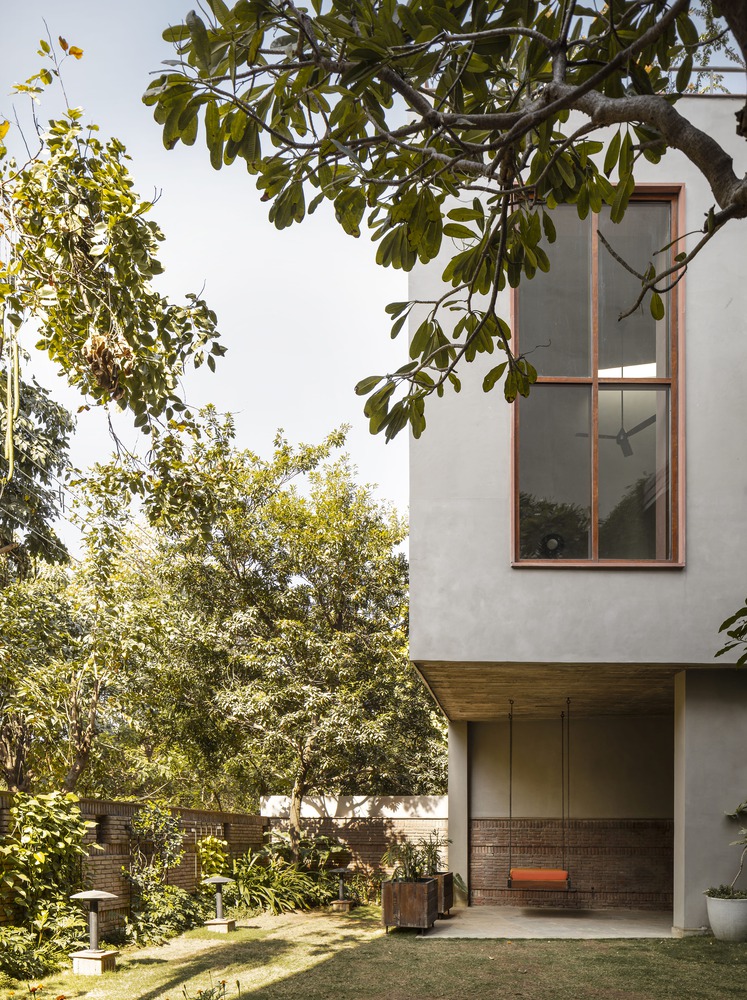
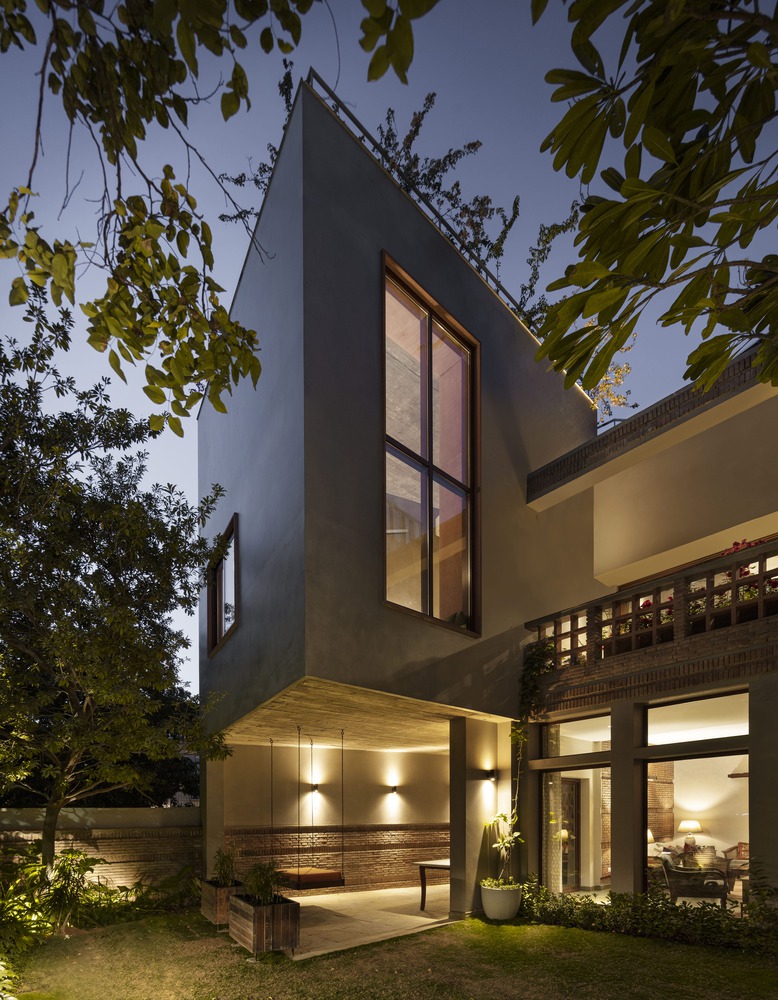
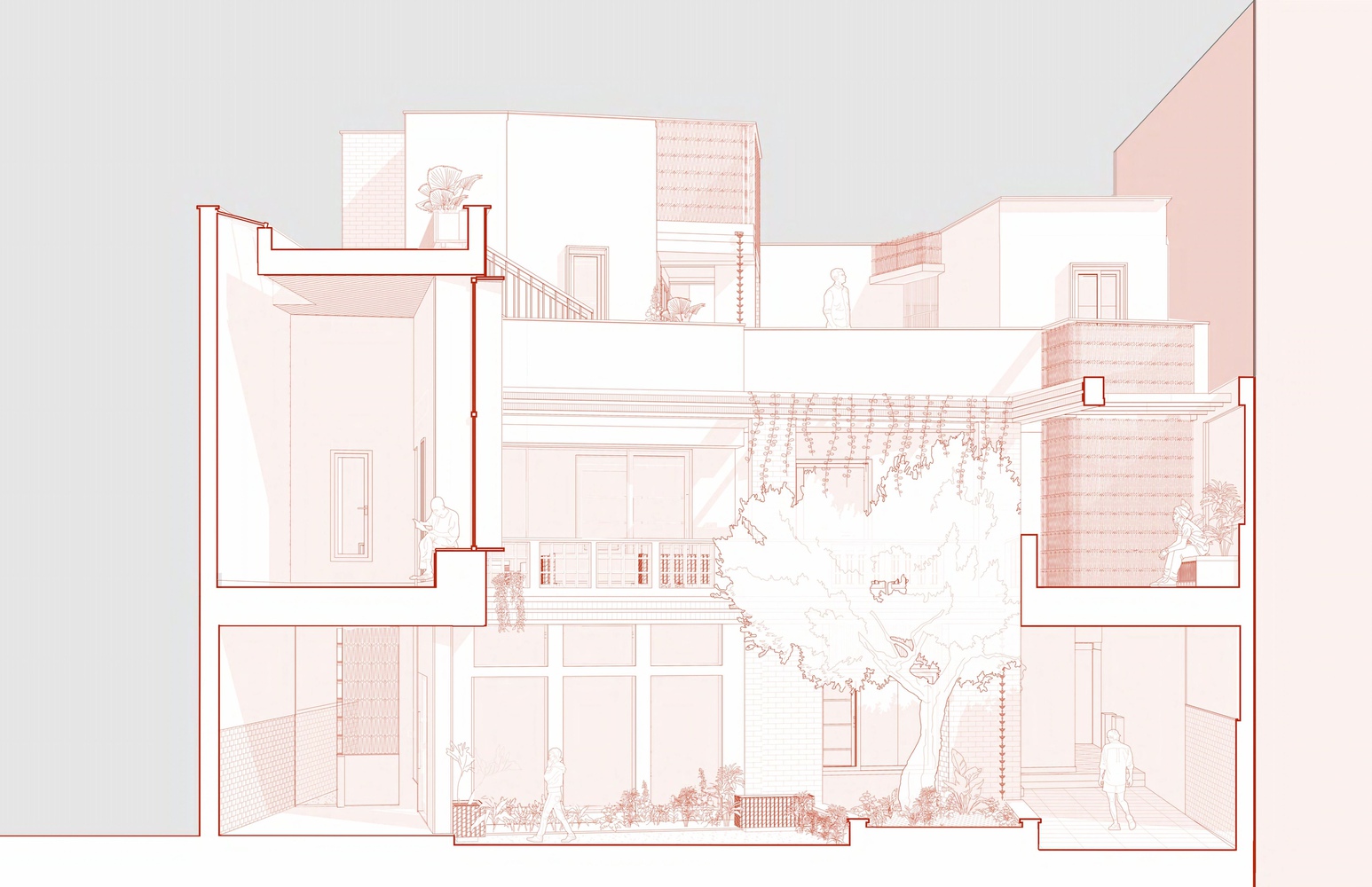
The result was a stepped courtyard, featuring gardens at ground level and terraces on the upper floors. This open-ended courtyard is bounded on its western edge by a one-and-a-half-story volume, beneath which lies a serene verandah.
To the east, extended terraces with planters cover the driveway and a carport below. The main house is positioned north, and the south is framed by trees and the adjacent park. All these spaces now benefit from the intimate internal views of the courtyard, alongside expansive vistas of the park.
The courtyard house, a classic building typology for tropical homes in the Indian subcontinent, allows occupants to navigate spaces with the sun's movement or seek respite from its intensity, depending on the season. Working with the site's orientation, our design incorporated various indoor and outdoor spaces, adaptable for year-round use.
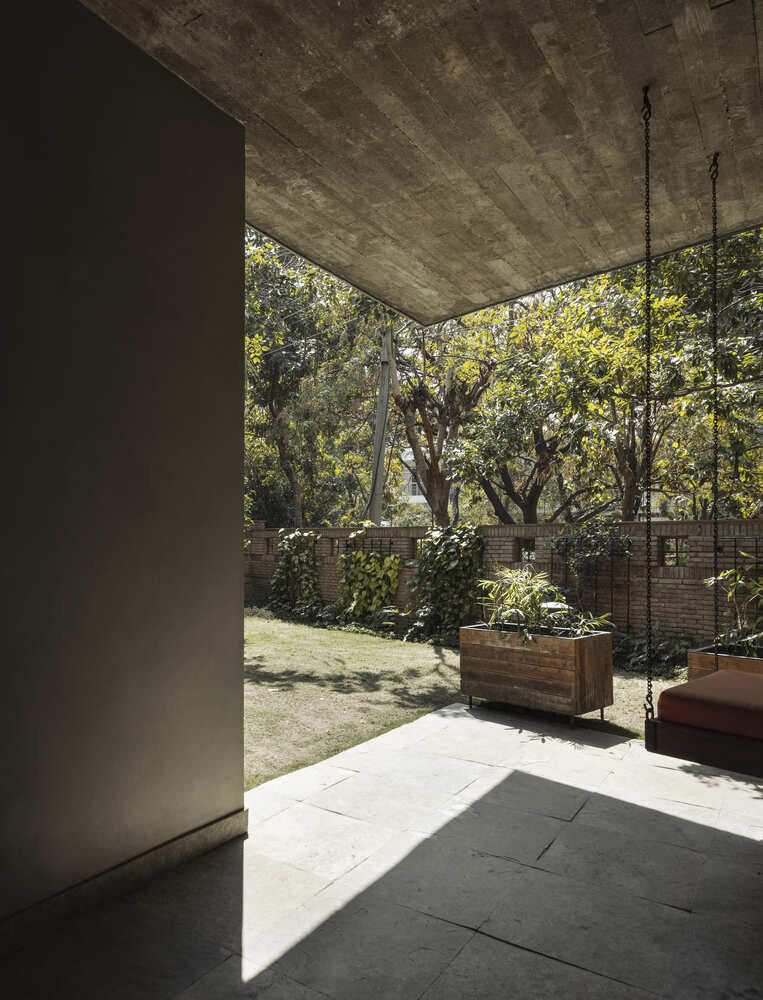
During the summer, the ground floor living areas offer a cool sanctuary from the sun's heat. These spaces open onto the front garden and extend to a covered verandah beneath the multipurpose room.
The volume of the multipurpose room effectively shields the verandah from harsh sunlight, casting a cooling shadow over the courtyard.
The verandah also serves as a breezeway with a swing to enjoy the space. In winter, the first-floor family lounge becomes the primary gathering space, opening onto a wrap-around terrace with pergolas and built-in benches, ideal for soaking in the daytime warmth. The first-floor lounge further benefits from a skylight that bathes the space in natural light.
Access to the multipurpose room, which defines the western edge of the courtyard, is gained from the first-floor lounge. This room houses the clients' study and exercise equipment.
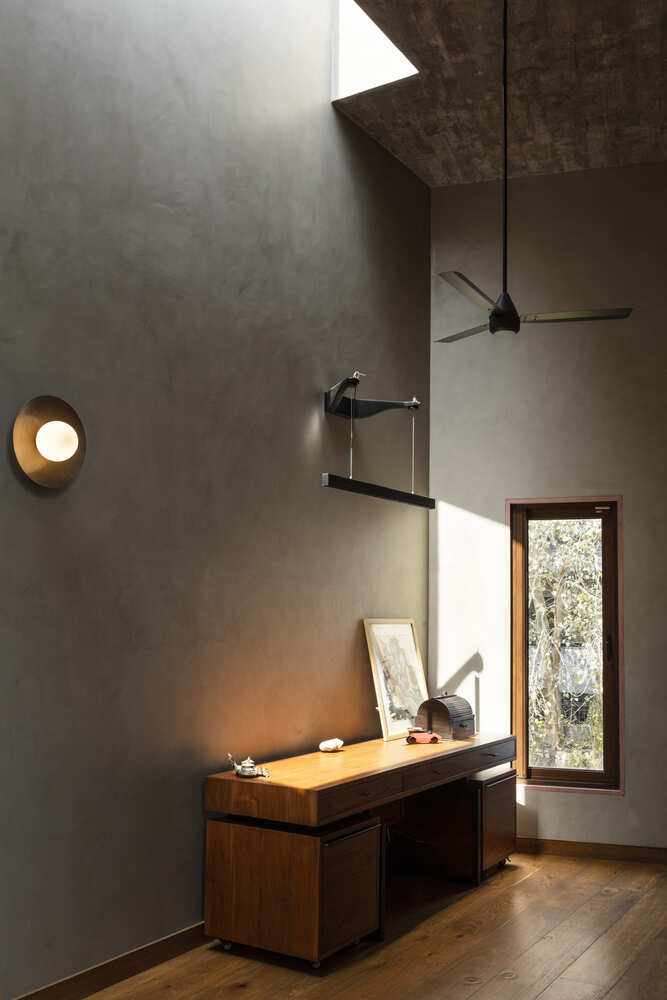
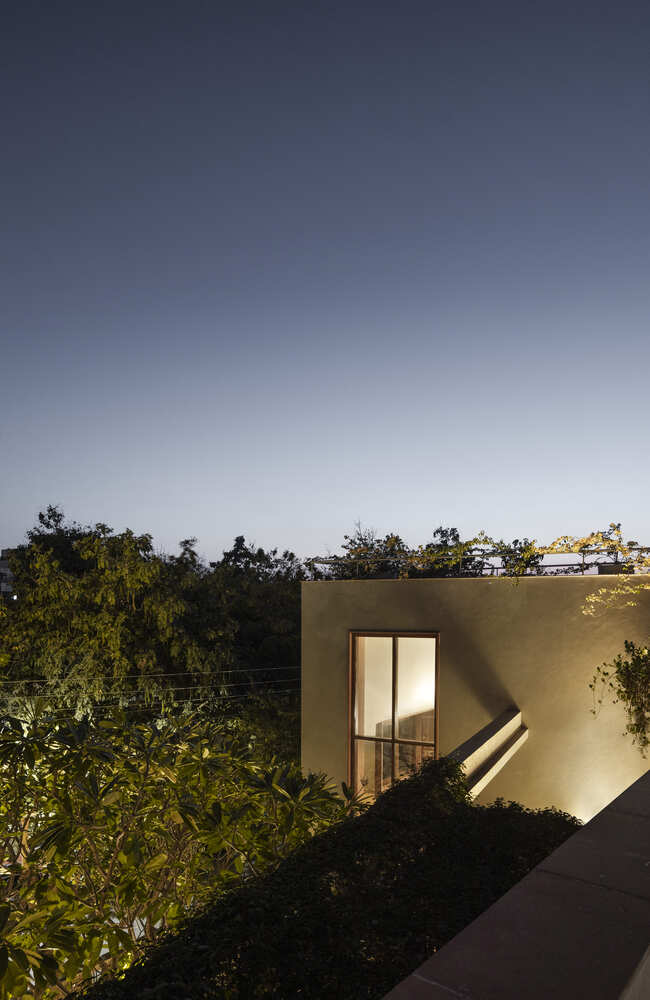
This room features a fifteen-foot ceiling, enhancing the sense of volume and directing the gaze upwards to another long skylight that emerges from the cast-in-place, exposed concrete ceiling.
Sunlight, filtering through this slender opening, dramatically washes the wall with sharp bands of light, imparting dynamism to an otherwise plain surface and subtly marking the passage of time.
A study table is thoughtfully positioned against this wall, receiving intermittent illumination from the sun. An oversized window frames the courtyard, showcasing the magnificent 'Champa' tree and the terraced backdrop. The windowsill doubles as a comfortable seat for an afternoon read.
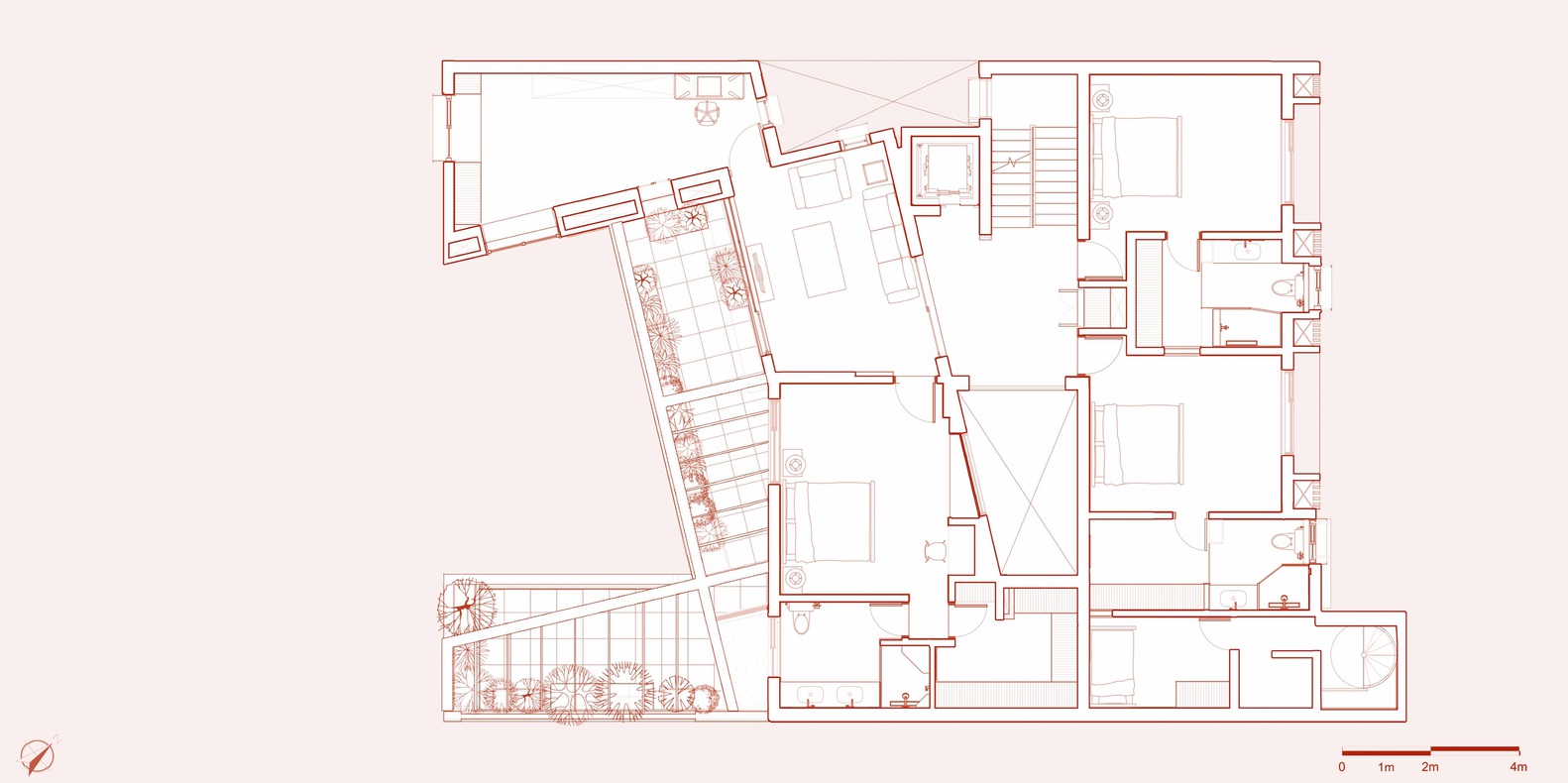
For a single-family dwelling, the house's layout is quite straightforward. The lower level accommodates public functions such as the living room, drawing room, dining room, kitchen, and a guest bedroom. The upper level houses the private spaces, including bedrooms, the family lounge, and the multipurpose room.
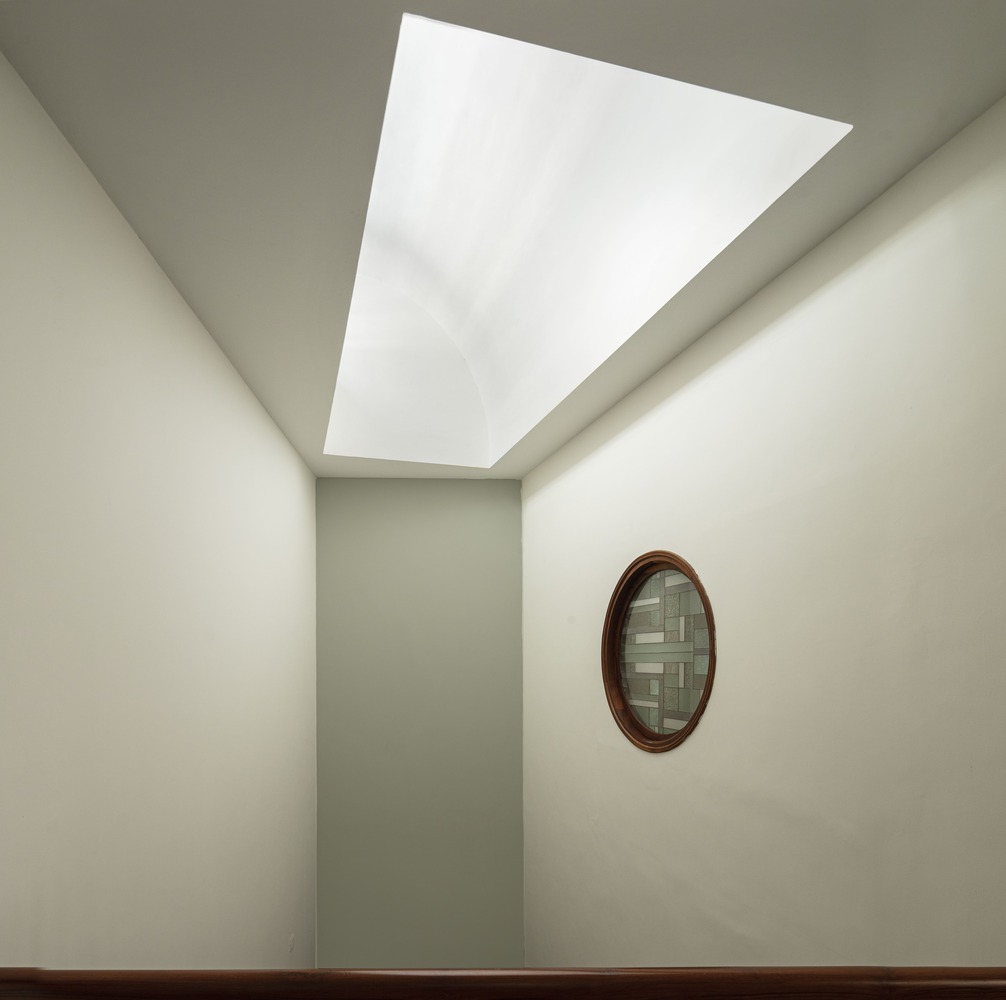
The rooftop terrace is primarily allocated for service functions. Upon entering through the main door, one steps into a central atrium, illuminated by a north-facing skylight that provides ambient light throughout the day.
This atrium spatially divides the house into two distinct volumes: the front housing the living areas, while the rear contains bedrooms and service spaces.
The double-height volume of the atrium is punctuated by a porthole window with a stained-glass pane. This window, integrated into a window seat in the master bedroom, allows northern light into the room while maintaining privacy.
While preserving the house's original shell proved immensely valuable for environmental conservation, we completely overhauled its internal systems. New electrical and plumbing lines were installed, and a more efficient VRV system for HVAC was integrated.
In line with our commitment to conservation, photovoltaic panels were added, along with solar water heaters linked to a heat pump system for hot water needs. All rainwater discharge from the terraces is directed to a recharge pit. To future-proof the house, an elevator was also incorporated.
Our selection of materials, both external and internal, prioritized locally available natural options whenever possible. Indian limestone was chosen for the flooring, with a rough finish for exterior areas and a polished one indoors.
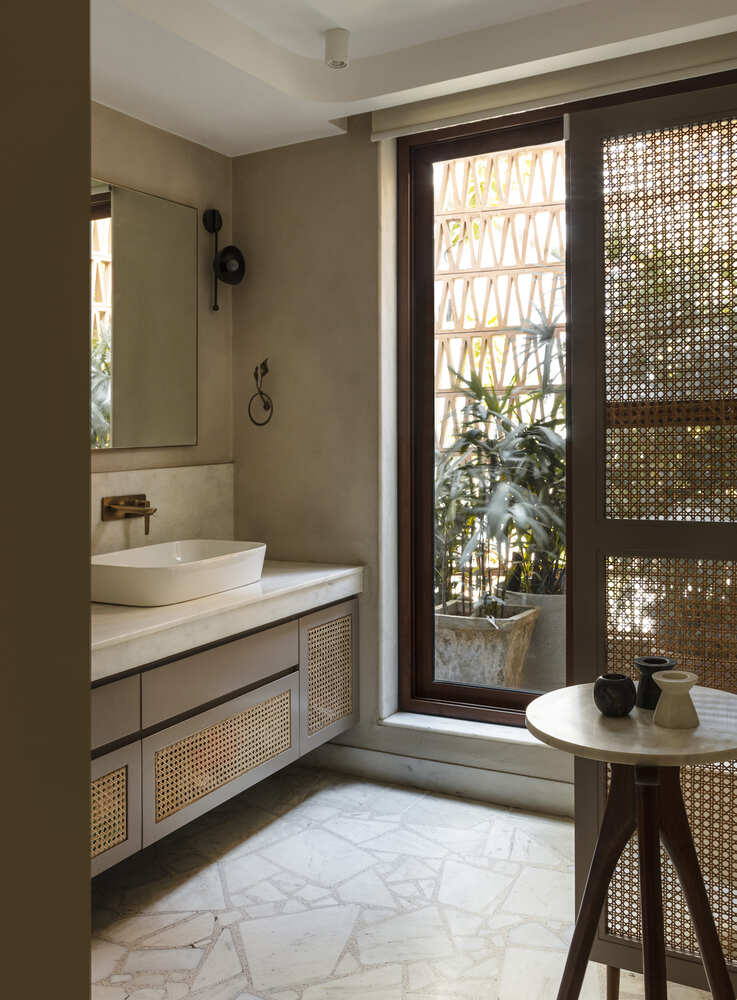
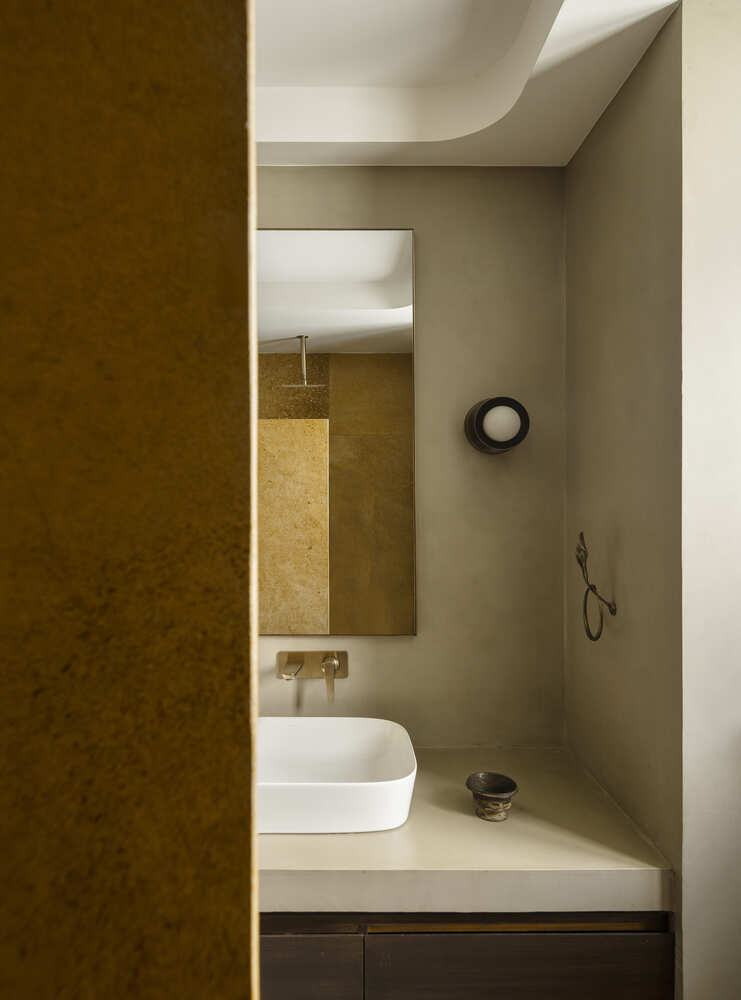
Bathrooms feature Indian marble for shower enclosures, countertops, and flooring, complemented by the subtle elegance of micro-concrete for dry area walls. The kitchen boasts a shot-blasted basalt floor, handmade tiles for the walls, and Indian granite for the counters.
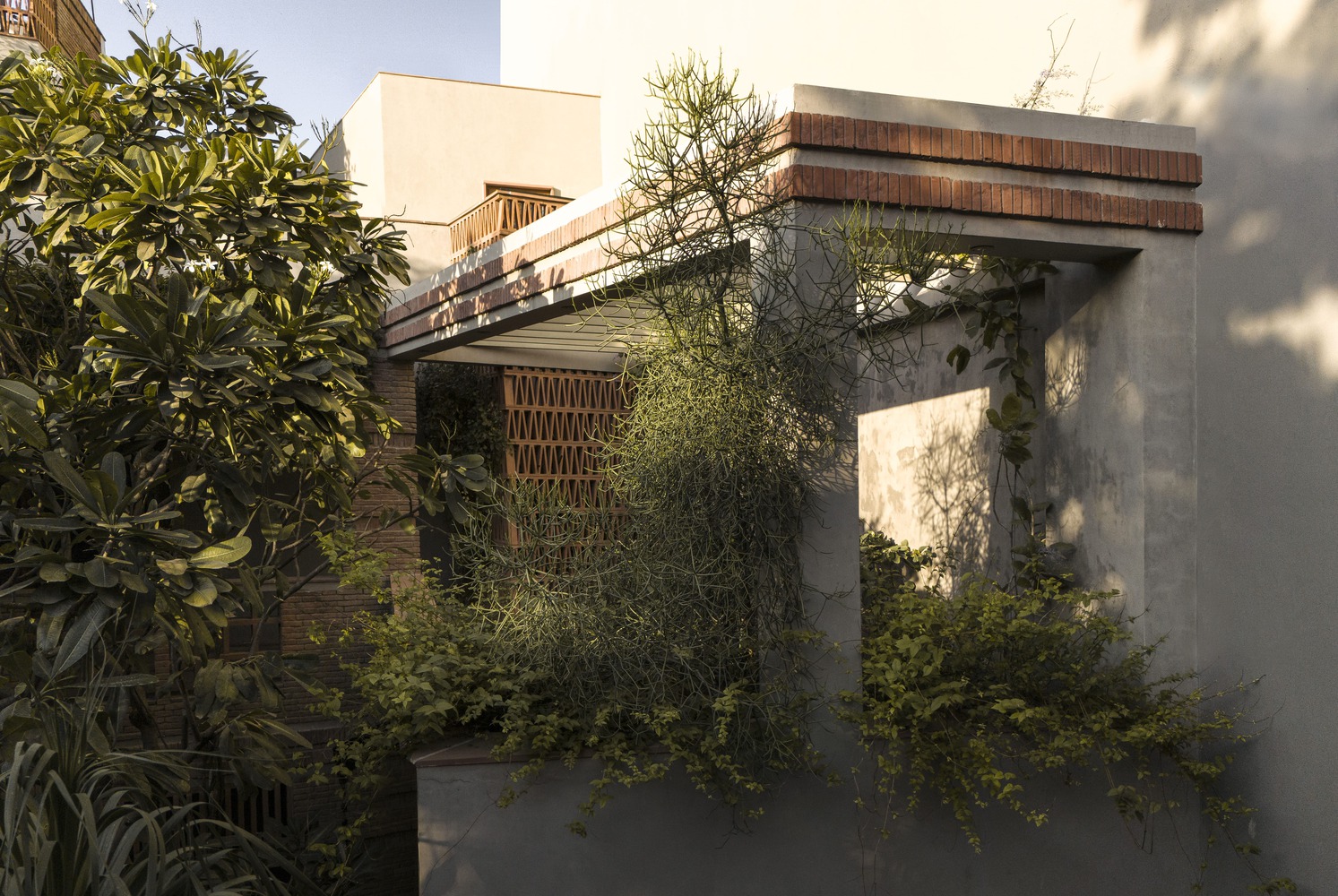
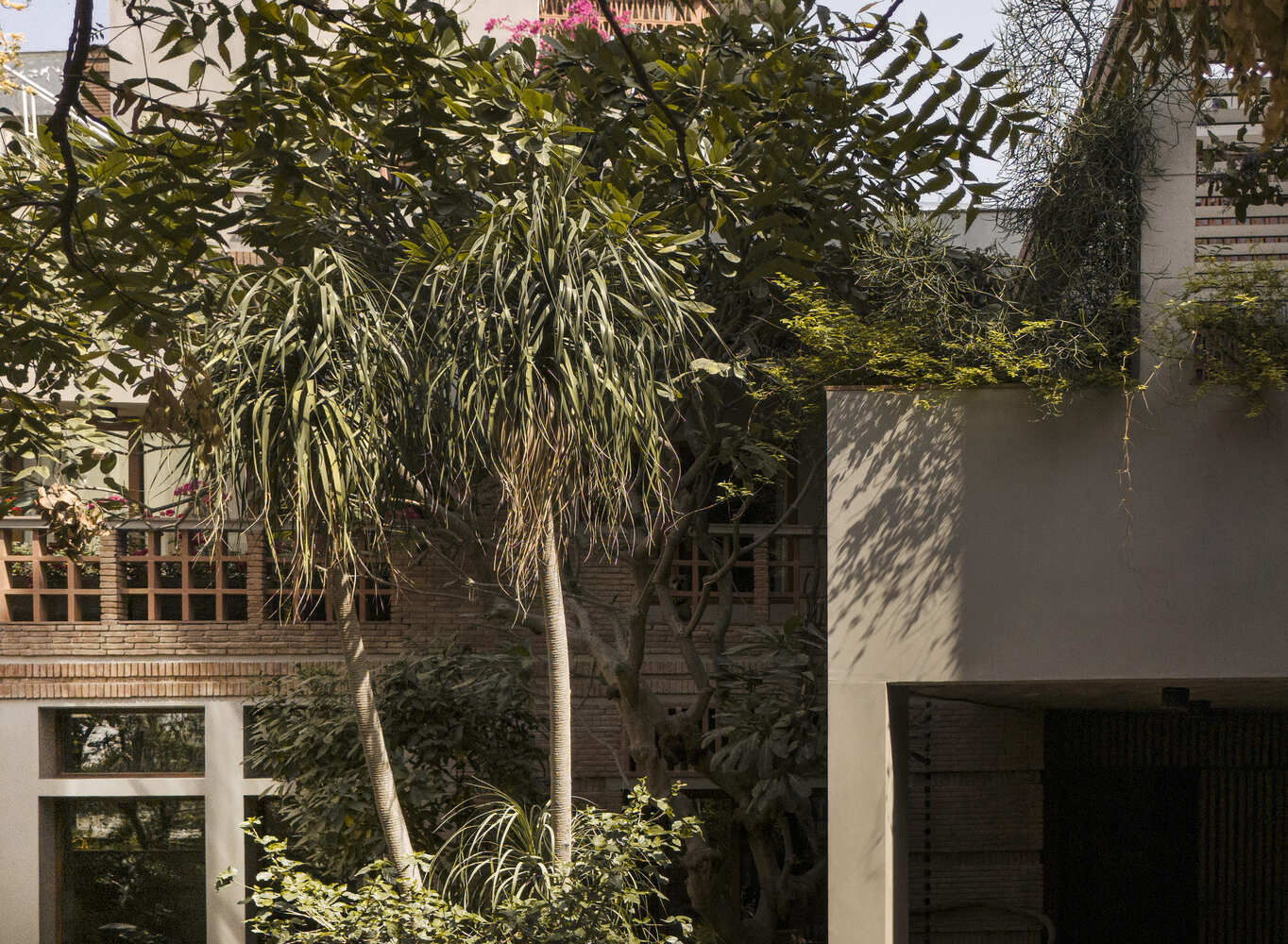
On the exterior, we retained the existing structure's exposed brick facade. Respecting the original design, all new additions and extensions were plastered in grey micro concrete in harmony with the brickwork.
Windows were framed with red sandstone jambs, and terracotta breeze blocks were introduced to provide shade and privacy, all while maintaining a cohesive material palette. All our slab extensions are cast-in-situ, board-formed, exposed concrete. The formwork for these was crafted from reclaimed industrial pallet wood planks, which were then repurposed to create planters distributed around the house.
We thoughtfully integrated many existing trees on site, such as 'Chiku' (Sapodilla), 'Champa' (Frangipani), Nolina palm, and Banana trees. Some were protected in their original locations, while others were carefully transplanted to strategically enhance the open spaces around the house. Collaborating with a horticulturist, new plants were introduced to thrive in areas of varying shade and sun exposure, contributing to a cohesive landscape design.
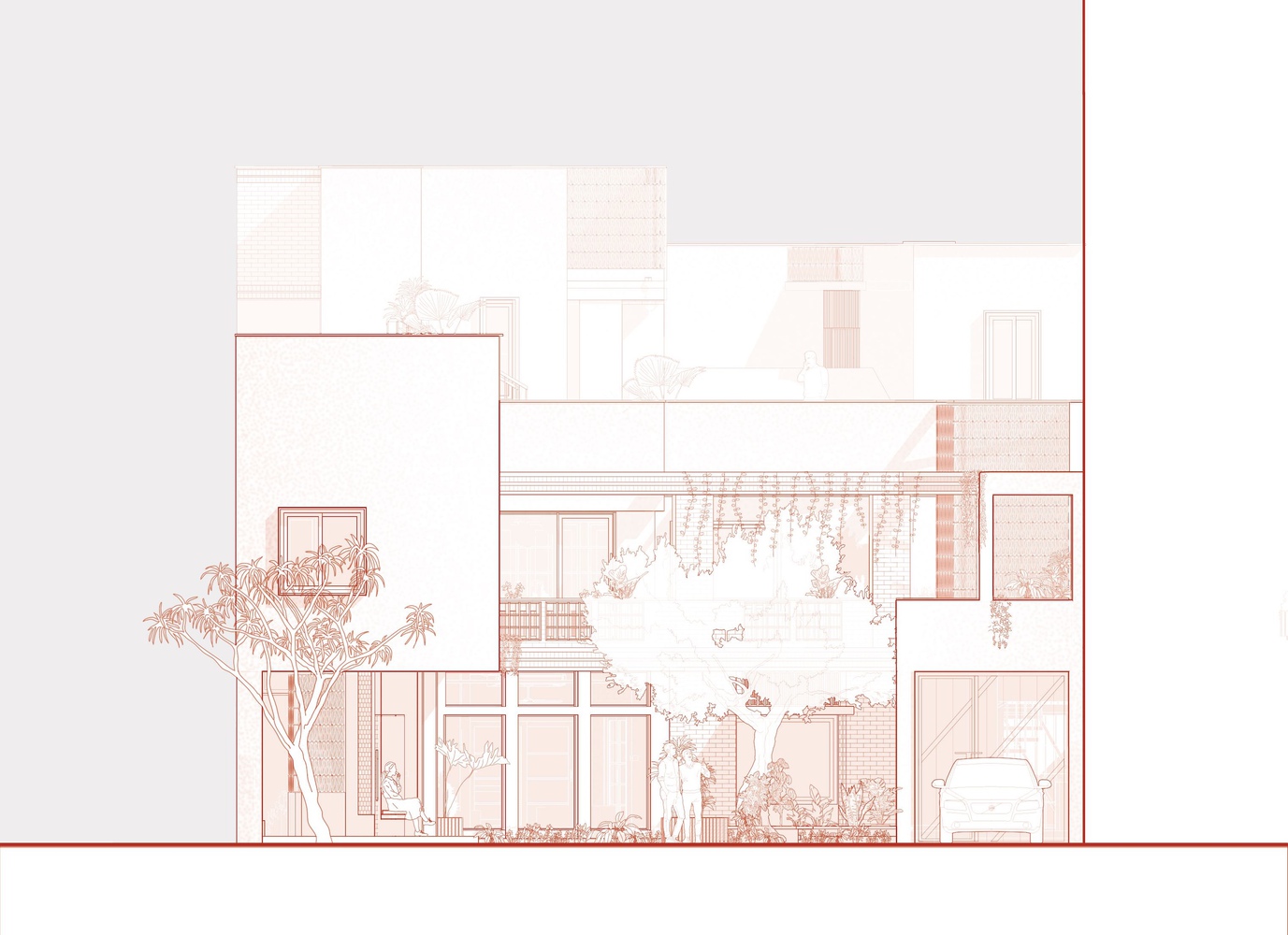
The pergolas on the new winter terraces are now adorned with Petrea Volubilis, trained to eventually cover the top.
For the rear garden, a patio extends from the ground-floor dining room, bordered by a dense planting of tropical species. Here, a custom-built barbecue grill anchors one end of the patio extension,facing a banana tree at the opposite end.
The interiors of the house maintain a simple and luminous aesthetic, reflecting the owners' lifestyle. The design philosophy aimed to create a grounded, homelike atmosphere, fostering organic growth.
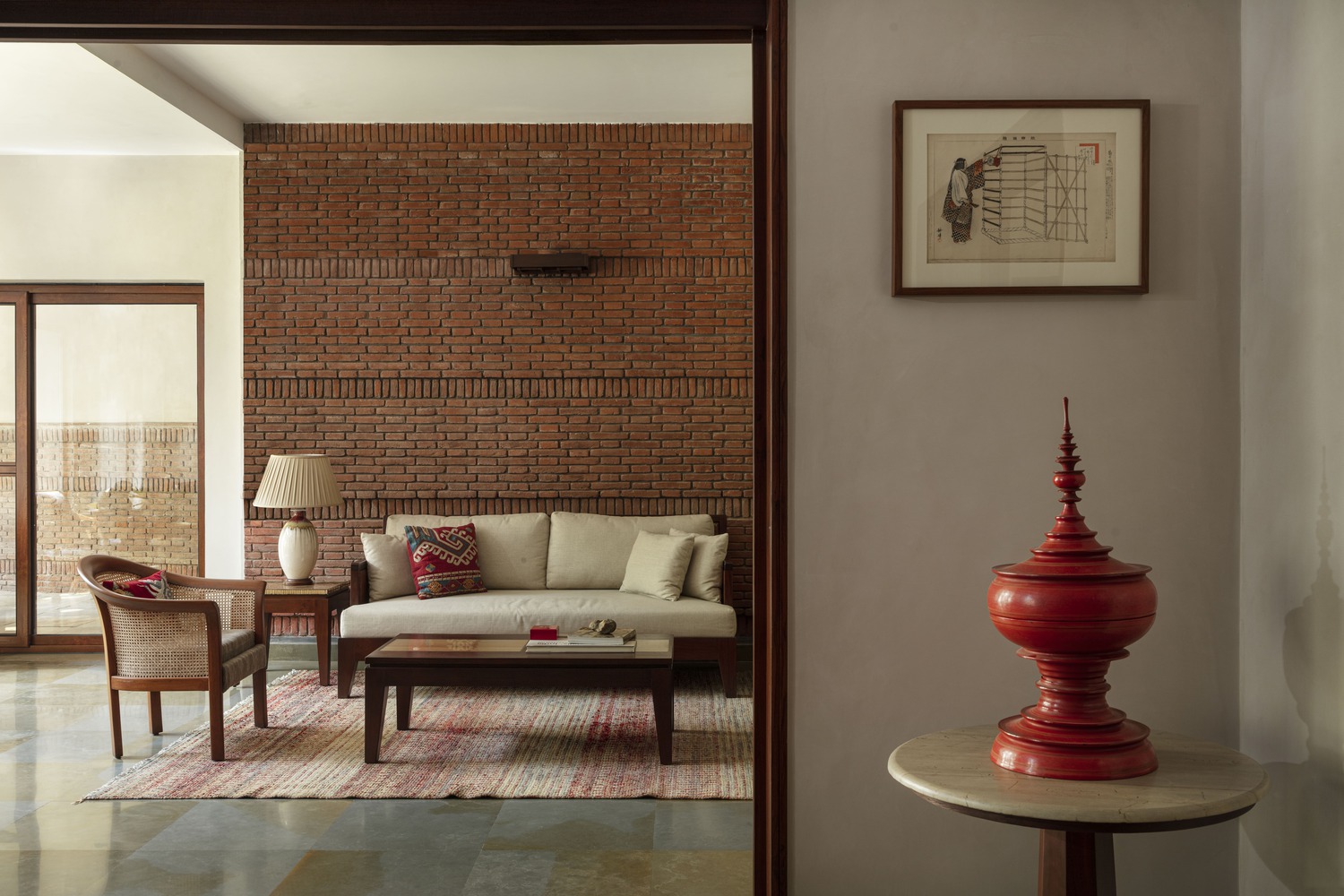
Polished limestone floors and waxed micro concrete walls imbue the ground-floor living spaces with an earthy feel. The drawing room features an exposed brick wall, serving as a striking backdrop awaiting a perfectly placed artwork.
The first-floor lounge and multipurpose room boast engineered wood flooring, complementing the darker grey micro-concrete walls and adding warmth and softness to these areas. We partnered with Iqrup and Ritz, a renowned international brand and local manufacturer, to supplement the clients' existing furniture.
Several pieces, such as a rattan and timber bar unit and a TV console crafted from the same materials, were collaboratively designed. We also conceived certain statement pieces, including the living room coffee table and the study table in the multipurpose room.
Our decorative light fixtures were sourced from companies like Oorjaa, known for their work with natural materials such as banana fiber paper, and Lampshaper, which crafts exquisite pieces from brass and alabaster. All these lights are meticulously handmade by skilled artisans.
Ultimately, our decision to work with the existing structure rather than demolishing it yielded immense value in terms of environmental conservation. The lack of ethical disposal facilities in our region has made construction waste a serious problem, contributing to an impending environmental catastrophe.
Moreover, by clearly defining spaces, we minimized the need for vast quantities of new construction materials, focusing instead on fulfilling genuine needs. By setting aside ego, one can indeed achieve exemplary architecture that inherently champions environmental preservation.