King One Community Center
KING ONE COMMUNITY CENTER
E+UV
ARCHITECTS
E+UV
CHIEF LANDSCAPE DESIGNER
Fan Ye
CHIEF ARCHITECT
Fan Ye
LANDSCAPE SCHEME & CONSTRUCTION DRAWINGS
Htla Design Studio
CONSTRUCTION DRAWINGS
E Plus Design
PROJECT DIRECTOR
Guo Sibo
LANDSCAPE PROJECT DIRECTOR
He Yixiang
LANDSCAPE DESIGN TEAM
Fan Xiaoxu, Zheng Yanlin, Zhang Dingding, Qin Weiyan, Liu Jingjing, Li Shuixing, Qi Zhijuan, Huang Xiaolian
DESIGN TEAM
Li Geng, Huang Haifeng, Dong Siyi, Li Xin, Zhang Yan, Wang Junli, Huang Xiaorui, Yan Yurong, Zhang Xubin, Sun Hongnan
PHOTOGRAPHS
Rui Du, Siming Wu
AREA
56589 m²
YEAR
2025
LOCATION
Zhuhai, China
CATEGORY
Community Center, Commercial Architecture
English description provided by the architects.
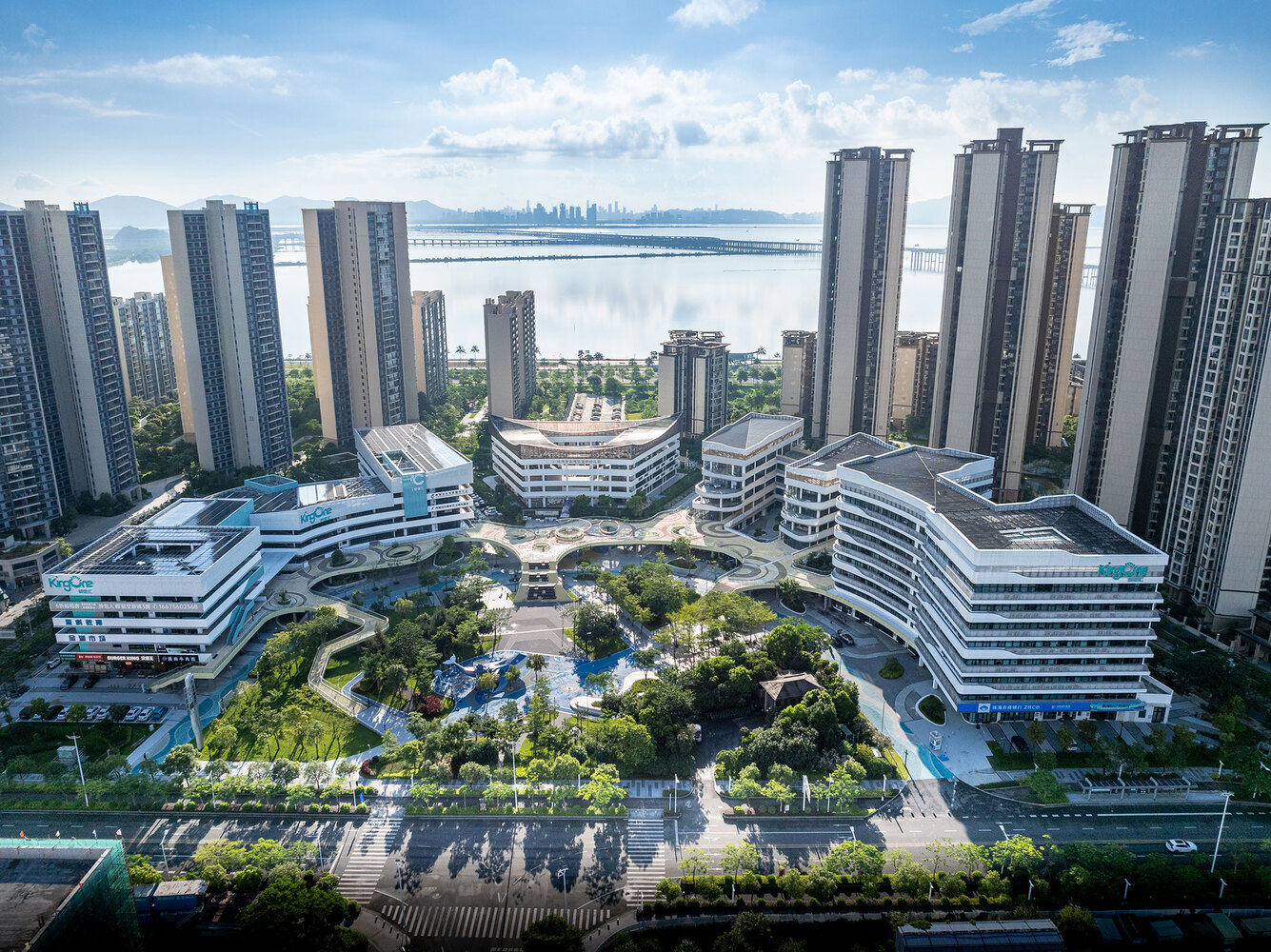
Jinwan Aviation New City, one of Zhuhai's fastest-growing areas, urgently needed a new community center to meet the demands of its expanding population.
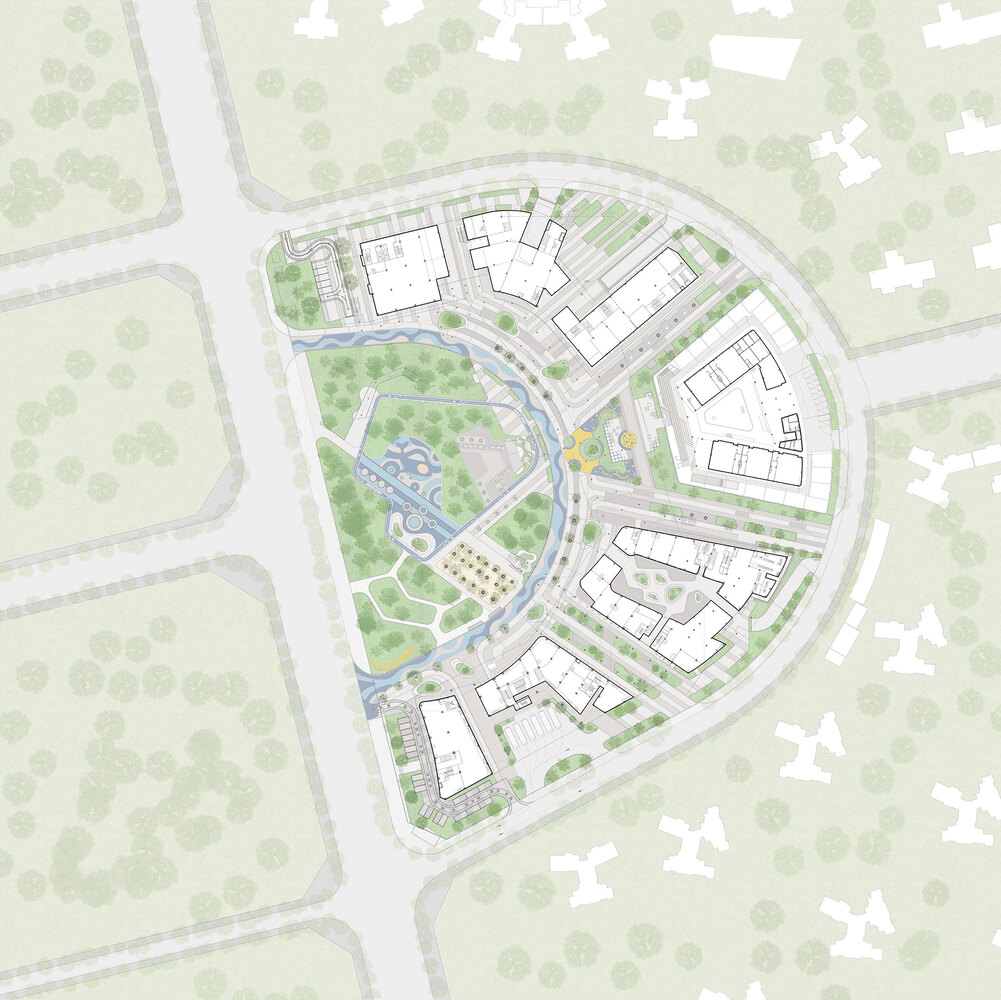
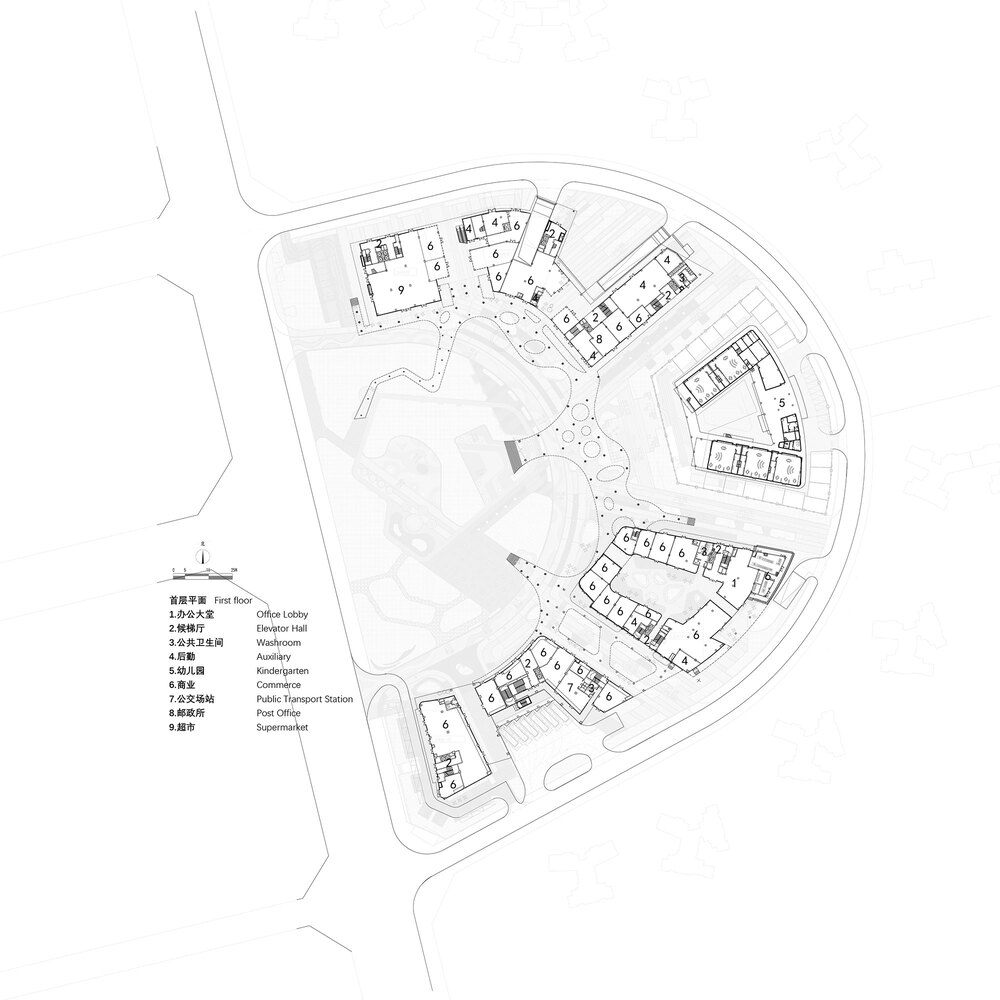
The site, located in the heart of this new district, consisted of four standalone ancillary buildings surrounded by dense housing developments.
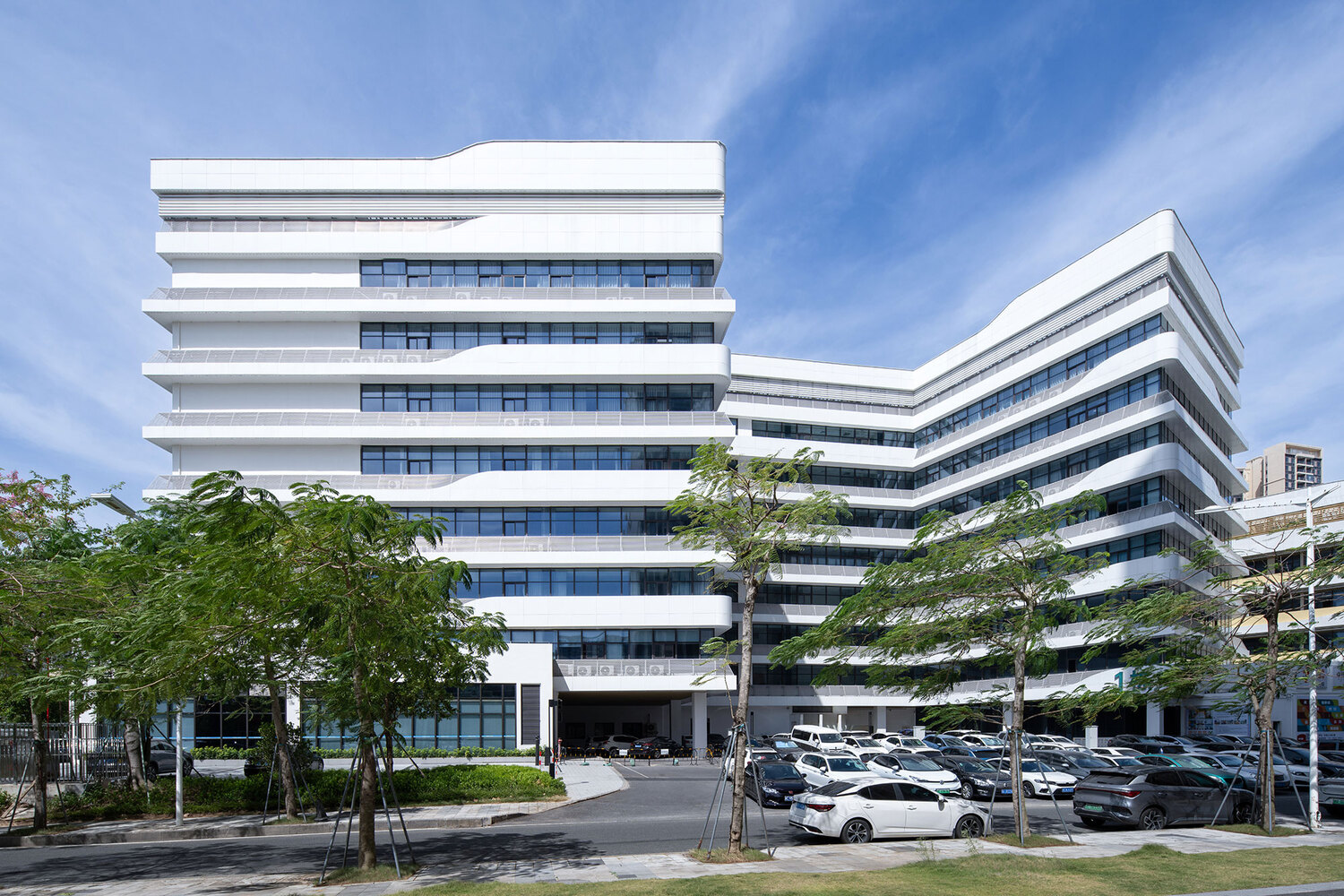
However, due to rushed planning, these buildings suffered from design flaws: closed facades, disconnected circulation, and a lack of functional synergy.
The client's initial plan was to renovate the facades and assign each building a distinct function—offices, community activities, or retail—to serve as ancillary facilities supporting daily community life.
However, with budget severely limited, a conventional renovation approach would only deliver piecemeal improvements. A new strategy was required.
During on-site investigations, the architects recognized that the key to creating a true community hub lay not in simply upgrading the facades, but in reimagining the spirit of place. At the heart of this vision was a long-overlooked gem—the adjacent municipal green park.
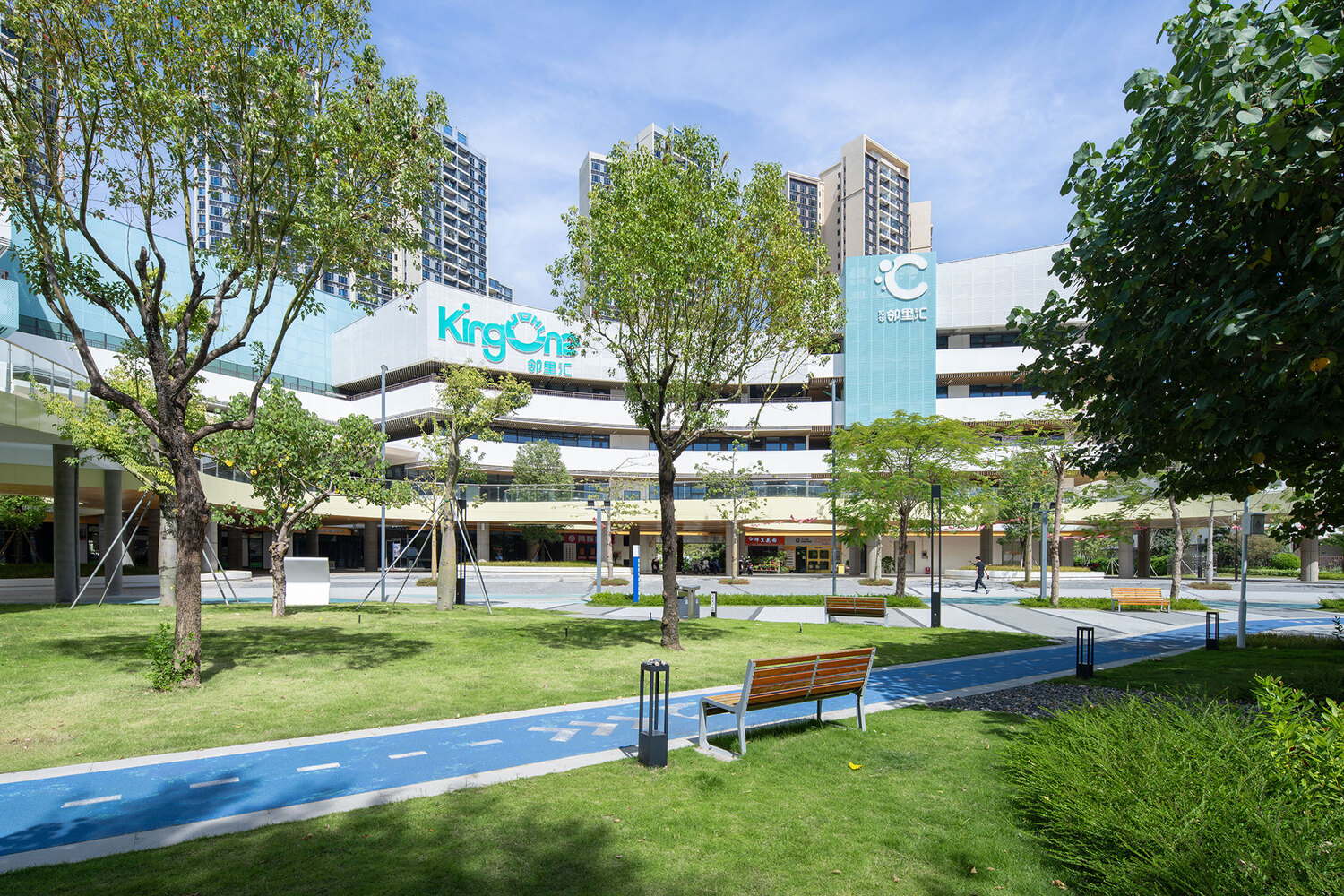
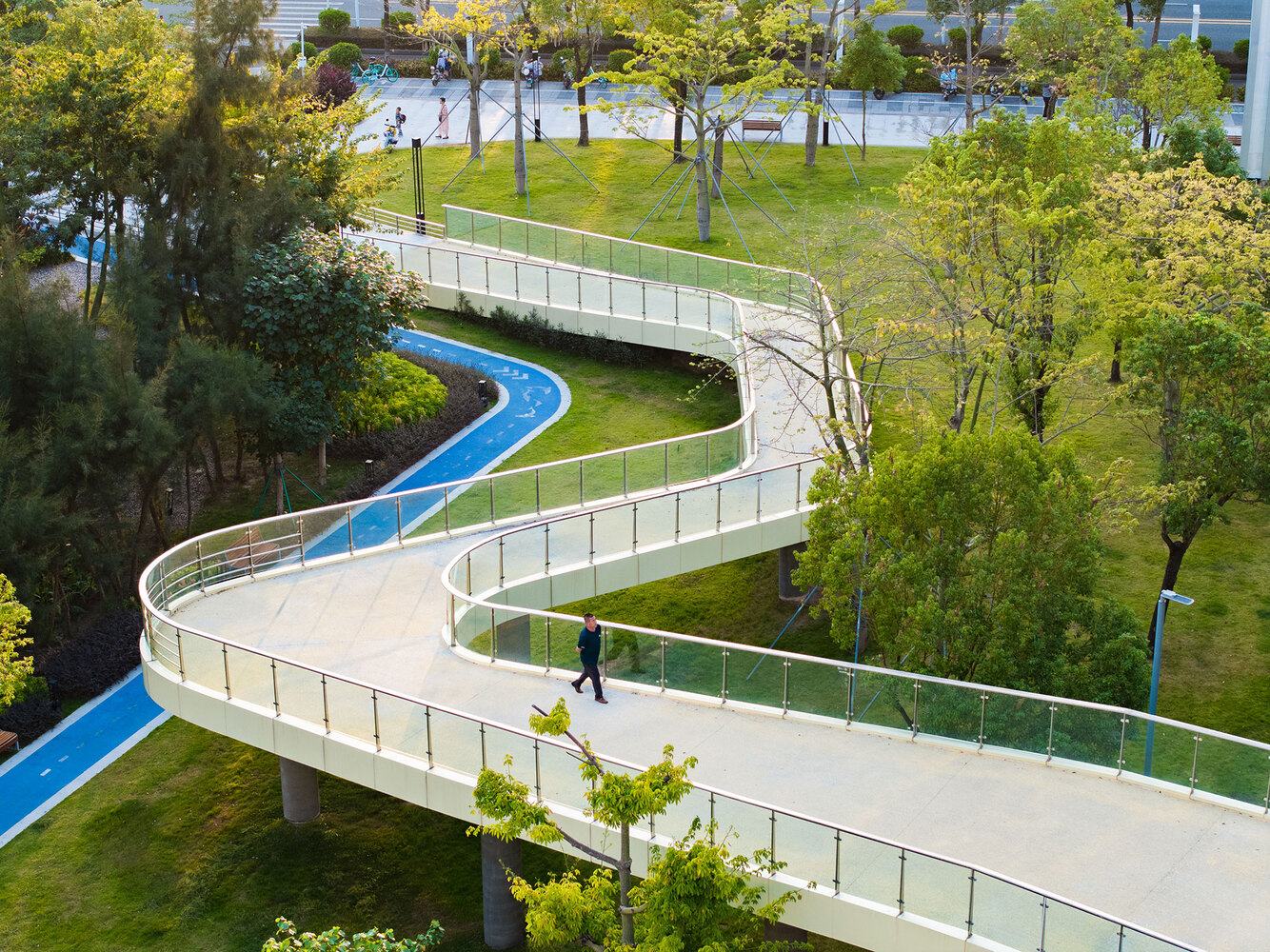
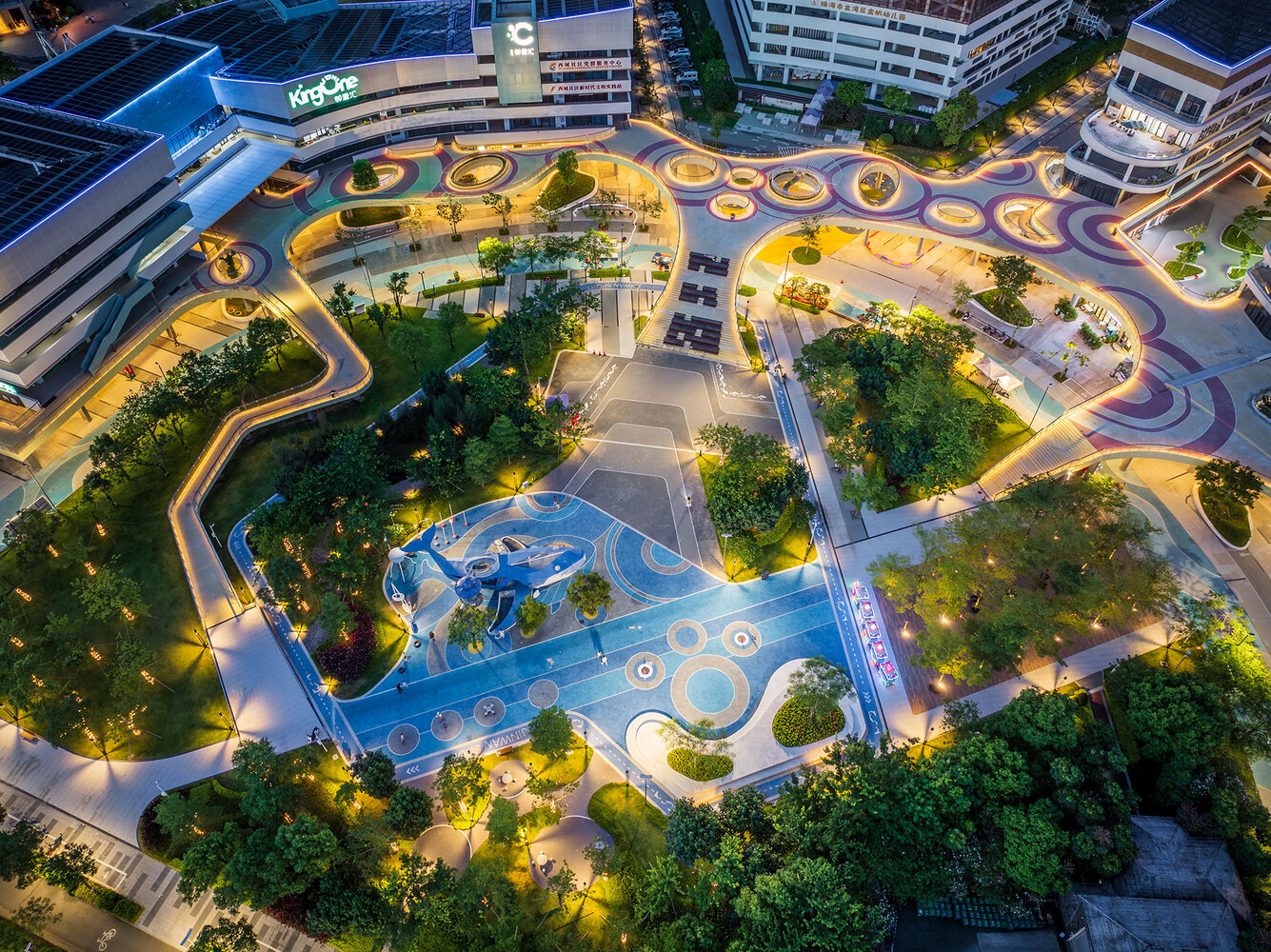
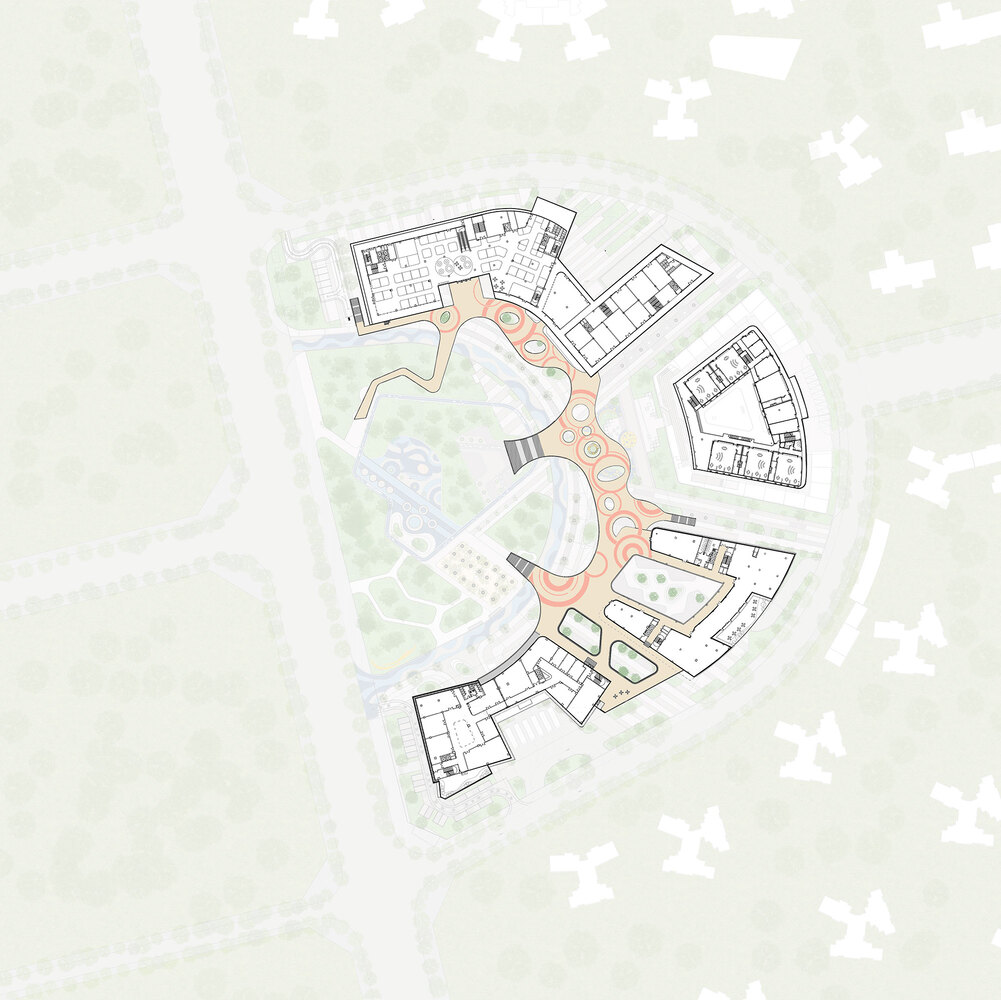
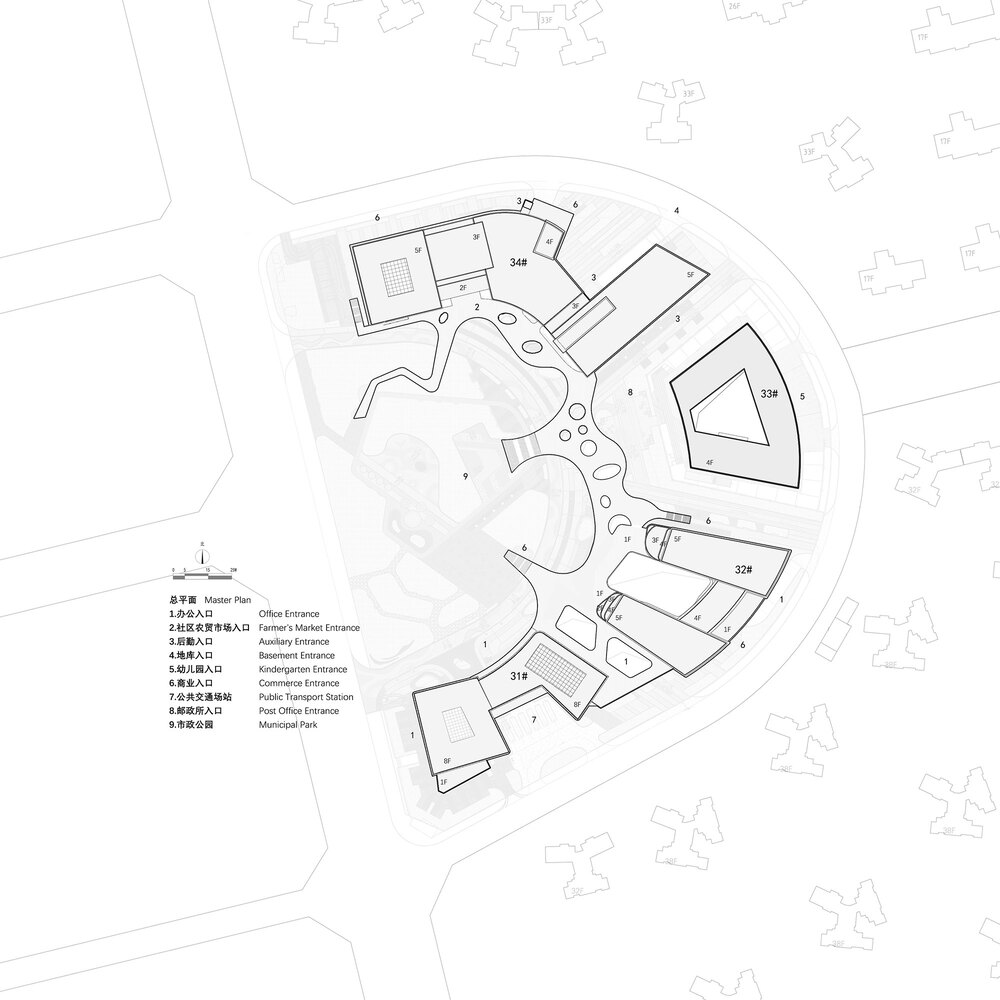
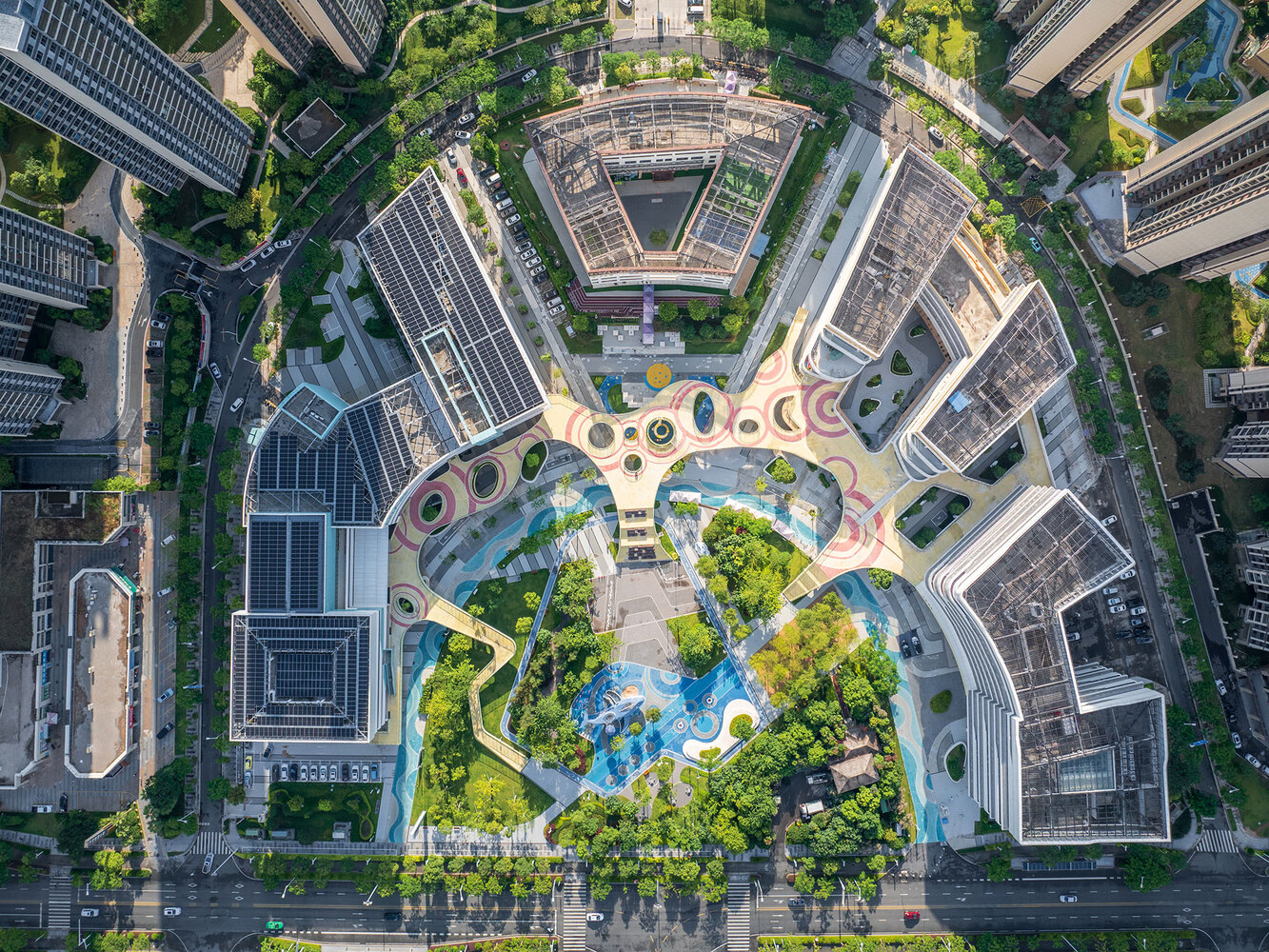
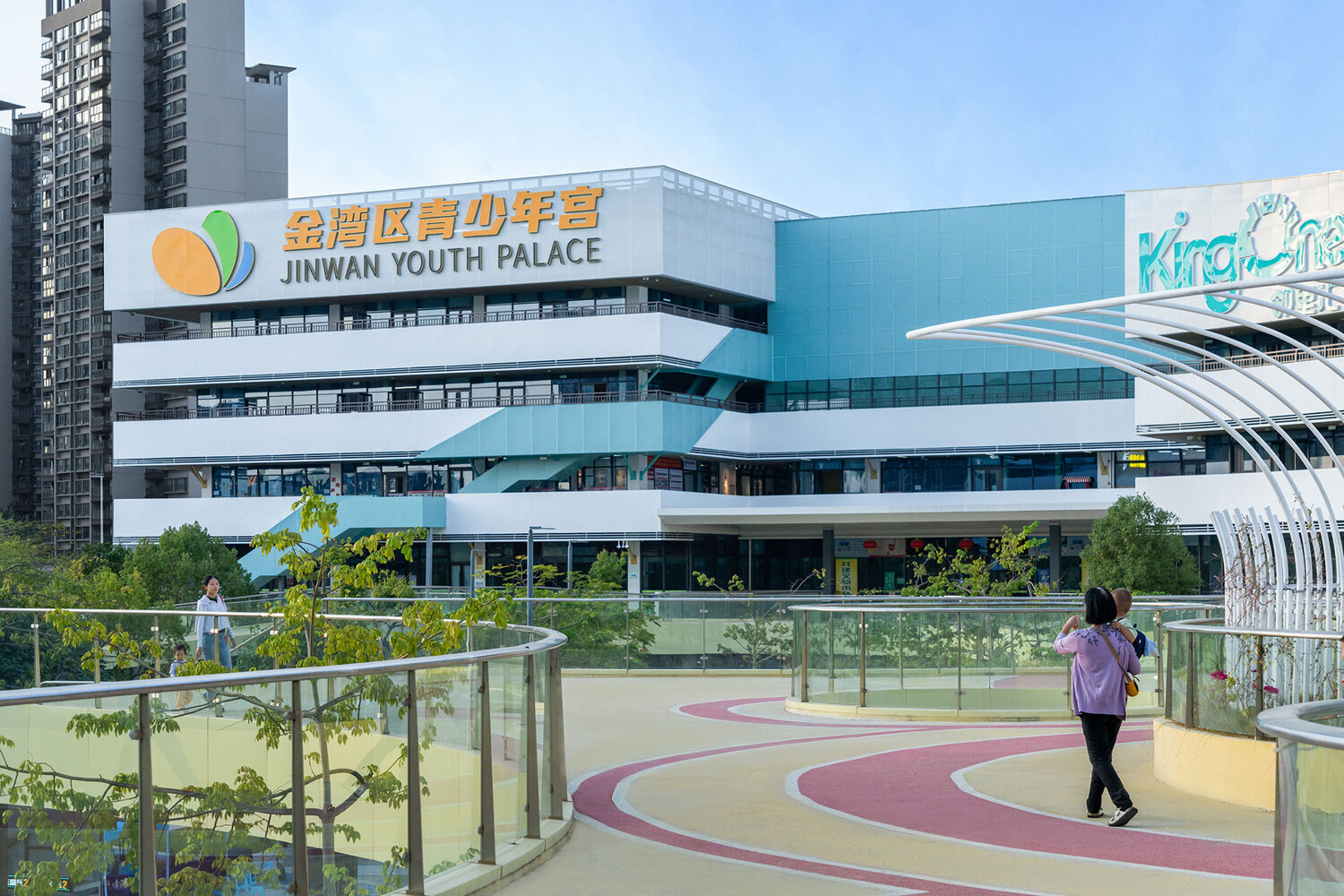
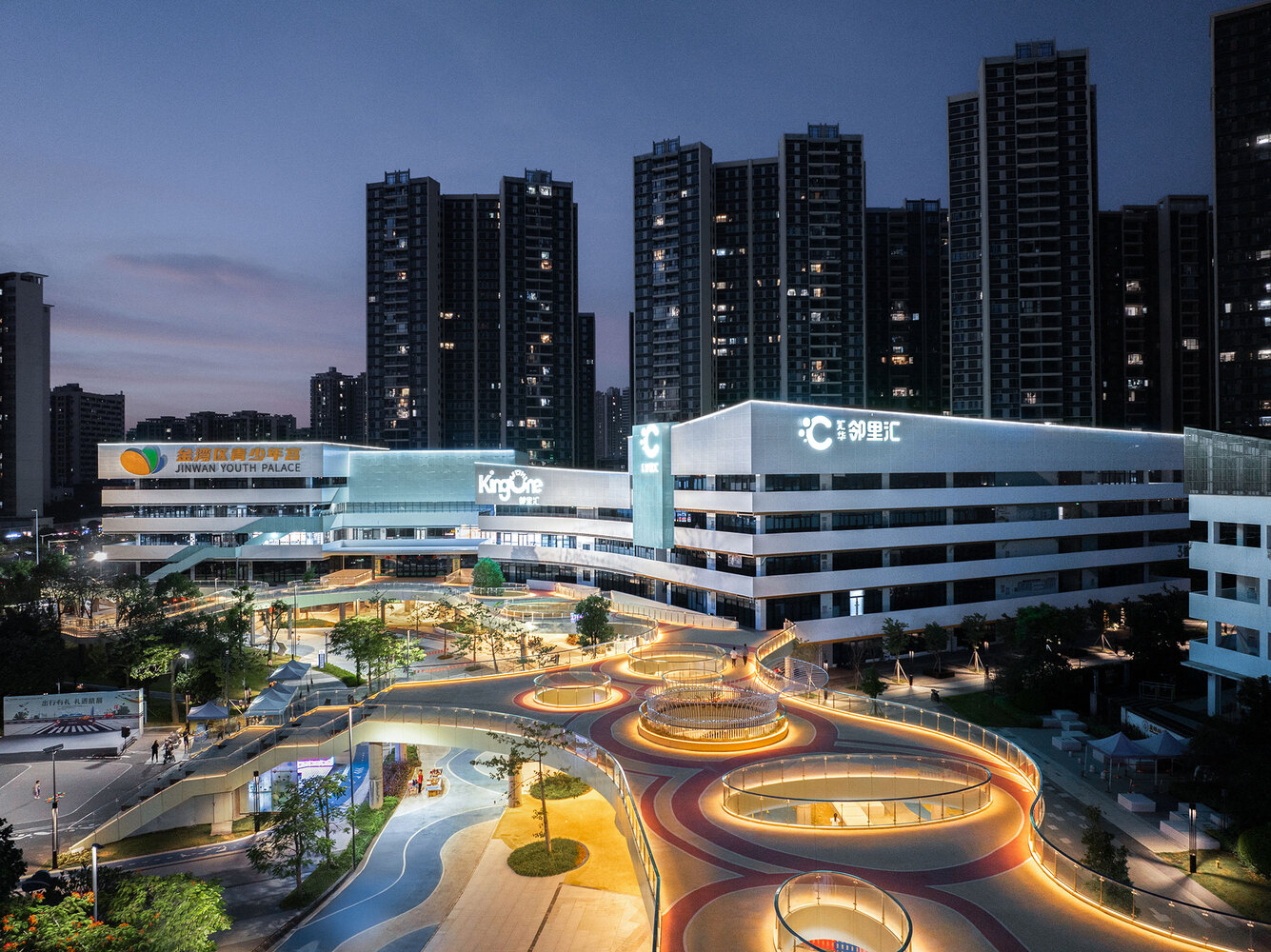
The site is centered around a semicircular municipal greenbelt. The design strategy repositions the park—surrounded by four isolated buildings—as the spatial anchor.
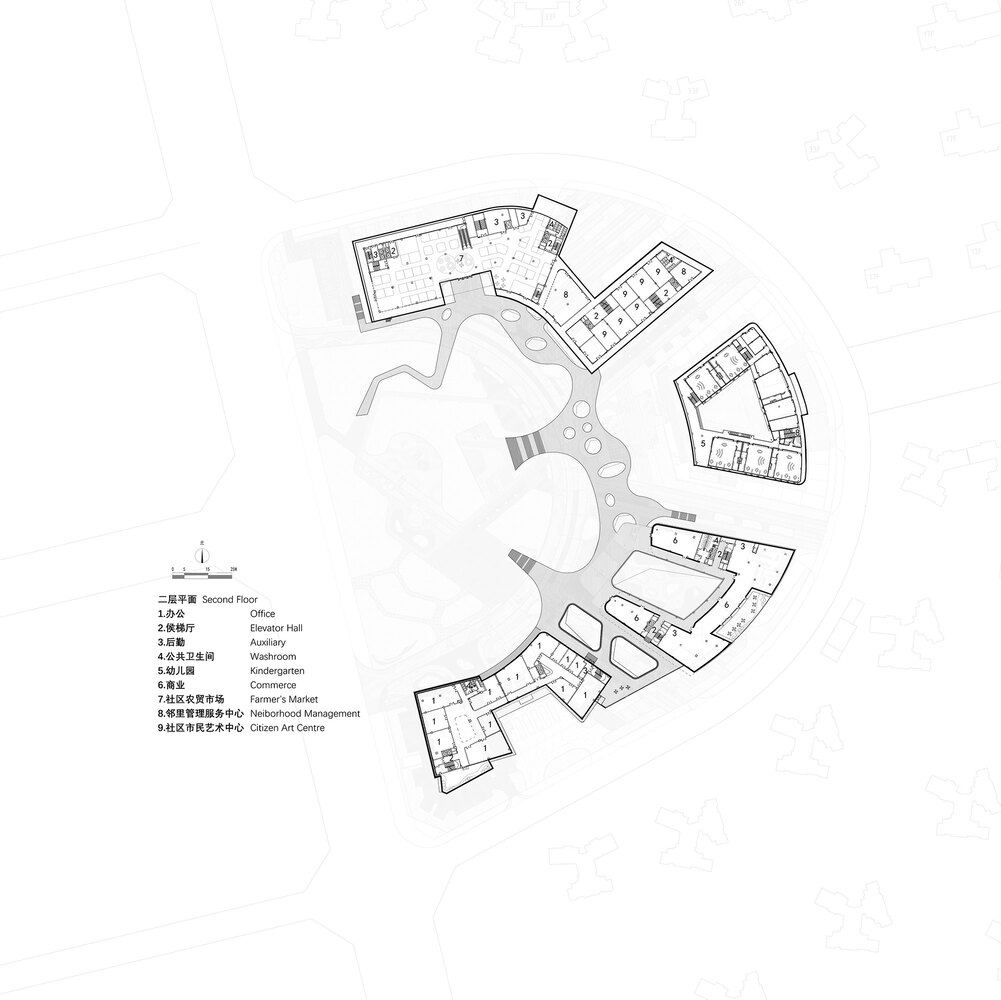
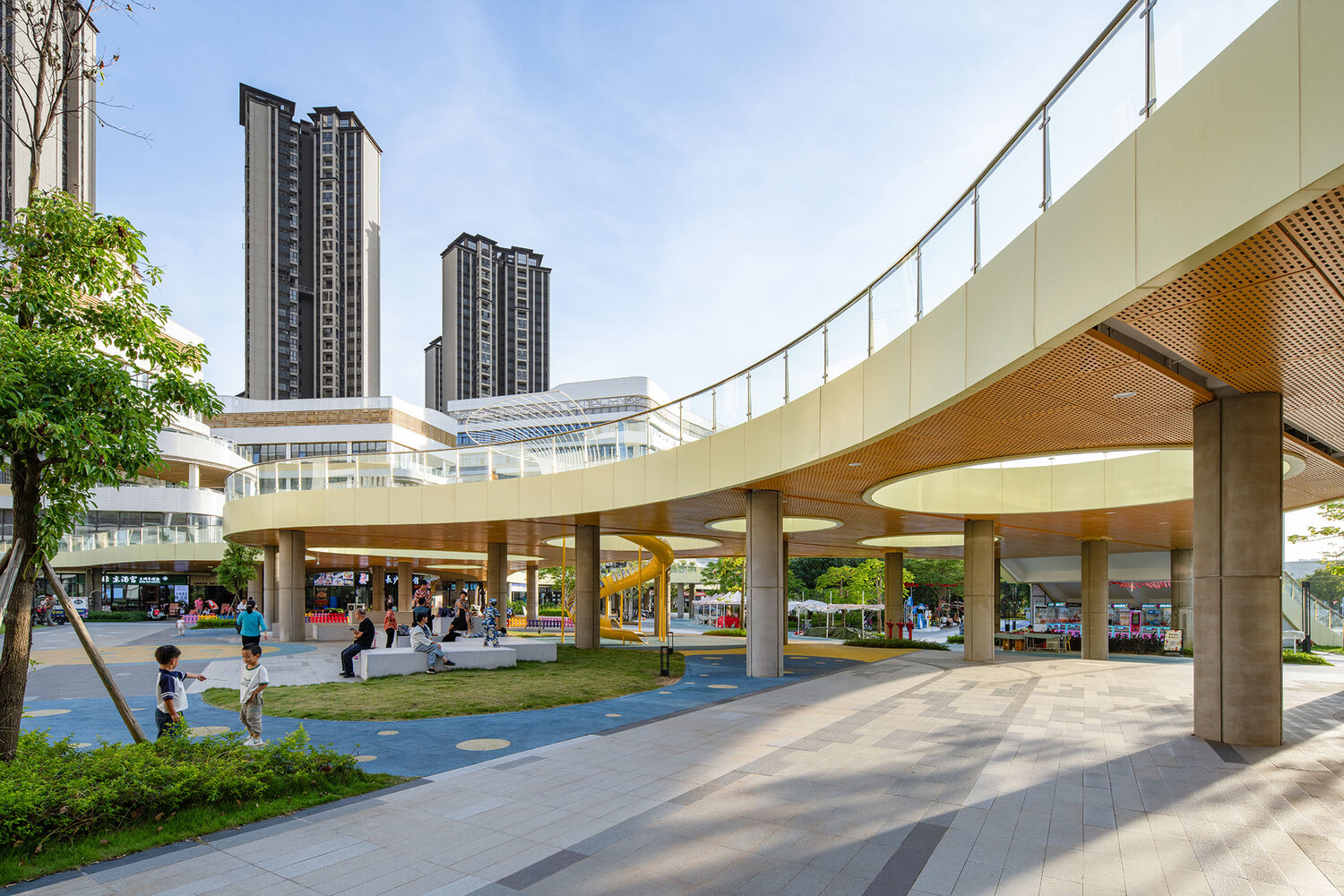
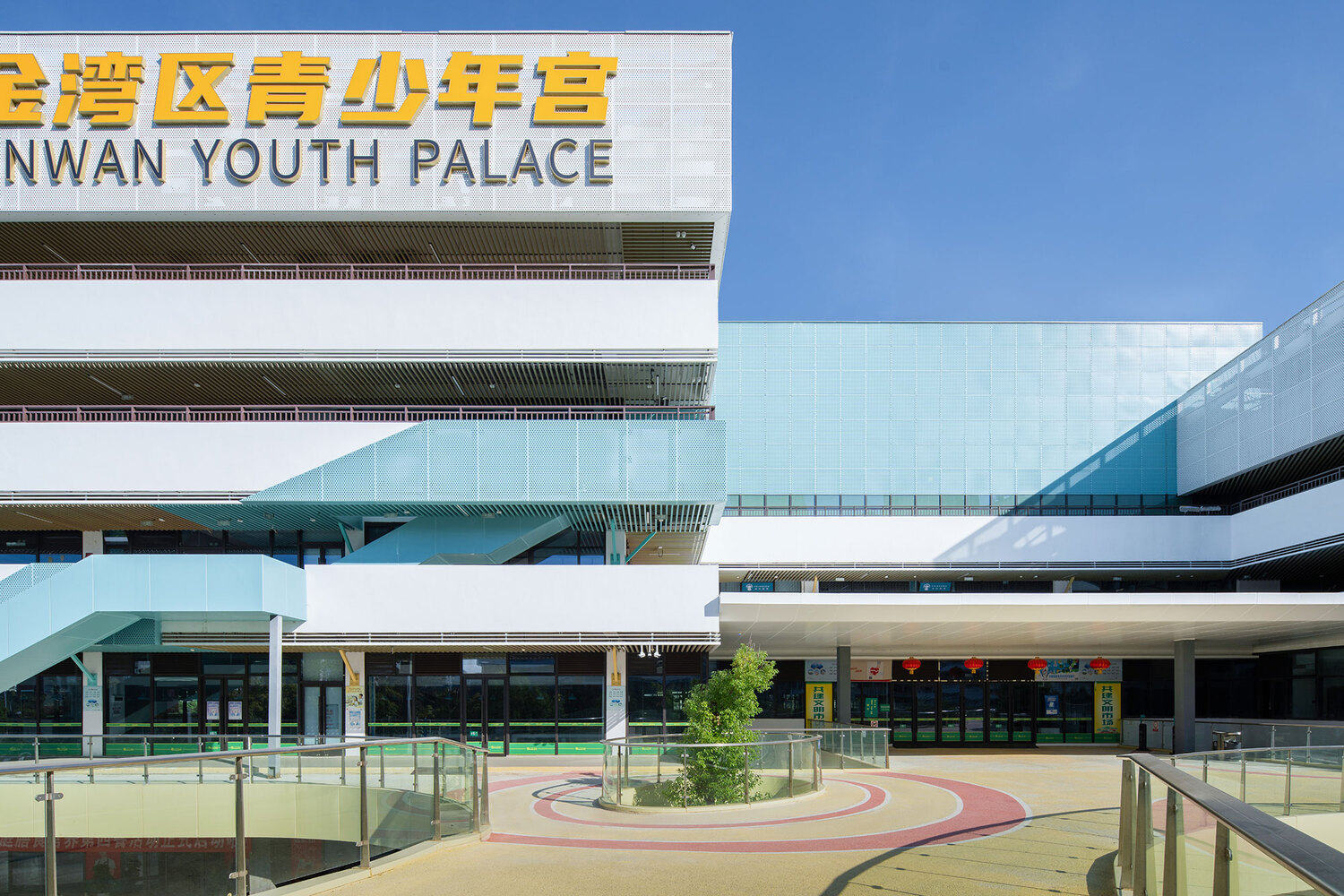
A sweeping second-level platform unites these stark structures into a cohesive ensemble. This simple yet resolute gesture has dramatically transformed the complex's form and identity.
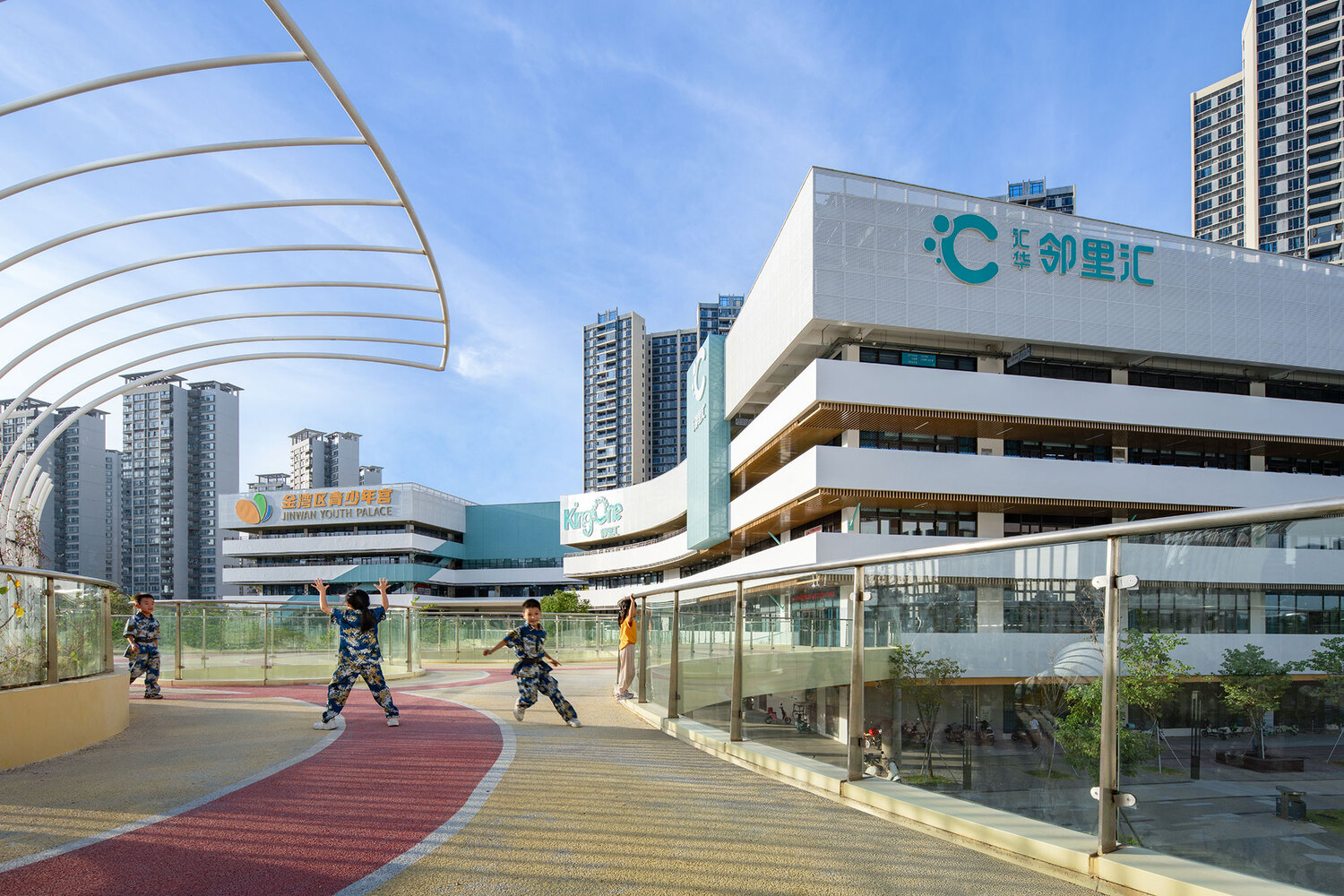
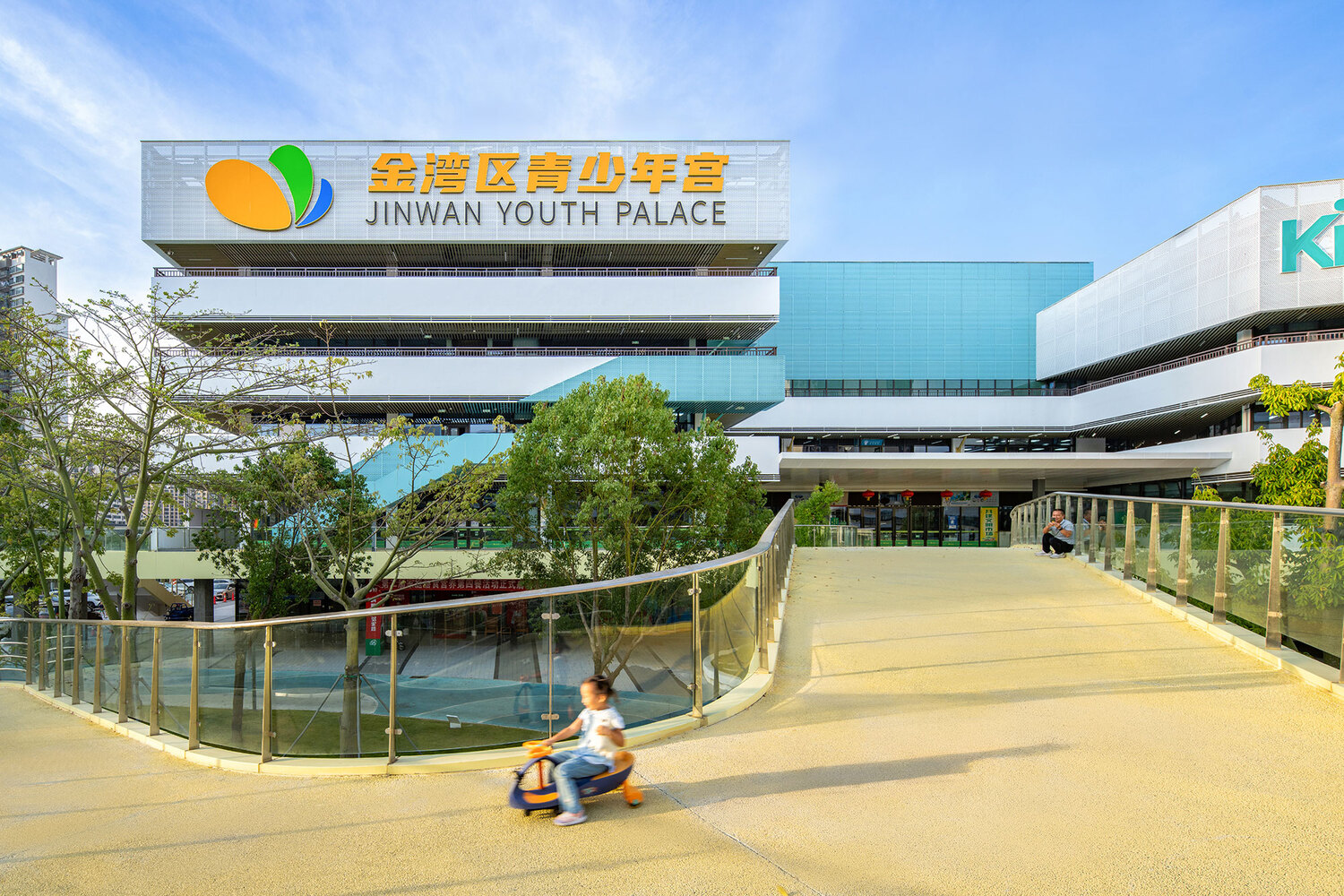
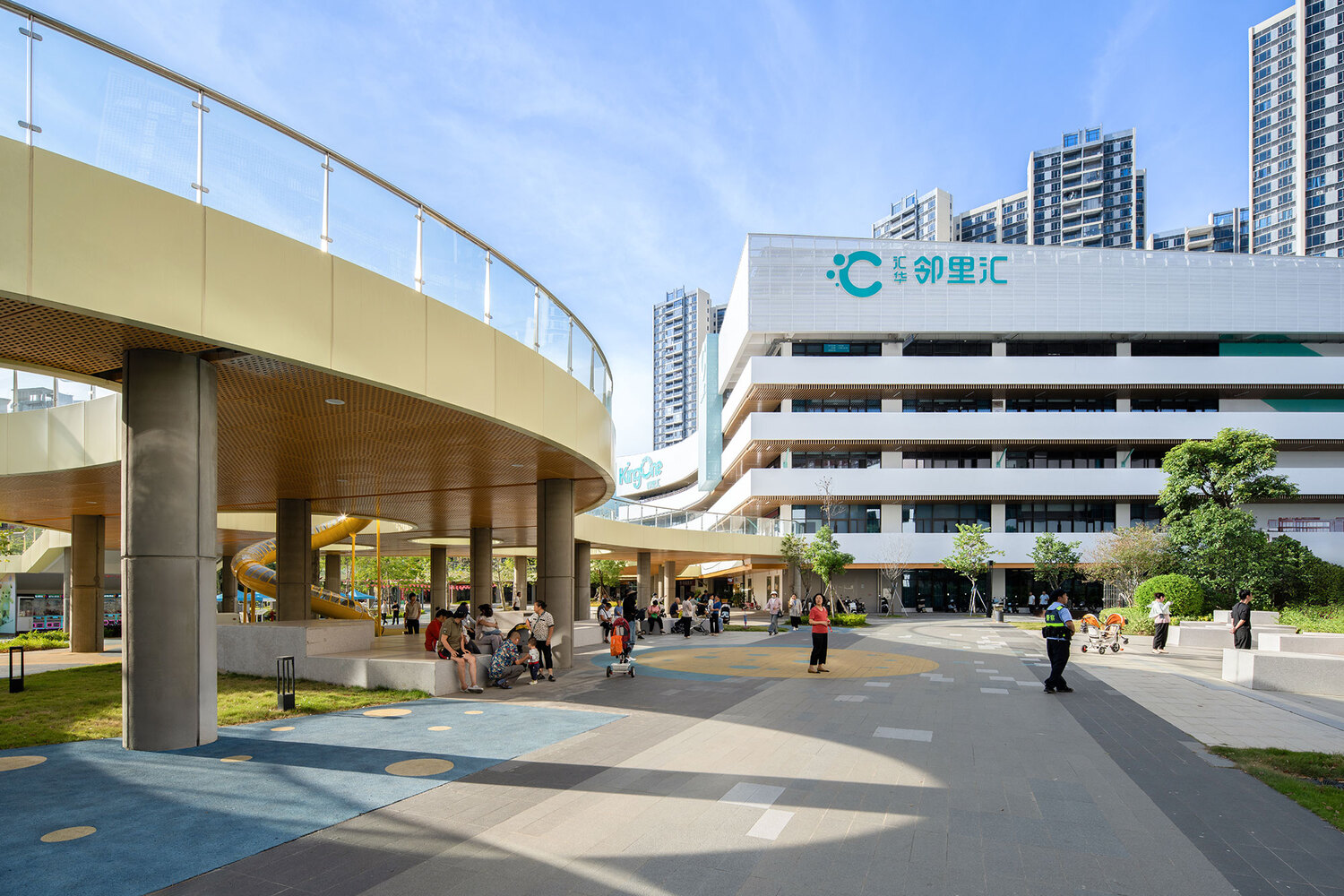
Each building now opens toward the park, channeling energy and activity into a vibrant community core. Ramps and stairs connect the platform to the street level, creating two distinct ground levels that significantly enhance accessibility and boost the commercial value of the retail spaces.
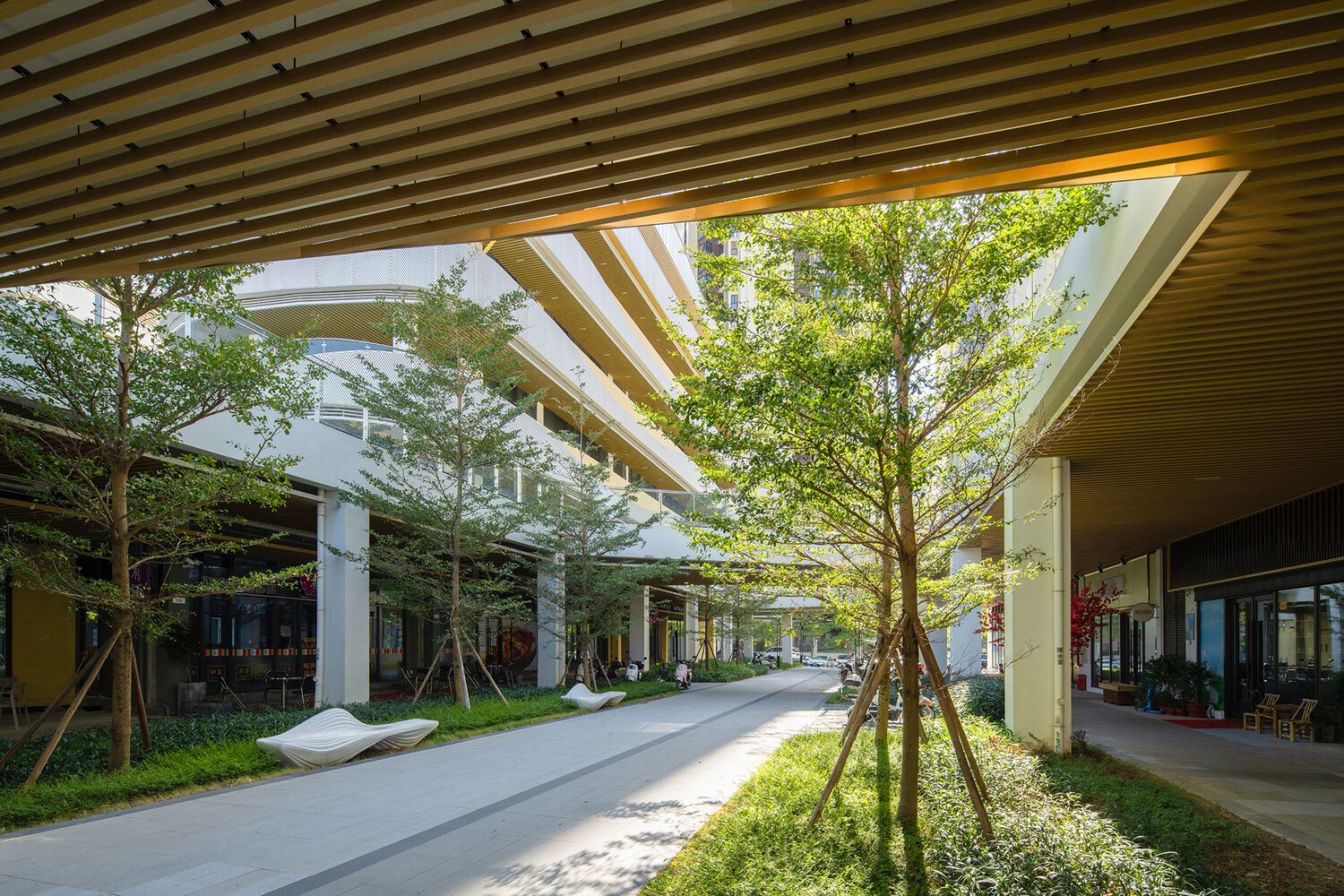
Beneath the elevated platform, shaded areas offer relief from the hot, humid climate typical of the Lingnan region. Previously exposed sidewalks are transformed into comfortable, sheltered spaces, offering respite during hot summer days and protection from sudden coastal storms.
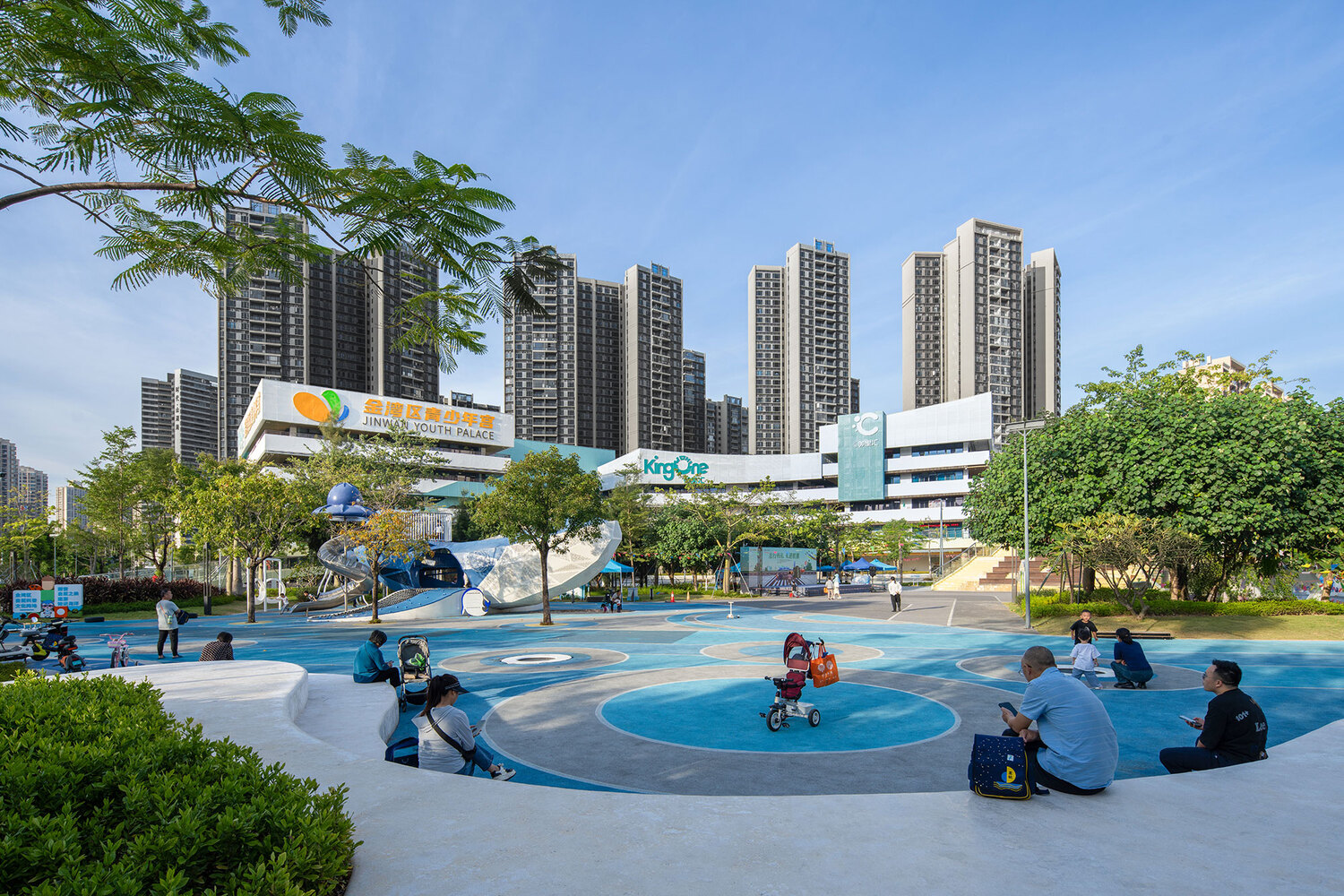
The resulting three-dimensional social space supports a diverse range of community activities. Children play, seniors chat, and parents wait for their children after school.
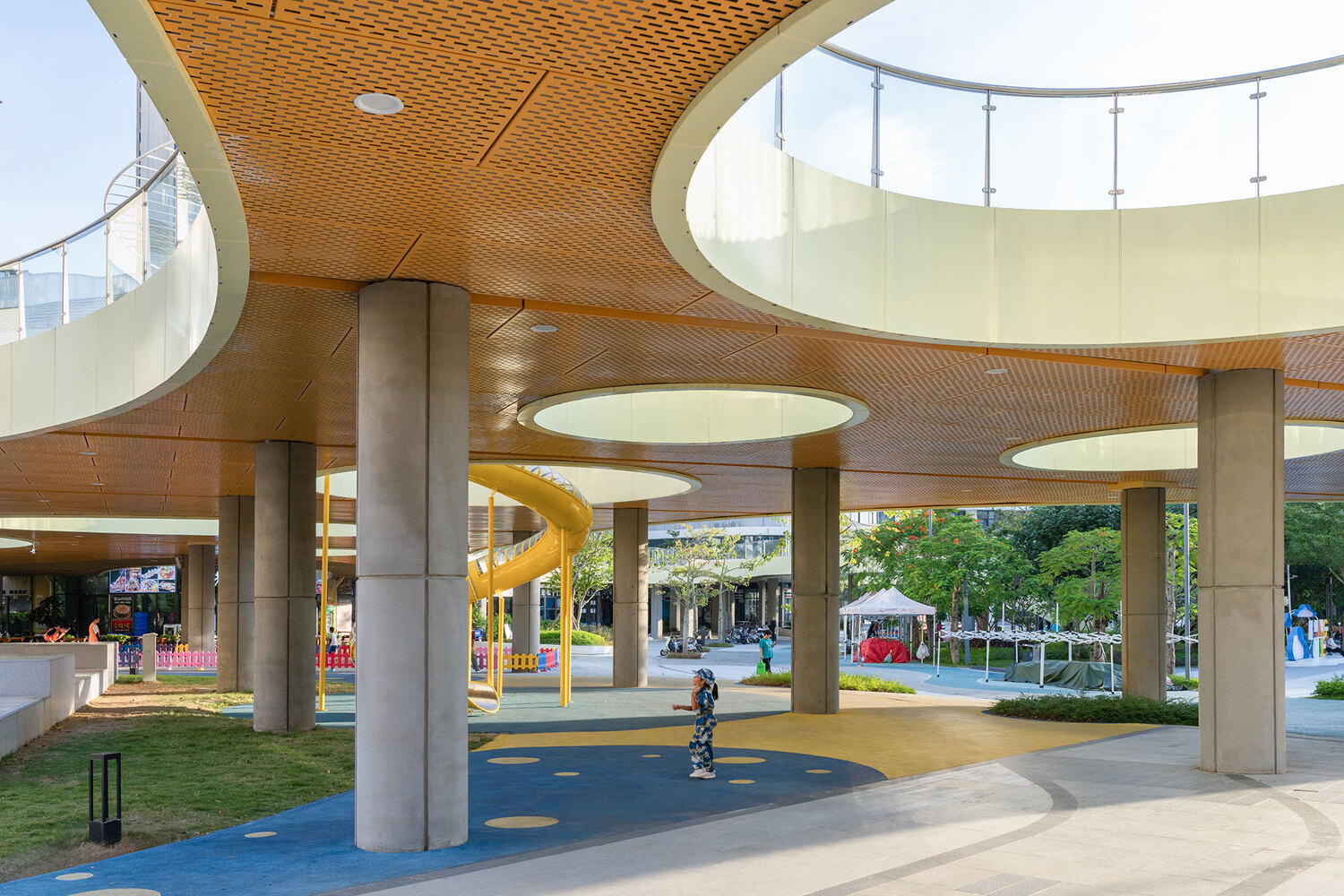
Circular openings of varying sizes—ranging from tree pits to slides—create a lively interplay of light and shadow beneath the platform, activating the space and encouraging interaction.
A gently undulating ramp draws people up to the second-floor platform, doubling as a favorite spot for local skateboarders and cyclists. Above, a new layer of community life unfolds, with a fresh food market located on this upper level.
On summer nights, when the heat subsides, residents gather here to enjoy the sea breeze or sit on the broad steps to engage in the lively events on the community stage.
Above and below the platform, spontaneous interactions of seeing and being seen unfold. The space invites active engagement and co-creation, evolving into a true place of belonging for the community.
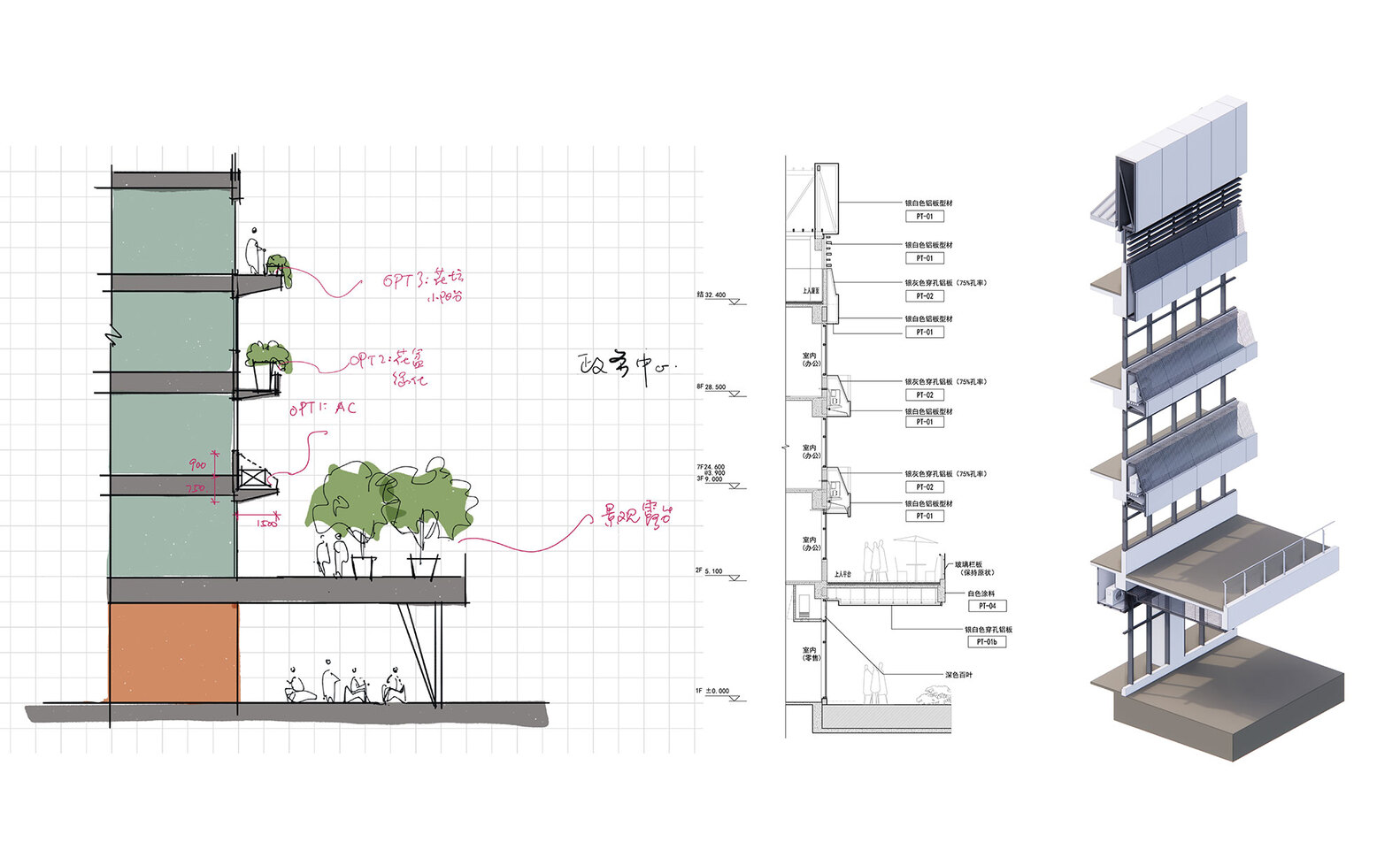
Constrained by an extremely limited budget, the facade renovation employs a restrained yet strategic approach. By focusing on the sense of place rather than superficial upgrades, the design achieves a light-touch transformation with significant impact.
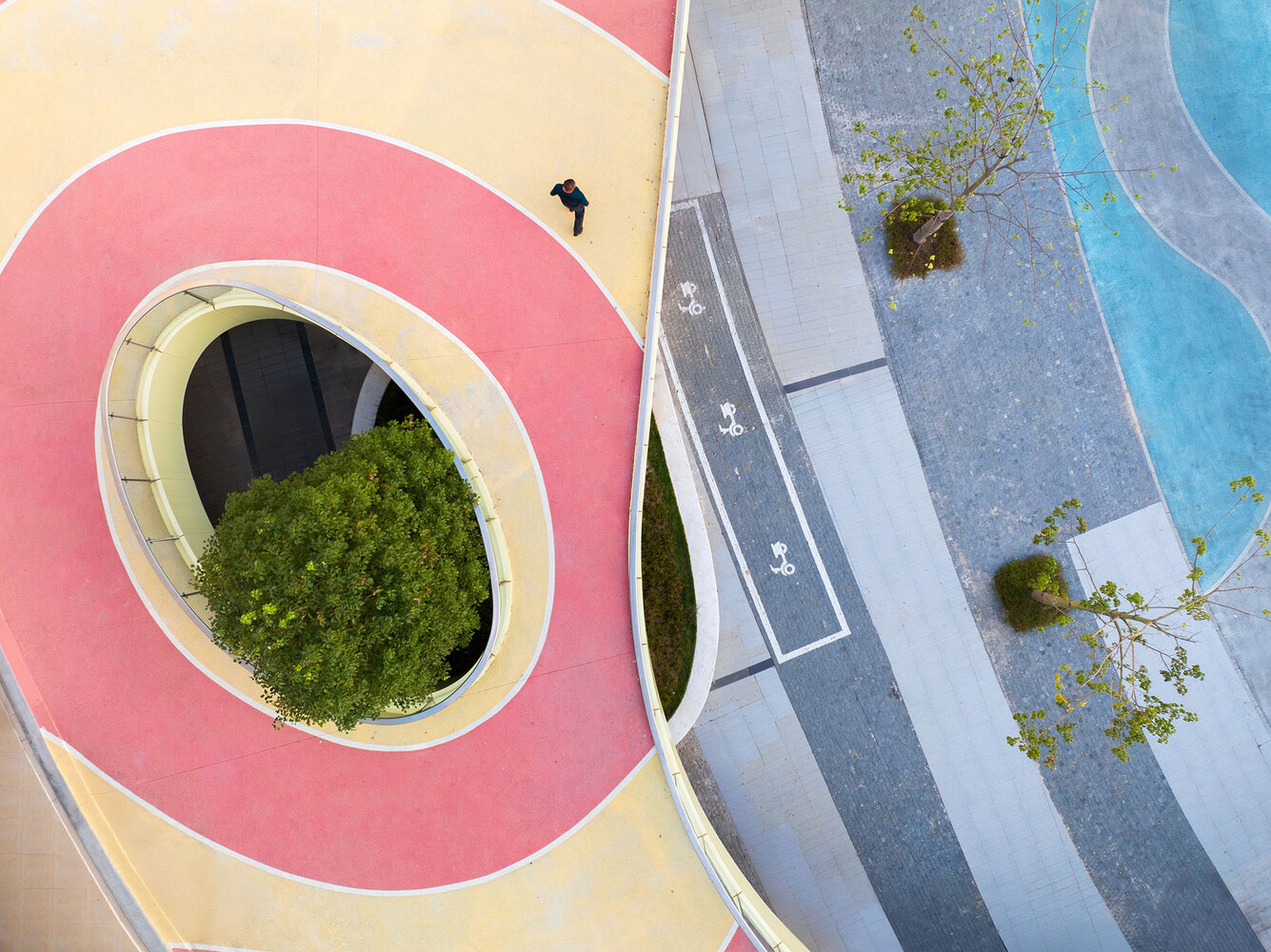
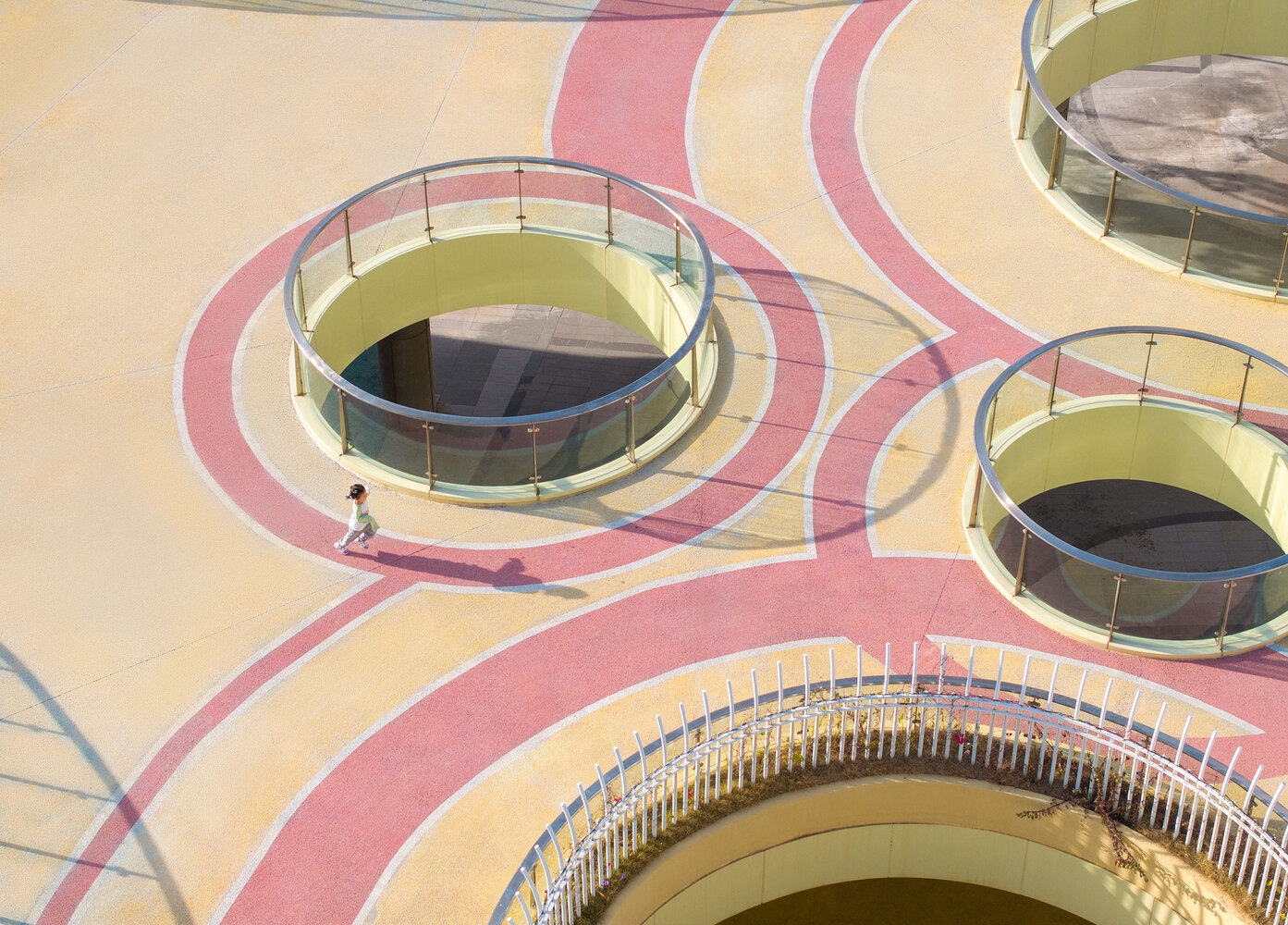
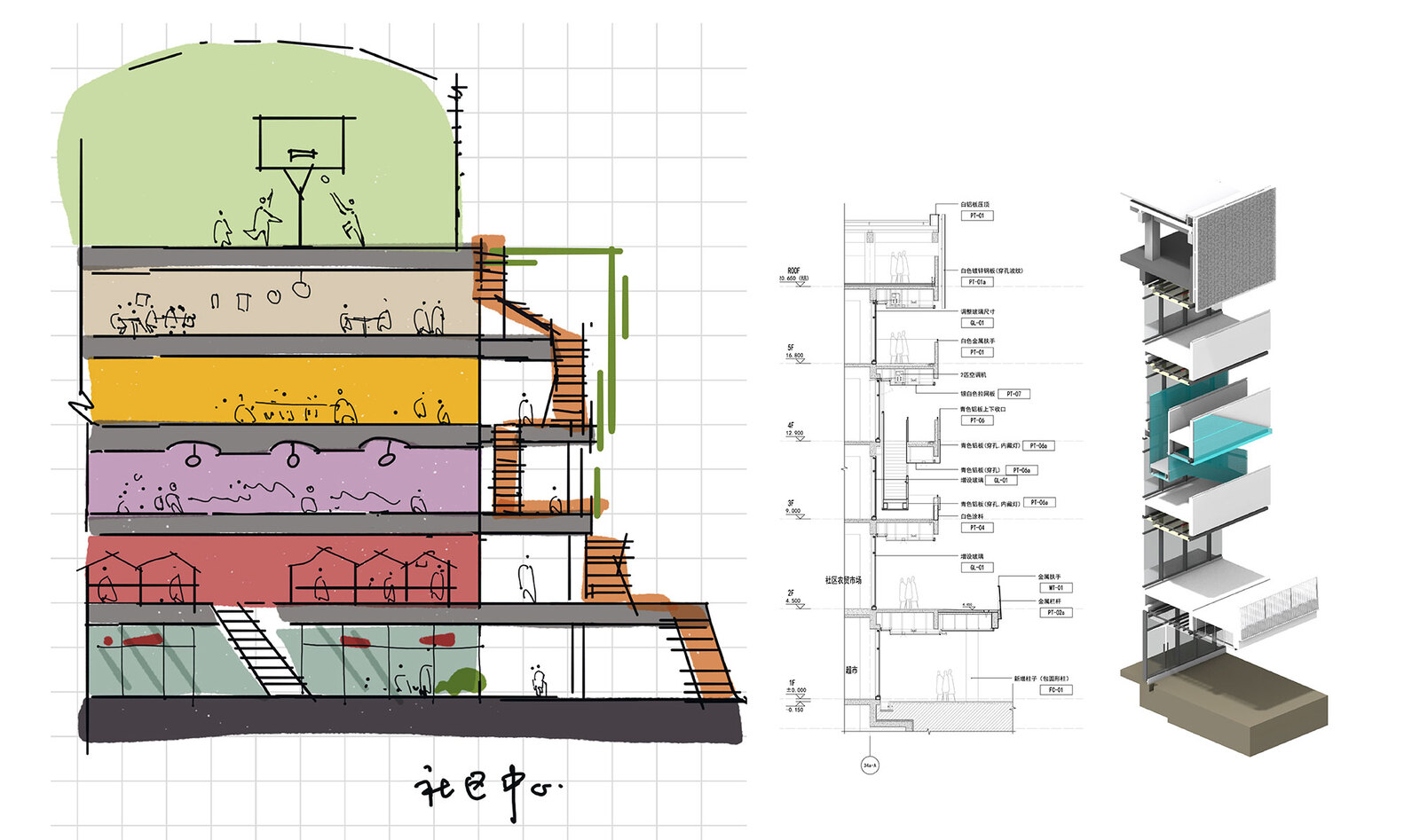
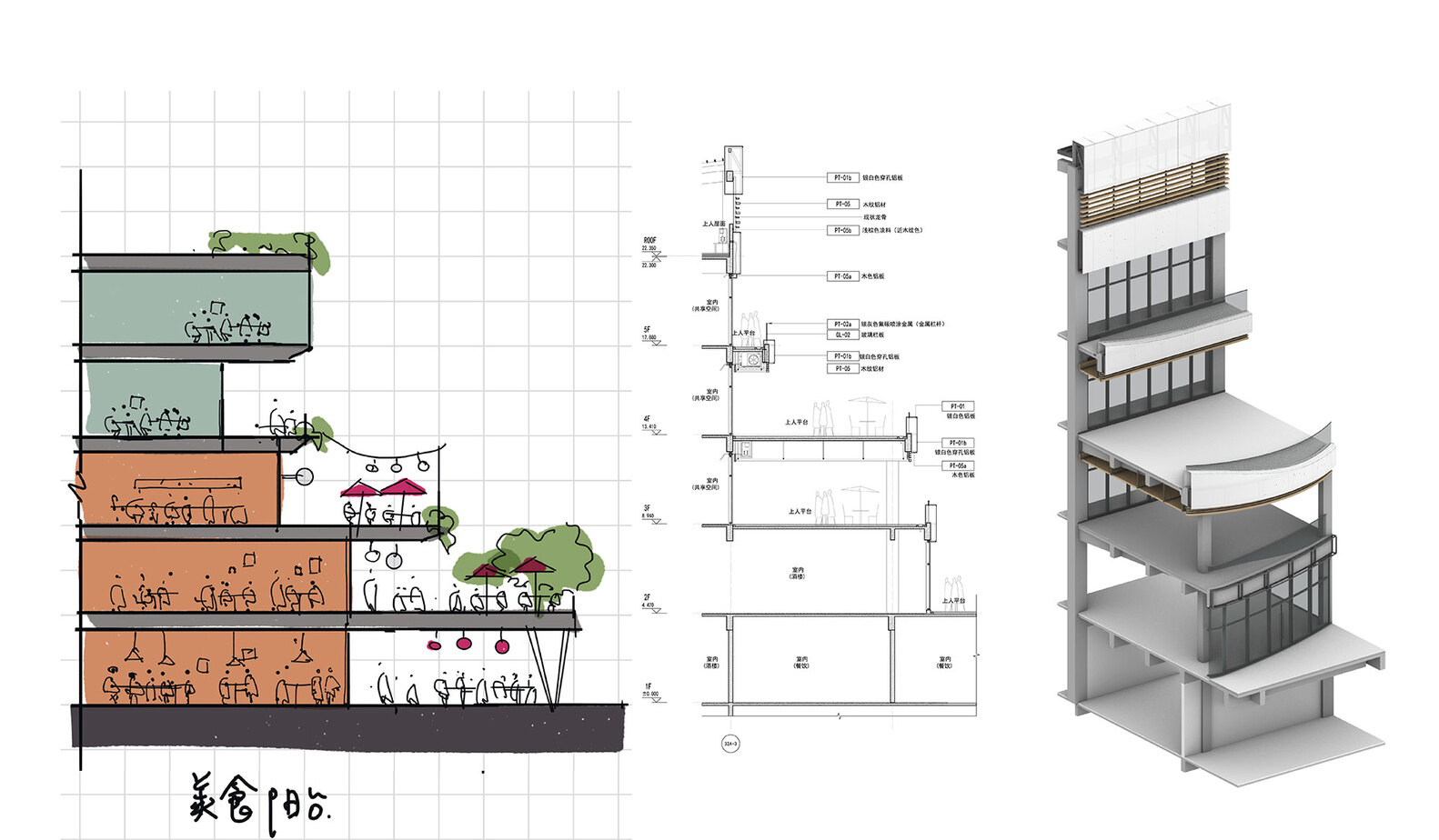
Color became the primary design tool—a gentle intervention that breathes life into once monotonous facades. Each building was assigned a distinct theme color, echoing its specific program—such as government services, dining, retail, fresh food market, senior facilities, or youth activity center—visually highlighting the diversity of community life.
The original dull perforated aluminum panels were replaced with clean, white horizontal bands, refreshing the visual identity of the facades.
At the Youth Palace, the facade has been completely opened up and reimagined as a wraparound external corridor, turning circulation into a visible, animated experience.
Children running up and down the spiraling staircase become a delightful feature of the facade, turning everyday movement into a playful scene.
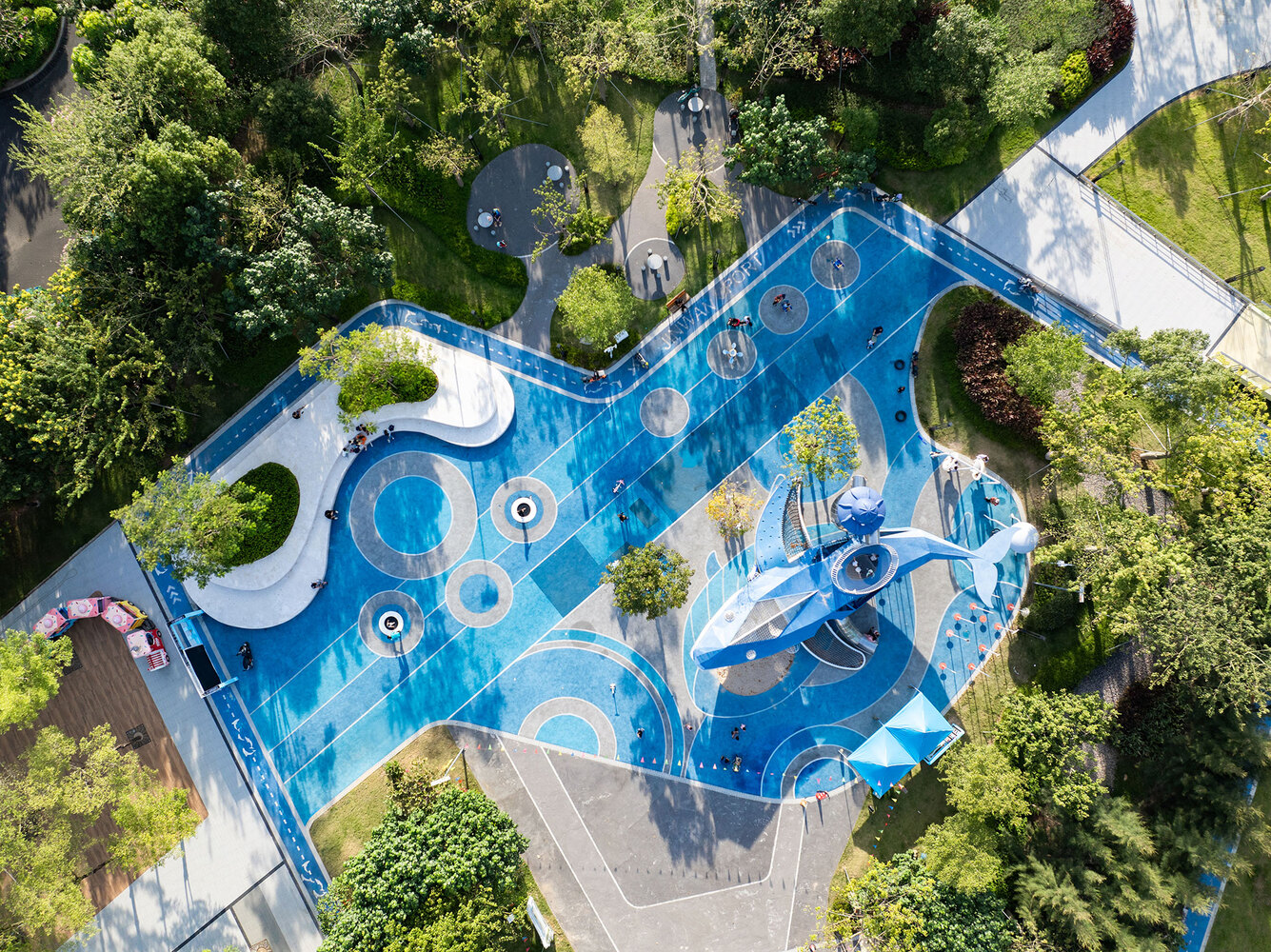
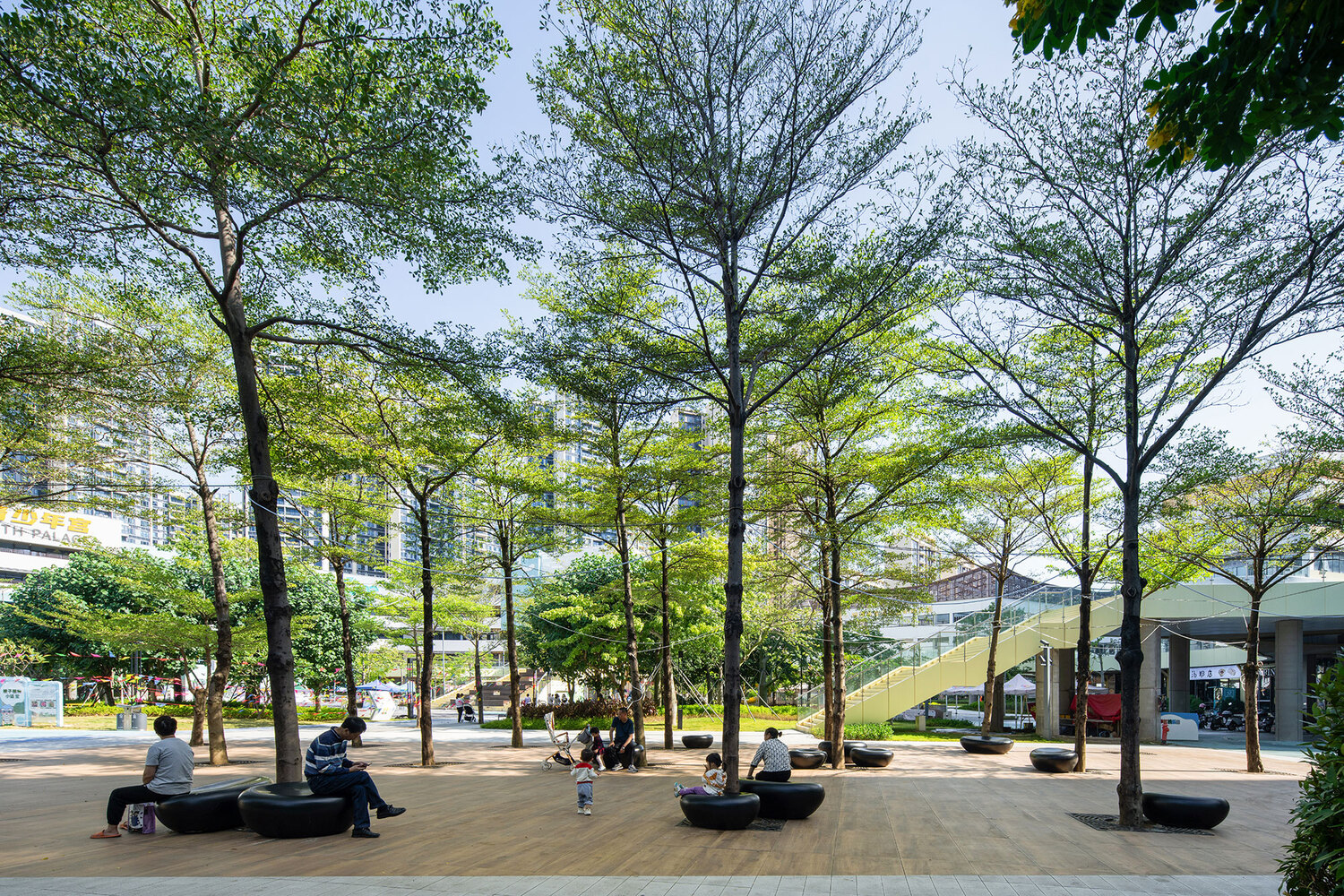
The existing municipal greenbelt was already densely vegetated. Therefore, the design intervention simply introduced activity-oriented landscape elements, prioritizing everyday human experience.
Not a single tree was removed. Existing trees were fully preserved, with their canopies carefully aligned with the platform openings above, bringing greenery and shade to the upper platform.
Beneath the trees, an open-air playground becomes a daily haven for kids to play and explore. A grand staircase and stage leading to the second-level platform offer ideal venues for varied events organized by the school and the local community.
The fire lane beneath the platform was transformed into an ocean-themed landscape pathway, doubling as a vibrant night market venue.
Since opening over a year ago, KING ONE Community Center has emerged as Zhuhai's most vibrant community hub, hosting nearly a hundred events of varying scales.
The lush greenery creates a relaxed, inviting atmosphere for both community life and commercial activities. The park-centered night market continues to draw lively crowds every evening. This is more than a public venue—it is a true "urban living room," shaped for and embraced by its residents.
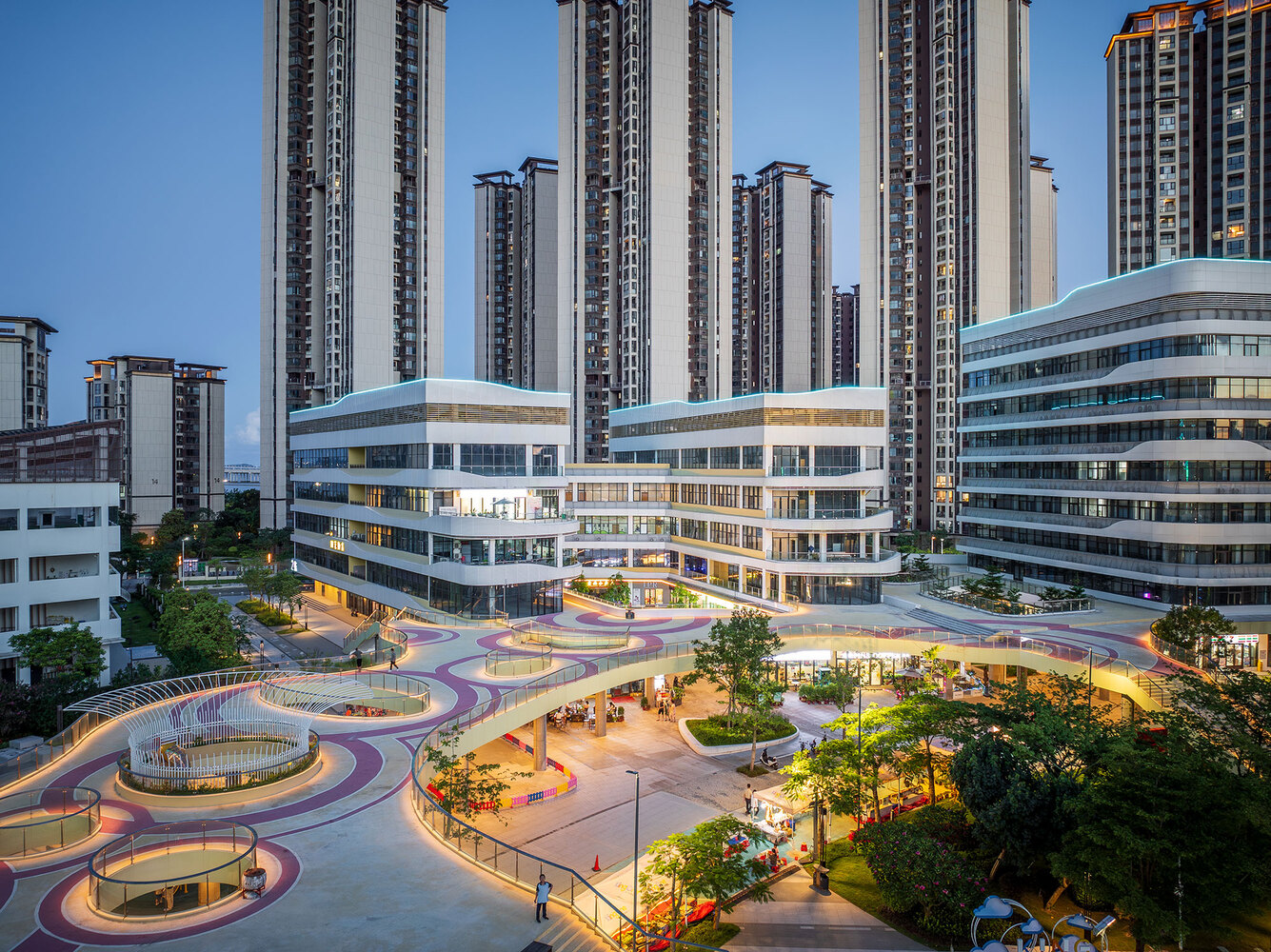
The project offers a compelling model, demonstrating how low-cost, rapid interventions can create a socially dynamic and inclusive community environment. When architects focus solely on form, they achieve only form. When they begin to focus on people, they cultivate true life.
Here, the richness of everyday life is on full display—people lingering, playing, and interacting with the sea breeze, the shade, and the trees. Their activities layer together, collectively writing the ongoing story of the community.