Center For Intangible Cultural Heritage
CENTER FOR INTANGIBLE CULTURAL HERITAGE
Gagahoho Architects
ARCHITECTS
Gagahoho Architects
LEAD ARCHITECT
Seuntae O
DESIGN TEAM
Yoonjung Choi
PHOTOGRAPHS
Han-ul, Lee, Narcillion
AREA
997 m²
YEAR
2022
LOCATION
Gwangmyeong-si, South Korea
CATEGORY
Cultural Architecture
English description provided by the architects.
GWANGMYEONG, THE CITY OF NONGAK AND SEODO SONGS (NONGAK: KOREAN TRADITIONAL FARMERS' MUSIC AND DANCE)
The city of Gwangmyeong has long been home to intangible cultural assets of great artistic and academic value.
Among them are Gwangmyeong Nongak—a traditional farmers' music that has been handed down for over 450 years in the Soha-dong and Hakon-dong regions—and Seodo Songs, a genre of Korean folk music originating from the northwestern provinces of Hwanghae and Pyeongan.
Both are preserved and passed down by recognized human cultural assets based in Gwangmyeong. In addition, traditional practices such as Abang-ri Farming Songs and Abang-ri Tug-of-War continue to be cherished by local communities, though not officially designated as cultural properties.
For many years, Gwangmyeong lacked a dedicated facility for training and performances related to intangible heritage. The need for a systematic space to preserve and nurture traditional culture led to a design competition for the Gwangmyeong Intangible Cultural Heritage Center (now renamed Gwangmyeong Center for Intangible Cultural Heritage).
Our design was selected three years ago, and the center officially opened in August 2024. With a total floor area of 997.13㎡ and a single above-ground floor, the building harmoniously blends traditional and contemporary aesthetics. Equipped with a performance hall, rehearsal rooms, and educational facilities, it serves as a hub for cultural transmission, education, and local engagement.
ADDING TRADITION TO THE GI HYEONG-DO CULTURAL PARK
The center stands beside the Gi Hyeong-do Literary Museum, located within the Gi Hyeong-do Cultural Park, named after one of Gwangmyeong's most beloved poets. The park, known for its lush forest and tranquil walking trails, is a popular resting place for citizens.
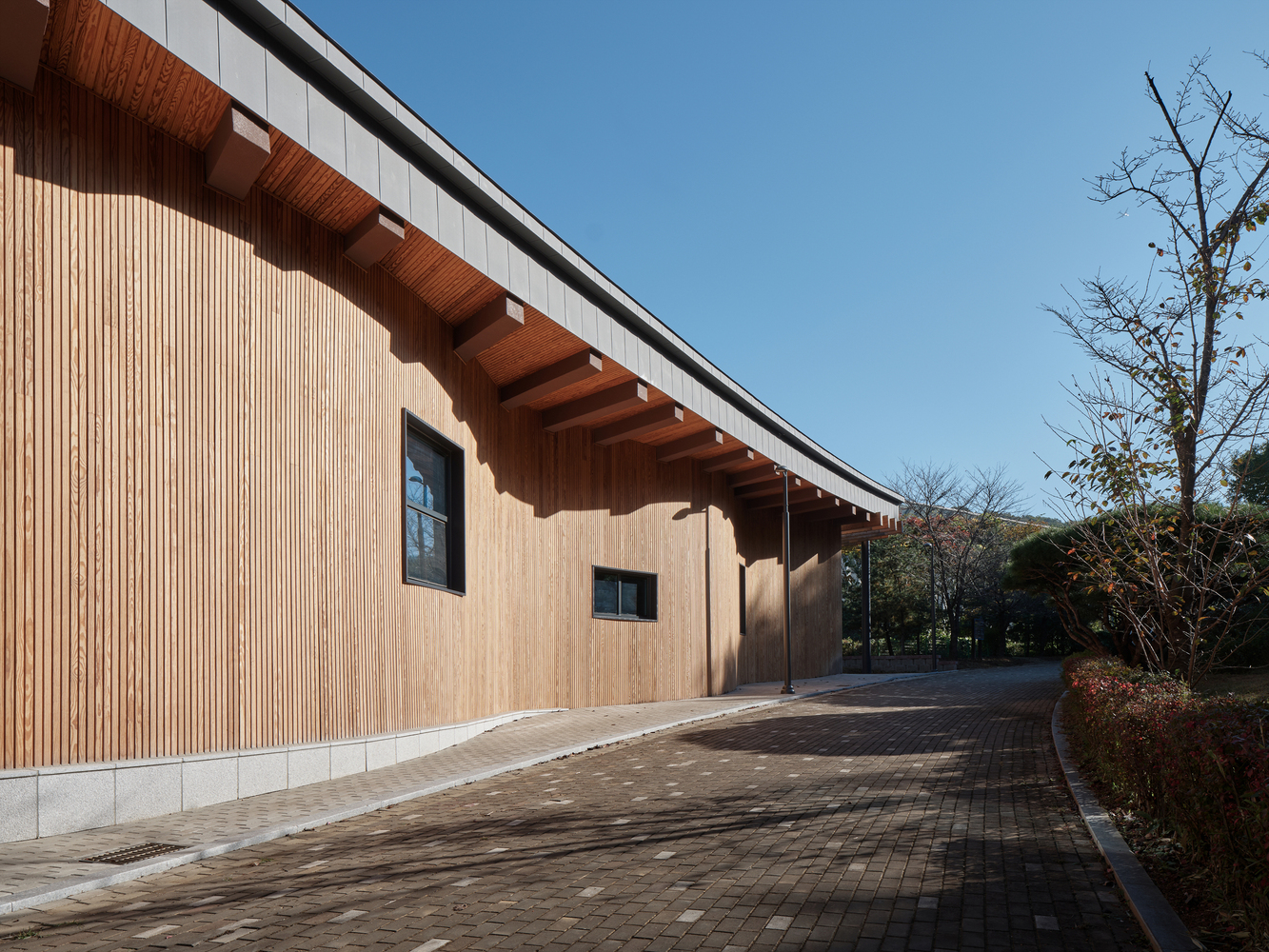
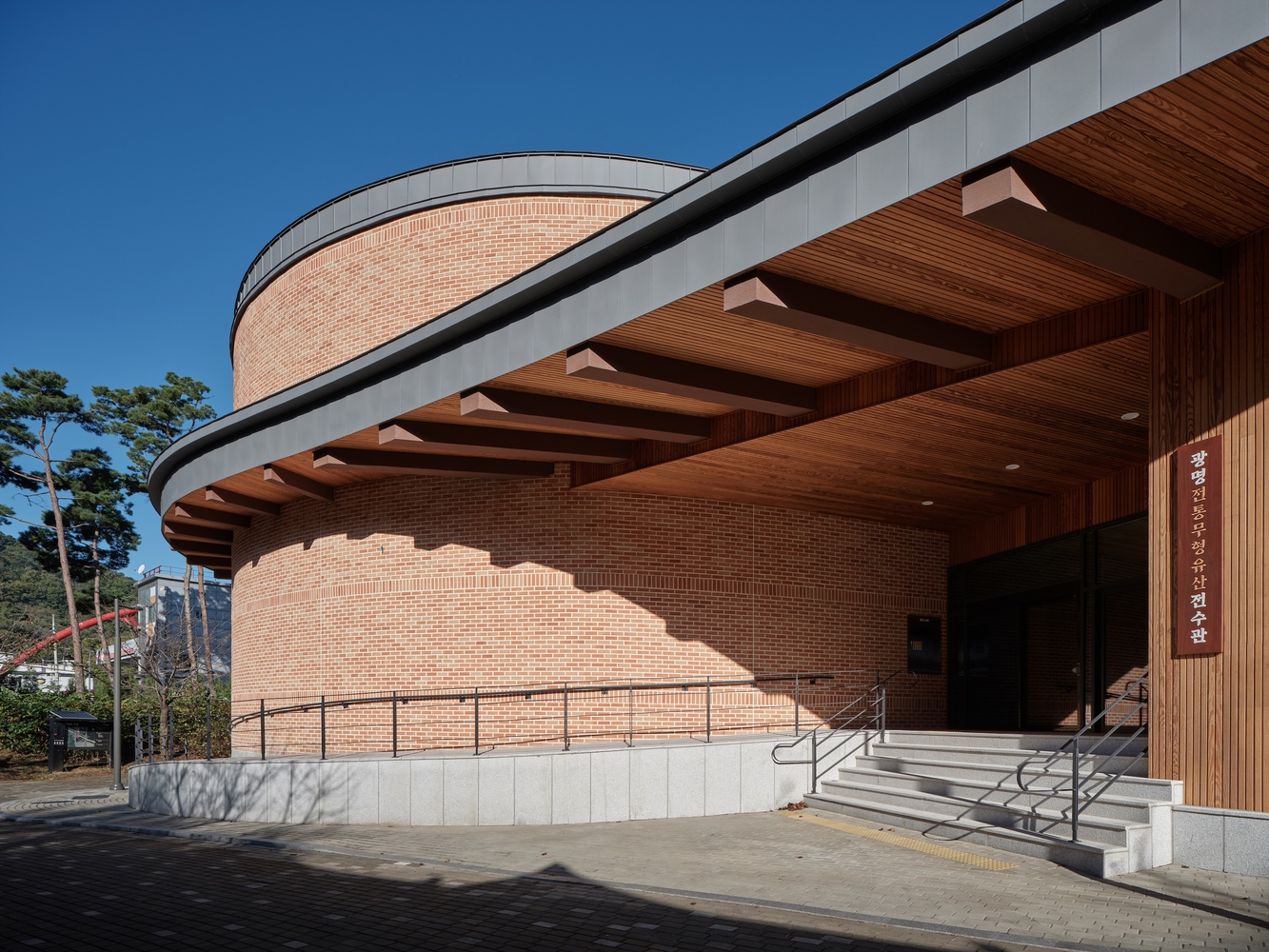
The entrance of the center connects directly to the park's poetry trail, enhancing accessibility and inviting visitors to encounter culture in the midst of nature. The landscaping seamlessly extends from the park, creating a variety of visual and spatial experiences.
A SPACE FOR SOUND, MOVEMENT, AND JOY
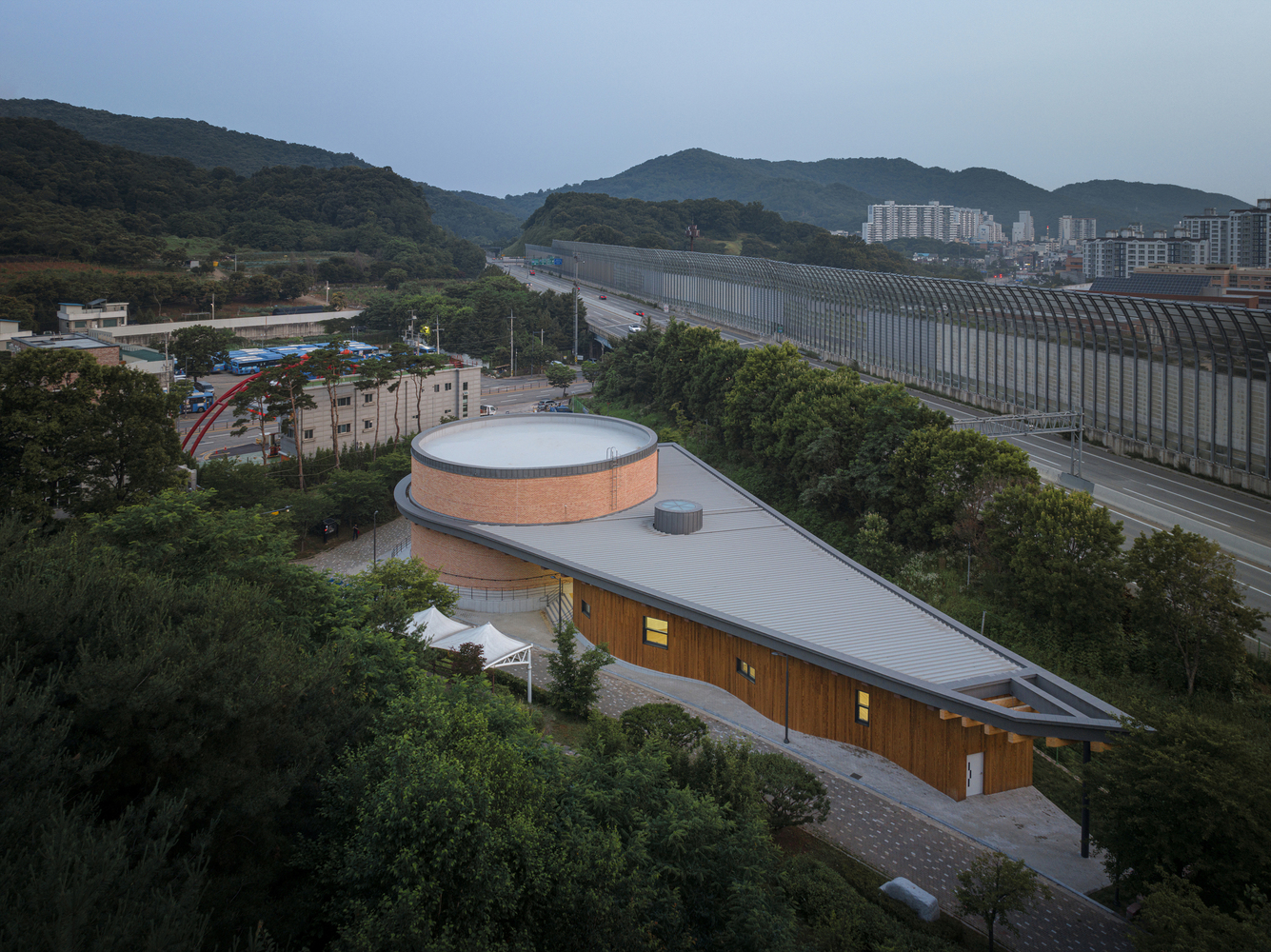
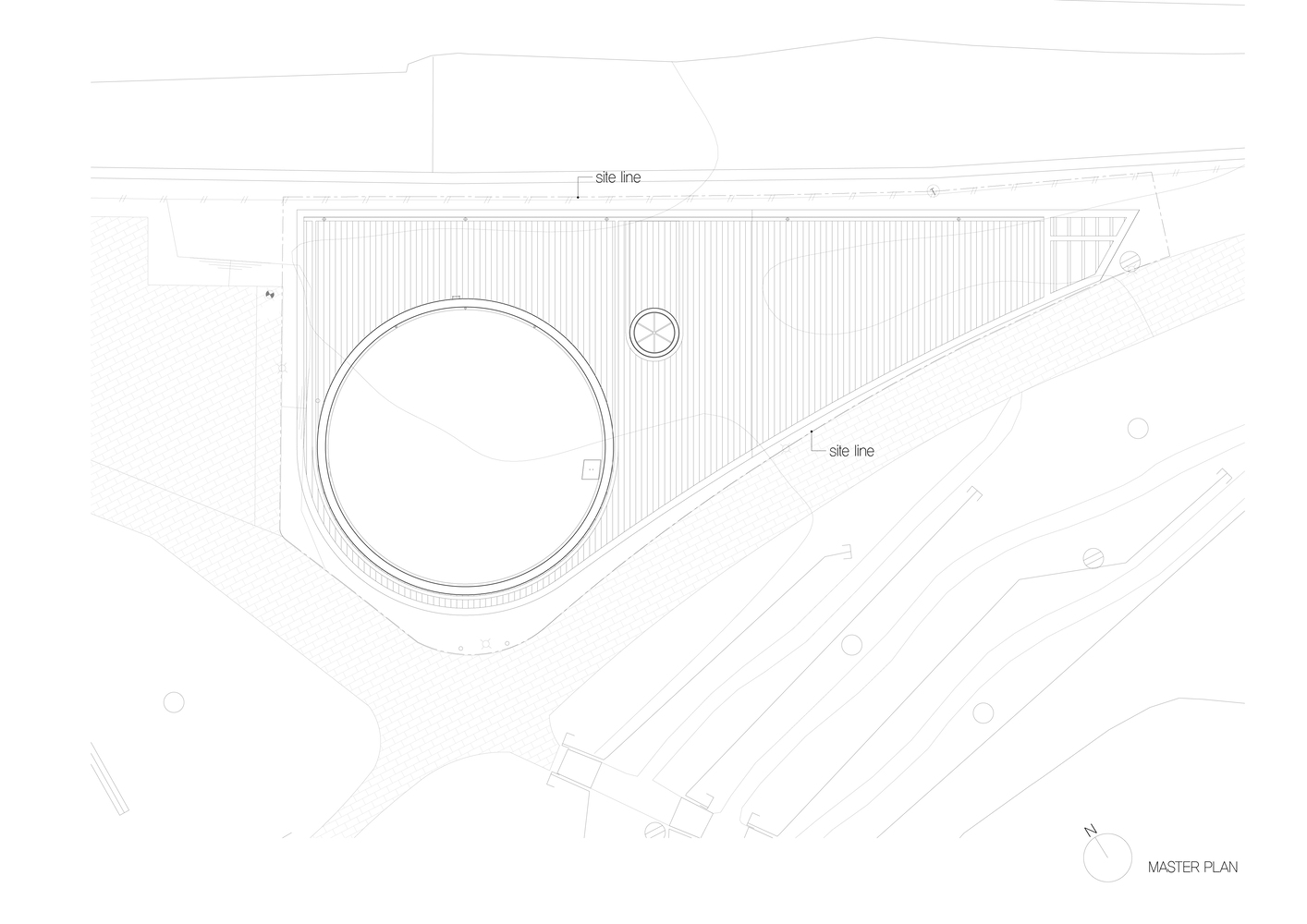
From the beginning, the design challenge lay in responding to a tight triangular site, sloping terrain, and the noise of a nearby expressway—while capturing the intangible essence of Korean traditional performance.
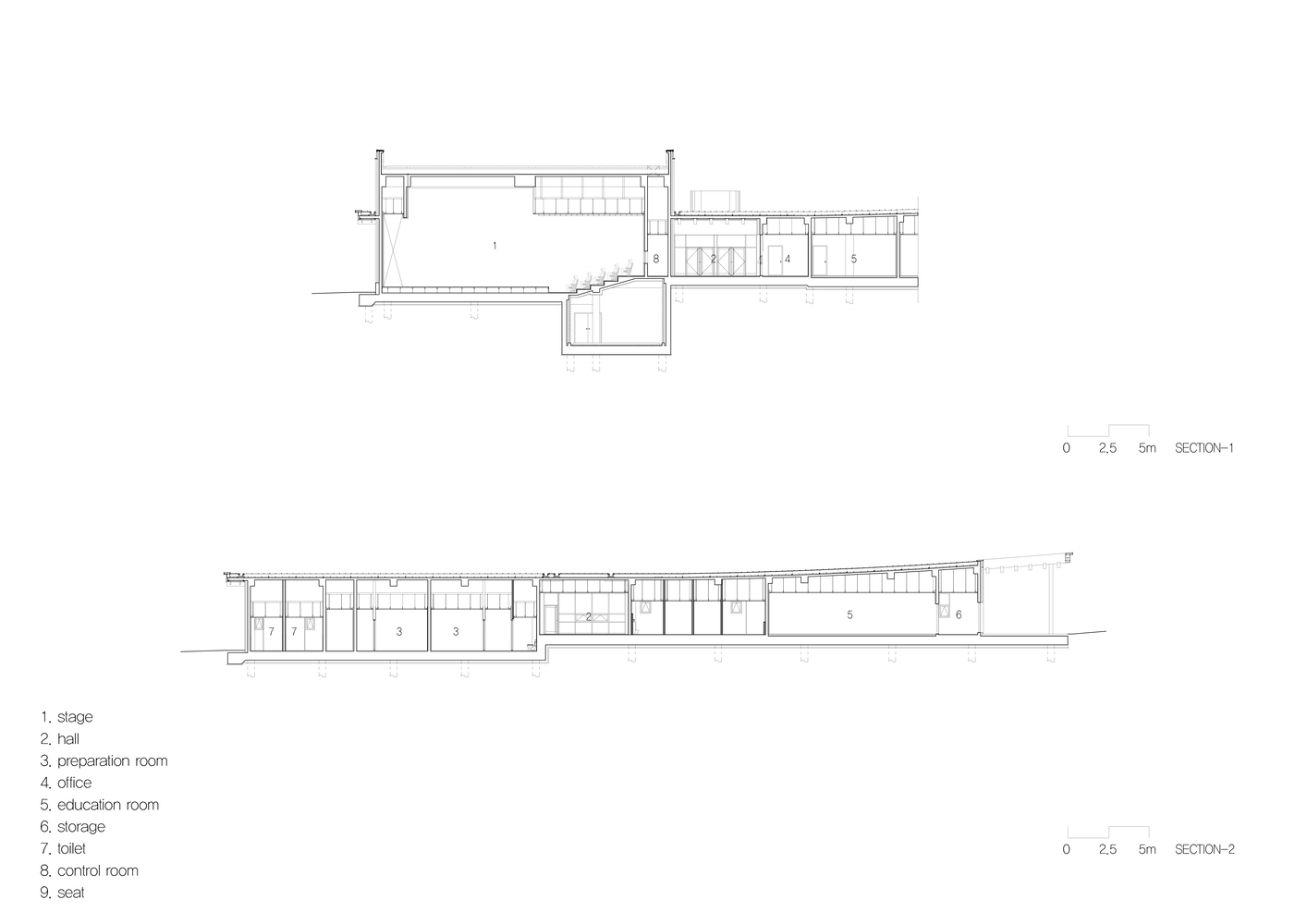
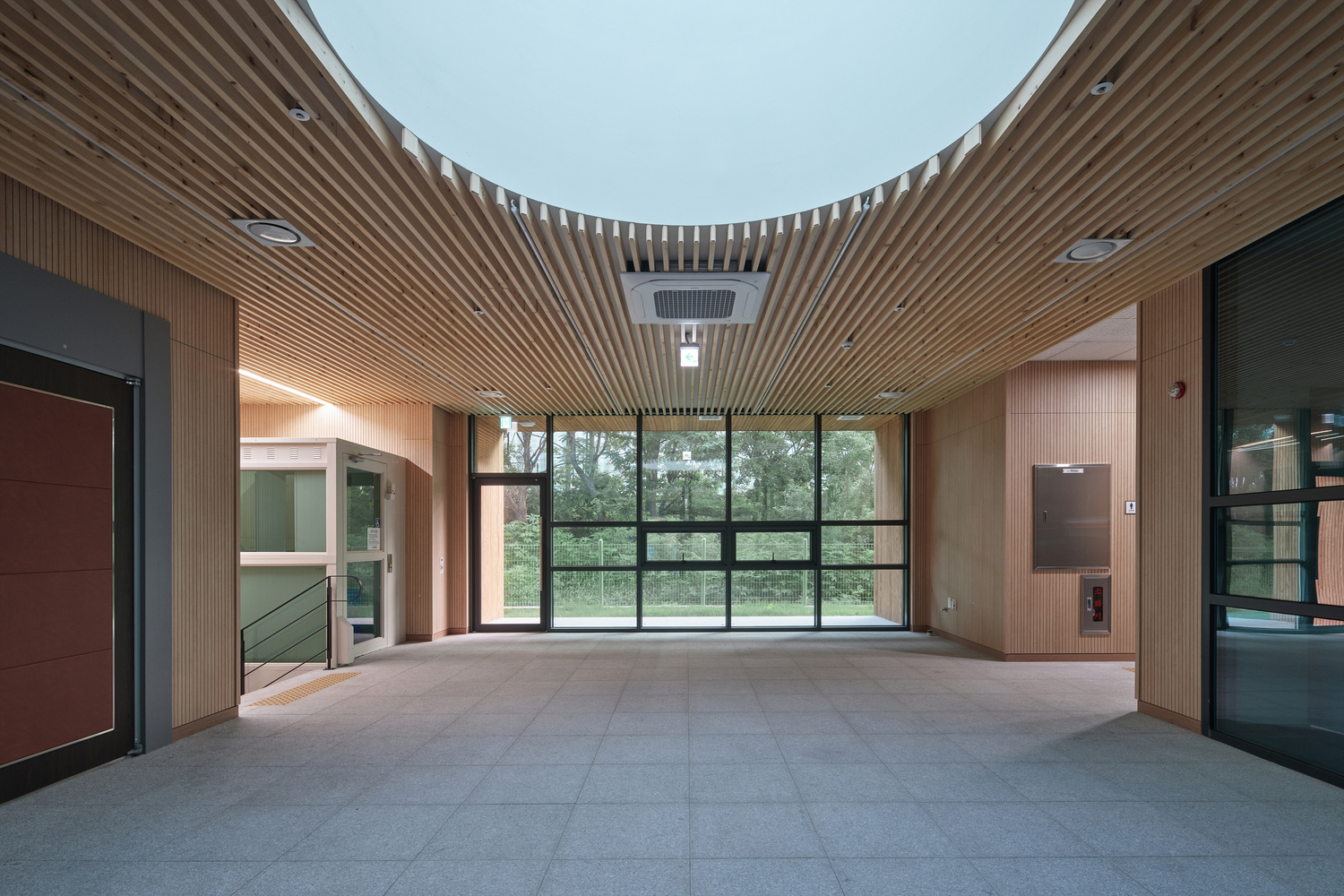
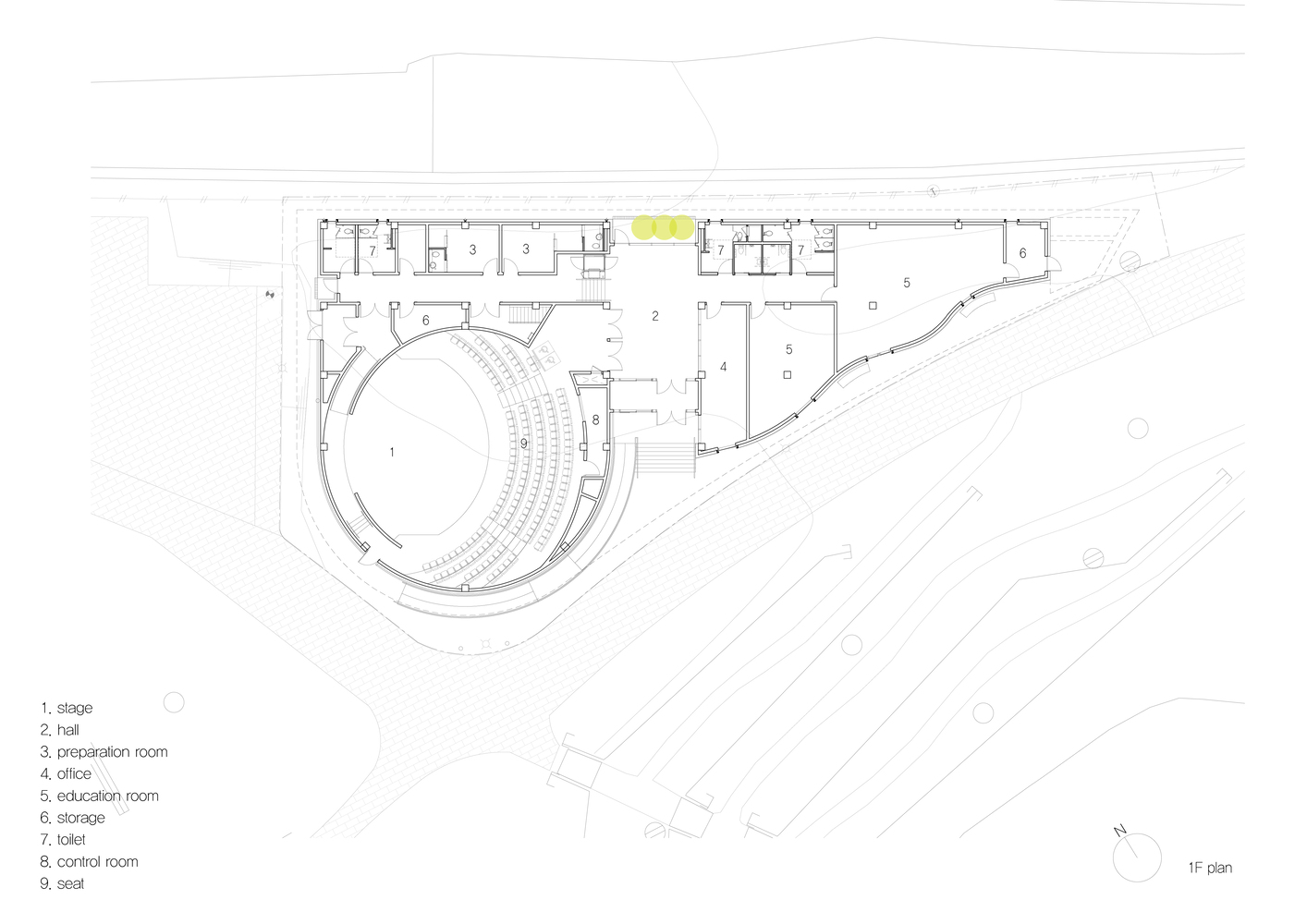
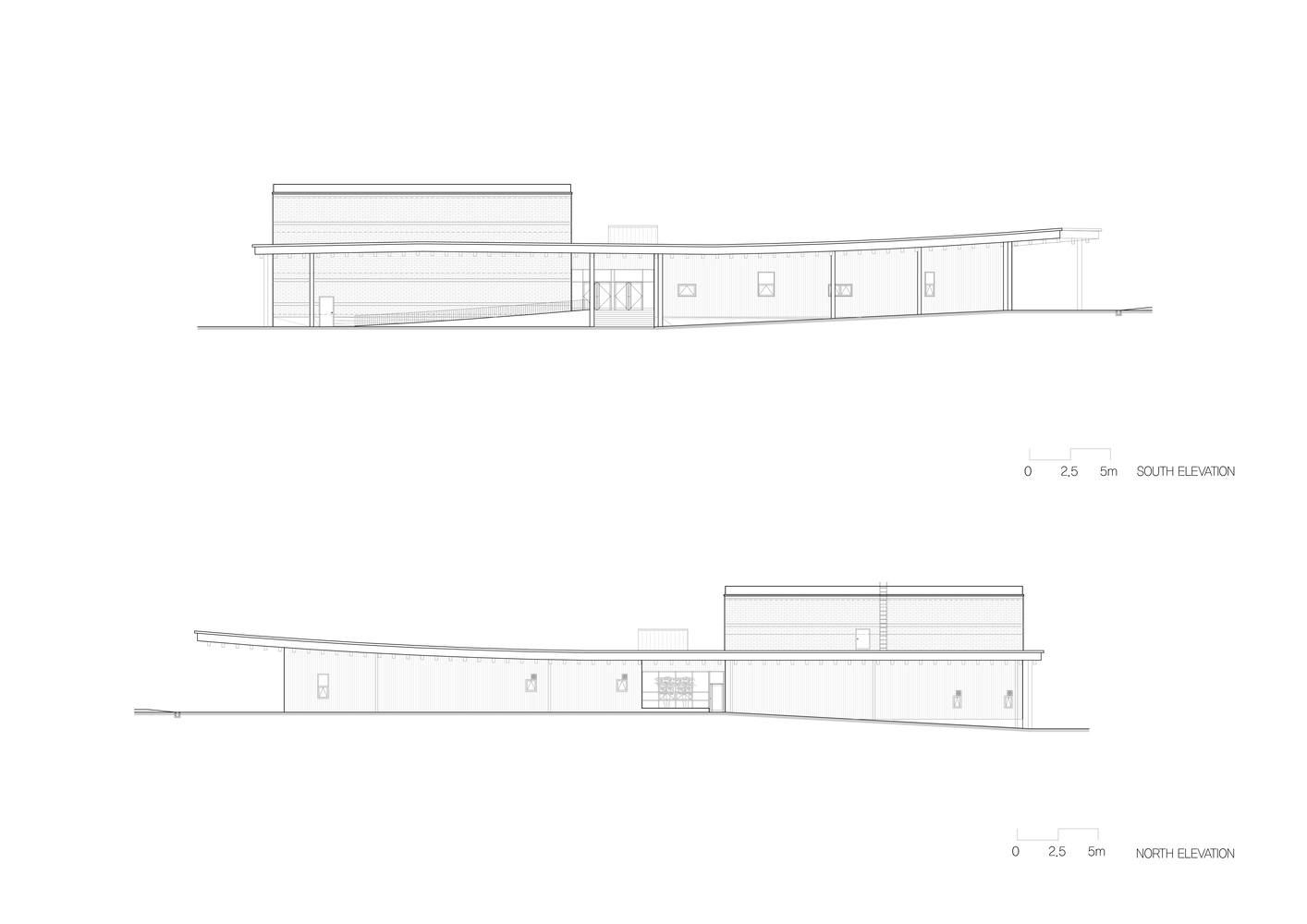
The building plan stretches horizontally, with the performance hall occupying the curved edge of the site. The central atrium serves as the heart of the building, flanked by the performance hall and waiting rooms to the left, and the rehearsal, education, and office spaces to the right.
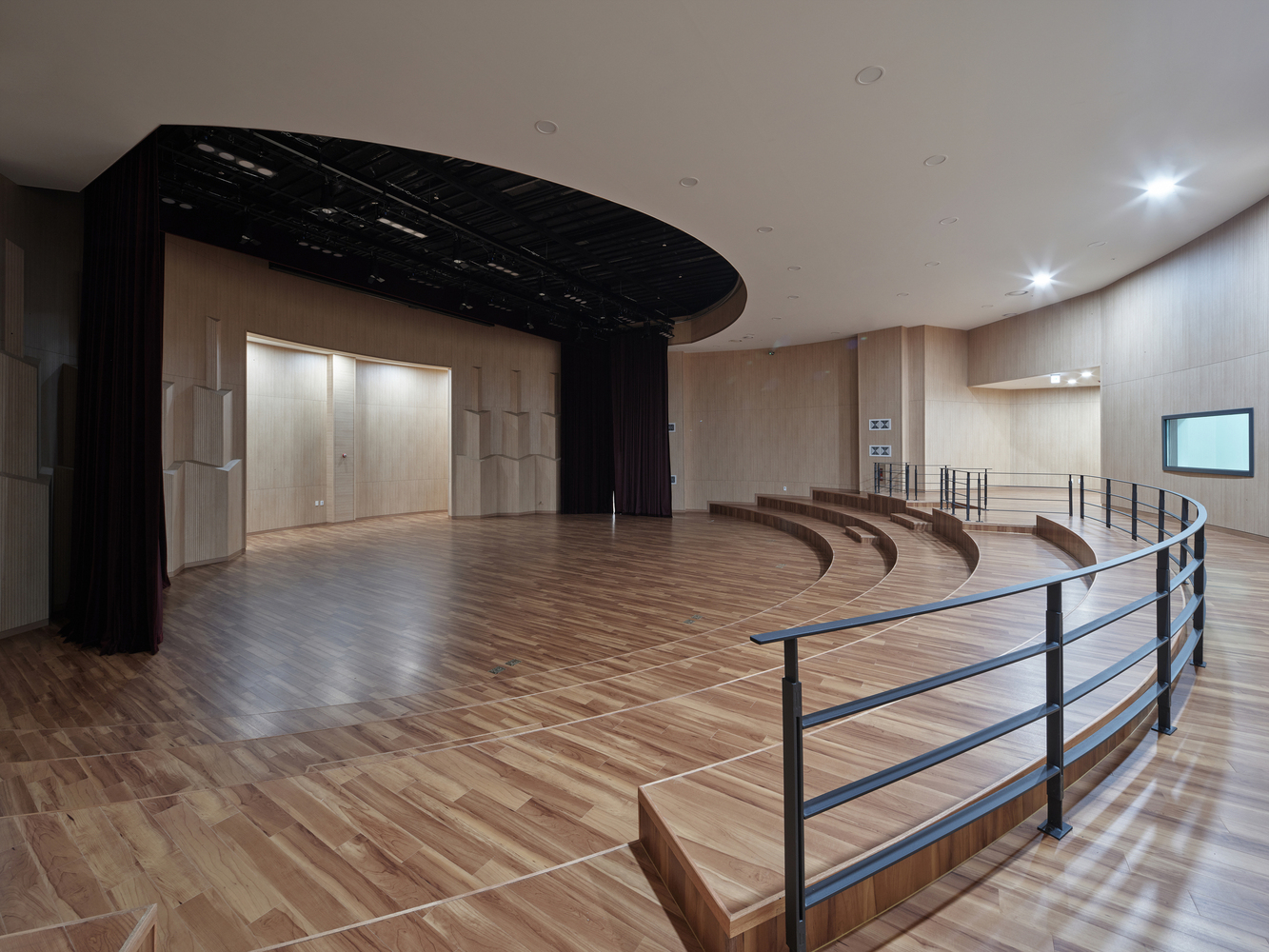
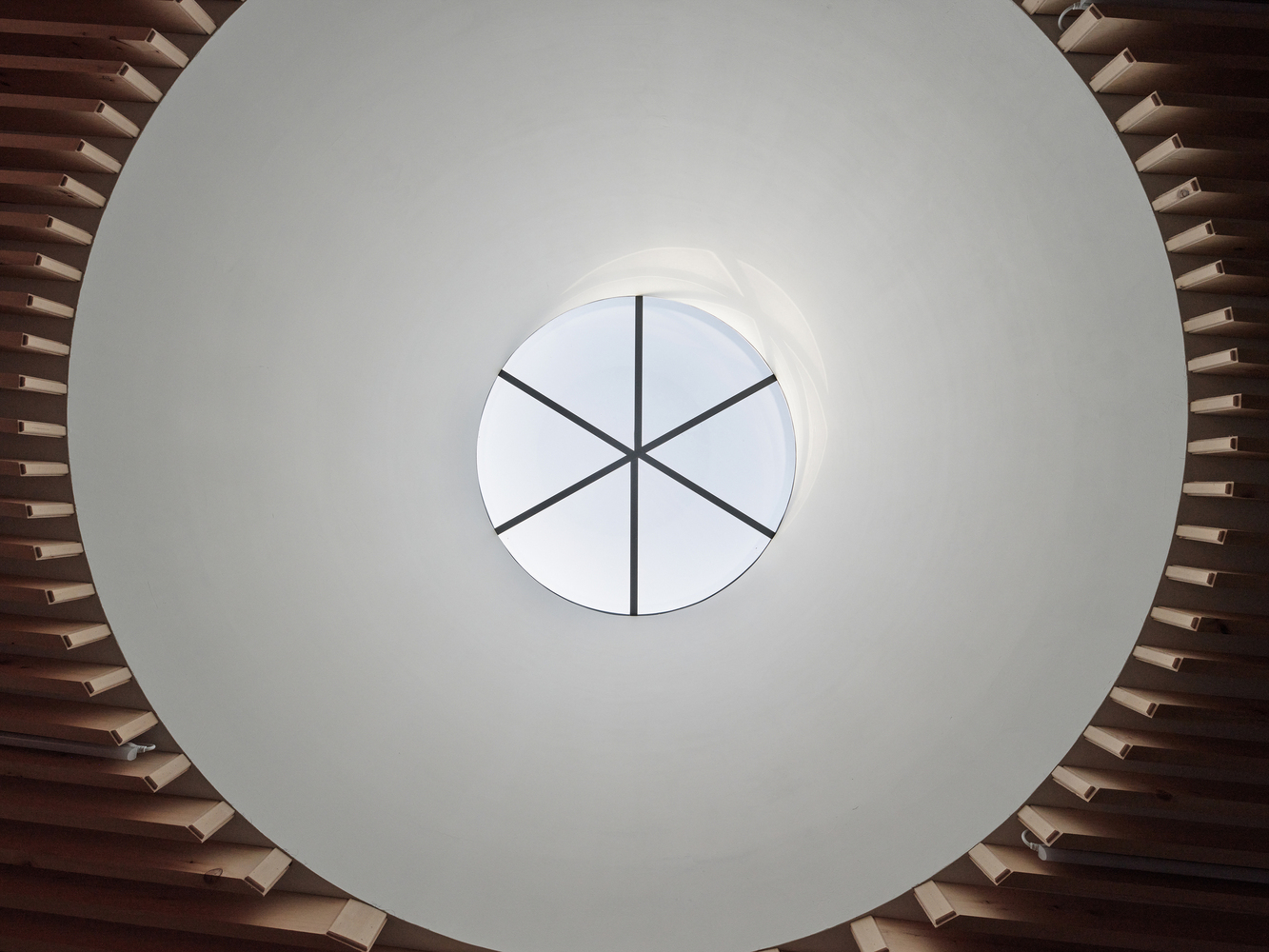
The 150-seat auditorium features a compact, semi-circular stage, allowing performers and audiences to share a close and vibrant connection. A large circular skylight at the center bathes the interior in natural light, creating openness and intriguing spatial relationships despite the limited footprint.
TRANSLATING INTANGIBLE HERITAGE INTO FORM
The architecture embodies the rhythm of "sound (eum)" and the movement of "dance (mu)", core expressions of Korean traditional culture.
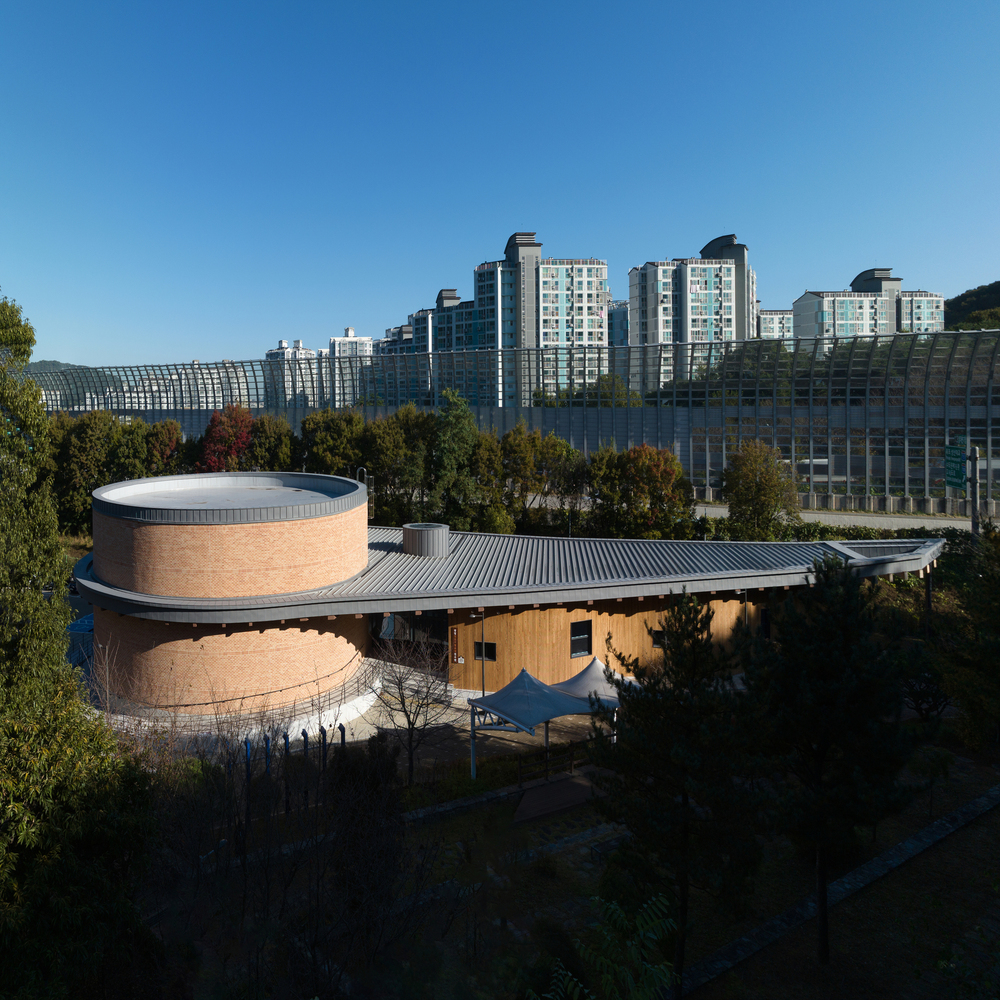
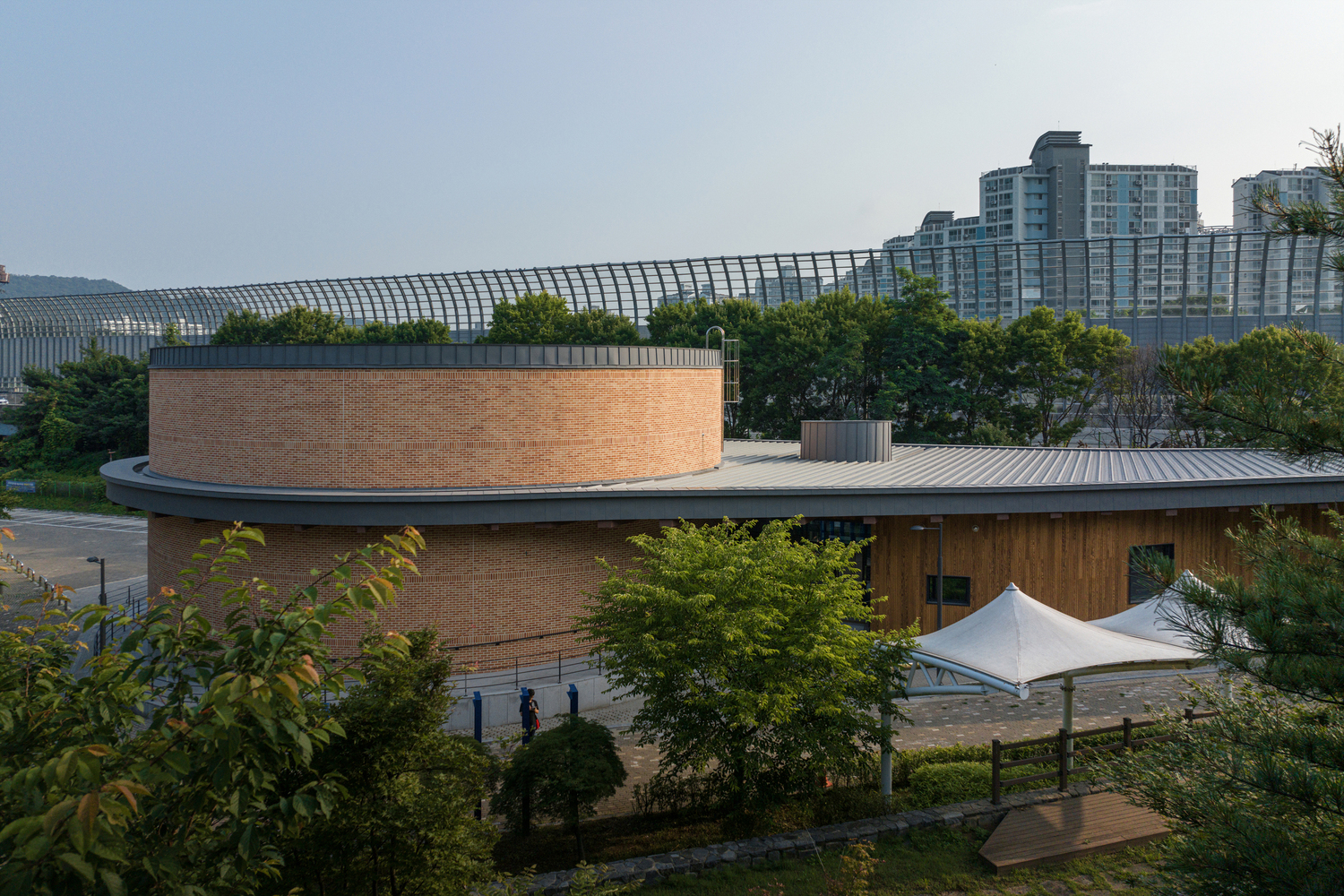
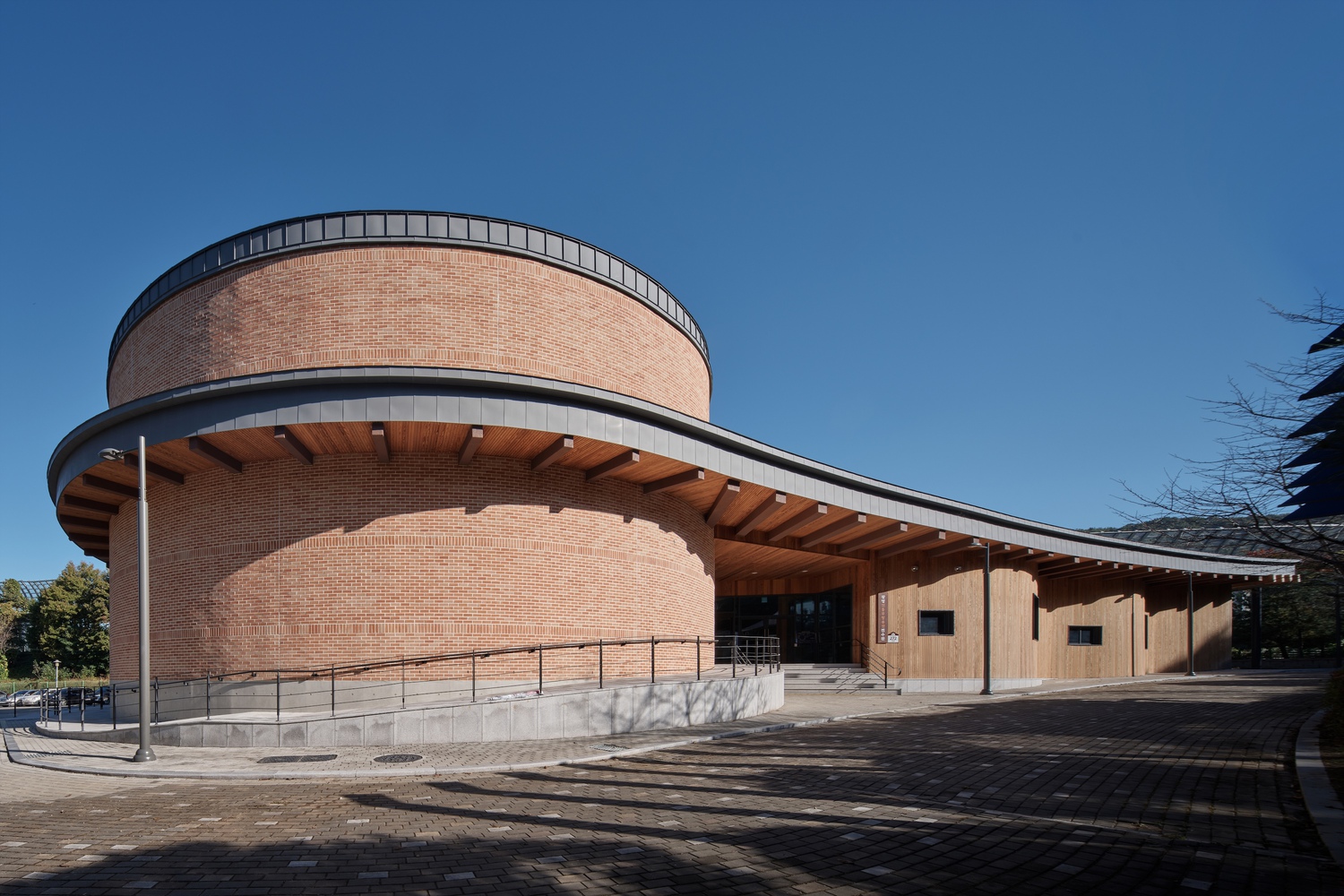
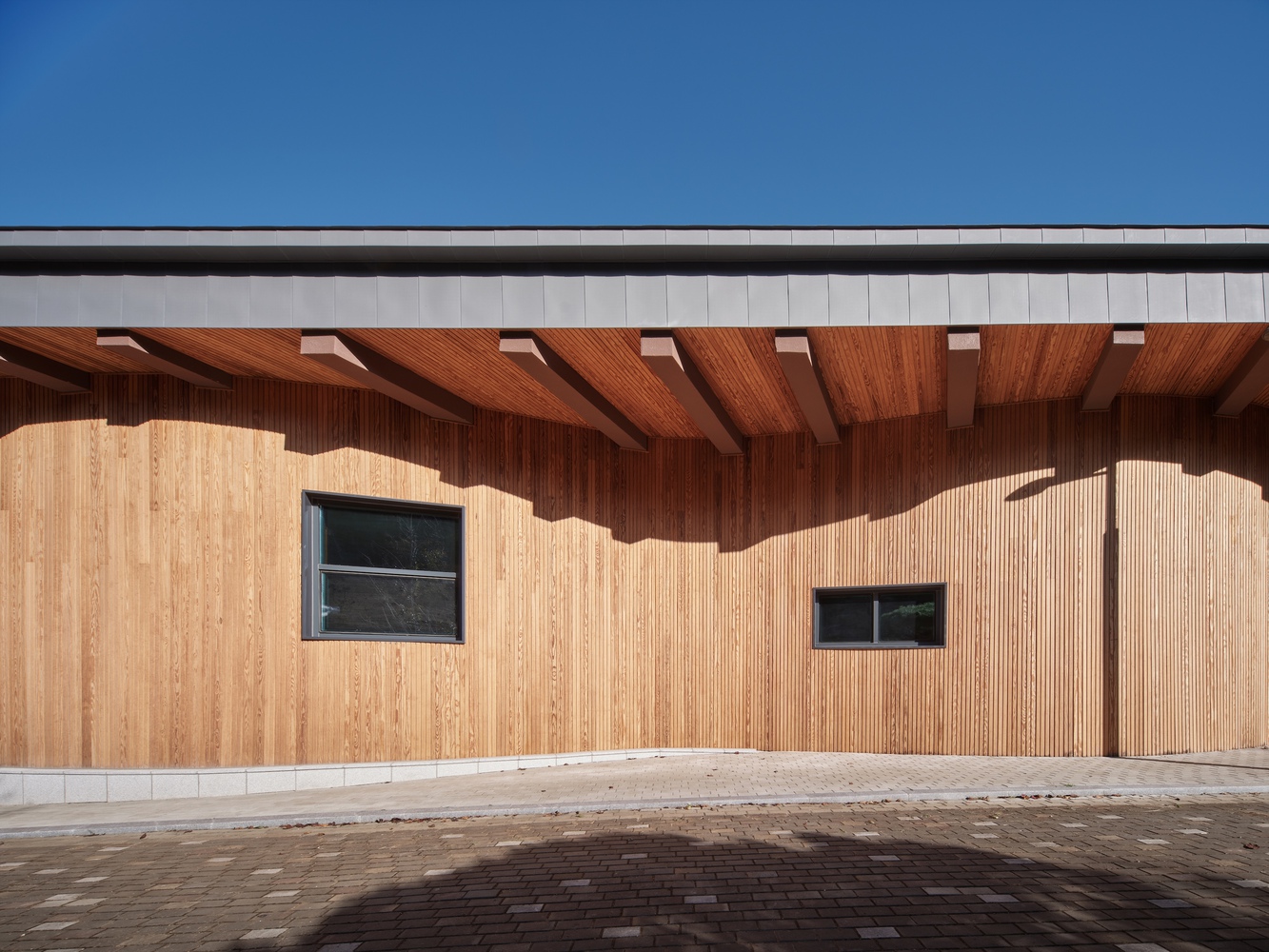
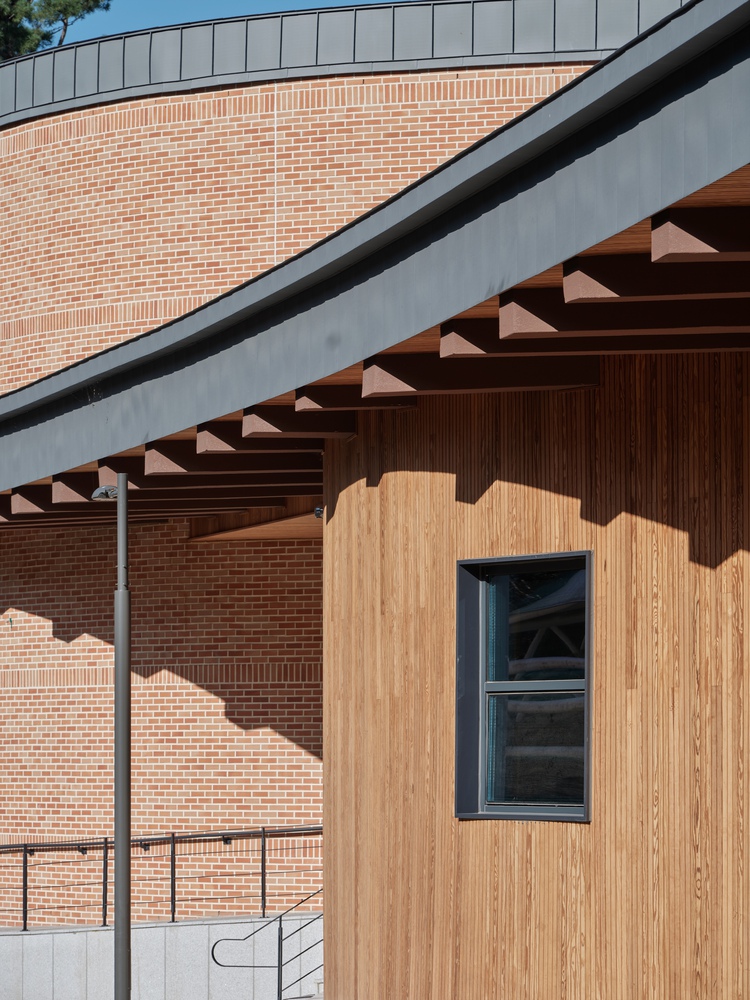
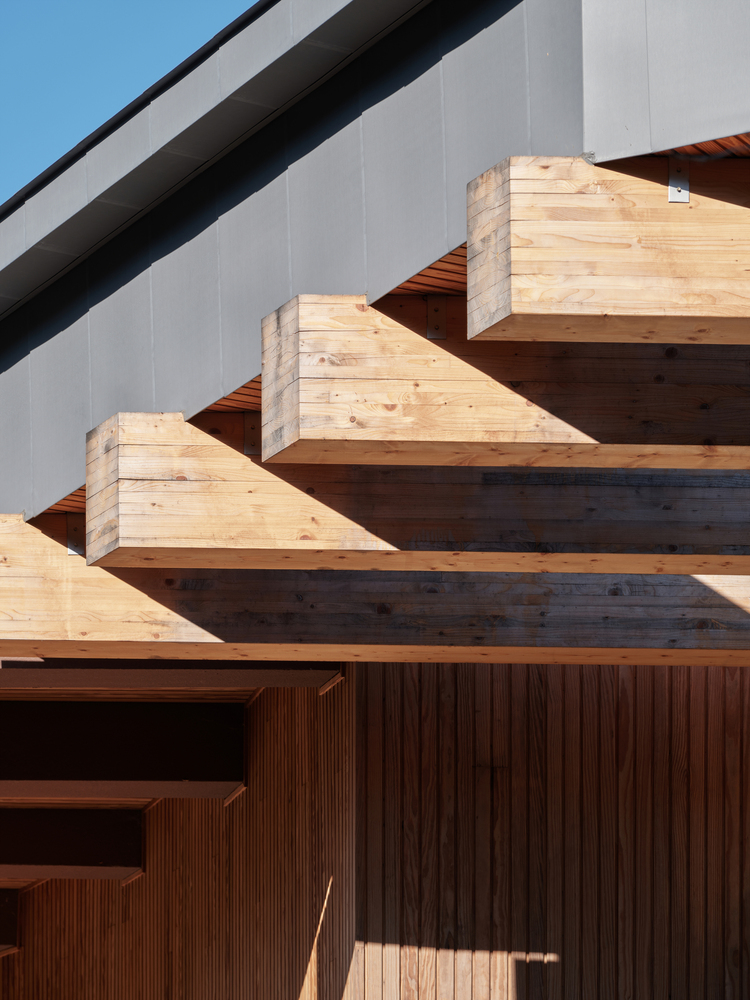
The sweeping curved rooflines and dynamic exterior walls echo the swirling motion of the sangmo (ribbon hat) worn in Nongak performances. The exposed rafters reinterpret the structural beauty of traditional Korean wooden architecture.
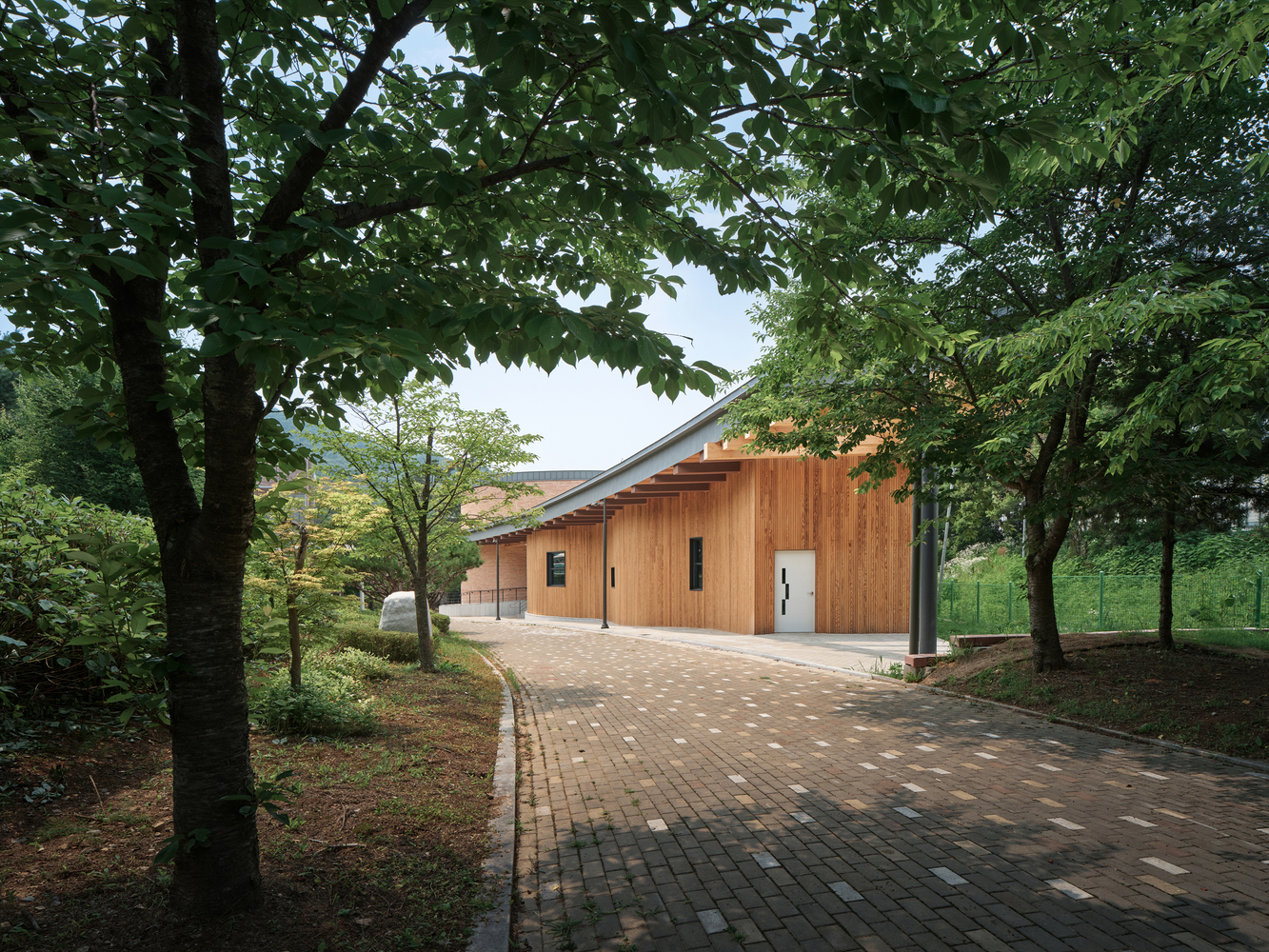
The exterior is clad in carbonized wood, chosen for its subtle transformation over time into a silvery-gray tone that evokes quiet dignity. The same material continues inside, creating a seamless connection between the interior, exterior, and surrounding landscape.
In contrast, the performance hall is finished in exposed brick, a deliberate reference to the material palette of Gwangmyeong Art Center, reinforcing the city's architectural identity. Over time, vines are expected to climb the walls, softening the structure and further integrating it into the park setting.
"EHE-RA MANSEONIDA!"
The Spirit of Festivity – Now the stage awaits the vibrant performances of Gwangmyeong Nongak and Seodo Songs.
Seodo folk music expresses the joys and sorrows of life through rich melodies, while Nongak embodies the exuberance of farmers celebrating a bountiful harvest.
The beauty that has endured through generations resides deeply within these intangible traditions—and it is our shared responsibility to preserve and pass them on.
The Gwangmyeong Center for Intangible Cultural Heritage aspires to be a place where people can feel, learn, and celebrate the timeless values of tradition— a space filled with energy, brightness, and abundance, like a boat returning home laden with a full catch.