GREEN HOUSE
Shin Aoki And Partners
ARCHITECTS
Shin Aoki And Partners
LEAD ARCHITECT
Shin Aoki
ENGINEERING & CONSULTING > STRUCTURAL
Yamabe Structure Office
PHOTOGRAPHS
Shota Hiyoshi
AREA
69 m²
YEAR
2025
LOCATION
Tokyo, Japan
CATEGORY
Residential Architecture
English description provided by the architects.
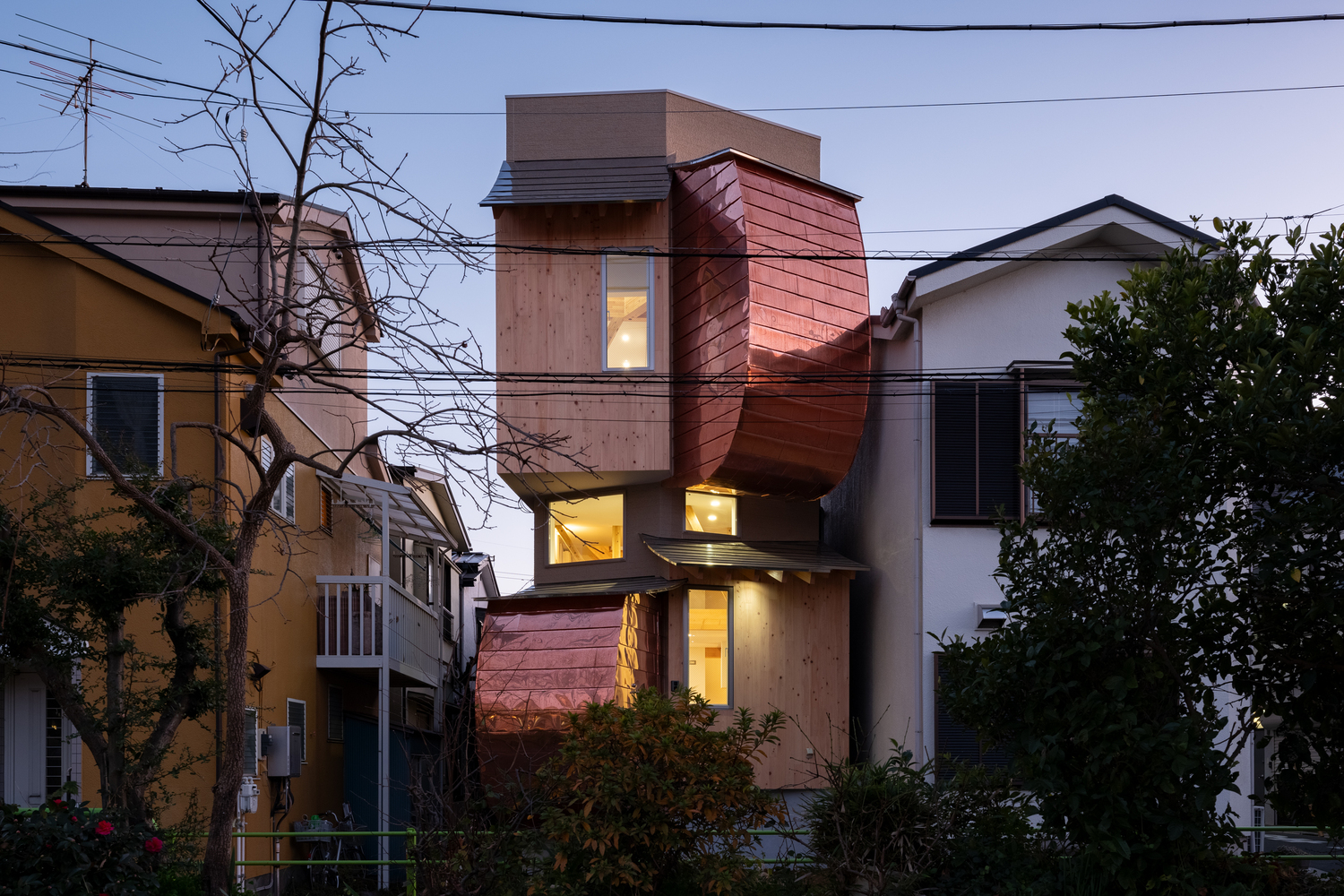
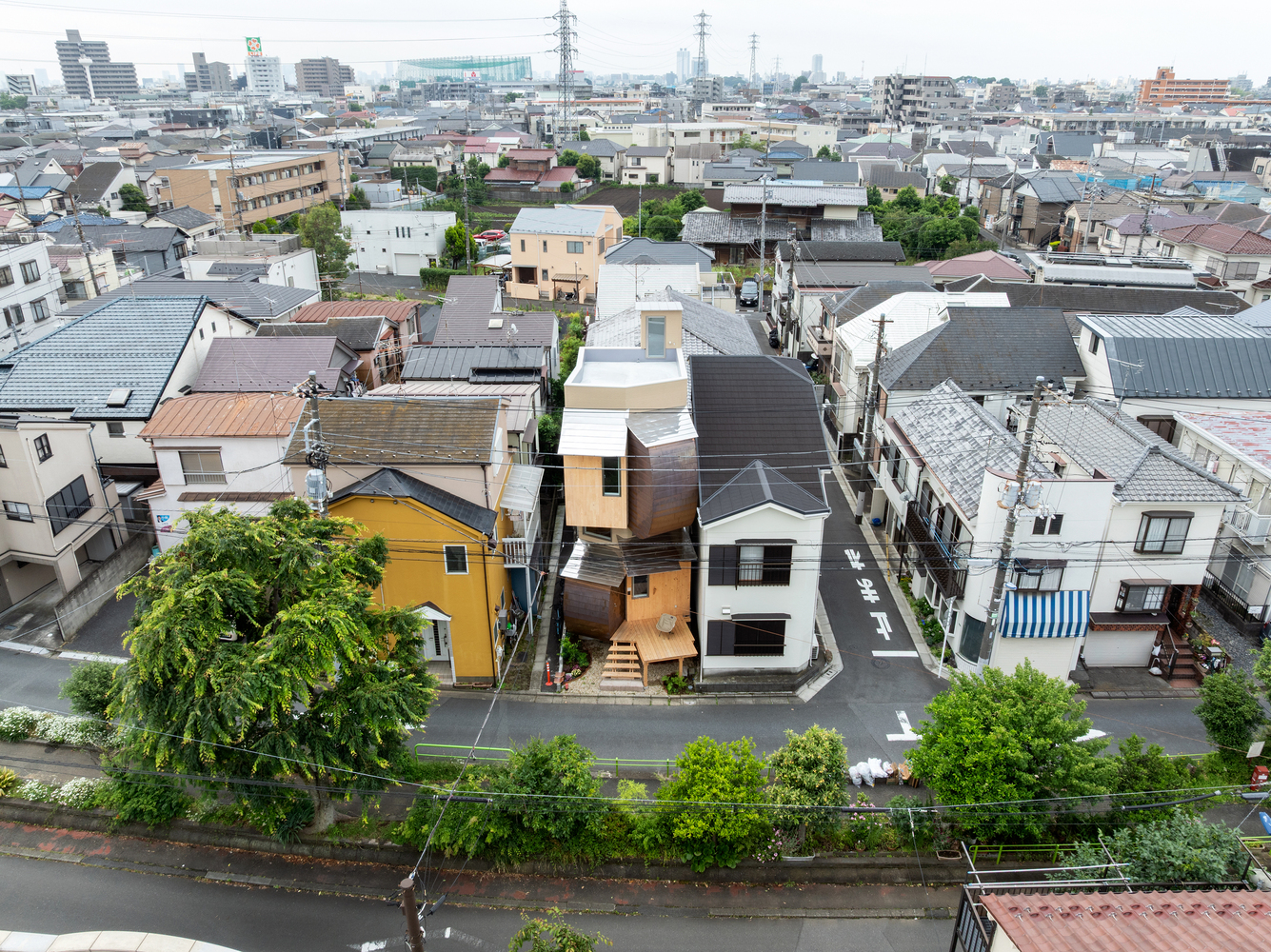
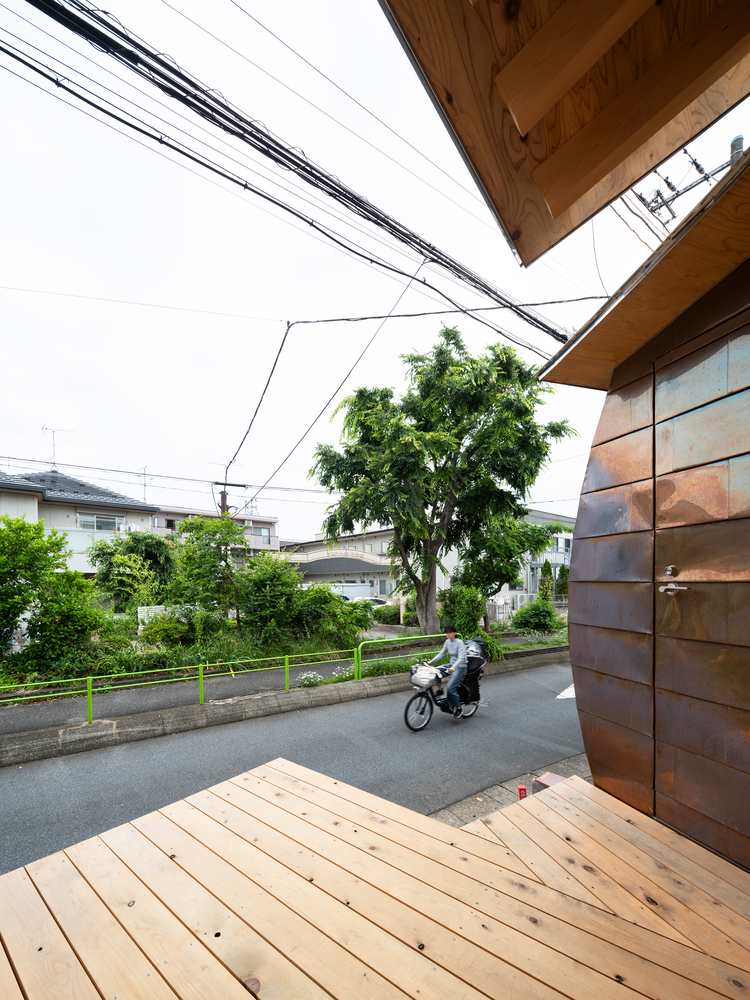
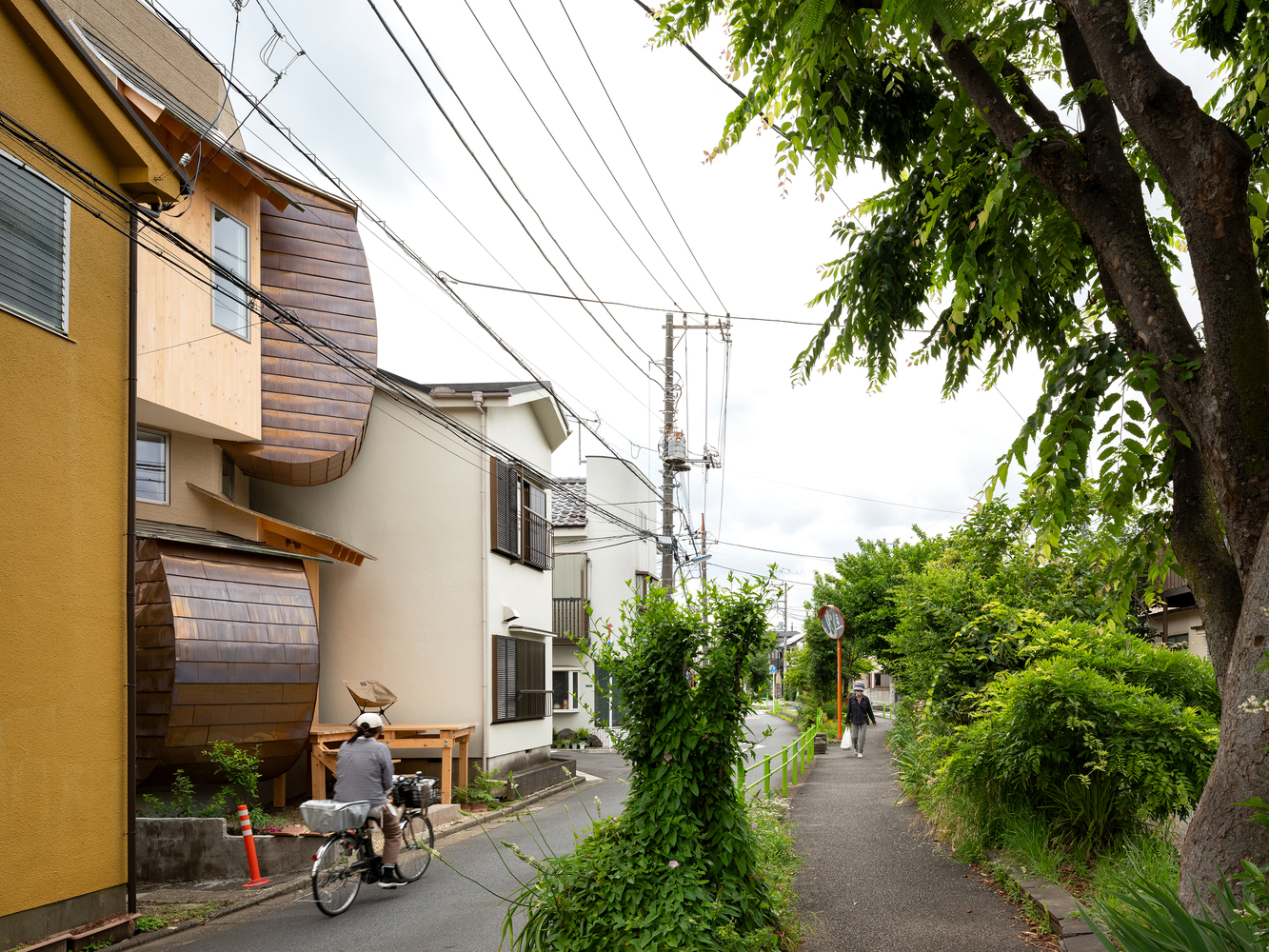
Located along a verdant pedestrian greenway in Nerima, Tokyo, this house engages directly with the everyday landscape of the neighborhood, where residents cultivate flowers and fruit trees and use the path as part of their daily walks.
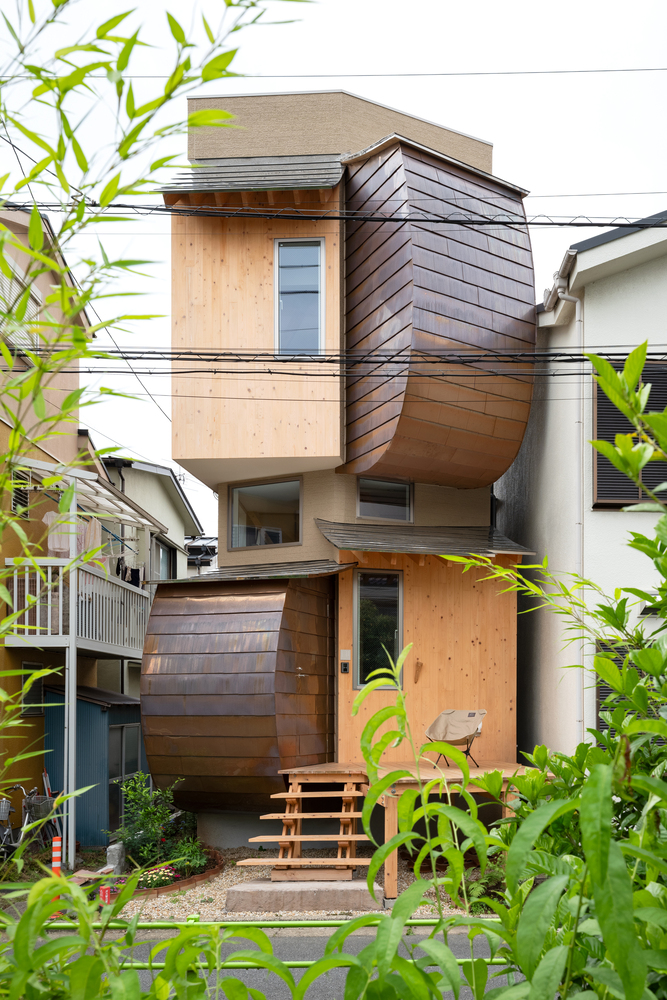
Rather than simply facing this linear environment, the project inserts a new spatial scene into it—one that invites interaction and gradually becomes part of the local ecology.
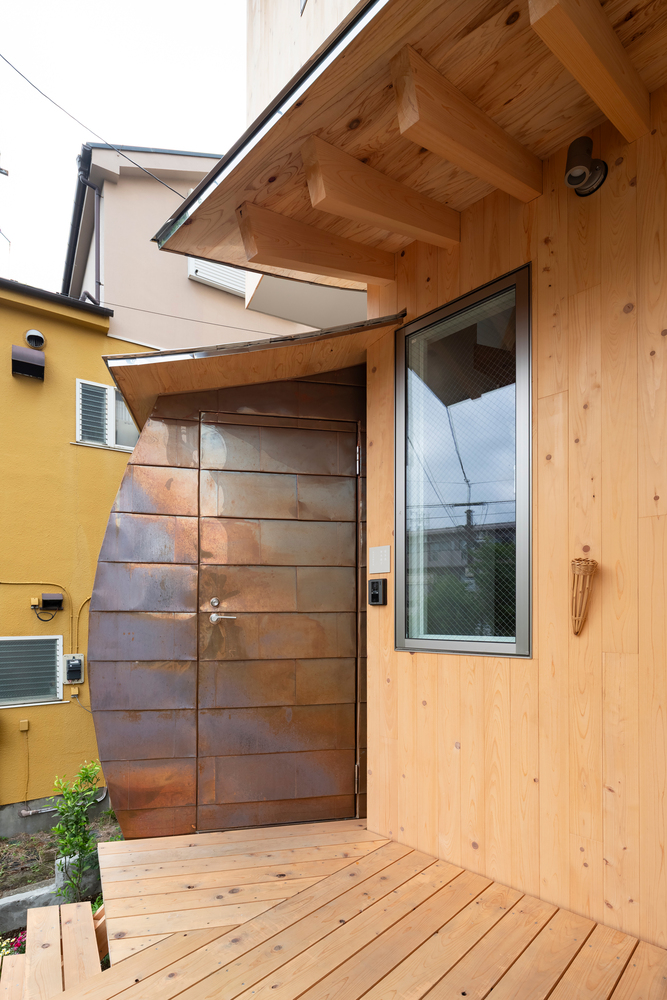
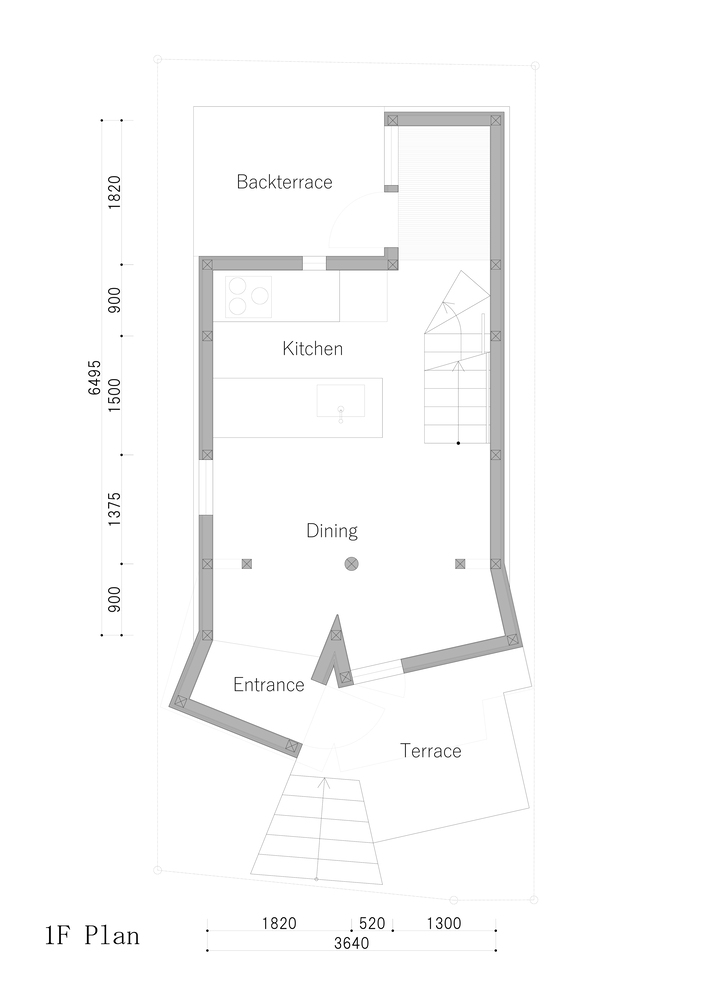
In contrast to the continuous row of houses built tightly to the street edge, the volume is intentionally set back to create a terrace and a small front garden.
The terrace is designed for casual DIY use, and the garden is sized to allow the residents to tend to plants incrementally as part of their daily routines.
Over time, these outdoor spaces are meant to act as an extension of the greenway, contributing to the collective landscape of the community. At the entrance, a bamboo flower vase fixed with traditional Japanese nails allows seasonal blooms to be displayed as a gesture to the street.
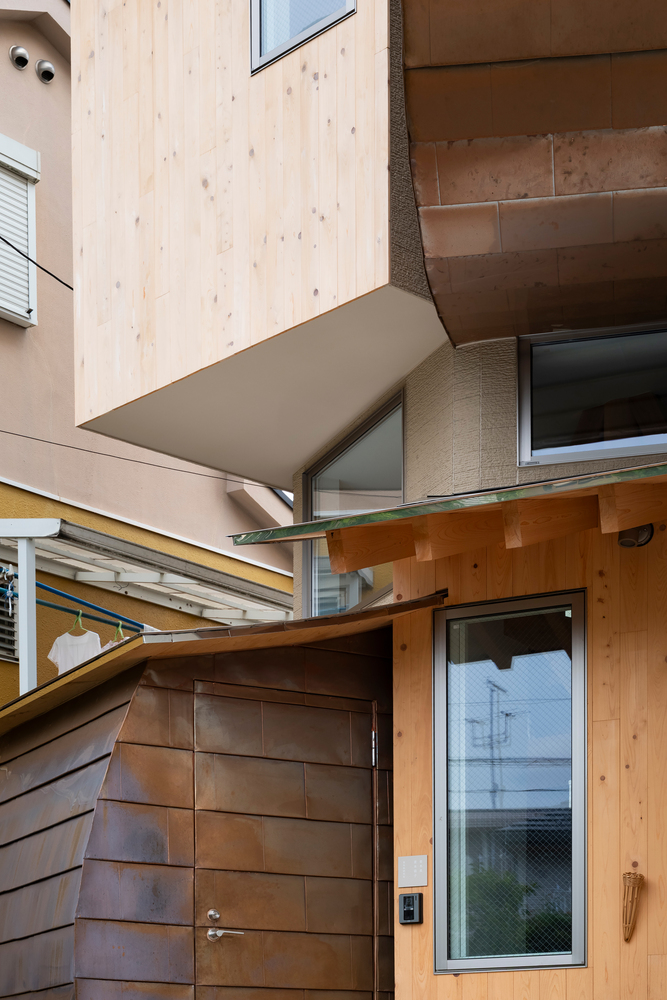
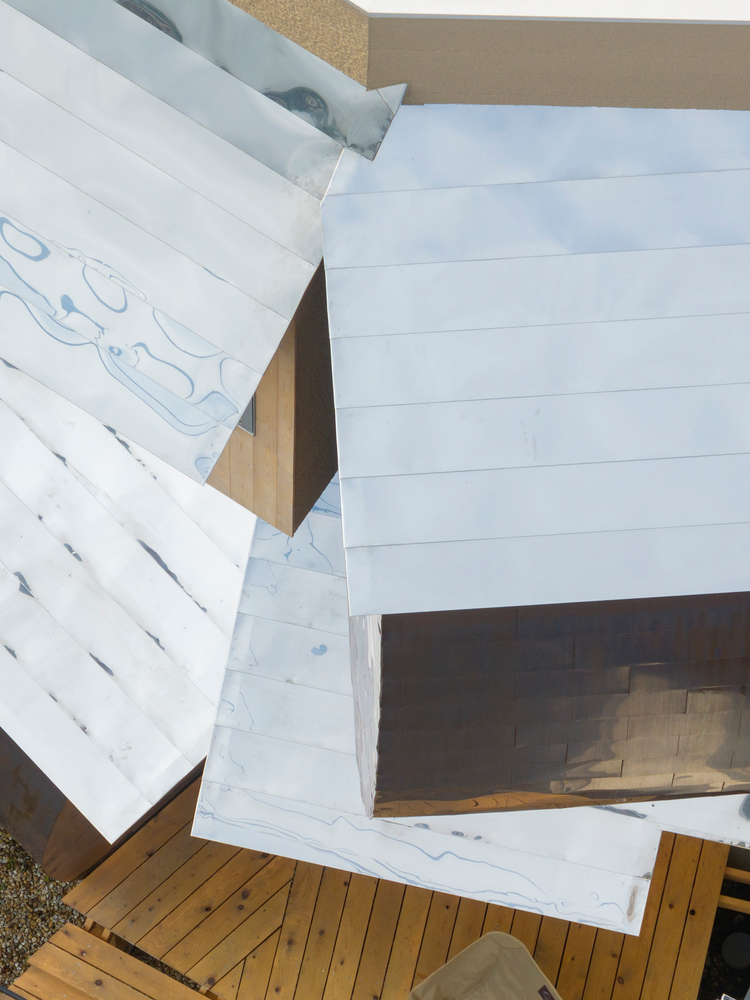
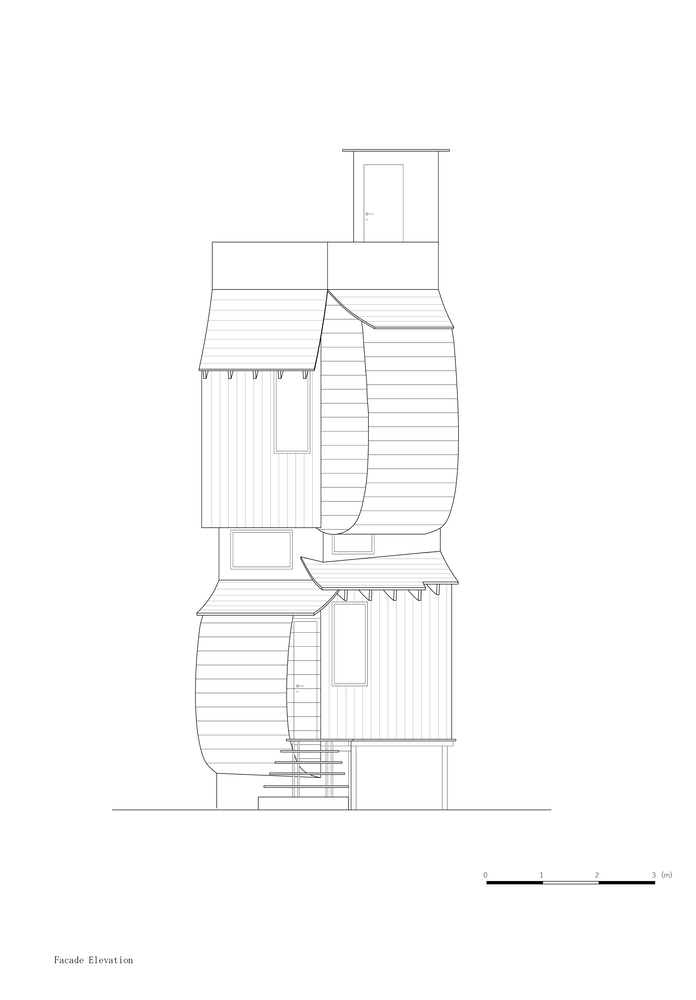
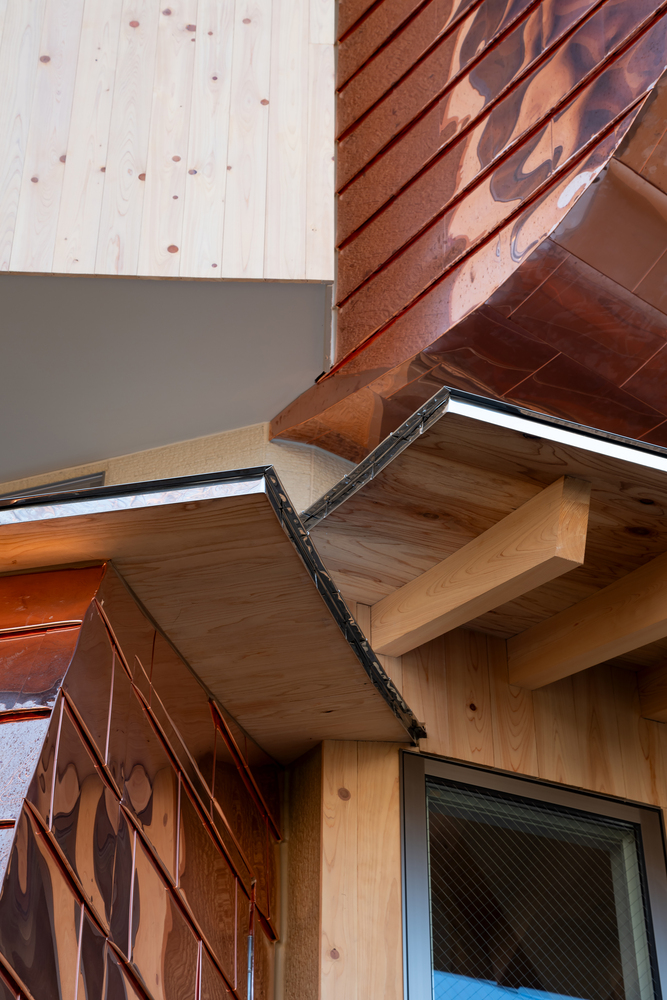
The façade responds to the mixed curvature and verticality of surrounding trees, combining planar and curved surfaces with materials that transform over time—copper and Japanese cypress.
Copper panels are installed in a traditional ichimonji-buki pattern, while hinoki is used as vertical cladding with varying orientations. A stainless-steel curved roof unifies the form.
The intention was not to impose a single dominant expression nor to create a visual collage, but to establish an appearance that opens outward—inviting imagination, ambiguity, and change.
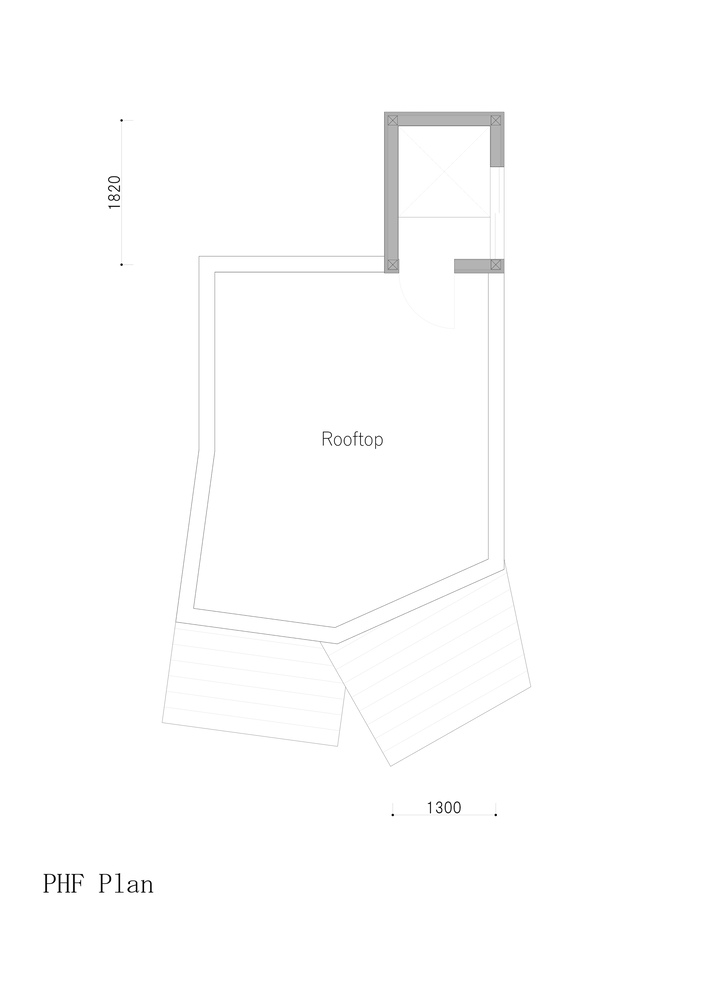
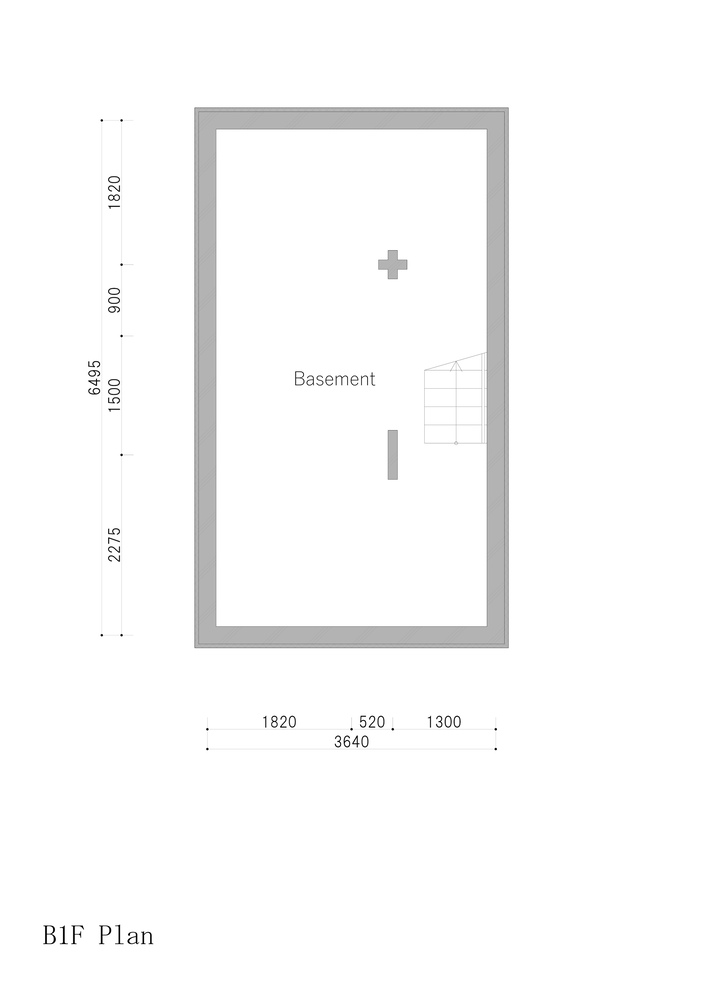
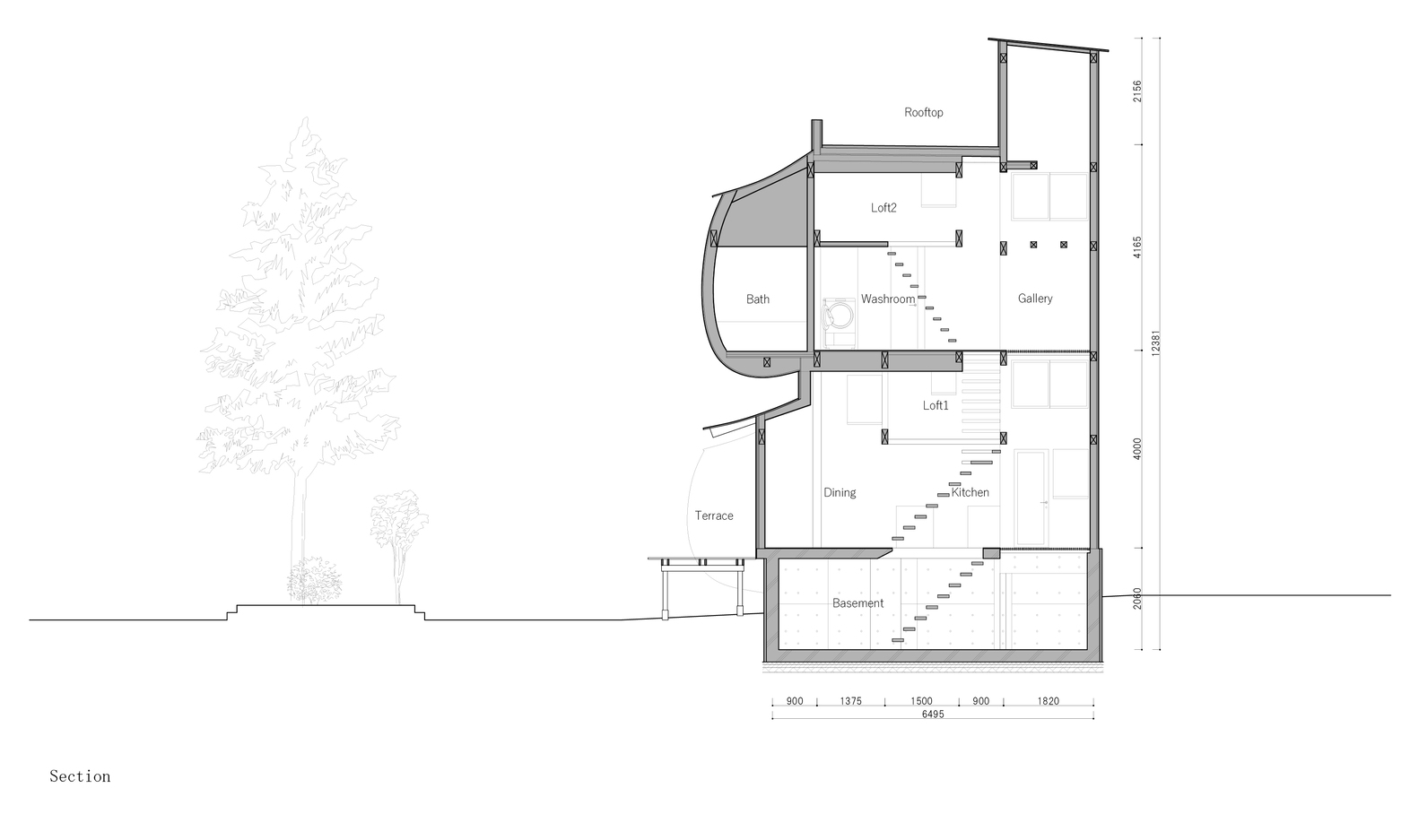
Although the site measures only 49 square meters, the legally defined street width of 12 meters allowed ample vertical volume.
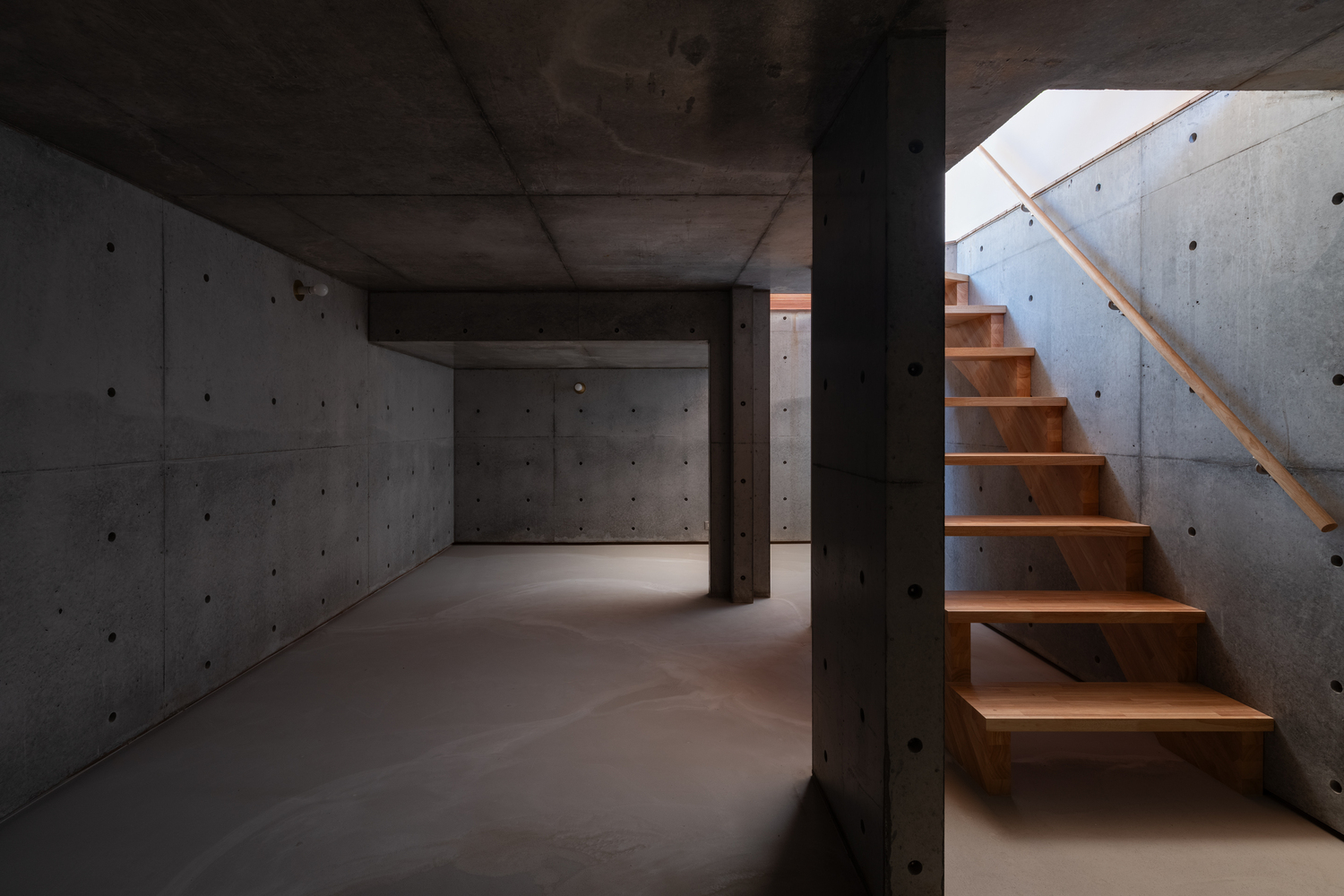
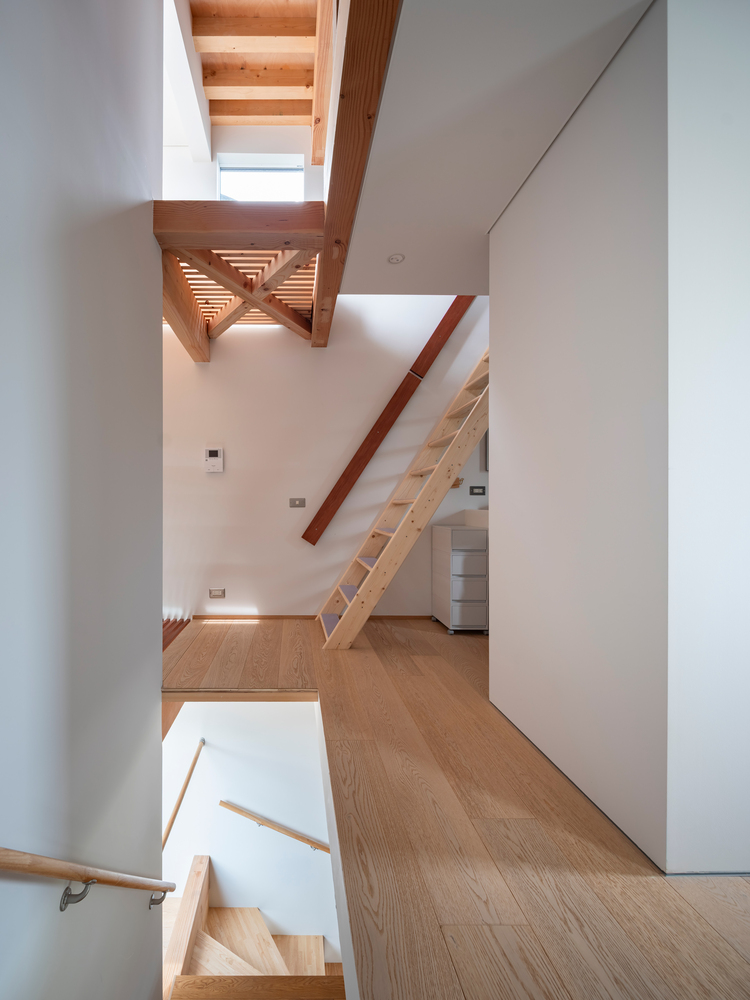
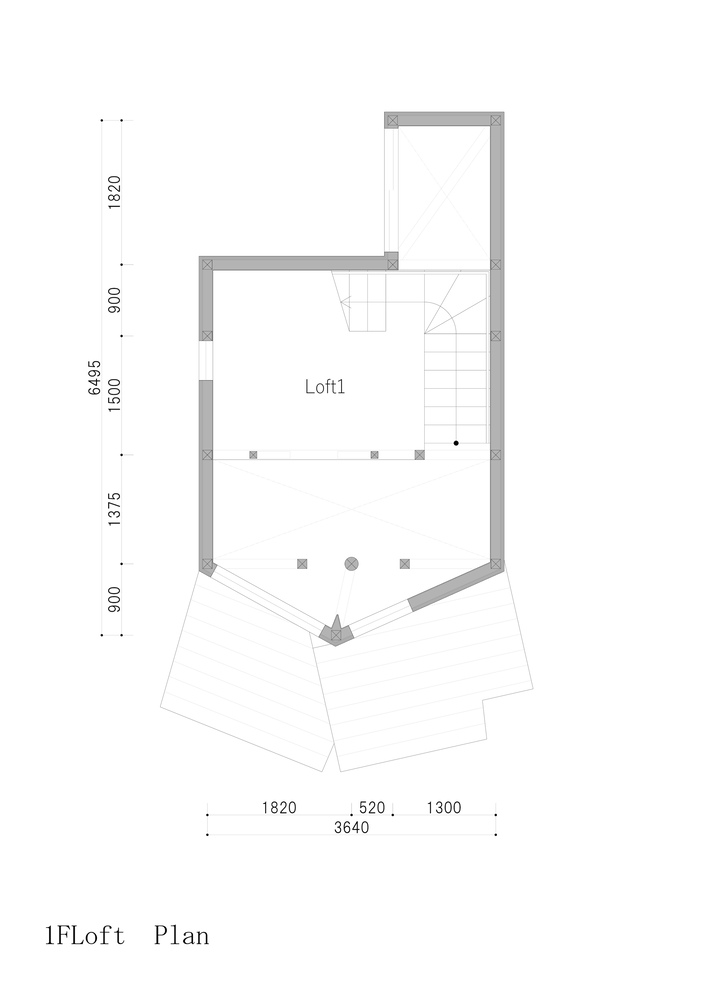
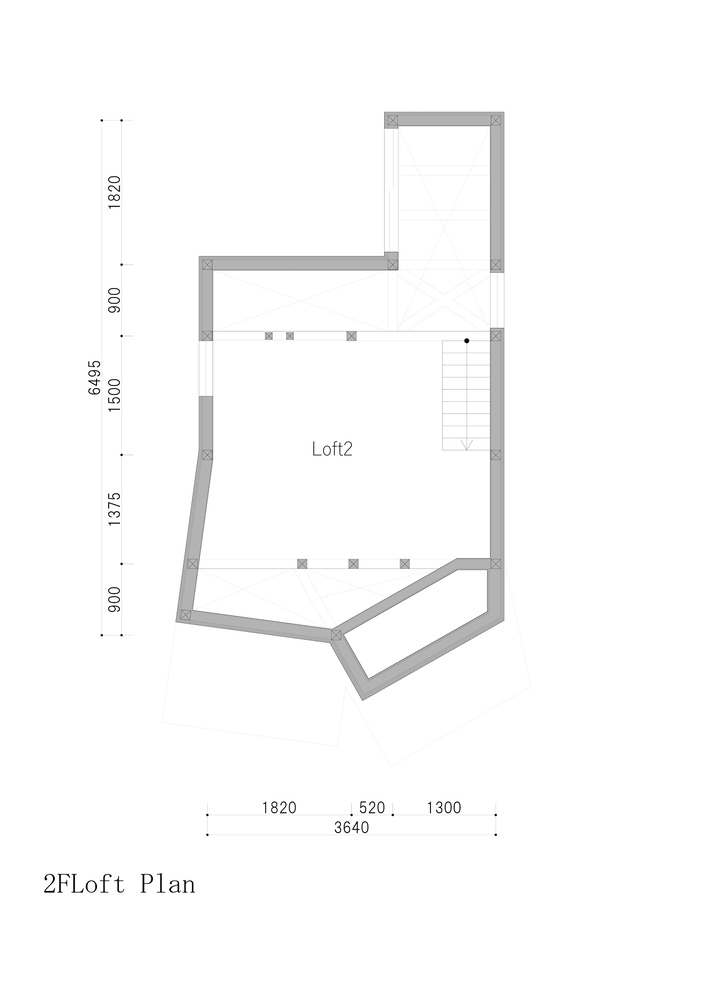
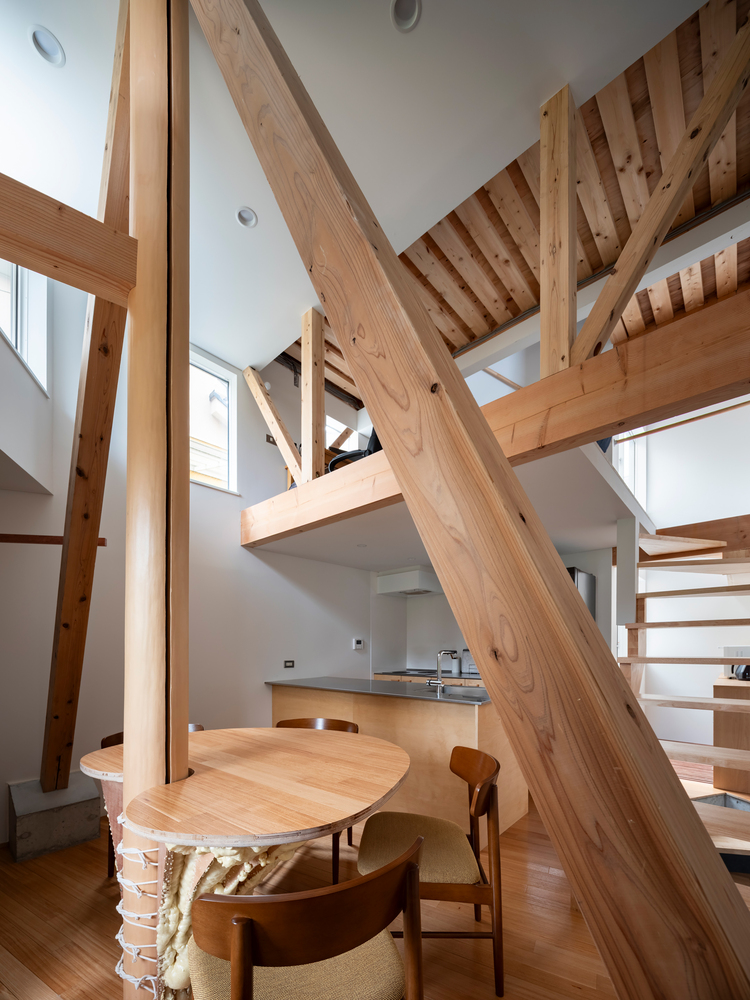
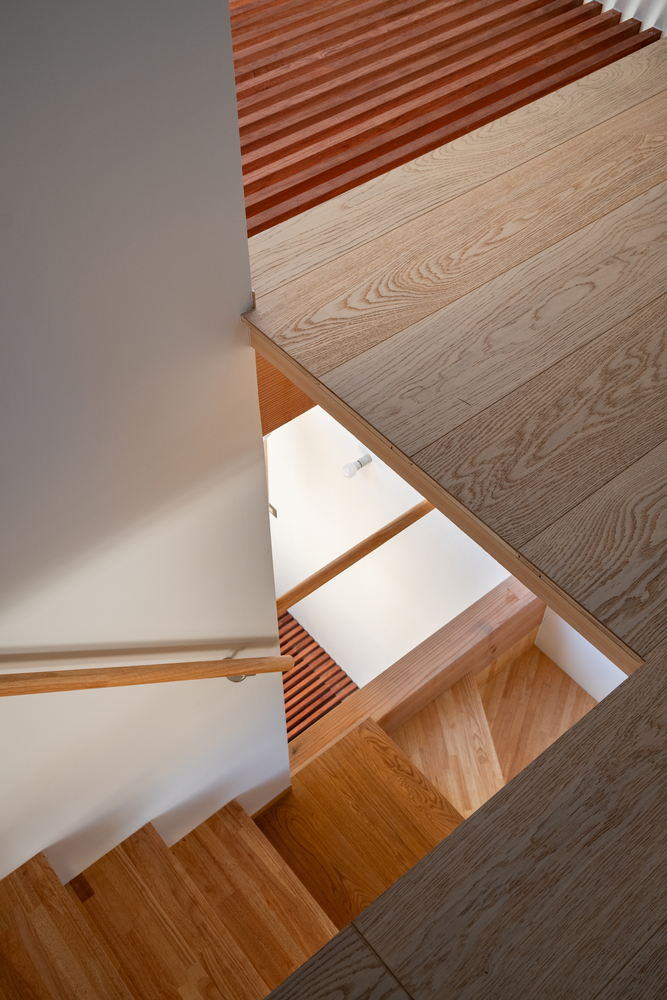
The interior was conceived as a vertical one-room space composed of overlapping floor plates and interwoven niches, generating a continuous, three-dimensional living environment.
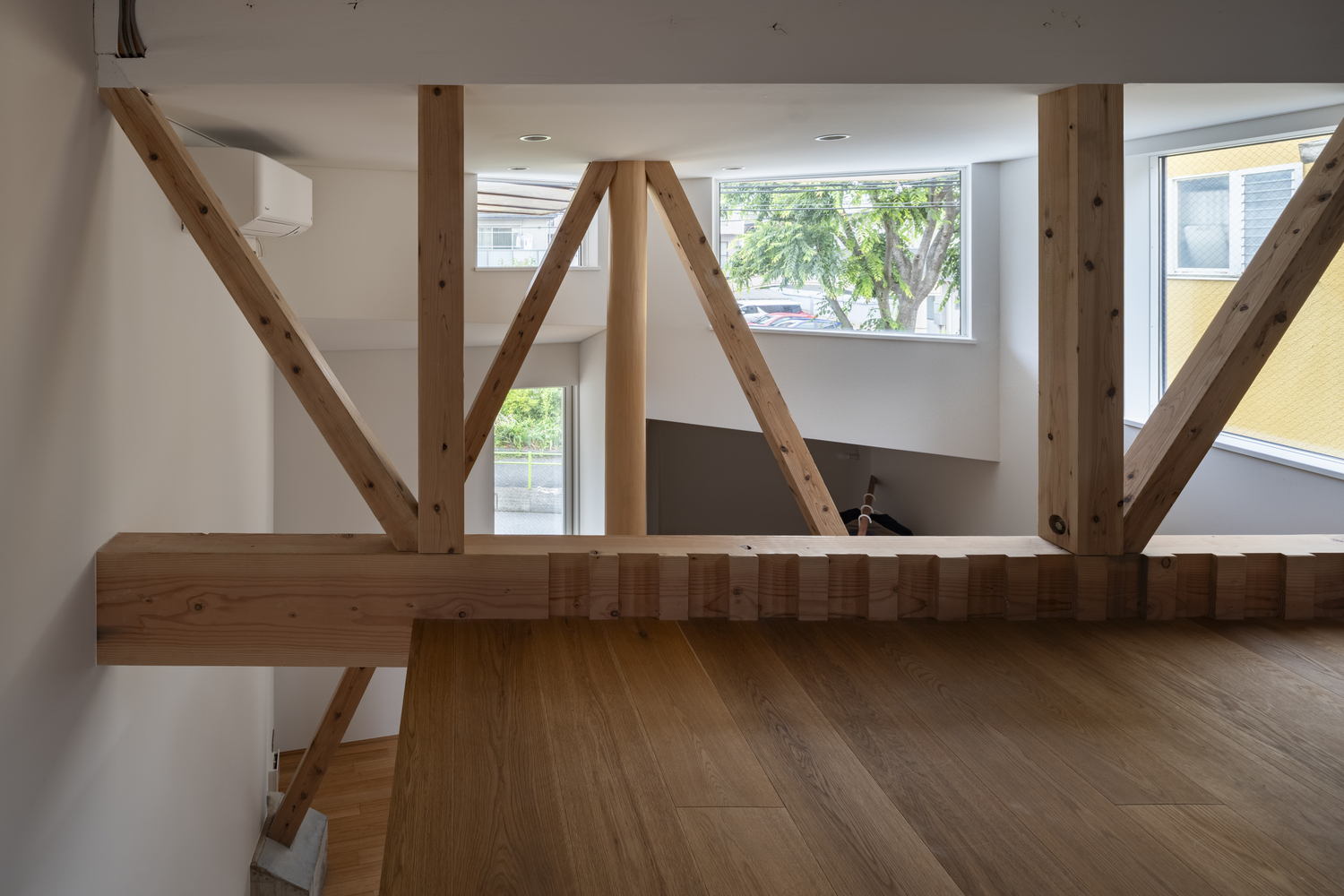
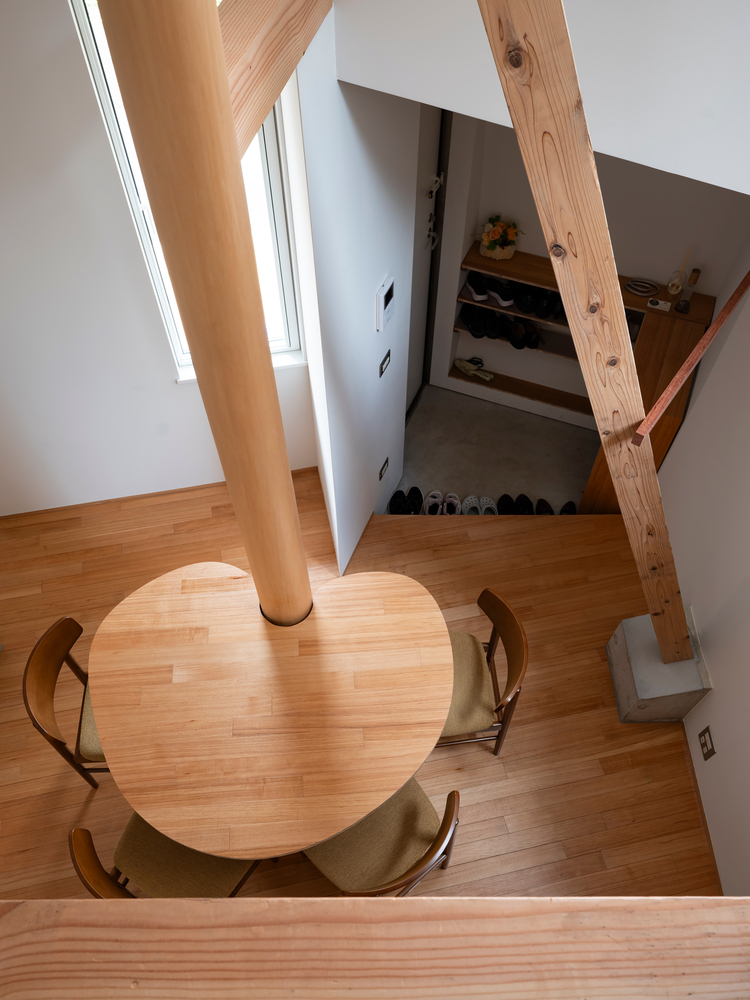
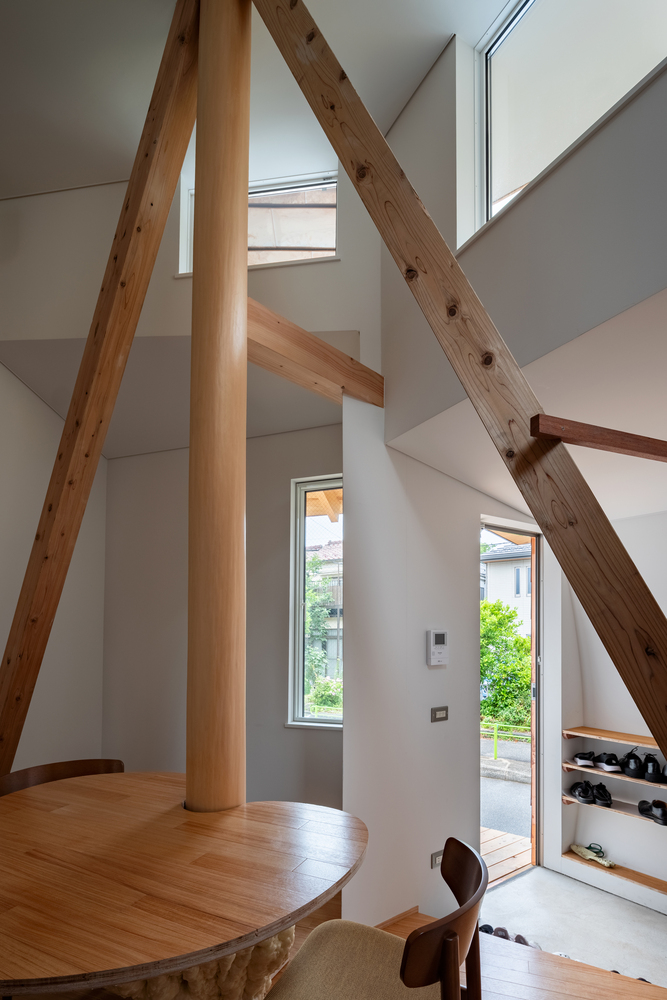
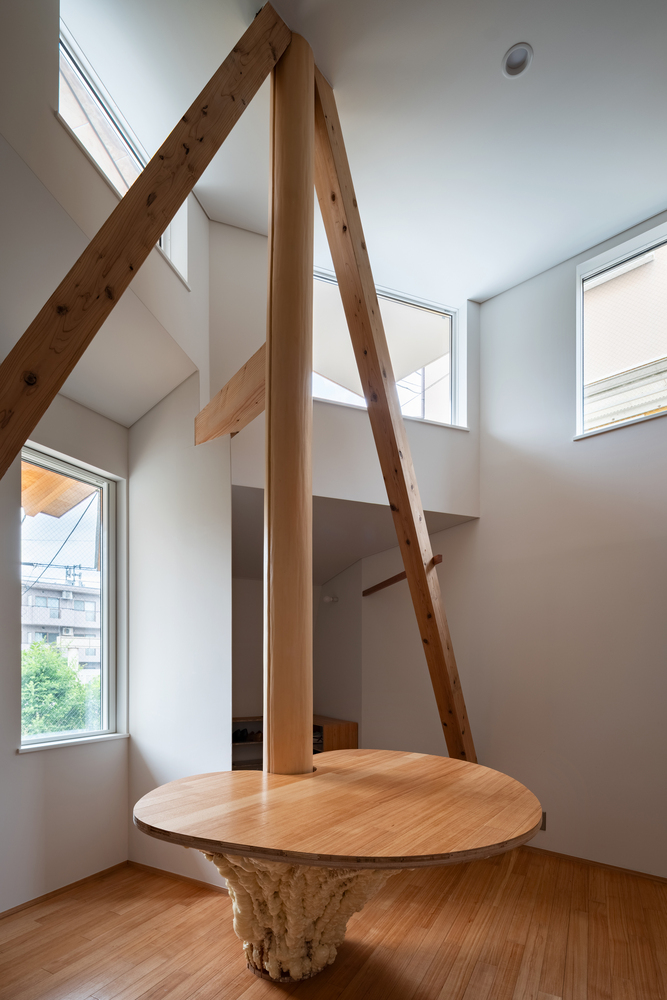
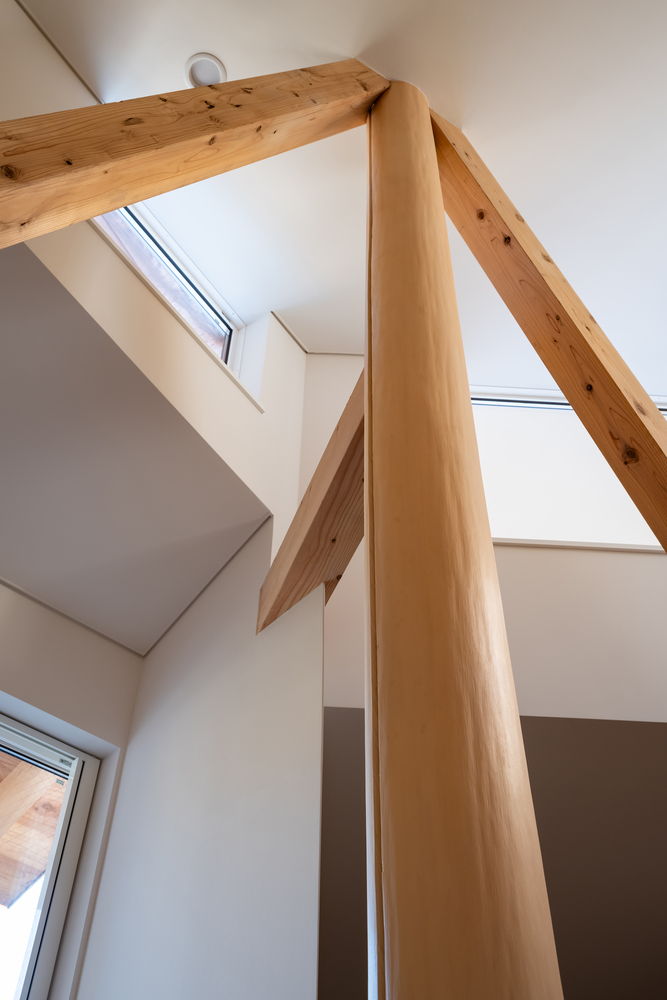
On the first floor, the sculptural façade is expressed internally as a round timber column, around which a custom table was built.
This dining area is illuminated from above by a north-facing clerestory window opening toward the greenway, creating a calm communal space filled with soft natural light.
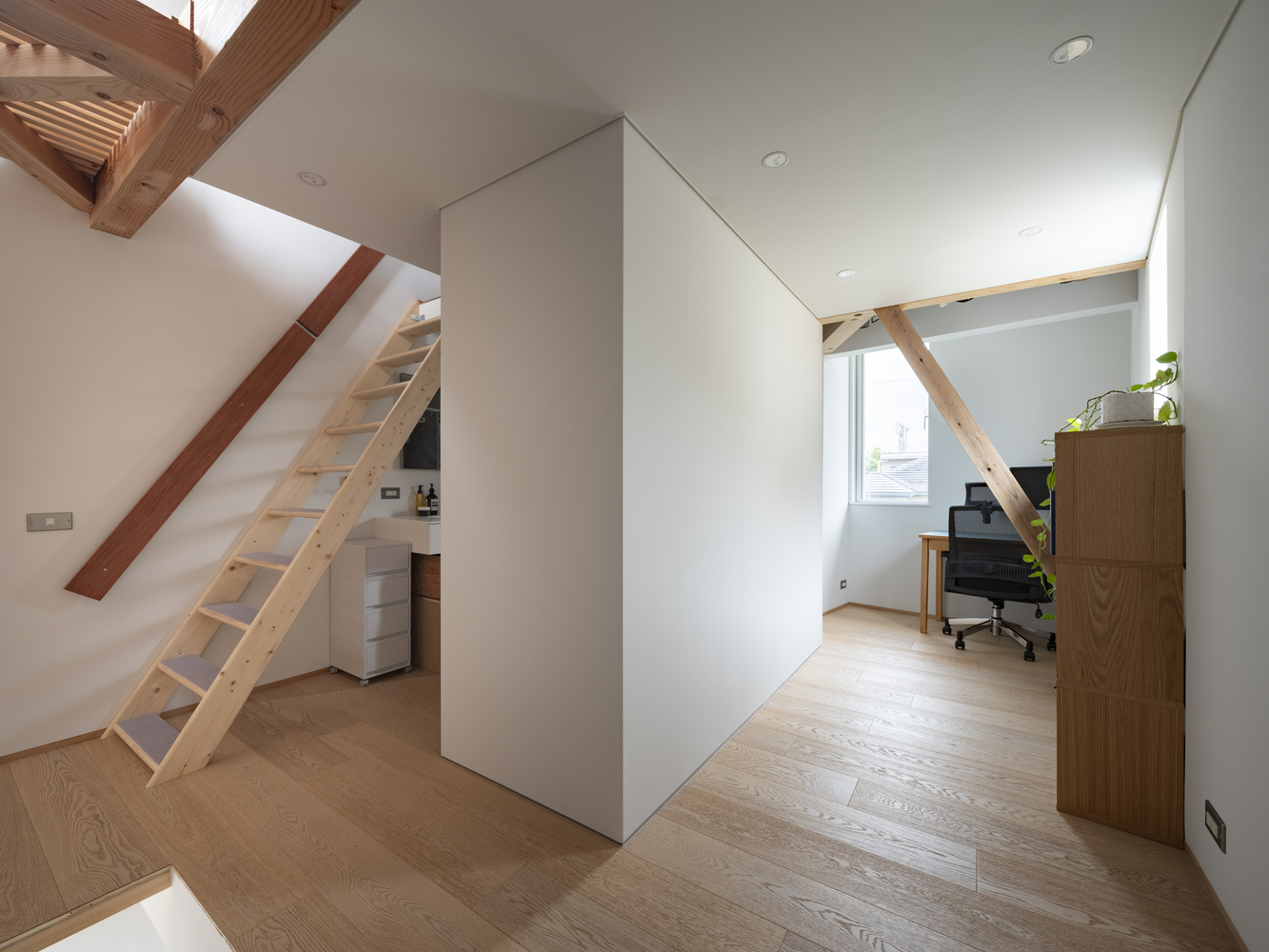
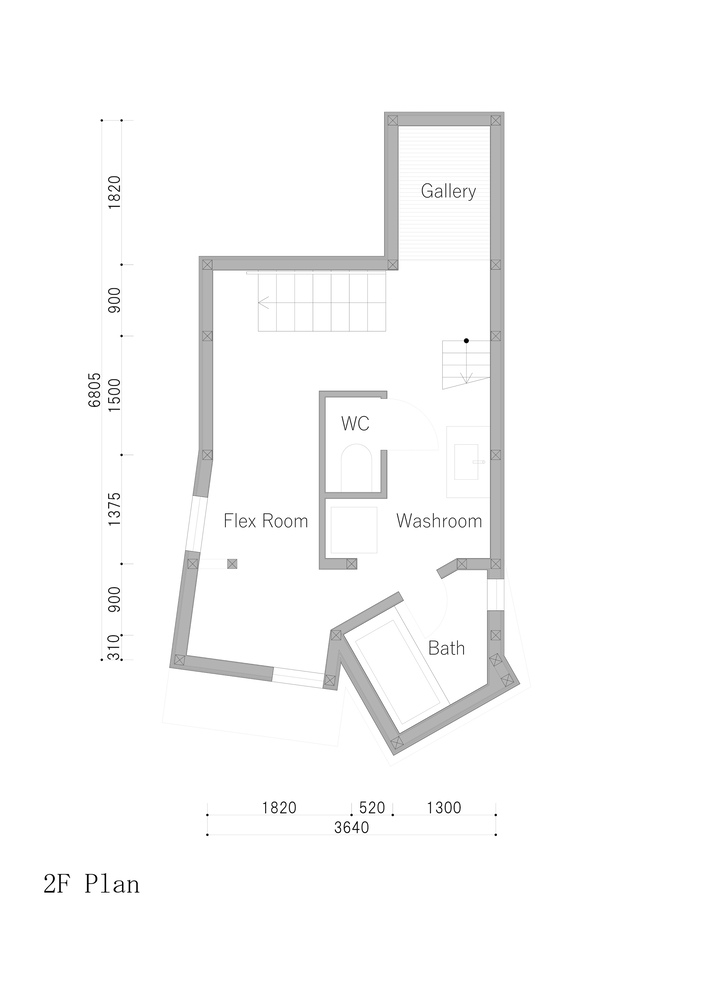
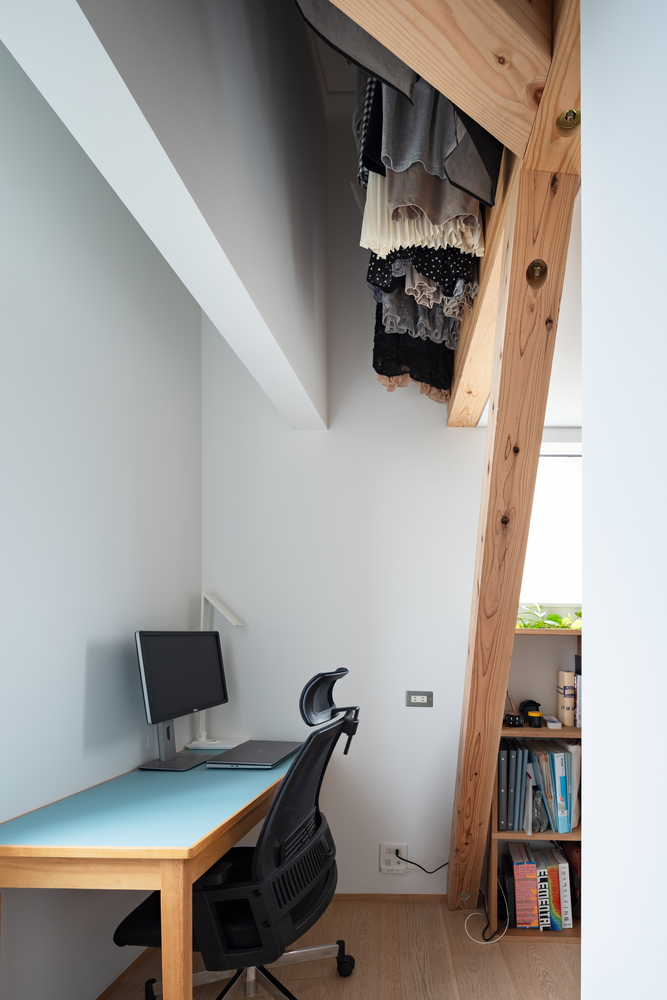
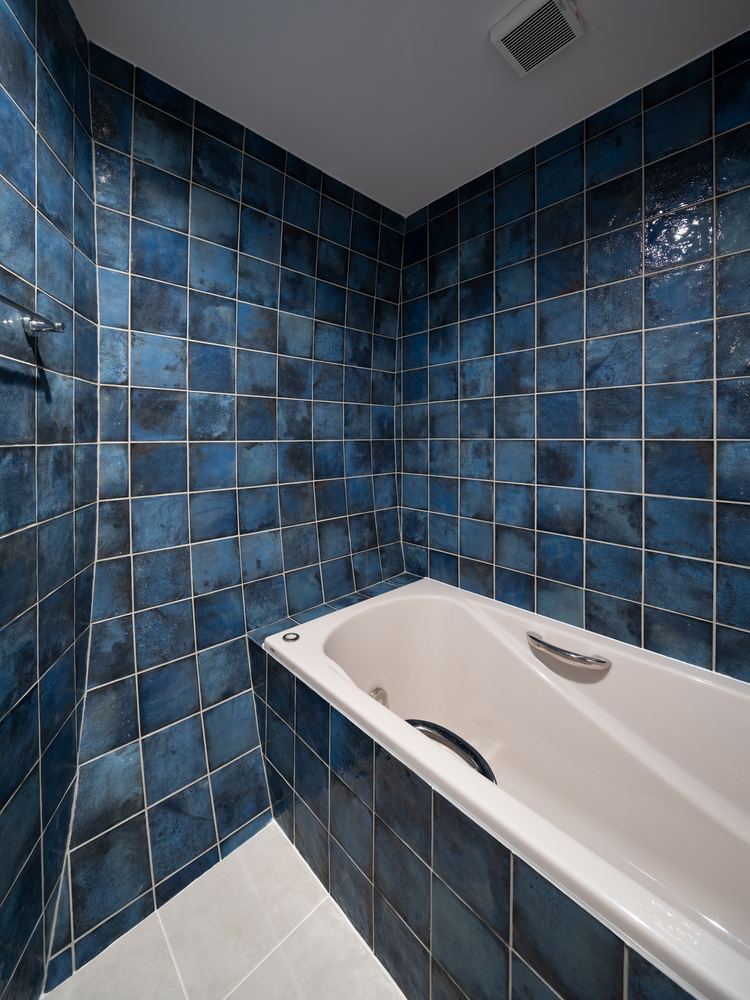
Private functions such as the bathroom and toilet are consolidated on the second floor. The plan is organized around a circular flow centered on the toilet, allowing flexible occupation and future adaptation.
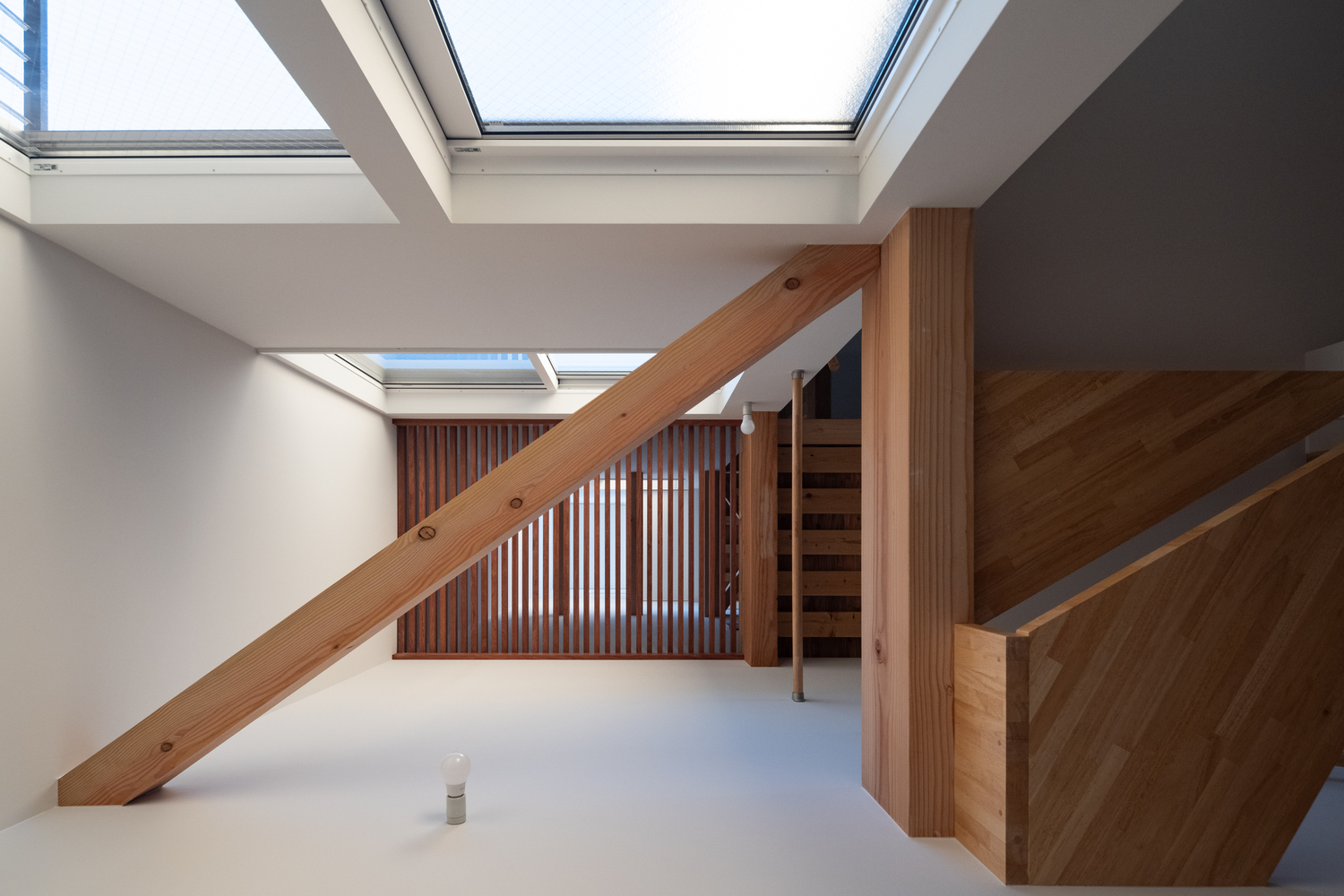
Natural light is introduced to accommodate uses such as an office or gallery, without the space being defined by a single fixed program.
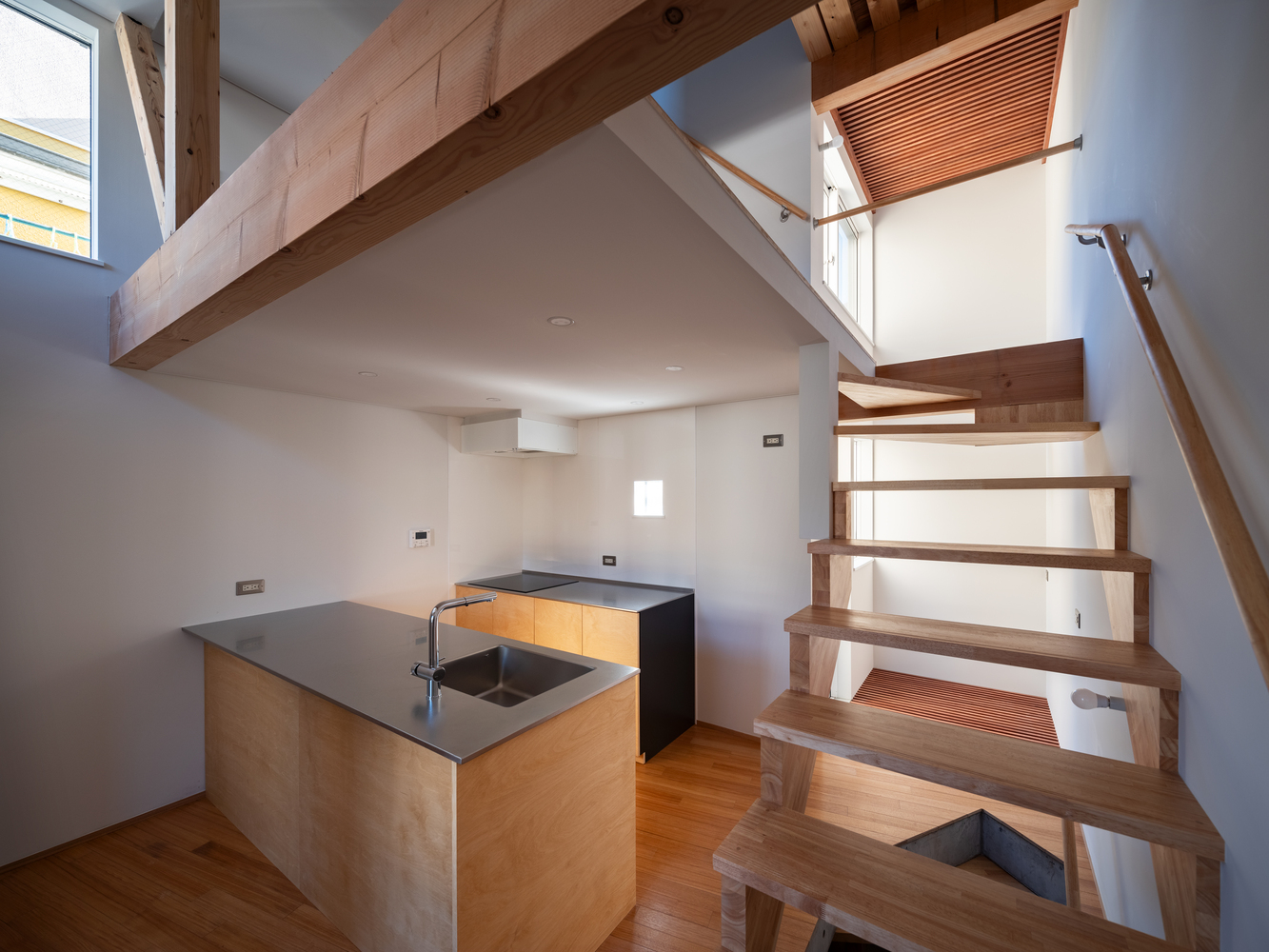
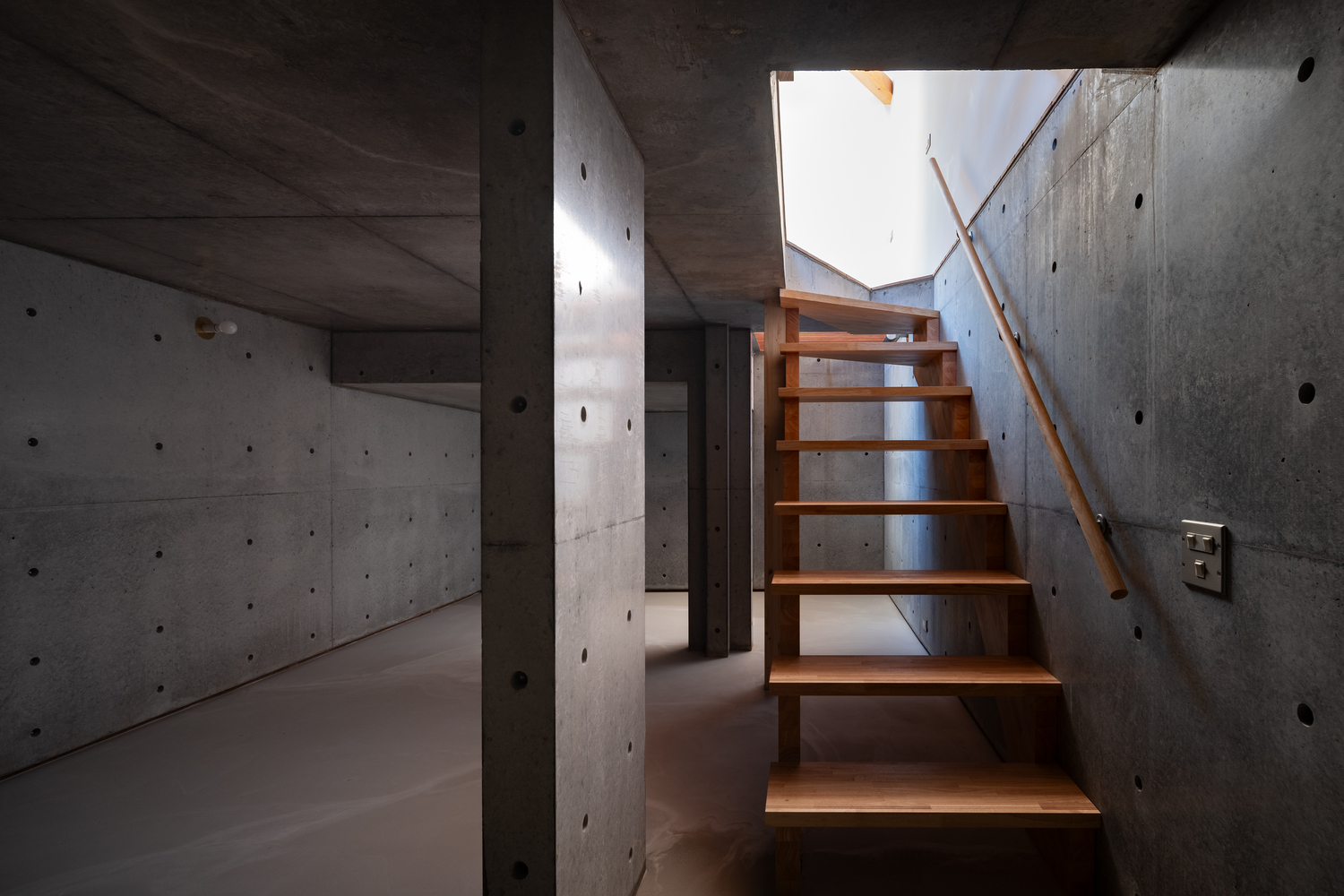
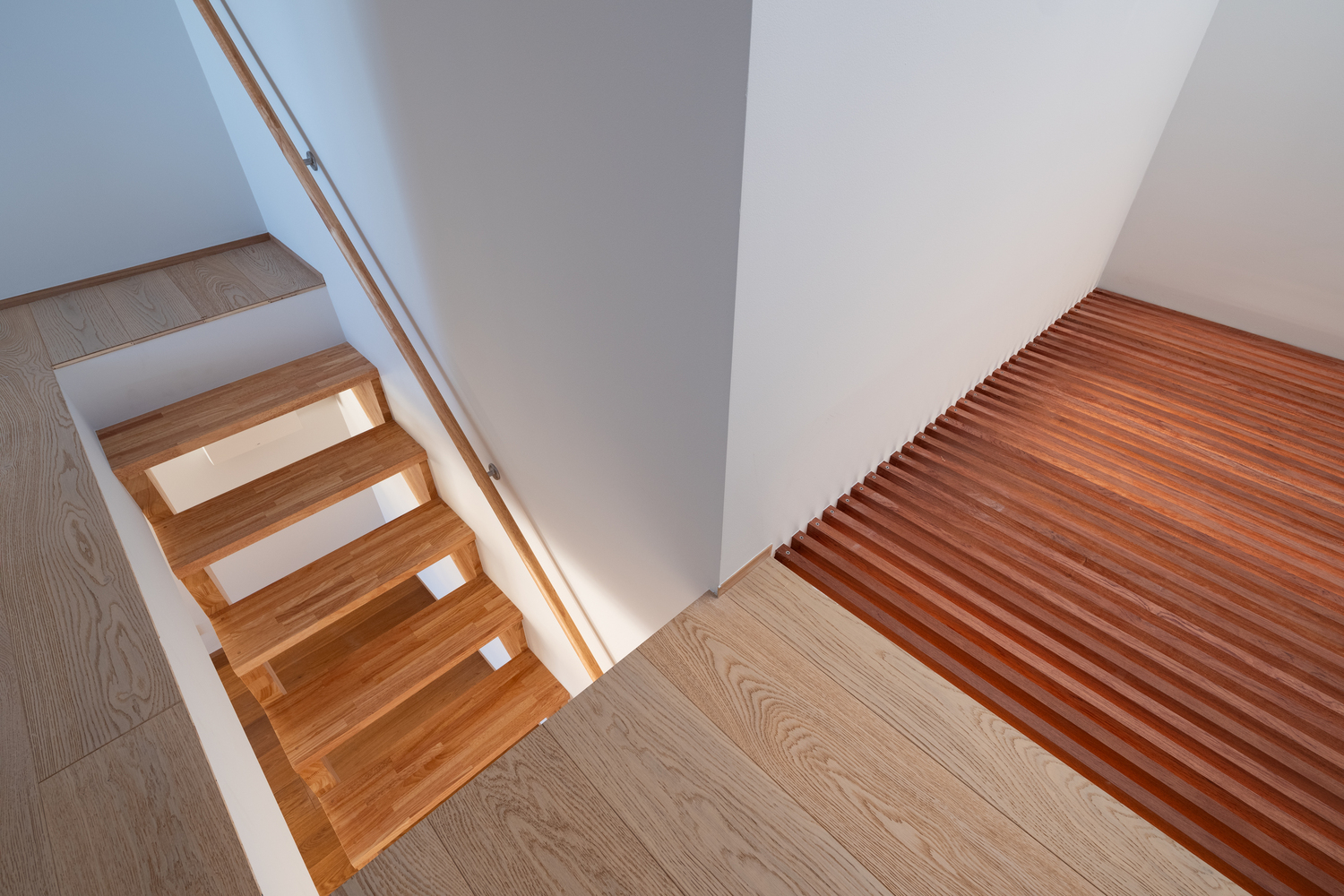
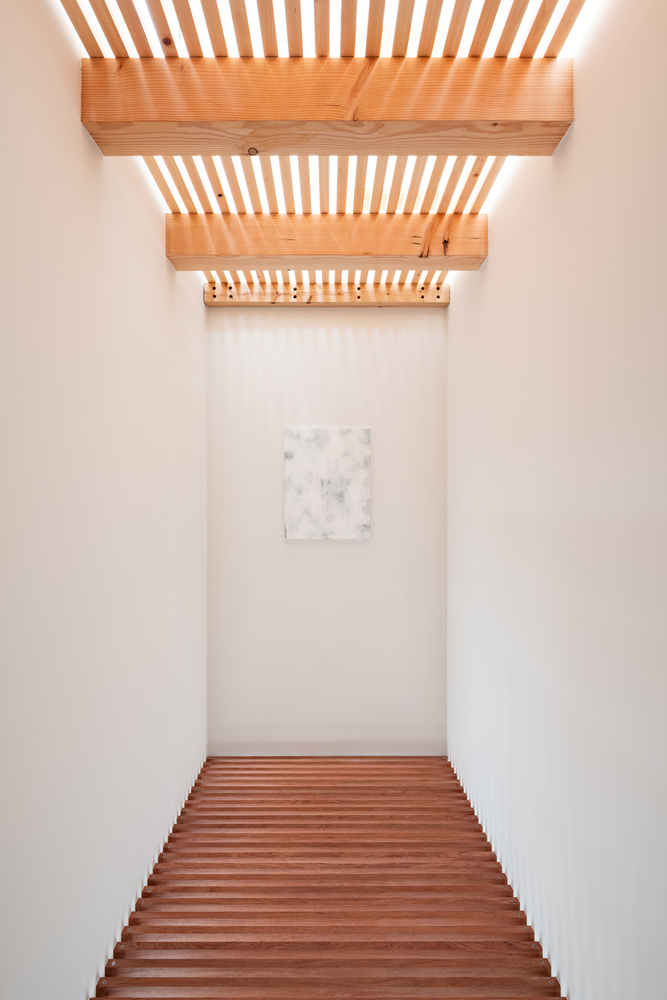
A tower-like vertical void on the south side brings daylight through slatted floors to every level of the house. Light enters from openings at various heights and directions, reflecting off white surfaces to create a soft, atmospheric glow.
This shifting quality of light—changing with the season, time of day, and weather—produces an interior that is alive with subtle variations, offering a living environment that is both intimate and expansive.