JACONA HOUSE
Taab
ARCHITECTS
Taab
LEAD ARCHITECT
Diego Torres Guízar, Diana Ortiz Moreno
INTERIOR DESIGN
Estudio Karla Vázquez
STRUCTURAL CALCULATION
Daniel Torres Barragán
WORK RESIDENCE
Austreberto Zarco Contreras, Eduardo García García
MANUFACTURERS
Miele, Accesorios Novacasa Zamora, Aluminio Rocalum, Construlita Guadalajara, Herrería Taller Limón, Porcelanosa Grupo
TEAM
Fabiola Cruz García
PHOTOGRAPHS
Cesár Belio
AREA
600 m²
YEAR
2025
LOCATION
Jacona de Plancarte, Mexico
CATEGORY
Houses
English description provided by the architects.
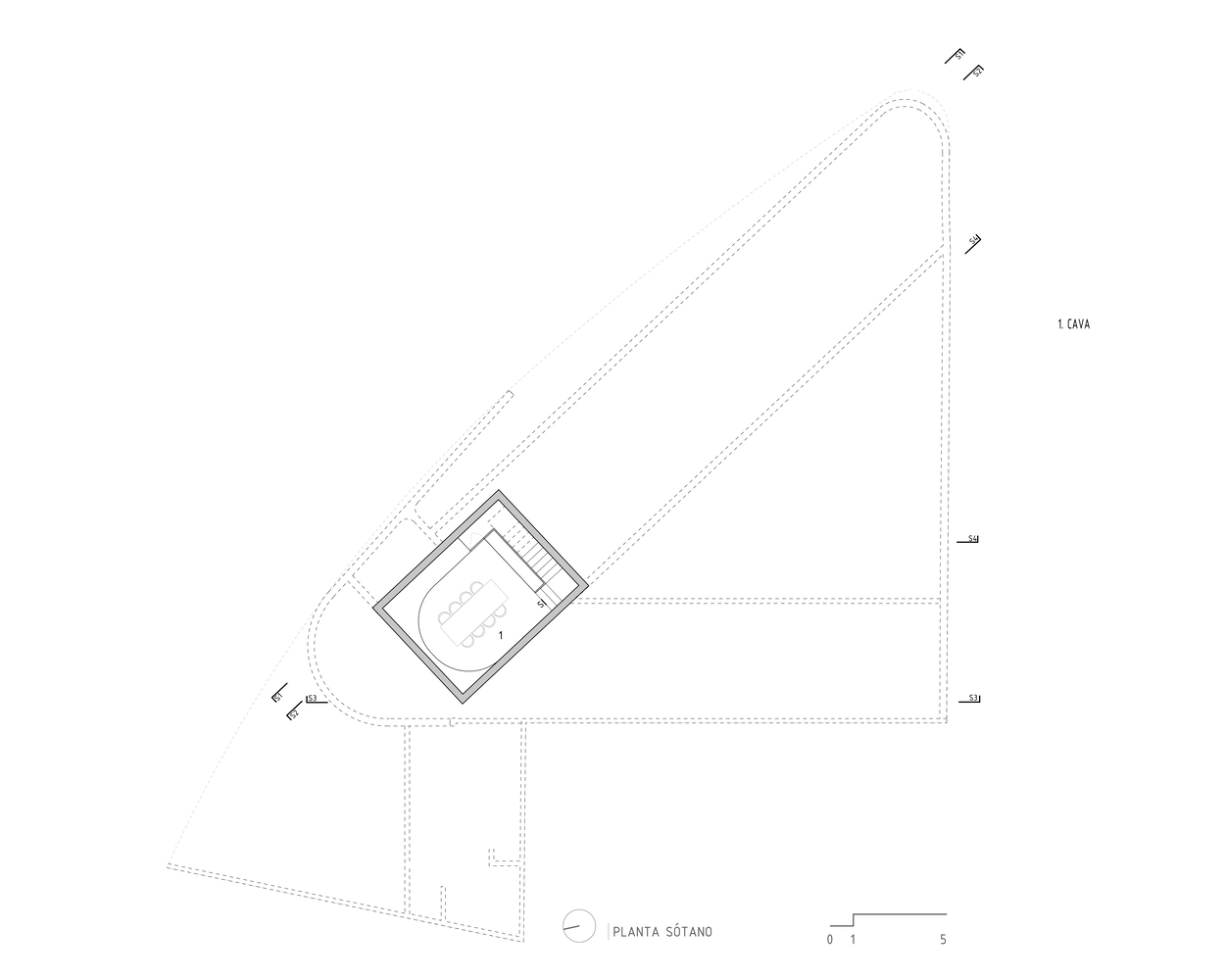
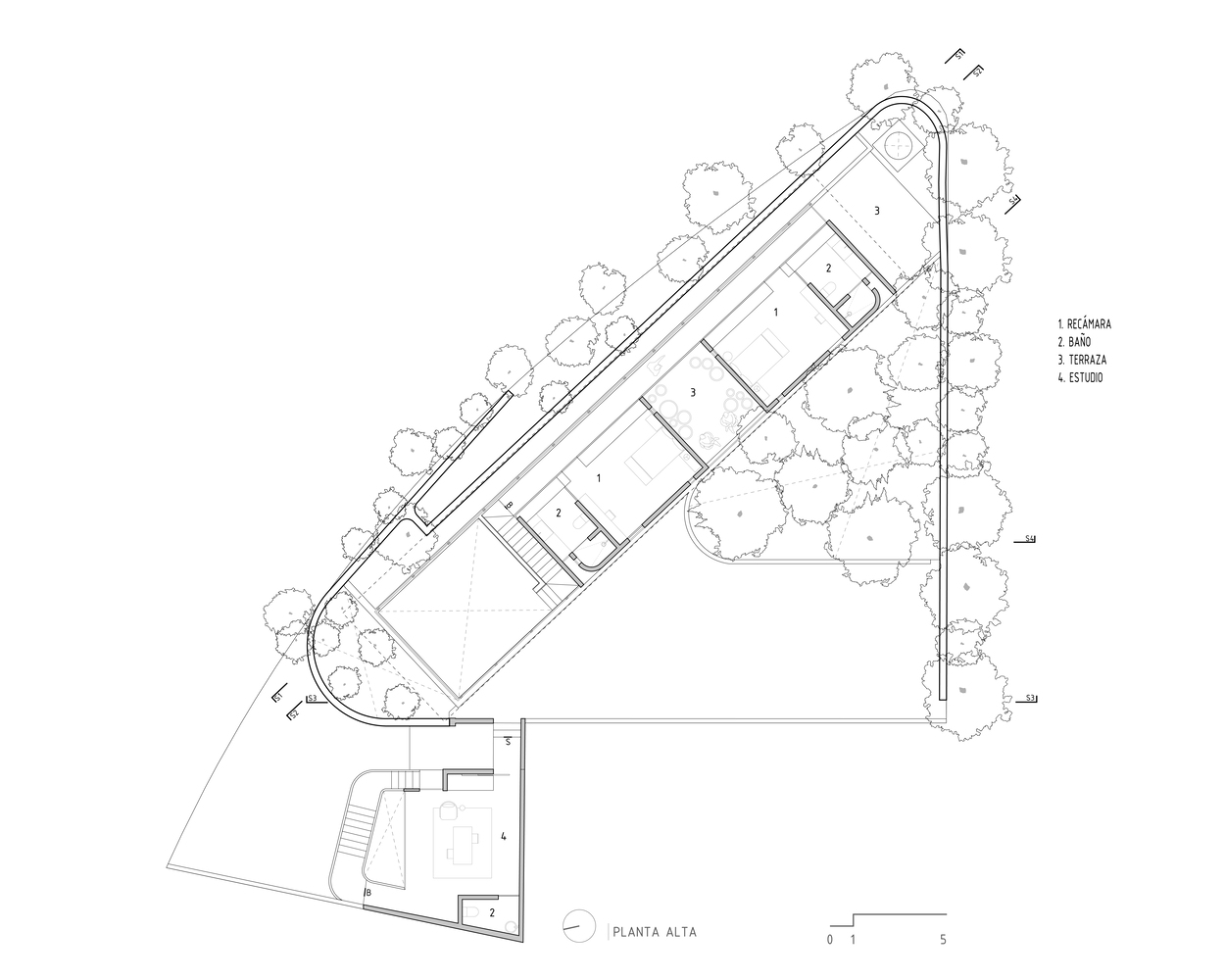
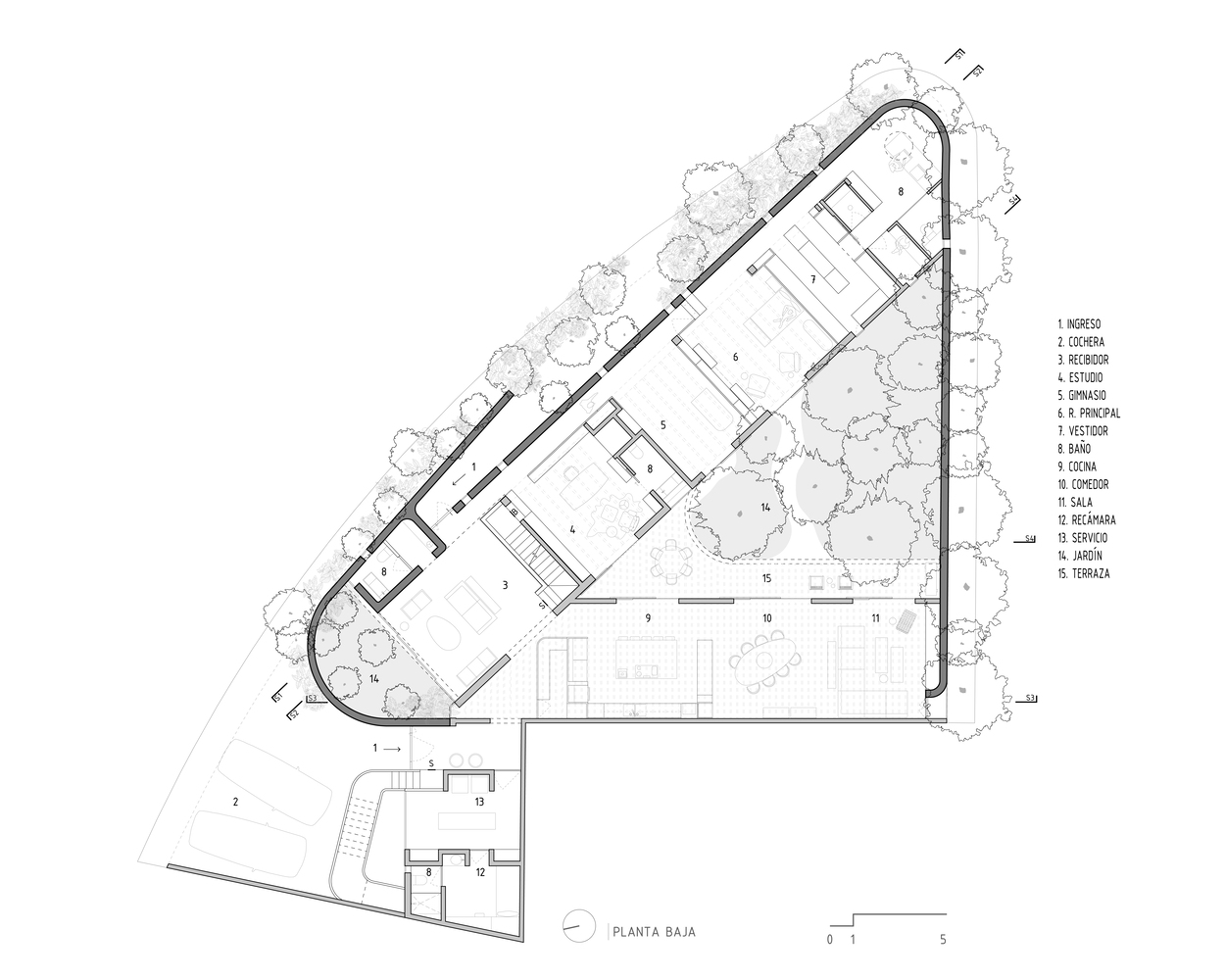
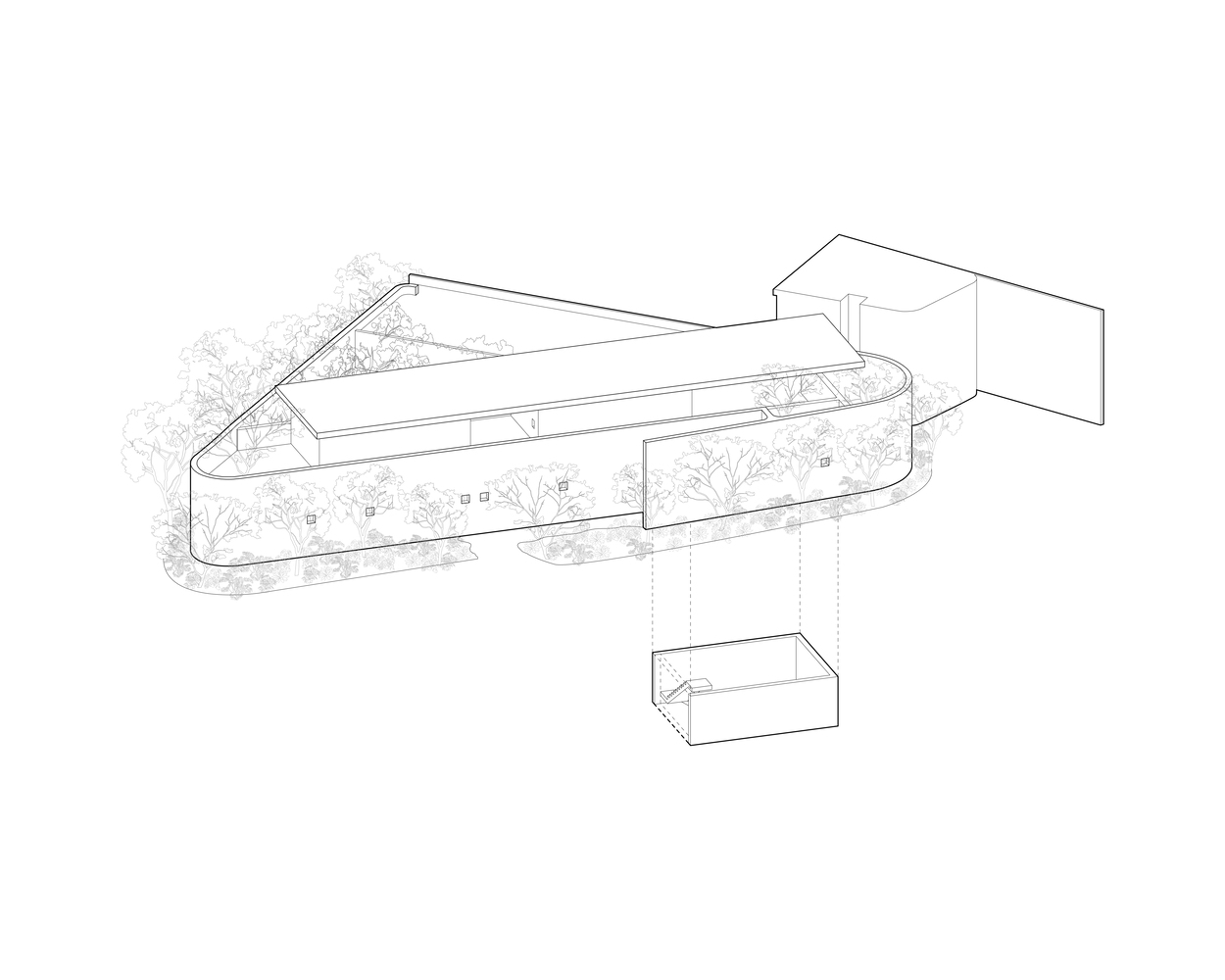
Located on the banks of the Celio River in Jacona, Michoacán, the house rests on a triangular plot of land, with one of its edges curved, just like the corner closest to the water.
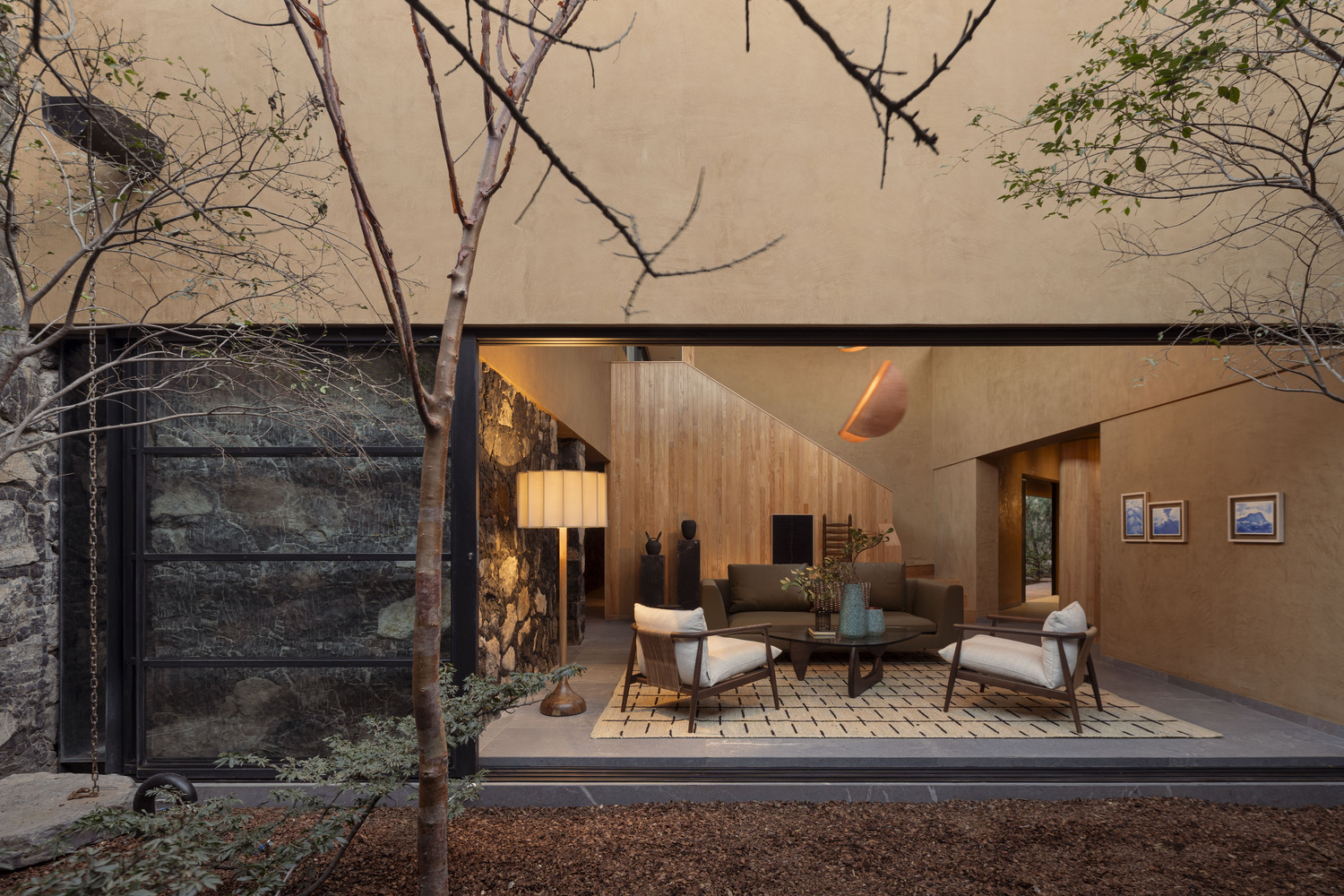
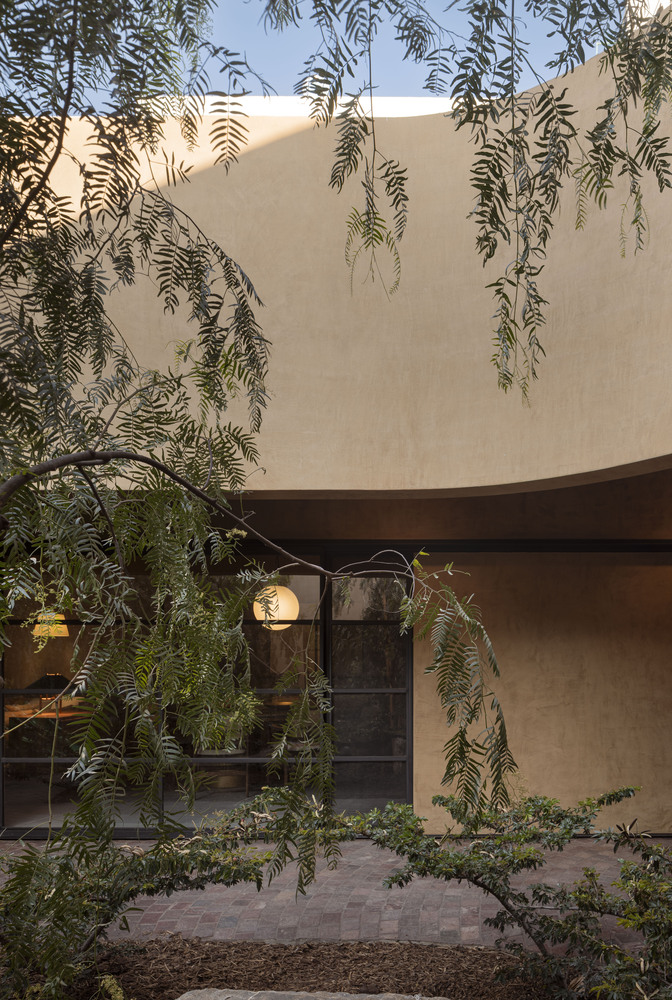
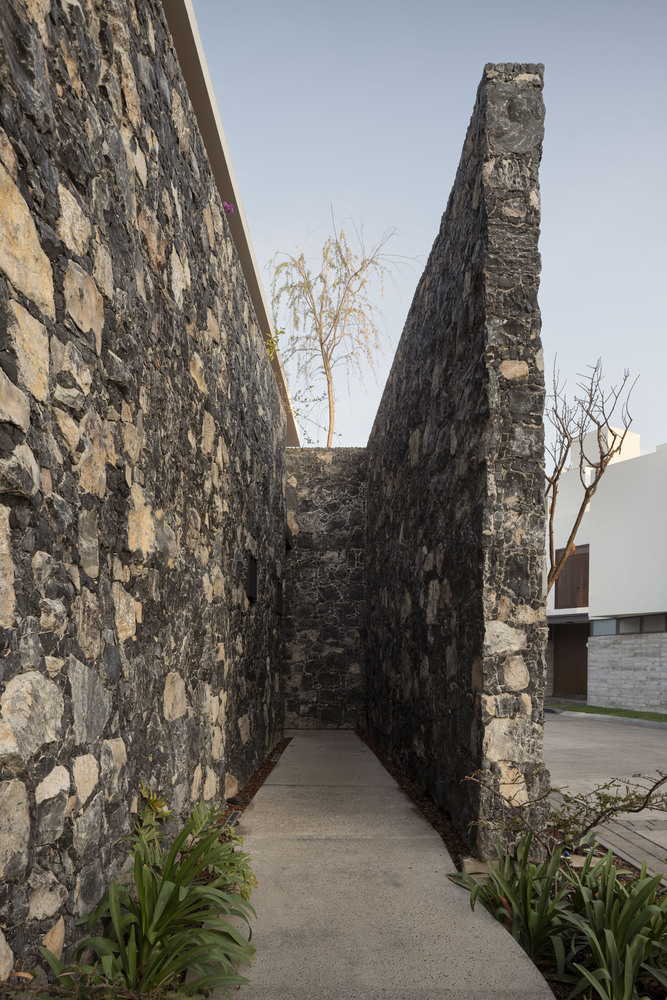
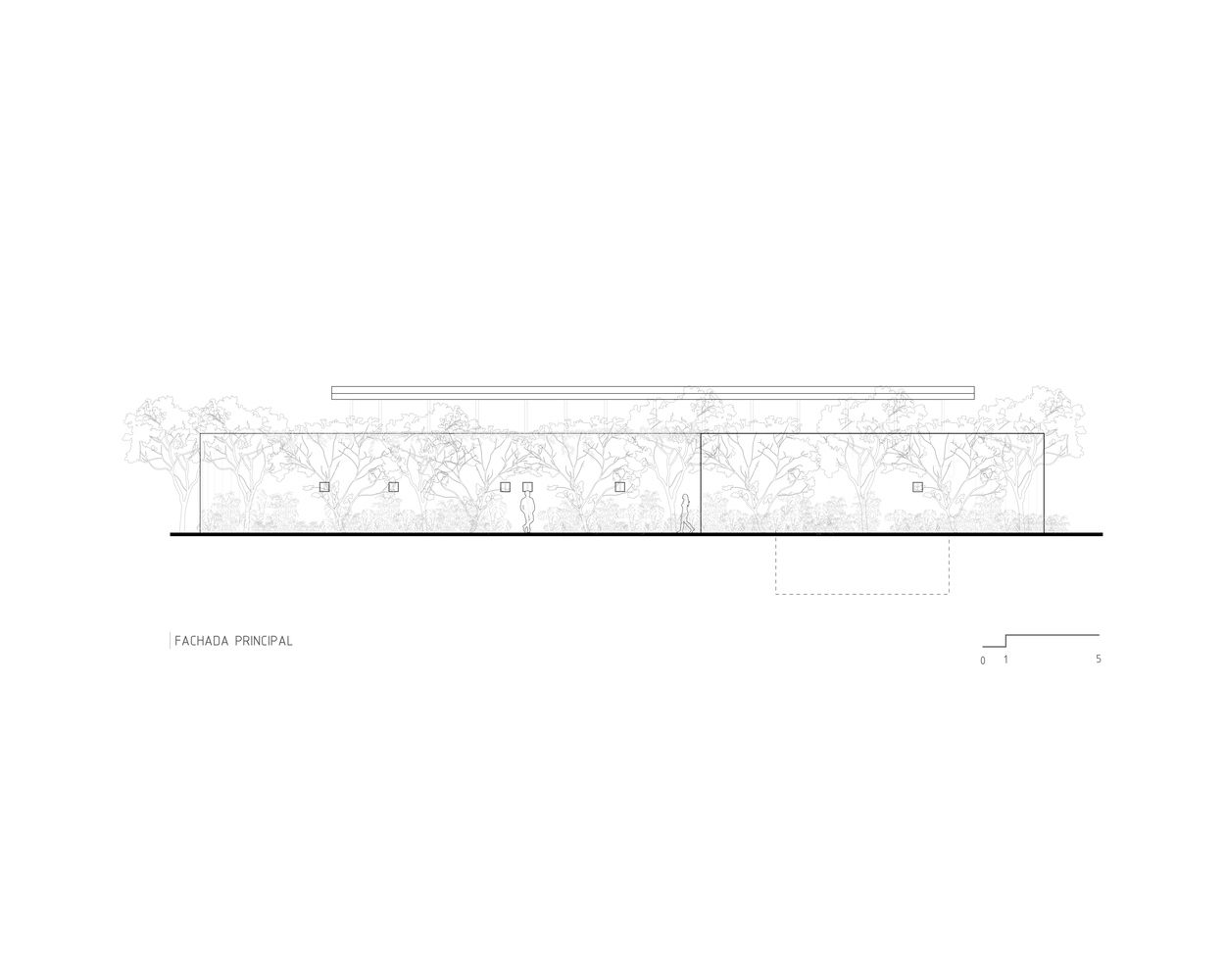
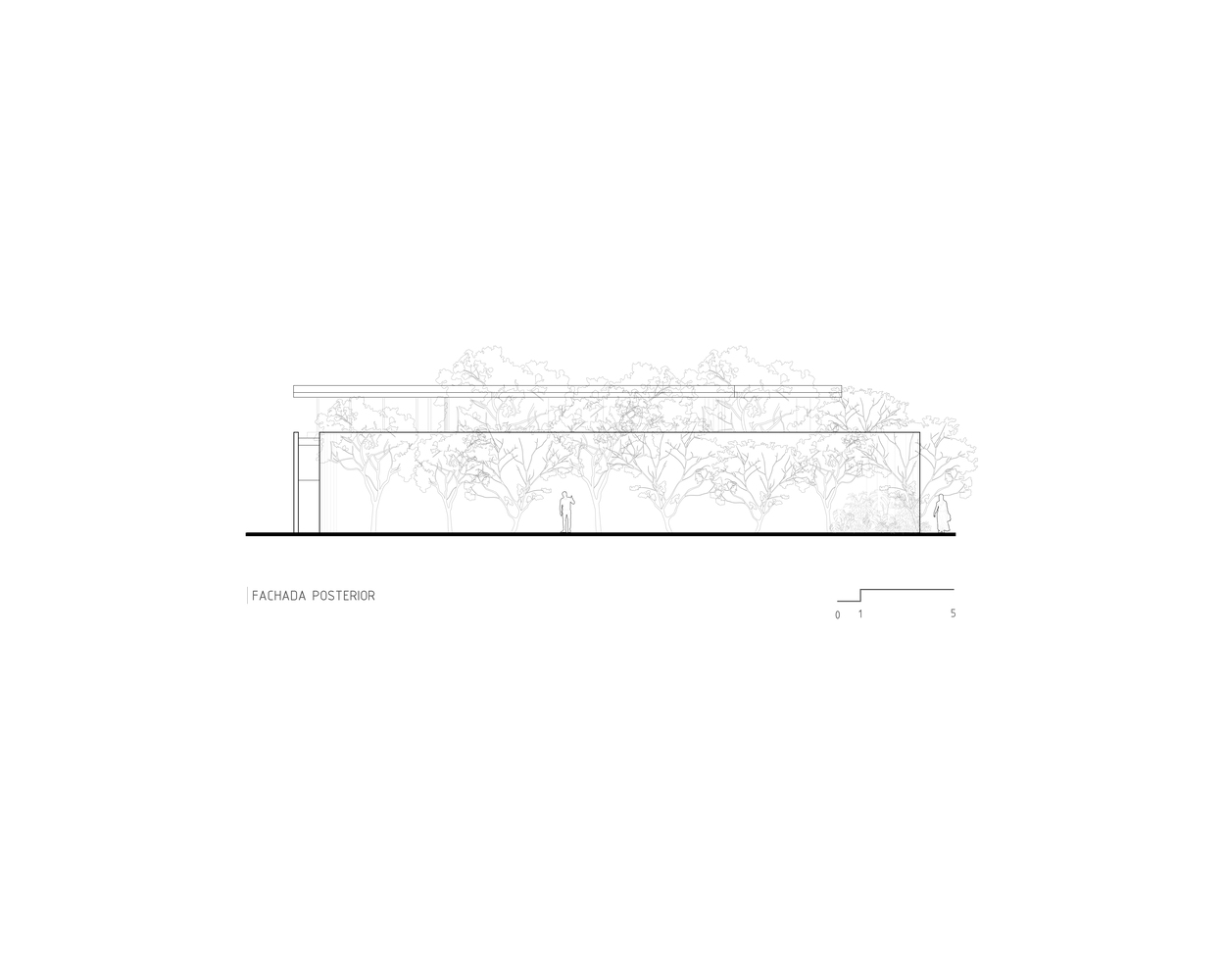
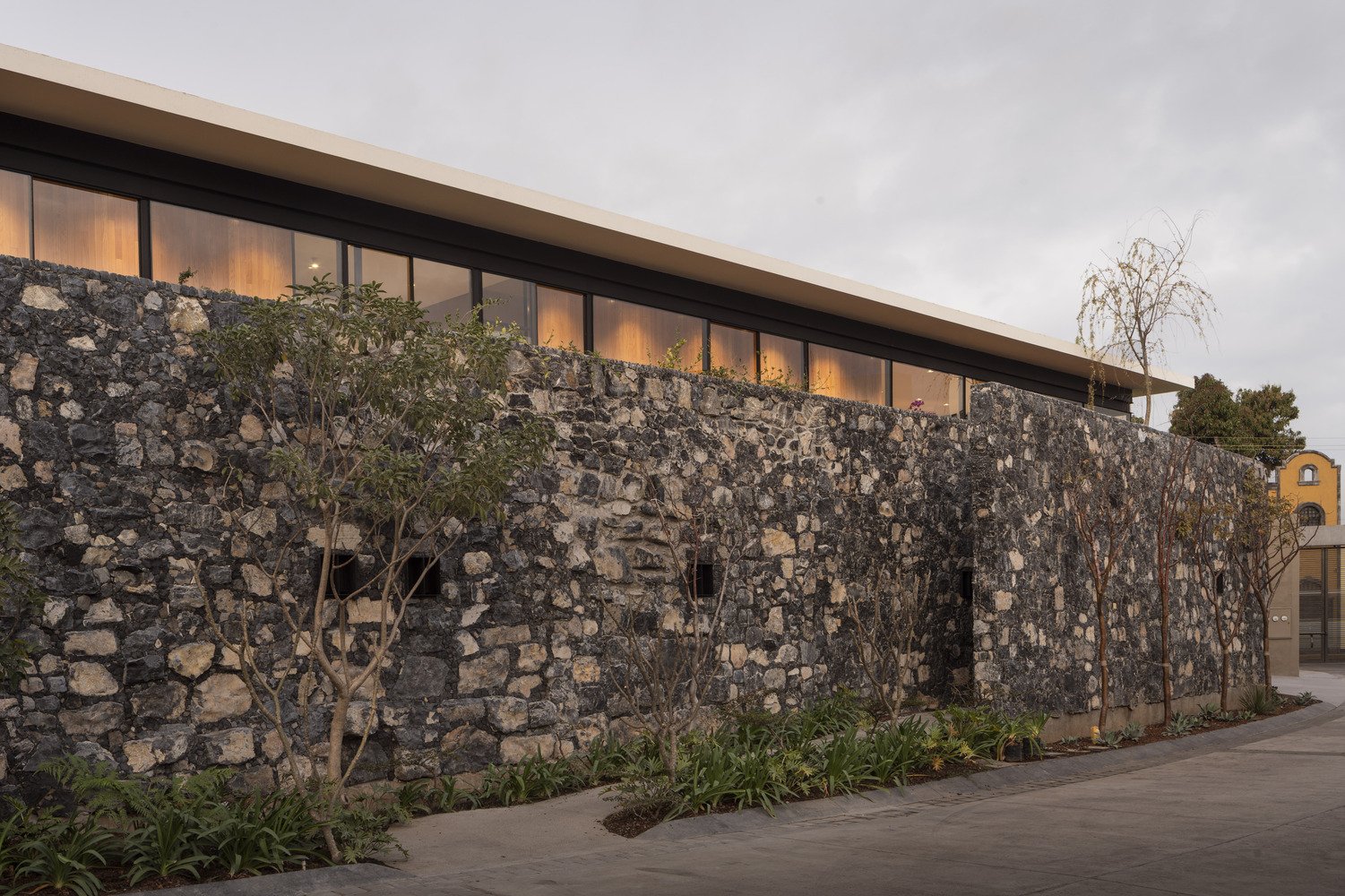
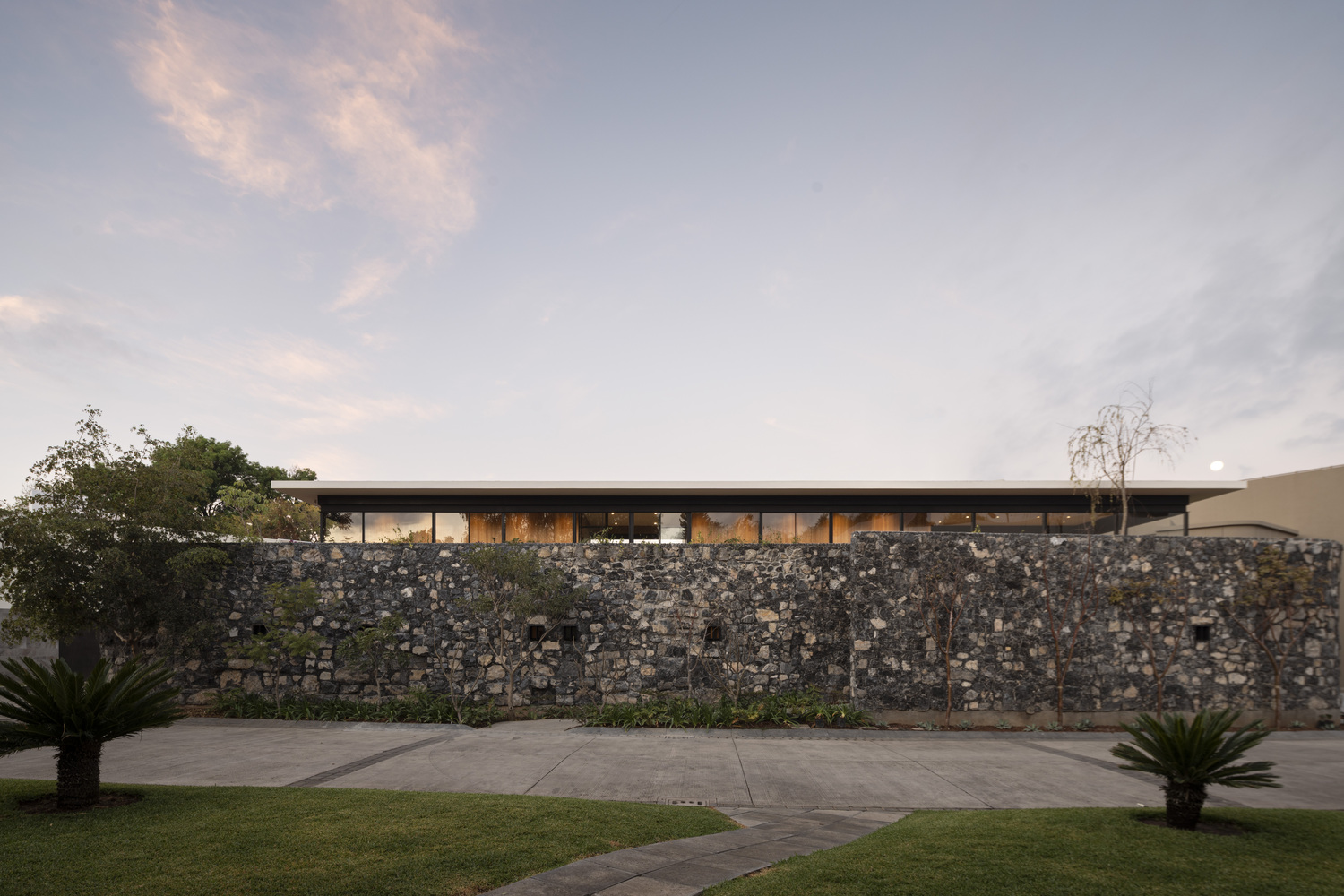
The perimeter wall arises from this shape, folds, opens to welcome, and then wraps around the gardens as if cradling them, with a movement inspired by the river adjacent to the property.
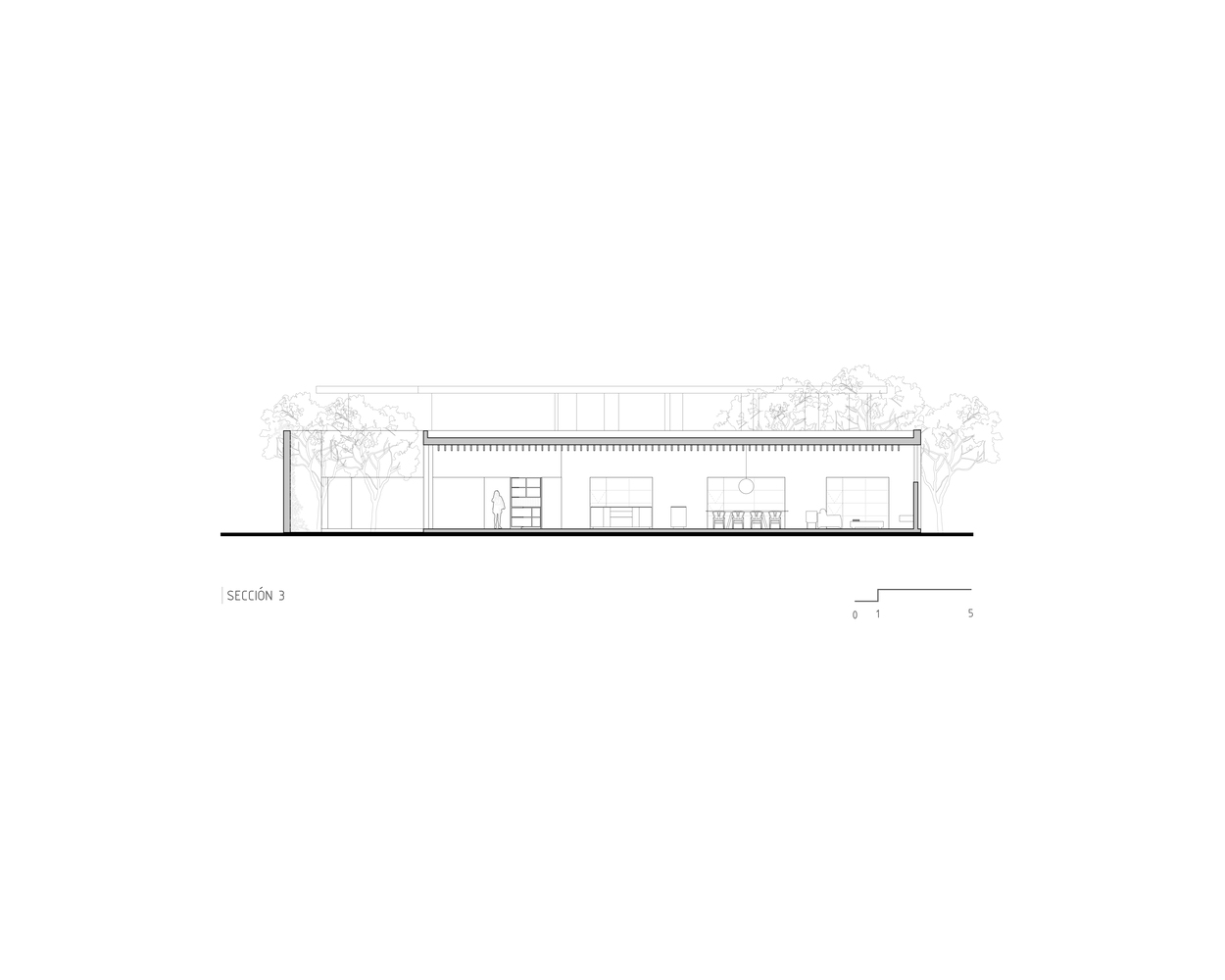
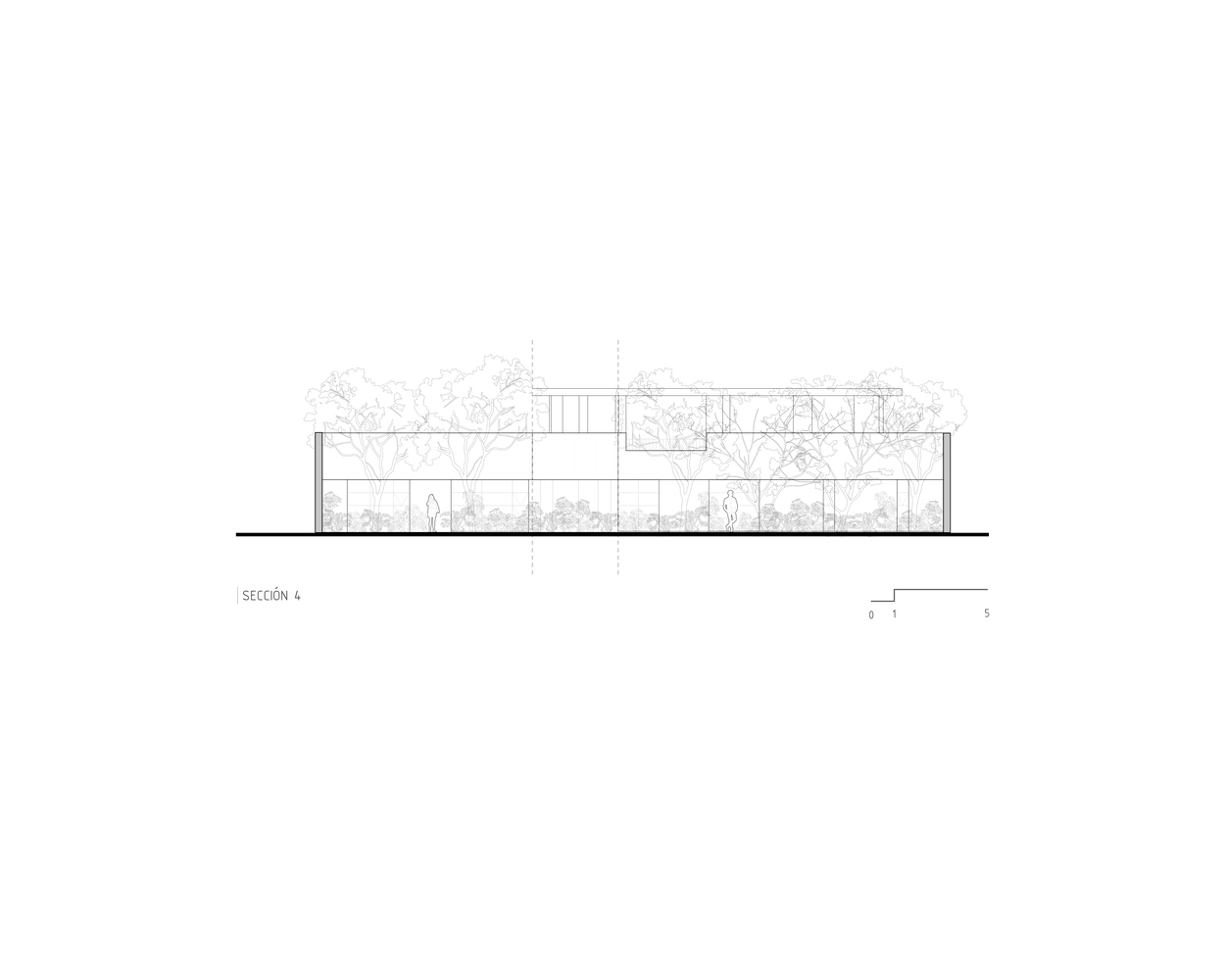
The architectural program is organized into two wings articulated by the garden located at the entrance.
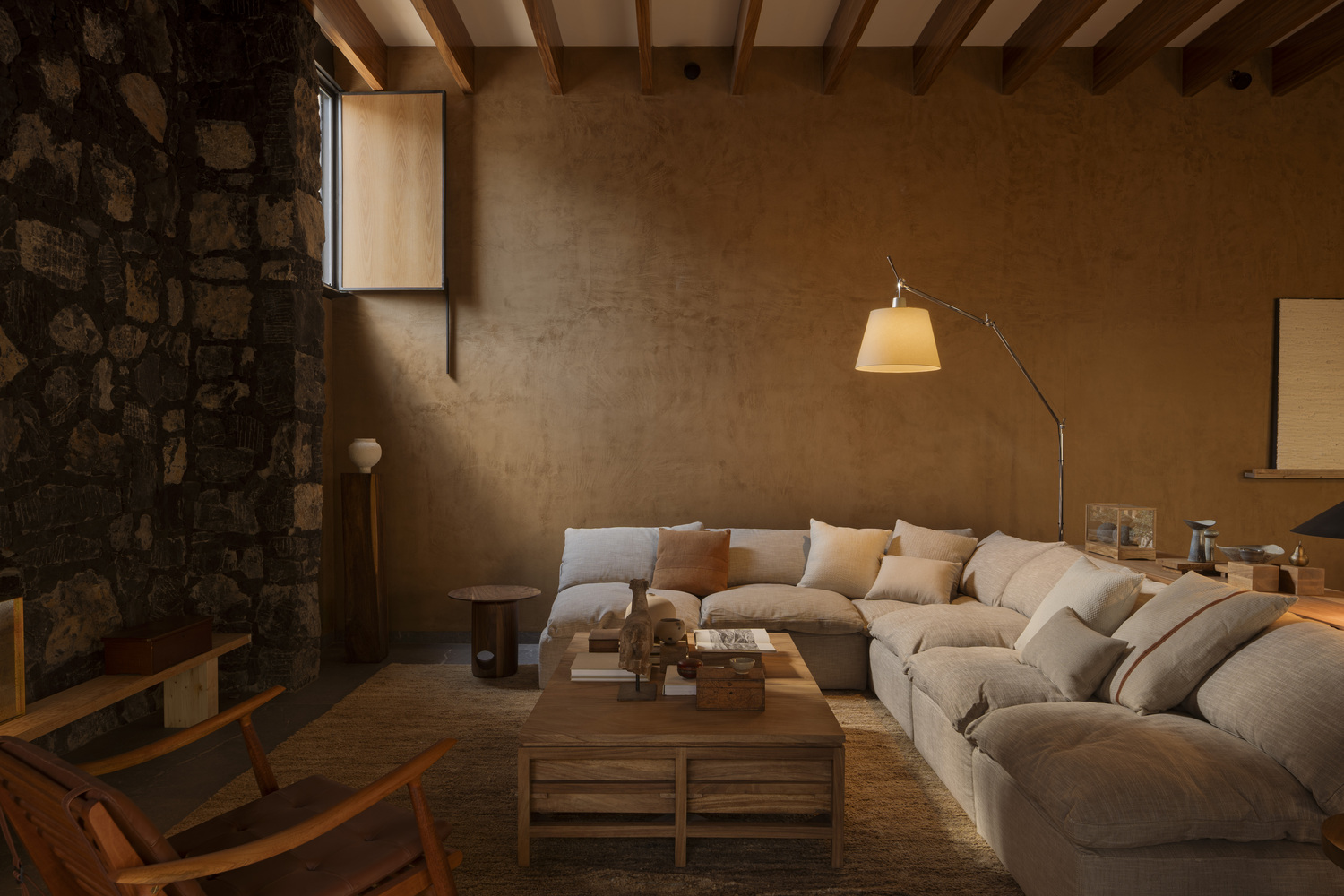
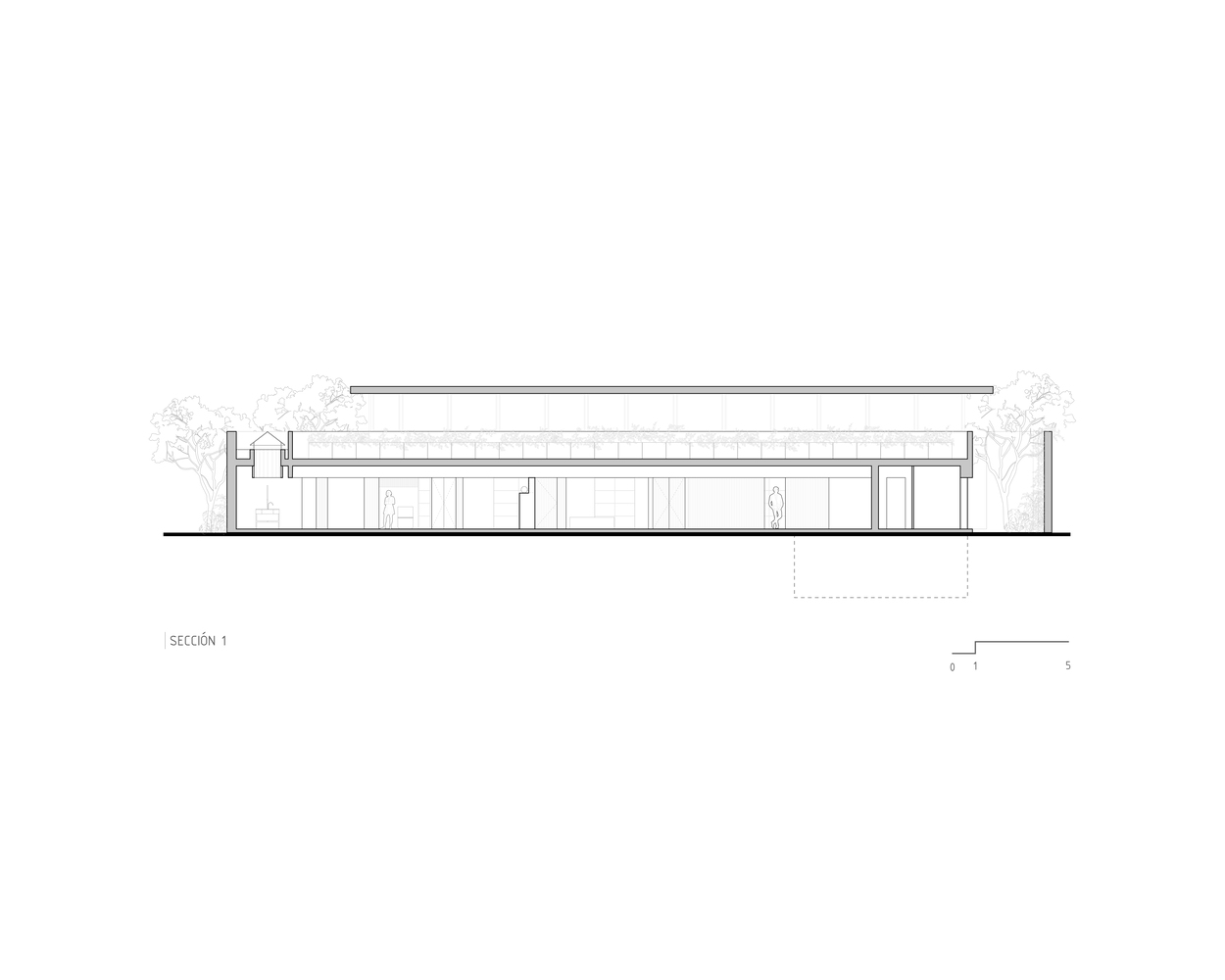
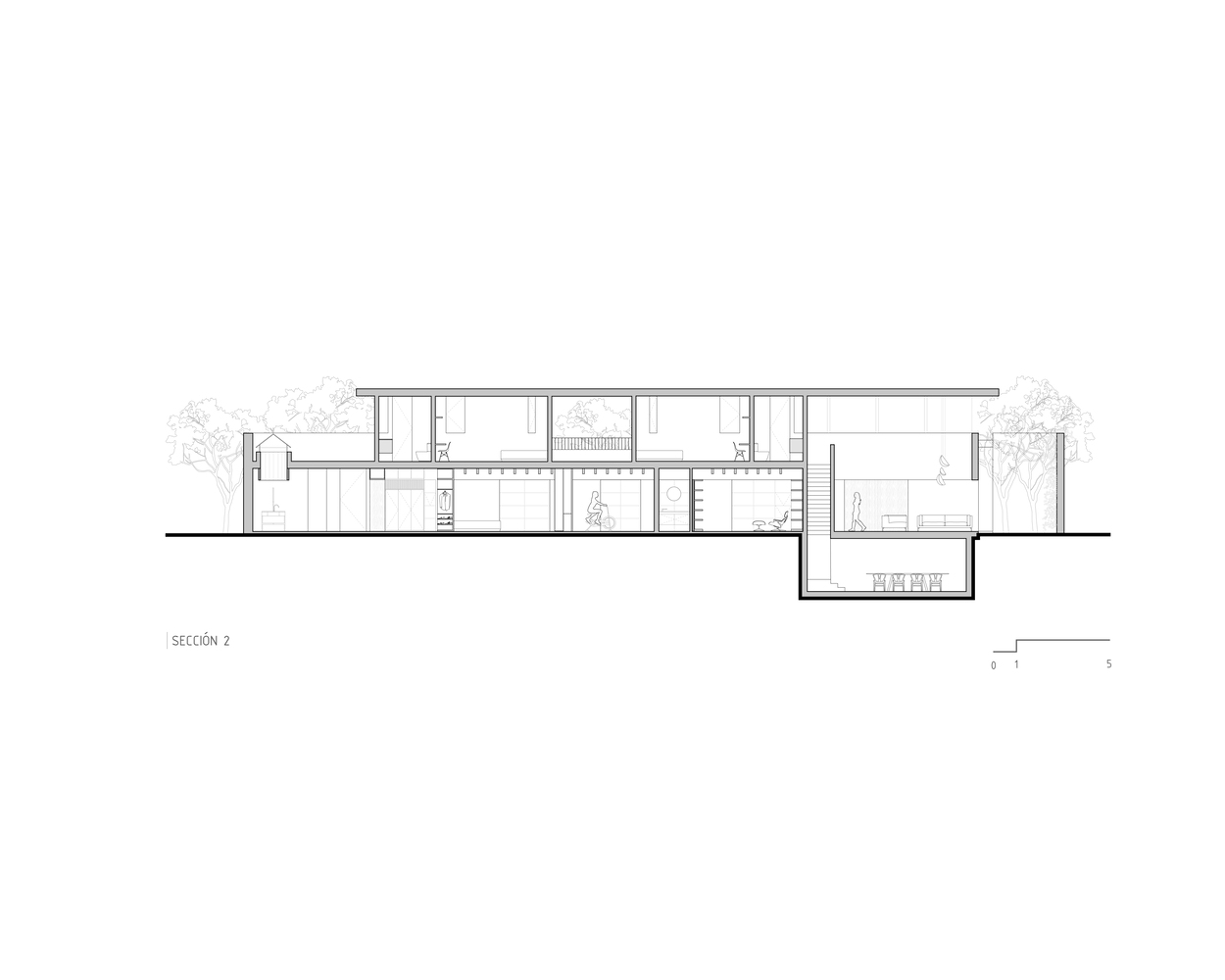
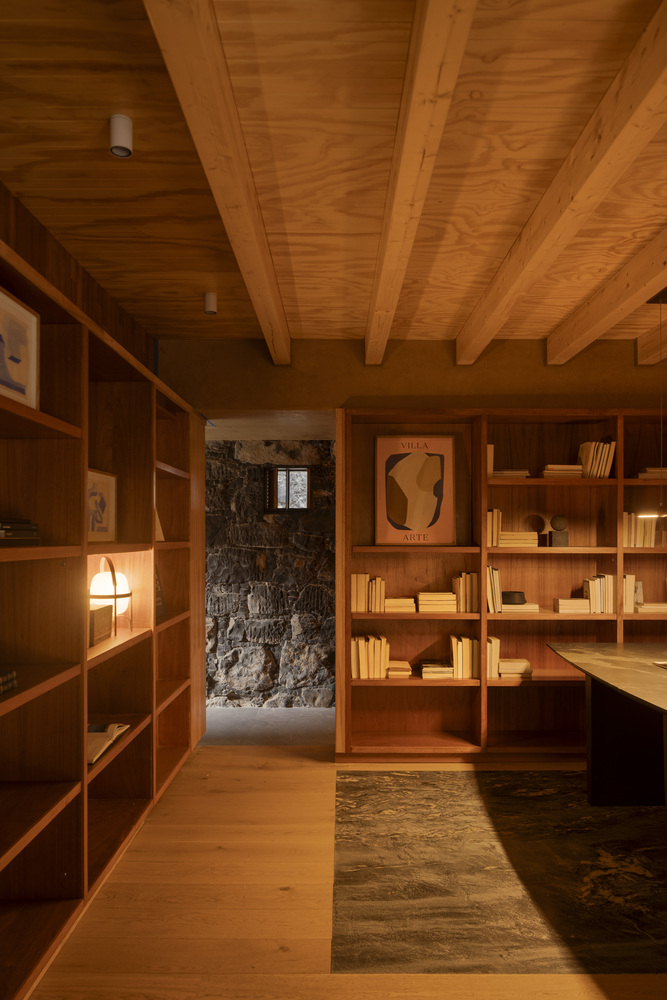
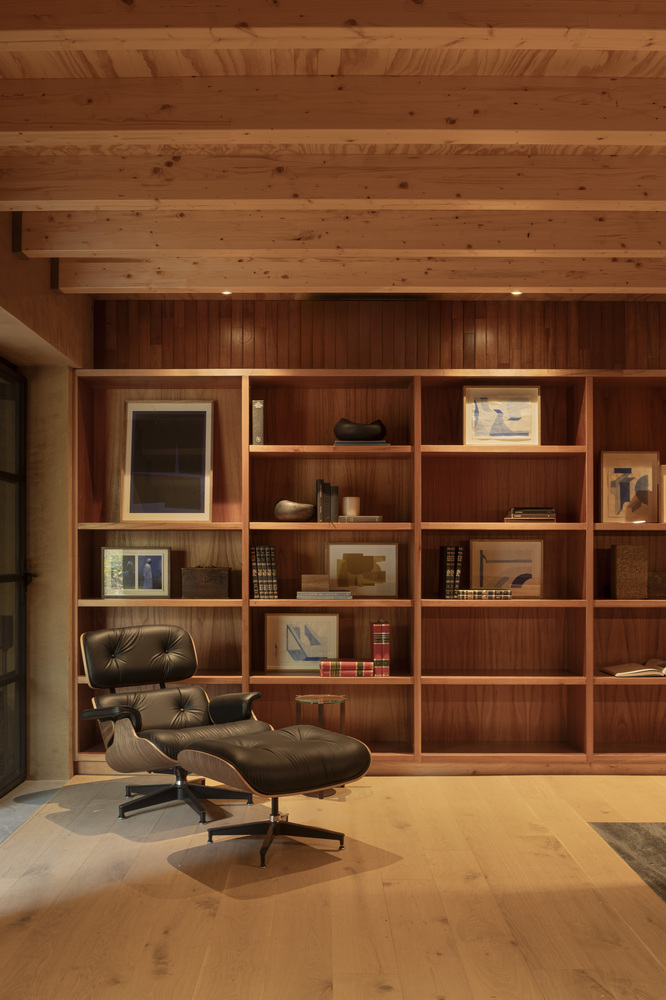
The first wing, oriented to the northeast and developed over two levels along the longest side of the triangle, houses the master bedroom and the library on the ground floor.
From there, a bookshelf door leads to the underground cellar, adding a gesture of surprise and depth to the journey. The upper floor contains the guest rooms.
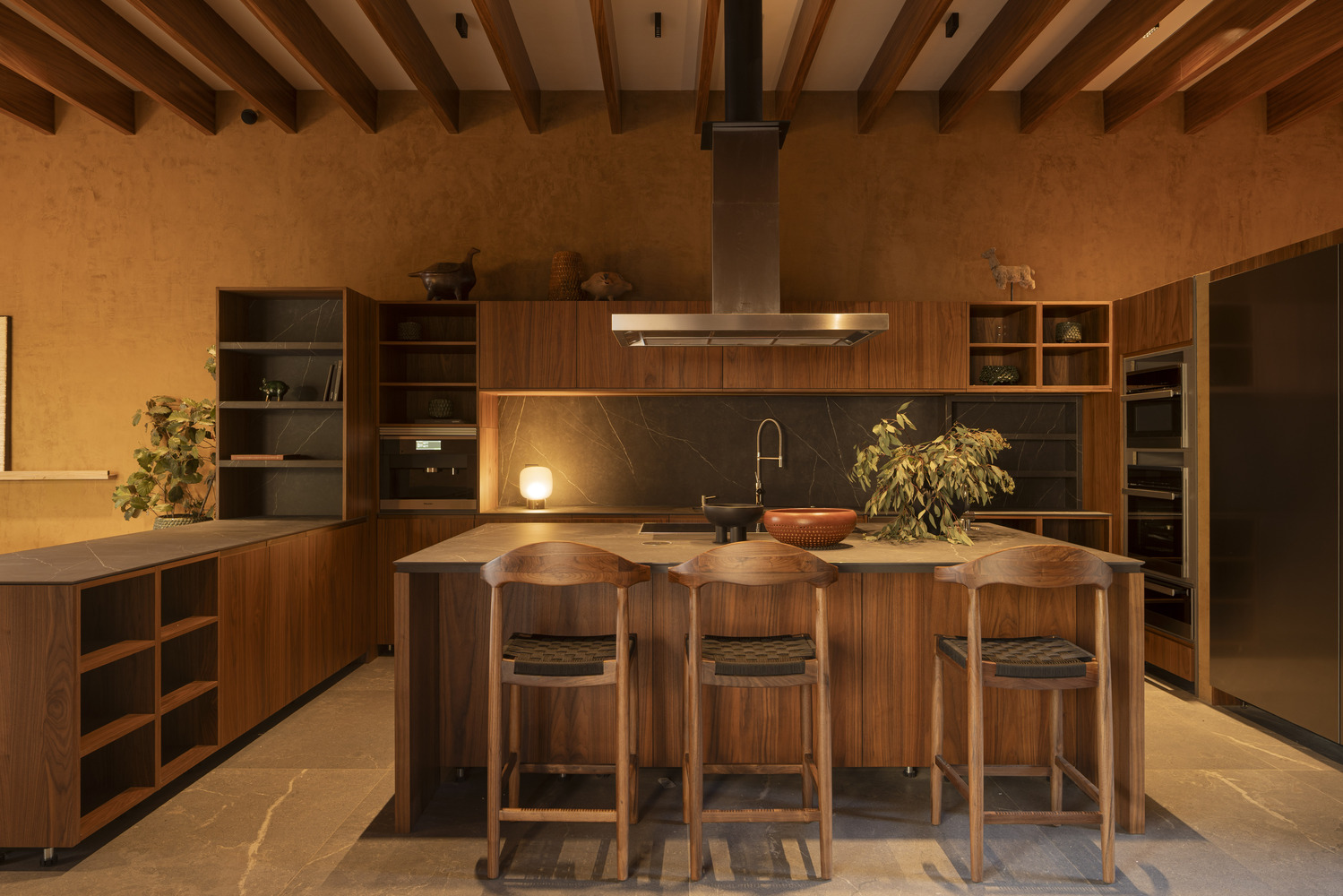
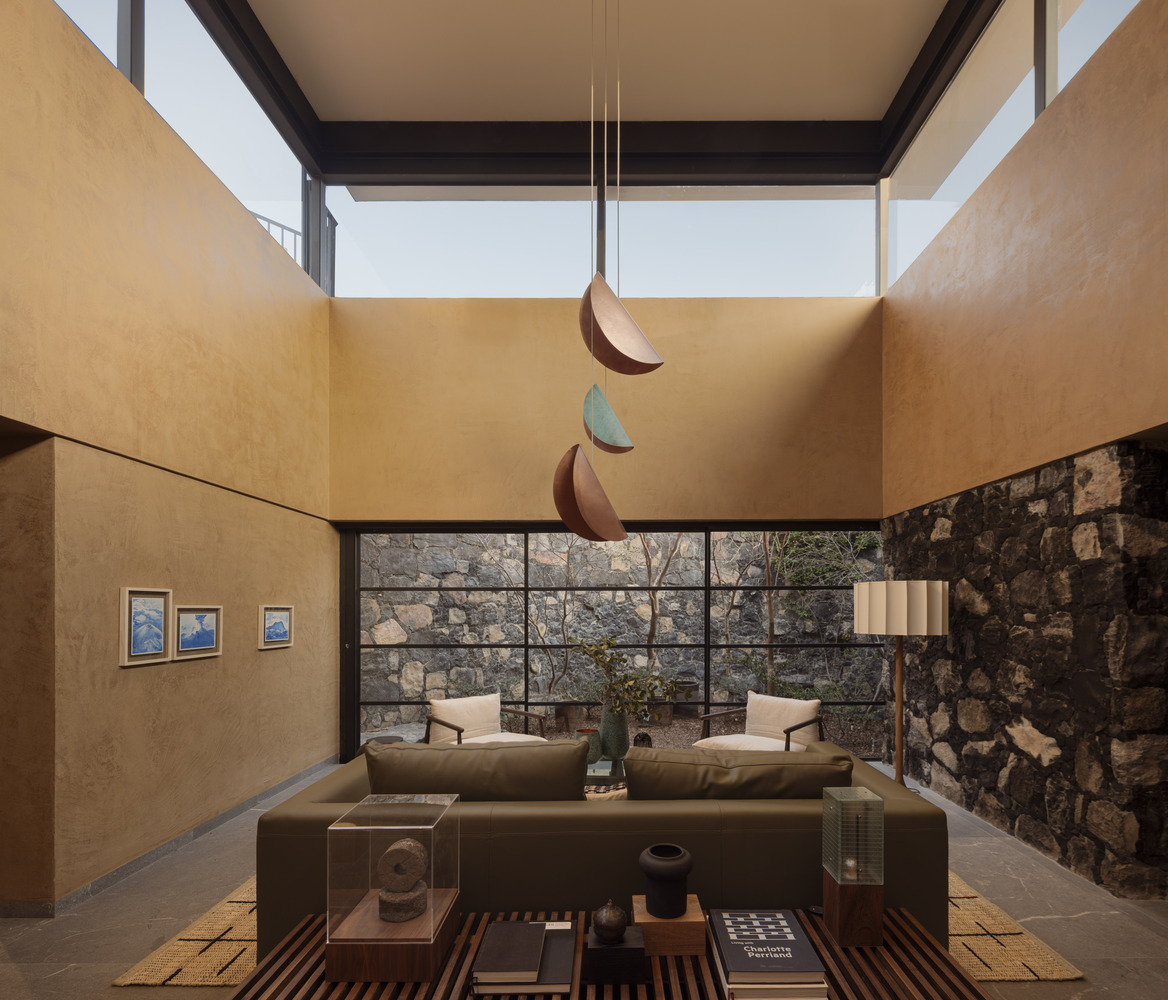
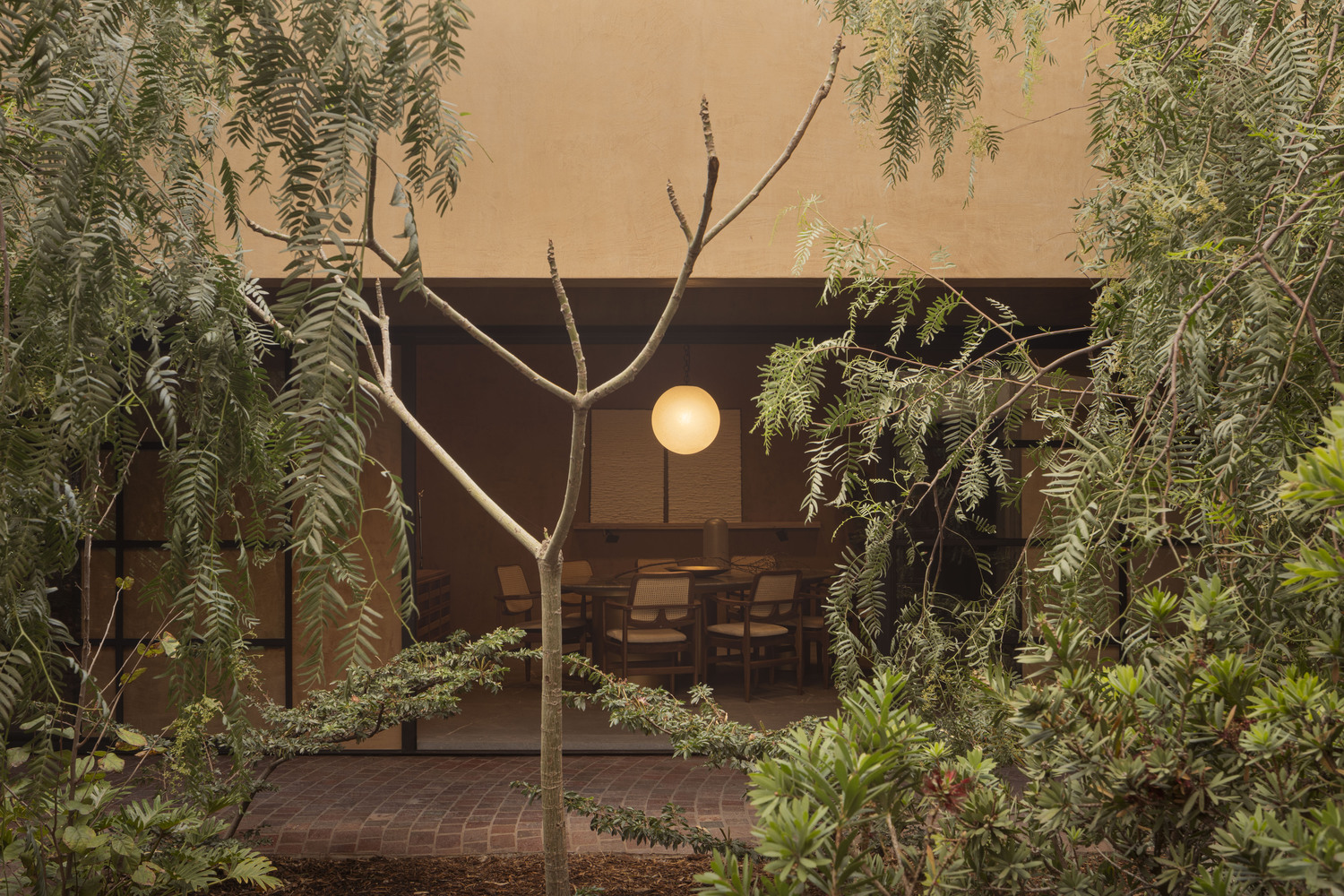
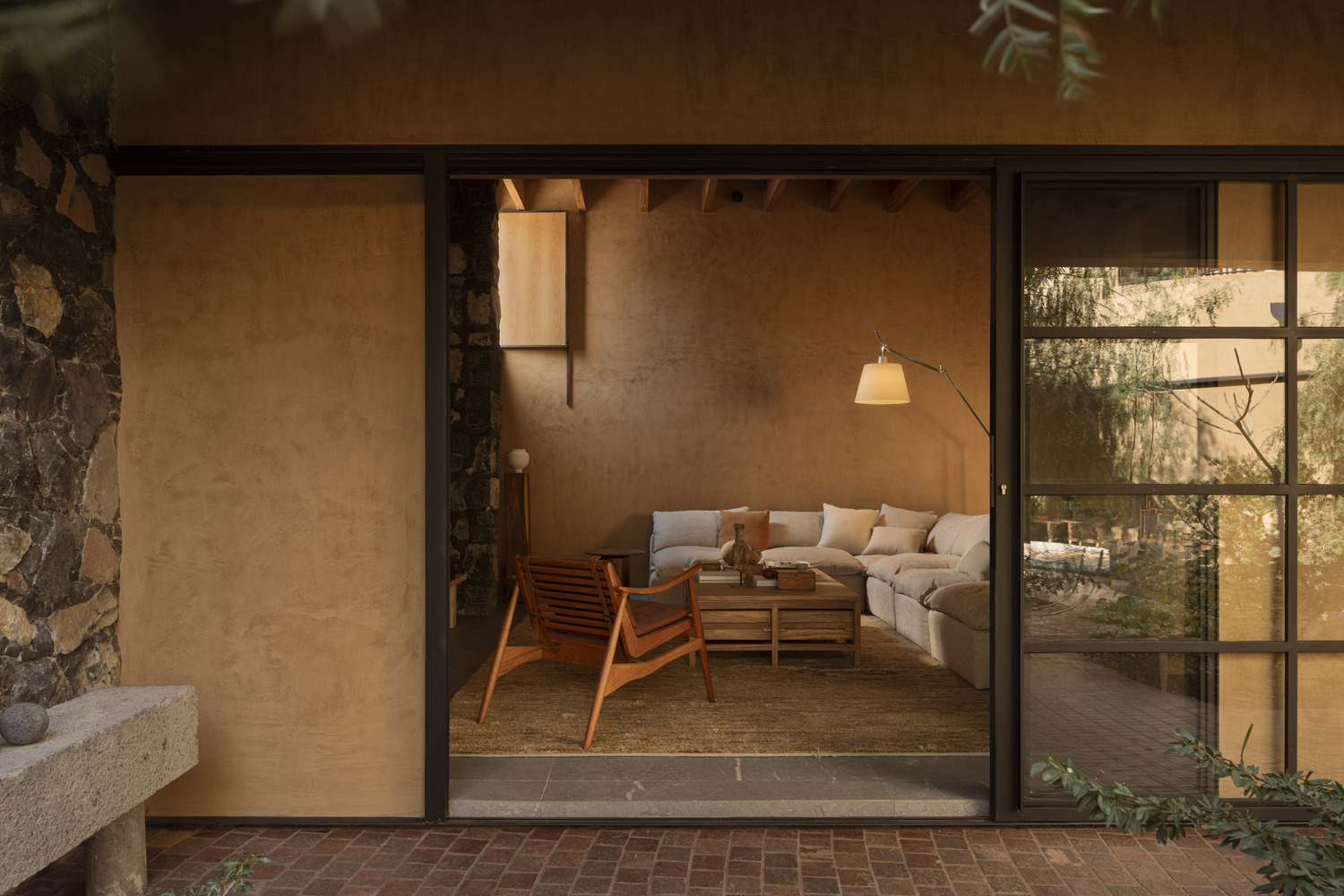
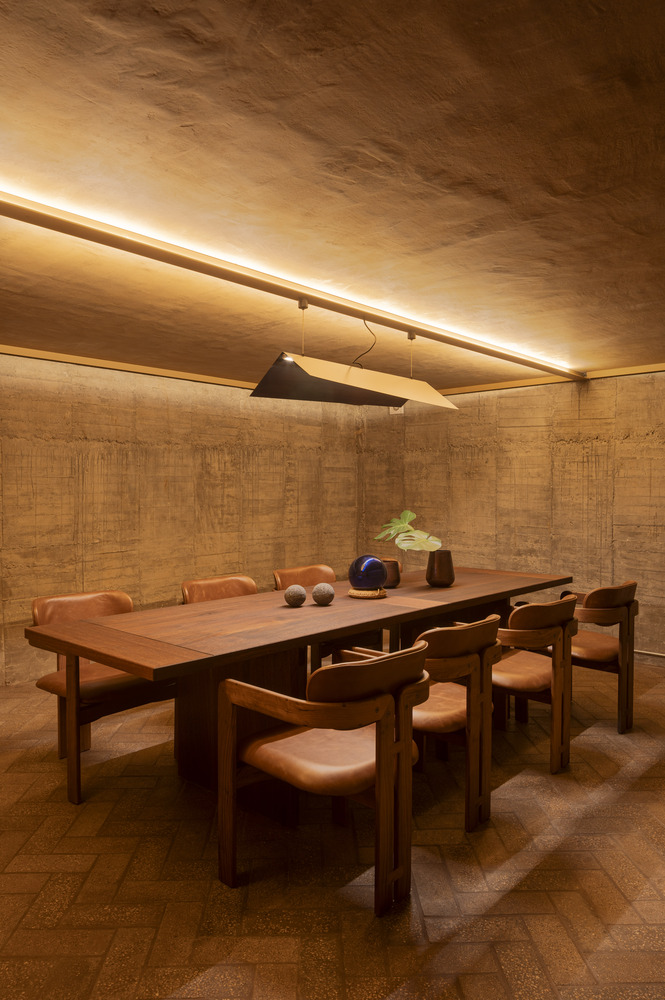
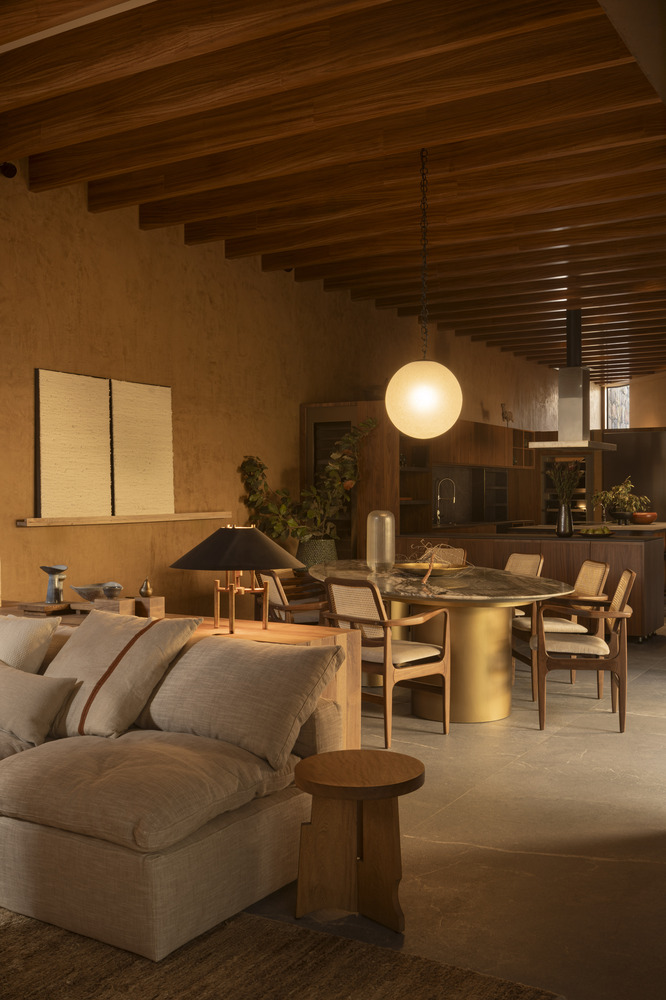
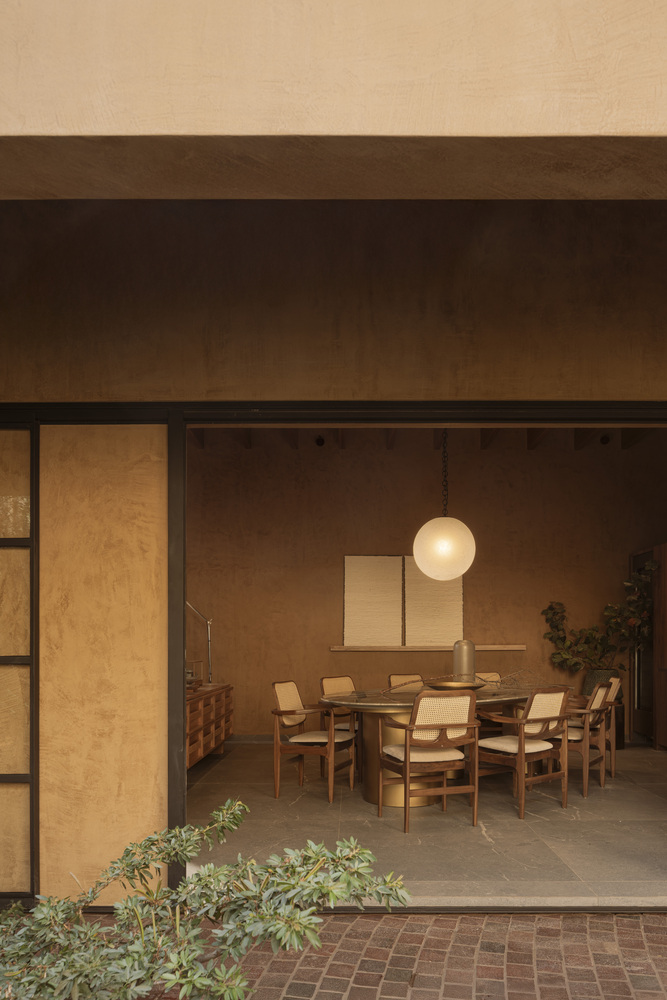
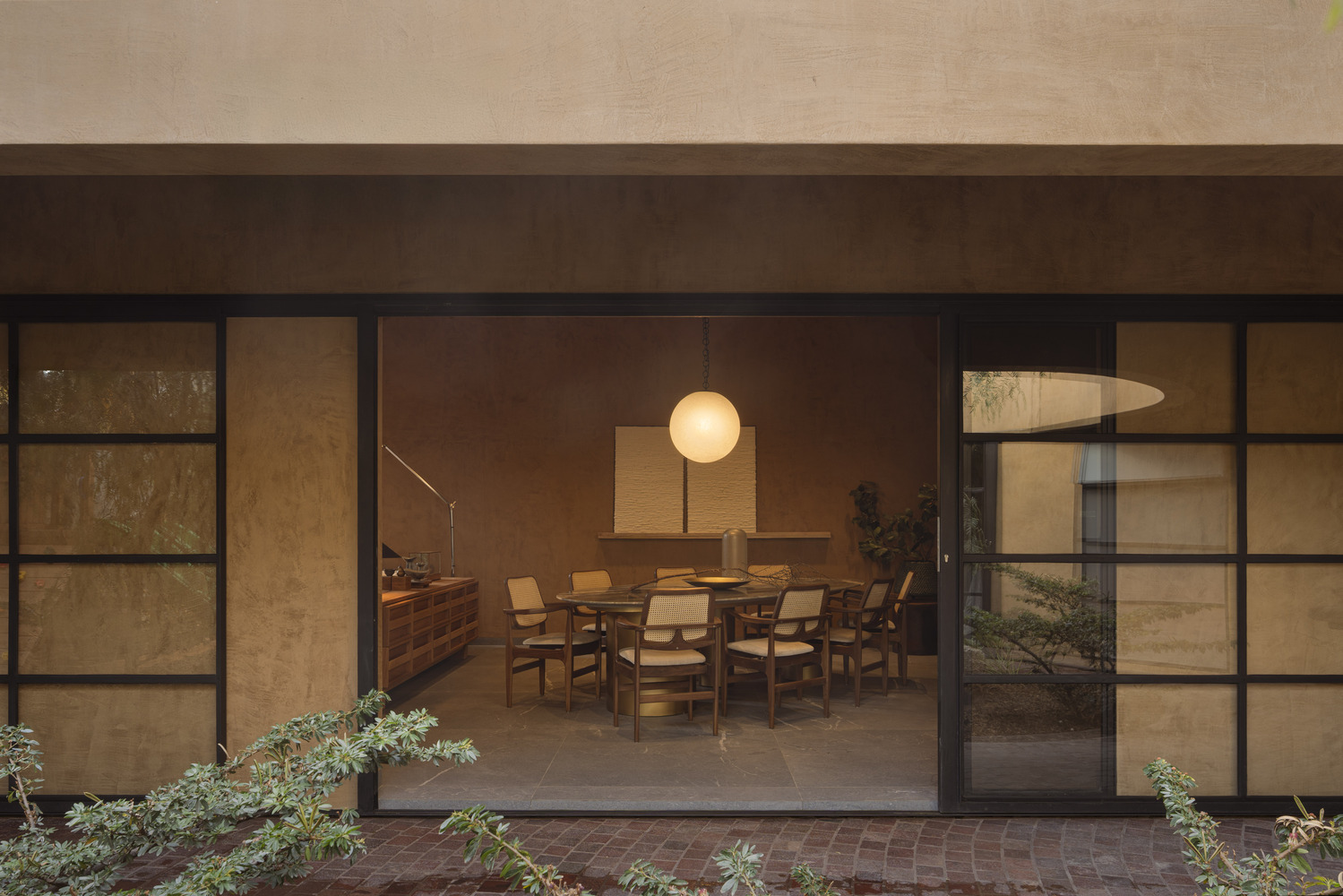
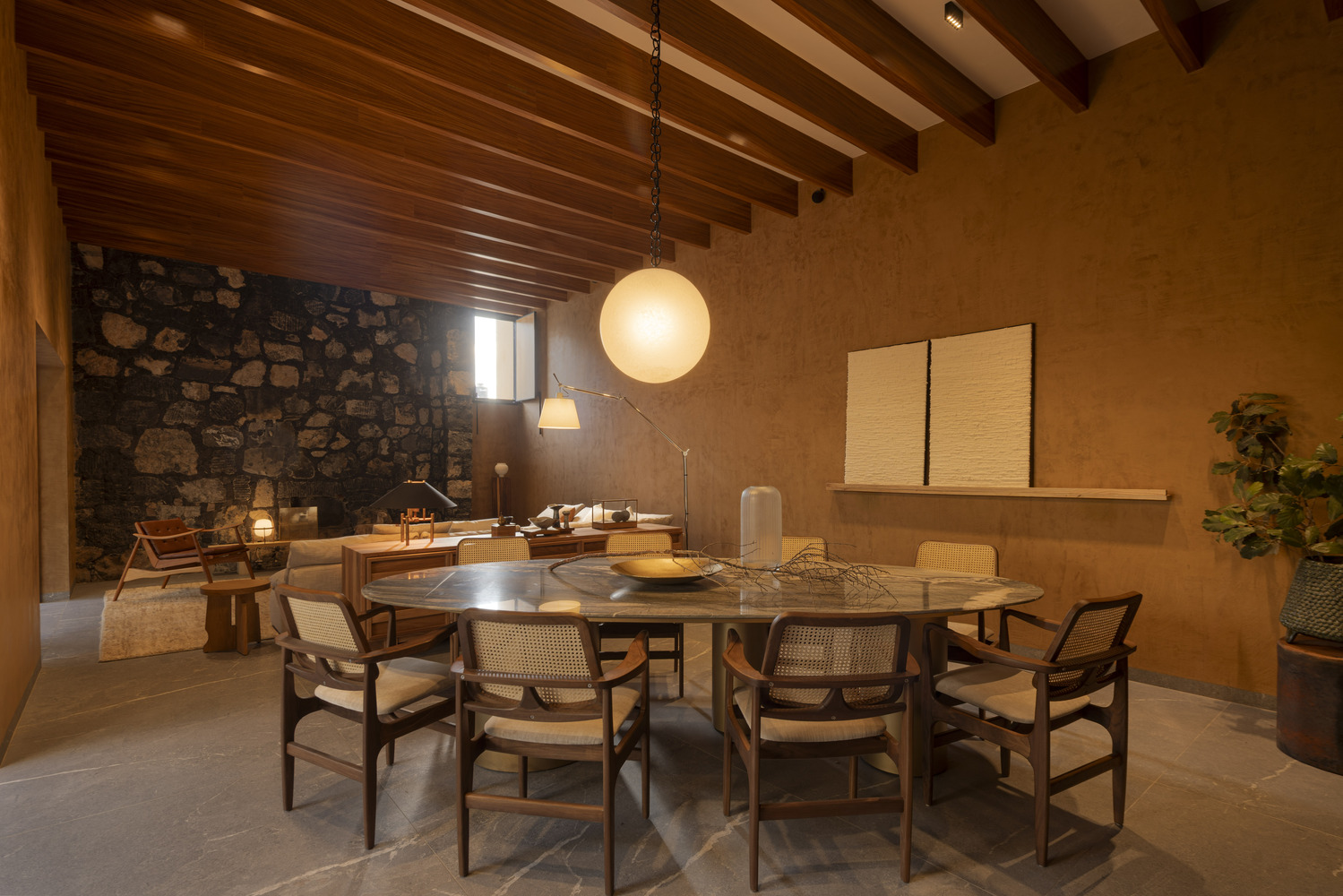
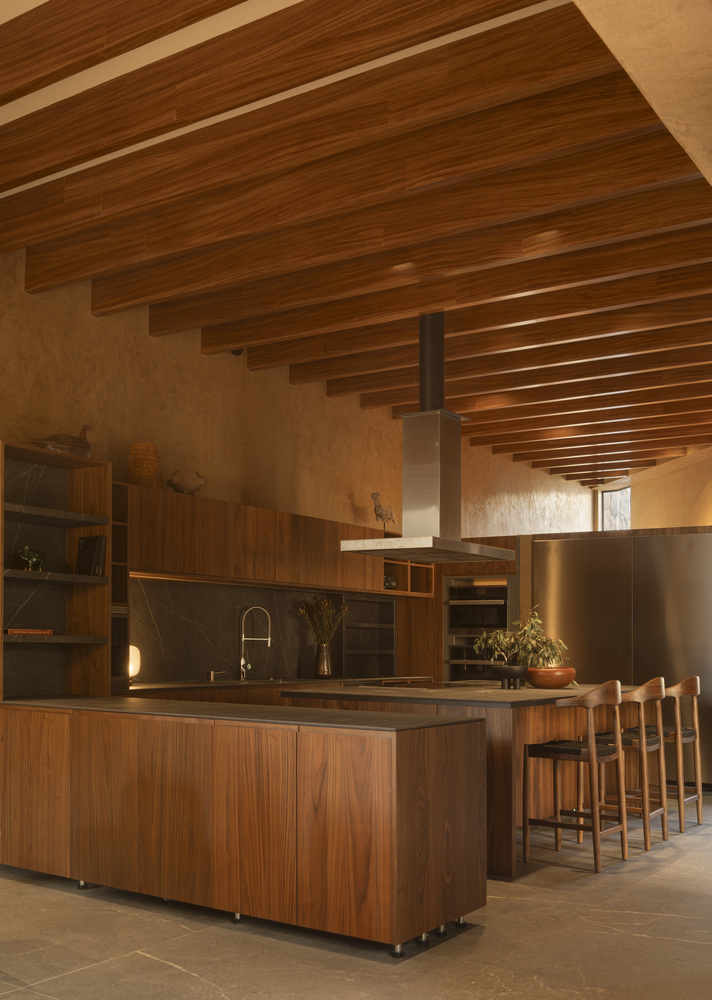
The second wing, located to the south, holds the daily and essential spaces: the kitchen, dining room, and living room, connected outside by a cantilevered porch that protects them from the rain and softens the morning light.
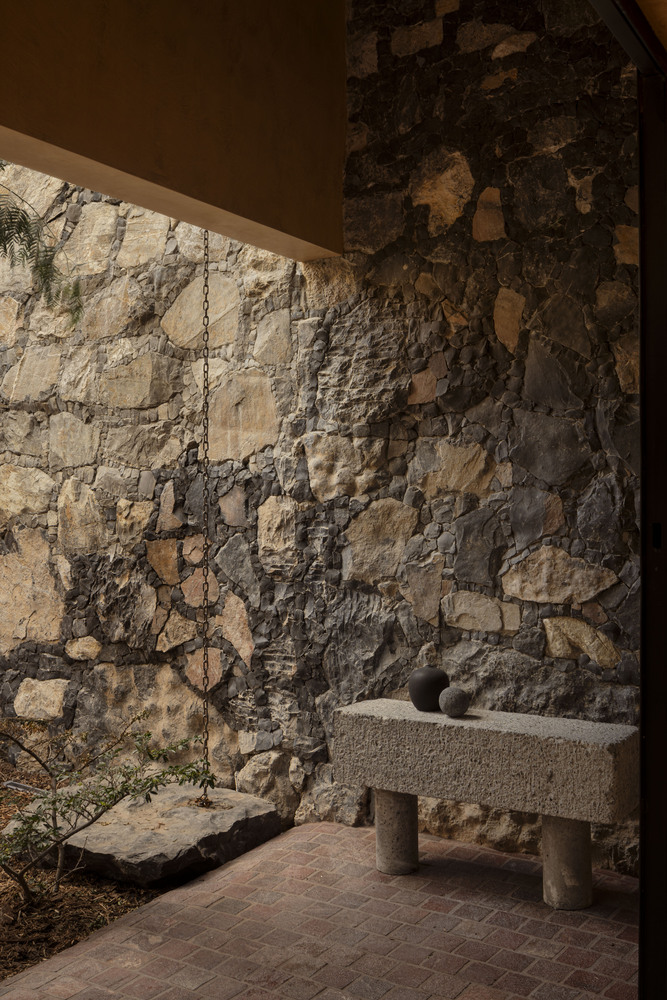
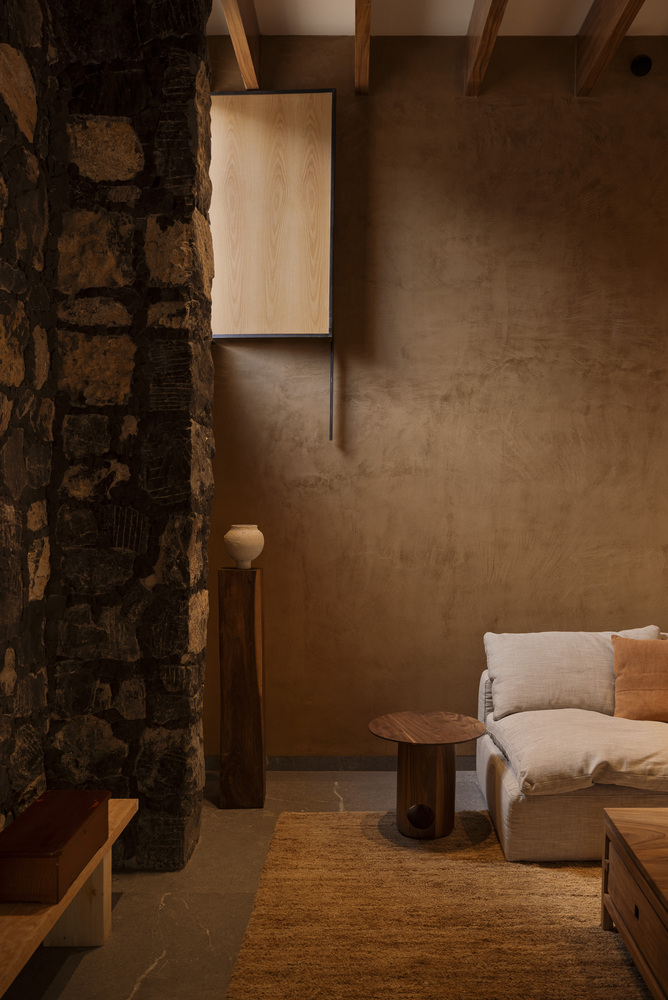
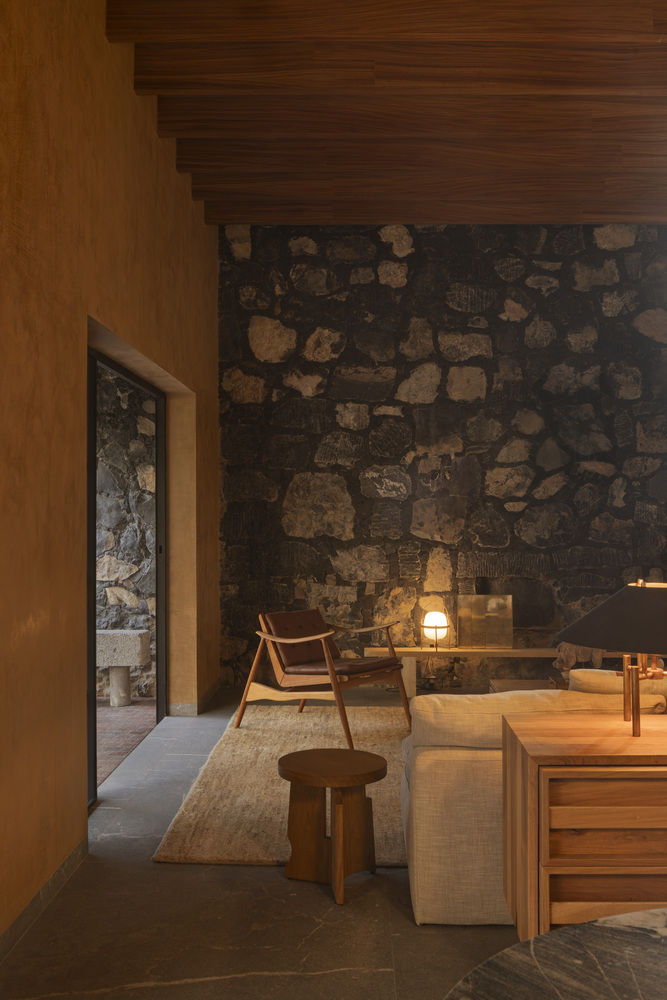
As for the materiality, the wall that hugs the house is constructed of granite: a dark, dense stone that evokes the idea of refuge and shade.
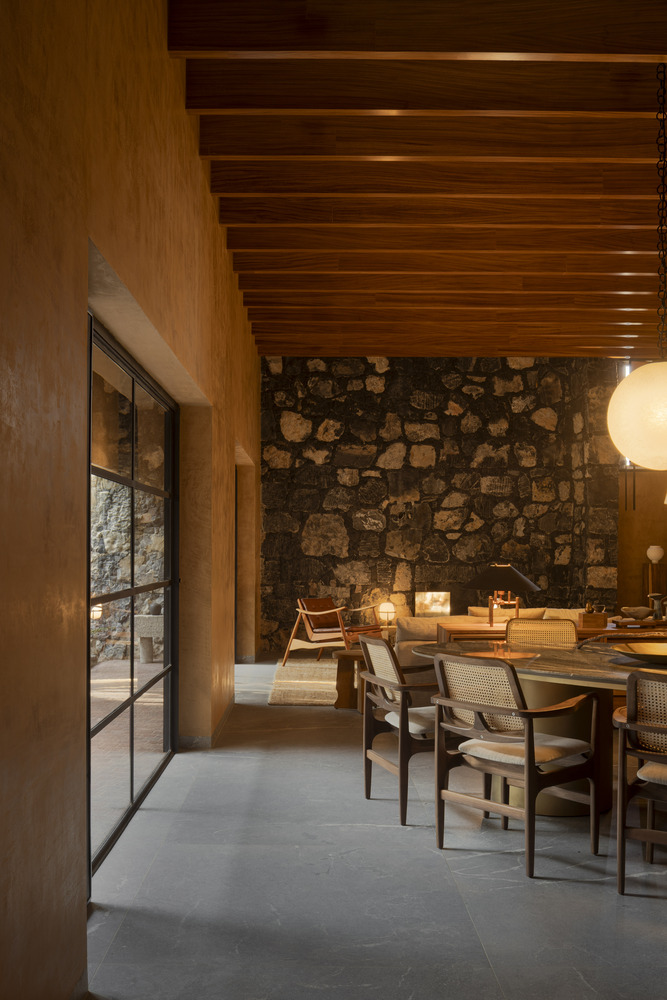
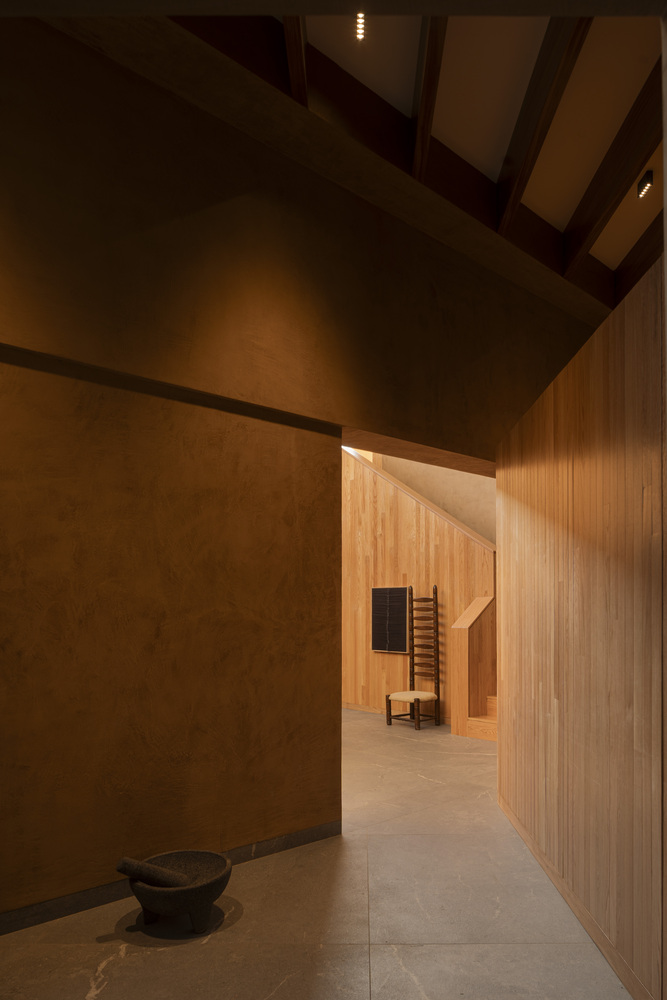
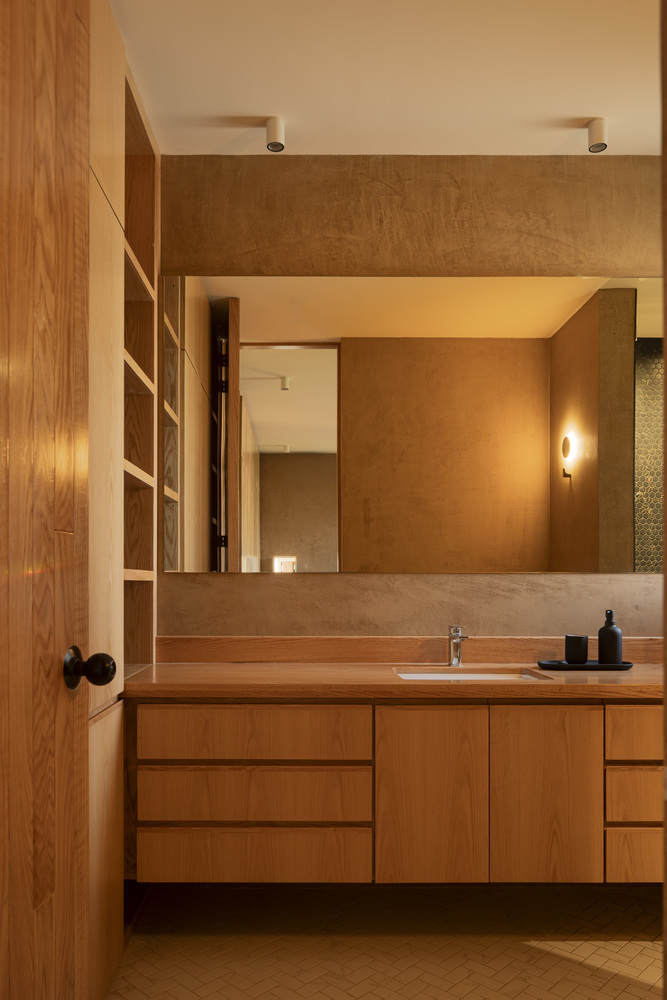
Inside, the earthen walls with a burnished finish and wooden beams refer to the traditional houses of the region and provide warmth and memory.
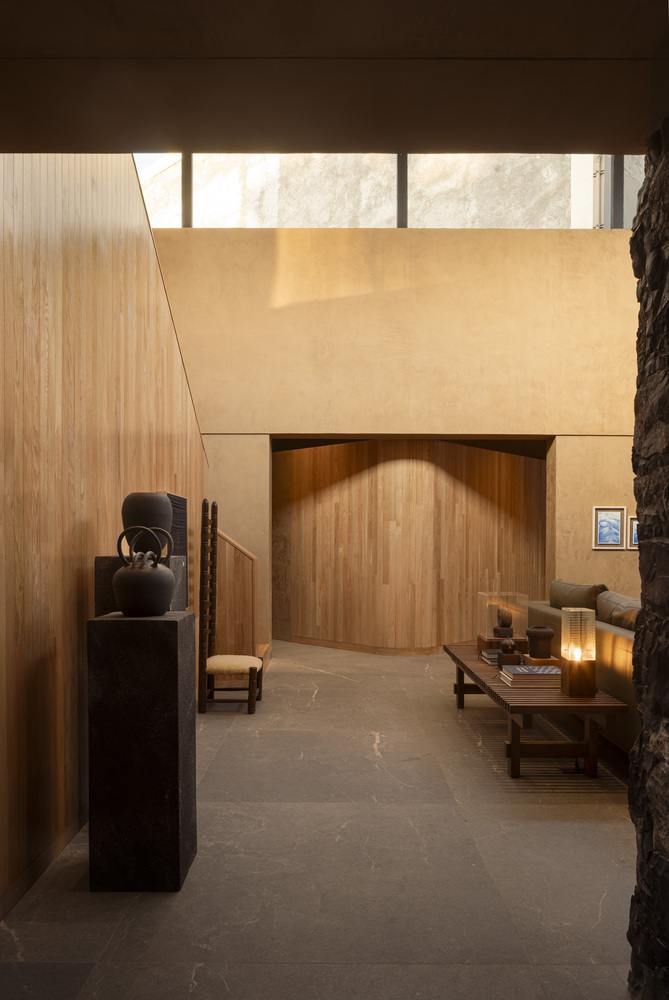
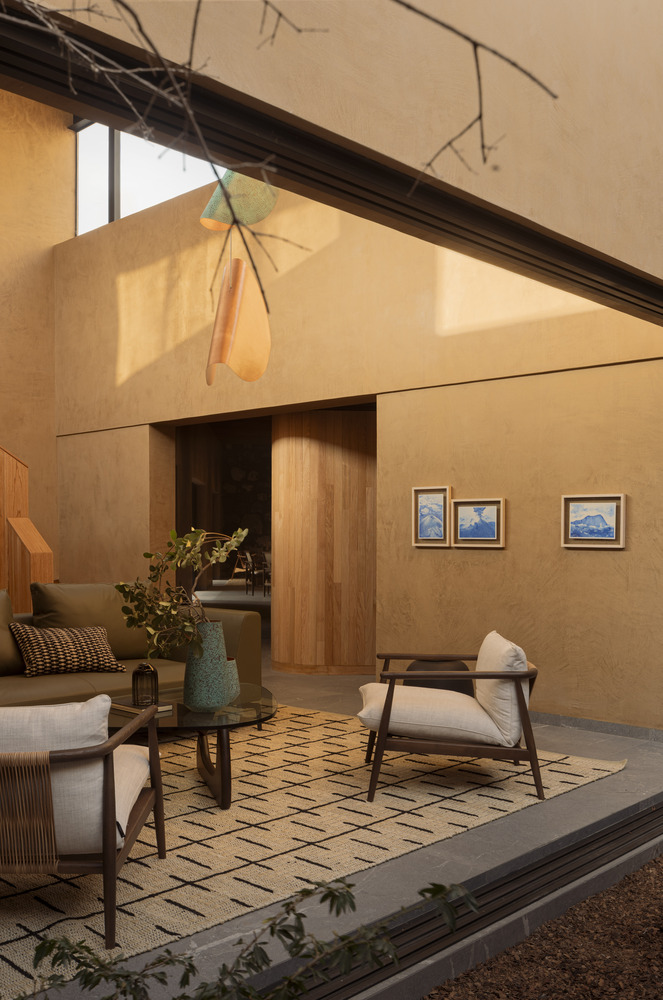
The light, both natural and artificial, has been designed to accompany the architecture: it follows its folds, elbows, and curves with a measured and precise presence.
The landscape grows from the architecture like an extended breath. Pirules, agaves, papelillos, and caliandras surround the house, swaying with the wind and filtering the light.
From the interior's dimness, the senses linger on them: the gentle movement of the leaves, the earthy aroma of the freshly watered garden, the murmur of its branches.
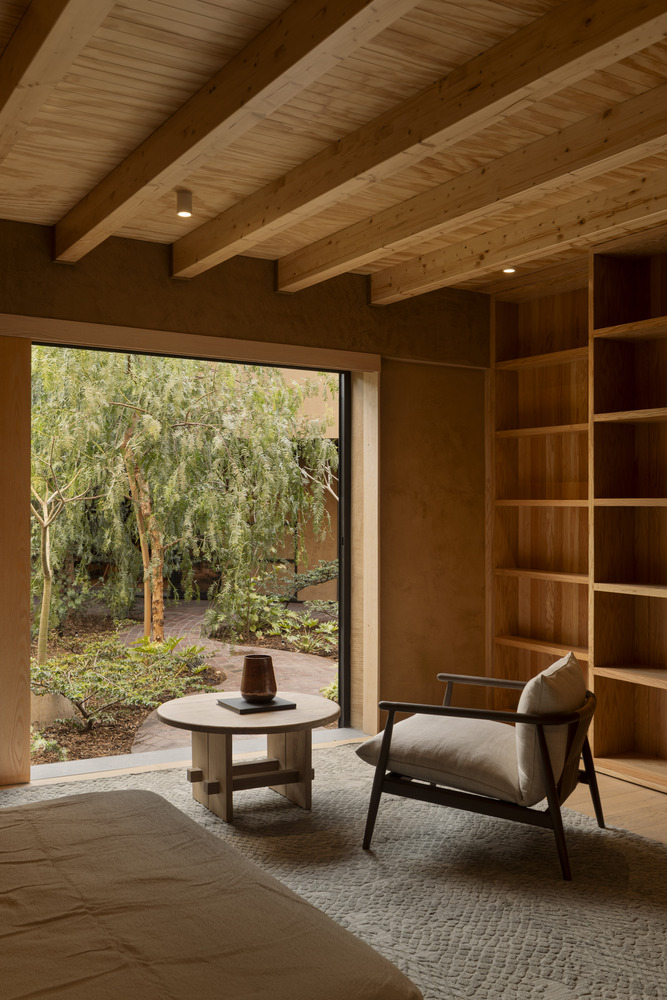
The landscape is not merely a contemplative element; it interacts with the built environment, illuminating, ventilating, and structuring the experience of living.
Through openings and transparencies, nature enters the domestic space, becoming a visual culmination of pathways and articulating transitions.
It is not an ornament but an essential complement that balances the tectonic with the organic, making the passage of the seasons visible and adding presence, movement, and life.
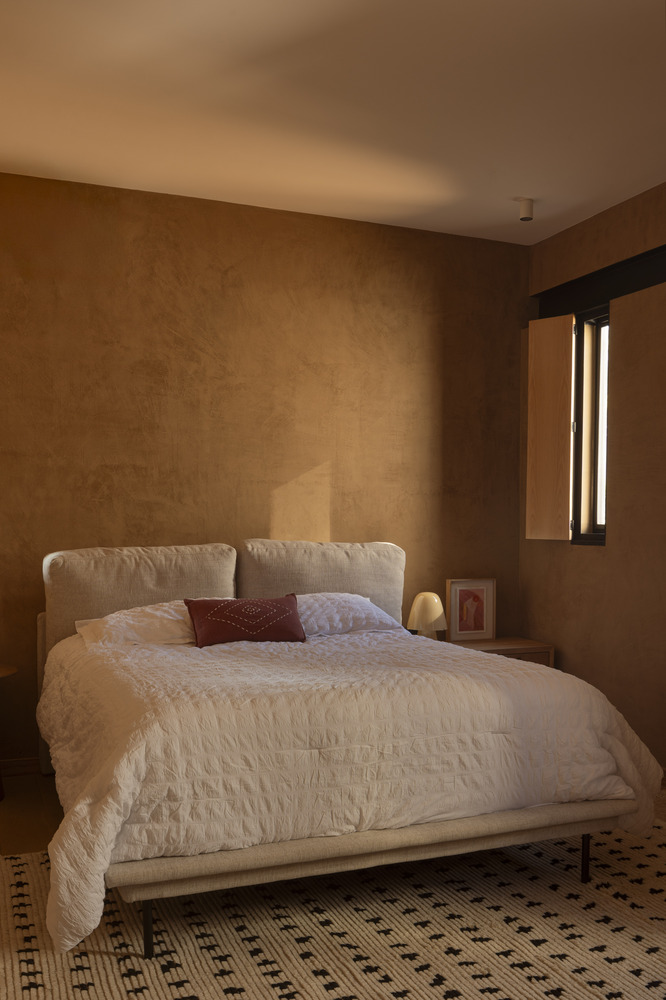
Thus, the landscape breathes, accompanies, and transforms the everyday experience of the house.