Arajara House
Lins Arquitetos Associados
ARCHITECTS
Lins Arquitetos Associados
LEAD ARCHITECT
George Lins
ARCHITECTS IN CHARGE
George Lins, Cintia Lins
PROJECT TEAM
Thais Menescal, Beatriz Bezerra
ENGINEERING
Paulo Miranda
LANDSCAPE ARCHITECTS
Lins Arquitetos
CLIENTS
VT
PHOTOGRAPHS
Joana França
AREA
350 m²
YEAR
2024
LOCATION
Arajara, Brazil
CATEGORY
Houses
English description provided by the architects.
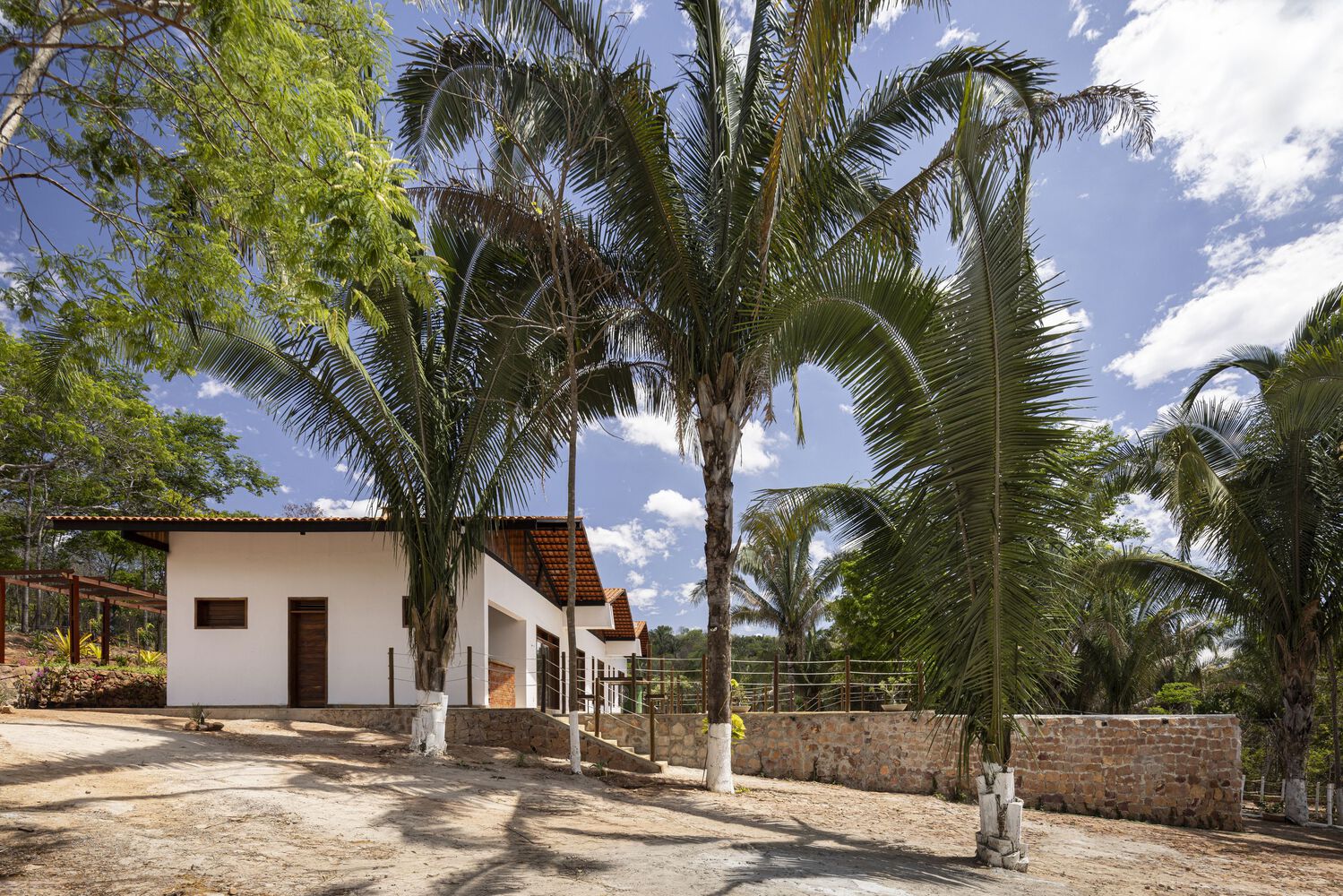
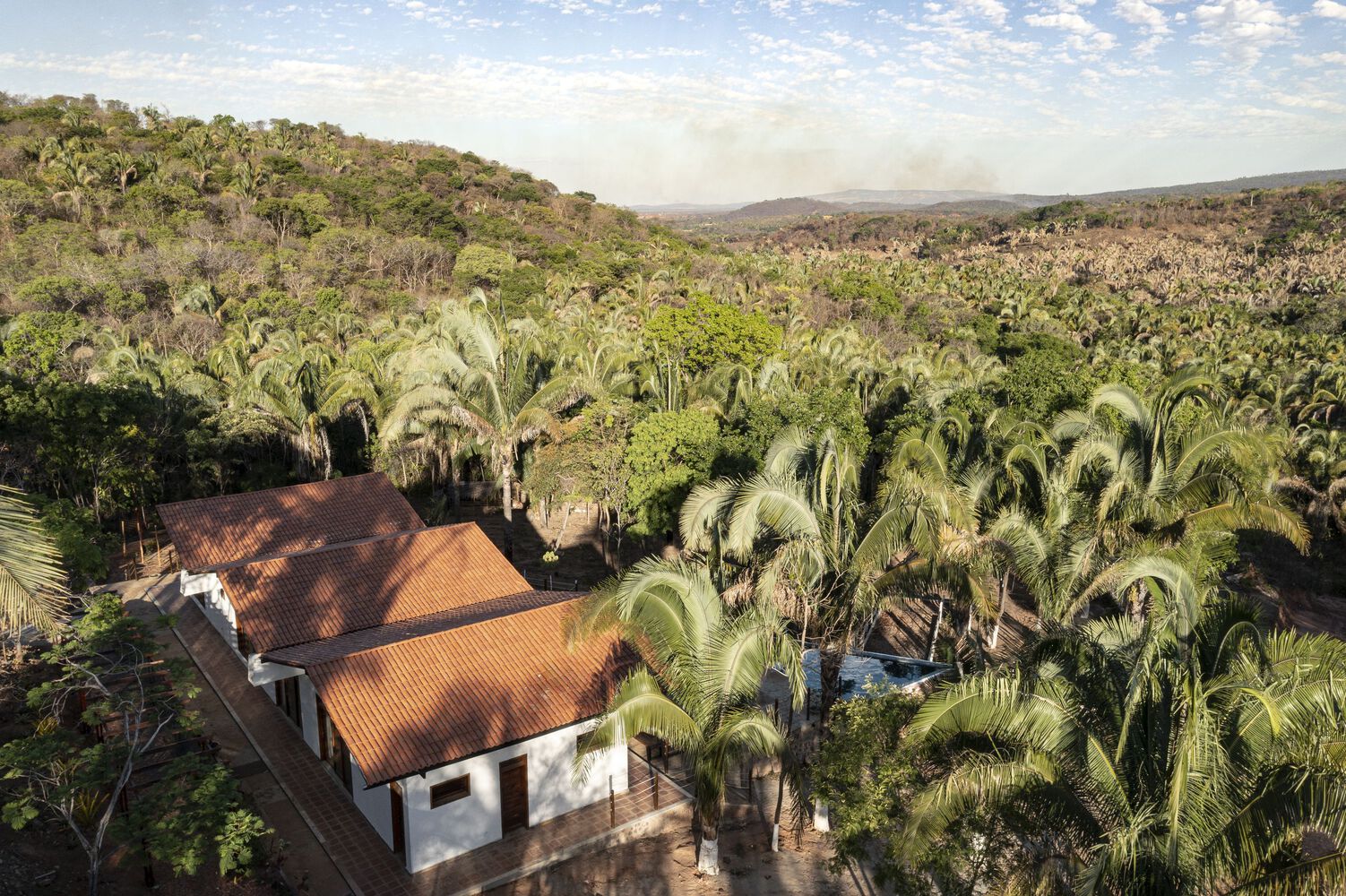
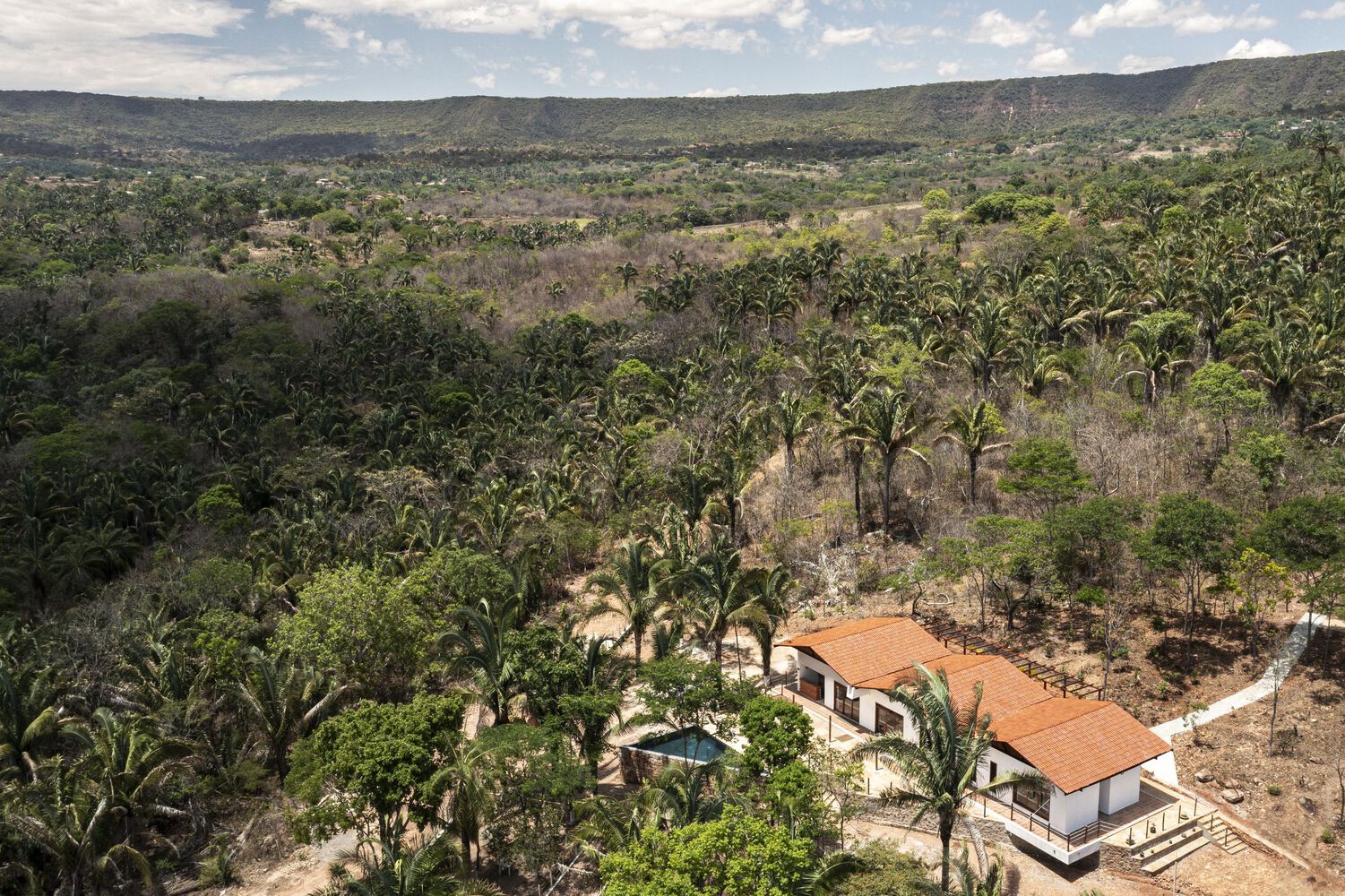
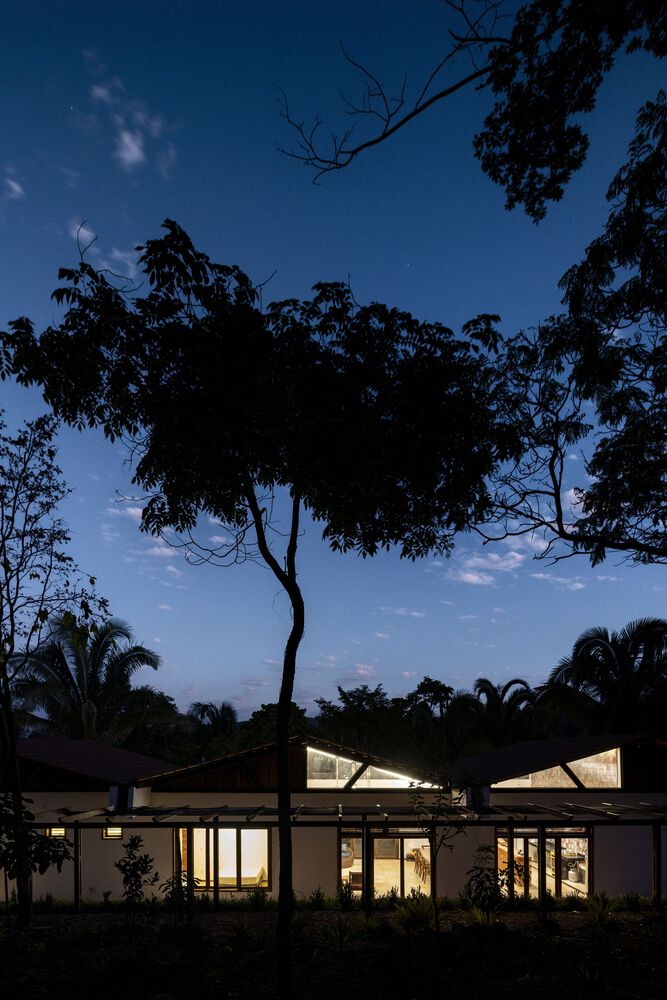
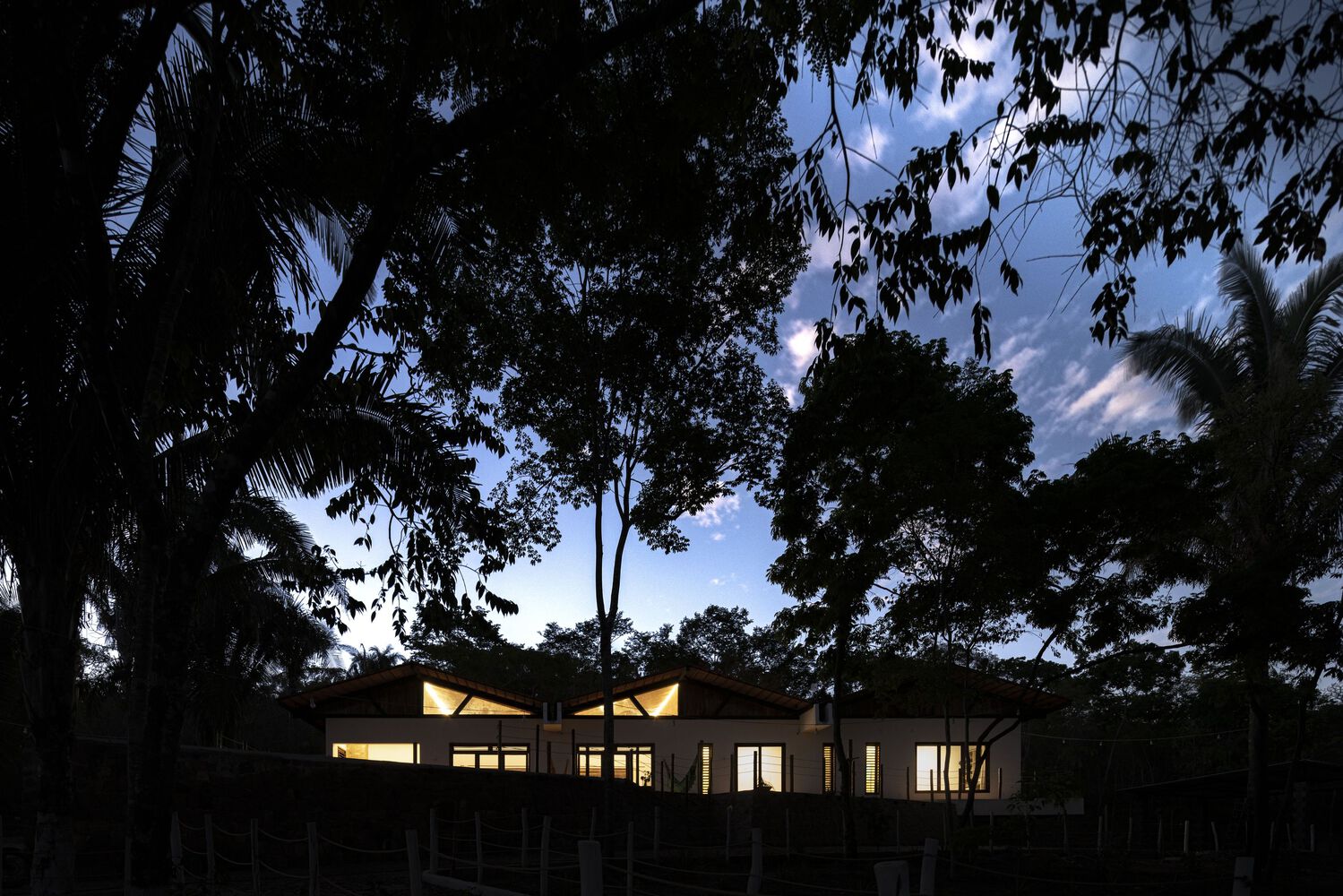
Located in the Arajara district of Barbalha, in the Cariri region of Ceará, the Arajara Residence sensitively integrates into the natural context of the Chapada do Araripe — an area known for its lush vegetation, mild climate, and historical vocation as a summer destination.
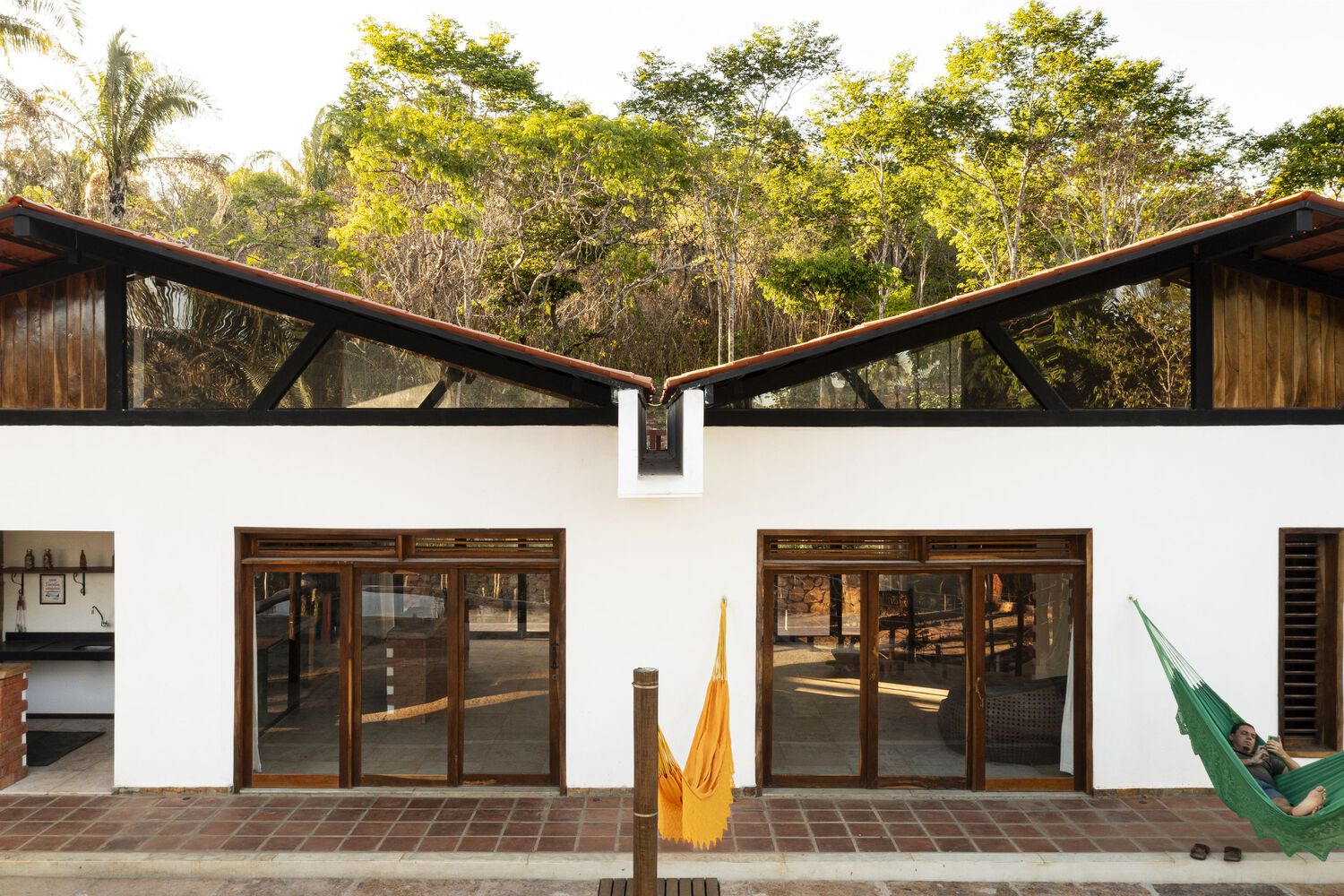
The project values the pre-existing conditions of the territory, both natural and cultural, resulting in architecture that combines constructive simplicity, environmental comfort, and the appreciation of local materials.
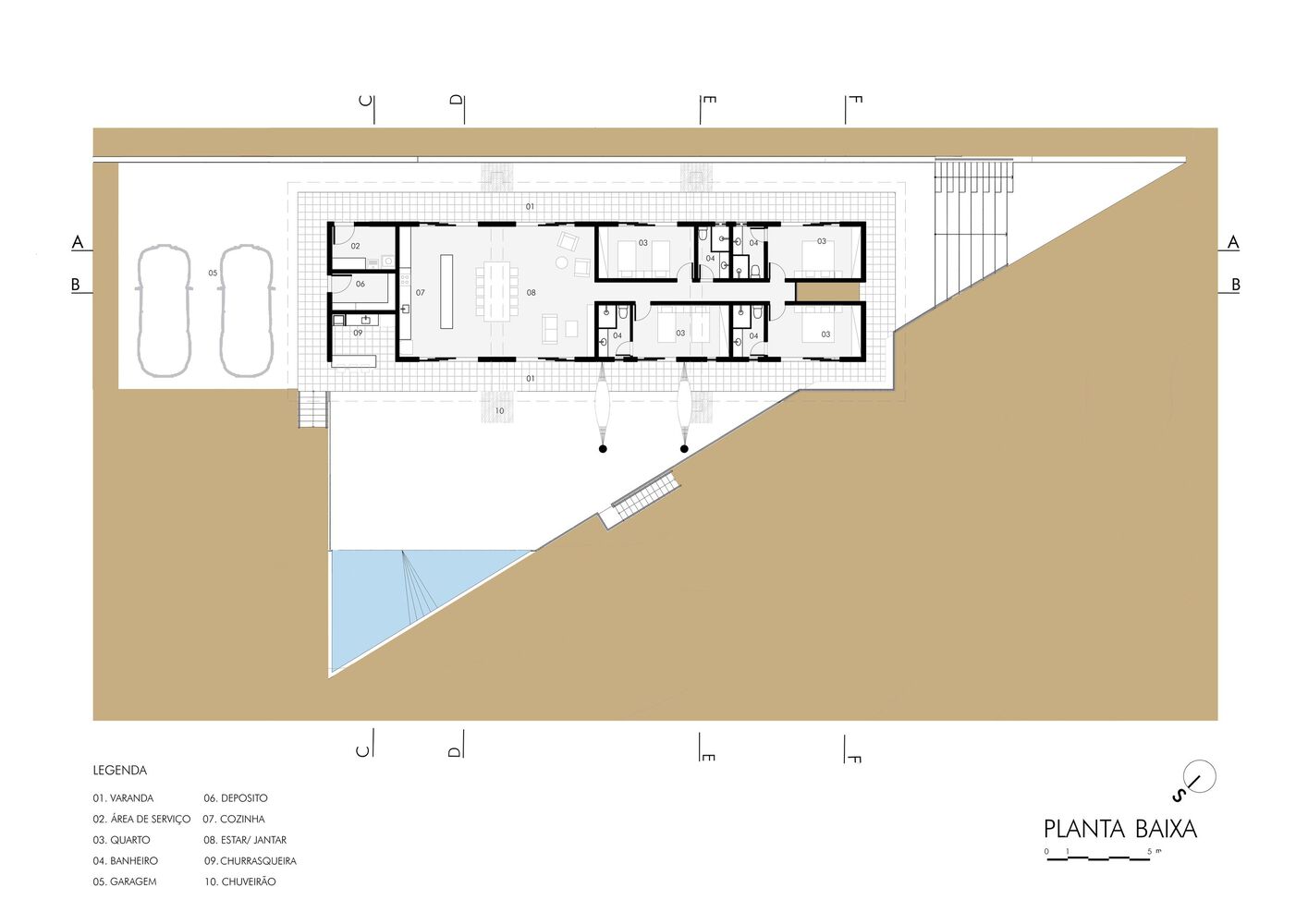
With 350 m² of built area, the residence program includes four bedrooms (two of which are suites), an integrated living room and kitchen, a storage room, and a social area oriented towards leisure, featuring a deck and a pool.
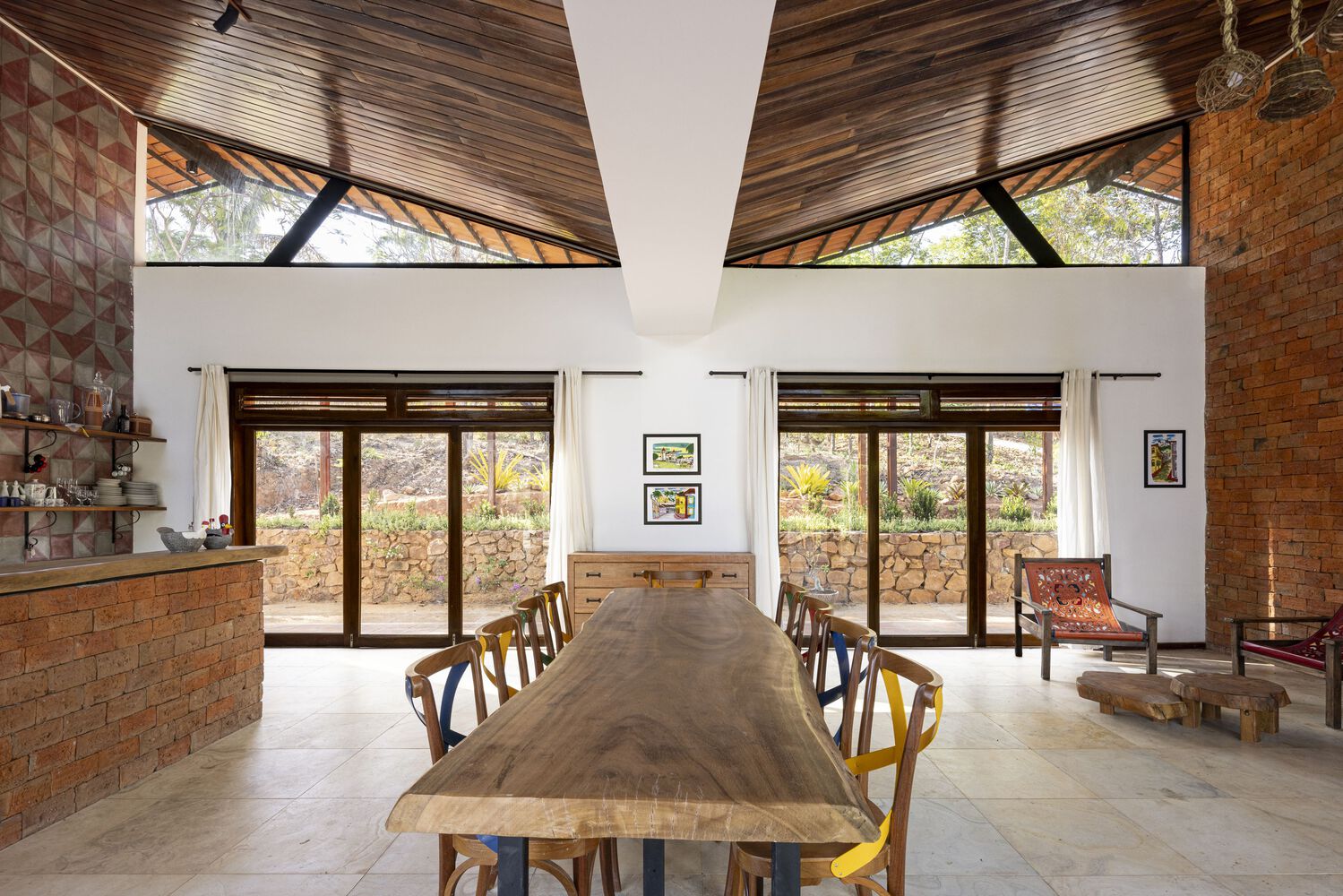
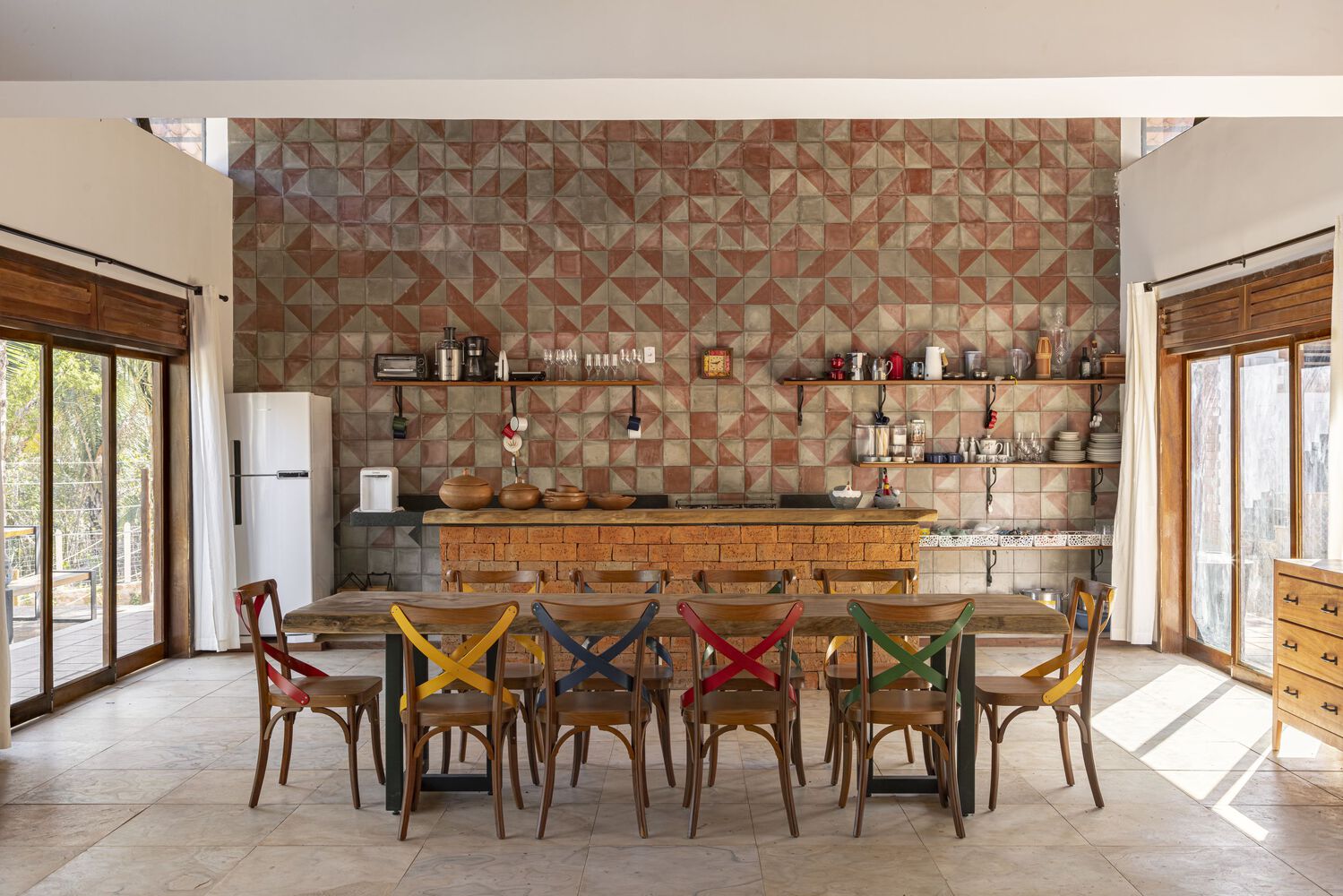
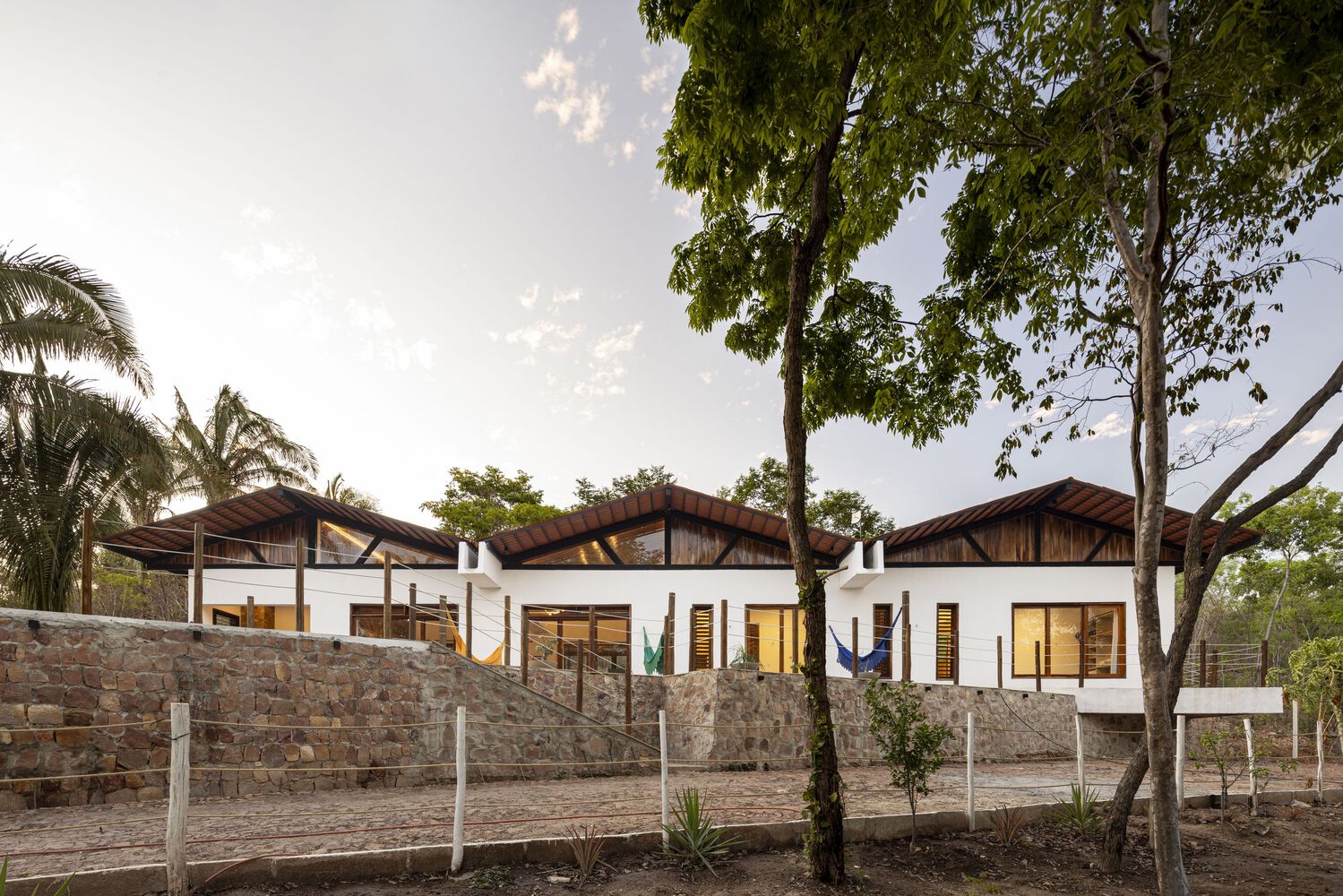
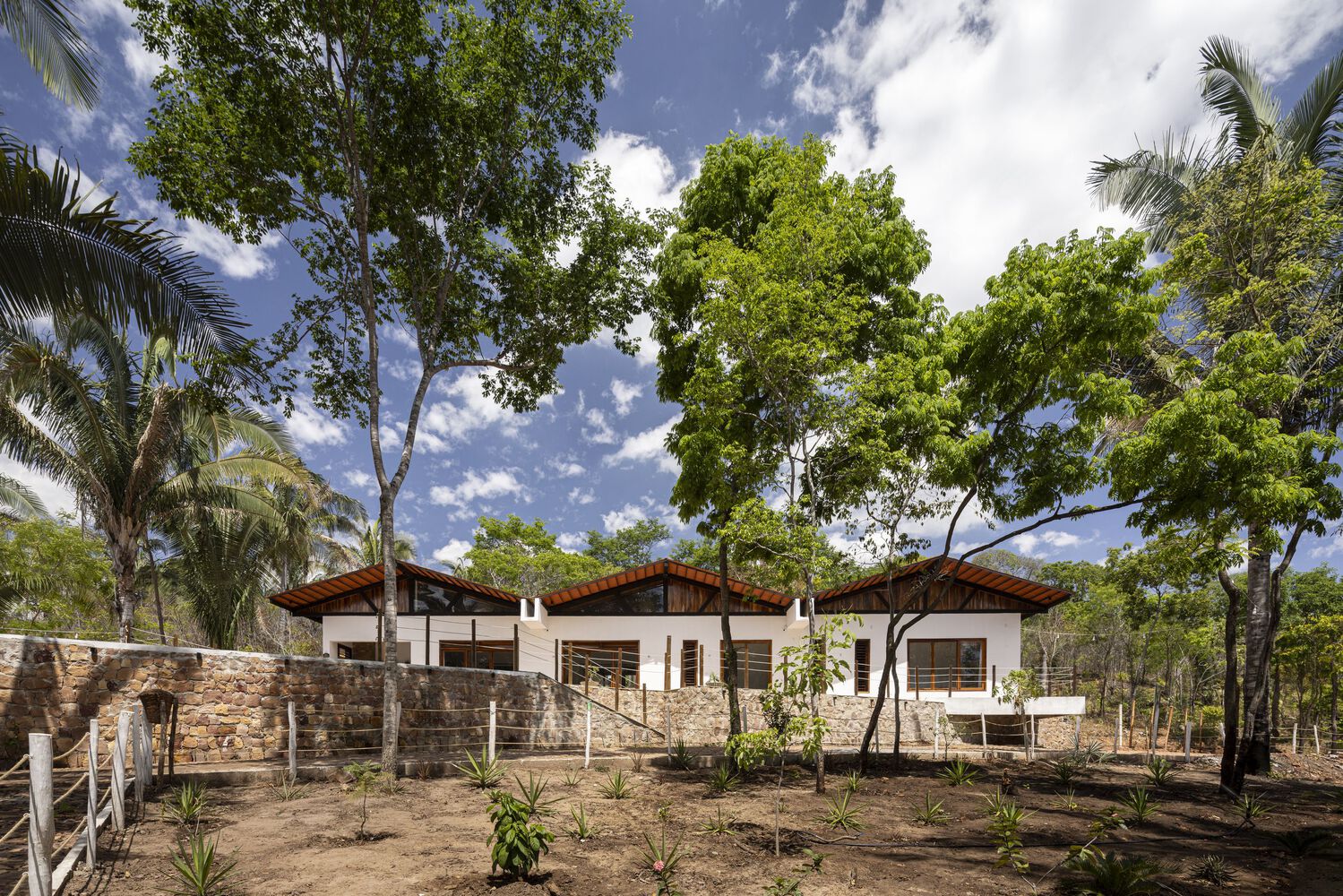
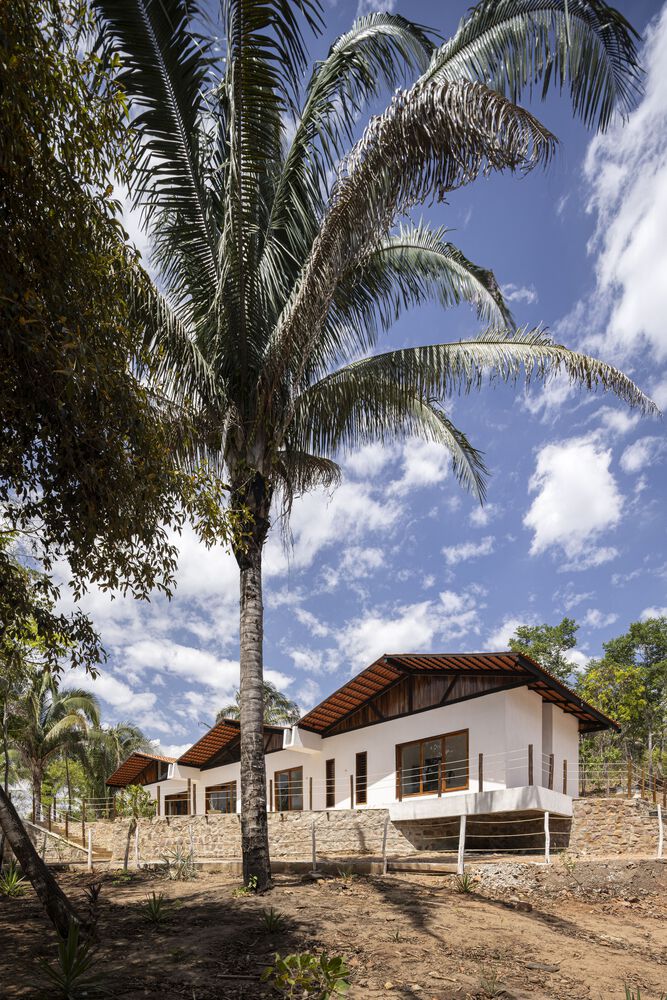
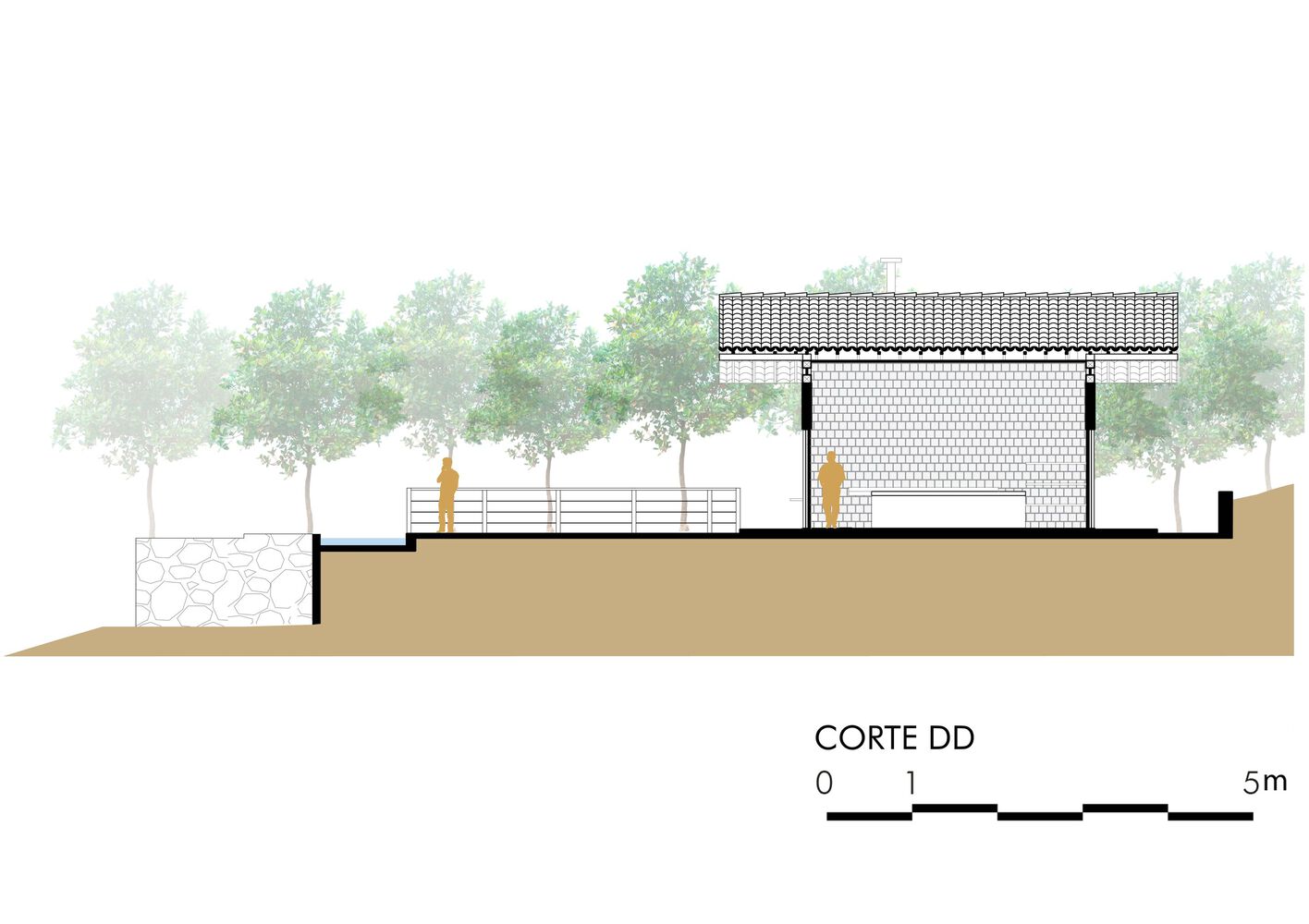
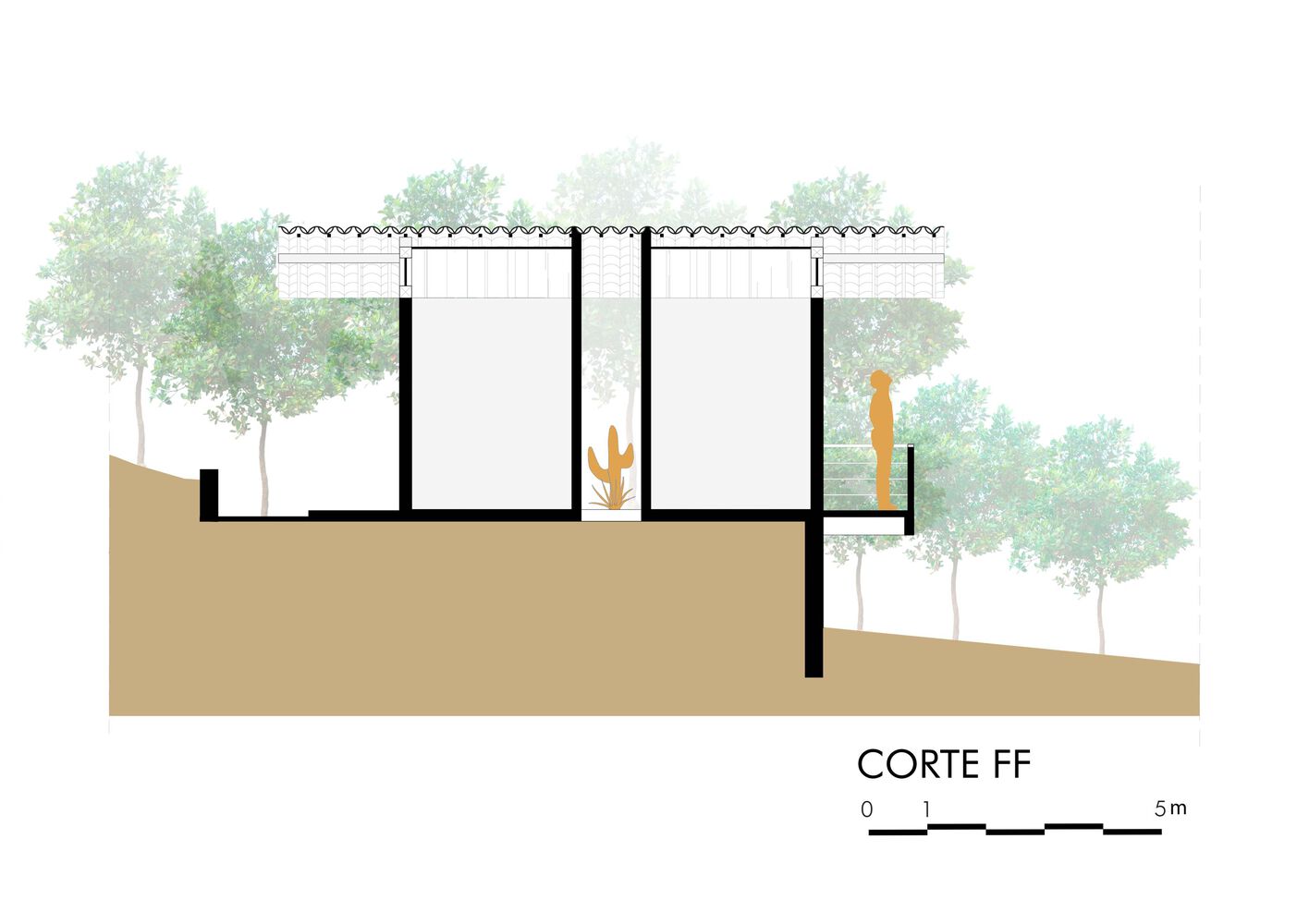
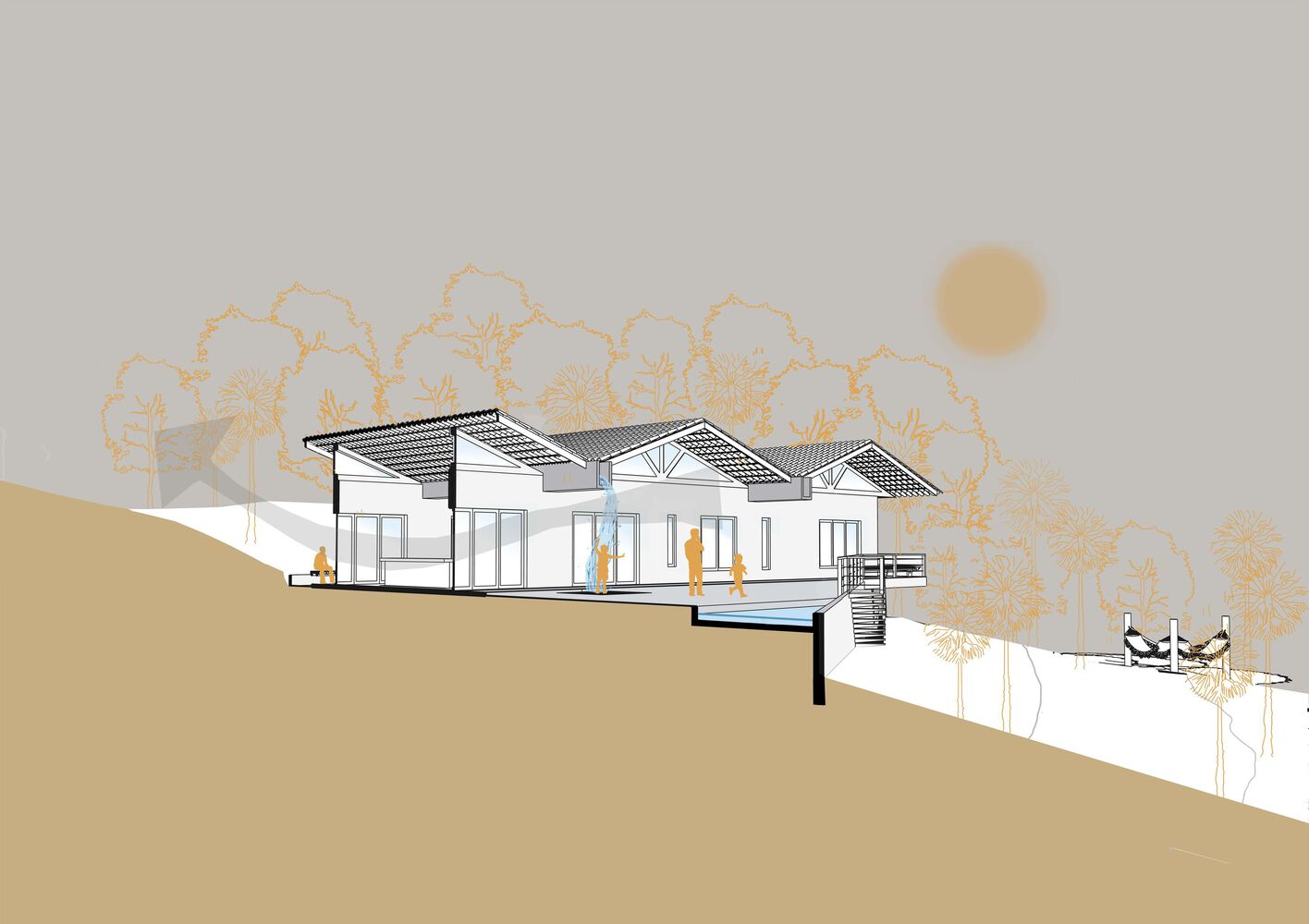
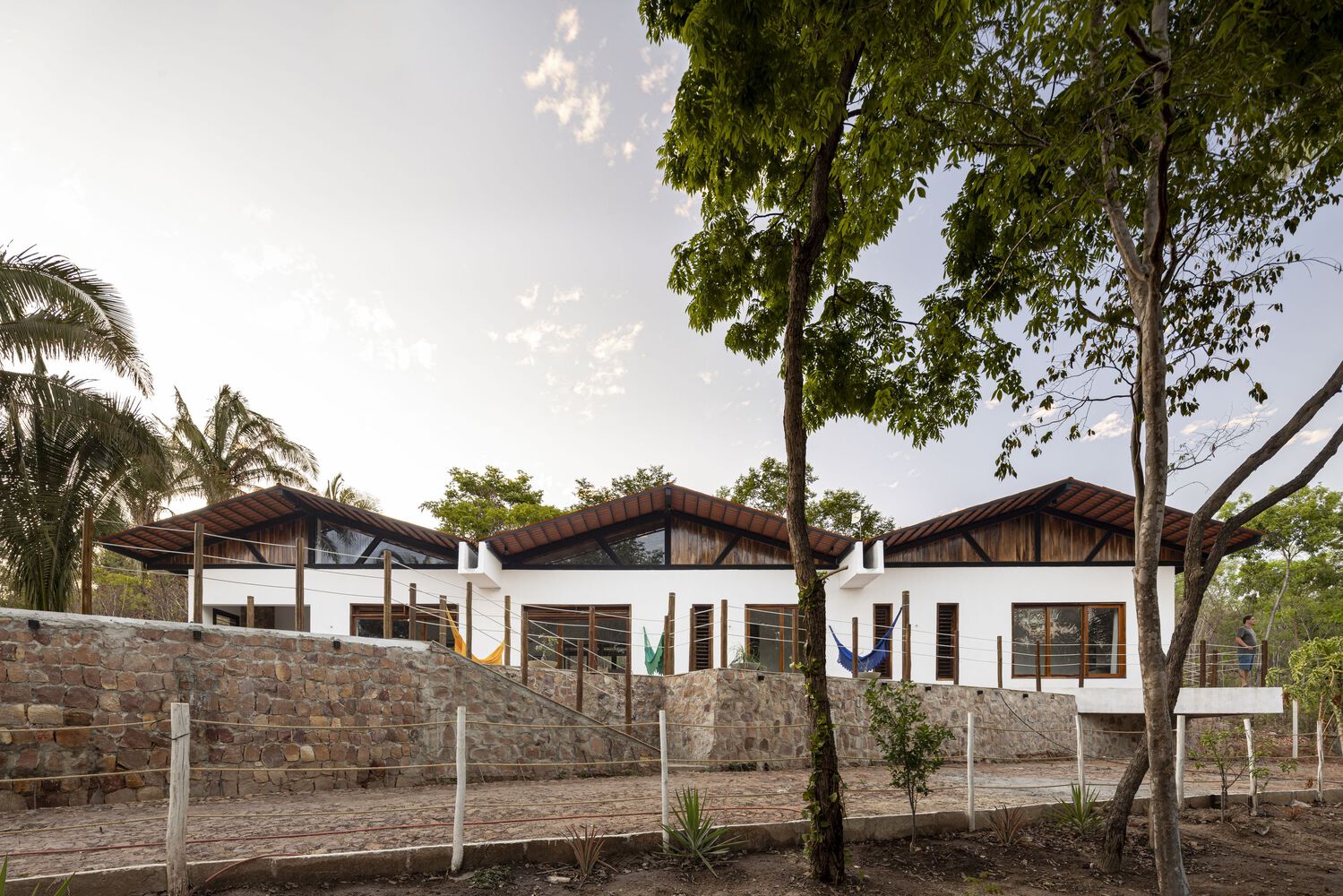
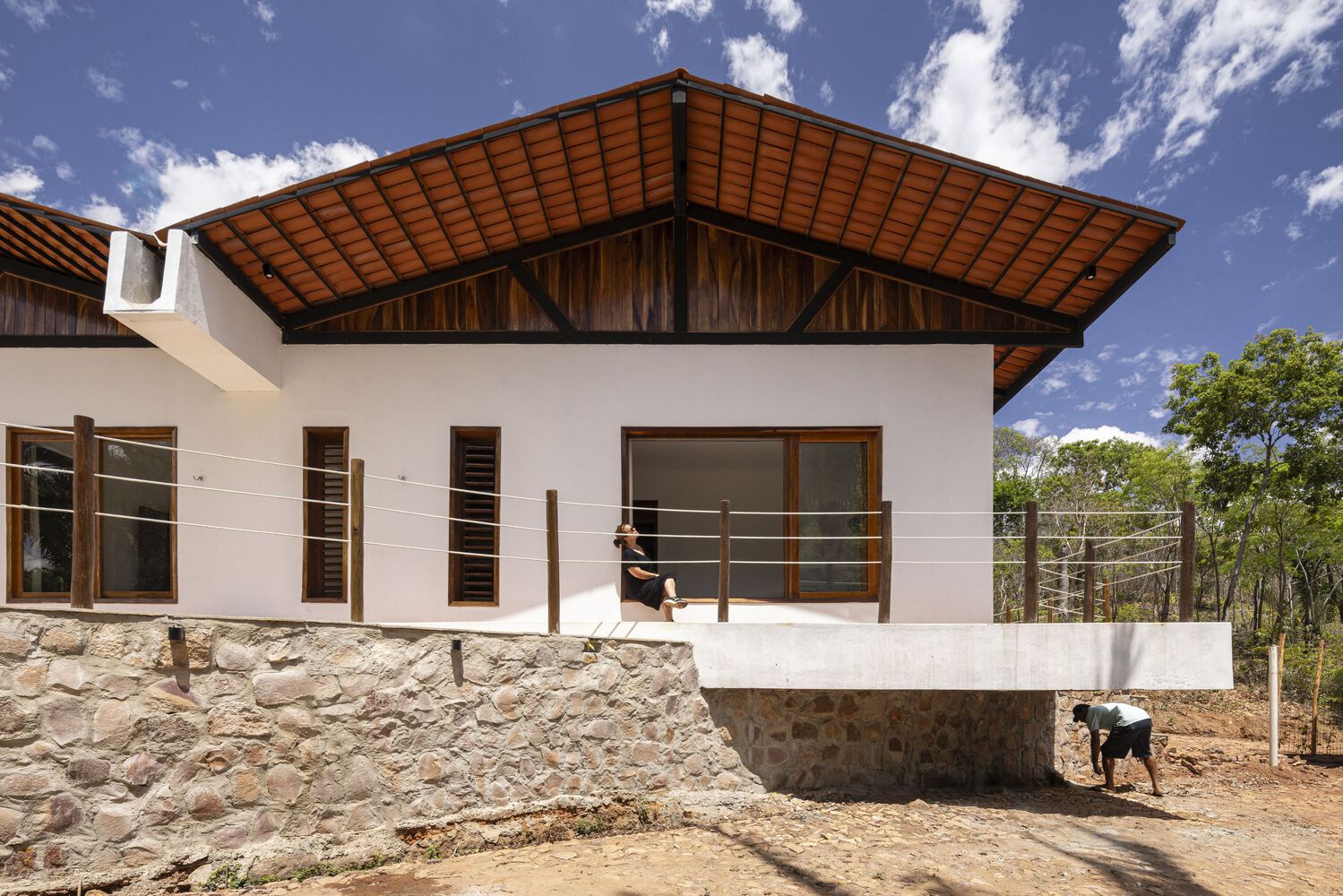
The layout sought to respect the rugged topography of the land, addressed with retaining walls made of traditional Barbalha stone — a material sourced from the site itself, reinforcing the sustainable character of the project.
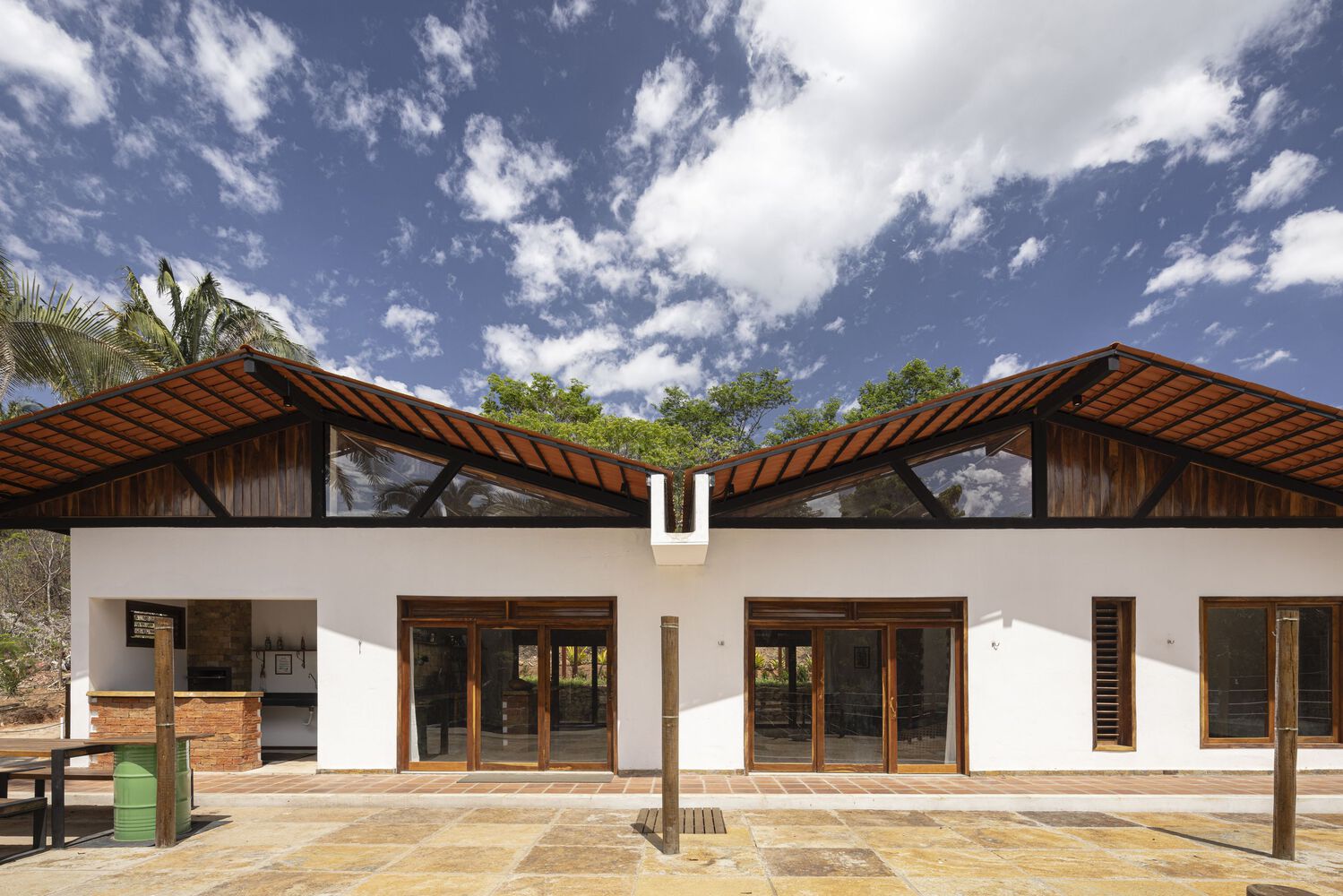
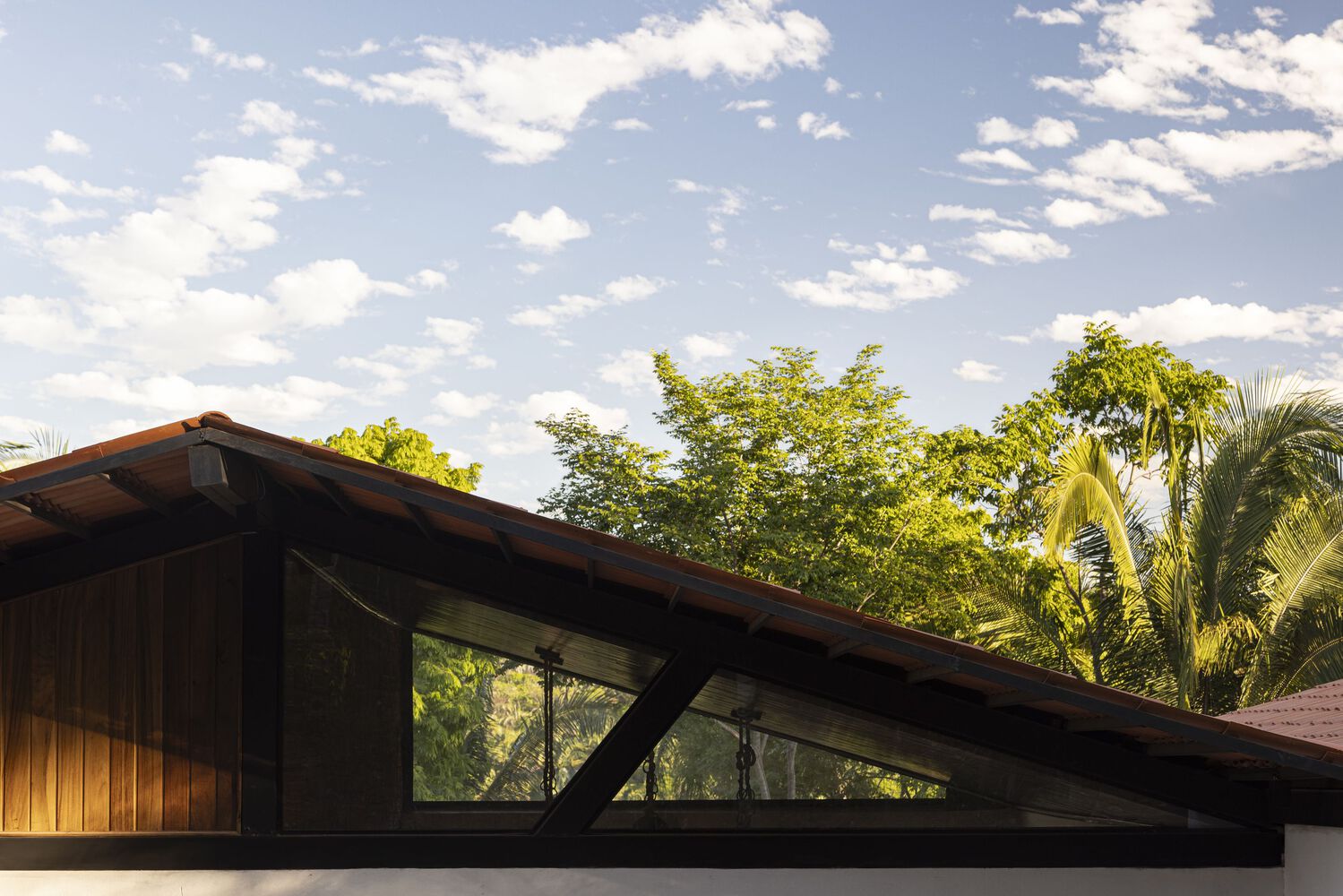
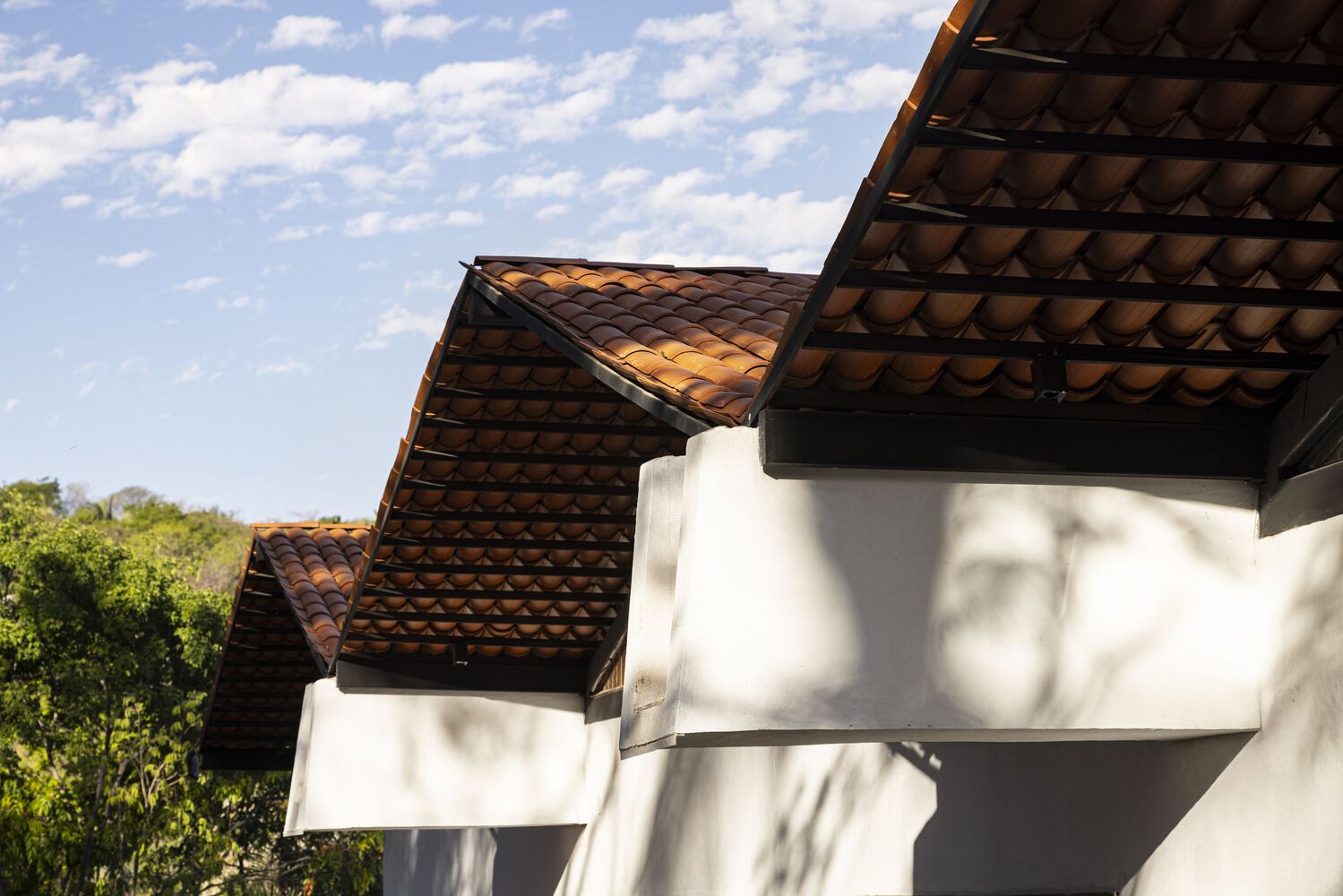
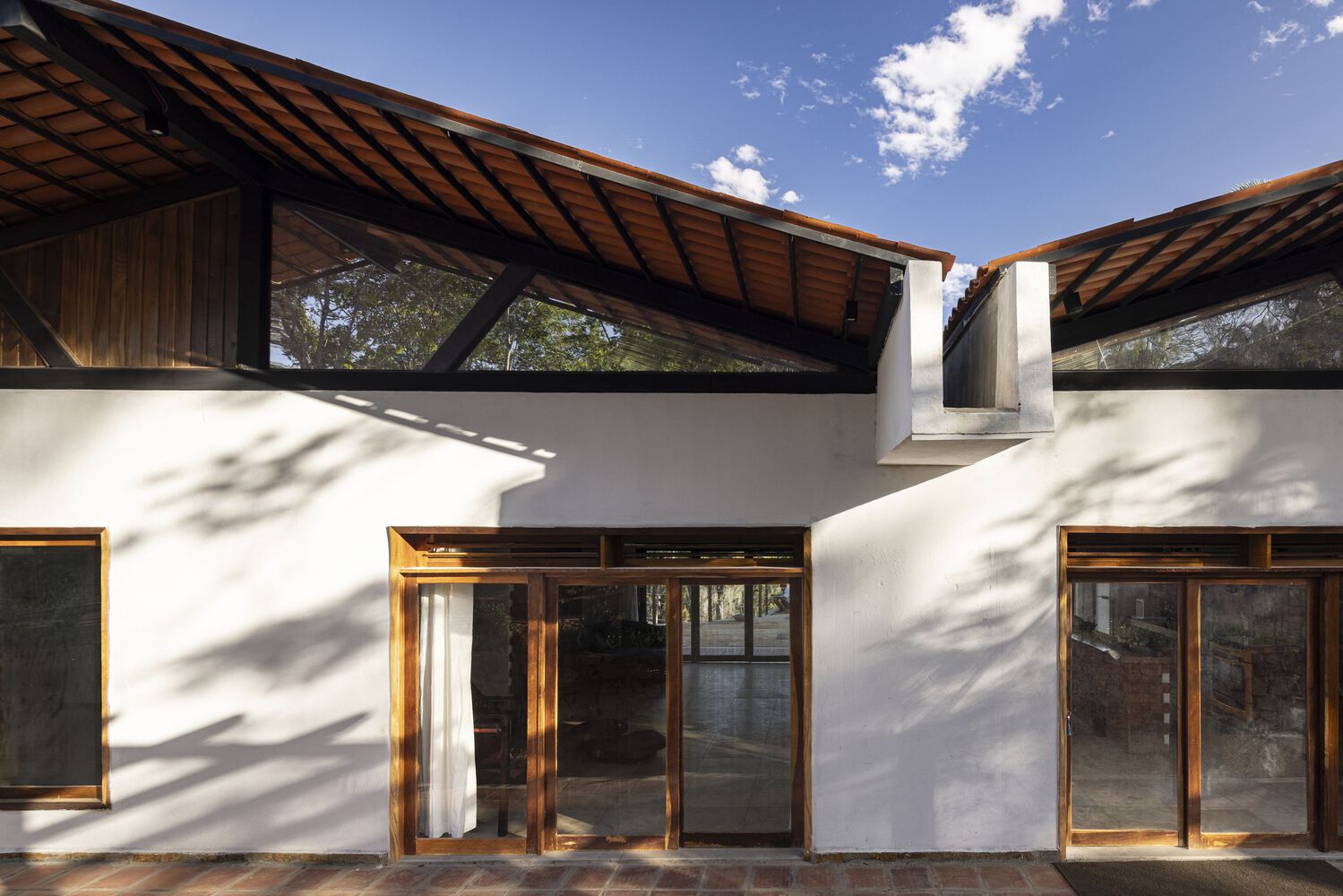
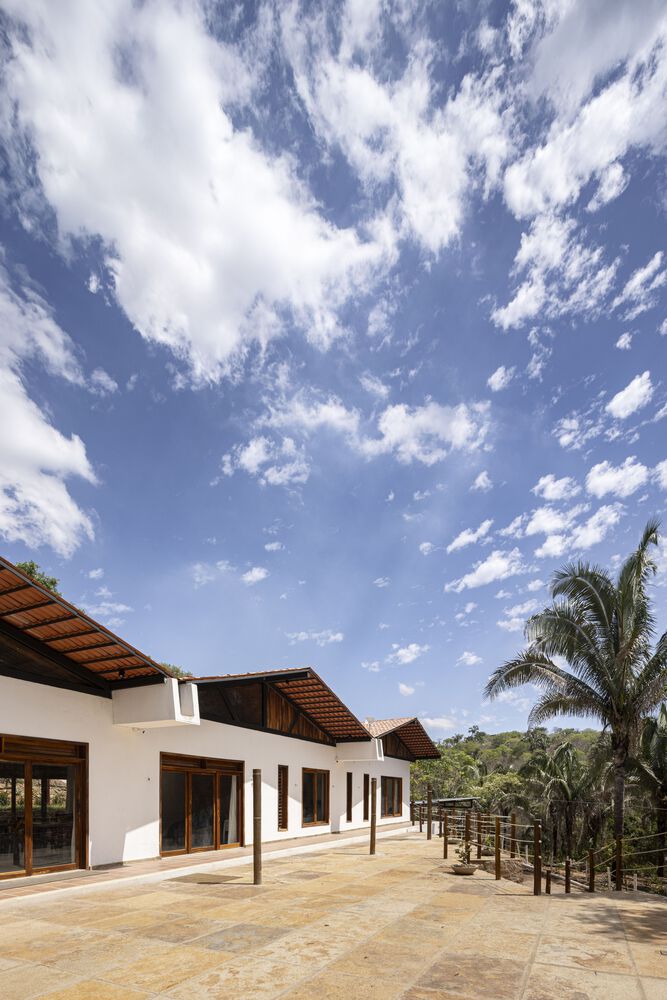
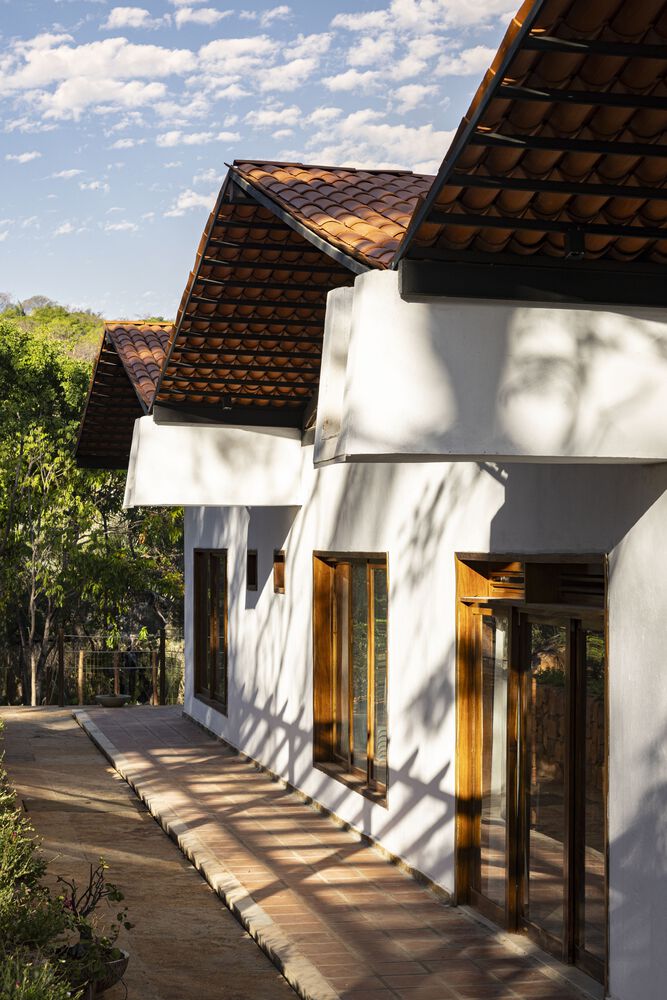
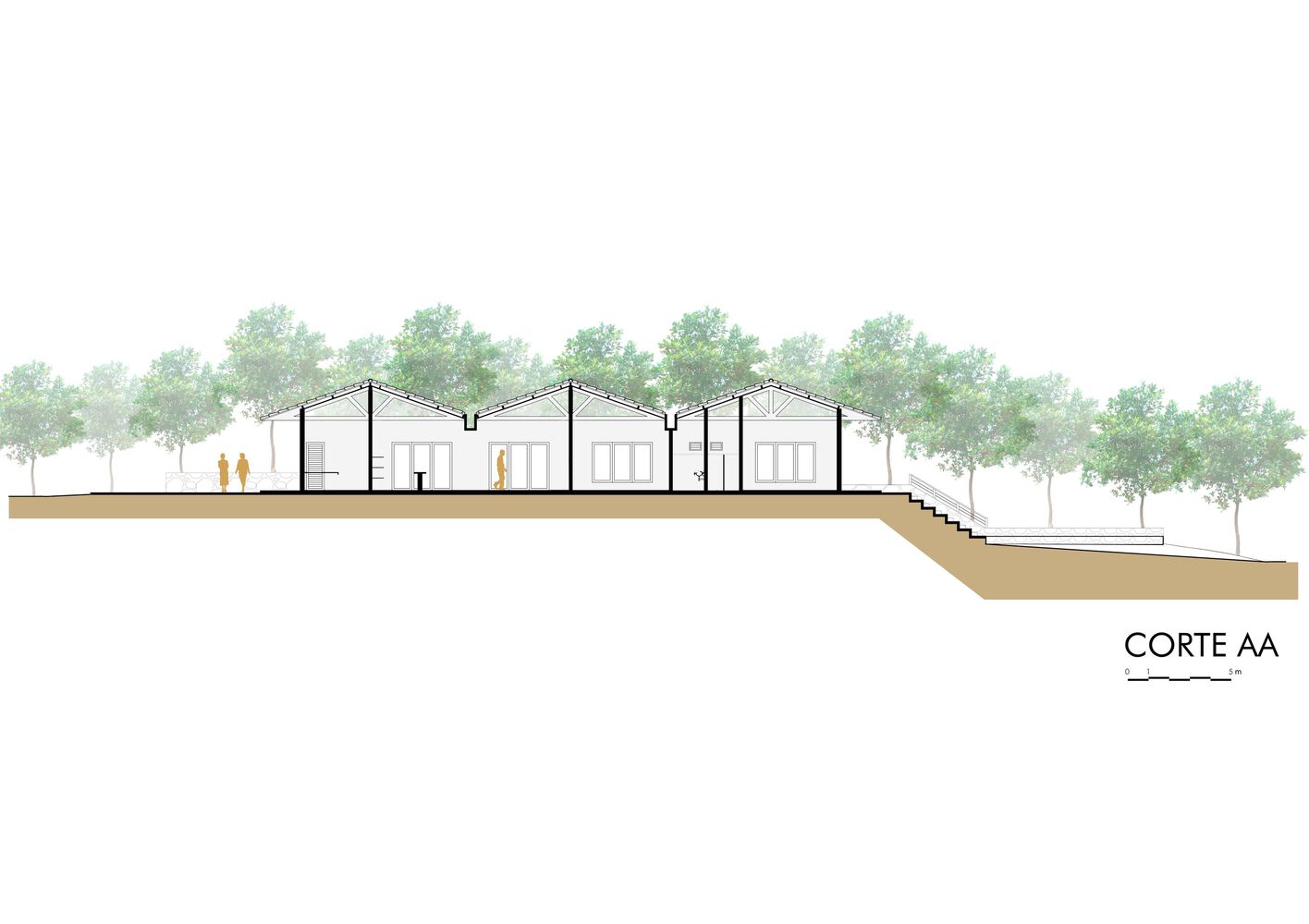
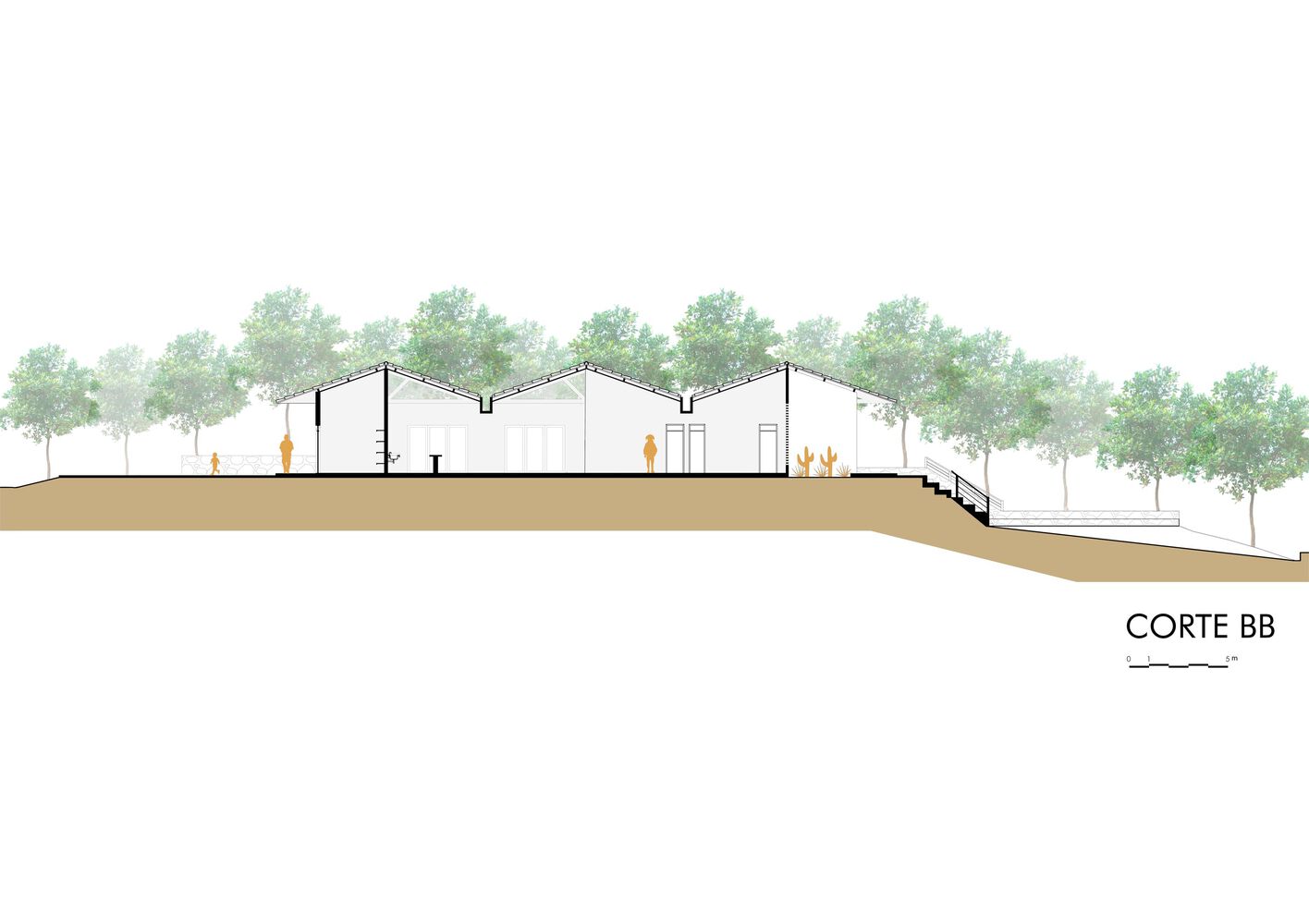
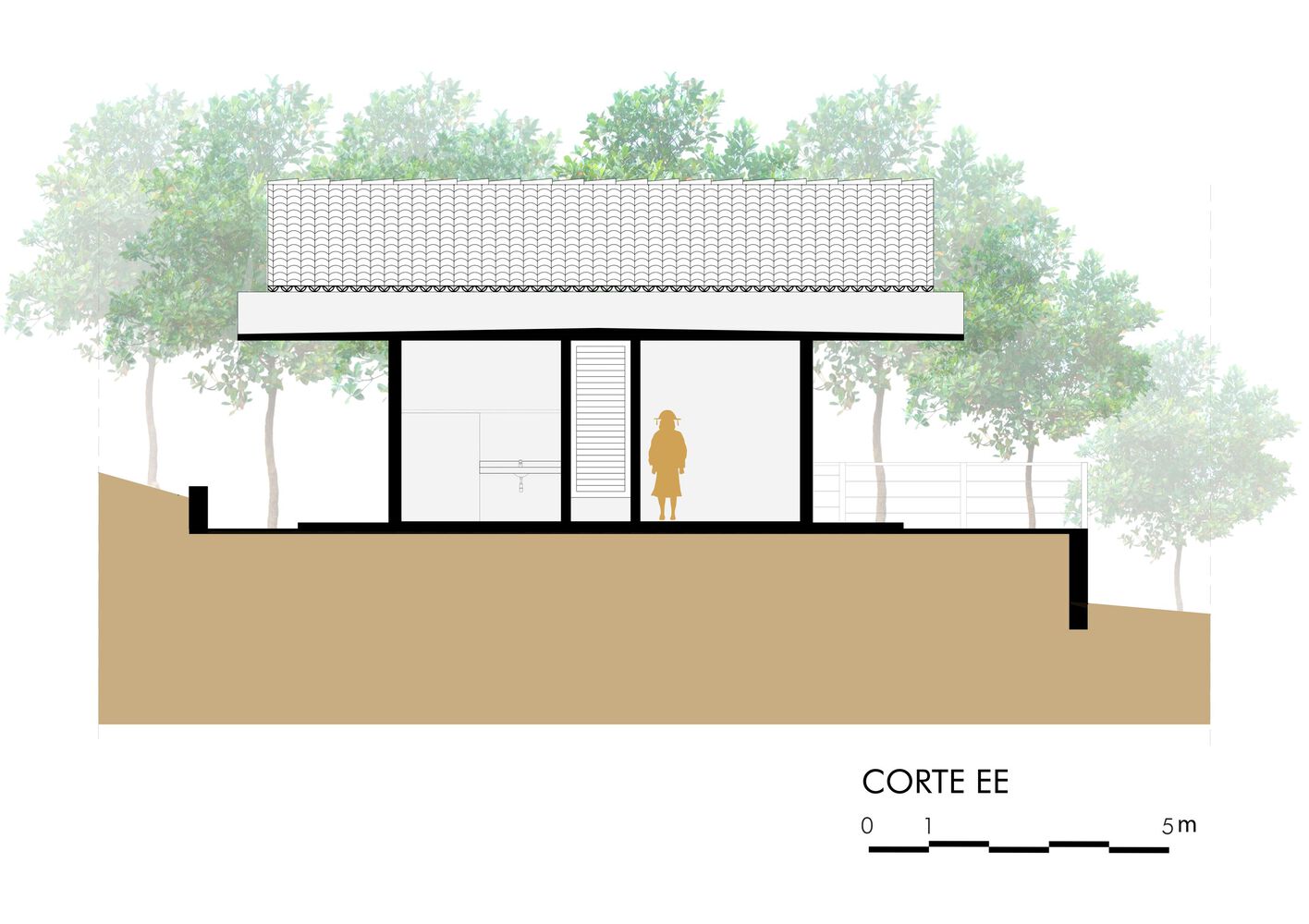
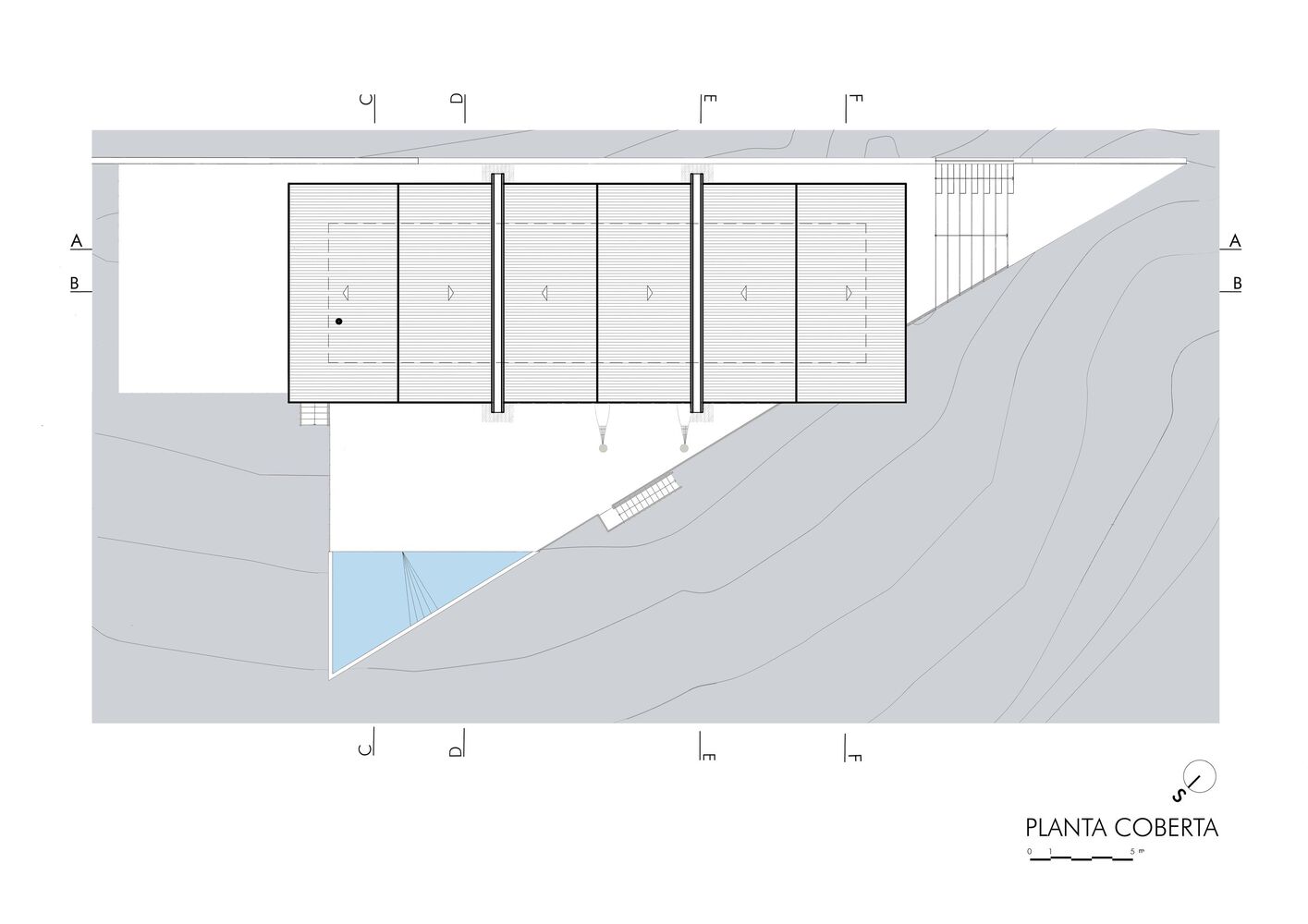
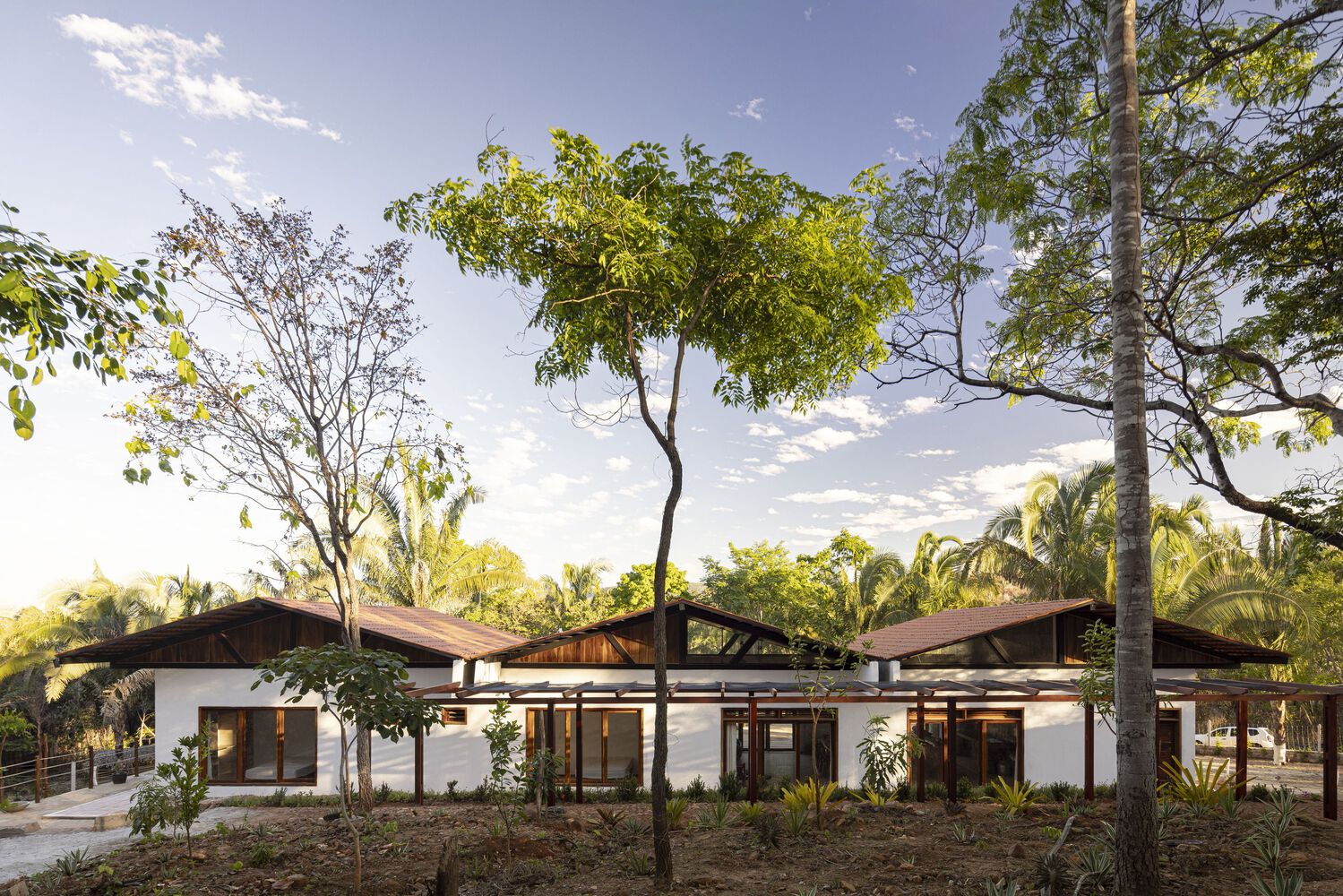
The architectural design consists of a pavilion structure, marked by three juxtaposed volumes with gabled roofs covered with colonial tiles.
Rainwater is channeled through central beam gutters, which during heavy rain transform into generous water spouts — a playful element that rekindles the affectionate relationship of the house with the local climate and provides moments of spontaneous enjoyment.
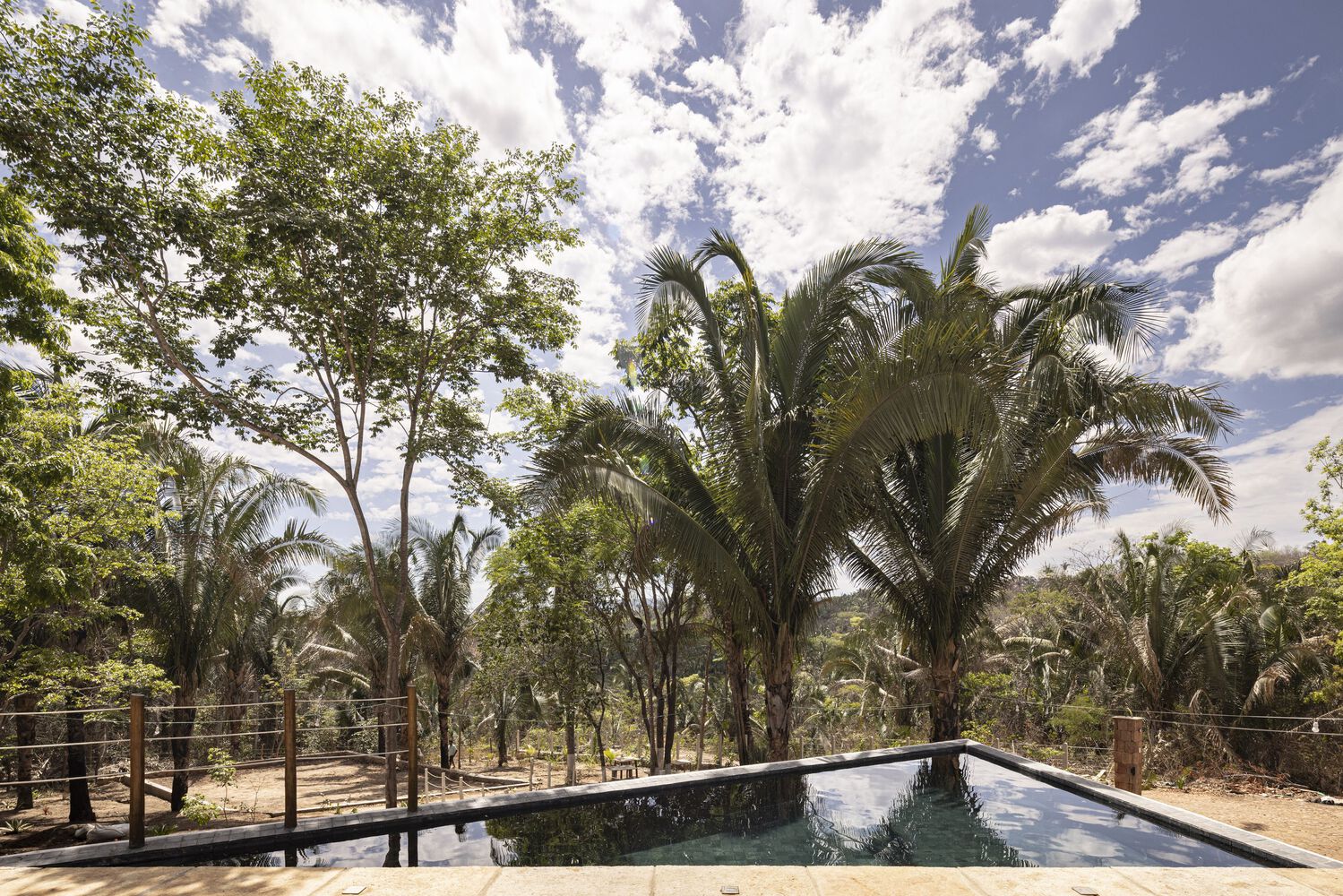
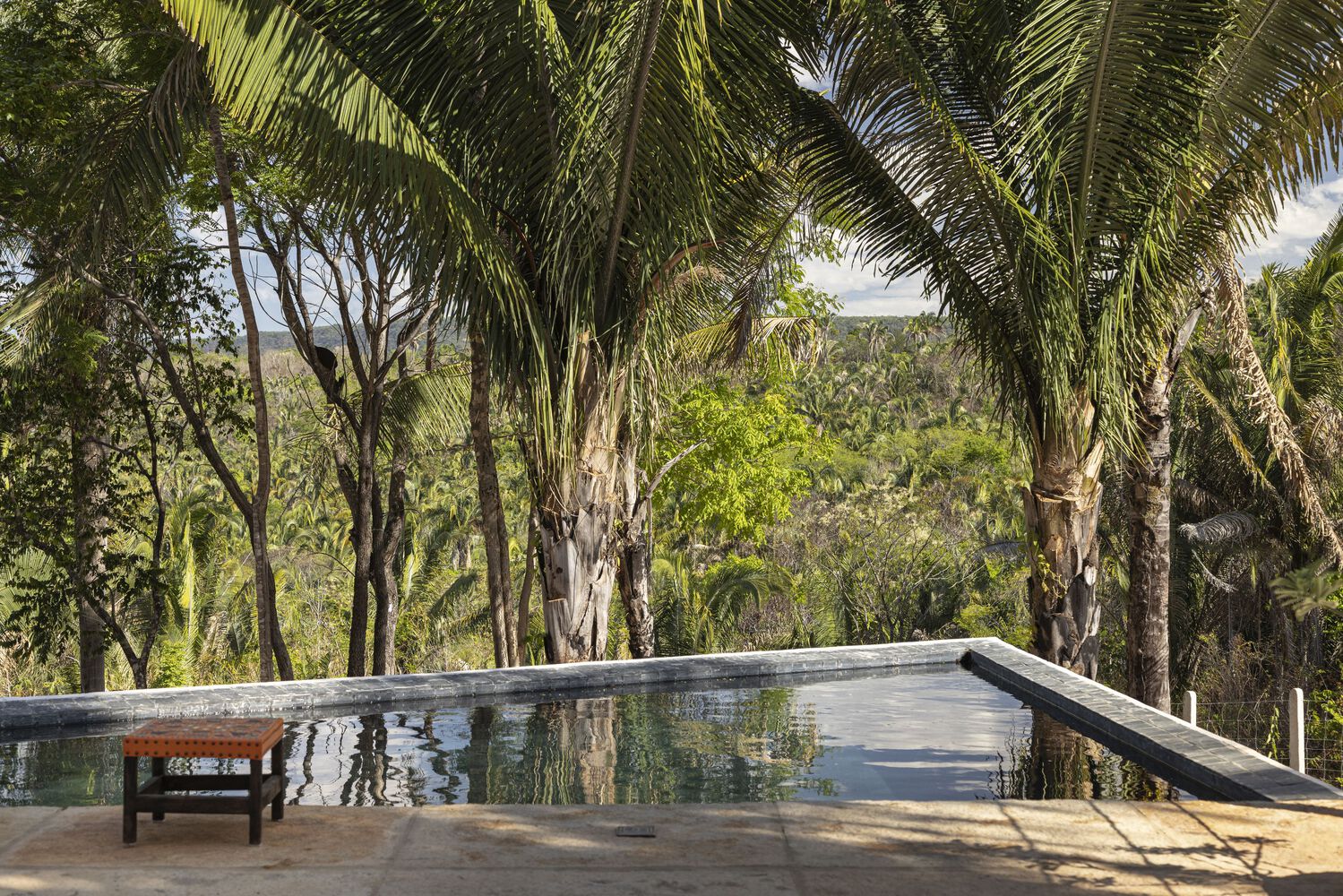
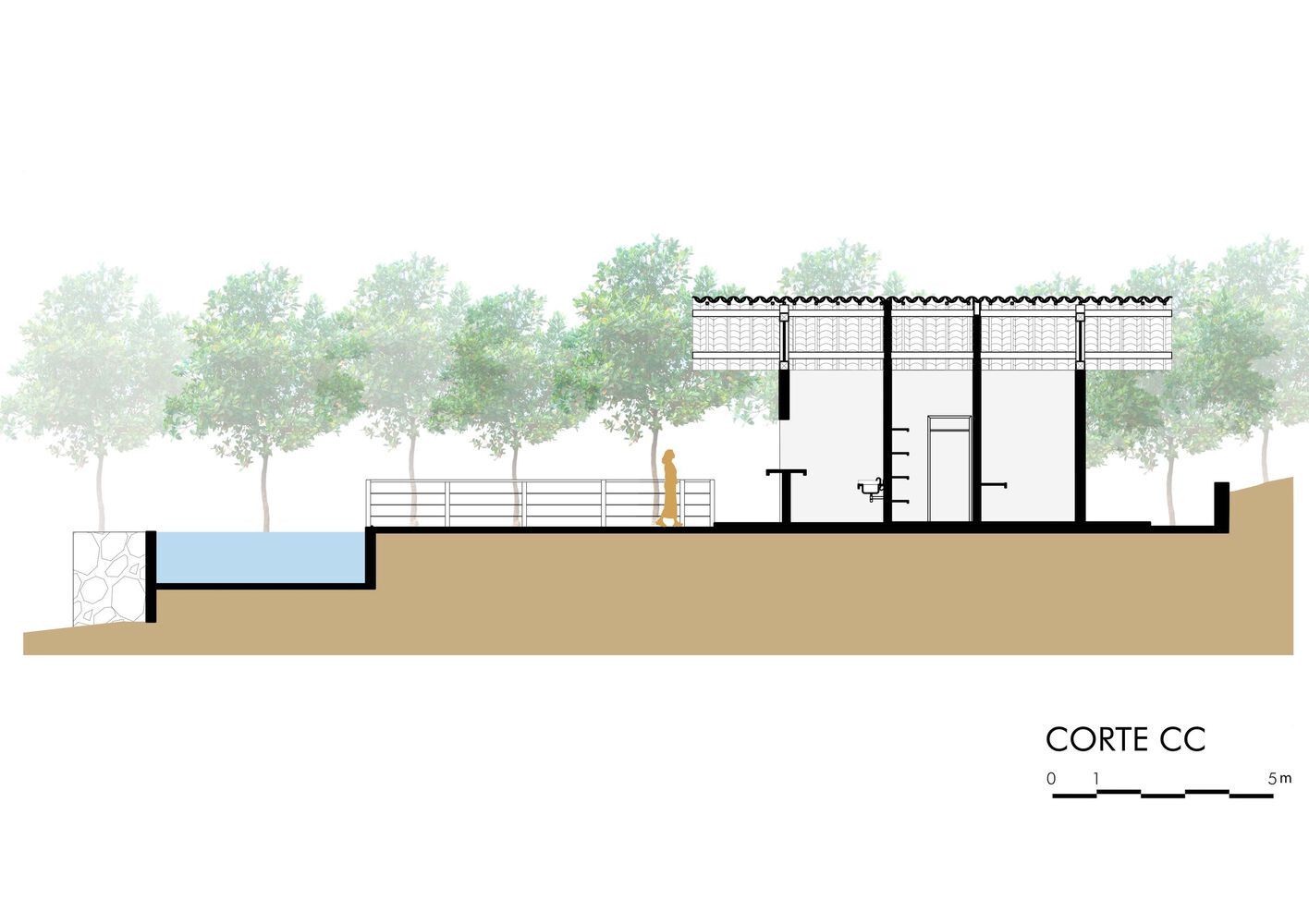
The infinity-edge pool, with a triangular geometry, extends towards the horizon, framing the landscape and establishing a privileged viewpoint for users.
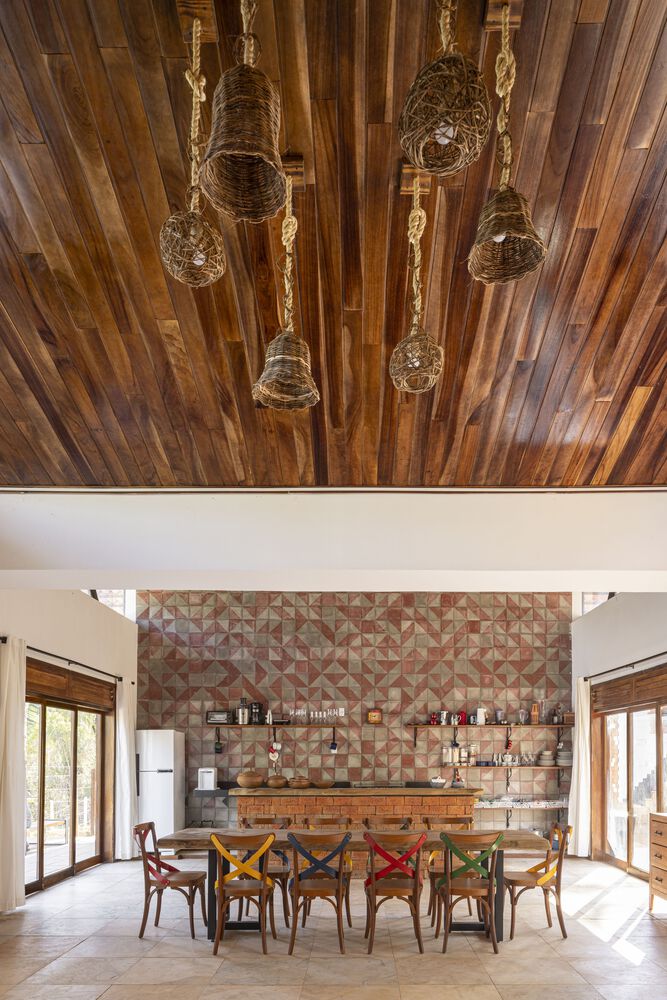
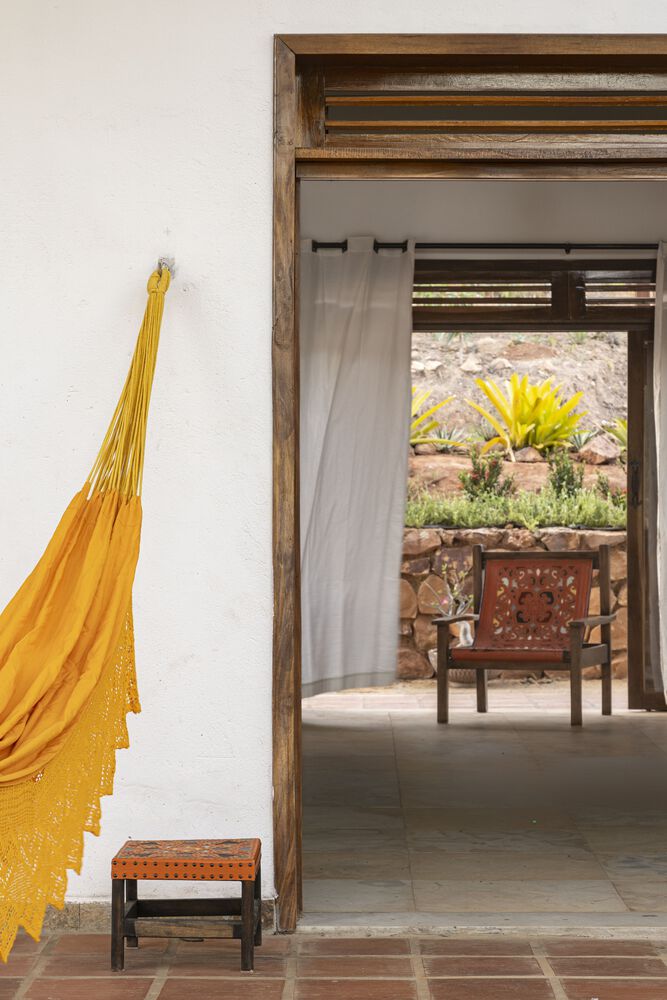
The choice of materials highlights the commitment to regionality: interior flooring in ceramic tiles, exterior cladding in castle stone, as well as finishes in Cariri stone and hydraulic tiles.
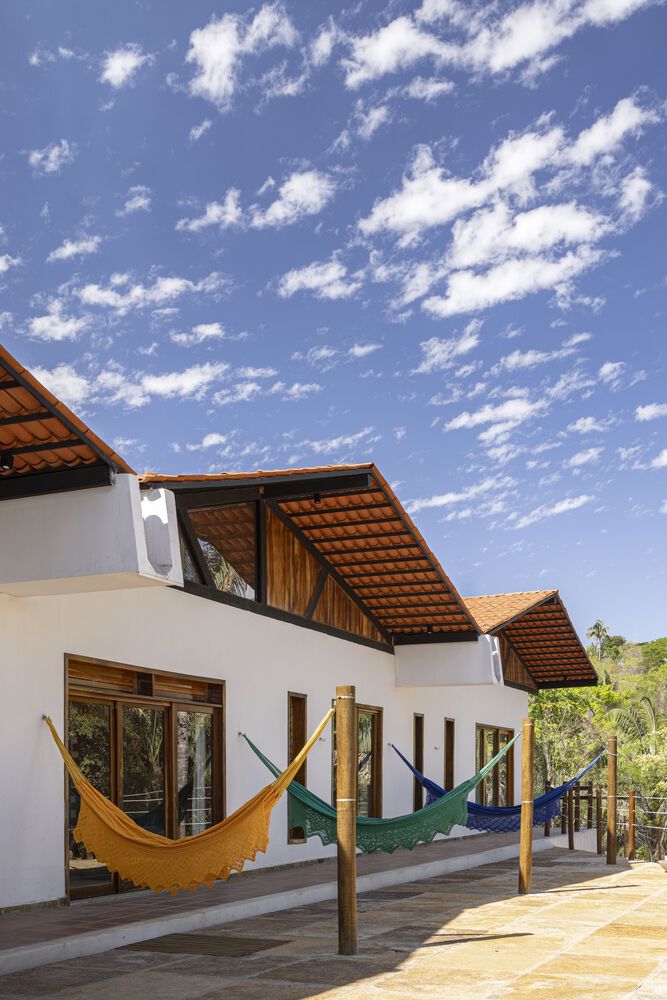
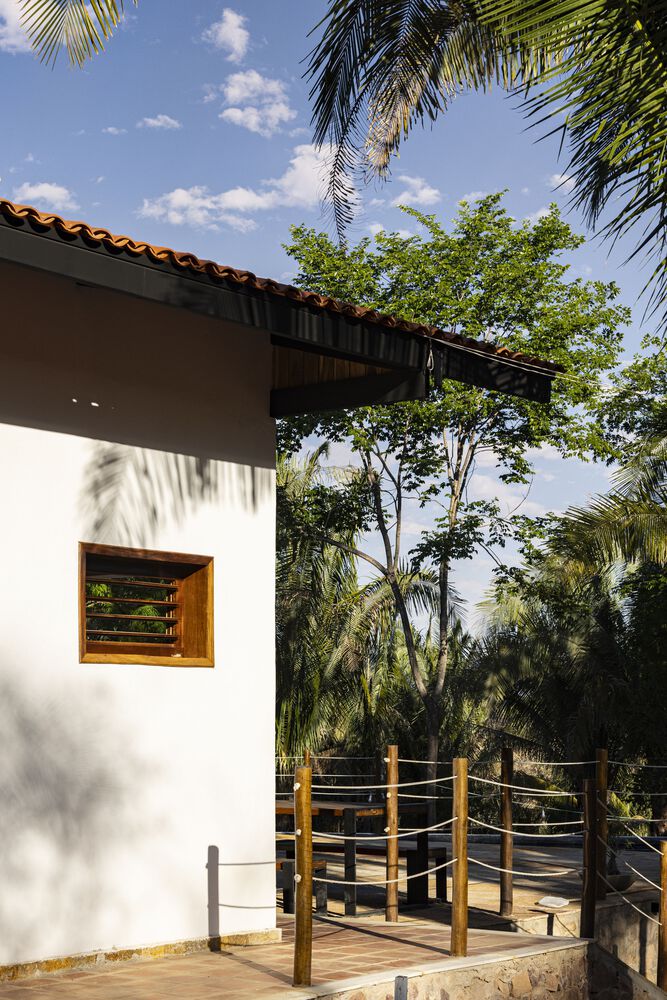
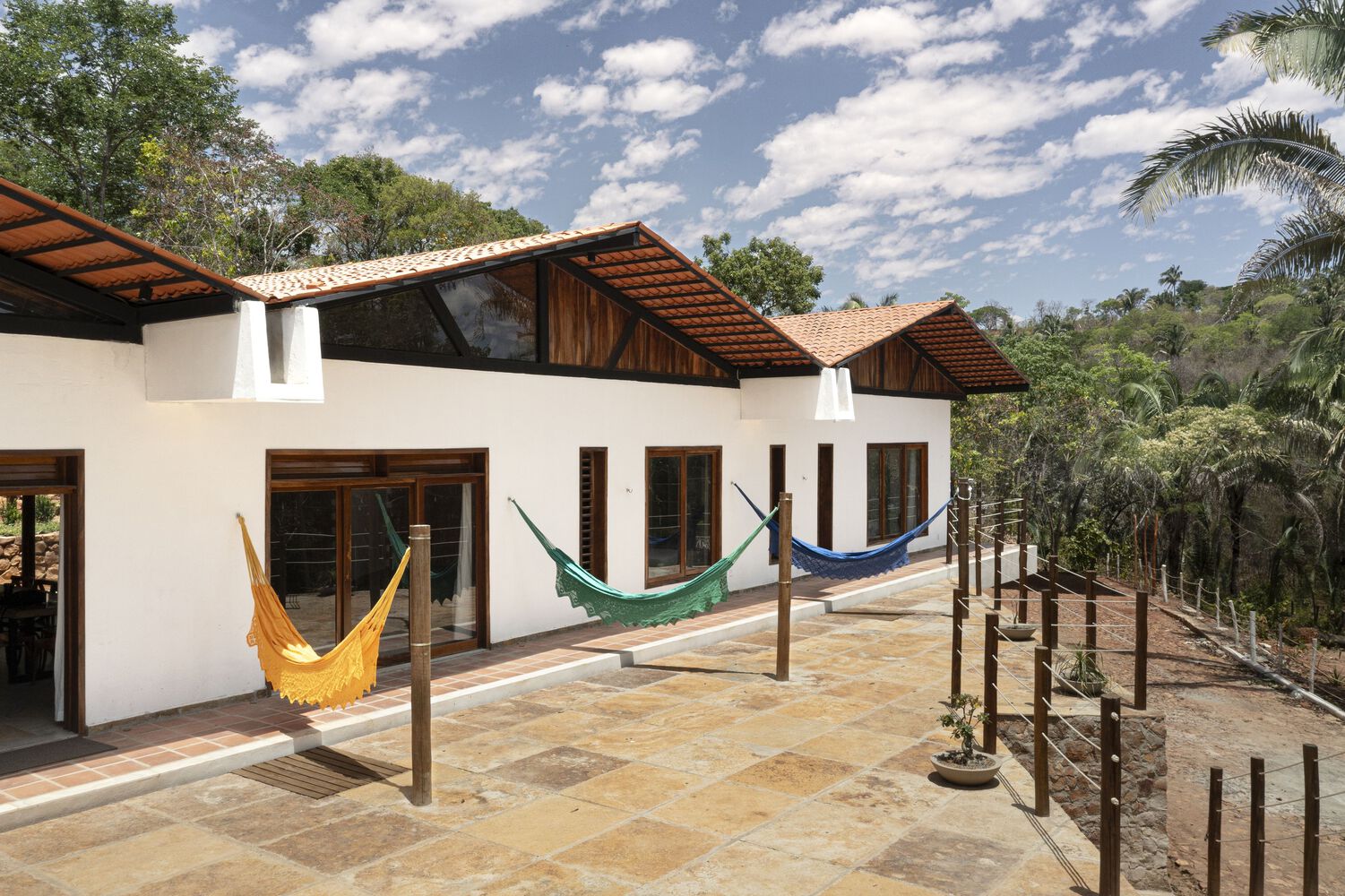
The wooden frames, featuring upper transoms, ensure cross ventilation and natural thermal comfort.
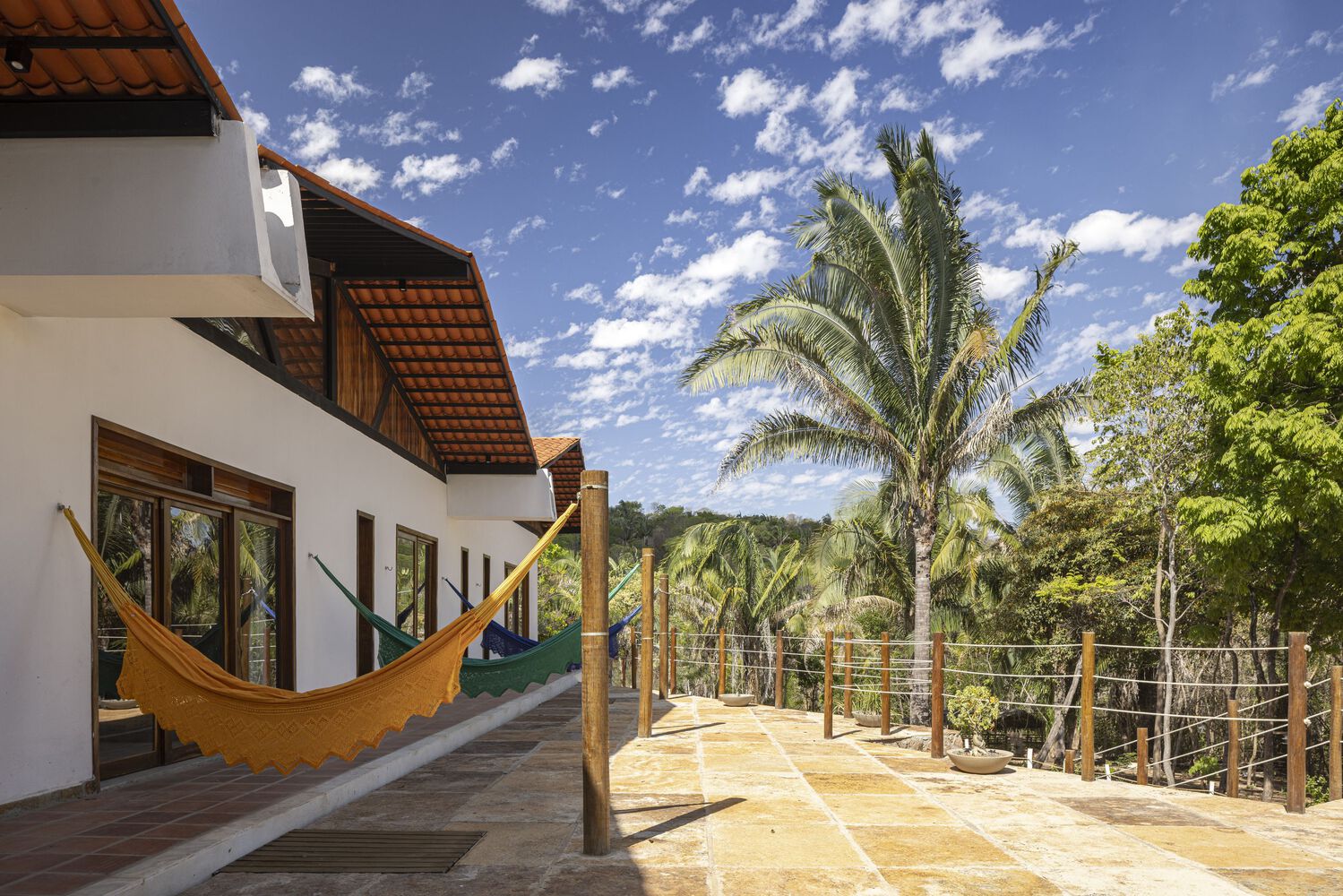
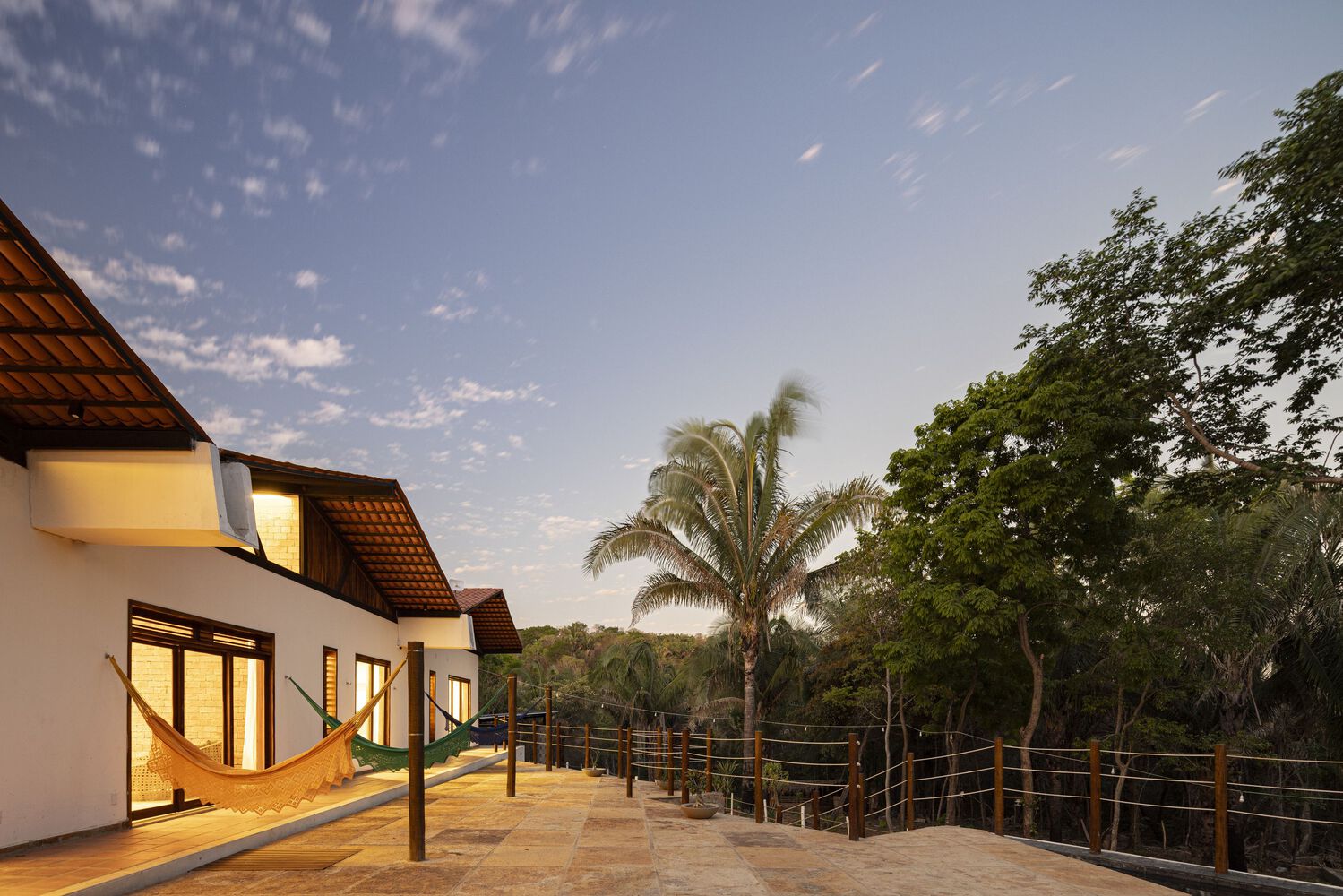
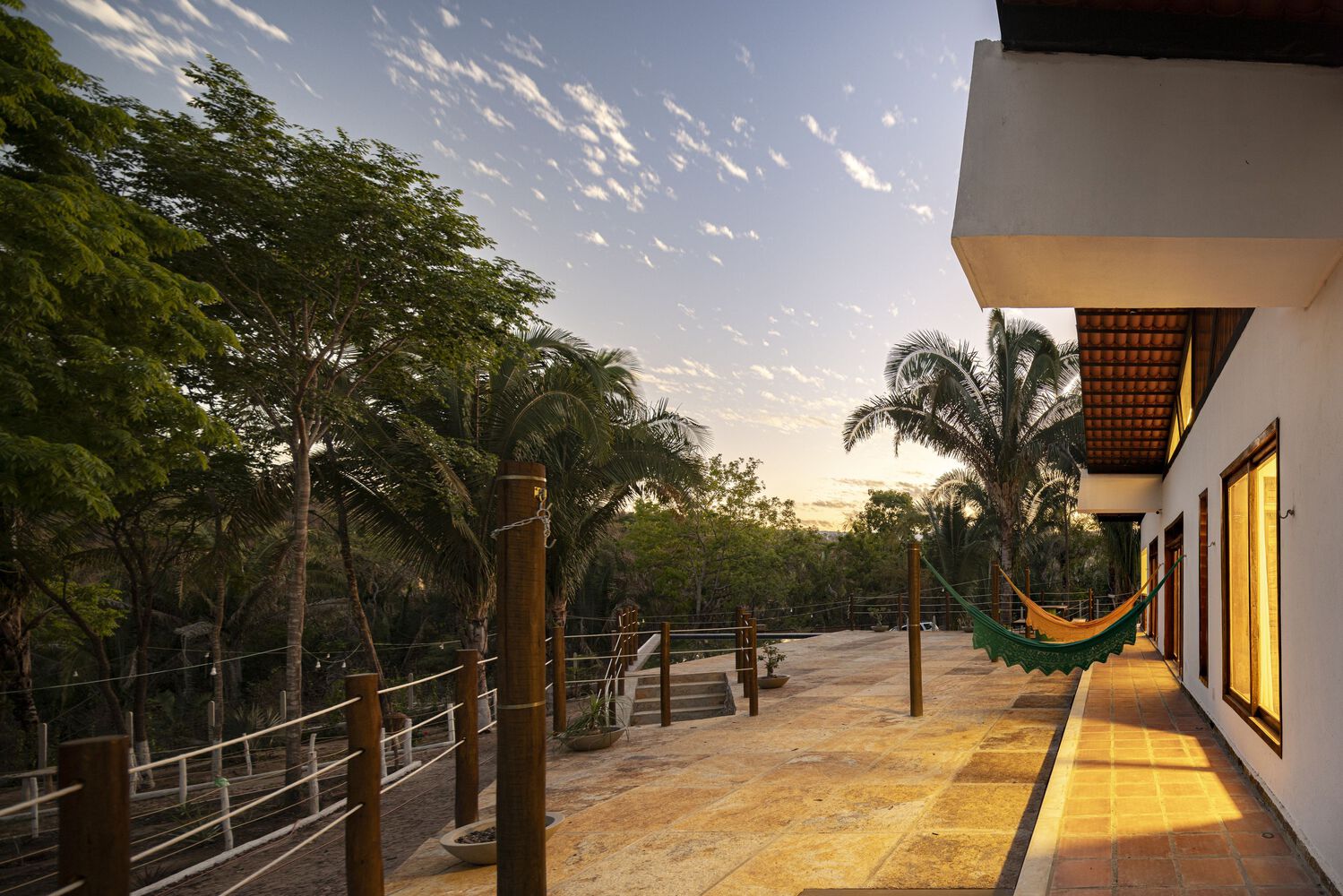
An eave surrounds the entire building, functioning as a continuous veranda, protected from sun and rain, inviting relaxation in hammocks and immersion in the landscape.
In this simple gesture, the residence opens up to its surroundings, blurring the boundaries between interior and exterior and reaffirming the essential dialogue between architecture, climate, and local culture.